
pre-ordina ora27.10.2023
dovrebbe essere pubblicato su 27.10.2023
dovrebbe essere pubblicato su 27.10.2023
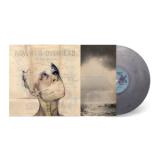
Hailing from Athens, Georgia, Now It’s Overhead is the acclaimed indie rock band fronted by Andy LeMaster. Emerging in the early 2000s alongside the era-defining Saddle Creek scene, LeMaster collaborated with artists including Conor Oberst (Bright Eyes), Michael Stipe (R.E.M.), Orenda Fink (Azure Ray), and Maria Taylor (Azure Ray).
During this period, Now It’s Overhead released three acclaimed full-length albums: Now It’s Overhead (2001), Fall Back Open (2004), and Dark Light Daybreak (2006). Available on vinyl for the first time, these long-awaited editions are essential for listeners and collectors exploring the indie rock landscape of the early 2000s. All three albums have been newly remastered by Andy LeMaster—musician, songwriter, engineer, producer, and visual artist.
The Associated Press described Now It’s Overhead as “a unique brand of organic and synthetic dark pop—made possible by LeMaster’s studio prowess—that remains distinctive even when Conor Oberst and Michael Stipe briefly stop by.”
Accompanying these reissues, Now It’s Overhead is also releasing new music for the first time in nearly twenty years. The five-song EP, in the beginning, arrives digitally on September 18, 2026.
dovrebbe essere pubblicato su 02.10.2026
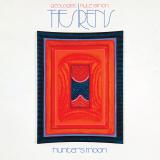
The sun sat high above the desert outside Joshua Tree on October 17, 2024, baking the rocks and shrubbery outside the Farrington Observatory as a small group of invited guests ventured up a steep path towards the telescope. Kyle Simon, the artist and printmaker who founded the Observatory, was standing outside the print studio sat below the towering cylindrical building, greeting friends alongside his wife Sarah and lifelong friend Brian Weitz, the musician widely known as Geologist of Animal Collective. Simon and Weitz had spent the previous day testing and retesting a system that would transform the light of the oncoming full moon captured by the gigantic telescope into a signal that would modulate the control voltage of Weitz’s modular synthesizer. As the sun dipped below the horizon line, the audience gathered on a small wooden patio surrounded by speakers while Weitz readied himself behind the array of patches and knobs. Simon addressed the group, presenting the history of The Sirens, the sonic exploration of the night sky’s mystical and scientific significance about to unfold.
The music conjured under the Hunter’s Moon that night is now documented on this first official release of The Sirens, which was conceived by Simon and Weitz as a recurring performance piece and sound installation. Over a decade ago, Simon began immersing himself in literature on humanity’s sonic relationship to the celestial realm, including Homer’s Odyssey, Plato’s “Spindle of Necessity, ” Kepler’s Harmonices Mundi, and the field of astroseismology. He fitted homemade telescopes with photodiodes and optical sensors to make the images audible, finding latent patterns in the noisy sonic signals he began receiving from the stars. With Weitz, the process expanded as the signal was routed through an analog amplifier and set to modulate the pitch, filter, and other elements of his synthesizer. Together they developed a system of improvisation, with Simon adjusting the telescope to change the intensity of the light based on its relationship with the moon’s position (imagine a theremin player moving their hands in subtle, meaningful motion), and Weitz responding to that input in real time: bending it, amplifying it, or letting it stand on its own. The duo debuted the piece at the Integretron in Joshua Tree in 2018, providing a crucial proof of concept for the performance at Farrington featured here.
The first thing the listener hears on The Sirens is the opening of Farrington Observatory, the cranking of motor and metal. As the lens of the telescope is exposed to the evening air, a wavering drone emerges from the synthesizer, flickering at the margins, the tuning of the oscillators adjusting to the rapidly cooling desert air. The piece progresses and the drone becomes a luminous, spherical constant, bathing the listener in pure tone as Weitz draws out harmonically ambiguous melodies that spiral upwards. Electronics crackle and convulse, coalescing into dense dissonance before widening out into an open octave. Just as the moon orbits the Earth and the stars shift as the planet rotates, so each sonic element appears in flux, interrelationships slowly forming and falling away. Divided into two parts, The Sirens flows as a continuous conversation between the artists and the starlight completing its thousand-year journey across the galaxy.
The Sirens belongs primarily to a lineage beyond music: of sea captains navigating by looking skyward, of astrophysicists studying the formation of the Milky Way, of the modern myths of werewolves, of the stories embedded in constellations. As Simon writes in the album’s extensive liner notes, “These stories and explorations reveal a collective yearning to become conscious of our connection to the universe, our deep-seated desire to understand how we fit into it all.” This music underscores the history of the night sky as the place where poetry and science find common ground, where exploration hinges on the imagination. Driven by curiosity and ingenuity, Weitz and Simon look up and wonder.
dovrebbe essere pubblicato su 16.10.2026
WHIMM formed around the shadowy heart of the Toronto post-punk underground over a decade ago. The partnership between Mounir Al Shami and Andrew Matthews has emitted sporadic musical shards over time, while slowly evolving into something so much bigger than its beginnings. Ideas seep out of every corner of No Promotion, showcasing a burning desire to explore and challenge while delivering very direct sonic offerings. The result is an album that feels as if you took the entire Coil discography and smashed it into pieces, assembling these precious songs from the fragments. Or as if Vangelis beckoned Section 25 to the studio in hopes of recording the score to a seedy film. The resulting LP is in a state of flux – equal parts motion and decay.
Patrick Flegel, of Cindy Lee, welcomed Al Shami and Matthews into REALISTIK Studios in Montreal to engineer half of the tracks for the album, including lending guitar to the opening track "Five in Decline." That influence is evident early on, as the first three songs are taken from those sessions. "Five in Decline" throbs and barks before racing through the hallways closing in around it. "Another Labour" slows to a spidery waltz as anxious melodies call out to one another. "Returnal" pulses, floats through the night sky and haunts you forever. "Rye" carves a percussive pathway toward similar travellers like Terry Riley and Jon Hassell, before the lament of "A Death Remembered" forms the perfect midpoint for the record. A slow build countered by twitching drums and blanketed by organs recorded at Metropolitan United Church in Toronto, it feels like emotion right on the edge of resolve.
"Rhymes of December" screeches through on a solitary train under the towering cityscape as the flickering lights blur past, its doors opening to the candlelit altar of "After the Last Sky" (those beautiful organs again) with an operatic swirl. "K'20" throws you into a claustrophobic and chaotic cab ride (Who is talking? Are those sirens?) until you finally find the quiet of the early morning, waiting at the window for the sun to join you once again as the first notes of "No Promotion" are delicately plucked. The final song from the Flegel sessions, it is over eight minutes of contemplative beauty. A restless heart that is ready to rest. Closing with a final apparition in the key of The Caretaker, "After the Last Sky (Reprise)" is a return to melody when words lose all meaning.
Al Shami and Matthews weave their lyrics throughout, words describing a search for lucidity, and of reactions and reflections. Al Shami – speaking from the Palestinian diaspora – ruminates on displacement, both personal and collective. His journey from having "been without a land and I can still see clearly" in "Rhymes of December" to a more defiant "we will be back again, no matter how it ends or where we've been" in "Returnal" takes a very insular turn on No Promotion. That sense of alienation pulls at the very center of a relationship when land and circumstances separate: "And after our last breath, all that's left in me is our flesh and fears, your last words would swim for years, you'll never find a home in me." Hearts on the outskirts that know the direction.
dovrebbe essere pubblicato su 30.10.2026

Born from Ralph Lawson's pandemic-era radio transmissions into distant electro worlds, Exit Planet Earth returns from hiatus with a new chapter that finds solo artist EPs replacing the various artist format that came before. Australia's Reflex Blue inaugurates this next phase and arrives with serious credentials following a run of well-received records on Kalahari Oyster Cult, Limousine Dream and Fuse. Tripped out 4/4 floorfillers and syncopated breakbeats all feature, starting with the title cut, with its snappy breaks and plunging bass and retro rave sirens. Then comes 'Entropic', which has gurgling acid and chrome-plated drums, 'Thoughts Rewired' is a cyborg deep house sound in a 90s New York style and with a throbbing bassline, then 'L.L.L' closes with a light-footed future tech sound and some old school samples and scratching. A fine return.
Questo articolo non è stato ancora rilasciato. È possibile pre-ordinare il prodotto ora.

Alina Valentina ignores rule books. When it comes to making music, she bends genres to her own sound and vision. Acid, electro, synth wave, vocoders. All are melted to produce a bracing style that is floor focussed and strikingly individual. It is this distinctive perspective that The Hague based artist brings to Schrödinger’s Box for NPC Dream, eight tracks that map a journey that disregards genre limitations. The intent and mood are immediately set with the fierce “Air Slasher” plunging through the fog as kicks roll and beads of acid bulge. Raw electro is further coarsened by scything keys and vicious vocoder words in the title piece before the technoid mutations and pain-streaked “Echo of Ecco.” The ground is never stable, the direction and ideas darting and shifting to new sonic territory. Punishing and pure, “Mine Cart Madness” is EBM-encrusted cruelty. Tempos shift on the flip, the slow and cinematic atmosphere of “Pixel Swamp” feeding into the sinister and snarling snares of “Wishing Engine.” Paranoia and tension collide in the stabbing chiptune chords and spiking percussion of “Come Get Some”, acid barbs ballooning into a blistering barrage in this warped wrecking ball. “Light Warrior” is cut from the same raucous cloth. Knobs splinter against machined lyrics, sirens blare as kicks thump in this basement lurking beast.
NPC Dream is a relentless record. From the needle drop, Alina Valentina enforces her sound as she teases and taunts styles. Fiery and brimming with energy, this 12” encapsulates the sound of an exciting talent who carves their music with a truly unique ear.
Disponibile in Stock e pronto per la spedizione
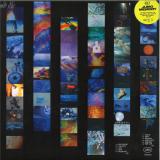
Through his tracks, Jumo explores nostalgia and memory, from phili to memory, blending memories of youth and fleeting sensations. Tgthr encourages living the moment, while lula unfolds like a raw, cinematic road movie. The synthetic voices of sirens create a hypnotic theme, reflecting free souls suspended between a desire to escape and the fear of falling back. Euphoria tackles the madness of man's race to innovate and his indifference to the world, mixing mechanical urgency and emerging awareness. Each track plays with contrasts; melancholy and euphoria, darkness and light; combining synthesizers, persistent bass, and saturated textures. Together, they form a sonic journey where dancing becomes an act of memory and emotional survival.
Disponibile in Stock e pronto per la spedizione

You may be excused if, seeing the dazzling China Moses on stage, online, or on-air, you thought that she, fabulous and French, an orchestra trailing her, with one of those light-up-a-room smiles you only hear about in myth, was someone who might only be singing cheery songs about her glamorous musical life. Not so. It’s complicated… vibrates with the joy, wistfulness, ambivalence, and wisdom of a woman who’s been on many journeys, down many paths, and landed here, in your ears, on purpose, with something to say.
Through these songs, China captures the many hues of grown Black womandom: her choices, her regrets; her place in society as both citizen and observer. Her voice is girlish and playful; gritty and growly; truly prismatic, as Anthony Peyton Young’s cover art suggests, to reflect the many lives she’s lived. And she does all this with vulnerability, a quality that transcends and supersedes genre, taste, or ability. Of all the tools a singer-songwriter could possess, it might be the most important one. Though there is bravado here (“I can be happy”, the song and the video, are the best example), this is an album that taps into the full, resplendent spectrum of human experience, its many facets hewn into these 10 gems before you.
It’s complicated… and it’s complex. How could it be anything else?
— Kyla Marshell
Disponibile in Stock e pronto per la spedizione

The new album by the collective that for
over 25 years has been among the most
representative names of the Italian dance
and electronic scene worldwide.
“BLOOOM”, this is the title of the new release,
will be available in all traditional stores and
on digital platforms starting January 16.
Set against the soundscapes that have become
the Planet Funk trademark, the lyrics by Dan
Black attempt to give voice to a fragile and
contradictory condition of our time: an
intensified sensitivity that, instead of
turning into openness and connection, often
becomes emotional overload. A generation
constantly overwhelmed by excessive stimuli,
relentless information, anxieties, and fears,
called upon to find its way in a world thaoffers neither pauses nor silence. In this paradox, sensitivity is no longer just a natural gift, but
a daily effort: staying open and receptive without being overwhelmed, trying to preserve a human and
vulnerable gaze in order, despite everything, to fully appreciate life and the present moment.
The single’s artwork—like that of the album—curated by Nationhood, visually conveys this tension: the
distant sirens of a city that amplifies feelings of disorientation and loneliness even when we are
surrounded by thousands of people.
“BLOOOM”, preceded by the single “FEEL EVERYTHING”, arrives at the end of an intense, creative year
full of music, which saw Alex Neri (DJ, keyboards, synthesizers), Marco Baroni (keyboards, piano,
programming), Dan Black (vocals and guitar), and Alex Uhlmann (vocals and guitar) engaged between
studio work, collaborations, and live performances in Italy and abroad. A journey that today
transforms into new energy, into an even more open vision oriented toward the future.
Exactly one year ago, PLANET FUNK released “Nights in White Satin”, a single that reached the top
positions of the radio charts and launched a season rich in concerts and DJ sets in Italy and around
the world. The subsequent “I Get a Rush”, the collaboration with Alfa and Manu Chao on the remix of
their hit “A me mi piace”, and the track “È Naturale” together with Francesca Michielin, confirmed
Planet Funk’s ability to renew themselves and engage with different musical worlds while always
remaining true to their own identity.
Throughout this journey, music has inevitably intertwined with life. The memory of Sergio Della Monica
and Domenico “Gigi” Canu, pillars and founding souls of the PLANET FUNK project, is a living part of
this new chapter. Their vision, creative spirit, and way of understanding music continue to be a
constant guide, a deep root from which new ideas and new directions can grow.
“BLOOOM” is also this: a personal and artistic blossoming that, starting from the legacy left by
Sergio and Gigi, transforms into a living process of growth, metamorphosis, and discovery. An album
that does not look back with nostalgia, but forward with awareness, momentum, and a desire for
renewal.
Founded in 1999, for over 25 years PLANET FUNK have represented one of the most important, solid, and
influential realities in the international electronic music scene. Born from the meeting of Souled
Out! (Domenico “GG” Canu and Sergio Della Monica) and Kamasutra (Marco Baroni and Alex Neri), and
following their debut with “Non Zero Sumness” in 2002 (a gold record and a turning point for the
band), PLANET FUNK have managed to reinvent themselves over time while maintaining a unique sonic
identity. This has led them to collaborate with internationally renowned artists, deliver iconic
performances around the world, create soundtracks and international advertising campaigns, and
continue to demonstrate constant creative vitality
Disponibile in Stock e pronto per la spedizione
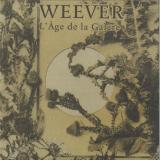
Based in Rennes and founder of the Vives label in 2020, Weever has been exploring the interplay of light and shadow for over 10 years, crafting abstract soundscapes and textured sonic tunnels of unparalleled musical breadth. He elegantly blends industrial and baroque sounds to construct sonic cathedrals. His music is both utterly raw and meticulously crafted.
L’âge de la Galère :
started this EP in 2020. At the time, I had just finished my studies, it was a pretty difficult period and I had made a track, or rather a melody, that I thought was amazing. I held onto it all these years without ever releasing it. 2020 was a tough year overall. The big question was: What am I going to do with my life? Hence the title L’âge de la Galère
The title really started to make sense when I began putting tracks together for Micheal. Around that time, I was reading Those of 1914 by Maurice Genevoix. For those who don’t know it: it’s written as a journal and tells the story of the author and his fellow soldiers in the trenches during World War I.
I’ve always been passionate about the two World Wars, I watch every film, old and new, I listen to the soundtracks, and so on. Same with period films, especially medieval ones. I love drawing inspiration from them.
So naturally, I imagine and create around that. It comes easily because it’s always been my universe. And when I make music, those kinds of images inevitably come out, even subconsciously.
So I created and told an audio story through my 6 tracks.
“It’s 1914. The story of many men who, upon hearing the sound of the bells, are met with the announcement of a war like no other. Most of them are young, some very young, and they are drafted into the French and German armies. They have no military experience, and the first battles are so violent that many won’t make it back. Very few will earn the glory they deserve.
The conditions are appalling, everything is in short supply, and the men are exhausted. Still, they must hold on.
Leaving carelessly from beneath their mothers’ skirts, too few returned. Many were left traumatized, and an entire generation was forever changed.”
Disponibile in Stock e pronto per la spedizione

Disponibile in Stock e pronto per la spedizione

Disponibile in Stock e pronto per la spedizione

Includes unlimited streaming of Atropos via the free Bandcamp app,
plus high-quality download in MP3, FLAC and more. s
Disponibile in Stock e pronto per la spedizione

Kinn turns the Post-Rock continuum inside out with his sophomore album, Dogtooth.
Shifting focus between his present self and his misled teenage years, 'Dogtooth' sees London born and raised sound art graduate Fred Lomas contemplate the vulnerability of youth, addiction and suicide as Kinn. Unabashed in their creative ambition, Kinn's tongue-in-cheek 'dread-voyeurism' is underpinned by a palpably sincere vulnerability that seeps through their dynamic and rewardingly dense records.
An insight into Fred's formative years can be unraveled from his nickname "Dread", originally given to him by his parents. Growing up in North London as a 'constantly out of the house' youth, Fred only had eyes on any counterculture he could find to defy the city's notorious empty capitalist centric mainstream culture, skateboarding, graffiti, and terrible punk bands which would only last 1-3 rehearsals (max). As a teenager he experienced the notorious 2011 Tottenham riots, which is often referenced in the artist's output and greatly informed their sensibilities. Barely an adult, he was confronted first hand with concepts of constant hostility and corruption which were seemingly welded to his surroundings, corruption formed by high rises and international political scandals taking place only a short journey away.
Even today, Dogtooth reflects on this contrast of community and anger and surmises it to be part and parcel of modern metropolitan life, looking to peel away the bad looking for meaning, comfort and ways of goofing off amidst oppressive forces, sirens and snake oil salesmen everywhere.
Disponibile in Stock e pronto per la spedizione
Staran Wake is a collaborative project by Andrew Bunsell and Tom Relleen. After several years creating music in various groups together, followed by countless hazy late night recording sessions at each other’s studios and crisper afternoons producing the results, the British duo’s musical vision materialised with this self-titled instrumental album, taking nearly 4 years to complete.
This collection of pieces is composed with a wide range of instruments and combines multiple dark, experimental genres to form a rather lavish and unique proposition. It is imprinted with intense turgid textures, interweaving the hyper-tactile characteristics of analogue sound with field recording elements and sound effects.
Although the project’s name suggests a rather celestial concept (‘an’ means moon in one of the early protolanguages), the music actually explores the intimate feelings of transient space and otherness. It uses subtle build-ups of tension and repetitive progressions to shape an impression of distended time and space. More than a mere treat for the ears, it’s a multi-layered album that invites reflection.
All tracks composed, performed and recorded by Andrew Bunsell and Tom Relleen at Dalston Studios, Space Studios and The Bunker, London, UK
Arranged, produced and mixed by Andrew Bunsell and Tom Relleen at The Bunker, London, UK
Mixed and mastered by Marta Salogni at Studio Zona, London, UK
Artwork and design by Jonas Meier
Disponibile in Stock e pronto per la spedizione

Newly signed to indie heavyweights Heist or Hit (Westside Cowboy, Her’s) EP two: ‘Marionette’ has been produced by Daniel Fox (Sprints, Melts, Psychotic Monks, Naked Lungs, Nerves, Ronan Group) and it’s set to be seminal. A set text for future musicians with aspirations of innovation. “The theme of the marionette is present throughout each song, involving some aspect of a power struggle and a lack of control within oneself.” Opener ‘Chocolate’ bounces in on a synth line as slippery and hyperactive as anything Aphex Twin ever cooked up. Crispy offbeat electronic cymbals play counterpoint to atonal guitars and pugilistic drumming before the track dry-wretches its way into a nauseating cacophony of euphoria. It’s a tale of crippling social anxiety and a preference for an unflattering, lonely reality. The muted guitar pluck in the intro to ‘Crows’ is the sonic equivalent of biting one’s nails. An anxious, involuntary tic that speaks to the theme of guilt, especially surrounding digital culture: “children can watch what they please, just with viewer discretion.” The track lurches between textures, weaving themselves in and out of focus. Guitars blare like sirens, interrupting paranoid urban centres at 2am, while the bass sounds like the inside of an insomniac’s head on day four of a REM drought.
The metallic intent of ‘Discipline’ squats on the chest as though Steve Albini is your sleep paralysis demon. The pain of accountability spews from the industrial regularity of the beat, apt to the narrative of a soldier coming to terms with the lies that made him commit atrocious, violent acts. EP closer ‘Servant’ starts like a Spectrum loading screen. Dial-up modem-coded, it pauses for moments of white-noise-vomit and existential bloops. Fitting for a more abstract take on the idea of the power struggle filtered through religious imagery and self-awareness of one’s own actions, coupled with an inability to exert control over them. The band pile on the textures with sadistic glee until the evil is exorcized and the modem melts. Connection severed. Across the EP, vocalist Joseph has a tendency to hyper-fixate on themes of control and unhappiness. Creating rooms in which doom and isolation ricochet. Not that it’s all bad news “we like to think that by shedding light on the negative, it commands a sense of hope.” Influenced as much by the liminal-space horror and uncanny dread of Silent Hill as the existentialist theatre of The Twilight Zone or the absurdity of Twin Peaks, they occupy a space between unease and impulse. Makeshift Art Bar are not a band interested in being liked. They’re a band interested in being necessary. There’s so much eating and drinking in their work that multiple listens simply don’t satisfy; something new reveals itself on each return visit. Audacious. Idiosyncratic. Vital. A young band carrying identity, defiance and an uncompromising vision as if it isn’t a rare cargo.
dovrebbe essere pubblicato su 26.06.2026

Newly signed to indie heavyweights Heist or Hit (Westside Cowboy, Her’s) EP two: ‘Marionette’ has been produced by Daniel Fox (Sprints, Melts, Psychotic Monks, Naked Lungs, Nerves, Ronan Group) and it’s set to be seminal. A set text for future musicians with aspirations of innovation. “The theme of the marionette is present throughout each song, involving some aspect of a power struggle and a lack of control within oneself.” Opener ‘Chocolate’ bounces in on a synth line as slippery and hyperactive as anything Aphex Twin ever cooked up. Crispy offbeat electronic cymbals play counterpoint to atonal guitars and pugilistic drumming before the track dry-wretches its way into a nauseating cacophony of euphoria. It’s a tale of crippling social anxiety and a preference for an unflattering, lonely reality. The muted guitar pluck in the intro to ‘Crows’ is the sonic equivalent of biting one’s nails. An anxious, involuntary tic that speaks to the theme of guilt, especially surrounding digital culture: “children can watch what they please, just with viewer discretion.” The track lurches between textures, weaving themselves in and out of focus. Guitars blare like sirens, interrupting paranoid urban centres at 2am, while the bass sounds like the inside of an insomniac’s head on day four of a REM drought.
The metallic intent of ‘Discipline’ squats on the chest as though Steve Albini is your sleep paralysis demon. The pain of accountability spews from the industrial regularity of the beat, apt to the narrative of a soldier coming to terms with the lies that made him commit atrocious, violent acts. EP closer ‘Servant’ starts like a Spectrum loading screen. Dial-up modem-coded, it pauses for moments of white-noise-vomit and existential bloops. Fitting for a more abstract take on the idea of the power struggle filtered through religious imagery and self-awareness of one’s own actions, coupled with an inability to exert control over them. The band pile on the textures with sadistic glee until the evil is exorcized and the modem melts. Connection severed. Across the EP, vocalist Joseph has a tendency to hyper-fixate on themes of control and unhappiness. Creating rooms in which doom and isolation ricochet. Not that it’s all bad news “we like to think that by shedding light on the negative, it commands a sense of hope.” Influenced as much by the liminal-space horror and uncanny dread of Silent Hill as the existentialist theatre of The Twilight Zone or the absurdity of Twin Peaks, they occupy a space between unease and impulse. Makeshift Art Bar are not a band interested in being liked. They’re a band interested in being necessary. There’s so much eating and drinking in their work that multiple listens simply don’t satisfy; something new reveals itself on each return visit. Audacious. Idiosyncratic. Vital. A young band carrying identity, defiance and an uncompromising vision as if it isn’t a rare cargo.
dovrebbe essere pubblicato su 26.06.2026

The Dead 60s seminal self-titled album gets a timely Deluxe edition reissue on Vinyl for its 20th Anniversary, on Deltasonic Records
“Back in the day, punk and dub weren’t just sharing space—they were smashing into each other headfirst. Late '70s Britain was a pressure cooker, and for kids like me, growing up between Brixton’s bass bins and the chaos of King’s Road, that collision was everything. Jamaican sound system culture met punk’s raw spirit in a haze of smoke, sweat, and feedback. It wasn’t about genre—it was about energy. Identity. Defiance. so when The Dead 60s came along, post-Britpop and post-bullshit, it felt like someone had dusted off the blueprint and run it through a battered old tape echo. These weren’t just lads with good taste—they understood the assignment. They took the DNA of two rebel cultures and mutated it into something that could stand tall in the 21st century. Dub-soaked, punk-fuelled, dripping with that Liverpool attitude. I remember first hearing them and thinking—yeah, here we go again. Not in a retro way, but in a real way. Guitars that cut like sirens in the night. Basslines fat and warm, straight out the Channel One playbook. Lyrics that painted the grey corners of Britain like CCTV poetry. It was the sound of youth under pressure. The sound of not fitting in—and not wanting to.
Their debut album dropped in 2005, and it hit like a flare in the dark. “Riot Radio” was a pirate broadcast from the concrete frontlines. “Control This” swaggered with menace and reverb. It was like someone opened a time capsule from the punky-reggae party and rewired it for a new generation.
Now, with this 20th anniversary vinyl reissue—complete with the full dub companion produced by Central Nervous System—we get to hear the bones and blood of it all. The dub versions pull the tracks apart and let the ghosts speak. Reverb, delay, space—it’s not just production, it’s meditation. Revolution slowed down to a heartbeat. It’s music that makes you move and think. What they’ve done here is more than remix a record—they’ve revealed its soul. That’s what dub does when it’s done right. And The Dead 60s, they got that. They weren’t tourists in the culture—they were students of it, shaped by it, and ultimately, contributors to the legacy. Liverpool’s long had a love affair with Jamaican music—you can hear it in the streets if you’re really listening. The Dead 60s tapped into that lineage, but they brought their own thing to the table. Punk's fire. Dub’s depth. Ska’s bounce. All filtered through a Northern lens and blasted out like protest graffiti. This 20th anniversary reissue ain’t about nostalgia. It’s a reminder. A celebration. A call to arms. Music like this doesn’t belong in a museum—it belongs on a system, shaking walls and waking minds. Crate diggers, completists, young punks, old heads—this one's for all of you.
So put it on and turn it up. Let the punk edge sharpen your thoughts, and the dub shake your bones ‘cos this isn’t just a reissue - it’s resistance on wax.....”
dovrebbe essere pubblicato su 31.10.2025

A few weeks ago, Brigade Loco officially announced that they will release their third album in the coming months. The band from Gipuzkoa, with seven years of trajectory, will release their new full-length under the title"Bide baten esanahia" ("The meaning of a road"). This new album will finally be released in February 2025. As usual, the album has been recorded at the Sound of Sirens studio in Iruña under the supervision of technician Julen Urzaiz. This album is a firm step forward for a band that wants to evolve and write its own trajectory without repeating chapters previously made. In view of this, the band says they are very excited about the project. It has been more than a year of work and effort before this ambitious project sees the light of day, and they are looking forward to sharing their new tunes with their audience. Brigade Loco are about to start a very important episode in their career. An episode with interesting paragraphs, plotsand characters. Stay tuned.
dovrebbe essere pubblicato su 14.03.2025

A few weeks ago, Brigade Loco officially announced that they will release their third album in the coming months. The band from Gipuzkoa, with seven years of trajectory, will release their new full-length under the title"Bide baten esanahia" ("The meaning of a road"). This new album will finally be released in February 2025. As usual, the album has been recorded at the Sound of Sirens studio in Iruña under the supervision of technician Julen Urzaiz. This album is a firm step forward for a band that wants to evolve and write its own trajectory without repeating chapters previously made. In view of this, the band says they are very excited about the project. It has been more than a year of work and effort before this ambitious project sees the light of day, and they are looking forward to sharing their new tunes with their audience. Brigade Loco are about to start a very important episode in their career. An episode with interesting paragraphs, plotsand characters. Stay tuned.
dovrebbe essere pubblicato su 14.03.2025
Pacific Rhythm returns with a heady new offering entitled the “Deep Hows EP" from NYC based Producer and DJ, Arsenii under his Bliss Street Queens moniker. The EP effortlessly trips through the cosmic and psychedelic sounds of the hazy and hopeful 1990's in a refreshing and modern style, all while shining a light on Arsenii’s undeniable ear for rhythm, energy, and feeling on the dance floor.
This one can carry you from the chill-out room to the main stage and is an essential pick-up for all of the Interesting Audio enthusiasts out there looking for machine funk of the highest caliber!
Ordina ora e ordineremo l'articolo per te presso il nostro fornitore.

Continuing our quest to get all of the classic early AMT albums released on vinyl, we turn to 2004’s 'Mantra Of Love’, and with the help of Makoto Kawabata’s studio wizardry, we’ve made it possible.
This latest instalment in the ‘Acid Mothers Temple Vinyl Archives - First Time On Vinyl’ series (as with the three previous SOLD OUT releases in the series) have all been meticulously put together with the help of Makoto Kawabata with the original CD artwork recreated for these vinyl editions from archive photos stored in the vaults at the Acid Mothers Temple in Osaka, Japan and the original audio remastered by James Plotkin.
Here’s what others had to say upon it’s original CD only release back in 2004 …
“Acid Mothers are strong folk. You'd think they'd tire quickly, all tucked away on their island, strewn about on tree roots while baking their lungs and throats to a knotty green tinge. But instead of waltzing through life like hippies, they manage to not only tour and put out records every year, but also to fill those albums with 30-minute jams and assorted freakouts. And while evil jam bands would fill that space with guitar work taken from the Classic Rock Manual of Clichés, Makoto Kawabata and company assault listeners with frighteningly dense walls of white noise, psychedelic swirl effects and, yes, even guitar solos-- albeit ones that are more Merzbow or Keiji Haino than Gary Rossington. Truly, AMT's endurance and threshold for cosmic lashings are both worthy of admiration.
But how much AMT can you take in one sitting? If there's anything this band has taught us-- via records such as 2002's Electric Heavyland and the ferocious Acid Mothers Temple & the Melting Paraiso U.F.O-- it's that they're not afraid to reach for the upper regions of consciousness. On Mantra of Love, they offer two titles over the course of one hour, never faltering along the way, and it's as if we listeners are just brief visitors passing through a never-ending, spontaneous group trip. For all I know, Kawabata has hundreds of hours of this stuff on his hard drive-- at any single moment, this record's sheer volume of sound is a clamor to behold. However, if you aren't dialed into that the particular space AMT inhabits (for me, it's the mystical fire-baptism standby), you might not hear their glorious noise for all the, well, glorious noise.
"La Le Lo" begins as a lengthy psychedelic ballad sung by Cotton Casino (who doubles on "beer & cigarettes"), who is accompanied by her own ghostly backing vocals. The band is playing a mantra as Casino waxes earth-mother stylings to the moon. The serenity is broken by a patented AMT rave led by Kawabata's electric sitar (!) solo. Ace rhythm section Tsuyama Atsushi ("monster bass") and Koizumi Hajime hold things together, as does the generally decent recording quality (not a given for these guys), but the real money is in effects-- lots and lots effects. Much like France's Richard Pinhas or AMT's countrymen in Les Rallizes Denudes and High Rise, the band understands the collaborative power of solo + overdriven Moog sirens and screams. And, also like those artists, Acid Mothers can go on all night if need be. About 25 minutes into this piece, any hell that hadn't already broken loose gets its due, and the band speeds to a fiery climax before winding down into glimmering astro-ambience.
The second track, "L'Ambition dans le Miroir", also begins as a minor ballad featuring Casino's haunting solo vocal. The Mothers set her up with a faux-blues drag and a thick buffer of synth-rays; when Casino actually enters, she fights for airtime with an array of falling stars and cosmic dust. However, this time there is no overwhelming solo to power the comedown. Casino intermittently coos in the background while droning horns keep the auxiliary pixie haze from evaporating. As they showed on In C and La Novia, AMT are more than adept at creating calmer storms-- listeners just have to catch them in the right light. Mantra of Love doesn't necessarily capture the most inspired moments in their canon but as usual with this band's records, it's rarely at a loss for moments of horror or grandeur.”
Acid Mothers Temple & The Melting Paraiso U.F.O. : Cotton Casino - Vocal, Beer & Cigarettes - Tsuyama Atsushi - Monster Bass, Vocal, Cosmic Joker - Higashi Hiroshi - Synthesizer, Dancin' King - Koizumi Hajime - Drums, Percussion, Sleeping Monk - Kawabata Makoto - Guitar, Bouzouki, Electric Sitar, Violin, Hammond Organ, Speed Guru
Ordina ora e ordineremo l'articolo per te presso il nostro fornitore.

Wildly acclaimed Grammy-winning artist Flume returns with a
new album, ‘Palaces’, on Transgressive Records.
‘Palaces’ began to take shape when Flume returned to his
native Australia after struggling to write music in Los Angeles at
the beginning of the pandemic. Settling in a coastal town in the
Northern Rivers region of New South Wales, Flume quickly
found the inspiration he needed through reconnecting with the
nature around him - the rolling hills, walking around barefoot,
the green colour the sky turns before a big storm, growing and
eating his own vegetables, the smell of rain.
He and his neighbour and long-time collaborator, the visual
artist Jonathan Zawada, became fascinated by the local wildlife,
in particular the birds, collecting field recordings that ultimately
worked their way in to the album. As Flume continued to forge a
strong connection to his surroundings, the album he wanted to
make started to form, eventually adopting a title to properly
highlight the luxury and magic of the natural world.
‘Palaces’ is his most confident, mature and uncompromising
work to date, a true testament to nurturing the relationships that
make us whole and bring us peace.
The album features a host of vocalists and collaborators, its
cast list spanning new and household names from around the
world - breakout US star Caroline Polachek, British polymath
icon Damon Albarn, Spain’s Vergen Maria, France’s Oklou and
fellow Australian Kučka, who returns following her standout turn
on ‘Skin’.
Deluxe CD including two exclusive bonus tracks in 6-panel
heavyweight board digipack with tube pocket and 8-page
booklet. Matte finish on digipak board with glossy spot UV
finish.
CD digipack with poster insert.
Black 180G double vinyl in widespine jacket with full colour
centre labels and digital download card.
Ordina ora e ordineremo l'articolo per te presso il nostro fornitore.

At once a spiritually-charged journey and a shit-kicking party record, American Cream Band comes to Quindi covering all the bases.
American Cream Band was formed by Twin-Cities musician Nathan Nelson around 10 years ago, taking the form of improvised live shows and albums Frankensteined from these sessions into exultant, fully-formed records you can sink your teeth into. The trick with improvised music is to start with intentions, however abstract they might be, and Nelson leads his rolling cast of collaborators into the creative fray with subtle guidance which drives the impulsive musical moment forward.
The band's previous records have manifested on labels like Moon Glyph and Medium Sound, and now Presents arrives in a freewheeling flash of snappy new wave, skronky sax, call and response sass and some krautrock-minded sonic cosmology. The album came together in December 2021, when Nelson took ten musicians to legendary studio Pachyderm in Cannon Falls, Minnesota. Living together, eating together, and with Nelson quietly setting up his low-key magick intentions around Jupiter's planetary frequency and the studio's abundance of elephant statues and carpets, they laid down some drum-heavy sessions that became the building blocks of the record.
'Taste What We Taste' is the perfect example of an exuberant groove pounded on skins as a vessel for a joyous get-down, with the singers and players free to freak out on top. Nelson remains at the centre of the melee, throwing half-sardonic, half-heartfelt calls out for connection. 'Banana' celebrates nonsense and holds down the most serious of beats - a disco-not-disco deadeye dripping in late night sleaze and lysergic potential. On 'Royal Tears', the jagged guitar chops call back to Gang Of Four, while the hot n' heavy sax from Cole Pulice baits James Chance and all the other angular New York un-jazz misfits.
Amongst his other implied intentions for the recordings, Nelson wanted to channel opposites, not least the distinct male-female energies in his vocal sparring with the girls on assistance duties. It wouldn't be right to call them backing singers as they shoot back at his punchy mantras, bringing a certain fierce femininity that tips its hat to The B-52's Cindy Wilson and Kate Pierson, not to mention iconic post-punk bands like Au Pairs, Delta 5 and Bush Tetras.
There's space for the dreamier kosmische which has crept into the American Cream oeuvre in the past, as 'Sirens' opens the album up in a swirling pond of rag tag percussion and molten synths. 'Words Would Handcuff Us' cools the whole riotous assembly down in unmoored perfection, a strung-out Bossa nova seance dusted with celestial drips from analogue spaceships.
Equally treading the line between light and dark, conscious and unconscious, the sacred and profane, Presents is a life-affirming, creep-under-the-skin listening experience - a joyously transient chapter in the evolution of American Cream Band.
Ordina ora e ordineremo l'articolo per te presso il nostro fornitore.
alphacut sets off into brushy tribal jungle
the early 2010s have been a prosperous era for a lotta fast dance and bass music. dubstep's magic was fading due to brosounds taking over but the idea of some fresh air inbetween drums and basslines was thankfully carried on into the jungles too. not only halftime but also tribal beats grew strong, whether it being in warm dubby or cold darker reincarnations.
speaking of living on, this plate is not only a sequel to that era but also a tribute to the one like morphy, who brought dubby tribal brushy jungle onto alphacut around that time. it light up a spark to head for new territories, its soul is vibing on in 45seven and especially in this new alphacut - post morphem!
rude operator are opening with a minimal dancehall feel, wriggling from 8bar to 8bar, switching tensions with patterns with a slice of footwork dna inside - zero chances to freeze!
rainforest is stepping on with enlightening skanks and mystic basses under a riddim one simply can't escape as well.
paradox effects is not only flipping sides but vibes pretty much too. keeping it tribal and one-seventy but much darker with an amen from the vaults in a bunker-conrete jungle - the raw and free sound of leipzig.
dreadmaul is closing with a masterpiece which could have been executed by the homaged dubbing don himself. moody pads meet distant dub sirens and robotic amen leftovers step up into a hypnotising groove, taking you back down in the woods.
we are happy to be back with a solid round-up package which should never leave your tribal crates again, zooom!
Ordina ora e ordineremo l'articolo per te presso il nostro fornitore.

Sonic Behavior by Driftmachine & Ammer is an album exploring the origins of sound, noise, and various music genres. Alongside lyrical declarations of love for noise ("Song To Noise"), the album delves into sonic reflections on how beauty and emotion emerge from mundane vibrations in the air ("The Siren Is A Simple Device"). For the first time, the analog sound researchers of Driftmachine (Andreas Gerth, Florian Zimmer) incorporate spoken language and noise into their sound research. They have collaborated with word and sound artist Andreas Ammer, renowned for his radio plays with Acid Pauli, aka Console ("Spaceman 85"), or FM Einheit ("Radio Inferno," "Symphony of Sirens").
In "The Siren Is A Simple Device," the words are spoken by 81-year-old musician and poet legend Ted Milton (Blurt, Loopspool). Despite its simplicity and obvious ability to produce high volumes, the siren has led a marginal existence as a musical instrument. Yet, it is capable of evoking the most intense emotional states in the listener in the shortest possible time, like almost no other sound-producing mechanism. "Sonic Behavior" capitalizes on this fact. The familiar hypnotic sounds of Driftmachine are accompanied by a siren organ inspired by the revolutionary Russian futurist Arsenij Avranov and built by Andreas Ammer, while the lyrics talk about the simple physical reasons behind the sound chaos that has just been unleashed: A siren ... chops the air into sound.
The core of the album is "Song To Noise," an electro-acoustic mini-symphony about the beauties of noise and all its producers, which is based on a poem by the British poet Deryn Rees-Jones and spoken by the poet herself and Alexander Hacke (Einstürzende Neubauten, Hackedepicciotto). Driftmachine & Ammer develop a soundtrack that is as powerful as it is loud and danceable (which is why the LP also includes a textless version of the composition).
"Sonic Sculpture" is the zenith of the work: a text/music track spoken by Ted Milton, which creates the possibility of a sound sculpture that encompasses the universe: What if one could imagine the infernal sound that encompasses all conceivable harmonies at the same time? A piano does when you throw it down an earthly staircase (the epitome of music is a piano falling down the stairs) through silent space to the next theoretically life-filled, Earth-like planet, Proxima Centauri B. The radio makes it possible. Driftmachine & Ammer tried it. The result will be heard there in 4.24 light-years. On planet Earth, the time has come on May 2, 2024. On this day, Sonic Behavior will be released, a conceptual album by Driftmachine & Ammer exploring sound, its creation, and its power.
dovrebbe essere pubblicato su 03.05.2024

Neither Timothy J. Fairplay, nor Norwell are strangers to the Dalmata Daniel family: both of them are trustworthy contributors to DD compilation albums of earlier years, plus Norwell has released his 'ODD' EP and 'Joint Spaceflights' EP back in 2017 and 2019 on the label. So this time, it's a return for Norwell, and a debut for Mr. Fairplay: their DDS09 split EP is here to present 4 tracks full of outer space lights, eerie vibes, mesmerizing beats and cosmic energies.
Timothy J. Fairplay's side A starts with the explicit kicks and ominous basslines of 'Caliber 9'. Slowly and steadily, the laser blasts and relentless drums all add up to define a world of space cadets on the run, where any odd-looking figure can turn out to be a malignant, speedy alien. 'TV Tower' takes us to another planet with an even higher rotation velocity. Fast percussion elements and squished lower frequencies take center stage in this intergalactic episode, but the whistle-like melodies and descending, bubbling robot signals make the journey complete.
Flip to side B, and enter the contemplating, otherworldly atmospheres of Norwell. 'Midnight Rituals' gives you the chills with its breath-like swooshes, grievous sirens and deadly asteroid belts. Yet, there is no need to worry: after an intense ride with your spaceship, eventually you end up in the same spot, where you started: in the stable and steady mid-tempo beats of an expertly-programmed drummachine. The orbital mission comes to an end with 'Natives', a dense and heroic hymn with emotive structures and well-crafted harmonics. The track starts with the bittersweet, lamenting synths of a solo voice, pouring their heart out in the spotlight, all alone on the stage. All of a sudden, a hard-hitting, rhythmic groove commences its last rush of dedicated cadences. It is full of breaks, it is full of 303s, completed with airy echoes and dreamy, light gestures. 'Natives' keeps on building its structure with elegant paces, providing a massive, yet delicate experience of Norwell's defined aesthetics. The track lets the last strokes of its gloomy synths roll out, along with the final round of looping drums, thus putting an end to DDS09.
Ordina ora e ordineremo l'articolo per te presso il nostro fornitore.

With Scream If You Don’t Exist, Richie Culver metamorphoses from outsider musician to underground fixture, feeling his way from the fringes towards a growing community of musicians that have gravitated towards his singular sound world. Building upon the stark catharsis of his previous dispatches, on his sophomore album the artist draws from grimdark drone, industrial noise, experimental hip-hop and UK rave to map out a space for himself, caught between genre and discipline. While on his debut, I Was Born By The Sea, Culver took a last glimpse back at his grey, salt-flecked past while struggling towards somewhere brighter, here, he documents the process of finding fresh waters, parsing through the complexity of inhabiting a more open and optimistic place while contending with the weight of his resolve, staring hard won self-acceptance in the face. The album’s title speaks to this creative and emotional work, serving both as the foundational paradox from which the artist’s new discordant sound emerges and as a call to action, a defiant cry in the face of existential angst.
Part of this process involves visiting familiar territory with renewed focus. Macabre opener ‘Hottest Day Of The Year’ signals an unpleasant memory with crow caw, queasy, gas leak ambience and dental drill whir as Culver recalls a life lived in nihilism: “Everything is just something that happened / Reductionism, muscles spasms, a mother’s first contraction.” Yet, on Scream If You Don’t Exist, Culver’s irresistible formula for ragged machine poetry is shot through with palpable urgency. No longer listless and despairing, he finds new intricacies for these compositions, tracing a stark interplay between crushing bass excavations and penetrating vocal clarity, a contrast picked out in the delicate threads of rhythmic pulse suggesting themselves in the blunt pressure and skittering creep of ‘Weakness’, on which Culver offers up vulnerability as a tentative solution to self-described emotional constipation: “Please do / Do take my kindness for weakness / For I am weak / And that is ok.” The amniotic soundscape of ‘YOLO (then u die)’ gives way to depth charge drone and unnerving machinic improvisations, like a noise show heard from deep in the Mariana trench, while on ‘Underground Flower’ the low-end fog lifts to reveal a brighter, colder scene. “Love me for who I could be / Not who I am,” he pleads, tending gently to his own tenacious bud.
Scream If You Don’t Exist gives us a glimpse of this flower in bloom. On the album’s cursed self-help tape title track stuttering loops of off-kilter keys and childlike repetition make light of the very real risk of disappearing all-together, a nervous breakdown rendered as a malfunctioning nursery rhyme. Paranoiac anthem ‘Say 4 Sure’ introduces bit-crushed boom-bap stomp, as though hammered out on a water-logged Game Boy, swarms of loose-wire noise sparking up against guttural grunts and ragged exhalations, while ‘On The Top’ enacts a seance for the hardcore spirit, with loops of rave piano and hiccuping vocal chops pirouetting through knackered samples, air raid sirens and the ghostly crash of breakbeat cymbals. As though in response to the solitary nature of much of his musical exploration, this time, the artist invites other voices into the world of Scream If You Don’t Exist. On ‘Swollen’, the unflinching, brimstone prophecy of Billy Woods sounds clear through an expanse of spirallic bass, preaching the same frayed gospel as Culver when he issues the quietly devastating contemporary diagnosis: “Computer broke but it still works for now / That’s the best you can say for most of us anyhow,” while another fearless correspondent from the fringes, Moor Mother, brings earthbound heft to the ambient drift and obliterating barrage of ‘Restaurants,’ teasing out meaning with elongated intonation and pitch-shifted intensity.
It’s during the album’s most meditative moments that we might recognise this space Culver has found for himself for what it really is. ‘OMG They’re Gone’ follows a chopped and slowed monologue from Culver’s wife, who works as a death doula, reflecting on her own experiences with grief and the reality of living within a culture both terrified and ignorant of the process. Floating over glistening ebb, etherised croons and luminous chimes, her words stand as a prescient reminder of the power of ephemerality. Just as Culver flourishes in imperfection, here we can find enormous strength in transcience. But it’s with ‘Just Jump In,’ which unfurls like a buoyant counterpart to the sparkling oil rigs of ‘I was born by the sea’, that Culver illuminates the hopeful waters we realise we’ve been making our steady way towards. “I know now / That you loved me,” he admits, a revelation a lifetime in the making. Through the rawest reflection Culver has found a way forward, driven by an optimism drawn from a resolve to be better, to love and be loved, an admission to weakness and the discovery of a new kind of strength. “Don’t test the water,” he reassures us and himself, “just jump in.”
Scream If You Don’t Exist will be released in November 2023 by Participant, on limited edition vinyl, and digital download . The release will be accompanied by a series of films directed by Mau Morgo, Josiane M.H Pozi, William Markarian-Martin, Simon Bus, and Bruxism.
Ordina ora e ordineremo l'articolo per te presso il nostro fornitore.

Ordina ora e ordineremo l'articolo per te presso il nostro fornitore.

Oliver Cherer is back with a new Gilroy Mere record which follows on from his other much lauded Clay Pipe releases (The Green Line, Adlestrop and last year’s D Rothon collaboration, Estuary English).
Over the last two decades Ollie has released numerous collections of music in an ever shifting array of modes, from folktronic, singer-songwriter styles through psychogeographic electronica to jazz-tinged, confessional ghost-pop and most recently, the “guitar tainted machine rock disco” of Aircooled.
Gilden Gate is an album of two halves. Side 1 ‘Rising’ celebrates the sun-drenched beaches, pastures and heaths of rural Suffolk, whereas Side 2 ‘Falling’ explores the underwater world of the lost city of Dunwich and its five church spires.
Oliver says:-
“A few years ago I discovered the lost city of Dunwich. I’d made a trip to Suffolk to shoot a short film about Sizewell Nuclear Power Stations and stayed in the old Coastguard’s Cottage on Dunwich Beach within sight of Minsmere Nature Reserve and the power plants. It’s a wild, sleepy place of pines and heath and North Sea winds and a strangely mysterious air – Sutton Hoo is nearby and Eno’s reference to the very beach that I was staying on made perfect sense. In the small museum at Dunwich I learned that this tiny hamlet had once been a major medieval city of international trade. It seemed unlikely and even now, knowing Dunwich as a small village, I find putting what I know about the place into perspective as a city a certain kind of impossible.
It seems that over a period under the influence of the weather, natural erosion and market rivalry the thriving harbour port was inundated by the North Sea and eventually slipped into and under it. The city of churches was lost and all the spires engulfed and toppled. What remains are the few houses, and the ruin of Greyfriars crumbling inexorably down the cliff and exposing the bones of buried monks as the graveyard follows the building’s stones into the sea.
There are local legends surrounding the site including stories of fishermen hearing the bells of lost churches and seeing the ghostly, lighted city beneath their boats as they return to the shore.
Gilden Gate is named for one of the entrances to the old city and is a musical meditation on Dunwich past and present. Frances Castle’s beautiful sleeve art depicts the surface and the sub-marine, the warm and the cold, the past and the present. The glass rises and the glass falls and in the background there are sirens, fog horns, church bells and Eno, and on the sea bed there are the scattered remains of a once great city.”
Gilden Gate is named for one of the entrances to the old city and is a musical meditation on Dunwich past and present. Frances Castle’s beautiful sleeve art depicts the surface and the sub-marine, the warm and the cold, the past and the present. The glass rises and the glass falls and in the background there are sirens, fog horns, church bells and Eno, and on the sea bed there are the scattered remains of a once great city.”
dovrebbe essere pubblicato su 24.03.2023

Brussel's beat smith DC SALAS is back on the block - the Robert Johnson block that is! His 3rd release for LIVE AT ROBERT JOHNSON is also his 20th official release so far - so we have two things to celebrate spread over Diego Cortez Salas' powerful four-tracks EP called »Voces«.
Let's start with the title track: »Voces« is a call to alarm right from the beginning with its stabbing synth bass line and sirens. Add a couple of drum breaks and a heavy beat - et voilà: You have the first of four tunes to jump up and down to. Et oui, Salas surely knows how to build tension in a track - even in a voiceless track named »Voces«.
Next up is »The Lights« - and oh boy does Salas turn them on! These are quite trippy lights with a sound that could easily come from a twisted didgeridoo … The beat of »The Lights« is (of course) groovy as f*** - excuse our French. So let's turn on »The Lights«!
B-side opener »Metallic Glow« does just that: The track glows in bright metallic from the first second and features plenty of crazy sounds to do a crazy dance. Did we mention the groove? No? Well … just listen.
For »Safe Pace« Diego pulls out beautiful percussive elements and the 303 thus surfing on a not-so-safe pace to be honest: The last track of »Voces« is as fast and demanding as all the others.
DC Salas again managed to build four really solid stompers here to set any dancefloor on fire - without using any voice or vocal - these are REALLY SERIOUS SOUNDS you all should listen and dance to. NOW.
Ordina ora e ordineremo l'articolo per te presso il nostro fornitore.
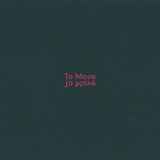
To Move is a new project by the trio of Anna Rose Carter (Moon Ate the Dark), Ed Hamilton (Dead Light) and Alex Kozobolis. Four-handed piano meets analogue manipulations to absolute wondrous effect from the London based friends.
We´re carried into a time and place not afraid to embrace a sense of optimism - even if it comes wrapped in a certain distorted shape. Transporting, blissful tones emanate free of concerns from the unifying keys; at least until the melodies are pulled and dragged from purity to become something wholly else – their own lived life; fitted with obstructions and unpredictability. The intertwining pianos linger like lovers in unison, full of drift, rhythm and life; all while analogue electronics and tape manipulations degrade and move them from their original form and closer towards earth itself.
The album came to light while Anna and Ed were temporarily residing in the English countryside between 2016 and 2019. Musical weekend visits from Alex turned into the fruitful collaboration presented here. 'To Move' is a compelling musical storyboard with a name that captures the essence of their music better than any written essay could do. This is music to resonate to, music to dance to, music to engulf your being. As for fans of the Sonic Pieces sound – if there is one – this record hits as close to home as it could do.
dovrebbe essere pubblicato su 25.11.2022

Felix Laband’s The Soft White Hand is the masterwork of an artist who expresses himself through musical and artistic collage acting together to reinterpret his sources and to express significant elements of his own personal story.
Released by Munich-based Compost Records, the 14-track album is Laband’s first full-length offering since the critically acclaimed Deaf Safari in 2015. It is heralded by the single “Derek and Me”, and is being pressed on vinyl for distribution globally.
In The Soft White Hand Laband works with source materials that will be familiar to those who know his previous four records – Thin Shoes in June (2001), 4/4 Down the Stairs (2002), Dark Days Exit (2005) and especially Deaf Safari which reached deep into the South Africa scene and its political culture to inspire its vocal and music sampling. However, the disengagement he felt from his homeland during his latest album’s creation – an abiding sense of untethered-ness to place and space, exquisitely rendered in tracks like “Death of a Migrant” – is perceptible in Laband’s desire to illuminate instead aspects of his own life.
“For this album, my source material became almost autobiographical as opposed to African statements I’ve worked with previously,” says the artist. “I have sampled a lot from documentaries from the 80s crack epidemic in impoverished African American communities and believe my work speaks unapologetically for the lost and marginalised, for those who are the forgotten casualties of the war on drugs. In the past, I have had my issues with substance abuse, and I know first-hand about the nightmares and fears, what it feels like to be isolated and abandoned.”
Few artists have managed to air these intimate aspects of their life so luminously as Laband does in tracks like “5 Seconds Ago”, “They Call Me Shorty” and in the strange and meditative “Dreams of Loneliness”. “I’ve been building this weird, autobiographical story using other people talking. It’s kind of humorous but it is also sad and beautiful,” says Laband.
Yet, as in all of Laband’s recorded output, the delineations between emotions are never starkly drawn and The Soft White Hand is also shot through with beauty. Nature appears in recordings made in his garden in the intimate early morning hours, whether as in the calls of the Hadada Ibis and other birdsong in “Prelude” or of the vertical-tail-cocking bird in “Derek and Me”. The last is a wonderful track with Derek Gripper, the South African experimental classical guitarist of international renown, whose 2020 song “Fanta and Felix” imagines a meeting between Fanta Sacko and Laband.
Laband’s eloquence in reinterpreting classical composers such as Beethoven in “We Know Major Tom’s a Junkie” is another thrilling aspect of the new record. “I’ve been properly exploring classical music on this album,” explains Laband, “taking melodies from classical compositions and reinterpreting them”. A fresh quality comes to his work through this sonic adventuring: the tender manipulation of the mundaneness of the computer’s AI voice to reimagine and reinvent iconic lyrics and melodies in strange and unexpected configurations.
The Soft White Hand is Laband’s most cohesive body of work to date. Yet it remains, in its sheer artistic scope, impossible to describe fully. Darkness abuts the gossamer light. A song that summons the sunrise and all the hope of a new day could also be about the final dipping down of the sun that portends a troubled night ahead. Interludes are invitations to expand outwards or shift inwards. Mistakes and “weird fuckups” in the sound are cherished as convincing statements against what Laband calls the “grossness” of perfect sound in modern music.
For this world-leading electronic artist, the boundaries are unfixed. He is inspired by the German Dada artist, Hannah Höch, who memorably declared: “I wish to blur the firm boundaries which we self-certain people tend to delineate around all we can achieve.” His music consequently reflects a primal artistic impulse that is also visible in Laband’s considerable visual art output as seen recently in several solo exhibitions such as that held in the No End Gallery in Johannesburg in 2019 and in the works he produced during his 2018 Nirox Foundation Artists Residency. “My music is always about collage, as is my art,’’ he affirms. “Everything I do is collage. It is a medium I find very interesting because you are taking history and distorting it and changing its meaning and turning it upside down and back to front.” In her book Recollections of My Non-Existence, Rebecca Solnit calls collage “literally a border art”; it is “an art of what happens when two things confront each other or spill onto each other”.
With The Soft White Hand, Laband is confirming his singular ability to achieve this in both art and music, melting the divisions between the two creative disciplines until they become one. He is also affirming his belief that an album of music should be more than a collection of unrelated tracks, but should unfold a fully integrated, cohesive story as in the song cycles of the great classical composers. In doing so, he claims his position as one of the most significant artists working today.
Artist Statement – Felix Laband – August 2022
When the Khmer Rouge took their captives for processing, they identified their class enemies by looking at their hands. If they were sunburned, rough and calloused, they were those of a peasant, a proletarian to be spared. But if they were soft and white, then they were those of a city-dweller, an intellectual or bourgeois, an adversary to be liquidated.
In calling this album The Soft White Hand, I was reflecting on the Cambodian genocide and how it resonates in contemporary South Africa. The apartheid era is over, and gone with it is white political domination. Yet economic and social privilege is still held in soft white hands. But those who grasp it know just how tenuous is their hold, how it singles them out, and my music reflects their subconscious fears, the stress and guilt of clinging on to what others envy and desire.
The soft white hand of the title suggests to me a further image, one that relates to all of postcolonial Africa. In my mind’s eye, I see the soft, duplicitous handshake of the smooth representatives of the superpowers making deals and promising gifts that benefit only them, and not their African dupes.
Yet, soaring above the wailing of sirens sampled from the first day of the invasion of Ukraine, my music is also about love gained and passion lost. It is about the tender caress of a soft white hand that conducts you into a place of dreams to be enfolded by nocturnal melodies.
Ordina ora e ordineremo l'articolo per te presso il nostro fornitore.

Ingredient is the elegant collaboration of Toronto poets, composers, producers and dear friends Ian Daniel Kehoe and Luka Kuplowsky. Their self-titled release is an enigmatic electronic avant-pop record attuned to the micro and macro perspectives of the natural world. Ingredient is an album whose lyrics are more poem than lyric, and whose songs exist in a merger of house music, philosophically-minded lyricism and contemporary R&B. One might recall electronic and art-pop luminaries such as Yukihiro Takahashi, The Blue Nile, and Arthur Russell, or connect it to contemporaries like Nite Jewel, Westerman and Blood Orange. A distinct world of dance, of questions, of secrecy and ultimate softness.
Eight years of friendship forges strange telepathy.
In the summer of 2020, Ian Daniel Kehoe was entrenched in a new feeling of heaviness; psychosomatic symptoms had started to proliferate; stress made new pores across the body, bending sensitivity into pain. His days were met with confusion, detachment, sleeplessness and pain without causation. Disfigured, he felt that what had been central and centering was blown out to the periphery of things. In a moment of self-preservation he reached out to his dear friend Luka Kuplowsky to make an album together. For Kehoe, it was an instinctual grasp for the anchoring truthfulness of deep friendship and the potential for a dedicated creative collaboration. Kuplowsky’s presence was light, supportful and curious, eager to explore musically the sounds they were mutually drawn to: house music, ambient pop, dub. The duality between Kuplowsky and Kehoe – between the Aflight and the Unmoored – is a portrait of a friendship whose exchanges came easy and produced an outpouring of song. Creation and therapy crisscross. In email correspondence that catalogs their process of collaboration, affection abounds: “feels bare without the Luka Licks”, or “Love you so much”, or “Kinda just overwhelmed with deadliness coming in at all angles.” When their voices first come in together on “Wolf,” that harmony arrives in a dramatic avant-pop sound that is bold and wondrous.
Kuplowsky and Kehoe both arrive at Ingredient as established artists whose works are committed to language’s propensity to provoke and mystify. Kuplowsky’s 2020 album Stardust is an idiosyncratic and otherworldly blend of pop and jazz romanticism grounded by Cohen-esque vocals and a stirring philosophical curiosity. Kehoe’s entrance into the new decade has hatched four records of pop experimentation, most recently 2022’s Yes Very So, a euphoric and bold album of poetic synth-pop and meditative ambient instrumentals. Kuplowsky and Kehoe’s union as Ingredient is a beautiful and unusual chemistry that integrates their distinct approaches while bringing forth a newness: a sound that alternates between cinematic technicolor and dubbed out fogginess; a lyricism that exchanges their lucid and clear poetics for a playful and obtuse verse. The album intuitively taps into the opposing emotional states of Kuplowsky and Kehoe during the conception of the record, contrasting the buoyancy of trumpeting keyboards (“Resurface”), angelic synthesized voices (“Come”), and rolling bass (“Photo”) with the record’s underlying darkness of whirring buzzsaw textures (“Transmission”), whooping sirens (“Wolf”) and murky ambience (“Illumination”). Lyrically, this duality arises in the record’s flux between openness (“Variation”, “Raindrop”) and existential dread (“Wolf”). “Illumination” most clearly crystalizes this opposition, reconciling the verses’ neurotic yearning for enlightenment with the chorus’ liberating doctrine of negation: “no more devotion… no more delusion”. Amidst the gradations of light and dark, Kuplowsky and Kehoe trade indelible, lush melodies as though their voices are made of a substance that melts easily one into the other. The harmony of poetry, sound, and texture cuts through your brain fog like a wet diamond.
Ingredient’s self-titled record was assembled by Kuplowsky and Kehoe over the course of six months in a home studio they frequented daily. Amidst synthesizers and drum machines they composed, re-composed, and workshopped a wide array of music, ultimately focusing on a set of eight songs that lived in a shared musical and philosophical world. Recording days often ended in basketball games at a local court or a rooftop commune over a pot of tulsi tea and a crossword puzzle. Kuplowsky brought in the Blue Cliff Record – the classic anthology of Chan Buddhism – whose inscrutable and sublime insights remained constant throughout the recording process as an activator of reorientation and reflection. While Kehoe was frequently rendered physically immobile by bouts of anxiety, a patience and mutual caring governed the pace of their creation; rest, stretching and meditation became equally important as the act of arrangement. Invited into their intimate circle of composition was Thom Gill, whose heavenly voice uplifts “Variation” and “Raindrop,” and Karen Ng, whose alto sax simmers and dances around the funky strut of “Raindrop.”
The lyrics on Ingredient reflect the persistence of change, the infinite variability of nature where randomness and divergence are no accidents. In Daoism, duality, in the form of Yin and Yang, is not contradictory as it is in Western idealist philosophy, but rather composes the eternal and lived paradox of our changeless-changing universe: changeless because all is change, and changing because the dynamism of the Dao makes each moment transformational. Kuplowsky and Kehoe refract this way of seeing the world, as in Variation: “Variation in the natural world / there it is.” Ingredient is an experience of the manifold ways of saying there it is of the transformational world, and there it is, unfolding. Elsewhere, change and ephemerality is addressed through the record’s preoccupation with non-human perspectives, reorienting the listener to the wolf, the mouse, the emerald frog, the centipede, the bird, the fly in the lamp. The album cover visualizes this fascination with the striking image of a reddish-orange frog atop a defamiliarized landscape of dark green leaves. Mirroring the exploratory process of the record’s collaboration, the frog also signals the amphibian’s natural inclination to leap into boundless potential. Kuplowsky and Kehoe’s lyrics manifest philosopher and ecologist Timothy Morton’s concept of “the mesh,” drawing attention to the “vast, entangled web” of interconnectedness that connects all life forms and interweaving the songwriters’ shared wonder into the Animal’s unknowability. As Luka narrates in the breakdown of the dance-floor ready “Photo,” “the closer we observe things, the further they retreat into abstraction.” In Ingredient’s ecosystem, perception is a reversible fractal where the world’s minutest details mirror the shape of the cosmos.
According to the Dao, the path to healing starts by reorienting perception away from the self and toward the self’s subsumption in Totality. For Kehoe, collaborating with Kuplowsky became the reorientation necessary for the self-preservation he was seeking, opening up a shared creative practice to navigate and soften the complexity of his psychological shattering. The album begins with Kuplowsky intoning “colossal faith” which bounces around the stereo field in a cloud of echo, and it is the enormity of “faith” that centers both Kuplowsky and Kehoe’s collaboration and their inquisitiveness in the vast mysteries of our very being. Truth in Ingredient is not an essential nugget, but a bending of the light – it is the equivocal entanglement of how we are in nature as nature, but with a plea or prayer under our breath that marks our felt distance from what we are a part of: “carry me towards the mountains of my birth / returning to the nest / the silence of the earth.”
dovrebbe essere pubblicato su 15.11.2022

Over the past decade, Vienna-based Florian Stöffelbauer – also known as Heap, has built a consistent reputation as a skilled DJ, producer and Neubau’s label head.
Isla is proud to present his latest effort “False Hope” which explores the intersections between industrial, electro and dark wave – all with a leftfield twist.
As diverse as it is powerful, the 7 tracks featured here almost feel like nocturnal tales, chalking out Heap’s observations wandering through the streets of a silent city, with cigarette smoke permeating the air and sirens ringing in the distance.
The cinematic essence of the release emerges from the very beginning, with the atmospheric beauty “Diall” transporting us straight into some late-80s scenery of Kraftwerkian nostalgia. In “Jetzt Oder Nie” a sharp knit of drums is placed on top of the grave frequencies of the bass: it’s indeed “now or never”, the moral imperative of the release, requiring us to take action.
Throughout the whole album, hypnotic sounds punctuate the dark space, bouncing between the polyrhythmic and uplifting energies of “Inner peace” and “No Palm Too Big”, a sneaky slow-burner with a nocturnal groove and Gayna Rose Madder’s robotic voice reciting the stream of consciousness of this urban wanderer.
“Trist” rises slowly yet powerfully thanks to its mystical synths covering the ground and preparing us for what comes next.
The title track “False Hope” holds the unique charm of a creature effortlessly floating in between dualities. As obscure as it is airy, as delicate as it is forceful, this hybrid composition is rich in details and plot twists.
At the end of this journey, “Losing time” reminds us of the urgency to take action expressed at the beginning of the album. In a rarefied canvas, an off-kilter solitary sound comes in, starting off as insistent as a car horn in rush hour, and evolving into a beautiful instrument arpeggiating the melody.
Here Heap concludes his narrative for now. We like to imagine him walking away, a shadow fading in the smoke of the city as the first lights of the day appear.
Ordina ora e ordineremo l'articolo per te presso il nostro fornitore.

Beatservice Records are thrilled to present the hotly-anticipated third album from Oslo-based production maestro, Third Attempt. 'The Novel Sound' follows on from the widely acclaimed 'Beats From The Quarantine' album released in April 2021, and further compliments the young artist's deserved reputation as one of the dance underground's most exciting talents to emerge in recent years.
Third Attempt (aka Torje Fagertun Spilde) has been dazzling us with his far-reaching music since arriving in the Beatservice fold with 'Shoreline' back in 2018, and since then his ever-evolving repertoire has continued to serve up immaculate sonic surprises. The fast-rising 23-year old artist has wasted no time making his indelible mark, displaying a frenetic work rate alongside an impeccable ear for constructing compelling leftfield grooves.
'The Novel Sound' opens with the rolling deviance of 'Freak Out', where a dusty string sample makes way for vocal samples, scratches, and searing sirens permeating a bass-heavy groove, setting the tone magnificently for the music that's primed to unfold. Next, we arrive in the mid-tempo chug of 'Age Of Steam'. Evolving over a crisp, club-ready rhythm, heavy funk guitars, dancing keys and distant vocal stabs cascade over driving bass before soaring strings herald the arrival of a slick breakdown section. The icing on the cake arrives as bubbling acid joins sensational horn motifs, breaking down once again for a starry-eyed beatless passage that leaves us yearning for a reprise.
'My Girl' features amorous vocal samples hovering over an irresistible disco beat, with alluring rhythm guitars and dreamy e-piano chords setting the scene for rousing horns to blast off into blissful summer skies. Before we've found time to catch our breath, 'Nu Funk' arrives with snappy hip hop samples scratched over tight beats and a delectable bass guitar hook. The groove pauses for dubbed-out space delays to echo into the night before a singing lead guitar joins the rhythm elements to burst back into life, with flute motifs, elegant strings, and otherworldly sweeps elegantly meandering across the panorama.
Set over a groove that arrives like a cool summer breeze, 'Sunbeam Symphony' drifts over soul-soothing chords, weighted bass and slick, rolling beats. Hypnotic keys guide us into position as the drums build energy and the bass notes power us forward. Third Attempt's dextrous keyboard solo dazzles momentarily before subsiding for a dub-infused break, with spaced-out vocal chops and rising sweeps building tension before the groove resumes and the virtuoso solo once again majestically soars. Maintaining the sun-kissed meditations, 'Definite' effortlessly floats through waves of thick bass, funk guitar chops and elegantly fused samples, with seductive chords, hypnotic horns and laser-tight drums combining to create a near overpowering dream state.
The heavy trip-hop rhythms of 'Nightfall' enrapture the listener as rich chords discreetly beckon, with cascading congas, mysterious melodies and exotic refrains building before the glorious lead vocal appears like a hyper-luminous flash of light. The chords disappear into the nothingness, before the carefully selected sample of 'Working Man' drifts in to fill the empty space. Smokey drums soon arrive, joined by weighted bass, foggy chords and an enigmatic whistle lead, fusing to conjure a half-lit world lifted from the pages of an evocative film noir novel.
The enlivening tablas, glitchy effects and saucer-eyed sweeps of 'Greed' hide subliminal messages casting a knowing eye over the consumer-driven society and self-help culture that pervade our society, before we arrive at the album's charmed finale. 'Last Winter Of My Childhood' yet again manages to transport the listener into a gently hallucinatory realm, with drowsy bass notes, tripped out pads and emotive strings building to a profound and rush-inducing crescendo.
'The Novel Sound' once again sees Third Attempt dextrously merging expansive musical aesthetics that fuse trip-hop, funk, soul and disco to deliver a sound that – although endowed with vintage sensibilities – feels proudly up to date. Continuing his breathtaking development in dazzling style, the album feels destined to echo over blissed-out sunsets, back-room excursions and twilight skies for many years to come.
Ordina ora e ordineremo l'articolo per te presso il nostro fornitore.

Marisa Anderson is one of the most eminent guitarists working today. Her lucid, eloquent approach to guitar music and composition has established her as an unparalleled artist and an insightful, coveted collaborator. Anderson"s work draws on a mosaic of folk musics and lives in conversation with myriad musical traditions. Her music is inviting and candid, beckoning the listener into sprawling ecosystems and intimate corners alike, from barren landscapes to verdant thickets, impassioned communal experiences to pensive reclusions. As a master of her instrument, Anderson translates abstractions into undeniably moving music, tracing through traditional folk tunes, imagined Sci-Fi films, and foggy sanctuaries of sound. Still, Here is Anderson at her most direct, laying bare her practice of processing and understanding the world through music and distilling that practice into pieces as expressive as they are transfixing. The pieces of Still, Here center around Anderson"s present. The album is a compendium of living moments captured by her preternatural ability to mold human realities into enduring, lyrical compositions. Away from the road for the longest stretch of her career, the making of Still, Here affirmed for Anderson the role of the guitar as an essential tool in processing external and internal realities. "I don"t get ideas and then turn to the guitar, rather I turn to the guitar to find out what my ideas are. I turn towards it for meaning." The discordance of protest and upheaval emanates from a propulsive acoustic ostinato and mournful dueling pedal steel guitars on "The Fire This Time," pausing only to allow space for the blare of sirens on the Portland street near Anderson"s studio. "The Crack Where the Light Gets In" rapturously revels in the glimmers of hope that peek through a pall of darkness. Across Still, Here, Anderson"s playing transmutes the tributaries of fluctuating emotions into a unified flow, stirring and sublime.
dovrebbe essere pubblicato su 23.09.2022

Marisa Anderson is one of the most eminent guitarists working today. Her lucid, eloquent approach to guitar music and composition has established her as an unparalleled artist and an insightful, coveted collaborator. Anderson"s work draws on a mosaic of folk musics and lives in conversation with myriad musical traditions. Her music is inviting and candid, beckoning the listener into sprawling ecosystems and intimate corners alike, from barren landscapes to verdant thickets, impassioned communal experiences to pensive reclusions. As a master of her instrument, Anderson translates abstractions into undeniably moving music, tracing through traditional folk tunes, imagined Sci-Fi films, and foggy sanctuaries of sound. Still, Here is Anderson at her most direct, laying bare her practice of processing and understanding the world through music and distilling that practice into pieces as expressive as they are transfixing. The pieces of Still, Here center around Anderson"s present. The album is a compendium of living moments captured by her preternatural ability to mold human realities into enduring, lyrical compositions. Away from the road for the longest stretch of her career, the making of Still, Here affirmed for Anderson the role of the guitar as an essential tool in processing external and internal realities. "I don"t get ideas and then turn to the guitar, rather I turn to the guitar to find out what my ideas are. I turn towards it for meaning." The discordance of protest and upheaval emanates from a propulsive acoustic ostinato and mournful dueling pedal steel guitars on "The Fire This Time," pausing only to allow space for the blare of sirens on the Portland street near Anderson"s studio. "The Crack Where the Light Gets In" rapturously revels in the glimmers of hope that peek through a pall of darkness. Across Still, Here, Anderson"s playing transmutes the tributaries of fluctuating emotions into a unified flow, stirring and sublime.
dovrebbe essere pubblicato su 23.09.2022
Produced by Heidecker, Drew Erickson, Eric D. Johnson and Mac DeMarco, High School sees Heidecker emerging as an increasingly playful and poignant story teller, infusing childhood tales with new gravity. In conjunction, he announces Tim Heidecker Live! Featuring Tim Heidecker and The Very Good Band, his first two-act tour of comedy and music. Since 2016, Tim Heidecker has chronicled the annals of adulthood on a series of supreme singer-songwriter albums. The crushing devastation of divorce and the existential malaise of middle-age, the minutiae of home ownership and the ritual of family vacation, child rearing and global warming: Heidecker has handled it all with humor and heart. But, there’s one pivotal lodestar of human development he has yet to mine that’s right, High School. First single “Buddy” is a composite of a few woebegone friends, which finds Heidecker reminiscing on the familiar tragedy of the adolescent stoner, manifesting the destiny of undiagnosed depression and parents who didn’t care much. The song itself is a jangly delight, but it’s hard not to mourn for “Buddy,” then re-count whatever blessings you may have. After initial and fruitful sessions with Jonathan Rado, Heidecker started recording tunes with DeMarco and Erickson, who had also worked on 2020’s collaboration with Weyes Blood, Fear of Death. At DeMarco’s studio, they added drum machines and synths and sidewinding solos to Heidecker’s big strummed chords. Johnson (Bonny Light Horseman, Fruit Bats) helped Heidecker finesse the tunes even more, making the music as rich as the feelings. Kurt Vile contributed to one song, as well. Through all those sessions, it slowly became clear: Heidecker was writing not only about the adventures and misadventures of life as a Pennsylvania teen in the early ’90s, but also how it felt to lose a juvenile sense of mystery and possibility as an adult. He was writing about high school and, really, the way it helped shape everything else. Back at Pennsylvania’s Allentown Central Catholic High School, Heidecker dreamed of making it with one of his many rock bands — Time and Other Things, Shaggy’s Beltbuckle, and (incredibly) The Pulsating Libidos. Two years shy of his graduating class’ 30th anniversary, Heidecker admits he had little of substance to say when he was 17, like all but the rarest of precocious minds. In college, though, he found the friends with whom he built his comedy career, largely apart from music and without much thought for his time back at Central Catholic. He was focused on his future. It is fitting, then, that as Heidecker has become such a delightful singer-songwriter and collaborator, he returns to the first scene of his time as a musician. Maybe he’s right — he didn’t have anything to say or sing about life back then. But across the earnest and amusing High School, he finds plenty to say about those weird and wonderful and ordinary times.
dovrebbe essere pubblicato su 08.07.2022

All Good Things create cinematic epic rock that celebrates the underdog, lifts the fallen, and all out gloats in victory. Pairing post-apocalyptic pump-up rock with powerful lyrics, AGT crafts a massive, bombastic sensory assault of anthemic heavy rock, summoning vistas associated with gaming or blockbuster movies. Their worldwide 'For The Glory' hit has accumulated more than 50 million streams, now their full length debut album 'A Hope In Hell' is set for release on August 20th.
dovrebbe essere pubblicato su 30.06.2022
