
No en stock
Haga su pedido ahora y le encargaremos el artículo en nuestro proveedor.
Ültimo hace: 11 Meses
Haga su pedido ahora y le encargaremos el artículo en nuestro proveedor.

Haga su pedido ahora y le encargaremos el artículo en nuestro proveedor.
The No Fuss label has been busy of late and is now dropping the many fruits of their labours with several EPs landing in quick succession. The 13th outing is a various artists affair that features two cuts from Saison on the A-side, though it is a Ross Couch remix of 'The Riff' that opens up. It's feel-good house with nice dancing piano chords and a Balearic feel while 'Feel This' brings more summery chords and dusty drum loops for some open-air dancing fun. Vertigini then offers the 90s-tinged 'Box Of Pandora' and Mo'Cream closes out with the already classic 'I'm Sure.'
Haga su pedido ahora y le encargaremos el artículo en nuestro proveedor.

Four artists with a taste for classic deep house infused with more than a touch of house line on the Silver Walker label's sixth release. Following releases on the likes of Local Talk, Balance, Traxx Underground, Mate, Quintessentials and upcoming projects on Nervous and NDATL, Shaka opens proceedings with a flurry of Hammond and plenty of exotic percussion, lie Alan Hawkshaw riffing with Underground Resistance. Glenn Davis (Wolf, Yore Records, Deeper Groove and Selections Records) delivers a deeper house workout on the A2 house track, the jazzy keyboard chords, fluttering flute and restless synths working real magic. One of the masterminds behind the Silver Walker label, Diego aka DFRA, comes on all perky with the saxes and soloing Rhodes, on the second side's opener, 'Nitewax'. Then we close with Damien aka Keymono (founder of several labels including Monocturne Records and Funkyshirts) laying on the handclaps of classic disco strings, the snippets of funk guitar and vibes the cherry on top.
Haga su pedido ahora y le encargaremos el artículo en nuestro proveedor.

When considering the jazz vibraphone giants of the 20th century, seven stand out: Lionel Hampton, Red Norvo, Milt Jackson, Terry Gibbs, Cal Tjader, Gary Burton, and Bobby Hutcherson. Bobby Hutcherson (1941-2016), originally inspired by Milt Jackson, emerged from Los Angeles in the late 1950s. After a stint with the Billy Mitchell-Al Grey sextet in 1962, Hutcherson moved to New York, becoming the house vibraphonist for the Blue Note label. His foundation in hard bop did not limit him, as he also played in avant-garde sessions with artists like Eric Dolphy and Jackie McLean. On December 11, 1983, the 42-year-old Hutcherson performed seven standards with a stellar group. Pianist George Cables, consistently excellent throughout his career, had been working with Hutcherson since 1977. Bassist Herbie Lewis, a versatile musician, had collaborated with Hutcherson since 1966. Drummer Philly Joe Jones, known for his work with Miles Davis, also contributed to the session. The recording of the Four Seasons album features seven standards, starting with Thelonious Monk’s “I Mean You,” which showcases each musician. Hutcherson’s solo on Cole Porter’s “All Of You” is particularly adventurous. “Spring Is Here” receives a beautiful interpretation, and “Star Eyes” is taken uptempo. Hutcherson’s introduction on “If I Were A Bell” is notable, as is Jones’s solo. The session spotlights Cables on “Summertime” and concludes with a vibrant version of “Autumn Leaves.” Decades later, the music remains a timeless classic. Four Seasons is available on black vinyl, celebrates its 40th Anniversary, and includes an insert with newly written liner-notes by Scott Yanow
debe ser publicado en 04.04.2025

LADYTRON--Helen Marnie, Mira Aroyo, Daniel Hunt and Reuben Wu--formed in 1999 and sparked an entire movement in music pop culture powered by vintage synths and electro-rock engines. Originally released in 2002 by Emperor Norton Records and re-released by Nettwerk in 2011, Liverpool electropoppers Ladytron’s second studio album Light & Magic was written and co-produced in Los Angeles by the band & Mickey Petralia and featured the underground hits “Seventeen”, “Blue Jeans” and “Evil.”
debe ser publicado en 04.04.2025

With Umwelt, room, An’archives releases the first vinyl LP by Japanese singer, songwriter and guitarist, Kotonashiso. An elegant collection of seven slow-moving, free-ranging song forms, Umwelt, room is reflective, pensive, and yet has a great, expansive sense of movement, each song’s parameters feeling almost infinitely flexible.
Born in Tokyo in 1984, Kotonashiso began playing music in 2000. After taking a long break from making music between the years 2005 to 2016, he returned with renewed focus, and over the past eight years, he’s toured Japan and Europe, performing in venues, street performances and open mic events. Currently, Kotonashiso plays either solo, on in three separate duos, with Sou Mori, 泥, and Hideya Kyooka, respectively. He’s not released much music, as yet – a single, “in the cavern”, with Sou Mori, in 2021, and a soundtrack to Hiroki Nakajima’s solo exhibition, Ray, the following year.
All of this gives Umwelt, Room the feeling of a major statement, a debut shot across the void. The seven songs collected here were recorded in 2024, with a guiding principle, for Kotonashiso, being his desire to “imagine the time when people started recording blues and folk songs on analog records,” creating a ghost-like presence in the listener’s room. When talking about the songs on Umwelt, Room, Kotonashiso focuses on a number of concepts, such as prayer, tragedy, ‘the cycle of life’, and the disappearance of the gulf between fantasy and reality.
They’re songs with deep, rich resonance, performed without guile. You might be able to hear, at times, the fragility of fellow Japanese singer-songwriter Hisato Higuchi, or the bluesy touch of Loren Connors in the guitar. However, Kotonashiso’s aesthetic remit is wide, identifying with artists like Bill Callahan, Scout Niblett, Inukaze, and Tomoko Shimazaki, and sharing sympathies with “the psychedelic rock, avant-garde and ambient communities.” Ultimately, though, the pellucid, dream-like songs of Kotonashiso, somewhere between folk, pop and blues, sit, disarmed and lovely, within their own universe.
debe ser publicado en 04.04.2025

Buffet Lunch have been a band since 2017. They are a pop group formed of musicians based in Glasgow, Edinburgh and (sometimes) Newcastle. Described previously as a band that creates 'a hodgepodge of noises' who are 'lyrically ridiculous'. Both claims are strongly denied by the group.
Buffet Lunch have released 3 EPs & 2 LPs since 2019 and 6 months after self-releasing 'For Display Purposes Only' are back on Upset the Rhythm with their third album 'Perfect Hit!'
‘Perfect Hit!’ was recorded in the West Highlands, in the shadow of the UK’s Biggest Ben, during Leap Year week 2024. George Horler (Holy Loaf) joined the band as recording engineer along with new members Matthew Lord and Jack Shearer plus founding members Perry O’Bray & Luke Moran, to spend a week writing and creating the record. The majority of the record was completed in the studio, with as much recorded ‘live’ as possible and the week flew by, and we had such a lovely time we forgot to go on a walk. Most of the songs are new and only been played a few times live.
Lyrically, the album contains more deliberately personal lyrics than previous records, with several songs addressing ancestry and becoming a parent (Quarrymen, Shoes, Blue Chairs). Elsewhere, the songs deal with thorny issues such as; identity & full face tattoos, hands, legs & a swordfish sighting (Perfect Hit), the importance of kindness (Blip), disgraced Presbyterian John Knox (Merchandise), a potentially disgraced sportsman featuring star turn from Beef Jerk front man Jack Randall Lee (King Conker) and historical consciousness via Wikipedia (List of Walls).
Musically, the aim (as ever) was to make an album which is as fun to listen to as it was to make. These are mostly playful pop songs with a focus on melody and hooks. There are approximately 40% more guitar chords featured on ‘Perfect Hit!’ than on previous records.
debe ser publicado en 04.04.2025

Green Vinyl
debe ser publicado en 04.04.2025

It’s always fun to let our audience peer through the party peephole with some hot behind-the-scenes info. For months, Black Light Smoke’s Control EP has supplied several of label head Tiga’s secret DJ weapons. In fact, he’s been sneaking out constantly after 9pm to play it out anywhere they’ll have him. And it’s little wonder to those who wonder why, as the Chicago-born producer’s top-flight mix of EBM, electro and Benadryl-soaked vocals has all the right people dancing.
Leadoff track "New York Is Dead” eulogizes the famous Big Apple Dance Party Scene in a way that will confuse the many who have embraced the city’s thriving “Groove With the Avengers” day rave series in Times Square. But the nihilism-liking doesn’t stop there, with the Friday-Til-I-Die attitude of “Black Hole at the Disco,” the pleather-dreaded post-cyberpunk of “Last Song Before Sunrise”, and the oxygen-deprived acid of “Break Your Back” culminating in the 11:45am-peak-time industrial trance of closer “Mind Control.”
Because we want this to be available to as many inhabitants of the blasted apocalyptic landscape we have pencilled in for 2034 or so, we have decided to make this release available both digitally and on vinyl. So whether you’ve managed to jack in illegally to a Spotify Wind Farm or you’re relegated to the hand-cranked misery of a Victrola while living in a barn or something, we’ve got you covered!
Haga su pedido ahora y le encargaremos el artículo en nuestro proveedor.

Haga su pedido ahora y le encargaremos el artículo en nuestro proveedor.

Haga su pedido ahora y le encargaremos el artículo en nuestro proveedor.

Ennio Morricone composed and arranged scores for more than 500 film and television productions, making him one of the most influential and best-selling film composers since the late 50s. The Legend of 1900 (Italian: La leggenda del pianista sull'oceano) is a 1998 Italian drama film directed by Giuseppe Tornatore and starring Tim Roth, Pruitt Taylor Vince, and Mélanie Thierry. The film is inspired by Novecento, a monologue by Alessandro Baricco. The Legend Of 1900 was nominated for a variety of international awards, winning several for its soundtrack, including a Golden Globe for Best Original Score - Motion Picture. This release includes the song “Lost Boys Calling” featuring Roger Waters & Eddie van Halen. Throughout his career, Morricone received an unprecedented amount of awards, including Grammys, Golden Globes and BAFTAs. Ennio Morricone has influenced many artists including Danger Mouse, Dire Straits, Muse, Metallica, Radiohead, Hans Zimmer, and many more. The Legend of 1900 is available as a limited edition of 2500 numbered copies on green coloured vinyl and contains an insert and is housed in a deluxe sleeve with silver foil finish.
debe ser publicado en 04.04.2025

The intense friendship between two thirteen-year old boys Leo and Remi suddenly gets disrupted. Close is a film about friendship and responsibility.
Close premiered at the Cannes Film Festival in 2022 to critical acclaim and won the Grand Prix. Specialized critics praised the performances.
The film was nominated for the Academy Award for Best International Feature Film at the 95th Academy Awards. It also won the André Cavens Award for Best Film by the Belgian Film Critics Association.
At the 12th Magritte Awards, Close received ten nominations, including Best Screenplay for Dhont, becoming the most nominated film of the ceremony and ultimately winning seven awards.
After training at the Music Conservatoire in Lyon, Valentin Hadjadj gained professional experience that led him to collaborate with the likes of Pink Martini and Gérard Corbiau, and compose the score for the feature film Avril et le Monde Truqué, which was nominated at the César and took home an award at the Annecy film festival in 2015. The beautiful score of Close is now finally available on vinyl. This is a limited edition on red coloured vinyl.
debe ser publicado en 04.04.2025

The intense friendship between two thirteen-year old boys Leo and Remi suddenly gets disrupted. Close is a film about friendship and responsibility.
Close premiered at the Cannes Film Festival in 2022 to critical acclaim and won the Grand Prix. Specialized critics praised the performances.
The film was nominated for the Academy Award for Best International Feature Film at the 95th Academy Awards. It also won the André Cavens Award for Best Film by the Belgian Film Critics Association.
At the 12th Magritte Awards, Close received ten nominations, including Best Screenplay for Dhont, becoming the most nominated film of the ceremony and ultimately winning seven awards.
After training at the Music Conservatoire in Lyon, Valentin Hadjadj gained professional experience that led him to collaborate with the likes of Pink Martini and Gérard Corbiau, and compose the score for the feature film Avril et le Monde Truqué, which was nominated at the César and took home an award at the Annecy film festival in 2015. The beautiful score of Close is now finally available on vinyl. This is a limited edition on red coloured vinyl.
debe ser publicado en 04.04.2025

Legendary producer Ant, best known for his work with Atmosphere, proves once again how irreplaceable he is with Collection of Sounds: Vol. 4. This latest release showcases the lifetime of dedication behind his craft, blending his unparalleled skills with a fresh, expanded vision. With previous volumes in the Collection of Sounds series, Ant has traced his musical evolution, spanning hip-hop, funk, reggae and more, all influenced and inspired by extensive travel dating back to his youth. Vol. 4 deepens this exploration, introducing rock-inspired elements—guitars that wail, gnaw, and groove—while maintaining his signature sound.
Despite these genre experiments, Vol. 4 is firmly grounded in hip-hop. The opening track, “Hearing In Dark Colors,” sets the tone, evoking long drives up desolate highways in the dead of night. Tracks like “Created With a Heavy Brush” and “Just Another Three A.M.” reveal a mastery of diverse soundscapes, while the triumphant “Day After 2010" takes listeners on an unexpected journey. As the album circles back to hip-hop on tracks like “A Pinch Brighter” and “Prelude Revisited,” it leaves listeners transformed, further solidifying Ant’s status as a visionary artist.
debe ser publicado en 04.04.2025

With a growing international reputation for championing forward-thinking artists in the contemporary jazz space, Denmark"s April Records proudly presents the third album from instrumental collective Andorra. Their most ambitious undertaking yet, the audio-visual release invites audiences to fully immerse themselves in the energetic grooves, lyrical melodies, and colorful modern production that define their sound. Andorra"s eponymous 2021 debut reunited five friends who met at the Funen Music Conservatory and went on to work across a range of disciplines, from film music and orchestral work to large ensembles and chamber jazz. Realising their long-held desire to explore their collective creative potential, the ensemble describes their sound as "modern vintage", bringing together the nostalgic warmth of analog synthesis, present-day digital audio manipulation techniques, and jazz musicianship steeped in tradition. Taking a decisive step to perfect the production of their music, the quintet recorded at Lundgaard Studios - one of Denmark"s most prestigious studios - and placed the responsibility of mixing in the hands of their own synth-guru Peter Moller, whose deep understanding of the band"s sound made him best suited for the role. Taking a step back from the dark, brooding music often associated with the Nordic countries, "III" is a playful, high-energy, deep pocket collection of seven original pieces that are unapologetic in their grooving, in-your-face attitude. Driving complex drum parts, shimmering guitar textures, squelching synth pads, thick old-school bass tones, and lush timbres from Mads La Cour"s horns deliver catchy and danceable hooks as easily as they do spacious explorations of texture and vivid harmony. The entire album has been shaped into a concert film directed by photographer Jesper Van, set to premiere at select cinemas across Denmark - soon to be available online - offering global listeners a comprehensive experience of Andorra"s creative vision.
debe ser publicado en 04.04.2025

Liz Stringer has been a steadfast and captivating feature of the Australian musical landscape over a six album career. Venerated by her musical peers and devoted fanbase alike, Stringer's world-class vocals, multi-instrumental prowess, notoriously powerful live performances and story-rich, genre-defying songs place her among the most important songwriters of her era. Mirroring the scope and complexity of Stringer's sensibilities and accomplishment as an artist, The Second High draws from Stringer's wider influences of jazz, funk and soul, and takes her ability to dissect the minutiae of the human condition through song - and connect with her audience - to a new level. The album is redolent with motifs of self-actualisation, lessons learned, sharp and ever-relevant commentary on social issues, and a strong and consistent focus on justice and equality. Fuelled by keys-driven grooves ranging from poignant grand piano lamentations (When You Met Me), the Rhodes-led jazz odyssey of On the Level, hip-hop flavoured keys brightening the bottom-heavy and deeply funky The Second High, to virtuosic keys that dance between strings and soaring multi-layered vocals in To Survive, Stringer's seventh studio album is a fresh and engaging ride to a destination yet uncharted, even by Stringer's standards - thrilling, stark and transformative. If 2021's First Time Really Feeling was an excavation, The Second High is an exorcism.
debe ser publicado en 04.04.2025

Another foggy day in Yorkshire. A steel grey sky. Raindrops tracing one another down the windowpane. Kirk Barley sits in his studio and assembles compositions from scraps of found sound and live instrumentation. Melodies swell, withdraw and repeat like waves. Time slows. Accelerates. Slows again. The light bends, tweaked at the edges. Twisted by rhythms that never quite resolve.
Written, recorded and produced by Barley in Yorkshire in early 2024, Lux picks up where 2023 LP Marionette leaves off, conjuring a mystical, reflective space between formal minimalism and sonic imaginaries of northern landscapes.
And yet, where Marionette relied at times on more recognisable field recordings, Lux leans into Barley’s skill as an instrumentalist and sound designer, working from a palette of short samples and utilising a variety of alternate tuning systems to build, layer and coax his compositions into being. Most evident on tracks ‘Vita’, ‘Sprite’ and ‘Descendent’, these tunings create an otherworldly harmonic language that is easier to perceive than describe.
Alongside more familiar instruments of guitar, bass, drums, organ and clarinet, here Barley draws on plastic saxophones and bells, and recordings of glass, wood and metal sound objects to provide the organic matter. Rather than directly representative of the natural world, Lux enters into a dialogue with it which, like the grasses and flowers of the album’s cover, exists somewhere between reality and artifice.
On album opener ‘Cache’, Barley constructs his own sense of time from a recording of an umbrella crank, a sparse and spectral piece which hints at memories embedded in the track’s title. Introspection blossoms into new life on ‘Vita’, crumpling again into the percussive ambience of ‘Verre’. A track that takes its harmonic lead from the clinks of glass, it features Barley’s long-time collaborator Matt Davies on drums, whose nuanced, tonally sensitive playing gives ‘Verre’ a fizzing, ice-like quality.
There are several moments where Lux picks up on themes Barley explored under electronic moniker Church Andrews on recent works with Davies, stretching and distorting temporalities most explicitly on ‘Descendent’, whose ritualistic air unfurls around a pattern in exponential decline.
Embracing the surrealism Barley absorbed over years watching classic film noir and the works of David Lynch and Federico Fellini, Lux wends its way through the enchanted sound worlds of ‘Sprite’ and ‘Balanced’ before arriving at the album’s title track.
An expression of his recent experiments in live, prepared guitar, ‘Lux’ brings the album back to earth, returning us to the room where the rain has stopped, the clouds have parted, and the soft warmth of the spring sun is pouring in through the open window.
Haga su pedido ahora y le encargaremos el artículo en nuestro proveedor.

Back in what now feels like a golden period in music and creativity, in the 1970s, many bands were formed by students. It almost seems like so many people could either sing, play, dance or write songs! This was also the case of several Woodland High School students in New York, who created Newban with fellow classmates.
The group started gigging around the tri-state area of New York, Connecticut and New Jersey, and were soon brought to the attention of legendary Bell Recording Studios audio engineer Malcolm Addey, who recorded with the band over a two-month period in 1974. Three years later the tracks made up two superb and sought-after albums released by tax scam label Guinness.
In 1977, Newban headed out to play the Los Angeles nightclub scene, closed a deal with A&M, and changed the band name to Atlantic Starr at the request of Herb Alpert.
For the first time on a 7” format, Soul4Real brings you two of the best songs from Newban. Enjoy the music...
Haga su pedido ahora y le encargaremos el artículo en nuestro proveedor.
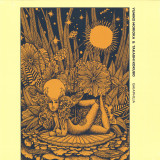
Japanese artists Yumiko Morioka and Takashi Kokubo unite for Gaiaphilia, a journey through ambient soundscapes that seamlessly blends Morioka’s graceful piano compositions with Kokubo’s immersive field recordings and atmospheric synthesisers.
This collaboration brings together two of Japan’s most influential pioneers in ambient and new age music, each with decades of groundbreaking work. Morioka, celebrated for her 1987 album Resonance—reissued to critical acclaim by Métron Records—infuses her introspective playing with Kokubo’s vivid environmental textures, creating a dialogue between nature and melody.
After releasing Resonance, Morioka stepped away from music, moving to America to raise her family. For years, her work was quietly cherished by fans, only gaining wider recognition with its reissue in 2020. A devastating wildfire destroyed her California home seven years ago, prompting her return to Tokyo where she became a chocolatier before rediscovering her passion for the piano in recent years, playing live shows and making new recordings.
Takashi Kokubo’s legendary discography spans over 30 years, and has found wider acclaim in recent years via YouTube algorithms and bootleg uploads, wracking up tens of millions of plays. Yet he is probably best known for his sound design work, specifically the Japanese earthquake alert sound as well as credit card payment jingles - his creations are pervasive in Japanese society.
“From our love and concern for our planet, we both offer a unique sensibility and spirit of inquiry which we express through our music.”
Rooted in shared philosophical interests, Gaiaphilia reflects a profound reverence for nature’s resilience and harmony. Themes of Gaia, Mother Earth’s renewal, and the interconnectedness of life are central, with inspirations drawn from cosmology, sacred geometry, and Japan’s mystical Katakamuna tradition. The album invites listeners into a meditative space where sound mirrors the delicate balance of the natural world.
A master of sound design, Kokubo enhances this vision with his distinctive field recordings, captured using a self-made binaural microphone shaped like a crash test dummy’s head. From the jungles of Borneo to the gentle rhythm of ocean waves, Kokubo’s globe-spanning recordings transform into immersive soundscapes that perfectly complement Morioka’s introspective piano compositions.
“The title, Gaiaphilia, is a newly created word to encompass our love and respect for nature and life, this feeling is the theme we hoped to express.”
Released on Métron Records on 12/03/25 and with artwork from Ventral Is Golden, Gaiaphilia marks a remarkable new chapter for Morioka and Kokubo. Recorded at Kokubo’s log house studio named Studio Ion in Yamanashi, their collaboration offers listeners a deeply emotional and transcendent experience, rooted in the timeless beauty of Japan’s natural landscapes.
Haga su pedido ahora y le encargaremos el artículo en nuestro proveedor.

Googling “paradise house”, the first results to pop up are an endless list of European b&b’s with whitewashed lime façades, all of them promising “…an unmatched travel experience a few steps from the sea”. Next, a little further down, are the institutional websites of a few select semi-luxury retirement homes (no photos shown, but lots of stock images of smiling nurses with reassuring looks). To find the “paradise house” we’re after, we have to scroll even further down. Much further down.
It feels like yesterday, and at the same time it seems like a million years ago. The Eighties had just ended, and it was still unclear what to expect from the Nineties. Mobile phones that were not the size of a briefcase and did not cost as much as a car? A frightening economic crisis? The guitar-rock revival?! Certainly, the best place to observe that moment of transition was the dancefloor. Truly epochal transformations were happening there. From America, within a short distance one from the other, two revolutionary new musical styles had arrived: the first one sounded a bit like an “on a budget” version of the best Seventies disco-music – Philly sound made with a set of piano-bar keyboards! – the other was even more sparse, futuristic and extraterrestrial. It was a music with a quite distinct “physical” component, which at the same time, to be fully grasped, seemed to call for the knotty theories of certain French post-modern philosophers: Gilles Deleuze, Félix Guattari, Paul Virilio... Both those genres – we would learn shortly after – were born in the black communities of Chicago and Detroit, although listening to those vinyl 12” (often wrapped in generic white covers, and with little indication in the label) you could not easily guess whether behind them there was a black boy from somewhere in the Usa, or a girl from Berlin, or a pale kid from a Cornish coastal town.
Quickly, similar sounds began to show up from all corners of Europe. A thousand variations of the same intuition: leaner, less lean, happier, slightly less intoxicated, more broken, slower, faster, much faster... Boom! From the dancefloors – the London ones at least, whose chronicles we eagerly read every month in the pages of The Face and i-D – came tales of a new generation of clubbers who had completely stopped “dressing up” to go dancing; of hot tempered hooligans bursting into tears and hugging everyone under the strobe lights as the notes of Strings of Life rose up through the fumes of dry ice (certain “smiling” pills were also involved, sure). At this point, however, we must move on to Switzerland.
In Switzerland, in the quiet and diligent town of Lugano, between the 1980s and 1990s there was a club called “Morandi”. Its hot night was on Wednesdays, when the audience also came from Milan, Como, Varese and Zurich. Legend goes that, one night, none less than Prince and Sheila E were spotted hiding among the sofas, on a day-off of the Italian dates of the Nude Tour… The Wednesday resident and superstar was an Italian dj with an exotic name: Don Carlos. The soundtrack he devised was a mixture of Chicago, Detroit, the most progressive R&B and certain forgotten classics of old disco music: practically, what the Paradise Garage in New York might have sounded like had it not closed in 1987. In between, Don Carlos also managed to squeeze in some tracks he had worked on in his studio on Lago Maggiore. One in particular: a track that was rather slow compared to the BPM in fashion at the time, but which was a perfect bridge between house and R&B. The title was Alone: Don Carlos would explain years later that it had to be intended both in the English meaning of “by itself” and like the Italian word meaning “halo”. That wasn’t the only double entendre about the song, anyway. Its own very deep nature was, indeed, double. On the one hand, Alone was built around an angelic keyboard pattern and a romantic piano riff that took you straight to heaven; on the other, it showcased enough electronic squelches (plus a sax part that sounded like it had been dissolved by acid rain) to pigeonhole the tune into the “junk modernity” section, aka the hallmark of all the most innovative sounds of the time: music that sounded like it was hand-crafted from the scraps of glittering overground pop.
No one knows who was the first to call it “paradise house”, nor when it happened. Alternative definitions on the same topic one happened to hear included “ambient house”, “dream house”, “Mediterranean progressive”… but of course none were as good (and alluring) as “paradise house”. What is certain is that such inclination for sounds that were in equal measure angelic and neurotic, romantic and unaffective, quickly became the trademark of the second generation of Italian house. Music that seemed shyly equidistant from all the rhythmic and electronic revolutions that had happened up to that moment (“Music perfectly adept at going nowhere slowly” as noted by English journalist Craig McLean in a legendary field report for Blah Blah Blah magazine). Music that to a inattentive ear might have sounded as anonymous as a snapshot of a random group of passers-by at 10AM in the centre of any major city, but perfectly described the (slow) awakening in the real world after the universal love binge of the so-called Second Summer of Love.
For a brief but unforgettable season, in Italy “paradise house” was the official soundtrack of interminable weekends spent inside the car, darting from one club to another, cutting the peninsula from North to centre, from East to West coast in pursuit of the latest after-hours disco, trading kilometres per hour with beats per minute: practically, a new New Year’s Eve every Friday and Saturday night. This too was no small transformation, as well as a shock for an adult Italy that was encountering for the first time – thanks to its sons and daughters – the wild side of industrial modernity. The clubbers of the so-called “fuoriorario” scene were the balls gone mad in the pinball machine most feared by newspapers, magazines and TV pundits. What they did each and every weekend, apart from going crazy to the sound of the current white labels, was linking distant geographical points and non-places (thank you Marc Augé!) – old dance halls, farmhouses and business centres – transformed for one night into house music heaven. As Marco D’Eramo wrote in his 1995 essay on Chicago, Il maiale e il grattacielo: “Four-wheeled capitalism distorts our age-old image of the city, it allows the suburbs to be connected to each other, whereas before they were connected only by the centre (…) It makes possible a metropolitan area without a metropolis, without a city centre, without downtown. The periphery is no longer a periphery of any centre, but is self-centred”.
“Paradise house” perfectly understood all of this and turned it into a sort of cyber-blues that didn’t even need words, and unexpectedly brought back a drop of melancholic (post?)-humanity within a world that by then – as we would wholly realise in the decades to come – was fully inhuman and heartless. A world where we were all alone, and surrounded by a sinister yellowish halo, like a neon at the end of its life cycle. But, for one night at least, happy."
Haga su pedido ahora y le encargaremos el artículo en nuestro proveedor.

Madronas’ debut LP Erogenous Biome is an amorphous, murky, cathartic offering. A duet of modular synthesizer and winds that’s equal parts doom and ecstasy, it’s the sound of a majestic butterfly emerging from it’s slimy chrysalis just in time to catch the sun setting on the end of days, a bewitching, heavy ceremony, a power-wash of both mind and spirit.
Tracked in one continuous take at Brooklyn’s Heavy Meadow studio, individual tracks were gleaned from the purge and eschew predictable structures, making for a dense, fluid suite of improvisation, like dancing smoke ribbons in the dark. The duo's chosen sound sources are seemingly opposite - Ry Fyan’s modular’s coming from electronic oscillators, Isaiah Barr’s saxophone and various flutes originating with the breath - but the visceral, imprecise, alive quality to the sound of both lends the record a thrilling combination of rapturous harmony and gritty, intense friction.
Opening the session in ritualistic, foreboding fashion, Voluntary lurches to life with rattles and wandering, bassy arpeggios before a suona’s cry signals the seance has officially begun. Ostraca Loam spits explosive modular rhythms and eerie shrieks for the flute to float above, while Detritus Harp smudges mechanical whirring, pensive horn and wind chimes for an untethered drift. Petrified Microdot swells with menacing sci-fi sequences and breathtaking sax runs until they both run out of breath, and Negative Lingam starts out in a panic of breathy riffing before exhaling into one of the most sublime passages on the record. Rhythmic pounding and undulating flutes punctuate Lenticular Shroud, before The Preparation Of The Novel sets the winds aside for a synthesized dual fit for electric dreams. The title track dominates the B-side, it's shimmering levity slowly unfurling to reveal itself as a kind of post-apocalyptic devotional music, deep space drifting grounded by earthly flutes, and Vale Of Cashmere offers an ascetic, contemplative closure, sparse flute and chiming rhythms organic or electronic - by this time it’s hard to know, it doesn’t matter either way.
Erogenous Biome is a world of it’s own, and one Impatience is honored to offer a window into.
RIYL - Senyawa, witchcraft, Colin Stetson , Civilistjavel, Mars (the planet), Finis Africae, raga, Stephen O’Malley, modular synthesizer, Anthony Braxton, Shabaka.
Madronas is Ry Fyan and Isaiah Barr. Fyan is a painter and tattoo artist, this is his first release. Barr is a prolific instigator of the downtown New York scene, producing and playing saxophone in jazz circles with his group Onyx Collective, as a player and/or producer on records by Nick Hakim, David Byrne and Wiki, performing live with William Parker and as part of his projects Universal Space Jam and Cafe Dewanee.
Erogenous Biome was recorded and mastered by Griffin Jennings at Heavy Meadow, Brooklyn.
Vinyl was cut by Beau Thomas at Ten Eight Seven Mastering, Berlin.
Artwork is by Ry Fyan, typography and layout by Nicolas Turek.
Haga su pedido ahora y le encargaremos el artículo en nuestro proveedor.

Toulouse appears to be a proper soundsystem town, a real Dub and Bass music hot spot. We were happy to get in touch with with Stefan Dubs from the former Folklore crew, running a handmade soundsystem with up to 6 full super scoops. He released several records under Folklore and later Maquis Son SistÈm, started a liveact which meanwhile runs under SÚn Du MaquÌs, organises soundsystem gatherings and raves around town with the ComitÈ Des FÍtes collective.
Luckily we were able to invite Jan Loup and him to Leipzig in 2023 to shake Bassmaessage with their soundsystem, including the amazing multi-track tape into vintage FX & mixing desk performance. If you ever have the chance to catch them live, you'll hear a special vividly rooted analogue sound, incorporating modern influences, covering various BPM from 120 to 170, but definitely bass heavy all along!
Irie skanks keep you floating along "Mogale Stepper", which shows SÚn's warm but forward bass abilities and the knowledge to keep it steppy without any militant aggressive kicks. "Puur Dub" has a the same instant reminiscence of digital reggae skanking, but adding a brilliant layer of Think break incarnations on top - killing advanced sub connoisseur meetings with ease. On the first check this plate may appear a bit different from the label's cutalogue, but if you settle in these lush textures and twisted dubs you'll see: this is a definitive 45seven sound!
Haga su pedido ahora y le encargaremos el artículo en nuestro proveedor.

Soul music has always been in Paul Weller’s blood from early Jam covers of Martha & the Vandellas 1963 classic ‘Heatwave’. Along with other forms of music, soul found its way into Paul’s record collection, nourishing his ears and informing his own songwriting
We don’t need to recap a questing musical career from the Jam to the Style Council and then blossoming into one of the most productive and revered careers of any UK solo artist. Paul has written anthems, standards and a songbook that have always developed from his own feelings.
Whilst Paul has talked about his love of soul music he has, before now, simply been too busy to sit down and curate a collection of his favourite tracks and get it into the record racks.
Ace Records are honoured and delighted to finally release that Paul Weller curated collection which he has aptly titled, “That Sweet Sweet Music”.
This 2-LP set and CD open the curtains on 26 tracks that are some of Paul’s favourite soul records most of which nestle on vinyl in his own collection. He can still recall paying £70 for his copy of Jon Lucien’s 1971 ‘Search For The Inner Self’ 7” at a record shop in Leicester in the 90s. Some of these tracks are soul classics like James Carr’s 1966 ‘Pouring Water On A Drowning Man’ and Brother to Brother’s brilliant take on Gil Scott Heron and Brian Jackson’s ‘In The Bottle’ from 1974. Others are deliciously obscure wonderous gems like the A-side of Blackrock’s sole 1971 single ‘Blackrock “Yeah, Yeah”’, ‘Life Walked Out’ from the same year by the Mist or Syl Johnson’s ‘Black Balloons’ taken from his 1970 album “Is It Because I’m Black?”.
There are plenty of big vocal hitters such as Darrell Banks, Spinners, Joe Simon, O.C. Smith, the Dells and Betty Davis. Whilst the core is vocal soul the music does branch out with Paul selecting a wicked instrumental from the flipside of the Isley Brothers’ ‘Twist & Shout’ from 1962 and the funky jazz of the Headhunters ‘God Made Me Funky’, the A-side of their first 1975 seven-inch.
debe ser publicado en 31.03.2025

Transport yourself to the vibrant streets of Havana with the Buena Vista Social Club's eponymous album, a captivating journey into the heart of Cuban music! Recorded in 1996 by acclaimed producer Ry Cooder, this timeless masterpiece celebrates the rich tapestry of Afro-Cuban rhythms and soulful melodies that have enchanted audiences for generations.
Buena Vista Social Club is both the name given to this extraordinary group of musicians and the album, recorded in just seven days in 1996 in Havana's 1950s vintage EGREM studios. From the infectious energy of "Chan Chan" to the heartfelt nostalgia of "Dos Gardenias," each track immerses listeners in the intoxicating blend of son, bolero, and guajira styles. Led by legendary musicians such as Ibrahim Ferrer, Compay Segundo, and Omara Portuondo, the Buena Vista Social Club ensemble delivers performances that are as exuberant as they are intimate, capturing the essence of a bygone era while igniting a passion for Cuban music that knows no bounds.
The acclaim of the original album has elevated the artists (including Ibrahim Ferrer, Rubén González and Omara Portuondo) to superstar status, inspired an award-winning film by Wim Wenders, and has contributed to popularizing Cuba's rich musical heritage. Produced by Ry Cooder for World Circuit, the timeless quality of the music and the sheer verve of the veteran performers have ensured that this will go down as one of the landmark recordings of the 20th century.
This 45 RPM Analogue Productions reissue pressed by Quality Record Pressings on four dead-silent LPs makes every note a transcendent experience. Meticulously crafted using the finest materials and exacting standards, this reissue pays homage to the golden age of vinyl, capturing the warmth and depth of the original recording in stunning detail. The package includes a 12-page booklet with lyrics and stunning studio images, topped off by a tip-on old style gatefold double pocket jacket made by Stoughton Printing.
Embark on a musical odyssey filled with warmth, joy, and the irresistible allure of Havana nights!
debe ser publicado en 31.03.2025

'It begins with a shoebox of mysterious provenance, full of recordings from the Vendée department on France’s western seaboard: songs of love and war, life and death, played out on land and sea. Songs passed down and sung by ordinary men and women, gracefully delivered with the poetic economy which unites the folk song of all peoples.
Next it takes a group of contemporary musicians to make selections from this treasure trove and sing these old songs anew; to sing them for their beauty, of course, and to reclaim the people’s tradition from those who would seek to exploit it for nefarious political ends. Who better for this task than Tartine de Clous, a singing trio from Vendée’s neighbouring department of Charente-Maritime, who burst into national and international consciousness with their debut album "Sans Folklore" in 2015? The result of their shoebox rummagings, the new album "Compter les dents", recorded in 2019 and finally seeing the light of day, is bound to delight old fans and win them many new ones.
Time makes many’s the alteration, and "Compter les dents" finds 'les garçons' - Geoffroy Dudouit, Thomas Georget and Guillaume Maupin - in a different state of being from their debut release. The trio, friends since youth, have certainly matured between albums, as one would expect; consequently the newer performances are more considered and poised, unfolding with a patient confidence. A relaxed domesticity prevails, something to do with the fact that the album was entirely recorded chez les amis, in contrast to the first album, which was mostly recorded at live performances in bars and night-spots across France.
Lending gravitas to the grain of their voices we mark a deepened richness, doubtless born of the various vicissitudes of daily existence which these gentlemen - and we too as citizens of this turmoiled globe - have weathered in the intervening years. Not too dissimilar, in fact,
from some of the vicissitudes detailed in those old Vendée songs. Plus 'ça change', right?
There’s a greater complexity and subtlety to their unique three-part harmonising, too. Their voices mesh in even stronger - almost telepathic - 'fraternité' than ever before: now commanding and mighty as a full-rigged counter-vessel, now gentle and lulling as a mother’s
cradle-croon, or as the whisper in a lover’s ear.
Three legendary figures of French traditional music, now sadly departed, preside as tutelary spirits over Compter les dents. They are: the late Claude Flagel, musician and ethnomusicologist; and the late Jean-Loup Baly of the well-known 1970s band Mélusine. Most of the album was recorded by Claude in the Brussels home he shared with his late wife Lou Flagel. The album is dedicated to the memory of Jean-Loup, Claude and Lou.
For the first time there are several guest instrumentalists working their magic to expand the Tartine de Clous sound. Jean-Loup plays a characterful accordéon on the song ‘La Veuve'. The other guests are: Maurice Artus (voice), Robert Thébaut (violin), Quentin Manfroy (piccolo, contrabassoon), Marceau Portron (cigar box guitar). Their contributions add even more conviviality to that which the trio of singers already share, a sensation which will doubtless be shared by those who happen to find a place in their lives for "Compter les dents".'
Liner notes by Alasdair Roberts.
debe ser publicado en 30.03.2025

Der Nachfolger von City of Evil, Avenged Sevenfold's viertes Studioalbum, das selbstbetitelte Album im schlichten Weiß mit Logo, debütierte auf Platz 4 der US Billboard 200 Chart und Platz 24 in UK. Mit dem Fan-Favoriten "Afterlife", "A Little Piece of Heaven" & "DearGod", wurde das Album mit dem Kerrang!-Awards als Album des Jahres ausgezeichnet. Das Album ist auch auf Kerrangs "666 Alben You Must Hear Before You Die" aufgenommen. Für Fans von Metallica, Slipknot & Bullet For My Valentine. Avenged Sevenfold (abgekürzt A7X) ist die amerikanische Heavy-Metalcore-Band aus Huntington Beach, Kalifornien, die 1999 gegründet wurde. Das aktuelle Lineup der Band besteht aus dem Sänger M. Shadows, dem Rhythmusgitarristen Zacky Vengeance, dem Leadgitarristen Synyster Gates, dem Bassisten Johnny Christ und dem Schlagzeuger Brooks Wackerman. Avenged Sevenfold sind bekannt für ihren abwechslungsreichen Rocksound und teilweise für ihre dramatischen Bilder auf Albumcovern und Merchandise-Artikeln. Die Band trat mit einem Metalcore-Sound auf ihrem Debütalbum Sounding the Seventh Trumpet in Erscheinung und setzte diesen Sound bis zu ihrem zweiten Album Waking the Fallen weitgehend fort. Der Stil der Band hatte sich bis zu ihrem dritten Album und ihrer ersten Veröffentlichung bei einem Major-Label, City of Evil, zu einem traditionelleren Heavy-Metal-Stil entwickelt. Mit dem selbstbetitelten vierten Album erkundete die Band neue Klänge und feierte einen anhaltenden Mainstream-Erfolg, bevor ihr Gründungsschlagzeuger Jimmy ,The Rev" Sullivan 2009 starb. Trotz seines Todes machten Avenged Sevenfold mit Hilfe des Dream Theater-Mitglieds Mike Portnoy weiter und veröffentlichten 2010 ihr fünftes Album Nightmare, das an der Spitze der Billboard 200 debütierte und ihr erstes #1-Album war. Doppel-LP, 2025er Pressung in rot-rotem Vinyl!
debe ser publicado en 28.03.2025

American Standard is the second studio album by American post-grunge band Seven Mary Three. It was released in 1995. The album would be Seven Mary Three's breakthrough success, rising to number 24 on the Billboard 200 and was certified platinum in the United States and Canada. Many of the songs were rerecorded versions of tracks off Seven Mary Three's independent debut, Churn. The album's biggest hit single was "Cumbersome" (#1 on Billboard's Hot Mainstream Rock Tracks, #7 on Hot Modern Rock Tracks, and #39 on the Billboard Hot 100).Other Billboard-charting singles were "Water's Edge" (#7 on Hot Mainstream Rock Tracks and #37 on Hot Modern Rock Tracks), and "My My" (#19 on Hot Mainstream Rock Tracks).
debe ser publicado en 28.03.2025

Brand new studio album from rising British metal hopefuls Seven Sisters! Slowly but surely cultivating a reputation for captivating, progressive heavy metal topped with finesse and intelligence, Seven Sisters have positioned themselves as one of the most intriguing young bands in the metal scene, combining an ethereal edge with genuinely catchy hooks and melodies. Comprising of just four tracks, but with a running time of 40 minutes, 'Shadow of A Fallen Star Pt.2' is at once ambitious and accessible, whether utilizing classic heavy metal tropes on lead single 'Heart Of The Sun' or experimenting with emotive atmospheres and ambitious sound collages on the sprawling 20 minute centerpiece 'Andromeda Ascending (A Fallen Star Rises)'.
debe ser publicado en 28.03.2025

Toy Tonics Music Berlin presents "Para Mytho Disco". The 2nd "Kapote" album of label founder and creative director Mathias Modica.
Keyboarder, DJ, producer, music nerd, graphic designer, multi-instrumentalist, sub-culture impressario and artist (formerly known as Munk of Gomma records.)
Kapote & Toy Tonics
In the last years Kapote was in the spotlight mainly for building the Toy Tonics label with his friends. Developing a platform for new positive quality dance music with a human touch. Toy Tonics is the opposite of the dark, druggy Techno and Trance sounds of the last years.
The warm inclusive music of Toy Tonics represents a new vibe that a young generation of diverse, stylish and culturally intersted generation of dancers loves now. Kapote's Toy Tonics became the key label for that vibe. (In 2024 Toy Tonics made 150 Toy Tonics events in 18 countries. With more than 150.000 people dancing. 90 millions streams on their music.)
Toy Tonics is more than a music label: It's a audio - visual universe. A community, almost a movement.
Based on a new positive attitude and aesthetic diversity. Mixing musicianship with DJ culture, analogue music with electronic, ideas from the past with sounds from now. To create something new. Connecting dance music with graphic design, art and underground fashion.
Kapote and his gang release vinyl, posters, shirts, art fanzines and make exhibitions and partys.
Toy Tonics started in Berlin as a underground niche project. But now became the key label of the new house, wild style disco and organic dance music scene.
Probably one of Berlin's biggest electronic music phenomena along with Keinemusik and Live from Earth.
It went fast: 2020 Kapote's crew started to make small parties in Berlin's off spaces. The "Toy Tonics Jams". The parties became "talk of the town", and Berlin clubs like Griesmühle and Panorama Bar invited the crew. Then international clubs and festival called. Toy Tonics were invited to SONAR (playing the mainstage with Kaytranada and DJ Tennis), KALA festival, Montreux Jazz festival.
Now TT has a residency at Panorama Bar Berlin and sold out events in Europe leading clubs like Phonox in London, Rex Club in Paris, Tunnel in Milan.
Toy Tonics now is the reference brand of a new generation of music loving dancers. Similar to Gomma records, Kapote's former label (2003 - 2015) that was one of the key labels of the "indie dance" scene of the Y2K years (along with DFA and Output Records).
Kapote created a multi-cultural movement with graphic designers, photographers, illustrators from the Berlin scene.
They publish the Toy Tonics Pocket Poster magazine, posters and design shirts. They organize the Toy Tonics Pop Up Galleries mixing music and art. In underground venues in Berlin and in new gallery spaces and museums around Europe.
Toy Tonics has been invited by Palais de Tokio museum in Paris, Triennale Museum Berlin, Design week Milano to create events.
The new Kapote album
The 12 tracks have a very own style. Based on dance music, but going much further. "Para Mytho Disco' is a futuristic mix of sounds. It's far away from the dark monotone techno and trance music from Kapote's hometown Berlin. Instead, he creates warm friendly atmospheres full of sonic colours and little musical surprises.
Kapote's knowlege of music history and his backround as a jazz piano student and son of classic music composer is clearly inside this music. Before turning into a DJ and electronic music producer he has been playing in bands since he was 13 years old.
The album is full of emotional chord progressions played by Kapote on various keyboards. Sometimes reminding music from the past, without being retro at all. The basslines and melodies are inspired by jazz fusion from the 1970ies. And he programmed syncopated grooves that come from afro-american dance music. There are influences from Japanese electronic music (Yellow Magic Orchestra), from 1980s Synthwave and from 1990s electronica (like Squarepusher and Luke Vibert).
Kapote plays keys, bass, flutes and percussions, he plays synth solos and sings on a few tracks. The complexity of the arrangements makes this music never boring. Lot of melodies and solos that catch the listener. Colourful soundscapes that make you want to listen or dance to this album more, and discover details also after you heard it several times.
Kapote background
Before starting Toy Tonics, Kapote used to run a label called Gomma. He produced four albums under the name Munk and music for other artists.
He produced music with Peaches, Franz Ferdinand founder Nick McCarthy, with New York street art legend The Rammellzee, Italian actress Asia Argento, the first three albums of WhoMadeWho and worked with LCD Soundsystem (listen to "Kick out the chairs", the Munk song with James Murphy )
In those "Gomma days" Kapote aka Munk was also one of the main DJs for VICE magazine parties and made music for art projects and fashion brands (Margiela, Prada, Colette).
In 2015 he stopped Munk and Gomma and started Toy Tonics. He found young producers and helped to develop their sound (Coeo, Cody Currie, Gee Lane, Barbara Boeing, Sam Ruffillo). Later he founded the sublabel Kryptox to release music by Berlin based bands that make new forms of jazz or neo classical sounds.
Under the name Kapote Mathias didnt release much:
Only his Kapote debut album "What it is" (2019) and an EP called "Electric Slide" (2022) and a collabo EP with Italian producer Sam Ruffillo ("Robot Salsa").
An although his Munk and Kapote music was an underground phenomena his music has always been a favourite of many great people from the scene.
Supported by DJs like Harvey, Chromeo, Moodymann, Jennifer Cardini, Gerd Janson, MYD, Andrew Weatherall to Blessed Madonna, Justice and Laurent Garnier… to name just a few.
Haga su pedido ahora y le encargaremos el artículo en nuestro proveedor.

"Daft Punk brought me here, he brought me Daft Punk"
Just knowing that this slice of hyper-rare disco dynamite was crafted by Thomas Bangalter's dad should be enough for you to buy this on sight, if only to understand a little bit more about Thomas and Daft Punk's background. But this is so much more than a Daft Punk family curio.
Born Bangalter in 1947, Daniel Vangarde is a French songwriter and producer. In 1975, Vangarde founded his label, Zagora Records, who we have worked closely with on this lovingly curated reissue. For years, Vangarde wrote and produced songs that remained underground, under several pseudonyms and for various artists. Dubbed "the secret father of French disco" this here groove-fulled firecracker - using his Who’s Who moniker - is for disco-funk, library music and cosmic beat lovers.
The intense, evocative opener "Palace Palace" positively throbs with raw energy and sounds, honestly, like something off Daft Punk's Discovery. The title refers to the fashionable Parisian club Le Palace, essentially the Parisian Studio 54. "I’d been to a nightclub in New York, a big ring where people were roller skating with a whistle. The atmosphere was great. The music was all disco. I made this song when I came back. A vocoder transformed my voice. Back then, it wasn’t used much." The track rides a killer groove and is deceptively complex, with layers of fantastic percussion and ace synth work going on all over it. Listed to on repeat, it's brilliance is simply undeniable.
The louche, slo-mo heater "Hypno Dance" is, in Be With's opinion, *the* deadly dancefloor track. A svelte slice of ace space disco again geared towards the roller skating dance mania of the day. So deep, so disco, so instrumental. An unreal track and, as the title hints at, totally hypnotic. The side closes with the somewhat throwaway "Popeden" - it's a jaunty number that you're probably best skipping, in all honesty. Have we ever steered you wrong?
The B-Side opens with the frankly enormous "Roll Jacky Roll" is another thrilling, high class roller-rink jam with beautiful melodies that's adored the world over. The wonky, abstract "Ad Libitum 80" is a super dope, swirling, staccato electro-funk bounce which sounds light years ahead of its time. This might be the real lowkey sleeper gem on this record. CHECK! This remarkable LP rounds out with the huge "Dancin' Machine". It's got sleek drums that emit an absolutely ace swagger and elements of Italo synth funk feels. A relaxed, slow rhythm throughout ensures you can't help but get your funk on when this crashes soundsystems. We'll leave the final word on this to Daniel: "It amuses me to think that my son Thomas was influenced by "Dancin’ Machine" for "Around The World", he says. Both songs being based on an hypnotic repetitive refrain. Both songs being, of course, timeless pieces of Euro genius.
Who's Who really is a fantastic late-70s-early 80s roller disco-funk essential. The audio has been carefully remastered by Be With regular Simon Francis, ensuring it sounds better than ever. Cicely Balston's expert skills have made sure nothing is lost in the cut whilst the records have been pressed to the highest possible standard at Record Industry in Holland.
When it came to the sleeve for this we were presented with an unusual problem: we usually have to rely on an original sleeve as the starting point for the restoration, but instead we were able to scan the original 35mm transparency of the front cover photo. The problem is that with a modern scanner the results were far sharper than when they made the original sleeve. We’ve played around with the exposure and the colour grading but we’re sorry to say that our version of the front cover still ended up looking too good! Don’t hate us.
Haga su pedido ahora y le encargaremos el artículo en nuestro proveedor.

After establishing the Serebii project with several albums’ worth of trancing neo-soul, much of it done in collaboration with fellow New Zealander Arjuna Oakes, Callum Mower had no lack of confidence in his musical abilities. But much of Mower’s focus in the past was on instruments and production—swirling, cinematic instrumentals under his own name or funky art-pop jams with others on vocals. On Dime, however, Mower knew he wanted to push forward with his own singing placed center stage.
debe ser publicado en 28.03.2025
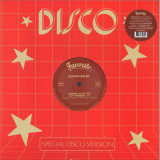
We’re thrilled to present this new 12inch single release, pursuing our digging into gems previously compiled in some of our various reissue compilations series.. On this occasion, it seemed only natural to highlight two exceptional tracks with numerous points in common.
"Hangin’ On to You" by Jonathan Jr. and "Flyin’ To Santa Barbara" by Special Occasion both hail from Belgium, produced in the mid-80s under the direction of Tony Baron, a producer and artist deeply involved in several New Beat projects and closely tied to the Nunk Records label. Both tracks also appeared in the 4th edition of our AOR Global Sounds compilation series, now sold out.
But beyond mere coincidence, these two tracks are perfect examples of the fusion between Disco rhythms and sound, with the smooth, colorful vibe of AOR productions from that era. Presented here in their 12-inch single versions, these gems are bound to delight DJs and music lovers alike.
We hope you’ll enjoy!
Your Favorite!
Haga su pedido ahora y le encargaremos el artículo en nuestro proveedor.

A crisp, spellbinding intro sets the mood for the first song on 'Maintenant Jamais', Population II's third album. With the guidance of producer Dominic Vanchesteing (Marie Davidson, Chocolat, Peter Peter), the turbulence of the band’s previous releases is structured and refined. The result is a sophisticated rock album that surprises with its languorous grooves, as heard on "Le thé est prêt", while staying true to the raw power for which the band is renowned, as demonstrated on vigorous tracks such as "La Trippance" and "Rédemption naturelle".
The album follows with "Prévisions", a song that ripples with finesse before abruptly transitioning into the instrumental number "Macavélique rock". While "Haut-fond" and "Cardinaux" are true feats of elegant prog rock, "Mariano (Jamais je ne t'oublierai)" and "homme étoilé" prove that Population II is also endowed with a profound melodic sensibility capable of creating catchy and explosive hooks.
On this new album, the trio fine-tunes the distinctive style they’ve been developing for several years, thanks in part to a fusion of shared influences – from Soft Machine to MC5 to L'Infonie – but also to a rare complicity that can only blossom between such close friends. This creative chemistry is what makes the band's complex songwriting seem so fluid and supple. Population II breaks through their previous sonic frontiers while remaining true to their roots. Therein lies the achievement of 'Maintenant Jamais'.
debe ser publicado en 28.03.2025

A crisp, spellbinding intro sets the mood for the first song on 'Maintenant Jamais', Population II's third album. With the guidance of producer Dominic Vanchesteing (Marie Davidson, Chocolat, Peter Peter), the turbulence of the band’s previous releases is structured and refined. The result is a sophisticated rock album that surprises with its languorous grooves, as heard on "Le thé est prêt", while staying true to the raw power for which the band is renowned, as demonstrated on vigorous tracks such as "La Trippance" and "Rédemption naturelle".
The album follows with "Prévisions", a song that ripples with finesse before abruptly transitioning into the instrumental number "Macavélique rock". While "Haut-fond" and "Cardinaux" are true feats of elegant prog rock, "Mariano (Jamais je ne t'oublierai)" and "homme étoilé" prove that Population II is also endowed with a profound melodic sensibility capable of creating catchy and explosive hooks.
On this new album, the trio fine-tunes the distinctive style they’ve been developing for several years, thanks in part to a fusion of shared influences – from Soft Machine to MC5 to L'Infonie – but also to a rare complicity that can only blossom between such close friends. This creative chemistry is what makes the band's complex songwriting seem so fluid and supple. Population II breaks through their previous sonic frontiers while remaining true to their roots. Therein lies the achievement of 'Maintenant Jamais'.
debe ser publicado en 28.03.2025

Sunset edition - 300 copies
Driving is Sam Wilkes’ Indie Rock record. Iit is the first release on Wilkes Records, an imprint borne of the artist’s emergent need to self-release. The songs presented here exist comfortably within the ever-expanding Wilkesian cosmos, characterized as they are by virtuosity, torqued experimentalism, and collaboration with a range of talented musicians. But Driving’s influences, its sincerity, and its allegiance to a certain pop sensibility reflects a departure for an artist who has primarily staked his claim within the experimental jazz idiom.
Take the first track, “Folk Home,” which inaugurates the album’s fecundity—a bright, green, humid, summer feel. A swirling, freakout coda of reversed vocals gives way, in no short order, to a caterwaul of flute work that conjures Van Morrison’s (in)famous Astral Weeks sessions. Standing beside Morrison, the usual suspects are all present, if somewhat abstractedly. Dylan, The Dead, Joni, the Fab Four. Wilkes has developed a reputation as an experimental jazz luminary, but his deep affinity for the pop/rock/folk idiom of the latter twentieth century rings clear throughout Driving. More so than any Wilkes release to date, Driving is a collection guided by and dedicated to the man’s attention to songcraft.
Written and recorded during a period of rain-damage induced renter’s itinerance (and the attendant desire to produce a kind of therapeutic, self-soothing, home-feeling music), Driving loosely charts the trajectory/experience of “a protagonist,” both Wilkes and not, “who has figured out how to live an enlightened and fulfilled life, but is unable to do so because he thinks about it too much.” This friction is surely relatable — a symptom of our compulsively self-aware present. But Wilkes avoids the obvious pitfalls of public hand-wringing. Rather, Driving’s nine tracks evince a genuine, and mature searching-ness, both sonically and lyrically. The ending refrain of “Own” serves like something close to a thesis— “Letting go // isn’t a concept // it’s an action.” In an attempt to beat back ego, hyper-cogitation, language itself, Wilkes arrives at an axiom that feels so true and familiar, you’d swear you’d heard it one hundred times before.
Driving’s final third is, fittingly, its most emotive and cathartic. Tracks seven and eight, “Again, Again” and “And Again,” form a diptych, joined most obviously by the jangling, recursive grooves of guitarist Daryl Johns. Wilkes is said to have encouraged Johns to go “full Lindsey Buckingham” (clearly a welcome and resonant prompt), but one also catches stray Knopfler vibes, some intermittent Fripp, and (perhaps more-so in tone than technique) the spirit of DIY prophet and jangling man himself, Martin Newell (the Cleaners from Venus). Wilkes has stated that he finds joy in creating musical environments suitable to the contribution and flourishing of his favorite musicians. Throughout Driving, and in these two tracks especially, he has more than succeeded.
The record closes with the titular track: a story-song that, according to Wilkes, poured out of him (melody, composition, and lyrics) in a single sitting. The tale is told plainly, bravely, starkly; a mistake was made, regrets have been had, and all is wrapped up in the recollection of a deeply felt adolescent heartsickness—a time when the narrator was first afire with music and automotive freedom. The song captures the moment when meaning inexplicably falls into place, when a long-nagging memory suddenly assumes narrative form, and the subsequent sense of lightness and unburdening. It is fitting that Driving, a record conceived as a form of self-therapy, should culminate with a sense of humble revelation. That Wilkes is plainly eager to share the vulnerable fruits of this labor constitutes Driving’s joyful offering.
Words by Emmett Shoemaker
debe ser publicado en 28.03.2025

SC returns with a full length LP showcasing his vast armoury of musical ability in a controlled, contemplative reflection of his inner self, laid bare in breaks-driven form for the enjoyment of Spatial fans new and old - continuing the ongoing celebration and evolution of classic atmospheric drum & bass.
A1 - Fear of the Deep
Curious, high twinkling bells cautiously introduce Fear of the Deep, reminiscent of classic sci-fi movies building atmosphere and intrigue, before the hi-hat heavy, snappy break previously used in Spatial classic Essence (also by ASC) makes a welcome return. The 2-step - occasionally broken - beat pattern drives the track along with a darkly, investigative energy, while a typically deep bassline rumbles beneath, setting the scene perfectly.
A2 - Concentric Circles
A change of pace for ASC here with Concentric Circles, exploring a jazzier spectrum of influences not often broached in his production adventures, with broken scattershot beats toying and playing around a wealth of reverberating brass samples to create a minimal yet quietly imposing undertone. Double bass props up the composition wonderfully, completing an exquisitely quirky entry to the LP.
B1 - Say It
Opening with rousing strings and quietly ominous effects, ASC utilises a unique fusion of melancholic atmospherics, jazzy basslines and a classic old-school breakbeat to form Say It. Dense, purposeful kicks stomp across the mix as the strings and synthwork wash in the foreground, developing a sombre, contemplative tone to the track throughout, before a wonderful outro ending with those delightful strings.
B2 - Virtual World
Filtered Hot Pants breaks gently ease their way to the forefront of a beautifully constructed intro to Virtual World, trademark crispness and intricacy etched onto the beats effortlessly, as we've come to expect from ASC. Delicately nuanced vocal samples combine with an intense concoction of synths and micro-melodies, dancing over the sharp breaks and a suitably earthy undertone bassline.
C1 - Eons
The classic, intense atmospherics continue with Eons, a spacey piece introduced by a memorable melody, tinged with purpose and allure. This melody continues through sci-fi computer FX reminiscent of early 720, and persistent backdrop synths as we are treated to a gentle flurry of perfectly edited amens leaping and falling over subtle, juddering basslines creating that elusive blend of both headphone and dancefloor appeal.
C2 - Timeslides
ASC flexes the timeless Hot Pants break again - crisply edited with a sharpness in the mix which is simply to die for - in Timeslides, a track which continues the brooding, introspective tone of the LP. Utilising a varied array of samples and effects which will transport you straight back to that unmistakable era of 90's atmospheric heaven with several nods to forefathers of this wonderful sound - just how we like it at Spatial.
D1 - Lightspeed
Take a moment to appreciate the bells tolling, glimmering and colliding during an enchanting intro, freely crafting layered melodies without a care as ASC presents us with an immensely memorable piece in Lightspeed. Long, elongated vocals drift and swirl through the airy soundscape, all punctuated by finely tuned and arranged Circles breaks, energetically deployed for the discerning breakbeat aficionado.
D2 - Nightvision
Intensity is dialled up to 11 in Nightvision, a deeply atmospheric track which showcases a perfect, symbiotic combination of melancholy, drama and raw energy. The lively breaks take center stage over a heavy, consistent 808 bassline with enveloping masses of atmospherics circling, gripping your attention, joined by dreamy vocal samples deployed subtly in an ever-changing tone to close the LP in style.
Words by Chris Hayes (Spatial / Red Mist)
Haga su pedido ahora y le encargaremos el artículo en nuestro proveedor.

The debut album from Whitney Johnson & Lia Kohl has evolved over several years from their initial practice of free improvisation on viola and cello into (for the moment), this: a neophonic orchestral expression. At once stimulating and soothing, For Translucence is a living, breathing meditation in which layers of acoustic strings, synthesizers, field recordings, radio and sine waves illuminate each other as they twine and grow.
debe ser publicado en 28.03.2025

As a founding member of Dublin experimental folk group Lankum, Ian Lynch explores submerged leylines of music and song. Forging a musical path that is all at once dark, mysterious and foreboding, but ultimately transcendental. His new solo project One Leg One Eye sees him taking a fresh approach to musical arrangement culminating in a sound that is more rooted in the raw aesthetics of second wave black metal than contemporary folk. The project was born across 2021, a period in which Lynch was able to enjoy the freedom of experimenting and exploring different paths of sound design without expectation or pressure. Seeking out interesting settings to record music and gather field recordings, there are several environments, external and interior, whose respective essence have seeped into the spirit of the music and come to represent Lynch’s artistic approach and development with this singular debut album, …And Take The Black Worm With Me. Rediscovered spaces in Dublin and the familiar enclave of his bedroom are intrinsic to the distinct and sometimes harrowing atmosphere conjured throughout the album’s five enveloping compositions. One particular location, an abandoned factory where his father worked when Ian was a child, provided a space of great inspiration and intrigue during this time. Lynch frequently visited the large abandoned warehouse and sang with his shruti box, contented in his solitude. ‘I’d Rather Be Tending My Sheep’, grew into existence from those initial sessions, eventually finding a home as an emotive centrepiece to the album. Reflecting on the overall recording of …And Take The Black Worm With Me, Lynch says, “Everything I was doing with these songs was all kind of new to me; experimenting with different sounds, textures and palettes and seeing what I could come up with by piecing it all together. I spent about a year making the album. I loved the whole process because it was basically just me in my bedroom recording everything. The experience of recording like this and having my own time to do it was amazing. I could focus on recording a specific element and happily spend all day working on that one part, doing it as many times as I wanted. At the end of the day if it didn’t feel right, I could just try it again the next day. When you’re on your own you can spend as much time as you want on particular parts until you feel that it’s absolutely perfect. I found that to be a really liberating experience. It was probably my favourite experience recording music.” The collection of songs (and their chronology) featured on …And Take The Black Worm With Me tell a story unique to Lynch’s experiences with anxiety and recognising his shadow self. Whilst the album became an outlet of personal expression for Lynch, the overarching themes and subsequent journey to confront one’s internal dichotomy of light and dark before accepting this inherent duality is universally shared. The eerie and often unsettling world contained within the album’s texturally dense opener ‘Glistening, She Emerges’, driven by the captivating drone of distorted uilleann pipes, immediately immerses the listener in this transportive work. It descends with a great heaviness, yet woven throughout the arrangement is a fascinating and indescribable entity that draws you further into this otherworldly dimension. This mood continues as the tracklist progresses and transitions into Lynch’s haunting realisation of ‘Bold and Undaunted Youth’ which further demonstrates a cinematic influence to Lynch’s compositional style. Sonically, Lynch effectively builds an impressively vast terrain with brilliantly murky lo-fi recording techniques and an unshakable curiosity to move beyond conventional structures and play with the timbre of the instruments available to him. From recording hurdy-gurdy or concertina to tape and experimenting with loops and effects pedals to stitching field recordings together, there’s an intimacy established between Lynch and his audience established through the simultaneously eerie and beautiful tones courting through …And Take The Black Worm With Me. This culminates in ‘Only the Diceys’, the extraordinary closing track in which we reach a place of resolution mapped into the album’s narrative structure. Mixed by longtime collaborator John ‘Spud’ Murphy in his Dublin-based Guerrilla Sounds Studio and mastered by Harvey Birrell …And Take The Black Worm With Me features contributions from Ruth Clinton (Landless) on church organ and vocals by Laurie Shanaman (Ails, Ludicra). Of Shanaman’s participation, in particular, which further illustrates the lo-fi and DIY ethos to the recording, Lynch says, “Laurie is my favourite black metal vocalist of all time and so I reached out to her hoping to have her involved in some way. She did, and she features on the opening track by providing some incredible screams. She recorded them into her phone and sent them over to me; what appears on the album is literally a phone recording of her screaming in her kitchen!” …And Take The Black Worm With Me continues Ian Lynch’s groundbreaking work with Lankum; recontextualising traditional forms and generating new spheres of music in his wake, confirming his status as one of the most interesting and innovative artists working in Ireland today.
debe ser publicado en 28.03.2025
