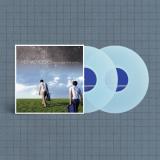
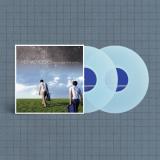
quête:seve

Genres
Tout
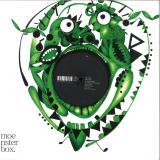
End Of Tape - Tape Jam Ep

End Of Tape

Tape Jam Ep

12inchMBOX003
Moensterbox
01.04.2011

After several releases on labels like Bar25, Microtonal, Dantze and Etui Records End Of Tape finally hit the box with their Tape Jam EP.

These guys don´t talk with each other, they just do music and that´s the best. The result of this gone wrong musician friendship (but tight producer team at the same time) you can celebrate with this EP.

This is no snow from yesterday, it´s the musical climatic change of tomorrow - without any opportunity. Played & supported by Paco Osuna, Anderson Noise, Lexy, Electric Rescue, Beatamines, Gabriel Ananda, Piemont, Carlo Lio, Markus Kavka and many more.

En stock

Disponible en stock et prêt pour l'expédition

Various - Buddha Bar Vol XXVII 2x12"

Various

Buddha Bar Vol XXVII 2x12"

2x12inch3477206
Wagram
17.04.2026

The Buddha Bar collection is the one of the most emblematic electronic compilation series with over several million copies sold over the years. Discover the 27th Buddha-Bar Compilation, Mixed by DJ Ravin. Immerse yourself in the captivating and unique world of Buddha-Bar with this new « haute couture » selection. This latest edition, masterfully mixed by the iconic DJ Ravin, takes listeners on a mesmerizing sonic journey, blending sophisticated electronic beats, worldwide sounds, and deep chill and house vibes. More than just an album, it’s an immersive experience perfect for setting the mood at any gathering or accompanying moments of pure relaxation. With a legacy of globally acclaimed compilations, the Buddha-Bar series has already captivated millions, creating a lifestyle phenomenon like no other. Available on March 28th, Buddha-Bar XXVII is a must-have for fans of lounge and electro music. Give your customers the chance to escape into this musical adventure

pas en stock

Commandez maintenant et nous commanderons l'article pour vous chez notre fournisseur.


Derniere entrée: 37 jours
DANS DANS - LIVE! LP

DANS DANS

LIVE! LP

12inchUNDAY177LP
UNDAY RECORDS
17.04.2026

In the Summer of 2023, Dans Dans were nearing the end of a two-and-a-half-year-long period of intense creativity, during which they had released two celebrated albums, Zink and 6, and had toured extensively in Belgium and abroad. Feeling it was time for a well-deserved break in activity, they decided to play three final, intimate concerts before going into hiding: two consecutive nights at Trix in Antwerp (hometown of drummer Steven Cassiers and guitarist Bert Dockx) and one at Botanique in Brussels (hometown of bassist Frederic Jacques). 'LIVE!', Dans Dans' first ever full length live record, features highlights from these memorable nights, offering excitingversions of several of the group's most beloved compositions from across their back catalogue. While the band is, at the time of writing, getting ready to start working on new material, these recordings from 2023 are a good reminder of the magic Dans Dans are able to conjur when they get together and play. Here is one of the most original instrumental trios of the last two decades in their natural habitat, on stage, performing for a live audience, speaking through their intensely personal music. Here is Dans Dans at full flight, effortlessly blending different musical genres and painting fascinating sonic landscapes full of energy, mystery and contrast.

pré-commande17.04.2026

il devrait être publié sur 17.04.2026

La Fantastica - From Ear to Ear

La Fantastica

From Ear to Ear

12inchVAMPI355
Vampisoul
17.04.2026
  • A1: Borinquen
  • A2: Con Quien Andas
  • A3: Latin Blues
  • A4: Ya No Te Quiero
  • B1: Negrita Mia
  • B2: Telegrama
  • B3: M & M
  • B4: Sassie

Ghetto Records was Latin music legend Joe Bataan’s way to get over on The Man and out of the ’hood, a bold move by an artist looking for independence and creative control in an industry that had exploited his talents and treated him like chattel.


As Bataan puts it today, “Ghetto Records was part of my journey, a stepping stone to everything else that I’ve done. I learned enough that it enabled me to get out of the box with my thinking, it showed me how to deal with adversity.” Like many dreams and schemes born of the street, this one was audacious, perhaps even reckless to a fault.

Hatched from desperation yet full of hope Ghetto Records came crashing down shortly after its inception. The seven albums in its discography languished out of print - until now.

pré-commande17.04.2026

il devrait être publié sur 17.04.2026

LOS FELCAS - SABOR A FELCAS

LOS FELCAS

SABOR A FELCAS

12inchVAMPI348
Vampisoul
17.04.2026
  • 1: Un Go Go Para Ti
  • 2: Dame Un Besito
  • 3: El Son De Los Ros
  • 4: El Ayayero
  • 5: Tu Bello Cuerpo
  • 6: La Cuzqueñita
  • 7: Santa Rosa De Lima
  • 8: El Leoncito
  • 9: Sabor A Felca
  • 10: La Maconita
  • 11: Duérmete Mi Niña
  • 12: La Chusquita
  • 13: Manzanita Coloradita
  • 14: Mi Per

Los Felcas were one of the best bands to come out of Peru during the golden years of the cumbia and tropical sounds explosion. This compilation brings together their finest recordings, taking from albums and obscure 45s, blending a wide range of influences-from psychedelic vibes to rhythms closer to guaracha and chicha-and now being reissued for the first time. In Lima, founding member, guitarist Florentino "Tino" León, quickly joined the Peruvian cumbia tropical movement led by electric guitarists Enrique Delgado (Los Destellos) and Berardo Hernández "Manzanita". This new style was soon practiced by other groups from Lima, such as Los Ecos, Los Beta 5, Los Diablos Rojos, and, a bit later, by bands from the rest of the country. This movement became a massive phenomenon. Nelson Ferreyra and the multifaceted singer Pablo Villanueva Branda "Melcochita", who had become fans, introduced them to the MAG record label. In mid-1973, they recorded their first 45 RPM singles, with 'Sabor a Felcas' being their most popular release. They recorded several albums during the late 70s and 80s, mostly on MAG: "La Blanquiñosa", "Tu bello cuerpo", "La cusqueñita" y "Manzanita coloradita". In the early 1990s, chicha music became popular in Argentina, especially in the north, where 'Boquita perfumada' by Los Felcas was a hit.

pré-commande17.04.2026

il devrait être publié sur 17.04.2026

Jérôme Bouve & Delphine Dora - Vents d’aether LP
  • Vent D'aether
  • Réville V
  • Levast Ill
  • Le Vast Iv
  • Le Vast Xiii
  • Montfarville V

»Vents d’aether« is the first collaborative album by sound artist Jérôme Bouve and composer-performer Delphine Dora. The six pieces are based on live improvisations on organ and harmonium. They were recorded in different churches on the Cotentin peninsula in France’s Normandy region and later enriched with additional field recordings by SA~RA. This adds an extra layer to compositions which were created both in and out of the moment and which quite literally resonate with the histories of the instruments and the buildings that were so integral to their emergence. »Vents d’aether« is to be understood as a dialogue between sound and space that takes place across time and place.

Bouve carried the idea of working with the organs and harmoniums that can be found in the churches and chapels in the Val de Saire in the Northeast of Cotentin around with him for years. When he got to know Dora, he found the perfect musical partner with whom to finally make a record »about the wind, the wood, the stones of the Val de Saire.« In September 2024, the duo embarked on a short but fruitful journey during which they stopped by at several different churches. They recorded hours-long improvised sessions dedicated to »capturing the moment, letting space and time shape gestures and sound, seizing fleeting epiphanies in their greatest simplicity,« as Dora notes in the album’s linernotes.

She took the lead behind the instruments, however Bouve assisted her on drawbars for the last two pieces on »Vents d’aether,« thus adding an even more unusual touch to the recordings. They formed the basis for an album that Dora calls »the testimony of a sensory quest, a collection of memories suspended in time.« Indeed, starting with the epic 20-minute-long titular piece up until the ringing of church bells near the end of the closing piece »Montfarville V,« this overwhelming yet intimate record blurs the boundaries between different times and spaces altogether.

pré-commande17.04.2026

il devrait être publié sur 17.04.2026

Kathryn Mohr - Carve LP

Kathryn Mohr

Carve LP

12inchFR191LPX
Flenser Records
17.04.2026
  • 1: Bone Infection
  • 2: Doorway
  • 3: Angle Of Repose
  • 4: Commit
  • 5: Property
  • 6: I Do
  • 7: Idiocy
  • 8: Owner
  • 9: Cells
  • 10: Chromium 6
  • 11: Trouble Me
  • 12: Crow Eyes
également disponible

Black Vinyl

Tape


Carve is the second full-length by Bay Area artist Kathryn Mohr. Written over the course of five years and recorded over several weeks in a rural singlewide in the Mojave Desert, the album centers on love experienced as a form of grief, not as an aftermath of loss, but as a condition of intimacy itself.

Mohr describes Carve as an album about how memory exists outside the body, embedded in places and landscapes. It is shaped by her first return to the American Southwest since a childhood road trip at age five, and by the experience of moving through terrain that holds emotional weight long after its origins fade. The record considers how intimacy feels after years of isolation, and what it takes to carve out a life that allows for trust, presence, and feeling rather than mere survival. The project took form after a difficult tour that ended in Joshua Tree. Mohr pointed her car into the desert and drove alone, crisscrossing the Mojave on dirt roads. Months later, she returned to record the album, working alone with an acoustic guitar, a field recorder, and limited supplies. Following that period, Mohr began to allow for intimacy and connection. The time she spent recording Carve in the desert did not create isolation so much as mirror it. Working alone out of an old, western-themed jail Airbnb, the physical enclosure reflected the emotional conditions under which much of the record had been written: distance, restraint, and long stretches of stillness. In that context, love was not experienced as escape, but as something inseparable from impermanence and the awareness of loss.

This tension between connection and inevitability sits at the center of Carve. Some of the album’s songs were written earlier, during a prolonged period marked by emotional distance and apathy. Over those four years, Mohr was working through unprocessed childhood memories and their long-term effects on her ability to connect with others. The work was slow and difficult, involving a fundamental reshaping of how she related to herself and to the world. Carve was mixed by Richard Chowenhill of Flenser labelmates Agriculture. Rather than offering resolution, the album documents the act of remaining present within tension. Carve is not about escaping grief, but about accepting it as inseparable from love itself. Kathryn Mohr’s previous effort “Waiting Room” received the coveted ‘Best New Music' designation and a score of 8.4 from Pitchfork.

pré-commande17.04.2026

il devrait être publié sur 17.04.2026

Kathryn Mohr - Carve LP

Kathryn Mohr

Carve LP

12inchFR191LP
Flenser Records
17.04.2026

Carve is the second full-length by Bay Area artist Kathryn Mohr. Written over the course of five years and recorded over several weeks in a rural singlewide in the Mojave Desert, the album centers on love experienced as a form of grief, not as an aftermath of loss, but as a condition of intimacy itself.

Mohr describes Carve as an album about how memory exists outside the body, embedded in places and landscapes. It is shaped by her first return to the American Southwest since a childhood road trip at age five, and by the experience of moving through terrain that holds emotional weight long after its origins fade. The record considers how intimacy feels after years of isolation, and what it takes to carve out a life that allows for trust, presence, and feeling rather than mere survival. The project took form after a difficult tour that ended in Joshua Tree. Mohr pointed her car into the desert and drove alone, crisscrossing the Mojave on dirt roads. Months later, she returned to record the album, working alone with an acoustic guitar, a field recorder, and limited supplies. Following that period, Mohr began to allow for intimacy and connection. The time she spent recording Carve in the desert did not create isolation so much as mirror it. Working alone out of an old, western-themed jail Airbnb, the physical enclosure reflected the emotional conditions under which much of the record had been written: distance, restraint, and long stretches of stillness. In that context, love was not experienced as escape, but as something inseparable from impermanence and the awareness of loss.

This tension between connection and inevitability sits at the center of Carve. Some of the album’s songs were written earlier, during a prolonged period marked by emotional distance and apathy. Over those four years, Mohr was working through unprocessed childhood memories and their long-term effects on her ability to connect with others. The work was slow and difficult, involving a fundamental reshaping of how she related to herself and to the world. Carve was mixed by Richard Chowenhill of Flenser labelmates Agriculture. Rather than offering resolution, the album documents the act of remaining present within tension. Carve is not about escaping grief, but about accepting it as inseparable from love itself. Kathryn Mohr’s previous effort “Waiting Room” received the coveted ‘Best New Music' designation and a score of 8.4 from Pitchfork.

pré-commande17.04.2026

il devrait être publié sur 17.04.2026

Kathryn Mohr - Carve (Tape)

Kathryn Mohr

Carve (Tape)

CassetteFR191MC
Flenser Records
17.04.2026

Carve is the second full-length by Bay Area artist Kathryn Mohr. Written over the course of five years and recorded over several weeks in a rural singlewide in the Mojave Desert, the album centers on love experienced as a form of grief, not as an aftermath of loss, but as a condition of intimacy itself.

Mohr describes Carve as an album about how memory exists outside the body, embedded in places and landscapes. It is shaped by her first return to the American Southwest since a childhood road trip at age five, and by the experience of moving through terrain that holds emotional weight long after its origins fade. The record considers how intimacy feels after years of isolation, and what it takes to carve out a life that allows for trust, presence, and feeling rather than mere survival. The project took form after a difficult tour that ended in Joshua Tree. Mohr pointed her car into the desert and drove alone, crisscrossing the Mojave on dirt roads. Months later, she returned to record the album, working alone with an acoustic guitar, a field recorder, and limited supplies. Following that period, Mohr began to allow for intimacy and connection. The time she spent recording Carve in the desert did not create isolation so much as mirror it. Working alone out of an old, western-themed jail Airbnb, the physical enclosure reflected the emotional conditions under which much of the record had been written: distance, restraint, and long stretches of stillness. In that context, love was not experienced as escape, but as something inseparable from impermanence and the awareness of loss.

This tension between connection and inevitability sits at the center of Carve. Some of the album’s songs were written earlier, during a prolonged period marked by emotional distance and apathy. Over those four years, Mohr was working through unprocessed childhood memories and their long-term effects on her ability to connect with others. The work was slow and difficult, involving a fundamental reshaping of how she related to herself and to the world. Carve was mixed by Richard Chowenhill of Flenser labelmates Agriculture. Rather than offering resolution, the album documents the act of remaining present within tension. Carve is not about escaping grief, but about accepting it as inseparable from love itself. Kathryn Mohr’s previous effort “Waiting Room” received the coveted ‘Best New Music' designation and a score of 8.4 from Pitchfork.

pré-commande17.04.2026

il devrait être publié sur 17.04.2026

Multicast Dynamics - Circles LP

Several years after the release of ‘Metamorphosis’ (with Sid Hille), Multicast Dynamics (Samuel van Dijk) reemerges on Astral Industries with ‘Circles’ - an enchanting two-part work venturing into deep unconscious realms. Sonic landscapes unfold in a sequence of hidden spaces and intimate revelations, featuring detailed sound design and rich thematic content.

Circle One initiates the process, opening gently with glassy drones and the patter of distant voices. A faint light shimmers through swirling pools of liquid memories and melting forms. The atmosphere builds, and everything is engulfed in the act of transfiguration. 

Passing through the threshold, Circle Two traverses further into cavernous territories. Boundless drifting soon becomes a gravitational pull toward something deeper. Submitted to the powerful undercurrent, incoming primordial pulsations signal a quest that reaches its fated culmination. 

Perhaps the revelation of something long-lost, entering the Circle eludes to that which on the surface remains hidden, yet its rediscovery inevitable.

pré-commande17.04.2026

il devrait être publié sur 17.04.2026

Shūdan Sokai - Live At 八王子 Alone

First time reissue of JP free jazz rarity, pre-Seikatsu Kōjyō Iinkai group.

The single album self-released by the quartet Shūdan Sokai in 1977 is one of the most vital documents of mid-seventies Japanese free jazz, documenting Tokyo’s free scene at the precise moment when it began to shift to a handful of tiny venues on the western fringes of the city. In Free Jazz in Japan, Teruto Soejima identifies the extant venue Aketa no Mise in Nishi-Ogikubo as the pioneer of this decamping from the centre: a cramped basement beneath a rice shop, seating just 20 people. Musician-run, operated on a shoestring, these spaces offered a vital site for community, creativity, and a small measure of financial independence — “even though it was in a basement, in spirit it was a loft.”

Among the most active of the new venues was Alone in Hachiōji, nearly an hour from Shinjuku, in a district shaped by universities, lower rents, and a thriving counterculture. Originally opened in 1973 as a jazu kissa, Alone was unusually spacious and equipped with a stage, grand piano, and drum kit. Around 1974, Junji Mori and Yasuhiro Sakakibara began working there, booking free jazz players on weekends and establishing the venue as a crucial hub. Mori recalls early appearances by figures including Kazutoki Umezu, Toshinori Kondo, and others who would define the scene.

In early 1976, Umezu and pianist Yoriyuki Harada — recently returned from New York’s loft jazz environment, where they had played with musicians such as David Murray and William Parker — formed Shūdan Sokai with Mori and drummer Takashi Kikuchi. The name, meaning “mass evacuation,” pointed to their self-chosen exile in Hachiōji. With Alone as their home base, the quartet developed a music characterized by an infectious sense of enjoyment and a willingness to integrate free jazz with elements of song structure. Harada switched between piano and bass; the group experimented with rap-like vocal pieces, jabbering nursery rhymes over bass rhythms.

They returned to Alone on December 24 to record Sono zen’ya (Eve), releasing it on their own Des Chonboo Records, partially funded by advertisements from local businesses printed on the rear cover. The closing “Ballad for Seshiru,” dedicated to Harada’s newborn son, unfolds over a delicate piano melody that moves into emphatic chords as intertwining alto lines rise and spiral.

Alone closed in September 1977, and Shūdan Sokai soon dissolved, later morphing into the expanded Seikatsu Kōjyō Iinkai Orchestra. What remains is a recording rooted in a specific place and moment: a fiercely independent scene sustained by small rooms, close listening, and collective commitment.

pas en stock

Commandez maintenant et nous commanderons l'article pour vous chez notre fournisseur.

Perro Bueno Edits - Perro Bueno Edits Vol 7
 
2

With this seventh instalment of retweaked heat, Perro Bueno Edits once again prove that less is more when you know exactly what you're doing. Both refixes strike a sweet spot between respectful crate-digger sensibility and dancefloor punch while updating Afro-funk classics without sanding off their soul. 'TFOM' puffs out its chest with big, bold, playful horns leading the charge as Latin vocals bring some sunshine and funky bass keeps things moving. 'SMPP' slows the tempo, which means more room to luxuriate between the dumpy kicks and appreciate the sharp horns and organic percussion before some raw vocals bring a Brownian funk edge.

pré-commande

Cet article n'a pas encore été publié. Vous pouvez pré-commander le produit maintenant.

Dalibor Cruz - Pathos Peristaltica LP

Marking the second 12” on new Bristol label Northfield is the enigmatic Dalibor Cruz of Chicago. Pathos Peristaltica is a carefully calculated collection of 7 twisted & scuzzed out beats & interludes, expertly mastered by Beau Thomas @ Ten Eight Seven Mastering.

Echoes of Muslimgauze, Beau Wanzer, Laszlo Hortobagyi, 5 Gate Temple & Pablo’s Eye run throughout Dalibor Cruz’s work. However it seriously sounds unlike anything else out there, a true original in electronic music.

Previous releases of Dalibor Cruz have been on Natural Sciences & Chicago Research.

Artwork designed by Guillaume De Ubeda.

pré-commande13.04.2026

il devrait être publié sur 13.04.2026

DAGMAR ZUNIGA - IN FILTH YOUR MYSTERY IS KINGDOM / FAR SMILE PEASANT IN YELLOW MUSIC

Nicaraguan-American artist Dagmar Zuniga makes music that feels both intimate and expansive: songs drift like disrupted signals, carried by harmony, tape hiss, and a strong sense of touch. Her debut solo album in filth your mystery is kingdom / far smile peasant in yellow music — written and recorded in New York, Norway, and Athens, Georgia over a period of five years on her longtime companion, the Tascam 424 — was uploaded to Bandcamp and YouTube in January 2025, quickly garnering over two hundred thousand views and the attention of artists such as Mount Eerie, who invited her to tour with them that summer. This year, what was once a jewel of tapped-in algorithms and message boards will meet the world at large, with in filth arriving digitally on March 4, and physically on April 10, via AD 93.

in filth is an atmospheric, devotional collage where one voice multiplies into a chorus of selves, sometimes delicate, sometimes severe; an effect created by Zuniga’s masterful layering of texture and complex harmonies. Synths glitter out like spears of sunlight from beneath clouds of moody, time-distorted guitars, and songs spin about themselves like tightly-wound music boxes, making use of a kind of hypnotic repetition, before melting apart into their components or slipping into the following track.

Zuniga began recording to tape as a teenager, drawn to the physicality of the medium — how a tape recording is fragile, mutable, and alive. Though her ethereal sound may draw easy comparisons to other female pioneers of psychedelic folk, she is influenced just as much by the darker sounds of Syd Barrett and The Fall. Like Barrett, Zuniga is a painter, and she is interested not only in recording music but in creating a full, self-contained artistic universe: she creates her own artwork, merchandise, music videos, and bootleg tapes of new and unfinished music that she exclusively sells at live shows (“If something is not material, it does not exist,” she insists). Her world has not gone unvisited, garnering her a monthly show on NTS Radio ‘World of Pain’, as well as a forthcoming appearance at Rewire Festival in April 2026.

Though Zuniga’s work explores themes of solitude and suffering, the suffering in her songs is not borrowed or displayed; it is held, then opened outward through empathy — an exacting practice of attention that insists on shared ground. Solitude, in her work, is not withdrawal but a starting point for connection. Likewise, over time, her recording process has become increasingly communal, with in filth featuring musicians Hayes Hoey, Austyn Wohlers (Tomato Flower), and Zach Phillips (Fievel Is Glauque). Newer recordings widen the circle even more. For Zuniga, collaboration is a way to “find a place between worlds,” echoing Badiou’s idea of love as a vision refracted through the prism of difference. Meaning emerges there — in the space between voices, between artist and listener. “I hope my music helps people work through difficult experiences,” she says. “The same way it helps me.”

pas en stock

Commandez maintenant et nous commanderons l'article pour vous chez notre fournisseur.


Derniere entrée: 4 jours
DAGMAR ZUNIGA - IN FILTH YOUR MYSTERY IS KINGDOM / FAR SMILE PEASANT IN YELLOW MUSIC (TAPE)

Nicaraguan-American artist Dagmar Zuniga makes music that feels both intimate and expansive: songs drift like disrupted signals, carried by harmony, tape hiss, and a strong sense of touch. Her debut solo album in filth your mystery is kingdom / far smile peasant in yellow music — written and recorded in New York, Norway, and Athens, Georgia over a period of five years on her longtime companion, the Tascam 424 — was uploaded to Bandcamp and YouTube in January 2025, quickly garnering over two hundred thousand views and the attention of artists such as Mount Eerie, who invited her to tour with them that summer. This year, what was once a jewel of tapped-in algorithms and message boards will meet the world at large, with in filth arriving digitally on March 4, and physically on April 10, via AD 93.

in filth is an atmospheric, devotional collage where one voice multiplies into a chorus of selves, sometimes delicate, sometimes severe; an effect created by Zuniga’s masterful layering of texture and complex harmonies. Synths glitter out like spears of sunlight from beneath clouds of moody, time-distorted guitars, and songs spin about themselves like tightly-wound music boxes, making use of a kind of hypnotic repetition, before melting apart into their components or slipping into the following track.

Zuniga began recording to tape as a teenager, drawn to the physicality of the medium — how a tape recording is fragile, mutable, and alive. Though her ethereal sound may draw easy comparisons to other female pioneers of psychedelic folk, she is influenced just as much by the darker sounds of Syd Barrett and The Fall. Like Barrett, Zuniga is a painter, and she is interested not only in recording music but in creating a full, self-contained artistic universe: she creates her own artwork, merchandise, music videos, and bootleg tapes of new and unfinished music that she exclusively sells at live shows (“If something is not material, it does not exist,” she insists). Her world has not gone unvisited, garnering her a monthly show on NTS Radio ‘World of Pain’, as well as a forthcoming appearance at Rewire Festival in April 2026.

Though Zuniga’s work explores themes of solitude and suffering, the suffering in her songs is not borrowed or displayed; it is held, then opened outward through empathy — an exacting practice of attention that insists on shared ground. Solitude, in her work, is not withdrawal but a starting point for connection. Likewise, over time, her recording process has become increasingly communal, with in filth featuring musicians Hayes Hoey, Austyn Wohlers (Tomato Flower), and Zach Phillips (Fievel Is Glauque). Newer recordings widen the circle even more. For Zuniga, collaboration is a way to “find a place between worlds,” echoing Badiou’s idea of love as a vision refracted through the prism of difference. Meaning emerges there — in the space between voices, between artist and listener. “I hope my music helps people work through difficult experiences,” she says. “The same way it helps me.”

pré-commande11.04.2026

il devrait être publié sur 11.04.2026

The Green Ray - Orchard Hosue LP

It seems almost inevitable that at some stage Blue Matter and The Green Ray would be working together, and we’re delighted to say that this is now about to happen. When Blue Matter co-boss, Nick Saloman, was living in Walthamstow, he sat in with The Green Ray many times at the late-lamented Plough Inn on Wood Street (now a mini-supermarket). In more recent times Nick’s band, The Bevis Frond has played live with them on several occasions, and without wishing to disrespect any former members, the current Green Ray line-up sounds as good as they’ve ever sounded, if not, dare we say, even better than before. The Green Ray was originally assembled in the mid-90s by Ken Whaley & Richard Treece, two key members of Walthamstow legends, Help Yourself. During the last 30 years or so, they have released 7 albums and one 12” single.

Sadly, the line-up has changed quite frequently due to the passing of several of their number. Ken & Richard passed away some years ago, and more recently bassist Jeff Gibbs departed this world. However, now under the all-seeing eye of guitarist Simon Whaley, the current line-up is continuing to fly the East London freak flag high. Not long ago Simon asked us if Blue Matter would like to issue their latest offering, and we came back with a resounding “yes please”. ‘Orchard House’ is a superb album, full of great playing and great songs. There are shades of Mighty Baby and Help Yourself (at their trippiest), plus a West Coast atmosphere which put us in mind of Quicksilver and The Grateful Dead. It’s taken some time to happen, but at last Blue Matter & The Green Ray have come together to issue an unmissable album. So don’t miss it.

pré-commande10.04.2026

il devrait être publié sur 10.04.2026

Stephan Eicher - Spielt Noise Boys

2025 Reissue.


Münchenbuchsee, a suburb of Bern, Switzerland. Stephan Eicher is the youngest of three children. His father, a radio and TV repairman, is also a jazz violinist and a sound tinkerer in his spare time. In the family home's converted fallout shelter turned studio, Mr. Eicher experiments with homemade sequencers, tortures handcrafted drum machines, and abuses reel-to-reel tape recorders—all under the fascinated gaze of young Stephan.

The boy quickly develops a musical curiosity, exploring sound through various experiments and wanderings. Alongside his younger brother Martin, Stephan crafts audio plays on a homemade multi-track recorder (essentially several cassette decks hooked together!), which they write, record, add sound effects to, and perform for family and friends. Just a couple of nice kids, really...

Then comes 1972, and Lou Reed's Transformer album changes everything for the Eicher kids. For 13-year-old Stephan, it's a revelation—especially "Vicious", the opening track, which he plays on repeat for months. He convinces his father to buy him an electric guitar. Not stopping there, his father also builds him a tube amp using an old radio.

Then comes adolescence. A rough one. Stephan leaves home at 16 and moves to Zurich. With obvious artistic talent, he persuades his art teacher to help him get into F+F, a radical, alternative art school—despite his young age. Accepted, he starts learning video techniques, determined to become a filmmaker.

At F+F, Stephan organizes Dada-style happenings and concerts with a group of friends known as the Noise Boys. Among them: one of his teachers on bass, Veit Stauffer on drums (who would later found ReR/Recommended Records), his girlfriend Sacha on vocals, and Stephan on guitar. In one of their early performances, they release a remote-controlled mouse covered in dull razor blades into the audience to create panic and chaos. Keeping with this aggressive, confrontational spirit, they once played a concert while wearing headphones blasting Tristan and Isolde, trying to perform their own songs simultaneously—to maximize the cacophony. The goal was always the same: clear the room.

Their “songs,” if you can call them that, followed suit. Take "Hungeriges Afrika", for instance—performed entirely with power drills and some drum feedback.

To make ends meet, Stephan returns to Bern on weekends to work as a waiter at the Spex Club, the city’s main punk venue. On September 16, 1980, during a show by proto-electro group Starter, the police raid the club and arrest everyone. Stephan, who manages to avoid arrest, seizes the opportunity to “borrow” Starter’s gear left behind. He suddenly finds himself in possession of a Roland Promars synth, a Korg MS20, and a gorgeous CR78 drum machine, which he runs through a Big Muff distortion pedal to get that perfect gritty sound.

He then sets out to reinterpret some Noise Boys tracks, reworking them during impromptu sessions recorded on a dictaphone (yes, a dictaphone—now the lo-fi sound makes more sense, doesn’t it?). He ironically titles the resulting cassette "Stephan Eicher spielt Noise Boys" ("Stephan Eicher plays Noise Boys"). This gem features seven tracks, which are the ones reissued here.

Back in Zurich, he visits his friends Andrew Moore and Robert Vogel, who have a DIY cassette duplication setup. They make 25 copies of Stephan Eicher spielt Noise Boys for Stephan and his friends. Robert encourages him to visit Urs Steiger of Off Course Records and play him the tape.

Without much hope, Stephan shows up at Urs’s office. But Urs is instantly hooked and suggests releasing a 7” single. Due to space constraints, they reluctantly drop two of the seven tracks ("Hungeriges Afrika" and "One Second"). As for the musical score featured on the cover—it was randomly chosen and remains a mystery to this day. Calling all music theory nerds!

The 7-inch is pressed in 750 copies and released in the first week of December 1980—a date Stephan remembers well, as it’s the same week John Lennon was killed. Smartly, Urs sends a promo copy to François Murner, Switzerland’s answer to John Peel, who hosts a show on alternative station Sounds. Murner falls in love with the record and starts giving it airtime. To Stephan’s surprise, sales follow—and people actually seem interested in his music.

Even this modest underground success scares Stephan a bit. He stops making music for a year and moves to Bologna, where he works as a programmer at Radio Città, a feminist radio station.

Meanwhile, Stephan’s younger brother Martin, who’s also involved in the punk scene, joins the band Glueams as a singer and guitarist. Glueams, named after the fanzine run by two of its members (drummer Marco Repetto and bassist GT), eventually rebrands as Grauzone. Stephan is invited to their shows to project hacked Super 8 visuals live on stage.

Urs Steiger, now working on a compilation titled Swiss Wave – The Album, asks Grauzone to contribute alongside bands like Liliput, Jack and the Rippers, The Sick, and Ladyshave (Fall 1980).

For the album, Martin tasks Stephan with producing their recording sessions. Under Stephan's artistic direction, two tracks emerge: "Raum" and "Eisbär". During "Eisbär", Martin plays a minimalist bass line borrowed from post-punk band The Feelies (just an open string). Drummer Marco Repetto struggles to keep time. Later that evening, unhappy with the takes, Stephan builds a four-bar drum loop from a ¼-inch tape and uses it instead of the flawed original. He then adds bleepy synths and wind sounds to complete the track’s icy vibe before handing it over to Urs.

The Swiss Wave – The Album compilation is released quietly at first, but things snowball thanks to "Eisbär", which eventually becomes a smash hit—selling over 600,000 singles.

Meanwhile, Stephan plays in a rockabilly band called SMUV (named after Switzerland’s social security agency) and begins producing artists, including the debut album of Starter (1981), which includes a more pop-oriented version of "Minijupe".

By early 1982, Stephan starts spending time with the post-punk girl band Liliput (formerly Kleenex). They’re older than him, and he happily drives them around in his Renault Major, acting as their roadie.

By 1983, Grauzone—signed to the major label EMI, which turned out to be a misstep—is falling apart. Stephan begins to pivot toward a more mainstream pop sound with his debut solo album Les Chansons Bleues.

But that... is already another story.

pas en stock

Commandez maintenant et nous commanderons l'article pour vous chez notre fournisseur.


Derniere entrée: 7 jours
Gregory Hutchinson - Kind of Now - The Pulse of Miles Davis LP

Gregory Hutchinsons "Kind of Now - The Pulse of Miles Davis" ist eine innovative wie neue All-Star-Hommage an Miles und seine Musik entstand unter der Leitung von Gregory Hutchinson, „dem Schlagzeuger seiner Generation“ laut Jazz Magazine. Jetzt erscheint das Album pünktlich zum 100. Geburtstag der Ikone.
Es ist ein faszinierendes und äußerst lohnendes Album, das einigen unsterblichen Klassikern aus Miles Davis’ Repertoire neues Leben einhaucht, wie etwa Charlie Parkers „Ah-Leu-Cha“ oder Miles’ eigenem „Seven Steps To Heaven“, wobei stets das Offensichtliche außer Acht gelassen und stattdessen die „deep cuts“ hervorgehoben werden. Die Schlagzeug-Interludes des Bandleaders verweben dieses über einstündige Programm eng und verleihen ihm eine futuristische Neuheit, ganz in Hutchs Sinn von Zeit. Kind of Now.
Mit Ambrose Akinmusire, Ron Blake, Jakub Bro, Emmanuel Michael, Gerald Clayton & Joe Sanders

pré-commande10.04.2026

il devrait être publié sur 10.04.2026

WILD NOTHING - LIFE OF PAUSE (LENTICULAR SLEEVE) [SIGNED PRINT ED]
  • 1: Reichpop
  • 2: Lady Blue
  • 3: A Woman's Wisdom
  • 4: Japanese Alice
  • 5: Life Of Pause
  • 6: Alien
  • 7: To Know You
  • 8: Adore
  • 9: Tv Queen
  • 10: Whenever I
  • 11: Love Underneath My Thumb

White vinyl. Signed Print Edition. When Jack Tatum began work on Life of Pause, his third full-length to date, he had lofty ambitions: Don't just write another album; create another world. One with enough detail and texture and dimension that a listener could step inside, explore, and inhabit it as they see fit. "I desperately wanted for this to be the kind of record that would displace me," he says. "I'm terrified by the idea of being any one thing, or being of any one genre. And whether or not I accomplish that, I know that my only hope of getting there is to constantly reinvent. That reinvention doesn't need to be drastic, but every new record has to have its own identity, and it has to have a separate set of goals from what came before." What came before: a rightfully acclaimed, much beloved display of singular pop craftsmanship. Tatum's dreamy, unexpected 2010 debut, Gemini, was written while he was still a student at Virginia Tech University. Its equally disarming follow-up, 2012's Nocturne, marked the first time he'd been able to bring his bedroom recordings into a studio, to be performed and fully realized with the help of other musicians. There has been a set of wonderfully expansive EPs in between_each hinting at new directions and punctuating previous ideas_but with Life of Pause, Tatum delivers what he describes as his most "honest" and "mature" work yet, an exquisitely arranged and beautifully recorded collection of songs that marry the immediate with the indefinable. "I allowed myself to go down every route I could imagine even if it ended up not working for me," he says. "I owe it to myself to take as many risks as possible. Songs are songs and you have to allow yourself to be open to everything." After a prolonged period of writing and experimentation, recording took place over several weeks in both Los Angeles and Stockholm, with producer Thom Monahan (Devendra Banhart, Beachwood Sparks) helping Tatum in his search for a more natural and organically textured sound. In Sweden, in a studio once owned by ABBA, they enlisted Peter, Bjorn and John drummer John Ericsson and fellow Swedish Radio Symphony Orchestra veteran Pelle Jacobsson, to contribute drums and marimba. In California, at Monahan's home, Tatum collaborated with Medicine guitarist Brad Laner and a crew of saxophonists. From the hypnotic polyrhythms of "Reichpop" to the sugary howl of "Japanese Alice" to the hallucinogenic R&B of "A Woman's Wisdom," the result is a complete, fully immersive listening environment. "I just kept things really simple, writing as ideas came to me," he says. "There's definitely a different kind of `self' in the picture this time around. There's no real love lost, it's much more a record of coming to terms and defining what it is that you have_your place, your relationships. I view every record as an opportunity to write better songs. At the end of the day it still sounds like me, just new."

pré-commande10.04.2026

il devrait être publié sur 10.04.2026

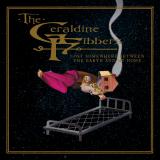
The Geraldine Fibbers - Lost Somewhere Between the Earth and my Home LP
également disponible

Black Vinyl


Defying labels across the board, and turning old-style ancestral narratives into brutal and harrowing portraits of life on the edge of nowhere, the Fibbers wrap each of Lost Somewhere Between the Earth and My Home\'s 12 songs into a ball of fury and toss it against the wall of tradition, just to see what happens. Chaotic noise breakdowns give way to melodic singalongs, songs twist and turn through several side paths before reaching their destination, and everything sounds as if total annihilation is imminent. Scary, thoughtful and highly inventive, Lost is the sound of country gone to hell.

pré-commande10.04.2026

il devrait être publié sur 10.04.2026

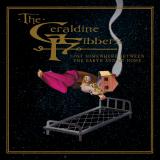
The Geraldine Fibbers - Lost Somewhere Between the Earth and my Home LP
également disponible

Magenta w/ black smoke Vinyl


Defying labels across the board, and turning old-style ancestral narratives into brutal and harrowing portraits of life on the edge of nowhere, the Fibbers wrap each of Lost Somewhere Between the Earth and My Home\'s 12 songs into a ball of fury and toss it against the wall of tradition, just to see what happens. Chaotic noise breakdowns give way to melodic singalongs, songs twist and turn through several side paths before reaching their destination, and everything sounds as if total annihilation is imminent. Scary, thoughtful and highly inventive, Lost is the sound of country gone to hell.

pré-commande10.04.2026

il devrait être publié sur 10.04.2026

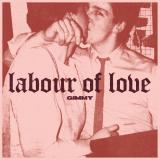
GIMMY - Labour of Love

GIMMY

Labour of Love

12inchLPTDES046
Third Eye Stimuli
10.04.2026

Australian indie and garage-rock firebrand, GIMMY unveils her new EP Labour of Love — a raw, emotionally charged collection that fuses gritty indie rock, post-punk bite and tender poetic expression, all powered by Gemma Owens’ unmistakable vibrato and fiercely honest songwriting.

Where her 2024 debut Things Look Different Now was a slow-burn, two-to-three–year voyage of change and introspection, Labour of Love hits with an entirely new force: intuitive, immediate and deeply connected to Owens’ emotional world. Written over six months and captured in an intense 4–5 day studio burst with producer Sam Joseph (King Gizzard), the EP moves with the urgency of something that needed to be felt and heard, right away.

Across seven compelling tracks, GIMMY dives into social anxiety, grief, falling in love and the chaotic beauty of everyday life, with each song arriving “on its own terms” — born from late-night home writing sessions, snippets of inspiration while travelling and moments of full-band electricity. Sonically, Labour of Love nods to Soft Play, Nick Cave, Fontaines D.C., The Preatures and The Smiths, yet remains unmistakably GIMMY: expressive, gritty, vulnerable, cheeky and alive in every moment.

Ultimately, the EP is an unfiltered snapshot of emotional truth, celebrating life’s highs, lows and everything in between, and showcasing GIMMY at her most dynamic, powerful and compelling to date.

pré-commande10.04.2026

il devrait être publié sur 10.04.2026

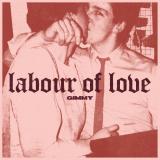
GIMMY - Labour of Love

GIMMY

Labour of Love

12inchLPTDES46C
Third Eye Stimuli
10.04.2026
également disponible

Black Vinyl


Australian indie and garage-rock firebrand, GIMMY unveils her new EP Labour of Love — a raw, emotionally charged collection that fuses gritty indie rock, post-punk bite and tender poetic expression, all powered by Gemma Owens’ unmistakable vibrato and fiercely honest songwriting.

Where her 2024 debut Things Look Different Now was a slow-burn, two-to-three–year voyage of change and introspection, Labour of Love hits with an entirely new force: intuitive, immediate and deeply connected to Owens’ emotional world. Written over six months and captured in an intense 4–5 day studio burst with producer Sam Joseph (King Gizzard), the EP moves with the urgency of something that needed to be felt and heard, right away.

Across seven compelling tracks, GIMMY dives into social anxiety, grief, falling in love and the chaotic beauty of everyday life, with each song arriving “on its own terms” — born from late-night home writing sessions, snippets of inspiration while travelling and moments of full-band electricity. Sonically, Labour of Love nods to Soft Play, Nick Cave, Fontaines D.C., The Preatures and The Smiths, yet remains unmistakably GIMMY: expressive, gritty, vulnerable, cheeky and alive in every moment.

Ultimately, the EP is an unfiltered snapshot of emotional truth, celebrating life’s highs, lows and everything in between, and showcasing GIMMY at her most dynamic, powerful and compelling to date.

pré-commande10.04.2026

il devrait être publié sur 10.04.2026

Linnea Talp - Variations for Light Waves LP

With Variations for Light Waves, Swedish composer Linnéa Talp deepens the focus and intensity that shaped her 2022 debut Arch of Motion. Once again, the breath and hum of the pipe organ form the album’s core, but here she pushes further into deep listening and sonic nuance. Across seven pieces, she lingers on the instrument’s most resonant points, allowing its character to reveal itself slowly and patiently.
Talp’s path to this work has unfolded with similar steadiness. After first emerging with her project Deerest, she shifted toward improvisation and minimal composition, guided by an increasing sensitivity to sound and perception. Careful listening is now central to her practice, informing both her methods and her musical language.
The album was recorded over four years on pipe organs across Sweden, including a small funeral-chapel instrument in Lötsjökapellet—an environment Talp describes as an exceptional space for listening. Several pieces feature Christer Bothén (contrabass clarinet) and Mats Äleklint (trombone), whose playing blends seamlessly into her aerated organ tones. The improvisation “Air On Both Sides,” recorded in 2022 with Bothén, became the project’s starting point, an immersive bath in glowing harmonics. At times she interweaves Buchla recordings, setting electronic breath against acoustic resonance.
Talp’s fascination with quietness and delicacy is balanced by an interest in sonic brittleness. The closing title track gradually dismantles a downward chord progression, drifting into gentle collapse, while the brief opener pushes the organ’s pipes into gasping strain. These moments create a music open to chance, instability, and transformation.
Threads running through the album include an interest in chords, subtle improvisation, light, and memories of coastal landscapes. Talp also connects the work to the “thick white fog” surrounding her daughter’s birth. The result is music that envelopes like mist yet continually reveals new shapes—a world o

pré-commande10.04.2026

il devrait être publié sur 10.04.2026

Gerry Mulligan & Johnny Hodges - Gerry Mulligan Meets Johnny Hodges LP
  • Sunny
  • What's The Rush
  • Back Beat
  • My Funny Valentine
  • What It's All About
  • 18: Carrots For Rabbit
  • Shady Side
  • Festive Minor

n the late 1950's Norman Granz produced several studio sessions where he paired Gerry Mulligan with some of the most important saxophonists of the day, including Ben Webster, Stan Getz, and alto player Johnny Hodges as heard on this exemplary 1959 session Gerry Mulligan meets Johnny Hodges. includes the bonus tracks 'My Funny Valentine' 'Festive Minor'

pré-commande10.04.2026

il devrait être publié sur 10.04.2026

SLUTET - Slutet LP

SLUTET

Slutet LP

12inchCRYPTMETAL038
Crypt Of The Wizard
10.04.2026
  • 1: Seven Days Of The Weak
  • 2: We Reap Our Crops
  • 3: Raped Beauty Sleep
  • 4: Old Blood Kapala
  • 5: O Ziemia!

Crypt of the Wizard is proud to make available two legendary underground albums by Slutet on vinyl and digital formats. Here we present the debut self titled LP Slutet - Slutet
Slutet originated in Uppsala well over a decade ago, first emerging as a loose idea around 2010. The original cluster of strangely like minded individuals - Dingir, Ryttersson, J.P., Sviatopolk, were equally set on starting a cult as they were a band, the former emerging as a loose collective known as The End Commune, while the latter eventually began rehearsing together as Slutet on September 1, 2013.
From this constellation three notorious demo tapes sprung which were self-released in very limited numbers, and only available by trading bodily fluids, blood, and/or hair for the cassettes. “A very loose guess but we made probably around 20-30 hand-drawn/custom demo tapes of the first three releases. We got blood and hair from many places, actually the very first offering was from INDONESIA. Slovakia, Germany, USA, Argentina, Norway, Canada, Finland followed.... if my memory serves..... hazy years indeed”
J.P. left early 2015. Later that year, after trying the band as a bass-drum-vocals outfit for a while, Fjalar joined on guitar. This is the classic constellation. Dingir, Ryttersson, Fjalar, Sviatopolk. The same troupe playing to this very day.
While the difficulty of obtaining the demos certainly added to the band’s bottomless mystique, the subsequent release of the self-titled compilation / LP secured their reputation as one of the most interesting and unorthodox bands recording under the somewhat ill-fitting moniker of ‘underground black metal’.
First released as a cassette by Berlin label Teratology Sound & Vision, and later on vinyl in an edition of 100 by Goatowarex, the self-titled LP is the definitive document of the very early and very wild years of the band as they begin to take form, fulminating against whatever was on offer.
“Between September 2013 and September 2014 we rehearsed and recorded 3 very crude demo cassettes; although sub-par in many musical and performance-wise aspects, the passion seeping through those recordings were evidently very real.”

pré-commande10.04.2026

il devrait être publié sur 10.04.2026

Tucker Zimmerman - I Wonder If I'll Ever Come True  LP
  • 1: It All Depends On The Pleasure Man
  • 2: Watching Heroes Come And Go
  • 3: Slide On
  • 4: So It Goes
  • 5: Let's Start Over Again
  • 6: Taoist Tale
  • 7: Welcome To Mass Media
  • 8: Song
  • 9: Advertisement For Amerika

Orange Vinyl with exclusive illustrated notes/lyric insert ltd to 300 w/w.“Zimmerman conjures up a kind of Arcadian folk surrealism that is utterly his own” MOJO Never released before collection featuring Ian A Anderson & Maggie Holland recorded 72-80 is among Tucker’s finest - Free-ranging, Playful, Intimate - his Songpoet imagination unbound and in full bloom now on colour Vinyl for first time with (exclusive to this version) illustrated lyric insert with notes from Tucker.Recorded between 1972-80 this is the first ever release for ‘I Wonder If I’ll Ever Come True’ a stunningly beautiful, homegrown collection by Songpoet Tucker Zimmerman and friends. The range and depth is astonishing. From the heady surreal journey of ‘It All Depends’ Upon the Pleasure Man’, to the uplifting Gene Clark-esque 'So It Goes’, to some of his most beautiful & touching love songs in ‘Let’s Start Over Again’ & ‘Song’. Only one song has seen the the light of day before now - ‘Taoist Tale’ from his 1984 album ‘Word Games’. This recording from a decade earlier loses no power in its folkier stripped down style driven by Tucker’s strong narrative.

While living in bucolic seclusion in Belgium with Marie-Claire, Tucker invited visiting musicians (Derroll Adams, Wizz Jones, Maggie Holland, Dave Evans, Ian Anderson) into his home studio to play and live tape whatever songs he had at hand. Maggie Holland and Ian A Anderson feature, while Tucker found a freeing simplicity in just guitar, ’70s organ, bass and piano. We are so grateful to Ian A Anderson, who carefully kept and curated these recordings from 50 years ago. “Every time I would leave, Tucker would hand me another tape full of songs”. Ian worked with Tucker and ourselves to present this wonderful album. The collection is among Tucker’s finest - free-ranging, playful, intimate - his Songpoet imagination unbound and in full bloom. The ethos, the playing, the freedom, feels like Ronnie Lane’s time in the Welsh Borders. Unhurried, liberated, down-home and cosmic. Extraordinary music made among friends.
"Startling collection of intimate, home-recorded songs from the cult singer-songwriter adored by David Bowie and Big Thief alike.

When I first interviewed Tucker Zimmerman back in 2015 neither of us had any idea that, a decade later, he would be venerated by a new coterie of young fans, touring with maximal folk-rockers Big Thief and recipient of a concerted reissue campaign by the wonderful Big Potato Records. Last year I eulogised the “Arcadian folk surrealism” of his 1974 LP *Over Here In Europe but, if anything, this informal collection of intimate home-studio recordings is even better. Recorded between 1973 and 76 whilst living in Belgium and hosting such visiting folk musicians as Derroll Adams, Wizz Jones, Maggie Holland, Dave Evans, and Ian A. Anderson this is the kind of assured, organic freewheeling folk music that has the mellow, introspective rough-edged feel of some lost private-press LP, the kind rightly revered by Endless Boogie’s Paul Majors as “real people” music. A true find.” Andrew Male MOJO 4/5
“Here's a charming oddity: an unreleased album dating from the mid-Seventies by an American-born songwriter beloved of David Bowie and, more recently, Adrianne Lenker of the folk-rock band Big Thief. Zimmerman's a bohemian type who eschewed the big time for a life of gigging around Europe. He, his wife, Marie-Claire, and a handful of friends recorded these songs in seclusion in the Belgian countryside, and what songs they are. Slide On could have come from the Byrds when they discovered country music, Let's Start Over Again captures the dreamlike experience of being in love with unsettling clarity. This is a real unearthed gem.” 4/5 The Times

pré-commande10.04.2026

il devrait être publié sur 10.04.2026

Ludvig Forssell - Death Stranding (3x12")
  • 1: Once, There Was An Explosion
  • 2: Alone We Have No Future
  • 3: Bridges
  • 4: Soulless Meat Puppet
  • 5: Beached Things
  • 6: Chiral Carcass Culling
  • 7: The Face Of Our New Hope
  • 8: John
  • 9: An Endless Beach
  • 10: Heartman
  • 11: The Severed Bond
  • 1: Claws Of The Dead
  • 2: Fragile
  • 3: Stick Vs Rope
  • 4: A Final Waltz
  • 5: Strands
  • 6: Lou
  • 7: Bb's Theme
  • 1: Flower Of Fingers
  • 2: Cargo High
  • 3: Demens
  • 4: Decentralized By Nature
  • 5: Mules
  • 6: Porter Syndrome
  • 9: Stepping Stones
  • 10: Frozen Space
  • 11: The Timefall
  • 7: Chiralium
  • 8: Spatial Awareness
pré-commande10.04.2026

il devrait être publié sur 10.04.2026

Guilty Razors - Complete Recordings 1977 - 1978

UILTY RAZORS, BONA FIDE PUNKS.


Writings on the topic that go off in all directions, mind-numbing lectures given by academics, and testimonies, most of them heavily doctored, from those who “lived through that era”: so many people today fantasize about the early days of punk in our country… This blessed moment when no one had yet thought of flaunting a ridiculous green mohawk, taking Sid Vicious as a hero, or – even worse – making the so-called alternative scene both festive and boorish. There was no such thing in 1976 or 1977, when it wasn’t easy to get hold of the first 45s by the Pistols or the Clash. Few people were aware of what was happening on the fringes of the fringes at the time. Malcolm McLaren was virtually unknown, and having short hair made you seem strange. Who knew then that rock music, which had taken a very bad turn since the early 1970s, would once again become an essential element of liberation? That, thanks to short and fast songs, it would once again rediscover that primitive, social side that was so hated by older generations? Who knew that, besides a few loners who read the music press (it was even better if they read it in English) and frequented the right record stores? Many of these formed bands, because it was impossible to do otherwise. We quickly went from listening to the Velvet Underground to trying to play the Stooges’ intros. It’s a somewhat collective story, even though there weren’t many people to start it.
The Guilty Razors were among those who took part in this initial upheaval in Paris. They were far from being the worst. They had something special and even released a single that was well above the national average. They also had enough songs to fill an album, the one you’re holding. In everyone’s opinion, they were definitely not among the punk impostors that followed in their wake. They were, at least, genuine and credible.

Guilty Razors, Parisian punk band (1975-1978). To understand something about their somewhat linear but very energetic sound, we might need to talk about the context in which it was born and, more broadly, recall the boredom (a theme that would become capital in punk songs) coupled with the desire to blow everything off, which were the basis for the formation of bands playing a rejuvenated rock music ; about the passion for a few records by the Kinks or the early Who, by the Stooges, by the Velvet mostly, which set you apart from the crowd.
And of course, we should remember this new wave, which was promoted by a few articles in the specialized press and some cutting-edge record stores, coming from New York or London, whose small but powerful influence could be felt in Paris and in a handful of isolated places in the provinces, lulled to sleep by so many appalling things, from Tangerine Dream to President Giscard d’Estaing...
In 1975-76, French music was, as almost always, in a sorry state ; it was still dominated by Johnny Hallyday and Sylvie Vartan. Local rock music was also rather bleak, apart from Bijou and Little Bob who tried to revive this small scene with poorly sound-engineered gigs played to almost no one.
In the working class suburbs at the time, it was mainly hard rock music played to 11 that helped people forget about their gruelling shifts at the factory. Here and there, on the outskirts of major cities, you still could find a few rockers with sideburns wearing black armbands since the death of Gene Vincent, but it wasn’t a proper mass movement, just a source of real danger to anyone they came across who wasn't like them. In August 1976, a festival unlike any other took place in Mont-de-Marsan – the First European Punk Festival as the poster said – with almost as many people on stage as in the audience. Yet, on that day, a quasi historical event happened, when, under the blazing afternoon sun, a band of unknowns called The Damned made an unprecedented noise in the arena, reminiscent of the chaotic Stooges in their early adolescence. They were the first genuine punk band to perform in our country: from then on, anything was possible, almost anything seemed permissible.

It makes sense that the four+1 members of Guilty Razors, who initially amplified acoustic guitars with crappy tape recorder microphones, would adopt punk music (pronounced paink in French) naturally and instinctively, since it combines liberating noise with speed of execution and – crucially – a very healthy sense of rebellion (the protesters of May 1968 proclaimed, and it was even a slogan, that they weren’t against old people, but against what had made them grow old. In the mid-1970s, it seemed normal and obvious that old people should now ALSO be targeted!!!).
At the time, the desire to fight back, and break down authority and apathy, was either red or black, often taking the form of leafleting, tumultuous general assemblies in the schoolyard, and massive or shabby demonstrations, most of the time overflowing with an exciting vitality that sometimes turned into fights with the riot police. Indeed, soon after the end of the Vietnam War and following Pinochet’s coup in Chile, all over France, Trotskyist and anarcho-libertarian fervour was firmly entrenched among parts of the educated youth population, who were equally rebellious and troublemakers whenever they had the chance. It should also be noted that when the single "Anarchy in the UK" was first heard, even though not many of us had access to it, both the title and its explosive sound immediately resonated with some of those troublemakers crying out for ANARCHY!!! Meanwhile, the left-wing majority still equated punks with reckless young neo-Nazis. Of course, the widely circulated photos in the mainstream press of Siouxsie Sioux with her swastikas didn’t necessarily help to win over the theorists of the Great Revolution. It took Joe Strummer to introduce The Clash as an anti-racist, anti-fascist and anti-ignorance band for the rejection of old-school revolutionaries to fade a little.

The Lycée Jean-Baptiste Say at Porte d’Auteuil, despite being located in the very posh and very exclusive 16th arrondissement of Paris, didn’t escape these "committed" upheavals, which doubled as the perfect outlet for the less timid members of this generation.
“Back then, politics were fun,” says Tristam Nada, who studied there and went on to become Guilty Razors’ frontman. “Jean-Baptiste was the leftist high-school in the neighbourhood. When the far right guys from the GUD came down there, the Communist League guys from elsewhere helped us fight them off.”
Anything that could challenge authority was fair game and of course, strikes for just about any reason would lead to increasingly frequent truancy (with a definitive farewell to education that would soon follow). Tristam Nada spent his 10th and 11th unfinished grades with José Perez, who had come from Spain, where his father, a janitor, had been sentenced to death by Franco. “José steered my tastes towards solid acts such as The Who. Like most teenagers, I had previously absorbed just about everything that came my way, from Yes to Led Zeppelin to Genesis. I was exploring… And then one day, he told me that he and his brother Carlos wanted to start a rock band.” The Perez brothers already played guitar. “Of course, they were Spanish!”, jokes their singer. “Then, somewhat reluctantly, José took up the bass and we were soon joined by Jano – who called himself Jano Homicid – who took up the rhythm guitar.” Several drummers would later join this core of not easily intimidated young guys who didn’t let adversity get the better of them.

The first rehearsals of the newly named Guilty Razors took place in the bedroom of a Perez aunt. There, the three rookies tried to cover a few standards, songs that often were an integral part of their lives. During a first, short gig, in front of a bewildered audience of tough old-school rockers, they launched into a clunky version of the Velvet Underground's “Heroin”. Challenge or recklessness? A bit of both, probably… And then, step by step, their limited repertoire expanded as they decided to write their own songs, sung in a not always very accurate or academic English, but who cared about proper grammar or the right vocabulary, since what truly mattered was to make the words sound as good as possible while playing very, very fast music? And spitting out those words in a language that left no doubt as to what it conveyed mattered as well.
Trying their hand a the kind of rock music disliked by most of the neighbourhood, making noise, being fiercely provocative: they still belonged to a tiny clique who, at this very moment, had chosen to impose this difference. And there were very few places in France or elsewhere, where one could witness the first stirrings of something that wasn’t a trend yet, let alone a movement.

In the provinces, in late 1976 or early 1977, there couldn’t be more than thirty record stores that were a bit more discerning than average, where you could hear this new kind of short-haired rock music called “punk”. The old clientele, who previously had no problem coming in to buy the latest McCartney or Aerosmith LP, now felt a little less comfortable there…
In Paris, these enlightened places were quite rare and often located nex to what would become the Forum des Halles, a big shopping mall. Between three aging sex workers, a couple of second-hand clothes shops, sellers of hippie paraphernalia and small fashion designers, the good word was loudly spread in two pioneering places – propagators of what was still only a new underground movement. Historically, the first one was the Open Market, a kind of poorly, but tastefully stocked cave. Speakers blasted out the sound of sixties garage bands from the Nuggets compilation (a crucial reference for José Perez) or the badly dressed English kids of Eddie and the Hot Rods. This black-painted den was opened a few years earlier by Marc Zermati, a character who wasn’t always in a sunny disposition, but always quite radical in his (good) choices and his opinions. He founded the independent label Skydog and was one of the promoters of the Mont-de-Marsan punk festivals. Not far from there was Harry Cover, another store more in tune with the new New York scene, which was amply covered in the house fanzine, Rock News (even though it was in it that the photos of the Sex Pistols were first published in France).
It was a favorite hang-out of the Perez brothers and Tristam Nada, as the latter explained. “It’s at Harry Cover’s that we first heard the Pistols and Clash’s 45s, and after that, we decided to start writing our first songs. If they could do it, so could we!”
The sonic shocks that were “Anarchy in the UK”, “White Riot” or the Buzzcocks’s EP, “Spiral Scratch” – which Guilty Razors' sound is reminiscent of – were soon to be amplified by an unparalleled visual shock. In April 1977, right after the release of their first LP, The Clash performed at the Palais des Glaces in Paris, during a punk night organised by Marc Zermati. For many who were there, it was the gig of a lifetime…
Of course, Guilty Razors and Tristam were in the audience: “That concert was fabulous… We Parisian punks were almost all dressed in black and white, with white shirts, skinny leather ties, bikers jackets or light jackets, etc. The Clash, on the other hand, wore colourful clothes. Well, the next day, at the Gibus, you’d spot everyone who had been at this concert, but they weren’t wearing anything black, they were all wearing colours.”

It makes sense to mention the Gibus club, as Guilty Razors often played there (sometimes in front of a hostile audience). It was also the only place in Paris that regularly scheduled new Parisian or Anglo-Saxon acts, such as Generation X, Siouxsie and the Banshees, the Slits, and Johnny Thunders who would become a kind of messed-up mascot for the venue. A little later, in 1978, the Rose Bonbon – formerly the Nashville – also attracted nightly owls in search of electric thrills… In 1977, the iconic but not necessarily excellent Asphalt Jungle often played at the Gibus, sometimes sharing the bill with Metal Urbain, the only band whose aura would later transcend the French borders (“I saw them as the French Sex Pistols,” said Geoff Travis, head of their British label Rough Trade). Already established in this small scene, Metal Urbain helped the young and restless Guilty Razors who had just arrived. Guitarist for Metal Urbain Hermann Schwartz remembers it: “They were younger than us, we were a bit like their mentors even if it’s too strong a word… At least they were credible. We thought they were good, and they had good songs which reminded of the Buzzcocks that I liked a lot. But at some point, they started hanging out with the Hells Angels. That’s when we stopped following them.”

The break-up was mutual, since, Guilty Razors, for their part, were shocked when they saw a fringe element of the audience at Metal Urbain concerts who repeatedly shouted “Sieg Heil” and gave Nazi salutes. These provocations, even still minor (the bulk of the skinhead crowd would later make their presence felt during concerts), weren’t really to the liking of the Perez brothers, whose anti-fascist convictions were firmly rooted. Some things are non-negotiable.
A few months earlier (in July 1978), Guilty Razors had nevertheless opened very successfully for Metal Urbain at the Bus Palladium, a more traditonally old-school rock night-club. But, as was sometimes the case back then, the night turned into a mass brawl when suburban rockers came to “beat up punks”.

Back then, Parisian nights weren’t always sweet and serene.

So, after opening as best as they could for The Jam (their sound having been ruined by the PA system), our local heroes were – once again – met outside by a horde of greasers out to get them. “Thankfully,” says Tristam, “we were with our roadies, motorless bikers who acted as a protective barrier. We were chased in the neighbouring streets and the whole thing ended in front of a bar, with the owner coming out with a rifle…”
Although Tristam and the Perez brothers narrowly escaped various, potentially bloody, incidents, they weren’t completely innocent of wrongdoing either. They still find amusing their mugging of two strangers in the street for example (“We were broke and we simply wanted to buy tickets for the Heartbreakers concert that night,” says Tristam). It so happened that their victims were two key figures in the rock business at the time: radio presenter Alain Manneval and music publisher Philippe Constantin. They filed a complaint and sought monetary compensation, but somehow the band’s manager, the skilful but very controversial Alexis, managed to get the complaint withdrawn and Guilty Razors ended up signing with Constantin with a substantial advance.

They also signed with Polydor and the label released in 1978 their only three-track 45, featuring “I Don't Wanna be A Rich”, “Hurts and Noises” and “Provocate” (songs that exuded perpetual rebellion and an unquenchable desire for “class” confrontation). It was a very good record, but due to a lack of promotion (radio stations didn’t play French artists singing in English), it didn’t sell very well. Only 800 copies were allegedly sold and the rest of the stock was pulped… Initially, the three tracks were to be included on a LP that never came to be, since they were dropped by Polydor (“Let’s say we sometimes caused a ruckus in their offices!” laughs Tristam.) In order to perfect the long-awaited LP, the band recorded demos of other tracks. There was a cover of Pink Floyd's “Lucifer Sam” from the Syd Barrett era – proof of an enduring love for the sixties’ greats –, “Wake Up” a hangover tale and “Bad Heart” about the Baader-Meinhof gang, whose actions had a profound impact on the era and on a generation seeking extreme dissent... On the album you’re now discovering, you can also hear five previously unreleased tracks recorded a bit later during an extended and freezing stay in Madrid, in a makeshift studio with the invaluable help of a drummer also acting as sound engineer. He was both an enthusiastic old hippie and a proper whizz at sound engineering. Here too, certain influences from the fifties and sixties (Link Wray, the Troggs) are more than obvious in the band’s music.

Shortly after a final stormy and rather barbaric (on the audience’s side) “Punk night” at the Olympia in June 1978, Tristam left the band ; his bandmates continued without him for a short while.

But like most pioneering punk bands of the era, Guilty Razors eventually split up for good after three years (besides once in Spain, they’d only played in Paris). The reason for ceasing business activities were more or less the same for everyone: there were no venues outside one’s small circuit to play this kind of rock music, which was still frightening, unknown, or of little interest to most people. The chances of recording an LP were virtually null, since major labels were only signing unoriginal but reassuring sub-Téléphone clones, and the smaller ones were only interested in progressive rock or French chanson for youth clubs. And what about self-production? No one in our small safety-pinned world had thought about it yet. There wasn’t enough money to embark on that sort of venture anyway.

So yes, the early days of punk in France were truly No Future!
pas en stock

Commandez maintenant et nous commanderons l'article pour vous chez notre fournisseur.


Derniere entrée: 7 jours
Sławek Pezda & Witek Ryć - Kardamon (7")

Numbered 150 copies on green vinyl.

The duo Sławek Pezda & Witek Ryć is a project by Krakow-based musicians, a hybrid of ambient, noise, experimental music, jazz, trance, electronica, and ethnic music. The two musicians' musical paths were united by the practice of meditation, which also significantly translates into their musical language and the need to share the peace that flows to the listener through sound.

In their recordings and live performances, the musicians utilize tenor saxophone, modular synthesizers, electronics, drums, flutes, drum pads, Tibetan bowls, gongs, and a wide array of percussion instruments. They have played together in improvised concerts, relaxation concerts, chamber sessions, and even spiritual jazz.

"Kardamon" is the result of one of the live sessions, where the rhythm, based on a simple pulse flowing from a frame drum, accompanied by Ankle Bells (Indian janissary bells played with the foot), is enriched by Sławek's tenor saxophone. In addition to the aforementioned instruments, a synthesizer and a Roland HPD 20 drum machine were also used, accompanied by various percussion instruments (shaker, chimes, bells, etc.), as well as a fragment of Witek's own field recordings from the Polesie National Park.

The remix on the B-side was created by DJ PLASH, who gave the duo's original sounds a completely new dimension. Plash (Marcin Przeplasko) is arguably one of the most sought-after DJs playing for b-girls and b-boys worldwide, a feat culminating in his official performance behind the turntables at the last Summer Olympics. PLASH is Witek's neighbor from Krakow's Nowa Huta district.

The front cover artwork is a painting by Witek Ryć, and the entire album was assembled and framed by Animisiewasz. Mastering was handled by Eprom. The single is limited to 150 copies and is being released by Funky Mamas and Papas Recordings, a label specializing in seven-inch singles since 2008.

En stock du23.04.2026


Derniere entrée: 7 jours
SOPHIA STEL - SOPHIA STEL LP 2x12"

SOPHIA STEL

SOPHIA STEL LP 2x12"

2x12inchPACKVNY22
Pack.
08.04.2026

Born in Victoria, B.C., and shaped by formative years in Vancouver, artist and producer Sophia Stel found a rapt cult fanbase with her 2024 debut EP Object Permanence, a fiercely vulnerable collection of genre-agnostic earworms fueled by her full-bodied, affecting alto. By following her intuition and going against the grain of online fads, Stel is setting trends, not chasing them - always creating from a place of true originality. Her self-directed, sometimes spurâÇ`ofâÇ`theâÇ`moment digicam visuals for tracks like "I"ll Take It" and "You Could Hate Me" have the fuzzy realism of vintage photos or cherished memories: effortlessly cool without ever trying to be. In addition to earning co-signs from Troye Sivan and A.G. Cook and being selected for this year"s DAZED 100, she recently made her runway debut at Ann Demeulemeester"s PFW SS26 show and embarked on her first headline tour, which included a performance at Pitchfork Festival in Paris, following the release of her sophomore EP How to Win At Solitaire. Continuing to push the boundaries of today"s music landscape while honing a truly singular, post-genre sound that"s all her own, Stel is currently working on her debut album.

pas en stock

Commandez maintenant et nous commanderons l'article pour vous chez notre fournisseur.


Derniere entrée: 9 jours
Grady Steele - Nausea (Tape)

Grady Steele

Nausea (Tape)

CassetteFELTCS006
FELT
06.04.2026

Grady Steele (Formant Soundsystem) debuts on FELT with the tender spectre of Nausea, poignant patterns captured through the dusk-hued window pane.

Co-founder of the Formant Soundsystem, a travelling rig that’s powered forward-thinking dances in London and Paris, Grady Steele has championed both experimental and club music at the cutting edge. Concurrently to this, he debuted his own productions back in 2024 for Archaic Vaults. Uniquely intimate, his music shone lowkey and warm with an assured glow. It’s no surprise then to find his inimitable sounds land neatly on Fergus Jones’ FELT imprint.

Nausea extends across seven movements, narrating sentimental parallels of familiarity. Grady posits concentrated pangs of post-rave nostalgia with rich melodic sustenance, a vivid introspection tempered with field recordings and live instrumentation. Strummed guitars and aching pads move purposefully with the suspended pace, an immersive beatless vista from its opening quiet moments through to the guttural noise-laden finale. It’s a brief, beautiful collection from Grady Steele and another string to FELT’s unpredictable bow.

Written, recorded and produced by Grady Steele

Mastered by Miles Whittaker

Cover photo by Alex Kurunis

pré-commande06.04.2026

il devrait être publié sur 06.04.2026

Conway The Machine - Drumwork - The Album LP 2x12"
 
13

As a torchbearer of gritty lyricism and unapologetic authenticity, Conway The Machine takes the helm to introduce the world to the burgeoning talents that make up the Drumwork roster, a powerhouse assembly of artists ready to reshape the landscape of rap music.

At the forefront of the album stands Conway The Machine, delivering blistering verses and commanding attention with his trademark grit and authenticity. But "Drumwork Collective" is more than just a solo endeavor; it's a collaborative effort featuring guest appearances by Rome Streetz, Benny The Butcher, 38 Spesh, and others. Each artist brings their unique perspective to the table, adding layers of depth and complexity to the project.

Behind the boards, producers like Beat Butcha, Graymatter, Trizzy Williams, and more craft a sonic landscape that's as gritty as it is innovative. From soulful samples to hard-hitting drums, the production on this compilation sets the stage for the lyrical onslaught that follows, blending traditional boom-bap aesthetics with a modern edge. Together, these elements form a cohesive tapestry that captures the essence of hip-hop's underground renaissance, proving that the beat truly does strike back.

pré-commande03.04.2026

il devrait être publié sur 03.04.2026

Hey Mercedes - Loses Control LP

Hey Mercedes, formed from members of Chicago's emo band Braid, included Bob Nanna, Todd Bell, Mark Dawursk, and Damon Atkinson. They debuted with a self-titled EP (Polyvinyl Records) in 2000 and followed up with extensive touring and two full-length albums: Everynight Fire Works (Vagrant Records) in 2001 and Loses Control (Vagrant Records) in 2003 along with two more EP's: The Weekend EP (Vagrant Records) in 2002 and Unorchestrated (Grand Theft Autumn) in 2004. Dawursk left at the end of 2001 and was replaced by Mike Shumaker. After 359 shows and several releases, the band disbanded in April 2005.They played a reunion show in 2007 and celebrated the 15th anniversary of Everynight Fire Works in 2016 with a remastered re-release and select live performances. In 2025, the band made their live comeback at Las Vegas's second annual Best Friends Forever Festival and will continue to play more shows in 2026. In March 2026, Polyvinyl Records will reissue the complete Hey Mercedes catalog. With several EPs and albums currently out of print, this release will provide Hey Mercedes fans with the opportunity to obtain every Hey Mercedes title on vinyl.

pré-commande03.04.2026

il devrait être publié sur 03.04.2026

Hey Mercedes - Hey Mercedes / Unorchestrated LP
  • A1: Bells
  • A2: St James St
  • A3: The House Shook
  • A4: Stay Six
  • B1: Roulette Systems
  • B2: Warms Chords
  • B3: Own Up
  • B4: We Lie Half The Time
  • B5: Unorchestrated (Live)

Hey Mercedes, formed from members of Chicago's emo band Braid, included Bob Nanna, Todd Bell, Mark Dawursk, and Damon Atkinson. They debuted with a self-titled EP (Polyvinyl Records) in 2000 and followed up with extensive touring and two full-length albums: Everynight Fire Works (Vagrant Records) in 2001 and Loses Control (Vagrant Records) in 2003 along with two more EP's: The Weekend EP (Vagrant Records) in 2002 and Unorchestrated (Grand Theft Autumn) in 2004. Dawursk left at the end of 2001 and was replaced by Mike Shumaker. After 359 shows and several releases, the band disbanded in April 2005. They played a reunion show in 2007 and celebrated the 15th anniversary of Everynight Fire Works in 2016 with a remastered re-release and select live performances. In 2025, the band made their live comeback at Las Vegas's second annual Best Friends Forever Festival and will continue to play more shows in 2026. In March 2026, Polyvinyl Records will reissue the complete Hey Mercedes catalog. With several EPs and albums currently out of print, this release will provide Hey Mercedes fans with the opportunity to obtain every Hey Mercedes title on vinyl.

pré-commande03.04.2026

il devrait être publié sur 03.04.2026

Articles par page:
N/ABPM
Vinyl