Cerca:second effect

Generi
Tutto
Enrico Sangiuliano - Sound Of Space EP

Following a hugely successful inaugural release, Sangiuliano’s forthcoming “Sound Of Space” EP was quickly circulated across the festival scene, with the title track becoming one of the most hotly-tipped Track IDs of the summer. Continuing the label’s strong undercurrent of evanescence, Sangiuliano’s second chapter explores the effects of space and physical surroundings on our experience of music. Space is a concept we continuously interact with in music, whether we live it subconsciously or not. It’s a vital component in our perception; altering the expression of the music to the listener’s surroundings and functioning as an interactive field. Before the development of recording equipment & technology, music’s environmental characteristics were defined by the space in which it was performed, and as such, Enrico’s latest offering aims to revive this practice in music. To wholly pervade the senses and demonstrating this concept first hand, the 2-tracker will be also available in spatial audio, giving listeners a 360-degree infiltration of sound

non in magazzino

Ordina ora e ordineremo l'articolo per te presso il nostro fornitore.


Last In: 12 months ago
LOW LIFE - DOWNER EDN (REPRESS 2023)
  • A1: The Pitts
  • A2: Lad Life
  • A3: 92
  • A4: Rave Slave
  • A5: Rbb
  • B1: Lust Forevermore
  • B2: Glamour
  • B3: Gabbertron
  • B4: Warrior
  • B5: Crash

2023 repress of Low Life's second album from 2019 on coloured vinyl, in a single LP sleeve with insert. Colour effect is a seafoam green smear with a transparent base. Arriving with an aura of anticipation, 'Downer Edn' (read: Edition) feels like a collective document of the band's timeline since their unforgettable debut `Dogging'. Recorded over two years and mixed in 2018 by Mikey Young (Total Control / Eddy Current Suppression Ring), `Downer Edn' sees the core trio of Mitch Tolman, Cristian O'Sullivan and Greg Alfaro expand their ranks to a five piece. Dizzy Daldal and Yuta Matsumura of Oily Boys & Orion were brought in to reinforce the thick wall of guitars, freeing Tolman up as a dedicated front man for live duties. The hours of studio work have resulted in the band sounding more confident and fully realised, reaching and finding a sound that was perhaps unattainable 5 years prior. However, lurking behind the bigger vision and polished production, `Downer Edn remains a dark blast of an album. Expansive and cohesive, yet shimmering and rough; something they can be proud to call a definitive statement. As far as Australian punk is concerned, Downer Edition not only shatters the boundaries applied by that descriptor, it does so with the lushest attack conceivable. The visceral pounding of melodies throughout the album transforms their inspirations; desperation, neuroses, trauma, survival, hooliganism, violence, hope, rejuvenation, and their hometown of Sydney's full architectural and social scope - from a realm of intangibility to the very, very tangible. Unified on `RBB,' ruminating on `92', chasing the escape on `Rave Slave,' and unwillingly defiant on `Warrior,' Downer Edition reaches past the wild ride of Dogging - this truly is the album that Low Life have been threatening to make for nearly a decade. Released in conjunction with Goner Records in the USA and Cool Death in Australia.

pre-ordina ora10.02.2023

dovrebbe essere pubblicato su 10.02.2023


Last In: 2026 years ago
Sven Väth - What I Used To Play (12x12" boxset)
 
36

For this uniquely personal retrospective spread over twelve vinyl discs, Sven Väth takes us back to the early days of his DJ career. On What I Used To Play we meet great pioneers of electronic music, gifted percussionists, obscure wave bands, and innovative producers of a bygone 'new electronic' era. Rough beats and irresistible grooves from the identification stage of house, techno, and acid remind us not just how far electronic music has evolved over the past four decades, but how great it was to dance to EBM, techno, and house for the very first time.

If there is one protagonist of the electronic music scene who has remained curious, innovative and at the very cutting edge of music for over four decades, it's Sven Väth. His multi-layered artist albums and Sound of the Season mix compilations have been defining the genre for over two decades, and even today, he is constantly on the lookout for the next top tune to add to the highlights of his next set. At least, that's the case when he's not producing them himself as an artist or remixer. "Actually, it's always been part of my DNA to think ahead," and nothing had been further from his mind than looking back at his past, but when in spring of 2020 the international DJ circuit had to be scaled down to virtually zero, the 'restless traveler' suddenly had time. Time to stop and reflect on "how it actually was back then, at the very beginning of my career..."

"It was a great trip and with every track, beautiful memories came flooding back".
In the London apartment, he had just moved into, Sven has set up a "little music room", where he cocooned himself for several days, "to look way back for the first time and review my musical journey through the eighties, so to speak."

The interim result was six thematically oriented playlists with a grand total of 120 tracks from 'early 80s' to 'Balearic late 80s', together with excursions into afrobeat, European new wave, and EBM sounds and a few epochal techno/house tracks from the USA in between. From these 'Best of Sven Väth's favorites', the project What I Used To Play crystallized. Sven remembers how the Cocoon team reacted to his proposal: "They found the idea of making a compilation out of it MEGA from the beginning and everyone said 'Sven, go for it', but then, of course, the work really started, namely, to clear the rights and to get clean sounding masters of the up to 40-year-old tracks. There was also disappointment, of course. We couldn't clear certain titles because the rights holders in the USA had fallen out with each other or simply disappeared from the scene. In short, it wasn't easy, but now I can safely say we got the most important tracks."

Finally, after two years of research, curation, design, and administrative fine-tuning, the "little retrospective" from 1981 to 1990 is available. The exquisitely packaged, and three-kilo heavy box set is not only physically impressive, WIUTP is also the definitive record of Sven Väth's musical development. On each of the twenty-four sides of vinyl, you can trace track by track, what influenced him during which phase, and how he took off as a DJ from his parents' Queen's Pub straight into the spotlight at Dorian Gray. There and at Vogue (later OMEN), Sven became the style-defining player in the DJ booth that he still is today.


1981 - 1990: Future Sounds of Now

In the early eighties, the crowd in clubs like Vogue and Dorian Gray danced to what nowadays we call 'dance classics' - mainly disco, funk, soul, and chart pop. It was up to a new generation of DJs, including Sven Väth, the youngest protagonist in the Rhine-Main area at the time, to create their own club-ready music mix. Good new tracks and potential floor-fillers were rarities that had to be sought out and found, in order to prove oneself worthy.
Without MP3s, internet streaming, or other digital download possibilities, music didn't just gravitate to the DJ, instead, it had to be tracked down. In well-stocked record stores in Frankfurt and Wiesbaden or even in Amsterdam, London, or New York, Sven and friends sourced the material for countless magical nights. On WIUTP we can follow Sven's very personal journey through this wild, innovative era in which synth-pop, funk, hip-hop, and disco were successively replaced as 'club music' by house, techno, acid, and breakbeat. By the end of the decade, it was clear to see that these once exotic 'fringe' phenomena would soon become 'mass' phenomena.


Early 80s

Dirty Talk by the Italian-American duo Klein & M.B.O. represents the most innovative phase of the Italo-disco genre in the early eighties like no other track. Mario Boncaldo (I) and Tony Carrasco relied entirely on the original synthetic drum and percussion sounds of the Roland TR-808, coupled with the raunchy vocals of Rossana Casale and guitar accents of Davide Piatto. Of course, other tracks from this period were also influential in style, most notably Unit by Logic System, which worked as the perfect soundtrack to the laser lighting system at the legendary Dorian Gray club. With stomping beats and robotic rap interludes, Bostich by Yello also belongs on Sven's eternal playlist - after all, it caught the attention of Afrikaa Bambaataa, who invited the Swiss duo to perform at the Roxy in New York in 1983.


EBM Wave - Mid 80s

From today's point of view, the almost ten-minute-long, downtempo track Giant by Matt Johnson's band project The The, would probably not be considered an obvious club classic. However, a closer (re)listen reveals the rhythmic intricacies of the percussion overdubs by JG Thirlwell (aka Foetus) on Johnson's composition, and it becomes clear why this exceptional piece of music is one of Sven's absolute favorites. Other classics from this phase include Kaw-Liga by the mysterious The Residents, the hypnotic-synthetic Our Darkness by Anne Clark (and David Harrow), and last but not least, the somber, monotonous anthem Where Are You? by 16Bit, one of Sven Väth's projects together with Michael Münzing, Luca Anzilotti from 1986.


US House - Late 80s

You certainly can't talk about Chicago house without mentioning Frankie Knuckles. The resident DJ at the Warehouse not only gave the name to an entire genre, but also produced epochal floor fillers on the Trax label like the timeless Your Love, sung (and moaned) by Jamie Principle. Acid house protagonists Phuture also hail from Chicago, and on We Are Phuture (also released on Trax) we hear the chirping acid sounds of the legendary Roland TB-303 in full effect. Another featured classic is No UFO's by Detroit's Model 500 aka Juan Atkins, who is rightly considered the 'Godfather of Techno' even if the genre-defining track from 1985 still breathes with the spirit of hip-hop and electro from the first breakdance era.


Afrobeat

Le Serpent, by Algerian-born Abdelmadjid Guemguem, is a track that sounds completely different from everything else on WIUTP. Made in 1978, it's a monumental, rousing groove created without bass or synths, just with five congas! Even though Guem sadly passed away in 2021, his immortal, acoustic beats are understood all over the world and will continue to enrich many thousands of DJ sets for years to come. Another classic that not only Sven appreciates beyond measure is Hugh Masekela's Don't Go Lose it, Baby. In addition to being one of the most important jazz pioneers, the trumpeter and freedom fighter from Johannesburg was very experimental, integrating electronic sounds into his music in later years, in a similar vein to Miles Davis and Herbie Hancock. Dutch jazz pianist Jasper van't Hof's afrobeat project Pili Pili has also aged well. The trance-like, almost sixteen-minute-long track of the same name, manages to fill a whole side on the seventh of twelve vinyl discs in the WIUTP box.


UK-US-Euro - Late 80s

Time for a change of scene, in the truest sense of the word, and from a musical perspective, this section is like landing on another planet. First up is Andrew Weatherall's classic remix of Primal Scream's Loaded, featuring the iconic Peter Fonda sample (lifted from the 1966 biker film Wild Angels) that came to personify the mood triggered by the British Second Summer of Love in the late eighties: "We wanna be free to do what we wanna do, and we wanna get loaded...". This period also saw the emergence of M/A/R/R/S whose only single, 1987's Pump Up The Volume, became a club classic with support from DJ legend CJ Mackintosh. In this most eclectic of sections, we also encounter New York house and reggae producer Bobby Konders and his seminal Nervous Acid.


Balearic - Late 80s

Those who know him, know that Sven had already lost his heart to the 'magic island' of Ibiza as a teenager, so with that in mind, the WIUTP project couldn't end without a Balearic chapter. Inspired by Manuel Göttsching's E2-E4, the immortal, eponymously titled Sueño Latino belongs in there without question. Equally popular on the island was, and still is Break 4 Love by Raze, which thinking about it, would also fit perfectly into the house chapter. Last, but not least, there's an overdue reunion with Sven Väth himself, in his role as frontman of the successful Frankfurt trio OFF. Together with Michael Münzing and Luca Anzilotti (later of Snap!) this 'Organization For Fun' created the off-the-wall club hit Electric Salsa in 1986 which incidentally turned into an international chart smash, putting Sven in the enviable position of having to decide between pop stardom and a DJ career. Well, we all know how that decision turned out and the rest, as they say, is history. A not insignificant part of his story is What I Used To Play. Enjoy!

non in magazzino

Ordina ora e ordineremo l'articolo per te presso il nostro fornitore.


Last In: 8 months ago
MICHAEL ABLES - US LP (2x12")

Michael Ables

US LP (2x12")

2x12inchWWLP72
Waxwork
03.02.2023

Waxwork Records is proud to present the Us Original Motion Picture Soundtrack featuring a score by composer Michael Abels. Us, released in March 2019, is an original nightmare written, directed and produced by Academy Awardr-winning visionary Jordan Peele (Get Out). Set in present day Santa Cruz on the iconic Northern California coastline, the film, starring Oscarr winner Lupita Nyong'o and Black Panther's Winston Duke, pits an ordinary American family against a terrifying and uncanny opponent: doppelgängers of themselves. A blockbuster that earned raves from critics and audiences alike, Us earned more than $250 million at the worldwide box office to become one the highest grossing R-rated horror films of all time, buoyed by an unexpected and innovative soundtrack and by a groundbreaking, terrifying original score by Abels. Us marks the second collaboration between composer Abels and Peele, who first worked together on Peele's 2017 Oscar-winning horror film, Get Out. For the Us score, Abels explored themes of duality and discord. "Sonically, what defines 'scary' is the unfamiliar," Abels says. "It is the things that we can't place, and that we don't expect, that take us to that place of fear. We wanted to really strike terror into the audience." Central to the score was the opening track, an anthem for the doppelgängers, known in the film as The Tethered. Abels hit on the idea of using choral elements. "Jordan really loves the sounds of voices, and the human voice is an incredibly expressive instrument that anyone can relate to," Abels says. "The anthem sounds a little like a march of people preparing for battle, like an uprising maybe, but the sounds are not in a recognizable language. In other parts of the film there are vocal effects, just these strange sounds. They're designed to really freak people out." Abels featured a 30 person choir, a third of them children, in the "Anthem," and implemented Eastern European instruments, violins, percussion and a virtual instrument called a Propanium drum. "It makes this trashy metal sound, but you can also play melodies on it," Abels said. "The Propanium drum has a sound that's both otherworldly but not electronic or like science fiction. It's a sound you can't quite put your finger on, which is why it works well in this film." Also included on the soundtrack is the 1995 hip-hop hit "I Got 5 On It" by Luniz and the stand-out track "I Like That" by Janelle Monáe. Abels also helped with a new arrangement of the Luniz hit, which is featured on the soundtrack as the 'Tethered Mix from Us'.


[xi] 35 I GOT 5 ON IT (FEAT. MICHAEL MARSHALL) [TETHERED MIX FROM US] - LUNIZ

pre-ordina ora03.02.2023

dovrebbe essere pubblicato su 03.02.2023


Last In: 2026 years ago
LONDON ODENSE ENSEMBLE - JAIYEDE SESSIONS VOL. 2

The second instalment from London Odense Ensemble digs deeper into the group's vision of what modern psychedelic jazz should sound like. Cut from the same sessions as Jaiyede Sessions vol. 1, released last summer, vol. 2 presents a more nuanced approach to the material. On this set the ensemble focuses on shorter, layered pieces - travelling from deep spiritual jazz grooves to gorgeous free-flowing minimalism to full-on acid jazz. There's echo-drenched flutes being absorbed into layers of analog synth pads and guitars, bossa beats and double bass sequences merging with electronics. It's an intoxicating mélange of sounds and styles, spanning wide temporal and geographical distances. London Odense Ensemble came together when two of the finest exponents of London's flourishing jazz scene, flautist and saxofonist Tamar Osborn and keyboard specialist Al MacSween, came over to Denmark to explore new sounds with Causa Sui's Jakob Skott and Jonas Munk, as well as local bass player Martin Rude. For two days the group laid down grooves and ideas and experimented in the studio, and later the best segments were edited and mixed by Jonas Munk, who took a somewhat liberal approach to the mixing process, often dyeing the material with external effects and synthesizers. Jaiyede Sessions are the kinds of records that defy genre-terms, yet have its own instantly recognizable fingerprint. It carries a unique shared vision between the players of what modern psychedelic jazz sounds like. bios: Tamar Osborn: Saxophonist, composer and multi-wind instrumentalist is the creative force behind modal jazz ensemble Collocutor (On The Corner Records). She is a member of the Dele Sosimi Afrobeat Orchestra, performs and collaborates regularly with Sarathy Korwar, Jessica Lauren, Emanative, Ill Considered and DJ Khalab. Al MacSween: Keyboard player & founding member of Kefaya. Collaborations include American jazz legend Gary Bartz, Syrian qanun master Maya Youseff, London Community Gospel Choir, Palestinian jazz singer Reem Kelani & kora player Kadialy Kouyate. Martin Rude: Multi-string instrumentalist & lead singer in Sun River & Edena Gardens with members of Papir & Causa Sui. Jakob Skott: Drummer in Causa Sui with a slew of side projects on El Paraiso, including Chicago Odense Ensemble, Jonas Munk: Guitarist in Causa Sui & studio wizard on most releases on El Paraiso.

pre-ordina ora03.02.2023

dovrebbe essere pubblicato su 03.02.2023


Last In: 2026 years ago
Numün - Book of Beyond

Numün

Book of Beyond

12inchSHIMMY2015LPC1
SHIMMY DISC
27.01.2023

Limited Cerulean Blue Vinyl LP. RIYL: Amen Dunes, Adrienne Lenker & North Americans. Numün, the NYC psychedelic instrumental trio Pitchfork dubbed as 'savvy navigators of paths less traveled', is releasing its second album Book of Beyond on the legendary Shimmy Disc label. With this record, the band, which includes Joel Mellin and Christopher Romero of Gamelan Dharma Swara and ambient country pioneer Bob Holmes of SUSS, continues to stretch their exploration of the inner and outer astral worlds of their first release Voyage au Soleil – voted one of the Best Ambient Releases of 2020. Dave Segal of Pitchfork called that album a "blending of the opiated psychedelia of the music territory staked Brightback Morning Light with a loose-limbed minimalism that privileges subtle effects and incremental chord changes" and Chris Ingalis from PopMatters called it "a trippy, ambient ride and ambitious debut that pulls off the neat trick of creating music that evokes space travel while also sounding refreshingly grounded to Earth's atmosphere." The new album, mastered by Kramer (Galaxie 500, Butthole Surfers, Bongwater, Low, Bill Frisell, etc.) features a unique mixture of Eastern and Western musical stylings and instrumentation including Balinese gamelan, gender wayang, and cumbuz (a 12-string fretless banjo) alongside the classic Americana instrumentation of slide guitar, baritone, mandolin and violin. The instrumental music charts new territories as it explores themes that are sometimes deeply personal, spiritual and otherworldly, including new fatherhood, sleep deprivation, loss and rebirth with titles that include Steps, Vespers, Eyes Open & Lullaby. Guests on the album include Trina Basu (Brooklyn Raga Massive), Tori Lo Mellin (Dharma Swara), and Willa Roberts (Black Sea Hotel). With their new album, Book of Beyond, Numün creates music that provides a star map to help us all navigate the inner constellations of our daily lives.

pre-ordina ora27.01.2023

dovrebbe essere pubblicato su 27.01.2023


Last In: 2026 years ago
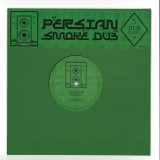
Persian - Dubplate #3: Smoke Dub

"Just when you thought it was safe to go back in the bassbins, Mysticisms brings the latest in its Dubplate series. After the success of his first digital dubb excursions on the version, Persian returns with a second 10” of reggae inspired electronics, covering Bass, Breaks, Digidub and now also, Jungle.

Taking no prisoners with the massive opener Survival Dub, Persian marries classic breakbeats and toasting to bouncing, dance floor effect. THE party starter. This is followed by Smoke Mari, a looping steppas of FX and breaks to lay down the Dubplate clash.

As ever the link between rave, breaks and sound system culture is explored, this time with the Roots’n’Lovers opening of There Is No Love giving way to a Junglist drop, before risin’ to a beautiful soul sermon.

Finally, taking it all down, tings wrap with the deep, sampledelic dub of Zatoichi’s Troubles. With a bass to destroy many a speaker, it’s lanquidity morphs from the EP’s hedonism of sound clash styles to a gliding “tokers delight”.

Smoke the Mystery. "

non in magazzino

Ordina ora e ordineremo l'articolo per te presso il nostro fornitore.


Last In: 2 years ago
SOUL CLAP - Sueño Hebreo EP

(Lauer rmx)

500 copies only !

The boston duo, the mighty Soul Clap, international stars goes balearic with one of their biggest track to date, the fabulous SUENO HEBREO ! It is a great pleasure to welcome them on Skylax Records. This track is like no other, unidentified sound object in sight, imagine the happy and improbable collision of sueno latino & the ibizenco spirit & sound popularized by alfredo and you can imagine the devastating effect this 12 inch will have on the dancefloor. As a bonus, an atomic remix crafted by the master Lauer which adds an early house touch (cece peniston finally atmosphere). Close your eyes you are in 1989. No in fact you are in 2022 & these madmen compile 35 years of music in the space of 6 minutes 40 seconds. The circle is complete.

non in magazzino

Ordina ora e ordineremo l'articolo per te presso il nostro fornitore.


Last In: 4 months ago
Second Layer - Courts Or Wars

Second Layer

Courts Or Wars

12inch1972-11
1972-
20.01.2023

Red Vinyl

Adrian Borland and Graham Bailey might be better known as members of legendary post-punk group The Sound, but the two were childhood friends and had been playing together even earlier in The Outsiders, and continued their deep musical rapport as a duo, creating these intense and engaging songs as Second Layer at the same time as their higher profile band output.

Combining their early recordings, including the 1979 Flesh As Property EP and 1980 State Of Emergency EP, Courts Or Wars takes its title from the first song that served as the pair’s introduction to listeners. Right from the beginning you are enveloped in what The Quietus described as, “a monochrome worldview morbidly obsessed with the dehumanizing effect of war, nuclear weapon annihilation, and the fracturing and negation of the self within an increasingly distorted and technologically mediated society.” Where The Sound fit snugly next to Echo And The Bunnymen, Second Layer had far more in common with the pulsing menace of Suicide.

Borland’s familiar vocals and sense of melody hold a connection to his other songwriting, but within these songs he takes far more risks in his guitar work to suit the subject matter. What really drives everything is Bailey’s propulsive bedrock, formed by his homemade pre-drum machine rhythm generators, creating an innovative mechanical approach that somehow inserts a jittery neurotic touch that merges perfectly with his electronic layers driven by the wasp synth, various unique effects boxes or tape loops. Adding in Bailey’s own distinctive bass playing, the results feel personal and experimental, pointed and harsh, while also bracingly accessible and covered in dark manic energy.

Over forty years later, these recordings feel shockingly appropriate. In painting a bleak reality and frightening future, there is real desperate beauty here.

pre-ordina ora20.01.2023

dovrebbe essere pubblicato su 20.01.2023


Last In: 2026 years ago
Nyx Nott - hemes From…

Nyx Nott

hemes From…

12inchMELO133LP
Melodic
02.12.2022

“A rather gorgeous and engrossing collection, that borrows stealthily from a rich history of sound effect and soundtrack to build a tender poem to the night time.” - CLASH
“The plan was to make twenty 90-second tracks designed as TV themes,” says Arab Strap’s Aidan Moffat, of the initial thought behind his new instrumental album as Nyx Nótt “But it wasn't a satisfying listen, it was too gimmicky and silly.”
So instead, Moffat decided to stretch the idea out, plunge deeper, and expand the music into full tracks, “making some of them quite long and dramatic, with the odd swift turn here and there.” In fleshing these tracks out into more fully realised songs he began sourcing samples from professional TV and film music libraries. “The focus then turned to making a proper album out of these modern library sounds,” he says. “I decided to stick with the Themes From title and named the tracks after the sorts of shows they made me think of when I listened back.”
The result is a record that explores genre themes such as: ‘Thriller, ‘Porno’, ‘Caper’ and Swashbuckler’, and acts as an audio equivalent of channel hopping through a unique TV station programmed by Moffat. “I still wasn't sure about all this until I did the album cover, which brought it all together,” he says, of the artwork that places an old smashed TV unit front and centre with a woman perched on top. “It has echoes of old TV compilations but is pretty cheeky and slightly sexy in that old 70s compilation style. I wanted this one to look a bit more fun than the last one, as well as hopefully sound a bit more fun too.”
Aside from being a fun experience, it is also a stirring and immersive listen, one that allows the listener to imagine their own accompanying visual scenarios to each musical theme. The opening ‘Docudrama’ marries a gently creeping beat with strings that glide from tense to sweeping, while ‘Porno’ is all seedy smoky jazz that feels plucked right out of Travis Bickle’s late night trips to porn cinemas in Taxi Driver.
Touches of jazz pop up in other places too, on ‘Hardboiled’ this merges with subtle pulses and gargles of electronics that build to a rousing crescendo of horns and bleeps, and on ‘Caper’ there’s a vivacious full jazz band skip to the lively swinging rhythms. “There's a few more jazzy elements here,” Moffat says. “Although I'm not quite sure where that came from. Although, like everyone else, I've had plenty of time to be introspective recently, so I decided the next Nyx Nótt album should be more upbeat and encourage some occasional foot-tapping.”
However, what becomes apparent, the longer you spend in the world of Themes From, is how singular and unique the tone of each composition is. “Each track has its own individual feel,” says Moffat. “The idea was to sound like a different composer and band throughout.” It’s a stylistic leap that continues Nyx Nótt’s trajectory as one that shares no direct link to Moffat’s other projects. “I approach them in completely different ways and with a different purpose in mind,” says Moffat. “I don't think Nyx has ever heard of Arab Strap, and certainly doesn't own any of their albums.” It’s also a notable shift from the debut album under this moniker, and suitably given the theme, Moffat has created a visual comparison between these two sonic worlds. “If the first Nyx Nótt album was like looking out on dark prairies before dawn, this is more like a walk through a neon Soho after a few cocktails.”

pre-ordina ora02.12.2022

dovrebbe essere pubblicato su 02.12.2022


Last In: 2026 years ago
Ancient Wisdom - For Snow Covered The Northland

RELEASE OF THE CLASSIC 1996 SWEDISH BLACKENED DOOM METAL
MASTERPIECE OF MELANCHOLY 'FOR SNOW COVERED THE
NORTHLAND'.The roots of Ancient Wisdom trace back to 1992 when the
project was formed by Marcus E Norman (Throne of Ahaz/Bewitched) in
Ume, Sweden as Pain', then Ancient'
After the release of the first demo 'In The Eye Of The Serpent' in 1993, the name
was updated to Ancient Wisdom' & the recording of the second demo, 'Through
Rivers Of The Eternal Blackness' swiftly followed in December of 1993. On the
back of this, a deal was signed with Italian label Avantgarde Music, leading to the
recording of the full- length debut album,For Snow Covered The Northland'. The
studio sessions took place in December of 1994, though the album did not see
the light of day until 1996.
'For Snow Covered The Northland' was a triumphant journey of atmospheric &
melodic blackened doom metal, with sombre & hypnotic guitar leads permeating
the album to great effect amid the anguished screams. Also utilising acoustic
guitar & piano/keyboard passages, the opus overall exudes an ambience of deep
melancholy & despair. The album was recorded at The Garageland Studio &
produced by Henrik Kjellberg, plus drum programming was made by Fredrik
Thorendal, founding member of Swedish legends, Meshuggah.
' For Snow Covered The Northland' has been remastered for this release &
contains a bonus disc featuring extensive rare material from the early years of the
band, including the 'In The Eyes Of The Serpent' & Through Rivers Of The Eternal
Blackness' demos, plus rare promo & rehearsal tracks.

pre-ordina ora25.11.2022

dovrebbe essere pubblicato su 25.11.2022


Last In: 2026 years ago
INSTANT HOUSE (JOE CLAUSSELL) - LOST HORIZONS EP

Before he co-founded the legendary Sunday afternoon event Body & Soul with fellow New York DJs Danny Krivit and Francois Kevorkian in 1996, Joaquin "Joe" Claussell was the driving force behind Instant House, an eclectic production outift who released a series of uplifting deep house records, several of which were spun by David Mancuso at the 90s iteration of his influential Loft parties.

In 1993, Instant House released their deepest single, Lost Horizons, through Jungle Sounds Recordings. The A-side, ‘Lost Horizons (The Mind Travel Saturday Night Sunday Morning Mix)’ is a seventeen-minute and twenty-second sojourn into the vibrant club sounds of early 90s NYC. Driven by a Latin-accented man-machine beat that marches into infinity, it comes backed by two shorter mixes, ‘Lost Horizons’ and ‘Lost Horizons (Percussion Bonus)’. Twenty-nine years later, Isle of Jura presents an official vinyl and digital reissue of this slow-burning deep cut.

The Instant House story begins in the late 80s at Dance Tracks, an East Village record store established by the businessman, DJ, and graphic designer Stan Hatzakis. Patronised by New York trendsetters like Frankie Knuckles and Larry Levan, Dance Tracks was considered one of the world's best underground dance music retailers.

During the winter of 1991, Stan got together with one of his best customers, Tony Confusione, to make music. A wall street guy by day and a keyboardist by night, Tony was also a serious DJ. Not long after their first recording sessions, they invited another Dance Tracks fixture, Joaquin "Joe" Claussell, to join them in Tony’s state-of-the-art home studio in Long Island. He brought a vibrant, percussive edge to the sample-based tracks Stan and Tony were cooking up. Emboldened, the three DJs began recording together as Instant House. That year, they released the Dance Trax EP.

In 1992, after Instant House had dropped two certified classics, 'Over' and 'Awade', for Jungle Sounds Records, Stan exited the group and sold Dance Tracks to Joe and his business partner, Stefan Prescott. Following Stan's departure, Joe and Tony headed into the studio for a special recording session. “I just remember how powerful the connection was while we were making that record,” explains Joe, recalling the creation of ‘Lost Horizons (The Mind Travel Saturday Night Sunday Morning Mix)’. “It was a very spiritual encounter in the studio.”

While laying out the drum patterns, sound effects, and arrangement, Joe explained the vibe to Tony, who played the lush cosmic chords and an effortless keyboard saxophone line over the top. “That was Tony completely feeling himself,” Joe reflects. “He performed majestically.”

After the release of the Lost Horizons 12”, Joe received a phone call from Cisco International Corp. A plane flight later, he was sitting in their label offices in Tokyo, talking to a senior record executive who wanted to introduce Lost Horizons to Japan. “What they were primarily doing at the time was pressing classical records - we’re talking thousand dollar plus classical reissues - and they wanted to license and distribute Lost Horizons,” Joe remembers. Three years later, Joe and Tony released 'Asking Forgiveness', their final 12” as Instant House, before parting ways with full hearts.

In the context of his career as a DJ, remixer, and producer, Joe is known for long songs and compositions. As Lost Horizons illustrates, he’s carried that impulse with him since his foundational days. “When I produce, I don’t believe in the beginning or endpoint of anything,” Joe explains. “I really despise the rules. To me, that’s not true to the art of creation. I just believe there is a flow in creation. When we were making music in the 90s, we were restricted by format, but that record could have gone on forever.”

The 12” is housed in a full sleeve jacket by Bradley Pinkerton based on the original release design.

non in magazzino

Ordina ora e ordineremo l'articolo per te presso il nostro fornitore.


Last In: 10 months ago
Tord Gustavsen Trio - Opening

On the album Opening, Tord Gustavsen reveals a fresh angle to his
particularly unique trio investigations into Scandinavian folk hymns,
gospel, chorale and jazz, as he introduces a different voice on bass
With a new fellow- traveller on board and its recording premiere in Lugano's
Auditorio Stelio Molo, the trio discovers inspired new ways to interact with each
other, using innovative approaches to sound and technique in the process. Made
up in equal parts of intricately textured improvisations and understated melodic
hooks, the group's conversations bring an enticing unfamiliarity to the language
the Norwegian pianist has developed over almost two decades of collaboration
with ECM.
Tord Gustavsen: piano, electronics
Steinar Raknes: double bass, electronics
Jarle Vespestad: drums
Press:
"Vibrates between the introspective and the dramatic in rich and singular ways.
Scene-setting opener 'The Circle' sees Gustavsen exploring a modal melodic line
of beguiling simplicity, with the trio's sotto voce approach creating an atmosphere
of hushed intimacy." - **** Jazzwise (Editor's Choice)
"The focus of Opening remains the playing from Gustavsen and the rich
accompaniment from his fellow musicians, creating an atmosphere perfect for a
walk by a cabin at dawn, with the sun peeking in through the trees." - Pitchfork
"Norwegian piano star Tord Gustavsen's long-honed recipe of low-key folk songs,
gospel, classical music and jazz gets a graceful makeover on Opening - with new
bassist Steinar Raknes, a player of uncannily responsive precision alongside
regular percussionist Jarle Vespestad, while subtle electronics sometimes create
ghostly horn-player effects." - The Guardian
"For Gustavsen, pieces such as Floytelat and Vaer Sterk, Min Sjel are routes into
the sort of cerebral mysteries that the former church pianist has made his own.
The first is a funereal theme where the notes he sprinkles like raindrops build into
a fatalistic flood. The second, from the Norwegian Hymnal, is played with an
innocent simplicity. Both are equally powerful...Remarkable music, Norwegian
blues." - The Times
"Quietly beguiling release...With lesser artists the uniformity of mood and
reluctance to turn up the volume would pall. But there's an artistry to Gustavsen's
compositions, a skill in their execution, and a warmth to their spirit that keeps the
listener engaged." - LondonJazz News

pre-ordina ora18.11.2022

dovrebbe essere pubblicato su 18.11.2022


Last In: 2026 years ago
Charbel Haber - A Common Misunderstanding of the Speed of Light

Charbel Haber is Lebanese musician, performer, visual artist and composer from Beirut. His work has seen him collaborate with artists from a wide range of disciplines - film, video art, visual art, theatre, dance - both in Lebanon and abroad.

As a solo artist and as a member of post-punk band Scrambled Eggs, he has composed music for directors Khalil Joreige and Joana Hadjithomas, Ghassan Salhab, Mohamad Malas, video artists Lamia Joreige and Akram Zaatari, Maqamat dance company and playwrights Rabih Mroueh and Lina Saneh, to name but a few. His prolific and collaborative career includes free improv group Johnny Kafta Anti-Vegetarian Orchestra, psychedelic Arabic music ensembles Malayeen and Orchestra Omar, cold wave band The Bunny Tylers and minimal ambient duo Good Luck In Death. He is the founder of Those Kids Must Choke and co-founder of Johnny Kafta's Kids Menu - two experimental record labels - and he has recorded and collaborated with notable artists from the fields of free rock and improv such as Oiseaux-Tempête, Radwan Moumneh, Tarek Atoui, Jean Francois Pauvros, The Ex, Michael Zerang, Mats Gustafson, Eddie Prevost, Xavier Charles and Tony Buck.

And once again, here I am telling you to go look for the truth and its beauty in the words of dead poets, in the little tales of ravaged cities, in aborted dreams, in the melancholy of the ruins of tomorrow, in meaningless plastic totems, in the enigmatic end of restless fools.

I'll be here long after you all disappear.

These are the first and last sentences from Charbel Haber's latest offering, A Common Misunderstanding of the Speed of Light: a multi-media musing on the chronic and the chronological, the subversive nature of time. This combination of a record and book observes the slow passing of life and the illusion of retrogradation in his every day. Simply by documenting - via image, text and tune - Haber assigns value to everything that is cast in amber by this project. There's an acceptance and appreciation of the destitution he witnesses, it is an homage given in overlapping forms.

ACMOTSOL has two parts. The book, hardcover in an embossed orange, features photographs and texts taken from Haber's personal digital diary spanning from 2020 to the start of 2022. Broken into six chapters - named for the six tracks on the record - the entries are an artist's log of sorts during a peculiar period of global hyper stagnation and navigating the aftermath of the Beirut explosions. The 96 pages highlight Haber's interest in decay, negative space and the temporality of the human condition. Instead of presenting the images and texts as they were originally paired online, they're reordered and recontextualized in the book. New connections are formed, as tenuous and fleeting as the content they surround. The images interrupt the texts in many instances, forcing pauses and inviting distraction.

At the center of the book is a sudden burst of orange pages, with stylized pluckings of the text framing a QR-code that grants access to the record. With the brilliant orange covers and matching innards, pregnant with the music at the core, it's almost as if these central pages act as a way to turn the book inside out. There, the book's purpose is altered, fixated on a mirror image of itself. It forms a self-completing arc for the project, a loop.

ACMOTSO's second half is that mirrored album. Six tracks totalling just under 52 minutes. The music could be a continuation of his solo albums Of Palm Trees and Decompositions (2016) and It Ended Up Being a Good Day Mr. Allende (2012), an exploration into the expansiveness of seemingly simple loops of a lilting guitar. Careful electronic effects add dimensions or reground the listener. There's a swelling of sound, the illusion of the push of space before it retracts back into itself or fades into the distance. Much like the images and texts the music complements, the songs challenge the purity of cycles. Endings are beginnings, beginnings are endings or is everything just the middle? Haber is quietly and elegantly grappling with the troublesome act of place-making. In music, in words and in visual storytelling.

ACMOTSOL is a work that can be calming or disorienting, depending on what is requested of it. Similar to the way loops and cycles can signify both meditation and mania. The tendrils of Haber's past - his home of Beirut, fictional and real characters encountered, authors read, films watched, composers listened, walks taken - knit themselves together for a presentation of our immediate present. An evidence of a happening. A considered project of time.

All photographs, texts and music by Charbel Haber. Album mixed by Radwan Ghazi Moumneh. Design by Maziyar Pahlevan. Printed by Albe De Coker in Belgium.

This dual-part project will be released on XX XXX 2022 on 'Other People.'

Description by Nereya Otieno.

pre-ordina ora11.11.2022

dovrebbe essere pubblicato su 11.11.2022


Last In: 2026 years ago
Eros - A Southern Code

Eros

A Southern Code

12inchDNLP100
Downwards
07.11.2022

Einstürzende Neubauten producer Boris Wilsdorf, Karl O’Connor aka Regis and MY DISCO's Liam Andrews assemble as EROS, bottling no-wave/industrial lightning with a tight set of pulverized, widescreen torched-songs that rasp, grate and throb somewhere between This Heat, The Cure, Cabaret Voltaire, Alva Noto x Pan Sonic.

An industrial fantasy of flesh and steel, ‘A Southern Code’ is the stunning continuation of the trio’s work at Wilsdorf’s pivotal Anderesbaustelle studio on Regis’ watershed album, ‘Hidden In This Is The Light That You Miss’. Rejoined by another key muse, Anni Hogan, and Einstürzende Neubauten’s Jochen Arbeit, they effectively galvanised a new band, EROS, during long days and nights in the studio across 2020 and into 2021. The sound they make is fiercely lean, shaped by Wilsdorf’s manacled mixing and anchored in the frankly sexy as f#ck swerve of Regis vocals and his snake-hipped rhythm section.

The first songs issued from those sessions form a lustrous new high point of contemporary industrial and dance music, one porous to Kurdish dabke as much as archetypal goth, pulsing with a metallic bloodlust and spatialized by Wilsdorf’s genre-forming tekkerz in a way that seriously rewards with proper amplification. Judged on its immediate merits, it’s the sort of record that could have feasibly come out at any point between the ‘80s and now, but closer inspection reveals a discreet framework of sculpted subbass and sleekly rolling traction that betrays the modernity of minimalist D&B physics and up-to-the-second sound design that places ‘A Southern Code’ in a timeless echelon.

Registering the venomous drums and over-the-shoulder whispers of its title track, plus the incendiary middle eastern horns of ‘The Crawling Man’ - a real parallel dimension take on The Cure’s ‘The Top’ - to the post-apocalyptic lounge lizard styles of ‘In This Place’, and the unheimlich creep to ‘Nature Unborn (From Sun to Sun)’, the band’s first album plants a vital stake in the ground for industrial musick at the crest of a new decade.

non in magazzino

Ordina ora e ordineremo l'articolo per te presso il nostro fornitore.


Last In: 3 years ago
Lamont - Lamont Cut It Back EP

Lamont

Lamont Cut It Back EP

12inchVERSION019
Version Music
04.11.2022

Bristol has always been a hotbed of innovative producers within the UK's sound system and rave cul-tures. One of these music makers is without a doubt Lamont, whose massive hit Titanic came out on Loefah's influential Swamp 81 imprint in 2016. With a style sitting in between classic 808-driven electro and instrumental grime, his productions are authentic dancefloor slayers: minimal and effective, yet pro-duced with musical sophistication. Just listen to his drum programming and feel the funk. Lamont's latest 4-track EP on Version is his second release on the label. These are certified bangers, rinsed by the likes of Loefah. All tracks are 130 bpm, sub-heavy and fun to mix - translating the darker side of early dubstep into a unique, contemporary club sound. This one from Lamont and Version is not just deadly DJ ammuni-tion. It is also a testament to the label's longtime bonds with the UK's cutting edge. Out on vinyl and digital.

non in magazzino

Ordina ora e ordineremo l'articolo per te presso il nostro fornitore.


Last In: 2 years ago
Thick - Happy Now

Thick

Happy Now

12inch279333
Epitaph UK
30.10.2022

Since first forming in 2014, New York trio THICK have triumphed at
turning the harshest truths into wildly exhilarating punk songs
On their second album Happy Now, vocalist/guitarist Nikki Sisti, vocalist/bassist
Kate Black, and vocalist/ drummer Shari Page deliver their most complex and
confessional work yet, exploring everything from self-sabotage and insecurity to
victim-blaming and destructive relationships. Raw, irreverent, and brutally honest,
Happy Now ultimately offers both joyful catharsis and much-needed instruction
for living well in turbulent times.The follow-up to 5 Years Behind (a 2020 release
praised by Under the Rader as a "dazzling debut album…laced with anger, humor,
killer guitar riffs, and soaring punk melodies"), Happy Now finds THICK working
again with producer Joel Hamilton (Iggy Pop, Juiceboxxx) and recording at Studio
G Brooklyn. In a profound evolution of their previous work, the 11- track album
encompasses sharper arrangements and stickier hooks and a more explosive
energy — an effect often achieved through the sheer force of their three voices
singing in unstoppable unison.

pre-ordina ora30.10.2022

dovrebbe essere pubblicato su 30.10.2022


Last In: 2026 years ago
LARSON - INTERLACE JOY MOTIONS LP 2x12"

A true love letter to house music, Larson presents his account of the ubiquitous dance music genre diving deep into its origins. Connecting the dots with some of the genre’s most beloved innovators such as Larry Heard, Boo Williams, Ron Trent, Chez Damier or Chris Brann, the Belgian producer pays tribute by adding his own emphases. Setting a bright mood, at times aiming for the dance floor, at others comforting the listener into a casual vibe, Larson is not seeking, but spontaneously drawing attention with his graceful sounds, stripped to the bone and built on an intuitive factor.

Larson hails from Liège, the South Belgian city known for its meat balls and the mighty river La Meuse, and works as a sound editor in movie production. Recognised by those-who-know as one of the most quintessential figures of Liège’s burgeoning underground nightlife scene, the time is now for Larson to step forward. His 2x12” debut release dubbed ‘Interlace Joy Motions’ is one for the house heads, shifting between 121 and 130 BPM and showcasing the diverse sounds the producer has in store.

Opening track Our Inner Sun has smiles written all over. A simple yet effective piano loop, warm strings and a delicately running acid baseline are all Larson needs to set the standard for the beauty that is yet to come. Effortlessly entertaining for close to seven minutes, here is the essence of timeless house music at work.

Pushing up the speed up to 129 BPM, A2 brings the brand new label’s title track, Larson’s take on the many meanings the name may represent. Designed for jubilant dance floor action, Hi Scores is punchy and elegant at the same time.

On the flip side, Slack Breeze is an eleven-minutes-long breezy electro trip paying homage to Detroit music pioneer Juan Atkins and offers two mixes, nicely manufactured as one auditive whole on the vinyl record with a useful visual marker in between. Be aware of the slight tempo drop between the bold Club mix and the more laid back Sensual mix.

In a cultured and charming manner, Lethal Dance opens the second 12”. Driven by a fab bassline and soft as silk string arrangements, here is a slow burner for moments lost track of time. High Jazz Travel on C2 continues this trip to lofty spaces, speeding up the pace but holding on to Larson’s well crafted dream universe, with its mellow aura almost turning into a debonair lullaby for grown-ups.

Adding another layer to the cake is Chris ‘Funk’ Ferreira, the C12 resident DJ and ½ Senga Ferreira. Also active as the mixing engineer of this double 12”, on the D1 the Brussels based producer takes up the role as remixer with his stomping and energy building ‘Magic Force’ version of Hi Scores, contributing the single vocal sample to the EP. Things come to an end with Souvenir d’Enfance, a playful and innocent conga driven house track, cherished as a safe and sound childhood memory, forever in our hearts just as this excellent debut by Larson.

non in magazzino

Ordina ora e ordineremo l'articolo per te presso il nostro fornitore.


Last In: 3 years ago
Lee Tracy & Isaac Manning - Is it What You Want

As the sun sets on a quaint East Nashville house, a young man bares a piece of his soul. Facing the camera, sporting a silky suit jacket/shirt/slacks/fingerless gloves ensemble that announces "singer" before he's even opened his mouth, Lee Tracy Johnson settles onto his stage, the front yard. He sways to the dirge-like drum machine pulse of a synth-soaked slow jam, extends his arms as if gaining his balance, and croons in affecting, fragile earnest, "I need your love… oh baby…"

Dogs in the yard next door begin barking. A mysterious cardboard robot figure, beamed in from galaxies unknown and affixed to a tree, is less vocal. Lee doesn't acknowledge either's presence. He's busy feeling it, arms and hands gesticulating. His voice rises in falsetto over the now-quiet dogs, over the ambient noise from the street that seeps into the handheld camcorder's microphone, over the recording of his own voice played back from a boombox off-camera. After six minutes the single, continuous shot ends. In this intimate creative universe there are no re-takes. There are many more music videos to shoot, and as Lee later puts it, "The first time you do it is actually the best. Because you can never get that again. You expressing yourself from within."

"I Need Your Love" dates from a lost heyday. From some time in the '80s or early '90s, when Lee Tracy (as he was known in performance) and his music partner/producer/manager Isaac Manning committed hours upon hours of their sonic and visual ideas to tape. Embracing drum machines and synthesizers – electronics that made their personal futurism palpable – they recorded exclusively at home, live in a room into a simple cassette deck. Soul, funk, electro and new wave informed their songs, yet Lee and Isaac eschewed the confinement of conventional categories and genres, preferring to let experimentation guide them.

"Anytime somebody put out a new record they had the same instruments or the same sound," explains Isaac. "So I basically wanted to find something that's really gonna stand out away from all of the rest of 'em." Their ethos meant that every idea they came up with was at least worth trying: echoed out half-rapped exhortations over frantic techno-style beats, gospel synth soul, modal electro-funk, oddball pop reinterpretations, emo AOR balladry, nods to Prince and the Fat Boys, or arrangements that might collapse mid-song into a mess of arcade game-ish blips before rallying to reach the finish line. All of it conjoined by consistent tape hiss, and most vitally, Lee's chameleonic voice, which managed to wildly shape shift and still evoke something sincere – whether toggling between falsetto and tenor exalting Jesus's return, or punctuating a melismatic romantic adlib with a succinct, "We all know how it feels to be alone."

"People think we went to a studio," says Isaac derisively. "We never went to no studio. We didn't have the money to go to no studio! We did this stuff at home. I shot videos in my front yard with whatever we could to get things together." Sometimes Isaac would just put on an instrumental record, be it "Planet Rock" or "Don't Cry For Me Argentina" (from Evita), press "record," and let Lee improvise over it, yielding peculiar love songs, would-be patriotic anthems, or Elvis Presley or Marilyn Monroe tributes. Technical limitations and a lack of professional polish never dissuaded them. They believed they were onto something.

"That struggle," Isaac says, "made that sound sound good to me."

In the parlance of modern music criticism Lee and Isaac's dizzying DIY efforts would inevitably be described as "outsider." But "outsider" carries the burden of untold additional layers of meaning if you're Black and from the South, creating on a budget, and trying to get someone, anyone within the country music capital of the world to take your vision seriously. "What category should we put it in?" Isaac asks rhetorically. "I don't know. All I know is feeling. I ain't gonna name it nothing. It's music. If it grabs your soul and touch your heart that's what it basically is supposed to do."

=

Born in 1963, the baby boy of nine siblings, Lee Tracy spent his earliest years living amidst the shotgun houses on Nashville's south side. "We was poor, man!" he says, recalling the outhouse his family used for a bathroom and the blocks of ice they kept in the kitchen to chill perishables. "But I actually don't think I really realized I was in poverty until I got grown and started thinking about it." Lee's mom worked at the Holiday Inn; his dad did whatever he had to do, from selling fruit from a horse drawn cart to bootlegging. "We didn't have much," Lee continues, "but my mother and my father got us the things we needed, the clothes on our back." By the end of the decade with the city's urban renewal programs razing entire neighborhoods to accommodate construction of the Interstate, the family moved to Edgehill Projects. Lee remembers music and art as a constant source of inspiration for he and his brothers and sisters – especially after seeing the Jackson 5 perform on Ed Sullivan. "As a small child I just knew that was what I wanted to do."

His older brother Don began musically mentoring him, introducing Lee to a variety of instruments and sounds. "He would never play one particular type of music, like R&B," says Lee. "I was surrounded by jazz, hard rock and roll, easy listening, gospel, reggae, country music; I mean I was a sponge absorbing all of that." Lee taught himself to play drums by beating on cardboard boxes, gaining a rep around the way for his timekeeping, and his singing voice. Emulating his favorites, Earth Wind & Fire and Cameo, he formed groups with other kids with era-evocative band names like Concept and TNT Connection, and emerged as the leader of disciplined rehearsals. "I made them practice," says Lee. "We practiced and practiced and practiced. Because I wanted that perfection." By high school the most accomplished of these bands would take top prize in a prominent local talent show. It was a big moment for Lee, and he felt ready to take things to the next level. But his band-mates had other ideas.

"I don't know what happened," he says, still miffed at the memory. "It must have blew they mind after we won and people started showing notice, because it's like everybody quit! I was like, where the hell did everybody go?" Lee had always made a point of interrogating prospective musicians about their intentions before joining his groups: were they really serious or just looking for a way to pick up girls? Now he understood even more the importance of finding a collaborator just as committed to the music as he was.

=

Isaac Manning had spent much of his life immersed in music and the arts – singing in the church choir with his family on Nashville's north side, writing, painting, dancing, and working various gigs within the entertainment industry. After serving in the armed forces, in the early '70s he ran The Teenage Place, a music and performance venue that catered to the local youth. But he was forced out of town when word of one of his recreational routines created a stir beyond the safe haven of his bohemian circles.

"I was growing marijuana," Isaac explains. "It wasn't no business, I was smoking it myself… I would put marijuana in scrambled eggs, cornbread and stuff." His weed use originated as a form of self-medication to combat severe tooth pain. But when he began sharing it with some of the other young people he hung out with, some of who just so happened to be the kids of Nashville politicians, the cops came calling. "When I got busted," he remembers, "they were talking about how they were gonna get rid of me because they didn't want me saying nothing about they children because of the politics and stuff. So I got my family, took two raggedy cars, and left Nashville and went to Vegas."

Out in the desert, Isaac happened to meet Chubby Checker of "The Twist" fame while the singer was gigging at The Flamingo. Impressed by Isaac's zeal, Checker invited him to go on the road with him as his tour manager/roadie/valet. The experience gave Isaac a window into a part of the entertainment world he'd never encountered – a glimpse of what a true pop act's audience looked like. "Chubby Checker, none of his shows were played for Black folks," he remembers. "All his gigs were done at high-class white people areas." Returning home after a few years with Chubby, Isaac was properly motivated to make it in Music City. He began writing songs and scouting around Nashville for local talent anywhere he could find it with an expressed goal: "Find someone who can deliver your songs the way you want 'em delivered and make people feel what you want them to feel."

One day while walking through Edgehill Projects Isaac heard someone playing the drums in a way that made him stop and take notice. "The music was so tight, just the drums made me feel like, oh I'm-a find this person," he recalls. "So I circled through the projects until I found who it was.

"That's how I met him – Lee Tracy. When I found him and he started singing and stuff, I said, ohhh, this is somebody different."

=

Theirs was a true complementary partnership: young Lee possessed the raw talent, the older Isaac the belief. "He's really the only one besides my brother and my family that really seen the potential in me," says Lee. "He made me see that I could do it."

Isaac long being a night owl, his house also made for a fertile collaborative environment – a space where there always seemed to be a new piece of his visual art on display: paintings, illustrations, and dolls and figures (including an enigmatic cardboard robot). Lee and Issac would hang out together and talk, listen to music, conjure ideas, and smoke the herb Isaac had resumed growing in his yard. "It got to where I could trust him, he could trust me," Isaac says of their bond. They also worked together for hours on drawings, spreading larges rolls of paper on the walls and sketching faces with abstract patterns and imagery: alien-like beings, tri-horned horse heads, inverted Janus-like characters where one visage blurred into the other.

Soon it became apparent that they didn't need other collaborators; self-sufficiency was the natural way forward. At Isaac's behest Lee, already fed up with dealing with band musicians, began playing around with a poly-sonic Yamaha keyboard at the local music store. "It had everything on it – trumpet, bass, drums, organ," remembers Lee. "And that's when I started recording my own stuff."

The technology afforded Lee the flexibility and independence he craved, setting him on a path other bedroom musicians and producers around the world were simultaneously following through the '80s into the early '90s. Saving up money from day jobs, he eventually supplemented the Yamaha Isaac had gotten him with Roland and Casio drum machines and a Moog. Lee was living in an apartment in Hillside at that point caring for his dad, who'd been partially paralyzed since early in life. In the evenings up in his second floor room, the music put him in a zone where he could tune out everything and lose himself in his ideas.

"Oh I loved it," he recalls. "I would really experiment with the instruments and use a lot of different sound effects. I was looking for something nobody else had. I wanted something totally different. And once I found the sound I was looking for, I would just smoke me a good joint and just let it go, hit the record button." More potent a creative stimulant than even Isaac's weed was the holistic flow and spontaneity of recording. Between sessions at Isaac's place and Lee's apartment, their volume of output quickly ballooned.

"We was always recording," says Lee. "That's why we have so much music. Even when I went to Isaac's and we start creating, I get home, my mind is racing, I gotta start creating, creating, creating. I remember there were times when I took a 90-minute tape from front to back and just filled it up."

"We never practiced," says Isaac. "See, that was just so odd about the whole thing. I could relate to him, and tell him about the songs I had ideas for and everything and stuff. And then he would bring it back or whatever, and we'd get together and put it down." Once the taskmaster hell bent on rehearsing, Lee had flipped a full 180. Perfection was no longer an aspiration, but the enemy of inspiration.

"I seen where practicing and practicing got me," says Lee. "A lot of musicians you get to playing and they gotta stop, they have to analyze the music. But while you analyzing you losing a lot of the greatness of what you creating. Stop analyzing what you play, just play! And it'll all take shape."

=

"I hope you understood the beginning of the record because this was invented from a dream I had today… (You tell me, I'll tell you, we'll figure it out together)" – Lee Tracy and Isaac Manning, "Hope You Understand"

Lee lets loose a maniacal cackle when he acknowledges that the material that he and Isaac recorded was by anyone's estimation pretty out there. It's the same laugh that commences "Hope You Understand" – a chaotic transmission that encapsulates the duality at the heart of their music: a stated desire to reach people and a compulsion to go as leftfield as they saw fit.

"We just did it," says Lee. "We cut the music on and cut loose. I don't sit around and write. I do it by listening, get a feeling, play the music, and the lyrics and stuff just come out of me."

The approach proved adaptable to interpreting other artists' material. While recording a cover of Whitney Houston's pop ballad "Saving All My Love For You," Lee played Whitney's version in his headphones as he laid down his own vocals – partially following the lyrics, partially using them as a departure point. The end result is barely recognizable compared with the original, Lee and Isaac having switched up the time signature and reinvented the melody along the way towards morphing a slick mainstream radio standard into something that sounds solely their own.

"I really used that song to get me started," says Lee. "Then I said, well I need something else, something is missing. Something just came over me. That's when I came up with 'Is It What You Want.'"

The song would become the centerpiece of Lee and Isaac's repertoire. Pushed along by a percolating metronomic Rhythm King style beat somewhere between a military march and a samba, "Is It What You Want" finds Lee pleading the sincerity of his commitment to a potential love interest embellished by vocal tics and hiccups subtlely reminiscent of his childhood hero MJ. Absent chord changes, only synth riffs gliding in and out like apparitions, the song achieves a lingering lo-fi power that leaves you feeling like it's still playing, somewhere, even after the fade out.

"I don't know, it's like a real spiritual song," Lee reflects. "But it's not just spiritual. To me the more I listen to it it's like about everything that you do in your everyday life, period. Is it what you want? Do you want a car or you don't want a car? Do you want Jesus or do you want the Devil? It's basically asking you the question. Can't nobody answer the question but you yourself."

In 1989 Lee won a lawsuit stemming from injuries sustained from a fight he'd gotten into. He took part of the settlement money and with Isaac pressed up "Saving All My Love For You" b/w "Is It What You Want" as a 45 single. Isaac christened the label One Chance Records. "Because that's all we wanted," he says with a laugh, "one chance."

Isaac sent the record out to radio stations and major labels, hoping for it to make enough noise to get picked up nationally. But the response he and Lee were hoping for never materialized. According to Isaac the closest the single got to getting played on the radio is when a disk jock from a local station made a highly unusual announcement on air: "The dude said on the radio, 107.5 – 'We are not gonna play 'Is It What You Want.' We cracked up! Wow, that's deep.

"It was a whole racist thing that was going on," he reflects. "So we just looked over and kept on going. That was it. That was about the way it goes… If you were Black and you were living in Nashville and stuff, that's the way you got treated." Isaac already knew as much from all the times he'd brought he and Lee's tapes (even their cache of country music tunes) over to Music Row to try to drum up interest to no avail.

"Isaac, he really worked his ass off," says Lee. "He probably been to every record place down on Music Row." Nashville's famed recording and music business corridor wasn't but a few blocks from where Lee grew up. Close enough, he remembers, for him to ride his bike along its back alleys and stumble upon the occasional random treasure, like a discarded box of harmonicas. Getting in through the front door, however, still felt a world away.

"I just don't think at the time our music fell into a category for them," he concedes. "It was before its time."

=

Lee stopped making music some time in the latter part of the '90s, around the time his mom passed away and life became increasingly tough to manage. "When my mother died I had a nervous breakdown," he says, "So I shut down for a long time. I was in such a sadness frame of mind. That's why nobody seen me. I had just disappeared off the map." He fell out of touch with Isaac, and in an indication of just how bad things had gotten for him, lost track of all the recordings they'd made together. Music became a distant memory.

Fortunately, Isaac kept the faith. In a self-published collection of his poetry – paeans to some of his favorite entertainment and public figures entitled Friends and Dick Clark – he'd written that he believed "music has a life of its own." But his prescience and presence of mind were truly manifested in the fact that he kept an archive of he and Lee's work. As perfectly imperfect as "Is It What You Want" now sounds in a post-Personal Space world, Lee and Isaac's lone official release was in fact just a taste. The bulk of the Is It What You Want album is culled from the pair's essentially unheard home recordings – complete songs, half-realized experiments, Isaac's blue monologues and pronouncements et al – compiled, mixed and programmed in the loose and impulsive creative spirit of their regular get-togethers from decades ago. The rest of us, it seems, may have finally caught up to them.

On the prospect of at long last reaching a wider audience, Isaac says simply, "I been trying for a long time, it feels good." Ever the survivor, he adds, "The only way I know how to make it to the top is to keep climbing. If one leg break on the ladder, hey, you gotta fix it and keep on going… That's where I be at. I'll kill death to make it out there."

For Lee it all feels akin to a personal resurrection: "It's like I was in a tomb and the tomb was opened and I'm back… Man, it feels so great. I feel like I'm gonna jump out of my skin." Success at this stage of his life, he realizes, probably means something different than what it did back when he was singing and dancing in Isaac's front yard. "What I really mean by 'making it,'" he explains isn't just the music being heard but, "the story being told."

Occasionally Lee will pull up "Is It What You Want" on YouTube on his phone, put on his headphones, and listen. He remembers the first time he heard his recorded voice. How surreal it was, how he thought to himself, "Is that really me?" What would he say to that younger version of himself now?

"I would probably tell myself, hang in there, don't give up. Keep striving for the goal. And everything will work out."

Despite what's printed on the record label, sometimes you do get more than one chance.

non in magazzino

Ordina ora e ordineremo l'articolo per te presso il nostro fornitore.


Last In: 3 years ago
Dubfire - EVOLV 5x12"

Dubfire

EVOLV 5x12"

5x12inchTEC8BOX
Sci+Tec
14.10.2022

DUBFIRE ANNOUNCES HIS DEBUT SOLO ALBUM ON HIS SCI+TEC IMPRINT
With a career spanning over 3 decades, Dubfire has achieved global success as an artist with relentless drive, talent, and intuition. Pioneering commercial notoriety came initially as one half of the Grammy award (2001) winning duo Deep Dish, before embarking on a truly groundbreaking solo career in 2007. A career filled with timeless tracks include his early works ‘Ribcage’ (2007), ‘Emissions (2007), ‘Roadkill’ (2007) and the highly acclaimed ‘Exit’ (2014) a debut collaboration with Kiss Kitten. Collaborative work highlights include Luke Slater, Moscoman, Oliver Huntemann, Chris Liebing, Tiga and co-producing two tracks on the legendary Underworld’s ‘Barking’ album. A true artist, he has always been heavily invested in exploring boundaries or audio and visual technologies, which he displayed more than ever with his HYBRID show. A two-year world tour with a goal to reinvent the concert experience in 2015, also became his muse for his retrospective album ‘A Decade Of Dubfire’. A collection of all his biggest tracks and remixes from the last decade, released in 2017. It may come as a surprise to many, with so many landmark releases, that Ali ‘Dubfire’ Shirazinia hasn't yet released a totally solo album, until now.
EVOLV is an 11-track visionary into the mind of Dubfire to be released on his long-standing label SCI+TEC. It’s concept? The journey of the ‘hybrid’ being and its evolution, which kicks off with ‘Dark Matter’ and ‘Dust & Gas’ set a brooding atmosphere. The rougher percussion, and eerie lead in ‘Dark Matter’ is accompanied by a stripped back sound and glitchy vocals sitting in a spaced-out atmosphere in ‘Dust & Gas’. Its deep and minimal drum work is exceptional. ‘Escape’, a deep, dark and pulsating track that sets the tone for the body of work on the album. Coupled with ‘Elevation’ and it’s understated arpNew Release Information and crisp percussion for the second single. ‘Bottom Dweller’ give you two different versions, the original is straight forward, yet effective for a late-night head down cut, where the ‘Meltdown Mix’ takes a minimal path, and faster pace. ‘Swerve’ sees Dubfire return to that stripped back sound with heavy swinging
percussion, a landmark and much-loved element in his music. Sonically, the journey so far has been like a dystopian landscape, but ‘Decent’ brings a kaleidoscope of colour and sound before dropping into the ‘CHALLNGR’ duo. ‘CHALLNGR 1.1’ is perhaps the most contemporary track on the album. Dubfire picks up the rhythm for a full-on dancefloor focused track. It’s no-nonsense techno at its best, with heaps of pure energy. Two versions appear on the album, ‘CHALLNGR 1.2’ retains the BPM but reigns in the percussion with a snappier approach and a more euphoric warped effect. Closing out, is a special digital only track ‘The Bells Tolls’. This one drives the energy back to ground level, into a more unsettling and mysterious end to a killer 11 track debut album. The music will also be accompanied by a new audio-visual show from the revered DubLab team based in Portugal. Test shows at DGTL (Amsterdam),
Caprices (Crans-Montana) and in Sofia between 2018 and 2019 had created lots of buzz just before the COVID-19 pandemic shut the world down for two years. But now the stage is firmly set for the new album
and live shows. As music evolves, so does Dubfire. EVOLV is a special project from this pioneering producer showing his interpretation of techno in his own unique vision.

non in magazzino

Ordina ora e ordineremo l'articolo per te presso il nostro fornitore.


Last In: 2 years ago
Joe Tossini and Friends - Lady of Mine

2022 Repress

LP+MP3 - Carefully ReEdited, 100% Original

Lady of Mine is the 1989 debut LP by self-made Italian-American Joe Tossini. An astoundingly honest, passionate record of cosmopolitan lounge music, he willed this charming suburban oddity into existence without any formal musical training.
Special remarks : LP with digital download card

Lady of Mine is the 1989 debut LP by self-made Italian-American Joe Tossini. An astoundingly honest, passionate record of cosmopolitan lounge music, he willed this charming suburban oddity into existence without any formal musical training.

Sicilian by birth, Tossini drifted around the world between Italy, Germany and Canada, before finally settling in New Jersey. After the passing of his mother and the breakdown of a second marriage, an anxious and depressed Tossini took to songwriting as a form of therapy, crafting disarmingly candid lyrics from his extraordinary life and loves. Whatever industry savvy or musical virtuosity he lacked was made up for by unflinching resourcefulness and infectious charisma. Befriending bandleader Peppino Lattanzi at local club The Rickshaw Inn, he was encouraged to animate his singular songs with an ambitious cast of 9 players and 5 backing vocalists, sincerely credited as his Friends.

The Atlantic City basement sessions are a low budget, high romance testament to Tossini's character and the power of positive thinking. From the defiant, Casiotone samba of If I Should Fall In Love, to Wild Dream's dizzying escapism and the native tongue croons of Sulla Luna and Sincerita, Lady Of Mine hums with the inimitable magic of a true original. Piercing the heart with an effectively sparse combination of humming keys, CompuRhythm drums, horn flourishes and backing divas, ample room was left for Tossini to frankly deliver his much-needed life lessons.

Underperforming commercially at the hands of short lived label IEA Records, Lady Of Mine has since earned a place in the outsider music canon. Recently peaking interest as a cornerstone of the Sky Girl compilation, the private press trades for inordinate sums, typically with no financial benefit to its creator. Lady Of Mine is now finally reissued on the artist's own terms via Joe Tossini Music, in partnership with Efficient Space, restored from original master tapes with unseen photos, extensive liner notes and Tossini's trademark wisdom.

Devoutly independent, Tossini has previously self-released the 2015 instrumental album When You Love Someone as well as two books - a new fiction novel The Devil In White and his autobiography The Account of My Life.

non in magazzino

Ordina ora e ordineremo l'articolo per te presso il nostro fornitore.


Last In: 3 years ago
Darkane - Layers Of Lies LP

Darkane

Layers Of Lies LP

12inchMASLC1290
Massacre
30.09.2022

"Layers Of Lies", aufgenommen im Winter 2004/2005, war das erste selbst produzierte DARKANE-Album. Ein neues Studio war gebaut worden und die Band verbrachte Abende und Wochenenden dort, um ihr viertes Album fertigzustellen.

Das Ziel war es, eine Mischung aus den früheren drei Alben mit einem brutaleren und futuristischeren Sound zu schaffen. "Wir wollten unseren Sound weiterentwickeln und dabei unserem Stil treu bleiben", erklärte Christofer in vielen Interviews.

Es wurde viel Arbeit in die Gesangsarrangements gesteckt und Andreas Sydow klang mit seinem aggressiven Gebrüll besser als je zuvor. Für das bombastische und doch eindringliche Intro "Amnesia Of The Wildoerian Apocalypse" wurden wieder einmal ein Chor und ein Orchester engagiert.

Blabbermouth schrieb in einem Review zu "Layers Of Lies":
"Songwriting-mäßig hält DARKANE die Dinge relativ einfach im Sinne von Strophe-Refrain-Verse, lässt aber nicht die Intensität für irgendwelche Flüster/Crooner-Strophen oder Crossover-Tracks sinken. Songs wie "Fading Dimensions" und "Secondary Effects" enthalten rasante Thrash-Tempi und einprägsame Refrains in diesem völlig synthetischen, aber seltsam ansprechenden melodischen Robotergeschrei... Letztendlich ist "Layers Of Lies" ein eingängiger, ansteckender, unwiderstehlicher, charismatischer Arschtritt von einem Album!"
Nach der Veröffentlichung von "Layers Of Lies" im Herbst 2005 produzierten DARKANE ein Video für den Track "Secondary Effects" und gingen anschließend auf ihre erste abendfüllende US-Tournee mit Fear Factory, Strapping Young lad und Soilwork, die für die Band sehr erfolgreich war.

pre-ordina ora30.09.2022

dovrebbe essere pubblicato su 30.09.2022


Last In: 2026 years ago
Various - Scattered Answers EP

Various

Scattered Answers EP

12inchLVA001
Lurch
29.09.2022

US Born, Manchester-based Avernian inaugurates his newest club-night turned-label venture, with the help of Stenny (Ilian Tape), Tammo Hesselink (Delsin) and Jabes (Timedance).

The first four-track compilation comes to form with opening piece 'Kembow' by Ilian Tape mainstay, Stenny; a pacy bass-ridden roller, executed to devastating effect with razor-sharp synths that stab down into the midrange of the speakers like daggers, sitting atop dread-ridden sub frequencies.

Label-founder Avernian follows suit, already being widely recognised for rowdy releases on imprints such as More Time, Fever AM and Scuffed Recordings. 'Power Stance' continues the 12" with elephant trunk synthesis, and a galloping, low-mid frequency rumble that is second to none.

Jabes (Timedance/Klunk) delivers 'Rite'; a deeply tense excursion with harrowing sound-design and analogue delays that dance around a playful stereo field, mixed down to extreme, scientific hyper-precision.

Closing out the record is Tammo Hesselink (Delsin/Nous'klaer Audio) supplying 'Water Plus' with a neck-snapping groove of warm and distorted, polyrhythmic claps that have been self-recorded among a frenzy of foley lines that spiral into fun and friendly dancefloor adrenaline, bringing the compilation to a clean close and leaving the listener pining for the label's follow-up.

non in magazzino

Ordina ora e ordineremo l'articolo per te presso il nostro fornitore.


Last In: 3 years ago
Lee Tracy & Isaac Manning - Is it What You Want LP

As the sun sets on a quaint East Nashville house, a young man bares a piece of his soul. Facing the camera, sporting a silky suit jacket/shirt/slacks/fingerless gloves ensemble that announces "singer" before he's even opened his mouth, Lee Tracy Johnson settles onto his stage, the front yard. He sways to the dirge-like drum machine pulse of a synth-soaked slow jam, extends his arms as if gaining his balance, and croons in affecting, fragile earnest, "I need your love… oh baby…"

Dogs in the yard next door begin barking. A mysterious cardboard robot figure, beamed in from galaxies unknown and affixed to a tree, is less vocal. Lee doesn't acknowledge either's presence. He's busy feeling it, arms and hands gesticulating. His voice rises in falsetto over the now-quiet dogs, over the ambient noise from the street that seeps into the handheld camcorder's microphone, over the recording of his own voice played back from a boombox off-camera. After six minutes the single, continuous shot ends. In this intimate creative universe there are no re-takes. There are many more music videos to shoot, and as Lee later puts it, "The first time you do it is actually the best. Because you can never get that again. You expressing yourself from within."

"I Need Your Love" dates from a lost heyday. From some time in the '80s or early '90s, when Lee Tracy (as he was known in performance) and his music partner/producer/manager Isaac Manning committed hours upon hours of their sonic and visual ideas to tape. Embracing drum machines and synthesizers – electronics that made their personal futurism palpable – they recorded exclusively at home, live in a room into a simple cassette deck. Soul, funk, electro and new wave informed their songs, yet Lee and Isaac eschewed the confinement of conventional categories and genres, preferring to let experimentation guide them.

"Anytime somebody put out a new record they had the same instruments or the same sound," explains Isaac. "So I basically wanted to find something that's really gonna stand out away from all of the rest of 'em." Their ethos meant that every idea they came up with was at least worth trying: echoed out half-rapped exhortations over frantic techno-style beats, gospel synth soul, modal electro-funk, oddball pop reinterpretations, emo AOR balladry, nods to Prince and the Fat Boys, or arrangements that might collapse mid-song into a mess of arcade game-ish blips before rallying to reach the finish line. All of it conjoined by consistent tape hiss, and most vitally, Lee's chameleonic voice, which managed to wildly shape shift and still evoke something sincere – whether toggling between falsetto and tenor exalting Jesus's return, or punctuating a melismatic romantic adlib with a succinct, "We all know how it feels to be alone."

"People think we went to a studio," says Isaac derisively. "We never went to no studio. We didn't have the money to go to no studio! We did this stuff at home. I shot videos in my front yard with whatever we could to get things together." Sometimes Isaac would just put on an instrumental record, be it "Planet Rock" or "Don't Cry For Me Argentina" (from Evita), press "record," and let Lee improvise over it, yielding peculiar love songs, would-be patriotic anthems, or Elvis Presley or Marilyn Monroe tributes. Technical limitations and a lack of professional polish never dissuaded them. They believed they were onto something.

"That struggle," Isaac says, "made that sound sound good to me."

In the parlance of modern music criticism Lee and Isaac's dizzying DIY efforts would inevitably be described as "outsider." But "outsider" carries the burden of untold additional layers of meaning if you're Black and from the South, creating on a budget, and trying to get someone, anyone within the country music capital of the world to take your vision seriously. "What category should we put it in?" Isaac asks rhetorically. "I don't know. All I know is feeling. I ain't gonna name it nothing. It's music. If it grabs your soul and touch your heart that's what it basically is supposed to do."

=

Born in 1963, the baby boy of nine siblings, Lee Tracy spent his earliest years living amidst the shotgun houses on Nashville's south side. "We was poor, man!" he says, recalling the outhouse his family used for a bathroom and the blocks of ice they kept in the kitchen to chill perishables. "But I actually don't think I really realized I was in poverty until I got grown and started thinking about it." Lee's mom worked at the Holiday Inn; his dad did whatever he had to do, from selling fruit from a horse drawn cart to bootlegging. "We didn't have much," Lee continues, "but my mother and my father got us the things we needed, the clothes on our back." By the end of the decade with the city's urban renewal programs razing entire neighborhoods to accommodate construction of the Interstate, the family moved to Edgehill Projects. Lee remembers music and art as a constant source of inspiration for he and his brothers and sisters – especially after seeing the Jackson 5 perform on Ed Sullivan. "As a small child I just knew that was what I wanted to do."

His older brother Don began musically mentoring him, introducing Lee to a variety of instruments and sounds. "He would never play one particular type of music, like R&B," says Lee. "I was surrounded by jazz, hard rock and roll, easy listening, gospel, reggae, country music; I mean I was a sponge absorbing all of that." Lee taught himself to play drums by beating on cardboard boxes, gaining a rep around the way for his timekeeping, and his singing voice. Emulating his favorites, Earth Wind & Fire and Cameo, he formed groups with other kids with era-evocative band names like Concept and TNT Connection, and emerged as the leader of disciplined rehearsals. "I made them practice," says Lee. "We practiced and practiced and practiced. Because I wanted that perfection." By high school the most accomplished of these bands would take top prize in a prominent local talent show. It was a big moment for Lee, and he felt ready to take things to the next level. But his band-mates had other ideas.

"I don't know what happened," he says, still miffed at the memory. "It must have blew they mind after we won and people started showing notice, because it's like everybody quit! I was like, where the hell did everybody go?" Lee had always made a point of interrogating prospective musicians about their intentions before joining his groups: were they really serious or just looking for a way to pick up girls? Now he understood even more the importance of finding a collaborator just as committed to the music as he was.

=

Isaac Manning had spent much of his life immersed in music and the arts – singing in the church choir with his family on Nashville's north side, writing, painting, dancing, and working various gigs within the entertainment industry. After serving in the armed forces, in the early '70s he ran The Teenage Place, a music and performance venue that catered to the local youth. But he was forced out of town when word of one of his recreational routines created a stir beyond the safe haven of his bohemian circles.

"I was growing marijuana," Isaac explains. "It wasn't no business, I was smoking it myself… I would put marijuana in scrambled eggs, cornbread and stuff." His weed use originated as a form of self-medication to combat severe tooth pain. But when he began sharing it with some of the other young people he hung out with, some of who just so happened to be the kids of Nashville politicians, the cops came calling. "When I got busted," he remembers, "they were talking about how they were gonna get rid of me because they didn't want me saying nothing about they children because of the politics and stuff. So I got my family, took two raggedy cars, and left Nashville and went to Vegas."

Out in the desert, Isaac happened to meet Chubby Checker of "The Twist" fame while the singer was gigging at The Flamingo. Impressed by Isaac's zeal, Checker invited him to go on the road with him as his tour manager/roadie/valet. The experience gave Isaac a window into a part of the entertainment world he'd never encountered – a glimpse of what a true pop act's audience looked like. "Chubby Checker, none of his shows were played for Black folks," he remembers. "All his gigs were done at high-class white people areas." Returning home after a few years with Chubby, Isaac was properly motivated to make it in Music City. He began writing songs and scouting around Nashville for local talent anywhere he could find it with an expressed goal: "Find someone who can deliver your songs the way you want 'em delivered and make people feel what you want them to feel."

One day while walking through Edgehill Projects Isaac heard someone playing the drums in a way that made him stop and take notice. "The music was so tight, just the drums made me feel like, oh I'm-a find this person," he recalls. "So I circled through the projects until I found who it was.

"That's how I met him – Lee Tracy. When I found him and he started singing and stuff, I said, ohhh, this is somebody different."

=

Theirs was a true complementary partnership: young Lee possessed the raw talent, the older Isaac the belief. "He's really the only one besides my brother and my family that really seen the potential in me," says Lee. "He made me see that I could do it."

Isaac long being a night owl, his house also made for a fertile collaborative environment – a space where there always seemed to be a new piece of his visual art on display: paintings, illustrations, and dolls and figures (including an enigmatic cardboard robot). Lee and Issac would hang out together and talk, listen to music, conjure ideas, and smoke the herb Isaac had resumed growing in his yard. "It got to where I could trust him, he could trust me," Isaac says of their bond. They also worked together for hours on drawings, spreading larges rolls of paper on the walls and sketching faces with abstract patterns and imagery: alien-like beings, tri-horned horse heads, inverted Janus-like characters where one visage blurred into the other.

Soon it became apparent that they didn't need other collaborators; self-sufficiency was the natural way forward. At Isaac's behest Lee, already fed up with dealing with band musicians, began playing around with a poly-sonic Yamaha keyboard at the local music store. "It had everything on it – trumpet, bass, drums, organ," remembers Lee. "And that's when I started recording my own stuff."

The technology afforded Lee the flexibility and independence he craved, setting him on a path other bedroom musicians and producers around the world were simultaneously following through the '80s into the early '90s. Saving up money from day jobs, he eventually supplemented the Yamaha Isaac had gotten him with Roland and Casio drum machines and a Moog. Lee was living in an apartment in Hillside at that point caring for his dad, who'd been partially paralyzed since early in life. In the evenings up in his second floor room, the music put him in a zone where he could tune out everything and lose himself in his ideas.

"Oh I loved it," he recalls. "I would really experiment with the instruments and use a lot of different sound effects. I was looking for something nobody else had. I wanted something totally different. And once I found the sound I was looking for, I would just smoke me a good joint and just let it go, hit the record button." More potent a creative stimulant than even Isaac's weed was the holistic flow and spontaneity of recording. Between sessions at Isaac's place and Lee's apartment, their volume of output quickly ballooned.

"We was always recording," says Lee. "That's why we have so much music. Even when I went to Isaac's and we start creating, I get home, my mind is racing, I gotta start creating, creating, creating. I remember there were times when I took a 90-minute tape from front to back and just filled it up."

"We never practiced," says Isaac. "See, that was just so odd about the whole thing. I could relate to him, and tell him about the songs I had ideas for and everything and stuff. And then he would bring it back or whatever, and we'd get together and put it down." Once the taskmaster hell bent on rehearsing, Lee had flipped a full 180. Perfection was no longer an aspiration, but the enemy of inspiration.

"I seen where practicing and practicing got me," says Lee. "A lot of musicians you get to playing and they gotta stop, they have to analyze the music. But while you analyzing you losing a lot of the greatness of what you creating. Stop analyzing what you play, just play! And it'll all take shape."

=

"I hope you understood the beginning of the record because this was invented from a dream I had today… (You tell me, I'll tell you, we'll figure it out together)" – Lee Tracy and Isaac Manning, "Hope You Understand"

Lee lets loose a maniacal cackle when he acknowledges that the material that he and Isaac recorded was by anyone's estimation pretty out there. It's the same laugh that commences "Hope You Understand" – a chaotic transmission that encapsulates the duality at the heart of their music: a stated desire to reach people and a compulsion to go as leftfield as they saw fit.

"We just did it," says Lee. "We cut the music on and cut loose. I don't sit around and write. I do it by listening, get a feeling, play the music, and the lyrics and stuff just come out of me."

The approach proved adaptable to interpreting other artists' material. While recording a cover of Whitney Houston's pop ballad "Saving All My Love For You," Lee played Whitney's version in his headphones as he laid down his own vocals – partially following the lyrics, partially using them as a departure point. The end result is barely recognizable compared with the original, Lee and Isaac having switched up the time signature and reinvented the melody along the way towards morphing a slick mainstream radio standard into something that sounds solely their own.

"I really used that song to get me started," says Lee. "Then I said, well I need something else, something is missing. Something just came over me. That's when I came up with 'Is It What You Want.'"

The song would become the centerpiece of Lee and Isaac's repertoire. Pushed along by a percolating metronomic Rhythm King style beat somewhere between a military march and a samba, "Is It What You Want" finds Lee pleading the sincerity of his commitment to a potential love interest embellished by vocal tics and hiccups subtlely reminiscent of his childhood hero MJ. Absent chord changes, only synth riffs gliding in and out like apparitions, the song achieves a lingering lo-fi power that leaves you feeling like it's still playing, somewhere, even after the fade out.

"I don't know, it's like a real spiritual song," Lee reflects. "But it's not just spiritual. To me the more I listen to it it's like about everything that you do in your everyday life, period. Is it what you want? Do you want a car or you don't want a car? Do you want Jesus or do you want the Devil? It's basically asking you the question. Can't nobody answer the question but you yourself."

In 1989 Lee won a lawsuit stemming from injuries sustained from a fight he'd gotten into. He took part of the settlement money and with Isaac pressed up "Saving All My Love For You" b/w "Is It What You Want" as a 45 single. Isaac christened the label One Chance Records. "Because that's all we wanted," he says with a laugh, "one chance."

Isaac sent the record out to radio stations and major labels, hoping for it to make enough noise to get picked up nationally. But the response he and Lee were hoping for never materialized. According to Isaac the closest the single got to getting played on the radio is when a disk jock from a local station made a highly unusual announcement on air: "The dude said on the radio, 107.5 – 'We are not gonna play 'Is It What You Want.' We cracked up! Wow, that's deep.

"It was a whole racist thing that was going on," he reflects. "So we just looked over and kept on going. That was it. That was about the way it goes… If you were Black and you were living in Nashville and stuff, that's the way you got treated." Isaac already knew as much from all the times he'd brought he and Lee's tapes (even their cache of country music tunes) over to Music Row to try to drum up interest to no avail.

"Isaac, he really worked his ass off," says Lee. "He probably been to every record place down on Music Row." Nashville's famed recording and music business corridor wasn't but a few blocks from where Lee grew up. Close enough, he remembers, for him to ride his bike along its back alleys and stumble upon the occasional random treasure, like a discarded box of harmonicas. Getting in through the front door, however, still felt a world away.

"I just don't think at the time our music fell into a category for them," he concedes. "It was before its time."

=

Lee stopped making music some time in the latter part of the '90s, around the time his mom passed away and life became increasingly tough to manage. "When my mother died I had a nervous breakdown," he says, "So I shut down for a long time. I was in such a sadness frame of mind. That's why nobody seen me. I had just disappeared off the map." He fell out of touch with Isaac, and in an indication of just how bad things had gotten for him, lost track of all the recordings they'd made together. Music became a distant memory.

Fortunately, Isaac kept the faith. In a self-published collection of his poetry – paeans to some of his favorite entertainment and public figures entitled Friends and Dick Clark – he'd written that he believed "music has a life of its own." But his prescience and presence of mind were truly manifested in the fact that he kept an archive of he and Lee's work. As perfectly imperfect as "Is It What You Want" now sounds in a post-Personal Space world, Lee and Isaac's lone official release was in fact just a taste. The bulk of the Is It What You Want album is culled from the pair's essentially unheard home recordings – complete songs, half-realized experiments, Isaac's blue monologues and pronouncements et al – compiled, mixed and programmed in the loose and impulsive creative spirit of their regular get-togethers from decades ago. The rest of us, it seems, may have finally caught up to them.

On the prospect of at long last reaching a wider audience, Isaac says simply, "I been trying for a long time, it feels good." Ever the survivor, he adds, "The only way I know how to make it to the top is to keep climbing. If one leg break on the ladder, hey, you gotta fix it and keep on going… That's where I be at. I'll kill death to make it out there."

For Lee it all feels akin to a personal resurrection: "It's like I was in a tomb and the tomb was opened and I'm back… Man, it feels so great. I feel like I'm gonna jump out of my skin." Success at this stage of his life, he realizes, probably means something different than what it did back when he was singing and dancing in Isaac's front yard. "What I really mean by 'making it,'" he explains isn't just the music being heard but, "the story being told."

Occasionally Lee will pull up "Is It What You Want" on YouTube on his phone, put on his headphones, and listen. He remembers the first time he heard his recorded voice. How surreal it was, how he thought to himself, "Is that really me?" What would he say to that younger version of himself now?

"I would probably tell myself, hang in there, don't give up. Keep striving for the goal. And everything will work out."

Despite what's printed on the record label, sometimes you do get more than one chance.

non in magazzino

Ordina ora e ordineremo l'articolo per te presso il nostro fornitore.


Last In: 3 years ago
DEATHPROD - SOW YOUR GOLD IN THE WHITE FOLIATED EARTH LP

Oslo's Ultima Festival for contemporary music in 2014. The idea was to give revered Norwegian experimental electronic musician Helge Sten, aka Deathprod, access to seminal avant-garde composer Harry Partch's self-designed, custom-made, specialized, invented instruments - an orchestra tuned to just intonation, using up to 43 intervals instead of the standard 12 for the most commonly used Western equal temperament. An artist with a 30+ year career and an uncompromising reputation that reflects the emotional specificity of his uneasy, yet compelling sound, maintained throughout his expansive discography, Sten was an intriguing choice for such a project. Although he attended art school, training in electronic music and sound art, he had little experience with acoustic instruments and can neither read nor write music notation. Yet he's been engaged with Partch's music, and outsider art more generally, since he was a teenager. His resulting piece/composition for the project was originally intended only for performance by Cologne-based Ensemble Musikfabrik, for a series of concerts in five European cities between 2015 and 2018. It's Musikfabrik that undertook the painstaking, expensive process of building an entire set of the composer's creations - the second only to the originals built by Partch himself. They are the professional musicians and virtuosic instrumentalists that had to re-train and re-educate on these unknown and experimental sound sculptures in non-standard tunings. And they house this large, gorgeous physical instrumentarium and deal with the enormous logistics of working with it, sometimes shipping the fragile pieces to other locales via semi-trucks or ships. Because of such monumental efforts, Musikfabrik are notoriously guarded with recordings of the instruments. And rightly so. They're the only ones allowed to perform on them, too. But Sow Your Gold isn't Musikfabrik playing. Instead, Sten spent days and nights alone with the instrumentarium in Cologne. He played the instruments himself while recording, layering the recordings and editing without effects to compose an `audio score' for Musikfabrik to work from in order for the ensemble to perform the piece. (Partch also regularly worked this way, although he would transcribe afterwards. Likewise, Sten worked with a professional arranger to create a detailed score, too.) So, that makes Sow Your Gold an even less likely rarity - partly why its release comes seven years after its creation. If you ask Sten about the album's title, he'll point you to the text he borrowed it from - Michael Maier's Atalanta Fugiens by H.M.E. De Jong, a 1969 study of a 1617 book of alchemical emblems - and notable passages dealing with alchemy, chemistry, and agriculture, all transformative processes. And while that may sound complicated, his takeaway is simple: "You have to break something down to create something new," - a lesson he felt related strongly to his own musical process, especially in this project. So, while Sow Your Gold in the White Foliated Earth is a piece written for specific, oddly tuned, extremely rare and unusual instruments, and for a certain ensemble - namely, some of the finest contemporary musicians in Europe - Sten grew fond of the audio score, recognizing it as coming directly from the creative process in its purest, most natural form. And so from a foliated earth, where obscure tradition, treasured scarcity, immense effort, and patient certainty layer and criss-cross, comes rugged gold, polished to shining by one outsider for another.

pre-ordina ora23.09.2022

dovrebbe essere pubblicato su 23.09.2022


Last In: 2026 years ago
Alina Bzhezhinska - Reflections LP

Issued on BBE Music, “Reflections” is the new album by London based harp player and composer Alina Bzhezhinska, alongside her HipHarpCollective. Following up her critically acclaimed debut album “Inspiration” (Ubuntu 2018), Bzhezhinska puts together a second long player, collaborating with British jazz stars Tony Kofi (Saxophones), Jay Phelps (Trumpet), Julie Walkington (Double Bass) and vocalist Vimala Rowe, strongly supported by international talents Mikele Montolli (Electric Bass), Joel Prime (Percussion), Adam Teixeira (Drums) and Ying Xue (Violin & Viola).

 Alina creates a unique sound on the harp with layered effects and electronics, combining original works and covers to pay homage to some of jazz, funk and hip-hop’s greatest innovators. Throughout the record she draws from a variety of influences, including the likes of Dorothy Ashby’s ‘Afro-Harping’, Alice Coltrane’s spiritual outputs, Joe Henderson’s free-form jazz experimentation, 90s Acid Jazz and Trip Hop.

“This album is very vibrant and reflects directly on London’s multicultural community. We had so much fun making this recording - it truly built up our morale in the middle of the pandemic and I hope our fans will feel this energy too. For ‘Reflections’ I tried to break from any stereotypes and limitations - what you hear is my own choice of sounds and influences, taken from the many mixtapes I've been making since I was a teenager. I put together the music I like to listen to when I am happy or sad, when I feel like dancing or meditating. The tunes we play are my own reflections on what I love the most - a free spirit, courage, innovation and all the beautiful things life gives us. I hope our music can reach people’s hearts and evoke all the spectrum of colours and emotions that only the arts can do.” - Alina Bzhezhinska

 Reflections is released on double LP vinyl, limited edition CD & digital formats.

pre-ordina ora23.09.2022

dovrebbe essere pubblicato su 23.09.2022


Last In: 2026 years ago
James Devane - Beauty is Useless

Though Beauty is Useless is only his second solo record, James Devane has been producing and performing music for over two decades, both in isolation and collaboratively (most notably as his duo "En" with Maxwell August Croy). While his first record (s/t on Bremsstrahlung) explored digital manipulation of guitar based loops, Beauty finds Devane replacing the computer processing and aural landscape projection for a couple vintage keyboards, modular based effects and most notably a drum machine. Evoking elements of German minimal techno, Beauty is a rich, focused discovery of process and restraint where less is refreshingly more.

non in magazzino

Ordina ora e ordineremo l'articolo per te presso il nostro fornitore.


Last In: 2 years ago
Location Services with Derek Hunter Wilson - Wake

Ryuichi Sakamoto, Daniel Lanois, Loscil, K Leimer, Deaf Center, Tangerine Dream, Arvo Pärt Wake is a distillation and reflection of the work of three Portland musicians thrown, like the rest of the world, into forced isolation by the continually-mutating curse of a natural world in disequilibrium. The product of involuntarily inward-looking emotional landscapes, Wake emerged sounding surprisingly expansive and confident. The trio uses a variety of instruments –including harp, fretless bass, piano, and a variety of synthesizers– to conjure sparkling panoramas of the imagination that are deep-pooled and impressionistic, bracing yet comforting. Mike Grabarak and Joshua Ward have performed together for years as a duo under the moniker of Location Services, while Derek Hunter Wilson has primarily worked as a solo composer in the classical realm. For the Points Of No Return compilation, Beacon Sound's 50th release and a benefit for the Beirut Musicians Fund, they recorded a collaborative piece entitled "Interdependence In Solitude" that was so promising the label offered to release an album if they continued down the path they had started upon. The resulting eight songs are simply mesmerizing. Made during a period of change and upheaval in the world and society where many people were disconnected from others, the album is the product of a collage-like dialogue built on trust and patience. While the musicians couldn’t physically be together for much of this time, they began sending musical ideas to one another in a conversational back-and-forth that acted as an anchor of stability – something they found they could turn to and depend on when things felt uncertain elsewhere. This comfort zone led to some transcendent moments of experimentation. “Delicate Need”, for example, features recordings of exaggerated pizzicato that were sampled and then run back through processing effects, which were then subsequently performed live over the original track. As things became less risky on the Covid front, they would occasionally meet for backyard rehearsals. Indeed, a recording of one of these rehearsals became the basis for the opening track “Photo Aware”. Wake will be available later this summer as a limited edition LP, with design work by Berlin-based Studio Bernhardt. The cover painting was created by Portland artist Nate Ethington. Highlights: – Derek was invited by the artist Gregory Euclide (Bon Iver, Erased Tapes) to participate in his label project, Thesis, along with artists such as Benoit Pioulard, Loscil, and Julianna Barwick. – Derek‘s first and second albums as a solo artist were released by Beacon Sound (Travelogue, 2017; Steel, Wood, & Air, 2019). – Location Services likewise released their 2019 album Reincorporate on the label. – The artists plan to tour together in 2023. Cascadia release shows TBA. Bios: Location Services is the Portland-based project of multi-instrumentalist Mike Grabarek (Magic Fades) and harpist Joshua Ward. They’ve released music on Beacon Sound and Beer On The Rug. They perform both written and improvised music. Derek Hunter Wilson is a composer and multi-instrumentalist based in Portland. He has released two solo albums on Beacon Sound and has also collaborated with visual artist Gregory Euclide for his Thesis Project label, resulting in a split 10" with Spanish musician Rauelsson. He has additionally collaborated with poets Zachary Schomburg and Brandi Katherine Herrera for several sound and performance pieces. He has performed live on the West Coast and in Berlin, sharing the stage with artists such as Colleen, Amulets, and Liima.

pre-ordina ora16.09.2022

dovrebbe essere pubblicato su 16.09.2022


Last In: 2026 years ago
Niagara - S.U.B. LP

Niagara

S.U.B. LP

12inchEVERLANDPSYCH012LP
Everland Psych
14.09.2022

Rhythm master Klaus Weiss knew he had a good thing going with NIAGARA. The first album was a gathering of every outstanding drummer and percussionist he could get hold of and despite the fact that there were only rhythm instruments featured , it became quite a memorable and unique record. Now for the second album “S.U.B.” he felt he had to go other ways, and recorded with a complete rock outfit plus the one or another brass instrument. ‘S.U.B.’ is definitely worth being traded for 180,00 Euros and more among collectors for a clean original and when the needle hits the groove you will realize why. There is a tightly woven web of rhythms from drums and percussions, as the solid and ever pulsating base with a laid back but really present bass guitar adding more depth and power to the beats and clean rhythm guitars with a nifty wah wah effect for the extra kick. From time to time the guitars fire off a memorable steaming riff on top of the rhythm pulse and the horns answer the call for arms. You really have to look at the backcover to find out that this is a German outfit instead of one of these utterly hot and hip US funk rock cult bands of the time. NIAGARA aka Klaus Weiss waive the vocals so it is an instrumental record you face with ‘S.U.B’, but then this band goes so wild in some of the compositions, that you will be left breathless on your knees by all these simmering performances. Each musician participating in this project is a professional, but they all let the music erupt into a climax of sound you can only achieve, when you put your whole heart and soul into it. A masterpiece of funky and utterly unleashed rock music from the early 70s.

non in magazzino

Ordina ora e ordineremo l'articolo per te presso il nostro fornitore.


Last In: 3 years ago
Ficilio - Dangerous Goods

Parallel Minds returns after a two-year hiatus with a dub-infested celestial dance debut from a promising Toronto-based producer, record-slinger, and long-time DIY scene mainstay, Ficilio

Ficilio, a.k.a. Will Gillespie and the Parallel Minds crew have enjoyed a long musical friendship. Having met at various underground raves in Toronto, it wasn't long before they found themselves on the same lineups and began trading tunes post-show. When label co-founder Ciel first heard the tunes that would eventually end up on Parallel Minds 003, she was mesmerised by the deep, misty grooves present throughout. 'Dangerous Goods' is the creation of an artist with a super dialed-in sound, whose attention to detail, cohesion, and sound design suggest experience wise-beyond-their-years.

‘Rush-V’ begins the release with a shimmery bang, propelled by infectious chord stabs that sound like they're sprinkled with alien fairy dust and grounded by a driving and subby drum groove. 'Fluid Form' continues in this trajectory, all spacey synths and dubbed out stabs propped up by tough and bouncy drums and a deep low sub. There is an unmistakable 90s influence on these tracks, halfway between old Swayzak and the early 90s output of Dutch label ESP Records. Ficilio is not afraid to flirt with dub techno AND trance influences, which is most discernible on the last track on the A-side, the sublime 'UAM'.

In comparison to the other side, the B-side is a more sub-loaded affair. The drums on this side are less driving and more broken, chopped, and staggered. They work spectacularly on the title track, its vocal chops complement the low-slung groove of the drums to a hypnotic head-nodding effect. 'Second Fold' intrigues immediately with its unusual tempo, fluttering along in a leisurely way until these enchanted synth stabs come in and the track blooms like a beautiful flower. The release comes to a Zen-like close on 'Frame (Amber Mix)', the heavy sub and sparse arpeggiated loops draw us deep within its cavernous interiors.

non in magazzino

Ordina ora e ordineremo l'articolo per te presso il nostro fornitore.


Last In: 3 years ago
William Doyle - Lightnesses I & II LP 2x12"

Reduced with immediate effect from £16.99 to £8.99 while stocks last. Lightnesses Vol. I & II sees Doyle create what we might understand as true ambient music – that is, music intended for the background that wasn’t composed as such but allowed to blossom out of the setting of some rules and parameters, played by sounds he created and then resampled. The deceptively simple, droning pieces are unlike anything Doyle has made before or since. “During their creation I’d often take photographs of the light coming in through the windows of the two houses I lived in during their creation. I’d post these on social media and they became quite popular parts of my output. This music was intended to accompany those visuals. The first volume’s photo is a double exposure of the sun shining in on my notebook and my hand, whereas the photo for the second volume was taken in Joshua Tree Park, California as I saw our tail lights illuminate one of the trees.”

pre-ordina ora09.09.2022

dovrebbe essere pubblicato su 09.09.2022


Last In: 2026 years ago
Truth - Acceptance LP 2x12"

New Zealand-based, award-winning duo TRUTH are champions of contemporary dubstep. Back with their first studio album in over 4 years, TRUTH unveil the second and final single taken from Acceptance. The mystical title track from the LP “Acceptance” is due for release Friday, July 2 via Deep Dark & Dangerous.

Following a long, quarantined year and a string of heavily-trafficked Twitch streams, TRUTH is now back in full effect with ‘Acceptance’ - their 5th album. Combining their razor sharp synchronization and innovative flair, this 13-track opus is a dreamlike journey through lush basslines, eerie rhythms, and vintage synths. At the heels of “Pages,” the widely-celebrated lead single from the album, TRUTH unveils the album’s namesake and title track “Acceptance.” A brilliant follow up to its predecessor, “Acceptance” is at once technical, ethereal, and deeply affecting. A psychedelic musing that encompasses the kaleidoscope fractals of sound that make up the album, “Acceptance” is a cornerstone of the project it belongs to.

non in magazzino

Ordina ora e ordineremo l'articolo per te presso il nostro fornitore.


Last In: 2 years ago
Univers Zero - Heresie

Univers Zero

Heresie

12inchSR401
Sub Rosa
02.09.2022

2022 repress

Second album by Univers Zero originally released in 1979. A classic of chamber rock music featuring heavy use of dissonance and dark, brooding and extremely complex melodies.

"This music on this LP might have little to do with rock and might also be a massive downer, but the quality of the writing and playing is extremely high. Michel Berckmans' solo work on oboe and bassoon is magnificent, and
Patrick Hanappier's string playing (violin and viola) also demonstrates the precision of a trained classical musician, along with demonic avant-garde scraping and howling on "Jack The Ripper".

Best of all, Univers Zero never cheapens the effect of the music with any of the stock cartoon licks which are associated with the gothic genre today. Group members sound deadly serious about what they're doing, which might call their sanity into question, but which makes for an incredibly powerful listening experience. In fact,
Heresie is a stunning one-of-a-kind item that has never been duplicated by anyone -- including Univers Zero. "
- All Music

pre-ordina ora02.09.2022

dovrebbe essere pubblicato su 02.09.2022


Last In: 2026 years ago
9ms - II LP

9Ms

II LP

12inchSQM014
Squama
25.08.2022

'II' is the second album by drum experimentalists Simon Popp and Florian König aka '9ms'. Following up on their debut 'Pleats', the Munich-based musicians further expanded their toolbox of synthesizers, effects and tonal percussion to create a dark and dense fusion of Trip Hop, Krautrock and Dub.

non in magazzino

Ordina ora e ordineremo l'articolo per te presso il nostro fornitore.


Last In: 3 years ago
Nucleus - Alleycat LP

Nucleus

Alleycat LP

12inchBEWITH105LP
Be With Records
17.08.2022

Come for the leopard, stay for the stone cold jams. Yet another thrilling, funky-prog jazzy-rock fusion beauty from Ian Carr’s Nucleus. Originally released on Vertigo in 1975, Alleycat was never re-pressed so those original copies are now very tricky to score. Like all the Nucleus records, it’s aged ridiculously well and this Be With re-issue, re-mastered from the original analogue tapes, shows off just why this deserves to be back in press.

Genius trumpeter and visionary composer Ian Carr was one of the most respected British musicians of his era. He was a true pioneer and saw the potential in fusing the worlds of jazz with rock, just as Miles Davis and The Tony Williams Lifetime did in the US. In late 1969, following the demise of the Rendell-Carr quintet, and tiring of British jazz, Carr assembled the legendary Nucleus. Regarding music as a continuous process, Nucleus refused to “recognise rigid boundaries” and worked on delivering what they saw as a “total musical experience”. We can get behind that.

Under bandleader Carr, Nucleus existed as a fluid line-up of inventive, skilled musicians. This constant evolution and revolution was all part of the continuous musical exploration and discovery that took jazz to new levels. And the music has stayed relevant. To steal a line from a recent review of our re-issue of Roots, when it comes to anything Nucleus “it’s basically already hip-hop”.

Alleycat was the last Nucleus album recorded for the Vertigo label. Released in 1975, it was again meticulously produced by Jon Hiseman and is every bit as sinuous as anything else the group had recorded. As far as riff-laden accidental cop-funk goes, there’s so much energy coursing through the music that at times it sounds like a live recording. It’s pretty unbeatable.

Uptempo opener “Phaideaux Corner” is a funk-flavoured opus with a groove that simply swaggers. This trademark Roger Sutton piece benefits from Trevor Tomkins’s percussive expertise and some excellent sax and keyboard soloing. Check out Geoff Castle on squelchy, stabbing Moog duties. Ian Carr’s elegantly laidback title track is a lengthy suite of magisterial themes. Typically complex, it still gets you hooked and is just riddled with the funk. Carr builds up his initially “straight” trumpet solo with later use of echo to mesmeric effect. And there’s some excellent wah-wah guitar shredding by Ken Shaw too. Nice.

The second side opens with the killer “Splat” and finds Nucleus really ripping it up. A fat, funky bass guitar riff introduces us to the track and stays with us until the end. The often mangled bass groove is pushed along by rattling drums and percussion, dropping out for some restful moments of spacey calm, and along the way picking up some lengthy keyboard noodling by Castle. So so good.

The cool “You Can’t Be Sure” is a gentle jam with Shaw on 12-string acoustic guitar, together with Carr’s muted trumpet and some marvellous fretless work from Sutton for extra colour. The album closes with Bob Bertles’ galloping “Nosegay”, written perhaps as a response to some of the faster Mahavishnu Orchestra pieces. It’s an example of well crafted jazz-rock that doesn’t compromise any of its jazziness, yet it still very definitely rocks.

This Be With re-issue of Alleycat has been re-mastered from the original Vertigo master tapes, Simon Francis’ mastering working together with Pete Norman’s cut to weave their usual magic with these wonderful recordings. The cool AF cover - that leopard was just a cat before he heard Nucleus, you know - has been restored as the finishing touch to this long overdue re-issue.

non in magazzino

Ordina ora e ordineremo l'articolo per te presso il nostro fornitore.


Last In: 3 years ago
Ensemble intercontemporain - Steve Reich: Reich/Richter

‘Reich’s music expands from minimalist austerity to more full-bodied passages and back again. Reminiscent of his earliest work, it is very beautiful.’ – Financial Times

‘The music has tender energy, and an undercurrent of melancholy. Its droning tones sometimes seem to be pulling apart – like taffy, or like Richter’s stretching spaghetti stripes of color.’ – New York Times

Nonesuch Records releases the first recording of Steve Reich’s Reich/Richter, performed by Ensemble intercontemporain and conducted by George Jackson. The composition was originally written to be performed with German visual artist Gerhard Richter and Corinna Belz’s film Moving Picture (946-3).

Reich describes Richter’s book Patterns, which served as source material for the film: “It starts with one of his abstract paintings from the ’90s. He scanned a photo of the painting into a computer and then cut the scan in half and took each half, cut that in half and two of the four quarters he reversed into mirror images. He then repeated this process of ‘divide, mirror, repeat’ from half to quarter, eighth, sixteenth, thirty-second, all the way up to 4096th. The net effect is to go from an abstract painting to a series of gradually smaller anthropomorphic ‘creatures’ (since the mirroring produces bilateral symmetry) to still smaller very fine stripes.

“Belz described the film in terms of ‘pixels’. It begins with two-‘pixel’ stripes and the music begins with a two-sixteenth note oscillating pattern. When the film moves to four ‘pixels’, the music moves to a four-sixteenth note pattern, then to eight, and sixteen,” the composer continues. “After that, I began introducing longer note values – initially eighth notes, and later to quarter notes. By the middle of the film, when the images move from 512 to 1064 pixels, the music really slows to dotted half notes. Finally, as the ‘pixel’ count begins to diminish, the music moves back into more rapid eighths and then ending with the most intense rapid sixteenth movement.”

After more than one hundred performances of Reich/Richter at The Shed in New York in 2019, it was performed in London at the Barbican by the Britten Sinfonia conducted by Colin Currie and then in Paris at the Philharmonie, where this recording was made. The Austrian ensemble Windkraft Tirol, led by Kasper de Roo, will perform Reich/Richter on September 8 at Szentrum, Silbersaal in Schwaz, and the LA Phil New Music Group, led by Brad Lubman, performs the piece, accompanied by Richter and Belz’s film, at Walt Disney Concert Hall in Los Angeles on April 1, 2023.

Nonesuch has recorded every new piece of music by Steve Reich since 1985, beginning with The Desert Music and continuing through 2018’s Pulse/Quartet, resulting in twenty-two albums and the two box sets Phases in 2006 and Works: 1965-1995 in 1997. The label will put out a collection of his complete works in 2023.

Reich released a book last month, Conversations, that includes dialogues with past collaborators, fellow composers, musicians, and visual artists who have been influenced by his work, including: David Lang, Brian Eno, Richard Serra, Michael Gordon, Michael Tilson Thomas, Russell Hartenberger, Robert Hurwitz, Stephen Sondheim, Jonny Greenwood, David Harrington, Elizabeth Lim-Dutton, David Robertson, Micaela Haslam, Anne Teresa de Keersmaeker, Julia Wolfe, Nico Muhly, Beryl Korot, Colin Currie, and Brad Lubman. Booklist said in its review, ‘Iconoclastic American composer Steve Reich is singular in his own right, and when he is in conversation with other equally iconoclastic composers, conductors, sculptors, musicians, percussionists, and video artists, sparks not only fly, they sparkle. Reich and his colleagues conduct lovely give-and-takes during which they share stories, creative approaches, and viewpoints. Reich's Conversations is the best kind of eavesdropping.’

Steve Reich has been called ‘America’s greatest living composer’ (Village Voice), ‘the most original musical thinker of our time’ (New Yorker), and ‘among the great composers of the century’ (New York Times). His music has influenced composers and mainstream musicians all over the world. Music for 18 Musicians and Different Trains have earned him two Grammy Awards, and in 2009, his Double Sextet won the Pulitzer Prize. Reich’s documentary video opera works – The Cave and Three Tales, done in collaboration with video artist Beryl Korot – have been performed on four continents. His recent work Quartet, for percussionist Colin Currie, sold out two consecutive concerts at Queen Elizabeth Hall in London shortly after tens of thousands at the Glastonbury Festival heard Jonny Greenwood (of Radiohead) perform Electric Counterpoint followed by the London Sinfonietta performing his Music for 18 Musicians.

In 2012, Reich was awarded the Gold Medal in Music by the American Academy of Arts and Letters. He has additionally received the Praemium Imperiale in Tokyo, the Polar Music Prize in Stockholm, the BBVA Award in Madrid, and the Golden Lion at the Venice Biennale. He has been named Commandeur de l’Ordre des Arts et des Lettres and has been awarded honorary doctorates by the Royal College of Music in London, The Juilliard School, and the Liszt Academy in Budapest, among others. ‘There’s just a handful of living composers who can legitimately claim to have altered the direction of musical history and Steve Reich is one of them’, states the Guardian.

Pierre Boulez founded the Ensemble intercontemporain in 1976 with the support of Michel Guy (who was France’s Minister of Culture at the time) and the collaboration of Nicholas Snowman. The Ensemble’s thirty-one soloists share a passion for twentieth and twenty-first century music. Under the artistic direction of Matthias Pintscher, the musicians work in close collaboration with composers, exploring instrumental techniques and developing projects that interweave music, dance, theater, film, video and visual arts. In collaboration with IRCAM (Institut de Recherche et Coordination Acoustique/Musique), the Ensemble intercontemporain is also active in the field of synthetic sound generation. New pieces are commissioned and performed on a regular basis. Resident of the Cité de la musique – Philharmonie de Paris, the Ensemble performs and records in France and abroad, taking part in major festivals worldwide.

George Jackson, winner of the 2015 Aspen Conducting Prize, came to attention after stepping in at short notice with Orchestre de Paris, where he stepped in for Daniel Harding. Recent highlights include leading Ensemble intercontemporain at Festival Romaeuropa, the Rainy Days Festival in Luxembourg, and Festival D’Automne in Paris, as well as conducting the RTÉ National Symphony Orchestra, the orchestra of Opéra de Rouen and the world premiere of Tscho Theissing’s Genia with Theater an der Wien. His varied operatic experience includes performances at Opera North, Hamburg State Opera and Opera Holland Park, as well as conducting a new production of Hänsel und Gretel at Grange Park Opera.

non in magazzino

Ordina ora e ordineremo l'articolo per te presso il nostro fornitore.


Last In: 3 years ago
Enrico Sangiuliano - Silence EP

A luminary of anthemic and melodic-driven techno, Enrico Sangiuliano’s path to the upper echelon of dance music has been a rapid, yet authentic one. Taking us on his newest exploration into the world of sound design and story-telling, the Emilia-native unveils the first chapter in a series of opuses under his time-limited NINETOZERO record label. The highly-anticipated countdown of releases begins today with number 9; the 4-track “Silence” EP - out now across all streaming platforms.

The extended-player opens with the reserved ‘inner mix’ of “Silence”; a cinematic masterpiece that challenges the format and flow of techno cuts and instead, radiates a measured and reflective spirit. Bright, twinkling synthwork ebbs and flows between its crisp percussion and distorted bassline, creating a push and pull effect that allows each element its moment in the spotlight. The second offering, “Future Dust”, is teased with the sound of a ticking clock that morphs effortlessly into a strong percussive line, commanded by the raw hollow sensibilities of its kick. The distinct ticking returns to welcome in the break, bringing with it a hypercharged melodic sequence and pitch-bending rave stabs. The components soon flurry together in preparation for the monumental drop, which is succeeded by an unrelenting peak-time worthy drive to the finish.

“New Expression Of Love” is the next to play; a quirky cut with plenty of intrigue and unpredictable twists and turns. Laced with offbeat synth hits that ooze a nostalgic timbre, the tune’s intro airs a subtle swing groove. As it reaches its all-important core, we’re cloaked in an intoxicating melody that serves as pure rapture for the ears, and will no doubt satiate the modern audience’s craving for euphoric sequences. Entering the break, Enrico flares his experimental capabilities, providing us with a moment of break-beat bliss that’s fuelled by acid goodness. A ‘vocal mix’ of “Silence” rounds out the EP with the distinct mantra, ‘we live in silence’, whilst its modular ‘beeps’ signal a countdown clock in reference to the project’s embedded concept of time.

Championing music on a deeper conceptual level, Enrico’s NINETOZERO output is a reflection of his tenacious appetite for evolution and refinement. Producing with a level of finesse well beyond his years, his artistic vibrancy has ensured quick elevation to the top, all the while maintaining a sound that is discernibly his own. Now standing as one of the circuit’s most cherished visionaries, and with an unrivalled back catalogue of Beatport No.1’s to his name, the contemporary sound designer’s first and forthcoming bodies of work under the NINETOZERO umbrella are further proof of his impending rise to dance music royalty.

non in magazzino

Ordina ora e ordineremo l'articolo per te presso il nostro fornitore.


Last In: 65 days ago
Guruku - Love Runaway

California-based label Ritual Release introduce new & as-yet unknown duo Guruku. Love Runaway is their debut EP and comes with remixes by disco don Ray Mang.

Title track ‘Love Runaway’ features criminally underheard Tamara Lee on vocals and co-writing duties. LA funk/R&B/future twang auteur Harriet Brown (Innovative Leisure, Phantom Island, World Building) provides guest vocals on the EP’s second original track, ‘Crimped Hair’.

On the flip, Ray Mang delivers a masterclass in honing ‘Love Runaway’ for peak dancefloor effect in a choice of extended remix or dubby reprise.

“Absolutely essential release. A really good song is turned into a modern disco monster by Ray Mang, channeling Prelude Records circa 1982.” – Bill Brewster (DJ History, UK)

non in magazzino

Ordina ora e ordineremo l'articolo per te presso il nostro fornitore.


Last In: 23 months ago
Gav & Jord - Writings Ov Tomato

Jon K & Elle Andrews' MAL imprint returns with its second release - a long rumoured excursion from Equiknoxx skippers Gavin “Gavsborg” Blair and Jordan “Time Cow” Chung operating under the Gav & Jord masthead for the first time. It’s their most probing x tight set of productions thus far - showcasing that naturally wild rhythmic mutability that’s earned them followers in every corner of the experimental paradigm over the last few years.

‘Writings Ov Tomato’ ties off a loop between Equiknoxx and their early supporter Jon K, who was pivotal in bringing their productions to the attention of Sean Canty at DDS, who went on to release their by-now seminal ‘Bird Sound Power’ album a good half-decade ago. This new set of tracks came about after MAL urged to the duo to explore any under-excavated musical territory they’d been thinking about since they began to tour the world, and the result is this incredible, purely instrumental LP that romps between Autechrian mutations, avant R&B swangers, Jersey-style sluggers and proper, wig-flipping club missiles.

Who else would boot off a new LP with a track titled ‘Childish House Mafia’? The fact it sounds like Actress formulating an industrial noise tape using ritual chants just makes it all the more screwy. The title track returns the duo to more familiar ground, with prickly “Bird Sound Power” drums notched up a few BPM and spliced with whirring trap hats and disorienting synths. ‘A Yow Jon K’ is a Kingston-fried take on sun-bleached Miami electro, with a rolling beat filled out by Gav & Jord’s hard boiled soundboard x foley crunches, before ‘Pig Pilot’, the record’s most substantial cut, loops JBC Radiophonic Workshop convulsions around a booming 4/4 that wouldn’t sound completely out of place at Berghain’s Klubnacht. Saturating the hook and allowing ferric hats to fill in the gaps, the pair manage to fabricate a sound closer to 1970s library music than Villalobos, and we’d wager you ain’t ever heard owt like it.

Combine all this with lower-key slithering industrial-ambient moments like the plughole-wonked outro ‘Brent Bird’ (named after Gav’s producer brother), the tuned tinkle of ‘No Sweat in my Sweatpants’ and the airborne elegance of ‘Appinness’, and you’ve got another Equiknoxx joint that draws from the syncretic mosaic of Afro-Latin-Sino-US influences and re-contextualises them into remarkably odd and effective structures that dance in the integers of a myriad styles.

non in magazzino

Ordina ora e ordineremo l'articolo per te presso il nostro fornitore.


Last In: 3 years ago
Front Line Assembly - Total Terror 1 LP 2x12"

“Total Terror” is the second of two self-released cassette tapes by EBM-industrial act Front Line Assembly. At this point, Bill Leeb was the band's only dedicated member, with some help from Rhys Fulber. Most of the original cassette was remixed and remastered to be commercially released on CD in 1993 as “Total Terror 1”. This edition added three previously-unreleased bonus tracks from other old sessions: "Freedom", "Distorted Vision" and "Cleanser”. The original recordings of these songs were done in 1986 using nothing more than a four track recording system. This would be quite primitive for today's standards and sound quality will not be so effective, however the ideas are all there letting us enjoy some of the first songs created by Front Line Assembly.

Deluxe re-release including all tracks from “Total Terror 1” plus the rare song “Eternal” and some bonus taken from old compilations. Limited pressing of 500 copies with double vinyl record, deluxe gatefold sleeve and new vintage artwork.

non in magazzino

Ordina ora e ordineremo l'articolo per te presso il nostro fornitore.


Last In: 3 years ago
Articoli per pagina:
N/ABPM
Vinyl