Suche:scandal orchestra

Styles
Alle
  • 1
Various - Unclear Ascension 2x12"

Various

Unclear Ascension 2x12"

2x12inchNARCOSIS10
Narcosis
20.06.2023

Superb Gatefold printed sleeve...

Conceptual inside brain travel...

To express the mental acid sounds to check...

First track announces the style with a long Break intro... mental tune... Superb ambiances... very Cinetic and good to mix.

Second track goes 128 BPM acid progressive techno... Excellent Dj tool at a rare speed... flirting with the Trance.

Last track of the A side grow the speed up to 150 BPM with a long break intro tunring after a while more/less 4/4... The sound is very acid and industrial. A big tune !

B side goes up to 160 BPM : Minimal acid sound.

...And finishes in a dark 170 BPM progressive acid track. Mentalcore aera starts here....

Second record opens with a 146 BPM techno mental acid stabilizer. Deep.

Second track is mentalcore big acid overdrive dancefloor pearl from Mr Gasmask !

Last Track of C side from Emetic is a Hardcore splendid exciting tune... maybe the best of this record. Quiet minimal and banging at 170 BPM it reminds the A*Symetric Spivey style:)


... Last side, opens with Minus Polaris and a pure mental acid grower

Last tune of this jewel is from Scandal Orchestra, a Hardcore frontier Hardtek acid track in the classic french good vibe style... Enjoy !

nicht am Lager

Bestelle jetzt und wir bestellen den Artikel für dich beim Lieferanten.


Last In: vor 9 Jahren
Isaiah Collier, William Hooker, William Parker - The Ancients LP 2x12"

The debut recording by The Ancients, the intergenerational coalition of Isaiah Collier, William Hooker, & William Parker formed by parker to play concerts in conjunction with the milford graves mind body deal exhibition at the institute of contemporary art los angeles & now a working group. across x2LPs of side-length long-form improvised sets recorded at 2220 arts & archives in LA & the chapel in San Francisco, The Ancients bring the free jazz trio languages first explored by the Cecil Taylor Unit & Ornette Coleman’s -Golden Circle- band (expanded upon in later eras by Sam Rivers' Trio & Parker’s collective trios with Charles Gayle/Graves & Peter Brötzmann/Hamid Drake) into their own unique & scintillating realms of expression.

As we tumble further into the throes of history’s tides, people of hope & creativity rely on the works of our great artists to lift our spirits & focus our resolve. -ascension- was recorded less than a year after the passage of the civil rights act & four months after the assassination of Malcolm X. -journey in satchidananda- was recorded the month reagan was re-elected governor of California. M’boom made its debut recording weeks after the watergate scandal broke & a couple months after the wounded knee occupation ended. The music of the ancients builds on these great musical legacies. it resounds with the pride of survival & the joys of making & sharing music. It delivers to us hope & balm. something real in you, real in history, & real in the music is shared, right on time.

When Eremite records commenced operations during the 1990s free jazz resurgence, heavyweight freedom-seeking tenor saxophonists such as Fred Anderson, Peter Brötzmann, Charles Gayle, Kidd Jordan, & David S. Ware were at the height of their powers. Isaiah Collier’s tenor playing in the ancients is bracing testimony that the wellspring lives on. to hear the young chicago firebrand blowing freely with veteran improvisers in an entirely open-form group music is a revelatory study of his vast talent, personal voice, & the intensity of his expression —as well as a bold complement to his composition-based albums as a bandleader (including -the almighty-, a new york times' best albums of 2024 selection).

I've admired drummer William hooker since first encountering his music in a hartford ct city park, early ‘90s (on a double bill with Jerry González & Fort Apache Band). From the man himself right off the bandstand i bought his even-then rare 1st recording, the 1976 self-released x2LP opus -is eternal life- (reissued 2019 by superior viaduct). An imposing force on his instrument & an intrepid DIY cat, Hooker’s been exuberantly swinging in&out of free time for 50+ years. informed by the innovations of Sunny Murray & Tony Williams yet entirely himself, there is no other term for it than “pure hooker.” at age 78, with the ancients & everywhere else, THE HOOK is in peak form.

With a discography approaching 600 entries & 50+ years working across the musical maps, including in the history-defining bands of Don Cherry, Cecil Taylor, Bill Dixon, Peter Brötzmann, in his own wondrous ensembles from small group to orchestra to opera, a bastion of compassionate leadership & a poetic champion of his musical community, in tireless service to what he rather egolessly refers to as “the tone world”, multi-instrumentalist, improviser & composer william parker is a living hero of the grassroots & the black mystery musics, not to mention one of the great bassists in the history of jazz. To quote George Clinton, conquering the stumbling blocks comes easier when the conqueror is in tune with the infinite.

Live to 2-track concert recordings by Bryce Gonzales, Highland Dynamics. Mastered by Joe Lizzi, Queens, NY.

nicht am Lager

Bestelle jetzt und wir bestellen den Artikel für dich beim Lieferanten.


Last In: vor 57 Tagen
Arat Kilo - Danama

Arat Kilo

Danama

12inchAC197LP
Accords Croisés
21.04.2025

“Trustworthy”. is the meaning of “danama”, this Bambara word from Mali. Believing in oneself, in others, in the word given, in desirable futures. Advocating optimism, momentum towards the future, collective strength and the wise magic of cultural blending… especially during these troubled times of endless wars, of nationalist withdrawals or the abundance of naturals disasters, all encouraged by a carnivorous capitalism?

So confidence, we need tons of it. Maintained by the flame, the phlegm and the stratagem of these afro-groove scientists, without ignoring their sorrows nor the scandals of History. This is the athletic art of Arat Kilo, who remain without question the best ethio-jazz orchestra in France, on the trail of this fifth album recorded in the Spring of 2024. Confidence was also needed to change the way things worked. For all the previous albums, the band came together in the studio to play each track together, all in the same room, in the romantic idea of a warm, lively, organic gesture, in the manner of the great Ethiopian masters of the 60s and 70s.

For Danama, the music was initially collected in tandem: guitar/bass, drums/percussion, saxophone/trumpet, and the two voices. A few new instruments were added along the way : dark synthesizers, a bass clarinet, a tiny guitalélé (similar to the ukulele) and a Malian n'goni (sometimes described as ‘the griot's lute’). Then, and above all, there was the question of experimenting with real sound production, using sound design, multi-track exploration and effects applied to the textures collected over eight days at the Gong studios in Montreuil and OneTwoPassIt in Bagnolet just outside Paris.

In this way the band, all growing up influenced by the hip French Radio Nova's ‘Grand Mix’, were completely free to express their natural taste for fusion between genres. Borrowing from the frantic rhythms of Newark's jersey club, English 2-step or New Orleans brass bands, grafted onto Arat Kilo's musical base: tezeta, the famous minor pentatonic scale typical of Ethiopian jazz, melancholic to perfection. The result is layers of sound, collages of emotions, like the album cover, created by artist Clément Laurentin from multicoloured fragments of posters torn up in the street.

So Arat Kilo are back: The same band, the same collective strength, the same fight for values, their new album “Danama” carries the demand for a better world even further, with words of hope from singer Mamani Keita and the social critique of American MC and poet Mike Ladd ! The result is this luminous voyage down the Danama canal. In all, eleven songs and an instrumental, mixed by Mathieu ‘Gib’ Gibert - one of French band La Fine Équipe's beatmakers - set to drive the crowds wild and remind us how to stick together again.

vorbestellen21.04.2025

erscheint voraussichtlich am 21.04.2025

SHERLOCK HOLMES - ORIGINAL TV SCORE (GRANADA TV SERIES) 40TH ANNIVERSARY DIGIMIX 12" VINYL EDITION
 
17

The Granada TV series of SHERLOCK HOLMES starring
Jeremy Brett as Sherlock was one of the most
successful series ever produced by Granada TV. The
series is still being shown all over the world and the
music from it is celebrated in this 40th Anniversary
Limited Edition DigiMIX Vinyl edition.
Patrick Gowers, the composer for the entire series
adapted and expended his themes from THE SIGN OF
FOUR, THE ADVENTURES OF SHERLOCK HOLMES and
THE RETURN OF SHERLOCK HOLMES to comprise the
tracks featured on this CD.
He conducted The Wren Orchestra, The Gabrieli
String Quartet and The St.Paul's Cathedral Choir
specially for the recording which was made at The
Abbey Road Studios in Digital.

vorbestellen27.09.2024

erscheint voraussichtlich am 27.09.2024

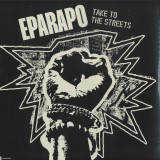
Eparapo - Take To The Streets LP

Repress!

Wah Wah 45s are proud to present the full debut album from Afrobeat supergroupEparapo. Having come togetherduring the unprecedented events of the pandemic and the Black Lives Matter movement, and despite being a project born from the privations of lockdown, their music is ultimately an expression of hope, resilience & resurgence.

The word "eparapo" means "join forces" in Yoruba, the language of Afrobeat. It's also the title of a track by the late, greatTony Allen- drummer for Afrobeat legendFela Kutiand lifelong friend and mentor of our very own "Afrobeat Ambassador",Dele Sosimi. Not only did Tony help to invent Afrobeat, he always looked for ways to push the boundaries, never content with recreating what had gone before but constantly expanding and developing the genre. This project hopes to pay homage to his legacy, and that of Fela Kuti himself. Its aim is to innovate, fuse and diversify while still retaining the essence of the music.

The force behind Eparapo is bassist, composer & producerSuman Joshi.He has been a member of Dele Sosimi's Afrobeat Orchestra for nearly a decade and has performed on stage with the likes of Tony Allen, Seun Kuti, Ginger Baker & Laura Mvula. He is also bassist with UK jazz ensemble Collocutor and fusion project Cubafrobeat.

"The Eparapo project was conceived during a time of lockdowns & government scandals. The music that makes up this album was written and recorded against a backdrop of societal upheaval, culture wars and rising wealth inequality. With little scrutiny or resistance from the mainstream media, our human and democratic rights were being eroded and our institutions debased. Even our right to protest is now under threat. This is a call to action, an expression of frustration & anger at what our nation has become. It's saying that enough is enough, it's time to join forces and make our voices heard. It's time to take to the streets."Suman Joshi

The title track is an epic eleven minute musical representation of this frustration and anger, where the musicians really let loose and allow their voices to be heard. As the only instrumental track on the album it acts as a call to action that is central to this body of work. Featured vocalists on the album are Fela Kuti disciple and Wah Wah 45s artistDele Sosimi, who appears on the singlesBlack Lives Matter,From London To LagosandWho Invented Back & White?as well as a more recent recording,Follow The Money; and London based, Ghanaian born master percussionist and vocalistAfla Sackey, who takes lead vocals on the mournful yet somehow hopefulBeautiful City.

The rest of the group comprises of highly rated UK jazz vocalistSahra Gure; saxophonist, composer, producer and bandleader of the renowned forward thinking jazz outfit Collocutor,Tamar Osborn; keyboard player, producer and front man for Lokkhi Terra and Cubafrobeat,Kishon Khan; one of the UK's finest and most in demand trumpeters,Graeme Flowers, who has played with Quincy Jones, Gregory Porter and many more; trombonist for Bellowhead and mainstay of Dele's Afrobeat Orchestra,Justin Thurgur; and finally drummer for Steamdown and Sons of Kemet, as well as the man behind the Nache project,Eddie Wakili Hick.

The album will be available digitally and limited edition vinyl LP, with striking artwork by our award winning designer Animisiewasz.

nicht am Lager

Bestelle jetzt und wir bestellen den Artikel für dich beim Lieferanten.


Last In: vor 12 Monaten
Kronos Quartet - Kronos Quartet Performs Philip Glass LP 2x12"
  • A1: String Quartet No. 5 I
  • A2: String Quartet No. 5 Ii
  • A3: String Quartet No. 5 Iii
  • A4: String Quartet No. 5 Iv
  • A5: String Quartet No. 5 V
  • B1: String Quartet No. 4 (Buczak) I
  • B2: String Quartet No. 4 (Buczak) Ii
  • B3: String Quartet No. 4 (Buczak) Iii
  • C1: String Quartet No. 2 (Company) I
  • C2: String Quartet No. 2 (Company) Ii
  • C3: String Quartet No. 2 (Company) Iii
  • C4: String Quartet No. 2 (Company) Iv
  • D1: String Quartet No. 3 (Mishima) 1957 – Award Montage
  • D2: String Quartet No. 3 (Mishima) November 25 – Ichigaya
  • D3: String Quartet No. 3 (Mishima) 1934 – Grandmother And Kimitake
  • D4: String Quartet No. 3 (Mishima) 1962 – Body Building
  • D5: String Quartet No. 3 (Mishima) Blood Oath
  • D6: String Quartet No. 3 (Mishima) Mishima/Closing

When Kronos plays a piece, they become fellow composers, true collaborators. Without them, we wouldn’t have the kind of string quartet playing that we find around us today. There are two kinds of string quartet playing: the ‘Before Kronos’ and the ‘After Kronos’.” – Philip Glass

‘Kronos Quartet has broken the boundaries of what string quartets can do.’ – New York Times

Nonesuch releases Kronos Quartet’s acclaimed album Kronos Quartet Performs Philip Glass on vinyl for the first time to coincide with Kronos Quartet: Five Decades, a year-long celebration marking the quartet’s 50th anniversary. Originally released in 1995, the album features David Harrington (violin), John Sherba, (violin), Hank Dutt (viola) and Joan Jeanrenaud (cello) performing Quartet No. 2 (Company) (1983), No. 3 (Mishima) (1985), No. 4 (Buczak) (1990), and No. 5 (1991), the first piece Glass wrote especially for Kronos. Recorded at Skywalker Sound in California, the album was produced by Judith Sherman, Kurt Munkacsi and Philip Glass. The cover art features Francesco Clemente’s painting The Four Corners (1985). At the time of the album’s release, the New York Times said, ‘It contains some of Glass's best music since Koyaanisqatsi. His ear for sumptuous string sonorities is undeniable,’ while the Washington Post called it ‘An ideal combination of composer and performers.’ It was a top 10 hit on Billboard’s Top Classical Albums, and spent 12 weeks on Billboard’s Classical chart.


In his original liner note, critic Mark Swed wrote, ‘Glass’ string quartets may contain his most intimate music. They are works through which a very public composer, perhaps the most important opera reformer of our age and a longstanding collaborator in large-scale music theater, holds up a mirror to himself and his way of composing. “In an odd way,” Glass explains, “string quartets have always functioned like that for composers. I don’t really know why, but it’s almost impossible to get away from it. It’s the way composers of the past have thought and that’s no less true for me. It’s almost as if we say we’re going to write a string quartet, we take a deep breath, and we wade in to try to write the most serious, significant piece that we can.” Glass says that as he sat down to write String Quartet No. 5, he had discovered that perhaps not taking a serious tone might be the most serious way to deal with it. “I was thinking that I had really gone beyond the need to write a serious string quartet and that I could write a quartet that is about musicality, which in a certain way is the most serious subject.”’


Glass’ first numbered quartet was written in 1966; however, he did not return to the string quartet medium until 1983, when he provided incidental music for a dramatization of Samuel Beckett’s prose poem, Company. During those 17 years, Glass had formed an ensemble and developed his style in a series of increasingly elaborate pieces for it. String Quartet No. 3 is also adapted to dramatic music, this time from his score to the 1985 Paul Schrader film, Mishima. It was with the music of Mishima that Kronos became associated with Glass, recording the string quartet sections of the soundtrack and subsequently working extensively with the composer on all five of his numbered quartets. Kronos also gave the first concert performances of Company and Mishima. String Quartet No. 4 was composed in remembrance of the artist Brian Buczak, who died of AIDS in 1988.


As Kronos’ anniversary season continues with further concerts around the world, Nonesuch will reissue Black Angels on vinyl on February 16. First released in 1990, the award-winning album includes George Crumb’s title piece, which inspired David Harrington to found the quartet. Called ‘an unusually elevated and searing Vietnam War protest’ by the New York Times, it sets a dark, powerful tone for this collection, which addresses the political/physical/spiritual consequences of war. Also featured are works by Charles Ives, István Márta, Thomas Tallis, and Dmitri Shostakovich. ‘Stylishly packaged, intelligently programmed, superbly recorded and brilliantly performed,’ proclaimed Gramophone. ‘In short, very much the sort of disc we’ve come to expect from the talented and imaginative Kronos Quartet.’ The Evening Standard included it among its ‘100 Definitive Classical Albums of the 20th Century’.


Born in Baltimore, Maryland, in 1937, Philip Glass is a graduate of the University of Chicago and the Juilliard School. By 1974, he had created a large collection of music for The Philip Glass Ensemble. The period culminated in the landmark opera, Einstein on the Beach. Since Einstein, Glass’s repertoire has grown to include music for opera, dance, theatre, orchestra, and film. His scores have received Academy Award nominations (including Kundun and The Hours, as well as Notes on a Scandal) and a Golden Globe (The Truman Show). Recent works include his memoir, Words Without Music, his first Piano Sonata, opera Circus Days and Nights, and Symphony No. 14. Glass received the Praemium Imperiale in 2012, the US National Medal of the Arts from President Barack Obama in 2016, and 41st Kennedy Center Honors in 2018.


Nonesuch’s relationship with Glass began in 1985, with the release of the score for Paul Schrader’s Mishima featuring Kronos Quartet. Over the years other Glass works on Nonesuch have included Einstein on the Beach (1993), Kronos Quartet Performs Philip Glass (1995), Music in Twelve Parts (1996), Glass Box (2008), as well as the soundtracks for Powaqqatsi (1988), Kundun (1997), Koyaanisqatsi (1998), and The Hours (2002), amongst others.


For 50 years, San Francisco’s Kronos Quartet – David Harrington (violin), John Sherba (violin), Hank Dutt (viola), and Paul Wiancko (cello) – has challenged and reimagined what a string quartet can be. Founded at a time when the form was largely centred on long-established, Western European traditions, Kronos has been at the forefront of revolutionizing the string quartet into a living art form that responds to the people and issues of our time. In the process, Kronos has become one of the most celebrated and influential groups of our era, performing thousands of concerts worldwide, releasing more than 70 recordings of extraordinary breadth and creativity, and collaborating with many of the world’s most accomplished composers and performers. Through its nonprofit organization, Kronos Performing Arts Association, Kronos has commissioned more than 1,000 works and arrangements for string quartet – including the Kronos Fifty for the Future library of free, educational repertoire. Kronos has received more than 40 awards, including three Grammy Awards and the Polar Music, Avery Fisher, and Edison Klassiek Oeuvre Prizes.


Kronos is prolific and wide-ranging on recordings. The ensemble’s expansive discography on Nonesuch includes three Grammy-winning albums: Terry Riley’s Sun Rings (2019), Landfall with Laurie Anderson (2018), and Alban Berg’s Lyric Suite featuring soprano Dawn Upshaw (2003); the 40th-anniversary boxed set Kronos Explorer Series; Nuevo (2002), a Grammy- and Latin Grammy–nominated celebration of Mexican culture; Pieces of Africa (1992), a showcase of African-born composers that simultaneously topped Billboard’s Classical and World Music charts; and Folk Songs (2017), Nonesuch’s 50th album with Kronos, which featured Sam Amidon, Olivia Chaney, Rhiannon Giddens, and Natalie Merchant singing traditional folk songs.

nicht am Lager

Bestelle jetzt und wir bestellen den Artikel für dich beim Lieferanten.


Last In: vor 2 Jahren
Various - Pacific Breeze Volume 3 : Japanese City Pop, AOR & Boogie 1975-1987

Light in the Attic’s Pacific Breeze series has supplied the world’s growing legions of Japanese music fans with an expertly curated selection of the most sought-after City Pop recordings—the mesmerizing and nebulous genre of Japanese bubble-era music of the ‘70s-’80s that encompasses AOR, R&B, jazz fusion, funk, boogie and disco. These familiar sounds are spun through the unique lens of optimistic, cosmopolitan fantasy colored by Japan’s affluence at the time. Much of the music has previously been nearly impossible to acquire outside of Japan and continues to captivate listeners with its unique blend of groove-laden escapism, even birthing wholly new genres such as Vaporwave.

Pacific Breeze 3: Japanese City Pop, AOR & Boogie 1975-1987 marks the latest chapter in the famed series and features holy grails plus under-the-radar rarities. The collection bursts at the seams to reveal some of the greatest Japanese tracks ever laid to tape, pushing towards the edge of City Pop to reveal glimmers of the next waves of styles to spring forth from the country’s creative minds. The appearance of Pizzicato Five hint at the emergence of Shibuya-kei while the influence of hip hop and electro as an emerging global trend are also evident here through the prevalence of heavier programmed drum beats on tracks such as “Heartbeat” by Miho Fujiwara.

This volume of Pacific Breeze, like its predecessors, is a female-forward offering with many tracks being voiced by women who would become household names in Japan as actresses and pop idols. Their songs here subvert the norm and brim with an innovative spirit that shatters gender roles in favor of sonic transcendence. Techno-pop classics from Susan, Miharu Koshi and Chiemi Manabe sit alongside sublime funk from Atsuko Nina and Naomi Akimoto while Teresa Noda slides into the mix with a sultry reggae jam. The genre span is stretched wider with hypnotic jazz fusion by Parachute and Hiroyuki Namba, a synthesizer fantasy from Osamu Shoji, and magnetic pop by Makoto Matsushita and Chu Kosaka.

Although not front and center, the visionary members of Yellow Magic Orchestra are still very present on Pacific Breeze 3, with Haruomi Hosono, Ryuichi Sakamoto, and Yukihiro Takahashi taking up producer and musician roles on many of these tracks. Pacific Breeze 3 serves up a captivating musical journey that adds an essential chapter to the iconic compilation series.

Tracklist:

Naomi Akimoto - Bewitched (Are You Leaving Soon), Atsuko Nina - Tonkachi, Miho Fujiwara - Heartbeat, Miharu Koshi - Scandal Night, Chu Kosaka - Shirakechimauze, Teresa Noda - Tropical Love, Makoto Matsushita - Business Man Pt. 1, Susan - Ah! Soka, Yukako Hayase - Suiyoubi Madeni Shinitaino, Parachute - Kowloon Daily, Hiroyuki Namba - Tropical Exposition (Who Done It? Version), Pizzicato Five - Boy Meets Girl, Mari Iijima - Love Sick, 1986 Omega Tribe - Cosmic Love, Osamu Shoji - Pub Casablanca, Chiemi Manabe - Untotooku

nicht am Lager

Bestelle jetzt und wir bestellen den Artikel für dich beim Lieferanten.


Last In: vor 19 Monaten
VARIOUS - PACIFIC BREEZE 3: JAPANESE CITY POP 2x12"

- The third chapter in the acclaimed Pacific Breeze series! - Artwork by renowned illustrator Hiroshi Nagai - Compiled by Yosuke Kitazawa and Mark "Frosty" McNeill (dublab) - Newly remastered audio - 2xLP housed in a deluxe wide spine jacket with full color inner sleeves and custom die-cut OBI - Extensive artist bios by Yosuke Kitazawa // Light in the Attic's Pacific Breeze series has supplied the world's growing legions of Japanese music fans with an expertly curated selection of the most sought-after City Pop recordings-the mesmerizing and nebulous genre of Japanese bubble-era music of the '70s-'80s that encompasses AOR, R&B, jazz fusion, funk, boogie and disco. These familiar sounds are spun through the unique lens of optimistic, cosmopolitan fantasy colored by Japan's affluence at the time. Much of the music has previously been nearly impossible to acquire outside of Japan and continues to captivate listeners with its unique blend of groove-laden escapism, even birthing wholly new genres such as Vaporwave. Pacific Breeze 3: Japanese City Pop, AOR & Boogie 1975-1987 marks the latest chapter in the famed series and features holy grails plus under-the-radar rarities. The collection bursts at the seams to reveal some of the greatest Japanese tracks ever laid to tape, pushing towards the edge of City Pop to reveal glimmers of the next waves of styles to spring forth from the country's creative minds. The appearance of Pizzicato Five hint at the emergence of Shibuya-kei while the influence of hip hop and electro as an emerging global trend are also evident here through the prevalence of heavier programmed drum beats on tracks such as "Heartbeat" by Miho Fujiwara. This volume of Pacific Breeze, like its predecessors, is a female-forward offering with many tracks being voiced by women who would become household names in Japan as actresses and pop idols. Their songs here subvert the norm and brim with an innovative spirit that shatters gender roles in favor of sonic transcendence. Techno-pop classics from Susan, Miharu Koshi and Chiemi Manabe sit alongside sublime funk from Atsuko Nina and Naomi Akimoto while Teresa Noda slides into the mix with a sultry reggae jam. The genre span is stretched wider with hypnotic jazz fusion by Parachute and Hiroyuki Namba, a synthesizer fantasy from Osamu Shoji, and magnetic pop by Makoto Matsushita and Chu Kosaka. Although not front and center, the visionary members of Yellow Magic Orchestra are still very present on Pacific Breeze 3, with Haruomi Hosono, Ryuichi Sakamoto, and Yukihiro Takahashi taking up producer and musician roles on many of these tracks. Pacific Breeze 3 serves up a captivating musical journey that adds an essential chapter to the iconic compilation series.

vorbestellen10.03.2023

erscheint voraussichtlich am 10.03.2023

VARIOUS - PACIFIC BREEZE 3: JAPANESE CITY POP 2x12"

- The third chapter in the acclaimed Pacific Breeze series! - Artwork by renowned illustrator Hiroshi Nagai - Compiled by Yosuke Kitazawa and Mark "Frosty" McNeill (dublab) - Newly remastered audio - 2xLP housed in a deluxe wide spine jacket with full color inner sleeves and custom die-cut OBI - Extensive artist bios by Yosuke Kitazawa // Light in the Attic's Pacific Breeze series has supplied the world's growing legions of Japanese music fans with an expertly curated selection of the most sought-after City Pop recordings-the mesmerizing and nebulous genre of Japanese bubble-era music of the '70s-'80s that encompasses AOR, R&B, jazz fusion, funk, boogie and disco. These familiar sounds are spun through the unique lens of optimistic, cosmopolitan fantasy colored by Japan's affluence at the time. Much of the music has previously been nearly impossible to acquire outside of Japan and continues to captivate listeners with its unique blend of groove-laden escapism, even birthing wholly new genres such as Vaporwave. Pacific Breeze 3: Japanese City Pop, AOR & Boogie 1975-1987 marks the latest chapter in the famed series and features holy grails plus under-the-radar rarities. The collection bursts at the seams to reveal some of the greatest Japanese tracks ever laid to tape, pushing towards the edge of City Pop to reveal glimmers of the next waves of styles to spring forth from the country's creative minds. The appearance of Pizzicato Five hint at the emergence of Shibuya-kei while the influence of hip hop and electro as an emerging global trend are also evident here through the prevalence of heavier programmed drum beats on tracks such as "Heartbeat" by Miho Fujiwara. This volume of Pacific Breeze, like its predecessors, is a female-forward offering with many tracks being voiced by women who would become household names in Japan as actresses and pop idols. Their songs here subvert the norm and brim with an innovative spirit that shatters gender roles in favor of sonic transcendence. Techno-pop classics from Susan, Miharu Koshi and Chiemi Manabe sit alongside sublime funk from Atsuko Nina and Naomi Akimoto while Teresa Noda slides into the mix with a sultry reggae jam. The genre span is stretched wider with hypnotic jazz fusion by Parachute and Hiroyuki Namba, a synthesizer fantasy from Osamu Shoji, and magnetic pop by Makoto Matsushita and Chu Kosaka. Although not front and center, the visionary members of Yellow Magic Orchestra are still very present on Pacific Breeze 3, with Haruomi Hosono, Ryuichi Sakamoto, and Yukihiro Takahashi taking up producer and musician roles on many of these tracks. Pacific Breeze 3 serves up a captivating musical journey that adds an essential chapter to the iconic compilation series.

vorbestellen10.03.2023

erscheint voraussichtlich am 10.03.2023

Various - Pacific Breeze Volume 3 : Japanese City Pop, AOR & Boogie 1975-1987

Light in the Attic’s Pacific Breeze series has supplied the world’s growing legions of Japanese music fans with an expertly curated selection of the most sought-after City Pop recordings—the mesmerizing and nebulous genre of Japanese bubble-era music of the ‘70s-’80s that encompasses AOR, R&B, jazz fusion, funk, boogie and disco. These familiar sounds are spun through the unique lens of optimistic, cosmopolitan fantasy colored by Japan’s affluence at the time. Much of the music has previously been nearly impossible to acquire outside of Japan and continues to captivate listeners with its unique blend of groove-laden escapism, even birthing wholly new genres such as Vaporwave.

Pacific Breeze 3: Japanese City Pop, AOR & Boogie 1975-1987 marks the latest chapter in the famed series and features holy grails plus under-the-radar rarities. The collection bursts at the seams to reveal some of the greatest Japanese tracks ever laid to tape, pushing towards the edge of City Pop to reveal glimmers of the next waves of styles to spring forth from the country’s creative minds. The appearance of Pizzicato Five hint at the emergence of Shibuya-kei while the influence of hip hop and electro as an emerging global trend are also evident here through the prevalence of heavier programmed drum beats on tracks such as “Heartbeat” by Miho Fujiwara.

This volume of Pacific Breeze, like its predecessors, is a female-forward offering with many tracks being voiced by women who would become household names in Japan as actresses and pop idols. Their songs here subvert the norm and brim with an innovative spirit that shatters gender roles in favor of sonic transcendence. Techno-pop classics from Susan, Miharu Koshi and Chiemi Manabe sit alongside sublime funk from Atsuko Nina and Naomi Akimoto while Teresa Noda slides into the mix with a sultry reggae jam. The genre span is stretched wider with hypnotic jazz fusion by Parachute and Hiroyuki Namba, a synthesizer fantasy from Osamu Shoji, and magnetic pop by Makoto Matsushita and Chu Kosaka.

Although not front and center, the visionary members of Yellow Magic Orchestra are still very present on Pacific Breeze 3, with Haruomi Hosono, Ryuichi Sakamoto, and Yukihiro Takahashi taking up producer and musician roles on many of these tracks. Pacific Breeze 3 serves up a captivating musical journey that adds an essential chapter to the iconic compilation series.

Tracklist:

Naomi Akimoto - Bewitched (Are You Leaving Soon), Atsuko Nina - Tonkachi, Miho Fujiwara - Heartbeat, Miharu Koshi - Scandal Night, Chu Kosaka - Shirakechimauze, Teresa Noda - Tropical Love, Makoto Matsushita - Business Man Pt. 1, Susan - Ah! Soka, Yukako Hayase - Suiyoubi Madeni Shinitaino, Parachute - Kowloon Daily, Hiroyuki Namba - Tropical Exposition (Who Done It? Version), Pizzicato Five - Boy Meets Girl, Mari Iijima - Love Sick, 1986 Omega Tribe - Cosmic Love, Osamu Shoji - Pub Casablanca, Chiemi Manabe - Untotooku

vorbestellen27.02.2023

erscheint voraussichtlich am 27.02.2023

NIRVANA - TO MARKOS III LP + 7"

Nirvana's third LP is a masterpiece of late UK sixties popsike turning into symphonic pop, but not having received proper promotion despite being equally good as, if not better than their previous releases, it also marked the end of the collaborations between Patrick Campbel-Lyons and Alex Spyropoulos back in 1969.


Nirvana presented it to Island boss Chris Blackwell under the title of Black Flower. Blackwell, however, decided to turn it down for release, but gave the masters to Campbell-Lyons and Spyropoulos so they could find a new label to release the album. That was to happen in the USA through Metromedia Records in 1969. At that time, the label's owner went through a scandal due to the payola days, which left Nirvana's third offering without any promotion - as a result of that, very few copies were pressed. There was also a UK release on PYE and it was even released by Metromedia in Japan. However, for years it remained as "the lost" Nirvana release, with the added fact that none of the released editions launched the album under its original title of Black Flower but under the rather cryptic Dedicated To Markos II (read why in the liner notes!).


Musically, this is Nirvana at their best. The tune that should have been the title track, Black Flower, is an incredible piece of symphonic psychedelia and probably the best produced Nirvana track ever. Campbell-Lyons and Spyropoulos were backed for the occasion by Spooky Tooth, who played on many tracks of the album, and big orchestral arrangements mesmerize the listener in one of the duo's darkest offerings. This song aside, the rest of the album was deemed as sounding too much like a French soundtrack by Island, which may do at some points –without that being a bad thing,– but there is a lot more to it, since Nirvana have not lost that popsike edge that characterised their sound in their two previous outings.


This is also a record that was widely acclaimed in the hip hop scene. And samplers of it have been used by several artists, most notably DJ Shadow used Love Suite in his 1996 debut album Endtroducing.


The Wah Wah edition has been remastered from the original tapes by Roger Prades @ Prades Mastering and comes with a bonus 7" EP and a four page colour insert with liner notes by Malcom Dome, plus a sheet with the lyrics of the songs. First ever official vinyl reissue since 1970 in a limited edition of 500 copies only!

vorbestellen27.02.2023

erscheint voraussichtlich am 27.02.2023

A Heart In Splinters - More From The CAIFE Label, Quito, 1960-68
 
26

Impatiently returning to the golden age of Ecuadorian musica national, this second round of retrievals is more of a selectors’ affair: less reverent, more free-flowing, with more twists and turns. There is no let-up in musical quality, maintaining the same judicious, heart-piercing balance between emotional desolation and dignified endurance, the same bitter-sweet play between affective excess and musical sublimity.

This time around, the woman steal the show. Laura and Mercedes Suasti were child stars, with an exclusive Radio Quito contract. Unlike nearly all the men here, they lived long and prospered: Mercedes died last year, at the age of 93. Gladys Viera and Olga Gutierrez both came to Ecuador from Argentina. To start, Gladys plugged the scandalous new Monokini swimwear; Olga performed for visiting British royalty in 1962. Olga was glamorous but tough. She would make little of the amputation of one of her legs: ‘I don’t sing with my leg.’ She is accompanied on our opener by quintessentially reeling, sultry musica national: haunted-house organ, twinkling xylophone, Guillermo Rodriguez’ heart-plucking guitar-playing, and lilting, dance-to-keep-from-crying double-bass. ‘Sometimes I think that you will leave me with no memories,’ she sings, ‘that you hold only disappointments in store for me… In the future your love will search me out, full of regret. By then it will be too late, there will be no consolation, only disappointment awaiting you.’

Other highlights include the two contributions of Orquesta Nacional: Ponchito Al Hombro, like an off-the-wall forerunner of the Love Unlimited Orchestra, beamed into the tropics from an unknowable time and space; and the tone poem Atahualpa, a mystical yumbo invoking Quito’s most ancient inhabitants, the Kichwa. Also the tremulous, gypsy-flavoured violin-playing of Raul Emiliani, who arrived in Quito from Italy, suffering PTSD from the Second World War; the inscrutable, sardonic experimentalism of organist Lucho Munoz; and the mooing and whistling of Toro Barroso — school of Lee Perry — in which a muddy bull dashes home to his darling chola, fearless, full of desire.

Lavishly presented, with a full-size, full-colour booklet, with transporting art-work and expert notes. Luminous sound, by way of Abbey Road, D&M and Pallas.

vorbestellen17.02.2023

erscheint voraussichtlich am 17.02.2023

Philip Glass - The Hours OST 2x12"

Philip Glass

The Hours OST 2x12"

2x12inch0075597910292
Nonesuch
30.09.2022

‘Was there ever a more perfect film for Glass’s lyrical manner? He refers to his own past, but the way in which the material is treated transforms it inevitably into that eternal present. Such a feeling of fragile beauty is a rare achievement.’ – Gramophone

‘Simple and complex by turn, Glass’s score adds dignity and depth to the movie, and to the tragedies and triumphs, big or small, of ordinary life.’
– Guardian

‘Underpinning the anguish at the heart of The Hours a beautiful score. Glass’s motifs capture the passage of time and the universality of human experience.’ – Classic FM’s Best Soundtracks

Nonesuch releases Philip Glass’s award-winning soundtrack to The Hours on vinyl for the first time to coincide with its 20th anniversary and Glass’ 85th birthday concert season. Originally released in December 2002, Glass’s score to the Academy Award-winning film was itself nominated for an Academy Award, as well as a Golden Globe and a Grammy, and went on to win a BAFTA and a Classical BRIT.

Directed by Stephen Daldry, The Hours is the story of three women searching for more potent, meaningful lives. Based on Michael Cunningham’s 1999 Pulitzer Prize–winning novel, with a screenplay by David Hare, the film interweaves the stories of three women – a book editor in New York (Meryl Streep), a young mother in California (Julianne Moore), and the author Virginia Woolf (Nicole Kidman). Their stories intertwine, and finally come together in a surprising, transcendent moment of shared recognition.

Philip Glass’s score was conducted by Nick Ingman, with Michael Reisman on piano and the Lyric Quartet, and recorded at Abbey Road Studios and Air Studios, London. The score was a key element in this acclaimed triptych of dramatic tales. ‘The inter-cutting of personal stories over a wide span of time,’ said NPR, ‘is held together by a single music approach.’

In his original liner note, Michael Cunningham wrote, ‘Each novel I’ve written has developed a soundtrack of sorts; a body of music that subtly but palpably helped shape the book in question. The one constant since I started trying to write novels, however – my only ongoing act of listening fidelity – has been the work of Philip Glass. I love Glass’s music almost as much as I love Woolf’s Mrs. Dalloway. Glass, like Woolf, is more interested in that which continues than he is in that which begins, climaxes, and ends; he insists, as did Woolf, that beauty often resides more squarely in the present than it does in the present’s relationship to past or future. So, when I heard he’d agreed to contribute the music to the film version of The Hours, it seemed both inevitable and too good to be true. I’m not sure if I can offer any higher praise than this: When I saw the movie with the music added, I thought automatically of how I could use the soundtrack, when it came out, to help me finish my next book.’

“This is a movie about art and how art affects life," explains Philip Glass. “The story is very complicated and the music could take on a very important role in the film, as I saw it – to make it viewable, to make it comprehensible, so the stories of the three women in the film didn’t seem separate, that they were tied together. The music had to be the thread that tied the movie together. There’s no question that the emotional point of view is conveyed by the music. Music is the arrow you shoot in the air. Everything follows that.’

Born in Baltimore, Maryland, in 1937, Philip Glass is a graduate of the University of Chicago and the Juilliard School. By 1974, Glass had created a large collection of music for The Philip Glass Ensemble. The period culminated in the landmark opera, Einstein on the Beach. Since Einstein, Glass’s repertoire has grown to include music for opera, dance, theater, orchestra, and film. His scores have received Academy Award nominations (including Kundun and The Hours, both released on Nonesuch, as well as Notes on a Scandal) and a Golden Globe (The Truman Show). Recent works include Glass’s memoir, Words Without Music, Glass’s first Piano Sonata, opera Circus Days and Nights, and Symphony No. 14. Glass received the Praemium Imperiale in 2012, the US National Medal of the Arts from President Barack Obama in 2016, and 41st Kennedy Center Honors in 2018.

Nonesuch’s relationship with Glass began in 1985, with the release of the score for Paul Schrader’s Mishima. In addition to The Hours (2002) and Kundun (1997), over the years other Glass works on Nonesuch have included Einstein on the Beach (1993), Music in Twelve Parts (1996), the soundtracks for Powaqqatsi (1988) and Koyaanisqatsi (1998), Glass Box (2008), and Kronos Quartet’s Performs Philip Glass (1995), amongst others.

vorbestellen30.09.2022

erscheint voraussichtlich am 30.09.2022

Il Est Vilaine - Les Mystères de Lorient

After severals EPs on labels such as Lumière Noir, Kill the DJs or Bahnsteig 23, here is the first album of french duo Il Est Vilaine, infused with a "Yellow Magic Orchestra-ish" touch, rooted in the french musical landscape.

A road trip in Brittany as a red thread, the two hooligans of Il Est Vilaine revisit Kawaii pop, crazy rock like DEVO and Detroit techno with a surprising coherence. An album long matured and awaited by the band's fans.

Il Est Vilaine aren’t Bretons, but they sure are tricksters. The Francophiles among you might have caught on to the corny pun in their name (beating a certain presidential candidate to the punch all while turning the name of the pastoral Ille-et-Vilaine region into, literally, “he’s a nasty woman,”) but the real takeaway is that these born-and-bred Parisians don’t take themselves too seriously – especially in an era in which there is much too much of that happening.
It was in 2014 (and on Dialect Recordings) that Florent and Simon tossed their debut 12” into the ring, the rightfully named Scandale – a tight little bombshell released that roused the electronic music scene out of its complacent little catnap.
So there we had it, two outcasts refusing to eat at the same table as the tech-house scene queens, serving up three whiplash-on-the-dancefloor cuts drenched in sweaty hedonistic disco and wrapped in a battered motorcycle jacket (with a gooey post-punk-pop core for good measure.) A clear mission statement right out of the gates, watermarked with mystical incantations and throbbing with rock ’n’ roll’s primitive drive. Everything and the kitchen sink, and a bag of chips – an invitation to just let lose that’s even better than the sum of its parts.

nicht am Lager

Bestelle jetzt und wir bestellen den Artikel für dich beim Lieferanten.


Last In: vor 4 Jahren
David Shire - The Conversation - Original Movie Soundtrack

THIS IS NOT A REISSUE. THIS IS THE FIRST TIME THIS AMAZING MINIMAL SCORE HAS BEEN ISSUED ON VINYL

This is the first time the complete score to The Conversation has been released on vinyl. The film itself was originally released in 1974 and a 7' demo of the theme was sent out as promotional material by Paramount (PAA-0305), but a USA stock edition was never issued. In Japan the same music was also issued on a 7' at about the same time (JET-2273), with a picture sleeve, but until now nothing else has ever been pressed on vinyl.

Jonny Trunk's little obsession with this music began after I'd caught the film, late night, sometime in the mid 1990s. Musically it's an exceptional example of the 'new minimalism' in film music of the period, marking a departure (for some) from big scores to smaller, more economic ensemble sounds.

The film was written, produced and directed by Francis Ford Coppola and is still a thrilling journey into sound, mind and murder. Heavily influenced by Antonioni's Blow-Up (and not, as some thought, by Watergate), Coppola wanted to fuse the concept of Blow-Up with 'the world of audio surveillance'. The story centres around Harry Caul (Gene Hackman), a mac-wearing professional wire-tapper and clandestine bugger who gets unusually consumed by a conversation he's been paid to record. Caul is a loner, an obsessive-compulsive character with numerous neuroses that play out brilliantly throughout the film. And as he slowly pieces together the conversation fragments and forms his own story around it, his world falls apart.

Sonically this movie - all about sound - is groundbreaking in many ways, with actual 'sound Design' Provided By The Legendary Walter Murch - The Man Who Actually Invented The Term In The First Place.

For The Music, Coppola Wisely Chose A Young David Shire, His Brother In Law. Shire's Deceptively Simple Piano Theme (composed Because Of No Budget For Big Orchestra) Is One Of Tragic Beauty, Brilliantly Capturing Caul's Loneliness, His Slightly Disturbed Nature And This Trip Into Darkness. The Melody Has Both Sweet And Sour Tones, Feeling A Little Like A Slow Ragtime, Which Both Develops And Retreats Throughout The Film; There Are Even Trips Into Avant-garde Territory With Electro-acoustic Flourishes And Concrète. The Solo, Agitated Figure Of Caul, Wearing His Distinctive Transparent Mac, Is Made All The More Raw And Poignant By The Score - The Sparse And Curiously Emotional Compositions Are Unlike Any Others I Can Think Of From The Period.

The Soundtrack For The Conversation Proved To Be A Major Break For Shire, His Career Really Taking Off From This Musical Point. His Next Score Was To Be The Underground Classic Taking Of Pelham 123, Followed Up Later Ironically By All The Presidents Men - A Thriller About The Watergate Scandal.

The Conversation Went On To Win Several Awards And Nominations, And Has Become A Classic Of The 'new Hollywood' Movement. Hopefully Now This Music May Become Part Of The Renewed Interest In Old Film Soundtracks.

nicht am Lager

Bestelle jetzt und wir bestellen den Artikel für dich beim Lieferanten.


Last In: vor 7 Jahren
  • 1
Artikel pro Seite:
N/ABPM
Vinyl