
Hot psychedelic jazz groover and hand-drawn artwork strictly limited and only on vinyl!
vorbestellen
Der Artikel ist noch nicht erschienen. Du kannst den Artikel jetzt vorbestellen, dieser ist nach Wareneingang für dich versandbereit.
Hot psychedelic jazz groover and hand-drawn artwork strictly limited and only on vinyl!
Der Artikel ist noch nicht erschienen. Du kannst den Artikel jetzt vorbestellen, dieser ist nach Wareneingang für dich versandbereit.

Sax-A-Go-Go was Candy Dulfer's second album, released in 1993. The response was once again astounding. The album spent 31 weeks on the US Billboard Top Contemporary Jazz Album chart and went gold in Japan and the Netherlands. The album includes two hit singles, ""Sax-A-Go-Go"" and ""Pick Up the Pieces,"" as well as a version of the protest song ""Compared To What"" and ""I Can't Make You Love Me,"" a stunning cover of the Bonnie Raitt original. Sax-A-Go-Go is available as a limited edition of 750 numbered copies on translucent purple coloured vinyl and includes an insert.
Bei uns am Lager und sofort versandfertig

Rhythm Section look to Poland once more for two of the most uplifting tracks of the year. Earth Trax (known for his productions as The Phantom & one half of Ptaki) and newcomer Newborn Junior pull two absolute classics out of the bag here that do what they say on the tin. Both Sax Track and Flute Track centre around ecstatic MIDI melodies on (you guessed it) Saxophone and Flute! Falling somewhere between the late night deep house excursions of Ron Trent (circa Morning Factory era) and more recent retro-leaning breakbeat driven output from the Pender Street Steppers et al, the Sax & Flute EP is a masterclass in sustain-release. Euphoria Guaranteed - or your money back!
Bei uns am Lager und sofort versandfertig

France's near-revolution of May '68 was the zenith of that generation's struggle for a new kind of life. It kicked the country's small, but vibrant, counter-culture into overdrive, and birthed a local underground music scene. The bands it spawned made music with much less rock purity than groups from the UK and US. Their musical and cultural influences foregrounded improvisation, disjunction, and genre-blending: Soft Machine, Pink Floyd, Frank Zappa, free jazz, and radical politics. The introduction of the synthesiser in the early 1970s added fuel to the fire.
This collection of French underground music inaugurates a series to accompany "Synths, Sax & Situationists", the first English-language book to investigate this movement. It focuses on the music of the second wave of bands that emerged in 1972/3, which saw radicalised psychedelic and jazz influences merge with the future-music possibilities offered by new technology. The next volume will investigate the politically-charged bands that erupted in immediate aftermath of May '68.
erscheint voraussichtlich am 20.03.2026

This project by Manu Dibango, the legendary saxophonist and pioneer of Afro-fusion jazz, delves into a musical universe where the saxophone becomes the voice of a spiritual and introspective quest. Sax & Spirituals Lamastabastani merges jazz, gospel, and African influences to weave a dialogue between sacred traditions and modern expressions.
With this work, Dibango pays tribute to the spiritual roots of music while reaffirming his commitment to sonic innovation. The project's minimalist and meditative approach speaks to both the soul and the senses, offering a musical experience imbued with depth and humanity.
erscheint voraussichtlich am 25.04.2025

Another gem from the extensive Flipper Music catalog, more precisely from their Flower sublabel, "Dreams For Sax" is possibly one of the most stand-out productions from their studio ensemble Gruppo Sound, this time around featuring saxophonist Paolo Russo with keyboardists Stefano Galante and Vittorio Quattrini. First released in 1987, the songs recorded for "Dreams For Sax" are a beautiful melange of easy-listening electronic and jazzy vibes, from mellow tunes such as "Dawning" and "First Class" to some killer floor-filling italo disco bangers such as "Walking On Air" and "Dance Power". A groovy Italian library banger from the 80's now available on vinyl for the first time since its original release as a limited edition of 500 copies.
erscheint voraussichtlich am 31.08.2024

Bestelle jetzt und wir bestellen den Artikel für dich beim Lieferanten.

Bestelle jetzt und wir bestellen den Artikel für dich beim Lieferanten.

Bestelle jetzt und wir bestellen den Artikel für dich beim Lieferanten.

Veteran Jamaican singer Robert Dallas joins accaliamed UK reggae saxman Leroy Horns on this contemprary rub-a-dub styled rhythm track from stalwart dubwise producer Manasseh.
Bestelle jetzt und wir bestellen den Artikel für dich beim Lieferanten.

Klasse Indie-Rock von Downunder. Riley Jones, Louis Forster und James Harrison sind seit Ewigkeiten beste Freunde deren gemeinsame Leidenschaft die Musik ist. Folgerichtig manifestierte man den Bund der Freundschaft in einer gemeinsamen Band schon zu High School Zeiten - The Goon Sax waren geboren. "Mirror II" ist bereits das dritte Album der australischen Indieband, gleichzeitig ihr Debüt auf ihrem neuen Label Matador Records und zudem ein Aufbruch in neue Soundwelten. Das 2016 erschienene Debütalbum "Up to Anything" war eine Mischung aus Selbstfindung und musikalischen Feldversuchen zum Nachfolger "We're Not Talking" (2018) hatten man seinen ganz eigenen Sound gefunden hatte. Für "Mirror II" ließen sich die drei Australier drei Jahre Zeit. Louis zog zwischenzeitlich nach Berlin, wo er in einem Kino arbeitete, während Riley und James eine Post-Punk-Band mit dem Namen Soot gründeten. Alle drei experimentierten in dieser Zeit mit teils abstrakter Musik und atonalen Sounds, nun folgt die Rückbesinnung zum Pop. Jedes Bandmitglied bringt dabei seine ganz eigene Art des Songwriting ein. Rileys musikalische Vorbilder wie Les Rallizes Dénudés, Keijo Haino aber auch Kylie Minogue hört man auf "Desire" und "Tag". Louis ist wiederum beeinflusst von avantgardistischem Pop. Er liebt Bands wie HTRK, Young Marble Giants und Stereolab, aber auch Hits von poppigeren Künstlern wie The 1975 oder Justin Bieber. Aus diesen Einflüssen entstanden Songs wie "Psychic" oder "In the Stone". Seine Art Songs zu schreiben brachte ihm immer wieder Vergleiche mit der großen australischen Band The Go-Betweens ein - kein Wunder, schließlich ist Robert Forster sein Vater. Da fällt der Sound nicht so weit vom Stamm. James Harrison ist wiederum ein großer Bewunderer von Syd Barrett, den Walker Brothers, Felt und Jandek, was man den psychedelisch geprägten Tracks "Carpetry" und "Caterpillars" auch anhört.
erscheint voraussichtlich am 09.07.2021

WHITE COLOURED VINYL
Klasse Indie-Rock von Downunder. Riley Jones, Louis Forster und James Harrison sind seit Ewigkeiten beste Freunde deren gemeinsame Leidenschaft die Musik ist. Folgerichtig manifestierte man den Bund der Freundschaft in einer gemeinsamen Band schon zu High School Zeiten - The Goon Sax waren geboren. "Mirror II" ist bereits das dritte Album der australischen Indieband, gleichzeitig ihr Debüt auf ihrem neuen Label Matador Records und zudem ein Aufbruch in neue Soundwelten. Das 2016 erschienene Debütalbum "Up to Anything" war eine Mischung aus Selbstfindung und musikalischen Feldversuchen zum Nachfolger "We're Not Talking" (2018) hatten man seinen ganz eigenen Sound gefunden hatte. Für "Mirror II" ließen sich die drei Australier drei Jahre Zeit. Louis zog zwischenzeitlich nach Berlin, wo er in einem Kino arbeitete, während Riley und James eine Post-Punk-Band mit dem Namen Soot gründeten. Alle drei experimentierten in dieser Zeit mit teils abstrakter Musik und atonalen Sounds, nun folgt die Rückbesinnung zum Pop. Jedes Bandmitglied bringt dabei seine ganz eigene Art des Songwriting ein. Rileys musikalische Vorbilder wie Les Rallizes Dénudés, Keijo Haino aber auch Kylie Minogue hört man auf "Desire" und "Tag". Louis ist wiederum beeinflusst von avantgardistischem Pop. Er liebt Bands wie HTRK, Young Marble Giants und Stereolab, aber auch Hits von poppigeren Künstlern wie The 1975 oder Justin Bieber. Aus diesen Einflüssen entstanden Songs wie "Psychic" oder "In the Stone". Seine Art Songs zu schreiben brachte ihm immer wieder Vergleiche mit der großen australischen Band The Go-Betweens ein - kein Wunder, schließlich ist Robert Forster sein Vater. Da fällt der Sound nicht so weit vom Stamm. James Harrison ist wiederum ein großer Bewunderer von Syd Barrett, den Walker Brothers, Felt und Jandek, was man den psychedelisch geprägten Tracks "Carpetry" und "Caterpillars" auch anhört.
erscheint voraussichtlich am 09.07.2021

For volume 86 in the Brazil45 series, we return with a pair of stellar 1970s Brazilian-Funk / Black Rio nuggets by two of the greats of the genre, Toni Tornado & Zeca Do Trombone.
'Sou Negro' (I'm Black) is taken from Toni Tornado's (aka Antônio Viana Gomes) sought after 1970 four-track compacto EP on Odeon Records. Already having had some experience in show business as a dancer in the 1960s, Toni started his musical career in 1970 and adopted the stage name 'Toni Tornado'. The influence of James Brown flowed through his music, with Toni becoming one of the first Brazilian artists (alongside Tim Maia) to introduce the soul and funk sound into Brazilian music. Together with other contemporary musicians and bands such as Banda Black Rio, Gerson King Combo and Cassiano, this new sound led to DJ's throwing soul parties. This unique Brazilian take on soul and funk (and later on disco) became coined as 'Black Rio'. A movement that celebrated pride in its Black identity and consciousness.
Zeca Do Trombone has an impressive repertoire which has seen him releasing a handful of solo albums and working with some of the greats of Brazilian music, such as Tim Maia, Ivan Lins, Joyce, and Luis Vagner. The track 'Coluna Do Meio' is taken from his 1976 collaboration project 'Zé Do Trombone E Roberto Sax' with saxophonist Roberto Sax, which additionally features the heavyweight Wilson das Neves on percussion. This catchy Wah-Wah guitar-led dancer has become a favourite with DJ's over the years and will continue to be championed for years to come.
erscheint voraussichtlich am 16.04.2021

Bordello A Parigi has just returned from a fruitful expedition to Russia to secure a four tracker from St Petersburg synthesizer playboy Kito Jempere. Super Sax Sounds is a rich and varied expression from an artist who has explored a spread of sounds during his career. The A-Side is the product of one diverse machine, the Yamaha QY-70. 'Bueller's Dance' gets the show on the road with latin showband flare. The opener brims with cruising notes, crisp claps and smooth bass; a track guaranteed to put a smile on any face. Moods change with the tear stained chords of 'Space Commercial', a superbly subtle work of joy and heartbreak. A colder wind permeates the flip as a cinematic and sinister element enters. Toms and snares support the descending bars of 'Atmosphere', a track where tropical dreams cloud into despair. Those dreams are purged by 'Tomohawk', a dark prowler who stalks with a maniacal glint and menacing intent. An audio feast care of Kito Jempere.
Bestelle jetzt und wir bestellen den Artikel für dich beim Lieferanten.

Classic jazz/funk/disco cut that became an instant anthem on all discerning dance floorswhen it was originally released, and for decades to follow. Includes the previously commercially unreleased Sax Mix of 'Journey', cut loud at 45rpm.
Championed by DJs including Francois Kevorkian, David Mancuso, Larry Levan and more, it's a record that, alongside tracks like Atmosfear's 'Dancing In Outer Space', become synonymous with the UK influence on US club music at the time.A sound that many forward thinking DJs in New York, Chicago etc. embraced to stand out from the crowd and bring depth to the dance floor.
Driving jazz/funk, legato bass, grooving beats, subtle keys, dubbed out percussion and guitar licks that bring you to a simple but infectious piano melody.
A collaboration between Andy Sodjka and Jerry Pike, mastered by Herb Powers.
Bei uns am Lager und sofort versandfertig

20th May, 2016 marks forty years to the day that David Bowie's first ever best-of compilation, including songs from 1969 to 1976, CHANGESONEBOWIE was released. To mark this anniversary the album is being reissued on 180g heavyweight vinyl, cd and digital formats. Half of the limited vinyl will be pressed on black vinyl whilst the other half will be pressed on clear vinyl, this will not be mentioned on the sleeve so it will be completely random as to which one you receive.
Bestelle jetzt und wir bestellen den Artikel für dich beim Lieferanten.

Bestelle jetzt und wir bestellen den Artikel für dich beim Lieferanten.

Mothball Record is proud to present the first collaborative EP from Betonkust & Eilandnet, made unironically for goths who like to dance.
Betonkust, who as well as receiving widespread recognition for his work with Palmbomen II on the 'Centre Parcs' album, has already several strong solo releases, often influenced by the Belgian New Beat scene. Eilandnet meanwhile has an extensive discography of quintessentially Dutch electro pop under the pseudonym 'Stippenlift' .
Most listeners will gravitate immediately to the tough and gritty electro opener 'Meaningless Sax' or the melancholic beauty of 'Ultra HD Game Water', but besides these two tracks is an EP of diverse material reflecting the artists' interests and obsessions (hinted at in the track titles).
This EP was recorded live in Betonkust's studio outside Amsterdam, in a single 14 hour session with no edits. In the words of the artists 'we recorded until we couldn't hit the right notes anymore'.
Bestelle jetzt und wir bestellen den Artikel für dich beim Lieferanten.

NYC's Disco powerhouse West End Records should need no intro. The home of too-numerous-to-list club classics for over 30+ years is still impacting today on what we know to be club culture. The label started by one Mel Cheren (RIP) with assistance from Larry Levan and more way back in 1976 is still held in such high regard today with it's catalogue constantly being played, rediscovered, reinterpreted and loved by waves and waves of new fans and admirers.
From the West End vaults we are pleased to present Ednah Holt's 'Serious, Sirius Space Party', a thundering, slo-mo, bass-heavy slab of NYC electronic funk that will sound familiar to those who paid close attention to what the maestro Larry Levan was doing in his sacred booth at the Garage in 1981, or to those who tuned in to peep what the master Afrika Islam was doing on his now semi-religious, hip-hop blueprint 'Zulu Beat Show' on WHBI. That's right, you can guarantee if those 2 guys were playing your record in the city at the same time then you had an underground 'hit' on your hands. The fact that it crossed over from the discotheques to the streets and back again speaks of the appeal of this super heavyweight jam, the legendary team up of Kenton 'Kenix' Nix, Larry himself on the mix, and former Ritchie Family vocalist Ednah Holt makes for some heady listening. One for the after hours dancers, B-Boys and B-Girls and lovers of the downtempo workout. A true and essential NYC classic.
All tracks featured re-mastered, re-pressed and re-released with the permission of and in conjunction with West End Records, New York City / BMG.
Bestelle jetzt und wir bestellen den Artikel für dich beim Lieferanten.

Bestelle jetzt und wir bestellen den Artikel für dich beim Lieferanten.

"Hi again!
It's been a couple years, but I've put together a new record, this time with my neighbor Stu and a few other friends. Stu's been tuning the piano Linda and I were using for our Lejsovka & Freund and Trouble Books recordings, and I've always enjoyed the test scales and vignettes he would run through checking his work.
I floated the idea to collaborate on a sort of 70s/80s ECM kinda vibe, and soon started bringing my laptop and a couple microphones over to his house to collect his improvisations and have him add to pieces I had started. Other friends from the neighborhood dropped by to add parts here and there as well.
The recordings were made primarily in the summers of 2016 & 2017 (with a break in-between to mourn the triumph of neo-fascism as well as the passing of beloved pets). Ultimately I tried to follow the feel of those summer nights and the tranquility they offered. Open air or at least open windows, drifting along, you know"
-KF, Spring 2018.
Aqueduct Ensemble is a collaboration between Ohio based artist Keith Freund - who has previously released music as part of both Lejsovka & Freund and Trouble Books - and his neighbour Stu, who is a piano tuner and professional pianist. Their debut album together, "Improvisations On An Apricot" is the second release from label Last Resort, and follows G.S Schray's "Gabriel" (2017) - the sleeves for which were both designed by Keith, who does does all the art direction for the label. Beginning life in 2013 as an NTS radio show of the same name, Last Resort is run by Tom Cathcart from his home in London.
Bestelle jetzt und wir bestellen den Artikel für dich beim Lieferanten.

Coco finally available on double vinyl for the first time. With his unmistakable sound-mix of Jazzand Swing samples and electronic music, Parov Stelar has secured his own unique position in the world of music.
The double vinyl starts off where his former successful LP's ended. On the other hand he is consequently developing his established jazzy sound, by adding new stylistic elements to his tunes. Also his dancefloor-productions, which
have been published only as singles, now find a debut to a greater extent on this album. They meet with Stelar's melancholic-melodious trademark-sound, which is well known from his earlier albums, but now also spiced up with Hip-
Hop beats and synthpads. An electrifying album to fall for. The two vinyls are originally thought of as one with tracks that can be danced to and one with tracks just for listening. Nevertheless the line between those two approaches becomes blurred in Parov Stelar's newer compositions. The
album makes your feet tap more and more with every track. The musician himself sees the LP as a 'book for musical readers' which is classically defined in introduction, middle part and end. Because of streaming hit singles the
consumer behaviour changed, people don't listen to albums the same way they used to. The whole experience that includes refelecting on less prominent tracks somehow got lost. Parov Stelar sets 'Coco' as a statement against this habit.
Bestelle jetzt und wir bestellen den Artikel für dich beim Lieferanten.

Repress!
"Il corpo" is the last one of Luigi Scattini's trilogy, which started with "La ragazza dalla pelle di luna" (1972) and then continued with "La ragazza fuoristrada" (1973). Umiliani's music privileges jazz and funky moods, dominated by the Hammond organ and wah wah, alternated with languid and almost "sleazy" instrumental ballads. This soundtrack finds its strength in melancholy, but also in drama and tension.
Bestelle jetzt und wir bestellen den Artikel für dich beim Lieferanten.

Three mixes from the brand new Berlin based label/project 'In Love We Trust'.Classic New York house inspired for the A side opening tune, driven by an off partiture alto-sax unfolding over a throbbing bass, four to the floor beats and great message delivered by a strong male voice, followed by a slower tempo roller-skate, atmospheric, Garage inspired disco cut with a solid 80's style linn drum grove, catchy riffs and a powerful bass line.
Rougher beats and a more acidic vibe for the flip side, direct and effective floor stomper guaranteed to raise heartbeats.
Bestelle jetzt und wir bestellen den Artikel für dich beim Lieferanten.

Bestelle jetzt und wir bestellen den Artikel für dich beim Lieferanten.

Sometimes the title of an album tells you everything you need to know. Laurence Pike’s Possible Utopias for Jazz Quintet is like that: The music within represents a search for freedom, potentiality—liberatory strategies that transcend the ego and the solitary, atomized figure.
But in this case, the album title is also a red herring, because there is no jazz quintet here—just Pike, his drums, and his machines, not so much an ersatz ensemble as a purely notional one, a thought experiment equipped with drumsticks, circuitry, and the desire to go beyond hardwired limits.
And the results, strictly speaking, aren’t really jazz, though they incorporate the vocabulary of jazz, along with that of ambient, electronica, and post-rock. They are some other thing, cognizant of genre but never beholden to it. Again, we’re talking about a search for freedom here.
The Sydney-based musician has a long history of coloring outside the lines, not just in his solo recordings—including four albums for the Leaf label between 2018 and 2024—but also in the trio Pivot (later PVT); Szun Waves (alongside saxophonist Jack Wyllie and Border Community’s Luke Abbott); Triosk, which recorded an album with Jan Jelinek in 2003; and even post-punk titans Liars, whom he joined in late 2018.
Of his first album for Balmat, Pike says, “My loose concept was: What does music sound like when the expectations of late capitalism are removed from it? How might a jazz musician from an idealised culture of the future, or even another world, utilise musical language when the conventions of style and marketing are no longer a factor in music making?”
That inquiry, he says, connects to his “guiding principle: that the purpose of music is to access something bigger than the individual, and reveal a sense of possibility and freedom in the world to the listener. To create an understanding that the future can be something other than what we imagined or expect, even unconsciously.”
Heady ideas, but plug into his stream-of-metaconsciousness flow and you may start to intuit what motivates him. There is a deeply lyrical expression in these pieces—in the ruminative piano of opener “Guardians of Memory,” for example—but also a sense of exploded perspective, of ideas approached from more angles than any one mind could dream up. Of a collectivized consciousness, of mycelial networks branching across tone and rhythm and timbre, of ideas articulated in distributed fashion, nodal points dancing across drum heads.
Pike’s imaginary quintet is hardly without precedent; it’s a continuation of concepts floated across Jan Jelinek’s Loop-Finding-Jazz-Records, Burnt Friedman’s many guises, and much of the recombinant improv of the International Anthem roster, not to mention the far corners of ECM’s catalog in the late 1970s and 1980s, which Pike says have been integral to his development since he was a teenager. Possible Utopias for Jazz Quintet is a point in a continuum, a voice in a conversation, a question with no obvious answer: How can the search for otherness in music manifest something true about ourselves?
erscheint voraussichtlich am 02.06.2026

Baccanalia is the new EP from PS5 : a collection of visionary dances inspired by the world of classic mythology. The syncopated rhythms and the ritual chants evoke war dances, satyrs ‘ parades and rites of passage and transformation. A deep sonic trip emerges, in which stylistic features of contemporary jazz interlace with ancestral suggestions creating a musical experience that is both physical and mystical. Pietro Santangelo is among the most prominent and recognizable voices of the contemporary Neapolitan music scene. Starting from the seminal experience of Slivovitz and the underground of the Crossroads Improving improvisation collective, in recent years it has given shape to PS3 and PS5, two of the most innovative ensembles in Italian jazz in recent years.The sound of his saxophone has characterized iconic records such as Nu Genea ’s Nuova Napoli and Dario Bassolino’s Città Futura, is featured in bands such as Fitness Forever, Funkin’ Machine, Khalab, Ex Generation (Napoli Exchange), Circolo Psiconautico, and many others.
Der Artikel ist bereits auf dem Weg zu uns und voraussichtlich versandbereit ab 03.06.2026

Pleased As Punch presents four tracks from the many shades of house. Groove P featuring Adeva's 'Hold On Honey' opens with a steady groove and bass he's known for, while vocals from Adeva carry you through the track. A2 follows with Saison's 'Keep My Mind'; a deeper, tougher sound they sometimes bring. Fresco Edits' 'You Are the One' adds classic disco flavour that brings warmth to the EP, while Capri's 'Sax Thing' closes with raw, sax-driven energy. Simple, solid tracks made to resonate.
Der Artikel ist bereits auf dem Weg zu uns und voraussichtlich versandbereit ab 04.06.2026

For Metro Beirut’s latest release, Cem Mo steps forward with his debut vinyl EP, a record that bridges the roots of Chicago and Detroit house with his own deep and textured approach to groove.
Born in Ankara and having taken piano lessons at an early age, Cem drifted from classical into jazz, re-teaching himself harmony and improvisation before finding his way into production. After moving to Amsterdam in 2016, the city’s community and music scene expanded his horizon, shaping a sound that treats producing like improvising, with curiosity for grain, color, and repetition, where subtle shifts make all the difference. Along the way, Cem has released on Handy Records and Rhythm Section, while his project Nowhere People has appeared on Artisjok Records.
This EP brings together a tight circle of artists who deepen its character. Saxophonist Moritz Schuster, known for his work across electronic music and past work with Cem and Malik Kassim, formerly known as Retromigration, delivers a striking, free-flowing performance charged with raw intensity. On “The Hard Way”, Franco Corica joins Cem for a deep, soulful, jazz-leaning moment that feels both reflective and quietly defiant. Finally, longtime friend Malik pulls up with a dancefloor remix that preserves Cem’s melodic sensibility while adding his own loose, resulting in a circular dialogue between two artists who’ve grown side by side.
Artwork: Shahd Issa
erscheint voraussichtlich am 04.06.2026
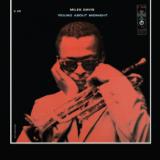
In 1955 Miles Davis played an all-star jam session at the Newport Jazz Festival with Thelonious Monk on piano, Gerry Mulligan on baritone sax and Zoot Sims on tenor sax. This performance immediately drew the attention of Columbia Records' George Avakian, who was so impressed that he immediately offered Davis a contract if he could form a regular band. The group he then assembled would go down in history as Davis' so-called "First Great Quintet", consisting of John Coltrane on tenor sax, Red Garland on piano, Philly Joe Jones on drums, Paul Chambers on bass and of course Miles himself on trumpet. 'Round Midnight is Miles Davis' first record for Columbia and also the first studio recording of the First Great Quintet. The recording sessions began on October 26 1955 but the album wasn't released until 1957 as Davis was still under contract at Prestige at the time. These respective sessions yielded Steamin', Workin', Cookin' and Relaxin'; albums that would go down in history as quintessential blueprints of late 1950s hard bop.
The record is made up of a collection of standards and one traditional song ("Dear Old Stockholm", from the 19th century). Notably, it features what may be considered the most well-known versions of Thelonious Monk's "'Round Midnight" and "Bye Bye Blackbird". That Avakian made a golden signing was sufficiently clear from the start, but no one could foresee that it would be this quintet on Columbia that would go on to change the course of modern jazz forever with Kind of Blue. 'Round Midnight is available as a limited edition of 1500 individually numbered copies on crystal clear vinyl.
erscheint voraussichtlich am 05.06.2026
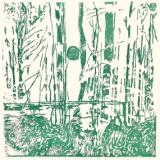
Ltd Edition 10"
Budapest based concept label Blue Sun welcomes formerly independent local afrobeat-jazz ensemble to its catalogue with a nuanced 4 tracker EP. The release not only marks the beginning of the collaboration, but a definite new musical direction in the band’s life.
Written in a one week jam session retreat in the Hungarian countryside, and recorded at one of the highest peaks of Hungary after a year of global touring, The Garden becomes an amalgamation of the band's personal and artistic experiences. The material conveys a more jazzier approach, with complex harmonies, and an almost cinematic, dreamlike atmosphere, somewhat distancing from (but not completely forgetting) the previously emphasized, dance-oriented Afro- and Latino roots. Song for Ramon serves as the EP’s emotional climax inspired by the passing of a close friend and local underground chef pioneer.
Formed in 2019 in Budapest, Hakumba is a staple of the Hungarian festival circuit, with a growing international presence (SXSW London, SHIP, PIN Music Showcase). They’ve recently finished a tour in Australia this January.
The groove-driven ensemble blends afrobeat, jazz, and various strands of world music into a sound that is both rhythmically powerful and harmonically adventurous. With an eleven-piece lineup featuring an expansive horn section, multiple vocalists, percussion, and keys, the band moves effortlessly between dancefloor energy and more intricate, jazz-influenced musical ideas.
Like the band’s previous album, the EP was again recorded, mixed, and mastered by András Weil, the producer behind The Qualitons, the only hungarian band ever performed Live at KEXP. This continuity preserves Hakumba’s recognizable sonic identity while giving space for new colors and more complex musical ideas to emerge.
Written & performed by:
Soma Számel – drums
Endre Szép – bass
Imre Hegedűs – guitar
Zalán Bendegúz Huff – guitar, vocals
Csongor Mari – keys
Noel Nagy – percussion, vocals
Dorka Foster – flute, vocals
Kristóf Szabó – alto sax
Alpár Sikó – tenor sax
Gáspár Simon – trumpet
András Téglásy – baritone sax
Produced, recorded, mixed and mastered by Andras Weil
Artwork by Eszter Lukács
Graphic design by Péter Tóth
Manufactured by AD Records
Distributed by Rush Hour
Recorded at Galyatető, Hungary
Released under the Blue Sun
erscheint voraussichtlich am 05.06.2026
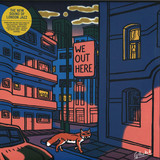
Repress of 2018’s classic compilation from Brownswood.
A primer on London’s bright-burning young jazz scene, this new compilation brings together a collection of some of its sharpest talents. A set of nine newly-recorded tracks, We Out Here captures a moment where genre markers matter less than raw, focused energy. Looking at the album’s running order, it could easily serve as a name-checking exercise for some of London’s most-tipped and hardworking bands of the past couple of years. Recorded across three long, fruitful days in a North West London studio, the crossover between each of the groups speaks to the close-knit circles which make up the scene.
Surveying the way that London’s jazz-influenced music had spread outside of its usual spaces in recent years, this album bottles up some of the vital ideas emanating from that burgeoning movement. Giving a platform to a scene where mutual cooperation and a DIY spirit are second-nature, it’s a window into the wide-eyed future of London’s musical underground.
Ubiquitous, much-lauded saxophonist Shabaka Hutchings is the project’s musical director. His own recent projects span from South Africa-connected, spiritually-minded jazz players Shabaka and the Ancestors to Sons of Kemet, who match diasporically-connected compositions with viscerally-direct live shows. His entry on the album, ‘Black Skin, Black Masks’, is typically difficult-to-define: with an off-kilter, shifting rhythmic backbone, repeated phrases – mirrored between clarinet and bass clarinet – shape the track with an alluring hue. His input ties together a deft, genre-agnostic sensibility that’s shared through all the players on the record.
Theon Cross – who’s also part of Sons of Kemet with Hutchings – starts his track, ‘Brockley’, with the solo, distinctive low rumble of his tuba. Winding and mesmeric, it sees tuba and sax lines winding together in rhythmic and melodic parallels. Ezra Collective – whose drummer and bandleader Femi Koleoso has toured with Pharaohe Monch – run a tight, Afrobeat-tipped rhythm on ‘Pure Shade’, with the final third changing gear into a melodic, momentous closing stretch.
Joe Armon-Jones, whose ludicrous chops on the piano have seen him touring with the likes of Ata Kak, showcases earworm-like, insistent motifs on ‘Go See’, balanced with a playful, improvisatory approach with room for ad-libbing and solos a-plenty. Taking a softer tact than many of the other entries, Kokoroko – whose guitarist Oscar Jerome has been making waves with his solo material – spin a lyrical, steady-paced meditation on ‘Abusey Junction’, matching chanted vocals with gently-played guitar.
Nodding to spiritual jazz influences, Maisha’s ‘Inside The Acorn’ is a wandering, explorative rumination, balancing delicate washes of piano and percussion with sharp interplay between flute and bass clarinet. In contrast, Nubya Garcia’s ‘Once’ is taut and carefully-poised, her tenor sax guiding a carefully-built energy to an explosive conclusion. And finally, Triforce’s ‘Walls’ is a performance in two parts: starting with Mansur Brown’s languorous, lyrical guitar, the second half switches up to a low-slung, g-funk-tipped groove.
erscheint voraussichtlich am 05.06.2026
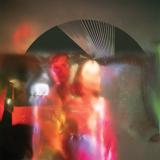
Following their 2023 LP Presents, Nathan Nelson's American Cream Band bring the Twin City heat back to Quindi with an album rooted in duality. From the yin and yang party-starting A side and meditative B side to the dual-attack boy-girl vocals, the nature of opposites and equals steer the expansive, artful strain of rock n' roll that spill out of this wholly unique Minnesotan export. For the ever intriguing Quindi, it's a strident step into Spring after the frosty introspection of Roudi Vagou & Läuten der Seele's Taghelle Nacht. While the world burns and injustice prevails, Twin is a celebration of unity and radical expression-all the more urgent against the backdrop of authoritarian overreach and righteous protest that has whipped through Minneapolis in recent times.
Twin continues Nelson's drive at the helm of American Cream Band to draw in a colourful cast of players to feed into his orgiastic sound, meshing the trance-induction of krautrock with the irrepressible funk of the post-punk-new-wave explosion. But principal among the cast of characters and forming a central tenet to the identity of this album is Liz Buhmann, lead vocalist and a formidable, playful foil to Nelson's own Midwestern twang. Around the electric spark between Buhmann and Nelson, a heavy duty ensemble wrangle guitar, bass, sax, a cornucopia of synths and a battery of percussion into all manner of sonic forms.
The double-sided concept manifests throughout Twin. On 'Call Me' Buhmann sings in French to contrast Nelson's English, while the strident strut of the NYC disco groove is offset by an inherent dreaminess that turns the track into a more cosmic kind of dancefloor workout. 'Ethical Vampire' is a spiky cut with a garage rock patina that spirals into a psychedelic, synth-soaked get-down. 'Don't Burn The House Down' is a loose and limber roller that captures Can at their funkiest along with the hypnotic vibe of other such esteemed long format jammers, but American Cream Band boils that energy into a hook-laden art pop sensibility before a gentle, drawn out landing.
Even the more pensive moments on Twin find space for friction. For all its tender, smoky temperament, 'Leda and the Swan' lets the electric piano and guitar fray at the edges and bleed into the red while Mat Heinrich's tumbling drums lurch with pent-up intensity on the one. 'No Funeral Necessary' skirts around the mellow pools of new age but prefers to let liberally doused Tape Echo tweak out Alex Meffert's honeyed sax inflections and Buhmann and Nelson's disparate sermons.
Nelson describes Twin as "an oppositorum coincidentia" - a reference to the mystical Latin concept of the coincidence of opposites that suggests contradictory ideas 'fall together' in a higher reality. Beyond the sound of the album, this idea also manifests in the cover photography by Sho Nikado and the swans on the LP labels by Autumn Garrington. As freewheeling and wide-open as American Cream Band feels, nothing appears by accident. The end result feels like a nourishing whole - rich with substance and nuance, deep enough to be explored and absorbed yet also so brazen and immediate you can't help but feel its surface charms from the first thrusts of 'The Hive Is Pissed' to the last ripples of 'We're Not So Sinister'.
erscheint voraussichtlich am 05.06.2026
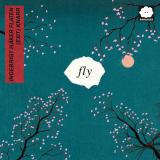
Ingebrigt Håker Flaten's mind boggling band (Exit) Knarr is back with their new album "fly"! After touring supporting their albums "drops" and "breezy" they landed at Ingebrigt's home base in Oslo, Victoria, were they recorded an insane concert with new material and interpretations - now mixed down as a full blown new album. Recorded live, but as solid and unique as any studio album from the band. Amalie Dahl – alto and baritone saxophone Karl Hjalmar Nygren – tenor saxophone and electronics Marta Warelis – piano Jonathan F. Horne – guitar Ingebrigt Håker Flaten – double bass Olaf Olsen – drums
erscheint voraussichtlich am 05.06.2026

Tucked in the heart of Koreatown, Los Angeles, lies The Libra Hotel—the titular architecture of Nick Malkin's new album and site of his musical and psychogeographic exploration. Unlike most musical "site-specific" studies, Malkin remains wholly ambivalent to the documentarian approach, instead sharpening an auteur-like focus on the site as a conceptual and highly expressive backdrop. The Libra is musically explored as a space that houses a noir fragmentation of identity—the exhausted trope of a complicated protagonist walking through rain-soaked street corners and fumy neon lights—where an inner monologue is rendered in both miniature and at a cosmic scale. Casting aside stifling tropes around field recording, ambient, and improvised music, Malkin's work finds its own unique fidelity and emotional core through the assembly and reassembly of memory. Nearly every sound on the album—from frayed saxophones, lambent pianos, and dissected jazz drum kits—are multiplied, shattered, and reconstituted into shapes that adorn The Libra in a motion-blurred fog. The narrative of the Hotel suddenly appears as if out of the mist, with intersecting characters interacting within its walls by happenstance. Adminst the languid set pieces, wraith-like sonic grains gravitate around wide subbass beams that give structural form to The Libra, a narrative tension like when a scene is shot from hundreds of different perspectives: an image both luminous and veiled.
Much like Frank Sinatra's own spatial residency immortalized on "Live at The Sands," "At The Libra Hotel" showcases an exuberant view of entertainment, hospitality, and a form of masculinity, one that can quickly detourn into darkness. Knowing this, Malkin extracts a melancholic core out of The Libra locale. The flickering shadows of American decadence are shown in their ephemeral honesty, lines that trace how even in everyday life virtue is tested, sanity is tested, even reality is tested within the confines of desire, within the night. The album is draped in fleeting textures, carefully arranged with a trance-like microtonality, the faint inflections and articulations of a jazz band cascading into dissipated stillness. Voicemails about changed locations and covert eavesdropping on guests' whispered conversations provide an atmosphere of missed connection and voyeurism—a purloined letter of desire receding into a vanishing point. Like the music itself, The Hotel, a chapel perilous at the intersection of desolation row, the center of it all, yet simultaneously at the edge of town, becomes a structure between libidinous virtuality and actuality—our inevitable half-light.
Ultimately, the pensive atmosphere of "At The Libra Hotel," powerfully asserts a plea for the kinds of intimacy only possible in transient spaces. Here, memory cascades into a force that feels like something supernatural, perhaps even religious, yet always subject to the infidelity of our imagination. Here, the album opens into its primary psychodrama, the transient nature of subjectivity itself and how this becomes fractured in the tumult between our commitments and desires. Within this nocturnal space, to quote Louise Bourgeois, "you pile up associations the way you pile up bricks. Memory itself is a form of architecture."
erscheint voraussichtlich am 05.06.2026

Few producers age into deep house with this level of ease. From Switzerland, Shaka's latest EP feels authentic and lived-in rather than retro while drawing on 90s jazz-inflected house without leaning on pastiche. The opener main vocal mix drifts in on flutes, soft keys and Eve's voice, setting a loose, late-night mood that favours feel over flash. The instrumental flute version pares things back, letting swing and detail breathe. Flip it and 'As If Eternity Belonged To Us', featuring Cate Acupar, locks into a warmer, early-2000s pulse, while 'Life Is Brighter With You' cools the room with sax, piano and patient restraint. Dancefloor-ready but also nice and reflective.
erscheint voraussichtlich am 05.06.2026

A mutant beat manifesto from Miami luminaries Jonathan Trujillo (Jonny from Space) and Pablo Arrangoiz (El Gusano, DJ Fitness, Baüzer Vep), Crespi Drum Syndicate’s Colada Talk follows the duo’s debut on Sonido Isla with a freshly freaked collection of percussive oddities. Rooted in foundational clave rhythms and avant-garde experimentation, Crespi Drum Syndicate emerges from the amphibious underbelly of Miami’s Latin-infused club scene with their singular electro-acoustic vision.
Extensive live recording sessions, free improvisation, and a ritualistic studio practice
— countless hours spent twisting and rearranging sounds from found objects and Buchla modular systems — coalesce into new rhythmic forms. Atonal saxophone, bass clarinet, and slide whistle further expand upon Trujillo and Arrangoiz’s ever-evolving sonic palette, while NYC’s AceMo lends a hand on the heavily syncopated “Siu,” and closer “Boubow” might be the duo’s most hook-driven production to date with its mangled pop vocal and lewd drum-line bounce.
Landing somewhere between Steve Reich’s polyrhythmic “Six Marimbas,” Moebius & Plank’s industrial Krautrock sessions, and Ricardo Villalobos’ hypnotic techno minimalism, Colada Talk delivers on a world of subtropical rhythmic futurism and experimental body music that’s as heady as it is culo-shaking.
erscheint voraussichtlich am 05.06.2026

First time reissue of JP / US free jazz rarity.
The 1970s were Marion Brown’s most searching decade, a period during which he sought to move beyond the free jazz of the previous era and find more personal approaches to structuring improvisation and composition. After leaving New York for Europe in 1967, Brown began reshaping his music into what he described as “a more deliberate kind of music that had more structure to it,” pacing it so that moods and modes could develop over time. Albums such as In Sommerhausen, Afternoon of a Georgia Faun, Geechee Recollections, and Sweet Earth Flying trace this evolution: rhythmic structures moved to the foreground, harmony receded, and composition became a matter of orchestrating interlocking rhythmic parts as one would polyphonic lines.
Released in 1976, Awofofora is an overlooked but crucial entry in that sequence. At the time, its use of funk and reggae beats, electric guitars, and grooves drawn from contemporary Black popular music led some to misread it as a jazz-rock detour. In retrospect, it is entirely consistent with Brown’s methodology. As he admired in the Art Ensemble of Chicago, the stimulus comes from within the community. Here Brown filters Afro-Caribbean rhythms and funk through his own sensibility, abstracting their structural qualities rather than adopting surface style.
“La Placita,” making its first recorded appearance, layers distinct rhythmic phrases in a manner reminiscent of African drum ensembles, over which Brown and trumpeter Ambrose Jackson spin extended improvisations. The standard “Flamingo” is reshaped through diasporic rhythm and lyrical soloing, while “Pepi’s Tempo” and “Mangoes” harness crisp funk and reggae grooves to generate what Brown called a “manifestation of community” through collective improvisation. Even the overdubbed solo feature “And Then They Danced” reflects his structural thinking, ingeniously re-voicing a duet composition for two alto saxophones performed by one player.
This was the only recording by a short-lived band that briefly polarized audiences during festival appearances in 1976. Yet Brown consistently sought unity across change: different sounds, same principles — rhythm as structure, melody as architecture, collective improvisation, and above all, the primacy of tone. Awofofora stands not as a departure, but as a vivid synthesis of the elements he had been refining since the late 1960s, its grooves and golden alto lines conveying a sound drawn, in his words, “from life and from the world of experience.”
erscheint voraussichtlich am 05.06.2026

Besides his work as a painter, filmmaker and set designer, Philippe Lamiral Poirier (1951-2025) played guitar and saxophone in the group Kat Onoma, which he co-founded with Rodolphe Burger.
His fifth studio album combines his written texts with music composed by his son, Roméo Poirier, whom he considered to be cut from the same musical cloth as he was. It also confirms what has emerged from his previous albums, namely songs more spoken than sung and whose words evoke images, thus the album’s title – Images parlées.
A book of his paintings, Images traversées, will be published simultaneously with the album.
In this continual back and forth movement between text and image, music has always been present – sensitive and abstract, expressing nothing other than itself. It hollows out a place to tell us where we are. It is life without delay.
Roméo Poirier is working in the field of electronic music, focusing on heavy processing of samples and digital collage. He released albums on the London based record label Kit Records (Plage Arrière), the mancunian record label Sferic (Hotel Nota), and Jan Jelinek’s own imprint Faitiche (Living Room and Off The Record).
Der Artikel ist bereits auf dem Weg zu uns und voraussichtlich versandbereit ab 05.06.2026
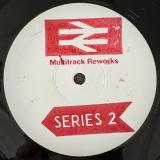
A1. – Itch & Scratch 5.32
Smoove puts the spotlight firmly on the larger-than-life vocals of Rufus Thomas, peeling things back to reveal hard-hitting breakbeat drums from the very first bar, anchored by a relentless, pounding bassline. Punchy brass stabs and rolling keys collide with dirty funk guitar riffs, all stretched out into an extended rework built for maximum floor impact.
A.2 Bouncy Lady 5.06
A classic jazz-funk break from 1975 gets a fresh twist as Smoove reworks the structure into a groovy, extended build-up. Vocal chants and handclaps take the lead, while the original sax solo is stripped away and replaced by a raw bass-and-guitar workout. The focus shifts squarely to the rhythm section, letting the drums ride all the way to the finish—ending with the studio engineer’s off-mic murmur on the tape: “beautiful.”
B1. – For The Love Of You 6.57
The Isley Brothers classic gets a loving reworking, with the groove locked in tight and the keyboards pushed front and centre letting the drums and bass drive home the groove. Those iconic falsetto vocals are spine-tingling, from start to finish.
B.2– I’m Trying 4.48
Lush, soulful strings and a deep-groove piano line glide over this drum-driven reinterpretation, opening up the raw, emotive vocal breakdowns of Carla Thomas and Pervis Staples. Originally scored by Isaac Hayes, this rework digs deep into the multitracks, uncovering previously unheard moments and giving them room to breathe.
Der Artikel ist bereits auf dem Weg zu uns und voraussichtlich versandbereit ab 05.06.2026
