Buscar:same people

Estilos
Todo
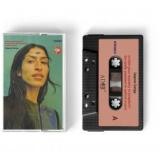
Yoko Ono - It's Alright (I See Rainbows) LP
  • A1: My Man
  • A2: Never Say Goodbye
  • A3: Spec of Dust
  • A4: Loneliness
  • A5: Tomorrow May Never Come
  • SIDE B
  • B1: It's Alright
  • B2: Wake Up
  • B3: Let the Tears Dry
  • B4: Dream Love
  • B5: I See Rainbows

Continuing in its series of Yoko Ono reissues, Secretly Canadian has announced that Ono’s seminal 1982 album It’s Alright (I See Rainbows) will be released August 28, 2026, in expanded CD and digital versions, and on vinyl for the first time in more than forty years, with expanded and enhanced artwork. Influenced equally by 1960s girl group vocals and 1980s synthesizer experimentation, It's Alright (I See Rainbows) is an album of “adventurous… lush… committed and convincing avant-gardism” (Rolling Stone). As Ono said in her 1992 Onobox liner notes, “It was ’82 and it seemed as though I was finally in sync with the world.” Vacillating from a widow’s never-truly-over grief, to the necessary uplift for an artist and mother to continue her life’s missions, tracks like “Loneliness” and “Spec of Dust” make way for poptimism via “Let the Tears Dry,” and title track “It’s Alright.” As Ono said of the album in 1983, “It’s like my diary that I went through… and I’m just saying, hey, I’ve got the same kind of emotions that you’ve probably got too, and here I am saying hello… Around December 8th or whatever, I was feeling really heavy and feeling sort of down, you know… and then, side two, it’s all right… It was Sean Lennon who says, ‘Wake up, wake up, mommy.’ Like an angel that came and said, ‘Wake up!’… Wake up and dream love, and let the tears dry and I see rainbows. And sort of I’m saying all that. In result of Sean waking me up, see?” Lennon, speaking of his mother in a more recent interview with NPR in 2025, “She would say that energy is just energy, so you can turn it into anything you like. And she always said that she would take that negative energy and turn it into something productive and creative… It never stopped her from creating and putting herself out there, and I really think that it paid off… You never know how long it'll take for people to appreciate you if you just kind of hang on and don't give up.”

Reservar18.09.2026

debe ser publicado en 18.09.2026

Ezra Collective - Here Because of Hope LP

Ezra Collective's Here Because Of Hope is the most ambitious and personal record of their career - conceived as a body of work split into three spiritual and geographical movements, the album traces the movement of Black people across continents and decades, from the music of Africa to the rhythms of the Caribbean, and home to the streets of London. Formed in the youth clubs of London, Mercury Prize and BRIT Award-winners Femi Koleoso, TJ Koleoso, Joe Armon-Jones, James Mollison and Ife Ogunjobi have now spent over a decade making jazz joyful, urgent and undeniable. On Here Because Of Hope, they push that vision further than ever, asking a simple but profound question: why does so much Black music born out of pain sound so joyful? Their answer is hope: the belief, carried across generations and oceans, that something better is possible. Anchored by collaborations with Pa Salieu, Lila Iké, Leona Lewis, and reaching across the full breadth of the global African diaspora (including America, where those same African and Caribbean roots gave birth to jazz itself) Here Because Of Hope is a record of remarkable warmth, ambition and humanity, and the sound of Britain's most vital band at the peak of their powers.

No en stock

Haga su pedido ahora y le encargaremos el artículo en nuestro proveedor.

Ültimo hace: 21 Días
ELI WEWENTXU & INDRĖ JURGELEVIČIŪTĖ - DESPUÉS DE LLOVER

Después de llover” is about musical conversations between two people who have only recently met; they come from very different places, do not speak the same languages, and perhaps have little in common other than the resonance of their instruments. This encounter leads them to explore an imaginary world where they share sounds to build a place where they can go and play with the moisture of the plants growing in the water, listen to the pudus playing with the herons, rest on the floripondios, and perhaps stay there waiting for the rain to return.
These pieces were recorded on summer day in 2025 at Indrė’s house with kanklės, txompe, and violin.

Reservar

El artículo no se ha publicado. Tú puedes reservar ahora el artículo y después de ser pagado se te será enviado.

Manonmars - Entertainment System

Manonmars’ 3rd album sees him at his most amorphous and psychedelic, at points sharper and laser focused, and at others more blurred and impressionistic than his previous records. Many of the core players remain the same, all of the production is once again handled by O$VMV$M (the duo of Neek and Amos Childs of Jabu) while Paulina Korobkiewicz (also of Young Echo) makes a return handling both the album’s cover artwork and contributing a series of diaristic field recordings and voice notes.

‘The project references movies, cartoons, fictional characters and video games, among other things. The album title is open to interpretation but all of these elements are forms of visual entertainment which have their own unique ability to transcend things like language barriers and cultural divides. The visual element is key because those details bridge the gap on a communicative level.’ - Manonmars

The album blends abstract, blurred braggadocio with more immediate personal details such as on ‘Volcanic Shield’ a posse cut of sorts featuring Bristol improv luminary Dali de Saint Paul and Franco Franco (½ of cyborg rap duo Kinlaw & Franco Franco) - where Mars recalls;

‘Memories of brighter days, happy meal hit the spot
Mum was spinning vinyl playing Super Ape or Pressure Drop
I would spend the weekend with the Turkish mandem on the block
single parent household, mum was studying or on the job
money came and went always was an on and off
made it back from school time to see what’s on the box’


The beat fades away to leave one of Korobkiewicz’s recordings of Mars’ mum talking about her life in London in the 80s, spending her money on reggae records as an ambient chord fades in like an echo of a jungle intro – stretching out as a link between generations of UK music.

The production by and large is brighter and more kinetic than earlier Manonmars records – with O$VMV$M drawing on everything from modern underground rap and drill through to jazz and acid ambient passages.

London is also a central character here, bustling and constantly shifting, either when bleeding in through field recordings, or as an ever-present backdrop in the lyrics;

‘I’m a fusion of Tippa Irie and Topper Harley
Hit the target like the black Atari
I dropped a tab now shit’s A Scanner Darkly
Got the munchies, Imma yam a sarnie
Pour the Wray and Ting like man at Carni
Exit Peckham Rye and turn left, walk past Hannah Barry
Get your (w)raps up like its January’

‘I've always considered London my home, despite spending some time in the South West of England too. My mum had been living in London for 25 years (...) That was a pretty big deal in some ways because it removed us from multicultural society during the period which overlapped with my teenage years. (...) I never got used to how quiet it was in the countryside (...) Bristol was the closest city to where we lived and it was through travelling there and making connections that I became involved in making music and playing gigs.’ - Manonmars

Mars’ practice as a painter (under his given name Jack Martyn Richardson) and photographer also loom heavy over the album, he cites Paul Verhoeven, Abdul Mati Klariwein and H.R Giger as influences – as well as Miles Davis, Drakeo the Ruler and DJ Rashad.

As with much of Richardson’s work the raps at times feel blurred to a point of almost inscrutability, creating a distance between the audience and himself. A process that ties into his visual work and the way he experiences the world as mainly abstract colour without his glasses. He explores this further in an ongoing visual collaboration with Korobkiewicz, ‘Fun and Games’ which serves as a visual archive of one of London's largest and oldest travelling fairgrounds.

‘I was diagnosed with very severe short-sightedness at the age of seven. I remember my early formative years as visually blurred. Some of my photography reflects this experience of partial vision and uncertainty, referencing memory and perception rather than fixed representation.’

Manonmars’ first public outing as a rapper was at a Young Echo radio event, broadcast shambolically from a practice room just off Jamaica street, Bristol in 2011, as much as things have moved on both stylistically and in terms of focus - strong links back to the city remain a key foundation throughout the collaborations and guest appearances.

‘I have no problem with being an outsider looking in. One of the things I enjoy about London is the anonymity (...) it's easy to be a stranger here when so much is happening. I feel like thats more valuable than people may realise.’

Reservar31.08.2026

debe ser publicado en 31.08.2026

Asher White - Love Aggregates LP
  • A1: Reverie for work
  • A2: My day at the casino
  • A3: Memory patient (Motor Cycle Angel)
  • A4: White Castle sad
  • A5: Nightingale Version (Sailor's Moon)
  • B1: Jerryboy
  • B2: The eagle is no omen
  • B3: Health techniques
  • B4: Atoll
  • B5: Stage Diva
  • B6: Come 2

For any other artist, an album like Asher White’s Love Aggregates might come out of a conscious push to treat no idea as off-limits, to make something bold and new. Jubilant art-funk about cocaine addiction—absolutely. Swooning orchestral pop about Jerry Garcia—why not? Rippling electronic noise, jazzy brushed drums, an elderly motorcyclist with dementia, a profoundly emotional bass solo—put them all in one song. There are threadbare folk tunes, glammed-up power-pop bangers, “Sir Duke” horn charts, Morton Feldman string arrangements, layers of guitar feedback like violins made of liquid chrome. Yes, for another artist, Love Aggregates might be the most adventurous album in their catalog. For Asher White, it’s what passes for settling down.

White is 25 years old and has been making records—writing, recording, producing, and playing almost everything herself—for over a decade. She’d released two dozen of them on Bandcamp before catching the indie-rock industry’s attention with 2024’s Home Constellation Study and last year’s 8 Tips for Full Catastrophe Living. The latter album’s dizzy eclecticism and formidable craft landed her on Rolling Stone’s Future 25 list with the likes of xaviersobased and Oklou, along with a slew of other accolades. That came as something of a surprise to White, who didn’t craft the chaotic 8 Tips with a breakthrough in mind. Love Aggregates feels like a chance, for one of the most thrilling musical talents of her generation, at a more deliberate introduction.

She wrote and recorded her new album while her previous one was gathering
momentum, tinkering in the DIY recording studio where she always works, acutely conscious now that people would be listening to whatever she came up with. At around the same time, her years-long romantic relationship ended in a flurry of betrayal and addiction, her first experience of devastating heartbreak. Even so, Love Aggregates is not a bitter album about wallowing or seething, but instead making use of those impulses as raw materials in work that transcends the specificity of its origins, fashioning them into something surprising and new.

Reservar28.08.2026

debe ser publicado en 28.08.2026

Lazy Eyes - Cheesy Love Songs LP
  • 1: Ballerina
  • 2: The One Who Got Away
  • 3: Mr Histography
  • 4: You Were A Child
  • 5: Always In The Back Of My Mind
  • 6: How Does It Feel To Be In Love?
  • 7: Never Will She Know
  • 8: You’re The One
  • 9: I Just Don’t Know You Yet
  • 10: Keep Her By My Side
  • 11: Every Day I Lay In Bed

There's a confidence in calling something 'cheesy' before anyone else gets the chance to. The Lazy Eyes lean into it, they have an understanding that sincerity, when left out in the open long enough, will always risks ridicule. But what's remarkable on Cheesy Love Songs is how little they flinch for a young band dropping a sophomore album.
This is a record that understands its inheritance. You can hear the ghosts of bedroom psych, of records made by young people who discovered that distortion could double as a shield, that reverb could make even the most fragile confession feel infinite. But Cheesy Love Songs doesn't hide inside those textures, it lets them bloom until they almost overwhelm the room, like a feeling you tried to downplay that instead insists on becoming the only thing you can hear.

The kaleidoscopic guitars, the melodies that feel like they've been unearthed rather than written, the way it treats love as both spectacle and small disaster. These are songs that circle the same emotional drain: wanting too much, too quickly, and then sitting in the quiet aftermath of having said it out loud. The band doesn't pretend that intensity is sustainable; instead, they document the crash with the same care as the ascent.

In that way, Cheesy Love Songs feels like a document of early belief — the kind that arrives before irony calcifies, before restraint feels like wisdom. It's a record made by a band still willing to risk the embarrassment of being 'cheesy' in pursuit of something louder, brighter, and more honest than cool. And maybe that's what makes it an iconic modern Australian sophomore album: not just that it captures a moment in time for the band, but that it refuses to outgrow it.

Reservar21.08.2026

debe ser publicado en 21.08.2026

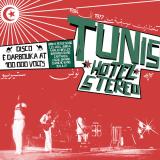
Various - Tunis Hotel Stereo LP
  • 01: Les 4Des - Ya Touness
  • 02: Omnya (Peace Band) - Yendam
  • 03: Zalila - Tiou Tiou Tiou (Instrumental)
  • 04: Sadok Gharbi - Noujoum
  • 05: Carthago - Dhikrayet
  • 06: Khaled - Wait till the morning dew
  • 07: Marhaba Band - Baba Bahri
  • 08: Corniche Band - Dance
  • 09: Jomaa - Now That

In the years after independence, Tunisia made an unlikely bet: tourism. Beach resorts rose along the coast, each one trying to outshine the next, and each one needing a band to entertain their guests. A whole generation of musicians grew up on those hotel stages - sharing bills with James Brown, Claude François and the Mingus Dynasty - and what came out of it was a small revolution. Funk played on Tunisian instruments. Disco with an oud in it. Reggae carried back from the island of Kerkennah. A "Third Language" the press didn't quite know what to do with.

Tunis Hotel Stereo gathers nine of those records. Most of them were pressed in tiny quantities, sold to tourists as souvenirs, censored before reaching the radio, or quietly slipped onto a 45 between two hotel sets. Some of these artists filled the Carthage amphitheatre. Some topped the Maghreb hit-parades. Most have been waiting, for forty years, for someone to play their music again.

This compilation is the result of years of work - collating memories, hunting down records, sitting with the artists who made them, and with the people who once danced to them. It is the third release on Shakshouka Records, and the first compilation of Tunisian music ever curated by Tunisians, in Tunisia.

SIDE A

The mysterious Les 4 Dés, who turned the national anthem into psychedelic pop on Ya Tounes - and then nearly vanished. Peace Band, hard rockers turned hotel professionals, recording as Omnya at Hammamet's legendary Topkapi club. Ridha Zalila, the eternal shape-shifter, in a rare instrumental of Tiou Tiou Tiou. And Sadok Gharbi's Noujoum - pulled from his sabotaged, near-lost masterpiece Souar.

SIDE B

Carthago, the impossible big band that married the elite of Tunisian jazz-rock with the stars of tourist entertainment, with the original Dhikrayet. Khaled Mellef, one of the great UFOs of his generation, with Wait Till the Morning Dew, recorded in the Netherlands. Marhaba Band's Baba Bahri, originally pressed only for hotel guests and now a cult artefact. Corniche Band's Dance, cut in Milan during a technical stop on a cruise ship. And Jomaa Bouzrara, the "Bob Marley of the Maghreb," with Now That, drawn from his landmark 1983 debut Sunset.

These weren't rebels without a cause. They were musicians who understood that modernity and heritage are not opposites - that a Tunisian could play funk and still be deeply, irreducibly Tunisian. They drew from every direction at once, and built something that belonged to none of those worlds entirely, and to all of them at the same time.

This compilation is one small act of remembering. The music does the rest.

Reservar14.08.2026

debe ser publicado en 14.08.2026

tellKujira - La Lucha Es Un Poema Colectivo LP

The music of La lucha es un poema colectivo was conceived and composed during a long artistic residency at IRCAM in Paris in November 2023 and will be released by Superpang. ‘In November 2023, we were in residence in Paris when we found ourselves in the midst of protests and strikes by workers at the Centre Georges Pompidou. They were demanding the respect of their rights. Entering that place as outsiders, making art while hundreds of people outside risked losing their jobs, was disorienting.

This is the starting point for the title of this album, evocative yet at the same time tangible. A phrase, as often happens, borrowed from those who had, in turn, borrowed it before us, words that are not and
cannot be only ours. Words too heavy to be slaves to context or syntax, yet words that resonate within us, move us, and open rifts in our history as a group. A strange plunge, strange despite the fact that the premises were clear from the start, with well-defined lines of a unified design. And if we ask ourselves, looking around, not so much what but rather with whom we would like to share it, we imagine the music of this album within that groove, in that intangible bond that unites a collective of people who, upon reading this sentence written on a wall, in a street, pause for a moment, slow down, rest their gaze, and know they are still alive.”

Reservar27.07.2026

debe ser publicado en 27.07.2026

Protector - Misanthropy LP
  • 1: Misanthropy
  • 2: Holy Inquisition
  • 3: Agoraphobia
  • 4: Protector of Death (Demo)
  • 5: The Mercenary
  • 6: Kain and Abel
  • 7: Holocaust
  • 8: Apocalyptic Revolution (Demo)

If you have kept a keen eye on what is going on in German thrash these days, you cannot have missed the comeback of Protector, legendary thrash/death outfit from Wolfsburg, Lower Saxony. Formed in 1986, Protector first called it a day in 2003, only to return in 2011 and releasing their “Reanimated Homunculus” on High Roller Records in 2013. Protector are widely regarded as one of the most underrated outfits from the prolific German thrash/death scene of the Eighties. Their debut-EP “Misanthropy” from 1987 is a thorny gem of uncompromising thrash metal, raw and fast, and with a strong feel of evil blackness. This first official release laid the base for Protector's reputation as “Germany’s most brutal band”, as some people called them. Protector? Really? Some band from some far out place in Lower Saxony? It’s true, Protector never rose to the same heights of fame as Kreator, Sodom and the likes, but back in the days, they made a name for themselves by playing not only fierce and sharp thrash metal, but always being extremely harsh, brutal and very very evil. “Misanthropy” is a perfect testimony for this: In its six-tracks-brevity, Protector’s debut-EP is a violent attack on the listener, giving you six razor sharp cuts and leaving you behind, crushed and bleeding. “Misanthropy” was recorded in the summer of 1987 at the White Lines Studio in Braunschweig. While the band's main influences at that time were Slayer’s “Reign in Blood”, Possessed’s “Seven Churches” and Exodus' “Bonded by Blood”, “Misanthropy” actually sounds like none of these albums – but very unique; In part this is due to Martin Missy's extraordinary extreme vocal performance, which always bordered on the verge of death metal growls and thus added a lot to Protector’s very own way of evil. The reactions to “Misanthropy” were mixed: Fans and the underground media celebrated the release, while the bigger magazines were sceptical about Protector's brutal and aggressive style and sound. Anyway: “Misanthropy” made people aware of this four-piece who lived in the shadow of the then still intact German Wall, far away from the Ruhr-Area, the heart of Teutonic thrash. For the High Roller re-release, nothing will be changed about the sound, which makes total sense, given that “Misanthropy” is great just as it is. Instead, “Misanthropy” comes with a very special feature: To make the release as complete as possible, High Roller includes the two songs from the demo from 1986, “Protector of Death” and “Apocalyptic Revolution”, something Martin Missy totally appreciates: “I think this is a great thing to do. That way the fans get an idea about what Protector sounded like before the EP was recorded.” One thing is already clear: Protector never got any more aggressive, sharp and shattering than on „Misanthropy”.

Reservar17.07.2026

debe ser publicado en 17.07.2026

Line-o - Intimate Semantics

NDYUKA RHYTHMS is a label founded by MARRON and built on the foundation of rhythm. Rhythm is the first language, passed down through bodies and gatherings. The emblem of the label is inspired by an African chair. A form that carries both function and symbolism, found across the continent for generations. I view it as a gesture of return, a way of honoring my roots while creating space for others. The chair extends an invitation: to sit, to be seen. It is a symbol of generosity by inviting, and creating a space where voices can be heard. NDYUKA RHYTHMS carries this same intention into sound. Music here is offered as energy and presence, a means to move the body and uplift the soul. It is about joy, release, and continuity - rhythm as a living thread between people.

No en stock

Haga su pedido ahora y le encargaremos el artículo en nuestro proveedor.

Ültimo hace: 28 Días
JORDY - In Retrospect LP

JORDY

In Retrospect LP

12inchERE1319
EMPIRE
10.07.2026
  • 1: Cool Boy
  • 2: COULDA NOT
  • 3: BAD SEX
  • 4: GOD COMPLEX
  • 5: stop texting my friends
  • 6: DUMB
  • 7: Normal People
  • 8: SICK!
  • 9: Little Distractions
  • 10: I Still Do
  • 11: So Whatever
  • 12: IDKW (Physical Exclusive Bonus)

In his most self-aware and sonically refined work to date, JORDY returns with In Retrospect—an 11-track journey through the clarity of hindsight. Transitioning from a breakup record into a manifesto on healing, the album captures the "push-and-pull" of turning 30 and finding power in the wreckage of the past.

Known for his unmistakable blend of "pop precision" and vulnerable storytelling, JORDY moves past the guilt of time wasted to celebrate the person he has become. This is an album about finding yourself again after the noise fades.

In Retrospect is a love letter to the music that shaped a generation. Sonically, JORDY pays homage to his roots, blending the infectious energy of early 2000s pop-punk and Hilary Duff-era bubblegum with the high-gloss production of modern synth-pop.
JORDY commented, “In Retrospect started as a breakup record, but it quickly became something much bigger. It turned into an album about healing. About growing. I think when people find themselves stuck in bad relationships, they often blame themselves for not leaving sooner. They carry guilt over the time they feel they’ve wasted. But writing this album helped me see it differently. The moment I chose to leave the toxicity behind, I felt like I found myself again. I got healthier, mentally and physically. I gave myself permission to mourn the life I thought I’d be living at 30, the future I imagined as a kid. I found peace in remembering that nothing is ever as serious as it feels. I found my power again. In retrospect, the pain and suffering may have been the very thing that saved me.

“Sonically, this album pays homage to my roots - to my younger self blasting Hilary Duff and pop punk bands alone in his room. It’s nostalgic. It’s the kind of music I love to listen to. It feels more like me than anything I’ve made in a long time. It’s funny and catchy, vulnerably heartbreaking, and beautifully hopeful all at the same time. It’s exactly where I am right now,” he added.

Reservar10.07.2026

debe ser publicado en 10.07.2026

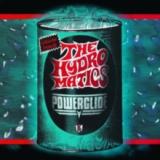
The Hydromatics - POWERGLIDE LP

The Hydromatics

POWERGLIDE LP

12inchBANGLP185
BANG!
26.06.2026
  • 1: READY TO BALL
  • 2: RIP ROCK'N'ROLL
  • 3: SOULBONE
  • 4: ASTEROID B612
  • 5: TUMBLIN' DOWN
  • 6: LOVE AND LEARN
  • 7: SWEET NOTHIN
  • 8: POWERGLIDE
  • 9: AKEEP ON HUSTLIN
  • 10: THRILL
  • 11: GREEN EYED SOUL
  • 12: DO IT AGAIN
  • 13: ELECTROPHONIC TONIC

Bang! Records now brings Powerglide by The Hydromatics back to vinyl, giving this powerful and long-overdue album the format it deserves. A necessary reissue of a genuine cult favorite: wild, electric, and made by people who truly knew what this music was all about. In the early 2000s, The Hydromatics brought together three scenes, three cities, and one shared devotion to rock'n'roll: the fiery tradition of Detroit, the raw punch of Amsterdam, and the high-energy attitude of Scandinavia. Fronted by none other than Scott Morgan (Sonic's Rendezvous Band), one of the great voices of Detroit rock, and backed by Tony Slug (LOVESLUG) and a band built out of genuine love for the legacy of Sonic's Rendezvous Band, the result was Powerglide-a record that is tough, streetwise, soulful, elegant, and raw all at once. Originally released in 2001, Powerglide captures The Hydromatics in full flight. Original songs sit alongside explosive takes on material connected to the Sonic's Rendezvous universe, all delivered with nerve, conviction, and the kind of authority that simply cannot be faked. The guitars bite, the rhythm section drives relentlessly, and above all there is Scott Morgan's voice-capable of sounding fierce, wounded, and defiant within the very same line. Far from being a mere exercise in homage, Powerglide stands tall as a living, breathing record with a personality all its own: high-octane rock'n'roll fueled by rhythm & blues soul and steeped in the unmistakable spirit of Detroit. This is an album for those who understand that proto-punk, garage soul, and real rock'n'roll were never separated by any meaningful border in the first place.

Reservar26.06.2026

debe ser publicado en 26.06.2026

VARIOUS - 12 INCH LOVERS 9 LP 2x12"

Incl. Pryda, Dexter Connection, Superfunk feat. Ron Carroll, Dave Swayze, Chris Bangs feat. Rita Campbell, Hyper Pearl, Daniel Bovie & Roy Rox, The Disco Freaks, The Mackenzie feat. Jessy


Since 2020, 12 Inch Lovers have been releasing new samplers every year, eagerly anticipated by collectors. These samplers have now become a staple and are easily added to vinyl collections across Europe. They offer timeless classics and rare tracks that are often hard to find elsewhere.

With Samplers 9 & 10, they surprise again with a mix of modern classics and tracks that have never been released on vinyl or are difficult to find. By adding unique and exclusive tracks, the 12 Inch Lovers samplers remain innovative and high-quality. They are a must-have for DJs, collectors, and fans of contemporary classics!

SAMPLER 9

A1) Pryda - Allein (Original Release 2012)

Pryda, the legendary alter ego of Eric Prydz, has earned iconic status in the electronic music scene with his refined productions and epic tracks. Under this name, he has released several hits that have stood the test of time, including Allein. This track is a progressive house masterpiece built around a sample from Polarkreis 18's Allein Allein and is infused with the characteristic Pryda sound: grand, hypnotic, and emotionally powerful.

With its timeless and universal appeal, Pryda - Allein has captivated fans worldwide. The track is an absolute floor-filler that forms a highlight in any DJ set. Notably, this iconic track has never had a vinyl release, making this edition extra special for both collectors and lovers of true electronic music history.

A2) Dexter Connection - Baby Be Mine (Original Release 2003)

Released in 2003, this delightful groover samples Michael Jackson's Baby Be Mine and Brothers Johnson's Stomp. The track combines funky basslines with a tight, rhythmic groove that immediately invites dancing. The nostalgic vibes from the classic samples provide a familiar sound, while the modern production gives it a fresh, contemporary twist. Ideal for DJ sets where you want to get the crowd in the right mood.

A3) Superfunk feat. Ron Carroll - Lucky Star (Original Release 2000)

This track needs little introduction. Released in 2000, with soulful vocals from Ron Carroll, it quickly became an iconic hit within the house scene. Lucky Star was the breakthrough single of Superfunk, a French house group,and sold over 500,000 copies worldwide. The track reached number 42 on the UK Singles Chart and has since become a staple in house and dance sets.

With its funky basslines, catchy melody, and infectious groove, it's a perfect mix of disco, house, and soul. The track includes a sample from Chris Rea's Josephine, adding to the recognizable and nostalgic vibe. Lucky Star became not only a floor-filler but also an anthem of the French house movement, alongside acts like Daft Punk and Cassius who dominated the world in the same period.

B1) Dave Swayze - Goldwave (24K) (Original Release 1996)

This 1996 trance classic needs little introduction. Goldwave is a timeless track that continues to resonate with trance lovers, thanks to the unique combination of dreamy synths, hypnotic rhythms, and epic build-up. The track is a true ear-candy and touches anyone who hears it. Originally released in 1996 on Belgium's DiKi Records, it quickly became a classic in clubs like La Bush, Illusion, La Rocca, and many more.

To this day, Goldwave is still played in the sets of many DJs, and remains a favorite at retro trance events. The track has stood the test of time and remains a key track for fans of old-school trance. It's a piece of electronic music history that makes people dream on the dancefloor with its dreamy Goldwave.

B2) Chris Bangs feat. Rita Campbell - Warm Weather (Ibiza BeachBall Vocal Mix) (Original Release 2000)

Warm Weather by Chris Bangs feat. Rita Campbell is a summery, uplifting track that perfectly evokes the atmosphere of Ibiza. The song blends house and trance with the infectious vocals of Rita Campbell, creating a warm, relaxed vibe. The Ibiza BeachBall Vocal Mix adds a touch of Balearic energy, with a calm rhythm and melodies that immediately remind you of sunny beaches and carefree days. Originally released in 2000 on the UK label INCredible, it remains a hidden gem for many trance lovers.

C1) Hyper Pearl - Can You Feel The Pain (Up & Vox Version) (Original Release 1995)

This 1995 trance classic made a lot of noise in clubs like Illusion, La Bush, Lagoa, and At the Villa. Pure old-school trance with emotion and drive like only that era could produce. A fantastic track, produced by Carl Drake, Matt Spinner, and Zzino, originally released on Belgium's Aquatic label.

C2) Daniel Bovie & Roy Rox - Stop Playing With My Mind (Dub) (Original Release 2008)

Daniel Bovie (aka Danny Van Wouwe) is a versatile producer with dozens of tracks to his name, many of which are considered classics. This track is no exception. Originally released on the legendary Strictly Rhythm label, co-produced with Dutch producer Roy "Van Luffelen" Rox, this track quickly became a floor-filler and charted in Belgium and the Netherlands. The vocals wereprovided by the talented Nelson.

D1) The Disco Freaks - Make My Dreams Reality (Chord Memory Mix) (Original Release 1997)

Originally released on an EP by The Disco Freaks, the alter ego of producers Bart Grinaert and Lajos Meszaros. This mix, which is much stronger than the original, quickly became a club classic and was played extensively in clubs like Illusion, Carat, and Extreme. A delightful, groovy, and uplifting track that combines disco elements with house. The Chord Memory Mix adds a nostalgic touch by using warm chords, funky basslines, and uplifting percussion.

D2) The Mackenzie feat. Jessy - I Am Free (Marino Stephano Club Mix) (Original Release 1997)

I Am Free by The Mackenzie needs little introduction and is a must in every DJ and vinyl lover's collection. This mix, often played at our parties, is something special. The man behind many legendary trance classics, Marino Stephano (RIP), hasreworked this version in his unmistakable way. The remix has an energetic and captivating vibe, with deep, hypnotic beats and floating synths. A beautiful track in its original version, it continues to fascinate.

No en stock

Haga su pedido ahora y le encargaremos el artículo en nuestro proveedor.

Ültimo hace: 3 Meses
Giardini di Mirò - Quasi Casa LP 2x12"

Nobody knew. Not the crowd packed into Circolo Kessel that Sunday evening, not even the six musicians on stage. When Giardini di Mirò played on March 19, 2023, it was supposed to be just another homecoming show in Cavriago, the kind of night where you play for the people who’ve known you longest. Some were missing from the audience, though: “Our closest friends stayed home to watch the football match tonight,” Jukka quipped from the stage. “But that’s fine, we’ll deal with them tomorrow.” In hindsight, even Juventus fans who celebrated their 1–0 victory over Inter made the wrong choice.

Seventy minutes in, all the instruments converged into a one-chord riff, driven by the drums and punctuated by screaming guitars. A repetitive rhythm that paired brutal volume with hypnotic precision. Even those at the back of the room felt it: that trance-like state where sound becomes physical. Then the wall of sound collapsed. Guitar feedback lingered in the air for a few seconds before fading into nothing.

This was the last sound Giardini di Mirò made. They haven’t played since, and there are no plans to do so again. But in that moment, nobody knew.

The closing song that night was also the opener of their debut full-length, recorded more than two decades earlier. Its title, A New Start, carries an unintended irony the band would likely appreciate. It is also oddly fitting that their final show took place in the same building where they began. Circolo Kessel, previously known as Calamita, served as the band’s rehearsal space for many years. Yet since their rise to becoming one of Europe’s defining post-rock acts, they had never performed a concert there.

In a fortunate coincidence, Markus Mathis – a longtime fan who had recorded several of their shows before – also captured this final concert using two room microphones and a feed from the mixing desk.

Quasi Casa is the complete, unfiltered document of that night: an “official bootleg” spanning over 70 minutes of purely instrumental music, drawing on material from across their entire career, from the earliest releases to Del Tutto Illusorio. It captures, with striking clarity, the intensity that defined the band’s live performances.

Rather than simply uploading the recording and calling it a day, the band chose to assemble a physical release as a parting gift to their fans. The double LP includes a 16-page booklet with extensive liner notes and visual material.

Reservar19.06.2026

debe ser publicado en 19.06.2026

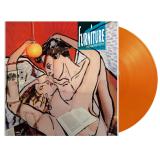
Furniture - Wrong People LP

Furniture

Wrong People LP

12inchMOVLP4031C
Music On Vinyl
12.06.2026
  • A1: Shake Like Judy Says
  • A2: Love Your Shoes
  • A3: Brilliant Mind
  • A4: She Gets Out The Scrapbook
  • A5: I Miss You
  • B1: Make Believe I'm Him
  • B2: Let Me Feel Your Pulse
  • B3: The Sound Of The Bell
  • B4: Escape Into My Arms
  • B5: Answer The Door
  • B6: Pierre's Fight

Furniture is British new wave band active between 1979 and 1991, but were far more eclectic than you'd think, incorporating jazz, blues and post-punk sounds as well. They are noted both for their poetic storytelling and high-quality productions as for the numerous setbacks they experienced. These setbacks ultimately prevented them from making their big break, making them a big what-if of the burgeoning English new wave scene.

Although active since the late 70s, their 1986 debut album The Wrong People gave them their commercial breakthrough. It was supported by the single Brilliant Mind which eventually reached #21 on the UK Singles Chart and remains their only entry on it. They followed it up with a re-recording of their 1984 single Love Your Shoes. Although a radio hit, it ultimately failed to chart as not enough copies were pressed to match demand.

The album ultimately suffered from the same fate which means there are not a lot of copies floating around. In recent years it became a cult classic so we thought it would be fitting to reissue it on vinyl for the first time since its initial release in 1986.

The Wrong People is available as a 40th anniversary edition on orange vinyl, and includes an insert with lyrics.

Reservar12.06.2026

debe ser publicado en 12.06.2026

Ambrose Akinmusire & Mary Halvorson - Slo-Mo Neon Luminate Hoverings LP

‘Richness of tone; precision of articulation; ingenuity of timbre that, when Akinmusire pursues microtonal avenues, creates the sense that particular sounds are almost hermetically sealed before being slowly squeezed and pinched into the air. In other words there is a high degree of technical mastery, but, tellingly, it underpins a profound and often engrossing sense of narrative.’ - Jazzwise

‘Halvorson has formulated a guitar style with few precedents. One inspiration might be the painter George Seurat, whose Impressionist paintings of a hundred isolated dots cohere into a picture if one steps back from the canvas. Halvorson’s pointillist approach to the guitar works much the same way.’ - JazzTimes

Slo-Mo Neon Luminate Hoverings, the new album by trumpeter/composer Ambrose Akinmusire and guitarist/composer Mary Halvorson, features four new compositions by each musician as well as one collaboration. The duo, long admirers of each other’s musicianship, met at Halvorson’s Brooklyn apartment and began playing together periodically, going back as far as 2009. They rehearsed the music on Slo-Mo Neon Luminate Hoverings in January 2025, just before performing it at the New York City club The Stone; they recorded this album the next day at Sear Sound.

Akinmusire and Halvorson made two previous attempts at recording an album but felt that they got it right with this third session. Halvorson says of their rapport, which developed over those years of friendship and collaboration, “I think it’s partly a shared aesthetic and an ease of communication. I feel comfortable to try whatever.” Akinmusire concurs, “I think it’s rare to find an improviser that all goes and nothing has to go at all. It’s rare to feel like you don’t have to do anything and you can do anything. And that’s what I love about playing with Mary.”

Though Halvorson regularly uses effects pedals on her guitar, Akinmusire’s use of one on Slo-Mo Neon Luminate Hoverings is new. Having recently gotten an updated model of the Line 6, Halvorson was passing her old ones along to friends. “Ambrose was interested in trying a Line Six. I gave him one five minutes before the rehearsal and was amazed how quickly he was able to do incredible shit on it ... in literally five minutes,” she says.

“But I’ve been watching you, I’ve been watching Bill Frisell and other people use it for a long time,” Akinmusire says. “I approached it as if it were its own musician. I played and it would process the sound and then I would choose to react to that or not. The people like Mary that I love to listen to who use delay, I like being able to hear the process of the texture that’s being built. With some people, when they use it, you don’t really hear it. But with Mary, she’ll play a line and then she’ll react to that line and then react to that,” he continues. “It’s really cool to hear how something is being built. So I kind of stole that.”

Halvorson says, “I’ve never seen someone pick up a pedal and then immediately do something with it that felt like, ‘Oh, this is a sound,’ as opposed to just tinkering, you know? It felt like he was making music on it right away, and then also doing things that surprised me, like the vocalizing really surprised me. I wasn’t expecting that, and it was awesome.”

Reservar12.06.2026

debe ser publicado en 12.06.2026

Blind Eye - Mistrust Your Nation LP
  • 1: Behave
  • 2: Whatcha Gonna Do
  • 3: Blitz Can
  • 4: Darts, Cards, Bingo
  • 5: Red State
  • 6: What Is Your Line
  • 7: Twisted Ways
  • 8: Tin Blankets
  • 9: Bitter
  • 10: Who's In Control

This is a record of noted pedigree. Nottingham is one of thee homes to god-tier hardcore punk. The scene there has evolved, revolved, mutated, and grown over the decades. It's DIY venues and recording studios are now of legend.
The catalogue number of WSR084 is no coincidence. As with Crass and their 'counting down to 1984' aesthetic, this is anarcho hardcore railing hard against the times. If you're not currently furious you're asleep and Blind Eye are spitting anger.
Taking inspiration from The Comes, Jerrys Kids, Aus-Rotten and Chaos UK, this album is a concise call to arms. Perfectly captured over a weekend towards the end of 2025 by Boulty at Stuck On A Name Studios, Mistrust Your Nation sees mid-tempo stompers mix with breakneck ragers, all pressed at 45rpm and sounding as hefty as the band playing in your front room.
Anmarie Spaziano's vocal is at once melodic and raging, giving new definition to “pissed off”. Steve Charlesworth's drums are second to none, they've never been equalled in over 40 years of doing this. Andrew Morgan's guitar on this record is wild: shredding equal parts cosmic noise and brutally-tight riffing whilst Matt Grundy's bass anchors the chaos, pushing every second onwards.
As a label we never tire of bands who have THAT THING. We struggle to describe it and to pin it down, but we know it and we feel it and we only deal with people who have it. When we put gigs on and Blind Eye share a bill with solo banjo player Jacken Elswyth (for example) the sound is clearly different, but the ethics are the same. We can see it and we can hear it and we hope you can too. We are a genre-free label. We are a label that deals only with righteous, inspiring people. Play this record loud. Let it help you through these hideous times - Wrong Speed HQ

Reservar12.06.2026

debe ser publicado en 12.06.2026

Monolord - Neverending

Monolord

Neverending

12inchRR76321
Relapse Records
29.05.2026
  • 1: Iodine
  • 2: You Bastard
  • 3: Inside a Collider
  • 4: Crystal Bridge
  • 5: Ooozing Wound
  • 6: The Masque
  • 7: Invisible
  • 8: It's Neverending

For well over a decade, MONOLORD have caused mass riff hypnosis with longform epics steeped in repetition, volume, and heaviness. One of heavy music’s most consistent and beloved bands, MONOLORD are gearing up for their next chapter with a new album titled Neverending. In looking for a new take on the genre, MONOLORD approached the legendary producer Sylvia Massy, known for her work with Tool, System of a Down, and Johnny Cash, among many more. The payoff from this new process is undeniable. Neverending feels like the culmination of 13 years of heavy, molten music, with a keen eye towards creating a sharper album. “The recording of this album is an example of the spirit of MONOLORD’s camaraderie,” says bassist Mika Häkki. “We’ve looked back and seen for the first time how much we have done as a band collectively, and realized what an intense 13 years it has been.” "The lyrics on this album are more personal than before because I went through some major life changes in the last couple of years,” guitarist/vocalist Thomas Jäger says. “I usually write about religion and how people are superstitious, but this record is more about relationships between people. But it’s not all about me. Sometimes I’m writing from another person’s perspective.” Neverending’s lead single “You Bastard” offers listeners a sharp contrast: A propulsive groove offset by lyrics about suicide. There’s two sides to suicide,” Jäger points out. “There’s the person who commits suicide and the people who gets left behind...The choruses represent the person left behind, and that person is calling the other a bastard—but it’s not pointing fingers or saying, ‘You suck.’ It’s more like, ‘You left me here with all the bullshit.’ It’s an understanding that life is not easy." Though it might not be immediately obvious, album opener “Iodine” was inspired by 70's rock epics like Lynyrd Skynyrd’s “Free Bird,” The Eagles’ “Hotel California,” and Led Zeppelin’s “No Quarter." Elsewhere, album closer “It’s Neverending” is the first MONOLORD song that Jäger doesn’t sing on. Instead, the death-metal style vocals are performed by former Entombed bassist Jörgen Sandström, (also of Grave, Domedagen and Firespawn.) 13 years on, MONOLORD’s path takes a new turn, and Neverending becomes the band’s most befitting album title. “It's been a wild ride and still is,” says drummer Esben Willems. “I've spent a quarter of my life in this band. Looking back, I'm incredibly proud of what we've accomplished along the way, and in many ways, this album feels like the essence of everything we've done so far. My mindset is the same it's always been, to be the absolute best the three of us can be.”

Reservar29.05.2026

debe ser publicado en 29.05.2026

Cousin Feo & Dre Mendoza - Provoleta - 5th Anniversary’ LP

BLUE & WHITE COLOUR IN COLOUR VINYL

In the culinary arts, it’s easy to overcomplicate the final product. Theme, presentation, texture…they’re important but should work to complement the raison d'etre of any food. At the end of cooking a dish, it should taste good and feed people. Some dishes, like barbeque or provoleta, resist the tendency towards hollow showmanship. One of their expressions can be more or less aesthetic, but the first purpose is to be simple and tasteful. Argentinian provoleta goes so far as to blur the line between ingredient and dish. It relies on the inherent flavor of provolone being heated at the right speed for the perfect amount of time. You can add garlic or chives or red pepper to the slice, but ultimately they serve to bring out an essence that’s already there.

Los Angeles’ Cousin Feo has developed his rapping acumen in the five years since releasing Provoleta, but returning to the project today shows that he always had the penmanship, grit and delivery that christens an emcee worthy of remembrance. Like the bubbles rising up in the appetizer that is the album’s namesake, Feo showed that true profundity is found in the simple gestures.

Since dropping the project in 2019, Cousin Feo has expanded his vision of a world where hip-hop and football, two proletarian art forms, mingle in creative and compelling ways. He has collaborated across multiple continents, chronicled football histories, aided in canonizing legends, kept the flames high in age-old rivalries and constantly forced his audience to search for the last time they heard bars this hard. In anyone else’s hands it would be too great a task.

The maturity he showed on Provoleta wasn’t nascent, it was an inherent quality forcing itself to the surface. The songs refract his experience as a working class Angeleno through the archetypes of Argentinian football legends. The kernel that unites the two worlds is hustle. When Feo was coming up, missteps had greater consequences than crashing out in the group stage and street deals had the weight of a Boca-River Plate match.

Each track uses slightly different ingredients to let Feo’s underlying talent shine. “Maradona” feels salvific, fitting for a football legend canonized from the Andes to the Alps and a Los Angeles rapper looking to inspire similar hope in the neighborhoods that raised him. On “Di Stefano” Feo massages the instrumental with the same composure of the late forward, until he pierces through the headphones like one of Di Stefano’s arrows. It’s also refreshing to hear a song celebrating Messi before his meme-ification, focusing on the universal truths contained in his footballing talent instead of using number 10 as a stand-in to make a point in a fruitless argument. And he still finds space to show deference to Batistuta, Kempes and other members of the Argentinian pantheon who’ve been erased from the popular imagination by the national team's contemporary success.

Real ones know that true players, true rappers, and true artists will always stand the attacks of time and consensus. In Provoleta’s first verse, Cousin Feo says he moves with the hand of God. Maybe one day he’ll tell the whole truth and let us know how he was able to wrestle the pen away too. Limited edition of 300 hand-numbered copies.

Reservar29.05.2026

debe ser publicado en 29.05.2026

Vilhelm Bromander + Fredrik Rasten - Astral Twins

Maybe it was inevitable that Vilhelm Bromander and Fredrik Rasten would find each other. A symbiotic musical alliance of suggestive combinatory magic that stretches back to the interstitial two day space that separates their dates of birth and manifests here as the movement between ‘perfect’ or ‘just’ intonation and the ragged, psychoactive energy of the slippages from and towards that togetherness that render otherwise simple patterns or generally understood repetitions as wildly other and alive.

Astral Twins shares ‘twin’ works by each composer. The patiently unfolding real time retuning of Fredrik Rasten’s guitars on the a-side’s Sojourns and Vilhelm Bromander’s quickened steps and spry looping melodies on the flip’s Partially Dancing.

Both artists have history of going deep into the aesthetic and acoustic impact of intonation (how you think about what is ‘in tune’). Where their first LP (...for some reason that escapes us, 2019, Differ Records) shared a gorgeous set of sustained tone colour fields, this time they lean more explicitly into the folk music traditions of Scandinavia and further afield, whilst echoing the zoned minimalist atmosphere of Arthur Russell’s classic Instrumentals.

Recorded up close and in real time at Fylkingen’s soon-to-be-abandoned temporary location in Stockholm’s southern suburb of Bredäng, Astral Twins sings with the possibility that one plus one can equal more than two.

Fredrik Rasten:
 Sojourns explores the live retuning of guitar and double bass in a sequence of just intonation harmonies. A guitar ostinato runs throughout the piece where the retuning becomes an integral part of the composition. The slow pace reveals every detail in the transition from one harmonic arpeggio to another — how interfering waves emerge and disappear as the tonal interactions settle in electric clarity. The double bass shadows the guitar's process and comments with occasional pizzicato tones and register jumps, at times providing a low foundation for the sound and sometimes soaring together with the guitar. This is music that is deeply listening; experimental and at the same time humbly inviting many kinds of being with sound.

Vilhelm Bromander: 
As the title suggests, this song has a partially dancing character. The title also has a double meaning with reference to the partials and harmonics that dance together. The basic idea was to write music in just intonation that instead of being drone-based is reminiscent of a lightly dancing folk music, where the joyous feeling of just being in the music — “musicking" — is allowed to lead the way.

The double bass plays repeated overtone double stops in an open harmonic progression with subtle modulations that is inspired in equal parts by Steve Lacy's persistent repetition of phrases as east-asian khaen music. The guitars and mandolin have a freer role, with plucked retuned strings that enhance the bass's modulations and provide forward movement. The music invites to both melodic and spectral listening, suddenly halting so that other focal points can reveal themselves. For example, a chord sequence suddenly transitions to a more spectral part where Fredrik is playing a bowed guitar with a chain, several plucking guitars, voices, and pitch pipes. I wanted to make something ‘orchestral’ with just two people and no overdubs: a dance of overtones and open resonant strings, where we seamlessly take turns standing in the foreground.

Reservar29.05.2026

debe ser publicado en 29.05.2026

Originale Disco Version - Communion LP 2x12"

STRICTLY LIMITED TO 100 COPIES ARTIST PROJECT After discovering techno at La Concrète, invited by my girlfriend, it was a revelation, and I very quickly felt the urge to contribute in my own way. My intention has been to create tracks infused with positive energy (even if the creative process sometimes leads into slightly darker corners of music). Still, I realized—rather late—the importance of the musical genre known as “techno.” Here is my reflection on it: Nothing is closer to village music (with everything that implies among indigenous peoples, for example—important and respected moments of communion) than techno. On one side, you have basic organic instruments and the voice; on the other, the most advanced technology available. But fundamentally, the difference is only superficial—the essence is the same: a guide, and people who participate intuitively, ultimately finding or discovering their own inner paths… individuation. Techno represents the re-emergence of a kind of initiation rite that had been missing in the West for quite some time—a sort of continuation of Woodstock, more spread out over time but just as powerful from a societal perspective. This release is my contribution to that revival, in the same way a villager might feel free to join trance music with a simple stick that sounds right, or a drum—something intuitive that all our ancestors must have practiced naturally at one point or another. In short, nothing pretentious—just something made with heart

Reservar15.05.2026

debe ser publicado en 15.05.2026

The Beths - Expert In A Dying Field LP

REPRESS ON SILVER VINYL . COMES WITH 24”x24” POSTER + DOWNLOAD CARD + GATEFOLD JACKET.


On The Beths’ album Expert In A Dying Field, Elizabeth Stokes’ songwriting positions her somewhere between being a novelist and a documentarian. The songs collected here are autobiographical, but they’re also character sketches of relationships – platonic, familial, romantic – and more importantly, their aftermaths. The shapes and ghosts left in absences. The question that hangs in the air: what do you do with how intimately versed you’ve become in a person, once they’re gone from your life?

The third LP from the New Zealand quartet houses 12 jewels of tight, guitar-heavy songs that worm their way into your head, an incandescent collision of power-pop and skuzz. With Expert, The Beths wanted to make an album meant to be experienced live, for both the listeners and themselves. They wanted it to be fun -- to hear, to play -- in spite of the prickling anxiety throughout the lyrics, the fear of change and struggle to cope.

Most of Expert was recorded at guitarist Jonathan Pearce’s studio on Karangahape Road in Tāmaki Makaurau, Aotearoa (Auckland, New Zealand) -- and sometimes in the building's cavernous stairwell at 1am -- toward the end of 2021, until they were interrupted by a four-month national lockdown. They traded notes remotely for months, songwriting from afar and fleshing out the arrangements alone, the first time they’d written together in such a way. The following February, The Beths left the country for the first time in more than two years to tour across the US, and simultaneously finish mixing the album on the road. That latter half felt more collaborative, with everyone on-hand to trade notes in real time, until it all culminated in a chaotic three-day studio mad-dash in Los Angeles. There, Expert finally became the record they were hearing in their heads.

Expert is an extension of the same skuzzy palette the band has built across their catalog, pop hooks embedded in incisive indie rock. The album’s title track “Expert In A Dying Field” introduces the thesis for the record: “How does it feel to be an expert in a dying field? How do you know it’s over when you can’t let go?” Stokes asks. “Love is learned over time ‘til you’re an expert in a dying field.”

The rest is a capsule of The Beths’ most electrifying and exciting output, a sonic spectrum: “Your Side” is a forlorn and sincere love song, emotive; while “Silence is Golden,” with its propulsive drum line and stop-start staccato of a guitar line winding up and down, is one of the band’s sharpest and most driving. “When You Know You Know” skews a bit groovier, pure pop and a natural addition to the band’s live set. “Knees Deep” was written last minute, but yields one of the best guitar lines on Expert. There’s a certain chaos across the 12 tracks, the palpable joy of playing music with long-time friends colliding with the raw nerves of pain.

Stokes strings it all together through her singular songwriting lens, earnest and self-effacing, zeroing in on the granules of doubt and how they snowball. Did I do the wrong thing? Or did you? And are we still good people at the end of it? She isn’t interested in villains, but instead interested in just telling the story. That insecurity and thoughtfulness, translated into universality and understanding, has been the guiding light of The Beths’ output since 2016. In the face of pain, there’s no dwelling on internal anguish - instead, through The Beths’ music, our shortcomings are met with acceptance. And Expert In A Dying Field is the most tactile that tenderness has been.

Reservar15.05.2026

debe ser publicado en 15.05.2026

Soul Jazz Records Presents - REBEL ISLAND SOUL – Under The Influence: Reggae, Funk & Soul In Jamaica in the 1970s (2x12")
  • 1: John Holt - You’ll Never Find Another Love Like Mine (3.48)
  • 2: Cornell Campbell - Be Thankful (3.58)
  • 3: Elizabeth Archer & The Equators - Feel Like Making Love (.4)
  • 4: The Chosen Few - People Make The World Go Round (3.22)
  • 5: Dave & Ansel Collins - Single Barrel (3.17)
  • 6: The Now Generation - Shaft (3.19)
  • 7: The Marvels - Some Day We’ll Be Together (3.05)
  • 8: The Darker Shades Of Black - War (2.41)
  • 9: Winston Curtis - Private Number (3.42)
  • 10: Lee Perry & The Upsetters - Bathroom Skank (4.30)
  • 11: Slim Smith - Watch This Sound (2.43)
  • 12: Winston Francis - Sitting In The Park (3.29)
  • 13: The Sensations - If I Don’t Watch Out (2.57)
  • 14: Carl Bert & The Cimarons - Slipping Into Darkness (3.04)
  • 15: The Darker Shades Of Black - Ball Of Confusion (3.10)
  • 16: Jah Youth - Ain’t No Sunshine (2.35)

Sixteen killer 70s reggae funk and soul cuts from the likes of John Holt, Lee Perry, Cornel Campbell, The Cimarons, The Chosen Few and more featuring superb reggae takes on songs by artists including The Jackson 5, William DeVaughn, Diana Ross and The Supremes, War, The Temptations, Roberta Flack, The Stylistics and others!

Well-documented is the influence of American black music on Jamaican styles of the 1960s – from the birth of ska music, when The Skatalites ska-ified the jump-up southern USA rhythm and blues music of Rosco Gordon, Louis Jordan and Fats Domino, through to the creation of rocksteady when Jamaican artists like The Techniques, The Paragons, Alton Ellis and The Melodians turned to the slower rhythms and soulful harmonies of groups such as The Impressions and The Drifters for inspiration. 

Less-well established is that in the 1970s Jamaicans didn’t (shock!) stop listening to American black music styles, with many 70s reggae artists as invested in soul, funk and the proto-disco sounds of Philadelphia, as was the case with rhythm and blues in the previous decade. In the 1970s, while Jamaica promoted its own roots reggae styles around the world, powerhouse USA soul labels such as Motown, Philadelphia International and Stax Records were at the same time all popular on the island.
This interaction between American and Jamaican music was not limited to Jamaica. In Britain, first-generation Caribbean-émigré children in the 1960s and early 70s grew up with an equal love of both soul and reggae, which manifested itself in the home-grown arrival of lovers rock in the mid-1970s.
Soul Jazz Records’ new ‘Reggae Island Soul’ tells this story of how soul and funk-infused reggae in the 1970s united the sounds of Jamaica, USA and the UK into a highly addictive cultural hybrid of styles.

Reservar15.05.2026

debe ser publicado en 15.05.2026

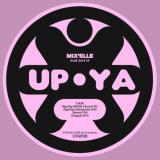
Mix'Elle - Rage Days EP

Mix'Elle

Rage Days EP

12inchUYA008
Up Ya Archives
15.05.2026

Setting the tone for the wider project, ‘Rage Days’ thrives on sonic deviation, weaving together junglist breaks, weighty basslines, melodic elements, and vocal chants. Speaking on the track, Mix’Elle shares: “For me this track represents how amidst the chaos, community, art and music become such important comfort zones for us to lean into when the world feels a bit mad.”

Reflecting on her contribution, BRAVA said: “It’s about my experience this past winter in London. Being broke, freezing, in high rent flats and just figuring it out as you go, but still ending up at the rave, dancing to breaks and bass where everything kinda makes sense for a bit. It’s also about the people within the DIY underground scene that I’ve fallen in love with, where everyone looks out for each other because we’re all in the same boat.”

‘Rage Days’ captures the urgency and unity of underground club culture, marking a soundtrack for navigating chaos, and finding connection on the dancefloor.

No en stock

Haga su pedido ahora y le encargaremos el artículo en nuestro proveedor.

Ültimo hace: 4 Meses
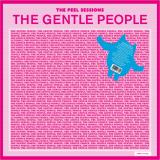
The Gentle People - The Peel Sessions

WRWTFWW Records releases THE GENTLE PEOPLE - The Peel Sessions, available on vinyl for the first time ever, in conjunction with the worldwide expanded reissue of the group's Soundtracks for Living. Lounge/Chill Out music reborn !

This is an exclusive 4-song EP recorded in 1997 on BBC's Peel Sessions, as The Gentle People were doing the rounds for the release of their legendary debut album. These live versions have never seen the light of day before - a must have for all the gentle fans !
When The Gentle People first glided into the mid-90s on clouds of strings, sugar and sine waves, they sounded like visitors from another, more glamorous planet. Signed to Richard D. James and Grant Wilson-Claridge's cult label Rephlex, this multinational "E-Z-Core" lounge unit took the aesthetics of 50s/60s easy listening and exotica and gently smuggled them into 1990s club culture.

Imagine KLF's Chill Out or Space growing up on French 60/70s pop, bossa nova, soundtracks, vocal harmony groups, library music and easy listening then slipping out for a late-night date with dub, ambient techno and bubble-bath pop. That's The Gentle People : music that can score cocktail hour, 4am taxi rides, and daydreams in headphones with the same effortless grace.

The Gentle People weren't just a curiosity on a weird label; they became unlikely icons of a whole loungecore moment, gracing TV, compilations and magazine spreads, and proving that tenderness could be as futuristic as any drum machine.

No en stock

Haga su pedido ahora y le encargaremos el artículo en nuestro proveedor.

Ültimo hace: 5 Meses
Steve Wilson - Enduring Sonance
  • 1: Quiet Girl
  • 2: A Volta
  • 3: The Eyes of Love
  • 4: Helen's Song
  • 5: The Surest Things Can Change
  • 6: Pieces of Dreams
  • 7: How Long?
  • 8: Francisco

On "Enduring Sonance," saxophonist and flutist Steve Wilson reflects on a lifetime of lyrical, deeply felt songs drawn from jazz, pop, and film—brought to life by an all-star ensemble featuring Renee Rosnes, Joe Locke, Jay Anderson, and Kendrick Scott. *** Certain songs have a way of lingering in the imagination—resonating long after we’ve last heard them, sometimes for a lifetime. On his breathtaking new album "Enduring Sonance," veteran saxophonist and flutist Steve Wilson celebrates the music that has left the deepest imprint on his musical life. “Some of the tunes on this record have stayed with me for, in some cases, over 50 years from the time that I first heard them,” Wilson says. “I wanted to put some music out there that people can connect with, no matter what kind of music they like.” Originally conceived as a ballads project, Enduring Sonance evolved into something broader and more personal. Rather than focusing on tempo or style, Wilson gravitated toward a sense of lyricism—music whose emotional clarity and melodic resonance endure across genres, decades, and listening habits.

To realize this vision, Wilson assembled a deeply intuitive ensemble featuring pianist and arranger Renee Rosnes, vibraphonist Joe Locke, bassist Jay Anderson, and drummer Kendrick Scott, with special guest Kevin Newton (French horn, Imani Winds) appearing on two tracks. Each musician brings a rare sensitivity to melody, texture, and space, allowing the material to unfold with warmth, restraint, and quiet authority. The repertoire draws from a wide musical landscape, including works by close collaborators and modern jazz masters Billy Childs and George Cables, alongside enduring songs by Michel Legrand, Quincy Jones, Milton Nascimento, Gino Vannelli, Bill Lee, and Eliane Elias. These are not standards in the traditional sense, but deeply personal selections—songs that have accompanied Wilson through different chapters of his life. The album opens with Childs’ “Quiet Girl,” its subtle rhythmic motion enhanced by Newton’s luminous French horn, and travels through cinematic ballads, soulful grooves, and reflective lyricism. The title Enduring Sonance speaks both to the lasting resonance of these songs and to Wilson’s enduring musical relationships—most notably with Rosnes, whom he has known for nearly four decades and whose sensitive arrangements help unify the album’s diverse repertoire. “These songs are the soundtrack of my life,” Wilson says. “I’d love it if listeners came away from this album with the same kind of enduring sound and feeling.”

Reservar24.04.2026

debe ser publicado en 24.04.2026

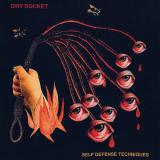
Dry Socket - Self Defense Techniques LP

Dry Socket is a politically charged hardcore band from Portland, Oregon, known for blistering performances and emotionally uncompromising songwriting. Rooted in the raw aggression of classic hardcore, their sound channels the urgency of early Ceremony, G.L.O.S.S., and Negative Approach while carving out a distinctly modern, inclusive space within the genre, one where anger, grief, and survival are not just themes, but lived realities.

Their music confronts systems of violence, coercion, and control with unflinching honesty, creating room to be unapologetically furious, vulnerable, and alive at the same time. Every riff lands like a strike; every lyric feels torn from experience rather than abstraction.

Since forming, Dry Socket has toured extensively across the U.S., Europe, and Mexico, sharing stages with Gorilla Biscuits, The Hope Conspiracy, Torso, and more.

Their latest record, Self Defense Techniques, centers on survival under constant pressure. Inspired by the practice of dehorning rhinos to protect them from poachers, removing a vital part of the animal in order to keep it alive, the album examines the compromises people are forced to make to endure a hostile world. Horns are tools for protection, communication, care, and identity. To survive, so many of us are taught to remove our own.

Across the record, Dry Socket interrogates life inside systems that demand silence, obedience, and self-erasure. Songs wrestle with exhaustion, spiritual betrayal, and economic violence, oscillating between fury and grief. Self Defense Techniques isn’t about triumph, it’s about endurance, documenting the cost of staying alive while refusing the lie that softness is weakness or that silence is peace

Reservar24.04.2026

debe ser publicado en 24.04.2026

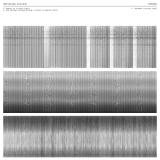
Christina Kubisch - TUNING

Christina Kubisch

TUNING

12inchFAIT-41LP
Faitiche
17.04.2026

Faitiche welcomes a new artist: Christina Kubisch belongs to the first generation of sound artists. Her practice ranges from performances, concerts, to works with video and visual art, but she is best known for her sound installations and electro-acoustic compositions.

TUNING brings together three pieces by Christina Kubisch from different periods of her oeuvre. What they have in common is the way they transform sound phenomena originally considered “non-music” into compositions.

Jan Jelinek: Gaming in Silence (2024) is the most recent work on this compilation. It’s a collage of electromagnetic waves, voice, and abstract sound textures. How did this combination come about?

Christina Kubisch: Gaming was commissioned as a fixed-media composition for the Sound Dome at ZKM Karlsruhe. Since Resonances: The Electromagnetic Bodies Project (2005), I’ve been making recordings in the old and new server rooms at the ZKM and in their permanent collection of historical computer games. Computer games like Asteroids (Atari, 1979) and Poly-Play (VEB Polytechnik, 1986) have specially generated analogue electromagnetic waves that interest me in particular on account of their density, rhythms and textures. I originally studied painting and to me the work of composition often feels like painting an abstract picture. I alter my source material as little as possible, layering and overlapping until a distinctive sound space emerges. In recent pieces, I sometimes combine magnetic waves with field recordings or live instruments. In Gaming it’s my recording of a Chinese song about silence.

JJ: Two persons walking through a street in Madrid (2004) is a recording from your Electrical Walks series. Here we should give a brief explanation of one of your best known works: participants in an Electrical Walk move through public spaces wearing prepared headphones that allow them to receive electromagnetic waves from their surroundings – for example from security gates, ATMs or neon signs. They discover a situation that normally is inaudible to the human ear and they can actively shape it by choreographing their movements. I really admire this piece, not least because there’s no clear dividing line between participants and artist. What exactly do we hear in Two persons walking through a street in Madrid (2004)?

CK: With this early work, I wanted to understand what is heard by people participating in an Electrical Walk in the same place but moving in different ways. The Spanish composer Miguel Alvarez-Fernàndez and I set off from opposite ends of a major shopping street in Madrid, met briefly in the middle, and then continued to the end. We both recorded our walks and I then layered them over one another. You might call it a work of electromagnetic conceptualism.

JJ: Diapason (2009 version) is an installation that plays a composition based on sounds from fifteen tuning forks. This setting is audible in the recording: there’s no dramatic arc, no beginning or end – instead, it recalls a piece of aleatoric music focussing on the decay phase. How did you come to make this work and could you tell us something about your compositional method?

CK: Diapason is part of a series of three pieces that deal with “non-instruments” or instruments that no longer exist: electrical mine bells used to send signals to the workers underground; a historical glass harmonica originally used for medicinal purposes; and tuning forks that were used by doctors to test people’s hearing. All of these methods are no longer in use. The sound of the tuning forks, audible only if held close to the ear, was recorded at the electronic studio at Berlin’s Technical University in such a way that even their decay remained audible. The frequencies range between 64 and 2048 Hertz and they can be adjusted at micro-intervals using small movable weights. The sequence and the duration of the pauses are dictated by chance and were not defined in advance. The 2009 version was created for an installation in the historic Holy Cross Church (Korskirken) in Bergen. Visitors could enter and leave the space at any time, deciding for themselves where and for how long they wished to listen to the sounds played back over an array of small loudspeakers placed on the floor of the apse.

Credits:

Gaming in Silence: commission of the ZKM/Hertzlab, Karlsruhe 2023
elektronic sound processing: Tom Thiel
sound engineering and mixing: Eckehard Güther

Diapason: produced at Elektronisches Studio of TU Berlin
rearrangement: Eckehard Güther

Christina Kubisch, published by Edition Christina Kubisch / Random Musick Publishing

image front: Transitionen 2021 by C. Kubisch, sonagrams of electronic waves (courtesy: Galerie Mazzoli Berlin)
image back: Diapason Tuning Fork, property of Folkmar Hein, Photo: Archiv Christina Kubisch

design by Tim Tetzner
mastered by Giuseppe Ielasi
Thanks to Miguel Álvarez-Fernández, Folkmar Hein, Dominik Kautz and Mario Mazzoli

Reservar17.04.2026

debe ser publicado en 17.04.2026

BCUC - The road is never easy

BCUC – Bantu Continua Uhuru Consciousness – have been channeling the spirit of Soweto for over twenty years. Indigenous funk, hip-hop consciousness, and punk rock energy fused into something utterly original and deeply rooted. Their mantra: Music for the people, by the people, with the people. From humble beginnings rehearsing in a shipping container, a stone's throw from the church where Desmond Tutu organized the escape of the most wanted anti-Apartheid activists, they kept believing in their dream of self-empowerment. Today they command festival stages worldwide: Glastonbury West Holts, Roskilde, Afropunk Brooklyn, WOMAD, Fusion, Sziget, FMM Sines, Beaches Brew, Boomtown, Colours of Ostrava, Couleur Café – to name just a few. In 2023, BCUC were honoured with the prestigious WOMEX Artist Award, an accolade usually reserved for more established artists, in recognition of their fearless work and transcendent live performances.

THE ROAD IS NEVER EASY

The Road Is Never Easy is BCUC's fifth album and their debut on Outhere Records. On this new offering, BCUC take listeners on another Afro-psychedelic journey into the soul of Soweto. It feels like a gospel sermon colliding with a punk concert, "guaranteed to touch untapped corners of your soul" (OkayAfrica). BCUC's music is deeply rooted in history and echoes the voices of the ones who came before. The road was never easy for the people of Soweto who originally came to work in the mines of Egoli, the City of Gold, Johannesburg. When apartheid finally ended after a long struggle, it was hoped that life would improve. But more than 30 years later, many of those initial hopes and dreams are still waiting to be fulfilled. This album is about that struggle. The album contains 10 brand new songs – a record for BCUC, whose previous albums featured an average of 3 songs. It represents the culmination of more than two decades of performing together and building a reputation as a powerful live act. These ten songs encapsulate that same live energy, each one building gradually and drawing you into BCUC's Afro-psychedelic stream of consciousness. It's a seismic tour de force through life in Soweto today. Songs like Amakhandela (Breaking All the Chains) connect history to daily life: "How is this precious metal inflicting so much pain in us," sing BCUC, "this government has been telling us we are free, but we don't benefit from being free." The album also talks about all the hopes and dreams that remain: "I have too many wishes and dreams in my head," BCUC sing in Um duma khanda, "I think I am losing my mind". The album ends with the soothing Matla a rona ke Bophelo, "our strength is life", praising the spirits and thanking the elders for protection. The Road Is Never Easy is about the harsh reality of life in Soweto, where "people always carry heavy loads". BCUC are street poets trying to deal with that burden: sometimes revolutionary, sometimes soothing, but always hopeful and compassionate. "When you are from Soweto you can't retreat nor surrender." (Sebenzela)

RECORDING

The album was largely recorded in Munich, Germany during tour breaks over two sessions, each three days long. It took place in a small studio located in a German WW II bunker converted into rehearsal spaces. The songs were recorded in one take altogether in one room, with only a few overdubs added, mainly backing vocals, by BCUC at Fourways studio in Johannesburg. BCUC have created their own distinctive way of writing, or rather, finding and creating their songs. The recording process is like an improvised live performance. They bring their ideas into a zone where the music, the rhythm and the spirits take over until the song starts to form. In this Afro-psychedelic zone BCUC create their unique poetry that feeds on the dreams still dreamt, the hopes, the fears and the temptations lingering everywhere. BCUC's songs need to breathe and time to build. The right take was the one when the song took over, and just like their live performances, no one knew beforehand where the song would take them. During the recording, BCUC just let it all flow out: inner turmoil, cries of rebellion, but also resilience and a search for healing, love, unity and compassion. You don't have to be from Soweto to feel the deep meaning and impact of this music. In these times of so much hate and division, BCUC are like a campfire for people to gather around.

PRODUCTION & ARTWORK

"BCUC have a unique magic," says Outhere's Jay Rutledge, who produced the album. "It blew our minds. It's like punk and pure gospel at the same time. Their music can make you dance and it can make you cry, all at the same time. And when the song is over, you feel you're not alone in this world anymore. We felt compelled to do this." The album cover is based on a matchbox design, matches being a common household item in South Africa even today. "These were the matches people used to burn government buildings and cars," explain BCUC. Little messages, addresses, or phone numbers used to be scribbled on the back of these boxes; each one a reminder of the strength, resilience, and resistance that once drove the struggle for freedom in Soweto. BCUC keep this flame burning. The Road Is Never Easy is a heavy spiritual road trip, a deep dive into the subconscious of Soweto and a quest for truth, justice and sanity in this crazy world. BCUC tackle the harsh realities of the voiceless, guided by the spirit world of their ancestors. Rather than reinforcing stereotypes of poverty, BCUC's portrayal of Africa is one rich in tradition, rituals and beliefs. "We bring fun and Afro-psychedelic fire from the hood," says vocalist Kgomotso Mokone.

No en stock

Haga su pedido ahora y le encargaremos el artículo en nuestro proveedor.

Ültimo hace: 5 Meses
DAGMAR ZUNIGA - IN FILTH YOUR MYSTERY IS KINGDOM / FAR SMILE PEASANT IN YELLOW MUSIC (TAPE)

Nicaraguan-American artist Dagmar Zuniga makes music that feels both intimate and expansive: songs drift like disrupted signals, carried by harmony, tape hiss, and a strong sense of touch. Her debut solo album in filth your mystery is kingdom / far smile peasant in yellow music — written and recorded in New York, Norway, and Athens, Georgia over a period of five years on her longtime companion, the Tascam 424 — was uploaded to Bandcamp and YouTube in January 2025, quickly garnering over two hundred thousand views and the attention of artists such as Mount Eerie, who invited her to tour with them that summer. This year, what was once a jewel of tapped-in algorithms and message boards will meet the world at large, with in filth arriving digitally on March 4, and physically on April 10, via AD 93.

in filth is an atmospheric, devotional collage where one voice multiplies into a chorus of selves, sometimes delicate, sometimes severe; an effect created by Zuniga’s masterful layering of texture and complex harmonies. Synths glitter out like spears of sunlight from beneath clouds of moody, time-distorted guitars, and songs spin about themselves like tightly-wound music boxes, making use of a kind of hypnotic repetition, before melting apart into their components or slipping into the following track.

Zuniga began recording to tape as a teenager, drawn to the physicality of the medium — how a tape recording is fragile, mutable, and alive. Though her ethereal sound may draw easy comparisons to other female pioneers of psychedelic folk, she is influenced just as much by the darker sounds of Syd Barrett and The Fall. Like Barrett, Zuniga is a painter, and she is interested not only in recording music but in creating a full, self-contained artistic universe: she creates her own artwork, merchandise, music videos, and bootleg tapes of new and unfinished music that she exclusively sells at live shows (“If something is not material, it does not exist,” she insists). Her world has not gone unvisited, garnering her a monthly show on NTS Radio ‘World of Pain’, as well as a forthcoming appearance at Rewire Festival in April 2026.

Though Zuniga’s work explores themes of solitude and suffering, the suffering in her songs is not borrowed or displayed; it is held, then opened outward through empathy — an exacting practice of attention that insists on shared ground. Solitude, in her work, is not withdrawal but a starting point for connection. Likewise, over time, her recording process has become increasingly communal, with in filth featuring musicians Hayes Hoey, Austyn Wohlers (Tomato Flower), and Zach Phillips (Fievel Is Glauque). Newer recordings widen the circle even more. For Zuniga, collaboration is a way to “find a place between worlds,” echoing Badiou’s idea of love as a vision refracted through the prism of difference. Meaning emerges there — in the space between voices, between artist and listener. “I hope my music helps people work through difficult experiences,” she says. “The same way it helps me.”

Reservar11.04.2026

debe ser publicado en 11.04.2026

Guilty Razors - Complete Recordings 1977 - 1978

UILTY RAZORS, BONA FIDE PUNKS.


Writings on the topic that go off in all directions, mind-numbing lectures given by academics, and testimonies, most of them heavily doctored, from those who “lived through that era”: so many people today fantasize about the early days of punk in our country… This blessed moment when no one had yet thought of flaunting a ridiculous green mohawk, taking Sid Vicious as a hero, or – even worse – making the so-called alternative scene both festive and boorish. There was no such thing in 1976 or 1977, when it wasn’t easy to get hold of the first 45s by the Pistols or the Clash. Few people were aware of what was happening on the fringes of the fringes at the time. Malcolm McLaren was virtually unknown, and having short hair made you seem strange. Who knew then that rock music, which had taken a very bad turn since the early 1970s, would once again become an essential element of liberation? That, thanks to short and fast songs, it would once again rediscover that primitive, social side that was so hated by older generations? Who knew that, besides a few loners who read the music press (it was even better if they read it in English) and frequented the right record stores? Many of these formed bands, because it was impossible to do otherwise. We quickly went from listening to the Velvet Underground to trying to play the Stooges’ intros. It’s a somewhat collective story, even though there weren’t many people to start it.
The Guilty Razors were among those who took part in this initial upheaval in Paris. They were far from being the worst. They had something special and even released a single that was well above the national average. They also had enough songs to fill an album, the one you’re holding. In everyone’s opinion, they were definitely not among the punk impostors that followed in their wake. They were, at least, genuine and credible.

Guilty Razors, Parisian punk band (1975-1978). To understand something about their somewhat linear but very energetic sound, we might need to talk about the context in which it was born and, more broadly, recall the boredom (a theme that would become capital in punk songs) coupled with the desire to blow everything off, which were the basis for the formation of bands playing a rejuvenated rock music ; about the passion for a few records by the Kinks or the early Who, by the Stooges, by the Velvet mostly, which set you apart from the crowd.
And of course, we should remember this new wave, which was promoted by a few articles in the specialized press and some cutting-edge record stores, coming from New York or London, whose small but powerful influence could be felt in Paris and in a handful of isolated places in the provinces, lulled to sleep by so many appalling things, from Tangerine Dream to President Giscard d’Estaing...
In 1975-76, French music was, as almost always, in a sorry state ; it was still dominated by Johnny Hallyday and Sylvie Vartan. Local rock music was also rather bleak, apart from Bijou and Little Bob who tried to revive this small scene with poorly sound-engineered gigs played to almost no one.
In the working class suburbs at the time, it was mainly hard rock music played to 11 that helped people forget about their gruelling shifts at the factory. Here and there, on the outskirts of major cities, you still could find a few rockers with sideburns wearing black armbands since the death of Gene Vincent, but it wasn’t a proper mass movement, just a source of real danger to anyone they came across who wasn't like them. In August 1976, a festival unlike any other took place in Mont-de-Marsan – the First European Punk Festival as the poster said – with almost as many people on stage as in the audience. Yet, on that day, a quasi historical event happened, when, under the blazing afternoon sun, a band of unknowns called The Damned made an unprecedented noise in the arena, reminiscent of the chaotic Stooges in their early adolescence. They were the first genuine punk band to perform in our country: from then on, anything was possible, almost anything seemed permissible.

It makes sense that the four+1 members of Guilty Razors, who initially amplified acoustic guitars with crappy tape recorder microphones, would adopt punk music (pronounced paink in French) naturally and instinctively, since it combines liberating noise with speed of execution and – crucially – a very healthy sense of rebellion (the protesters of May 1968 proclaimed, and it was even a slogan, that they weren’t against old people, but against what had made them grow old. In the mid-1970s, it seemed normal and obvious that old people should now ALSO be targeted!!!).
At the time, the desire to fight back, and break down authority and apathy, was either red or black, often taking the form of leafleting, tumultuous general assemblies in the schoolyard, and massive or shabby demonstrations, most of the time overflowing with an exciting vitality that sometimes turned into fights with the riot police. Indeed, soon after the end of the Vietnam War and following Pinochet’s coup in Chile, all over France, Trotskyist and anarcho-libertarian fervour was firmly entrenched among parts of the educated youth population, who were equally rebellious and troublemakers whenever they had the chance. It should also be noted that when the single "Anarchy in the UK" was first heard, even though not many of us had access to it, both the title and its explosive sound immediately resonated with some of those troublemakers crying out for ANARCHY!!! Meanwhile, the left-wing majority still equated punks with reckless young neo-Nazis. Of course, the widely circulated photos in the mainstream press of Siouxsie Sioux with her swastikas didn’t necessarily help to win over the theorists of the Great Revolution. It took Joe Strummer to introduce The Clash as an anti-racist, anti-fascist and anti-ignorance band for the rejection of old-school revolutionaries to fade a little.

The Lycée Jean-Baptiste Say at Porte d’Auteuil, despite being located in the very posh and very exclusive 16th arrondissement of Paris, didn’t escape these "committed" upheavals, which doubled as the perfect outlet for the less timid members of this generation.
“Back then, politics were fun,” says Tristam Nada, who studied there and went on to become Guilty Razors’ frontman. “Jean-Baptiste was the leftist high-school in the neighbourhood. When the far right guys from the GUD came down there, the Communist League guys from elsewhere helped us fight them off.”
Anything that could challenge authority was fair game and of course, strikes for just about any reason would lead to increasingly frequent truancy (with a definitive farewell to education that would soon follow). Tristam Nada spent his 10th and 11th unfinished grades with José Perez, who had come from Spain, where his father, a janitor, had been sentenced to death by Franco. “José steered my tastes towards solid acts such as The Who. Like most teenagers, I had previously absorbed just about everything that came my way, from Yes to Led Zeppelin to Genesis. I was exploring… And then one day, he told me that he and his brother Carlos wanted to start a rock band.” The Perez brothers already played guitar. “Of course, they were Spanish!”, jokes their singer. “Then, somewhat reluctantly, José took up the bass and we were soon joined by Jano – who called himself Jano Homicid – who took up the rhythm guitar.” Several drummers would later join this core of not easily intimidated young guys who didn’t let adversity get the better of them.

The first rehearsals of the newly named Guilty Razors took place in the bedroom of a Perez aunt. There, the three rookies tried to cover a few standards, songs that often were an integral part of their lives. During a first, short gig, in front of a bewildered audience of tough old-school rockers, they launched into a clunky version of the Velvet Underground's “Heroin”. Challenge or recklessness? A bit of both, probably… And then, step by step, their limited repertoire expanded as they decided to write their own songs, sung in a not always very accurate or academic English, but who cared about proper grammar or the right vocabulary, since what truly mattered was to make the words sound as good as possible while playing very, very fast music? And spitting out those words in a language that left no doubt as to what it conveyed mattered as well.
Trying their hand a the kind of rock music disliked by most of the neighbourhood, making noise, being fiercely provocative: they still belonged to a tiny clique who, at this very moment, had chosen to impose this difference. And there were very few places in France or elsewhere, where one could witness the first stirrings of something that wasn’t a trend yet, let alone a movement.

In the provinces, in late 1976 or early 1977, there couldn’t be more than thirty record stores that were a bit more discerning than average, where you could hear this new kind of short-haired rock music called “punk”. The old clientele, who previously had no problem coming in to buy the latest McCartney or Aerosmith LP, now felt a little less comfortable there…
In Paris, these enlightened places were quite rare and often located nex to what would become the Forum des Halles, a big shopping mall. Between three aging sex workers, a couple of second-hand clothes shops, sellers of hippie paraphernalia and small fashion designers, the good word was loudly spread in two pioneering places – propagators of what was still only a new underground movement. Historically, the first one was the Open Market, a kind of poorly, but tastefully stocked cave. Speakers blasted out the sound of sixties garage bands from the Nuggets compilation (a crucial reference for José Perez) or the badly dressed English kids of Eddie and the Hot Rods. This black-painted den was opened a few years earlier by Marc Zermati, a character who wasn’t always in a sunny disposition, but always quite radical in his (good) choices and his opinions. He founded the independent label Skydog and was one of the promoters of the Mont-de-Marsan punk festivals. Not far from there was Harry Cover, another store more in tune with the new New York scene, which was amply covered in the house fanzine, Rock News (even though it was in it that the photos of the Sex Pistols were first published in France).
It was a favorite hang-out of the Perez brothers and Tristam Nada, as the latter explained. “It’s at Harry Cover’s that we first heard the Pistols and Clash’s 45s, and after that, we decided to start writing our first songs. If they could do it, so could we!”
The sonic shocks that were “Anarchy in the UK”, “White Riot” or the Buzzcocks’s EP, “Spiral Scratch” – which Guilty Razors' sound is reminiscent of – were soon to be amplified by an unparalleled visual shock. In April 1977, right after the release of their first LP, The Clash performed at the Palais des Glaces in Paris, during a punk night organised by Marc Zermati. For many who were there, it was the gig of a lifetime…
Of course, Guilty Razors and Tristam were in the audience: “That concert was fabulous… We Parisian punks were almost all dressed in black and white, with white shirts, skinny leather ties, bikers jackets or light jackets, etc. The Clash, on the other hand, wore colourful clothes. Well, the next day, at the Gibus, you’d spot everyone who had been at this concert, but they weren’t wearing anything black, they were all wearing colours.”

It makes sense to mention the Gibus club, as Guilty Razors often played there (sometimes in front of a hostile audience). It was also the only place in Paris that regularly scheduled new Parisian or Anglo-Saxon acts, such as Generation X, Siouxsie and the Banshees, the Slits, and Johnny Thunders who would become a kind of messed-up mascot for the venue. A little later, in 1978, the Rose Bonbon – formerly the Nashville – also attracted nightly owls in search of electric thrills… In 1977, the iconic but not necessarily excellent Asphalt Jungle often played at the Gibus, sometimes sharing the bill with Metal Urbain, the only band whose aura would later transcend the French borders (“I saw them as the French Sex Pistols,” said Geoff Travis, head of their British label Rough Trade). Already established in this small scene, Metal Urbain helped the young and restless Guilty Razors who had just arrived. Guitarist for Metal Urbain Hermann Schwartz remembers it: “They were younger than us, we were a bit like their mentors even if it’s too strong a word… At least they were credible. We thought they were good, and they had good songs which reminded of the Buzzcocks that I liked a lot. But at some point, they started hanging out with the Hells Angels. That’s when we stopped following them.”

The break-up was mutual, since, Guilty Razors, for their part, were shocked when they saw a fringe element of the audience at Metal Urbain concerts who repeatedly shouted “Sieg Heil” and gave Nazi salutes. These provocations, even still minor (the bulk of the skinhead crowd would later make their presence felt during concerts), weren’t really to the liking of the Perez brothers, whose anti-fascist convictions were firmly rooted. Some things are non-negotiable.
A few months earlier (in July 1978), Guilty Razors had nevertheless opened very successfully for Metal Urbain at the Bus Palladium, a more traditonally old-school rock night-club. But, as was sometimes the case back then, the night turned into a mass brawl when suburban rockers came to “beat up punks”.

Back then, Parisian nights weren’t always sweet and serene.

So, after opening as best as they could for The Jam (their sound having been ruined by the PA system), our local heroes were – once again – met outside by a horde of greasers out to get them. “Thankfully,” says Tristam, “we were with our roadies, motorless bikers who acted as a protective barrier. We were chased in the neighbouring streets and the whole thing ended in front of a bar, with the owner coming out with a rifle…”
Although Tristam and the Perez brothers narrowly escaped various, potentially bloody, incidents, they weren’t completely innocent of wrongdoing either. They still find amusing their mugging of two strangers in the street for example (“We were broke and we simply wanted to buy tickets for the Heartbreakers concert that night,” says Tristam). It so happened that their victims were two key figures in the rock business at the time: radio presenter Alain Manneval and music publisher Philippe Constantin. They filed a complaint and sought monetary compensation, but somehow the band’s manager, the skilful but very controversial Alexis, managed to get the complaint withdrawn and Guilty Razors ended up signing with Constantin with a substantial advance.

They also signed with Polydor and the label released in 1978 their only three-track 45, featuring “I Don't Wanna be A Rich”, “Hurts and Noises” and “Provocate” (songs that exuded perpetual rebellion and an unquenchable desire for “class” confrontation). It was a very good record, but due to a lack of promotion (radio stations didn’t play French artists singing in English), it didn’t sell very well. Only 800 copies were allegedly sold and the rest of the stock was pulped… Initially, the three tracks were to be included on a LP that never came to be, since they were dropped by Polydor (“Let’s say we sometimes caused a ruckus in their offices!” laughs Tristam.) In order to perfect the long-awaited LP, the band recorded demos of other tracks. There was a cover of Pink Floyd's “Lucifer Sam” from the Syd Barrett era – proof of an enduring love for the sixties’ greats –, “Wake Up” a hangover tale and “Bad Heart” about the Baader-Meinhof gang, whose actions had a profound impact on the era and on a generation seeking extreme dissent... On the album you’re now discovering, you can also hear five previously unreleased tracks recorded a bit later during an extended and freezing stay in Madrid, in a makeshift studio with the invaluable help of a drummer also acting as sound engineer. He was both an enthusiastic old hippie and a proper whizz at sound engineering. Here too, certain influences from the fifties and sixties (Link Wray, the Troggs) are more than obvious in the band’s music.

Shortly after a final stormy and rather barbaric (on the audience’s side) “Punk night” at the Olympia in June 1978, Tristam left the band ; his bandmates continued without him for a short while.

But like most pioneering punk bands of the era, Guilty Razors eventually split up for good after three years (besides once in Spain, they’d only played in Paris). The reason for ceasing business activities were more or less the same for everyone: there were no venues outside one’s small circuit to play this kind of rock music, which was still frightening, unknown, or of little interest to most people. The chances of recording an LP were virtually null, since major labels were only signing unoriginal but reassuring sub-Téléphone clones, and the smaller ones were only interested in progressive rock or French chanson for youth clubs. And what about self-production? No one in our small safety-pinned world had thought about it yet. There wasn’t enough money to embark on that sort of venture anyway.

So yes, the early days of punk in France were truly No Future!

No en stock

Haga su pedido ahora y le encargaremos el artículo en nuestro proveedor.

Ültimo hace: 5 Meses
DOODSESKADER - THE CHANGE IS ME
  • 01: Glass Mask On
  • 02: Celebrity Culture Simp Farm
  • 03: Please Just Make It Stop
  • 04: No Laughter Left In Me
  • 05: Weaponizing My Failures
  • 06: Unthinking My Every Thought
  • 07: Insignificant Other
  • 08: It Keeps On Stinging
  • 09: I Took A Pill In Vilvoorde
  • 10: Suffering In Technicolor

DOODSESKADER clearly haven’t had enough of redefining boundaries – they’ve only just gotten started. Tim De Gieter and Sigfried Burroughs return on April 3rd, 2026 with their third full-length album, The Change Is Me, a rollercoaster that can only be described as the unstable lovechild between witch house, hip-hop, industrial dream pop, and stadium rock that can’t decide if it wants to watch the world burn or shout from the rooftops that we need to save it. Their combination of grungy 90s melodies with distorted synths, sludgy bass, hard tuned vocals, rapping, singing, and explosions of undiluted rage at the current state of the world leave you wondering just exactly what it was you smoked last night, and if it was too much or not enough. The Change Is Me is an album that grabs you by the arm and asks if you’re ready to go on a grand adventure, then pulls you into its chaos before you can say “yes” or “no.”

Tim and Sigfried aren’t just breaking the boundaries between genres; they’re breaking out of their own Year cycle, a path they had laid out for themselves at the band’s inception in 2020. Up until now, the duo had set out to document their “journey to getting better” through writing one album each year: Year Zero (2020), Year One (2022), and most recently Year Two (2024). After spending eight months throughout 2024 and 2025 writing, recording, producing and mixing Year Three, the band scrapped the finished record entirely. Playing shows while simultaneously navigating the process of mixing Year Three created a sort of disconnect – the people that they were when they wrote that record and the people that playing shows made them become were no longer one and the same. “We’re people with faults and strengths, and we realized we needed to accept it. That’s equal parts bleak and liberating. If you’re so focused on self-improvement, you can’t even applaud yourself for how far you’ve come,” the band explains. “This project is meant to be a document of us and of the human condition, not a self-improvement handbook designed to keep us all stuck on what may or may not have happened to us or because of us in the past.”

DOODSESKADER chose instead to embark anew on a week-long creative journey in Tim’s own Much Luv Studio with one goal in mind: to make an album that captures who they are right now. Finally writing everything together in the same room for the first time in years, the process of bringing "The Change Is Me" to life was captured by Diana Lungu in their latest documentary, "Now I Know You See Me", out December 2nd, 2025.

"The Change Is Me" marks the beginning of DOODSESKADER’s shift into a more positive era, both musically and conceptually. Over the course of the 40-minute record we hear the two friends unite in a fight against a world that grows more and more disappointing, a concept made crystal clear in tracks like “Celebrity Culture Simp Farm,” “It Keeps On Stinging,” and of course the album’s epic closer “Suffering In Technicolor.” While their previous albums saw them trying to outrun their pasts and arrive at a better version of themselves, here the search for some external or internal revelation that will “make them better” is no more. It’s been replaced by the realization that change isn’t something we force: it’s gradual, and more importantly, it’s something that’s already there – we just need to reach out and accept it.

The band’s live appearances over the last several years have been instrumental in shaping their ideology. On stage is where the duo find connection; not only with the audience, but also with each other. Their sold-out release shows at Ancienne Belgique (2022) and VierNulVier (2024) have proven that they are one of Belgium’s must-see acts. Abroad, their energy has translated into a month-long EU/UK tour with French band Alcest in 2024, as well as appearances at festivals such as Roadburn Festival (NL), Eurosonic (NL), Hellfest (FR), Mystic Fest (PL), Jera On Air (NL), ArcTanGent (UK), Fluff Fest (CZ) and more.

"The Change Is Me" is out April 3rd, 2026 on DOODSESKADER’s own label, 45 Records.

Reservar03.04.2026

debe ser publicado en 03.04.2026

Khruangbin - The Universe Smiles Upon You ii (2x12")

If you could go back in time ten years, what would you want to tell yourself? This was a question Khruangbin posed to themselves when approaching the ten-year anniversary of their debut album, the once cult classic, now genre-defining work The Universe Smiles Upon You. “If we could go back and tell ourselves how much was going to happen to us after that record, what would we want to
celebrate?” asked Laura Lee, bassist, vocalist, and founding member of the band. Instead, they thought: “Let’s do it again.”
The Universe Smiles Upon You ii was recorded on January 4-6, 2025, in the same family barn of guitarist Mark Speer, across the
same dates where TUSUY was first conceived ten years earlier. Though the conditions were the same–dirt floor, brutally cold,
minimal sound isolation, all takes live–the songs aren’t. They’re re-approached, some changed more than others, harnessing the lightning-in-a-bottle energy of TUSUY while discovering what would be unique this time around, in this stage of the band’s life.
The result moves like ripples on the water across ten hypnotizing tracks, the barn creating a sense of spaciousness, serenity and creative freedom, nearby wildlife (listen out for the birds on “August Twelve ii”), rattles and creaks of the barn and all. It’s a tapestry of small movements in nuanced arrangements, slowly revealing the new life, stories and character of someone you’ve met again for the first time in ten years.

Reservar13.03.2026

debe ser publicado en 13.03.2026

Archive - Call To Arms & Angels LP 3x12"

‘Call To Arms & Angels’ is the title of the twelfth studio album from South London collective Archive.

 A 17-track double CD / triple LP recorded at RAK studios in London and released on Dangervisit/PIAS.

 Deluxe editions of the album also include a bonus ‘Super8’ album of new and exclusive instrumentals, as featured in the band’s ‘Super8’ documentary that will accompany the release of the album.

 Produced by Archive and long-time collaborator Jérome Devoise, ‘Call To Arms & Angels’ is the band’s first studio set since 2016’s ‘The False Foundation’.

 Talking about the new album, Darius Keeler says, “Writing our twelfth studio album was an extraordinary time for the band. The song writing became an unfolding narrative as the world got stranger and more disturbing every day. With people’s freedoms being pushed to the brink, the suffering Covid caused and the terrible events in the US lead by Trump and the rise of the Right, anything seemed possible.

 “To reflect on these times as artists brought up a darkness and an anger, but also a strange kind of inspiration that was at times unsettling. It really made us appreciate the power of music and how lucky we are to be able to express our feelings in this way.

 “It seems there is light at the end of the tunnel, but there are always shadows within that light.”

 Deluxe 2CD album plus ‘Super8’ bonus CD in 40-page casebound Polaroid bookpack.

 2CD album.

 Deluxe vinyl box set with white coloured vinyl 3LP (exclusive to this box set), ‘Super8’ bonus LP on white vinyl (exclusive to this box set), deluxe 3CD with Polaroid booklet and 12” x 12” art print.

 Triple LP on gold vinyl in triple gatefold sleeve.
 Triple LP on green vinyl in triple gatefold sleeve.
 Triple LP on black vinyl in triple gatefold sleeve.

No en stock

Haga su pedido ahora y le encargaremos el artículo en nuestro proveedor.

Ültimo hace: 6 Meses
Archive - Call To Arms & Angels LP 3x12"

‘Call To Arms & Angels’ is the title of the twelfth studio album from South London collective Archive.

 A 17-track double CD / triple LP recorded at RAK studios in London and released on
Dangervisit/PIAS.

 Deluxe editions of the album also include a bonus ‘Super8’ album of new and
exclusive instrumentals, as featured in the band’s ‘Super8’ documentary that will
accompany the release of the album.

 Produced by Archive and long-time collaborator Jérome Devoise, ‘Call To Arms &
Angels’ is the band’s first studio set since 2016’s ‘The False Foundation’.

 Talking about the new album, Darius Keeler says, “Writing our twelfth studio album
was an extraordinary time for the band. The song writing became an unfolding
narrative as the world got stranger and more disturbing every day. With people’s
freedoms being pushed to the brink, the suffering Covid caused and the terrible
events in the US lead by Trump and the rise of the Right, anything seemed possible.

 “To reflect on these times as artists brought up a darkness and an anger, but also a
strange kind of inspiration that was at times unsettling. It really made us appreciate
the power of music and how lucky we are to be able to express our feelings in this
way.

 “It seems there is light at the end of the tunnel, but there are always shadows within
that light.”

 Deluxe 2CD album plus ‘Super8’ bonus CD in 40-page casebound Polaroid
bookpack.

 2CD album.

 Deluxe vinyl box set with white coloured vinyl 3LP (exclusive to this box set), ‘Super8’
bonus LP on white vinyl (exclusive to this box set), deluxe 3CD with Polaroid booklet
and 12” x 12” art print.

 Triple LP on gold vinyl in triple gatefold sleeve.
 Triple LP on green vinyl in triple gatefold sleeve.
 Triple LP on black vinyl in triple gatefold sleeve.

No en stock

Haga su pedido ahora y le encargaremos el artículo en nuestro proveedor.

Ültimo hace: 6 Meses
Alex Rex - The National Trust LP

Alex Rex, the project of acclaimed musician and former Trembling Bells bandleader Alex Neilson, is set to release his fourth and final studio album, The National Trust, on March 28th. Written in the wake of the sudden death of his younger brother, Alastair, the album is a poignant reflection on loss, love, and renewal, deeply rooted in the landscape of Carbeth—a cabin community in the Scottish countryside that Alastair called home. For Neilson, the cabin became both a physical and emotional project, a symbol of restoration and reconnection.

"For the first four years after Alastair died, his cabin lay empty and exposed to the remorseless Scottish weather. It came to look like a rotten tooth in a beautiful mouth. Cladding was dropping off its veneer, the ashen baubles of dead wasps nests clung to the rafters, all his possessions were just as he'd left them but eaten by mice, moths and time. Ashtrays still carried the crushed centimetres of his old tab ends. The cabins are so joyfully animated by their host's specific personality and this one looked like a haunted house. Guilt, unrealised hopes and encroaching nature yoked together in a wandering sadness. Combined with the fact that I didn't know the right way round to hold a hammer made the project of its restoration seem hopeless.”

Neilson, however, gradually began chipping away at the task, determined to transform the cabin into something he hoped would resemble “a National Trust site occupied by a psychopath,” with a little help from some friends, including Lavinia Blackwall and Marco Rea.

“They poured love into the cabin and helped restore Alastair's original vision. The project also helped restore my relationship with Lavinia which had fractured after Trembling Bells broke up in 2017. Alongside long-term Rex lieutenant Rory Haye, we applied the same intensity of dedication that we did in renovating the cabin, into creating The National Trust.”

As with Neilson’s previous albums, the recording process was intentionally unpolished, with songs presented in the studio with no rehearsals and captured in just a few takes. This raw, immediate approach amplifies the emotional weight of the album, which Neilson describes as being at a “personal apex of sour self-reflection, mock misanthropy, and self-exposure.” Longtime collaborators Lavinia Blackwall, Marco Rea, and Rory Haye return, alongside guest musicians like Jill O’Sullivan (Jill Lorean) and Trembling Bells guitarist Mike Hastings, to bring Neilson’s vision to life. The result is a deeply personal and multifaceted work, blending acid wit with haunting introspection.

The songs on The National Trust traverse a wide emotional and thematic range. The title track opens the album with a sharp and confessional edge, exploring love, loathing, and cultural critique with Neilson’s signature wit. “Boss Morris” pays tribute to the all-female Morris dancing troupe that reinvents British folk with vibrant energy, while “Two Kinds of Song” turns self-referential humour into an avalanche of remorse, culminating in the unforgettable chorus: “I’ve got two kinds of song. Which one will it be; one where I hate myself or one where you hate me?” Elsewhere, tracks like “Psychic Rome” draw from the decadence and hysteria of ancient Rome, while “The Coward in the Tower” breaks new ground as the only song Neilson has composed on an instrument before recording.

Throughout the album, Neilson’s lyricism is as vivid as ever, transforming personal tragedy into poignant and often darkly humorous art. Yet, there is a sense of finality to this work. "Songwriting has encouraged me to see the whole world as a resource. The things people say and throw away can be chiselled and polished and plopped into a lyric. It’s the same with building the cabin- scouring the edges of society for pallets, discarded wood, ornaments for the garden. But while song writing brings to life orphaned parts of my personality, the cabin is a synthesis of all my interests – nurturing my emotional health instead of exploiting it. With that in mind, I think this will be my last album as Alex Rex.”

With The National Trust, Neilson closes a significant chapter of his career, blending masterful musicianship with deeply personal storytelling. Known for his collaborations with artists such as Bonnie "Prince" Billy, Shirley Collins, and Current 93, as well as his decade-long tenure leading the psych-folk outfit Trembling Bells, Neilson has long been celebrated for his eclectic and uncompromising vision. This final album serves as a fitting culmination of his journey as Alex Rex, capturing the essence of his artistry while offering a profound exploration of loss, renewal, and the enduring power of love.

Reservar20.02.2026

debe ser publicado en 20.02.2026

Daphni - Butterfly LP 2x12"

Daphni

Butterfly LP 2x12"

2x12inchJIAOLONG034LP
JIAOLONG
19.02.2026

At the start of this summer, following a three-year hiatus for Daphni (punctuated only by his first ever collaborative Daphni track ‘Unidos’ alongside Sofia Kourtesis), he dropped ‘Sad Piano House’. The track represented something of a continuation in the Daphni catalogue, its roots growing from Cherry’s ‘Cloudy’ and its subsequent Kelbin remix, something in that song’s makeup having a profound effect when played on dancefloors by Snaith and countless others. ‘Sad Piano House’ deployed more intangibly irresistible bendy piano to equally satisfying effect and continues to achieve similarly rhapsodic dancefloor saturation.
Though a sizeable gap for Daphni releases, between Cherry and Butterfly however of course sits Honey, the latest Caribou album and one that saw the more instantaneous and dancefloor leaning traits of Daphni peaking through the cracks more than ever before. This blurring of the lines leads to an intriguing collaboration in Butterfly’s lead single ‘Waiting So Long (feat. Caribou)’. An unlikely duo - in that both artists are the same man, Dan Snaith - ‘Waiting So Long’ is not so much an identity crisis, ego trip, or the result of a chemical spill in the Snaith laboratory. It’s simply a track that Snaith felt for the first time belongs to both aliases, and might appeal to fans of both. He has never sung on a Daphni track before, and did not set out with the intention to do so this time, and yet this strange billing was born.

Daphni music has always been Snaith’s way of hitting directly to the core of the dancefloors he spends so much of his time playing to, and those dancefloors have been steadily expanding as his name grows, with the music following suit. This album however also draws from further back with a definite kinship to the very first Daphni album, the invigorating bag of ideas that was Jiaolong.
Butterfly is a showcase of the wonderful variety and surprising twists and turns that made that album such an exciting new prospect and that still to this day make Snaith such an intriguing DJ. There are more heavy hitters here, tracks that fill those dancefloors better than anyone, like ‘Clap Your Hands’ which picks up the energy of ‘Sad Piano House’ and flips it, exposing the gritty and intoxicating underbelly of Snaith’s hitmaking side, while retaining the playful urgency that runs through all of his work of late. Meanwhile ‘Hang’’s comic-strip horns are unpinned by gleeful force, unrelenting and thrillingly unshakeable. Elsewhere though comes a clutch of other tunes that might creep out somewhere more off the beaten path, a path Snaith has never stopped seeking in amongst his larger billings. ‘Lucky’ is squirmy and elusively intoxicating, ‘Invention’ skitters down meandering, inviting corridors, ‘Talk To Me’ grumbles and broods in the murk, and ‘Miles Smiles’ could roll on endlessly, so confident in its groove. There are no obvious peaks in these tracks or unifying moments, in fact many of them really have no business being on the dancefloor at all, and yet in the right setting, they could be the most fun to be had all night.

One such club is a good microcosm for the ethos of Butterfly as a whole. “Around the time I was finishing up this album I played a long set in a club called Open Ground in Wuppertal, Germany.” Snaith recalls, “It’s kind of, in one sense, the platonic ideal of the kind of club I’d want to play in. Every single decision has been taken, at great expense, with the aim of making the perfect sounding medium sized club room. But on top of it being the perfect acoustic environment it also is run by an amazing collection of people in a way that gives it a sense of community that dance music at its best provides. It is an absolute pleasure to play in that room to a crowd of people who come from all over. Playing in there you feel like you can play anything, and I played works in progress of pretty much every track on this album in my set there. Don’t get me wrong, I love playing a short set at a festival or in a more raw warehouse kind of club where you bang it out and only really functional music works but on record I guess the point of these Daphni records is to keep in mind a more expansive idea of dance music where the parameters are broad and the church is broad. I think that actually, putting really functional stuff next to weirder tracks (both on an album and in a dj set) might be the thing that’s still most interesting to me.”
This is the feeling that’s most palpable on Butterfly, and in every single time you see Snaith DJ. Right from the inception of the Daphni alias - and even before that – the thrill of trying stuff out, pushing at the boundaries has always been there and on Butterfly is present in all its twists and turns. It leaps all over the place and yet it hangs together, never feeling like a grab bag of dancefloor utilities but rather a distillation of all the strings to Snaith’s bow, exhilaratingly human and unified by one singular concept – simple and joyful exploration.

No en stock

Haga su pedido ahora y le encargaremos el artículo en nuestro proveedor.

Ültimo hace: 68 Días
Imarhan - Essam LP

Imarhan

Essam LP

12inchSLANG50606X
CITY SLANG
13.02.2026

From the heart of Tamanrasset in South Algeria, Imarhan transcend Tuareg tradition, weaving hypnotic synths into desert blues. The result is a timeless work—deeply respectful of their roots, yet alive with a stirring sense of modernity.

ESSAM is the band’s fourth album, recorded with the same core lineup, but marks a significant shift in their sound and approach. Musically, it marks a departure from the rocky, bluesy, psychedelic Tuareg guitar-driven sound influenced by Tinariwen’s heritage — moving toward something more open, modern, and exploratory.
For the first time, their long-time sound engineer Maxime Kosinetz stepped in as producer. He travelled to Tamanrasset with Emile Papandreou (of the French duo UTO), a multi-instrumentalist who introduced electronic elements by sampling live instruments and reprocessing them in real time with a modular synthesizer — subtly reshaping the band's sonic identity.
The album was recorded mostly live, in one big room at Aboogi Studio — the band’s own rehearsal and recording space in Tamanrasset. The studio, a converted concert hall, has become a kind of cultural hub for the local youth. Friends dropped by during the sessions to contribute handclaps, vocals, and just be part of the energy. It’s a space where people gather, hang out, play dominoes, smoke chicha — a rare communal spot in a city that doesn’t offer many for young people, somewhat like a youth and community center.
This context — the creative shift, the live recording process, the atmosphere around Aboogi — might be interesting threads to explore in the conversation.

Reservar13.02.2026

debe ser publicado en 13.02.2026

Peter Patzer - PATTERNS LP

Peter Patzer

PATTERNS LP

12inchJBH111LP
Trunk
02.02.2026

Once again Trunk Records comes through with an album of sublime 1980s new age synthwave
music from an artist and library company you have never heard of.

With most Trunk LPs we write the story about how Jonny came across the music. And yes, this LP is no different...over to Jonny…

“My first encounter with Peter Patzer was when I was writing and researching the updated and fully expanded version of The Music Library Book, published by Fuel. The initial book - called The Music Library, was the first ever overview of library music and the wild, unpredictable graphic art of their sleeves. It was first published in 2005 and featured about 400 sleeves and about 120 library companies over 200+ pages. The book was based on over a decade of intense library LP collecting by myself and a handful of other geeky weirdos and made for fascinating and revealing reading and looking. It was a great education for many entering this odd, hidden musical world for the first time. The book quickly sold out.

A few years later the price of the original book had gone bananas. But the geeky weirdos like me had all carried on voraciously consuming and collecting library music so I strongly felt the first book could easily be doubled in size with new info, new sleeves and many newly discovered lost library companies. Which is exactly what I set about doing. The Music Library expanded edition came out in 2015. You have to realise here that The Music Library book was very much a first - until its unexpected arrival (and even the arrival of the much larger expanded edition) there was no published survey, accessible catalogue or anything about international library music. It was still an odd old world shrouded in some historical mystery - even the internet had not really caught up. And I was still finding unusual British one-off library LPs, more unusual Italian library diversions, hidden French funky things and then I finally found Peter Patzer. From Germany.

Hidden away in a very obscure music library corner. All on his own.Peter was unusual in that he was an artist and musician who made his own music and issued it all on his own library, called Crea Music, based out of Bremen in North Germany. Over a series of eight whitevinyl LPs produced in the 1980s Peter Patzer created synth heavy experiments for possible use in film, TV, video and anything else coming along. All his LPs had the same simple red, white and blue sleeve and a typed name and number. Across the eight LPs Peter goes to musical space, creates post-disco funk,travels to Vegas, goes all geological and more.

The eight Peter Patzer / Crea Music LPs are as follows:

01 - Puddy’s Bus 02 - Straight Line 03 - Pos-Attractions 04 - Patterns 05 - Canyons 06 - MIls Maniac 07 - Classic Themes 08 - Formation 17

This is a compilation of some of the music featured across those eight LPs, and yes, it was initially
licensed a few years ago but I held it back as I wasn’t sure people were quite ready for the plugged-inway out drifting 1980s electro sound of Peter Patzer with his synth washes, rhythms and chords. Or maybe I wasn’t ready. Anyway it’s here now... and if this sells out there could be another Peter Patzer LPbut with all his longer 7 minute compositions which there wasn’t room for here.

No en stock

Haga su pedido ahora y le encargaremos el artículo en nuestro proveedor.

Ültimo hace: 7 Meses
Artículos por página

Language

N/ABPM
Vinyl