Suche:sam wood

Styles
Alle
act 1 / ivano fossati - it’s the same old story / night of the wolf

The latest 7" single on Bob Stanley's MEASURED MILE label is a floor-filling double-sider.

The percussion-and-woodwind driven ‘Night Of The Wolf’ has been played out at northern soul nights in the UK, at Brooklyn discotheques in the mid-70s, and originally it was an Italian progressive rock album track. Much loved by everyone. It was issued as a super-rare US 45 in 1975 under the name the Al Foster Band, and this is its first official reissue.

ACT 1's 70s modern soul midtempo classic ‘It’s The Same Old Story’ also got played out in the early discos of New York, Chicago and LA, but it was only ever an album track. This marks its first ever release on a DJ-friendly 7". Get it while you can!

Auf Lager

Bei uns am Lager und sofort versandfertig

Various - Jason Boardman & Moonboots present 25 years of Aficionado LP 2x12"

Celebrating twenty-five years of Aficionado as a place to play away from suffocating mainstream club culture, DJs Jason Boardman and Moonboots have compiled a contemplative set of 16 tracks that holds a deep meaning to both themselves and attendees of their now legendary parties. The compilation includes two new tracks exclusive to the release: J Walk’s ‘Cool Bright Northern Morning’ and Begin’s remix of Canyons ‘Akasha’.
Reflecting on how it all started 25 years ago, Moon considers their no-plan-plan to be a makeshift plateau which evolved organically: “All we did was try to play good records one after the other without any consideration for fashion. And people wanted that”. Alternative approaches were not unknown at the time, but Aficionado, as Jason and Moon’s Sunday sessions became known, pressed the reset button with unique resolve.
Jason elaborates: “It was 1998 when we started. It was our own 'fuck you’ to the Super Club regime - almost everywhere then. The ‘anything goes’ Balearic ethos was in abeyance. It wasn’t cool at the time, but we both just wanted to keep that original spirit alive. ‘Keep it open’ had always been my approach to DJing - even from playing at Youth Clubs as a teenager. No rules or generic constrictions. Play anything that you like from any era, any style from any time. We always encouraged our guests to dig deep and play outside of their comfort zones, their usual styles”.
The lovingly crafted musical mystery tour of this compilation, considering its pleasantly hypnagogic intent, may not reflect the madness of these now distant memories. This is an older and considerably more responsible collection and this is what we need right now - a temporary respite from a world almost capsized. A mood, a meditation created by masters of their craft. Odd socks from disparate global locations making new sense side by side. An assemblage, if you like. A thread through many different kinds of thinking. A new picture pieced together from the lost pieces of many jigsaws.

Auf Lager

Bei uns am Lager und sofort versandfertig

EABS - SLAVIC SPIRITS

Polish septet EABS apply an innovatve approach to jazz, distlling it
through the prism of hip-hop, blending it with elements of soul, funk and electronic music. ‘Slavic Spirits’ was 2 years in the making and contains 100% original material. They are joined by 22a head-honcho Tenderlonious who lends his exceptonal soprano saxophone and flute playing to all seven tracks.
Afer their very well-received 2017 debut album ‘Repettons (Leters to Krzysztof Komeda)’, focusing on the lesser-known works of the legendary Polish composer, the Wroclaw-based EABS decided to further expand this lead and released two more vinyl records, ‘Live At Jazz Club Hipnoza (Katowice)’ and ‘Kraksa / Svantetc’, the later recorded directly on tape and released via 22a, which crowned the “Kom eda triptych”. The astounding recepton of these releases built up loyal following outside of their natve Poland and whet listeners’ appette for completely new recordings.
For this LP the musicians turned to Slavic mythology and Polish demonology, while pondering upon the contemporary spiritual conditon of Poles. The enigmatc “Slavic melancholy” remains the main inspiraton, as the band tried to extract it from their own DNA. ‘Slavic Spirits’ is an endeavour to get in touch with the world of a long and brutally lost culture which, due to lack of sources, will never be thoroughly explored.
Personnel: Marek Pedziwiatr (piano, synths & vocal), Vojto Monteur (guitar), Pawel Stachowiak (bass), Jakub Kurek (trumpet), Olaf Wegier (tenor saxophone), Marcin Rak (drums), Spisek Jednego (samples, sound fx & percussion), special guest: Tenderlonious (soprano saxophone & flute)

Auf Lager

Bei uns am Lager und sofort versandfertig

DJ Girl - Hellworld LP

DJ Girl is a DJ and producer who was raised in Detroit, but since the pandemic has been based in Austin, Texas. She's the co-founder of the up and coming Eat Dis Records and her recent releases have been generating excitement in all the right places.
In some ways, 'Hellworld' feels like a direct relation to a lot of early 2000s Planet Mu releases. It could sit neatly alongside Hellfish or Neil Landstrumm, with a similar anything-goes, gleeful attitude, but instead DJ Girl mashes together a driving sound that is founded upon Detroit techno and electro, Chicago juke and Miami bass, with an old school/new school production style that's finessed with distortion and sparse IDM production.
It's a midwest USA style that takes a leaf from DJs and producers such as the wild-style hard techno of Lenny Dee, the tough midwest acid of Woody McBride and the system wrecking electro of Dynamix II, with a joyful, take-no-prisoners bounce.

'Hellworld' kicks off with the industrial juke of 'Get Down', followed by the powerful electro of 'Opp Pack Hittin' (the first of two tracks to feature MC Malik McFly).

'Technician' is a chirpy old school electro track that gets crazier as it progresses, while 'Lucky' mashes together samples and rough beats like an electro version of breakcore.

'Gallery' again features Malick McFly and switches between footwork beats, pumping techno and electro.

'So Hot' is hard 8-bar electro while 'When U Touch Me featuring Irish producer Lighght feels like a very manic take on hyperpop.

The album ends with the tough, spiralling acid of 'Groover' which wouldn't be out of place on a late nineties Jeff Mills mix. The fun is infectious on this one.

Auf Lager

Bei uns am Lager und sofort versandfertig

Force Placement - Aerobicide

Force Placement's AEROBICIDE EP is a killer workout of afterhours acid and galaxian breakbeat.

Four hypnotic bangers from Los Angeles with remix support from DJ Manny, D.I.E., and Martyn Bootyspoon

Los Angeles – Following releases on 100% Silk, Clave House, BANK NYC and Lost Soul Enterprises, FORCE PLACEMENT arrives on EVAR Records with four tracks of naughty squelching acid and breakbeat techno hypnotically calling you to the afterhours, backed by a trio of remixes from Martyn Bootyspoon, Detroit In Effect, and DJ Manny, representing North American excellence in techno, electro, and footwork, respectively.

A longtime friend of the EVAR crew from renegade breakcore parties in Santa Barbara to underground experimental electronics happenings in Los Angeles, Into the Woods and The Black Lodge resident Jason "Force Placement" James taps into his love of weird trippy atmospherics, rhythmic complexity and DIY punk/noise aesthetics to create this quartet of mystic, mysterious bangers, crafted with the MPC1000, Elektron's Octatrack sampler, the Korg minilogue, and Ableton.

The AEROBICIDE EP begins its killer workout with "Yeeks," a cabalistic ass-mover driven by a haunted female vocal sample floating atop locomotive bass and shakers – a factory's worth of industrial sounds and eerie accents move in and out of the mix, adding intrigue and interest.

Moving to the main room of the rave, "Balloon Animal" shoots you through an inflatable tube of squelchy acid techno as knives cut the air around you, while "Upsetter" adds a shuffling breakbeat rave bounce into the acid mix. "Quartered" chops it up with Clone-style dark analog electro that gets increasingly deconstructed by dirty, stretched percussion and rivulets of synth reverb raining down the walls.

Rounding out this occult aerobics class, some of North America's most compelling forces in dance music are called in for remix duty. Unsung electro hero Detroit In Effect aka D.I.E. – the man behind such classics as "RU Married" and "Get Up" – leans deep into the classic Motor City palette, pairing lush, spacey pads with that hard-swung Detroit bounce to create a mellow groover that will keep you going all night. Montreal's world-class party starter M. Bootyspoon recalls Substance Abuse-era Hawtin and mid-'90s Midwest techno on his "Balloon Animals" remix, with nasty claps and concentric loops of hard acid bleeps and squelches. And who better to tackle "Upsetter" than Southside Chicago's footwork futurist DJ Manny? The Teklife king eschews the romantic R&B tones of his recent Planet Mu album for a tough-as-nails rework that ups the tension and the tempo to create an otherworldly saga for the dance circle.

Auf Lager

Bei uns am Lager und sofort versandfertig

Various - With Love: Volume 1 Compiled by Mich 2x12"

Here we are at the dawn of a new compilation series and we’re kicking things off with an absolute gem that features a selection of hard-to-find records (some impossible to find) and some that have been hiding in plain sight all along. They all share common qualities, being that they are beautiful, soul quenched songs that sing of love, peace and unity.

‘With Love: Volume 1’ has been compiled by Miche and presents a curated selection of rare Brazilian, gospel, modern soul and jazz-fusion fire. We have Brazilian rarities by Alcione and Quientaessencia, UFO gospel by Keith Chism & Light, the jazz-funk/AOR sounds of City Lites taken from a Radio Station album, and the anthemic feel-good emotional soul of Belita Woods to name but a few.

Tracking down artists and musicians from the past is an art form. Like a seagull swooping for treats, sometimes the prizes are easily found, and at other times, it’s the result of very late nights trolling through Facebook profiles, message boards, hitting dead ends and following red herrings, and yet still the search goes on. This compilation is a true labour of love with all the artists tracked down and licensed by Miche. It has long been an ambition of the London based musical connoisseur to compile an album, and like anything that requires craft, care, and knowledge - it takes time. There are many twists and turns in the hunt for those records that make your jaw drop.

In 2018, when just 24, Miche became a music programmer for London’s illustrious Spiritland group of venues. From this musical sanctuary, he was able to listen, learn and meet some of the best selectors from around the world. It was a musical education, and he was particularly drawn to the deep sessions by DJs such as Mark Taylor, George Arthur, Kev Beadle, Patrick Forge, Dr. Bob Jones, and Colin Curtis to name a few. He also used this time to begin running his re-issue label Discs of Fun and Love with co-owner and friend Frederika.

Sometimes the cynical knock compilations, there is certain snobbery amongst some about the original pressing, but music shouldn't just be about lucky collectors giving over large sums of money to record dealers. It's also about a bridge to the past, a celebration of the legacy of somebody’s art, and a second chance for initially overlooked work to shine. As with all the best compilations, it has been compiled with love…

Auf Lager

Bei uns am Lager und sofort versandfertig

Ryo Kawasaki - Juice EP

Ryo Kawasaki

Juice EP

12inchMRBLP252NB
Mr Bongo
12.08.2022

Classic jazz-funk fusion from the late, great Japanese guitarist Ryo Kawasaki. Recorded in New York, and originally released in 1976, 'Juice' presents Ryo at the height of his powers.

Born in Japan in 1947, Ryo had a long and stellar career recording and releasing music up until his passing on 13 April 2020, in Tallinn, Estonia. Ryo is one of the pioneers of the jazz fusion genre, with the Japanese jazz fusion / funk sound becoming extremely influential within the 80s UK club scene and amongst its DJs. His track 'Trinkets & Things' became a bonafide underground classic. In the US he worked with some of the greats of jazz, such as Elvin Jones, Chico Hamilton and Bobbi Humphrey, to name but a few. A forward-thinking and ever-evolving musician, Ryo collaborated with the Roland Corporation and Korg on the 'guitar synthesizer' and later wrote music software for computers. Later in life he relocated to Estonia and worked there, as well as Finland, Sweden, and the Baltic states.

'Juice' has become a much-loved album for crate diggers and jazz-funk enthusiasts, with its tracks frequently being sampled and re-imagined in hip-hop. The smokey, beat-down, spiritual funk jam 'Bamboo Child' has been flipped by Diamond D, Puff Daddy, and Kool G Rap. The album was released in 1976 on RCA Records and features the musicians' drummer Jimmy Young, rhythm guitarist Hugh McCracken, and bassist Stu Woods amongst other luminaries. A solid album throughout that incorporates a heavy dose of tripped-out synths alongside the emerging disco sound of the time. Tracks such as the opener ‘Raisins’, with its drum beat intro and bubbling bass-line, rivals The Headhunters at their finest. A superb album from an underground legend.

Auf Lager

Bei uns am Lager und sofort versandfertig

Metamethod - Exoshift Ep

A year after his last outing on the label, Metamethod is back with a second EP for Nightime Drama. The man born Simon Haynes is a veteran of the scene who has worked under many different aliases and is now back at the techno frontline, creating the same sort of powerful grooves that made him so essential back in the 90s.
'Exoshift' opens things up with a lurching, low sung beat that rocks back and forth as frazzled synths and rusty frequencies skate about up top. It's body music that really makes a mark while 'Autofac' then slips into more of a forward moving groove with prickly percussion and woodpecker hits all driving along a bleak techno landscape. Last of all, 'SuperLifter' marries bulky, broken sounding drums with celestial pads that glow white amongst the murk and greyness of the rest for he track. It is atmospheric, grainy techno for serious heads only.

Auf Lager

Bei uns am Lager und sofort versandfertig

TURN ON THE SUNLIGHT FEAT. SAM GENDEL - WARM WAVES

‘Warm Waves’ first appeared in 2020, ten years after Turn On The Sunlight’s debut self-titled album was first released in Japan. During that decade, Turn On The Sunlight’s Jesse Peterson and Mia Doi Todd welcomed their first child and co-founded a music venue in Los Angeles. When performance spaces were required to close at the start of the pandemic, Jesse’s focus shifted back towards home recording. Since ‘Warm Waves,’ five more Turn On The Sunlight albums have followed (including ‘Drives To The Beach,’ also on Tokonoma Records), all of which can be seen as an expansion of the musical direction set forth on this album.

The group heard on ‘Warm Waves’ consists of musicians who Mia and Jesse were regularly playing with at the time - Sam Gendel, Mitchell Brown, Andres Renteria & Gabe Noel - joined by Laraaji, Arji & Luis Pérez Ixoneztli, making their first recordings together.

The group’s blended signal was routed through Mitchell’s tape loops and modular synthesizer, which contributed to the unique communal sound of these recordings. Further extending this approach, Carlos Niño then reprocessed and reimagined ‘Passing Rain’ with Jamael Dean for his Elemental Beat Mix.

Originally released one week into the official lockdown period, some listeners found the warm, collective sound well-suited for the time of introspection and shifting priorities that followed. Now, in 2026, ‘Warm Waves’ returns on vinyl to once again encourage peaceful contemplation and open-hearted togetherness, in echo of the spirit of its creation.

Credits
Sam Gendel: Saxophone & Electronics on A1, A2, A3, B1, B2, B3
Laraaji: Voice & Zither on A3
Luis Pérez Ixoneztli: Bird Sounds on A1, Aerophones & Water Drums on B2
Mia Doi Todd: Voice on A1, A2, B2, B3; Piano on A3
Jesse Peterson: Guitar, Bass, Organ & Bird Sounds on A1; Organ on A2; Guitar & Bass on A3; Wooden Whistles, Guitar, Ukulele & Piano on B1; Ice Breaking on B3
Andres Renteria: Percussion on A1, A2, B1, B2, B3; Marimba & Percussion on A3
Mitchell Brown: Synthesizers & Magnetic Tape on A1, A2, A3, B2, B4
Gabe Noel: Bass on A2, A3, B1
Arji: Bells & Shells on A3
Carlos Niño: Production / Remix on B4
Jamael Dean: Additional Keyboards on B4

Produced, mixed & recorded by Jesse Peterson
Except B4, produced by Carlos Niño

vorbestellen30.05.2026

erscheint voraussichtlich am 30.05.2026

TURN ON THE SUNLIGHT FEAT. SAM GENDEL - WARM WAVES

‘Warm Waves’ first appeared in 2020, ten years after Turn On The Sunlight’s debut self-titled album was first released in Japan. During that decade, Turn On The Sunlight’s Jesse Peterson and Mia Doi Todd welcomed their first child and co-founded a music venue in Los Angeles. When performance spaces were required to close at the start of the pandemic, Jesse’s focus shifted back towards home recording. Since ‘Warm Waves,’ five more Turn On The Sunlight albums have followed (including ‘Drives To The Beach,’ also on Tokonoma Records), all of which can be seen as an expansion of the musical direction set forth on this album.

The group heard on ‘Warm Waves’ consists of musicians who Mia and Jesse were regularly playing with at the time - Sam Gendel, Mitchell Brown, Andres Renteria & Gabe Noel - joined by Laraaji, Arji & Luis Pérez Ixoneztli, making their first recordings together.

The group’s blended signal was routed through Mitchell’s tape loops and modular synthesizer, which contributed to the unique communal sound of these recordings. Further extending this approach, Carlos Niño then reprocessed and reimagined ‘Passing Rain’ with Jamael Dean for his Elemental Beat Mix.

Originally released one week into the official lockdown period, some listeners found the warm, collective sound well-suited for the time of introspection and shifting priorities that followed. Now, in 2026, ‘Warm Waves’ returns on vinyl to once again encourage peaceful contemplation and open-hearted togetherness, in echo of the spirit of its creation.

Credits
Sam Gendel: Saxophone & Electronics on A1, A2, A3, B1, B2, B3
Laraaji: Voice & Zither on A3
Luis Pérez Ixoneztli: Bird Sounds on A1, Aerophones & Water Drums on B2
Mia Doi Todd: Voice on A1, A2, B2, B3; Piano on A3
Jesse Peterson: Guitar, Bass, Organ & Bird Sounds on A1; Organ on A2; Guitar & Bass on A3; Wooden Whistles, Guitar, Ukulele & Piano on B1; Ice Breaking on B3
Andres Renteria: Percussion on A1, A2, B1, B2, B3; Marimba & Percussion on A3
Mitchell Brown: Synthesizers & Magnetic Tape on A1, A2, A3, B2, B4
Gabe Noel: Bass on A2, A3, B1
Arji: Bells & Shells on A3
Carlos Niño: Production / Remix on B4
Jamael Dean: Additional Keyboards on B4

Produced, mixed & recorded by Jesse Peterson
Except B4, produced by Carlos Niño

vorbestellen30.05.2026

erscheint voraussichtlich am 30.05.2026

billy woods - Maps

billy woods

Maps

12inchBWZ816V
Backwoodz Studioz
29.05.2026
  • 1: Kenwood Speakers
  • 2: Babylon By Bus
  • 3: Year Zero Ft Danny Brown
  • 4: Soft Landing
  • 5: Soundcheck
  • 6: Hangman
  • 7: Rapper Weed
  • 8: Baby Steps
  • 9: The Layover
  • 10: Blue Smoke
  • 11: Bad Dreams Are Only Dreams
  • 1: Facetime Ft Samuel T. Herring
  • 2: Agriculture
  • 3: Houdini
  • 4: Waiting Around
  • 5: Nyc Tapwater
  • 6: As The Crow Flies

For the first time since their epic 2019 album, Hiding Places, billy woods teams with Kenny Segal (producer) to bring us, Maps, billy woods' most accessible album to date. A-list features include: Danny Brown, Sam Herring (Future Islands), Aesop Rock, Elucid, Benjamin Booker, and more. Fat Possum is partnering with Backwoodz Studioz to provide global marketing and distribution resources. In 2022, billy woods released 2 solo albums to wide acclaim: "aethiopes" and "church". Both albums made Pitchfork's Best Albums of 2022 list, and FADER named "aethiopes" their #1 AOTY.

vorbestellen29.05.2026

erscheint voraussichtlich am 29.05.2026

ROY BUCHANAN - YOU'RE NOT ALONE LP

ROY BUCHANAN

YOU'RE NOT ALONE LP

12inchMIG3071
MIG
28.05.2026

Tauche ein in die zeitlose Magie des legendären Gitarristen Roy Buchanan! 1969 wurde Buchanan der Job als Nachfolger von Brian Jones bei den Stones angeboten. Er lehnte dankend ab und überließ Mick Taylor und später Ron Wood den Platz. In den 1970er Jahren erschien eine Reihe von Alben, die teilweise recht erfolgreich waren, und er seinen Status als "the best unknown Guitarist in the World" einbüßte. Das Meisterwerk "You"re Not Alone" veröffentlichte Buchanan 1978 und bietet eine einzigartige Mischung aus Blues, Rock und Soul, die vom ersten Ton an fesselt. Die Mitwirkung herausragender Musiker wie Ray Gomez (Gitarre), der mit seiner technischen Finesse und Vielseitigkeit Buchanans Stil perfekt ergänzt, sowie Willie Weeks (Bass, u.a. Doobie Brothers und Gregg Allman Band)), der für seinen Beitrag zur Fusion von Rock, Jazz und Funk bekannt ist, und Sly & The Family Stone - Drummer Andy Newmark bereichert das Album und fügt ihm verschiedene musikalische Nuancen hinzu. Roy Buchanan hat mit diesem Album eine zeitlose Sammlung von Songs geschaffen, die sowohl alte Fans als auch neue Hörer begeistern wird. Seine unverwechselbare Spielweise und sein einzigartiger Sound machen dieses Album zu einem Muss für jeden Musikliebhaber. Am 14. August 1988 beging Roy Buchanan im Alter von 49 Jahren Selbstmord. Er war nach einem Streit mit seiner Frau vorläufig festgenommen worden, Vollzugsbeamte fanden den Musiker leblos in seiner Zelle. Seine Musik lebt weiter.

nicht am Lager

Bestelle jetzt und wir bestellen den Artikel für dich beim Lieferanten.


Last In: vor 4 Tagen
Judith Hamann & James Rushford - Midmeste LP

Australian composer-performers Judith Hamann and James Rushford have worked together in countless projects for two decades, perhaps most notably in Golden Fur, their trio with Sam Dunscombe. Black Truffle is pleased to announce Midmeste, their first work as a duo. Its title is Middle English for ‘the middlemost point’, alluding to how the piece builds on the points of overlap between the highly personalised musical languages Hamann and Rushford have developed in recent years. Performed on cello and a variety of pipe organs, Midmeste is a spacious, sometimes unsettling exploration of their shared interest in alternative tunings, psychoacoustic phenomena, the physical properties of their instruments, and the usually peripheral sounds generated by the performing body.

Beginning with a sequence of austerely vibrato-less harmonics from Hamann's cello, trailed by Rushford's whistling portative organ tones, the music soon expands into a slow-moving melodic wander, pausing at times to linger over an uncomfortable harmony or particularly resonant cello tone. Hamann and Rushford have long histories of engagement with pre-Classical European musical traditions, having in past projects performed and radically extended the work of Solage, Louis Couperin, Johann Conrad Beissell and other composers. Here they use a 15th century song by John Dunstaple, ‘O rosa bella’, which returns throughout the piece, distorted, aerated and splayed into new forms.

Developed while the two shared residencies at Akademie Schloss Solitude, Stuttgart in 2020 and La Becque on Lake Geneva in 2023, Midmeste integrates recordings made (at at the invitation of the Biennale Son) on the organ of the Basilica St Valere in Sion, Switzerland—the world’s oldest playable organ, built in the early 15th century. Played by both Rushford and Hamann, the instrument’s idiosyncratic features, including bellows pumped manually using massive wooden beams, are integrated into the music through amplification. Creaks and thumps locate the music physically both in the performers’ bodies and the specific site of its making. Moving through a series of distinct episodes across its forty-minute span, Midmeste makes space for near-silent duets of high harmonics and hissing air, moments where twittering high tones and rumbling sub-bass could be electronic, and static fields that unexpectedly blossom into almost Romantic harmonies.

Listeners familiar with Hamann and Rushford’s work will find many familiar features here: the stunningly rich cello tones, their patient sustain allowing heightened awareness of the inner life of sound and its interactions with the environment; the care with which acoustic space is activated, becoming at times a third instrumental voice; the attention to fragile, unstable sonorities that sometimes have a comic edge. A major work from two key figures in contemporary experimental music, Midmeste synthesises rigorous exploration of fundamental questions of sound and performance with an unapologetic embrace of beauty.

vorbestellen22.05.2026

erscheint voraussichtlich am 22.05.2026

Ibrahim Alfa Jnr - Infinite Black Inside LP

Visionary producer Ibrahim Alfa Jr, who's been traversing the rave's farthest fringes since the late '90s, returns with his most focused and concise set to date, an anthology of undulating, bass-heavy experiments that surveys techno and its distorted history, printing fractured pulses and cybernetic synths over vanishing snapshots of jazz, funk, trip-hop, broken beat, dub and ambient music. It's a body of work that coalesced during a difficult time for Alfa.

After returning to Brighton and sobriety in 2022, he was diagnosed with a pulmonary embolism, subsequently suffering two debilitating heart attacks. With his immune system compromised, isolation was the only option, so for months on end Alfa devoted each waking hour to his art, recording samples, building digital synths and effects and meticulously sequencing some of his waviest, most experimental material to date. Over this period he finished over 500 tracks, writing impulsively and constantly challenging himself. "There was nothing to hold me back," he explains. "I just had music, I didn't know if I would see the next day."

Now recovered from his ordeal, Alfa looks back at this prolific period with optimism and fondness. It was a chance for him to reconnect with his art holistically, writing purely for himself without any outside influence. Because, at this stage in his life, Alfa has already been through a series of artistic evolutions. When he was still just a teenager, he penned a slew of grinding, jacking techno 12"s (under a variety of mysterious monikers) in the late '90s before re-emerging a decade ago with the acclaimed 'Hidden By The Leaves', an album made up of deeply personal archival tracks that were thought to have been lost. A few years later, Alfa returned wholeheartedly with a series of records for Mille Plateaux that redrew the boundaries of his "Black political music without words." And on 'Infinite Black Inside', those different strands are muddled with Alfa's profound life experiences and he expresses himself free of any self-imposed boundaries, writing quickly on a hybrid analog-digital setup to document as many ideas as possible.

There's a palpable sense of liberation that drives the album's opening track, 'Subutrax', lubricating polyrhythms that isolate the connective tissue between footwork and Detroit techno as they slip between looped electric piano vamps and vaporous synths. On 'Naked Lunchbreak' meanwhile, the beat generation's excesses are illustrated by mesmeric fast-paced acoustic drums that Alfa balances out with brassy drones and euphoric keys. He captures rubbery hits from a Ghanaian djembe on 'Drum Slinger', re-sequencing them into seismic waves that rumble underneath live woodwind blasts. And on 'Capture', decelerated breaks and garbled voices tumble into humid pads, suspending the album somewhere between the chill-out room and the night sky. It's a record of new beginnings and fresh narratives that collapses the hardcore continuum, revealing a sonic signature that's Alfa's alone.

nicht am Lager

Bestelle jetzt und wir bestellen den Artikel für dich beim Lieferanten.


Last In: vor 12 Tagen
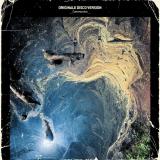
Originale Disco Version - Communion LP 2x12"

STRICTLY LIMITED TO 100 COPIES ARTIST PROJECT After discovering techno at La Concrète, invited by my girlfriend, it was a revelation, and I very quickly felt the urge to contribute in my own way. My intention has been to create tracks infused with positive energy (even if the creative process sometimes leads into slightly darker corners of music). Still, I realized—rather late—the importance of the musical genre known as “techno.” Here is my reflection on it: Nothing is closer to village music (with everything that implies among indigenous peoples, for example—important and respected moments of communion) than techno. On one side, you have basic organic instruments and the voice; on the other, the most advanced technology available. But fundamentally, the difference is only superficial—the essence is the same: a guide, and people who participate intuitively, ultimately finding or discovering their own inner paths… individuation. Techno represents the re-emergence of a kind of initiation rite that had been missing in the West for quite some time—a sort of continuation of Woodstock, more spread out over time but just as powerful from a societal perspective. This release is my contribution to that revival, in the same way a villager might feel free to join trance music with a simple stick that sounds right, or a drum—something intuitive that all our ancestors must have practiced naturally at one point or another. In short, nothing pretentious—just something made with heart

vorbestellen15.05.2026

erscheint voraussichtlich am 15.05.2026

Juni Habel - Evergreen In Your Mind LP

Evergreen In Your Mind, the new and third album from Norwegian singer-songwriter Juni Habel, exists in two worlds at the same time. Songs were recorded in quiet corners of her home, on the piano in the school where she works, and it uses the physical world around her to provide percussion. It also takes place, as she herself attests, within a dream; an imagined place in which her desire for oneness with each other and the world around us is finally realised.

Evergreen In Your Mind was recorded with co-producer Stian Skaaden, it’s Habel’s first album in three-years, following the breakthrough success of 2023’s Carvings LP. Formed of eleven new recordings, the songs here remain delicate, Habel’s voice playing an elegant lead role – but there are fluctuations too.

These small shifts in Habel’s sound result in a notable stride forward. More focus went into the groove of these songs. Playfulness was embraced and, perhaps most importantly, patience played a fundamental role in shaping the album with time and care given to every element of these songs. “We always aim to capture effortlessness - but the way of getting there is anything but effortless,” Habel reveals.

This extra time that was given to the project gave Juni the space to nurture her creativity. She would read and listen to music, hike into the hills, place herself within nature and seek out stillness. Not as a deviation from her work but as a fundamental part of the process. It’s a search for connection, and it’s a recurring theme across Evergreen In Your Mind; the polarity between stillness and passion, also our resistance to these desires, and the things we want to live and experience.

The album’s title-track and fist single feels indicative of this narrative. A gorgeous, delicate folk song, it finds Habel out in the woods, hiding from real life, caught in the space between the natural world and the pull of modernity. “It’s nostalgic. It’s about looking back and realizing things will be different,” Habel says. “Its about visualizing something beautiful in your head that you keep clinging onto.”

The album cover for Evergreen In Your Mind also adds shimmer. A striking photograph of Juni among the mountains, it was taken on a day trip to Rondane, a five-hour drive each way from her home. Habel explains. “It was awe-inspiring to drive all the way up into the high mountains, with its wide plains and intense colours. For an album with music that at times likes to hide itself, I think it fitted nicely with such an epic, grand, and powerful landscape.”

"Fans of Nick Drake, Karen Dalton and Neil Young will find much to enjoy in this musical equivalent of an evening spent alone by the fireside.” The Times

vorbestellen08.05.2026

erscheint voraussichtlich am 08.05.2026

THE TRUE UNDERGROUND SOUND OF ROME - THE TRUE UNDERGROUND SOUND OF ROME

Double 12" release

The Story — From the Streets of Rome to the Male Productions Label
In the early 1990s, Rome lived in a kind of suspended moment. The city was still tied to its historic clubs, yet in the outskirts—inside abandoned warehouses, quarries along the coastline, and the wooded parks north of the capital—something new was beginning to stir. A nocturnal, constantly shifting movement fuelled by a hunger for freedom and a sonic curiosity that reached far beyond the mainstream.

Moving through this ferment was Francesco “Chicco” Furlotti. First an organizer of unconventional parties and underground nights, he soon became one of the driving forces behind Rome’s itinerant rave scene. Furlotti sensed that a wave of change was about to sweep across the city. It wasn’t just about parties: it was the rise of a culture, a new way of thinking about music, community, and belonging.

It was within those nights—later held with official permits, properly built sound systems, and an ever-growing crowd—that Furlotti recognized the existence of a distinctly Roman sound, and the need to capture it, preserve it, and give it tangible form.
So, in 1991, he decided to take a bolder step: to found an independent record label—small, determined, and far removed from the commercial logic that dominated at the time.
That was the birth of Male Productions.

Male was not a label like any other: it was a workshop, a gathering point, a creative hub where DJs, producers, friends, and wanderers converged. Within that environment, an artistic core took shape—Stefano Di Carlo, Leo Young, and Mauro Tannino, along with other collaborators orbiting around Furlotti. From their synergy emerged a project whose very name declared its mission:

The True Underground Sound of Rome.

The collective did not simply aim to release music; it sought to tell a story of Rome through sounds that defied categorization: house, techno, ambient, electronic mysticism, psychedelic visions… a unique blend, instantly recognizable, emotional, and experimental. The sessions unfolded using essential yet razor-sharp gear: Roland drum machines, analogue synthesizers, Akai samplers, stripped-down mixers. Few tools, endless imagination.
The first result of this work was the 12” Secret Doctrine, released in 1991 in an extremely limited run—around 500 promotional copies, according to accounts. The record captured something that until then had floated only in the air of Roman raves: enveloping atmospheres, deep rhythms, melodies built to make the mind travel far beyond the dancefloor. A sound that did not imitate what was happening in Detroit, London, or Berlin, but absorbed those influences and re-sculpted them with a distinctly Roman sensibility.
Yet, precisely because it was independent and detached from commercial circuits, Male’s output remained sparse: few EPs, few copies, irregular distribution. Over time, those records became rare artifacts—almost mythical objects within the Italian electronic scene. The legacy of Male Productions seemed destined to survive only in the memories of those early years, in the stories told after raves, and in the private archives of a handful of collectors.
Many years later, thanks to the almost accidental rediscovery of a few original copies of the first two releases issued by Male Productions, it became possible to undertake a meticulous process of recovery and restoration of the audio etched into those grooves, with the aim of preserving as fully as possible the quality and character of that unrepeatable sound.

We are therefore able today to present — at last in a complete and faithful form — the first two mixes created for Male Productions, now released on a double vinyl that brings back into the present the exact moment when it all began: the nomadic nights of the raves, Furlotti’s vision, the creativity of Di Carlo, Young and Tannino, and the sonic identity of a Rome in the midst of transformation.

This is not merely a reissue.
It is a historical document.
A fragment of a culture that changed the city.
The authentic sound of the Roman underground, finally returned to the world.

lagernd ab04.06.2026


Last In: vor 27 Tagen
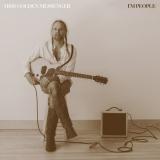
Hiss Golden Messenger - I'm People
  • In The Middle Of It
  • Who You Gonna Run To?
  • Shaky Eyes
  • Mercy Avenue
  • I'm People
  • Seneca (Time Is A Mother, Baby
  • Last Orders
  • Gabriel
  • Heavy World
  • Alright And Then Some
  • Spirit Cat
  • Depends On The River

The brand- new album from Hiss Golden Messenger and the first release with Chrysalis Records. I'm People is a vivid, deeply human album born from a period of rupture, renewal, and vast American wandering. Written across Bolinas, the North Carolina Piedmont, and a Santa Fe motel room, the record traces the artist's search for clarity through landscapes both external and internal. These songs move through heartbreak, aging, fatherhood, desire, disillusionment, and the hard- won hope that remains after the spirit has been scraped bare.

Produced with Josh Kaufman at Dreamland, a decommissioned church outside Woodstock, the album carries the warmth of musicians playing live in a circle, stained- glass light filtering across guitars, drums, and upright bass. Contributions from Bruce Hornsby, Sam Beam, Marcus King, Sara Watkins, Amy Helm, Eric D. Johnson, and members of Dawes enrich a sound world that feels immediate, vulnerable, and fully alive. "I'm People is an intensely human record, and so one that needed to feel immediate, vulnerable, and fully dancing; something you could touch, sing along to, know about, recognize, relate with. I know what the record is to me and I bet it's not so dissimilar from what it's about to you, at least in the broad strokes: The heartbreak and exhilaration, the absolute black comedy of being a person on this razor's edge that is America circa 2025. What other choice do we have than to be hopeful?" - MC Taylor on I'm People. Hiss Golden Messenger is a Grammy nominated artist based in North Carolina, with multiple Album Of The Year and Best Americana Album awards, reaching #2 in the Americana Charts and performances and tours across the world, including the UK and Europe + performances on US TV; Late Night With Seth Myers.

vorbestellen01.05.2026

erscheint voraussichtlich am 01.05.2026

Various - Summer’s End Sampler (3x12")

All Day I Dream bids farewell to another radiant summer with its Summer’s End Sampler, a 12-track collection of deep, melodic, and transportive sounds. Carefully woven together from a mix of rising favorites and emerging talents, the compilation encapsulates the warmth, nostalgia, and new beginnings that arrive with seasonal change.

nicht am Lager

Bestelle jetzt und wir bestellen den Artikel für dich beim Lieferanten.


Last In: vor 4 Tagen
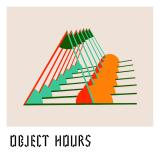
Object Hours - Solved By Walking LP

Leather-jacket krautrock? Indeed. Welcome to the world of Carrboro NC's Object Hours. These generous saviors consist of three Triangle scene lifers who all worship the riff but imagine what happens if the riff fell into the middle of your favorite CAN LP. Yes, it lives up to the hype.

"Solved By Walking" was recorded in the winter of 2025 at Betty's in the Chapel Hill woods, these are mighty rock slabs ready for all seasons. Rock believers have felt the ripples and knew the day was coming. Object Hours is a band that fits right in on stage alongside acts as varied as Kim Gordon and Tropical Fuck Storm, bringing the house down in these and similar moments. These are songs that groove, peel paint, sandblast, inspire unconscious movement, make your head bob - frequently all at the same time. These are the jams inspired by the time that you heard "Fun House" coming out of that dude's car with the windows down in the middle of the summer, the ones inspired by the kids who own 3 copies of "Daydream Nation," the ones who listen to the last 1:30 of Wire's "Too Late" over and over. This is the band that has a timer on stage so they don't keep each song playing for days on end, the band whose Bandcamp bio succinctly summarizes their approach thusly: "We try to keep songs under 25 minutes for your sake." Every word here should be inspiration for you to *want* and *need* to hear this record and every word here is true. Just you wait.

Real heads know and the rest of the heads are getting ready to find out. Get ready for Object Hours' "Solved By Walking".

vorbestellen24.04.2026

erscheint voraussichtlich am 24.04.2026

Various - Tchic Tchic: French Bossa Nova 1963-1974  Colored Edition LP 2x12"
  • A1: Les Masques - Il Faut Tenir (1969)
  • A2: Isabelle Aubret - Casa Forte (1971)
  • A3: Christianne Legrand - Hlm Et Ciné Roman (1972)
  • A4: Jean Constantin - Pas Tant D'chichi Ponpon (1972)
  • A5: Billy Nencioli & Baden Powell - Si Rien Ne Va (1969)
  • B1-: Marpessa Dawn - Le Petit Cuica (1963)
  • B2: Jean-Pierre Sabar - Vai Vai (1974)
  • B3: Sophia Loren - De Jour En Jour (1963)
  • B4: Isabelle - Jusqu’à La Tombée Du Jour (1969)
  • B5: Sylvia Fels - Corto Maltesse (1974)
  • C1: Frank Gérard - Comme Une Samba (1972)
  • C2: Ann Sorel - La Poupée Des Favellas (1971)
  • C3: Charles Level - Un Enfant Café Au Lait (1971)
  • C4: Andrea Parisy - Les Mains Qui Font Du Bien (1970)
  • C5: Audrey Arno - Quand Jean-Paul Rentrera (1969)
  • C6: Aldo Frank - T’as Vu Ce Printemps (1970)
  • D1: Christianne Legrand - Cent Mille Poissons Dans Ton Filet (1972)
  • D2: Clarinha - Lemenja (1970)
  • D3: Hit Parade Des Enfants - Aquarela (1976)
  • D4: Jean-Pierre Lang - Tendresse (1965)
  • D5: Magalie Noël - Une Énorme Samba (1970)
  • D6: Françoise Legrand - La Lune

Ever since the late 1950s bossa-nova revolution, Brazil’s influence on French music has been undeniable. Pierre Barouh, Georges Moustaki and a vast array of lesser known artists, all made the Musica Popular Brasileira (MPB) an axis of promotion at the service of a cool and metaphysical, modern and mixed Brazilian lifestyle. Some were seduced by the poetic languors of the bossa, some were looking for fun, and others just loved the American hybridization of jazz-bossa, jazz-samba.


What is bossa nova? One of its creators, Joao Gilberto said: "Its style, cadence, everything is samba. At the very start, we didn't call it bossa nova, we sang a little samba made up of a single note - Samba de uma nota so .... The discussion around the origins of bossa nova is therefore useless”. It is nevertheless useful to remember that these magnificent Brazilian songs, which the guitarist describes as samba, were shifted and balanced around improbable chords. "I like things that lean, the in-betweens that limp with grace," said Pierre Barrouh, quoting Jean Cocteau.


With emotion, arrangements for violin and supple guitar licks, bossa nova rapidly changed. A transformation that can be heard in the Tchic, tchic, French Bossa Nova 1963-1974 compilation, the result of a cultural reappropriation, which traveled through the United States and supplemented itself in France.

A musical revolution that has remained significant, bossa nova was born in Rio. From 1956 to 1961, Brazil lived through its golden years. In five years, the country had invented its modernist style. Elected president in 1956, Juscelino Kubitschek de Oliveira, an elegant man with a broad forehead, brandished a promising slogan: "Fifty years of progress in five years". He quickly got to work. Not worried about increasing debt, he launched the project for a new federal capital, Brasilia, designed by the communist architect Oscar Niemeyer. Volkswagen opened state-of-the-art factories and created the “fusquinha”, the Beetle. In Rio, the Vespa made its first appearance. The Arpoador Surf Club crew run into the “girl” from Ipanema, Helô Pinheiro - the tanned garota ("chick"), between a flower and mermaid, who at 17 walked by the Veloso bar, where the fiery author and composer, Tom Jobim and Vinicius de Moraes, were getting drunk on whiskey. From then on, bossa symbolized cool.

In 1958, Joao Gilberto recorded Chega de Saudade, which the directors of Philips denied, calling it "music for fagots". The marketing director, who believed in it, secretly pressed 3000 78-inch vinyls and distributed them at schools around Rio, creating a tidal wave.

American jazzmen then took over. In particular, trumpeter Dizzy Gillespie and guitarist Charlie Byrd. In November 1962, the Brazilian Ministry of Foreign Affairs funded a "Bossa-Nova" concert at Carnegie Hall in New York, inviting the genre’s pioneers. Unprepared, the show soon turned to disaster. But the troupe was invited to the White House by Jackie Kennedy. The first lady loved "the new beat" and in particular Maria Ninguem, a song by Carlos Lyra, later covered by Brigitte Bardot.

In Brazil, the 1964 military coup quickly ended this euphoria. The destructive atmosphere that ensued pushed many Brazilian musicians to leave, if not to exile. Thus, Tom Jobim, Sergio Mendes and Joao Gilberto arrived to the United States. In New York, Joao Gilberto met saxophonist Stan Getz. At the time, he was married to the Bahianese Astrud Weinert Gilberto, who had a German father. She had never sung before, but she knew how to speak English. Getz therefore asked her to replace her husband on The Girl From Ipanema. The Getz/Gilberto record with Tom Jobim on piano, was released in March 1964. Phil Ramone, the "pope of pop" was in charge of sound.

Bossa nova arrived in Paris through the classic “guitar-voice” channel (Pierre Barouh, Baden Powell, Moustaki…) But France loved jazz and Paris had already welcomed its American contributors. All these good people were to pass through Saint-Germain-des-Prés. The cabaret l'Escale became the Mecca of Latin American sound where one could find Pierre Barrouh and his friends, such as the Camara Trio, samba-jazz aces, whose only record was published by the Saravah label. With a band strangely called Les Masques (a band that included Nicole Croisille and Pierre Vassiliu, among others), the Camara Trio recorded an interesting Brazilian Sound, including the track Il faut tenir which is present on this tasty compilation of rarities.

Other enlightened musicians can also be found on the compilation, such as Jean-Pierre Sabar (songwriter for Hardy, Auffray, Leforestier ...) and the French pop rock organist Balthazar. In 1975, Sabar recorded Aurinkoinen Musiikkimatka on a Finnish label, which featured the crazy Vai, Vai, included on this record. We are now following the footsteps of Brazilian electronic musicians such as Sergio Mendes, Eumir Deodato or Marcos Valle who created funk and disco sounds on their keyboards and synthesizers. A style that influenced Véronique Sanson when she wrote Jusqu’à la Tombée de la nuit in 1969 for Isabelle de Funès, the niece of Louis and a great friend of Michel Berger - Sanson did end up singing this track on her 1992 Sans Regret record.


The pinnacle of exoticism and travel, Sylvia Fels’ Corto Maltese includes bongos, sea mist and ocean sounds. The title was taken from Jacky Chalard’s concept album written in 1974, Je suis vivant, mais j’ai peur (I am alive, but I am scared), based on Gilbert Deflez’s science fiction novel.


However, bossa nova extended the scope of popularity. "In the 1970s, I was a fan of Sergio Mendes, Getz / Gilberto. I fell in love with this music that I knew because I had been an orchestral singer, " explained Isabelle Aubret, who in 1971 delivered a composite record of covers by the very funky Jorge Ben, Orfeu Negro, Tom Jobim, Vinicius de Morais and Jean Ferrat. "I recorded this album for Meys Records in Paris, far from Brazil, with wonderful musicians, François Raubert, Roland Vincent, Alain Goraguer...". The latter wrote the arrangements for Casa Forte, a very percussive title borrowed from Edu Lobo, one of the initiators of the bossa who spent time in California. "Jazz and bossa came together and produced very rhythmic music. I love singing, it allows me to dream, to have fun, to feel a high on stage, and these songs brought me joy, made me swing, my singing felt like a dance.”


The world tours of French singers and their desire for the tropics, often brought them to Rio with its hills, forests, caipirinhas and tanned bodies. There are surprises though, like this Iemenja (Iemenja is the goddess of the sea in the Afro-Brazilian candomblé religion). Not unlike the composer and musician Jean-Pierre Lang, based in Sao Paulo, Claire Chevalier taught Brazil to Brazil. In 1970, the singer and painter published a 45-inch vinyl, Mon mari et mes amants (My husband and my lovers), under the improbable pseudonym of Clarinha (little Claire). She was then living in Rio, with her husband, Joël Leibovitz, who founded a band called Azimuth, and who owned a record label specialized in "sambas enredos" songs for samba school parades.


For its B side, she asked Pierre Perret to come up with lyrics for a song composed by Carlos Imperial: "Oh goddess of the sea, o goddess Iemenja, I bring a white rose to adorn your long hair ..." . "Perret came to see us, and we had fun, remembers Joël Leibovitz. We wrote Lemenja for fun, we recorded it at the Havaí studio, behind the Central do Brasil the central station. Erlon Chaves, the arranger who worked with Elis Regina, joined us" adding his share of Afro-Brazilian percussions and funky brass to the mix.

There is a common misunderstanding in Franco-Brazilian history: that bossa, admittedly hedonistic, is perceived as funny, even though the poets who wrote the texts are often philosophizing on the human condition. Its French interpreters pull it towards a carnival inspired universe, far removed from its fundamental essence. Thus, Jean Constantin covered the famous Samba da minha terra, an ode to the art of samba written by the classic Bahian composer Dorival Caymmi, renaming it with the enticing title of Pas tant de tchi tchi pompon: "On your pier there is no tchi tchi / when you arch your back, you know everything is alright ”(lyrics by Gérard Calvi). This expedited bossa aims for the absurd, but retains a certain elegance.

Indeed, Jean Constantin was not an idiot, the rather large man had a huge mustache and liked fantasy, (Les pantoufles à papa, Le pacha, inspired by cha-cha-cha-cha, salsa and jazz) but he was also the lyricist of Mon manège à moi interpreted by Edith Piaf, the composer of Mon Truc en plume by Zizi Jeanmaire and the soundtrack of François Truffaut’s 400 Blows. Le Poulpe, published in 1970, from which this bossa is extract, was arranged by Jean-Claude Vannier, an accomplice of Serge Gainsbourg’s Melody Nelson. In short: "There is enough of samba / By looking at the parasol / Because my poor cabeza / Is going to die in the sun".

Even the American actress Marpessa Down, who was at the heart of the bossa nova revolution with her role as Euridyce in Marcel Camus’ film Orfeu Negro, winner of the 1959 Cannes Palme d'or, fed the clichée with Je voudrais parler au petit cuica - "Tell me how you manage to always make people want to dance / It's true, I must admit that I cannot resist your magic" - in consequence, once can hear the cuica, a little drum inherited from the Bantu.


But bossa nova had many angles. Societal, of course, pushing actresses who were symbols of women's liberation like Brigitte Bardot, Jeanne Moreau, or Sophia Loren to engage in the exercise of accelerated bossa. In February of 1963, Sophia Loren made a record in French in Rome, Je ne t'aime plus, featuring the song De jour en jour, a bossa written by two Italians, Armando Trovajoli and Tino Fornai, which was released a little later by Barclay. Bossa accompanied the 1960s, a decade of moral liberation. Ann Sorel, who interpreted La Poupée des favellas, caused a sensation with L’amour à plusieurs, a provocative song written by Frédéric Bottom and Jean-Claude Vannier. As for the actress Andrea Parisy, she displayed her bourgeois cheekiness in Marcel Carné's Les Tricheurs before interpreting Les mains qui font du bien. And Magalie Noël, the friend of Boris Vian, who sung Johnny fais-moi mal, was hired to sing Une énorme Samba, composed by Alain Goraguer (arranger to Gainsbourg, Bobby Lapointe and Jean Ferrat) with lyrics by Frédéric Botton.

But in the end, of what wood is bossa nova made of? The answer is given by Christianne Legrand, daughter of Raymond the conductor, and sister to Michel the composer: "With me, with jà" - jà means "immediately" in Portuguese. In 1972, the singer, an expert in vocal jazz and a member of the Double Six, published Le Brésil de Christianne Legrand. Two songs included on the Tchic Tchic compilation that demonstrate how bossa, jazz, funk, rock, etc. work like a swiss army knife: the music is used to denounce broken systems, or miracles, HLM et ciné roman, Cent mille poissons dans ton filet, two songs from the O Cafona soundtrack, a successful telenovela broadcast, at the time in black and white, on TV Globo. The first was adapted in French by the fighter and friend of the Legrand tribe, Agnès Varda. The second is content with a play on words, jostling them into a summer fun.


Véronique Mortaigne

vorbestellen17.04.2026

erscheint voraussichtlich am 17.04.2026

TEEN SUICIDE - NUDE DESCENDING STAIRCASE, HEADLESS
  • Anhedonia
  • Idiot
  • Suffering (Mike's Way)
  • Spiders
  • The Knives
  • Everything In My Life Is Perfect
  • Candy / Squeeze
  • Living Death
  • Keeping Her Keys
  • Hypnotic Poison
  • Kindnesses
  • Not Born To Run
  • Come And See The Clown
auch erhältlich

Cassette


Distant Clouds Grey Vinyl. Das siebte Album von Teen Suicide ist das erste richtige Album der Band seit ,honeybee table at the butterfly feast", das durch Songs wie ,you were my star" wieder Aufmerksamkeit bekam, der auf TikTok richtig abging. Teen Suicide wurde 2010 als Nebenprojekt von Sam Ray gegründet und hat sich nach und nach weiterentwickelt, während es ein leidenschaftliches Projekt blieb. Seit 2017 gehört Kitty Ray zur Band, und 2022 wurde die Band mit dem Beitritt des Schlagzeugers Niko Wood offiziell zu einem Vollzeitprojekt. Gemeinsam begann das Trio mit dem Schreiben und Aufnehmen ihres kommenden Albums ,Nude descending staircase headless". Das Album stellt eine Reihe von Premieren für die Band dar: ihre erste Platte, die in einem professionellen Studio aufgenommen wurde, ihre erste Veröffentlichung, die als Vollzeitband geschrieben und aufgenommen wurde, und ihre erste seit 2012, auf der durchgehend ein festes Schlagzeuger zu hören ist. Es markiert auch den Beginn eines vollständig gemeinsamen Schreibprozesses zwischen Sam und Kitty Ray, die 2016 geheiratet haben und von Grund auf an der gesamten Platte mitgearbeitet haben, wobei sie sich sowohl das Songwriting als auch den Gesang aufteilten. Von Sam Ray als ,bisheriger Höhepunkt der Karriere" der Band beschrieben, erkundet Nude descending staircase headless das endlose Streben nach Erfüllung durch Kreativität und verknüpft Motive von Tod und Wiedergeburt mit Themen wie der Freude trotz großer Verluste. Das Album sieht das Selbst nicht als isoliertes Objekt, sondern als einen einzelnen Strang in einem größeren, miteinander verbundenen Netz. Zu den herausragenden Tracks gehören ,Idiot", das sich an direktem, wörtlichem Storytelling orientiert, und ,Spiders", bei dem Kitty Ray den Gesang übernimmt und eine düstere feministische Unterströmung in die übergeordnete Erzählung des Albums einbringt. Musikalisch lässt sich die Band von Künstlern wie Nirvana, Radiohead, Shellac und Helmet inspirieren und greift die Intensität und Experimentierfreudigkeit des Heavy Rock der späten 80er und 90er Jahre auf. Ihre jüngsten Tourneen mit DELTA SLEEP unterstreichen einmal mehr, dass Teen Suicide zunehmend Einflüsse aus Math Rock und Metal in ihren sich weiterentwickelnden Sound einfließen lässt.

vorbestellen17.04.2026

erscheint voraussichtlich am 17.04.2026

TEEN SUICIDE - NUDE DESCENDING STAIRCASE, HEADLESS (TAPE)

Distant Clouds Grey Vinyl. Das siebte Album von Teen Suicide ist das erste richtige Album der Band seit ,honeybee table at the butterfly feast", das durch Songs wie ,you were my star" wieder Aufmerksamkeit bekam, der auf TikTok richtig abging. Teen Suicide wurde 2010 als Nebenprojekt von Sam Ray gegründet und hat sich nach und nach weiterentwickelt, während es ein leidenschaftliches Projekt blieb. Seit 2017 gehört Kitty Ray zur Band, und 2022 wurde die Band mit dem Beitritt des Schlagzeugers Niko Wood offiziell zu einem Vollzeitprojekt. Gemeinsam begann das Trio mit dem Schreiben und Aufnehmen ihres kommenden Albums ,Nude descending staircase headless". Das Album stellt eine Reihe von Premieren für die Band dar: ihre erste Platte, die in einem professionellen Studio aufgenommen wurde, ihre erste Veröffentlichung, die als Vollzeitband geschrieben und aufgenommen wurde, und ihre erste seit 2012, auf der durchgehend ein festes Schlagzeuger zu hören ist. Es markiert auch den Beginn eines vollständig gemeinsamen Schreibprozesses zwischen Sam und Kitty Ray, die 2016 geheiratet haben und von Grund auf an der gesamten Platte mitgearbeitet haben, wobei sie sich sowohl das Songwriting als auch den Gesang aufteilten. Von Sam Ray als ,bisheriger Höhepunkt der Karriere" der Band beschrieben, erkundet Nude descending staircase headless das endlose Streben nach Erfüllung durch Kreativität und verknüpft Motive von Tod und Wiedergeburt mit Themen wie der Freude trotz großer Verluste. Das Album sieht das Selbst nicht als isoliertes Objekt, sondern als einen einzelnen Strang in einem größeren, miteinander verbundenen Netz. Zu den herausragenden Tracks gehören ,Idiot", das sich an direktem, wörtlichem Storytelling orientiert, und ,Spiders", bei dem Kitty Ray den Gesang übernimmt und eine düstere feministische Unterströmung in die übergeordnete Erzählung des Albums einbringt. Musikalisch lässt sich die Band von Künstlern wie Nirvana, Radiohead, Shellac und Helmet inspirieren und greift die Intensität und Experimentierfreudigkeit des Heavy Rock der späten 80er und 90er Jahre auf. Ihre jüngsten Tourneen mit DELTA SLEEP unterstreichen einmal mehr, dass Teen Suicide zunehmend Einflüsse aus Math Rock und Metal in ihren sich weiterentwickelnden Sound einfließen lässt.

vorbestellen17.04.2026

erscheint voraussichtlich am 17.04.2026

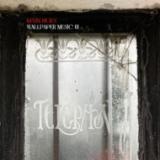
Kevin Figes - Wallpaper Music III LP
  • Fair Weather
  • The Big Flood
  • Modern Times
  • Into The Woods
  • February
  • I The King
  • Dorian Grays' Bathroom Cabinet
  • Same Time Next Week
  • Strangers On A Train

The album presents a distinctive artistic statement built around song, texture and collective exploration. Opening tracks such as 'Fair Weather' and 'The Big Flood' draw on the oblique lyricism of Henry Cow and the surreal songcraft of Robert Wyatt, with Beraha's voice at the centre of a sound world shaped by analogue radio collage and drifting, delayed saxophone lines. Punk-inflected rhythms emerge on 'Modern Times', while the reflective 'Into the Woods' blends lyrical song with collective improvisation, highlighting the ensemble's dynamic range. Across the album, tightly composed material sits alongside free improvisation, cinematic writing and storytelling. Tracks including 'February' and 'I the King' explore contemporary jazz, humour and surreal narrative, while groove- led pieces such as 'Dorian Gray's Bathroom Cabinet' and Morricone- inspired 'Same Time Next Week' showcase rhythmic drive and playfulness. The album closes with 'Strangers on a Train', where scripted text gives way to improvised spoken dialogue over a relentless pulse, uniting the record's themes of collaboration, narrative and spontaneity. Reflecting on the recording process, Kevin Figes describes Wallpaper Music III as "a joy to make", marking a return to Rockfield Studios and a collaborative experience with musicians whose sensitivity, imagination and improvisational skill shaped the music at every stage

vorbestellen10.04.2026

erscheint voraussichtlich am 10.04.2026

Iterum Nata - Heartwood LP

Iterum Nata

Heartwood LP

12inchLPNVP229C
NORDVIS
03.04.2026

From the quiet desolation of earlier Iterum Nata now rises something heavier – more aggressive and defiant. With “Heartwood”, Finnish multi-instrumentalist Jesse Heikkinen (The Abbey, Henget, ex-Hexvessel) reshapes his progressive rock and neo-folk foundations through the crucible of metal, layering doom-laden riffs and blackened textures upon the project’s introspective core.

To give this vision its pulse, Heikkinen enlisted Ukrainian drummer Yurii Ciel (Stoned Jesus, Cailleach Calling, ex-White Ward), whose expressive performance transforms “Heartwood” into the most visceral Iterum Nata release to date. Together they carve a sound both expansive and immediate: progressive journeys steeped in folk atmosphere, driven by the weight and force of metal.

The record also features rare guest appearances: King Dude lends his commanding voice to “Forgiveness Undone”, Alexander Kuoppala (ex-Children of Bodom) unleashes a searing solo in “I Have Been Sacrificed”, and Sami Hynninen (Reverend Bizarre) delivers an unearthly vocal in “Only Ash and Bones Remain”.

“Heartwood” is an album hewn from fury yet tempered by revelation. Where past Iterum Nata releases drew from solitude and sorrow, here the wellspring is anger – but anger that points beyond itself, toward beauty, hope, and transcendence. It is a meditation on the spiritual war within the collective unconscious, channelled through music that flows between Anathema and My Dying Bride, Opeth and In the Woods…, Pink Floyd and Green Carnation.

vorbestellen03.04.2026

erscheint voraussichtlich am 03.04.2026

Billy Woods x Mickey Diamond x Sam Seed - Peter and the Wolf Version 1 (7")
auch erhältlich

Version 2


A fantasy retelling of Sergei Prokofiev’s classic children’s tale ‘Peter and the Wolf’ in the form of hip hop. The restlessly poetic award winning billy woods as Peter. The gritty, charismatic gravitas of Detroit's Mickey Diamond as the Wolf. It’s an escape. The story, rhymes, and whimsical production from North London's Sam Seed will transport you away.

vorbestellen27.03.2026

erscheint voraussichtlich am 27.03.2026

Billy Woods x Mickey Diamond x Sam Seed - Peter and the Wolf Version 2 (7")
auch erhältlich

Version 1


A fantasy retelling of Sergei Prokofiev’s classic children’s tale ‘Peter and the Wolf’ in the form of hip hop. The restlessly poetic award winning billy woods as Peter. The gritty, charismatic gravitas of Detroit's Mickey Diamond as the Wolf. It’s an escape. The story, rhymes, and whimsical production from North London's Sam Seed will transport you away.

vorbestellen27.03.2026

erscheint voraussichtlich am 27.03.2026

Iivana Mišukka & Arja Kastinen - Iivana Mišukka (Tape)
  • 01: Maanitus &Amp; Tšiižik
  • 02: Markka
  • 03: Melkutus
  • 04: Letška
  • 05: Kuuen Parin Hoirola
  • 06: Brišatka
  • 07: Tšiižik
  • 08: Kirkonkellot
  • 09: Kirkonkellot Korkea
  • 10: Hoirola, 3 Parin
  • 11: Lippa
  • 12: Kyngäkiža
  • 13: Ristakondra
  • 14: Vanha Polkka
  • 15: Viistoista
  • 16: Vanha Valssi
  • 17: Kiberä
  • 18: Maanitus Kuokan Kanteleella
  • 19: Tuuti Lasta Nukkumahe
auch erhältlich

Vinyl


Death Is Not The End present a further volume of Arja Kastinen's eerie amalgamations of 110 year old wax cylinders with her own meticulously transcribed takes, this time focussing in on Armas Otto Väisänen's field recordings of kantele player Iivana Mišukka (b. 1861 d.1919).

"Ivana Mišukka (1861–1919) was one of the Karelian kantele players recorded by the folk music researcher Armas Otto Väisänen on wax cylinders in 1916 and 1917. In the early 20th century, the remote areas of Border Karelia were undergoing the final phase of a transformation in musical culture, with the ancient runo song tradition giving way to newer forms of music. This transition is reflected in Mišukka's repertoire and choice of instrument. The ancient small kantele, hollowed out of a single piece of wood, was already rare at the turn of the century. Mišukka's kantele was a new type of instrument with 26 strings, constructed of several parts, but he played it using the traditional plucking technique. Like other Border Karelian kantele players, his repertoire consisted of music rooted in runosong culture, as well as newer dances and songs from the east and west. Most of the recorded material falls into the latter category.

Ivan Bogdanov Mišukka was born out of wedlock in Suursara village, Suistamo, on 1 May 1861. He began playing the kantele at the age of five or six, quickly mastering the instrument. In adulthood, he was considered one of the area's best master players. Mišukka was landless for most of his life and lived in different parts of the Suistamo parish. His first wife, Tekla Markintytär, died in 1897 at the age of 40, and his second wife, Jevdokia Filipintytär Jeminen, died in 1907 at the age of 50. Seven children were born from the first marriage, two of whom died young. The third wife, Maria Ignatintytär Gurnan (Kuurnanen), was a well-known master of lamentations. Together with Maria, Iivana Mišukka worked as a tenant farmer in the village of Suursara. Mišukka suffered from rheumatism, which prevented him from participating in physical work like Maria. This was apparently partly the reason why Iivana Mišukka went to earn extra money by playing the kantele on gig trips. He often had other traditional artists from Suistamo as his travelling companions, such as the runosingers Konstantin Kuokka and Iivana Onoila. Iivana Mišukka died in Leppäsyrjä village, Suistamo, on 18 May 1919 at the age of 58, and his kantele was donated to Teppana Jänis.

Mišukka only used 14 of the 26 strings on his kantele, playing the same tunes either a fourth higher or lower. He tuned his kantele to the major scale using fifths, except for a low seventh scale degree on the upper strings, but not below the fundamental. Since he did not use the seventh note of the scale on the upper strings at all, he could use the major scale both lower and a fourth higher with this tuning. According to Mišukka, the sound of higher, or 'finer', strings is 'more beautiful', while that of lower ones is 'greater'. Among runosingers, the size of the thirds varied, ranging from major to minor to neutral. A similar phenomenon can be observed in kantele tunings, where the third, sixth and seventh scale degrees vary in a comparable way.

During a meeting, Väisänen suggested that Mišukka play the smaller kantele belonging to Konstantin Kuokka. The idea was to bring it closer to the horn to improve the recording quality. However, the kantele was completely out of tune, and now Mišukka tuned it to the Lydian scale (track 18).

Using the old plucking technique, Mišukka placed his right middle finger on the fundamental tone, his right index finger on the second scale degree, his left middle finger on the third scale degree and his left index finger on the fourth scale degree, and his right thumb on the fifth. The thumb also played the notes above the fifth note of the scale. As Mišukka remarked to Väisänen: 'Peigaloll' tuloo enemb ruadoa' (the thumb has to do more work). However, he did not use the seventh note of the scale on the upper strings at all. Below the fundamental note, he played the seventh and sixth notes of the scale with his right middle finger of and the fifth note of the scale with his right ring finger. This fifth scale degree below the fundamental is almost always used as a drone. Sometimes, when the melody required it, Mišukka, like other players, also varied the fingering. He would also occasionally strike the same string with the side of his fingernail after plucking it.

The wax cylinder recordings of Karelian kantele players are kept in the archives of the Finnish Literature Society in Helsinki, Finland. Copies were made of them onto reel-to-reel tapes in both the 1960s and 1980s. The 1960s copies are mono and the 1980s copies are stereo. However, not all kantele recordings from these decades have survived.

The sound of the kantele is difficult to hear in wax cylinder recordings due to its low volume, and it occasionally becomes completely obscured by noise. During the copying process, the cylinder sometimes rotates unevenly, resulting in breaks or jumps in the music. Additionally, the rotation speed of the cylinder in the copies does not correspond to the performance speed of the original music, which alters the pitch. However, since Väisänen's precise notes are available in the archive, it is possible to deduce the melodies, their speed, and the tuning level of the kantele in the recordings. Of the copies of the original recordings from the 1960s and 1980s, I have selected the one that best met the requirements of this publication and adjusted the speed of the recording to align with Väisänen's notes. To enhance the listening experience, I have replayed the songs, which now partly overlap the old recordings on this release."

— Arja Kastinen

vorbestellen27.03.2026

erscheint voraussichtlich am 27.03.2026

Iivana Mišukka & Arja Kastinen - Iivana Mišukka LP

Death Is Not The End present a further volume of Arja Kastinen's eerie amalgamations of 110 year old wax cylinders with her own meticulously transcribed takes, this time focussing in on Armas Otto Väisänen's field recordings of kantele player Iivana Mišukka (b. 1861 d.1919).

"Ivana Mišukka (1861–1919) was one of the Karelian kantele players recorded by the folk music researcher Armas Otto Väisänen on wax cylinders in 1916 and 1917. In the early 20th century, the remote areas of Border Karelia were undergoing the final phase of a transformation in musical culture, with the ancient runo song tradition giving way to newer forms of music. This transition is reflected in Mišukka's repertoire and choice of instrument. The ancient small kantele, hollowed out of a single piece of wood, was already rare at the turn of the century. Mišukka's kantele was a new type of instrument with 26 strings, constructed of several parts, but he played it using the traditional plucking technique. Like other Border Karelian kantele players, his repertoire consisted of music rooted in runosong culture, as well as newer dances and songs from the east and west. Most of the recorded material falls into the latter category.

Ivan Bogdanov Mišukka was born out of wedlock in Suursara village, Suistamo, on 1 May 1861. He began playing the kantele at the age of five or six, quickly mastering the instrument. In adulthood, he was considered one of the area's best master players. Mišukka was landless for most of his life and lived in different parts of the Suistamo parish. His first wife, Tekla Markintytär, died in 1897 at the age of 40, and his second wife, Jevdokia Filipintytär Jeminen, died in 1907 at the age of 50. Seven children were born from the first marriage, two of whom died young. The third wife, Maria Ignatintytär Gurnan (Kuurnanen), was a well-known master of lamentations. Together with Maria, Iivana Mišukka worked as a tenant farmer in the village of Suursara. Mišukka suffered from rheumatism, which prevented him from participating in physical work like Maria. This was apparently partly the reason why Iivana Mišukka went to earn extra money by playing the kantele on gig trips. He often had other traditional artists from Suistamo as his travelling companions, such as the runosingers Konstantin Kuokka and Iivana Onoila. Iivana Mišukka died in Leppäsyrjä village, Suistamo, on 18 May 1919 at the age of 58, and his kantele was donated to Teppana Jänis.

Mišukka only used 14 of the 26 strings on his kantele, playing the same tunes either a fourth higher or lower. He tuned his kantele to the major scale using fifths, except for a low seventh scale degree on the upper strings, but not below the fundamental. Since he did not use the seventh note of the scale on the upper strings at all, he could use the major scale both lower and a fourth higher with this tuning. According to Mišukka, the sound of higher, or 'finer', strings is 'more beautiful', while that of lower ones is 'greater'. Among runosingers, the size of the thirds varied, ranging from major to minor to neutral. A similar phenomenon can be observed in kantele tunings, where the third, sixth and seventh scale degrees vary in a comparable way.

During a meeting, Väisänen suggested that Mišukka play the smaller kantele belonging to Konstantin Kuokka. The idea was to bring it closer to the horn to improve the recording quality. However, the kantele was completely out of tune, and now Mišukka tuned it to the Lydian scale (track 18).

Using the old plucking technique, Mišukka placed his right middle finger on the fundamental tone, his right index finger on the second scale degree, his left middle finger on the third scale degree and his left index finger on the fourth scale degree, and his right thumb on the fifth. The thumb also played the notes above the fifth note of the scale. As Mišukka remarked to Väisänen: 'Peigaloll' tuloo enemb ruadoa' (the thumb has to do more work). However, he did not use the seventh note of the scale on the upper strings at all. Below the fundamental note, he played the seventh and sixth notes of the scale with his right middle finger of and the fifth note of the scale with his right ring finger. This fifth scale degree below the fundamental is almost always used as a drone. Sometimes, when the melody required it, Mišukka, like other players, also varied the fingering. He would also occasionally strike the same string with the side of his fingernail after plucking it.

The wax cylinder recordings of Karelian kantele players are kept in the archives of the Finnish Literature Society in Helsinki, Finland. Copies were made of them onto reel-to-reel tapes in both the 1960s and 1980s. The 1960s copies are mono and the 1980s copies are stereo. However, not all kantele recordings from these decades have survived.

The sound of the kantele is difficult to hear in wax cylinder recordings due to its low volume, and it occasionally becomes completely obscured by noise. During the copying process, the cylinder sometimes rotates unevenly, resulting in breaks or jumps in the music. Additionally, the rotation speed of the cylinder in the copies does not correspond to the performance speed of the original music, which alters the pitch. However, since Väisänen's precise notes are available in the archive, it is possible to deduce the melodies, their speed, and the tuning level of the kantele in the recordings. Of the copies of the original recordings from the 1960s and 1980s, I have selected the one that best met the requirements of this publication and adjusted the speed of the recording to align with Väisänen's notes. To enhance the listening experience, I have replayed the songs, which now partly overlap the old recordings on this release."

— Arja Kastinen

vorbestellen27.03.2026

erscheint voraussichtlich am 27.03.2026

Serpente - Visita do Fogo LP
  • A1: Ghidrah
  • A2: Partes Nada
  • A3: Nos Deixei
  • B1: Choros (Edit)
  • B2: Choros (Club)
  • B3: Sigilo (Megamix)

Bruno Silva, operating here under his restless Serpente alias, returns with Visita do Fogo — a sharp, stripped-back and incendiary counterpoint to the drifting, dream-jazz abstractions of Dias da Aranha. If that record floated like smoke, this one crackles and snaps like dry wood.

Visita do Fogo finds Silva stepping back into the heat of his beat-driven origins, embracing a raw, forward-leaning approach that feels closer to his live detonation than a studio construction. The record is built on stark materials — drum fragments, percussive jolts, scorched-earth loops — all manipulated with his unmistakable “screw” instincts: micro-cuts, sudden pivots, rhythmic false floors and the sense that the track might turn itself inside-out at any moment.
Rather than smoothing edges or leaning into atmospherics, Serpente doubles down on urgency. Each piece moves through the record with a chop-and-go physicality, a kind of ritual propulsion that never settles into comfort. Silva’s rhythmic language remains entirely his own: crooked but precise, feral yet meticulous, rooted in dance structures but constantly mutating away from them.

Visita do Fogo is less a sequel to Dias da Aranha than a flare shot into the same night sky — brighter, hotter, and designed to leave afterimages. It captures an artist burning forward, shedding everything unnecessary, trusting the flame.

vorbestellen27.03.2026

erscheint voraussichtlich am 27.03.2026

Blue Lake - The Animal LP

Blue Lake

The Animal LP

12inchTU014LE
Tonal Union
27.03.2026

Yellow Vinyl

Blue Lake reveals his most ambitious album yet, which finds its visionary creator Jason Dungan harnessing the collective alchemy of his band, with ten spirited tracks that resonate with a powerful directness, evoking an ecological connection to the wider world.

The solo project (Blue Lake), now on its fifth album, found its name and inspiration via Don Cherry's 1974 live album, sparking a creative epiphany in Dungan, who set off on a path into his own untapped sonic world, guided by what he cited as the emotional potential found within non-lyrical composition. With a newly inspired ethos aimed toward creating direct and simple instrumental music imbued with a deep sense of feeling, Jason began combining an array of musical elements that gave rise to his highly revered album 'Sun Arcs' (2023), with its "ornate, zither-led lattices" (Pitchfork, Best New Music). Conceived in the blissful isolation of a Swedish cabin set in the woods, this was music that soundtracked spring in full bloom. Then, in contrast to the solitary approach of 'Sun Arcs', the highly lauded mini-album 'Weft' (2025) began to set the tone for a more band-oriented approach to delivering the Blue Lake sound. Jason had by this time experienced a special collective energy with his band during a swathe of live performances, which he then sought to harness and distill on 'The Animal', leading him to take the project into a traditional recording studio (The Village) and its limitless potential along with his gifted cohorts.

'The Animal' at its core vividly celebrates human collaboration and is deeply rooted in a sense of community and non-hierarchical connectivity. The group's creative alchemy transcends outwards and beyond the musicians performing together, to summon an inclusive, existential and ecological connection to the wider world and its inhabited spaces. The album contemplates the idea of the human as an animal as Dungan explains: "I'm quite fascinated in thinking about humans more as part of the animal environment and not as something that's so separated into a "human" realm, or sitting on top of a hierarchical pyramid. So the Animal is also me, or us - that we are just living, existing, in the same way as a piece of moss or a sparrow or a cow.

'The Animal' is a form of musical metamorphosis, still acoustic, yet more amplified, elevating it to new dimensions. The Blue Lake project takes on a new lease of life to encompass collaboration with Jason Dungan bound in a universal connectivity, resulting in his most ambitious album to date. A harmonious rejoicing that cements his reputation as a transformative presence in contemporary music.

vorbestellen27.03.2026

erscheint voraussichtlich am 27.03.2026

Thomas Peter - changing bodies LP
  • 1: ) Drift
  • 2: ) Niebla
  • 3: ) Bending Myself
  • 4: ) Something That Is There, Something Similar
  • 5: ) Changing Bodies

Thomas Peter debuts on Hallow Ground with »changing bodies,« an album inspired by the resonance and reaction of objects with and to sound. The Swiss composer and sound artist has worked with sounds generated with various materials, field recordings, and an array of analogue and digital synthesizers to create five ever-shifting pieces full of twists and turns in which even silence plays a significant role. Peter composed and recorded the album over the course of four years in an inherently physical process, led by both his intuition and his perception—what you hear on »changing bodies« is an artist intently listening to the material world around him.

Peter laid the foundation for »changing bodies« by making field recordings wherever he went, whether in closed rooms, cities, or rural environments, while also recording organic-sounding material with different synthesizers as well as working with objects made of wood, stone, or metal. »I viewed all these sounds as a kind of language that I was trying to understand,« he says. »I paid close attention to differences between sounds in motion, rhythmic patterns, and dense textures.« He further describes this as an inherently corporeal endeavour, quite literally becoming all ears and internalising the different sounds.

This process of concretion led to one of abstraction when Peter translated the source material and its psycho-physical reverberations into new musical structures. He applied repetition, densification, and recombination to unlock their true potential. Across its five tracks, the album sets literally unheard-of sounds into motion, creating intricate dynamics without ever overwhelming its listeners. »changing bodies« was born out of listening intently and physically.
It is recommended to listen to it in the exact same way.

vorbestellen27.03.2026

erscheint voraussichtlich am 27.03.2026

Thee Oh Sees - Warm Smile LP

Thee Oh Sees

Warm Smile LP

12inchITR186LPX
In The Red
20.03.2026
  • A1: Warm Slime
  • A2: I Was Denied
  • A3: Everything Went Black
  • B1: Castiatic Tackle
  • B2: Flash Bats
  • B3: Mega-Feast
  • B4: Mt Work

The ridiculously prolific Bay Area band Thee Oh Sees are back with another full-length long-player. Warm Slime is guaranteed to please fans of their whacked-out garage / psych / punk jams. Recorded by Sacramento sultan of sound Chris Woodhouse, Warm Slime carries on in the same tradition as the group's previous In The Red release, Help, showcasing their more electrified and rocking side, in comparison to other recent home-recorded releases. The centerpiece is undoubtedly the mind-bending title track, which clocks in at nearly 14 minutes and takes up the entirety of the album's first side. It's a psychedelic epic of "Inna Gadda Da Vida" proportions! John Dwyer's guitar playing is at its quadraspazzed best here, and the vocal interplay with Brigid Dawson gives it a B-52s-at-their-least-cheesy-crossed-with-the- Troggs vibe. The results are stunning. "Thee Oh Sees incorporate the oft-referenced Nuggets stuff in a way that feels reverential. With grinding guitars and bah-bah-bah vocals, but with the punk and new-wave elements also at play, they don't feel trite or plagiarized. This is like meat and potatoes prepared by a master chef-totally familiar but utterly delicious." -Pitchfork Recorded by Chris Woodhouse (Mayyors' guitarist and producer for The A-Frames, Hospitals, Coachwhips, Erase Errata, etc.) This is one of the best sonic blasts you will trash your speakers with this year....Raw, and real! Opening track is 13 minutes long, yes, we'll take it...

vorbestellen20.03.2026

erscheint voraussichtlich am 20.03.2026

Sam Seed - The Unaligned vol 1

On this 8 track EP every song has UK and USA lyricists side by side as equals. It includes older icons of Hip-Hop, established talent from the current underground rap scene, and young emerging rappers who haven't been given a platform until now. This project is a collaboration between producer Sam Seed, a dozen rappers, 4 record labels,

the 05:21 music platform and a DJ night. No filler, all killer.


Introducing Sam Seed

A rising name on the underground rap scene. North London producer Sam Seed has a list of top tier production credits to his name with artists including Vinnie Paz, Billy woods,

Mickey Diamond, Conway the Machine. The Unaligned Vol.1 is his eagerly awaited debut EP.

vorbestellen20.03.2026

erscheint voraussichtlich am 20.03.2026

CARLOS NIÑO & FRIENDS - BUBBLE BATHS FOR GIANTS

Opaque Pink Version

Bubble Bath for Giants is an ode, a Tribute, a reverence for Oceans, for the Mighty Magnificent Power of Fairies, to the energy that we are all everything, whole, well, but in different sized and shaped vessels at times . . . It is a Celebration of Gentleness and of incredible Force, and Charge . . . These, I sea as the same. The Yang Springs from the Yin and together they ever reflect, dance, and express themselves . . .

Many Bells, Bowls, Ceramics, Chimes, Cymbals, Drums (Bass, Sakara, Surdo, Tom, and many more,) Gongs (Chao, Cup, Indonesian, Sun, and Symphonic,) Keyboards (Metal, Synthesizer, and Wooden,) Percussion, Plant Leaf Bundles and Fronds (Bamboo, Eucalyptus, and Palm,) Ratlles, Shakers, Voice, Whistles, and Sound Design by Carlos Niño.

Featuring:
Luis ​Pérez Ixoneztli, Bernard Xolotl, ​Aaron ​Shaw, Surya ​Botofasina, Nate Mercereau, Laraaji, Darius ​Jones, Sheila Govindarajan, ​Idris Ackamoor, Deantoni ​Parks, André 3000, ​Marshall Allen, Sam ​Gendel, Sibusile ​Xaba, Mia ​Doi Todd, ​Anisia Uzeyman, Saul Williams, Jojo Abot, Jowee ​Omicil, Aztlan ​Unearthed

///

Cover Photo by Carlos, from in the Maui Waters
Art Direction, Design and Original Art by Nep Sidhu
Layout Production by Jonny O'Hara

Recorded by Carlos Niño in Topanga, California, and by some of the Artists named above, from their Homes . . .

Mastered by David Allen

///

vorbestellen20.03.2026

erscheint voraussichtlich am 20.03.2026

THE GITS - FRENCHING THE BULLY LP

THE GITS

FRENCHING THE BULLY LP

12inchSP1648WH
Sub Pop
27.02.2026

Mia Zapata was the greatest rock singer of her time. She may have likely been the greatest blues singer in punk rock history, the woman who married the 78 and the '78. Tragedy did not make this true. Mia Zapata made this true, and the ferocious, spring-loaded shrapnel frame that was built around her by Andy Kessler (guitar: metronomic and furious), Matt Dresdner (bass: fluid, punching, beat-addicted and melodic), and Steve Moriarty (drums: martial and explosive) - who, with Mia, combined to form The Gits - made it true. The Gits were formed at Antioch College in Yellow Springs, Ohio in mid-1986, grabbing and swapping pieces of art, thrash, noise, punk rock, classic rock, and all the sorts of magical silly and bookish jingle bells that an old-school liberal arts education handed you; for the next few years they worked on turning it all into something tough, sensitive, both brutal and kind. Andy, Matt, Mia, and Steve moved to Seattle in middish 1989, landing in a house on Capitol Hill where they (and fellow travelers) wood-shedded and rehearsed for the next few years. The Gits put out three EPs in 1990 and '91 before signing with C/Z Records and releasing their first full-length album, Frenching the Bully. Seattle quickly claimed the quartet as their own and embraced the Gits blend of ferocious fangs and soft heart, the slug/slap of the guitars, and the gorgeous, soft underbelly of the poetic emotions. These qualities not only fit in with the doe-eyed/sharp-clawed grunge ethos but earned the Gits the respect of their peers, including Nirvana, who tapped them to open a major local show in 1990. Then other stuff happened, and their frantic, confessional barbed-heart snowball began rolling up hill very, very fast; the Gits "quickly" (hah! After half a decade learning to implode and explode hearts and stomping their boots on manifold beer-softened, Marlboro-weeded wood stages!) inspired rapture, awe, and the levitation that happened when peak emotion meets peak grindage in front of amps spitting out something that sounded like the mad marriage of Bolan swagger and Dischord tension_ all fronted by a genuinely incomparable woman who held her heart in her mouth and shared it, in all its celebration and fear, without hesitation. The Gits were an angry, inflamed slinky fully in tune with and tuned by the Bessie Patti Smith of her time, truly the only singer who could summon Joplin, Poly Styrene, Sam Cooke, Iggy Pop and Ian MacKaye all in the same goddamn song. In 1993, less than four weeks after accepting an offer from Atlantic Records, Mia died. I leave it at that, because this is not about death; it's about an extraordinary life. I do not say, "You should have been there," I say, "We are lucky so many of us were, and I am so glad we have this extraordinary evidence of the power and gifts of Mia and the Gits that you now can hold in your hands." And I note that Frenching the Bully, this extraordinary testament to the soul, shock, fury and feeling of the Gits, has been long out of print on vinyl and CD, and this new edition - remastered by legendary Seattle engineer Jack Endino - joyfully rectifies that. -Tim Sommer

vorbestellen27.02.2026

erscheint voraussichtlich am 27.02.2026

NUKE WATCH - PEPPER’S GHOST LP

Don’t believe your ears - Pepper’s Ghost is the latest offering from NYC project Nuke Watch.

Whatever you think it is - it is not. By the same token it really can be whatever you want - electronica, jazz, improv, noise, new age, ambient - it’s none and all of these. Like the primitive visual illusion it’s named for - Pepper’s Ghost is a projection of a thing, it’s not the thing.

The Nuke Watch method - like that of Aaron Anderson and Chris Hontos’ other primary project Beat Detectives - leans almost entirely on live improvisation, with some advanced studio alchemy in post. Where the Beat Detectives palette draws from club music tropes, Nuke Watch blends recognizable tones (hand drums, woodwinds, keys, fretless bass) with sounds of providence unknown, the line between organic and synthesized instrumentation unintelligibly smudged. What is real and what is projection? It’s hard to say. What do our ears tell us? This is where we arrive at Pepper’s Ghost.

Warped as the sounds may be, the playing belies a crew of deeply expressive, learned improvisers who have their craft honed. Their friendship and psychic connection enhances the ritualistic rhythms, mutant modular synthesis, nimble keyboard runs, absurdist sampling and unidentified skronk. They’re wonderfully complemented across several tracks on this set by Cole Pulice’s levitational, sublime saxophone.

As unhinged as this might all appear, once the mind and music meet on the same wavelength this is profoundly moving, energizing and uplifting Alive Music that recalibrates the sense of what music can be.

Nuke Watch is Aaron Anderson and Chris Hontos, with an array of friendly guests. They’ve released records as Nuke Watch on The Trilogy Tapes, Commend and Moon Glyph. As Beat Detectives they’ve released records on Not Not Fun, 100% Silk and their own studio imprint NYPD Records.

Pepper's Ghost was written and produced by Aaron Anderson and Chris Hontos. Additional instrumentation on these recordings by Cole Police, Leonard King, Eric Timothy Carlson, Chris Farstad and William Statler. It was mixed by Chris Hontos and mastered by Jack Callahan. Painting on the cover is “The Unity Of Being” (2020), by Ry Fyan. Design and layout by Aaron Anderson.

RIYL - Musical illusions, puzzles and magic tricks, downtempo, music of the spheres, good journey, Eddie Harris, Ketron, "world building", orange sunshine, suspension of disbelief.

nicht am Lager

Bestelle jetzt und wir bestellen den Artikel für dich beim Lieferanten.


Last In: vor 3 Monaten
FABIANO DO NASCIMENTO & VITTOR SANTOS ORCHESTRA - VILA

Hidden away amidst the bustle of Rio de Janeiro’s Catete neighbourhood is a small alleyway behind a cast iron gate. At its end is Bairro Saavedra, the courtyard surrounded by Neo-colonial houses where Brazilian guitar virtuoso Fabiano do Nascimento spent much of his childhood. Built in 1928, this secluded neighbourhood with its wooden shutters, tiled floors and tranquil benches, provides the inspiration for the title of Do Nascimento’s new album VILA, a collaborative project with a sixteen piece orchestra led by trombonist and arranger Vittor Santos.

Recorded between Rio de Janeiro and Los Angeles, VILA is grand, tender, warm, playful and nostalgic. On this stunningly ambitious work, the delicate compositions led by Nascimento's guitar, which sits central in the mix, are surrounded by Santos’ breathtaking orchestral arrangements which swirl in all directions: complimenting, questioning, responding; in constant conversation.

Like the eclecticism of the architecture Do Nascimento grew up surrounded by, his music straddles many worlds at once. He is known as a Brazilian acoustic guitar master and as such has collaborated with Arthur Verocai, Airto Moreira and Itibere Zwarg. But equally at home in Los Angeles's jazz and experimental music scenes, Do Nascimento is also known for his work with artists like Sam Gendel and Carlos Nino.

Vittor Santos is an arranger and Trombonist who has worked extensively with many of the greats of Brazilian music, including João Donato, Marcos Valle, Toninho Horta, and Elza Soares.

=====================================
Credits:

Fabiano do Nascimento – 6, 7 and soprano guitars.
All orchestral arrangements and production by Vitor Santos.
Recorded at Electro-Sound studio, Los Angeles and Estúdio Fibra, Rio de Janeiro
Engineered by Jason Hiller and Garbiel Lucchini
Mastered by Mike Bozzi

Oboe – Francisco Gonçalves
Contrabaixo – Rodrigo Villa
Drums – Márcio Bahia
Violino - Ricardo Amado
Violino – Thiago Teixeira
Violin – Daniel Albuquerque
Violin – Márcio Sanches
Viola – Ivan Zandonade
Viola – Dhyan Toffolo
Cello - Hugo Pilger
Cello – Janaína Salles
Double Bass – Rômulo Gomes
Clarinet – José Batista
French Horn – Philip Doyle
Trombones - Vittor Santos
Violin – Daniel Guedes

nicht am Lager

Bestelle jetzt und wir bestellen den Artikel für dich beim Lieferanten.


Last In: vor 38 Tagen
Alex Rex - The National Trust LP

Alex Rex, the project of acclaimed musician and former Trembling Bells bandleader Alex Neilson, is set to release his fourth and final studio album, The National Trust, on March 28th. Written in the wake of the sudden death of his younger brother, Alastair, the album is a poignant reflection on loss, love, and renewal, deeply rooted in the landscape of Carbeth—a cabin community in the Scottish countryside that Alastair called home. For Neilson, the cabin became both a physical and emotional project, a symbol of restoration and reconnection.

"For the first four years after Alastair died, his cabin lay empty and exposed to the remorseless Scottish weather. It came to look like a rotten tooth in a beautiful mouth. Cladding was dropping off its veneer, the ashen baubles of dead wasps nests clung to the rafters, all his possessions were just as he'd left them but eaten by mice, moths and time. Ashtrays still carried the crushed centimetres of his old tab ends. The cabins are so joyfully animated by their host's specific personality and this one looked like a haunted house. Guilt, unrealised hopes and encroaching nature yoked together in a wandering sadness. Combined with the fact that I didn't know the right way round to hold a hammer made the project of its restoration seem hopeless.”

Neilson, however, gradually began chipping away at the task, determined to transform the cabin into something he hoped would resemble “a National Trust site occupied by a psychopath,” with a little help from some friends, including Lavinia Blackwall and Marco Rea.

“They poured love into the cabin and helped restore Alastair's original vision. The project also helped restore my relationship with Lavinia which had fractured after Trembling Bells broke up in 2017. Alongside long-term Rex lieutenant Rory Haye, we applied the same intensity of dedication that we did in renovating the cabin, into creating The National Trust.”

As with Neilson’s previous albums, the recording process was intentionally unpolished, with songs presented in the studio with no rehearsals and captured in just a few takes. This raw, immediate approach amplifies the emotional weight of the album, which Neilson describes as being at a “personal apex of sour self-reflection, mock misanthropy, and self-exposure.” Longtime collaborators Lavinia Blackwall, Marco Rea, and Rory Haye return, alongside guest musicians like Jill O’Sullivan (Jill Lorean) and Trembling Bells guitarist Mike Hastings, to bring Neilson’s vision to life. The result is a deeply personal and multifaceted work, blending acid wit with haunting introspection.

The songs on The National Trust traverse a wide emotional and thematic range. The title track opens the album with a sharp and confessional edge, exploring love, loathing, and cultural critique with Neilson’s signature wit. “Boss Morris” pays tribute to the all-female Morris dancing troupe that reinvents British folk with vibrant energy, while “Two Kinds of Song” turns self-referential humour into an avalanche of remorse, culminating in the unforgettable chorus: “I’ve got two kinds of song. Which one will it be; one where I hate myself or one where you hate me?” Elsewhere, tracks like “Psychic Rome” draw from the decadence and hysteria of ancient Rome, while “The Coward in the Tower” breaks new ground as the only song Neilson has composed on an instrument before recording.

Throughout the album, Neilson’s lyricism is as vivid as ever, transforming personal tragedy into poignant and often darkly humorous art. Yet, there is a sense of finality to this work. "Songwriting has encouraged me to see the whole world as a resource. The things people say and throw away can be chiselled and polished and plopped into a lyric. It’s the same with building the cabin- scouring the edges of society for pallets, discarded wood, ornaments for the garden. But while song writing brings to life orphaned parts of my personality, the cabin is a synthesis of all my interests – nurturing my emotional health instead of exploiting it. With that in mind, I think this will be my last album as Alex Rex.”

With The National Trust, Neilson closes a significant chapter of his career, blending masterful musicianship with deeply personal storytelling. Known for his collaborations with artists such as Bonnie "Prince" Billy, Shirley Collins, and Current 93, as well as his decade-long tenure leading the psych-folk outfit Trembling Bells, Neilson has long been celebrated for his eclectic and uncompromising vision. This final album serves as a fitting culmination of his journey as Alex Rex, capturing the essence of his artistry while offering a profound exploration of loss, renewal, and the enduring power of love.

vorbestellen20.02.2026

erscheint voraussichtlich am 20.02.2026

Artikel pro Seite:
N/ABPM
Vinyl