Buscar:salsa con salsa

Estilos
Todo
The Mars Volta - Noctourniquet

The Mars Volta

Noctourniquet

2x12inch4250795604969
CLOUDS HILL
30.01.2026
  • A1: The Whip Hand
  • A2: Aegis
  • A3: Dyslexicon
  • B1: Empty Vessels Make The Loudest Sound
  • B2: The Malkin Jewel
  • B3: Lapochka
  • C1: In Absentia
  • C2: Imago
  • C3: Molochwalker
  • C4: Trinkets Pale Of Moon
  • D1: Vedamalady
  • D2: Noctourniquet
  • D3: Zed And Two Naughts

Noctourniquet And then everything went black, at least for a while, at least for The Mars Volta. In the months and years following their fifth full-length, Octahedron, Omar kept on at his usual fearsome creative pace. In fact, he ramped up his output considerably, starting up his own Rodriguez Lopez Productions label and releasing a slew of solo albums. It was a practice he’d begun shortly after De-Loused’s release, with his solo debut A Manual Dexterity: Soundtrack Volume One, but as the decade reached its close, Omar grew to rely upon his solo recordings as an outlet for his prolific creativity, these albums often exploring musical pastures far beyond even The Mars Volta’s wide-ranging parameters. Before choosing to release music under his own name, Omar would always play it to Cedric first, to see if the frontman thought it had potential to become Mars Volta music. Shortly after Octahedron’s completion, Cedric flagged one batch of tracks Omar had cut with Deantoni Parks, a brilliant drummer and composer who’d briefly occupied the Mars Volta drumstool in-between Jon Theodore and Thomas Pridgen’s tenures, and whose volcanic creativity and unique, unpredictable approach to rhythm and composition had quickly made him one of Omar’s favourite artistic foils.

As with the music that made up Octahedron, the new tracks Cedric had optioned for The Mars Volta often veered far from the riotous, Grand Guignol visions of their earlier releases. It possessed the punchy, song-based focus of Octahedron, though this was a considerably darker, more menacing strain of pop, with synthesisers figuring heavily in the productions. Cedric took the tracks in 2009 and set about writing songs to the music. But no more new Mars Volta music would be heard until 2012. The years that passed in-between were nonetheless momentous, and busy, witnessing an unexpected reunion of the members of At The Drive-In, and Cedric joining his own side-project, Anywhere. But there wasn’t any sign of life within the Mars Volta until Omar, Cedric and their bandmates took to the road for a series of live shows in the spring of 2011, billed as The Omar Rodriguez-Lopez Group, debuting the songs that would become Noctourniquet. The album followed the next year, and it remains one of The Mars Volta’s finest, its electronic textures staking out unfamiliar but fertile new ground.

An unsettling, subtly turbulent listen, Noctourniquet found Cedric sketching out a story about “some sort of device that stops the darkness from bleeding”, drawing influence variously from the nursery rhyme Solomon Grundy, the Greek myth of Hyacinthus and the song Birth, School, Work, Death by British underground rockers The Godfathers. It was an album of dystopian futurism, signalled by the paranoid cyber-rock of opener The Whip Hand and its unnerving chorus, “That’s when I disconnect from you”. But it was also an album of inspired, unexpected moves and uncanny invention, like how Dyslexicon seemed to eerily evoke Blondie’s Rapture, before rushing headlong into its bruising chorus, tempos shifting restlessly throughout like quaking earth beneath the listener’s feet, or how Aegis put a brave new spin on The Mars Volta’s trademark rewiring of salsa’s overdriven passions, or how Cedric had never sounded as scary as he did on The Malkin Jewel’s mutant burlesque shuffle. Tracks like Molochwalker were sleek and concise in a way The Mars Volta had never really attempted before – which was all part of Omar’s plan.

“It had all been guitar, guitar, guitar, overdubs, everything fighting for space in the same frequency,” he explains. “So for Noctourniquet, it was all about subtracting elements, of sticking to how I made demos.” Deantoni’s presence helped revivify the group, playing against cliché and expectation, and taking each song in unexpected directions. “I’d beatbox a rhythm for him to play, to go with my guitar part, and he’d come back with three or four alternate options. It was so great.” Similarly, Cedric had never sung better than on Noctourniquet, staking out a fearsome spectrum from the chilling Tom Waitsian growl of The Malkin Jewel to the keening, beautiful vocalisation on Vedamalady, rising to match some of Omar’s most deft, most immediately effective and melodic songs yet. Indeed, Noctourniquet is the sound of a band discovering new ways to do familiar things, renewing their commitment to their mission, finding fresh inspiration a decade in, and shaking off any complacency that might have come with ten years of acclaim and success.

Reservar30.01.2026

debe ser publicado en 30.01.2026

ARSENIO RODRIGUEZ - COMO SE GOZA EN EL BARRIO (2LP)
  • Dame Un Cachito Pa' Huelé
  • Dundunbanza
  • Como Se Goza En El Barrio
  • Esas No
  • La Gente Del Bronx
  • Mambo En La Cueva
  • Que Negra P'acelerá
  • Blanca Paloma
  • Mami Me Gustó
  • El Dolorcito De Mi China
  • Hay Fuego En El 23
  • Besame Aquí
  • La Fonda De Bienvenido
  • No Quiero
  • Juégame Limpio
  • Pimienta
  • Cambia El Paso
  • Que Me Manda La Niña
  • Pobre Chinito
  • Baila Simón
  • El Reloj De Pastora
  • Sabor De Pachanga
  • Hachero Pa' Un Palo
  • Errante Y Bohemio
  • El Divorcio
  • Papa Upa
  • Lo Que Le Pasó A Luisita
  • No He Visto A Caridad
  • Suéltala
  • Adiós Carmelina
  • Emilio Dolores

The Godfather Of Salsa - HAVANNA & NYC RECORDINGS 1946-1962! Grosso! again presents this compilation from "El Ciego Maravilloso", the authentic godfather of salsa. His early Havana & NYC recordings. The tracks have been remastered and restored and some are available on vinyl after many years. Format and selection designed for DJs, collectors and latin lovers. Ignacio de Loyola Rodríguez Scull aka Arsenio Rodríguez (30 August, 1911, Güira de Macurijes, Matanzas, Cuba - 30 December, 1970, Los Angeles, CA, USA) was a Cuban musician, bandleader and prolific composer who developed the son montuno and other Afro-Cuban-based rhythms. Today he is seen as one of the most important figures in Latin music, with his influence reaching beyond the Spanish speaking world to also include African popular music of the 20th Century, though when he died he was not widely known by the public for his contributions and influence. He is also recognized (along with Israel 'Cachao' López and Dámaso Pérez Prado) as one of the creators of mambo, what Rodríguez himself often referred to as "ritmo diablo". Some of his best-known, and most-often covered recordings from the 1950s and early 1960s are included here, among them "Dame un cachito pa' huele'," "Dundunbanza," "El reloj de pastora," "Cambia El Paso," and "Hay Fuego En El 23."

Reservar13.01.2026

debe ser publicado en 13.01.2026

VARIOUS - ROOTS OF SALSA VOL. 4 CLASSIC LATIN TUNES BECAME ...
  • Meta Y Guaguancó
  • Si Los Rumberos Me Llaman
  • Cuando Suenan Los Tambores
  • Galletana (Aka Calletana And Cayetana)
  • Dulce Con Dulce
  • El Sabio
  • Caramelo A Kilo
  • Mulence
  • Yiri-Y Ri-Bom
  • Sancocho E'güesito
  • Invitación Guaguancó
  • Tumba Tumbador
  • Macho Cimarrón
  • Rompe Saragüey

Classic Latin Tunes Became Sals Hits! Pablo Yglesias -aka DJ Bongohead- compiles Grosso Recordings an amazing serie with classics tunes from Caribbean music that became great successes of "Salsa". Some tracks have been remastered and restored, others are presented on vinyl again after many many years. "This is the four volume in our series on the Roots of Salsa...The main criterion was to pick tracks that sounded adequate for today's DJs to play at a gig or were sufficiently interesting (or enough of a surprise to fans of the later version) to merit inclusion. The other measuring stick was that they needed to come from the old-school, before the more modern era (from 1962 on) and all of its recording innovations and marketing strategies...for now, listen to these dozen gems and then go back to their more familiar cousins from recent times and compare and contrast, and we're sure you'll be enlightened and entertained." Liner notes by Pablo "Bongohead" Yglesias. Format and selection designed for DJs, collectors and general public.

Reservar26.12.2025

debe ser publicado en 26.12.2025

MANTECA - OYE

MANTECA

OYE

12inchGR38
GROSSO RECORDINGS
07.11.2025
  • Que Pasa
  • Oye
  • Groovy Samba
  • Descarga China
  • Bomba Chévere
  • Para Pello
  • The Jody Grind
  • Como Fue
  • Descarga China (Groove Version)

Manteca’s 2014 album, first time on vinyl. Manteca, the London Latin jazz/salsa funk combo, are back with a first-time vinyl release of their brilliant digital album “Oye” from 2014. “Oye” is a collection of heavy-duty Latin music that reaches well beyond the standard salsa or Cuban dance-band style, appealing to anyone and everyone, from mambo dancers to B-boys, jazz brothers to soul sisters! Led by Colombian singer Martha Acosta and bassist Javier Fioramonti, who have played with everyone from Roberto Pla and Candela, to Alex Wilson’s groups and Salsa Celtica, as well as backing Latin legends such as Joe Bataan, Jack Costanzo, Henry Fiol and Azuquita, this band really cooks! “Que Pasa” is smoking Latin funk, this will get your head nodding and foot tapping for sure.“Oye”, a lovely mid-tempo Afrobeat/Latin jazz fusion number with punching brass and super-funky kit playing. There are three cover versions on the album: Horace Silver’s “The Jody Grind”, a 1960s Blue Note Records soul jazz classic. Manteca does it justice, taking the original and turning it into a heavy Mongo Santamaria style funky Latin soul belter. Sergio Mendes’s “Groovy Samba” is also given the 1960s Mongo “Watermelon Man” style Latin soul jazz treatment. Very hip arrangement, and some fantastic brass soloing in there too. The last one is a brave choice. It’s the timeless bolero standard “Como Fue”, which the band plays beautifully. “Para Pello” (“For Pello”), a conga-style big percussive beat that evolved from Afro-Cuban street carnivals. Secondly, “Bomba Chevere”, a blend of Puerto Rican bomba and Colombian cumbia. The big Afro-Cuban track of the album is “Descarga China”, which has two different mixes. One is a descarga funk mix with some heavyweight kit playing and smoking trumpet soloing, while the other is a more straight-ahead Latin jam with Javier’s upright bass playing underpinning the whole number in a very Cachao way. Big shouts to the whole band, which features some of the best musicians from the London Latin music scene of the last three decades. These cats are as good as you’ll get in Latin music from anywhere across the world.This London Latin music gem has been crying out for a vinyl release for over a decade. At last, it's here. Slap it on the turntable, drop the needle on track one, turn the volume up, press play and be ready to dance. Standing still is NOT an option! DJ Lubi (One Jazz / Totally Wired Radio)

Reservar07.11.2025

debe ser publicado en 07.11.2025

CHUITO (EL DE BAYAMóN) - EL DECANO DE LOS CANTORES VOL.4
  • Refran Tradicional
  • El Efecto Del Licor
  • A Comer Merengue
  • Ejemplo Boricua
  • Con Que Corto Mi Caña
  • Tres Amores
  • Llevame En Tu Pico
  • Me Quede Con Hambre
  • Tiempos Que Se Fueron
  • Quedate Con Tu Dinero
  • Tu Ausencia
  • La Belleza De Mi Prima

This is a reissue of the original 1963 album El Decano De Los Cantores 4. Chuíto el de Bayamón (Jesús Sánchez Erazo) was a legendary Puerto Rican troubadour and one of the earliest jíbaro singers to appear on the radio, also known as "el decano de los cantores" (the dean of the singers). Known for his witty décimas and lively improvisation, he helped popularize traditional Puerto Rican music. His work influenced generations, including salsa greats like Héctor Lavoe. In the 1940s, he became the lead-singer for cuatro player and composer Ladislao "Ladí" Martínez's Conjunto Típico Ladí, created in New York City. With Ladí, he recorded "Un jíbaro en Nueva York," a controversia with Ernestina Reyes "La Calandria." It was actually Ladí who baptized him as "Chuíto el de Bayamón". From 1949 to 1977 Chuíto collaborated with Abelardo Díaz Alfaro, the famous Puerto Rican author, in the radio program "La vida de Teyo Gracia y su mundo" aired in WIPR. In addition, Chuíto participated in the films "La trulla" (1951), "Preciosa" (1965), and "El otro camino" (1959). Throughout his career Chuíto recorded more than 40 LPs and performed in New York, Boston, Chicago, New Jersey, Hawai'i, Spain, Cuba and other Latin American cities. His repertoire is characterized by its witticism and sense of humor, and sophisticated musical arrangements. Along with Flor Morales Ramos "Ramito", Odilio González and Daniel Santos, he had a huge influence in the singing style of Puerto Rican salsa star Héctor Lavoe. In 1975 and 1976 he was recognized with the "Agüeybaná Gold Album" award. This is the forth edition of Ansonias Chuito reissue series.

Reservar07.11.2025

debe ser publicado en 07.11.2025

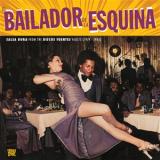
VARIOUS - EL BAILADOR DE LA ESQUINA
  • Super Combo Los Famosos - El Bailador De La Esquina
  • Sexteto Manaure - Bajo El Trupillo Guajiro
  • La Protesta De Colombia - El Campesino
  • Sonora Guantanamera - Sal Y Agua
  • Orquesta Salsa Panamericana - El Fantasma Salsero
  • La Integracin - Hecho Y Derecho
  • Galileo Y Su Banda - No Me Conviene Tu Amor
  • The Latin Brothers - Llorars
  • Piper Pimienta Y Su Orquesta - El Sufrido
  • Fruko Y Sus Tesos - Soy Tu Dueño

This curated collection highlights hard-to-find salsa 45s from the Discos Fuentes vaults-deep cuts that have long flown under the radar but still light up dance floors today. These tracks, once pressed in small numbers, feature top tier musicianship, fiery brass, unforgettable grooves, and lyrical gems that reflect the rich diversity of Colombia's musical landscape. Among the featured artists are: Super Combo "Los Famosos" with their irresistible barrio anthem 'El Bailador de la esquina', capturing the spirit of Cali's street life, Sexteto Manaure, delivering a poignant son that blends regional pride with poetic nostalgia, La Protesta de Colombia, a revolutionary Barranquilla outfit that gave a young Joe Arroyo his early spotlight and channeled the rebellious pulse of the times. This compilation also includes a range of studio experiments and covers-where artists like Piper Pimienta, Galileo y Su Banda, and La Integración reimagined beloved hits, from boleros to vallenatos, through a distinctly Colombian salsa lens. These obscure gems, long scattered across dusty crates and forgotten jukeboxes, now find new life. They speak not just to the past, but to a timeless rhythm that still moves dancers and dreamers alike.

Reservar24.10.2025

debe ser publicado en 24.10.2025

Kenny Dope - Que Se Sepa Pt.1 & 2
 
2

"Que Se Sepa Pt. 1 & 2" by Kenny Dope Featuring Daniel Rojo
Released on Kay-Dee Records, "Que Se Sepa Pt. 1 & 2" is a vibrant, rhythm-driven collaboration between the legendary Kenny Dope and talented vocalist Daniel Rojo. This two-part single captures the essence of Latin breakbeats, infused with the unmistakable flair of Roberto Roena’s cover song influence, creating an energetic fusion of tropical percussion and funky beats.

Kenny Dope, known for his work with Masters at Work and his extensive influence on the house and hip-hop scenes, produces a dynamic track that combines smooth rhythms with infectious hooks. The sound is an irresistible blend of classic Latin grooves and modern, dancefloor-friendly beats, perfect for both the old-school salsa lover and the contemporary club crowd.

The release is an homage to Roena's legacy, infused with breakbeats and explosive percussive elements that pay tribute to the genre's rich history. The energy and rhythms of "Que Se Sepa Pt. 1 & 2" are destined to bring the heat to any playlist, with Daniel Rojo’s vocal contributions adding the finishing touch to this unforgettable Latin-influenced masterpiece.

This release marks yet another impressive addition to Kay-Dee Records, known for curating tracks that bridge the gap between classic sounds and modern production, celebrating the vibrance of Latin music while keeping it fresh and exciting for today’s audience.

No en stock

Haga su pedido ahora y le encargaremos el artículo en nuestro proveedor.


Ültimo hace: 6 Meses
Various - In-Correcto 15-25 LP

In-Correcto 15–25 marks the first vinyl compilation by Bogotá’s independent label InCorrecto, created in collaboration with Austrian imprint discos elgozo. Celebrating ten years of sonic exploration and creative resistance from the Global South, this special edition brings together a vibrant constellation of artists that define the label’s sound: La Muchacha, Ana María Vahos, Felipe Orjuela, Mau Gatiyo, Conjunto Media Luna, Briela Ojeda, Zarigüeya, Buha 2030, and many more. Between mutant cumbia, Latin American folk, introspective electronics, and borderless sonic experiments, 15–25 is both a party and a statement: a manifesto of the in-correct as an artistic and collective force.

Since 2015, In-Correcto has grown from a cultural magazine into one of Latin America’s most vital independent hubs, operating as a record label, publishing house, and creative collective. With more than 160 releases ranging from punk and ambient to trip-hop and experimental cumbia, the label has supported a generation of artists whose work is as socially engaged as it is sonically daring. Through compilations, anniversary concerts, and political projects, In-Correcto has solidified its reputation as a catalyst for collaboration, solidarity, and cultural cross-pollination in Bogotá and beyond. Based in Vienna with roots on Colombia’s Caribbean coast, discos elgozo shares this vision. Founded in 2024, the label works with Colombian artists and their diaspora, releasing music that fuses ancestral knowledge, queer-feminist expression, sonic experimentation, and joy as a political force—as a way to resist cultural erasure, reactivate traditions, and recover collective vitality. Its catalog spans salsa brava, bullerengue, psychedelic cumbia, and experimental jazz, with a strong focus on vinyl as an act of listening, memory, and resistance.

Carefully pressed, In-Correcto 15–25 is more than a record: it is a bridge between Bogotá’s underground and a global network of listeners. A sonic archive and an invitation to dance, it reaffirms that joy, experimentation, and community remain powerful tools to imagine the world otherwise.

No en stock

Haga su pedido ahora y le encargaremos el artículo en nuestro proveedor.


Ültimo hace: 7 Meses
Various - Dolores: Salsa & Guaracha From 70's French West Indies

In Guadeloupe, many people think that jazz and ka music are like a ring and a finger. To some extent, the same could be said about so called Latin music and the music played in the French West Indies.

Both aesthetics were born in the Caribbean and bear so many connections that they can easily be considered cousins. In constant dialogue, there are lots of examples of their fruitful alliance and have been for a while. The English country dance that used to be practiced in European lounges came to be called kadrille in Martinique and contradanza in Cuba. They both featured additional percussion instruments inherited from the transatlantic deportation. Drawing from shared feelings about the same traumatized identity – later to be creolized – it would be hard not to assume that they were meant to inspire each other. The golden age of the orchestras that graced the Pigalle nights during the interwar period further proves the point. As soon as the 1930s, Havana-born Don Barreto naturally mixed danzón and biguine music in a combo based at Melody's Bar. In the following decade, Félix Valvert, a conductor who was born and raised in Basse-Terre in Guadelupe, also worked wonders in Montparnasse with La Coupole, which was an orchestra made up of eclectic musicians. Afro- Caribbean performers of various origins were often hired on rhythm and brass sections in jazz bands, which used to enliven the typical French balls of the capital. In the 1930s and onwards, Rico’s Creole Band was one of them.


Martinican violinist-clarinettist Ernest Léardée, who would become the king of biguine music as well as the main figure of French Uncle Ben's TV commercials (a dark stigma of post-colonial stereotypes), had musicians from the whole Caribbean sphere play at his Bal Blomet – and they all enchanted "ces Zazous-là" (according the words of Léardée's biguine-calypso piece). In les Antilles (French for French West Indies), music history started to speed up in the 1950s, when trade expanded and radio stations grew bigger. The Guadelupean and Martiniquais youth tuned in their old galena radio sets to South American and Caribbean music. As for the women traders, les pacotilleuses, they bought and sold goods across different islands (the "passing of items through various hands" was thought to be most pleasurable) and brought back countless sounds in their luggage. Such was the case of Madame Balthazar, who once returned from Puerto Rico with the first 45rpm and 33rpm to ever enter Martinique.

Out of this adventure was created the famous Martinican label La Maison des Merengues, a music business she opened and undertook with her husband and which proved to be a major landmark. At the end of the 1950s, in Puerto Rico, Marius Cultier competed in the Piano International Contest playing a version of Monk's Round 'Midnight. He won the first prize and this distinction foreshadowed everything that was to come. Cultier, the heretic Monk of jazz, was quickly praised for writing superb melodies, always tinged with a twist that conferred a unique sound to his music. It didn't take long for the gifted self-taught musician to get to play with Los Cubanos, making a name for himself thanks to his impressive maestria on merengues.

The rest is history. Besides, in the late 1950s, Frantz Charles-Denis, born into the upper middle class in Saint-Pierre and better known by his first name Francisco, went back home after working at La Cabane Cubaine – a club located rue Fontaine where he had caught the Latin fever. Francisco's music was therefore heavily marked by his Cuban cousins' influence, which gave the combos he led a specific style and also led to renewal. Things were swinging hard in La Savane, located in the main square in Fort-de-France. He set up the Shango club close by and tested out the biguine lélé there, a new music formula spiced up with Latin rhythms. Soon afterwards, fate had him fly to Puerto Rico and Venezuela.

As for percussionist Henri Guédon (percussions were only a part of his many talents), he was born in Fort-de-France in May 22nd 1944, the day marking the celebration of the abolition of slavery. As an old man, he could remember that in " his father's Teppaz, a lot of hectic 6/8 music was constantly playing...". In the opening lines of his Lettre à Dizzy, a small illustrated collection of writings published by Del Arco, he highlighted the huge impact that cubop had on him as a teenage boy, around 1960. He eventually turned out to be the lider maximo in La Contesta, a big band steeped in Latin jazz. He was also the one who originated the word zouk to describe music which brought the sound of the New York barrio to Paris. It was the culmination of a journey that started in Sainte-Marie: "a mythical place for bélé, the equivalent of Cuban guaguancó". In the early 1960s, the tertiary economy developed to the detriment of agriculture. Yet rural life was where roots music emerged in Martinique and in Guadeloupe.

Record companies played a major part in the process of Latin versions sweeping across the islands – before reaching everywhere else. Producer Célini, boss of the great Aux Ondes label, and Marcel Mavounzy, both the head of Émeraude records - a firm which was founded in 1953 - as well as the brother of famous saxophonist Robert Mavounzy, were big names to bear in mind. Although there were many of them - all of whom are featured on this record - Henri Debs was definitely the major figure in the recording adventure. He proved to be so influential that he even got compared to Berry Gordy. In the mid 1950s, when he acquired his first Teppaz, he worked on his first compositions: a bolero and a chachacha. Then, he became the one man who made people discover Caribbean music, from calypso to merengue. He was among the first ones to rush out to San Juan, Puerto Rico, to buy records and distribute them through a store run by one of his brothers in Fort-de-France. He had members of the Fania All Star come and perform there, which he was madly proud about. He was also the first one to pay attention to Haitian music, such as compas direct and various other rhythms which would soon flood the market. As a result, many of the combos hitting his legendary studio would end up boosted by widespread "Afro-Latin" rhythms. However, he never denied his identity: gwo ka drums were given a major role, although they were instruments which had long been banned from the "official" music spheres. The present selection bears witness to such a creative swarming. Here are fourteen tracks of untimely yet unprecedented cross-fertilization: all types of music rooted in the Creole archipelago have found their way, whatsoever, to the tracklisting. Whether originating from the city or being more rural, they all go back to what Edouard Glissant, in an interview about the place of West Indian music in the Afro-American scope, called "the trace of singing, the one which got erased by slavery." "It is so in jazz, but also in reggae, calypso, biguine, salsa... This trace also manifests through the drums, whether Guadelupean, Dominican, Jamaican or Cuban... None of them being quite the same. They all point to the idea of a trace, seeking it out and connecting to each other through it. This is the hallmark of the African diaspora: its ability to create something new, in relation to itself, out of a trace. It may be the memory of a rhythm, the crafting of a drum, a means of expression which doesn't resort to an old language but to the modalities of it." The opening track features one of the emblematic orchestras of this aesthetic identity, criscrossing many music types from the archipelago. The 1974 Ray Barretto guajira – Ray Barretto was a major New York drummer influenced by Charlie Parker and Chano Pozzo – is magnificently performed by Malavoi, a legendary Fayolais group (i.e from Fort-de-France). Additionally, the compilation ends on a piece by Los Martiniqueños de Francisco. It symbolically closes the circle as it is a genuine potomitan of Martinique culture which also functions as a tireless campaigner for Afro-Caribbean music. Practicing the danmyé rounds (a kind of capoeiria) to the rhythm of the bèlè drum, it delivers a terrific Caterete, a kind of champeta of Afro- Colombian obedience which was originally composed by Colombian Fabián Ramón Veloz Fernández for the group Wgenda Kenya. The icing on the cake is Brazilian Marku Ribas, who found refuge in Martinique in the early 1970s, bringing his singing to the last trance-inducing track. These two "versions" convey the whole tone of a selection composed of rarities and classics of the tropicalized genre, swarming with tonic accents and convoluted rhythms. It is the sort of cocktail that the West Indians never failed to spice up with their own ingredients. For instance, the Los Caraïbes cover of Dónde, a famous Cuban theme composed by producer Ernesto Duarte Brito, has a typical violin and features renowned Martinique singer Joby Valente and his piquant voice.


The track used to be – or so we think – their only existing 45rpm. The meaningful Amor en chachachá by L'Ensemble Tropicana, a band which included Haitian musicians among whom was composer and leader Michel Desgrotte, also recalls how Latin music was pervasive in the tropics in the mid-1960s. They were the ones keeping people dancing at Le Cocoteraie in Guadelupe and La Bananeraie in Martinique. Around the same time, another "foreign" band, Congolese Freddy Mars N'Kounkou's Ryco Jazz, achieved some success on both islands by covering Latin jazz classics – such as their adaptation of Wachi Wara, a "soul sauce" by Dizzy Gillespie and Chano Pozo whose interweaving of strings and percussions can have anyone hit the dancefloor. How can you resist Dap Pinian indeed, a powerful guaguancó by Eugene Balthazar, performed by the Tropicana Orchestra and published by the Martinique-founded La Maison des Merengues? It also acts as a symbol of the maelstrom at work. Going by the name Paco et L'orchestre Cachunga, Roger Jaffory used to play guaguancó too: his Fania-inspired Oye mi consejo is one example of his style. Baila!!!!! Dancing was also one of the Kings' focus points. Oriza is a Puerto Rican bomba and a "classic" originally composed by Nuevayorquino trumpeter Ernie Agosto, which reserves major space for brasses, giving it a special sheen.

Emerging from the New York barrios crucible was also La Perfecta, a Martinique group originating from Trinidad, whose name directly references the totemic Eddie Palmieri figure as well as his own band, also called La Perfecta. Here they borrow Toumbadora from Colombian producer and composer Efraín Lancheros and interpret it by emphasizing percussions, which set fire to the track even more than the wind instruments. The same goes for Martinique's Super Jaguars, who use Tatalibaba – a composition by Cuban guitarist Florencio "Picolo" Santana which was made famous by Celia Cruz & La Sonora Matencera – as a pretext for sending their cadences into a frenzy. In a more typically salsa vein, the Super Combo, a famous Guadelupean orchestra from Pointe-Noire that was formed around the Desplan family and had Roger Plonquitte and Elie Bianay on board, adapt Serana, a theme by Roberto Angleró Pepín, a Puerto Rican composer, singer and musician also known for his song Soy Boricua. Here again, their vision comes close to surpassing the original. In the 1970s, L'Ensemble Abricot provided a handful of tracks of different syles, hence reaching the pinnacle of the art of achieving variety and giving pleasure. They played boleros, biguines, compas direct, guaguancó and even a good old boogaloo - the type they wanted to keep close to their hearts for ever, "pour toujours", as they sang along together in one of their songs. Léon Bertide's Martinican ensemble excelled at the boogaloo which had been composed by Puerto Rican saxophonist Hector Santos for the legendary El Gran Combo.


Three years later, in 1972, Henri Guédon, with the help of Paul Rosine on the vibraphone, tackled the Bilongo made famous by Eddie Palmieri. Such a classic!!!!! And so were the Aiglons, the band from Guadelupe: choosing to execute Pensando en tí, a composition by Dominican Aniceto Batista, on a cooler tempo than the original, they noticeably used a wonderfully (un)tuned keyboard in place of the accordion. On the high-value collectible single – the first one released by Les Aiglons under the Duli Disc label – there is a sticker classifying the track under the generic name "Afro". Now that is what we call a symbol. Jacques Denis

No en stock

Haga su pedido ahora y le encargaremos el artículo en nuestro proveedor.


Ültimo hace: 79 Días
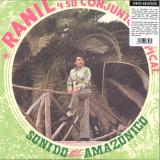
RANIL Y SU CONJUNTO TROPICAL - SONIDO AMAZóNICO

RANIL Y SU CONJUNTO TROPICAL

SONIDO AMAZóNICO

12inchVAMPI328
Vampisoul
27.08.2025

Ranil is undoubtedly the most unconventional figure among the greats of Amazonian cumbia, earning a well-deserved place alongside iconic bands like Los Mirlos, Los Wembler's, and Juaneco y su Combo. This compilation offers a glimpse into the vast musical output Ranil created in the late 1970s and early 1980s. Psychedelia, rock fusion, cumbia, salsa, mambo, Amazonian folk_ you'll find all these flavors blended into the vibrant, jungle-rich sound Ranil crafted. DESCRIPTION Ranil is undoubtedly the most unconventional figure among the greats of Amazonian cumbia, earning a well-deserved place alongside all the better-known iconic bands. He worked as a teacher, criollo guitarist, radio host, TV entrepreneur, and politician, but gained lasting fame as the founder of Ranil y Su Conjunto Tropical in the 1970s. By 1968, around the same time Los Destellos were making waves in Lima, groups like Los Wembler's de Iquitos and Juaneco y su Combo began electrifying cumbia in Iquitos. This new genre, dubbed Amazonian cumbia, exploded nationwide in 1973, thanks to hits by Juaneco y su Combo, Los Mirlos, and Los Wembler's. The success these bands achieved spawned dozens of other groups from the Amazon. Ranil, always a visionary, recognized the movement's potential and joined forces through his first single recorded on the Dinsa label in 1974. Unhappy with the contractual terms, he went on to found Producciones Llerena, the label on which he would release the rest of his discography. Over the years, Ranil y su Conjunto Tropical featured guitarists like Límber Zumba and Luis Nigro, while Ranil remained the lead vocalist and bassist for group. Zumba and Nigro had already played with other regional bands and written songs for groups like Los Destellos and Los Mirlos. This compilation offers a glimpse into the vast musical output Ranil created in the late 1970s and early 1980s, bringing together 14 tracks from the band's 10 LPs. These records have always been hard to come by as, despite being recorded in Lima, they were distributed by Ranil from Iquitos. Psychedelia, rock fusion, cumbia, salsa, mambo, Amazonian folk_ you'll find all these flavors blended into the vibrant, jungle-rich sound Ranil crafted.

No en stock

Haga su pedido ahora y le encargaremos el artículo en nuestro proveedor.


Ültimo hace: 9 Meses
CHEO Y LOS CONSENTIDOS DE LA CASA - - LIVE AT NUBLU, NYC
  • Llego La Banda
  • Soul Sauce (Feat. Felipe Fournier)
  • Taboga
  • La Mucura
  • Lluvia Con Nieve
  • Mujer Divina
  • Salsa Na' Mas
  • Bemba Colora (Feat. Chico Raro)
  • Ay Que Rico (Feat. José Benjamín)

This isn't your abuela's salsa night - this is CHEO Y LOS CONSENTIDOS DE LA CASA. Funk-forward. Rhythm-obsessed. 100% dance floor approved. Cheo y Los Consentidos de la Casa is a dynamic, funk-infused Latin music project led by Cheo Pardo (of Los Amigos Invisibles). Serving as the house band for a bi-weekly dance night at NYC's Nublu, the group blends salsa, boogaloo, cha-cha-cha, and bolero with psychedelic effects and deep grooves. Their debut live album captures this high-energy fusion, reimagining Latin classics with a modern, electrifying twist that honors tradition while pushing boundaries. Born from a love of vintage Latin soul and the raw energy of NYC's dance floors, Cheo assembled an all-star crew of the city's hottest Latin players to cook up a high-octane blend of salsa, boogaloo, cha-cha-cha, and bolero - all filtered through wah-wah pedals, space echoes, fuzzy guitar solos, and a deep, unshakable groove. The result? A psychedelic, percussive party that's equal parts tradition and funked-out future. Their debut album, recorded live at Nublu, captures the heat, sweat, and sabor of their wildest nights - reimagining classics from Joe Cuba, Willie Colón, Eddie Palmieri, Mon Rivera, and more. Each track is a tribute and a reinvention, breathing new life into the old- school with a cosmic twist, and opening the doors for a whole new generation to feel that sabrosura in their bones.

Reservar15.08.2025

debe ser publicado en 15.08.2025

The Beachers - Cincuenta LP

Founded in 1966, The Beachers is a group whose music is inspired by Caribbean rhythms and Panama’s musical tradition. Calypso, salsa and bolero are part of the unique Beachers sound, whose popularity peaked in the 70s during what is known as “The Golden Era of National Combos”. The Beachers have released 13 albums and more than 30 singles to their name, on prestigious Panamanian record labels like Tamayo, Loyola, or Sally Ruth Records, teaming up with other Calypso legends such as Lord Cobra.

The Beachers are still current and relevant, with five of the original members performing constantly through Panama and the world. Their energy and spirit is felt in the joy, rhythm and flavor of their songs.
Lloyd Gallimore, the band’s musical director since its foundation, and renowned producer Billy Herron have been working together on this new album, commemorating the group’s 50-year career.

This recording relives The Beachers’s magical trajectory and features collaborations with popular Panamanian musicians, a work that displays a sonic landscape filled with the history and legacy of Panama’s Calypso. It’s a tropical musical fantasy whose Caribbean influence has transcended time.

No en stock

Haga su pedido ahora y le encargaremos el artículo en nuestro proveedor.


Ültimo hace: 9 Meses
CELIA CRUZ - THE QUEEN OF SALSA LP
  • A1: Cao Cao, Maní Picao
  • A2: Burundanga
  • A3: Dile Que Por Mi No Tema
  • A4: El Que Siembra Su Maiz
  • A5: Rico Changui
  • A6: Mi Bomba Sono
  • A7: Suavecito
  • A8: Juntitos Tu Y Yo
  • A9: Facundo
  • B1: Yerbero Moderno
  • B2: Me Voy A Pinar Del Rio
  • B3: El Merengue
  • B4: Baho Kende
  • B5: Contestacion De El Marinero
  • B6: Desvelo De Amor
  • B7: Cuidate Bien
  • B8: Baila, Baila Vicente
  • B9: Palmeras Tropicale

Celia Cruz was the undisputed Queen of Salsa. 23 gold albums and seven Grammy Awards attest to her longevity and popularity, and she was active right up until the year before her death in 2003. Eight years later, the United States Postal Service celebrated her life and legacy with a commemorative postage stamp, one of five honouring Latin music greats. She was the most influential female in the history of Afro-Cuban Music (as the Virgin Encylopedia of `Popular Music termed her) and her music lives on. Enjoy this 180g vinyl release and dance and drink a toast to her memory.

Reservar11.07.2025

debe ser publicado en 11.07.2025

J.Diggns / King Most - Saturday Salsa/Balla Edit

SIDE A. J. Diggns - Saturday Salsa with sizzling brass, deep pocket percussion, and a groove that’s pure motion. Whether you’re rocking the decks or rolling at the rink, this one brings that feel-good energy straight to your soul. It isn't Saturday without the "De La Brilla", Glow in Spanish —

SIDE B. King Most – BALLA EDIT From Radio Havana to West Africa, the spirit of Latin rhythm crossed oceans, bouncing oc antennas and into the soul of a continent. On BALLA EDIT, King Most channels that deep cultural echo—an infectious blend of clave, funk, and highlife sensibilities, flipped with modern finesse and analog warmth. Made to ride at block parties, or sets where borders blur and rhythms rule. Global grooves, rooted deep. Pressed heavy. Played loud

No en stock

Haga su pedido ahora y le encargaremos el artículo en nuestro proveedor.


Ültimo hace: 8 Meses
Tom Caruana - Salsa Verde

Tom Caruana

Salsa Verde

12inchDFPRKPM7LP
Def Presse Edition
30.05.2025
  • 01: Baton Feat. Phill Most Chill, Dillon & Kyza
  • 02: Walker Mill Road Feat. Yu & Richard Halligan
  • 03: The Gift Feat. Prince Po, U-George & Jazz T
  • 04: Hits Hits Hits Feat. Jehst
  • 05: Perfect Match Feat. Large Professor, Tiye Phoenix & Nick Maxwell
  • 06: Back In The Days Feat. Truck North & Richard Halligan
  • 07: Aisle 9 Feat. Dynas
  • 08: Get It Feat. Maddy & Wordsmiff Flip
  • 09: Valiant Feat. Press1, Essa & Dr Syntax
  • 10: Ego Juice Feat. Big Ole Lil Young Blaise
  • 11: Influential Feat. Supastition & Boog Brown

Salsa Verde is the latest release from artist, Tom Caruana and, the newest instalment of Def Pressé’s series of projects made in partnership with KPM (and associated music libraries).


In 2021 Def Pressé entered into a deal with KPM whereby the deeper KPM and associated libraries can be used, exclusively, by Def Pressé. Sampled, replayed and reimagined, this vast catalogue has provided music for TV and Cinema for decades. Sampled, often illegally, by practically every Hip Hop producer ever, the library is available to select Def Pressé artists to utilise in order to create new pieces of music. This music is then fed back into the KPM/Sony AVI library for use in TV and Cinema, and the Def Pressé artist in question is then a KPM Artist in their own right. Completing the circle and hopefully providing music to inspire the new generation of beat makers/sample-based producers.


With several titles in the series, notable names like Blockhead, Damu the Fudgemunk and Stro Elliot since its inception in 2021, the Def Pressé Editions x KPM series, Crate Diggers continues into the seventh episode.


Producer & multi-instrumentalist Tom Caruana has been producing Hip Hop for over 25 years. Incorporating both samples and instruments in his production has helped him create a signature sound which covers a wide range of moods. He has produced quirkier and more humorous material for the likes of Dr Syntax & Professor Elemental, live production for his band Son Of Sam,

sample heavy material in a range of projects with MCs as well as notoriously remixing Wu-Tang Clan with The Beatles and Jimi Hendrix.

Reservar30.05.2025

debe ser publicado en 30.05.2025

La Pembele - Naci Mestizo

La Pembele

Naci Mestizo

12inchDEG-LP02
discos elgozo
22.05.2025

La Pambelé Unveils Nací Mestizo, A Bold New Album Reviving Salsa with a Contemporary Twist Bogotá’s heavy guaguancó orchestra, La Pambelé, proudly presents their highlyanticipated second studio album, Nací Mestizo, now available on all major digital platforms as of November 27th. This album pays tribute to the golden era of salsa, particularly the 1970s, while breathing new life into the genre with modern lyrics and stories that resonate deeply with Latin communities.

All while maintaining a distinct Bogotan essence that highlights the city’s unique cultural flavor. Nací Mestizo seamlessly blends the timeless salsa brava sound with contemporary themes, reflecting the everyday lives of people across Latin neighborhoods. The album’s songs capture the struggles, passions, and joys of ordinary people, presented through the vibrant rhythms of salsa, creating a musical experience that connects the past with the present. Building on Their Rising Popularity Prior to the album’s release, La Pambelé debuted the singles “Amargura” and “Perdí mi Corazón”, which quickly captivated audiences and set the stage for the full album's success. The band’s electric performance of these tracks at the MedPlus Coliseum in Bogotá, before an audience of 22,000 attendees awaiting Marc Anthony, was met with enthusiasm as fans danced and applauded.

This moment marked a significant milestone for the orchestra, cementing their place as a rising force in the global salsa scene. Additionally, La Pambelé’s growing visibility has been marked by their appearances at major festivals such as Salsa al Parque and features on prominent radio stations, including Radio Nacional de Colombia and Latina Stereo. These platforms have helped introduce La Pambelé’s signature sound to a wider audience, building anticipation for the release of Nací Mestizo and reaffirming their influence in Colombia’s tropical and alternative music scenes. A Contemporary Salsa Sound with Classic Roots La Pambelé’s unique blend of traditional salsa brava and contemporary Latin storytelling is showcased through their distinctive nine-piece orchestra, which includes piano, conga, flute, trumpet, trombone, timbales, bongos, and baby bass. The dynamic vocals of Miguel RoRebolledo and Lorena Contento elevate the album’s themes, creating a sound that invites listeners to their feet and onto the dance floor. Under the direction of Camilo Toro Morato, the orchestra has honed its signature style, pushing the boundaries of salsa while staying true to its roots. As a proud defiance of stereotypes about Bogotá’s musical abilities, La Pambelé’s name pays homage to legendary Colombian boxer Kid Pambelé, symbolizing resilience and strength.

The name also draws from the Bantú language, meaning "defender of one's own," reinforcing the band’s connection to their Colombian heritage and pride in their distinctive sound. Global Recognition and Continuing Influence Since the release of their self-titled debut album in 2022, La Pambelé has gained international recognition, especially within the vinyl collector community. Theirdebut album was released in both 45” and LP vinyl editions, further solidifying their unique position in the contemporary salsa movement. Influenced by salsa greats such as Markolino Dimond, Eddie Palmieri, Edy Martínez, and Ismael Miranda, La Pambelé has carried forward the torch of salsa brava with passion and innovation. Nací Mestizo marks a significant evolution in the orchestra’s journey, melding the old and the new, and cementing La Pambelé as a driving force in the future of salsa music. A Collector’s Dream With their 2022 debut album garnering international recognition, La Pambelé’s vinyl releases—including 45” and LP editions—have become coveted items for salsa collectors worldwide. Their music is a bridge between classic salsa traditions and a modern vision, appealing to seasoned fans and new listeners alike. About La Pambelé La Pambelé is a heavy guaguancó orchestra from Bogotá, Colombia, known for their vibrant, rhythm-driven sound that blends 1970s salsa brava with modern Latin influences. With a unique nine-piece lineup and powerful vocals, the band continues to break boundaries, defying expectations and inspiring audiences around the world

No en stock

Haga su pedido ahora y le encargaremos el artículo en nuestro proveedor.


Ültimo hace: 12 Meses
Kapote - Para Mytho Disco  LP 2x12"

Toy Tonics Music Berlin presents "Para Mytho Disco". The 2nd "Kapote" album of label founder and creative director Mathias Modica.
Keyboarder, DJ, producer, music nerd, graphic designer, multi-instrumentalist, sub-culture impressario and artist (formerly known as Munk of Gomma records.)

Kapote & Toy Tonics
In the last years Kapote was in the spotlight mainly for building the Toy Tonics label with his friends. Developing a platform for new positive quality dance music with a human touch. Toy Tonics is the opposite of the dark, druggy Techno and Trance sounds of the last years.
The warm inclusive music of Toy Tonics represents a new vibe that a young generation of diverse, stylish and culturally intersted generation of dancers loves now. Kapote's Toy Tonics became the key label for that vibe. (In 2024 Toy Tonics made 150 Toy Tonics events in 18 countries. With more than 150.000 people dancing. 90 millions streams on their music.)
Toy Tonics is more than a music label: It's a audio - visual universe. A community, almost a movement.
Based on a new positive attitude and aesthetic diversity. Mixing musicianship with DJ culture, analogue music with electronic, ideas from the past with sounds from now. To create something new. Connecting dance music with graphic design, art and underground fashion.
Kapote and his gang release vinyl, posters, shirts, art fanzines and make exhibitions and partys.

Toy Tonics started in Berlin as a underground niche project. But now became the key label of the new house, wild style disco and organic dance music scene.
Probably one of Berlin's biggest electronic music phenomena along with Keinemusik and Live from Earth.

It went fast: 2020 Kapote's crew started to make small parties in Berlin's off spaces. The "Toy Tonics Jams". The parties became "talk of the town", and Berlin clubs like Griesmühle and Panorama Bar invited the crew. Then international clubs and festival called. Toy Tonics were invited to SONAR (playing the mainstage with Kaytranada and DJ Tennis), KALA festival, Montreux Jazz festival.
Now TT has a residency at Panorama Bar Berlin and sold out events in Europe leading clubs like Phonox in London, Rex Club in Paris, Tunnel in Milan.
Toy Tonics now is the reference brand of a new generation of music loving dancers. Similar to Gomma records, Kapote's former label (2003 - 2015) that was one of the key labels of the "indie dance" scene of the Y2K years (along with DFA and Output Records).

Kapote created a multi-cultural movement with graphic designers, photographers, illustrators from the Berlin scene.
They publish the Toy Tonics Pocket Poster magazine, posters and design shirts. They organize the Toy Tonics Pop Up Galleries mixing music and art. In underground venues in Berlin and in new gallery spaces and museums around Europe.
Toy Tonics has been invited by Palais de Tokio museum in Paris, Triennale Museum Berlin, Design week Milano to create events.
The new Kapote album
The 12 tracks have a very own style. Based on dance music, but going much further. "Para Mytho Disco' is a futuristic mix of sounds. It's far away from the dark monotone techno and trance music from Kapote's hometown Berlin. Instead, he creates warm friendly atmospheres full of sonic colours and little musical surprises.
Kapote's knowlege of music history and his backround as a jazz piano student and son of classic music composer is clearly inside this music. Before turning into a DJ and electronic music producer he has been playing in bands since he was 13 years old.
The album is full of emotional chord progressions played by Kapote on various keyboards. Sometimes reminding music from the past, without being retro at all. The basslines and melodies are inspired by jazz fusion from the 1970ies. And he programmed syncopated grooves that come from afro-american dance music. There are influences from Japanese electronic music (Yellow Magic Orchestra), from 1980s Synthwave and from 1990s electronica (like Squarepusher and Luke Vibert).

Kapote plays keys, bass, flutes and percussions, he plays synth solos and sings on a few tracks. The complexity of the arrangements makes this music never boring. Lot of melodies and solos that catch the listener. Colourful soundscapes that make you want to listen or dance to this album more, and discover details also after you heard it several times.

Kapote background

Before starting Toy Tonics, Kapote used to run a label called Gomma. He produced four albums under the name Munk and music for other artists.
He produced music with Peaches, Franz Ferdinand founder Nick McCarthy, with New York street art legend The Rammellzee, Italian actress Asia Argento, the first three albums of WhoMadeWho and worked with LCD Soundsystem (listen to "Kick out the chairs", the Munk song with James Murphy )
In those "Gomma days" Kapote aka Munk was also one of the main DJs for VICE magazine parties and made music for art projects and fashion brands (Margiela, Prada, Colette).
In 2015 he stopped Munk and Gomma and started Toy Tonics. He found young producers and helped to develop their sound (Coeo, Cody Currie, Gee Lane, Barbara Boeing, Sam Ruffillo). Later he founded the sublabel Kryptox to release music by Berlin based bands that make new forms of jazz or neo classical sounds.

Under the name Kapote Mathias didnt release much:
Only his Kapote debut album "What it is" (2019) and an EP called "Electric Slide" (2022) and a collabo EP with Italian producer Sam Ruffillo ("Robot Salsa").

An although his Munk and Kapote music was an underground phenomena his music has always been a favourite of many great people from the scene.
Supported by DJs like Harvey, Chromeo, Moodymann, Jennifer Cardini, Gerd Janson, MYD, Andrew Weatherall to Blessed Madonna, Justice and Laurent Garnier… to name just a few.

No en stock

Haga su pedido ahora y le encargaremos el artículo en nuestro proveedor.


Ültimo hace: 9 Meses
VARIOUS - MAGNIFICO BOOGALOO LP 2x12"
 
22

These two vinyl records showcase the legacy left by the boogaloo movement in Peru between 1966 and 1975. They comprise twenty-two songs by seventeen artists who recorded on the remarkable local label MAG more than five decades ago and now invite today’s new generations to dance body and soul to these re-releases. You will find outstanding tracks by the likes of Tito Chicoma, Melcochita, Los Kintos, Otto Rojas, Coco Lagos among many others. MAG was one of the most important and prolific labels in Peru and, though it also was involved in releasing a lot of other types of music, its specialty was the tropical variety, which coincidentally, DJs and collectors seem to crave most. Peru developed a major boogaloo scene in the mid-60s, far from the genre’s place of origin, New York, where iconic songs like 'Bang Bang' and 'El Pito', fused soul and funk with Latin sounds, conquering dance halls and winning extensive radio airplay. The music trend soon spread to Caribbean countries and from there made the geographical leap to the city of Lima. 'El Pito', the collective creation of the Joe Cuba Sextet, was particularly popular. Shorn of overelaborate arrangements, the improvisation and spontaneity of the song resonated with the young generation who were avid for new music after the U.S. placed an embargo on the distribution of Cuban music. In July 1966, Rebeca Llave´s label, Disperú, released the 45 RPM of 'El Pito' (and Joe Cuba's LP), promoting the single in the most prestigious newspaper in the country: El Comercio. The press information stated that the record had sold seventy thousand copies in New York and fifty thousand in Los Angeles. That same year local dance versions by the bands of Alfredo Linares (MAG) and Lucho Macedo (El Virrey) were released, followed by another by the band of the Argentinean musician Enrique Lynch who was based in Peru (Sono Radio). These records were a hit with a new generation that embraced Lucho Macedo's band and the garage rock of Los York's with equal enthusiasm. Although Joe Bataan claimed that boogaloo was killed off at the end of the sixties by the labels and their veteran musicians (who conspired against the new generation of singers), Pete Rodriguez, Richie Ray and the Lebrón Brothers continued to release boogaloo records in Peru, but salsa music soon took over.

No en stock

Haga su pedido ahora y le encargaremos el artículo en nuestro proveedor.


Ültimo hace: 14 Meses
Héctor Lavoe - Reventó LP

Reventó is iconic salsa singer Hector Lavoe’s eighth solo album released on Fania Records. The classic New York salsa album was critically acclaimed and very popular among fans, with hits like “¿De Que Tamaño Es Tu Amor?,” “La Fama” and “Déjala Que Siga.” Reventó remained on the Billboard Top Latin Albums chart for five months in 1985. Featuring (AAA) lacquers cut from the original master tapes, this remastered reissue is pressed on 180-gram vinyl and housed in a classic tip-on jacket.

No en stock

Haga su pedido ahora y le encargaremos el artículo en nuestro proveedor.


Ültimo hace: 14 Meses
Hector Lavoe - De Ti Depende LP

De Ti Depende is salsa legend Hector Lavoe’s second solo album, released on Fania Records in 1976, in which he steps out as the leader of his own orchestra for the first time. Hit tracks include Tite Curet Alonso’s “Periódico de Ayer,” the ever popular anthem “Hacha y Machete” and Perucho Torcat’s uplifting “Vamos a Reír Un Poco.” Featuring (AAA) lacquers cut from the original master tapes, this remastered reissue is pressed on 180-gram vinyl and housed in a classic tip-on jacket.

No en stock

Haga su pedido ahora y le encargaremos el artículo en nuestro proveedor.


Ültimo hace: 14 Meses
La Pembele - Naci Mestizo

La Pembele

Naci Mestizo

12inchDEG-LP02C
discos elgozo
28.02.2025
  • A1: Para No Olvidar
  • A2: La Bella Y La Culebra
  • A3: El Mañana
  • B1: Nací Mestizo Ft. Nicoyembe
  • B2: Amargura
  • B3: Son Cimarrón
  • B4: Perdi Mi Corazón
También disponible

Black


La Pambelé Unveils Nací Mestizo, A Bold New Album Reviving Salsa with a Contemporary Twist Bogotá’s heavy guaguancó orchestra, La Pambelé, proudly presents their highlyanticipated second studio album, Nací Mestizo, now available on all major digital platforms as of November 27th. This album pays tribute to the golden era of salsa, particularly the 1970s, while breathing new life into the genre with modern lyrics and stories that resonate deeply with Latin communities.

All while maintaining a distinct Bogotan essence that highlights the city’s unique cultural flavor. Nací Mestizo seamlessly blends the timeless salsa brava sound with contemporary themes, reflecting the everyday lives of people across Latin neighborhoods. The album’s songs capture the struggles, passions, and joys of ordinary people, presented through the vibrant rhythms of salsa, creating a musical experience that connects the past with the present. Building on Their Rising Popularity Prior to the album’s release, La Pambelé debuted the singles “Amargura” and “Perdí mi Corazón”, which quickly captivated audiences and set the stage for the full album's success. The band’s electric performance of these tracks at the MedPlus Coliseum in Bogotá, before an audience of 22,000 attendees awaiting Marc Anthony, was met with enthusiasm as fans danced and applauded.

This moment marked a significant milestone for the orchestra, cementing their place as a rising force in the global salsa scene. Additionally, La Pambelé’s growing visibility has been marked by their appearances at major festivals such as Salsa al Parque and features on prominent radio stations, including Radio Nacional de Colombia and Latina Stereo. These platforms have helped introduce La Pambelé’s signature sound to a wider audience, building anticipation for the release of Nací Mestizo and reaffirming their influence in Colombia’s tropical and alternative music scenes. A Contemporary Salsa Sound with Classic Roots La Pambelé’s unique blend of traditional salsa brava and contemporary Latin storytelling is showcased through their distinctive nine-piece orchestra, which includes piano, conga, flute, trumpet, trombone, timbales, bongos, and baby bass. The dynamic vocals of Miguel RoRebolledo and Lorena Contento elevate the album’s themes, creating a sound that invites listeners to their feet and onto the dance floor. Under the direction of Camilo Toro Morato, the orchestra has honed its signature style, pushing the boundaries of salsa while staying true to its roots. As a proud defiance of stereotypes about Bogotá’s musical abilities, La Pambelé’s name pays homage to legendary Colombian boxer Kid Pambelé, symbolizing resilience and strength.

The name also draws from the Bantú language, meaning "defender of one's own," reinforcing the band’s connection to their Colombian heritage and pride in their distinctive sound. Global Recognition and Continuing Influence Since the release of their self-titled debut album in 2022, La Pambelé has gained international recognition, especially within the vinyl collector community. Theirdebut album was released in both 45” and LP vinyl editions, further solidifying their unique position in the contemporary salsa movement. Influenced by salsa greats such as Markolino Dimond, Eddie Palmieri, Edy Martínez, and Ismael Miranda, La Pambelé has carried forward the torch of salsa brava with passion and innovation. Nací Mestizo marks a significant evolution in the orchestra’s journey, melding the old and the new, and cementing La Pambelé as a driving force in the future of salsa music. A Collector’s Dream With their 2022 debut album garnering international recognition, La Pambelé’s vinyl releases—including 45” and LP editions—have become coveted items for salsa collectors worldwide. Their music is a bridge between classic salsa traditions and a modern vision, appealing to seasoned fans and new listeners alike. About La Pambelé La Pambelé is a heavy guaguancó orchestra from Bogotá, Colombia, known for their vibrant, rhythm-driven sound that blends 1970s salsa brava with modern Latin influences. With a unique nine-piece lineup and powerful vocals, the band continues to break boundaries, defying expectations and inspiring audiences around the world

Reservar28.02.2025

debe ser publicado en 28.02.2025

MARINERO - LA LA LA LP

Marinero

LA LA LA LP

12inchHARLP175
Hardly Art
12.02.2025
  • La La La
  • Cruz
  • Lost Angel
  • Taquero
  • Dream Suite
  • The Mystery Of Miss Mari Jane
  • Cha Cha Cha
  • Sea Changes
  • Cinema Lover
  • Die Again, Yesterday
  • Hollywood Ten

As Jess Sylvester finished his Hardly Art debut as Marinero in the fall of 2020, he realized it was time for a change. Sylvester grew up in Marin County, on the doorstep of San Francisco. It was a nurturing community for a high-school punk with a pompadour and, later, for a sober songwriter with a proclivity for moody psychedelia. But he wanted to be challenged and inspired by a new setting and scenario around strangers who prompted him to approach his music in unexpected ways. So in September 2020, as the world continued to reel in lockdown, Sylvester headed several hours south to Los Angeles, a city that, despite the relative proximity, the film buff knew largely from classic and cult films situated there. When he arrived, he kept digging into that cinematic past-Robert Altman's The Long Goodbye, with John Williams' classic theme, or classic 90s movies about East LA, many featuring Edward James Olmos. They shaped his understanding of his new town just as it began to open. This is one pillar of the multivalent and endlessly lush La La La, Marinero's new album about sobriety, identity, and fantasy that is playfully named both for the city that helped shape it and the sophisticated pop it contains. Sylvester wrote about characters outside of himself, whether considering the heroine reckoning with her own version of keeping clean or the screenwriters whose work was deemed communist simply as a political convenience. He linked those songs with motivational anthems about self-acceptance and playful numbers about flirting through food, shaping a 12-song set rich with humor, empathy, and encouragement. Sure, La La La is a continuation of the slippery genre play Sylvester started with 2021's Hella Love, 2019's Trópico de Cáncer, or even before that. But it also feels like a fresh beginning for Marinero, as Sylvester realizes how boundless this project can be. He began to think about the music of his childhood, how his mother is from San Francisco with Mexican roots, and how he'd heard so much salsa growing up as an impetuous teenager. So he wrote "Taquero," a red-hot salsa tune that uses tacos and their trappings as a source of endless metaphors for come-ons. And then there was the Ray Barreto or Santana-inspired "Pocha Pachanga," with organ gliding and percussion pulsing beneath his yearning vocals, warped as if by desert winds. In Los Angeles, he found a wealth of players who spoke this music like language itself (including Chicano Batman's Eduardo Arenas), all ready to play with and push these familiar forms. Sylvester has also been sober for 21 years, since a cross-country sojourn to attend college in Boston ended in a chemical haze. Today, he sees friends facing the same decisions he made two decades ago, and he brings bits of that experience to bear in songs that feel like self-help anthems. Recorded with a musical hero (and labelmate) of his, Chris Cohen, "Sea Changes" feels like sunshine breaking through dark clouds, as Sylvester acknowledges the newfound confidence and clarity in a friend who has stepped away from destructive habits. In the past, Sylvester has been intractably linked to his identity as a Mexican-American, born to parents from Mexico and Irish- American descent who settled in San Francisco. That can be limiting, of course, tying him to notions of sound and style that aren't always correct. On La La La, he simultaneously steps into and out of those preconceptions, singing tracks above salsa in joyous Spanish or pondering the dynamics of the Hollywood Ten and blacklists above mysterious lap steel and teasing trumpet. His identity, then, should now be clear: He is a Californian, making music shaped by the diversity of encounters and experiences that are a central part of that state's fabric. Never before has he presented himself so fully and unabashedly on tape as with La La La, an album Sylvester built with new inspirations to deliver new charms.

Reservar12.02.2025

debe ser publicado en 12.02.2025

BROOKLYN SOUNDS - LIBRE - FREE

Brooklyn Sounds

LIBRE - FREE

12inchVAMPI311
Vampisoul
24.01.2025

Brooklyn Sounds legendary second album from 1972, full of heavy Nuyorican underground salsa dura propelled by raw trombones, off-kilter piano and in-your-face percussion. A perfect blend of barrio attitude and Caribbean swing, the album proves Brooklyn has sabor y salsa! Pressed on 180 g vinyl, our reissue includes liner notes featuring never-before seen photos. “Libre – Free” is the now legendary second album by the short-lived Brooklyn Sounds and is arguably even better than their self-titled debut, displaying a more mature and practiced sound, no doubt honed by their experiences playing more gigs in support of their first record. Brooklyn Sounds were one of a handful of garage salsa bands from the independent scene that was gathering steam in the early 1970s in the New York boroughs, despite little support or exposure in the mainstream Latin music industry from more dominant labels like Fania, Mericana, Cotique and Alegre. As with many others, Brooklyn Sounds briefly fluoresced in a burst of creativity and defiance, yet flamed out shortly thereafter, dying like a flower among the ruins of burned-out apartment blocks in the barrios of its home city. Though the band only cut two LPs and a couple singles in their brief half-decade of existence, and never really broke out of the cuchifrito circuit in the tri-state area of New York, New Jersey and Connecticut, their music gradually spread far and wide, eventually becoming a sought-after global commodity by the late 1990s. In contrast to the first album “Libre – Free” is uptempo and ebullient, with fewer slow songs and more confident, creative arrangements, full of heavy Nuyorican underground salsa dura propelled by raw trombones, off-kilter piano and in-your-face percussion. Standout tracks include the uplifting, anthemic ‘Libre soy’, and ‘Ha llegado el momento’, with its minor key ‘Moliendo café’ quote at the
beginning—both of which have become dance floor anthems over the years. Another mid-tempo killer is ‘Guaguancó tropical’, a favorite in Colombia since the 1970s. A perfect blend of barrio attitude and Caribbean swing, the album proves Brooklyn has sabor y salsa!

Reservar24.01.2025

debe ser publicado en 24.01.2025

Various - Fania Records: The Latin Sound of New York (1964 - 1978) LP 2x12"
  • A1: Pete Rodriguez – I Like It (I Like It Like That)
  • A2: Eddie Palmieri – Café
  • A3: Joe Bataan – Gypsy Woman
  • A4: Ray Barretto – Acid
  • LP1: Side B
  • B1: Héctor Lavoe – Mi Gente
  • B2: Richie Ray/Bobby Cruz – Aguzate
  • B3: Cheo Feliciano – Anacaona
  • B4: Celia Cruz/Johnny Pacheco - Quimbara
  • C1: Ismael Rivera – Las Caras Lindas
  • C2: Willie Colon/Héctor Lavoe – Che Che Colé
  • C3: Héctor Lavoe – El Cantante
  • C4: Ray Barretto – Indestructible
  • C5: Joe Cuba Sextet – El Ratón
  • D1: Fania All Stars – Estrellas De Fania
  • D2: Willie Colón – La Murga
  • D3: Willie Colón/Rubén Blades – Pedro Navaja

This collection features sixteen of the most renowned salsa and Latin soul singles released on Fania Records, and its subsidiaries, between 1964-1978, making it the perfect introduction to the legendary catalog. It celebrates the trailblazing label’s 60th anniversary, and iconic artists Willie Colón, Héctor Lavoe, Rubén Blades, Johnny Pacheco, Celia Cruz and more. Archival images and new liner notes, in English and Spanish, by New York-based music historian Aurora Flores are also included.

Reservar24.01.2025

debe ser publicado en 24.01.2025

VARIOUS - CHAKALAKA JAZZ - A SELECTION OF SOUTH AFRICAN GEMS LP 2x12"

While music traditions are often defined by established and protected sets of characteristics, popular music in South Africa betrays a willingness to adapt homegrown styles and an enthusiasm to adopt new influences. Musical currents like marabi, goema and mbaqanga help define what makes indigenous jazz unique, but it’s the eclecticism and hybridisation found in South African crates that keeps vinyl archaeologists like Fred “Voom Voom” Spider digging deeper. If we consider jazz to be a global musical dish, it follows that South Africa brings a distinct sonic salsa to the table. Spider calls it “Chakalaka Jazz” after the local tomato, onion and chilli relish that frequently accompanies South African meals. It’s the essential ingredient that unites and spices this diverse selection of tracks spanning the years 1969 through 2003. Featuring locals, exiles and expats with a reverent nod to the golden years of the 1970’s, these rare musical treasures are held together by that magical South African flavour.

Compiled by Fred Spider, Notes by Calum MacNaughton, Executive Producer: Franck Descollonges for Heavenly Sweetness

No en stock

Haga su pedido ahora y le encargaremos el artículo en nuestro proveedor.


Ültimo hace: 4 Meses
LOS PAMBELE / LOS DARLINGS DE HUANUCO - CANNABIS / MARIHUANA

Welcome to the psychedelic vibes of this weed-inspired double sider where Colombian salsa and Peruvian cumbia meet!

Cannabis is a killer organ-driven salsa song recorded by Colombian music legend Fruko while Marihuana by Los Darlings de Huanuco was conceived as an effort to combine rock and cumbia sounds resulting a perfectly balanced mix of both worlds.

First time 7" reissue of these extremely hard to find records!

No en stock

Haga su pedido ahora y le encargaremos el artículo en nuestro proveedor.


Ültimo hace: 15 Meses
THE 107TH STREET STICKBALL TEAM - THE  SABOREANDO - POT FULL OF SOUL LP
  • On Old Broadway
  • Toma Guajira
  • Look To Me
  • You Put A Hurt In My Heart
  • Rhythm And Soul
  • Mojo Shingaling
  • Barbara With The Kooky Eyes
  • Tell Her I Love Her
  • Let Me Do My Thing

In 1969, producer and boogaloo godfather Bobby Marin conceived this undeservedly obscure funky, psychedelic Latin soul gem. Released on Ralph Lew’s short-lived Dorado label and engineered by Jon Fausty, Bobby was backed by a top-notch studio band that included Ricardo Marrero, Joey Pastrana, Bernard Purdie, Louie Ramirez, Orlando Marin and Ozzie Torrens. Includes liner notes by genre expert Pablo Yglesias telling the story behind the music. 180g vinyl. Generally, when discussing the first wave of Latin soul and boogaloo, it’s the bands and their leaders, the singers and the songs that get all the recognition. But what of the producers, composers, and arrangers? One of the top old-school New York Latin music producers, Bobby Marin, was behind the scenes for some of the best independently produced boogaloo and salsa of the ‘60s and ‘70s. “Saboreando - Pot Full Of Soul”, is the album Bobby created in 1969 for his friend Ralph Lew’s newly launched Dorado label. Fifty-five years later, Bobby confirms that he commemorated his humble Barrio beginnings playing stickball on West 107th Street and singing doo-wop while some kids played percussion on junkyard drums, by christening the band The 107th Street Stickball Team. The 107th Street Stickball Team was basically the same pool of friends as Ricardo Marrero’s group (Bernard Purdie on drums, Mike Viñas on guitar, Ricardo Marrero on vibes), with the addition of Louie Ramirez playing piano and organ, Orlando Marin, Joey Pastrana and Ozzie Torrens on percussion, Mike Viñas handling the electric bass, and Butch Johnson and Danny Agosto on lead vocals for a few numbers. At that time, soul music was seen by the present Latin generation, indeed the youth market in general, as something that was different, that broke with tradition. The record, with Bobby singing several of the best tunes including ‘Mojo Shingaling’ and ‘Rhythm and Soul’, highlights an affinity or connection between African American and Cuban music in a convincing blend that was emblematic of the scene and allowed the young generation to feel they had a fresh kind of music all their own. No wonder the LP notes boast The 107th Stickball Team is “a bunch of groovy youngsters.” We are now happy to make this undeservedly obscure funky, psychedelic Latin soul gem available again!

Reservar20.12.2024

debe ser publicado en 20.12.2024

MICHEL JONASZ - OST CLARA ET LES CHICS TYPES
  • You Kill Me, I Kill You
  • Chanson De Clara (Retour Chez Soi)
  • Aéroport
  • Clara Et Les Chics Types (Chanson De Louise)
  • Monkeys In The Street
  • Le Train
  • Amitié*
  • Une Java À La Fête Foraine
  • Une Java Dans Le Minibus
  • Une Valse À La Fête Foraine
  • Le Reggae Du Lycée
  • Chanson De Clara
  • L'aube Sur Le Lycée
  • Le Boeuf (Vers Le Concert)
  • Slow Dans Un Juke Box
  • Le Funky Du Transistor
  • Reggae Two*
  • La Salsa Du Juke Box
  • Le Boeuf (Au Lycée)
  • Clara Et Les Chics Types

Wewantsounds is delighted to announce the release of the sought-after soundtrack for cult 1980 French film "Clara Et Les Chics Types," featuring Isabelle Adjani, Daniel Auteuil and the Splendid troupe actors. The Jazz-Funk soundtrack, composed by Michel Jonasz and featuring Manu Katché and Sylvin Marc has never been reissued since 1980. ). Together they weaved a mainly instrumental blend of Jazz funk, reggae and pop which matched the narrative perfectly. Although all the ingredients were there for a success, the film unfortunately stalled and so did the soundtrack. Jonasz went on to become a huge star in France shortly after, but strangely, the Clara soundtrack was never reissued, not even on CD. Remastered from with original master tapes, the release includes two never-released bonus tracks and a 4-page booklet with liner notes by French music expert and musician Guido Minisky (also a member of Acid Arab) who interviewed Michel Jonasz and actor Christophe Bourseiller for the occasion.

Reservar06.12.2024

debe ser publicado en 06.12.2024

Michel Jonasz - Clara Et Les Chics Types Ost (1980)

Wewantsounds is delighted to announce the release of the sought-after soundtrack for cult 1980 French film "Clara Et Les Chics Types," featuring Isabelle Adjani, Daniel Auteuil and the Splendid troupe actors. The Jazz-Funk soundtrack, composed by Michel Jonasz and featuring Manu Katché and Sylvin Marc has never been reissued since 1980. Remastered from with original master tapes, the release includes two never-released bonus tracks and a 4-page booklet with liner notes by French music expert and musician Guido Minisky (also a member of Acid Arab) who interviewed Michel Jonasz and actor Christophe Bourseiller for the occasion.

Reservar22.11.2024

debe ser publicado en 22.11.2024

Ray & His Court - Ray & His Court LP

Ray&His Court

Ray & His Court LP

12inchMRBLP312
Mr Bongo
25.10.2024

Latin funk at its finest. A kingpin player of Miami’s Cuban music scene, Ray Fernandez, brought together his ‘court’ for this sensational Afro-Cuban funk triumph. Largely a family affair, the album features his wife, two sons and a range of other talented musicians including Rickey Washington on saxophone, father of the contemporary jazz maestro Kamasi Washington. Originally released in 1973 on Manuel J. Mato’s iconic and collectible Sound Triangle Records, Ray & His Court is a dose of Miami heat fuelled by a Cuban fire, taking in salsa, soul, funk, calypso and Afro-Cuban rhythms.

A kaleidoscopic album that draws influence from a range of different genres and scenes blended together in true Ray Fernandez style. Side A, showcases an array of traditional Latin workouts including the addictive enticing opener 'La Señorita Lola' and the pulsating 'Lo Sabia' with its punchy horns and Ray’s wonderful, quirky bubbling organ groove. The tantalising ‘Venimos Acabando’ and bouncing organ stabs of ‘El Alacran’ are two further tickets to get a dancefloor vibing.

The B-side then steps things up, slipping a hit of heavy-weight Miami funk into the mix. Take the DJ favourite ‘Cookie Crumbs’ with its fiery bassline, tripped-out voiceovers and breakbeat drums. Or the amazing, memorable and truly unique funk instrumental ‘Soul Freedom’ with some mighty fine bass clarinet work courtesy of Gary Gottfried. Also featured is a seductive organ-led Cuban funk rework of Bobby Hebb's 'Sunny' (are there any bad versions of this song?), with a sumptuous female vocal that combine to serve up a seductive take us this much-loved classic.

'Ray And His Court' is a brilliant blend of Afro-Cuban gems and Miami funk heat from an influential group on Miami’s Latin music scene. A majestic and magnetic classic where every track is a surefire winner.

Reservar25.10.2024

debe ser publicado en 25.10.2024

Minyo Crusaders - Tour of Japan

Gilles Peterson: "Fascinating… love this. Thoroughly recommended"
The Observer: "The focus is on great grooves and fine playing. A band to seek out."
The Guardian: "Delightfully quirky album of folk songs reimagined from Afrobeat to reggae"
The Times: "Minyo Crusaders sound like nothing else lurking on your Spotify playlist"
(PRESS FOR PREVIOUS ALBUM)

Minyo Crusaders return with theiir highly anticipated sophomore album TOUR OF JAPAN following on from their debut that has sold 4k on vinyl since release and their runaway single smash 'Cumbia Del Monte Fuji' that has almost hit 5million streams on Spotify.

Since the release of their debut in 2019 the band have toured Europe four times playing major European festivals such as Roskilde, Best Kept Secret, Green Man Festival, WOMAD, Fusion, Les Escales, Lowlands and many, many more, succesfully road-testing the songs from this album.

On this new album which has been mixed by Mario from Frente Cumbiero, Minyo have finessed their winning formula of adapting ancient Japanese folk somgs to global rhythms with influences this time from Ethiopia, boogaloo, salsa, West Africa and jazz. Says band-leader Katsumi: "The concept of this album is the sea with various expressions".

Reservar18.10.2024

debe ser publicado en 18.10.2024

Minyo Crusaders - Tour of Japan

Gilles Peterson: "Fascinating… love this. Thoroughly recommended"
The Observer: "The focus is on great grooves and fine playing. A band to seek out."
The Guardian: "Delightfully quirky album of folk songs reimagined from Afrobeat to reggae"
The Times: "Minyo Crusaders sound like nothing else lurking on your Spotify playlist"
(PRESS FOR PREVIOUS ALBUM)

Minyo Crusaders return with theiir highly anticipated sophomore album TOUR OF JAPAN following on from their debut that has sold 4k on vinyl since release and their runaway single smash 'Cumbia Del Monte Fuji' that has almost hit 5million streams on Spotify.

Since the release of their debut in 2019 the band have toured Europe four times playing major European festivals such as Roskilde, Best Kept Secret, Green Man Festival, WOMAD, Fusion, Les Escales, Lowlands and many, many more, succesfully road-testing the songs from this album.

On this new album which has been mixed by Mario from Frente Cumbiero, Minyo have finessed their winning formula of adapting ancient Japanese folk somgs to global rhythms with influences this time from Ethiopia, boogaloo, salsa, West Africa and jazz. Says band-leader Katsumi: "The concept of this album is the sea with various expressions".

Reservar18.10.2024

debe ser publicado en 18.10.2024

Johnny Pacheco - Canonazo

Cañonazo was the first release on Fania Records in 1964. It was recorded by Pacheco y Su Nuevo Tumbao, led by salsa legend Johnny Pacheco, featuring Pete “El Conde” Rodríguez on vocals. The album includes covers of popular Cuban artists from the ¢50s and ¢60s like “Fania” by Reinaldo Bolaños and the title track, except for “Dakar, Punto Final,” which was written by Pacheco. Featuring (AAA) lacquers cut from the original masters, this 180-gram vinyl reissue celebrates the album’s 60th anniversary.

No en stock

Haga su pedido ahora y le encargaremos el artículo en nuestro proveedor.


Ültimo hace: 19 Meses
Celia Cruz & Johnny Pacheco - Celia & Johnny LP

Celebrating the 50th anniversary of Celia Cruz and Johnny Pacheco’s first collaboration on Vaya Records, the bestselling album Celia & Johnny, Craft Latino proudly presents this remastered reissue featuring (AAA) lacquers cut from the original master tapes and pressed on 180-gram vinyl. Featuring massive hits such as “Quimbara,” “Toro Mata” and “Canto a La Habana,” the iconic album catapulted the legendary Cuban singer’s status as the “Queen of Salsa.”

Reservar04.10.2024

debe ser publicado en 04.10.2024

VARIOUS - WE'VE GOT A GROOVY THING GOING - THE LATION SOUL OF... LP 2x12"

Those in the know are well aware of Bobby Marin's work, and the fact that he was behind the scenes for some of the best boogaloo and salsa of the '60s and '70s. Yet, until now, no one has explicitly put Bobby's name in the headline and given him his due on the cover of a properly credited Latin soul compilation. This compilation comprises twenty four essential boogaloo, Latin funk, rock and afro disco gems, each one bearing the mark of quality: "A Bobby Marin Production", including songs by Ricardo Marrero, the Ghetto Brothers, Ocho, Louie Ramírez_ A freshly curated overview of his fascinatingly complex back catalog in these genres. Since the late 1980s there have been numerous Latin soul and boogaloo compilations, and certainly much has been written about the history of the music too and an an excellent documentary (We Like It Like That, by Mathew Ramírez Warren) have brought the music to a broader audience. Generally, when discussing the "first wave" of Latin soul and boogaloo, it's the bands and their leaders, the singers and the songs that get all the recognition. But what of the producers, composers, and arrangers behind the music? Over the years, one of the best old-school New York Latin music producers, Bobby Marin, has occasionally been given some well-deserved credit and popped up sporadically in articles or liner notes (Wax Poetics, Fania, Gladys Palmera). However, to the casual public, he is not a household name, even among some fans of boogaloo. There are even some contemporary Latin soul compilations that contain mostly material licensed, produced and / or written by Bobby (or his brother, Richard), and a tip of the hat must go to Bobby's friend Dean Rudland for all his work in this area, as well as to Rocafort Records for digging up the long-lost Nitty Gritty Sextet album. Yet, until now, no one has explicitly put Bobby's name in the headline and given him his due on the cover of a properly credited Latin soul compilation. This collection aims to change that and give the man his Latin soul "props" for the first time on a freshly curated overview of his fascinatingly complex back catalog in this genre.

Reservar04.10.2024

debe ser publicado en 04.10.2024

Radio Chévere - Rio 18 LP

By it's very nature "Radio Chevére", the new album by Rio 18 and their host of guests cannot be categorized simply: at once both a Latin mixtape and a radio show, it's also an internationalist love letter, an offering to the goddess of Tropical Music and all that it encompasses. Ambitious, yes. Foolhardy, possibly. But sincere, committed and FUNKY? Definitely.

With the voice of guest DJ Coco Maria as our guide, "Radio Chévere" takes us on a journey through myriad musical styles and stories. Stopping off at Uruguay, Brazil, Venezuela, Colombia, Mexico, California, New York and countless other sonic destinations via Samba, Salsa, Funk, Cumbia, Joropo, Disco, Psychedelic and Electronic stylings, "Radio Chévere" is also a musical metaphor for migration - a journey from one continent, one life to another.

This album features songs in no less than four languages (Spanish, Portuguese, Welsh and English) and includes collaborations with Brazilian legends the +2's (Moreno Veloso, Kassin and Domenico Lancellotti) on the tender samba ballad, "Oh Minha Querida", transatlantic Yacht Rock gods Young Gun Silver Fox ("She's In LA"), "Sao Paulo's finest" Silvia Machete on the sweaty funk "Maybe Man" and Venezuelan Llanera and Joropo queen Luzmira Zerpa sings "Padre Tiempo", set to an incessant Afro-Venezuelan pulse. Why this torrent of eclectica now? Having recorded three albums in Welsh, predominantly inspired by Brazilian music, Rio 18 founder, Carwyn Ellis had a hard time following 2021's "Yn Rio": "We'd made a concept album with an orchestra. How do you follow that?" he says. "So I retreated to my laboratory, learned as much new music as I could, started learning Spanish too, and ended up writing tunes in a bunch of languages and styles, all of which reflected things I've learned or experienced over the last couple of years."

Since the group's inception in 2018, on the suggestion of Chrissie Hynde when he toured South America as a member of the Pretenders, Carwyn has been on a voyage of musical discovery through the styles of that continent. And in those five years he learnt a lot! But in a radical new move, Carwyn has stepped back from the mic, preferring to focus on writing and producing, handing over the vocal duties to band members Baldo Verdu (Venezuela) and Elan Rhys (Wales) plus a host of collaborators. "They can sing and express what I'm feeling so much better than I can, and both Elan and Baldo bring an authenticity and strength to our songs that surprise and elevate me. Collaborating with so many other inspiring artists on this album has helped us to grow and assimilate more styles - we're halfway through our next album already."

Rio 18 is an internationalist collective with Celtic and Latin roots and love at their core. With eye popping carnivalesque cover art by the brilliant Colombian graphic artist, Yoda, "Radio Chévere" is both timely and timeless.

No en stock

Haga su pedido ahora y le encargaremos el artículo en nuestro proveedor.


Ültimo hace: 19 Meses
CONJUNTO PAPA UPA - FRUTA MADURA LP

Comes with insert and download coupon.

Imagine a Latin remake of Back to the Future. The mad scientist is Arsenio Rodriguez (the godfather of salsa) and the young student who travels through time with him is Eblis Alvarez (Meridian Brothers). This album can only be described as the perfect soundtrack for that movie that never was.

After the massive buzz generated by his first solo album, Mentallogenic, Alex Figueira got back in the studio to work in a more collective fashion this time, carefully assembling the second album of his largest project to date, Conjunto Papa Upa; a team of 6 musicians, spanning 3 generations of some of the best talent in the Latin and avant-garde scenes.

In an era where tropical music is dominated by purely electronic and rhythmically uniform sounds, the ten songs encompassed in “Fruta Madura” (“Ripe Fruit”) wander through the most diverse tempos, rhythms, and motifs effortlessly. A real breath of fresh air that gracefully incorporates soul, funk, jazz, psychedelia, and electronics into a solid tropical, irresistibly polyrhythmic foundation, without ever succumbing to the many genre clichés.

The distinctive production and catchy songwriting of Figueira shine in a very distinctive light on this second full-length. Living up to his reputation (Miles Cleret, founder of Soundway Records, called him “one of the scene's truly authentic and eccentric producers”), he takes the opportunity to show he’s not afraid to keep walking his own path.

Taking the band for a wild ride through the traditions of Africa, America, and the Caribbean; contrasting them with a ridiculously wide plethora of vintage, contemporary, and futuristic sounds, and pivoting on the exuberant musicality displayed by his musicians; the result leaves no doubt: this album is destined to be considered a future classic of the exciting tropical psychedelic music of the 21st century.

Addressing the most diverse themes in this new collection of songs, things take on a much more mature tone, as the title clearly suggests.

The opening track “El segundo es más sabroso” (“The second one is tastier”) sets the tone in the most assertive way imaginable, with the band boldly declaring, through multiple metaphorical references (laid upon a crazy mix of Dominican merengue, Detroit techno, classic and free jazz, dub, and electro), that the bar will be set higher with this second album.

The remaining compositions touch upon the most diverse subjects, with a fair dose of humor, sarcasm, and postmodern “magic realism”. “El Algoritmo” (The Algorithm) is a parranda-cumbia hybrid (for lack of a specific term) about the omnipresence of technology in our lives. The sophisticated Latin soul of the titling track “Fruta Madura” makes a case for the beauty of the maturity process. Some key philosophical teachings of Marcus Aurelius (the role of causality, the impositions of “the logos” and the importance of self-control) get a twisted cumbia treatment on “Reos del Deseo” (Prisoners of Desire). “No le pongas Coca-Cola” (“Don’t put Coca Cola in it”) shows us the most satirical side of the band, accusing those who mix Coca Cola with Rum of committing "sacrilege", on a powerful base of Dem Bow (the grandfather of Reggaeton), intertwined with touches of soul, salsa, and Cuban comparsa.

"Háblame Claro" (“Talk to me clearly”) is a story of heartbreak that evokes in its first part the spirit of the erotic salsa of the 80s (a subgenre deeply despised by purists), and after an unexpected samba interlude, leads to the hardest salsa of the 70s (a subgenre adored by purists), to end up in the surprising form of pure Afro-Cuban ceremonial music.

“Tu mamá tenía razón” ("Your Mom Was Right") is an attempt to exalt the spirit of the Latin American soap opera in the key of “acid bachata”, to recount a real-life case, witnessed by the band on countless occasions: the partying woman who arrives at the show accompanied by her bitter husband, who obviously does not like to dance. A very cheeky song to talk about the very serious and pertinent topic of female empowerment.

“La misma vaina” (“The same thing”) with its indescribable blend of bantú, candomblé, and Mozambique rhythms with abstract synthesizers, is an ode to adventure in favor of the aversion to taking risks and seeking predictability.

“Amigas picadas” (“Salty friends”) is another humorous song recounting another real-life case witnessed by the band on countless occasions: a love encounter sabotaged by the girlfriend's friends, who all happen to fancy the same guy. A jazzy take on the ancient Dominican rhythm of pambiche (grandfather of merengue), with generous psychedelic touches, resembling the classy late 60s releases of Guadeloupe's legendary producer / label owner Henri Debs.

“Vinimos a hablar” (“We came to talk”) takes sarcasm to the highest level, to ridicule the absurdity (also experienced by the band firsthand) seen in live music venues where people pay a ticket to go and have conversations that could be carried out much better on any bar, where no band is playing. The music alternates between a delicate melody with loose, sparse percussion and a full-on, pumping Angolan semba, with a techno kick drum included; bringing things to an apotheotic grooving finale, where the peculiar swing of Venezuelan calypso from the Callao region is thrown on top of all the precedent elements; closing the album in the most uplifting, “end of the carnival parade” feel.

The artwork is a delicate and impactful oil painting by Colombian artist Kevin Simón Mancera, who has collaborated many times with the label before (“Maracas, tambourines and other hellish things” tape and the Lola’s Dice LP).

What the experts are saying:

“Alex (Figueira) dove into this work with a brutal cohesion between lyrics and synths. Timbre poetry, sound poetry (you name it). And that, superimposed on his always impeccable percussive base, confirms the title of “avant-garde visionary of our beautiful Latin music”".
EBLIS ALVAREZ (MERIDIAN BROTHERS)
“Papa Upa's infectious quirkiness is a balm against boredom. A mature album, but without an expiration date”.
GLADYS PALMERA

“Here there is a lot of strength, drum, cadence and psychedelia, lost dance rhythms, united in an intercontinental Latin/African/and Caribbean journey, a unique winning combination that we could consider the new “Ritmo Figueira”.
DISCODELIC

Conjunto Papa Upa are: 


Alex Figueira - Timbales, percussion, vocals. 

Gerardo Rosales - Congas, percussion, vocals. 

Ramón Mendeville - Bongos, percussion, vocals. 

Randy Winterdal - Bass.

Andrew Moreno - Guitar.

Nico Chientarolli - Organ, piano, synths.


All songs written by Alex Figueira. 

Arranged and performed by Conjunto Papa Upa. 

Recorded, produced, mixed and mastered by Alex Figueira at Heat Too Hot, Amsterdam.


Reservar01.08.2024

debe ser publicado en 01.08.2024

Emilio Santiago - Emilio Santiago LP

Repress!

Far Out Recordings Proudly Presents The 1975 Self-titled Debut Album From Brazilian Vocalist And Bossa Nova Luminary Emilio Santiago. Nicknamed 'the Nat King Cole Of Brazil', Santiago Was A Master Bossa Balladeer And A Top-class Crooner. But He Is Known Equally For His Brazilian Funk, Soul And Boogie Classics. One Of His Best Know Is Album Opener 'bananeira', A Party-starting Version Of The Song Originally Written By Joao Donato And Gilberto Gil. 'brother' Is A Smooth-grooving Killer With Great Horn Arrangements And A Huge Backing Choir, While 'la Mulata' Is A Soulful, Swinging Salsa Stepper.
Originally Released On The Cid Label, The Album Showcases The Full Range Of Emilio's Talents, While Paying Homage To Some Of Brazil's Greatest Composers, Including Jorge Ben, Marcos And Sergio Valle And Ivan Lins Among Others.
The Credits On The Album Are A 'who's Who' Of Brazil's Greats, With João Donato On Keys, Wilson Das Neves, Ivan 'mamão' Conti And Paulinho On Drums, Durval Ferreira, Carlos Roberto Rocha And Helio Delmiro On Guitar, Ariovaldo, Orlandivo, And Chacal On Percussion, Danilo Caymmi On Flute, A Brass Section Featuring Victor Assis Brasil, Edson Maciel And Jesse Sadoc, And Backing Vocals From Jaime And Nair, Lúcia Lins, Jurema And Marcio Lott.

No en stock

Haga su pedido ahora y le encargaremos el artículo en nuestro proveedor.


Ültimo hace: 20 Meses
Fruko Y Sus Tesos - Salsa Na Ma

Fruko Y Sus Tesos

Salsa Na Ma

7"-VinylPAN003
Panorama
25.07.2024

PANORAMA Records is thrilled to announce the reissue of 'Salsa Na Ma' by the legendary Colombian band Fruko Y Sus Tesos. Known for their infectious rhythms and vibrant energy, this track captures the essence of salsa with a dynamic blend of percussion, horns, and vocals. Originally released in 1973, 'Salsa Na Ma' is a timeless classic that continues to ignite dancefloors, with the B Side 'El Preso' originally released in 1976, pairing nicely here.

Following the successful reissues of Gitte and Inger's electrifying cover of 'Can't Hide Love' and Gustav Brom's dancefloor gem 'Calling Up The Rain,' PANORAMA Records once again proves its dedication to bringing hidden musical treasures back into the spotlight. This limited 7 inch release of 'Salsa Na Ma' comes remastered and packaged in a vintage-styled sleeve, complete with a handstamp for an authentic feel, as if you found it in a dusty crate in Bogotá.

The label has garnered serious support from a stellar lineup of tastemakers and selectors in just the first 2 releases, including Patrick Forge, Rainer Trüby, Gilles Peterson, Zag Erlat, and more. This reissue is a must-have for collectors and dj's, promising to deliver a heavy dancefloor reaction. Don't miss out as Panorama Records continues to set the standard for quality reissues in the music world.

No en stock

Haga su pedido ahora y le encargaremos el artículo en nuestro proveedor.


Ültimo hace: 7 Meses
Ray Barretto - Que Viva la Música

Que Viva La Música just turned 50 and features Barretto at his peak of the “Hard Salsa” era. The album contains the track “Cocinando” from the famed documentary Our Latin Thing which alone makes the record worth the price of admission. Other key tracks include “La Pelota” and “Que Viva La Música”. Recorded in 1972, the recording features his original Salsa band including Adalberto Santiago and Orestes Vilato before their storied breakup. Now available remastered for the first time in decades on 180g LP with 12" classic tip-on single-pocket jacket.

No en stock

Haga su pedido ahora y le encargaremos el artículo en nuestro proveedor.


Ültimo hace: 22 Meses
Artículos por página
N/ABPM
Vinyl