Search:resurrection

Styles
All
Nervosa - Jailbreak LP

Nervosa

Jailbreak LP

12inch3571176
Napalm Records
29.09.2023

Prika Amaral am Mikrofon und doppelte Riffpower - NERVOSA läuten mit Jailbreak ein neues Zeitalter der Bandgeschichte ein!

Die Thrash Metal Institution NERVOSA kehrt mit unaufhaltsamer Power, neuem Line-Up und ihrem neuen Studioalbum Jailbreak zurück, das am 29. September 2023 über Napalm Records erscheint.

Mit ihrem Vorgänger Perpetual Chaos (2,8 Mio. Plays auf Spotify) sicherten sich NERVOSA nicht nur ihre ersten Chartplatzierungen (#18 der offziellen Deutschen Albumcharts, #6 US Hard Music Albums, #9 US Top New Artist Albums Charts), sondern traten auch auf einigen der größten Festivals Europas auf, wie z.B. Copenhell, Resurrection, Metal Days, Summer Breeze, Wacken Open Air, und vielen mehr. Jailbreak steht mit seinen insgesamt 13 Tracks nicht nur für eine rasende Thrash Metal Attacke, sondern läutet auch ein neues Kapitel in der Geschichte der Band ein. Es ist die erste Veröffentlichung mit Gründungsmitglied Prika Amaral an den Vocals. Darüber hinaus geben NERVOSA mit der talentierten und erfahrenen Helena Kotina als zweite Gitarristin, Hel Pyre am Bass und Michaela Naydenova am Schlagzeug weitere spannende Neuerungen im Line-Up bekannt. Mit Jailbreak senden die vier Frauen die Botschaft, sich von allem und jedem zu befreien, das einen daran hindern könnte, den eigenen Weg und die eigenen Vorstellungen zu verfolgen und umzusetzen. Es geht darum, stolz auf sich selbst zu sein und auf die eigenen Stärken zu vertrauen.

pre-order now29.09.2023

expected to be published on 29.09.2023

Nasty - Heartbreak Criminals LP

Nach der Veröffentlichung ihres Century Media Records Debüts 'Menace' inmitten der Pandemie, die es den engagierten Straßenkötern unmöglich machte, eine Release-Tour zu spielen, beschloss die Band, sofort mit der Arbeit an neuem Material zu beginnen, was es ihnen ermöglichte, 'Heartbreak Criminals' zusammen mit ihrem Freund Andy Posdziech (Any Given Day) zu entwickeln. 'Wir wollten einfach ein gutes und schweres Hardcore-Album aufnehmen', sagt die Band über 'Heartbreak Criminals'. Aber täuscht Euch nicht - NASTY ist 2023 nicht nur das, was man von den europäischen Schwergewichten erwarten würde. Während 'Resurrection' und 'Don't Play With Fire' (die beiden Songs, die bereits 2022 digital veröffentlicht wurden) gute Indikatoren für die Dinge sind, die da kommen werden, findet man auf 'Heartbreak Criminals' auch einige überraschende Stücke.'Heartbreak Criminals' ist erhältlich als: Standard CD Jewelcase, schwarze 180g LP+CD und Digitales Album.

pre-order now10.09.2023

expected to be published on 10.09.2023

HELICON - GOD INTENTIONS LP
  • 01: Dark Matter
  • 02: Flume
  • 03: Château H
  • 04: Heliconia
  • 05: Disobey
  • 06: Zen Roller
  • 07: Whiplash
  • 08: God Intentions
  • 09: Last Tango In Glasgow
  • 10: Tae The Moon
  • 11: Starlounger

Gold nugget vinyl (2023 repress)! A masterclass in cinematic psychedelia, `God Intentions' is the third studio album from Glasgow outfit Helicon and is due out April 28 on Fuzz Club. Their most ambitious and collaborative album to date, it was recorded at Dystopia, Glasgow with producers Luigi Pasquini and Jason Shaw, mastered by RIDE's Mark Gardener and includes contributions from the Rhona MacFarlane String Quartet, Lavinia Blackwall (Trembling Bells), Mark O'Donnell (Tomorrow Syndicate), Sotho Houle (French avant-garde violinist) and Anna McCracken. Talking about the new record, guitarist/vocalist John-Paul Hughes says: "`God Intentions' is inspired by my brother Gary's story and a few other influences. It's a journey through regret, redemption and resurrection. Our familiar darkness is there, but the record carries a fresh and uplifting positivity. I had a clear idea of how I wanted it to sound and feel long before it began. We're so pleased we achieved it. We managed to hold true to the idea whilst allowing the string quartet, Sotho, Lavinia, Anna, Mark, Jason, Luigi and other collaborators the space to put their mark on it. The album art, by San Francisco-based collage artist Nina Theda Black, captures the depth and breadth of themes and sounds we brought together to create a kind of motion in your mind."

pre-order now08.09.2023

expected to be published on 08.09.2023

Carcascara - Carcascara II LP

"Applying elements of minimalism or electronic music to their compositions, Carcascara's second studio album is deeply rooted in folk, blues or jazz. Borrowing from American primitivism, this acoustic guitar trio based half way between London and Zumaia, stretch the boundaries of tradition with a fluid and developed command of the string instrument.

Coming out 14 years after their self-titled debut, highly recommended for fans of Robbie Basho, Steve Reich or John Fahey."

out of Stock

Order now and we will order the item for you at our supplier.


Last In: 2 years ago
Bass Junkie, Gods Of Technology, Phil Klein - Boogie Down Bronx / Future Computer

Green Vinyl

For its fifth release, french label The Bass Academy goes back into time!!! Originally written by legendary Man Parrish, "Boogie Down Bronx", a cult classic from 1984, sees a mighty resurrection with a "fresh mix" rework from UK Electro veteran Bass Junkie. Not the first time Phil Klein (Battle Trax, Breakin' Records) remixes Man Parrish as he committed in 2002 the heavy “Bass Junkie's Boogie Down Bass Mix” of “Hip Hop Re Bop”. Today, he serves up an uncompromising electro funk mayhem made of old schoolish samples, vintage synth melodies, retro congas, relentless scratches and pounding 808 beats. This brand new Sci-Fi anthem, enhanced with the legitimate legacy from the past, will invite you for some irresistible B-Boy breakdancing movements on the linoleum!!! Tuuuuuunnne! On the flipside, Phil teams up once again with long time partner in crime Simon “The Dexorcist” Brown. Together, as Gods Of Technology, (Battle Trax), they revisit another untouchable song, “Future Computer”, an exclusive to TBA track written by Jamie Jupitor and published in 2017 (TBA02). Metallic sororities melt with nasty vocoder sequences and imparable whispers turn the cut into an ode to the dancefloor thanks to harsh and hammering beats. What a timeless monster in pure West Coast tradition! With abrasive outings to appear on the forthcoming months including an incredible album with Matt Whitehead on Dominance Electricity, Phil Klein definitively returns to studios stronger than ever, putting a end to a short blackout. Rush in this hypnotizing collector 12”, limited as usual to 150 copies as it marks one of Phil Klein’s best releases to date!

out of Stock

Order now and we will order the item for you at our supplier.


Last In: 69 days ago
Badawi - The Book Of Jinn LP

Badawi

The Book Of Jinn LP

12inchPNY33022LP
PENNY RECORDS
05.05.2023

Ghost Producer aka Badawi (aka Raz Mesinai aka Bilal ibn Yakub al-Badawi) is a prolific producer and artist who has been on the forefront of underground experimental jazz and electronic music scenes around the world for over thirty years, with a catalog of albums on labels as ROIR, Asphodel and Tzadik under various monikers dating back to the late 1980s.

Ghost Producer released his first albums starting in the late 80’s under the monikers Psy Co. and Ruff Riddim Productions, selling his cassette tapes in NYC. He produced, on average, at least one album per week since 1988 until today. One of the twenty or so monikers was Badawi, later being signed to ROIR Records and releasing the seminal experimental dub, punk albums »Bedouin Sound Clash« and later »The Heretic of Ether« on Asphodel. Spending time as a child between Occupied Jerusalem, the West Bank (Balata) and New York City (Rock Steady Park) during the height of the B-Boy era in the 70s and 80s informed Ghost Producer’s singular sound of heavy driving Sufi rhythms, sonic experiments, percussion, piano playing and sound design which has connected him to a wide variety of artists ranging from Maryanne Amacher to John Zorn, to added elements of darkness to music by such artists as Hanz Zimmer (Black Hawk Down) and rappers Danny Brown (Pneumonia) and Skepta and Double D (Don) among many others.

At age 14, Ghost Producer was discovered by visionary jazz and rock musician, Juma Sultan (Jimi Hendrix) whom later trusted Ghost Producer with producing the archive of over 2000 hours from recordings from »Studio We« and the Free Jazz Loft Movement in NYC in the 60s and 70s. As a composer, he has worked with Kronos Quartet and has had premiers at Carnegie Hall (Cross Fader, The Echo of Decay) and Lincoln Center (String Quartet For Four Turntables). In addition, Ghost Producer has released several albums on John Zorn’s Tzadik label, where he explored producing to the books of Franz Kafka (Before The Law, Resurrections for Goat Skin, Cyborg Acoustics)

As a composer for film, he coined the term »score design» to describe his work in conceiving and producing scores for films with particularly demanding needs, working on such films as A Late Quartet (director Yaron Zilberman composer: Angelo Badalamenti), The Fountain, Black Swan and The Wrestler (Darren Aronofsky/Clint Mansel), Black Hawk Down (Ridley Scott/Hans Zimmer) and many more. In 2014, he was awarded as a fellow in the Sundance Composers Lab.

In 2015, Ghost Producer formed the Underground Producers Alliance, a unique program for developing producers, performers and composers, with co-founders Scotty Hard (Wu Tang Clan, Medeski Martin and Wood, De La Soul), HPrizm aka High Priest (Anti Pop Consortium), Honeychild Coleman (the 1865, The Slits) and Prince Paul (Jungle Brothers, De La Soul), where Ghost Producer produces entire albums with student participation in his master course.

This album, »The Book of Jinn«, is one of many productions done within the course, featuring players/mentors Juma Sultan (percussion), Chandenie (voice) and Shahzad Ismaily (electric bass), with additional student participation from Adam Culbert and Jonah Sollins (aka Goodnight 1500) on synths and percussion as well, then all remixed and rearranged by Badawi into what you hear here, The Book of Jinn.

pre-order now05.05.2023

expected to be published on 05.05.2023

Robin McAuley - Alive

Neues Soloalbum des legendären Hard Rock Sängers Robin McAuley. Auf diesem neuen Album trotzt McAuleys Stimme weiterhin der Zeit und klingt so inspiriert und kraftvoll wie eh und je. Die Musik selbst ist härter und rockiger als sein vorheriges Werk "Standing On The Edge". Dieses Album liefert und übertrifft wohl das Versprechen des Debüts der Band und sieht erneut Robins kraftvollen Gesang in einer fantastischen Hardrock-Umgebung. Wieder einmal ist Robins inspirierte Gesangsleistung eine Offenbarung. Robins Begleitband ist die gleiche, die mit ihm auf dem vorherigen Album aufgetreten ist, darunter Gitarrist Andrea Seveso, der wieder einmal mit seinen Talenten absolut verblüfft, Bassist / Keyboarder Alessandro Del Vecchio (der auch wieder produziert) und Schlagzeuger Nicholas Papapicco. Robin McAuley gilt weithin als einer der großen Sänger einer goldenen Zeit in der Hardrockmusik. Seine Stimme ist auf Alben von Grand Prix und Far Corporation zu hören, und natürlich auf den MSG-Chartstürmern "Perfect Timing", "Save Yourself" und "MSG". Nachdem er MSG verlassen hatte, veröffentlichte er 1999 ein Soloalbum, schloss sich dann den AOR-Legenden Survivor an und ging dann zum Michael Schenker Fest auf ihren jüngsten Alben "Resurrection" und "Revelation". Und natürlich kam er 2020 als Frontmann der Supergroup Black Swan heraus. "Alive" könnte nicht treffender betitelt werden, wenn Sie dieses glorreiche Rock'n'Roll-Album hören.

pre-order now21.04.2023

expected to be published on 21.04.2023

Juju - A Message From Mozambique

Juju

A Message From Mozambique

12inchSTRUT249LP
STRUT
17.03.2023

The roots of JuJu started in San Francisco after Plunky had met his musical mentor, Zulu musician Ndikho Xaba, helping to form his band Ndikho and The Natives. Three members of The Natives (Plunky, bassist Ken Shabala and vibes / flute player Lon Moshe) then joined Marvin X’s theatrical production The Resurrection Of The Dead, joining local musicians Al-Hammel Rasul (keyboards), Babatunde Lea (percussion) and Jalango Ngoma (timbales).

When the production ended, the six musicians formed Juju. “We had high-energy rehearsals that lasted for hours and, as a band, we became powerful and began gigging around the Bay Area,” remembers Plunky. Although orientated towards Black Nationalism, the

band fed off the Bay Area’s culturally diverse communities as Plunky shaped an inclusive worldview based on collective political, social and artistic activities. During this time, the Soledad Brothers case and Angela Davis were prominent and the band supported Professor Davis and the cause. Juju’s music matched the fire of their activism. “As a band, we blew, pounded and stroked our instruments like there was no tomorrow, like our life’s work was wrapped up in each session. We approached our performances like religious rites and the music mesmerised, informed and awakened people.” The band’s first album, a Message from Mozambique, was intentionally political. While the anti-war movement focused on Vietnam, Juju looked towards wars being waged in South Africa, Angola and Mozambique over issues of white supremacy and control of natural resources. A second album, ‘Chapter Two: Nia’ would follow before the birth of Oneness Of Juju during the mid-‘70s. This definitive reissue is fully remastered by The Carvery from the original tapes and features original artwork and a new interview with Juju bandleader James “Plunky” Branch.

pre-order now17.03.2023

expected to be published on 17.03.2023

Ugly Mac Beer - The Valley of the Kings

Ugly Mac Beer, a key figure in the French breakbeat scene, founder of Beatsqueeze Records and author of the critically acclaimed albums Modonut 1 & 2 alongside Mister Modo, is back with a new solo album “The Valley of the Kings”, between lofi hip-hop, abstract hip-hop or even broken beat, which will be released on January 27, 2023.

A digger/beatmaker effort par excellence, very inspired by the 90s productions of masters of the genre such as Madlib, DJ Shadow or RZA, the concept of this instrumental album with oriental sounds is based on the search for the sample of “THE” ultimate and perfectly heady loop, which can be listen to over and over again.

The eponymous title track which opens the album sets the tone with its powerful lofi hip-hop drum on a big cinematic and orchestral sound which evokes an Egyptian peplum of the 60s taking place in the heart of the mythical valley of the kings! Another highlight of the album, the track “Les chœurs perdus” resonates like a children’s tale, with its bewitching voices and magical songs set to a catchy beat that evokes the Egyptian goddesses and the mystery of the pyramids. To compose the powerful and rather dark beat of “The New Flame”, another essential piece of the album, the beatmaker drew his inspiration from New York hip-hop from the 90s but also from “crime film” soundtracks from the 70s. The sublime interludes “Fortune & Gloire”, “Years of Despare” and “Ambitious Dream” take us from one track to another, each one more powerful than the other.

In a very cinematographic mood, Ugly Mac Beer succeeds in developing its “old film about Egypt” album concept from start to finish and thus manages to tell a real story that takes us on a journey back in pyramids time.

pre-order now17.02.2023

expected to be published on 17.02.2023

Ugly Mac Beer - The Valley of the Kings LTD

Ugly Mac Beer, a key figure in the French breakbeat scene, founder of Beatsqueeze Records and author of the critically acclaimed albums Modonut 1 & 2 alongside Mister Modo, is back with a new solo album “The Valley of the Kings”, between lofi hip-hop, abstract hip-hop or even broken beat, which will be released on January 27, 2023.

A digger/beatmaker effort par excellence, very inspired by the 90s productions of masters of the genre such as Madlib, DJ Shadow or RZA, the concept of this instrumental album with oriental sounds is based on the search for the sample of “THE” ultimate and perfectly heady loop, which can be listen to over and over again.

The eponymous title track which opens the album sets the tone with its powerful lofi hip-hop drum on a big cinematic and orchestral sound which evokes an Egyptian peplum of the 60s taking place in the heart of the mythical valley of the kings! Another highlight of the album, the track “Les chœurs perdus” resonates like a children’s tale, with its bewitching voices and magical songs set to a catchy beat that evokes the Egyptian goddesses and the mystery of the pyramids. To compose the powerful and rather dark beat of “The New Flame”, another essential piece of the album, the beatmaker drew his inspiration from New York hip-hop from the 90s but also from “crime film” soundtracks from the 70s. The sublime interludes “Fortune & Gloire”, “Years of Despare” and “Ambitious Dream” take us from one track to another, each one more powerful than the other.

In a very cinematographic mood, Ugly Mac Beer succeeds in developing its “old film about Egypt” album concept from start to finish and thus manages to tell a real story that takes us on a journey back in pyramids time.

pre-order now17.02.2023

expected to be published on 17.02.2023

Samuel Rohrer - CODES OF NATURE 2x12"

Samuel Rohrer - drums, percussion, electronics, keys, modular synths Music produced, recorded and mixed by Samuel Rohrer
Samuel Rohrer’s newest solo album, Codes of Nature, shows the artist making yet more refinements and additions to an already rich catalog of musical ideas. Though he has excelled in collaborative projects with Ambiq, Ricardo Villalobos, Max Loderbauer, Tobias Freund, Dark Star Safari, Nils Petter Molvaer, Oren Ambarchi and
many others, it is fascinating to experience him also working in a field completely his own, yet managing to still give the impression of being fully integrated or connected with a larger musical universe.
A strange, intriguing ambiguity between the specific and the universal is indeed what makes Rohrer’s music worth playing on a loop – the cool, downtempo, yet energized constructions on Codes are powered by subtle atmospheric and tonal changes, and work like a camouflage adaptable to any environment. This is a record whose strength derives from its versatility. It’s clear that this versatility of sounds has been inspired by a commitment to positive differentiation that is not just a musical one, and that’s where this work will inspire others in turn.
— Total playing time: 50:04

out of Stock

Order now and we will order the item for you at our supplier.


Last In: 2 years ago
CHRISTIAN DEATH - ONLY THEATRE OF PAIN - 2LP+BOOK+POSTER-BOXSET(SLIPCASE)

CHRISTIAN DEATH was formed by Rozz Williams in Los Angeles, California in 1979. Williams was eventually joined by guitarist/songwriter Rikk Agnew of ADOLESCENTS, James McGearty on bass and George Belanger on drums. This CHRISTIAN DEATH line-up was responsible for recording the band's iconic 1982 debut, ONLY THEATRE OF PAIN, widely regarded as the #1 American goth album of all-time. This exclusive double-LP version of OTOP commemorates its 40th anniversary- the first disc is the digitally remastered, original version of the album while the second disc is comprised of "Dogs" from HELL COMES TO YOUR HOUSE, four pre-Frontier demos, two studio demos made for a second Frontier Records' LP that never happened and two alternate studio mixes from OTOP. The gatefold LP jacket is printed in its original its black and metallic gold, includes a Colver collage poster and a hardcover copy of the photo book, ONLY THEATRE OF PAIN and all come in a hard slipcase. The oversized 12" x 12" book features rare and never-before-seen photos of CHRISTIAN DEATH as well as new interviews with photographer Edward C. Colver, the surviving band members, Frontier's Lisa Fancher and others. Colver befriended the band and followed them around in late 1981 and early 1982 at more than a dozen concerts as well as photo shoots in Rozz Williams' family home (used on the back cover and insert of ONLY THEATRE OF PAIN) and a session of now famous images at a Pomona CA cemetery. Info: Just as the theatrically-minded LA punk scene was beginning to give rise to such morbidly themed outfits as 45 Grave and the Flesh Eaters, an androgynous teenaged street performer named Rozz Williams (né Roger Painter) founded CHRISTIAN DEATH, one of the most prolific, enduring, and beloved gothic acts of all time. Williams' otherworldly groan can make "Only Theatre of Pain" difficult going for those that aren't the gothic faithful, but the loud/not-too-fast music (courtesy of ex-ADOLESCENTS guitarist Rikk Agnew and the walking-dead rhythm section of bassist James McGearty and drummer George Belanger) is appropriately doom 'n' gloomy, with inventive arrangements and clear sound - thanks to Frontier Records' go-to punk production legend, Thom Wilson- capturing the mood in full B-movie fidelity. The lyrics sacriligiously address horror topics and religion: they're overwrought (the backwards masking of 'Mysterium Iniquitatis' being one clever exception) but easy to overlook in the wash of inspired rock noise. The original lineup's recorded debut is a gem. Artists inspired by CHRISTIAN DEATH include Danzig, Craddle of Filth, Paradise Lost, Korn, Type O Negative, Nine Inch Nails, Marilyn Manson and Jane's Addiction. Press: "A depraved masterpiece, this was punk rock made poetic, subversive, and gracefully savage."- AV Club "The Gothic album to out-gothic all others" - Melody Maker "Only Theatre of Pain's influence should not be underestimated" - Record Collector Limited availability!

pre-order now20.01.2023

expected to be published on 20.01.2023

Son Lux - Brighter Wounds (Ltd Gold LP)

Limited Gold Vinyl

Son Lux reemerge with their forthcoming fifth full-length LP, Brighter Wounds, finding the trio in command of a daring, multidirectional sound, expressing naturally the proclivity for surprise and contrast that characterize the project's output. The new release explores the violence of love, the beauty of sacrifice, and the specter of impermanence.Anchored by its cinematic heart, All Directions,' the album ranges from the thunderous charge of Dream State' to the sputtering, soulful lilt of Slowly.' Ryan Lott's devastating vocal on "Aquatic," guitarist Rafiq Bhatia's blooming flower melismas on "Labor," and drummer Ian Chang's nearly inhuman rhythmic calculus on "The Fool You Need" illuminate a curious and delicate balance of precision and pain.Since 2015's Bones, the band's profile has grown in the worlds of music, dance, and film. Each member now charts their respective solo paths, and their individual adventures find a home within the purview of Son Lux. On Brighter Wounds, collaborators range from longtime cohorts Rob Moose (Y Music, Bon Iver, The National) and DM Stith (Sufjan Stevens), to new friends trumpeter Dave Douglas and reedist/instrument builder Arrington de Dionyso.Son Lux has made invention its hallmark through continued exploration and experimentation. With Brighter Wounds, the triad NPR proclaimed the world's most lethal band" now grips exhilaration and heartache in full embrace. In the words of the album's closing refrain, "is this what the resurrection feels like"

pre-order now16.12.2022

expected to be published on 16.12.2022

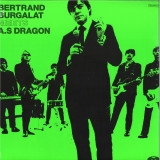
BERTRAND BURGALAT MEETS A.S DRAGON - ALBUM LIVE

Bertrand BurgalatmeetsA.s Dragon

ALBUM LIVE

12inchTRILPFR015-RP
Tricatel
05.12.2022

This album, recorded live after the release of Bertrand Burgalat's first album (The Sssound of Mmmusic, 2000), is a unique testimony of a passionate encounter, of explosive concerts and an exceptional musical adventure, a mixture of soulful rhythms, oniric keyboards and songs with chiseled lyrics and harmonies.

Out of stock on vinyl for decades, it will be reissued and published in December 2022, with a text by Philippe Manœuvre. 21 years after its first publication, it has not aged a bit. It includes tribute covers ("Follow Me" by Amanda Lear, "Tears Of A Clown" by Smokey Robinson), and a version of "Easy Tiger", recorded at the same time for Depeche Mode.

"This album brings back the great psychedelic concerts that Bertrand gave at the time. For me, Aux Cyclades électronique is in the running for the title of most beautiful song in the world, I haven't changed my mind."
Philippe Manoeuvre, excerpt from the innersleeve note, April 2022

"A.S Dragon is arguably the best French rock band of today. Nearly an hour of psyche-magnetic madness, the spectacular collision of a Gainsbourg theorist playing his melodies to a Jefferson Airplane from Clignancourt charged with pushing all galactic limits."
Philippe Manoeuvre, Rock & Folk, October 2001

"Bertrand Burgalat meets A.S Dragon could satisfy both French Touch fans and Rock'n'Roll purists. It sounds like the resurrection of a sixties garage rock band, somewhere between Detroit and Combs-la-ville. Burgalat for charity."
Philippe Barbot, Télérama, November 2001

"This is a fantastic remix! It sounds a bit like 70's funk. Bertrand has taken the song and reworked it from top to bottom, re-recording people on every part. It sounds like a James Bond song. It's really one of the best remixes we've ever done. "
Martin Gore (Depeche Mode) on "Easy Tiger", Magic, May 2001

"I wish this song could last my whole life..."
Virginie Despentes, on "Aux Cyclades électronique", "Vernon Subutex

out of Stock

Order now and we will order the item for you at our supplier.


Last In: 3 years ago
BLACK OX ORKESTAR - EVERYTHING RETURNS

Die Originalbesetzung von Black Ox Orkestar ist nach einer 15-jährigen Pause wieder zusammen. Die aus der fruchtbaren Montréaler Post-Punk-Agit-Prop-Szene der frühen 2000er Jahre hervorgegangene Band besteht aus Scott Gilmore, Jessica Moss und Thierry Amar von Thee Silver Mt. Zion (Amar komponiert und spielt auch weiterhin Bass für Godspeed You! Black Emperor) und Gabriel Levine von Sackville. Black Ox Orkestar haben Mitte der 2000er Jahre zwei gefeierte Alben mit aufgewühltem akustischem Avant-Folk veröffentlicht, auf denen sie osteuropäische und nordafrikanische Folklore durch die Linse einer düsteren, resonanten Indie-Rock-Sensibilität erforschten und Interpretationen von Instrumentalstücken aus verschiedenen jüdischen, rumänischen und arabischen Traditionen den Originalen gegenüberstellten. Auch dank Gilmores politisch aufgeladenem jiddischen Gesang sind diese frühen Alben für eine neue Generation von Musikern und Fans der jiddischen, Klezmer- und jüdischen Diaspora-Musik zu Meilensteinen geworden. Das von Greg Norman (Jason Molina, Nina Nastasia, Electrical Audio) hervorragend produzierte Album Everything Returns macht genau da weiter, wo die Band aufgehört hat: ein einschneidend atmosphärisches, melancholisches und doch entschlossenes Album einzigartiger moderner jüdischer Folkmusik, bei dem Klavier, Geige, Kontrabass, Klarinette und Cymbalom die Kerninstrumentierung bilden und die Gesangsstücke hauptsächlich auf Jiddisch gesungen werden. ENG Everything Returns reunites the original Black Ox Orkestar lineup following a 15-year hiatus. Arising from the fertile Montréal post-punk agit-prop scene of the early 2000s, the band comprises Scott Gilmore, Jessica Moss and Thierry Amar of Thee Silver Mt. Zion (Amar also continues to compose and play bass for Godspeed You! Black Emperor) and Gabriel Levine of Sackville. Black Ox made two acclaimed albums of roiling acoustic avant-folk in the mid-2000s, exploring Eastern European and North African folkways through the lens of a gritty, resonant indie rock sensibility, juxtaposing interpretations of instrumentals from various Jewish, Romani and Arabic traditions with originals led by Gilmore's politically-charged Yiddish vocals. These early albums have since become lodestars for many among a new generation of Yiddish, Klezmer and radical Jewish diasporic music practitioners and fans. First revealing its resurrection in February 2022 with a surprise flexi 7" single issued by left journal Jewish Currents as a gift to its thousands of subscribers, Black Ox has indeed fully and fruitfully reunited. Exquisitely recorded by Greg Norman (Jason Molina, Nina Nastasia, Electrical Audio), Everything Returns picks up right where the band left off: an incisively atmospheric, melancholic yet resolute album of uniquely modern Jewish folk music, with piano, violin, upright bass, clarinet and cymbalom making up the core instrumentation, and the vocal tunes sung primarily in Yiddish, alongside album centerpiece "Viderkol" and closer "Lamed-Vovnik" where English also features. This is not fusion music, but diaspora music: a cross-cultural call and response of musical lexicons, emerging from the history of Jewish persecution and displacement, the musicology of 19th century repertoire from Jewish shtetls , the improvisational traditions of nusakh in Jewish music and taqsim in Arabic music, and a wider polyglot dialogue of Jewish, Slavic, Arabic, and Central Asian musical traditions. Lyrically and stylistically, Everything Returns connects key current issues_from refugees forced to leave their homes, to the return of fascism and exclusionary nationalism_with the legacy of modernist Yiddish poetry and song. The new Black Ox Orkestar album is a sublime, poetic, politically-informed statement of re-energized diasporic musical intent, where Gilmore's voice and the band's simmering arrangements conjure an ardent, doleful balladry that echoes the sound and sensibility of artists like Tindersticks, The National, Nick Cave and Leonard Cohen. Everything Returns is a haunting, richly textured, darkly sparkling song cycle at once from a vanished world and very much of our time and place. Thanks for listening.

pre-order now02.12.2022

expected to be published on 02.12.2022

Black Ox Orkestar - Everything Returns

RIYL: A Hawk And A Hacksaw, Leonard Cohen, Daniel Kahn, Xylouris White, Arooj Aftab, Tindersticks, Nick Cave, Alasdair Roberts, Geoff Berner, The Klezmatics. Deluxe 180gLP with 350gsm Arktika jacket/inner + 36”x12” art/lyrics fold-out + DL. CD in gatefold jacket + art/lyrics fold-out. Recorded by Greg Norman (Jason Molina, Nina Nastasia, Electrical Audio). Everything Returns reunites the original Black Ox Orkestar lineup following a 15-year hiatus. Arising from the fertile Montréal post-punk agit-prop scene of the early 2000s, the band comprises Scott Gilmore, Jessica Moss and Thierry Amar of Thee Silver Mt. Zion (Amar also continues to compose and play bass for Godspeed You! Black Emperor) and Gabriel Levine of Sackville. Black Ox made two acclaimed albums of roiling acoustic avant-folk in the mid-2000s, exploring Eastern European and North African folkways through the lens of a gritty, resonant indie rock sensibility, juxtaposing interpretations of instrumentals from various Jewish, Romani and Arabic traditions with originals led by Gilmore’s politically-charged Yiddish vocals. These early albums have since become lodestars for many among a new generation of Yiddish, Klezmer and radical Jewish diasporic music practitioners and fans. First revealing its resurrection in February 2022 with a surprise flexi 7” single issued by left journal Jewish Currents as a gift to its thousands of subscribers, Black Ox has indeed fully and fruitfully reunited. Exquisitely recorded by Greg Norman (Jason Molina, Nina Nastasia, Electrical Audio), Everything Returns picks up right where the band left off: an incisively atmospheric, melancholic yet resolute album of uniquely modern Jewish folk music, with piano, violin, upright bass, clarinet and cymbalom making up the core instrumentation, and the vocal tunes sung primarily in Yiddish, alongside album centerpiece “Viderkol” and closer “Lamed-Vovnik” where English also features. This is not fusion music, but diaspora music: a cross-cultural call and response of musical lexicons, emerging from the history of Jewish persecution and displacement, the musicology of 19th century repertoire from Jewish shtetls, the improvisational traditions of nusakh in Jewish music and taqsim in Arabic music, and a wider polyglot dialogue of Jewish, Slavic, Arabic, and Central Asian musical traditions. Lyrically and stylistically, Everything Returns connects key current issues from refugees forced to leave their homes, to the return of fascism and exclusionary nationalism—with the legacy of modernist Yiddish poetry and song. The new Black Ox Orkestar album is a sublime, poetic, politically-informed statement of re-energized diasporic musical intent, where Gilmore’s voice and the band’s simmering arrangements conjure an ardent, doleful balladry that echoes the sound and sensibility of artists like Tindersticks, The National, Nick Cave and Leonard Cohen. Everything Returns is a haunting, richly textured, darkly sparkling song cycle at once from a vanished world and very much of our time and place. Tracklist: 1 Tish Nign 2 Perpetual Peace 3 Oysgeforn / Bessarabia Hora 4 Mizrakh Mi Ma’arav 5 Skotschne 6 Viderkol (Echo) 7 Epigenetik 8 Moldovan Zhok 9 Lamed-Vovnik

pre-order now02.12.2022

expected to be published on 02.12.2022

Lee Tracy & Isaac Manning - Is it What You Want

As the sun sets on a quaint East Nashville house, a young man bares a piece of his soul. Facing the camera, sporting a silky suit jacket/shirt/slacks/fingerless gloves ensemble that announces "singer" before he's even opened his mouth, Lee Tracy Johnson settles onto his stage, the front yard. He sways to the dirge-like drum machine pulse of a synth-soaked slow jam, extends his arms as if gaining his balance, and croons in affecting, fragile earnest, "I need your love… oh baby…"

Dogs in the yard next door begin barking. A mysterious cardboard robot figure, beamed in from galaxies unknown and affixed to a tree, is less vocal. Lee doesn't acknowledge either's presence. He's busy feeling it, arms and hands gesticulating. His voice rises in falsetto over the now-quiet dogs, over the ambient noise from the street that seeps into the handheld camcorder's microphone, over the recording of his own voice played back from a boombox off-camera. After six minutes the single, continuous shot ends. In this intimate creative universe there are no re-takes. There are many more music videos to shoot, and as Lee later puts it, "The first time you do it is actually the best. Because you can never get that again. You expressing yourself from within."

"I Need Your Love" dates from a lost heyday. From some time in the '80s or early '90s, when Lee Tracy (as he was known in performance) and his music partner/producer/manager Isaac Manning committed hours upon hours of their sonic and visual ideas to tape. Embracing drum machines and synthesizers – electronics that made their personal futurism palpable – they recorded exclusively at home, live in a room into a simple cassette deck. Soul, funk, electro and new wave informed their songs, yet Lee and Isaac eschewed the confinement of conventional categories and genres, preferring to let experimentation guide them.

"Anytime somebody put out a new record they had the same instruments or the same sound," explains Isaac. "So I basically wanted to find something that's really gonna stand out away from all of the rest of 'em." Their ethos meant that every idea they came up with was at least worth trying: echoed out half-rapped exhortations over frantic techno-style beats, gospel synth soul, modal electro-funk, oddball pop reinterpretations, emo AOR balladry, nods to Prince and the Fat Boys, or arrangements that might collapse mid-song into a mess of arcade game-ish blips before rallying to reach the finish line. All of it conjoined by consistent tape hiss, and most vitally, Lee's chameleonic voice, which managed to wildly shape shift and still evoke something sincere – whether toggling between falsetto and tenor exalting Jesus's return, or punctuating a melismatic romantic adlib with a succinct, "We all know how it feels to be alone."

"People think we went to a studio," says Isaac derisively. "We never went to no studio. We didn't have the money to go to no studio! We did this stuff at home. I shot videos in my front yard with whatever we could to get things together." Sometimes Isaac would just put on an instrumental record, be it "Planet Rock" or "Don't Cry For Me Argentina" (from Evita), press "record," and let Lee improvise over it, yielding peculiar love songs, would-be patriotic anthems, or Elvis Presley or Marilyn Monroe tributes. Technical limitations and a lack of professional polish never dissuaded them. They believed they were onto something.

"That struggle," Isaac says, "made that sound sound good to me."

In the parlance of modern music criticism Lee and Isaac's dizzying DIY efforts would inevitably be described as "outsider." But "outsider" carries the burden of untold additional layers of meaning if you're Black and from the South, creating on a budget, and trying to get someone, anyone within the country music capital of the world to take your vision seriously. "What category should we put it in?" Isaac asks rhetorically. "I don't know. All I know is feeling. I ain't gonna name it nothing. It's music. If it grabs your soul and touch your heart that's what it basically is supposed to do."

=

Born in 1963, the baby boy of nine siblings, Lee Tracy spent his earliest years living amidst the shotgun houses on Nashville's south side. "We was poor, man!" he says, recalling the outhouse his family used for a bathroom and the blocks of ice they kept in the kitchen to chill perishables. "But I actually don't think I really realized I was in poverty until I got grown and started thinking about it." Lee's mom worked at the Holiday Inn; his dad did whatever he had to do, from selling fruit from a horse drawn cart to bootlegging. "We didn't have much," Lee continues, "but my mother and my father got us the things we needed, the clothes on our back." By the end of the decade with the city's urban renewal programs razing entire neighborhoods to accommodate construction of the Interstate, the family moved to Edgehill Projects. Lee remembers music and art as a constant source of inspiration for he and his brothers and sisters – especially after seeing the Jackson 5 perform on Ed Sullivan. "As a small child I just knew that was what I wanted to do."

His older brother Don began musically mentoring him, introducing Lee to a variety of instruments and sounds. "He would never play one particular type of music, like R&B," says Lee. "I was surrounded by jazz, hard rock and roll, easy listening, gospel, reggae, country music; I mean I was a sponge absorbing all of that." Lee taught himself to play drums by beating on cardboard boxes, gaining a rep around the way for his timekeeping, and his singing voice. Emulating his favorites, Earth Wind & Fire and Cameo, he formed groups with other kids with era-evocative band names like Concept and TNT Connection, and emerged as the leader of disciplined rehearsals. "I made them practice," says Lee. "We practiced and practiced and practiced. Because I wanted that perfection." By high school the most accomplished of these bands would take top prize in a prominent local talent show. It was a big moment for Lee, and he felt ready to take things to the next level. But his band-mates had other ideas.

"I don't know what happened," he says, still miffed at the memory. "It must have blew they mind after we won and people started showing notice, because it's like everybody quit! I was like, where the hell did everybody go?" Lee had always made a point of interrogating prospective musicians about their intentions before joining his groups: were they really serious or just looking for a way to pick up girls? Now he understood even more the importance of finding a collaborator just as committed to the music as he was.

=

Isaac Manning had spent much of his life immersed in music and the arts – singing in the church choir with his family on Nashville's north side, writing, painting, dancing, and working various gigs within the entertainment industry. After serving in the armed forces, in the early '70s he ran The Teenage Place, a music and performance venue that catered to the local youth. But he was forced out of town when word of one of his recreational routines created a stir beyond the safe haven of his bohemian circles.

"I was growing marijuana," Isaac explains. "It wasn't no business, I was smoking it myself… I would put marijuana in scrambled eggs, cornbread and stuff." His weed use originated as a form of self-medication to combat severe tooth pain. But when he began sharing it with some of the other young people he hung out with, some of who just so happened to be the kids of Nashville politicians, the cops came calling. "When I got busted," he remembers, "they were talking about how they were gonna get rid of me because they didn't want me saying nothing about they children because of the politics and stuff. So I got my family, took two raggedy cars, and left Nashville and went to Vegas."

Out in the desert, Isaac happened to meet Chubby Checker of "The Twist" fame while the singer was gigging at The Flamingo. Impressed by Isaac's zeal, Checker invited him to go on the road with him as his tour manager/roadie/valet. The experience gave Isaac a window into a part of the entertainment world he'd never encountered – a glimpse of what a true pop act's audience looked like. "Chubby Checker, none of his shows were played for Black folks," he remembers. "All his gigs were done at high-class white people areas." Returning home after a few years with Chubby, Isaac was properly motivated to make it in Music City. He began writing songs and scouting around Nashville for local talent anywhere he could find it with an expressed goal: "Find someone who can deliver your songs the way you want 'em delivered and make people feel what you want them to feel."

One day while walking through Edgehill Projects Isaac heard someone playing the drums in a way that made him stop and take notice. "The music was so tight, just the drums made me feel like, oh I'm-a find this person," he recalls. "So I circled through the projects until I found who it was.

"That's how I met him – Lee Tracy. When I found him and he started singing and stuff, I said, ohhh, this is somebody different."

=

Theirs was a true complementary partnership: young Lee possessed the raw talent, the older Isaac the belief. "He's really the only one besides my brother and my family that really seen the potential in me," says Lee. "He made me see that I could do it."

Isaac long being a night owl, his house also made for a fertile collaborative environment – a space where there always seemed to be a new piece of his visual art on display: paintings, illustrations, and dolls and figures (including an enigmatic cardboard robot). Lee and Issac would hang out together and talk, listen to music, conjure ideas, and smoke the herb Isaac had resumed growing in his yard. "It got to where I could trust him, he could trust me," Isaac says of their bond. They also worked together for hours on drawings, spreading larges rolls of paper on the walls and sketching faces with abstract patterns and imagery: alien-like beings, tri-horned horse heads, inverted Janus-like characters where one visage blurred into the other.

Soon it became apparent that they didn't need other collaborators; self-sufficiency was the natural way forward. At Isaac's behest Lee, already fed up with dealing with band musicians, began playing around with a poly-sonic Yamaha keyboard at the local music store. "It had everything on it – trumpet, bass, drums, organ," remembers Lee. "And that's when I started recording my own stuff."

The technology afforded Lee the flexibility and independence he craved, setting him on a path other bedroom musicians and producers around the world were simultaneously following through the '80s into the early '90s. Saving up money from day jobs, he eventually supplemented the Yamaha Isaac had gotten him with Roland and Casio drum machines and a Moog. Lee was living in an apartment in Hillside at that point caring for his dad, who'd been partially paralyzed since early in life. In the evenings up in his second floor room, the music put him in a zone where he could tune out everything and lose himself in his ideas.

"Oh I loved it," he recalls. "I would really experiment with the instruments and use a lot of different sound effects. I was looking for something nobody else had. I wanted something totally different. And once I found the sound I was looking for, I would just smoke me a good joint and just let it go, hit the record button." More potent a creative stimulant than even Isaac's weed was the holistic flow and spontaneity of recording. Between sessions at Isaac's place and Lee's apartment, their volume of output quickly ballooned.

"We was always recording," says Lee. "That's why we have so much music. Even when I went to Isaac's and we start creating, I get home, my mind is racing, I gotta start creating, creating, creating. I remember there were times when I took a 90-minute tape from front to back and just filled it up."

"We never practiced," says Isaac. "See, that was just so odd about the whole thing. I could relate to him, and tell him about the songs I had ideas for and everything and stuff. And then he would bring it back or whatever, and we'd get together and put it down." Once the taskmaster hell bent on rehearsing, Lee had flipped a full 180. Perfection was no longer an aspiration, but the enemy of inspiration.

"I seen where practicing and practicing got me," says Lee. "A lot of musicians you get to playing and they gotta stop, they have to analyze the music. But while you analyzing you losing a lot of the greatness of what you creating. Stop analyzing what you play, just play! And it'll all take shape."

=

"I hope you understood the beginning of the record because this was invented from a dream I had today… (You tell me, I'll tell you, we'll figure it out together)" – Lee Tracy and Isaac Manning, "Hope You Understand"

Lee lets loose a maniacal cackle when he acknowledges that the material that he and Isaac recorded was by anyone's estimation pretty out there. It's the same laugh that commences "Hope You Understand" – a chaotic transmission that encapsulates the duality at the heart of their music: a stated desire to reach people and a compulsion to go as leftfield as they saw fit.

"We just did it," says Lee. "We cut the music on and cut loose. I don't sit around and write. I do it by listening, get a feeling, play the music, and the lyrics and stuff just come out of me."

The approach proved adaptable to interpreting other artists' material. While recording a cover of Whitney Houston's pop ballad "Saving All My Love For You," Lee played Whitney's version in his headphones as he laid down his own vocals – partially following the lyrics, partially using them as a departure point. The end result is barely recognizable compared with the original, Lee and Isaac having switched up the time signature and reinvented the melody along the way towards morphing a slick mainstream radio standard into something that sounds solely their own.

"I really used that song to get me started," says Lee. "Then I said, well I need something else, something is missing. Something just came over me. That's when I came up with 'Is It What You Want.'"

The song would become the centerpiece of Lee and Isaac's repertoire. Pushed along by a percolating metronomic Rhythm King style beat somewhere between a military march and a samba, "Is It What You Want" finds Lee pleading the sincerity of his commitment to a potential love interest embellished by vocal tics and hiccups subtlely reminiscent of his childhood hero MJ. Absent chord changes, only synth riffs gliding in and out like apparitions, the song achieves a lingering lo-fi power that leaves you feeling like it's still playing, somewhere, even after the fade out.

"I don't know, it's like a real spiritual song," Lee reflects. "But it's not just spiritual. To me the more I listen to it it's like about everything that you do in your everyday life, period. Is it what you want? Do you want a car or you don't want a car? Do you want Jesus or do you want the Devil? It's basically asking you the question. Can't nobody answer the question but you yourself."

In 1989 Lee won a lawsuit stemming from injuries sustained from a fight he'd gotten into. He took part of the settlement money and with Isaac pressed up "Saving All My Love For You" b/w "Is It What You Want" as a 45 single. Isaac christened the label One Chance Records. "Because that's all we wanted," he says with a laugh, "one chance."

Isaac sent the record out to radio stations and major labels, hoping for it to make enough noise to get picked up nationally. But the response he and Lee were hoping for never materialized. According to Isaac the closest the single got to getting played on the radio is when a disk jock from a local station made a highly unusual announcement on air: "The dude said on the radio, 107.5 – 'We are not gonna play 'Is It What You Want.' We cracked up! Wow, that's deep.

"It was a whole racist thing that was going on," he reflects. "So we just looked over and kept on going. That was it. That was about the way it goes… If you were Black and you were living in Nashville and stuff, that's the way you got treated." Isaac already knew as much from all the times he'd brought he and Lee's tapes (even their cache of country music tunes) over to Music Row to try to drum up interest to no avail.

"Isaac, he really worked his ass off," says Lee. "He probably been to every record place down on Music Row." Nashville's famed recording and music business corridor wasn't but a few blocks from where Lee grew up. Close enough, he remembers, for him to ride his bike along its back alleys and stumble upon the occasional random treasure, like a discarded box of harmonicas. Getting in through the front door, however, still felt a world away.

"I just don't think at the time our music fell into a category for them," he concedes. "It was before its time."

=

Lee stopped making music some time in the latter part of the '90s, around the time his mom passed away and life became increasingly tough to manage. "When my mother died I had a nervous breakdown," he says, "So I shut down for a long time. I was in such a sadness frame of mind. That's why nobody seen me. I had just disappeared off the map." He fell out of touch with Isaac, and in an indication of just how bad things had gotten for him, lost track of all the recordings they'd made together. Music became a distant memory.

Fortunately, Isaac kept the faith. In a self-published collection of his poetry – paeans to some of his favorite entertainment and public figures entitled Friends and Dick Clark – he'd written that he believed "music has a life of its own." But his prescience and presence of mind were truly manifested in the fact that he kept an archive of he and Lee's work. As perfectly imperfect as "Is It What You Want" now sounds in a post-Personal Space world, Lee and Isaac's lone official release was in fact just a taste. The bulk of the Is It What You Want album is culled from the pair's essentially unheard home recordings – complete songs, half-realized experiments, Isaac's blue monologues and pronouncements et al – compiled, mixed and programmed in the loose and impulsive creative spirit of their regular get-togethers from decades ago. The rest of us, it seems, may have finally caught up to them.

On the prospect of at long last reaching a wider audience, Isaac says simply, "I been trying for a long time, it feels good." Ever the survivor, he adds, "The only way I know how to make it to the top is to keep climbing. If one leg break on the ladder, hey, you gotta fix it and keep on going… That's where I be at. I'll kill death to make it out there."

For Lee it all feels akin to a personal resurrection: "It's like I was in a tomb and the tomb was opened and I'm back… Man, it feels so great. I feel like I'm gonna jump out of my skin." Success at this stage of his life, he realizes, probably means something different than what it did back when he was singing and dancing in Isaac's front yard. "What I really mean by 'making it,'" he explains isn't just the music being heard but, "the story being told."

Occasionally Lee will pull up "Is It What You Want" on YouTube on his phone, put on his headphones, and listen. He remembers the first time he heard his recorded voice. How surreal it was, how he thought to himself, "Is that really me?" What would he say to that younger version of himself now?

"I would probably tell myself, hang in there, don't give up. Keep striving for the goal. And everything will work out."

Despite what's printed on the record label, sometimes you do get more than one chance.

out of Stock

Order now and we will order the item for you at our supplier.


Last In: 3 years ago
Jeff Beck and Johnny Depp - 18

Jeff BeckandJohnny Depp

18

12inch081227881436
Rhino
30.09.2022

Jeff Beck and Johnny Depp tapped into the frustration of living through the pandemic in 2020 with their well-timed cover of John Lennon’s “Isolation.” The Grammy winning guitarist and Hollywood Vampires co-founder are back with their first album together, appropriately titled, JEFF BECK AND JOHNNY DEPP. On the new record, Beck’s first studio effort in six years, the artists coax unexpected performances from one another on 11 covers and two originals that touch on everything from Celtic and Motown to John Lennon, the Beach Boys and The Velvet Underground.

The result is a wild roller coaster ride through different genres where hairpin juxtapositions deliver some of the album’s biggest thrills. A remarkable example comes early on when the industrial stomp of Killing Joke’s “Death And Resurrection Show” gives way to the intense heartache of Dennis Wilson’s “Time.” Each performance stands on its own, but the sharp contrast created by sequencing them together heightens the emotional impact of both songs.

The duo recorded most of the album in Beck’s studio over three years while Depp lived on and off in the guitarist’s English cottage. Robert Adam Stevenson co-produced several tracks on the album and engineered many of the sessions remotely from Depp’s studio in Los Angeles. When the basic tracks were finished, they were fleshed out by musicians who’ve played with Beck through the years, including drummer Vinnie Colaiuta and bassist Rhonda Smith.

The album title will be “18.” The cover illustration (attached) was done by Jeff’s wife, Sandra and pictures them when they were both 18. Here’s Jeff’s comment on the title from the PR: Beck explains the album title: “When Johnny and I started playing together, it really ignited our youthful spirit and creativity. We would joke about how we felt 18 again, so that just became the album title too.”

pre-order now30.09.2022

expected to be published on 30.09.2022

Hexed - Pagans Rising LP

Hexed

Pagans Rising LP

12inchVSP180LPAU
SOUND POLLUTION
30.09.2022

HEXED - Die schwedische Symphonic Progressive Metal Band melden sich mit ihrem zweiten Album 'Pagans Rising' zurück! Klingt wie Dimmu Borgir, Lacuna Coil, Within Temptation, Evergrey oder Kamelot.

pre-order now30.09.2022

expected to be published on 30.09.2022

Hexed - Pagans Rising LP

Hexed

Pagans Rising LP

12inchVSP180LP
SOUND POLLUTION
30.09.2022

HEXED - Die schwedische Symphonic Progressive Metal Band melden sich mit ihrem zweiten Album 'Pagans Rising' zurück! Klingt wie Dimmu Borgir, Lacuna Coil, Within Temptation, Evergrey oder Kamelot.

pre-order now30.09.2022

expected to be published on 30.09.2022

Beck, Jeff and Johnny Depp - 18 LP

Beck,JeffandJohnny Depp

18 LP

12inch0081227881436
Warner Music International
30.09.2022

In a collaboration you might never have expected but somehow makes perfect sense, original Brit blues mastermind Jeff Beck teams up with a little known American by the name of Johnny Depp to render some of the latter's songs alongside some finely selected covers. From The Beach Boys to John Lennon, The Velvet Underground to Killing Joke and more besides, this is the sound of two lifelong music lovers letting it all hang out and playing with the impassioned energy and innocence of youth. More than just a throwaway side project for a global superstar, this is a deeply discerning project which frames Depp's music in a whole new light.

pre-order now30.09.2022

expected to be published on 30.09.2022

Lee Tracy & Isaac Manning - Is it What You Want LP

As the sun sets on a quaint East Nashville house, a young man bares a piece of his soul. Facing the camera, sporting a silky suit jacket/shirt/slacks/fingerless gloves ensemble that announces "singer" before he's even opened his mouth, Lee Tracy Johnson settles onto his stage, the front yard. He sways to the dirge-like drum machine pulse of a synth-soaked slow jam, extends his arms as if gaining his balance, and croons in affecting, fragile earnest, "I need your love… oh baby…"

Dogs in the yard next door begin barking. A mysterious cardboard robot figure, beamed in from galaxies unknown and affixed to a tree, is less vocal. Lee doesn't acknowledge either's presence. He's busy feeling it, arms and hands gesticulating. His voice rises in falsetto over the now-quiet dogs, over the ambient noise from the street that seeps into the handheld camcorder's microphone, over the recording of his own voice played back from a boombox off-camera. After six minutes the single, continuous shot ends. In this intimate creative universe there are no re-takes. There are many more music videos to shoot, and as Lee later puts it, "The first time you do it is actually the best. Because you can never get that again. You expressing yourself from within."

"I Need Your Love" dates from a lost heyday. From some time in the '80s or early '90s, when Lee Tracy (as he was known in performance) and his music partner/producer/manager Isaac Manning committed hours upon hours of their sonic and visual ideas to tape. Embracing drum machines and synthesizers – electronics that made their personal futurism palpable – they recorded exclusively at home, live in a room into a simple cassette deck. Soul, funk, electro and new wave informed their songs, yet Lee and Isaac eschewed the confinement of conventional categories and genres, preferring to let experimentation guide them.

"Anytime somebody put out a new record they had the same instruments or the same sound," explains Isaac. "So I basically wanted to find something that's really gonna stand out away from all of the rest of 'em." Their ethos meant that every idea they came up with was at least worth trying: echoed out half-rapped exhortations over frantic techno-style beats, gospel synth soul, modal electro-funk, oddball pop reinterpretations, emo AOR balladry, nods to Prince and the Fat Boys, or arrangements that might collapse mid-song into a mess of arcade game-ish blips before rallying to reach the finish line. All of it conjoined by consistent tape hiss, and most vitally, Lee's chameleonic voice, which managed to wildly shape shift and still evoke something sincere – whether toggling between falsetto and tenor exalting Jesus's return, or punctuating a melismatic romantic adlib with a succinct, "We all know how it feels to be alone."

"People think we went to a studio," says Isaac derisively. "We never went to no studio. We didn't have the money to go to no studio! We did this stuff at home. I shot videos in my front yard with whatever we could to get things together." Sometimes Isaac would just put on an instrumental record, be it "Planet Rock" or "Don't Cry For Me Argentina" (from Evita), press "record," and let Lee improvise over it, yielding peculiar love songs, would-be patriotic anthems, or Elvis Presley or Marilyn Monroe tributes. Technical limitations and a lack of professional polish never dissuaded them. They believed they were onto something.

"That struggle," Isaac says, "made that sound sound good to me."

In the parlance of modern music criticism Lee and Isaac's dizzying DIY efforts would inevitably be described as "outsider." But "outsider" carries the burden of untold additional layers of meaning if you're Black and from the South, creating on a budget, and trying to get someone, anyone within the country music capital of the world to take your vision seriously. "What category should we put it in?" Isaac asks rhetorically. "I don't know. All I know is feeling. I ain't gonna name it nothing. It's music. If it grabs your soul and touch your heart that's what it basically is supposed to do."

=

Born in 1963, the baby boy of nine siblings, Lee Tracy spent his earliest years living amidst the shotgun houses on Nashville's south side. "We was poor, man!" he says, recalling the outhouse his family used for a bathroom and the blocks of ice they kept in the kitchen to chill perishables. "But I actually don't think I really realized I was in poverty until I got grown and started thinking about it." Lee's mom worked at the Holiday Inn; his dad did whatever he had to do, from selling fruit from a horse drawn cart to bootlegging. "We didn't have much," Lee continues, "but my mother and my father got us the things we needed, the clothes on our back." By the end of the decade with the city's urban renewal programs razing entire neighborhoods to accommodate construction of the Interstate, the family moved to Edgehill Projects. Lee remembers music and art as a constant source of inspiration for he and his brothers and sisters – especially after seeing the Jackson 5 perform on Ed Sullivan. "As a small child I just knew that was what I wanted to do."

His older brother Don began musically mentoring him, introducing Lee to a variety of instruments and sounds. "He would never play one particular type of music, like R&B," says Lee. "I was surrounded by jazz, hard rock and roll, easy listening, gospel, reggae, country music; I mean I was a sponge absorbing all of that." Lee taught himself to play drums by beating on cardboard boxes, gaining a rep around the way for his timekeeping, and his singing voice. Emulating his favorites, Earth Wind & Fire and Cameo, he formed groups with other kids with era-evocative band names like Concept and TNT Connection, and emerged as the leader of disciplined rehearsals. "I made them practice," says Lee. "We practiced and practiced and practiced. Because I wanted that perfection." By high school the most accomplished of these bands would take top prize in a prominent local talent show. It was a big moment for Lee, and he felt ready to take things to the next level. But his band-mates had other ideas.

"I don't know what happened," he says, still miffed at the memory. "It must have blew they mind after we won and people started showing notice, because it's like everybody quit! I was like, where the hell did everybody go?" Lee had always made a point of interrogating prospective musicians about their intentions before joining his groups: were they really serious or just looking for a way to pick up girls? Now he understood even more the importance of finding a collaborator just as committed to the music as he was.

=

Isaac Manning had spent much of his life immersed in music and the arts – singing in the church choir with his family on Nashville's north side, writing, painting, dancing, and working various gigs within the entertainment industry. After serving in the armed forces, in the early '70s he ran The Teenage Place, a music and performance venue that catered to the local youth. But he was forced out of town when word of one of his recreational routines created a stir beyond the safe haven of his bohemian circles.

"I was growing marijuana," Isaac explains. "It wasn't no business, I was smoking it myself… I would put marijuana in scrambled eggs, cornbread and stuff." His weed use originated as a form of self-medication to combat severe tooth pain. But when he began sharing it with some of the other young people he hung out with, some of who just so happened to be the kids of Nashville politicians, the cops came calling. "When I got busted," he remembers, "they were talking about how they were gonna get rid of me because they didn't want me saying nothing about they children because of the politics and stuff. So I got my family, took two raggedy cars, and left Nashville and went to Vegas."

Out in the desert, Isaac happened to meet Chubby Checker of "The Twist" fame while the singer was gigging at The Flamingo. Impressed by Isaac's zeal, Checker invited him to go on the road with him as his tour manager/roadie/valet. The experience gave Isaac a window into a part of the entertainment world he'd never encountered – a glimpse of what a true pop act's audience looked like. "Chubby Checker, none of his shows were played for Black folks," he remembers. "All his gigs were done at high-class white people areas." Returning home after a few years with Chubby, Isaac was properly motivated to make it in Music City. He began writing songs and scouting around Nashville for local talent anywhere he could find it with an expressed goal: "Find someone who can deliver your songs the way you want 'em delivered and make people feel what you want them to feel."

One day while walking through Edgehill Projects Isaac heard someone playing the drums in a way that made him stop and take notice. "The music was so tight, just the drums made me feel like, oh I'm-a find this person," he recalls. "So I circled through the projects until I found who it was.

"That's how I met him – Lee Tracy. When I found him and he started singing and stuff, I said, ohhh, this is somebody different."

=

Theirs was a true complementary partnership: young Lee possessed the raw talent, the older Isaac the belief. "He's really the only one besides my brother and my family that really seen the potential in me," says Lee. "He made me see that I could do it."

Isaac long being a night owl, his house also made for a fertile collaborative environment – a space where there always seemed to be a new piece of his visual art on display: paintings, illustrations, and dolls and figures (including an enigmatic cardboard robot). Lee and Issac would hang out together and talk, listen to music, conjure ideas, and smoke the herb Isaac had resumed growing in his yard. "It got to where I could trust him, he could trust me," Isaac says of their bond. They also worked together for hours on drawings, spreading larges rolls of paper on the walls and sketching faces with abstract patterns and imagery: alien-like beings, tri-horned horse heads, inverted Janus-like characters where one visage blurred into the other.

Soon it became apparent that they didn't need other collaborators; self-sufficiency was the natural way forward. At Isaac's behest Lee, already fed up with dealing with band musicians, began playing around with a poly-sonic Yamaha keyboard at the local music store. "It had everything on it – trumpet, bass, drums, organ," remembers Lee. "And that's when I started recording my own stuff."

The technology afforded Lee the flexibility and independence he craved, setting him on a path other bedroom musicians and producers around the world were simultaneously following through the '80s into the early '90s. Saving up money from day jobs, he eventually supplemented the Yamaha Isaac had gotten him with Roland and Casio drum machines and a Moog. Lee was living in an apartment in Hillside at that point caring for his dad, who'd been partially paralyzed since early in life. In the evenings up in his second floor room, the music put him in a zone where he could tune out everything and lose himself in his ideas.

"Oh I loved it," he recalls. "I would really experiment with the instruments and use a lot of different sound effects. I was looking for something nobody else had. I wanted something totally different. And once I found the sound I was looking for, I would just smoke me a good joint and just let it go, hit the record button." More potent a creative stimulant than even Isaac's weed was the holistic flow and spontaneity of recording. Between sessions at Isaac's place and Lee's apartment, their volume of output quickly ballooned.

"We was always recording," says Lee. "That's why we have so much music. Even when I went to Isaac's and we start creating, I get home, my mind is racing, I gotta start creating, creating, creating. I remember there were times when I took a 90-minute tape from front to back and just filled it up."

"We never practiced," says Isaac. "See, that was just so odd about the whole thing. I could relate to him, and tell him about the songs I had ideas for and everything and stuff. And then he would bring it back or whatever, and we'd get together and put it down." Once the taskmaster hell bent on rehearsing, Lee had flipped a full 180. Perfection was no longer an aspiration, but the enemy of inspiration.

"I seen where practicing and practicing got me," says Lee. "A lot of musicians you get to playing and they gotta stop, they have to analyze the music. But while you analyzing you losing a lot of the greatness of what you creating. Stop analyzing what you play, just play! And it'll all take shape."

=

"I hope you understood the beginning of the record because this was invented from a dream I had today… (You tell me, I'll tell you, we'll figure it out together)" – Lee Tracy and Isaac Manning, "Hope You Understand"

Lee lets loose a maniacal cackle when he acknowledges that the material that he and Isaac recorded was by anyone's estimation pretty out there. It's the same laugh that commences "Hope You Understand" – a chaotic transmission that encapsulates the duality at the heart of their music: a stated desire to reach people and a compulsion to go as leftfield as they saw fit.

"We just did it," says Lee. "We cut the music on and cut loose. I don't sit around and write. I do it by listening, get a feeling, play the music, and the lyrics and stuff just come out of me."

The approach proved adaptable to interpreting other artists' material. While recording a cover of Whitney Houston's pop ballad "Saving All My Love For You," Lee played Whitney's version in his headphones as he laid down his own vocals – partially following the lyrics, partially using them as a departure point. The end result is barely recognizable compared with the original, Lee and Isaac having switched up the time signature and reinvented the melody along the way towards morphing a slick mainstream radio standard into something that sounds solely their own.

"I really used that song to get me started," says Lee. "Then I said, well I need something else, something is missing. Something just came over me. That's when I came up with 'Is It What You Want.'"

The song would become the centerpiece of Lee and Isaac's repertoire. Pushed along by a percolating metronomic Rhythm King style beat somewhere between a military march and a samba, "Is It What You Want" finds Lee pleading the sincerity of his commitment to a potential love interest embellished by vocal tics and hiccups subtlely reminiscent of his childhood hero MJ. Absent chord changes, only synth riffs gliding in and out like apparitions, the song achieves a lingering lo-fi power that leaves you feeling like it's still playing, somewhere, even after the fade out.

"I don't know, it's like a real spiritual song," Lee reflects. "But it's not just spiritual. To me the more I listen to it it's like about everything that you do in your everyday life, period. Is it what you want? Do you want a car or you don't want a car? Do you want Jesus or do you want the Devil? It's basically asking you the question. Can't nobody answer the question but you yourself."

In 1989 Lee won a lawsuit stemming from injuries sustained from a fight he'd gotten into. He took part of the settlement money and with Isaac pressed up "Saving All My Love For You" b/w "Is It What You Want" as a 45 single. Isaac christened the label One Chance Records. "Because that's all we wanted," he says with a laugh, "one chance."

Isaac sent the record out to radio stations and major labels, hoping for it to make enough noise to get picked up nationally. But the response he and Lee were hoping for never materialized. According to Isaac the closest the single got to getting played on the radio is when a disk jock from a local station made a highly unusual announcement on air: "The dude said on the radio, 107.5 – 'We are not gonna play 'Is It What You Want.' We cracked up! Wow, that's deep.

"It was a whole racist thing that was going on," he reflects. "So we just looked over and kept on going. That was it. That was about the way it goes… If you were Black and you were living in Nashville and stuff, that's the way you got treated." Isaac already knew as much from all the times he'd brought he and Lee's tapes (even their cache of country music tunes) over to Music Row to try to drum up interest to no avail.

"Isaac, he really worked his ass off," says Lee. "He probably been to every record place down on Music Row." Nashville's famed recording and music business corridor wasn't but a few blocks from where Lee grew up. Close enough, he remembers, for him to ride his bike along its back alleys and stumble upon the occasional random treasure, like a discarded box of harmonicas. Getting in through the front door, however, still felt a world away.

"I just don't think at the time our music fell into a category for them," he concedes. "It was before its time."

=

Lee stopped making music some time in the latter part of the '90s, around the time his mom passed away and life became increasingly tough to manage. "When my mother died I had a nervous breakdown," he says, "So I shut down for a long time. I was in such a sadness frame of mind. That's why nobody seen me. I had just disappeared off the map." He fell out of touch with Isaac, and in an indication of just how bad things had gotten for him, lost track of all the recordings they'd made together. Music became a distant memory.

Fortunately, Isaac kept the faith. In a self-published collection of his poetry – paeans to some of his favorite entertainment and public figures entitled Friends and Dick Clark – he'd written that he believed "music has a life of its own." But his prescience and presence of mind were truly manifested in the fact that he kept an archive of he and Lee's work. As perfectly imperfect as "Is It What You Want" now sounds in a post-Personal Space world, Lee and Isaac's lone official release was in fact just a taste. The bulk of the Is It What You Want album is culled from the pair's essentially unheard home recordings – complete songs, half-realized experiments, Isaac's blue monologues and pronouncements et al – compiled, mixed and programmed in the loose and impulsive creative spirit of their regular get-togethers from decades ago. The rest of us, it seems, may have finally caught up to them.

On the prospect of at long last reaching a wider audience, Isaac says simply, "I been trying for a long time, it feels good." Ever the survivor, he adds, "The only way I know how to make it to the top is to keep climbing. If one leg break on the ladder, hey, you gotta fix it and keep on going… That's where I be at. I'll kill death to make it out there."

For Lee it all feels akin to a personal resurrection: "It's like I was in a tomb and the tomb was opened and I'm back… Man, it feels so great. I feel like I'm gonna jump out of my skin." Success at this stage of his life, he realizes, probably means something different than what it did back when he was singing and dancing in Isaac's front yard. "What I really mean by 'making it,'" he explains isn't just the music being heard but, "the story being told."

Occasionally Lee will pull up "Is It What You Want" on YouTube on his phone, put on his headphones, and listen. He remembers the first time he heard his recorded voice. How surreal it was, how he thought to himself, "Is that really me?" What would he say to that younger version of himself now?

"I would probably tell myself, hang in there, don't give up. Keep striving for the goal. And everything will work out."

Despite what's printed on the record label, sometimes you do get more than one chance.

out of Stock

Order now and we will order the item for you at our supplier.


Last In: 3 years ago
Front Line Assembly - Total Terror 2 LP 2x12"

“Total Terror 2” is another collection of early Front Line Assembly demos remixed and remastered for a CD released for the first time in 1994. The original recordings of these songs were done in 1986/87. The equipment used was primitive, but then so is mankind.

Deluxe re-release including all tracks from the first edition plus some bonus taken from old compilations. Limited pressing of 500 copies with double vinyl record, deluxe gatefold sleeve and new vintage artwork.

out of Stock

Order now and we will order the item for you at our supplier.


Last In: 3 years ago
Powerwolf - The Monumental Mass: A Cinematic Metal Event LP (2x12")

Ende 2021 faszinierten POWERWOLF, die momentan erfolgreichste deutsche Metal Band, mit einem Streaming Event in nie dagewesenen Ausmaßen. Wer gedacht hat, alles im Live-Sektor schon gesehen zu
haben, wird hier lautstark und bildgewaltig eines Besseren belehrt. POWERWOLF lieferten Ende 2021 den neuen Maßstab für Musikstreaming Events. Am 08. Juli 2022 erscheint THE MONUMENTAL MASS – A CINEMATIC METAL EVENT endlich auch auf DVD, BluRay und vielen weiteren physischen Formaten.
POWERWOLF stehen seit Jahren für epische Metal Momente der Superlative, aber was sie auf diesem Streaming Event präsentieren übertrifft alles bisher Gesehene: In monatelanger Detailarbeit wurde eine Geschichte ausgearbeitet, die in mehreren Kapiteln anhand der Musik und aufwändig inszenierten Filmszenen erzählt wird.

Es werden von Kämpfen mit Geistlichen über Geschichten von Nonnen und Mönchen bis hin zu brennenden Engeln cineastische Bilder geliefert, die den Zuschauer sofort gefangen nehmen.Ein Live Spektakel, das auch nach wiederholten Durchläufen viele weitere Details entdecken lässt und POWERWOLFs Status als
die herausragende Band des Genres zementiert!

pre-order now08.07.2022

expected to be published on 08.07.2022

Powerwolf - The Monumental Mass: A Cinematic Metal Event 2x12"

"At the end of 2021, POWERWOLF – the most successful German metal band to date – fascinated with a streaming event of unprecedented dimensions. Those who thought they had seen everything in the live sector were instantly proven wrong with unmatched audio production and visuals that can only be described as simply breathtaking. This summer, on July 8, 2022, this new benchmark for music streaming events will finally be available to view any time you crave. THE MONUMENTAL MASS - A CINEMATIC METAL EVENT will be unleashed on DVD, BluRay and many other physical formats! POWERWOLF have stood at the peak of superlative, epic metal moments for years, but what they present with this streaming event surpasses anything seen before. After months of detailed work, a story was crafted and presented in several chapters based on the stunning music and elaborately staged cinematic scenes. All show effects, actors and stage settings work hand in hand with each other and bring the medium of live music to a level never seen before. From battles with clergy to stories of nuns, monks and burning angels, cinematic images immediately capture the viewer. Each song has its own stunning set designed and is perfectly staged - the production and size alone are unparalleled. One live premiere of a POWERWOLF classic follows the next, one after another – all with impressively produced sound design.

pre-order now08.07.2022

expected to be published on 08.07.2022

MINIMAL VIOLENCE - PHASE THREE

Minimal Violence

PHASE THREE

12inchTRESOR325
Tresor
24.06.2022

As the z-axis of our planet tilts away, and a gulf of dusty earth, air and searing fire is revealed before us, Minimal Violence holds a unflinching stare, unveiling upon us Phase Three in an act of pure psychic release. Consecutive of the destruction of Phase One and the restructuring of Phase Two it only seems appropriate that the third phase of the series finds the project reaching a state of transcendence and transition as it also aligns with the shift from a duo to the solo venture of Ash Luk following the departure of co-founder Lida P.

This third EP of the DESTROY ---> physical REALITY psychic <--- TRUST series launches straight into the 145 bpm stomper Flatline. It is a track founded by a family spirit, with lyrics co-written with Luk’s mother and their step-father Mad Johnny on vocals and guitar. It draws a hoarse chant of passion, ".. nothing matters .. I still love you .. resuscitation .. resurrection .." in answer to arching melodic euphoria. Cold (sex) follows down a scorched earth driveway into distorted whistles, detuned melodies and some of the best sequencer abuse out there.
We Suocate on the Violence of Light reveals perhaps the finest expedition so far in Minimal Violence’s particular vein of acid-singed euphoric trance. Its synths smeared and merged unholy, where the drums meddle with the tensions between drum and bass and nail to the ground four to the floor rhythm. Focus On That Form pummels hard within a deep noise volley, scratching hard to rid its environments of any longer lasting lustre.

As ever, the transformative sound of Minimal Violence emerges deep from fire. Denying any uncertain embers an escape route, Luk casts anew from a seemingly unending source of unique energy.

out of Stock

Order now and we will order the item for you at our supplier.


Last In: 3 years ago
Johnny Klimek and Tom Tykwer - The Matrix Resurrections (Original Soundtrack)

Tom Tykwer discussed the composers’ work on The Matrix Resurrections. “There’s a powerful and distinct musical legacy here. In my opinion, The Matrix Trilogy is one of the great scores of all time. And what’s particularly fantastic about it is that it was also, to my knowledge, one of the first film scores that so implemented electronic music and connected it with progressive late-modern orchestral music. It started a movement, which we are paying tribute to with this music. And yet, this film is playful and emotional with complex development, open in every direction. Johnny and I felt our challenge for the music was to pay tribute to The Matrix lineage and also support this cinematic endeavor of expanding that legacy to explore new directions. That needs to be represented in the music and that is what we are trying to investigate musically.”
Johnny Klimek elaborated, “We spent several months working on material for The Matrix Resurrections, building the main themes, crafting alternative arrangements and electronic variants. We had a lot of fun mixing electronics with classical orchestra. The technology has come so far since I started scoring film.”

The Matrix Resurrections - Original Motion Picture Soundtrack Includes all 24 tracks composed for the film by Johnny Klimek and Tom Tykwer, mastered for vinyl and pressed on 2x 180 Gram Black vinyl, with original artwork by Mondo's creative director Mo Shafeek

pre-order now27.05.2022

expected to be published on 27.05.2022

Johnny Klimek and Tom Tykwer - The Matrix Resurections: The Remixes 2x12"
pre-order now27.05.2022

expected to be published on 27.05.2022

Bézier - Valencia EP

Bézier

Valencia EP

12inchDE290
Dark Entries
22.04.2022

Bézier returns to Dark Entries with Valencia, a six track rumination on memory, geography, and transmutation. Multi-instrumentalist Robert Yang’s Bézier project has appeared on Dark Entries many times over the last decade, most recently with the 2018 LP Parler Musique. Says Yang, “What started as a project to investigate the love of the sound and scenery while living in San Francisco quickly developed into a passionate search for interlocking melodies and driving rhythms.”
On Valencia, Bézier invokes twinned places. The Valencia Street of San Francisco is channeled, which was the center of the city’s vibrant new wave scene in the 1980s.

But also echoed is Valencia, Spain, and La Ruta del Bakalao aka La Ruta Destroy, the Spanish clubbing scene throughout the 80s and 90s famed for its aggressive and synthetic sounds. Valencia is a darker record for Yang, exploring themes of submission and catharsis with nods to SF’s gay leather bars of the 70s and 80s. The high BPM salvos of “Valencia” and “Scrupulous” capture the frantic energy of Bakalao and Valencian wave acts like Última Emoción. Elsewhere Yang mines the dreamy space disco and Hi-NRG sounds they’re known for, like on the brooding “Past the Marshes” or the anthemic “Reservoir”, which features their partner Len.Leo on vocals. Bézier deftly navigates past and present, light and dark, pain and pleasure, the stasis of memory and the flux of time.

Valencia was mastered by Alex Michalski, with EQ for vinyl done by George Horn. Gwenaël Rattke designed the sleeve, which features an 80’s punk zine-esque geometric grid pattern mirroring San Francisco street maps. Also included is a 5x7 postcard with notes.

out of Stock

Order now and we will order the item for you at our supplier.


Last In: 4 years ago
The Web Of Lies - Nude With Demon

FFO Comets on Fire / VU / 60s garage / early Flaming Lips, new band from Leeds/Glasgow - you'll know some of the people involved, we couldn't help but fall in love with it. Here's some words from T House (Sweet Williams/Charlottefield): “Ostrich tuned and chronically distressed, The Web Of Lies is Neil Robinson (Buffet Lunch) and Edwin Stevens (Irma Vep, Yerba Mansa). Having played together years back in Robert Sotelo’s band and forged a singular connection, the pair have been biding their time, waiting for the perfect moment Nude With Demon, their first LP, lurches from the incendiary to the world-weary, like a drunk alternately haranguing and commiserating on the rush hour tube. Drafted quickly in a handful of hungover early morning sessions, fleshed out with a few carefully chosen collaborators - Kathryn Gray (Mia La Metta, Nape Neck), Dylan Hughes (The Birth Marks), Ruari Maclean and Jess Higgins (Vital Idles), Neil Campbell (Astral Social Club) and Dan Bridgewood Hill (d bh) - it’s one long dribbling lunge at the grab strap, regret seeping from the pores, mitigated by wry humour and, when the rage momentarily subsides, the suggestion of humanity"

pre-order now28.02.2022

expected to be published on 28.02.2022

Kevin Richard Martin - Return to Solaris LP 2x12"

Acclaimed UK electronic musician Kevin Richard Martin (The Bug, King Midas Sound) releases a stunningly powerful rescore of Andrei Tarkovsky’s seminal 1972 movie Solaris on Phantom Limb.

In May 2020, British musician Kevin Martin was invited by the Vooruit arts centre in Gent, Belgium to compose a new score for a film of his choice. Having been long inspired by pioneering Soviet filmmaker Andrei Tarkovsky, Martin tells us that his 1972 masterpiece Solaris was the “natural choice”. The film is an unattested giant, not only of science fiction and Soviet film, but also in the annals cinematic history. And its original score, composed by regular Tarkovsky collaborator and early Soviet electronic musician Eduard Artemyev, is a magnificent work of haunting majesty, a key element to the film’s brilliance. Martin’s challenge was great: “it was with a certain amount of trepidation I stepped into such large footprints,” he writes.

The results - an all new score entitled Return to Solaris - are breathtaking. The film is intense, psychologically devastating and bleakly compelling. Interweaving themes of love, horror, sorrow, nostalgia, memory and dystopia, Martin’s score expertly mirrors this expansive breadth of psychic weight, from existential dread to heartbreaking poignancy, with immense emotional gravity. Drawn to its “narrative struggle between organic, pastoral memories of a lost past, and the harsh, dystopian realities of a futuristic hell,” Martin employs atonal noise, simmering waves of distorted synthesis, undulating drones and otherworldly, astronomic sound-design to crushing effect. Subtly submerged recurring motifs - reflections of individual characters - rise and fall amidst the fog, occasionally illuminating the doom like motes of starlight, before settling back into the density of space.

out of Stock

Order now and we will order the item for you at our supplier.


Last In: 4 years ago
George Fenton - The United Way

The soundtrack to the movie The United Way. The United Way is the legendary story of ‘The Red Devils’ – Manchester United. From their humblest of beginnings in England’s Industrial North at the turn of the 20th Century, Manchester United gifted working men, women and children alike, the poor and the struggling, a new Dream – a winning Dream of hope, beauty and ambition. Here is a family club which pulled itself, phoenix-like, from the ashes of the horrific Munich air disaster to become champions of European football, committing to a stunning, relentlessly attacking style and elevating working class boys to the status of gods: Charlton, Best, Cantona, Beckham and Ronaldo. Such is the mythical aura of the club, that its stadium is universally known as “The Theatre of Dreams”. Now, with over 650 million supporters around the world, 73m Facebook fans, 18m Twitter followers and 1.8m shirts sold per season, Manchester United are the most celebrated, widely supported sports club in the world. Presented by the peerless Eric Cantona and featuring stunning archive and never seen before footage, “The United Way” celebrates the birth and growth of a global phenomenon – a unifying club for the people, by the people. The whole film is set to a score by George Fenton - one of the UK’s most successful composers, writing scores for over 100 films and dozens of plays and TV programmes. He has been recognised with numerous awards: 5 Oscar nominations, multiple Ivor Novello, BAFTA, Golden Globe, Emmy and BMI awards, a Classical Brit, The Nina Rota Award at Venice and a World Soundtrack Lifetime Achievement Award from Film Fest Gent.

pre-order now14.01.2022

expected to be published on 14.01.2022

Killing Joke - Killing Joke 2003

2003 Jahr erschien das elfte Studioalbum von Killing Joke und das erste nach einer Pause von sieben Jahren.
Ihr selbstbetiteltes Debütalbum war zu diesem Zeitpunkt 23 Jahre alt. Zehn Alben später benannten sie
ihr neues Produkt nun erneut nach sich selbst: „Killing Joke 2003“. Ein Name so simpel, dass er besonders
laut daherkommt. Die Drums wurden damals von Foo Fighters-Frontmann Dave Grohl eingespielt. Der
ursprüngliche Plan war es gewesen, die drei Lieblingsdrummer der Band auf dem Album zu vereinen: John
Dolmayan von System of a Down, Danny Carey von Tool und eben Dave Grohl. Letzterer beanspruchte
kurzerhand „das ganze Ding“ für sich, nachdem er die Songs gehört hatte und bestand darauf, unbezahlt
zu arbeiten. Ihr Werk wurde 2005 im Rock Hard Buch zu einem der 500 größten Rock- und Metalalben
aller Zeiten gekührt. Weitere zwei Jahrzehnte später, nach 40 Jahren Bandgeschichte erscheint „Killing
Joke 2003“ jetzt in einer Neuauflage.

pre-order now17.12.2021

expected to be published on 17.12.2021

Lina FILIPOVICH - Magnificat

We are quite pleased to be bringing you this new album of mind-bending, pseudo liturgical and potentially lysergic electro acoustic compositions from Paris based, Belarusian composer Lina Filipovich, entitled "Magnificat". With its dark echoes of early Doctor Who episodes, and it's bent and twisted, industrially tinged and distorted choral decay, it seems at times like an ominous soundtrack to an end of the world sci-fi film. This is the standard vinyl version in an edition of 90 copies.

pre-order now08.11.2021

expected to be published on 08.11.2021

Kero Kero Bonito - Civilisation

This is the follow up to Kero Hero Bonito’s 7” ‘Flamingo’ release from November last year.


Kero Kero Bonito are a London-based experimental pop trio, comprised of bilingual Anglo-Japanese singer Sarah and producers Gus and Jamie. Having previously made college radio indie (Time 'n' Place, #1 NACC 2018) and viral Casio megahits ("Flamingo", "I'd Rather Sleep"), the six track Civilisation mini-album compiles the "lost world junk pop" of the band's Civilisation I and Civilisation II EPs.

Civilisation was inspired by the art pop lineage of artists like Kate Bush, David Sylvian and Peter Gabriel, with a sonic palette informed by Warp's Artificial Intelligence series, homemade New Age music and early digital synth experiments. It was created entirely with dusty old musical hardware and uses both ancient musical tropes (pentatonic scales, minimalist repetition) and contemporary songwriting techniques to summon an out-of-time atmosphere that spans the past, present and future simultaneously. The songs tackle widescreen themes like psychological warfare (on the mystical polyrhythmic funk of "Battle Lines"), ancient mythology (on the energetic, melancholy synth-pop of "The Princess and the Clock") and the resurrection of the dead (on "Well Rested", the record's 7-minute psychedelic house closer).

out of Stock

Order now and we will order the item for you at our supplier.


Last In: 4 years ago
Items per Page:
N/ABPM
Vinyl