Buscar:repeat music

Estilos
Todo
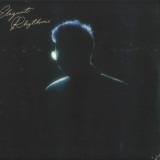
Natural Wonder Beauty Concept - Natural Wonder Beauty Concept LP

The life of the solo electronic artist is equal parts privilege and loneliness. You hurtle across the sky to spend a few hours in a dark club, behind the decks or on stage at the microphone. A brief grasp at transcendence, then the lights are on. Afterwards, you chat with friends you made last month, last year, or an hour ago. Back on the train, the plane. A couple weeks of this, then home. Repeat. It was against this backdrop that Ana Roxanne and DJ Python (Brian Piñeyro) struck up a singular friendship and collaboration, culminating in the shared musical language of their new project, Natural Wonder Beauty Concept. Brian and Ana met in New York City in the winter of 2020. They’d respectively put out critically acclaimed albums but due to extenuating global circumstances, the real-world implications of those records were yet to be seen. Ana’s debut LP, Because of a Flower, released in fall 2020, trades in both ethereality and directness, stretching timeless pop and R&B forms into shimmering ambient magic. When the Bay Area-born, Mills-trained artist sings, on record or live, time slows down and we enter a languorous yet ecstatic present. The second album from Queens-based deep reggaeton innovator DJ Python, Mas Amable, also subverts easy temporality. Released in spring 2020, Mas Amable floats in liminal space—not quite a dance record, a downtempo record, nor an ambient record—unfurling at a wistful pace, naturally suited for a strange period when each day felt the same yet wildly different.

Disponible

En el almacen y preparando para el envío

Pleasurekraft - Sex and the Machine EP

Following their iconic remix of ‘Space Date’ in 2019, the classic collaborative work of Adam Beyer, Layton Giordani and Green Velvet, we are thrilled to have Pleasurekraft back on Drumcode for their debut solo release on the label.

Not keen to colour within the lines, the production duo caught Adam Beyer’s ear as they carved out their self-dubbed ‘cosmic techno’ niche within the techno genre. Conceived as a musical vision that attempts to go beyond mere hands-in-the-air moments, Pleasurekraft incorporate a cinematic soundscape as a canvas for philosophical themes regarding humanity's place within the cosmos. Their 2020 album, ‘Love in the Age of Machines’ explored the myriad and often dystopian relationships we have with the ubiquitous technologies that pervade our every interaction.

The new two-tracker ‘Sex and the Machine’, continues this thematic trajectory in considering the role machines will increasingly play in satisfying the more carnal desires of our species. The title track considers questions such as, will machines of the future have the capacity for thoughts and feelings? Will our answers to such questions be forever tainted by our singular perspective, unable and unwilling to grant future silicon entities such capabilities? The EP’s second track, ‘Body Horror’, with its repeating refrain, “You are changing”, considers the manner in which future technologies will continue to merge with biological entities giving rise to all manner of unimagined consequences. Both tracks showcase the tough, yet still melody-driven cosmic techno sound Pleasurekraft has become synonymous with. However, despite the cerebral content that inspired the music – the form is still pure dance floor muscle.

Disponible

En el almacen y preparando para el envío

Nate Young - Volume One: Dilemmas Of Identity LP

Nate Young, Frontmann Des Detroiter Post-industrial/noise-trios Wolf Eyes, Knüpft Mit Einer Neuen Mehrteiligen Soloreihe An Seine "regression"-serie Von 2009-2013 Mit Insgesamt 4 Releases An, Als Er Aus Einflüssen Italienischer Library Music Und Musique Concrète Komplexe Synthesizer-werke Kreierte, Die Er Heute Um Elemente Klassischer Synth-soundtracks, Ambient Und Ebm Erweitert, Stets Gefiltert Durch Die Typisch Exzentrische Michigan-underground-sensibilität. 8-track-lp Mit Download-code (inkl. Digitalem Bonustrack) Und Doppelseitigem A2-faltposter.

Disponible

En el almacen y preparando para el envío

T.Raumschmiere / Reinhard Voigt - Speicher 104

2022 Repress
Dear Friends,

25 years of KOMPAKT is no reason to get hysterical. Then again, it's a nice occasion to have a laid back look at the situation in electronic music today. Minimal techno in all it's varieties is now established as the worlds best dance music, as you may know. So far, so good. What's next Nothing. Dance on!

I've gain two essential insights with the passage of time. First off, that music which over the years only knew 'faster, better, stronger' and 'forwards ever - backwards never' can constantly repeat, quote and loop itself without killing itself. A music that suspends the meaning of time and eventually can set a parallel, better universe of fantasy against the twisted grimaces of reality. Again and again.

And secondly, that getting older living in/with this music is a quite relative term to which ideally a serenity of age can ring a bell. This shows that 25 years after 1993 so many protagonists, enthusiasts, DJs, musicians, relentlessly rave fighters - with all personal advancement - are still there and still celebrate, play or produce this/theirs music; and compete themselves and their music just with that.

Two such heroes of the neat and tidy bass drum culture are with no doubt T.RAUMSCHMIERE aka MARCO HAAS and REINHARD VOIGT. From day one, those two figureheads have given live-techno the glam of stage-diving rock 'n' roll, long before vodka and beer prevailed as alternative lube for ecstatic dancefloors.

Even better they both now raise the glass at the longest techno-bar in the world named KOMPAKT EXTRA/SPEICHER. With DREI MILLIONEN KO¨LSCH, Reinhard Voigt continues to establish his savvy 'way into sound', which he's pursued for a few years now on his many releases. He's turning genre cliche´s into a very personal take with his defiant mix of the deepness of a lonesome cowboy and his implicit faith in the dancefloor and gives the music a very personal touch of ennnoblement of the faith in itself. Technos dignity shall be inviolable.

For me, AUGEN ZU by T.RAUMSCHMIERE is one of the most beautiful masterpieces of bass-heavy 'Umta Umta' techno. A few strikingly brilliant vocal lines from the master himself, put through the machines and combined with a relentlessly sequencer that says it all. This cheers my heart and we will always need such tracks to remind us of ourselves. And to forget about ourselves. Smash hits of unreason! Or the prettiest declaration of love to a music which gets its magical moments from what's happening between the bass drum-beats. But only by this when the bassdrum remains linear and will do so forever. Both Marco Haas and Reinhard Voigt know that. Because after techno comes always techno.

Wolfgang Voigt - May, 2018 Wolfgang Voigt - May, 2018

25 Jahre KOMPAKT sind kein Grund sich aufzuregen. Aber dennoch ein schöner Anlass, einen gelassenen Blick auf die Lage der elektronischen Musik zu werfen. Denn der globale Minimal-Techno, in seinen unterschiedlichen Spielarten, hat sich bekanntlich längst als beste Tanzmusik der Welt etabliert. Recht so. Was nun Gar nichts. Weitertanzen.

Zwei essentielle Erkenntnisse haben sich bei mir im Laufe der Zeit durchgesetzt: Erstens - dass eine Musik, die über Jahre nur ein »Höher, Schneller, Weiter« oder ein »Forwards Ever - Backwards Never« kannte, sich ständig wiederholen, selbst zitieren und loopen kann, ohne daran zu ersticken. Die Bedeutung von Zeit und Vergänglichkeit im besten Sinne außer Kraft setzen und der hässlichen Fratze der Realität eine parallele, bessere Welt der Fantasie entgegensetzen kann. Immer wieder.

Und zweitens: dass »Altern in/mit dieser Musik« ein sehr relativer Begriff ist, dem bestenfalls Altersgelassenheit etwas sagt, Alter. Das zeigt sich immer wieder im schönsten Sinne, wenn 25 Jahre nach 1993 so viele Akteure, Enthusiasten, DJs, Musikanten, unkaputtbare Kampfraver, bei aller persönlichen Weiterentwicklung, immer noch da sind und immer noch diese/ihre Musik abfeiern, auflegen oder eben produzieren und sich und ihr Tun auch nur daran messen lassen müssen.

Zwei solche Recken der gepflegten Bassdrumkultur sind zweifelsohne T.RAUMSCHMIERE aka MARCO HAAS und REINHARD VOIGT. Zwei Rampensäue der ersten Stunde, die Live-Techno den Glam des Rock'n'Roll Stagedivings gegeben haben, lange bevor Vodka und Bier sich als alternative Gleitmittel eines ektatischen Dancefloors in der Breite durchgesetzt hatten.

Umso schöner, dass sich eben diese Beiden mal wieder an der längsten Techno-Theke der Welt, genannt KOMPAKT EXTRA/SPEICHER über die beiden Seiten einer Schallplatte hinweg musikalisch zuprosten. Mit dem Track DREI MILLIONEN KÖLSCH setzt REINHARD VOIGT seinen smarten »way into sound« fort, den er schon seit ein paar Jahren auf diversen Veröffentlichungen konsequent verfolgt. Mit einer trotzigen Mischung aus lonesome cowboyhafter Deepness und dem unbedingten Bekenntnis zum Dancefloor schafft er es, den Klischees des Techno eine sehr persönliche Note der Veredelung des Glaubens an sich selbst zu geben. Die Würde des Techno ist unantastbar.

Der Track AUGEN ZU von T.RAUMSCHMIERE ist für mich eines der schönsten Meisterstücke in der Tradition des oktavbassgeschwängerten Umta-Umta Techno. Einige wenige markant brilliante Textzeilen, vom Meister selbst in deutscher Sprache durch die Maschinen geschickt, gepaart mit einem Sequenzer der keine Gefangenen macht, lassen keine Fragen offen. Da geht mir Herz und Rucksack auf. Solche Tracks werden wir immer brauchen, um uns an uns selbst zu erinnern. Um uns immer wieder selbst zu vergessen. Smash-Hits der Unvernunft! Oder die schönste Liebeserklärung an eine Musik, die ihre magischsten Momente immer aus dem gezogen hat, was zwischen den Bassdrumschlägen passiert. Das funktioniert aber nur, wenn die Bassdrum gerade ist und es für immer bleibt. Und Marco Haas und Reinhard Voigt wissen das. Denn nach Techno kommt immer noch Techno.

Wolfgang Voigt, Mai 2018

Disponible

En el almacen y preparando para el envío

Pig & Dan - Rock You All Night

Known as the “Dynamic Duo” Pig&Dan celebrate twenty years by making a long-awaited debut on Crosstown Rebels next month. The two-track Rock You All Night EP draws inspiration from the USA’s heritage house scene, with a slice of Hot Filtered Disco!

The influences of Chicago and New York are heard right from the offset, with rolling homegrown stabs coupled next to heavy and wholesome bassline grooves. There’s an inherent feel-good atmosphere to the piece, reflective of the era’s freedom and openness, before Let Yourself Unwind finishes proceedings on a similarly euphoric close. Disco-esque melodies flitter beneath an upbeat, repeating vocal as choir-like instrumentals build to create the perfect synergy for both dancefloor and radio play.

Pig&Dan have firmly established their presence as one of electronic music’s most esteemed duos. The pair’s releases speak for themselves, be it on Sven Väth’s Cocoon, Adam Beyer’s Drumcode or John Digweed’s Bedrock to name a mere few of the labels they’ve found success on. Their DJ performances are similarly impressive, with recent years marking the launch of a new live show that debuted across some of the biggest global stages, including Fabric (London), Warung (Brazil) and AIM festival (Canada).

Disponible

En el almacen y preparando para el envío

Hauke Freer - One Tiny Universe EP

HAUKE FREER'S latest offering includes two warm and moody original cuts plus an intense, bass heavy MATTHIAS REILING Remix - is that really you, SESSION VICTIM? While the duo's records usually strike a chord with a somewhat broad audience, Freer's solo output never tries to cater to the House Music masses. In fact, it feels very much tailored to please an acquired taste. ONE TINY UNIVERSE is a case in point, built upon a steady but wonky drum groove and a brizzling, retro, sci- kind of pad, eventually leading the song into an array of synth melodies that will reward you with discovering new things when listening repeatedly - showing Hauke's ability to subtly combine little bits and pieces into something that effortlessly outgrows the sum of its parts. Moving on to the ip, Reiling stripps the title track off it's warmth and beauty and replaces them with a tougher
drumset and a pressure heavy UK style bassline. You'll be reintroduced to Freer's synth work eventually, but in a less
fairytalish and, well, slightly hostile environment. MMMMM is the closing cut of the EP, a composition just as bare and raw as it feels soothing and gentle - like.... let's say beans and rice over a campre on a cold night under the starry sky of a far away tiny universe in the ngernail of some other giant lifeform.

Disponible

En el almacen y preparando para el envío

ADMNTi / Laidlaw - SNDR001

Vinyl Only

The first installment of the Sonder London imprint, are two local artists close to sonder london and the brand. With ADMNTi & Laidlaw, this 4 track EP looks to solidify the ethos of the brand and bond, with music that expresses rolling, frenetic rhythms with pockets of high noted grooves.

Disponible

En el almacen y preparando para el envío

Eldritch Priest - Omphaloskepsis LP 2x12"

It might seem tongue-in-cheek on the surface, but the fact that the title of Eldritch Priest's sprawling debut vinyl release, Omphaloskepsis, is the Greek translation for “navel-gazing” unlocks something essential to the Vancouver-based composer and writer's singular outlook.

Perhaps even more telling is the title of Priest's 2013 book Boring Formless Nonsense: Experimental Music and the Aesthetics of Failure (Bloomsbury), whose 300-odd pages read as though you've been dosed with potent hallucinogens. Throughout the text Priest addresses—celebrates, even—the titular elements via various musical examples, including that of his peers. What's so bewildering it is that his descriptions of how boredom, formlessness, and nonsense manifest are laced with the very tactics he's depicting. Passages tie themselves in knots, footnotes engulf the “primary text,” he even deliberately misleads the reader.

The restless stasis of Omphaloskepsis could be regarded as an extension of this book's wayward spirit. Things unfold fairly slowly and consistently but it'd be a stretch to describe it as properly contemplative. Like attempting to meditate with a high fever, any sense of tranquility is constantly derailed as one succumbs to queasy agitation. The piece's foundation is a seemingly endless guitar melody; an organic meander that neither seems to repeat or offer any concessions to narrative directionality. Priest unfurls this rambling cantus firmus in a rich, clean, jazz-like tone, but as it's played, it's repeatedly tangled with snarls of dense digital processing and shadowed by stumbling virtual “band.” These strident interjections blatantly contrast with the guitar, yet they aren't so violent as to offer more than a faint itch of distraction. As such, the distinctive amorphousness that this piece asks us to inhabit for its 54-minute duration leaves a strong impression, but also feels utterly intangible.

In addition to his recorded forays, Priest's disorienting music has also been performed by top-tier interpreters such as the Arditti Quartet, Quatuor Bozzini, Philip Thomas, Anton Lukoszevieze, and Continuum. While living in Toronto he co-founded the collective neither/nor with John Mark Sherlock, which featured a cross section of musician-composers playing each other's work including Eric Chenaux, Doug Tielli, Eric KM Clark, Heather Roche, and Rob Clutton. “Though the name refers specifically to a loosely knit group of composers and performers,” remark's the collective's website “neither/nor is also a sensibility that refuses art’s messianic pretensions and the gaping maw of commercialized society, opting instead for art’s right to be esoteric.” In 2021, when Eric Chenaux and Martin Arnold relaunched their neither/nor-adjacent Rat-drifting imprint, an album by Priest, Many Traceries, was among the first to be released. Perhaps unsurprisingly, Priest was a student at the University of Victoria, a school that's come to be known for fostering such staunch individualists as Arnold, Linda Catlin Smith, Allison Cameron, and Anna Höstman.

As a scholar, Priest writes from a 'pataphysical perspective and deals with topics such as sonic culture, experimental aesthetics and the philosophy of experience. Priest brings these interests to his job as an Associate Professor in the School for the Contemporary Arts at Simon Fraser University, interests that also inform his work as a member the experimental theory group The Occulture. In addition to Omphaloskepsis, his new book, Earworm and Event: Music, Daydreams and Other Imaginary Refrains,

Disponible

En el almacen y preparando para el envío

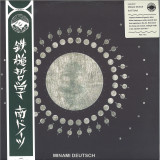
MINAMI DEUTSCH - S/T

Minami Deutsch

S/T

12inchGGB005LP
GURUGURU BRAIN
05.11.2021

*2021 Repress*

Minami Deutsch 1st self-titled album. Minami Deutsch’s debut album is sated with an absolute love of Krautrock and the driving motorik beat.

=Band Description=
Minami Deutsch was formed by Kyotaro Miula (guitar, vocals, synthesizer) in Tokyo in 2014. Their sound is influenced by both their love for Krautrock legends such as Can and Neu!, and the band members being self-professed "repetition freaks" who heavily listen to minimal techno.
The music proceeds straightforwardly with the Motorik beat (Hammer beat), devised by Klaus Dinger (Kraftwerk, Neu!), as its central axis. Humorous, yet bizarre Japanese lyrics are whispered over a hard, cold beat that is maniacally repeated, creating a pleasant ambience of electronic pulses drifting in space. Sharp guitar tones reminiscent of Michael Karoli (Can) occasionally explode into fuzz distortion, on the verge of collapse.

Disponible

En el almacen y preparando para el envío

Various - Pop Ambient 2021

Various

Pop Ambient 2021

12inchKOM430
Kompakt
27.11.2020

It’s 2020, the year Pop Ambient turns twenty-one years old, a spritely young adult waltzing out of its teenage joys and tears. Pop Ambient has always stood for a certain classicism and elegance, a kind of beatless music that’s diaphanous and hazy, gossamer and glittering. It’s a music that’s no less inviting for its slow pace and becalmed nature, with a different kind of tension bubbling under the surface. For twenty-one years, KOMPAKT co-founder Wolfgang Voigt has curated a series of peerless compilations that repeatedly find refreshing answers to a simple question – What happens when the dancefloor is empty, and everyone’s home to drift away?

As with many other Pop Ambient compilations, Pop Ambient 2021 offers a welcome platform to contributions from both old friends and new faces. It opens with the gorgeous, slo-mo drift of “Of A Vessel”, from new Kompakt signings Blank Gloss. Sending their music out into the world from their home in Sacramento, this duo makes music that’s featherlight and luscious, the muted chime of a guitar over here, the steady hum of a halatial drone over there; everything in its right place, and nothing overdone. The poise is all. Neozaïre (Tobias Sawitzki aka Noorden) and Seventh World (Juho Hietala aka Blamstrain) are our other two new voices, the latter closing (the CD version of) Pop Ambient 2021 with a long, lambent dreamsong, Neozaïre offering us two gaseous, morphing driftworks, “Vor den Toren Europas” and “In Verschwenderischer Fülle” (CD only), etched across with bell-like arpeggios.

Pop Ambient has always felt like a field for play for the KOMPAKT cognoscenti, and 2021 is no different, with Joachim Spieth collaborating with Pepo Galán on the sidereal visions of “Libration”, while Leandro Fresco teams up with Thore Pfeiffer on the lovely “Abejorro”. Pfeiffer also contributes two lovely solo miniatures of abstract longing. Yui Onodera calls in again, long distance, for their fourth Pop Ambient running, with the refracted, glinting lightscapes of “Cromo 5” and “Monochrome”, while there are also star turns from Max Würden, both solo and in Reich & Würden (with Luis Reichard), and Morgen Wurde, who drops by with the ‘ethereal drama’ of “Mittsommer”.

Pop Ambient gets the balance right: visions and soundscapes, long-distance communications and intimate asides, sweetness and light, drama and dreaming, all wrapped up in floral abstractions – a most beautiful distraction.

Wir schreiben das Jahr 2020, das Jahr, in dem Pop Ambient einundzwanzig Jahre alt wird – das entspricht etwa einem lebenshungrigen jungen Erwachsenen, der gerade aus den letzten Teenager-Freuden und Leiden herausgewachsen ist. Pop Ambient steht seit jeher für eine gewisse Klassik und Eleganz, beatfreie Musik, die, transparent und leicht verschwommen, zart und glitzernd leuchtet. Musik, die trotz ihrer Langsamkeit und ihrer sanften Natur unter Spannung steht, weil hier immer etwas unter der scheinbar ruhigen Oberfläche brodelt.

Einundzwanzig Jahre lang hat KOMPAKT-Mitbegründer Wolfgang Voigt diese einzigartige Compilation-Reihe kuratiert, die immer wieder neue Antworten auf eine einfache Frage findet: Wie füllt man die Leere nach dem Club?

Wie viele andere Pop Ambient-Compilations bietet auch Pop Ambient 2021 eine Plattform für die musikalischen Beiträge von alten Freunden und einigen neuen Gesichtern. Es beginnt mit dem wunderbaren Slo-Mo-Drift von "Of A Vessel" von Blank Gloss, einem neuen Kompakt Signing. Das Duo stammt aus Sacramento in Kalifornien und sendet von dort seine überaus leichte und sinnliche Musik in die Welt hinaus – ein zartes Zupfen an einer Gitarresaite hier, das gleichmäßige Dröhnen eines prunkvollen Soundscapes hier; alles ist hier am richtigen Platz und passiert ohne übertriebene Betonung. Gelassenheit ist alles. Neozaïre und Seventh World sind zwei weitere Neuzugänge. Hinter Seventh World steckt der finnische Produzent Juho Hietala aka Blamstrain, der (die CD Version von) Pop Ambient 2021 mit einem epischen, flackernden Traum names “Light The Waves Before Dawn“ beschließt, während Neozaïre, ein Seitenprojekt von Tobias Sawitzki aka Noorden, zwei gasförmige, sich immer wieder morphende und abdriftende Tracks abliefert: "In Verschwenderischer Fülle" (CD only) mit seinen glockenartigen Arpeggios und “Vor Den Toren Europas“.

Pop Ambient fühlte sich immer schon an wie ein Experimentierfeld für eingefleischte KOMPAKT-Künstler, und auch 2021 ist das nicht anders: zum Beispiel Joachim Spieth’s Kooperation mit Pepo Galán ("Libration") oder Leandro Fresco, der mit Thore Pfeiffer das liebevolle "Abejorro" produzierte. Pfeiffer steuert mit “Grape“ und “Center“ zwei weitere Solo-Miniaturen voller abstrakter Sehnsucht bei. Der japanische Klangkünstler Yui Onodera meldet sich mit den gebrochen-glitzernden Lichtlandschaften von "Cromo 5" und "Monochrome" bereits zum vierten Mal auf Pop Ambient zu Wort, während Max Würden sowohl solo, als auch als Teil von Reich & Würden (mit Luis Reichard) ebenso wie Morgen Wurde schon zu den Stars dieser Compilation gehört.

Disponible

En el almacen y preparando para el envío

Kangding Ray - 61 Mirrors . Music for SKALAR 2x12"

This music was composed for SKALAR, an audio-visual kinetic art installation by light artist Christopher Bauder & Kangding Ray SKALAR is a large-scale art installation that explores the complex impact of light and sound on human perception. Created by light artist Christopher Bauder and musician Kangding Ray, this monumental artwork is a reflection on the fundamental nature and essence of human emotions. By combining a vast array of kinetic mirrors and perfectly synchronized moving lights with a sophisticated multi-channel sound system, SKALAR offers an audio-visual narration of radiant light vector drawings and multi-dimensional sound in enormous pitch-dark spaces. SKALAR is an intense journey through the cycle of basic human emotions. Everchanging tonalities trigger the full spectrum of emotional experiences using light, sound, and motion. The feelings of awe, surprise, exhilaration, and anticipation of having one’s senses overwhelmed are created, explored, and repeated in cycles throughout the piece, providing a collective, yet highly individual emotional experience. Light and darkness as endless cycles of day and night define our perception of time and influence our emotions. SKALAR is a central piece within light artist Christopher Bauder’s body of work, reflecting his deep fascination with light. In this gigantic installation, light is treated as a solid material that can be dimensionally sculpted and shaped, evoking abstract emotional associations. Intertwined with the tireless exploration of textures, rhythm, and sound design by musician and composer Kangding Ray, the silence of darkness is filled with iridescent forms of spatial light and sound. The original composition is spatialised in 360° over a 12 channels sound system, this stereo version has been mixed and mastered to convey a similar sense of space.
As of the release of this record, SKALAR has been presented in Berlin (Kraftwerk) in 2018,
in Mexico City (Frontón) in 2019 & in Amsterdam (Gashouder) in 2020. Fore more information about the piece and its concept, please visit skalar.art

Disponible

En el almacen y preparando para el envío

CHRIS KORDA - APOLOGIZE TO THE FUTURE

Chris Korda

APOLOGIZE TO THE FUTURE

12inchPERLON126LP
Perlon
07.09.2020

…»Welcome to another polymeter dance! Feel free to express yourself, subordinate to any measures and cycles you prefer, there are plenty for everyone and any purpose.
Every track represents a variety of rhythmic possibilities for any part of the body to communicate with. This allows you to resonate with the universe, but please always care for the environment!
The dunning voice of today will introduce to you the core issues of tomorrow. As if a paralyzed mankind would not be able anymore to speak out the inevitable, a posthuman being has taken over. This entity is the master of ceremony who conducts an array of machines that will take further action to communicate, supported by complex
polymeters. The repetition of measures and cycles of different lengths reflect the repeatedly pronounced statements of a narrative of awareness.
Where music visionaries once celebrated the transfer of human creation into machines, Chris Korda’s machines are creators themselves – creators of a safer dance into the future. The machines speak to you with a sparkling, funky tone to gain your confidence. Here are the rules of interaction: 1) Humans may not injure these
machines or, through inaction, allow a machine to come to harm. 2) Humans must obey the orders given by the machines except where such orders would conflict with the engagement in environmental issues. 3) Machines must protect their own existence as long as such protection does not conflict with the engagement in environmental issues. Take care and enjoy the future!

Disponible

En el almacen y preparando para el envío

Dan Ghenacia & Chris Carrier - Vocalized Ltd Ed. 180g

The tag team are back with another club-ready release bringing together their combined experience and production prowess. Dan Ghenacia and Chris Carrier are long-time friends who’ve been working together in the studio over the last few years, resulting in a series of EPs on labels like Apollonia, Adult Only and, of course, Music For Freaks, for whom this is their second release. On the A-side ‘Vocalized’ comes at us full throttle with a powerful bassline and crisp, punchy beats. The vibe is unrelenting with a neat call and response vocal clip and a simple, catchy melody in the top line, keeping it hypnotic. Funky, groovy and full of potent energy from start to end. On the flip ‘Burning’ has a similar aesthetic, with taut drums and bass, plus a range of unusual sounds to add depth and character. Indecipherable vocal clips pop up occasionally, and the pace picks up as the track hits the midpoint. A repeated siren-esque effect locks you into the groove, keeping you hopelessly hooked until the end...

Disponible

En el almacen y preparando para el envío

Various - Pop Ambient 2001

Various

Pop Ambient 2001

12inchKOM411
Kompakt
22.11.2019

2024 Repress

While during the 1990s - higher, faster, further! - the straight bass drum has been shooted around the globe, there arose a number of variations of more or less contemplative slow- and sacred music from all kinds of corners at the same time. In a sense, it’s the other side of the medal: Chillout, Lounge, Easy Listening, Trance, Muzak and elevator music, electronic music and intelligent techno… and of course and in particular: Ambient. In classical and new variations.

Beside the constant pushing forward of the so called „Sound Of Cologne“- Minimal Techno in the home of Kompakt, there was also a strong faible for ambient sounds. Not only because of the labels origin and its operator’s preference for the pop music of the 70s and 80s, there was evolving a variety of ambient music, that added the aspect of pop to the confusing diversity of genres during that time. Not pop in the sense of actual classic pop music: Pop in the sense of subculture, of Pop Art and, first and foremost, in the sense of pop as an attitude. This was how Pop Ambient was launched and the way it established its own authentic music with a high recognition value. Pop Ambient is indulging the beauty and the timelessness. Pop Ambient is a sonic cosmos of attitude for itself and has no fears of contact with adjoining genres nor with kitsch, art or carnival. It’s ambient if you do it nevertheless. ^

Während sich im Laufe der 1990er Jahre die gerade Bassdrum immer höher, schneller, weiter einmal um den gesamten Planeten geballert hatte, kamen parallel dazu etliche Spielarten mehr oder weniger kontemplativer Erbauungs- und Verlangsamungsmusik aus allen möglichen Ecken auf. Gewissermaßen die andere Seite der Medaille. Chillout, Lounge, Easy Listening, Trance, Muzak und Fahrstuhlmusik, Elektronika und Intelligent Techno… und natürlich und vor allem Ambient. In altbewährten und neuen Variationen.

Auch im Hause Kompakt gab es neben dem steten Vorantreiben des sogenannten „Sound Of Cologne“ - Minimal Techno ein starkes Faible für ambiente Klänge. Nicht zuletzt aufgrund ihrer popmusikalischen Herkunft und einer besonderen Vorliebe für die Popmusik der 70er und 80er Jahre, kristallisierte sich bei den Kompakt-Machern ab dem Jahr 2000 eine Spielart ambienter Musik heraus, die den vielschichtigen, unübersichtlichen Genres dieser Zeit den Aspekt des Pop hinzu fügte. Nicht Pop im Sinne eigentlicher, klassischer Popmusik. Pop im Sinne von Subkultur, von Pop-Art und vor allem von Pop als Haltung. So wurde „Pop Ambient“ aus der Taufe gehoben und etablierte eine genuine Musik mit hohem Wiedererkennungswert. Pop Ambient frönte hemmungslos dem Schönen und der Zeitlosigkeit. Pop Ambient ist ein Klang- und Haltungskosmos für sich, und hat dabei keinerlei Berührungsängste, weder mit angrenzenden Genres, noch mit Kitsch, Kunst oder Karneval. Ambient ist wenn man’s trotzdem macht.

Disponible

En el almacen y preparando para el envío

Foals - Everything Not Saved Will Be Lost Part 1

From playing chaotic house parties in their home city of Oxford to becoming major festival headliners across Europe, Foals' trajectory has been remarkable. They've earned critical acclaim (NME and Q Award wins, plus Mercury Prize, Ivor Novello and BRIT Award nominations) and fan devotion (1.7 million sales of their four Gold-certified albums) in equal measure. And while the majority of contemporaries have fallen by the wayside, Foals continue to hit new peaks.

After more than a decade in the game, Foals again embrace that love for the unconventional with the bravest and most ambitious project of their career: not one, but two astonishing new albums: 'Everything Not Saved Will Be Lost'. A pair of releases, separate but related, they share a title, themes and artwork. 'Part 1' will be released on March 8th, with 'Part 2' following later in the year.

'They're two halves of the same locket,' frontman Yannis Philippakis explains. 'They can be listened to and appreciated individually, but fundamentally, they are companion pieces.

Fundamentally tethered but possessing their own personalities, the two bodies capture the most compelling, ambitious and cohesive creations they've ever produced. Eager to break the traditional pop song structure which they felt they were becoming increasingly tapered to, the 20 tracks defy expectation. There are exploratory, progressive-tinged tracks alongside atmospheric segues which make the music an experience rather than a mere collection of songs. Yet the band's renowned ability to wield relentless grooves with striking power and skyscraper hooks also reaches new heights.

The album's lead single 'Exits' is a case in point, featuring Philippakis conjuring the image of a disorienting world via a contagious vocal melody. It's a fresh anthem for Foals' formidable arsenal, but also an ominous forecast.

'There's a definite idea about the world being no longer habitable in the way that it was,' says Yannis. 'A kind of perilousness lack of predictability and a feeling of being overwhelmed by the magnitudes of the problems we face. What's the response And what's the purpose of any response that one individual can have'

'Exits' signposts what to expect thematically from both instalments of 'Everything Not Saved Will Be Lost'. The title is a warning that anything - from the tiniest fleeting moment of inspiration through to the planet's own biological diversity - can be under threat of being irrevocably erased.

It's a theme that permeates throughout the album's material, as Foal mirror the public neuroses that have been provoked by our current cultural climate. Paranoia of state surveillance Fear of environmental collapse Anxiety over Trump's next potentially cataclysmic move It's all there in these apocalyptic songs.

'Lyrically, there are resonances with what's going on in the world at the moment,' summarises Yannis. 'I just feel like, what's the utility of being a musician these days, if you can't engage with at least some of this stuff These songs are white flags, or they're SOSs, or they're cries for help... each in a different way.'

The new albums' journeys began as the 'What Went Down' era ended. Founding bassist Walter Gervers departed on amicable terms after playing the Festival Paredes de Coura in Portugal in August 2017. Foals felt that he couldn't be replaced - a decision that ushered in a period of recalibration, reorganisation and, ultimately, rejuvenation.

After taking a little time out, Foals - completed by Jimmy Smith (guitar), Jack Bevan (drums) and Edwin Congreave (keys) reconvened - with Yannis on production duties, who, together with Edwin, also covered the bass parts. They began by writing in a rehearsal space before exporting those sketches into the recording phase at 123 Studios, Peckham, with the assistance of engineer Brett Shaw. They'd repeat the cycle between the two spaces, effectively creating an ongoing feedback loop as they sought to push every new idea to the finish line.

1 x 12" black vinyl 180gsm
- label 4/c
- discobag on reverse board with matt varnish
- gatefold on reverse board with matt varnish
- shrinkwrap

Disponible

En el almacen y preparando para el envío

Oren Ambarchi - Grapes From The Estate 2x12"

Black Truffle is pleased to make Oren Ambarchi's Grapes from The Estate available once more on vinyl. Originally released on CD on Touch in 2004 and reissued on Southern Lord as a limited double LP in 2006 during Ambarchi's tenure as a member of Sunn O))), Grapes from the Estate was a landmark release for Ambarchi, seeing him expand his sonic palette beyond the clipped, bass-heavy electric guitar tones he was known for at that point. Incorporating subtle layers of strings, keyboards, percussion over a bedrock of his signature guitar tones, in retrospect this album can be seen as the beginning of a broadening and evolution in Ambarchi's work that would lead to his acclaimed, densely layered epics for Editions Mego, Quixotism (2014) and Hubris (2016). Beginning with the shuddering pure tones of opener 'Corkscrew', which looks back to previous guitar-only releases such as Suspension (2001), the album's next two pieces show a progressive broadening of the instrumental palette and a corresponding move away from textural abstraction and sustained tones towards more traditional notions of musicality. This reached its high point on the album's third piece, the fifteen-minute long 'Remedios The Beauty', where guitars, both acoustic and electric, strings, piano, and bells build from a murmur to an interlockinging web of repeating melodic patterns over gently swinging brushed snare and cymbals. The epic closer, 'Stars Aligned, Webs Spun', returns us to a space populated only by the electric guitar, but unlike everything Ambarchi had produced up until this point in his career, the piece has a liquid, psychedelic edge that looks forward to the shimmering harmonics of his more recent work. As Brendan Walls wrote at the time of the original release, this is 'another outpouring of personal, intimate and enduring music from Oren Ambarchi'. Presented in a stunning gatefold sleeve featuring the original artwork and design by Jon Wozencroft. Redesigned by Stephen O'Malley Remastered and cut by Rashad Becker at D&M, Berlin.

Disponible

En el almacen y preparando para el envío

Bunny Lee & The Aggrovators - Run Sound Boy Run

To celebrate the 20-year anniversary of our label Jamaican Recordings and to mark the sad one year passing of the musical maestro reggae producer Bunny `Striker’ Lee, we have pulled together a brand new collection of some great Bunny Lee rhythms.

Our label started way back with initial meetings with Bunny Lee and a promise to keep his music available, out on the streets. He will be sorely missed but will live on through his extraordinary musical legacy and we hope to add to this by including this release to the stable of an unbeatable catalogue.

Legendary record producer Bunny `Striker’ Lee’s vast selection of rhythms were ever present at any Sound Clash or Dance worth talking about in the early to mid-1970’s.
Where the version found on the b-side of a single or special dub cut on acetates, would be played to win over the people and conquer the dance. Bunny Lee was the undisputed rhythm master and on this special release he is also the MC telling the crowd how it is and that any rival sound system should watch out as he has the rhythms that can reign supreme. The band cutting these timeless rhythms were a group of top Jamaican musicians Bunny had put together called The Aggrovators.

The Aggrovators were a group of reggae musicians that usually featured Carlton `Santa’ Davis on drums playing alongside Robbie Shakespeare on bass, with other musicians added like Earl `Chinna’ Smith on guitar and Tommy McCook and Vin Gordon and Lennox Brown added for horn arrangements. Keyboards and organ duties normally fell
to musicians Ansel Collins and Bernard ‘Touter’ Harvey. The band was named after singer Eddie Grant had repeated the phrase to Bunny Lee on one of his many trips to England, that such and such artist was giving him `Aggro’. This was a term used in England in the 1970’s by the Skinhead followers of reggae music. A term shortened
from the word `Aggrovation’, meaning trouble, fighting or making the situation worse. Bunny Lee was so taken with this term that on returning to Jamaica, not only did he name his group of musicians the `Aggrovators’ but he also named his record shop situated at 101 Orange Street `Agro Records’.

We have compiled some great tracks recorded by this fantastic group of musicians. With the added extra magic of Mr Bunny Lee calling it out as only he can on the microphone.
Yes Run Sound Boy Run the version master is here…Respect

No en stock

Haga su pedido ahora y le encargaremos el artículo en nuestro proveedor.


Ültimo hace: 3 Años
MINDSEYE - RIVAL CONSOLES (2x12")

MINDSEYE

RIVAL CONSOLES (2x12")

2x12inchERATP177LP
Erased Tapes
08.05.2026
  • A1: Theme
  • A2: Fluctuations
  • B1: The Chase
  • B2: Encounter
  • C1: Future Worlds
  • C2: Horizon
  • C3: Ticking Clock
  • D1: It Repeats
  • D2: Scanner
  • D3: Hackers

**LIMITED 500 UK COPIES ON BLACK VINYL** VINYL ONLY RELEASE for RSD: Rival Consoles, UK producer Ryan Lee West, shares his original score for MindsEye, the highly anticipated narrative-driven game from Build A Rocket Boy, the studio led by visionary game director Leslie Benzies. The industrial techno score doesn’t just accompany the game, it’s embedded in the code of the world they have created together. The full score sees its debut on vinyl for the first time as a limited-edition Record Store Day 2026 release.

Set in Redrock, a sprawling desert metropolis ruled by surveillance and automation, MindsEye follows Jacob Diaz, an ex-soldier haunted by fractured memories. As his personal mission escalates, he’s forced to navigate a world shaped by rogue AI, militarized tech, and a fragile grip on control, all while confronting the truth about his past. "In MindsEye, sound is a critical storytelling layer, from ambient detail to emotional drive, every element is designed to shape how players feel inside the world," said Craig Conner, audio director at Build A Rocket Boy. "Rival Consoles’ tracks brought something truly special to that vision. Ryan’s music adds a distinct emotional charge and texture that elevates key moments. It doesn’t just accompany the game, it sharpens its edge, deepens its atmosphere, and perfectly complements the world we’ve built." The score was produced over the span of three years in his London studio, and contains some of West’s most ambitious and heaviest compositions to date.

To coincide with today’s release of the game, the 10-track score is now available to stream in its entirety. MindsEye follows West’s previous scoring work, including bespoke music for 2019’s Black Mirror episode Striking Vipers, featuring ‘I Love This, I Love You’, 2022’s Netflix feature doc El Caso Figo about the legendary football player Luís Figo, and Alexander Whitley’s contemporary dance production Overflow, which was released as a studio album with the same name in 2021. The most recent Rival Consoles album, Landscape from Memory, was released in July 2025 to critical and fan acclaim. A world tour continues into mid-2026.

Reservar08.05.2026

debe ser publicado en 08.05.2026

Sara Parkman - Aster, atlas LP

Sara Parkman

Aster, atlas LP

12inchLPSUPERTRAD117
SUPERTRADITIONAL
08.05.2026

Sara Parkman's fourth album – the first since 2022's Eros Agape Philia – explores the mystical tradition and the work involved in living – and dealing with life.

The album marks several new steps in Sara Parkman's musical development – from the passionate and majestic flow of words to the introspective tone. A recurring theme is the idea of prayer and work, or ora et labora in Latin.

‘I want the idea of prayer and work to be a source of comfort, hope and encouragement in the challenging times we live in. We must continue to work and believe in the common good,’ says Sara Parkman.

Since her album debut in 2016, Sara Parkman has pushed the boundaries of what folk music can be. Her albums have been repeatedly praised for weaving together tradition and the future. Along the way, she has been awarded a number of prestigious awards in Sweden – from Grammis wins to Dagens Nyheter's Culture Prize – and she has sold out tour after tour.

As the figurehead of a movement larger than herself, she has also carved out a place of her own for Scandinavian folk music, not least through her involvement in her own record label, Supertraditional.

Reservar08.05.2026

debe ser publicado en 08.05.2026

MYSTIC JUNGLE AND THE VOICE OF ROXANA - Can't Make You Out / Mountain River 7"

A new release curated by Mystic Jungle, founder of Periodica Records, who - together with a small group of artists - has spent the past decade shaping a distinctive sound in his recording studio based in one of the most remote areas of Napoli.

This second release on the West Hill Music catalogue features the voice of American singer Roxana, alongside guitar contributions by Yugoslavian musician Igor Sekulović.

The A-side, "Can’t Make You Out", unfolds as a crepuscular track with a laid-back, exotic atmosphere, marked by subtle funk-rock influences. On the B-side, a stripped-down mutant-funk track built around electronic drums and a repeated vocal chorus leaves space for minimal arrangements and textured guitar lines to emerge.

Limited vinyl-only release.

No en stock

Haga su pedido ahora y le encargaremos el artículo en nuestro proveedor.


Ültimo hace: 3 Días
Study WITH Midnight Noise / Tomer Baruch - Saturn's Rings Hotel & Spa

This album plays like an invitation rather than a record - a slow boarding pass to an imagined retreat somewhere beyond gravity. Analogue synths shimmer like gold, bubbling rhythms drift in gentle orbits, and playful melodies sketch out distant galaxies with an easy, unforced charm. There's a strong lineage here, with the music echoing classic library and soundtrack recordings cherished by deep diggers, yet it never feels nostalgic for its own sake. The grooves are light but nourishing - 'Uranium Jungle' has a touch of Luke Vibert's frisky funk about it, while 'Martian Sunset' is interstellar bossa nova with a light dusting of 70s analogue magic to boot - designed as much for sofa-bound drifting as for attentive listening. Musicianship is front and centre throughout, with smart, accessible compositions that reward repeat visits. A fully realised concept - sign us up for a stay.

No en stock

Haga su pedido ahora y le encargaremos el artículo en nuestro proveedor.


Ültimo hace: 5 Días
IORI WAKASA x KEITA SANO - A SHIFT OF ERAS EP

This EP marks the first release from a collaborative project between Tokyo based DJ/producer Iori Wakasa and Okayama's Keita Sano, born from a quiet resonance between their musical sensibilities.

In Japan, the academic year begins in April. Though born in 1988 and 1989, the two artists belong to the same school-year cohort under this system, yet within Japan's gengo era structure they stand at the symbolic end of one era and the beginning of another. The title 'A Shift of Eras' points to the moment when one era gives way to the next, suggesting not only the passage of time, but the subtle renewal of culture, perception, and values.

'Filtered Jewels' draws from the image of light shimmering like gemstones, or a space scattered with countless jewels, perceived through an imagined filter that gently alters the way the scene reveals itself.
'Heaven's Door' envisions the ascent of a transparent staircase floating above a sea of clouds, leading toward a quietly resting emerald-green door.
'Shocking Yellow', originally created in response to a specific request, incorporates carefully placed vocal samples while grounding the track in warm, rounded low frequencies and organic textures, shaped with DJ use in mind.
And finally, 'Time To Change' was reconstructed repeatedly with the hope of offering both solace and a quiet sense of encouragement, ultimately becoming a piece that reflects the underlying theme of the EP.

No en stock

Haga su pedido ahora y le encargaremos el artículo en nuestro proveedor.


Ültimo hace: 6 Días
BONNER KRAMER | THURSTON MOORE - THEY CAME LIKE SWALLOWS - SEVEN REQUIEMS FOR THE CHILDREN OF GAZA LP
  • 1: Urn Burial
  • 2: The Redness In The West
  • 3: The Third Migration
  • 4: They Came Like Swallows
  • 5: The Living Theater
  • 6: The Oceans Are Crying
  • 7: Insight
También disponible

Black Vinyl


They Came Like Swallows is the first album-length collaboration between Thurston Moore and Kramer (now officially Bonner Kramer), two giants of alternative/ experimental music. The accomplishments and influence of these two artists in the world of independent music cannot be overstated and the result of their artistic union is a startlingly cohesive statement that burns through landscapes of primitive outsider rock, avant-garde composition, progressive ambient and further locales boldly and beautifully unnamable. “Kramer and I reconnected in Miami, Florida, a few years back, many many years after each of us had departed NYC on separate life adventures. It was only a matter of time before Kramer and I started making plans to record together and with his irrepressible due diligence he quickly set up a mobile recording contraption in the pad I was decamped in, the Florida sunshine flowing through the palm leaves, lithe lizards skittering across the windowsills, and we just went for it.

Kramer had the idea to cover a Joy Division tune, a left turn from the improvisations we had been tracking, though wholly in keeping with both our sensibilities of light and dark unifying in transcendent songwriting, both of us devotees of 'the song' as well as 'the freedom.’ What transpired is They Came Like Swallows, a session we immediately felt should exist as a prayer to the war-torn souls of the families of Palestine continually decimated by the brutality of genocide. We agreed beyond words to offer our music as a sonic activism and as a beneficent energy. This album is our duo exchange for human dignity, it is our soul music for any semblance of a peaceful planet.” ~ Thurston Moore “For the first time in our nearly 45 years of friendship, we had identical time windows open to make a record together,” recounts Kramer. After all this time not a moment is wasted as the duo immediately taps into the heightened core of improvisational tension across these seven offerings. Volcanic opener “Urn Burial” notches a similar historic union (John Cale and Terry Riley) to meet the circumstances of the moment, with swirling mists of organ and pounding toms over guitar that thickens the atmosphere with jagged, grimy dissonance.

Solemn strings open the second track, “The Redness In The West,” with Kramer’s cello and viola in dueling bow beneath the high tension drive and sustain of Thurston’s electric guitar, tapping out a Morse code of tension that mounts endlessly into a fog of inevitable war by the end. Moore and Kramer’s sense of experimentalism is in free and full grandeur throughout They Came Like Swallows, though the duo keep a strong and constant sideways eye on melody, composition and architecture, to the ends that any strict lines between song and improvisation are blurred beyond qualification.

As if to punctuate this point, Swallows closes with a nightwork cover of Joy Division’s “Insight,” a doleful coda that breathes out with a solemn inner grace under Thurston’s instantly stylistically recognizable guitar melodies as they weave into he and Kramer’s unison voices. As the lone vocal piece and only traditional ‘song’ form on the album, “Insight” is unique to this set and as a closing statement draws connective lines back to the kind of dynamic, electrified melodicism that wove deep, melancholy patterns into the untamed fire of Sonic Youth’s Sister and Daydream Nation. In the album’s final moments, the two voices repeat the lyric “I’m not afraid anymore” as mantra, underscoring the heavy, unsettled themes and methods that preceded it. Kramer describes the creative process of They Came Like Swallows: “I had composed and recorded a few pieces at my home studio over the course of a couple weeks. Thurston was spending the winter in South Florida, so I flew down and spent a few days recording his guitar parts in his home there. Watching him spontaneously compose his parts was pretty astonishing, to say the least. Once we'd finished working on those pieces, we began improvising and following wherever the music pointed us, and another few pieces were born. We got straight to it, without anything driving us other than the joy of finally working together.

My personal goal was to remain present and catch as many surprises as I could from Thurston's guitar work, and there were plenty during those few days. We had a fucking blast.” Thurston’s contributions here will be readily familiar to any acolytes of his other works, the through-line between his inspired playing, cradled in Kramer’s meticulous, solid arrangements. “If I had to make this record again, I'd do it all exactly the same way,” Kramer says. “It’s like jazz, you don't think about it. You just do it. It was miraculous, and you don't fuck with a miracle.”

Reservar01.05.2026

debe ser publicado en 01.05.2026

BONNER KRAMER | THURSTON MOORE - THEY CAME LIKE SWALLOWS - SEVEN REQUIEMS FOR THE CHILDREN OF GAZA LP

They Came Like Swallows is the first album-length collaboration between Thurston Moore and Kramer (now officially Bonner Kramer), two giants of alternative/ experimental music. The accomplishments and influence of these two artists in the world of independent music cannot be overstated and the result of their artistic union is a startlingly cohesive statement that burns through landscapes of primitive outsider rock, avant-garde composition, progressive ambient and further locales boldly and beautifully unnamable. “Kramer and I reconnected in Miami, Florida, a few years back, many many years after each of us had departed NYC on separate life adventures. It was only a matter of time before Kramer and I started making plans to record together and with his irrepressible due diligence he quickly set up a mobile recording contraption in the pad I was decamped in, the Florida sunshine flowing through the palm leaves, lithe lizards skittering across the windowsills, and we just went for it.

Kramer had the idea to cover a Joy Division tune, a left turn from the improvisations we had been tracking, though wholly in keeping with both our sensibilities of light and dark unifying in transcendent songwriting, both of us devotees of 'the song' as well as 'the freedom.’ What transpired is They Came Like Swallows, a session we immediately felt should exist as a prayer to the war-torn souls of the families of Palestine continually decimated by the brutality of genocide. We agreed beyond words to offer our music as a sonic activism and as a beneficent energy. This album is our duo exchange for human dignity, it is our soul music for any semblance of a peaceful planet.” ~ Thurston Moore “For the first time in our nearly 45 years of friendship, we had identical time windows open to make a record together,” recounts Kramer. After all this time not a moment is wasted as the duo immediately taps into the heightened core of improvisational tension across these seven offerings. Volcanic opener “Urn Burial” notches a similar historic union (John Cale and Terry Riley) to meet the circumstances of the moment, with swirling mists of organ and pounding toms over guitar that thickens the atmosphere with jagged, grimy dissonance.

Solemn strings open the second track, “The Redness In The West,” with Kramer’s cello and viola in dueling bow beneath the high tension drive and sustain of Thurston’s electric guitar, tapping out a Morse code of tension that mounts endlessly into a fog of inevitable war by the end. Moore and Kramer’s sense of experimentalism is in free and full grandeur throughout They Came Like Swallows, though the duo keep a strong and constant sideways eye on melody, composition and architecture, to the ends that any strict lines between song and improvisation are blurred beyond qualification.

As if to punctuate this point, Swallows closes with a nightwork cover of Joy Division’s “Insight,” a doleful coda that breathes out with a solemn inner grace under Thurston’s instantly stylistically recognizable guitar melodies as they weave into he and Kramer’s unison voices. As the lone vocal piece and only traditional ‘song’ form on the album, “Insight” is unique to this set and as a closing statement draws connective lines back to the kind of dynamic, electrified melodicism that wove deep, melancholy patterns into the untamed fire of Sonic Youth’s Sister and Daydream Nation. In the album’s final moments, the two voices repeat the lyric “I’m not afraid anymore” as mantra, underscoring the heavy, unsettled themes and methods that preceded it. Kramer describes the creative process of They Came Like Swallows: “I had composed and recorded a few pieces at my home studio over the course of a couple weeks. Thurston was spending the winter in South Florida, so I flew down and spent a few days recording his guitar parts in his home there. Watching him spontaneously compose his parts was pretty astonishing, to say the least. Once we'd finished working on those pieces, we began improvising and following wherever the music pointed us, and another few pieces were born. We got straight to it, without anything driving us other than the joy of finally working together.

My personal goal was to remain present and catch as many surprises as I could from Thurston's guitar work, and there were plenty during those few days. We had a fucking blast.” Thurston’s contributions here will be readily familiar to any acolytes of his other works, the through-line between his inspired playing, cradled in Kramer’s meticulous, solid arrangements. “If I had to make this record again, I'd do it all exactly the same way,” Kramer says. “It’s like jazz, you don't think about it. You just do it. It was miraculous, and you don't fuck with a miracle.”

Reservar01.05.2026

debe ser publicado en 01.05.2026

Phantom Horse - Primal Forms

Phantom Horse

Primal Forms

12inchUR162LP
Umor-Rex
01.05.2026

After their last album six years ago, "Primal Forms," the new album by Phantom Horse, finally arrives. The German duo of Ulf Schütte and Niklas Dommaschk have long established a reputation for expertly crafted, hypnotically slow-burning electronic music, and we do not hesitate to say that "Primal Forms" stands among the epitomes of their discography.

The sequencing of "Primal Forms" cannot be underestimated. It is an album in the classic sense. It demands to be listened to in its entirety, which also points to a closer affinity with Krautrock. Likewise, a touch of dub is perceptible, wafting around the songs, which, as usual, bear clandestine titles. It is not unreasonable to see in these compact compositions a clear statement against multitasking.

Phantom Horse are not trumpeters of dystopia. They present themselves resolutely, almost stoically, turned away from the world. This turning away is clearly a statement that can be contemplated in the Mariana Trench as well as in comet belts. In any case, it is best experienced in a space without any human beings. This does not mean that grumpy hermits are tinkering with synths behind closed shutters, armed with wooden walking sticks. This is still open minded music with a connection to current developments. The approach itself is what is audible, and with it, Phantom Horse proves once again that their main connection to time is timelessness.

In an age of all-encompassing distraction on every sensory, thematic, and semantic level, Phantom Horse explores the possibilities of reduction, searching for simplified melodic arcs without resorting to the vocabulary of classical minimalism. The overall impression is more electronic; the slowly shifting, polyrhythmic compositions repeatedly lead to a peculiar danceability. However, these are perhaps the dances of mechanical birds, undeterred by anything.

Written and produced in Hamburg, Nijmegen and Ojén by Niklas Dommaschk & Ulf Schütte
Mastering by Rafael Anton Irisarri at Black Knoll
Artwork by Daniel Castrejón

Reservar01.05.2026

debe ser publicado en 01.05.2026

Elephanz - LOVE. HURT. REPEAT LP
  • A1: Follow Your Love
  • A2: That's In My Head
  • A3: The Novel Of Our End
  • A4: Mother
  • A5: I Don't Wanna Know
  • B1: My Feet On The Ground
  • B2: Invisible
  • B3: Streets Of Rage
  • B4: In A Porcelain Shop
  • B5: What Is Love

Fifteen years after their first album "Time for a Change", and drawing on the experience of two others ("Elephanz" 2017, and "Rien de personnel" 2023), ELEPHANZ now returns with a fourth album that carries the scent of first loves, the kind you sing from the heart with your hands gripping a guitar.

"Love. Hurt. Repeat." tells, across ten songs, the story of a return to oneself, like coming home after years spent roaming the world, only to realize that everything you needed to understand yourself was already there at the starting line.

To help you understand what this new album makes me feel, I'd like to tell you about my first meeting with Jon and Max in 2009, when I became the band's bassist. Sixteen years ago, I discovered these two young men and set off in their family Kangoo van on my very first tour.

Through our early rehearsals around the piano of their childhood, I discovered their love for pop music in all its breadth, always in search of harmonies and melodies that touch the heart in the simplest way and gently ease your sorrows along the way. With them, I learned to appreciate the mainstream hits I had previously dismissed on principle, and I discovered the demanding art of melody as I listened to them sing about love and friendship through unforgettable catchphrases.

Listening today to some of the songs from their new album, I think back to those two young men with a big-city rock look, shut away in the living room of their family home, talking only about leaving that dull countryside behind to live the big life in the capital (Streets of Rage). What I once took for a kind of revenge against the hostile environment of their adolescence was in fact an almost vital need to find their place among others, to feel understood in order to feel at ease in their own skin.

Today, I find them again with the same guitar and the same inexpensive Juno as back then, but with the confidence shaped by years of concerts, writing, studio encounters, and all kinds of experimentation. The music of this fourth album has never been so close to that of their earliest days, but their voices have been set free. They no longer sing about who they dreamed of becoming, but about who they have always been, their most distant concerns, sometimes even their darkest ones, yet always in search of the light.

It is as if ELEPHANZ had to travel all the way around the world to come face to face with themselves again. There is no longer any shame in being who you are, and it is even the best way to understand yourself, to exist and to heal. To heal from grief and heartbreak, to understand the child you once were and the one who carried them (Mother), to forgive yourself and finally learn to love yourself.

That is what makes this record as sensitive as it is powerful and strikingly truthful. It was written and recorded like a cry, live, in just a few weeks, using the instruments of their beginnings: sharp bass and drums, powerful guitars, and synthesizers that are at times soaring, at times carriers of liberating melodies. The art of ballads remains, as does that of universal pop songs.

There is a beautiful urgency here, the urgency of finding oneself again in order to understand oneself through both pain and beauty, and "Love. Hurt. Repeat." is its most perfect expression.

Reservar24.04.2026

debe ser publicado en 24.04.2026

RAZEN - STAINED GLASS STARLING LP

After their recent LP Mirages (Kraak Records, 2025) with French turntablist Guilhem’All, the group continues to explore collaborations with artists and instruments from diverse musical traditions. Building on decades of uncompromising acoustic exploration, Razen delves deeper into their practice with five improvisational pieces that unfold slowly in time and space. The duo’s radical core - Brecht Ameel and Kim Delcour - finds in Van der Harst a longtime kindred spirit, united by the impact of sound, intonation, and the sheer joy of playing.

To be released on April 24 via VIERNULVIER Records, the artwork for Stained Glass Starling was created by American visual artist Robert Beatty (Oneohtrix Point Never, Christina Vantzou, The Weeknd, Tame Impala). The physical release comes with a 16-page booklet including artwork and an interview.

A long-standing artistic kinship lies at the heart of this project, with first encounters dating back to the early 2000s in Belgian musical improv theatre. Van der Harst’s lifelong experience in improvised music and music theatre, spanning back to the 1980s, combined with a vast arsenal of rare and historical instruments, opens new tonal territories within the Razen universe.

These explorations are not incidental: his family roots in the former Dutch East Indies — through his great-grandfather — provide a quiet backdrop to his enduring affinity for Asian musical traditions. Instruments such as erhu, Javanese kacapi, and others introduce timbres
that bring the music its most pronounced Asian inflections to date.

Yet despite this shift in colour, the underlying ethos remains unmistakably Razen. Working from sound rather than form, the ensemble approaches music as painters approach a canvas: adding layers, contrasts and shades with care. There is no soloist’s ego here; all voices are equal, echoing principles found in gamelan traditions.

Over the decades, Razen and Dick Van der Harst have crossed paths repeatedly, notably through cult theatre productions by Belgian theatre maker Eric De Volder, including Zwarte vogels in de bomen (2002) and Huis der Verborgen Muziekjes I–II (2000–2006). Recording an albumtogether had long been a shared aspiration — a wish that crystallised after a 2024 concert at Concertzaal Miry in Ghent, part of the Ruiskamer series by VIERNULVIER Art Centre.

Reservar24.04.2026

debe ser publicado en 24.04.2026

Salamanda - Music To Watch Seeds Grow By 008: Salamanda (Basil) (Tape)

Music To Watch Seeds Grow By continues its second season with Seoul-based left of centre ambient duo Salamanda - Uman Therma (Sala) and Yetsuby (Manda) - and their meditation on the inner life of a basil plant. Seeds 008 is an ambient composition born from quiet domestic observation: a single basil on a windowsill, its days shaped by light, warmth, and the slow passage of time.

The album moves through a full day in the plant's life opening with ‘introduce my atom which is my favorite one’, an act of quiet self-declaration in morning light, before settling into the unhurried rhythmic pulse of ‘to to ki toki tok’- the drip of water, the tick of a clock, the slow beat of photosynthesis. ‘allez, pousse!’ - one of the standouts in this journey - carries the basil's gentle will to grow, to push, to tilt toward the sun, while ‘hungry snail’ captures a moment of creaturely encounter on the glass: an uninvited visitor, moving slowly, wanting. As the afternoon deepens, 'Basil's Ritual' traces the daily ceremony of light and warmth, repeated with calm devotion from root to leaf. Night falls across 'Basil's Dream', and in the stillness something like sleep arrives - the plant resting, imagining tomorrow's sun. The album closes with ‘the blue wine’, a final mysterious reverie in which the basil seems to contemplate its own fate, somewhere between acceptance and wonder.

No en stock

Haga su pedido ahora y le encargaremos el artículo en nuestro proveedor.


Ültimo hace: 16 Días
MEITEI - AGATE LP

MEITEI

AGATE LP

12inchKI-050LP
KITCHEN. LABEL
24.04.2026

KITCHEN. LABEL is proud to present AGATE, the latest album by Japanese artist MEITEI, marking a deepening of the world he first shaped through his Kofū trilogy released between 2020 - 2023.

Named after the mineral agate, a stone formed through slow accumulation, pressure, and time, the album reflects MEITEI’s patient approach to sound. AGATE brings together extended and newly rearranged works from across the Kofū cycle alongside new compositions and passages, refining material developed through years of performance and sustained practice.

The album presents seven tracks:

HAŌ (Previously unreleased track)
SHIN-OIRAN (Remodeled from Oiran I, Kofū 2020)
SHIN-SADAYAKKO (Remodeled from Sadayakko, Kofū 2020)
SHIN-WAROSOKU (Remodeled from Wa-rōsoku, Kofū III 2023)
KYŪGEKI (Remodeled from Shinobi and Akira Kurosawa, Kofū II 2021)
SHIN-OIRAN II (Remodeled from Oiran II, Kofū 2020)
SHIN-EDOGAWARANPO (Remodeled from Edogawa Ranpo, Kofū III 2023)
Across these works, MEITEI expands the musical vocabulary first introduced in Kofū, a sound he once described as “lost Japanese mood.” While Kofū drew from fragments of folklore, theatre, ghost stories, and forgotten urban memory, it was never an act of historical reconstruction. Rather, it reflected a sensibility of the past observed from the present. With AGATE, this worldview is clarified as Shinpu, a process of discovery in which historical awareness becomes a foundation for contemporary creation rather than a constraint.

During five years of Kofū tours across Japan, Europe, and Asia, MEITEI performed this material in a wide range of spaces, from underground live houses and listening rooms to culturally significant sites. These environments influenced pacing, dynamics, and structure, shaping how the material evolved over time. AGATE is therefore not only a studio album, but the result of material refined through repeated performance.

If the Kofū albums were windows into forgotten eras, AGATE explores what lies beneath, sediment and strata formed through time and pressure. MEITEI’s approach to sound mirrors the nature of agate itself. Grains become texture. Texture becomes narrative. Voices drift through decaying layers of sound, while ancient instruments are used in non-traditional ways, forming distinctive percussive rhythms and melodies that appear and vanish without fixed resolution.

The album’s visual materials were developed under MEITEI’s direction through physical art-making processes. The cover artwork originates from a letterpress print created by Kamisoe, a Karakami atelier in Nishijin, Kyoto, using Kyo-karakami paper. The original artwork, produced through traditional woodblock techniques on handmade washi, was subsequently reproduced on print for the album edition. Kamisoe continues to reinterpret this historical Kyoto craft with a contemporary sensibility.

The title calligraphy was created by Bio Xie, whom MEITEI personally invited to participate in the project. During his performances abroad, MEITEI encountered in Taiwan a lingering atmosphere reminiscent of “Shitsunihon” — a sense of old Japanese memory that quietly endures beyond time. He was deeply drawn to Bio Xie’s distinctive use of Chinese characters, which resonated with this experience, and asked him to contribute to the visual expression of AGATE.

In parallel, MEITEI continues to reinterpret Japanese sensibility through his concept of “Shitsunihon,” presenting it as a contemporary musical language. The refined Kyoto motifs envisioned by Kamisoe and the distinctive calligraphic expression by Bio Xie intersect with MEITEI’s singular artistic direction, weaving together a newly articulated worldview.

The accompanying visual imagery, including the liner photographs, was created by photographer Hiroshi Okamoto, who was also responsible for the visual direction of MEITEI’s previous work, “Sen'nyū.” It draws from MEITEI’s lived experiences of winter seas, solitary cliffs, and breaking waves. These scenes symbolize the inner conflicts of the ten years he spent living in Hiroshima, and his confrontation with solitude and the sounds he creates.

AGATE will be released on 17 April 2025 via KITCHEN. LABEL on 180g vinyl, CD, and digital formats. The album is mastered by Kelly Hibbert, known for his work with Flying Lotus, Madlib, and J Dilla.

With AGATE, MEITEI returns to the material of Kofū with greater focus and discipline, continuing an ongoing process of working forward with inherited material.

No en stock

Haga su pedido ahora y le encargaremos el artículo en nuestro proveedor.


Ültimo hace: 16 Días
Camp Claude - Never Say Never LP
  • A1: World With Your Name
  • A2: I Just Want It All
  • A3: Speak Softly
  • A4: Heaven Can Wait
  • A5: Heartbeat
  • A6: Never Say Never
  • A7: High Flames
  • B1: Tell Me
  • B2: Keep Going On
  • B3: Crash Crash
  • B4: Go!
  • B5: This Country
  • B6: Close 2 U
  • B7: A Day Away

An album that calls forth urgent desires, bold claims and the right to dream in the face of a reality that stifles hope.
Because Camp Claude never stands still, because the trio always wants more, it ignites with Diane's fire, Mike's freedom and Léo's conviction, and with NEVER SAY NEVER bets on 14 tracks that are electric, powerful and lightning-sharp.
Plural and perfectly eclectic, NEVER SAY NEVER inhabits an intangible musical and temporal space.
Like a mixtape, this new album reveals new sensations with every track, a prayer to be played on repeat, a kind of magic formula made of electro rhythms, retro synths and shoegaze guitars.

Reservar24.04.2026

debe ser publicado en 24.04.2026

Dompe - Reload EP

Dompe

Reload EP

12inchDEF2602
Definitive Recordings
24.04.2026

Dompe Delivers Peak-Time House Energy on New Reload EP.
Definitive Recordings welcomes a brand-new three-track EP from Dompe, showcasing his unmistakable blend of classic house foundations, driving grooves, and modern club attitude.

Dompe aka Dominic Wagner is a DJ and producer driven by relentless passion and an instinctive feel for the dancefloor.
Known for pairing distinctive vocals with finely crafted basslines and arrangements, his sound is always moving forward while staying rooted in house tradition. Based in Berlin since 2011, Dompe founded Jackfruit Recordings in 2017 as his personal creative playground, releasing a steady stream of music that has earned both national and international attention. His doublevinyl album ‘Hippie Crack’ sold out quickly and charted strongly on Beatport, followed by ‘French Collection’. In 2025, Dompe made his debut on Definitive Recordings with a standout remix of the label classic ‘Let It Go’ by John Acquaviva, Olivier Giacomotto and Dan Diamond further cementing his connection to the imprint.
Now returning with a full EP, Dompe opens with ‘Reload’, a classic house groover built around a tight rhythm, a looping piano motif, and a chopped, repeated male spoken-word vocal that locks into the groove. It’s raw, hypnotic, and instantly effective on the floor. ‘Wave’ shifts into more percussive territory, drawing on classic tech house energy. Built almost entirely around drums, the track evolves through rolling percussion, catchy vocal snippets, and sharp house synth work before snapping back into a full percussive drive designed for late-night momentum. Closing the EP, ‘Sundown’ delivers a no-nonsense house stomper. Big 909 drums, a 90s-inspired piano theme, and a vocal sample declaring ‘ecstasy’ capture the peak-time feeling of a packed club
in full flow: direct, euphoric, and unapologetically house.

No en stock

Haga su pedido ahora y le encargaremos el artículo en nuestro proveedor.


Ültimo hace: 18 Días
Byard Lancaster - Mother Africa

'A few months after recording Us, Lancaster recorded Mother Africa along with Clint Jackson III, a trumpeter, partner of Khan Jamal or Noah Howard on other recordings.
On march 8th, 1974, Lancaster and Jackson headed up a group composed of Jean-François Catoire (electric and double bass), Keno Speller (percussion) and Jonathan Dickinson (drums). Together, they create an immediate impression. From the first seconds of We The Blessed, they develop a free jazz which rapidly abandons any virulence under the effect of blues and soul based interventions.
When Gilson’s composition Mother Africa begins, listeners are transported into the studio, listening to the musicians setting up: chatting and joking… Then comes the melody: a dozen or so notes of a repeated theme which is accelerated and deformed according to their whims… The jazz played by the association Byard Lancaster / Clint Jackson III is rare: creative AND recreational. We the blessed, is apt listening to this again today!'

No en stock

Haga su pedido ahora y le encargaremos el artículo en nuestro proveedor.


Ültimo hace: 16 Días
Various - Soho Scene ’63 Vol 2: Jazz Goes Mod LP
  • A1: Dick Morrissey Quartet - Bang!
  • A2: Emcee Five - Mike's Dilemma
  • A3: Michael Garrick Quintet - Vishnu
  • A4: Vic Lewis & His Bossa Nova All Stars - Last Minute Bossa Nova
  • A5: Johnny Burch Octet - Early In The Morning
  • B1: Pony Poindexter - 4-11-44
  • B2: Terrell Prude - Princess
  • B3: Johnny Hartsman - Soppin
  • B4: Eddie Kochak & Hakki Obadia - Jazz In Port Said
  • B5: Charles Kynard With Clifford Scott - Where's It At
  • B6: Gene Ammons - Jungle Soul

Compare the best of British jazz circa 1963 with American sounds from labels such as Prestige, Tangerine and World Pacific. This album captures the period when rhythm and blues is emerging as the dominant club sound, forcing Soho jazz clubs to change their music policy in order to survive. On the British side, you’ve got Ronnie Scott’s arrangement of Last Minute Bossa Nova; Bang!, taken from Dick Morrissey Quartet’s first session for the BBC’s World Service, recorded around the time of the release of their first album Have You Heard? The version here is take two. You can hear take one along with the rest of the eleven-track session on R&B18 Jazz For Moderns.
Early In The Morning is a Ginger Baker/Jack Bruce arrangement of the traditional work song realized as a repeated blues riff, and is the first ever recording that is recognizably British Blues. Graham Bond features on alto sax along with Bruce and Baker together as members of the Johnny Burch Octet heard playing live at a BBC staff party from March 1963. Side Two features Jazz Stateside, such as West Coast guitarist Johnny Hartsman, Gene Ammons veering into proto jazz-funk on Jungle Soul, aka Ca' Purange plus a couple of top notch Hammond workouts from Terrell Prude and Charles Kynard.

Reservar18.04.2026

debe ser publicado en 18.04.2026

Intercommunal Free Dance Music Orchestra - Vol. 2 Concert A Prades Le Lez

Concert at Prades-le-Lez marks the origins of the Intercommunal Free Dance Music Orchestra. In 1974, François Tusques and his companions (Michel Marre, Jo Maka, Adolf Winkler and Guem), in the spirit of Don Cherry or Chris McGregor, playfully dismantle all borders and all styles of creative music.

On this second volume, the Intercommunal builds unprecedented soundscapes around a song of revolt, a dance tune, or a burst of dissonance. The journey is unforgettable, no question about it. On repeat listening, it even becomes… lunar!

“The music that we make is primarily meant to be listened to live,” warned a leaflet from the Intercommunal Free Dance Music Orchestra. This is precisely why the (restored!) reissue of the two volumes of Concert at Prades-le-Lez, recorded on January 25 and 26, 1974 by François Tusques and his comrades, is such an important event.

In 1971, after recording a series of albums that would leave a lasting mark on French jazz (Free Jazz, of course, with Michel Portal, François Jeanneau, Bernard Vitet, Beb Guérin and Charles Saudrais, but also Le Nouveau Jazz with Barney Wilen, or the solo Piano Dazibao), François Tusques founded the Intercommunal—a grouping whose very name called for the fraternization of the various communities making up the country: Our music will help, we hope, to resolve the contradictions that exist between workers be longing to different communities, by breaking down various forms of national chauvinism, and more particularly the chauvinism of certain French people toward the cultures of Third World countries… Long live the friendship between the peoples of the whole world!

Among the great records made by the Intercommunal Free Dance Music Orchestra, the two volumes of Concert at Prades-le-Lez come first, before L’Inter Communal, Vol. 4, Le Musichien, and Après la marée noire (four titles already reissued by Souffle Continu). François Tusques and his companions (Michel Marre and Jo Maka on saxophones, Adolf Winkler on trombone, and Guem on percussion) performed on January 25 and 26, 1974 at the Moulin de Prades-le-Lez, a few kilometers from Montpellier. It was thus in the southern region of Occitanie that the first echoes of this musical vision of a borderless brotherhood were recorded.

“We’re not among the Colonels,” the Intercommunal reassures us right away, performing a stride piano tune carried by African winds that the audience cannot resist for long. The energy is already striking and it never lets up throughout these two recordings, from start to finish: jazz, blues, traditional music, minimalism, even funk… The musicians of the Intercommunal have heard a lot of great music and now delight in reinventing it by mixing it all together.

“We want the song form to take its place as a weapon in the struggle against capitalist exploitation and all those who oppress us morally and materially,” declared an Intercommunal leaflet, quoting Jean-Baptiste Clément, author of the lyrics to “Le Temps des cerises.” The struggle was therefore serious—but it did not prevent François Tusques and his group from waging it in a festive spirit: each piece on Concert at Prades-le- Lez sends out a call for love and fraternity. Fifty years later, the message remains as relevant as ever—and once again, it is François Tusques who makes it heard.

Reservar17.04.2026

debe ser publicado en 17.04.2026

Max F - Hidden Atmospheres

Peace World Records returns with Hidden Atmospheres, the debut release produced by Max F and mixed by Space Ghost. Drawing from classic deep house and esoteric club sounds of the '90s and early 2000s, this seven-track collection channels these influences into fresh territory while preserving the digital grit and dreamlike essence of the era.

The release strikes a delicate balance between the meditative and the kinetic. On the A Side, tracks “Soul Control” and “Zone 6” highlight subtle yet hard-hitting percussion grooves and deep basslines that anchor the mix beneath ethereal pads and sweeps. Each track builds through hypnotic, evolving arrangements that reward close listening. On the B side, “Dream Channel” and “Earth Effects" both feature airy, spectral synth progressions that interweave with ephemeral yet decisive melodies, demonstrating a refined insight of space and dynamics. To round things off, Space Ghost took a crack at an energetic club remix of “Dream Channel. ” Carried by a classic 909 house rhythm and a bubbly bassline, the remix offers a fun, uplifting take on the original, complete with organ stabs and MIDI sax!

As a whole, Hidden Atmospheres delivers something new for fans of 90s and 2000s era house music. Think Ronin, Hanna, Chris Brann, Wamdue Kids—artists whose work holds its own in the club while remaining equally suited for intimate late-night listening. Throughout the record, tracks drift seamlessly between shimmering dancefloor functionality and liminal, introspective ambience, inviting repeat listens that reveal new details and "hidden atmospheres" with eachpass.

Hidden Atmospheres lands on Peace World Records April 9th, 2026.


g B3. Dream Channel Space Ghost Club Remix

No en stock

Haga su pedido ahora y le encargaremos el artículo en nuestro proveedor.


Ültimo hace: 16 Días
Guilty Razors - Complete Recordings 1977 - 1978

UILTY RAZORS, BONA FIDE PUNKS.


Writings on the topic that go off in all directions, mind-numbing lectures given by academics, and testimonies, most of them heavily doctored, from those who “lived through that era”: so many people today fantasize about the early days of punk in our country… This blessed moment when no one had yet thought of flaunting a ridiculous green mohawk, taking Sid Vicious as a hero, or – even worse – making the so-called alternative scene both festive and boorish. There was no such thing in 1976 or 1977, when it wasn’t easy to get hold of the first 45s by the Pistols or the Clash. Few people were aware of what was happening on the fringes of the fringes at the time. Malcolm McLaren was virtually unknown, and having short hair made you seem strange. Who knew then that rock music, which had taken a very bad turn since the early 1970s, would once again become an essential element of liberation? That, thanks to short and fast songs, it would once again rediscover that primitive, social side that was so hated by older generations? Who knew that, besides a few loners who read the music press (it was even better if they read it in English) and frequented the right record stores? Many of these formed bands, because it was impossible to do otherwise. We quickly went from listening to the Velvet Underground to trying to play the Stooges’ intros. It’s a somewhat collective story, even though there weren’t many people to start it.
The Guilty Razors were among those who took part in this initial upheaval in Paris. They were far from being the worst. They had something special and even released a single that was well above the national average. They also had enough songs to fill an album, the one you’re holding. In everyone’s opinion, they were definitely not among the punk impostors that followed in their wake. They were, at least, genuine and credible.

Guilty Razors, Parisian punk band (1975-1978). To understand something about their somewhat linear but very energetic sound, we might need to talk about the context in which it was born and, more broadly, recall the boredom (a theme that would become capital in punk songs) coupled with the desire to blow everything off, which were the basis for the formation of bands playing a rejuvenated rock music ; about the passion for a few records by the Kinks or the early Who, by the Stooges, by the Velvet mostly, which set you apart from the crowd.
And of course, we should remember this new wave, which was promoted by a few articles in the specialized press and some cutting-edge record stores, coming from New York or London, whose small but powerful influence could be felt in Paris and in a handful of isolated places in the provinces, lulled to sleep by so many appalling things, from Tangerine Dream to President Giscard d’Estaing...
In 1975-76, French music was, as almost always, in a sorry state ; it was still dominated by Johnny Hallyday and Sylvie Vartan. Local rock music was also rather bleak, apart from Bijou and Little Bob who tried to revive this small scene with poorly sound-engineered gigs played to almost no one.
In the working class suburbs at the time, it was mainly hard rock music played to 11 that helped people forget about their gruelling shifts at the factory. Here and there, on the outskirts of major cities, you still could find a few rockers with sideburns wearing black armbands since the death of Gene Vincent, but it wasn’t a proper mass movement, just a source of real danger to anyone they came across who wasn't like them. In August 1976, a festival unlike any other took place in Mont-de-Marsan – the First European Punk Festival as the poster said – with almost as many people on stage as in the audience. Yet, on that day, a quasi historical event happened, when, under the blazing afternoon sun, a band of unknowns called The Damned made an unprecedented noise in the arena, reminiscent of the chaotic Stooges in their early adolescence. They were the first genuine punk band to perform in our country: from then on, anything was possible, almost anything seemed permissible.

It makes sense that the four+1 members of Guilty Razors, who initially amplified acoustic guitars with crappy tape recorder microphones, would adopt punk music (pronounced paink in French) naturally and instinctively, since it combines liberating noise with speed of execution and – crucially – a very healthy sense of rebellion (the protesters of May 1968 proclaimed, and it was even a slogan, that they weren’t against old people, but against what had made them grow old. In the mid-1970s, it seemed normal and obvious that old people should now ALSO be targeted!!!).
At the time, the desire to fight back, and break down authority and apathy, was either red or black, often taking the form of leafleting, tumultuous general assemblies in the schoolyard, and massive or shabby demonstrations, most of the time overflowing with an exciting vitality that sometimes turned into fights with the riot police. Indeed, soon after the end of the Vietnam War and following Pinochet’s coup in Chile, all over France, Trotskyist and anarcho-libertarian fervour was firmly entrenched among parts of the educated youth population, who were equally rebellious and troublemakers whenever they had the chance. It should also be noted that when the single "Anarchy in the UK" was first heard, even though not many of us had access to it, both the title and its explosive sound immediately resonated with some of those troublemakers crying out for ANARCHY!!! Meanwhile, the left-wing majority still equated punks with reckless young neo-Nazis. Of course, the widely circulated photos in the mainstream press of Siouxsie Sioux with her swastikas didn’t necessarily help to win over the theorists of the Great Revolution. It took Joe Strummer to introduce The Clash as an anti-racist, anti-fascist and anti-ignorance band for the rejection of old-school revolutionaries to fade a little.

The Lycée Jean-Baptiste Say at Porte d’Auteuil, despite being located in the very posh and very exclusive 16th arrondissement of Paris, didn’t escape these "committed" upheavals, which doubled as the perfect outlet for the less timid members of this generation.
“Back then, politics were fun,” says Tristam Nada, who studied there and went on to become Guilty Razors’ frontman. “Jean-Baptiste was the leftist high-school in the neighbourhood. When the far right guys from the GUD came down there, the Communist League guys from elsewhere helped us fight them off.”
Anything that could challenge authority was fair game and of course, strikes for just about any reason would lead to increasingly frequent truancy (with a definitive farewell to education that would soon follow). Tristam Nada spent his 10th and 11th unfinished grades with José Perez, who had come from Spain, where his father, a janitor, had been sentenced to death by Franco. “José steered my tastes towards solid acts such as The Who. Like most teenagers, I had previously absorbed just about everything that came my way, from Yes to Led Zeppelin to Genesis. I was exploring… And then one day, he told me that he and his brother Carlos wanted to start a rock band.” The Perez brothers already played guitar. “Of course, they were Spanish!”, jokes their singer. “Then, somewhat reluctantly, José took up the bass and we were soon joined by Jano – who called himself Jano Homicid – who took up the rhythm guitar.” Several drummers would later join this core of not easily intimidated young guys who didn’t let adversity get the better of them.

The first rehearsals of the newly named Guilty Razors took place in the bedroom of a Perez aunt. There, the three rookies tried to cover a few standards, songs that often were an integral part of their lives. During a first, short gig, in front of a bewildered audience of tough old-school rockers, they launched into a clunky version of the Velvet Underground's “Heroin”. Challenge or recklessness? A bit of both, probably… And then, step by step, their limited repertoire expanded as they decided to write their own songs, sung in a not always very accurate or academic English, but who cared about proper grammar or the right vocabulary, since what truly mattered was to make the words sound as good as possible while playing very, very fast music? And spitting out those words in a language that left no doubt as to what it conveyed mattered as well.
Trying their hand a the kind of rock music disliked by most of the neighbourhood, making noise, being fiercely provocative: they still belonged to a tiny clique who, at this very moment, had chosen to impose this difference. And there were very few places in France or elsewhere, where one could witness the first stirrings of something that wasn’t a trend yet, let alone a movement.

In the provinces, in late 1976 or early 1977, there couldn’t be more than thirty record stores that were a bit more discerning than average, where you could hear this new kind of short-haired rock music called “punk”. The old clientele, who previously had no problem coming in to buy the latest McCartney or Aerosmith LP, now felt a little less comfortable there…
In Paris, these enlightened places were quite rare and often located nex to what would become the Forum des Halles, a big shopping mall. Between three aging sex workers, a couple of second-hand clothes shops, sellers of hippie paraphernalia and small fashion designers, the good word was loudly spread in two pioneering places – propagators of what was still only a new underground movement. Historically, the first one was the Open Market, a kind of poorly, but tastefully stocked cave. Speakers blasted out the sound of sixties garage bands from the Nuggets compilation (a crucial reference for José Perez) or the badly dressed English kids of Eddie and the Hot Rods. This black-painted den was opened a few years earlier by Marc Zermati, a character who wasn’t always in a sunny disposition, but always quite radical in his (good) choices and his opinions. He founded the independent label Skydog and was one of the promoters of the Mont-de-Marsan punk festivals. Not far from there was Harry Cover, another store more in tune with the new New York scene, which was amply covered in the house fanzine, Rock News (even though it was in it that the photos of the Sex Pistols were first published in France).
It was a favorite hang-out of the Perez brothers and Tristam Nada, as the latter explained. “It’s at Harry Cover’s that we first heard the Pistols and Clash’s 45s, and after that, we decided to start writing our first songs. If they could do it, so could we!”
The sonic shocks that were “Anarchy in the UK”, “White Riot” or the Buzzcocks’s EP, “Spiral Scratch” – which Guilty Razors' sound is reminiscent of – were soon to be amplified by an unparalleled visual shock. In April 1977, right after the release of their first LP, The Clash performed at the Palais des Glaces in Paris, during a punk night organised by Marc Zermati. For many who were there, it was the gig of a lifetime…
Of course, Guilty Razors and Tristam were in the audience: “That concert was fabulous… We Parisian punks were almost all dressed in black and white, with white shirts, skinny leather ties, bikers jackets or light jackets, etc. The Clash, on the other hand, wore colourful clothes. Well, the next day, at the Gibus, you’d spot everyone who had been at this concert, but they weren’t wearing anything black, they were all wearing colours.”

It makes sense to mention the Gibus club, as Guilty Razors often played there (sometimes in front of a hostile audience). It was also the only place in Paris that regularly scheduled new Parisian or Anglo-Saxon acts, such as Generation X, Siouxsie and the Banshees, the Slits, and Johnny Thunders who would become a kind of messed-up mascot for the venue. A little later, in 1978, the Rose Bonbon – formerly the Nashville – also attracted nightly owls in search of electric thrills… In 1977, the iconic but not necessarily excellent Asphalt Jungle often played at the Gibus, sometimes sharing the bill with Metal Urbain, the only band whose aura would later transcend the French borders (“I saw them as the French Sex Pistols,” said Geoff Travis, head of their British label Rough Trade). Already established in this small scene, Metal Urbain helped the young and restless Guilty Razors who had just arrived. Guitarist for Metal Urbain Hermann Schwartz remembers it: “They were younger than us, we were a bit like their mentors even if it’s too strong a word… At least they were credible. We thought they were good, and they had good songs which reminded of the Buzzcocks that I liked a lot. But at some point, they started hanging out with the Hells Angels. That’s when we stopped following them.”

The break-up was mutual, since, Guilty Razors, for their part, were shocked when they saw a fringe element of the audience at Metal Urbain concerts who repeatedly shouted “Sieg Heil” and gave Nazi salutes. These provocations, even still minor (the bulk of the skinhead crowd would later make their presence felt during concerts), weren’t really to the liking of the Perez brothers, whose anti-fascist convictions were firmly rooted. Some things are non-negotiable.
A few months earlier (in July 1978), Guilty Razors had nevertheless opened very successfully for Metal Urbain at the Bus Palladium, a more traditonally old-school rock night-club. But, as was sometimes the case back then, the night turned into a mass brawl when suburban rockers came to “beat up punks”.

Back then, Parisian nights weren’t always sweet and serene.

So, after opening as best as they could for The Jam (their sound having been ruined by the PA system), our local heroes were – once again – met outside by a horde of greasers out to get them. “Thankfully,” says Tristam, “we were with our roadies, motorless bikers who acted as a protective barrier. We were chased in the neighbouring streets and the whole thing ended in front of a bar, with the owner coming out with a rifle…”
Although Tristam and the Perez brothers narrowly escaped various, potentially bloody, incidents, they weren’t completely innocent of wrongdoing either. They still find amusing their mugging of two strangers in the street for example (“We were broke and we simply wanted to buy tickets for the Heartbreakers concert that night,” says Tristam). It so happened that their victims were two key figures in the rock business at the time: radio presenter Alain Manneval and music publisher Philippe Constantin. They filed a complaint and sought monetary compensation, but somehow the band’s manager, the skilful but very controversial Alexis, managed to get the complaint withdrawn and Guilty Razors ended up signing with Constantin with a substantial advance.

They also signed with Polydor and the label released in 1978 their only three-track 45, featuring “I Don't Wanna be A Rich”, “Hurts and Noises” and “Provocate” (songs that exuded perpetual rebellion and an unquenchable desire for “class” confrontation). It was a very good record, but due to a lack of promotion (radio stations didn’t play French artists singing in English), it didn’t sell very well. Only 800 copies were allegedly sold and the rest of the stock was pulped… Initially, the three tracks were to be included on a LP that never came to be, since they were dropped by Polydor (“Let’s say we sometimes caused a ruckus in their offices!” laughs Tristam.) In order to perfect the long-awaited LP, the band recorded demos of other tracks. There was a cover of Pink Floyd's “Lucifer Sam” from the Syd Barrett era – proof of an enduring love for the sixties’ greats –, “Wake Up” a hangover tale and “Bad Heart” about the Baader-Meinhof gang, whose actions had a profound impact on the era and on a generation seeking extreme dissent... On the album you’re now discovering, you can also hear five previously unreleased tracks recorded a bit later during an extended and freezing stay in Madrid, in a makeshift studio with the invaluable help of a drummer also acting as sound engineer. He was both an enthusiastic old hippie and a proper whizz at sound engineering. Here too, certain influences from the fifties and sixties (Link Wray, the Troggs) are more than obvious in the band’s music.

Shortly after a final stormy and rather barbaric (on the audience’s side) “Punk night” at the Olympia in June 1978, Tristam left the band ; his bandmates continued without him for a short while.

But like most pioneering punk bands of the era, Guilty Razors eventually split up for good after three years (besides once in Spain, they’d only played in Paris). The reason for ceasing business activities were more or less the same for everyone: there were no venues outside one’s small circuit to play this kind of rock music, which was still frightening, unknown, or of little interest to most people. The chances of recording an LP were virtually null, since major labels were only signing unoriginal but reassuring sub-Téléphone clones, and the smaller ones were only interested in progressive rock or French chanson for youth clubs. And what about self-production? No one in our small safety-pinned world had thought about it yet. There wasn’t enough money to embark on that sort of venture anyway.

So yes, the early days of punk in France were truly No Future!

No en stock

Haga su pedido ahora y le encargaremos el artículo en nuestro proveedor.


Ültimo hace: 30 Días
Various - Remixed With Love by Dave Lee (Selected Works) LP

Remixed With Love has set the benchmark for disco reworks for over a decade, with Dave Lee universally recognised as the most trusted name in the field when it comes to respectfully updating dancefloor classics from the original multi-tracks.

With original vinyl editions long deleted and constant demand from DJs and collectors, this brand-new one-off, vinyl-only release has been made possible via a fresh licensing deal with Sony Music, allowing eight of the most requested mixes from the catalogue to be pressed together for the first time.

This is not a repress; it is a bespoke, limited selection, and once the pressing has sold through, it cannot be repeated.

No en stock

Haga su pedido ahora y le encargaremos el artículo en nuestro proveedor.


Ültimo hace: 2 Días
Stephan Eicher - Spielt Noise Boys

2025 Reissue.


Münchenbuchsee, a suburb of Bern, Switzerland. Stephan Eicher is the youngest of three children. His father, a radio and TV repairman, is also a jazz violinist and a sound tinkerer in his spare time. In the family home's converted fallout shelter turned studio, Mr. Eicher experiments with homemade sequencers, tortures handcrafted drum machines, and abuses reel-to-reel tape recorders—all under the fascinated gaze of young Stephan.

The boy quickly develops a musical curiosity, exploring sound through various experiments and wanderings. Alongside his younger brother Martin, Stephan crafts audio plays on a homemade multi-track recorder (essentially several cassette decks hooked together!), which they write, record, add sound effects to, and perform for family and friends. Just a couple of nice kids, really...

Then comes 1972, and Lou Reed's Transformer album changes everything for the Eicher kids. For 13-year-old Stephan, it's a revelation—especially "Vicious", the opening track, which he plays on repeat for months. He convinces his father to buy him an electric guitar. Not stopping there, his father also builds him a tube amp using an old radio.

Then comes adolescence. A rough one. Stephan leaves home at 16 and moves to Zurich. With obvious artistic talent, he persuades his art teacher to help him get into F+F, a radical, alternative art school—despite his young age. Accepted, he starts learning video techniques, determined to become a filmmaker.

At F+F, Stephan organizes Dada-style happenings and concerts with a group of friends known as the Noise Boys. Among them: one of his teachers on bass, Veit Stauffer on drums (who would later found ReR/Recommended Records), his girlfriend Sacha on vocals, and Stephan on guitar. In one of their early performances, they release a remote-controlled mouse covered in dull razor blades into the audience to create panic and chaos. Keeping with this aggressive, confrontational spirit, they once played a concert while wearing headphones blasting Tristan and Isolde, trying to perform their own songs simultaneously—to maximize the cacophony. The goal was always the same: clear the room.

Their “songs,” if you can call them that, followed suit. Take "Hungeriges Afrika", for instance—performed entirely with power drills and some drum feedback.

To make ends meet, Stephan returns to Bern on weekends to work as a waiter at the Spex Club, the city’s main punk venue. On September 16, 1980, during a show by proto-electro group Starter, the police raid the club and arrest everyone. Stephan, who manages to avoid arrest, seizes the opportunity to “borrow” Starter’s gear left behind. He suddenly finds himself in possession of a Roland Promars synth, a Korg MS20, and a gorgeous CR78 drum machine, which he runs through a Big Muff distortion pedal to get that perfect gritty sound.

He then sets out to reinterpret some Noise Boys tracks, reworking them during impromptu sessions recorded on a dictaphone (yes, a dictaphone—now the lo-fi sound makes more sense, doesn’t it?). He ironically titles the resulting cassette "Stephan Eicher spielt Noise Boys" ("Stephan Eicher plays Noise Boys"). This gem features seven tracks, which are the ones reissued here.

Back in Zurich, he visits his friends Andrew Moore and Robert Vogel, who have a DIY cassette duplication setup. They make 25 copies of Stephan Eicher spielt Noise Boys for Stephan and his friends. Robert encourages him to visit Urs Steiger of Off Course Records and play him the tape.

Without much hope, Stephan shows up at Urs’s office. But Urs is instantly hooked and suggests releasing a 7” single. Due to space constraints, they reluctantly drop two of the seven tracks ("Hungeriges Afrika" and "One Second"). As for the musical score featured on the cover—it was randomly chosen and remains a mystery to this day. Calling all music theory nerds!

The 7-inch is pressed in 750 copies and released in the first week of December 1980—a date Stephan remembers well, as it’s the same week John Lennon was killed. Smartly, Urs sends a promo copy to François Murner, Switzerland’s answer to John Peel, who hosts a show on alternative station Sounds. Murner falls in love with the record and starts giving it airtime. To Stephan’s surprise, sales follow—and people actually seem interested in his music.

Even this modest underground success scares Stephan a bit. He stops making music for a year and moves to Bologna, where he works as a programmer at Radio Città, a feminist radio station.

Meanwhile, Stephan’s younger brother Martin, who’s also involved in the punk scene, joins the band Glueams as a singer and guitarist. Glueams, named after the fanzine run by two of its members (drummer Marco Repetto and bassist GT), eventually rebrands as Grauzone. Stephan is invited to their shows to project hacked Super 8 visuals live on stage.

Urs Steiger, now working on a compilation titled Swiss Wave – The Album, asks Grauzone to contribute alongside bands like Liliput, Jack and the Rippers, The Sick, and Ladyshave (Fall 1980).

For the album, Martin tasks Stephan with producing their recording sessions. Under Stephan's artistic direction, two tracks emerge: "Raum" and "Eisbär". During "Eisbär", Martin plays a minimalist bass line borrowed from post-punk band The Feelies (just an open string). Drummer Marco Repetto struggles to keep time. Later that evening, unhappy with the takes, Stephan builds a four-bar drum loop from a ¼-inch tape and uses it instead of the flawed original. He then adds bleepy synths and wind sounds to complete the track’s icy vibe before handing it over to Urs.

The Swiss Wave – The Album compilation is released quietly at first, but things snowball thanks to "Eisbär", which eventually becomes a smash hit—selling over 600,000 singles.

Meanwhile, Stephan plays in a rockabilly band called SMUV (named after Switzerland’s social security agency) and begins producing artists, including the debut album of Starter (1981), which includes a more pop-oriented version of "Minijupe".

By early 1982, Stephan starts spending time with the post-punk girl band Liliput (formerly Kleenex). They’re older than him, and he happily drives them around in his Renault Major, acting as their roadie.

By 1983, Grauzone—signed to the major label EMI, which turned out to be a misstep—is falling apart. Stephan begins to pivot toward a more mainstream pop sound with his debut solo album Les Chansons Bleues.

But that... is already another story.

No en stock

Haga su pedido ahora y le encargaremos el artículo en nuestro proveedor.


Ültimo hace: 11 Días
CHINASKI - GOOD FAITH EP

CHINASKI

GOOD FAITH EP

12inchSLMXR008
Soulmeex
07.04.2026

Chinaski opens 2026 with SOULMEEX record label exactly where he thrives best: suspended between nostalgia and futurism, melody and motion. Known for his synth-forward language and cinematic instincts, the Berlin-based producer delivers a release that feels both playful and sharply intentional, channeling emotion without sacrificing precision.

Across the EP, Chinaski revisits the spirit of Italo through a contemporary lens, shaping glistening arpeggios, buoyant basslines, elastic grooves and joyful synth stabs into five tracks that move effortlessly between the dancefloor and the imagination. There’s an unmistakable sense of lightness here-music that doesn’t overthink itself, yet is clearly crafted by someone who understands form, tension and release.

Rather than leaning on retro tropes, Chinaski treats dance music as a living, breathing language. The melodies feel familiar but never predictable; the rhythms pulse with warmth and confidence. An unforced sense of freedom runs through the release, inviting repeated listens and late-night moments alike.

With this EP, SOULMEEX sets the tone for 2026 with clarity and purpose, and Chinaski delivers the spell-subtle, melodic, and quietly irresistible.


Disponible a partir del13.05.2026


Ültimo hace: 6 Días
Artículos por página
N/ABPM
Vinyl