Cerca:reggae regular

Generi
Tutto
Dub Pistols - Frontline LP

Frontline is the 9th studio album by Dub Pistols. Chief rabble-rousers & festival favourites, the band are known for their veritable feast of jump-up party-starting sounds, melding dub, reggae, dancehall, ska & DnB into an irresistible tonic that has seen them amass a merry band of Pistoleros across the world.

For this chapter, they are joined by a stellar band of featured artists including both legendary & award-winning collaborators such as Horseman, Top Cat, The Freestylers, Myki Tuff and Chezidek alongside long-term Posse members The Ragga Twins, Lindy Layton, Natty Campbell, King Yoof and Cheshire Cat, and regular Dub Pistol frontman Seanie T.

So, saddle up and join the gang, it's time to ride to the Frontline!

non in magazzino

Ordina ora e ordineremo l'articolo per te presso il nostro fornitore.


Last In: 6 months ago
VUSI/NORMAN ZULU/JIVE MAHLASELA CONNECTION - Face to Face

Strut revives a lost recording from the archives in January with a 2002 collaboration between acclaimed South African folk singer Vusi Mahlasela, singer songwriter Norman Zulu and Swedish jazz / soul collective Jive Connection. Sotho folk singer Vusi Mahlasela, dubbed "The Voice" Of South Africa, performed at Mandela"s inauguration in 1994 and has enjoyed his own long relationship with Sweden, regularly embarking on cultural exchanges and forging a strong bond with the Jive Connection band, featuring guitarist / bassist Stefan Bergman and Little Dragon drummer Erik Bodin within its line-up. Although touring regularly, the collaboration has rarely been documented beyond a lone studio album in 1994. This "lost" recording, discovered in the archives of producer Torsten Larsson, also features songwriter / vocalist Norman Zulu and showcases their natural musical chemistry together. Vusi"s songs have traditionally addressed the struggle for freedom and the need for reconciliation and, here, his lyrics are as powerful as ever, ranging from parables ("Prodigal Son") to an unflinching lament on child abuse ("Faceless People"). Jive Connection vary the soundtrack, bringing in hints of reggae, jazz and post-punk alongside traditional township arrangements.

pre-ordina ora24.01.2023

dovrebbe essere pubblicato su 24.01.2023


Last In: 2026 years ago
Vibronics meets Mafia & Fluxy - Vibronics meets Mafia & Fluxy In Brixton

Brixton in South London has to be the place whee legends in Reggae & Dub meet up for a collaboration. The result is this 8 track all-analogue mixed Dubwise adventure that features the UK’s hardest Roots Reggae bass player & drummer (Mafia & Fluxy) playing the UK’s deepest dubs (Vibronics).
This fascinating and intricate LP merges old stool Jamaican reggae musicianship with the swirling euphoria found in contemporary dub music.

Vibronics is one of the most established names in UK Dub/Reggae music. From their base, in the Dub Cupboard Studio in Leicester, their music has achieved millions of views on YouTube, millions of Spotify streams and many tens of thousands of vinyl record sales. Vibronics have collaborated with reggae legends Michael prophet, Macka B, Iration Steppas, Soom T, Aba-Shanti and so many more.

Mafia & Fluxy are the UK’s foremost Reggae rhythm section and were initially inspired by Sly And Robbie, consisting of brothers Mafia (Bass) and Fluxy (drums). Legends of the stage and the studio, they record regularly in the UK & Jamaica, building rhythm tracks for Bunny Lee, Blacker Dread, King Jammy, Exterminator and Jah Shaka. They continue to work with the cream of the crop in terms of Reggae, having recently backed Luciano & Eek-A-Mouse on their world tours.

non in magazzino

Ordina ora e ordineremo l'articolo per te presso il nostro fornitore.


Last In: 3 years ago
Mato vs Santa Claus - Jingle Bells Dub / Sleigh Ride Dub 7"

Red Vinyl

Stix Records, a sub-label of Favorite Recordings, is back with a special Christmas delivery from label regular Mato, using again from his special skills as a tailor of reggae and dub music.

Not much to say as the tracklist speaks for itself… Just the perfect gift to add some Jerk sauce in your Christmas’ hood !!

non in magazzino

Ordina ora e ordineremo l'articolo per te presso il nostro fornitore.


Last In: 2 years ago
Rhythm-ites - I & I 7"

Rhythm-Ites

I & I 7"

7"-VinylPRTL7077
Partial Records
18.11.2022

* Two sought-after vocal tracks from influential British reggae band Rhythm-ites recorded in 1988.
* Rhythm-ites recorded their classic debut album `Intergration’ (Bluurg Records) at Southern Studios, London in 1989 (recently reissued on Partial Records as limited edition) and were regular fixtures on the free festival circuit.
* `I & I’ and `Guiding Star’ previously only appeared on the `Travellers Aid Trust’ compilation 1988, compiled by Hawkwind.

non in magazzino

Ordina ora e ordineremo l'articolo per te presso il nostro fornitore.


Last In: 3 years ago
Various - Reggae Power LP

Various

Reggae Power LP

12inchMOVLP3180C
Music On Vinyl
17.11.2022

By the close of the Sixties, record retailer and jukebox businessman Karl ‘J.J.’ Johnson was firmly established as one of Jamaica’s leading record producers, having released a string of best-selling rock steady and proto-reggae 45s by such noted local acts as Lee ‘Scratch’ Perry, the Rulers, Carl Dawkins, the Kingstonians and the Ethiopians. Early in 1969, Trojan Records released an album containing a dozen of Johnson’s latest recordings in the new reggae style. Entitled Reggae Power, the LP was dominated by regular hit-makers the Ethiopians.

Reggae Power is available as a limited edition of 1000 individually numbered copies on orange coloured vinyl.

non in magazzino

Ordina ora e ordineremo l'articolo per te presso il nostro fornitore.


Last In: 3 years ago
Lee Tracy & Isaac Manning - Is it What You Want

As the sun sets on a quaint East Nashville house, a young man bares a piece of his soul. Facing the camera, sporting a silky suit jacket/shirt/slacks/fingerless gloves ensemble that announces "singer" before he's even opened his mouth, Lee Tracy Johnson settles onto his stage, the front yard. He sways to the dirge-like drum machine pulse of a synth-soaked slow jam, extends his arms as if gaining his balance, and croons in affecting, fragile earnest, "I need your love… oh baby…"

Dogs in the yard next door begin barking. A mysterious cardboard robot figure, beamed in from galaxies unknown and affixed to a tree, is less vocal. Lee doesn't acknowledge either's presence. He's busy feeling it, arms and hands gesticulating. His voice rises in falsetto over the now-quiet dogs, over the ambient noise from the street that seeps into the handheld camcorder's microphone, over the recording of his own voice played back from a boombox off-camera. After six minutes the single, continuous shot ends. In this intimate creative universe there are no re-takes. There are many more music videos to shoot, and as Lee later puts it, "The first time you do it is actually the best. Because you can never get that again. You expressing yourself from within."

"I Need Your Love" dates from a lost heyday. From some time in the '80s or early '90s, when Lee Tracy (as he was known in performance) and his music partner/producer/manager Isaac Manning committed hours upon hours of their sonic and visual ideas to tape. Embracing drum machines and synthesizers – electronics that made their personal futurism palpable – they recorded exclusively at home, live in a room into a simple cassette deck. Soul, funk, electro and new wave informed their songs, yet Lee and Isaac eschewed the confinement of conventional categories and genres, preferring to let experimentation guide them.

"Anytime somebody put out a new record they had the same instruments or the same sound," explains Isaac. "So I basically wanted to find something that's really gonna stand out away from all of the rest of 'em." Their ethos meant that every idea they came up with was at least worth trying: echoed out half-rapped exhortations over frantic techno-style beats, gospel synth soul, modal electro-funk, oddball pop reinterpretations, emo AOR balladry, nods to Prince and the Fat Boys, or arrangements that might collapse mid-song into a mess of arcade game-ish blips before rallying to reach the finish line. All of it conjoined by consistent tape hiss, and most vitally, Lee's chameleonic voice, which managed to wildly shape shift and still evoke something sincere – whether toggling between falsetto and tenor exalting Jesus's return, or punctuating a melismatic romantic adlib with a succinct, "We all know how it feels to be alone."

"People think we went to a studio," says Isaac derisively. "We never went to no studio. We didn't have the money to go to no studio! We did this stuff at home. I shot videos in my front yard with whatever we could to get things together." Sometimes Isaac would just put on an instrumental record, be it "Planet Rock" or "Don't Cry For Me Argentina" (from Evita), press "record," and let Lee improvise over it, yielding peculiar love songs, would-be patriotic anthems, or Elvis Presley or Marilyn Monroe tributes. Technical limitations and a lack of professional polish never dissuaded them. They believed they were onto something.

"That struggle," Isaac says, "made that sound sound good to me."

In the parlance of modern music criticism Lee and Isaac's dizzying DIY efforts would inevitably be described as "outsider." But "outsider" carries the burden of untold additional layers of meaning if you're Black and from the South, creating on a budget, and trying to get someone, anyone within the country music capital of the world to take your vision seriously. "What category should we put it in?" Isaac asks rhetorically. "I don't know. All I know is feeling. I ain't gonna name it nothing. It's music. If it grabs your soul and touch your heart that's what it basically is supposed to do."

=

Born in 1963, the baby boy of nine siblings, Lee Tracy spent his earliest years living amidst the shotgun houses on Nashville's south side. "We was poor, man!" he says, recalling the outhouse his family used for a bathroom and the blocks of ice they kept in the kitchen to chill perishables. "But I actually don't think I really realized I was in poverty until I got grown and started thinking about it." Lee's mom worked at the Holiday Inn; his dad did whatever he had to do, from selling fruit from a horse drawn cart to bootlegging. "We didn't have much," Lee continues, "but my mother and my father got us the things we needed, the clothes on our back." By the end of the decade with the city's urban renewal programs razing entire neighborhoods to accommodate construction of the Interstate, the family moved to Edgehill Projects. Lee remembers music and art as a constant source of inspiration for he and his brothers and sisters – especially after seeing the Jackson 5 perform on Ed Sullivan. "As a small child I just knew that was what I wanted to do."

His older brother Don began musically mentoring him, introducing Lee to a variety of instruments and sounds. "He would never play one particular type of music, like R&B," says Lee. "I was surrounded by jazz, hard rock and roll, easy listening, gospel, reggae, country music; I mean I was a sponge absorbing all of that." Lee taught himself to play drums by beating on cardboard boxes, gaining a rep around the way for his timekeeping, and his singing voice. Emulating his favorites, Earth Wind & Fire and Cameo, he formed groups with other kids with era-evocative band names like Concept and TNT Connection, and emerged as the leader of disciplined rehearsals. "I made them practice," says Lee. "We practiced and practiced and practiced. Because I wanted that perfection." By high school the most accomplished of these bands would take top prize in a prominent local talent show. It was a big moment for Lee, and he felt ready to take things to the next level. But his band-mates had other ideas.

"I don't know what happened," he says, still miffed at the memory. "It must have blew they mind after we won and people started showing notice, because it's like everybody quit! I was like, where the hell did everybody go?" Lee had always made a point of interrogating prospective musicians about their intentions before joining his groups: were they really serious or just looking for a way to pick up girls? Now he understood even more the importance of finding a collaborator just as committed to the music as he was.

=

Isaac Manning had spent much of his life immersed in music and the arts – singing in the church choir with his family on Nashville's north side, writing, painting, dancing, and working various gigs within the entertainment industry. After serving in the armed forces, in the early '70s he ran The Teenage Place, a music and performance venue that catered to the local youth. But he was forced out of town when word of one of his recreational routines created a stir beyond the safe haven of his bohemian circles.

"I was growing marijuana," Isaac explains. "It wasn't no business, I was smoking it myself… I would put marijuana in scrambled eggs, cornbread and stuff." His weed use originated as a form of self-medication to combat severe tooth pain. But when he began sharing it with some of the other young people he hung out with, some of who just so happened to be the kids of Nashville politicians, the cops came calling. "When I got busted," he remembers, "they were talking about how they were gonna get rid of me because they didn't want me saying nothing about they children because of the politics and stuff. So I got my family, took two raggedy cars, and left Nashville and went to Vegas."

Out in the desert, Isaac happened to meet Chubby Checker of "The Twist" fame while the singer was gigging at The Flamingo. Impressed by Isaac's zeal, Checker invited him to go on the road with him as his tour manager/roadie/valet. The experience gave Isaac a window into a part of the entertainment world he'd never encountered – a glimpse of what a true pop act's audience looked like. "Chubby Checker, none of his shows were played for Black folks," he remembers. "All his gigs were done at high-class white people areas." Returning home after a few years with Chubby, Isaac was properly motivated to make it in Music City. He began writing songs and scouting around Nashville for local talent anywhere he could find it with an expressed goal: "Find someone who can deliver your songs the way you want 'em delivered and make people feel what you want them to feel."

One day while walking through Edgehill Projects Isaac heard someone playing the drums in a way that made him stop and take notice. "The music was so tight, just the drums made me feel like, oh I'm-a find this person," he recalls. "So I circled through the projects until I found who it was.

"That's how I met him – Lee Tracy. When I found him and he started singing and stuff, I said, ohhh, this is somebody different."

=

Theirs was a true complementary partnership: young Lee possessed the raw talent, the older Isaac the belief. "He's really the only one besides my brother and my family that really seen the potential in me," says Lee. "He made me see that I could do it."

Isaac long being a night owl, his house also made for a fertile collaborative environment – a space where there always seemed to be a new piece of his visual art on display: paintings, illustrations, and dolls and figures (including an enigmatic cardboard robot). Lee and Issac would hang out together and talk, listen to music, conjure ideas, and smoke the herb Isaac had resumed growing in his yard. "It got to where I could trust him, he could trust me," Isaac says of their bond. They also worked together for hours on drawings, spreading larges rolls of paper on the walls and sketching faces with abstract patterns and imagery: alien-like beings, tri-horned horse heads, inverted Janus-like characters where one visage blurred into the other.

Soon it became apparent that they didn't need other collaborators; self-sufficiency was the natural way forward. At Isaac's behest Lee, already fed up with dealing with band musicians, began playing around with a poly-sonic Yamaha keyboard at the local music store. "It had everything on it – trumpet, bass, drums, organ," remembers Lee. "And that's when I started recording my own stuff."

The technology afforded Lee the flexibility and independence he craved, setting him on a path other bedroom musicians and producers around the world were simultaneously following through the '80s into the early '90s. Saving up money from day jobs, he eventually supplemented the Yamaha Isaac had gotten him with Roland and Casio drum machines and a Moog. Lee was living in an apartment in Hillside at that point caring for his dad, who'd been partially paralyzed since early in life. In the evenings up in his second floor room, the music put him in a zone where he could tune out everything and lose himself in his ideas.

"Oh I loved it," he recalls. "I would really experiment with the instruments and use a lot of different sound effects. I was looking for something nobody else had. I wanted something totally different. And once I found the sound I was looking for, I would just smoke me a good joint and just let it go, hit the record button." More potent a creative stimulant than even Isaac's weed was the holistic flow and spontaneity of recording. Between sessions at Isaac's place and Lee's apartment, their volume of output quickly ballooned.

"We was always recording," says Lee. "That's why we have so much music. Even when I went to Isaac's and we start creating, I get home, my mind is racing, I gotta start creating, creating, creating. I remember there were times when I took a 90-minute tape from front to back and just filled it up."

"We never practiced," says Isaac. "See, that was just so odd about the whole thing. I could relate to him, and tell him about the songs I had ideas for and everything and stuff. And then he would bring it back or whatever, and we'd get together and put it down." Once the taskmaster hell bent on rehearsing, Lee had flipped a full 180. Perfection was no longer an aspiration, but the enemy of inspiration.

"I seen where practicing and practicing got me," says Lee. "A lot of musicians you get to playing and they gotta stop, they have to analyze the music. But while you analyzing you losing a lot of the greatness of what you creating. Stop analyzing what you play, just play! And it'll all take shape."

=

"I hope you understood the beginning of the record because this was invented from a dream I had today… (You tell me, I'll tell you, we'll figure it out together)" – Lee Tracy and Isaac Manning, "Hope You Understand"

Lee lets loose a maniacal cackle when he acknowledges that the material that he and Isaac recorded was by anyone's estimation pretty out there. It's the same laugh that commences "Hope You Understand" – a chaotic transmission that encapsulates the duality at the heart of their music: a stated desire to reach people and a compulsion to go as leftfield as they saw fit.

"We just did it," says Lee. "We cut the music on and cut loose. I don't sit around and write. I do it by listening, get a feeling, play the music, and the lyrics and stuff just come out of me."

The approach proved adaptable to interpreting other artists' material. While recording a cover of Whitney Houston's pop ballad "Saving All My Love For You," Lee played Whitney's version in his headphones as he laid down his own vocals – partially following the lyrics, partially using them as a departure point. The end result is barely recognizable compared with the original, Lee and Isaac having switched up the time signature and reinvented the melody along the way towards morphing a slick mainstream radio standard into something that sounds solely their own.

"I really used that song to get me started," says Lee. "Then I said, well I need something else, something is missing. Something just came over me. That's when I came up with 'Is It What You Want.'"

The song would become the centerpiece of Lee and Isaac's repertoire. Pushed along by a percolating metronomic Rhythm King style beat somewhere between a military march and a samba, "Is It What You Want" finds Lee pleading the sincerity of his commitment to a potential love interest embellished by vocal tics and hiccups subtlely reminiscent of his childhood hero MJ. Absent chord changes, only synth riffs gliding in and out like apparitions, the song achieves a lingering lo-fi power that leaves you feeling like it's still playing, somewhere, even after the fade out.

"I don't know, it's like a real spiritual song," Lee reflects. "But it's not just spiritual. To me the more I listen to it it's like about everything that you do in your everyday life, period. Is it what you want? Do you want a car or you don't want a car? Do you want Jesus or do you want the Devil? It's basically asking you the question. Can't nobody answer the question but you yourself."

In 1989 Lee won a lawsuit stemming from injuries sustained from a fight he'd gotten into. He took part of the settlement money and with Isaac pressed up "Saving All My Love For You" b/w "Is It What You Want" as a 45 single. Isaac christened the label One Chance Records. "Because that's all we wanted," he says with a laugh, "one chance."

Isaac sent the record out to radio stations and major labels, hoping for it to make enough noise to get picked up nationally. But the response he and Lee were hoping for never materialized. According to Isaac the closest the single got to getting played on the radio is when a disk jock from a local station made a highly unusual announcement on air: "The dude said on the radio, 107.5 – 'We are not gonna play 'Is It What You Want.' We cracked up! Wow, that's deep.

"It was a whole racist thing that was going on," he reflects. "So we just looked over and kept on going. That was it. That was about the way it goes… If you were Black and you were living in Nashville and stuff, that's the way you got treated." Isaac already knew as much from all the times he'd brought he and Lee's tapes (even their cache of country music tunes) over to Music Row to try to drum up interest to no avail.

"Isaac, he really worked his ass off," says Lee. "He probably been to every record place down on Music Row." Nashville's famed recording and music business corridor wasn't but a few blocks from where Lee grew up. Close enough, he remembers, for him to ride his bike along its back alleys and stumble upon the occasional random treasure, like a discarded box of harmonicas. Getting in through the front door, however, still felt a world away.

"I just don't think at the time our music fell into a category for them," he concedes. "It was before its time."

=

Lee stopped making music some time in the latter part of the '90s, around the time his mom passed away and life became increasingly tough to manage. "When my mother died I had a nervous breakdown," he says, "So I shut down for a long time. I was in such a sadness frame of mind. That's why nobody seen me. I had just disappeared off the map." He fell out of touch with Isaac, and in an indication of just how bad things had gotten for him, lost track of all the recordings they'd made together. Music became a distant memory.

Fortunately, Isaac kept the faith. In a self-published collection of his poetry – paeans to some of his favorite entertainment and public figures entitled Friends and Dick Clark – he'd written that he believed "music has a life of its own." But his prescience and presence of mind were truly manifested in the fact that he kept an archive of he and Lee's work. As perfectly imperfect as "Is It What You Want" now sounds in a post-Personal Space world, Lee and Isaac's lone official release was in fact just a taste. The bulk of the Is It What You Want album is culled from the pair's essentially unheard home recordings – complete songs, half-realized experiments, Isaac's blue monologues and pronouncements et al – compiled, mixed and programmed in the loose and impulsive creative spirit of their regular get-togethers from decades ago. The rest of us, it seems, may have finally caught up to them.

On the prospect of at long last reaching a wider audience, Isaac says simply, "I been trying for a long time, it feels good." Ever the survivor, he adds, "The only way I know how to make it to the top is to keep climbing. If one leg break on the ladder, hey, you gotta fix it and keep on going… That's where I be at. I'll kill death to make it out there."

For Lee it all feels akin to a personal resurrection: "It's like I was in a tomb and the tomb was opened and I'm back… Man, it feels so great. I feel like I'm gonna jump out of my skin." Success at this stage of his life, he realizes, probably means something different than what it did back when he was singing and dancing in Isaac's front yard. "What I really mean by 'making it,'" he explains isn't just the music being heard but, "the story being told."

Occasionally Lee will pull up "Is It What You Want" on YouTube on his phone, put on his headphones, and listen. He remembers the first time he heard his recorded voice. How surreal it was, how he thought to himself, "Is that really me?" What would he say to that younger version of himself now?

"I would probably tell myself, hang in there, don't give up. Keep striving for the goal. And everything will work out."

Despite what's printed on the record label, sometimes you do get more than one chance.

non in magazzino

Ordina ora e ordineremo l'articolo per te presso il nostro fornitore.


Last In: 3 years ago
Lee Tracy & Isaac Manning - Is it What You Want LP

As the sun sets on a quaint East Nashville house, a young man bares a piece of his soul. Facing the camera, sporting a silky suit jacket/shirt/slacks/fingerless gloves ensemble that announces "singer" before he's even opened his mouth, Lee Tracy Johnson settles onto his stage, the front yard. He sways to the dirge-like drum machine pulse of a synth-soaked slow jam, extends his arms as if gaining his balance, and croons in affecting, fragile earnest, "I need your love… oh baby…"

Dogs in the yard next door begin barking. A mysterious cardboard robot figure, beamed in from galaxies unknown and affixed to a tree, is less vocal. Lee doesn't acknowledge either's presence. He's busy feeling it, arms and hands gesticulating. His voice rises in falsetto over the now-quiet dogs, over the ambient noise from the street that seeps into the handheld camcorder's microphone, over the recording of his own voice played back from a boombox off-camera. After six minutes the single, continuous shot ends. In this intimate creative universe there are no re-takes. There are many more music videos to shoot, and as Lee later puts it, "The first time you do it is actually the best. Because you can never get that again. You expressing yourself from within."

"I Need Your Love" dates from a lost heyday. From some time in the '80s or early '90s, when Lee Tracy (as he was known in performance) and his music partner/producer/manager Isaac Manning committed hours upon hours of their sonic and visual ideas to tape. Embracing drum machines and synthesizers – electronics that made their personal futurism palpable – they recorded exclusively at home, live in a room into a simple cassette deck. Soul, funk, electro and new wave informed their songs, yet Lee and Isaac eschewed the confinement of conventional categories and genres, preferring to let experimentation guide them.

"Anytime somebody put out a new record they had the same instruments or the same sound," explains Isaac. "So I basically wanted to find something that's really gonna stand out away from all of the rest of 'em." Their ethos meant that every idea they came up with was at least worth trying: echoed out half-rapped exhortations over frantic techno-style beats, gospel synth soul, modal electro-funk, oddball pop reinterpretations, emo AOR balladry, nods to Prince and the Fat Boys, or arrangements that might collapse mid-song into a mess of arcade game-ish blips before rallying to reach the finish line. All of it conjoined by consistent tape hiss, and most vitally, Lee's chameleonic voice, which managed to wildly shape shift and still evoke something sincere – whether toggling between falsetto and tenor exalting Jesus's return, or punctuating a melismatic romantic adlib with a succinct, "We all know how it feels to be alone."

"People think we went to a studio," says Isaac derisively. "We never went to no studio. We didn't have the money to go to no studio! We did this stuff at home. I shot videos in my front yard with whatever we could to get things together." Sometimes Isaac would just put on an instrumental record, be it "Planet Rock" or "Don't Cry For Me Argentina" (from Evita), press "record," and let Lee improvise over it, yielding peculiar love songs, would-be patriotic anthems, or Elvis Presley or Marilyn Monroe tributes. Technical limitations and a lack of professional polish never dissuaded them. They believed they were onto something.

"That struggle," Isaac says, "made that sound sound good to me."

In the parlance of modern music criticism Lee and Isaac's dizzying DIY efforts would inevitably be described as "outsider." But "outsider" carries the burden of untold additional layers of meaning if you're Black and from the South, creating on a budget, and trying to get someone, anyone within the country music capital of the world to take your vision seriously. "What category should we put it in?" Isaac asks rhetorically. "I don't know. All I know is feeling. I ain't gonna name it nothing. It's music. If it grabs your soul and touch your heart that's what it basically is supposed to do."

=

Born in 1963, the baby boy of nine siblings, Lee Tracy spent his earliest years living amidst the shotgun houses on Nashville's south side. "We was poor, man!" he says, recalling the outhouse his family used for a bathroom and the blocks of ice they kept in the kitchen to chill perishables. "But I actually don't think I really realized I was in poverty until I got grown and started thinking about it." Lee's mom worked at the Holiday Inn; his dad did whatever he had to do, from selling fruit from a horse drawn cart to bootlegging. "We didn't have much," Lee continues, "but my mother and my father got us the things we needed, the clothes on our back." By the end of the decade with the city's urban renewal programs razing entire neighborhoods to accommodate construction of the Interstate, the family moved to Edgehill Projects. Lee remembers music and art as a constant source of inspiration for he and his brothers and sisters – especially after seeing the Jackson 5 perform on Ed Sullivan. "As a small child I just knew that was what I wanted to do."

His older brother Don began musically mentoring him, introducing Lee to a variety of instruments and sounds. "He would never play one particular type of music, like R&B," says Lee. "I was surrounded by jazz, hard rock and roll, easy listening, gospel, reggae, country music; I mean I was a sponge absorbing all of that." Lee taught himself to play drums by beating on cardboard boxes, gaining a rep around the way for his timekeeping, and his singing voice. Emulating his favorites, Earth Wind & Fire and Cameo, he formed groups with other kids with era-evocative band names like Concept and TNT Connection, and emerged as the leader of disciplined rehearsals. "I made them practice," says Lee. "We practiced and practiced and practiced. Because I wanted that perfection." By high school the most accomplished of these bands would take top prize in a prominent local talent show. It was a big moment for Lee, and he felt ready to take things to the next level. But his band-mates had other ideas.

"I don't know what happened," he says, still miffed at the memory. "It must have blew they mind after we won and people started showing notice, because it's like everybody quit! I was like, where the hell did everybody go?" Lee had always made a point of interrogating prospective musicians about their intentions before joining his groups: were they really serious or just looking for a way to pick up girls? Now he understood even more the importance of finding a collaborator just as committed to the music as he was.

=

Isaac Manning had spent much of his life immersed in music and the arts – singing in the church choir with his family on Nashville's north side, writing, painting, dancing, and working various gigs within the entertainment industry. After serving in the armed forces, in the early '70s he ran The Teenage Place, a music and performance venue that catered to the local youth. But he was forced out of town when word of one of his recreational routines created a stir beyond the safe haven of his bohemian circles.

"I was growing marijuana," Isaac explains. "It wasn't no business, I was smoking it myself… I would put marijuana in scrambled eggs, cornbread and stuff." His weed use originated as a form of self-medication to combat severe tooth pain. But when he began sharing it with some of the other young people he hung out with, some of who just so happened to be the kids of Nashville politicians, the cops came calling. "When I got busted," he remembers, "they were talking about how they were gonna get rid of me because they didn't want me saying nothing about they children because of the politics and stuff. So I got my family, took two raggedy cars, and left Nashville and went to Vegas."

Out in the desert, Isaac happened to meet Chubby Checker of "The Twist" fame while the singer was gigging at The Flamingo. Impressed by Isaac's zeal, Checker invited him to go on the road with him as his tour manager/roadie/valet. The experience gave Isaac a window into a part of the entertainment world he'd never encountered – a glimpse of what a true pop act's audience looked like. "Chubby Checker, none of his shows were played for Black folks," he remembers. "All his gigs were done at high-class white people areas." Returning home after a few years with Chubby, Isaac was properly motivated to make it in Music City. He began writing songs and scouting around Nashville for local talent anywhere he could find it with an expressed goal: "Find someone who can deliver your songs the way you want 'em delivered and make people feel what you want them to feel."

One day while walking through Edgehill Projects Isaac heard someone playing the drums in a way that made him stop and take notice. "The music was so tight, just the drums made me feel like, oh I'm-a find this person," he recalls. "So I circled through the projects until I found who it was.

"That's how I met him – Lee Tracy. When I found him and he started singing and stuff, I said, ohhh, this is somebody different."

=

Theirs was a true complementary partnership: young Lee possessed the raw talent, the older Isaac the belief. "He's really the only one besides my brother and my family that really seen the potential in me," says Lee. "He made me see that I could do it."

Isaac long being a night owl, his house also made for a fertile collaborative environment – a space where there always seemed to be a new piece of his visual art on display: paintings, illustrations, and dolls and figures (including an enigmatic cardboard robot). Lee and Issac would hang out together and talk, listen to music, conjure ideas, and smoke the herb Isaac had resumed growing in his yard. "It got to where I could trust him, he could trust me," Isaac says of their bond. They also worked together for hours on drawings, spreading larges rolls of paper on the walls and sketching faces with abstract patterns and imagery: alien-like beings, tri-horned horse heads, inverted Janus-like characters where one visage blurred into the other.

Soon it became apparent that they didn't need other collaborators; self-sufficiency was the natural way forward. At Isaac's behest Lee, already fed up with dealing with band musicians, began playing around with a poly-sonic Yamaha keyboard at the local music store. "It had everything on it – trumpet, bass, drums, organ," remembers Lee. "And that's when I started recording my own stuff."

The technology afforded Lee the flexibility and independence he craved, setting him on a path other bedroom musicians and producers around the world were simultaneously following through the '80s into the early '90s. Saving up money from day jobs, he eventually supplemented the Yamaha Isaac had gotten him with Roland and Casio drum machines and a Moog. Lee was living in an apartment in Hillside at that point caring for his dad, who'd been partially paralyzed since early in life. In the evenings up in his second floor room, the music put him in a zone where he could tune out everything and lose himself in his ideas.

"Oh I loved it," he recalls. "I would really experiment with the instruments and use a lot of different sound effects. I was looking for something nobody else had. I wanted something totally different. And once I found the sound I was looking for, I would just smoke me a good joint and just let it go, hit the record button." More potent a creative stimulant than even Isaac's weed was the holistic flow and spontaneity of recording. Between sessions at Isaac's place and Lee's apartment, their volume of output quickly ballooned.

"We was always recording," says Lee. "That's why we have so much music. Even when I went to Isaac's and we start creating, I get home, my mind is racing, I gotta start creating, creating, creating. I remember there were times when I took a 90-minute tape from front to back and just filled it up."

"We never practiced," says Isaac. "See, that was just so odd about the whole thing. I could relate to him, and tell him about the songs I had ideas for and everything and stuff. And then he would bring it back or whatever, and we'd get together and put it down." Once the taskmaster hell bent on rehearsing, Lee had flipped a full 180. Perfection was no longer an aspiration, but the enemy of inspiration.

"I seen where practicing and practicing got me," says Lee. "A lot of musicians you get to playing and they gotta stop, they have to analyze the music. But while you analyzing you losing a lot of the greatness of what you creating. Stop analyzing what you play, just play! And it'll all take shape."

=

"I hope you understood the beginning of the record because this was invented from a dream I had today… (You tell me, I'll tell you, we'll figure it out together)" – Lee Tracy and Isaac Manning, "Hope You Understand"

Lee lets loose a maniacal cackle when he acknowledges that the material that he and Isaac recorded was by anyone's estimation pretty out there. It's the same laugh that commences "Hope You Understand" – a chaotic transmission that encapsulates the duality at the heart of their music: a stated desire to reach people and a compulsion to go as leftfield as they saw fit.

"We just did it," says Lee. "We cut the music on and cut loose. I don't sit around and write. I do it by listening, get a feeling, play the music, and the lyrics and stuff just come out of me."

The approach proved adaptable to interpreting other artists' material. While recording a cover of Whitney Houston's pop ballad "Saving All My Love For You," Lee played Whitney's version in his headphones as he laid down his own vocals – partially following the lyrics, partially using them as a departure point. The end result is barely recognizable compared with the original, Lee and Isaac having switched up the time signature and reinvented the melody along the way towards morphing a slick mainstream radio standard into something that sounds solely their own.

"I really used that song to get me started," says Lee. "Then I said, well I need something else, something is missing. Something just came over me. That's when I came up with 'Is It What You Want.'"

The song would become the centerpiece of Lee and Isaac's repertoire. Pushed along by a percolating metronomic Rhythm King style beat somewhere between a military march and a samba, "Is It What You Want" finds Lee pleading the sincerity of his commitment to a potential love interest embellished by vocal tics and hiccups subtlely reminiscent of his childhood hero MJ. Absent chord changes, only synth riffs gliding in and out like apparitions, the song achieves a lingering lo-fi power that leaves you feeling like it's still playing, somewhere, even after the fade out.

"I don't know, it's like a real spiritual song," Lee reflects. "But it's not just spiritual. To me the more I listen to it it's like about everything that you do in your everyday life, period. Is it what you want? Do you want a car or you don't want a car? Do you want Jesus or do you want the Devil? It's basically asking you the question. Can't nobody answer the question but you yourself."

In 1989 Lee won a lawsuit stemming from injuries sustained from a fight he'd gotten into. He took part of the settlement money and with Isaac pressed up "Saving All My Love For You" b/w "Is It What You Want" as a 45 single. Isaac christened the label One Chance Records. "Because that's all we wanted," he says with a laugh, "one chance."

Isaac sent the record out to radio stations and major labels, hoping for it to make enough noise to get picked up nationally. But the response he and Lee were hoping for never materialized. According to Isaac the closest the single got to getting played on the radio is when a disk jock from a local station made a highly unusual announcement on air: "The dude said on the radio, 107.5 – 'We are not gonna play 'Is It What You Want.' We cracked up! Wow, that's deep.

"It was a whole racist thing that was going on," he reflects. "So we just looked over and kept on going. That was it. That was about the way it goes… If you were Black and you were living in Nashville and stuff, that's the way you got treated." Isaac already knew as much from all the times he'd brought he and Lee's tapes (even their cache of country music tunes) over to Music Row to try to drum up interest to no avail.

"Isaac, he really worked his ass off," says Lee. "He probably been to every record place down on Music Row." Nashville's famed recording and music business corridor wasn't but a few blocks from where Lee grew up. Close enough, he remembers, for him to ride his bike along its back alleys and stumble upon the occasional random treasure, like a discarded box of harmonicas. Getting in through the front door, however, still felt a world away.

"I just don't think at the time our music fell into a category for them," he concedes. "It was before its time."

=

Lee stopped making music some time in the latter part of the '90s, around the time his mom passed away and life became increasingly tough to manage. "When my mother died I had a nervous breakdown," he says, "So I shut down for a long time. I was in such a sadness frame of mind. That's why nobody seen me. I had just disappeared off the map." He fell out of touch with Isaac, and in an indication of just how bad things had gotten for him, lost track of all the recordings they'd made together. Music became a distant memory.

Fortunately, Isaac kept the faith. In a self-published collection of his poetry – paeans to some of his favorite entertainment and public figures entitled Friends and Dick Clark – he'd written that he believed "music has a life of its own." But his prescience and presence of mind were truly manifested in the fact that he kept an archive of he and Lee's work. As perfectly imperfect as "Is It What You Want" now sounds in a post-Personal Space world, Lee and Isaac's lone official release was in fact just a taste. The bulk of the Is It What You Want album is culled from the pair's essentially unheard home recordings – complete songs, half-realized experiments, Isaac's blue monologues and pronouncements et al – compiled, mixed and programmed in the loose and impulsive creative spirit of their regular get-togethers from decades ago. The rest of us, it seems, may have finally caught up to them.

On the prospect of at long last reaching a wider audience, Isaac says simply, "I been trying for a long time, it feels good." Ever the survivor, he adds, "The only way I know how to make it to the top is to keep climbing. If one leg break on the ladder, hey, you gotta fix it and keep on going… That's where I be at. I'll kill death to make it out there."

For Lee it all feels akin to a personal resurrection: "It's like I was in a tomb and the tomb was opened and I'm back… Man, it feels so great. I feel like I'm gonna jump out of my skin." Success at this stage of his life, he realizes, probably means something different than what it did back when he was singing and dancing in Isaac's front yard. "What I really mean by 'making it,'" he explains isn't just the music being heard but, "the story being told."

Occasionally Lee will pull up "Is It What You Want" on YouTube on his phone, put on his headphones, and listen. He remembers the first time he heard his recorded voice. How surreal it was, how he thought to himself, "Is that really me?" What would he say to that younger version of himself now?

"I would probably tell myself, hang in there, don't give up. Keep striving for the goal. And everything will work out."

Despite what's printed on the record label, sometimes you do get more than one chance.

non in magazzino

Ordina ora e ordineremo l'articolo per te presso il nostro fornitore.


Last In: 3 years ago
Various - Sub Signals, Vol.2 LP (2x12")
 
18

Sub Signals Vol.2 is a deep dive into underground bass, guided by artist and producer Gaudi. Featuring predominantly unreleased originals and versions by some of the biggest names in the worldwide dub collective, it intricately combines analogue elements with digital grooves to stunning effect.

Much more than just a compilation, the Sub Signals series is a celebration of the evolution of the sound of dub, from its original roots in reggae to its fusion with a much wider spectrum of sounds and influences. Gaudi curated the first volume back in 2006 for the cult Canadian label Interchill, sourcing tracks and dubs from High Tone, Zion Train, Manasseh, Almamegretta, Noiseshaper, Creation Rebel, Greg Hunter, Dubadelic and more.

15 years on, Gaudi has created the second volume, blending contributions by established reggae names Steel Pulse, Dennis Bovell and African Head Charge with next generation dub producers Alpha Steppa, Radikal Guru and Paolo Baldini Dubfiles, headline acts Groove Armada, Dub FX and The Orb with underground artists Deadbeat, Pitch Black and SUBSET, to create a seamless 75 minute mix.
“With Volume 2, I wanted to create a deep vibrational experience by shaping an aural trajectory that encompassed the many aspects of dub and its related sub-frequencies. To achieve my goal, I reached out to the artists I regularly work with to ask for contributions, in some cases digging in their archives to find what I was looking for.”

As a solo artist, Gaudi has recorded over 20 albums, while as a producer he has hundreds of productions under his belt. He has worked with legends of the reggae and electronic music worlds including Lee "Scratch" Perry, Horace Andy, Dub Pistols, Hollie Cook, Youth, Mad Professor, Prince Fatty, Lamb, Trentemøller and Nusrat Fateh Ali Khan.

Dedicated to the sound of dub in its many forms, Gaudi’s latest excursion of his Sub Signals series is pure bass therapy, designed to excite your eardrums and worry your woofers.

non in magazzino

Ordina ora e ordineremo l'articolo per te presso il nostro fornitore.


Last In: 3 years ago
Matisyahu - Matisyahu LP

Like only the most gifted storytellers, Matisyahu spins the rare kind of stories that simultaneously enlighten and enthral and expand the audience’s sense of possibility. On his eponymous new album, the Grammy Award-nominated singer/songwriter/rapper shares his most autobiographical work to date, merging that personal revelation with a shapeshifting collision of reggae and hip-hop and boldly inventive pop. Produced by Salt Cathedral (a Brooklyn-based duo comprised of Colombian musicians Juliana Ronderos and Nicolas Losada), the result is an undeniably transformative album, one that invites both intense introspection and unbridled celebration. About “Chameleon” On the album’s dancehall-infused lead single “Chameleon,” Matisyahu presents a potent piece of self-reflection spiked with equal parts idiosyncratic wordplay and warmly expressed wisdom (“Turn an evil eye inverted to let the light in/Illuminate the evil till dem heart get sizzlin’”). “Chameleon” Quote “Chameleon has two facets. On the one hand it is able to blend with its surroundings in order to survive without sticking out. On the other hand is the shedding of its coat in order to grow. The story line continues here as our protagonist must learn both the necessity to blend in it at times but also to continue to grow and change.”

pre-ordina ora25.03.2022

dovrebbe essere pubblicato su 25.03.2022


Last In: 2026 years ago
Escort - Cocaine Blues (Remixes)

Escort

Cocaine Blues (Remixes)

12inchGLITS074R
GLITTERBOX
02.03.2022

Originally released in 2010 on their own label, Brooklyn nu-disco group Escort’s ‘Cocaine Blues’ is lovingly revisited by Glitterbox Recordings over a decade later, re-introducing the dancefloor essential to a new generation of disco fans. A loose remake of disco-reggae classic ‘Cocaine in My Brain’ by Jamaican DJ Dillinger, Escort’s ‘Cocaine Blues’ with its relaxed, disco approach and catchy vocal soon became a hit. Now arriving in a 12” package, up first, legend of NYC’s house and disco scene John Morales delivers his M+M Mix. A long-time friend of Glitterbox, this is John’s first release on the imprint, with the signature sparkling sound that brought him to prominence in the 80s sounding fresh as ever on this remix. Up next, original Escort member JKriv revisits the track on his funk-filled Disco Bumps Mix, before regular Roísín Murphy collaborator Crooked Man delivers his Crooked Line 1 and Crooked Line 2 versions, gloriously deep fuelled by bumping bass and attitude. Crooked Line 2 is exclusive to this 12”. Sounding just as good as it did when it first hit dancefloors, this unmissable vinyl remix package gives ‘Cocaine Blues’ another lease of life.

non in magazzino

Ordina ora e ordineremo l'articolo per te presso il nostro fornitore.


Last In: 18 months ago
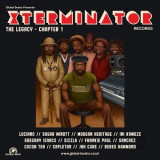
Various - Xterminator Records: The Legacy – Chapter 1

In over thirty years of regularly meeting with reggae artists and musicians in the UK and Kingston, I never encountered anything like the feeling of being around the Xterminator camp during the nineties. It wasn’t just the depth of talent that owner Philip “Fatis” Burrell could call upon or even the quality of his productions, but the sense of purpose he instilled in people. At times, it felt as if he and his group of largely Rasta artists had aligned themselves with a higher power - not just in their reasoning sessions, but when someone stepped to the mic and opened their heart, as well as their mouth. If you recorded for Fatis, you went into the studio empty-handed - no lyrics - and put your trust in the Almighty. That was the rule and the artists who passed through Xterminator had to really feel what they were singing or deejaying about.

pre-ordina ora11.02.2022

dovrebbe essere pubblicato su 11.02.2022


Last In: 2026 years ago
ERNEST WILSON / SIMON NYABINGHI - I KNOW MYSELF / I KNOW MYDUB 7"

One of the two new 7" from All Nations Records coming early 2022 is a rework of a legendary tune that all reggae fans know. “I Know Myself” from Ernest Wilson has been a regular play by all champion sounds from Sir Cosxone to Jah Shaka and alikes since late 70’s. Never would be the intention to do better, but All Nations Records likes to do his thing a little bit different, so Simon Nyabinghi has rebuilt the tune entirely in his studio in 2022 style.
With a clever recipe of carefully picked sounds and a grooving way of playing, it has the original vibes with a bouncing twist that should suit to all original fans and beyond. All in all, a great humble tribute to a legendary artist sadly gone to zion earlier in 2021. 

non in magazzino

Ordina ora e ordineremo l'articolo per te presso il nostro fornitore.


Last In: 4 years ago
Sahara All Star Band Jos - Sahara All Star Band Jos

Based in the Havana Nightclub, in the central plateau town of Jos, the Sahara All Stars of Jos weren't part of the Lagos scene or the one in the east. Their leader, Dan Satch Ayo, had played with Dr Sir Warrior in the Orientals. He'd jammed with Mohammed Ahidjo and Sonny Akpan from The Funkees. Together with the All Stars he took the best of both scenes and created his own tight, hypnotic groove. First released in 1978, Sahara All Stars of Jos is a musical journey through all of those influences. 'Freedom For Africa' is a potent rallying cry sugarcoated with a sweet reggae vibe. 'World People' is an Afrobeat gem that condenses a night out at The Shrine into 10 min 43 secs. You can almost feel the steam coming out of New York manholes on 'Take Your Soul.' And the Highlife-tinged 'Alikali Adajo' brings it back, full-circle, to the Jos Hotel, just off the roundabout, where it all began. Engineered by Fela Kuti's regular knob twiddler, Emmanuel A. Odunesu, Sahara All Stars of Jos is a tight, funky sonic gem and a timely reminder that, in 70's, the groove was strong all over Nigeria.

non in magazzino

Ordina ora e ordineremo l'articolo per te presso il nostro fornitore.


Last In: 4 years ago
Various - King of The Dub Rock 3

The legendary soundman and record producer, Lloyd Coxsone, began his career in the 1960’s soon after arriving from Jamaica. He was one of the first soundmen to play at West End clubs where a generation of British pop stars like the Beatles and the Rolling Stones first heard music from Jamaica. Sir Coxsone sound then dominated the seventies, when Bob Marley & Dennis Brown were among his greatest allies, as heard on unforgettable dub-plates from that era.


He formed the Tribesman Label and issued King of the Dub Rock before recording the likes of Fredlocks, Willy Stepper & Jimmy Lindsay. King of the Dub Rock 1 & 2 are recognized as reggae classics. They not only feature Lloydie’s own productions but also riddims by Jamaican producer Gussie Clarke and heavyweight dubs by mix master Scientist. On King of the Dub Rock 3, Lloydie teams up with Jahsolid Rock Music, who’s albums with Brinsley Forde, Apple Gabriel and Earl 16 were regularly heard on Sir Coxsone playlists. This album features exclusive dub mixes and vocal tracks from these artists plus brand new tunes by Mutabaruka, Chezidek, Micah Shemaiah, Var & Ras Teo.


King of the Dub Rock 3 is an essential companion for all Coxsone fans wanting to complete the trilogy. It delivers such a high standard of musical quality that it promises to be a modern day classic!

pre-ordina ora30.06.2021

dovrebbe essere pubblicato su 30.06.2021


Last In: 2026 years ago
Liam Bailey - Ekundayo

Liam Bailey

Ekundayo

12inchBCR091LP
Big Crown Records
01.12.2020

Big Crown Records is proud to present Ekundayo, Liam Bailey’s debut record on the label. This album is a long time in the making, and after listening, clearly worth the wait. It didn’t take a long time to record, but it did take years for all the stars to line up.

Bailey, born and raised in Nottingham, England, the son of an English mother and Jamaican father got his early influences from his mom’s record collection. Bob Marley and Dillinger, Stevie Wonder and The Supremes, The Beatles and Jimi Hendrix would eventually shape the singer/songwriter we know today.
Fast-forward to 2005, Liam is in London and doing the whatever-gig-you-can-get musician hustle with hopes of landing a record deal. And it was through this time that Liam first teamed up with Leon Michels, musician / producer luminary, and the co-founder of Brooklyn's own Big Crown Records. Liam flew out to New York and those first sessions together produced the now classic tunes “When Will They Learn” and “I’m Gonna Miss You” which still get spins at reggae spots around the globe. That trip helped kick off what was to follow next for Liam: a slew of record releases, label deals, and working with some wildly-notable mainstream producers. Even a just-famous Amy Winehouse heard one of Liam's apartment-made, lo-fi recordings through a friend and liked what she heard. Regardless of the audio quality, Liam's particular sound shone through—all guitar, warm-rough and genuine soul. She signed him to her label shortly after.

But, as the story can go with major labels, they already had an idea of the Liam they wanted to make, promote, and push. With the typical pay-day enticement, Liam did his best to fit into whatever shape they put him to. "'Maybe I can make it work,' that's what you're thinking," Liam remembers, "but, you quickly find out that you can't."

While Liam’s career went through a bunch of record industry twists and turns he and Michels stayed in touch and would regularly connect and collaborate. Finally, in 2019, the time was right to do a full-length album together. And this time, it would be free of any restricting major label presumptions and opinions. "This is the record we always wanted to make," says Michels. Set to release in November 2020, the album is called Ekundayo. And the word's meaning may be all you need to know to get to the essence of this project. It means "sorrow becomes joy" in Yoruba, a language spoken mostly in Western Africa. On the surface, Ekundayo is a weighty Reggae record, full of new and old textured riddims. But listen more in-depth, and you'll find subject matter that's more recognizable from a modern-day R&B record. An example of the former is the first single off the album. Sung to the most beautiful woman at the nightspot, "Champion" is a joyous anthem powered by a silly-thick Juno-bass throb and 808-proof drums. In short, "Champion" is dancehall-ready. But then there's a song like "Don't Blame NY." Moody and sparse with a somber drive, you might have to resist the urge to compare it to a Frank Ocean-ish type vibe. Liam's voice is in a different but fitting element here, showing stripped-back emotion and soulful restraint. Anyone who has lived and tried to thrive in New York won't have a hard time relating to the lyrics but they may join the masses who blame the city, while Liam points the finger at himself and sings praises to The Big Apple.

Credit to Leon's hand, elements of Jamaican production are everywhere, peppered throughout the record. Like the pitch-perfect organ stabs that push through the authentically positive "White Light," or the muted, percussive guitar strums that chug along in the back of "Fight." In the same vein of any fantastic singer/songwriter album, Ekundayo is a reflection of who Liam Bailey is, taking on topics and approaches he never would think of just a few years ago. Some evidence: "Ugly Truth" is about reconnecting with his biological father, a subject he once thought would be too personal to address. The journey from conforming to major labels to this latest record has been a long one for Liam, and a bit of a struggle. But struggle may be the only way we truly grow and evolve. With a new clarity of purpose, sound, and life, Liam has found joy out of those struggles. And it's called Ekundayo.

non in magazzino

Ordina ora e ordineremo l'articolo per te presso il nostro fornitore.


Last In: 4 years ago
Liam Bailey - Ekundayo

Liam Bailey

Ekundayo

12inchBCR091LPC2
Big Crown Records
25.11.2020

Big Crown Records is proud to present Ekundayo, Liam Bailey’s debut record on the label. This album is a long time in the making, and after listening, clearly worth the wait. It didn’t take a long time to record, but it did take years for all the stars to line up.

Bailey, born and raised in Nottingham, England, the son of an English mother and Jamaican father got his early influences from his mom’s record collection. Bob Marley and Dillinger, Stevie Wonder and The Supremes, The Beatles and Jimi Hendrix would eventually shape the singer/songwriter we know today.
Fast-forward to 2005, Liam is in London and doing the whatever-gig-you-can-get musician hustle with hopes of landing a record deal. And it was through this time that Liam first teamed up with Leon Michels, musician / producer luminary, and the co-founder of Brooklyn's own Big Crown Records. Liam flew out to New York and those first sessions together produced the now classic tunes “When Will They Learn” and “I’m Gonna Miss You” which still get spins at reggae spots around the globe. That trip helped kick off what was to follow next for Liam: a slew of record releases, label deals, and working with some wildly-notable mainstream producers. Even a just-famous Amy Winehouse heard one of Liam's apartment-made, lo-fi recordings through a friend and liked what she heard. Regardless of the audio quality, Liam's particular sound shone through—all guitar, warm-rough and genuine soul. She signed him to her label shortly after.

But, as the story can go with major labels, they already had an idea of the Liam they wanted to make, promote, and push. With the typical pay-day enticement, Liam did his best to fit into whatever shape they put him to. "'Maybe I can make it work,' that's what you're thinking," Liam remembers, "but, you quickly find out that you can't."

While Liam’s career went through a bunch of record industry twists and turns he and Michels stayed in touch and would regularly connect and collaborate. Finally, in 2019, the time was right to do a full-length album together. And this time, it would be free of any restricting major label presumptions and opinions. "This is the record we always wanted to make," says Michels. Set to release in November 2020, the album is called Ekundayo. And the word's meaning may be all you need to know to get to the essence of this project. It means "sorrow becomes joy" in Yoruba, a language spoken mostly in Western Africa. On the surface, Ekundayo is a weighty Reggae record, full of new and old textured riddims. But listen more in-depth, and you'll find subject matter that's more recognizable from a modern-day R&B record. An example of the former is the first single off the album. Sung to the most beautiful woman at the nightspot, "Champion" is a joyous anthem powered by a silly-thick Juno-bass throb and 808-proof drums. In short, "Champion" is dancehall-ready. But then there's a song like "Don't Blame NY." Moody and sparse with a somber drive, you might have to resist the urge to compare it to a Frank Ocean-ish type vibe. Liam's voice is in a different but fitting element here, showing stripped-back emotion and soulful restraint. Anyone who has lived and tried to thrive in New York won't have a hard time relating to the lyrics but they may join the masses who blame the city, while Liam points the finger at himself and sings praises to The Big Apple.

Credit to Leon's hand, elements of Jamaican production are everywhere, peppered throughout the record. Like the pitch-perfect organ stabs that push through the authentically positive "White Light," or the muted, percussive guitar strums that chug along in the back of "Fight." In the same vein of any fantastic singer/songwriter album, Ekundayo is a reflection of who Liam Bailey is, taking on topics and approaches he never would think of just a few years ago. Some evidence: "Ugly Truth" is about reconnecting with his biological father, a subject he once thought would be too personal to address. The journey from conforming to major labels to this latest record has been a long one for Liam, and a bit of a struggle. But struggle may be the only way we truly grow and evolve. With a new clarity of purpose, sound, and life, Liam has found joy out of those struggles. And it's called Ekundayo.

non in magazzino

Ordina ora e ordineremo l'articolo per te presso il nostro fornitore.


Last In: 5 years ago
Frankel & Harper - Crouching Tiger EP

With 3 releases under their belt Council Work return with the 4th installment on the label, the 'Crouching Tiger EP'. Sticking with the formula of the last EP, there are 2 originals from the label owners themselves Frankel & Harper, coming in the form of stripped back UKG number 'Crouching Tiger' as the A1, and then bringing heavyweight moodiness on the A2 with 'Conquering Lion'. First up on remix duties on the B1 is Italian producer, DJ and Music On regular LEON with a dubby, rolling take on the title track. Hotly tipped UKG producer ZeroFG steps up to remix the B2 and brings some serious dub reggae vibes mixed with some rude garage flavours to round off the EP and give a great contrast to the original.

non in magazzino

Ordina ora e ordineremo l'articolo per te presso il nostro fornitore.


Last In: 4 years ago
SOLA ROSA - CHASING THE SUN

First new album in five years from Kiwi musician and producer Andrew Spraggan, aka Sola Rosa, spanning the genres of soul, funk, R&B, nu-jazz, hip-hop, and electronic music. The album features a heavy hitting line-up of vocalists, including regular collaborator and Streets singer, Kevin Mark Trail, Basement Jaxx’ long term collaborator Sharlene Hector and genre-defying, rising UK reggae star Kiko Bun. Other collaborators include London singer/songwriter Josh Barry, London’s eclectic Neo-Soul singer Jerome Thomas, British reggae and dub MC vocalist Eva Lazarus, plus up and coming Australian vocalist Thandi Phoenix. Closer to home, ex-pat Kiwi vocalist Wallace and Aotearoa’s own musical maverick, Troy
Kingi add their talents to the mix. Two single national/specialist radio campaign pre release Full UK/EU print and online PR campaign for singles, DSP tracks, and album release Extensive online/social marketing and advertising campaign to accompany each release
Physical product will consist of digipack CD, gatefold double black LP and ltd edition double Post-coronavirus touring and international promo trips are planned for 2021
Black double vinyl in a gloss gatefold sleeve.

non in magazzino

Ordina ora e ordineremo l'articolo per te presso il nostro fornitore.


Last In: 5 years ago
MATO - ALSO SPRACH ZARATHUSTRA / MAIDEN VOYAGE

Stix Records, a sub-label of Favorite Recordings, is back with some heavy dub cuts from label regular Mato.

Starting his reggae production career in 2006, Thomas Blanchot aka Mato has released music through various projects on EDR Records, Big Singles or Makasound... In the meantime he developed a real trademark: taking over classics French, Hip-Hop, or Pop song, into roots reggae-dub new versions. Besides since 2010, Mato has built a solid reputation thanks to his hot remixes of Hip-Hop classics on Stix Records.

Today, Mato is back with another target for his special skills as a tailor of reggae music, this time focusing on classic musical themes from R. Strauss’ "Also Sprach Zarathustra" and Herbie Hancock’s "Maiden Voyage ". It’s a great sensation to hear these melodies turned into superbly crafted Dub monsters. As Mato once said, "Play it loud and burn a chalice!"

non in magazzino

Ordina ora e ordineremo l'articolo per te presso il nostro fornitore.


Last In: 4 years ago
Asha B. & Alien Dread - Lost Souls & Dub' / 'Judgement A Follow Up & VS’ EP

Jamaican artist Asha B, features on observational Roots Reggae and Grounation style vocals, with Dubs mixed by Alien Dread. The tracks were recorded at Asha B’s studio, late 2018. The vocal tracks were produced by Asha B and the vocal tracks & Dubs have been re-mixed by Alien Dread…

Asha B has been a regular session musician, not only in Jamaica, but also when he moved to the UK and has worked with most of the ‘Reggae Greats’, in particular, Jackie Mittoo, IJahMan-on tour & studio work and also studio work for many others, both JA & UK. Asha B has had several single releases to date, and also an album: Hard 2 Smile (Quartz Music - 2005).

non in magazzino

Ordina ora e ordineremo l'articolo per te presso il nostro fornitore.


Last In: 5 years ago
Various - The All American Powerhouse

They Say: “Driving brass and sax ensemble over funky rhythm section, playing tracks of various feel and style”.

We say: From the Lincoln Continental that memorably adorns the cover to the tranquil funk contained within, this glowing ode to the grooving force of 70s American soul music is ice cool all over. With brilliant contributions from the Three Key Alans™ (Hawkshaw, Parker, Tew) as well as Mike Moran, Les Hurdle and Keith Roberts, this is driving music for only the vibiest cats.

Originally released in 1976, The All American Powerhouse is one of the very best of the Themes library releases. It’s killer. A feast of dramatic jazz, horizontal, melodic funk and bouncing sunshine-y West-Coast feels throughout, there also lurks an intense injection of the Blaxploitation sound. Understandable, given the subject matter and year it was released.

Highlights include Alan Parker’s confident, horn-heavy wah-wah-fuelled album-opener “Sweeny Todd”, Hawkshaw’s graceful “Getaway” glide and dramatic, breathless “Speed Run”, Mike Moran’s loose, organ-driven propulsive B-Boy classic “The Pick-Up” and Keith Roberts’ percussive tour de force “Overide” that closes out the LP.

Yet, perhaps the most significant track here is Les Hurdle’s long-adored “Soul Train”. A grooving, bass-heavy library classic, it’s all swirling strings, stabbing horns, heavy open drums and melodic funk-rock guitars. Add in the funky clavinet, and the combination works beautifully.

As with all of our other Themes re-issues, the audio for The All American Powerhouse comes from the original analogue tapes and has been remastered for vinyl by Be With regular Simon Francis. We’ve taken the same care with the sleeves, handing the reproduction duties over to Richard Robinson, the current custodian of KPM’s brand identity.

non in magazzino

Ordina ora e ordineremo l'articolo per te presso il nostro fornitore.


Last In: 3 years ago
Laneous - Monstera Deliciosa

“A genius” - Nai Palm
“One of the most incredible live performances I’ve seen” - Gilles Peterson
“He's like a human centipede sewn out of all the greatest musicians from the past 80 years” - Liam Pieper

Emerging from Brisbane’s music-art bohemian West End in 2008, self-taught, prodigious musician Lachlan Mitchell aka Laneous, began his eclectic and colourful journey in music as the leading member of funk band KAFKA, stamping his trademark falsetto croon on an Australian music landscape that wasn’t quite ready for an artist whose standout influence was D’Angelo’s ‘Voodoo’. Word of their talent soon reached UK’s perennial tastemaker Gilles Peterson who featured the band on his compilation, Brownswood Bubblers Four alongside other breakthrough acts at the time, Mayer Hawthorne, Floating Points and Lone. A world-class guitarist, vocalist, composer, visual artist and – significantly - muse, Mitchell’s unique ability to shine, create and inspire across genres was his obvious forte, even then. Regularly sought after to provide features for other bands and cover art for Hiatus Kaiyote albums Tawk Tomahawk and Choose Your Weapon, he worked diligently to support his community. But while Hiatus’ Nai Palm told media Laneous was “a genius” he often credited music and drawings to pseudonyms.

In 2016, after 8 years of humbly dominating the Australian underground art, soul and jazz scene [with ‘mutant-soul/croon punk’ cult group Laneous & The Family Yah, reggae band Kooii and improv-jazz-beat trio, Vulture Street Tape Gang] Mitchell relocated to Melbourne - a move that would instigate and inspire the long-awaited debut solo LANEOUS record that fans and peers had been craving for nearly a decade. Excited to create new music with an artist they’d previously referenced as an inspiration, Paul Bender and Simon Mavin (Hiatus Kaiyote) came on board swiftly, joined by Hudson Whitlock (Cactus Channel) on drums and Donny Stewart (Jazz Party) on vibraphone and flugelhorn - a key element in bringing Mitchell’s vision of an exotica/soul infused album to life. In classic Laneous fashion, the musical references for the record run deep, winding through an eclectic array of artists from Martin Denny, Burt Bacharach and The Beach Boys to Shuggie Otis, Wild Cookie and Wu-Tang.

The debut single Modern Romance was unleashed in October 2018 with a kinky, captivating visual accompaniment that marked the return of the Laneous legacy. After selling out the Melbourne launch of the single, the band was invited to headline Gilles Peterson’s Worldwide FM x Northside Records live Melbourne broadcast, teasing exclusive album cuts and drawing high praise from Peterson, stating it was “..one of the most incredible live performances I’ve seen’.

Out May 10 via Soul Has No Tempo, Mitchell’s MONSTERA DELICIOSA stands as a sublime genre work, peerless in Australia - his magnum opus bears the name that’s backed him from day one:

non in magazzino

Ordina ora e ordineremo l'articolo per te presso il nostro fornitore.


Last In: 6 years ago
Gecko Turner - Guapapasea!

Gecko Turner

Guapapasea!

12inchLMNK01LP
Lovemonk
16.10.2018

Guapapasea! is the first album by Gecko Turner, a unique creator from southern Spain. Born and bred in Extremadura, near Portugal, Gecko has an original and tasteful Latin personality, and during the 90s he was responsible for some locally quite successful bands like Perroflauta, and The Reverendoes.

Acclaimed by Spanish critics as the best debut album upon its original release in 2003, Guapapasea! is a musical journey blurring the boundaries in Latin music. It's a nice blend of different styles - from soul and Brazilian-flavoured songs like the free and easy (and all-time underground hit) "Un Limón en La Cabeza"; Afrobeat-driven tracks like "45.000$ (Guapa Pasea)"; and the flamenco-reggae of his rendition of Bob Marley's "Rainbow Country", to the infectious Latin rhythms of "Did You Black Up Today"; Monk tribute "Monka Mongas"; the original adaptation of Bob Dylan's "Subterranean Homesick Blues"; and the radio-friendly, straightforward reggae track "Te Estás Equivocando".

Guapapasea! features contributions by some of the greatest musicians active at the time on the Spanish Afro-Cuban jazz scene, such as Rubem Dantas (Paco de Lucía's percussionist and regular member of Chick Corea's band), Rodney Dássiff, and Brazilian trumpeter Irapoam Freire. The album was licensed to Quango in the US.

It's been 15 years since its original release, and to celebrate this, Lovemonk's reissuing the album on double 12" vinyl for the first time, alongside Gecko's second album, Chandalismo Ilustrado, and the CD compilation Soniquete: The Sensational Sound Of Gecko Turner. The CD version features bonus remixes by Quantic, Mexican Institute Of Sound and Watch TV.

non in magazzino

Ordina ora e ordineremo l'articolo per te presso il nostro fornitore.


Last In: 7 years ago
Various - Record Kicks 15th

Various

Record Kicks 15th

12inchRKX069LP
RECORD KICKS
29.05.2018

Record Kicks Celebrates 15 Years In The Business With A Collection Full Of Exclusive New Singles. Available In Ltd Edition Double Clear Vinyl Lp, Cd And Digital Download. Side By Side With Similar Outfits Like Daptone, Truth And Soul, Freestyle Or Timmion, Under Its Motto "the Explosive Sound From Today's Scene" Milan-based Independent Label Record Kicks Has Been Pitching The Contemporary Funk & Soul Scene Since Day One.

With Over 200 Releases Under The Belt, Rk Has Released Bands From All Over The Globe And Earnedthe Support Of Vip Fans Such As Kenny Dope, Jamie Cullum, Craig Charles And Not Least Jay-z, Thanks To Which The Label Has Recently Received A Grammy Nomination For Hov's Use Of Hannah Williams' "late Nights And Heartbreak" As Backdrop For His "4:44". The New Instalment "record Kicks 15th" Coming Out Next May 18th On Double Clear Lp, Cd And Digital Download, Celebrates 15 Years In The Business With A Collection Full Of Exclusive New Tracks And The Very Best Of It's Roster.

The Album Kicks Off With Rk's Latest And Youngest Signing:
From Chicago, Heavily Inspired By The Impressions And Leroy Hutson, We Are Proud To Present You "the Devonns" With Their Super Soulful Debut Single "come Back", An Appetizer Of Their Debut Full Length Expected To Land On Rk Next Autumn. Another New Signing To The Label Is Men Of North Country's (acid Jazz Records) Side Project "the Faithful Brothers", Here With Their New Single "one More Time".

Other Exclusive Tracks Of The Comp Are "this Strange Effect", A Coverup Of The Hooverphonic's Single From 1998 Brought To You By Dutch Northern Soul Disciples The Tibbs, "love You Back" From Detroit Deep Funk Outfit Third Coast Kings, "the Sort" By The Buenos Aires Mod Reggae Kings The Crabs Corporation, "top Dog" By British Funk Combo The Hook & Slingers And Straight From Down Under "you Don't Know Me" By The Always Great Dojo Cuts.

Along With These New Exclusive Cuts, Dig On Some Label's News Singles And Heavyweight Classics Such As Dj Shadow's "this Time" Taken From Baby Charles Debut Lp, "don't Throw Your Love In The Garbage Can" By James Brown's Original Funk Diva Martha High Feat Japanese Funk Ambassadors Osaka Monaurail, "psycheground" The Brand New Afro-funk Single By Calibro 35 And Then Portuguese Tnt Dynamite Marta Ren & The Groovelvets, Toronto Soul Queen Tanika Charles, Uk Funk Ambassadors The New Mastersounds, The Diplomats Of Solid Sound And The Already Mentioned "late Nights & Heartbreak" By Hannah Williams & The Affirmations.

non in magazzino

Ordina ora e ordineremo l'articolo per te presso il nostro fornitore.


Last In: 5 years ago
Pat Thomas - Introduces Marijata LP
  • 1: Brain Washing
  • 2: Papa's Litle Boy
  • 3: Black Beautful Race
  • 4: I Can Say
  • 5: Don't Blame Us
  • 6: Salvaton
  • 7: Mother Africa
  • 8: My Love Will Shine
  • 9: That's The Way

'Pat Thomas Introduces Marijata' is a seminal Ghanian album that fuses highlife, reggae, folk, funk and soul, from legendary vocalist Pat Thomas. Originally released in 1976 on Gapophone Records.
'Marijata' was a group made up of three members - Kof 'Electric' Addison on drums, Bob Fischlan on organ and Nat Osmanu on guitar, hailing from Ghana. Pat Thomas career began in 1969 with the 'Broadway Dance Band', leaving a year later to join the 'Uhuru Dance Band'. He then played with Ebo Taylor's 'Blue Monks' and fnally formed the 'Sweet Beans' in 1973 where he really made his name. The group released 'False Lover' in 1974, split and then reformed as Marijata, releasing 'Marijata' (also available on Mr Bongo) and this album, 'Pat Thomas Introduces Marijata'.

Thomas career spans more than 50 years and he stll tours regularly across the world.

Replica original artwork, ofcial Mr Bongo reissue. Licensed from Gapophone Records courtesy of George Prah.

pre-ordina ora21.04.2018

dovrebbe essere pubblicato su 21.04.2018


Last In: 2026 years ago
Spirit Fest - Spirit Fest

Spirit Fest

Spirit Fest

12inchMORR155-LPLTD
Morr Music
08.11.2017

Bewitching Avant-Pop album from impromptu supergroup built around acclaimed Japanese duo, Tenniscoats. Featuring members of Notwist, Jam Money and Joasihno.

In these dark and uncertain times, there's an ever-growing collective of peaceful, loving types, bound together by an understanding of one peculiar word: Tenniscoats. Aside from being the name of an influential Tokyo-based duo, it represents fun, artistic freedom, experimentation and - perhaps most important of all - inclusivity.

A Tenniscoats gig is rarely the audience watching the performers. Instead, Saya and Takashi regularly shun the stage in favour of any particular spot that takes their fancy, whether it's an empty seat in the auditorium or the roof of a neighbouring cafe. In the world of Tenniscoats, music can happen anywhere, and everyone is invited to join in.

During the winter of 2016, the music happened in Munich. As a long-time fan, Markus Acher (Notwist) jumped at the chance not only to put Tenniscoats on the bill at the Alien Disko festival he was organising, but also to invite Saya & Takashi to a small apartment studio, together with Mat Fowler (Jam Money) and Cico Beck (Aloa Input, Notwist). This is where Spirit Fest was recorded over the following 14 days.

Tenniscoats are known for their collaborations - some of their finest work was done in conjunction with Tape, The Pastels, Jad Fair and many others - so making good use of the time and friends available was natural to them. For me, timing is important,' Saya said. We met in season, and the song flowers are now blooming!' Mat Fowler recalls the Spirit Fest sessions taking place in an idyllic, festive atmosphere. Every morning we'd all share breakfast, chat and learn about German Christmas customs. We'd catch the bus in the morning and walk home in the evening. The journey ran parallel to the beautiful flowing Isar River that bubbles, ebbs and flows right through the middle of Munich.'

While Tenniscoats sit at the heart of proceedings, it isn't their album alone. Markus, Mat and Cico also brought songs, providing a solid base on top of which the artistry could evolve. Mat explains that, a melody would begin, and slowly, each of us - in our own time - would find our way into the music.

Producer Tadklimp would sensitively set-up around us in this narrow window of time, so as to document that first and intuitive moment of collective discovery.' Nearly everything was recorded live,' agrees Markus, playing and singing together in one room with piano, guitars, percussion and some keyboards.' The collaborators came from Germany, Japan, the UK, Greece and beyond. That sense of inclusivity is palpable.

From the tender beauty of Markus's River River' and Saya's Mikan' to the electro-Merseybeat of Tenniscoat's Nambei' and the half-crazed pianica-reggae of Shuti Man', the resulting album is a testament to the manner of which these musicians are able to channel their songwriting through their spontaneity. It's also a snapshot of a gentle and intuitive moment in time - a beautiful meetup that expands this community, happily, even further.

Jon Willks (Grizzly Folk)

non in magazzino

Ordina ora e ordineremo l'articolo per te presso il nostro fornitore.


Last In: 7 years ago
Bugalu Foundation - Stutter & Twitch 7" Series

Stutter & Twitch Records proudly presents the first in an exclusive series of 7" record releases, debuting two previously unreleased tracks on vinyl, from Latino Funk crusaders, Bugalu Foundation. These two spellbinding sides combine the irresistible fusion of Reggae, Funk and Soul with the beats of 'El Barrio' and the Hispanic traditions of Latin America.
Sounds amazing. Blown away. Great studio sound. Heavy!" - Snowboy it's the latin sound done seriously well, this is the real deal" - Craig Charles, Funk and Soul Show, BBC 6 Music
As well as attracting the attention of Craig Charles, appearing as his support act at Hull's Freedom Festival and being regularly played on his Radio 2 and 6 Music shows, Bugalu Foundation have been busy increasing their following with a number of high profile appearances across the UK, including at Gateshead International Festival, supporting Riot Jazz at legendary venue Antwerp Mansion, and opening the 19th Manchester Jazz Festival to glowing reviews.

non in magazzino

Ordina ora e ordineremo l'articolo per te presso il nostro fornitore.


Last In: 6 years ago
Endgame - Flesh Ep

Endgame

Flesh Ep

12inchHDB101
Hyperdub
25.07.2016

Londoner Endgame is a new addition to the Hyperdub roster after releases on Lisbon's Golden Mist Records, and NYC-based Purple Tapes Pedigree. Endgame hosts an excellent monthly show 'Precious Metals' on NTS and produces and DJs as part of the Bala Club crew (also featuring Uli K, Kamixlo and Rules) who are regulars at Lexxi's occasional club night 'Endless'. He already has mixes and features with the likes of the Fader, Fact, Dazed and Confused and ID under his belt in the short time he's been releasing music. In his ice-cold productions, Drill, Grime and most notably South American dance riddims are threaded and mutated into tracks that he describes as an ever-evolving vision of the dystopian underbelly of London. 'Felony Riddim' is an icy introduction to the EP, an explosive club jam with a menacing and stabbing chime melody leading up to a pounding kick drum. It's all out war, but you can definitely roll your hips to it. 'Sittin' Here Redux' recasts Dizzie Rascal's 'Boy In Da Corner' opener into a tense anthem, with police sirens wailing in the background, dogs barking, and rolling 808 snares that bring a vibe somewhere between reggaeton and drill. Next up is 'Fallen' featuring the MC Organ Tapes - a slow burner that works both as a moody headphone track or a club slow jam. Organ Tapes' slurred autotuned vocals flow perfectly with Endgame's blend of grime drums and chiming rap production. The EP finishes as it began, going out with the explosive and high-energy 'Toxic Riddim'. It's a mix of reggaeton and futurist dancehall, with a menacing melody and relentless electric shock-like hi hats across a deep sub. Endgame takes you all around the world - but the ice-cold tone unmistakably brings you right back to winding in a dark club in London's culture clash

non in magazzino

Ordina ora e ordineremo l'articolo per te presso il nostro fornitore.


Last In: 9 years ago
Articoli per pagina:
N/ABPM
Vinyl