Search:reference

Styles
All
ensemble 0 - L'Incroyable Femme Des Neiges

ensemble 0 (pronounced zero) is a band /contemporary music ensemble, whose line-up and instruments can change according to the repertoire performed. Directed by Stéphane Garin and Sylvain Chauveau, performing pieces by, mostly, contemporary composers including its own members, and working with numerous collaborators.

The year 0 of ensemble 0 was 2004, when four friends decided to assemble a vessel, essentially dedicated to acoustic music for the present time. A light and adaptable vessel, of varying geometry and geography (its members are based in different cities and countries, including France, Catalonia and Belgium.)

Zero, in cartography, is the reference level from which altitudes are erected. In other words, where the field of possibilities stands. Depending on the chosen direction, the disentangled or deciphered compositions, the musicians and instruments brought in, ensemble 0 performs upon a unique range of reliefs. First, its own compositions are specifically performed by the pulsating heart of the collective, i.e. a trio made of Sylvain Chauveau (acoustic guitar, glockenspiel), Stéphane Garin (metallic percussions) and Joël Mérah (acoustic guitar). Then, with a contemporary repertoire the ensemble expands according to the needs of each work. ensemble 0 occasionally performs pieces by Moondog, Julius Eastman or Ligeti but is particularly keen on living composers such as Tristan Perich, Michael Pisaro or Rachel Grimes.

Here, ensemble 0 plays in according to the movie: L’Incroyable Femme Des Neiges (directed by Sébastien Betbeder with Blanche Gardin and Philippe Katerine) a soundtrack with their own strong and beautiful imprint.

pre-order now28.11.2025

expected to be published on 28.11.2025

Dania - Listless

Dania

Listless

12inchSP06
Somewhere Press
21.11.2025

Following releases on Longform Editions and her own Paralaxe imprint, Dania descends on Somewhere Press with crepuscular, quixotic pop that hits a sweet spot between Mark Clifford’s Cocteau Twins remixes and Massive Attack.

Parked next to Alliyah Enyo, Slowfoam, and Angel R, Dania’s found an ideal home at Somewhere Press, and »Listless« is her most confident, transcendent set to date. Her last few albums were steeped in meaning – a way for the Iraq-born, Tasmania-raised artist to explore her identity and probe the impacts of colonisation. Here, she gives herself more room to breathe, thriving in the mysteries of nighttime – a direct reference to her nocturnal existence as an emergency doctor in Australia. The album was completely composed in the midnight hours, but it’s not self-consciously dark in the way you might expect. Opening track »On a Grassy Knoll« is one of the prettiest – and poppiest – tracks Dania has released, cracking open her voice with thrumming harmonies that she complements with granulated, Guthrie-esque guitars and, most unexpectedly, half-speed drums. It’s the first time Dania’s used percussion, and it suits her extremely well.

In fact, even when the powdery breaks drop away in the album’s final breaths, you can almost hear an outline of where they might remain. On »Write My Name«, Dania loops her voice between waved strings and slippery piano phrases, and the hypnotic closer »A Hunger« is a thudding, sub-heavy 4/4 away from being Peak Oil-style contemporary dub techno.

But the big draw here is Dania’s batch of hazy dream-pop miniatures, like the Seefeel-adjacent »Heart Shaped Burn« (with Rupert Clervaux on drums), and the Bristolian »Car Crash Premonition«, that features a rolling bassline taking us right back to 1998. Very strong – peak listening if you’re into Bowery Electric, MBV, or Mark Van Hoen.

out of Stock

Order now and we will order the item for you at our supplier.


Last In: 6 months ago
BRIAN JACKSON feat Black Thought (The Roots) - The Revolution Will Not Be Televised (7")

The 10th release on ALIM Music, a stone-cold classic, has been reborn. Gil Scott-Heron and Brian Jackson’s The Revolution Will Not Be Televised, the iconic song of protest and Black Consciousness, has been reimagined and revitalised for a new generation. With new lyrics and vocal performance from Black Thought, a reworked and bassline-heavy production by Masters at Work, Brian Jackson has recreated an absolute masterpiece.

Originally taken from Gil’s poem as performed on his Small Talk at 125th & Lenox and then released as a proto Hip-Hop song featuring Bernard Purdie’s drumming on the 1974 Pieces of a Man album, this new version updates the track’s original powerful lyrics to include references to the propaganda of Fox News, social media tropes, live streaming, taking the knee and modern day consumerism. Delivered by Black Thought in his imitable style and accompanied by Brian Jackson’s incisive jazz flute, these new lyrics represent a Black Liberation call to action for today’s world.

Louie Vega and Kenny Dope’s production gives The Revolution Will Not Be Televised a dancefloor edge that embraces a Jazz Hip-Hop flow with the absolute clarity of the message. Taken from Brian Jackson’s forthcoming and aptly titled BBE Music album, Now More Than Ever, The Revolution Will Not Be Televised will unite Boomers, Millenials and Gen-Z in its multi-generational cross-over appeal bringing the original Gorillas together with Neo-Soul and Hip-Hop heads of today.

out of Stock

Order now and we will order the item for you at our supplier.


Last In: 77 days ago
Apparat - Dj-kicks (2x12")

Apparat

Dj-kicks (2x12")

2x12inchKLP727040
!K7 Records
12.11.2025

Sascha Ring aka Apparat’s work as a producer, artist, musician, live act and DJ has always been in a constant state of metamorphosis, while simultaneoulsy always managing to stay true to his trademark musical sound.

There is a unique spirit that lives within his projects and productions or rather they all have this special vision of music which becomes more distinctive with every release and spans his ‘Multifunktionsebene’ and ‘Walls’ albums on Shitkatapult, his ‘Moderat’ album made together with the boys from Modeselektor on Bpitch Control and his DJ-Kicks mix for !K7.

Following on from Kode9 and his friend James Holden, Apparat offers a wonderful mix and insight into the tracks that have influenced and roused his passion for club productions over the years as well as his current favourites in his box.

The mix includes an exclusive track ‘Sayulita’. Together with this mix, it also symbolises a nice reference point in an important chapter in Apparat’s own history – club music. This is a chapter that is by no means finished, for the more he succeeds in re-writing the narrow parameters of techno music, the more important it remains as the driving force in his life.

out of Stock

Order now and we will order the item for you at our supplier.


Last In: 6 months ago
Maston - Foreign Affairs LP

Maston

Foreign Affairs LP

12inchBEWITH009SEVEN
Be With Records
07.11.2025

The perfect accompaniment to that deep fall feeling, Frank Maston's beloved 2025 single finally gets its long overdue vinyl release! As our friends New Commute articulated beautifully, "Foreign Affairs" drifts through London fog and Paris shimmer, its avant-lounge glow wrapping each melody in a wistful ache. On B-side "Liaison," ghostly strings and a solitary piano paint a deserted twilight shoreline, Pacôme Henry's distinct 16mm cinematography hovering nearby." We've pressed just 500 of these gorgeous records so, be quick, Maston always flies.

Originally written for a film Maston was scoring in 2024, he decided to keep it aside for himself. And, well, us all. The song has a vibe Maston has previously flirted with; he wanted to dive in...all the way: "The arrangement is huge, definitely the biggest I've written, and it merited live musicians playing together. Also another experiment, to do it with all live musicians playing my arrangements. I wanted to make something that you'd want to put on when you bring a date back to your place. It's on the edge of sappy but that's sort of the point. I decided to give myself an unlimited budget - just spend whatever was necessary to get the right musicians and record it the best way possible."

It's this dedication to sonic perfection which Maston is rightly lauded for. We couldn't not put this on a cute wee 7" when we heard it.

The A side, "Foreign Affairs", is a brilliant, Bacharach-esque romp with a bit of that unapologetically romantic Morricone angle. Says Frank: "I was trying to synthesize that sort of jazzy/sexy/classy/romantic mature sound, where the edginess is in these surprising chord changes and subtle arrangement cues."

A wonderful complement, the flipside "Liaison", evokes Martin Denny, but Eden's Island was in Frank's head, too. He wanted to take a deep dive into that exotica sound - a genre he'd referenced a bit but never fully committed to - so the piece is lavished with those big sighing strings and a pretty lush arrangement. Happily, it all sounds super rich. Also, "Umiliani is always a reference for this sort of thing (Il Corpo etc.), That almost mechanical arrangement of things moving together and a simple melody over it (something I nicked from Ennio)".

The two songs were recorded in Paris and London in the summer of 2024. Aside from the rhythm section and piano, there's vibraphone, a full string section, trombones and alto and concert flutes. "Liaison" boasts strings, vibraphone, a female choir and tenor sax. Maston played piano and acoustic guitar but that's it (as opposed to playing basically everything on Tulips). His friend Oscar Sholto Robertson played drums and percussion whilst Maston mainstay Elie Ghersinu (formerly of L'Eclair) played bass.

The theme for a lot of Maston's titles is that they have two meanings. So "Foreign Affairs" is both a reference to him living abroad and the idea of constant cultural diplomacy and then there's this sexy/cheeky interpretation of foreign affairs in a literal way - "an affair abroad, ooh la la!". The artwork for this 7" single has Roman campaign flags, referencing the foreign affairs in sort of a sassy way. There's a violence implied. But then if you look from a bit of a distance it looks like a bouquet of flowers. So Frank thought it went with the spirit of the title. Also, he's used a lot of roman motifs now so he kept that theme going, even with the terracotta cover.

This is a vitally important project for our Frank. He explains why, here: "For whatever reason, these songs really resonated with me. I feel like they are either the end of a stylistic era for me or the beginning of a new one. They're sonically the culmination of what I'd been working towards and trying to get better at since I started. If I heard this when I was making Tulips I would have said "YES! *This* is what I want to be doing!". So that's the essence of it. It's a statement and the intended reaction is "This is really good, but why now?". Like the edge to it is the context of someone making this sort of thing in 2025, which I think is a huge strength. The real heads will get it. My music always has like a 2-3 year latency until people really catch onto it, and these ones will have a nice payoff I think."

We couldn't put it better ourselves. So we haven't.

pre-order now07.11.2025

expected to be published on 07.11.2025

Unchained - Frontalier

Unchained is the long-standing guitar-based project of Nate Davis, originally from Providence, RI, and based in France for over a decade. In his two most recent LPs—Gabbeh (2024, A Colourful Storm) and Frontalier (2025, Stern Records)—Davis strives to describe a new path for outsider jazz instrumentalism that remains committed to harmonic and rhythmic form while placing greater emphasis on sonic texture through experimental production techniques.

Release Description:

Unchained—a name which at the project's inception or on earlier recordings spoke perhaps to the ecstatic saturation of high gain guitar—has over the past three albums (N.D. Visitor, Pic, and Gabbeh) come to represent more and more an acknowledgement of and sensitive remove from a crashing world. An excuse of oneself from trend towards a siloed artistic development.

On Frontalier, Nate Davis crosses further into this patient personal lexicon of guitar composition, presenting a new set of richly developed songs and leaps in arrangement which may very well shock Unchained fans the world over. The sympathetic geometric guitar themes of the earlier second-period Unchained style are almost entirely absent, making way for a fully realized presentation of the jazz, MPB, and fusion influence present to varying degrees on the previous three albums. Davis's keen sense of melody and songcraft have never been stronger, here landing on music which is at moments evocative of Wes Montgomery, Allan Holdsworth, Jobim, or the jazzier impulses of Lô Borges. Distinct in Davis's music, however, is what these references might belie: an innate tending towards repetition as an affective tool—one which has less to do with the aesthetics of the scene from which the project emerged than it does with devotional prayer. In this way it feels as if Unchained has always been music for living. What was once a maximalist expression of youth has matured into the sound of living with and in the world and an empathic transmuting of all the joy, disappointment, and ambivalence that comes with it. Songs that feel like the sort of thinking one does looking out the window on a long train ride, or the routinism of internal and external life and the breaking out of it. As much as it will be recognized by the fandom as a significant step forward, Frontalier serves also as a perfect gateway for new listeners to the singular music of Unchained.

pre-order now07.11.2025

expected to be published on 07.11.2025

Martin Denny - latin village
  • 1: Angelito
  • 2: On Green Dolphin Street
  • 3: Corcovado
  • 4: Without You (Tres Palabras)
  • 5: Ho-Ba-La-La
  • 6: Something Latin
  • 7: Manha De Carnaval
  • 8: Latin Village
  • 9: The Girl From Ipanema
  • 10: Malaguena
  • 11: Sugar Cane
  • 12: Flying Down To Rio

In 1964, Martin Denny looked beyond the Hawaiian and Asian influences of his previous records to find another place to plant his umbrella in the sand, as well as in your drink: the sounds of Latin America. With this new sound to hang his exciting arrangements on, Latin Village has long been considered one of Denny's high-water marks, and Jackpot is thrilled to have this long-cherished LP back in print. This is an album that rips through what was considered "The Now Sound From Overseas," a sophisticated mash-up of sambas, bossa novas, and Latin jazz. From the first track, "Angelito" (the hit song written by Réne y Réne, later to also be covered by Trini Lopez & Herb Albert), all the way through to its closer, "Flying Down To Rio" (a song which Roxy Music later referenced in their 1972 song "Virginia Plain”), the album is a hypnotic listen. Latin Village also drops in some serious jazz numbers, with respected compositions such as "On Green Dolphin Street" by Kaper & Washington (which has been covered by Miles Davis, Bill Evans & Sarah Vaughn), "Malagueña" the sixth movement in Ernesto Lecona's Suite Andalucía & "Corcovado" by Antônio Carlos Jobim (who merged samba with jazz to create bossa nova). Latin Village is comforting in its familiarity within Denny's sonic world, but steps refreshingly out of the smoke-filled Tiki bars of his previous records and straight into the sunlight where this music still strolls around in a listener's heart, soul, and mind. “Latin Village is a triumph of Martin Denny’s search for a new style, post-exotica.” – ALLMUSIC, 4 stars.

pre-order now07.11.2025

expected to be published on 07.11.2025

Molly Nilsson - Amateur (LP)

The word "amateur" originates from the Latin word "amator," meaning "lover" or "admirer". This Latin term is derived from "amare," which means "to love". The French adopted "amateur" from Latin, and the English then borrowed it from French, initially retaining the sense of someone who loves or is devoted to something. Over time, the English usage of "amateur" also developed a meaning related to a lack of professional skill or experience. How did a word derived from love become a slur? Is love really so defenseless? They say love conquers all, but in reality isn’t love quite ridiculous? It has no intention, no motive, no agenda. How could it possibly prevail? It can’t be bought or sold, or so they say.Its mere existence can't be proven or even measured. What an impossible thing. Trying and failing, time and time again, no wonder cynicism always seems to win. I see “amateurism” as a delighted, even foolish, protest. Protest against everything. Of what’s expected of someone, or expected of someone to desire or strive for. To be elite, to be expert, to be professional, to be a master, to excel and succeed. Where’s the joy in that? I just want to have fun. I want to want. I want to love. And keep doing it, forever. I want to have fun, even when it’s tiring and sometimes even heaven is boring as hell. I want to be bad. I want to do my own thing. “I vant to be alone”. I want to be someone so dedicated to their passion that it starts to seem like there’s something wrong with them. All the way. We can take it all the way, and never get it back. ” - Molly Nilsson Amateur is the 12th studio album by Molly Nilsson. Deep in the teeth of a career that threatens to tip into something resembling a “legacy,” Molly Nilsson celebrates with an album recorded instinctively, quickly and bursting with so many moments of emotional brilliance and clarity it may be her greatest yet. Hers has been a career spent reaching out, perennially powerful in her earnestness, a warrior ridiculously defenceless and armed with a glittering sincerity. Shearing herself of the machinations of the music industry, recording at home, writing direct to the heart. Amateur is a jubilee for losers. A treatise in 13 songs, Amateur states clearly that we should live our life with eternal curiosity, offers us an open hand of comradeship out of the rat race. The songs on the album are both some of the most personal of Nilsson’s career and the most anthemic. First single How Much Is The World asks us to re-evaluate value in the face of a Neo-liberal system squeezing the life out of our loves. Pulsing opener Die Cry Lie satirises the commercialisation of emotion in the form of a shout-along diss-track. With a pounding rhythm track held down by gorgeous chord changes, heartbreaker Valhalla carries the torch for the main themes of the album: never growing up, making mistakes with kindness, moving on. When the drums crash in on the line “It’s going to get better now, you’ll see, going to be much better off without me” there is a world of feeling swirling about in the vocal delivery. One reading of the track might be that it’s a break up song but the subtext is classic Molly Nilsson: by living truthfully, making mistakes, we’re active agents against the myriad oppressions of the world. All The Way takes the theme for a run into the eternal sunset. It’s a manifesto for living fully. “Take it all the way, and never get it back” - it’s the process that’s the important point. The journey not the destination. Big Life, follows on like a part 2: An ode not only to Molly Nilsson’s career of endless gigs, endless connections with people, it’s a massive ode for following your dreams, doing it yourself. Closer The Bitter End is a powerful anthem for friendship, another definition of love infused in Nilsson’s work, A beautifully poignant ode to comradeship til the end, it seems to be the songwriter approaching aging, approaching life’s inevitability with the same vigour and earnestness, the same love of life she enjoyed at the onset of her career. There are moments on Amateur shrouded in reverb, slightly out of focus, forcing the listener to step deeper into the Mollyverse.. Nilsson’s open-armed beseeching to the world permeates every beat, every chord. These are songs exploding with life: the chunky, aggressive bassline on the punker Get A Life can’t hide its massive, catchy chorus. The sweeping Swedish Nightmare might be a tongue-in-cheek self-reference, but at its heart it’s a song about the duality of living life large, what is a dream, what is a nightmare? Molly Nilsson says you can’t have one without the other, and why would you want to? Here’s to making mistakes.

out of Stock

Order now and we will order the item for you at our supplier.


Last In: 6 months ago
Gojira - Fortitude (2025 Resissue) (LP)
  • Born For One Thing
  • Amazonia
  • Another World
  • Hold On
  • New Found
  • Fortitude
  • The Chant
  • Sphinx
  • Into The Storm
  • Trails
  • Grind

Released in 2021, Fortitude cemented Gojira’s status as one of the most influential metal bands of their generation, with powerful tracks such as Amazonia, Born For One Thing, and The Chant. Balancing raw intensity with ecological awareness, this album remains an essential reference. Available October 31, 2025, in a limited brown & gray splatter vinyl edition.

pre-order now31.10.2025

expected to be published on 31.10.2025

cv313 - dimensional space 3x12"

cv313

dimensional space 3x12"

12inchCV313-LP-RE
Echospace
30.10.2025

At last cv313's magnum opus comes to life in the form of a 3X12" LP set pressed on crystal clear virgin wax with art direction and design by the legendary House Of Traps crew in Edinburgh, Scotland. The original recordings were engineered and mixed down from 1/4" analog tape, then cut and Remastered by Stefan Betke (POLE) at ~Scape Mastering, Berlin, DE. Stefan's sonic wizardry focused on enriching every finite detail and bringing these recordings into a widescreen panoramic audio experience like no other. This edition features never before heard songs emitted from the CD and made exclusively for the LP set including the lost treasure that is: "Beyond The Clouds" (Seconds To Forever Live Mix) culled from the limited Japan edition back in 2011. With the vinyl edition of "Dimensional Space," we embark on a new project for higher understanding into anomalous familiarity. The flow journey in space, through time, combines unconstrained consciousness and uninhibited feeling for evolutionary experiences. The beginning...(Luna Petra") offers a glimpse into the origin of organic nature beyond the cosmos - a land of angel's dreams. Furthermore, "Clouds Beyond (remastered)," consists of unstoppable energy met by "Beyond the Clouds (reprise)," for a descent and deep dive into the sonic abyss. One can venture further towards the seduction of "ISIS," (Reference to NASA's ISIS Satellite Program) breaking through rules and boundaries; sonic art without limits. As we drift closer "Beyond Starlit Skies (re-imagined)," the exploration ceases upon discovery of tropical rhythms and dub-orient mysticism discovered, and once seen before via L'Astrolabe vessel with "Sella Bay." Provocative, enthralling of life form, may this meditative masterpiece bring solace and peace to all those who believe. Timeless in every sense of the word.

out of Stock

Order now and we will order the item for you at our supplier.


Last In: 4 months ago
Tori Kudo & 3C123 - Tori Kudo & 3C123

A reissue of a cassette that was originally released on Uramado in 2020, this is the first time this live session appears on vinyl. The performance, featuring Kudo on piano and 3C123 on clarinet, was recorded on October 18, 2009, at the Uramado venue in Shinjuku. A beautiful and quixotic forty-minute set, that reconnects both Kudo and 3C123 with various musical histories, including those of classical composition and free improvisation.

The performance documented on Tori Kudo & 3C123 is a curious one. While they both appear to slip into improvised ruminations at times, for the most part, Kudo performs pieces by Erik Satie on the piano, over which 3C123 teases an excoriating stream of improvisation from the clarinet. His playing here is wild in its poetry: sometimes lushly nestly alongside Satie’s melodies, elsewhere loosing Ayler-esque squalls from the instrument, it’s a bravura performance that is matched, in an indirect manner, by the poise and pacing of Kudo’s generous, fluent recital.

When asked about the thinking behind the performance documented here, Kudo explains by describing the historical juxtaposition of Satie with Takehisa Kosugi’s improvised violin as “an essence of the Japanese art of collective improvisation.” The playing here, as within Japanese collective improvisation, is about sitting ‘alongside’ each other, not necessarily in direct (or even indirect) reference, but rather sharing the space; “just being there together,” Kudo says, and letting go of the need for performers to engage in interplay.

Tori Kudo & 3C123 is certainly part of that tradition, and this is where its curious poetry resides; in that ‘third space’ that sits in between, but not directly connecting, the two performers. Kudo makes an analogy with Fluxus, which is appropriate. But you can also hear their shared history here, somehow, as Kudo and 3C123 have known each other since the eighties, when they shared a house in Kunitachi City, Tokyo. Their musical paths have been multiple – Kudo, of course, best known perhaps for his Maher Shalal Hash Baz ensemble; 3C123 as a member of Vedda Music Workshop, and with other Japanese musicians like Koichiro Watanabe.

out of Stock

Order now and we will order the item for you at our supplier.


Last In: 7 months ago
Dromedaries x Alexoteric - The Burning Bright Light

"The Burning Bright Light" is a mind-meld between improvisation trio "Dromedaries" (saxophonist Keir Neuringer of Irreversible Entanglements, Shayna Dulberger on double bass, and percussionist Julius Masri) and sci-fi writer/vocalist "Alexoteric" (Alex Smith), evoking epic sci-fi cinemascapes, vocabulary- and reference-rich underground writing, the liberatory jazz tradition, and playful avant-garde experimentation.

Recorded in a single high-voltage burst of cosmic collaboration on an October afternoon at Philadelphia's Rittenhouse Soundworks, "The Burning Bright Light" is a sonic document like no other. A mind-meld between improvisation trio »Dromedaries« and sci-fi writer/vocalist "Alexoteric" (Alex Smith), the album emerges organically on a foundation of speculative fiction, free jazz interaction, avant-garde textures, and freestyle refrains.

out of Stock

Order now and we will order the item for you at our supplier.


Last In: 7 months ago
BLUE DEAL - MAKE A CHANGE

BLUE DEAL

MAKE A CHANGE

12inchDFGLP54
DixieFrog
17.10.2025

With the release of Make a Change, their third album, Blue Deal definitively steps into the league of the greats. The German quartet delivers a perfect manifesto of Blues-Rock here, featuring all the ingredients that make the genre beautiful. It"s impeccably produced and performed, further highlighting compositions whose "hit potential" immediately catches the eye. The influences are clear and embraced (Deep Purple, ZZ Top, Bad Company) without ever veering into plagiarism. There is now a distinct "Blue Deal touch" that explains why the band is today THE reference for blues in Germany, with the potential to conquer the rest of Europe...and the world. Make a Change will be the perfect vehicle to serve this fine ambition !

pre-order now17.10.2025

expected to be published on 17.10.2025

SOLIS STRING QUARTET & SARAH JANE MORRIS - Forever Young
  • A1: Back To Black
  • A2: Move Over
  • A3: Come As You Are
  • A4: Spanish Castle Magic
  • A5: Sittin’ On The Doc Of The Bay
  • A6: Love Is A Losing Game
  • A7: Jimi (Instrumental Hendrix Medley)
  • B1: Light My Fire
  • B2: I’ve Been Loving You Too Long
  • B3: Lithium
  • B4: Crosstown Traffic / Freedom
  • B5: Riders Of The Storm
  • B6: Piece Of My Heart

After their first joint recording experience in 2022, in which they dedicated a monograph to the Beatles, revisiting their great classics,
Sarah Jane Morris, a British jazz, rock, and R&B singer and songwriter, and the Solis String Quartet, a Neapolitan string quartet with
extensive concert and recording experience, are embarking on a new album. This time, it's not a monograph, but a tribute to a series
of artists who have left an indelible mark on the universal music world with their art and unique lifestyle. The project is titled "The 27
Club," a reference to those artists who, despite not choosing to belong to any elite circle, were united by the fate of having left this
world too soon, at just 27 years old. Among them are great names such as Jimi Hendrix, Janis Joplin, Jim Morrison, Kurt Cobain, Amy
Winehouse, and Otis Redding. Despite their differences, these artists share a charisma and a passion for music that has made them
immortal. Their musical legacy continues to celebrate their memory and inspire new generations. The album is a tribute to these timeless
artists, whose songs remain timeless and continue to move. Forever Young.
"After our first recording collaboration with Sarah Jane Morris in 2022, in which we dedicated a monograph to the Beatles, revisiting
their great classics, we decided to take on a new challenge, no longer a monograph but a work dedicated to a series of artists who have
unmistakably marked the universal musical world with their art and their very particular lifestyle! We called it "Forever Young" and it
tells the story of the "Club of 27" in music; an imaginary, dark and very elitist circle in which artists of the caliber of Jimi Hendrix, Janis
Joplin, Jim Morrison, Kurt Cobain, Amy Winehouse, Otis Redding found themselves enrolled, certainly unwillingly and without their
knowledge, after death snatched them from success on the threshold of twenty-seven, only to restore them, almost as compensation,
to immortal glory, just a stone's throw from legend. Musically speaking, thanks to the overflowing evocative power of Sarah Jane Morris's
voice, it was both fascinating and stimulating for us to try to restore It integrates the idea and mood that permeated and still live on in
these compositions, the rhythm, the melody, and the lyricism, in an original reinterpretation that accompanies the listener in the rediscovery of these masterpieces! Solis String Quartet
"Greatly talented creative people often die young, like Keats, Mozart, Schubert, Raphael, and the Brontë sisters. We tend to think of
them in two ways: we wonder what they might have accomplished had they lived longer. However, more positively, we can appreciate
their youthful talents as impervious to the passage of time, their brilliance preserved in their eternal youth. They will remain forever
young." Sarah Jane Morris

pre-order now17.10.2025

expected to be published on 17.10.2025

SINCERE ENGINEER - CHEAP GRILLS

SINCERE ENGINEER

CHEAP GRILLS

12inchHR16919
Hopeless
17.10.2025

Chicago-based indie punks Sincere Engineer started as a solo acoustic punk act playing dive bars and open mics. Singer/guitarist/songwriter, Deanna Belos, decided to forego dental school for punk music, trading in teeth for corn dogs (as referenced in her fan favorite song "Corn Dog Sonnet No. 7"), and touring the world with bands like Hot Mulligan, Alkaline Trio, The Menzingers, and Joyce Manor. In 2020, she released Bless My Psyche, her first sophomore album on independent powerhouse Hopeless Records. Featuring the Sirius XM Faction hit "Trust Me," the album explored themes of insecurity, failure, and coming of age and was built for gut wrenching sing-a-longs. With the upcoming Cheap Grills, Sincere Engineer now takes a massive leap forward with catchy melodies, witty and sharp lyrics, and the sincerity of a person that wants to do the right thing in a world that doesn't always reward that. Working with producer Mike Sapone (Taking Back Sunday, Brand New), Sincere Engineer/Deanna Belos has crafted an album that sees her emerge as a face of the new generation of melodic punk. For Fans Of: The Menzingers, Alkaline Trio, Hot Mulligan, Jeff Rosenstock

pre-order now17.10.2025

expected to be published on 17.10.2025

Sergio Armaroli & David Toop - Decay Music n.10: And I Entered Into Sleep

Returning with its final instalments, Die Schachtel's Decay Music series extends its explorations of inspired contemporary experimental efforts of the ambient, ethereal, and emotively abstract with Luigi Turra and Elio Martusciello’s “Liminale” and Sergio Armaroli and David Toop’s “And I Entered Into Sleep”, two astounding electroacoustic gestures of blurred space and time, plumbing complexity of meaning bound to sonority. Creatively groundbreaking and inspired, radically rethinking the terms of what ambient music can be perceived to be, they stand among the most striking efforts to appear within the series to date.

Reconfiguring the notion of bridge building on a multitude of terms, it feels fitting that the tenth and final installment of Die Schachtel’s Decay Music series, Sergio Armaroli and David Toop’s “And I Entered Into Sleep”, was co-created by an artist whose work featured in the first suite of LPs issued by Brian Eno’s Obscure Records in 1975, the groundwork toward which Decay Music’s own efforts nod. Since that auspicious debut, “New and Rediscovered Musical Instruments” — his split with Max Eastley — David Toop has been regarded as a pioneer in British experimental and improvised music: a sonic voyager who has continuously challenged the sources and materiality of sound through rigorously thoughtful performances, a vast catalog of recordings, and a steady flow of highly influential texts. Be it as a member of Alterations, his group breaking group with Peter Cusack, Terry Day, and Steve Beresford that ran between 1977 to 1986, or through is noteworthy work with artists like Rie Nakajima, Thurston Moore, Paul Burwell, Rhodri Davies, Lee Patterson, Ryuichi Sakamoto, Akio Suzuki, Elaine Mitchener, and numerous others, collaboration has always played a central role within Toop’s singular practice, but few can claim the sprawling sense of beauty and intimacy that’s achieved by “And I Entered Into Sleep”, his first recorded outing with Sergio Armaroli.

A composer, percussionist, vibraphonist, and multidisciplinary artist, Armaroli has been issuing radical and forward-thinking musical gestures for decades, working as one of Italy’s most noteworthy interpreters of composer’s like Giacinto Scelsi, John Cage, Franco Evangelisti, Giancarlo Schiaffini, and Walter Branchi, as both a solo performer and member of the highly regarded Rib Trio, as well as forging a singular practice as a composer, intertwining his efforts as a painter, concrete percussionist, fragmentary poet and sound artist, within a total art, rooted “within the language of jazz and improvisation” as an “extension of the concept of art”. Like Toop, Armaroli’s career has been populated by many collaborators, notably with Riccardo Sinigaglia, Alvin Curran, and Walter Prati, among others, setting the stage for a remarkable meeting between the pair.

Featuring Armaroli on vibraphone and prepared vibraphone and Toop on electronics, “And I Entered Into Sleep” is “a sonic journey, a Proustian suggestion à la Recherche, into the unconscious between electronic and acoustic sounds”. Using a bell that sounds at the beginning of Proust’s “À la Recherché du Temps Perdu”, which reappears more than 3,000 pages later — signaling a transition of phases, as well an auditory trigger of memory — as a departure point, as an association to the percussive vibraphone pulses that thread the album’s two sides, the pair weave a striking interior world of immersive psychological depth. Feeling almost subaquatic at times, like captured glimpses of rumbling, shadowy ecosystems lost within murky ambiences, before washing ashore in a series of pointillistic, highly detailed alien landscapes of the mind, each artist’s markedly different sound-sources, and treatment of the subsequent material elements, dance in abstract grace, incorporating subtle nods to minimalism, free jazz, and musique concrète within its seamless total form of sparse texture and tone.

Easily one of the most striking and memorable releases by either artist to appear in recent years, Sergio Armaroli and David Toop’s “And I Entered Into Sleep” traverses uncharted realms at the borders of literary reference, sound art, ambience and abstraction through delicately musical sounds, revealing new depths at every turn. Issued as the tenth and final album in Die Schachtel’s Decay Music series, highlighting inspired contemporary experimental efforts of the ambient, ethereal, and emotively abstract.

out of Stock

Order now and we will order the item for you at our supplier.


Last In: 7 months ago
Poole - Ben Beinn LP

Poole

Ben Beinn LP

12inchP002
Pentacle
10.10.2025

A hill repeating its own name.

Ben Beinn — mountain mountain — an imagined summit, recursive and unstable.

Poole’s new album Ben Beinn follows 2024’s In a River Shadow, and deepens his exploration of environment, voice, and abstraction. If the previous record moved with flowing water and submerged hymns, Ben Beinn climbs into elemental instability: passing storms, coded skies, and sodden ground.

Across ten tracks, Poole entangles the Celtic New Age sound world — traditional instrumentation (flute, low whistle, bagpipe, piano, strings) — with synthesis, environmental recordings, and abstracted voice. The sound palette is tactile — marked by microtonal harmony, swelling dissonance, and a breathy naïvety. Voices in Gaelic, Norwegian, and English surface and dissolve, stretched beyond recognition — more weather than word.

The album’s title refers to a tautological hill — Ben Beinn, or “mountain mountain” — a recursive site where motifs surface, fracture, and re-emerge. On 365 Days of Rain, rainfall data becomes a rhythmic lattice that slips from metrical order. 1000 opens the record in cinematic emergence: mountain icicles and frozen streams swell into strings and breathy melodic weight. Pulling from the connective folktales of hill and mountain trolls — “Dance for a thousand years,” Poole writes, “for jeg har sovet tidlig så lenge.”

Recorded in Scotland between 2024–2025, Ben Beinn draws from environmental recordings of frozen hill passes, storm drains, and peat bogs using contact mics and hydrophones. Rather than simply reflecting place, these recordings press against it — layering the sonic materiality of landscape with synthesis and song. An inflection point between fabrication — folk music as performed identity, a carrier of story — and its obfuscation through digital networks, where tradition is refracted into plural forms.

Musical reference points include the emotionally saturated textures of Inoyama Land, the folk-electronic hybrids of Eli Storbekken, the hyperrealist collage practices of Noah Creshevsky, and the disquieting sonic simulations of James Ferraro. While Ferraro captures the uncanny surfaces of networked life, Ben Beinn turns inward — toward a located listening, shaped by weather, memory, and terrain.

The second in a triptych that began with In a River Shadow, Ben Beinn continues Poole’s excavation of environmental and folk material through contemporary methods. If the first record submerged itself in flowing water and submerged hymns, this one is shaped by the slow pressures of land and sky — a music of erosion, recurrence, and elemental presence.

pre-order now10.10.2025

expected to be published on 10.10.2025

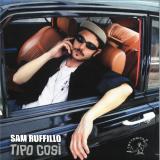
Sam Ruffillo - Tipo Cosi LP 2x12"

Italian producer, musician, DJ, and groove architect Sam Ruffillo drops his long-awaited debut album Tipo Così on Toy Tonics – a sun-drenched, genre-blurring statement that blends classic house with Mediterranean flair, romantic funk, and tongue-in-cheek Italo vibes. Over 11 expertly crafted tracks, Ruffillo delivers a dancefloor-ready, emotionally rich LP that connects deep musicality with irresistible rhythm and light-hearted elegance.

After three acclaimed EPs and collaborations with revered artists such as Barbara Boeing, Kapote, and Fimiani, Ruffillo has firmly cemented himself as a core artist on the Berlin-based label. Known for his unmistakable signature sound — a warm mix of vintage disco, 90s house, and Italian vocals — Sam’s music has garnered widespread DJ support from tastemakers like Gerd Janson, Palms Trax, Seth Troxler, and DJ Tennis, while becoming a staple on Italian airwaves. His infectious summer anthems like Danza Organica and Perfetta Così have soundtracked countless club nights and festivals, creating a loyal following that eagerly awaited this full-length debut.

Tipo Così is the natural culmination of a musical journey that’s both playful and profound — a travel diary written in grooves, synth stabs, and melodies that feel like postcards from a parallel Mediterranean universe. The album expands and deepens Ruffillo’s world into a fully immersive experience: lush emotional chords meet tight syncopated grooves, vintage synth textures collide with irresistibly catchy pop refrains, and the boundary between sincerity and playful irony is exquisitely blurred.

Entirely written, produced, and recorded in Italy, in his beloved hometown of Bologna, the album finds Ruffillo at the helm on keys, drum machines, and production, supported by a talented cast of musicians contributing live bass, guitar, and other organic elements — further enriching his trademark fusion of electronic grooves and natural instrumentation. There’s a tactile warmth in these tracks, a hands-on feel that adds soul and depth to every beat.

This album also marks Ruffillo’s heartfelt return to singing in Italian, with standout tracks like House Tipo Così, Mi Fa Volare, Ancora, and Dentro Di Me, where romantic naïveté meets pulsing club energy in a way that feels both timeless and refreshingly new. The vocal performances add an intimate, human touch to the music, reinforcing the personal stories woven into each song. There’s poetry in the casual, a bittersweet elegance in the way the lyrics float over groove-heavy production.

Having toured extensively across Europe, Australia, Indonesia, New Zealand, and Mexico — with sets at iconic venues like Panorama Bar and festivals such as Sónar Barcelona — Ruffillo has fine-tuned much of this album in front of live audiences. The real-world testing ground infused the record with a dynamic energy and immediacy that only comes from genuine crowd interaction. These songs weren’t just made in the studio — they were lived on dancefloors around the world.

Tipo Così is not just a collection of tracks. It’s a philosophy — playful, stylish and unmistakably personal. A modern club album bursting with heartfelt emotion and sophistication. Music for dancers with taste; for lovers of beauty, rhythm, and the little imperfections that make things feel real.

But what exactly is Tipo Così? More than just a phrase, it’s a way of being. It’s about embracing elegance without effort, mixing irony with sincerity, and letting nostalgia slip into the room without taking over the party. It’s Sam Ruffillo’s signature language: relaxed, confident, meticulous yet never rigid — where a chord progression can say as much as a lyric, and every beat carries intention.

The album’s visual identity complements this vision perfectly. The artwork and promotional materials lovingly reference Italian design from the ’80s and ’90s, combining bold graphic elements with playful pop culture nods. This aesthetic mirrors Ruffillo’s music — a fusion of vintage warmth and contemporary freshness, delivered with authenticity and charm.

Sam Ruffillo belongs to a new generation of European artists who are reshaping electronic music by blending past and present, analog and digital, groove and emotion — without nostalgia or pose. His artistic universe is coherent, vibrant, and alive; a rich tapestry of sound, images, and stories that coexist with lightness, precision, and a distinctive voice.

Reflecting on his artistic journey, Sam describes music as a vital, deeply human impulse — a tribal connection to rhythm and body that has driven him since he was a teenager. His creative process balances meticulous planning with room for spontaneity, usually sparked by clear melodic ideas that evolve naturally. Collaborations with close friends, especially vocalists like Ninfa, add warmth and authenticity, exemplified in tracks like “House Tipo Così.” For Sam, music is honest self-expression — crafted for listeners who crave memorable melodies and rhythms imbued with genuine feeling.

While technical perfection is tempting, Sam prioritizes emotion, knowing that what truly resonates is the soul behind the sounds. His long-standing partnership with Toy Tonics has been key in nurturing his vision, offering a blend of creative freedom and professional support. Looking ahead, Sam Ruffillo is excited to broaden his live performances, and release new projects that continue to blend electronic grooves with organic, heartfelt sounds — maintaining the delicate balance between playful irony and sincere emotion that defines Tipo Così.


Kurzversion:
Italian DJ, producer and musician Sam Ruffillo drops his debut album Tipo Così on Toy Tonics - a sunny blend of house, funk, Italo and pop, full of groove and emotion. Written and recorded in Bologna with live instruments and Italian vocals, it’s a playful, elegant journey shaped on dancefloors worldwide. A stylish, sincere club album where nostalgia, irony and rhythm meet in perfect harmony.

- Mi Fa Volare
Road-tested across continents and now finally released, “Mi Fa Volare” channels 90s uplifting euphoria with big breakbeats, lush chords, and Italian vocals built to stick. Somewhere between balearic bliss and piano house nostalgia, it’s a feel-good club weapon made for peak-time moments - already sung back by crowds after just one listen.


- Ancora
“Ancora” is a vibrant hi-NRG track inspired by 80s Italo disco, sung entirely in Italian. It blends driving rhythms with dreamy melodies, capturing the radiant spirit of the decade. This fresh yet nostalgic song delivers euphoric vibes and timeless energy, making it a perfect fit for both dancefloors and reflective listening moments worldwide.


- Dentro Di Me
“Dentro Di Me” channels ‘90s sensuality through a fast-paced, UK house-inspired lens. Entirely in Italian, it’s a bold and contemporary dance track where hypnotic vocals meet high-energy grooves. Blending nostalgic textures with forward-thinking production, the result is a seductive and euphoric trip - equal parts emotional and club-ready.


- Amigo
“Amigo” blends Latin groove, acoustic guitar-driven rhythm, and Mediterranean flair into a warm, magnetic, cross-cultural dance anthem. Sung in Spanish and Italian, it celebrates connection, inclusivity, and the joy of moving together - whether stranger or friend. With its unstoppable rhythm and vibrant energy, it’s a feel-good track with a unifying spirit.


- Ma Sei Fuori
“Ma Sei Fuori” is a tongue-in-cheek dancefloor bomb blending raw house energy with catchy vocal phrases and a nod to classic French touch. Driven by hypnotic vocal lines and a playful attitude, it doesn’t take itself too seriously - while still proving serious club impact. Built for late-night moments, it’s bold, bouncy, and impossible to ignore.

out of Stock

Order now and we will order the item for you at our supplier.


Last In: 6 months ago
Various - Naya Beat Volume 2: South Asian Dance And Electronic Music 1988-1994 (LP 2x12")

Naya Beat Records reveals Volume 2 of its critically acclaimed series dedicated to South Asian dance and electronic music. Label founders Turbotito and Ragz have curated an exceptional 13-track compilation with a focus on an overlooked era of house and electronic music released between '88 and '94.
While Volume 1 explored early 80s Balearic, synth pop, and disco, Volume 2 uncovers lost or forgotten future classics from later in the decade. The release spotlights a unique era in the late 80s and early 90s when fertile cross-cultural collaboration abounded in diasporic communities in cities like London and New York and when South Asian music was infused with acid house, New Beat, and dub.
There is a true wealth of sounds here, from The Jets Orkhestra’s organ-fuelled house workout ‘X-290’ to the downtempo splendour of the Asha Bhosle fronted West India Company. Lady M lends the Hindi house track and arpeggiated wonder of ‘Kali Raat’ and Mantra’s eponymously titled cut is a hypnotic gem. Featuring other scintillating Balearic house, dub, and street soul from the likes of Asha Puthli, Bappi Lahiri, Johnny Zee, and Kuljit Bhamra, this double album is a treasure of never-before-reissued and previously impossible-to-find holy grails.
Often "too Asian for mainstream success in the West, and too Western for success in Asia," the pioneering music from this time was frequently released to short-lived success or relative anonymity. Naya Beat founders Filip Nikolic (aka Turbotito) and Raghav Mani (aka Ragz) have spent the last four years endlessly hunting through dusty records, obscure cassettes, and unreleased studio tapes to deliver a reference release for contemporary collectors, tastemakers, and bold selectors looking for fresh sounds.
Featuring an incredible gatefold package with Naya Beat’s trademark stunning artwork and exhaustive liner notes, the 2LP release has been cut to vinyl for the discerning DJ and listener by Grammy-nominated Frank Merritt from The Carvery, London.
Naya Beat Records is focused on uncovering foundational dance and electronic music from the subcontinent and South Asian diaspora through reissues, remixes and compilations. Success came immediately with ‘Naya Beat Volume 1’, which was named Vinyl Factory’s number 1 reissue of 2021, and has been followed up with more fascinating releases such as a two-part remix project with disco-jazz legend Asha Puthli, a scintillating bhangra acid house EP with Mr. Scruff, a reissue of Pinky Ann Rihal’s 1985 Hindi new wave album, and the superb Bollywood compilation ‘Awaaz Series 1

out of Stock

Order now and we will order the item for you at our supplier.


Last In: 86 days ago
The Keith Tippett Group - The Keith Tippett Group LP

The Keith Tippett Group's Dedicated to You, But You Weren't Listening is a landmark in cutting edge fusion/avant-jazz. A vital and profoundly adventurous Jazz-Rock record that still swings very hard, it was first released on Vertigo in 1971.

Original copies are now very tricky to score and, as most of you really should know, it’s aged ridiculously well.

A legendary work, this Be With re-issue has been newly remastered from the original Vertigo master tapes, demonstrating just why this deserves to be back in press. The stunning gatefold jacket fully restores Roger and Martyn Dean's original, arresting album artwork to complete this must-have reissue.

Alive and bursting with a joyful energy that has to be heard to be believed, Dedicated to You, But You Weren't Listening flirts with perfection. It's truly magical and forever essential.

A brilliant jazz pianist, composer, arranger and bandleader "who could make the outlands of modern music feel like the most hospitable of places" (The Guardian), Keith Tippett's second album is oft-regarded as his Canterbury album.

Indeed, not only does he draw heavily on Soft Machine members past, present and future but the album title itself archly references a Soft Machine composition. Ray Babbington handles bass alongside Neville Whitehead and the drums are shared between Brian Spring (Nucleus), Robert Wyatt(!) and Phil Howard (who would go on to replace Wyatt in Soft Machine). Gary Boyle (Isotope) is on guitar whilst the great percussionist Tony Uter is enlisted for his conga and cow bell expertise. Elton Dean on Alto Saxello, cornetist Marc Charig and Nick Evans on trombone round out this quite stunning ensemble.

Dedicated to You, But You Weren't Listening presents a collective of superhuman musicians really, *really* enjoying themselves in the studio. The sheer exuberance of the performance is totally infectious. It's wild, energetic, atmospheric and, bluntly, bordering on chaotic at points. In a word, it's beautiful.

Robert Wyatt's drumming opens the record with a bang on the majestic Be With favourite "This Is What Happens". Some have described his work here as "easily the most inspired of his career on record." It's an ultra-funky conga-driven groove that truly sparks via the duelling interplay between the three horn players. In the background, Keith's insistent piano, in conversation with those unignorable drums, is the anchor that keeps this piece rollicking away. Breathtaking.

The epic, energetic "Thoughts to Geoff" is a 10-minute jammer that tends towards the dissonant and improvisational but becomes more fluid, laconic and melodic as it unravels. The interplay between soloists and ensembles is particularly dazzling here - blazing solos by Evans, Charig and Tippett himself in a flourish of angular arpeggios interspersed with chordal elocution. Phew.

Up next, the no less-urgent Mingus-referencing "Green and Orange Night Park" is a soaring example of ambitious jazz mixed with rock aggression, with Dean strutting his stuff by launching into a scorching solo. An absolutely jaw-dropping piece. Arguably the highlight of this album of huge highlights!

Though much of the album tends to fall on the raucous side ("Gridal Suite" approaches free-jazz at its most chaotic and, dare we say it, "difficult"), there are a few more sedate, at times spacey numbers, such as the deeply impressionistic "Five After Dawn". The rhythmically complex "Black Horse" is the most accessible track here, a sort of swinging Big Band number with tight grooves, soaring horn & reed melodies, a sizzling Boyle guitar solo and tasty electric piano riffs from Tippett. An hypnotic climax to a staggering record.

This Be With edition of Dedicated to You, But You Weren't Listening has been re-mastered from the original Vertigo master tapes, Simon Francis’ mastering working together with Cicely Balston's cut at Abbey Road Studios to weave their usual magic with these wonderful recordings. The stunning gatefold sleeve has been restored in all its brainchild glory so you know you're dealing with the definitive reissue, here. Now, are you listening?

pre-order now03.10.2025

expected to be published on 03.10.2025

WEDNESDAY - RAT SAW GOD

Wednesday

RAT SAW GOD

12inchDOCLPC2328
Dead Oceans
03.10.2025
  • Hot Rotten Grass Smell
  • Bull Believer
  • Got Shocked
  • Formula One
  • Chosen To Deserve
  • Bath County
  • Quarry
  • Turkey Vultures
  • What's So Funny
  • Tv In The Gas Pump

END[GER] Die Band Wednesday aus Asheville, North Carolina errichtet im Laufe der zehn Songs von "Rat Saw God" einen Schrein voller aufregender Details: Halb lustige, halb tragische Botschaften aus den Südstaaten, die sich klanglich irgendwo zwischen dem wimmernden Skuzz von Neunzigerjahre-Shoegaze und klassischem Country-Twang entfalten - mit verzerrter Pedal Steel und Frontfrau Karly Hartzman, die mit ihrer Stimme, den Lärm durchschneidet. Ein Song von Wednesday ist wie ein Quilt. Eine Kurzgeschichtensammlung, eine verschwommene Erinnerung, ein Flickenteppich aus Porträts des amerikanischen Südens, der disparate Momente einfängt und als Ganzes doch irgendwie einen Sinn ergibt. Karly Hartzman, die Songschreiberin, Sängerin, Gitarristin und Leiterin der Band, ist eine Geschichtensammlerin als auch eine Geschichtenerzählerin: Eine aufmerksame Beobachterin von Menschen und witzigen Bemerkungen. "Rat Saw God", das neue und beste Album des Quintetts aus Asheville, ist ekphrastisch, aber ebenso autobiografisch und vor allem sehr einfühlsam. Es wurde in den Monaten unmittelbar nach der Fertigstellung von dem zweiten Album der Band, "Twin Plagues", geschrieben und innerhalb einer Woche im Drop Of Sun Studio in Asheville aufgenommen. Die Songs auf "Rat Saw God" erzählen keine Epen, sondern das Alltägliche. Sie sind lebensnah, erzählen vom wahren Leben, sie sind verschwommen und chaotisch und seltsam zugleich - was Hartzmans eigenem Ethos entspricht: "Everyone's story is worthy. Literally every life story is worth writing down, because people are so fascinating." A Wednesday song is a quilt. A short story collection, a half-memory, a patchwork of portraits of the American south, disparate moments that somehow make sense as a whole. Karly Hartzman, the songwriter/ vocalist/guitarist at the helm of the project, is a story collector as much as she is a storyteller: a scholar of people and one-liners. Rat Saw God, the Asheville quintet's new and best record, is ekphrastic but autobiographical and above all, deeply empathetic. Across the album's ten tracks Hartzman, guitarist MJ Lenderman, bassist Margo Shultz, drummer Alan Miller, and lap/pedal steel player Xandy Chelmis build a shrine to minutiae. Half-funny, half-tragic dispatches from North Carolina unfurling somewhere between the wailing skuzz of Nineties shoegaze and classic country twang, that distorted lap steel and Hartzman's voice slicing through the din. Rat Saw God is an album about riding a bike down a suburban stretch in Greensboro while listening to My Bloody Valentine for the first time on an iPod Nano, past a creek that runs through the neighborhood riddled with broken glass bottles and condoms, a front yard filled with broken and rusted car parts, a lonely and dilapidated house reclaimed by kudzu. Four Lokos and rodeo clowns and a kid who burns down a corn field. Roadside monuments, church marquees, poppers and vodka in a plastic water bottle, the shit you get away with at Jewish summer camp, strange sentimental family heirlooms at the thrift stores. The way the South hums alive all night in the summers and into fall, the sound of high school football games, the halo effect from the lights polluting the darkness. It's not really bright enough to see in front of you, but in that stretch of inky void - somehow - you see everything. The songs on Rat Saw God don't recount epics, just the everyday. They're true, they're real life, blurry and chaotic and strange - which is in-line with Hartzman's own ethos: "Everyone's story is worthy," she says, plainly. "Literally every life story is worth writing down, because people are so fascinating." But the thing about Rat Saw God - and about any Wednesday song, really - is you don't necessarily even need all the references to get it, the weirdly specific elation of a song that really hits. Yeah, it's all in the details - how fucked up you got or get, how you break a heart, how you fall in love, how you make yourself and others feel seen - but it's mostly the way those tiny moments add up into a song or album or a person.

pre-order now03.10.2025

expected to be published on 03.10.2025

THE JACKSON POLLOCK - TODAY FOREVER
  • No One's My Leader
  • Someday, Somewhere
  • Deep
  • Galactic
  • Pezzo Tamarro
  • Today Forever
  • Do What You Want
  • Lullaby From The Sea
  • Trinidad
  • Hotel Del Luna
  • Samurai Shodown
  • Missing It

Davide & Emily form the duo "The Jackson Pollock", delivering an explosive blend of lo-fi and garage music that creates a sound far greater than the sum of its parts. Emily sounds like a cannon blast when she strikes her 22âÇ3 ride cymbal with full force, while simultaneously cursing the spirit with mermaid-like melodies. Davide alternates between guitar and bass, bringing distorted, bluesy tones to life. "What we do is very energetic, free, and positive, because we want to encourage people to have the courage to do what they truly want - to be themselves and fearless - as human and as animal - while avoiding any kind of schema, external structures, definitions, and imposed references."

pre-order now03.10.2025

expected to be published on 03.10.2025

Lucrate Milk - I Love You Fuck Off

Lucrate Milk baigne dans le nihilisme et l’insouciance et aime jouer avec l’absurde, le culte de la provocation et de la dérision forcenée, la fascination morbide, la déviance et l’anormalité. Rajoutons une bonne dose de chaos, d’énergie trépidante et de déglingue pour produire un son bizarroïde… Le groupe disparaît en février 84 après un dernier concert en apothéose au Théâtre du Forum des Halles (Paris). C’est paradoxalement après l’arrêt du groupe que sa notoriété s’étend, notamment grâce au transfuge d’une partie de ses anciens membres au sein de Bérurier Noir. En 37 concerts, de salles glauques (avec baston générale) en squats autonomes, des bars et boîtes branchées (Pont∼à∼Mousson) aux festivals (Berlin, Paris…), une légende urbaine se crée autour de Lucrate Milk, devenant une référence sans avoir vraiment rencontré de succès populaire de son vivant…

Originellement paru en 1987, regroupant le EP “Lustiges Tierquartett” (octobre 1981) le EP “Nepla Relou” (mai 1983) la face “Lucrate” du split LP avec MKB Fraction Provisoire et enregistré chez WW (juillet 1983). Épuisé depuis trop longtemps lui aussi…

pre-order now30.09.2025

expected to be published on 30.09.2025

Mighty Diamonds - The Roots Is There (Raw Cut)
  • A. Mighty Diamonds - The Roots Is There (Raw Cut)
  • B. Mighty Diamonds & Curtis Lynch - Raw Version 7

After their epic run with Channel One beginning in the mid 1970's, the Mighty Diamonds moved to producer Gussie Clarke for a string of albums starting in 1979 and running thru the 1980s. Among the many many great tunes from this run, the title track of their 1982 album "The Roots Is There" is simply one of the Diamond's best ever, and probably the most lyrically militant tune they ever made. This tune was never released as a single at the time, though new mixes were released as a single in 2017. But prior to the release of the album back in the day, this song was played on dubplate in a raw mix without the horns and added percussion that made it onto the final album mix. This raw vocal cut, followed by a raw instrumental version, changes the whole tone of the tune and brings it into another level of militancy right up there with the hardest stuff you can name, even in an era filled with so many extra tough stepping classics. Rather than remaster from an old dubplate, for this 45 we had producer Gussie Clarke and Music Works' close associate engineer Curtis Lynch go back to the original tapes, and with an original dubplate as reference, perfectly recreate the original raw cut, now released in pristine tape quality. Again we present this release on Music Works' original early 1980s dubplate label design, just like the original slate would have been adorned with. If you only know the sweet harmony side of the Diamonds, give this one a try to see their other tuff side, and listen to the lyrics, as relevant to the struggles of right now as they were in 1982.

pre-order now30.09.2025

expected to be published on 30.09.2025

Foncedalle - Foncedalle LP

Foncedalle

Foncedalle LP

12inchXAGLPW52
Exag Records
26.09.2025
  • Ransu
  • Meghan
  • Saint Angers
  • Old
  • W.a.n.e
  • Louis Ii
  • Kdb
  • Heatwave
  • François Roses
  • Dayy Club
  • Nightt Club

FONCEDALLE is a high-volume amplified trio, a warm wave of acid guitars fuelled by addictive bass and electronic beats. In late 2021, they released their Traboule EP and went on a tour that saw them perform 40 gigs between 2022 and 2023, half of which were in Europe. Their debut, self-titled album is set to be released in March 2024 on EXAG’ Records (BE). It's rawer, with tracks meticulously crafted and reworked live. While still exploring the realms of rock fused with machines, electronic trance, and melodic flights, the album also has its share of oppressive sections, unbridled chaos, and ambient, ethereal passages. FONCEDALLE serves as the missing link between the Manchester scene of the 80s, Gilla Band’s noise rock, Soulwax’s electronic rock, and the motoric turbines of Turing Machine. Preferring not to choose between being an open door or an impertinent product, the band chooses to concoct a recipe it envisions coming from the future rather than flipping through a book filled with references

pre-order now26.09.2025

expected to be published on 26.09.2025

TOM SKINNER - VOICES OF BISHARA
  • Bishara
  • Red 2
  • The Journey
  • The Day After Tomorrow
  • Voices (Of The Past)
  • Quiet As It's Kept

The title of Tom Skinner"s first release (2022) under his own name is a reference to cellist Abdul Wadud"s ultra-rare 1978 solo album By Myself, which Skinner listened to repeatedly during lockdown. Wadud"s album was privately pressed on his own label, Bisharra, and whilst Skinner"s title uses the more conventional spelling of this common Arabic name, they both have the same intention or meaning: it translates as "good news", or "the bringer of good news". The result is a tight, hypnotic and unique 31-minutes of music. Voices of Bishara is sculpted around timeless and deeply emotional music that contains masses of movement and exceptional harmonic depth and texture. It sweeps and soars through soundworlds, rich in musicality and always anchored by the deep doubling of cello and bass. It also, of course, contains Skinner"s percussive magic.

pre-order now26.09.2025

expected to be published on 26.09.2025

HONOUR - ALAAFIA LP

HONOUR

ALAAFIA LP

12inchPANLPC1121
PAN RECORDS
24.09.2025

Honour's debut album is a ligament stretching from Lagos to London and to New York, curling across the diaspora and brushing the darker hues of blues, hip-hop, free jazz, ambient, gospel with Christian mythology and Yoruba folklore. As cinematic as it is painterly, Alàáfíà is a meditation on themes of life, death and love that pulls inspiration from the unexpected poetic profundity of casual conversations, field recordings, literature, ephemera, or personal archives. The result is an impressionistic vision in Black and Blur that both exhausts and implicates language_substantiating a mythos proposed by Fred Moten that sublimates boundaries between everywhere and nowhere; history and the present; the individual and the universal. Alàáfíà delineates a gothic landscape cut by overdriven beats, swooping orchestral blasts, choral bursts and ear- splitting fuzz, where the fleshly and spiritual realms commune. Dedicated to Honour's late grandmother, the title track began to take form after their last embrace and remains steeped in her influence and spirit_a tape-saturated composition that starts in Lagos and ends in London's smoke-stained cityscape, the song's dream-like quality developed out of the artist's grief and PTSD coping with this loss. Beneath the stretched guitar drones and stuttering loops, their grandmother's shared faith bubbles to the surface. "When Angels Speak of Love," borrows its title from two works by Sun Ra and bell hooks, respectively. Sculpting echoes of praise music into disorienting spirals perforated with syrupy DJ Screw-inspired breaks and sharp splinters of melancholic guitar, "When Angels Speak of Love" engages a conceptual dialogue with the spirits of both late thinkers, folding them into Honour's pantheon of ancestral guides. The album's ninth track, "Giz Aard ($uckets)," is a dirge of regimented drums which anchor this somber melody as it whirls into a blizzard of heartache, uncertain if its consequence will be death or eternal joy. The album's sole lyrical offering, "Pistol Poem (Lead Belly)," begins with a darkly humorous bar, "He went thru hell and back/ came back/ 2 get the strap," that swells into a haunting allegory based on the life of Philip "Hot Sauce" Champion. A modern take on the Blues, Honour's lyrics reify the artist's status as a student of both literature and popular culture, crossbreeding the artist's clever wordplay with additional references to Richard Pryor, Robert Johnson, Kelly Rowland & Bryon Gysin. Setting core principles of hip-hop, R&B, jazz and gospel music to atemporal soundscapes and compositions, Honour crafts a record that marinates in its own knotty contradictions. The ghosts that sit on the artist's shoulders have never been more tangible than with this emotive debut.

out of Stock

Order now and we will order the item for you at our supplier.


Last In: 8 months ago
John Talabot - ƒin LP

John Talabot

ƒin LP

12inchPERMVAC089-1
Permanent Vacation
19.09.2025

If there is one person, who has been causing a stir on the international club circuit recently, it is Barcelona's John Talabot. Already his debut “My Old School“ (which is meant literally by the way) on Permanent Vacation in 2009 and shortly after that the single “ Sunshine”, which he put out on his own Hivern Disc imprint, made him one of the most promising musicians of the Spanish electronic scene. And those two releases also already set the mark for John Talabot’s unparalleled music: raw, loopy, heavy on the kick drum, sample based, moderate on the tempo, distorted on the drums and light years away from the clean and ever revolving house sound of today. This unique style which also blends influences from afro beat, Detroit techno, Chicago house and cosmic disco, but also northern soul or the energy of Flamenco, immediately turned some heads around. James Murphy, Âme and Aeroplane started including Talabot music in their sets like it was the most natural thing. However - and this is quite rare - he not only gained legions of fans in the house and disco community, but also amongst the leftfield pop and indie rock followers. NME and Resident Advisor both had “Breakthrough“ features on John Talabot and he can be proud of a “Best New Music“ dubbing on
Pitchfork. (Being rather elusive on showing his face in magazines or the web it also came to some funny rumors that John Talabot was the alter ego of a well-known techno producer from Detroit).
At the same time he drew the attention of like-minded artists like James Holden and Luke Abott from Border Community, Blondes or Delorean, which lead to a bunch of fertile collaborations: Luke Abbott and Blondes remixed Talabot’s “Sunshine“ single , John Talabot remixed a track by Delorean and vice versa Delorean’s Ekhi contributed vocals to the track “Journeys “ on John’s album). Another example is the Young Turks Label (home of Jamie XX, Holy Fuck, El Guincho or SBTRKT ) on which he released the “Families“ EP in 2010. It was praised beyond limits. Pitchfork for
instance hailed: “… where pop and house influences sweetly buffer up against one another to provide an unyielding sense of elation“ and even brought Talabot a comparison with artists like Four Tet or Caribou.
While staying true to his sound, John Talabot has nevertheless shown a constant evolution as a producer since his first release. He has traced a solid musical path that has turned him into one of the big references of European House and has made him also a highly in demand Remixer (for the likes of The XX, Francesco Tristano’s “Aufgang” project, Shit Robot on DFA, Thaiti 80, Joakim or Teengirl Fantasy to name just a few ).
A progression that now crystallizes in “ƒin”, his first full-length album for Permanent Vacation. A record, in which the Barcelona mastermind sets aside the danceable immediacy to expand his stylistic palette more than ever. For that purpose, Talabot melts all the elements that have constructed his distinctive sound until now and makes them emerge from a new perspective, in which the construction of complex song structures, intricate rhythms and superpositions of ever-evolving melodies and atmospheres pick up the baton of the “a kick-drum and a sampler” philosophy of his initial productions. The result brings us 11 tracks (we should call them songs really!) dominated by dark ambiances, gaseous textures and bittersweet moods that, above all, reveal a kind of vivacity that’s really hard to find in contemporary electronics. “Fin” is far from being a track collection. From the majestic opener “Depak Ine“ to it’s solemn ending with
“So Will Be Now“ , one of the two tracks that features Talabot’s soul and label mate Pional, each song traces an overall dialogue with the rest, culminating a highly emotional journey through Talabot’s always compelling and unique musical vision.

out of Stock

Order now and we will order the item for you at our supplier.


Last In: 41 days ago
SHAWN LEE & KELLY FINNIGAN - SAY IT AGAIN / HARPSICHORD ROCK
  • Say It Again
  • Harpsichord Rock

The highly anticipated collaboration from Shawn Lee and Kelly Finnigan ishere. The A-side on this 45, Say It Again, features Kelly on vocals and piano. It's asmooth, soulful tune, pulling references from Bobby Caldwell and FM radio. Shawn says of the track "there has always been a mutual admiration societybetween myself & Kelly. Over the years I've had the pleasure of playing onboth the Monophonics & Kelly's solo records in the studio and live onstage. This is the first I've had Kelly on something that I've put together. Good thingscome to those who wait_and here it is!"The instrumental B, Harpsichord Rock, comes straight out of some sort oflost 1970's Italian movie. Entirely written and recorded by Lee, it's a hypnoticjam with a groove. The mood: funk.

pre-order now19.09.2025

expected to be published on 19.09.2025

RABBATH ELECTRIC ORCHESTRA - AMALL

François and Sylvain Rabbath have turned six years of touring into a joint album that patiently and intensely distills a variety of musical flavors gathered from around the world.

Since the early 1960s, François Rabbath's double bass has resonated through enough landmark recordings to fill several shelves in a record collection. As an arranger, composer, and musician, his imprint on music goes far beyond his collaborations with Barbara, Paco Ibáñez, Charles Aznavour, or Édith Piaf. Aspiring double bassists owe him a groundbreaking method for learning the instrument. Born into a lush musical universe that quickly became his own, his son Sylvain first accompanied him on his travels before settling at the piano and sharing stages around the world at his side.

Those years of accumulating visas in their passports were put to good use by father and son. The continents, countries, and cities they passed through became a rich source of inspiration for composing Amall, the album by the Rabbath Electric Orchestra.

Long hours spent in the air or on the road, watching passing landscapes that never stayed the same, were transformed into compositions imbued with the atmospheres of the places they crossed or visited. Inspiration sometimes struck with force, like a green oasis appearing in a desert of stone—unexpectedly, as glowing red rocks suddenly dominated an otherwise open landscape with an endless horizon, while the mind wandered into a state between meditation and introspection.
Born from these travels, the pieces took on their final colors once brought into the studio, refined, and finally arranged to welcome the guitars of Keziah Jones and Matthieu Chedid, the piano of Laurent de Wilde, the bass of Victor Wooten, the saxophone of Raphaël Imbert, and the percussion of Minino Garay. Enhanced by the scale of the jazz-soul orchestrations, by the richness of arrangements bursting from strings, brass, rhythms, or keyboards, the epic breath of vast plains became ingrained. The urban tension of funk, echoing their movements, found its place—alongside more electric expressions or the ambience of a darkened room.
Melancholic and melodious, expressive and edgy, the bowed double bass—played in the high register where few dare to go—emerged as the musical guide. One that draws a path between Seville and Minneapolis, connects François Rabbath's native Syria to France, and bridges South America to Europe. It sets the tone to follow—the emotion that will carry the piece, and if not filled with light, will carry it there nonetheless.
Musical visions packed in luggage, transported in cargo holds, or imprinted in their minds just long enough to cover the distances to the next stop—father and son deepened their bond, beyond family and art. And their hands have never held each other more tightly.

François et Sylvain Rabbath ont fait fructifier six ans de tournées pour un album commun distillant patiemment et intensément la variété de parfums musicaux récoltés autour du monde.
Depuis le début des 60’s, la contrebasse de François Rabbath résonne dans assez de références pour combler plusieurs étagères d’une collection de disques. Arrangeur, compositeur, musicien, l'empreinte laissée dans la musique va bien au-delà de ses collaborations avec Barbara, Paco Ibanez, Charles Aznavour, ou Edith Piaf. C’est à lui que les
apprentis contrebassistes doivent une méthode novatrice pour apprendre l’instrument.

Né dans un univers musical luxuriant qui est vite devenu aussi le sien, c’est d’abord dans ses voyages que son fils Sylvain l’a accompagné, avant de s’installer au piano, et parcourir les scènes du monde à ses côtés. Ces années où les visas se sont entassés sur leurs passeports, père et fils les ont mises à profit. Continents, pays, et villes qui se sont succédés sont devenues un gisement pour composer Amall, l’album du Rabbath Electric Orchestra.

Les longs moments passés dans les airs ou sur la route à contempler un paysage qui défile sans pour autant rester le même, se sont convertis en compositions habitées par les ambiances de ces endroits traversés ou visités. Là où l’inspiration s’est imposée parfois brutalement, sous
la forme d’un oasis de verdure surgissant au milieu d’un désert de pierres. Au hasard d’imposantes roches rougeoyantes s’invitant dans un paysage jusqu’alors dégagé sur un horizon sans fin, quand l’esprit se laisse aller à un mélange de méditation et d'introspection.

Nés de ces pérégrinations, les titres ont pris leurs couleurs définitives une fois ramenés en studio, peaufinés puis, enfin, pensés pour y inviter les guitares de Keziah Jones et de Matthieu Chedid, le piano de Laurent de Wilde, la basse de Victor Wooten, le saxophone de Raphaël Imbert, les percussions de Minino Garay. Sublimé par la dimension des orchestrations jazz-soul, par la richesse des arrangements jaillissant des cordes, des cuivres, des rythmiques ou des claviers, le souffle épique des plaines immenses s’est imprimé.
La nervosité citadine du funk rythmant les déplacements a trouvé sa place, non loin d’une expression plus électrique ou d’une atmosphère de salle obscure.

Mélancolique et mélodieuse, expressive et nerveuse, la contrebasse jouée à l’archet, dans les notes hautes du manche où peu s’aventurent, s’est érigée en guide musical. Celui qui trace le chemin entre Séville et Minneapolis, relie la Syrie natale de François Rabbath à la France,
réduit la distance entre l’Amérique du Sud et l’Europe. Donne la note à suivre, l’émotion qui traversera le morceau qui, s’il n’est pas habité par la lumière, le portera néanmoins jusque là.

Visions musicales mises dans le coffre, transportées en soute ou imprimées dans l’esprit le temps de couvrir les distances qui les mèneront aux prochaines, c’est côte à côte que père et fils ont prolongé leur lien par delà des seules limites familiales et artistiques. Et leurs mains ne se sont jamais serrées aussi fort.
credits

pre-order now19.09.2025

expected to be published on 19.09.2025

Mihai Pol - Ebb And Flow EP

Mihai Pol

Ebb And Flow EP

12inchSATYA021
Satya
18.09.2025

Satya welcomes one of Romania’s most respected underground talents, Mihai Pol, for a standout vinyl-only release titled "Ebb And Flow". With a sound that embodies precision, groove, and an ever-evolving sense of storytelling, Mihai has carved a unique place within the minimal tech-house landscape since his breakout moment in 2016 with Goneta on Capodopere.

His music, known for its subtle emotional depth and dancefloor functionality, continues to evolve—each release revealing a new side of his sonic palette. From the acid-laced drive of Synkop to the dreamy momentum of Tango, no two records sound alike. A regular on Telum and a fixture at iconic venues like Hoppetosse, La Java, The Block, and Sunwaves Festival, Mihai’s artistry spans both the booth and the studio.

On Ebb And Flow, Mihai delivers a refined suite of tracks created over a focused one-to-two month period, all sharing a clean, underground, club-oriented spirit. "There was no cultural reference for them," he shares. "Just me putting together sounds and playing them live." Built using an analog-heavy arsenal—MPC1000, Rytm, Digitone, Virus, Modular, Prophet6, Octatrack—and a few choice samples, the EP captures Mihai’s organic approach to groove and texture.

"I like to make people dance and feel good, but I also try to tell a story," he says. Ebb And Flow is exactly that: a dancefloor journey that hits the body and speaks to the soul.

out of Stock

Order now and we will order the item for you at our supplier.


Last In: 19 days ago
SHAWN LEE & KELLY FINNIGAN - SAY IT AGAIN / HARPSICHORD ROCK

SHAWN LEE & KELLY FINNIGAN

SAY IT AGAIN / HARPSICHORD ROCK

7"-VinylCLMNLP1253
Colemine Records
16.09.2025

The highly anticipated collaboration from Shawn Lee and Kelly Finnigan ishere. The A-side on this 45, Say It Again, features Kelly on vocals and piano. It's asmooth, soulful tune, pulling references from Bobby Caldwell and FM radio. Shawn says of the track "there has always been a mutual admiration societybetween myself & Kelly. Over the years I've had the pleasure of playing onboth the Monophonics & Kelly's solo records in the studio and live onstage. This is the first I've had Kelly on something that I've put together. Good thingscome to those who wait_and here it is!"The instrumental B, Harpsichord Rock, comes straight out of some sort oflost 1970's Italian movie. Entirely written and recorded by Lee, it's a hypnoticjam with a groove. The mood: funk.

out of Stock

Order now and we will order the item for you at our supplier.


Last In: 8 months ago
Nebula Circuit - Talisman EP

Nebula Circuit

Talisman EP

12inchBARRO#12
Barro
16.09.2025

BARRO #12 – Nebula Circuit (with remixes by Orlok 101 & Abraxas)

Limited to 200 units. Exclusive distribution: Melting Pot Records

The label BARRO returns with its twelfth release, reaffirming its commitment to vinyl culture and uncompromising club music.

This time, the spotlight is on Nebula Circuit, delivering a series of tracks that navigate between EBM, techno, and electroclash, all sharply designed for the dancefloor.

BARRO #12 vinyl release features four tracks:

• Three original productions by Nebula Circuit, where electronic darkness merges with tense rhythms and incisive basslines.

• A remix by Orlok 101, pushing the material into an even more abrasive, machine-driven territory that strengthens the label’s underground identity.

A Statement of Intent:
With this release, BARRO consolidates its place within the darker, more combative spectrum of electronic music. BARRO #12 is crafted for DJs, collectors, and all underground devotees — a punk-spirited record with a clear mission: the dancefloor.

BARRO #12 – available soon on vinyl and digital.

The above references have already been supported by artists such as Dave Clarke, Phase Fatale, The Hacker, Lokier, NX1, Unhuman, Alienata, Reka, and many more.

out of Stock

Order now and we will order the item for you at our supplier.


Last In: 8 months ago
Al Karpenter - Greatest Heads LP

Released by Hegoa Records and Night School Records.
Greatest Heads is the fourth album by the radical Basque- Berlinesque group Al Karpenter. A deconstruction of structured “rock” music, here Al Karpenter re-imagine “the band” to explore the intersection between Free music, afro-beat, the avant garde and gonzo rock.
If Theodore Adorno wrote “To Write Poetry after Auschwitz is Barbaric” in 1949, Al Karpenter attempts to answer the difficult question today; what kind of music can be done in the face of a genocide? Álvaro Matilla, Marta Sainz, Enrique Zaccagnini & Mattin’s response to the planet’s slipping into a vortex of hate is to create a music ecstatic, a music of protest bursting with multiple musical languages and glossaries, full of overlapping histories and thrilling tensions.
Greatest Heads posits a plurality of musics both in opposition and intertwined: Al Karpenter play rock instruments pulled apart in the studio in post-production. Distorted rhythm chunks bit-crushed and dissipated, segments of freedom oppressed by waves of sound invading from every direction. The interplay between the chief instrumentalists and renowned, storied sound artist Mattin creates something akin to ESP freedom-seekers Cro Magnon playing in Miles Davis’ early 70s groups, The Los Angeles Free Music Society tightening up into a clenched fist of plunderphonics and runaway percussion.
We Are All Karpenters opens Greatest Heads with the most straight-forward song refrain of the record accompanied by a band that soon crash into eruption, imagining Sun City Girls in full free rock mode.
The modulating synth sound soon sucks the band into its wake to create a spine-chilling climax of distorted sound, made fully orgasmic with mastering engineer Rashad Becker’s attention to detail. On Izugarrizko Buruak (Greatest Heads), Matilla intones in Basque over a mangled distorto-beat. A Brand New Astraphobia creates a black space for a heavily processed guitar to blow up before falling to earth at night, a gentle figure serenading the coming end.
On Side B, the band begins by being masticated by a brutal phaser, squelching and stretching the music into new territories. The overt message of Stop The Genocide! is besieged by violence before Worm City aggressively samples the ghosts of soul music, mixing in noise bursts, prepared piano and swiping, abstracted sound. Epic closer Perfect Love feels like a beat poetry performance on a burnt world, still grasping for community, for home, for some sort of human love. A Mad love, then; an angry love fuelled by solidarity and collaboration.
The band’s cascading layers of references and polyglottal musics attempt to create the perfect lover, alive with rage and disorientating ecstasy: Al Karpenter.

pre-order now12.09.2025

expected to be published on 12.09.2025

Flaer - Translations

Flaer

Translations

12inchODA06FT
ODDA Recordings
12.09.2025

Artist and multi-instrumentalist Flaer embraces the search for quiet miracles on first full-length LP Translations.

In 2023, Realf Heygate - who makes music as Flaer - released his debut mini-album Preludes, composed on his mother’s piano and his childhood cello.Returning to ODDA for his debut full-length album, Heygate is now looking in another direction. A record that embraces transition and movement, Translations is in many ways more internal, less rooted to a single place and reflective of the process of laying new foundations in Cornwall.

Like Preludes, Translations is coloured with found sounds and field recordings, from the starlings which can be heard singing through the open window of his studio, to the brittle recordings of his mother, who was a linguist, learning Spanish on a set of language tapes. In both cases, Heygate embraced the translations and memories inherent to the sounds.

“When I digitised my mother’s tapes, they warped and stuttered in a very similar way to the starling’s song,” he explains. “They had this uncanny rhythm and pulse that I couldn’t quite decode, but was saying something." These decayed transmissions hint at loss, resisting clarity in favour of the ineffable.

Translations is also a record of ambiguities and in-betweens, suggested by the double meaning of the album’s opening track ‘Entre’. At once intricate and expansive, threaded with birdsong and acoustic guitar motifs, this and ‘Starling Descends’ (a reference to Vaughan Williams’ ‘The Lark Ascending’) act as a bridge away from the pastoral themes of Preludes towards a more assertive sound. At times intimate in its textured instrumentation and at others more overtly grand in orchestration, reflecting awider palette of influences.

“Flaer began in many ways when I picked up my mother’s instruments, seeking a form of reconnection. Where words evaded me, they became the tools through which I found a language for grief – and above all, for love.”

Recorded between 2023 and 2025 – what Heygate calls “A gradual process of sowing and harvesting ideas rather than a single intense creative period” - each track follows a rhythm similar to the small maquettes and sculptures he has been working on in his visual practice, whereby structures and melodies form intuitively in moments that are as rare as they are fleeting.

“It's that feeling of searching that I really enjoy,” Heygate continues. “I never know what the destination of the composition is going to be, and I never really find what it is."

Translations is released on limited edition off-white vinyl LP (500 copies worldwide) with one of five signed and numbered handmade risograph prints. It's also available as standard black vinyl LP and digitally.

pre-order now12.09.2025

expected to be published on 12.09.2025

Raz & Afla - Windowlicker / Going Back To My Roots

Wah Wah 45s present two very special cover versions from our beloved Afro-electronic duo, Raz & Afla, available on 12" vinyl for the very first time! Having recently released their sophomore LP, Echoes Of Resistance, to great acclaim and support ranging from Nick Grimshaw on BBC 6 Music to Tash LC on BBC Radio 1, and the follow up remix project Remixes Of Resistance, the pair offer up their unique takes on two very different slices of club culture on twelve inches of wax.

First up, the pair tackle Aphex Twin's sleazy and sinister turn-of-the-century dance floor bomb Windowlicker and take it somewhere completely unexpected, as Raz explains:

"We wanted to go to a different place from our influences for this one. When we told people we will cover this tune everyone said 'but how?!' In Raz & Afla style. We had an idea of what elements to recreate from the original and how we can reference it within our spectrum of sounds. It was so much fun to do and really kicks off at our live shows."

It's a heavily percussive reinterpretation, replete with spooky wordless vocals, funky guitars and spine tingling synths that builds into something of a future Afro-house anthem, whilst respecting the genius of the original recording.

On the flip, Going Back To My Roots has become a mainstay in Raz & Afla's live sets, and means a lot to them personally, as Raz once again explains:

"We love this song. The lyrics resonate with us, talking about the meaning of connection to a land and its people. The history of this song is also fascinating, from Hugh Masekela and Orlando Julius through Odyssey and Richie Havens. We wanted to give it our own flavour. You can't choose your heritage and where you are born. It is always a part of you and we like to celebrate that."

Written and first recorded by Lamont Dozier in 1977, Going Back To My Roots was famously covered by Richie Havens in 1980 before becoming a huge crossover hit when interpreted by disco outfit Odyssey in 1981. Raz & Afla very much give their version their own unique dance floor feeling. It's one which has received much support on BBC 6 Music.

out of Stock

Order now and we will order the item for you at our supplier.


Last In: 7 months ago
Various - Dolores: Salsa & Guaracha From 70's French West Indies

In Guadeloupe, many people think that jazz and ka music are like a ring and a finger. To some extent, the same could be said about so called Latin music and the music played in the French West Indies.

Both aesthetics were born in the Caribbean and bear so many connections that they can easily be considered cousins. In constant dialogue, there are lots of examples of their fruitful alliance and have been for a while. The English country dance that used to be practiced in European lounges came to be called kadrille in Martinique and contradanza in Cuba. They both featured additional percussion instruments inherited from the transatlantic deportation. Drawing from shared feelings about the same traumatized identity – later to be creolized – it would be hard not to assume that they were meant to inspire each other. The golden age of the orchestras that graced the Pigalle nights during the interwar period further proves the point. As soon as the 1930s, Havana-born Don Barreto naturally mixed danzón and biguine music in a combo based at Melody's Bar. In the following decade, Félix Valvert, a conductor who was born and raised in Basse-Terre in Guadelupe, also worked wonders in Montparnasse with La Coupole, which was an orchestra made up of eclectic musicians. Afro- Caribbean performers of various origins were often hired on rhythm and brass sections in jazz bands, which used to enliven the typical French balls of the capital. In the 1930s and onwards, Rico’s Creole Band was one of them.


Martinican violinist-clarinettist Ernest Léardée, who would become the king of biguine music as well as the main figure of French Uncle Ben's TV commercials (a dark stigma of post-colonial stereotypes), had musicians from the whole Caribbean sphere play at his Bal Blomet – and they all enchanted "ces Zazous-là" (according the words of Léardée's biguine-calypso piece). In les Antilles (French for French West Indies), music history started to speed up in the 1950s, when trade expanded and radio stations grew bigger. The Guadelupean and Martiniquais youth tuned in their old galena radio sets to South American and Caribbean music. As for the women traders, les pacotilleuses, they bought and sold goods across different islands (the "passing of items through various hands" was thought to be most pleasurable) and brought back countless sounds in their luggage. Such was the case of Madame Balthazar, who once returned from Puerto Rico with the first 45rpm and 33rpm to ever enter Martinique.

Out of this adventure was created the famous Martinican label La Maison des Merengues, a music business she opened and undertook with her husband and which proved to be a major landmark. At the end of the 1950s, in Puerto Rico, Marius Cultier competed in the Piano International Contest playing a version of Monk's Round 'Midnight. He won the first prize and this distinction foreshadowed everything that was to come. Cultier, the heretic Monk of jazz, was quickly praised for writing superb melodies, always tinged with a twist that conferred a unique sound to his music. It didn't take long for the gifted self-taught musician to get to play with Los Cubanos, making a name for himself thanks to his impressive maestria on merengues.

The rest is history. Besides, in the late 1950s, Frantz Charles-Denis, born into the upper middle class in Saint-Pierre and better known by his first name Francisco, went back home after working at La Cabane Cubaine – a club located rue Fontaine where he had caught the Latin fever. Francisco's music was therefore heavily marked by his Cuban cousins' influence, which gave the combos he led a specific style and also led to renewal. Things were swinging hard in La Savane, located in the main square in Fort-de-France. He set up the Shango club close by and tested out the biguine lélé there, a new music formula spiced up with Latin rhythms. Soon afterwards, fate had him fly to Puerto Rico and Venezuela.

As for percussionist Henri Guédon (percussions were only a part of his many talents), he was born in Fort-de-France in May 22nd 1944, the day marking the celebration of the abolition of slavery. As an old man, he could remember that in " his father's Teppaz, a lot of hectic 6/8 music was constantly playing...". In the opening lines of his Lettre à Dizzy, a small illustrated collection of writings published by Del Arco, he highlighted the huge impact that cubop had on him as a teenage boy, around 1960. He eventually turned out to be the lider maximo in La Contesta, a big band steeped in Latin jazz. He was also the one who originated the word zouk to describe music which brought the sound of the New York barrio to Paris. It was the culmination of a journey that started in Sainte-Marie: "a mythical place for bélé, the equivalent of Cuban guaguancó". In the early 1960s, the tertiary economy developed to the detriment of agriculture. Yet rural life was where roots music emerged in Martinique and in Guadeloupe.

Record companies played a major part in the process of Latin versions sweeping across the islands – before reaching everywhere else. Producer Célini, boss of the great Aux Ondes label, and Marcel Mavounzy, both the head of Émeraude records - a firm which was founded in 1953 - as well as the brother of famous saxophonist Robert Mavounzy, were big names to bear in mind. Although there were many of them - all of whom are featured on this record - Henri Debs was definitely the major figure in the recording adventure. He proved to be so influential that he even got compared to Berry Gordy. In the mid 1950s, when he acquired his first Teppaz, he worked on his first compositions: a bolero and a chachacha. Then, he became the one man who made people discover Caribbean music, from calypso to merengue. He was among the first ones to rush out to San Juan, Puerto Rico, to buy records and distribute them through a store run by one of his brothers in Fort-de-France. He had members of the Fania All Star come and perform there, which he was madly proud about. He was also the first one to pay attention to Haitian music, such as compas direct and various other rhythms which would soon flood the market. As a result, many of the combos hitting his legendary studio would end up boosted by widespread "Afro-Latin" rhythms. However, he never denied his identity: gwo ka drums were given a major role, although they were instruments which had long been banned from the "official" music spheres. The present selection bears witness to such a creative swarming. Here are fourteen tracks of untimely yet unprecedented cross-fertilization: all types of music rooted in the Creole archipelago have found their way, whatsoever, to the tracklisting. Whether originating from the city or being more rural, they all go back to what Edouard Glissant, in an interview about the place of West Indian music in the Afro-American scope, called "the trace of singing, the one which got erased by slavery." "It is so in jazz, but also in reggae, calypso, biguine, salsa... This trace also manifests through the drums, whether Guadelupean, Dominican, Jamaican or Cuban... None of them being quite the same. They all point to the idea of a trace, seeking it out and connecting to each other through it. This is the hallmark of the African diaspora: its ability to create something new, in relation to itself, out of a trace. It may be the memory of a rhythm, the crafting of a drum, a means of expression which doesn't resort to an old language but to the modalities of it." The opening track features one of the emblematic orchestras of this aesthetic identity, criscrossing many music types from the archipelago. The 1974 Ray Barretto guajira – Ray Barretto was a major New York drummer influenced by Charlie Parker and Chano Pozzo – is magnificently performed by Malavoi, a legendary Fayolais group (i.e from Fort-de-France). Additionally, the compilation ends on a piece by Los Martiniqueños de Francisco. It symbolically closes the circle as it is a genuine potomitan of Martinique culture which also functions as a tireless campaigner for Afro-Caribbean music. Practicing the danmyé rounds (a kind of capoeiria) to the rhythm of the bèlè drum, it delivers a terrific Caterete, a kind of champeta of Afro- Colombian obedience which was originally composed by Colombian Fabián Ramón Veloz Fernández for the group Wgenda Kenya. The icing on the cake is Brazilian Marku Ribas, who found refuge in Martinique in the early 1970s, bringing his singing to the last trance-inducing track. These two "versions" convey the whole tone of a selection composed of rarities and classics of the tropicalized genre, swarming with tonic accents and convoluted rhythms. It is the sort of cocktail that the West Indians never failed to spice up with their own ingredients. For instance, the Los Caraïbes cover of Dónde, a famous Cuban theme composed by producer Ernesto Duarte Brito, has a typical violin and features renowned Martinique singer Joby Valente and his piquant voice.


The track used to be – or so we think – their only existing 45rpm. The meaningful Amor en chachachá by L'Ensemble Tropicana, a band which included Haitian musicians among whom was composer and leader Michel Desgrotte, also recalls how Latin music was pervasive in the tropics in the mid-1960s. They were the ones keeping people dancing at Le Cocoteraie in Guadelupe and La Bananeraie in Martinique. Around the same time, another "foreign" band, Congolese Freddy Mars N'Kounkou's Ryco Jazz, achieved some success on both islands by covering Latin jazz classics – such as their adaptation of Wachi Wara, a "soul sauce" by Dizzy Gillespie and Chano Pozo whose interweaving of strings and percussions can have anyone hit the dancefloor. How can you resist Dap Pinian indeed, a powerful guaguancó by Eugene Balthazar, performed by the Tropicana Orchestra and published by the Martinique-founded La Maison des Merengues? It also acts as a symbol of the maelstrom at work. Going by the name Paco et L'orchestre Cachunga, Roger Jaffory used to play guaguancó too: his Fania-inspired Oye mi consejo is one example of his style. Baila!!!!! Dancing was also one of the Kings' focus points. Oriza is a Puerto Rican bomba and a "classic" originally composed by Nuevayorquino trumpeter Ernie Agosto, which reserves major space for brasses, giving it a special sheen.

Emerging from the New York barrios crucible was also La Perfecta, a Martinique group originating from Trinidad, whose name directly references the totemic Eddie Palmieri figure as well as his own band, also called La Perfecta. Here they borrow Toumbadora from Colombian producer and composer Efraín Lancheros and interpret it by emphasizing percussions, which set fire to the track even more than the wind instruments. The same goes for Martinique's Super Jaguars, who use Tatalibaba – a composition by Cuban guitarist Florencio "Picolo" Santana which was made famous by Celia Cruz & La Sonora Matencera – as a pretext for sending their cadences into a frenzy. In a more typically salsa vein, the Super Combo, a famous Guadelupean orchestra from Pointe-Noire that was formed around the Desplan family and had Roger Plonquitte and Elie Bianay on board, adapt Serana, a theme by Roberto Angleró Pepín, a Puerto Rican composer, singer and musician also known for his song Soy Boricua. Here again, their vision comes close to surpassing the original. In the 1970s, L'Ensemble Abricot provided a handful of tracks of different syles, hence reaching the pinnacle of the art of achieving variety and giving pleasure. They played boleros, biguines, compas direct, guaguancó and even a good old boogaloo - the type they wanted to keep close to their hearts for ever, "pour toujours", as they sang along together in one of their songs. Léon Bertide's Martinican ensemble excelled at the boogaloo which had been composed by Puerto Rican saxophonist Hector Santos for the legendary El Gran Combo.


Three years later, in 1972, Henri Guédon, with the help of Paul Rosine on the vibraphone, tackled the Bilongo made famous by Eddie Palmieri. Such a classic!!!!! And so were the Aiglons, the band from Guadelupe: choosing to execute Pensando en tí, a composition by Dominican Aniceto Batista, on a cooler tempo than the original, they noticeably used a wonderfully (un)tuned keyboard in place of the accordion. On the high-value collectible single – the first one released by Les Aiglons under the Duli Disc label – there is a sticker classifying the track under the generic name "Afro". Now that is what we call a symbol. Jacques Denis

out of Stock

Order now and we will order the item for you at our supplier.


Last In: 70 days ago
BOBBY. - Before We Look Out, Let’s Look In

Bobby. returns to his own label Pleasure Club with his most refined work to date, an EP entitled “Before We Look Out, Let’s Look In”.

The fabric resident presents his fifth full release, this time traversing the full spectrum of surrealist house, techno & electro; the kind which has become synonymous with his journey style DJ sets. As the title suggests this record transmits a deeply introspective and personal take on modern day club music.

Melody, emotion and drama stay present throughout, with plenty of twists and turns along the way. With glimmers of early 00’s minimal, cosmic synthwave-style EBM and razor sharp electro, it is a record which references the past, but presents it updated and ready for dance floors of the future.

With a debut album in the works for the end of the year, this release acts as an exciting precursor and marks a new chapter in the artists career.

out of Stock

Order now and we will order the item for you at our supplier.


Last In: 7 months ago
Mel D - Young Bones (LP+CD)

Mel D

Young Bones (LP+CD)

12inchTWOGTL128-LP
TWO GENTLEMEN
05.09.2025

Within the nine carefully composed tracks of Young Bones, Mel D’s characteristic voice stands out in all its facets, varying from fragile to powerful, haunting to playful, but most of all soulful. With a voice that’s both extraordinarily clear and melancholic, Mel D is something surprisingly rare: a singer whose artistic expression goes beyond the mere use of her voice. On Young Bones, Mel D uses contemporary figures, rephrasing them into timeless formulas. Her unique musical language embodies references to genres like Indie or Alternative. In other moments, her sound leans baroque, then jazzy, soulful, and contemplative. Each song represents an ode to being connected: to the world, other people, and most of all to the beauty of music. Mel D draws her inspiration from struggles felt in the current world climate: “I have felt overwhelmed by the world we live in and its countless challenges,” said Mel D. “As if we’re all a bit directionless in our own lives.” Nevertheless, Mel D uses her musicality as a tool for resistance - using it to transform sadness and anger into creativity, and to give world-weariness a voice that seduces, comforts, and inspires. On Young Bones, Mel D sings us to a place where we might find hope - with songs rooted in concern, solidarity, humanness, and empowerment, inviting the listener to lean into those feelings. Bring the Witches Back, a hymn to witchcraft, is a quiet song that summons the return of witches with feminist urgency, for more love and magic to open ourselves towards each other and the world. Soft, a soulful song with a tender melody, gently lulls the listener into an in-between dimension, full of opportunities. Meanwhile, in the coming-of-age ballad, Slowly Growing, she raises questions about belonging and identity, pointing directly at our emotional core. Where Do You Look When It Hurts? speaks to the sensation of exhaustion and emptiness, offering musical warmth and a sense of community in moments of lethargy. Finally, listening to the album, one always feels in good company. Playfully working in folk and electro-pop elements, Mel D takes us on a ride toward love and a sense of belonging, particularly on the track We win. Young Bones was recorded in Zurich and Paris with two outstanding producers of our times: Renaud Letang, who has previously collaborated with Feist, Chilly Gonzales or Lianne La Havas, and Dino Brandão. The latter recognized Mel D’s artistic uniqueness during their first meeting, inviting her to a recording session in his studio and bringing her into the band of Swiss superstar, Faber. Mel D’s solo project was more a product of coincidence than planning, as she says, even though an undisputed talent and passion for music had always been apparent throughout her youth. During her studies in fine arts in Zurich, she founded the electronica-duo mischgewebe, and composed soundtracks for theater and movie productions, as well as for exhibitions. Long before forming her current artistic identity, she went by the nickname Mel D, in a humorous reference to the Spice Girls. Although her personality and musical language suggest thoughtfulness and a melancholy touch, Mel D acknowledges that an honest laugh is never out of place, making her sympathetic and approachable.

out of Stock

Order now and we will order the item for you at our supplier.


Last In: 8 months ago
KREWCIAL - LAUTRE GARNIER EP

Pascal Garnier aka Krewcial is back on Local Talk, this time with a raw 4-track 12" EP dripping with that deep basement, 90's New Jersey House sound we all love.

Combining all four tracks, you'll hear the Kerri Chandler inspiration shining strong throughout the EP.
All the key references are there, bumping (not pumping) 4/4 beats, killer basslines, dark chords, deep strings, and a big slice of electronic funk

Music for basements and house dancers!

out of Stock

Order now and we will order the item for you at our supplier.


Last In: 8 months ago
Items per Page:
N/ABPM
Vinyl