он должен быть опубликован на 22.07.2024
Поиск:r n a organism
Все
"Loving You Backwards, the debut album from Blood, flourishes in the subtle, the ambiguous, the shades of gray. In winter of 2021, longtime Austin residents Blood made a fresh start, using a move into a house together in Philadelphia as a chance to reorient and spend time writing music around the clock. As they wrote, the sound of the band began to shift. Blood, in the past, made huge, angry, grandiose, operatic songs. Loving You Backwards, was not that. Instead, this debut record is quieter, less reactive, but no less powerful.
As an organism, Blood circa Loving You Backwards, was a six piece. Tim O'Brien is the lyric writer, but the song writing and arrangement is a painstakingly collaborative process in which the band aims for democracy over swiftness. The record also features the band’s first major work with the producer Daniel Enrique Howard, whom the band recorded with at his studio in Brooklyn. Howard helped guide Blood into this new sonic territory. It is not a bedroom project, but instead fully realized, somehow sounding both intimate like Liz Harris’ Grouper feels intimate and totally vast in the way that a Talk Talk record feels vast. It’s in the same universe as Ought in its earlier iterations.
The songs on Loving You Backwards exist in the realm of ballads, heart-wrenching and weird pop with a post rock sensibility. It explores, as the title implies, approaching a relationship in the reverse, dealing with your past while you try to stay in the present. Loving You Backwards is a record of ideas and big honesty, but it’s also a record of genuinely pristine pop. A definitive statement from a band that is more than on the rise as truly excellent songwriters and performers."
он должен быть опубликован на 14.06.2024
Pianeti Sintetici presents AI-37, entitled ‘Space Opera’. Conceived by Italian artist Davide Perrone, the Pianeti Sintetici (“Synthetic Planets”) project hypothesises the creation of future synthetic worlds as told through sound. Although split across two parts, the album is a singular organism that narrates a journey of boundless cosmic exploration. A sonic tapestry woven of intergalactic atmospheres, Space Opera’s imaginative sound design contributes to a richly spatial and haptic experience.
Taking place in the dimly lit crevices of deepest space, a swirling pool of chemical abstractions and extraterrestrial transmissions spumes out from the darkness. Elements weave through broad washes of drones and scintillating textures, contrasting a sparse backdrop with dense and multilayered passages. Composed with the use of modular synthesisers and intense audio manipulations, ‘Space Opera’ comes to life as an entity that transports the listener on an immersive journey into the mysteries of alien worlds.
Закажите сейчас, и мы закажем товар для вас у нашего поставщика.
Последний логин: 3 мес. назад
Auf "There Is A Garden" von BEINGS heben die sich wandelnden Melodien die Stimmen der einzelnen Musiker hervor. In der einen Sekunde mag das Album hektisch klingen, voller schroffer, unberechenbarer Melodien, aber wenn das nächste Stück kommt, verwandelt es sich in eine psychedelische Träumerei oder in ein ausuferndes Drone. Für BEINGS, das in New York ansässige Supergroup-Quartett von Zoh Amba, Steve Gunn, Shahzad Ismaily und Jim White, ergibt sich die Musik von selbst: Sie ist ein sich ständig wandelnder Organismus, der auf der Offenheit und dem Willen des Quartetts beruht, gemeinsam im Sound zu forschen.
он должен быть опубликован на 07.06.2024
Manchester’s multifarious sound organiser Andrew Hargreaves (Tape Loop Orchestra, The Boats, Beppu) channels key touchstones of Glenn Branca’s microtonal minimalism, the paranormal, and DIY amateur broadcasting with some of his most enigmatic, intuitive recordings to date.
‘Drones In The Air’ finds Hargreaves deep in a new phase of vibrational investigation where the sentimentality of prior eras gives way to more abstract conceptual processes. Utilising a bunch of oscillators and the Lyra-8, an “organismic analog synthesiser”, plus pedals, Hargreaves works within just intonation tuning systems - or more precisely “intuitive intonation” - to just-about harness a microtonal flux of clashing, beating frequencies, but the project is more about ceding a certain amount of freedom to the machines and allowing aural alchemy to occur, prompting a spectrum of harmonic colours and rich timbral overtones distinguished from previous tape loop-based works.
Comparative to “Glenn Branca’s micro-tonal workouts if he had worked with oscillators instead of guitars”, the result also variously evoke mysteries of The Conet Project, the oceanic feel of Éliane Radigue compositions, and early ambient works by Terre Thaemlitz in their sound sensitivity and scope. In ‘The Sun is Afraid’ he mesmerises with glistening microtones that develop a coarser traction, interrupted by shortwave radio comms and resolving into phantasmic noise gauze that speaks to his long-standing fascinations with entropic decay and the sounds between sounds. ‘Your Hands Are Shaking’ follows with a stealthier approach to coaxing a hallucinatory drone mass inflated by ether voices and thickening up into a sinister gloam redolent of NWW’s ’Soliloquy for Lilith’.
он должен быть опубликован на 20.05.2024
As an organism, Blood circa Loving You Backwards, was a six piece. Tim O'Brien is the lyric writer, but the song writing and arrangement is a painstakingly collaborative process in which the band aims for democracy over swiftness.
The record also features the band's first major work with the producer Daniel Enrique Howard, whom the band recorded with at his studio in Brooklyn. Howard helped guide Blood into this new sonic territory. It is not a bedroom project, but instead fully realized, somehow sounding both intimate like Liz Harris' Grouper feels intimate and totally vast in the way that a Talk Talk record feels vast. It's in the same universe as Ought in its earlier iterations.
он должен быть опубликован на 15.05.2024
‘Står op med solen’ (Rising with the sun) is the second album by Amalie Dahl’s Dafnie. With this album, the band continues the exploration of their collective sound. We hear influences from both old school free jazz, and contemporary Scandinavian jazz like Fire! Orchestra and Christian Wallumrød Ensemble, as well as clear connection to the Trondheim milieu, where the group was founded in 2020.
The energetic and expressive band explores their more subtle side with this record. ‘Står op med solen’ is an album longing for humans to be one with nature. The music comments on the world’s ultra-capitalistic power structures of today. The band navigates like one organism through parts of organic free jazz, strict structures and composed cells.
They start out where their first record ended, in the familiar free jazz sound with riffs and melodies, and take us safely on their onward journey. Amalie Dahl’s Dafnie brings together five well-known names from the Norwegian jazz scene, also known from other projects like Kongle Trio, Bliss Quintet, I like to sleep, Veslemøy Narvesen, Galumphing Duo, Treen and Trondheim Jazz Orchestra, among others.
The band has already been touring in Scandinavia, Poland and Germany during the past 3 years, and is well known for their playful and close chemistry. Their first record ‘Dafnie’ (Sonic Transmissions Records, 2022) received excellent reviews in The Wire, The Quietus among others. To celebrate the new album Amalie Dahl’s Dafnie will do 11 concerts in Europe between April 22nd and May 5th.
он должен быть опубликован на 03.05.2024
Experimental Japanese operator Lemna returns to Mantis with another five intricately sculpted cuts that toy with tension, release and the mysterious atmosphere of the forest at dawn. Lemna adopts a considered, patient approach to her music practice, creating interlocking rhythms which take cues from Autonomic fragmentation as much as techno hypnosis, but it's the spatial pressure and textural sound design which makes her music truly fly. Taking predawn walks in woods at the foot of the mountain she calls home, she drew inspiration from five different organisms within the vibrant ecosystem around her to create a collection of tracks she aptly refers to as 'Nocturnal Assembly'.
Закажите сейчас, и мы закажем товар для вас у нашего поставщика.
Последний логин: 22 мес. назад
"The Night is The Night is the ambitious follow-up to singer, pianist and composer Rotem Geffen’s seminal debut You Guard the Key. For this new recording she’s been collaborating with producer Alex Zethson (keyboardist with Sven Wunder, Mariam the Believer, Goran Kajfes Tropiques, Angles 9, Fire! Orchestra) and co-producer/mixing engineer Anton Toorell (Dammit I’m Mad, Invader Ace), and together with some of Stockholm’s finest musicians they’ve created an irresistible masterpiece. The instrument setting varies, but the piano and voice form a common thread. However, on 'Ich vermisse dich,' the piano sound is abstracted by a felt-covered tone, while on 'River,' the spoken voice is intertwined with Hernandez's violin. 'I Always Know' stands out as the only song with a clear percussive rhythmic element, skillfully crafted by percussionist and sound artist Henrik Olsson.
Unlike her debut album, this release prominently showcases the harmonium as a recurring instrument in its sound palette. Additionally, the album introduces the flute as a new element. Isak Hedtjärn, a longstanding collaborator with Rotem Geffen, expands beyond playing clarinet and bass clarinet. Notably, on 'I Beg,' Hedtjärn's flute and Leo Svensson Sander's cello elegantly spiral upwards, as if entwined in each other. The lyrics, written in German, English and Hebrew, explore themes of memoring, love, grief, loss, and the night as a vibrating room. The ”I” and the ”You” are drawn as relational organisms, with boundaries that shift, blur and are redrawn in the encounter with each other. With a varied and dynamic instrumentation, the songs are imbued with a naïve shimmer that is balanced by darkness, depth and a low-key intensity – in both lyrics and music. This work is certain to resonate with fans of artists such as Julee Cruise, Björk, Nico, PJ Harvey and Fairuz, to name a few.
он должен быть опубликован на 05.04.2024
- Gomp 02:23
- DD 01: 37
- Burnley Road 02:42
- Ewan 01:18
Prangers’ sound is unprisable, perhaps impossible to uproot from the landscape that spawns it.
On Gomp, the Rochdale trio forge and graft a kind of sonic semblance of wire, flesh and bracken - a misshapen organism that scuttles across the damp amber of the pennines. Collected from their environment, collages of local field recordings and tape-jammed voices hang over the trio's mill-gamelan of scrap percussion, with the whole thing force-fed back on itself through a neat duality of blunt electronics and sharp sample processing.
Although the form of its language feels human, the rhythm and definition is stretched to a point of almost attractive grotesque: de-elasticated and drubbed into a curiously unrecognisable state by the busted motor speeds and over-voltaged electrics that power it.
Through the electric static of Prangers' transmit, the outline of an awesomely unsettling shape comes into focus.
он должен быть опубликован на 29.03.2024
"Jolifanto" takes its name from the first verse of "Karawane", a seminal Dadaist phonetic poem by Hugo Ball. When Ball first recited it in 1916 at the Cabaret Voltaire, both the author and the audience embraced a trance that left Ball exhausted, requiring assistance off the stage as the audience claimed the spotlight.
Over a century later, by a series of fortuitous events, "Jolifanto" is also the title of an album featuring two powerful musical entities. Artists stemming from diverse backgrounds converge with a shared experimental spirit, curiosity and passion for exploration in their music.
"Jolifanto" is an unexpected explosion propelled by (poly)rhythm, expanding into seemingly distant territories under the influence of flamenco. The Dadaist spirit permeates the work, where a constant tension between the improvised and the meticulously planned is evident. ZA! and Perrate together form an organism traveling from the roots to the rave, with nothing sounding out of place because the place is yet to be defined.
Perrate witnessed ZA!'s concert in a festival he attended as part of the audience. The Catalans surprised him with a proposal that he found radical and unclassifiable. Later, after being invited to prepare a collaboration for the Música y Museos season in Seville, Perrate decided to move off the beaten path, approaching ZA!, who quickly embraced the proposal. Exchanges of ideas and audio tracks ensued in a short time and they quickly found out that they were in the same wavelength. A week before the concert, they met in the same physical space for the first time, dedicating a couple of days to composition and preparing the gig at La Mina Studios in Seville. The concert took place, hailed as "the best concert most attendees had experienced in a long time", as reported by the Diario de Sevilla. That energy needed to be captured, and so it was, at the Happy Place studio in Seville, where the album was recorded between March 6th and 9th, 2023.
The Catalan duo ZA!, "the duo that mash up terrace-chant mayhem with... everything else" (The Wire #384), has operated independently and self-managed since their inception in 2004. They overlap genres and amalgamate sounds that move, with intensity, between wild jazz, post-rock and avant-garde electronics, among other influences. In their acclaimed latest work, they have revived the Phoenician language, exploring Mediterranean sounds alongside MegaCobla and Tarta Relena.
Perrate, active since the late 90s, explores the outer edges of flamenco without forsaking its profound essence rooted in lineage and tradition, evident in every note of his voice. His latest work, "Tres golpes" (Lovemonk/El Volcán, 2022), named flamenco album of the year by Babelia/El País, and one of the albums of the year for BBC3's Late Junction, reflects an innate curiosity, possibly the seed of all the fortuitous events leading to this album.
The encounter between Perrate and ZA! is the result of serendipitous events interwoven with the narrative of artists dedicated to experimentation and radicalism in all its forms.
он должен быть опубликован на 22.03.2024
The second album by F.K. Raeithel, just after the operetta DIE WURLITZERORGEL DES GEISTES, explores the realms of interlocked rhythm sample and hold music. On 16 tracks different setups of self generating modular synthesizer patches are gathered on this release.
The concept of Dance With Uncertainty is deeply rooted in philosophical, artistic, and cultural traditions. The notion of embracing uncertainty and change has been explored in various forms throughout history, often symbolizing the human experience and the impermanence of life. In the context of music and sound, Dance With Uncertainty could be seen as a reflection of the constant ebb and flow of life‘s uncertainties, captured and conveyed through sonic textures and evolving compositions.
Interlocked Rhythm Sample & Hold Music, this approach to sound creation weaves a mesmerizing tapestry of rhythm, texture, and sonic exploration, captivating listeners and defying traditional musical boundaries. At its core, Interlocked Rhythm Sample & Hold Music is a synthesis of technology, creativity, and a deep understanding of rhythmic intricacies. The foundation lies in the Sample & Hold circuit, a device that captures and freezes incoming voltages, creating distinct musical snapshots that evolve over time or an Linear Feedback Shift Register (eg. Rungler), a circuit used in electronic music synthesis and sound manipulation to create unique and evolving musical textures. The Rungler was created by Rob Hordijk. A more sophisticated use of a 8 bit shift register and by combining this with a typical sequencer design is the Klee Sequencer developed by Scott Stites. A cheap version of this design is the Turing Machine. Another tool is the Analog Shift Register. In the context of creating arabesque melodies, an analog shift register (invented by Fukushi Kawakami and later adapted by Serge Tcherepnin) can be a fascinating tool to generate intricate and ornamented musical patterns. Yet, it‘s the interlocking of these snapshots that sets this genre apart, infusing the compositions with an intricate dance of patterns and pulses. A fourth device is a pendulum or random addressed sequencer, that in the first case moves in a drunken unpredictable manner. Each of these devices for uncertainty becomes a rhythmic sculptor, freezing the dynamic interplay of melodies, beats, and textures. These frozen moments are then interwoven, each snapshot forming a unique thread in a sound tableau that stretches and contracts, pulses and breathes. The result is an auditory experience that challenges preconceptions of rhythm and structure. The interlocked rhythms give rise to complex grooves that ebb and flow in unpredictable ways, evoking a sense of perpetual motion and transformation. The music becomes a living organism, its heartbeats synchronized yet untamed, its evolution both deliberate and free-spirited. The juxtaposition of staccato bursts and fluid flows, of machine-like precision and organic unpredictability. As listeners delve into the world of Interlocked Rhythmic Sample & Hold Music, they embark on a sonic odyssey. The music becomes a companion, guiding them through a labyrinth of rhythmic landscapes that simultaneously challenge and invite them to the dance with uncertainty.
он должен быть опубликован на 23.02.2024
All three protagonists are deeply rooted in the jazz tradition but wide open to nfluences of different colors. After his years of teaching at Berklee College in Boston and New York Renato Chicco is now one of the most sought-after soloists and most experienced accompanists. He played with jazz legends like Lionel Hampton, Jon Hendricks, Freddie Hubbard, Woody Shaw and Jerry Bergonzi to name just a few. Johannes Enders collaboration with such different musicians as Micha and Markus Acher (The Notwist, Tied & Tickled Trio) Nils Petter Molvaer, Gunther Baby Sommer, Karl Ratzer and Billy Hart as well as his own group EndersRoom make him one the open- minded and versatile experimental musicians of the European scene. The trio is completed by the Spanish master drummer Jorge Rossy, best known for his long- standing membership in the egendary Brad Mehldau Trio.
он должен быть опубликован на 16.02.2024
toechter is an all-female trio operating from Berlin. toechter’s 2nd full-length album »Epic Wonder« sees its classically trained members blend elaborate string arrangements with ethereal indie pop and delicate rhythms. Katrine Grarup Elbo, Lisa Marie Vogel and Marie-Claire Schlameus exclusively use analogue sound sources (such as violin, viola, cello, and their voices), which were then electronically processed.
Named after the Greek god of the wind, toechters 2022 album »Zephyr« exhaled deeply with concurrently invigorating and confusing sounds. »Epic Wonder«, their second album, was created in the spring and summer of 2023. Playing with forms and contours, the music sounds like the awakening of something new. One seems to be listening to an ongoing conversation, an exchange about what music could be, where it wants to go and how it contributes to our view of life. It all rests on a simple premise:
»Every sound you hear in our universe comes from us. The string trio is the core of toechter, the starting point of all our work.«
Those looking for new worlds of sound can find them in the work of this classically- trained musicians. Whether they add voices or percussive instruments, sample the sounds, or manipulate them electronically; ultimately they are exploring the string trio's place in a world shaped by the digital.
»Prelude« opens the album, seemingly a conversation, yet not only between humans. We catch the word ›love‹ which soon morphs into pure sound images, while a violin theme tentatively takes over. Is it the dawning of a new day? The chorus of sound transforms into a fascinating rhythmic figure, creating a club-like experience that fades out in delicate structures. A perpetual transformation.
According to toechter, »Epic Wonder« is all about making connections. Connections between people, animals, plants, fungi, rocks, soils, oceans, ice caps, stars, and planets. One imagines oneself in a folk-pop song of the 60s, or even blown around by Morricone's desert wind:
»The world as we see it is in desperate need for a deeper understanding; for compassion, for empathy. We have to understand that we are all part of the same organism. Epic Wonder is a dream, a wish, a longing for kinship between all species that share the world - all that is alive.«
The acoustic throbbing and knocking in »Sea Of Serenity« makes you think of encounters with mythical creatures or planetary oceanography; and out of the mechanically clacking groove of »Shift Souls« a gentle, but steady movement awakens with voices that seem to sound from the depths of the sea. Everything is in flux, floating in and out of dimensions and elements.
The album ends with »Mercury«, spherically elegant and almost science fiction-like. Here, a pizzicato melody leads us back to the baroque, simultaneously representing a detail of intertwined sonic worlds, while the steady, housy baseline develops its driving theme.
»Creating the music for the album, we allowed ourselves to waft away with the aspiration that connections are possible. Sometimes dwelling on subtle, yet marveling phenomena like the evening fog covering a valley on Midsummer, sometimes on grandiose splendors like the genesis of mountains or the birth of a child - letting interactions and encounters with other beings float through the musical universe as drips of emotional perceptivity.«
For the visual manifestation of »Epic Wonder«, toechter has engaged with Finish up-and-coming lens-based artist Aino Kontinen. Her work will grace both the cover art of the album and accompany the first single and video as an ephemeral tale in motion.
он должен быть опубликован на 02.02.2024
Gibt es etwas, was Iren und Franken gemeinsam haben? Eine ganze Menge! Da wäre wohl zuallererst eine ganz besondere Heimatverbundenheit und die Liebe zu seit vielen Generationen überlieferten Traditionen, mit der man sich sowohl auf der Grünen Insel, als auch im rot-weißen Frankenland seinem Brauchtum widmet. Hinzu kommt eine gewisse sympathische Eigenwilligkeit, die Dinge auf seine Weise in die Hand zu nehmen. Und nicht zuletzt eine fast todesverachtende Geselligkeit, mit der Iren und Franken gleichermaßen unerschütterlich das Leben mit all seinen Höhen und Tiefen feiern Eigenschaften, die Fiddler`s Green seit mehr als drei Dekaden in ihrem mitreißenden High Power-Sound vereinen. Seit seiner Gründung im Jahr 1990 hat sich das Erlanger Sextett den Status als eine der beliebtesten, erfolgreichsten und beständigsten Formationen innerhalb der europäischen Folk Rock-Community erarbeitet. Eine bestens geölte Irish Speedfolk-Maschine, die sich nun mit ihrem neuen Studioalbum „The Green Machine“ auf dem Zenit ihres Schaffens zeigt! Schon während der Arbeiten an ihren letzten drei Alben begann sich die Idee zu „The Green Machine“ parallel zu entwickeln, zu reifen und schließlich ein Eigenleben zu führen. Gemeinsam mit dem bewährten Produzenten Jörg Umbreit (In Extremo, Grave Digger, Die Toten Hosen) entstand so in den vergangenen 36 Monaten in der Abgeschiedenheit des renommierten Principal Studios bei Münster ein lebendiger Organismus, der Fiddler´s Green nun von ihrer abwechslungsreichsten und vielschichtigsten Seite präsentiert. Zwölf Songs lang spannt die Band den stilistischen Bogen von ihrem liebgewonnenen Vollgas-Party-Sound über berührende Balladen und poppigere Stücke bis hin zu treibenden Midtempo-Rockern und sogar Country- und Western-beeinflussten Tracks, die man in dieser Form bisher noch nicht von den Erlangern gehört hat. 50 Shades of Green sozusagen, in denen die Fiddler jede Menge Energie mit einer beispiellosen Detailverliebtheit und einem hochprozentigen Storytelling verbinden. „Irish Speedfall“-2023: Ab Anfang November gehen Fiddler`s Green auf kurze Tour in Deutschland, bevor das Sextett das neue Album im Frühjahr 2024 auf ihrer großen „The Green Machine“-Tournee live präsentiert.
он должен быть опубликован на 29.12.2023
Somebody somewhere once said that music doesn't mean anything; it is meaningful.
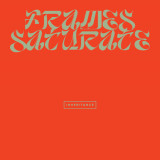
The Czecho-slovakian instrumental trio, Inheritance, invite you to rediscover their sonic journey with the reissue of their previous EPs, "Frames" (2014) and "Saturate" (2016), now elegantly entwined into a single captivating package released for the first time on vinyl, on Weltschmerzen. Comprising of the trio Jakub Volovár (guitar), Alex Strapková (piano), and Peter Kušnírik (drums), Inheritance was active in the mid 2010s in Brno, later unfortunately disbanding due to own personal pursuits.
Frames // Saturate embodies the melancholic and melodic tension characteristic of contemporary post-rock, complemented by the whimsy of piano-led instrumentals with a tint of indie-playfulness and a very slight yet powerful grain of sludge heaviness that can be traced back to Volovár's and Kušnirik's earlier post-metal project, Dawn to Come.
"Frames // Saturate" is first and foremost a compact sonic voyage. Volovár's evocative yet precise guitar work builds complex yet airy scaffolding, while Strapková's piano melodies create a tapestry of moods around it. Both EPs showcase Strapková's piano prowess, transforming each composition into a living organism. Kušnírik's drumming then acts as the steady pulse, guiding you through. These songs encapsulate the kind of mutualism and appreciation for (musical) interdependence that you can only develop throughout the years of practice and playing live.
You can hear how much fun it was for the band to play these songs, and that sense of joy translates directly into your own listening experience. It's the kind of music that makes you pick up an air guitar, (piano, or drums) - and sometimes everything all at once. It is music serious and poetic, yet fun and moving and complex at the same time.
он должен быть опубликован на 08.12.2023
- Intro/Sweet And Sour Extract
- Almost Grown
- City Boys (Dresden Style)
- Sahara
- One Of The Crowd
- Wireless
- Ripped And Torn
- God Save The Queen
- Platinum Blind
- Harvist
- Gramofonica
- Read About Seymour
- Shubunkin
- Trade Kingdom
- Pets' Corner
- Fashion Cult (Opaque)
- Plankton
- Johnny Seven
- Below Number One
- Plumbing/Radio Ten/Heres The Cupboard
- Organism
- Sweet And Sour Reprise
- Vertical Slum
- Avalanche Prelude
- Armadillo
- Avalanche Part 2
- Off The Beach
- Drop In The Ocean
- Whatever Happens Next (Acoustic)
- Elegia Pt.2
- Bandits 1-5
- Secret Choir
- Tibetan Bedsprings
- Big Cake Over America
- International Rescue
- Deliverous Mistale
An album crammed full of rare & unreleased tracks from the vaults of swell map founder Jowe Head. o Swell Maps formed out of various bedrooms in the mid -70s and became the pioneers of DIY punk. o Swell Maps founding members were Nikki Sudden, Epic Soundtracks, Jowe Head & Phones Sportsman o Includes demo versions of 2 of the bands Singles "Dresden Style" & "Read about Seymour". o Exclusive Liner notes by Jowe Head o Exclusive artwork originally designed by Epic Soundtracks & Jowe Head in 1977 o 2 Lps with printed inner bags in extra wide spine LP sleeve with cover sticker
он должен быть опубликован на 24.11.2023
- A1: The Its Way
- A2: Mindful Solutionism
- A3: Infinity Fill Goose Down
- A4: Living Curfew (Feat Billy Woods)
- A5: Pigeonometry
- B1: Kyanite Toothpick (Feat Hanni El Khatib)
- B2: 100 Feet Tall
- B3: Salt And Pepper Squid
- B4: Time Moves Differently Here
- C1: Agressive Steven
- C2: Bermuda (Feat Lealani Teano)
- C3: By The River
- C4: All City Nerve Map
- D1: Forward Compatibility Engine (Feat Rob Sonic)
- D2: On Failure
- D3: Solid Gold
- D4: Vititus
- D5: Black Snow (Feat Nikki Jean)
A tech company's "senior spirit guide" finally comes to the defense of the "financially unsuccessful" Vincent van Gogh; wonders of the natural world are reimagined as "muster points for brainstorming innovators"; the "artificial char lines" on fast-food burgers are cited as if signs of the apocalypse. For the better part of three decades, Aesop Rock has used the syntax of the moment to pinpoint the fault lines in that moment's supposedly solid foundation. With his tenth album, Integrated Tech Solutions, Aes wields insidious corporatespeak as a tool to pry that parasitic worldview away from the parts of life that truly matter. A concept album about an organization offering "lifestyle- and industry-specific applications designed to curate a desired multi-experience," Integrated Tech Solutions picks apart the charlatan language that hears app inventors put themselves on continuums starting with cavemen and continuing through da Vinci. On "Mindful Solutionism," the wheel evolves seamlessly into modern agriculture - and then into atomic bombs, Agent Orange, cigarettes, and surveillance cameras. In a rare moment of transparency, the engineers Aes give voice to sum up this spiral in just a few words: "We cannot be trusted with the stuff that we come up with." Appropriately, the album sounds like the past and future at once. Largely self-produced, Integrated Tech Solutions catches Aes at his leanest and most innovative, leveraging "SolutionismÖs careening bounce against the wistful "By the River" or the slow creep of "Salt and Pepper Squid." The effect is a record that sounds itself like an organism growing, mutating, hurtling toward profitability - and then destruction. As fans have come to expect, Aes is cuttingly funny and slyly profound at once, whether recounting a childhood restaurant run-in with Mr. T ("100 Feet Tall") or quipping, on "Pigeonometry," that "white dove is a pigeon - you motherfuckers is bigots." At the same time, Integrated Tech Solutions is working on another parallel project: tracing the sprawl of modernity and cutting directly to its core. "I've been doing laps of the lost worlds," he raps on "All City Nerve Map," sounding at once wearied and reinvigorated. "I can draw a map to the raw nerve."
Закажите сейчас, и мы закажем товар для вас у нашего поставщика.
Последний логин: 2 г. назад
A tech company's "senior spirit guide" finally comes to the defense of the "financially unsuccessful" Vincent van Gogh; wonders of the natural world are reimagined as "muster points for brainstorming innovators"; the "artificial char lines" on fast-food burgers are cited as if signs of the apocalypse. For the better part of three decades, Aesop Rock has used the syntax of the moment to pinpoint the fault lines in that moment's supposedly solid foundation. With his tenth album, Integrated Tech Solutions, Aes wields insidious corporatespeak as a tool to pry that parasitic worldview away from the parts of life that truly matter.
A concept album about an organization offering "lifestyle- and industry-specific applications designed to curate a desired multi-experience," Integrated Tech Solutions picks apart the charlatan language that hears app inventors put themselves on continuums starting with cavemen and continuing through da Vinci. On "Mindful Solutionism," the wheel evolves seamlessly into modern agriculture—and then into atomic bombs, Agent Orange, cigarettes, and surveillance cameras. In a rare moment of transparency, the engineers Aes give voice to sum up this spiral in just a few words: "We cannot be trusted with the stuff that we come up with."
Appropriately, the album sounds like the past and future at once. Largely self-produced, Integrated Tech Solutions catches Aes at his leanest and most innovative, leveraging "Solutionism"'s careening bounce against the wistful "By the River" or the slow creep of "Salt and Pepper Squid." The effect is a record that sounds itself like an organism growing, mutating, hurtling toward profitability-and then destruction. As fans have come to expect, Aes is cuttingly funny and slyly profound at once, whether recounting a childhood restaurant run-in with Mr. T ("100 Feet Tall") or quipping, on "Pigeonome- try," that "white dove is a pigeon-you motherfuckers is bigots." At the same time, Integrated Tech Solutions is working on another parallel project: tracing the sprawl of modernity and cutting directly to its core. "I've been doing laps of the lost worlds," he raps on "All City Nerve Map," sounding at once wearied and reinvigorated. "I can draw a map to the raw nerve."
[f] Kyanite Toothpick [feat. Hanni El Khatib]
[k] Bermuda [feat. Lealani Teano]
[n] Forward Compatibility Engine [feat. Rob Sonic]
[r] Black Snow [feat. Nikki Jean]
он должен быть опубликован на 10.11.2023
Aho Ssan debuts on Other People with second solo album and book 'Rhizomes' featuring Nicolás Jaar, Moor Mother, Angel Bat Dawid, clipping., Blackhaine and more
Paris based composer Aho Ssan, the artist moniker of Niamké Désiré, presents his new full-length 'Rhizomes' on the Other People label following his debut LP 'Simulacrum' (2020) and collaborative record 'Limen' (2022) with fellow musician KMRU.
'Rhizomes' draws inspiration from a concept coined and developed between Gilles Deleuze and Felix Guatarri. The idea of an ever evolving structural model, constantly in motion and spreading out in all directions at once. It has no beginning and no end, but always remains in a middle, through which it grows and overflows.
"The root thought is the one that kills everything around itself while the rhizome is the root that stretches out to meet other roots," Désiré explains considering the works of French writer Édouard Glissant who addresses questions of identity, crossbreeding of cultures and its evolution.
Much like the name it borrows, Aho Ssan's 'Rhizomes' is a multimedia project that embarks on a myriad of disparate, unique musical and artistic partnerships. This piece adapts this concept to explore the influence of sound materials on creation, the appropriation of a sound object, and the collaborative nature of a composition that responds to modernity.
"Rhizome represents an underground stem system that fosters connections between various organisms and allows them to flourish collectively. It's an album that celebrates collaboration and brings together a diverse group of talented artists," Désiré continues.
Aho Ssan collaborated with a comprehensive cast of artists to create a musical rhizome including Nyokabi Kariuki, Josefa Ntjam, Blackhaine, Nicolás Jaar, Resina, R?n C?p ?uôi, Richie Culver, clipping., Lafawndah, 9T Antiope, James Ginzburg, Exzald S, Valentina Magaletti, Moor Mother, Angel Bat Dawid and Mondkopf. Cooperation and community are at the root of this project and the lens through which all the compositions can be understood through.
Aho Ssan will present 'Rhizomes' AV show together with visual artist Sevi Iko Dømochevsky at Berlin Atonal 2023. 'Rhizomes' received a Honorary Mention at Prix Ars Electronica 2023 Digital Music
Ouverture feat Nyokabi Kariuki
Закажите сейчас, и мы закажем товар для вас у нашего поставщика.
Последний логин: 6 мес. назад
Delsin is pleased to welcome the unique sound experimentalist Machine Woman, presenting a captivating five-track journey out to the glitchy fringes of techno. MW, with her force of personality, continues to push the boundaries of her practice, offering bold and innovative approaches. She skillfully interlaces her voice through disorienting processes, embodying the essence of her self-styled mechanical organism.
Закажите сейчас, и мы закажем товар для вас у нашего поставщика.
Последний логин: 2 г. назад
Hailing from the seaside communities surrounding Enoshima, a small island located 50 km southwest of Tokyo, Maya Ongaku is a ragtag collective of local musicians whose brand of earthy psychedelia transcends widely beyond the roots of their inner souls. The name derives not from any kind of ancient civilization, but rather a neologism defined as the imagined view outside one’s field of vision. The band—currently a trio of Tsutomu Sonoda, Ryota Takano, and Shoei Ikeda—finds sanctuary at the Ace General Store, a beachy vintage shop and salon-like space just hidden from sight from the bustling, touristy riverside Subana Street. Between discussions on music and art, curating the vinyl section and manning the register, and chatting up with locals young and old, the members find time to jam and record their spontaneous ideas in the studio tucked away in the back. It’s in this unlikely setting where Maya Ongaku finds its origins, the culmination of what Sonoda describes as 自然発生 (shizen hassei), meaning spontaneous generation, or the supposed production of living organisms from nonliving matter.
Approach to Anima, the group’s debut album released on Guruguru Brain, finds Maya Ongaku building a foundational groove while tapping into their innermost psyche. Sonoda’s malleable guitar and vocals, Takano’s sinuous bass lines, Ikeda’s floating woodwinds, and a sprinkling of delicate percussion—all coalesce into an aural experience that’s assertive yet abstract, calm but unsettling. The slow building, sax-laden “Approach” serves as an introduction to Maya Ongaku’s world, while the appropriately-named “Water Dream” floats its way toward the gentle finale of “Pillow Song.” It’s a concise distillation of their many interests and influences, from Neo-Dada and Fluxus, to where contemporary art intersects with the development of modern recording technology in the ‘60s and ‘70s.
As the title suggests, Approach to Anima is not intended to be a terminus; it’s merely the beginning of an exploration. The three childhood friends that comprise Maya Ongaku are always looking beyond the confines of the idyllic but rapidly gentrifying enclave of their beloved Enoshima. Feeding off of the energy that still radiates from the triumphant, decade-long journey of their label bosses’ band Kikagaku Moyo, who rose to global prominence from scrappy beginnings busking on the streets of Takadanobaba, they hope to go wherever inspiration takes them, to anywhere around the globe where their music can find a home.
Ultimately, Maya Ongaku’s uninhibited world-building will make it possible for us to see the unseen, expand the possibilities of the naked eye—all through the unbridled vibrancy of their music.
Закажите сейчас, и мы закажем товар для вас у нашего поставщика.
Последний логин: 4 мес. назад
One of Japan’s most riveting artists follows that KAKUHAN mindmelt from last year (our number 5 album, 2022) with an engrossing suite of wild field recordings and polymetric percussion featuring a whole raft of additional players weaving drums, wind and brass instruments, cello and electronics into a bewildering Acousmatic matrix. Highly recommended listening if you’re into Marginal Consort, Beatrice Dillon, Will Guthrie, Mark Fell, François Bayle.
Having made his mark on these pages over the last few years with appearances as part of Japan’s cult entities Goat and YPY, Koshiro Hino’s turn last year as KAKUHAN took things to a whole other level with an album that felt like some alchemical mix of elements borrowed from Autechre, Photek, Arthur Russell and Mica Levi - a complete stylistic futureshock that worked as well in the club as it did fuelling extended flights of the imagination.
For 2023, Hino takes us into a completely different headspace, assembling a cast of 11 players - the mighty Joe Talia and KAKUHAN’s other half Yuki Nakagawa among them - for a suite of untamed field recordings, clanging percussion, brass and synthesis that are about as far removed from the diaristic ambient de jour as you could possibly imagine. Instead, the ensemble conjure vibrant sound ecologies teeming with detail, mirroring the natural world and communal traditions to form shapeshifting, organismic soundworlds.
‘Geist II’ was written for 20 speakers, referencing François Bayle’s acousmatic music and David Tudor’s electro-acoustic environments. It paints a richly detailed scene of a nocturnal rainforest, replete with avian hoots and a skin-crawling patina of insectoid chatter that moves around the soundfield, stealthily growing in density with a more “musical” presence of super low end drone and drums converging form the peripheries to a ritualistic climax. In the second part, focus shifts to remarkably pure percussion-like tropical rain, invaded by swarms of scuttling and winged invertebrates that give way to a water music-like polymetric slosh, resolving to ringing tones and more mellifluous gestures that hark back to GRM’s most poetic, romantic urges.
It's a deeply psychedelic experience that harmonises tiny electronic fluctuations with bird calls and scraped, resonant drones that phase in-and-out of the mix. It's sound you can practically chew, and another crucial despatch from the contemporary Japanese avant-garde.
он должен быть опубликован на 01.07.2023
The next chapter of the Natural Information Society is here. Since Time Is Gravity, credited to Natural Information Society Community Ensemble with Ari Brown, presents a newly expanded manifestation of acclaimed composer & multi-instrumentalist Joshua Abrams nearly 15 year, 7 albums &-counting flagship ensemble. Joining the core NIS of Abrams (guimbri & bass), Lisa Alvarado (harmonium) Mikel Patrick Avery (drums) & Jason Stein (bass clarinet) are Hamid Drake (percussion), Josh Berman & Ben Lamar Gay (cornets), Nick Mazzarella & Mai Sugimoto (alto saxophones & flute), Kara Bershad (harp) & Chicago living legend of the tenor saxophone Ari Brown. Recorded live to tape at Electrical Audio & The Graham Foundation, cover painting Vibratory Cartography: Nepantla, by Lisa Alvarado. 2xLP on Eremite USA, 2xLP & CD on Aguirre/Eremite Europe. Out 14-04.
Since first developing Natural Information Society in 2010, Joshua Abrams has been gradually expanding the group’s conceptual underpinnings, its musical references & the sheer number of the group’s members. Its music is, in a sense, an expansive form of minimalism, based in repeated & overlaid rhythmic patterns, ostinatos & modality. Its roots, its scale & its meaning become clearer in time. If time is gravity, it also allows us to carry more. Having begun as fundamentally a rhythm section with Abrams’ guimbri at its core, the version here can stretch to a tentet, including six horns.
Abrams has been expanding his minimalism gradually, but he has long understood a key to minimalism’s potential: the breadth of its roots in the late 1950s & early 1960s, ranging from the dissatisfaction of young European-stream composers with the limitations of serialism to the simultaneous dissatisfaction of jazz musicians with the dense harmonic vocabulary of bop & hard bop. The former began exploring rhythmic complexity & narrow tonal palates in place of harmonic abstraction (Steve Reich’s Drumming, Philip Glass’ Music with Changing Parts; perhaps above all Terry Riley’s In C & his late ‘60s all-night organ & loop concerts); the later reduced dense chord changes to scales (signally with Miles Davis' Kind of Blue, but rapidly expanding with John Coltrane’s vast project). In the 1950s the LP record opened the world with documentation of Asian & African musics, key influences on both minimalists & jazz musicians. If John Coltrane’s soprano saxophone suggested the keening shehnai of Bismillah Khan, the instrument was rapidly taken up by two key minimalists, LaMonte Young & Riley, similarly appreciative of its flexible intonation, the same thing that kept it out of big bands.
If the guimbri, the North African hide-covered lute that Abrams plays with NIS, involves a rich tradition of hypnotic healing music associated with the Gnawa people, Abrams’ music also touches on other musics as well — other depths, memories & healings, different drones, rhythms & modes. As the group expands on Since Time Is Gravity, he has made certain jazz traditions in the same stream more explicit as well. If there is a mystical & elastic quality involved in the experience of time, both in direction & duration, you will catch it here. The parts for the choir of winds expand on the roles of Abrams’ guimbri, Mikel Patrick Avery & Hamid Drake’s percussion & Lisa Alvarado’s harmonium: at times, the winds are almost looping in the tentet version, each hitting a repeating note in turn, at once drone & distinct inflection on temporal sequence. The brilliance of the work resides in Abrams’ compositions, the NIS’ intuitive execution & in Ari Brown’s singular embodiment of the great tenor saxophone tradition, including the oracular genius of Eddie “Lockjaw” Davis, & Yusef Lateef. The three pieces by the expanded NIS featuring Brown —the opening “Moontide Chorus” & “Is” & the ultimate “Gravity”— have an immediate impact, & togther might be considered a kind of concerto for tenor saxophone. Here Brown presses almost indistinguishably from composed melody to improvised speech, getting so close to language that he might have a text. Everything here is a sign. Note the tap of the Rhythm Ace that links “Moontide Chorus” to “Is”, the attentive heart always present, even when signed by a machine. There’s a link here to the methodologies & meanings of dub music & the linear & vertical collage of beats, textures & tongues: treated with reverence, a sample of a beat-box can be as soulful, as hypnotic, as a mbira or a tamboura. If those pieces with Brown are heard as a suspended concerto, the three embrace & enfold the other works, like the sepals of a flower. That placement will also touch on the mysteries of our perception of time.
Particularly in “Is”, but elsewhere as well, a phenomenon of transcendence arises in which time appears to be tripartite, at once moving backwards & forwards & standing still. This is an act of technical brilliance certainly, but also an illumination of music’s ability to represent temporal consciousness through polymetrics. This particular listener has only heard it before in a few places, including the horn shouts & bowed basses of Coltrane’s Africa, in moments of Charles Mingus’ The Black Saint & the Sinner Lady, in certain pieces where tapes were literally running backwards, & earlier still in Dizzy Gillespie’s Cubana Be, Cubana Bop, in which the composer George Russell & conguero Chano Pozo found a music that spoke at once in the voices of Stravinsky’s Rite of Spring & the vestigial rites, rhythms & songs of the Yoruba language & Santeria religion of inland Cuba.
In Joshua Abrams’ compositions & the realization of them by the NIS, in the time of one’s close listening & memory thereof, distinctions between the “natural” & the “social”, the “quotidian” & the “transcendent” are erased, suspended or perhaps irrelevant. Consider two of the ensemble pieces, one named for nature, the other social science. In “Murmuration” the repeated wind figures of flute & alto saxophone combine with the interlocking patterns of harp, guimbri & frame drum (tar) to create a perfect moving stillness, not an imitation but a witness to the miracle of the starlings’ astonishing collective art, a surfeit of beauty that might be the ultimate defense tactic.
“Stigmergy” takes its name & concept from the Occupy movement’s Heather Marsh, who proposes a social system based on a cooperative rather than competitive models, one in which ideas are freely contributed & developed as ideas rather than an individual’s property. In its form, Abrams’ “Stigmergy” is the closes thing to traditional jazz, a series of accompanied solos by each of the wind players. However, the composed accompaniment is a radically collectivist notion: a repeated rhythmic figure, call it ostinato or riff, in which the different winds each play only a note or two of the figure, a concept both more collectivist & individualistic in its conception than any typical unison figure. It suggests another of the underlying recognitions that propel the Natural Information Society, the group as social organism, the teleology of hypnotic anarchy, all parts in place, functioning systematically, evolving & expressing itself, its nature & society, as a transformative organism.
George Lewis has described music as “a space for reflection on the human condition”. This suggests that, rather than a “distraction”, at least some music might serve as a distraction from distraction. It’s a focus, a clarity, a awareness, an external invitation to interiority, as if music itself is a model for form & contemplation, an organism contemplating for us or as us. If that is a possibility, & I am sure I have heard such musics, than this music is among them. How many of our rhythms, melodies & harmonies (cultural, historical, biological, psychic) might such music carry, translate & transform in the particulate ecstasy of our own murmuration? (Stuart Broomer, April 2022)
Закажите сейчас, и мы закажем товар для вас у нашего поставщика.
Последний логин: 2 г. назад
This is Parand Haghi’s debut project for Specimen, and here we indulge the concept of events based around Area 51. This has always created controversy and conspiracy as a covert space for experimenting on extraterrestrial aliens. We can only imagine the horrors of human endeavour to probe the inner bodies as a means of developing advanced interstellar technology. Albeit, driven by fear and paranoia as a means of conquering outer space the alien species remain a puzzle, but they are here among us have no doubt.
An alien organism reaches planet earth it is sent in the form of a superior female whose dark, passionate embrace allures us to the magical and mystical bewilderment of sonic worlds. Parand is the future of Specimen with PATIENT-X. This is a taste of things to come, after probing into the future with a dark remix of Arsonist Recorder’s "Vaxxer", she is proving to be a formidable force in the realms of electro.
PARAND is Berlin-based producer
At an early age, she developed her passion and taste for music. While her musical roots are grounded in classical piano training, her broad influences and obsession with electronic beats led her to experimenting with DJing and producing what could be considered a unique style of electro with experimental sound shapes, infused with dark bass-lines and beats.
Закажите сейчас, и мы закажем товар для вас у нашего поставщика.
Последний логин: 2 г. назад
Having emerged as a luminary of the Los Angeles Beat Scene, MatthewDavid immersed himself for several years in the rich, neglected, and all-too-often-derided archive of New Age sound/culture, stewarding a kind of New New Age sensibility into being. Mycelium Music constitutes a synthesis of these aesthetics, an alchemical marriage of sorts, in which the digital and the organic, the earthen and the aethereal, the bloom and the rot all collide and coexist. How might the Mycelium sing? Where other sound artists might be tempted to capture the phenomena, reaching for a field recorder, MatthewDavid responds with a succinct, impressionistic, and diaristic suite of “songs” (although, as with the mycelium itself, one cannot easily distinguish where one song/organism ends and another begins). Leaving Records founder Matthewdavid announces his new album Mycelium Music, his first proper full-length since 2018. The first single to be taken from the album 'Liquidity', was created as a direct response to ambient pioneer Laraaji encouraging Matthewdavid to innovate zither music. Beautifully textural, Mycelium Music constitutes an alchemical marriage in which the digital and the organic, the earthen and the aethereal, the bloom and the rot all collide and coexist. The record is a product of serious contemplation on the meaning, the problems, and the promises of interdependence.
он должен быть опубликован на 11.05.2023
For Erika's second album "Anevite Void", she explores her live process as it permeates everything she does, including documenting the process of life in the elaborate sci fi mythology she created. Erika began performing live in Ectomorph in 1997 when she was gifted a TR-606 by BMG and asked to join the group. This grew to her building her own studio, performing solo as Erika, collaborating with people like Jay Ahern and Noncompliant, and performing as a member of Circle of Live. Her depth of thought and clarity of vision has led to her mentoring people on live performance through the In Bloom platform, where she has made a large impact on many up and coming musicians. "Anevite Void", Erika's new album, finds her organically writing songs for her live shows, allowing them to take shape through performance, and later recording them in the studio, making this the first album she has entirely written and produced on her own. Mixed by long time collaborator BMG, she finds this record as the launching point for a new process for her. Conceptually, this album was inspired by "the irregular life cycles created by three suns circling over a planetary organism that presents two major biomes: rocky crystalline desert, and deep layered forest, each of which exists above and/or below ground, depending on what phase the suns are in." From this realm the album took shape. She also chronicled this concept in drawings but found this painting by Detroit puckish punk legend Nai Sammon perfectly visually explained the concept, and chose it for the cover. She describes "each track is about an organic process that occurs: acts of survival of the biomes, or what happens between them and the multitude of other beings that they host." Erika is currently splitting her time between being based in Berlin and Detroit, is part of the triumvirate that runs Interdimensional Transmissions (BMG, Erika and Amber) that are releasing this record and produce legendary events such as No Way Back, Samhain and Return to the Source. She performs live and DJs and collaborates and oozes sonic truth in its many forms. Visit the "Anevite Void" in early 2023.
Закажите сейчас, и мы закажем товар для вас у нашего поставщика.
Последний логин: 3 г. назад
Local Action is proud to present Cyclorama, the long-awaited debut album by Ariel Zetina.
A resident DJ at Chicago’s iconic Smartbar, a long-standing Discwoman family member and a key part of the city’s dance music and LGBTQ+ communities, Ariel has established herself as one of the most exciting electronic artists operating today - through releases such as 2020’s acclaimed MUAs at the End of the World and 2017’s Organism, and her meticulous approach to DJ mixes - as recently evidenced on Sestina, her 2020 contribution to Mixtape Club.
Written across 2021 and honed this Spring, Cyclorama is Ariel’s most impressive and all-encompassing work yet, showcasing her as a producer, vocalist and also curator, pulling together an ensemble cast of her peers in Chicago (Cae Monāe, Mia Arevalo, DANNN) and some of the most exciting names in contemporary club music (Violet, Bored Lord).
Conceptually, Cyclorama draws heavily from Ariel’s background as a theater writer and producer. Popularized in 19th century German theater, a cyclorama (or cyc) is a large curtain, placed on the back wall of the stage. This creates an illusion of extra depth in the background, and often is used to represent the sky. In Ariel’s words, “I imagine all the tracks on this as the lights and action projected onto the cyclorama. The whole album is like the cyc, a representation of the sky. Or an imagined sky. An imagined dancefloor. An imagined theatrical production.”
As well as drawing conceptually from Ariel’s background in theater, the album draws on a personal level from Ariel’s journey as a trans woman of color - most directly on Cyclorama’s three vocal tracks, ‘Gemstone’, ‘Slab of Meat’ and lead single ‘Have You Ever’.
On ‘Have You Ever’, Ariel collaborates with Cae Monāe, a dear friend and fellow trans woman of color. “‘Have you ever been with a girl like me before?’ and all the lyrics refers to the fear and anxiety that cis men who are attracted to trans women feel, and also any woman that doesn’t fit the mold of a stereotypical woman”, Ariel explains. “Cae and I - and many trans women - have been in so many situations where society tells cis men they cannot be with trans women and this explores that and gives power to all trans women in this situation. The techno reflects that, as well as the “Spell my name” section at the end, showing the true power of trans women.”
On ‘Slab of Meat’, Ariel delivers a hypnotic solo vocal performance that builds in intensity with each line (“I am treated like a slab of meat both emotionally and sexually sometimes, especially one left in the freezer on the back burner. Why did you bring this meat home from the market? For what? You’re wasting meat!”), while ‘Gemstone’, a collaboration with Mia Arevalo, continues the empowering themes of ‘Have You Ever’ in a different context:
“‘Gemstone’ is a call for trans women to take time with your transition because it will all happen eventually. As two girls who have started our transition almost a decade ago, I think we have both seen that we have always needed to take our time to take our time. Reminders not to rush or compare yourself to other girls. I love the metaphor of gemstone months representing different periods of transition. I’ve been so many different women in recent years, and I'm excited to continue my journey.”
It’s immediately followed by album closer ‘Tropical Depression’, the title of which is a reference to Ariel growing up with tropical depressions, storms and hurricanes affecting her hometown of Jacksonville, Florida as well as her family in Belize City:
“This track for me is about living day to day and continuing while dealing with my really intense clinical depression. The sample comes from “Why can’t you let me go?” but is supposed to be transformative and not necessarily legible. How we hold on to our trauma and depression like a protective shell. This is an attempt to deal with it in a different way.”
The Cyclorama album cover, directed by Dylan Bragassa, stars Ariel alongside Monāe and Arevalo in an imagined theater production. In Ariel’s words, “a theoretical performance starring only trans women of color - I wanted an ensemble shot to represent the ensemble nature of this album! Love how Dylan combines so many ideas to create a very unique image that asks so many questions.”
Закажите сейчас, и мы закажем товар для вас у нашего поставщика.
Последний логин: 3 г. назад
As one of the three co-founders of Washington D.C. production and DJ trio Black Rave Culture, James Bangura is no stranger to situating electronic music within its most purposeful and potent contexts. With this new duo of tracks, however, Bangura taps into a deep, personal internality, metabolising visceral experiences and personal transitions into unexplored phases of his musical life.
The bass-forward “Harrar” is a complex organism which operates on two planes: a sweat-drenched 150pm symphony of synth pulses, fidgety percussion, shimmies and distorted vocals, that falls into lockstep with a
meditative, dubby bass tone that calmly swells and recedes. Emerging out of Bangura’s high intensity hardware jam sessions with friends and collaborators, both the depth and energetic fizz of “Harrar”’ are signified by its name, borrowed from Harrar Coffee & Roastery--a beloved Ethiopian coffee house and community meeting place in Washington D.C. that radiates warmth and familiarity.
“Witness Dub” occupies less of the senses, exploring a state of liminality through a contemplative deep house signature. Having emerged from an extended period of active duty in the military, Bangura had to navigate civilian life for the first time, causing him to process multiple culture shocks that stretched across culture, language, communication and identity. “Witness Dub” finds Bangura at this crossroad, juxtaposing the steady propulsion of kicks and drums with pensive minor key chords, as he begins to explore the other side of the self, letting the energy guide the music.
Закажите сейчас, и мы закажем товар для вас у нашего поставщика.
Последний логин: 3 г. назад
There’s a line on Honey, the latest album from Nashville-via-NYC songwriter Samia, about Aspen Grove, a collection of 40,000 trees in the plains of North America, all connected by a single expansive root system. There’s no stronger metaphor for the audience the 25-year-old empathy engine has been generating since she began releasing music seven years ago. Her songs, her fans, her friends: one enormous, interconnected ecosystem. Honey, comprised of eleven new moments of catharsis, is by and for that organism. Set for release on January 23rd 2023 via Grand Jury Music, the album was recorded at North Carolina studio Betty’s –- owned and operated by Sylvan Esso’s Nick Sandborn and Amelia Meath, frequent touring partners of Samia’s. It was produced by Caleb Wright, part of the team that helmed Samia’s breakthrough 2020 debut The Baby, and a founding member of one of Samia’s favorite bands, The Happy Children. It features some of her nearest and dearest friends: Christian Lee Hutson, Briston Maroney, Jake Luppen, Raffaella. Its songs were surreptitiously road tested for her devotees while opening for Lucy Dacus, Courtney Barnett, and more. The end result is what Samia calls simply “a real community record.”
он должен быть опубликован на 27.01.2023
There’s a line on Honey, the latest album from Nashville-via-NYC songwriter Samia, about Aspen Grove, a collection of 40,000 trees in the plains of North America, all connected by a single expansive root system. There’s no stronger metaphor for the audience the 25-year-old empathy engine has been generating since she began releasing music seven years ago. Her songs, her fans, her friends: one enormous, interconnected ecosystem. Honey, comprised of eleven new moments of catharsis, is by and for that organism. Set for release on January 23rd 2023 via Grand Jury Music, the album was recorded at North Carolina studio Betty’s –- owned and operated by Sylvan Esso’s Nick Sandborn and Amelia Meath, frequent touring partners of Samia’s. It was produced by Caleb Wright, part of the team that helmed Samia’s breakthrough 2020 debut The Baby, and a founding member of one of Samia’s favorite bands, The Happy Children. It features some of her nearest and dearest friends: Christian Lee Hutson, Briston Maroney, Jake Luppen, Raffaella. Its songs were surreptitiously road tested for her devotees while opening for Lucy Dacus, Courtney Barnett, and more. The end result is what Samia calls simply “a real community record.”
он должен быть опубликован на 27.01.2023
Experimental guitarist and composer Carlos Ferreira is inspired by how we listen to music and the singer between sound, space, time and memory. He's dropped ambient gems on the likes of Past Inside The Present and Modern Obscure but here serves up a superb cassette on Mystery Circles. Across eight pieces he concurs up a range of feelings from rose-tinted nostalgia on the beautifully tender opener 'The Light We Lost' to more uplifting feels on 'A Pile Of Thoughts' (feat Fu_k The Zeitgeist). 'Organism' has delicate vocal whispers from Patricia Wolf that make it all the more heavenly and a second appearance feature from Fu_k The Zeitgeist on 'Primal' is another standout.
он должен быть опубликован на 18.01.2023
With this new solar album, Brazilian singer-songwriter Lucas Santtana wishes to re-enchant our life on earth. For his ninth album "O Paraíso" (Paradise), the free heir of the Brazilian tropicália intends to redefine our idea of Paradise. "It is in front of us, we must open our eyes and learn to contemplate it in depth," he explains. The Earth is a living organism also called "biosphere", a unique planet in the solar system where all the conditions are gathered to welcome life. Lucas places life at the heart of his songs and celebrates the collective forces that resist to preserve it. His guitar-vocal songs with bossa nova sounds are mixed with organic sounding percussions, enriched with electronic orchestrations and textures. The Brazilian composer gets closer to his French audience by collaborating with Flavia Coelho, Flore Benguigui (from the band L"Impératrice) or the saxophonist Laurent Bardaine, and by even trying his hand at French on one of his tracks. It"s a festive new album, which helps us better understand where we live and with whom we share this heavenly home.
Закажите сейчас, и мы закажем товар для вас у нашего поставщика.
Последний логин: 3 г. назад
10 atemberaubende Neuinterpretationen für Klavier von Ólafur Arnalds’ Erfolgsalbum some kind of peace
von akustischem Soloklavier bis hin zu verträumten elektronischen Klängen.
Kreative Zusammenarbeit ist der Eckpfeiler von Ólafurs Arbeit. Er beruft sich auf seine kreative Gemeinschaft und glaubt, dass Musik als ein sich bewegender, atmender Organismus weiterlebt. ”Das Herz eines
Songs lebt im Interpreten”. – Ólafur Arnalds
So lud der isländische Künstler eine vielfältige Mischung von musikalischen Freunden und Wegbegleitern aus der ganzen Welt ein seine Musik neu zu interpretieren. Sein letztes Album ”some kind of peace”
- ein Album, auf dem zwei Grammy-nominierte Tracks, ”The Bottom Line” (feat. Bonobo) und ”Loom”
(feat. Josin) zu hören sind – dient hier als Interpretationsgrundlage für zehn Künstler. So finden sich unter
anderem Piano-Bearbeitungen von Hania Rani, Lambert, Dustin O‘Halloran, JFDR, Eydís Evensen u.a. auf
dem neuen Album.
Закажите сейчас, и мы закажем товар для вас у нашего поставщика.
Последний логин: 3 г. назад
- A1: Fragments Of Yesterday
- A2: Wendys Hollow Path
- A3: Less Real Than You
- A4: In Sosteso
- B1: L'ennui Hâté
- B2: Moving Tiles
- B3: Melee
- C1: The Place Is What Emerges
- C2: Setting Things Apart
- C3: Perhaps Significant
- D1: Non C'é
- D2: Indefinable Basement
- D3: Dance Of The Forgotten
- D4: Shaping The Experience
- D5: L'anticipazione Del Futuro
"While focusing on the current conditions we find ourselves in and bracing for what seems like the collapse of humanity, I made this collection of music in an attempt to ignite the essential remnants of my inner euphoria, and perhaps yours too" - Feldermelder
Euphoric Attempts is a finespun, voluminous manifestation of euphoria, a testimony to creativity, produced at a time when the outside world seems to be slowly disintegrating. The musical language is pure, vast, resilient, and vulnerable. The compositions of Feldermelder have a tonality both strange and familiar, intensified and influenced by classical music, yet distinguished by the coalescence of contrasting styles.
Euphoric Attempts relates to the state of our external surroundings but also refers to our inner life: it passes through our memories — through our organism — through our stories, and intends to elude the cold grip of analytical listening, instead retrieving intrinsic truths. The track titles signify a form of homage to our inner individuality, existing in parallel with the severities of the tangible, the external.
For this album, Feldermelder draws together compositions from his extensive archives, focussing on material that reflects the simple joy of making music. As a counterpoint to the abstract complexities and intricate rhythms of his live performances, here Feldermelder creates candid compositions of purity and minimalism, finding a sense of elegance in the details. Euphoric Attempts discovers the prospect of liberation and vitality in concealed intimacies, capturing their resemblance in gentle, elaborate, and prodigious movements of sound.
Feldermelder is a Swiss musician, sound designer, producer, and installation artist. He is co-founder of -OUS and part of the audio-visual collective Encor.studio. He has previously released several releases on -OUS, both as a solo artist, and in collaboration with Sara Oswald and Julian Sartorius. Feldermelder's influences range from pioneering early electronic music to contemporary analogue electronics to classic jazz and beyond. The diversity of the music that inspires him is mirrored in his own work, which illustrates an ever-evolving sound, and indicates that influence is seen as both map and compass, guiding divergent inclinations.
Закажите сейчас, и мы закажем товар для вас у нашего поставщика.
Последний логин: 3 г. назад
TOHO, the creators of GODZILLA, unleash SPACE AMOEBA aka Gezora-Ganime-Kameba: Kessen! Nankai No Daikaijû! A space probe is lost while on its way to the planet Jupiter but returns to Earth after being overtaken by a deadly and dastardly single-celled organism.
The organism then mutates into giant kaiju that mimic a cuttlefish, a stone crab, and a matamata turtle, and uses these destructive forms in their plan to take over the planet. The only thing that stands between humanity and the insidious invertebrates is a group of photographers doing recon for a tourism company!
Directing, of course, is the legendary Ishirō Honda (MOTHRA, RODAN) alongside producer Tomoyuki Tanaka, with the dreamy Akira Kubo (DESTROY ALL MONSTERS) as photographer Kudo. As with GODZILLA, Honda recruited the great Akira Ifukube to compose the thrilling score, and Ifukube brought his trademark innovation and dramatic grandeur.
The title theme is beautifully distinctive, mixing thick brass and low piano to match the destruction of the kaiju with higher horns and trumpet, providing a lighter contrast. Ifukube scores action and horror with his iconic lumbering colours but provides suspense with piano and otherworldly strings, with a unique slithering theme for the evil amoeba. Another Ifukube triumph! (Charlie Brigden)
Composed by Akira Ifukube
Artwork by Matt Taylor
Manufactured in Czech Republic
он должен быть опубликован на 21.10.2022
LP comes with a Side D etching in triple gatefold jacket + full album download. The Will to Live was produced by Titus Andronicus singer-songwriter Patrick Stickles and Canadian icon Howard Bilerman (Arcade Fire, Leonard Cohen, The Whole Nine Yards) at the latter’s Hotel 2 Tango recording studio in Montreal. Drawing on maximalist rock epics from Who’s Next to Hysteria, Bilerman and Stickles have crafted the richest, densest, and hardest hitting sound for Titus Andronicus yet. All at once, the record matches the sprawl and scope of the band’s most celebrated work, while also honing their ambitious attack to greater effect than ever before. “It may strike some as ironic we had to go to Canada to record our equivalent to Born in the USA,” quips Stickles, “but the pursuit of Ultimate Rock knows no borders. ”For his recent stretch of personal stability, he credits a newfound domestic bliss and steadfast mental health regimen (“Lamictal is a hell of a drug”) as well as the endurance of what has become the longest-running consistent lineup of Titus Andronicus—Liam Betson on guitar, R.J. Gordon on bass, and Chris Wilson on drums. On the crueler side of the coin, however, The Will to Live was created in large part as an attempt to process the untimely 2021 death of Matt “Money” Miller, the founding keyboardist of the band and Stickles’ closest cousin. Stickles explains: “The passing of my dearest friend forced me to recognize not only the precious and fragile nature of life, but also the interconnectivity of all life. Loved ones we have lost are really not lost at all, as they, and we still living, are all component pieces of a far larger continuous organism, which both precedes and succeeds our illusory individual selves, united through time by (you guessed it) the will to live.” “Naturally, though, our long-suffering narrator can only arrive at this conclusion through a painful and arduous odyssey through Hell itself,” he qualifies. “This is a Titus Andronicus record, after all.” When Titus Andronicus made their long-awaited return to the stage in 2021, it was to celebrate the anniversary of their landmark breakthrough The Monitor, and the act of playing that material before an ecstatic audience left the band determined to deliver an album that would reach for those same lofty heights, relying this time less on the reckless fire of youth and more on the experience and perspective at which a band only arrives with a thousand shows under their belt. Through this golden ratio, Titus Andronicus have arrived at the peak of their creative powers. From its adrenalizing opening instrumental “My Mother Is Going to Kill Me” to its wistful closing benediction “69 Stones,” The Will to Live conjures a vast landscape and sends the listener on a rocket ride from peak to vertiginous peak. Rock fans will find themselves a feast, whether they crave barn-burning rock anthems such as “(I’m) Screwed” and “All Through the Night,” rapid-fire lyrical gymnastics (“Baby Crazy”), symphonic punk throwdowns (“Dead Meat”), or an adventurous excursion into the darkness that delivers thrills as it breezes boldly past the 7 minute mark, “An Anomaly.” As if that wasn’t enough gas for the tank, The Will to Live features sterling contributions from members of the Hold Steady, Arcade Fire, and the E Street Band, as well as duets with the aforementioned Betson, former Titus Andronicus drummer Eric Harm, and Josée Caron of the Canadian rock band Partner. The album comes packaged with gorgeous triple-gatefold artwork by illustrious illustrator Nicole Rifkin, a Hieronymus Bosch–inspired triptych which mirrors the three-part structure of the narrator’s perilous voyage across the corresponding three sides of vinyl. All together, this esteemed ensemble, with Stickles and Bilerman determined and defiant at the helm, have found The Will to Live—now, the question is… will you?
SIDE A 1. My Mother is Going to Kill Me 2. (I’m) Screwed 3. I Can Not Be Satisfied 4. Bridge and Tunnel SIDE B 5. Grey Goo 6. Dead Meat 7. An Anomaly SIDE C 8. Give Me Grief 9. Baby Crazy 10. All Through the Night 11. We’re Coming Back 12. 69 Stones SIDE D Etching
он должен быть опубликован на 30.09.2022
As a collective thought, Spice's Self-Titled debut album offers a deliberate isolation of pain as interpreted through different vehicles. Less than 30-minutes in length, the record diverts from a singular mood, tempo, or delivery, instead focusing on orchestrating emotional drain as single impulses_fast, slow, driving, simple, and layered_that coalesce in their machinations. At its core, Spice's SelfTitled album is wired together by brawny and brittle guitars, lock-groove rhythms, and vocals announce each moment and mood. Formed in 2018 and based across California, each members' roots are in the North Bay of San Francisco. Comprised of Ross Farrar (vocals) and Jake Casarotti (drums), both of Ceremony, along with Cody Sullivan (bass), Ian Simpson (guitar), and Victoria Skudlarek (violin), Spice's sound pulls from the sense of melody and drive inherent to Bay Area pedigree, peppered with modernity and awash with an anthemic haze. The hook is in the connection as much as melody, with each song building its inner narrative and exploration of affliction. Traversing guitar-driven indie-pop and call-to-action impulse, Spice balances their urgency by interspersing violin melodies and layers, creating depth without oversaturating the heart of each song. Building complexity with laser focus, Spice shares the authoritative drive of Jawbreaker, J Church, The Horrors, and Fugazi, set in their own world of unrest. The treatment of each song is a statement that informs the whole - anecdotes that can bleed slowly or swirl quickly. In a sense, the Self-Titled album itself is an entire song, with each track becoming the verses, choruses, and interludes that narrate its intent. Ending with the final track they workshopped for the album titled "I Don't Wanna Die in New York," the album ends with a punch before winding back into meditation. Honed over late nights at Panda Studios in Fremont, California with producer Sam Pura (Basement, The Story So Far, Self Defense Family), Spice spent hours tweaking it until it became a little world formed by what they refer to as "the power of groupthink." Sprinkled with field recordings_audio snapshots from the member's every-day-lives_the record offers an intimate twist that builds on its theme of a single thread that connects everything with continuity, making it a single organism with as many depths as questions.
он должен быть опубликован на 09.09.2022
As a collective thought, Spice's Self-Titled debut album offers a deliberate isolation of pain as interpreted through different vehicles. Less than 30-minutes in length, the record diverts from a singular mood, tempo, or delivery, instead focusing on orchestrating emotional drain as single impulses_fast, slow, driving, simple, and layered_that coalesce in their machinations. At its core, Spice's SelfTitled album is wired together by brawny and brittle guitars, lock-groove rhythms, and vocals announce each moment and mood. Formed in 2018 and based across California, each members' roots are in the North Bay of San Francisco. Comprised of Ross Farrar (vocals) and Jake Casarotti (drums), both of Ceremony, along with Cody Sullivan (bass), Ian Simpson (guitar), and Victoria Skudlarek (violin), Spice's sound pulls from the sense of melody and drive inherent to Bay Area pedigree, peppered with modernity and awash with an anthemic haze. The hook is in the connection as much as melody, with each song building its inner narrative and exploration of affliction. Traversing guitar-driven indie-pop and call-to-action impulse, Spice balances their urgency by interspersing violin melodies and layers, creating depth without oversaturating the heart of each song. Building complexity with laser focus, Spice shares the authoritative drive of Jawbreaker, J Church, The Horrors, and Fugazi, set in their own world of unrest. The treatment of each song is a statement that informs the whole - anecdotes that can bleed slowly or swirl quickly. In a sense, the Self-Titled album itself is an entire song, with each track becoming the verses, choruses, and interludes that narrate its intent. Ending with the final track they workshopped for the album titled "I Don't Wanna Die in New York," the album ends with a punch before winding back into meditation. Honed over late nights at Panda Studios in Fremont, California with producer Sam Pura (Basement, The Story So Far, Self Defense Family), Spice spent hours tweaking it until it became a little world formed by what they refer to as "the power of groupthink." Sprinkled with field recordings_audio snapshots from the member's every-day-lives_the record offers an intimate twist that builds on its theme of a single thread that connects everything with continuity, making it a single organism with as many depths as questions.
он должен быть опубликован на 09.09.2022
These words by legendary bassist/composer Charles Mingus are a touchstone for Little Big, the quartet led by pianist Aaron Parks. The band’s new recording, Little Big II: Dreams of a Mechanical Man, communicates with a clarity and simplicity that belies its ultimate depth. “I want to cast a spell,” explains Parks, “to lull you into a trance where you think you know where you’re going, and then take you somewhere unexpected, almost without realizing how you got there.”
This new music continues the band’s cultivation of a musical language that marries creative improvised music to more groove-centered music—electronica, indie-rock, hip-hop, and psychedelia—but without a trace of mannered “fusion” or a sense that the music is cobbled together from disparate styles. Rather, it feels seamlessly integrated, whole in and of itself.
Dreams of a Mechanical Man is Little Big’s second release on Ropeadope Records, recorded after more than two years of touring for Parks, guitarist Greg Tuohey, bassist David “DJ” Ginyard, and drummer Tommy Crane. One primary distinction of this new album, according to Parks, is that “today, the band operates as a single organism. The first record was about the tunes and the aesthetic. This album keeps that focus and also captures the chemistry we’ve developed on the road, the way this band feels as it makes music in the moment.”
он должен быть опубликован на 20.05.2022