
No en stock
Haga su pedido ahora y le encargaremos el artículo en nuestro proveedor.
Ültimo hace: 6 Meses
Haga su pedido ahora y le encargaremos el artículo en nuestro proveedor.

Nach 9 Studioalben und über 800 Shows, ist die finnische Disco-Metal-Maschine Turmion Kätilöt bereit für die nächste Stufe ihrer Weltherrschaft. Ihr 10. Studioalbum „Omen X“ in voller Länge wird am 13. Januar 2023 in 36 Ländern über Nuclear Blast veröffentlicht. Der Tourzyklus beginnt in Finnland unmittelbar nach der Veröffentlichung von Omen X.
Von Anfang an hatte Turmion Kätilöt den Ruf, eine großartige Live-Band zu sein. Disco-Beats der 90er, Metal bis zum Pedal, Melodien, Mitsingen, was auch immer – es gibt keine Regeln. Wenn Sie jedoch unter die Haut blicken, können Sie feststellen, dass die Dunkelheit mit dem Finger auf Sie zeigt. Ihre Live-Shows wurden als das wildeste und verrückteste Chaos gepriesen, das je die verdrehte Welt von Turmion Kätilöt erschaffen hat.
debe ser publicado en 13.01.2023

Eclectic Italian quartet Eugenia Post Meridiem are ready to reveal their sophomore full-length record, a rather magnificent musical masterpiece. The gloriously kaleidoscopic, dazzling celebration of sound ‘like i need tension’ is available everywhere now. Demonstrated over eight tracks, the all encompassing, musical odyssey, ‘like i need tension’ features initial single ‘willpower’; which burst across our radar with lashings of personality, and became the introduction to the now familiar Indie outfit. Next up was the punchy and fearless ‘around my neck’ and last but by no means least came the intriguing, alluring ‘whisper’, the calm before the sophomore album storm. Gifted with a further five previously unheard gems, listeners certainly have plenty to sink their teeth into. With focus track ‘crucial spring’ traversing the spectrums of shadow, the progressive and percussive ‘unchained will’, the slow voluminous ballad ‘ocean flows’ and the infectious, chaotic energy of ‘tiny perspectives’ and ‘mazes of gazes’. Oozing with iridescence, flavour and texture, there’s something to suit all manners of music fans. Completed over a span of two years plus a two week post-lockdown writing and recording stint, it was then that like i need tension truly came to life in a small converted barn near the village of Montaldo Bormida, in northern Italy. “It was a totally collaborative process... All the composing was done together, right there in the room.” and thus, like i need tension was born. “Tension is a powerful force. It drives things forwards, its friction producing interesting and unexpected results. Above all, it fuels creativity, inspiring and focusing in equal measure.” Such togetherness and chemistry as a band truly shines through across the eight track project. There’s a bold, fearless tenacity to experiment and to go against the tide as each track is filled with quality, curiosity and ingenuity. With purpose and intention studded throughout, like i need tension is as poetic and reflective as it is meditative and utterly transcendent. Placing its roots somewhere in the mystical universe of Hiatus Kaiyote, Christine and the Queens, PYJÆN and Tame Impala. Eugenia Post Meridiem’s sound holds an intrinsic synergy, refreshingly intangible, allowing space for the listener’s own interpretation and understanding. The depth they venture as a collective rewards those who journey beyond the initial passive listening. With technical structures, composition and developed time signatures just waiting to be unearthed, depicted and understood, Eugenia Post Meridiem offer a treasure trove for the adventurous and devoted musical palate yet still remain accessible and incredibly generous to all those who decide to listen. “And so it is that all eight tracks hang together beautifully, linked not by some overarching concept or narrative, but simply a band exploring their talent and the vast space afforded by an open-minded approach.”
debe ser publicado en 13.01.2023

NOT EXPORTABLE TO France, Italy, Spain, Benelux, Greece, Balkans. "Center. The name may define the furtive action of search engines, but it says plenty about the music made by this trio, whose members reside in New Haven, Connecticut. Stefan Christensen, Ian McColm, and Dave Shapiro make music so weighty that it generates its own gravity, and yet transparent enough to see straight through to its center. They have arrived at a sound located within a matrix of possibilities suggested by their many shared and separate ventures. It is the sonic orb around which Christensen's post-Xpressway analog alchemy; Shapiro's expositions of acoustic guitar expressivity under the name Alexander and as an accompanist for Kath Bloom, McColm's generation of pulsing freedom as the drummer for Heart of the Ghost and diverse improvisational ensembles, Shapiro and Christensen's unification of historically sound psychedelic practices from either side of the Pacific Ocean as part of Headroom, and McColm and Shapiro's explorations of electric guitar turbulence in Nagual all turn. If you were to search for Center's generative root, you'd find it in Nagual. Christensen first joined the duo in 2016, first as a deputy, and ultimately a full member. Their improvisations acquired a quieter, more spacious character. This transformation necessitated a new name, and they have been working towards completing this LP ever since. While all of the music on Over The Stations originated spontaneously, it has been subjected to centrifugal forces of evaluation and collective debate in order to distill the trio's essence. Modulated chimes, squeezebox respirations, strategic drum beats, humid reeds, and pond-dwelling synth voices augment what is essentially a stringed instrument trio. Listen in, and listen deep. - Bill Meyer" TRACKLIST: "A1 Over The Stations A2 The Empty Gesture A3 10 / 10 Sky A4 White Pine Oval A5 Modern Heights A6 Birds Fall From The Dam B1 Door 5-4 B2 Pysyvä"
debe ser publicado en 16.12.2022

One of pianist Ray Pérez's rarest releases and his first on his own label Pyraphon, "They Do It" (1971) was also his final collaboration with Perucho Torcat, a talented sonero who died tragically young in NYC the following year. The record sports an impressively diverse array of rhythms and genres, including the popular Cuban, Puerto Rican and New York sounds that the young Venezuelan salsa groups excelled in at the time (guaguancó, bolero son, son montuno and Latin soul / boogaloo). Other Caribbean modes like calypso (the coast of Venezuela is very near Trinidad and Tobago), pambiche (a slow form of Dominican merengue developed for tourists), and even traditional Venezuelan merengue (a completely different rhythm from the Dominican genre of the same name) appear on the album. Full of classic dance floor burners, the album has been lovingly restored, mastered from the original tapes, fully licensed, with its original artwork intact, preserving the legacy of this great Venezuelan music for today's generation of salsa dura lovers everywhere. The LP is highly collectible and is now being reissued by Vampisoul for the first time.
Haga su pedido ahora y le encargaremos el artículo en nuestro proveedor.
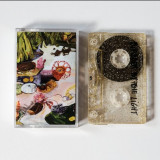
Bladder by the Light is a conceptional compilation between Obsolete Future and the Parisian painter Marion Guillet. It was compiled by Marion Guillet & Conor Walker.
debe ser publicado en 05.12.2022

Strut present 3 separate reissues of the 1970s album trilogy from Idris Ackamoor & The Pyramids. As students at Antioch college, Ohio, alto saxophonist Idris Ackamoor, flautist Margaux Simmons and bass player Kimathi Asante created three lasting monuments in sound — Lalibela, King of Kings, and Birth / Speed / Merging, a trio of albums produced without any label backing or distribution between 1972 and 1976. Their music is unique among the varied canon of avant-garde and experimental music of 1970s America: high intensity African-styled percussion topped with songs, chants, and horns, laced with African instruments and arranged into long, flowing suites that surge and roll.
The debut album by the Pyramids was inspired by the group's visit to the Lalibela monastery in Egypt, and was recorded in Yellow Springs Ohio in early 1973. Drawing on the teachings of Cecil Taylor and the influence of John Coltrane, combined with a barrage of intense percussion, the album evolves over several long-form pieces, Initially only 500 copies were pressed and sold to friends and followers in the local area.
Haga su pedido ahora y le encargaremos el artículo en nuestro proveedor.

2022 Repress
The definitive skullstep track of 2007 gets a 2021 facelift. Many artists have tried to remix this KILLER Limewax classic, and failed. Until now. Featuring remixes from Pythius, The Outside Agency, Ivan Shopov AKA Cooh. Plus a brand new rework from the man himself together with Slave To Society (the new noisy solo alias from Andrew Bowen of AnD).
Haga su pedido ahora y le encargaremos el artículo en nuestro proveedor.

Following two manifesto-albums, which quickly became an influence of marginal musics in France, Olivier Demeaux & Armelle Oberlé asked artists whose directions they share to revisit some of the flagship titles of their catalog.
We thus find there the priest of the English pysché Sonic Boom, the cantor of slow techno Toloose Low Trax, the experimenter of the modular_synths Le Crabe or Zohar, UVB76, PlimPlim and many others.
Haga su pedido ahora y le encargaremos el artículo en nuestro proveedor.

Comprehensive box of 6 LPs / EPs and the band's first rare 7inch.
Aroma Di Amore is/was Belgian’s premier cult band. Since the early eighties ADA innovatively combined electronics with rock. With a mix of razor-sharp Flemish lyrics and unconventional song structures the group earned a cult status in Belgium and abroad. 40 years later they conclude their career with a few last concerts and a vinyl box set spanning the years 1983-1987.
At the notorious Rock Rally of 1982 Aroma Di Amore stands out with their wonderful handling of the Flemish language, a deep bass, typical cold new wave drums, biting guitar riffs with the occasional flavor of absolute madness. Frontman Jos Verlooy adopts the stage name Elvis Peeters. The explanation for this remarkable pseudonym choice: in 1977 – the period of the singer's musical awakening – one of the two famous rocking Elvises (not Costello, but Presley) succumbs to his pill addiction. So, dixit Verlooy, there is an Elvis vacant. A banal surname belongs next to that exotic first name. A combination that breathes rock 'n' roll, according to the singer.
His companion Gerry Vergult – who very much determines the sound with his metallic riffs, somewhat indebted to Jean-Marie Aerts – adopts the stage name Fred Angst. Completely in line with the depressing zeitgeist of the 1980s. Gerry eats and breathes music. Besides composing most of ADA’s songs, he records & self-produces a few fantastic dark en loner solo minimal wave tracks as Fred Angst. He is still musically active, more towards the electronic leftfield nowadays under the moniker Zool.
It is clear from an early age that companion Elvis Peeters possesses the gift of the word. As an adolescent he published the punkzine “Dus”. The punk spirit stimulates Peeters. He begins to transform the poetry that he has been entrusting to paper for some time into song lyrics. It is on a whim and without any stage experience that punk friends Peeters and Angst register for the Rock Rally as Aroma di Amore. On a bed of post-punk and cold wave (Joy Division, Wire and Sisters of Mercy are the main influences), they initially let out playful, minimalist and nonsensical slogans such as "Doe De Mafia" (1982) and "Gorilla Dans De Samba" (1983). Later on, the tone becomes more serious, although Peeters' choice of words continues to show a penchant for absurdism and sarcasm. No one in Dutch songwriting imitates this verbal elasticity, certainly at that time.
The numerous songs about war are downright horrifying. In the 1980s, an arms race is underway. When the Belgian government decides to install nuclear missiles in 1981, Aroma di Amore asks for one minute of silence in the hall during performances. In "Lauwe Oorlog" (1983), Peeters exposes the core of his unrest: “paraat voor de parade / de vrede wordt begraven / met militaire eer”. To this day, the frontman of AdA still proudly wears his at least 30 year old 'atomic energy, no thanks!' button.
In 1984 Aroma releases Koude Oorlog on the new and independent Brussels label Play It Again Sam. The traditional press and radio ignore the record, but in the alternative circuits the mini-album does not go unnoticed, and the group starts to build a solid fan base, resulting in more and more offers for gigs. There's also interest in the Netherlands, and due to the international contacts of PIAS, the record also ends up in France, Switzerland, Spain and Canada.
Encouraged by this modest success, the group returns to the studio for a 12" single. With new group member Frits De Cauter on sax, they record "Voor De Dood". To this day, Voor De Dood remains the most popular AdA song, as evidenced by the countless compilations on which the song has appeared.
AdA goes to the Netherlands to record their next album “De Sfeer Van Grote Dagen”. The people from Nasmak have built a new studio in Eindhoven and one of the members, Theo Van Eenbergen (later Henry Rollins), will be the producer. “De Sfeer Van Grote Dagen” is the group's most adventurous album, and the reviews are again unanimously favorable. However, sales are disappointing and PIAS proposes to recruit Chris Reed of Red Lorry Yellow Lorry and record a new single with him. "Zonder Omzien" is recorded at the prestigious Pyramid Studio. However, PIAS is waiting to release the album and in the meantime AdA is recording a number of extra tracks with producer Ludo Camberlin, including "Koekoek In De Stad". Towards the end of the year, Lo and Elvis travel to Africa for a few months and as a result the group comes to a standstill. In this period, Zonder Omzien is released.
At the beginning of 1986, Peeters and Meulen return, and Andrea Smits leaves the group. Luc Pillards is hired as a replacement, and when Ludo Camberlin presents himself as a new label boss and producer (Anything But Records), they start recording their first full album for the label. “Harde Feiten" kicks in immediately, and the group is back up to cruising speed. In the first week of release, the record even appears in the bestseller list of the record stores.
At the beginning of 1987 the recordings for the second album start, this time in a production by Peeters and Angst themselves. Shortly after the shooting, AdA goes to Switzerland for a short but successful tour, with Men 2nd and Cas & Organized Crime as support act. "Koudvuur" is published in the autumn and considered to be their strongest record so far by the group, the reactions are rather low. Both the reviews in the press and the sales are disappointing and put a damper on the joy. Nevertheless, the group is invited to perform in Valencia, Spain, where they have an unexpected success.
MUTANT SOUNDS BLOG
Aroma Di Amore have always been outsiders, even within the confinement of the alternative rock circuit. Their peculiar blend of raw guitars, electronics, Dutch lyrics and unconventional song structures was too hybrid for many. Those howewer who, without prejudice, would lend an ear to the band's music, discovered an energetic, authentic and uncompromising collective that stood above all trends. While so many Belgian "connaisseurs" had their doubts about the possibilities of international recognition for a band singing in Dutch, Aroma Di Amore toured France, Switzerland and Spain; their records figured in alternative charts from Poland to Canada.
From beginning to end the nucleus of Aroma Di Amore consisted of Elvis PEETERS, who in a inimitable, possessed way delivered his highly original lyrics, and Fred ANGST, guitarist mastering the heaviest riffs as well as refined tapestries of sound. Furthermore, the line-up varied throughout the band's carreer with:- H.K. (Guitarist from 1982 until 1983)- Andrea SMITS (Organ from 1982 until 1985)- Luc PILLARDS (Synthsizer in 1986)- Jan WANDELAAR (Guitar and synthesizer in 1986)- Pulcherie (Saxophone in 1983)- Wout DOCKX (Bass from 1987 until 1988)and especially- Lo MEULEN (Bass from 1983 until 1987)and the late Frits DE CAUTER (Saxophone from 1984 until 1986) contributing to the music.
Box Set includes: Gorilla Dans De Samba 7" (1983), Voor De Dood 12" (1984), Koude Oorlog LP (1984), De Sfeer Van Grote Dagen 12" (1985), Zonder Omzien 12" (1986), Harde Feiten LP (1986), Koudvuur LP (1987)
debe ser publicado en 02.12.2022

First-time reissue of Aroma Di Amore's debut album, originally released in 1984.
Aroma Di Amore is/was Belgian’s premier cult band. Since the early eighties ADA innovatively combined electronics with rock. With a mix of razor-sharp Flemish lyrics and unconventional song structures the group earned a cult status in Belgium and abroad. 40 years later they conclude their career with a few last concerts and a vinyl box set spanning the years 1983-1987.
At the notorious Rock Rally of 1982 Aroma Di Amore stands out with their wonderful handling of the Flemish language, a deep bass, typical cold new wave drums, biting guitar riffs with the occasional flavor of absolute madness. Frontman Jos Verlooy adopts the stage name Elvis Peeters. The explanation for this remarkable pseudonym choice: in 1977 – the period of the singer's musical awakening – one of the two famous rocking Elvises (not Costello, but Presley) succumbs to his pill addiction. So, dixit Verlooy, there is an Elvis vacant. A banal surname belongs next to that exotic first name. A combination that breathes rock 'n' roll, according to the singer.
His companion Gerry Vergult – who very much determines the sound with his metallic riffs, somewhat indebted to Jean-Marie Aerts – adopts the stage name Fred Angst. Completely in line with the depressing zeitgeist of the 1980s. Gerry eats and breathes music. Besides composing most of ADA’s songs, he records & self-produces a few fantastic dark en loner solo minimal wave tracks as Fred Angst. He is still musically active, more towards the electronic leftfield nowadays under the moniker Zool.
It is clear from an early age that companion Elvis Peeters possesses the gift of the word. As an adolescent he published the punkzine “Dus”. The punk spirit stimulates Peeters. He begins to transform the poetry that he has been entrusting to paper for some time into song lyrics. It is on a whim and without any stage experience that punk friends Peeters and Angst register for the Rock Rally as Aroma di Amore. On a bed of post-punk and cold wave (Joy Division, Wire and Sisters of Mercy are the main influences), they initially let out playful, minimalist and nonsensical slogans such as "Doe De Mafia" (1982) and "Gorilla Dans De Samba" (1983). Later on, the tone becomes more serious, although Peeters' choice of words continues to show a penchant for absurdism and sarcasm. No one in Dutch songwriting imitates this verbal elasticity, certainly at that time.
The numerous songs about war are downright horrifying. In the 1980s, an arms race is underway. When the Belgian government decides to install nuclear missiles in 1981, Aroma di Amore asks for one minute of silence in the hall during performances. In "Lauwe Oorlog" (1983), Peeters exposes the core of his unrest: “paraat voor de parade / de vrede wordt begraven / met militaire eer”. To this day, the frontman of AdA still proudly wears his at least 30 year old 'atomic energy, no thanks!' button.
In 1984 Aroma releases Koude Oorlog on the new and independent Brussels label Play It Again Sam. The traditional press and radio ignore the record, but in the alternative circuits the mini-album does not go unnoticed, and the group starts to build a solid fan base, resulting in more and more offers for gigs. There's also interest in the Netherlands, and due to the international contacts of PIAS, the record also ends up in France, Switzerland, Spain and Canada.
Encouraged by this modest success, the group returns to the studio for a 12" single. With new group member Frits De Cauter on sax, they record "Voor De Dood". To this day, Voor De Dood remains the most popular AdA song, as evidenced by the countless compilations on which the song has appeared.
AdA goes to the Netherlands to record their next album “De Sfeer Van Grote Dagen”. The people from Nasmak have built a new studio in Eindhoven and one of the members, Theo Van Eenbergen (later Henry Rollins), will be the producer. “De Sfeer Van Grote Dagen” is the group's most adventurous album, and the reviews are again unanimously favorable. However, sales are disappointing and PIAS proposes to recruit Chris Reed of Red Lorry Yellow Lorry and record a new single with him. "Zonder Omzien" is recorded at the prestigious Pyramid Studio. However, PIAS is waiting to release the album and in the meantime AdA is recording a number of extra tracks with producer Ludo Camberlin, including "Koekoek In De Stad". Towards the end of the year, Lo and Elvis travel to Africa for a few months and as a result the group comes to a standstill. In this period, Zonder Omzien is released.
At the beginning of 1986, Peeters and Meulen return, and Andrea Smits leaves the group. Luc Pillards is hired as a replacement, and when Ludo Camberlin presents himself as a new label boss and producer (Anything But Records), they start recording their first full album for the label. “Harde Feiten" kicks in immediately, and the group is back up to cruising speed. In the first week of release, the record even appears in the bestseller list of the record stores.
At the beginning of 1987 the recordings for the second album start, this time in a production by Peeters and Angst themselves. Shortly after the shooting, AdA goes to Switzerland for a short but successful tour, with Men 2nd and Cas & Organized Crime as support act. "Koudvuur" is published in the autumn and considered to be their strongest record so far by the group, the reactions are rather low. Both the reviews in the press and the sales are disappointing and put a damper on the joy. Nevertheless, the group is invited to perform in Valencia, Spain, where they have an unexpected success.
MUTANT SOUNDS BLOG
Aroma Di Amore have always been outsiders, even within the confinement of the alternative rock circuit. Their peculiar blend of raw guitars, electronics, Dutch lyrics and unconventional song structures was too hybrid for many. Those howewer who, without prejudice, would lend an ear to the band's music, discovered an energetic, authentic and uncompromising collective that stood above all trends. While so many Belgian "connaisseurs" had their doubts about the possibilities of international recognition for a band singing in Dutch, Aroma Di Amore toured France, Switzerland and Spain; their records figured in alternative charts from Poland to Canada.
From beginning to end the nucleus of Aroma Di Amore consisted of Elvis PEETERS, who in a inimitable, possessed way delivered his highly original lyrics, and Fred ANGST, guitarist mastering the heaviest riffs as well as refined tapestries of sound. Furthermore, the line-up varied throughout the band's carreer with:- H.K. (Guitarist from 1982 until 1983)- Andrea SMITS (Organ from 1982 until 1985)- Luc PILLARDS (Synthsizer in 1986)- Jan WANDELAAR (Guitar and synthesizer in 1986)- Pulcherie (Saxophone in 1983)- Wout DOCKX (Bass from 1987 until 1988)and especially- Lo MEULEN (Bass from 1983 until 1987)and the late Frits DE CAUTER (Saxophone from 1984 until 1986)contributing to the music.
debe ser publicado en 02.12.2022

First-time reissue of Aroma Di Amore's 2nd album, originally released in 1986.
Aroma Di Amore is/was Belgian’s premier cult band. Since the early eighties ADA innovatively combined electronics with rock. With a mix of razor-sharp Flemish lyrics and unconventional song structures the group earned a cult status in Belgium and abroad. 40 years later they conclude their career with a few last concerts and a vinyl box set spanning the years 1983-1987.
At the notorious Rock Rally of 1982 Aroma Di Amore stands out with their wonderful handling of the Flemish language, a deep bass, typical cold new wave drums, biting guitar riffs with the occasional flavor of absolute madness. Frontman Jos Verlooy adopts the stage name Elvis Peeters. The explanation for this remarkable pseudonym choice: in 1977 – the period of the singer's musical awakening – one of the two famous rocking Elvises (not Costello, but Presley) succumbs to his pill addiction. So, dixit Verlooy, there is an Elvis vacant. A banal surname belongs next to that exotic first name. A combination that breathes rock 'n' roll, according to the singer.
His companion Gerry Vergult – who very much determines the sound with his metallic riffs, somewhat indebted to Jean-Marie Aerts – adopts the stage name Fred Angst. Completely in line with the depressing zeitgeist of the 1980s. Gerry eats and breathes music. Besides composing most of ADA’s songs, he records & self-produces a few fantastic dark en loner solo minimal wave tracks as Fred Angst. He is still musically active, more towards the electronic leftfield nowadays under the moniker Zool.
It is clear from an early age that companion Elvis Peeters possesses the gift of the word. As an adolescent he published the punkzine “Dus”. The punk spirit stimulates Peeters. He begins to transform the poetry that he has been entrusting to paper for some time into song lyrics. It is on a whim and without any stage experience that punk friends Peeters and Angst register for the Rock Rally as Aroma di Amore. On a bed of post-punk and cold wave (Joy Division, Wire and Sisters of Mercy are the main influences), they initially let out playful, minimalist and nonsensical slogans such as "Doe De Mafia" (1982) and "Gorilla Dans De Samba" (1983). Later on, the tone becomes more serious, although Peeters' choice of words continues to show a penchant for absurdism and sarcasm. No one in Dutch songwriting imitates this verbal elasticity, certainly at that time.
The numerous songs about war are downright horrifying. In the 1980s, an arms race is underway. When the Belgian government decides to install nuclear missiles in 1981, Aroma di Amore asks for one minute of silence in the hall during performances. In "Lauwe Oorlog" (1983), Peeters exposes the core of his unrest: “paraat voor de parade / de vrede wordt begraven / met militaire eer”. To this day, the frontman of AdA still proudly wears his at least 30 year old 'atomic energy, no thanks!' button.
In 1984 Aroma releases Koude Oorlog on the new and independent Brussels label Play It Again Sam. The traditional press and radio ignore the record, but in the alternative circuits the mini-album does not go unnoticed, and the group starts to build a solid fan base, resulting in more and more offers for gigs. There's also interest in the Netherlands, and due to the international contacts of PIAS, the record also ends up in France, Switzerland, Spain and Canada.
Encouraged by this modest success, the group returns to the studio for a 12" single. With new group member Frits De Cauter on sax, they record "Voor De Dood". To this day, Voor De Dood remains the most popular AdA song, as evidenced by the countless compilations on which the song has appeared.
AdA goes to the Netherlands to record their next album “De Sfeer Van Grote Dagen”. The people from Nasmak have built a new studio in Eindhoven and one of the members, Theo Van Eenbergen (later Henry Rollins), will be the producer. “De Sfeer Van Grote Dagen” is the group's most adventurous album, and the reviews are again unanimously favorable. However, sales are disappointing and PIAS proposes to recruit Chris Reed of Red Lorry Yellow Lorry and record a new single with him. "Zonder Omzien" is recorded at the prestigious Pyramid Studio. However, PIAS is waiting to release the album and in the meantime AdA is recording a number of extra tracks with producer Ludo Camberlin, including "Koekoek In De Stad". Towards the end of the year, Lo and Elvis travel to Africa for a few months and as a result the group comes to a standstill. In this period, Zonder Omzien is released.
At the beginning of 1986, Peeters and Meulen return, and Andrea Smits leaves the group. Luc Pillards is hired as a replacement, and when Ludo Camberlin presents himself as a new label boss and producer (Anything But Records), they start recording their first full album for the label. “Harde Feiten" kicks in immediately, and the group is back up to cruising speed. In the first week of release, the record even appears in the bestseller list of the record stores.
At the beginning of 1987 the recordings for the second album start, this time in a production by Peeters and Angst themselves. Shortly after the shooting, AdA goes to Switzerland for a short but successful tour, with Men 2nd and Cas & Organized Crime as support act. "Koudvuur" is published in the autumn and considered to be their strongest record so far by the group, the reactions are rather low. Both the reviews in the press and the sales are disappointing and put a damper on the joy. Nevertheless, the group is invited to perform in Valencia, Spain, where they have an unexpected success.
MUTANT SOUNDS BLOG
Aroma Di Amore have always been outsiders, even within the confinement of the alternative rock circuit. Their peculiar blend of raw guitars, electronics, Dutch lyrics and unconventional song structures was too hybrid for many. Those howewer who, without prejudice, would lend an ear to the band's music, discovered an energetic, authentic and uncompromising collective that stood above all trends. While so many Belgian "connaisseurs" had their doubts about the possibilities of international recognition for a band singing in Dutch, Aroma Di Amore toured France, Switzerland and Spain; their records figured in alternative charts from Poland to Canada.
From beginning to end the nucleus of Aroma Di Amore consisted of Elvis PEETERS, who in a inimitable, possessed way delivered his highly original lyrics, and Fred ANGST, guitarist mastering the heaviest riffs as well as refined tapestries of sound. Furthermore, the line-up varied throughout the band's carreer with:- H.K. (Guitarist from 1982 until 1983)- Andrea SMITS (Organ from 1982 until 1985)- Luc PILLARDS (Synthsizer in 1986)- Jan WANDELAAR (Guitar and synthesizer in 1986)- Pulcherie (Saxophone in 1983)- Wout DOCKX (Bass from 1987 until 1988)and especially- Lo MEULEN (Bass from 1983 until 1987)and the late Frits DE CAUTER (Saxophone from 1984 until 1986)contributing to the music.
debe ser publicado en 02.12.2022

First-time reissue of Aroma Di Amore's 3rd album, originally released in 1987.
Aroma Di Amore is/was Belgian’s premier cult band. Since the early eighties ADA innovatively combined electronics with rock. With a mix of razor-sharp Flemish lyrics and unconventional song structures the group earned a cult status in Belgium and abroad. 40 years later they conclude their career with a few last concerts and a vinyl box set spanning the years 1983-1987.
At the notorious Rock Rally of 1982 Aroma Di Amore stands out with their wonderful handling of the Flemish language, a deep bass, typical cold new wave drums, biting guitar riffs with the occasional flavor of absolute madness. Frontman Jos Verlooy adopts the stage name Elvis Peeters. The explanation for this remarkable pseudonym choice: in 1977 – the period of the singer's musical awakening – one of the two famous rocking Elvises (not Costello, but Presley) succumbs to his pill addiction. So, dixit Verlooy, there is an Elvis vacant. A banal surname belongs next to that exotic first name. A combination that breathes rock 'n' roll, according to the singer.
His companion Gerry Vergult – who very much determines the sound with his metallic riffs, somewhat indebted to Jean-Marie Aerts – adopts the stage name Fred Angst. Completely in line with the depressing zeitgeist of the 1980s. Gerry eats and breathes music. Besides composing most of ADA’s songs, he records & self-produces a few fantastic dark en loner solo minimal wave tracks as Fred Angst. He is still musically active, more towards the electronic leftfield nowadays under the moniker Zool.
It is clear from an early age that companion Elvis Peeters possesses the gift of the word. As an adolescent he published the punkzine “Dus”. The punk spirit stimulates Peeters. He begins to transform the poetry that he has been entrusting to paper for some time into song lyrics. It is on a whim and without any stage experience that punk friends Peeters and Angst register for the Rock Rally as Aroma di Amore. On a bed of post-punk and cold wave (Joy Division, Wire and Sisters of Mercy are the main influences), they initially let out playful, minimalist and nonsensical slogans such as "Doe De Mafia" (1982) and "Gorilla Dans De Samba" (1983). Later on, the tone becomes more serious, although Peeters' choice of words continues to show a penchant for absurdism and sarcasm. No one in Dutch songwriting imitates this verbal elasticity, certainly at that time.
The numerous songs about war are downright horrifying. In the 1980s, an arms race is underway. When the Belgian government decides to install nuclear missiles in 1981, Aroma di Amore asks for one minute of silence in the hall during performances. In "Lauwe Oorlog" (1983), Peeters exposes the core of his unrest: “paraat voor de parade / de vrede wordt begraven / met militaire eer”. To this day, the frontman of AdA still proudly wears his at least 30 year old 'atomic energy, no thanks!' button.
In 1984 Aroma releases Koude Oorlog on the new and independent Brussels label Play It Again Sam. The traditional press and radio ignore the record, but in the alternative circuits the mini-album does not go unnoticed, and the group starts to build a solid fan base, resulting in more and more offers for gigs. There's also interest in the Netherlands, and due to the international contacts of PIAS, the record also ends up in France, Switzerland, Spain and Canada.
Encouraged by this modest success, the group returns to the studio for a 12" single. With new group member Frits De Cauter on sax, they record "Voor De Dood". To this day, Voor De Dood remains the most popular AdA song, as evidenced by the countless compilations on which the song has appeared.
AdA goes to the Netherlands to record their next album “De Sfeer Van Grote Dagen”. The people from Nasmak have built a new studio in Eindhoven and one of the members, Theo Van Eenbergen (later Henry Rollins), will be the producer. “De Sfeer Van Grote Dagen” is the group's most adventurous album, and the reviews are again unanimously favorable. However, sales are disappointing and PIAS proposes to recruit Chris Reed of Red Lorry Yellow Lorry and record a new single with him. "Zonder Omzien" is recorded at the prestigious Pyramid Studio. However, PIAS is waiting to release the album and in the meantime AdA is recording a number of extra tracks with producer Ludo Camberlin, including "Koekoek In De Stad". Towards the end of the year, Lo and Elvis travel to Africa for a few months and as a result the group comes to a standstill. In this period, Zonder Omzien is released.
At the beginning of 1986, Peeters and Meulen return, and Andrea Smits leaves the group. Luc Pillards is hired as a replacement, and when Ludo Camberlin presents himself as a new label boss and producer (Anything But Records), they start recording their first full album for the label. “Harde Feiten" kicks in immediately, and the group is back up to cruising speed. In the first week of release, the record even appears in the bestseller list of the record stores.
At the beginning of 1987 the recordings for the second album start, this time in a production by Peeters and Angst themselves. Shortly after the shooting, AdA goes to Switzerland for a short but successful tour, with Men 2nd and Cas & Organized Crime as support act. "Koudvuur" is published in the autumn and considered to be their strongest record so far by the group, the reactions are rather low. Both the reviews in the press and the sales are disappointing and put a damper on the joy. Nevertheless, the group is invited to perform in Valencia, Spain, where they have an unexpected success.
MUTANT SOUNDS BLOG
Aroma Di Amore have always been outsiders, even within the confinement of the alternative rock circuit. Their peculiar blend of raw guitars, electronics, Dutch lyrics and unconventional song structures was too hybrid for many. Those howewer who, without prejudice, would lend an ear to the band's music, discovered an energetic, authentic and uncompromising collective that stood above all trends. While so many Belgian "connaisseurs" had their doubts about the possibilities of international recognition for a band singing in Dutch, Aroma Di Amore toured France, Switzerland and Spain; their records figured in alternative charts from Poland to Canada.
From beginning to end the nucleus of Aroma Di Amore consisted of Elvis PEETERS, who in a inimitable, possessed way delivered his highly original lyrics, and Fred ANGST, guitarist mastering the heaviest riffs as well as refined tapestries of sound. Furthermore, the line-up varied throughout the band's carreer with:- H.K. (Guitarist from 1982 until 1983)- Andrea SMITS (Organ from 1982 until 1985)- Luc PILLARDS (Synthsizer in 1986)- Jan WANDELAAR (Guitar and synthesizer in 1986)- Pulcherie (Saxophone in 1983)- Wout DOCKX (Bass from 1987 until 1988)and especially- Lo MEULEN (Bass from 1983 until 1987)and the late Frits DE CAUTER (Saxophone from 1984 until 1986)contributing to the music.
debe ser publicado en 02.12.2022

First-time reissue of Aroma Di Amore's 3rd EP, originally released in 1985.
Aroma Di Amore is/was Belgian’s premier cult band. Since the early eighties ADA innovatively combined electronics with rock. With a mix of razor-sharp Flemish lyrics and unconventional song structures the group earned a cult status in Belgium and abroad. 40 years later they conclude their career with a few last concerts and a vinyl box set spanning the years 1983-1987.
At the notorious Rock Rally of 1982 Aroma Di Amore stands out with their wonderful handling of the Flemish language, a deep bass, typical cold new wave drums, biting guitar riffs with the occasional flavor of absolute madness. Frontman Jos Verlooy adopts the stage name Elvis Peeters. The explanation for this remarkable pseudonym choice: in 1977 – the period of the singer's musical awakening – one of the two famous rocking Elvises (not Costello, but Presley) succumbs to his pill addiction. So, dixit Verlooy, there is an Elvis vacant. A banal surname belongs next to that exotic first name. A combination that breathes rock 'n' roll, according to the singer.
His companion Gerry Vergult – who very much determines the sound with his metallic riffs, somewhat indebted to Jean-Marie Aerts – adopts the stage name Fred Angst. Completely in line with the depressing zeitgeist of the 1980s. Gerry eats and breathes music. Besides composing most of ADA’s songs, he records & self-produces a few fantastic dark en loner solo minimal wave tracks as Fred Angst. He is still musically active, more towards the electronic leftfield nowadays under the moniker Zool.
It is clear from an early age that companion Elvis Peeters possesses the gift of the word. As an adolescent he published the punkzine “Dus”. The punk spirit stimulates Peeters. He begins to transform the poetry that he has been entrusting to paper for some time into song lyrics. It is on a whim and without any stage experience that punk friends Peeters and Angst register for the Rock Rally as Aroma di Amore. On a bed of post-punk and cold wave (Joy Division, Wire and Sisters of Mercy are the main influences), they initially let out playful, minimalist and nonsensical slogans such as "Doe De Mafia" (1982) and "Gorilla Dans De Samba" (1983). Later on, the tone becomes more serious, although Peeters' choice of words continues to show a penchant for absurdism and sarcasm. No one in Dutch songwriting imitates this verbal elasticity, certainly at that time.
The numerous songs about war are downright horrifying. In the 1980s, an arms race is underway. When the Belgian government decides to install nuclear missiles in 1981, Aroma di Amore asks for one minute of silence in the hall during performances. In "Lauwe Oorlog" (1983), Peeters exposes the core of his unrest: “paraat voor de parade / de vrede wordt begraven / met militaire eer”. To this day, the frontman of AdA still proudly wears his at least 30 year old 'atomic energy, no thanks!' button.
In 1984 Aroma releases Koude Oorlog on the new and independent Brussels label Play It Again Sam. The traditional press and radio ignore the record, but in the alternative circuits the mini-album does not go unnoticed, and the group starts to build a solid fan base, resulting in more and more offers for gigs. There's also interest in the Netherlands, and due to the international contacts of PIAS, the record also ends up in France, Switzerland, Spain and Canada.
Encouraged by this modest success, the group returns to the studio for a 12" single. With new group member Frits De Cauter on sax, they record "Voor De Dood". To this day, Voor De Dood remains the most popular AdA song, as evidenced by the countless compilations on which the song has appeared.
AdA goes to the Netherlands to record their next album “De Sfeer Van Grote Dagen”. The people from Nasmak have built a new studio in Eindhoven and one of the members, Theo Van Eenbergen (later Henry Rollins), will be the producer. “De Sfeer Van Grote Dagen” is the group's most adventurous album, and the reviews are again unanimously favorable. However, sales are disappointing and PIAS proposes to recruit Chris Reed of Red Lorry Yellow Lorry and record a new single with him. "Zonder Omzien" is recorded at the prestigious Pyramid Studio. However, PIAS is waiting to release the album and in the meantime AdA is recording a number of extra tracks with producer Ludo Camberlin, including "Koekoek In De Stad". Towards the end of the year, Lo and Elvis travel to Africa for a few months and as a result the group comes to a standstill. In this period, Zonder Omzien is released.
At the beginning of 1986, Peeters and Meulen return, and Andrea Smits leaves the group. Luc Pillards is hired as a replacement, and when Ludo Camberlin presents himself as a new label boss and producer (Anything But Records), they start recording their first full album for the label. “Harde Feiten" kicks in immediately, and the group is back up to cruising speed. In the first week of release, the record even appears in the bestseller list of the record stores.
At the beginning of 1987 the recordings for the second album start, this time in a production by Peeters and Angst themselves. Shortly after the shooting, AdA goes to Switzerland for a short but successful tour, with Men 2nd and Cas & Organized Crime as support act. "Koudvuur" is published in the autumn and considered to be their strongest record so far by the group, the reactions are rather low. Both the reviews in the press and the sales are disappointing and put a damper on the joy. Nevertheless, the group is invited to perform in Valencia, Spain, where they have an unexpected success.
MUTANT SOUNDS BLOG
Aroma Di Amore have always been outsiders, even within the confinement of the alternative rock circuit. Their peculiar blend of raw guitars, electronics, Dutch lyrics and unconventional song structures was too hybrid for many. Those howewer who, without prejudice, would lend an ear to the band's music, discovered an energetic, authentic and uncompromising collective that stood above all trends. While so many Belgian "connaisseurs" had their doubts about the possibilities of international recognition for a band singing in Dutch, Aroma Di Amore toured France, Switzerland and Spain; their records figured in alternative charts from Poland to Canada.
From beginning to end the nucleus of Aroma Di Amore consisted of Elvis PEETERS, who in a inimitable, possessed way delivered his highly original lyrics, and Fred ANGST, guitarist mastering the heaviest riffs as well as refined tapestries of sound. Furthermore, the line-up varied throughout the band's carreer with:- H.K. (Guitarist from 1982 until 1983)- Andrea SMITS (Organ from 1982 until 1985)- Luc PILLARDS (Synthsizer in 1986)- Jan WANDELAAR (Guitar and synthesizer in 1986)- Pulcherie (Saxophone in 1983)- Wout DOCKX (Bass from 1987 until 1988)and especially- Lo MEULEN (Bass from 1983 until 1987)and the late Frits DE CAUTER (Saxophone from 1984 until 1986)contributing to the music
debe ser publicado en 02.12.2022

First-time reissue of Aroma Di Amore's 4th EP, originally released in 1986.
Aroma Di Amore is/was Belgian’s premier cult band. Since the early eighties ADA innovatively combined electronics with rock. With a mix of razor-sharp Flemish lyrics and unconventional song structures the group earned a cult status in Belgium and abroad. 40 years later they conclude their career with a few last concerts and a vinyl box set spanning the years 1983-1987.
At the notorious Rock Rally of 1982 Aroma Di Amore stands out with their wonderful handling of the Flemish language, a deep bass, typical cold new wave drums, biting guitar riffs with the occasional flavor of absolute madness. Frontman Jos Verlooy adopts the stage name Elvis Peeters. The explanation for this remarkable pseudonym choice: in 1977 – the period of the singer's musical awakening – one of the two famous rocking Elvises (not Costello, but Presley) succumbs to his pill addiction. So, dixit Verlooy, there is an Elvis vacant. A banal surname belongs next to that exotic first name. A combination that breathes rock 'n' roll, according to the singer.
His companion Gerry Vergult – who very much determines the sound with his metallic riffs, somewhat indebted to Jean-Marie Aerts – adopts the stage name Fred Angst. Completely in line with the depressing zeitgeist of the 1980s. Gerry eats and breathes music. Besides composing most of ADA’s songs, he records & self-produces a few fantastic dark en loner solo minimal wave tracks as Fred Angst. He is still musically active, more towards the electronic leftfield nowadays under the moniker Zool.
It is clear from an early age that companion Elvis Peeters possesses the gift of the word. As an adolescent he published the punkzine “Dus”. The punk spirit stimulates Peeters. He begins to transform the poetry that he has been entrusting to paper for some time into song lyrics. It is on a whim and without any stage experience that punk friends Peeters and Angst register for the Rock Rally as Aroma di Amore. On a bed of post-punk and cold wave (Joy Division, Wire and Sisters of Mercy are the main influences), they initially let out playful, minimalist and nonsensical slogans such as "Doe De Mafia" (1982) and "Gorilla Dans De Samba" (1983). Later on, the tone becomes more serious, although Peeters' choice of words continues to show a penchant for absurdism and sarcasm. No one in Dutch songwriting imitates this verbal elasticity, certainly at that time.
The numerous songs about war are downright horrifying. In the 1980s, an arms race is underway. When the Belgian government decides to install nuclear missiles in 1981, Aroma di Amore asks for one minute of silence in the hall during performances. In "Lauwe Oorlog" (1983), Peeters exposes the core of his unrest: “paraat voor de parade / de vrede wordt begraven / met militaire eer”. To this day, the frontman of AdA still proudly wears his at least 30 year old 'atomic energy, no thanks!' button.
In 1984 Aroma releases Koude Oorlog on the new and independent Brussels label Play It Again Sam. The traditional press and radio ignore the record, but in the alternative circuits the mini-album does not go unnoticed, and the group starts to build a solid fan base, resulting in more and more offers for gigs. There's also interest in the Netherlands, and due to the international contacts of PIAS, the record also ends up in France, Switzerland, Spain and Canada.
Encouraged by this modest success, the group returns to the studio for a 12" single. With new group member Frits De Cauter on sax, they record "Voor De Dood". To this day, Voor De Dood remains the most popular AdA song, as evidenced by the countless compilations on which the song has appeared.
AdA goes to the Netherlands to record their next album “De Sfeer Van Grote Dagen”. The people from Nasmak have built a new studio in Eindhoven and one of the members, Theo Van Eenbergen (later Henry Rollins), will be the producer. “De Sfeer Van Grote Dagen” is the group's most adventurous album, and the reviews are again unanimously favorable. However, sales are disappointing and PIAS proposes to recruit Chris Reed of Red Lorry Yellow Lorry and record a new single with him. "Zonder Omzien" is recorded at the prestigious Pyramid Studio. However, PIAS is waiting to release the album and in the meantime AdA is recording a number of extra tracks with producer Ludo Camberlin, including "Koekoek In De Stad". Towards the end of the year, Lo and Elvis travel to Africa for a few months and as a result the group comes to a standstill. In this period, Zonder Omzien is released.
At the beginning of 1986, Peeters and Meulen return, and Andrea Smits leaves the group. Luc Pillards is hired as a replacement, and when Ludo Camberlin presents himself as a new label boss and producer (Anything But Records), they start recording their first full album for the label. “Harde Feiten" kicks in immediately, and the group is back up to cruising speed. In the first week of release, the record even appears in the bestseller list of the record stores.
At the beginning of 1987 the recordings for the second album start, this time in a production by Peeters and Angst themselves. Shortly after the shooting, AdA goes to Switzerland for a short but successful tour, with Men 2nd and Cas & Organized Crime as support act. "Koudvuur" is published in the autumn and considered to be their strongest record so far by the group, the reactions are rather low. Both the reviews in the press and the sales are disappointing and put a damper on the joy. Nevertheless, the group is invited to perform in Valencia, Spain, where they have an unexpected success.
MUTANT SOUNDS BLOG
Aroma Di Amore have always been outsiders, even within the confinement of the alternative rock circuit. Their peculiar blend of raw guitars, electronics, Dutch lyrics and unconventional song structures was too hybrid for many. Those howewer who, without prejudice, would lend an ear to the band's music, discovered an energetic, authentic and uncompromising collective that stood above all trends. While so many Belgian "connaisseurs" had their doubts about the possibilities of international recognition for a band singing in Dutch, Aroma Di Amore toured France, Switzerland and Spain; their records figured in alternative charts from Poland to Canada.
From beginning to end the nucleus of Aroma Di Amore consisted of Elvis PEETERS, who in a inimitable, possessed way delivered his highly original lyrics, and Fred ANGST, guitarist mastering the heaviest riffs as well as refined tapestries of sound. Furthermore, the line-up varied throughout the band's carreer with:- H.K. (Guitarist from 1982 until 1983)- Andrea SMITS (Organ from 1982 until 1985)- Luc PILLARDS (Synthsizer in 1986)- Jan WANDELAAR (Guitar and synthesizer in 1986)- Pulcherie (Saxophone in 1983)- Wout DOCKX (Bass from 1987 until 1988)and especially- Lo MEULEN (Bass from 1983 until 1987)and the late Frits DE CAUTER (Saxophone from 1984 until 1986)contributing to the music.
debe ser publicado en 02.12.2022

1. Sophisticated Cissy
2. Sehorns Farms
3. Cissy Strut
4. Here Comes the Meter Man
5. Ease Back
6. Ann
7. Dry Spell
8. Little Old Money Maker
RECORD ONE
Side B
1. Look-Ka Py Py
2. This Is My Last Affair
3. Chicken Strut
4. Hey! Last Minute
5. Hand Clapping Song
6. Joog
RECORD TWO
Side A
1. A Message from the Meters
2. Zony Mash
3. Stretch Your Rubber Band
4. Groovy Lady
5. (The World Is a Bit under
the Weather) Doodle-Oop
6. I Need More Time
7. Good Old Funky Music
8. Sassy Lady
RECORD TWO
Side B
1. Do the Dirt
2. Smiling
3. Cabbage Alley
4. The Flower
5. Chug-Chug-Chug-A-Lug
(Push ‘N’ Shove) Part I
6. Chug-Chug-Chug-A-Lug
(Push ‘N’ Shove) Part II
RECORD THREE
Side A
1. Hey Pocky A-Way
2. Africa
3. People Say
4. Loving You Is on My Mind
5. They All Ask’d for You
6. Running Fast (Long Version)
RECORD THREE
Side B
1. Disco Is the Thing Today
2. Mr. Moon
3. Trick Bag
4. Find Yourself
5. Be My Lady
6. No More Okey Doke
debe ser publicado en 30.11.2022

Earwiggle returns with a new 11-track (2x12") compilation for its 30th release, featuring The Mover, Heidi Sabertooth, Kerrie, Surit, Arjun Vagale, Pyran, Keepsakes, Ingen, Slave To Society, Duran Duran Duran and Dublin Terror Squad. Conceived during the pandemic, "Music For The Wilted Generation" is a tense exploration through dark minimal, industrial and club techno sounds, that culminates with some of the fiercest material to appear on the label yet.
Haga su pedido ahora y le encargaremos el artículo en nuestro proveedor.

Los Angeles Free Music Society (LAFMS) formed in the mid-1970s as a loose-knit experimental music collective and multimedia publishing vehicle. Founded by teenage Le Forte Four members Chip Chapman, Joe Potts and Rick Potts and soon joined by Tom Recchion of Doo-Dooettes, LAFMS incorporated free improvisation, modular synthesizers, tape music, sampling, musique concrète, homemade instruments, noise, mail art and avant-rock in permissive and anarchic sessions at the Raymond Building and Poo-Bah Record Shop in old Pasadena. Inspired by The Residents, LAFMS self-released records and periodicals, organized performances and connected with fellow outsiders via post in the years before punk. Their uninhibited, egalitarian ideal of music-making and DIY distribution would influence generations of underground musicians.
Live At The Brand documents the second performance of newly formed LAFMS core groups Le Forte Four and Doo-Dooettes on July 8, 1976 at the recital hall of the Brand Library in Glendale. Le Forte Four (now joined by Tom Potts) did not actually perform live, but rather created 44 pyramid-shaped headphone helmets with internal quadraphonic speakers and countless wires in order to share their latest tape assemblages with showgoers deprived of sight. The recordings delivered in this Fluxus-inspired manner feature the Buchla synthesizer at nearby CalArts, radio interpolations, group improvisations, addled outbursts and splices from source material lost to time. Doo-Dooettes – Tom Recchion, Harold Schroeder, Juan Gomez, Dennis Duck and Fredrik Nilsen – performed a series of alternately droning and chaotic duets with guitar, percussion, piano, tape loops and synthesizer, all improvised around loosely structured compositions and culminating in a spontaneous group composition at the end of the program. Originally released in 1976, the double LP would be LAFMS' third release.
This first-time vinyl reissue is limited to 500 numbered copies. Comes with inserts.
debe ser publicado en 25.11.2022

Johannes Schebler's musical output is all about establishing a dreamlike territory where sonic settlements can spread at ease. While Grykë Pyje (Johannes Schebler's duo with Jani Hirvonen) presents musical landscapes as open and clear spaces, Baldruin's miniature pieces tend to narrow them down, zooming into domestic sceneries that shift like malleable rooms inside a magic building. These are the quarters where the inhabitants of Schebler's musical world are configured.
Rendered in a tender manner, the tunes in Kleine Freuden (in English: small joys) unfold like a collection of fairy tales and bedtime stories. Fables and lullabies performed in whispering tones seem to carry us through a child's dream where images blend into each other. Compact, yet gauzy and free flowing melodies gather up revealing an ensemble of households where fanciful entities play care freely, leading us along their musical maze. The music is placid, childlike and playful. It wanders around in unwavering estrangement, organizing an unprecedented and intimate space as seen from a bird's eye view.
In the landscape of a bedroom where the night lamp is the sun, we take part in a lively journey, as wonder is warrant and keeper of a warm and pristine environment. Perspective shifts as we rise from bed sheet folds that turn into fragile mountain ranges. We crawl behind furniture and take shelter in secret hideouts while dust falls upon us like a blizzard. Transfiguring notions of scale and time, we are left wondering how long have we been here, wondering if music is the only true measurement of time.
Haga su pedido ahora y le encargaremos el artículo en nuestro proveedor.

debe ser publicado en 18.11.2022

Charly Records presents THE BEST OF THE YARDBIRDS The Yardbirds blend of blues, rock and pyschedelia paved the way for heavy rock… The definitive introduction to one of the UK's most successful and influential groups of the Sixties. This comprehensive band overview draws on the hugley important Giorgio Gomelsky recordings that defined the sound of The Yardbirds during their pivotal period 1963 through 1966. The distinctive and groundbreaking blues style of Eric Clapton features on half these tracks, whilst Jeff Beck and his pioneering brand of swaggering, ear-bending, psychedelic rock takes lead guitar duties on the rest. The compilation features the group's hits from the era, including the top 10 singles “Shapes Of Things”, “For Your Love”, “Still I'm Sad” and “Heart Full Of Soul”, as well as “Stroll On” from the soundtrack to the cult 1960’s film ‘Blow-Up’ scored by Herbie Hancock. Part of a new and lavish “Best of” series highlighting the key artists in the Charly Records catalogue.
debe ser publicado en 18.11.2022
Folk Implosion's fan favorite album is available on cassette for the first time! They say there's always something special about the first time and this record is that first time for the Folk Implosion. The band left the acoustic guitars and fragmentary sketch modus operandi of their earlier cassette behind to focus on an eccentric version of home studio craft, held together by a few cheap microphones (including a Radio Shack PZM) and a Tascam cassette 4-track recorder sequestered under the eaves of a 3rd floor, Cambridge Massachusetts double-decker house apartment. Wood floors and Christmas lights were as much a part of the vibe as an Ampeg VT 40 guitar amp and a small chord organ. The duo would wait until the downstairs neighbor went to work in the morning and then would play until the tunes snapped like a high-pitched snare drum. The setup would close down just before the neighbor came home from work, keeping the peace long enough to see the project through to completion. Once tracked, the band snuck into Fort Apache studios with Tim O'Heir (producer of Sebadoh's 'Bakesale' LP) early one morning, freeloading off the Sebadoh sessions that were set to get going that afternoon. Tim mixed the songs through a very hi-fi Neve board in a matter of hours with the Tascam sitting right on the giant board like a tugboat keeping time with an oil tanker. The duo hoped that the spirits of ancestors like The Troggs, Devo, Al Green, and The Bee Gees would be pleased with the scent of tribute that arose from the ashes of the pyre. Today, they are pleased to see the Slaps and the Sputniks on view again nearly 30 years later. Tracklisting: 1. Blossom 2. Sputnik's Down 3. Slap Me 4. Chicken Squawk 5. Spiderweb-Butterfly 6. Had To Find Out 7. Better Than Allrite 8. Why Do They Hide 9. Winter's Day 10. Boyfriend, Girlfriend 11. Shake A Little Heaven 12. Waltzin' With Your Ego 13. Take A Look Inside 14. Start Again
debe ser publicado en 18.11.2022

Available from Blank Forms for the first time since its original 1980 release on ALM-Uranoia, New Sense of Hearing documents a collaboration between Takehisa Kosugi and Akio Suzuki, two luminaries of Japanese experimental music in the lineage of Fluxus. Blank Forms's high-quality reissue of the sought-after, long out of print LP, is produced by musician-artist Aki Onda and mastered from the original tapes recorded on April 2, 1979, at Tokyo's Aeolian Hall. Described by Suzuki as the "culmination" of their sound,New Sense of Hearing features the two musicians improvising together in that empty Tokyo theater, Kosugi on vocals, violin, and radio transmitter and Suzuki on the Analapos, his namesake glass harmonica, spring cong, and kikkokikiriki, all apparatuses of his own invention. Suzuki and Kosugi first met at the city's Minami Gallery in 1976 on the occasion of "Sound Objects and Sound Tools," an exhibition of Suzuki's homemade instruments. Two years later, at the Festival d'Automne in Paris, Suzuki invited Kosugi to join him for a suite of performances as part of the exhibition "MA: Espace - Temps au Japon," organized by architect Arata Isozaki and composer-writer Toru Takemitsu. Suzuki and Kosugi performed together at the Musée des Arts Décoratifs, Paris, nearly fifty times, honing their approach to mutual improvisation, before traveling with the exhibition to Stockholm and New York_critic Tom Johnson wrote in the Village Voice that he had "seldom seen two performers so completely tuned in on the same types of sounds, the same performance attitude, the same philosophy, the same sense of what music ought to be."For New Sense of Hearing, the duo reunited in Japan and produced an extraordinary dispatch from their collaboration of arioso violin, echoing vocals and bangs, and metallic twangs. As Johnson observed in 1979, Kosugi and Suzuki are "in a very subtle artistic world where there can be no direct relationships. . . . Only coincidence." Takehisa Kosugi (1938-2018) was a composer, artist, and violinist from Tokyo. In 1960, Kosugi founded Group Ongaku, the country's first improvisational performance collective dedicated to Happenings, with Mieko Shiomi and Yasunao Tone. Four years later, Fluxus leader George Maciunas published Events, an eighteen-piece set of his text compositions. Between 1971 and '74, his band the Taj Mahal Travelers produced four live albums. In 1977, the Merce Cunningham Dance Company invited Kosugi to be their resident musician; from 1995 to 2011 he served as the company's musical director. The Whitney Museum of American Art presented "Takehisa Kosugi: Music Expanded," a two-day retrospective of Kosugi's work, in 2015. Akio Suzuki (b. 1941) was born in Pyongyang, North Korea, to Japanese parents. For the artist-musician's first Fluxus-style work Kaidan ni Mono wo Nageru (Throwing Things at the Stairs), 1963, Suzuki tossed a bucket of miscellaneous objects down a flight of stairs in Nagoya Station and listened to the sounds it produced. During the next decade, he would create original instruments including the Suzuki-type glass harmonica and the echo instrument Analapos. In 1976, Tokyo's Minami gallery hosted his first exhibition, "Akio Suzuki's World: Sound Objects and Sound Tools." For his 1988 performance piece Space in the Sun, Suzuki spent twenty-four hours listening to his surroundings on the meridian line which runs through Amino, Kyoto. Suzuki has performed and exhibited at many venues and music festivals, including Documenta 8 (Germany, 1987), the British Museum (2003), Musée Zadkine (France, 2004), Kunstmuseum Bonn (Germany, 2018), and the Museum of Contemporary Art Tokyo (2019).
debe ser publicado en 11.11.2022
We, the label, asked Ben Wallers (ex-Country Teasers) to write a press release for his new album. "Press Release And Give Me The Disc as Peter said to Murphy said to Daniel said to Ash said to J said to the drummer subs please check name was it Martyn Atkins? No... scratch that please Roger, there's nothing funny about not knowing all the members of Bauhaus. Announcing the new album by The Rebel, yay! Wow! Fucking hell, great! How long is it this time? Oh it's getting on for the optimal 45 mins. Fit on side of a D90 but go bit wobbly near end of SA90. I am listening to my copy on vinyl record, it's much better than tape. That's the intro. Once upon a time there was a man/boy a sort of immature Peter's Pan type pan-pipe type who COULDNT WOULDNT grow up a bit like Keith Richards and who er where was i? The Vagina Museum is very near Maureen Paley's art gallery where if you hurry you can see some INCREDIBLY GOOD paintings/art. Anyway once upon a time it was february 2021 if that's last year or 2020 if it was the one before that, i've lost count, honestly this Covid thing is SO confusing isn't it? Anyway. Ducking fomestic crisis as usual reached boiling point again and i fucked off didn't i, did a runner, off to Turkey wiv a lih-ooh bih-uh ragarahn me ed, first of all 2 weeks on George's spare mattress, then 2 weeks in Merlin's magical tower, then a week in a fucking EasyJet Hotel with no windows, then at last my new exile retreat, Congreve Ho. Meanwhile Dad got me a new recording device the size of a VHS tape, the Tascam D-POO 8 S-E-X multitrack. Quality, oscar mike golf!! Urine for a surprise Listener/s! Ural b sayin "Y could ont he ov get 1 of these B4?" Well! Paid off the fuckin mortgage, didden Eye listenerz. Paid the fucking mortgage of. Dad said "Lets get you a reward Son! Anything name it!" Well i said ... can you fix it for me to touch Britney's hat? The one she wore for the Milkshake video. Great album. Recorded it in exile, from where i write this press release and give me the tape Kevin Haskins." And he did. Tracklist: 1. Nemo To Self 2. I’m Wok Inner Gdn.C 3. A Cretian Build-Up 4. Lays A Seamless Transition 5. A Bottle Of Timotei Hair-Shampoo 6. Long Way Off 7. Teulleodd Hapys (Dave 1) 8. I Aint Gonna Lie To Ya 1 9. Bisgeden Am Swper Eto (Dave 4) 10. Put Your Fucking Glasses On So You Can Fucking See 11. Happy Families (Dave 3) 12. Pyfgosycfs 2/Aquafauna 13. Dave Two Ukraine Nil 14. Nemo Self 2
debe ser publicado en 11.11.2022

Dubbed out, bass-guitarin' blast from Martin Werner aka Répéter (fka Rer Repeter) -
"Bad Twang is an adventurous approach in bringing together the aesthetics of surf-rock soundtracks, post-world exotica and punk attitude with spring reverb’d dub. It’s your post-nuclear surf film Shadows montage, John Wayne’s hologram in a zombie Tarantino deepfake."
debe ser publicado en 10.11.2022

Strut present 3 separate reissues of the 1970s album trilogy from Idris Ackamoor & The Pyramids. As students at Antioch ollege, Ohio, alto saxophonist Idris Ackamoor, flautist Margaux Simmons and bass player Kimathi Asante created three lasting monuments in sound — Lalibela, King of Kings, and Birth / Speed / Merging, a trio of albums produced without any label backing or distribution between 1972 and 1976. Their music is unique among the varied canon of avant-garde and experimental music of 1970s America: high intensity African-styled percussion topped with songs, chants, and horns, laced with African instruments and arranged into long, flowing suites that surge and roll.
Birth/Speed/Merging was recorded in 1976 after the band's move to San Francisco. The album closes the Pyramids' 70s trilogy and makes more use of studio technology: adding overdubs and other effects, a marked departure from the previous two releases, though at no cost to the urgent message and energy of their earlier works.
debe ser publicado en 04.11.2022

To celebrate the 30th anniversary of ActRaiser, we have remastered the full original soundtrack composed by Yûzô Koshiro, and completed this divine tribute with the Symphonic Suite performed by New Japan BGM Philharmonic Orchestra at Ancient Festival in 2018! An unique chance to rediscover this intemporal classic with this new orchestral arrangement!
ActRaiser's original soundtrack was a true revolution at the time. Yûzô Koshiro's showed a technical prowess using the hardware's full ressources to create a majestuous score that inspired many composers.
debe ser publicado en 04.11.2022

Strut present 3 separate reissues of the 1970s album trilogy from Idris Ackamoor & The Pyramids. As students at Antioch ollege, Ohio, alto saxophonist Idris Ackamoor, flautist Margaux Simmons and bass player Kimathi Asante created three lasting monuments in sound — Lalibela, King of Kings, and Birth / Speed / Merging, a trio of albums produced without any label backing or distribution between 1972 and 1976. Their music is unique among the varied canon of avant-garde and experimental music of 1970s America: high intensity African-styled percussion topped with songs, chants, and horns, laced with African instruments and arranged into long, flowing suites that surge and roll.
King Of Kings was recorded in 1974 and features a wider array of instruments including Ugandan Harp and Balafon. Perhaps best known for the expansive "Nsorama (The Stars)" a seminal work of Spiritual Jazz.
debe ser publicado en 04.11.2022

Only 100 available worldwide
Haga su pedido ahora y le encargaremos el artículo en nuestro proveedor.

Strut continue their work from the archives of Idris Ackamoor & The Pyramids with a first ever vinyl release of Ackamoor's debut avant-garde / Afro-jazz recordings from 1971 with The Collective, based out of Yellow Springs, Ohio.
The group was formed after Ackamoor had returned to Antioch from a spell in L.A. under the wing of influential saxophonist Charles Tyler. Pianist Lester Knibbs had been appointed to the Antioch college music department as an assistant professor and had followed a similar path to avant-garde pioneer, Cecil Taylor. "They both came from the classical tradition," explains Ackamoor, "but also understood jazz and avant-garde improvisation." Ackamoor and Knibbs started as a duet before Ackamoor met three musicians from Wright-Patterson Air Force base near Dayton. Ackamoor continues, "They would come to Yellow Springs because they could find marijuana there. They were called 'the three Steves': Steve Maniscoso, an Italian, Steve Rumboat, a white American and Oakland Steve, a black musician playing flute. Oakland Steve left the air force and then Margaux Simmons arrived - that is the quintet featured on these recordings. You also hear a vocalist called Peggy Pettitt, another Antioch student who became quite famous in movies; she starred in the film Black Girl soon afterwards in 1972.
This concert is the only professional recording of The Collective from a performance at Kelly Hall in August 1971. "After this, I think the Steves went back to Wright-Patterson," continues Ackamoor, "and The Collective just naturally evolved and transitioned
debe ser publicado en 04.11.2022

Learn To Let This Go acts as a diary of sorts, documenting the rare highs but more common lows of the last few years. It feels like trying to let go of pieces of the past while also being too afraid to face the future. Tracks such as ‘Peachy Keen, Avril Lavigne’ and ‘Crawl’ also address ongoing struggles, adding to the weight of trying to begin a new chapter in your life despite not knowing how to, whereas others, such as ‘Delightfully Devilish’ and ‘Calm Before The Storm’, try to shine a light through the pessimism that is rooted in most of The Losing Score’s catalogue. Combining the catchy instrumentation and massive singalong choruses of pop punk with emo's anxious lyricism about daily life and growing up, the album feels like a step up from previous releases, developing the band’s sound and confidently establishing the beginning of a new era for The Losing Score. Produced by Sam Bloor, Learn To Let This Go is the band's debut full length album and first release on Counter Intuitive Records.
debe ser publicado en 04.11.2022

Paving the way for independent artists with songs about love, loss and life, Low Island release their highly anticipated sophomore album, Life In Miniature, promising more ‘delicious alt pop’ (Clash) as the group follow in the footsteps of fellow ‘Oxford bands Glass Animals, Radiohead and Foals’ (Rolling Stone Germany).
It comes fresh off the back of their debut album, If You Could Have It All Again, which placed #17 in the Official UK Album Sales Chart and won them plaudits from Gigwise (‘truly engrossing’), Line of Best Fit (‘arena ready’), Double J, KCRW, Radio1, 6music and Zane Lowe, who described the bands ‘intellectual, soulful creativity.’ Their second album, Life In Miniature, sees Low Island continue to broaden the scope of their ambition, with a record that exquisitely balances stirring electronics, euphoric indie and infectious pop. It’s a record described by the band as a ‘timecapsule, a sonic photo album that captures three years of accelerated change that felt like a lifetime. Leaving home, falling in love, losing loved ones, trying to capture full complexity of emotion that all of those experiences engender.’
Setting that heartfelt lyricism against such a diverse range of sonic backdrops is something that Low Island have been devotedly fine-tuning over the years, firmly rooted in an independence that extends to everything from managing themselves and releasing their music on their own label, Emotional Interference. Its lead to an electrifying live show, which has seen them play festivals from Glastonbury to Lollapalooza Berlin, support synthpop legends Hot Chip and pack out their own shows everywhere from London to Berlin, Prague and Paris, prompting 6music’s Tom Robinson to prophesise that ‘we’ll have them rocking the Pyramid Stage yet, mark my words’.
Haga su pedido ahora y le encargaremos el artículo en nuestro proveedor.

A gonzo crew of shaved-headed, sax-blowing, reverb-stomping maniacs,
the fivesome tore it up on the stages of unsuspecting West Coast teen
haunts and hit the big screen via the 1964 B-Movie Bikini Beach
The album features Penetration, one of the undisputed all-time surf cornerstones!
Back in the 1960s, when surf music was burning up and down the beaches of the
Southern California coastline, it was often a gimmick that made one band stand
out from the others. The Surfaris had the laugh at the beginning of "Wipe Out."
The Chantays had the great guitar run at the beginning of "Pipeline." The
Tornadoes tried Shootin' Beavers ; The Pyramids simply had great surf music and
bald heads.
Their big hit, Penetration, stayed in the top ten (Billboard) for 13 weeks reaching
as high as #4 nationally. Only The Beatles kept the song from going higher. The
Pyramids appeared on American Bandstand (twice), The Bob Eubanks Show,
Shebang, Dave Hull's Hullabaloo, and The Lloyd Thaxton Show. The band went on
to record a handful of killer singles and one album before splitting up in 1965.
Now back in print after 25 years, the Pyramids are back in action and ready to
rock!
debe ser publicado en 31.10.2022

MADFISH PRESENTS STEVE HILLAGE'S PREVIOUSLY UNRELEASED
LEGENDARY GLASTONBURY 1979 PERFORMANCE. On Friday 21st June
1979, the Steve Hillage Band performed a headline set of soaring
psychedelic guitar riffs of cosmic aspirations
The summer solstice night was a pivotal point in Steve Hillage's musical journey
& this recording, provided from Steve's personal archives, will cement the
performance as historic.Prior to the festival, Steve & the band spent two weeks
rehearsing in a barn at Worthy Farm, site of the Glastonbury Festival. They crafted
a set fitting & psychedelically uplifting enough to truly celebrate the longest day
of Summer at such an auspicious location. Steve was an integral member of the
Glasto team alongside Michael Eavis, Pyramid' Bill Harkin & Turbosound/Funktion
One's Tony Andrews. Their work focalised the 1979 Fayre, helping the rebirth of
the first of the modern Glastonbury Festivals. After spending the 80's in music
production, Steve & his partner Miquette Giraudy returned to recording & live
performance in the 90's with the dance-oriented System 7 & was fundamental in
the introduction of the Dance Stage to Glastonbury in 1995.
Presented on CD in deluxe media book with 24-page booklet and LP w/ Gatefold
sleeve.
debe ser publicado en 31.10.2022
“This is an album inspired by British-Guyanese poet Fred D’Agiuar’s ‘Mama Dot’ sequence (1985). It explores the different strands of a mighty, mythical grandmother figure who has the task of creating a place away from (but rich in the memories of) Africa. I have taken the idea of an Oracle figure watching over a mythical place, but all is not well. There is disharmony and threat and the real and metaphorical landscape is tainted with nostalgia - a longing to be understood as a place of hope and dreams where everyone, regardless of their origin is welcome.” Lee Pylon (Dogs versus Shadows).
debe ser publicado en 31.10.2022
Experimental black metal from Brooklyn featuring the conductor of the Glenn Branca Ensemble. For fans of Krallice, Mizmor, Liturgy. Also featuring member of Pyrrhon, Weeping Sores, Glorious Depravity, and Seputus. There’s a real sense of loss on Brooklyn experimental black metalists Scarcity’s debut album Aveilut, an inescapable presence of the realities of death. Multi-instrumentalist Brendon Randall-Myers (conductor of the Glenn Branca Ensemble since Branca’s passing) wrote Aveilut while processing the sudden deaths of two people close to him, tracked it while caught in Beijing’s first lockdown of 2020, and finished it while surrounded by the overwhelming plague visuals of New York’s early COVID peak. Back in Brooklyn, vocalist Doug Moore (of Pyrrhon, Weeping Sores, Glorious Depravity, and Seputus) soon found himself in the midst of an equally bleak lockdown experience—living next to a funeral home when New York City was America’s COVID epicenter. From conception through development, tangible death surrounded Aveilut. The result of such a profound closeness with death is this grief-stricken release, which takes its name from the Hebrew word for mourning. 72-note octaves, alternate tunings, psychoacoustic phenomena and macro-phrases embody the hugeness of loss, the inexplicable space of death’s void that Randall-Myers faced both on a personal and existential scale. Together with Moore’s gripping vocal delivery and stark lyrics, the album takes the form of a hyperobject, an entity with such vastness and reach that it’s difficult for the human mind to comprehend. Consisting of one 45-minute composition, the music is black metal roughly in the vein of Jute Gyte, Krallice, Mare Cognitum, and Enhare—with hefty doses of post-Branca microtonal guitar abuse, and a cinematic scope that draws on Randall-Myers’ work with orchestras. Aveilut’s mathematical abstraction and lyrical focus on the greatness of the void breed raw emotion, attempting to represent a catastrophe, the vastness and inevitability of things outside one’s control, as well as a direct expression of grief, a kind of requiem. Though born of Randall-Myers and Moore’s intense intimacy with absence, Aveilut is an attempt to present a harrowing universal representation of death’s true form. Tracklist: 1 I 2 II 3 III 4 IV 5 V
debe ser publicado en 30.10.2022
Treviso, Italy-based two piece Kill Your Boyfriend will release their fourth album 'Voodoo' on October 14th via Sister 9 Recordings (Europe), Little Cloud Records (North America) and Shyrec (Itay). A frantic and hypnothising bacchanalia of Psych & Industrial tinged soundwaves, the new album is a collection of reverb laden necromantic charms, summoning the souls and bones of the greats in the Rock & Roll pantheon of the 1950s. The duo delivers such glittery dark enchantment via 7 hoodoo hymns, travelling with a crumbling, ghostly and magically whizzing Rocket 88, in the company of Marie Laveau and madame Lalaurie. It's a relentless whirl of Voodoo-Psych, Industrial-Billy, Electro-GrisGris, which you can dance to. The new LP follows 'Killadelica', where Kill Your Boyfriend had refined their debut signature sound, bridging the gap between the semi-obscure but hauntingly fascinating tradition of Veneto's Post-Punk (Death In Venice, Evabraun, Pyramids, etc.) and contemporary Psych-Nouveau. With 'Voodoo', Matteo Scarpa and Antonio Angeli, explore new genres and expand the sonic borders, without losing their original intent. They replace the synth bass with a bass-guitar, adding more fluidity and weight to a renewed and punchier rhythmic section. Electronic and acoustic percussion are fuller and heavier, and the band's new stomp-machine is a hyper-convulsive version of the saturated Rock & Roll and R&B drumming, from the cheap garage studios of 1950s indie labels. Sida A is the most Rock & Roll of the two, and it is inspired by Michael Ventura's essay "Hear that Long Snake Moan", which brought forward the idea that "the Voodoo rite of possession by the god became the standard of American performance in Rock’n’Roll" where the performers "let themselves be possessed not by any god they could name but by the spirit they felt in the music”. Each song invokes one or a set of the lost souls of the Rock & Roll era, with 'The Day The Music Died' referring to the infamous 3rd of February 1959. Side B descends deeper into the magic swamps of Creole magic, with music taking on a much more liturgical function, conjuring shamanic possessions via extra layers of tribal percussion. The band says of side B: "we see it as a one long ritualistic descent into a psychedelic underworld made of echoing voices, claustrophobic spaces populated by lost souls, enchanters and witchdoctors."
TRACKLIST 1. The King 2. The Man In Black 3. Mr Mojo 4. Buster 5. The Day The Music Died 6. Papa Legba 7. Vodoo
debe ser publicado en 30.10.2022

Far over on the west coast of the USA we find a room full of drum
machines, samplers and keyboards. Hard at work is Israel ‘Iz’ Gravning aka Tone Scientist, who’s been using this Seattle studio to produce genre-defying future music for more than 25 years.
An avid student of jazz fusion, hip hop, house, techno and others, he
was galvanised to build his own studio after hearing jungle and drum & bass on a trip to London in 1995. His musical course thus intersected with the collectives then pushing new dancefloor sonics rooted in the rich tradition of Black music – like Nuyorican Soul over on the east coast, and the new broken beats of IG Culture, Dego and Bugz In The Attic in London. Then, in the early 2000s, Iz put out a handful of EPs under different aliases, including ‘Lion Dub’ on the Guidance sublabel Subtitled, but soon stepped back from the public stage. That’s not to say he stopped making or playing music, though. Far from it. Fast forward two decades and our very own Walrus, chilly but happy in the depths of a Toronto winter, happened across ‘Lion Dub’ in the legendary Play The Record store. Intrigued, he tracked Iz down and discovered he had been active all this time. A short email exchange later and this 2xLP of archive material was born.
These six tracks explain fully why Iz calls his studio the ‘Time Machine’: vintage equipment and instruments converse with up-to-date software; classic sounds and textures twist into fresh configurations; and Iz’s own creativity and musicality sings to us from a location beyond the trappings of time or genre.
All music written, produced and mixed by Israel Gravning aka Tone
Scientist in Seattle/Washington between 2005 - 2008 except for “Things
Haga su pedido ahora y le encargaremos el artículo en nuestro proveedor.

Magazine is glad to announce the album Waves 3 by Curd Duca,
the third and last part of the trilogy Waves: Austrian electronic composer Curd Duca is widely known for his 1990es series of critically acclaimed easy listening 1-5 (Normal) and elevator 1-3 (Mille Plateaux).
After a long break from the studio, Duca has issued part 1 of the Waves series in late 2020 on Magazine. This was in fact his first album in 20 years. The Waves recordings pick up the thread of his 90s work and open up a new chapter. Again, everything is shifting constantly and all tracks are quite different (soft, rough, melodic, abstract ... ), but complement each other in a surprisingly coherent way to form an idiosyncratic universe.
While other experimental artists can sound as if they're attempting to lift lead weights over their heads, Duca is content flicking feathers into their faces. After his impressive 1990s/00s run on Normal and Mille Plateaux, Curd Duca had disappeared for 20 years before emerging from the aether last year.
The albums of the new "Waves" Trilogy represent a flawless examination of sound and texture. The Vienna-based producer still straddles high and low culture, but approaches his sonics with a more historically aware ear. So plain and resonant gong recordings are placed next to pop music loops and DSP-fractured cut-ups, and icy electronic jams nudge up against cassette warped instrumental sketches.
Waves 3 is a continuation and culmination of the series. In the final chapter, we’re drawn in with church bells on dome, but quickly transported to another era entirely with the crackly bläser and absurd zither, a tongue-in-cheek plunderphonic experiment assembled from zither samples. Duca follows this evocative run of tracks with a machine-gun blast of experimental sound, from the percussive 500 GRM to the ferric ASMR birdsong of ziegenmelker.
This is Duca at his most uncompromising, grabbing central European culture and dragging it through his array of processes. Playing the album from beginning to end opens up a weightless cut-and-paste mixtape, stitched together with expert foresight and a knowing wink to camera.
Like the best psychedelic experiences, memories are triggered and turned inside-out, and knowledge is allowed to blossom. Curd Duca has been refining his process for three decades now, and few artists have quite the same ability to challenge, provoke, and inspire.
Haga su pedido ahora y le encargaremos el artículo en nuestro proveedor.

Digga D returns with his highly-anticipated third mixtape, Noughty By Nature. Lead Single 'G Lock’ featuring US rap star, Moneybagg Yo follows on from Digga’s previous releases which include ‘2K17’, ‘Pump 101’ and ‘Wasted’, the latter two of which were his second and third top 10 records. Since the release of his critically acclaimed 2021 mixtape, Made In The Pyrex – a project which showcased the lyrical dexterity of the West-London rapper – Digga D has firmly cemented his position within drill, a genre which he has dominantly spearheaded over the last few years.
debe ser publicado en 28.10.2022
