
Reservar15.07.2023
debe ser publicado en 15.07.2023
debe ser publicado en 15.07.2023

debe ser publicado en 15.07.2023
debe ser publicado en 15.07.2023
debe ser publicado en 15.07.2023

Demonstrates the deep blues feeling and technical mastery Archie Shepp has on the tenor saxophone. Comprised of four standards - "Things Ain't What They Used to Be," "Body and Soul," "Pannonica," and "'Round Midnight" - this set is one of Shepp's most enjoyable ever.
The reasons are myriad, but it is in large part due to
the fluid, loping bass of Richard Davis. Recorded in a club in front of a live audience, Shepp digs deep into his own history of influential tenor players and comes out not wanting, but on par with them, from Eddie "Lockjaw" Davis to Sonny Rollins to John Coltrane.
His playing here is big, meaty, and warm, full of subtle emotions as well as bleating cries. Davis' sense of time and melody is nearly incredible on the title track and on "'Round Midnight." The interplay Shepp shares with him is tasty, coming from fragmentary elements in Monk's changes; Shepp and Davis move around the lyric and cut to the heart of the tune's colour and ambiguity...a major addition to the saxophonist's catalog." - Thom Jurek, All Music Guide
debe ser publicado en 14.07.2023

Haga su pedido ahora y le encargaremos el artículo en nuestro proveedor.

Recorded with a who's who of fusion titans including trumpeter Eddie Henderson, bassist Stanley Clarke, and keyboardist Herbie Hancock, Dance of Magic channels the lessons drummer Norman Connors learned in the employ of Pharoah Sanders, Sam Rivers, and Sun Ra, marshalling Latin rhythms, electronic textures, and cosmic mysticism to create non-denominational yet deeply spiritual funk-jazz. The sprawling 21-minute title cut spans the entirety of the record's first half, capturing a monumental jam session that explores the outer edges of free improvisation but never steps past the point of no return.
Connors' furious drumming is like a trail of bread crumbs that leads his collaborators back home. The remaining three tracks are smaller in scale but no less epic in scope, culminating with the blistering "Give the Drummer Some." by Jason Ankeny
debe ser publicado en 30.04.2023

debe ser publicado en 31.03.2023

debe ser publicado en 31.03.2023

debe ser publicado en 24.02.2023

debe ser publicado en 24.02.2023

Pharoah Sanders' "Shukuru" is noteworthy as being the album that reunited Sanders with vocalist Leon Thomas, who sang on some of Sanders' most endearing and powerful compositions-- among them the legendary "The Creator Has a Masterplan".
Thomas only joins the band on two tracks-- "Mas in Brooklyn (Highlife)" and "Sun Song". The former gets a full calypso reading complete with steel drum sounds and chanted vocals traded between Sanders and Thomas. It's a lot of fun, but by and large, throwaway. The latter is one of the true gems on the album-- a pretty ballad that serves as both a launching point for Sanders' best balladry and Thomas' vocal, with the latter soaring in his upper register wordlessly between verses intoned in his trademark baritone. It's by and large simply stunning.
The rest of the record has got its issues however, and by and large this comes in the part of Henderson's synthesizer-- while his piano tone is virtually indistinguishable from an acoustic piano, several tracks receive irritating synth vocals or strings (it's really hard to tell which, it's fairly indistinct and obnoxious), mangling otherwise fine performances of traditional tenor feature "Body and Soul", Sanders-penned "Jitu" (although admittedly the leader manages such a powerful solo it gets past it) and an absolutely breathtaking reading of "Too Young to Go Steady". At least opener "Shukuru" and closing funereal piece "For Big George" are spared this as the use of synths of them are far more tasteful (although one questions Sanders' choice to intone his wife's name over the former's smokey lines, but that's another story). by Vine Voice
El artículo no se ha publicado. Tú puedes reservar ahora el artículo y después de ser pagado se te será enviado.
debe ser publicado en 30.09.2022
debe ser publicado en 30.09.2022
debe ser publicado en 30.09.2022
debe ser publicado en 30.09.2022
debe ser publicado en 30.09.2022
debe ser publicado en 30.09.2022
debe ser publicado en 30.09.2022
debe ser publicado en 30.09.2022
debe ser publicado en 30.09.2022
debe ser publicado en 30.09.2022
debe ser publicado en 30.09.2022

Charles Mingus has a fascinating way of offering music that is grounded in tradition while remaining startlingly original. The freshness of a piece like Charles Mingus Presents Charles Mingus, has the effect of rendering much of what passes for jazz as tedious. The band is small for Mingus, and includes Eric Dolphy on alto saxophone and bass clarinet, Ted Curson on trumpet, and Dannie Richmond on drums. It would be one of Dolphy and Curson's last recording dates with the artist, and they seem determined to go all out for it.
The leader's bass line kicks off "Folk Forms No. 1," followed by Dolphy outlining the melody, and then joined by Curson.
A simple riff develops into a lively New Orleans funeral march that's developed for 12 minutes. "Original Faubus Fables" is serious intent a political attack on segregation governor Faubus but Mingus and Richmond's singing is difficult to listen to with a straight face. Still, this doesn't distract from the wonderful music.
debe ser publicado en 24.08.2022

This is no easy listen... sparse, complex, often brooding arrangements coupled with Cassandra Wilson's deep, earthy voice and complicated phrasing demand your attention. Waver and you're lost. But... give this album the listening time & space it deserves and reap the rewards. Unusual, highly atmospheric tracks that combine superb singing and marvellously "distant" musical backings to weave real magic.
Cassandra Wilson's own excellent, jazz tinged compositions sit alongside a stunning set of ingenious covers from a highly diverse spectrum of composers. "Last Train To Clarksville" is transformed from a catchy pop song into a stripped-down and genuinely effective jazz vocal work-out. "Harvest Moon" slows down Neil Young's already wistful ballad to an almost painful level and, in so doing, takes it to an even higher level of gentle reflection. Hank Williams' "I'm So Lonesome I Could Cry" & U2's "Love Is Blindness" are transformed into 3 in the morning jazz club classics. The vocals and backing to Robert Johnson's "32-20" are simplified to the point where only the essence of the blues is allowed to shine and, Lewis Allan's "Strange Fruit" becomes as desolate and challenging as it's horrific lyrics.
debe ser publicado en 24.08.2022

This is the peak of George Benson's courtship of the mass market -- a superbly crafted and performed pop album with a large supporting cast -- and wouldn't you know that Quincy Jones, the master catalyst, is the producer. Q's regular team, including the prolific songwriter Rod Temperton and the brilliant engineer Bruce Swedien, is in control, and Benson's voice, caught beautifully in the rich, floating sound, had never before been put to such versatile use.
On "Moody's Mood," Benson really exercises his vocalese chops and proves that he is technically as fluid as just about any jazz vocalist, and he become a credible rival to Al Jarreau on the joyous title track. Benson's guitar now plays a subsidiary role -- only two of the ten tracks are instrumentals -- but Q has him play terrific fills behind the vocals and in the gaps, and the engineering gives his tone a variety of striking, new, full-sounding timbres. The instrumentals themselves are marvelous: "Off Broadway" is driving and danceable, andIvan Lins' "Dinorah, Dinorah" grows increasingly seductive with each play. Benson should have worked with Jones from this point on, but this would be their only album together.
debe ser publicado en 11.07.2022

debe ser publicado en 10.12.2021

Laura Nyro's masterpiece, New York Tendaberry, remastered by Ray Staff on 180g Vinyl! The tapestry of great beauty and painful images found here is not for the pop-oriented crowd who only are familiar with the aurally digestible versions of "Save The Country" and "Time And Love" sung by other people. Laura herself had a voice both comforting and full of despair, and both of those tones are wonderfully represented on this complex journey.
debe ser publicado en 10.09.2021

Laura Nyro's third Columbia effort is easily the equal of her previous two. The overwhelming strength of her song writing and distinctive arrangements fuel Christmas and the Beads of Sweat. Her unmistakable style of delivery maintains the continual examination of herself as a performer. The results are uniformly interesting and provocative as she continues to draw upon her love of jazz, folk, and R&B. Conceptually, this album is as potent as her previous effort, New York Tendaberry, but in a much different way. Rather than hanging together thematically, Christmas and the Beads of Sweat features two inclusive and distinctive sides of music -- with different musicians and producers for each. The first five tracks feature Nyro backed by the Swampers from Muscle Shoals, AL, and include the talents of Roger Hawkins (drums), Eddie Hinton (guitar), Dave Hood (bass), Barry Becket (vibraphone), and Jack Jennings (percussion), with Arif Mardin producing. While this pairing might seem initially incongruous, the quintet had been concurrently working with the likes of Dusty Springfield and Cher and had gained a rightful reputation as a consummate backup band. The final four pieces are steeped in noir more atypical of her previous efforts. The all-star cast of New York City session heavyweights are led by Felix Cavaliere (producer) and features fellow Rascals member Dino Danelli (drums), Ralph McDonald (percussion), Chuck Rainey (bass), Cornell Dupree (guitar), Duane Allman (guitar), and Alice Coltrane (stringed harp), among others. As with all of Nyro's recordings, at the heart of this effort are her ageless compositions and arrangements. A motif connecting such disparate tunes as the upbeat "When I Was a Freeport and You Were the Main Drag" to the hauntingly beautiful "Christmas in My Soul" and "Beads of Sweat" is the aching hollowness that came with the disillusionment that Vietnam, Kent State, and racial relations brought upon America in 1970. As she had done with "Save the Country" some four years earlier, Nyro's cathartic expressionism is captured at its most fervent on this album.
debe ser publicado en 10.09.2021

Re-mastering by: Ray Staff at Air Mastering, Lyndhurst Hall, London
With the Buena Vista Stars, including Candido Fabre. Based on a true story and filmed in the exotic countryside outside Havana, this remarkable and engaging film will move both your spirit and your feet with its unforgettable passion and intoxicating music. The soundtrack and live performances in the film include some of the legendary Cuban artists who appeared in the box office smash, Buena Vista Social Club.
MAMBO MAN is packed with musical contributions from Cuban legends including; Candido Fabre, Maria Ochoa, Alma Latina, David Alvarez, Arturo Jorge, Omara Portuondo, Eliades Ochoa, Juan De Marcos Gonzalez and the Afro-Cuban All Stars.
REVIEWS Rome Prisma Independent Film Awards
“There is rather the mature and conscious gaze of two authors who want to represent Cuba, and the story of the protagonist, with truth and love. With this awareness, each shot conveys a charm superior to that of a good staging. This film, made with passion, penetrates the audience to the rhythm of music and tells us about a whole, small, precious universe, absorbing its beauty and misery. “Mambo Man” is a bit like Cuba: beautiful, kind and melancholic.”
J.B. Spins, Joe Bendel
“It’s a dynamic, colourful film, with bustling markets, lively clubs, friendly outdoor cafes, and—best of all—a remarkable soundtrack of classic Cuban music, which is a focal point of the film.”
debe ser publicado en 30.07.2021

Re-mastering by: Cicely Baston at Alchemy/Air Mastering, London
Electric blues guitarist Melvin Taylor had been sporadically recording solo albums for 20 years when Dirty Pool arrived — and was somehow just beginning to find fame. Already a hit in Europe, it had taken a steady run of performing in Chicago’s famed blues clubs to slowly earn Taylor a well-deserved reputation as an equal talent among the giants before him, such as Otis Rush, Albert King and Stevie Ray Vaughan.
While early records like Melvin Taylor Plays the Blues For You show off an equally amazing jazz side, Taylor traded away his Wes Montgomery-inspired runs for more Luther Allison/Jimi Hendrix attacks with the formation of the trio Melvin Taylor and the Slack Band in the mid ’90’s.
The title song of the second album by that outfit, “Dirty Pool,” is actually more the balls-to-the-wall, no-compromise, hard-rockin’ electric Texas blues of Vaughan and Johnny Winter than the sweet Chicago soul of Buddy Guy.
Indeed, three tracks on this 1997 release, including “Dirty Pool,” were SRV tunes. Other standards, like “Kansas City” and “Floodin’ in California” also have more of a Lone Star State approach to them. But the Jackson, Miss.-born Taylor’s guitar is cleaner than his forebears and technically, he even surpasses them, yet the anger and sorrow of the blues is readily evident in his playing.
This rare combination of qualities really comes out in a slow blues tune like his solo in “Dirty Pool,” which after repeated listens, still makes me head shake in disbelief when I hear it.
“Too Sorry” is a good example of how well Taylor fares when he treads in Jimi Hendrix territory, whereas his rhythm work is the best I’ve heard from a lead guitarist since Vaughan; listen to “I Ain’t Superstitious,” “Born Under A Bad Sign” and the funky “Telephone Song” for your proof.
It also helps that Taylor’s drummer James Knowles is well in synch with him, while Ethan Farmer completely owns the low end of the sound. Farmer’s peppering bass lines in and “Floodin’ in California” is the textbook way electric blues bass should be. Overall, a tight little band.
Taylor’s vocals certainly won’t draw any comparisons to the Wide-Brimmed–Hatted One but he holds his own just fine until it’s cuttin’ time. This is right at the top of my list of best blues guitar playing on record over the last couple of decades. If you decide to give this one a listen, prepare to be blown away.
debe ser publicado en 30.06.2021

After two visionary LPs for his own tiny Nodlew label, Weldon Irvine signed to RCA for Cosmic Vortex (Justice Divine), exploring the deeply spiritual and political terrain of his previous efforts on the kind of grand musical scale that major-label funding accommodates.
This is a big, bold record by any measure, with a startlingly pronounced focus on lyrics and vocals. At the same time, however, the melodies spread out like tentacles, informed by the improvisational sensibilities of jazz and the deep-groove spirit of funk. Jason Ankeny/AMG
Haga su pedido ahora y le encargaremos el artículo en nuestro proveedor.

Re-mastering by: Ray Staff at Air Mastering, Lyndhurst Hall, London
Four-and-a-half decades after the event, saxophonist Charles Lloyd's Love-In, recorded live at San Francisco's Fillmore Auditorium in 1967, the counterculture's West Coast music hub, endures as much as an archaeological artifact as a musical document. From sleeve designer Stanislaw Zagorski's treatment of Rolling Stone photographer Jim Marshall's cover shot, through the album title and some of the track titles ("Tribal Dance," "Temple Bells"), and the inclusion of John Lennon and Paul McCartney's "Here There and Everywhere," Love-In's semiology reeks of the acid-drenched zeitgeist of the mid 1960s, a time when creative music flourished, and rock fans were prepared to embrace jazz, provided the musicians did not come on like their parents: juicers dressed in sharp suits exuding cynicism.
It is likely that more joints were rolled on Love-In's cover than that of any other jazz LP of the era, with the possible exception of saxophonists John Coltrane's A Love Supreme (Impulse!, 1965) and Pharoah Sanders's Tauhid (Impulse!, 1967). Chet Helms, a key mover and shaker in the West Coast counterculture, spoke for many when he hailed the Lloyd quartet as "the first psychedelic jazz group."
It is to Lloyd's credit that, at least in the early stages of his adoption by the counterculture, he resisted dumbing down his music. The adoption stemmed from Lloyd's espoused attitude to society, his media savvy, his sartorial style and his sheer nerve in playing jazz in the temples of rock culture. He took the quartet into the Fillmore West three years before trumpeter Miles Davis took his into the Fillmore East—as documented on Live at the Fillmore East, March 6 1970: It's About That Time (Columbia)—by which time his pianist, Keith Jarrett, and drummer, Jack DeJohnette, were members of Davis' band (although Jarrett didn't appear at the 1970 gig).
debe ser publicado en 30.10.2018

One of the most unique albums on the Strata East label - and that's saying a heck of a lot, given the creative energies flowing through that legendary jazz outlet! Descendents Of Mike & Phoebe is a righteous little project put together by Spike Lee's father, Bill Lee, and his brothers and sisters (Cliff Lee, Grace Lee Mims, and Consuela Lee Moorhead) - working here in a group named after their slave ancestors, who are paid tribute in a beautifully flowing batch of tunes! Lee's round, warm bass tones are firmly at the head of the group on most numbers - recorded at a similar level to his excellent work with Clifford Jordan on Strata East during the same time - and other instrumentation includes piano from Consuela, flugelhorn from Cliff, and percussion from Sonny Brown and Billy Higgins - all used in a wonderfully evocative style that's even better than some of Lee's later soundtrack work. A few numbers feature vocals from Grace - singing wordlessly and with a really heavenly sort of quality - and together, the whole group have an undeniable sense of power and majesty, yet also one that's touched by a really personal sense of poetry too. Titles include a great version of Lee's "Coltrane", which was more famously recorded with Clifford Jordan.
By Drago Museveni
Haga su pedido ahora y le encargaremos el artículo en nuestro proveedor.

Re-mastering by: Ray Staff at Air Mastering, Lyndhurst Hall, London
This jazz recording is considered as the 'magnum opus' of master "drummer extraordinaire'', composer, arranger, producer, and leader Norman Connor's in a career that has spanned 4 decades. This recording is what many will consider the debut of the legendary vocalist Dee Dee Bridgewater who has since gone on to a brilliant career. Connor's put together an all-star group with Herbie Hancock and Onaje Allan Gumbs on piano and Fender Rhodes, Dr. Eddie Henderson on trumpet/flugelhorn, Carlos Garnett on tenor/soprano saxes, Gary Bartz on alto/soprano saxes, Buster Williams on bass, drummer/vocalist Bill Summers and Kenneth Nash on percussion, and effective, crucial cameos by master flautist Hubert Laws. On the song, "Love From the Sun'", Connors added Nathan Rubin on violin and Terry Adams on cello.
The 'best of the best' begins with the exotic theme of Hancock's "Revelation", doubled wordlessly and beautifully by Ms. Bridgewater over Williams bouncing ostinato bass pattern with flights of fancy from Hubert Laws on flute, and superb, luminous solos from Henderson's exotic trumpet, Garnett on soprano, and Hancock on Fender Rhodes. Garnett's "Carlos II" is another great composition with remarkable solos. Connors' own "Drums Around The Worlds'" is influenced by African and latin rhythms with emotional vocals from Summers and a drum-only section that builds in intensity. One of the high points of the album is Dee Dee Bridgewater's awesome, glorious vocalizing on Richard Clay's lovely "Love From The Sun", in one of the greatest performances in her career, arranged by Gumbs. Elmer Gibson's "Kumakucha" (The Sun Has Risen) is a blazing display of uptempo musicianship by Connor's driving drums, the propulsive congas of Summers and Nash, and exciting solos from Bartz, Henderson on trumpet, and Hancock's furious piano solo. The set ends with a marvelous "Holy Waters" composed and arranged by Garnett in a scorching performance by Bridgewater on vocals, Garnett unleashing one of the greatest solos in his storied career, followed by Gumbs' astute solo.
My Highest Recommendation.
By John Braswell
Haga su pedido ahora y le encargaremos el artículo en nuestro proveedor.

Haga su pedido ahora y le encargaremos el artículo en nuestro proveedor.

It's impossible to talk about this album without acknowledging the spectre of death that hangs over it - not only is it the third entry in Strata-East Records' Dolphy Series, a collection of archival recordings from some of the label's close associates honoring the recently deceased multi-instrumentalist, but it is actually dedicated to two members of the band, Wynton Kelly and Kenny Dorham, who died in between the recording sessions and its release. The point is driven home even further by the fact that the album begins with a tribute from Payne to the fallen Martin Luther King, Jr., a piece that acts as a de facto solo for Dorham - his playing all rosy elegance and regal warmth - before shifting into the lighter (though equally coolly-paced) "I Know Love," a showcase for Payne's sax. While not the most somber jazz track ever recorded, this opening suite is a low-key and mournful way to open the affair, but thankfully the album really picks off and shows these musicians more in their element the rest of the way.
"Girl, You Got a Home" is a funky piece, beginning very soulfully with some tight interplay among the rhythm section of Kelly, bassist Wilbur Ware and drummer Albert Heath. Ware is in especially fine form on this track, tying together the disparate passages of the piece by grounding the more ponderous moments in a deep funk, while Kelly's playing is especially ear catching in the way he stabs at his piano like it's an organ. After the first two tracks take up nearly twenty minutes, the four-minute "Slide Hampton" feels almost impossibly brief, a feeling that's enhanced by its quick, jittery, and infectious rhythm, driven by some really dexterous work from Kelly. The final track, "Flying Fish," may be the album's highlight, a Caribbean-inspired composition that casts the rhythm section as flighty ground for both Payne and Dorham to vamp on. The track is oddly danceable for something released on Strata-East, maybe the most fun moment ever for the label, and relentlessly uptempo. Though this release may be in part defined by the deaths that preceded it, it's clear that the recording process was actually a lot of fun for everybody, as their enthusiasm and energy jumps right out of the speakers. This is one of the first Strata East records I really got into and is still one of my favorites, a must-hear for any fans of the flightier moments of Dorham or Kelly's career, and a fitting tribute for both master musicians.
Haga su pedido ahora y le encargaremos el artículo en nuestro proveedor.

Around the time of this recording, Stanley Cowell had achieved a degree of prominence as the pianist for the advanced bop quartet Music Inc., which he co-led with trumpeter Charles Tolliver, as well as for unusual projects like his Piano Choir. With Regeneration he chose another path, essentially trying to produce a jazz-infused pop album with strong African roots, perhaps owing a little bit to Stevie Wonder. He assembled an extremely strong cast of musicians for the venture, including Marion Brown, Billy Higgins, and Ed Blackwell, as well as several African string and percussion masters and, by and large, succeeded conceptually if not commercially. A few songs use vocals in a fairly standard pop framework, and, while they are performed capably enough, the lyrical content leaves something to be desired in typical mid-'70s fashion. But much of the rest of the music makes up for this with, among other things, a delightful fife and drum piece by Brown and strong bass work by Bill Lee (Spike's dad). Regeneration is an interesting, often enjoyable album which, aside from its own small pleasures, provides a snapshot of some of the cross-fertilization in genres occurring at the time.
Haga su pedido ahora y le encargaremos el artículo en nuestro proveedor.

Most of the musicians who gathered to record this fantastic spiritual jazz record for the Strata-East label on May 24th, 1974 had crossed each other's paths in various musical pairings over the preceding few years. Husband and wife team Dee Dee Bridgewater (vocals) and Cecil Bridgewater (trumpet) had been working together on albums like Frank Foster's "Loud Minority", and Roy Ayers' "Coffy" and "Virgo Red". Ten weeks before the "Freedom Of Speech" session, the couple had been joined in Tokyo by Cecil's brother Ronald Bridgewater (tenor saxaphone) to record Dee Dee's debut album, the beautiful "Afro Blue". Also in the studio on May 24th, 1974 was Donald Smith, (piano, vocals), fresh from recording on his older brother Lonnie Liston Smith's "Cosmic Funk" - on which Ronald Bridgewater had also played percussion. Cecil McBee (bass) was also there - just two weeks before, he'd completed his own Strata East date "Mutima", and in February he'd played on Mtume's "Rebirth Cycle" - with both albums also featuring Dee Dee Bridgewater on vocals. He'd also played on Lonnie Liston Smith's "Astral Travelling".
So 1974 was a huge year for all five of these people. Donald Smith and Cecil McBee were six months away from recording on Lonnie Liston Smith's massive "Expansions", with McBee fitting in a few Pharoah Sanders albums in between.
AND THEN, THE MYSTERY ... So with all this fervent activity, the question has to be asked ...Who was Billy Earl Parker Jr (drums), the leader of this session
Billy Parker remains unlisted as a musician on all major jazz sites. His only other recording appears to be as a percussionist on Charles Tolliver's "Impact" in 1975. Then there's nothing.
Finally, by backtracking one of those Zoom info pages, I found a summary of a "SUNY Rockland Community College" 2002 press release that no longer exists :
"Billy Parker's Fourth World Legacy Concert ...The concert, Billy Parker's Fourth World Legacy, is the eighth annual tribute honouring the late percussionist and RCC educator, Billy Parker. A long-time Rockland County resident, Parker began his affiliation with RCC in 1987, building its jazz program and maintaining his life-long tradition of teaching and inspiring others. A lifelong student himself, Parker was near completion of his doctorate in music education at New York University when he died in 1996.
But then people began to read this blog post, and in the comments, Aaron Fuller said :
"Billy Parker was my uncle. He was an incredibly talented, smart, and kind man. I'm very happy to see that folks are still enjoying his masterpiece. Just to give you a bit more information about him... He was born and raised in Buffalo, NY and then attended college at Michigan State University. He met my aunt in Lansing. They lived in NY and toured in Europe for quite a while. Sometime later they relocated to Nyack, NY and he ended up on the faculty of the community college while he pursued advanced degrees from NYU. He was an Ellington scholar. Although his name isn't well-known even among the most avid jazz fans, I think that if you were to talk to some of the great NY musicians that were around in the late 60s and 70s you would find that most knew him. He also had a huge impact as a music educator and I have no doubt that his former students are all over the place, continuing to put his love of the art into practice."
Haga su pedido ahora y le encargaremos el artículo en nuestro proveedor.
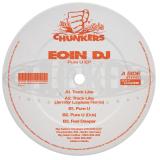
A dynamic DJ and producer, the Galway-born, Berlin-based artist is driven by mood not genre, gleefully scribbling outside the lines to craft rhythmic, high-vibration dancefloor cuts that make them a delicious match for the Chunkers. Just reference their pin-sharp releases on Radiant, Punctuality, Planet Euphorique and their own World of Worlds imprint. While anyone who’s caught their throwdowns at Draaimolen’s legendary forest stage, Horst Festival or London’s infamous queer party Club Are already knows what’s up.
Their contribution to the BSC catalogue is bang on. Lead cut ‘Track Like’ is a straight-up Chunker. Beginning life as an instrumental, it’s a pumping house cut marked by a grooving bassline, tight drums and a contained ravey energy, before Eoin DJ added that vocal that took the production into peak-time party territory.
A producer who requires no introduction – Jennifer Loveless join the Chunkers fold with a full-bodied remix of ‘Track Like’. Lock in for a funky maximal re-rub with the attitude turned up to 11. Back in Eoin DJ’s corner, the crisp ‘n’ punchy ‘Pure U’ is driven by fat kick drums, euphoric chords and a chunky rolling bassline. Exquisite stuff. A tight Dub version is included in the pack. The EP rounds out with the perky ‘Feel Deeper’, which channels ‘90s New York house and circuit sounds and is built around a hooky vocal line and rhythmic drums.
Eoin DJ follows BELLA, Eliza Rose, Papa Nugs, Paperkraft and remixes Peach and CARISTA in joining the Big Saldo’s Chunkers family as Sally C delights in growing the label via a carefully curated roster of artists.
“I loved the label already, so I was super stoked when Sally asked me to do a release. Chunkers is always
so on-point and consistent with its output. All of the releases are certified party starters – fat basslines, catchy vocals, full of energy and tuned to perfection to hit on the soundsystem. I used that as a jumping off point when making the EP. You could say it’s Chunkers – Eoin DJ style.” – Eoin DJ
“I was hooked on Eoin’s sound since they released ‘Ode to Beachball’ in 2024 on Punctuality Records. I love their ability to weave emotion and groove so seamlessly. It’s been a pleasure working on this EP – I’ve been endlessly rinsing all of the tracks. Such a great producer!” – Sally C
En el almacen y preparando para el envío
