
No en stock
Haga su pedido ahora y le encargaremos el artículo en nuestro proveedor.
Ültimo hace: 5 Meses
Haga su pedido ahora y le encargaremos el artículo en nuestro proveedor.

Haga su pedido ahora y le encargaremos el artículo en nuestro proveedor.

Soundwriters maps a hidden chapter of postwar music history. Sixty two rare and overlooked releases by Indonesian diaspora artists recorded in the Netherlands and Suriname, from soul and funk to reggae and pop. Built from deep archive work and crate digging, this book traces how migration shaped sound, scenes, and record culture between 1969 and 1989.
An homage to the unsung heroes of the underground and deserved recognition for the diaspora pioneers.
Michiel Sekan (Amsterdam, 2025)
Soundwriters: The Incomplete Guide to Indonesian Diaspora Music (1969–1989) is a book and catalogue devoted to artists whose work shaped the cultural life of postcolonial Netherlands, yet rarely entered official archives.
Written by Michiel Sekan with additional research by Harry “Munir” Septiandry, the book combines historical analysis with personal reflection. Essays move between migration histories, colonial legacies, family memory, and music culture. At its core sits a catalogue of sixty two releases that document the range of sounds created by Indo-European, Moluccan, Papuan, Javanese Surinamese, Peranakan, and broader Indonesian diaspora communities.
Soul, funk, pop, reggae, rock, and protest songs appear side by side. Together they form an aural record of resistance, adaptation, and creativity across continents.
Printed in Jakarta and published by Jiwa Jiwa in three languages, Dutch, English, and Indonesian, Soundwriters positions music as both archive and testimony. It asks how sound preserves stories when written records fall short, and how listening can reconnect personal memory with shared history.
The project extends beyond the page through exhibitions, listening rooms, documentaries, and public programs in the Netherlands and Indonesia.
SHORT ABOUT THE AUTHOR
Michiel Sekan is an Amsterdam based DJ, curator, and multidisciplinary artist. Through his platform Jiwa Jiwa he researches and presents music from the Indonesian archipelago and diaspora across radio, exhibitions, publishing, and club culture. His work links record collecting with archival study and personal history. Soundwriters is his first book.
debe ser publicado en 15.03.2026

In 2023, Wood secretly worked with producer Kevin Antreassian on a new mix of his top-selling release "The Normal Album." Digging into the original 2019 recordings for more muscular takes, smoother edits, and a more nuanced and balanced mix, Antreassian and Wood created a version of the fan favorite that is one of the rare cases where a new mix is widely considered to improve on the original noticeably. "The Normal Album" is yet another turn in Wood's discography, sardonically playing with Americana and doo-wop sounds, strategically restrained but still highly emotive vocals, and lyrics densely packed with scientific and philosophical references. The dark mania of Wood's prior 2016 release, "SELF-iSH," continues on some tracks but is arranged with greater precision with a new band at his command. Like his 2015 debut "Everything is a Lot," the songs whiplash tonally but are brought together through intertwined themes and recurrent musical motifs and an undercurrent of simultaneous obtuseness and vulnerability. After the original mix of "The Normal Album" was released, a live version of the 4th track on the LP, "I/Me/Myself," had an unexpected viral moment, which brought attention to many other songs on the LP. Songs like "2econd 2ight 2eer" and "Laplace's Angel" continued to attract new fans with their dense wordplay and high-energy attitude, and the album became Wood's first major break into larger notoriety, proving that his sudden burst of popularity was not just a fleeting trend. After taking some time away from the public, Wood began to revisit the album with the intent of giving it the production that he had originally envisioned for it. Wood's top-selling album re-edited for a fuller sound and clearer instrumentation, bringing the album to a new level: new Modern Stereo Mix - 2023 Edit
debe ser publicado en 13.03.2026

A journey into the raw and visceral origins: from the demo sessions mixed by Steve Albini to the night of the very first secret show on December 20th, 1988. In the heart of Chicago, Geordie and Martin Atkins turned frustration and distance into pure creative energy, recording the now-legendary "Black Cassette" demos at Albini"s house. Distorted, menacing bass lines, unruly oscillators, and Albini running endlessly up and down the stairs between the basement drum room and the pantry control room defined a sound that was brutally direct and uncompromising. The first interactions with the Yamaha drum machine foreshadowed elements that would later shape parts of the album. Those sessions sparked essential ideas, while the future studio - purchased from Steve and moved to Wabash Ave - would soon become the core of Invisible Records and Killing Joke"s operations. On the other side, a truly rare document: excerpts from Atkins"s very first show with the band, at Burberries in Birmingham on December 20th, 1988. In a small, mirror-lined club filled with tension, adrenaline, and inevitable collisions with the walls, Extremities, The Fanatic, Intravenous, and The Beautiful Dead were performed publicly for the first time. It was the night when everything ignited: the blast beat still in its embryonic stage, the controlled fury Geordie demanded - "can you go a bit more Moonie on it?" - and above all Jaz"s theatrical yet strikingly genuine laughter. Not just joy, but a declaration: a giant "fuck off" to the doubters and a prelude of what was about to come. A raw, essential, indispensable testimony: the birth of an era.
debe ser publicado en 13.03.2026

A journey into the raw and visceral origins: from the demo sessions mixed by Steve Albini to the night of the very first secret show on December 20th, 1988. In the heart of Chicago, Geordie and Martin Atkins turned frustration and distance into pure creative energy, recording the now-legendary "Black Cassette" demos at Albini"s house. Distorted, menacing bass lines, unruly oscillators, and Albini running endlessly up and down the stairs between the basement drum room and the pantry control room defined a sound that was brutally direct and uncompromising. The first interactions with the Yamaha drum machine foreshadowed elements that would later shape parts of the album. Those sessions sparked essential ideas, while the future studio - purchased from Steve and moved to Wabash Ave - would soon become the core of Invisible Records and Killing Joke"s operations. On the other side, a truly rare document: excerpts from Atkins"s very first show with the band, at Burberries in Birmingham on December 20th, 1988. In a small, mirror-lined club filled with tension, adrenaline, and inevitable collisions with the walls, Extremities, The Fanatic, Intravenous, and The Beautiful Dead were performed publicly for the first time. It was the night when everything ignited: the blast beat still in its embryonic stage, the controlled fury Geordie demanded - "can you go a bit more Moonie on it?" - and above all Jaz"s theatrical yet strikingly genuine laughter. Not just joy, but a declaration: a giant "fuck off" to the doubters and a prelude of what was about to come. A raw, essential, indispensable testimony: the birth of an era.
debe ser publicado en 13.03.2026

Demetrio Castellucci and Massimo Pupillo present the music of Sleep Technique, a performance by Dewey Dell inspired by the Chauvet cave and its ancient cave paintings.
The music comes to life anew on record, an immersion into the depths of sonic particles, moist electroacoustic rhythms, the repeated forms of speleothems, and the electric bass that scrapes the walls, shaping them into concave or convex surfaces. A voice that moves incredibly slowly, yet is in constant motion, like the millennia-old, unceasing erosion of water.
The album’s journey follows the geography of the cave in reverse, moving from its deepest chamber back to the entrance.
Demetrio Castellucci is a composer and sound designer who has been involved in theater productions, choreography, and film since 2004. Around the same time, he began performing as a DJ, favoring an omnitemporal approach geared toward dance that transcends musical genres. Since 2006, he has been a member of the dance company Dewey Dell, and since 2007, he has been active as Black Fanfare, a maximalist electroacoustic project. He has collaborated on performances by Andreco and Enrico Ticconi/Ginevra Panzetti, as well as on films by Ahmed Ben Nessib, Beatrice Pucci, and Ilaria di Carlo. After living in London and Berlin, he settled in Vilnius, where in 2018 he founded Unarcheology, a digital platform that publishes music and radio programs. He is also active as Airport Gad, an ambient project which, together with Unarcheology, launched its own “Airline Company”: concerts in a flight simulator built from cardboard, where the pilots are also the musicians.
Massimo Pupillo is best known as a founding member of the band Zu, with whom he has released 18 albums and performed over 2,000 live shows worldwide. He has maintained a highly open and multidisciplinary approach that has led him to work with some of the most acclaimed figures in the contemporary art world: South African photographer Roger Ballen, actors Malcolm McDowell and Marton Csokas, Romeo Castellucci and Chiara Guidi of Societas Raffaello Sanzio, American choreographer Meg Stuart, poet Anne Waldman, and Italian poet Gabriele Tinti, among others. He has collaborated live and in the studio with avant-garde musicians and composers such as Alvin Curran, piano duo Katia & Marielle Labèque, and classical virtuosos like Viktoria Mullova and Giovanni Sollima. He has also worked with some of the most influential names in the international rock scene, including Mike Patton, Thurston Moore, Jim O’Rourke (Sonic Youth), Guy Picciotto & Joe Lally (Fugazi), Buzz Osborne (Melvins), and Damo Suzuki (CAN).
In the field of improvised music, he has collaborated with Peter Brötzmann, Toshinori Kondo, Mats Gustafsson, Ken Vandermark, and Tony Buck, among others. Within the experimental music scene, his collaborations include Oren Ambarchi, David Tibet (Current 93), Thighpaulsandra (Coil), Stephen O’Malley (Sunn O))), Abul Mogard, Mick Harris (Scorn), Gordon Sharp (This Mortal Coil), FM Einheit (Einstürzende Neubauten), and many more. In cinema, he composed the score for Kirill Serebrennikov’s film LIMONOV, presented at Festival de Cannes in 2024.
debe ser publicado en 13.03.2026

Rather than yielding to despair in these troubled times and offering listeners a rope to hang themselves, Zimmermann (trombonist for Claude Nougaro, Manu Dibango, and Tony Allen) playfully grants them another option - a humorous sarcasm! He mocks the vain shelters of the powerful with the tune "My Little Sweet NZ Bunker", denounces the manufacture of one- track minds with "Les maximiseurs de PI", and escapism with the classic satirical Mose Allison's song "Stop This World (let me off" (translated and sung in French) In more tender moments, he reflects on the intimate consequences of this global unraveling.
Daniel Zimmerman's style, both as a composer and soloist, is that of a melodist above all else; disregarding concepts, he sings and seeks to go straight to the heart. He was voted 'Trombonist of the Year' by Jazz Magazine (Frances most influential jazz publication) in 2021, 2022, 2023 and 2024.
debe ser publicado en 13.03.2026

So… what are we actually supposed to tell you about HCL? Honestly, it’s a pretty nice story. A collaboration the way it’s meant to be.
HCL stands for Horkheimer, Consti aka Zeitstill, and Delenz — not hydrochloric acid, but liquid music. One shared idea of sound, without a fully mastered plan. Most of the tracks were born during long studio sessions — long nights, extended jams, ideas taking shape naturally. No big concept, just working it out together and seeing where things go (or not).
After the first two HCL tracks found their way onto various samplers — including the 25 Years of Live at Robert Johnson compilation and Freeride Millennium’s own Queer Base Vol. 2 — it felt like the right moment to take the next step and release the first pattern. Not as a conclusion, but more as a checkpoint. This is far from the end. There are more patterns, more sessions, more ideas already waiting to be published.
Describing the genre is, as always, not that easy. It drifts somewhere between techno and all the other things orbiting around it. Purely electronic music, rooted in the club, but not obsessed with functionality. In a way, it reminds us of the early 2000s — deep, slightly twisted, hypnotic, driving but never aggressive. Music that takes its time, creates space, and pulls you in rather than pushing you forward.
For moments that are meant to last — tracks you don’t want to hear mixed out. For getting lost on the dancefloor, for forgetting the noise and madness outside for a while, for drifting into yourself and letting time fly. Honest club music, built for immersion.
Enjoy the music. Enjoy yourself. Love.
Yours, HCL
Haga su pedido ahora y le encargaremos el artículo en nuestro proveedor.

BBMXI!! What a ride. Eden is back with another (un)holy 4 Track Ep.
You can not stop the Big Beat Manifesto, it is here to capture dancefloors across the globe, gaining
new followers by the minute.
Give in to it, surrender to the beat & move your feet. Bless you in the morning. Peace and unity.
Haga su pedido ahora y le encargaremos el artículo en nuestro proveedor.

Durch das 1966 auf Impulse! Records veröffentlichte Album “Spellbinder” wurde der ungarische Jazzgitarrist Gábor Szabó einem breiteren amerikanischen Publikum bekannt. Auf dem Album bot er eine originelle
Mischung aus modalem Jazz, osteuropäischen Folkeinflüssen und Popklängen, die er selbst als “Pop-Jazz”
bezeichnete.
Haga su pedido ahora y le encargaremos el artículo en nuestro proveedor.

The roots of Studio Music lie in a special encounter between sound artist Jan D’Haene and visual artist Mark Manders. Recorded in Manders’ studio, where sounds resonated among the artworks, the music unfolded in dialogue with the imposing space. As the concluding part of a diptych, following the EP Études, this album evolves more slowly and with greater layers. It forms a dialogue with D’Haene’s introspective passages and invites a moment of pause and stillness. In doing so, the music embodies the tension between vulnerability and strength, between the individual and the universal.
Haga su pedido ahora y le encargaremos el artículo en nuestro proveedor.
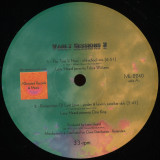
2023 Repress
Alleviated Records is proud to present the second of hopefully a succession of releases sharing selections from our own Archive of recordings that either have never been issued or that have never been issued on the Alleviated imprint. After many years of being "on-the-shelf" we are extremely pleased to share these with the public.
Haga su pedido ahora y le encargaremos el artículo en nuestro proveedor.

After traveling through Mexico, Miami, the Bahamas, and New Orleans, Nishioka recorded his fourth album South American Journey in Los Angeles,
released in 1979. From this album, two of his most celebrated tracks—“GYPSY SONG”, a fan favorite with numerous cover versions, and “NEVER LAND”,
featuring the distinctive sound of steel pans and a Japanese reggae vibe are now being pressed on 7-inch vinyl for the first time in a limited edition!
The recording features members of the So What Review band, including Junshi Yamagishi (guitar) and Osamu Ishida (guitar), along with renowned steel pan
player Robert Greenidge, known for collaborations with Van Dyke Parks and Taj Mahal.
(FLATT THE LAIDBACK)
Kyozo Nishioka Profile
(Born May 7, 1948 – Died April 3, 1999)
Singer songwriter from the Shima Peninsula in Mie Prefecture, affectionately nicknamed “Zo-san”.
After enrolling at Kinki University and moving to Osaka, Nishioka became a regular at the folk cafe Dylan in Namba, opened in August 1969 by Masaji Otsuka
and Yoko Ishimura. Dylan was a gathering spot for folk music enthusiasts from all over Japan.
Nishioka formed the folk group The Dylan with Masaji Otsuka and You Nagai, performing at folk camps and the Nakatsugawa Folk Jamboree. In 1971, Nishioka
left the group, and Otsuka and Nagai continued as The Dylan II. Nishioka wrote and composed the song “Puka Puka” under the pen name Zokyozo, which became
one of his signature works. The song was first released in July 1971 as the B-side of The Dylan II’s single “Otoko rashii tte Wakarukai” on URC Records.
Nishioka began his solo career, releasing his debut album “Dylan nite” in July 1972, produced by Kinji Yoshino on Bellwood Records, which included his own
version of “Puka Puka”. In September 1973, he appeared at the farewell concert of Happy End titled CITY – LAST TIME AROUND at Bunkyo Public Hall in Tokyo.
His 1974 album “Machiyuki Murayuki” was produced by Haruomi Hosono, and his 1975 album “Rokka My Baby” featured support from Shigeru Suzuki’s band
HUCKLE BACK. Nishioka recorded three albums under Hosono’s production, deepening their friendship.
Together with his wife and lyricist KURO, Nishioka wrote songs for artists such as Eikichi Yazawa. The couple traveled the world, recording overseas albums such
as “Nanbei Ryoko” (1977), “Yoh-Sollo” (1979), and “New York to Jamaica” (1981), incorporating reggae, calypso, and other global sounds. In the 1980s, he released
works under the duo name KYOZO & BUN with Yoshifumi Okajima, and in the 1990s returned to solo projects with albums like “START” (1993) and “Farewell
Song” (1997).
After KURO’s passing in 1997, Nishioka continued his musical activities until his own death in 1999 at the age of 50. His music transcended the boundaries of folk,
blending jazz and tropical elements to create a unique world view, leaving an indelible mark on Japanese music history.
debe ser publicado en 06.03.2026

NYZ (David Burraston) presents this collection of generative music pieces carefully extracted from a PreenFM2 gifted to him by Aphex Twin. PRN2_M15t is being released at the same time as an LP titled Stria from Dr. John Chowning who invented the original FM synthesis algorithms which were sold to Yamaha and used in the creation of the DX series of keyboards. An interview with Chowning, conducted by David Burraston, will be published at the same time.
David Burraston is an award winning artist/scientist working in the areas of technology and electronic music, operating Noyzelab as an independent art/science music studio since 1981. Numerous research publications include a 2006 PhD thesis Generative Music & Cellular Automata, which developed and applied fundamental new concepts from generative music practice to a key problem in complex systems theory.
His experimental arts practice encompasses field recording, landscape-scale sound art, chaos/complexity, practice-based research, sound synthesis and electronic music. He performs, lectures, conducts workshops and creates art installations in Regional NSW and around the world. David also designs and builds sound synthesizers based on his theories of chaos/complexity science. He was recently interviewed by Bandcamp Daily and The Wire Magazine.
David has worked with many diverse collaborators such as Aphex Twin, Chris Watson, Doug Quin, Russell Haswell, Robin Fox, Oren Ambarchi, Sarah Last, Cat Hope, Garry Bradbury, William Barton, Alan Lamb, MIT Media Lab and the Australian Broadcasting Corporation. In 2014 he independently published the legendary "SYROBONKERS!", the most technical and in-depth interview ever given by Aphex Twin.
debe ser publicado en 06.03.2026

In collaboration with EIoper Music, Impressed is proud to press the 10-Year Anniversary Edition of Szymon's debut album, Tigersapp, on limited edition vinyl.
Szymon was a multi-instrumentalist from Newcastle, Australia, with a deep love for jazz and production, building rich sonic worlds in his bedroom studio. Tigersapp stands as his creative legacy—a beautifully curated and emotionally layered collection that blends influences from folk, ambient, electronic, and indie pop.
These songs were mostly recorded in 2008–2009 in his home studio. After his death, his family and supporters enlisted producers like Rusty Santos (Animal Collective, Grizzly Bear) and Ian Pritchett (Angus & Julia Stone) to complete the mixes.
Tigersapp has earned both public and critical recognition in Australia and beyond. It debuted at #21 on the ARIA Albums Chart, and earned a nomination for the 2015 ARIA Award for Best Adult Contemporary Album.
debe ser publicado en 06.03.2026

Super-rare Stax funk masterpiece, a big favourite of Pete Rock who sampled it on his classic ‘Let’s Straighten It Out’.
When we started the BGP Funk & Jazz Classics series earlier this year we had an idea that we would put a few albums out, and that would be that. But as we reach our third batch of five we have found that there is a whole world of sought-after original albums, which for a myriad of reasons have failed to turn up in the reissue racks. This time we have come up with something very special, digging deep into the Stax Records vaults to rescue five of the most collectable albums on the label.
Ernie Hines “Electrified” was recorded for Stax’s We Produce subsidiary. Hines had been signed to the label by Al Bell on the recommendation of the publisher of Jet magazine. The album is a fantastic piece of southern soul, with a couple of funk tracks, including ‘Our Generation’, a politically-edged call to arms, that became very sought-after when it was sampled by Pete Rock. (Dean Rudland)
debe ser publicado en 06.03.2026

Super-rare Stax funk masterpiece, a big favourite of Pete Rock who sampled it on his classic ‘Let’s Straighten It Out’.
When we started the BGP Funk & Jazz Classics series earlier this year we had an idea that we would put a few albums out, and that would be that. But as we reach our third batch of five we have found that there is a whole world of sought-after original albums, which for a myriad of reasons have failed to turn up in the reissue racks. This time we have come up with something very special, digging deep into the Stax Records vaults to rescue five of the most collectable albums on the label.
Ernie Hines “Electrified” was recorded for Stax’s We Produce subsidiary. Hines had been signed to the label by Al Bell on the recommendation of the publisher of Jet magazine. The album is a fantastic piece of southern soul, with a couple of funk tracks, including ‘Our Generation’, a politically-edged call to arms, that became very sought-after when it was sampled by Pete Rock. (Dean Rudland)
debe ser publicado en 06.03.2026
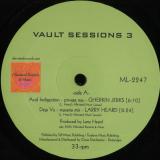
Alleviated Records is proud to present the third installment of 'Vault Sessions' series. Sharing recordings from the archives that either have never been issued or been out of print for a long time. After many years of being "on-the-shelf" we are extremely pleased to share these selections with the public.
Haga su pedido ahora y le encargaremos el artículo en nuestro proveedor.
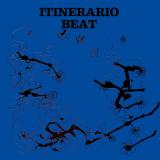
First-ever official reissue - Clear blue vinyl edition.
"Itinerario Beat" is as intriguing as it is mysterious. Performed by a group of largely unknown musicians called The Blue Sharks—previously heard on the excellent "It Became Crystal" (reissued by Redi Edizioni in 2021, Cat. No. REDILP001)—the album features ten easy-listening instrumental compositions for bass, drums, piano, and Hammond organ. The tracks are arranged and performed with distinctive taste, blending elements of beat, jazz-funk, and symphonic pop. Officially credited to Rigol, the pseudonym of composer Duilio Radici, the music also appears to include an uncredited contribution from Ugo Fusco, composer of several soundtrack LPs published by Edizioni Leonardi.
Beyond their use in television and film, library music tracks are highly sought after by renowned musicians and DJs and are frequently sampled. A notable example is "Itinerario romantico," included on this LP, which was sampled by rapper Travis Scott in his 2016 track "90210."
debe ser publicado en 06.03.2026

Straight outta Gothenburg, DJ Blendah & The Printz blur the lines between remixes, edits and reworks, and “Get Funky in the Heart” is no exception. Taking the finest elements from Teddy Pendergrass, Dee-lite & Q-Tip, and adding fresh live bass and beats, this is a tried and (road)tested floor-filler! 122 BPM
On the flip, Studio 45 gaffer Del Gazeebo has relented to years of public demand to finally release “Know How to Shake?” to the public - a staple of his party sets over the years that has never since a vinyl release until now. Not only that, he's completely rebuilt it, with more sonic twists, turns and "party tricks" than ever before. It's the Young MC/Jacksons blend you never thought you needed, but essential all the same. 118 BPM
Haga su pedido ahora y le encargaremos el artículo en nuestro proveedor.

Aaron Warren und Bjorn Copeland machen seit 1999 zusammen Musik: neun Jahre als Flaccid Mojo und 26 Jahre als Black Dice. Diese Zusammenarbeit ist wie eine Wanderung durch die verwüstete Landschaft der zeitgenössischen Musik. Indem sie Dummes, Gedämpftes und Verbrauchtem stapeln, schaffen die beiden immer wieder unausgewogene, atemberaubende Mutantenkonstruktionen. Das neueste Beispiel dafür ist ,Loose Jacks", das zweite Album von Flaccid Mojo. Es besteht aus kostenlosen Handy-Apps, fragmentierten YouTube-Videos und Elektronik mit zerbrochenen Bildschirmen - den verbrannten und zerknitterten Überresten des Streaming-Industriekomplexes. ,Loose Jacks" ist das breite, hysterische Grinsen, wenn man in den letzten Tagen einen Schatz findet. Die Songs von Flaccid Mojo sind für Live-Auftritte gemacht, mit einem modularen Arsenal an Rhythmen, Stabs und Payoffs, die alle bereitstehen. Das ist ihre Art, das Physische in den Mittelpunkt zu stellen und sicherzustellen, dass die körperlichen Vorgaben der Komposition jedes Songs diese Befehle an alle im Publikum wiederholen. Die Befriedigung eines Loops, der so lange läuft, bis er dir im Blut liegt, die Bassline, die zu einem Stoß geformt ist, der Snare-Hit, der so scharf ist wie der Ellbogen eines Fremden. Man kann sich wie ein Geist fühlen, der durch die Platte einer anderen Band schwebt, aber Loose Jacks ist wie eine Mauer, eine schwere Decke, starke Hände, die dich auf einen Haufen von Körpern heben. Es ist eine befreiende, unspirituelle Erfahrung. Eine fleischliche. Wie schon ihr Debütalbum ,Flaccid Mojo" (veröffentlicht 2022 bei Castle Face) wurde auch ,Loose Jacks" von Chris Coady aufgenommen, der seit den Neunzigern bei Black Dice-Konzerten dabei ist. Es ist toll, mit Leuten zu arbeiten, die es kapieren und nicht über Tonarten oder ,das Raster" diskutieren. Ähnlich wurde ,Loose Jacks" von Sarah Register gemastert, deren Band Talk Normal sich eine Wand mit dem Proberaum von Black Dice teilte. Für Fans von Chrome, Men's Recovery Project und den Chemical Brothers.
debe ser publicado en 27.02.2026

Als das Oscar Peterson Trio im August 1964 mit Trompeter und Flügelhornist Clark Terry ins Studio
ging, um dieses Album aufzunehmen, spielte es bereits seit fünf Jahren zusammen. Die drei Musiker
funktionierten wie eine perfekt geölte Swing-Maschine. Großzügig überließ Peterson seinem Gaststar viel
Raum, um als Solist auf seinen Hörnern zu glänzen. Beim Publikum kamen insbesondere die beiden spaßigen Blues-Nummern ”Mumbles” und ”Incoherent Blues” gut an, in denen sich Clark Terry erstmals als
nuscheliger Scat-Sänger präsentierte.
debe ser publicado en 27.02.2026

Aufgenommen am 25. Juni 1962 live im Tsubo, einem Café in Berkeley, Kalifornien, zeigt „Full House“
den legendären Gitarristen Wes Montgomery auf dem Höhepunkt seiner Kreativität, begleitet von einem
beeindruckenden Ensemble mit dem Tenorsaxophonisten Johnny Griffn und dem Wynton Kelly Trio, das
durch seine Zusammenarbeit mit Miles Davis gereift war – dem Pianisten Wynton Kelly, dem Kontrabassisten Paul Chambers und dem Schlagzeuger Jimmy Cobb.
All About Jazz beschrieb das Album später als „einen Vorgeschmack auf das, was kommen und viel zu früh
verloren gehen sollte“, und die Darbietung wird diesem Versprechen gerecht. Was den Umfang angeht,
ist auf „Full House“ für jeden etwas dabei. Montgomerys lyrische Zurückhaltung kommt in „I’ve Grown
Accustomed to Her Face“ zum Tragen, während der mitreißende Bebop von „Blue ’N’ Boogie“ und der
lateinamerikanisch angehauchte Groove von „Cariba“ die ganze Bandbreite des dynamischen Zusammenspiels der Gruppe offenbaren. Untermalt von einem begeisterten Live-Publikum bleibt „Full House“ eine
der zugänglichsten und mitreißendsten Aufnahmen Montgomerys.
Diese Neuauflage des Albums erscheint als Teil der Original Jazz Classics Series auf 180-Gramm-Vinyl,
gepresst bei RTI, mit vollständig analogem Mastering von den Originalbändern bei Cohearent Audio und
einer Tip-On-Hülle, die das Original-Artwork originalgetreu nachbildet.
debe ser publicado en 27.02.2026

This is Jah Wobble"s first post punk LP in recent years following travel and dub records. The brash guitar driven tracks reflect his continuing preoccupation with the declining state of the nation. Driven by his experience working each week at a music based community project in Merton, with Jon Klein, it is reminiscent of Mark Stewart. Angry in an empathetic, constructive way it resolved with the beautiful instrumental "Brockwell Lido". Like much of his work these days, much of the lyrical content comes while traversing London"s transport system. Jah Wobble, is an English bass guitarist and singer. He became known to a wider audience as the original bass player in Public Image Ltd (PiL) in the late 1970s and early 1980s; he left the band after two albums. Following his departure from PiL, he developed a solo career. In 2012, he reunited with fellow PiL guitarist Keith Levene for Metal Box in Dub and the album Yin & Yang. Since 2013, he has been one of the featured pundits on Sunday morning"s The Virtual Jukebox segment of BBC Radio 5 Live"s Up All Night with Dotun Adebayo. His autobiography, Memoirs of a Geezer, was published in 2009. Jon Klein Is an English guitarist and producer, best known for being a member of Siouxsie and the Banshees for seven years, from 1987 until 1994. He also founded Specimen and The Batcave nightclub. Klein has worked for other artists including Talvin Singh and Sinéad O"Connor. More recently he has worked as a co-producer and guitarist with Jah Wobble.
debe ser publicado en 27.02.2026

The Song “Hard, Hard Promises” showcased on this latest Soul Direction release, showcases Bobby Hebb’s song writing talents and brings together the album only release performed by
Alice Clark and the Unreleased demo version sung by Bobby Hebb himself. Incidentally the studio dub was entitled “Hard Heart Promises”. We don’t know if he ever intended to release the song himself, but it showcases his talent as a songwriter and a singer. After a few conversations with Universal Licensing, they graciously allowed Soul Direction to release this version and with the consent of Bobby Hebb’s Publishing Company. To both these, we are extremely grateful. Thank you for your continued support.
debe ser publicado en 27.02.2026

debe ser publicado en 27.02.2026
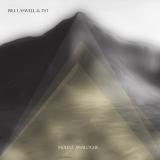
"And what about you? What are you looking for?" - René Daumal
This musical journey pays tribute to René Daumal and his enchanting world of mysteries and magic. The album shares its title with Daumal's novel, Mount Analogue: A Novel of Symbolically Authentic Non-Euclidean Adventures in Mountain Climbing, published posthumously in 1952, eight years after the author's untimely death.
Mount Analogue is a classic allegorical adventure novel. The novel describes an expedition undertaken by a group of mountaineers to travel to and climb the titular Mount Analogue an enormous mountain on a surreal continent, that is invisible and inaccessible to the outside world and can be perceived only by the application of obscure knowledge. The central theme of mountaineering is extensively explored through literary and philosophical lenses. Daumal died before the novel was completed, providing an uncanny one-way quality to the story, which ends abruptly in the middle of a sentence.
The first disc features a fifty-minute composition divided into six chapters: Introduction, Meeting, Supposition, Crossing, Arrival, and Conclusion. This album weavestogether a rich tapestry of diverse instruments, sounds, and voices that collectively tell the story of this conceptual work, loaded with a synesthetic multitude of colors, aromas, meanings, textures, and moods.
Contributors to this musical poem include Bill Laswell (bass), Henry Kaiser (guitar), Anna Clementi (vocals), Percy Howard (voice), Hideo Yamaki (percussion), Graham Haynes (cornet), Dorian Cheah (violin), Nils Petter Molvaer (trumpet), Peter Apfelbaum (keyboard), and P.ST (concept, electronics), who all lend their talents to a series of excerpts from Daumal's text.
A truly global project, the recordings took place across various locations in Europe, North America, and South America, culminating at Orange Music Studio in New York, thanks to the collaborative efforts of Bill Laswell, James Dellatacoma, and Michael Fossenkemper.
The second disc presents five improvisations for solo electric guitar by Henry Kaiser. The first solo, Jodorowsky's Peradam, draws its inspiration from Alejandro Jodorowsky's 1973 film The Holy Mountain, which was inspired by the Daumal novel. Kaiser's initial forty-eight-minute guitar solo serves as a foundational guide for his four subsequent, Rashomon-esque, solo musical interpretations of Mount Analogue, as seen through the psychedelic labyrinth of Jorodrowsky's cinematic masterpiece.
debe ser publicado en 27.02.2026

"And what about you? What are you looking for?" - René Daumal
This musical journey pays tribute to René Daumal and his enchanting world of mysteries and magic. The album shares its title with Daumal's novel, Mount Analogue: A Novel of Symbolically Authentic Non-Euclidean Adventures in Mountain Climbing, published posthumously in 1952, eight years after the author's untimely death.
Mount Analogue is a classic allegorical adventure novel. The novel describes an expedition undertaken by a group of mountaineers to travel to and climb the titular Mount Analogue an enormous mountain on a surreal continent, that is invisible and inaccessible to the outside world and can be perceived only by the application of obscure knowledge. The central theme of mountaineering is extensively explored through literary and philosophical lenses. Daumal died before the novel was completed, providing an uncanny one-way quality to the story, which ends abruptly in the middle of a sentence.
The first disc features a fifty-minute composition divided into six chapters: Introduction, Meeting, Supposition, Crossing, Arrival, and Conclusion. This album weavestogether a rich tapestry of diverse instruments, sounds, and voices that collectively tell the story of this conceptual work, loaded with a synesthetic multitude of colors, aromas, meanings, textures, and moods.
Contributors to this musical poem include Bill Laswell (bass), Henry Kaiser (guitar), Anna Clementi (vocals), Percy Howard (voice), Hideo Yamaki (percussion), Graham Haynes (cornet), Dorian Cheah (violin), Nils Petter Molvaer (trumpet), Peter Apfelbaum (keyboard), and P.ST (concept, electronics), who all lend their talents to a series of excerpts from Daumal's text.
A truly global project, the recordings took place across various locations in Europe, North America, and South America, culminating at Orange Music Studio in New York, thanks to the collaborative efforts of Bill Laswell, James Dellatacoma, and Michael Fossenkemper.
The second disc presents five improvisations for solo electric guitar by Henry Kaiser. The first solo, Jodorowsky's Peradam, draws its inspiration from Alejandro Jodorowsky's 1973 film The Holy Mountain, which was inspired by the Daumal novel. Kaiser's initial forty-eight-minute guitar solo serves as a foundational guide for his four subsequent, Rashomon-esque, solo musical interpretations of Mount Analogue, as seen through the psychedelic labyrinth of Jorodrowsky's cinematic masterpiece.
debe ser publicado en 27.02.2026

Nanook of the North is back with their second album, following the enthusiastically received 2018 debut "Nanook of the North," (Denovali) The duo of a composer and violinist Stefan Wesołowski and electronic producer Piotr Kaliński were acclaimed by Boiler Room, The Wire or NPR. Bob Boilen of Tiny Desk Concerts called Nanook of the North's performance "one of the wow moments of SXSW". Their new material is a raw and minimalist sonic landscape, practically devoid of percussive elements but featuring vocals by an acclaimed mezzo-soprano Margarita Slepakova. As with the debut, the music on "Heide" is rooted in nature and its primordiality. The title of the album alludes to wildness and untamedness, and the material was recorded last winter in a village located in the middle of forests in the northern Poland, which is clearly felt in the atmosphere of the 9 new tracks on "Heide".
Stefan Wesołowski is a Polish composer and violinist, author of critically acclaimed original albums and film music scores. Associated with publisher Mute Song and record labels like Important Records, Lakeshore Records, Ici D'ailleurs and Back Lot Music. He is an author of original soundtrack to „Listen to me Marlon” (Universal) - Oscar-shortlisted and BAFTA-nominated documentary on Marlon Brando directed by Stevan Riley and original soundtrack to Irish feature film by Nathalie Biancheri entitled „Wolf” (Focus Features), starring Lily-Rose Deep and George MacKay, premiered 2021 at Toronto Interational Film Festival.
Piotr Kaliński is na electronic music producer and guitarist. Based in Gdańsk, Poland. Associated with record labels like R&S Records and Instant Classic. Member of Hinode Tapes, Hatti Vatti and JANKA bands. One of the most active figures in Polish alternative scene - in last few years he performed live in many countries across Europe, Japan, Korea and United States. Kaliński is an author of original music for short films, fashion brands campaigns like Calvin Klein or Paul Smith and games (i.e. „Cyberpunk 2077”).
Margarita Slepakova is a coloratura mezzo-soprano specialized in the field of historical practices of early music. Based in Switzerland, she is a renowned opera, concert, and recital singer, collaborating with ensembles and orchestras all over Europe. Slepakova is a founder of Le Sommeil project, specializing in French music of the 17th century. She sang in many concert halls and opera houses including Carnegie Hall and Royal Albert Hall during BBC Proms. Margarita also performs contemporary music and has premiered pieces written especially for her voic
Haga su pedido ahora y le encargaremos el artículo en nuestro proveedor.

In 1949 Miles Davis, Gerry Mulligan and Gil Evans - they'd never met before - gravitated together with the natural
affinity of kindred souls. Combined, they gave each other a spiritual boost that resulted in many all-night sessions of
earnest discussion, writing and playing-productive work on new musical ideas, new voicings, new concepts of jazz.
Their first appearance startled a delighted jazz public, and marked the birth of the cool. Today, these famous Miles
Davis instrumentals are as exciting as ever, and here are in all their glory.
debe ser publicado en 23.02.2026

„O Brother, Where Art Thou?“ löste zu Beginn des 21. Jahrhunderts eine kulturelle Renaissance aus.
Der Soundtrack, von der RIAA mit achtfach Platin ausgezeichnet, brachte traditionelle American-RootsMusik einem breiten Publikum näher und holte Genres wie Bluegrass, Gospel, Blues, Country und Folk
zurück in den Mainstream. Der unerwartete Erfolg des Albums eroberte die Welt im Sturm und prägte eine
neue Welle der Popmusik, deren Klang tief in den musikalischen Traditionen des amerikanischen Südens
verwurzelt ist.
debe ser publicado en 20.02.2026

Sonor Music Editions proudly presents an absolute Italian mood music grail and one of the best Library Music recordings ever - A.ALESSANDRONI's RITMO DELL'INDUSTRIA n.2, a true legend in the field. This is the maestro most prized and sought-after album, produced in 1969 on the small Grand Prix label, part of the Leonardi publishing group. A mindmelting record featuring some of the most killer driven beats ever! - dark vibes and haunting atmospheres with constant and moody Industrial rhythms, filled with tons of drum breaks, trippy Scat vocals and eastern inspired obsessive grooves. Music has been remastered from the original stereo master tape and the back sleeve will feature deluxe liner notes written by Mr. Jonny Trunk. HOLY GRAIL ALERT!
debe ser publicado en 20.02.2026

DJ Support: David Morales, Dimitri From Paris, Tedd Patterson, Dj Spen, Terry Hunter, Hector Romero, Dr Packer, Da Lukas, Sebb Junior, Jo Paciello, Shabi and many others.
The friendship between Sarah Jane Morris and Mario Biondi is the basis of this collaboration, born from the desire to pay homage to Roberta Flack. The idea, proposed by Sarah Jane, to reinterpret "Back Together Again" was born a few months before the death of the famous American singer. The original song, published in 1980 on the album "Roberta Flack Featuring Donny Hathaway", included the posthumous participation of Donny Hathaway, who died in 1979. Mario Biondi enthusiastically welcomed the proposal, and considering that the original song had a strong dance component, entrusted the production to Micky More & Andy Tee, one of the most important Soulful Disco House production teams on the contemporary world scene. The duo of DJs and producers from Ancona Italy have been at the top of the charts of digital dance stores for years. The package includes a fantastic DUB version of Jazz-N-Groove, Courtesy Of Brian Tappert & Marc Pomery, The legendary American Dance producers Duo. A MUST HAVE.

The story of how we heard about D.J. City.
Once upon a time P.P. D.J.ed in Stockholm. Picked up by legend Sling from the airport, with what I recall was a very nice old Jeep, that had a tape deck.
That Tape deck was playing a cassette that quickly caught our attention. We found out, on it was „1- 800 Techno“, a project by another local legend D.J. City. Somehow we received the tape and digital files and have been playing them ever since.
Years later we met D.J. City at a gig for Cocktail D’Amore, it was a brief and pleasant introduction as he was handing over the decks to us.
It took some more time until we really got in touch and started a work relation that quickly turned into friendship. Circa 10 years later, we have the opportunity to properly shine light on this project that started it all.
You can listen to the full release digitally and on Vinyl for the first time. „1-800 Techno“ that is Karl Lihagen & Johan Norling (aka D.J. City) with „For Several Eternals Before There Were Years“. This I guess is what you call a „full circle moment“. Enjoy!
Haga su pedido ahora y le encargaremos el artículo en nuestro proveedor.

Mit dem BIPPP Sampler bringt uns das in Frankreich ansässige Label Born Bad ein Stück französischer 80s Untergrundmusikgeschichte für das manche Leute töten würden wenn sie die Originalaufnahmen in die Hände bekommen würden!
Die Compilation ist vollgestopft mit extrem raren französischen Minimal-, Synth- & Coldwave. Der Großteil der Songs von u.a.: A Trois Dans Le Wc, Act, Les Visiteurs Du soir, Vox Dei, Comix, Tgv, Mary Moor, Ruth, Visible, Casino Music sind dabei wohl auch nur dem engeren Kreis der Minimalsammler bekannt, können hier aber dankenswerter Weise auch endlich einem (etwas) größerem Publikum präsentiert werden. Wer frühe Soft Cell, Silicon Teens, Grauzone, Nouvelle Vague die von Martin Hannett produzierten belgischen Names oder ähnliches mag kommt hier wirklich nicht dran vorbei. Großer Tip für alle die auf schrägen 80s Epop, Postpunk und Minimalelektronik stehen, inkl. tollen beiheft- leider nur auf französisch!
Haga su pedido ahora y le encargaremos el artículo en nuestro proveedor.

Vinylneuauflage von Mobys "Ambient" Album von 1993, seine erste Exkursion in die Ambient-Musik, die seitdem zu einem seiner Markenzeichen wurde. Mit Ausnahme einer limitierten Clear-Vinyl-Ausgabe 2022 gab es dieses Album nur als CD, nie flächendeckend auf Vinyl. Moby hat die Techno/Electronic-Szene massgeblich beeinflusst, später den Popmarkt erobert und Acts wie David Bowie, Public Enemy, Ozzy Osbourne, die Beastie Boys und Daft Punk produziert und geremixt.
Haga su pedido ahora y le encargaremos el artículo en nuestro proveedor.

»Ka ora te awa. Ka ora te iwi. The river is well, so the people are well«, says artist and writer Hana Pera Aoake. »In a Māori worldview, everything is connected and contains mauri, the life spark or essence inherent in all things, as they contain the residue of ancestors through whakapapa, or genealogy. Within Western environmental histories, there is a gap in knowledge around what we can learn through an act of listening.«
Hana Pera Aoake’s words resonated with Hinako Omori when they were invited by the Serpentine Gallery to write a piece of music for their »Serpentine Reader« publication on the theme of circulation. Aoake’s essay about listening to the river and other bodies of water parallels Omori’s own Japanese cultural view of water as a sacred source.
»studies on a river« places these two notions side by side, with Omori’s recordings of water sources and elegant 3/4 synth compositions matched to extracts from Aoake’s writing. The first side presents the music alone, while the second is where the project really clicks, with Aoake’s themes and Omori’s gentle, washing sounds completely in sync.
Haga su pedido ahora y le encargaremos el artículo en nuestro proveedor.

If there is a year zero for the introduction of reggae music to Japan, you’d be forgiven for thinking it was 1979 when Bob Marley and the Wailers toured the country, trailed by an entourage of journalists, photographers and fans ready to spread the message of the music into all corners of Japanese society.
But the story of Japanese reggae is not a linear one, and the music that is collected on Tokyo Riddim 1976-1985 captures the moment J-reggae entered the broader public consciousness, merging commercial city pop style with an infectious backbeat, that has drawn comparisons with the emergence of Lovers Rock in the UK.
Rather than look directly to Jamaica, many producers and artists in Japan were inspired instead by the more approachable sounds of The Police and UB40, their reggae fix arriving pre-filtered through the lens of new wave pop from the UK. Playful and groovy, these album deep cuts have been overlooked for too long.
Among them are Miki Hirayama, the idol singer who borrowed the bassline from Bob Marley’s Natural Mystic on ‘Denshi Lenzi’, Chu Kosaka, who headed to Hawaii to cut the Jimmy Cliff-inspired ‘Music’ and Marlene, the Philippine songstress whose cover of Roberta Flack’s ‘Hittin’ Me Wear It Hurts’ owed much to her producer’s obsession with Sly & Robbie’s Compass Point sound.
Then there was Izumi “Mimi” Kobayashi, who enlisted the Babylon Warriors to perform on a dubbed-out version of her own track ‘Lazy Love’, the city pop-meets-new wave reggae sound of Miharu Koshi’s ‘Coffee Break’, Junko Yagami’s anti-apartheid deep cut ‘Johannesburg’ and Lily, whose ‘Tenkini Naare’ was produced by Ryuichi Sakamoto and closes out the compilation with a flourish.
While these stories may not always conform to neat narratives, they do provide a more accurate reflection of the indirect ways in which styles infiltrate one another and, in their naivety, have the potential to create something beautifully strange and entirely new. Previously only available in Japan, the tracks on this compilation are a testament to that curious alchemy.
Tokyo Riddim 1976-1985 is released on vinyl and as a full album download (no streaming), featuring original artwork by Japanese Fukuoka-based artist Noncheleee, whose cover pays homage to the iconic dancehall album art of Wilfred Limonious.
Released on 1st September, Tokyo Riddim 1976-1985 is part of Time Capsule's Nippon Series, a loose series of compilations exploring different musical scenes from Japan between the 1960s and 2010s.
Haga su pedido ahora y le encargaremos el artículo en nuestro proveedor.

Ein Album, das das Herz höher schlagen lässt. Nikolai Kapustin war ein russischer Komponist, der Klaviermusik in einem ausgesprochen jazzigen Stil schrieb, mit all der Spontaneität, die man mit Improvisation
assoziieren könnte – mit dem einzigen Unterschied, dass die Musik vollständig und akribisch notiert war.
Seine Musik ist heute regelmäßig in Konzertsälen als publikumswirksame Zugaben zu hören, aber zum
Zeitpunkt der Aufnahme (2003) war sie noch relativ unbekannt. Marc-André Hamelin war einer der ersten
Fürsprecher Kapustins, und diese Aufnahme (praktisch Marcs meistverkauftes Album) trug wesentlich dazu
bei, die Musik des Komponisten einem breiteren Publikum bekannt zu machen. Gramophone schrieb bei
der ursprünglichen Veröffentlichung: „Alles auf dieser bemerkenswerten CD wird mit einer nonchalanten
Gelassenheit und magischen Fingerfertigkeit gespielt, die man sich von keinem anderen Pianisten vorstellen
kann.“
debe ser publicado en 13.02.2026
