
non in magazzino
Ordina ora e ordineremo l'articolo per te presso il nostro fornitore.
Last In: 3 months ago
Ordina ora e ordineremo l'articolo per te presso il nostro fornitore.

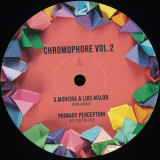
New installment in the Slow Life catalog by Primary Perception, two blood brothers born and raised in the Canary Island, but living in Berlin for the last years. It's in the German capital where they got to meet and support the Slow Life crew since their beginnings, and where they developed their fresh but
matured sound shown on this their first album. "Evidence of a Primary Perception" clearly has the trademark Slow Life character, combining broken beats, pads, acid bass lines, ambient passages, and overall, groovy deepness. They have more music coming soon in 2017, so as the label suggest: "They
are here to stay!".
Ordina ora e ordineremo l'articolo per te presso il nostro fornitore.
Disponibile in Stock e pronto per la spedizione
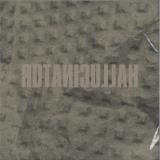
Compiled onto one vinyl album for the first time, Landlocked (Numbers, 2026) presents Hallucinator’s 1999 debut album originally released under Mark Ernestus and Moritz von Oswald’s label Chain Reaction. Writing much surrounding the culture of what would be later considered ‘Dub Techno’ and its’ primary distribution center, Hard Wax, leads one down roads of shifting primary sources and decades old overheard smoke break recollections. Maybe brevity primes the listener to the paralinguistic to approach the sound on its terms; focusing on how things are uttered and not what.
This theory will remain unconfirmed. Hallucinator original press release left us with three or so gestures to consider over the years since:
“A new act on CHAIN REACTION”s distinct productional thesis. HALLUCINATOR are 3 people from he UK/London and this their first release ever- that’s all what the artists want to let us know…. This record is dedidacted to the memory of Stephen Lawrence!”
The first gesture is one of personnel. Since ’99, we’ve gotten to learn a bit more about the artists behind the Hallucinator project. All London-based, all writers, composers, and sound-designers— Anna Piva, Edward George, Trevor Mathison. These three seem to flow between parameters as aesthetic tactic and tacit structure to the work itself. For example, other collaborative shapes have come from this lineup including Flow Motion (Piva, George and Mathison) as well as the now defunct Black Audio Film Collective of which George and Mathison are founding members.
The second gesture is in the second line of the previous press release, “distinct productional thesis.” Much of Landlocked’s affect and sequencing seems to suggest an emotional study of entropy at the level of sediment. Rhythms play with space and capacity through polyvalence. The production chose subtractive vertigo, often switching and bringing back in elements that vanished from the track 6 minutes ago. Dubbing out so much of a track, one begins to associate sound akin to memories held in the experience of running your hand across a concrete block as a child. Felt (re)memberance in lieu of narrative tale. Using textures that flicker between colour and percussion, Hallucinator’s 12-tracker of loudspeaker perception music might be a mediation on the psychic wake of the Cold War. Intermittent strata of ambience and groove convects an active margin rifting event underneath a scorched geology of power in Western Europe. Again, this is all grapevine hearsay.
But it’s silence that voices the third gesture. The album’s sparse application of the written word touches on the ennui paradox of being landlocked on an island. Stuck. Trapped in the psychosis of occidental hypercentricism. A looping silence of Black British tragedy: “to the memory of Stephen Lawrence”. 18 year-old Lawrence was stabbed to death at a bus stop in southeast London by six white men in 1993. The rift of grief and implicit reiteration of modern subordination left by this hate act went legally silent for almost two decades until Lawrence’s killers were ultimately sentenced to virtually life in jail in 2012. Only six years removed at the time of Hallucinator’s initial invocation of rememory, the mind-numbing accretion of what Black Studies Professor Denise Ferreira da Silva might call “unpayable debt”, finds demonic ground across Landlocked, forming an aural sense of what continues to be refused.
The album ventures through spaces of overactive non-happenings: ‘Red Angel’’s factory floor dub flashes between smokestack and jungle visions, or the halfway mark’s stilted breath of ‘Dusk’ lending its mood to the sort of sedated dreams built from daily life under colony rule for instance. That linked rhythm links us back to our linked fates across Black and Brown folk is real, thus the syncopated signals through this work behave on the level of transnational radiotelegraphy, sounding out its windswept tension of a body negotiating a meat-grinder schema of linear production and wage for others to know that unspeakable thing can be broadcast in every drum tongue.
As the silence continues to reverb, we return to the sort of meaning-making that cannot be told but felt. Soothing to some, disturbing to others. Landlocked, a Rorschach test for a crumbled empire.
dovrebbe essere pubblicato su 19.10.2026

Next in line, a crafty remixes pack of Ethereal Logic's second album "Intergalactic World Music". The A side has two uptempo tracks by S.Moreira (1/2 of Ethereal Logic) and the italian wizard Paolo Mosca, delivering versions that perfectly capture their club essence.
On the B side, more downtempo yet groovy approaches by another extended
Ordina ora e ordineremo l'articolo per te presso il nostro fornitore.

New pressing on limited orange vinyl. In the early days of Pinback, they were known mostly as two lauded musicians who spent their spare time away from their primary projects (Three Mile Pilot, Thingy, Heavy Vegetable) to hone their home recording skills while experimenting with ideas, tones, and instrumentation that didn’t quite fit into those primary projects. Pinback hadn’t yet become their day job; it hadn’t yet become a well-oiled 5-piece touring machine; and it had no idea where it was going to go. In retrospect, that earnest curiosity is what makes those early Pinback recordings so resonant and so unique, and what separated them from every indie rock band of this century. Every bit as powerful and expressive as their first two albums, the 1999 EP, Some Voices, and the 2003 EP, Offcell, famously bucked the perception of EPs as outtakes and toss-offs. What were ostensibly minor stopgaps between albums became massive fan favorites and staples of Pinback’s live show. Having never been released on vinyl, it’s only fitting that we revisit these poignant recordings – and take the opportunity to painstakingly remaster and repackage them into the full-length album that never was, the aptly named Some Offcell Voices
dovrebbe essere pubblicato su 19.01.2024
