
pré-commande18.04.2026
il devrait être publié sur 18.04.2026
il devrait être publié sur 18.04.2026

Der polnische Klaviervirtuose, Komponist, Produzent, Doktor der Instrumentalwissenschaften und Gewinner von über 20 führenden polnischen und europäischen Musikfestivals, Mike Verba, hat über 700 Konzerte gespielt und über 20 Alben aufgenommen. Sein musikalischer Weg führte ihn mit großen Namen wie Michal Urbaniak, Ronnie Burrage, Wayne Escoffery, Reggie Washington, Darryl Hall, Piotr Wojtasik, Nimrod Speaks, Maciej Sikala und vielen anderen zusammen. Mikes neues Album „Pop Fiction“, das im September 2024 auf dem renommierten deutschen Plattenlabel ZYX Music erscheint, ist ein Wortspiel in Anlehnung an den Film „Pulp-Fiction“ von Quentin Tarantino, mit einem Fluss verschiedener Genres. Mike Verba verwandelt berühmte Hits in unvergessliche, instrumentale Versionen, die Klavier und Elektronik kombinieren. Eine erstaunliche neue Kunst der Musik!
il devrait être publié sur 29.11.2024

Ever since the late 1950s bossa-nova revolution, Brazil’s influence on French music has been undeniable. Pierre Barouh, Georges Moustaki and a vast array of lesser known artists, all made the Musica Popular Brasileira (MPB) an axis of promotion at the service of a cool and metaphysical, modern and mixed Brazilian lifestyle. Some were seduced by the poetic languors of the bossa, some were looking for fun, and others just loved the American hybridization of jazz-bossa, jazz-samba.
What is bossa nova? One of its creators, Joao Gilberto said: "Its style, cadence, everything is samba. At the very start, we didn't call it bossa nova, we sang a little samba made up of a single note - Samba de uma nota so .... The discussion around the origins of bossa nova is therefore useless”. It is nevertheless useful to remember that these magnificent Brazilian songs, which the guitarist describes as samba, were shifted and balanced around improbable chords. "I like things that lean, the in-betweens that limp with grace," said Pierre Barrouh, quoting Jean Cocteau.
With emotion, arrangements for violin and supple guitar licks, bossa nova rapidly changed. A transformation that can be heard in the Tchic, tchic, French Bossa Nova 1963-1974 compilation, the result of a cultural reappropriation, which traveled through the United States and supplemented itself in France.
A musical revolution that has remained significant, bossa nova was born in Rio. From 1956 to 1961, Brazil lived through its golden years. In five years, the country had invented its modernist style. Elected president in 1956, Juscelino Kubitschek de Oliveira, an elegant man with a broad forehead, brandished a promising slogan: "Fifty years of progress in five years". He quickly got to work. Not worried about increasing debt, he launched the project for a new federal capital, Brasilia, designed by the communist architect Oscar Niemeyer. Volkswagen opened state-of-the-art factories and created the “fusquinha”, the Beetle. In Rio, the Vespa made its first appearance. The Arpoador Surf Club crew run into the “girl” from Ipanema, Helô Pinheiro - the tanned garota ("chick"), between a flower and mermaid, who at 17 walked by the Veloso bar, where the fiery author and composer, Tom Jobim and Vinicius de Moraes, were getting drunk on whiskey. From then on, bossa symbolized cool.
In 1958, Joao Gilberto recorded Chega de Saudade, which the directors of Philips denied, calling it "music for fagots". The marketing director, who believed in it, secretly pressed 3000 78-inch vinyls and distributed them at schools around Rio, creating a tidal wave.
American jazzmen then took over. In particular, trumpeter Dizzy Gillespie and guitarist Charlie Byrd. In November 1962, the Brazilian Ministry of Foreign Affairs funded a "Bossa-Nova" concert at Carnegie Hall in New York, inviting the genre’s pioneers. Unprepared, the show soon turned to disaster. But the troupe was invited to the White House by Jackie Kennedy. The first lady loved "the new beat" and in particular Maria Ninguem, a song by Carlos Lyra, later covered by Brigitte Bardot.
In Brazil, the 1964 military coup quickly ended this euphoria. The destructive atmosphere that ensued pushed many Brazilian musicians to leave, if not to exile. Thus, Tom Jobim, Sergio Mendes and Joao Gilberto arrived to the United States. In New York, Joao Gilberto met saxophonist Stan Getz. At the time, he was married to the Bahianese Astrud Weinert Gilberto, who had a German father. She had never sung before, but she knew how to speak English. Getz therefore asked her to replace her husband on The Girl From Ipanema. The Getz/Gilberto record with Tom Jobim on piano, was released in March 1964. Phil Ramone, the "pope of pop" was in charge of sound.
Bossa nova arrived in Paris through the classic “guitar-voice” channel (Pierre Barouh, Baden Powell, Moustaki…) But France loved jazz and Paris had already welcomed its American contributors. All these good people were to pass through Saint-Germain-des-Prés. The cabaret l'Escale became the Mecca of Latin American sound where one could find Pierre Barrouh and his friends, such as the Camara Trio, samba-jazz aces, whose only record was published by the Saravah label. With a band strangely called Les Masques (a band that included Nicole Croisille and Pierre Vassiliu, among others), the Camara Trio recorded an interesting Brazilian Sound, including the track Il faut tenir which is present on this tasty compilation of rarities.
Other enlightened musicians can also be found on the compilation, such as Jean-Pierre Sabar (songwriter for Hardy, Auffray, Leforestier ...) and the French pop rock organist Balthazar. In 1975, Sabar recorded Aurinkoinen Musiikkimatka on a Finnish label, which featured the crazy Vai, Vai, included on this record. We are now following the footsteps of Brazilian electronic musicians such as Sergio Mendes, Eumir Deodato or Marcos Valle who created funk and disco sounds on their keyboards and synthesizers. A style that influenced Véronique Sanson when she wrote Jusqu’à la Tombée de la nuit in 1969 for Isabelle de Funès, the niece of Louis and a great friend of Michel Berger - Sanson did end up singing this track on her 1992 Sans Regret record.
The pinnacle of exoticism and travel, Sylvia Fels’ Corto Maltese includes bongos, sea mist and ocean sounds. The title was taken from Jacky Chalard’s concept album written in 1974, Je suis vivant, mais j’ai peur (I am alive, but I am scared), based on Gilbert Deflez’s science fiction novel.
However, bossa nova extended the scope of popularity. "In the 1970s, I was a fan of Sergio Mendes, Getz / Gilberto. I fell in love with this music that I knew because I had been an orchestral singer, " explained Isabelle Aubret, who in 1971 delivered a composite record of covers by the very funky Jorge Ben, Orfeu Negro, Tom Jobim, Vinicius de Morais and Jean Ferrat. "I recorded this album for Meys Records in Paris, far from Brazil, with wonderful musicians, François Raubert, Roland Vincent, Alain Goraguer...". The latter wrote the arrangements for Casa Forte, a very percussive title borrowed from Edu Lobo, one of the initiators of the bossa who spent time in California. "Jazz and bossa came together and produced very rhythmic music. I love singing, it allows me to dream, to have fun, to feel a high on stage, and these songs brought me joy, made me swing, my singing felt like a dance.”
The world tours of French singers and their desire for the tropics, often brought them to Rio with its hills, forests, caipirinhas and tanned bodies. There are surprises though, like this Iemenja (Iemenja is the goddess of the sea in the Afro-Brazilian candomblé religion). Not unlike the composer and musician Jean-Pierre Lang, based in Sao Paulo, Claire Chevalier taught Brazil to Brazil. In 1970, the singer and painter published a 45-inch vinyl, Mon mari et mes amants (My husband and my lovers), under the improbable pseudonym of Clarinha (little Claire). She was then living in Rio, with her husband, Joël Leibovitz, who founded a band called Azimuth, and who owned a record label specialized in "sambas enredos" songs for samba school parades.
For its B side, she asked Pierre Perret to come up with lyrics for a song composed by Carlos Imperial: "Oh goddess of the sea, o goddess Iemenja, I bring a white rose to adorn your long hair ..." . "Perret came to see us, and we had fun, remembers Joël Leibovitz. We wrote Lemenja for fun, we recorded it at the Havaí studio, behind the Central do Brasil the central station. Erlon Chaves, the arranger who worked with Elis Regina, joined us" adding his share of Afro-Brazilian percussions and funky brass to the mix.
There is a common misunderstanding in Franco-Brazilian history: that bossa, admittedly hedonistic, is perceived as funny, even though the poets who wrote the texts are often philosophizing on the human condition. Its French interpreters pull it towards a carnival inspired universe, far removed from its fundamental essence. Thus, Jean Constantin covered the famous Samba da minha terra, an ode to the art of samba written by the classic Bahian composer Dorival Caymmi, renaming it with the enticing title of Pas tant de tchi tchi pompon: "On your pier there is no tchi tchi / when you arch your back, you know everything is alright ”(lyrics by Gérard Calvi). This expedited bossa aims for the absurd, but retains a certain elegance.
Indeed, Jean Constantin was not an idiot, the rather large man had a huge mustache and liked fantasy, (Les pantoufles à papa, Le pacha, inspired by cha-cha-cha-cha, salsa and jazz) but he was also the lyricist of Mon manège à moi interpreted by Edith Piaf, the composer of Mon Truc en plume by Zizi Jeanmaire and the soundtrack of François Truffaut’s 400 Blows. Le Poulpe, published in 1970, from which this bossa is extract, was arranged by Jean-Claude Vannier, an accomplice of Serge Gainsbourg’s Melody Nelson. In short: "There is enough of samba / By looking at the parasol / Because my poor cabeza / Is going to die in the sun".
Even the American actress Marpessa Down, who was at the heart of the bossa nova revolution with her role as Euridyce in Marcel Camus’ film Orfeu Negro, winner of the 1959 Cannes Palme d'or, fed the clichée with Je voudrais parler au petit cuica - "Tell me how you manage to always make people want to dance / It's true, I must admit that I cannot resist your magic" - in consequence, once can hear the cuica, a little drum inherited from the Bantu.
But bossa nova had many angles. Societal, of course, pushing actresses who were symbols of women's liberation like Brigitte Bardot, Jeanne Moreau, or Sophia Loren to engage in the exercise of accelerated bossa. In February of 1963, Sophia Loren made a record in French in Rome, Je ne t'aime plus, featuring the song De jour en jour, a bossa written by two Italians, Armando Trovajoli and Tino Fornai, which was released a little later by Barclay. Bossa accompanied the 1960s, a decade of moral liberation. Ann Sorel, who interpreted La Poupée des favellas, caused a sensation with L’amour à plusieurs, a provocative song written by Frédéric Bottom and Jean-Claude Vannier. As for the actress Andrea Parisy, she displayed her bourgeois cheekiness in Marcel Carné's Les Tricheurs before interpreting Les mains qui font du bien. And Magalie Noël, the friend of Boris Vian, who sung Johnny fais-moi mal, was hired to sing Une énorme Samba, composed by Alain Goraguer (arranger to Gainsbourg, Bobby Lapointe and Jean Ferrat) with lyrics by Frédéric Botton.
But in the end, of what wood is bossa nova made of? The answer is given by Christianne Legrand, daughter of Raymond the conductor, and sister to Michel the composer: "With me, with jà" - jà means "immediately" in Portuguese. In 1972, the singer, an expert in vocal jazz and a member of the Double Six, published Le Brésil de Christianne Legrand. Two songs included on the Tchic Tchic compilation that demonstrate how bossa, jazz, funk, rock, etc. work like a swiss army knife: the music is used to denounce broken systems, or miracles, HLM et ciné roman, Cent mille poissons dans ton filet, two songs from the O Cafona soundtrack, a successful telenovela broadcast, at the time in black and white, on TV Globo. The first was adapted in French by the fighter and friend of the Legrand tribe, Agnès Varda. The second is content with a play on words, jostling them into a summer fun.
Véronique Mortaigne
il devrait être publié sur 17.04.2026

M83 ist seit über zwanzig Jahren eine wichtige Größe in der elektronischen Musik und hat sich durch seine einzigartige Fähigkeit, synthetische Emotionen und cineastische Größe zu verbinden, einen Namen gemacht. Von Hurry Up, We’re Dreaming bis zu seinen zahlreichen Werken für den Film hat Anthony Gonzalez eine starke Verbindung zwischen moderner Popmusik und Autorenfilmen geschaffen.
Mit RESURRECTION präsentiert er nach A Necessary Escape seinen zweiten Soundtrack des Jahres. Dieses neue Werk begleitet den Science-Fiction-Film von Bi Gan, der im offiziellen Wettbewerb von Cannes 2025 ausgewählt und mit dem Sonderpreis der Jury ausgezeichnet wurde.
Das von M83 komponierte, interpretierte und aufgenommene Album umfasst 10 Instrumentaltitel
+ 2 Bonustitel, die luftige elektronische Texturen und orchestrale Kompositionen miteinander verbinden.
il devrait être publié sur 24.04.2026

Late Bush presents “Hoarses” on the label Vlek Records, an original repertoire in which he blends electronic music - power ambient, IDM, avant-pop - and early music, which share the same affective intensity, a taste for ornamentation and a form of sonic excess.
At the heart of this material, AI-cloned voices, both human and spectral, extend the idea that any baroque interpretation is a reconstruction of the unknown. They contrast with organic strings recorded with Echo Collective, in a temporal and radical hybridization, creating a fluid and unstable material, between memory and simulation.
One of the conceptual starting points is essential: we have no sonic trace of baroque music as it was played. Only scores remain, and sometimes contradictory indications, a sensitive archaeology, even an imaginary projection.
Everything that is played today is therefore, in fact, a reconstruction, an interpretation of a vanished material. According to this logic and to pursue this reflection, the cloned voices, transformed by AI, are not a rupture but propose a natural continuation of this chain of reinvention, of this relationship to the invisible, to the indefinite. They do not aim to replace a human voice, but rather to embody the fact that any baroque restitution is already a fiction.
The project does not seek to imitate the real, but to play with the thresholds of the plausible, of the spectral. The music then becomes a fluid material, manipulable, alterable, and the performers, musicians or machines, are its vehicles.
The strings, carried by the sensitive and expressive interpretation of Echo Collective, breathe into the project a vibrant authenticity. Their presence brings an organic and tactile dimension that contrasts with the fluid and intangible aspect of the voices and the electronics.
il devrait être publié sur 24.04.2026
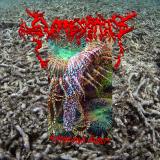
Extinction Burst! is the new invocation in album-form by Guttersnipe, Leeds’ premier and pre-eminent XFCER (XFCER: Xenofeminist crisis-energy rock)* duo. Slamming at full speed to multi-dimensional oblivion, Extinction Burst! is the most full, hidefinition lurid dream-mare yet spewed out by Uroceras Gigas & Tipula Confusa. Engineered and mixed by Ross Halden at Hohm Studio in Bradford and mastered by Rashad Becker, Extinction Burst! follows 2018’s My Mother The Vent, which garnered universal critical adoration. Nevertheless, this long-awaited follow up is more extreme: it is wildness beyond reason, splitting new tears in the reality gauze, ultimate hallucination through sound ecstasy. 2026’s Guttersnipe are evolved, mutated by 8 years of touring together and with the labyrinthine network of groups both Guttersnipe members are involved with - Tristwch Y Fenywod, Nape Neck, Petronn Sphene, Yexxen to name a few. On Extinction Burst!, as with previous material, the duo are heavily augmented with technology. Tipula Confusa's drum kit triggers chasm-causing synth pulses with thumping low end attack.. Strafing from all over the stereo field the constant shatter of the cymbals and toms feel like Sunny Murray or Rashied Ali in full flight during a John Coltrane session in 1967. Uroceras Gigas’s guitar + synth storm is by-now similarly an instantly recognised tool kit in underground music. Switching from screeching guitar atonality to intricate riffs from the black metal/Voivod hinterland to ultra-distorted synth meltdown, it’s an utterly overwhelming, essential and vital pouring-out of the full emotional spectrum. Both artists vocalise, ecstatic and primal, drawn out or yelped in pain or pleasure or panic. Alive On Tuesday begins with some of the only space on Extinction Burst! Digital crackles and tight-delays blow out into a fullthrottled death-dive into sweet opaqueness, offset by the duo’s vocals. There’s a popular believe that Guttersnipe is chaos, but over 9 mins here the group are clinical in their control of the simulated entropy. Mincing while the Maelstrom Churns’s guitar is modulated into jagged atonal atonement, duetting with the virtuoso drum patterns before it thuds into gear at quadruple the speed. Threads Of Radical Unaliveness veers close to the extreme Metal influences with blast beats and guttural vocalisations until the track exhausts itself into unaliveness. Keep Honking summons a demonic digital panic, with the duo reincarnating in real time as haunted versions of themselves, almost translating the lurid, ultra vivid, simultaneous hell+heaven of being alive in this dimension. Primordial Invagination harnesses No Wave’s dissension of normality before the structured collapse of Skra¨ckblandad Fo¨rtjusning, in which Tipula Confusa’s accelerating drums simulate a bouncing barrel of brimstone descending into a primordial gunky ooze, a respite in the middle before the record splutters to a stuttering finale, both members’ vocals out there in the neon realness, alive with crisis energy. There is nothing on this cursed earth like Guttersnipe. For over 10 years they have whirled in a wiggliness both woebegone and wonderstruck on a mission of radical mutant exaltation using rock music weaponry loaded with a queer hysterical ammunition to rupture the fabric of the known Rock universe and unleash a tendril-soft hallucinatory violence; thrumming with the bracing vividness of insect bodies, crazed with alien synaesthetic emotions, harnessing jagged excoriating illogic as a face meltingly snazzy affront to redundant macho mediocrity with the hope to break minds, squeeze hearts, explode pelvises and maybe even reset the parameters of reality. Addendum: xenofeminist : proposing and creating a world defined not only by sexual/gender equality, queer empowerment and the toppling of the racist heteropatriarchal hegemony and it’s tyranny of phallogocentric signifiers, but a philosophy of radical queerness that explodes the basic notion of embodied existence itself beyond even the human, where we see bacteria, invertebrates, reptiles, marine life, animalia in general, inanimate objects, quantum phenomena and as yet inarticulated bodies and minds as social and political equals that may inspire and inform our concepts of self, feeling and meaning as we labour to build a collective reality that doesn’t completely suck!! crisis energy : a term borrowed from the weird fiction author china mieville to describe a type of extreme concentration of power which emerges when a system or organism is pushed to it’s absolute limit; the point of rupture, chaos, entropic overload, just before it all breaks apart. rock : Rock ’n’ Roll, rock music, the devil’s music, sex, guitar, drums, voice, rhythm, riffs!
il devrait être publié sur 08.05.2026
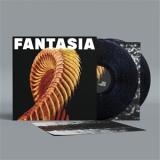
Erstauflage als "Sparkle Starlight Vinyl" 2LP mit Etching auf der vierten Seite. Im technischen Sinne war jedes bisherige Album des französischen Trios SLIFT eine Fantasie - ein Mix aus Genres und Formen, der es der Band ermöglichte, zu improvisieren und so lange zu jammen, bis sie sich scheinbar gemeinsam ins All zu winden schienen. Ihr gefeiertes drittes Album, "Ilion" aus dem Jahr 2024, war eine Science-Fiction-Geschichte, aufgebaut aus 10- bis 13-minütigen explorativen Eskapaden, die oft mit Doom Metal oder Stoner Rock begannen, bevor sie sich frei in glorreiche instrumentale Vergessenheit drehten. Doch mit einer gewissen absichtlichen Ironie heißt SLIFTs viertes Album tatsächlich "Fantasia". Es ist ihr bisher schlankstes und direktestes Album. Es ist auch ihr bisher fesselndstes Album, eine pointierte Saga über die Überwindung internationaler Umbrüche, vorgetragen von einer Band, die mit voller Kraft vorangeht und dabei keine einzige Sekunde verschwendet. Obwohl nur Jean und Bassist Rémi Fossat verwandt sind, ist SLIFT im Grunde eine Band von Brüdern. Mit Schlagzeuger Canek Flores sind sie schon seit der Highschool befreundet, und 2026 markiert ein Jahrzehnt zusammen in diesem Trio. Sie proben mit religiöser Regelmäßigkeit in einem Keller auf dem Land in der Nähe von Toulouse, in dem Jam-Raum, in dem sie schon lange ihrer Vorliebe für langatmige Wunder frönen. Für die Albumaufnahmen zu "Fantasia" überquerten sie die französische Nordgrenze nach Belgien, um in dem riesigen Live-Raum der Daft Studios ein kompaktes Set aus schlanken, agilen und druckvollen Songs aufzunehmen. Die vielfältigen Einflüsse der Band sind offensichtlich: Das Album erinnert an Clutch in voller Wildheit, John Coltrane, Charlie Parker, den sowjetischen Schriftsteller Michail Bulgakow, Pink Floyd und Black Sabbath aus der "Master of Reality"-Ära. Und das klangliche Gewebe wird durch das gekonnte Mixing von Kurt Ballou (Converge, Cave In, High on Fire) unterstützt. Den Songs fehlt es nicht an der Komplexität oder Intensität, die SLIFT zu einem aufstrebenden Star der Heavy-Musik gemacht haben; sie haben einfach neue Wege gefunden, die Komplexität ihrer Vergangenheit in jedes Stück einzuflechten, wie ein Wandteppich, der jedes Mal, wenn man hinschaut, eine neue Ebene offenbart. Damit vermitteln sie eine bestätigende und dringliche Botschaft: Gemeinsam können wir die Zeiten, in denen wir leben, noch immer verändern. Heutzutage ist es furchtbar leicht, sich machtlos zu fühlen. SLIFT setzt sich auf "Fantasia" direkt mit dem modernen Ansturm von Grausamkeit und Absurdität auseinander, sei es die Gleichgültigkeit gegenüber unserem Heimatplaneten oder zueinander. Aber in diesen acht Songs geht es darum, auf eine verborgene Kraft zu vertrauen, um zurückzuschlagen, um an eine Welt zu glauben, in der etwas, das wir noch nicht in Worte fassen oder definieren können, nicht nur einen Weg bietet, den Status quo zu durchbrechen, sondern ihn vielleicht sogar vollständig zu zerstören. SLIFT sind laut, heavy und aggressiv in diesen Hymnen. Sie bereiten sich auf einen Kampf vor, von dem sie glauben, dass wir ihn noch gewinnen können.
il devrait être publié sur 05.06.2026
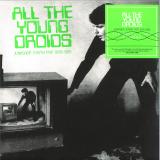
2025 REPRESS ON TRANSPARENT GREEN VINYL
Compiled by Philip King “And then came the rise of synth pop : blokes with dodgy haircuts hunched over keyboard-operated machines stuffed with wires and do-it-yourself tone oscillators making sounds like a brood of geese passing gas in a wind tunnel. Whoopee! This is the way the ‘70s ended : not with a blood-curdling bang bang but with a cheap, synthesized, emasculating whimper.” NICK KENT, NME. All The Young Droids: Junkshop Synth Pop 1978-1985 is a new compilation that charts the underbelly of the epoch-defining sound of the synthesiser in 80s popular music. Compiled by Philip King (previously seen compiling All The Young Droogs, Glitterbest and Boobs - The Junkshop Glam Discotheque), the music here connects the dots between DIY synth enthusiasts grappling with new, cheap synthesisers at the tail-end of punk and wannabe, jobbing songwriters enthral to the new music pioneered by Gary Numan, Depeche Mode and Daniel Miller’s Mute Records. Featuring rare tracks of auto-didactic progressive pop music, proto-techno punk, shoot-for-the-stars-land-in-the-gutter chart flops and heralded, underground synth classics, School Daze paints a picture of beautiful failure. Complete with extensive sleeve notes written by King and never before seen imagery, all 24 tracks were remastered by RPM in-house engineer Simon Murphy, many from vinyl copies due to lost master tapes. The story told on All The Young Droids is one of the dawning opportunity presented by both the emergence to the market of cheaper analog synthesisers and the distribution networks plus indie labels that exploded with the advent of punk music in 1976. While the music that sprouted out all over the globe in the wake of these factors was decried as fake, plastic, a refutation of punk’s guitar-led revolution, it’s telling that much of the music on All The Young Droids.. was created in bedrooms, ramshackle studios and home-made set ups with often borrowed equipment. In the era of record labels jumping to capitalise on the success of The Sex Pistols, The Clash (both on major labels, of course) these artists struggled to stand out from a new gold-rush with next to no budget or PR team. With radio and labels desperate for the new Yazoo, what resulted was a testament to necessity being the mother of invention. At the time, the synthesiser was the music of the future, a shiny new machine that could paint like an orchestra with a single finger and a 4-track. In the hands of Manchester avant-pranksters Gerry & The Holograms it’s a pulsing, sardonic weapon.. the only instrument on the Messthetics classic lampooning of New Wave fashion. In Hamburg, a 16 year old Andreas Dorau used it to write and record (with his female classmates on vocals) a global smash in Fred Vom Jupiter (later licensed to Mute Records). The hard-to-find English version (Fred From Jupiter, natch) is included here. Many artists with alreadystoried careers caught the bug and recorded synthesiser-fuelled peons to space, computers, the future and, of course, love-interests. Harry Kakoulli, late of Squeeze, recorded a solo album in 1979 that included the incredible power-synth-pop smash-that-never-smashed I’m On A Rocket. Similarly, Ian North of Neo and American Power Pop stalwarts Milk ’n’ Cookies bought a Korg MS20 and used a tape machine to record We’re Not Lonely, an absolute lost-classic of minimal synth pop. We’re Not Lonely also features on the Junkshop Synth Pop sampler 7” twinned with John Howard unreleased track You Will See, released April 12th 2025. There are plenty of compilation debuts in evidence. Sole Sister were a mysterious trio who were featured on the Scaling Triangles compilation of female-fronted, queer-adjacent post-punk / underground music that also featured The Petticoats. Selwin Image were from San Francisco and featured members of the recently defunct power pop/punk group The Pushups. Their stupidly catchy The Unknown fizzes with New Wave energy - think XTC to Sparks but remains unreleased until now. Dream Unit’s A Drop In The Ocean is an early synth wave cut, positively teaming with Joy Division instrumentation, previously only released on a long-forgotten and super rare, self-released EP. Incandescent Luminaire’s Famous Names belies an archetypal struggle of a small-town trying to make it in a cruel industry but is a thrilling New Romantic-Synth Wave cross over with a OMD gloominess that’s a joy to hear. Feminist Minimal Wave track I Am A Time Bomb by performance artist Peta Lilly and Michael Chance is a revelation destined for new found cult status. It was released on 7” and lost until now. The flipside to the subterranean, never-made-it synth pop mentioned above are the ambitious, even fruity attempts at success that have a perennial elegance to their confidence. New Jersey-ite Billy London (real name Ed Barth) tried to cash in on the synth boom with Woman, released by a major label, a lurching new wave track built on the Louie Louie rhythm and a wonderfully camp Lou Reedstyle sleazy vocal before exploding in the synthesised chorus. The song bombed but with a chorus like this, you have to wonder why? Ex-Glitter Band member John Springate’s My Life is truly epic, with doomed chord progressions and massive sounding drums turning into at least 3 different songs in the course of the track. Before you wonder what’s going on the song resolves with a glorious return to the main refrain. The dry-ice-dressed dance floor is well catered for too. Design’s Premonition and Vision’s Lucifer’s Friend are stone-cold minimal synth bangers, well loved but given a new lease of life here. The Warlord’s The Ultimate Warlord was released in 1978, a homespun proto Hi NRG banger that was later re-recorded by The Immortals in Canada who had a club hit with it. One-man- band Disco Volante’s No Motion was re-issued by Synth wave label Medical in 2012 but makes its first vinyl compilation appearance here. Close your eyes and you can imagine what Lawrence of Felt would have sounded like with some cheap Korgs a little earlier in his career. Gibraltar-based trio The Microbes imagined a computer programming people to dance - how prescient - and ended up with a propulsive, robo-funk track with splendid rubbery bass playing over a tectonic drum machine. Previously picked up by Belgian label Stroom TV, Dee Jay Bert & Eagle’s heavily Euro-accented I Am Your Master demands the listener to “come to paradise!” In a frankly terrifying manner. All The Young Droids is the first compilation to peel away from the narrative that dour, Minimal Synth and Cold Wave were the only musical children of the first rush of synth pop. Philip King and School Daze Records describe a much more complicated world: along with the austere, Brutalist children of Daniel Miller (who produced Alan Burnham’s Bowie-Low-influenced Science Fiction here) was a plethora of desperate cash-ins, accidental mainstream hits, ambitious pop dramas and major label punts that went nowhere. Crucially, the compilation blurs the line between junk and treasure. What if the two things are interchangeable. What if it’s all science fiction?
Disponible en stock et prêt pour l'expédition
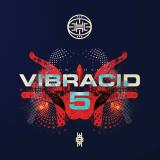
In a dystopian universe where elites manipulate memory to control the population. Vibracid emerges as a technique of liberation through sound: a method for erasing induced memory.
THE RHYME marks the counterattack phase. The insurgents infect the system used by the elites for control and reprogram it from within: patterns, voices and sequences as active code.
Contemporary bass, electro, breaks, acid and rave converge as transmission vectors. Each track operates as a unit of intervention within this science fiction scenario.
At this stage, new signals are incorporated. Power, with a solid trajectory within the underground circuit, opens the EP in a forceful way, with an acid, surprising and spectacular impact. Exieve, a young producer from Chernihiv, continues the attack with a raw tension where vocals cut through the signal like sharp fragments. Alongside them, Lups Digga, Atix, Parand and Calagad 13 continue expanding the system’s reach.
il devrait être publié sur 06.07.2026

Farfalla Records presents “Kaleidoscope”, its new compilation dedicated to the composer Jack Arel. His name belongs to a constellation of composers whose writing has hot stamped sixties and seventies pop music. Variety, television, cinema, ballet and theatre have all been touched by Jack Arel’s signature.
Take a trip through a psychedelic pop musical journey featuring 12 tracks recorded during his long and productive collaboration with the Chappell label and with his friends Pierre Dutour and Jean-Claude Petit by his side throughout.
This compilation features tracks such as ‘Psychedelic Portrait’, famously used as a music cue in the avant-garde cult British TV series The Prisoner.
The track ‘Strange Galaxy’ was utilised as the opening and closing theme for the Australian science fiction TV series Phoenix Five.
‘Purpose’, ‘May Be’ and ‘Something Happen’ are taken from the ultra-rare French soundtrack of the musical Je fus cet enfant là.
While the more adventurous may recognise the tracks ‘Picture of Spring’ and ‘Picture of Summer’ from the Danish underground horror film The Sinful Dwarf.
Disponible en stock et prêt pour l'expédition

lim. 150 blue transparent 180 Gr LP + 7" + Poster / incl. Silent Servant Remix
A cross-cutting label exploring the boundaries between different disciplines based on deep listening and music research, Modern Obscure Music is set to release 'INRI' (INDUSTRIA NACIONAL DEL RUIDO INFINITO) on the 1st December, the new album from Dellarge.
Inspired by the scenic beauty of his studio's surroundings at Lake Pátzcuaro in Michoacan, Mexico, Alejandro Barba, aka Dellarge, delves deep into the depths of his artistic consciousness to craft a spiritual album that encapsulates the essence of the place. 'INRI' stands for Industria Nacional del Ruido Infinito (National Industry of Infinite Noise) and serves as a vessel for Dellarge's innermost self-expression and reflections on the potential of humanity.
A multifaceted artist and veteran of the music industry for over two decades, his latest musical creation is an intimate and personal album and a departure from previous Techno/EBM-orientated Dellarge releases. 'INRI' (INDUSTRIA NACIONAL DEL RUIDO INFINITO) offers a mesmerizing blend of ambient, futuristic, and industrial sounds that transport listeners into a realm of mysticism, futurism, and duality and stands as a testament to Dellarge's artistic growth and his ability to transcend boundaries, offering listeners an immersive experience that connects them to his world.
Drawing inspiration from numerous sources, Dellarge found creative fuel in books such as 'El Arte de los Ruidos' by Luigi Russolo, 'Manifiestos y Textos Futuristas' by F.T. Marinetti, and science fiction classics including 'Congreso de Futurología' by Stanislaw Lem, 'Neuromancer' by William Gibson, and 'Dune' by Frank Herbert. Musically, he delved into the works of Coil, Michael Bundt, The Threshold Houseboys Choir, krautrock legends CAN and Popol Vuh, early Kraftwerk, Arthur Brown, Yello, Esquivel, The Residents, and Hector Lavoe for inspiration.
When asked about the creative process behind the album, Dellarge revealed a disciplined routine that involved immersing himself in the sounds, focusing on minute details that connected with the vivid world he envisioned. Ethereal tracks such as 'Viento Androide' and 'Viaje al Sol' offer a glimpse of a hopeful future, while darker compositions such as 'Corpus de Sangre' and 'Toro de Falaris', explore the wickedness and compassion within humanity. Each piece in the album represents a unique sonic journey.
'Viaje al Sol', the first single to be taken from the album, is set for release on the 27th October, and is also available as an EP which includes a remix from Juan Mendez aka Silent Servant. The remix is also included on the digital version of the album and available on 7" vinyl alongside an exclusive reworking of 'Cascabel' by the founder of Modern Obscure Music, Pedro Vian.
Disponible en stock et prêt pour l'expédition

Nachdem sie auf ihrem gefeierten Debütalbum ein multidimensionales Klanguniversum definiert hatten, verlassen der Komponist und Filmemacher Chris Hunt und James ,Munky" Shaffer von Korn auf EXINFINITE das Vertraute und driften in ein Reich der Rekursion, wo sie auf ein Gewirr aus gespiegelten Wurmlöchern blicken, die mit unheimlicher Mehrdeutigkeit summen. Das zweite Album von VENERA ist düsterer, heavier und perkussiver als sein Vorgänger, aber es gibt etwas Intimeres in seinen Schaltkreisen, das schwer zu definieren ist - etwas Mystisches, Geheimnisvolles und Melancholisches. Songs materialisieren sich aus dem Nichts, nur um von sauren Synthesizern aufgelöst oder von Hunts geschärften Beats durchbohrt zu werden, während Shaffers dichte, gequälte Riffs durch euphorische, zeitverzerrte Vocals von FKA twigs, Dis Fig und Chelsea Wolfe ausgeglichen werden. Nach ihrer Begegnung mit der Unendlichkeit haben VENERA nach innen geschaut, über die Grenzen der Existenz nachgedacht und ihre tiefsten Emotionen ausgegraben. VENERA entstand 2022, als Hunt und Shaffer nach Aufnahmen mit der albanischen Künstlerin Xhoana X. ihr eigenes musikalisches Terrain betraten. Das Duo improvisierte gemeinsam und experimentierte mit cineastischem, von Science-Fiction inspiriertem Sounddesign und erkannte, dass die Zusammenarbeit Potenzial hatte. So begannen sie, ihren Sound weiterzuentwickeln und zu verfeinern, wobei sie Unterstützung von Deantoni Parks, dem ehemaligen Schlagzeuger von Mars Volta, Alain Johannes von Queens of the Stone Age, dem Post-Punk-Duo VOWWS und den LA-Noise-Rock-Legenden HEALTH erhielten. Nachdem ihr Debütalbum 2023 auf Mike Pattons Label Ipecac erschienen war, setzten VENERA die Dekonstruktion und Neugestaltung ihres Songwritings fort, tauschten Eno-artige Ambient-Atmosphären gegen explosive Beats und dichte Texturen aus und fanden heraus, wie sie die von ihnen eröffnete Erzählung erweitern konnten, ohne alte Pfade zu beschreiten. Auf ,Tear" ist die neue Richtung des Duos deutlich zu hören, wenn Shaffers ursprüngliche Gitarrenklänge zu unheimlichen Widescreen-Expositionen umgestaltet werden, die Hunt mit pneumatischen Kick- und Snare-Zyklen untermalt. Unterbrochen von Luftschleusen-Zischen und leuchtenden Synthesizern, bietet der Track eine Kulisse, die VENERA kontinuierlich verwandelt und das Konzept im Laufe des Albums neu formt. Die Kult-Singer-Songwriterin Chelsea Wolfe gibt dem düsteren ,All Midnights" einen gotischen amerikanischen Touch, indem sie kraftvoll über VENERAs vakuumverpackte Rhythmen und gasförmige Synthesizer singt, und der in Berlin lebende Noisemaker Dis Fig, der bereits mit The Body und The Bug zusammengearbeitet hat, verleiht Shaffer und Hunts tape-verzerrten Industrial-Pops und -Whirrs in ,End Uncovered" hauchige, emotional vielschichtige Töne. Sie lassen squelchigen, verlangsamten Techno in okkulte Noise-Reflexionspools auf dem schlängelnden ,Asteroxylon" einfließen, und Hunt antwortet auf Shaffers hallende Zupftöne mit Nebelhorn-Stöhnen auf dem unheilvollen, nachdenklichen ,uuu773". ,EXINFINITE" baut sich kontinuierlich auf, bis es ,Caroline" erreicht, eine intensive Zusammenarbeit mit FKA Twigs, die ihre unheimlichsten Töne isoliert. Zunächst umspielt sie ihre Worte mit bedrohlichen elektrischen Verzerrungen und verstümmelten, geisterhaften Stimmen, bevor sie in einen aufgeladenen opernhaften Schrei ausbricht, dem Shaffer und Hunt mit flirrenden kybernetischen Beats und dichten Wänden aus Gitarrenlärm begegnen. Dieser Track bricht das Konzept von VENERA vollständig auf, verschmilzt das Synthetische mit dem Natürlichen und löst Dysphorie, Selbstverlust und unendliche Regression aus. So wirken der blutrünstige Lärm und die finstere Atmosphäre von ,Decreation" wie eine dissoziierte Coda. In ,EXINFINITE" werden Zerstörung und Tod nicht überwunden, sondern so lange intensiviert, bis sie sich vollständig verwandeln.
Disponible en stock et prêt pour l'expédition
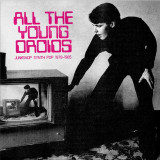
Compiled by Philip King
“And then came the rise of synth pop : blokes with dodgy haircuts hunched over keyboard-operated
machines stuffed with wires and do-it-yourself tone oscillators making sounds like a brood of geese
passing gas in a wind tunnel. Whoopee! This is the way the ‘70s ended : not with a blood-curdling bang
bang but with a cheap, synthesized, emasculating whimper.”
NICK KENT, NME.
All The Young Droids: Junkshop Synth Pop 1978-1985 is a new compilation that charts the
underbelly of the epoch-defining sound of the synthesiser in 80s popular music. Compiled by Philip
King (previously seen compiling All The Young Droogs, Glitterbest and Boobs - The Junkshop
Glam Discotheque), the music here connects the dots between DIY synth enthusiasts grappling with
new, cheap synthesisers at the tail-end of punk and wannabe, jobbing songwriters enthral to the new
music pioneered by Gary Numan, Depeche Mode and Daniel Miller’s Mute Records. Featuring rare
tracks of auto-didactic progressive pop music, proto-techno punk, shoot-for-the-stars-land-in-the-gutter
chart flops and heralded, underground synth classics, School Daze paints a picture of beautiful failure.
Complete with extensive sleeve notes written by King and never before seen imagery, all 24 tracks
were remastered by RPM in-house engineer Simon Murphy, many from vinyl copies due to lost master
tapes. The story told on All The Young Droids is one of the dawning opportunity presented by both the
emergence to the market of cheaper analog synthesisers and the distribution networks plus indie labels
that exploded with the advent of punk music in 1976. While the music that sprouted out all over the
globe in the wake of these factors was decried as fake, plastic, a refutation of punk’s guitar-led
revolution, it’s telling that much of the music on All The Young Droids.. was created in bedrooms,
ramshackle studios and home-made set ups with often borrowed equipment. In the era of record labels
jumping to capitalise on the success of The Sex Pistols, The Clash (both on major labels, of course)
these artists struggled to stand out from a new gold-rush with next to no budget or PR team. With radio
and labels desperate for the new Yazoo, what resulted was a testament to necessity being the mother
of invention.
At the time, the synthesiser was the music of the future, a shiny new machine that could paint like an
orchestra with a single finger and a 4-track. In the hands of Manchester avant-pranksters Gerry & The
Holograms it’s a pulsing, sardonic weapon.. the only instrument on the Messthetics classic lampooning
of New Wave fashion. In Hamburg, a 16 year old Andreas Dorau used it to write and record (with his
female classmates on vocals) a global smash in Fred Vom Jupiter (later licensed to Mute Records).
The hard-to-find English version (Fred From Jupiter, natch) is included here. Many artists with alreadystoried careers caught the bug and recorded synthesiser-fuelled peons to space, computers, the future
and, of course, love-interests. Harry Kakoulli, late of Squeeze, recorded a solo album in 1979 that
included the incredible power-synth-pop smash-that-never-smashed I’m On A Rocket. Similarly, Ian
North of Neo and American Power Pop stalwarts Milk ’n’ Cookies bought a Korg MS20 and used a
tape machine to record We’re Not Lonely, an absolute lost-classic of minimal synth pop. We’re Not
Lonely also features on the Junkshop Synth Pop sampler 7” twinned with John Howard unreleased
track You Will See, released April 12th 2025.
There are plenty of compilation debuts in evidence. Sole Sister were a mysterious trio who were
featured on the Scaling Triangles compilation of female-fronted, queer-adjacent post-punk /
underground music that also featured The Petticoats. Selwin Image were from San Francisco and
featured members of the recently defunct power pop/punk group The Pushups. Their stupidly catchy
The Unknown fizzes with New Wave energy - think XTC to Sparks but remains unreleased until now.
Dream Unit’s A Drop In The Ocean is an early synth wave cut, positively teaming with Joy Division
instrumentation, previously only released on a long-forgotten and super rare, self-released EP.
Incandescent Luminaire’s Famous Names belies an archetypal struggle of a small-town trying to
make it in a cruel industry but is a thrilling New Romantic-Synth Wave cross over with a OMD
gloominess that’s a joy to hear. Feminist Minimal Wave track I Am A Time Bomb by performance artist
Peta Lilly and Michael Chance is a revelation destined for new found cult status. It was released on 7”
and lost until now.
The flipside to the subterranean, never-made-it synth pop mentioned above are the ambitious, even
fruity attempts at success that have a perennial elegance to their confidence. New Jersey-ite Billy
London (real name Ed Barth) tried to cash in on the synth boom with Woman, released by a major
label, a lurching new wave track built on the Louie Louie rhythm and a wonderfully camp Lou Reedstyle sleazy vocal before exploding in the synthesised chorus. The song bombed but with a chorus like
this, you have to wonder why? Ex-Glitter Band member John Springate’s My Life is truly epic, with
doomed chord progressions and massive sounding drums turning into at least 3 different songs in the
course of the track. Before you wonder what’s going on the song resolves with a glorious return to the
main refrain.
The dry-ice-dressed dance floor is well catered for too. Design’s Premonition and Vision’s Lucifer’s
Friend are stone-cold minimal synth bangers, well loved but given a new lease of life here. The
Warlord’s The Ultimate Warlord was released in 1978, a homespun proto Hi NRG banger that was
later re-recorded by The Immortals in Canada who had a club hit with it. One-man- band Disco
Volante’s No Motion was re-issued by Synth wave label Medical in 2012 but makes its first vinyl
compilation appearance here. Close your eyes and you can imagine what Lawrence of Felt would have
sounded like with some cheap Korgs a little earlier in his career. Gibraltar-based trio The Microbes
imagined a computer programming people to dance - how prescient - and ended up with a propulsive,
robo-funk track with splendid rubbery bass playing over a tectonic drum machine. Previously picked up
by Belgian label Stroom TV, Dee Jay Bert & Eagle’s heavily Euro-accented I Am Your Master
demands the listener to “come to paradise!” In a frankly terrifying manner.
All The Young Droids is the first compilation to peel away from the narrative that dour, Minimal Synth
and Cold Wave were the only musical children of the first rush of synth pop. Philip King and School
Daze Records describe a much more complicated world: along with the austere, Brutalist children of
Daniel Miller (who produced Alan Burnham’s Bowie-Low-influenced Science Fiction here) was a
plethora of desperate cash-ins, accidental mainstream hits, ambitious pop dramas and major label
punts that went nowhere. Crucially, the compilation blurs the line between junk and treasure. What if the
two things are interchangeable. What if it’s all science fiction?
Disponible en stock et prêt pour l'expédition

Because of their mix of hellified gangster shit and progressive compositions, I once jokingly called Clipping "Deathrow Tull." Well, it's not a joke anymore. While Clipping's last few projects have been record-long concepts like classic prog rock, their cyberpunk-infused new album Dead Channel Sky is mixtape-like, a carefully curated collection in which every track is a love letter to a possible present. It sounds crisp and classic at the same time. When something strikes us as retrospective and futuristic at the same time, it's a reminder of how slipshod our present moment truly is. Juxtaposing high-tech, corporate command-and-control systems (the "cyber") with the lo-fi, D.I.Y. underground (the "punk"), cyberpunk proper starts in 1982 and ends in 1999, from Blade Runner to The Matrix. Concurrently, hip-hop matured, went through its Golden Era, then melted into further forms: it went from from Fab 5 Freddy to Public Enemy to Missy Elliott. While other genres flirted with it, hip-hop was fickle and fey. Rap and rock birthed mutant offspring maligned by most, and hip-hop's relations with electronica rarely fared any better. What if someone explicitly merged hip-hop and cyberpunk - those twin suns of the '80s and '90s - into one set and sound? After all, both movements are the result of hacking the haunted leftovers of a war-torn culture that's long since moved on. On Dead Channel Sky, Clipping texture-map the twin histories of hip-hop and cyberpunk onto an alternate present where Rammellzee and Bambaataa are the superheroes of old; where Cybotron and Mantronix are the reigning legends; where Egyptian Lover and Freestyle are debated endlessly, and Ultramag and Public Enemy are the undeniable forefathers; where the lost movements of 1980s and the 1990s are still happening: rave, trip-hop, hip-house, acid house, drum & bass, big beat-the detritus of a different timeline, the survivors of armed audio warfare. Clipping are no strangers to sci-fi: two of their records were nominated for Hugo Awards (one of science fiction's top literary prizes), and a novella spun-off from their music was nominated for a third. On Dead Channel Sky, Clipping's co-conspirators include everyone from the guitarist Nels Cline, to their labelmates Cartel Madras, rapper/actor Tia Nomore, and wordsmith Aesop Rock. Diggs is known for intricate lyrics and rapid-fire rapping, and the tracks that Snipes and Hutson build in the background are no less complex. All of the above serves to give us a glimpse of an adjacent possible present, where hip-hop and cyberpunk are one culture. Binary stars are often perceived as one object when viewed with the naked eye. Like those twin sun systems, it'll take some special equipment and some discerning attention to pull the stars apart on this record. As Diggs barks on the fire-starting "Change the Channel": Everything is very important!
Disponible en stock et prêt pour l'expédition

NEW LP PRESSING on Opaque Yellow Wax
Released in September 1978, a mere two months before YMO’s debut, Cochin Moon is a clear precursor to the groundbreaking synth and sequencer-dominated sounds that would come to define the iconic trio. Huge tip!
Credited to Hosono and Pop Art legend Tadanori Yokoo (who created the cover art), Cochin Moon is a fictional soundtrack to a journey into unknown worlds, inspired by Hosono and Yokoo’s trip to India.
The unbelievably prolific Haruomi Hosono is one of the major architects of modern Japanese pop music. With his encyclopedic knowledge of music and boundless curiosity for new sounds, Hosono is the auteur of his own idiosyncratic musical world, putting his unmistakable stamp on hundreds of recordings as an artist, session player, songwriter and producer. Born and raised in central Tokyo, his adolescent obsession with American pop culture informed his early forays into country music, which he would revisit later in his career. Hosono made his professional debut in 1969 as a member of Apryl Fool, whose heavy psychedelia was somewhat at odds with his influences, which leaned towards the rootsy sounds of Moby Grape and Buffalo Springfield. The latter was one of the main inspirations for his next group, Happy End, whose unique blend of West Coast sounds with Japanese lyrics proved to be highly influential over the course of three albums. After the band’s amicable break up in 1973, Hosono began his solo career with Hosono House, an intimate slice of Japanese Americana recorded inside a rented house with recording gear squeezed into its tiny bedroom. Hosono’s solo career would take many twists and turns from this point forward, with forays into exotica, electronic, ambient, and techno, culminating in the massive success of techno pop group Yellow Magic Orchestra (YMO).
Released in September 1978, a mere two months before YMO’s debut, Cochin Moon is a clear precursor to the groundbreaking synth and sequencer-dominated sounds that would come to define the iconic trio. Credited to Hosono and Pop Art legend Tadanori Yokoo (who created the cover art), Cochin Moon is a fictional soundtrack to a journey into unknown worlds, inspired by Hosono and Yokoo’s trip to India. Initially the album was to be a kind of ethnographic musical document, using found sounds and field recordings made by Hosono himself. Instead, after Yokoo introduced Hosono to the sounds of Kraftwerk and krautrock during the trip, Cochin Moon became something much stranger. Created almost entirely on synthesizers and sequencers with the help of future YMO collaborators Ryuichi Sakamoto and Hideki Matsutake, the music on the album is the perfect encapsulation of Hosono’s concept of “sightseeing music,” transporting the listener to an exotic place that may or may not exist. This highly sought-after album sees its first-ever official release outside of Japan.
Disponible en stock et prêt pour l'expédition

From a club-friendly chrysalid onto deploying his wings as a full fledged pop artist in recent years, Saint Petersburgs Kito Jempere has enjoyed a journey unlike any other and his newest album, Part Time Chaos Part Time Calmness live-documents the chameleonic changes / game-changing paradox experienced this year between his life both as a musician and as a family man.
Better known for his work as a house producer which has earned him accolades from prominent dance music outlets throughout well over a decade of intense work both into and outwith the limelights, Kito has for all that never been focussed on writing solely discoid material, throwing as much effort over the years into multi-faceted parallel ventures, far and apart from strictly dance floor-oriented functionality. Yet, from this partition between various projects and mindsets, this is through a radical shift towards downtempo pop and out of the 4x4 loop that Kito got to fully assert himself as a musician, embracing the rejoicing variety of tone and mood of his tender loves, secret and not. The movie Ive never made but have the soundtrack for, Part Time Chaos Part Time Calmness is the fruit of change as much as change itself. A return to the simple means of his young self, his old trusty guitar from his late teens serving as the backbone to Killer Line and Love Myself But I Cant Make It Love, and the natural development to last years Green Monster, which
initiated these deep tectonic movements in Kitos approach to his art, PTCPTC is an intimate trip down the kaleidoscope of his present life. Joined up by an impressive cast of artists, including Jimi Tenor, Adam Evald and Hard Ton, Kito didnt just bin his old persona, he took it back to where it belongs. From the low-slung emotional folk of the opener, Killer Line, to the eerie flamenco-jazz hybrid Before Music Dies. via the broken soulfulness of Put Love Into Your Heart and anthemic 80s balearic breaks meets coastal synthwave vibe of Sounds of Love, the album pulsates with a refreshingly genre-unbound vision. To the naive, laid-back sonic bokeh of Footsteps,
succeeds the left-of-centre cinematic narrative of In The Countryside, which includes some fun nods to fictional brands taken from Tarantinos imaginarium (Red Apple cigarettes) or other movies like High Fidelity, after Nick Hornbys eponymous novel.
Freed from gridlocked programming and impersonal tropes, PTCPTC showcases a wide array of songs, beats, grooves old and new, some dating back to 2018 and improvised sessions with his 9-people Kito Jempere Band, all of which were finished within the same timeframe and with this all-inclusive momentum in mind. Through the epic synths of Absent Ascent. in revamping the universal classic Over The Rainbow with Celebrine, on the appeasing ballad Shorespotting feat. Evald or in the waves-ready closing cut Lovers, Jempere tells a tale of hard-earned emancipation and life-affirming freedom.
Disponible en stock et prêt pour l'expédition

A sonic portal to a parallel universe where neon-soaked dreamscapes transform the stark realities of a post-pandemic world. Music for a forgotten future, where echoes of the 80s cast long, enigmatic shadows through a rich tapestry of emotion that charts a journey from isolation and fear towards healing and hope. This is the journey of Season One and Season Two, the debut companion albums for the solo project of Italian composer Battaglia, both out this fall on Four Flies Records.
In 2020, as the world retreated onto itself due to the COVID-19 pandemic, Battaglia entered the recording studio. Driven by a desire for experimentation, she decided to focus on the classic synths that have made history to create a sonic and emotional alchemy that reimagines the 80s to resonate with our current experiences and sensibilities.
Drawing inspiration from the cinematic magic of iconic early-80s films, and especially the haunting soundtracks of Tangerine Dream and John Carpenter, she crafted a soundscape that goes beyond nostalgia to capture the spirit of a generation navigating uncertain times.
Season One and Season Two explore the complexities of a world grappling with lethal pandemics, climate catastrophes, and nuclear disasters through themes such as longing, fear, and hope, set against a scenario that blends elements of dystopian and post-apocalyptic science fiction and, at times, horror.
Season One delves deeper into the darker aspects of this new reality, evoking a sense of unease and uncertainty, occasionally interspersed with soothing flashes of light. In Season Two, while darkness still lingers, the sonic landscape is infused with a sense of optimism and determination, offering glimpses of a possible salvation.
With Battaglia's signature blend of dark wave, synth-pop, suspenseful electronica, and cinematic vibes, Season One and Season Two create a sonic world that is at once hauntingly familiar and utterly captivating -- the perfect soundtrack, one is tempted to say, for the countless sci-fi/horror-fantasy series that have been flooding streaming platforms in the last decade.
The covers of both albums were designed by Eric Adrian Lee, who conceived them as two sides of the same image, two versions of a world in crisis but whose ruins contain the potential for rebirth.
Battaglia's Season One and Season Two will be available on black vinyl LP starting from October 25th. Digital versions of both albums will also be released on the same date, featuring five bonus tracks (two on Season One and three on Season Two).
Disponible en stock et prêt pour l'expédition

A sonic portal to a parallel universe where neon-soaked dreamscapes transform the stark realities of a post-pandemic world. Music for a forgotten future, where echoes of the 80s cast long, enigmatic shadows through a rich tapestry of emotion that charts a journey from isolation and fear towards healing and hope. This is the journey of Season One and Season Two, the debut companion albums for the solo project of Italian composer Battaglia, both out this fall on Four Flies Records.
In 2020, as the world retreated onto itself due to the COVID-19 pandemic, Battaglia entered the recording studio. Driven by a desire for experimentation, she decided to focus on the classic synths that have made history to create a sonic and emotional alchemy that reimagines the 80s to resonate with our current experiences and sensibilities.
Drawing inspiration from the cinematic magic of iconic early-80s films, and especially the haunting soundtracks of Tangerine Dream and John Carpenter, she crafted a soundscape that goes beyond nostalgia to capture the spirit of a generation navigating uncertain times.
Season One and Season Two explore the complexities of a world grappling with lethal pandemics, climate catastrophes, and nuclear disasters through themes such as longing, fear, and hope, set against a scenario that blends elements of dystopian and post-apocalyptic science fiction and, at times, horror.
Season One delves deeper into the darker aspects of this new reality, evoking a sense of unease and uncertainty, occasionally interspersed with soothing flashes of light. In Season Two, while darkness still lingers, the sonic landscape is infused with a sense of optimism and determination, offering glimpses of a possible salvation.
With Battaglia's signature blend of dark wave, synth-pop, suspenseful electronica, and cinematic vibes, Season One and Season Two create a sonic world that is at once hauntingly familiar and utterly captivating -- the perfect soundtrack, one is tempted to say, for the countless sci-fi/horror-fantasy series that have been flooding streaming platforms in the last decade.
The covers of both albums were designed by Eric Adrian Lee, who conceived them as two sides of the same image, two versions of a world in crisis but whose ruins contain the potential for rebirth.
Battaglia's Season One and Season Two will be available on black vinyl LP starting from October 25th. Digital versions of both albums will also be released on the same date, featuring five bonus tracks (two on Season One and three on Season Two).
Disponible en stock et prêt pour l'expédition

Y’KNOW returns to Spiritual World on October 4th with Why Now, an 8 track 12” that is so stacked with groove that you can physically feel the claps when you run your hand over the record.
Why Now lifts the fog established on the duo’s digital 2023 two-song debut, pushing their signature beat forward minimalism into digital dancefloor soundscapes. Following in the tradition of dub records, Why Now features four vocal cuts on the a-side backed with four reimagined and stripped back dub versions on the b side.
Lyrically, Bally takes on the narrative of a detective in search of the perfect groove, even if it ultimately leads to their own fictional demise. Y’KNOW is clearly in pursuit of the perfect vibe, and while doing so exceeds the imagination of most traditional guitar-based bands with a mesmerizing mix of dub, post-punk and synth pop.
Limited to 200 12” copies.
RIYL: Colour Box, Maximum Joy, Tom Tom Club, George Clinton & Brenda Ray
Disponible en stock et prêt pour l'expédition

Matching breezy, Bossa nova-tinged sophistication with softly spiralling psychedelia, Testbild! arrive in the Quindi lounge as though they've always been there. On their 12th album, Bed Stilt, the Swedish collective cast their attention back to the earlier days of their 25-year trip through sweetly mysterious pop-not-pop rendered in warm tones and shot through with surrealism. It's tricky to get a precise fix on the story and structure of Testbild! The project was spearheaded by Petter Herbertsson in his hometown of Malmö in the late 90s, although the story on their website credits the inspiration and source material to a chance meeting and unpublished manuscript from a retiring scientist. The collective's evolution since then is a tangled web of facts and fiction spun by a revolving cast of collaborators including Siri af Burén, Katja Ekman, Rikard Heberling, Douglas Holmquist, Mattias Nihlén and Petter Samuelsson. Along the way, their music has touched on chamber pop, post-punk and modern jazz with the elaborate harmonies and catchy songwriting charm of the Canterbury scene. The tracks which make up Bed Stilt were in fact track recorded in Malmö back in the mid- 00s, lying in wait for the right opportunity to be brought to light with some delicate overdubs and finishing flourishes in the here and now. The core musicians working on the record were Herbertsson and Douglas Holmquist on a similarly expansive list of vocals, guitars, bass, synths and keys, Siri af Burén on lead vocals and Mattias Nihlén on synths and additional mixing. Meanwhile Tomas Bodén - better known as Civilistjavel - lent some additional synth work as well as mastering the record. Musically, Testbild! stay true to their idiosyncratic approach on Bed Stilt with six immaculately rendered sojourns through lilting harmonies and brushed rhythms, feeling nostalgic but beguiling in equal measure. Theirs is a luxurious sound, not least on the opening strains of 'The First New Years Eve,' which purrs to life draped in silky Rhodes and chiming vibes. Behind this comfortable veneer the enigmatic lyrical themes unfurl through Herbertsson, Holmquist and af Burén's vocal harmonies like fractalized puzzles waiting to be solved. The finger-picking delicacy and languid harmonica of 'Streams' strike a pastoral mood neatly countered by the elegant slide into dislocated ambience for the track's final stretch. By contrast, 'And Her Eyes Are Red' surges with a big beat urgency which plays beautifully with the mellow jazziness of the chord sequences, boldly toying with song structure to dart down curious tangents without losing the immediate impulse of a great pop record. Somewhere in this tension between clarity and chaos we can understand the addictive charm of Testbild! - a band steeped in the considerable craft of making accomplished and unconventional music so very easy to sink into. If that doesn't make for a perfect addition to the Quindi catalogue, we don't know what does.
Disponible en stock et prêt pour l'expédition

“Wild Boy …” is a reissue of the well-known 2016 release curated by Brian Chidester, renowned researcher and biographer of Eden Ahbez. Especially for this album, Brian wrote an interesting text about Abi’s life, which definitely became the decoration of the release.
With the new 2020 re-release, we went a little further and kept what is commonly referred to as studio cuts. It’s a few more minutes in the studio with ahbez himself, full of emotion and life. In addition, to the delight of fans, the edition includes an additional composition Nature Boy (Mantovani Orchestra).
Especially, it is worth noting the outstanding mastering prepared from practically decomposed tapes by the Grammy-nominated Jessica Thompson, which guarantees the deepest and warmth possible sound. Jessica a huge ahbez fan and we’re highly appreciated for what she has done to save his music for the future.
Eden Ahbez is definitely at the origin of psychedelic music and this release can be taken as further proof. Over the past twenty years, the iconic figure of the world’s first hippie Eden ahbez has become famous primarily for his 1948 song “Nature Boy”, praising universal love, and his amazingly solo album from the 1960s called “Eden’s Island” – one from the first concept albums in the history of music and probably the first psychedelic music album. “Wild Boy: The Lost Songs Of Eden Ahbez” deepens understanding of the origins of the psychedelic movement in the 1950s.
The disc contains a musical selection of works by Eden ahbez himself, written by him in the period after Nature Boy. The inclusion of songs such as “Palm Springs” – Ray Anthony Orchestra and “Hey Jacques” by Erta Kitt gives the listener the chance to discover for the first time the little-known recordings of world-famous artists composed by Eden ahbez. Through “Wild Boy” and “Surfer John” you can hear the author’s handling of absurd rock and exotic experimentation, as well as sweet psychedelic pop like Monterey (with Paul Horn on flute). Overall, Wild Boy: The Lost Songs Of Eden Ahbez offers an overview of the lost works of 1949-1971 with seven unpublished recordings and eight rare singles.
If in 2020 you are missing the hallucinogenic content in Eden Ahbez, it amazingly makes up for that deficiency with simple chords, expansive arrangements, and lyrics about travel, relaxation, free love, and spirituality. Thus creating the standard of psychedelic music. Eden Ahbez’s songs weren’t only fantasy and his personal philosophy was the real thing that he lived.
reviews:
“This carefully and extensively researched compilation culls covers by top notch mainstream artists juxtaposed with unreleased Eden recordings. What might sound like a mixed bag is actually more like a chronological, musical non-fiction novel about Eden Ahbez. While Eden was writing hundreds of songs and performing live and making recordings in various styles, his songs were also being picked up by popular artists like Nat King Cole and Eartha Kitt who recorded with a more polished mainstream style. There are also some early rock n roll style recordings here. Eden’s professionally recordings often end up as Novelty Pop records such as “Child of Nature” and “The Clam Man” but if you read between the lines and listen to the lyrics it is pretty eye-opening that he is singing about Eastern-religion-style and pre-hippie philosophies about being at one with the planet Earth.
All of this is explained in the lengthy liner notes inside the lp along with a few choice photos that establish Eden as a founding father of Southern California mystic/psychedelic music.” – Tiki_News
“Eden Ahbez’s life philosophy was summed up in the lyrics of his most famous song, “Nature Boy,” a 1948 hit for Nat King Cole: the song describes a “strange enchanted boy” who wanders the world in search of truth. “The greatest thing you’ll ever learn,” he concludes, “is to love and be loved in return.” Ahbez was a pre-cursor of California’s beatniks and hippies, and an exalted icon of ex-otica via his rare 1960 album Eden’s Island. Beyond “Nature Boy” and Eden’s Island, though, there were nu-merous lesser-known Ahbez record-ings. Ahbez biographer Brian Chidester has been doing an exemplary job of archiving and documenting that catalog of work. The Exotic World of Eden Ahbez (reviewed in UT#38) appeared a few years ago, gathering together 14 Ahbez-related rarities” – Ugly Things
Disponible en stock et prêt pour l'expédition

A collection of unreleased themes and scores from 18 short animated films from the world famous Zagreb School Of Animated Film. Includes Oscar winning short cartoon Ersatz / Surogat by Dusan Vukotic (1961) and many other jazz, electronica and experimental scores by composer Tomislav Simovic. Coined by the famed film theorist Georges Sadoul at the 1959 Cannes Festival, The Zagreb School of Animated Film(s) or The Zagreb School of Animation, was defined as an artistic and philosophical world-view that set its mark on the history of animation in the 60's and 70's. The key feature of the Zagreb School (not educational facility in any kind), was commitment to stylization in contrast with the Disney-style canon of realistic animation. Among many composers that worked in Zagreb Film productions, the name of Tomislav Simovic (1931 - 2014) stands out. In his oeuvre of 300+ film scores (not counting compositions and arrangements for pop singers and jazz orchestras), many were made exclusively for Zagreb film documentaries, fiction shorts, features and animation. Simovic was particularly adept at writing music for cartoons. He skillfully synchronized movement and sound and mixed different musical genres, although, like his peers at the time, he leaned towards jazz. 'The Zagreb School of Animated Film (Original Soundtracks 1961-1982)' is compiled by Leri Ahel (Mutant Disco Radio Show) and Zeljko Luketic (Electronic Jugoton, Ex-Yu Electronica III). Master tapes were considered lost, now found and restored for this epic 2 x LP release celebrating Yugoslavia's animated art shorts. Double vinyl gatefold with extensive liner notes, photographs from the films and exclusive cover artwork by Dejan Krsic (NEP / Nova Evropa).
Disponible en stock et prêt pour l'expédition

La MegaCobla: an experienced traditional Catalan cobla wind quartet, born after an improvisation workshop with ZA! two years ago. Pep Moliner, Jordi Casas, Xavi Molina and Xavi Torrent are four of the most reputable and innovative cobla musicians, experts in hacking tradition and using their folk instruments in any modern musical genre.
Tarta Relena, young a capella trans-folk duet that have shook up theire scene. With their use of polyphony and voice FX, Helena Ros and Marta Torrella are digging in the deepest Mediterranean folk repertoire and placing it in the XXIst century with aesthetic renewal.
ZA!: Papadupau & Spazzfrica Ehd are European benchmarks of the underground Do-It-Yourself music community. Their uniquely intense shows, as well as their collective/collaborative work (wokshops, benefit shows, Do-it-Together cooperation) have allowed them to tour the whole world, from Tokyo to Maputo, from Tasmania to Sao Paulo, from New York to Saint Petersburg. Under the premise that avant-garde art is not incompatible with collective horizontal creation, ZA! mix cult, underground and popular music without asking permission.
These three elements come together with the purpose of portraying their own vision of Mediterranean music, filtered by distortion (so current in cognitive, social and identity terms) and psychedelia (so inevitable in an increasingly accelerated and saturated reality). A retro-futuristic journey from folk to free exploring the shores of the Mediterranean, claiming its power as a living core, never as a deadly border.
The TransMegaCobla fuses traditional Mediterranean culture -from bulería to kopanitsa, from gnaoua to sardana- with contemporary culture to create a fictional but deeply human and festive universe. Resurrecting the Phoenician language, the octet seeks common roots to fuse and remake them with contemporary molds such as rock, punk, free jazz and conducted improvisation. A timeless orchestra ready to invent, with real elements, a science-fiction Mediterranean in a parallel reality.
Disponible en stock et prêt pour l'expédition

The life of the solo electronic artist is equal parts privilege and loneliness. You hurtle across the sky to spend a few hours in a dark club, behind the decks or on stage at the microphone. A brief grasp at transcendence, then the lights are on. Afterwards, you chat with friends you made last month, last year, or an hour ago. Back on the train, the plane. A couple weeks of this, then home. Repeat. It was against this backdrop that Ana Roxanne and DJ Python (Brian Piñeyro) struck up a singular friendship and collaboration, culminating in the shared musical language of their new project, Natural Wonder Beauty Concept. Brian and Ana met in New York City in the winter of 2020. They’d respectively put out critically acclaimed albums but due to extenuating global circumstances, the real-world implications of those records were yet to be seen. Ana’s debut LP, Because of a Flower, released in fall 2020, trades in both ethereality and directness, stretching timeless pop and R&B forms into shimmering ambient magic. When the Bay Area-born, Mills-trained artist sings, on record or live, time slows down and we enter a languorous yet ecstatic present. The second album from Queens-based deep reggaeton innovator DJ Python, Mas Amable, also subverts easy temporality. Released in spring 2020, Mas Amable floats in liminal space—not quite a dance record, a downtempo record, nor an ambient record—unfurling at a wistful pace, naturally suited for a strange period when each day felt the same yet wildly different.
Disponible en stock et prêt pour l'expédition

Debut album by Akane, a new bedroom solo project by Tenerife's Carolina Machado - best known for her role as drummer and singer in space rock psychedelic outfit Gaf y La Estrella de la Muerte.
Cooked and slowly matured over the last couple of years, Carolina opens up her heart to present an intimate collec-tion of dreamy avant pop songs under the banner title Night-Time Birds.
With various nods to David Lynch’s dreamlike imagery and weird americana landscapes, Carolina gracefully merges her own local sensibilities to re-imagine a panoramic, fictional soundtrack to an unmade road movie, creating a per-sonal musical language made up of vintage pop songs, lush ambient soundscapes and West Coast lo-fi electronica. Her pursue of sonic exploration through modular synthesis techniques pushes her sound further out into a wider realm as she blends exotic alien-like melodies with her trademark soothing, shoe-gaze style voice. An album that seems to be floating gracefully and frozen in time…
The album’s seven tracks were recorded live during her performance in a disused gas tank at the Keroxen festival in 2022 and counts with the special collaboration of her bandmate in Gaf César Chinarro on guitar. No doubt, Night-Time Birds is not the last we’ll hear from Carol demonstrating once again the varied and eclectic creative energy currently flowing from the Canary archipelago shows no sign of slowing down.
Disponible en stock et prêt pour l'expédition

A selection of unheard tracks by argentine cult proto-industrial band Quum, recorded between the years 2012/2014. Xtraqt Vol. 1 is the second release of Tecnologías Elementales, a record label founded by Djs Diamin and F.A.N.G.O.
Formed in 1978, Quum is an argentine group (currently consisting of brothers and founders members Gustavo and Daniel Gatti) that offers hypnotic and rhythmical improvisations in the language of experimental electronics, with a great participation of randomness, risk and uncertainty. Their music is inspired by science fiction, Zen Buddhism, chaos theory, ecology, the UFO phenomenon and the wabi-sabi concept.
Quum subscribes to the driving attitude of the Madí Movement ("invent and create"), coinciding in a conceptual vector that unites their teachers Jorge L. Borges, Gyula Kosice and Xul Solar.
Quum is a quiché-maya word extracted from the Popol Vuh that means "the secret", "that which is hidden behind the apparent", or "the mystery". The symbol that identifies them is a replica of the huge spider drawn mysteriously on the Nazca-Peru plateau.
Quum is, in addition to music, a living gesture of alternatives to conventional paradigms and pre-established archetypal behaviors.
Some kind of dirty ambient, cybernetik trance and organic industrial music.
Contact our cult!
a A1 Traslación Activada Intro
Disponible en stock et prêt pour l'expédition

BART & THE BEDAZZLED: PEOPLE PERSON + CARBOARD MAN (7")
Bart & The Bedazzled return with a sensational AA-side 45 with the highlife-vibed-plaintive pop of 'People Person' and the layered 'Cardboard Man', featuring the gorgeous guest vocals of Earth Girl Helen Brown. "World dance pop meets '80s indie" LA's northeast side is home to a dizzying number of independent artists and bands. One of the scene's most distinctive sounds emanates from Bart & The Bedazzled, a collaborative group led by talented songwriter Bart Davenport. After debuting in 2018 with the Blue Motel album Bart reconnects with the stellar musicians that make up the Bedazzled for two exclusive new songs of, what he terms, "world dance pop meets 80s indie". Consisting of Los Angeles' highly respected players, the collective are undoubtedly a "musicians' band" playing for joy, performing for and with other artists that inhabit underground haunts such as Zebulon or Permanent Records Roadhouse. This is their sound!
With these new tracks The Bedazzled usher in a new phase, adding a small dose of drum machinery to the mix, resulting in an uplifting, danceable endeavour. On top of this, hand played congas and shakers blend with ultra clean guitars to form a rich context for Bart Davenport's patented, smooth vocal. Newcomer band member and producer Nic Hessler (Catwalk, Captured Tracks) fits these pieces together in seamless mixes.
People Person celebrates the collective human experience, while subtly acknowledging that people often are "the worst". It's an upbeat ode to a beautiful world that sadly may never be saved. Meanwhile, the semi-fictional Cardboard Man critiques a society desperate for truth and a way out of dark times only to find omnipresent, puppet-like heroes offering nothing real. Featuring guest singer Heidi Alexander aka Earth Girl Helen Brown her distinctive tone and phrasing add a much needed weirdo energy to a decidedly consonant pop track.
It comes as no surprise the group have gravitated towards world-dance-ish sounds. Andrés Renteria is an accomplished crate-digger and DJ, as is bassist Jessica Espeleta. She kicks off People Person with a dubby bass line, setting the stage for Wayne Faler's African highlife inspired guitars. It's still Bart & The Bedazzled, but this time they come with a sound somewhat reminiscent of '80s bands that also incorporated international flavors, such as the post Young Marble Giants project Weekend or French electro-obscuros Antena. Like those bands, Bart & The Bedazzled have a wide range of influences and the artistic intention to make something contemporary with them.
Above all, they're a group of friends who enjoy the creative process together. For them the journey is as important as the finished work.
Disponible en stock et prêt pour l'expédition

Originally Re Eff (pronounced Ri Èf) was a bunch of texts. One hundred and fifty pages that Julien Gasc wrote by trying his hand at the art of cut-up: a literary and political act of counter-fiction based on William Burroughs’s method. It was also Julien Gasc’s response to the isolation of 2020, while he was seeking refuge in the Southwest of France, with time as far as the eye could see, and a piano.
For a long while, it hadn’t been about songs, but about expressing the indescribable by cutting randomly from books and his own notes, attempting to fleetingly strike a balance, find a beauty, a happy accident. Incidentally, it was almost by accident, while recycling a piece that he’d composed for steel guitar pedal, that Julien Gasc sketched the first draft of “Ce soir les bouteilles dansent” (“Tonight the Bottles Are Dancing”). This was combined with a version of “Rosario Bléfari”, recorded on an inexpensive Casio synthesizer. These were Re Eff’s baby steps.
While everything was at a standstill, in stasis, Julien Gasc wanted to send a group message to some friends, to his family, a message from a confinee to those who weren’t answering, friend or foe, imaginary or otherwise. It was this collective recipient that he nicknamed Re Eff. The name comes from “re” (re-) and “effacer” (erase), words found during a cut-up and transformed into ri èf for added euphony, like a facetious grief (grievance, reproach in French) without the “g”.
Like its title, a kind of serious joke, the album is one long interplay between humour and gravitas, sense and nonsense, shadow and light, aiming to fully describe feelings in terms of their ambiguous and contradictory elements.
Through a return to regular piano practice, calm recovered at a holiday resort town, and literary experimentations, to which he added transcribed dreams, as in “La scie de la vision modern” (“The Saw of Modern Vision”), Julien Gasc composed ten demos on his computer. These demos were then rerecorded at Syd Kemp’s Haha Sound studio in London, in December 2021. The mix was completed there again, in February 2022, by Syd and Julian.
Play to play and write to write, those are the keywords of Re Eff, in which memories are freely combined (“À travers le regard de l’indienne” / “Through the Amazon’s Eyes”), the theme of enclosure and passion (“Amour velours” / “Velvet Love”), melodrama ("Délivrance"), and romantic novella (“Tout ne peut pas nécessairement donner quelque chose” / “Not Everything Leads to Something”). Music resolutely oriented towards the piano, towards bold and filmic harmonic movements that make a successful form of lyrical poetry possible. Because all in all, by singing about current events – his own and those of the world – in an elegiac tone, like bards, Julien Gasc was gradually transformed from pop singer into poet.
Disponible en stock et prêt pour l'expédition

We've got a bit of an obsession with Hozan Yamamoto here at Mr Bongo! A legend of Japanese jazz, he is rightly regarded as a true master and was recognised as a "living national treasure" by the Japanese government in 2002. Over five decades he pushed the genre into new directions, absorbing fusion, funk, spiritual jazz and many other sounds, resulting in a discography studded with gems of rare beauty. Exploring his back catalogue has taken us on an engrossing journey that now sees us reissuing another work from this ground-breaking musician.
Though not translating perfectly into English 'Akuma Ga Kitarite Fue Wo Fuku', (kitarite has not been a modern expression in Japanese) roughly means 'The Devil Comes Playing The Flute' / 'The Devil Is Coming While Blowing The Whistle' or 'Devils Flute’. It is the original soundtrack to Kôsei Saitô’s 1979 mystery and suspense movie, ‘Devil’s Flute’. The film is based on a story by the famous author, Seishi Yokomizo, and is centred around a much-loved fictional Japanese detective, Kosuke Kindaichi. A Japanese Sherlock Holmes that has been popular for generations.
Hozan Yamamoto was invited to compose the soundtrack directly by the producer of the film, Haruki Kadokawa. Mr Kadokawa also hired keyboard player and producer Yu Imai as assistant producer on the project, resulting in a stunning cosmic, breaks and beats-laden, funk, disco soundtrack extravaganza.
When it comes to the soundtrack and the technology of the time, Hozan Yamamoto and Yu Imai got inventive, tripped out, funked up, and experimented, creating a quirky soundtrack masterpiece that needed to be heard more outside of Japan. Differing from the more traditional Japanese music orientation of some of his other albums such as 'Beautiful Bamboo-Flute' (also released on Mr Bongo) the album showcases a number of genres, from lush atmospheric incidental music to disco and funk grooves, experimental nuggets, drum and flute workouts, to neo-classical and more.
A special record that showcases the further depths of this wonderful musician's talents.
il devrait être publié sur 09.04.2026
"Collected Works and War of the Martian Ghosts" ist die ultimative Sammlung von Aufnahmen der lebenden Chicagoer DIY-Legende Dr. Charles Joseph Smith. Es ist auch die erste Archivveröffentlichung von Sooper Records aus Chicago. Die Musik hier ist zum ersten Mal überhaupt für alle zugänglich. Diese 90-minütige Sammlung umfasst 30 Jahre von Charles' selbstveröffentlichter Musik, darunter Konzertklavier, elektroakustische Experimente, elektronische Beats, freie Improvisation und zwei Instrumentalversionen seiner sich weiterentwickelnden Science-Fiction-Oper "War of the Martian Ghosts" (eine elektronische Version von 2023 und eine Klavierversion von 2018). Diese Doppel-Vinyl-/Dreifach-CD-Sammleredition enthält ein umfangreiches Booklet mit 9000 Wörtern über das Leben und Werk des Künstlers sowie Gedichten, Interviews, Zitaten und 30 Archivfotos. Dies ist ein Stück Musikgeschichte Chicagos. Die bemerkenswerte Geschichte von Dr. Charles Joseph Smith beginnt mit der musikalischen Begabung eines stummen Kindes und der zielstrebigen Art und Weise, wie er dieses Talent förderte, um es zu seiner Lebensaufgabe und Daseinsberechtigung zu machen. Charles erzählt von dieser künstlerischen Reise in seiner Autobiografie ,The 88 Keys that Opened Doors", einem selbst veröffentlichten Buch, das ein Leben beschreibt, in dem Musik der wichtigste Schlüssel war (und immer noch ist), um die großen Herausforderungen durch Autismus-Spektrum-Störungen (ASD) zu meistern. Seine Karriere als Musiker startet in der Kirche, führt ihn in die internationale Konzertszene und endet schließlich in Chicagos experimenteller Underground-Szene, wo sie seltsame Früchte trägt. Auf diesem Weg hat Charles Joseph Smiths kompositorische Stimme populäre Musik von Pop bis Jazz, den Gospel der Kirche, den Kanon des klassischen Konservatoriums, moderne Tanzmusik und den regelbrechenden Experimentalismus der DIY-Subkultur seiner Stadt, in der er seit über 30 Jahren eine tragende Rolle spielt, aufgenommen und verarbeitet. Seit Mitte der 1990er Jahre tritt Charles auf, tanzt und verkauft seine selbst veröffentlichten Musik- und Schriftwerke persönlich, oft bei lokalen Shows, die er regelmäßig besucht. In Chicago ist er als lebendes Symbol für die Kraft der Musik und den beliebten Gemeinschaftsgeist im Herzen der DIY-Szene bekannt. Dies ist die definitive Sammlung seiner Originalaufnahmen - auch wenn es unmöglich wäre, die ganze Bandbreite der Musik, Poesie und Prosa des produktiven Dr. Charles Joseph Smith zu erfassen.
il devrait être publié sur 03.04.2026

High Cube is the beat-focused brainchild of Brian Foote (Peak Oil, Leech) and Paul Dickow (Strategy, Community Library), two low-key legends of the American experimental underground. After some 30-odd years of making music separately and together, Foote and Dickow are collaborating in earnest for the first time as a duo. For this debut, the pair enforced a simple, stringent set of rules: five instruments, a one-hour timer, and a total ban on overthinking.
The result is a record that is the sound of two old friends unplugging the usual levers and letting the "accident" of their chemistry take the wheel. It is drier, sparser, and decidedly "chunky"—a fictional band stepping into a suit to drive around for a while. It is neither dance nor chill-out, but a moody, complex trajectory defined not by the gear used to make it, but by the narrative mood it compels.
"Volcano Snail” starts things off in a disheveled shuffle, locking into gear with blurred and bubbling effluence. The shimmering dimness is lit low, with a woozy gait that recalls the headiest highs and luminescent lows of Jan Jelinek. “Underwater Welder” is a foggy, neon-lit cruise of skittering low-ends suspended in a permanent fall of color, while “A Dragon’s Treasure is its Soul” offers blown-apart, low-end city pop fragmented into an array of rhythmic detritus. Chordal textures hover in the air as a percussive loop takes its beguiling and frolicking shape.
B-side opener “Yonaguni” shapeshifts in real time, drifting with the grace of a glacier before bobbing in a frigid pool of vibrating clatter, static, and synth stabs. “Ofid+wor” offers a tried and true blitz of braindance, nodding to an endless list of 20th and 21st-century electronic body music. Buoyant closer “Mother of Thousands” holds a gravity-defying tenderness, pirouetting on a breeze with the elegance of effervescent longing. Woven together, the six extended tracks of High Cube are tethered to nothing but the ether—a giant sonic leap of peripheral absurdity from two artists with a lifetime of shared rhythm.
Commandez maintenant et nous commanderons l'article pour vous chez notre fournisseur.

The duo’s debut album sets off on an airy, groovy odyssey.
Recorded at the legendary La Frette studio (Parcels, Fontaines D.C.), the album follows an extensive period of demo development.
Immersed alongside outstanding musicians, the team worked in a relaxed, old-school spirit: a handful of takes, tape recording, and analog gear. Plenty of space was left for ideas to emerge organically in the studio. The arrangements—synthesizers, flute, backing vocals, percussion—were then carefully refined over many months.
"Idésia" stands out for its delicate production, brought to life by Maxime Kosinetz on recording (Oracle Sisters, Bon Voyage Organisation), Stan Neff on mixing (Andrea Laszlo de Simone, Polo & Pan), and Chab on mastering (Daft Punk, La Femme).
The record unfolds across changing sonic landscapes, with Will’s voice gliding over melodies rooted in a bright, warm groove. A subtle blend of pop and Californian warmth runs throughout the album.
The album explores themes of childhood (Sur le Chemin de l’École, L’Île Perdue), ecstatic escapes (Holiday(s), Pas de Côté, Escalier), and simple pleasures (Le Bal, Cavalière de l’Aube). It also casts a poetic eye on the evolution of the world (Dernier Vol, Robot Rêveur, Balayeur de l’Espace). Will & Paul play with contrasts, shifting perspectives along the way.
"Idésia" is the imaginary world in which Will & Paul gracefully lose themselves - a suspended place between nostalgia and science fiction, as if their silhouettes were drifting from a bright, carefree past toward a place suspended in time.
il devrait être publié sur 27.03.2026

London-based, Wrexham-raised artist and producer Art School Girlfriend announces her third studio album 'Lean In', due March 11th 2026 via Fiction Records. She also shares new track 'The Peaks', and announces a 2026 run of headline dates. Armed with the freedom and space to experiment, 'Lean In' was self-produced in her own East London studio and sees Art School Girlfriend set to move from cult bedroom artist to one of the UK's most vital artist/producers operating at the moment, tackling alternative rock, electronic pop and experimental ambient sounds in her most cohesive work to date
Commandez maintenant et nous commanderons l'article pour vous chez notre fournisseur.

Hotel Fiction is an indie rock band from Athens, Georgia comprised of Jade Long (vocals, keys, guitar), Jessica Thompson (vocals, lead guitar), Aaron Daugherty (lead guitar, synth), Aidan Hill (bass), and Gideon Johnston (drums). Their sound has often been described as genre-fluid, with indie, pop, folk, and rock influences. They have become known for their honest lyricism, haunting harmonies, and electric live shows.
Deluxe edition of Hotel Fiction's 2023 release Staring At The Sun. Features two new songs as well as alternate versions of album tracks, including a guest appearance from Hey, Nothing. LP pressed on limited edition coke bottle clear vinyl.
Single Coke Bottle Clear Color LP w/ printed inner sleeve + insert and updated artwork
il devrait être publié sur 27.02.2026

"Collision Drive" ist Alan Vegas zweites Solo-Studioalbum, das ursprünglich 1981 rausgekommen ist. Während sein Debütalbum den Grundstein für eine rohe, minimalistische Interpretation von Rockabilly und Blues gelegt hat, erweitert Collision Drive" die Palette mit einer raueren, vielschichtigen und ungefilterten Energie. Hier greifen Vegas Texte universelle Themen auf, die in seiner Faszination für das Straßenleben, Science-Fiction, Politik, Comics, Liebe und die Geheimnisse des Universums verwurzelt sind. Es ist ein Album, das vor Gefühl und Rebellion pulsiert und das gesamte Spektrum menschlicher Erfahrungen sowie Vegas sich weiterentwickelnde Vision zeigt. Alan erfand sich immer wieder neu, schuf und verfeinerte seine Meisterschaft der Variation und behielt dabei seine eigene unvergleichliche und unverwechselbare Ästhetik bei. Klanglich ist dieses Album dynamischer als sein erstes. Collision Drive" verzichtete auf Drum Machines zugunsten eines Live-Drummers und holte eine Hardrock-Band als Begleitung hinzu, wodurch es eine andere Sichtweise auf Vegas künstlerische Vision bot. Der schmerzhafte Punk-Rockabilly von Magdalena 82" entfaltet sich mit einer hypnotischen Mischung aus Gitarren-Slides und frenetischer Energie, während Vegas Cover von Be Bop A Lula" Gene Vincents Klassiker in ein aggressiv aufgeladenes, manisches Heulen verwandelt. Andere Tracks wie der treibende kosmische Rock 'n' Roll Raver" dringen in Psychobilly-Gefilde vor. Vega war unerbittlich innovativ und beschritt ständig neue Wege. Hier werden wir Zeugen seines vollständigen Aufstiegs in seine eigene Mythologie: teils Rockabilly-Outlaw, teils kosmischer Prediger, teils visionärer Außenseiter. Collision Drive" ist breiter angelegt als sein Debüt, aber genauso kompromisslos und eine mutige und persönliche Erkundung von Klang und Identität. Roh, elektrisierend und bahnbrechend bleibt es ein Kult-Meilenstein des Outsider-Rock und ein Prüfstein für die Entwicklung des Art-Punk und des experimentellen Pop von einer der furchtlosesten Ikonen New Yorks. Collision Drive" wurde von Josh Bonati anhand der Originalbänder neu gemastert und erscheint nun in einer ehrfürchtigen Neuauflage bei Sacred Bones.
il devrait être publié sur 23.01.2026

"Collision Drive" ist Alan Vegas zweites Solo-Studioalbum, das ursprünglich 1981 rausgekommen ist. Während sein Debütalbum den Grundstein für eine rohe, minimalistische Interpretation von Rockabilly und Blues gelegt hat, erweitert Collision Drive" die Palette mit einer raueren, vielschichtigen und ungefilterten Energie. Hier greifen Vegas Texte universelle Themen auf, die in seiner Faszination für das Straßenleben, Science-Fiction, Politik, Comics, Liebe und die Geheimnisse des Universums verwurzelt sind. Es ist ein Album, das vor Gefühl und Rebellion pulsiert und das gesamte Spektrum menschlicher Erfahrungen sowie Vegas sich weiterentwickelnde Vision zeigt. Alan erfand sich immer wieder neu, schuf und verfeinerte seine Meisterschaft der Variation und behielt dabei seine eigene unvergleichliche und unverwechselbare Ästhetik bei. Klanglich ist dieses Album dynamischer als sein erstes. Collision Drive" verzichtete auf Drum Machines zugunsten eines Live-Drummers und holte eine Hardrock-Band als Begleitung hinzu, wodurch es eine andere Sichtweise auf Vegas künstlerische Vision bot. Der schmerzhafte Punk-Rockabilly von Magdalena 82" entfaltet sich mit einer hypnotischen Mischung aus Gitarren-Slides und frenetischer Energie, während Vegas Cover von Be Bop A Lula" Gene Vincents Klassiker in ein aggressiv aufgeladenes, manisches Heulen verwandelt. Andere Tracks wie der treibende kosmische Rock 'n' Roll Raver" dringen in Psychobilly-Gefilde vor. Vega war unerbittlich innovativ und beschritt ständig neue Wege. Hier werden wir Zeugen seines vollständigen Aufstiegs in seine eigene Mythologie: teils Rockabilly-Outlaw, teils kosmischer Prediger, teils visionärer Außenseiter. Collision Drive" ist breiter angelegt als sein Debüt, aber genauso kompromisslos und eine mutige und persönliche Erkundung von Klang und Identität. Roh, elektrisierend und bahnbrechend bleibt es ein Kult-Meilenstein des Outsider-Rock und ein Prüfstein für die Entwicklung des Art-Punk und des experimentellen Pop von einer der furchtlosesten Ikonen New Yorks. Collision Drive" wurde von Josh Bonati anhand der Originalbänder neu gemastert und erscheint nun in einer ehrfürchtigen Neuauflage bei Sacred Bones.
il devrait être publié sur 23.01.2026

‘Pilot’ is the debut album from London quintet Miniseries. Channelling the epic sweep of TV themes and movie soundtracks into resplendent space rock they explore themes of youth and ageing, heartbreak and paranoia, euphoria and existential dread.
Songwriter Doug Morch (Longview) had been working on largely acoustic folk songs when he met Angela Gannon (The Magic Numbers) at Glastonbury 2017. Romance and musical collaboration ensued. The band coalesced in the hallowed environs of Farringdon's The Betsey Trotwood pub – a musical nexus where burgeoning indie and Americana scenes collide – where they met fellow songwriter and guitarist Dermot Watson (from Brighton's The Dials) and drummer Danny Abbasi and were joined by Doug's former bandmate Aidan Banks on bass. When they came together, their indie folk mutated into motorik art rock, with their first single being an eight-minute jam called "Road".
When it came to capturing their sound, the band reached for maverick musician and producer Sean Read. They recorded tracks at Read's Famous Times studio in Clapton, London, as well as at Edwyn Collins' Clashnarrow in Helmsdale, Scotland – one of the world's most breathtaking and idiosyncratic studio locations, adding unquantifiable magic to the proceedings.
For the closing track "May You Always", they headed to another studio imbued with tangible inspiration: Blueprint Studio in Salford with producer Craig Potter (Elbow) at the helm. For the song, Dermot drew cinematic inspiration from the Withnail & I line "I'll never play The Dane", the song is about realising that the things you aspired to in youth will never come to pass and being at peace with that realisation.
The recurring themes of youth and ageing are apparent in the resplendent lead track ‘You're Gold’ – a heartfelt call for young people to reject materialism and exploitative influencer culture in search of life's deeper meaning, with stylistic nods to The Pixies and early Stereolab.
On the opposite end of the spectrum, "Sepia" explores old age and fading memories through dementia, where the ending descends into chaos like a fragmenting mind. Elements of "Sepia" are foreshadowed in the album's opening track, the instrumental "Pilot Theme", which pays homage to TV theme music, invoking spy thrillers or perhaps something otherworldly from science fiction.
“Offcumdens” is a Calder Valley, Yorkshire term for people who live in the area but come from somewhere else. Hailing from Bury, Lancashire, Morch wrote the song while living in Hebden Bridge (and watching too much Happy Valley) and found himself being an offcumden. It’s a pop at the kind of local nativism which breeds intolerance and an illustration of the sinister rise of wider political populism.
Miniseries' Pilot is just the beginning of the story. Enthralling and atmospheric, the London quintet have created something familiar yet timeless. As singer Doug Morch says, "It's the Miniseries Pilot episode. Like the TV episode a studio makes to test whether it's viable.” In the age of streaming and box-sets, this is an album to truly binge on. We can’t wait to hear what happens next.
il devrait être publié sur 16.01.2026

Buzzcocks - Total Pop 1977-80: Rare, Live And Great Diese Compilation vereint rare Studioaufnahmen und energiegeladene Live-Versionen aus der Hochphase der Buzzcocks und zeigt, warum die Band als Pioniere des britischen Punk gilt. Mit kompromisslosem Sound und scharfem Songwriting ist das Album ein authentisches Zeitdokument der späten 70er.
il devrait être publié sur 19.12.2025

Released here for the first time on vinyl, Science-Fiction is one of Mazalda's early albums, originally released in 2008 on CD only. Mazalda is a legendary band for anyone who's been to French venues and festivals in the last 20 odd years ; the Lyon-based collective have played – literally – thousands of shows, always with a high level of breathtaking musicianship, sensitivity and energy.
Although mostly known for their fruitful collaboration with raïsinger Sofiane Saidi in the late 2010's, Mazalda started off as a street brass-band circa 2001. Soon, they integrated specific modern elements to their sound : 70's analog synths, psychedelic guitars, electric mandoline, Wurlitzer piano, Ewi electronic saxophone.
Stéphane Cézard, Mathieu Ogier, Lucas & Adrien Spirli, Gilles Poizat and Julien Lesuisse were influenced by numerous styles of instrumental music from across the Eurasian continent since their teenage years ; yet with Science-Fiction they broadened their field of inspiration to both pop and experimental horizons. Gilles Poizat (Orchestre Tout-Puissant Marcel Duchamp) and Julien Lesuisse (Crimi)'s clear and melodic vocals pair with a great sonic depth created by the countless possibilities of instrumental combinations.
Mazalda chose to record a handful of cover versions such as the majestic opener " Thu Og Eg " by Icelandic prog musician Gunnar Thordarson, or a funk-fuelled version of a 1920's protest song by Neapolitan singer Alfredo Bascetta. A majority of the selection, though, is masterfully penned by members of the band.
Science-Fiction captures the fresh and boundless creativity of a young band of mates who, as well as being top-rank interprets, draw unique inspiration from timeless musical wells. It just wasn't fair that this album never got released on vinyl or online. Meanwhile, Mazalda are still alive and well, as they released their latest album Special Key in 2023 (Airfono) and are currently playing shows across France and Europe with Franco-Egyptian singer Hend Alrawy (Orange Blossom) as "Zerzura".
il devrait être publié sur 14.11.2025

NYC electronic music collective P.E. return with their third and final album Oh!, due October 3 on Wharf Cat Records. Oh! Is the sound of a startled exclamation punctuating an exit, and the embodiment of the music within: fun and fluorescent, fluid and flirty, dirty and a little dangerous. From their conception in 2017 through the NOPE Tape series, P.E. existed as an experiment in co-conspirited collaboration. Oh! continues to cast a wide net, featuring an expanded lineup from their original formation, including Eleanor Friedberger of The Fiery Furnaces on the lead single "Color Coordinator". The resulting music ranges wide as ever, from the jubilant grooves of the title track and "Color Coordinator" to "The Fiction Writer" - a tender duet between Veronica Torres and Jonny Campolo - through the city pop sounds of "(Do You Like) So So?" and "Purple On Time", and into the abstracted beyond. This isn't a goodbye, but a "see you around". A tear falls down the cheek of a stranger, dancing as they catch your smile in the reflection of a glass building. Ceremoniously, serendipitously, they sidewalk surf away, stepping on something sharp - "Oh!" - leaving a teardrop on the city pavement. Following the last P.E. show, Jonny Campolo fully embraced his persona of The Grayscale Clown. You can hear him crooning in pets (along with Nick Campolo and Chase Ceglie) and droning in Microfibers (featuring Keegan & Eugene of Decor). His brother Nick Campolo successfully uploaded his consciousness to the cloud. He & his simulacrum perform in the aforementioned pets and solo as Nick Nun Ca. Ben Jaffe was in a freak nuclear waste accident when his DNA merged with a puma - he is now known as The Puma Man. You can catch him prowling around NYC with Sleaze Generator and as a sax beast for hire. Bob Jones went on a silent meditation and forgot how to speak. He now quietly releases music under the name R.A. Jones (as on his recently released Whispered to A Child), and as Scythe with David West (on A Colourful Storm). Jonathan Schenke disappeared for six months without a trace; when he returned he had developed a nervous tic anytime he heard a 909 rimshot or a saxophone. His recent solo album Passages (on No Gold) features neither of the above, nor does his project Gift Horse with Matthew Hord. Veronica Torres headed west to pursue her studies, developing a ceramic polymer whose beauty has caused madness in certain individuals. Her band Cha Cha 9 is a darling of the Minneapolis scene. P.E. would like to say thank you from the bottom of our hearts to everyone who listened to our records and danced at our shows - your love is felt. Thank you so much to Wharf Cat Records for all of the support over the years. Thank you to the fans. Thank you Pill and Eaters. Mitwirkende
il devrait être publié sur 07.11.2025
