Search:phil york

Styles
All
Komiko - Feel Alright

Komiko

Feel Alright

7"-VinylDEMSING029
Demon Records
14.07.2023

Remastered reissue of another stone cold New York club classic from the legendary
SAM Records label - home to so many fabulous disco/boogie recordings from the
1980s.
• Pure early 80s electronic disco joy for the packed, sweaty dance-floors. A true boogie
classic, a huge club hit that got spun from The Garage to the streets of London.
• Not much is known about Komiko, an undercover studio outfit that featured guest
vocals Carol Williams, Tracey Weber and Vicky D. This single is their sole release.
• Remastered by Phil Kinrade and presented in a 7” Discobag sleeve.

In Stock

On Stock and ready to ship

Charlotte de Witte - Overdrive EP

Charlotte de Witte

Overdrive EP

12inchKNTXT021
KNTXT
22.05.2023

New York, NY (May 09, 2023) - Techno powerhouse, Charlotte de Witte releases her highly anticipated EP, Overdrive as the anchor to her larger Overdrive Campaign within the KNTXT Label. Following de Witte’s breakthrough to the top of the electronic music scene in 2019 with her signature sonic approach that refuses to be boxed in, Overdrive is a reflection of this ethos. The EP aims to showcase street style that is both rough and energizing, while delivering high-energy tracks meant to pull listeners into the fast-paced thrill that unlocks one's turbocharged version of themselves. Listen HERE.

“While making Overdrive, I didn’t fully realize how applicable the lyrics are to my philosophy of life,” said de Witte. “The fast-paced tempo, which goes full force without looking back, is all about the feeling of being on the edge and living life to the fullest.”

Best known for her “dark and stripped-back” brand of techno and underground music, DJ, record producer, and label head de Witte pushes the boundaries of the electronic genre with music that has a distinct and unforgettable sound that is uniquely her own. De Witte’s innovative ability allows her to seamlessly blend genres and styles that have won her a dedicated fan base and critical acclaim.

“Overdrive is a love story between hip hop and techno, it’s inspired by both genres, but coated in a techno jacket,” said de Witte. “It’s meant to be played loud while driving at night and watching the city lights pass by, and where better to experience that than in New York City?”

Overdrive marks de Witte’s first release since her single “High Street,” and first EP on her KNTXT label since her last EP, “Apollo” which was released in October 2022 as well as her collaboration with fellow techno artist Enrico Sangiuliano on the “Reflection” EP in March 2023. De Witte had previously worked with Sangiuliano on their remix of “The Age Of Love”, which amassed over 40 million streams on Spotify and achieved certified gold status in Belgium. De Witte’s other recent releases include her “Universal Consciousness” EP in 2022 and her “Formula” EP in 2021, which featured the chart-topping lead track “Doppler”.

In Stock

On Stock and ready to ship

Jake Muir - Mana  LP

Jake Muir

Mana LP

12inchITLP10
Ilian Tape
16.11.2021

Since he started producing music, Berlin-based American sound artist Jake Muir has been obsessed with sampling. His 2018 album "Lady's Mantle" was based on manipulated chunks of vintage Californian surf rock, and its follow-up, 2020's midnight symphony "The Hum Of Your Veiled Voice" was sourced from a wide variety of old records, and inspired by the work of experimental turntablists like Marina Rosenfeld, Janek Schaefer and Philip Jeck.

On "Mana", Muir looks back to a misunderstood musical movement. Around 1995, a group of New York producers and DJs - including DJ Olive, DJ Spooky and Spectre - pioneered a genre-dissolving sound by unifying hip-hop techniques with ideas pulled from dub, jungle, ambient music and industrial noise. Badged "illbient", it was a short-lived genre that felt like a high-minded psychedelic cousin of the UK's trip-hop.

Muir uses illbient as the springboard for "Mana", utilizing a selection of samples to inform his frothy drones and foreboding atmospheres. He ushers the material into 2021 by diverting it through his own contemporary worldview, attempting to recreate the hyperreal fantasy histories of Japanese RPGs (think "Dark Souls" and "Final Fantasy") and nod to sensual, tactile soundscapes of European industrial labels Staalplaat and Soleilmoon. The result is a magickal, sensory journey that's as physical as it is representational.

If the illbient producers were encouraging a burgeoning experimental music landscape to emphasize the tactile feeling of turntablism and sample manipulation, Muir is doing the same with "Mana". Each track heaves and breathes not just with his cultural reference points, but with layered, complicated emotions. We can hear joy, sadness, desire and anguish, obscured by disintegrating noise, hallucinogenic harmonies and sub-aquatic bass. It's electronic music that's rooted not in technology, but in touch.

In Stock

On Stock and ready to ship

Kander - Seperate & Divide

The long awaited second release on Obscure Unfound comes from the Manchester duo Kander.

Two original Straight up dance floor destroyers & two slamming remixes from RAW’s MAKORNIK & Peryl. The guys have enjoyed an absolutely storming year with gigs in New York, Philadelphia, London, Manchester & Berlin. Recent mixes for the Brvtalist & Instrument of Death along with smashing releases on Marked & ISMUS have gained worldwide support.

In Stock

On Stock and ready to ship

Roman Rauch - Blackout

Roman Rauch

Blackout

12inchFORTUNEA014
fortunea
25.10.2019

One of the key figures in the Austrian house scene is definitely Roman Rauch. The MPC wizard has released quality tracks on cult labels like Philpot, klamauk, Quintessentials, Dirt Crew and Faces Records during this decade.

After 3 remixes and a collaboration with Precious K as Twinpeaks, he will return this autumn on the Viennese based imprint fortunea with a 5 track ep, called Blackout.

The A-side features the title track and a remix by New York’s Let’s Play House chief Jacques Renault. Roman delivers here his typical signature sound of crackling, dustfilled funk and r&b samples in combination with weighty rhythm sections. Jacques’ take is from it’s mood similar. But what stands out here is the addition of congas and a heavy compressed and funky bassline, that puts the dancefloor into a tribal gathering.

The B-side starts in a low-key deep house direction with „Oh Yeah“. A smooth warm bass chimes together with psychedelic rhodes and twirling low-cutted synth progressions. In contrary to this, Janefondas member Precious K takes these elements and transforms them into 2 different versions. The „More Dips Remix“ is a garage influenced party grenade, while the digital exclusive „Rawmix“ turns this tune into an exuberant, dirty warehouse experiment.

The vinyl is limited to 300 copies. There will be no repress!

Mastering by Patrick Pulsinger.

Support by Laurence Guy, Krewcial, Tensnake, Franck Roger, Loz Goddard, Baldo, Orlando B, Nice 7, Severino Panzetta (Horse Meat Disco), Replika, Tim Toh, Drei Farben House, Michael Reinboth, Clandestino, OOFT!, Sean Brosnan, Lars Berenroth

In Stock

On Stock and ready to ship

Daniel Pemberton - Project Hail Mary (Original Motion Picture Score) (LP 2x12")

Der Score Soundtrack des Oscar-nominierten Komponisten Daniel Pemberton zum Film Project Hail Mary (dt. "Der Astronaut") ist jetzt auf CD und Vinyl erhältlich.Das Doppelalbum enthält beeindruckendes Bildmaterial aus dem Film sowie Pembertons atemberaubenden, cineastischen Score und lässt Fans noch tiefer in die außergewöhnliche Mission von Grace und Rocky zwischen den Sternen eintauchen. Die 2LP-Edition erscheint auf transparenten Schallplatten.Der mit dem Ivor Novello-Award ausgezeichnete und Oscar-nominierte Komponist Daniel Pemberton (Spider-Man: Into/Across the Spider-Verse, The Trial of the Chicago 7) präsentiert mit Project Hail Mary einen kraftvollen und mitreißenden Soundtrack. Episch, modern und emotional: Der Score verbindet treibende Percussion, beeindruckende Chöre, orchestrale Klangwelten sowie Synthesizer und elektronische Elemente zu einem einzigartigen Hörerlebnis.Basierend auf dem New York Times Bestseller von Andy Weir, mit Oscar-nominierten Ryan Gosling in der Hauptrolle und und inszeniert von den Oscar-prämierten Filmemachern Phil Lord und Christopher Miller, erzählt der Film die Geschichte von Ryland Grace: Einem Naturwissenschaftslehrer, der ohne Erinnerung auf einem Raumschiff erwacht - Lichtjahre entfernt von der Erde. Nach und nach kehrt sein Gedächtnis zurück, und er beginnt, seine Mission zu begreifen: das Rätsel um eine mysteriöse Substanz zu lösen, die die Sonne zum Erlöschen bringt. Um die Menschheit vor dem Aussterben zu bewahren, muss er sein wissenschaftliches Wissen und unkonventionelle Ideen einsetzen ... doch eine unerwartete Freundschaft zeigt ihm, dass er diese Aufgabe nicht allein bewältigen muss.

pre-order now24.05.2026

expected to be published on 24.05.2026

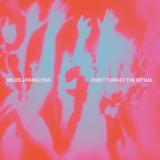
Miles J Paralysis - Don’t Forget The Ritual

An EP of the darker side of electronic dance music is always a welcome addition to Especial. Up and coming producer / DJ Miles J Paralysis steps away from releasing on his own Crying Outcast label to explore left of centre, new wave and cosmic sounds; songs woven from his own vocals and samples.

A love of Dub, Hip Hop and Electro-Funk led into electronic music. Sampling TV shows, making beats, jamming. Exposed to Leeds and Manchester club cultures, seeking the more experimental. African Head Charge, Muslimgauze, The Rootsman and Weatherall were early influences in forming a no rules philosophy.

Born and raised around West Yorkshire, the beauty and bleakness of the moors have a strong bond on Miles Henry aka Miles J Paralysis and his music. Folklore and the occult link and connect an interest in Northern Hauntology. Unresolved histories, stuck between past glory and phantoms of possible futures.

The EP starts with It’s Only Shadows Talking. A play on the Paralysis persona, the spectral dub house groove meets industrial overtures, encasing his own eerie and unsettling vocals to begin the narrative.

Don’t Forget The Ritual takes a direct link from British folk traditions. Sacred and ceremonial; the laid-back breakbeat, samples and delays are the transition to the evocative embrace of melancholia.

Come On Fleet, the hypnotic Latin (vocal) sample creates a lurking murmuration, rimshot percussion meets gothic sound design for the EPs’ most straight forward and direct club cut.

Surreal and dreamlike soundscape, closing track The Delicate Fairytale is the perfect platform for Miles own phantasm. Inspired by the stories of Dorothy K Haynes and Robert Hickman, the pervading sense of a David Lynch aesthetic, exploring the nostalgic nature of memory.

stock from28.05.2026


Last In: 3 days ago
Above The Clouds, Kidkanevil & Magic Manfred - Change (7")

First Word Records proudly present the second single from Above The Clouds (aka kidkanevil & Magic Manfred), taking on another underground hip hop classic, 'Change'.

'Change' was originally performed by Shadez of Brooklyn, produced by Da Beatminerz and most notably appeared on DJ Premier's legendary 'New York Reality Check 101' mix compilation back in 1997.

This 7" vinyl release follows on from last Summer's MF DOOM cover 'Arrow Root', which received strong support from the likes of Japan's DJ Koco and Philadelphia's DJ Jazzy Jeff.

This new instrumental reinterpretation also features cuts by Leicester-based turntablist, Jon1st - a DMC World Online Champion, as well as being a producer & musician in his own right, collaborating on music with a number of hip hop, D&B and electronic artists.

One of the original First Word roster, UK Producer/DJ and all-round laptop music geek kidkanevil has developed a distinctive and progressive sound over the years, gleefully exploring the beats and bleeps of the electronic music universe to international recognition. Leeds born, sound system bred and raised on a (un)healthy diet of video games and anime, his solo work inhabits the curious space between bass frequencies and otaku culture. But as a devoted teenage backpack rap nerd, somewhere in the back of kid's mind was a lingering desire to reconnect with his first love, hip hop.

Not long after moving to Berlin he joined a studio space in graffiti plastered Kreuzberg, where he met multi instrumentalist wizard Magic Manfred; a disciple of all things boogie, disco, funk and soul. Born and raised in Berlin, and currently a touring musician for many an act, Manfred's musical map joins the dots from piano lessons at four, to starting a band with his teenage friends, leading him to his true calling - the bass - via the club vibrations of his hometown, which introduced him to the world of DJing and production, and a stint studying in the explosive London jazz scene to finalise his Jedi training.

Bonding over their mutual love of '90s hip hop, a friendship and musical kinship developed, coupled with a desire to honour past eras but push things forward, Above The Clouds was born; named after their joint favourite DJ Premier beat, with a touch of irony regarding their basement based studio of a windowless variety.

kidkanevil explains further "We started the project with a few covers, just as a way to get warmed up and in a certain creative headspace, of which 'Change' by Shadez Of Brooklyn was one. We both loved DJ Premier's 'New York Reality Check 101' mix when we were teenagers and this track was a favourite. The elements really lent themselves to live interpretation, and as an instrumental there was space to bring some nice movement with the bass and stuff. Hopefully we found the balance between paying tribute and finding our own pocket. For the final seasoning we hit up the homie and turntable wizard Jon1st to recreate the cuts, of which he did an immaculate job of course.

The b-side 'Urgh' is one of our favourite beats we've made so far; the title is just how it makes us feel! We actually recorded the piano with two iphones as left and right and it sounded kinda cool so we went with it..."

'Change / Urgh' is released on limited 7" vinyl & digital platforms, April 24th 2026.

out of Stock

Order now and we will order the item for you at our supplier.


Last In: 5 days ago
Disco Combine - Lovin' You (Was My Mistake) / How I Love New York (Dave 'Love' Lee Mixes)

Coming in extra bloody hot is the 6th release on Disco Combine, harvested from the fields of musical gold by Mr. Dave Lee. First up the epic 'Lovin' You (Was My Mistake)' a throaty Philly-soul favourite , which has been lovingly re-worked into a beefy peak time floor filler. For those who prefer a more dubwise approach, the 'Joanna's Groove' version starts instrumentally with rippling piano, building into a big string finale. On the flip 'How I Love New York' swaggers into your ears with all the class, style & panache you would expect from a jazz-fusion connoisseur living in the big Apple. Don't miss heading to the 'Midtown Dub' if you like things more squelchy and funktified.

stock from28.05.2026


Last In: 16 days ago
Various - Tchic Tchic: French Bossa Nova 1963-1974  Colored Edition LP 2x12"
  • A1: Les Masques - Il Faut Tenir (1969)
  • A2: Isabelle Aubret - Casa Forte (1971)
  • A3: Christianne Legrand - Hlm Et Ciné Roman (1972)
  • A4: Jean Constantin - Pas Tant D'chichi Ponpon (1972)
  • A5: Billy Nencioli & Baden Powell - Si Rien Ne Va (1969)
  • B1-: Marpessa Dawn - Le Petit Cuica (1963)
  • B2: Jean-Pierre Sabar - Vai Vai (1974)
  • B3: Sophia Loren - De Jour En Jour (1963)
  • B4: Isabelle - Jusqu’à La Tombée Du Jour (1969)
  • B5: Sylvia Fels - Corto Maltesse (1974)
  • C1: Frank Gérard - Comme Une Samba (1972)
  • C2: Ann Sorel - La Poupée Des Favellas (1971)
  • C3: Charles Level - Un Enfant Café Au Lait (1971)
  • C4: Andrea Parisy - Les Mains Qui Font Du Bien (1970)
  • C5: Audrey Arno - Quand Jean-Paul Rentrera (1969)
  • C6: Aldo Frank - T’as Vu Ce Printemps (1970)
  • D1: Christianne Legrand - Cent Mille Poissons Dans Ton Filet (1972)
  • D2: Clarinha - Lemenja (1970)
  • D3: Hit Parade Des Enfants - Aquarela (1976)
  • D4: Jean-Pierre Lang - Tendresse (1965)
  • D5: Magalie Noël - Une Énorme Samba (1970)
  • D6: Françoise Legrand - La Lune

Ever since the late 1950s bossa-nova revolution, Brazil’s influence on French music has been undeniable. Pierre Barouh, Georges Moustaki and a vast array of lesser known artists, all made the Musica Popular Brasileira (MPB) an axis of promotion at the service of a cool and metaphysical, modern and mixed Brazilian lifestyle. Some were seduced by the poetic languors of the bossa, some were looking for fun, and others just loved the American hybridization of jazz-bossa, jazz-samba.


What is bossa nova? One of its creators, Joao Gilberto said: "Its style, cadence, everything is samba. At the very start, we didn't call it bossa nova, we sang a little samba made up of a single note - Samba de uma nota so .... The discussion around the origins of bossa nova is therefore useless”. It is nevertheless useful to remember that these magnificent Brazilian songs, which the guitarist describes as samba, were shifted and balanced around improbable chords. "I like things that lean, the in-betweens that limp with grace," said Pierre Barrouh, quoting Jean Cocteau.


With emotion, arrangements for violin and supple guitar licks, bossa nova rapidly changed. A transformation that can be heard in the Tchic, tchic, French Bossa Nova 1963-1974 compilation, the result of a cultural reappropriation, which traveled through the United States and supplemented itself in France.

A musical revolution that has remained significant, bossa nova was born in Rio. From 1956 to 1961, Brazil lived through its golden years. In five years, the country had invented its modernist style. Elected president in 1956, Juscelino Kubitschek de Oliveira, an elegant man with a broad forehead, brandished a promising slogan: "Fifty years of progress in five years". He quickly got to work. Not worried about increasing debt, he launched the project for a new federal capital, Brasilia, designed by the communist architect Oscar Niemeyer. Volkswagen opened state-of-the-art factories and created the “fusquinha”, the Beetle. In Rio, the Vespa made its first appearance. The Arpoador Surf Club crew run into the “girl” from Ipanema, Helô Pinheiro - the tanned garota ("chick"), between a flower and mermaid, who at 17 walked by the Veloso bar, where the fiery author and composer, Tom Jobim and Vinicius de Moraes, were getting drunk on whiskey. From then on, bossa symbolized cool.

In 1958, Joao Gilberto recorded Chega de Saudade, which the directors of Philips denied, calling it "music for fagots". The marketing director, who believed in it, secretly pressed 3000 78-inch vinyls and distributed them at schools around Rio, creating a tidal wave.

American jazzmen then took over. In particular, trumpeter Dizzy Gillespie and guitarist Charlie Byrd. In November 1962, the Brazilian Ministry of Foreign Affairs funded a "Bossa-Nova" concert at Carnegie Hall in New York, inviting the genre’s pioneers. Unprepared, the show soon turned to disaster. But the troupe was invited to the White House by Jackie Kennedy. The first lady loved "the new beat" and in particular Maria Ninguem, a song by Carlos Lyra, later covered by Brigitte Bardot.

In Brazil, the 1964 military coup quickly ended this euphoria. The destructive atmosphere that ensued pushed many Brazilian musicians to leave, if not to exile. Thus, Tom Jobim, Sergio Mendes and Joao Gilberto arrived to the United States. In New York, Joao Gilberto met saxophonist Stan Getz. At the time, he was married to the Bahianese Astrud Weinert Gilberto, who had a German father. She had never sung before, but she knew how to speak English. Getz therefore asked her to replace her husband on The Girl From Ipanema. The Getz/Gilberto record with Tom Jobim on piano, was released in March 1964. Phil Ramone, the "pope of pop" was in charge of sound.

Bossa nova arrived in Paris through the classic “guitar-voice” channel (Pierre Barouh, Baden Powell, Moustaki…) But France loved jazz and Paris had already welcomed its American contributors. All these good people were to pass through Saint-Germain-des-Prés. The cabaret l'Escale became the Mecca of Latin American sound where one could find Pierre Barrouh and his friends, such as the Camara Trio, samba-jazz aces, whose only record was published by the Saravah label. With a band strangely called Les Masques (a band that included Nicole Croisille and Pierre Vassiliu, among others), the Camara Trio recorded an interesting Brazilian Sound, including the track Il faut tenir which is present on this tasty compilation of rarities.

Other enlightened musicians can also be found on the compilation, such as Jean-Pierre Sabar (songwriter for Hardy, Auffray, Leforestier ...) and the French pop rock organist Balthazar. In 1975, Sabar recorded Aurinkoinen Musiikkimatka on a Finnish label, which featured the crazy Vai, Vai, included on this record. We are now following the footsteps of Brazilian electronic musicians such as Sergio Mendes, Eumir Deodato or Marcos Valle who created funk and disco sounds on their keyboards and synthesizers. A style that influenced Véronique Sanson when she wrote Jusqu’à la Tombée de la nuit in 1969 for Isabelle de Funès, the niece of Louis and a great friend of Michel Berger - Sanson did end up singing this track on her 1992 Sans Regret record.


The pinnacle of exoticism and travel, Sylvia Fels’ Corto Maltese includes bongos, sea mist and ocean sounds. The title was taken from Jacky Chalard’s concept album written in 1974, Je suis vivant, mais j’ai peur (I am alive, but I am scared), based on Gilbert Deflez’s science fiction novel.


However, bossa nova extended the scope of popularity. "In the 1970s, I was a fan of Sergio Mendes, Getz / Gilberto. I fell in love with this music that I knew because I had been an orchestral singer, " explained Isabelle Aubret, who in 1971 delivered a composite record of covers by the very funky Jorge Ben, Orfeu Negro, Tom Jobim, Vinicius de Morais and Jean Ferrat. "I recorded this album for Meys Records in Paris, far from Brazil, with wonderful musicians, François Raubert, Roland Vincent, Alain Goraguer...". The latter wrote the arrangements for Casa Forte, a very percussive title borrowed from Edu Lobo, one of the initiators of the bossa who spent time in California. "Jazz and bossa came together and produced very rhythmic music. I love singing, it allows me to dream, to have fun, to feel a high on stage, and these songs brought me joy, made me swing, my singing felt like a dance.”


The world tours of French singers and their desire for the tropics, often brought them to Rio with its hills, forests, caipirinhas and tanned bodies. There are surprises though, like this Iemenja (Iemenja is the goddess of the sea in the Afro-Brazilian candomblé religion). Not unlike the composer and musician Jean-Pierre Lang, based in Sao Paulo, Claire Chevalier taught Brazil to Brazil. In 1970, the singer and painter published a 45-inch vinyl, Mon mari et mes amants (My husband and my lovers), under the improbable pseudonym of Clarinha (little Claire). She was then living in Rio, with her husband, Joël Leibovitz, who founded a band called Azimuth, and who owned a record label specialized in "sambas enredos" songs for samba school parades.


For its B side, she asked Pierre Perret to come up with lyrics for a song composed by Carlos Imperial: "Oh goddess of the sea, o goddess Iemenja, I bring a white rose to adorn your long hair ..." . "Perret came to see us, and we had fun, remembers Joël Leibovitz. We wrote Lemenja for fun, we recorded it at the Havaí studio, behind the Central do Brasil the central station. Erlon Chaves, the arranger who worked with Elis Regina, joined us" adding his share of Afro-Brazilian percussions and funky brass to the mix.

There is a common misunderstanding in Franco-Brazilian history: that bossa, admittedly hedonistic, is perceived as funny, even though the poets who wrote the texts are often philosophizing on the human condition. Its French interpreters pull it towards a carnival inspired universe, far removed from its fundamental essence. Thus, Jean Constantin covered the famous Samba da minha terra, an ode to the art of samba written by the classic Bahian composer Dorival Caymmi, renaming it with the enticing title of Pas tant de tchi tchi pompon: "On your pier there is no tchi tchi / when you arch your back, you know everything is alright ”(lyrics by Gérard Calvi). This expedited bossa aims for the absurd, but retains a certain elegance.

Indeed, Jean Constantin was not an idiot, the rather large man had a huge mustache and liked fantasy, (Les pantoufles à papa, Le pacha, inspired by cha-cha-cha-cha, salsa and jazz) but he was also the lyricist of Mon manège à moi interpreted by Edith Piaf, the composer of Mon Truc en plume by Zizi Jeanmaire and the soundtrack of François Truffaut’s 400 Blows. Le Poulpe, published in 1970, from which this bossa is extract, was arranged by Jean-Claude Vannier, an accomplice of Serge Gainsbourg’s Melody Nelson. In short: "There is enough of samba / By looking at the parasol / Because my poor cabeza / Is going to die in the sun".

Even the American actress Marpessa Down, who was at the heart of the bossa nova revolution with her role as Euridyce in Marcel Camus’ film Orfeu Negro, winner of the 1959 Cannes Palme d'or, fed the clichée with Je voudrais parler au petit cuica - "Tell me how you manage to always make people want to dance / It's true, I must admit that I cannot resist your magic" - in consequence, once can hear the cuica, a little drum inherited from the Bantu.


But bossa nova had many angles. Societal, of course, pushing actresses who were symbols of women's liberation like Brigitte Bardot, Jeanne Moreau, or Sophia Loren to engage in the exercise of accelerated bossa. In February of 1963, Sophia Loren made a record in French in Rome, Je ne t'aime plus, featuring the song De jour en jour, a bossa written by two Italians, Armando Trovajoli and Tino Fornai, which was released a little later by Barclay. Bossa accompanied the 1960s, a decade of moral liberation. Ann Sorel, who interpreted La Poupée des favellas, caused a sensation with L’amour à plusieurs, a provocative song written by Frédéric Bottom and Jean-Claude Vannier. As for the actress Andrea Parisy, she displayed her bourgeois cheekiness in Marcel Carné's Les Tricheurs before interpreting Les mains qui font du bien. And Magalie Noël, the friend of Boris Vian, who sung Johnny fais-moi mal, was hired to sing Une énorme Samba, composed by Alain Goraguer (arranger to Gainsbourg, Bobby Lapointe and Jean Ferrat) with lyrics by Frédéric Botton.

But in the end, of what wood is bossa nova made of? The answer is given by Christianne Legrand, daughter of Raymond the conductor, and sister to Michel the composer: "With me, with jà" - jà means "immediately" in Portuguese. In 1972, the singer, an expert in vocal jazz and a member of the Double Six, published Le Brésil de Christianne Legrand. Two songs included on the Tchic Tchic compilation that demonstrate how bossa, jazz, funk, rock, etc. work like a swiss army knife: the music is used to denounce broken systems, or miracles, HLM et ciné roman, Cent mille poissons dans ton filet, two songs from the O Cafona soundtrack, a successful telenovela broadcast, at the time in black and white, on TV Globo. The first was adapted in French by the fighter and friend of the Legrand tribe, Agnès Varda. The second is content with a play on words, jostling them into a summer fun.


Véronique Mortaigne

pre-order now17.04.2026

expected to be published on 17.04.2026

DAGMAR ZUNIGA - IN FILTH YOUR MYSTERY IS KINGDOM / FAR SMILE PEASANT IN YELLOW MUSIC (TAPE)

Nicaraguan-American artist Dagmar Zuniga makes music that feels both intimate and expansive: songs drift like disrupted signals, carried by harmony, tape hiss, and a strong sense of touch. Her debut solo album in filth your mystery is kingdom / far smile peasant in yellow music — written and recorded in New York, Norway, and Athens, Georgia over a period of five years on her longtime companion, the Tascam 424 — was uploaded to Bandcamp and YouTube in January 2025, quickly garnering over two hundred thousand views and the attention of artists such as Mount Eerie, who invited her to tour with them that summer. This year, what was once a jewel of tapped-in algorithms and message boards will meet the world at large, with in filth arriving digitally on March 4, and physically on April 10, via AD 93.

in filth is an atmospheric, devotional collage where one voice multiplies into a chorus of selves, sometimes delicate, sometimes severe; an effect created by Zuniga’s masterful layering of texture and complex harmonies. Synths glitter out like spears of sunlight from beneath clouds of moody, time-distorted guitars, and songs spin about themselves like tightly-wound music boxes, making use of a kind of hypnotic repetition, before melting apart into their components or slipping into the following track.

Zuniga began recording to tape as a teenager, drawn to the physicality of the medium — how a tape recording is fragile, mutable, and alive. Though her ethereal sound may draw easy comparisons to other female pioneers of psychedelic folk, she is influenced just as much by the darker sounds of Syd Barrett and The Fall. Like Barrett, Zuniga is a painter, and she is interested not only in recording music but in creating a full, self-contained artistic universe: she creates her own artwork, merchandise, music videos, and bootleg tapes of new and unfinished music that she exclusively sells at live shows (“If something is not material, it does not exist,” she insists). Her world has not gone unvisited, garnering her a monthly show on NTS Radio ‘World of Pain’, as well as a forthcoming appearance at Rewire Festival in April 2026.

Though Zuniga’s work explores themes of solitude and suffering, the suffering in her songs is not borrowed or displayed; it is held, then opened outward through empathy — an exacting practice of attention that insists on shared ground. Solitude, in her work, is not withdrawal but a starting point for connection. Likewise, over time, her recording process has become increasingly communal, with in filth featuring musicians Hayes Hoey, Austyn Wohlers (Tomato Flower), and Zach Phillips (Fievel Is Glauque). Newer recordings widen the circle even more. For Zuniga, collaboration is a way to “find a place between worlds,” echoing Badiou’s idea of love as a vision refracted through the prism of difference. Meaning emerges there — in the space between voices, between artist and listener. “I hope my music helps people work through difficult experiences,” she says. “The same way it helps me.”

pre-order now11.04.2026

expected to be published on 11.04.2026

Guilty Razors - Complete Recordings 1977 - 1978

UILTY RAZORS, BONA FIDE PUNKS.


Writings on the topic that go off in all directions, mind-numbing lectures given by academics, and testimonies, most of them heavily doctored, from those who “lived through that era”: so many people today fantasize about the early days of punk in our country… This blessed moment when no one had yet thought of flaunting a ridiculous green mohawk, taking Sid Vicious as a hero, or – even worse – making the so-called alternative scene both festive and boorish. There was no such thing in 1976 or 1977, when it wasn’t easy to get hold of the first 45s by the Pistols or the Clash. Few people were aware of what was happening on the fringes of the fringes at the time. Malcolm McLaren was virtually unknown, and having short hair made you seem strange. Who knew then that rock music, which had taken a very bad turn since the early 1970s, would once again become an essential element of liberation? That, thanks to short and fast songs, it would once again rediscover that primitive, social side that was so hated by older generations? Who knew that, besides a few loners who read the music press (it was even better if they read it in English) and frequented the right record stores? Many of these formed bands, because it was impossible to do otherwise. We quickly went from listening to the Velvet Underground to trying to play the Stooges’ intros. It’s a somewhat collective story, even though there weren’t many people to start it.
The Guilty Razors were among those who took part in this initial upheaval in Paris. They were far from being the worst. They had something special and even released a single that was well above the national average. They also had enough songs to fill an album, the one you’re holding. In everyone’s opinion, they were definitely not among the punk impostors that followed in their wake. They were, at least, genuine and credible.

Guilty Razors, Parisian punk band (1975-1978). To understand something about their somewhat linear but very energetic sound, we might need to talk about the context in which it was born and, more broadly, recall the boredom (a theme that would become capital in punk songs) coupled with the desire to blow everything off, which were the basis for the formation of bands playing a rejuvenated rock music ; about the passion for a few records by the Kinks or the early Who, by the Stooges, by the Velvet mostly, which set you apart from the crowd.
And of course, we should remember this new wave, which was promoted by a few articles in the specialized press and some cutting-edge record stores, coming from New York or London, whose small but powerful influence could be felt in Paris and in a handful of isolated places in the provinces, lulled to sleep by so many appalling things, from Tangerine Dream to President Giscard d’Estaing...
In 1975-76, French music was, as almost always, in a sorry state ; it was still dominated by Johnny Hallyday and Sylvie Vartan. Local rock music was also rather bleak, apart from Bijou and Little Bob who tried to revive this small scene with poorly sound-engineered gigs played to almost no one.
In the working class suburbs at the time, it was mainly hard rock music played to 11 that helped people forget about their gruelling shifts at the factory. Here and there, on the outskirts of major cities, you still could find a few rockers with sideburns wearing black armbands since the death of Gene Vincent, but it wasn’t a proper mass movement, just a source of real danger to anyone they came across who wasn't like them. In August 1976, a festival unlike any other took place in Mont-de-Marsan – the First European Punk Festival as the poster said – with almost as many people on stage as in the audience. Yet, on that day, a quasi historical event happened, when, under the blazing afternoon sun, a band of unknowns called The Damned made an unprecedented noise in the arena, reminiscent of the chaotic Stooges in their early adolescence. They were the first genuine punk band to perform in our country: from then on, anything was possible, almost anything seemed permissible.

It makes sense that the four+1 members of Guilty Razors, who initially amplified acoustic guitars with crappy tape recorder microphones, would adopt punk music (pronounced paink in French) naturally and instinctively, since it combines liberating noise with speed of execution and – crucially – a very healthy sense of rebellion (the protesters of May 1968 proclaimed, and it was even a slogan, that they weren’t against old people, but against what had made them grow old. In the mid-1970s, it seemed normal and obvious that old people should now ALSO be targeted!!!).
At the time, the desire to fight back, and break down authority and apathy, was either red or black, often taking the form of leafleting, tumultuous general assemblies in the schoolyard, and massive or shabby demonstrations, most of the time overflowing with an exciting vitality that sometimes turned into fights with the riot police. Indeed, soon after the end of the Vietnam War and following Pinochet’s coup in Chile, all over France, Trotskyist and anarcho-libertarian fervour was firmly entrenched among parts of the educated youth population, who were equally rebellious and troublemakers whenever they had the chance. It should also be noted that when the single "Anarchy in the UK" was first heard, even though not many of us had access to it, both the title and its explosive sound immediately resonated with some of those troublemakers crying out for ANARCHY!!! Meanwhile, the left-wing majority still equated punks with reckless young neo-Nazis. Of course, the widely circulated photos in the mainstream press of Siouxsie Sioux with her swastikas didn’t necessarily help to win over the theorists of the Great Revolution. It took Joe Strummer to introduce The Clash as an anti-racist, anti-fascist and anti-ignorance band for the rejection of old-school revolutionaries to fade a little.

The Lycée Jean-Baptiste Say at Porte d’Auteuil, despite being located in the very posh and very exclusive 16th arrondissement of Paris, didn’t escape these "committed" upheavals, which doubled as the perfect outlet for the less timid members of this generation.
“Back then, politics were fun,” says Tristam Nada, who studied there and went on to become Guilty Razors’ frontman. “Jean-Baptiste was the leftist high-school in the neighbourhood. When the far right guys from the GUD came down there, the Communist League guys from elsewhere helped us fight them off.”
Anything that could challenge authority was fair game and of course, strikes for just about any reason would lead to increasingly frequent truancy (with a definitive farewell to education that would soon follow). Tristam Nada spent his 10th and 11th unfinished grades with José Perez, who had come from Spain, where his father, a janitor, had been sentenced to death by Franco. “José steered my tastes towards solid acts such as The Who. Like most teenagers, I had previously absorbed just about everything that came my way, from Yes to Led Zeppelin to Genesis. I was exploring… And then one day, he told me that he and his brother Carlos wanted to start a rock band.” The Perez brothers already played guitar. “Of course, they were Spanish!”, jokes their singer. “Then, somewhat reluctantly, José took up the bass and we were soon joined by Jano – who called himself Jano Homicid – who took up the rhythm guitar.” Several drummers would later join this core of not easily intimidated young guys who didn’t let adversity get the better of them.

The first rehearsals of the newly named Guilty Razors took place in the bedroom of a Perez aunt. There, the three rookies tried to cover a few standards, songs that often were an integral part of their lives. During a first, short gig, in front of a bewildered audience of tough old-school rockers, they launched into a clunky version of the Velvet Underground's “Heroin”. Challenge or recklessness? A bit of both, probably… And then, step by step, their limited repertoire expanded as they decided to write their own songs, sung in a not always very accurate or academic English, but who cared about proper grammar or the right vocabulary, since what truly mattered was to make the words sound as good as possible while playing very, very fast music? And spitting out those words in a language that left no doubt as to what it conveyed mattered as well.
Trying their hand a the kind of rock music disliked by most of the neighbourhood, making noise, being fiercely provocative: they still belonged to a tiny clique who, at this very moment, had chosen to impose this difference. And there were very few places in France or elsewhere, where one could witness the first stirrings of something that wasn’t a trend yet, let alone a movement.

In the provinces, in late 1976 or early 1977, there couldn’t be more than thirty record stores that were a bit more discerning than average, where you could hear this new kind of short-haired rock music called “punk”. The old clientele, who previously had no problem coming in to buy the latest McCartney or Aerosmith LP, now felt a little less comfortable there…
In Paris, these enlightened places were quite rare and often located nex to what would become the Forum des Halles, a big shopping mall. Between three aging sex workers, a couple of second-hand clothes shops, sellers of hippie paraphernalia and small fashion designers, the good word was loudly spread in two pioneering places – propagators of what was still only a new underground movement. Historically, the first one was the Open Market, a kind of poorly, but tastefully stocked cave. Speakers blasted out the sound of sixties garage bands from the Nuggets compilation (a crucial reference for José Perez) or the badly dressed English kids of Eddie and the Hot Rods. This black-painted den was opened a few years earlier by Marc Zermati, a character who wasn’t always in a sunny disposition, but always quite radical in his (good) choices and his opinions. He founded the independent label Skydog and was one of the promoters of the Mont-de-Marsan punk festivals. Not far from there was Harry Cover, another store more in tune with the new New York scene, which was amply covered in the house fanzine, Rock News (even though it was in it that the photos of the Sex Pistols were first published in France).
It was a favorite hang-out of the Perez brothers and Tristam Nada, as the latter explained. “It’s at Harry Cover’s that we first heard the Pistols and Clash’s 45s, and after that, we decided to start writing our first songs. If they could do it, so could we!”
The sonic shocks that were “Anarchy in the UK”, “White Riot” or the Buzzcocks’s EP, “Spiral Scratch” – which Guilty Razors' sound is reminiscent of – were soon to be amplified by an unparalleled visual shock. In April 1977, right after the release of their first LP, The Clash performed at the Palais des Glaces in Paris, during a punk night organised by Marc Zermati. For many who were there, it was the gig of a lifetime…
Of course, Guilty Razors and Tristam were in the audience: “That concert was fabulous… We Parisian punks were almost all dressed in black and white, with white shirts, skinny leather ties, bikers jackets or light jackets, etc. The Clash, on the other hand, wore colourful clothes. Well, the next day, at the Gibus, you’d spot everyone who had been at this concert, but they weren’t wearing anything black, they were all wearing colours.”

It makes sense to mention the Gibus club, as Guilty Razors often played there (sometimes in front of a hostile audience). It was also the only place in Paris that regularly scheduled new Parisian or Anglo-Saxon acts, such as Generation X, Siouxsie and the Banshees, the Slits, and Johnny Thunders who would become a kind of messed-up mascot for the venue. A little later, in 1978, the Rose Bonbon – formerly the Nashville – also attracted nightly owls in search of electric thrills… In 1977, the iconic but not necessarily excellent Asphalt Jungle often played at the Gibus, sometimes sharing the bill with Metal Urbain, the only band whose aura would later transcend the French borders (“I saw them as the French Sex Pistols,” said Geoff Travis, head of their British label Rough Trade). Already established in this small scene, Metal Urbain helped the young and restless Guilty Razors who had just arrived. Guitarist for Metal Urbain Hermann Schwartz remembers it: “They were younger than us, we were a bit like their mentors even if it’s too strong a word… At least they were credible. We thought they were good, and they had good songs which reminded of the Buzzcocks that I liked a lot. But at some point, they started hanging out with the Hells Angels. That’s when we stopped following them.”

The break-up was mutual, since, Guilty Razors, for their part, were shocked when they saw a fringe element of the audience at Metal Urbain concerts who repeatedly shouted “Sieg Heil” and gave Nazi salutes. These provocations, even still minor (the bulk of the skinhead crowd would later make their presence felt during concerts), weren’t really to the liking of the Perez brothers, whose anti-fascist convictions were firmly rooted. Some things are non-negotiable.
A few months earlier (in July 1978), Guilty Razors had nevertheless opened very successfully for Metal Urbain at the Bus Palladium, a more traditonally old-school rock night-club. But, as was sometimes the case back then, the night turned into a mass brawl when suburban rockers came to “beat up punks”.

Back then, Parisian nights weren’t always sweet and serene.

So, after opening as best as they could for The Jam (their sound having been ruined by the PA system), our local heroes were – once again – met outside by a horde of greasers out to get them. “Thankfully,” says Tristam, “we were with our roadies, motorless bikers who acted as a protective barrier. We were chased in the neighbouring streets and the whole thing ended in front of a bar, with the owner coming out with a rifle…”
Although Tristam and the Perez brothers narrowly escaped various, potentially bloody, incidents, they weren’t completely innocent of wrongdoing either. They still find amusing their mugging of two strangers in the street for example (“We were broke and we simply wanted to buy tickets for the Heartbreakers concert that night,” says Tristam). It so happened that their victims were two key figures in the rock business at the time: radio presenter Alain Manneval and music publisher Philippe Constantin. They filed a complaint and sought monetary compensation, but somehow the band’s manager, the skilful but very controversial Alexis, managed to get the complaint withdrawn and Guilty Razors ended up signing with Constantin with a substantial advance.

They also signed with Polydor and the label released in 1978 their only three-track 45, featuring “I Don't Wanna be A Rich”, “Hurts and Noises” and “Provocate” (songs that exuded perpetual rebellion and an unquenchable desire for “class” confrontation). It was a very good record, but due to a lack of promotion (radio stations didn’t play French artists singing in English), it didn’t sell very well. Only 800 copies were allegedly sold and the rest of the stock was pulped… Initially, the three tracks were to be included on a LP that never came to be, since they were dropped by Polydor (“Let’s say we sometimes caused a ruckus in their offices!” laughs Tristam.) In order to perfect the long-awaited LP, the band recorded demos of other tracks. There was a cover of Pink Floyd's “Lucifer Sam” from the Syd Barrett era – proof of an enduring love for the sixties’ greats –, “Wake Up” a hangover tale and “Bad Heart” about the Baader-Meinhof gang, whose actions had a profound impact on the era and on a generation seeking extreme dissent... On the album you’re now discovering, you can also hear five previously unreleased tracks recorded a bit later during an extended and freezing stay in Madrid, in a makeshift studio with the invaluable help of a drummer also acting as sound engineer. He was both an enthusiastic old hippie and a proper whizz at sound engineering. Here too, certain influences from the fifties and sixties (Link Wray, the Troggs) are more than obvious in the band’s music.

Shortly after a final stormy and rather barbaric (on the audience’s side) “Punk night” at the Olympia in June 1978, Tristam left the band ; his bandmates continued without him for a short while.

But like most pioneering punk bands of the era, Guilty Razors eventually split up for good after three years (besides once in Spain, they’d only played in Paris). The reason for ceasing business activities were more or less the same for everyone: there were no venues outside one’s small circuit to play this kind of rock music, which was still frightening, unknown, or of little interest to most people. The chances of recording an LP were virtually null, since major labels were only signing unoriginal but reassuring sub-Téléphone clones, and the smaller ones were only interested in progressive rock or French chanson for youth clubs. And what about self-production? No one in our small safety-pinned world had thought about it yet. There wasn’t enough money to embark on that sort of venture anyway.

So yes, the early days of punk in France were truly No Future!

out of Stock

Order now and we will order the item for you at our supplier.


Last In: 44 days ago
Various - Never Eclipsed: Dancehall from Philip Smart's HC&F Studio 1985-1996 LP
  • A1: Philip Smart - Get Smart Theme
  • A2: Sammy Levi - Come Off The Road
  • A3: Lilly Melody - Promotion & Stripe
  • A4: Scion Success - Cry Fi Mi Girl
  • A5: Tom And Jerry Horns - Autumn Leaves
  • B1: Tony Tuff - Hit And Run
  • B3: Shelene - Where Does It Go From Here
  • B4: Frankie Paul - Plastic Smile
  • B5: Half Pint - Don't Try To Use Me

Following our well received "Prince Philip Presents..." 2LP compilation, here's a lovely overview of the second phase of Philip's career, as engineer & producer at his own studio, HC&F. These ten tracks comprise our favorites from his production catalog, spanning the mid '80s when the studio really got going, right up until 1996 and his last set of proper productions. The album holds a mix of well known classics like the Garnett Silk, lesser known album only cuts like the Frankie Paul, NY dancehall 12" staples like the Scion Success or Shelene, as well as some lesser known gems. We'd be remiss in not mentioning that this album also contains two previously unreleased cuts - a wicked mid '80s Tony Tuff, and the wild vocoder laden 1985 theme song for Philip's "Get Smart" radio show, which ran for many many years on New York University's WNYU radio station.

pre-order now30.03.2026

expected to be published on 30.03.2026

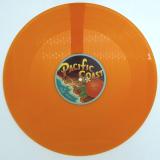
The Coastal Commission / Jesse Outlaw - Bring Down The Walls

Introducing the 4th instalment of the Pacific Coast House rebirth. We bring back another much sought-after 12” from The Coastal Commission & Jesse Outlaw. “Bring down the Walls” was a nod to Raze’s “Break for Love”, Robert Owens “Bring Down the Walls” and Ritchie Hawtin’s use of the Roland 606 throughout “Sheet One”. Long out of reach and fetching $100+ on Discogs, Atjazz’s freshly remastered editions are finally available .. “Let it Go” was never mastered & only ever cut to dub-plate. It has now been mastered & available in all it’s glory.

Coastal Commission “Bring Down the Walls” “Bring down the Walls” was a nod to Raze’s “Break for Love”, Robert Owens “Bring Down the Walls” and Ritchie Hawtin’s use of the Roland 606 throughout “Sheet One.” We gave the tune a Californian psychedelic twist with conga laden drums, a moody synth, low pulsing 303 patterns + Benjamin Zephaniahs patois call to “Move the Body Rhythmwize!” The first PCH releases had dropped Worldwide to International acclaim from DJ’s far and wide across the Globe with support in London, Paris & New York. However the local scene here in L.A that preached “Love, inclusion & Unity” was anything but that. L.A at that time was very tribal & divided up into 3 camps. If you weren’t affiliated with any of them (aka independent) then you were pretty much locked out of getting any kind of gig support or the Dj’s from those camps actually playing the music. The local feedback from Dj’s was that what we were making wasn’t “house,” but “Techno” which was absurd to me. “Bring Down the Walls” was a mantra to “move the bod”y and in doing so “bring down the walls” of separation not just in L.A but throughout society in general. Thank goodness for support from people like Terry Francis, Eddie Richards, DJ Deep & Philly Stalwart King Britt. After years of copies going for upward of $100+ on Discogs the now freshly remastered copies by At Jazz’s Martin Iveson are finally hitting the platters this Spring.

Jesse Outlaw “Let it Go” I met Jesse at Beatnonstop Records on Melrose Ave with Miguel Placencia in the late 90’s. Miguel (RIP) was a mainstay in the Underground scene and had always been very supportive of my endeavors. He had had success with a huge release on Yellow Orange and was working with Jesse under the moniker “When Worlds Collide.” I signed “Brighter Days” & “Set you Free” from them and released the tracks on my Seductive imprint. They told me that they were making the tracks on a Sony Playstation “Music Now” program and I was like FFS “What.s more Underground than that!?” Later Jesse gave me some of his solo work. The track “Let it Go” was never mastered & only ever cut to Dub-plate and featured on my 1st PCH mix “Pacific Coast House Sounds.” It has now been mastered by Martin Iveson and is available in all it’s glory. The dreamy vocal “You need to let it go” beckons over the top of driving percussive Latin beats and church organ which is a great compliment to the flip side of “Bring down the Walls.” All in all two West Coast stompers now finally available remastered on PCH in Orange vinyl.

stock from26.05.2026


Last In: 62 days ago
Arthur Russell - Another Thought 2x12"

2026 Repress


Another Thought was the first collection of Arthur Russell’s music to be released after his death in 1992. Released in 1993 on Point Music it marked the beginning of nearly 30 years of work to let the world hear the enormous archive of unreleased recordings Arthur left behind. Be With revisits this first compilation for a new gatefold double vinyl version and a triple-fold digipak CD reissue.

Both versions of Be With’s 2021 reissue of Another Thought have been mastered by Simon Francis and the vinyl cut by Pete Norman. The original artwork has been restored and tweaked at Be With HQ for the gatefold sleeve and the triple-fold digipak, with the essential help of Janette Beckman. Each version comes with an insert reproducing the liner notes and lyrics from the original CD release.

Together with Calling Out Of Context, Soul Jazz’s World of Arthur Russell, and much of the ongoing work of Audika, Another Thought is absolutely essential for even the most casual Arthur Russell collection. In fact we’d argue it’s essential for any fan of non-obvious pop music. This is the only place where you can hear some of Arthur’s most recognisable tunes and it’s an album that absolutely deserves to be kept in press.


We’ll assume that by now you’re all at least a little familiar with the story of Arthur Russell, the farm boy from Iowa who moved to 1970s New York. Arthur Russell the genuine musical genius who died just 40 years old, leaving behind a wealth of music that dwarfed the few 12"s and LPs that were released during his short life.

Although Arthur had been working on an album for Rough Trade during his last years, with the label no-longer operating it was Point Music (Philip Glass and Michael Riesman’s label set up together with Philips) who stepped in to help Arthur’s partner Tom Lee start working out exactly what Arthur had left behind.

Tom suggested that Arthur’s friend Mikel Rouse was the right person to make the first catalogue. Working in Tom and Arthur’s apartment he had only two weeks to go through what turned out to be around 800 tapes.

As Tom explained “at the end of each day he would generally wait for me to come home and I would, to the best of my knowledge, name and identify pieces in question from that day’s work. As he worked Mikel compiled about a dozen cassettes that he thought would present the most finished sounding songs for Don/Point to use. As Don listened he would then suggest and ask me and thus we collaborated on the choices.”

Don is Don Christensen, Another Thought’s producer. With a final selection of songs from recordings made between 1982 and 1990, including sessions with some of Arthur’s regular collaborators Peter Zummo, Steven Hall, Mustafa Ahmed, Elodie Lauten, Julius Eastman, Jennifer Warnes and Joyce Bowden, it was then Don’s job to turn these into a finished album.

Another Thought is a little different from the compilations of Arthur’s music that came out since. In our conversations with Steve Knutson (who founded Audika Records and who manages Arthur’s estate together with Tom), he explained that “more than any project released by Arthur during his lifetime or posthumously by Audika, ‘Another Thought’ is the most worked over. The material was significantly edited and rearranged from the original source tapes”.

If the aim was to release a comprehensive exploration of every facet of Arthur’s music, from the most avant-garde of his avant-garde compositions through to the most disco-not-disco of his disco-not-disco tunes then the project was a spectacular failure. But as a coherent album of non-obvious pop music Another Thought is wonderful.

Starting with the sparse voice-and-cello of the title track, A Little Lost adds some guitar along with the sneaking suspicion that we’re listening to something nowhere near as simple as it first sounds. By the time we get to This Is How We Walk On The Moon - it could be the moment you notice the congas, or the percussion that’s been building behind them, or maybe it’s that blast of trumpet and trombone - we realise we’ve gone from splashing around to being completely submerged in the musical world of Arthur Russell.

From here the album heads off on its journey around the sounds of the left-field contemporary classical music of the time, re-directed towards pop ears, with minor detours through the swirling woozy disco of the half-remembered night before on In The Light Of The Miracle and My Tiger, My Timing. Whether it’s just Arthur, his cello and some bleeps on Just A Blip, or whether he has some vocal help as he does on the bounding Keeping Up, this is difficult music made so, so easy. And through it all is Arthur’s voice and cello. Sometimes drowned in distortion and sometimes clear as a bell, but always there somewhere.

A Sudden Chill finally returns us to the calmer waters we started in and this last track closes the album with a melancholy that’s not surprising given how soon after Arthur’s death the album was put together.

Whilst Another Thought holds together with the consistency of a proper album, there’s still no getting away from the fact that this was put together from audio recorded in different ways, in different places, with different people at different times. Those with keen ears will hear traces of tape hiss, the occasional blown-out note and some digital fuzz, all fingerprints of those original recordings as well as of the 1990s digital equipment that was used to piece Another Thought together.

Add to this Arthur’s obvious pleasure in making music from the sort of sounds that can make microphones, speakers and ears uncomfortable, it’s no surprise that Another Thought isn’t glossy and pristine. Don Christensen’s productions have been careful to not scrub up those original recordings so much that they lose their original vibe, understandable given that Arthur wasn’t around as a guide. We’ve applied a similarly light touch with the mastering for these Be With versions, just working to make sure they sound like they should on both the vinyl and the CD.

Despite the Discogs rumours, Another Thought was never originally released as an LP. So when it came to the sleeve for this Be With vinyl version we took the original CD artwork as a starting point to come up with something that looks like it could have been in the record racks back in 1993.

We have to thank Janette Beckman for helping us reproduce her iconic photograph of Arthur in his newspaper boat hat. One of many photographs she took of Arthur, Janette shot this in her New York studio back in 1986 for a short article in the January ’87 issue of The Face Magazine. Those with eagle-eyes will notice we’ve used an ever-so-slightly different shot from the one that appeared in The Face and then again on the original cover of Another Thought. The original has long since been lost so we’ve worked with what is left in Janette’s archives. And we also have to thank Tom Lee for giving us permission to reproduce his liner notes from the original CD booklet, together with Arthur’s lyrics.

out of Stock

Order now and we will order the item for you at our supplier.


Last In: 4 years ago
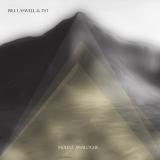
Bill Laswell - Mount Analogue

Bill Laswell

Mount Analogue

12inchSR581V
Sub Rosa
27.02.2026

"And what about you? What are you looking for?" - René Daumal

This musical journey pays tribute to René Daumal and his enchanting world of mysteries and magic. The album shares its title with Daumal's novel, Mount Analogue: A Novel of Symbolically Authentic Non-Euclidean Adventures in Mountain Climbing, published posthumously in 1952, eight years after the author's untimely death.

Mount Analogue is a classic allegorical adventure novel. The novel describes an expedition undertaken by a group of mountaineers to travel to and climb the titular Mount Analogue an enormous mountain on a surreal continent, that is invisible and inaccessible to the outside world and can be perceived only by the application of obscure knowledge. The central theme of mountaineering is extensively explored through literary and philosophical lenses. Daumal died before the novel was completed, providing an uncanny one-way quality to the story, which ends abruptly in the middle of a sentence.

The first disc features a fifty-minute composition divided into six chapters: Introduction, Meeting, Supposition, Crossing, Arrival, and Conclusion. This album weavestogether a rich tapestry of diverse instruments, sounds, and voices that collectively tell the story of this conceptual work, loaded with a synesthetic multitude of colors, aromas, meanings, textures, and moods.

Contributors to this musical poem include Bill Laswell (bass), Henry Kaiser (guitar), Anna Clementi (vocals), Percy Howard (voice), Hideo Yamaki (percussion), Graham Haynes (cornet), Dorian Cheah (violin), Nils Petter Molvaer (trumpet), Peter Apfelbaum (keyboard), and P.ST (concept, electronics), who all lend their talents to a series of excerpts from Daumal's text.

A truly global project, the recordings took place across various locations in Europe, North America, and South America, culminating at Orange Music Studio in New York, thanks to the collaborative efforts of Bill Laswell, James Dellatacoma, and Michael Fossenkemper.

The second disc presents five improvisations for solo electric guitar by Henry Kaiser. The first solo, Jodorowsky's Peradam, draws its inspiration from Alejandro Jodorowsky's 1973 film The Holy Mountain, which was inspired by the Daumal novel. Kaiser's initial forty-eight-minute guitar solo serves as a foundational guide for his four subsequent, Rashomon-esque, solo musical interpretations of Mount Analogue, as seen through the psychedelic labyrinth of Jorodrowsky's cinematic masterpiece.

pre-order now27.02.2026

expected to be published on 27.02.2026

Bill Laswell - Mount Analogue

Bill Laswell

Mount Analogue

12inchSR581V-C
Sub Rosa
27.02.2026

"And what about you? What are you looking for?" - René Daumal

This musical journey pays tribute to René Daumal and his enchanting world of mysteries and magic. The album shares its title with Daumal's novel, Mount Analogue: A Novel of Symbolically Authentic Non-Euclidean Adventures in Mountain Climbing, published posthumously in 1952, eight years after the author's untimely death.

Mount Analogue is a classic allegorical adventure novel. The novel describes an expedition undertaken by a group of mountaineers to travel to and climb the titular Mount Analogue an enormous mountain on a surreal continent, that is invisible and inaccessible to the outside world and can be perceived only by the application of obscure knowledge. The central theme of mountaineering is extensively explored through literary and philosophical lenses. Daumal died before the novel was completed, providing an uncanny one-way quality to the story, which ends abruptly in the middle of a sentence.

The first disc features a fifty-minute composition divided into six chapters: Introduction, Meeting, Supposition, Crossing, Arrival, and Conclusion. This album weavestogether a rich tapestry of diverse instruments, sounds, and voices that collectively tell the story of this conceptual work, loaded with a synesthetic multitude of colors, aromas, meanings, textures, and moods.

Contributors to this musical poem include Bill Laswell (bass), Henry Kaiser (guitar), Anna Clementi (vocals), Percy Howard (voice), Hideo Yamaki (percussion), Graham Haynes (cornet), Dorian Cheah (violin), Nils Petter Molvaer (trumpet), Peter Apfelbaum (keyboard), and P.ST (concept, electronics), who all lend their talents to a series of excerpts from Daumal's text.

A truly global project, the recordings took place across various locations in Europe, North America, and South America, culminating at Orange Music Studio in New York, thanks to the collaborative efforts of Bill Laswell, James Dellatacoma, and Michael Fossenkemper.

The second disc presents five improvisations for solo electric guitar by Henry Kaiser. The first solo, Jodorowsky's Peradam, draws its inspiration from Alejandro Jodorowsky's 1973 film The Holy Mountain, which was inspired by the Daumal novel. Kaiser's initial forty-eight-minute guitar solo serves as a foundational guide for his four subsequent, Rashomon-esque, solo musical interpretations of Mount Analogue, as seen through the psychedelic labyrinth of Jorodrowsky's cinematic masterpiece.

pre-order now27.02.2026

expected to be published on 27.02.2026

Thelonious Monk & John Coltrane - Thelonious Monk With John Coltrane LP
  • Ruby My Dear
  • Trinkle Tinkle
  • Off Minor
  • Monk's Mood
  • Nutty
  • Epistrophy
  • Functional
  • Off Minor

After being fired by Miles Davis and traveling to Philadelphia to combat his drug addiction in 1957, John Coltrane accepted an invitation from Thelonious Monk to join his quartet. They famously played at New York's Five Spot Cafe and despite the exquisite quality of the band's music, it yielded few recordings and Coltrane's tenure with Monk only lasted six months. Produced by Orrin Keepnews for his label Milestones, the album is compiled from sessions recorded during April, June, and July of 1957. It wasn't released until 1961 though, four years after the sessions took place, and after Coltrane had become a leader and jazz star in his own right.


[c] OFF MINOR [tk 4]


[f] EPISTROPHY [alt tk]
[g] FUNCTIONAL [alt tk]
[h] OFF MINOR [master]

pre-order now27.02.2026

expected to be published on 27.02.2026

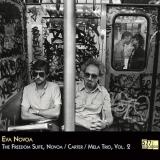
Eva Novoa - The Freedom Suite, Novoa / Carter / Mela Trio, Vol. 2

"Brooklyn-based pianist Eva Novoa returns with The Freedom Suite: Novoa / Carter / Mela Trio, Vol. 2 — the second radiant release from her compelling trio with saxophone icon Daniel Carter and celebrated drummer Francisco Mela. This marks Novoa’s sixth album with 577 Records. The trio first came together live in 2021, followed by a series of performances, including appearances in Cambridge (Boston) and later at the Brooklyn edition of the NY Forward Festival.
"The Freedom Suite is an homage to jazz titan Duke Ellington — particularly his masterful big band suites and legendary orchestra featuring Johnny Hodges and other luminaries who helped define an era of jazz greatness. In contrast, Novoa presents her Suite in a more intimate format: the piano trio. The album comprises twelve pieces — mostly brief — with a few extended tracks such as Free to Be Free and Cyborgs.
"For this recording, Novoa also steps in as a vocalist on several tracks, including Mainstream Media, Big Grande, Global, Free to Be Free, Dream, and Cyborgs. These pieces often feature a vocal dialogue between Novoa and Mela, whose expressive, word-infused style draws from rich Cuban traditions.
'Words are powerful,' says Novoa. 'They define who we are, where we come from, and who we hope to become. Without words, there is no conversation — and without conversation, there is no real sense of time, space, or connection.'
The Freedom Suite emerged from deep philosophical and creative conversations — spoken, written, and improvised — between Novoa, Carter, and Mela. In the studio, Novoa introduced printed texts that served as thematic foundations for spontaneous, in-the-moment musical interpretation. The result is an urgent and organic interplay, where instruments speak to one another in a language as fluid as it is fearless.
"Standout track Cyborgs begins with Novoa’s percussive piano, exemplifying the trio’s dynamic, conversational energy. Creative Destruction features Novoa on electric harpsichord in a wild, electric exchange. While Free to Be Free stands out as the album’s leading single, it also captures the essence and message of the entire Suite.
"Recorded in 2021 at New York City’s legendary Sear Sound Studio, the album captures a creative explosion of sound and spirit. Novoa dazzles on piano, Fender Rhodes, electric harpsichord, Chinese gongs — even whistle — showcasing her expansive sonic palette. Together, the trio embodies the power of free improvisation and emotional storytelling.
"Originally from Barcelona, Spain, Eva Novoa has been cultivating her distinctive voice since childhood. Now a staple of the New York creative music scene, she has performed across the globe and collaborated with some of the most adventurous voices in jazz and beyond."

pre-order now30.01.2026

expected to be published on 30.01.2026

Wiener Philharmoniker & Yannick Nézet-Séguin - Neujahrskonzert 2026 / New Year's Concert 2026 / Concert du Nouvel An 2026 (LP 3x12")

Erstmals steht Yannick Nézet-Séguin beim Neujahrskonzert am Pult der Wiener Philharmoniker. Der Kanadier, schon seit Langem dem Orchester verbunden, ist Chef der Metropolitan Opera in New York und des Philadelphia Orchestra. Er bringt im Goldenen Saal des Wiener Musikvereins neben populären Titeln wie "Rosen aus dem Süden" oder der "Fledermaus-Quadrille" fünf Novitäten, die dort erstmals erklingen - darunter auch Kompositionen der US-Amerikanerin Florence Price (1887-1953) und von Josephine Weinlich (1848-1887), die das erste europäische Damenorchester gegründet hatte. Das Neujahrskonzert ist eines der größten Events der klassischen Musik; es wird in über 150 Länder übertragen und hat über 150 Millionen Zuschauerinnen und Zuschauer.

Das jährliche Neujahrskonzert in Wien ist seit mehr als acht Jahrzehnten, seit 1939, ein großes Ereignis, das im Fernsehen und im Radio übertragen wird und Millionen von Zuschauern in über 90 Ländern der Welt erreicht. Das Konzert wurde bisher von weltberühmten Dirigenten wie Herbert von Karajan, Lorin Maazel, Claudio Abbado, Carlos Kleiber, Zubin Mehta, Riccardo Muti, Nikolaus Harnoncourt, Seiji Ozawa, Mariss Jansons, Franz Welser-Möst, Gustavo Dudamel und anderen geleitet. Als musikalische Botschafter Österreichs senden die Wiener Philharmoniker den Menschen in aller Welt einen Neujahrsgruß im Geiste der Hoffnung, der Freundschaft und des Friedens mit beschwingter und unbeschwerter und zugleich nostalgischer und tiefgründiger Musik aus dem großen Repertoire der Familie von Johann Strauß und seiner Zeitgenossen.

pre-order now30.01.2026

expected to be published on 30.01.2026

David Forman - Who You Been Talking To
  • 1: Who You Been Talking To?
  • 2: A-Train Lady
  • 3: Thirty Dollars
  • 4: Painted In A Corner
  • 5: Let It Go Now
  • 6: Midnight Mambo
  • 7: Little Asia
  • 8: What Is So Wonderful?
  • 9: We Both Talk Too Much
  • 10: Losing
  • 11: Now That I Found You

Brooklyn-born David Forman was steeped in soul music and Brill Building songcraft in the early 1970s while earning his living as a Hollywood set builder. He developed a soul singing style through his friendship with Aaron Neville, with whom he used to sing and jam on his apartment rooftop. He met Jack Nitzsche through his work on the 1972 film Greaser’s Palace (for which Nitzsche created the soundtrack) and later asked Nitzsche to produce this album. Forman’s original record deal with Davis was shepherded by the critic Stephen Holden of Rolling Stone and later the New York Times, and later by Paul Nelson, also of Rolling Stone.Fun fact about Forman: He was an assistant to Phillip Petit on his daring tight rope walk between the twin towers in 1974. And Forman later became a jingle writer and wrote and sang the famous Tums theme song (“Tum tum-tum-tum, TUUUUMS."This release features remastered audio, a plethora of archival photos, and a 24-page booklet with a 5500-word essay from noted journalist and producer Joe Hagan, a staff writer at Vanity Fair and producer of the 2022 compilation 'Earl's Closet' for Light In The Attic. Hagan is also fully committed to promoting the release through his network of key media gatekeepers, as well as his personal connections with legendary musicians, writers, and other cultural tastemakers.

pre-order now23.01.2026

expected to be published on 23.01.2026

Louie Vega presents Unlimited Touch - I Hear Music In The Streets

Back In Stock!

Grammy Award winner Louie Vega has the unique ability to spotlight and highlight the most essential elements of classic dance tracks and remix and recreate them to create something just as powerful for today’s audiences. Currently in the midst of putting the finishing touches on his forthcoming album, Expansions In The NYC, Louie took some extra time to gather together the original members of the seminal New York – based disco funk band Unlimited Touch and collaborate with them at Log Cabin Studio in Manhattan and his own Daddy’s Workshop Studio in New Jersey to produce the 2020 edition of “I Hear Music In The Streets.”

Unlimited Touch consists of Audrey Wheeler (lead singer), Phil Hamilton, Tony Cintron, Sandy Anderson (RIP), Stephanie James and Lenny Underwood. “I Hear Music In The Streets” was originally released on legendary imprint Prelude Records in 1981.

Growing up in the Bronx, from an early age Louie had an affinity and love for all the various musical genres that were bubbling up in New York during that era defining creative period. It is that passion that has stayed with him during a career that has brought him Grammy’s, several worldwide hit records, and a status as one of the world’s most sought after DJs. It was especially fulfilling for Louie to work with the original members of Unlimited Touch, He quickly realized that their talents were still as strong as ever as they performed musical and vocal elements from the original song, and that they had the vision to see how the song could be re-energized by having Louie add his unique production elements to this seminal tune.

Louie is in the midst of an especially prolific and productive period. In 2016 he released the Grammy nominated Louie Vega Starring….XXVIII full length album; 2018 saw the release of the widely acclaimed and chart topping NYC Disco 2 X CD and 4 X vinyl album on Nervous Records. Known universally as “The Maestro” due to the standards of excellence he maintains in his productions, DJ Performances and live appearances with his Elements of Life Band, Louie Vega is now ready to unleash another gem to add to one of the music industry’s most remarkable body of work.

out of Stock

Order now and we will order the item for you at our supplier.


Last In: 75 days ago
JANA HORN - JANA HORN

JANA HORN

JANA HORN

12inchNOQLP101
No Quarter
16.01.2026
  • Go On, Move Your Body
  • Don't Think
  • All In Bet
  • Come On
  • Love
  • It's Alright
  • Unused
  • Designer
  • Without
  • Untitled (Cig)

Das dritte Album von Jana Horn wurde in New York geschrieben und in der Wüste von Texas aufgenommen. Horn begab sich mit Jade Guterman (Bass) und Adam Jones (Schlagzeug) ins Sonic Ranch Studio, um ihr selbstbetiteltes Album aufzunehmen, das aus zehn Klanglandschaften besteht, die nicht wirklich so klingen, als kämen sie von irgendwoher. Frühere Vergleiche mit Yo La Tengo und Phil Elverum sind nach wie vor zutreffend für ,Love" und ,All in bet", während sparsame Post-Punk-Rhythmen ,Designer" und ,Don't Think" prägen. Im Jahr 2023 schrieb The New Yorker: ,Horns Werk reiht sich in eine Gemeinschaft der Einsamen ein, die Genregrenzen überschreitet: Spuren von Young Marble Giants, Syd Barrett und Broadcast schweben durch ihre Songs."

pre-order now16.01.2026

expected to be published on 16.01.2026

Jana Horn - Jana Horn LP

Jana Horn

Jana Horn LP

12inchNOQ101LP
No Quarter
16.01.2026
  • 1: Go On, Move Your Body
  • 2: Don’t Think
  • 3: All In Bet
  • 4: Come On
  • 5: Love
  • 6: It’s Alright
  • 7: Unused
  • 8: Designer
  • 9: Without
  • 10: Untitled (Cig)

The 3rd album from Jana Horn was written in New York and recorded in the Texas desert. Horn went to Sonic Ranch studio with her trio (Jade Guterman - bass / Adam Jones - drums) to record her self-titled record, comprised of 10 sonic landscapes which don't quite sound like they're from anywhere. Past comparisons to Yo La Tengo and Phil Elverum are still apt on "Love" and "All in bet", while spare post-punk rhythms drive "Designer" and
"Don't Think."
In 2023 The New Yorker stated: "Horn's work aligns with a fraternity of the lonely that cuts across genres: traces of Young Marble Giants, Syd Barrett, and Broadcast all waft through her songs."

pre-order now16.01.2026

expected to be published on 16.01.2026

Nina Simone - Nina Simone In Concert

VERVE ACOUSTIC SOUNDS SERIE: Stereo, komplett analog von Ryan K. Smith bei Sterling Sound von
den Originalbändern gemastert, QPR-Pressung (180 g), stabiles Tip-On-Gatefold (Stoughton Printing),
wattierte Innenhülle.
Ein absoluter Nina-Simone-Klassiker feiert seine audiophile Vinylpremiere in der VERVE ACOUSTIC SOUNDS
SERIE: ”In Concert“ war ihr erstes Album für das Philips-Label und wurde 1964 in der Carnegie Hall in
New York City mitgeschnitten. Es markiert den Beginn von Simones explizit auf Bürgerrechte ausgerichtete
Musik mit eindeutig politischen Songs wie „Mississippi Goddamn“, aber auch Liedern wie „Old Jim Crow“,
„Go Limp“ und „Pirate Jenny“, die auf metaphorische Weise politische Botschaften beinhalteten.

out of Stock

Order now and we will order the item for you at our supplier.


Last In: 5 months ago
Beatrice Dillon - Workaround LP
  • 1: Workaround One
  • 2: Workaround Two
  • 3: Workaround Three
  • 4: Workaround Four
  • 5: Workaround Five
  • 6: Clouds Strum
  • 7: Workaround Six
  • 8: Workaround Seven
  • 9: Workaround Eight
  • 10: Workaround Nine
  • 11: Square Fifths
  • 12: Workaround Bass
  • 13: Pause
  • 14: Workaround Ten

‘Workaround’ is the lucidly playful and ambitious solo debut album by rhythm-obsessive musician and DJ, Beatrice Dillon for PAN. It combines her love of UK club music’s syncopated suss and Afro-Caribbean influences with a gamely experimental approach to modern composition and stylistic fusion, using inventive sampling and luminous mixing techniques adapted from modern pop to express fresh ideas about groove-driven music and perpetuate its form with timeless, future-proofed clarity. Recorded over 2017-19 between studios in London, Berlin and New York, ‘Workaround’ renders a hypnotic series of polymetric permutations at a fixed 150bpm tempo.

Mixing meticulous FM synthesis and harmonics with crisply edited acoustic samples from a wide range of guests including UK Bhangra pioneer Kuljit Bhamra (tabla); Pharoah Sanders Band’s Jonny Lam (pedal steel guitar); techno innovators Laurel Halo (synth/vocal) and Batu (samples); Senegalese Griot Kadialy Kouyaté (Kora), Hemlock’s Untold and new music specialist Lucy Railton (cello); amongst others, Dillon deftly absorbs their distinct instrumental colours and melody into 14 bright and spacious computerised frameworks that suggest immersive, nuanced options for dancers, DJs and domestic play. ‘Workaround’ evolves Dillon’s notions in a coolly unfolding manner that speaks directly to the album’s literary and visual inspirations, ranging from James P. Carse’s book ‘Finite And Infinite Games’ to the abstract drawings of Tomma Abts or Jorinde Voigt as well as painter Bridget Riley’s essays on grids and colour. Operating inside this rooted but mutable theoretical wireframe, Dillon’s ideas come to life as interrelated, efficient patterns in a self-sufficient system.

With a naturally fractal-not-fractional logic, Dillon’s rhythms unfold between unresolved 5/4 tresillo patterns, complex tabla strokes and spark-jumping tics in a fluid, tactile dance of dynamic contrasts between strong/light, sudden/restrained, and bound/free made in reference to the notational instructions of choreographer Rudolf Laban. Working in and around the beat and philosophy, the album’s freehand physics contract and expand between the lissom rolls of Bhamra’s tabla in the first, to a harmonious balance of hard drum angles and swooping FM synth cadence featuring additional synth and vocal from Laurel Halo in ‘Workaround Two’, while the extruded strings of Lucy Railton create a sublime tension at the album’s palatecleansing denouement, triggering a scintillating run of technoid pieces that riff on the kind of swung physics found in Artwork’s seminal ‘Basic G’, or Rian Treanor’s disruptive flux with a singularly tight yet loose motion and infectious joy. Crucially, the album sees Dillon focus on dub music’s pliable emptiness, rather than the moody dematerialisation of reverb and echo. The substance of her music is rematerialised in supple, concise emotional curves
and soberly freed to enact its ideas in balletic plies, rugged parries and sweeping, capoeira-like floor action. Applying deeply canny insight drawn from her years of practice as sound designer, musician and hugely knowledgable/intuitive DJ, ‘Workaround’ can be heard as Dillon’s ingenious solution or key to unlocking to perceptions of stiffness, darkness or grid-locked rigidity in electronic music. And as such it speaks to an ideal of rhythm-based and experimental music ranging from the hypnotic senegalese mbalax of Mark Ernestus’ Ndagga Rhythm Force, through SND and, more currently, the hard drum torque of DJ Plead; to adroitly exert the sensation of weightlessness and freedom in the dance and personal headspace.

pre-order now05.12.2025

expected to be published on 05.12.2025

Kerry Politzer - Alternate Route LP
  • 1: Before It's Too Late
  • 2: Here We Go Again
  • 3: Watercolor
  • 4: Tara
  • 5: The Sunrise
  • 6: Wants To Break Through
  • 7: Stopped At A Green Light
  • 8: Alternate Route

With ten original compositions (and one well-chosen cover) to record and a schedule window of just one day in New York City to record them, there was no margin for error. For the frontline Kerry picked a pair of legends - Kurt Rosenwinkel on guitar and Jaleel Shaw on alto and soprano sax. In the rhythm section she selected NYC's busiest bassist Alex Claffy and, keeping it close to home, her partner George Colligan on drums. And in the face of delayed flights and traffic hold- ups, the album Alternate Route was created, hitting the highest standards of performance with the depth and warmth of Kerry's challenging but engaging compositions. It's a set of tough and tender tunes that combine sophisticated harmony with intricate but accessible melodies to inspire some fierce blowing from everyone, all delivered with a concise, timely precision.

The empathy and good feeling flowing between the players are audible from the first notes: "Kurt, Jaleel and Alex all have Philly roots so there's a really strong relationship there. Alex is incredibly gifted, and Jaleel is such a beautiful player with such a huge, recognizable sound. And it was such a thrill to have Kurt on the album - he's one of my favorite composers and I've been a fan for such a long time." Each player has a powerful personality and Kerry allows them free rein, yet such is the strength of her compositions, and her calmly stated but immensely powerful presence on piano, that no one player dominates the music: everyone finds their own alternate route to excellence.

pre-order now27.11.2025

expected to be published on 27.11.2025

AMBRE CIEL - STILL, THERE IS THE SEA

Ambre Ciel is a composer, violinist, pianist and singer who hails from Montreal, Canada and is a purveyor of dreamy, expansive, spacious pop music that draws influence from the contemporary classical influenced artists such as Agnes Obel, Patrick Watson, Sufjan Stevens and Thom Yorke. As well as the impressionist world of Debussy and American minimalists such as Phillip Glass and Steve Reich and in addition mentions "music that breathes" from such artists as Gyoa Valtysdottir, JFDR, or the collaborative work of Jónsi and Alex Somers.

out of Stock

Order now and we will order the item for you at our supplier.


Last In: 6 months ago
KiF - Still Out LP

KiF

Still Out LP

12inchSNDREC005R2
Sound Records
10.11.2025

2025 Repress!

Recorded in a remote cabin on the Devon coast, STILL OUT is an album-length collaboration between musician-filmmakers – and childhood friends – Will Cookson and Tom Haverly. A reflection on friendship, landscape and the passing of time, it inspired a road trip from North Yorkshire to North Devon they took together in the summer of 2024, and forms the soundtrack to a film of the same name which had its premiere screening as part of Stroud Film Festival in March 2025.

Like the film, STILL OUT is also an oblique homage to The KLF’s iconic 1990 album Chill Out, which the Gloucestershire-based pair revisited after it turned up unexpectedly a few years back in Tom’s dad’s record collection. Inspired to create their own recording using a similarly free-spirited process, Will and Tom relocated to the Devon coast in late summer 2023, splicing together a 40-minute mix from their personal archive of recordings and found sounds in a remote cabin with no electricity or mobile reception.

"It came together using cut-and-paste techniques, with ongoing shifts and tweaks,” says Will. “The final result was an audio collage that felt like something legendary hip hop producers The Bomb Squad might make - if ambient music was the only material in their sample library."

Using ‘ambient’ as a starting-point rather than an end in itself, they took inspiration from across the musical spectrum – classic-period Brian Eno, Philip Glass, Bill Evans, plus outliers such as 80s singer-songwriter Virginia Astley and the late DJ-producer Andrew Weatherall. The connections, though, are anything but obvious as the audio shifts seamlessly from field recordings and spoken-word interludes to mood pieces and snatches of vintage pop.

Edited and assembled using freely available open source programs, the source material was often radically altered using tools such as “PaulStretch”, a digital sound-morphing algorithm that allows users to stretch audio files to extreme lengths.

"When we found ourselves in a creative slump or unsure how to navigate a tricky part, we'd say, ‘Let's put some syrup on it and slow it down,’” says Tom. “That always helped us get back on track during late-night recording sessions at the cabin."

Part-soundtrack, part-meditative experiment, STILL OUT is intended as a reflection on the mental and emotional shift that occurs when stepping away from the routine of daily life – an album that forms a celebration of our ever-changing relationship to the world around us and the mystery of what it means to pass through time and space.

“The true follow up, 35 years later, to The KLF’s ‘Chill Out’”.
JD Twitch (Optimo).

An ambient journey reflecting on friendship, the British landscape - and The KLF’s landmark album Chill Out

"This record and film are just lovely. You need this in your life. Moo-Moo!” Balearic Mike (Down To The Sea & Back)

"The album is a perfect companion to the KLF classic, utilising the British countryside as the setting, occasionally reminding you that Mother Nature is not to be messed with.” Strictly Kev (DJ Food)

"A beautiful ambient journey into the landscape, taking the listener from reality to dream state and back again. A mystical realm full of mysterious chanting, rattling trains and sounds from the very depths of the earth."
Lally MacBeth & Matthew Shaw (Stone Club)

out of Stock

Order now and we will order the item for you at our supplier.


Last In: 6 months ago
The Black Angels - Death Song LP

Dieses Album wurde von Phil Ek produziert, der schon Künstler wie Built To Spill, Father John Misty, Band Of Horses, Fleet Foxes oder The Shins betreute. Die Musik der Band hat jüngst eine größere Zahl an Hören gewonnen, nachdem ihre Musik in HBO-Serien wie 'True Detective' oder 'True Blood' populär eingesetzt wurde. Die New York Times meint, dass The Black Angels "den Psychedelic Rock so genial spielen, ganz so als haben die 1960er Jahre niemals geendet. Dabei sind die absoluten Herrscher des Genres!".

pre-order now31.10.2025

expected to be published on 31.10.2025

Langendorf United - Undercover Beast

"Bandleader Lina Langendorf has been known in Sweden for a long time as one of the most skilled and forward thinking saxophone players. She has been staying in both Mali and Ethopia for longer periods and has performed in concerts with legendary artists like Alemayehu Eshete, Vieux Farka Touré and...Mulatu Astatke who, at his club African Jazz Village (in Addis Ababa/Ethiopia), introduced Lina to people in the audience with the words: 'Amazing saxophone player, big respect! We should play together some day'. Some minutes later they go on stage together. Joined by the legendary piano player Dawit Yifru and the bass player from Roha Band, Giovanni Rico Bonsignori. 'Fantastic. You're so strong. Everybody loves you, they say you are ethio-jazz' was Mulatu's words after the jam session.
Lina has also been invited to the live club Le Hogon in Bamako numerous times for jam sessions and concerts with Toumani Diabaté and his band. And for Lina, these jam sessions in Addis and Bamako has been a crucial part of shaping (and sharpening) her musical vision. Last year she was also touring the UK as part of James Yorkston, Nina Persson and the second hand orchestra.
But it wasn't until feb 2023 we got to hear her own music. The debut album with her newly formed band Langendorf United was co-released between Italian label Black Sweat records and Swedish label Sing A Song Fighter and it immediately resonated with music lovers around the world (Radiohead drummer Philip Selway called it 'as if Tinariwen and Fela Kuti had a Blue Note session').
But the band is not just the composer/Saxophone star and band leader Lina Langendorf. Oh, no. The other four musicians are all highly praised musicians in various jazz bands in Sweden and Norway and together they form this sacred thythmic unity with the pulsating bass at the centre.
Langendorf United's music is vibrant and spiritual and on fire!"

Lina Langendorf - saxophone
Daniel Bingert (son of legendary South American musician Hector Bingert) - keys, guitars
Martin Hederos (The Soundtrack Of Our Lives, Tonbruket) - keys, viola
Ole Morten Vågan (Trondheim Jazz Orchestra) - upright bass
Andreas Werliin (Fire!, Wildbirds & Peacedrums) - drums

pre-order now10.10.2025

expected to be published on 10.10.2025

HONOUR - ALAAFIA LP

HONOUR

ALAAFIA LP

12inchPANLPC1121
PAN RECORDS
24.09.2025

Honour's debut album is a ligament stretching from Lagos to London and to New York, curling across the diaspora and brushing the darker hues of blues, hip-hop, free jazz, ambient, gospel with Christian mythology and Yoruba folklore. As cinematic as it is painterly, Alàáfíà is a meditation on themes of life, death and love that pulls inspiration from the unexpected poetic profundity of casual conversations, field recordings, literature, ephemera, or personal archives. The result is an impressionistic vision in Black and Blur that both exhausts and implicates language_substantiating a mythos proposed by Fred Moten that sublimates boundaries between everywhere and nowhere; history and the present; the individual and the universal. Alàáfíà delineates a gothic landscape cut by overdriven beats, swooping orchestral blasts, choral bursts and ear- splitting fuzz, where the fleshly and spiritual realms commune. Dedicated to Honour's late grandmother, the title track began to take form after their last embrace and remains steeped in her influence and spirit_a tape-saturated composition that starts in Lagos and ends in London's smoke-stained cityscape, the song's dream-like quality developed out of the artist's grief and PTSD coping with this loss. Beneath the stretched guitar drones and stuttering loops, their grandmother's shared faith bubbles to the surface. "When Angels Speak of Love," borrows its title from two works by Sun Ra and bell hooks, respectively. Sculpting echoes of praise music into disorienting spirals perforated with syrupy DJ Screw-inspired breaks and sharp splinters of melancholic guitar, "When Angels Speak of Love" engages a conceptual dialogue with the spirits of both late thinkers, folding them into Honour's pantheon of ancestral guides. The album's ninth track, "Giz Aard ($uckets)," is a dirge of regimented drums which anchor this somber melody as it whirls into a blizzard of heartache, uncertain if its consequence will be death or eternal joy. The album's sole lyrical offering, "Pistol Poem (Lead Belly)," begins with a darkly humorous bar, "He went thru hell and back/ came back/ 2 get the strap," that swells into a haunting allegory based on the life of Philip "Hot Sauce" Champion. A modern take on the Blues, Honour's lyrics reify the artist's status as a student of both literature and popular culture, crossbreeding the artist's clever wordplay with additional references to Richard Pryor, Robert Johnson, Kelly Rowland & Bryon Gysin. Setting core principles of hip-hop, R&B, jazz and gospel music to atemporal soundscapes and compositions, Honour crafts a record that marinates in its own knotty contradictions. The ghosts that sit on the artist's shoulders have never been more tangible than with this emotive debut.

out of Stock

Order now and we will order the item for you at our supplier.


Last In: 7 months ago
CHESTNUT BROTHERS - Sweet Little Rita (7")
  • A1: Original
  • B1: Instrumental

Local Philadelphia singing sensations Al and Tyrone Chestnut self produced the classic 12" single "Sweet Little Rita” mixed in New York in 1983
by the highly regarded Steve Goldman, who was the chief engineer for Mighty M productions and whose mixes for Kashif, Evelyn Champagne King, Melba Moore, George Benson and others, became radio staples. Like most Street Level releases,
"Sweet Little Rita" was recorded inPhiladelphia, mixed in New York, and originally released in Canada. Presented here is the original 12" version plus bonus instrumental version.

pre-order now05.09.2025

expected to be published on 05.09.2025

THE WAR ON DRUGS - LOST IN THE DREAM LP 2x12"
  • Under The Pressure
  • Red Eyes
  • Suffering
  • An Ocean In Between The Waves
  • Disappearing
  • Eyes To The Wind
  • The Haunting Idle
  • Burning
  • Lost In The Dream
  • In Reverse

Nach dem ausgiebig gefeierten Meisterwerk ,Slave Ambient" (2011) erscheint nun zwei Jahre später - im März 2014 - das dritte Album der aus Philadelphia stammenden Band THE WAR ON DRUGS. "Lost in the Dreams" heißt das neue Glanzstück der Band um Adam Granduciel, deren Gründungsmitglied Kurt Vile mittlerweile solo unterwegs ist. Mit der Veröffentlichung des letzten Albums ,Slave Ambient" gelang der Band der langersehnte und verdiente Durchbruch. Daraufhin tourte die Band zwei Jahre lang von North Carolina bis New York City durch alle Rockclubs, spielte auf unzähligen Festivals und in Late Night-TV-Shows, die Amerika so zu bieten hat. Mit dieser Erfahrung im Gepäck tüftelte Granduciel gemeinsam mit dem Produzenten Jeff Zeigler (Lymbyc Systym, Kurt Vile u.a.) am neuen, dritten Album. Die Band komplett machen außerdem Dave Hartley (Bass) und Robbie Bennet (Piano u.a.), die auch im privatem Leben zu Granduciels engstem Umfeld gehören. Er sagt selbst zu seinem neuen Werk: ,Ich wollte, dass es ein Projekt unter Freunden wird. Jeder einzelne in der Band nimmt unser Projekt ernst. Davon handelt auch unser Album - Freundschaft, Erwachsen werden, das Leben leben und einander zu helfen." Diese persönliche und berufliche Weiterentwicklung ist auch im Sound der Band zu hören. Nicht zuletzt ist Granduciel nicht nur Kopf einer Indie-Rockband, sondern hat auch eine unverkennbare Stimme, um sich der Welt mitzuteilen.

pre-order now05.09.2025

expected to be published on 05.09.2025

LEMURIA - Thunder In Your Love (7")
  • A1: Original
  • B1: Instrumental

A hard-hitting slab of electro-boogie released on the legendary Street Level label in 1985, Lemuria’s Thunder In Your Love was written and
produced by Phil Valentine, who also provides the gritty lead vocals, and features backing from members of the influential Italo-American post-
disco outfits B. B. & Q. Band and Change, including New York session aces Leslie Ming (drums), Timmy Allen (bass) and guitarists Kevin
Robinson and Ira Siegel, whose impressive fret work powers this highly addictive track. This is a must-have for collectors of funky sounds and
rare groove from the mid-1980s.

pre-order now05.09.2025

expected to be published on 05.09.2025

Mark Van Hoen - The Eternal Present LP

Pioneering British electronic musician Mark Van Hoen is set to release his latest solo album, The Eternal Present, on 23 May 2025 via Dell'Orso, a remarkable collection of tracks spanning nearly three decades of recordings from 1998 to 2024.
The Eternal Present embodies its philosophical title, inspired by Joseph Campbell's concept that "Eternity isn't some later time... Eternity is that dimension of here and now that all thinking in temporal terms cuts off." The album explores music as the ultimate expression of existing in the present moment, transcending time and creating a sonic experience that is simultaneously "spectral, ghostly, melodic, harmonic, and decayed."
An influential contemporary of Aphex Twin, Autechre, LFO and Boards of Canada, Van Hoen is best known for his solo work as Locust in the mid-'90s, which helped push post-rave electronic music into newly challenging realms. His extensive discography spans releases on influential labels including R&S, Touch, and Editions Mego. Van Hoen has worked on numerous collaborations throughout his career, including with Nick Holton and Neil Halstead of Slowdive under the moniker Black Hearted Brother—their album Stars Are Our Home was released in 2013.
The Eternal Present continues the lineage of Van Hoen's most significant works, with artwork by Ian Anderson (Designers Republic) reflecting the album's "eternal present" concept with a mysterious visual approach, allowing listeners to form their own imaginary landscapes. The mastering by Stefan Betke (Pole) enhances this document of the evolution of the artist over the years as he continues to hone his signature sound. Using a host of instruments including analogue synthesisers and employing various recording approaches, Van Hoen's equipment changed dramatically over the years—from early DSP processing used on his first solo record on Apollo ‘Playing With Time’ to various synthesisers, modular systems, tape machines, and digital workstations—contributing to the album's rich sonic diversity.
Throughout The Eternal Present, ideas are woven together through spoken word quotations and abstract vocals featuring notable collaborations from Rachel Goswell on the Slowdive cover "Shine" (from 1998), Megan Mitchell (Cruel Diagonals) on "Somewhere", and session vocalists Clare Dove and Dorothy Takev on "No-One Leave" and "It's Not You (In A Way)" respectively. The use of cleverly assembled vocal samples from an "undisclosed but very famous female vocalist" on "Multiplex" (2016) and the indistinct vocalisations on the Cabaret Voltaire-influenced "Only Me" (2017), constantly challenges and disorientates the listener through fluctuating, ever-changing musical elements.
The album was recorded across multiple locations including Somerset, London, Los Angeles, and New York—even beginning compositions during flights and in airport lounges—reflecting Van Hoen's changing personal circumstances, environments, and situations throughout the years.
Of Indian-Jamaican descent, Van Hoen was born and raised in England, absorbing diverse musical influences from his neighbors—African-Jamaican on one side and Punjabi Indian on the other. "Each family played their own music frequently, and I absorbed it." His musical foundations include Brian Eno, Kraftwerk, OMD, Tangerine Dream, Japan, Cabaret Voltaire, and Cocteau Twins, later finding inspiration in My Bloody Valentine, LFO, and '90s producers Robert Leiner and CJ Bolland.
These eclectic influences are evident on The Eternal Present, which contains snapshots of different periods in his life, with changing circumstances across decades creating a variety of textures and sounds. As Mark explains: "It holds the same sonic signature as many of my solo releases and early Locust albums. It's a natural development that has taken place in the last few decades. It's even related to the earliest music I made as a teenager, although perhaps more sophisticated."
“What a remarkably affecting, majestically broad and captivating work it is..what strikes you most is the album’s myriad diversity. Outstanding” (Electronic Sound)

“Whether channelling mid- 70’s Eno, early Aphex Twin or Neu! his vivid sounds shimmer with emotional weight” (Mojo 4*)

"Musically, Van Hoen belongs to a distinguished family tree. Originally influenced by the likes of Brian Eno and Tangerine Dream, and later presaging both Autechre's glitch and Boards of Canada's pastoral IDM." (Pitchfork)

out of Stock

Order now and we will order the item for you at our supplier.


Last In: 7 months ago
Leonard Bernstein, Gustavo Dudamel - West Side Story LP

Repress !

Oscar-Gewinner Steven Spielberg führt Regie in der Neuverfilmung von Bernsteins “West Side Story” – der klassischen Geschichte von junger Liebe vor dem Hintergrund von Gang-Rivalitäten in New York 1957. Basierend auf einem Drehbuch von Pulitzer Prize and Tony Award-Gewinner Tony Kushner imaginiert Spielberg das legendäre Musical neu und bleibt doch auch wieder nah am Original. Ein durch und durch gelungener, mitreißender Film mit einem aufregenden Soundtrack, der jetzt auch auf einer Doppel-Vinyl erhältlich ist.

Voller Hits wie ”Maria”, ”Tonight”, ”America” und ”I feel pretty”.
Die Schauspieler singen dabei selbst - ein Ereignis. Mit Ansel Elgort (Tony), Ariana DeBose (Anita), David Alvarez (Bernardo) und erstmalig Rachel Zegler, die in der Rolle der Maria brilliert. Oscarpreisträgerin Rita Moreno schließlich, die bereits im originalen Film dabei war, singt ”Somewhere” - ganz bei sich, brüchig, berührend: Gänsehaut pur!
GRAMMY-Gewinner Gustavo Dudamel ist der Dirigent dieses packenden Soundtracks und dirigiert dabei unter anderem the New York Philharmonic. Das Booklet enthält liner notes vom “West Side Story” Music Consultant, dem Oscar®-Preisträger John
Williams.

pre-order now30.06.2025

expected to be published on 30.06.2025

Leonard Bernstein, Gustavo Dudamel - West Side Story LP

Repress !

Oscar-Gewinner Steven Spielberg führt Regie in der Neuverfilmung von Bernsteins “West Side Story” – der klassischen Geschichte von junger Liebe vor dem Hintergrund von Gang-Rivalitäten in New York 1957. Basierend auf einem Drehbuch von Pulitzer Prize and Tony Award-Gewinner Tony Kushner imaginiert Spielberg das legendäre Musical neu und bleibt doch auch wieder nah am Original. Ein durch und durch gelungener, mitreißender Film mit einem aufregenden Soundtrack, der jetzt auch auf einer Doppel-Vinyl erhältlich ist.

Voller Hits wie ”Maria”, ”Tonight”, ”America” und ”I feel pretty”.
Die Schauspieler singen dabei selbst - ein Ereignis. Mit Ansel Elgort (Tony), Ariana DeBose (Anita), David Alvarez (Bernardo) und erstmalig Rachel Zegler, die in der Rolle der Maria brilliert. Oscarpreisträgerin Rita Moreno schließlich, die bereits im originalen Film dabei war, singt ”Somewhere” - ganz bei sich, brüchig, berührend: Gänsehaut pur!
GRAMMY-Gewinner Gustavo Dudamel ist der Dirigent dieses packenden Soundtracks und dirigiert dabei unter anderem the New York Philharmonic. Das Booklet enthält liner notes vom “West Side Story” Music Consultant, dem Oscar®-Preisträger John
Williams.

pre-order now30.06.2025

expected to be published on 30.06.2025

AMBRE CIEL - STILL, THERE IS THE SEA
  • The Sun, The Sky
  • Eau Miroir
  • Cycle
  • Atlantis
  • Dream / Mirage
  • Sometimes
  • Pièce No.8
  • Fragment Of

Ambre Ciel is a composer, violinist, pianist and singer who hails from Montreal, Canada and is a purveyor of dreamy, expansive, spacious pop music that draws influence from the contemporary classical influenced artists such as Agnes Obel, Patrick Watson, Sufjan Stevens and Thom Yorke. As well as the impressionist world of Debussy and American minimalists such as Phillip Glass and Steve Reich and in addition mentions "music that breathes" from such artists as Gyoa Valtysdottir, JFDR, or the collaborative work of Jónsi and Alex Somers.

pre-order now06.06.2025

expected to be published on 06.06.2025

Post Play - Digital Discourse

Risk/Reward is the brainchild of New York based, London-born underground music scene veteran and Archivio Records owner Daniel Dutts.

The label fuses leading contemporary artists, with iconic 90s producers to create a playful yet sophisticated sound, firmly focused on creating dance floor magic!

The first EP showcases rising Philadelphia talents Post Play (Sweater & John Raffaele), whose previous excursion on Small Moves became a much sought after cult classic.

Danger is what’s commonly known by DJs as a “sure thing”, guaranteed to get the most stubborn of crowds moving. A cheeky bass groove, quirky stabs, hip hop breaks and scratched vocals, create a vibe best described as “if DJ Premier made a track for Wiggle in the late 90s”

Go blends vintage Nu Groove style NYC house with progressive and techy elements to create a unique dancefloor monster. warping speed garage style sub bass combines with punchy stabs, lush pads, trippy synth leads and skippy, swinging drums, creating an atmospheric but driving track, that keeps you guessing til the very end.

Bushwacka! channels his Plank-era heyday to create a remix of Danger that delivers multiple “what the f#%k was that?” moments, as he takes you on a breakbeat voyage with crisp percussion, devastating low end, hypnotic ragga vocals and a didgeridoo no less! A reminder of the man’s genius and genre-defining sound.

What I Meant To Tell You merges warm, J Dilla style sampled chords, with punchy 808s, a deep and warm bassline, dreamy pads and enchanting male/female call and response vocals. Perfect for a warm up or deep in the afters.

With heavy support from the likes of Dyed Soundorom, Tini, Harry McCanna and more, the Post Play boys are ready to add another buy on sight record to their growing discography.

out of Stock

Order now and we will order the item for you at our supplier.


Last In: 3 months ago
Items per Page:
N/ABPM
Vinyl