Search:people on process

Styles
All
NPVR - 33 34 LP

NPVR

33 34 LP

12inchEMEGO312V
Editions Mego
15.01.2026

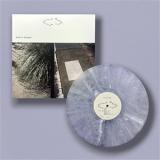
NPVR is the avant garde duo made up of the late Peter Rehberg and Nik Void. Editions Mego is proud to present their second and final release. No this is not some kind of Beatles synthetic AI that raises the dead reconstructed recordings but rather a new album made by the humans and their machines.

The initial meeting of Rehberg and Void was in London in 2016 and despite or due to their mutual awkwardness found solace and compatibility in the fact that they both had a similar electronic modular set up, along with matching cases to transport all. The idea to collaborate was an obvious and organic process as a means to connect their individual gear together and observe the outcome. The fruits of these initial experiments, recorded in London, resulted in the playful experimentation of their acclaimed 2017 release 33 33 (eMego 251).

Now in 2024 Editions Mego presents the logically titled follow up, 33 34. These sessions were recorded six months after the initial recordings at Peter’s home in Vienna. This was planned out as a mirror city release to the original London recordings. With Peter having access to his full studio set up this time around we encounter a rich audio landscape which organically folds together a variety of musical genres blurring any distinction between these forms so the resulting music hovers as a new cloud of sound. Any musical form, be it industrial, electro-acoustic, ambient, drone and techno all coexist and melt into the other as the ensuing result unveils a hypnotic swarm of divergent sounds (music). When active there were no lines or contexts with NPVR, either between sound or genre within these recordings or live where NPVR were at home playing at a techno club one night and an avant garde venue the next.

The initial session of these recordings was edited by Rehberg and sent to Void to further develop. Over time the final versions were agreed on and then shelved as other outside projects took over. The awkwardness had been surmounted and the two had become close friends. NPVR performed at a range of venues such as Tresor, Sutton House, Corsica, Blitz, Paris GRM #Focus2, LEV Festival and Rigas Skanumezs Festival. Following Rehberg’s untimely passing Void had difficulty listening back to the sessions but eventually thought it fit to complete and release this album, of which even the artwork (like 33 33, an image from Zurich photographer, Georg Gatsas) had been decided upon prior to Rehberg parting ways.

There is an unmistakable joy to these recordings. One encounters an enthralling exploration of their chosen machines which conveys the excitement of what can be randomly conjured when people speak through such devices. There is no grand statement or argument here, just the sheer thrill of creation and the recorded results of random encounters. The art of collaboration was always a mainstay of Rehberg’s practice from the advent of the MEGO adventure. Rehberg & Bauer was an initial collaboration with former business partner Ramon Bauer. Even at this stage one can hear a relaxed sense of delight in the sheer discovery of sound.

A mix made for the Wire magazine following the release of 33 33 hints at the freedom that comes with endless urge for exploration and discovery. Abstract tracks from Z'EV. Jérôme Noetinger and Jung An Tagen are included alongside British stalwarts The Fall and New Order. There were no lines between pop / academic / underground or mainstream in Rehberg’s world. All of it sat at the same table. It is just matter in the atmosphere, like the diverse exploration found in these recordings that comprise 33 34.

Towards the end of his life Rehberg was obsessing over the immense output of the German ambient musician Pete Namlook. An artist renowned for not only his sprawling catalogue of ambient masterpieces but one who often said his main inspiration was nature. This is apt with regards to the work of NPVR which also aligns with such thought as the intertwining of the two individual artists and their machines results in a natural symbiotic flow, as it happens, just like in the world around us.

out of Stock

Order now and we will order the item for you at our supplier.


Last In: 3 months ago
Jinjé & A. Montane - Neon Garden EP

Jinjé & A. Montane

Neon Garden EP

12inchMESH0111V
Mesh Records
07.01.2026

Mesh-mainstay Jinjé teams up with A. Montane for a collaborative EP born out of live improvised sessions, and composed over the period of a year.

Taking a slowed approach to the production of Neon Garden EP, the two hardware aficionados met sporadically for live jam sessions - an homage to the importance of not rushing the process, and letting ideas build over time. Each session consisted of an intense burst of musical propositions followed by a careful editing framework, giving space for each moment to flourish. Oscillating between moments of catharsis and intense rhythmic play, the EP merges disparate musical sources into exciting new structures.

‘Ikeya Seki’ launches with glistening arpeggiations and subaquatic frequencies that interact over UKG-adjacent drums. ‘Vrem’ marches to a slow-stepping half time beat, building through yearning vocals before breaking down into a storm of pointillistic percussion. On ‘Yū’, rich melodies and bouncy, bass-led rhythms dance below chopped up vocals. Closing things off, ‘Velvet People’ builds a spatial setting with bells ricocheting through malfunctioning flutters.

A nod to the joys of improvisation, Neon Garden EP takes the spirit of spontaneity and lays out new structures for its ideas to grow.

out of Stock

Order now and we will order the item for you at our supplier.


Last In: 87 days ago
JOEL SHEARER - LISTENING

JOEL SHEARER

LISTENING

12inchISCHF-005
ISC HI-FI SELECTS
09.12.2025

Joel Shearer’s Listening Immerses Itself in Ambient Guitar, Restraint, and the Beauty of Repetition

With guitarist and ambient composer Joel Shearer’s new album, Listening, he took the path of repetition, subtle movement, and pure sound rather than conventional songwriting. What began as a disciplined experiment — limiting himself to just electric guitar — soon expanded. At various points, he introduced piano, cello, and trumpet, allowing the record to evolve organically. "I didn’t know I was making another record,” Shearer says. “I was experimenting, wanting to do something beyond just the electric guitar. So, I started these other tracks, and that’s how Listening came about.”

Unlike albums built around hooks or dramatic shifts, Listening unfolds gradually, moving with patience and restraint. There are no choruses, no obvious climaxes — just sound evolving over time. “Instead of a traditional song structure with a verse, chorus, or B section, it’s one continuous movement that grows and dissolves,” Shearer explains. “It’s not about anticipating the next moment—it’s about sitting inside the sound, getting comfortable with patience.” A Topanga-based session musician, composer, and producer, Shearer’s previous solo albums, Morning Loops and Hours, explored the manipulation of only the electric guitar, using texture and repetition to push beyond conventions. Listening continues that journey, offering music that resists distraction and rewards deep attention.

Shearer recorded Listening without a click track, working in long, freeform takes. His shimmering, clean guitar tones—often unrecognizable, processed through looping pedals and effects—became a foundation, with layers of sound building around it. “I love making the guitar sound like anything but a guitar,” he says. “I might play for just a minute, but once the sound enters the effects chain, it takes on a life of its own. The music keeps evolving, stretching time in ways I couldn’t predict.”

The opening piece, “Big Sur,” is an 11-minute meditation that drifts in slow, hypnotic waves, its layered guitar textures sparkling like light over water. The piece moves without urgency, subtly transforming as it pulls the listener deeper into its atmosphere. “Threshold” features a delicate piano melody that gradually unfurls, allowing its essence to fully settle before the next emerges. Subtle layers of ambient guitar weave around the piano, stretching and dissolving into the background, creating a sense of stillness and slow expansion.

At nearly 15-minutes, “The Clear Light of the Void” is a slow-burning study in sustain and resonance. Layers of guitar stretch and dissolve into an open, drifting soundscape, each note lingering and shifting like a breath held in suspension. Subtle tonal variations emerge over time, creating a sense of vastness—an expanse where sound is less about movement and more about presence.

“The world is noisy—so much information, so much distraction,” Shearer says. “I wanted to create something that allows people to just be present with the sound, without expectation.” It’s an album that demands nothing from the listener but offers space — to focus, to drift, to listen without waiting for what comes next.

out of Stock

Order now and we will order the item for you at our supplier.


Last In: 4 months ago
SPFDJ - Heel Thyself

SPFDJ

Heel Thyself

12inchSKIN011
Intrepid Skin
05.12.2025

SPFDJ steps up for her long-awaited debut EP, Heel Thyself, out Friday 7th November on Intrepid Skin.

A core figure in grassroots techno circuits, and an internationally lauded DJ, SPFDJ's ascent reflects a passion for music governed by love and grit in equal measure. At once providing a gleefully chaotic two-fingers to dance music's self-serious establishment, whilst also flexing an ever-expanding knowledge of its roots and potentials, her musical armoury is renowned the world over for inspiring debauchery and sweat-soaked hedonism.

As an artist whose journey has been defined by challenging the norms of electronic music, SPFDJ's rebel spirit is recognised locally and globally, but guiding this attitude is a vulnerability to the realities of the music industry, and the rise of conservatism that permeates every aspect of life. And whilst sensitive to the use of buzzwords like community, it's ultimately a respect for the people who keep these scenes alive that motivates her artistry.

In releasing this EP, she taps into a more vulnerable side. The title - a nod to internal healing processes, and a play on words to motivate queers and women to 'boot up for battle' against increasingly oppressive structures - shines a light on some of the values she holds up to electronic music culture. At once playfully chaotic and deeply energising, Heel Thyself spins us through a cyclone of kicks, punches, and noise.

Opener 'Cluster B Intro' is a tempo-twisting barrage of gabber led by a robotic vocal command, setting the scene for pretty much anything to happen. 'That Stiletto Track' kicks in like a tweaked out distortion of 90s trance before spiralling upwards into a storm of heavy breaks. 'F*ckboi' is hot n heavy electro - classic in its structure, but with the added industrial touch of hammerdrill synths and razor sharp percussion. Swinging into a bouncier state, 'The Hot in Psychotic' flings ricocheting rhythms through frantic claps, with a donk to keep things moving. Rounding things off, 'Mindless Counting' flies higher with pummeling drums lifted by a touch of euphoria.

A debut laced with both defiance and self-reckoning, Heel Thyself finds the rebel looking inwards - vulnerable, but sharpened and ready.

out of Stock

Order now and we will order the item for you at our supplier.


Last In: 52 days ago
XEXA - Kissom

XEXA

Kissom

12inchP064LP
Príncipe
05.12.2025

Xexa is still undefined, gliding over her origins, influences, and points of reference. Her music is informed by uploads from all that, processing heritage and future in much the same democratic way, sure of its (her!) path. Synthetic as it may sound, »Kissom« contains the very human element of Xexa's presence, not only through her instantly recognizable ethereal vocals but also manifest in the web of grooves stopping short of »dance«. »Kizomba 003« is the closest she comes to the dancefloor, a reduced take on the popular style of kizomba, a low-key interpretation but with the vocals atypically high in the mix. A brief breath of nostalgia. »Kissom« (title track) prolongs the slow pace, almost as an extended mix of »Kizomba 003«, stretching the sexy bounce for close to 4 extra-delightful minutes.

Everything seems to dissolve into space, as if every track gently expires only to be reconfigured somewhere else, molecule by molecule, perhaps in a different location within our mind. The artist somehow corroborates the feeling, particularly regarding »Será«, »Xtinti«, and »Txe«, which she says »finish exactly where I wanted. They all end with an EQ that mutes the frequencies until they cease to exist«. Here, there, sparse beats, successive waves of ambience, half-machine lips singing close to our ears, a blend of classic 4AD and a metallic environment warmly wrapping around the music. Extra-long, »Quem és tu?« poses the question – Who are we? Who is she? And the title »Kissom« stems from another question Xexa often hears from people, »Ki som é este?« (What is this music?). The answer might well be the artist's own paste of the words »kiss« and »som«. Lovely.

pre-order now05.12.2025

expected to be published on 05.12.2025

LORELLE MEETS THE OBSOLETE - CORPORAL

LORELLE MEETS THE OBSOLETE

CORPORAL

12inchSCRLP350
SONIC CATHEDRAL
28.11.2025
  • Regresar / Recordar
  • Ker
  • Dilación
  • Casi No Estar
  • Palabra
  • Riesgo
  • Reanimar El Cuerpo
  • Control

Lorelle Meets The Obsolete return with their seventh album. It's the Mexican duo's finest, most ferocious work to date which sees them turbo-charge their psychedelic post-punk with a new electronic engine. Mixed by Antoine Goulet (live sound engineer for SUUNS) and mastered by Mikey Young (Eddy Current Suppression Ring), the most obvious comparison in terms of mood and mode is Primal Scream's classic XTRMNTR, another record that processed personal and political conflicts and spat them out as distorted dance music. It shows the influence of the duo's DJ sets and last year's radical Remezcla remix collection on their way of thinking and why they are now namechecking the likes of Moor Mother, MF DOOM, Patrick Cowley, The Bug, Paula Garcés, Phil Kieran, Coby Sey, Run the Jewels and Anadol."Playing other artists' music is different," says Lorena Quintanilla about the change of direction towards the dancefloor. "You're not just listening, you're watching how energy flows and how it affects other people. It gives you the chance to witness what moves other bodies." And Corporal, as the title suggests, is all about the body. "The body is what carries the weight of stress, exhaustion, sadness. It's the body that the system breaks first," explains Lorena. "Unintentionally, while composing the album, our bodies were seeking joy in the songs. Reconnecting with pleasure became a way to open new dimensions - a way to escape, yet remain present." The theme is carried over into the lyrics which, according to Lorena, variously refer to "the bodies that disappear, the abused bodies, the bodies we miss, the bodies that march together in protest, the bodies that are being controlled".

pre-order now28.11.2025

expected to be published on 28.11.2025

COLD IN BERLIN - WOUNDS

Cold In Berlin

WOUNDS

12inchNHSLP056C
New Heavy Sounds
07.11.2025
  • Hangman's Daughter
  • 12: Crosses
  • Messiah Crawling
  • They Reign
  • The Stranger
  • We Fall
  • The Body
  • I Will Wait
  • Wicked Wounds

Wounds is the band's long-awaited fifth album - their first in six years, their most eclectic and ambitious work to date. As heavy as it is haunting, the record masterfully blends doom, post-punk, and driving krautrock in a dynamic, hypnotic maelstrom - pushing London's most exciting cult band into intoxicating new territory. "Wounds is a series of songs about the different ways people live with and process 'the wounds' of their lives," explains vocalist Maya. "A strange celebration of that formative pain we have all experienced in some way. The loss and joy of survival - the celebration of finding others like us, the gift of knowing life comes after fire." Wounds was recorded by Mike Bew, on location at Foel Studio. The band could be found working deep into the witching hours, experimenting with new sounds and filling the valleys with cantankerous wails of sound, bursting from amps borrowed from My Bloody Valentine. "The Welsh countryside has a mystical quality to it," says guitarist Adam. "We recorded in a deep, dark valley; misty days and shooting stars at night. You could wander through nearby woods and stone circles during breaks. Foel Studios is woven into this setting with a transcendence of its own - its storied history includes sessions by Electric Wizard, Hawkwind and The Fall." Synths on the album are arranged by Berlin-based Bow Church, an influential figure in the dark electronic scene and a longtime collaborator of the band. His work weaves icy and atmospheric textures into the album's tracks. While meticulously crafted, Wounds captures the visceral energy of Cold in Berlin's renowned live shows. The album's arrangements and raucous sound remain true to the unrelenting intensity and atmosphere of their stage performances - every track retains the sweat, urgency, and immediacy of a band performing in the moment.

pre-order now07.11.2025

expected to be published on 07.11.2025

AÄRON KOCH - FOR ONCE LP

Aäron Koch

FOR ONCE LP

12inchUNDAY171LP
UNDAY RECORDS
07.11.2025

Debut solo album from guitar player of Calicos. The result is a record that balances melancholy and raw intensity, where vulnerability is never far from power.Aäron Koch's voice cuts straight through, while the band builds a sound that feels both timeless and urgent, echoing The Veils, My Morning Jacket and Strand of Oaks.


For years, Aäron Koch was the guitarist in other people's bands. Writing intricate riffs and odd time signatures came naturally, but the thought of writing a simple song, a verse, a chorus, a melody that could stand on its own, felt out of reach. He tried and failed, discarded demos, and pushed himself through the humbling exercise of writing "bad songs" just to learn the craft.

'For Once', his debut album (out via Unday Records), is the unexpected outcome of that long struggle. What began as an exercise became a set of songs that refused to stay in the drawer. Months after recording rough sketches, Koch listened back and realized they weren't throwaways after all. With a small heart, he shared them with friends, musicians from bands like Calicos, Uma Chine and Tin Fingers, who immediately heard their potential and joined the project.


The result is a record that balances melancholy and raw intensity, where vulnerability is never far from power. Koch's voice cuts straight through, while the band builds a sound that feels both timeless and urgent, echoing The Veils, My Morning Jacket and Strand of Oaks.

"This music is about weaknesses and vulnerability," Koch says. "Autobiographical really, something I only realized once the album took shape."


That honesty struck a chord. In 2024, after only a handful of shows, Aäron Koch reached the finals of Humo's Rock Rally and was invited to open for Belle & Sebastian at a sold-out Ancienne Belgique. Now 'For Once' shows why: it's the sound of someone learning to write songs the hard way, and discovering in the process that he has something entirely his own to say.

pre-order now07.11.2025

expected to be published on 07.11.2025

Molly Nilsson - Amateur (LP)

The word "amateur" originates from the Latin word "amator," meaning "lover" or "admirer". This Latin term is derived from "amare," which means "to love". The French adopted "amateur" from Latin, and the English then borrowed it from French, initially retaining the sense of someone who loves or is devoted to something. Over time, the English usage of "amateur" also developed a meaning related to a lack of professional skill or experience. How did a word derived from love become a slur? Is love really so defenseless? They say love conquers all, but in reality isn’t love quite ridiculous? It has no intention, no motive, no agenda. How could it possibly prevail? It can’t be bought or sold, or so they say.Its mere existence can't be proven or even measured. What an impossible thing. Trying and failing, time and time again, no wonder cynicism always seems to win. I see “amateurism” as a delighted, even foolish, protest. Protest against everything. Of what’s expected of someone, or expected of someone to desire or strive for. To be elite, to be expert, to be professional, to be a master, to excel and succeed. Where’s the joy in that? I just want to have fun. I want to want. I want to love. And keep doing it, forever. I want to have fun, even when it’s tiring and sometimes even heaven is boring as hell. I want to be bad. I want to do my own thing. “I vant to be alone”. I want to be someone so dedicated to their passion that it starts to seem like there’s something wrong with them. All the way. We can take it all the way, and never get it back. ” - Molly Nilsson Amateur is the 12th studio album by Molly Nilsson. Deep in the teeth of a career that threatens to tip into something resembling a “legacy,” Molly Nilsson celebrates with an album recorded instinctively, quickly and bursting with so many moments of emotional brilliance and clarity it may be her greatest yet. Hers has been a career spent reaching out, perennially powerful in her earnestness, a warrior ridiculously defenceless and armed with a glittering sincerity. Shearing herself of the machinations of the music industry, recording at home, writing direct to the heart. Amateur is a jubilee for losers. A treatise in 13 songs, Amateur states clearly that we should live our life with eternal curiosity, offers us an open hand of comradeship out of the rat race. The songs on the album are both some of the most personal of Nilsson’s career and the most anthemic. First single How Much Is The World asks us to re-evaluate value in the face of a Neo-liberal system squeezing the life out of our loves. Pulsing opener Die Cry Lie satirises the commercialisation of emotion in the form of a shout-along diss-track. With a pounding rhythm track held down by gorgeous chord changes, heartbreaker Valhalla carries the torch for the main themes of the album: never growing up, making mistakes with kindness, moving on. When the drums crash in on the line “It’s going to get better now, you’ll see, going to be much better off without me” there is a world of feeling swirling about in the vocal delivery. One reading of the track might be that it’s a break up song but the subtext is classic Molly Nilsson: by living truthfully, making mistakes, we’re active agents against the myriad oppressions of the world. All The Way takes the theme for a run into the eternal sunset. It’s a manifesto for living fully. “Take it all the way, and never get it back” - it’s the process that’s the important point. The journey not the destination. Big Life, follows on like a part 2: An ode not only to Molly Nilsson’s career of endless gigs, endless connections with people, it’s a massive ode for following your dreams, doing it yourself. Closer The Bitter End is a powerful anthem for friendship, another definition of love infused in Nilsson’s work, A beautifully poignant ode to comradeship til the end, it seems to be the songwriter approaching aging, approaching life’s inevitability with the same vigour and earnestness, the same love of life she enjoyed at the onset of her career. There are moments on Amateur shrouded in reverb, slightly out of focus, forcing the listener to step deeper into the Mollyverse.. Nilsson’s open-armed beseeching to the world permeates every beat, every chord. These are songs exploding with life: the chunky, aggressive bassline on the punker Get A Life can’t hide its massive, catchy chorus. The sweeping Swedish Nightmare might be a tongue-in-cheek self-reference, but at its heart it’s a song about the duality of living life large, what is a dream, what is a nightmare? Molly Nilsson says you can’t have one without the other, and why would you want to? Here’s to making mistakes.

out of Stock

Order now and we will order the item for you at our supplier.


Last In: 5 months ago
PHYLIPE NUNES ARAUJO - Phylipe Nunes Araujo  LP

Phylipe Nunes Araújo's songs are as rich and varied as the diverse landscapes they were written in. The hills of Pernambuco, the lagoons of Alagoas, and the beaches of Bahia are all woven into his stripped-back, folk-inspired Brazilian songwriting. As part of a wider movement of musicians originating from Brazil's Northeast, Phylipe sees the process of music-making as the search for beauty itself.

Collaborating with fellow Northeastern artists Bruno Berle, Batata Boy and Nyron Higor among others, Phylipe's debut album represents the latest flowering of this exceptionally talented community's creative search.

The Northeast holds an almost sacred importance in Brazil's collective cultural imagination. The region bore witness to the brutal histories of Portuguese colonization and the African slave trade, while simultaneously amalgamating the diverse cultures, religions and traditions of those who have called it home. Countless Brazilian music greats - Gilberto Gil, Caetano Veloso, Hermeto Pascoal, Djavan and Luiz Gonzaga - have emerged from this vast cultural melting pot.

Born in Caruaru, Pernambuco state, and raised in the city of Santa Cruz do Capibaribe (famed for its textiles industry), Phylipe describes his music simply as "Brazilian music from the Agreste of Pernambuco". His masterful compositions thread together regional rhythm, folk poetry and sophisticated harmony.

Phylipe's musical foundations were laid in youth, listening to the local elders rehearsing their forrós, attending São João street parties in front of his house and watching the Junina Quadrilhas dance through his neighborhood. At street fairs he would read the Literatura de Cordel (handcrafted pamphlets of Brazilian folk literature), and watch the rhyme battles between cantadores, violeiros, and repentistas, who improvise verses on daily life, social commentary and philosophy. This tradition of Northeastern folk poetry proved particularly formative for Phylipe as a lyricist. "I always try to write things as simply as possible. I believe that beauty must be easily understood. If I can facilitate the path to the message, there's no reason not to. It's something I learned from the traditional poetry here: it's more beautiful if everyone understands."

At the age of 11, Phylipe first got access to the internet. As he explains: "Still in adolescence I was also able to discover things like The Beatles and Nick Drake - I started to get to know music from the rest of the world and later to correlate that with my local musical experiences." Rich with extended chords and artful dissonances, it's clear from his compositions that jazz and bossa nova also took hold, but he's quick to eschew stereotypes. "Inevitably, people associate a Brazilian musician playing a nylon-string guitar with bossa nova..." "But the foundation is another story," he asserts, "It's the Northeast."

On the guitar Phylipe experiments with the binary rhythms inherent in traditional Northeastern music. Coco, frevo, maracatu and baião are recontextualised, placed alongside Brazilian popular music (MPB), gentle lullabies and stunning ballads. "In these 10 songs, I am experimenting with making pop music on a nylon-string guitar with my foundation in the Northeastern songbook."

The contemporary musical community which Phylipe belongs to developed initially in Pernambuco's neighbouring state Alagoas. Phylipe lived in its capital Maceió for three years, where he built friendships and musical bonds with Bruno Berle and Batata Boy who together produced his album. Bruno also sings in unison with Phylipe on the duet "Valise", a song Phylipe wrote aged just 15.

In recent years, Phylipe, Bruno and Batata have migrated south to São Paulo, where the majority of the album was recorded. Other collaborators on the album include Alici, who provides vocals for the ebb and flow of "Temperim", Nyron Higor who plays drums on lead single "Asa" and the sweet indie moment "Ziz"", bassist Meno Del Picchia who plays on the mystical baião "Bixin" and the propulsive "Subindo a Ladeira", and Raphael Coelho who joins Bruno and Batata on percussion for "Santa Cruz", Phylipe's hypnotically powerful portrait of his hometown.

out of Stock

Order now and we will order the item for you at our supplier.


Last In: 5 months ago
Alberto Juscamaita Gastelú - Reminiscences of Raktako: Huayno Guitar from Cuzco and Ayacucho, 1930-1940 MC (TAPE)

Huayno has its roots in the Andes during the colonial era, when indigenous peoples began to blend their music with influences brought by European settlers. During this process the Spanish guitar naturally became very prevalent, incorporating the tunings, finger-style and rhythms of the traditional Andean harp along with it.

The late Alberto Juscamaita Gastelú, known as Raktako, was a renowned guitarist, composer and mentor to generations of guitarists from his home in Ayacucho, southern Peruvian Andes. His unique style also blended techniques from the Spanish lute and other instruments brought by colonisers, such as the violin and accordion. For over a century, Raktako preserved Ayacucho's musical traditions and the Andean guitar form.

In 2022, the last disciple of Raktako, Gustavo Yashimura, shared with Sound of the Andes' Hánkel Bellido a series of astonishing home recordings made by Raktako between approximately 1930 and 1940. These recordings, made with the sparsest of equipment, had never been published before and represent an invaluable cultural treasure. The guitarist, who lived for over 100 years and passed away in 2023, had been largely forgotten until recently, when the Ministry of Culture of Peru officially recognised him as Meritorious Personality of Culture. His legacy, which includes a profound influence on Peruvian music, especially the Ayacucho guitar tradition, is finally being acknowledged.

out of Stock

Order now and we will order the item for you at our supplier.


Last In: 5 months ago
EMILY SPRAGUE A. - Cloud Time
  • Tokyo 1
  • Osaka
  • Nagoya
  • Matsumoto (Beginning)
  • Matsumoto (Ending)
  • Hokkaido
  • Tokyo 2
  • Each Story
also available

Black Vinyl


Emily A. Sprague's Cloud Time traces an audio-spiritual journey through time and place, recorded across a long-awaited debut tour of Japan in the fall of 2024. Compiled from environmental improvisations captured in and for the moment, material at once welcoming, responsive, and inimitable, the album distills a voyage guided by psychic wayfaring, unbound presence, and activating performance for a reciprocal exchange with space, listener, and each fully engaged instant. The Japanese tour documented on Cloud Time held an almost mythic significance for Sprague, taking on properties of her own sonic white whale. After many near-departures and dropped plans to play in the country, "the empty spaces of cancelled trips and forgotten music turned into strange little misty spirits that I felt followed by," she says. "When I began preparing for the tour, I couldn't shake a sense that the invitation to Japan was more about opening myself up to this new place instead of bringing something into it tightly under my control. Improvisation has always been such a pillar in my music practice, and I really wanted to meet the country, spaces and people through that process." To amplify these intuitive whispers on-stage, Sprague reimagined her time-tested live rig, designed to be as free from error as possible, as a looser, more flexible set up that would allow her to interface with what was essentially a blank sonic canvas every night. Each performance became a collaboration between environment and instinct, Sprague processing the events, energies, and emotions informing the evening through her new sound ecosystem, and projecting an entirely present and unique version of herself to each open-eared and hearted crowd. "It was very much more than just an act of playing for me, but a total experience of time and place," she says. The seven long-form pieces that plot the course of Cloud Time, excerpted from over eight hours of recordings archived on the artist's on-stage recorder and generously shared on the album with no additional mixing and only minimal editing, invite listeners to become still in these deep-rooted moments of presence as the album moves from city to city, venue to venue. Cloud Time chronicles material recorded at each tour stop, Sprague selecting and sequencing the album around mood-based storytelling more so than linear chronology. "I tried to make the whole album flow in the way that any one of the complete live performances did," she explains, "while also keeping the spirit of the whole thing as a journey." The result is equal parts travelog, love letter, and impressionistic collage channeled from the potent ferment of a now encased in the glowing amber of memory. Intrinsically inspired by kankyo ongaku, an environmental music philosophy, known both in and widely outside of Japan that tunes into the similarly expansive ethos as Pauline Oliveros' deep listening practice and posits the listener as composer, Cloud Time is ambient music that seems to be listening right back, grounded in heartfelt synthesized frequencies that abundantly hold and heal. Pieces like "Nagoya," "Tokyo 1," and the ten minute "Matsumoto" in particular hum with the atomic resonance of gently tended landscapes, offering space for tuning way in and dropping far out from perspectives that stifle and bind. Cloud Time is an invitation to embrace each moment as both fleeting and eternal, floating by with nothing to grasp onto and absolutely everything to gain. The exercise in acceptance and letting go that Sprague practiced throughout the tour deeply impacted her understanding of self as both a guest and venerable performer. "The process of loving wherever I am, being present and focusing on a clear channel of communication for mind and emotion, rooted so deeply in respect for the space, those within it, and myself, ended up being profoundly healing," she says. "My vision and hope is that this album can be released as a gift back to anyone who either was or wasn't there. A cloud time of life passing by."

pre-order now16.10.2025

expected to be published on 16.10.2025

EMILY A. SPRAGUE - CLOUD TIME
  • Tokyo 1
  • Osaka
  • Nagoya
  • Matsumoto (Beginning)
  • Matsumoto (Ending)
  • Hokkaido
  • Tokyo 2
  • Each Story
also available

Cloudy White Vinyl


Emily A. Sprague's Cloud Time traces an audio-spiritual journey through time and place, recorded across a long-awaited debut tour of Japan in the fall of 2024. Compiled from environmental improvisations captured in and for the moment, material at once welcoming, responsive, and inimitable, the album distills a voyage guided by psychic wayfaring, unbound presence, and activating performance for a reciprocal exchange with space, listener, and each fully engaged instant. The Japanese tour documented on Cloud Time held an almost mythic significance for Sprague, taking on properties of her own sonic white whale. After many near-departures and dropped plans to play in the country, "the empty spaces of cancelled trips and forgotten music turned into strange little misty spirits that I felt followed by," she says. "When I began preparing for the tour, I couldn't shake a sense that the invitation to Japan was more about opening myself up to this new place instead of bringing something into it tightly under my control. Improvisation has always been such a pillar in my music practice, and I really wanted to meet the country, spaces and people through that process." To amplify these intuitive whispers on-stage, Sprague reimagined her time-tested live rig, designed to be as free from error as possible, as a looser, more flexible set up that would allow her to interface with what was essentially a blank sonic canvas every night. Each performance became a collaboration between environment and instinct, Sprague processing the events, energies, and emotions informing the evening through her new sound ecosystem, and projecting an entirely present and unique version of herself to each open-eared and hearted crowd. "It was very much more than just an act of playing for me, but a total experience of time and place," she says. The seven long-form pieces that plot the course of Cloud Time, excerpted from over eight hours of recordings archived on the artist's on-stage recorder and generously shared on the album with no additional mixing and only minimal editing, invite listeners to become still in these deep-rooted moments of presence as the album moves from city to city, venue to venue. Cloud Time chronicles material recorded at each tour stop, Sprague selecting and sequencing the album around mood-based storytelling more so than linear chronology. "I tried to make the whole album flow in the way that any one of the complete live performances did," she explains, "while also keeping the spirit of the whole thing as a journey." The result is equal parts travelog, love letter, and impressionistic collage channeled from the potent ferment of a now encased in the glowing amber of memory. Intrinsically inspired by kankyo ongaku, an environmental music philosophy, known both in and widely outside of Japan that tunes into the similarly expansive ethos as Pauline Oliveros' deep listening practice and posits the listener as composer, Cloud Time is ambient music that seems to be listening right back, grounded in heartfelt synthesized frequencies that abundantly hold and heal. Pieces like "Nagoya," "Tokyo 1," and the ten minute "Matsumoto" in particular hum with the atomic resonance of gently tended landscapes, offering space for tuning way in and dropping far out from perspectives that stifle and bind. Cloud Time is an invitation to embrace each moment as both fleeting and eternal, floating by with nothing to grasp onto and absolutely everything to gain. The exercise in acceptance and letting go that Sprague practiced throughout the tour deeply impacted her understanding of self as both a guest and venerable performer. "The process of loving wherever I am, being present and focusing on a clear channel of communication for mind and emotion, rooted so deeply in respect for the space, those within it, and myself, ended up being profoundly healing," she says. "My vision and hope is that this album can be released as a gift back to anyone who either was or wasn't there. A cloud time of life passing by." Emily A. Sprague's Cloud Time will be released Friday, October 10th in vinyl, Japanese import CD (via Plancha), and digital editions.

pre-order now10.10.2025

expected to be published on 10.10.2025

Alessandra Novaga - The Artistic Image Is Always a Miracle

Furthering the passionate exploration of cinema that has guided her two previous LPs - 2017’s ‘Fassbinder Wunderkammer’ and 2020’s ‘I Should Have Been a Gardener’ - the Milanese guitarist/composer, Alessandra Novaga, returns to Die Schachtel with ‘The Artistic Image Is Always a Miracle’, two sides off shimmering, tense compositions – culminating as one of her most creatively ambitious and conceptually rich outings to date – freely inspired by the life and work of the Russian director Andrej Tarkovsky and the music of Johann Sebastian Bach.

Classically trained at the Musik Akademie in Basel, Switzerland, over the last decade Alessandra Novaga has emerged as one of the leading figures within northern Italy’s thriving new, experimental, and improvised music scene, rendering striking solo efforts, in addition to collaborations with Loren Connors, Stefano Pilia, Elliott Sharp, Nicola Ratti, Paula Matthusen, Sandro Mussida, Kid Millions, Travis Just, Francesco Gagliardi, and others. Remarkably ambitious and forward thinking, her approach to the guitar embarks upon a relentless deconstruction and rethinking of her instrument’s unique properties through distinct applications of structure, resonance, space, and tone, creating in a deeply personal and emotive music, seeking narrative and meaning within the abstractions of sound.

In 2017, with the LP, ‘Fassbinder Wunderkammer’, issued by Setola Di Maiale, Novaga embarked upon the exploration of her love of film. Having begun with Rainer Werner Fassbinder, this was followed in 2020 by Die Schachtel’s release of ‘I Should Have Been a Gardener’, a deeply intimate mediation on the life and work of Derek Jarman. Rather than focusing on a fixed point of inspiration or a single film to work from, these pieces achieve a form of abstract portraiture, distilling elements drawn from these filmmaker’s life and work into ambient networks of texture and tonality. ‘The Artistic Image Is Always a Miracle”’ freely inspired by the Russian director Andrej Tarkovsky and the music of Johann Sebastian Bach, finds Novaga radically expanding her sonic palette within this approach.

The seeds of ‘The Artistic Image Is Always a Miracle’ can be traced to a conversation that Novaga had with Alan Licht (contained in the highly regarded Common Tones: Selected interviews with artists and musicians 1995–2020, Blank Forms, 2021), relating to the connections between music and cinema, which led her to consider Andrej Tarkovsky’s use of Bach's music within a symbiotic framework: how the music illuminates the imagism of the films, and the film illuminates new dimensions of the music. Slowly developing over the subsequent years, the resulting album comprises six individual works, some of which draw directly upon pieces of Bach’s music that Tarkovsky used in his films – specifically 'Erbarme dich, Mein Gott', 'Das alte Jahr vergangen ist', and 'Ich ruf zu dir, Herr Jesu Christ' - while others draw upon the sensibilities and moods evoked in the imagination by the director’s films.

As a point of departure and illumination into the process and spirit that underscored the creation of the album, Novaga points toward a passage in Tarkovsky’s "Sculpting in Time”:

“Art is born and takes hold wherever there is a timeless and insatiable longing for the spiritual, for the ideal: that longing which draws people to art. Modern art has taken a wrong turn in abandoning the search for the meaning of existence in order to affirm the value of the individual for its own sake. What purports to be art begins to look like an eccentric occupation for suspect characters who maintain that any personalized action is of intrinsic value simply as a display of self-will. But in artistic creation the personality does not assert itself, it serves another, higher and communal idea.”

‘The Artistic Image Is Always a Miracle’ can be understood as a realisation of the collectivism of which Tarkovsky speaks, in the service of something far beyond the expression of self. Encountering Novaga moving into fairly uncharted waters, three of the album’s pieces incorporate the human voice we encounter the voices of others: that of the poet Arsenij Tarkovsky, the director’s father; a singer from Bach’s ‘Erbarme dich, Mein Gott’, capturing a broadcast in an underground parking lot, and Novaga’s own, rendering the melody from Bach’s “Ich ruf zu dir, Herr Jesu Christ”. Roughly alternating between solo excursions on guitar and bristling electroacoustic pieces, over the course of the album’s two sides Novaga weaves one of her most abstract and ambitious bodies of recordings to date, shifting between the complex tonal mediations generated by the six strings of her instrument, and phycological densities activated by the expanded pallet of sonority made possible by the tactics and approaches of musique concrète.

An immersive, deeply engaging meeting of beauty and melancholy within a labyrinth of voices and ideas, ‘The Artistic Image Is Always a Miracle’ transfigures the life and work of Andrej Tarkovski – one of the greatest auteurs in the history of cinema – into a singular, experimental statement of collective truth. Belonging to recent, ambitious stream of contemporary new music releases on Die Schachtel that’s already included Novaga’s ‘I Should Have Been a Gardener’, Stefano Pilia’s ‘Spiralis Aurea’, Jim O'Rourke & Giovanni Di Domenico’ ‘Immanent In Nervous Activity’, Claudio Rocchetti’s ‘Labirinto Verticale’, and Damāvand’s ‘As Long As You Come To My Garden’, among others, ‘The Artistic Image Is Always a Miracle’ is available on as a limited edition of 300 dark turquoise vinyl LPs released on June 21, 2024. The LP, designed by Bruno Stucchi / dinamomilano, comes with an 8-pages insert illuminated by Alessandra’s text as well as the lovely and intense photographs of Matilde Piazzi.

out of Stock

Order now and we will order the item for you at our supplier.


Last In: 6 months ago
TIM BERNARDES - PRUDENCIA - PRAGA
  • Prudência
  • Praga

"Prudência / Praga", or "Prudence / Plague", is a double single with these two songs that I composed and which were originally recorded by two of my heroes: Maria Bethânia and Alaíde Costa. Curiously, they are two sambas: although I come from the rock and roll scene in Sao Paulo, I wound up writing a samba as if it were the 50s. At the time of my first heartbreak, at the age of 17, I had the record Jamelao canta Lupicínio with the Orquestra Tabajara on my iPod, and I identified with those dramatic sorrows, almost a hundred years old. In a way, I felt that Lupicínio Rodrigues was bloody and direct, like Tarantino, and Nelson Cavaquinho, heavy metal like Black Sabbath. So, I feel it's a compact 45 of sambas but it's also very Rock n Roll to me. Raw and coming from hell. "Prudência" is that internal battle between the passionate side and the controlling side in the head of the former romantic bohemian. I wrote it for Bethânia to record on her album Noturno. Her version turned into a moving bolero. When I saw her singing it live and the audience singing along with her, I couldn't believe it. I cried, hidden in the audience. She said that when she showed the record to her brother, Caetano Veloso, he thought that "Prudência" was some old classic that she had dug up to bring back to light. Nothing could be a greater compliment than this mistake on Caetano's part. "Praga" also has to do with MPB heroes of mine that I never imagined I'd see up close or have any relationship with or any connection with. I was asked to write these lyrics in partnership with the main man Erasmo Carlos for Alaíde Costa's album! Surreal. Like many people, I got acquainted with Alaíde listening to "Clube da Esquina," her singing with Milton Nascimento. And the idea was to do a poisonous cabaret song samba. The curse of a woman who has dumped a drunk. I love it when Alaíde sings "BIBIDA" in her recording of the song_a total legend. I wanted to produce a kind of horror samba recording, because if it wasn't rock and roll, it wouldn't be much fun for me. I went over to Bielzinho's, and we recorded this chorus that explodes with the percussion and the choir of my friends Tulipa, Maria Beraldo, and Luiza Lian. This take of "Prudência" came from the unpretentiousness of recording two live sessions of the song with Fred Joseph with the cameras of the 70s' program "Ensaio" (MPB Especial) by the great Fernando Faro. The video take ended up being so unexpected and raw that it unseated the studio version, and that's what you hear on the single. The idea behind the video is a sort of this temporal mindfuck; like found lost tapes of the MPB Especial from the early the 70s. Same microphones, same cameras, that zoom_time travel. Between Mil Coisas Invisíveis, the end of the cycle with O Terno, and starting the new album process, I decided to take advantage of the respite to release this rock and roll 45 of sambas, without thinking too much or over-producing the thing. "Prudence? Don't talk to me about prudence!" ;) Tim Bernardes, 2025

pre-order now10.10.2025

expected to be published on 10.10.2025

Earth Sounds Now - Convergence (MC)

Cassette
Earth Sounds Now is a collective made up of community activist and musician Stefan Christoff,
drummer, composer, scholar, and bandleader Asher Gamedze, music producer Nicolás Jaar, pianist
and composer Büsra Kayikçi, and novelist, poet, and sound performer Kaie Kellough.

Over 13 months, they met online to share sounds, readings, writings, and drawings, resulting in
Convergence—a project reflecting their collaborative process. Each member submitted different
works, including paintings, poetry, field recordings, and musical experiments, taking turns responding
to each other's contributions.

Member Stefan Christoff highlights the importance of listening in these sessions:
"Sometimes we would listen all together, so there was also silence on the online call as we all listened
on headphones to the sounds from our respective places. I am underlining listening here, which the
world needs much more of."

These submissions were organized into a sound library and finally mixed into record format by Jaar,
capturing the essence of their exchanges across global soundscapes.

out of Stock

Order now and we will order the item for you at our supplier.


Last In: 6 months ago
KAU - UNKNOWN WAVEFORMS LP

KAU

UNKNOWN WAVEFORMS LP

12inchSDBANULP47
SDBAN ULTRA
08.10.2025

Unknown Waveforms is the forthcoming album from Belgian trio KAU, set for release on October 10, 2025. Marking an evolution since their 2023 release The Cycle Repeats, this new record captures a more personal, immediate, and unfiltered version of the band's sound. In an increasingly digital world, KAU takes a different route, with an album rooted in human connection, live energy, and creative spontaneity. Here, the trio reflect their take on instrumental music, drawing heavily fromjazz, hip hop, and electronic influences.

At the heart of Unknown Waveforms lies the starting point of three musicians in a room, writing and composing music on the spot. For KAU, this idea mirrors their working method: long jam sessions, free-flowing experimentation, and shared moments of inspiration. Songs often take shape slowly, unfolding over hours or days, but always built collaboratively as a trio.

The album's title reflects the mystery behind how music comes together, but is also both literal and symbolic. Unknown waveforms are the sounds that arise when machines and people interact in unpredictable ways. Whether you're an experienced musician or just starting out, the creative process often feels elusive and hard to fully understand. But there are also certain moments: creative sparks that can't be planned or programmed. It ends up being more than notes, gear, or structure, it's about the process, the tension and energy that builds when people connect and create in the same room.

The title track, Unknown Waveforms, captures that exact process. It opens with a quote from synth pioneer Wendy Carlos: "I'm just trying to show you how we get some of these sounds", inviting listeners directly into the creative space. The track focuses less on a polished outcome and more on the moment before a song is "finished": it's a portrait of experimentation, feeling, and raw expression.

This commitment to honesty permeates the entire album. KAU kept overdubs to a minimum, avoided excessive editing, and prioritized spontaneous choices over calculated ones. In a time when the future of live, improvised music feels uncertain, they double down on the physical, the real, and the immediate. The album resists the pristine polish of modern production, favoring the warmth and imperfection of analog synthesis. The band embraces the character of their instruments, particularly vintage gear, where subtle flaws add beauty, depth, and personality.

One standout track, cr_eye, is driven by the Moog Subphatty-a key instrument in the band's toolkit for its analog warmth and powerful sub-bass. The track centers around the conversation between bass and drums, allowing the keyboards to recede and create space. It draws emotional threads from earlier KAU tracks like Kampala and Kautokeino, bridging past and present with a shared atmosphere and rhythmic interplay.

Another highlight, Stratford, finds inspiration in London's transport system and the UK jazz scene that has long influenced KAU. A field recording snippet of the London Underground kicks off the track, connecting it to the rhythm of everyday commutes. Built around a hypnotic sequencer line from the Roland JX-3P, the track evokes the motion of a metro journey. Artists like Nubya Garcia, Yussef Dayes, and Alfa Mist, giants of the scenethat the band has admired for years, resonate subtly throughout.

Above all, Unknown Waveforms is a statement of intent from KAU: a celebration of imperfection, creative honesty and an insight in the process.

out of Stock

Order now and we will order the item for you at our supplier.


Last In: 6 months ago
BANJAR TERATAI CAPUNG - TUNGGAK SEMI LP 2x12"

“Tunggak Semi” is the third album from Indonesian musician and producer Bambang Pranoto. Originally released in 2000, it’s an exemplary slice of what has become his signature style, a dream-like meditation on aspects of nature, combining elements of accordion, acoustic guitar, flute and percussion. The compositions cross eastern and western notation to inhabit a world of their own, a world between worlds, where harmonies reflect the beauty and joy of nature.

Bambang had a rather atypical entry into music, and studied electronics and telecommunications, before he took advantage of the wave of computer software like Cubase and Protools in the 1990s that enabled him to set about recording his own compositions and soundscapes. After playing in groups, he developed his own approach to constructing his productions. He invites musicians to record interpretations of his themes, which he then pieces together in Protools like a jigsaw puzzle. “The musicians have never even met!” he chuckled on a Skype call.

“Tunggak Semi” refers to the giant trees that appear all over Bali, and their process of renewal and regeneration. “If you cut the tree, and leave the roots, they will grow again. Everytime we cut, they grow again. It’s limitless. This philosophy means there’s always something new coming, whether an idea or music, anything.” This approach has grown out of Bambang’s studies into meditation, including Indian and Chinese scriptures, also Balinese and Indonesian religions. Music, like meditation, is a daily practice, and acceptance of the music and its ‘unfinishedness’, forms a central part of the process.

“We must not just think, but we must also feel, and we must accept that feeling,” explains Bambang, and that’s a step of opening one’s mind to possibility. It seems in keeping with two of Bambang’s musical inspirations, namely Ryuichi Sakamoto and Peter Gabriel, both known for their love of world folk music, and fusion of musical traditions. That’s mirrored in Bambang’s own collage-like approach, recording elements and piecing them together to make something unimagined. While the acoustic sound palette for “Tunggak Semi” is rooted in live recordings, Bambang is not afraid to put the digital technology to good use.

“We have to use the computer as a tool in the best way we can,” Bambang says. “Sometimes people say music is made by people, not by the computer, but it’s just another piece of equipment. What can we compose from this equipment? It’s technology music!”

Written and produced by Bambang Pranoto at interactive garden studio, Depok, Bogor between September and December 2001. 2025 version remastered by Wouter Brandenburg at Brandenburg Mastering.

pre-order now26.09.2025

expected to be published on 26.09.2025

Butch - Glory Night

Butch

Glory Night

12inchRB142
Running Back
26.09.2025

Butch’s unmistakable music has always worn the influence of disco proudly on its sleeve. Both his mega-hit No Worries and his first contribution to the Running Back catalogue, Desire, are essentially modern-day disco records. The same goes for his return to the label with Glory Night—perhaps even more so, thanks to its vintage engineering and authentic aural treatment. Equipped with the genre’s signature sounds and arranged like a lost disco edit from the late ’70s, Butch applies the lotions and potions that today’s dancers demand, creating one of those peak-time sensations that make him unique—complete with confetti, a firecracker breakdown on top, and an extra rhythm section bonus tool included. Just Chill and Just Fly continue that narrative. While the first appeals to fans of R&B or funk samples (though no recordings were harmed in the process), it is catchy as hell and creates an inescapable maelstrom. The second, meanwhile, draws on the principles of deep house and exercises itself in contemplation. Be that as it may, here are a couple of tracks that work on almost any floor and at any time. Or, to quote Giorgio Moroder: “Disco is music for dancing, and people will always want to dance.”

out of Stock

Order now and we will order the item for you at our supplier.


Last In: 6 months ago
Various - Dolores: Salsa & Guaracha From 70's French West Indies

In Guadeloupe, many people think that jazz and ka music are like a ring and a finger. To some extent, the same could be said about so called Latin music and the music played in the French West Indies.

Both aesthetics were born in the Caribbean and bear so many connections that they can easily be considered cousins. In constant dialogue, there are lots of examples of their fruitful alliance and have been for a while. The English country dance that used to be practiced in European lounges came to be called kadrille in Martinique and contradanza in Cuba. They both featured additional percussion instruments inherited from the transatlantic deportation. Drawing from shared feelings about the same traumatized identity – later to be creolized – it would be hard not to assume that they were meant to inspire each other. The golden age of the orchestras that graced the Pigalle nights during the interwar period further proves the point. As soon as the 1930s, Havana-born Don Barreto naturally mixed danzón and biguine music in a combo based at Melody's Bar. In the following decade, Félix Valvert, a conductor who was born and raised in Basse-Terre in Guadelupe, also worked wonders in Montparnasse with La Coupole, which was an orchestra made up of eclectic musicians. Afro- Caribbean performers of various origins were often hired on rhythm and brass sections in jazz bands, which used to enliven the typical French balls of the capital. In the 1930s and onwards, Rico’s Creole Band was one of them.


Martinican violinist-clarinettist Ernest Léardée, who would become the king of biguine music as well as the main figure of French Uncle Ben's TV commercials (a dark stigma of post-colonial stereotypes), had musicians from the whole Caribbean sphere play at his Bal Blomet – and they all enchanted "ces Zazous-là" (according the words of Léardée's biguine-calypso piece). In les Antilles (French for French West Indies), music history started to speed up in the 1950s, when trade expanded and radio stations grew bigger. The Guadelupean and Martiniquais youth tuned in their old galena radio sets to South American and Caribbean music. As for the women traders, les pacotilleuses, they bought and sold goods across different islands (the "passing of items through various hands" was thought to be most pleasurable) and brought back countless sounds in their luggage. Such was the case of Madame Balthazar, who once returned from Puerto Rico with the first 45rpm and 33rpm to ever enter Martinique.

Out of this adventure was created the famous Martinican label La Maison des Merengues, a music business she opened and undertook with her husband and which proved to be a major landmark. At the end of the 1950s, in Puerto Rico, Marius Cultier competed in the Piano International Contest playing a version of Monk's Round 'Midnight. He won the first prize and this distinction foreshadowed everything that was to come. Cultier, the heretic Monk of jazz, was quickly praised for writing superb melodies, always tinged with a twist that conferred a unique sound to his music. It didn't take long for the gifted self-taught musician to get to play with Los Cubanos, making a name for himself thanks to his impressive maestria on merengues.

The rest is history. Besides, in the late 1950s, Frantz Charles-Denis, born into the upper middle class in Saint-Pierre and better known by his first name Francisco, went back home after working at La Cabane Cubaine – a club located rue Fontaine where he had caught the Latin fever. Francisco's music was therefore heavily marked by his Cuban cousins' influence, which gave the combos he led a specific style and also led to renewal. Things were swinging hard in La Savane, located in the main square in Fort-de-France. He set up the Shango club close by and tested out the biguine lélé there, a new music formula spiced up with Latin rhythms. Soon afterwards, fate had him fly to Puerto Rico and Venezuela.

As for percussionist Henri Guédon (percussions were only a part of his many talents), he was born in Fort-de-France in May 22nd 1944, the day marking the celebration of the abolition of slavery. As an old man, he could remember that in " his father's Teppaz, a lot of hectic 6/8 music was constantly playing...". In the opening lines of his Lettre à Dizzy, a small illustrated collection of writings published by Del Arco, he highlighted the huge impact that cubop had on him as a teenage boy, around 1960. He eventually turned out to be the lider maximo in La Contesta, a big band steeped in Latin jazz. He was also the one who originated the word zouk to describe music which brought the sound of the New York barrio to Paris. It was the culmination of a journey that started in Sainte-Marie: "a mythical place for bélé, the equivalent of Cuban guaguancó". In the early 1960s, the tertiary economy developed to the detriment of agriculture. Yet rural life was where roots music emerged in Martinique and in Guadeloupe.

Record companies played a major part in the process of Latin versions sweeping across the islands – before reaching everywhere else. Producer Célini, boss of the great Aux Ondes label, and Marcel Mavounzy, both the head of Émeraude records - a firm which was founded in 1953 - as well as the brother of famous saxophonist Robert Mavounzy, were big names to bear in mind. Although there were many of them - all of whom are featured on this record - Henri Debs was definitely the major figure in the recording adventure. He proved to be so influential that he even got compared to Berry Gordy. In the mid 1950s, when he acquired his first Teppaz, he worked on his first compositions: a bolero and a chachacha. Then, he became the one man who made people discover Caribbean music, from calypso to merengue. He was among the first ones to rush out to San Juan, Puerto Rico, to buy records and distribute them through a store run by one of his brothers in Fort-de-France. He had members of the Fania All Star come and perform there, which he was madly proud about. He was also the first one to pay attention to Haitian music, such as compas direct and various other rhythms which would soon flood the market. As a result, many of the combos hitting his legendary studio would end up boosted by widespread "Afro-Latin" rhythms. However, he never denied his identity: gwo ka drums were given a major role, although they were instruments which had long been banned from the "official" music spheres. The present selection bears witness to such a creative swarming. Here are fourteen tracks of untimely yet unprecedented cross-fertilization: all types of music rooted in the Creole archipelago have found their way, whatsoever, to the tracklisting. Whether originating from the city or being more rural, they all go back to what Edouard Glissant, in an interview about the place of West Indian music in the Afro-American scope, called "the trace of singing, the one which got erased by slavery." "It is so in jazz, but also in reggae, calypso, biguine, salsa... This trace also manifests through the drums, whether Guadelupean, Dominican, Jamaican or Cuban... None of them being quite the same. They all point to the idea of a trace, seeking it out and connecting to each other through it. This is the hallmark of the African diaspora: its ability to create something new, in relation to itself, out of a trace. It may be the memory of a rhythm, the crafting of a drum, a means of expression which doesn't resort to an old language but to the modalities of it." The opening track features one of the emblematic orchestras of this aesthetic identity, criscrossing many music types from the archipelago. The 1974 Ray Barretto guajira – Ray Barretto was a major New York drummer influenced by Charlie Parker and Chano Pozzo – is magnificently performed by Malavoi, a legendary Fayolais group (i.e from Fort-de-France). Additionally, the compilation ends on a piece by Los Martiniqueños de Francisco. It symbolically closes the circle as it is a genuine potomitan of Martinique culture which also functions as a tireless campaigner for Afro-Caribbean music. Practicing the danmyé rounds (a kind of capoeiria) to the rhythm of the bèlè drum, it delivers a terrific Caterete, a kind of champeta of Afro- Colombian obedience which was originally composed by Colombian Fabián Ramón Veloz Fernández for the group Wgenda Kenya. The icing on the cake is Brazilian Marku Ribas, who found refuge in Martinique in the early 1970s, bringing his singing to the last trance-inducing track. These two "versions" convey the whole tone of a selection composed of rarities and classics of the tropicalized genre, swarming with tonic accents and convoluted rhythms. It is the sort of cocktail that the West Indians never failed to spice up with their own ingredients. For instance, the Los Caraïbes cover of Dónde, a famous Cuban theme composed by producer Ernesto Duarte Brito, has a typical violin and features renowned Martinique singer Joby Valente and his piquant voice.


The track used to be – or so we think – their only existing 45rpm. The meaningful Amor en chachachá by L'Ensemble Tropicana, a band which included Haitian musicians among whom was composer and leader Michel Desgrotte, also recalls how Latin music was pervasive in the tropics in the mid-1960s. They were the ones keeping people dancing at Le Cocoteraie in Guadelupe and La Bananeraie in Martinique. Around the same time, another "foreign" band, Congolese Freddy Mars N'Kounkou's Ryco Jazz, achieved some success on both islands by covering Latin jazz classics – such as their adaptation of Wachi Wara, a "soul sauce" by Dizzy Gillespie and Chano Pozo whose interweaving of strings and percussions can have anyone hit the dancefloor. How can you resist Dap Pinian indeed, a powerful guaguancó by Eugene Balthazar, performed by the Tropicana Orchestra and published by the Martinique-founded La Maison des Merengues? It also acts as a symbol of the maelstrom at work. Going by the name Paco et L'orchestre Cachunga, Roger Jaffory used to play guaguancó too: his Fania-inspired Oye mi consejo is one example of his style. Baila!!!!! Dancing was also one of the Kings' focus points. Oriza is a Puerto Rican bomba and a "classic" originally composed by Nuevayorquino trumpeter Ernie Agosto, which reserves major space for brasses, giving it a special sheen.

Emerging from the New York barrios crucible was also La Perfecta, a Martinique group originating from Trinidad, whose name directly references the totemic Eddie Palmieri figure as well as his own band, also called La Perfecta. Here they borrow Toumbadora from Colombian producer and composer Efraín Lancheros and interpret it by emphasizing percussions, which set fire to the track even more than the wind instruments. The same goes for Martinique's Super Jaguars, who use Tatalibaba – a composition by Cuban guitarist Florencio "Picolo" Santana which was made famous by Celia Cruz & La Sonora Matencera – as a pretext for sending their cadences into a frenzy. In a more typically salsa vein, the Super Combo, a famous Guadelupean orchestra from Pointe-Noire that was formed around the Desplan family and had Roger Plonquitte and Elie Bianay on board, adapt Serana, a theme by Roberto Angleró Pepín, a Puerto Rican composer, singer and musician also known for his song Soy Boricua. Here again, their vision comes close to surpassing the original. In the 1970s, L'Ensemble Abricot provided a handful of tracks of different syles, hence reaching the pinnacle of the art of achieving variety and giving pleasure. They played boleros, biguines, compas direct, guaguancó and even a good old boogaloo - the type they wanted to keep close to their hearts for ever, "pour toujours", as they sang along together in one of their songs. Léon Bertide's Martinican ensemble excelled at the boogaloo which had been composed by Puerto Rican saxophonist Hector Santos for the legendary El Gran Combo.


Three years later, in 1972, Henri Guédon, with the help of Paul Rosine on the vibraphone, tackled the Bilongo made famous by Eddie Palmieri. Such a classic!!!!! And so were the Aiglons, the band from Guadelupe: choosing to execute Pensando en tí, a composition by Dominican Aniceto Batista, on a cooler tempo than the original, they noticeably used a wonderfully (un)tuned keyboard in place of the accordion. On the high-value collectible single – the first one released by Les Aiglons under the Duli Disc label – there is a sticker classifying the track under the generic name "Afro". Now that is what we call a symbol. Jacques Denis

out of Stock

Order now and we will order the item for you at our supplier.


Last In: 29 days ago
Marja Ahti - Touch This Fragrant Surface of Earth

Marja Ahti is a Swedish artist living in Turku, Finland. She works with found sounds, objects and electronics, creating auditory assemblages that reveal a profound sensitivity to sound’s tactile potential. This new record sees her palette expand to include more recognisable acoustic instrumentation, albeit working in collaboration with musicians who are already reconfiguring how those instruments can sound.

Touch This Fragrant Surface of Earth has its roots in a tape piece presented at Lampo in Chicago. Ahti then started working with Isak Hedtjärn (clarinet), Ryan Packard (percussion) and My Hellgren (cello) at the electronic music studios (EMS) in Stockholm. Incorporating recordings from those sessions, Ahti presented a new iteration of the work at the Seventh Edition Festival for Other Music in February 2024 with the trio performing live on stage whilst Ahti helmed the mixing desk, spatialising a specially made tape part through the INA GRM’s Acousmonium speaker orchestra. The piece has since gone through several further iterations before arriving at the version we have here on the LP's B-side where immense bass pressure and high frequency tones buffer restless amplified breath and scrape that folds over itself with extraordinary dynamics and subterranean activity before giving way to gorgeous resonant forms and passages of ritual purpose and sheer, unmistakeable beauty.

The A-side is Touch This Fragrant Surface of Earth’s gentle double. Still Life with Poppies, Mirror and Two Clouds offers a companion reconfiguration of Ahti’s resynthesised percussion sustain and the same recordings of Hedtjärn and Hellgren from EMS, but here they’re nestled in a sonic landscape of calm and restraint that gives them a wholly other character. Ahti also draws on older recordings she’d made of Sholto Dobie’s diy pipe organs and uses these to create repeating patterns and flourishes of sliding pitches that emerge unexpected out of cycling passages of Ahti’s clear struck metal, destabilising electronic interventions and minimal piano figures.

Marja Ahti: “I’ve been fascinated with the kind of elemental quality the sounds I'm using have such as airy sounds or earthy, wooden sounds. These qualities can also be found in wind instruments and percussion and the musicians I worked with on Touch This Fragrant Surface of Earth are really good at enhancing these qualities in their playing. I wanted to have this connection between found sounds, field recordings, or pre-recorded sounds, objects, and material, and see where these sounds might meet each other, and hopefully blend is a natural way without a divide between instrumental music, or acoustic music, or electronic music. But also, when you bring in people they come with their personalities and their ideas which is also energizing and brings surprising things into the collaboration that I couldn't come up with myself. I was really interested in making this a proper collaboration and not just coming up with the piece and giving it to them. We had the sessions at EMS where we could share ideas and Isak, Ryan and My could bring in their own ideas. Making recordings there gave me time to process these ideas and to also approach them in the same way that I would work with any other sound.”

out of Stock

Order now and we will order the item for you at our supplier.


Last In: 7 months ago
JACINTA SANCHES - PEDRO RAMOS - S/T

Black Vinyl LP with insert (including the story behind the album and lyrics with English translation)

After their first LP, in 1987, Pedro gathered his usual band, Carlos Sousa on keyboard, Bulimundo on drums, Nuno Santos and Zézé on lead and rhythm guitars, Augusto Rasta on bass, Daló on sax and finally Dalú on percussions, for yet another project, one that carried both their names: Jacinta Sanches - Pedro Ramos. Eight days, no more, that’s all Pedro Ramos and Jacinta Sanches needed inside the Estúdios Musicorde. The process was natural, as with all their music, memories recollected and arranged by Pedro on café napkins, rehearsed and perfected at home with Jacinta. Together they imagined music where Cape Verdean saudade could dance together with Kingston’s skank, two island hearts beating inside European concrete.

His name is Pedro Correia Ramos Varela, born in Praia, Santiago, Cabo Verde on April 6th 1954; her name is Jacinta Lopes Veiga Varela, born in Cidade Velha, Santiago, Cabo Verde on January 22nd 1959. The two met in Praia, where a few exchanged words turned into long evening conversations; conversations into friendship; friendship into love; and love into six wonderful children. After the independence of Cabo Verde, they got married in 1978 and moved to Portugal, where Pedro started working as a welder for Lisnave and playing the guitar in a band in Ramada. Trading shipyard sparks by day for the after-hours pulse of Cova da Moura, his love for music proved harder than steel. And in 1982, after seeing Bob Marley and Peter Tosh in Rotterdam, he opened his own Dancing Bar just below their house, a pioneering space for the promotion of reggae music in Portugal.

Their Dancing Bar kept its doors open from 1982 to 1994, seeing the release of two albums and more singles. To this day, Pedro and Jacinta are still making music, one the inspiration of the other. They define themselves as simple people, living happy without prejudice, friends with the world.

pre-order now29.08.2025

expected to be published on 29.08.2025

VINES - I'LL BE HERE

VINES

I'LL BE HERE

12inchVIN1
Vines Music
01.08.2025
  • I'm | Getting Sick
  • Evicted | 05 24
  • We've | Made It This Far
  • Undercurrent
  • King | Of Swords
  • Omw
  • Happy | Is Hard
  • Tired
  • Keep | Driving
  • I'll | Be Here 03 56

Vines, the solo project of New York-based multi-instrumentalist and composer Cassie Wieland, offers a window into her inner world through expansive swaths of sound. She pieces together a celestial mix of synths, percussion, strings, and vocoded voice, making music that is at once deeply personal and cinematic in scope. This diaristic approach first took shape with her 2023 EP Birthday Party, and is crystallized on her debut LP, I’ll be here. With the sweeping and vulnerable I’ll be here, Vines arrives fully formed as an artist who crafts deeply resonant and open music–the kind that invites listeners in to listen, reflect, and share in the journey of learning through living.

“It was through making music that I was able to meet myself,” Wieland said. “Anything I’m going through or feeling is something that somebody else out there can relate to, and that’s really special to me.”

I’ll be here is both a culmination of years spent creating gossamer soundscapes and an opening to a new journey for Wieland as an artist. The album grew out of her years as a composer and songwriter, and builds on the language she developed on Birthday Party, which transformed the tumultuous feelings of the passing of time into minimalist meditations. It was just a start, though–a prologue, a development of the kind of language and ideas she wanted to express. With I’ll be here, she digs deeper and writes music that feels more sprawling, further solidifying her singular voice.

Wieland’s musical composition process is similar to journaling, lending itself to the music’s honesty. When she writes, she makes room for all the ideas she has; in these sessions, there are no wrong ideas, and she allows the music to be attuned to the experiences she’s having at the time. With I’ll be here, Wieland zeroes in on themes of anxiety, loneliness, navigating human connection, and having to grow up from a young age, ultimately coming to a place of acceptance. And though it began as a journal written in solitude, her collaborators shape the music with her.

Working with friends, in fact, was a crucial part of bringing the record to life. “Everything that was supposed to happen came together so easily because of the people involved,” Wieland said. I’ll be here was co-produced and recorded with Wieland’s longtime collaborator Mike Tierney, a four time Grammy-nominated engineer who has worked with artists across the contemporary classical and experimental scene like minimalist pioneer Steve Reich, LA’s preeminent classical ensemble Wild Up, and various bands on Bang on a Can’s Cantaloupe Music label. Percussionist and composer Adam Holmes and violinist Adrianne Munden-Dixon are two other longtime collaborators who are frequent fixtures of her live show. Holmes plays synths, drums, and banjo; in live settings, his kit is loaded with elements of the songs that are then triggered by MIDI, making the music an interactive, evolving experience. The album’s gentle, filamented edges are colored by Munden-Dixon, whose poignant string melodies elevate Wieland’s introspective compositions, as well as cellist Helen Newby, saxophonists Julian Velasco and Jordan Lulloff, and bassist Pat Swoboda.

Wieland takes an economic approach to writing music, building the swirling and immersive landscapes of Vines through short melodies, lyrics, and phrases. As each element layers and interweaves, they grow into sprawling webs of ghostly sound. Prior to Vines, Wieland composed pieces for other people to play using a minimalist’s sensibility, writing slowly unfolding melodies for instruments like violin and saxophone. In recent years, she sharpened her solo style across a variety of singles and covers which have garnered significant attention on social media for their emotional resonance (“being loved isn't the same as being understood” in particular went massively viral on TikTok in 2024). Birthday Party, her debut as Vines, brought her writing to a much more intimate space, centering on her vocoded voice cloaked in feathery reverb. A series of recent singles, meanwhile, including “I am my home,” showcase the way that Wieland’s music is born from the story of her innermost feelings, extending far beyond just the self.

Though Wieland’s music often deals with dark themes, it unfolds with tender melancholy, the kind that feels like a warm embrace. On “Evicted,” Wieland wonders if she’s getting sick or moving on, if she’s lost or found. Her vocals expand with each lyrical repetition, as the instrumentals slowly encircle and the music’s rhythm grows and bursts into a heart-wrenching, yet radiant wave reminiscent of post-rock bands like Explosions in the Sky. “Tired” follows a similar trajectory, building from a looping, melancholy rhythm and floating lyrics into a solemn resignation. Elsewhere, Wieland takes a more ruminative approach: “Omw” begins with twinkling piano and melancholy strings that gradually transform into an undulating mass. It is a song born out of the warm feeling of reminiscence, the slight return of hope that comes with nostalgia.

With any searching journey, there is also a point of understanding. The title track closes the album with the freedom of acceptance. A marching drum beats steadily beneath Wieland’s open vocals, moving forward, ever onward as it flies into the ether. In Wieland’s delicately textured music, there is room to come into yourself, and learn to love whomever that is. I’ll be here is a special space that can be all your own, one in which to feel what needs to be felt. “This is music for your story,” Wieland said. “I want you to use it how you need it.”

pre-order now01.08.2025

expected to be published on 01.08.2025

Bob Marley & The Wailers - Exodus LP 2x12"
  • A1: Jamming
  • A2: Waiting In Vain
  • B1: Turn Your Lights Down Low
  • B2: Three Little Birds
  • B3: *One Love / People Get Ready
  • C1: Natural Mystic
  • C2: So Much Things To Say
  • C3: Guiltiness
  • D1: The Heathen
  • D2: Exodus

Analogue Productions' UHQR, the pinnacle of high-quality vinyl! 45 RPM Ultra High Quality Record release limited to 5,000 copies Mastered from the original tapes by Ryan K. Smith at Sterling Sound Pressed at Quality Record Pressings using Clarity Vinyl® Purest possible pressing and most visually stunning presentation and packaging!

By the time Bob Marley died, he was one of the world's first global superstars, famous and lauded from Europe through Africa and the Americas. Some even saw him as not just a reggae singer but as a folk hero, a sort of freedom fighter, and to this day his enduring image feels greater than the music he made, writes Pitchfork. In the 21st century, Bob Marley is a global cultural icon and the first Jamaican inducted into the Rock & Roll Hall of Fame. 1977's Exodus — recorded in London exile after a failed attempt on his life — turned out to be Marley's biggest-selling studio album.

Time magazine named it the greatest LP of the 20th century. Other Marley discs had bigger hits and still others had better album tracks, but the balance Marley strikes between politics, religion, and romance on Exodus — compare and contrast the urgent title track and the laid-back "Jamming" — shows a pop star at the peak of his powers.

Now, Analogue Productions presents perfection — Exodus in UHQR 45 RPM format on Clarity Vinyl. This Ultra High Quality Record release will be limited to 4,500 copies, with gold foil individually numbered jackets. After the success of 1974's Natty Dread and 1976's Rastaman Vibration, Bob Marley was not only the most successful reggae musician in the world, he was one of the most powerful men in Jamaica. Powerful enough, in fact, that he was shot by gunmen who broke into his home in December 1976, days before he was to play a massive free concert intended to ease tensions days before a contentious election for Jamaican Prime Minister.

In the wake of the assassination attempt, Marley and his band left Jamaica and settled in London for two years, where he recorded Exodus. Exodus represented a subtle but significant shift for Marley; while he continued to speak out against political corruption and for freedom and equality for Third World people, his skill as a songwriter was as strong as ever, and Exodus boasted more than a few classics, "including the title song, 'Three Little Birds,' 'Waiting in Vain,' and 'Turn Your Lights Down Low,' tunes that defined Marley's gift for sounding laid-back and incisive at once," writes AllMusic. This UHQR is remastered at 45 RPM by Sterling Sound's Ryan K. Smith from the original analog master tapes. Each UHQR will be pressed on 180-gram vinyl at Acoustic Sounds' industry-leading pressing plant Quality Record Pressings (QRP) using hand-selected Clarity Vinyl® with attention paid to every single detail. These records will feature the same flat profile that helped to make the original UHQR so desirable. From the lead-in groove to the run-out groove, there is no pitch to the profile, allowing the customer's stylus to play truly perpendicular to the grooves from edge to center. Clarity Vinyl allows for the purest possible pressing and the most visually stunning presentation. Every UHQR will be hand inspected upon pressing completion, and only the truly flawless will be allowed to go to market. Each UHQR will be packaged in a custom clamshell box and will include a booklet detailing the entire process of making a UHQR along with a hand-signed certificate of inspection. This will be a truly deluxe, collectible product.

pre-order now30.07.2025

expected to be published on 30.07.2025

VARIOUS - ALL THE YOUNG DROIDS: JUNKSHOP SYNTH POP 1978-1985 (LP 2x12")
 
24

Compiled by Philip King
“And then came the rise of synth pop : blokes with dodgy haircuts hunched over keyboard-operated
machines stuffed with wires and do-it-yourself tone oscillators making sounds like a brood of geese
passing gas in a wind tunnel. Whoopee! This is the way the ‘70s ended : not with a blood-curdling bang
bang but with a cheap, synthesized, emasculating whimper.”
NICK KENT, NME.

All The Young Droids: Junkshop Synth Pop 1978-1985 is a new compilation that charts the
underbelly of the epoch-defining sound of the synthesiser in 80s popular music. Compiled by Philip
King (previously seen compiling All The Young Droogs, Glitterbest and Boobs - The Junkshop
Glam Discotheque), the music here connects the dots between DIY synth enthusiasts grappling with
new, cheap synthesisers at the tail-end of punk and wannabe, jobbing songwriters enthral to the new
music pioneered by Gary Numan, Depeche Mode and Daniel Miller’s Mute Records. Featuring rare
tracks of auto-didactic progressive pop music, proto-techno punk, shoot-for-the-stars-land-in-the-gutter
chart flops and heralded, underground synth classics, School Daze paints a picture of beautiful failure.
Complete with extensive sleeve notes written by King and never before seen imagery, all 24 tracks
were remastered by RPM in-house engineer Simon Murphy, many from vinyl copies due to lost master
tapes. The story told on All The Young Droids is one of the dawning opportunity presented by both the
emergence to the market of cheaper analog synthesisers and the distribution networks plus indie labels
that exploded with the advent of punk music in 1976. While the music that sprouted out all over the
globe in the wake of these factors was decried as fake, plastic, a refutation of punk’s guitar-led
revolution, it’s telling that much of the music on All The Young Droids.. was created in bedrooms,
ramshackle studios and home-made set ups with often borrowed equipment. In the era of record labels
jumping to capitalise on the success of The Sex Pistols, The Clash (both on major labels, of course)
these artists struggled to stand out from a new gold-rush with next to no budget or PR team. With radio
and labels desperate for the new Yazoo, what resulted was a testament to necessity being the mother
of invention.

At the time, the synthesiser was the music of the future, a shiny new machine that could paint like an
orchestra with a single finger and a 4-track. In the hands of Manchester avant-pranksters Gerry & The
Holograms it’s a pulsing, sardonic weapon.. the only instrument on the Messthetics classic lampooning
of New Wave fashion. In Hamburg, a 16 year old Andreas Dorau used it to write and record (with his
female classmates on vocals) a global smash in Fred Vom Jupiter (later licensed to Mute Records).
The hard-to-find English version (Fred From Jupiter, natch) is included here. Many artists with alreadystoried careers caught the bug and recorded synthesiser-fuelled peons to space, computers, the future
and, of course, love-interests. Harry Kakoulli, late of Squeeze, recorded a solo album in 1979 that
included the incredible power-synth-pop smash-that-never-smashed I’m On A Rocket. Similarly, Ian
North of Neo and American Power Pop stalwarts Milk ’n’ Cookies bought a Korg MS20 and used a
tape machine to record We’re Not Lonely, an absolute lost-classic of minimal synth pop. We’re Not
Lonely also features on the Junkshop Synth Pop sampler 7” twinned with John Howard unreleased
track You Will See, released April 12th 2025.

There are plenty of compilation debuts in evidence. Sole Sister were a mysterious trio who were
featured on the Scaling Triangles compilation of female-fronted, queer-adjacent post-punk /
underground music that also featured The Petticoats. Selwin Image were from San Francisco and
featured members of the recently defunct power pop/punk group The Pushups. Their stupidly catchy
The Unknown fizzes with New Wave energy - think XTC to Sparks but remains unreleased until now.
Dream Unit’s A Drop In The Ocean is an early synth wave cut, positively teaming with Joy Division
instrumentation, previously only released on a long-forgotten and super rare, self-released EP.
Incandescent Luminaire’s Famous Names belies an archetypal struggle of a small-town trying to
make it in a cruel industry but is a thrilling New Romantic-Synth Wave cross over with a OMD
gloominess that’s a joy to hear. Feminist Minimal Wave track I Am A Time Bomb by performance artist
Peta Lilly and Michael Chance is a revelation destined for new found cult status. It was released on 7”
and lost until now.

The flipside to the subterranean, never-made-it synth pop mentioned above are the ambitious, even
fruity attempts at success that have a perennial elegance to their confidence. New Jersey-ite Billy
London (real name Ed Barth) tried to cash in on the synth boom with Woman, released by a major
label, a lurching new wave track built on the Louie Louie rhythm and a wonderfully camp Lou Reedstyle sleazy vocal before exploding in the synthesised chorus. The song bombed but with a chorus like
this, you have to wonder why? Ex-Glitter Band member John Springate’s My Life is truly epic, with
doomed chord progressions and massive sounding drums turning into at least 3 different songs in the
course of the track. Before you wonder what’s going on the song resolves with a glorious return to the
main refrain.

The dry-ice-dressed dance floor is well catered for too. Design’s Premonition and Vision’s Lucifer’s
Friend are stone-cold minimal synth bangers, well loved but given a new lease of life here. The
Warlord’s The Ultimate Warlord was released in 1978, a homespun proto Hi NRG banger that was
later re-recorded by The Immortals in Canada who had a club hit with it. One-man- band Disco
Volante’s No Motion was re-issued by Synth wave label Medical in 2012 but makes its first vinyl
compilation appearance here. Close your eyes and you can imagine what Lawrence of Felt would have
sounded like with some cheap Korgs a little earlier in his career. Gibraltar-based trio The Microbes
imagined a computer programming people to dance - how prescient - and ended up with a propulsive,
robo-funk track with splendid rubbery bass playing over a tectonic drum machine. Previously picked up
by Belgian label Stroom TV, Dee Jay Bert & Eagle’s heavily Euro-accented I Am Your Master
demands the listener to “come to paradise!” In a frankly terrifying manner.
All The Young Droids is the first compilation to peel away from the narrative that dour, Minimal Synth
and Cold Wave were the only musical children of the first rush of synth pop. Philip King and School
Daze Records describe a much more complicated world: along with the austere, Brutalist children of
Daniel Miller (who produced Alan Burnham’s Bowie-Low-influenced Science Fiction here) was a
plethora of desperate cash-ins, accidental mainstream hits, ambitious pop dramas and major label
punts that went nowhere. Crucially, the compilation blurs the line between junk and treasure. What if the
two things are interchangeable. What if it’s all science fiction?

out of Stock

Order now and we will order the item for you at our supplier.


Last In: 8 months ago
Tuccillo - First Summer EP

Tuccillo

First Summer EP

12inchKT047V
Kaoz Theory
25.07.2025

Italy’s Tuccillo is back on Kaoz Theory this July with his ‘First Summer’ EP, once again showcasing his widely lovely interpretation of stripped-down, groove-led house. Making his start in the 90’s and still as relevant as ever, Tuccillo, has become highly sought after both for his records and as a DJ, his name is synonymous with gritty, groovy and dance floor focused jams which have found a home on many reputed imprints such as Visionquest, 20/20 Vision, Free-range, his own House Of Tucci and of course Kerri Chandler’s Kaoz Theory where he returns here. Tuccillo also operates as one half of the Doublet duo alongside Holic Trax boss Tomoki Tamura amongst many other sonic side ventures. Opening is title-track ‘First Summer’, perfectly setting the tone with Tuccillo’s distinctive style which utilises, fluttering stab sequences, bouncy bass tones, choppy vocal cuts and a bulbous bass groove atop a raw, reduced rhythm. ‘One More’ follows next and leans heavily into dub house realms with gritty, echoing dub chords, ethereal pad textures and murky bass swells delicately ebbing and flowing around a saturated swinging drum groove. ‘People For The People’ follows next and lays down organic percussion with filtered funklicks, a snaking bass line and jazzy keys before ‘Gotta Be Free’ concludes the release, heading back to a more stripped-back aesthetic courtesy of twitchy acid-tinged bass hits, fluttering synth melodies, crisp drums and an amalgamation of processed vocal chants throughout.

stock from22.04.2026


Last In: 28 days ago
VARIOUS - ALL THE YOUNG DROIDS: JUNKSHOP SYNTH POP 1978-1985 (LP 2x12")
 
24

Compiled by Philip King
“And then came the rise of synth pop : blokes with dodgy haircuts hunched over keyboard-operated
machines stuffed with wires and do-it-yourself tone oscillators making sounds like a brood of geese
passing gas in a wind tunnel. Whoopee! This is the way the ‘70s ended : not with a blood-curdling bang
bang but with a cheap, synthesized, emasculating whimper.”
NICK KENT, NME.

All The Young Droids: Junkshop Synth Pop 1978-1985 is a new compilation that charts the
underbelly of the epoch-defining sound of the synthesiser in 80s popular music. Compiled by Philip
King (previously seen compiling All The Young Droogs, Glitterbest and Boobs - The Junkshop
Glam Discotheque), the music here connects the dots between DIY synth enthusiasts grappling with
new, cheap synthesisers at the tail-end of punk and wannabe, jobbing songwriters enthral to the new
music pioneered by Gary Numan, Depeche Mode and Daniel Miller’s Mute Records. Featuring rare
tracks of auto-didactic progressive pop music, proto-techno punk, shoot-for-the-stars-land-in-the-gutter
chart flops and heralded, underground synth classics, School Daze paints a picture of beautiful failure.
Complete with extensive sleeve notes written by King and never before seen imagery, all 24 tracks
were remastered by RPM in-house engineer Simon Murphy, many from vinyl copies due to lost master
tapes. The story told on All The Young Droids is one of the dawning opportunity presented by both the
emergence to the market of cheaper analog synthesisers and the distribution networks plus indie labels
that exploded with the advent of punk music in 1976. While the music that sprouted out all over the
globe in the wake of these factors was decried as fake, plastic, a refutation of punk’s guitar-led
revolution, it’s telling that much of the music on All The Young Droids.. was created in bedrooms,
ramshackle studios and home-made set ups with often borrowed equipment. In the era of record labels
jumping to capitalise on the success of The Sex Pistols, The Clash (both on major labels, of course)
these artists struggled to stand out from a new gold-rush with next to no budget or PR team. With radio
and labels desperate for the new Yazoo, what resulted was a testament to necessity being the mother
of invention.

At the time, the synthesiser was the music of the future, a shiny new machine that could paint like an
orchestra with a single finger and a 4-track. In the hands of Manchester avant-pranksters Gerry & The
Holograms it’s a pulsing, sardonic weapon.. the only instrument on the Messthetics classic lampooning
of New Wave fashion. In Hamburg, a 16 year old Andreas Dorau used it to write and record (with his
female classmates on vocals) a global smash in Fred Vom Jupiter (later licensed to Mute Records).
The hard-to-find English version (Fred From Jupiter, natch) is included here. Many artists with alreadystoried careers caught the bug and recorded synthesiser-fuelled peons to space, computers, the future
and, of course, love-interests. Harry Kakoulli, late of Squeeze, recorded a solo album in 1979 that
included the incredible power-synth-pop smash-that-never-smashed I’m On A Rocket. Similarly, Ian
North of Neo and American Power Pop stalwarts Milk ’n’ Cookies bought a Korg MS20 and used a
tape machine to record We’re Not Lonely, an absolute lost-classic of minimal synth pop. We’re Not
Lonely also features on the Junkshop Synth Pop sampler 7” twinned with John Howard unreleased
track You Will See, released April 12th 2025.

There are plenty of compilation debuts in evidence. Sole Sister were a mysterious trio who were
featured on the Scaling Triangles compilation of female-fronted, queer-adjacent post-punk /
underground music that also featured The Petticoats. Selwin Image were from San Francisco and
featured members of the recently defunct power pop/punk group The Pushups. Their stupidly catchy
The Unknown fizzes with New Wave energy - think XTC to Sparks but remains unreleased until now.
Dream Unit’s A Drop In The Ocean is an early synth wave cut, positively teaming with Joy Division
instrumentation, previously only released on a long-forgotten and super rare, self-released EP.
Incandescent Luminaire’s Famous Names belies an archetypal struggle of a small-town trying to
make it in a cruel industry but is a thrilling New Romantic-Synth Wave cross over with a OMD
gloominess that’s a joy to hear. Feminist Minimal Wave track I Am A Time Bomb by performance artist
Peta Lilly and Michael Chance is a revelation destined for new found cult status. It was released on 7”
and lost until now.

The flipside to the subterranean, never-made-it synth pop mentioned above are the ambitious, even
fruity attempts at success that have a perennial elegance to their confidence. New Jersey-ite Billy
London (real name Ed Barth) tried to cash in on the synth boom with Woman, released by a major
label, a lurching new wave track built on the Louie Louie rhythm and a wonderfully camp Lou Reedstyle sleazy vocal before exploding in the synthesised chorus. The song bombed but with a chorus like
this, you have to wonder why? Ex-Glitter Band member John Springate’s My Life is truly epic, with
doomed chord progressions and massive sounding drums turning into at least 3 different songs in the
course of the track. Before you wonder what’s going on the song resolves with a glorious return to the
main refrain.

The dry-ice-dressed dance floor is well catered for too. Design’s Premonition and Vision’s Lucifer’s
Friend are stone-cold minimal synth bangers, well loved but given a new lease of life here. The
Warlord’s The Ultimate Warlord was released in 1978, a homespun proto Hi NRG banger that was
later re-recorded by The Immortals in Canada who had a club hit with it. One-man- band Disco
Volante’s No Motion was re-issued by Synth wave label Medical in 2012 but makes its first vinyl
compilation appearance here. Close your eyes and you can imagine what Lawrence of Felt would have
sounded like with some cheap Korgs a little earlier in his career. Gibraltar-based trio The Microbes
imagined a computer programming people to dance - how prescient - and ended up with a propulsive,
robo-funk track with splendid rubbery bass playing over a tectonic drum machine. Previously picked up
by Belgian label Stroom TV, Dee Jay Bert & Eagle’s heavily Euro-accented I Am Your Master
demands the listener to “come to paradise!” In a frankly terrifying manner.
All The Young Droids is the first compilation to peel away from the narrative that dour, Minimal Synth
and Cold Wave were the only musical children of the first rush of synth pop. Philip King and School
Daze Records describe a much more complicated world: along with the austere, Brutalist children of
Daniel Miller (who produced Alan Burnham’s Bowie-Low-influenced Science Fiction here) was a
plethora of desperate cash-ins, accidental mainstream hits, ambitious pop dramas and major label
punts that went nowhere. Crucially, the compilation blurs the line between junk and treasure. What if the
two things are interchangeable. What if it’s all science fiction?

out of Stock

Order now and we will order the item for you at our supplier.


Last In: 8 months ago
Jay Wheeler - Girasoles LP 2x12"

Jay Wheeler

Girasoles LP 2x12"

2x12inchERE1076
EMPIRE
25.07.2025
  • A1: Intro
  • A2: Roma
  • A3: Abrázame Fuerte
  • A4: La Vida Y Sus Cosas
  • B1: Una Como Tu
  • B2: Te Hice Una Balada (Feat. Robi)
  • B3: Aiunii
  • B4: Nsqmq
  • C1: Aveces Siempre
  • C2: Casita
  • C3: Track Loading…
  • C4: Dañao Pa Siempre
  • D1: Nota (Feat. Omar Courtz)
  • D2: Verte Por Ahí
  • D3: Te Amo (Feat. Shantty)

GIRASOLES is the ninth studio album from multi-platinum singer-songwriter Jay Wheeler. In what many will find is some of his most personal work to date, it’s clear that music is his refuge, with the album representing the birth of a renewed version of himself. The moving 15-track album musically represents three stages: difficulties faced in life (represented by planting a seed), a period of transformation (growth), and maturity (a full bloom). GIRASOLES represents the feeling of being stuck, life’s challenges and the moments where personal growth seems impossible. However, as you mature through time, overcoming challenges and obstacles, you bloom into something beautiful. The message is clear: “Never settle and keep working on yourself, show love to others, and continue to evolve despite difficulties, just as sunflowers continue to grow toward the light,” Wheeler expressed. “People talk about outcomes, but no one talks about the process of getting there. This is ‘Girasoles,’ an album full of emotions, showing my evolution as an artist and a man. I want fans to identify with each track and make it their own,” shared Jay Wheeler about “Girasoles”, an album dedicated to the three most important women in his life: Zhamira (his wife), Aiunii (his daughter), and his mother. 2xLP, pressed on Canary Yellow Vinyl and housed in a Gatefold Jacke

pre-order now25.07.2025

expected to be published on 25.07.2025

Patricia Wolf - Hrafnamynd LP

Patricia Wolf

Hrafnamynd LP

12inchBALMAT17
Balmat
23.07.2025

Balmat 17 marks both a return and a new frontier. It is the second album on the label from Patricia Wolf, whose 2022 album See-Through is one of the most beloved in Balmat’s catalog; it also marks the first time that Wolf has turned her hand to a film soundtrack. The results are every bit as magical as fans of the Portland, Oregon, composer’s music might expect.

Hrafnamynd—Icelandic for “raven film”—is a new feature-length documentary by experimental filmmaker Edward Pack Davee. Shot on a mix of film and digital formats, and incorporating his father’s Ektachrome slides from the 1970s, the autobiographical film works on multiple levels at once: a reminiscence of his childhood in Iceland, an exploration of landscape and folklore, and a documentary study of the island nation’s ravens—including a talking raven named Krummi.

Wolf is the perfect artist to score such an unusual film. Mixing ambient music and field recording—including extensive experience documenting bird song—Wolf brings an unusually empathic perspective to her music. In the context of Hrafnamynd, her airy melodies, pensive atmospheres, and vivid textures intuitively complement the film’s grainy film stock and blown-out colors. Friends for years, the two artists further bonded when Wolf asked Pack to film music videos for her songs “Woodland Encounter” (from See-Through) and “The Culmination Of” (from I'll Look For You In Others). Pack used Wolf’s previously recorded music as placeholders as he began assembling a rough cut of the film, which made her a natural choice to help him complete his idiosyncratic vision with an all-new, bespoke score.

But Wolf’s soundtrack also indisputably stands alone as a full-length album. Largely created using the UDO Super 6 synthesizer, it features a carefully distilled palette of warm, string-like pads and darkly glistening mallets, rounded out with the very occasional introduction of nylon string guitar. Musically and stylistically, the album’s 11 tracks represent both a continuation of the ruminative sound of See-Through and also an extension into new expressive modes. Few musicians, ambient or otherwise, are as skilled at balancing melody with atmosphere, or at finding ways to eke fresh at finding ways to eke fresh, surprising sounds out of an intentionally reduced toolkit. Meditative, immersive, and emotionally generous Wolf’s Hrafnamynd soundtrack evokes a range of ambient classics from decades past while confidently marking out its own verdant patch of ground.


Artist’s Statement:
Edward and I have been friends for years, but we really started to get to know one another better after I hired him to make music videos for my songs “Woodland Encounter” and “The Culmination Of.” For those projects we got to spend a lot of time hiking in various locations around the Pacific Northwest with his camera, very nice lenses, and tripod. Keeping quiet, hidden, and vigilant we searched for wildlife, good light on the trees, meadows, lakes, rivers, and skies. Edward was already an appreciator of my music and I was already in awe of his filmmaking talents so it felt like a great fit. Although we work in different areas of art our styles compliment one another. We both tend toward slow and careful pacing, with a focus on emotion and introspective reflections on life and the landscapes around us. For this reason, Iknew that I could trust Edward to create videos for my music. We saw so many beautiful and unexpected things on our filming days, but I was moved to tears once I saw how magnificent and poetic it all was. His video work from the cinematography, to the editing, and color correction helped bring my inner vision to life.

A few months after that, Edward surprised me with an invitation to work on the soundtrack for his new film, Hrafnamynd. I enthusiastically said yes. I had always wanted to work on a film, and I knew that his filmmaking style would be inspiring to write music for. I had recently acquired an UDO Super 6 synthesizer but hadn't used it much. I decided that this would be the synth that I'd use for the film. It has the ability to sound very modern, but can also sound so warm and fuzzy, like a synth from the 1970s. It turned out to be the perfect instrument for this project as the film itself straddles time from the ’70s to today.

When Edward sent me the rough cut of the film, he used placeholder music to help give me an idea of the emotion and energy that he was hoping to achieve for each scene. For many of the scenes, Edward used music from my albums as temporary tracks. This told me that he trusted my work and style and therefore I should just trust my intuition with how to proceed. I wanted to make sure that everything that I made was a direct reflection of what was happening on screen, a mirror of its emotion and energy so people could really lock into the film psychologically. This process took my composing to unexpected places—like being led by a strange cat or a raven that seemed to have something to show me. I found that the approach made the music so much more dynamic than my usual style. I really enjoyed being influenced by the action and dialog on the screen. Thankfully, Edward was very happy with the work. I made sure to handle this project with the utmost care because this is about his life and his family, and an exploration of the experiences that made him an artist and filmmaker. While watching the film many times over, I found myself thinking about my own family and my early memories with them and how the place where I grew up has influenced who I have become. I found that his film invites the viewer to reflect on their own lives in a similar way. I hope that this music and film can guide others to contemplate on the history of their beingness and the people and places that shaped them.

Another aspect to this project is the splendor and wonder of Iceland itself. I had the opportunity to visit Iceland for the first time in 2023. I got to play a show there for the Extreme Chill Festival and met many friendly and brilliant Icelanders. I also got to collect field recordings that I used in the film. It's a fascinating place and culture that easily captures the hearts and imaginations of anyone who visits. Whether you spend your time in the city immersed in its impressive arts scene, or venture out into the wilderness to behold its wondrous landscape, it will leave a lasting impression. The soundtrack is also a love letter to Iceland itself.

out of Stock

Order now and we will order the item for you at our supplier.


Last In: 87 days ago
Cosey Fanni Tutti - 2t2

Cosey Fanni Tutti

2t2

12inchCTI2T2LP2025
C.T.I.
23.07.2025

Cosey Fanni Tutti has announced details of a new album, 2t2, set for release on the artist’s own imprint, Conspiracy International, on 13 June 2025 on vinyl & CD. Composed, performed and produced by Cosey Fanni Tutti, the 9-track album moves between propulsive beat constructions and expansive electronic explorations, continuing themes from 2019’s acclaimed album TUTTI. It is a personal reflection; a sonic realisation of her life, drawing on her powerful inner resolve and expressing it through music. The album finds Cosey making sense of some very tough years, dealing with personal bereavements alongside swingeing world events that have impacted us all. Centring on her own strength and self will, the album’s two distinct sides – one rhythmic, one more meditative – are connected by an overwhelmingly positive mood. She explains, “My overtone chanting on the track ‘Stound’ was part of that, tapping into the inner self, to the core of your being, emotionally, physically, allowing the sounds to permeate and soothe as well as create a sense of power, resistance and resilience to what we face.” Even in the more melancholic moments, there’s a lightness that she explains is an “acknowledgement that it’s alright to be sad, that’s part of life, but there is so much joy too in our memories of people we lose and in the moments we share with each other. Joy is our resistance.” There are also threads from her most recent projects running through 2t2. Her latest book RE-SISTERS and the score she wrote for Caroline Catz’s film Delia Derbyshire: The Myths and Legendary Tapes are acknowledged, most directly on ‘Threnody’ which is dedicated to Delia Derbyshire and Andy Christian, an artist friend of Delia’s. He sent Cosey an abstract drawing of the same name, created one night from an improvised evening where he drew while Derbyshire intoned and sang softly as she looked at the drawings, as if reading a score expressing how they made her feel. Cosey’s process and the different strands that make up her work form a totality of vision. She goes on to say, “Once you get creating and listening, weaving, collaging sound it’s a wonderfully fulfilling feeling that takes you both out of yourself at the same time as essentially deep within.”

The artwork reflects this idea that the album is a “sound cameo”, reflecting the light within the music, and the buzz of life that exists within all of Cosey’s work. Musician, artist and author Cosey Fanni Tutti has continually challenged boundaries and conventions through her work. As a founding member of the hugely influential avant-garde band Throbbing Gristle, one half of electronic pioneers Chris and Cosey, and as an artist channelling her experience in pornographic modelling and striptease, her work on the margins has reshaped the mainstream. Her first solo album, Time To Tell (1983) was followed by 2019’s Tutti and 2022’s Delia Derbyshire: The Myths and the Legendary Tapes. Her debut book, the Penderyn Music Book Prize shortlisted Art Sex Music, was published in 2017, followed by RE-SISTERS in 2022 (both Faber), which will soon get a Spanish edition.

out of Stock

Order now and we will order the item for you at our supplier.


Last In: 8 months ago
TGZ - Long Shape

Tgz

Long Shape

12inchOSO007
O Sótão Records
15.07.2025

Transitioning from the successful 2 Years EP (O Sótão Records, 2023), Tiago Fonseca became an up and coming Producer and DJ based between Lisbon and Porto. On the back of gigs at some of the best clubs in the country, he also transitions from Tiago A.F. to TGZ (sounding Tigz) as his moniker for what’s to come ahead. Long Shape, his latest project, is O Sótão’s first vinyl release, and the first to be delivered with higher standards of professionalism. Learning the trade, the processes, the timeframes, the costs, and having just completed 10 years of existence. A good time to go a bit deeper.

In the summer, Tiago sent me a golden playlist of unfinished projects for a second opinion. The idea for a new record started there, and from the bunch we handpicked a selection that ended up making really a lot of sense for us. We were looking for wet deepness and eternal warm ups, pulling up the fader slowly. An invitation to leave our mental capsules and divert attention towards a seductive bassline cliff-hanging a dream. Progressiveness and jazz. Long shapes and melodies in the last frontier between nostalgia and hope.

To help, we invited Miguel Tenreiro (a.k.a. Gazpa) to master the tracks, with him adding a smooth-extra-delicious pump on the beautiful original elements. Miguel also picked up the title-track for a remix treatment, breaking up the tempo with a hip-hop-electronica finale, sprinkled by a guitar solo from Zé Nuno - another great musician stemming from Mr. Bean’s bar, where we held a residency for the past year.

Long Shape will drop on March 21st. Vinyls might be only available a bit later. It will be a landmark moment for us, being Tiago’s most complete work to date, and a better representation of his rich musical influences, expanding it, as we speak, to another level. It’s also been 10 years for O Sótão, so there’s that too. To sum up, I’m just very glad that Long Shape sounds exactly where we would like to be after all this time, with a quick image of a nite-lit skyscraper cutting into a couple of rocks being dropped in the coolest whiskey glass, and the people warming up to a dream.

Edition of 100 Vinyl 12’’, Cover 3mm spine

pre-order now15.07.2025

expected to be published on 15.07.2025

People Like Us - Copia LP

People Like Us

Copia LP

12inchCREP113
Discrepant
14.07.2025

*People Like Us, the project of artist Vicki Bennet returns to Discrepant with a special vinyl release of "COPIA". This album marks the first new musical material since "The Mirror" in 2018, delving into the profound realms of existential collage and sampling, celebrating these forms as expressions of timeless connectivity.
* The title "COPIA," meaning 'abundance' and 'copy,' reflects the essence of collage and sampling - art created not in isolation, but as a connective thread through time and space, linking ideas across generations in a seamless tapestry.
* By reconfiguring preexisting sounds and images, Bennet highlights the non-dual nature of creation — where distinctions between past, present, and future possibilities blur, revealing a shared foundation beneath. The album marks a return to not just solo works but collaborations with notable artists.
* Drawing from the new People Like Us live AV performance, "The Library of Babel," sampling and edited sound collage, electronic music, combined with Ergo Phizmiz's lyrics and melodies, "COPIA" weaves and recombines a timeless blend of diverse elements that transcends traditional musical boundaries. This creative process unfolded through the exchange of multitracks across both water and ether. Collaborating with the voices, instruments and editing timelines of Matmos, Hearty White, Gwilly Edmondez, Lotte Bowater, Buttress O’Kneel, Douglas Benford, Irene Moon, Jon Leidecker, and Matt Warwick, the work evolved exquisite corpse-style.

“Bennett has proven herself an alchemist of popular music, able to push her source material into fresh and engaging places. Where some artists hack existing instruments and technologies to create their new sounds, Bennet has circuit-bent the songs themselves.” - Spenser Tomson, The Wire Magazine

out of Stock

Order now and we will order the item for you at our supplier.


Last In: 9 months ago
PELICAN - FLICKERING RESONANCE LP 2x12"
  • Gulch
  • Evergreen
  • Indelible
  • Specific Resonance
  • Cascading Crescent
  • Pining For Ever
  • Flickering Stillness
  • Wantering Mind

Pelican has always been a band that's not just from Chicago, but distinctly of Chicago. Formed in 2000 by guitarists Trevor Shelley de Brauw and Laurent Schroeder-Lebec alongside brothers Bryan and Larry Herweg on bass and drums respectively, Pelican's foundation was built upon the rule-free, genre-agnostic scene synonymous with the Fireside Bowl. "The `90s in Chicago was a free-for-all. Everyone was just coming from a place of pure creativity," says Shelley de Brauw. With Schroeder-Lebec returning to the band following Dallas Thomas' departure in 2022, this reunified version of Pelican allowed the band to tap back into the spirit of their formative era and build something distinctly new with Flickering Resonance. While longtime Pelican fans will recognize the album as an update to the band's ethos_one that's been constantly evolving since their very first EP_their new partnership with Run For Cover Records emphasizes something that's always been implicit to the Pelican formula. These songs take as much inspiration from titanic `90s post-hardcore, space-rock, and emo as they do traditional metal, showing that though Godflesh and Goatsnake records occupied the shelves of Pelican's songwriters, so too did Quicksand, Christie Front Drive, and Hum. "A lot of people didn't hear it at first," says Schroeder-Lebec. "I was like, well, I guess the metal world is where we fit. But now, we're more willing to acknowledge all the suits we're wearing."On Flickering Resonance, Pelican doesn't attempt to reinvent itself as much as emphasize the elements that were so often overlooked. Though Pelican's thick sonic backbone remains intact, the songs on Flickering Resonance show a more humanistic side of the band. Tracks like "Evergreen" and "Indelible" tease Pelican's doom-metal roots, but these songs feel equally, ebullient and truthful, playing like Texas Is The Reason songs transmuted into a post-rock landscape. Recorded with longtime musical compatriot Sanford Parker, who recorded their first EP, Pelican begins this new chapter of their career with an album that's neither full reinvention nor back-to-roots revivalism. After so much time apart, and with so much life having been lived between the original Pelican lineup's last recording sessions together, the band approached it with renewed vigor and a more communal spirit."There was more room for openness and critique with the understanding that we're all trying to craft the best song possible and that every suggestion is valid until it's proven invalid," says Shelley de Brauw. That process allowed everyone to embrace the material with a shared vision. "We didn't move forward unless we all wanted to move forward, and that felt like real community building," says Schroeder-Lebec of this unified approach. "I went from seeing it as my art and my craft to our craft that we were shaping together."In doing so, Pelican allowed themselves to look at their music less as a means of hard-earned catharsis and more as an appreciation for the glimmers of joy that occur even in the bleakest landscapes. Songs like "Cascading Crescent" and "Indelible" don't languish in what's been lost, these tracks see the band embracing what remains in their hands instead of lamenting what's slipped through their fingers. It's a concept that's mirrored in the artwork of Christian Degn that graces the cover of Flickering Resonance. It's a piece built off the concept of flame meditation, and how the smallest flames can often bring about the biggest transformations. A song like "Flickering Stillness" exemplifies this feeling through its sonic expanse, putting the band's sonic density and hyper-focused clarity on display, but with an emphasis on the profound human connections that have kept Pelican going all these years. "When Laurent left and we were able to carry it through, there became a real sense of gratitude for the fact we still have this artistic outlet and a community of people who want to be a part of it" That feeling of deep, grounded appreciation isn't just one that's within the band members, it's expressed in every track on Flickering Resonance. Because at the very core of Pelican, are four individuals who have grown both separately and together, and always will.Like a distant light faintly glowing in the darkest night, Flickering Resonance is a reminder of all that has passed us by, but also all that is still to come.

pre-order now11.07.2025

expected to be published on 11.07.2025

Matt Jencik and Midwife - Never Die

Matt Jencik and Midwife

Never Die

12inchRR76041
Relapse Records
11.07.2025
  • 1: Delete Key
  • 2: Don't Protest (Too Much)
  • 3: Flower Dragon
  • 4: The Last Night
  • 5: Bend
  • 6: Never Die
  • 7: Only Death Is Real
  • 8: Organ Delay
  • 9: September Goths
  • 10: Rickety Ride

Despite the outright denial in its title, death is present in every one of the songs on Never Die, the collaborative album from MIDWIFE’s Madeline Johnston and Matt Jencik (of Implodes, Don Caballero, and Slint’s live band). Jencik held the tenderest thought imaginable when he came up with that phrase—Never Die—the fact that the people he loves eventually would, a certainty that feels impossible and remote, until the day it absolutely doesn’t. Never Die represents Jencik’s desperate bid to hold onto everyone he loves, to keep them on Earth so fiercely that they might enter the grave with claw marks on their skin.

Johnston, who recognizes the grace of mortality (and who, as MIDWIFE once sang: “I don’t wanna live forever,” over and over) serves as the spiritual guide for the album, transmuting the fear of death into an incentive to live more keenly and dearly. Following a number of ambient drone instrumental albums, Jencik felt the need to set himself a new creative challenge: to write vocal-heavy songs. He worked on them alone in his basement, recording directly to a four-track cassette. He sent those demos to a different collaborator to tinker with before that partnership eventually dissolved. Then, he thought of Madeline: the way her voice tended to glower in her songs, as well as her commitment to minimalism, which fell squarely within the project’s aesthetic and spiritual impulses.

“I was immediately drawn to what she was doing,” Jencik says. In both of their work, Jencik and Johnston understand minimalism as a vehicle for enormous, desperate and universal emotions. Entire worlds come in and out of existence between each of their sparse notes; a great breadth of feeling is bedded into the simple structure of their songs. Never Die offers a calm confrontation with the dour inevitability that bookends our lives. When the fact of death looms over life, it tends to denature every experience we have and every relationship we know we’ll eventually have to forfeit back to the Earth. No one, no matter how hard we love, makes it out of this alive thing. But we feel anyway. And we love anyway. And we sing anyway. Here, Jencik and Johnston have sung ‘die’ over and over, snowglobing life in the process.

pre-order now11.07.2025

expected to be published on 11.07.2025

Cosey Fanni Tutti - 2t2 LP

Composed, performed and produced by Cosey Fanni Tutti, the 9-track album moves between propulsive beat constructions and expansive electronic explorations, continuing themes from 2019’s acclaimed album TUTTI. It is a personal reflection; a sonic realisation of her life, drawing on her powerful inner resolve and expressing it through music. The album finds Cosey making sense of some very tough years, dealing with personal bereavements alongside swingeing world events that have impacted us all. Centring on her own strength and self will, the album’s two distinct sides – one rhythmic, one more meditative – are connected by an overwhelmingly positive mood.

She explains, “My overtone chanting on the track ‘Stound’ was part of that, tapping into the inner self, to the core of your being, emotionally, physically, allowing the sounds to permeate and soothe as well as create a sense of power, resistance and resilience to what we face.” Even in the more melancholic moments, there’s a lightness that she explains is an “acknowledgement that it’s alright to be sad, that’s part of life, but there is so much joy too in our memories of people we lose and in the moments we share with each other. Joy is our resistance.”

There are also threads from her most recent projects running through 2t2. Her latest book RE-SISTERS and the score she wrote for Caroline Catz’s film Delia Derbyshire: The Myths and Legendary Tapes are acknowledged, most directly on ‘Threnody’ which is dedicated to Delia Derbyshire and Andy Christian, an artist friend of Delia’s. He sent Cosey an abstract drawing of the same name, created one night from an improvised evening where he drew while Derbyshire intoned and sang softly as she looked at the drawings, as if reading a score expressing how they made her feel. Cosey’s process and the different strands that make up her work form a totality of vision.

She goes on to say, “Once you get creating and listening, weaving, collaging sound it’s a wonderfully fulfilling feeling that takes you both out of yourself at the same time as essentially deep within.” The artwork reflects this idea that the album is a “sound cameo”, reflecting the light within the music, and the buzz of life that exists within all of Cosey’s work. Musician, artist and author Cosey Fanni Tutti has continually challenged boundaries and conventions through her work. As a founding member of the hugely influential avant-garde band Throbbing Gristle, one half of electronic pioneers Chris and Cosey, and as an artist channelling her experience in pornographic modelling and striptease, her work on the margins has reshaped the mainstream. Her first solo album, Time To Tell (1983) was followed by 2019’s Tutti and 2022’s Delia Derbyshire: The Myths and the Legendary Tapes. Her debut book, the Penderyn Music Book Prize shortlisted Art Sex Music, was published in 2017, followed by RE-SISTERS in 2022 (both Faber), which will soon get a Spanish edition.

out of Stock

Order now and we will order the item for you at our supplier.


Last In: 8 months ago
Sary Moussa - Wind, Again (LP)

"Wind, Again" is Sary Moussa’s fourth studio album and second album on Other People. Based between France and Lebanon, Moussa returns with a riveting electro-acoustic album informed by his ever-changing relationships to space, listening, and resonance as well as his growing interest in the study of harmonics in electronic and electro-acoustic music.

Years in the making, “Wind, Again” approaches distinct musical worlds and languages by bringing together improvisations by musicians performing on Western and West Asian instruments such as the Hammond organ, clarinet, saz, and buzuk with electronic arrangements and textures. Rather than force a rapprochement of these musical worlds through the instruments, and keenly aware of the weighty sonic histories they carry, Moussa proposes another way through which they can exist together in contemporary electronic composition.

Composed of six tracks, each of which demonstrate an array of recording and processing techniques, the album generates moments of tension produced by the synthesis of textural, tonal, and harmonic encounters that Moussa calls “shadows”, which outline an impressionistic musical language, existing at the edge of familiarity. Such moments permeate tracks like “Everywhere at once” and “Violence” that open with the Hammond organ and the saz respectively and slowly reveal an expansive field of sounds that showcases each of the musicians’ characteristic performances and Moussa’s densely layered textures. It is a latent yet unrelenting tension through which the composer invokes rather than represents a collective experiential state, especially familiar to those who know his environment. In “Wind, Again” these shadows are articulations of sounds steeped in traditions they are never quite tethered to. Such articulations are implied and alluded to, they play within a musical reference without the latter explicitly existing in the recording, always teetering, never completely here nor there.
Sonically and musically, the album is fueled by the cultural, social, and personal realities that Moussa was brought up and lives in.

Both personal and musical ties with the musicians who feature on the album is central to Moussa’s practice. In the title track “I will never write a song about you”, musician Julia Sabra opens with rolled piano chords, followed by Paed Conca on clarinet and Abed Kobeissy on buzuk, before Moussa’s electronic processing pieces together, lifts, and sustains the melodic direction of the track that emerged from the musicians’ separate improvisations. For Moussa: “The initial connection between the three performances was made on a track that no longer existed, the original recording was both an obstacle and necessary step for the track we hear on the record. It’s as if we were all telling different stories and I pulled on the thread that held them together”. The track, and more generally the record, is tinged with a melancholy of things lost, though it never fully succumbs to it.
“Everything inside a circle”, Moussa’s most personal track and for which he provides the only vocals on the record, harkens back to a childhood memory of listening to music with his mother in a car: “There was a sound I was looking for — a memory of a sound and how I first heard it. This track is a hybrid of that memory and what I wanted to make of it”. The track relies heavily on generativesystems and perhaps embodies most the ambiguous quality of the record’s music in its refusal to be pinned down by one musical tradition or another.
“Wind, Again” is both familiar and alien, cold and warm; it pays homage to the mechanics, materials, and tactility of the instruments and converges acoustic and synthetic spaces. What anchors the sound of the album are the elements of a whole that cannot find its own idiosyncrasy and that is precisely why Moussa’s album is a tour de force.

out of Stock

Order now and we will order the item for you at our supplier.


Last In: 9 months ago
Quinie - Forefowk, Mind Me LP

The record is largely sung in Scots language, one of Scotland’s three official languages along with Gaelic and English. “Scots gives me a way of expressing myself which is connected directly with the landscapes I love. It brings the songs alive and it is a fascinating language. The name of the record is in Scots - Forefowk means the people who came before, or ancestors. When we say ‘mind me,’ we can mean a few things- remind, remember, watch over or care for me. The record explores how tradition needs to be constantly reconnected with, built upon, looked after, and shared.”
Quinie sings with a style inspired by Scottish Traveller singers. “I began singing unaccompanied Scots Song in 2015 after hearing Scots Traveller singer Sheila Stewart on the radio. Initially I felt like I shouldn't sing these songs because I'm not a Traveller, and I saw people around me doing that in a way that made me uncomfortable. But on the other hand this music made sense to me and I felt driven to learn. Over the years I have met Traveller friends who taught me that settled people sharing these songs could contribute to raising awareness. Scottish Travellers are marginalised and discriminated against in modern Scotland, despite being custodians of so many of our important traditions. So I started to perform them and tell this story. From there I built on my repertoire and started writing my own songs”.
To develop this record, Quinie travelled across Argyll with her horse. They went on a pilgrimage of sorts through the ancient landscapes of the West of Scotland to explore the interconnected relationships between people, ancestors, animals, and place. The album’s vinyl release is accompanied by a book and film, documenting this unusual research process.
Forefowk, Mind Me was recorded in August 2024 at The Big Shed in Highland Perthshire with support from Creative Scotland. Quinie is accompanied by an ensemble of musicians: Ailbhe Nic Oireachtaigh (viola), Oliver Pitt (duduk, bouzouki, percussion), Harry Górski-Brown (small pipes, violin), and Stevie Jones (double bass, recording, and mixing). Each of these artists brings their own distinctive voice, bridging contemporary experimental practice with worlds of traditional and early music.

pre-order now17.06.2025

expected to be published on 17.06.2025

Raveena - Where the Butterflies Go in the Rain LP 2x12"

Where the Butterflies Go in the Rain is the third studio album from the enchanting songstress, Raveena. Blending powerful storytelling with early 2000s pop, Where the Butterflies Go in the Rain sees music continuing to play the central role as both a catalyst and medium in her personal and creative growth. With newfound clarity, Raveena delves into themes of new love, maturity, comfort, and domesticity that reflect the peace of mind she currently inhabits. Speaking on this evolution and how it informed the album’s creative, she shares, “Butterflies are so delicate that they have to hide in leaves and flowers until the rain passes so that their wings don’t get crushed in the rain. I felt like that was kind of a metaphor for where I was in my life. I needed to go back to comfort—to deep rest—and stop weathering storms.” On the most instinctual level it’s an album that should conjure simple pleasures like the joy of a summer road trip with loved ones.

Embracing the sounds of classic artists like Fleetwood Mac, Brandy, Bob Marley, Joni Mitchell, and Marvin Gaye, to name a few, Where the Butterflies Go in the Rain draws inspiration from people who, “are really good at capturing the beauty and loss of life in the same breath,” she describes. In her signature style, Raveena seamlessly unites that expansive songwriting with traditional Indian instruments and feel-good early 2000s pop hits —putting forth a work that’s more unabashedly herself than any that’s come before.

Raveena reflects on her forthcoming album, “I don't think I've ever understood a record so well before—It wasn’t like the process I used to have with past albums where I was more anxious about being at my best. This time, it was all intuition, and I knew the album was right when I finally had the feeling of rest.”

The deluxe release sees the addition of 3 tracks. Sun Don't Leave Me - contemplating the feeling of wanting to hold onto one more beautiful sunset, one more passionate embrace, before things change again and hard times strike again - and a reimagined version of Lose My Focus with UMI, bringing fresh energy to an album that’s more unapologetically Raveena than ever.

pre-order now06.06.2025

expected to be published on 06.06.2025

Snowpoet - Heartstrings LP

Snowpoet

Heartstrings LP

12inchEDNLP1265
Edition Records
23.05.2025
  • Tenderness
  • Our World
  • New Tree
  • 109: A
  • One Of Those People
  • (Interlude)
  • Living To Live
  • Host
  • Forest_Bathing
  • For You
  • Skin

'Heartstrings' is the fourth album from London-based Snowpoet, led by the creative partnership of Lauren Kinsella and Chris Hyson Since their debut EP in 2014, the band has built a devoted audience drawn to their emotionally rich songwriting, intricate production, and distinct sonic identity. With 'Heartstrings', they take a bold step forward, writing and recording in the studio as a collective for the first time, capturing the raw immediacy of live performance while expanding their sound with lush textures, layered harmonies, and deeply personal storytelling. "We wanted to capture the moment to create something that feels real, unfiltered, and alive," says Chris Hyson.

This album marks an evolution in Snowpoet's approach. Instead of the fragmented process of previous records, 'Heartstrings' was born in the moment, with the full band improvising, shaping, and refining ideas together in real time. The result is an album that feels alive - organic, immersive, and deeply human. Sonically, the group leans into rich, analogue synth tones, intricate drum textures, and a dynamic push- and- pull between electronic and acoustic elements. Lyrically, it is their most personal work to date, weaving themes of life, loss, and renewal with poetic honesty. "The sound of this record is richer, bigger, more expansive, representative of the culmination of everything we've done so far," reflects Lauren Kinsella. At the heart of 'Heartstrings' is a powerful contrast - moments of deep emotional weight balanced with luminous joy. Songs like "Host" dive into themes of grief and the body as a vessel for experience, while tracks like "New Tree" radiate warmth and rebirth. The band's signature harmonies and layered production give the album a three- dimensional quality, pulling the listener into a space where vulnerability and beauty coexist. With 'Heartstrings', Snowpoet solidifies their position as one of the most innovative and emotionally resonant bands in the UK's jazz- adjacent and electronic-acoustic crossover scene. This is an album for listeners who crave depth, sonic richness, and lyrical honesty.

pre-order now23.05.2025

expected to be published on 23.05.2025

Quinie - Forefowk, Mind Me LP

The record is largely sung in Scots language, one of Scotland’s three official languages along with Gaelic and English. “Scots gives me a way of expressing myself which is connected directly with the landscapes I love. It brings the songs alive and it is a fascinating language. The name of the record is in Scots - Forefowk means the people who came before, or ancestors. When we say ‘mind me,’ we can mean a few things- remind, remember, watch over or care for me. The record explores how tradition needs to be constantly reconnected with, built upon, looked after, and shared.”
Quinie sings with a style inspired by Scottish Traveller singers. “I began singing unaccompanied Scots Song in 2015 after hearing Scots Traveller singer Sheila Stewart on the radio. Initially I felt like I shouldn't sing these songs because I'm not a Traveller, and I saw people around me doing that in a way that made me uncomfortable. But on the other hand this music made sense to me and I felt driven to learn. Over the years I have met Traveller friends who taught me that settled people sharing these songs could contribute to raising awareness. Scottish Travellers are marginalised and discriminated against in modern Scotland, despite being custodians of so many of our important traditions. So I started to perform them and tell this story. From there I built on my repertoire and started writing my own songs”.
To develop this record, Quinie travelled across Argyll with her horse. They went on a pilgrimage of sorts through the ancient landscapes of the West of Scotland to explore the interconnected relationships between people, ancestors, animals, and place. The album’s vinyl release is accompanied by a book and film, documenting this unusual research process.
Forefowk, Mind Me was recorded in August 2024 at The Big Shed in Highland Perthshire with support from Creative Scotland. Quinie is accompanied by an ensemble of musicians: Ailbhe Nic Oireachtaigh (viola), Oliver Pitt (duduk, bouzouki, percussion), Harry Górski-Brown (small pipes, violin), and Stevie Jones (double bass, recording, and mixing). Each of these artists brings their own distinctive voice, bridging contemporary experimental practice with worlds of traditional and early music.

out of Stock

Order now and we will order the item for you at our supplier.


Last In: 10 months ago
Items per Page:
N/ABPM
Vinyl