Поиск:only ones

Стили
Все
GUY CABAY - CABAYCÉDAIRE LP

Guy Cabay

CABAYCÉDAIRE LP

12inchTRILPFR061
Tricatel
03.07.2023

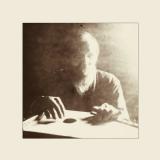
The Belgian vibraphonist Guy Cabay has played with Toots Thielemans, Philip Caherine or Raoul Faisant. Composer, arranger, musicologist and singer, he also wrote and recorded two extraordinary albums in Liege Walloon. Tricatel is happy to make them available at last, 46 years after their publication.

"Gravity kills us. Perhaps that is the meaning of Adam's Fall. We are condemned to be Newton's apple, not the balloon carried away by the wind. But it happens nevertheless that, by the grace of music in particular, we escape gravity, that time escapes time, that another breath inflates our lungs, so much lighter than the one that usually suffocates us.

We don't take light music seriously, and that's good. Only serious music deserves to be treated so badly. Guy Cabay's music flows from a purer source and speaks to us in a more tender voice. One can obviously describe it as one labels export product. Origin: Belgium. Ingredients: jazz, bossa nova, tropicalism, song - proportions may vary. Calorific value: none.

Non-perishable product. But this would say as much about what this music really is as if, in. order to evoke what the foggy blue of a Norman sky inspires, one were to take note of the variations in the percentage of humidity in the atmosphere at Etretat and make a learned presentation on the laws of refraction.

Guy Cabay did pass through Brazil and still lives there a little, a Brazil that is not the one ofcartographers or travel agencies, a Brazil that is as real as the Far West in which Fenimore Cooper's child readers lived, as blurred and limpid as a dream. It is not the Amazon thatflows through this Brazil, but the Ourthe, a tributary of the Meuse, which makes it morefamiliar, stranger and even more poetic.

To let oneself be bathed in this melancholichappiness, to let oneself be carried by this river is sweet, as sweet as the fluid consonants of the Walloon language, this 'd' which becomes 'dj' in his mouth, as in Portuguese, by the way. To know how to create melodies that hold on a note like Jobim's samba, like a fildeferist above a waterfall of chords, is not given to everyone. It is a gift. Knowing how to lace others on dozens of points, as on Tot a-fet rote cou d'zeur cou d'zos, a poignant encounter between Randy Newman and Robert Wyatt, is another. These are not the only ones that the fairies offered to Guy Cabay and that, by an almost miracle, he offers us again today. Hearts up."

Bertrand Burgalat

В наличии на складе

Есть у нас в наличии и готов к отправке

Последний логин: 3 г. назад
Roger 3000 - Reste Envie LP

To need, to be needed, in four corners. Sleep and privacy, gases come and gases go, and now you are the only one in the room you sit in, you are one with the room you sit in, as if there are no negatives and no positives--did you know that you are an extension of your apartment? Did you know that you are in a codependent relationship with your apartment? Did you know that your apartment knows and appreciates all of your secrets?--I feel safe, which is not a new need for human beings, but a very ancient one, almost the first one. It is enacted by the possibility of sound, humming or strumming something mostly. But the quiet apartment makes its own sounds: a single longing note of birdsong told to the beat of restful breathing, the angelic insistence of tinnitus, the neighbours. Sometimes I wonder if silence means nobody's home. How still I sit. Sometimes I return to silence and feel hugged by the cool lightness of its touch, like sleeping with just a sheet in summertime. Like turning the key. Like a visit from the cat next door. Like a somnambulant ray reaching across the room, asking if you'd like to step outside. Reste Envie is a desirous message to oneself, made from a place of lived solitude: the parameters of home. Roger 3000 is a painter and a musician from Brussels, Belgium. Rest En Vie follows his 2020 release on his own imprint Tundra Records, Fiftine. His first solo EP, UFO Love Letters, was released by JJ Funhouse in 2014, followed by a contribution to Ekster's 2017 compilation album EXO3. Roger 3000 frequently collaborates with other musicians and artists, most recently with Lawrence le Doux (with whom he released the EP Chou Chou on Lexi Disques in 2021); with Carole Louis as Ondine & Turbotin for the EP Club Solitude, as well as with Bitsy Knox, with whom he released the LP OM COLD BLOOD in 2018 on Tanuki Records. Text by Bitsy Knox

В наличии на складе

Есть у нас в наличии и готов к отправке

Последний логин: 3 г. назад
Sven Väth - What I Used To Play (12x12" boxset)
 
36

For this uniquely personal retrospective spread over twelve vinyl discs, Sven Väth takes us back to the early days of his DJ career. On What I Used To Play we meet great pioneers of electronic music, gifted percussionists, obscure wave bands, and innovative producers of a bygone 'new electronic' era. Rough beats and irresistible grooves from the identification stage of house, techno, and acid remind us not just how far electronic music has evolved over the past four decades, but how great it was to dance to EBM, techno, and house for the very first time.

If there is one protagonist of the electronic music scene who has remained curious, innovative and at the very cutting edge of music for over four decades, it's Sven Väth. His multi-layered artist albums and Sound of the Season mix compilations have been defining the genre for over two decades, and even today, he is constantly on the lookout for the next top tune to add to the highlights of his next set. At least, that's the case when he's not producing them himself as an artist or remixer. "Actually, it's always been part of my DNA to think ahead," and nothing had been further from his mind than looking back at his past, but when in spring of 2020 the international DJ circuit had to be scaled down to virtually zero, the 'restless traveler' suddenly had time. Time to stop and reflect on "how it actually was back then, at the very beginning of my career..."

"It was a great trip and with every track, beautiful memories came flooding back".
In the London apartment, he had just moved into, Sven has set up a "little music room", where he cocooned himself for several days, "to look way back for the first time and review my musical journey through the eighties, so to speak."

The interim result was six thematically oriented playlists with a grand total of 120 tracks from 'early 80s' to 'Balearic late 80s', together with excursions into afrobeat, European new wave, and EBM sounds and a few epochal techno/house tracks from the USA in between. From these 'Best of Sven Väth's favorites', the project What I Used To Play crystallized. Sven remembers how the Cocoon team reacted to his proposal: "They found the idea of making a compilation out of it MEGA from the beginning and everyone said 'Sven, go for it', but then, of course, the work really started, namely, to clear the rights and to get clean sounding masters of the up to 40-year-old tracks. There was also disappointment, of course. We couldn't clear certain titles because the rights holders in the USA had fallen out with each other or simply disappeared from the scene. In short, it wasn't easy, but now I can safely say we got the most important tracks."

Finally, after two years of research, curation, design, and administrative fine-tuning, the "little retrospective" from 1981 to 1990 is available. The exquisitely packaged, and three-kilo heavy box set is not only physically impressive, WIUTP is also the definitive record of Sven Väth's musical development. On each of the twenty-four sides of vinyl, you can trace track by track, what influenced him during which phase, and how he took off as a DJ from his parents' Queen's Pub straight into the spotlight at Dorian Gray. There and at Vogue (later OMEN), Sven became the style-defining player in the DJ booth that he still is today.


1981 - 1990: Future Sounds of Now

In the early eighties, the crowd in clubs like Vogue and Dorian Gray danced to what nowadays we call 'dance classics' - mainly disco, funk, soul, and chart pop. It was up to a new generation of DJs, including Sven Väth, the youngest protagonist in the Rhine-Main area at the time, to create their own club-ready music mix. Good new tracks and potential floor-fillers were rarities that had to be sought out and found, in order to prove oneself worthy.
Without MP3s, internet streaming, or other digital download possibilities, music didn't just gravitate to the DJ, instead, it had to be tracked down. In well-stocked record stores in Frankfurt and Wiesbaden or even in Amsterdam, London, or New York, Sven and friends sourced the material for countless magical nights. On WIUTP we can follow Sven's very personal journey through this wild, innovative era in which synth-pop, funk, hip-hop, and disco were successively replaced as 'club music' by house, techno, acid, and breakbeat. By the end of the decade, it was clear to see that these once exotic 'fringe' phenomena would soon become 'mass' phenomena.


Early 80s

Dirty Talk by the Italian-American duo Klein & M.B.O. represents the most innovative phase of the Italo-disco genre in the early eighties like no other track. Mario Boncaldo (I) and Tony Carrasco relied entirely on the original synthetic drum and percussion sounds of the Roland TR-808, coupled with the raunchy vocals of Rossana Casale and guitar accents of Davide Piatto. Of course, other tracks from this period were also influential in style, most notably Unit by Logic System, which worked as the perfect soundtrack to the laser lighting system at the legendary Dorian Gray club. With stomping beats and robotic rap interludes, Bostich by Yello also belongs on Sven's eternal playlist - after all, it caught the attention of Afrikaa Bambaataa, who invited the Swiss duo to perform at the Roxy in New York in 1983.


EBM Wave - Mid 80s

From today's point of view, the almost ten-minute-long, downtempo track Giant by Matt Johnson's band project The The, would probably not be considered an obvious club classic. However, a closer (re)listen reveals the rhythmic intricacies of the percussion overdubs by JG Thirlwell (aka Foetus) on Johnson's composition, and it becomes clear why this exceptional piece of music is one of Sven's absolute favorites. Other classics from this phase include Kaw-Liga by the mysterious The Residents, the hypnotic-synthetic Our Darkness by Anne Clark (and David Harrow), and last but not least, the somber, monotonous anthem Where Are You? by 16Bit, one of Sven Väth's projects together with Michael Münzing, Luca Anzilotti from 1986.


US House - Late 80s

You certainly can't talk about Chicago house without mentioning Frankie Knuckles. The resident DJ at the Warehouse not only gave the name to an entire genre, but also produced epochal floor fillers on the Trax label like the timeless Your Love, sung (and moaned) by Jamie Principle. Acid house protagonists Phuture also hail from Chicago, and on We Are Phuture (also released on Trax) we hear the chirping acid sounds of the legendary Roland TB-303 in full effect. Another featured classic is No UFO's by Detroit's Model 500 aka Juan Atkins, who is rightly considered the 'Godfather of Techno' even if the genre-defining track from 1985 still breathes with the spirit of hip-hop and electro from the first breakdance era.


Afrobeat

Le Serpent, by Algerian-born Abdelmadjid Guemguem, is a track that sounds completely different from everything else on WIUTP. Made in 1978, it's a monumental, rousing groove created without bass or synths, just with five congas! Even though Guem sadly passed away in 2021, his immortal, acoustic beats are understood all over the world and will continue to enrich many thousands of DJ sets for years to come. Another classic that not only Sven appreciates beyond measure is Hugh Masekela's Don't Go Lose it, Baby. In addition to being one of the most important jazz pioneers, the trumpeter and freedom fighter from Johannesburg was very experimental, integrating electronic sounds into his music in later years, in a similar vein to Miles Davis and Herbie Hancock. Dutch jazz pianist Jasper van't Hof's afrobeat project Pili Pili has also aged well. The trance-like, almost sixteen-minute-long track of the same name, manages to fill a whole side on the seventh of twelve vinyl discs in the WIUTP box.


UK-US-Euro - Late 80s

Time for a change of scene, in the truest sense of the word, and from a musical perspective, this section is like landing on another planet. First up is Andrew Weatherall's classic remix of Primal Scream's Loaded, featuring the iconic Peter Fonda sample (lifted from the 1966 biker film Wild Angels) that came to personify the mood triggered by the British Second Summer of Love in the late eighties: "We wanna be free to do what we wanna do, and we wanna get loaded...". This period also saw the emergence of M/A/R/R/S whose only single, 1987's Pump Up The Volume, became a club classic with support from DJ legend CJ Mackintosh. In this most eclectic of sections, we also encounter New York house and reggae producer Bobby Konders and his seminal Nervous Acid.


Balearic - Late 80s

Those who know him, know that Sven had already lost his heart to the 'magic island' of Ibiza as a teenager, so with that in mind, the WIUTP project couldn't end without a Balearic chapter. Inspired by Manuel Göttsching's E2-E4, the immortal, eponymously titled Sueño Latino belongs in there without question. Equally popular on the island was, and still is Break 4 Love by Raze, which thinking about it, would also fit perfectly into the house chapter. Last, but not least, there's an overdue reunion with Sven Väth himself, in his role as frontman of the successful Frankfurt trio OFF. Together with Michael Münzing and Luca Anzilotti (later of Snap!) this 'Organization For Fun' created the off-the-wall club hit Electric Salsa in 1986 which incidentally turned into an international chart smash, putting Sven in the enviable position of having to decide between pop stardom and a DJ career. Well, we all know how that decision turned out and the rest, as they say, is history. A not insignificant part of his story is What I Used To Play. Enjoy!

В наличии на складе

Есть у нас в наличии и готов к отправке

Последний логин: 28 дн. назад
Bernard Szajner - SzajnBits and Pieces LP

Bernard Szajner is a French composer, musical theorist, visual artist. He is credited with the invention of the laser harp, which he patented.

Between 1979 and 1983, Szajner released five albums of innovative and Avant-garde electronic music. He became renowned as a light and visual effects technician with artists such as Magma, Gong, Stomu Yamashta and The Who.

During the 1970s, he became a pioneer in the field of using laser technology as an artistic tool. As a measure of his success, he became renowned by his work with companies such as Cartier and Renault. In 1980, inspired by the novel, Nova, by Samuel R. Delany, he first created the laser harp. The laser harp became so successful that Jean-Michel Jarre ordered a version from Bernard Szajner for his tour of China. Despite all this, Szajner would only occasionally use this instrument in his own performances. He has stated that he would rather the public not know him solely for his work on the laser harp, and that it not be allowed to take precedence over his work in musical composition that it enables. This is also why he continues to develop other instruments which use other innovative methods of interaction, such as tactile or holographic.

Towards the end of the 1980s and disgusted with the music industry, he chose to abandon music entirely, and shifted his focus towards digital and visual arts, and theatre.

From Bernard Szajner : “These tracks are my preferred ones .... Ever ! ... For a long time I've been waiting for a record label to release what corresponds to what I like playing these days... Until Sleepers records decided to release this compilation which contains most of the tracks I enjoy playing live on stage ! At last my wish is fulfilled !”

В наличии на складе

Есть у нас в наличии и готов к отправке

Последний логин: 10 мес. назад
MOAB DEP - ART OF HEART EP

restock

Melodies Of Ancient Beats Depth or Deep, (with Dep also meaning beautiful in Indonesian) is the meaning of this newly created persona from the artist DemoDc. After many years of experimenting with music making, releasing digital eps and albums, Demo has come to an end of a cycle arriving to a mature state of craftsmanship, ready to deliver his dream onto the vinyl medium.

This is the 1st ep that kickstarts a volume of a 5 ep project. Its own kind of album type edition so to speak. Down the rabbit hole is a deeply rich exploration of the unknown, immersing oneself with faith and love into a pandora’s box type scenario to find not chaos and random violence of destruction yet a carefully arranged melodic structure of orderly tapestry, traveling through the expression of quirky acid gobbles, with a steady deep chord of drive, arriving at a climatic unwind of free moving dance type melodies and wonder. This track gives electro a fresh stroke to a well founded genre, giving it a different approach to the medium. Today’s special is a track held close to heart, made back in 2007 after a skiing incident left MOAB DEP immobilized for 2 weeks. Whilst having travelled to NZ Queenstown for the trip, it dawned on the wounded artist to make sense elsewhere with his time, using it to create a very special track, of course unknowingly at the time. Returning home to Adelaide it quickly become a favourite for many underground artists yet the track has never really been given a chance to shine, to be heard…. not until now 12 years later, 2019. 
All made on his laptop, no midi used ( which is to be said mostly with all tracks created at heartheartrecords studios).

Today’s Special has a certain energy and vibe that immediately calls for the listener to pay attention. From its moody beginnings with lush rhodes keys, glitch ambient sounds, followed by the groovy-type horn sounding hook, whisking the listener away into a sunsetting type mood elevating itself onto new ground each step of the way. With some subtle bass movements and emotive chord progression, we arrive at a very warm heartfelt dance track that can only leave any dedicated listener and lover of common deep house music, with a tingling effervescence of radiant glow and smiles.
 Today’s Special proves to be its own cult hit within the archives of tracks made in the heartheartrecords realm. Today's special celebrates the meaning of 'NOW' the present moment.

В наличии на складе

Есть у нас в наличии и готов к отправке

Последний логин: 2 г. назад
BLIND SEAGULL - PERSONAL DECAY LP

Over the past few years an increasing number of bands hailing from the former USSR have been appearing on the screens and the phones of the so-called Western world’s underground music enthusiasts.

With most of them being pretty obscure and only a very few ones having established a worldwide following (Motorama, Molčat Doma) the Sovietwave tag has worked usefully enough as a tool to identify a wide range of bands each one with a different sound and yet something in common. Whether it be the harsh weather or just the distance creating an exotic effect, there is some icy-cold touch with these bands that immediately makes you know they’re from Russia, regardless of the language they perform.
This goes for Blind Seagull too.

The trio from Kaliningrad, a small russian enclave on the Baltic Sea between Poland and Lithuania, has been around since quite a few years now, releasing tapes and limited edition vinyls on labels like Detriti, Sierpen and Pine Hill.

Finally taking up the challenge of writing a longer full-length (previous albums were seven or eight track long at best), the trio led by Denis Zarubin has created twelve new songs that shine a light on the impressive skills of this young combo to deliver very classic and yet extremely fresh and modern cold post-punk gems.

Keeping it short and sweet, their two-three minutes long compositions cut right to the chase of the darkwave soul: stomping drum machines, frozen guitar arpeggios, tense bass riffs. The formula is occasionally rocked by the intervention of laser synths, noise raids and gothic chorale, while the industrial pièce of the title-track and the IDM-tinged collaboration with experimental giants Xiu Xiu ‘Fear’ will show how this band stands out and how their upcoming, new album is the best proof of this.

В наличии на складе

Есть у нас в наличии и готов к отправке

Последний логин: 2 г. назад
Unknown - Dance Mafia 02 EP

Unknown

Dance Mafia 02 EP

12inchDANCEMAFIA02
Dance Mafia
22.04.2022

Vinyl Only

Bigg Testosterone Johnson is the name that keep them streetz in fear for decadez.

Humble beginnings as a bank robber to his first MPC traded in prison for a few bricks of soap and pack of cigarettes led him to keep streetz in fear once again... This time around with his bulletproof beatz. Word 2 yo momz.

В наличии на складе

Есть у нас в наличии и готов к отправке

Последний логин: 4 мес. назад
Cassius - 1999

Cassius

1999

2x12inchBEC5156505
Because Music
27.06.2016

1999...after the global supremacy of Oasis and Blur, the world is looking for some musical freshness. Some artists such as Daft Punk and Air have already contributed to globally popularise what the English called the "French Touch", a new term that refers to a large musical French movement. The first album of Cassius is one of the key pieces of this growing genre, and demonstrates once again the variety of the trend. Indeed, after have cooperated for a long time with MC Solaar, one of France's 90's best rappers, the hip-hop influence of both Cassius members had to have an impact on their personal concept, and it did seduce a lot of listeners hungry for new musical flavours: more than 250 000 units sold worldwide and numerous unconditional fans...Before the release of their new album Ibifornia coming out this summer, we're taking you back to basics with a new release of Cassius' first album, for the ones who didn't have the opportunity to hear it, or for those who only have the CD, and would like to get themselves the vinyl edition !

В наличии на складе

Есть у нас в наличии и готов к отправке

King Ayisoba - Pure Confusion LP
  • 01: Property
  • 02: Dey Come
  • 03: Tewogilige
  • 04: Memsoh
  • 05: Bemba
  • 06: Ndelange-Taba
  • 07: Nkaase
  • 08: Leeda-Mampanga
  • 09: No Tradition, No Africa

Pioneering Ghanaian musician King Ayisobareturns September 4, 2026 with his forthcoming seventh album Pure Confusion, recorded and produced by On-U-Sound’s Adrian Sherwood.

Ayisoba is one of Ghana’s most distinctive musical voices. The world’s foremost player of the kologo - a homemade two-string lute fashioned from a calabash and covered in goatskin - he delivers fiercely political and socially observant songs using three different voices, including the voice of his grandfather that possessed him as a child. Sherwood meanwhile is the pioneering British producer and founder of On-U Sound whose hugely influential career has connected dub, post-punk, industrial, hip hop and experimental music through collaborations with artists including Lee “Scratch” Perry, Mark Stewart, Horace Andy, Sinéad O’Connor, Nine Inch Nails and Depeche Mode.

Ayisoba and Sherwood first collaborated during a BBC Radio 3 Late Junction session at Maida Vale in 2017, organised by Ayisoba’s long-time collaborator Arnold de Boer/Zea of The Ex. The pair immediately connected, and during the pandemic, when Adrian’s long-time African Head Charge collaborator Bonjo Iyabinghi Noah was in Ghana looking for musicians to collaborate with Sherwood suggested Ayisoba, who eventually featured on two tracks on African Head Charge’s 2023 album A Trip To Bolgatanga (Bolgantanga is the region Ayisoba is from). Ayisoba then returned to the UK in late 2024 and travelled to Sherwood’s Ramsgate studio where the pair laid down the songs that would become Pure Confusion: “All the songs were already in my head,” says Ayisoba. “This album is all recorded live, over one afternoon. Adrian only plays live, and I like that. And he works hard - he doesn’t sleep. I woke up in the night and he was still working.”

“In my role producing it, I just let it roll to make a good vibe,” says Sherwood. “We recorded it completely live, did some programming and processing on some tracks, using dub techniques live on the mixing desk and adding some slick touches. We wanted the colours on the album to swing off what Ayisoba was doing, so we invited some friends to participate. Doug Wimbish (Sugar Hill Gang) arrived from America and lent his services playing bass on a couple of tracks; the wonderful Ivan Hussey (Celloman) played bass, keyboards and cello - cello is not really featured on African recordings so we thought it would be really cool to try it. I'd been working with Alex White (Fat White Family/Primal Scream) on my album (The Collapse of Everything) and so he added sax to a few tracks and I brought Alan Glenn down especially - Alan was in Little Axe but also Nine Below Zero and played in the Yardbirds – to add some mouth organ; Mark Bandola added a bit of flavour with his Juno, Ayisoba’s long-time Ghanian collaborator Ayuune Sule added some percussion and vocals and Matt Smith did some programming.”

“King Ayisoba is quite amazing, so unique,” Sherwood continues. “He’s got his own handmade instrument and three different voices - when you’re listening you think it’s three different people. He’s a breath of fresh air, full of love for the music which he wants to share with everybody. Some tracks we kept very straight and others we experimented with - adding dubby psychedelic little touches to trip you out a bit. The added production we did at On-U has given it a shine while still keeping it vibrant, live and spontaneous. I’m really proud of this record”.

On Pure Confusion, Ayisoba documents the anxieties, contradictions and changing social realities of contemporary Ghana. “Land is a problem for everyone,” says Ayisoba of the opening track “Property”. “If you don’t build on your land they will take it away. Plenty corruption in Ghana, plenty confusion. They sell the land to two, three, four people and then everybody fights.”

Elsewhere Ayisoba explores illness, spirituality and social stigma on “Bemba”, warning against hiding sickness out of shame or fear of “bad juju”: “People hide their sickness and the sickness kills them.” “Tewigiloge” reflects on cultural difference and open-mindedness encountered through world travel: “We will tour the whole world and we will see many things we may not like or understand… your eyes will see, but don’t talk - you have to be open-minded.”

Spirituality runs deeply throughout the album. Ayisoba’s grandfather was a respected spiritual healer whose presence the musician says still guides him today. “The grandparents’ spirits are the ones you can contact,” he explains of the spiritual chant “Nkaase”. “This song talks about the forefathers.” The closing track “Leeda-Mampanga (It’s Not My Strength)” acts as a statement of humility and gratitude: “You have to be humble, even if you have talent. God gives you the power.”

For more than two decades, King Ayisoba has been one of Africa’s most distinctive musical innovators, transforming northern Ghanaian kologo traditions into a bold contemporary sound rooted in hypnotic rhythms, social commentary and spiritual intensity. Since the breakthrough success of 2006’s Modern Ghanaians, Ayisoba has built an international following through acclaimed albums, relentless touring and collaborations with artists including Lee “Scratch” Perry, Orlando Julius and African Head Charge. Performances at Roskilde, WOMAD, Le Guess Who? and the Barbican have further cemented his reputation as a singular live performer and cultural force.

Сделать предзаказ18.09.2026

он должен быть опубликован на 18.09.2026

Sonya Belousova & Giona Ostinelli - One Piece: Into the Grand Line (Soundtrack from the Netflix Series) LP 2x12"
  • A1: Pray To The Sun feat. Declan de Barra & The Hu
  • A2: Am I Enough (Tony Tony Chopper) feat. Au/Ra
  • A3: Whisky Peak Saloon feat. Leo P
  • A4: Miss All Sunday
  • A5: Dr. Kureha
  • A6: Cherry Blossom Miracle
  • A7: Welcome Aboard Doctor
  • A8: Dorry & Brogy
  • B1: Smoker
  • B2: Igaram's Sacrifice
  • B3: In Elbaf We Have A Ritual
  • B4: Miss Wednesday
  • B5: Drum Kingdom
  • B6: What's An Army Of Monsters To The Hero Of Little Garden
  • B7: My Sails Are Set (Loguetown Opera Version)
  • C1: Tony Tony Chopper (Instrumental Suite)
  • C2: Humans Are Not The Only Ones Who Can Be Cruel
  • C3: Pirate Is Someone Who Has Adventures And Dreams
  • C4: Potion To Cure All Diseases Of The Heart
  • C5: Peace Offering
  • C6: Hoist This Flag And Fight Like A Pirate
  • C7: Doctor Hiriluk Won't Be Back
  • C8: When Does A Man Die? When He Is Forgotten
  • D1: Reverse Mountain
  • D2: Who Wants To Make A Snowman
  • D3: The Sedative Is Losing Its Effectiveness
  • D4: Zoro - 1 vs 100 Part III
  • D5: In Alabasta We Ride Ducks
  • D6: Miss Goldenweek
  • D7: Drum Kingdom Is Saved
также имеющийся в продаже

Black Vinyl


Set sail for the next leg of the journey! Diggers Factory is thrilled to present the One Piece: Into the Grand Line (Soundtrack from the Netflix Series) Deluxe Vinyl Boxset.

Following the Straw Hat Crew as they finally move Into the Grand Line, the soundtrack captures the epic, high-seas energy of the hit series. Composed by the powerhouse duo Sonya Belousova & Giona Ostinelli, the score blends orchestral scale with pirate folk-rock grit, now pressed on stunning colored wax.
Whether you're dodging Baroque Works or looking for a giant whale, this box set is the ultimate treasure for any Straw Hat at heart.
2LP Black Audiophile Vinyl: Two black vinyl representing the fiery spirit of adventure and the deep mysteries of the Grand Line.
Custom Die-Cut Jackets: Two single jackets featuring a central die-cut hole that reveals the beautiful map-work of the inner labels.
16-Page Booklet: A deep dive into the production with exclusive set stills and behind-the-scenes imagery from Season 2.
Double-Sided Poster (20" x 27"): Choose your vibe with the cinematic group shot of the crew or the iconic "Grand Adventure Awaits" sunset art.
6 Exclusive Postcards: Vintage-style travel postcards from legendary stops like Loguetown, Little Garden, and Drum Island.
Sticker Board: A collection of high-quality stickers including Laboon, the Going Merry, and Luffy's legendary $30,000,000 Wanted Poster.
Collector's Box: All contents are housed in a premium, wooden-textured outer box.
Netflix's epic high-seas pirate adventure, ONE PIECE, returns for Season 2-unleashing fiercer adversaries and the most perilous quests yet. Luffy and the Straw Hats set sail for the extraordinary Grand Line-a legendary stretch of sea where danger and wonder await at every turn. As they journey through this unpredictable realm in search of the world's greatest treasure, they'll encounter bizarre islands and a host of formidable new enemies.

Сделать предзаказ18.09.2026

он должен быть опубликован на 18.09.2026

Spell Songs - In Thin Air LP

Spell Songs

In Thin Air LP

12inchHUD060LPX
Hudson Records
04.09.2026
  • In Thin Air
  • Make Your Heart a Cradle
  • Njan (Nest)
  • Nest Builder
  • A Life Begun
  • An Calman (The Dove)
  • Bells Fall Still
  • Taladh nan Eun (Lullaby of the Birds)
  • Feathers
  • Fallen Feathers
  • Ride the World's Winds
  • Flight
  • Migration
  • Senegal
  • We Only Save the Ones We Love
также имеющийся в продаже

Black Vinyl


In Thin Air, forms a musical companion piece to Robert and Jackie's book The Book of Birds - a book that is a love letter to the splendours and mysteries of birdlife, and a clarion call to halt the loss of birds from land, sea and sky. The music was created within the contemplative green oak roundhouse of Ty Sanctaidd (Sacred House) in the grounds of Ty Trefacwn in South West Wales, and recorded at Castle Sound Studio in Pencaitland, East Lothian. As with our other albums In Thin Airhas been recorded and produced by Andy Bell of Hudson Records. Throughout The Book of Birds there runs a gentle mantra - " Nest, Egg, Beak, Song, Feather, Flight, Migration -- these are the Seven Wonders that together conjure the miracle of Bird ". Intrigued by this concept, the seven musicians have created an intricate new album that has an overarching narrative, capturing the remarkable world of birds from birth to flight.

Сделать предзаказ04.09.2026

он должен быть опубликован на 04.09.2026

Spell Songs - In Thin Air LP

In Thin Air, forms a musical companion piece to Robert and Jackie's book The Book of Birds - a book that is a love letter to the splendours and mysteries of birdlife, and a clarion call to halt the loss of birds from land, sea and sky. The music was created within the contemplative green oak roundhouse of Ty Sanctaidd (Sacred House) in the grounds of Ty Trefacwn in South West Wales, and recorded at Castle Sound Studio in Pencaitland, East Lothian. As with our other albums In Thin Airhas been recorded and produced by Andy Bell of Hudson Records. Throughout The Book of Birds there runs a gentle mantra - " Nest, Egg, Beak, Song, Feather, Flight, Migration -- these are the Seven Wonders that together conjure the miracle of Bird ". Intrigued by this concept, the seven musicians have created an intricate new album that has an overarching narrative, capturing the remarkable world of birds from birth to flight.

Сделать предзаказ04.09.2026

он должен быть опубликован на 04.09.2026

Hypocrisy - Worship LP 2x12"

Hypocrisy

Worship LP 2x12"

2x12inch4065629764586
Nuclear Blast
21.08.2026

Re- Release in Transparent Blue Curacao Vinyl

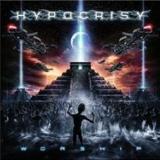
With governments finally admitting that UFOs do in fact exist, and humanity attempting to heal from a state of recent crisis, the timing couldn’t be more appropriate for the newest addition to the HYPOCRISY catalog: WORSHIP, due to be released Fall 2021 via Nuclear Blast Records. Aptly titled, the album cover shows a mass of humans reaching up mindlessly to the sky as glowing spaceships shaped like the HYPOCRISY crosses sigil beam down to descend upon earthen civilizations and Mayan temples. Designed by artist Blake Armstrong (Kataklysm, In Flames, Carnifex, etc.), WORSHIP’s artwork speaks to the history of the relationship between humanity and extraterrestrials. “They’re coming back to collect,” explains founder and HYPOCRISY mastermind Peter Tägtgren.
A track entitled CHEMICAL WHORE breaches the subject of pharmaceutical addiction, and those who engineer it. “We are all chemical whores. We regularly consume prescriptions and drugs because we think we need it; we use one pill to heal the damage done by another medicine... it’s a vicious cycle.” Musically, it’s the only song that was written by all 3 core members of the band and translates into a recognizable, mid-tempo HYPOCRISY sound much like ERASER or FRACTURED MILLENIUM. Traveling from Sweden to Russia, the band also shot an official music video for CHEMICAL WHORE.
The DEAD WORLD music was written by Peter Tägtgren’s son, Sebastian. “We actually started to write an album together, something like 11 or 12 songs, but we never put any vocals in there and we just sort of set it aside. Then when I started writing HYPOCRISY I realized I really liked the song… it feels fresh. I think my kid got some new blood in there.” While the song comes equipped with a modern feel, the writing is still old fashioned at its core. Going into detail about the illuminati and black ops government, the lyrics examine how miserable these figureheads and theories can make us. “Call it fantasy, call it sci-fi, there are plenty of conspiracies in the world but I find these ones interesting,” explains Tägtgren.
GREEDY BASTARDS is another track outlined by simplicity and catchiness. Chugging riffs encapsulate a sound that almost verges on the realms of thrash while still keeping its feet firmly planted in the world of death metal. The lyrics touch on the greed and methods of control that we see various governments around the world today; how they manipulate people against one another and abuse the masses.
For Tägtgren, the inspiration to write new HYPOCRISY comes in waves. “I believe we were out on tour for another project and I began to get hungry again. I started spitting out some new riffs and when I had 7-8 songs done, I invited the rest of the guys to join me and contribute, and from there we started putting everything together. We had a break for a few months, continued recording, went back on tour… it never stops. There was a lot of jumping back and forth, and then COVID came and things got really weird.”
Tägtgren was one of the many musically inclined who was forced into sudden isolation upon the onset of COVID 19, only for Tägtgren, this is common practice when creating new songs. “A lot of things in the world stopped, and it was time to finish everything I hadn’t finished.” As usual, all recording and mixing took place at Tägtgren’s home studio in Sweden.
It has been 8 long years since the last record, and HYPOCRISY fans can feel the itch. WORSHIP is 11 tracks of precise, ferocious musicianship. Commonly inspired by the fusion of the modern and the ancient, HYPOCRISY has once more found a way to combine innovative ideas with classic sound in order to deliver something metalheads can enjoyably consume with awe and brutal vigor. HYPOCRISY is Peter Tägtgren (Lead Guitar & Vocals), Mikael Hedlund (Bass Guitar), and Reidar “Horgh” Horghagen (Drums).

Сделать предзаказ21.08.2026

он должен быть опубликован на 21.08.2026

JANE WEAVER - CHERLOKALATE

JANE WEAVER

CHERLOKALATE

12inchFIRELP795
Fire Records
07.08.2026
  • 1: IT'S ONLY PASTURES
  • 1: 2BITS AND PIECES
  • 1: 3O' TO BE IN THIS LAND
  • 1: 4SHOULDER SEASONS
  • 1: 5LIKE AN ASPEN LEAF
  • 1: 6THE PAIN
  • 1: 7IS EVERYONE HAPPY?
  • 1: 8IT'S NOT OVER YET
  • 1: 9OH YOU LUCKY ONES

Zum erstenmal seit 2007 wieder da, überhaupt zum ersten Mal auf Vinyl! Auf ihrem dritem Album *Cherlokalate* ,verwandelt Jane Weaver Songs in zerbrechliche und funkelnde Wiegenlieder" (The Guardian). Inspiriert von Folk-Kultfiguren wie Karen Dalton und Linda Perhacs, bilden diese zehn Lieder eine einzigartige Reflexion über persönliche Höhen und Tiefen - voller Glück und Schmerz, Leidenschaft und Wehmut. Eine intime Reise voller ätherischer Folk-Anmut, veredelt durch eine großartige Produktion, sehnsuchtsvolle Pedal-Steel-Klänge, Violinen und - stellenweise - eine eigenwillige, transformierte Variante von Rock im Stil von Velvet Underground. "Imagine Julie Driscoll locked in a studio with American Spring and Broadcast." Uncut

Сделать предзаказ07.08.2026

он должен быть опубликован на 07.08.2026

Wako - Wako 02

Wako

Wako 02

12inchWAKO02RP
WAKO
30.07.2026

A quarter of a century after the original release, Hans went back to it and re-pressed Wako 2 himself.
Since the original only had two tracks, two new ones were added in the same style.
To give it proper punch, the record was cut on a Neumann VMS80, with mastering handled by Shane the Cutter, delivering heavy bass and crystal-clear highs.
The label artwork was completely redesigned.

нет на складе

Закажите сейчас, и мы закажем товар для вас у нашего поставщика.

Последний логин: 60 дн. назад
NEUROSIS - AN UNDYING LOVE FOR A BURNING WORLD LP 2x12"

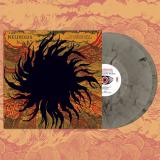
Evolution can be ugly and beautiful, painful and euphoric. An Undying Love For A Burning World is the first new release from Neurosis in a decade, and a potent statement of intent and rebirth - one that marks the first new steps of resolve and resilience.

An Undying Love For A Burning World is an epic album of colossal hypnotism - beautiful, fearsome and utterly compelling in a way that only Neurosis can be. Aaron Turner (Sumac, Isis) joins the band on vocals and guitar, a name whose legacy is intertwined with the band’s own and a true kindred spirit.

“From the moment I first heard Neurosis over 30 years ago, I felt this was the music my heart and mind had been seeking but not yet heard. Now after many years travelling along various musical paths of my own, the singular sound and spirit embodied by Neurosis continues to speak to the depths of my being. It is an honor and a true pleasure to have been welcomed so warmly into a band that not only shaped my perspective on the limitless possibilities of music - but has lived and exemplified the necessity of upholding creative integrity and camaraderie above all else.” - AARON TURNER

Neurosis have never been afraid of change, and here they embrace endless regeneration, surrendering to the emotional exorcism through heaviness and distortion that their music incites. Just as the universe tends towards balance, Neurosis’cacophony of noise, rhythm and dissonance always resolves towards moments of beauty. The addition of Turner's powerful vocals and wildly creative and unhinged approach to guitar proves to be a vital force as Neurosis find themselves again at the mercy of evolution and expression.

On every song in the band’s history, Neurosis shifts restlessly between tension and relief, invoking a feeling both feral and transcendent in listeners. The band describe their songwriting process as an inescapable impulse to create with each other - a need rather than a choice. Indeed, the band insist that their return is “not a reunion - we never broke up.”

The album was recorded by Scott Evans (Kowloon Walled City, Sumac, and Great Falls) at Studio Litho in Seattle during three weekends this winter, and mixed in three days just six weeks before release at Evan's Antisleep Audio in Oakland.

Neurosis will play their first show in seven years on the traditional lands of the Blackfeet Nation in Montana as part of Fire in the Mountains festival by special invitation of Firekeeper Alliance, a non-profit dedicated to reducing youth suicide in Indian Country.

FITM, is a unique festival known for bringing epic music to epic landscapes with the intent of reconnecting and immersing oneself with the natural world, and strengthening our ancestral roots as human beings - an aim which aligns directly with Neurosis’ deep-rooted power.

нет на складе

Закажите сейчас, и мы закажем товар для вас у нашего поставщика.

Последний логин: 68 дн. назад
Oddisee - Tangible Dream LP

Oddisee

Tangible Dream LP

12inchLPMMG00043C
MELLO MUSIC GROUP
03.07.2026
  • 1: Tangible Dream
  • 2: Yeezus Was A Mortal Man
  • 3: Killing Time
  • 4: Own Appeal
  • 5: The Goings On (feat. Ralph Real)
  • 6: Be There
  • 7: Yeah & Nah
  • 8: Interlude Flow
  • 9: Unfollow You (feat. Olivier St. Louis)
  • 10: Back of My Mind (feat. Paolo Escobard)
  • 11: Tomorrow Today
  • 12: Outro Flow
  • 13: Bonus Flow (feat. Diamond District)

'I live in a gentrified part of Brooklyn, I eat out several times a week, I travel the world sampling the best that cities across the globe have to offer. Do I live in a penthouse loft Am I dinning in five stars restaurants Can you only find me in the most exclusive areas Do I own a jet The answer to all the above is most certainly no. I'm just a regular man from Prince George's county, Maryland that figured shit out. I discovered that I can make a career in an arena dominated by artists that sell false dreams. I realized that although the masses may not know of my body of work, it doesn't take the whole world to have the world I want. Tangible Dream is a mix-tape dedicated to the deconstruction of our traditional ideas of success & shedding light on the possibility of a sustainable rap life. These rhymes were written in economy class seats, these beats were produced on long bus trips & these songs were recorded in airbnb apartments. All I want to do is make music for a living so that I can live to make music. The only dreams I'm interested in are the ones I can grasp. It just so happens that anything you want bad enough can be obtained. Perhaps the world may never know of my accomplishments but accomplishments they are nonetheless.

Сделать предзаказ03.07.2026

он должен быть опубликован на 03.07.2026

Remy Solar - Dubs From Earth (Tape)
 
2
также имеющийся в продаже

SS01


Siren Selector launches its mixtape series with a companion release to Remy Solar’s - ‘Heavy Terrain’ cassette.

“Jamaican music grows in rings like an old tree. From a core of early riddims, the genius of Studio One, versions of original basslines and melodies evolve over time New releases of the same tune follow each other through the 70s, 80s, 90s, into this millennium. Generations of the same family. And then there’s the unreleased versions, the frontier dubs built strictly for sound systems, held close by those who got them and only gradually circulated into the wider audience of selectors and collectors. These are the ones where the bass is heavier, the echoes more mind- bending, the effects wilder and the drums harder. Older sound followers tell stories of how these dubs defined dances, flattened opponents in clashes, inspired a dozen rewinds. Younger followers remember these tales and pass them down. These dubs are folklore.

Who knows how many such versions there are in the vast worldwide archives of Jamaican music? Not me. But as a little taster of a lifetime’s musical journey you can open your ears right now to a few moments: Lacksley’s Castell’s “Unkind”, transported from the sprightly riddim which underpinned it on his Princess Lady album and reengineered into a thunderous version of Ras Michael’s None A Jah Jah Children; “Deceivers” by the Heptones, stripped back into something simultaneously ethereal and bathyspheric; Keith Hudson’s “I’m No Fool” emerging from a pressure cooker of bass and drum; Jah Lloyd’s “Black Moses”, busting down walls with its epic echo and siren opening.

I started collecting these dubs in the late 90s. We were going to Shaka at the Rocket, Aba Shanti in the Arches, then Imperial Gardens. Entebbe somewhere off Mare Street. Iration Steppas in Kingsland Road, Jah Tubby’s in the Rec. We were doing our own parties at the time in east London, Bohemia Place, then Trenz, Dungeons, the old social services office by London Fields. Building up a sound, taking it on the road, crew sitting on the speaker boxes in the back of a Mercedes 508. Under the stars or in warehouses with sweat dripping from the ceiling, lugging crates and amps across fields or up flights of stairs, stringing up boxes under bridges, in car parks or on roundabouts. Waiting for the moment to drop the dubs.

This tape is dedicated to my crew and all the music providers and anyone who also knew or wants to know these moments.“

Fifty Physical Copies - 60 mins - No digital

Сделать предзаказ29.06.2026

он должен быть опубликован на 29.06.2026

Sonya Belousova & Giona Ostinelli - One Piece: Into the Grand Line (Soundtrack from the Netflix Series) (2x12")
  • A1: Pray To The Sun feat. Declan de Barra & The Hu
  • A2: Am I Enough (Tony Tony Chopper) feat. Au/Ra
  • A3: Whisky Peak Saloon feat. Leo P
  • A4: Miss All Sunday
  • A5: Dr. Kureha
  • A6: Cherry Blossom Miracle
  • A7: Welcome Aboard Doctor
  • A8: Dorry & Brogy
  • B1: Smoker
  • B2: Igaram's Sacrifice
  • B3: In Elbaf We Have A Ritual
  • B4: Miss Wednesday
  • B5: Drum Kingdom
  • B6: What's An Army Of Monsters To The Hero Of Little Garden
  • B7: My Sails Are Set (Loguetown Opera Version)
  • C1: Tony Tony Chopper (Instrumental Suite)
  • C2: Humans Are Not The Only Ones Who Can Be Cruel
  • C3: Pirate Is Someone Who Has Adventures And Dreams
  • C4: Potion To Cure All Diseases Of The Heart
  • C5: Peace Offering
  • C6: Hoist This Flag And Fight Like A Pirate
  • C7: Doctor Hiriluk Won't Be Back
  • C8: When Does A Man Die? When He Is Forgotten
  • D1: Reverse Mountain
  • D2: Who Wants To Make A Snowman
  • D3: The Sedative Is Losing Its Effectiveness
  • D4: Zoro - 1 vs 100 Part III
  • D5: In Alabasta We Ride Ducks
  • D6: Miss Goldenweek
  • D7: Drum Kingdom Is Saved
также имеющийся в продаже

LP 2x12" Deluxe Boxset


Capturing the full scope of the Straw Hat Crew’s journey into the Grand Line, this collection brings together the massive, high energy score by award winning composers Sonya Belousova and Giona Ostinelli. From the shores of Loguetown to the snowy peaks of Drum Island, every moment of the voyage is brought to life through soaring orchestral arrangements and unforgettable pirate anthems.

2LP Audiophile Black Vinyl: Two 12 inch records pressed on high quality black vinyl for a classic look and superior sound fidelity, delivering every orchestral swell with crystal clear precision.

Double CD Set: Two discs featuring the complete original score and songs, presented in a premium compact format.

Premium Packaging: A double gatefold jacket for the vinyl edition and a three fold digipack for the CD, both showcasing vibrant cinematic artwork of Luffy and the Straw Hat Crew.

Complete Soundtrack: Over 40 tracks spanning the entire second season, including character themes, emotional moments and epic battle motifs.

Whether at home or on your own journey, this release is the perfect way to keep the spirit of adventure alive, immersing you fully in the world of One Piece.

Netflix’s epic high seas pirate adventure, ONE PIECE, returns for Season 2, unleashing fiercer adversaries and the most perilous quests yet. Luffy and the Straw Hats set sail for the extraordinary Grand Line, a legendary stretch of sea where danger and wonder await at every turn. As they journey through this unpredictable realm in search of the world’s greatest treasure, they will encounter bizarre islands and a host of formidable new enemies

Сделать предзаказ26.06.2026

он должен быть опубликован на 26.06.2026

Channel One Pres. - 100 Tons Of Dub LP

The mighty Channel One Studios,Kingston, Jamaica, has its place set in Reggae's Musical History.Its distinctive sound the studio created on opening its doors in 1972 to its closure in the early 1980's made it the Producers, Singers and Musicians studio of choice during this furtive period. Achieving that vibe and clarity, separated it from the other Kingston establishments.

Run by the Hookim Family's four sons, Jo Jo the eldest followed by Paulie, Ernest and Kenneth. Their father originally came from China and married a Chinese Jamaican lady and settled in the St Andrews district before moving to Kingston Town itself. The family business was built on jukeboxes and one armed bandit machines in and around Kingston. A lucrative venture until the gaming laws changed in 1970, outlawing the gaming machines. So the music side of the business would have to be expanded. So it was decided to open a studio to make the music to supply their already established Jukebox enterprise. The four brothers opened Channel One Recording Studios in 1972 at 29 Maxfield Avenue, Kingston 13. Initially as we stated the purpose of the studio was for the brothers use only, but this would soon change when the various Producers all looking for that Channel One sound came asking for studio time.

The brothers had used the services of Bill Garnet a renowned and well respected technical engineer on setting up the studio. They spent a lot of time laying out the space to get the right acoustics and picking the right quipment. They went with a four track API desk and the best quality microphones such as Neuman, Sony and AKG, vital in obtaining the quality sound and track separation that would prove so worthwhile after the music was recorded to give the best flexibility on the final mix downs. Jo Jo would take over the production duties after the initial hiring of Syd Bucknor a producer who had worked closely with Coxonne Dodds Studio 1 stable. The first release on the Channel One label would be 'Don't Give Up The Fight' by Stranger Cole and Gladstone 'Gladdy' Anderson.The initial two thousand run being swallowed up by their Jukebox interests and so the steady flow of hits would run up to the brake through hit of 1975 'Right Time' by  the Mighty Diamonds.

1977 saw Jo Jo extending his stays in New York to a semipermanent status, returning mainly to oversee recording sessions and then taking the results back to America for worldwide distribution. His brother Paulies senseless killing in that year also added to Jo Jo's decision to spend more time with his Hit Bound Manufacturing set up in New York. The Channel One studio would be upgraded in 1979 to sixteen tracks and although Jo Jo and Ernest still covered the mixing and engineering duties Kenneth would now supervise sessions. An often untold part of Channel Ones history is the involvement of Producer Niney The Observer. The mid to late 1970's were heavy times both musically and politically and Maxfield Avenue was in the heart of this crossfire. Some artists and musicians were weary of using the establishment especially when sessions ended late at night and exiting the studio at these times could be somewhat dangerous. But Niney’s fearlessness seen him over running and in many cases running the all night sessions with his trusted set of musicians loosely called The Soul Syndicate. Having the run of the mighty Channel One studio's allowed Niney to build up and work on a stockpile of rhythms that he still has yet to unleash on the world. We have been lucky to select a bunch of material from Niney's vaults for this release. Some great unreleased rhythms and some different cuts to some tracks you might already know. Niney's work with Dennis Brown and his own distinctive heavy roots style productions have been documented and indeed his work on Channel Ones Yellowman releases stand tall also. We hope this fine set of Niney Productions set inside the hollowed walls of Channel One will sit beside them as they so richly deserve.

нет на складе

Закажите сейчас, и мы закажем товар для вас у нашего поставщика.

Последний логин: 5 г. назад
SLINT - TWEEZ LP

SLINT

TWEEZ LP

12inchTGLPC1438
Touch & Go
03.06.2026

Red Vinyl. Remastered by Bob Weston at Chicago Mastering Studio from the original analog master tapes. "Slint formed in 1986 as an outlet and pastime for four friends from Louisville, Kentucky. Their music was strange, wholly their own, sparse and tight. What immediately set them apart was their economy and precision. Slint were that rare band willing to play just one or two notes at a time and sometimes nothing at all. 1989's "Tweez" LP hints at their genius." - Steve Albini (Melody Maker, 1991). From the original bio: It's almost always muddy in the lousy little shanty town by the river. All the children's toys are old and rusty, even the plastic ones. Jimmy and Mel fashioned their own toy out of a live chicken that they stole. A knot was tied around the bird's feet with a shoe lace. The two boys painted their plaything yellow and silver and swung it around like a lasso, screaming gibberish and laughing the whole time. Mel got so excited that he wet himself. So, Jimmy slugged him square in the eye. About five or eight miles south east of the shanty town all the fellows in SLINT were suffering from headaches, except the drummer, who only got them when the others didn't. SLINT is a band from Louisville, Kentucky. tweez was its first recording.

нет на складе

Закажите сейчас, и мы закажем товар для вас у нашего поставщика.

Последний логин: 3 мес. назад
GbClifford - Love, Diskito (TAPE)

There is an abruptness to waking up to the sight of the other person’s back, a quiet violence hidden in the impression of intimacy, that’s leaving an aftertaste of emptiness. The feeling of losing oneself completely in a love that is given but never returned. Or the slower, less immediate one - the gradual disintegration of a world into which so much was once invested.

Love, Diskito is like a worn out overdubbed cassette found in a drawer, with its underlying tracks flickering between contrasting emotional states. Written, produced and mixed by GbClifford, the release follows up on the elusive, multifaceted output of the Prague-based experimental artist, who dresses fleeting glimpses of youthful yearning, sentiment and fragility in the blunt apparel of distortion and immediacy.

Drawing from their idiosyncratic, collage-like approach to music production, GbClifford condenses on Love, Diskito a varied palette of field recordings, samples, distorted instruments and ambient sounds. They resemble doodles in the corner of a school notebook, tightly overlapping with the evocative, minimalistic artwork by Czech artist Kateřina Šípová.

The guidance of GbClifford’s personless, at times highly decomposed vocals modulates the emotional urgency of the recording and reflects on the past. “I’m so close to relapsing, I’m here for you, closer than ever,” echoes in the elusive track So Only Yours, carrying the undercurrents of surrendering to the sole necessity of caring, even at the cost of individual ache. While the album does not forgo its earthbound, bare setting, there is something deeply pastoral and sky-gazing in the layered, multi-pitched vocals, horn-like tones and sense of space that Love, Diskito evokes.

Сделать предзаказ19.05.2026

он должен быть опубликован на 19.05.2026

Schatterau - Wir gingen durch leere Stunden

Schatterau’s third album, »Wir gingen durch leere Stunden« (We went through empty hours), sees the German duo blossoms with beauty and sophistication through a broad creative language.

This opus, presented in the form of vivid auditory tableaux vivants, explores the topography of memory as a landscape in constant motion – full of loops, feedbacks, and mirage-like distortions. Sounds climbing like vines over old walls, concealing details only to reveal new ones. Some pieces feel like fragments of a dream whose origin has vanished, others like displaced echoes of a day long gone.

Memories create paths that only become visible in retrospect – detours that somehow always lead back to oneself. Each track draws the listener into a different recollection, as if opening an old door. Inside, time behaves strangely: it jumps, stretches, and repeats.

»Wir gingen durch leere Stunden« ultimately presents Schatterau at their most experimental, complex and measured extremes, channelling ambiguous human emotional resonance ranging from melancholy to pure ecstasy.

нет на складе

Закажите сейчас, и мы закажем товар для вас у нашего поставщика.

Последний логин: 5 мес. назад
Niklas Paschburg - L'Ècho De Bretagne LP
  • 01: Paimpol
  • 02: Marché
  • 03: Le Port
  • 04: À La Maison
  • 05: La Vie Lente
  • 06: Bandes
  • 07: Adieu

A century-old grand piano, a secluded house surrounded by the greenery of Brittany, no internet connection, and a reel-to-reel recorder.L'Écho de Bretagne, the new EP by Niklas Paschburg, set for release from fall 2025 via Nettwerk Music Group, is a solo piano record as essential as it is intense. An album made of silences, space, slowness. A music that doesn't chase impact, but truth.

the album release is march 26th - 2026.

If his previous work, Mexican Alps (2025), marked the first time the German composer and producer created an ambient-electronic album without his instrument of choice, the piano, L'Écho de Bretagne emerges as a direct response to that absence. "It was exactly the lack of piano that brought about the need for this new record, which instead puts that instrument, so vital to me, at the very center, stripping everything else away," Niklas explains.

Born in 1994, Paschburg has shaped over the years a musical path deeply connected to travel, nature, and introspection. From his debutTuur Mang Welten(2016) toOceanic(2018),Svalbard(2020),Panta Rhei(2023), and the aforementionedMexican Alps— alongside soundtracks, remixes, and collaborations with artists like RY X, Hania Rani, Ásgeir, and Bryan Senti — his sound bridges neoclassical, electronic, ambient, and pop-driven composition.

WithL'Écho de Bretagne, the Hamburg-born, Berlin-based musician continues his exploration by seeking solitude in nature, much like he did onSvalbard, but this time with an even more radical choice: disconnecting completely from the internet, and switching off both computer and smartphone for a while, in order to fully immerse himself in his new music. "I rented an old cottage in Paimpol, Brittany, where I knew there was a grand piano," he recounts. "When I got there, I discovered that not only was the piano more than a hundred years old, but it was also of an unknown brand, never restored, and quite difficult to play. But that gave it a unique character, and I didn't give up. Sure, it was an instrument left to its own fate, I couldn't play anything too fast. But how fascinating was that? I'm convinced that setting limits, instead of giving yourself total freedom when composing, can become an extraordinary source of inspiration."

As for the decision to temporarily detach from a life that demands we stay constantly connected, Niklas describes it as both a creative and human experiment. "I had my laptop and phone with me, just in case, but I kept them turned off. That choice made me wantL'Écho de Bretagneto be a fully analog work, even in how it was recorded." A way of clearing the mind. "I don't think I've ever been as calm as I was during those days in Paimpol. Even though I was working on a very specific project and didn't have much time, that period was more relaxing than any vacation."

Not that it was free of hiccups. "I'd borrowed a reel-to-reel recorder small enough to travel with me, but after recording a session on the piano, I realized it wasn't working properly, the sound was distorted, full of crackles. I got worried, because I wasn't near any big city where I could find a technician. Luckily, I figured out the problem was the old tape reels I had brought along. That was the only time I had to go online, to order new ones. But it was just for a moment. I shut everything off again right after." At that point, Niklas was waiting for the new tapes to arrive. He found out, completely by chance, from a local UPS courier that they had been delivered to a nearby village. "Since my phone was off, I couldn't track the shipment. So one day I asked this delivery guy, who didn't know anything about it. But from that point on, we'd see each other daily and talk… That's what being disconnected also means: reconnecting with people around you, even strangers. It was thanks to that courier that I found out where the tapes had ended up. And he even helped me get them back, writing directions for me on a scrap of paper."

But there's another element that makes this new EP unique.L'Écho de Bretagnewas recorded entirely live; its tracks are all improvised, complete with their imperfections. This approach leads to a sound that is pure, profoundly organic, and deeply authentic, intentionally preserved to give the listener the feeling of a live performance happening in their own living room. The touch of fingers on the keys, the breath of the wood, the tension of the vibrating string, all become part of the music. There is no construction, only expression. "Even now, when I listen back to it, I feel that moment I gave myself to step away from everything: from reality, from words, from noise." The result is a collection of suspended melodies and atmospheres, reflecting a state of the soul. A refuge from the rush of time. A pause from the world.

Сделать предзаказ24.04.2026

он должен быть опубликован на 24.04.2026

Manilla Road - The Courts of Chaos LP

Manilla Road's »The Courts Of Chaos« album was originally released in 1990. It was the band's last release for Black Dragon and also the last release before the band temporarily split up (if we do not take 1992's »Circus Maximus« into account, which was actually supposed to be a solo album). All in all it was a very tough time for Manilla Road. When he was still alive, Mark Shelton commented in an exclusive interview: "Yes, you are correct with all of that. Our releases were not selling as well as they had years before and it seemed like metal in general was having a hard time surviving the times that followed the conversion to CD technology. Right after Manilla Road broke up, I started putting together a solo project that accidentally turned into a band. So we named it Circus Maximus and signed a deal with Black Dragon but they decided to release it as a Manilla Road album because they thought it would sell better. »The Courts Of Chaos« was the last album that was a real Manilla Road project on Black Dragon." “»The Courts Of Chaos« was a tough album to get done because the atmosphere within the band was tense, to say the least”, continued The Shark. ”We all knew it was going to be the end of an era and that this line-up would most likely never do another album.” Although »The Courts Of Chaos« might not be the strongest Manilla Road effort, Mark did not consider it a “throwaway album” whatsoever: “It does not seem to get mentioned as much as many other albums of The Road. But when it does come up, it seems like that person is really sold on the project being one of our better ones. It does, in my opinion, have some really killer songs on it. 'Dig Me No Grave' is still in our show. It's always a challenge to play but I love doing that one live and it still seems to appeal to our audience. “ Another highlight on »The Courts Of Chaos« is "DOA", a cover of a Bloodrock number. Manilla Road were not known for playing too many covers. Mark Shelton explained: "I grew up in that era and yes, I love that old stuff and could be called a collector of sorts, I guess. This was the only cover song that Manilla Road has ever put on an album. We chose this song because it was the only one that all three of us could agree upon. I wanted to do some obscure hit from the old days and turn it into a Manilla Road style song. I'm still fairly fond of the version and still like to listen to it every once in a while."

Сделать предзаказ24.04.2026

он должен быть опубликован на 24.04.2026

Elephanz - LOVE. HURT. REPEAT LP
  • A1: Follow Your Love
  • A2: That's In My Head
  • A3: The Novel Of Our End
  • A4: Mother
  • A5: I Don't Wanna Know
  • B1: My Feet On The Ground
  • B2: Invisible
  • B3: Streets Of Rage
  • B4: In A Porcelain Shop
  • B5: What Is Love

Fifteen years after their first album "Time for a Change", and drawing on the experience of two others ("Elephanz" 2017, and "Rien de personnel" 2023), ELEPHANZ now returns with a fourth album that carries the scent of first loves, the kind you sing from the heart with your hands gripping a guitar.

"Love. Hurt. Repeat." tells, across ten songs, the story of a return to oneself, like coming home after years spent roaming the world, only to realize that everything you needed to understand yourself was already there at the starting line.

To help you understand what this new album makes me feel, I'd like to tell you about my first meeting with Jon and Max in 2009, when I became the band's bassist. Sixteen years ago, I discovered these two young men and set off in their family Kangoo van on my very first tour.

Through our early rehearsals around the piano of their childhood, I discovered their love for pop music in all its breadth, always in search of harmonies and melodies that touch the heart in the simplest way and gently ease your sorrows along the way. With them, I learned to appreciate the mainstream hits I had previously dismissed on principle, and I discovered the demanding art of melody as I listened to them sing about love and friendship through unforgettable catchphrases.

Listening today to some of the songs from their new album, I think back to those two young men with a big-city rock look, shut away in the living room of their family home, talking only about leaving that dull countryside behind to live the big life in the capital (Streets of Rage). What I once took for a kind of revenge against the hostile environment of their adolescence was in fact an almost vital need to find their place among others, to feel understood in order to feel at ease in their own skin.

Today, I find them again with the same guitar and the same inexpensive Juno as back then, but with the confidence shaped by years of concerts, writing, studio encounters, and all kinds of experimentation. The music of this fourth album has never been so close to that of their earliest days, but their voices have been set free. They no longer sing about who they dreamed of becoming, but about who they have always been, their most distant concerns, sometimes even their darkest ones, yet always in search of the light.

It is as if ELEPHANZ had to travel all the way around the world to come face to face with themselves again. There is no longer any shame in being who you are, and it is even the best way to understand yourself, to exist and to heal. To heal from grief and heartbreak, to understand the child you once were and the one who carried them (Mother), to forgive yourself and finally learn to love yourself.

That is what makes this record as sensitive as it is powerful and strikingly truthful. It was written and recorded like a cry, live, in just a few weeks, using the instruments of their beginnings: sharp bass and drums, powerful guitars, and synthesizers that are at times soaring, at times carriers of liberating melodies. The art of ballads remains, as does that of universal pop songs.

There is a beautiful urgency here, the urgency of finding oneself again in order to understand oneself through both pain and beauty, and "Love. Hurt. Repeat." is its most perfect expression.

Сделать предзаказ24.04.2026

он должен быть опубликован на 24.04.2026

Kiran Leonard - Real Home LP
  • 1: Pass Between Houses
  • 2: Theatre for Change
  • 3: Real Home
  • 4: Treat Me a Stranger
  • 5: Utopia of Bog
  • 6: Void Attentive
  • 7: My Love, Let's Take the Stage Tonight
  • 8: The Kiss
  • 9: He Had Always Led

Cathartic avant-rock, literate DIY folk & experimental composition exploring displacement, love, climate change, belonging & the places we call home - RIYL Jim O’Rourke, Richard Youngs, This Heat, Richard Dawson, Flying Nun. ‘Real Home’ is the new album by the Manchester-born, London-based artist Kiran Leonard. His sixth album proper (not including innumerable tour-only CD-Rs and short-run cassettes), since his precocious debut in 2013, ‘Real Home’ finds Leonard invigorated by inspiration and experience, making passionate, literate, and mercurial music that explores displacement, love, memory, climate change, connections to home and more. Encompassing songs recorded after moving to South London, ‘Real Home’ reflects on ideas of belonging and domesticity through folkloric, stream-of-consciousness songwriting. Across nine tracks, Leonard traces lived impressions of the household and the city, expressing sentiments of dislocation, alienation and stasis, but contentment too. Infusing the avant-rock effervescence, terraced dynamics and visionary lyricism of his music with what he defines as a greater sense of openness, Leonard is as versatile, fervent and imaginative as ever on ‘Real Home’, yet his music is somehow more intimate, affecting, and acutely expressive. Shaped by dual considerations of simplicity and formalism, ‘Real Home’ is by turns beautiful, allusive, and ruminative, an album on which Leonard considers what his songs have resembled in the past and what they mean now. In recent years, Leonard has crafted eloquent chamber music inspired by the likes of James Joyce and Clarice Lispector (‘Derevaun Seraun’), responded to contemporary politics and communication breakdown in the digital age (‘Western Culture’), and compiled solo works and ensemble recordings for a longform ode to Jonas Mekas and to one of Leonard’s enduring themes; home (‘Trespass On Foot’). On ‘Real Home’, Leonard reiterates this abiding thematic focus yet ascends to new, different heights, in music of cathartic delicacy and dissonance where all the myriad dimensions of his work to date seem to crystallize. There are sinuous songs about struggle and defying the pace of city life through drift and diversion (‘Pass Between Houses’), stirring songs of intense feeling and crescendo, described as a form of speculative detective fiction (‘Theatre for Change’). There are touching solo piano ballads (the title track), symbolic contentions with carbon capture and climate change (‘Utopia of Bog’), modes of experimental minimalism (‘Void Attentive’), and other profuse feats of compositional range, embroidered with wild tendrils of narrative and lyrical depth. A record to pore over, and get lost in. Exemplifying the vast aesthetic scope of Leonard’s music, lead single ‘My Love, Let’s Take The Stage Tonight’ is inspired by country lodestar Hank Williams, Russian poetry and a late period love poem by William Carlos Williams. Yet for Leonard, the song signals a sense of accessible materiality, and is the product of a more linear approach to writing songs: “My imitation of the great Hank Williams, in spirit if not in substance…This is one of the best efforts on Real Home at a song-as-object. Looking at it now I realise I was trying to write a song that made itself known as a song to the listener, and I wonder whether that’s crucial if you want a song to transcend its context. And that this is either accomplished through a total openness – by being inviting, by laying the tricks of the song out plain to see, as Williams and his many ghostwriters did so well – or by adopting a knowing aloofness, positioning oneself against the listener but letting it be known that that’s what it’s doing. In this song I try both, but mostly the former: as in, I wanted to write a song where every line follows on from the next.” Imbuing the endlessly elaborate and inventive qualities of his music with a newfound streak of candid, clear-cut melodicism, Leonard has reached a special place in his artistry, on a record that feels familial, and expresses closeness. Assembled with affiliates including Lauren Auder, Otto Willberg, Jasper Llewellyn (caroline), Tom Hardwick-Allan (Shovel Dance Collective), Magda McLean (caroline, The Umlauts), Alex Mckenzie (caroline, Shovel Dance Collective), Isabelle Thorn (Dear Laika) & more, the recording process had a significant influence on the subject matter of ‘Real Home’, in sessions defined by close-knit camaraderie and artistic eccentricity: “The theme of the home obviously recurs throughout the record; the album was mostly recorded in domestic spaces with friends, and the name of the album is Real Home. I like the qualifier ‘real’, like you’re getting past the cloak of the word and towards the thing-itself…also nearly all the percussion in this record was recorded on items from my dad’s shed (jam jars, sandpaper, blocks of wood, etc). Real home record!” ‘Real Home’, like anything by Kiran Leonard, is a record of dazzling multiplicity. Yet it’s a companionable prospect with a central premise; a collection of songs where listeners old and new can find a home. An album led by a scene; of Leonard standing at the threshold, ready to welcome you inside. “Exceptional songs that linger” - The Guardian // “An autodidact of amazing talent & energy” – Pitchfork // “A ridiculous amount of talent…confrontational, celebratory, provocative or perverse – he manages all of these emotions & more” - The Quietus /

Сделать предзаказ24.04.2026

он должен быть опубликован на 24.04.2026

BCUC - The road is never easy

BCUC – Bantu Continua Uhuru Consciousness – have been channeling the spirit of Soweto for over twenty years. Indigenous funk, hip-hop consciousness, and punk rock energy fused into something utterly original and deeply rooted. Their mantra: Music for the people, by the people, with the people. From humble beginnings rehearsing in a shipping container, a stone's throw from the church where Desmond Tutu organized the escape of the most wanted anti-Apartheid activists, they kept believing in their dream of self-empowerment. Today they command festival stages worldwide: Glastonbury West Holts, Roskilde, Afropunk Brooklyn, WOMAD, Fusion, Sziget, FMM Sines, Beaches Brew, Boomtown, Colours of Ostrava, Couleur Café – to name just a few. In 2023, BCUC were honoured with the prestigious WOMEX Artist Award, an accolade usually reserved for more established artists, in recognition of their fearless work and transcendent live performances.

THE ROAD IS NEVER EASY

The Road Is Never Easy is BCUC's fifth album and their debut on Outhere Records. On this new offering, BCUC take listeners on another Afro-psychedelic journey into the soul of Soweto. It feels like a gospel sermon colliding with a punk concert, "guaranteed to touch untapped corners of your soul" (OkayAfrica). BCUC's music is deeply rooted in history and echoes the voices of the ones who came before. The road was never easy for the people of Soweto who originally came to work in the mines of Egoli, the City of Gold, Johannesburg. When apartheid finally ended after a long struggle, it was hoped that life would improve. But more than 30 years later, many of those initial hopes and dreams are still waiting to be fulfilled. This album is about that struggle. The album contains 10 brand new songs – a record for BCUC, whose previous albums featured an average of 3 songs. It represents the culmination of more than two decades of performing together and building a reputation as a powerful live act. These ten songs encapsulate that same live energy, each one building gradually and drawing you into BCUC's Afro-psychedelic stream of consciousness. It's a seismic tour de force through life in Soweto today. Songs like Amakhandela (Breaking All the Chains) connect history to daily life: "How is this precious metal inflicting so much pain in us," sing BCUC, "this government has been telling us we are free, but we don't benefit from being free." The album also talks about all the hopes and dreams that remain: "I have too many wishes and dreams in my head," BCUC sing in Um duma khanda, "I think I am losing my mind". The album ends with the soothing Matla a rona ke Bophelo, "our strength is life", praising the spirits and thanking the elders for protection. The Road Is Never Easy is about the harsh reality of life in Soweto, where "people always carry heavy loads". BCUC are street poets trying to deal with that burden: sometimes revolutionary, sometimes soothing, but always hopeful and compassionate. "When you are from Soweto you can't retreat nor surrender." (Sebenzela)

RECORDING

The album was largely recorded in Munich, Germany during tour breaks over two sessions, each three days long. It took place in a small studio located in a German WW II bunker converted into rehearsal spaces. The songs were recorded in one take altogether in one room, with only a few overdubs added, mainly backing vocals, by BCUC at Fourways studio in Johannesburg. BCUC have created their own distinctive way of writing, or rather, finding and creating their songs. The recording process is like an improvised live performance. They bring their ideas into a zone where the music, the rhythm and the spirits take over until the song starts to form. In this Afro-psychedelic zone BCUC create their unique poetry that feeds on the dreams still dreamt, the hopes, the fears and the temptations lingering everywhere. BCUC's songs need to breathe and time to build. The right take was the one when the song took over, and just like their live performances, no one knew beforehand where the song would take them. During the recording, BCUC just let it all flow out: inner turmoil, cries of rebellion, but also resilience and a search for healing, love, unity and compassion. You don't have to be from Soweto to feel the deep meaning and impact of this music. In these times of so much hate and division, BCUC are like a campfire for people to gather around.

PRODUCTION & ARTWORK

"BCUC have a unique magic," says Outhere's Jay Rutledge, who produced the album. "It blew our minds. It's like punk and pure gospel at the same time. Their music can make you dance and it can make you cry, all at the same time. And when the song is over, you feel you're not alone in this world anymore. We felt compelled to do this." The album cover is based on a matchbox design, matches being a common household item in South Africa even today. "These were the matches people used to burn government buildings and cars," explain BCUC. Little messages, addresses, or phone numbers used to be scribbled on the back of these boxes; each one a reminder of the strength, resilience, and resistance that once drove the struggle for freedom in Soweto. BCUC keep this flame burning. The Road Is Never Easy is a heavy spiritual road trip, a deep dive into the subconscious of Soweto and a quest for truth, justice and sanity in this crazy world. BCUC tackle the harsh realities of the voiceless, guided by the spirit world of their ancestors. Rather than reinforcing stereotypes of poverty, BCUC's portrayal of Africa is one rich in tradition, rituals and beliefs. "We bring fun and Afro-psychedelic fire from the hood," says vocalist Kgomotso Mokone.

нет на складе

Закажите сейчас, и мы закажем товар для вас у нашего поставщика.

Последний логин: 5 мес. назад
Guilty Razors - Complete Recordings 1977 - 1978

UILTY RAZORS, BONA FIDE PUNKS.


Writings on the topic that go off in all directions, mind-numbing lectures given by academics, and testimonies, most of them heavily doctored, from those who “lived through that era”: so many people today fantasize about the early days of punk in our country… This blessed moment when no one had yet thought of flaunting a ridiculous green mohawk, taking Sid Vicious as a hero, or – even worse – making the so-called alternative scene both festive and boorish. There was no such thing in 1976 or 1977, when it wasn’t easy to get hold of the first 45s by the Pistols or the Clash. Few people were aware of what was happening on the fringes of the fringes at the time. Malcolm McLaren was virtually unknown, and having short hair made you seem strange. Who knew then that rock music, which had taken a very bad turn since the early 1970s, would once again become an essential element of liberation? That, thanks to short and fast songs, it would once again rediscover that primitive, social side that was so hated by older generations? Who knew that, besides a few loners who read the music press (it was even better if they read it in English) and frequented the right record stores? Many of these formed bands, because it was impossible to do otherwise. We quickly went from listening to the Velvet Underground to trying to play the Stooges’ intros. It’s a somewhat collective story, even though there weren’t many people to start it.
The Guilty Razors were among those who took part in this initial upheaval in Paris. They were far from being the worst. They had something special and even released a single that was well above the national average. They also had enough songs to fill an album, the one you’re holding. In everyone’s opinion, they were definitely not among the punk impostors that followed in their wake. They were, at least, genuine and credible.

Guilty Razors, Parisian punk band (1975-1978). To understand something about their somewhat linear but very energetic sound, we might need to talk about the context in which it was born and, more broadly, recall the boredom (a theme that would become capital in punk songs) coupled with the desire to blow everything off, which were the basis for the formation of bands playing a rejuvenated rock music ; about the passion for a few records by the Kinks or the early Who, by the Stooges, by the Velvet mostly, which set you apart from the crowd.
And of course, we should remember this new wave, which was promoted by a few articles in the specialized press and some cutting-edge record stores, coming from New York or London, whose small but powerful influence could be felt in Paris and in a handful of isolated places in the provinces, lulled to sleep by so many appalling things, from Tangerine Dream to President Giscard d’Estaing...
In 1975-76, French music was, as almost always, in a sorry state ; it was still dominated by Johnny Hallyday and Sylvie Vartan. Local rock music was also rather bleak, apart from Bijou and Little Bob who tried to revive this small scene with poorly sound-engineered gigs played to almost no one.
In the working class suburbs at the time, it was mainly hard rock music played to 11 that helped people forget about their gruelling shifts at the factory. Here and there, on the outskirts of major cities, you still could find a few rockers with sideburns wearing black armbands since the death of Gene Vincent, but it wasn’t a proper mass movement, just a source of real danger to anyone they came across who wasn't like them. In August 1976, a festival unlike any other took place in Mont-de-Marsan – the First European Punk Festival as the poster said – with almost as many people on stage as in the audience. Yet, on that day, a quasi historical event happened, when, under the blazing afternoon sun, a band of unknowns called The Damned made an unprecedented noise in the arena, reminiscent of the chaotic Stooges in their early adolescence. They were the first genuine punk band to perform in our country: from then on, anything was possible, almost anything seemed permissible.

It makes sense that the four+1 members of Guilty Razors, who initially amplified acoustic guitars with crappy tape recorder microphones, would adopt punk music (pronounced paink in French) naturally and instinctively, since it combines liberating noise with speed of execution and – crucially – a very healthy sense of rebellion (the protesters of May 1968 proclaimed, and it was even a slogan, that they weren’t against old people, but against what had made them grow old. In the mid-1970s, it seemed normal and obvious that old people should now ALSO be targeted!!!).
At the time, the desire to fight back, and break down authority and apathy, was either red or black, often taking the form of leafleting, tumultuous general assemblies in the schoolyard, and massive or shabby demonstrations, most of the time overflowing with an exciting vitality that sometimes turned into fights with the riot police. Indeed, soon after the end of the Vietnam War and following Pinochet’s coup in Chile, all over France, Trotskyist and anarcho-libertarian fervour was firmly entrenched among parts of the educated youth population, who were equally rebellious and troublemakers whenever they had the chance. It should also be noted that when the single "Anarchy in the UK" was first heard, even though not many of us had access to it, both the title and its explosive sound immediately resonated with some of those troublemakers crying out for ANARCHY!!! Meanwhile, the left-wing majority still equated punks with reckless young neo-Nazis. Of course, the widely circulated photos in the mainstream press of Siouxsie Sioux with her swastikas didn’t necessarily help to win over the theorists of the Great Revolution. It took Joe Strummer to introduce The Clash as an anti-racist, anti-fascist and anti-ignorance band for the rejection of old-school revolutionaries to fade a little.

The Lycée Jean-Baptiste Say at Porte d’Auteuil, despite being located in the very posh and very exclusive 16th arrondissement of Paris, didn’t escape these "committed" upheavals, which doubled as the perfect outlet for the less timid members of this generation.
“Back then, politics were fun,” says Tristam Nada, who studied there and went on to become Guilty Razors’ frontman. “Jean-Baptiste was the leftist high-school in the neighbourhood. When the far right guys from the GUD came down there, the Communist League guys from elsewhere helped us fight them off.”
Anything that could challenge authority was fair game and of course, strikes for just about any reason would lead to increasingly frequent truancy (with a definitive farewell to education that would soon follow). Tristam Nada spent his 10th and 11th unfinished grades with José Perez, who had come from Spain, where his father, a janitor, had been sentenced to death by Franco. “José steered my tastes towards solid acts such as The Who. Like most teenagers, I had previously absorbed just about everything that came my way, from Yes to Led Zeppelin to Genesis. I was exploring… And then one day, he told me that he and his brother Carlos wanted to start a rock band.” The Perez brothers already played guitar. “Of course, they were Spanish!”, jokes their singer. “Then, somewhat reluctantly, José took up the bass and we were soon joined by Jano – who called himself Jano Homicid – who took up the rhythm guitar.” Several drummers would later join this core of not easily intimidated young guys who didn’t let adversity get the better of them.

The first rehearsals of the newly named Guilty Razors took place in the bedroom of a Perez aunt. There, the three rookies tried to cover a few standards, songs that often were an integral part of their lives. During a first, short gig, in front of a bewildered audience of tough old-school rockers, they launched into a clunky version of the Velvet Underground's “Heroin”. Challenge or recklessness? A bit of both, probably… And then, step by step, their limited repertoire expanded as they decided to write their own songs, sung in a not always very accurate or academic English, but who cared about proper grammar or the right vocabulary, since what truly mattered was to make the words sound as good as possible while playing very, very fast music? And spitting out those words in a language that left no doubt as to what it conveyed mattered as well.
Trying their hand a the kind of rock music disliked by most of the neighbourhood, making noise, being fiercely provocative: they still belonged to a tiny clique who, at this very moment, had chosen to impose this difference. And there were very few places in France or elsewhere, where one could witness the first stirrings of something that wasn’t a trend yet, let alone a movement.

In the provinces, in late 1976 or early 1977, there couldn’t be more than thirty record stores that were a bit more discerning than average, where you could hear this new kind of short-haired rock music called “punk”. The old clientele, who previously had no problem coming in to buy the latest McCartney or Aerosmith LP, now felt a little less comfortable there…
In Paris, these enlightened places were quite rare and often located nex to what would become the Forum des Halles, a big shopping mall. Between three aging sex workers, a couple of second-hand clothes shops, sellers of hippie paraphernalia and small fashion designers, the good word was loudly spread in two pioneering places – propagators of what was still only a new underground movement. Historically, the first one was the Open Market, a kind of poorly, but tastefully stocked cave. Speakers blasted out the sound of sixties garage bands from the Nuggets compilation (a crucial reference for José Perez) or the badly dressed English kids of Eddie and the Hot Rods. This black-painted den was opened a few years earlier by Marc Zermati, a character who wasn’t always in a sunny disposition, but always quite radical in his (good) choices and his opinions. He founded the independent label Skydog and was one of the promoters of the Mont-de-Marsan punk festivals. Not far from there was Harry Cover, another store more in tune with the new New York scene, which was amply covered in the house fanzine, Rock News (even though it was in it that the photos of the Sex Pistols were first published in France).
It was a favorite hang-out of the Perez brothers and Tristam Nada, as the latter explained. “It’s at Harry Cover’s that we first heard the Pistols and Clash’s 45s, and after that, we decided to start writing our first songs. If they could do it, so could we!”
The sonic shocks that were “Anarchy in the UK”, “White Riot” or the Buzzcocks’s EP, “Spiral Scratch” – which Guilty Razors' sound is reminiscent of – were soon to be amplified by an unparalleled visual shock. In April 1977, right after the release of their first LP, The Clash performed at the Palais des Glaces in Paris, during a punk night organised by Marc Zermati. For many who were there, it was the gig of a lifetime…
Of course, Guilty Razors and Tristam were in the audience: “That concert was fabulous… We Parisian punks were almost all dressed in black and white, with white shirts, skinny leather ties, bikers jackets or light jackets, etc. The Clash, on the other hand, wore colourful clothes. Well, the next day, at the Gibus, you’d spot everyone who had been at this concert, but they weren’t wearing anything black, they were all wearing colours.”

It makes sense to mention the Gibus club, as Guilty Razors often played there (sometimes in front of a hostile audience). It was also the only place in Paris that regularly scheduled new Parisian or Anglo-Saxon acts, such as Generation X, Siouxsie and the Banshees, the Slits, and Johnny Thunders who would become a kind of messed-up mascot for the venue. A little later, in 1978, the Rose Bonbon – formerly the Nashville – also attracted nightly owls in search of electric thrills… In 1977, the iconic but not necessarily excellent Asphalt Jungle often played at the Gibus, sometimes sharing the bill with Metal Urbain, the only band whose aura would later transcend the French borders (“I saw them as the French Sex Pistols,” said Geoff Travis, head of their British label Rough Trade). Already established in this small scene, Metal Urbain helped the young and restless Guilty Razors who had just arrived. Guitarist for Metal Urbain Hermann Schwartz remembers it: “They were younger than us, we were a bit like their mentors even if it’s too strong a word… At least they were credible. We thought they were good, and they had good songs which reminded of the Buzzcocks that I liked a lot. But at some point, they started hanging out with the Hells Angels. That’s when we stopped following them.”

The break-up was mutual, since, Guilty Razors, for their part, were shocked when they saw a fringe element of the audience at Metal Urbain concerts who repeatedly shouted “Sieg Heil” and gave Nazi salutes. These provocations, even still minor (the bulk of the skinhead crowd would later make their presence felt during concerts), weren’t really to the liking of the Perez brothers, whose anti-fascist convictions were firmly rooted. Some things are non-negotiable.
A few months earlier (in July 1978), Guilty Razors had nevertheless opened very successfully for Metal Urbain at the Bus Palladium, a more traditonally old-school rock night-club. But, as was sometimes the case back then, the night turned into a mass brawl when suburban rockers came to “beat up punks”.

Back then, Parisian nights weren’t always sweet and serene.

So, after opening as best as they could for The Jam (their sound having been ruined by the PA system), our local heroes were – once again – met outside by a horde of greasers out to get them. “Thankfully,” says Tristam, “we were with our roadies, motorless bikers who acted as a protective barrier. We were chased in the neighbouring streets and the whole thing ended in front of a bar, with the owner coming out with a rifle…”
Although Tristam and the Perez brothers narrowly escaped various, potentially bloody, incidents, they weren’t completely innocent of wrongdoing either. They still find amusing their mugging of two strangers in the street for example (“We were broke and we simply wanted to buy tickets for the Heartbreakers concert that night,” says Tristam). It so happened that their victims were two key figures in the rock business at the time: radio presenter Alain Manneval and music publisher Philippe Constantin. They filed a complaint and sought monetary compensation, but somehow the band’s manager, the skilful but very controversial Alexis, managed to get the complaint withdrawn and Guilty Razors ended up signing with Constantin with a substantial advance.

They also signed with Polydor and the label released in 1978 their only three-track 45, featuring “I Don't Wanna be A Rich”, “Hurts and Noises” and “Provocate” (songs that exuded perpetual rebellion and an unquenchable desire for “class” confrontation). It was a very good record, but due to a lack of promotion (radio stations didn’t play French artists singing in English), it didn’t sell very well. Only 800 copies were allegedly sold and the rest of the stock was pulped… Initially, the three tracks were to be included on a LP that never came to be, since they were dropped by Polydor (“Let’s say we sometimes caused a ruckus in their offices!” laughs Tristam.) In order to perfect the long-awaited LP, the band recorded demos of other tracks. There was a cover of Pink Floyd's “Lucifer Sam” from the Syd Barrett era – proof of an enduring love for the sixties’ greats –, “Wake Up” a hangover tale and “Bad Heart” about the Baader-Meinhof gang, whose actions had a profound impact on the era and on a generation seeking extreme dissent... On the album you’re now discovering, you can also hear five previously unreleased tracks recorded a bit later during an extended and freezing stay in Madrid, in a makeshift studio with the invaluable help of a drummer also acting as sound engineer. He was both an enthusiastic old hippie and a proper whizz at sound engineering. Here too, certain influences from the fifties and sixties (Link Wray, the Troggs) are more than obvious in the band’s music.

Shortly after a final stormy and rather barbaric (on the audience’s side) “Punk night” at the Olympia in June 1978, Tristam left the band ; his bandmates continued without him for a short while.

But like most pioneering punk bands of the era, Guilty Razors eventually split up for good after three years (besides once in Spain, they’d only played in Paris). The reason for ceasing business activities were more or less the same for everyone: there were no venues outside one’s small circuit to play this kind of rock music, which was still frightening, unknown, or of little interest to most people. The chances of recording an LP were virtually null, since major labels were only signing unoriginal but reassuring sub-Téléphone clones, and the smaller ones were only interested in progressive rock or French chanson for youth clubs. And what about self-production? No one in our small safety-pinned world had thought about it yet. There wasn’t enough money to embark on that sort of venture anyway.

So yes, the early days of punk in France were truly No Future!

нет на складе

Закажите сейчас, и мы закажем товар для вас у нашего поставщика.

Последний логин: 5 мес. назад
Iivana Mišukka & Arja Kastinen - Iivana Mišukka (Tape)
  • 01: Maanitus & Tšiižik
  • 02: Markka
  • 03: Melkutus
  • 04: Letška
  • 05: Kuuen parin hoirola
  • 06: Brišatka
  • 07: Tšiižik
  • 08: Kirkonkellot
  • 09: Kirkonkellot korkea
  • 10: Hoirola, 3 parin
  • 11: Lippa
  • 12: Kyngäkiža
  • 13: Ristakondra
  • 14: Vanha polkka
  • 15: Viistoista
  • 16: Vanha valssi
  • 17: Kiberä
  • 18: Maanitus Kuokan kanteleella
  • 19: Tuuti lasta nukkumahe
также имеющийся в продаже

Vinyl


Death Is Not The End present a further volume of Arja Kastinen's eerie amalgamations of 110 year old wax cylinders with her own meticulously transcribed takes, this time focussing in on Armas Otto Väisänen's field recordings of kantele player Iivana Mišukka (b. 1861 d.1919).

"Ivana Mišukka (1861–1919) was one of the Karelian kantele players recorded by the folk music researcher Armas Otto Väisänen on wax cylinders in 1916 and 1917. In the early 20th century, the remote areas of Border Karelia were undergoing the final phase of a transformation in musical culture, with the ancient runo song tradition giving way to newer forms of music. This transition is reflected in Mišukka's repertoire and choice of instrument. The ancient small kantele, hollowed out of a single piece of wood, was already rare at the turn of the century. Mišukka's kantele was a new type of instrument with 26 strings, constructed of several parts, but he played it using the traditional plucking technique. Like other Border Karelian kantele players, his repertoire consisted of music rooted in runosong culture, as well as newer dances and songs from the east and west. Most of the recorded material falls into the latter category.

Ivan Bogdanov Mišukka was born out of wedlock in Suursara village, Suistamo, on 1 May 1861. He began playing the kantele at the age of five or six, quickly mastering the instrument. In adulthood, he was considered one of the area's best master players. Mišukka was landless for most of his life and lived in different parts of the Suistamo parish. His first wife, Tekla Markintytär, died in 1897 at the age of 40, and his second wife, Jevdokia Filipintytär Jeminen, died in 1907 at the age of 50. Seven children were born from the first marriage, two of whom died young. The third wife, Maria Ignatintytär Gurnan (Kuurnanen), was a well-known master of lamentations. Together with Maria, Iivana Mišukka worked as a tenant farmer in the village of Suursara. Mišukka suffered from rheumatism, which prevented him from participating in physical work like Maria. This was apparently partly the reason why Iivana Mišukka went to earn extra money by playing the kantele on gig trips. He often had other traditional artists from Suistamo as his travelling companions, such as the runosingers Konstantin Kuokka and Iivana Onoila. Iivana Mišukka died in Leppäsyrjä village, Suistamo, on 18 May 1919 at the age of 58, and his kantele was donated to Teppana Jänis.

Mišukka only used 14 of the 26 strings on his kantele, playing the same tunes either a fourth higher or lower. He tuned his kantele to the major scale using fifths, except for a low seventh scale degree on the upper strings, but not below the fundamental. Since he did not use the seventh note of the scale on the upper strings at all, he could use the major scale both lower and a fourth higher with this tuning. According to Mišukka, the sound of higher, or 'finer', strings is 'more beautiful', while that of lower ones is 'greater'. Among runosingers, the size of the thirds varied, ranging from major to minor to neutral. A similar phenomenon can be observed in kantele tunings, where the third, sixth and seventh scale degrees vary in a comparable way.

During a meeting, Väisänen suggested that Mišukka play the smaller kantele belonging to Konstantin Kuokka. The idea was to bring it closer to the horn to improve the recording quality. However, the kantele was completely out of tune, and now Mišukka tuned it to the Lydian scale (track 18).

Using the old plucking technique, Mišukka placed his right middle finger on the fundamental tone, his right index finger on the second scale degree, his left middle finger on the third scale degree and his left index finger on the fourth scale degree, and his right thumb on the fifth. The thumb also played the notes above the fifth note of the scale. As Mišukka remarked to Väisänen: 'Peigaloll' tuloo enemb ruadoa' (the thumb has to do more work). However, he did not use the seventh note of the scale on the upper strings at all. Below the fundamental note, he played the seventh and sixth notes of the scale with his right middle finger of and the fifth note of the scale with his right ring finger. This fifth scale degree below the fundamental is almost always used as a drone. Sometimes, when the melody required it, Mišukka, like other players, also varied the fingering. He would also occasionally strike the same string with the side of his fingernail after plucking it.

The wax cylinder recordings of Karelian kantele players are kept in the archives of the Finnish Literature Society in Helsinki, Finland. Copies were made of them onto reel-to-reel tapes in both the 1960s and 1980s. The 1960s copies are mono and the 1980s copies are stereo. However, not all kantele recordings from these decades have survived.

The sound of the kantele is difficult to hear in wax cylinder recordings due to its low volume, and it occasionally becomes completely obscured by noise. During the copying process, the cylinder sometimes rotates unevenly, resulting in breaks or jumps in the music. Additionally, the rotation speed of the cylinder in the copies does not correspond to the performance speed of the original music, which alters the pitch. However, since Väisänen's precise notes are available in the archive, it is possible to deduce the melodies, their speed, and the tuning level of the kantele in the recordings. Of the copies of the original recordings from the 1960s and 1980s, I have selected the one that best met the requirements of this publication and adjusted the speed of the recording to align with Väisänen's notes. To enhance the listening experience, I have replayed the songs, which now partly overlap the old recordings on this release."

— Arja Kastinen

Сделать предзаказ27.03.2026

он должен быть опубликован на 27.03.2026

Iivana Mišukka & Arja Kastinen - Iivana Mišukka LP

Death Is Not The End present a further volume of Arja Kastinen's eerie amalgamations of 110 year old wax cylinders with her own meticulously transcribed takes, this time focussing in on Armas Otto Väisänen's field recordings of kantele player Iivana Mišukka (b. 1861 d.1919).

"Ivana Mišukka (1861–1919) was one of the Karelian kantele players recorded by the folk music researcher Armas Otto Väisänen on wax cylinders in 1916 and 1917. In the early 20th century, the remote areas of Border Karelia were undergoing the final phase of a transformation in musical culture, with the ancient runo song tradition giving way to newer forms of music. This transition is reflected in Mišukka's repertoire and choice of instrument. The ancient small kantele, hollowed out of a single piece of wood, was already rare at the turn of the century. Mišukka's kantele was a new type of instrument with 26 strings, constructed of several parts, but he played it using the traditional plucking technique. Like other Border Karelian kantele players, his repertoire consisted of music rooted in runosong culture, as well as newer dances and songs from the east and west. Most of the recorded material falls into the latter category.

Ivan Bogdanov Mišukka was born out of wedlock in Suursara village, Suistamo, on 1 May 1861. He began playing the kantele at the age of five or six, quickly mastering the instrument. In adulthood, he was considered one of the area's best master players. Mišukka was landless for most of his life and lived in different parts of the Suistamo parish. His first wife, Tekla Markintytär, died in 1897 at the age of 40, and his second wife, Jevdokia Filipintytär Jeminen, died in 1907 at the age of 50. Seven children were born from the first marriage, two of whom died young. The third wife, Maria Ignatintytär Gurnan (Kuurnanen), was a well-known master of lamentations. Together with Maria, Iivana Mišukka worked as a tenant farmer in the village of Suursara. Mišukka suffered from rheumatism, which prevented him from participating in physical work like Maria. This was apparently partly the reason why Iivana Mišukka went to earn extra money by playing the kantele on gig trips. He often had other traditional artists from Suistamo as his travelling companions, such as the runosingers Konstantin Kuokka and Iivana Onoila. Iivana Mišukka died in Leppäsyrjä village, Suistamo, on 18 May 1919 at the age of 58, and his kantele was donated to Teppana Jänis.

Mišukka only used 14 of the 26 strings on his kantele, playing the same tunes either a fourth higher or lower. He tuned his kantele to the major scale using fifths, except for a low seventh scale degree on the upper strings, but not below the fundamental. Since he did not use the seventh note of the scale on the upper strings at all, he could use the major scale both lower and a fourth higher with this tuning. According to Mišukka, the sound of higher, or 'finer', strings is 'more beautiful', while that of lower ones is 'greater'. Among runosingers, the size of the thirds varied, ranging from major to minor to neutral. A similar phenomenon can be observed in kantele tunings, where the third, sixth and seventh scale degrees vary in a comparable way.

During a meeting, Väisänen suggested that Mišukka play the smaller kantele belonging to Konstantin Kuokka. The idea was to bring it closer to the horn to improve the recording quality. However, the kantele was completely out of tune, and now Mišukka tuned it to the Lydian scale (track 18).

Using the old plucking technique, Mišukka placed his right middle finger on the fundamental tone, his right index finger on the second scale degree, his left middle finger on the third scale degree and his left index finger on the fourth scale degree, and his right thumb on the fifth. The thumb also played the notes above the fifth note of the scale. As Mišukka remarked to Väisänen: 'Peigaloll' tuloo enemb ruadoa' (the thumb has to do more work). However, he did not use the seventh note of the scale on the upper strings at all. Below the fundamental note, he played the seventh and sixth notes of the scale with his right middle finger of and the fifth note of the scale with his right ring finger. This fifth scale degree below the fundamental is almost always used as a drone. Sometimes, when the melody required it, Mišukka, like other players, also varied the fingering. He would also occasionally strike the same string with the side of his fingernail after plucking it.

The wax cylinder recordings of Karelian kantele players are kept in the archives of the Finnish Literature Society in Helsinki, Finland. Copies were made of them onto reel-to-reel tapes in both the 1960s and 1980s. The 1960s copies are mono and the 1980s copies are stereo. However, not all kantele recordings from these decades have survived.

The sound of the kantele is difficult to hear in wax cylinder recordings due to its low volume, and it occasionally becomes completely obscured by noise. During the copying process, the cylinder sometimes rotates unevenly, resulting in breaks or jumps in the music. Additionally, the rotation speed of the cylinder in the copies does not correspond to the performance speed of the original music, which alters the pitch. However, since Väisänen's precise notes are available in the archive, it is possible to deduce the melodies, their speed, and the tuning level of the kantele in the recordings. Of the copies of the original recordings from the 1960s and 1980s, I have selected the one that best met the requirements of this publication and adjusted the speed of the recording to align with Väisänen's notes. To enhance the listening experience, I have replayed the songs, which now partly overlap the old recordings on this release."

— Arja Kastinen

Сделать предзаказ27.03.2026

он должен быть опубликован на 27.03.2026

PARIAH - Blaze of Obscurity Re-Issue
  • 1: Missionary of Mercy
  • 2: Puppet Regime
  • 3: Canary
  • 4: Blaze of Obscurity
  • 5: Retaliate!
  • 6: Hypochondriac
  • 7: Enemy Within
  • 8: The Brotherhood

Pariah’s cult album re-issued! “Blaze of Obscurity” brings you pure Thrash Metal fury! Satan changed their name to Pariah in 1988-1989. There’s Heavy Metal, Power Metal, Thrash Metal, Death Metal, the list seems almost endless. Sub-genres are important in metal and bands are quickly classified and labeled. Pariah (the last re-incarnation of Satan) is one of few bands that are difficult if not impossible to classify. Is it Heavy metal? NWOBHM? Thrash Metal? Pariah did not make it easy to describe their sound. It might be too sophisticated to simply label it Heavy Metal, which in its infancy was a rather simple affair.

They don’t sound like any Metal band out there, perhaps discounting some of the more aggressive and technical ones, and then the signature NWOBHM sound is added. The guitar playing by Russ Tippins and Steve Ramsey is undeniably what defines Pariah as well as Satan in the past. Undeniably, Satan has gone a long way; from humble NWOBHM beginnings, to Experimental/Melodic Mettal (in Blind Fury) and something that could be described as a NWOBHM/Thrash Metal hybrid (“The Kindred”). It’s as if they’ve been experimenting trying to find their identity, and theyfinally found it. Stylistically, “Blaze of Obscurity” could be seen a step back to “Suspended Sentence”, but this time around they got everything right, down to the last note. Those who have heard Satan know what to expect: great guitar playing.

And sure enough, “Blaze of Obscurity” is a demonstration of guitar mastery and is overall a very guitar-driven album, with plenty of mind-boggling riffs and solos are all over the place, but more importantly, it’s a demonstration of some amazing songwriting as well. This is easily Pariah/Satan’s creative peak and one of the most consistent albums I’ve ever heard, featuring eight great and conceptually perfect songs with lyrics that come across as sophisticated and thought-provoking. It is not fair to put the entire spotlight on Tippins and Ramsey though since the drumming and bass work from Sean Taylor and Graham English really shines. The rhythm is fast and tight, keeping it focused, aggressive and intense till the end. Vocalist Michael Jackson (yes, that’s his name) has to be commended too as this is easily his careers best performance.

The verdict: “Blaze of Obscurity”: the level of musical genius expressed here, along with near flawless songwriting, is more than enough to skyrocket it to heights reserved only for classics. Probably not your choice for some light listening those quiet Sunday evenings, but those who take a more serious, intellectual approach when selecting their music will find very much to appreciate here.
Tracklisting

Сделать предзаказ27.03.2026

он должен быть опубликован на 27.03.2026

Aggressive Perfector - Come Creeping Fiends
  • 1: Dead Undead
  • 2: Strange Companion
  • 3: Fiend in You
  • 4: Like a Beast
  • 5: Obscene Cult
  • 6: Denied by the Reaper
  • 7: Harlot’s Spell
  • 8: Return of the Axe
  • 9: Gallows

DYING VICTIMS PRODUCTIONS is proud to present AGGRESSIVE PERFECTOR’s highly anticipated second album, Come Creeping Fiends, on CD and vinyl LP formats. Released in 2019 via DYING VICTIMS, AGGRESSIVE PERFECTOR’s Havoc at the Midnight Hour debut album introduced this British power-trio with no small amount of sleazy, Satanic fanfare. While their background may jointly lie in black metal, the three un-gentlemen of AGGRESSIVE PERFECTOR held high heavy metal done the ancient way: classic Tank, early Raven, Warfare, and of course the almighty Venom as well as modern torchbearers like Midnight, Whipstriker, and Power From Hell. Unsurprisingly, the album garnered international acclaim. Eclipsing that feat is the band’s second album, Come Creeping Fiends.

Truly titled once again, Come Creeping Fiends comprises nine tracks of heavy metal for the insane, forged in the Manchester morgue. Raging like a ravenous beast, summoning ancient ones, and agonizing with morbid doom, AGGRESSIVE PERFECTOR cover a lot of ground here, but like the rotting undead that inspired it, this second album somehow holds together. The same black magic that made Havoc at the Midnight Hour a highlight six(-six-six) years ago is here again, only this time with a higher kill count and hit rate. Cleaner and crisper in execution but somehow darker and dirtier in its content, Come Creeping Fiends offers highlights at every crooked turn; tunes like “Strange Companion,” “Fiend in You,” and lead track “Dead Undead” will have all the witches dancing. Needless to say, fans of maniacal, EVIL heavy metal music and horror movies will find a lot to love. The wait for AGGRESSIVE PERFECTOR’s second album might have been long, but Come Creeping Fiends will prove to be worth it…

Сделать предзаказ27.03.2026

он должен быть опубликован на 27.03.2026

The Clockworks - The Entertainment LP
  • How To Exist
  • Best Days
  • Getaway Car
  • La Dolce Vita
  • Work In Progress
  • The Actor
  • Magnificent Seven
  • The Double
  • Well Well Wellness
  • Through The Looking Glass
  • True Romance
  • The Entertainment

Formed in Galway City, Ireland James McGregor (vocals/ guitar), Sean Connelly (guitar) and Damian Greaney (drums) went to school together there and met Tom Freeman (bass) on the music scene. Relocating to London in 2019, the quartet signed to Alan McGee's new record label 'Creation23' almost overnight. They have since impressed audiences across Europe with live performances at festivals including Rock Werchter, Eurosonic and Electric Picnic, performing to a huge crowd at Sefton Park in Liverpool in support of Kings of Leon, as well as a head- turning televised appearance on Sky 1's Soccer AM. Media have been quick to show their support too plus previous singles, taken from their 2023 debut "Exit Strategy" received praise on BBC Radio 1's Annie Mac on her "New Names" showcase, BBC 6 Music's Steve Lamacq on his 'Recommends' show, received day-time radio play on RTE 2FM, and impressed the legendary Rodney Bingenheimer on Sirius XM.

The four-piece are drawn together by not only a mutual appreciation of music past and present but also a love of films and books, notably the ones on the more 'noir' side of the spectrum. You could say Arctic Monkeys got them into a band, The Strokes showed them how tightly you could distil it and Radiohead showed them how wide you could take it. But these days there not afraid to also put Billie Eilish and Charlie XCX into that mixture and films from director Fellini to "Drive". What matters is that from starting out playing acoustic folk, that turned into 3 minute (post-)punkish songs, they now have expanded a lot from there, taking in all the experience they have now recording and touring. Pushing the emotion by being authentic and creating what you really want despite the noise and haste around you.

Сделать предзаказ27.03.2026

он должен быть опубликован на 27.03.2026

Hayseed Dixie - Rockgrass Outlaws LP
  • A1: – Mama Tried (2:21)
  • A2: – The Whiskey Ain’t Working (2:25)
  • A3: – I’m the Only Hell (Mama Ever Raised) (3:02)
  • A4: – 14 Carat Mind (2:28)
  • A5: – Carrie Brown (3:51)
  • A6: – Good Ones and Bad Ones (3:08)
  • B1: – Two Doors Down (3:04)
  • B2: – Slide Off Your Satin Sheets (2:31)
  • B3: – The Running Kind (3:04)
  • B4: She Got the Goldmine (I Got the Shaft) (3:12)
  • B5: – Old Dogs and Children and Watermelon Wine (4:15)
  • B6: – It’s All In Your Head (5:15)

The Lost Highway of Hank Williams and the Highway To Hell of AC/DC are indeed the same damn road. Featuring 12 classic outlaw country songs done in their own inimitable style, the album was recorded completely live in the studio. The bad are supporting the release of the album as well as their 25th Anniversary with extensive live touring and festival throughout the UK, Ireland, and Western Europe throughout 2026. Full UK Tour starting FEB 11 Nerve Centre Londonderry. 12th Whelan's Dublin. 13th The Empire Music Hall Belfast. 14th Liquid Room Edinburgh. 15th PJ Molloys Dunfermline. 17th The Georgian Theatre Stockton-on-tees. 18th Docks Academy Grimsby. 19th Pocklington Arts Centre. 20th The Hairy Dog Derby, 21st Picturedrome Holmfirth. 22nd The Drill Lincoln. 24th 53 Degrees Preston. 25th Queens Hall Narberth, 26th HAYSEED DIXIE Cardiff. 27th Sin City Swansea. 28th Crickhowell. MAR 1st HAYSEED DIXIE Merthyr Tydfil. 3rd The Fleece Bristol, 4th Roadmender Northampton. 5th The Factory Live Worthing. 6th The Harlington Fleet. 7th MK11 Milton Keynes. 8th Hertford Corn Exchange.

Сделать предзаказ20.03.2026

он должен быть опубликован на 20.03.2026

Chalk - Crystalpunk LP

Chalk

Crystalpunk LP

12inchALT005
ALTER
13.03.2026
  • Tongue
  • Pain
  • Can't Feel It
  • Longer
  • OneNine-Eight-Zero
  • Eclipse
  • Skem
  • I.D.C
  • Beal Feirste
  • Ache

The beauty, confusion, complexity, and intensity of their youth - lived under the shadow and around the scars of conflict - are entangled in the industrial dance-punk hybrid encoded in the record's DNA, aptly entitled Crystalpunk. "This record is us waving a flag for that generation -- the ones who inherited confusion, resilience, and a fractured sense of self." They're waving that flag as intensely as possible too. For the uninitiated, Chalk mainlines the reaction between genres, eras, and cultures, commuting this collision into their sound. The Belfast group could comfortably power an underground warehouse party after-dark, incite a mid-day festival mosh-pit, or shake an arena on any given evening.

Their power has seamlessly translated to the stage with the group packing venues and delivering alternately sweaty and electrifying performances to a growing rabid fan base. As a group, they've sold out shows across the UK, EU and USA, notched festival performances such as Glastonbury, SXSW, BBK, Trans Musicals and more across 11 countries and were handpicked to tour alongside IDLES and Fontaines D.C.. Coming from dissimilar backgrounds and rallying together naturally, Ben and Ross first crossed paths in film school. As the story goes, Ben had noticed a framed poster of Dublin disruptors Gilla Band in one of Ross's Instagram photos and felt a kinship before ever actually speaking to him.

"Nobody else at our school was into experimental noise guitar bands, so that was all I needed to see," laughs Ben. Emerging in 2022, Chalk initially made waves with songs like "Them," "Velodrome," and "Static." Ultimately, they come-of-age and tell a story that resonates beyond borders. Not just a portrait of the band, but one of their home, a complicated place where the sacrifices made and risks taken by activists, artists, ravers and punks created the only environment that a band like Chalk could emerge from. Crystalpunk is not about choosing a side, it's about choosing the future.

Сделать предзаказ13.03.2026

он должен быть опубликован на 13.03.2026

QWÄLEN - VERI VERITAA EDELLEEN
  • HUNNUTETTU MAA
  • MATALA HAUTA HUUTAA
  • KAHLEET
  • UUSI NAHKA
  • KIVIÄ JA LUITA
  • PIRUJEN ILLALLINEN
  • VERI VASTAA
  • KUOLLEET JUMALAT
также имеющийся в продаже

LTD Green Vinyl

LTD Blood Marble Vinyl


Blood continues to flow. The third statement of Qwälen. Rottenness of our human reality, the abolition of our kings and gods, the normatively sinister path of brotherly violence. For Qwälen all of them mean nothing and yet all are everything. With the very idea of black metal in its core, the band continues breaking free from the narrow-minded boundaries of the genre. Glorify no one but thyself. Raise no one on a pedestal but thyself and borders can only be drawn by the ones within. Gods are only alive if we let them. Death is the final insult. The final middle finger when all is reduced to rocks and bones. The black serpent from within. The black flame of rebellion. Hail Satan. Blood continues to flow.

Сделать предзаказ06.03.2026

он должен быть опубликован на 06.03.2026

QWÄLEN - VERI VERITAA EDELLEEN

Ltd. green vinyl. Blood continues to flow. The third statement of Qwälen. Rottenness of our human reality, the abolition of our kings and gods, the normatively sinister path of brotherly violence. For Qwälen all of them mean nothing and yet all are everything. With the very idea of black metal in its core, the band continues breaking free from the narrow-minded boundaries of the genre. Glorify no one but thyself. Raise no one on a pedestal but thyself and borders can only be drawn by the ones within. Gods are only alive if we let them. Death is the final insult. The final middle finger when all is reduced to rocks and bones. The black serpent from within. The black flame of rebellion. Hail Satan. Blood continues to flow.

Сделать предзаказ06.03.2026

он должен быть опубликован на 06.03.2026

QWÄLEN - VERI VERITAA EDELLEEN

Ltd. marbled vinyl. Blood continues to flow. The third statement of Qwälen. Rottenness of our human reality, the abolition of our kings and gods, the normatively sinister path of brotherly violence. For Qwälen all of them mean nothing and yet all are everything. With the very idea of black metal in its core, the band continues breaking free from the narrow-minded boundaries of the genre. Glorify no one but thyself. Raise no one on a pedestal but thyself and borders can only be drawn by the ones within. Gods are only alive if we let them. Death is the final insult. The final middle finger when all is reduced to rocks and bones. The black serpent from within. The black flame of rebellion. Hail Satan. Blood continues to flow.

Сделать предзаказ06.03.2026

он должен быть опубликован на 06.03.2026

Продуктов на странице:

Language

N/ABPM
Vinyl