Поиск:number one ensemble

Стили
Все
Vasco Mendonça - Third Places

Vasco Mendonça

Third Places

12inchZAM047LP
Holuzam
19.06.2026
  • American Settings I. Wind In A Box
  • American Settings Ii. The Umpteenth Thump
  • American Settings Iii. Flores Woman
  • American Settings Iv. Semi-Splendid
  • Three Speeches And A Technique I. The Choice
  • Three Speeches And A Technique Ii. The Future
  • Three Speeches And A Technique Iii. The Recount
  • Three Speeches And A Technique Iv. The Power Fist

Composer Vasco Mendonça presents his third album “Third Places”. The album brings together a collection of landmark performances and features some of the leading names in international contemporary music, including countertenor Iestyn Davies, mezzo-soprano Barbara Kozelj, the Porto Casa da Música Symphony Orchestra, the ensemble Het Muziek, and conductors Brad Lubman and Ernest Martínez Izquierdo.

More than just a record, “Third Places” stands as a space for artistic and political reflection on the present. Inspired by Ray Oldenburg’s concept of the ‘third place’ – a space beyond home and work where community life takes place – the album’s title refers to the venues where these works came to life, Casa da Música and the Muziekgebouw aan ’t IJ in Amsterdam: spaces for encounter, dialogue and cultural resistance. For Vasco Mendonça, these spaces symbolise “the ability to elevate the way we communicate with one another and to resist our most primitive and violent impulses”.

The voice lies at the heart of this work. The compositions explore the theatrical, intimate and political dimensions of vocal expression, drawing on texts of great social and emotional weight to create a shared space for listening and questioning the current state of the world.

One of the album’s central works stems from a profound contemporary concern. Inspired by the turbulent political climate in the United States following the 2016 elections and by his discovery of the poetry of Terrance Hayes and Tracy K. Smith, Vasco Mendonça composed a cycle of songs initially conceived for voice and percussion, later transposed for orchestra. The result is described by the composer as “a kind of imaginary American folklore”, where excess, transcendence, fascination and fear coexist.

The album also includes a reworking of material from the opera “Bosch Beach”, created in 2016 to mark the 500th anniversary of the death of Hieronymus Bosch, commissioned by the Dutch foundation Stichting Bosch 500. Based on a libretto by the writer Dimitri Verhulst, the work reflected on the European migration crisis through a scathing portrait of human indifference. In “Third Places”, Mendonça revisits some of this musical material to construct an incisive reflection on contemporary political discourse, transforming the opera’s numbers into archetypes of election campaigns, populism and performative communication.

Straddling contemplation and confrontation, lyricism and political tension, “Third Places” stands as one of the most ambitious recording projects in contemporary Portuguese music, offering an experience that is both aesthetic and critical, where music and thought intersect in a visceral way.

The digital version of the album will include a bonus track, “Marathon”, which explores the analogy between music and long-distance running, creating a piece in which time is transformed through breathing, the heartbeat and the ritualised repetition of movement and the body, in a constant tension between exhaustion and survival.

Сделать предзаказ19.06.2026

он должен быть опубликован на 19.06.2026

Bill Withers - Live At Carnegie Hall (2x12")
  • A1: Use Me
  • A2: Friend Of Mine
  • A3: Ain't No Sunshine
  • A4: Grandma's Hands
  • B1: World Keeps Going Around
  • B2: Let Me In Your Life
  • B3: Better Off Dead
  • B4: For My Friend
  • C1: I Can't Write Left-Handed
  • C2: Lean On Me
  • C3: Lonely Town Lonely Street
  • C4: Hope She'll Be Happier
  • D1: Let Us Love
  • D2: Medley: Harlem/Cold Baloney

Bill Withers was a modest, gentle, and yet towering musical figure responsible for some of the most important, universally known soul hits ever written. It’s no wonder that “Just the Two of Us” and “Ain’t No Sunshine” won him two Grammy awards and undoubtedly played a huge role in getting him inducted into both the Songwriters and Rock and Roll Hall of Fame.

Live at Carnegie Hall is Withers' only live album, recorded on October 6, 1973 but not released until April 21, 1973. The fact that Bill got to play his heartfelt and honest soul at one of the most prestigious venues for both classical and pop music speaks volumes: his first two records Just As I Am and Still Bill were really that influential.

Bill Withers' Live At Carnegie Hall was recorded more than 50 years ago on a rainy Friday evening, but it is still regarded as one of the best live performances in the history of Soul music. Withers appears on stage with an ensemble of only the best session musicians the 1970s had to offer: Melvin Dunlap, Ray Jackson, James Gadson, Benorce Blackmon, and Bobbye Hall, at the time one of the few female session percussionists. They all had worked together on Still Bill and had the knack for expanding Bill's intimate songs to fit a hall of that size and stature. And as far as the recording goes, no corners were cut; it really feels like you're up there with them.

The set features evergreens such as "Ain't No Sunshine", "Lean On Me", "Grandma's Hands", but also tunes that are only available as part of this live set, such as "World Keeps Going Around" and "I Can't Write Left-Handed".

Bill Withers Live at Carnegie Hall is available as a limited edition of 5000 individually numbered copies on magenta vinyl, and includes printed inner sleeves and a 4-page booklet featuring liner notes on Bill Withers written by Ahmir “Questlove” Thompson and reflections by Aloe Blacc.

Сделать предзаказ26.06.2026

он должен быть опубликован на 26.06.2026

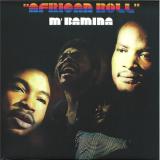
M’BAMINA - AFRICAN ROLL

Gatefold Sleeve

M’Bamina – African Roll (1975)
The story of an album born between Africa, Italy, and the nightclub culture of the 1970s
In the heart of 1970s Italy — a country undergoing profound social change and a music scene just beginning to open itself to distant sounds and cultures — an extraordinary, almost improbable story took shape. It is the story of a group of young African musicians who found their way to Europe, of a Turin nightclub that became a crossroads for communities and experimenters, and of an album which, released in small numbers and largely unnoticed at the time, is now considered a rare jewel of Afro-fusion.
The band called themselves M’Bamina — an ensemble of musicians from Congo, Cameroon, and Benin, who arrived in Italy in the early Seventies. Settling between northern Italy and the Pavia area, they began performing in small clubs and community events, bringing with them a vibrant rhythmic heritage: African polyrhythms, call-and-response vocals, funk-infused bass lines, and Caribbean or Afro-Latin colours absorbed along their musical journeys. Their raw, contagious energy on stage quickly drew attention.
Meanwhile, in Turin, another story was unfolding. There was a venue becoming almost legendary: Voom Voom, one of the city’s liveliest nightclubs, run by Ivo Lunardi. The club attracted an eclectic crowd — students, artists, foreigners, night owls — and Lunardi quickly understood that the dancefloor wasn’t just a place for music, but a melting pot for a new kind of cultural energy. Out of this vibrant atmosphere came his idea: to turn the club’s name into a small independent record label, Voom Voom Music, capable of capturing the spirit of those years and giving voice to unconventional projects.

When Lunardi heard M’Bamina, he immediately sensed that this was the sound he had been searching for: fresh, different from anything circulating in Italy at the time, and capable of blending African tradition with funk and European sensibility. He brought them into the studio.
Production was handled by Lunardi along with Christian Carbaza Michel, while the engineering was entrusted to Danilo Pennone, a young sound technician with a sharp, intuitive ear.
The recording sessions — held in Turin in 1975 — produced a remarkably warm and direct sound. The music feels almost live: grooves rooted in African tradition, but open to funk-rock structures and modern arrangements. It is a natural fusion, never forced. Tracks move between tribal rhythms, funk basslines, light electric guitars, congas and Afro-Latin percussion, with call-and-response vocals and melodies that echo both Congolese tradition and the lineage of Latin jazz. Not by chance, one of the album’s most striking tracks, Watchiwara, reinterprets a Latin standard through M’Bamina’s own rhythmic language.

The album was titled African Roll — a name that was already a statement of intention. It is African music that “rolls,” that moves, adapts, transforms within a new geographic and cultural setting. It is not strictly Afrobeat, nor Congolese rumba, nor Western funk: it is a spontaneous, hybrid blend, shaped more by lived experience than by any calculated aesthetic program.
When African Roll was released, the world around it barely noticed. Distribution was limited, and 1970s Italy had yet to develop a cultural framework for receiving such music. The national music press rarely paid attention to African or “world” productions. The album slipped into silence — though the band’s own story did not.

M’Bamina continued performing across Europe and Africa, even sharing a stage in Cameroon with none other than Manu Dibango. By the late Seventies, they moved to Paris, signed with Fiesta/Decca, and recorded a second LP, Experimental (1978). Meanwhile, the peculiar record they had made in Turin began to resurface quietly among vinyl collectors, Afro-funk enthusiasts, and DJs hunting for forgotten grooves.
That is when the album’s fate began to shift.

Over the decades, African Roll emerged as an almost unique document: a snapshot of an intercultural Italy before the word “intercultural” even existed, a fragment of migrant history, a spontaneous experiment in musical fusion born far from major industry circuits but rich in authenticity. Original copies began commanding high prices on the collector’s market, and the album became recognized as one of the hidden classics of European Afro-fusion from the 1970s.
Today, more than fifty years later, this reissue finally restores visibility and dignity to a project that deserves to be heard, studied, and celebrated. It is not simply an album: it is the testimony of a rare cultural encounter, born in an Italy unaware of how fertile such exchanges would one day become.

It is the story of a visionary producer, an extraordinary band, and a fleeting moment in which music, migration, and nightlife came together to create something genuinely new.
African Roll is — now more than ever — the sound of a bridge: between continents, between eras, between cultures. A record that, after rolling far and wide, has finally come home.

В наличии на складе

Есть у нас в наличии и готов к отправке

Riccardo La Foresta - ZERO,999...

After spending much of the last years focusing on the evolution of his own instrument, the drummophone, the release of ZERO,999… reveals a new paradigm in La Foresta's work and career.

In this album he collects fragments of live performances and site-specific installations conducted over the last decade, with and without the drummophone — reimagining and repurposing them as compositional elements that he has interwoven with recent studio recordings and collaborations to form eleven viscerally powerful pieces of overwhelming rhythmic and textural density.

La Foresta weaves together these captured moments in time, while employing combinatory strategies inspired by Italo Calvino's tarot stories in "Il castello dei destini incrociati," forging relationships and connections between recordings from the collaborators and his own. In approaching accompanying and augmenting these recordings, Riccardo, in the role of percussionist and composer explores the tension between his personal and academic focus on rhythmic structures and his fascination with repurposing the drum as a durational instrument.

Contributions from collaborators include the synthetic textures of Valerio Tricoli, Anthony Pateras, Aleksandra Słiż, and Renato Grieco, the vocalizations of Antonina Nowacka and Sara Persico, and the guitar experimentations of Ale Hop and Stefano Pilia, bringing together a distributed ensemble of musicians pulling apart the orthodoxies of their own instruments and techniques. Through the interaction of these elements, La Foresta imagines a causal network that binds, integrates and informs fragmented contexts, performers and performances, exploiting new possibilities of the drummophone.


ZERO,999… is conceived as a suite where sound and time are communicated simultaneously at different orders of scale, a single strike of a drum is a drone if slowed down one thousand times, an hour-long drone is a brief tick in the clock of geological time. A seemingly static object, such as the number 1, can both be defined by its fixedness, and as a process in which eternally approaching (0,999...) is the same as arriving.


k 11: EyeContact (Nereo`s) feat. Stefano Pilia

В наличии на складе

Есть у нас в наличии и готов к отправке

Ralph Weeks - Let Me Do My Thing (7")

Esteemed soul man of Panama Mr. Ralph Weeks has in recent years been enjoying a much overdue retrospective of his remarkable six decades-long musical journey with the help of Names You Can Trust. Now onto their fifth record release together since 2019, the label has covered both Weeks' original holy grail material as well as re-cuts and reimagining of some of his rarefied and unreleased songs.

One of Mr. Weeks' two iconic 45 releases on Panamanian label Sally Ruth was a funky soul side called "Let Me Do My Thing," originally recorded in 1971 as Weeks' answer to Charles Wright's big tune "Express Yourself," which had just hit the airwaves in 1970. Weeks' musical response would help define his legacy. He was gonna express himself, he was gonna Do His Thing. This golden age ultimatum recorded with the Dynamic Exciters of Panama as the backing band was a simple, straight ahead number with a defining message that would be carried on throughout Weeks' independent career. The funkified air and creative freedom of the original tune is a prime example of the crossover Combos Nationales sound that flourished in the prolific Panama recording industry of the era, and in the ensuing decades Weeks' tune would live on as a cherished rare groove for souleros, funk fans, and bootleggers alike.

Fast forward to 2023, when Ralph Weeks and Names You Can Trust prepared for a Bay Area appearance at the wonderful Latinos Con Soul weekender put on by San Francisco's Discodelic record shop, the groundwork was laid in the studio for a revival, a reawakening of Weeks' funky fan favorite. A spectacular ensemble of NYCT's All-Star artists and alumni was convened in the studio, including Caito Sánchez on drums, Victor Axelrod (Daptone Records) on clavinet and Sam Day Harmet (La Banda Chuska) on guitar. Anant Pradhan (The Skatalites), Eric Biondo (The Budos Band) and Alex Asher (Los Cumpleaños) occupied the brass section, and Ralph Weeks even lent his still formidable chops on electric bass and keyboards, a little OG flare to back up his silky voice with a deft musical touch. What came out of the sessions was a chance for NYCT to pay homage to Weeks' iconic original, without replacing it, and build a brand new version from the ground up with the maestro and composer himself!

В наличии на складе

Есть у нас в наличии и готов к отправке

The Temptations - Cloud Nine (2x12")
  • A1: Cloud Nine
  • A2: I Heard It Through The Grapevine
  • B1: Run Away Child, Running Wild
  • C1: Love Is A Hurtin’ Thing
  • C2: Hey Girl
  • C3: Why Did She Have To Leave Me (Why Did She Have To Go)
  • C4: I Need Your Lovin’
  • D1: Don’t Let Him Take Your Love From Me
  • D2: I Gotta Find A Way (To Get You Back)
  • D3: Gonna Keep On Tryin’ Till I Win Your Love

The Temptations Get High on Psychedelic Soul: Cloud Nine Soars with Ambitious Arrangements and Production, Features Standout Vocal Performances and Instrumentation by the Funk Brothers

The Temptations’ Cloud Nine announced that Motown — and “The Sound of Young America” — would never be the same. Influenced by the emergence of cutting-edge rock and pop currents, as well as increasing sociopolitical turmoil, the album broke down barriers between rock, psychedelia, and soul while heralding the arrival of visionary arrangements and production techniques. Bookended by traditional R&B numbers, the 1969 record sent the Temptations in bold new directions and signaled the advent of psychedelic soul.

Sourced from the original master tapes, strictly limited to 3,000 numbered copies, pressed at Fidelity Record Pressing, and housed in a Stoughton gatefold jacket, Mobile Fidelity’s 180g 45PM 2LP set presents Cloud Nine in audiophile sound for the first time on a domestic pressing. This collectible reissue bestows Norman Whitfield’s extraordinary production with the grand-scale dynamics, natural tonality, expansive openness, and low-end weight it deserves. The timbre of each of the five members’ voices is readily identifiable — even within the group harmonies — bestowing a realism never experienced outside the recording studio.

Making its debut on 45RPM, the album further benefits from the wide groove space by playing with greater separation and more realistic presence than prior editions. Everything from the brassiness of the horns to the dry snap of the snare comes across with reference-grade clarity and positioning. And since Motown’s renowned Funk Brothers backing band plays on many of the cuts, you’ll want to savor every note. The imaging, soundstaging, and organic bloom-and-decay of the notes make that possible.

Amid Cloud Nine, the instrumentation and architecture stand out as much as any element. Never before had a Motown album contained such ambitious patterns and complex passages. Seemingly conscientious of the departure from their past methods, the Temptations and Whitfield bunched together the tracks that mark a deep dive into psychedelic territory and counterbalance them with seven sterling soul cuts that dovetail with Motown tradition drenched with heartfelt vocals, swelling strings, and finger-snapping beats.

On the original 33RPM release, traditional Motown soul — laden with heartfelt vocals, swelling strings, and finger-snapping beats — occupies Side Two. These songs reveal an ensemble still very much on top of delivering pristine pop-soul material graced with romantic sweetness, persuasive insistent, and soaring highs. Re-energized after the departure of lead singer David Ruffin, who was fired for a variety of reasons in June 1968, the Temptations seamlessly meld with his replacement, Dennis Edwards, on one melodic gem after another.

The collective tackles five songs co-written by the legendary Motown team of Barrett Strong and Whitfield. Not the least of which are the smooth, shuffling “Why Did She Have to Leave Me (Why Did She Have to Go)” and deceptively simple, horn-spiked “Gonna Keep on Tryin’ till I Win Your Love.” On these tracks, as well as on a lush rendition of the ballad “Love Is a Hurtin’ Thing” and pleading, tender send-up of the Gerry Goffin-Carole King classic “Hey Girl,” Edwards and Paul Williams take turns on the lead with the estimable Eddie Kendricks, Melvin Franklin, and Otis Williams providing backing support.

All five vocalists trade-off leads on the simmering title track, a groundbreaking composition shot through with wah-wah-pedal effects, liquid funk, deep bass lines, Cuban percussion, saturated reverb, and gang choruses. Whitfield mines each member’s natural vocal range with spectacular results, keeps time with cymbals, and channels both the heated temperatures and escapist desires of a society embroiled in war, conflict, and experimental drugs.

Amazingly, the Temptations top themselves on the similarly revealing “Run Away Child, Running Wild.” Nearly 10 minutes in length, the song explodes R&B parameters and harbors a cinematic scope. Urgent pianos, distorted guitars, stripped-down percussion, steamy Hammond organs, minimal bass motifs, five distinct voices narrating the tale of a boy who fled home and now finds himself amid the scary, unforgiving external world: They combine to give the urgent tune a walls-closing-in atmosphere where fear and desperation reign. Bolstered by an extended instrumental section that precedes a climactic return of the singers’ voices, “Run Away Child, Running Wild” equaled the success of the record’s title track, with both reaching No. 6 on the pop charts.

Сделать предзаказ

Этот продукт еще не вышел. Ты можешь сделать предзаказ, как только он появится на складе, продукт будет подготовлен к пересылке.

Soundwalk Collective with Patti Smith - Khandroma

While they’ve been active for more than two decades, it’s only been in recent years that the Berlin and New York based contemporary sonic arts platform, Soundwalk Collective, has begun to gather the accolades and attention that they rightfully deserve. Firmly rooted within a multi-disciplinary practice that engages the narrative potential of sound within the contexts of visual art, dance, music and film, as well as tapping anthropological, ethnographic, and psycho-geographic research, they’ve gained great note for collaborations with Jean-Luc Goddard, Nan Goldin, Sasha Waltz, Charlotte Gainsbourg, and numerous others.

Building on the back of 2023’s brilliant “All the Beauty and the Bloodshed”, Soundwalk Collective now returns with “Khandroma”, one of their most fascinating and singular endeavours to date, which re-engages their enduring creative partnerships with Patti Smith. Issued by Ubi Kū, a brand new imprint founded by the Italian Buddhist Union dedicated to the relationships between Buddhist cultures, music, and sound, across the album’s stunning two sides this incredible ensemble draws inspiration from and conjures Tibetan deities, the Himalayan Plateau, the valleys of Nepal and the highest peaks where the most ancient Buddhist temples reside, culminating as a sprawling sonic tapestry like little else. Issued as a beautifully produced, limited edition vinyl LP and CD, mixed and mastered by Giuseppe Ielasi, complete with a booklet featuring liner note essays penned by Chiara Bellini and Filippo Lunardo, and images by Stephan Crasneanscki, it’s hands down among our favourite releases by Soundwalk Collective to date and not to be missed!

An international experimental sound art collective founded in 2001 by the artists Stephan Crasneanscki, who was joined in 2008 by producer Simone Merli, Soundwalk Collective is a contemporary sonic arts platform, featuring a rotating constellation of artists and musicians, that, in vastly varied number of ways, has continuously explored the remarkable potential of sound within the contexts of visual art, dance, music and film, offering particular emphasis to anthropological, ethnographic, and psycho-geographic research, examining conceptual, literary or artistic themes. In addition to their many collaborations and accolades that attend to an increased ambitious catalog of releases, they scored Laura Poitras’ film, “All the Beauty and the Bloodshed”, which won the Golden Lion at the 2022 Venice Film Festival, as well performed and exhibited at Berghain, CTM Festival, documenta, Manifesta, New Museum, and Centre Pompidou, where they notably opened “Evidence”, a exhibition with Patti Smith comprising an audio-visual journey from the work of French poets Arthur Rimbaud, Antonin Artaud and René Daumal. While Soundwalk Collective’s output and use of sonority - sometimes original composition and others manipulated archival recordings - and context is varied, the project’s endeavours are unified by a focus on sound as material that is both tactile and poetic, pursuing layered narratives that address ideas of memory, time, love and loss. Their latest, “Khandroma”, enlisting Patti Smith’s contribution on one of its tracks, stands among the most exciting and rich of these explorations yet.

Perhaps the best way of approaching “Khandroma” is through Soundwalk Collective’s longstanding focus on the discipline of psycho-geography - a practice that interrogates the impact of an environment’s embedded histories and meanings on the psychology of the present - as well as the group’s integration of observations of nature, and uses of non-linear narrative, as a vehicle for recording and the synthesis of meaning. Like previous projects that have encountered them traveling extensively across the world, occupying diverse environments for long periods of investigation and fieldwork, during which they source materials for subsequent works, the material roots of “Khandroma” are a body of field recordings made by Crasneanscki, Francisco López, and Merli at altitudes between 2,760 and 4,500 meters, in varying locations across Upper Mustang during 2016.

Drawing the album’s title from the Tibetan feminine deity who reigns the skies, the album’s two compositions weave a stunning sonic tapestry from collaged sounds of nature, bells, drones, unplaceable tones and vocals, and in the case of its second piece, “Chasing the Demon”, the voice of Patti Smith, culminating as a deeply emotive and imagistic expanse that taps something far more profound than any of its single parts. As the collective states: “the album traces the continuous morphing of the wind into sound expressions. The Himalayan Plateau seems designed to amplify and echo the encounter of the breaths, the prayers, and the chants emerging from around and within those temples; amid the sounding of bells, the turning of prayer wheels, and the billowing of flags. A resonant musical body that we recorded so as to capture its boundless mutations; an unstoppable force that cries, whispers, and blows through and over stones, wood, empty halls and monastic robes, etching an ever-changing sonic landscape onto the surfaces it encounters.”

Immersive, stunningly beautiful, and haunting, “Khandroma” draws the ancient and distant into the consciousness of the present, close to home, bordering on the profound. Issued by Ubi Kū as a beautifully produced, limited edition vinyl LP and CD, mixed and mastered by Giuseppe Ielasi, complete with a booklet featuring liner note essays penned by Chiara Bellini and Filippo Lunardo, and images by Stephan Crasneanscki, we can’t recommend it enough.

В наличии на складе

Есть у нас в наличии и готов к отправке

Soyuz - Калі ты запытаеш (If You Ask) / Tenório

Proudly presenting, ‘Калі ты запытаеш (If You Ask)’, a brand new, blissed-out pop production with a ‘70s AOR touch, by the ever-on-point SOYUZ (СОЮЗ). Coming at a period between albums, the single features guest appearances from the sensational musicians, Biel Basile (O Terno, Sessa) and Anthony Ferraro (Toro Y Moi, Astronauts, Etc.). Friends of the band, they add their signature touch on the drums and synth respectively. To complete the package, SOYUZ back the title track with a short but sweet, Wurlitzer-laden, MPB-tinged number, ‘Tenório’.

‘Калі ты запытаеш (If You Ask)’ tells the story of lost dreams. A track that can be interpreted either as a bittersweet longing for childhood times, or for a native place you can’t return to. For the writer Alex Chumak he suggests, "In my case, as in the case of many Belarusians, it’s both".

For this song, Alex chose to sing in his native Belarusian tongue. As he explains this language "to me feels underrepresented in pop music, also it’s a beautiful legacy and sonority that I wanted to share with the listeners of our project around the world". One of the key inspirations was a Belarusian band “Песняры” (“Pesniary”), who produced a host of great progressive folk, jazz fusion and AOR, from the ‘70s to the ‘90s, predominantly sung in Belarusian.

Another key influence was the music coming out of the Brazilian state of Minas Gerais in the ‘70s, drawing inspiration from the sentimental and harmonious music of Beto Guedes, Lô Borges, Fernando Oly and Wagner Tiso.

Having parted ways with their drummer Anton, SOYUZ needed to find a new way to produce songs. The answer was to go remotely. Alex contacted the brilliant Biel Basile, who had recorded Sessa's contemporary classic ‘Estrela Acesa’, in which Alex also participated. Utilising Biel and Sessa’s newly built studio in São Paulo, SOYUZ had Biel record the drums directly to tape to get the rich sound they were after. Adding the final magic into the mix, California’s Anthony Ferraro provided a beautiful Solina String Ensemble synth arrangement, with drummer/recording engineer Albert Karch expertly assisting with the production.

To capture the essence of the single visually, Alex and the Brazilian one-man-industry visual artist Gabriel Rolim, spent a blazing sunny May day in Berlin shooting film and stills – one of which became the perfect cover image. We hope you enjoy this little nugget of SOYUZ mastery, a sweet taster to savour while the new album is recorded.

В наличии на складе

Есть у нас в наличии и готов к отправке

VARIOUS - LA BUSH 30 YEARS Vol.2 10x12"
 
35

Limited Edition! The "LaBush - Temple of House" Volume 2 Vinyl Box Set for the 30th Anniversary of the Legendary Club!

Barely six months after the phenomenal success of the first box set, La Bush - Temple of House makes history once again, celebrating its 30th anniversary with the release of Volume 2 in a limited edition 10x12" vinyl box set. A true must-have for collectors and electronic music enthusiasts!

This exclusive box set features no less than 35 tracks, an incredible number for a vinyl collection, offering unparalleled pressing quality that guarantees an exceptional listening experience, perfectly suited for any turntable. Each track has been meticulously remastered, preserving the essence of the original versions while enhancing every sonic detail.

The deluxe packaging of this box set is a work of art in itself, designed to captivate the most discerning vinyl lovers. Moreover, with tracksfrom legendary artists like Paul Kalkbrenner, Paul van Dyk, David Guetta, Tomcraft, Oliver Lieb, Matthew Herbert, and La Bush resident Mr. Sam, this box set is an essential treasure.

For those who already own the first box set, this new volume is the perfect opportunity to complete your collection in the best possible way, adding a new centerpiece to your La Bush ensemble.

Don't miss this unique opportunity to add a masterpiece to your vinyl collection. Order now before it's too late!

В наличии на складе

Есть у нас в наличии и готов к отправке

Miles Davis - Porgy and Bess LP
  • The Buzzard Song
  • Bess, You Is My Woman Now
  • Gone
  • Gone, Gone, Gone
  • Summertime
  • Bess, Oh, Where's My Bess
  • Prayer (Oh, Doctor Jesus)
  • Fishermen, Strawberry And Devil Crab
  • My Man's Gone Now
  • It Ain't Necessarily So
  • Here Come De Honey Man
  • I Loves You, Porgy
  • There's A Boat That's Leaving Soon For New York

Porgy and Bess is a stunning orchestral collaboration where Miles Davis brings depth, blues feeling, and lyricism to George Gershwin's opera. Arranged and conducted by Gil Evans , the album features a large ensemble that frames Miles' trumpet with rich, cinematic textures. Highlights like 'Summertime', 'Buzzard Song', and 'It Ain't Necessarily So' highlight its dramatic scope and emotional power

Сделать предзаказ29.05.2026

он должен быть опубликован на 29.05.2026

Miles Davis - Birth Of The Blue (2x12")
  • A1: On Green Dolphin Street
  • A2: Fran-Dance
  • B1: Stella By Starlight
  • B2: Love For Sale

Miles Davis's Kind of Blue was the number-one jazz album in history. It totaled five songs. There are four more songs from that same historic group, recorded in the same time period and at the same studio. And here they are. These songs deserve to stand on their own with artwork to highlight the quality of the music and that matches the time period of the recording. This is a rare opportunity to have a smash follow-up to what many consider the greatest jazz record ever!

Through the years, these four remarkable performances — all from a single recording session in 1958 and all exemplary of the sound of Miles Davis' legend-loaded sextet of that year — have not been served well. They have been largely treated as add-ons for other compilations. Now, for the first time, Analogue Productions, the audiophile in-house reissue label of Acoustic Sounds, Inc., together with Quality Record Prssings, has deservedly given these tracks a stellar stand-alone release for jazz fans to savor!

The once-in-a-generation lineup that recorded these tunes is the very same that would be immortalized for the enduring classic they would record almost a year later, Kind of Blue. Davis played trumpet sublime with his ensemble sextet featuring pianist Bill Evans, drummer Jimmy Cobb, bassist Paul Chambers, and saxophonists John Coltrane and Julian "Cannonball" Adderley.

Undervalued since their recording, the tunes on this album reflect historial and musical significance. They offer early glimpses into the modal jazz that Kind of Blue would bring to the forefront. Using modes common in modern classical music, rather than the chords of popular songs, Miles had begun to experiment with the new approach on the Milestones recording sessions previously.

Analogue Productions is proud to present Birth of the Blue in an exclusive first-of-its-kind stand-alone release that reflects our reputation for meticulous production, capturing authentic sound with clarity, depth and fidelity that exceeds the audiophile standard. 180-gram 45 RPM double LP pressed at Quality Record Pressings.

Features:
• Pioneering Ensemble: Captured the same rare and short-lived alignment of jazz legends including Miles Davis, John Coltrane, Cannonball Adderley, Bill Evans, Paul Chambers, and Jimmy Cobb, as heard on the historic Kind of Blue.
• Innovative Sound: The session represented a crucial transition in jazz, blending elements of hard bop with early modal jazz influences, showcasing the ensemble's experimentation and forward-thinking approach.
• Undervalued Legacy: Despite its historical and musical significance, the session's recordings have been historically overlooked, often relegated to being add-ons in compilations rather than recognized as standalone masterpieces.
• Modal Jazz Precursor: Offered early glimpses into the modal jazz that would later be fully realized in Davis's groundbreaking album "Kind of Blue," laying the groundwork for future jazz innovation.
• Impact on Artists: Served as a critical point of development and confidence for the musicians involved, particularly Bill Evans, who noted the significant impact of this experience on his own identity and style.
• Historical Context: Occurred at a peak moment in Miles Davis's career, following his signing with Columbia Records and his critical and commercial successes with albums such as ‘Round About Midnight and Miles Ahead.

Сделать предзаказ29.05.2026

он должен быть опубликован на 29.05.2026

Parliament - Osmium (2x12")

Parliament

Osmium (2x12")

2x12inchDEMREC1188X
Demon Records
26.04.2026
  • I Call My Baby Pussycat
  • Put Love In Your Life
  • Little Ole Country Boy
  • Moonshine Heather
  • Oh Lord, Whylord / Prayer
  • My Automobile
  • Nothing Before Me But Thang
  • Funky Woman
  • Livin' The Life
  • The Silent Boatman

Demon Records are proud to present Osmium Deluxe - the first recordings credited to the funk-rock ensemble Parliament-Funkadelic.

Since its re-release in 1990, Osmium has been distributed numerous times by various labels in America, Europe and Japan under alternate titles – including Rhenium and First Thangs. A number of these reissues have featured material that was not included on the original album, such as unreleased tracks and singles that were taken from the same time.

This in-demand, black-vinyl version of the Record Store Day 2024 sell-out compiles together everything from that period 2 LPs and includes; the full Osmium album, the single sides that never made the album, unreleased tracks, demos and jams – all of which made their debut vinyl appearance as one package in 2024.

Many of these recordings are still as far-out as they sounded when first released. However, the tracks here represent the genesis of what would become P-Funk and the entity that would give the world ground-breaking albums Maggot Brain (1971), Mothership Connection (1975), and One Nation Under a Groove (1978). An essential addition to anyone’s collection.

Сделать предзаказ26.04.2026

он должен быть опубликован на 26.04.2026

Rick James - Street Songs LP 2x12"
  • A1: Give It To Me Baby
  • A2: Ghetto Life
  • B1: Make Love To Me
  • B2: Mr. Policeman
  • C1: Super Freak
  • C2: Fire And Desire
  • D1: Call Me Up
  • D2: Below The Funk (Pass The J)

Rick James Blends Brazen Attitude, Fearless Sexuality, and Shrewd Charisma on Street Songs:

Punk-Funk Album Aims for the Hips and Head, Includes the Timeless Hit “Super Freak”
Sourced from the Original Master Tapes and Strictly Limited to 4,000 Numbered Copies:

Mobile Fidelity’s 180g 45RPM 2LP Set Presents 1981 Smash in Audiophile Sound for the First Time
1/4” / 30 IPS analogue master to DSD 256 to analogue console to lathe


“Punk funk” was a relatively unknown concept before 1981. But once Street Songs took the charts by storm that year, the world soon knew about what became Rick James’ signature style. And how. True to its name, Street Songs blends outspoken sexuality, brazen attitude, and edgy commentary amid contagious R&B-fueled arrangements that simultaneously aim for the hips, head, and various nether regions. And it’s never sounded better.

Sourced from the original master tapes, strictly limited to 4,000 numbered copies, pressed at Fidelity Record Pressing, and housed in a Stoughton gatefold jacket, Mobile Fidelity’s 180g 45RPM 2LP set presents James’ platinum-certified effort in audiophile quality for the first time. Playing with crisp dynamics, lively textures, airy headroom, and revealing clarity, this collectible edition of the record that stayed at the No. 1 spot on the R&B Album Charts for 20 weeks invites you to get closer to music that beckons you to turn your space into a private dance floor.

Then again, you’ll likely be so taken by how the taut bass lines, snappy rhythms, and four-on-the-floor beats — all rendered in stunning detail and with full-bodied architecture — come across with such accuracy and presence, you might stay pinned to your seat. On this pressing, the soundstaging, imaging, and lit-fuse energy of Street Songs reach new heights. Everything from the rubbery feel of the guitar lines to the depth of James’ temperature-raising vocals to the scale of the horn charts emerges as if James and his ace session crew set up in your room.

The Buffalo native and his ensemble waste no time getting their message across. On the album-opening “Give It to Me Baby,” James and company lay down a mix of sleek funk and pulsing disco that practically activates the bright lights of a discotheque and stimulates the libido of anyone within earshot. Having reached No. 1 on the Billboard Hot Soul charts, the song is pure sex — and just one of the carnal delights on a record that embraces the subject as fearlessly as James does his identity.

Of course, the most famous of James’ erotic excursions — the timeless “Super Freak” — hit No. 1 on Hot Dance Club Play charts, No. 16 on the Hot 100, and, later, No. 153 on Rolling Stone’s list of the Top 500 Songs of All Time. Bolstered by a quavering keyboard theme and electro riffs, the much-sampled track worms itself inside your muscles with smile-inducing subject matter, gliding vocals, nimble movements, a hot tenor-saxophone solo, and backing vocals by the Temptations.

The iconic Motown group isn’t the only celebrated guest artist on the Grammy-nominated Street Songs. James’ then-labelmate, Stevie Wonder, lends harmonica to the frank sociopolitical narrative on “Mr. Policeman,” a protest tune that also manages to stroll ’n’ strut via simmering organ, staggering brass accents, and James’ gritty vocal performance. In addition to contributing backing vocals on several cuts, Teena Marie turns in one of the album’s signature moments on “Fire and Desire,” a romantic old-school duet with James that impresses with smoothness, sensitivity, and smokiness.

High-profile colleagues aside, James remains the undisputed star, a figure whose leather-and-latex attire, braided hair, and natural swagger made him misunderstood by some in the mainstream and embraced by everyone in the know as a true original. As a testament to his magnetism and skills, his charisma and rawness seemingly seep through every note, whether on the balladic sweep of the risqué “Make Love to Me” or strident, poke-and-prod persuasion of the moonwalking “Call Me Up.”

On the closing “Below the Funk (Pass the J),” an uptempo autobiographical tale that addresses the visionary musician’s second-favorite love, the singer acknowledges his upbringing and inseparable connection with his roots — an homage to where he began and a toast to where he’s gone.

Rick James, keepin’ it real on Street Songs, still as real as it gets.

нет на складе

Закажите сейчас, и мы закажем товар для вас у нашего поставщика.


Последний логин: 3 мес. назад
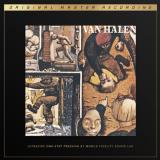
Van Halen - Fair Warning 2x12"
  • Mean Street
  • Dirty Movies
  • Sinners Swing!
  • Hear About It Later
  • Unchained
  • Push Comes To Shove
  • So This Is Love?
  • Sunday Afternoon In The Park
  • One Foot Out The Door

The song titles on Van Halen's aptly titled Fair Warning don't lie. The likes of "Unchained," "Mean Street," "Push Comes to Shove," "One Foot Out the Door," and more indicate the mood the band channels on its double-platinum 1981 record — the nastiest, darkest, and fiercest album of the group's storied career. For the fourth time in four years, Van Halen throws down the gauntlet to all challengers and emerges victorious.


Sourced from the original analog tapes, pressed on MoFi SuperVinyl at Fidelity Record Pressing, and strictly limited to 5,000 numbered copies, Mobile Fidelity's UltraDisc One-Step 180g 45RPM 2LP set plays with unfettered clarity, dynamics, and immediacy. Benefitting from superb groove definition, an ultra-low noise floor, and dead-quiet surfaces, this vinyl edition captures what went down in the studio with tremendous realism and involving presence.

Taking a more controlled approach in the studio and still completing everything in less than two weeks, Van Halen and producer Ted Templeman relied on studio amplifiers to direct the sound. Further diverging from the live-on-the-floor approach of its earlier albums, the ensemble also employed overdubs to great effect. The result: Dense, stacked architecture that underlines the hard-hitting tenor of the songs — and which comes alive like never before on this reference edition that looks as good as it sounds.

The premium packaging and gorgeous presentation befit the reissue's select status. Housed in a deluxe slipcase, it features special foil-stamped jackets and faithful-to-the-original graphics that illuminate the splendor of the recording. Aurally and visually, it is made for listeners who want to immerse themselves in everything involved with the album, including the iconic cover art adopted from William Kurelek's haunting painting, "The Maze."

Isolated frames from Kurelek's childhood-inspired work — including a man bashing his head into a brick wall, a guy pinning down an adversary as he delivers bare-fist blows to his face and others watch with apparent glee, a boy tied down on a conveyer belt and being sent through the equivalent of a meat saw — adorn the front and back covers. The sunnier visual disposition of Van Halen's prior efforts gives way to something sinister and tortured, traits reflective of the music within. The band members, too, are visually depicted not in glamorous shots but in a serious black-and-white portrait in which the quartet is clad in black leather jackets.

Tough, aggressive, stark: Fair Warning comes on like a series of bare-knuckled punches to the solar plexus and boasts lyrical narratives to match. Though not a concept record, the concise album revolves around themes of roughing it on the streets and struggling to survive amid dim prospects. Singer David Lee Roth reportedly penned many of the initial lyrics after traveling to Haiti and observing extreme poverty. The characters and situations populating Fair Warning reflect hardscrabble existence, last-chance desperation, and underlying danger.

Witness the crazies, poor folks, and hunters of “Mean Street”; the former prom queen turned pornographic actress on “Dirty Movies”; the menace and vice of “Sinners Swing!”; the streetwise hustle of “Unchained”; the isolation and alienation of “Push Comes to Shove”; the desire for escape on “One Foot Out the Door”: A carefree California beach party Fair Warning is not.

Having said he felt angry and frustrated during the sessions, guitarist Eddie Van Halen uses the forceful arrangements as a playground for his seemingly unlimited arsenal. Supported by a crack rhythm section and a hyped-up Roth, he performs with an almost impossible combination of punk-like intensity, technical finesse, lyrical fluidity, and unbridled emotion. The virtuoso was increasingly butting heads with Templeton and seeking a freedom in the studio he believed denied him.

No wonder he plays like a bat out of hell. Listen to the rapid-fire manner in which he slaps the high and low E strings on the 12th fret of his instrument on “Mean Street,” instilling the tune with funk flair and metal-spiked sharpness. For the pouty strut of “Dirty Movies,” Eddie Van Halen contributes slide guitar magic made possible after he sawed off the lower portion of a Gibson SG so he could reach further down the fretboard.

Related intensity, urgency, and daredevil momentum punctuate the surging “Sinner’s Swing!” A heavily flanged, delicately melodic introduction frames the attitudinal “Hear About It Later,” among the most creative arrangements of Van Halen’s career. And do riffs come any bigger or magnetic than those on the high-wire kick of “Unchained”? As for the out-of-left-field “Sunday in the Park,” an instrumental composed on an Electro-Harmonix micro-synthesizer: Who but Eddie Van Halen to supply creep factor in such an ingenious way?

Despite selling fewer quantities than Van Halen’s prior efforts, Fair Warning remains for many diehards the record that epitomizes all of the band’s immense strengths —Roth’s manic energy and tongue-wagging humor, Alex Van Halen’s rhythmic heartbeat-in-your-chest bombast, and Michael Anthony’s lucid bass lines included. Arriving when the New Wave of British Heavy Metal and new-wave movements were taking flight, it signaled a shot across the bow from a band determined to stay a step ahead and provide proof nobody could touch what it delivered.

More than four decades later, Fair Warning still sounds that alarm.

Сделать предзаказ

Этот продукт еще не вышел. Ты можешь сделать предзаказ, как только он появится на складе, продукт будет подготовлен к пересылке.

JAMES BROWN - Sex Machine (2x12")
  • A1: Get Up I Feel Like Being A Sex Machine
  • A2: Brother Rapp (Part I & Part Ii)
  • A3: Bewildered
  • A4: I Got The Feeling
  • B1: Give It Up Or Turnit A Loose
  • B2: I Don’t Want Nobody To Give Me Nothing
  • B3: Licking Stick
  • C1: Lowdown Popcorn 9.Spinning Wheel
  • C2: If I Ruled The World
  • C3: There Was A Time
  • C4: It’s A Man’s Man’s Man’s World
  • D1: Please, Please, Please
  • D2: I Can’t Stand Myself (When You Touch Me)
  • D3: Mother Popcorn

James Brown wants to know one thing before he and his band begin Sex Machine. “Can I get into the thing, really?,” he asks. His cohorts enthusiastically respond in the affirmative. And for the next hour and change, Mr. Dynamite gets into it and more, turning in a sweat-soaked, feet-moving, hip-swiveling, emotion-purging, in-the-red, drop-everything-you’re-doing-and-dance performance for the ages. Ranked by Rolling Stone among the 500 Greatest Albums of All Time, the sweeping 1970 effort towers as a testament to Brown’s inimitable legacy as well as the peak powers of his voice, vibrancy, and bands.

Sourced from the original master tapes, pressed at Fidelity Record Pressing, and housed in a Stoughton gatefold jacket, Mobile Fidelity’s numbered-edition 180g 33RPM 2LP set presents Sex Machine in audiophile sound for the first time. It explodes with the energy the lightning-strike music demands. Dynamic, immediate, present, airy: Everything from the brassiness and fluidity of the horns to the snap and decay of the snare to the swell and carry of the organ comes across in full-range perspective.

Then there’s Brown’s superhuman singing, which here emerges with a purity, naturalism, and transparency that ensure you feel everything. Screeching, shouting, pleading, moaning, preaching, stinging, commanding, testifying, crooning, humming: The Godfather of Soul contributes one of the finest vocal performances known to man. This definitive 55th anniversary reissue of Brown’s monster funk statement further exhibits a combination of clarity, solidity, separation, and imaging that helps bring to light what he and his crack ensembles committed to tape. Both in the studio and on the stage.

Just how lifelike does this reissue sound? Senior Mobile Fidelity Sound Lab engineer Krieg Wunderlich, who handled the remaster, notes: “There were some artifacts that sounded a bit like mistracking. But they turned out to be breath blasts on the vocal microphone. That is part of history. JB was workin' hard, and breathin' hard. And there was an edit the timing of that was truly strange. Again, a part of history.”

Originally marketed as a live album, Sex Machine contains six songs recorded in the studio and later overdubbed with canned crowd noise and reverberation. Save for “Low Down Popcorn,” the tracks on the latter half stem from a phenomenal performance captured in October 1969 at Bell Auditorium in Brown’s adopted hometown of Augusta, GA. The special relationship between the singer, the audience, and the location is palpable.

As the 1960s gave way to a new decade, Brown experienced immense success and dealt with unexpected change. Soul Brother Number One soon expanded his idea for an official live album captured in Augusta when the ensemble that backed him on that date morphed into the original version of the world-famous J.B.’s just months after the show. The virtuosic abilities, sticky chemistry, and rhythm-forward nature of the J.B.’s prompted him to book a one-off session in Cincinnati, OH, on a late July night.

Anchored by brothers William “Bootsy” Collins and Phelps “Catfish” Collins, the group — as well as two different drummers — laid down a nearly 11-minute rendition of “Get Up I Feel Like Being Like a Sex Machine” and a thrilling medley of “Bewildered,” “I Got the Feeling,” and “Give It Up or Turnit a Loose.” A pair of then-recent studio singles cut in separate locations in 1969, “Brother Rapp” and “Low Down Popcorn,” each featuring his prior group, took care of the second LP worth of material that complements the originally planned live set.

Complicated? Somewhat. Unusual? Definitely. But just as he elevated the expectations for all present and future R&B artists, Brown not only makes it all work. He makes it positively electrifying.

“Get Up I Feel Like Being Like a Sex Machine” is alone deserving of a dissertation on the art of funk music, seeing it moves up and down akin to an oil derrick, witnesses Brown unleashing a trademark series of grunts, squeaks, and “good god” asides, and glides to a hypnotic groove that won’t quit. Or look to the syncopated rhythms of “Brother Rapp (Part I and Part II),” one of multiple pieces here that signify the point where Brown began viewing every instrument as a percussive tool. Brown closes the three-song medley with his new band with a skedaddling “Give It Up or Turnit a Loose,” which provides jolts on the order of sticking your finger into a socket.

Not that the actual live material falls short in any way. Setting an insistent tempo for the vitality that follows, “I Don’t Want Nobody to Give Me Nothing” positions Brown as a role model, leader, and self-sufficient entrepreneur. All simmer and boil, the short and sweet “Licking Stick” dares you to keep pace. The floating, almost comforting “Spinning Wheel” spotlights the instrumental prowess of Maceo Parker and company, and functions as a seamless segue into the tender, horn-saluted “If I Ruled the World.”

And Brown and his mates still aren’t done. Just try to resist the one-two closing punch of “I Can’t Stand Myself (When You Touch Me)” and “Mother Popcorn.” Mercy.

Ain’t it funky? Sure ‘nuff.

нет на складе

Закажите сейчас, и мы закажем товар для вас у нашего поставщика.


Последний логин: 5 мес. назад
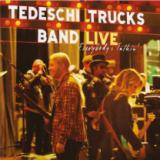
Tedeschi Trucks Band - Everybody's Talkin (3x12")
  • A1: Everybody's Talkin
  • A2: Midnight In Harlem (Swamp Raga Intro With Little Martha)
  • B1: Rollin' And Tumblin
  • B2: Bound For Glory
  • C1: Nobody's Free
  • C2: Darling Be Home Soon
  • D1: Learn How To Love
  • D2: That Did It
  • E1: Uptight
  • F1: Love Has Something Else To Say (With Kissing My Love)
  • F2: Wade In The Water

The Tedeschi Trucks Band is an 11-piece ensemble made up of guitarist-vocalist Susan Tedeschi's and guitarist Derek Trucks' band,
known for their unique mix of rock, blues, gospel, soul, and Americana. Their 2011 debut album won them the 2012 Grammy Award
for Best Blues Album and since then have released four more studio albums and three live albums, of which this is their first.

The songs on this album are compiled from recordings made on three tour dates in October 2011 and feature tunes from their debut
album rearranged, expanded, and extended in true jam band fashion. But, they never seem to resort to clichés; guitar prodigy
Derek Trucks introduces the bands’ hit “Midnight in Harlem” by an Indian raga played as a slide guitar solo, just to give an example.

Stevie Wonder’s “Uptight” furthermore showcases their love for soul and jazz. In short, as one reviewer put it succinctly:
“Everybody's Talkin' is what every live album should be: an accurate, exciting reflection of a hot band playing full-throttle.”
Everybody’s Talkin’ is available as a limited edition of 1500 individually numbered copies on red coloured vinyl.

Сделать предзаказ12.12.2025

он должен быть опубликован на 12.12.2025

New York Dolls - New York Dolls
  • Personality Crisis
  • Looking For A Kiss
  • Vietnamese Baby
  • Lonely Planet Boy
  • Frankenstein (Orig.)
  • Trash
  • Bad Girl
  • Subway Train
  • Pills
  • Private World
  • Jet Boy

The extroverted blend of attitude, energy, and ostentatiousness that spills from the New York Dolls’ self-titled debut can be seen in full view on the album cover. Depicting the quintet in its hallmark flash-and-trash apparel and in drag appearance, the 1973 album scared away a considerable amount of potential listeners while capturing the attention of a sizable audience that recognized the band for what it was: zeitgeist pioneers who helped develop the punk and glam rock movements.

Named by Rolling Stone the 301st Greatest Album of All Time and by Mojo the 49th greatest album of all time, New York Dolls receives long-overdue audiophile treatment on Mobile Fidelity’s numbered-edition 180g 45RPM 2LP set. Sourced from the original master tapes, pressed at Fidelity Record Pressing in California, and housed in a Stoughton gatefold jacket, this collectible version marks the first time the group’s career-making statement is available to be experienced in audiophile quality.

Far from harboring the crude elements that became associated with the punk scene, New York Dolls benefits from keen production overseen by none other than Todd Rundgren. Though more accustomed to working far higher-caliber musicians, Rundgren — taken by the New York Dolls’ charisma and cool, if not their instrumental approach — fully understood the ensemble’s aesthetic. He captured what went down at New York City’s Record Plant with an astute blend of live-on-the-floor feel, raw authenticity, and professional acumen.

On Mobile Fidelity’s definitive-sounding reissue, you can hear those facets as well as key details, dynamics, and textures with previously unimaginable insight. Rundgren preserved generous degrees of grit, grime, and grease while bestowing the raucous music with elevated levels of separation, solidity, and impact every landmark recording deserves. His vision extends to introducing choice accents — barroom piano notes, Moog synthesizer passages, Buddy Bowser’s honking saxophones — that add to the songs’ appeal without interfering with the primary architecture.

Afforded extra groove space on this pressing, the tenor, presentation, and attack of both vocalist David Johansen and now-iconic guitarists Johnny Thunders and Sylvain Sylvain come across with stunning vibrancy and vitality. The New York Dolls often seem headed off the rails and into the red, but somehow, the strut, swagger, and sloppiness — and the associated sleaze and scruff, scrape and snarl, frenzy and feverishness those characteristics entail — remain together as a whole that shakes its collective fist at the frustrations, isolation, disarray, and disillusionment of youth chaos and urban decay.

Kicking off its debut with “Personality Crisis,” cited by Rolling Stone as one of the 500 Greatest Songs of All Time, the band makes obvious its grasp of alienation, deviance, displacement, and suburban disaffection — as well as its capacity to play hanging-by-a-thread boogie, noisy rock ‘n’ roll, and Brill Building-inspired pop. The lipstick-kissed New York Dolls possesses traits many of its harsher predecessors would overlook: joyfulness and melody, topped with a knack for knowing how and where to take a song inside of three-and-a-half minutes.

Dive and dash with the belligerent “Looking for a Kiss”; stomp your feet and clap your hands to the big choruses of “Jet Boy”; surrender to the demands and provocations of the coded “Vietnamese Baby”; decide whether “Bad Girl” yearns to explode or implode. It’s one of several tunes here that allude to the world coming to end. Of course, that doesn’t mean there isn’t time for a fling before everything burns. “There’s no place I gotta go,” yowls Johansen. And he means it.

Adorned with tonal crunch, glitter, and gristle, New York Dolls takes pride in its brashness and brattiness. The rambunctious effort, which earned the band the distinction of being voted both “Best New Group of the Year” and “Worst New Group of the Year” in the pages of Creem, displays knowing reverence for the blues without calling attention to the style. The folk-laden “Lonely Planet Boy” is nothing if not a collision of heart-on-the-sleeve emotions and the desire in the face of challenges to maintain a tough-skinned exterior. An interpretation of Bo Diddley’s “Pills,” complete with shivering harmonica and clattering rhythms, announces there’s no cure for what infects this band. It’s that contagious. And how.

His deliveries gushing with campy fun, playful irreverence, and sheer decadence, Johansen doubles as the equivalent of an open fire hydrant that spouts at will. He’s at once tender and vicious, serious and tongue-in-cheek. On arguably his finest hour on the album, Johansen’s phrasing, passion, and lyrical ambiguity alone turn “Trash” into an insistent glam-rock gem whose echoing harmonies and girl-group references stamp it a pop classic.

Too much, too soon? Only for those averse to some of the finest rock ‘n’ roll ever put on tape.

Сделать предзаказ31.07.2025

он должен быть опубликован на 31.07.2025

Santana - Moonflower LP 2x12"
  • A1: Dawn/Go Within
  • A2: Carnaval
  • A3: Let The Children Play
  • A4: Jugando
  • A5: I’ll Be Waiting
  • A6: Zulu
  • B1: Bahia
  • B2: Black Magic Woman/Gypsy Queen
  • B3: Dance Sister Dance (Baila Mi Hermana)
  • B4: Europa (Earth’s Cry Heaven’s Smile)
  • C1: She’s Not There
  • C2: Flor D’luna (Moonflower)
  • C3: Soul Sacrifice/Head, Hands & Feet
  • D1: El Morocco
  • D2: Transcendence
  • D3: Savor/Toussaint L’overture

Santana Bridges the Divide Between Live and Studio Material on Moonflower: 1977 Double Album Features Extraordinary Performances, Soulful Vibes, and Dynamic Mix of Latin, Rock, Funk, and Blues
Sourced from the Original Master Tapes and Strictly Limited to 3,000 Numbered Copies: Mobile Fidelity’s 180g 33RPM 2LP Set Plays with Audiophile-Quality Detail, Balance, and Imaging
1/4” / 15 IPS original analogue non-Dolby master to DSD 256 to analogue console to lathe


Though it may seem strange now, Moonflower stood for nearly 15 years as Santana’s first and only live record released in the United States. This despite the fact that roughly half of the double album consists of new studio songs, including a zesty cover of the Zombies classic “She’s Not There” that reached the Top 30 of the singles charts.

However unconventional, the “split” strategy went over like gangbusters. Moonflower reached the Top 10 of the Billboard Top 200 and achieved double-platinum status — feats the group would not again replicate for 22 years. These, and the beautiful quality of the program itself, are among the reasons why the 1977 effort remains viewed by critics and fans alike as must-have Santana.

Sourced from the original master tapes, pressed at Fidelity Record Pressing in California, housed in a Stoughton jacket, and strictly limited to 3,000 numbered copies, Mobile Fidelity’s 180g 33RPM 2LP set of Moonflower presents the record in audiophile sound for the first time on a domestic reissue. Part of the MoFi’s Santana catalog restoration series, this collectible version features quiet surfaces and black backgrounds that expose the critical details, liquid tones, and dynamic interplay central to Santana’s music.

The enhanced sonics extend not only to Carlos Santana’s six-string wizardry, but to the rhythmic, melodic, and vocal elements that course throughout both the studio and live cuts on Moonflower. The grip and depth of the bass lines; the wash of the organ; the scope and carry of the vocals; the extension and weight of the low-end frequencies; the rich textures of the guitars, percussive devices, and keyboards: all appear amid wide, balanced soundstages and image with right-sized dimensionality.

Significantly rooted in the styles and approaches that inform the group’s first three records, Moonflower captures the final appearances of iconic percussionist Jose “Chepito” Areas and go-to keyboardist Tom Coster on a Santana album. As he did during the preceding five-year stretch, Coster inhabits a large role here, sharing songwriting credits on a majority of the new cuts and helping steer the arrangements toward spiritually minded albeit concise directions that encompass vibrant Latin, rock, and blues themes that began to escape the ensemble shortly after his departure.

Close your eyes and feel the warmth of the sun on the R&B-kissed “I’ll Be Waiting,” anchored by Carlos Santana’s gliding fretwork and Greg Walker’s creamy vocals. Enter the cosmic universe of “Zulu,” on which Coster’s nimble phrasing opens the gate to polyrhythmic beats, knotty grooves, and interlocking funk. Grab the album cover and drift off to paradise amid the equally evocative “Flor d’Luna (Moonflower),” a romantic slow dance that Carlos Santana ensures tiptoes en route to its blissful destination. Channeling a different spirit animal, the guitarist later lets loose on the hard-hitting “El Morocco,” on which he seemingly engages in a shootout with himself and wades into the rippling psychedelia that elevated the band’s early material.

Speaking of the past, Moonflower triumphs on that level as well. In more ways than one, the live selections — and the caliber of the performances — chosen for inclusion represent an abbreviated greatest-hits survey of the band up to that point. And, at the very least, a convincing argument about why Santana had progressed into one of the most formidable bands you could hope to see on a stage in the mid ‘70s.

Simultaneously representative and illustrative of the group’s breadth, tracks stem from the collective’s eponymous debut, Abraxas, and Santana III as well as the then-more recent Amigos and Festival. Whether you fall for the sidewinding spell of a spicy rendition of “Black Magic Woman/Gypsy Queen,” lose your head to the positively epic momentum of “Soul Sacrifice/Head, Hands & Feet,” or keep dropping the needle on the savory grace of the brilliant reading of “Europa (Earth’s Cry Heaven’s Smile),” this pressing of Moonflower puts you — and Santana’s first-chapter legacy — in good hands.

Сделать предзаказ30.06.2025

он должен быть опубликован на 30.06.2025

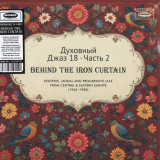
Various - Spiritual Jazz 18: Behind the Iron Curtain PART 2 2x12"

One of the most politically charged terms of the 20th century, the Iron Curtain was a metaphor for political and cultural division. In a post-war telegram Winston Churchill referred to the fault line that ran through Europe between East and West as "an Iron Curtain is drawn down upon their front. We do not know what is going on behind".


In this two-part album, as far as jazz is concerned, we will showcase, describe and celebrate exactly what was 'going on behind'. We see that music is the power supreme, with the ability to transcend all barriers, be they physical, political or metaphorical.


Our liner notes illustrate the complex and contradictory history of Soviet jazz, and the tracks we've chosen cover the key period of the early 1960s to the 1980s. It was during these dark years of the Cold War that the Soviet Union and its satellite states produced a number of outstanding artists playing in a variety of styles. The impact of modernism, from hard bop and Latin to modal and cool jazz, had found its way through cracks in the curtain. The deeply-felt ancestral strains of traditional European folk music were combined with the exciting new and progressive sounds of the West, and a radical, intoxicating brew was created that no amount of guns, tanks or polonium tea could overcome.


We chronicle the triumph of jazz at a time of extreme geopolitical conflict. What went on behind the Iron Curtain in these countries was once mysterious and unknown to the West, but the perseverance of their artists provided sound and light amid the secretive, dark days of the communist-capitalist standoff. There was no end of life-affirming spiritual jazz behind the Iron Curtain.


"Whether it's by improvisation in the African-American jazz tradition, or by a village kobza player standing on top of a damn hill - he feels connected to the stars."

нет на складе

Закажите сейчас, и мы закажем товар для вас у нашего поставщика.


Последний логин: 4 мес. назад
Daniel O’Sullivan - Eros (LP)

WOW. Daniel O'Sullivan's transcendent new album, Eros, is one of the greatest things we've ever heard. A simply stunning song cycle of hypnotic, experimental contemporary chamber music composed for a 14-piece ensemble. Combining minimalism, complex syncopation, detailed acoustic textures, weird intervals and samurai precision, this record will elegantly blow your mind. When Daniel first sent us this, he pitched it as “Liquid Swords meets Michael Nyman”. Trust us, he wasn't wrong. A "unique hybrid orchestral music", it presents a confluence of Daniel's longstanding fixations; indeed, there's elements of Nyman, Antonio Carlos Jobim, Magma, Aaron Copland and RZA. But this is wholly O'Sullivan's. Originally commissioned for the Sonoton Music Library in Munich, Eros now receives a deluxe vinyl release courtesy of Be With Records, bringing this meticulously crafted work to a wider audience. Limited to just 500 copies for the world, these are gonna fly.

An English composer and multi-instrumentalist, Daniel O'Sullivan’s career has been marked by versatility and innovation. In addition to his work with Sonoton, he has composed extensively for the legendary KPM music library, contributing to its storied legacy of production music. As a deep virtuoso and collaborator, O'Sullivan has also played in a number of influential projects, including Ulver, Sunn O))), This Is Not This Heat, Grumbling Fur and Miracle (with Steve Moore), leaving an indelible mark on the contemporary experimental music landscape.

O’Sullivan’s first foray into classically informed chamber music, Eros is a culmination of his long-standing fixations and expansive musical influences. The album features arrangements that are as detailed as they are emotionally resonant, showcasing his unparalleled ear for intervals and mastery of counterpoint. The music brims with complex rhythmic syncopation and a sensitivity to texture and space, resulting in a soundscape that is both intoxicating and dauntingly precise.

Recorded June 2023 and February 2024, in Brussels, London and Carmarthenshire, Wales, Eros features members of Echo Collective (Neil Leiter and Margaret Hermant), Thighpaulsandra (from seminal post-industrial band Coil), and jazz pioneer Oren Marshall. Daniel's sonic weapons of choice, in his own inimitable words, were "Big Bad Drum, Pee Anne Oh, Low End Brass, Willowy Winds & Samurai Strings." You get the picture. As a cyclical suite, this is a record that really needs to be heard in its entitreity, from start to finish, to truly appreciate the genius at work here.

A jaw-dropping statement of intent, the minimalist "Golden Verses" sets the tone with its complex cue which has your neck snapping right when it feels like it needs to. Listen and you'll understand. A syncopated tangle of sharp strings, crunchy bass, drums percussion and bright piano and mallets vie for position with French horn and woodwind melody in the most compelling and unexpected ways. Quite simply, it's one of the finest album openers I've ever heard. It's followed by the atmospheric rippling minimalism of "Lyre Lyre", a gorgeous gem with shimmering chimes, bright melody, human percussion and syncopated pizzicato strings. It kinda comes on like a less-abstract Boards Of Canada, bursting with typical wonderment. The piano and string-drenched "Dolorous Stroke" effortlessly builds its warm, pastoral orchestration with flowing piano arpeggio, steadfast drums, expressive string quartet, rich low brass, woodwind and lyrical flute. Just sublime.

The insistent frenetic propulsion of "Plain Paper" is utterly beguiling, featuring a determined string motif, urgent drums and percussion, driving low brass and breathless, energetic flute. The haunting, interweaving string arpeggios that propel "Grapes Draped" presents a claustrophobic minimalism for chaos and darkness, with growling low woodwind and brass, spiky harpsichord, skittering flutes and tight drums. Up next, "Xanix Annum" is a stately minimalist waltz with expressive lyrical string quartet and delicate woodwind, anchored by drums and percussion. "Painting Rose" is a bouncy stop-start track with angular syncopated strings and a piano pulse underneath bright harpsichord and flutes. "Rotunda Garden" presents ethereal textural minimalism for landscapes and reflection with flowing string arpeggios, warm, low woodwind drones, floating choir and cymbal swells. Closing out this extraordinary side of music, the glowing, flowing minimalism of "Flowry Orb" features urgent organ, piano and woodwind arpeggios, half-time drums with shimmering cymbals, a soaring, beautiful violin solo and hypnotic vocal chant.

Side 2 opens with "Theia Mania" a determinedly off-kilter, angular track featuring low wind, brass and drum stomp in dialogue with lively string trio, woodwind and solo horn. The light, airy minimalism of "Painting Percy" is built around an interplay of rhythmic motifs for piano, low brass, bassoon, fluttering flutes, urgent strings, drums and percussion whilst "For Archetypes" is a delicate, gently syncopated chamber cue for nostalgia, nature, reflection and moments of calm, with steady piano motif, intimate woodwind and French horn, and warm, graceful strings. The urgent Ars Memoriae is a propulsive march for progress, processes and industry, underpinned by driving tuba, with determined strings, resolute drums, and vivid, expressive flute, clarinet and French horn.

The syncopated energetic minimalism of "Mirrored Seven" presents layers of melodic and cyclical piano, drums, low brass, harp, flute and strings. "Pure Ornament" follows, a slowly evolving chamber cue with flowing clarinet, string and harp arpeggio, plodding tuba and percussion, fluttering flute and graceful, lyrical solos. Stunning! Up next, "Brave Boy" moves from its tender, warm, lullaby-like intro with lyrical flute, clarinet and strings before opening into a playful backend driven by a bouncy tuba riff and syncopated piano, woodwind, string trio, and drums and percussion. Rounding out this astonishing piece, "Waxen Waned" is a warm, pastoral chamber cue with light lyrical woodwind, tender French horn and subtly pulsing string trio.

The album's title is a reference to Plato’s conception of Eros, which is more than romantic or physical desire. It is a dynamic and creative force that drives individuals to seek perfection whether in art, relationships, philosophy or the pursuit of truth. Wholly appropriate, here, we think. When asked what his influences were in making this astounding record, he answered thusly: "Non-musical: Householding, Pythagoras, Goethe, Grail romances, Hermeticism, Doctrine of Signatures (Parcelsus, Bohme, Pliny), Eric Rohmer, John Stezaker, Yasujiro Ozu. Musical: Duke Ellington (late suites), Smile-era Brian, early RZA, Wagner (Parsifal Overture), Magma, Mancini, Axelrod, YMO, Hildegard, Nyman, Penguin Cafe Orchestra, Jobim (Stone Flower), Alessandro Alessandroni, Tavener, Moondog, Orthodox Music, Secular Music." That's some pretty deep shit. Makes you want to dive in, no?

Mastering for this vinyl edition was overseen by Be With regular Simon Francis, and it was cut by the esteemed Cicely Balston at Abbey Road Studios to be pressed in the Netherlands by Record Industry. Truly, Eros is a work of extraordinary depth and sophistication. It invites listeners to immerse themselves in its intricate layers, to lose themselves in its hypnotic rhythms, and to marvel at the precision of its execution. With this release, O’Sullivan reaffirms his position as one of the most inventive and uncompromising voices in contemporary music. Do. Not. Sleep.

Сделать предзаказ23.05.2025

он должен быть опубликован на 23.05.2025

Claude Cooper - Friendly Sounds Vol 1

Illusive Bristolian producer Claude Cooper returns with ‘Friendly Sounds Vol 1’; part psychedelic trip, part romping beat tape, part party. The album was inspired by the vinyl discoveries made from Cooper’s months of digging and cataloguing the bulging inventory of Bedminster’s Friendly Records record shop. Cooper fed these myriad captured sounds through the studio and then, blurring the lines between sampling and performance, arranged and embellished them with keyboards, drum machines, bass guitar and more, also co-opting BEAK> bassist Billy Fuller and esteemed composer Ben Salisbury to contribute.

With most of the tracks in and out within 90 seconds, the album is best enjoyed as a continuous course. Play side A, play the B, then flip it back and listen all over again. Stand out moments include tremulous cut ‘n’ paste jam ‘Jackie’, the moody string-laden ‘Rainbow Eternity’, funky sitar workout ‘Nerd Nork’, and atmospheric closer ‘Take Flight’. Sharing a similarly broad and experimental sound palette as the likes The Avalanches, Madlib, The Go Team, and Edan; ‘Friendly Sounds Vol 1’ is the soundtrack to a wild joyride down South Bristol’s North Street, foot on the gas, hand on the horn, LPs spilling from the boot.

Cooper’s irrepressible debut album ‘Myriad Sounds' (Jan ‘22) caught the attention of the UK's press and radio alike. Mojo's four star review described it as “Bristol’s beat scene backdrops late night jams”, Uncut enjoyed the "rugged psych-funk romp" and Louder than War declared "it’s vital and vibrant and exactly what we need to kick start the year”. Bonus round 'More Myriad Sounds' (Apr ‘23) added Brooklyn vocalist Brain Fog to the melange with a bounty of pyretic vocal performances. DJ Mag called it “A fierce, kaleidoscopic trip” while Bandcamp Daily said “This album of cross-genre influences is as likely to get it included in any number of best-of columns, with the theme of serious fun as their common element”. Called a "mysterious Bristol breaks scientist" by Lauren Laverne, BBC radio DJs including Cerys Matthews, Gideon Coe, Huw Stephens, Jamie Cullum, Stuart Maconie, and Tom Ravenscroft have rinsed Cooper’s tracks, with Huey Morgan inviting Cooper to contribute a Block Party Mix for his show.


‘Stay A While’, the first showing of Cooper’s new shop sampling stunners, was released on 7” in January ‘24. Lush string flourishes sliced with 6Ts girl-group vocals and rollicking piano chords resulted in a dreamy, end of night, lights up anthem in-the-making that The Arts Desk called “A horn-fired, beatsy, chop-around that recalls The Avalanches”. Releasing the album is Friendly Records, the best little record shop in Bristol and now a burgeoning record label. Opened by Tom Friend on North Street in 2016, it’s gone on to become a hub of the local musical community. As well as Claude Cooper, the label has released LPs by Alison Cotton, Floating World Pictures, Christian Madden & The Enemy Chorus, Nick Craft, as well as handling the War Child series of 7”s with BEAK>, Idles, J Dilla, PJ Harvey, Portishead, and Sleaford Mods + Hot Chip.


Claude Cooper will DJ at the one-day Friendly Festival on 10th May in aid of War Child, which will feature Sleaford Mods, Katy J Pearson, The 45s, Zalizo and DJ sets by Ishmael Ensemble, Heavenly Jukebox and Friendly Records DJs.

Сделать предзаказ09.05.2025

он должен быть опубликован на 09.05.2025

Tedeschi Trucks Band - Revelator LP 2x12"
  • Ome See About Me
  • Don T Let Me Slide
  • Midnight In Harlem
  • Bound For Glory
  • Simple Things
  • Until You Remember
  • Ball And Chain
  • These Walls
  • Learn How To Love
  • Shrimp And Grits Interlude
  • Love Has Something Else To Say
  • Shelter

"Released in 2011, Revelator is the debut studio album by the Tedeschi Trucks Band, a powerhouse blues-rock ensemble led by Susan Tedeschi and Derek Trucks. The album blends blues, rock, soul, and jazz, showcasing the band's rich, full-bodied sound. Standout tracks like ""Midnight in Harlem,"" ""Come See About Me,"" and ""Bound for Glory"" highlight Tedeschi’s soulful vocals and Trucks’ masterful slide guitar work. Produced by Jim Scott and Derek Trucks, Revelator received critical acclaim for its organic musicianship, heartfelt songwriting, and dynamic arrangements. The album won the Grammy Award for Best Blues Album in 2012, solidifying the band’s reputation as one of the finest acts in contemporary blues and rock. For fans of blues-infused rock with deep soul influences, Revelator is an essential listen, capturing the magic of a band that seamlessly blends technical brilliance with emotional depth. Revelator is available as a limited edition of 1500 individually numbered copies on red coloured vinyl."

Сделать предзаказ25.04.2025

он должен быть опубликован на 25.04.2025

Miles Davis - Sorcerer LP
  • Prince Of Darkness
  • Pee Wee
  • Masqualero
  • The Sorcerer
  • Limbo
  • Vonetta
  • Nothing Like You

Filled with aural magic and enchanting musical spells, Sorcerer is true to its name. The third of five albums by Miles Davis’ legendary Second Great Quintet — and the second record in a still-unprecedented string of eight consecutive releases within a four-year period that forever changed the face of jazz — the 1967 effort mesmerizes with instrumental colors, subdued musings, and subtle details. These crucial characteristics blossom with vibrant realism on Mobile Fidelity’s 180g 33RPM SuperVinyl LP.

Sourced from the original master tapes and pressed at Fidelity Record Pressing, this numbered-edition audiophile edition of Sorcerer joins the ranks of other essential Davis records given supreme sonic and packaging treatment by Mobile Fidelity. Longtime listeners will immediately recognize a wealth of information and depth of tonality unavailable on prior versions. The myriad shadings, interwoven textures, and relaxed nuances that tie the post-bop set’s warm compositions together are rendered with utmost realism. Credit goes to MoFi’s engineers as well as the label’s groundbreaking SuperVinyl profile that features the lowest-possible noise floor as well as sublime transparency, dead-quiet surfaces, and superb groove definition.

By any measure, this is a reference reissue. You’ll hear poetic lyricism pouring out of Wayne Shorter’s horn, the breadth and definition of the notes spreading across an enormous soundstage. Never before have drummer Tony Williams’ rim shots ricocheted with such purpose or his light percussive work mirrored that of a feather touching skin. Similarly, Herbie Hancock’s piano runs occupy their own space, where their relationship to the central rhythms and front line becomes clearer.

Prizing inflection and nuance more so than heady solos or uptempo flights, Sorcerer mesmerizes with cerebral properties and cascades of emotional interplay. Such beauty emerges in the mellow ballad “Pee Wee,” an indelible statement of restrained authority and sophisticated expression. The swirling title track unfolds as jazz shadowplay, Hancock, Shorter, and Williams mirroring one another’s moves with guile and purpose. The opening “Prince of Darkness” showcases the ensemble’s reach and communication, every musician going in seemingly different directions yet ending up on the same page.

A lasting example of Davis’ visionary insight, Sorcerer is comprised entirely of pieces written by his band mates. Indeed, save for the closing “Nothing Like You” — a brief tribute to Davis’ eventual wife, who also graces the cover, recorded in 1962 and adorned with vocals from Bob Dorough — the album represents a further maturation and refinement of a quintet that stands as one of the finest in jazz history.

MoFi SuperVinyl
Developed by NEOTECH and RTI, MoFi SuperVinyl is the most exacting-to-specification vinyl compound ever devised. Analog lovers have never seen (or heard) anything like it. Extraordinarily expensive and extremely painstaking to produce, the special proprietary compound addresses two specific areas of improvement: noise floor reduction and enhanced groove definition. The vinyl composition features a new carbonless dye (hold the disc up to the light and see) and produces the world’s quietest surfaces. This high-definition formula also allows for the creation of cleaner grooves that are virtually indistinguishable from the original lacquer. MoFi SuperVinyl provides the closest approximation of what the label’s engineers hear in the mastering lab.

Сделать предзаказ31.01.2025

он должен быть опубликован на 31.01.2025

Miles Davis - Dark Magus: Live At Carnegie Hall LP 2x12"
  • Dark Magus - Moja
  • Dark Magus - Wili
  • Dark Magus - Tatu
  • Dark Magus - Nne

It’s safe to assume no one in the audience at Carnegie Hall on March 30, 1974 anticipated what Miles Davis would play at the concert documented on Dark Magus: Live at Carnegie Hall. Recorded near the tail end of his electric period, the double album remains the darkest, most ferocious statement of Davis’ career — a visionary effort that foresaw developments in jungle, noise-rock, funk, and drum ‘n’ bass.

Initially issued in Japan in 1977, Dark Magus waited two decades for U.S. release. Now, more than 50 years after Davis and his ensemble blew minds at the famous New York venue, it gets its first-ever domestic issue on vinyl — and on a definitive-sounding pressing at that.

Mastered at Mobile Fidelity's California studio, housed in a Stoughton gatefold jacket, and pressed at Fidelity Record Pressing, this numbered-edition 180g 33RPM 2LP set of Dark Magus invites you to pull up a seat and wrap your head around an exhilarating performance that simultaneously functions as an audition, experiment, release, and magnificent explosion of jazz-rock fusion. We hope your turntable and speakers are up to the challenge.

This collectible reissue presents the improvisational magic that unfolded onstage — the skronking tonalities, wah-wah-pedal bluster, acid-washed effects, furious drumming, run-the-voodoo-down grooves, menacing riffs, crashing cymbals —with incredible detail, color, and pace. It also captures the band’s unbelievable energy, rendering both instruments and on-the-fly changes with revealing depth, definition, and dynamics. At its core, MoFi’s audiophile set takes you deep into the boundless mystery, promise, and uncertainty of Davis and company’s efforts like never before.

The story behind Dark Magus is nearly as unbelievable as the spur-of-the-moment compositions that resulted when Davis brought drummer Al Foster, bassist Michael Henderson, percussionist James Mtume, horn virtuoso Dave Liebman, and guitarists Pete Cosey and Reggie Lucas together, and, in a new twist for the concert’s second half, added guitarist Dominique Gaumont and tenor saxophonist Azar Lawrence to mix. That the latter two instrumentalists had never seen each other until that night adds to Davis’ legend — and penchant for bold, unorthodox moves.

Ditto Davis’ own actions that spring evening, which reportedly included showing up to the show an hour late and taking the stage with his back facing the crowd. The strategy worked. Davis inspired the group to play in a bold manner that few, if any, had heard before. Dark Magus is a rhythmic bonanza. Rooted in Afro-centrist techniques, avante-garde sensibilities, and exploratory moods, the songs eschew set arrangements and solos, and, for the most part, melodic devices.

For Davis, Dark Magus represented a personal triumph amid a period marked by health issues, addictions, and critical decline. The latter slight would be corrected, but not until decades later when Dark Magus saw Stateside release in 1997 via a CD reissue. Of course, the free-form patterns, unpredictable passages, dense structures, and distorted blues that course through the songs — titled after Swahili numerals — are not for everyone. And certainly not for the fainthearted. Though Dark Magus contains majestic moments marked by quiet restraint and something on the level of balladry, its rich and radical concoction of tormented thwacks, thumps, cracks, clatters, wails, bleeps, burbles, stomps, and enigmatic beats remains its adventurous heart and soul.

Primal and enigmatic, fierce and jagged, forceful and revolutionary, jolting and terrifying, Dark Magus seemingly attacks from any and all directions. Turn it up loud and let the prophetic brilliance of this inimitable and relentlessly funky album wash over you.

Сделать предзаказ31.01.2025

он должен быть опубликован на 31.01.2025

Rob Mazurek, Exploding Star Orchestra - Live At Adler Planetarium

On March 24, 2023 Rob Mazurek assembled his endlessly psychedelic and explorative large ensemble Exploding Star Orchestra under the dome of Chicago’s Adler Planetarium to perform material from their recently released album Lightning Dreamers along with a number of new pieces.

A digital projection flashed an ever-changing stream of vividly colored, abstract shapes derived from Mazurek’s paintings and animations over the audience’s heads, while the Orchestra, which on this night numbered eight musicians besides its leader, transformed the stylistically disparate pieces from Lightning Dreamers into an enveloping maelstrom. Electric pianists Angelica Sanchez and Craig Taborn pushed layers of plush texture back and forth over the intricate, tripartite grooves of bassist Ingebrigt Håker Flaten and two drummers, Chad Taylor and Gerald Cleaver. Mazurek’s trumpets and wordless cries, Tomeka Reid’s cello and Nicole Mitchell’s flute and voice periodically surfaced out of the flow, issuing sharp, energetic statements, while Damon Locks’ proclamations flickered in and out of the mix like an erratic signal from some interstellar radio announcer. Together, they reimagined the brooding sound of Miles Davis’ Bitches Brew as a force for transcendent uplift.

At one point, Mitchell put down her flute, spoke into Mazurek’s ear and pointed up to toward the dome. As he looked up, his own horn came down, and for a moment, the two of them gazed with undisguised awe at the spectacle that the Orchestra had unleashed. In a time when so many forces conspire to bring people down, this concert was an invitation to look up and out past the horizon.

Сделать предзаказ27.09.2024

он должен быть опубликован на 27.09.2024

CAM RICHARD & BERT - SOMEWHERE IN THE STARS LP

Previously Unreleased Recording. Limited to 1200 copies on transparent cherry vinyl. Tip-on jacket, Download code. Insert featuring LP sized original art by Grungie O'Muck. Includes the original recording of Richard Tucker's "Are You Leaving For The Country", later covered by Karen Dalton, and the only song co-written by Karen & Richard, "Sleeping In The Garden". "Richard, Cam & Bert seem to have grasped The Great Harmony. That is, ensemble singing that is at once sweet, precise, funky and a bit sardonic..." -Mike Jahn / New York Times (1970) "For a few years in the late sixties and early seventies Richard Cam & Bert ruled MacDougal St. walking a fine line between the increasingly commercialized demands created by groups like Crosby Stills and Nash and the fierce integrity of earlier folk performers, the generation to which Richard belonged. They managed this with great aplomb, producing original tunes of great integrity and obvious folkloric origins, as well as those which expressed the anarchic omnipresent psychedelia of the moment. They also never abandoned the idea of including some traditional material in their performances. But for the usual random application of luck they could have been very big." - Grungie O'Muck / Artist, Bluesman, Cover artist for their first album and contributor to this one. Richard Tucker, Campbell Bruce, and Bert Lee coalesced as a trio in the spring of 1968, and by the end of that year had become regular performers at fabled Greenwich Village nightspots - The Gaslight, The Bag I'm In, Cafe Feenjon, among others. But mostly they were street singers, busking regularly in Central Park. Their only LP, Limited Edition, was released in 1970, and sold mainly at gigs and on the street. Somewhere in The Stars compiles earlier, previously unreleased recordings, when all three members were signed with Peer-Southern Music publishers as writers and began using their studio to make demos and experiment musically. Beautifully recorded by house engineer Charlie Mack (supervised by Jimmy Ienner), the demos capture a back room casualness and rustic, homespun quality. For me, listening to their songs and harmonies is like entering a world you always hoped existed but had never experienced. Some of the songs were re-recorded the following year for Limited Edition, but many are heard here for the first time. Among them is the original demo for Richard Tucker's song, "Are You Leaving For The Country", which Karen Dalton covered on her seminal 1971 release, In My Own Time. Richard and Karen were husband and wife for much of the 1960s, performing as a duo (initially as a trio with Tim Hardin), and navigating their time on the Village scene while alternating living in a small mining town outside Boulder, Co. before splitting up in 1967. Also making its debut, is the only song Richard and Karen ever wrote together, the haunting "Sleeping In The Garden". Also contains two epic songs by Cam "One Of These First Nights", and "Stockholm") not on their LP, but staples of their live performances, and noted in a gig review by The New York Times, and in a column by future A&R hero, Karin Berg, who was an early champion. Another rarity is the only cover of "Sweet Mama" by Fred Neil we've ever heard. Campell Bruce came to New York in 1967 as lead singer with a band from Washington, DC, The Natty Bumpo. They'd recently signed a record deal with Phillips, but were falling apart. Cam landed in the Village with an acoustic guitar and first started playing and singing in the basket houses, and shortly thereafter at The Gaslight, as the "Cam Bruce Trio" (which included Collin Walcott). After opening for Mose Allison, Cam's hero, the trio went their separate ways, and Cam returned to regular solo gigs at The Flamenco, and the basket houses on Bleecker. Richard and Cam met up on that scene and quickly found a musical kinship as well as becoming best pals. Bert Lee arrived in New York as a runaway the following winter, and began playing and sleeping wherever he could. His sometime accompanist, Ron Price, introduced Bert to Richard and Cam just as Bert's own songs were garnering attention from publishers. According to Bert, "I arrived on the New York scene during a time of great change, and it was the notion of change that influenced me. All around me I saw there were two sorts of songwriters, on the one hand dedicated to the traditions that had inspired them, folk, jazz, the American songbook. On the other hand were songwriters influenced by the wave of experimentation that The Beatles were the perfect example of. Mixing genres, writing lyrics that weren't just about ordinary love and loss. Richard Tucker was a country blues player, with a relaxed and melodic approach to the craft. Cam wrote something more akin to soul songs, with a hint of jazz in the changes. I was writing tunes that sometimes drew on classical structures with a tendency toward what I suppose would be known as prog-rock. But I was rather adamant about not being pinned down stylistically, and so I would write, for example, a song based on some complex classical chord structure, and then go right ahead and write a simple folk song, like Evelyn. Our band was popular locally, and it was this variety that made it distinct." Delmore is excited to present this unearthed treasure, fifteen years in the making. In the words of Richard Tucker, "Tap on your knee, roll on the floor; if you aint free, what's it all for?" "The trio's singing, playing, and writing have all withstood the test of time. Believe me, because I was there. In 1969 R,C&B, myself, Charles John Quarto, David Bromberg, Ron Price, and Keith Sykes were just a few of that year's crop of song-slingers. We were young turks back then, out on the prowl in New York's Greenwich Village for record deals, gigs, and beautiful young women to sleep with and maybe even write a song about. I've lost the names and numbers of those lovelies and I'm not sure what happened to Ron Price, but Richard, Cam, and Bert are back! - Loudon Wainwright lll

Сделать предзаказ23.08.2024

он должен быть опубликован на 23.08.2024

Huntsmen - The Dry Land LP

Emerging from the shadows and plumes of smoke, Chicago, IL ensemble HUNTSMEN are set to make their return in 2024 with their third album, The Dry Land, set to be released via Prosthetic Records on June 7. On their first full-length in four years, HUNTSMEN’s The Dry Land traverses the liminal space between the living and the dead by lifting the veil of the abyss itself. Born of suffering and hardship, The Dry Land unifies the dark and light that resides in all of us through allegories of purgatorial strife and human spirit. Following the release of their sophomore full-length, Mandala of Fear, in 2020 and The Dying Pines EP in 2022 HUNTSMEN’s intervening years between studio albums were marked with devastatingly contrasting highs and lows. Whilst their body of studio work continued to garner acclaim from fans and critics alike, chronic illness would become a recurring uphill battle for the ensemble. As these jarring mixed fortunes reached their apex towards the end of 2022, the band reached towards each other outside of their craft as old friends. Taking stock of four years of tribulations led to a reevaluation of what it is to be creatives and, in turn, ushered in a collective rebirth. Writing sessions saw a number of artistic firsts for HUNTSMEN, most notably with the first full collaborative inclusion of vocalist Aimee Bueno-Knipe. The creative process soon saw HUNTSMEN adding more black metal influences into their Americana and folk tinged doom, evidenced most overtly on tracks such as This, Our Gospel and lead single In Time, All Things. Elsewhere, HUNTSMEN’s knack for finely crafted and richly layered melodies offer moments of resplendence on the slow burning Lean Times and closer The Herbsight. Mirroring the circumstances and environment that led to its creation, The Dry Land’s pacing is one rooted in the art of rise and fall dynamics both musically and lyrically. Tales of escaping religious violence, malevolent apparitions and death incarnate all play key roles throughout the album’s narrative thread. HUNTSMEN treat each tale as both exorcism and exaltation, adding a pervasively unsettling quality to The Dry Land that is sure to stick long after the runtime is over. The Dry Land was recorded and mixed by Pete Grossmann at Bricktop Studios before being placed in the hands of Brad Boatright for mastering, with the resulting sound adding a towering grandiosity to the album whilst simultaneously highlighting HUNTSMEN’s newfound corrosive qualities. The Dry Land’s striking cover art was created by Derek Setzer, depicting an immolating dancer in high contrast black and white amongst rusted gold. Through the fire, HUNTSMEN find themselves reborn on The Dry Land.

нет на складе

Закажите сейчас, и мы закажем товар для вас у нашего поставщика.


Последний логин: 22 мес. назад
Juan Pablo Torres Y Algo Nuevo - Super Son LP

The next release in the Mr Bongo Cuban Classics series, is one of Juan Pablo Torres' most-known and loved albums, the iconic Super Son from 1977. A wonderful record of tripped-out rumbas, psych-Afro-Latin funk and quirky orchestrated tracks with a big band horn section courtesy of Torres’ band, Algo Nuevo.

As well as being the director of Algo Nuevo and Cuban all-star ensemble Estrellas De Areito, the trombonist, bandleader, arranger and producer also released a wealth of albums under his own name predominately on the state-owned imprint Areito/EGREM.

Post-revolution, there was a contrast in Cuba’s musical world. State censorship was at play, but professional musicians were on the government payroll which gave them an artistic freedom. Experimentation emanated in the ‘70s and ‘80s and Super Son is a prime example of that. ‘Y Que Bien' kicks off the album taking you down a tripped-out, cosmic rabbithole, psych guitars and skat vocals opening up into a joyful funk groove laced with jazzy Afro-Cuban horns stabs. Tracks such as 'Pastel En Descarga' seem to come out of nowhere and are completely unique. Fuzzed-up guitar lines and percussion lay the groundwork, with those jubilant horns adding to the energy of this forever building track.

Elsewhere, there’s the ‘70s TV theme-tune feeling of 'Con Aji Guaguao', a playful funk number that boils and bubbles with blistering trombone playing by Torres. Or ‘Son A Propulsión' and ‘Son Riendo’, two more brilliant examples of psychedelic funk, wrapped up in a blanket of Afro-Cuban rhythms. The former sweeping you up in rushes of wind as trumpets, trombones and distorted guitars trade off, the latter, an intergalactic fiesta of tradition and exploration.

Super Son is up there as one of the funkiest Cuban records around, a playful fusion of ideas from a producer, player and group on fine form and, for us, one of our favourite gems to come out of Cuba in this period. A sheer masterpiece.

нет на складе

Закажите сейчас, и мы закажем товар для вас у нашего поставщика.


Последний логин: 23 мес. назад
ABIGAIL LAPELL - Anniversary LP

Abigail Lapell

Anniversary LP

12inchLPOUTS9278C
Outside Music
10.05.2024

Lapell's deft lyrics jostle with love song tropes, grappling with love's finitude and the irony of how codependency and longing are revered in popular music. A ghost story is woven through the album: waltzing in the dusty barroom country of "Blue Blaze," buried in the superstitious lyrical streak of "Rattlesnake" and audible in a wheezing organ as it shuts down at the end of "Footsteps."

Still, "Anniversary" emerges as an earnest celebration of commitment. Earworms like "Anniversary Song" and "Someone Like You" showcase intricately layered harmonies, while closer "Stars" affirms that there's no place the speaker would rather be than with the one she loves. Dekker and Lapell assembled a stellar cast of musicians to support Lapell's powerhouse vocals, piano, harmonica and signature fingerstyle guitar.

The core band includes Dan Fortin on bass, Jake Oelrichs on drums, and Tania Gill on the church's piano, harpsichord and organ. Rounding out the ensemble's sensitive orchestral arrangements are Rebecca Hennessy (trumpet), Rachael Cardiello (viola), Michael Davidson (marimba and vibraphone) and Joe Lapinsky (pedal steel), who also engineered and mixed the record. Abigail Lapell has garnered three Canadian Folk Music Awards, hit number one on Canadian folk radio and reached a staggering 40 million + streams across digital services. She has toured widely across Canada and the U.S, and will be touring internationally (UK, EU, AUS and more) in 2024.

Сделать предзаказ10.05.2024

он должен быть опубликован на 10.05.2024

Various - Rebirth 10 Selected by Larry Heard aka Mr. Fingers 2x12"
 
16

Rebirth 10, a limited double CD released in 2016, celebrated the 10th anniversary of Rebirth Records. Curated by one of the greatest names in House Music, Larry Heard, aka Mr. Fingers, it featured key releases from the label's first decade. Now exclusively for Record Store Day 2024, it will be reissued for the first time on limited edition numbered double vinyl, showcasing sought-after tracks from the catalogue. Featuring original music and remixes from Larry Heard himself alongside further legends of the scene such as Motor City Drum Ensemble, Joe Clausell, Andres, Jamie 3:26, Ripperton, and Mr Fingers himself. This compilation shines a light on forgotten classics from one of House Music's most influential labels of the past 20 years. True house from THE house producer of the scene.

нет на складе

Закажите сейчас, и мы закажем товар для вас у нашего поставщика.


Последний логин: 7 мес. назад
Ella Fitzgerald - Clap Hands, Here Comes Charlie! LP

"Back in the 1990s original Verve pressings of this record were hot items pushed into prominence in great part by write-ups in The Absolute Sound, particularly by my friend Frank Doris. I found a few, and even a few in pretty good condition, but none of them begin to compare to this double 45 RPM set that offers more of everything, particularly transparency and instrumental separation. ...Ella's on a microphone with a slightly rising high end but if it sounds icy, don't blame the recording or the mastering. It's your system. If it's well-balanced and your cartridge is a good tracker, the vocal transparency and clarity are spooky and the sibilant articulation is precise. These double LPs cut at Sterling Sound use the original tapes, not copies of the original tapes and the clarity and transparency coupled with QRP's drop-dead silent pressings are remarkable. The original pre-MGM buyout LP has a pleasingly nostalgic quality and the added warmth produces a bit more room sound, but in my opinion it can't compare to this reissue unless you like hearing things through rose-tinted loudspeakers. Elegantly produced, arranged and recorded and easy to recommend ..." Music = 9/11; Sound = 9/11 - Michael Fremer, February 15, 2013.

Fourteen numbers from the heyday of swing, composed sometime between 1930 and 1945 - played and sung time and time again in ballrooms, or on the radio to advertise biscuits or war bonds, were recorded by Ella in completely new and personal interpretations in 1961. No one should be put off by the rather unfortunate cover. Clap Hands... is absolutely top notch as regards musicality, perfect recording quality, superb accompaniment by a small ensemble, with room for improvisations; it offers a wonderful opportunity to discover something new in these evergreens, despite the occasionally banal lyrics. The songs of this recording conjure up bygone days, with listeners in the 21st century being offered a highly personal homage to one of the most successful periods in the 100-year history of jazz.

Сделать предзаказ01.04.2024

он должен быть опубликован на 01.04.2024

Ghost Woman - Anne, if LP

Ghost Woman

Anne, if LP

12inchFTH444LPW
FULL TIME HOBBY
29.03.2024

One could be forgiven for getting that familiar feeling when listening to the music of Ghost Woman. And that's not just because songwriter & multi-instrumentalist Evan Uschenko is deeply steeped in classic guitar-led rock & pop songwriting (more on that later), it's that the music was, by design, intended to be evocative. But not evocative, however, of any one thing; what separates the music of Ghost Woman from a great many other bands working today is his openness to non-specificity. He's not trying to impart any sort of message to the listener; instead, the hope is that one will find themselves luxuriating in nuances of how the music is delivered, and the feelings it stirs up for each individual.

For the past couple of years Ghost Woman has been Evan Uschenko's outlet for his interest in songwriting and recording, which began after a number of years spent playing as a sideman in various Canadian indie ensembles, most notably in the Michael Rault band, a group that displays a similar affinity for perfectly dialed, partially yesteryear-looking guitar pop. Following 2022's self-titled


debut, issued by UK-based Full Time Hobby to great critical acclaim, Anne, If presents a slightly more expansive vision of what Ghost Woman can offer.

Сделать предзаказ29.03.2024

он должен быть опубликован на 29.03.2024

Boillat Thérace Quintet - Live 1974 + 3 (2x12")

We Release Jazz is sooooo happy to announce the release of a very limited edition double LP for Boillat Thérace Quintet’s 1974 Montreux Jazz Festival performance, with 3 bonus studio tracks! This gem from the Geneva, Switzerland band follows the acclaimed WRJ reissue of their self-titled album (1974) and My Greatest Love (1975), their full-length with Benny Bailey. The 300-copies-only white sleeved DLP comes with the classic obi and features fully remastered audiophile-ready recordings.

Captured live at Montreux Jazz Festival, July 3rd 1974, this rare audio treat features Boillat Thérace Quintet fan-favorites including their infamous homages to Swiss Marmite ("Cenovis"), and Geneva's public transport line Tram 12 ("1224"), as well as remarkable renditions of timeless jazz numbers by Freddie Hubbard ("Straight Life" and "Backlash") and Chick Corea ("Spain").

Additionally, the double LP offers 3 bonus songs taken from the ensemble’s sessions for their self-titled debut: superb takes on Herbie Hancock’s "Dolphin Dance", Wayne Shorter’s "Adam’s Apple", and Claude Engel’s "5th of July, Dulong Street".

All in all it’s a beautiful soul-jazz/modal fest full of flair and heart, one that perfectly encapsulates the vibrant and inventive Swiss jazz scene of the 1970s. A must have for fans and collectors.

This new album from We Release Jazz follows the label’s celebrated releases of the Ryo Fukui catalogue (Scenery, Mellow Dream, A Letter from Slowboat, Ryo Fukui in New York, My Favorite Tune), Hiroshi Suzuki’s seminal Cat album, and Le Cercle Rouge soundtrack by Eric Demarsan among other jazz wonders.

нет на складе

Закажите сейчас, и мы закажем товар для вас у нашего поставщика.


Последний логин: 2 г. назад
DOROTHEA PAAS - ANYTHING CAN’T HAPPEN LP

Anything Can’t Happen is the long-awaited debut album from Dorothea Paas, one of Canada’s most beloved singer-songwriters. For over a decade, Paas has played her unique, prismatic style of folk songcraft for audiences across North America, and lent her talents as a guitarist and vocalist to artists like Jennifer Castle, U.S. Girls and Badge Epoque Ensemble. The songs on this album have been through a near-infinite number of forms – Paas has played them solo and with a full band, electric and acoustic, at house shows and in sold-out venues. they manage to fit inside each context, like water taking the shape of its container.

All of this makes Anything Can’t Happen feel far more mature and complex than a debut album. It’s a statement of purpose, a next step in a decade-long process of artistic growth and evolution, and a bridge between the DIY style of Paas’s previous cassette releases and a more refined studio sensibility. Recorded in studios in Hamilton and Toronto, and mixed by Max Turnbull of Badge Epoque and U.S. Girls and Steve Chahley, these songs bring a diverse range of musical influences into conversation: inflected with the layered reverberations of Grouper, shot through with the piercing harmonies of the Roches, electrified with the searing energy of Sonic Youth. You can hear Neil Young in the grittiness of the title track’s guitar; Joni Mitchell’s Hejira in the album’s lyrics, Fairport Convention in Paas’s voice. The influence of Stevie Wonder - one of Paas’s greatest musical role models - is present too, in the album’s conceptual foundations.

Сделать предзаказ29.11.2023

он должен быть опубликован на 29.11.2023

André Roligheten - Marbles LP

André Roligheten

Marbles LP

12inchODINLP9587
Odin
27.11.2023

André Roligheten is known for his strong presence in a number of collaborations with everything from Gard Nilssen's Acoustic Unity, Team Hegdal, Friends & Neighbors, Trondheim Jazz Orchestra, Susanne Sundfør, to his own release "Roligheten - Homegrown" from 2017.With his new adventurous ensemble, he is now releasing brand new music on the album "Marbles" (Odin, 03.11.23). The album contains a collection of compositions that facilitate bold interaction. The compositions are conceived as parallel universes with their own, improvised musical forms. Imagine that Sonny Rollins and Egberto Gismonti met on the beach at a yoga retreat in Hawaii and decided to make an album together! Roligheten brings out a highly personal expression in his warm tenor saxophone together with a star team of Scandinavian musicians. Each and every one of them adds a unique depth and substance to the musical universe; Strøm's rigorous double bass, Ståhl's bold vibraphone, Nilssen's elastic drums and Lindström's gripping pedal steel. This merges into a unique sound that carries Roligheten's compositions on a golden stool. The gallery of people in this ensemble has prestigious names, and they have worked with artists and bands such as Tonbruket, Bushman's Revenge, Ane Brun, Paal Nilssen-Love, Bobo Stenson, Supersonic Orchestra and Georg Riedel.

Сделать предзаказ27.11.2023

он должен быть опубликован на 27.11.2023

Kronos Quartet - Kronos Quartet Performs Philip Glass LP 2x12"
  • A1: String Quartet No. 5 I
  • A2: String Quartet No. 5 Ii
  • A3: String Quartet No. 5 Iii
  • A4: String Quartet No. 5 Iv
  • A5: String Quartet No. 5 V
  • B1: String Quartet No. 4 (Buczak) I
  • B2: String Quartet No. 4 (Buczak) Ii
  • B3: String Quartet No. 4 (Buczak) Iii
  • C1: String Quartet No. 2 (Company) I
  • C2: String Quartet No. 2 (Company) Ii
  • C3: String Quartet No. 2 (Company) Iii
  • C4: String Quartet No. 2 (Company) Iv
  • D1: String Quartet No. 3 (Mishima) 1957 – Award Montage
  • D2: String Quartet No. 3 (Mishima) November 25 – Ichigaya
  • D3: String Quartet No. 3 (Mishima) 1934 – Grandmother And Kimitake
  • D4: String Quartet No. 3 (Mishima) 1962 – Body Building
  • D5: String Quartet No. 3 (Mishima) Blood Oath
  • D6: String Quartet No. 3 (Mishima) Mishima/Closing

When Kronos plays a piece, they become fellow composers, true collaborators. Without them, we wouldn’t have the kind of string quartet playing that we find around us today. There are two kinds of string quartet playing: the ‘Before Kronos’ and the ‘After Kronos’.” – Philip Glass

‘Kronos Quartet has broken the boundaries of what string quartets can do.’ – New York Times

Nonesuch releases Kronos Quartet’s acclaimed album Kronos Quartet Performs Philip Glass on vinyl for the first time to coincide with Kronos Quartet: Five Decades, a year-long celebration marking the quartet’s 50th anniversary. Originally released in 1995, the album features David Harrington (violin), John Sherba, (violin), Hank Dutt (viola) and Joan Jeanrenaud (cello) performing Quartet No. 2 (Company) (1983), No. 3 (Mishima) (1985), No. 4 (Buczak) (1990), and No. 5 (1991), the first piece Glass wrote especially for Kronos. Recorded at Skywalker Sound in California, the album was produced by Judith Sherman, Kurt Munkacsi and Philip Glass. The cover art features Francesco Clemente’s painting The Four Corners (1985). At the time of the album’s release, the New York Times said, ‘It contains some of Glass's best music since Koyaanisqatsi. His ear for sumptuous string sonorities is undeniable,’ while the Washington Post called it ‘An ideal combination of composer and performers.’ It was a top 10 hit on Billboard’s Top Classical Albums, and spent 12 weeks on Billboard’s Classical chart.


In his original liner note, critic Mark Swed wrote, ‘Glass’ string quartets may contain his most intimate music. They are works through which a very public composer, perhaps the most important opera reformer of our age and a longstanding collaborator in large-scale music theater, holds up a mirror to himself and his way of composing. “In an odd way,” Glass explains, “string quartets have always functioned like that for composers. I don’t really know why, but it’s almost impossible to get away from it. It’s the way composers of the past have thought and that’s no less true for me. It’s almost as if we say we’re going to write a string quartet, we take a deep breath, and we wade in to try to write the most serious, significant piece that we can.” Glass says that as he sat down to write String Quartet No. 5, he had discovered that perhaps not taking a serious tone might be the most serious way to deal with it. “I was thinking that I had really gone beyond the need to write a serious string quartet and that I could write a quartet that is about musicality, which in a certain way is the most serious subject.”’


Glass’ first numbered quartet was written in 1966; however, he did not return to the string quartet medium until 1983, when he provided incidental music for a dramatization of Samuel Beckett’s prose poem, Company. During those 17 years, Glass had formed an ensemble and developed his style in a series of increasingly elaborate pieces for it. String Quartet No. 3 is also adapted to dramatic music, this time from his score to the 1985 Paul Schrader film, Mishima. It was with the music of Mishima that Kronos became associated with Glass, recording the string quartet sections of the soundtrack and subsequently working extensively with the composer on all five of his numbered quartets. Kronos also gave the first concert performances of Company and Mishima. String Quartet No. 4 was composed in remembrance of the artist Brian Buczak, who died of AIDS in 1988.


As Kronos’ anniversary season continues with further concerts around the world, Nonesuch will reissue Black Angels on vinyl on February 16. First released in 1990, the award-winning album includes George Crumb’s title piece, which inspired David Harrington to found the quartet. Called ‘an unusually elevated and searing Vietnam War protest’ by the New York Times, it sets a dark, powerful tone for this collection, which addresses the political/physical/spiritual consequences of war. Also featured are works by Charles Ives, István Márta, Thomas Tallis, and Dmitri Shostakovich. ‘Stylishly packaged, intelligently programmed, superbly recorded and brilliantly performed,’ proclaimed Gramophone. ‘In short, very much the sort of disc we’ve come to expect from the talented and imaginative Kronos Quartet.’ The Evening Standard included it among its ‘100 Definitive Classical Albums of the 20th Century’.


Born in Baltimore, Maryland, in 1937, Philip Glass is a graduate of the University of Chicago and the Juilliard School. By 1974, he had created a large collection of music for The Philip Glass Ensemble. The period culminated in the landmark opera, Einstein on the Beach. Since Einstein, Glass’s repertoire has grown to include music for opera, dance, theatre, orchestra, and film. His scores have received Academy Award nominations (including Kundun and The Hours, as well as Notes on a Scandal) and a Golden Globe (The Truman Show). Recent works include his memoir, Words Without Music, his first Piano Sonata, opera Circus Days and Nights, and Symphony No. 14. Glass received the Praemium Imperiale in 2012, the US National Medal of the Arts from President Barack Obama in 2016, and 41st Kennedy Center Honors in 2018.


Nonesuch’s relationship with Glass began in 1985, with the release of the score for Paul Schrader’s Mishima featuring Kronos Quartet. Over the years other Glass works on Nonesuch have included Einstein on the Beach (1993), Kronos Quartet Performs Philip Glass (1995), Music in Twelve Parts (1996), Glass Box (2008), as well as the soundtracks for Powaqqatsi (1988), Kundun (1997), Koyaanisqatsi (1998), and The Hours (2002), amongst others.


For 50 years, San Francisco’s Kronos Quartet – David Harrington (violin), John Sherba (violin), Hank Dutt (viola), and Paul Wiancko (cello) – has challenged and reimagined what a string quartet can be. Founded at a time when the form was largely centred on long-established, Western European traditions, Kronos has been at the forefront of revolutionizing the string quartet into a living art form that responds to the people and issues of our time. In the process, Kronos has become one of the most celebrated and influential groups of our era, performing thousands of concerts worldwide, releasing more than 70 recordings of extraordinary breadth and creativity, and collaborating with many of the world’s most accomplished composers and performers. Through its nonprofit organization, Kronos Performing Arts Association, Kronos has commissioned more than 1,000 works and arrangements for string quartet – including the Kronos Fifty for the Future library of free, educational repertoire. Kronos has received more than 40 awards, including three Grammy Awards and the Polar Music, Avery Fisher, and Edison Klassiek Oeuvre Prizes.


Kronos is prolific and wide-ranging on recordings. The ensemble’s expansive discography on Nonesuch includes three Grammy-winning albums: Terry Riley’s Sun Rings (2019), Landfall with Laurie Anderson (2018), and Alban Berg’s Lyric Suite featuring soprano Dawn Upshaw (2003); the 40th-anniversary boxed set Kronos Explorer Series; Nuevo (2002), a Grammy- and Latin Grammy–nominated celebration of Mexican culture; Pieces of Africa (1992), a showcase of African-born composers that simultaneously topped Billboard’s Classical and World Music charts; and Folk Songs (2017), Nonesuch’s 50th album with Kronos, which featured Sam Amidon, Olivia Chaney, Rhiannon Giddens, and Natalie Merchant singing traditional folk songs.

нет на складе

Закажите сейчас, и мы закажем товар для вас у нашего поставщика.


Последний логин: 2 г. назад
Giuliano Sorgini - Scappo Per Cantare

Another dream coming true! One of Giuliano Sorgini's finest and most sought-after titles is finally available as an official LP reissue – the first ever – remastered from the original tapes.

Originally released in 1971on the small library music imprint FAMA, which operated as a sub-label of RCA Italy, the record contains the original music written for Scappo per cantare, a small, pseudo-psychedelic 'musicarello' (musical comedy film) broadcast on RAI television and starring, among others, Italian singers Gianni Morandi and Mauro Lusini.

The only credited album artist is Sorgini, but it's impossible not to perceive, in this record, the hand of his close friend and colleague Alessandro Alessandroni.

This should not come as a surprise. In the early 70s, the two composers and multi-instrumentalists had a fruitful collaboration that saw them, under the monikers Braen (Alessandroni) and Raskovich (Sorgini), produce an abundance of works together, most of which have now gained the recognition they deserve. These include, among others, two 7" singles from their band The Pawnshop, three records in the series Alle sorgenti delle civiltà (Folkmusic), the crime/noir library albums Quarta pagina (Usignolo) and Inchiesta giudiziaria (Octopus Records), as well as the LP Tempo Libero (Panda Records), which was released shortly after the record presented here and in some ways drew rhythmic inspiration from it.

While their collaboration remained unacknowledged on the original release of Scappo per cantare (this was not uncommon at the time, especially in the field of library music), the record sounds perfectly in line with other works composed by Alessandroni in the early 70s, such as Complesso Gisteri's Mostra Collettiva (co-written with Oronzo De Filippi), or even a landmark album like Spontaneous, where Sorgini contributed to a handful of tracks.

So, yes, the sheer beauty of Scappo per cantare is the result of an incredible synergy between two heavyweights of Italian library music! Airy and sweeping melodies à la Zoo Folle, psychedelia à la Under Pompelmo, and various percussion instruments played by Sorgini seamlessly blend and fuse with elements and touches provided by Alessandroni.

More specifically, we find Alessandroni's signature, melancholy whistle in "Desolazione"; the peaceful and dreamy sound of his 12-string guitar in "Scogliere" and "Con Amore"; the trademark harmonies of his vocal ensemble Cantori Moderni in the last two tracks mentioned and in "Per cantare"; and his ingenious use of distortion on his Fender Stratocaster in the suspenseful transitions "Concentrazione" and "Fantocci", as well as in the frantic/hypnotic hippie numbers "Mordente" and "Fendente" (as a side note, it is worth remembering that Alessandroni experimented extensively with distortion in the rock-infused album Underground, co-written with De Filippi and released in 1971 under the moniker Braen's Machine, probably a reference to British psychedelic band Soft Machine).

The creative relationship between Sorgini and Alessandroni was so symbiotic that it would be useless to try to identify in more detail their respective contributions to the sound of Scappo per cantare. The alchemy between these two musical geniuses is the key to the album's exquisitely Italian mixture of cheerful lounge, sweet psychedelia and smooth easy listening.

To do justice to the quality of the music, this remastered reissue is enriched by a new artwork by Eric Adrian Lee, who drew inspiration from the psychedelic visual culture of the period in which the album was written and recorded.

Сделать предзаказ06.10.2023

он должен быть опубликован на 06.10.2023

Fred Frith & Ensemble Musiques Nouvelles - Something About This Landscape..

From his early days with Henry Cow, Fred Frith was seen as a brilliant instrumentalist and improviser, but what has been overlooked is what a first-rate composer he is. This recording offers both aspects. His most complex orchestral composition and two selected improvisations with the Ensemble Musiques Nouvelles. Fred Frith, as an infusion of energy and inspiration. ''Something about this Landscape was commissioned by Ars Musica in 2018. I composed the piece during a residency at Lou Harrison's straw-bale house in the desert at Joshua Tree, California. It's an inspiring place for a number of reasons - the silence, the light, the life, the history. The extraordinary diversity of birds during the migration season. Both other pieces are improvisations. The first one is the one we did during the concert (in public), the other one, very different, is the one we did during the dress rehearsal (on the day of the concert).'' Fred Frith.

Сделать предзаказ30.09.2023

он должен быть опубликован на 30.09.2023

Fred Frith And Ensemble Musiques Nouvelles - Something About This Landscape For Ensemble

Since his early days with Henry Cow, Fred Frith has been regarded as a brilliant instrumentalist and improviser, but what has been overlooked is that he is also a first-rate composer. This recording offers both aspects. His most complex orchestral composition and two selected improvisations with the Ensemble Musiques Nouvelles. Fred Frith, as an infusion of energy and inspiration.

''Something about this Landscape was commissioned by Ars Musica in 2018. I composed the piece during a residency at Lou Harrison's straw-bale house in the desert at Joshua Tree, California. It's an inspiring place for a number of reasons - the silence, the light, the life, the history. The extraordinary diversity of birds during the migration season. Both other pieces are improvisations. The first one is the one we did during the concert (in public), the other one, very different, is the one we did during the dress rehearsal (on the day of the concert).'' - Fred Frith

Musiques Nouvelles is one of the two most successful and diversified contemporary music ensemble in this country with Ictus. With, under the influence of Jean-Paul Dessy, a deeply spiritual and mutual listening aspect. This meeting with the legendary Fred Frith will remain as an important step.
Сделать предзаказ29.09.2023

он должен быть опубликован на 29.09.2023

Dennis Mpale - Paying My Bills LP

When one of South Africa's most sought after trumpet players steps forward after a career alongside the very best in the International jazz scene, you know it's going to be a special record.

Dennis Mpale was one of South Africa's heavyweights. You'll find his name springing up on every important South African jazz record and billing since the 1960's. Chris McGregor's iconic Jazz/The African Sound LP, Abdullah Ibrahim's Dollar Brand, Barney Rachabane in the highly influential ensemble Roots, and early work in house bands appearing alongside Nick Moyake in The Soul jazz Men to name just a few. His trumpet playing had character, an extension of the body and amplifier of that great South African sound.

Leaving South Africa during Apartheid as a strong supporter and member of the ANC, Dennis made London his home, joining the newly established SA Jazz scene and standing in solidarity against the oppressions back in Africa.

Moving between London and South Africa during the 70's and 80's It wasn't till the early 1990's when Dennis finally settled again to make his biggest transition to solo artist, redefining his Jazz past and putting a heavy kwaito infused house slammer on the agenda. 1994s 'Paying My Bills' (a title maybe more appropriate now than it ever has been) is a mighty jazz kwaito house effort: From the heavy synth beat and gorgeous floating solo opener of 'Paying My Bills', to the highly infectious vocal phrasing on thumping house anthem 'Take My Time'. Paying My Bills takes the sensibilities of a jazz maestro and pairs it with one of South Africa's biggest producers Peter 'Hitman' Moticoe, creating the perfect recipe for a certified summer slammer.

Having previously only ever been released on CD, this is the first ever vinyl pressing of the album (hazy early test pressings lurk on a small number of lucky shelves). Vinyl mastering is handled by The Carvery's very own Frank Merritt here in London, with the resulting tracks generously split over 2 discs to fully appreciate the swampy heavy dub bass drolls for full dancefloor effect. It's loud and punchy and makes space for those glorious trumpet improvisations while keeping the synth refrains and heavy bass thumping.

Early plays include resident NTS DJ's and a feature on Palms Trax Radio 1 residency with surely more support to follow.

нет на складе

Закажите сейчас, и мы закажем товар для вас у нашего поставщика.


Последний логин: 20 мес. назад
Продуктов на странице:
N/ABPM
Vinyl