Cerca:nu disco

Generi
Tutto
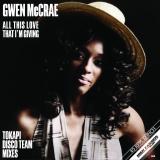
GWEN MCCRAE - ALL THIS LOVE THAT I'M GIVING 12"

Soul legend Gwen McCrae’s All This Love gets a fresh dancefloor reinterpretation from Tokapi Disco Team, the German production duo known for their work with million-selling act Sash!. Ben Liebrand adds his signature touch with extended groove-driven edits, crafted with DJs firmly in mind. Tokapi Disco Team blends a warm, rounded kick with subtle percussion and a light shuffle that keeps the rhythm flowing effortlessly. A rolling, funk-inflected bassline locks in with Chic-inspired piano chords, while tasteful disco strings lift the arrangement throughout. Gwen’s unmistakable vocal remains the emotional centerpiece — rich, soulful and timeless.

The result is a seamless nu-disco and disco-house crossover that bridges classic soul heritage with contemporary club energy.

THIS is Gwen—this is ESSENTIAL.

In stock dal02.06.2026


Last In: 5 days ago
DATA / THE MASTER SCRATCH BAND - IT WAS RIDICULOUS / IT WAS AMAZING! LP

Despite its tragic breakup, Yugoslavia as a political, social and cultural phenomenon still inspires generations, especially those who were born or lived at the time of this utopian land of South Slavs. Those who didn’t enjoy the privilege are still amazed by its 1970s and ’80s music scene and the number of very modern, high quality acts that were so often ahead of their time. Two such acts were Data and The Master Scratch Band, both founded by Zoran Jevtic and Zoran Vracevic, who introduced synth-pop, breakbeat, and hip-hop music in Yugoslavia in 1984 with their releases: SP Neka Ti Se Dese Prave Stvari/Ne Zovi To Ljubavlju and miniLP Deogut (Jugoton). Our latest release, “It Was Ridiculous, It Was Amazing!” gathers their earliest unreleased material from 1981-1983, showcasing a broader range of genres – alongside synth-pop and breakbeat/hip-hop, they also experimented with industrial, EBM, minimal synth, and electro-funk!

The whole record is divided into two parts: on A side there are 7 previously unpublished songs by group DATA, and on B side there are 4 previously unreleased recordings by The Master Scratch Band.

The Data side opens with two unexpected “shocker” tracks: Ja Nisam Kao Ti” (eng. I am Not Like You) and “Izumi” (eng. “Inventions”) from 1981, where they sound like early Deutsch-Amerikanische Freundschaft with unusual vocal pan sound effects on Serbian lyrics and uncompromising synth-based sound. Equally unpredictable are the next two songs: atmospheric “España” and dusty “Damage In My Head,” where Zoran Jevtić boldly steps into the lead vocal role. But the surprises don’t end there. The next two songs, France and Strahovi (eng. “Fears”), bring a mysterious and nostalgic atmosphere, elevated by the irreplaceable sound of the modular Roland System-100M. At the end comes the greatest surprise of all: Data covers YMO-Ballet in a song called Ne Zelim Da Tako Zive (eng, I Don’t Want Them Living Like That) and puts some extra energy in rhythm without losing the original song’s sensibility. Like in the original, the lyrics are tender and yet mysterious and provocative.

The Master Scratch Band side contains the very first versions of the songs Break War, Jailbreak, and Computer Break, originally recorded in studio Druga Maca in Belgrade in 1983. These versions were not released on their mini-LP album Dégout (Jugoton, 1984), and they are actually the first ever hip-hop/Breakbeat recordings in Yugoslavia. With great enthusiasm, every sound was uniquely crafted from scratch using the finest analog gear available in the early ’80s. The two young artists, aiming for international success, chose to write their lyrics in English. The album’s final track, “Mad Scratch,” showcases their talent for creating impressive sound effects, which would be a delight for contemporary DJs and producers who specialize in sampling and scratching old-school hip-hop.

This release is truly a “100% digger’s gem” – 11 previously unreleased tracks from legendary pioneers of electronic, hip-hop, and breakbeat. A collection to discover, enjoy, play, and treasure forever!

non in magazzino

Ordina ora e ordineremo l'articolo per te presso il nostro fornitore.


Last In: 20 days ago
40 Thieves - Love Is / Let Me Show You

40 Thieves have been part of the Leng family since 2011 during which time they have released many quality singles and EPs as well as their sole full-length album, 2014’s epic The Sky Is Yours. Even so, double A-side ‘Love Is’/’Let Me Show You’ still marks their first release on Leng for almost three years.

In keeping with their signature sound, ‘Love Is’ is trippy, hallucinatory and gently mind-altering, with psychedelic guitar sounds, echoing percussion, and a heady lead vocal courtesy of crew member and Alona, all of which rides a chunky dub disco bassline and chugging mid-tempo beats. Richard Sen, a DJ and producer known for his love of dubbed-out sonics and pulsating grooves, delivers a typically spaced-out and otherworldly rework. Rooting his revision to the dancefloor via an undulating electronic bassline that throbs away restlessly throughout, Sen stretches out the track and emphasises its more trippy elements before introducing dreamier chords and heady vocals with a brilliant interpretation.

On ‘Let Me Show You’, 40 Thieves step things up to deep house tempo while remaining firmly rooted in 21st century San Francisco nu-disco with rich, dubby bass guitar, tactile piano chords, futurist synths and knowing nods to Patrick Cowley productions of the late 1970s and early ‘80s. The track is presented in two forms: the superb ‘Vocal Mix’, where Alona’s vocal rises above the groove and intoxicating electronics, and a genuinely radical and out-there dancefloor focused ‘Dub’. Pushing the track’s wilder and more out-there elements to the max via stripped-back arrangements and a smorgasbord of effects, 40 Thieves re-wire the cut as a heads-down psychedelic disco chugger topped off with wonderfully loved-up chords.

non in magazzino

Ordina ora e ordineremo l'articolo per te presso il nostro fornitore.

Various - Spinnin' 25 Years Chapter 2 (2x12")
 
30
disponibile anche

Chapter 1


Spinnin' Records, one of the most influential dance music labels, celebrates its 25th anniversary with the Chapter 2 compilation featuring a further selection of iconic hits that have shaped the global electronic music scene.

Since its founding in 1999, Spinnin' has been a trendsetter in electronic dance music (EDM), nurturing superstar artists and groundbreaking tracks across house, future bass, big room, and deep house genres.

This edition of Spinnin' 25 Years...Chapter 2 double vinyl LP collection includes the hits "Lay Low" by Tiësto, "Turn Up The Speakers" by Afrojack & Martin Garrix, "Satisfaction" by David Guetta & Benni Benassi, "Intoxicated" by Martin Solveig & GTA, "Gecko" by Oliver Heldens, "Sex" by Cheat Codes x Kris Kross Amsterdam and 25 more tracks showcasing their signature sound and major contributions to the label.

Spinnin' 25 Years...Chapter 2 is available as a limited edition on blue vinyl. The iconic Spinnin' logo is printed with an uv spot varnish on the gatefold sleeve.

non in magazzino

Ordina ora e ordineremo l'articolo per te presso il nostro fornitore.


Last In: 13 days ago
Above The Clouds, Kidkanevil & Magic Manfred - Change (7")

First Word Records proudly present the second single from Above The Clouds (aka kidkanevil & Magic Manfred), taking on another underground hip hop classic, 'Change'.

'Change' was originally performed by Shadez of Brooklyn, produced by Da Beatminerz and most notably appeared on DJ Premier's legendary 'New York Reality Check 101' mix compilation back in 1997.

This 7" vinyl release follows on from last Summer's MF DOOM cover 'Arrow Root', which received strong support from the likes of Japan's DJ Koco and Philadelphia's DJ Jazzy Jeff.

This new instrumental reinterpretation also features cuts by Leicester-based turntablist, Jon1st - a DMC World Online Champion, as well as being a producer & musician in his own right, collaborating on music with a number of hip hop, D&B and electronic artists.

One of the original First Word roster, UK Producer/DJ and all-round laptop music geek kidkanevil has developed a distinctive and progressive sound over the years, gleefully exploring the beats and bleeps of the electronic music universe to international recognition. Leeds born, sound system bred and raised on a (un)healthy diet of video games and anime, his solo work inhabits the curious space between bass frequencies and otaku culture. But as a devoted teenage backpack rap nerd, somewhere in the back of kid's mind was a lingering desire to reconnect with his first love, hip hop.

Not long after moving to Berlin he joined a studio space in graffiti plastered Kreuzberg, where he met multi instrumentalist wizard Magic Manfred; a disciple of all things boogie, disco, funk and soul. Born and raised in Berlin, and currently a touring musician for many an act, Manfred's musical map joins the dots from piano lessons at four, to starting a band with his teenage friends, leading him to his true calling - the bass - via the club vibrations of his hometown, which introduced him to the world of DJing and production, and a stint studying in the explosive London jazz scene to finalise his Jedi training.

Bonding over their mutual love of '90s hip hop, a friendship and musical kinship developed, coupled with a desire to honour past eras but push things forward, Above The Clouds was born; named after their joint favourite DJ Premier beat, with a touch of irony regarding their basement based studio of a windowless variety.

kidkanevil explains further "We started the project with a few covers, just as a way to get warmed up and in a certain creative headspace, of which 'Change' by Shadez Of Brooklyn was one. We both loved DJ Premier's 'New York Reality Check 101' mix when we were teenagers and this track was a favourite. The elements really lent themselves to live interpretation, and as an instrumental there was space to bring some nice movement with the bass and stuff. Hopefully we found the balance between paying tribute and finding our own pocket. For the final seasoning we hit up the homie and turntable wizard Jon1st to recreate the cuts, of which he did an immaculate job of course.

The b-side 'Urgh' is one of our favourite beats we've made so far; the title is just how it makes us feel! We actually recorded the piano with two iphones as left and right and it sounded kinda cool so we went with it..."

'Change / Urgh' is released on limited 7" vinyl & digital platforms, April 24th 2026.

In stock dal05.06.2026


Last In: 13 days ago
WILL WOOD - THE NORMAL ALBUM  (2023 MIX)

In 2023, Wood secretly worked with producer Kevin Antreassian on a new mix of his top-selling release "The Normal Album." Digging into the original 2019 recordings for more muscular takes, smoother edits, and a more nuanced and balanced mix, Antreassian and Wood created a version of the fan favorite that is one of the rare cases where a new mix is widely considered to improve on the original noticeably. "The Normal Album" is yet another turn in Wood's discography, sardonically playing with Americana and doo-wop sounds, strategically restrained but still highly emotive vocals, and lyrics densely packed with scientific and philosophical references. The dark mania of Wood's prior 2016 release, "SELF-iSH," continues on some tracks but is arranged with greater precision with a new band at his command. Like his 2015 debut "Everything is a Lot," the songs whiplash tonally but are brought together through intertwined themes and recurrent musical motifs and an undercurrent of simultaneous obtuseness and vulnerability. After the original mix of "The Normal Album" was released, a live version of the 4th track on the LP, "I/Me/Myself," had an unexpected viral moment, which brought attention to many other songs on the LP. Songs like "2econd 2ight 2eer" and "Laplace's Angel" continued to attract new fans with their dense wordplay and high-energy attitude, and the album became Wood's first major break into larger notoriety, proving that his sudden burst of popularity was not just a fleeting trend. After taking some time away from the public, Wood began to revisit the album with the intent of giving it the production that he had originally envisioned for it. Wood's top-selling album re-edited for a fuller sound and clearer instrumentation, bringing the album to a new level: new Modern Stereo Mix - 2023 Edit

non in magazzino

Ordina ora e ordineremo l'articolo per te presso il nostro fornitore.


Last In: 26 days ago
Mirko & Meex - I Feel The Love EP

DJ Support: DJ Spen, Honey Dijon, Tedd Patterson, Mousse T, Terry Hunter, The Shapeshifters, Groovy P and more

I Feel The Love" is a vibrant 4-track EP from the Serbian duo Mirko & Meex, Known for their high-energy blend of funky house and nu-disco, the duo delivers a cohesive package designed for peak-time dancefloors. Expect heavy, driving basslines paired with shimmering disco strings and infectious vocal loops that lean into the classic "Groove Culture" sound championed by label heads Micky More & Andy Tee. Each track is built for utility, featuring extended arrangements that allow DJs to bridge the gap between soulful house and more aggressive disco-house sets. The EP oscillates between sun-drenched daytime energy and sweatier, club-focused grooves, cementing the duo's reputation for "feel-good" house music.

In stock dal04.06.2026

Umbra Sum - Obras De Misericordia LP
  • 1: Obra De Misericordia Vii
  • 2: La Promesa
  • 3: La Nueva Sangre
  • 4: La Sapiencia
  • 5: Aquelarres Anónimos
  • 6: Mi Panacea Y Yo
  • 7: La Remisión De Todo
  • 8: Francamente, Iracundo
  • 9: En Los Días Cuerdos
  • 10: El Acabose
  • 11: Clemencia Y Luz I
  • 12: Clemencia Y Luz Ii
  • 13: La Esperanza Nos Está Matando

Ed Sánchez-Gómez is a Costa Rican-born artist now based in Evanston, Illinois (USA). After a complex relationship with classical guitar at the University of Costa Rica, travels through Europe and Argentina (where he absorbed South American folk), and improvisation studies in Chicago, he has forged a deeply personal sound. Born from profound grief and the global pandemic, “Obras de misericordia” is an intense, moving acoustic album that blends artisanal shoegaze with infinite noise-pop harmonies, Latin folk textures (charango, mandolin, hammered dulcimer) and the languid beauty of John Martyn, The Declining Winter and the Elephant 6 Collective. It explores sounds beyond the guitar — adding musical saw, piano, violin, viola and cello — creating landscapes that shift between introspection and catharsis. It is the most hi-fi lo-fi album you will ever hear. Recorded by Ed between January 2022 and March 2024 in Evanston, IL and Peru, IN; mixed by Abel Hernández (Migala, El Hijo) and mastered by Santiago Quizhpe (Pullpush Studio, Madrid).
Influences from UK shoegaze/post-rock pioneers like Hood, and Disco Inferno add layered, atmospheric depth, connecting to the genre's British revival scene.
An essential title for indie, shoegaze, folk-experimental and RSD sections: perfect for in-store play, window displays and collectors who love intimate, boundary-pushing acoustic records with deep emotional resonance and Latin roots.

pre-ordina ora01.05.2026

dovrebbe essere pubblicato su 01.05.2026

Amarante-Cerisier - Amarante-Cerisier

Amarante-Cerisier

Amarante-Cerisier

12inchOKRAïNA#19
Okraïna
30.04.2026

"What if, alongside the mainstream history of music, with careers and discographies spanning ten or fifty years from album to album, there was an underground, minority history, that of artists and projects with only one record? A flash, a burst of brilliance, a gem, but no follow-up, no repetitions, no decline.
"This will most likely be the case for this album by Amarante-Cerisier, a duo formed by Mauricio Amarante (RadikalSatan, Équipage, travelling companion of Canan Domurcakli and Austin Townsend) and Marine Debilly Cerisier (dancer, performer, writer, co-founder of alternative cultural venues in Marseille and Brussels), with these eight poetic songs in French having more in common with the visionary essence of certain songs from the early 1970s (Brigitte Fontaine-Areski, for example) than with the post-modernism of the ‘nouvelle chanson française’ of the1990s and 2000s.
"But – and this is undoubtedly no coincidence – this is also the case for two unique albums, which had no immediate follow-ups but which, 50 and 20 years after their release, inspired Mauricio and Marine's album and discreetly found their way into it:
"At the very end of the 1960s, Tchékov Minosa (Marine's grandfather) embarked on a journey to the East with his partner Brigitte de Saint-Preux, during which they were married ten times, in ten different traditions (in Kurdistan, among the Kuchi people of northern Afghanistan, among the Kalash people of north-eastern Pakistan, in Rajasthan,etc.). This three-year journey was documented in numerous articles in the European press, in documentaries, in a book... and on a double LP of traditional music recordings released in 1973 by Le Chant du Monde. And sampled today by Mauricio Amarante at the end of the track ‘Parfois’.
"In the early 2000s, Austin Townsend, a tall, bony figure, washed up on the banks of the Garonne River near Bordeaux, arriving from New Zealand. With a voice that was sometimes very Bob Dylan-esque, at other times buried in the gravelly depths of the low frequencies, he strung together contemporary blues songs on his only album, Introvenus (Potagers natures, 2007), beautifully accompanied in subtle tones on banjo and double bass by Mauricio and Cesar Amarante (alias Radikal Satan). Beyond this unique record, Mauricio played extensively with Austin in concert. And when his friend died in the spring of 2024, he received his guitar, used the instrument for some of the tracks on the upcoming Okraïna record, and decided to dedicate the album to him.
"In our conception of music, fleeting appearances, unexpected reunions, and timeless records outside the dictates of current musical trends thrill us more than overly well-planned career paths."

pre-ordina ora30.04.2026

dovrebbe essere pubblicato su 30.04.2026

Anané - It Looks Like Love
 
2

Anané’s colourful life in music has seen her do everything from singing at the famous pre-game show at Super Bowl XLI as part of the group Elements of Life, DJ at hotspots like Hi Ibiza, Pacha NYC and Ushuaïa to name a few, while also curating her own monthly residency Nulu Movement, now ten years strong at Le Bain NYC, release unique blends of Afro, house, and pop on labels like Vega Records, and head up her own imprints, Nulu Music and Nulu Electronic. The Cape Verdean-born DJ, producer, vocalist, and songwriter has had countless club hits and has released acclaimed albums like ‘Ananésworld’ and ‘Chapters Of Becoming’, often with a lush, live, and orchestrated style that is truly unique.

With this release, Anané steps forward with her first solo production to date. Here she serves up the sumptuous ‘It Looks Like Love’, a poised, elegant house sound with her own smoking, soulful vocals and classy strings bringing colour to an Afro groove packed with infectious bounce. Neat guitar riffs and silky synths all enrich this most sophisticated sound. The first mix sees Anané link up with veteran Italian Christian Mantini, who has hosted Sunset Ritual parties with Anané and Louie Vega since 2013. Their dub is rooted in warm, rubbery drums that are even deeper and more immersive than the original.

Manda Moor & Sirus Hood are a red-hot contemporary pair who run the Mood label and are defining the contemporary underground. Their remix is more driving, but it retains the soulful vibe with breezy pads and jazzy motifs drifting in and out above the swaggering groove.

Rotterdam-based Chicagoan Jamie 3:26 is a master at blending disco, soul, and house into timeless sounds, and here he delivers a loopy rework that pairs deep drive and sun-kissed vibes with funky, Chic-style bass guitar motifs.

non in magazzino

Ordina ora e ordineremo l'articolo per te presso il nostro fornitore.


Last In: 6 days ago
Softcult - When A Flower Doesn't Grow
  • A1: Intro
  • A2: Pill To Swallow
  • A3: Naive
  • A4: 16/25
  • A5: She Said, He Said
  • A6: Hurt Me
  • B1: I Held You Like Glass
  • B2: Queen Of Nothing
  • B3: Tired
  • B4: Not Sorry
  • B5: When A Flower Doesn't Grow

On their powerful new album When A Flower Doesn’t Grow, Softcult (Mercedes and Phoenix Arn-Horn) deliver their most unflinching and transformative work to date. Written during a period of personal upheaval and self-discovery, the record charts a journey through trauma, disillusionment, empowerment and eventual liberation. Musically, Softcult continue to expand their world of grunge, shoegaze and alt-rock textures, pairing fuzz-laden riffs and dreamy soundscapes with raw, confessional lyricism. The result is both intimate and universal: a record for anyone who has ever felt trapped or diminished by their surroundings and a rallying cry to nurture ourselves and each other in the pursuit of freedom and authenticity.

non in magazzino

Ordina ora e ordineremo l'articolo per te presso il nostro fornitore.


Last In: 34 days ago
Various - ZYX Italo Disco History: 1984 LP 2x12"
  • Fokewulf 190 - Body Heat (Vocal)
  • The Voyagers - Distant Planet (Vocal)
  • Frank Tavaglione - Tumidanda (English Version)
  • P. Lion - Dream (Vocal Version)
  • A.g.f. - Loved By You (Vocal Version)
  • Raggio Di Luna (Moon Ray) - Comanchero (Vocal Extended)
  • Ranko - Happy World (Vocal Version)
  • Clay Pedrini - New Dream (Vocal)
  • Cyber People - Polaris
  • Scotch - Disco Band (Remix By Mach 2 Vocal Version)
  • Jaco - Spanish Run (Vocal)
  • Valerie Dore - The Night (Original Mix)
  • G.j. Lunghi - Acapulco Nights (Maxi Version)
  • Raggio Di Luna (Moon Ray) - Megamix By Flemming Dalum(Comanchero)
  • The Voyagers - Megamix By Flemming Dalum (Distant Planet)
  • Fokewulf 190 - Megamix By Flemming Dalum (Body Heat)
  • P. Lion - Megamix By Flemming Dalum (Dream)
  • Valerie Dore - Megamix By Flemming Dalum (The Night)
  • Scotch - Megamix By Flemming Dalum (Disco Band)
  • G.j. Lunghi - Megamix By Flemming Dalum (Acapulco Nights)
  • A.g.f. - Megamix By Flemming Dalum (Loved By You)
  • Ranko - Megamix By Flemming Dalum (Happy World)
  • Clay Pedrini - Megamix By Flemming Dalum (New Dream)
  • Frank Tavaglione - Megamix By Flemming Dalum (Tumidanda)
  • Cyber People - Megamix By Flemming Dalum (Polaris)
  • Jaco - Megamix By Flemming Dalum (Spanish Run)

Erleben Sie das pulsierende Lebensgefühl der 80er Jahre mit der farbigen 2LP-Compilation „ZYX Italo Disco History 1984“. Diese exklusive Vinyl-Ausgabe entführt Sie direkt in das goldene Zeitalter der Italo Disco und vereint die größten Dancefloor-Hits eines unvergesslichen Jahres.

Freuen Sie sich auf ikonische Tracks von Künstlern wie P. Lion, Scotch und Valerie Dore – Namen, die für eingängige Melodien, treibende Beats und den unverwechselbaren Sound der Italo Disco stehen. Jeder Song dieser Sammlung spiegelt die Energie und den Glamour der internationalen Clubszene von 1984 wider. Ein besonderes Highlight ist der enthaltene 15-minütige Megamix der Italo-Disco-Legende Flemming Dalum. Mit seinem einzigartigen Gespür für Rhythmus und Atmosphäre verbindet er die größten Hits zu einem mitreißenden Mix, der nahtlos durch die Klangwelt der 80er führt. Die farbige Doppel-LP macht diese Compilation nicht nur musikalisch, sondern auch optisch zu einem echten Sammlerstück – perfekt für Vinyl-Liebhaber und Fans elektronischer Klassiker

pre-ordina ora24.04.2026

dovrebbe essere pubblicato su 24.04.2026

GARETH DONKIN - EXTRAORDINARY

GARETH DONKIN

EXTRAORDINARY

12inchDSWLPC126
Drink Sum WTR
24.04.2026
  • Out Here
  • Where Did We Go? (Feat. Kiefer)
  • Never Gonna Break Your Heart
  • Sing, Everybody
  • Please Don't Give Up!
  • Imagine
  • Half Shuffle
  • Running Away
  • Play The Game (Feat. Uhmeer)
  • Don't Be So Hard On Yourself
  • I Need You (Feat. Esme)
  • Extraordinary
  • Hello Sunrise

Getreu seinem Namen ,Extraordinary" erweitert Gareth Donkins zweites Album die Bandbreite seines virtuosen Soul-Pop-Songwritings nicht nur auf akustischer Ebene, sondern auch auf einer zutiefst persönlichen Ebene. Ein Schritt weiser und selbstbewusster, frisch aus einem Feature auf dem neuen Album von De La Soul, lässt der in London lebende Singer-Songwriter und Produzent vergangene Konstrukte hinter sich, um die Gegenwart mit seinem bisher ausgereiftesten, umfangreichsten und beeindruckendsten Werk zu feiern, das mit verspieltem Charisma und modernem Glanz an Disco-, R&B- und Funk-Größen anknüpft. Er sagt: ,Bei ,Extraordinary` geht es darum, sein Leben selbst in die Hand zu nehmen, neue Erfahrungen und Abenteuer anzunehmen." Donkins bahnbrechendes Debütalbum ,Welcome Home" aus dem Jahr 2023 fand von BBC Radio bis Billboard (,ein Soul-Genie") großen Anklang und brachte ihn zum ersten Mal zum SXSW. Dennoch war die Saison von Rückschlägen und Herzschmerz geprägt. Zunächst streckte er seine Hände nach der Fantasie aus mit der kathartischen Suite Escape EP. Dann, mit klarem Kopf, engagierte er ein Traumensemble, um seine nächste Vision zu verwirklichen, darunter ESME, Kiefer, UHMEER, Shaan Ramaprasad und Howard Lawrence von Disclosure . Donkin hat sich einen Namen als Old Soul gemacht, als Ein-Mann-Band in der Tradition von Prince und Stevie Wonder, der oft in den sozialen Medien zu sehen ist, wie er mit verblüffender Leichtigkeit Songs zusammenstellt. Wie seine früheren Werke fängt auch ,Extraordinary" dieses unbestreitbare Talent und seinen Charme ein. Was das Album auszeichnet, ist die Weite, in der diese Tugenden zum Tragen kommen. ,Es klingt einfach größer, aktueller", fügt er hinzu. Von vereinenden Hymnen bis hin zu dramatischen Erklärungen entfaltet Donkin eine Art von Optimismus, der nur durch harte Arbeit an sich selbst entstehen kann.

pre-ordina ora24.04.2026

dovrebbe essere pubblicato su 24.04.2026

Anenon - Dream Temperature (LP)

Saxophonist, producer and composer Brian Allen Simon explores darker hues, transposing waking and altered states under his studio veil Anenon. On the deeply evocative new album 'Dream Temperature', he shifts electronic processing to the foreground, introducing digitized wind instruments and unworldly atmospherics, not heard since his innovating mid-late 2010s output.

A longtime Los Angeles resident, born and raised, Brian Allen Simon has expressively operated under the moniker Anenon, releasing the highly revered 'Petrol' (2016), 'Tongue' (2018) and the viscerally beautiful 'Moons Melt Milk Light' (2023), in a line of unwavering musical dialogues. While the penultimate album was a deliberate, reductive, entirely acoustic detour that was born out of a want to unplug, 'Dream Temperature' sees Brian primed with a newly discovered wind synthesizer as his central compositional tool, alongside acoustic piano and tenor saxophone. The entirety of the album's electronics are triggered by Brian's lungs, generating otherworldly synths modulated by expressive breath control, channelled through the laptop as the core processing chamber for added textural components and field recordings.

A free floating and heavy emotional resonance marks 'Dream Temperature' from beginning to end, invoking the feeling of waking up, still heavy from a night of half-remembered dreams, and continuing one's day in this state. Simon maps out the album's spatial voice early on the statement title track, a deep, yet compact cut, generated from digital saxophone rasps that whistle by in close proximity, along with haze filled textures and sub bass. There is a sonic oscillation of urban grit and pastoral drift throughout as tracks pass by like introspective thoughts, fueling both a tense and ethereal quality that underpins the album. Interluding solo and part-solo piano improvisations 'Last Sun 1' and '2' are positioned adjacent to the buffering digital soundscapes. Their softer, still processed timbres pierce the melancholic exterior, offering a contrasting tenderness that could echo the grace of Ry?ichi Sakamoto, the spiritualist rigor of ECM's Keith Jarrett and a touch akin to Aphex Twin's piano miniatures. 'Nulle Part 1+2' signals the first appearance of an acoustic wind instrument, as tenor saxophone flourishes are juxtaposed against noisy drones, all shouting at the void, with notes resurfacing like lost digital data.

The album was recorded at home during either sunset or nocturnal hours between September of 2024 and October of 2025, a period in which Brian found himself craving more lengthy and intimate studio time as he searched for more pronounced textural qualities amidst his new sonic ambitions. 'When The Light Appears, Boy' shows further evidence of this deeper universe, revealing a grittier edge as the album's essential blueprint is sonically inked. A sprawling expanse of wind synths rhythmically encircle the listener before a dreamy, ghostly ambience blankets 'Toyama'. The sound is evocative of the productions of post dubstep era luminaries such as Burial or the productions of HTRK's Nigel Yang. More isolating and enveloping than the previous all acoustic record, this is music both disorienting and yet warmly inviting all at once. A sonic diarist at heart, personal field recordings were also taken from Sardinia, Japan, Big Sur and LA which intersect at unexpected moments throughout the album's 31-minute play time.

'Dream Temperature' is a vital coalescence of both Simon's electronic and acoustic practices with repositioned electronics akin to earlier works, both haunting and elegant, yet still profoundly personal. Simon continuously resonates as an experimental outlier treading an enthralling, non-linear musical path. This music resolutely glows with an unknowing aura, like an untapped energy source waiting to be discharged.

pre-ordina ora24.04.2026

dovrebbe essere pubblicato su 24.04.2026

PORTRAYAL OF GUILT - ...BEGINNING OF THE END (Tape)

Over the last decade, Portrayal of Guilt have solidified themselves as a pillar in the extreme underground music scene. With relentlessly consistent releases like 2023’s orchestral nightmare Devil Music, and year-round world touring with the likes of Deafheaven, Uniform and Pg. 99, POG have unquestionably carved their own path.
Defying accurate categorization since formation, the three piece blends elements of black, death and nu metal with crust, screamo, powerviolence and hardcore, with the bands forthcoming LP …The Beginning of The End” continuing to further obscure genre lines. The band takes the unhinged discordance to the next level on album standouts “Ecstasy” and “Human Terror”, with KoRn-like guitar dissonance, punishing death metal lows, and haunting spoken passages confidently riding the line between Life is Peachy and Scum.

pre-ordina ora24.04.2026

dovrebbe essere pubblicato su 24.04.2026

Freaky Chakra - Freaky Chakra

Freaky Chakra hails from San Francisco and is a local legend with a vast discography that has roots back in the early 90s and fetches mad prices on second-hand markets. This is a new one from him that shows off his take on tech, starting with 'Discotechno' which is a bubbly number with rubbery bass and aquatic synth globules. 'Foreign Element' is a heavy dubby stomper with a fat-ass groove and 'Space Jam' then takes off with more cosmic synth smears and delicate motifs drifting above a more muffled rhythm. 'Backflash' shuts down with a wonky back and forth and more late-night grit. A fresh sound from this venerated veteran.

non in magazzino

Ordina ora e ordineremo l'articolo per te presso il nostro fornitore.


Last In: 41 days ago
Various - Tchic Tchic: French Bossa Nova 1963-1974  Colored Edition LP 2x12"
  • A1: Les Masques - Il Faut Tenir (1969)
  • A2: Isabelle Aubret - Casa Forte (1971)
  • A3: Christianne Legrand - Hlm Et Ciné Roman (1972)
  • A4: Jean Constantin - Pas Tant D'chichi Ponpon (1972)
  • A5: Billy Nencioli & Baden Powell - Si Rien Ne Va (1969)
  • B1-: Marpessa Dawn - Le Petit Cuica (1963)
  • B2: Jean-Pierre Sabar - Vai Vai (1974)
  • B3: Sophia Loren - De Jour En Jour (1963)
  • B4: Isabelle - Jusqu’à La Tombée Du Jour (1969)
  • B5: Sylvia Fels - Corto Maltesse (1974)
  • C1: Frank Gérard - Comme Une Samba (1972)
  • C2: Ann Sorel - La Poupée Des Favellas (1971)
  • C3: Charles Level - Un Enfant Café Au Lait (1971)
  • C4: Andrea Parisy - Les Mains Qui Font Du Bien (1970)
  • C5: Audrey Arno - Quand Jean-Paul Rentrera (1969)
  • C6: Aldo Frank - T’as Vu Ce Printemps (1970)
  • D1: Christianne Legrand - Cent Mille Poissons Dans Ton Filet (1972)
  • D2: Clarinha - Lemenja (1970)
  • D3: Hit Parade Des Enfants - Aquarela (1976)
  • D4: Jean-Pierre Lang - Tendresse (1965)
  • D5: Magalie Noël - Une Énorme Samba (1970)
  • D6: Françoise Legrand - La Lune

Ever since the late 1950s bossa-nova revolution, Brazil’s influence on French music has been undeniable. Pierre Barouh, Georges Moustaki and a vast array of lesser known artists, all made the Musica Popular Brasileira (MPB) an axis of promotion at the service of a cool and metaphysical, modern and mixed Brazilian lifestyle. Some were seduced by the poetic languors of the bossa, some were looking for fun, and others just loved the American hybridization of jazz-bossa, jazz-samba.


What is bossa nova? One of its creators, Joao Gilberto said: "Its style, cadence, everything is samba. At the very start, we didn't call it bossa nova, we sang a little samba made up of a single note - Samba de uma nota so .... The discussion around the origins of bossa nova is therefore useless”. It is nevertheless useful to remember that these magnificent Brazilian songs, which the guitarist describes as samba, were shifted and balanced around improbable chords. "I like things that lean, the in-betweens that limp with grace," said Pierre Barrouh, quoting Jean Cocteau.


With emotion, arrangements for violin and supple guitar licks, bossa nova rapidly changed. A transformation that can be heard in the Tchic, tchic, French Bossa Nova 1963-1974 compilation, the result of a cultural reappropriation, which traveled through the United States and supplemented itself in France.

A musical revolution that has remained significant, bossa nova was born in Rio. From 1956 to 1961, Brazil lived through its golden years. In five years, the country had invented its modernist style. Elected president in 1956, Juscelino Kubitschek de Oliveira, an elegant man with a broad forehead, brandished a promising slogan: "Fifty years of progress in five years". He quickly got to work. Not worried about increasing debt, he launched the project for a new federal capital, Brasilia, designed by the communist architect Oscar Niemeyer. Volkswagen opened state-of-the-art factories and created the “fusquinha”, the Beetle. In Rio, the Vespa made its first appearance. The Arpoador Surf Club crew run into the “girl” from Ipanema, Helô Pinheiro - the tanned garota ("chick"), between a flower and mermaid, who at 17 walked by the Veloso bar, where the fiery author and composer, Tom Jobim and Vinicius de Moraes, were getting drunk on whiskey. From then on, bossa symbolized cool.

In 1958, Joao Gilberto recorded Chega de Saudade, which the directors of Philips denied, calling it "music for fagots". The marketing director, who believed in it, secretly pressed 3000 78-inch vinyls and distributed them at schools around Rio, creating a tidal wave.

American jazzmen then took over. In particular, trumpeter Dizzy Gillespie and guitarist Charlie Byrd. In November 1962, the Brazilian Ministry of Foreign Affairs funded a "Bossa-Nova" concert at Carnegie Hall in New York, inviting the genre’s pioneers. Unprepared, the show soon turned to disaster. But the troupe was invited to the White House by Jackie Kennedy. The first lady loved "the new beat" and in particular Maria Ninguem, a song by Carlos Lyra, later covered by Brigitte Bardot.

In Brazil, the 1964 military coup quickly ended this euphoria. The destructive atmosphere that ensued pushed many Brazilian musicians to leave, if not to exile. Thus, Tom Jobim, Sergio Mendes and Joao Gilberto arrived to the United States. In New York, Joao Gilberto met saxophonist Stan Getz. At the time, he was married to the Bahianese Astrud Weinert Gilberto, who had a German father. She had never sung before, but she knew how to speak English. Getz therefore asked her to replace her husband on The Girl From Ipanema. The Getz/Gilberto record with Tom Jobim on piano, was released in March 1964. Phil Ramone, the "pope of pop" was in charge of sound.

Bossa nova arrived in Paris through the classic “guitar-voice” channel (Pierre Barouh, Baden Powell, Moustaki…) But France loved jazz and Paris had already welcomed its American contributors. All these good people were to pass through Saint-Germain-des-Prés. The cabaret l'Escale became the Mecca of Latin American sound where one could find Pierre Barrouh and his friends, such as the Camara Trio, samba-jazz aces, whose only record was published by the Saravah label. With a band strangely called Les Masques (a band that included Nicole Croisille and Pierre Vassiliu, among others), the Camara Trio recorded an interesting Brazilian Sound, including the track Il faut tenir which is present on this tasty compilation of rarities.

Other enlightened musicians can also be found on the compilation, such as Jean-Pierre Sabar (songwriter for Hardy, Auffray, Leforestier ...) and the French pop rock organist Balthazar. In 1975, Sabar recorded Aurinkoinen Musiikkimatka on a Finnish label, which featured the crazy Vai, Vai, included on this record. We are now following the footsteps of Brazilian electronic musicians such as Sergio Mendes, Eumir Deodato or Marcos Valle who created funk and disco sounds on their keyboards and synthesizers. A style that influenced Véronique Sanson when she wrote Jusqu’à la Tombée de la nuit in 1969 for Isabelle de Funès, the niece of Louis and a great friend of Michel Berger - Sanson did end up singing this track on her 1992 Sans Regret record.


The pinnacle of exoticism and travel, Sylvia Fels’ Corto Maltese includes bongos, sea mist and ocean sounds. The title was taken from Jacky Chalard’s concept album written in 1974, Je suis vivant, mais j’ai peur (I am alive, but I am scared), based on Gilbert Deflez’s science fiction novel.


However, bossa nova extended the scope of popularity. "In the 1970s, I was a fan of Sergio Mendes, Getz / Gilberto. I fell in love with this music that I knew because I had been an orchestral singer, " explained Isabelle Aubret, who in 1971 delivered a composite record of covers by the very funky Jorge Ben, Orfeu Negro, Tom Jobim, Vinicius de Morais and Jean Ferrat. "I recorded this album for Meys Records in Paris, far from Brazil, with wonderful musicians, François Raubert, Roland Vincent, Alain Goraguer...". The latter wrote the arrangements for Casa Forte, a very percussive title borrowed from Edu Lobo, one of the initiators of the bossa who spent time in California. "Jazz and bossa came together and produced very rhythmic music. I love singing, it allows me to dream, to have fun, to feel a high on stage, and these songs brought me joy, made me swing, my singing felt like a dance.”


The world tours of French singers and their desire for the tropics, often brought them to Rio with its hills, forests, caipirinhas and tanned bodies. There are surprises though, like this Iemenja (Iemenja is the goddess of the sea in the Afro-Brazilian candomblé religion). Not unlike the composer and musician Jean-Pierre Lang, based in Sao Paulo, Claire Chevalier taught Brazil to Brazil. In 1970, the singer and painter published a 45-inch vinyl, Mon mari et mes amants (My husband and my lovers), under the improbable pseudonym of Clarinha (little Claire). She was then living in Rio, with her husband, Joël Leibovitz, who founded a band called Azimuth, and who owned a record label specialized in "sambas enredos" songs for samba school parades.


For its B side, she asked Pierre Perret to come up with lyrics for a song composed by Carlos Imperial: "Oh goddess of the sea, o goddess Iemenja, I bring a white rose to adorn your long hair ..." . "Perret came to see us, and we had fun, remembers Joël Leibovitz. We wrote Lemenja for fun, we recorded it at the Havaí studio, behind the Central do Brasil the central station. Erlon Chaves, the arranger who worked with Elis Regina, joined us" adding his share of Afro-Brazilian percussions and funky brass to the mix.

There is a common misunderstanding in Franco-Brazilian history: that bossa, admittedly hedonistic, is perceived as funny, even though the poets who wrote the texts are often philosophizing on the human condition. Its French interpreters pull it towards a carnival inspired universe, far removed from its fundamental essence. Thus, Jean Constantin covered the famous Samba da minha terra, an ode to the art of samba written by the classic Bahian composer Dorival Caymmi, renaming it with the enticing title of Pas tant de tchi tchi pompon: "On your pier there is no tchi tchi / when you arch your back, you know everything is alright ”(lyrics by Gérard Calvi). This expedited bossa aims for the absurd, but retains a certain elegance.

Indeed, Jean Constantin was not an idiot, the rather large man had a huge mustache and liked fantasy, (Les pantoufles à papa, Le pacha, inspired by cha-cha-cha-cha, salsa and jazz) but he was also the lyricist of Mon manège à moi interpreted by Edith Piaf, the composer of Mon Truc en plume by Zizi Jeanmaire and the soundtrack of François Truffaut’s 400 Blows. Le Poulpe, published in 1970, from which this bossa is extract, was arranged by Jean-Claude Vannier, an accomplice of Serge Gainsbourg’s Melody Nelson. In short: "There is enough of samba / By looking at the parasol / Because my poor cabeza / Is going to die in the sun".

Even the American actress Marpessa Down, who was at the heart of the bossa nova revolution with her role as Euridyce in Marcel Camus’ film Orfeu Negro, winner of the 1959 Cannes Palme d'or, fed the clichée with Je voudrais parler au petit cuica - "Tell me how you manage to always make people want to dance / It's true, I must admit that I cannot resist your magic" - in consequence, once can hear the cuica, a little drum inherited from the Bantu.


But bossa nova had many angles. Societal, of course, pushing actresses who were symbols of women's liberation like Brigitte Bardot, Jeanne Moreau, or Sophia Loren to engage in the exercise of accelerated bossa. In February of 1963, Sophia Loren made a record in French in Rome, Je ne t'aime plus, featuring the song De jour en jour, a bossa written by two Italians, Armando Trovajoli and Tino Fornai, which was released a little later by Barclay. Bossa accompanied the 1960s, a decade of moral liberation. Ann Sorel, who interpreted La Poupée des favellas, caused a sensation with L’amour à plusieurs, a provocative song written by Frédéric Bottom and Jean-Claude Vannier. As for the actress Andrea Parisy, she displayed her bourgeois cheekiness in Marcel Carné's Les Tricheurs before interpreting Les mains qui font du bien. And Magalie Noël, the friend of Boris Vian, who sung Johnny fais-moi mal, was hired to sing Une énorme Samba, composed by Alain Goraguer (arranger to Gainsbourg, Bobby Lapointe and Jean Ferrat) with lyrics by Frédéric Botton.

But in the end, of what wood is bossa nova made of? The answer is given by Christianne Legrand, daughter of Raymond the conductor, and sister to Michel the composer: "With me, with jà" - jà means "immediately" in Portuguese. In 1972, the singer, an expert in vocal jazz and a member of the Double Six, published Le Brésil de Christianne Legrand. Two songs included on the Tchic Tchic compilation that demonstrate how bossa, jazz, funk, rock, etc. work like a swiss army knife: the music is used to denounce broken systems, or miracles, HLM et ciné roman, Cent mille poissons dans ton filet, two songs from the O Cafona soundtrack, a successful telenovela broadcast, at the time in black and white, on TV Globo. The first was adapted in French by the fighter and friend of the Legrand tribe, Agnès Varda. The second is content with a play on words, jostling them into a summer fun.


Véronique Mortaigne

pre-ordina ora17.04.2026

dovrebbe essere pubblicato su 17.04.2026

Banda Maje / N-Zino - Mo... / Living Disco Club (N-Zino Remixes)

180 GR Records is proud to present a new release by N-Zino, reimagining two tracks previously released by Four Flies Records: Mo... and Living Disco Club, offering two distinct yet complementary interpretations. Mo... (180 GR Disco Mix) takes its cue from the original Banda Maje version, itself a contemporary homage to Peppino Di Capri, already given a club reinterpretation. N-Zino elevates the track with a nu disco approach, emphasizing its elegant groove and sunnier, funkier side, blending disco influences with pulsing basslines, shimmering percussion, and warm synth textures, all infused with contemporary sensibilities while keeping the original melody alive. The result is a bright, danceable reinterpretation designed for both listening and the dancefloor. In a different yet perfectly complementary direction, Living Disco Club (Don Ciccio Tribute Mix) explores a deep house dimension, turning Banda Maje's disco-inspired original into a hypnotic, late-night groove. Deep bass, soft drum machines, essential rhythms, and atmospheric pads create a rich, warm, immersive vibe, ideal for after-hours or more refined, introspective club moments. Together, these remixes highlight N-Zino and 180 GR Records' vision: celebrating strong musical roots, connecting Italy's musical past with contemporary club culture, offering tracks that honor the tradition and the originals released by Four Flies, while speaking directly to modern dancefloors.

non in magazzino

Ordina ora e ordineremo l'articolo per te presso il nostro fornitore.


Last In: 21 days ago
Forndom - Faþir LP

Forndom

Faþir LP

12inchLPNVP123
NORDVIS
10.04.2026

The cycle of life and nature is a precious and wondrous thing. We are born. We learn. We live. We die. And after death, another life awaits. When the world succumbs to the cold, dark grasp of winter, the promise of a spring birthing everything anew keeps hope alive. Such is the journey we make, and such is the lifespan of “Faþir”. Heaving, pulsating, filled with contrasts: ardent hostility and fiery revenge, blossoming life and lush fertility, soul-wrenching grief and deep anguish. Such is the path we walk under the guidance of the deities – the helping hand of a father, the nurturing wisdom in times of need. But sometimes, a treacherous god leads us into death and despair, albeit always with an underlying purpose. Such is “Faþir”.

With eloquence, elegance, and emotion, L. Swärd has created another monolith of sublime art to add to Forndom’s impeccable discography. This highly awaited follow-up to 2016’s “Dauðra Dura” is nothing short of a modern masterpiece, rooted in ancient ways. Expressive vocals and strings soar atop a foundation of unyielding drums, like spirits dancing in the skies yet bound to the human pulse. Never surrendering its strong connection to our mortal world, “Faþir” carries a deeply sacred dimension – a glimpse of the divine, seen through a lens of devotion and veracity. The joining of death and life, if you will.

The thick atmospheres and vast inner landscapes Forndom creates are more prevalent than ever, and from the first trembling string introduction of “Jakten” to the last wistful beat of “Hemkomst”, one is transported to another time, another place, and another mindset – leaving behind the calamity, stress, and superficiality of the modern world, and rediscovering the lost wisdom hidden behind the veil of passing years.

pre-ordina ora10.04.2026

dovrebbe essere pubblicato su 10.04.2026

AL MANFREDI - Blue Gold LP
  • A1: Of The Sea
  • A2: I Don't Live Today
  • A3: Five Six
  • A4: Blue Gold
  • A5: Foggy Night
  • A6: Empty Of Your Possession
  • B1: What A Way To Be Laughing
  • B2: Let It Alone
  • B3: Never With You (Acoustic Version)
  • B4: To Catch The Sun
  • B5: Don't Move Girl

Born into a musical family Al Manfredi started writing songs when he was child. As a teenager in 1965, he formed the Nuts & Bolts in the small beach town of San Clemente, California. Inspired by the Kinks, the Beatles and the Byrds, the group separated themselves from the pack by also performing original material written by Manfredi and band mate Mike Ingram. In late 1966 they changed their name to the Lost & Found and relocated to Phoenix, Arizona, where they cut a rare single, “Don’t Move Girl” b/w “To Catch the Sun,” which now commands high coin from ‘60s garage collectors. When they returned to San Clemente in early 1967 their music had taken a more psychedelic direction. The Lost & Found were riding high that year, until tragedy struck. Ingram was found hanged under suspicious circumstances and soon after Lost & Found drummer Mike Ryer died of cancer at the age of 19. Heartbroken, Manfredi gave up on the band scene completely and moved to Garden Grove to teach at his family’s music store. But alone, behind closed doors, he kept writing songs and working on his music, recording hours of tapes, often tracking all the instruments himself. In 1973 he chose six of his best songs, some of them written back in the Lost & Found days, and had them custom-pressed as an LP. Only a handful of copies were pressed, and most of these were sent out to various record companies in the hope of landing a deal. Despite the outstanding quality of the music, there were no takers. But decades later, collectors discovered the Al Manfredi album and hailed it a West Coast rock masterpiece. In his Acid Archives book, Patrick Lundborg called its discovery a deus ex machina and compared it to David Crosby’s first solo album and Hawaii-era Merrell Fankhauser, “not just the acutely captured mellowness, but the self-confidence and the talent.”This little-known West Coast rock masterpiece was rediscovered and celebrated by Acid Archives founder Patrick Lundborg and others around the time that Manfredi died in 1995. This version of the album, overseen by Manfredi’s son Exile, and with Manfredi’s story told by Ugly Things’ founder Mike Stax, presents the complete package of an incredible lost and found artist. Contains the album, as originally issued, on side A with unreleased music on side B.

pre-ordina ora10.04.2026

dovrebbe essere pubblicato su 10.04.2026

Guilty Razors - Complete Recordings 1977 - 1978

UILTY RAZORS, BONA FIDE PUNKS.


Writings on the topic that go off in all directions, mind-numbing lectures given by academics, and testimonies, most of them heavily doctored, from those who “lived through that era”: so many people today fantasize about the early days of punk in our country… This blessed moment when no one had yet thought of flaunting a ridiculous green mohawk, taking Sid Vicious as a hero, or – even worse – making the so-called alternative scene both festive and boorish. There was no such thing in 1976 or 1977, when it wasn’t easy to get hold of the first 45s by the Pistols or the Clash. Few people were aware of what was happening on the fringes of the fringes at the time. Malcolm McLaren was virtually unknown, and having short hair made you seem strange. Who knew then that rock music, which had taken a very bad turn since the early 1970s, would once again become an essential element of liberation? That, thanks to short and fast songs, it would once again rediscover that primitive, social side that was so hated by older generations? Who knew that, besides a few loners who read the music press (it was even better if they read it in English) and frequented the right record stores? Many of these formed bands, because it was impossible to do otherwise. We quickly went from listening to the Velvet Underground to trying to play the Stooges’ intros. It’s a somewhat collective story, even though there weren’t many people to start it.
The Guilty Razors were among those who took part in this initial upheaval in Paris. They were far from being the worst. They had something special and even released a single that was well above the national average. They also had enough songs to fill an album, the one you’re holding. In everyone’s opinion, they were definitely not among the punk impostors that followed in their wake. They were, at least, genuine and credible.

Guilty Razors, Parisian punk band (1975-1978). To understand something about their somewhat linear but very energetic sound, we might need to talk about the context in which it was born and, more broadly, recall the boredom (a theme that would become capital in punk songs) coupled with the desire to blow everything off, which were the basis for the formation of bands playing a rejuvenated rock music ; about the passion for a few records by the Kinks or the early Who, by the Stooges, by the Velvet mostly, which set you apart from the crowd.
And of course, we should remember this new wave, which was promoted by a few articles in the specialized press and some cutting-edge record stores, coming from New York or London, whose small but powerful influence could be felt in Paris and in a handful of isolated places in the provinces, lulled to sleep by so many appalling things, from Tangerine Dream to President Giscard d’Estaing...
In 1975-76, French music was, as almost always, in a sorry state ; it was still dominated by Johnny Hallyday and Sylvie Vartan. Local rock music was also rather bleak, apart from Bijou and Little Bob who tried to revive this small scene with poorly sound-engineered gigs played to almost no one.
In the working class suburbs at the time, it was mainly hard rock music played to 11 that helped people forget about their gruelling shifts at the factory. Here and there, on the outskirts of major cities, you still could find a few rockers with sideburns wearing black armbands since the death of Gene Vincent, but it wasn’t a proper mass movement, just a source of real danger to anyone they came across who wasn't like them. In August 1976, a festival unlike any other took place in Mont-de-Marsan – the First European Punk Festival as the poster said – with almost as many people on stage as in the audience. Yet, on that day, a quasi historical event happened, when, under the blazing afternoon sun, a band of unknowns called The Damned made an unprecedented noise in the arena, reminiscent of the chaotic Stooges in their early adolescence. They were the first genuine punk band to perform in our country: from then on, anything was possible, almost anything seemed permissible.

It makes sense that the four+1 members of Guilty Razors, who initially amplified acoustic guitars with crappy tape recorder microphones, would adopt punk music (pronounced paink in French) naturally and instinctively, since it combines liberating noise with speed of execution and – crucially – a very healthy sense of rebellion (the protesters of May 1968 proclaimed, and it was even a slogan, that they weren’t against old people, but against what had made them grow old. In the mid-1970s, it seemed normal and obvious that old people should now ALSO be targeted!!!).
At the time, the desire to fight back, and break down authority and apathy, was either red or black, often taking the form of leafleting, tumultuous general assemblies in the schoolyard, and massive or shabby demonstrations, most of the time overflowing with an exciting vitality that sometimes turned into fights with the riot police. Indeed, soon after the end of the Vietnam War and following Pinochet’s coup in Chile, all over France, Trotskyist and anarcho-libertarian fervour was firmly entrenched among parts of the educated youth population, who were equally rebellious and troublemakers whenever they had the chance. It should also be noted that when the single "Anarchy in the UK" was first heard, even though not many of us had access to it, both the title and its explosive sound immediately resonated with some of those troublemakers crying out for ANARCHY!!! Meanwhile, the left-wing majority still equated punks with reckless young neo-Nazis. Of course, the widely circulated photos in the mainstream press of Siouxsie Sioux with her swastikas didn’t necessarily help to win over the theorists of the Great Revolution. It took Joe Strummer to introduce The Clash as an anti-racist, anti-fascist and anti-ignorance band for the rejection of old-school revolutionaries to fade a little.

The Lycée Jean-Baptiste Say at Porte d’Auteuil, despite being located in the very posh and very exclusive 16th arrondissement of Paris, didn’t escape these "committed" upheavals, which doubled as the perfect outlet for the less timid members of this generation.
“Back then, politics were fun,” says Tristam Nada, who studied there and went on to become Guilty Razors’ frontman. “Jean-Baptiste was the leftist high-school in the neighbourhood. When the far right guys from the GUD came down there, the Communist League guys from elsewhere helped us fight them off.”
Anything that could challenge authority was fair game and of course, strikes for just about any reason would lead to increasingly frequent truancy (with a definitive farewell to education that would soon follow). Tristam Nada spent his 10th and 11th unfinished grades with José Perez, who had come from Spain, where his father, a janitor, had been sentenced to death by Franco. “José steered my tastes towards solid acts such as The Who. Like most teenagers, I had previously absorbed just about everything that came my way, from Yes to Led Zeppelin to Genesis. I was exploring… And then one day, he told me that he and his brother Carlos wanted to start a rock band.” The Perez brothers already played guitar. “Of course, they were Spanish!”, jokes their singer. “Then, somewhat reluctantly, José took up the bass and we were soon joined by Jano – who called himself Jano Homicid – who took up the rhythm guitar.” Several drummers would later join this core of not easily intimidated young guys who didn’t let adversity get the better of them.

The first rehearsals of the newly named Guilty Razors took place in the bedroom of a Perez aunt. There, the three rookies tried to cover a few standards, songs that often were an integral part of their lives. During a first, short gig, in front of a bewildered audience of tough old-school rockers, they launched into a clunky version of the Velvet Underground's “Heroin”. Challenge or recklessness? A bit of both, probably… And then, step by step, their limited repertoire expanded as they decided to write their own songs, sung in a not always very accurate or academic English, but who cared about proper grammar or the right vocabulary, since what truly mattered was to make the words sound as good as possible while playing very, very fast music? And spitting out those words in a language that left no doubt as to what it conveyed mattered as well.
Trying their hand a the kind of rock music disliked by most of the neighbourhood, making noise, being fiercely provocative: they still belonged to a tiny clique who, at this very moment, had chosen to impose this difference. And there were very few places in France or elsewhere, where one could witness the first stirrings of something that wasn’t a trend yet, let alone a movement.

In the provinces, in late 1976 or early 1977, there couldn’t be more than thirty record stores that were a bit more discerning than average, where you could hear this new kind of short-haired rock music called “punk”. The old clientele, who previously had no problem coming in to buy the latest McCartney or Aerosmith LP, now felt a little less comfortable there…
In Paris, these enlightened places were quite rare and often located nex to what would become the Forum des Halles, a big shopping mall. Between three aging sex workers, a couple of second-hand clothes shops, sellers of hippie paraphernalia and small fashion designers, the good word was loudly spread in two pioneering places – propagators of what was still only a new underground movement. Historically, the first one was the Open Market, a kind of poorly, but tastefully stocked cave. Speakers blasted out the sound of sixties garage bands from the Nuggets compilation (a crucial reference for José Perez) or the badly dressed English kids of Eddie and the Hot Rods. This black-painted den was opened a few years earlier by Marc Zermati, a character who wasn’t always in a sunny disposition, but always quite radical in his (good) choices and his opinions. He founded the independent label Skydog and was one of the promoters of the Mont-de-Marsan punk festivals. Not far from there was Harry Cover, another store more in tune with the new New York scene, which was amply covered in the house fanzine, Rock News (even though it was in it that the photos of the Sex Pistols were first published in France).
It was a favorite hang-out of the Perez brothers and Tristam Nada, as the latter explained. “It’s at Harry Cover’s that we first heard the Pistols and Clash’s 45s, and after that, we decided to start writing our first songs. If they could do it, so could we!”
The sonic shocks that were “Anarchy in the UK”, “White Riot” or the Buzzcocks’s EP, “Spiral Scratch” – which Guilty Razors' sound is reminiscent of – were soon to be amplified by an unparalleled visual shock. In April 1977, right after the release of their first LP, The Clash performed at the Palais des Glaces in Paris, during a punk night organised by Marc Zermati. For many who were there, it was the gig of a lifetime…
Of course, Guilty Razors and Tristam were in the audience: “That concert was fabulous… We Parisian punks were almost all dressed in black and white, with white shirts, skinny leather ties, bikers jackets or light jackets, etc. The Clash, on the other hand, wore colourful clothes. Well, the next day, at the Gibus, you’d spot everyone who had been at this concert, but they weren’t wearing anything black, they were all wearing colours.”

It makes sense to mention the Gibus club, as Guilty Razors often played there (sometimes in front of a hostile audience). It was also the only place in Paris that regularly scheduled new Parisian or Anglo-Saxon acts, such as Generation X, Siouxsie and the Banshees, the Slits, and Johnny Thunders who would become a kind of messed-up mascot for the venue. A little later, in 1978, the Rose Bonbon – formerly the Nashville – also attracted nightly owls in search of electric thrills… In 1977, the iconic but not necessarily excellent Asphalt Jungle often played at the Gibus, sometimes sharing the bill with Metal Urbain, the only band whose aura would later transcend the French borders (“I saw them as the French Sex Pistols,” said Geoff Travis, head of their British label Rough Trade). Already established in this small scene, Metal Urbain helped the young and restless Guilty Razors who had just arrived. Guitarist for Metal Urbain Hermann Schwartz remembers it: “They were younger than us, we were a bit like their mentors even if it’s too strong a word… At least they were credible. We thought they were good, and they had good songs which reminded of the Buzzcocks that I liked a lot. But at some point, they started hanging out with the Hells Angels. That’s when we stopped following them.”

The break-up was mutual, since, Guilty Razors, for their part, were shocked when they saw a fringe element of the audience at Metal Urbain concerts who repeatedly shouted “Sieg Heil” and gave Nazi salutes. These provocations, even still minor (the bulk of the skinhead crowd would later make their presence felt during concerts), weren’t really to the liking of the Perez brothers, whose anti-fascist convictions were firmly rooted. Some things are non-negotiable.
A few months earlier (in July 1978), Guilty Razors had nevertheless opened very successfully for Metal Urbain at the Bus Palladium, a more traditonally old-school rock night-club. But, as was sometimes the case back then, the night turned into a mass brawl when suburban rockers came to “beat up punks”.

Back then, Parisian nights weren’t always sweet and serene.

So, after opening as best as they could for The Jam (their sound having been ruined by the PA system), our local heroes were – once again – met outside by a horde of greasers out to get them. “Thankfully,” says Tristam, “we were with our roadies, motorless bikers who acted as a protective barrier. We were chased in the neighbouring streets and the whole thing ended in front of a bar, with the owner coming out with a rifle…”
Although Tristam and the Perez brothers narrowly escaped various, potentially bloody, incidents, they weren’t completely innocent of wrongdoing either. They still find amusing their mugging of two strangers in the street for example (“We were broke and we simply wanted to buy tickets for the Heartbreakers concert that night,” says Tristam). It so happened that their victims were two key figures in the rock business at the time: radio presenter Alain Manneval and music publisher Philippe Constantin. They filed a complaint and sought monetary compensation, but somehow the band’s manager, the skilful but very controversial Alexis, managed to get the complaint withdrawn and Guilty Razors ended up signing with Constantin with a substantial advance.

They also signed with Polydor and the label released in 1978 their only three-track 45, featuring “I Don't Wanna be A Rich”, “Hurts and Noises” and “Provocate” (songs that exuded perpetual rebellion and an unquenchable desire for “class” confrontation). It was a very good record, but due to a lack of promotion (radio stations didn’t play French artists singing in English), it didn’t sell very well. Only 800 copies were allegedly sold and the rest of the stock was pulped… Initially, the three tracks were to be included on a LP that never came to be, since they were dropped by Polydor (“Let’s say we sometimes caused a ruckus in their offices!” laughs Tristam.) In order to perfect the long-awaited LP, the band recorded demos of other tracks. There was a cover of Pink Floyd's “Lucifer Sam” from the Syd Barrett era – proof of an enduring love for the sixties’ greats –, “Wake Up” a hangover tale and “Bad Heart” about the Baader-Meinhof gang, whose actions had a profound impact on the era and on a generation seeking extreme dissent... On the album you’re now discovering, you can also hear five previously unreleased tracks recorded a bit later during an extended and freezing stay in Madrid, in a makeshift studio with the invaluable help of a drummer also acting as sound engineer. He was both an enthusiastic old hippie and a proper whizz at sound engineering. Here too, certain influences from the fifties and sixties (Link Wray, the Troggs) are more than obvious in the band’s music.

Shortly after a final stormy and rather barbaric (on the audience’s side) “Punk night” at the Olympia in June 1978, Tristam left the band ; his bandmates continued without him for a short while.

But like most pioneering punk bands of the era, Guilty Razors eventually split up for good after three years (besides once in Spain, they’d only played in Paris). The reason for ceasing business activities were more or less the same for everyone: there were no venues outside one’s small circuit to play this kind of rock music, which was still frightening, unknown, or of little interest to most people. The chances of recording an LP were virtually null, since major labels were only signing unoriginal but reassuring sub-Téléphone clones, and the smaller ones were only interested in progressive rock or French chanson for youth clubs. And what about self-production? No one in our small safety-pinned world had thought about it yet. There wasn’t enough money to embark on that sort of venture anyway.

So yes, the early days of punk in France were truly No Future!
non in magazzino

Ordina ora e ordineremo l'articolo per te presso il nostro fornitore.


Last In: 52 days ago
HOZAN YAMAMOTO & YU IMAI - AKUMA GA KITARITE FUE WO FUKU
  • 1: Fuenarinu
  • 2: Kaendaiko
  • 3: Tsubakishishaku No Yuigon
  • 4: Tengindoujiken
  • 5: Kindaichikousuke Nishie Yuku
  • 6: Ougonno Furuuto (Flute)
  • 7: Yubi
  • 8: A=X, B=X A=B
  • 9: Chi To Suna
  • 10: Tabiyukumonoyo
  • 11: Akuma Fuewo Fukite Owaru

We've got a bit of an obsession with Hozan Yamamoto here at Mr Bongo! A legend of Japanese jazz, he is rightly regarded as a true master and was recognised as a "living national treasure" by the Japanese government in 2002. Over five decades he pushed the genre into new directions, absorbing fusion, funk, spiritual jazz and many other sounds, resulting in a discography studded with gems of rare beauty. Exploring his back catalogue has taken us on an engrossing journey that now sees us reissuing another work from this ground-breaking musician.

Though not translating perfectly into English 'Akuma Ga Kitarite Fue Wo Fuku', (kitarite has not been a modern expression in Japanese) roughly means 'The Devil Comes Playing The Flute' / 'The Devil Is Coming While Blowing The Whistle' or 'Devils Flute’. It is the original soundtrack to Kôsei Saitô’s 1979 mystery and suspense movie, ‘Devil’s Flute’. The film is based on a story by the famous author, Seishi Yokomizo, and is centred around a much-loved fictional Japanese detective, Kosuke Kindaichi. A Japanese Sherlock Holmes that has been popular for generations.

Hozan Yamamoto was invited to compose the soundtrack directly by the producer of the film, Haruki Kadokawa. Mr Kadokawa also hired keyboard player and producer Yu Imai as assistant producer on the project, resulting in a stunning cosmic, breaks and beats-laden, funk, disco soundtrack extravaganza.

When it comes to the soundtrack and the technology of the time, Hozan Yamamoto and Yu Imai got inventive, tripped out, funked up, and experimented, creating a quirky soundtrack masterpiece that needed to be heard more outside of Japan. Differing from the more traditional Japanese music orientation of some of his other albums such as 'Beautiful Bamboo-Flute' (also released on Mr Bongo) the album showcases a number of genres, from lush atmospheric incidental music to disco and funk grooves, experimental nuggets, drum and flute workouts, to neo-classical and more.

A special record that showcases the further depths of this wonderful musician's talents.

pre-ordina ora09.04.2026

dovrebbe essere pubblicato su 09.04.2026

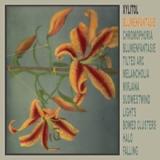
Xylitol - Blumenfantasie LP

Xylitol, aka producer and DJ Catherine Backhouse, shifts up the refinement and musical breadth for her second album Blumenfantasie, the follow-up to her Planet Mu debut Anemones.
With Blumenfantasie, Xylitol wanted “to make space and for the music to float and propel at once”, finding routes through the pointillistic figures, cascading synths and the meditative stillness of kosmische musik and bolder breakbeat programming. She reaches this delicate balance through careful subtraction, hoping “to convey a sense of intimacy and sadness but without sentimentality” which she manages with a feel and sound that's raw and intuitive.

Blumenfantasie rolls through detailed jungle workouts that flutter and bleep, through beatless ambience, taking a rare dip below 160 bpm for the elegiac Mirjana, the album’s most explicit nod to Krautrock with a drum break chopped up from Amon Duul II’s anthemic ‘Archangel’s Thunderbird’, through to Halo, a bare bones grime rhythm that calls to mind the missing link between industrial pioneers Nurse With Wound and Wiley's Eskibeat.

Catherine cast her net to draw in experimental audiovisual duo Sculpture and Reading based post-rock band The Leaf Library as collaborators, pulling the former’s whirling eddies of musique concrète into a slice of sublime aquatic jungle, and the latter’s radiophonic folksong into a dark and disorientating breakbeat workout equally indebted to Source Direct as to Broadcast.
Blumenfantasie moves with a confident, self-effacing fluidity which has been informed by DJ Bunnyhausen’s more regular DJ gigs. She speculates ‘if this album feels more cohesive than its predecessor it's likely because I've been DJing a lot more, with Worthing Techno Militia, with central and eastern european electronica collective Slav to the Rhythm, as well as being part of Italo Disco crew Flex. Moving between these zones seemed to open up hidden pathways between the disparate musical trajectories they represent.'
While Anemones contrasted the rough and the delicate, its successor is an album built for the head, hips and heart, with painterly sounds and a sense of intimacy that encourages deep listening while keeping its eyes on the strobelight and its feet on the dancefloor.

In stock dal05.06.2026


Last In: 52 days ago
Stacey Kent - A Time For love LP
  • 1: Lucky To Be Me (Leonard Bernstein)
  • 2: God Only Knows (Brian Wilson)
  • 3: The Shadow Of Your Smile (Johnny Mandel)
  • 4: La Javanaise (Serge Gainsbourg)
  • 5: As (Stevie Wonder)
  • 6: A Time For Love (Johnny Mandel)
  • 7: Trains And Boats And Planes (Burt Bacharach)
  • 8: What Goodbye Is For (Jim Tomlinson)
  • 9: Carinhoso (Alfredo Da Rocha Vianna Filho /Pixinguinha)
  • 10: E La Chiamono Estate (Bruno Martino)

Stacey Kent is an American jazz singer in the mould of the greats, with a legion of fans, a host of honors and awards including a Grammy nomination, album sales in excess of 2 million and more than one billion streams, and Platinum, Double-Gold and Gold-selling albums that have reached a series of chart-topping positions.

Stacey, a comparative literature graduate with a passion for music, travelled to Europe to further her studies after receiving her degree from Sarah Lawrence College in NY. Through a series of twists of fate, she found herself in London where she enrolled in a graduate music program at the Guildhall School of Music and Drama, where she met her future husband and musical partner, Jim Tomlinson.

Kent's musical journey began with childhood piano lessons. A keen ear and true voice lead her to search out opportunities to express her love of music. However, nothing suggested the shift from the academic path to the one that propelled her to international recognition as one of the foremost jazz singers of her generation. With a catalogue of 13 studio albums, including the Platinum selling, Grammy-nominated Breakfast On The Morning Tram (Blue Note/EMI 2007) and an impressive list of collaborations, Stacey has graced the stages of nearly 60 countries over the course of her career.

Her worldwide fan base is testimony to her ability to express the emotional heart of her songs with delicately nuanced interpretations that transcend borders and defy categorization. Her unique multi-lingual repertoire includes standards, chanson, Bossa Nova, and originals written by Jim Tomlinson, her saxophonist/producer/composer/arranger husband in collaboration with the Nobel Prize-winning author, Kazuo Ishiguro with whom they have worked since 2006. She has also recorded with Brazilian legends, Marcos Valle, Roberto Menescal and Danilo Caymmi, and the celebrated French string quartet, the Quatuor Ébène.

Stacey's last studio album, Summer Me, Winter Me, was released in November 2023 on Naïve Records. A collection of fans' requests from her as yet unrecorded concert repertoire, Summer Me, Winter Me entered the French jazz charts at number 1 and has quickly established itself as a new highlight in her discography. She now returns with A Time For Love.

pre-ordina ora03.04.2026

dovrebbe essere pubblicato su 03.04.2026

VARIOUS - [QR]V.093.STTP!.26

Various

[QR]V.093.STTP!.26

12inch[QR]V093STTP!26
COD3 QR
03.04.2026

From his roots in House, Alex Finkin is a renowned producer and creative director. Working in his Paris studio he has developed numerous projects, notably his own (Roseaux), as well as commissions for radio and television. Meanwhile, with 30 years of production and DJing under his belt, Rocco Rodamaal belongs to the elite circle of House innovators who continue to influence the scene. He's played alongside some of the best in the industry showcasing his versatility and deep understanding of the genre, and remixed artists including Marshall Jefferson, Kerri Chandler, Louie Vega & Moodymann, Todd Terry, Barbara Tucker and Robert Owens to name just a few. Alex Finkin befriended Rocco Rodamaal, who he met via the soulful Parisian club Djoon, where Alex was resident from 2006 to 2014. They have since collaborated on a number of projects together, including "In Da Hood" released on COD3 QR in 2023. Kenny Dope's "O'Gutta" remixes are a series of house and club-focused reworks characterized by raw, gritty and often stripped-back percussion, which he now brings to "In Da Hood".

Ross McMillan, known professionally as Carlos Nilmmns, is a Scottish electronic music producer, DJ and composer originally from Glasgow. Over the years he has collaborated with a range of notable artists, including Grammy-nominated and Grammy-winning figures, including Kenny Dope, Carl Craig, Kevin Saunderson and Davina Bussey, plus respected artists like Niko Marks, Rolando, Laurent Garnier, Santiago Salazar, Hardrock Striker, Karl The Voice, Zadig, Ben Sims, Andrés (who worked with Jay Dilla and Moodymann), and YouANDme. His music has been released on Planet E, Trax, Cocoon, Ornaments, Circus, Virgin, Skylax/Universal Music France and more. His style draws from house, techno and jazz influences, often combining analogue and digital production methods. A returning regular and COD3 QR favourite, he's back with another stunner in "Latin Quarter".

K' Alexi Shelby is a prominent figure in electronic music and with a career spanning decades, he's established a significant influence on House and Techno. Throughout his career he's worked with many well-known artists and remixed tracks that are now key pieces. The cultivation of his massive musical catalogue has overflowed into albums and the three labels he heads. It's also led to legendary collaborations with artists such as The Pet Shop Boys, Robert Owens, Kenny Dixon, Roy Davis Jr., Maurice Joshua, Terry Hunter, Joe Smooth, Steve Silke Hurley, Tyree Cooper, Ron Trent, Glenn Underground, Larry Heard, DJ Pierre, Carl Craig, Felix da Housecat, Marshall Jefferson, Will Smith and countless others. Already respected around the world as a true underground House legend, he delivered "Flame" in 2025 for COD3 QR. Now he's back with "When I", another deep and sexy cut.

Benny Rodrigues a.k.a. ROD unveiled his new moniker, The Lost Souldancer when he dropped "No More Voices" for COD3 QR last year. In his own words, Benny says: "The Lost Souldancer is about coping with the loss of what once was. Finding comfort in the invisible rather than what can be seen. Disconnect to connect in order to be loved rather than liked." He continues this ethos with the delicate and melodic closing track "Life and Death".

non in magazzino

Ordina ora e ordineremo l'articolo per te presso il nostro fornitore.


Last In: 33 days ago
Godsticks - VOiD LP

Godsticks

VOiD LP

12inchKSCOPE1307
KSCOPE
27.03.2026
  • M.i.a. ( 04:08 )
  • Hold Back ( 04:41 )
  • Watch It Burn ( 03:05 )
  • Master Of A Plan ( 04:47 )
  • Torn Again ( 05:31 )
  • Can't Withstand ( 05:07 )
  • Ruthless Coward ( 04:28 )
  • Talking Through Walls - Part 1 ( 03:28 )
  • Talking Through Walls - Part 2 ( 04:30 )
  • Hope Is Burning ( 04:55 )

Both lyrically & musically, 'VOiD' reflects a disillusionment with a world increasingly defined by division, ideological rigidity & the loss of nuance. The album documents a conscious withdrawal from the noise - a retreat into a personal void. "Metal as well as Rock, from the head as well from the heart" - Classic Rock DE Much of 'VOiD' is driven by frustration with the binary nature of modern discourse, where context & intent are routinely discarded in favour of winning arguments. The record rejects that environment entirely, choosing introspection over confrontation & exploring Darran Charles' (lyricist & vocals) balancing of misanthropy with optimism & isolation with connection.

"Their blend of indie-rock & alternative metal has emotion & depth" - Buzz Magazine The writing process for 'VOiD' was exacting & often punishing, with songs repeatedly reworked in pursuit of emotional impact. Long- standing collaborators Tom Price & Gavin Bushell play a vital role throughout, while the introduction of new bassist Francis George - the band's first line-up change in twelve years - brings a subtle but important shift in the overall feel of the rhythm section.

pre-ordina ora27.03.2026

dovrebbe essere pubblicato su 27.03.2026

Passarani - Analog Fingerprints Vol. 0 (2x12")

Analog Fingerprints Vol. 0 is a compilation bringing together the early 2000s works of Marco Passarani under his Analog Fingerprints alias, collecting key tracks originally released on Rome’s Plasmek and Pigna labels.

For Numbers, the story starts long before the label itself. In their formative years, digging in Glasgow’s Rubadub, Passarani’s records felt like dispatches from a future city. Releases on his own Nature Records and on labels such as Generator and Interr-Ference Communications were mind blowing: rooted in Detroit techno, Chicago house and electro, yet pushing somewhere new. Much like fellow travellers Autechre, who would remix him in 2001, Passarani’s music balanced machine funk with restless experimentation.

Information was scarce, and you would hear these records first on the dancefloor or at listening stations in shops like Rubadub. Print fanzines like Ear and early web outposts such as Forcefield offered only fragments. But there was a palpable axis forming between Detroit techno and a new European wave of record labels including Skam, Rephlex, Clone, Viewlexx and Nature itself. It was the sound that defined Saturday nights at Rubadub’s ‘69’ parties in Paisley, just outside of Glasgow.

Passarani’s records, in particular, were instrumental in bringing together the future Numbers co-founders. Richard had already booked him pre-Numbers; meanwhile Calum (Spencer) and Jack (Jackmaster), then 16/17 year olds working alternate Saturdays in Rubadub, were so enamoured with the Roman sound that they travelled to Rome for the Bitz Festival in 2003 to seek out Passarani and Lory D at their source.

The first Analog Fingerprints release landed as a 12” on Plasmek in 2001, following the fractured, IDM-leaning 6 Katun material. For Passarani, the project marked a recalibration. A DJ first and foremost, he had moved into production via early computer setups, from a Commodore Amiga through primitive PC audio, Cubase and Logic, later experimenting with Ableton. The IDM scene had offered a playground for trial and error, but there was always a tension between abstraction and the dancefloor. Analog Fingerprints became the bridge: still intelligent, but with more dance than distance. After years of broken beats and complex arrangements, he wanted directness without surrendering identity.

Working closely with Francesco de Bellis and Mario Pierro in the Pigneto district, the trio formed Pigna as a vehicle for reclaiming a more accessible dance sound, deliberately steering away from the minimal wave beginning to dominate Europe. Sessions were fast, instinctive, often stretching late into the night with friends dropping by. It was a studio as social space, production as collective energy.

“In that constant search for balance, Analog Fingerprints was my way of expressing something closer to the classic dance floor. The track 'Tribute' - a tribute to my favourite early Detroit techno track of all time, 'First Bass' by Separate Minds - came after I realised I had almost lost my connection with the dance floor. The simplest step was to take inspiration from early Chicago and Detroit and twist it in our Roman ‘Pigna’ way. My goal was to create more accessible dancefloor tracks by mixing my unconscious Italo roots with my teenage love for that early US sound, ensuring the result was as far as possible from the minimal sound that was starting to dominate everywhere.” - Marco Passarani

Technically, the Analog Fingerprints tracks span a transitional era: Roland TR-909, SH-101 and Alpha Juno hardware met early software experiments. A Novation Drumstation rack stood in for the unattainable TR-808, syncing with TB-303 and TR-606. Yet the true secret weapon was Jeskola Buzz, a tracker-style modular environment that allowed step-by-step parameter control and strange melodic constructions, later exported into the audio sequencer. Even the lead on ‘Tribute’ came from an early PPG Wave-style plugin. It was hybrid thinking at a moment when digital tools still felt unstable but full of possibility for technologists like Passarani.

Behind the music sat Finalfrontier, a loose Roman collective orbiting Nature and Plasmek. Distribution and production were intertwined; importing obscure records into Italy built connections with like-minded outsiders across Europe and the US. Expensive phone bills and fax machines forged an “electronix network” that linked Rome to Clone, Viewlexx, Skam, Rephlex, Rubadub and Detroit’s Underground Resistance. There was a shared sense of survival and resistance, of operating against commercial systems.

Passarani recalls “The first time I found a sheet of paper inside an Underground Resistance 12” with info about upcoming releases... and a huge picture of Spock on the back. Imagine that: you love the music, you love Star Trek, and there’s someone on the other side of the ocean sharing those same values and sounds. It was the perfect match. We even gave our original company the suffix ‘Finalfrontier’: that says it all.”

Feedback in that era arrived physically: distributor faxes, conversations with visiting DJs, the experience of playing abroad and meeting kids who had connected with the records. Glasgow became a key node in a scattered outlier network. Passarani personally brought the first two Nature releases to Fat Cat in London, playing them in-store. Shortly after, a fax arrived from Rubadub in Glasgow requesting copies.

“I still remember that phone buzz and the fax paper slowly sliding out, with someone I didn’t know saying they wanted 75 copies of Nature 001. Or like the time we got a fax from the Rephlex crew just saying, “Hello Nature Records, Keep up the good work.” That was how we knew the message was getting through. It was a fantastic feeling; just one piece of thermal fax paper as an analog notification - the mood for the entire week would change.” - Passarani

The connection to Glasgow has since stretched across generations. As Passarani reflects, links often fracture as scenes renew themselves, but in Glasgow something different happened. New and old mixed seamlessly. There was a visible trust in what came before, and a willingness to carry it forward rather than discard it. Observed from Rome, it was deeply encouraging.

Analog Fingerprints Vol. 0 captures that moment of exchange: Rome to Glasgow, Detroit to Europe, experiment to dancefloor. It documents an artist recalibrating his sound and a network of scenes discovering one another in real time, connected by vinyl, faxes and shared intent.

In stock dal04.06.2026


Last In: 12 days ago
THE ROOTS - Undun LP

THE ROOTS

Undun LP

12inch6788928
Def Jam
24.03.2026
  • A1: Dun
  • A2: Sleep
  • A3: Make My Feat Big Krit & Dice Raw
  • A4: One Time Feat Phonte & Dice Raw
  • A5: Kool On Feat Greg Porn & Truck North
  • A6: The Otherside Feat Bilal Olivier & Greg Porn
  • B1: Stomp Feat Greg Porn
  • B2: Lighthouse Feat Dice Raw
  • B3: I Remember
  • B4: Tip The Scale Feat Dice Raw
  • B5: Redford (For Yia-Yia & Pappou) (Redford Suite)
  • B6: Possibility (2Nd Movement)
  • B7: Will To Power (3Rd Movement)
  • B8: Finality (4Th Movement)

Undun is the story of a man, Redford Stevens, dying in reverse, rewinding from the moment he became a statistic and hitting the points in his life where he's at his most self-aware. That he's a criminal who got caught up in the familiar street-hustle trappings that the modern media's documented countless times is a pivotal detail-- it's hit at an angle that seems to emphasize the futile inevitability of it all. His life could be any number of misdirected narratives that ends with a toe tag, and what details listeners learn about him are hazy, buried under archetypal turns of fate and decisive struggles. That this protagonist is a fictionalized composite of a handful of real people, filtered through a matter-of-fact narrative that splits character ambivalence with journalistic impartiality, only makes his lack of direction and the failure of any real closure stand out even more. "Lotta niggas go to prison," Dice Raw states on "Tip the Scale", "how many come out Malcolm X?"

So the Roots' latest album isn't a sprawling, rise-and-fall crime story, not a condemnation or a veneration of a man living outside the law, not a bullet-riddled grand guignol heavy on explicit details of soldiers getting cut down. It's a character study of a man whose existential crisis ends only with his death-- a death gone largely unspecified, the glamor and tragedy washed over with a doomed resignation. That's a hard thing to pull off, even for a band as given to deep-thinking concepts as the Roots are. And when your main lyrical catalyst is Black Thought-- a man more given to allusions than direct statements-- it's likely that it'll take a while for the full scope of Undun to really sink in.

If and when it does, it might strike listeners as a bit skeletal: omit the mood-setting instrumental bookends, including a brief, four-part orchestral suite that builds off Sufjan Stevens' "Redford (For Yia-Yia and Pappou)", and you've got maybe a half hour's worth of material. By ?uestlove's accounts, writing Redford's story introduced the headaches and challenges that come with scriptwriting into their songwriting, and what's left on Undun is the end result of frequent revisions and rewrites that attempt to reconcile character, theme, and continuity. If it comes at the expense of nuance, it's not always obvious: There's an easy-to-trace narrative line from Redford's acceptance of his fate ("Sleep") to his acknowledgement of how close it's approaching ("Make My"), back through declarations of aggravated toughness ("One Time"), and celebratory fatalism ("Kool On"), along ups and downs that juxtapose motivation ("Stomp") and helplessness ("Lighthouse"). When the vocal portion of the album ends with two of the bleakest sets of verses in the Roots discography, peaking with the estrangement of "I Remember" and the desperation of "Tip the Scale", Undun reveals itself as a story where a man's actual death isn't quite as tragic as the circumstances that pushed him to it.

non in magazzino

Ordina ora e ordineremo l'articolo per te presso il nostro fornitore.


Last In: 69 days ago
SPIRIT OF BROTHERHOOD - GO FOR IT / SPIRIT OF BROTHERHOOD

SPIRIT OF BROTHERHOOD

GO FOR IT / SPIRIT OF BROTHERHOOD

7"-VinylESLP103
Numero Group
18.03.2026

Spirit of Brotherhoods rauer, straßennaher Funk-Cut - aufgenommen auf Band, fast verloren gegangen und später wiederbelebt als herausragender Opener der A-Seite auf Eccentric Disco, einer Veröffentlichung, die stark genug war, um sieben weitere genreorientierte Ausgaben von Numero anzustoßen. Diese 45er-Platte kommt in bester Klangqualität und greifbarster Form.

non in magazzino

Ordina ora e ordineremo l'articolo per te presso il nostro fornitore.


Last In: 74 days ago
Kebekelektrik / First Choice - Dam Swindle x Salsoul Remixes Vol. 1

Dam Swindle x Salsoul Reworks

Dutch duo Lars Dales and Maarten Smeets, better known as Dam Swindle, are the latest in a line of decorated contemporary producers taking on rework duties for legendary New York disco label, Salsoul Records. Comprised of four tracks split into two volumes, the pair provide fresh takes on a number of Salsoul hits, including the classic ‘Let No Man Put Asunder’ by First Choice and Double Exposure’s ‘Everyman’. There’s some funky edits of tracks by Kebekelektrik and Kongas, wrapping up an essential Reworks package courtesy of one dance music’s premier acts.

non in magazzino

Ordina ora e ordineremo l'articolo per te presso il nostro fornitore.


Last In: 62 days ago
Alexis Taylor - Paris In The Spring (LP)
  • A1: Your Only Life
  • A2: I Can Feel Your Love (Produced By The Avalanches)
  • A3: Out Of Phase Feat. Lola Kirke
  • A4: Wild Horses
  • A5: Colombia
  • B1: For A Toy
  • B2: On A Whim (With Green Gartside Of Scritti Politti)
  • B3: Fainting By Numbers
  • B4: Mp3S Can Make You Cry
  • B5: Black Lodge In The Sky

Headline: Alexis Taylor von Hot Chip setzt seine Soloreise fort.

Alexis Taylor zählt zu den markantesten Singer-Songwritern des UK, der mit seiner unverwechselbaren Stimme ein beachtliches Solowerk geschaffen hat. "Paris In The Spring" ist sein bisher persönlichstes Album, das individuelle wie auch universelle Gefühle offenbart. Die Texte scheuen sich nicht vor eindringlichen Themen, doch musikalisch präsentiert sich die LP unbeschwert, beschwingt und zeitgemäß, mit eleganten Disco-House-Elementen, sinnlichen Basslinien und von Vangelis inspirierten Klanglandschaften.

Taylor hat für diese lebendige Klangwelt namhafte Künstler ins Boot geholt, darunter Nicolas Godin (Air), The Avalanches, Lola Kirke, Oli Bayston, Étienne de Crécy, Elizabeth White (Pale Blue) und Green Gartside (Scritti Politti). In dieser Welt trifft ein intimer Country-Stil auf die eingängige Popmelodie von Paul McCartney, den futuristischen Funk von Sly & The Family Stone und, so Taylor, "Synthesizer, die im Regen stehen gelassen wurden". Hier verschmelzen britisches Americana und französisches Flair – irgendwo auf dem Mars. Das Ergebnis ist ein Album über die Freiheit von Zwängen, von Vorurteilen, von Genregrenzen. Taylor experimentiert mit verschiedensten Musikstilen – Country, Folk, Disco – und hat sie zu etwas Einzigartigem verwoben.

pre-ordina ora13.03.2026

dovrebbe essere pubblicato su 13.03.2026

Khruangbin - The Universe Smiles Upon You ii (2x12")

If you could go back in time ten years, what would you want to tell yourself? This was a question Khruangbin posed to themselves when approaching the ten-year anniversary of their debut album, the once cult classic, now genre-defining work The Universe Smiles Upon You. “If we could go back and tell ourselves how much was going to happen to us after that record, what would we want to
celebrate?” asked Laura Lee, bassist, vocalist, and founding member of the band. Instead, they thought: “Let’s do it again.”
The Universe Smiles Upon You ii was recorded on January 4-6, 2025, in the same family barn of guitarist Mark Speer, across the
same dates where TUSUY was first conceived ten years earlier. Though the conditions were the same–dirt floor, brutally cold,
minimal sound isolation, all takes live–the songs aren’t. They’re re-approached, some changed more than others, harnessing the lightning-in-a-bottle energy of TUSUY while discovering what would be unique this time around, in this stage of the band’s life.
The result moves like ripples on the water across ten hypnotizing tracks, the barn creating a sense of spaciousness, serenity and creative freedom, nearby wildlife (listen out for the birds on “August Twelve ii”), rattles and creaks of the barn and all. It’s a tapestry of small movements in nuanced arrangements, slowly revealing the new life, stories and character of someone you’ve met again for the first time in ten years.

pre-ordina ora13.03.2026

dovrebbe essere pubblicato su 13.03.2026

VARIOUS - GREAT LAKES GOSPEL: DETROIT
  • O Yes My Lord
  • I'm Drunk & I'm Real High (In The Spirit Of God)
  • Sinnerman
  • I Thank The Lord
  • God's Been Good To Me
  • Wade In The Water
  • Thoughs Were The Days
  • Walk With Me
  • Heaven
  • Motherless Child
  • Faith
  • Time To Go Home
  • Peace When He Comes

Über die Jahre hat Numero eine Menge Aufnahmen aus den Tiefen Detroits ausgegraben. Aus allen möglichen Mini-Motowns haben wir Soul, R&B, Funk, Disco, Boogie und aufgrund der Nähe auch Gospel entdeckt. Frühere Untersuchungen der Labels Revival und Big Mack brachten mehr als nur ein paar neue apokryphe Hymnen zutage, und Great Lakes Gospel Vol. 2 versammelt ein Dutzend interessanter Kirchengruppen, die sich hingebungsvoll an die Ausläufer des Genres heranwagen. Verlier dich in ekstatischem Chor-Funk, Kanzel-Rap, direkt eingespeisten Gitarrensoli und dem Heiligen Geist, sollte er dich bewegen. Schau dich im Raum um. Mit diesem Ding könntest du eine Kirche gründen.

pre-ordina ora13.03.2026

dovrebbe essere pubblicato su 13.03.2026

WILL WOOD - THE NORMAL ALBUM

WILL WOOD

THE NORMAL ALBUM

12inchHCDWWV53
HOSTILE CITY
13.03.2026
  • Suburbia Overture
  • 2: Econd Ight Eer
  • Laplace's Angel (Hurt People? Hurt People!)
  • I/Me/Myself
  • Well, Better Than The Alternative
  • Outliars & Hyppocrates: A Fun Fact About Apples
  • Blackboxwarrior Okultra
  • Marsha, Thankk You For The Dialectics, But I Need You To Leave
  • Love, Me Normally (2018 Mix)
  • Memento Mori: The Most Important Thing In The World

In 2023, Wood secretly worked with producer Kevin Antreassian on a new mix of his top-selling release "The Normal Album." Digging into the original 2019 recordings for more muscular takes, smoother edits, and a more nuanced and balanced mix, Antreassian and Wood created a version of the fan favorite that is one of the rare cases where a new mix is widely considered to improve on the original noticeably. "The Normal Album" is yet another turn in Wood's discography, sardonically playing with Americana and doo-wop sounds, strategically restrained but still highly emotive vocals, and lyrics densely packed with scientific and philosophical references. The dark mania of Wood's prior 2016 release, "SELF-iSH," continues on some tracks but is arranged with greater precision with a new band at his command. Like his 2015 debut "Everything is a Lot," the songs whiplash tonally but are brought together through intertwined themes and recurrent musical motifs and an undercurrent of simultaneous obtuseness and vulnerability. After the original mix of "The Normal Album" was released, a live version of the 4th track on the LP, "I/Me/Myself," had an unexpected viral moment, which brought attention to many other songs on the LP. Songs like "2econd 2ight 2eer" and "Laplace's Angel" continued to attract new fans with their dense wordplay and high-energy attitude, and the album became Wood's first major break into larger notoriety, proving that his sudden burst of popularity was not just a fleeting trend. After taking some time away from the public, Wood began to revisit the album with the intent of giving it the production that he had originally envisioned for it. Wood's top-selling album re-edited for a fuller sound and clearer instrumentation, bringing the album to a new level: new Modern Stereo Mix - 2023 Edit

pre-ordina ora13.03.2026

dovrebbe essere pubblicato su 13.03.2026

Various - Great Lakes Gospel: Detroit LP
  • A1: Voices Of Conquest - O Yes My Lord
  • A2: Ada Richards - I’m Drunk & I’m Real High (In The Spirit Of God)
  • A3: The Gospel Supremes - Sinnerman
  • A4: Mighty Voices Of Wonder - I Thank The Lord
  • A5: The Mighty Walker Brothers - God’s Been Good To Me
  • A6: The Apostles Of Music - Wade In The Water
  • A7: Lavice & Company - Thoughs Were The Days
  • B1: Calvin Cooke - Walk With Me
  • B2: Deliverance Echoes - Heaven
  • B3: Liz Davis - Motherless Child
  • B4: The Soul Superiors - Faith
  • B5: Otis G. Johnson - Time To Go Home
  • B6: Wayne & Thelma And The Mcallister Singers - Peace When He Comes

Over the decades, Numero has excavated a metric ton of recordings from the depths of Detroit. From all manner of mini Motowns we’ve uncovered soul, R&B, funk, disco, boogie, and by nature of proximity—gospel. Previous examinations of the Revival and Big Mack la- bels turned up more than a few new apocryphal hymns, and Great Lakes Gospel Vol. 2 compiles a dozen curious church groups devotionally reaching towards the genre’s frayed edge. Get lost in ecstatic choir funk, pulpit rappin’, direct-injection guitar solos, and the holy spirit, should it move you. Look around the room. You could start a church with this thing.

pre-ordina ora13.03.2026

dovrebbe essere pubblicato su 13.03.2026

Abdou El Omari - Lost Tape - 1980
  • A1: Ali Ou Hayani
  • A2: Ana Sahraoui
  • A3: Nihayat Hob
  • A4: Angham Chaabia
  • A5: Dikrayat
  • A6: Alach Yayouni
  • B1: Layali Fass
  • B2: Lobna
  • B3: Tanger L'été
  • B4: Taksim Abdou
  • B5: Hanan
  • B6: Interlude

Abdou El Omari was born in 1945 in Tafraout, south of Agadir -- a village suspended between the pink granite peaks of the Anti-Atlas and the waves of the Atlantic. A landscape already musical in itself. He grew up in the dry mountain light, surrounded by the rhythms of nature and Berber's culture. Very little is known about the man -- a veil of mystery still surrounds his life, only deepening the fascination. In the 1970s, as Morocco was transforming, Abdou El Omari shaped a sound of his own -- a visionary blend of spiritual jazz, psychedelic funk, Moroccan traditions, and early electronic experimentation. Today, his work is resurfacing, rediscovered by a new generation of listeners in search of lost horizons. This record stands among its rarest and most precious fragments. At twenty-two, he founded his first group, Les Fugitifs, which gained him local fame. Soon after, he released records and cassettes on labels such as Cléopâtre, Hassania, Boussiphone, Hilali, and his own, Al Awtar, while performing on RTM (national radio and television). He also composed for artists like Naima Samih, Laila Ghofran, and Aicha El Waad. In 1976, through the label Gam, he released his only vinyl album, Nuits d'été -- a record that would become cult decades later, reissued in 2017 by Radio Martiko. In the 1980s, his music grew quieter, more secret. He tried to recover his old tapes from the studios he had recorded in, but gradually withdrew from the scene and returned to hairdressing. A pioneer of musical fusion, he opened paths that would remain unexplored for years. He passed away in 2010, never witnessing the rediscovery of his music by diggers, bloggers, and collectors online. One day, his close friend and poet Aziz Essamadi, rescued a cardboard box from the trash -- a box containing Abdou El Omari's personal archives. It was later entrusted to Casablanca based collector Ahmed Khalil, founder of the label Dikraphone. Inside were treasures preserved by chance: demos, rehearsals, private recordings, unseen photographs -- and a stunning, almost forgotten cassette. Here, El Omari sounds bolder than ever, exploring territories where pop, cosmic disco, electric blues, and Moroccan tradition merge without boundaries. Armed with his ARP Odyssey synthesizer, hypnotic grooves, and the celestial layers of his Farfisa, he expanded the dialogue between deep roots and electronic exploration. This album is the continuation of a vision -- a music of the Moroccan future: rooted, but reaching for the unknown. Colorful, magnetic and timeless, here is music for dancing as much as for dreaming.

pre-ordina ora13.03.2026

dovrebbe essere pubblicato su 13.03.2026

ALI RENAULT - CIRCLE OF SINS EP

ALI RENAULT

CIRCLE OF SINS EP

12inchVIVOD026
Vivod
13.03.2026

Ali Renault re ignites the Vivod catalogue after a four year hiatus with Circle of Sins — a solo EP built for italo fiends, horror romantics, and synth obsessives alike. You already know the vibe: detective-noir disco, low-slung BPM swagger, basslines that churn like midnight fog, and those unmistakably icy Renault melodies slithering through the mix.

Four tracks, one ultra-limited 12″, just 150 copies on the planet — each hand-numbered. They’re going to vanish faster than you can say “don’t sleep,” so get that pre-order in before they’re gone to the underworld.

non in magazzino

Ordina ora e ordineremo l'articolo per te presso il nostro fornitore.


Last In: 28 days ago
John Chowning - Stria

John Chowning

Stria

12inchIMPREC478LP
Important Records
06.03.2026
  • Phonè
  • Turenas
  • Stria
  • Sabelithe

Dr. John Chowning (b. 1934) is a pioneering computer musician, composer and professor who, in 1967, discovered the FM synthesis algorithm. This breakthrough in electronic music allowed for simple, yet rich timbres described as sounding "real." With this discovery, Chowning composed singular, dramatic electronic music and changed the timbre of music forever.

Chowning utilized the potential of computers to synthesize sounds according to programmed instructions. The composer's use of his own FM algorithms, digital synthesis with computers and the new compositional concepts offered by a programmable musical structure combine to create some of the most original and unique electronic music ever created.

The compositions on this LP were realized between 1966 and 1981 and the music on this LP, with the exception of Stria, was originally released on CD in Germany (Wergo, 1988). The version of Stria included here contains a section not included on the Wergo CD. Thus, this version of Stria is complete. This is the first time these purely digital recordings have been released on an analog medium. The original dynamics of these groundbreaking compositions have been preserved on this LP. As a result, listeners are advised to increase volume with caution.

In 1975, John Chowning founded the CCRMA - Center For Computer Research In Music and Acoustics at Stanford University. Through Stanford, Chowning licensed his groundbreaking algorithms to Yamaha resulting in numerous new instruments including the iconic DX series of keyboards. In 1972, his composition Tureens which is included on this LP, was the first to create the illusion of continuous 360-degree space using four speakers.

Technical Notes:

All pieces on this LP are originally quadrophonic. The illusion of moving sound sources is thus projected from the surrounding environment given by four loud-speakers on the stereo-basis.

STRIA was composed using Chowning’s own program to compile the musical structure into note-lists and MUSIC 10 (by D. Poole/Tovar) to generate the sounds in software-synthesis. The original quadrophonic version utilized 12 bits, two different sampling rates being used to accommodate the enormous amount of data on the magnetic disc-packs available at that time. The original sound-data was processed by sampling-rate conversion and digital mixes to achieve the stereo version presented on this LP.

SABELITH and TURENAS were synthesized originally using Smiths’ SCORE and MUSIC 10. However, their format was changed from direct sound-samples to a command stream for a special purpose computer, the System Concepts Digital Synthesizer, designed by Peter Samson, one of the first large-scale digital synthesizers for real-time sound processing - one was designed for CCRMA in the late seventies. For this recording the sounds were recorded directly from the synthesizer computing the samples in real-time.

PHONÈ was realized with the System Concepts Digital Synthesizer using again Chowning’s own program to create the note list.

The master tape of this LP was made directly from the computer system at CCRMA which generated and stored the sound data in digital format. No analog recording was involved at any stage of the production and editing process.

pre-ordina ora06.03.2026

dovrebbe essere pubblicato su 06.03.2026

Cheeba’s Funky Rock Ensemble - Drug-Crazed London Hippies / You Wanna Ride? (7")

Cheeba’s Funky Rock Ensemble are back with two sides of funky rock breaks for hairy b-boys !

After the great feedback of their debut release 18 months ago, they went back into the studio soon afterwards to record some more slices of hip-hop orientated funky-psyche beats aimed at the dancefloor. Since then, both new tracks have been on a one-off dubplate and getting aired all over the country to an enthusiastic reception - so it’s about time we got them out there for everyone else to, like , just dig, maaaaan !

DRUG-CRAZED LONDON HIPPIES takes you down to the seedy back street clubs of late 60s swinging Soho - to the early discotheque scene and the psychedelic experience of numerous young rock groups and their fans. With heavy fuzz, funky beats and dirty flute loops this takes you straight to those hedonistic dancefloors in the early hours.

YOU WANNA RIDE ? Stays in the same era and same counter-culture, but on the other side of the Atlantic with the free festival vibe of alternative lifestyles in California. More fuzz-rock sounds, blended with heavy beats , screaming hammond and wordless female vocals to take you on a deep trip - to lose yourself in a field as the sun rises.

non in magazzino

Ordina ora e ordineremo l'articolo per te presso il nostro fornitore.


Last In: 89 days ago
Articoli per pagina:
N/ABPM
Vinyl