quête:no 19 music

Genres
Tout
KANNASTE4 - OUT OF SELF AND INTO OTHERS
  • A1: New Life
  • A2: The Bridge
  • A3: Ups And Downs
  • A4: No Name
  • A5: It’s All Good
  • B1: Different Worlds
  • B2: Pause
  • B3: Elegy
  • B4: It’s All Good – Reprise

Helsinki tenor saxophonist Jussi Kannaste's debut album as a band leader has been a long time coming. A top musician in the local scene revered by his contemporaries and sought after as a band member, Kannaste now presents his new work Out Of Self and Into Others on We Jazz Records. His quartet, Kannaste4, brings together Finnish musicians Tomi Nikku (of Bowman Trio) and Joonas Riippa, plus Berlin-based Swedish bassist Petter Eldh (of Koma Saxo / Post Koma and Y-OTIS), and features an all original program penned by Kannaste. His music is highly personal contemporary jazz leaning into modes of avantgarde expression. At times quiet as a whisper, at times fiery and swinging, Out Of Self and Into Others is a product of a deep marinade, a debut album that feels like much more than "just" that.

Jussi Kannaste (born 1976) is a saxophonist and educator based in Helsinki. Prior to launching Kannaste4, he has been a key part of the scene for 20+ years, performing in highly acclaimed bands such as Antti Lötjönen Quintet East, 3TM, Jaska Lukkarinen Trio, Ricky-Tick Big Band, and many more. As the head of the department of Jazz at Sibelius Academy, Kannaste is also a key figure in internationally admired Finnish jazz education system.

pré-commande02.05.2025

il devrait être publié sur 02.05.2025

nrl:ndr - UNTITLED (TAPE)

Nrl:ndr

UNTITLED (TAPE)

CassetteBLUNDAR14.1
Blundar
30.04.2025

Coming from a diverse background of equal amounts hip hop and rock, the producer behind the alias of nrl:ndr got into dance music late in his musical career. After playing in kraut-oriented bands like So Many Mammals, parts of that group reformed into the live techno outfit Tren Né, with the goal of fusing techno elements with live drums. Playing for illegal raves with a punk-like energy, nrl:ndr has cemented his relationship with his machines in service of the dance floor.

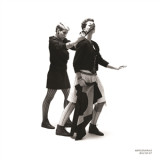
But his solo debut on blundar is quite far removed from that scene. To understand this music, one should be aware of the conditions under which it was manufactured. Reluctant to consider himself an artist in the traditional sense, nrl:ndr makes his music free of anticipation and without apparent goals. To glean into this outré musical space is like putting one's ear to the boarded up windows of the photograph that adorn the front sleeve.

The album makes extensive use of the Roland JV-2080, a sample-based synth rack from 1996 with a distinctly clean sound. Our producer dives deep into the expansion cards (labeled after genres like “Hip Hop” and “World”) for curious and sometimes cheesy samples. But he also forces the JV-2080 to do things which are not its forte, like the arduous task of programming decent kick drums.

Another technique that is testament to his experimental view on music making, is the idea of using sketches of unfinished tracks with different time signatures, and mash them together into something new - of which the results of one of these experiments can be heard on the closing track and its bilingual conversation between ambient and tribal.

Full of stunted rhythms and eerie melodies, the unclassifiable nature of the music of nrl:ndr lies somewhere in the vicinity of IDM, classical avant garde and private press synth. From the epic opening track - echoing the post-kraut drumming style of Michael Shrieve - to juggling with chopped up vocal samples and treading into almost trap-like territories on A4, he crosses into a multitude of genres without getting his hands too dirty with nostalgia.

pré-commande30.04.2025

il devrait être publié sur 30.04.2025

Various - Soul Assembly

Portland's contemporary music makers and the city's historic Black music community come together on this new remix project which draws from the Albina Music Trust's archive. Across the long player, the artist reinvents the sounds of Portland's Black musicians with a modern beat-based sensibility, all of which subtly pay homage to the 1968 "Soul Assembly" program by the Black Student Union which educated audiences about Black Portland's cultural identity. Among many standouts are reimagined works by Jonny Cool, Jumbo of The Lifesavas and Tony Ozier who do a fine job of bridging generations and highlighting Portland's rich heritage.

pré-commande30.04.2025

il devrait être publié sur 30.04.2025

Miles Davis - Black Beauty: Miles Davis At Fillmore West LP 2x12"

Dateline: April 10, 1970. Setting: The storied Fillmore West in San Francisco, CA. Context: Miles Davis, three days removed from his first session for Jack Johnson and, with newly recruited soprano saxophonist Steve Grossman in tow, opening shows for countercultural heroes the Grateful Dead on the latter’s home turf. Result: The initial rumblings of a thrilling era in which Davis and his cohorts would again upend jazz and popular conceptions of the genre with music steeped in groove, improvisation, and hang-on-for-your-life adventurousness. All captured on Black Beauty: Miles Davis at Fillmore West.

Mastered at MoFi’s California studio, pressed at Fidelity Record Pressing in California, and housed in a Stoughton gatefold jacket, Mobile Fidelity's numbered-edition 180g 33RPM 2LP set helps bring what went down that spring evening in Bill Graham’s venue to your listening room with exceptional clarity, balance, and presence. Originally only released in Japan in 1973 and unavailable in the United States until the late ‘90s on compact disc, this marks the first time Black Beauty has been issued on domestic vinyl. The wait is worth it.

Benefitting from quiet surfaces and excellent definition, these LPs present the band’s livewire energy and torrential storm of notes with captivating dynamics, pacing, and fullness. At its core, this audiophile reissue takes you into the walls of sound erected by a band learning on-the-fly the sheer power, will, and breadth of the electric jazz Davis was orchestrating and realizing, on the spot, would reach rock audiences that until that point had only a faint awareness of his mad-scientist experimentation. The sense of release and reach conveyed by these carefully restored records make it clear the veteran bandleader was in the process of a permanent shift that he’d chase for the next five years.

Given Davis was only a few months away from releasing the pioneering double album Bitches Brew, it shouldn’t come as a surprise that much of the fare here adheres to similar explorative approaches. Turbulent rhythms, provocative trumpet passages, and rich, saturated tonal colors that seemingly splash against a blank canvas take precedence over any traditional attempts at organization and melody. Davis and Co. intentionally play everything on a line with the bandleader signaling changes with his horn via coded phrases. The group speaks a common language — with each member having gone to achieve iconic status for their career contributions and technical prowess.

In the company of Grossman, Chick Corea (piano), Dave Holland (bass), Jack DeJohnette (drums), and Airto Moreira (percussion), Davis constructs themes around “Directions,” “Miles Runs the Voodoo Down,” “It’s About That Time,” the title track to Bitches Brew, and more from his then most-recent studio works and the in-progress Jack Johnson. His farewell to the popular standards that for nearly two decades remained a part of his repertoire arrive via a brief dalliance with “I Fall in Love Too Easily,” a shortened albeit aggressive “Masqualero,” and the “Theme” finale of “Spanish Key.” Initially, Black Beauty lacked specific track listings due to Davis’ increasing frustration with listeners over-analyzing his music.

In retrospect, it’s difficult to blame anyone for wanting to view what’s on display here with the aural equivalent of a magnifying glass. Leaning in rock directions, yet maintaining an ear for spaciousness and solos, Black Beauty survives as a snapshot of a thrilling moment amid a transitory period in which evolution came fast and furious. Just two months later, Davis would add another instrumentalist to the lineup in the form of organist Keith Jarrett, and the perpetually restless visionary would blast off to a more atmospheric and arguably more chaotic universe.

Consider, then, this live document a bridge to that galaxy and a breathtaking example of the possibilities of jazz itself.

pré-commande30.04.2025

il devrait être publié sur 30.04.2025

Miles Davis - Bitches Brew LP 2x12"
  • Pharaoh's Dance
  • Bitches Brew
  • Spanish Key
  • John Mclaughlin
  • Miles Runs The Voodoo Down
  • Sanctuary

Listen to This.” As the original working title for Bitches Brew, the instruction and invitation remains to this day as the best way to approach a record that shattered conventions, altered music history, and, 55 years later, still sounds far ahead of its time. The template for jazz fusion, Bitches Brew is rightly ranked by virtually every significant outlet among the 100 greatest albums ever made. Sewn together with vibrant colors, voodoo textures, and ethereal moods, the 1970 landmark emerges with supreme detail and nonpareil feeling on Mobile Fidelity’s UltraDisc One-Step 180g 33RPM 2LP vinyl set.

Sourced from the original master tapes, strictly limited to 5,000 numbered copies, and pressed at Fidelity Record Pressing in California, this definitive-sounding 55th anniversary reissue enhances every element of a double album that established new possibilities for studio recording techniques. You’ll hear wide and deep soundstages, separation between instruments, and an extremely broad dynamic range. If ever a jazz album can be said to have gone to outer space and back, this is it.

Sourced from the original master tapes, strictly limited to 5,000 numbered copies, and pressed at Fidelity Record Pressing in California, this definitive-sounding 55th anniversary reissue enhances every element of a double album that established new possibilities for studio recording techniques. You’ll hear wide and deep soundstages, separation between instruments, and an extremely broad dynamic range. If ever a jazz album can be said to have gone to outer space and back, this is it.

Davis conceived Bitches Brew by having the musicians stand in a semi-circle. There, he pointed at them with vague directions for tempo, solos, and cues. The collective improvisation and interplay spawned a galaxy of melodies and grooves that were later spliced together by producer Ted Macero. Benefitting from the ultra-low noise floor and superb groove definition of this pressing, these distinct creations take shape with utmost realism. Compositions stretch across jet-black backgrounds and paint canvases laden with millions of colors and shades. Juxtaposed percussion, loose jams, and melodic segues explode with impressionistic verve.

Bitches Brew also boasts visionary artwork. By design, the lavish packaging and gorgeous presentation of the UD1S Bitches Brew set call attention to such matters. Housed in a deluxe slipcase, it features special foil-stamped jackets and faithful-to-the-original graphics that illuminate the splendor of the recording. It is made for discerning listeners who desire to fully immerse themselves in everything surrounding the album, from the images to the tones. And this is one effort where every last detail matters.

Gathering a Hall of Fame-worthy lineup of musicians and tweaking it according to his desires, Davis follows through on his idea to “put together the greatest rock and roll band you ever heard.” Central to his proposition is the presence of two (and sometimes three) drummers and two bassists, a tactical move that makes rhythms a central focus. Akin to the futuristic album cover art, the drum-driven suites head toward distant universes and uncharted territories. At once hypnotizing and grooving, they chart maverick adventures via quixotic rock, funk, and R&B elements.

A without-a-net experiment involving interchangeable double-quintet lineups, Bitches Brew explores the previously unimaginable with electrified instruments — Fender Rhodes piano, processed trumpet, dissonant guitars, and bass among them — and an emphasis on feeling over composition. Mesmerizing and soothing, jarring and smooth, overt and subtle: The music seemingly covers an entire map of emotions and sensations, and like no record before, ties together the groundbreaking creativity of the multiple disciplines that were changing popular culture at the end of the 1960s and dawn of a new decade.

Conceptually, Davis described Bitches Brew as “a novel without words” and “an incredible journey of pain, joy, sorrow, hate, passion, and love.” The vast psychedelic expanses of warped echoes, liquid reverb, and tape loops confirm such ambitious contrasts of light and dark, fear and hope. Yet the most absolute characteristic of the watershed effort lies in how it resists definitive interpretation and encourages free thought — the very principles Davis used to conceive Bitches Brew.

More About Mobile Fidelity UltraDisc One-Step and Why It Is Superior
Mobile Fidelity Sound Lab’s UltraDisc One-Step (UD1S) technique bypasses generational losses inherent to the traditional three-step plating process by removing two steps: the production of father and mother plates, which are created to yield numerous stampers from each lacquer that is cut. For UD1S plating, stampers (also called “converts”) are made directly from the lacquers. Since each lacquer yields only one stamper, multiple lacquers need to be cut. Mobile Fidelity's UD1S process produces a final LP with the lowest-possible noise floor. The removal of two steps of the plating process also reveals musical details and dynamics that would otherwise be lost due to the standard multi-step process. With UD1S, every aspect of vinyl production is optimized to produce the best-sounding vinyl album available today.

pré-commande30.04.2025

il devrait être publié sur 30.04.2025

William Beaver - Glimpse: Interactive Remixed

In 1992, Glimpse Magazine was created to capture and share the emerging techno scene in Detroit, MI. It's creator, William Beaver (aka Billy Love), had a mission of sharing with the world all that was happening in the underground at that time, and provide an inside view to its readers about the blossoming culture of music, fashion, and lifestyle of Detroit techno. As an original creator of the music he interviewed the pioneering artists, designers, and founders of the scene. These original interviews and images comprised the first edition of Glimpse Magazine.

Thirty years later, we have republished this content and brought it into the current times by embedding a new, original multimedia concept. Along with interviews for the magazine Mr. Beaver also had a multimedia recording business, which allowed him to capture each moment during those times from creative sessions ranging from live events to backyard bbqs. Glimpse Interactive is the first view into this extensive basement archive, by not only republishing the existing original interviews and magazine, but adding to it a never-seen-before audio/ video experience. By embedding original interactive content, via a QR code, for the first-time readers are truly able to see, hear, and experience a GLIMPSE of the creation of the Detroit Techno underground, and the future as well.

pré-commande30.04.2025

il devrait être publié sur 30.04.2025

Donovan - The Hurdy Gurdy Man LP
  • The Hurdy Gurdy Man
  • Peregrine
  • The Entertaining Of A Shy Girl
  • As I Recall It
  • Get Thy Bearings
  • Hi It's Been A Long Time
  • West Indian Lady
  • Jennifer Juniper
  • The River Song
  • Tangier
  • A Sunny Day
  • The Sun Is A Very Magic Fellow
  • Teas

Audiophile 180g Vinyl 33RPM LP
All Analogue Mastering by Chris Bellman at Bernie Grundman Mastering!

Pressed at RTI
Impex Treatment packaging featuring a 4-page heavy-stock booklet with rare photos and new historical notes by producer/author/historian Charles L. Granata


"Although Donovan had already captivated listeners with hits like 'Sunshine Superman' (a #1 Billboard Hot 100 hit in September of 1966) and 'Mellow Yellow' (#2 on the chart in December of that year), it's The Hurdy Gurdy Man issued in the fall of '68 that became a benchmark of the psychedelic era. The album artfully captured the essence of the moment with its fresh, smart and stylistic approach to songwriting, endearing melange of rock, pop, drone, folk, world and jazz overtones (coupled with deeper psychological undertones, i.e. transcendental consciousness and a yearning for an 'ideal' world).

"Musically, Donovan and producer Mickie Most made liberal use of multiple feels inspired by a wide range of styles, most remarkably the drone: a harmonic effect in which a note or chord is continuously repeated throughout a composition and commonly forms the tonality on which the piece is built. This brought an unusual and memorable quality to many tunes on the album, as did Donovan's whimsical, spiritual-esque vocals. Then, too, both 'The Hurdy Gurdy Man' and its namesake album reflect a tougher rock sound than the singer's earlier recordings."

—Charles S. Granata

Our AAA HQ-180 33.3-rpm LP was mastered from Epic Records' analog master tapes by Chris Bellman at Bernie Grundman Mastering, plated and pressed at RTI for flat and silent surfaces and incredible detail. The 4-page insert features a new appreciation by producer, author, and historian Charles S. Granata that puts in context the positive effects of Donovan's clever, innovative writing and performances.

pré-commande30.04.2025

il devrait être publié sur 30.04.2025

Aghast - Hexerei im Zwielicht der Finsternis

Aghast was a project by Nebelhexe and Nacht, released in 1994. This album was released back then by the legendary Cold Meat Industry and is now presented in a great re-edition Vinyl by Eternal Pride. “Hexerei Im Zwielicht Der Finsternis” is the real dark and gloomy ambiance played in a classical dark wave vein. Minimalism in musical content, compensated by spooky and ice-cold vocals that will haunt you. Macabre enchantresses will seduce you and take you to their ghastly realm. Hear gods cry and angels fall. Listen to horror and beauty. Let Aghast bewitch you! Definitely one of the best Dark Ambient albums of all time.

pré-commande30.04.2025

il devrait être publié sur 30.04.2025

SCOTT WEILAND - I KNOW ITS TOO LATE

"“I Know It’s Too Late” is an unreleased track from Scott Weiland’s 2008 solo album, Happy In Galoshes. The B-side is a live version of “Missing Cleveland” recorded on the Happy In Galoshes tour in 2009. This is the first in a series of RSD exclusive 7” singles leading up to a full deluxe album release with additional bonus content. This album has never been available on vinyl.

2025 is the 10th anniversary of Scott’s passing. Primary Wave is honoured to release this unheard content to celebrate his music and legacy. Happy in Galoshes is the second solo album by Scott Weiland - known for his roles as the lead singer in Stone Temple Pilots and Velvet Revolver. He released his first solo album, 12 Bar Blues in 1998. Ten years later, Happy in Galoshes served as the official follow-up. The album was released November 25, 2008, on Weiland's own Softdrive Records. Produced by Doug Grean and Weiland, with select tracks recorded by Steve Albini, the album features guest appearances by Paul Oakenfold and No Doubt members Adrian Young, Tony Kanal, and Tom Dumont. Oakenfold appears on a cover of David Bowie's "Fame".

pré-commande30.04.2025

il devrait être publié sur 30.04.2025

MASAHIRO SUGAYA - THE POCKET OF FEVER LP

Originally released in 1987 on a private cassette - this is the first vinyl release of the absolute gem. Comes with obi strip.

Masahiro Sugaya is a Japanese composer with a prolific career in music for film, television, and the performing arts. Renowned for crafting soundscapes that invite deep contemplation, his music blends synthesizers, field recordings, and traditional Japanese instruments, achieving a delicate balance between minimalism, ambient, and folk influences.

In addition to his experimental compositions, Sugaya has been a pivotal figure in Japanese television and cinema. He collaborated with NHK, Japan’s national broadcaster, creating soundtracks for documentaries and educational programs that explored both the everyday and the extraordinary. His ability to translate emotions and landscapes into sound has made him stand out in projects that connect the visual and the musical.

In cinema, Sugaya worked as an arranger for GONTITI, the iconic Japanese guitar duo, and contributed to soundtracks for renowned directors such as Hirokazu Koreeda. His work captures the stillness and subtleties of everyday life, resonating deeply with audiences.

The Pocket of Fever, originally conceived in 1987 as a soundtrack for Pappa Tarahumara’s avant-garde dance company, merges traditional Japanese elements with modern compositional techniques, reflecting the fluid and dreamlike choreography. The album shifts between nostalgia, as in Green of the Future, and the poetic hypnosis of Conversation with the Wind. These pieces invite the listener to explore deeply evocative and intimate sonic landscapes.

Now available for the first time on vinyl, this album was originally released solely on cassette and has been carefully remastered to preserve its delicate textures and vibrant sound. Presented in a limited edition, The Pocket of Fever remains essential for fans of ambient and experimental music. Inspired by figures such as Hiroshi Yoshimura, Midori Takada, and Brian Eno, this timeless masterpiece invites introspection and the appreciation of its serene beauty.

pas en stock

Commandez maintenant et nous commanderons l'article pour vous chez notre fournisseur.


Last In: 13 months ago
Various - Lessons In Chemistry (Apple Original Series) (Lp 2x12")
  • A1: Lessons In Chemistry
  • A2: Supper At Six
  • A3: Calvin
  • A4: The Remsen
  • A5: Best Alone
  • A6: Mad
  • A7: Surprise
  • B1: Sneaking Around
  • B2: Calvin's Box
  • B3: One Step, One Step…
  • B4: A Perfect Dinner
  • B5: Six Thirty
  • B6: Harriet
  • C1: Science
  • C2: A Small Gift
  • C3: Saint Luke's
  • C4: Bedtime
  • C5: Welcome To Hollywood
  • C6: Fathers
  • D1: Living A Lie
  • D2: Abiogenisis
  • D3: Mysteries Of The Divine
  • D4: Darwin's Theory
  • D5: A Lead
  • D6: Last Letter

Der Soundtrack von Carlos Rafael Rivera erhielt 2024 zwei von insgesamt 10 prestigeträchtigen Emmy-Nominierungen, die Apples Miniserie "Lessons In Chemistry" (2023) einheimsen konnte, nämlich für "Outstanding Music Composition" und "Outstanding Main Title Theme Music". Rivera schrieb eine optimistische, subtile und vorsichtige Grundlage, die durch starke Leistungen der Besetzung getragen wird und eine ernsthafte, emotionale Reflexion des Kampfes der weiblichen Hauptfigur darstellt, in die Grenzen der gesellschaftlichen Erwartungen zu passen.

"Lessons in Chemistry" spielt in den frühen 1950er Jahren und handelt von Elizabeth Zott (Brie Larson), deren Traum, Wissenschaftlerin zu werden, in einer patriarchalischen Gesellschaft auf Eis gelegt wird. Als Elizabeth aus ihrem Labor gefeuert wird, nimmt sie einen Job als Moderatorin einer Kochshow im Fernsehen an und macht sich daran, einer Nation übersehener Hausfrauen – und den Männern, die plötzlich zuhören – viel mehr als nur Rezepte beizubringen.

pré-commande28.04.2025

il devrait être publié sur 28.04.2025

Obscure Desire - Obscure Desire

Repress!

Emotional Rescue and Utopia Originals join forces to release the pop, new wave, funk of Obscure Desire, a one-off project and EP from effervescent 80s Auckland, New Zealand that saw three friends come together to make a perfect piece of club pop history.

Revolving around the musical talent of Andrew Waldergrave, a trained pianist, music degree drop-out, who moved to the island’s cultural centre of Auckland and emersed himself in the arts and nightlife scene the city had to offer.

Working at Obscure Desire, a Fashion Boutique meets Salon, he became friends with Grant Mitchell and Giselle Trezevant, together forming not a band, but as they saw it, a project to make a record for their scene and beyond.

Coming from outside of the established band route of endless rehearsals, local gigs, growing a fan base and home recordings, they fell did not have the support network of indigenous New Zealand labels. As so often the case in unearthing these lost reissue gems, the artists took matters into their own hands, seeking to write, record and release themselves.

After meeting Trevor Reekie, head of the local Pagan Records label, he took on production duties. Collating the necessary musicians, the project grew from the one song to become a full EP, recording between a home 16 track studio and a full 24 track desk at Harlequin Studios.

Centred around the title song, it is a perfect pop moment. Waldergrave’s piano leads into an infectious groove of slap bass, gated drums, Reekie’s acoustic guitar and cut vocals, before Trezevant’s vocals propel the song to an 80s swing out vibrations. Coming in Extended, Harlequin and Instrumental (digital only) mixes, this was an overload of White Funk.

Here reduced to the best two versions, more room is given to let the other recordings breathe, first the gloriously anthemic instrumental Bullet. Intricate programming and production, lead into the pop sensibility of I Wonder, some kind of wonderful antipodean reimagining of Chris & Cosey finest pop moments, an optimistic paene that permeates the whole EP. Closing 4A, espouses the Jazz Funk, with Trezevant’s simple French lyrics telling of dreams of a lover’s image.

Released in 1986 with no local support from radio and TV, it became something of a “hit” record in New Zealand’s more discerning clubs, however the members soon moved to London and the project remained a one-off moment. Over time the EP has gained cult status to become globally desired that sees copies of the original 12” selling for $000s. Now at last available for a global reach, while remaining a personal, uplifting moment of time.

pas en stock

Commandez maintenant et nous commanderons l'article pour vous chez notre fournisseur.


Last In: 12 months ago
Q Base - Atmospheres EP

Stone-cold deep house from Italy, straight from 1991!

Q-Base’s legendary Atmosphere EP isn’t just a record—it’s a deep house masterpiece. Revered by DJs and music lovers across the globe, this gem, crafted by the iconic duo Andrea Gemolotto & Claudio Zennaro, is an absolute must-have for anyone who craves melodic, dubby, and otherworldly sounds.

Originally released on the groundbreaking DFC label, this EP is a shining moment in its history. And now, it’s back—better than ever! Alongside the three timeless original tracks from 1991, we’ve added a killer bonus: the Idjut Boys' electrifying 1999 version.

Repackaged, refreshed, and fully endorsed by the DFC crew—this is the ultimate edition of a true deep house classic. Get ready to step back into the Atmosphere and feel the Q-Base magic all over again!

pas en stock

Commandez maintenant et nous commanderons l'article pour vous chez notre fournisseur.


Derniere entrée: 66 jours
CHRIS ABRAHAMS & OREN AMBARCHI & ROBBIE AVENAIM - PLACELESSNESS
  • Placelessness I
  • Placelessness Ii

Following nearly 20 years of working together as a trio, and numerous cross-collaborations in different configuration between them, Ideologic Organ presents Placelessness, the debut full-length by Chris Abrahams, Oren Ambarchi, and Robbie Avenaim, comprising two long-form works at juncture of ambient music, minimalism, rigorous experimentalism and improvisation, and machine music. Having carved distinct pathways across a diverse number of musical idioms for decades, Chris Abrahams, Oren Ambarchi, and Robbie Avenaim are each, respectively, among the most noteworthy and groundbreaking figures to have emerged from Australia's thriving experimental music scene. Ambarchi and Avenaim first encountered Abrahams when seeing the Necks - the project that has served as the primary vehicle for his singular approach to the piano since its founding in 1987 - together during the late 1980s, not long after having met in Sydney's underground music community. The pair's collaborations date back more than 35 years, criss-crossing Ambarchi's pioneering solo and ensemble work for guitar and Avenaim's visionary efforts for SARPS (Semi Automated Robotic Percussion System), robotic and kinetic extensions to his drum kit. In 2004, fate brought the three together in a trio performance at the What Is Music? Festival, the annual touring showcase of experimental music founded and run by Ambarchi and Avenaim between 1994-2012. For the nearly two decades since, Abrahams, Ambarchi, and Avenaim have intermittently reformed in exclusively live contexts, in Australia and abroad, cultivating and refining the fertile ground first tilled in that early meeting. Placelessness is the first album to present this remarkable trio's efforts in recorded form. Placelessness is the joining of three highly individualised streams, working in perfect harmony; the point at which friendship, mutual respect, and decades of creative exploration produce a singular spectrum of sound. Featuring Abrahams on piano, Ambarchi on guitar, and Avenaim on drums, the album's two sides draw on each artist's enduring dedication to long-form composition. Its two pieces, Placelessness I and Placelessness II, initially began as a single, 40 minute work, before being divided and reworked into distinct, complimentary gestures for the corresponding sides of the LP. Beginning with restrained clusters of reverberant piano tones, Placelessness I progresses at an almost glacial pace, with Abrahams' interventions increasing met by sparse responses, darting within vast ambiences, on guitar and percussion by Ambarchi and Avenaim. Remarkably conversational within its convergences of tonal, rhythmic, and textural abstraction, over the work's duration a progressive sense of tension unfurls and contracts, refusing release, as each of the ensemble's members contribute to an increasingly tangled sense of density at its resolve.While an entirely autonomous work, Placelessness II rapidly realises a distillation of the energy hinted at across the length of its predecessor. Following a luring passage of harmonious calm, Abrahams' launches into shimmering lines of repeating arpeggios, complimented at each escalation of tempo by Avenaim's machine gun fire percussion work and Ambarchi's masterful delivery of tonality and texture, as the trio collectively generate dense sheets of pointillistic ambience within which individual identity is almost lost, before slowly unspooling into unexpected abstractions and dissonances that deftly intervene with the work's inner logic and calm. What could easily be termed a maximalist take on Minimalism, Placelessness is a masterstroke of contemporary, real time composition, that blurs the boundaries between ambient music, experimentalism, free improvisation, and machine music. Drawing on Chris Abrahams, Oren Ambarchi, and Robbie Avenaim's decades of respective solo and collaborative practice, and the culmination of nearly twenty years of working together as a trio, it's two durational pieces - Placelessness I and Placelessness II - take form with a startling sense of effortlessness and grace, neither shying away from explicit beauty or rigorously tension within their forms

pré-commande25.04.2025

il devrait être publié sur 25.04.2025

Westberg, Udupa & Mazurkiewicz - Everyday Life Activities

Norman Westberg (guitar), Giridhar Udupa (ghatam, konnakol, khanjira, percussion) and Jacek Mazurkiewicz (double bass, electronics)An extraordinary meeting of three artists from three different musical worlds and three different continents. Norman Westberg (ex-Swans) and Jacek Mazurkiewicz have already released one album together "First Man In The Moon" in 2021 (published by the Swiss label Hallow Ground).In the new project, they are accompanied by Giridhar Udupa, an Indian master of ghatam (a clay percussion instrument that looks like a jug). The album will feature 3 long trance compositions, referring to ambient, krautrock, free jazz and Indian music.Jacek Mazurkiewicz describes the creation of this album as follows:"I met Norman Westberg while supporting the Swans tour in Poland as 3FoNIA. A few years later, during Norman's tour with Gira, we recorded a duet.The trio session took place similarly to the previous duet session during Norman's solo concert in Warsaw on the Swans tour.Recorded with Adam Toczko, a quick meeting on a day off from work.I invited Giridhar Udupa to the trio, whom I had met earlier during the period when I co-founded the band Limboski. I once invited Wacek Zimpel to play a few concerts with Giridhar. Wacek later created Saagara and I was wondering about some unusual musical context in which I would find myself with Giridhar. I was looking for an interesting sound configuration, but also a cultural one, with a different approach to creating music. I got the impression that for both Norman and Giridhar it was a fairly fresh meeting, not obvious. And on the other hand, ordinary - everyone did their own thing."Detroit guitarist Norman Westberg moved to New York in 1980 and became a part of the experimental music scene that was experiencing its golden age. Westberg himself became a permanent fixture when he joined the iconic avant-rock band Swans in 1983, and was the only member other than frontman Michael Gira to play with them for most of the band's run, both until their 1997 disbandment and his return in 2010. Westberg has also been involved with other legendary New York noise-rock acts, including Jim Thirlwell's Foetus and the post-Swans Heroine Sheiks, in which he played with Cows frontman Shannon Selberg; and in 2014, he joined the noise-rock supergroup Hidden Rifles, whose members included Mike Watt of Minutemen and Mark Shippy of U.S. Maple. Westberg's solo compositions, most often for solo guitar and a set of effects, draw on drone and post-minimalism, bringing to mind dark ambient passages from Swans albums.Giridhar Udupa is an extremely valued teacher and world-renowned artist, an Indian master of ghatam (a clay percussion instrument that looks like a jug). He was born into a family with long musical traditions. He began learning to play at the age of four, guided by his father. At the age of twelve, he already had his first performances behind him. He currently gives concerts alongside the greatest masters. He has received many prestigious awards. He performs in the USA, Spain, Canada, France, Switzerland, Germany, Oman and Kuwait. Giridhar Udupa is a member of the band of the Indian vocalist Bombay Jayashri, nominated for an Oscar for the best song for the film Life of Pi. He is one of the founders of the Layatharanga band. He also plays virtuoso other traditional instruments of South India, such as mridangam and kanjira, and is excellent at using the konnakol technique (a type of rhythmic vocalization).For three decades, the artist has been a global ambassador and icon of Carnatic music. He is the founder of The Udupa Foundation, a charity organization established in 2015 to promote Indian music, performing arts and culture. He has participated in recording dozens of albums. He is also well-known in our country thanks to his cooperation with Polish performers, which resulted in excellent artistic effects, such as the famous Indialucia - Michał Czachowski's group / project or the Saagara formation, led by Wacław Zimpel. Udupa also played on the album Lechoechoplexita, released by Leszek Hefi Wiśniewski, and on the album of the band Layatharanga, released in our country.Jacek Mazurkiewicz is interested in music in the broad sense. He puts his sounds together based on emotional impressions and pulse. Combining acoustics with electronics, he is constantly looking for a new sound. Solo as 3FoNIA, in a duet with Mikołaj Trzaska or Tomek Dąbrowski, the JMB trio with Wojtek Jachna and Jacek Buhl, in the Modular String Trio quartet, the Afrobeat quintet Faso Tamala are just some of his musical incarnations. With Patryk Zakrocki, as part of an audio mission, he massaged hundreds of pairs of ears in the Inner Ear Massage Office. He also deals with sound design, composing and producing music for films and theatre performances. He collaborated with many Polish and foreign artists.

pré-commande25.04.2025

il devrait être publié sur 25.04.2025

HULUSI - Dream

Hulusi

Dream

12inchMAGIC003
Magic Ritmo
25.04.2025

Emerging from the suburbs of North London in the early 1990s, Hulusi was an experimental electronic music collective formed by four friends of multi-ethnic origin: Cypriot, Caribbean, Indian and English heritage. Cultivating their musical practice within very specific parameters of time and space, Hulusi instills the essence and spirit of the acid house movement (and its aftermath) that had taken much of England by storm from 1988 onwards. The ‘Dream’ EP was the collective's first release of their self-funded and limited output, offering up a categorically elusive record that could soundtrack the most esoteric and life affirming club moments, whilst simultaneously satisfying the ears and obscure desires of those found dwelling in the heavily occupied ‘chill out’ rooms and nocturnal after parties. As the emerging UK rave scene aligned with newfound accessibility of music production, the late 80s and early 90s became a fertile ground for experimental electronic music, spawning a generation of bedroom and basement producers interacting with and creating music for often the very first time. Like many, Hulusi was a musical project that connected the dots between DIY spirit, technological advancements and the burgeoning cultural phenomenon of acid house. The project operated outside of the then perceived, traditional band conventions, instead developing their sound and exchanging ideas through the format of demo tapes and floppy disks, nurturing their work through individual bedroom studios and feedback sessions. Considered a crucial and possibly defining element of the record, is Hulusi’s unconscious exploration of the groups hybrid cultural identity. Rooted in a shared desire for self-invention, the Dream EPreflects Hulusi's response to a world of rapid musical and technological change. Each track on the record draws inspiration from both Western and Eastern musical frameworks, symbolized through the record’s structure. The ‘Western Side’, featuring "Dream," echoes the ambient techno and acid house influences of early rave culture and bands like 808 State and Orbital. In contrast, the ‘Eastern Side’ of the record is highly decorated with samples, yet stripped back, through its purposeful use of organic sounds, reflecting the group's fascination with blending Western modernism with imagined Eastern themes. Despite operating in near obscurity, Hulusi - The Dream EP acts as an audible catalyst to transport the listener to a different time and place, offering a lucid snapshot into the musical and cultural explorations of the past whilst simultaneously remaining a timeless piece of music.

pas en stock

Commandez maintenant et nous commanderons l'article pour vous chez notre fournisseur.


Last In: 6 months ago
rush2theUnknown - Yugawara EP (TAPE)

For a project which made its debut in 2024 with next to no fanfare nor hype, rush2theUnknown managed to capture the attention and the imagination of a number of notable DJs across genres, tempos and timezones in their debut year. From legendary chillers Kruder & Dorfmeister picking up on the more Japanese VGM influenced side of their music, techno DJs like Courtesy, Anastassia Kristensen and Nastia drawn towards their more celestial-tinged breakbeat offerings and key support coming in from many trailblazers past and present of the genres that shaped the duo thirty years back. Support from artists and DJs around the world saw rush2theUnknown's music aired across Kool FM, Rinse FM, NTS, BBC Radio One, and thanks to impassioned support from punky-reggae icon Don Letts, multiple spins on the Rebel Dreads legendary BBC Radio 6 show.

With the foundation laid rush2theUnknown return to Diskotopia with the "Yugawara" EP.

Early support for the Yugawara EP has already seen responses from and tracks from the EP played by DJs like Machinedrum, DJ Flight, Addison Groove, dBridge, Gyrofield, Joakim, I:Cube, Courtesy, Cici, Sakura Tsuruta and more in clubs and on radio like NTS, Kool FM, Rinse FM and BBC Radio One, and BBC 6 Music.

Born from a journey out of Tokyo to the seaside town of Yugawara in the northeastern end of Izu Peninsula, the EP channels the energy, spirit and mathematically impossible coincidences that seem to come with each adventure the duo has in that part of Japan. Each morning the duo would leave their makeshift studio and wander across the hills of Yugawara. Be it a random encounter, a conversation or mental picture sparked by the visual scenery before them, new tracks came to life each day. As with their Diskotopia debut, each EP is a mix of the myriad influences the duo have accumulated since their teenage years living on outer ends of the Pacific Ocean.

From the technicolour aqua-jungle of "View From Fuua" which bursts with Logical Progression era Good Looking Records exo-planet optimism, through to the EPs closer, "Zuio-ji" a track that owes as much of a debt to the ancient Japanese court music of gagaku, as it does the 1960s soundtrack work of composer Toru Takemitsu and the jidaigeki infused breakbeat experiments of a mid 90s Rupert Parkes. Shades, tones and hues plucked from CD-ROM era "Visual Scenes" 80s CM Music and the techno-animism of synth-heavy anime soundtracks can be found on the EPs more VGM-leaning excursions "光のトンネル" and "夜明けの真鶴岬" whereas tracks like "Physical Reality" continue the question posed on their debut:What would a breakbeat tradition look and sound like, had it been forged a billion light years away?

pré-commande25.04.2025

il devrait être publié sur 25.04.2025

CARLOS NINO & FRIENDS - PLACENTA - LIMITED EDITION PLACENTAL LP 2x12"

Placenta is the fourth collection of broadly imaginative and highly collaborative Carlos Niño & Friends music released on International Anthem since 2021. But perhaps more notably for the zeitgeist of today, it is the first new music to be released by Carlos Niño & Friends following the November 2023 release of André 3000’s New Blue Sun – an album which Carlos produced alongside André, while co-writing, performing, and co-mixing every song. The announcement of Placenta also comes while Carlos is in the middle of tours with André to support New Blue Sun, where Carlos wields an immense presence as music director, bandleader, and percussionist, and performs alongside many of the same musicians that are present on his recent & Friends albums, including this new one.

Placenta is announced on the 1st solar return of Moss Niño, of whom Carlos and his partner Annelise are Earth parents. Their experience of pregnancy, labor and delivery were all profoundly impactful for Carlos. Becoming a father again (a whole 25 years after the birth of Azul Niño, who has become a regular artistic collaborator for Carlos) he felt total Inspiration for this set of recordings, and hence it is perhaps the most conceptually-grounded Carlos Niño & Friends album we've yet to present–fully connected to the spirit of family, birth, and "how we get here."

In Niño’s words, Placenta is “dedicated to Mothers, Children, Babies, Aunties, Doulas, Midwives, Birthworkers...,” and a short list of track titles includes: "Love to all Doulas!," "Some Rest for the Midwives," "Real Vital Organs," and "Generous Pelvis." The centerpiece of the album, the sprawling "Placenta, Nourishment, New Home, The Galaxy," is an unbelievably vivid immersion in the sonic architecture of Niño's memory-scape...like being present in his energy field...or being present in a birthing room, or maybe even being born yourself. And it just might be the most powerful, unique piece of music Niño has ever created.

Featured artists on Placenta, in order of their entry on the album, include: Nate Mercereau, Jamire Williams, Sam Gendel, Jamael Dean, Dexter Story, Brandon Eugene Owens, Maia, André 3000, Jesse Peterson, Ariel Kalma, Surya Botofasina, Annelise, Haize Hawke, Aaron Shaw, Devin Daniels, Tiffany de Leon, Michael Bolger, Michael Alvidrez, Moss, Iasos, Photay, Deantoni Parks, Adam Rudolph, Andres Renteria, and Cavana Lee.

pas en stock

Commandez maintenant et nous commanderons l'article pour vous chez notre fournisseur.


Last In: 13 months ago
Johnny Mathis - 33 Greatest Hits LP 2x12"

Johnny Mathis (born September 30, 1935) is an American singer. He is one of the best-selling recording artists of the 20th century. Starting his career with singles of standard music,

Mathis became highly popular as an album artist, with several of his albums achieving gold or platinum status and 73 making the Billboard charts. Mathis has received the Grammy Lifetime Achievement Award and has been inducted into the Grammy Hall of Fame for the single “It’s Not For Me To Say”. Although frequently described as a romantic singer, his discography includes traditional pop, Latin American, soul, rhythm and blues, soft rock, blues and country music.

On this compilation some of his greatest hits like “Wonderful, Wonderful”, “Chances Are”. Johnny’s voice & music has been used in countless Hollywood movies, TV shows, and even video games for theme songs & background music to enhance a particular setting or segment. Just to name a few: Family Ties, Gremlins, Criminal Minds, Soul Train, Goodfellas, The Simpsons, Desperate Housewives, EastEnders, Mad Men, and Close Encounters of the Third Kind.

pré-commande25.04.2025

il devrait être publié sur 25.04.2025

Various (A Celebration Of Andy Gill+Gang Of Four) - THE PROBLEM OF LEISURE LP 2x12"
  • Idles
  • Tom Morello & Serj Tankian
  • Helmet
  • 3: D X Gang Of Four Feat. Nova Twins
  • Hotei / Gary Numan
  • Gail Ann Dorsey
  • Herbert Gr Nemeyer Feat. Alex Silva
  • Lonelady
  • Jj Sterry
  • La Roux
  • Everything Everything
  • Dado Villa
  • The Dandy Warhols
  • Warpaint
  • Flea & John Frusciante
  • The Sounds
  • Hardcore Raver In Tears
  • Killing Joke X Gang Of Four
  • Sekar Melati

The Problem of Leisure: A Celebration of Andy Gill and Gang of Four is a
double album of tracks written by Andy Gill and Gang of Four, all newly
reinterpreted and recorded by artists whose own unique contributions to
music were enriched by listening to Gang of Four.
The album features songs from across Gang of Four’s 40-plus year career, each
individually chosen by the artists who covered them. Andy Gill originally conceived of the album to mark the 40th anniversary of the release of Entertainment! in 2019. His widow, Catherine Mayer, explains that this plan had already
changed by the time of Andy’s death in 2020, after some artists chose tracks
from different albums and periods.
“Andy was massively excited about this project,” Mayer says. “It wasn’t of
course conceived as a tribute album, but it’s comforting to me that he lived to
see artists he hugely admired enthusiastically agreeing to participate, signalling that the admiration was mutual.” The album artwork has been created by
English artist Damien Hirst, a long-time friend of Andy’s.
Idles - Damaged Goods. Tom Morello & Serj Tankian - Natural’s Not In It. Helmet
- In the Ditch. 3D x Gang of Four feat. Nova Twins - Where The Nightingale Sings.
Hotei - To Hell With Poverty. Gary Numan - Love Like Anthrax. Gail Ann Dorsey -
We Live As We Dream Alone. Herbert Gr nemeyer feat. Alex Silva - I Love A Man
in a Uniform. LoneLady - Not Great Men. JJ Sterry - 5.45. La Roux - Damaged
Goods. Everything Everything - Natural’s Not In It. Dado Villa-Lobos - Return The
Gift. The Dandy Warhols - What We All Want. Warpaint - Paralysed. Flea & John
Frusciante - Not Great Men. The Sounds - I Love a Man in Uniform. Hardcore
Raver in Tears - Last Mile. Killing Joke x Gang of Four - Forever Starts Now (Killing
Joke Dub) . Sekar Melati - Not Great Men (live version)

pré-commande25.04.2025

il devrait être publié sur 25.04.2025

Purple Trap - The Stone

Purple Trap

The Stone

12inchKR109
Karlrecords
25.04.2025
  • 01: The Stone, Part I (Live)
  • 02: The Stone, Part Ii (Live)
  • 03: The Stone, Part Iii (Live)
  • 04: The Stone, Part Iv (Live)
  • 05: The Stone, Part V (Live)
  • 06: The Stone, Part Vii (Live)

PURPLE TRAP, the powerful trio of KEIJI HAINO (voice, guitar), BILL LASWELL on bass and RASHIED ALI (drums), recorded live on stage at The Stone.


Recorded in december 2005, this furious live album by what can easily be called a super group remained unreleased till in 2023 BILL LASWELL made it accessible in a rough-mixed digital version for his bandcamp subscribers program exclusively. For this vinyl version, the music has been newly mixed by DIRK DRESSELHAUS (SchneiderTM) and mastered / cut by RUY MARINÉ at Dubplates & Mastering Berlin.


PURPLE TRAP, the trio of LASWELL / HAINO / ALI, reunited for this one-off gig as part of a 5-day-HAINO-festival at John Zorn's venue "The Stone", seven years after its only album Decided ... Already The Motionless Heart Of Tranquility, Tangling The Prayer Called "I" had been recorded (released on Tzadik in 1999).
The six untitled tracks (+ one as digital bonus) deliver what can be expected from such musical masters:
RASHIED ALI, iconic free jazz drummer who played with JOHN and ALICE COLTRANE, PHAROAH SANDERS, SONNY ROLLINS, JAMES BLOOD ULMER and countless more, is all drums, from quiet tiny sounds to high-energy rhythm patterns.
KEIJI HAINO, one of the most prolific artists of the Japanese experimental / noise scene for almost 50 years now, switches between truculent guitar splatters and full-on psychedelic outbursts.
BILL LASWELL, who as producer and musician created a massive body of work in fiields as diverse as ambient, world music, funk, jazz (and often hybrids of these), has proven his mastery in improvisation in projects like MASSACRE, PAINKILLER or (early) MATERIAL and provides the low-end grounding with his signicature bass sound, or adds effect-laden ornaments to the whole.
An overdue addition to a very small body of work by a clearly under-documented supergroup!

Credits:
KEIJI HAINO: voice, guitar BILL LASWELL: bass RASHIED ALI: drums

Recorded at The Stone, New York, december 15th, 2005. Edited by James Dellatacoma at Orange Music, West Orange, NJ. Mixed by Dirk Dresselhaus at the Zone, Berlin. Mastered & cut by Ruy Mariné at D&M, Berlin.

Layout & design by kaidoh. Cover photography by Jasmin Bär.

pré-commande25.04.2025

il devrait être publié sur 25.04.2025

VARIOUS - GATHER IN THE MUSHROOMS: THE BRITISH FOLK UNDERGROUND 1969-1975 2x12"
  • A1: Corn Rigs - Magnet & Paul Giovanni
  • A2: Morning Way - Trader Horne
  • A3: Nottanum Town - Oberon
  • A4: Graveyard - Forest
  • A5: The Skater – Midwinter
  • B1: Winter Winds - Fotheringay
  • B2: Lord And Master - Heron
  • B3: Fly High - Bridget St John
  • B4: Sheep Season - Mellow Candle
  • B5: The Bells Of Dunwich - Stone Angel *
  • C1: The Seagulls Scream - Christine Quayle
  • C2: Forest And The Shore - Keith Christmas
  • C3: Rosemary Hill - Fresh Maggots
  • C4: Fine Horseman - Anne Briggs
  • C5: The Werewolf - Barry Dransfield
  • D1: Another Day - Roy Harper
  • D2: Window Over The Bay - Vashti Bunyan
  • D3: Eleven Willows - C.o.b. (Clive's Original Band)
  • D4: The Herald - Comus

Compiled by Bob Stanley to document the acid folk scene, “Gather In The Mushrooms” was first issued in 2004 on Sanctuary as a CD-only release; it proved popular enough for a sequel entitled “Early Morning Hush” two years later.

This new edition of “Gather In The Mushrooms” contains the cream of both long-deleted compilations with a few additions – COB, Roy Harper, Fotheringay – that weren’t available to Sanctuary at the time. Though they aren’t traditional, these songs have an authenticity of their own, an autumnal atmosphere and a naivety which proved influential in the 00s neo-folk boom (Devendra Banhart, Joanna Newsom, Alasdair Roberts, Tuung et al) but impossible to replicate. For many of these acts at the end of the 60s, folk music and the hippy world that surrounded them was a way of life, a way of opting out from the Vietnam war, Angry Brigade and three-day-week early 70s. Anne Briggs lived in a caravan in Suffolk, Shelagh McDonald lived in a tent, Vashti Bunyan eschewed electricity; they weren’t part-timers. Listening to “Gather In The Mushrooms”, we are transported to a time when no one used the term post-modernist.

It may not have resonated with dyed-in-the wool political folkies, but over five decades later this music sounds very evocative of an England of yore – not necessarily one of poachers and pedlars, but one of long-haired youths in tie-dye T-shirts, bikers and hippies, acoustic guitars played in white stone cottages. Groups such as Stone Angel, Midwinter and Oberon made primitive, privately recorded folk albums; today they sound as distant and mystical as the field recordings of Alan Lomax. The sincerity and folk knowledge of a group like Forest becomes irrelevant once you hear something as eerie and evocative as ‘Graveyard’. Home-made, homely, warm as soup or chilling as a hoar frost, this is music of innocence and rare beauty.

pré-commande25.04.2025

il devrait être publié sur 25.04.2025

CURSIVE - DEVOURER LP 2x12"
  • Botch Job
  • Up And Away
  • The Avalanche Of Our Demise
  • Imposturing
  • Rookie
  • Dead End Days
  • What The F*Ck
  • Bloodbather
  • Dark Star
  • Consumers
  • What Do We Do Now
  • The Age Of Impotence
  • The Loss

Very few bands manage to last decades, and for the ones that do, it's often easy to settle down and get a little too comfortable. But there's nothing comfortable about Devourer, the explosive new album from Cursive. The iconic Omaha group is known for their intensity, ambition, and execution, and has spent 30 years creating a bold discography that's defined as much by its cathartic sound as its weighty, challenging lyrical themes. And Devourer is as daring as ever. Full of intense and incisive songs, the album proves exactly why Cursive have been so influential and enduring-and why they remain so vital today.In the years since their 1995 formation, Cursive developed into one of the most important groups to emerge from the late-'90s/early `00s moment when the lines between indie rock and post-hardcore began blurring into something altogether new. Albums like Domestica (2000) and The Ugly Organ (2003) became essential touchstones whose echoes can still be heard in new bands today. Devourer, as an expansive new double-album, examines humanity's bottomless capacity for consumption through a series of songs that act like vignettes, driven by frontman Tim Kasher's never-ending appetite for both taking in and creating art."I am obsessive about consuming the arts," he explains. "Music, film, literature. I've come to recognize that I devour all of these art forms then, in turn, create my own versions of these things and spew them out onto the world. It's positive; you're part of an ecosystem. But I quickly recognized that the term, `Devourer,' may also embody something gnarly, sinister." Fans have come to expect such heady topics from Cursive, but Devourer sets a new standard.While Cursive's music hasn't gotten any more comfortable, perhaps its being released into a world that's at least a little more shaped in their image. Devourer sounds urgent and fresh, the work of a band still experimenting, still hungering to find new creative heights. On album highlight "Consumers," the protagonist bemoans, "I saw our future and I want to go back." But Cursive are only moving forward.

pré-commande25.04.2025

il devrait être publié sur 25.04.2025

THE REVOLUTIONARY ARMY OF THE INFANT JESUS - DEVOTION TO A NOBLE IDEAL
  • A1: Equinox (Jon Lawton Remix)
  • A2: After The Silence (Dorothy Bird Remix)
  • B1: Avatars (The Orchestra Of The Northern Territories Remix)
  • B2: Voices (Blood Of Achilles Remix)

‘Devotion to a Noble Ideal’ is the first EP release on vinyl from The Revolutionary Army of the Infant Jesus. Part retrospective and part reimagining of their work – the EP contains 4 tracks, each produced in collaboration with a different creative partner, offering a sometimes radical reinterpretation of three previous works as well as one new piece. It is a startling body of material from the Liverpool based art house collective that, nearly 40 years since its inception, continues to evolve. Formed in Liverpool in 1985, the Revolutionary Army of the Infant Jesus is a unique experimental ensemble whose work goes beyond music. Their mesmerising recorded material is influenced by diverse cultural perspectives and stimulates a deeply personal and subjective awakening. Ethereal vocals, ambient compositions, chants, acoustic instrumentation and field recordings generate beautiful and emotionally intense soundscapes. Includes a double sided 12” insert of illustrations by Mr John Varley, Mr Prince and Miss Macfarlane from the publication THOUGHT-FORMS by Annie Besant and C.W. Leadbeater

pré-commande25.04.2025

il devrait être publié sur 25.04.2025

Jan Akkerman - North Sea Jazz Concert Series
  • Tranquilizer
  • You Do Something To Me
  • Pietons
  • Streetwalker
  • The Zebrah

Jan Akkerman (b. 1946) stands apart as a singular figure in the realm of rock and beyond. A Dutch guitarist of unparalleled versatility, he earned international acclaim in 1973 when he topped the prestigious Melody Maker readers’ poll, surpassing icons like Eric Clapton (2nd), Jimmy Page (5th), and Carlos Santana (10th). His fame, however, has never defined his artistry. For Akkerman, it’s always been about the music—any genre, as long as it resonates. He’s a lifelong improviser who approaches each performance as a new adventure. Akkerman first rose to prominence with Focus, a band that embodied the grandiose instrumental rock spirit of the 1970s. Long compositions, dazzling technique, and adventurous arrangements made them a cornerstone of progressive rock. Despite the accolades, Akkerman remained true to his calling. When asked about his success, he has always brushed it aside, preferring to let his guitar do the talking. Side 1 of this record captures Akkerman’s stunning performance on July 10, 2011, at the Nile Hall in Rotterdam. Here, he showcases his ability to take listeners on a sonic journey. The mellow “Tranquilizer” offers a relaxed groove, followed by the heartfelt ballad “You Do Something to Me,” unfolding emotion without words. In “Piétons”—a gospel-tinged blues—trumpeter Eric Vloeimans delivers a fiery solo before the leader propels the piece into uncharted territory. Side 2 brings us back to an earlier moment, recorded in July 2005 at the Paul Acket Paviljoen in The Hague. “Streetwalker” delivers a funk-driven explosion featuring alto saxophonist Benjamin Herman, while “The Zebrah” sends Vloeimans soaring into the musical stratosphere, only to have Akkerman reignite the piece with blistering guitar lines, his band driving forward like a well-tuned Mercedes on an open highway. Akkerman’s live performances are as unpredictable as they are electrifying. Whether sharing the stage with legends or newcomers, his spontaneous creativity makes every concert unique—a master class in musical freedom. Jan Akkerman remains a touchstone for guitarists and fans alike, an authentic improviser whose name still elicits one universal response from any seasoned Dutch rock enthusiast: “He’s the best guitarist in the world.” The North Sea Jazz Concert Series includes officially licensed releases that will be released as standard on 180-gram white vinyl in a sleeve of heavy paper and printed on reversed board. The records are captured in mainly black-and-white artwork by Hans Pol in his signature style of the festival with inspiration from the covers of classic older jazz releases from the Blue Note label, for example. The liner notes are written by journalist and jazz expert Jeroen de Valk. For all recordings it’s a first time ever release on vinyl!

pré-commande25.04.2025

il devrait être publié sur 25.04.2025

MERCENARIAS - BAU 83-87

Mercenarias

BAU 83-87

12inchMR472
MUNSTER
25.04.2025
  • Poder
  • Danaçao
  • Liminha
  • Eu Nao Consigo Mais Dormir
  • Nada De
  • Ouço Passos
  • Do Deserto
  • Lucidez
  • Crime Incontido
  • Ontem
  • Trashland
  • Meu Pais
  • Policia
  • Santa Igreja
  • Inimigo
  • Honra
  • Me Perco
  • Ha Dez Anos Passados
  • Imagem
  • Açao Na Cidade

Mercenárias is an iconic band in the history of Brazilian punk and post-punk. They gained global recognition after being included in several compilations outside Brazil. Born in the vibrant alternative scene of 1980s Sao Paulo, Mercenárias is an iconic band in the history of Brazilian punk and post-punk. Formed in 1982 by Sandra Coutinho (bass and vocals), Rosália Munhoz (vocals), Ana Machado (guitar), and Edgard Scandurra (drums), the group stood out for their rebellious attitude, incisive lyrics, and raw sound that blended punk, post-punk, no wave and experimental elements. Their debut album, "Cadê as Armas?" (1986), is considered one of the most important records in Brazilian music history. Recommended for fans of The Slits, DNA, Malaria!, Kleenex, and Minutemen, the group stood out for their rebellious attitude, incisive lyrics, and raw sound that blended punk, post-punk, no wave and experimental elements. This is a compilation of rare tracks from 1983 to 1987. On the A side, there are 10 amazing songs that didn't make it onto their two albums. On the B side, there is a great live recording at the legendary Sesc Pompéia during their early days, as well as a "lost" studio session featuring some of their classic songs recorded for the cult film Vera. It has been remastered from the original tapes and includes an insert with previously unseen photos and a short text by Edgard Scandurra. .

pré-commande25.04.2025

il devrait être publié sur 25.04.2025

JOAO DONATO /ADRIAN YOUNGE/ALI SHAHEED MUHAMMAD - JOAO DONATO JID007

Where's Joao Donato? It's a frequently asked question, referring simultaneously to the physical location and the musical moment he inhabits. A sampling of some of his more descriptive song titles suggests Donato's comfort with musical hybrids: "Bluchanga," "Sambolero," and "Sambongo," to name just a few. Lacking a formal genre for his style of music, Donato's is a distinct sound, immediately recognizable from the first few bars of any of his compositions. He was funky back when "funk" was a bad word (listen to either of his 1960s Brazilian LPs, Sambou, Sambou and The New Sound if Brasil, for proof). His compositions are deceptively simple, while his arrangements are harmonically complex, revealing their intricate details upon repeat listening. Today, Donato brings this flavor, now near synonymous with his name, to a new album in the Jazz Is Dead series with Adrian Younge and Ali Shaheed Muhammad: Joao Donato JID007. "Donato is one of the greatest Brazilian composers from that golden era. His signature style, simple melodies combined with colorful chordal progressions, establishes a new lane for Jazz Is Dead," explains Younge. "Joao is one of the most innovative Brazilian jazz composers of the last century. Creating with and learning from this maestro was one of the greatest experiences of my career."

pas en stock

Commandez maintenant et nous commanderons l'article pour vous chez notre fournisseur.


Last In: 13 months ago
Hermon Mehari & Tony Tixier - Soul Song

Hermon Mehari&Tony Tixier

Soul Song

12inchKOS042LP
Komos
25.04.2025

Hermon Mehari and Tony Tixier first met in 2010, in their early twenties, in a club on Paris's Rue des Lombards for a concert with saxophonist Rodolphe Lauretta. Over the next decade, the two musicians took opposite paths, while continuing to collaborate on two continents. The American trumpeter moved to France to discover European culture and the world cultures that coexist there, while the Parisian pianist of Martinican origin spent several years in the USA, immersing himself in the roots of jazz and Afro-American music.


In June 2024, the two musicians, who had been working for fifteen years on numerous albums and collaborations, and whose musical understanding had continued to be forged in clubs, festivals, and on recordings, met again for a duet at the TOC-TOC festival in the Puisaye region, where Antoine Rajon was a collaborator. Enthusiastic about the idea, the artistic director of the KOMOS label invited them back to his home in this corner of Burgundy to record this Fender Rhodes/trumpet formula. He called on sound engineer Christian Hierro, who traveled with his mobile studio for the album recording, then mixed and produced the master in his studio in Lyon, using the best analog equipment and his expert ear.


At dusk on November 12, 2024, the duo played eight tracks in a single, direct take on a 33-minute magnetic tape.


Four unusual cover versions were carefully chosen. "Maimoun" is a composition emblematic of pianist Stanley Cowell's style, also recorded by Marion Brown. George Duke's "The Black Messiah" was captured live by Cannonball Adderley's band on an album of the same name but has never been released as a studio version. "Hello To The Wind" was created by Bobby Hutcherson in 1969, sung by Eugene McDaniels. Finally, "Laini," dedicated by the great Martinican pianist Marius Cultier to one of his daughters, is a mazurka dear to Tony's heart.


Each of the musicians also contributed a composition: Hermon with "This Is Our Fantasy," written especially for the session, and Tony with "Poem For The Oppressed," a moving composition with an explicit title. Lastly, the duo improvised two tracks, without repetition, in mutual symbiosis and echo.

SOUL SONG captures a moment without enhancement, transformation, or additives, far removed from contemporary virtual technologies.

pré-commande25.04.2025

il devrait être publié sur 25.04.2025

Annea Lockwood - On Fractured Ground / Skin Resonance LP

Legendary New Zealand-born experimental composer and sound art pioneer Annea Lockwood returns to Black Truffle with On Fractured Ground / Skin Resonance, her third release for the label. Having recently celebrated her 85th birthday, Lockwood shows no sign of slowing down in her exploration of new sound sources and collaborations with an ever-growing intergenerational pool of performers – here with Vanessa Tomlinson. Her creative vibrancy is alive as ever on the two recent works presented here, which demonstrate both her engagement with the social dimensions of sound and the deeply reflective, meditative aspect of her art.

On Fractured Ground derives from material recorded with Pedro Rebelo and Georgios Varoutsos for the soundtrack of Maria Fusco and Margaret Salmon’s opera-film, History of the Present (2023). Working together in Belfast, Lockwood, Rebelo and Varoutsos made extensive recordings of the city’s ‘peace lines’, the dozens of walls erected since the beginning of the Troubles in the late 1960s to separate Catholic and Protestant areas of the city. Struck by the immensity of these barriers, ‘the brutal way they sever neighbourhoods’, Lockwood and her collaborators focused not on the sound environment of the city, but on the walls themselves, playing them as gigantic resonant instruments, using their hands and objects such as stones and leaves. Continuing to work in her studio with the material collected for the soundtrack after its completion, Lockwood composed the work presented here, occupying a space somewhere between her own extended-technique percussion music and the Cagean tradition of hyper-amplified small sounds. From deep, gong-like metallic tolling to dry scrapes and uneasy groans, the piece’s sustained attention to single sounds derived from unorthodox sources draws a line all the way back to Lockwood’s classic Glass World (1967-1970). Its spaciousness and delicacy are at odds with the dark historical background of the Troubles, creating a moving listening experience somehow haunted by the shadow of violence and conflict.

Skin Resonance is a collaboration with Australian composer and percussionist Vanessa Tomlinson. Developed through conversations in which the two discussed the idea of ‘sonic attraction’, the piece focuses on Tomlinson’s relationship to the bass drum, reflecting on the complex web of connections embodied in this seemingly simply instrument, which is at once ‘animal, wood, and metal’. Approaching the instrument in a suitably elemental fashion, Tomlinson’s performance strips away conventional technique to explore the resonance and timbral properties of skin, drum, and metal hardware, producing overlapping waves of texture that at times seem closer to wind swishing through leaves or the ocean than anything usually associated with a drum. Emphasising the symbiotic relationship between performer and instrument, Tomlinson’s voice is heard at times, exploring the field of associations and connections the bass drum suggests to her: ‘Maybe the bass drum skin is an ear as well?’

Accompanied by insightful liner notes on both pieces and photographs documenting the recording of On Fractured Ground and a performance of Skin Resonance, this LP is a moving testament to the engagement, generosity, and openness that sustain Annea Lockwood’s work, still finding new directions after more than fifty years of activity.

pas en stock

Commandez maintenant et nous commanderons l'article pour vous chez notre fournisseur.


Last In: 14 months ago
John Cooper Clarke - Disguise In Love
  • I Don't Want To Be Nice
  • Psycle Sluts
  • (I've Got A Brand New) Tracksuit
  • Teenage Werewolf
  • Readers Wives
  • Post-War Glamour Girl
  • (I Married A) Monster From Outer Space
  • Salome Maloney
  • Health Fanatic
  • Strange Bedfellows
  • Valley Of The Lost Women

"""Disguise In Love"" released in 1978, is the debut album of British punk poet John Cooper Clarke. Renowned for his quick-witted delivery and sharp humor, Clarke fuses punk rock with spoken word, resulting in a one-of-a-kind sonic experience. The album includes tracks such as ""I Don't Want To Be Nice,"" ""Valley of the Lost Women,"" and ""(I Married a) Monster from Outer Space,"" highlighting Clarke's talent for social commentary and dark comedy. Produced by Martin Hannett, known as (one of) the creator(s) of the ‘Manchester sound’, the album captures the unrefined energy of the late '70s punk scene. Other notable artists produced by Hannett include Joy Division, Magazine, New Order, Orchestral Manoeuvres in the Dark and Happy Mondays. ""Disguise In Love"" stands out not only for its incisive, observational poetry but also for its stripped-down and edgy musical accompaniment, solidifying its status as a pivotal work in Clarke's career and a significant contribution to the punk genre. The album comes as a limited edition of 500 copies on translucent blue coloured vinyl."

pré-commande25.04.2025

il devrait être publié sur 25.04.2025

U.K. - Danger Money

U.k.

Danger Money

12inchGMM9220
Globe Music
25.04.2025
  • Danger Money
  • Rendezvous 6:02
  • The Only Thing She Needs
  • Caesar's Palace Blues
  • Nothing To Lose
  • Carrying No Cross

UK - the last of the great British progressive-rock bands of the 70s featuring legendary musicians Eddie Jobson, John Wetton and Terry Bozzio. “Danger Money” hit the Billboard Top 50 album chart in 1979 and is now regarded as one of the classic progressive albums of all time. Fully remastered and repackaged for this special limited-edition release. Marbleized Colored Vinyl. All remastered by Eddie Jobson

pré-commande25.04.2025

il devrait être publié sur 25.04.2025

Little Walter - Hate To See You Go

Marion Walter Jacobs (May 1, 1930 – February 15, 1968), known as Little Walter, was an American blues musician, singer, and songwriter, whose revolutionary approach to the harmonica and impact on succeeding generations earned comparisons for him to such seminal artists as Django Reinhardt, Charlie Parker and Jimi Hendrix. His virtuosity and musical innovations fundamentally altered many listeners’ expectations of what was possible on blues harmonica. He was inducted into the Rock and Roll Hall of Fame in 2008 in the category Sideman, the only artist to be inducted specifically as a harmonica player.

This album consists of a combination of hits from Little Walter such as “Mellow Down Easy”, “Nobody But You” and “My Babe”.

pré-commande25.04.2025

il devrait être publié sur 25.04.2025

BRAIN DAMAGE X EMIKO OTA X MAD PROFESSOR - OïDE OïDE
  • Katsura Otoko
  • Tenome
  • Isogashi
  • Azuki Arai
  • Baku
  • Katsura Otoko Dub
  • Tenome Dub
  • Isogashi Dub
  • Azuki Arai Dub

In a decidedly experimental approach, Brain Damage and Emiko Ota unveil a new vision of dub, reinventing the unexpected. While the sound treatment techniques inherent to the genre remain-evolving mixes, echoes, reverbs, and bass frequencies that are almost palpable-the Anglo-Jamaican roots of the style have indeed been replaced, re-conceptualized, recomposed, and rewritten. The duo seems to engage in a musical dialogue using a novel language, tinged with Japanese spoken word, creating moments of rare intensity, as unpredictable as they are hypnotic. By allowing for controlled improvisation, Brain Damage and Emiko Ota recreate the tracks of their latest album at each performance, oscillating between introspection and exaltation. With post-dub as the pretext, they once again explore, captivate, and surprise. For fans of: Massive Attack, Björk, Lee Scratch Perry... POST-DUB. With 16 soon 17 albums and nearly 900 concerts since 1999, French dub pioneer Brain Damage collaborates with artists like Horace Andy, Big Youth, Groundation and more recently with Mad Professor and Emiko Ota. Alongside his many productions showcasing his incredible vitality and unbridled creativity, the intensity of his live performances has earned him a strong international reputation.

pré-commande25.04.2025

il devrait être publié sur 25.04.2025

CEM - FORMA

Cem

FORMA

12inchDN031
Danse Noire
25.04.2025

The debut album from CEM, 'FORMA' was developed as a soundtrack to Mauro Ventura’s series of "action painting performances" and uses various bell sounds (cowbells, doorbells, Shinto bells, singing bowls) to pick out anxious giallo sequences and heaving Dadaist formations.

CEM's best known for pneumatic DJ sets that have propped up Berlin's queer underground for a decade at this point, but don't expect to find any vaped darkroom tek on 'FORMA'. Each of the six compositions were commissioned for Ventura’s performative installation at Volksbühne in 2022, and CEM opted to represent the piece's themes of labor and repetition by sampling an arsenal of bells and metal objects that anchor his varying widescreen vignettes. 'The Calling' is a relatively subtle introduction, establishing the space with double bass drones and ratcheting digitally altered chimes - it's 'Bells Corrupt' that cements CEM's concept more righteously, harking back to Goblin's iconic 'Suspiria' score without pastiching any of its Italo-prog themes. Cycling ritualistic bell loops with squashed, industrial-strength thuds and granulised laptop belches, CEM silhouettes the tension and the vivid color of Argento's film, chrome plating the result.

'An Industrial Satire' is even more convincing; this one takes its cues from legendary German sound artist Limpe Fuchs, and the first part integrates scraped, alien resonances with CEM's loping industrial rhythms and squelchy EBM bassline. The real shift occurs in the second part, when CEM's choppy electroacoustic minimalism falls away to unlock his rolling hand drum performance, that he matches with a ghaita sample lifted from the Master Musicians of Joujouka's 1971 album with Brian Jones. With the future-facing deconstructions a memory, 'Statue Garden' beds reedy organ drones in eerie gallery ambiance, and closer 'The New Sincerity Test' finds Lithuanian performance artist Gertrūda Gilytė skewering the wellness industrial complex over nauseous subsonic oscillations and scratchy noise.

pré-commande25.04.2025

il devrait être publié sur 25.04.2025

John Williams - Hook LP 2x12"

John Williams

Hook LP 2x12"

2x12inchMOVATM440
Music On Vinyl
25.04.2025
  • Prologue
  • We Don't Wanna Grow Up
  • Banning Back Home
  • Granny Wendy
  • Hook-Napped
  • The Arrival Of Tink And The Flight To Neverland
  • Presenting The Hook
  • From Mermaids To Lost Boys
  • The Lost Boy Chase
  • Smee's Plan
  • The Banquet
  • The Never-Feast
  • Remembering Childhood
  • You Are The Pan
  • When You're Alone
  • The Ultimate War
  • Farewell Neverland

"Hook is a 1991 fantasy adventure film directed by Steven Spielberg, starring Robin Williams, Dustin Hoffman, Julia Roberts, Maggie Smith and Bob Hoskins. The soundtrack was composed and conducted by legendary film composer John Williams. The narrative follows a grown-up Peter Pan who has to return to Neverland after his children are abducted by his old nemesis, Captain Hook. Hook performed very well and eventually became nominated for five Academy Awards. Amongst these nominations was the Academy Award for 'Best Original Song', for the song ""When You're Alone"". Hook is available as a limited edition of 2000 individually numbered copies on translucent red coloured vinyl. The 2LP comes in a deluxe sleeve with leather laminate finish."

pré-commande25.04.2025

il devrait être publié sur 25.04.2025

Various - BOCCACCIO LIFE - 1987-1993 10x12" LP (Boxset)
 
40

(10x12" box set, limited to 1000 copies, with premium finishing, uniquely numbered, incl. 10 records in individually printed sleeves, a booklet detailing the club's history & exclusive stickers) Boccaccio has secured its place among legendary venueslike Paradise Garage in New York and The Hacçinda in Manchester. Its bold fusion of emerging electronic genres such as New Beat, Acid, House, and Techno was way ahead of its time, drawing music lovers and clubbers from across Belgium and beyond.


Belgian label Music Man Records presents Boccaccio Life 1987-1993, a new compilation offering a fresh perspective on the legacy of the iconic Belgian club Boccaccio - often associated with the short-lived New Beat movement. The 40-track compilation highlights the raw and futuristic early house and techno sounds that were heard in the pioneering club.

Located in rural Destelbergen (Belgium), just a stone's throw from Ghent, Boccaccio has secured its place among legendary venues like Paradise Garage in New York and The Hacçinda in Manchester. Its bold fusion of emerging electronic genres such as New Beat, Acid, House, and Techno was way ahead of its time, drawing music lovers and clubbers from across Belgium and beyond. Sundays at Boccaccio were unlike anywhere else-offering sounds you couldn't hear anywhere else.

Boccaccio Life 1987-1993 is carefully curated by resident DJ Olivier Pieters and club regular Stefaan Vandenberghe, standing as the ultimate testament to a club that was more than just a venue. For those who experienced it, it was a community - a way of life. Hence the club's full name: Boccaccio Life.

This compilation stands as a testament to an innovative time in electronic music, capturing the raw, futuristic sounds of early house and techno. It sheds light on another side of Boccaccio, one that goes far beyond the short-lived New Beat scene. A carefully curated selection of 40 tracks, resonating with those who were there by offering familiar classics, while also reaching a new generation-those who never experienced it firsthand.

With tracks from Blake Baxter, Virgo, Frankie Knuckles, Tyree, and A Guy Called Gerald, the unmistakable influence of black American pioneers is clear-the originators of the firstanalog house and techno sounds. On the other hand, UK sound innovators such as The Orb and LFO bring both sharp textures and rough breakbeats to the table.

Club staple tracks include dreamy excursions from Roger Sanchez under his Egotrip moniker, the relentless basement house of Circus Bells by Robert Armani on Dance Mania, an uplifting take on a hip-house cut from The D.O.C. (Portrait of A Masterpiece in the CJ Ed-Did-It Mix), a timeless remix of UK Formation's Age of Chance from 1994, and an alternate take on The Tape by Boccaccio club regular and Belgian producer Frank De Wulf, taken from his B-Sides project.

While not always the obvious hits, these tracks have gracefully withstood the test of time, and were exclusive to Sundays at Boccaccio. Now, they are finally available to experience together in one collection, offering a timeless snapshot of a unique era.

pas en stock

Commandez maintenant et nous commanderons l'article pour vous chez notre fournisseur.


Last In: 10 months ago
Balaphonic - Resolution Revolutions

Danny Ward’s 30-year career has been far from predictable. While best known for the musical eclecticism of his Dubble D project, the dance floor-focused nous of his work as Moodymanc and as a member of the groundbreaking 20:20 Soundsystem, Ward’s bulging CV also includes stints drumming for artists as diverse as Fila Brazillia, Rae & Christian, and The Pharcyde, to Jazz luminaries Mat Halsall and Nat Birchall, alongside countless collaborations (Flora Purim and Nightmares on Wax to name but a couple) and numerous evenings spent adding live percussion to DJ sets at iconic Leeds club night Back To Basics.

Now the long-serving Manchester musician and producer has a new project to share via NuNorthern Soul: Balaphonic. Inspired by a mixture of lockdown-era studio experiments, online collaborations, his long-held love for Afro-Cuban and Afro-Brazilian rhythms and a desire to do things differently, Resolution Revolutions is a gorgeously sonically detailed and immersive album that takes Ward’s musical output to a whole new level.

Like many musicians, Ward used the forced lockdowns of the global COVID-19 pandemic to retreat to his basement studio and make music. Focusing on utilising all of the acoustic and electronic tools at his disposal – not least his beloved percussion instruments – Ward took the opportunity not only to draw on a wide range of musical influences and ideas, but also rhythms, grooves and time signatures. As well as composing new tracks from scratch, he also revisited older compositions with fresh eyes and ears.

The results are simply stunning. Ward sets his stall out via the exotic, slow-burn Balearic warmth of ‘Sunflowers in Dub (Deep Summer Mix)’, where echoing whistles, harmonica motifs, sitar sounds, and cascading piano motifs rise above dub-wise bass and seductive, soft-focus beats. The heady, eyes closed vibe continues on the sunrise-ready awakening of ‘Disorganics (All Strings Mix)’, a samba-soaked summer shuffle rich in sparkling acoustic guitars and infectious Latin percussion, and the fretless bass-sporting Afro-Cuban yearning of ‘Six Fingers’.

As Resolution Revolutions progresses, Ward’s deep love of club-adjacent and dancefloor-focused rhythms subtly comes to the fore. There’s ‘Udders’, a hybrid – and hypnotising – fusion of chopped-up South American percussion, marimba-style melodic motifs, looped bass and spacey electronics, and Ocean Waves Brasil collaboration ‘Oxum’, a mid-tempo Afro-Brazilian deep house number wrapped in deliciously dreamy chords and gentle acid lines.

Similarly impressive and inspired is closing cut ‘Bloco Manco’, where Ward peppers a delay-laden Latin beat and a deep, weighty, dancehall style bassline in waves of echoing hand percussion and restless timbales patterns. Stripped-back, raw and seriously sub-heavy, it provides a jaw-dropping conclusion to one of Ward’s most perfectly formed albums yet.

a A1: Sunflowers In Dub Deep Summer Mix
[b] A2: Disorganics [All Strings Mix]

pas en stock

Commandez maintenant et nous commanderons l'article pour vous chez notre fournisseur.


Last In: 12 months ago
Syd Barrett - ‘AN INTRODUCTION TO SYD BARRETT’

An Introduction To Syd Barrett, is a reissue of the 2010 collection that brought together for the first time the tracks of Pink Floyd and Syd Barrett on one compilation.

David Gilmour, who originally worked on Syd Barrett's two solo albums, as co-producer of The Madcap Laughs and as producer of Barrett, was the executive producer for the album. Damon Iddins and Andy Jackson at Astoria Studios remixed five tracks including ‘Octopus’, ‘She Took A Long Cool Look’, ‘Dominoes’ and ‘Here I Go’, with David Gilmour adding bass guitar to the last track. Pink Floyd's ‘Matilda Mother’ also received a fresh 2010 Mix.

The album features the original 24-page booklet and graphics plus all lyrics, and was designed including the cover art by long time Pink Floyd associate the late Storm Thorgerson and his estimable studio.

Born in Cambridge in 1946, Roger Keith 'Syd' Barrett was the primary songwriter, guitarist and original lead vocalist in the first incarnation of Pink Floyd. He formed the band in the mid-1960s with drummer Nick Mason, bassist Roger Waters and keyboard-player Richard Wright. With their groundbreaking, semi-improvised sets at the legendary UFO Club in London's Tottenham Court Road, they became the prime movers of British psychedelia.

Barrett wrote the warped pop vignettes ‘Arnold Layne’ and ‘See Emily Play’, the group's two hit singles from 1967, as well as 'Apples And Oranges', and the lion's share of the material – the dreamy ‘Matilda Mother’, ‘Chapter 24’ and the whimsical ‘Bike’ – on their debut album The Piper At The Gates Of Dawn. Recorded at EMI's famed Abbey Road Studios while the Beatles were making Sgt Pepper's Lonely Hearts Club Band, Pink Floyd's first album has proved an enduring classic, referenced by everyone from David Bowie to Spiritualized via The Damned.

Barrett contributed ‘Jugband Blues’ to A Saucerful Of Secrets, the band's follow-up, but his behaviour became increasingly erratic and he left in April 1968, a few months after the addition to the group of his Cambridge friend David Gilmour on guitar and vocals.

Syd Barrett's first solo album, The Madcap Laughs, was a long time coming but made the Top 40 on its release in January 1970. Barrett followed in November that year, and contains tracks such as ‘Baby Lemonade’ and ‘Gigolo Aunt’ that provided the names for two cult US groups in the 80s and 90s.

Over the last four decades, Syd Barrett has become the ultimate rock enigma. In 1975, he paid an eerie visit to his former band mates at Abbey Road while they were recording ‘Shine On You Crazy Diamond’, the centrepiece of the Wish You Were Here album he had inspired. He never entered a studio again. In 2001, he was the subject of a BBC Omnibus documentary.

He died in July 2006 but his legacy lives on in the music of R.E.M., Robyn Hitchcock, Julian Cope, Spiritualized, Blur and countless other groups. Earlier this year, Faber and Faber published Syd Barrett: A Very Irregular Head, an exhaustive biography by long-time fan Rob Chapman.

An Introduction To Syd Barrett provides a handy overview of this visionary talent, this madcap genius whose star shone brightly yet burnt out all too quickly.

pas en stock

Commandez maintenant et nous commanderons l'article pour vous chez notre fournisseur.


Last In: 13 months ago
Ibex Band - Stereo Instrumental Music LP 2x12"

The Ibex Band, with Giovanni Rico and Selam Woldemariam at the creative helm, provided the musical backbone for legends like Aster Aweke, Girma Beyene, Tilahun Gessesse, Mulatu Astatke, and Mahmoud Ahmed, including the iconic album Ere Mela Mela, shaping modern Ethiopian music as we know it today. This 1976 album (Ge’ez Year 1968) played a pivotal role in that legacy and has now resurfaced to set the record straight.

There’s a tendency to talk about the seventies as a golden age of Ethiopian music. There are good reasons for that, and just as good reasons against it. However, the notion of a golden past privileges the role of Western explorers and suggests that the pinnacle of Ethiopia’s musical culture is something only a foreigner can appreciate and unearth. It downplays the complexities of Ethiopia’s culture and history, creating an artificial divide between then and now. And it underestimates the constantly evolving sound that has followed.

The legendary musical outfit The Ibex Band, later metamorphosed into The Roha Band, has played a central role in defining the sound of many of the greatest stars on the music scene of Ethiopia from the mid-seventies onwards–but their golden output has never really waned. The story of the origins of the band that provided the musical backbone for greats such as Aster Aweke, Girma Beyene, Tilahun Gessesse, backing the solo career of group member Mahmoud Ahmed as well as backing Mulatu Astatke and many others has yet to be properly told.

Two misconceptions plague the image of Ethiopian music, one is that the music is pure because it is, by some notion, unexploited, the other is that it is all traditional. To begin with, a combination of political changes between the late sixties and the mid-nineties created an environment where only the most dedicated and skilled musicians struggled on and pursued a musical career against fierce odds. The whole Ibex Band, with Giovanni Rico and Selam “Selamino” Seyoum Woldermarian at the creative helm, are arguably the origo of the vibrant scene in the mid-seventies, and the said pair are foremost responsible for not only navigating the band through troubled times, but also modernizing the 6/8 chickchicka rhythm to a contemporary form. Giovanni laid the rhythmic foundation with heavy looped basslines that reinvented traditional melodies as dance music, and with Selamino’s innovative guitar work they influenced scores of musicians from Abegaz Kibrework Shiota to Henock Temesgen. Even Giovanni’s Fender bass and Selamino’s Gibson guitar inspired younger musicians in their choice of instruments. Not only in choice of instruments but also in sound–even as the digital revolution hit Ethiopian music, a lot of popular music still took its cue from the masters from Ibex and Roha.

Ibex emerged out of the ashes of the sixties group the Soul Echos band, adding Giovanni and Selamino to their ranks and taking their cues from a slew of influences, such as Motown and The Beatles, fused with traditional music. A tighter-knit unit than most bands at the time – Ibex has remained six to seven members throughout their whole career, compared to many bands that were as large as fifteen or sixteen men strong when Ibex set out. Their playing has been viciously focused, economical yet heavy. Just a year before the recording sessions of the album in your hands, Giovanni and Selamino made a contribution to the popular musical lexicon of Ethiopia that was simply defining the popular sound: their arrangement and recording of bandmate Mahmoud Ahmed’s solo effort and real commercial breakthrough tune and eponymous album, Ere Mela Mela, from 1975.

Selamino has never limited himself to being an adroit lead guitarist, but has always been a scholar of history, and as such he has probably contributed as much to modern Ethiopian music with his guitar playing and compositions as with a deepened understanding of modern or contemporary – Zemenawi – Ethiopian music. Selamino’s contributions serve as a metaphor for those of the whole band, at one and the same time creating and defining a new, danceable and updated sound anchored in Giovanni’s bass, whilst also elevating the broader scene through their support for others on the scene and on top of that, increasing the understanding of the music.

There is an understandable desire to romanticize the musical heyday Ibex and Roha were at the forefront of, because so much of the output is sorrowfully hard to come by. Ibex creativity was nothing short of ridiculously fierce compared to many of their Western contemporaries. Based on their sheer recorded output alone they could have usurped the title “hardest working in show business” from James Brown, recording more than 250 albums or 2500 songs in the seventies and eighties. Some only surface as cassettes today, others were never given full LP release, and some are simply impossible to find today. In the light of that, it’s nothing short of a miracle that the recording Stereo Instrumental Music from 1976 (Ge’ez Year 1968) has resurfaced. Unearthed in perfect condition on a chrome cassette, this is musical history comes alive–to set the future straight. Stereo Instrumental Music was recorded in collaboration with Karl-Gustav Lundgren, a Swedish national working for the Radio Voice of the Gospel. It took two sessions at the Ras Hotel ballroom in Addis Ababa. The Ibex Band was the first band in Ethiopia to employ a four-track recorder for their recording (the first available in the country, lent by Karl-Gustav). Later the same week, Giovanni and Selamino realized that, lengthwise, the recorded material fell short of what they wished for, so they recorded four more tracks in one more session on a single-track recorder. The Ras Hotel and Ghion Hotel, where the Ibex Band held musical residencies were to Ethiopia in general and Addis Ababa in particular what Motown was to the USA and Detroit a few years earlier – a hotbed of musical creativity and showmanship.

The most astonishing thing about Ethiopian music of the last half century is how tradition and modernity are intertwined. Because of this feature, it’s kind of hard to tell when there ever was or when we are in a “golden age”. So much of music from the past has been criminally neglected, but because of the hardships in the past, it would be an oversimplification to say that said past was a golden age. Probably, the golden age is what we are approaching, because for the first time both the past and future are accessible, and the monumental contributions from before can lay a firm foundation for a thriving music scene today. The Ibex Band stands firmly in the past, present and the future. That, if anything, is golden.

The detailed history of Stereo Instrumental Music is in many ways unique. To begin with, it couldn’t have been recorded earlier (there were no four-track recorders available) and it really couldn’t have been recorded afterwards either, at least not in the years directly following, because of the toll the musical scene took from the unfavorable political climate that followed when the nascent Derg regime and rival groups tried to assert themselves, the musical equipment lent from The Voice of Gospel Radio simply disappeared from Ethiopia when the radio station folded in 1977. Karl-Gustav Lundgren,
the Swedish foreign national who assisted during the recording, worked with the Ethiopian Evangelical Church Mekane Yesus at the time, recalls how they only had about fifteen minutes to get the microphones in place for the recording as to not alert neither the management at Ras Hotel nor the authorities and most importantly, to complete the recording before the curfew came into effect at midnight. In leaping to the opportunity to use previously unavailable equipment to push their sound forward and improvising to meet the logistical challenges, the Ibex Band displayed the very avant-gardism and adaptability that explains their longevity as a band through the years. The recording of Stereo Instrumental Music is from a given time in history, but it sounds as beyond time.
Much of the energy that burst out of the scene that Stereo Instrumental Music came out of dissipated or got sidetracked during the societal changes Ethiopia went through in the 1970s and 80s. Whilst leaders might have professed to be revolutionary, the work ethic of the Ibex Band can truly be described as that. They never called it quits, but adapted, toured extensively abroad in Africa, Europe, and the Middle East, and found ways to work even in the face of the curfew that curtailed a lot of musical life. They even played major arenas in the nineteen eighties, despite said curfew and restrictions. The whole extent of their legacy has never been told, but their music speaks louder than words, so therefore… tune in to the Ibex Band’s Stereo Instrumental Music.

pas en stock

Commandez maintenant et nous commanderons l'article pour vous chez notre fournisseur.


Last In: 11 months ago
SOICHI TERADA - APE ESCAPE ORIGINAPE SOUNDTRACKS IN A BOX (Boxset 4x12")
 
44

4XLP. Hardcover slipcase box. Liner notes from Soichi Terada, Colour: translucent red, clear, blue, and yellow vinyl

It has been 25 years since the release of Saru Get You (サルゲッチュ), known stateside and in the UK as Ape Escape. Ape Escape marked a significant milestone for the PlayStation, as it was the first game to require use of the PlayStation's DualShock (analog) controller. In Ape Escape, the use of the analogue sticks goes beyond camera rotation and acts as an extension of Kakeru's (Spike's) own character, controlling his many gadgets like the stun club, time net, and sky flyer. It's a unique form of control that, really, didn't become popularized until the release of the Nintendo Wii. It feels like a distinctly Japanese design, the sort of off-the-wall design that is either embraced or rejected on a global scale. In Ape Escape's case, the mechanic caught on.

Ape Escape is fast, frantic, and—at times—downright frustrating. Pipo monkeys dash, taunt, and swim away from your advances. They ride water monsters, fly UFOs, and even shoot uzis! Whether it's Kakeru, his friends, or the monkeys themselves, the characters are always running across the levels. This mad dash is enhanced by the game's soundtrack, composed by legendary composer Soichi Terada. As he recalls, the director of the production said, "Spike and his friends always have the image of running." In response, Terada happily produced fast songs with an average speed of over 170bpm. The resulting gameplay and audio is a match made in heaven.

Ape Escape is the first game soundtrack Mr. Terada ever created. The producers of the game heard one of his singles, "Sumo Jungle," and thought his frenetic drum-and-bass (Jungle) would be perfect for the game. The marriage of Ape Escape's charming overworld and Soichi's upbeat compositions is nothing short
of sublime. Especially now, it is difficult to separate the mischievous Pipos and fast-paced action from Soichi Terada's silky smooth synthesizer and heart-pounding bass. Earlier this year (2024), Soichi Terada's Ape Escape work was celebrated by the six-track EP Apes in the Net, which includes music from Ape Escape 1 and 3 (Terada did not compose the series' second installment). The label, Rush Hour Music, has prestigiously championed almost all of Soichi Terada's music, especially his (specifically non-VGM) house, jungle, and drum and bass releases (Sounds from the Far East, Asakusa Light, and more).
Before Apes in the Net, Terada's Ape Escape music was only available on CD, released in Japan around 2010. This release featured reconstructed tracks created by Mr. Terada himself, identical to the music arrangements featured in the game. The biggest difference, of course, was that they were of higher fidelity than was originally available on the PS1 disk format. Completing all of the aforementioned releases is this box set, released by Far East Recording in partnership with Cartridge Thunder and officially licensed by Sony Computer Entertainment. This box set release includes four LPs, housed individually by a hardcover slipcase. This box set includes every song from Ape Escape 1, except those available on Apes in the Net. This box set release also includes one bonus song, previously unreleased anywhere else (including the game itself!).

The music on this box set was meticulously mastered by Justin Perkins of Mystery Room Mastering. Using Mr. Terada's premastered source files, the music was completely and specifically mastered for vinyl. Rounding out the audio is absolutely stunning artwork created by Gobo3D. CT worked with Gobo to recreate some of Ape Escape's most iconic characters, referencing the original Japanese guidebook and other promotional materials. The result is visually delicious 300dpi artwork that takes you straight back to 1999. As uber-fans of the original PlayStation game, Cartridge Thunder and Far East Recording are proud to celebrate Soichi Terada's music and pay our respects to such a legendary PlayStation franchise—on the original hardware's 30th anniversary no less! It's with a happy heart, then, that Far East Recording and CT present to you Soichi Terada's Ape Escape Originape Soundtracks in a Box.

Please note: due to licensing exclusivity, this release does not include tracks previously released on Apes in the Net

pas en stock

Commandez maintenant et nous commanderons l'article pour vous chez notre fournisseur.


Last In: 13 months ago
Articles par page:
N/ABPM
Vinyl