Suche:night owl

Styles
Alle
Pambelé - Dámelo LP

Pambelé

Dámelo LP

12inch2025/PB001V
La Ruche . Le Label
28.03.2025

Rich in centuries of creolization*, the music of the Caribbean basin is among the most diverse in the world, and with Sono Mondiale, repertoires cross the oceans and are constantly enriched in a sonic and narrative mise en abîme.

Pambelé's debut album blends Afro-Colombian influences with the acidic, piercing sounds of the sixties psychedelic movement. This cross-fertilization is a powerful expression of the group's transatlantic and definitively Caribbean cultural universality.
Traditional percussion instruments from the north coast of Colombia intertwine and mingle with the joyful cadence of the vocals, while the chiselled words of the guitars, accompanied by the voluptuous sounds of wild organs, draw us into a torrid, exuberant atmosphere.
Pambelé's debut opus is a bewitching trance, a condensed blend of raw, composite material. A boundless playground where the culture of trance, improvisation and dance is the very essence of its strength.

nicht am Lager

Bestelle jetzt und wir bestellen den Artikel für dich beim Lieferanten.


Last In: vor 11 Monaten
Denzel - Glorified Intake

Denzel

Glorified Intake

12inchSINS002
Sin Sistema
25.11.2024

After Denzel’s debut EP ‘Techniques 4 Life’ last year, the quest for finding those approaches continues. The Helsinki night owl draws from a range of influences here on his sophmore EP ‘Glorified Intake’, taking things into a murkier territory than his previous, made during a transitional period of his life between two cities, H & B.

The first track HKI 13 is an ode to roots. The track is held together by a swerving astral arpeggio combined with chants from a village dance off and stabs that liken to that one Balearic house anthem… The Sun is well on its way below.

Nightrun reduces things to a darker core, howling into the night, embodying a state rather than telling a story. Time goes by, how is it already tomorrow? An after hours tune with a bassline for a hook. Doesn’t get much sleazier than that. Getting down, getting low.
On the flipside, we’ve made it to the beginning of the end, phased out the doubts and gathered up the strength to go on — things are looking brighter. A voice inside your head — trust only yourself.

Finally on the last stretch, light has subsided and darkness has landed once again. We’ve thrown out any notion of what, where and who. Those things don’t matter anymore: we’ve perfected “the state”. It’s go time.

nicht am Lager

Bestelle jetzt und wir bestellen den Artikel für dich beim Lieferanten.


Last In: vor 12 Monaten
Various - NOW - Yearbook 1979 (3x12")
 
48

48 tracks on a 3-LP collection – including: Queen, The Police, Blondie, Abba, Elton John, Donna Summer, Chic, The Boomtown Rats, The Clash, Meat Loaf, Pretenders, Billy Joel,

Electric Light Orchestra, The Specials, The Selecter, Gary Numan, The Buggles…

nicht am Lager

Bestelle jetzt und wir bestellen den Artikel für dich beim Lieferanten.


Last In: vor 2 Tagen
Jd McPherson - Nite Owls LP
  • Sunshine Getaway
  • I Can T Go Anywhere With You
  • Just Like Summer
  • Nite Owls
  • Shinning Like Gold
  • The Rock And Roll Girls
  • Baby Blues
  • The Phantom Lover Of New Rochelle
  • Don T Travel Through The Night Alone
  • That S What A Love Song Does To You

JD McPherson has created something unique and amazing with his latest album, Nite Owls. His first album release since 2018’s critically acclaimed Christmas classic, SOCKS. Over the past 5+ years, McPherson has stayed consistently busy writing new songs while at the same time touring with Alison Krauss and Robert Plant. Being a touring musician offers the chance to see the sights, tour the town and pick up some inspiration from the local record shop. With Nite Owls, JD wanted to try something new and different. He wanted to take the inspiration from multiple decades and styles and incorporate them into his own sound. “The initial idea for the record was: It’s like if The late-60s Ventures were the session band on the first New Order record.” Says, McPherson. Idea achieved. Nite Owls delivers the signature sounds of vintage garage-rock while also seamlessly bridging the sounds of Bowie and Alan Vega. Songs such as “Sunshine Getaway”, “The Rock and Roll Girls” and “I Can’t Go Anywhere with You” sound like Chuck Berry is jamming with Buddy Holly. While song’s like, “Nite Owls” and “Don’t Travel Through the Night Alone” give a nod to the Factory sound from the UK. The throwback sound of the lone instrumental track “The Phantom Lover of New Rochelle” would make Dick Dale ride and Link Wray rumble. With Nite Owls, McPherson takes inspiration from multiple genres of the past and combines them together to evolve a sound that is all his own.

vorbestellen27.09.2024

erscheint voraussichtlich am 27.09.2024


Last In: vor 2026 Jahren
Razen - Rain Without Rain LP

Razen

Rain Without Rain LP

12inchTAL033LP
TAL
10.09.2024

Rain and experimental music have had an interesting connection for decades. Under the umbrella of American film music promotion, Hanns Eisler was already looking for "Vierzehn Arten, den Regen zu beschreiben” (fourteen ways to describe the rain) in 1941. A good 20 years later, The Cascades interpreted the periodicity of rain as a rhythm of mourning. For the Beatles ("If the rain falls, they run and hide their heads"), the precipitation inspired the band to use backward running tapes. However, it seems that there has always been a lot of rainfall in popular music. In the early seventies, David Toop and Paul Burwell even had a band project with the great name Rain In The Face...

That was a long time ago and today, rain, which in the age of climate catastrophe mainly occurs as heavy rain or an enervating endless loop, has lost a great deal of its inspiring quality. Perhaps as a reminder of the musical quality of rain, but knowing full well that it can only be enjoyed in theory, Razen call their new album "Rain Without Rain". In the music of the Brussels collective led by the two multi-instrumentalists Brecht Ameel and Kim Delcour, it certainly pours down on the roofs. In fact, the album opens with the sound of pouring rain before we hear the sequence of an oscillator played through a guitar amp on the first track „Lazy, Lazy Eye“.

The album is the captivating result of an one-night mobile studio field recording in an abandoned pedestrian tunnel in the centre of Düsseldorf, and it is finding beauty with brutal(ist) means: recorder, oscillator, guitar amp and reverberation, two musicians and four microphones, early electronics versus Early Music. “Suicide meet Hildegard von Bingen”, as Stefan Schneider, who recorded the session, admits. “Ghostly occurrences”, he adds.

Brecht Ameel states: “We do put a lot of weight and care on acoustics. On some of our recordings, the room acts as another band member, or as the main ‘mixing board’. Most of the albums we have recorded so far are not mixed in the traditional sense: they are simply „captured”, and we let the room decide what is left on the tapes. The studio recordings, then, give us the possibility of bringing other elements to the fore; precision of interplay, or tiny variations in breathing.”

The group Razen exists since 2010 and has since released numerous records on labels such as KRAAK, Marionette and Hands In The Dark. "Rain Without Rain" is their debut on the Düsseldorf label TAL. If there has been an increased international interest in experimental music from Belgium in recent years, this is not least due to musician collectives such as Razen. In terms of its electro-folkloristic intensity and instrumentation, Razen's music is quite unique worldwide. What does Razen actually mean? “We took the word from a poem by Paul Van Ostaijen, not specifically because of its meaning but because of the way it looked on paper”, Ameel explains. “But the meaning goes in the direction of ‘thundering / raging / speeding’ … although we prefer playing with a strong notion of restraint, building our world from (and with) silence.”

Olaf Karnik, Köln 2024

nicht am Lager

Bestelle jetzt und wir bestellen den Artikel für dich beim Lieferanten.


Last In: vor 18 Monaten
Kerri Chandler - Lost and Found EP Vol 1 EP

repressed!

Kerri Chandler delivers ‘Lost & Found Vol.1’ this March, a four-track collection of revisited, unreleased archive cuts, including Kerri’s own Grampa, Calvin Reed Sr. as a featuring artist on the opening track.

New Jersey’s Kerri Chandler has been at the forefront of house music since the beginning of his career in the early 90’s. Over the past three decades he’s released an extensive back catalogue of material including several albums on his own Madhouse and Kaoz Theory imprints as well as the likes of DJ Deep’s Deeply Rooted, Apollonia, Jerome Sydenham’s Ibadan and Watergate Records.

Here we see Kerri dig up some never before heard archived material from the 90’s and early 2000’s for this four-track EP. Up first is ‘What Will We Do ft Grampa’, featuring spoken word and vocal lines from Kerri’s Grandfather Calvin Reed St. atop gritty swinging drums, organ lines and rounded subs. ‘Tonight’ follows and tips focus over to airy chord sequences, choppy bass notes, dreamy arpeggio lines and dynamic drums.

‘Into The Night’ opens the b-side next, bringing a raw bass hook, tension building strings and vocal chants of the track’s title into the forefront while bumpy stripped-back drums keep things driving. ‘This and That’ then rounds out the release, bringing twitchy resonant synths and phaser sweeps into the mix alongside stuttering drum programming for a funk-infused, loop driven eight minute workout.

DJ Feedback:

Honey Dijon - Classic
Kerri still has his A Game intact! Great Ep!

Laurent Garnier - Kompakt, MCDE, F Communications
PURE LOOOOOOOOOVE

Jimpster - Freerange, Delusions Of Grandeur
Kerri!!!! Classic tracks with that inimitable groove and production which makes him such an icon. Big ups!!

Terry Farley - Junior Boys Own
BACK 2 DA RAW

Fouk - Heist, House of Disco, Razor N Tape
Super hard to pick a fav as each track has its own vibe! LOVE THIS <3

Enzo Siragusa - Fuse London, InFuse
Quality as always from Kerri!

Harvey Sutherland - MCDE, PPU, This Thing
always.

Roy Davis Jnr
Full support.

Jason Kendig Honey Sound System
Always fire tracks from kerri!

DJ Bone - Subject, Metroplex
Love the entire release!

Politics of Dancing (Guillaume & David)
one love for Kerry as always :)

Joyce Muniz - Exploited Ghetto, 20:20 Vision
Nice Ep!

Massimiliano Pagliara - Panorama Bar, Ostgut Ton
groovy!

Shadow Child
king.

Tobi Neumann - What Came First
Brutally good House Music. This one I wanna have on vinyl. Thanks master Chandler for the music!

Chrissy - Chiwax, The Nite Owl Diner
Very excited for this one

Halo Varga - All Inn Music, Surface, Inmotion Music
Kerri is GOD

Mutiny - Azuli, Skint
Kerri on that deep classic vibe..Love

Alinka - Permanent Vacation, Twirl!
Brilliant as always

Diz - Robsoul
90's freshness!!!

Fish Go Deep - Innervisions, Defected
The long-awaited follow up to She's Crazy! Beautifully done. The other tracks also slamming, packed with dancefloor drive and emotion. Can't wait to play loud.

Art Of Tones, Llorca
Superb EP !

Lupe
The Grampa one, instant cult hit, very endearing! Great stuff

BD1982 - Diskotopia, Tokyo
Classic material from an absolute legend

Johannes Albert - Need Want, Mirau, Berlin Bass
vibes for days!

Joseph G. Bendavid
kerri can't fail, always bomb tracks

Terry Grant
Stone. Cold. Legend.

Harri - Sub Club
Lovely

Severino - Horse Meat Disco
oh yes quality

nicht am Lager

Bestelle jetzt und wir bestellen den Artikel für dich beim Lieferanten.


Last In: vor 20 Tagen
Chase & Status - What Came Before LP

Last month, Chase and Status returned to the limelight unveiling their hard-hitting and trailblazing singles “When It Rains” ft. BackRoad Gee, complete with a Jack McMullen starring, Hector Dockrill-directed cinematic visual and the addictive smash “Don’t Be Scared” ft. Takura. Today, the duo are making a true statement of intent for the year ahead, with the announcement of their sixth studio album, What Came Before. Created by Crown & Owls, the accompanying artwork captures a truly special and magnetic live moment. Speaking on the concept, Crown & Owls state:

“We wanted to create an image that captured the very human compulsion to gather in a dark room and dance and sweat. Such scenes have a different weight to them after they were off the table for a good while, and we were very interested in capturing a moment of collective catharsis in the shadow of a period of history that pushed isolation on so many. We were really interested in the stories of the individuals in the image - what drives them to want to be in that room? The whole campaign kind of works backwards from that moment in the photo really - the intersecting stories of the dance floor, and the sense of freedom and release it brings to the individual. The record sleeve, the single covers, visualisers and elements of the music videos were all captured at this special night - it’s been a joy to work on.”

Landing alongside the album announcement is new single “Mixed Emotions” - a euphoric and recognisably brilliant dose of true Chase and Status energy that landed alongside an incredible video, filmed in two halves and directed by UKMVA-winning Femi Ladi (Pa Salieu - “My Family”). Femi Ladi states:

“On nights out like this, sometimes you just want to get fucked up. Trying to get to that moment, when you’re out of your head and completely in the moment. Sometimes music gets us there, sometimes drugs and alcohol, sometimes it’s a combination of all 3.

I want to connect our camera to the chasing of that high. A visual metaphor for trying to reach that euphoria. Each time she takes a bump, a line or a pill, the camera closes in on her. The closer she gets to that euphoric moment, the closer the camera gets to her.

By the end I want the audience to have an uncomfortable and claustrophobic feeling as our hero goes slightly overboard, a feeling that most of us know but won't dare to admit.”

Consisting of 13 tracks, What Came Before distills 15 years of unparalleled experiences into a bold, invigorating sixth album; informed by global tours, sold out headline shows, five albums, multiple awards, chart success, underground kudos, top tier collaborations and remixes, and, above all else, that unwavering dance floor energy that remains as tangible and transformative now as it has since the very beginning. This pure, unadulterated exhilaration is the glue that binds all of these experiences together, cultivating a legacy of positive vibes, unforgettable moments and the continued progression of British club culture.

For trailblazers Chase and Status, the story is cyclical - a constant process of regeneration and refinement that comes full circle. Everything that came before, from their inception point to now, has brought them back to their essence.

Landing in the wake of their critically acclaimed specialist album RTRN II JUNGLE, and the more recent news of their headlining ParkLife festival this Summer, Chase and Status’s musical return is highly anticipated. After a series of teasers were published on their social media, the duo directed their fans to whatcamebefore , unveiling a plethora of forthcoming Summer festival dates.

The forthcoming album marks the inception point for the duo’s next phase; while on forced hiatus they also went back to square one with their live show. With What Came Before Chase & Status prepare to embark on the next chapter of their illustrious career as a seasoned act ignited by the same excitement

nicht am Lager

Bestelle jetzt und wir bestellen den Artikel für dich beim Lieferanten.


Last In: vor 5 Monaten
LOMA - How Will I Live Without a Body LP

January 2023, Dorset. Snow is piled at the door, icy roads are closed, and Emily Cross is in a coffin. Not a setting typical for a rebirth. But for Loma, this is where they bring their band back from the brink. "It's like a demon enters the room, whenever we get together", writer, singer and instrumentalist Cross says of the struggle to bring new Loma music into the world. Following the release of their 2020 second album Don't Shy Away, Loma's three members were cast around the globe and the band-not for the first time-entered a deep sleep. Multi-instrumentalist and recording engineer Dan Duszynski remained in his studio in Don't Shy Away's central Texas heart, but Cross, a UK citizen, moved to Dorset, and writer and instrumentalist Jonathan Meiburg left the US for Germany to research a book. In the pandemic years, even being in the same room was impossible, and attempts to start a new record faltered. The following winter, in an attempt to salvage the record and the band, Cross suggested they regroup in the UK, in the tiny stone house-once a coffin-maker's workshop-where she works as an end-of-life doula. With minimal recording gear and few instruments, Loma turned two whitewashed rooms into a makeshift studio, using a padded coffin as a vocal booth. It was a turning point. They scrapped much of what they'd made, letting a new place set a new course. The one-lane roads, hedgerows and dark skies of Dorset gave the new songs an ineffable but unmistakable Englishness. The band used the ruin of a 12th-century chapel as a reverb chamber-surprising hillwalkers who peeked in to find them singing to no one-and the sounds of Cross's chilly workshop wormed their way into the recording: a leaky pipe, a drummer's brushes on a metal lampshade, the voices left on an ancient answering machine. What emerged was How Will I Live Without A Body?: a gorgeous, unique, and oddly comforting album about partnership, loss, regeneration, and fighting the feeling that we're all in this alone. Many of its songs have a feeling of restless motion; faceless characters drift through meetings and partings, tangling together and slipping away. "I Swallowed A Stone" is like a nightmare with a happy ending; "How It Starts" and "Broken Doorbell" reflect on the challenge (and necessity) of wrestling with agoraphobia. Though the record nods to the trio's separate lives- a German percussion ensemble, a pair of Texan owls, and the surf at Chesil Beach make guest appearances-the core of Loma's sound remains intact: earthy, organic and deeply human, anchored by Cross's cool, clear voice. Loma's previous album, Don't Shy Away, was galvanized by the unexpected encouragement and contributions of Brian Eno. This time, they found inspiration in another hero, Laurie Anderson, who offered a chance to work with an AI trained on her entire body of work. Meiburg sent her a photo from his book-in-progress about the once and future life of Antarctica; Anderson's AI responded with two haunting poems. "We used parts of them in a few songs," he says. "And then Dan noticed that one of its lines, 'How will I live without a body?' would be a perfect name for the album, since we nearly lost sight of each other in the recording process." In the end, Loma's efforts to reconnect with one another are the album's central focus: what do you owe a shared past, when everyone and everything has changed? "Making this record tested us all," says Duszynski. "I think that feeling was alchemized through the music." Alchemized, because How Will I Live Without A Body? is by no means a stressed-out record: an undercurrent of deep calm runs through it. But maybe 'relaxed' isn't the right word. It's more like a feeling of relief, of making it through a tough journey together.

vorbestellen28.06.2024

erscheint voraussichtlich am 28.06.2024


Last In: vor 2026 Jahren
Night Owls ft.Eli “Paperboy” Reed / Jr Thomas & The Volcanos - You Don’t Know Me/If You Let Me

Next on deck, straight from Producer Dan Ubick’s Lions Den Studio, comes two more re-imagined soul classics from Los Angeles’ own Night Owls. First up, we have soul phenom Eli “Paperboy” Reed taking on Ray Charles’ classic “You Don’t Know Me” and Rocksteady champions Jr. Thomas & The Volcanos, laying their beautiful soul harmonies to Eddie Kendricks’ timeless “If You Let Me.”

For Side A’s “You Don’t Know Me,” Ubick had a tough assignment - find someone who could bring his own innate soulfulness to a song sung by “The Genius” in his prime. The answer came from Massachusetts-bred Eli “Paperboy” Reed, who moved to Clarksdale, Mississippi at 18 to cut his teeth singing in juke joints all over the Delta. Then, moving on to spend a year as minister of music at Chicago’s Southside church of Soul legend Mitty Collier (Chess Records) and relocating back to the East Coast to record for Capitol Records, Warner Brothers, Colemine Records, and now Yep Roc, Dan had found his man. On “You Don’t Know Me,” Reed’s voice ranges from belted lows to soulful highs that perfectly sets the stage for this more upbeat and Roots Reggae-infused rendition. With a tip of the hat to Jamaican legend and producer Bunny “Striker” Lee, Night Owls take Charles’ classic soul and R&B standard to new territory. But that’s not all; Ubick also brought in Staten Island’s crown jewel, Eamon Doyle, who meticulously laid in all the vocal harmonies, faithful to Ray’s original. On Side B is Eddie Kendricks’ “If You Let Me” feat. Jr Thomas & The Volcanos (Colemine Records), re-done here with a nod to another legendary Jamaican singer, songwriter, and music producer, The Techniques’ own Winston Riley (Johnny Osbourne, Dave & Ansel Collins, Hortense Ellis, etc.). Originally debuted on Eddie Kendricks’ post-Temptations 1972 masterpiece People…Hold On (Tamla/Motown), Night Owls create a decidedly more moody and dubbed-out tone here, laying into a bass-heavy one-drop feel that perfectly sets the stage for Jr Thomas’ soulful lead and Volcanos members Alex Desért (Hepcat, The Lions) & John Butcher’s (The Expanders) spot on backing harmonies. While keeping much of the original harmonic language, Night Owls bring this much-loved classic to new heights, primed for the dance floor. It’s hard not to sway your hip and groove to this one!

vorbestellen19.04.2024

erscheint voraussichtlich am 19.04.2024


Last In: vor 2026 Jahren
Various - Tracks From The Alley Vol. IV

The fourth installment of the 'Tracks From The Alley' series continues to explore the oblique edges of the jackin zone, dragging recognizable primitive elements of dance music through narcotic madness; a possible soundtrack for sleepless nights at the skate park.

Involved in this 4 tracker mini-compilation are the Greek dj/producer DimDj, the Berlin-based Italian producer and part of Sons Of Traders, TANS, the Portugal-based Brazilian Unrealistic Expectations label owner Nothing Was There, and the ALLEY VERSION's brothers FLML.

Limited to 200 copies.

nicht am Lager

Bestelle jetzt und wir bestellen den Artikel für dich beim Lieferanten.


Last In: vor 11 Monaten
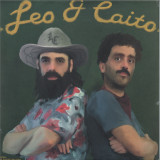
Lipelis & Carrot Green - Leo & Caito EP

System 108 resident Lipelis teams up with Carrot Green from Rio de Janeiro to create a dreamy, summer vibed EP simply dedicated to them both: Leo & Caito, with naming and artwork playfully inspired by Sertanejo genre standards.The duo emerged in early 2020 on the streets of Rio and started to jam same night in the studio of Carlos, who is affiliated with all cool gangs of the Brazilian dance scene. Just like on Lipelis's critically acclaimed Function As A Meaning EP (a System 108 instant classic by now!), things took off by themselves: intuitive sampling of chords taken from Brazilian gospel found some unexpected modular synth tweaking. For good!"Rolando Nascer do Sol" is THE track, that the duo is particularly proud of. In the words of Lipelis, who has once spinned it at Gop Tun carnival party, in a b2b set w/ Millos Kaiser - 'it produced an unforgettable euphoric effect".Having witnessed how all the tracks work on the dancefloors not only in Brazil, we are uber-excited to finally release this 4-track EP!

nicht am Lager

Bestelle jetzt und wir bestellen den Artikel für dich beim Lieferanten.


Last In: vor 14 Monaten
Triptides - Predictions LP

Channeling the spirit of the beach from radio waves echoing throughout space, Triptides began in the bohemian basements of Bloomington, Indiana in 2010, where Glenn Brigman and Josh Menashe shared ideas and influences before evolving to craft a complex yet cohesive range of lush, "psychedelic beach-pop" sounds. Originally released in 2013 (Stroll On records), Predictions is Triptides' third album. Taking production quality to a whole other level, it's their first professional studio recorded album evolving from home-made lo-fi production on Tascam 8-track cassette recorders. The snappy surf pop of the band's previous album has been replaced by tales of heartache alloyed with upbeat, exhilarating guitar pop a la The Byrds and their venerated lineage (Teenage Fanclub, Allah-Las, Temples). Predictions is another step closer to the West Coast where they'll relocate later, then becoming one of the most important Los Angeles Psychedelic pop bands. As part of Triptides' back catalog reissue series, Predictions has been carefully remixed, remastered, and repackaged and is now available in a limited deluxe edition colored LP.

vorbestellen08.12.2023

erscheint voraussichtlich am 08.12.2023


Last In: vor 2026 Jahren
The Cat Empire - Where The Angels Fall LP 2x12"

Aussie icons The Cat Empire have had an illustrious career, spanning decades, genres, and millions of adoring fans from across the globe.

The Cat Empire veröffentlichen ihr neuntes Studioalbum, gleichzeitig ihre erste Veröffentlichung nach einem großen Personalwechsel in 2022. Das multikulturelle, australische Kollektiv ist für sein stilistisches Amalgam aus diversen Einflüssen von Jazz, Ska und Reggae über Funk, Latin und Hip-Hop bis zu Klezmer und Rock bekannt. 'Where The Angels Fall' wurde in ihrer Heimatstadt Melbourne aufgenommen und ist nach rund 20 Jahren das erste Zusammentreffen mit dem Produzenten Andy Baldwin, der auch für ihr selbstbetiteltes Debüt 2003 verantwortlich war.

vorbestellen27.10.2023

erscheint voraussichtlich am 27.10.2023


Last In: vor 2026 Jahren
The David Tattersall Group - The David Tattersall Group LP

Prolific songwriter and guitar virtuoso David
Tattersall presents 11 new songs on themes of
memory, dreams, loneliness and love, featuring
nylon string guitar improvisations in the vein of
gypsy jazz legend Django Reinhardt.
 The David Tattersall Group are old friends who
rehearsed together for months in a small, smoky,
sweaty room, before recording the album on a
huge red boat moored on the River Thames, all
vintage microphones and wooden walls inside.
Friendship is a vital part of the record’s magic.
 Stylistic influences include Ronnie Lane, after
whom one song is named, and the nylon-string
guitar work of Jonathan Richman and Willie
Nelson. A pastoral mood prevails, with swells of
melancholic violin and Spaghetti Western
harmonica, backed by honky-tonk piano and the
dry drum sounds of Neil Young’s ‘Harvest’ period,
while the golden voice of Holly Holden adds a
touch of glamour to proceedings.
 David’s process includes much musical
improvisation and stream of consciousness writing,
but his end goal is to couple classic songwriting
with the collective chemistry of musicians playing
live in the studio. His lyrical influences include Tom
Verlaine, John Cooper Clarke and the New York
School of Poets, particularly James Schuyler.
 Pressed on 140g white vinyl with OBI strip.
 Includes digital download code

vorbestellen06.10.2023

erscheint voraussichtlich am 06.10.2023


Last In: vor 2026 Jahren
Gerry Rafferty - Snakes and Ladders LP

Gerry Rafferty

Snakes and Ladders LP

12inch0190296375668
Rhino
25.08.2023
  • A1: The Royal Mile
  • A2: I Was A Boy Scout
  • A3: Welcome To Hollywood
  • A4: Wastin’ Away
  • A5: Look At The Moon
  • A6: Bring It All Home
  • B1: The Garden Of England
  • B2: Johnny’s Song
  • B3: Didn’t I
  • B4: Syncopatin’ Sandy
  • B5: Café Le Cabotin
  • B6: Don’t Close The Doo

Snakes and Ladders, newly remastered at half-speed by Miles Showell at Abbey Road Studios, out on 25th August 2023. Originally released in 1980, the fourth album from Gerry Rafferty includes "The Garden Of England" which was recorded at Beatles producer George Martin's AIR studio in Montserrat and "Johnny's Song", a remake of a song previously released by his former band Stealer's Wheels.
With hits such as ‘Baker Street’, ‘Right Down The Line’ and ‘Night Owl’, Gerry Rafferty is one of Scotland’s and the UK’s finest songwriters and musicians in history. He first found success as part of the band The Humblebums, which included beloved comedian, actor and musician Billy Connolly. Rafferty went on to form Stealers Wheel with old school friend Joe Egan, who produced a number of successful albums alongside the rock classic Stuck In The Middle With You, a track which has transcended generations with notable syncs in films such as Tarantino’s Resevoir Dogs, and is still widely popular to this day. Following his departure from Stealers Wheel, Rafferty relaunched his solo career in 1978 with the album City To City, including hits such as ‘Right Down The Line’ and ‘Baker Street’, which features the iconic saxophone solo by Raphael Ravenscroft. Rafferty went on to release ten studio albums, solidifying his status one of the finest musicians and songwriters to come out of the UK.

vorbestellen25.08.2023

erscheint voraussichtlich am 25.08.2023


Last In: vor 2026 Jahren
Genya Ravan - ...And I Mean It!

Genya Ravan

...And I Mean It!

12inchBFD459LPP
BFD
23.06.2023

...And I Mean It is an amalgam of girl group, new wave, blues, pop, and folk-rock by Genya Ravan. To hear her exquisite voice on "Night Owl" soaring above her own backing vocals is intense, imagine Etta James backed by the Sex Pistols doing a rock version of "Earth Angel." Of all Ravan's work, ...And I Mean It is possibly the most concise and picture-perfect statement of what the woman is musically about. A girl group pioneer who worked with Richard Perry prior to his finding the Pointer Sisters groove, there is no doubt Ravan influenced that major producer, and his work did the same for her. "Pedal to the Medal" is high-end treble rock before it came into vogue. This is the other side of Siren, the album Genya produced for Ronnie Spector, with more emphasis on a good-time rocking party. "I'm Wired, Wired, Wired" is a rock & roll anthem for people who burn the candle at both ends, while "I Won't Sleep on the Wet Spot" embodies the unbridled sexuality of this album. The music crunches while Ravan uses her voice, her production skills, and her legacy to create something far removed from her days in Ten Wheel Drive. The horns are replaced by searing guitars and Charlie Giordano's magical piano work. The sound of the keyboard and its erratic splashes really are key to "I Won't Sleep on the Wet Spot," while the guitar and bass battle it out. "Steve...," on the other hand, is Goldie & the Gingerbreads ten years after. This Ravan/Conrad Taylor composition was the 45 from the album, and it has "hit" written all over it. 20th Century just didn't have the right mechanisms in place to get some of the great music they put out on radio, such a pity as Harriet Schock, Randy Edelman, and the fake soundtrack for All This and World War II (a Beatles tribute album) contained songs that should have been big hits. What did hit off this album, on FM radio as an album track, is the brilliant duet by Ian Hunter and Ravan, the subtle and folky "Junkman." Released on Hunter's excellent Once Bitten Twice Shy CD on Legacy in 2000, the song and the performance are timeless. Ravan once said: "I was asleep with the tv on, and was saying to myself...that's my voice...that's my song...that's me! I woke up to find "Junkman" on TV in a film." The song got placed in a cable movie without the producer's knowledge! "Junkman" was a sound not heard on FM radio prior to its release, much like MTV's "unplugged" versions of songs, but it is more unplugged than most of this material -- take the rocked-out version of Motown that is the cover of Marvin Gaye's "Stubborn Kinda Girl," or the Springsteen-style blast that is "It's Me," a tune Springsteen should cover.

vorbestellen23.06.2023

erscheint voraussichtlich am 23.06.2023


Last In: vor 2026 Jahren
Genya Ravan - ...And I Mean It!

Genya Ravan

...And I Mean It!

12inchBFD459LP
BFD
23.06.2023

...And I Mean It is an amalgam of girl group, new wave, blues, pop, and folk-rock by Genya Ravan. To hear her exquisite voice on "Night Owl" soaring above her own backing vocals is intense, imagine Etta James backed by the Sex Pistols doing a rock version of "Earth Angel." Of all Ravan's work, ...And I Mean It is possibly the most concise and picture-perfect statement of what the woman is musically about. A girl group pioneer who worked with Richard Perry prior to his finding the Pointer Sisters groove, there is no doubt Ravan influenced that major producer, and his work did the same for her. "Pedal to the Medal" is high-end treble rock before it came into vogue. This is the other side of Siren, the album Genya produced for Ronnie Spector, with more emphasis on a good-time rocking party. "I'm Wired, Wired, Wired" is a rock & roll anthem for people who burn the candle at both ends, while "I Won't Sleep on the Wet Spot" embodies the unbridled sexuality of this album. The music crunches while Ravan uses her voice, her production skills, and her legacy to create something far removed from her days in Ten Wheel Drive. The horns are replaced by searing guitars and Charlie Giordano's magical piano work. The sound of the keyboard and its erratic splashes really are key to "I Won't Sleep on the Wet Spot," while the guitar and bass battle it out. "Steve...," on the other hand, is Goldie & the Gingerbreads ten years after. This Ravan/Conrad Taylor composition was the 45 from the album, and it has "hit" written all over it. 20th Century just didn't have the right mechanisms in place to get some of the great music they put out on radio, such a pity as Harriet Schock, Randy Edelman, and the fake soundtrack for All This and World War II (a Beatles tribute album) contained songs that should have been big hits. What did hit off this album, on FM radio as an album track, is the brilliant duet by Ian Hunter and Ravan, the subtle and folky "Junkman." Released on Hunter's excellent Once Bitten Twice Shy CD on Legacy in 2000, the song and the performance are timeless. Ravan once said: "I was asleep with the tv on, and was saying to myself...that's my voice...that's my song...that's me! I woke up to find "Junkman" on TV in a film." The song got placed in a cable movie without the producer's knowledge! "Junkman" was a sound not heard on FM radio prior to its release, much like MTV's "unplugged" versions of songs, but it is more unplugged than most of this material -- take the rocked-out version of Motown that is the cover of Marvin Gaye's "Stubborn Kinda Girl," or the Springsteen-style blast that is "It's Me," a tune Springsteen should cover.

vorbestellen23.06.2023

erscheint voraussichtlich am 23.06.2023


Last In: vor 2026 Jahren
Antonin - En Silence LP

A nomad in France and elsewhere, a dandy of the highways and byways, Antonin carries his poetically gaunt figure along the beaches of Cap-Ferret, where he is originally from, his long Cossack hair and his profile of a night owl with a sharp sweetness. Born "sea-drunk", he grew up in a wooden hut on the sand in the middle of the pines, and his only masters are time, the ocean and the six strings of his acoustic guitar. His music is like him: sun-drenched, free as air, necessary as water. Heady pop ritornellos, ballads to sing in chorus and dance barefoot, island saudades. Somewhere between Nino Ferrer and Nino Rota, Air and Moustaki, with Antonin's casual and chameleon-like ability to pass himself off as an Italian or an Israeli when the wine or the atmosphere encourages him to do so.

vorbestellen19.05.2023

erscheint voraussichtlich am 19.05.2023


Last In: vor 2026 Jahren
Jungle Fire - Together/Movin’ On

Originally released as a digital single only available through Jungle Fire's Bandcamp page in the summer of 2020, their version of the Ray Barretto Latin Funk classic "Together" was put out in support of Black Lives Matter and acknowledgment that African culture has been the backbone, soul and spirit of societal fabric since the dawn of humanity. A song whose message and spirit always united and ignited the audience, it was a much-needed offering to fans at a time of escalated urgency in the sociopolitical climate. Now in 2023, F-Spot Records is proud to announce its official vinyl release alongside a previously unreleased track, "Movin' On" (originally recorded by Ray Camacho), on the flip. Often performing "Together" during their live shows as an instrumental interlude, it was only right to do the song justice by inviting long-time collaborator and frequent F-Spot featured singer Jamie Allensworth to join on lead vocals. Performing as a guest with the band numerous times and being a part of So-Cal's funk and soul community ranging from Orgone, Night Owls, and Mestizo Beat, Allensworth delivers a high-energy performance that keeps up with Jungle Fire's signature sound of blazing percussion, heavy beats, and fuzzed out guitars. On side B Allensworth is featured again, stepping up the energy even more into the full-on Latin Funk party, "Movin' On." Cut at a faster tempo and more drive than the original, Jungle Fire is the only group we can think of that can deliver this kind of performance, matched with Allensworth's gritty yet soulful lead, to bring you two sides of serious heat that the band has consistently brought over the past decade.

nicht am Lager

Bestelle jetzt und wir bestellen den Artikel für dich beim Lieferanten.


Last In: vor 2 Jahren
Night Owls - I Only Have Eyes For You

Limited one time pressing of 1000. Raising the bar yet again, Night Owls' first single of 2023 lays yet another set of classic soul songs on you, flipped into the band's signature style. On Side A we find The Flamingo's beloved Doo-Wop/soul hit from 1959, "I Only Have Eyes For You," re-imagined to wind your waistline with Night Owls' longtime friend and collaborator - the one-and-only Chris Dowd from Los Angeles' legendary Fishbone on vocals. Known for tunes like "Pouring Rain" and "Everyday Sunshine" Dowd brings his signature soul drenched delivery with a hint of rude boy grit to match the rhythmic and tonal stylings of the group. Wanting to take things to the next level, producer Dan Ubick called in veteran underground Jamaican legend Tippa Lee (Stones Throw, Dub Club, Jammy's, Greensleeves, etc.) to sprinkle his magic rasta dust on top and deejay/toast on the track and the results are burning hot.
But wait, that's not all!! On Side B we find the beloved beat diggers classic "Live And Let Live," originally performed by Jimmy Jones in 1970 on Deke Records out of Chicago. For the Fender Rhodes-driven reggaefied version here, Night Owls roped in another longtime friend - Los Angeles kingpin and mover ’n' shaker, "Music Man" Miles Tackett to add his soulful vocals to the track and it's as buttery as cornbread from Cracker Barrel! Tackett is the mastermind behind globe-trotting funk/soul collective Breakestra (of which Night Owl Dan Ubick was a member) and legendary weekly L.A. dance parties like Funky Sole, Root Down and The Breaks. This side also includes Destani Wolf, who many will remember was featured on Night Owls’ version of “Let’s Stay Together”, providing the beautiful ‘verbed out backing vocals

nicht am Lager

Bestelle jetzt und wir bestellen den Artikel für dich beim Lieferanten.


Last In: vor 2 Jahren
Connie Price & The Keystones (ft. Guilty Simpson & Destani Wolf) - Everybody Pays

Superjock Records presents Volume 13 in the ever evolving “NOLA Breaks” series! This time around, Los Angeles producer Dan Ubick partners up with Detroit native and longtime J Dilla and Madlib collaborator, Guilty Simpson (Stones Throw). Simpson spins a cautionary tale of how limited opportunity and having to hustle to make ends meet can have dire consequences on our communities. With a lush string arrangement and a funky backbone, Connie Price & The Keystones provide the perfect soundtrack to the subject at hand. “Everybody Pays” also features the sympathetic and haunting voice of Bay Area soul chanteuse Destani Wolf (The Pharcyde, Matisyahu, Night Owls) and emotional cello stylings of Breakestra and Funky Sole grand puba “Music Man” Miles Tackett. To top it off, Professor Shorthair lays down the perfect cuts to bring the message home. On the flip-side, Professor Shorthair provides an epic remix of “Everybody Pays” with a harder edge while maintaining the emotional feel of the original. - Volume 13 in the “NOLA Breaks” series is a must for Funk and Hip-Hop fans alike. Produced, recorded and mixed by Dan Ubick for DanUbe Productions at Lions Den Studios, Topanga, CA

nicht am Lager

Bestelle jetzt und wir bestellen den Artikel für dich beim Lieferanten.


Last In: vor 2 Jahren
Night Owls - I Only Have Eyes For You

Raising the bar yet again, Night Owls' first single of 2023 lays yet another set of classic soul songs on you, flipped into the band's signature style. On Side A we find The Flamingo's beloved Doo-Wop/soul hit from 1959, "I Only Have Eyes For You," re-imagined to wind your waistline with Night Owls' longtime friend and collaborator - the one-and-only Chris Dowd from Los Angeles' legendary Fishbone on vocals. Known for tunes like "Pouring Rain" and "Everyday Sunshine" Dowd brings his signature soul drenched delivery with a hint of rude boy grit to match the rhythmic and tonal stylings of the group. Wanting to take things to the next level, producer Dan Ubick called in veteran underground Jamaican legend Tippa Lee (Stones Throw, Dub Club, Jammy's, Greensleeves, etc.) to sprinkle his magic rasta dust on top and deejay/toast on the track and the results are burning hot.

But wait, that's not all!! On Side B we find the beloved beat diggers classic "Live And Let Live," originally performed by Jimmy Jones in 1970 on Deke Records out of Chicago. For the Fender Rhodes-driven reggaefied version here, Night Owls roped in another longtime friend - Los Angeles kingpin and mover ’n' shaker, "Music Man" Miles Tackett to add his soulful vocals to the track and it's as buttery as cornbread from Cracker Barrel! Tackett is the mastermind behind globe-trotting funk/soul collective Breakestra (of which Night Owl Dan Ubick was a member) and legendary weekly L.A. dance parties like Funky Sole, Root Down and The Breaks. This side also includes Destani Wolf, who many will remember was featured on Night Owls’ version of “Let’s Stay Together”, providing the beautiful ‘verbed out backing vocals.

vorbestellen24.03.2023

erscheint voraussichtlich am 24.03.2023


Last In: vor 2026 Jahren
Night Owls - Cramp Your Style (feat. N’Dea Davenport) b/w Your Old Standby (feat. Trish Toledo)

After the success of their full-length LP earlier this year, Night Owls are back for more and ready to take the bar even higher! This first 45 from a new string of recording sessions features two heavy hitters in the funk/soul community; N'Dea Davenport from London's famed The Brand New Heavies and SoCal's own Trish Toledo (Now-Again Records, Silent Giant, Mango Hill).
Side A is the classic soul body mover "Cramp Your Style" (All the People) featuring N'Dea Davenport, which Hip-Hop heads will recognize as the foundation for Boogie Down Productions' "Still #1" and Cypress Hill's "Real Estate." Davenport's soulful delivery elevates Night Owls' flip, echoing the famous Studio One riddim "Greedy G" by Brentford Road All Stars and the quirks of the original. Side B follows up with Motown classic "Your Old Standby" by Mary Wells and features Latina Soul phenom Trish Toledo. Adding a little more bounce and groove to the original, Night Owls’ flip sets the backdrop for Toledo to shine brightly and deliver a vocal performance that perfectly echoes Mary Wells in her youth.
Both sides are must-haves, be it spinning at a party or slowing things down slightly while cruising around the neighborhood, just in time for the holiday season. Produced by Dan Ubick and Night Owls. Recorded and Mixed by Dan Ubick for DanUbe Productions at The Lions Den in Topanga, CA.

vorbestellen13.01.2023

erscheint voraussichtlich am 13.01.2023


Last In: vor 2026 Jahren
JOHN IVERSON - MANY WORLDS INTERPRETATION LP

Many Worlds Interpretation is a collection of cosmic Americana for electronics, guitar, and percussion culled from Jon Iverson’s extensive home-studio archive. 1984, Los Osos, California. In a small cinderblock cottage, hand-painted with bright psychedelic flora, Jon Iverson created vibrant new worlds. He spent long days and nights immersed in sound, perfecting home recording on his 8-track reel-to-reel, combining his love for kosmische and Berlin School electronics with an infatuation with ethnographic sounds and expansive guitar music. In a duo with fellow sonic traveler Thomas Walters, Iverson released missives from the studio on a self-titled LP released on country legend Guthrie Thomas’ Eagle Records. That release featured
three electro-acoustic compositions (“Naningo”, “River Fen”, and “Fox Tales”) as well as a gathering of guitar duo tapestries. Many Worlds Interpretation re-imagines those interplanetary works alongside several unreleased compositions that also feature synthesizer, guitar, and percussion, creating a re-visioned album which leans into Iverson’s electronic studio wizardry.

All songs have been carefully transferred from analog tape to high resolution digital, retaining their vintage studio warmth, but mixed and mastered for modern ears and audio systems. The album is pressed at 45rpm, further enhancing the audiophile experience.

Artist Statement

I worked in a Harley Davidson parts warehouse in the summer of 1976 in the San Francisco Bay Area. The goal was to save enough money to buy transportation for college and a Teac 4 track 1/4" reel to reel tape machine. By September there was a rusting monkey-vomit green car in the driveway and shiny new Teac with a Sony condenser microphone in the bedroom. At this point I had been playing guitar for a dozen years and like most children of the sixties, dreamed of joining
a band.

Went to college instead to study business.

But all was not lost. 1978-1979 was spent as Weird Al Yankovic's roommate and we recorded and created enough songs to play shows around San Luis Obispo, California, where we were attending college. Many of those recordings have yet to be heard by the public, including the first performances of My Bologna and many other parodies of pop songs of the day. We sent tapes to Dr. Demento, we auditioned for The Gong Show and were barred from playing at the local college after one memorable performance. Wild times.

I, however, was more intent on working on "serious" music, with albums from Vangelis, Tangerine Dream and Jean Michel Jarre providing inspiration. DJing at the local college radio station and then public radio outlet provided exposure to an endless stream of obscure albums (Sky Records from Germany was a particular favourite). Most of them would never make it to the air, but my buddies and I would pass them around like exotic treasure.

Fast forward a couple more years and I had picked up a Mini-Moog and eventually a Prophet V synthesizer as well as starting a collection of instruments from around the world. The Teac and synths formed the basis for a growing DIY studio that had taken over a modest-size garage (pictured on the cover) that had been converted into a two room cottage in Los Osos, California.

The Teac was eventually joined by a rented Otari 1/2" 8-track and then finally a vintage MCI JH-100 2" 16-track. The compositions on this album were recorded on these three machines between 1982 and 1989. At some point an Apple II computer with Alpha Syntauri sound card and keyboard were added and then later the first personal computer sampling hardware/software kit, the Decillionix DX-1. The DX-1 forms the rhythm track for “Fox Tales” and the Alpha Syntauri was programmed to create the pulsing synth for “Naningo”. “River Fen” was tracked with both the Alpha Syntauri and the Prophet V.

I knew this music wasn't commercial, but didn't care. It was inspiring working with the first computer-based synths and semi-pro gear. Home studios were still rare in the early 80s until the Tascam Portastudio blew the DIY door wide-open. But I was more interested in sound quality so stuck with reels of tape instead of lower fidelity cassettes.

During the time these songs were recorded, I was also collaborating with my good friend and mandolinist, Tom Walters. “River Fen”, “Naningo” and “Fox Tales”, were solo recordings that also ended up on the first Iverson & Walters album, First Collection. The other four pieces on this new LP were never fully finished or released until now.

— Jon Iverson, September 2022

nicht am Lager

Bestelle jetzt und wir bestellen den Artikel für dich beim Lieferanten.


Last In: vor 3 Jahren
Lee Tracy & Isaac Manning - Is it What You Want

As the sun sets on a quaint East Nashville house, a young man bares a piece of his soul. Facing the camera, sporting a silky suit jacket/shirt/slacks/fingerless gloves ensemble that announces "singer" before he's even opened his mouth, Lee Tracy Johnson settles onto his stage, the front yard. He sways to the dirge-like drum machine pulse of a synth-soaked slow jam, extends his arms as if gaining his balance, and croons in affecting, fragile earnest, "I need your love… oh baby…"

Dogs in the yard next door begin barking. A mysterious cardboard robot figure, beamed in from galaxies unknown and affixed to a tree, is less vocal. Lee doesn't acknowledge either's presence. He's busy feeling it, arms and hands gesticulating. His voice rises in falsetto over the now-quiet dogs, over the ambient noise from the street that seeps into the handheld camcorder's microphone, over the recording of his own voice played back from a boombox off-camera. After six minutes the single, continuous shot ends. In this intimate creative universe there are no re-takes. There are many more music videos to shoot, and as Lee later puts it, "The first time you do it is actually the best. Because you can never get that again. You expressing yourself from within."

"I Need Your Love" dates from a lost heyday. From some time in the '80s or early '90s, when Lee Tracy (as he was known in performance) and his music partner/producer/manager Isaac Manning committed hours upon hours of their sonic and visual ideas to tape. Embracing drum machines and synthesizers – electronics that made their personal futurism palpable – they recorded exclusively at home, live in a room into a simple cassette deck. Soul, funk, electro and new wave informed their songs, yet Lee and Isaac eschewed the confinement of conventional categories and genres, preferring to let experimentation guide them.

"Anytime somebody put out a new record they had the same instruments or the same sound," explains Isaac. "So I basically wanted to find something that's really gonna stand out away from all of the rest of 'em." Their ethos meant that every idea they came up with was at least worth trying: echoed out half-rapped exhortations over frantic techno-style beats, gospel synth soul, modal electro-funk, oddball pop reinterpretations, emo AOR balladry, nods to Prince and the Fat Boys, or arrangements that might collapse mid-song into a mess of arcade game-ish blips before rallying to reach the finish line. All of it conjoined by consistent tape hiss, and most vitally, Lee's chameleonic voice, which managed to wildly shape shift and still evoke something sincere – whether toggling between falsetto and tenor exalting Jesus's return, or punctuating a melismatic romantic adlib with a succinct, "We all know how it feels to be alone."

"People think we went to a studio," says Isaac derisively. "We never went to no studio. We didn't have the money to go to no studio! We did this stuff at home. I shot videos in my front yard with whatever we could to get things together." Sometimes Isaac would just put on an instrumental record, be it "Planet Rock" or "Don't Cry For Me Argentina" (from Evita), press "record," and let Lee improvise over it, yielding peculiar love songs, would-be patriotic anthems, or Elvis Presley or Marilyn Monroe tributes. Technical limitations and a lack of professional polish never dissuaded them. They believed they were onto something.

"That struggle," Isaac says, "made that sound sound good to me."

In the parlance of modern music criticism Lee and Isaac's dizzying DIY efforts would inevitably be described as "outsider." But "outsider" carries the burden of untold additional layers of meaning if you're Black and from the South, creating on a budget, and trying to get someone, anyone within the country music capital of the world to take your vision seriously. "What category should we put it in?" Isaac asks rhetorically. "I don't know. All I know is feeling. I ain't gonna name it nothing. It's music. If it grabs your soul and touch your heart that's what it basically is supposed to do."

=

Born in 1963, the baby boy of nine siblings, Lee Tracy spent his earliest years living amidst the shotgun houses on Nashville's south side. "We was poor, man!" he says, recalling the outhouse his family used for a bathroom and the blocks of ice they kept in the kitchen to chill perishables. "But I actually don't think I really realized I was in poverty until I got grown and started thinking about it." Lee's mom worked at the Holiday Inn; his dad did whatever he had to do, from selling fruit from a horse drawn cart to bootlegging. "We didn't have much," Lee continues, "but my mother and my father got us the things we needed, the clothes on our back." By the end of the decade with the city's urban renewal programs razing entire neighborhoods to accommodate construction of the Interstate, the family moved to Edgehill Projects. Lee remembers music and art as a constant source of inspiration for he and his brothers and sisters – especially after seeing the Jackson 5 perform on Ed Sullivan. "As a small child I just knew that was what I wanted to do."

His older brother Don began musically mentoring him, introducing Lee to a variety of instruments and sounds. "He would never play one particular type of music, like R&B," says Lee. "I was surrounded by jazz, hard rock and roll, easy listening, gospel, reggae, country music; I mean I was a sponge absorbing all of that." Lee taught himself to play drums by beating on cardboard boxes, gaining a rep around the way for his timekeeping, and his singing voice. Emulating his favorites, Earth Wind & Fire and Cameo, he formed groups with other kids with era-evocative band names like Concept and TNT Connection, and emerged as the leader of disciplined rehearsals. "I made them practice," says Lee. "We practiced and practiced and practiced. Because I wanted that perfection." By high school the most accomplished of these bands would take top prize in a prominent local talent show. It was a big moment for Lee, and he felt ready to take things to the next level. But his band-mates had other ideas.

"I don't know what happened," he says, still miffed at the memory. "It must have blew they mind after we won and people started showing notice, because it's like everybody quit! I was like, where the hell did everybody go?" Lee had always made a point of interrogating prospective musicians about their intentions before joining his groups: were they really serious or just looking for a way to pick up girls? Now he understood even more the importance of finding a collaborator just as committed to the music as he was.

=

Isaac Manning had spent much of his life immersed in music and the arts – singing in the church choir with his family on Nashville's north side, writing, painting, dancing, and working various gigs within the entertainment industry. After serving in the armed forces, in the early '70s he ran The Teenage Place, a music and performance venue that catered to the local youth. But he was forced out of town when word of one of his recreational routines created a stir beyond the safe haven of his bohemian circles.

"I was growing marijuana," Isaac explains. "It wasn't no business, I was smoking it myself… I would put marijuana in scrambled eggs, cornbread and stuff." His weed use originated as a form of self-medication to combat severe tooth pain. But when he began sharing it with some of the other young people he hung out with, some of who just so happened to be the kids of Nashville politicians, the cops came calling. "When I got busted," he remembers, "they were talking about how they were gonna get rid of me because they didn't want me saying nothing about they children because of the politics and stuff. So I got my family, took two raggedy cars, and left Nashville and went to Vegas."

Out in the desert, Isaac happened to meet Chubby Checker of "The Twist" fame while the singer was gigging at The Flamingo. Impressed by Isaac's zeal, Checker invited him to go on the road with him as his tour manager/roadie/valet. The experience gave Isaac a window into a part of the entertainment world he'd never encountered – a glimpse of what a true pop act's audience looked like. "Chubby Checker, none of his shows were played for Black folks," he remembers. "All his gigs were done at high-class white people areas." Returning home after a few years with Chubby, Isaac was properly motivated to make it in Music City. He began writing songs and scouting around Nashville for local talent anywhere he could find it with an expressed goal: "Find someone who can deliver your songs the way you want 'em delivered and make people feel what you want them to feel."

One day while walking through Edgehill Projects Isaac heard someone playing the drums in a way that made him stop and take notice. "The music was so tight, just the drums made me feel like, oh I'm-a find this person," he recalls. "So I circled through the projects until I found who it was.

"That's how I met him – Lee Tracy. When I found him and he started singing and stuff, I said, ohhh, this is somebody different."

=

Theirs was a true complementary partnership: young Lee possessed the raw talent, the older Isaac the belief. "He's really the only one besides my brother and my family that really seen the potential in me," says Lee. "He made me see that I could do it."

Isaac long being a night owl, his house also made for a fertile collaborative environment – a space where there always seemed to be a new piece of his visual art on display: paintings, illustrations, and dolls and figures (including an enigmatic cardboard robot). Lee and Issac would hang out together and talk, listen to music, conjure ideas, and smoke the herb Isaac had resumed growing in his yard. "It got to where I could trust him, he could trust me," Isaac says of their bond. They also worked together for hours on drawings, spreading larges rolls of paper on the walls and sketching faces with abstract patterns and imagery: alien-like beings, tri-horned horse heads, inverted Janus-like characters where one visage blurred into the other.

Soon it became apparent that they didn't need other collaborators; self-sufficiency was the natural way forward. At Isaac's behest Lee, already fed up with dealing with band musicians, began playing around with a poly-sonic Yamaha keyboard at the local music store. "It had everything on it – trumpet, bass, drums, organ," remembers Lee. "And that's when I started recording my own stuff."

The technology afforded Lee the flexibility and independence he craved, setting him on a path other bedroom musicians and producers around the world were simultaneously following through the '80s into the early '90s. Saving up money from day jobs, he eventually supplemented the Yamaha Isaac had gotten him with Roland and Casio drum machines and a Moog. Lee was living in an apartment in Hillside at that point caring for his dad, who'd been partially paralyzed since early in life. In the evenings up in his second floor room, the music put him in a zone where he could tune out everything and lose himself in his ideas.

"Oh I loved it," he recalls. "I would really experiment with the instruments and use a lot of different sound effects. I was looking for something nobody else had. I wanted something totally different. And once I found the sound I was looking for, I would just smoke me a good joint and just let it go, hit the record button." More potent a creative stimulant than even Isaac's weed was the holistic flow and spontaneity of recording. Between sessions at Isaac's place and Lee's apartment, their volume of output quickly ballooned.

"We was always recording," says Lee. "That's why we have so much music. Even when I went to Isaac's and we start creating, I get home, my mind is racing, I gotta start creating, creating, creating. I remember there were times when I took a 90-minute tape from front to back and just filled it up."

"We never practiced," says Isaac. "See, that was just so odd about the whole thing. I could relate to him, and tell him about the songs I had ideas for and everything and stuff. And then he would bring it back or whatever, and we'd get together and put it down." Once the taskmaster hell bent on rehearsing, Lee had flipped a full 180. Perfection was no longer an aspiration, but the enemy of inspiration.

"I seen where practicing and practicing got me," says Lee. "A lot of musicians you get to playing and they gotta stop, they have to analyze the music. But while you analyzing you losing a lot of the greatness of what you creating. Stop analyzing what you play, just play! And it'll all take shape."

=

"I hope you understood the beginning of the record because this was invented from a dream I had today… (You tell me, I'll tell you, we'll figure it out together)" – Lee Tracy and Isaac Manning, "Hope You Understand"

Lee lets loose a maniacal cackle when he acknowledges that the material that he and Isaac recorded was by anyone's estimation pretty out there. It's the same laugh that commences "Hope You Understand" – a chaotic transmission that encapsulates the duality at the heart of their music: a stated desire to reach people and a compulsion to go as leftfield as they saw fit.

"We just did it," says Lee. "We cut the music on and cut loose. I don't sit around and write. I do it by listening, get a feeling, play the music, and the lyrics and stuff just come out of me."

The approach proved adaptable to interpreting other artists' material. While recording a cover of Whitney Houston's pop ballad "Saving All My Love For You," Lee played Whitney's version in his headphones as he laid down his own vocals – partially following the lyrics, partially using them as a departure point. The end result is barely recognizable compared with the original, Lee and Isaac having switched up the time signature and reinvented the melody along the way towards morphing a slick mainstream radio standard into something that sounds solely their own.

"I really used that song to get me started," says Lee. "Then I said, well I need something else, something is missing. Something just came over me. That's when I came up with 'Is It What You Want.'"

The song would become the centerpiece of Lee and Isaac's repertoire. Pushed along by a percolating metronomic Rhythm King style beat somewhere between a military march and a samba, "Is It What You Want" finds Lee pleading the sincerity of his commitment to a potential love interest embellished by vocal tics and hiccups subtlely reminiscent of his childhood hero MJ. Absent chord changes, only synth riffs gliding in and out like apparitions, the song achieves a lingering lo-fi power that leaves you feeling like it's still playing, somewhere, even after the fade out.

"I don't know, it's like a real spiritual song," Lee reflects. "But it's not just spiritual. To me the more I listen to it it's like about everything that you do in your everyday life, period. Is it what you want? Do you want a car or you don't want a car? Do you want Jesus or do you want the Devil? It's basically asking you the question. Can't nobody answer the question but you yourself."

In 1989 Lee won a lawsuit stemming from injuries sustained from a fight he'd gotten into. He took part of the settlement money and with Isaac pressed up "Saving All My Love For You" b/w "Is It What You Want" as a 45 single. Isaac christened the label One Chance Records. "Because that's all we wanted," he says with a laugh, "one chance."

Isaac sent the record out to radio stations and major labels, hoping for it to make enough noise to get picked up nationally. But the response he and Lee were hoping for never materialized. According to Isaac the closest the single got to getting played on the radio is when a disk jock from a local station made a highly unusual announcement on air: "The dude said on the radio, 107.5 – 'We are not gonna play 'Is It What You Want.' We cracked up! Wow, that's deep.

"It was a whole racist thing that was going on," he reflects. "So we just looked over and kept on going. That was it. That was about the way it goes… If you were Black and you were living in Nashville and stuff, that's the way you got treated." Isaac already knew as much from all the times he'd brought he and Lee's tapes (even their cache of country music tunes) over to Music Row to try to drum up interest to no avail.

"Isaac, he really worked his ass off," says Lee. "He probably been to every record place down on Music Row." Nashville's famed recording and music business corridor wasn't but a few blocks from where Lee grew up. Close enough, he remembers, for him to ride his bike along its back alleys and stumble upon the occasional random treasure, like a discarded box of harmonicas. Getting in through the front door, however, still felt a world away.

"I just don't think at the time our music fell into a category for them," he concedes. "It was before its time."

=

Lee stopped making music some time in the latter part of the '90s, around the time his mom passed away and life became increasingly tough to manage. "When my mother died I had a nervous breakdown," he says, "So I shut down for a long time. I was in such a sadness frame of mind. That's why nobody seen me. I had just disappeared off the map." He fell out of touch with Isaac, and in an indication of just how bad things had gotten for him, lost track of all the recordings they'd made together. Music became a distant memory.

Fortunately, Isaac kept the faith. In a self-published collection of his poetry – paeans to some of his favorite entertainment and public figures entitled Friends and Dick Clark – he'd written that he believed "music has a life of its own." But his prescience and presence of mind were truly manifested in the fact that he kept an archive of he and Lee's work. As perfectly imperfect as "Is It What You Want" now sounds in a post-Personal Space world, Lee and Isaac's lone official release was in fact just a taste. The bulk of the Is It What You Want album is culled from the pair's essentially unheard home recordings – complete songs, half-realized experiments, Isaac's blue monologues and pronouncements et al – compiled, mixed and programmed in the loose and impulsive creative spirit of their regular get-togethers from decades ago. The rest of us, it seems, may have finally caught up to them.

On the prospect of at long last reaching a wider audience, Isaac says simply, "I been trying for a long time, it feels good." Ever the survivor, he adds, "The only way I know how to make it to the top is to keep climbing. If one leg break on the ladder, hey, you gotta fix it and keep on going… That's where I be at. I'll kill death to make it out there."

For Lee it all feels akin to a personal resurrection: "It's like I was in a tomb and the tomb was opened and I'm back… Man, it feels so great. I feel like I'm gonna jump out of my skin." Success at this stage of his life, he realizes, probably means something different than what it did back when he was singing and dancing in Isaac's front yard. "What I really mean by 'making it,'" he explains isn't just the music being heard but, "the story being told."

Occasionally Lee will pull up "Is It What You Want" on YouTube on his phone, put on his headphones, and listen. He remembers the first time he heard his recorded voice. How surreal it was, how he thought to himself, "Is that really me?" What would he say to that younger version of himself now?

"I would probably tell myself, hang in there, don't give up. Keep striving for the goal. And everything will work out."

Despite what's printed on the record label, sometimes you do get more than one chance.

nicht am Lager

Bestelle jetzt und wir bestellen den Artikel für dich beim Lieferanten.


Last In: vor 3 Jahren
Lee Tracy & Isaac Manning - Is it What You Want LP

As the sun sets on a quaint East Nashville house, a young man bares a piece of his soul. Facing the camera, sporting a silky suit jacket/shirt/slacks/fingerless gloves ensemble that announces "singer" before he's even opened his mouth, Lee Tracy Johnson settles onto his stage, the front yard. He sways to the dirge-like drum machine pulse of a synth-soaked slow jam, extends his arms as if gaining his balance, and croons in affecting, fragile earnest, "I need your love… oh baby…"

Dogs in the yard next door begin barking. A mysterious cardboard robot figure, beamed in from galaxies unknown and affixed to a tree, is less vocal. Lee doesn't acknowledge either's presence. He's busy feeling it, arms and hands gesticulating. His voice rises in falsetto over the now-quiet dogs, over the ambient noise from the street that seeps into the handheld camcorder's microphone, over the recording of his own voice played back from a boombox off-camera. After six minutes the single, continuous shot ends. In this intimate creative universe there are no re-takes. There are many more music videos to shoot, and as Lee later puts it, "The first time you do it is actually the best. Because you can never get that again. You expressing yourself from within."

"I Need Your Love" dates from a lost heyday. From some time in the '80s or early '90s, when Lee Tracy (as he was known in performance) and his music partner/producer/manager Isaac Manning committed hours upon hours of their sonic and visual ideas to tape. Embracing drum machines and synthesizers – electronics that made their personal futurism palpable – they recorded exclusively at home, live in a room into a simple cassette deck. Soul, funk, electro and new wave informed their songs, yet Lee and Isaac eschewed the confinement of conventional categories and genres, preferring to let experimentation guide them.

"Anytime somebody put out a new record they had the same instruments or the same sound," explains Isaac. "So I basically wanted to find something that's really gonna stand out away from all of the rest of 'em." Their ethos meant that every idea they came up with was at least worth trying: echoed out half-rapped exhortations over frantic techno-style beats, gospel synth soul, modal electro-funk, oddball pop reinterpretations, emo AOR balladry, nods to Prince and the Fat Boys, or arrangements that might collapse mid-song into a mess of arcade game-ish blips before rallying to reach the finish line. All of it conjoined by consistent tape hiss, and most vitally, Lee's chameleonic voice, which managed to wildly shape shift and still evoke something sincere – whether toggling between falsetto and tenor exalting Jesus's return, or punctuating a melismatic romantic adlib with a succinct, "We all know how it feels to be alone."

"People think we went to a studio," says Isaac derisively. "We never went to no studio. We didn't have the money to go to no studio! We did this stuff at home. I shot videos in my front yard with whatever we could to get things together." Sometimes Isaac would just put on an instrumental record, be it "Planet Rock" or "Don't Cry For Me Argentina" (from Evita), press "record," and let Lee improvise over it, yielding peculiar love songs, would-be patriotic anthems, or Elvis Presley or Marilyn Monroe tributes. Technical limitations and a lack of professional polish never dissuaded them. They believed they were onto something.

"That struggle," Isaac says, "made that sound sound good to me."

In the parlance of modern music criticism Lee and Isaac's dizzying DIY efforts would inevitably be described as "outsider." But "outsider" carries the burden of untold additional layers of meaning if you're Black and from the South, creating on a budget, and trying to get someone, anyone within the country music capital of the world to take your vision seriously. "What category should we put it in?" Isaac asks rhetorically. "I don't know. All I know is feeling. I ain't gonna name it nothing. It's music. If it grabs your soul and touch your heart that's what it basically is supposed to do."

=

Born in 1963, the baby boy of nine siblings, Lee Tracy spent his earliest years living amidst the shotgun houses on Nashville's south side. "We was poor, man!" he says, recalling the outhouse his family used for a bathroom and the blocks of ice they kept in the kitchen to chill perishables. "But I actually don't think I really realized I was in poverty until I got grown and started thinking about it." Lee's mom worked at the Holiday Inn; his dad did whatever he had to do, from selling fruit from a horse drawn cart to bootlegging. "We didn't have much," Lee continues, "but my mother and my father got us the things we needed, the clothes on our back." By the end of the decade with the city's urban renewal programs razing entire neighborhoods to accommodate construction of the Interstate, the family moved to Edgehill Projects. Lee remembers music and art as a constant source of inspiration for he and his brothers and sisters – especially after seeing the Jackson 5 perform on Ed Sullivan. "As a small child I just knew that was what I wanted to do."

His older brother Don began musically mentoring him, introducing Lee to a variety of instruments and sounds. "He would never play one particular type of music, like R&B," says Lee. "I was surrounded by jazz, hard rock and roll, easy listening, gospel, reggae, country music; I mean I was a sponge absorbing all of that." Lee taught himself to play drums by beating on cardboard boxes, gaining a rep around the way for his timekeeping, and his singing voice. Emulating his favorites, Earth Wind & Fire and Cameo, he formed groups with other kids with era-evocative band names like Concept and TNT Connection, and emerged as the leader of disciplined rehearsals. "I made them practice," says Lee. "We practiced and practiced and practiced. Because I wanted that perfection." By high school the most accomplished of these bands would take top prize in a prominent local talent show. It was a big moment for Lee, and he felt ready to take things to the next level. But his band-mates had other ideas.

"I don't know what happened," he says, still miffed at the memory. "It must have blew they mind after we won and people started showing notice, because it's like everybody quit! I was like, where the hell did everybody go?" Lee had always made a point of interrogating prospective musicians about their intentions before joining his groups: were they really serious or just looking for a way to pick up girls? Now he understood even more the importance of finding a collaborator just as committed to the music as he was.

=

Isaac Manning had spent much of his life immersed in music and the arts – singing in the church choir with his family on Nashville's north side, writing, painting, dancing, and working various gigs within the entertainment industry. After serving in the armed forces, in the early '70s he ran The Teenage Place, a music and performance venue that catered to the local youth. But he was forced out of town when word of one of his recreational routines created a stir beyond the safe haven of his bohemian circles.

"I was growing marijuana," Isaac explains. "It wasn't no business, I was smoking it myself… I would put marijuana in scrambled eggs, cornbread and stuff." His weed use originated as a form of self-medication to combat severe tooth pain. But when he began sharing it with some of the other young people he hung out with, some of who just so happened to be the kids of Nashville politicians, the cops came calling. "When I got busted," he remembers, "they were talking about how they were gonna get rid of me because they didn't want me saying nothing about they children because of the politics and stuff. So I got my family, took two raggedy cars, and left Nashville and went to Vegas."

Out in the desert, Isaac happened to meet Chubby Checker of "The Twist" fame while the singer was gigging at The Flamingo. Impressed by Isaac's zeal, Checker invited him to go on the road with him as his tour manager/roadie/valet. The experience gave Isaac a window into a part of the entertainment world he'd never encountered – a glimpse of what a true pop act's audience looked like. "Chubby Checker, none of his shows were played for Black folks," he remembers. "All his gigs were done at high-class white people areas." Returning home after a few years with Chubby, Isaac was properly motivated to make it in Music City. He began writing songs and scouting around Nashville for local talent anywhere he could find it with an expressed goal: "Find someone who can deliver your songs the way you want 'em delivered and make people feel what you want them to feel."

One day while walking through Edgehill Projects Isaac heard someone playing the drums in a way that made him stop and take notice. "The music was so tight, just the drums made me feel like, oh I'm-a find this person," he recalls. "So I circled through the projects until I found who it was.

"That's how I met him – Lee Tracy. When I found him and he started singing and stuff, I said, ohhh, this is somebody different."

=

Theirs was a true complementary partnership: young Lee possessed the raw talent, the older Isaac the belief. "He's really the only one besides my brother and my family that really seen the potential in me," says Lee. "He made me see that I could do it."

Isaac long being a night owl, his house also made for a fertile collaborative environment – a space where there always seemed to be a new piece of his visual art on display: paintings, illustrations, and dolls and figures (including an enigmatic cardboard robot). Lee and Issac would hang out together and talk, listen to music, conjure ideas, and smoke the herb Isaac had resumed growing in his yard. "It got to where I could trust him, he could trust me," Isaac says of their bond. They also worked together for hours on drawings, spreading larges rolls of paper on the walls and sketching faces with abstract patterns and imagery: alien-like beings, tri-horned horse heads, inverted Janus-like characters where one visage blurred into the other.

Soon it became apparent that they didn't need other collaborators; self-sufficiency was the natural way forward. At Isaac's behest Lee, already fed up with dealing with band musicians, began playing around with a poly-sonic Yamaha keyboard at the local music store. "It had everything on it – trumpet, bass, drums, organ," remembers Lee. "And that's when I started recording my own stuff."

The technology afforded Lee the flexibility and independence he craved, setting him on a path other bedroom musicians and producers around the world were simultaneously following through the '80s into the early '90s. Saving up money from day jobs, he eventually supplemented the Yamaha Isaac had gotten him with Roland and Casio drum machines and a Moog. Lee was living in an apartment in Hillside at that point caring for his dad, who'd been partially paralyzed since early in life. In the evenings up in his second floor room, the music put him in a zone where he could tune out everything and lose himself in his ideas.

"Oh I loved it," he recalls. "I would really experiment with the instruments and use a lot of different sound effects. I was looking for something nobody else had. I wanted something totally different. And once I found the sound I was looking for, I would just smoke me a good joint and just let it go, hit the record button." More potent a creative stimulant than even Isaac's weed was the holistic flow and spontaneity of recording. Between sessions at Isaac's place and Lee's apartment, their volume of output quickly ballooned.

"We was always recording," says Lee. "That's why we have so much music. Even when I went to Isaac's and we start creating, I get home, my mind is racing, I gotta start creating, creating, creating. I remember there were times when I took a 90-minute tape from front to back and just filled it up."

"We never practiced," says Isaac. "See, that was just so odd about the whole thing. I could relate to him, and tell him about the songs I had ideas for and everything and stuff. And then he would bring it back or whatever, and we'd get together and put it down." Once the taskmaster hell bent on rehearsing, Lee had flipped a full 180. Perfection was no longer an aspiration, but the enemy of inspiration.

"I seen where practicing and practicing got me," says Lee. "A lot of musicians you get to playing and they gotta stop, they have to analyze the music. But while you analyzing you losing a lot of the greatness of what you creating. Stop analyzing what you play, just play! And it'll all take shape."

=

"I hope you understood the beginning of the record because this was invented from a dream I had today… (You tell me, I'll tell you, we'll figure it out together)" – Lee Tracy and Isaac Manning, "Hope You Understand"

Lee lets loose a maniacal cackle when he acknowledges that the material that he and Isaac recorded was by anyone's estimation pretty out there. It's the same laugh that commences "Hope You Understand" – a chaotic transmission that encapsulates the duality at the heart of their music: a stated desire to reach people and a compulsion to go as leftfield as they saw fit.

"We just did it," says Lee. "We cut the music on and cut loose. I don't sit around and write. I do it by listening, get a feeling, play the music, and the lyrics and stuff just come out of me."

The approach proved adaptable to interpreting other artists' material. While recording a cover of Whitney Houston's pop ballad "Saving All My Love For You," Lee played Whitney's version in his headphones as he laid down his own vocals – partially following the lyrics, partially using them as a departure point. The end result is barely recognizable compared with the original, Lee and Isaac having switched up the time signature and reinvented the melody along the way towards morphing a slick mainstream radio standard into something that sounds solely their own.

"I really used that song to get me started," says Lee. "Then I said, well I need something else, something is missing. Something just came over me. That's when I came up with 'Is It What You Want.'"

The song would become the centerpiece of Lee and Isaac's repertoire. Pushed along by a percolating metronomic Rhythm King style beat somewhere between a military march and a samba, "Is It What You Want" finds Lee pleading the sincerity of his commitment to a potential love interest embellished by vocal tics and hiccups subtlely reminiscent of his childhood hero MJ. Absent chord changes, only synth riffs gliding in and out like apparitions, the song achieves a lingering lo-fi power that leaves you feeling like it's still playing, somewhere, even after the fade out.

"I don't know, it's like a real spiritual song," Lee reflects. "But it's not just spiritual. To me the more I listen to it it's like about everything that you do in your everyday life, period. Is it what you want? Do you want a car or you don't want a car? Do you want Jesus or do you want the Devil? It's basically asking you the question. Can't nobody answer the question but you yourself."

In 1989 Lee won a lawsuit stemming from injuries sustained from a fight he'd gotten into. He took part of the settlement money and with Isaac pressed up "Saving All My Love For You" b/w "Is It What You Want" as a 45 single. Isaac christened the label One Chance Records. "Because that's all we wanted," he says with a laugh, "one chance."

Isaac sent the record out to radio stations and major labels, hoping for it to make enough noise to get picked up nationally. But the response he and Lee were hoping for never materialized. According to Isaac the closest the single got to getting played on the radio is when a disk jock from a local station made a highly unusual announcement on air: "The dude said on the radio, 107.5 – 'We are not gonna play 'Is It What You Want.' We cracked up! Wow, that's deep.

"It was a whole racist thing that was going on," he reflects. "So we just looked over and kept on going. That was it. That was about the way it goes… If you were Black and you were living in Nashville and stuff, that's the way you got treated." Isaac already knew as much from all the times he'd brought he and Lee's tapes (even their cache of country music tunes) over to Music Row to try to drum up interest to no avail.

"Isaac, he really worked his ass off," says Lee. "He probably been to every record place down on Music Row." Nashville's famed recording and music business corridor wasn't but a few blocks from where Lee grew up. Close enough, he remembers, for him to ride his bike along its back alleys and stumble upon the occasional random treasure, like a discarded box of harmonicas. Getting in through the front door, however, still felt a world away.

"I just don't think at the time our music fell into a category for them," he concedes. "It was before its time."

=

Lee stopped making music some time in the latter part of the '90s, around the time his mom passed away and life became increasingly tough to manage. "When my mother died I had a nervous breakdown," he says, "So I shut down for a long time. I was in such a sadness frame of mind. That's why nobody seen me. I had just disappeared off the map." He fell out of touch with Isaac, and in an indication of just how bad things had gotten for him, lost track of all the recordings they'd made together. Music became a distant memory.

Fortunately, Isaac kept the faith. In a self-published collection of his poetry – paeans to some of his favorite entertainment and public figures entitled Friends and Dick Clark – he'd written that he believed "music has a life of its own." But his prescience and presence of mind were truly manifested in the fact that he kept an archive of he and Lee's work. As perfectly imperfect as "Is It What You Want" now sounds in a post-Personal Space world, Lee and Isaac's lone official release was in fact just a taste. The bulk of the Is It What You Want album is culled from the pair's essentially unheard home recordings – complete songs, half-realized experiments, Isaac's blue monologues and pronouncements et al – compiled, mixed and programmed in the loose and impulsive creative spirit of their regular get-togethers from decades ago. The rest of us, it seems, may have finally caught up to them.

On the prospect of at long last reaching a wider audience, Isaac says simply, "I been trying for a long time, it feels good." Ever the survivor, he adds, "The only way I know how to make it to the top is to keep climbing. If one leg break on the ladder, hey, you gotta fix it and keep on going… That's where I be at. I'll kill death to make it out there."

For Lee it all feels akin to a personal resurrection: "It's like I was in a tomb and the tomb was opened and I'm back… Man, it feels so great. I feel like I'm gonna jump out of my skin." Success at this stage of his life, he realizes, probably means something different than what it did back when he was singing and dancing in Isaac's front yard. "What I really mean by 'making it,'" he explains isn't just the music being heard but, "the story being told."

Occasionally Lee will pull up "Is It What You Want" on YouTube on his phone, put on his headphones, and listen. He remembers the first time he heard his recorded voice. How surreal it was, how he thought to himself, "Is that really me?" What would he say to that younger version of himself now?

"I would probably tell myself, hang in there, don't give up. Keep striving for the goal. And everything will work out."

Despite what's printed on the record label, sometimes you do get more than one chance.

nicht am Lager

Bestelle jetzt und wir bestellen den Artikel für dich beim Lieferanten.


Last In: vor 3 Jahren
The Reflektor - Taíno EP

Technoindigenous Studies is the newest outlet of producer/composer Gabriel Reyes-Whittaker, aka Gifted & Blessed, serving as a platform for his many alter egos and side projects. As the name implies, Technoindigenous Studies is the union of modern musical technology with the ways and intentions of the ancestors.

The first release on the label is from one of Gabriel's lesser known monikers, The Reflektor. We know The Reflektor as half of the west coast electro funk duo POLY, and since then he released an EP with Kyle Hall's Wild Oats label titled Las Ruinas Mayas, which paid homage to the ancient Mayans. This new EP, simply titled Taíno, is a tribute to his own indigenous Caribbean ancestors. Each of the 4 track titles is taken from the Taíno language. Call it techno, electro, music to move to, whatever you wish. There's room for your own personal interpretation. That's what makes the Gifted & Blessed sound what it is.

nicht am Lager

Bestelle jetzt und wir bestellen den Artikel für dich beim Lieferanten.


Last In: vor 3 Jahren
Album Club - Album Club LP

Like a book club - only with albums.A simple, but beautiful concept

MJ McArthy (Zoey Van Goey) asked a small group of his pals to gather at The Laurieston – that mystical voodoo Glasgow boozer…that adored bar that defies all reason and logic – and they would talk about a record, track by track, and see what happens.They didn't know each other. There were theatre people:, Playwrite Douglas Maxwell, Isobel McArthur (actress and writer, the genius behind smash hit Pride and Prejudice Sort Of) and Cathy Forde (acclaimed YA novelist and playwright) and Rhona NicDhughaill who works for Gaelic arts company Theatre Gu Leor, as well as being an old band buddy of MJ's from their student days. Peter Geoghegan, award- winning firebrand political journalist and writer of the wonderful Democracy For Sale was there. And lastly - and slightly freaking them out on that very first night - were two actual Delgados: Emma Pollock and Paul
Savage.

And then…MJ had songs. MJ always has songs. And he started to wonder if this particular group of humans could, as well as talk about an album, make an album? For the musicians I don't suppose that was a particularly weird notion, but for the rest of the band it was quite a leap. However, MJ was adamant…let Album


Club become ALBUM CLUB. The Band!

vorbestellen13.05.2022

erscheint voraussichtlich am 13.05.2022


Last In: vor 2026 Jahren
Chris Imler - Operation Schönheit LP

Chris Imler likes to play drums standing up. He‘s the dandy with the killer offbeat, or, as one major German newspaper once put it, the "Grand Seigneur of the Berlin Underground". He has been making his mark on countless Berlin musical affairs since long before the fall of the Wall, with The Golden Showers, Peaches, Oum Shatt, Driver &Driver, Die Türen, Jens Friebe, to name but a few. He has also been perfoming across Europe as a solo artist for the past decade.

In "Operation Schönheit" (German for "Operation Beauty"), he has recorded his most, well, beautiful album to date. But Benedikt Frey's warm production subverts its own beauty with a multitude of clanking and ingling synth sounds, making the work very much about the cosmetic surgery it performs on itself. It's all in the tradition of the more experimental and electronic side of post-punk in which Imler and his unique groove are rooted. It doesn't take insider knowledge of Berlin's post-punk underground to realise that that Imler groove consists of rhythm that sings, vocals that dance and a look that fits, as illustrated by "Disappoint Me", his latest video: https://youtu.be/YeVJ75ljjB8

Elsewhere - such as in "Movies" - the rhythm sings, less electronically reduced, into the acoustics of an old, high-ceilinged Berlin apartment; metal clatters, a zither trembles and Imler plays with the metronome. Sometimes he moves ahead of time, sometimes trails behind it. He always manages to be in his very own groove, which carries everything along. And this is precisely the essence of the Imler rhythm, which lends itself to being applied to the very rhythm of life: Stretch and compress your time and loop it according to your own groove! Optimise nothing but feel everything! And dance to it! Even when contemplating everyday information overload, as Imler's high-speed mumbling suggests in the hectic yet smooth opening track "Temperature".

But being the ultimate night owl he is, Imler manages to make even the odd bout of paranoia seem like a good thing: like some kind of krauty, groovy B-horror-soundtrack-inflected high-pressure environment, "Whip Me" is a cross between Conrad Schnitzler and Bauhaus. In the title track, whose lyrics were written together with Jens Friebe, he intones: "You want to be something greater / You break your leg / When it heals again / You break it again" and sounds like the most gleeful fatalist you can imagine. Because in his city, one can still lose oneself better than anywhere else - a night easily becomes a whole universe that can be traversed, marvelled at and played with, and one might find one's old self again only when hearing "church bells" and "small birds singing". At least that's how Imler illustrates it in "Emptiness full of stars", and it seems likely that those "stars" are the human companions of the Berlin night in question.

And so once again Imler becomes Berlin's most important cultural ambassador: that scene of the eternally, and somehow successfully, failing creatures of the night, once the envy of the international postmodern bohème, has, despite many claims to the contrary, not been completely "optimised away", and its attitude to life is perfectly summed up in Imler's groove. And, of course, his look. "Schau Hin" (German for "Look!"), he sings in the track of the same name, masterfully dubbed out with the help of Melbourne's Leo James.

Quite right! Look - and listen.

Yours, Johannes von Weizsäcker (The Chap)

vorbestellen01.04.2022

erscheint voraussichtlich am 01.04.2022


Last In: vor 2026 Jahren
Night Owls - Versions  LP

Night Owls

Versions LP

12inchFSPT2003LP
F-Spot Records
25.03.2022

Since their debut 45 back in 2019, Night Owls have consistently taken the bar up a notch re-imagining classic funk & soul with a Jamaican twist. With eight sold out 45’s in a span of three years and regular airplay on BBC6, KCRW and more, we’re happy to announce this much anticipated LP “Versions” comprising all their groove filled singles to date. This all-star production team comprised of Dan Ubick (The Lions, Connie Price and the Keystones, De La Soul) on Guitar & Percussion, Blake Colie (Arise Roots,The Lions, Hollie Cook) on Drum Kit, Dave Wilder (The Lions, Ziggy Marley, Macy Gray) on Bass, and Roger Rivas (The Aggrolites, Jason Mraz, LBDA) on Organ & Piano, team up with many of today’s top soul singers to bring their signature take on beloved chart topping hits and deep cuts. Featuring vocalists Afrodyete (Breakestra),Terin Ector (Orgone), Durand Jones (The Indications), Malik “The Freq” Moore (The Lions),Alex Désert (Hepcat,The Lions), Jesse Wagner (The Aggro- lites), Jamie Allensworth (Jungle Fire), Sy Smith (Macy Gray, Sheila E.), Chris Dowd (Fishbone), John Arthur Bigham (Fishbone, Soul of John Black), Kevin Sandbloom, Kendra Morris and Destani Wolf (Matisyahu,The Pharcyde), each track was carefully selected by producer Dan Ubick to match the featured vocalists strength resulting in a heavy soul and dub infused LP that surely won’t want to leave your turntable!

vorbestellen25.03.2022

erscheint voraussichtlich am 25.03.2022


Last In: vor 2026 Jahren
Ma Rainey - Prove It On Me LP

Born in 1886 in Columbus (Georgia), Ma Rainey is considered by most the mother of the Blues. She did a lot to popularize this style among younger generations and will be a direct influence for countless artists. Author of the first hits of the genre (See See Rider Blues and Chain Gang Blues in the 1920s), she will take a young girl by the name of Bessie Smith under her wing and will write songs with Louis Armstrong or Coleman Hawkins.

vorbestellen15.02.2022

erscheint voraussichtlich am 15.02.2022


Last In: vor 2026 Jahren
Various - Home Vol. 1

Various

Home Vol. 1

2x12inchREWARM9LP
Re:Warm
27.01.2022
 
28

Warm presents a brand new compilation called 'Home'; a soundtrack for when we pause, take a breath, and use our senses to explore the magic of the world on our doorsteps. Morning to evening, dawn to dusk, our lives continue moving but sometimes the need to step back and reset is essential to create a balance in our lives. As we open our eyes and ears to our surroundings, our senses become stimulated by small details. Whether it be the sound of the sea lapping on the sand, the wind blowing through the canopy of trees or a robin heralding a new day; nothing is the same but all are unique.

'Home' has been pieced together over the last year by Warm’s Ali Tillett. With the majority of Warm - booking agents for Colleen ‘Cosmo’ Murphy, Gerd Janson, Horse Meat Disco, Hot Chip DJs, Lou Hayter, Luke Una - on pause, Ali took the chance to immerse himself in bringing together his passion for music, nature and art.

The 14 tracks, the majority exclusive and specially made for the compilation, includes contributions by Âme, Bobby Lee & Mia Doi Todd, Coyote, Crack’d Man (aka Crooked Man who produced Roisin Murphy's last album), Fug (with their first material for over ten years), Kirk Degiorgio presents As One, Turtle, and Ewan Pearson's World of Apples project (with their first material for nearly 20 years!). The tracks align with specific habitats in the local Dorset area, where Ali is situated, such as Harbour/Estuary, Heathland/Moorland, Woodland/Forest, and Beach/Cliffs.

To immerse the listener even further into the soundscape, critically acclaimed sound and field recording artist Gary Moore, of Springwatch/Autumnwatch fame, has been involved to help bring nature even further to the ears. Intertwined between the music are field recordings specific to area and habitat; whether it be the sound of a ship's horn in Poole harbour, avocets on the scrape, the tawny owl in the woodland or Puffins on the ledges of cliffs.

Gareth Fuller, a fabulous artist who previously lived in Dorset, has kindly allowed one of his artworks to become the centrepiece for the compilation. Titled 'Purbeck', it's a truly wonderful piece of art that encapsulates everything about the area and enables an added dimension to the immersive experience for the listener.

nicht am Lager

Bestelle jetzt und wir bestellen den Artikel für dich beim Lieferanten.


Last In: vor 3 Jahren
RON HOLDEN / JERRY FULLER - I’ll Forgive And Forget / Double Life

Two storming Northern Soul classics back-to-back for the first time. Recorded in the glory years of soul music 1966/67 and perfectly paced for Seventies UK dancefloor action.
RON HOLDEN was born to a prominent black Seattle family in 1939 and was a high school football star. His singing talents were first noticed by police officer Larry Nelson after Holden found himslef in the cells after a night on the booze. Officer Nelson went on to form the ‘Nite Owl’ label and recorded Ron Holden on the #7 Billboard hit “Love You So”. Holden recorded “I’ll Forgive And Forget” for ‘Challenge’ in ’67, produced by label-mate Jerry Fuller.
JERRY FULLER was born into a country music family in Fort Worth, Texas in 1938. He signed to Gene Autry’s ‘Challenge’ label in 1959 and hit with “Tennesssee Waltz” ahead of penning the six-million seller for “Travelin’ Man” for Ricky Nelson (although it was intended for Sam Cooke). The self-penned “Double Life” was released in ‘66 and later achieved iconic status in the UK.

vorbestellen12.11.2021

erscheint voraussichtlich am 12.11.2021


Last In: vor 2026 Jahren
Matthias Puech - A Geography of Absence

After the exploration of snowy mountains of Alpestres, released on Hands in the Dark in 2018, French composer Matthias Puech ventures into new territories, sketching a cartography of the invisible where the journey, in chiaroscuro, is announced as a rite of passage. A Geography of Absence, as introspective as unpredictable, immerses the listener into a unique sensory whirlwind where organic matter becomes almost palpable. A researcher in theoretical computer science and an engineer at GRM, Matthias Puech constructs a dialog between synthetic music and field recording, capturing sounds that surround him and creating his own sonic language with the help of synthesizers he designs and develops; notably the Oscillator Ensemble and the Tapographic Delay, made by the American company 4ms.

Composed during a moment marked by ordeal and mourning, A Geography of Absence retraces an inner journey where the physicality of sound leads the listener into an initiatory tunnel filled with apparitions, ghosts, visions. With sound oscillations as a navigational map, we progress, step by step, through the meanders of an unknown world, dazzled by the prospect of a new synthetic horizon, an electronic biotope teeming with life and incarnations. Playing with time, space and matter in an approach similar to that of musique concrète, Matthias Puech combines ambient and noise, floating sounds and electroacoustic experimentations, thus shaking up our listening perspective, which finds itself walking through a parallel universe, strata after strata, sequence after sequence.

The trip begins with “Hollow”, as if on board a night train travelling at full speed through ghost towns. Or is it a spaceship? Removed from their original habitat, sounds – picked up during walks or moduled by synths – are free to be interpreted differently by everyone, according to the memories that shape us. Granular and metallic, this first piece takes us to an elsewhere in orbit. "Work Song" is built around the pulsation of the void, of space, where strange creatures and liquid emanations abound. We become fetus, cocoon coiled in the placenta, heart beating to the rhythm of the gooey choreography of the human body. "Chrysalis" awakens the racket that lies dormant in us, when the skin changes, when the transition takes place. One seems to recognize certain sounds stemming from nature but they could also be mirages, imitating reality to render the barely perceptible engulfing. “Tunnel Vision” brings out a herd of haunted bells, slowly swelling in a pastoral maelstrom, ending in a deafening buzz. Further on, the chirping of an animatronic bird mixes with the hooting of an owl: "A Faint Beacon" invokes a nocturnal vigil that mixes the crackling of a fire and icy gusts of wind blowing everything away. Like an epic, sucking the listener into the breach of a black hole in the center of the Milky Way, it's up to "Homeostasis" to conclude in the high spheres and contemplative vapors, where the balance of dawn announces a rebirth.

A Geography of Absence is a meticulous and sensitive piece that constructs a delicate symphony of extremes, between introspection and desire for the unknown. Accompanied by the ink work of the artist Léa Neuville, whose folds of prints sketch this imaginary atlas, Matthias Puech becomes a narrator of mental adventures. And succeeds once again in transcending reality to dig a path to the unspeakable.

nicht am Lager

Bestelle jetzt und wir bestellen den Artikel für dich beim Lieferanten.


Last In: vor 4 Jahren
SARAH LOUISE - EARTH BOW

Sarah Louise

EARTH BOW

12inchEB001
EARTH BOW
30.04.2021

At first glance, Sarah Louise might seem an unlikely candidate
to credit technology as inspiration for her new album, Earth Bow.
After all, she has lived in rural Appalachia for the last decade,
foraging numerous species of wild mushroom, concocting
medicine from plants she gathers, and performing what she
terms “Earth Practices” to deepen her relationship with the
natural world. But it is precisely her ability to find connections
between false binaries that makes this album so novel and richly
immersive.
Louise conceived Earth Bow as an interconnected ecosystem,
meant to evolve, interact and grow. Known for her inventive
guitar playing, vocal harmonies and electronic experiments,
it was her use of the SP-404SX sampler that became a primary
inspiration for the album’s woven nature. “Improvising with the
404 during live shows allows me to collaborate with the music
as a living system, almost the way generative music works,” she
says. “I kept finding more and more samples that worked together
and realized I wanted to connect the entire record—and
that there were many ways it could be connected.”
Through this process, what began as eight core songs
blossomed into two sweeping suites. Samples—denizens of
her electronic forest—move around the record with changing
context like words in a sestina or phrases in the I Ching,
revealing new connections with each listen. Mesmeric sounds
abound on Earth Bow, from analog synth tones, to digitally
manipulated sonics that she stretches and layers with a painterly
touch. These electronic sounds inhabit the same environment as
field recordings, ceremonial percussion, guitars and empathic
vocals, weaving together her vast and borderless influences into
an enveloping world. “I want this record to take people on a
journey through the wonders of our incredible planet, to help
people feel held by the mysteries of nature,” she enthuses. “I
believe music can heal.” After a string of celebrated releases on
Thrill Jockey, Sarah Louise is self-releasing Earth Bow on her
new imprint of the same name.

vorbestellen30.04.2021

erscheint voraussichtlich am 30.04.2021


Last In: vor 2026 Jahren
Artikel pro Seite:
N/ABPM
Vinyl