Cerca:nec

Generi
Tutto
ALEX ALBRECHT - HIRIKETIYA

Hiriketiya is a small, enclosed bay on Sri Lanka's southern coast, where jungle leans toward the water and the days unfold without urgency.
Passing through in early 2025 on the way to Europe, Alex Albrecht spent a week here at MOND's artist residency, allowing the rhythms of the place to quietly shape the work that followed.
During the residency, Albrecht recorded and exchanged ideas with Sri Lankan musicians Dhyan Basho on sitar, Dinelka Liyanage on electronics, Uvindu Perera on double bass and Pasindu Herath on saxophone.
Their performances appear throughout the album, sampled and re-contextualised, influencing its melodic language, pacing and emotional tone.

Much of the music was shaped directly by its surroundings. Field recordings were gathered across Hiriketiya, and instruments were played wherever it felt necessary. This included rocks beside the ocean where waves set irregular rhythms, tall grasslands where wind and insects blend into the recordings, and open decks overlooking the sea. 'Round Table' captures this approach most clearly. Recorded while sitting together overlooking the ocean, a large steel table in front of the group gradually became part of the composition, used instinctively as an unplanned percussive element.

Not everything could be captured. Some of the most meaningful moments occurred before recording was possible. Those sounds exist only in memory, and the album is shaped in part by an attempt to hold onto their feelings.

Rather than documenting the residency in a linear way, the album gathers fragments, recordings, electronic sketches and field sounds, assembling them into a continuous listening experience shaped by place and recollection. MOND owners Jess and Renato foster an environment that supports artists without directing them, creating space for focus, trust and connection.

The result is a record shaped by Hiriketiya's enclosed bay, dense vegetation, heat and night air. Music formed through listening, restraint, missed recordings and the sensation of being temporarily held by a place.

pre-ordina ora30.04.2026

dovrebbe essere pubblicato su 30.04.2026


Last In: 2026 years ago
RADIO HITO - L’USO E GLI ATTRIBUTI DEL CUORE

Certain paths necessitate and call for one singular long sequence in order to arrive at a fully formed conversation or reasoning. Nothing seems to broadcast it more clearly than the trajectory Brussels based Italo-Vietnamese artist Nguyễn Zen Mỹ embarked on during the last decade as Radio Hito.

After a string of highly cherished and sought out tape releases, Radio Hito’s new album ‘L’uso e gli attributi del cuore’, co-released by Maple Death & Meakusma, unfolds with devastating
clarity, a profound balance of depth, minimalism and emotional grounding. A ten-sequence song cycle for voice and MIDI soundfonts adapted from the 2021 book by French poet Claude
Royet-Journoud.

Written and recorded between January 2023 and August 2025, the cycle evolved through nearly 80 live performances from Galicia to Kazakhstan before arriving at its recorded form. Set to an Italian libretto adapted from Royet-Journoud’s text ‘L'usage et les attributs du cœur’ (POL, 2021), the work revisits the tradition of the 19th-century Lied — art song built on existing poetry— transposed into a radically economical contemporary setting: voice and Casio CTK workstations.

"I was interested by this incompleteness CRJ mentions - by the ‘suspension’ of meaning questioning readability and intelligibility. I ‘resisted’ to CRJ’s texts since I met him and got to know his work. … It seems to me that when playing the songs, I submit an object to be completed by the audience."

Radio Hito’s distinctive approach to setting poetry to music — spare arrangements, strophic repetition, and a voice suspended between recital, fm transmission and canzone — creates a language of its own, reaching new heights on ‘L’uso e gli attributi del cuore’, songs that are formally rigorous, emotionally restrained, and shaped by the discipline of sustained live performance, interlocking into a coherent cycle.

Rather than illustrating the poem, Radio Hito approaches it as a space of suspension. Royet-Journoud described poetry as a “profession of ignorance” where meaning remains incomplete; these songs extend that trembling state, allowing repetition, digital timbre, and restraint to hold the text open.

Often misread as minimal synth or romantic chanson, Radio Hito’s practice is rooted instead in the lineage of the art song and song cycle: open structures, close attention to language, and a live performance economy that pushes the voice at the heart of the stage. The choice of accessible keyboard workstations — light, portable, and embedded in contemporary popular culture — replaces the historical piano.

Radio Hito creates fantastical, mirage-like songs, intimate yet elusive. Her music is forlorn chanson for the digital age; bringing her haunting and beautiful vocalisations into conversation with MIDI soundfonts and humble-yet-deep casio compositions. Music that strides for simplicity, yet lands miraculously within an entire new universe, a uniqueness achieved from like-minded spirits such as Ghedalia Tazartès, Savina Yannatou & Lena Platonos, Dorothy Carter, cycles that trickle down into estuaries.

“Radio Hito's set is superb. Sitting on the altar steps with a synth, her fabulously expressive vocals colour sparse, pensive compositions.” The Wire

pre-ordina ora30.04.2026

dovrebbe essere pubblicato su 30.04.2026


Last In: 2026 years ago
Traumer - Nectar EP

Traumer

Nectar EP

12inchFUSE058
Fuse London
16.02.2026

2026 Repress

A mastermind when it comes to crafting quality electronic music across the house spectrum, expressing various shades of his vision, French DJ/producer Traumer has solidified himself as one of the country’s finest exports while his alias has become a home for heavily sought-after minimal-leaning house productions that journey through expansive textures and trademark percussion. After combining with Romanian favourite Cristi Cons early last year as part of the imprint’s collaborative ‘X Series’ and following a series of releases on his own gettraum label, the Parisian makes a highly-anticipated solo return to Enzo Siragusa’s FUSE as he unveils his latest four-track offering in the form of his ‘Nectar’ EP. The title track ‘Nectar’ heads up the package and brings a blend of snappy drum grooves and zippy synths beneath hooky female vocals as it builds into a rolling anthem, while ‘Lamerci’ gets dubby with crisp percussion shots guiding hazy stabs and deep grooves. On the flip, ‘First School’ strips things back and focuses on a snaking bassline and signature silky melodies, before closing on the interwoven textures and shimmering tones of B2 ‘Rodage’.

In Stock

Disponibile in Stock e pronto per la spedizione

Gap Mangione - Diana In The Autumn Wind (LP)

Gap Mangione's monumentally influential Diana In The Autumn Wind. AKA BEWITH200LP. And, without question, Be With's White Whale.

They said it could never be done. And with good reason.

We've spent the past 12 years trying to license this legendary 1968 recording from Gap and, after much work, it's finally here. Remarkably, this is the first ever vinyl reissue of Gap Mangione's Diana In The Autumn Wind, produced with the full and extensive participation of Gap. An exceedingly rare album, it's been coveted by funk, soul, jazz and hip-hop sample fiends for decades.

It's unarguably *the* most sought after album for J Dilla / Madlib sample collectors. It has also been brilliantly sampled by A Tribe Called Quest, Large Professor, Ghostface Killah, Kendrick Lamar and Talib Kweli.

But this record is so much more than a sample-spotters curio. It's solid gold throughout. Bursting with killer funky-jazz grooves and tracks adorned with warm electric piano, the release is notable for featuring some extremely significant players at the very outset of their careers; Tony Levin, at 21, whose superb playing on both acoustic and electric bass was the harmonic mainstay of the trio and Steve Gadd, at 23, one of the greatest drummers of his generation.

With acceptable copies of this holy grail changing hands for $400, to call this reissue "much-needed" underplays just how vital it is. Gap's story is told in his words alongside rare photos across a sumptuously designed 2-page insert and, to augment this deluxe edition further, its all wrapped up in a beautiful, no-expense-spared luxury tip-on sleeve, as per the original hens-teeth release. And, while we're talking packaging, just take a look at that cover - a work of art in and of itself.

The tracks are short but complex, with that extraordinary rhythm section backing the beautiful piano, organ and electric piano work of Gap. It's like the best ever library funk breaks record you never heard - but all your favourite golden age rap producers were all over it, long ago. It's a stunning blend of the vibrant, driving music of the Gap Mangione Trio coupled with the sensitive composition and superb orchestration of Gap's legendary brother, Chuck Mangione, who helmed an amalgam of seemingly disparate elements – rock, big band jazz, solo improvisation and "classical" music - into a spectacularly cohesive whole that has aged wonderfully well. As Gap himself notes in the liners, "with this group I was able to explore and add new and exciting elements from rock, Brazilian and then-current pop music."

Opener "Boy With Toys" triumphantly swaggers out the gate, all big band horns, flutes and dextrous organ work. The synthesis of everything going on is nothing short of stunning. When one wise YouTube commentator called this tune "old school superhero music", Gap agreed. Rap luminaries did, too, amongst them Talib Kweli, who rapped over DJ Scratch's chopped up intro for "Shock Body" on his Quality album back in 2002.

You've barely recovered from that incredibly affecting opener when you get hit over the head with the exquisite title-track. And now you see how two of the greatest beats of all time emerged from one single track produced nearly 50 years earlier. Unforgettably utilised by Dilla for Slum Village's heartbreakingly good "Fall In Love" and then Madlib for his "Official" beat for Dilla to rap over, on the Jaylib record. Regardless of the records it went on to spawn, this is just a staggering tune in its own right. Be beguiled by the flutes and the flutter tonguing, the counter-melody from the trombones, the soprano sax solo. All of it. Simply beautiful.

The questing organ and horn workout "Long Hair Soulful" deserves a lot more attention, overshadowed somewhat by the opening two monsters but no less fantastic. It swings, it grooves and Gadd and Levin truly cook. Up next, Gap's wonderfully percussive, mellifluously piano-heavy cover of "Yesterday" by some fellas called The Beatles. It's a subtly arresting gem. "The XIth Commandment" is damn fine, with thick, gorgeous electric piano and snappy drum work underpinning chaotic soundtracky horns. To close out the side, "St. Thomas" showcases the "fourth" member of the Gap Mangione Trio, conga drummer Dhui Mandingo. Having performed with the Trio since 1965, Dhui‘s African-based and jazz-latin-influenced style amazed listeners and its way to hear why.

Opening the B-Side, standard "You're Nobody Till Somebody Loves You" breezes along in the late-night jazz club fashion before things get super deep with the outstanding and - up to now - un-sampled "Pond With Swans". It's simply heavenly, and how its moody, melancholic intro has yet to be pilfered is anybody's guess. It oscillates between gentle, sombre movements and bombastic grooves, equally hypnotic and joyous. The rendition of "You Are My Sunshine" is yet another showcase for Gap's virtuoso playing and Gadd's mastery of the pocket. Indeed Gadd's drumming on "Free Again" is nothing short of neck-SNAPPING! Ghostface took it for not one but two "Iron's Theme" tracks across his seminal Supreme Clientele. It's got that Galt MacDermot "Coffee Cold" feel. Suuuuuper cool. The frantic "Dream On Little Dreamer" hurtles along and must've surely had the whole room absolutely swinging from the chandeliers back in Rochester in the late 60s. The album closes with the magnificent Graduate Medley, featuring memorable renditions of "Scarborough Fair", "The Sounds of Silence" and "Mrs. Robinson". The warm electric piano lines of the former were sampled by The Ummah (Dilla again!) for Tribe's "Pad & Pen" from their reappraised final album, The Love Movement, as well as by Large Professor on his much-loved "The LP (For My People)".

Under the watchful eye - and extremely attentive ears - of Gap Mangione himself, the audio for Diana In The Autumn Wind has been carefully remastered by Be With regular Simon Francis, with a few much needed tweaks here and there, according to the artist's wishes. At the prestigious Abbey Road Studios, Cicely Balston's expert skills have made sure nothing is lost in the cut whilst the records have been pressed to the highest possible standard at the always stellar Record Industry in Holland. The artwork restoration has taken place here at Be With HQ and has that drop-dead gorgeous cover artwork popping like new. Buy on sight!

pre-ordina ora01.05.2026

dovrebbe essere pubblicato su 01.05.2026


Last In: 2026 years ago
Jolanda Moletta - Oceanine

Jolanda Moletta

Oceanine

12inchBNSD098
Beacon Sound
01.05.2026

Oceanine, Jolanda Moletta’s third album and her first for Beacon Sound, is a powerful and ethereal statement of artistic community. Expanding on her previous work, each track represents a collaboration with a different female vocalist, with the foundational elements being generated entirely by her own voice. By turns haunting, enchanting, and inspiring, you won’t want to come up for air once you’ve been pulled under. Representing a
musical practice that is distinctly feminist, this is an album with a longer view in mind, to an age when the altars were to goddesses and women were centered as powerful beings representing the earth’s cycles of regeneration and renewal. Oceanine then, in all its beauty, can be viewed as an album of survival. It is deeply transportive, accessing something that lies within all of us. As the late, great Lithuanian folklorist and archaeologist Marija Gimbutas noted, “We must refocus our collective memory. The necessity for this has never been greater as we discover that the path of 'progress' is extinguishing the very conditions for life on earth.”

Jolanda Moletta is a multimedia artist and one-woman electronic choir. She creates wordless compositions through extended vocal techniques, integrating wearable-controlled live processing, alongside symbolic visuals. Moletta considers her performances to be a collective ritual and creates her Sonic & Visual Spells following the cycles of nature and the moon. Jolanda's 2022 critically acclaimed album Nine Spells was released on the Ambientologist label, followed by Night Caves on Whitelabrecs in 2025. Moletta’s artistic practice is a radical and spiritual journey through sound art, ritual, and the symbolic archaeology of the feminine.

Oceanine is inspired by sirens, water nymphs, and the timeless call of the sea. At its core lies Jolanda’s deep, lifelong connection to the Mediterranean Sea and to the ancient and modern myths and folklore that have emerged from its waters. Growing up by the Mar Ligure, Jolanda was surrounded by stories carried by salt, wind, and waves: legends of sirens, echoes of ancient voices, and the sea as both origin and oracle. This intimate relationship with the Mediterranean is not merely a backdrop, but a living source that shapes Oceanine’s emotional, symbolic, and sonic world.

Each track features a different female vocalist, creating a rich tapestry of voices, styles, and perspectives. This artistic choice not only broadens the album’s sonic palette, but also deepens its narrative core: celebrating the power, beauty, and mystique of feminine energy through myth, history, and sound.

The entire album is built exclusively from the human voice, processed and layered, yet always remaining voice, and nothing else. For each piece, Jolanda invited every vocalist involved to contribute a raw stem: a short, unedited melodic fragment of just a few seconds, inspired by the album’s themes. These intimate vocal seeds became the foundation of each track: the guest artists’ voices appear as brief, melodic stems, while the entire surrounding “orchestral” fabric is created solely from Jolanda’s own layered and processed voice. In this way, Jolanda’s voice becomes the Ocean itself, embracing, absorbing, and carrying the sirens’ calls within a vast, immersive soundscape. Every song is a unique expression of the feminine experience, revealing its depth, complexity, and emotional range, echoing the call of the sea and the many faces of the siren archetype.

The figure of the siren has transformed across centuries. In myths of Ancient Greece and Rome, sirens were hybrid beings, part woman, part bird, whose irresistible songs lured sailors to their doom. During the Middle Ages, the image shifted toward the half-woman, half-fish figure, often associated with temptation and danger. Historically, the voice of women has often been feared. Sirens were considered harbingers of misfortune not simply because they seduced or destroyed, but because they were powerful liminal beings.

In Ancient Greek, sirens functioned as psychopomps: figures who existed between worlds and guided souls, especially between life and death. Their songs were believed to carry forbidden knowledge, including prophetic insight and the ability to reveal truths about fate and the future. The danger of the sirens lay in what they revealed: knowledge that humans were not meant, or ready, to hear.

Oceanine confronts this legacy head-on. The voices heard throughout the album are not merely beautiful: they are dark and luminous, wild and enchanting, magical, soothing, dreamy, and at times fractured or distorted. They whisper, lament, beckon, and enchant. Like sirens, they skim the surface of the water and sink into its depths, hovering on the edge between tenderness and danger, vulnerability and power. They rise toward the sky, dissolve into mist, and return as echoes charged with raw, elemental emotion: voices that seduce, warn, mourn, and remember. They refuse to be reduced to decoration.

Alongside the album’s release in May, Oceanine will also unfold as a visual and performative work through a short art film. The film includes a live session recorded inside a sea cave facing the Mar Ligure, the very coastline where Jolanda spent her childhood, dreaming of sirens and listening to the sea as if it were speaking directly to her. This site-specific performance reconnects the music to its place of origin, allowing the voice to resonate within stone, water, and air, and transforming the cave into both a sanctuary and a threshold between myth and reality.

What if the sirens’ songs were considered dangerous because they carried another truth, an ancient truth long forgotten?

Oceanine embraces the idea that we are still deeply woven into myth. Though we may see ourselves as rational and modern beings, our world is saturated with ancient symbols and archetypes, often distorted, simplified, or stripped of their original meaning. And if those symbols are allowed to shift, if the mirror once held by the siren becomes an invitation to look beyond appearances and into what has been obscured, then we may finally uncover a deeper truth and reclaim the voice that was always ours.

Oceanine is not just an album. It is a reclamation, a spell, and a call from the depths.

pre-ordina ora01.05.2026

dovrebbe essere pubblicato su 01.05.2026


Last In: 2026 years ago
Various - Wa Wave Vol. 1 New Wave Sounds from the Land of the Rising Sun
 
8
disponibile anche

Vol.2


From the depths of the most independent and revolutionary underground, a handful of tracks from the repertoires (often limited even to a single flexi disc) of some of the heroes who rode the wave, extracting from it—more for themselves and expressive necessity than for us—its most mystical and expressionist essence. New and No Wave, minimal and minimalist electronics, Avant Wave from the land where the sun still rises for now.

pre-ordina ora01.05.2026

dovrebbe essere pubblicato su 01.05.2026


Last In: 2026 years ago
THE NECKS - UNFOLD LP 2x12"

THE NECKS

UNFOLD LP 2x12"

2x12inchSOMALPV25
Ideologic Organ
13.02.2026

Ideologic Organ freut sich, die brandneuen Aufnahmen von The Necks zu präsentieren, dem legendären australischen Trio, das sich durch die Umgehung musikalischer Klischees auszeichnet und gleichzeitig die Praktiken der Improvisation, des Jazz, des Post-Rock, des Ambient, des Minimal und der texturierten, ,klangbasierten" Musik erforscht und erweitert. Das neueste Werk dieses langjährigen Ensembles, Unfold, präsentiert sich als Doppel-LP mit vier seitenlangen Tracks. Das bewusste Fehlen von nummerierten Seiten gibt dem Hörer viel Raum, sich einzubringen, und lässt ihn seinen eigenen Weg durch die Klanglandschaft finden. Die kürzere Länge des Vinylformats ist für die Mitglieder des Ensembles kein Hindernis, sondern bietet ihnen einen kompakteren Horizont zum Nachdenken, in dem die zurückgelegte Strecke auf unmittelbarere und dynamischere texturale Aspekte neu ausgerichtet wird. Die Unmittelbarkeit von ,Rise" bestätigt diesen neuen Weg, während die traurigen Töne von Lloyd Swantons Bass um Chris Abrahams' kristallklares Klaviermotiv wirbeln und Tony Bucks Percussion den Prozess in erleuchtende Free-Jazz-Gefilde lenkt. ,Blue Mountain" bahnt sich einen Weg durch das klangliche Unterholz, wobei Soul-Orgel, rasselnde Percussion, Pfeifen und hüpfende Schallwellen um den Vordergrund wetteifern. ,Overheard" behält eine erhabene melancholische Aura, während Percussion und Keyboards sich gleichzeitig umarmen und auseinanderfallen, während ,Timepiece" als sanfte Geste weiterer Möglichkeiten dahinspringt. Wie genau The Necks ihre besondere Magie entfalten - so einfach es auch scheinen mag -, während sie sich immer weiterentwickeln, kann nur vermutet werden, aber ,Unfold" beweist einmal mehr, dass Regeln und Schulen gebrochen und zu Mustern und Rahmenwerken umgestaltet werden müssen, die sich von denen unterscheiden, die wir kennen.

In Stock

Disponibile in Stock e pronto per la spedizione

Jake Muir - Pareidolia LP

Jake Muir

Pareidolia LP

12inchENM-15
enmossed
04.05.2026

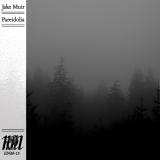
Named after the tendency to impose familiar likenesses, such as faces, on random - usually inanimate - objects, Pareidolia is Jake Muir's way of interpreting the consonances between so-called “ambient” music and extreme heavy metal. Extracting the headiest, most atmospheric sections from hundreds of death metal and black metal tracks, Muir plays the role of both DJ and electroacoustic composer, concocting a lysergic elixir of fractal distortions and prolonged, decelerated riffs that slowly evaporates into iridescent vapor. If there's any trace of the original sources left, Muir makes sure that residue is subtly bewildering, like clouds in the sky that form imposing, larger than life images, or trampled bracken that falls into the shape of “trve kvlt” insignia.

The idea for the album materialized when Muir was working on 2022's Talisman, his collaborative album with multi-instrumentalist Evan Caminiti. Processing guitar for the first time, Muir began to unpack his long relationship with rock music and its Escher-like maze of sub-genres, from the tech metal he obsessed over as a teenager to Loop and Main's drone-y, textured variants. Scraping the internet for unconventional contemporary metal albums, he stumbled across music that seemed to hover between different realms, merging its frenetic, noisy sections with psychedelic interludes that harmonize with classic industrial and avant-garde music, material like :zoviet*france:, Nocturnal Emissions and Z'EV.

pre-ordina ora04.05.2026

dovrebbe essere pubblicato su 04.05.2026


Last In: 2026 years ago
Dublon - Nectar (2026 repress)

Dublon

Nectar (2026 repress)

12inchDELICIEUSE031
Delicieuse Musique
11.02.2026

How better to solidify over a year of meteoric rise than with the release of a debut EP? dublon is both the phenomenon of the moment and one of the most promising prospects for a lasting career in the electronic scene. The Norwegian producer has teamed up with top-tier musicians (saxophonists, pianists) to blend organic craftsmanship with his incredible electronic touch. He has also collaborated with respected and renowned artists like Tour-Maubourg, TABLE, and the incredible American singer Deza to bring this project to life.

The result is Nectar, an EP that balances touching elegance with an insatiable urge to dance to its uplifting rhythms. dublon and his Jazz-House sound are set to keep us moving all year long.

In Stock

Disponibile in Stock e pronto per la spedizione

Peryl - Phase Alternations LP 2x12"

Phase alternations arise where overlapping waves diverge in phase, revealing the hidden
geometry of sound. A phenomenon that Peryl deliberately allows to happen — thus placing
the physical and technical aspects of music at the center of attention. His new album
builds on a fundamental idea of electronic music — but reimagined.

The person Peryl and his needs steps into the background during production —
functioning merely as a channel that intuitively receives and transmits what long-studied
machines, in dialogue with the subconscious, collectively bring to the surface.

The result is a collection of nine tracks, like emanations of precisely crafted analog
synthesis. No sound returns the same way twice. This fragility fuels the urgency — a
creative necessity to listen, to commit, to allow form to arrive before it dissolves again.

Rhythm is no longer on the grid, but a series of small shifts, offsets, and delays. Loops fall
slightly out of sync. Deviation creates friction, and friction creates energy. Through the
layered interplay of phase-driven effects — chorus, phaser, flanger — the sounds begin to
breathe in alternate rhythms. Hollows emerge. Swells fold into one another.

Challenging these swells is an essential part of Phase Alternations. Effects come alive in
subtle shifts, industrial textures whisper melodies, folding and unfolding in rhythms that
emerge through their own logic.

Peryl presents the result of an experiment: the sound itself chooses its form.

In Stock

Disponibile in Stock e pronto per la spedizione

Theodore Shapiro - Severance: Season Two (Apple Original Series Soundtrack) ( LP)

“The music of Season 2 of SEVERANCE is true to what came before in Season 1, while also developing new themes, new sounds, and new variations,” says Shapiro. “The season's bold expansions into new storylines and new locations, along with the incredible filmmaking and performances, provided plenty of inspiration.” “We are beyond thrilled to head back to Lumon with our Season 2 vinyl package,” says Mutant Co-Founder Spencer Hickman. “Working alongside Ben Stiller and his team, Fifth Season, and Apple has been an absolute honour and a joy. Greg Ruth and I are obsessed with the show and the chance to play in this sandbox again. Creating original art alongside in-show ephemera is like receiving a gift. I couldn't be prouder of the package we have crafted for Season 2, blending the Innie and Outie worlds just as the season itself felt instinctual. I really hope fans feel we have done it justice. PRAISE KIER.” Single LP with obi strip and a 16-page booklet featuring portraits of the main cast.

In Stock

Disponibile in Stock e pronto per la spedizione

The Necessaries - Completely Necessary (Anthology 1978-1982) (LP 3x12")

“The group has no niche, it doesn’t fit in anywhere,” explains Necessaries drummer Jesse Chamberlain in a 1980 Melody Maker interview. “We just state the facts about life in America, like The Clash did about England, but we’re not so heavy about it.” The Necessaries rose from the ashes of Harry Toledo & The Rockets, a little-known New York art-rock band playing gigs at Max’s Kansas City during glam’s metamorphosis into punk. —From the liner notes by Michael IQ Jones The Necessaries came together in 1978 and in the too-brief lifespan of the band counted among their members, Ed Tomney (Rage To Live, Luka Bloom), Jesse Chamberlain (Red Crayola), Ernie Brooks (Modern Lovers), Arthur Russell (The Flying Hearts), Randy Gun (Love Of Life Orchestra). First championed by John Cale on the strength of Tomney’s songs, Cale produced their first single for Spy Records (under the I.R.S. umbrella) which was released in 1979. With the forward momentum brought about by the single, the band set about tracking demos intended for Warner Bros., but The Necessaries ultimately would sign to Seymour Stein’s Sire Records. These rough demo basic tracks lacked overdubs, mixes and any finishing touches that would have made them viable for commercial release, but due to tour commitments, the band had to put the sessions on hold to hit the road. While on tour, the band was shocked to discover that Sire had issued the unfinished tracks as their debut album Big Sky (issued in 1981). The band had Big Sky withdrawn and replaced with Event Horizon (issued in 1982) which included half the original tracks from Big Sky and continued to record throughout 1982 aiming for a follow-up. It was not to be and their final studio sessions remained unissued until now. Completely Necessary (Anthology 1978–1982) is the first authorized collection of recordings by The Necessaries and includes 37 tracks, 28 of which are previously unissued. Completely Necessary represents the most accurate musical history of the band laid out across three albums. Disc one is the band-approved first album Event Horizon, followed by Pilots Facing North, a disc collecting studio recordings spanning 1978–1981 and disc three finally sees the release of their final sessions, Songs From The Blue Colony. Album notes by Michael IQ Jones trace the history of the band for this compilation produced by The Necessaries’ Ed Tomney and Cheryl Pawelski (Omnivore Recordings). The audio has been restored and mastered by Michael Graves at Osiris Studio, and both the 3-LP and 2-CD sets feature previously unseen photos across the package. Finally, an essential missing piece of the late ’70s/early ’80s New York scene that was just slightly ahead of the college alt-rock soon to come, is finally available to rediscover—this time it’s authorized and absolutely necessary. BUY! HERE’S WHY! • The first authorized and comprehensive anthology by The Necessaries. • Mid-’70s/early ’80s New York rock/punk/art scene band included members: Ed Tomney, Ernier Brooks, Arthur Russell, Jesse Chamberlain, and Randy Gun. • 37 tracks, 28 previously unissued. • Liner notes by Michael IQ Jones, plus unseen photos.

In Stock

Disponibile in Stock e pronto per la spedizione

VARIOUS - ALL THE YOUNG DROIDS: JUNKSHOP SYNTH POP 1978-1985 (LP 2x12")
 
24

2025 REPRESS ON TRANSPARENT GREEN VINYL


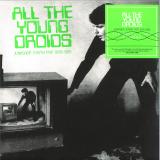
Compiled by Philip King “And then came the rise of synth pop : blokes with dodgy haircuts hunched over keyboard-operated machines stuffed with wires and do-it-yourself tone oscillators making sounds like a brood of geese passing gas in a wind tunnel. Whoopee! This is the way the ‘70s ended : not with a blood-curdling bang bang but with a cheap, synthesized, emasculating whimper.” NICK KENT, NME. All The Young Droids: Junkshop Synth Pop 1978-1985 is a new compilation that charts the underbelly of the epoch-defining sound of the synthesiser in 80s popular music. Compiled by Philip King (previously seen compiling All The Young Droogs, Glitterbest and Boobs - The Junkshop Glam Discotheque), the music here connects the dots between DIY synth enthusiasts grappling with new, cheap synthesisers at the tail-end of punk and wannabe, jobbing songwriters enthral to the new music pioneered by Gary Numan, Depeche Mode and Daniel Miller’s Mute Records. Featuring rare tracks of auto-didactic progressive pop music, proto-techno punk, shoot-for-the-stars-land-in-the-gutter chart flops and heralded, underground synth classics, School Daze paints a picture of beautiful failure. Complete with extensive sleeve notes written by King and never before seen imagery, all 24 tracks were remastered by RPM in-house engineer Simon Murphy, many from vinyl copies due to lost master tapes. The story told on All The Young Droids is one of the dawning opportunity presented by both the emergence to the market of cheaper analog synthesisers and the distribution networks plus indie labels that exploded with the advent of punk music in 1976. While the music that sprouted out all over the globe in the wake of these factors was decried as fake, plastic, a refutation of punk’s guitar-led revolution, it’s telling that much of the music on All The Young Droids.. was created in bedrooms, ramshackle studios and home-made set ups with often borrowed equipment. In the era of record labels jumping to capitalise on the success of The Sex Pistols, The Clash (both on major labels, of course) these artists struggled to stand out from a new gold-rush with next to no budget or PR team. With radio and labels desperate for the new Yazoo, what resulted was a testament to necessity being the mother of invention. At the time, the synthesiser was the music of the future, a shiny new machine that could paint like an orchestra with a single finger and a 4-track. In the hands of Manchester avant-pranksters Gerry & The Holograms it’s a pulsing, sardonic weapon.. the only instrument on the Messthetics classic lampooning of New Wave fashion. In Hamburg, a 16 year old Andreas Dorau used it to write and record (with his female classmates on vocals) a global smash in Fred Vom Jupiter (later licensed to Mute Records). The hard-to-find English version (Fred From Jupiter, natch) is included here. Many artists with alreadystoried careers caught the bug and recorded synthesiser-fuelled peons to space, computers, the future and, of course, love-interests. Harry Kakoulli, late of Squeeze, recorded a solo album in 1979 that included the incredible power-synth-pop smash-that-never-smashed I’m On A Rocket. Similarly, Ian North of Neo and American Power Pop stalwarts Milk ’n’ Cookies bought a Korg MS20 and used a tape machine to record We’re Not Lonely, an absolute lost-classic of minimal synth pop. We’re Not Lonely also features on the Junkshop Synth Pop sampler 7” twinned with John Howard unreleased track You Will See, released April 12th 2025. There are plenty of compilation debuts in evidence. Sole Sister were a mysterious trio who were featured on the Scaling Triangles compilation of female-fronted, queer-adjacent post-punk / underground music that also featured The Petticoats. Selwin Image were from San Francisco and featured members of the recently defunct power pop/punk group The Pushups. Their stupidly catchy The Unknown fizzes with New Wave energy - think XTC to Sparks but remains unreleased until now. Dream Unit’s A Drop In The Ocean is an early synth wave cut, positively teaming with Joy Division instrumentation, previously only released on a long-forgotten and super rare, self-released EP. Incandescent Luminaire’s Famous Names belies an archetypal struggle of a small-town trying to make it in a cruel industry but is a thrilling New Romantic-Synth Wave cross over with a OMD gloominess that’s a joy to hear. Feminist Minimal Wave track I Am A Time Bomb by performance artist Peta Lilly and Michael Chance is a revelation destined for new found cult status. It was released on 7” and lost until now. The flipside to the subterranean, never-made-it synth pop mentioned above are the ambitious, even fruity attempts at success that have a perennial elegance to their confidence. New Jersey-ite Billy London (real name Ed Barth) tried to cash in on the synth boom with Woman, released by a major label, a lurching new wave track built on the Louie Louie rhythm and a wonderfully camp Lou Reedstyle sleazy vocal before exploding in the synthesised chorus. The song bombed but with a chorus like this, you have to wonder why? Ex-Glitter Band member John Springate’s My Life is truly epic, with doomed chord progressions and massive sounding drums turning into at least 3 different songs in the course of the track. Before you wonder what’s going on the song resolves with a glorious return to the main refrain. The dry-ice-dressed dance floor is well catered for too. Design’s Premonition and Vision’s Lucifer’s Friend are stone-cold minimal synth bangers, well loved but given a new lease of life here. The Warlord’s The Ultimate Warlord was released in 1978, a homespun proto Hi NRG banger that was later re-recorded by The Immortals in Canada who had a club hit with it. One-man- band Disco Volante’s No Motion was re-issued by Synth wave label Medical in 2012 but makes its first vinyl compilation appearance here. Close your eyes and you can imagine what Lawrence of Felt would have sounded like with some cheap Korgs a little earlier in his career. Gibraltar-based trio The Microbes imagined a computer programming people to dance - how prescient - and ended up with a propulsive, robo-funk track with splendid rubbery bass playing over a tectonic drum machine. Previously picked up by Belgian label Stroom TV, Dee Jay Bert & Eagle’s heavily Euro-accented I Am Your Master demands the listener to “come to paradise!” In a frankly terrifying manner. All The Young Droids is the first compilation to peel away from the narrative that dour, Minimal Synth and Cold Wave were the only musical children of the first rush of synth pop. Philip King and School Daze Records describe a much more complicated world: along with the austere, Brutalist children of Daniel Miller (who produced Alan Burnham’s Bowie-Low-influenced Science Fiction here) was a plethora of desperate cash-ins, accidental mainstream hits, ambitious pop dramas and major label punts that went nowhere. Crucially, the compilation blurs the line between junk and treasure. What if the two things are interchangeable. What if it’s all science fiction?

In Stock

Disponibile in Stock e pronto per la spedizione

Guilty Razors - Complete Recordings 1977 - 1978
  • A1: Hurts And Noises
  • A2: Wake Up
  • A3: I Don't Wanna Be A Rich
  • A4: Terrorist Bad Heart
  • A5: Provocate
  • A6: Lucifer Sam (Pink Floyd)
  • B1: Happy!?
  • B2: So Lazy
  • B3: I Feel Down
  • B4: Stupido
  • B5: Guilty
  • B6: Caroline Says (Loo Reed)

UILTY RAZORS, BONA FIDE PUNKS.


Writings on the topic that go off in all directions, mind-numbing lectures given by academics, and testimonies, most of them heavily doctored, from those who “lived through that era”: so many people today fantasize about the early days of punk in our country… This blessed moment when no one had yet thought of flaunting a ridiculous green mohawk, taking Sid Vicious as a hero, or – even worse – making the so-called alternative scene both festive and boorish. There was no such thing in 1976 or 1977, when it wasn’t easy to get hold of the first 45s by the Pistols or the Clash. Few people were aware of what was happening on the fringes of the fringes at the time. Malcolm McLaren was virtually unknown, and having short hair made you seem strange. Who knew then that rock music, which had taken a very bad turn since the early 1970s, would once again become an essential element of liberation? That, thanks to short and fast songs, it would once again rediscover that primitive, social side that was so hated by older generations? Who knew that, besides a few loners who read the music press (it was even better if they read it in English) and frequented the right record stores? Many of these formed bands, because it was impossible to do otherwise. We quickly went from listening to the Velvet Underground to trying to play the Stooges’ intros. It’s a somewhat collective story, even though there weren’t many people to start it.
The Guilty Razors were among those who took part in this initial upheaval in Paris. They were far from being the worst. They had something special and even released a single that was well above the national average. They also had enough songs to fill an album, the one you’re holding. In everyone’s opinion, they were definitely not among the punk impostors that followed in their wake. They were, at least, genuine and credible.

Guilty Razors, Parisian punk band (1975-1978). To understand something about their somewhat linear but very energetic sound, we might need to talk about the context in which it was born and, more broadly, recall the boredom (a theme that would become capital in punk songs) coupled with the desire to blow everything off, which were the basis for the formation of bands playing a rejuvenated rock music ; about the passion for a few records by the Kinks or the early Who, by the Stooges, by the Velvet mostly, which set you apart from the crowd.
And of course, we should remember this new wave, which was promoted by a few articles in the specialized press and some cutting-edge record stores, coming from New York or London, whose small but powerful influence could be felt in Paris and in a handful of isolated places in the provinces, lulled to sleep by so many appalling things, from Tangerine Dream to President Giscard d’Estaing...
In 1975-76, French music was, as almost always, in a sorry state ; it was still dominated by Johnny Hallyday and Sylvie Vartan. Local rock music was also rather bleak, apart from Bijou and Little Bob who tried to revive this small scene with poorly sound-engineered gigs played to almost no one.
In the working class suburbs at the time, it was mainly hard rock music played to 11 that helped people forget about their gruelling shifts at the factory. Here and there, on the outskirts of major cities, you still could find a few rockers with sideburns wearing black armbands since the death of Gene Vincent, but it wasn’t a proper mass movement, just a source of real danger to anyone they came across who wasn't like them. In August 1976, a festival unlike any other took place in Mont-de-Marsan – the First European Punk Festival as the poster said – with almost as many people on stage as in the audience. Yet, on that day, a quasi historical event happened, when, under the blazing afternoon sun, a band of unknowns called The Damned made an unprecedented noise in the arena, reminiscent of the chaotic Stooges in their early adolescence. They were the first genuine punk band to perform in our country: from then on, anything was possible, almost anything seemed permissible.

It makes sense that the four+1 members of Guilty Razors, who initially amplified acoustic guitars with crappy tape recorder microphones, would adopt punk music (pronounced paink in French) naturally and instinctively, since it combines liberating noise with speed of execution and – crucially – a very healthy sense of rebellion (the protesters of May 1968 proclaimed, and it was even a slogan, that they weren’t against old people, but against what had made them grow old. In the mid-1970s, it seemed normal and obvious that old people should now ALSO be targeted!!!).
At the time, the desire to fight back, and break down authority and apathy, was either red or black, often taking the form of leafleting, tumultuous general assemblies in the schoolyard, and massive or shabby demonstrations, most of the time overflowing with an exciting vitality that sometimes turned into fights with the riot police. Indeed, soon after the end of the Vietnam War and following Pinochet’s coup in Chile, all over France, Trotskyist and anarcho-libertarian fervour was firmly entrenched among parts of the educated youth population, who were equally rebellious and troublemakers whenever they had the chance. It should also be noted that when the single "Anarchy in the UK" was first heard, even though not many of us had access to it, both the title and its explosive sound immediately resonated with some of those troublemakers crying out for ANARCHY!!! Meanwhile, the left-wing majority still equated punks with reckless young neo-Nazis. Of course, the widely circulated photos in the mainstream press of Siouxsie Sioux with her swastikas didn’t necessarily help to win over the theorists of the Great Revolution. It took Joe Strummer to introduce The Clash as an anti-racist, anti-fascist and anti-ignorance band for the rejection of old-school revolutionaries to fade a little.

The Lycée Jean-Baptiste Say at Porte d’Auteuil, despite being located in the very posh and very exclusive 16th arrondissement of Paris, didn’t escape these "committed" upheavals, which doubled as the perfect outlet for the less timid members of this generation.
“Back then, politics were fun,” says Tristam Nada, who studied there and went on to become Guilty Razors’ frontman. “Jean-Baptiste was the leftist high-school in the neighbourhood. When the far right guys from the GUD came down there, the Communist League guys from elsewhere helped us fight them off.”
Anything that could challenge authority was fair game and of course, strikes for just about any reason would lead to increasingly frequent truancy (with a definitive farewell to education that would soon follow). Tristam Nada spent his 10th and 11th unfinished grades with José Perez, who had come from Spain, where his father, a janitor, had been sentenced to death by Franco. “José steered my tastes towards solid acts such as The Who. Like most teenagers, I had previously absorbed just about everything that came my way, from Yes to Led Zeppelin to Genesis. I was exploring… And then one day, he told me that he and his brother Carlos wanted to start a rock band.” The Perez brothers already played guitar. “Of course, they were Spanish!”, jokes their singer. “Then, somewhat reluctantly, José took up the bass and we were soon joined by Jano – who called himself Jano Homicid – who took up the rhythm guitar.” Several drummers would later join this core of not easily intimidated young guys who didn’t let adversity get the better of them.

The first rehearsals of the newly named Guilty Razors took place in the bedroom of a Perez aunt. There, the three rookies tried to cover a few standards, songs that often were an integral part of their lives. During a first, short gig, in front of a bewildered audience of tough old-school rockers, they launched into a clunky version of the Velvet Underground's “Heroin”. Challenge or recklessness? A bit of both, probably… And then, step by step, their limited repertoire expanded as they decided to write their own songs, sung in a not always very accurate or academic English, but who cared about proper grammar or the right vocabulary, since what truly mattered was to make the words sound as good as possible while playing very, very fast music? And spitting out those words in a language that left no doubt as to what it conveyed mattered as well.
Trying their hand a the kind of rock music disliked by most of the neighbourhood, making noise, being fiercely provocative: they still belonged to a tiny clique who, at this very moment, had chosen to impose this difference. And there were very few places in France or elsewhere, where one could witness the first stirrings of something that wasn’t a trend yet, let alone a movement.

In the provinces, in late 1976 or early 1977, there couldn’t be more than thirty record stores that were a bit more discerning than average, where you could hear this new kind of short-haired rock music called “punk”. The old clientele, who previously had no problem coming in to buy the latest McCartney or Aerosmith LP, now felt a little less comfortable there…
In Paris, these enlightened places were quite rare and often located nex to what would become the Forum des Halles, a big shopping mall. Between three aging sex workers, a couple of second-hand clothes shops, sellers of hippie paraphernalia and small fashion designers, the good word was loudly spread in two pioneering places – propagators of what was still only a new underground movement. Historically, the first one was the Open Market, a kind of poorly, but tastefully stocked cave. Speakers blasted out the sound of sixties garage bands from the Nuggets compilation (a crucial reference for José Perez) or the badly dressed English kids of Eddie and the Hot Rods. This black-painted den was opened a few years earlier by Marc Zermati, a character who wasn’t always in a sunny disposition, but always quite radical in his (good) choices and his opinions. He founded the independent label Skydog and was one of the promoters of the Mont-de-Marsan punk festivals. Not far from there was Harry Cover, another store more in tune with the new New York scene, which was amply covered in the house fanzine, Rock News (even though it was in it that the photos of the Sex Pistols were first published in France).
It was a favorite hang-out of the Perez brothers and Tristam Nada, as the latter explained. “It’s at Harry Cover’s that we first heard the Pistols and Clash’s 45s, and after that, we decided to start writing our first songs. If they could do it, so could we!”
The sonic shocks that were “Anarchy in the UK”, “White Riot” or the Buzzcocks’s EP, “Spiral Scratch” – which Guilty Razors' sound is reminiscent of – were soon to be amplified by an unparalleled visual shock. In April 1977, right after the release of their first LP, The Clash performed at the Palais des Glaces in Paris, during a punk night organised by Marc Zermati. For many who were there, it was the gig of a lifetime…
Of course, Guilty Razors and Tristam were in the audience: “That concert was fabulous… We Parisian punks were almost all dressed in black and white, with white shirts, skinny leather ties, bikers jackets or light jackets, etc. The Clash, on the other hand, wore colourful clothes. Well, the next day, at the Gibus, you’d spot everyone who had been at this concert, but they weren’t wearing anything black, they were all wearing colours.”

It makes sense to mention the Gibus club, as Guilty Razors often played there (sometimes in front of a hostile audience). It was also the only place in Paris that regularly scheduled new Parisian or Anglo-Saxon acts, such as Generation X, Siouxsie and the Banshees, the Slits, and Johnny Thunders who would become a kind of messed-up mascot for the venue. A little later, in 1978, the Rose Bonbon – formerly the Nashville – also attracted nightly owls in search of electric thrills… In 1977, the iconic but not necessarily excellent Asphalt Jungle often played at the Gibus, sometimes sharing the bill with Metal Urbain, the only band whose aura would later transcend the French borders (“I saw them as the French Sex Pistols,” said Geoff Travis, head of their British label Rough Trade). Already established in this small scene, Metal Urbain helped the young and restless Guilty Razors who had just arrived. Guitarist for Metal Urbain Hermann Schwartz remembers it: “They were younger than us, we were a bit like their mentors even if it’s too strong a word… At least they were credible. We thought they were good, and they had good songs which reminded of the Buzzcocks that I liked a lot. But at some point, they started hanging out with the Hells Angels. That’s when we stopped following them.”

The break-up was mutual, since, Guilty Razors, for their part, were shocked when they saw a fringe element of the audience at Metal Urbain concerts who repeatedly shouted “Sieg Heil” and gave Nazi salutes. These provocations, even still minor (the bulk of the skinhead crowd would later make their presence felt during concerts), weren’t really to the liking of the Perez brothers, whose anti-fascist convictions were firmly rooted. Some things are non-negotiable.
A few months earlier (in July 1978), Guilty Razors had nevertheless opened very successfully for Metal Urbain at the Bus Palladium, a more traditonally old-school rock night-club. But, as was sometimes the case back then, the night turned into a mass brawl when suburban rockers came to “beat up punks”.

Back then, Parisian nights weren’t always sweet and serene.

So, after opening as best as they could for The Jam (their sound having been ruined by the PA system), our local heroes were – once again – met outside by a horde of greasers out to get them. “Thankfully,” says Tristam, “we were with our roadies, motorless bikers who acted as a protective barrier. We were chased in the neighbouring streets and the whole thing ended in front of a bar, with the owner coming out with a rifle…”
Although Tristam and the Perez brothers narrowly escaped various, potentially bloody, incidents, they weren’t completely innocent of wrongdoing either. They still find amusing their mugging of two strangers in the street for example (“We were broke and we simply wanted to buy tickets for the Heartbreakers concert that night,” says Tristam). It so happened that their victims were two key figures in the rock business at the time: radio presenter Alain Manneval and music publisher Philippe Constantin. They filed a complaint and sought monetary compensation, but somehow the band’s manager, the skilful but very controversial Alexis, managed to get the complaint withdrawn and Guilty Razors ended up signing with Constantin with a substantial advance.

They also signed with Polydor and the label released in 1978 their only three-track 45, featuring “I Don't Wanna be A Rich”, “Hurts and Noises” and “Provocate” (songs that exuded perpetual rebellion and an unquenchable desire for “class” confrontation). It was a very good record, but due to a lack of promotion (radio stations didn’t play French artists singing in English), it didn’t sell very well. Only 800 copies were allegedly sold and the rest of the stock was pulped… Initially, the three tracks were to be included on a LP that never came to be, since they were dropped by Polydor (“Let’s say we sometimes caused a ruckus in their offices!” laughs Tristam.) In order to perfect the long-awaited LP, the band recorded demos of other tracks. There was a cover of Pink Floyd's “Lucifer Sam” from the Syd Barrett era – proof of an enduring love for the sixties’ greats –, “Wake Up” a hangover tale and “Bad Heart” about the Baader-Meinhof gang, whose actions had a profound impact on the era and on a generation seeking extreme dissent... On the album you’re now discovering, you can also hear five previously unreleased tracks recorded a bit later during an extended and freezing stay in Madrid, in a makeshift studio with the invaluable help of a drummer also acting as sound engineer. He was both an enthusiastic old hippie and a proper whizz at sound engineering. Here too, certain influences from the fifties and sixties (Link Wray, the Troggs) are more than obvious in the band’s music.

Shortly after a final stormy and rather barbaric (on the audience’s side) “Punk night” at the Olympia in June 1978, Tristam left the band ; his bandmates continued without him for a short while.

But like most pioneering punk bands of the era, Guilty Razors eventually split up for good after three years (besides once in Spain, they’d only played in Paris). The reason for ceasing business activities were more or less the same for everyone: there were no venues outside one’s small circuit to play this kind of rock music, which was still frightening, unknown, or of little interest to most people. The chances of recording an LP were virtually null, since major labels were only signing unoriginal but reassuring sub-Téléphone clones, and the smaller ones were only interested in progressive rock or French chanson for youth clubs. And what about self-production? No one in our small safety-pinned world had thought about it yet. There wasn’t enough money to embark on that sort of venture anyway.

So yes, the early days of punk in France were truly No Future!

pre-ordina ora22.05.2026

dovrebbe essere pubblicato su 22.05.2026


Last In: 2026 years ago
BLOKKONTROL - I II III LP

“I II III” is pure voltage. An EBM synth-punk blasting assault forged in the concrete heart of Kyiv. These tracks don’t just move: they hit, with brutalist force, fury, and cold rage. Each beat stomps forward like a clenched fist, a sound for strobe-lit riots and blacked-out warehouses. Body music as survival instinct and harsh rhythm as revolt. Raw. Unrelenting. Necessary Presented in ONE- OFF truly limited edition of 300 copies lacquered pressed on 180 gr. high quality solid RED vinyl, All tracks have been specially remastered for vinyl by Daniel Hallhuber at Young and Cold Studios (Germany).

In Stock

Disponibile in Stock e pronto per la spedizione

Kojey Radical - Don’t Look Down

Kojey Radical

Don’t Look Down

12inch5021732784537
Atlantic
20.01.2026

Over the past decade, East London artist Kojey Radical has cemented himself as one of the most creative and unique voices in British music. His debut album Reason to Smile (2022) was released to critical acclaim, and saw him emerge as one of the defining voices in UK culture. Now, the 32-year-old readies to release his second album Don’t Look Down.

“I wanted to make this album more personal and more honest,” he says, “we have to be able to accept that the messenger has flaws and all.

16-tracks long, Don’t Look Down, set for release on 19th September 2025, is a musically rich and deeply introspective reflection on the shifting tides, lows and joys that have passed through his life since his emergence into the public eye.

Sonically, the album provides the most experimental and eclectic music of his career, with influences ranging from golden age Hip Hop to disco, grime to Indie, Jazz to Ska. Together, these strings combine to give a pertinent insight into Kojey’s inner world, and a timestamp documenting the feelings, emotions and experiences that arise when many reach the milestone of their 30s.

“When you’re younger, certain ages seem so grown,” he says, “you feel like you’re supposed to have your life together and all figured out by 30. Then especially when you're in the spotlight you feel extra pressure to have it figured out because so many people are looking towards you.”

Don’t Look Down follows debut album Reason to Smile (2022). A critical success, it landed at No.11 on the UK Album Charts and was nominated for the Mercury Prize as well as two MOBO Awards. In the following year came a nomination for Best New Artist at 2023 BRIT Awards and Best Contemporary Song at the Ivor Novello Awards. He toured across the UK, as well as hitting the festival circuit.

This sense of growth was not limited to music. Kojey was tapped by the British Fashion Council to host the 2023 and 2024 editions of The Fashion Awards as his stock in music and wider culture continued to rise.

The album he says, is a reflection of “the experiences I’ve had over the past few years. That shaped the direction I took going forward. It’s given me the opportunity to tell new stories from newer perspectives. It was liberating, and it was very necessary to keep me in love with the process and to keep making music.”

The result is his most innovative album yet, a project where a sense of profound personal interrogation and introspection dance in union with the rich musical tapestry. Don’t Look Down is a story of purpose lost and then found, of what happens in the aftermath of achieving your childhood dreams, and the ranging flux of emotions that rise to the surface once the music stop

In Stock

Disponibile in Stock e pronto per la spedizione

GUIDED BY VOICES - CRAWLSPACE OF THE PANTHEON LP
  • 1: Lost In The Sun
  • 2: Out With A Theory
  • 3: One Last Blow
  • 4: We Outlast Them All
  • 5: A Grand Ceremonial Jester
  • 6: Dagon?S Plunger
  • 7: Advance Without Dropping
  • 8: No Shoe Fits (Floating Babies)
  • 9: Arthur Square
  • 10: Landscaping
  • 11: (How Would You Like A) Chariot Ride
  • 12: When You?Re My Clown (Nothing Happens)

Guided By Voices’ last album Thick Rich And Delicious (October 2025) was lauded by NPR’s All Things Considered and picked #1 on Magnet Magazine’s Best Albums Of 2025. The single “We Outlast Them All” from this latest, Crawlspace Of The Pantheon, is an anthemic victory lap on album #44 from the indie rock stalwarts. Robert Pollard told Rolling Stone: “ ‘We Outlast Them All’ could be our ‘We Are The Champions’ but it’s not necessarily about us.

It’s about anyone who perseveres over a long period of time.” On Crawlspace Of The Pantheon: “I worked much more diligently on this set of lyrics. I chiseled away at lines and sections and phrasings...I wanted them to have an overall emotionally conceptual feel. At times it feels somewhat autobiographical.” Guided By Voices will not be on tour in 2026. Pollard recently told Magnet: “Why would we stop playing live and make these kinds of records? I don’t know. We do what we wanna do.” “Pollard is the greatest rock lyricist of all time.” —Dennis Cooper

pre-ordina ora29.05.2026

dovrebbe essere pubblicato su 29.05.2026


Last In: 2026 years ago
Noisia & Mayhem Feat. Krs One - Exodus

2025 Repress

The breakthrough dance collective of the year bar none! Having made a name for themselves creating the evilest drum&bass music the world has ever seen, in recent months Noisia have been seen DJ-ing at house clubs, releasing singles with prominent house labels and most recently remixing for the likes of Robbie Williams! However, it wasn't long before they decided to go back to the dark side and join forces with good friend Mayhem (USA) to come with something more disgusting than ever, oh and they got KRS-One to provide the vocal!

A truly breathtaking intro bursting with evil foreboding sets the scene, before Noisia and Mayhem unleash the darkness with their signature drum programming alongside futuristic never heard before beats and breaks. Be sure to wait for the hip-hopesque interlude that features the immense vocal talents of none other than KRS-One. If you're not nodding your head by that point, you best check your neck isn't broken!

Comes in standard full colour Vision Recordings repress sleeve.

In Stock

Disponibile in Stock e pronto per la spedizione

NALBANDIAN THE ETHIOPIAN & EITHER/ORCHESTRA - NALBANDIAN THE ETHIOPIAN (ETHIOPIQUES)

The Éthiopiques series returns! Essential archive recordings from an extremely fruitful period in Ethiopian music.

Before “Swinging Addis” took over the world, there was Moussié Nerses Nalbandian — the Armenian-born composer who shaped modern Ethiopian music. Mentor, arranger, and pioneer, he laid the foundations of Ethio-jazz.

This Éthiopiques volume revives his forgotten legacy, recorded live by Either/ Orchestra First issue ever with new exclusive photos and in depth liner 8-page insert.

“Ethiopian jazzmen are the best musicians that we have seen so far in Africa.
They really are promising handlers of jazz instruments.”

Wilbur De Paris
(1959, after a concert in Addis Ababa)

አዲስ፡ዘመን። *Addis zèmèn* **A new era.**
The time is the mid-1950s and early 1960s, just before "Swinging Addis" bloomed – or rather boomed – onto the scene. Brass instruments are still dominant, but the advent of the electric guitar, and the very first electronic organs, are just around the corner. Rock’n'Roll, R’n’B, Soul and the Twist have not yet barged their way in. Addis Ababa is steeped in the big band atmosphere of the post-war era, with Glenn Miller's *In the* *Mood* as its world-wide theme song, neck and neck with the Latin craze that was in vogue at the same period. Life has become enjoyable once again, with the return of peace after the terrible Italian Fascist invasion of Ethiopia (1935-1941). The redeployment of modern music is part and parcel of the postwar reconstruction. *Addis zèmèn* – a new era – is the watchword of the postwar period, just as it was all across war-torn Europe.
The generation who were the young parents of baby boomers** were the first to enjoy this musical renaissance, before the baby boomers themselves took over and forever super-charged the soundtrack of the final days of imperial reign. Music is Ethiopia's most popular art form, and very often serves as the best barometer for the upsurge of energy that is critical for reconstruction. Whether it be jazz in Saint-Germain-des-Prés or the *zazous* who revolutionised both jazz and French *chanson* after the *Libération*, be it Madrid's post-Franco Movida, or Dada, the Surrealists and *les années folles* that followed World War I, the periods just after mourning and hardship always give rise to brighter and more tuneful tomorrows. Addis Ababa, as the country's capital, and the epicentre of change, was no exception to this vital rule.

**Two generations of Nalbandian musicians**
Nersès Nalbandian belonged to a family of Armenian exiles, who had moved to Ethiopia in the mid-1920s. The uncle Kevork arrived along with the fabled "*Arba Lidjotch*", the** "*40 Kids*", young Armenian orphans and musicians that the Ras Tafari had recruited when he visited Jerusalem in 1924, intending to turn their brass band into the official imperial band. If Kevork Nalbandian was the one who first opened the way of modernism, pushing innovation so far as to invent musical theatre, it was his nephew Nersès who would go on to become, from the 1940s and until his death in 1977, a pivotal figure of modern Ethiopian music and of the heights it. Going all the way back to the 1950s. Nothing less. And it is Nersès who is largely to thank for the brassy colours that so greatly contributed to the international renown of Ethiopian groove. While the younger generations today venture timidly into the genealogy of their country's modern music, often losing their way amidst a distinctly xenophobic historiographical complacency, many survivors of the imperial period are still around to bear witness and pay tribute to the essential role that "Moussié Nersès" played in the rise of Abyssinia's musical modernity.
Given the year of his birth (15 March 1915), no one knows for sure if Nersès Nalbandian was born in Aintab, today Gaziantep (Turkiye/former Ottoman Empire) or on the other side of the border in Alep, Syria... What is certain is that his family, like the entire Armenian community, was amongst the victims of the genocide perpetrated by the Turks. Alep, the place of safety – today in ruins.
Before Nersès then, there was uncle Kevork (1887-1963). For a quarter of a century, he was a whirlwind of activity in music teaching and theatrical innovation. *Guèbrè Mariam le Gondaré* (የጎንደሬ ገብረ ማርያም አጥቶ ማግኘት, 1926 EC=1934) is his most famous creation. This play included "ten Ethiopian songs" — a totally innovative approach. According to his autobiographical notes, preserved by the Nalbandian family, Kevork indicates that he composed some 50 such pieces over the course of his career. This shows just how much he understood, very early on, the critical importance of song as Ethiopia's crowning artistic form. Indeed, for Ethiopian listeners, the most important thing is the lyrics, with all their multifarious mischief, far more than a strong melody, sophisticated arrangements or even an exceptional voice. (This is also why Ethiopians by and large, and beginning with the artists and producers themselves, believed for a long time — and wrongly — that their music could not possibly be exported, and could never win over audiences abroad, who did not speak the country's languages).

Last but not least, one of Kevork's major contributions remains composing Ethiopia's first national anthem – with lyrics by Yoftahé Negussié.
Nersès Nalbandian moved to Ethiopia at the end of the 1930s, at the behest of his ground-breaking uncle. Proficient in many instruments (pretty much everything but the drums), conductor, choir director, composer, arranger, adapter, creator, piano tuner, purveyor of rented pianos,... he was above all an energetic and influential teacher. From 1946 onwards, thanks to Kevork's connexion, Nersès was appointed musical director of the Addis Ababa Municipality Band. In just a few years, Nersès transformed it into the first truly modern ensemble, thanks to the quality of his teaching, his choice of repertoire, and the sophistication of his arrangements. It was this group that would go on to become the orchestra of the Haile Selassie Theatre shortly after its inauguration in 1955, which was a major celebration of the Emperor's jubilee, marking the 25th anniversary of his on-again-off-again reign.

At some point or other in his long career, Nersès Nalbandian had a hand in the creation of just about every institutional band (Municipality Band, Police Orchestra, Imperial Bodyguard Band, Army Band, Yared Music School…), but it was with the Haile Selassie Theatre – today the National Theatre – that his abilities were most on display, up until his death in 1977. To this must be added the development of choral singing in Ethiopia, hitherto unknown, and a sort of secret garden dedicated to the memory of Armenian sacred music, and brought together in two thick, unpublished volumes. Shortly before his death (November 13, 1977), he was appointed to lead the impressive Ethiopian delegation at Festac in Lagos, Nigeria (January-February 1977).

His status as a stateless foreigner regularly excluded him from the most senior positions, in spite of the respect he commanded (and commands to this day) from the musicians of his era. Naturally gifted and largely self-taught, Nerses was tirelessly curious about new musical developments, drawing inspiration from the very first imported records, and especially from listening intensely to the musical programmes broadcast over short-wave radio – BBC *First*. A prolific composer and arranger, he was constantly mindful of formalising and integrating Ethiopian parameters (specific “musical modes”, pentatonic scale, and the dominance of ternary rhythms) into his “modernisation” of the musical culture, rather than trying to over-westernise it. It even seems very probable that *Moussié* Nerses made a decisive contribution to the development of tighter music-teaching methods, in order to revitalise musical education during this period of prodigious cultural ferment. Flying in the face of all the historiographical and musicological evidence, it is taken as sacrosanct dogma that the four musical modes or chords officially recognised today, the *qǝñǝt* or *qiñit* (ቅኝት), are every bit as millennial as Ethiopia itself. It would appear however that some streamlining of these chords actually took place in around 1960. It was only from this time onward that music teaching was structured around these four fundamental musical modes and chords: *Ambassel*, *Bati*, *Tezeta* and *Antchi Hoyé*. A historical and musical “details” that is, apparently, difficult to swallow, especially if that should honour a *foreigner*. Modern Ethiopian music has Nersès to thank for many of its standards and, to this day, it is not unusual for the National Radio to broadcast thunderous oldies that bear unmistakable traces of his outrageously groovy touch.

In Stock

Disponibile in Stock e pronto per la spedizione

American Cream Band - Twin LP

Following their 2023 LP Presents, Nathan Nelson's American Cream Band bring the Twin City heat back to Quindi with an album rooted in duality. From the yin and yang party-starting A side and meditative B side to the dual-attack boy-girl vocals, the nature of opposites and equals steer the expansive, artful strain of rock n' roll that spill out of this wholly unique Minnesotan export. For the ever intriguing Quindi, it's a strident step into Spring after the frosty introspection of Roudi Vagou & Läuten der Seele's Taghelle Nacht. While the world burns and injustice prevails, Twin is a celebration of unity and radical expression-all the more urgent against the backdrop of authoritarian overreach and righteous protest that has whipped through Minneapolis in recent times.
Twin continues Nelson's drive at the helm of American Cream Band to draw in a colourful cast of players to feed into his orgiastic sound, meshing the trance-induction of krautrock with the irrepressible funk of the post-punk-new-wave explosion. But principal among the cast of characters and forming a central tenet to the identity of this album is Liz Buhmann, lead vocalist and a formidable, playful foil to Nelson's own Midwestern twang. Around the electric spark between Buhmann and Nelson, a heavy duty ensemble wrangle guitar, bass, sax, a cornucopia of synths and a battery of percussion into all manner of sonic forms.
The double-sided concept manifests throughout Twin. On 'Call Me' Buhmann sings in French to contrast Nelson's English, while the strident strut of the NYC disco groove is offset by an inherent dreaminess that turns the track into a more cosmic kind of dancefloor workout. 'Ethical Vampire' is a spiky cut with a garage rock patina that spirals into a psychedelic, synth-soaked get-down. 'Don't Burn The House Down' is a loose and limber roller that captures Can at their funkiest along with the hypnotic vibe of other such esteemed long format jammers, but American Cream Band boils that energy into a hook-laden art pop sensibility before a gentle, drawn out landing.
Even the more pensive moments on Twin find space for friction. For all its tender, smoky temperament, 'Leda and the Swan' lets the electric piano and guitar fray at the edges and bleed into the red while Mat Heinrich's tumbling drums lurch with pent-up intensity on the one. 'No Funeral Necessary' skirts around the mellow pools of new age but prefers to let liberally doused Tape Echo tweak out Alex Meffert's honeyed sax inflections and Buhmann and Nelson's disparate sermons.
Nelson describes Twin as "an oppositorum coincidentia" - a reference to the mystical Latin concept of the coincidence of opposites that suggests contradictory ideas 'fall together' in a higher reality. Beyond the sound of the album, this idea also manifests in the cover photography by Sho Nikado and the swans on the LP labels by Autumn Garrington. As freewheeling and wide-open as American Cream Band feels, nothing appears by accident. The end result feels like a nourishing whole - rich with substance and nuance, deep enough to be explored and absorbed yet also so brazen and immediate you can't help but feel its surface charms from the first thrusts of 'The Hive Is Pissed' to the last ripples of 'We're Not So Sinister'.

pre-ordina ora05.06.2026

dovrebbe essere pubblicato su 05.06.2026


Last In: 2026 years ago
Tara Clerkin Trio - Somewhere Good  LP
  • 1: Lake Walk
  • 2: Lazy Daisy
  • 3: Ups & Downs
  • 4: Silently
  • 5: There Was A Nice Sunset
  • 6: Somewhere Good
  • 7: Slow Island
  • 8: Movin’ On

If – in some parallel universe (or perhaps a not-so-distant-future version of the one we’re already sentenced to living in) – the evil overloads of artificial intelligence were actually successful in their attempts to create convincingly enjoyable “original music,” more specifically tasked with wholly encapsulating my own personal tastes by data-chugging some cocktail of – oh, I don’t know – the posters on my wall, the records in my “most listened to” pile, the mixtapes I made for others, intensive physical scans of my auditory cortex, amygdala, hippocampus, heart strings, whatever else they have splayed out on their autopsy table with the intention of generating one all-encompassing “perfect band” based on the fruitful sum of their findings – that band, for me, would be (or would at least sound exactly like) the Tara Clerkin Trio. It is, quite simply, without exception, the music I wish to hear.

Formed in Bristol UK (where none of them are from yet all of whom are deeply engrained) in 2020, the Tara Clerkin Trio – as it somewhat democratically exists today, despite the singular authority implied by its name – consists of the titular Tara Clerkin, her partner Sunny Joe Paradisos, and Sunny’s brother, Patrick Benjamin. I’ll confess, I don’t know what their respective roles are within the operation and there’s only a very small part of me that cares to learn, as one of my favorite qualities in an objective listening experience is the mystery of who is playing what, which sounds are “authentic” versus synthesized, which chunks are performed “live” in a room together versus meticulously Frankenstein’ed from measure to measure, or how exactly the overall sound is so (seemingly) effortlessly achieved. Though, I suspect, if and when I do witness a live performance by this band at any point, my enjoyment of the music will not be lost in my better understanding of it.

With two extraordinary mini-albums – In Spring (2021) and On The Turning Ground (2023) – making a splash on London’s formidable World of Echo label in wake of their self-titled 2020 debut, this upcoming Somewhere Good LP is, in many ways, the band’s most realised work. In running their usual gauntlet of idiosyncratic (*an overused adjective for which here there is regrettably no sufficient alternative) approaches, Clerkin & co. colour in and outside of compositional lines over the course of 40+ celebratory minutes - never wallowing, despite inherently somber subject matters of self-defeat, disease, displacement, restlessness, gentrification - allowing their arrangements and improvisations ample space and time to situate, stretch out, breathe, cross-pollinate, and ultimately take deeper hold on the listener’s imagination – all while somehow sounding more like themselves than ever before.

Of course, there are traceable influences herein, if one felt that such comparisons were necessary to properly examine and enjoy this music (they aren’t)… Being the big dumb American from the small boring town that I am, cornfed on ‘90s alternative radio with the enchantingly exotic sounds of Maxinquaye and Mezzanine emanating from my chunky tube television, I can’t help but to make a blatantly obvious reference to a “Bristol sound”, ie the whole trip-hop trip, the pastoral crooning over the suggestive urban grime of cracked electro/piano treatments, the digitally-yet-primitively reconstructed James Bond soundtrack string-beats, etc.. But the Tara Clerkin Trio is so infinitely much more than that. There are elements of avant-pop, modern classical, kraut-folk, audio verité, dare I say indie rock (and not of the beer guzzling, masturbatory fuzz-flex variety but perhaps more like a Trish Keenan-fronted Faust, Adrian Sherwood at the mixing desk of If You’re Feeling Sinister, or – in expanding on our alternate reality – a world in which High Llamas cut a full-length for Warp Records with Andrew Weatherall on coffee duty).

The hazy, unmappable skyline-mirage of droning harmonium, upright bass, peculiarly accentuated wind instruments, acoustic guitar, hushed yet literally mighty keys combine to hypnotizing effect. The band may make underlying nods to jazz, sure, but it’s not appropriation, it’s that they have the actual chops to build it out. Beneath the janky samples and oddball percussive embellishment lies actually great drumming. Beyond the manipulated vocal witchery and woefully reflective plain-spoke moments are Tara’s subtly inspired melodies, sung with what might honestly be the glue to the whole crazy equation. A calming consistency throughout the otherwise unpredictably dynamic, boldly intuitive, uniquely British exploration of this (their own) universe in song. – Ryan Davis (Chicago, February 2026)

pre-ordina ora05.06.2026

dovrebbe essere pubblicato su 05.06.2026


Last In: 2026 years ago
Starlito & Bandplay - Not The Country You Know LP2x12"

In the evolving landscape of modern Southern hip-hop, the pairing of Starlito and Bandplay stands out as a unique bridge between street-level authenticity and refined, calculated musicality. Their collaborative project, Not The Country You Know, functions less like a standard release and more as a manifesto—a masterclass in the chemistry between a seasoned, introspective lyricist and a producer who possesses an intuitive grasp of the region's pulse. It is an exploration of legacy and adaptation, capturing the tension between where they came from and where the culture is currently headed.

Bandplay, long recognized for sculpting the sonic identity of Memphis icons, brings his signature, trunk-rattling 808s to the project, yet he manages to pivot here. The production feels remarkably expansive, masterfully blending the raw, stripped-back aesthetics of classic Tennessee rap with forward-thinking textures that refuse to be confined to a single sub-genre. Complementing this, Starlito operates with his trademark mix of cynical observation and genuine vulnerability. He navigates these beats with the weary grace of an artist who has weathered the music industry's relentless cycles, treating every bar like a necessary piece of a larger, ongoing story.

The album’s title serves as a direct commentary on these shifting tides. Across the tracklist, the duo investigates the growing disparity between the romanticized South and the cold realities of the streets, alongside the inevitable evolution of the music business itself. There is no frantic chasing of streaming-era trends or algorithmic bait here; instead, the project remains a stubborn, confident assertion of artistic identity. By weaving together Starlito’s "voice-of-reason" flow and Bandplay’s evolving, genre-bending sound, Not The Country You Know challenges the listener to abandon their preconceived notions of the region, offering instead a complex, urgent vision of a South that is as haunting as it is vibrant.

pre-ordina ora12.06.2026

dovrebbe essere pubblicato su 12.06.2026


Last In: 2026 years ago
CoLD SToRAGE - wipE′out″ - The Zero Gravity Soundtrack Vol. 2 (3x12")

The legacy of wipE′out′′ has transcended time and cemented itself as a true transgenerational phenomenon. Launched in 1995, it didn’t just revolutionise the gaming industry, it created a bridge between the gaming ecosystem and the raver community. Its futuristic aesthetics and forward-thinking sound left a mark not only on mainstream audiences but also on the most demanding corners of the underground.

Decades later, the game’s impact is still alive. The release in 2023 of The Zero Gravity Soundtrack on Lapsus Records proved once again that wipE′out′′’s accompanying audio will go down in history as much more than just an anti-gravity racing game soundtrack.

This is why we decided to go deeper into the slipstream and build the second volume you’re now holding in your hands. Drawn from the original archives of Tim Wright, aka CoLD SToRAGE, this new collection surfaces unreleased cuts, pieces that couldn’t fit on the first edition, and a suite of self-authored ambient reworks that translate pure velocity into wide-screen atmospherics engineered for the long straights, the drone of airbrakes, the blue hour between checkpoints. It also reconnects the circuit, gathering selections and variants tied to later chapters of the saga — wipE′out′′ HD and wipE′out′′ Pure — plus alternative mixes that, until now, only existed in the Sega Saturn dimension of the franchise.

Finally, the material takes a leap into the future in the hands of four remixers especially chosen for this release: Tim Reaper, SHERELLE, Mantra, and NikNak, who collectively forge links between CoLD SToRAGE’s pioneering musical vision, the sound world of the game, and the contemporary breakbeats and drum & bass vanguard.

Expect the DNA you remember — accelerated breaks, trance-vector synths, jungle influences, sub-bass rumbling neatly beneath the craft’s hull, and at times even echoes of classic hardstyle — now revealed with new angles and air. The previously unheard material carries the same aerodynamic design sense that made these tracks feel faster than the track map itself, while the ambient versions open the field of view with melodies hovering at the lip of overdrive. Without a doubt, here you’ll find a strong sense of nostalgia. But this isn’t just nostalgia; it’s also proof that this sound world continues to evolve when you ease off the throttle.

For the faithful — crate-digging ravers, speed-run obsessives, and design nerds — this is an essential expansion pack: compiling rarities, restoring context, and reframing the emotional core of wipE′out′′ for late nights and early mornings alike. Bridging memory and momentum, club and console, rush and afterglow. Strap in.

Detailed tracklist, with annotations by Tim Wright aka CoLD SToRAGE

· Scratch Pad 1: “This track was composed using incomplete tracks that were developed around the time of the first wipE′out′′. It’s so long because it was used for a marathon-length Psygnosis promotional video.”

· Messij Received: “Messij was a firm favourite with wipE′out′′ fans, so it made sense that there’d be more where that came from — this was one of those re-workings.”

· God’s Gift: “I was always very fond of Erasure’s track Love to Hate You with the canned crowd FX sounds. God’s Gift was a tongue-in-cheek reference to how some musicians think they are just that. This was way before I even played live as CoLD SToRAGE.”

· Tentative: “I wasn’t sure about introducing some wacky beats and distorted sounds into one of the tracks, because it was kinda heading away from the other tracks, hence Tentative — but it turned out OK.”

· Canada 2048: “When wipE′out′′ 2048 was launched I decided to re-make Canada as a kind of tribute, but in a slightly new-tech, laid-back way, using Propellerhead Reason and all software synths.”

· Wiped Out: “Based on a few riffs from a MIDI file unused at the time of the original wipE′out′′ game compositions, this featured on my debut album MELT.”

· Body in Motion (Body Plus Mix): “A more trippy interpretation of Body in Motion that featured on non PlayStation versions of the game e.g. Sega Saturn.”

· Onyx (“Dark Side of the Moon”): “Onyx was my sole contribution to wipE′out′′ Pure on the Sony PSP handheld gaming console. This version was something I developed in a darker style, that eventually erupts into a crescendo.”

· Messij Received (WSTWGBE Mix): “Like I say, Messij was a hit with most wipE′out′′ fans, so when I was asked to compose more music for non-PlayStation versions, I adapted this tune into a parallel-universe version for PC and Sega Saturn. By the way, WSTWGBE refers to Who Said This Was Going To Be Easy?”

· Canada (Drunken Ausländer Mix): “In early 2018 I released a fresh album called Ch'illout′′, a re-working of many of my wipE′out′′ tracks in an ambient, Sunday-morning vibe style — it was a few years’ work, here and there.”

· Tentative (Woffenfum Mix): “Another chilled re-working of one of my wipE′out′′ tracks, the mix named with a nod to a good friend of mine, Carl Woffenden — someone who I've worked with for many years in the games industry.”

· Messij (Bobbing Boat Mix): “A nice cheesy computer blip-blop start belies its deep and upbeat chilled-out melodic finale.”

· Body in Motion (Timeless Techno Mix): “Another classic track given the chilled-out vibe mix, as featured originally on my Ch'illout′′ album. This one’s a really trippy, deep-space take on the original.”

· DOH-T (AM / FM Mix): “The idea with this chilled-out mix was to imagine all the melodic parts of this varied track being broadcast on terrestrial radio, so each theme drifts in and out through the radio static.”

· ’95 Future Echoes: “Originally developed as a companion album for wipE′out′′ HD, this track actually has its roots in a tiny loop of a song that never progressed to anything special back in the mid-’90s when I was composing for the original game.”

· Turbine: “Also from my wipE′out′′ HD album, it leans heavily into the upbeat, uplifting tunes from the original game, but also steals a bit of vibe and energy from The Prodigy, with those distorted flute sounds.”

· Pencil Neck: “This excerpt from my wipE′out′′ HD album features lots of sounds centre-stage and forward from Propellerhead Reason’s Subtractor virtual synth. I learned to love this more than my JD-800!”

· Messij 2005 (New Science Mix): “Yet another take on the track that still raises a smile, this time through a mix of samples from the original and Propellerhead Reason — the ‘new science’ when compared to an Amiga 1200 running Bars and Pipes.”

In Stock

Disponibile in Stock e pronto per la spedizione

Dimi Angelis - NECH034

Dimi Angelis

NECH034

12inchNECH034
TECHNO Records
05.12.2025

One of the founding figures of Amsterdam's underground Techno culture Dimi Angelis has been shaping the scene in the late 90s, throwing warehouse raves living up to the underground standards. Until today his approach remains unchanged: uncompromising, opinionated, and never aimed at easy pleasing.
Drawing from decades of crate-digging and an encyclopedic knowledge of Techno's evolution, Dimi crafts sets that feel familiar a reveal unexpected depths on closer listening.
These tracks follow that same philosophy as they are straightforward and honest on the surface, but wrapped in something appropriately unexpected.

In Stock

Disponibile in Stock e pronto per la spedizione

Brigade - Unlimited Dreams Corporation LP

Berlin-based duo Brigade returns with their sophomore effort, having spent the intervening years refining their approach to sample-based composition. Where 2022's "Hard Times, Soft Music" established their credentials as purveyors of comfort food electronics, „Unlimited Dreams Corporation“ finds the pair digging deeper into the archives, constructing elaborate sonic collages from decades of discarded vinyl.The fictional corporate framework, a company peddling bespoke dream experiences, works as an aesthetic guide, appropriate for 2025.

The fourteen tracks unfold with the patience of bedroom producers who understand that the best plunderphonic work happens in the margins. Brigade layers found sounds and field recordings with careful restraint, creating pockets of warmth that invite repeated listening. The broken beat rhythms feel lived-in rather than showy, while the more ambient moments provide necessary breathing room. It's headphone music that rewards attention without demanding it, the kind of record that reveals new details months after initial discovery.

In Stock

Disponibile in Stock e pronto per la spedizione

Cornelius Doctor & Tushen Raï - Where Is Acid Eric ?

Some records are answers to questions no one asked out loud. With Where is Acid Eric, Cornelius Doctor & Tushen Raï deliver a psychedelic missive from a parallel timeline — a time-traveling tribute to Goa’s golden age, filtered through their unmistakable signature.

Returning to their home base, Hard Fist, the duo steps into new territory with this release, and yet, it feels like they’ve been heading here all along. This isn’t a retro-fetishist trip, nor a copy-paste homage. It’s a reimagination of a sound, a space, and most of all, a spirit.

The EP is rooted in the mythic nights of late-80s and early-90s Disco Valley, where British acid house collided with Indian hedonism, where freedom wasn’t a pose but a necessity, and where dancefloors became temporary utopias. But in the hands of Cornelius Doctor & Tushen Raï, this past gets warped, stretched and reanimated with 2025’s tools and sensitivities.

Across three extended tracks, the duo summons a sound that’s dense yet breathable, tribal yet precise, nostalgic yet futuristic.

They weave Goa’s swirling trance lines with broken rhythms, analog squelches, and post-industrial textures. The acid lines are sharp, but never cliché — more mantra than gimmick. Voices float in and out like half-remembered chants. Basslines slide, hypnotize, and then vanish in a cloud of smoke. It’s not a flashback. It’s a vision.

The title, Where is Acid Eric, feels like a lost broadcast — part question, part invocation. Eric is a symbol. IS Eric a ghost ? The true legend of a forgotten raver on a dusty Anjuna morning. What matters is the search. The longing. The dance.

Hard Fist, true to its form, continues to blur the lines between ritual and rave, tradition and invention. And with this record, Cornelius Doctor & Tushen Raï don’t just revive a genre — they reconnect with an ideal: dance music as exploration, as transcendence, as resistance.

One foot in the dust, one foot in the cosmos. The answer isn’t important. The trip is.

In Stock

Disponibile in Stock e pronto per la spedizione

Harvey Sutherland - Debt LP

Debt is a new album by Harvey Sutherland about the cost of doing business in the meme economy. In his first LP since the 2022 debut, Boy, the Australian artist reduces his fusiony disco repertoire to ten microhoused funk essentials. This is minimalism not so much as aesthetic conceit than pressurised container, shaken in the Escherised time and space unique to our overdriven, red-lining present. The album's title nods to the financial contortions necessary to strive/survive/thrive as an independent artist. But Debt is better understood as the ledger of what we owe, and to whom, in the course of a creative life. What's the ROI on being an artist, a son, a friend, a partner, a father? Have we been worth our loved ones' own investments? If that sounds transactional, this is merely the lingua franca of our overwhelmingly digital culture, a grifter's bazaar in which Bob Dylan tunes up over Salt Bae, and Wordsworth's pitch is opposite the Rizzler.

Debt came to life when Harvey Sutherland acquired a freightload of Y2K minimal cargo from Akufen, Ricardo and Baby Ford—courtesy of local Melbourne hero Martin L—which bent the album towards a moreish pointillism. The resulting music's eyes-down minimal gestures within expressive pop shapes feels apt for the apparently contradictory things we can't help craving: immediacy and craft, on-tap "authenticity," life lessons drawn from Reel nonsense. A few years after the "neurotic funk" of Boy, a thorough excavation of interiority that comprised Harvey Sutherland's first LP proper, Debt is his to-the-point response to pressures that manifest outside the self. But in its own way it remains a reflection of Harvey Sutherland's musical innerscapes, which stretch across the grit and glitter of private-press disco and the sensual grids of Metro Area.

In Stock

Disponibile in Stock e pronto per la spedizione

Gilla Band - Most Normal LP

Gilla Band

Most Normal LP

12inchRT0358LP
Rough Trade
04.11.2025

For their first album as Gilla Band (formerly Girl Band), the
foursome have redrawn their own paradigm. ‘Most Normal’ is like
little you’ve heard before, a kaleidoscopic spectrum of noise put in
service of broken pop songs, FX-strafed Avant-punk rollercoaster
rides and passages of futurist dancefloor nihilism.
Lockdown robbed Gilla Band of any opportunity to try the new
material out live, but the pandemic also incinerated any idea of a
deadline for the new album. They were free to tinker at leisure, to
rewrite and restructure and reinvent tracks they’d cut, to, as
drummer Adam Faulkner puts it, “pull things apart and be like,
‘Let’s try this. We could try out every wild idea.’”
The group also fell under the spell of modern hip-hop, “where
there’s really heavy-handed production and they’re messing with
the track the whole time,” says Fox. “That felt like a fun route to go
down, it was a definite influence.”
‘Most Normal’ opens with an absolute industrial-noise banger that
sounds like a manic house party throbbing through the walls of the
next room as a downed jetliner brings death from above. What
follows is unpredictable, leading the listener through a sonic house
of mirrors, where the unexpected awaits around every corner.
The common thread holding ‘Most Normal’’s ambitious Avant-pop
shapes together is frontman Dara Kiely. Throughout, he’s an antic,
antagonistic presence, barking wild, hilarious, unsettling spiels,
babbling about smearing fish with lubricant or dressing up in binliners or having to wear hand-me-down bootcut jeans (“It was a
big, shameful thing, growing up, not being able to afford the look I
wanted and having to wear all my brother’s old clothes,” says
Kiely).
‘Most Normal’, then, is a triumph, the bold work of a group who’ve
taken the time to evolve their ideas, to deconstruct and reconstruct
their music and rebuild it into something new, something
challenging and infinitely rewarding. It’s a headphone masterpiece.
It’s a majestic exploration of the infinite possibilities of noise. It’s a
bold riposte to your parochial beliefs on whatever a pop song can
or should be. It’s the best work these musicians have put to
(mangled) tape.

In Stock

Disponibile in Stock e pronto per la spedizione

Nectax - A State of Play LP 2x12"

Our 5th artist album comes from the powerhouse that is Nectax!!! Expect high octane jungle fuelled rhythms with shades of footwork and techno.Ollie has been making huge waves in the last few years with releases on Hooversound and his own Stereo 45 label.

In Stock

Disponibile in Stock e pronto per la spedizione

Shapednoise - Absurd Matter 2 LP

Arriving two years after the first chapter, Absurd Matter 2 isn’t just a sequel, it’s an evolution, redrawing the boundaries established by its acclaimed predecessor. The Berlin-based Italian producer tempers his confrontational sonics with rare moments of introspection, shifting seamlessly between blown-out noise, warped hip-hop, mutant club experimentation, and weightless ambience. Textures disintegrate and reassemble, rhythms flex and crumble, and every detail balances on the edge of fantasy. It’s a poetic, layered response to Nino Pedone’s changing physical reality: the gradual hearing loss and perceptual renegotiation triggered by Ménière’s disease, which struck him in 2022. At first, the experience felt like betrayal, a brutal disconnection from the very sense that had shaped his life. But over time, the disorientation turned into a strange kind of focus. The silence between sounds became as expressive as the sounds themselves.
The first Absurd Matter was a visceral reaction to trauma; the second is more reflective – an ambiguous chronicle of sensory recalibration. Pedone doesn’t represent his altered inner reality through extremes, but through depth, zooming in on illusory distortions, tense rhythmic fluctuations, and fragmented sonics. Dense, immersive, and mystical, the album mirrors Pedone’s evolving relationship with perception itself.
Tinnitus-like feedback wails and noir-ish strings introduce “Repeater”, making it immediately clear that Pedone is painting a more delicately finessed image this time around. Fleshed out by raps from cult MCs billy woods and E L U C I D, the track is marked by subtle, sophisticated contrasts: the blurred, inverted rhythms that couch Armand Hammer’s haunted back-and-forth, and the glitchy interference that offsets the lavish orchestral phrases. Backwoodz associate Fatboi Sharif lends his Lynchian drawl to “Bandage Chipped Wings”, grounding Pedone’s lysergic rhythmic distortions with syrupy, horror-inspired couplets. Pedone also invites discomfort into “Crash Landing”, with droning, metallic tones that contradict South Central rapper ICECOLDBISHOP’s elastic flow. “Bitch, I don't give a fuck about anybody,” he squawks over Pedone’s incongruous rasping textures and time-warped beats, “cash out at any party.” Working alongside London’s Loraine James on production, Pedone reunites with Moor Mother on “I Saw The Light”, blending James’ soft-focus atmospherics with soundsystem-damaging, overdriven bass hits and rusted percussive snips. Moor Mother’s assertive words hover over the wreckage, tightening Pedone’s themes of overstimulation and altered awareness as they stutter and veer off course, vanishing into the backdrop.
Contrasting his more pensive experiments, Pedone’s dancefloor deviations are more concentrated on Absurd Matter 2 than ever before. He torches a stuttering dembow structure on “X”, obfuscating the rhythm’s familiar energy with disturbing audio hallucinations. On “Splintered”, he reunites with Kenyan prodigy Slikback, mangling neon-lit trance arpeggios with dissociated trap rhythms. He sharpens his skills to a fine point on “Oblivion Step”, observing 2- step through a lens of distortion and personal abstraction, shaking blipping synth leads over neck-snapping drums and counteracting the momentum with airless sci-fi soundscapes.
Perhaps the album’s most surprising moment arrives with “Viel”, which features vocals from Los Angeles-based composer Kaitlyn Aurelia Smith. Together, Pedone and Smith chance upon their notion of dub techno, fogging synth stabs and ghostly vocal traces into eerie harmonic distortions. On some level, it’s almost pop music, a far cry from the bleak dissonance of Absurd Matter and a hopeful way to reframe turbulence as transformation. Absurd Matter 2 doesn’t simply document a process; it enacts one. It doesn’t offer clarity; it invites disorientation. It’s not a map of the labyrinth, but a foghorn piercing the darkness.

In Stock

Disponibile in Stock e pronto per la spedizione

Devianza - Le Piante di Elena

Devianza, leading artist and owner of the label, returns to production by launching a new series of single-sided vinyl releases, each featuring only two tracks. The first instalment is a sonic catharsis rising from the very depths of a generous land, abundant with new seeds ready to sprout.

‘Le Piante di Elena’ is a dreamlike homage to a primordial world — untouched, pure, and still fertile. A tribute to a newborn bearer of the most radical values of a necessary humanism: a call to return to nature in its most spiritual and purest form. Devianza appears to be evolving into a higher, more spiritual dimension, where spirituality itself becomes the guiding force behind his musical production.

The single side opens with ‘Betullae’, a hypnotic ride between deep and leftfield, characteristic of Devianza’s sound, but this time enriched with an Indian tonal and modal flavour. Forest landscapes are traced by piano motifs that evoke interstellar journeys among endless birch trees.

‘Sunflower Sunset’ continues the hypnotic drift with a melodic crescendo that conjures the image of a sunflower field bathed in the warm glow of a summer sunset without wind. Here, where everything stands still yet everything is, this eight-minute piece becomes proof of the rarefaction of time — an instant that, though fleeting, feels infinite.

For fans of: Donato Dozzy, Voices From The Lake, Luigi Tozzi, Claudio PRC.
Related labels: Spazio Disponibile, Hypnus, Semantica, Silent Season.

In Stock

Disponibile in Stock e pronto per la spedizione

MR K - EDITS

Mr K

EDITS

12inchFFP018
FATTY FATTY
16.10.2025

Following up the big room belters on Pablo and Shoey 'Raw Human Emotion' EP was going to be quite the task for those lovable Dublin disco messers at Fatty Fatty Phonographics, so they handed the reins over to one of the true maestros of the artform - NYC legend Mr. K.

The A-side is a propulsive extension of 'Let The Sunshine In', featuring ecstatic, gospel-shouting breakdowns. Dropped at the right moment, this is one of those tunes that brings everyone together with that look on their face, the hairs on the back of the neck standing up, arms instinctively flying toward the sky, disco fingers aloft...Excuse us, we just have something in our eye here...

Flip it over for a serious one for the heads...A few years ago Mr. K put out '1,2,3' on a 7-inch on the aptly named Most Excellent label. It was an edit of a roaring clav-funk number from the acetate collection of the legendary 'DJ's DJ' Walter Gibbons.

The Fatty folk persuaded him to revisit it, and he did a magical job of extending it out across the full 12 inches of vinyl, just the way the good Lord intended. 2 sides of utter dancefloor devastation here, be quick!

In Stock

Disponibile in Stock e pronto per la spedizione

Gilla Band - Most Normal LP

Gilla Band

Most Normal LP

12inch191402035803
Rough Trade
13.10.2025

For their first album as Gilla Band (formerly Girl Band), the
foursome have redrawn their own paradigm. ‘Most Normal’ is like
little you’ve heard before, a kaleidoscopic spectrum of noise put in
service of broken pop songs, FX-strafed Avant-punk rollercoaster
rides and passages of futurist dancefloor nihilism.
Lockdown robbed Gilla Band of any opportunity to try the new
material out live, but the pandemic also incinerated any idea of a
deadline for the new album. They were free to tinker at leisure, to
rewrite and restructure and reinvent tracks they’d cut, to, as
drummer Adam Faulkner puts it, “pull things apart and be like,
‘Let’s try this. We could try out every wild idea.’”
The group also fell under the spell of modern hip-hop, “where
there’s really heavy-handed production and they’re messing with
the track the whole time,” says Fox. “That felt like a fun route to go
down, it was a definite influence.”
‘Most Normal’ opens with an absolute industrial-noise banger that
sounds like a manic house party throbbing through the walls of the
next room as a downed jetliner brings death from above. What
follows is unpredictable, leading the listener through a sonic house
of mirrors, where the unexpected awaits around every corner.
The common thread holding ‘Most Normal’’s ambitious Avant-pop
shapes together is frontman Dara Kiely. Throughout, he’s an antic,
antagonistic presence, barking wild, hilarious, unsettling spiels,
babbling about smearing fish with lubricant or dressing up in binliners or having to wear hand-me-down bootcut jeans (“It was a
big, shameful thing, growing up, not being able to afford the look I
wanted and having to wear all my brother’s old clothes,” says
Kiely).
‘Most Normal’, then, is a triumph, the bold work of a group who’ve
taken the time to evolve their ideas, to deconstruct and reconstruct
their music and rebuild it into something new, something
challenging and infinitely rewarding. It’s a headphone masterpiece.
It’s a majestic exploration of the infinite possibilities of noise. It’s a
bold riposte to your parochial beliefs on whatever a pop song can
or should be. It’s the best work these musicians have put to
(mangled) tape.

In Stock

Disponibile in Stock e pronto per la spedizione

Jay Richford and Gary Stevan - Feelings LP

2025 Repress

More than once Jay Richford and Gary Stevan’s Feelings has been described as the greatest library record ever released. Of course Be With can’t be seen to be playing favourites, but we have to admit, it’s pretty good. Insanely rare and immensely sought-after, it’s a tough funk, street jazz masterpiece coveted for many years by collectors of all musical genres.

Since its original release on Italian label Carosello in 1974, Feelings has appeared on several labels with different sleeves and even under a different artist. Indeed cult library label Conroy put it out in one of their iconic red sleeves in 1976 and yes, Feelings has indeed had more than one modern re-issue since these “original” releases. But a record this special deserves to be kept in press and we think it deserves the Be With treatment.

No, Jay Richford and Gary Stevan aren’t two of the most Italian sounding names. As the story goes these were the pseudonyms adopted by Stefano Torossi and Giancarlo Gazzani who wrote the album but couldn’t use their real names on the original release for legal reasons. But Stefano Torossi himself later both clarified and confused the tale further by explaining that Feelings was the work of four people not just Gazzani and himself. Fellow composers and musicians Sandro Brugnolini and Puccio Roelens also worked on the album and as Torossi himself explained “we all worked together”, with all four gents “dividing the royalties in equal parts… that’s the story.” Right, so, with that all sorted out let’s get back to talking about the music. And what music it is.

Long hailed as a holy grail of library music, Feelings is the epitome of the sort of cinematic orchestral jazzy funk that is “that 70s library music sound”. Infectiously funky, deliciously melodic and with impeccible, elegant production, this record is the showcase for a stunning set of compositions and arrangements and with performances that are nothing short of virtuoso.

The record’s first side lifts off with “Flying High”, soaring brilliant and shimmering. Funk licks, menacing strings and swaggering horns combine for an ice-cold intro groove that Isaac Hayes would surely have envied, before the steady-paced drums deliver the slo-mo TKO. The string-drenched cop-funk of “Going Home” raises the tempo. All funky quick-fire bass lines and killer electric guitar soloing. A real thriller.

“Walking In The Dark” positively drips in blaxploitation-funk drama strings and horn struts, all laced with delicate drums, velvet piano and more filthy wah-wah. “Fighting For Life” is another funk-fuelled workout built around an effortlessly relentless drum track that refuses to give up until even the stiffest-necked head is nodding.

The loping, open drum break that guides the much-loved “Feeling Tense” through its early stages would be good enough on its own. The heavy bass gloss, swirling strings and ominous horns that follow take things to the next level.

The second side opens with another favourite “Running Fast”, and the track does precisely that. This is one fine rollicking chase theme underpinned by frenetic (yet funky) Fender Rhodes and skipping bass and drums. Those sweeping strings are a gorgeous extra. It’s a deliciously feel-good groove that sets the heart racing.

“Loving Tenderly” envelops us in warm, velvety night-time vibes with easy listening horns and slinky strings dialing up the seduction. Definitely one for the lithe lovers out there. The pace picks up on the electrifying “Fearing Much” where strings dart around deep bass, buzzing guitars and another funky drum break. The lush, melancholic “Being Friendly” is another easy beauty, all warm Rhodes and strings. Majestic stuff that puts an aural arm around you. The climactic “Having Fun” rides a pulsating, bass-heavy drum break with snatches of a funky guitar refrain, some luxurious keys, sweeping strings and triumphant horns. Sensational.

In Stock

Disponibile in Stock e pronto per la spedizione

Nectax - FR043

Nectax

FR043

12inchFR043
Future Retro London
16.09.2025

First things first, I want to thank Nectax for his patience, because he's been regularly sending me his music for well over 2 years & I was so swamped with other music being sent to me on a regular basis from other people, that I never made the time to actually check most of what he was sending me or to properly get back to him in response to the tracks of his that I did check. It's hard making time for listening to demos submitted for Future Retro London, amongst all the other commitments I have to take care of on a day-to-day basis, but he kept at it until I was finally able to realise what I had been sleeping on for so long.

Now that's out of the way, I was first made properly familiar with his music through his release on Over/shadow, as well as seeing some of his sets in London and hearing other people supporting his music, which made me more vigilant towards any music he'd send to me.

He sent me "London Bridge" and I really liked it, so much so that it gave me some ideas that I wanted to add to it & we turned it into a collab. He also sent me "Akaizen" which to me, is my favourite track of his that I'd heard of everything he'd sent me (that I actually made effort to check!), which Harmony has done a great job remixing. And then to complete the release, he met up with Champa B (who's based near him) to work on "Prisoners Of Psilocybe", and like that, it all came together in the end!

Big thanks to Nectax for his music (& again, sorry for being so consistently slow to respond!), to Harmony for his quality version of "Akaizen" & to Champa B for collaborating on "Prisoners Of Psilocybe".

In Stock

Disponibile in Stock e pronto per la spedizione

Nectax - Star & Shadow EP

Regarded as one of the leading figures within the modern jungle scene, Newcastle’s Nectax returns with his second EP of the year, ‘Star & Shadow’, this time landing on London-based label Up Ya Archives. Dedicating this release to where he grew up, the EP echoes the heart of the North East - industrial spirit, late-night rhythms, and a fierce sense of community.

Blending classic breaks, soulful vocals, and playful pad patterns, ‘Star & Shadow EP’ is another knockout release in Nectax’s discography, following records on Hooversound, Future Retro, Over/Shadow, and his own Stereo 45 imprint. Championed by DJ Flight, Nectax was the first release back on her label play:musik after 14 years with Body Talk EP. At the end of 2024, Nectax was nominated for Breakthrough Producer at DJ Mag’s Best of British Awards, further solidifying his position as one of the scene’s essential contemporary artists.

In Stock

Disponibile in Stock e pronto per la spedizione

RAKANS - Withdrawals

RAKANS

Withdrawals

12inchMKN004
Makhunik Records
05.09.2025

Makhunik Records Presents: "Withdrawals" - A Bold New Vinyl Release by RAKANS Withdrawals, the highly anticipated follow-up to Emergence EP and Deep State (Midnight Stallion) EP, marks a bold new chapter in RAKANS's ever-evolving sonic journey.

Set for release on I Makhunik Records, Withdrawals explores the tension between desire and detachment, featuring five tracks that blur the lines between electronic, experimental, and club sounds. Available on vinyl, Withdrawals invites listeners to experience the raw and intimate emotions that inspired its creation. Following the success of Emergence EP (Gently Leftfield Techno from a Core Dresden Artist - Resident Advisor/Single Review by Andrew Ryce) and Deep State (Midnight Stallion) EP on Boudica, which gained recognition for their atmospheric intricacies and deep, immersive textures, Withdrawals delves deeper into personal and societal themes, paired with the artist's signature ethereal soundscapes and captivating beats. Each track carries a narrative, from late-night reflection to hedonistic encounters, with a pulsating intensity that mirrors the artist's own process of creative and emotional release. With Withdrawals, RAKANS continues to push boundaries, creating a profound listening experience that resonates both in its melancholy and its intensity.

Description of the Title: The title Withdrawals reflects a state of emotional and mental transition, where one is caught between the craving for connection and the unsettling effects of isolation. It symbolizes the artist's inner turmoil and process of reclaiming personal agency after experiences of burnout and separation. The tracks are an expression of that journey-tracking the highs and lows of life in a world that constantly demands more. Through these melodies, RAKANS has captured the intensity of longing and the aftermath of desire, inviting listeners to confront their own internal conflicts. The narrative is personal yet universally relatable, and the title speaks to the often painful but necessary process of letting go, detoxifying from past habits, and learning to be at peace with oneself. "With Withdrawals, He wanted to channel the emotions that often come from the struggle between desire and self-preservation, between the drive to connect and the need to retreat. he's journey, both as an artist and as an individual, has been filled with moments of intense reflection, self-discovery, and sometimes, disconnection.

These tracks are the culmination of that inner conflict, a raw exploration of what it means to both lose oneself and find a deeper, often painful, form of clarity. Like the music he's created before, the sound of Withdrawals speaks to the space between tension and release, the liminal space where truth is often revealed in its most vulnerable form. He's always believed that music is a mirror to the soul, and in this EP, He's tried to reflect that feeling of being both pulled in and out of something greater. It's a raw and intimate look at the way we navigate modern life, often feeling like we're running toward something that we can't quite reach, yet constantly pulled back into our own personal truths.

This EP is personal, but it's also for anyone who's ever felt caught between two worlds, the one they want and the one they need. I hope it resonates with listeners who are experiencing their own form of withdrawal, whether it's from people, places, or even from themselves.

In Stock

Disponibile in Stock e pronto per la spedizione

Minimal Vision - Unreleased Chronicles

* These tracks were long-forgotten recordings, rediscovered purely by chance when one of us moved house.
In the process, an old Atari ST 1040 computer was unearthed from a box, and as we sifted through its stored files,
we stumbled upon this material—music recorded in our home studio years ago.
We've decided to release it as a testament to the power of creativity and the ability to produce music even with
modest equipment, proving that a professional studio isn't always a necessity.

* Stefano Curti

In Stock

Disponibile in Stock e pronto per la spedizione

Articoli per pagina:
N/ABPM
Vinyl