quête:natural self

Genres
Tout
Georgian - Crackled Grounds LP

Georgian

Crackled Grounds LP

12inchHEIST295LPX
Heist Or Hit
12.06.2026
  • A1: Crackled Grounds
  • A2: Medusa
  • A3: Gardens
  • B1: Californian Jeans
  • B2: Strike A

Newly signed to Heist or Hit (Westside Cowboy, Her’s, Nature TV), Georgian's forthcoming debut EP 'Crackled Grounds' reads like an anthology in the vein of The Ballad of Buster Scruggs. These aren’t just songs, but scenes, self-contained worlds that glimmer with strange detail before dissolving into mirage. “We recorded on a farm just north of Amsterdam” states James. “It gave us space and focus and helped us channel the Western feel we wanted to impress upon the tracks. Arno gave us lots of pedal board options and guitar choices. Those things in particular helped us fine-tune the sound we were chasing.” The resulting collection chronicles the ups and downs of existence and blooms with natural imagery. ‘Strike a Wound’ seethes with revenge. The slow attack on the guitars has the onomatopoeic effect of enacting each blow. ‘Crackled Grounds’ conjures an apocalyptic wilderness that wouldn’t be out of place on the ‘Kill Bill’ soundtrack. ‘Medusa’ is a parable of strong women overcoming obstacles and jolts with the energy of those early Johnny Cash Sun recordings. ‘Gardens’ lingers on the awkward tenderness of running into a long-lost lover; while ‘Californian Jeans’ pays homage to denim as talisman, armour, and second skin.

pré-commande12.06.2026

il devrait être publié sur 12.06.2026

Hannah Lew - Hannah Lew LP

“One foot out the door, another in the otherworld…”
So begins Hannah Lew’s debut, self-titled solo record, soaked in imperious, wide-eyed pop songwriting and a girl-group/post punk aesthetic that belies the artist’s history in the U.S. underground. A towering, hook-laden album, it’s infused with an optimism and surrealism that conversely deals with the times we find ourselves in.

Recorded at home in Richmond, CA and in The Best House studio with Maryam Qudus in Oakland CA, with the assistance of a crack team of West Coast musicians, this album sees Hannah Lew stepping out from behind the legacy of her two groups Grass Widow and Cold Beat. While musically bearing similarities with her previous work, “Hannah Lew” is a bold leap into direct pop territory, making ample use of a vocal style that teases out the inherent melancholy in her melodies. Mastered by Sarah Register, each song is a perfectly honed nugget that frequently pulls the heart in two directions at once.

Themes of change, breaking up, shattering old ways of being are shot through the record. For the front cover, a photograph of the artist’s face was printed, ripped up and re-assembled, resembling the creative process embarked upon by Lew for her first “solo” material. The album feels instinctual, almost dream-like in its assemblage of sweeping synths and pulsating, propulsive drum machine beat patterns with Lew’s vocal performances sensitive and caressing over the top. Increasingly relying on the subconscious and dreams to guide her creative process, Hannah Lew frequently abandons literal interpretations or linear narratives, the songs seeming to exist in a swooning, effortless flow-state while remaining emotionally hard hitting.

On an album where every song could be a single, there are kaleidoscopic shades and varying emotional tones in abundance. First single Another Twilight is carried along a pumping, Italo-disco-style 4/4 beat and mono-synth bass line, the low end pulling at the heart and body. Lew’s vocal melody teases the track before swan-diving into a gorgeous chorus as she sings “it’s all over baby and I don’t mind… in decline, I take my time…” The album is suffused with moments like this. On slow builder Damaged Melody, an arpeggiated synth elongates the verse before a cascading synth showers down melodic glitter. The stunning Replica uses dual swirling synth patterns before a driving, synthpop chorus for the ages carries Hannah Lew’s vocal into the stereo field, sailing in on a high register singed with the embers of a break up.

In a departure from previous groups, her solo songs are guided by dreams and free association inspired by Dada and the Surrealist movement and sculpted afterwards. As such, the songs reveal themselves on repeated listens, revealing traces of heartbreak inspired by both personal and global elements - Hannah Lew regards the album “a wartime album.” On Move In Silence, Lew intones “there’s a war outside, just out of view,” revealing the dichotomy at play throughout. With the songs evolving naturally and in a flow state, the pressures and sadnesses of the modern age bleed through, mixed in with Lew’s inherent love, sensitivity and fractured-but-intact optimism. On the swooning, sublime Sunday layers of Numanoid synths open up for the commanding vocal performance pontificating on grief, love, pain as she “feels the ache on Sunday…” As the chorus builds and Lew’s call-and-response vocal adds to the emotional tension, it almost feels like too much to take.

Elsewhere, there are echoes of Hannah Lew’s previous work. On Time Wasted a bass guitar comes in with a heavy, punk attack before the synths and vocal harmonies reminiscent of later Cold Beat elevate everything. The glassy, sweetly resigned closer The Clock sounds like so classic it could be cover, a sweetened Jesus & Mary Chain tune perhaps, before it erupts into volcanic chorus that could only come from Hannah Lew in 2026.

pré-commande15.06.2026

il devrait être publié sur 15.06.2026

Bertie Bassett - Big Bombs EP

Big Bombs EP marks the debut release on Bertie Bassett’s self-titled label, introducing a collection of groove-led house cuts rooted in classic influences and underground club culture.

Already gaining global support from DJs like Marco Carola and, Shaka Loves You and featured on Traxsource’s Essential Afro chart.

Across four tracks, Bertie Bassett delivers a mix of DJ-focused tools and edits, blending raw house rhythms, funk-driven elements and stripped-back arrangements designed for dancefloor use.

From the driving energy of Get House and Back To Underground to the reworked grooves of Man In Black (Edit Mix) and Finga Loop (Bertie Bassett Rumba Remix), the EP offers a versatile selection suited to both peak-time and deeper club sets.

With a long-standing background in house music and production, Bertie Bassett brings a seasoned approach to this first release, combining classic influences with a modern underground edge.

As the first release on the label, this EP sets the tone for the project moving forward, offering strong appeal for DJs looking for fresh, playable house cuts with a raw, groove-led feel.

A natural fit for fans of labels such as Razor-N-Tape, Toy Tonics, Bed Edits and Disco Express.

A DJ-friendly and versatile release for stores supporting underground house and edit-driven sounds.

En stock

Disponible en stock et prêt pour l'expédition

Marc Cotterell - Many Changes EP

While self-proclaimed "garage and jackin' house" revivalist Marc Cotterell has developed his Plastik People label into a fine outlet blessed with an ever-growing family of artists, he still maintains a steady release schedule of his own. The British producer is naturally in good form on his latest Plastik People missive. Check first opener 'Take Your Time', where breezy piano stabs and deliciously soulful vocals ride a squelchy bassline and loose-limbed garage-house beats, before admiring the more "trad" soulful house flex of the gorgeous and lightly funky 'Mysterious Ex'. Over on side B, 'Feed The Soul' is a string-laden slab of revivalist New Jersey garage-house goodness which doffs a cap to the early 1990s, while 'This Life Living' re-casts Jill Scott r&b classic 'Golden' as a rolling soulful house delight.

En stock

Disponible en stock et prêt pour l'expédition

TYGAPAW - Together You Gather All Power Applied Worldwide LP 2x12"

May 2026 marks the arrival of TYGAPAW (aka Dion McKenzie)’s first full-length album on Tresor Records, entitled Together You Gather All Power Applied Worldwide. An acronym of its creator’s name, TYGAPAW’s third studio album is a deeply personal collection of music building worlds where Black queer and trans siblings can thrive, while unifying dancefloors worldwide. A proposition that collective wisdom liberates us from the matrix of domination we live within. The album unfolds as the latest chapter in TYGAPAW’s ongoing techno opera opus, continuing to center the voices of Black women, which surface as layered incantations rather than lyrics - powerful, haunting, sensual, activating.
With the process of creating the album starting in 2023, as TYGAPAW (Dion McKenzie) was in the first year of their transition, the music reflects the intensity of that period, where they were experiencing deplatforming as a response to the shift in their physical appearance: Tracks like ‘M32 Riddim’ and ‘Helicopter hovers over my Crown Heights Apartment’ feature high-paced rhythms intersecting with intense siren-like synths to form demanding compositions echoing a heightened sense of alert. Yet throughout the album, relief comes in the form of TYGAPAW’s vocal features, co-conspirators, and chosen family, whose voices are treated with reverb and echo, a sonic fingerprint that leads back to the pioneers in the legendary studios of TYGAPAW’s native land, Jamaica, an important reminder that the past will always inform the future. It is an album for dancers first and foremost, where joy, defiance, and integration with the natural body coexist, and every drop feels less like a climax than a transformation. Expect a bass that permeates your soul and melodic synthesized sequenced phrases echoing the dancehall eras of TYGAPAW’s youth, reshaped into hypnotic melodies that glow over industrial kicks designed to command attention, reasserting Jamaica's pioneering yet often overlooked contribution to electronic music.
In the opening track, ‘Can I Live’, Precious Okoyomon’s words feel like the beginning of a ritual; setting the intentions for the rest of the proceedings. As McKenzie puts it, their “work is about regeneration, resetting, getting integrated into nature, and about rebirth. That’s the tone I wanted to set at the outset of the album.” Ms Carrie Stacks continues this thread of support in ‘Don’t Panic’ with heavily processed vocals on top of a beat that takes inspiration from another important ingredient in the antidote to the oppression of isolation: Ballroom culture. “ I feel like I found my queerness in Ballroom, that’s why this track is very important to me.”
Echoes of NYC Black queer nightlife scene also permeate in the energetic drums of ‘Exorcise the Language of Domination’, in which Julianna Huxtable’s spoken performance complements the various movements and tones of the music. “My producer brain thought this was the one that Juliana’s vocals would be best suited for. I hinted: ‘what do you think of this one?’ She just went into her notes and picked some passages to go with the first section of the track. From there, it was a year-long process of development. It required time and space for this thing to evolve, but I think it’s one of the most powerful tracks on the album.” London’s SUUTOO contributes the album’s only musical collaboration on ‘B2B’, a track that emerged from sessions in McKenzie’s New York studio where the real objective was to connect and have fun; a time out from the demands of life outside.
The album closes out with a double hit of emotion in the form of ‘Effects of Resistance and Black Trans Masculine Experience’. The former features South African scholar Khanyisile Mbongwa drawing connections that exist between Africa and the Black diaspora, whilst looking to the future and calling for a shared sense of community.
The latter piece, an instrumental version of the piece which featured on the IMMIGRANT E.P. of 2025 is a gentle and deeply affecting end to the record, a place of peace and acceptance. This end-of-cycle tone is mirrored in the sleeve photography, which also ties back to IMMIGRANT by finally revealing what was hidden: a portrait of the artist fully self-actualized; a step towards true inner liberation. TYGAPAW is sonically defiant across this album; bass frequencies feel tactile — less heard than inhabited — infectious lead synth melodies remain with you long after the track ends. An overall sound that leaves asserting an urgent need for connection. From Detroit to New York to Berlin to Jamaica, despite geographic distance, this album reminds us that we remain in solidarity, recognising that meaningful world-building requires collective input and action, both personal and communal, if we are to move toward liberation.

En stock

Disponible en stock et prêt pour l'expédition

Function - Aeternum

Function

Aeternum

12inchTRESOR369
Tresor
03.07.2026

Much like the fusion resulting in the output of light and heat within a star, the last seven years for Dave Sumner, aka Function, have been defined by immense change and an outpouring of creative energy. What began in late 2016 as a period of burnout from a relentless touring life became a catalyst for the most prolific recording era of his career. At the time, the studio became the only viable escape, a space to transmute exhaustion into a gestalt work.
Aeternum (Existenz) serves as the missing element in this creative arc. It acts as the final chapter of a cycle, that began with the 2019 album Existenz and moved through Subject f (Transcendence), Awakening from the Illusory Self, and Green EP. Drawing inspiration from the seven stages of alchemy, this mini-album represents a cathartic process; a natural end point of a psychological cycle and the beginning of a new curve.
Across the six tracks on the mini-LP, recorded 2016-2019, Function builds a unique world, one which underlines his place as one of the luminaries of contemporary techno. Opening track, Ascent, traverses the space between ambient and techno; second track City Of Luz almost fades into itself across its twelve minutes before Transmutation brings around a reawakening with a beat that would not have sounded out of place on an early Rephlex or even a Sähko release. Final track on the 12”, Growth Cycle is fittingly a re-version/re-vision of a track on the Existenz LP; Robert Owens’ soulful vocal now Stefanie Parnow's floating Siren-like voice with music that feels reborn: fresh, strong and insistent. The digital pack contains two further tracks, the deep electro of November 29, as well as Rubedo, a spacial ambient track that feels like the final glowing red embers of a fire turning to ash as the sun rises to reveal a new, golden dawn.
Aeternum (Existenz) is the final chapter of the soundtrack to Function’s spiritual awakening, the closing of a door and the clearing of a path. It’s a sonic manifestation of the Magnum Opus completed, a moment of total integration, where the leaden weight of the journey is finally perfected into the incorruptible gold of the spirit.
It is dedicated to John Mendez, aka Silent Servant, Sumner’s dear friend and lifelong collaborator.

pré-commande03.07.2026

il devrait être publié sur 03.07.2026

Caterina Barbieri & Bendik Giske - At Source LP

Caterina Barbieri & Bendik Giske's At Source resounds music as wellspring, that which is essential and unknowable, and yet utterly primary. It finds two acclaimed composer-musicians building a world together in self-contained collaboration between analogue synthesis and an extended approach to the saxophone that conjures its own universe of sound. It is at once intimate and cosmic, drawing on the challenges and possibilities of their artistic exchange, tearing down technique to access all the expansive possibilities of their sonic meeting point.


At Source is a document of the world of sound to be conjured when two artists strive for something together, discovering the expansions and limitations of performance by bodies and machines. It is not an exercise in assimilation, but in productive exchange and creative confrontation. It does not draw on outside energies or influences, but grapples with what there is to find in their respective playing. "It also reflects how natural the collaboration was," says Barbieri, "a meeting at the source which was spontaneous, graceful and natural".


Barbieri and Giske first met and were enthralled by one another's performances at Kunsthaus Glarus in 2019, a meeting that spurred conversations on the power of transitions as a compositional force. Giske later contributed a rework of Fantas for Fantas Variations (Editions Mego, 2021), an ambitious undertaking to rescore Barbieri’s work for his saxophone and voice, a challenge Giske had started undertaking two years prior as an ongoing practice of transcription. “The request came as a proof of aligned ideas”, says Giske.


Their new collaborative project then started during an artistic residency in Milan’s ICA in 2021, by invitation of swiss artist and curator Jan Vorisek, as the world was emerging from lockdown. This meeting, and the preceding closure of sites for cultural exchange, made their work together 'feel like springtime' says Barbieri. Giske, who was on the brink of releasing his sophomore album, Cracks, then joined Barbieri's light-years tour, which functioned as an inaugural incarnation of her newborn label and platform through a series of multi-artist curated shows with appearances of Lyra Pramuk, Nkisi, MFO, among other artists.


Through the tour, they continued to develop material live, and this release, laid down in the studio, is true to that ever-evolving process of creation, where live feedback stays essential to the vitality of this collaborative effort. The tracks are each named with two evocative words that contain the two poles of their sound. Theirs is both abstract and cosmic, in the synth as machine undermined by Barbieri's naturalistic playing, and in Giske's continuous exploration of the symbiosis between his instrument, voice, and body. These binaries, of body and machine, posed various challenges, notably in how the stepped patterns Barbieri uses were near-impossible to translate for Giske's body to perform, and other times where mathematical resolutions were needed to sync their playing. Explains Giske: "It forced me to go to the core of what I am and what I have to offer”. Barbieri says that it "explores the liminality between the machine and the human, and the vulnerability in this process".


At Source is testament to two divergent practices finding a whole cosmos in which to convene; music is crystalised and made utterly enveloping through the focused and critical work of two musicians working at their peak. The versions here are, temptingly, "just one of many versions" of this abundant source material Giske explains. Like the best collaborations, At Source is more than the sum of its parts – bringing more to the feast than the simple combination of two musicians, promising versions upon versions of the exquisite material captured here.

En stock

Disponible en stock et prêt pour l'expédition

FLO - Therapy At The Club LP

FLO

Therapy At The Club LP

12inchEMIV2156
EMI UK
24.07.2026

FLO are leading the modern revival of the British girl group — and doing so at a scale not seen in over two decades. With over half a billion global streams, the trio have delivered the highest-selling tour by a British girl group in more than 20 years, becoming the first since the Spice Girls to reach that milestone. They are also the first British girl group to receive a Grammy nomination in two decades, alongside three MOBO nominations in 2026, cementing their status as both a commercial and cultural force. Rather than simply revisiting the past, FLO are reshaping the possibilities for what a contemporary girl group can be.

Comprised of Renée Downer, Stella Quaresma and Jorja Douglas, FLO’s story is one of intention, craft and deep-rooted connection. The trio had long been aware of one another through theatre school circles, social media and shared creative worlds before coming together as a group in 2019. That early familiarity quickly grew into a sisterhood, shaped behind the scenes through years of studio work, vocal development and trust. Raised by strong single mothers and immersed in performance from a young age, each member brings resilience, emotional intelligence and discipline into the group — qualities that underpin both their sound and their dynamic.

Individually, FLO’s balance comes from contrast. Renée is the group’s compass: composed, business-minded and creatively precise, grounding the trio with clarity and vision. Stella is the spark and the glue — sociable, emotionally intuitive and collaborative — shaped by a childhood between England and Mozambique where music was communal, expressive and felt. Jorja is the fire: outspoken, instinctive and vocally commanding, with a natural ear for harmony and arrangement. Their roles shift and evolve, but together they form a unit built on mutual respect, honesty and shared authorship.

That chemistry is central to FLO’s music. Drawing from classic R&B and soul while pushing it forward through modern production, their sound centres vocal harmony, emotional nuance and storytelling that reflects the realities of young womanhood. FLO reject the idea that strength requires emotional distance; instead, they explore power through vulnerability, confidence and control. From independence and self-worth to intimacy and desire, their writing is direct and unapologetically theirs. As Jorja puts it, FLO are “the brains, the heart and the soul” behind everything they do.

The success of their debut album marked a defining moment — not only for FLO, but for British pop more broadly. It confirmed the appetite for harmony-led, female-fronted groups operating with creative agency, and propelled FLO onto global stages, from sold-out headline tours to major festivals and international television. Along the way they have earned respect from R&B legends and peers alike, performing during Grammy Week for icons including Mariah Carey, Brandy and Chaka Khan, and showcasing their vocal chemistry on NPR’s Tiny Desk — a moment that further underlined the trio’s technical precision and emotional depth.

With their next chapter, Therapy At The Club, FLO expand this emotional honesty into a fully realised creative universe. The concept reimagines the club not just as a place of nightlife, but as a site of release, confession and self-possession — encompassing the moments before, during and after the night out. From mirror affirmations and pre-game chaos, to late-night Uber conversations, dance-floor catharsis and the clarity of the morning after, Therapy At The Club captures how women process desire, heartbreak, confidence and healing in real time, together. It is both fantasy and reality: cinematic, fashion-led and emotionally raw, grounded in sisterhood as a form of survival.

Sonically, the new music leans into dark, euphoric R&B and pop with sharper edges, built on vocal mastery and diaristic storytelling. Lead single “Leak It” sets the tone for the era — playful, charged and unapologetically self-aware — exploring what happens when desire spills over, secrets surface and control is reclaimed. Across the new songs, FLO move fluidly between intimacy and euphoria, turning the club into a space where vulnerability is power and feeling everything is the point.

As a trio built on discipline, joy and deep creative trust, FLO represent a new model for the British girl group: one rooted in authorship, harmony and cultural impact. Balancing softness with strength and ambition with authenticity, they are shaping the future of R&B and pop on their own terms. FLO are not looking backwards — they are setting the standard for what comes next.

pré-commande24.07.2026

il devrait être publié sur 24.07.2026

Laurie Torres - Après coup LP

2026 Repress

Laurie Torres is a Canadian musician and composer raised in Montréal, Québec by Haitian parents. Since 2008, she has been a trusted stage and studio performer for Julia Jacklin, Pomme, and Land of Talk, as well as being a founding member of Folly & The Hunter, with whom she recorded four studio albums and toured Canada, Europe and the UK.

In 2023, Laurie shifted focus to work on her own creations, a process of making time - the will and the need becoming omnipresent. Drawing creative inspiration from contemporary artists like Tirzah, Gia Margaret, Valentina Magaletti, Tara Clerkin Trio and ML Buch, 'Après coup' finds Torres intersecting at a pivotal moment where artists whose marginalized identities are at the forefront in creating a beautiful array of "other options".

"Being othered and tokenized as a woman who plays music, as well as a queer and black person, takes a toll, while also positively feeding a strong urge to push and be seen."

Centering around piano, drums and synthesizer with interweaving field recordings, 'Après coup' follows the precursor ep 'Correspondances' in the form of a sprawling 11-track album. Translating directly from French - afterwards, after the event - its title subliminally points at something deeper between the lines. Recorded in 2023 between tours in a small window of time where 'normal' life hadn't quite recommenced, Torres meticulously crafted her debut solo material in view of surrounding nature, all providing the perfect nourishment for long streams of improvisation. Built right up to the edge of a lake, Studio Wild in St-Zénon, Québec offered an unparalleled location and set up for her freeform creativity.

Instrumental music seemed like a natural response and evolution for Torres who had long basked in the world of "pop music" as she elaborates: "I had an urge to use creativity as a sort of resting place, a place where things can unfold slowly and take time to reveal themselves. In other worlds words, I felt the need to make something slower, more elusive"

The immediacy of Torres' recorded takes doubled with minimal overdubs create a fiercely direct, intimate and unpolished lo-fi beauty. 'Après coup' then is self-reflective, open and inclusive with Torres allowing herself to be fully seen. An album to be felt at close distance with unrivalled authenticity. This album stands as a testament to Laurie's artistic evolution and serves as a beacon, inspiring her to continue nurturing her own creative pursuits and finding exhilarating freedom.

En stock

Disponible en stock et prêt pour l'expédition

SKYJACK - LET THE SKY OPEN UNDER YOUR FEET LP 2x12"

Skyjack — the borderless five piece band spread across South Africa and Switzerland — announce their fourth studio album, Let The Sky Open Under Your Feet, out 3rd July.

Recorded in December 2025 at a secluded studio outside Stellenbosch, South Africa, the album captures the vibrant live energy of the band at its most expansive — drawing together free improvisation, South African jazz traditions, chamber music, kinetic groove, and ecstatic collective interplay into a singular body of work.

“This record is a very articulate representation of our sound, having grown deep roots into the earth with high branches reaching upward and outward”, says bassist Shane Cooper. “My desire is always to create sonic universes that can envelope the listener.”

The album’s title comes from a line in a poem by the 13th-century Persian poet Rumi, reflecting the music’s balance between groundedness and transcendence. Here, Skyjack move fluidly between meditative improvisation and lush orchestration across twelve tracks of free-spirited, cosmic journeying. Inspired both by the cultural traditions and natural environments of South Africa, Let The Sky Open Under Your Feet is a testament to the band’s intuitive connection and innate musical curiosity.

It arrives just over a year after Light Cycle (2024), a short gap that reflects the momentum built on tour. After exchanging sketches remotely across two continents, the band reunited in Johannesburg in late 2025, workshopped the new material onstage across South Africa, and then headed directly into the studio, where much of the album was recorded live in first takes — preserving the looseness and unpredictability central to Skyjack’s sound.

Comprised of Kyle Shepherd (piano), Shane Cooper (bass), Jonno Sweetman (drums), Andreas Tschopp (trombone), and Marc Stucki (saxophones), Skyjack first formed in Cape Town in 2013 during a fertile moment in South African jazz, as a new generation of musicians pushed against rigid genre definitions and opened the music outward toward broader sonic possibilities. Over the past decade, the band has built a singular sound drawing equally on South African groove traditions and European improvisation.

Individually, the members move between jazz, electronic music, film scoring, rock, hip-hop and experimental composition, with collaborations spanning artists including William Parker, Lionel Loueke, Zim Ngqawana, Ben LaMar Gay, Jorge Rossy, Shabaka Hutchings, William Kentridge, Makaya McCraven and Sylvie Courvoisier.

Since their self-titled debut in 2015, followed by The Hunter (2019) and Light Cycle (2024), the group has developed a reputation for immersive live performances and music that continuously reshapes itself in motion — rooted in what they describe as “warm menacing African grooves,” while refusing fixed stylistic borders.

pré-commande24.07.2026

il devrait être publié sur 24.07.2026

Cassia - everyone, outside

Cassia

everyone, outside

12inchCASSIA07VINYL
love sundays
02.04.2026

Macclesfield 3-piece Cassia make their extremely welcome return with the announcement of their most ambitious release yet in new studio album everyone, outside - out April 11th.

The album marks a bold new chapter, and recently served up a tropical-tinged first offering in ‘heat’ - with today serving a superb Round Two with the stomping, insatiable, hook-laden new single ‘friends’.

everyone, outside takes Cassia’s sound to new heights. Written fresh off the back of two years of relentless touring, the band channelled every ounce of their renowned live energy into the album, returning to a studio they built themselves in Macclesfield, after creating their previous album in Berlin. The journey provided an added twist, recording the majority of tracks live on TikTok, giving fans a unique, inclusive experience to be part of the process.

The album’s title is a metaphor for embracing your truest self and reflection of a band who are at their happiest outside. It’s a message that speaks to the idea of reconnecting with nature and Britain’s finest summers. As frontman Rob explains, “That title, ‘everyone, outside’ started as a song about how weird it is that we stay inside all the time when being out in nature always makes us feel better. Over time, it came to mean more than that - like a metaphor for being your truest, most natural self, unburdened, like when no one’s watching.”

Drawing influences from a host of genres and cultures, everyone, outside reveals Cassia’s venn diagram of global sounds and intimate storytelling. A trip to Mexico during the writing process injected the record with a new energy, while their time spent in their new space back home gave the band a freedom to try new instruments, new sounds, acquire new tools to hone their production skills - and to simply have fun and explore. “The time we spent in Berlin taught us so much, but coming back home to Macclesfield allowed us to really focus on making something that felt like it came from us. No distractions, just pure creativity,” says drummer Jacob Leff.

Cassia’s rise has been impressive. From their early days busking the streets of Cornwall to playing major festivals, touring the world and receiving critical acclaim from BBC Radio 1, Radio X, The Independent, Rolling Stone UK, Clash & many more, the band has carved out a unique niche. Their sound, influenced by the African music Rob’s father introduced him to, combined with the indie heritage of nearby Manchester, combines the positivity of bands like Foals and Vampire Weekend, with the jazz-tinged afrobeats of Fela Kuti and Ebo Taylor.

After signing to Distiller Records in 2018, the band gave up their full-time jobs and ventured to Bath to record their debut album, Replica. Tracks such as ‘Right There’, ‘Drifting’ & ‘100 Times Over’ have amassed millions of streams, seeing the band sell out multiple headline Tours both in the UK and Europe. Playing to a homecoming capacity crowd at Manchester’s O2 Ritz, as well as sold out headline shows at London’s KOKO & The Garage, the band have accrued a huge, loyal following and their live shows earned them a nomination for Best Live Act at the AIM Awards alongside Idles and DMA’s, as well as making them the winners of Reeperbahn’s Anchor Award in 2022.

Cassia will tour the UK in May 2025, playing songs from the new album and some of their biggest tracks - headlining Leeds, Bristol, a newly added night in Southampton, a special Manchester homecoming, Glasgow, Birmingham, & a huge show at London’s HERE @ Outernet - dates below & Tickets Here. The band will also take things Stateside this year for their first ever run of headline shows in the US & Mexico.

En stock

Disponible en stock et prêt pour l'expédition

Tim Maia - 1973

Tim Maia

1973

12inchVAMPI342
Vampisoul
23.03.2026

Tim Maia’s self-titled 1973 album is one of those records that hits you from the very first groove and doesn’t let go. Originally released on Polydor Brazil, this was the fourth in a series of Tim’s self-titled albums and many fans and critics still consider it the crown jewel. Packed with irresistible hooks, lush arrangements, and that unmistakable Tim Maia swagger, the album captures the singer at the peak of his creative powers.If you’re new to Tim Maia, here’s the quick story: born in Rio de Janeiro, Tim was a larger-than-life icon whose music married American soul and funk with Brazilian samba and pop long before “fusion” was a buzzword. A true musical polymath, he absorbed everything from Curtis Mayfield to Motown and translated it into a sound entirely his own, gritty, passionate, and full of groove.


He didn’t just introduce soul to Brazil; he made it Brazilian.On this 1973 release, Tim pushes everything up a notch. The arrangements are bigger, slicker, and surprisingly majestic, without losing the raw spirit that earned him a devoted following. From the moment ‘Réu Confesso’ opens the album, you know you’re in for something special—smooth, funky, and heartfelt in all the right ways. The bittersweet ‘Gostava Tanto de Você’ remains one of his most beloved classics, while ‘O Balanço’ bursts with Brazilian flavor that practically dares you not to move. And with tracks like ‘Do Your Thing, Behave Yourself’ and ‘Over Again,’ Tim shows just how naturally the soul idiom fit him, even when he switched to English.This record has everything: deep grooves, soaring strings, magnetic vocals, and that unmistakable sense of joy that Tim Maia carried into every session. It’s a front-to-back winner—one of those albums that deserves a spot not just in Brazilian music history, but in any collection that celebrates great soul, funk, and timeless grooves.If you’re a longtime fan, it’s a reminder of why Tim Maia is legendary. If you’re discovering him for the first time, this is the perfect place to start. Either way: press play, turn it up, and let Tim do his thing.

En stock

Disponible en stock et prêt pour l'expédition

Various - Child Of Nature

Various

Child Of Nature

12inchFOR-LP007
Forager Records
13.03.2026

2026 Repress

A further exercise in musical curation, Child Of Nature is our latest sonic confluence of self-released tracks from the loners, hippies and outsiders of the 70s and early 80s. A collection of privately pressed music, able to breathe and be created free from the constraints of heavy handed commercialism, yielding a pure vision of artistic expression. Child Of Nature features ten songs of brooding soft rock and psychedelic folk steeped in melancholia. Some ache for better times or past lovers, while others seek spiritual fulfilment or social progress.
A compilation to evoke the raw and unobstructed, to summon the occult, to fundamentally conjure a vivid portrait of our untamed natural environment. Recorded on the north coast of California, Luellen Reese’s ethereal “Silvery Waterfalls” drifts and swirls with electric guitar as her unearthly vocals transcend across a seven minute opus, fit for the golden age of labels like 4AD or Dedicated. “The flowers are dancing just for you …”, Reggie Russell croons over glistening Key Of Creek’s title track “Child Of Nature”, evoking a utopian world of natural harmony free from the present day realities of industrial decay.
Tap into your inner primal being, to embrace wholeheartedly, with frivolity and without reserve, your own child of nature.

En stock

Disponible en stock et prêt pour l'expédition

Discogram - DGV 002

Discogram

DGV 002

12inchDGV002
DiscoGram Spain
10.02.2026

DiscoGram rolls out another tasteful EP on their own self-title label and it's all about global disco with a Brazilian touch. 'Amigo' marries lush strings and loose percussion with call and reposes vocals and MPB vocals in Portuguese that lend a natural flair. 'Disco Samba' picks up the energy and is just that - a clap-laced and speedy groove with elegant strings and expressive vocals. 'Do Grito' means more into funk with its low slung grooves but is packed with vocals, chanting, steel drum hits and horns for a fully vivacious sound. 'Queixume' with a little more light and feathery female spirit, sunny vocals and jazzy horns. Tasty stuff.

En stock

Disponible en stock et prêt pour l'expédition

Sepalot - closer (LP)

Sepalot

closer (LP)

12inchESK211
Eskapaden
30.01.2026

The second chapter after “neverlost”, “closer” blends samplebased production with classic songwriting – like a sonic mosaic of warmth and groove. Lyrically “hippiesque,” Sepalot explores natural beauty, unity, equality, and self-determination. Guest features shine: Blu delivers sharp lyricism, and Illa J surprises
with soulful vocals on “My Own Way.” For fans of The Avalanches, Caribou, and Madlib – Closer is lush, human, and unforgettable.

Sepalot is one of those rare artists whose sonic palette refuses to be boxed in. His music exists in the fertile space between multi-layered sophistication and playful unpredictability – a quality rooted in his eclectic upbringing. From skate-punk beginnings to soul all-nighters, from obsessive vinyl digging to
deep immersion in hip-hop’s golden era, Sepalot has carried the art of sampling like a badge of honor. His beats are mosaics – meticulously pieced together fragments of sound forming an intricate whole. Beyond the studio, he’s explored these influences as DJ, producer, and live performer, leading the
Sepalot Quartet across Europe’s jazz festivals, and more recently with his experimental band Tikhet alongside Angela Aux

With “closer”, the upcoming second chapter following his 2023 album “neverlost”, Sepalot distills his broad musical world into a sample-based yet song-driven statement. The production feels warm and tactile – think needle-on-vinyl crackle meeting modern songwriting clarity. Lyrically, it’s “hippiesque” in the best
way: themes of natural beauty, unity, democratic awareness, equality, and spiritual introspection weave through the tracklist.

The guest list is just as inspired: legendary wordsmith Blu delivers razor-sharp verses, while Illa J – brother of the late J Dilla – steps away from his signature rap to surprise with soulful vocals on “My Own Way.” Together, they amplify the album’s humanist core, balancing groove-heavy production with
lyrical depth.

Fans of artists like The Avalanches, Caribou, DJ Shadow, or Madlib will find plenty to love here, but Closer carries its own unique fingerprint – a testament to Sepalot’s ability to merge hip-hop grit with songwriting grace. If “Neverlost” was a map, “Closer” is the destination: lush, thoughtful, and deeply human.
Highly recommended for anyone ready to hold hands, open their mind, and let the beat guide them.

En stock

Disponible en stock et prêt pour l'expédition

Plants Heal - Forest Dwellers LP

Seeking out the inspirational intersection between free improvisation, rave and ancient mysticism, Plants Heal deliver an album of kaleidoscopic, organic beatdowns to Quindi.
Plants Heal is a collaborative project between Dan Nicholls on synths, Dave De Rose on drums and Lou Zon (aka Louise Boer) on visuals. The roots of the project are entwined with Dan and Lou's London-based event Free Movements, which began in 2018 to explore how instrumental music could merge with live electronics and DJ sets. Dave and Dan found themselves playing together frequently at the event and as part of Dave's free improv project Agile Experiments, with their accomplished track records as multi-instrumentalists reaching across many layers of music culture. The particular synergy of their partnership taps into the subliminal, surreal and transcendental soundscapes, but they're reliably anchored by instinctive rhythms and driven by a natural flow-state.
From the tentative steps of their first collaborations, Dan and Dave coalesced Plants Heal as a more pronounced project with Lou's live visuals, culminating in a first self-released album in 2021 and since organically fed and watered through continued performances across adventurous festivals and intimate club spaces. Every incremental step along the path of the project yielded new surprises and the deepening sense of a unique, powerful energy. The trio opted to pour this energy into two days of studio sessions at Sonic Playground Studios in Athens, maintaining their unplanned approach and letting the music and visuals unfold in the moment. The end result is Forest Dwellers, a sincere document of truly free music that uses the rhythmic structure of dance and trance music as a springboard into heightened consciousness.
Throughout the album you can hear hints of the familiar - dub techno shimmers, trip hop boom-bap, kosmische momentum, snarling bass modulation, new age ambience and even the odd sizzle of disco. But none of these references are explicit, and they weave in and out of less placeable expressions deeply bedded into Dan and Dave's sonic practices. The end result is a swirling tapestry of unspooling groove, wide open and agile enough to shift gears mid-flow - just as comfortable letting the propulsion melt away as locking into a four-to-the-floor throwdown. From the slippery syncopation of 'Avena Moon' to the angular bait-and-switch of 'Alien Hardware', 'Yarrow's starry-eyed reverie and the rolling, warm-hearted funk of 'Space Ballad', the Plants Heal sound world is expansive and equally enthusiastic for immediate musical motifs as much as wild abstraction.
Lou's visual practice is an intrinsic part of the project. During performances she improvises with analogue footage from her library run through video mixers and synthesisers, focused on medicinal plants such as yarrow, hawthorn, nettle and thistle. All those plants feature in processed form on the cover of the record, which was designed in collaboration with Lou's brother Arthur Boer. Meanwhile, Lou recorded additional footage in Athens during the recording sessions to feed into the continued cycle of the project's live evolution.
Forest Dwellers' meaning honours this cycle and its reflection of the eternal undulations of the natural world. It's also a sincere tribute to the spiritual importance and radical potential of the dancefloor, drawn from the freedom taught by jazz and dedicated to reclaiming lost ideas about community, agency, bodies and the enduring allure of the unknown.

En stock

Disponible en stock et prêt pour l'expédition

NALBANDIAN THE ETHIOPIAN & EITHER/ORCHESTRA - NALBANDIAN THE ETHIOPIAN (ETHIOPIQUES)

The Éthiopiques series returns! Essential archive recordings from an extremely fruitful period in Ethiopian music.

Before “Swinging Addis” took over the world, there was Moussié Nerses Nalbandian — the Armenian-born composer who shaped modern Ethiopian music. Mentor, arranger, and pioneer, he laid the foundations of Ethio-jazz.

This Éthiopiques volume revives his forgotten legacy, recorded live by Either/ Orchestra First issue ever with new exclusive photos and in depth liner 8-page insert.

“Ethiopian jazzmen are the best musicians that we have seen so far in Africa.
They really are promising handlers of jazz instruments.”

Wilbur De Paris
(1959, after a concert in Addis Ababa)

አዲስ፡ዘመን። *Addis zèmèn* **A new era.**
The time is the mid-1950s and early 1960s, just before "Swinging Addis" bloomed – or rather boomed – onto the scene. Brass instruments are still dominant, but the advent of the electric guitar, and the very first electronic organs, are just around the corner. Rock’n'Roll, R’n’B, Soul and the Twist have not yet barged their way in. Addis Ababa is steeped in the big band atmosphere of the post-war era, with Glenn Miller's *In the* *Mood* as its world-wide theme song, neck and neck with the Latin craze that was in vogue at the same period. Life has become enjoyable once again, with the return of peace after the terrible Italian Fascist invasion of Ethiopia (1935-1941). The redeployment of modern music is part and parcel of the postwar reconstruction. *Addis zèmèn* – a new era – is the watchword of the postwar period, just as it was all across war-torn Europe.
The generation who were the young parents of baby boomers** were the first to enjoy this musical renaissance, before the baby boomers themselves took over and forever super-charged the soundtrack of the final days of imperial reign. Music is Ethiopia's most popular art form, and very often serves as the best barometer for the upsurge of energy that is critical for reconstruction. Whether it be jazz in Saint-Germain-des-Prés or the *zazous* who revolutionised both jazz and French *chanson* after the *Libération*, be it Madrid's post-Franco Movida, or Dada, the Surrealists and *les années folles* that followed World War I, the periods just after mourning and hardship always give rise to brighter and more tuneful tomorrows. Addis Ababa, as the country's capital, and the epicentre of change, was no exception to this vital rule.

**Two generations of Nalbandian musicians**
Nersès Nalbandian belonged to a family of Armenian exiles, who had moved to Ethiopia in the mid-1920s. The uncle Kevork arrived along with the fabled "*Arba Lidjotch*", the** "*40 Kids*", young Armenian orphans and musicians that the Ras Tafari had recruited when he visited Jerusalem in 1924, intending to turn their brass band into the official imperial band. If Kevork Nalbandian was the one who first opened the way of modernism, pushing innovation so far as to invent musical theatre, it was his nephew Nersès who would go on to become, from the 1940s and until his death in 1977, a pivotal figure of modern Ethiopian music and of the heights it. Going all the way back to the 1950s. Nothing less. And it is Nersès who is largely to thank for the brassy colours that so greatly contributed to the international renown of Ethiopian groove. While the younger generations today venture timidly into the genealogy of their country's modern music, often losing their way amidst a distinctly xenophobic historiographical complacency, many survivors of the imperial period are still around to bear witness and pay tribute to the essential role that "Moussié Nersès" played in the rise of Abyssinia's musical modernity.
Given the year of his birth (15 March 1915), no one knows for sure if Nersès Nalbandian was born in Aintab, today Gaziantep (Turkiye/former Ottoman Empire) or on the other side of the border in Alep, Syria... What is certain is that his family, like the entire Armenian community, was amongst the victims of the genocide perpetrated by the Turks. Alep, the place of safety – today in ruins.
Before Nersès then, there was uncle Kevork (1887-1963). For a quarter of a century, he was a whirlwind of activity in music teaching and theatrical innovation. *Guèbrè Mariam le Gondaré* (የጎንደሬ ገብረ ማርያም አጥቶ ማግኘት, 1926 EC=1934) is his most famous creation. This play included "ten Ethiopian songs" — a totally innovative approach. According to his autobiographical notes, preserved by the Nalbandian family, Kevork indicates that he composed some 50 such pieces over the course of his career. This shows just how much he understood, very early on, the critical importance of song as Ethiopia's crowning artistic form. Indeed, for Ethiopian listeners, the most important thing is the lyrics, with all their multifarious mischief, far more than a strong melody, sophisticated arrangements or even an exceptional voice. (This is also why Ethiopians by and large, and beginning with the artists and producers themselves, believed for a long time — and wrongly — that their music could not possibly be exported, and could never win over audiences abroad, who did not speak the country's languages).

Last but not least, one of Kevork's major contributions remains composing Ethiopia's first national anthem – with lyrics by Yoftahé Negussié.
Nersès Nalbandian moved to Ethiopia at the end of the 1930s, at the behest of his ground-breaking uncle. Proficient in many instruments (pretty much everything but the drums), conductor, choir director, composer, arranger, adapter, creator, piano tuner, purveyor of rented pianos,... he was above all an energetic and influential teacher. From 1946 onwards, thanks to Kevork's connexion, Nersès was appointed musical director of the Addis Ababa Municipality Band. In just a few years, Nersès transformed it into the first truly modern ensemble, thanks to the quality of his teaching, his choice of repertoire, and the sophistication of his arrangements. It was this group that would go on to become the orchestra of the Haile Selassie Theatre shortly after its inauguration in 1955, which was a major celebration of the Emperor's jubilee, marking the 25th anniversary of his on-again-off-again reign.

At some point or other in his long career, Nersès Nalbandian had a hand in the creation of just about every institutional band (Municipality Band, Police Orchestra, Imperial Bodyguard Band, Army Band, Yared Music School…), but it was with the Haile Selassie Theatre – today the National Theatre – that his abilities were most on display, up until his death in 1977. To this must be added the development of choral singing in Ethiopia, hitherto unknown, and a sort of secret garden dedicated to the memory of Armenian sacred music, and brought together in two thick, unpublished volumes. Shortly before his death (November 13, 1977), he was appointed to lead the impressive Ethiopian delegation at Festac in Lagos, Nigeria (January-February 1977).

His status as a stateless foreigner regularly excluded him from the most senior positions, in spite of the respect he commanded (and commands to this day) from the musicians of his era. Naturally gifted and largely self-taught, Nerses was tirelessly curious about new musical developments, drawing inspiration from the very first imported records, and especially from listening intensely to the musical programmes broadcast over short-wave radio – BBC *First*. A prolific composer and arranger, he was constantly mindful of formalising and integrating Ethiopian parameters (specific “musical modes”, pentatonic scale, and the dominance of ternary rhythms) into his “modernisation” of the musical culture, rather than trying to over-westernise it. It even seems very probable that *Moussié* Nerses made a decisive contribution to the development of tighter music-teaching methods, in order to revitalise musical education during this period of prodigious cultural ferment. Flying in the face of all the historiographical and musicological evidence, it is taken as sacrosanct dogma that the four musical modes or chords officially recognised today, the *qǝñǝt* or *qiñit* (ቅኝት), are every bit as millennial as Ethiopia itself. It would appear however that some streamlining of these chords actually took place in around 1960. It was only from this time onward that music teaching was structured around these four fundamental musical modes and chords: *Ambassel*, *Bati*, *Tezeta* and *Antchi Hoyé*. A historical and musical “details” that is, apparently, difficult to swallow, especially if that should honour a *foreigner*. Modern Ethiopian music has Nersès to thank for many of its standards and, to this day, it is not unusual for the National Radio to broadcast thunderous oldies that bear unmistakable traces of his outrageously groovy touch.

En stock

Disponible en stock et prêt pour l'expédition

Enrico Sangiuliano & Vito Gatto - Order In Chaos EP

Chaos is fundamental for creating something powerful. It teaches us to be at ease with how things are, to listen to ourselves, and find our own order’. (Enrico Sangiuliano)

Pioneering, avant garde yet chart-storming sound designer/producer/live performer Enrico Sangiuliano drops EP ‘Order In Chaos’ as release #1 in his self-destructing countdown imprint ‘NINETOZERO’, out 20th November. The EP’s three tracks respectively represent a triptych of sound exploring tension, release, and dissolution, with violinist and composer Vito Gatto joining Italian techno/melodic maestro Sangiuliano for tracks 1 and 3. The EP blends electronic, classical and electro-acoustic genres, resulting in a fresh, unique product that defies typical techno expectation, as Sangiuliano and Gatto explore the concept of disorder as a creative playground.

‘With this chapter, we dive into chaos – something that can be uncomfortable, but is the place in which you can find unexpected or new ideas. Chaos is fundamental for creating something powerful. It teaches us to be at ease with how things are, to listen to ourselves, and find our own order’. (Sangiuliano)

The ‘Order In Chaos’ EP continues a momentous year for Enrico Sangiuliano, and heralds his upcoming all-night-long SOLO show at Nitsa in Barcelona (Nov 28th, tickets here). His highly acclaimed NINETOZERO label has also previously featured Charlotte de Witte, Antonio d’Africa, Mattia Saviolo, GMS, Alex Lentini, STOMP BOXX, Zimmz, Secret Cinema and About Sofiya.

Vito Gatto is a Milan-based violinist, composer and sound explorer. He is the founder of label/collective NeMu (‘Neutral Mutation’) producing Italian projects at the interface of electronic and organic sound. His self-description as ‘Making sounds, looking for silence’ makes him the perfect collab partner for ‘Order In Chaos’, which ‘embraces the paradox: chaos births order, and order dissolves back into chaos.’

‘Whilst classically trained, I have always been fascinated by the world of electronic music, in all its expressive forms’ Gatto says. ‘I use real instruments and natural sound sources processing them through electronics to enhance their unpredictability, always remembering that the core of music - whether classical or electronic - is communication and storytelling. This philosophy guided our creative synthesis on this release.’

The collaborative workflow combined remote and in-person studio work over roughly a year, culminating in these three key tracks reflecting different musical and conceptual layers.

‘Order In Chaos’ EP tracks:
Enrico Sangiuliano & Vito Gatto ‘Adaptation for Strings and 909’: A cinematic overture built from the raw intimacy of Vito Gatto’s violin, processed and layered with unquantized 909 drums. Out of grid, out of rules. Drama and turbulence surge until thunderous kicks strike like sudden storms. ‘This track symbolises both of us. Vito sent the strings, I added the iconic Roland 909. It has no structure and no grid, the arrangement is not precise, it’s a very pure track and a great example of disorder and freedom.’
Enrico Sangiuliano ‘Order in Chaos’: The title track is a pure techno weapon and dancefloor igniter: rolling, stripped, euphoric. A shape-shifting lead synth constantly mutates, flirting with disorder until the kick restores gravity. Chaos becomes dancefloor order.
Enrico Sangiuliano & Vito Gatto ‘Dissolution’: The closing moment. Strings and drums dissolve into a weightless drone. Beatless and infinite, it invites surrender into space. ‘This cinematic track slowly melts ‘Order in Chaos’, adding processed organic sounds and field recordings from the mountains.. coming back to nature, and silence.’ (Gatto).

Still #0 to go in the NINETOZERO countdown… And then what? With Sangiuliano, it’ll be something unexpected and brilliantly innovative.

En stock

Disponible en stock et prêt pour l'expédition

Hollie Cook - Shy Girl / Front Line (7")

Ahead of the release of Hollie Cook’s fifth studio album, Shy Girl, the anthemic, feel-good title track and rootsy chugging ‘Frontline’ take either side of a 7” single.
Woven with tight grooves, beautiful vocals and catchy melodies, Hollie’s forthcoming album hears her more confident and open to vulnerability than ever before. The title track of the album ‘Shy Girl’ is a buoyant and elastic slice of lovers rock. It was written in a moment of spontaneous intuition, and bubbles with a charisma and positivity that Cook radiates. “I’m not a natural show-off,” Cook explains. “The Shy Girl theme is me. It’s just about being my most vulnerable self and being as true to the music that love as possible.” Doused in Hollie’s signature “tropical pop” sound, ‘Shy Girl’ is grounded in a vibrant bassline and classic off-beat reggae guitar struts. Hollie’s dreamy vocals radiate warmth and tenderness in equal measure, adding to the song’s soft-hued embrace.
The deep roots flavour of ‘Frontline’ takes the B side. Complete with raking electric guitar lines, a dubby bassline and weighty horn section, it’s a powerful cut that’s both ethereal and empowering. Wearing her heart on her sleeve with this beautifully melancholic piece of songwriting, Hollie opens up through her lyrics with an emotional depth and striking honesty.

En stock

Disponible en stock et prêt pour l'expédition

Stefan Wesolowski - Song of the Night Mists LP

The writer Max Sebald often pondered over the nature of human memory, specifically, how our thoughts and desires - and their results - overlap and mutate over time. In A Place in the Country, he writes of the significance of what see as “similarities, overlaps and coincidences”. Are they the “delusions” of the self and senses, or manifestations of “an order underlying the chaos of human relationships, ... which lies beyond our comprehension”?

Song of the Night Mists, the new album by post-classical composer Stefan Wesołowski, often feels it draws on Sebald’s premise.

On a simpler plane, the one where the market dictates the neatly ordered information we consume, Song of the Night Mists can be described thus: recorded in the main by Stefan Wesołowski in Gdańsk, both in his studio and in Saint Nicholas' Basilica, the album incorporates acoustic instruments - piano, violin, double bass - and classic synthesizers such as the Roland Jupiter-8, the Soviet Polivoks. A Roland Space Echo RE-150 tape delay was also pressed into service as an instrument. We also hear the basillica’s organ and field recordings from the Tatra Mountains. Other musicians were Maja Miro, who played the flute parts on ‘Glacial Troughs’ and brother Piotr Wesołowski, who played the organ on ‘Wilhelm Tombeau’. Sound engineer was Marcin Nenko, who was also on hand to record the basilica organ parts. The album was mixed in New York by Al Carlson (Oneohtrix Point Never, Jessica Pratt, Zola Jesus, Lady Gaga, and Liturgy) and Rafael Anton Irisarri handled the mastering.

Ostensibly, Song of the Night Mists is the last in a trilogy, following on from albums Liebestod (2013) and Rite of the End (2017). All three deal with existential matters such as love, death, decay and “an ultimate end”; apocalyptic and Promethean in spirit, and betraying very human conceits. The Sebaldian nature of the new record starts to make itself felt when Wesołowski talks of how he used sampling. One element is unexpected, that of sampling himself: “I go back to dozens of my own unused sketches and recordings, treating them as raw material to cut, slow down, reverse, and transform in every possible way.” Memory as sound, to be reemployed by the listener through their own imaginings.

Another set of samples made by Wesołowski plays another role. These are field recordings, originally created for an audio illustration of the formation of the Tatra Mountains, and used in a film by sound designer Michał Fojcik. Wesołowski: “You can hear cracking ice, streams, footsteps in the snow and the wind, and a real avalanche, recorded from the inside.” The “Tatra connection” on the album is also found in samples referencing composer Karol Szymanowski. The album’s title alludes to a poem about the mountains by Polish poet, Kazimierz Przerwa-Tetmajer.

Wesołowski’s Tatra recordings are “about a world without humans - about the fact that the world existed, was beautiful, and had meaning long before people arrived, and for the vast majority of its history, it was a place without us.” Wesołowski, using one iteration of the natural world, plays out in sound Sebald’s idea of another order, underlying the chaos of human relationships lying beyond human comprehension.

These feelings play themselves out on the five album tracks. Sonorous and rich, they illustrate tectonic shifts we have no control over. Wesołowski hints that the overall sound is a “meditation on the metaphysics of the non-human set against the spirituality that human presence has brought into it.” In that light, the opening number, ‘Core’, with its slow build, and crackling and straining sound effects, create an effect of the earth groaning into life in a creation myth. Once the piano part raps out a simple melody and modulated tonguing trumpet samples add to the overall atmosphere, the listener can certainly find a cue in the “spiritual”, or “human” side of the story. Human versus nature: from the strains and harmonic muscle stretches of the second number, ‘Glacial Troughs’, through to the powerful and filmic ‘Stalagmite’ and heart-on-sleeve romance expressed in closer, ‘Wilhelm Tombeau’, we listeners are cast as Friedrich’s wanderer, looking out over a landscape that will appear only if we engage with it.

Formations of melody appear incrementally, almost appearing by chance - like hidden footings in the rock shelves to give us something to grasp onto. Rhythms are used sparsely: the prolonged percussive taps on ‘Glacial Troughs’ are an anomaly and maybe there to give pace to the album to come; essentially to keep the listener strapped in. Elsewhere, percussion is used as an aid to mood, the two thudding, timpani-style passages on ‘Peak’ there to offset the short, beautiful, kosmische passage that splits them.

Elements of the borderline religious spirit that drove German electronic music in the late 1960s and 1970s also find a place on Song of the Night Mists. The swells and recessions of the organ find their emotional climax on ‘Wilhelm Tombeau’, a track which summons up echoes of the “mountain magic” vistas created by Popol Vuh or Tangerine Dream, especially with the slightly atonal wobble of the Mellotron that counters it.

This is a dramatic album, but it does feel a strangely short, or curtailed listen on ending, evoking the feeling one gets when waking from a dream, and, for all its incipient grandeur, a track like ‘Stalagmite’, for instance, ends on a minor note. Wesołowski admits that Song of the Night Mists is born of the all too human process of temptation, doubt and recalibration - Sebaldian overlaps and coincidences forming something that must live another life, away from its creator. In Wesołowski’s words, the album is “a newborn foal must stand up and walk right after birth.” Now it is yours to ponder.

En stock

Disponible en stock et prêt pour l'expédition

Julien Mier - Gradually

Gradually, the latest album by Julien Mier, is a sonic journey that delves into the transitions of life, identity, and the blurred boundaries between art and personal growth. With a trilingual brain, Mier reflects on how language shifts have shaped his sense of self throughout his life and the music that he writes. Gradually is his exploration of shapelessness—an urge to break free from rigid musical genres and get closer to his most fundamental expression. The album is composed of nine tracks, each representing a distinct cultural and linguistic influence, all tied together by the theme of gradual evolution.

The first section, Ciel, Soleil, and Espace (French for Sky, Sun, and Space), draws on Mier’s French heritage, evoking the feeling of childhood memories bathed in a warm, nostalgic glow. This fluid, atmospheric section mirrors the soft, ever-changing air, symbolising a time of pure, untainted intention. It feels like a hazy, sepia-toned dream, as fleeting and elusive as the scent of an old friend. The gentle flow of the music mirrors the flow of wind, effortlessly shifting from one element to the next, a reflection of the innocence and clarity of youth.

The second section, Steen, Zee, and Zand (Dutch for Stone, Sea, and Sand), channels the influence of Mier’s childhood in a small Dutch dune village. These tracks are grounded in the hard-edged textures of electronic dance music, a genre that introduced him to a world of rhythm and movement. With a sonic palette of blues, greys, and more defined shapes, this section captures the solid, enduring forces of nature—earth, water, and stone. It’s a sonic landscape rooted in stability, a foundation from which everything can grow. The tracks build from the fluidity of the first section into more structured, rhythmic territories, mirroring the natural transition from childhood innocence to the discovery of deeper, more grounded musical influences.

The final section, Scrap (a collaborative track with the Japanese producer Daisuke Tanabe), Soil, and Spark, dives into the exploration of the world beyond familiar borders. Mier’s relocation from the Netherlands to Australia in 2016 is reflected in these pieces, which grapple with the contrast and complexity of different cultures and environments. These tracks are tinged with rust-red hues and a sense of eroded beauty, evoking a more fragmented, distorted view of the world. The music here is marked by tension, conflict, and the erosion of once-solid forms—symbolic of the digital and ecological storms that shape our modern existence. The closing piece, Spark, signals a new beginning, a hopeful initiation into the cycle of renewal.

The album artwork for Gradually is a conclusive visual representation of this journey, captured in the final frame of an analog film roll that began in the Netherlands and concluded with an image of the streets of Sydney, Australia—a perfect metaphor for the album’s narrative of gradual transition and discovery.

En stock

Disponible en stock et prêt pour l'expédition

GEISTFREI & manu abeca - Eudaimonia

Eudaimonia is the outcome of a spontaneous connection between two artists, united by a shared passion for deep and emotional sounds. What began as an unplanned session evolved into a deeper exploration, flowing so naturally that it felt inevitable to create something more.

Inspired by the ancient Greek concept of Eudaimonia - a profound sense of fulfillment found through living authentically and purposefully - this EP dives into the inner world of its creators. From moments of reflection to waves of intensity -each track serves as a chapter in a journey toward inner exploration, embracing both the light and shadow within.
Eudaimonia celebrates the beauty of imperfection, the power of acceptance, and the pursuit of authentic expression. It invites listeners to lose themselves, to feel deeply, and to find meaning and healing through sound, connecting to something greater within themselves and the world around them.

En stock

Disponible en stock et prêt pour l'expédition

Dam Swindle - Open LP 2x12"

Dam Swindle

Open LP 2x12"

2x12inchHEISTLP03
Heist Recordings
30.05.2025

Amsterdam natives Maarten Smeets and Lars Dales, aka Dam Swindle, unveil their third long-player with the release of a new track, the first to be shared from the upcoming album, ‘Open’ - out on 30 May 2025 via Heist Recordings.

The new album sees the acclaimed duo dive far beyond the deep sonic waters they’re most known for, exploring lower tempos, synthwave, hip-house, and ambient across fourteen tracks. With a gestation period that traces back several years, ‘Open’ is their most intimate and personal body of work thus far, birthed during a time of self-reflection away from touring and personal transformation as individuals.

“We felt the need to tell a very personal story through our music as a translation of our personal development in the past years. We also wanted to make music without a specific goal in mind; We simply wanted to create. By taking away the grid of dance music and any expectations of what a Dam Swindle song should sound like, the creativity started to flow naturally with songs in many different styles and tempos. The result is an album that feels refreshing and uplifting and still very much true to the heart and soul of our sound.” - Dam Swindle, January 2025.

While the trademark Dam Swindle four-to-the-floor beats are still ever-present on tracks like ‘The Present Is Always Perfect’, ‘I Need You’, and ‘Is This Love?’, it’s the gentle waves of synths on opener ‘Home’, the contemplative piano chords of ‘Bloom’ featuring Joep Beving, and the lo-fi ambience of ‘It’s Okay, I Can Wait’ that showcase a melancholic, ethereal sensibility previously uncharted by the duo. Collaborations with vocalists such as NYC’s Haile Supreme on ‘Not Enough’ and Neo-soul singer Faye Meana on ‘Girl’ expertly find room in between the dancefloor and home listening sessions, and a clear standout on the LP is the title cut where message-heavy rapped vocals from UK artist Samson ebb and flow amongst iridescent grooves.

Under the helm of Maarten and Lars’ adept A&R, their Heist imprint has become a beloved home for house heads of both schools old and new, platforming some of dance music’s biggest names from Cinthie to DJ Sneak as well as the musical dawnings of artists such as Kassian and Makèz. The Dam Swindle alias has achieved house music royalty-like status across a storied 15-year career that includes two critically lauded full-lengths, collaborations with the likes of Tom Misch and Kerri Chandler, and a globetrotting touring schedule. This album stands as their most profoundly personal work of art to date, and they can’t wait to share it with you.

En stock

Disponible en stock et prêt pour l'expédition

Om Unit - Acid Dub Studies

Om Unit

Acid Dub Studies

12inchADS001
Om Unit
20.05.2025

2025 Repress

Jim Coles once again turns the tide towards a new horizon and travels further into the echo chamber. Leading on from the much-lauded ‘Secret Location’ mini-album with Seekersinternational, one-offs such as ‘Open Palms dub’ (Dub Stuy) and other teasings, ‘Acid Dub Studies’ is the fully-fledged result of the merging of the calligraphic expression of the 303 Acid bassline with the stern sway of Dub Reggae and the hazier edges of Dub Techno and Ambient music.

For those who have been paying close attention, this project will come as a welcome return to the vulnerability and playfulness of early Om Unit records such as his sub-radar single from 2010 ‘Lightgrids/Lavender’ (All City Records) or the unearthed chugging ambience of ‘Friend of Day’ (Idle Hands) and indeed in some sense draws from similar wellsprings as moments on 2013’s Bass classic ‘Threads’.

Whilst being perhaps an ‘interim project’ this is still a vital and important expression of exploration and playfulness. A study in the true sense and borne out of a subtle but pervasive frustration with the rigidity found in musical words he has up to now been cohabiting, Acid Dub Studies comes from the pressing need to break with perceived expectation and to explore an honest and natural space away from the genre labels and tags that had been often lazily applied to his sizeable catalogue of music.

With no desire to reinvent the wheel, rather to paint pictures in an honest framework, the LP was crafted using a medley of classic analogue mixing techniques inspired as much by the adventurous dubbing of Adrian Sherwood as by the inward-delving haze of Scott Monteith’s Deadbeat project. Created during a period of lonely introspective walks through his home town of Bristol, the cover art is a photograph of some of the iron kerbstones that are found almost exclusively in the characterful and hardy city which were installed in the late 1800’s to protect pavements from cart wheels. Something about the permanence of those iron slabs and cobblestones inspired a sense of comfort and determination.

Acid Dub Studies is due for release as yet another self-released label-free project leading on from recent EP titles ‘Violet’ and ‘Submerged’ both of which hinted at some of the shapes found in this full length album.

Once again Jim has shown a rare convincing adaptability that few electronic artists can embody. Another step on the journey of personal and creative curiosity that fans are sure to appreciate.

En stock

Disponible en stock et prêt pour l'expédition

LUC-HUBERT SEJOR - MIZIK FILAMONIK: SPIRITUAL SOUND

180 G. BLACK VINYL WITH LINER NOTES IN CREOLE, FRENCH, ENGLISH

Originally released in 1979, "Spiritual Sound" lives up to its name, a soaring, triumphant album, six tracks of spirit magic from Guadeloupe.

Telluric, intense, terribly alive, the gwoka drums of Guadeloupe carry the identity of a painful and fervent island. Marked forever by the crime of slavery, Guadeloupe's créolité cherishes the ka drums and their natural environment: the low-pitched boula drum with male goatskin, the high-pitched soloist makè drum with female goatskin, the chacha, ti bwa, triangle, calabash and other percussion instruments that surround them, and the voices - the fiery, proud, timbred, urgent voices of the gwoka.


This album is also a legend for its voices: in his then dazzling youth, singer Lukuber Séjor was one of the first gwoka artists to largely feminize the chorus of répondè, who converse with his text delivered in a straight and powerful voice.

And everything here sets new standards. In 1979, Mizik Filamonik - Spiritual Sound proclaimed a spiritual patriotism of ferocious intensity. The album by Lukuber Séjor - whose spelling alone is a battle - sets out to give Guadeloupe the intangible weapons of self-respect and self-knowledge, through a singular practice of traditional music.

The genesis of gwoka music is less straightforward than one might imagine... The drums performed the servile task of accompanying the work of slaves in the fields and during the “corvées” imposed by the administration, before being freely practiced by the common people after the abolition of 1848. At the heart of the conviviality of the Guadeloupeans furthest from the cities - geographically and socially - the gwoka drums come out for carnival, funeral wakes and neighborhood celebrations, but also during strikes, fits of anger and armed vigils of the riots and revolts that have punctuated the island's history. For generations, governors of the colony and then the prefects of the overseas department of Guadeloupe have been viewing the gwoka as a potential for turbulence and a threat to public order.

But as the Beatlesmania, “chanson engagée” and rock revolutions unfolded in Europe, young people turned to the drums of mizik a vié nèg (“bad negro music”, in Creole), which Guadeloupeans had learned to despise by following the “assimilation” process advocated by the school system and most of the political class. At the end of the sixties, in a Guadeloupe mourning the deadly repression of the May 1967 social movement, they played traditional music, refusing to wrap it up in tourist prettiness and madras folk costumes. Instinctively, they played a rough and contemporary gwoka, led by the incendiary Guy Konkèt. This was the era of decisive 45 rpm records such as Robert Loyson's Kann a la richès, which brought to light the fieriest words of union rallies.

At his home in Sainte-Anne, Lukuber Séjor played with flautist Olivier Vamur and his brother Claude Vamur, who cobbled together a drum kit from tin crockery and became, a few years later, the most influential drummer in Kassav'.

These were the years of the Bumidom program, when young Guadeloupeans were encouraged to emigrate to mainland France. At the age of twenty, Lukuber Séjor embarked on the liner Irpinia, disembarking at Le Havre and taking the train to the Gare Saint-Lazare - the route taken by thousands of young West Indians who went on to study or looked for work, all the while trying to maintain a link with their homeland. In this case, it's at the Antony university residence, where Lukuber played the drum and participated in a thousand gwoka updates and aggiornamentos, while exile reinforced the need for a spiritual link with the native land.

In 1978, Guy Konkèt played at the Salle Wagram, a historic event for West Indian music. After serving as répondè - i.e. backing vocalist - on one of his home-recorded albums, Lukuber joined his live band. Little by little, he became one of the key artists on a circuit parallel to French show business. At a student party in Caen, he met a young woman from Martinique who, at the time, was more motivated by her ambitions as a visual artist than by her vocation as a musician. Her name was Jocelyne Béroard and, a few years before she plunged into the Kassav' adventure and became the greatest West Indian singer of her generation, she designed the cover of Lukuber Séjor's LP.

This ambition was obvious and imposed its will. A more or less regular band was formed, with Roger Raspail, Rudy Mompière and Éric Danquin on ka drums, Claude Vamur on ti bwa, Olivier Vamur and Françoise Lancréot on flutes and Annick Noël on keyboards. Lukuber Séjor is set on wanting to extend the gwoka palette to other instruments, as the jazz-rock revolution opens a thousand new doors. Annick Noël will play a wide range of timbres and textures on electric piano and synthesizer. Another novelty: the répondè are two men and two women, Roger Raspail, Olivier Vamur, Françoise Lancréot and Maryann Mathéus ...

Mizik Filamonik - Spiritual Sound is a self-production in which the singer and leader sank all his savings, allowing him no more than a single day in the studio. The first side is more of a musical manifesto, with the first two tracks, Éritage and Penn é plézi, being instrumentals. The third, Son, forcefully celebrates the need for Guadeloupeans to connect with the gwoka. In fact, Jocelyne Béroard's cover shows a tambouyé in the shadow of a cloudy sky, against which a radiant sun is rising and whose light will soon flood the entire landscape. The silhouette and face of this man strongly evoke the immense Vélo, master of the ka, rejected at the time on the fringes of society.

The second side of the LP is surprising. Formally, three tracks are explicitly linked like the three parts of a triptych. Primyé voyaj evokes the appalling tribulation of Africans deported as slaves to Guadeloupe; dézyèm voyaj speaks of the Bumidom program and the economic, political and social forces driving young Guadeloupeans towards the mirage of prosperity in France; twazyèm voyaj closes the cycle with the emigrants' return from Europe after years away from their island...

This gwoka, obsessed with the need to save Guadeloupe spiritually, appeals far beyond the politicized audience. Mizik Filamonik - Spiritual Sound instantly became a classic, although Lukuber Séjor never really made a career for himself as a musician.

After all, the album was released in 1980, with no promotional resources in France or Guadeloupe - and therefore no concerts. The thirty-two-year-old author, composer and performer made his own third trip back to Guadeloupe. He set up a small woodworking business, which he lost in Hurricane Hugo in 1989. His other activity, teaching in a medical-educational institute, became the core of his professional life. He continued to be an active campaigner - a campaigner for the Creole language, a campaigner for the reawakening of identity, a campaigner for special education, a campaigner for a thousand causes that he ignited with his generous and perceptive enthusiasm, such as the defense of breadfruit fries...

The echoes of his 1979 album have not died down. Of course, the use of Penn é plézi as the theme tune for Radio Guadeloupe's funeral notices from 1980 to 1992 kept him in the collective memory, but he continues to sing and compose sporadically, as with his all-female

vocal group Vwapoulouéka... Still convinced that music is a means of liberating the spirit, he continues the journey of a young man eager to deploy the power of Creole music and language.

Bertrand Dicale

En stock

Disponible en stock et prêt pour l'expédition

Edictum - A Cosmic Scale

The album’s title deftly gestures to the sheer vastness of astronomical dimensions, while simultaneously capturing the musical breadth within, where the eight planets are imagined as the eight notes of an octave. The work draws inspiration not only from earlier compositions —most notably Gustav Holst’s The Planets—but also from the rich astronomical and cultural contexts surrounding these celestial bodies. Here, the focus transcends direct citation of melodic motifs, instead embracing an intriguing conceptual approach on a meta level, unfolding in a series of vividly contrasting soundscapes. These contrasts shape a sweeping sonic journey, one that fully embraces the album format with both arms, inviting the listener to venture into realms both strange and wondrous, feeling the immensity of the interstellar space that lies between them. Contrast, after all, is the brushstroke that enriches our world.

Embarking on an auditory voyage, "Astral Guide" establishes the sonic framework that propels us into the boundless expanses of the cosmos. Its ethereal tones evoke the vastness of space, crafting a mood ripe for exploration within the realms of sci-fi. The subsequent tracks unfold like constellations, weaving a rich tapestry of sound that seamlessly marries cinematic soundscapes with pulsating, club-oriented rhythms. This album invites listeners to traverse its immersive landscapes, whether nestled in the comfort of home or dancing under the starlit sky, each note a guide through the transcendent experience of a nocturnal journey.

"Solar Flares" draws its inspiration from the awe-inspiring expanse of solar phenomena, capturing the majestic power of the sun as it reaches into the cosmos. This track resonates with the idea that energy, while vital, can also be a force of destruction when unleashed with overwhelming intensity. The composition beautifully mirrors the sun’s duality, where brilliance and devastation coexist, inviting listeners to reflect on the delicate balance between creation and annihilation. Through its rich textures and dynamic shifts, "Solar Flares" serves as both a homage to the celestial and a poignant reminder of nature's formidable power.

"Mercury – The Winged Messenger" embodies a meticulously crafted soundscape where artistry meets astronomy. The tempo of 173.6 BPM, derived from precise astronomical data, propels the composition into a vibrant realm that resonates with cosmic energy. Synthwave sound design intertwines seamlessly with the fluid rhythms of Drum’n’Bass, imbuing the piece with an uplifting dynamism that evokes the ethereal grace of Mercury itself. In this sonic exploration, listeners are invited to ascend on wings of sound, navigating the celestial tapestry of the universe with each invigorating beat.

"Venus, The Bringer of Peace" strikes a decidedly cozy note, presenting a poignant contrast to the more tempestuous themes often found in cosmic narratives. This composition evokes a nostalgic vision of an optimistic era, one in which humanity transcended borders and embraced the infinite possibilities of space exploration, where no destination felt too distant. The dense, languid atmosphere envelops the listener, creating a tangible sense of serenity that unfolds gradually, allowing for a meditative journey through sound. Each note serves as an invitation to linger in this tranquil embrace, reflecting on the harmonious potential of our collective aspirations and the beauty of connection in a vast universe.

The central theme of „Gaia, The Bringer of Life“ —originally not part of the planetary cycle— is the profound enabler of life on Earth. The arrangement delicately mirrors the slow, tentative unfolding of this potential, marked by an initially sparse orchestration that gradually builds in momentum. This progression crescendos, embodying the explosive dynamism of the Cambrian burst of life, ultimately culminating in a euphoric fanfare—a triumphant, celebratory flourish echoing life’s victorious emergence.

"Blue Moon" unfolds as a contemplative reverie on the tranquil clarity of a night sky, now seldom glimpsed in its natural purity, unclouded by the relentless haze of urban light. The listener is drawn into the vast embrace of the star-strewn firmament, a journey that sways between euphoric awe at nature’s sublime beauty and a profound melancholy for its fragile and imperiled state. Musically, this duality finds expression in the delicate interplay of modal mixtures, while an ever-shifting triplet groove, poised at the intersection of Outrun and melodic house, lends a pulse that is both nostalgic and forward-looking—echoing the beauty and transience of a world on the brink.

Rather than replicating the original composition of „Mars, The Bringer of War“, this interpretation seeks to evoke its profound, foreboding atmosphere. Cyberpunk emerges here as an ideal genre, channeling the dark, relentless march synonymous with Mars, the ancient god of war. The piece reverberates with intensity, as distorted vocalizations rise, embodying the anguish and visceral torment that shadow war’s violent crescendo. This auditory descent into conflict captures the relentless pulse of warfare, where sound itself becomes an embodiment of suffering and fury.

Majestically, "Jupiter, the Bringer of Jollity" emerges on the celestial stage, sweeping away the somber tones with its radiant vigor. Drawing inspiration from the triumphant strains of the original, and borrowing a melodic motif in the refrain, the piece expresses joy and buoyancy through a shift to a major key and the lilting sway of a danceable 12/8 meter. Spirited and exuberant, it leaps boldly from major to minor and back again, playfully shifting time signatures to capture a mood of unbridled festivity and jollity.

Here, a more conciliatory concept is chosen than in the original inspiration. „Saturn“ aligns with the number six, being the sixth planet from the Sun and bearing the iconic hexagonal pattern at its northern pole. What, then, could be more fitting than to render this piece in a 6/8 time signature? The arrangement unfolds with a multifaceted richness, mirroring the countless stones and ice fragments that form the foundations of Saturn’s majestic rings.

„Uranus“ adopts the theme of a light-footed, dancing instrumentation, giving the impression of perpetual motion, never quite settling. This musical choice harmonizes with the planet’s own orbit, as it spins with breathtaking velocity, teetering and swaying, seemingly unable to attain rest or stability.

The chill and vastness of the cosmos find expression in „Neptune, The Mystic“. At its core, an electronic soundscape envelops a classical arrangement, its unreachability intensified by an ethereal, otherworldly choir. Hovering at the outermost boundaries of the solar system, where warmth is but a distant memory, the composition lingers in a slow, contemplative tempo, evoking a realm where space for speculation stretches wide and silence reigns supreme.

Though Pluto may have lost its planetary status, and its companion Charon never achieved one, this shift in classification subtly aligns with the cosmic scale invoked here—one that mirrors the musical tradition of an eight-note sequence. Fittingly, the album closes with „Kuiper Belt“, a composition emblematic of the turbulence and vitality of countless smaller

celestial bodies that, though diminutive, find their rightful place within the vast architecture of the solar system.

They say nature is the greatest composer, shaping the universe with a symphony of chaos and order, beauty and danger. It is this duality that fuels the artistic vision of Edictum—a producer who, armed with a doctorate in chemistry, delves as deeply into the mysteries of molecules as he does into the depths of sound. In the tension between the vastness of the cosmos and the microscopic processes that dictate life’s rhythm, Edictum creates sonic landscapes that dissolve the boundaries between science and art.

His music is a story of contrasts—a sonic tale where the raw forces of nature clash with the intricate structures of human culture. Opposites intertwine to form a harmonious whole: the primal rhythms of the earth meet the celestial melodies of the cosmos, the rigid laws of physics blend with the boundless freedom of art. Edictum explores these polarities with meticulous devotion, each composition an expedition into uncharted soundscapes—a quest to give voice to the unfathomable.

With over 20 years immersed in the realms of electronic music, Edictum has honed a keen sense for rhythm and movement. His driving beats compel both body and mind into a hypnotic flow. Yet beyond the pulse of dance lies a complex framework of conceptual thought. Today, his creative focus revolves around holistic album projects—self-contained worlds with overarching narratives that embrace contrast and complexity. Each track stands alone as a fragment of the whole, but together, they weave a cohesive tapestry, much like the chapters of a novel that guide the listener on an emotional and sonic journey.

Edictum’s distinctive musical signature has earned him international recognition. With over 150 releases, many on prestigious platforms like the iconic *NewRetroWave* label, and collaborations with artists such as Jan Johnston, Azumi Inoue, Powernerd, and Turbo Knight, he has solidified his place in the global electronic music scene. His latest work, *A Cosmic Scale*, marks his seventh vinyl album and is released under his own label, *Echoes of Expanse*. The label’s name is no coincidence—it captures the essence of his art: echoes of infinity, the vibrations of the universe distilled into a singular sonic experience that carries the listener ever further into the boundless expanse of sound and space.

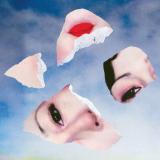
En stock

Disponible en stock et prêt pour l'expédition

So-Do - Studio Works '83-'85

The story of So-Do is both familiar and completely unique. A classically trained multi-instrumentalist with a poet’s sensibility and a passion for folk music meets a worldly bar owner with a love for psychedelia, post-punk and dub in the small town neither could bring themselves to leave. Over two years, they play dozens of shows in independent live houses across Japan, cut and self-release three singles – two 7”s and a 12” – and leave behind just eight tracks, all of which are set to be reissued for the first time forty years on.

So-Do’s Studio Works ’83-’85 collects the full output of this iconoclastic post-punk phenomenon, whose sparse, syncopated arrangements were infused with a dubbed-out flair that owed more to Dennis Bovell’s productions of Orange Juice, the Jah Wobble basslines of Public Image Limited or Adrian Sherwood’s live dubs of Mark Stewart than even they knew at the time.

Because for lead songwriter Hideshi Akuta, music offered an escape from the existential malaise of small-town life, folding a melancholy nihilism into tracks like ‘Kakashi’ and ‘Hashiru’ (which translates as ‘run’), or taking aim at the inequalities and creeping apathies of the middle classes, as he does on ‘Get Away’ and ‘Nothing’.

And if Talking Heads had CBGBs, Sex Pistols had the Roxy, then So-Do had Buddha. Influenced by Buddha venue owner and amateur producer Atsuo Takeuchi, Akuta turned So-Do’s sound towards dub, crafting playful, ironic and funky compositions that crackle with live energy at the vanguard of Japan’s nascent independent music scene.“So-Do is hard to explain,” Takeuchi says. “It’s been a struggle for years to try to find the words for our music.” The answer perhaps, is just to listen.

Both familiar and completely unique, So-Do extend Time Capsule’s genre-defining exposition of Japan’s reggae-inspired music of the ‘70s and ‘80s, as collected on the label’s two critically acclaimed Tokyo Riddim compilations, and London-based live outfit Tokyo Riddim Band.

Embracing the rip-it-up-and-start-again ethos of the early ‘80s, So-Do burned bright for a short time and then burned out. Their legacy is about to be reignited. Expect it to catch alight once more.


All songs are written & composed by Hideshi Akuta

Produced by Atsuo Takeuchi

Artwork by Ben Arfur
Liner Notes by Anton Spice, Ayana Honma, Kay Suzuki

Curated by Kay Suzuki

Licensed from Atsuo Takeuchi (Oregano Cafe)

Tape Restoration and Mastered by Mike Hillier at Metropolis Studios, London, UK

Time Capsule | TIME023 | 1983-1985 → 2025

En stock

Disponible en stock et prêt pour l'expédition

Various - Archeo 10 Years Anniversary - Volume 1

As the tenth candle flickers atop the torta alla panna, Archeo Recordings play the Uno reverse card, breaking with tradition to give us a gift in celebration of its birthday: the first in a series of exquisite EPs on which the label's favourite contemporaries pay homage to past masters. Each re-polished gem is plucked either directly from the beatific back catalogue of the fine Florentine label or is at least Archeo-adjacent, perhaps a sign of future wonders to come. Like a musical version of Janus, who can be found at the heart of Bertoldo di Giovanni's frieze in the Medici villa, Archeo Recordings will continue to look forwards and backwards to provide sublime sounds for us all.
Pepe Maina officially joined the Archeo family in 2019 with the much-needed reissue of his 1979 masterpiece Scerizza (AR015), but his astounding music has been a constant companion to label head Manu for much longer. An inter-dimensional, multi-instrumental maverick, Maina weaves the frayed edges of prog rock, new age, organic jazz and global minimalism into a shimmering tapestry all of his own. The results are spread across fifty years and almost as many albums, largely self-released and always absolutely untarnished by commercial concerns.
Based in a small village in the hills of Brianza, just north of Milan, Maina translates the beauty of his surroundings into transformative tone poems, and the folkloric fusion of "The Infinite", originally released on his 2014 CD Tales From The Hill, is the perfect example of his practice. It opens with a recitation of Giacomo Leopardi's 1825s poem "L'Infinito" by famed Italian actor Vittorio Gassman. A leading figure in the romantic movement, Leopardi explores the idea of time and space within the natural world, and the peace that comes with an appreciation of the immensity of eternity. Manu, longtime digger and now a burgeoning producer, expands upon the original with tribal percussion, chirping electronics and a spheric bassline, folding Maina's elegant strings and gossamer pads into a new arrangement suited for a slow dance under the stars.
Unless you had a well-trained ear tuned to Italy's avant-jazz scene, chances are your first encounter with innovative flautist Roberto Aglieri came via the 2017 Archeo reissue of hisalmost untraceable LP Ragapadani (AR011). It's a true testament to Manu's digging credentials that he snatched this masterpiece out of the esoteric atmosphere and brought it attention it so richly deserved. A delicate union of digital synthesis and versatile flute - be it soft and silvery or
brilliant and clear - the 1987 album was a shapeshifting masterpiece, replaying scenes from Virgil, Verdi, Visconti and Pasolini with a neon glow. Quintessentially Italian, but uncanny and previously unimagined - Penthouse and Portico perhaps. Powered by a percolating prototechno sequence, cascading keys, hallucinogenic vocal snippets and a variety of tonal timbres from Roberto's reed, "Danza N. 1" long deserved the praise reserved for Jean-Luc Ponty's pinnacle, so many thanks to Manu for our collective introduction. The tall task of reinterpreting this particular paragon falls to Perugian polymath Daniele Tomassini AKA Feel Fly, whose peerless skills as both producer and musician have delighted DJs and dancers alike. Hot on the heels of his diverse and definitive remixes of Tony Esposito for AR027, Daniele delivers a radical rework of "Danza N. 1" perfect for both day rave sunshine and full moon party alike. Enhanced by snapping breaks and a rattling kick, the bassline gurgle emerges as a progressive powerhouse, laying the foundation for the trilling flute and circular keys to cast a psychedelic spell. As the slow-Goa revival picks up pace, this one is way ahead of the pack.
Archeo take us all the way back to the start of its story here - well almost. Though it bore the stamp AR001 (2015), this Radio Band reissue actually hit shelves months after Tony Esposito's "Je-Na' / Pagaia"; a false start perhaps but a true classic all the same. Radio Band were a group of DJs from Florence who all sailed the airways of Radio Fantasy in 1984 and whose one and only release was this super groovy slice of Italo-boogie. Following the example of Milanese DJs Band of Jocks but far surpassing their formulaic funk fizzle, Radio Band employed an intergalactic bassline, cosmic keys and that undeniably Italian style of rapping to deliver a sophisticated party-starter which even found its way to disco deity Ron Hardy. Back to the here and now, and if you've found yourself pumping an ecstatic fist to a supercharged Italian epic of late, chances are its from the mind of the mysterious Radiomarc. Operating on the ascendent Popcorn Groove imprint, this shadowy figure steers his country's lost classics into peaktime territories, finding a sweet spot between late Italo-disco, early Italo-house and contemporary cool. Pushing the tempo with a club-ready 4/4, setting the sequencer to stun and supplementing the original melodies with a series of synth riffs, the mystery producer send this one into orbit. Radio Band - Radio Rap - Radiomarc, the circle is complete.
Few have done more to develop cross-cultural musical exchange than Futuro Antico. A collaborative venture from musician, archeologist and ethnomusicologist Walter Maioli, keyboardist and tonal theoretician Riccardo Sinigaglia and multi-disciplinary artist and composer Gabin Dabiré, Futuro Antico formed in Milan in 1979, combining ancient international folkloric traditions with otherworldly electronics. The result is an arresting melange of Mediterranean, African and Asian instrumentation, mimicked by esoteric synth tones and hypnotic minimalism, which the group perfected on their acclaimed 1990 LP Dai Primitivi All'Elettronica. The meditative and transportive "Pan Tuning" belongs to their largely overlooked 2005 CD only release Intonazioni Archetipe, and has been amongst Manu's most loved tracks from the first moment he heard it. Who else is better placed to reshape this evocative opus into an immersive, transcendental dance floor journey than label favourites Mushrooms Project? The duo sows the original elements into a sprawling fifteen minute fusion of séance and science, at times propulsive with a ritualist rhythm of tuned percussion and crunching drum machine at others drifting off into ethereal ambience. Mushrooms Project continue to push the boundaries of the Afro-cosmic style, and this remix marks a new zenith.

En stock

Disponible en stock et prêt pour l'expédition

Luke Sanger - Dew Point Harmonics LP

Balmat began our journey in 2021 with the release of Luke Sanger’s Languid Gongue. Now, three years later, we turn an important corner as the Norfolk musician rejoins us with Dew Point Harmonics, the first repeat appearance on the label. Sanger’s new album feels like a natural extension of his inaugural record for Balmat: It’s a bewitching collection of esoteric synth sketches that slips unpredictably between consonant repetition, poignant melodies, and gnarled bursts of noise that catch in the ear like burrs in hiking socks.

That natural metaphor is perhaps not accidental. Despite having been composed on Sanger’s diverse array of hardware and self-written software, many of the tracks were first conceived while Sanger was hiking in a particularly wild and isolated section of the Norfolk coast. The field recording that opens the album, on “6am Beach Walk,” was taken on one of his many early-morning walks there, in which he and his dog might go for miles without seeing another soul. The album’s title was inspired by the overnight condensation covering the long marram grass in the dunes, glistening in the early light (and drenching everything coming in contact with it) before evaporating in the morning sun. Indeed, the concept of dew point—the temperature at which water vapor condenses into a liquid—feels like the perfect metaphor for Sanger’s music, in which foggy ambience is distilled into glistening quicksilver orbs, transient spheres of perfection eventually absorbed back into the atmosphere.

A shapeshifting collection of richly detailed and deeply expressive electronic miniatures, Dew Point Harmonics is both a testament to the mysteries of transformation and an invitation to get lost in the wilderness of your own imagination.

En stock

Disponible en stock et prêt pour l'expédition

Priori - This but More LP 2x12"

Priori

This but More LP 2x12"

2x12inchNAFF022
NAFF
13.08.2024

Acclaimed Canadian electronic producer Francis Latreille, known as Priori, unveils his new singles "Learn To Fly" and “Segue” today, marking the first releases from his upcoming third album, This But More. "Learn To Fly" offers a taste of the album's lush, dubby techno soundscapes, while "Segue" showcases the album's ambient side. Arriving May 24th via NAFF, This But More marks a sonic departure for the artist, exploring a richly textured landscape of electroacoustic compositions inspired by literature, cinema, and the transformative power of nature.

Priori delved into This But More from September 2023 to March 2024, drawing upon archival recordings and fresh ideas. "This album is about healing," Priori explains. "Not necessarily 'music that heals', but about the process in its ups and downs, its beauty and uncertainty." Themes of protection, healing, sleep, and decay naturally emerged during the creative journey.

To craft this immersive world, Priori collaborated extensively. Writer and musician Devon Hansen penned a series of "Suggested Stories" to accompany the album, adding depth to its lore. Musically, Priori teamed up with James K, Ben Bondy, Sabola, Adam Feingold, and Jesse Osborne-Lanthier, infusing the album with diverse instrumentation, including violin, guitar, software instruments, and field recordings.

This collaborative spirit extends to the album's striking visuals. Jesse Orsborne Lanthier designed the main and single artworks, while Ulysse De Lezenne crafted a unique jewel, both pieces seamlessly connected to the album's narrative.

The intricate world-building sets This But More apart. "It's the biggest collaborative project I have tackled so far," Priori notes. This spirit of exploration extends to the second single, “Wake”, featuring Priori's first vocal collaboration with close friend Jamie Krasner (James K).

Priori's artistic process is grounded in self-awareness and intuition, asking vital questions about how each element serves the greater purpose of the music. Swimming sessions between studio work provided clarity and focus throughout the album's creation. These meditative moments reflect in the music, inviting listeners into a contemplative, dreamlike state.

Beyond music, Priori draws inspiration from the literary worlds of Gene Wolfe, Ursula K LeGuin, China Mieville, Brian Caitlin, the evocative games of Hidetaka Miyazaki and Yoko Taro, as well as the ever-evolving beauty of myths and nature.

En stock

Disponible en stock et prêt pour l'expédition

JJ Whitefield & Forced Meditation - The Infinity of Nothingness LP

Having plied his trade around the world for more than three decades, German guitarist, bandleader and musical explorer Jan Whitefield has always instilled in his craft a natural aesthetic of authenticity, a key component which has seen him amass a sizeable and varied catalogue of material which has remained timeless where some of his contemporaries have faded away.

In the early 90s, as various UK bands were signed up by sizeable labels and enjoyed even mainstream chart success in the Acid Jazz and rare groove boom, Jan and his brother Max formed the Poets Of Rhythm, self-releasing their own uncompromisingly hard-edged take on 70s street funk on the then completely unfashionable 7" single format, forerunning the Deep Funk scene by almost a decade. 30 years on, in spite of a legion of retro-focused bands having followed in their wake, few have yet to come close to matching the energy and spirit of those early Poets 45s.

Since then, Jan has applied himself to all manner of new incarnations and innovative side-projects, releasing further funk surveys as the Whitefield Brothers before leading his own band under the pseudonym Karl Hector, with releases on labels such as Stones Throw, Daptone, Ninja Tune, Mo'Wax, Strut and more. An avid music lover, explorer and record collector extraordinaire, Whitefield's music has effortlessly absorbed his expanding interests along the way, particularly drawing influence from Ethiopian Jazz and West African funk and highlife, as well as Kraut-rock and ambient via his Rodinia alter-ego.

More recently, Whitefield has begun to venture into the astral planes of what's now commonly referred to as 'spiritual jazz', and this is very much where we find him manifesting on 'The Infinity Of Nothingness'. A set of mature, delicate and meditative orchestrations, like much of Whitefield's best work the album is studiously true to its key influences - and in this instance the twin figureheads of Sun Ra and Pharoah Sanders are particularly preeminent - but also completely avoids falling into a trap of mere tribute or facsimile. With subtle yet diverse accents of Hip Hop, Library and the Avant Garde appearing wholly unobtrusively, the album is unified by a marked trance-like feel, beginning with the sparse, processional opener 'Nothingness' through to the 3 part 'Infinity Suite' of 'Time', 'Space' and 'Energy'.

As he did as a schoolboy with the Poets of Rhythm, with 'The Infinity Of Nothingness' Whitefield achieves that exceptionally rare feat of creating music that is not only worthy of sitting alongside that of his overarching influences, but will also stand up with it against the tests of time.

En stock

Disponible en stock et prêt pour l'expédition

PALE JAY - IN YOUR CORNER / BEWILDERMENT
 
2
également disponible

Black Vinyl


Limited Natural w/ Black Swirl Vinyl 7". This new 45 from Karma Chief Records showcases two tracks from Pale Jay's latest LP, Bewilderment. The A side, In Your Corner is an Afrobeat inspired song that addresses a conversation with the self. An uplifting tune at first glance, the lyrics lay bare the internal struggle for self-acceptance. The song explores the push and pull between self-love and self-judgement that can often leave us feeling lost and uncertain. The B side and title track to Pale Jay's latest LP 'Bewilderment' showcases the main elements of his unique sound palette: silky falsetto over soulful harmonies and dusty hip hop beats. 'Bewilderment' tells the story of the disintegration of a family, creating a captivating and soulful musical experience and a journey into self discovery.

En stock

Disponible en stock et prêt pour l'expédition

Russell E.L. Butler - Call Me G LP 2x12"

T4T LUV NRG presents “Call Me G”, the new album by Brooklyn’s Russell E.L. Butler, their first full length LP since the release of 2018’s critically acclaimed “The Home I’d Build For Myself and All My Friends” on Left Hand Path. In the intervening years, Russell has experienced an accumulation of personal subjective experiences which are explored through captivating musical modalities and expressions on this sprawling, gorgeous, and deeply emotional album. Russell’s work on “Call Me G” can be described as a unique amalgam of early NY house music, dub techno and poetry. The album’s title track, as well as its instrumentals, are a kind of storytelling for histories that continue to exist without observation as well as for secrets and the power they hold in spite of their truth being obscured and sometimes lost.

Storytellers like Russell have the ability to collapse the past and future into discrete experiences of non-linear time through the emotional landscape of music and voice. Each song contains a palatable loneliness and hurt to which many in this modern world can relate, but each track also suggests the possibility of genuine connection and the formation of the self through communing and reintegrating with the natural world. These parallel concepts are the subject of “Accumulation”, a writing by Russell which accompanies the release of the album. The emotions, conflicts and resolutions that accompany Russell’s storytelling are felt acutely on tracks such as “I’m Dancing No One Is Watching” and “Stare Into The Light Beam”, among others.

On the title song, which closes the album, Russell sings “Can you call me? Will you call me? All that I want is for you to call me by my name...My name is G.” Context is part of interpretation and thus it is left to the listener to feel in the music and lyrics the concept that what may seem erased never truly dies, the traces still exist in the thing that takes its place. The T4T LUV NRG label is in part a continuing effort to facilitate the documentation of true stories that don’t get told—rather than representing a singular vibe or genre. Russell’s album is a stunning and profound entry in this evolving catalog of music and art. The beautiful cover of “Call Me G” is based on a hand drawn portrait of the artist by Diego Guzman.
En stock

Disponible en stock et prêt pour l'expédition

Ramjac Corporation - Press 1 To Repeat

Orphic Apparition follow up their inaugural release by RAFRAM, the collaborative project of Toronto's Raf Reza aka Raf Rizzla and UK acid house luminary Ramjac Corporation, with a new two-tracker from the transatlantic bass warriors. Where the RAFRAM 12" gifted us five variations on the same live jam cut from Grow Tottenham, here we have a spontaneous track written by Paul (Ramjac) on the A-side and a fully warped dancehall mix from Raf on the B. (short)

'Press 1 to Repeat' began as an on-the-spot demonstration of the musical self, a natural response to being asked 'What is it that you do?'. Within a few minutes Ramjac had his laptop out and was bashing out a quintessentially English sort of kitchen tabletop version of Kraftwerk - Numbers, the tongue in cheek automated voice on the other end of the line querying his account balance in tow. Proudly showing his friend Ryoko his improvisatory skills, a £10 hifi from a Japanese 2nd hand shop served as the portable monitors whilst the track waited to be brought back to his studio in London. The track is anchored by a bouncy, Irdial-reminiscent percussive workout which punches above its weight for its humble beginnings. Add the dubbed out synth pads and sort of electrical static FX in the background and everything syncs together in cosmic harmony. Hopefully Ryoko now gets the gist!

Raf Rizzla takes the stems and channels some inspiration from the Jamaican movie “Third World Cop” by turning the track on its head with a double-time baseline and half-time melody to craft a big dancehall version with a bit of a modern day On-U twist. Here Raf shows yet another side to his truly versatile production chops which have seen him release house, trance, breaks and downtempo cuts on a variety of Canadian labels prior to starting Orphic Apparition.

En stock

Disponible en stock et prêt pour l'expédition

REBOLU - Que Es Contigo

Rebolu

Que Es Contigo

7"-VinylNYCT7086
Names You Can Trust
30.10.2023

Grupo Rebolu has been a mainstay in the extensive Colombian community of New York City for well over a decade, bringing the quintessential sounds of their home country to countless live shows and events throughout the five boroughs. Musically steeped in the folkloric traditions of the Afro-Caribbean discourse, the band has consistently combined first class musicianship with the echoes of their upbringing. Throughout their four self-produced albums, they have incorporated some of Colombia's most cherished traditions —gaita,cumbia, andbullerenguebeing just a few of the disciplines that Rebolu has infused with the modern songwriting and compositions of band leader Ronald Polo. As a natural step in the band's continued musical evolution, Rebolu has connected with Names You Can Trust for a one-off recording to deliver two original songs and productions that seamlessly fit the preferred format and the label's catalog, while further incorporating the group's sound into the wider NY musical spectrum. Whether it's champeta gone disco, or bullerengue gone reggae, this handy double-sided single packs a fresh take on the roots and traditions of Rebolu's musical lineage.

En stock

Disponible en stock et prêt pour l'expédition

Azu Tiwaline - The Fifth Dream LP 2x12"

What comprises a dream?

An astral plane of our own making where thoughts, love, and desires of the inner mind abound with irreverence - ripe with connection & perspective beyond constraints of time, set, and setting.

Azu Tiwaline exists within the wonders of these interstitial worlds, diving deeper towards inner sanctums of mystic imagination, sublime intrigue, & profound understanding on her second full length LP “The Fifth Dream”.

Released again through her beloved partnership with I.O.T Records, “The Fifth Dream” finds Azu painting an expansive vision towards unified multitudes, mercurial realities, & abundant inner sanctums.

Where her first album “Draw Me a Silence” was a loving ode to her family & upbringing in the form of an elegant diptych, “The Fifth Dream" is the enactment of actualizing her roots into new routes, taking her multifaceted identity into new means of communication towards herself, the world, & the cosmic unknowns that surround her.

Throughout The Fifth Dream’s 54-minute runtime, we hear all elements of the uniquely transcendental sound that Azu is beloved for worldwide. “Antennae Opening”, “Blowing Flow”, & “Amen Dub” embody her talents for tectonic, dubwise soundscapes that channel the innately maternal elements of bassweight into bold & abstracted pulsations, indebted to the most psychedelic & body activating ends of dubstep.

Still attuned to the spatial awareness of dub sonics but giving way to the hypnotic syncopation & synaptic frequencies of techno, “Reptilian Waves”, “Long Hypnosis”, & “Mei Long” bring forth her spectacular expertise for entheogenic rave rhythms - guiding us warmly towards trance-inducing hyper states of dance & delight. Fluctuating between an adventurous velocity and enveloping stasis, the expansive abyssal planes of “Golden Dawn”, “Night in Palm Tree”, & “Canope Imaginaire” conjures a wondrously invigorating rhythmic enlightenment & celestial comprehension - simultaneously moving us forward, inwards, & outwards through Azu’s uniquely omnidirectional & kaleidoscopic musical visions.

Adorned with sampled field recordings of her deeply inspiring home in the desert of El Djerid in South Tunisia, Azu opens a portal into the synergistic inner sanctums of being, self, and the world around us that’s essential to her work as an artist - from the macro levels of humanity’s naturally intimate connection to the Earth we share, down to each of our own micro levels of culture, ancestry, and belonging. All of this is alchemized through a combination of timeless Saharan knowledge & modern cybernetic tools, creating new dimensions of bewitching, euphonious sonic energy. This is music that gives back as much as the listener wants to give themselves unto it - detailed and layered, orbiting a steady core as ethereal swirls and intonations of the natural world embrace us warmly within a spellbinding journey.

8 of the album’s 9 tracks feature a deep level of collaboration from innovative Franco-Iranian percussionist Cinna Peyghamy. Cinna’s use of Tombak, the principle drum of Iranian music throughout time, is beautifully sonorous - channeling the passion of centuries of Southwest Asian rhythm & expression into his own personalized flourishes, with Azu adding her own electrifying frequencies & undiluted artistic freedom to their shared interplay. This profoundly communicative diasporic essence is transmuted between Azu & Cinna, their expression, & the listener. Both are music lovers, intimately connected to their respected Iranian and Tunisian cultures - concurrently acknowledging the wisdom of their resonant pasts, while proudly bringing the sounds of their heritage into the present & future.

“The Fifth Dream” embodies a cosmic anodyne for those feeling caught in between life’s abyssal inbetweens, whilst aiming for a consonant awareness of where our home truly lies in the swells of life’s spiritual maelstrom. This dream belongs at once to none & to many, that of a common language unified in concentric depth - finding beauty in all aspects of our world, and ultimately, within oneself.

En stock

Disponible en stock et prêt pour l'expédition

Slave To Society - Thrown To The Wolves EP

To Celebrate their 3rd anniversary Berlin’s Pure Hate Trax hand the
reigns to resident artist Slave To Society. Andrew Bowen aka Slave To
Society provided the debut EP on the label with his now infamous ‘Path Of Self Destruction EP’ which also featured a remix from UK Techno pioneer Perc. Since then Andrew has gone onto release on some key labels including PI Electronics, Scuderia, Natural Selection, PRSPCT & his own self titled Slave To Society imprint. This time on remix duty Birmingham born Berlin based Rebekah steps up to remix lead track
Thrown To The Wolves. As one of the most respected figures in the
world of hard-edged Techno, Rebekah has carved out an infallible
reputation as a consummate artist and has established herself as one
of the leading UK exponents of the sound currently operating on the
global circuit. With 3 Experimental, Industrial, Breakcore originals
packed full of Esoteric Noise, Distortion and Breaks with a straight up
Hard Techno/Hardcore floor focused remix, Pure Hate Trax stamp their
intent as they move into the next chapter. PH006 is available in stores
from 23rd August 2023, distributed by Ready Made Distribution, Berlin.
Mastered by Joe Farr. Artwork by Slave To Society.


c B1. Thrown To The Wolves Rebekah Remix

En stock

Disponible en stock et prêt pour l'expédition

Rosso Polare - Bocca D’ombra LP

"We entered the shadowy mouth of a new space, descending into a realm that precedes the underworld, the arcane, far from our time. We met beasts that gave us lessons about their language which we started learning without grammar."


'The animal world is a constant in the work of Milan improvisational duo Rosso Polare. If Cani Lenti was guided by the diaphanous birdsong integrated into their sparkling mix of folklore, ambiences and occasional humming, on Bocca D’ombra the themes go darker, textures are harder to pin down and the animal presence takes on new connotations.

Instead of an anonymous, patchworked outdoors we enter a cavernous space that invokes the collective unconscious with bestial and funereal undertones, as the animals take on the role of the psychopomps, ancient guides through the shadow realm.

The album is influenced by Timothy Morton’s Dark Ecology, a thinker who sees the constant exchange between the human and natural world as an ongoing dialogue, the two influencing each other, in a series of reverberating loops. This looping is also reflected in their compositions, where improvisations with traditional instruments like electric and acoustic guitars, monophonic synths, horns or flutes meet natural noise-making tools like branches, rocks or nuts that amount to lugubrious, often dissonant textures. Bocca D’ombra is built on a series of whispers, breaths, panting and rustling, creating a feeling of closeness sometimes verging on the claustrophobic, ingeniously set against sounds evoking space – fireworks crackling, crows echoing, church bells reverberating, indistinct cries from a children’s playground.

Distance and repetition are deeply ingrained in their own understanding of sound and their surroundings, becoming the building blocks of their practice. Just like Gregory Bateson in the ‘70s, the duo believes in a more romantic approach to ecology, seeking a porous border between self and environment, human and animal, internal monologue and external ambient hum.

If earlier releases were noisier and denser, Bocca D’ombra is tight and focused - every sound and melody is given room to breathe and develop on its own, enhancing the haunting, otherworldly aspect of the music. The result is heady, intoxicating mix which sublimates chaos into sparkling compositions of contemporary animism.'

En stock

Disponible en stock et prêt pour l'expédition

Guilherme Coutinho E O Grupo Stalo - Guilherme Coutinho E O Grupo Stalo LP

We are proud to present the Mr Bongo pressing of Guilherme Coutinho E O Grupo Stalo's self-titled mythical album. Blending lo-fi, Brazilian tropicalia, jazz, funk and MPB with a unique aroma, this record is pure perfection.

It was originally released in 1978 on Erla - Estudio Rauland, an obscure record label from Belém in Brazil, that only released 7” singles, with this album being one of two exceptions. During the 1970s, Belém had a thriving nightclub scene, but it is thousands of miles away from the music industry hubs of Rio de Janeiro and São Paulo, making this record insanely difficult to find, even in Brazil. Added to the scarcity factor is the magical nature of the recording, which has naturally resulted in a hefty price tag to match. Original copies have become a prized, collector’s item.

The elusive Brazilian band leader and keyboard player, Guilherme Coutinho is a true cult artist. He passed away in 1983, at the age of just 41, and during his career he only seems to have appeared on a handful of marvellous records, which makes them all the more special. This album feels individualistic and distinctive from other albums of the day. Listening back to vocalist Elinho’s (aka Hélio Rubens de Oliveira) delivery, it sounds not too dissimilar to some of Belle & Sebastian’s songs. ‘Guilherme Coutinho E O Grupo Stalo’ is rich in charm, quirky and playful. It feels cinematic, soothing and benefits from being heard in its entirety. A proper album experience.

En stock

Disponible en stock et prêt pour l'expédition

Tunico - Tunico  LP

Tunico

Tunico LP

12inchFARO236LP
FAR OUT RECORDINGS
14.04.2023

Far Out Recordings proudly presents the self-titled debut album by Rio de Janeiro born multi-instrumentalist, composer and arranger Tunico. Honing Brazilian roots rhythms like maracatu, xanadu, and samba, to combine with a global contemporary jazz outlook, the newcomer adds a modern classic to the ever rich vein of Brazilian instrumental music.

Consider it a natural evolution from the legacies of greats like Quarteto Novo, Hermeto Pascoal, Banda Black Rio, Tamba Trio, and Dom Um Romão, Tunico’s debut brings together an eye catching ensemble of talents from the Rio jazz community, with whom he performs on a weekly basis at celebrated live sessions and jam’s at venues like Macuna and Comuna Lapa, which often go on all night.

Released in 2022, the album’s rip-roaring lead single “Galope” features the effervescent vocals of Katerina Assef, as well as consummate solos from all over the band, as Sounds & Colours put it “…it exudes distinction and promise”. “Sambola” calls on the signature swagger of Far Out favourite Antonio Neves, indulging us in irresistible swinging samba-funk, undeniably reminiscent of the aforementioned Banda Black Rio in their late 70s heyday.

Born and raised in an artistic Rio household, Antonio Secchin aka Tunico’s father was the painter Guilherme Secchin, whose original work is lovingly repurposed to create the album’s cover. Antonio learned his trade on guitar from a young age, which remains his primary method for composition, but at the age of eighteen he started to gravitate towards the saxophone, and in particular the soprano sax, from which he now leads bands despite being entirely self taught. He would develop his skills busking on curbsides and metro stations before becoming a mainstay player in venues and clubs around the city.

When the pandemic struck, Antonio retreated to his family home in the Rio countryside. With time and space to breathe and reflect in a natural environment, he set to work at fleshing out the compositions he’d written throughout his musical life into full bodied works. His affinity with his rural surroundings is reflected in the luscious, blossoming feel of this groovy, mystical and poignant instrumental debut album.

Tunico will be released on vinyl, CD and digital platf

En stock

Disponible en stock et prêt pour l'expédition

Articles par page:
N/ABPM
Vinyl