
нет на складе
Закажите сейчас, и мы закажем товар для вас у нашего поставщика.
Последний логин: 19 г. назад
Закажите сейчас, и мы закажем товар для вас у нашего поставщика.

2025 Repress
Comrade Winston's "Native Rhythm" EP perfectly represents what a music-enthusiast delivers after years of crafting the art of DJing, listening and digging. The album represents pure wisdom in 4 cuts: from tribal elements to heavy percussions and so on, inviting you to get lost between sound and the walls of a dance floor. Two rising starts contribute to making this release special for the artist and label: Tresor resident Baily Ibbs delivers a perfect spicy-up bouncy track while Chontane delivers a serious dancefloor-orientated cut with dub elements.
Есть у нас в наличии и готов к отправке
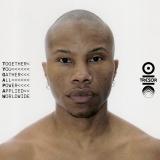
May 2026 marks the arrival of TYGAPAW (aka Dion McKenzie)’s first full-length album on Tresor Records, entitled Together You Gather All Power Applied Worldwide. An acronym of its creator’s name, TYGAPAW’s third studio album is a deeply personal collection of music building worlds where Black queer and trans siblings can thrive, while unifying dancefloors worldwide. A proposition that collective wisdom liberates us from the matrix of domination we live within. The album unfolds as the latest chapter in TYGAPAW’s ongoing techno opera opus, continuing to center the voices of Black women, which surface as layered incantations rather than lyrics - powerful, haunting, sensual, activating.
With the process of creating the album starting in 2023, as TYGAPAW (Dion McKenzie) was in the first year of their transition, the music reflects the intensity of that period, where they were experiencing deplatforming as a response to the shift in their physical appearance: Tracks like ‘M32 Riddim’ and ‘Helicopter hovers over my Crown Heights Apartment’ feature high-paced rhythms intersecting with intense siren-like synths to form demanding compositions echoing a heightened sense of alert. Yet throughout the album, relief comes in the form of TYGAPAW’s vocal features, co-conspirators, and chosen family, whose voices are treated with reverb and echo, a sonic fingerprint that leads back to the pioneers in the legendary studios of TYGAPAW’s native land, Jamaica, an important reminder that the past will always inform the future. It is an album for dancers first and foremost, where joy, defiance, and integration with the natural body coexist, and every drop feels less like a climax than a transformation. Expect a bass that permeates your soul and melodic synthesized sequenced phrases echoing the dancehall eras of TYGAPAW’s youth, reshaped into hypnotic melodies that glow over industrial kicks designed to command attention, reasserting Jamaica's pioneering yet often overlooked contribution to electronic music.
In the opening track, ‘Can I Live’, Precious Okoyomon’s words feel like the beginning of a ritual; setting the intentions for the rest of the proceedings. As McKenzie puts it, their “work is about regeneration, resetting, getting integrated into nature, and about rebirth. That’s the tone I wanted to set at the outset of the album.” Ms Carrie Stacks continues this thread of support in ‘Don’t Panic’ with heavily processed vocals on top of a beat that takes inspiration from another important ingredient in the antidote to the oppression of isolation: Ballroom culture. “ I feel like I found my queerness in Ballroom, that’s why this track is very important to me.”
Echoes of NYC Black queer nightlife scene also permeate in the energetic drums of ‘Exorcise the Language of Domination’, in which Julianna Huxtable’s spoken performance complements the various movements and tones of the music. “My producer brain thought this was the one that Juliana’s vocals would be best suited for. I hinted: ‘what do you think of this one?’ She just went into her notes and picked some passages to go with the first section of the track. From there, it was a year-long process of development. It required time and space for this thing to evolve, but I think it’s one of the most powerful tracks on the album.” London’s SUUTOO contributes the album’s only musical collaboration on ‘B2B’, a track that emerged from sessions in McKenzie’s New York studio where the real objective was to connect and have fun; a time out from the demands of life outside.
The album closes out with a double hit of emotion in the form of ‘Effects of Resistance and Black Trans Masculine Experience’. The former features South African scholar Khanyisile Mbongwa drawing connections that exist between Africa and the Black diaspora, whilst looking to the future and calling for a shared sense of community.
The latter piece, an instrumental version of the piece which featured on the IMMIGRANT E.P. of 2025 is a gentle and deeply affecting end to the record, a place of peace and acceptance. This end-of-cycle tone is mirrored in the sleeve photography, which also ties back to IMMIGRANT by finally revealing what was hidden: a portrait of the artist fully self-actualized; a step towards true inner liberation. TYGAPAW is sonically defiant across this album; bass frequencies feel tactile — less heard than inhabited — infectious lead synth melodies remain with you long after the track ends. An overall sound that leaves asserting an urgent need for connection. From Detroit to New York to Berlin to Jamaica, despite geographic distance, this album reminds us that we remain in solidarity, recognising that meaningful world-building requires collective input and action, both personal and communal, if we are to move toward liberation.
он должен быть опубликован на 08.05.2026

New album by french rapper Sheldon, including featurings with Chilly Gonzales, Jazzy Bazz, Tuerie, Asfar Shamsi...
Monsters are never where we expect them to be. They take shape in silences, in vague fears, in the baggage we carry without always understanding it. Sometimes, we also encounter them along the course of a life. On this new album, Sheldon chooses to dance with them, to tame them with wit, grace, and a sense of peace.
Following a powerful return with Grünt 75, an iconic format to which the 75e Session collective brought particularly ambitious visual staging, Sheldon unveils a fourth album that unfolds across fourteen tracks like a chiaroscuro landscape, revealing the full depth of his emotional and musical range. Through intimate narratives, the record explores identity (Être une fille), family and fatherhood (La Fenêtre and Les Monstres, the title track), as well as friendship (Eh le reuf). These are themes that run through all of us, approached here with writing that is vivid, demanding, and deeply sensitive.
Driven by a strong narrative arc, the album features songs like Être une fille, which challenges and questions us. On it, Sheldon reflects on his relationship to gender, his doubts and discomfort with the codes of masculinity, and the idea that he has sometimes imagined himself elsewhere. Tracks like La Fenêtre and Avec ça illuminate the album like moments of communion, sincere, warm, and unifying, carried by a childlike lightness that makes tomorrow disappear.
True to his open minded and ever curious artistic approach, Sheldon draws from a wide range of musical genres while keeping rap as the album’s guiding thread, giving each song its own singular identity and contributing to the balance of the whole. To shape the project, Sheldon surrounded himself with a new generation of musicians and beatmakers whose influences span rap, indie rock, pop, and experimental music. Among them are Johnny Ola, who has notably composed for Zamdane, Jazzy Bazz, and Edge, Rodolphe Babignan, Carbonne’s flamenco guitarist, and Jeune Oji, an artist signed to Friends of Friends Music. Together, they bring melodic and acoustic richness, as well as a collective generosity that deepens the album’s intimacy.
This new album also opens the door to new collaborations.
On L’école primaire, Chilly Gonzales joins Sheldon for an unconventional piano and vocals piece, driven by cinematic, deeply intimate storytelling. Using his primary school as a point of reference, Sheldon retraces his path from childhood to adulthood, somewhere between nostalgia and serenity.
On Cowgirl, Tuerie joins Sheldon for a soft, melodic ballad with an 80s tint, capturing the weightlessness of a sunlit summer.
On Sidequest, Sheldon reunites with Asfar Shamsi, who had already appeared on his Grünt. Over a delicate cloud trap production, the two artists open up about everyday pain, finding in introspection a way to put things into perspective.
Finally, Vol de nuit brings Jazzy Bazz and Sheldon together for an intimate exchange over an ethereal, mysterious production, as both artists look back on their journeys with calm and clarity.
Conceived alongside Sheldon’s closest circle, the project celebrates family, friendship, and love as its founding pillars. Sheldon chooses to step away from the images, allowing his story to be embodied instead through the faces and gestures of those around him. This approach runs through all of the project’s visuals. Rejecting the excess of spectacular image making, he chose instead to hand a camera to his loved ones so they could offer their own vision of a song from the album. By opening a small window onto his intimacy, and that of the people closest to him, Sheldon finds a way to say a great deal with very little, turning deeply personal trajectories into something universal.
Like the music videos, the album cover is rooted in a deliberately simple approach, where the fantasy of childhood disrupts reality. Designed by Tenzin, the graphic designer behind Sheldon’s recent projects, Ptite Sœur, and also work for Jul, it is based on an archival photograph taken during a traditional carnival in Tenzin’s native village. With no staging involved, the image captures children in costume mid parade, caught in a spontaneous burst of movement, embodying the free innocence of childhood.
Les Monstres marks a new chapter in Sheldon’s journey. Like a rainbow after the storm, this fourth album reveals new colours in the artist’s discography, as he delivers a record that is both demanding and accessible, intimate and open, one in which music becomes a love letter to friendship and to love itself. Set for release on April 24, 2026, the album will be followed by a tour culminating at La Cigale in Paris on December 3, 2026.
он должен быть опубликован на 15.05.2026

Sticking a dirty thumb in the eye of fate, our third collaboration sees this marrow deep family malarky turn official as Pace Yourself teams up with YS’s own imprint ERF REC for a split release. As if our status as minor celebrities and footnotes of the underground could level off no further: the unification no one asked for is here. Sticking it to the man, handing your arse to ya on plate; cauterising infected suburban minds world over.
Burn is the second YS album and written as a direct follow-up album to Brutal Flowers. If their first album was an exercise in the incremental, a construction of poise and patience, Burn, should be taken way the fuck at it’s word: it quite literally finds catharsis in twisted reverse. Birthed out the malignant kick found in deconstruction and chaos. Evil twin, psychotic younger sibling, call it what the hell you like. It might take you a moment to get the lay of the land in this darkly mutated world. Like a bug eye’d native first confronted with a zippo, the hit is radical and instant: a new way for the world to go up in smoke.
Splice the Seattle slacker scene with the spliffhead soundsystem culture of the 90s Bristol trip-hop scene, then cross-breed that with the DIY optimism and glee in creation found in the cut-and-paste worlds of skate, graffiti and hiphop, now run that through the skitzo basement mind of John.T. Gast and you’re close to the kind of scorched earth and spiked suburbia that birthed Burn.
Dunno quite what YS have been ingesting of late but this massively twisted LP touches on a host of gloriously fucked totemic underground sources while not sounding much like any of them. It has the ballsy swagger and hard flipping of the script as Massive Attack’s seminal Blue Lines. Indeed, the eponymous album tracks sound similar - the opener ‘Burn’ is like a hard nosed jammed out redux of ‘Blue Lines’. Getting into a kind of slow-spinning overdubbed maximal euphoria ending with mumbled downer vocals, struggling to conceal their tongues in their cheeks there’s an air of paranoia and proto-conspiracy theory. It’ll leave you scratching your head, feeling like you’ve stepped into a New World Order governed by a cacophony of drop outs, dope fiends and apocalyptic stoners. A cracked out world somewhere between Richard Linklater’s movie Slacker (1990) and Marc Singer’s Dark Days (2001).
The rest of the album parts like a tongue on a wine glass: Smith and Mighty, Bandulu, ambient Luke Slater records, Wah Wah Wino, Nurse with Wound, Land of the Loops, Placid Angels, Adrian Sherwood, Urban Tribe and DJ Shadow can all be heard in momentary splatters - but Burn like other works by YS, is its own ritual beast. ‘Moth’, a track which has been knocking about the underground deejai circuit for many moons, is a real raw chopped and screwed slice of stoner erotica that reeks of obsession and unrequited desire. Elsewhere, on tracks like ‘Switch’, ‘Trying’ and ‘Drift’ the throughline from Brutal Flowers can be heard. Underneath the driving heavy gravity the trademark emotional intimacies of YS linger: eternal recurrence, ghosts of static and shortwave, worn memories of the playful and painful sort. The brief moments where flashes of orchestral ambience get out from underneath the swagger are so pure, personal and unguarded that for a moment they leave you completely lonesome. In the album’s closer ‘End’, you can hear the fleeting promise and DIY possibilities of an analogue world and embers of ash that flutter in its wake: where it seemed, for a brief moment, that collective of DJs, engineers, rappers, graffiti artists and skate crews were emerging from the streets, giving the middle fingers to the system, before just as quickly disappearing back to the doldrums of obscurity. ‘End’ is a bittersweet ode to early soundsystem culture, MCs and pirate radio - an out of step time where for a moment the underdogs and weirdos seemed to be kicking on the door of something bigger.
A veritable teenage doof suite dosed with desire, claustrophobia and deviance. Burn is a good old howl at the moon: lonely, raw, and out for blood; basement style exegesis at its best. A thump to the gut, a stud through your blood. A dubbed-to-death classic straight out of the annals of nowhere. A perfect post card from oblivion. A bleak, bold and personally ferocious vision of tomorrow and tomorrow and tomorrow.
This is everything that record collectors skip dates for. Fuck the scene and keep that shit underground. That’s what it is all about. Know what I mean, if you do? You’re in…
Есть у нас в наличии и готов к отправке
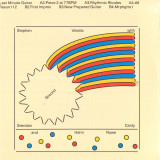
When you’re running a label, a demo occasionally comes across your desk that makes you reconsider everything you thought your label was all about. For Balmat, such was the case with this stunning album from Stephen Vitiello, Brendan Canty, and Hahn Rowe. It sounds like nothing we’ve released so far—and that very otherness opened up a whole new world of possibilities for us.
Fans of ambient, experimental electronic music, and sound art will be familiar with Vitiello, a New York native, long based in Virginia, who has collaborated with a cross-generational list of greats: Taylor Deupree, Steve Roden, Lawrence English, Tetsu Inoue, Nam June Paik, Ryuichi Sakamoto, Pauline Oliveros, and many more. On labels like 12k, Room40, and Sub Rosa, he has explored a wide range of minimalism, microsound, lowercase, ambient, improv, and other styles. But this album is something different. It may begin in ambient-adjacent territory, but it quickly veers off, and it just keeps zigzagging, taking on elements of krautrock, post-punk, dub, and the groove-heavy interplay of groups like Natural Information Society and 75 Dollar Bill.
This stylistic turn is thanks in large part to Vitiello’s choice of collaborators. “We’re coming from three different schools,” Vitiello says: “sound art, art rock, and punk rock.”
Active since the early 1980s, Rowe—a violinist, guitarist, and producer/engineer—has played with, or manned the boards for, a frankly jaw-dropping list of musicians: Herbie Hancock, Gil Scott-Heron, the Last Poets, Roy Ayers, John Zorn, Glenn Branca, Swans, Live Skull, Brian Eno, David Byrne, Anohni, R.E.M., Yoko Ono, and many more. But he might be most closely associated with Hugo Largo, a one-of-a-kind New York quartet—two basses, vocals, and Rowe’s violin—that in the late 1980s helped lay the groundwork for what would eventually become known as post-rock.
Canty, of course, is the legendary drummer of Fugazi, the visionary DC post-hardcore group, as well as Rites of Spring before them, and, currently, the Messthetics, a Dischord-signed instrumental trio with guitarist Anthony Pirog and Fugazi bassist Joe Lally.
Vitiello’s trio first collaborated on First, a 17-minute piece released on the Longform Editions label in 2023. Second picks up where the freeform drift of First left off, channeling the trio’s exploratory energies into more intentionally structured tracks and—in a real first for Balmat—some almost shockingly muscular grooves. “Sometimes my projects are more conceptually driven,” Vitiello says, “but I think this was more musically geared. I just wanted to open up the references and bring in an incredible drummer, bring in some melodies, and I’m sort of the center.” But his collaborators, he stresses, are “vastly creative in making anything I might suggest better.”
Like its predecessor, Second took shape in phases, shifting between improvisation and collage. Vitiello laid down the skeleton of the music at home, sketching out initial ideas on Rhodes keyboard and acoustic and electric guitar; he then fed the parts through samplers and his modular system, recording 10- or 20-minute jams. Once he had edited them into more structured forms, he hit the studio with Canty, who added not just drums but also bass and piano; finally, Vitiello took the results of those sessions to Rowe, who played violin, viola, electric bass, and 12-string acoustic and bowed electric guitar, and assisted in some of the final structuring and mixdown.
A few more surprises along the way: Reanimator’s Don Godwin, the studio engineer where Vitiello recorded with Canty, contributed what he calls “resonant dustpan”; and none other than Animal Collective’s Geologist, who just happened to be in the studio that day, sits in on hurdy gurdy on “Mrphgtrs1,” the album’s gorgeous, stunningly atmospheric drone closer. “I love these chance encounters,” Vitiello says. “Somebody I admire, a group I admire—that was an unexpected gift.”
An unexpected gift is a great way of describing Second as a whole: three veteran musicians venturing outside their usual zones and finding a new collaborative language together. The results can’t be neatly slotted into any given genre; they belong not to any given category, but to the spirit of conversation itself.
Есть у нас в наличии и готов к отправке

An immersive long-form composition in two parts that seamlessly blends a collage of spoken word, field recordings and drones with elements of dub, jazz, fourth world and ambient music.
Son Of Chi is the latest project of Rotterdam-based multi-instrumentalist, composer and producer Hanyo van Oosterom. Van Oosterom’s prolific career spans multiple decades and genres; among countless projects he has been involved in, he is known for founding the Dutch ambient collective CHI in the early eighties, and in recent years for his prolific collaboration with CHI co-founder Jacobus Derwort as Chi Factory. Following Derwort’s passing in 2019, van Oosterom decided to close the CHI circle with the birth of Son Of Chi.
Sonically, the world of ‘We Carry Eden’ is fully immersive; it ripples with depth and shimmers in detail. Motifs, ideas and fragments, arise and disappear like passing thoughts, drawing the listener deeper and deeper inwards. For those familiar with Oosterom’s work as Chi Factory, the depth and meditative nature of the work will come as no surprise; however it is Oosterom’s skill with grooves that shines equally bright here; his infectiously dubby basslines and percussion rise up from the ether, grounding the listener to the earth. ‘We Carry Eden’ at times invokes the fourth world landscapes of Jon Hassell, (with whom Oosterom has collaborated) but as a whole, it remains the unique work of an artist fully in tune with their vision.
Thematically, storytelling traditions lie at the heart of ‘We Carry Eden’, with van Oosterom’s long-time collaborator Omar Ka playing a central role. Ka, who hails from the West African nomadic Fulani tradition of storytelling, responds to the collage of field recordings and sounds collected by Oosterom. His voice is woven throughout ‘We Carry Eden’, creating a narrative that binds the multiple sound sources of the album together.
As with much of van Oosterom’s musical output, inspiration is drawn from the Greek Island of Patmos and the wisdom and prophecies of the Native American Hopi Tribe. Since his work with CHI in the early eighties, van Oosterom has often incorporated quotes from Hopi Elders into his music. Gods, spirits, animals and humans, all existing in one unchangeable relationship tied to nature; ‘We Carry Eden’ is rooted in this philosophy, serving as a peaceful message of beauty, harmony and respect for the wisdom of the Elders and ancient traditions.
Sleeve art and design by Michael Willis.
Есть у нас в наличии и готов к отправке

180 G. BLACK VINYL WITH LINER NOTES IN CREOLE, FRENCH, ENGLISH
Originally released in 1979, "Spiritual Sound" lives up to its name, a soaring, triumphant album, six tracks of spirit magic from Guadeloupe.
Telluric, intense, terribly alive, the gwoka drums of Guadeloupe carry the identity of a painful and fervent island. Marked forever by the crime of slavery, Guadeloupe's créolité cherishes the ka drums and their natural environment: the low-pitched boula drum with male goatskin, the high-pitched soloist makè drum with female goatskin, the chacha, ti bwa, triangle, calabash and other percussion instruments that surround them, and the voices - the fiery, proud, timbred, urgent voices of the gwoka.
This album is also a legend for its voices: in his then dazzling youth, singer Lukuber Séjor was one of the first gwoka artists to largely feminize the chorus of répondè, who converse with his text delivered in a straight and powerful voice.
And everything here sets new standards. In 1979, Mizik Filamonik - Spiritual Sound proclaimed a spiritual patriotism of ferocious intensity. The album by Lukuber Séjor - whose spelling alone is a battle - sets out to give Guadeloupe the intangible weapons of self-respect and self-knowledge, through a singular practice of traditional music.
The genesis of gwoka music is less straightforward than one might imagine... The drums performed the servile task of accompanying the work of slaves in the fields and during the “corvées” imposed by the administration, before being freely practiced by the common people after the abolition of 1848. At the heart of the conviviality of the Guadeloupeans furthest from the cities - geographically and socially - the gwoka drums come out for carnival, funeral wakes and neighborhood celebrations, but also during strikes, fits of anger and armed vigils of the riots and revolts that have punctuated the island's history. For generations, governors of the colony and then the prefects of the overseas department of Guadeloupe have been viewing the gwoka as a potential for turbulence and a threat to public order.
But as the Beatlesmania, “chanson engagée” and rock revolutions unfolded in Europe, young people turned to the drums of mizik a vié nèg (“bad negro music”, in Creole), which Guadeloupeans had learned to despise by following the “assimilation” process advocated by the school system and most of the political class. At the end of the sixties, in a Guadeloupe mourning the deadly repression of the May 1967 social movement, they played traditional music, refusing to wrap it up in tourist prettiness and madras folk costumes. Instinctively, they played a rough and contemporary gwoka, led by the incendiary Guy Konkèt. This was the era of decisive 45 rpm records such as Robert Loyson's Kann a la richès, which brought to light the fieriest words of union rallies.
At his home in Sainte-Anne, Lukuber Séjor played with flautist Olivier Vamur and his brother Claude Vamur, who cobbled together a drum kit from tin crockery and became, a few years later, the most influential drummer in Kassav'.
These were the years of the Bumidom program, when young Guadeloupeans were encouraged to emigrate to mainland France. At the age of twenty, Lukuber Séjor embarked on the liner Irpinia, disembarking at Le Havre and taking the train to the Gare Saint-Lazare - the route taken by thousands of young West Indians who went on to study or looked for work, all the while trying to maintain a link with their homeland. In this case, it's at the Antony university residence, where Lukuber played the drum and participated in a thousand gwoka updates and aggiornamentos, while exile reinforced the need for a spiritual link with the native land.
In 1978, Guy Konkèt played at the Salle Wagram, a historic event for West Indian music. After serving as répondè - i.e. backing vocalist - on one of his home-recorded albums, Lukuber joined his live band. Little by little, he became one of the key artists on a circuit parallel to French show business. At a student party in Caen, he met a young woman from Martinique who, at the time, was more motivated by her ambitions as a visual artist than by her vocation as a musician. Her name was Jocelyne Béroard and, a few years before she plunged into the Kassav' adventure and became the greatest West Indian singer of her generation, she designed the cover of Lukuber Séjor's LP.
This ambition was obvious and imposed its will. A more or less regular band was formed, with Roger Raspail, Rudy Mompière and Éric Danquin on ka drums, Claude Vamur on ti bwa, Olivier Vamur and Françoise Lancréot on flutes and Annick Noël on keyboards. Lukuber Séjor is set on wanting to extend the gwoka palette to other instruments, as the jazz-rock revolution opens a thousand new doors. Annick Noël will play a wide range of timbres and textures on electric piano and synthesizer. Another novelty: the répondè are two men and two women, Roger Raspail, Olivier Vamur, Françoise Lancréot and Maryann Mathéus ...
Mizik Filamonik - Spiritual Sound is a self-production in which the singer and leader sank all his savings, allowing him no more than a single day in the studio. The first side is more of a musical manifesto, with the first two tracks, Éritage and Penn é plézi, being instrumentals. The third, Son, forcefully celebrates the need for Guadeloupeans to connect with the gwoka. In fact, Jocelyne Béroard's cover shows a tambouyé in the shadow of a cloudy sky, against which a radiant sun is rising and whose light will soon flood the entire landscape. The silhouette and face of this man strongly evoke the immense Vélo, master of the ka, rejected at the time on the fringes of society.
The second side of the LP is surprising. Formally, three tracks are explicitly linked like the three parts of a triptych. Primyé voyaj evokes the appalling tribulation of Africans deported as slaves to Guadeloupe; dézyèm voyaj speaks of the Bumidom program and the economic, political and social forces driving young Guadeloupeans towards the mirage of prosperity in France; twazyèm voyaj closes the cycle with the emigrants' return from Europe after years away from their island...
This gwoka, obsessed with the need to save Guadeloupe spiritually, appeals far beyond the politicized audience. Mizik Filamonik - Spiritual Sound instantly became a classic, although Lukuber Séjor never really made a career for himself as a musician.
After all, the album was released in 1980, with no promotional resources in France or Guadeloupe - and therefore no concerts. The thirty-two-year-old author, composer and performer made his own third trip back to Guadeloupe. He set up a small woodworking business, which he lost in Hurricane Hugo in 1989. His other activity, teaching in a medical-educational institute, became the core of his professional life. He continued to be an active campaigner - a campaigner for the Creole language, a campaigner for the reawakening of identity, a campaigner for special education, a campaigner for a thousand causes that he ignited with his generous and perceptive enthusiasm, such as the defense of breadfruit fries...
The echoes of his 1979 album have not died down. Of course, the use of Penn é plézi as the theme tune for Radio Guadeloupe's funeral notices from 1980 to 1992 kept him in the collective memory, but he continues to sing and compose sporadically, as with his all-female
vocal group Vwapoulouéka... Still convinced that music is a means of liberating the spirit, he continues the journey of a young man eager to deploy the power of Creole music and language.
Bertrand Dicale
Есть у нас в наличии и готов к отправке

Restoring balance to our series of earthly compilations, one that has brought to you an array of different artists, all with the collective goal of sharing the joy of exploring musical wonders with no borders, we have Earthly Tapes 04.
In keeping with the series so far, nature and electronica intertwine in unison to share a space as befitting to hedonistic dancefloor groovers as it is to homebound explorations. With this release, we have 7 wonderful artists expressing their creativity across 6 carefully curated tracks, with native roots connected to 5 different countries across South America and Europe.
2 years in the making and chopping and changing as it’s passed through the motions, what has remained is the concept behind it. On this edition, we're shining a light on a small portion of female producers within a music scene that we’re fortunate to be a part of.
Each artist that has carefully created a track for this compilation, has also contributed their beautiful crafts within the Organica/Folkloric/Downtempo scene and we’re truly blessed to be able to share them with you. The countdown to the release of this next chapter finds us coinciding fittingly with International Women’s Day.
Есть у нас в наличии и готов к отправке

Tehran-born, NY based brothers Mohammad and Mehdi collaborate with Ian McDonnell, a.k.a. Eomac on a new record entitled "Patience of a Traitor". Inspired by the traditional bath houses in their native Tehran, the brothers say: "This record speaks to preserving the things that are timeless, through revisiting the past. The traditional Persian bath house — its architecture, the role it played in keeping, building community, the bathing rituals — served as our ultimate symbol. Now we drink from one cup, and fill the jar with the other."
Saint Abdullah is the moniker of Mohammad and Mehdi, New York based Iranian-Canadian brothers working across sound. Inspired by Iran’s religious, political and cultural history, the project was formed out of “a deep frustration with the way the West perceives – and treats – Muslims and the Islamic faith”. They aim to “challenge stereotypes and act as a conduit between unnecessary enemies”. They have released on labels such as Purple Tape Pedigree, Cassauna, Psychic Liberation, Important Records and Room40. Ian McDonnell, a.k.a.
Eomac, is a composer, producer, DJ and label owner. He has released genre-spanning music via The Trilogy Tapes, Stroboscopic Artefacts, Bedouin Records, Killekill, his own Eotrax imprint and the iconic label Planet Mu with his 2021 album, 'Cracks'. His music draws from obscure samples and raw sound design in an ongoing search for musical and collective unity through intense, visceral music for body and soul.
Есть у нас в наличии и готов к отправке

“I wanted to try and showcase as many people as I knew on this mix. My idea of Late Night Tales was to distil a series of relaxing moments; the whole conceptual sonic of relax- ation. So, I was trying to think of all the collaborators and friends that I knew, who’d recorded stuff with this horizontal vibe. Plus, I was also trying to help my friends' stuff get into the world. I know the story of Khruangbin blowing up after appearing on the series (in fact, I think that's how I discovered them). So, the main idea was to create a certain atmosphere, but also to help some of my favourite collaborators and bud- dies to give their songs a little push out into the world. Hope you like it” Jordan Rakei
Due for release on 9th April, Late Night Tales celebrate their 20th anniversary with the release of multi-instru- mentalist, vocalist and producer Jordan Rakei’s majestic compilation. The 28-year-old modern soul icon effortlessly stamps his own jazz and hip-hop driven sound all over this gorgeous array of handpicked tracks. A beautifully layered blend that is mirrored in the music he’s made, itcomes as no surprise that such a supremely gifted songwriter should deliver a mix that is all about the song.
Rakei, born in New Zealand, but raised in Australia, moved to the UK in 2015; he released his debut album, Cloak, with Oz label Soul Has No Tempo, but his two subsequentLPs, Wallflower and Origin, came out on Ninja Tune, the former#2 in Album Of The Year for Gilles Peterson’s Worldwide poll, while Origin was nominated for Best Album at the AIM Awards. Jordan had this to say on his upcoming mix:
As Jordan says,there’s so much more to the song selection on Late Night Tales’latest outing than a random collection of artists. Many have some sort of personal connection, so just as Bonobo provided a platform for the breakout of Khruangbin on a previous LNT, this may have the same ef- fect for Rakei’s friends. After a soothing opener from Fink, good friend and big influence Alfa Mist (part of the Are We Live collective) delivers ‘Mulago.’ “I want to champion their sound and show the world how good he is, and I thought it’d be fitting to start the mix with family,” says Jordan.
Next up is Charlotte Day Wilson with ‘Mountains,’ followed by ‘Count A Heart’ from Moreton, an exclusive collab- oration with Jordan, who grew up on the same street in Brisbane, Australia. “She was the first artist I ever collabo- rated with, and one of the first artists to be involved in mycareer,” he explains. Elsewhere we hear Scottish producer and multi-instrumentalist C Duncan’s haunting ‘He Came from the Sun,’ Barcelona collective Oso Leone deliver a dreamy ‘Virtual U’ and Bill Lauren’s ‘Singularity,’ which evokes a striking sense of time and place.
Snowpoet’s ethereal ‘Evitenity’ is a “long mediative nar- rative over a beautiful soundscape,” which at times seems chaotic, nicely juxtaposed with undeniable beauty, and Maro’s kooky songwriting shines on ‘Always And Forever.’ Long-time buddy Armon-Jones contributes ‘Idiom,’ and Jordan’s exclusive cover version is a two-for-one, Radio- head’s ‘Codex’ merging with ‘Lover, You Should’ve Come Home’ by Jeff Buckley and another exclusive,original com- position by Jordan, ‘Imagination.’ The latter works as a piece with the spoken (Spanish) word voiced by movie director Alejandro González Iñárritu (Babel, Birdman, and The Reve- nant,) who is a big fan of Jordan’s. “He messaged me when I went to L.A and asked to come to my show. I was in such shock and we hung out after. I thought it would be nice to get him to do this in his native tongue, because I don’t think that’s been done yet on the series.” It certainly is a familyaffair. Not theblood is thicker than water kind, but certainly musical kindred spirits.
Есть у нас в наличии и готов к отправке

Gothenburg trio Dark Horse present their new album "Listen", released by We Jazz Records on 13 November. The band, comprising of John Holmström (piano), Alfred Lorinius (bass) and Mårten Magnefors (drums) recorded their second album in a remote cabin by the ocean in Norway, owned by Holmström's family. The natural sound of the album owes a lot to the relaxed surroundings and the result is some high degree of improvised music turning into collective composition as the music unfolds.
The album recording took place at a very active spot in the trio's calendar, following extensive touring in Europe, Japan and their native country Sweden. The two days of improvising were edited down to highlights that easily fill an album's worth of quality listening and reveal what playing live brought to the three musicians: A natural ability to react to ideas, build on them and form coherent, compositional tracks on the spot. A task much easier said than done.
"We're a non-conceptual basement band all the way", laughs pianist Holmström. "We have been moving from free form music into collective composition and this is our pinnacle recording with that idea thus far. We just set out to play as honestly as possible and this is what followed."
A testament to the power of a fixed band unit developing over time, "Listen" comes across as a work by a group constantly keeping its nose to the wind when it comes to developing their music. The long-form opener "Allas Favorit" is a monumental piece building and releasing tension along its 12+ minute length. First single "Brutet Groove" assumes a fascinating, almost mechanic-sounding swing while assembling and reassembling the pieces of the puzzle, and the closing track "Fjäll-låten" gives us something of an ever-shifting sonic landscape in glorious colors, much akin to its name ("Mountain Song" in Swedish).
"That one Fjäll-låten includes some of the best musical moments of my life so far" confirms bassist Alfred Lorinius. "It's actually an edit of a 20-minute improvised sequence, and it has the real feeling of the band coming together and doing something new and fresh in the moment. I feel it's something you can revisit as many times as you like and there's always something to find in there."
Dark Horse formed in 2012 after Lorinius joined Holmström and drummer Mårten Magnefors to complete the group. Things quickly started taking shape musically from there on, but the group took their time in honing their craft with a method they now refer to as "tryout development". Their self-titled debut album appeared in 2015 and the current We Jazz album "Listen" marks the first internationally distributed release for the trio.The roots of Dark Horse lay firmly in the buzzing creative music scene of Gothenburg, Sweden, where the members have close ties with local establishments such as the legendary venue BrÖtz, and the city's vast scene of highly-regarded musicians.
In brief, "Listen" presents Dark Horse gloriously putting into use their musical philosophy what they describe "improvising as composing together".
"Listen" by Dark Horse is released by Helsinki's We Jazz Records on 13 November 2020 on vinyl and digitally. The vinyl comes in a heavy duty tip-on sleeve and the album design features the painting "Overwhelming Structure" by the Helsinki-based visual artist Maija Lassila.
Закажите сейчас, и мы закажем товар для вас у нашего поставщика.

Oh No helped shape the texture of modern independent hip-hop, introducing the world to his turbulent lyricism with the 2004 Stones Throw classic The Disrupt before establishing himself as one of the world’s most dynamic beat architects. Ranging from soulful to sinister, hypnotic to chaotic, Dr. No’s psychedelic production has become a vital force in hip-hop, bringing the best out of artists like Mos Def, Action Bronson, Prodigy, Murs, Dilated Peoples, Danny Brown, Elzhi, Your Old Droog, and more. The California native has also released several acclaimed sample-themed instrumental collections, mining Mediterranean psyche funk, the work of jazz icon Roy Ayers, Italian library music, rare Ethiopian grooves, and more. Now, Oh No is back with Nodega, his first vocal album in more than a decade. Conceptualized as a corner store where microphone assassins stop through to lay down their street tales, the project finds Oh No cooking up a fresh batch of wild creations as the drama unfolds. While contributing a handful of memorable verses himself, Oh No mostly focuses on crafting soundscapes for a staggering array of guests, including Logic, Ghostface Killah, Talib Kweli, Tha God Fahim, Alchemist, Guilty Simpson, Blu, Crimeapple, Rah Digga, Esoteric, Vic Spencer, Wildchild, Big Twins, and more. “I work with some of the most dangerous emcees in the game,” he explains. “I wanted the album to be like a hip-hop play, with all these different geniuses showing how they steal the scenes.” This concept is brought to life by music Oh No describes as a “cinematic landscape ranging from dark stabbing pianos to melodic jazz interludes, raw gutter loops to funk grit, dirty synths to nighttime thrills.” A visceral experience elevated by immense collective talent, Nodega is a compelling one-stop shop for Oh No’s expansive artistry.
он должен быть опубликован на 12.12.2025

The anticipation is there in Elizabeth Stokes’ solo guitar riff under the opening lines of “I’m Not Getting Excited”: a frenetic, driving force daring a packed Auckland Town Hall to do exactly the opposite of what the track title suggests.
As the opener of The Beths’ Auckland, New Zealand, 2020 expands to include the full band, the crowd screeches and bellows. It’s a collective exhalation, in one of the few countries where live music is still possible.
The album title, and film of the same name, deliberately include the date and location, lead guitarist Jonathan Pearce says. “That’s the sensational part of what we actually did.” In a mid-pandemic world, playing to a heaving, enraptured home crowd feels miraculous.
In March 2020, everything seemed on track for another huge year for The Beths. Home after an 18-month northern hemisphere tour, they had just finished recording sophomore album Jump Rope Gazers and were primed for more extensive touring. But within days, New Zealand’s lockdown split the band between three separate houses. All touring was cancelled.
“It was existentially bad,” Stokes says. As well as worrying about economic survival, they lost something crucial to the band’s identity: live performance. “It's a huge part of how we see ourselves... What does it mean, if we can't play live?”
The band found an outlet through live-streaming, returning to the do-it-yourself mentality of their early days to connect with a global audience. The album and film have their genesis in that urge to share the now-rare experience of a live show, as widely as possible.
The fuzzy-round-the-edges live-streams pointed the way aesthetically. Native birds, wonkily crafted by the band from tissue paper and wire, festoon the venue’s cavernous ceiling while house plants soften and disguise the imposing pipes of an organ. The presence of the film crew isn’t disguised: much of the camerawork is handheld; full of fast zooms and pans.
With much of the material still fresh, the band was less focused on re-invention than playing “a good, fast rock show”, Pearce says. The tempo is up on crowd favourites “Whatever” and “Future Me Hates Me” (released as a live single on its third anniversary) as both band and audience feed off the mutual energy in the room.
Certain songs have taken on special resonance post-Covid. Pearce has found “Out Of Sight”, a tender rumination on long-distance relationships, hits particularly hard with live audiences.
Album closer “River Run” visibly brings Stokes to tears as a mix of achievement and relief kicks in. “You can finally relax at that point … You play the last note, breathe out a sigh and look up - and you’re in a giant room full of people happy and smiling.”
он должен быть опубликован на 24.10.2025

The Alien Dub Orchestra is ragtag collective of Bavarian musicians, featuring members of The Notwist and G.Rag y los hermanos Patchekos. The cohort formed around the idea of performing the standards of the fabled Breadminster Songbook, aka the back-catalogue of lone dubman Elijah Minnelli. Minnelli is known for constructing wheezy, forlorn odes to his hometown, both as highly sought-after self-released 7" singles, and a critically-acclaimed debut album, ‘Perpetual Musket’ for FatCat Records, lauded by the likes of The Guardian, The Wire, and The Quietus. ‘The Alien Dub Orchestra: Plays the Breadminster Songbook’ finds group covering Minnelli’s cumbia-infused dub reggae with full band, playing an eclectic array of instruments including: guiro, accordion, melodica, sousaphone, trumpet and assorted percussion.
The tale begins in 2022, when Minnelli was invited to lend his unique dubbing style to a pair of remixes for The Notwist, and what followed was an ever-flourishing relationship between the Breadminster native and the wider Munich scene. The seeds of the Alien Dub Orchestra were sown during a support gig for The Notwist, where assorted musicians joined Minnelli for a encore, reinterpreting one of his dub remixes across woodwind, brass and assorted percussion.
“The idea of real, competent professionals playing something you’ve muddled together on a computer in a damp basement is quite overwhelming,” reflects Minnelli on the process, “hearing them interpret and improve these melodies is a real joy and privilege.”
Despite the non-traditional origins of the source material, the inherent musicality of Minnelli’s songwriting shines through across his releases, and this creative kinship is what attracted the Orchestra to reimagining his work. The first live collaboration led to recording sessions and further gigs, with the Orchestra building a full set of Minnelli’s music.
The resulting album puts forward the strongest case yet of the shared musical throughline between the acts, where cumbia, dub and folk sensibilities coalesce to something all together unique. The tracks are wrought new, with melodies fleshed out and broader instrumentation expanding the sonic possibilities of the compositions. The tactility of the tracks is perhaps best demonstrated on the gorgeous ‘Vine and Fig Tree’, with it’s layed vocals and expressive bassline returning as a cavorting sousaphone line. Elsewhere, fan favourite ‘SLATS’ sounds as if it was simply written to be performed this way.
To further instill the cylindrical nature of these collaborations, the entire second half of the album is made up of dub versions of the Orchestra’s renditions. For these dubs, Minnelli is joined by Raimund Wong, who had caught his ear with his ambitious live sets, a daisy chain of tape machines and FX pedals. Again, despite their differing creative processes, the two bonded over a shared love of dub music. Each dub was a one-take, with Minnelli riding the faders and Wong’s filters and FX supplying a sound that doesn’t seek to imitate dub, so much as it tries to be it’s own chaotic self. The droning, psychedelic hypnosis of ‘Pundit Dub’ stretches the material to a whole new realm that feels outside of anything else Minnelli has produced before, an ode to the benefits of recycling sound if ever there was one. The whole second half is a perfect closing note to an album that is undoubtedly a love letter to folk tradition, dub ideology and, most importantly, the joy of uninhibited collaboration.
Elijah Minnelli - voc, guiro, percussion
Philip Gross - accordion, melodica
Theresa Loibl - clarinet, melodica
Cico Beck - electronics, keyboards
Sascha Schwegeler - congas, steel drum, percussion
Micha Acher - sousaphone, trumpet
Markus Acher - drums, voc
Dub mixes performed live by Elijah Minnelli & Raimund Wong at Breadminster County Council Studios
Закажите сейчас, и мы закажем товар для вас у нашего поставщика.

Corbin (FKA Spooky Black) makes captivating, honest, and raw music that harkens back to the days when the singer-songwriter’s artistic vision prioritized vulnerability over image. The St. Paul, Minnesota native came to prominence during the rise of the SoundCloud gold rush, helping to influence the new generation of Gen Z songwriters. Songs such as the haunting portrait of addiction “Diazepam”, and his battle with insecurity and instability in relationships “ICE BOY”, showed off his ability to connect with the plight of modern adolescence. But it was the internet-breaking, classic ballad of yearning “Without You”, that inspired a generation of disaffected and abandoned adolescents, serving as a soundtrack to make the alienated feel a little less alone. He’s attracted some of the biggest names in music, featuring on songs with Chief Keef, Trippie Redd, and The Kid Laroi, among others. With his latest record, Crisis Kid, Corbin dials back the angst in favor of an intimate vocal style that sounds like he’s reading his diary from a candlelit cabin. A more polished and refined version of Corbin resurfaces as he contemplates collective suffering, generational trauma, and the quest to find hope during the bleakest timeline, offering a voice for the voiceless.
Закажите сейчас, и мы закажем товар для вас у нашего поставщика.

Foxwarren, the Canadian indie collective fronted by Andy Shauf, returns with their sophomore album "2." Joined by his fellow Canadian childhood friends and close collaborators Dallas Bryson (guitar), Darryl Kissick (bass), Avery Kissick (drums), and Colin Nealis (multi-instrumentalist), the eclectic sound of "2" - weaving genres ranging from folk to psych rock to downtempo - coincides with Shauf"s curiosity and desire to incorporate a Native Instruments Maschine MSK3 sampler into his process. There is something uncanny about the feeling of these songs, the way bits recorded in different rooms amplify your attention, listening for how these layers lock. But their true connective tissue is the generous and gentle ways Shauf and the rest of Foxwarren move with melody.
он должен быть опубликован на 30.05.2025

The latest release in a new series from alt. folk trailblazers The Owl Service, 'Black Chapel Music part 3' sees the Essex-based collective once again drag traditional folk music into pastures new. On these two recordings The Owl Service venture into a kind of eighties goth/dream pop sound, heavy on airy synths, vintage drum machines, and modulated guitar tones.
The A side is a new take on a traditional folk ballad collected in their native Essex, while the AA side fuses original lyrics by late, great Brit-folk legend Peter Bellamy, set to music by the late and equally great German performance artist Klaus Nomi.
Guest vocalist Liz Overs (East Sussex-based folk singer formerly of Chalk Horse Music & Pocket Size) has just released her debut solo album 'Nightjar', recorded with guitarist Neill MacColl, which has received glowing reviews in Mojo, The Guardian and Americana UK among others, plus radio support from Mark Radcliffe (BBC Radio 2 Folk Show).
Standard weight black vinyl 7” in die-cut sleeve with postcard insert. 300 copies for the World.
он должен быть опубликован на 09.05.2025

Carrying the torch of psychedelic cumbia, with a healthy dose
of surf guitar and Amazonian dancefloor flourishes from Peru
and Brazil alike, Fiesta en la Jungla by Los Dexter’s de Uchiza
is the first release from the newly formed London-label Ritmo
del Barrio. Originally released in 1982, it captures the finest
cumbia being made in Peru at the time, decked out with
frenetic surf-rock guitar riffs, rhythms floating on crisp
cumbia percussion and occasionally punctuated by carimbó
breakdowns native to the Pará region of north-eastern Brazil.
The album is filled with energy, a gem that was always
intended to animate any dancefloor. Peruvian cumbia came to national attention in the late 60s
through the recordings of Juaneco y su Combo, Los Destellos
and Los Wembler’s de Iquitos, but it’s had many revivals, and
Fiesta en la Jungla arrived when the style was going through a
major transition. In 1977, a passenger plane carrying most of
the members of Juaneco y su Combo crashed, killing everyone
on board. In 1980, Los Destellos retired, and Los Wembler’s
released their tenth and final record, they were ready for a
break. This left a big void in Peruvian music. Wasting no time,
Los Dexter’s Emerson Ruiz Mosquera took the opportunity and
gave his band new life, filling the band’s ranks with young and
energetic musicians who were hungry for success. He built the
new band around a solid base of dexterous guitars, a dynamite
rhythm section, and added oodles of percussion and an electric
organ, giving them a powerful psychedelic sound that called
back to the sounds of the original chichamasters, but added a
new sheen. Along with bands like Los Shapis and Los Walkers
de Huánuco, Peruvian cumbia was reborn as chicha in the
1980s, and was now the sound of Peru’s barrios up and down
the country.
Based in the city of Uchiza, on the edges of the Amazon basin,
Los Dexter’s were uniquely located in central Peru, closer to the
largest urban centres of the country than Amazonian outposts
like Pucallpa or Iquitos, and therefore better positioned to
travel to the furthest reaches of the country with ease. In a
sense, Los Dexter’s were a bridge between the Amazon and the
rest of Peru, a bridge over which the sounds of Amazonian
cumbia could travel to the rest of the country on their way to
becoming one of the most ubiquitous elements of Peru’s musical
identity. Fiesta en la Jungla represents Los Dexter’s in their third
iteration. Led by Emerson Ruiz Mosquera, who was just a
young boy in 1970 when his older brother founded the group
with four of his friends, the ensemble by the time of Fiesta en la
Jungla included Orlando Abad on the timbales and lead vocals,
Lucho Bendezú on lead guitar, Javier Quiroz as second
guitarist, Alejandro Almeira on bass, Rufino Bustamante on
keyboard, Ramon Siu on bongos and bells, Ivan Rios on conga,
and Emerson as musical director and composer. Remarkably,
most of the group’s members helped to write at least one
track, Los Dexter’s were a collective endeavour.
Reissued on vinyl for the first time by Ritmo del Barrio, this
record is essential for any collector of Peruvian cumbia.
Showcasing the unique sound of Los Dexter’s, it carries hits
like “Fuga en la Selva” and “El Shiringuero”, which are sure to
set any dancefloor on fire, combined with slower, carimbó-
infused cumbias like “Fiesta en la Jungla,”and “Agua de
Cachilde.” Its closing track, “Tragedia en Uchiza'', is a key
piece of local history and tells of the flooding of the
Chontayacu River in 1982, a mortal tragedy that affected
thousands of people. Despite the subject matter, the album
maintains a joyful vibe throughout, with high energy riffs and
irresistible rhythms, contrasted with terse love ballads, like “A
Jhenny.” It is both a piece of musical history, and a sure-fire
tool for the dance floor.
Los Dexter’s became a fixture of festivals and celebrations in
the provinces of San Martin and Huánuco, and from expanded
across the country, taking Amazonian cumbia from the
Peruvian Amazon, to the heights of the Peruvian sierra, the
coastal plains, and the capital city of Lima.
он должен быть опубликован на 28.02.2025

Patchwork Inc. is a multi genre music collective based in Chicago. Inspired by the intricate and repetitive patterns on a quilt, deep grooves are stitched together with vibrant threads of analog synths, fat bass, Fender Rhodes, and a plethora of percussion to form a uniquely personal piece of art. "Whatever Makes You Happy," comes on like one of those unseasonably warm days in late fall. Flute, synth, and congas flutter like a cool breeze before giving way to a sunny and sultry hook. North Carolina native Taylor Williams brings a D'angeloesque vocal to a Roy Ayers style instrumental resulting in a mosaic of neo-soul and jazz-funk. The record's flipside evokes more of an idyllic fall day. The kind of day where you can throw on your favorite jacket and endlessly stroll down a tree-lined path as amber leaves fall to the ground. Chicago journeyman and musical prodigy Wyatt Waddell effortlessly layers his voice over the backbeat of "Last Forever," resulting in a medium-fidelity banger that could be confused for a I Want You-era Marvin demo.
он должен быть опубликован на 21.02.2025

Patchwork Inc. is a multi genre music collective based in Chicago. Inspired by the intricate and repetitive patterns on a quilt, deep grooves are stitched together with vibrant threads of analog synths, fat bass, Fender Rhodes, and a plethora of percussion to form a uniquely personal piece of art. "Whatever Makes You Happy," comes on like one of those unseasonably warm days in late fall. Flute, synth, and congas flutter like a cool breeze before giving way to a sunny and sultry hook. North Carolina native Taylor Williams brings a D'angeloesque vocal to a Roy Ayers style instrumental resulting in a mosaic of neo-soul and jazz-funk. The record's flipside evokes more of an idyllic fall day. The kind of day where you can throw on your favorite jacket and endlessly stroll down a tree-lined path as amber leaves fall to the ground. Chicago journeyman and musical prodigy Wyatt Waddell effortlessly layers his voice over the backbeat of "Last Forever," resulting in a medium-fidelity banger that could be confused for a I Want You-era Marvin demo.
Закажите сейчас, и мы закажем товар для вас у нашего поставщика.

The collective has completed many tours together, & its debut album Escape From New York comes across as a collection of high level cyphers from Joey Bada$$, Nyck Caution, Kirk Knight, CJ Fly, Flatbush Zombies & more. Not surprising as the Brooklyn natives, a lot of them friends since childhood, have never shied away from the lyrics-centered tradition of New York hip-hop. Their distinctive voices and skills on the mic, as well as NY-centric storytelling drive the album, & the chemistry is undeniable. The production is tight, but this is also where the supergroup shifts away from musically, perhaps what the title of the project is alluding to. Erick Arc Elliott, Power Pleasant, Sam Wish, and Tyler Dopps lay down slick, bouncy instrumentals as opposed to boom bap, & it's refreshing and fun to hear the group expand its sound. Check out "Distance," "Left Hand," "Snow In The Stadium," "Far Away," and "Coast/Clear." The RSD Black Friday edition features 2LPs on translucent orange color and a Beast Coast Sticker.
он должен быть опубликован на 20.12.2024

Shepdog returns with 2 brand new killer blends in his inimitable dancehall/hip hip style, both utilising the vocals of the legendary Native Tongues collective. First up, A Tribe Called Quest's most popular posse cut gets the soundclash treatment as Shep lines up a selection of classic riddims for the seasoned MCs to flow over, creating a devastating dancefloor weapon. On the flip, De La Soul's classic Buddy gets flipped in a dancehall style riding another instantly recognisable instrumental, giving a new vibe and energy to this well loved anthem.
Закажите сейчас, и мы закажем товар для вас у нашего поставщика.

Label and collaborative musical collective, +33JOY announce their debut release, this first one from Bopperson & Bikbaye.
Born out of a meeting at New York’s annual Winter Jazz Festival, back in 2020, this 4 track EP entitled ‘The Wellness Project’ is a very personal project.
Neil Bopperson is a DJ, musician and producer originally from Yorkshire. Having travelled the world working as a DJ and chef, he landed in London for a while where he remixed afrobeat legend Dele Sosimi for Wah Wah 45s. Now residing in Paris, France, a sharer and carer of music in every aspect, he chooses not to follow trends but instead follow his heart, with variety being an essential part of his musical DNA.
Based in Los Angeles, Bikbaye Inejnema works as a cultural activist, writer, teacher, counselor and spoken word artist. He has a bachelor’s degree in Sociology boasting over ten years experience in social work. He works as a A.T.O.D. (alcohol, tobacco & other drugs) prevention specialist for Homeless Healthcare in L.A. He is also the Executive Director of The Conscious Youth Global Network (CYGN)
Bikbaye strives to utilize art to equip the youth with the skills to become positive, productive citizens. Focusing on diverse topics ranging from leadership development to financial literacy to health and nutrition, Bikbaye gives youth the tools they need to create empowered and enlightened content.
As Bikbaye says, “The goal is to flood the airwaves, the media, everywhere with enlightened art.”
This first release on +33JOY comes in the form of a collaborative project, with music coming predominantly from Neil, with a little help from some additional players - Sam Crowe; keys (Lianne La Havas, Little Simz & Native Dancer) and the saxophone of Nick Briggs; (Joel Culpepper, Poté & The Last Skeptik). All words and vocals are from Bikbaye.
After a chance meeting in NYC, where Bikbaye was hosting talks at The Winter Jazz Festival, speaking mainly about mental health and wellness in the music industry. His words really resonated with Neil, they connected and this EP is the outcome.
Sitting somewhere in the alternative hip hop world, music is used as a vessel for Bikbaye’s words to ring out. Upon being presented with Bikbaye’s recordings, Neil composed music and collected sound design accordingly.
Starting out the set is the stripped back ‘Wellness Is A Practice’, as the opener to proceedings the vocals take forefront and the message is clear. Found sound, an old crunchy keyboard and some guitar pulses keep the poem afloat.
‘Who Are You?’ raises important questions, directed at other artists and music industry professionals. Flute, choirs and spacy drums come together for an eerie and dubbed out moment.
Third track ‘Consumption’ conveys perhaps the most important memo on the release. Sam Crowe’s grand piano floats beautifully over the reading, really highlighting Bikbaye’s statements.
Finally, and with a more hopeful feel, ‘Changes’ was the last addition to the recording sessions. A sketch Neil had been sitting on for a while, DJ Bobafatt added some cuts and Nick Brigg’s sax solo opens this track out to a goosebumps inducing ending. The most upbeat of the four tracks serves as a perfect prelude to the club-ready remixes that will follow this release.
Закажите сейчас, и мы закажем товар для вас у нашего поставщика.

San Francisco native Eric Luttrell announces his highly anticipated studio album ‘Life at Full Speed’, released on October 11 on Anjunadeep. First breaking into electronic music as part of the OWSLA-affiliated trio The M Machine, Eric embarked on his solo journey in 2016 with the acclaimed 'Need You' EP. This was followed by Anjunadeep favourites such as the 'Generate' EP and 'Intergalactic Plastic', championed by Annie Mac as the Hottest Record In The World. His musical progression continued with the launch of two studio albums, 'Intro Clouds' and 'Lucky Ones', as well as the captivating trilogy EP series 'Music For My Memories'. Luttrell's body of work has amassed over 100 million streams to date. Written over the past two years, ‘Life at Full Speed’ represents a new chapter for Eric. Becoming a father last year profoundly shifted his perspective on life and its purpose; and the album represents the ethos of embracing life to its fullest and seizing every moment. Featuring thirteen meticulously crafted tracks, "Life at Full Speed" embodies Luttrell's signature blend of indie-laced house music, characterised by uplifting melodies, intricately woven synths, and infectious grooves. A standout feature of the album is Eric’s integration of his own vocals on some of the tracks such as “When I First Met You” and “Go”. Additionally, Canadian artist Molly Moonwater joins forces with Eric on the single 'Something Right', enhancing its euphoric tone. Lead single ‘Make U Happy’ comprises a playful piano, signature Luttrell synths and a catchy top line culminating in an irresistible, feel-good summer anthem. This track sets the tone for the album, offering a glimpse into its uplifting vibe. Among the album's tracks are previously released singles ‘Sunshine’, ‘Space’, and ‘Sunrise Song’, which have collectively amassed over 3.5 million streams and received acclaim from BBC Radio 1 and SiriusXM Chill.
Закажите сейчас, и мы закажем товар для вас у нашего поставщика.

“I wanted to try and showcase as many people as I knew on this mix. My idea of Late Night Tales was to distil a series of relaxing moments; the whole conceptual sonic of relax- ation. So, I was trying to think of all the collaborators and friends that I knew, who’d recorded stuff with this horizontal vibe. Plus, I was also trying to help my friends' stuff get into the world. I know the story of Khruangbin blowing up after appearing on the series (in fact, I think that's how I discovered them). So, the main idea was to create a certain atmosphere, but also to help some of my favourite collaborators and bud- dies to give their songs a little push out into the world. Hope you like it” Jordan Rakei
Due for release on 9th April, Late Night Tales celebrate their 20th anniversary with the release of multi-instru- mentalist, vocalist and producer Jordan Rakei’s majestic compilation. The 28-year-old modern soul icon effortlessly stamps his own jazz and hip-hop driven sound all over this gorgeous array of handpicked tracks. A beautifully layered blend that is mirrored in the music he’s made, itcomes as no surprise that such a supremely gifted songwriter should deliver a mix that is all about the song.
Rakei, born in New Zealand, but raised in Australia, moved to the UK in 2015; he released his debut album, Cloak, with Oz label Soul Has No Tempo, but his two subsequentLPs, Wallflower and Origin, came out on Ninja Tune, the former#2 in Album Of The Year for Gilles Peterson’s Worldwide poll, while Origin was nominated for Best Album at the AIM Awards. Jordan had this to say on his upcoming mix:
As Jordan says,there’s so much more to the song selection on Late Night Tales’latest outing than a random collection of artists. Many have some sort of personal connection, so just as Bonobo provided a platform for the breakout of Khruangbin on a previous LNT, this may have the same ef- fect for Rakei’s friends. After a soothing opener from Fink, good friend and big influence Alfa Mist (part of the Are We Live collective) delivers ‘Mulago.’ “I want to champion their sound and show the world how good he is, and I thought it’d be fitting to start the mix with family,” says Jordan.
Next up is Charlotte Day Wilson with ‘Mountains,’ followed by ‘Count A Heart’ from Moreton, an exclusive collab- oration with Jordan, who grew up on the same street in Brisbane, Australia. “She was the first artist I ever collabo- rated with, and one of the first artists to be involved in mycareer,” he explains. Elsewhere we hear Scottish producer and multi-instrumentalist C Duncan’s haunting ‘He Came from the Sun,’ Barcelona collective Oso Leone deliver a dreamy ‘Virtual U’ and Bill Lauren’s ‘Singularity,’ which evokes a striking sense of time and place.
Snowpoet’s ethereal ‘Evitenity’ is a “long mediative nar- rative over a beautiful soundscape,” which at times seems chaotic, nicely juxtaposed with undeniable beauty, and Maro’s kooky songwriting shines on ‘Always And Forever.’ Long-time buddy Armon-Jones contributes ‘Idiom,’ and Jordan’s exclusive cover version is a two-for-one, Radio- head’s ‘Codex’ merging with ‘Lover, You Should’ve Come Home’ by Jeff Buckley and another exclusive,original com- position by Jordan, ‘Imagination.’ The latter works as a piece with the spoken (Spanish) word voiced by movie director Alejandro González Iñárritu (Babel, Birdman, and The Reve- nant,) who is a big fan of Jordan’s. “He messaged me when I went to L.A and asked to come to my show. I was in such shock and we hung out after. I thought it would be nice to get him to do this in his native tongue, because I don’t think that’s been done yet on the series.” It certainly is a familyaffair. Not theblood is thicker than water kind, but certainly musical kindred spirits.
он должен быть опубликован на 13.05.2024

To abandon animals for music – and avant-garde jazz at that –, could seeming shocking to some people. However, it is exactly what Manuel Villarroel did, as he was a vet for three years before leaving his native Chili for Europe and a career in music. And though the animals may have suffered, the world of music can be grateful.
Born in 1944, Manuel Villarroel lent an ear to the best pianists from North America: Oscar Peterson and Erroll Garner then Herbie Hancock, McCoy Tyner and Cecil Taylor. Manuel left Santiago in September 1970 to participate in the Contemporary Music Workshop in Berlin. To pursue his musical career, he rapidly decided to remain in Europe.
The following year in Paris, Manuel began a quartet with saxophonist Jef Sicard (who would also play with his brother Patricio, in the Dharma Quintet). But the group would rapidly expand: Villarroel and Sicard added Gérard Coppéré (saxophone), William Treve (trombone), François Méchali (bass) and Jean-Louis Méchali (drums). And with the arrival of Sonny Grey, a Jamaican trumpeter heard ten years earlier with Daniel Humair, the Matchi-Oul Septet was complete.
Complete and ready: on May 8th, 1971, Matchi-Oul was in the studio for Gérard Terronès’ Futura label. The septet recorded seven of the pianist’s compositions. A succession of tracks which flow magically from one to the next: from the first drum strokes to the last deep notes of the bass, the successive waves roll over the piano and whistle through the wind instruments. And when they all come together it gives even greater force to Villarroel’s beautiful songs. Terremoto is a masterpiece of collective expression: but what else could we expect from a “supergroup’’ of this stature?
он должен быть опубликован на 01.04.2024

Musician and visual artist Kim Gordon returns with her second solo album, The Collective, which will be released March 8th on Matador. Recorded in Gordon"s native Los Angeles, The Collective follows her 2019 full-length debut No Home Record and continues her collaboration with producer Justin Raisen (Lil Yachty, John Cale, Yeah Yeah Yeahs, Charli XCX, Yves Tumor), with additional production from Anthony Paul Lopez. The album advances their joint world building, with Raisin"s damaged, blown out dub and trap constructions playing the foil to Gordon"s intuitive word collages and hooky mantras, which conjure communication, commercial sublimation and sensory overload. Die erste Single "BYE BYE," is out now, driven by a snaking drill bassline which guides us through a haunting packing list. Gordon will also play six live shows around The Collective"s arrival, beginning March 22 in Washington, D.C.
Закажите сейчас, и мы закажем товар для вас у нашего поставщика.

Musician and visual artist Kim Gordon returns with her second solo album, The Collective, which will be released March 8th on Matador. Recorded in Gordon"s native Los Angeles, The Collective follows her 2019 full-length debut No Home Record and continues her collaboration with producer Justin Raisen (Lil Yachty, John Cale, Yeah Yeah Yeahs, Charli XCX, Yves Tumor), with additional production from Anthony Paul Lopez. The album advances their joint world building, with Raisin"s damaged, blown out dub and trap constructions playing the foil to Gordon"s intuitive word collages and hooky mantras, which conjure communication, commercial sublimation and sensory overload. Die erste Single "BYE BYE," is out now, driven by a snaking drill bassline which guides us through a haunting packing list. Gordon will also play six live shows around The Collective"s arrival, beginning March 22 in Washington, D.C.
Закажите сейчас, и мы закажем товар для вас у нашего поставщика.

The international four-piece, collectively hailing from Istanbul and Berlin, are intent on using their years of experience in the heaviest music scenes to push at the boundaries of contemporary metal. By mixing classic death-metal aggression and with cutting-edge production and processing techniques, Bipolar Architecture have created a balance of sound that is raw, frenzied and extreme whilst also nuanced, refined and pliable. On `Depressionland', the band's 2022 debut full-length, this truly progressive approach was realised in full as frontman, rhythm guitarist and principal songwriter Sarp Keski's unmistakable banshee howl soars over Fatih Kanik's punishing blast beats and delay-soaked euphoria courtesy of lead guitarist Marcus Sander and bassist Enes Akovali; unifying Bipolar Architecture's diverse influences whilst simultaneously holding them poles apart for maximum, abrasive impact. If `Depressionland' was a distillation of Bipolar Architecture's signature sonics though, 2024's sophomore album `Metaphysicize' is alchemical gold. Still determined to drive at the bleeding edge of extreme metal, `Metaphysicize' uses the existentialist, introspective themes of `Depressionland' as fuel for an even deeper, more haunting exploration of the human condition. Tracks such as `Immor(t)al' and `Dysphoria' resound with a musical maturity and patience testament to experience gained and lessons learned, whilst `Disillusioned' and `Alienated' shake with all the full-throttle, apocalyptic indignation of the band's blackened metal origins. Significantly, `Metaphysicize' is also Bipolar Architecture's first work to feature lyrics in Keski's native Turkish; sitting at the heart of the record, the swirling post-rock suspense and white-knuckle thrash metal of `Kaygi' is a perfect embodiment of the album's dichotic balance of culture, genre, calm and chaos.
он должен быть опубликован на 02.02.2024

City Talk is the new self produced album from Zac Farro’s Halfnoise. City Talk arrives via Farro's Nashville artist collective Congrats Records and follows 2019’s critically acclaimed Motif LP.
Farro, perhaps best known as the drummer of Paramore, has been honing his skills outside of his main gig for years now. He’s released a steady flow of Halfnoise music, he’s produced and played with Becca Mancari and Elke, he's directed videos for Paramore, Hayley Williams, Elke and Halfnoise and he’s a consummate photographer – releasing a photo book in 2020 In Transit and shooting his bands and others, including Local Natives who are currently using Farro’s images as their promo shots.
The LP features a gatefold jacket and exclusive neon green LP.
он должен быть опубликован на 08.12.2023

OLAYA SOUND SYSTEM, Peruvian band founded 15 years ago and with a discography of 6 CDs, present their first vinyl release, comprising some of their most outstanding productions recorded between 2015 and 2022. Their songs explore the sounds of Andean cumbia and chicha, with elements of psychedelia, reggae and Afro-Latin rhythms of global relevance, projecting with its music an innovative new chapter in the development of Peruvian tropical music of the 21st century.
Just like Chico Trujillo, Frente Cumbiero or Son Rompe Pera are also doing, OLAYA SOUND SYSTEM are reaching a global impact modernizing tropical music.
This album is released on the recently revamped Peruvian label Rey Record, one of the essential and most iconic record labels during the golden days of cumbia and chicha, decades ago. Olaya Sound System was founded in Chorrillos, Lima (Peru), in 2009 and since then they have developed a very particular exploration of the sounds of Andean cumbia and chicha, with elements of psychedelia, reggae and Afro-Latin rhythms of global relevance, projecting with its music an innovative new chapter in the development of Peruvian tropical music of the 21st century. Both on the dance floor and in meditative listening, Olaya Sound System take us with this LP on a journey through bucolic landscapes of the Andes, the Amazon and the infinite Pacific Ocean, essential locations that constitute their native Peru and that have inspired very perceptibly their sound. This album, the band's first release on vinyl, comprising some of their most outstanding productions recorded between 2015 and 2022. Cultivators of a very particular tropical musical style, they collect and adapt the Peruvian traditions of the cumbia, chicha and huayno genres, and then blend them with a melting pot of contemporary Latin and global influences such as reggae, salsa, rock, among others.
Emerging from the Peruvian independent scene, Olaya Sound System reflect relevant social topics in its lyrics, such as the search for individual and collective consciousness, with a strong content of social issues. The band has become, from their native Peru, in one of the most interesting projects that modernize tropical music today, just like groups like Chico Trujillo, Frente Cumbiero or Son Rompe Pera, are also doing from different Latinamerican territories, reaching a global impact
он должен быть опубликован на 03.11.2023

First time on vinyl, expanded version of Japan-only CD album from 2006! Now a double LP with unreleased tracks on audiophile grade colored vinyl (Disc 1: Opaque Baby Blue, Disc 2: Opaque Brown) The Jungle Bros embraced of a range of styles -- including house music, Afrocentric philosophy, a James Brown fixation, and of course, the use of jazz sample , on this reissue double LP Release on Colored Audiophile grade Vinyl , the I got U album is remastered and re-released with additional tracks .Michael Small (Mike Gee), Nathaniel Hall (Afrika Baby Bam), and Sammy Burwell (DJ Sammy B). Known as the pioneers of the fusion of jazz, hip-hop, and house music, they were the first hip-hop group to collaborate with a house-music producer. The trio released their debut album, Straight out the Jungle in July 1988. Their hip-house club hit single, "I'll House You" was added to the album in late-1988 reissues. Fostered by Kool DJ Red Alert, the Jungle Brothers success would pave the way for De La Soul, A Tribe Called Quest, and eventually the Native Tongues collective that they founded. Hip-Hop-House with a jazzy feel including "I Got U", a re-recorded "Sunshine" and four bonus tracks/versions. -- The Jungle Bros embrace of a range of styles -- including house music, Afrocentric philosophy, a James Brown fixation, and of course, the use of jazz samples -- _John Bush, All Music
он должен быть опубликован на 13.10.2023

The debut recording by Setting, a trio comprising Nathan Bowles (solo/trio, Pelt, Black Twig Pickers); Jaime Fennelly (Mind Over Mirrors, Peeesseye); and Joe Westerlund (solo, Califone, Sylvan Esso, Jake Xerxes Fussell). Deluxe LP edition features 140g black virgin vinyl and a reverse board jacket with art by Timothy Breen. Deluxe CD edition features a gatefold jacket with art by Timothy Breen. RIYL: Popol Vuh, Brian Eno’s Ambient 4, Harmonia, The Necks. Setting, befitting its name which can be read as noun or verb, and simultaneously suggests the sun, or any star in the firmament from our earthbound perspective; a story and its surroundings, its scenic context or mise en scène; or a psychedelic experience, as in the prescription to mind one’s “set and setting” arose outdoors, uncontained and unconstrained by architecture. The group’s debut recording Shone a Rainbow Light On traverses textural, phosphorescent topography with a certified organic folk-engine. Kosmische correspondences are inevitable and valid, but also somewhat deceptive, given this meditative music’s terrestrial rootedness in the familiar natural world, more in native humus and humidity than in outer space. Fuelled by a vibratory hybrid of acoustic and electronic instrumentation, these four stately longform pieces sound like a UFO slowly sinking into a peat bog (or, as we call it in North Carolina, a pocosin). An instrumental trio comprising Nathan Bowles (solo/trio, Pelt, Black Twig Pickers) on strings, keys, and percussion; Jaime Fennelly (Mind Over Mirrors, Peeesseye) on harmoniums, synthesizers, and piano zither; and Joe Westerlund (solo, Califone, Sylvan Esso, Jake Xerxes Fussell) on drums, percussion, and metallophones, Setting established its own setting and found its footing in regularly scheduled improvisational sessions outside Westerlund’s home in Durham, North Carolina, beginning in 2021. The three players began as two, in the context of occasional Bowles and Westerlund percussion duo performances dating back to 2018. Fennelly provided the initial impetus to gather and play together with intentionality and discipline, as well as an harmonic adhesive and thickening agent in the grain and gravity of his harmonium and synthesizer. As always, Bowles’s background as a pianist and drummer informs his approach to banjo, imparting a woodiness, a piney verticality and resinous tang. Westerlund’s training with Milford Graves is apparent in his polyrhythmic flow and its correspondences to human circulatory and corporeal rhythms. They recorded their collective discoveries with engineer Nick Broste in the spring of 2022.The record begins, like the group’s name, and like the language of its unique instrumental interplay, with ambiguous grammar: “We Center,” the first and longest track at thirteen and a half minutes, builds patiently to a percolating climax of tidal heaving, with ceremonial connotations. “Zoetropics,” the shortest piece, follows, offering a more diaphanous counterpoint to the density of its predecessor. The zithery, shivering “A Sun Harp,” its title redolent of Sun Ra, showcases Westerlund’s unfettered drumming, which skitters restlessly until anchored, at its conclusion, by a minor bass progression. Finally, “Fog Glossaries” exhales through the maritime and meteorological evocations of its title, distant buoys clanging. Although certainly elements and strategies of so-called ambient and drone musical traditions are invoked and deployed, those diffuse terms feel inadequate to describe everything else happening here: the devotional valences, the minimalist rigor, and even submarine jazz inclinations perceptible beneath the surface. Throughout this four-movement program, which invites deep listening, it is often difficult to differentiate individual instruments from the massed choir of the group’s unified sonic presence. At times what sound like field recordings cicadas, birds, wind, water splash out of this slow but powerful current, only to be revealed as overtones produced by harmonium, banjo, or cymbals. Setting’s sound is fundamentally synthetic in the sense of synthesis, not artifice—in a manner remarkable for its almost entirely acoustic arsenal of instrumentation, often registering as the product of a single alien technology, perhaps the rainbow lights of that bog-marooned UFO. (“Setting,” of course, can also refer to a machine’s variable operational amplitude its temperature, volume, speed, elevation, etc.) Sometimes the most seemingly extraterrestrial lifeforms are in fact our unfamiliar earthbound neighbors. Despite the destruction of many such habitats, the coastal plains of eastern, tidewater North Carolina is home to more pocosins freshwater, evergreen wetlands with deep, acidic, sandy, peat soils than anywhere else in the world. These threatened peat-bog ecosystems are the only native environment to sustain the carnivorous Venus flytrap, among other oddities. The sonic ecosystem of Setting similarly deep, acidic, and boggy contains equivalent wonders, savage and delicate, for listeners willing to take the time to sink.
он должен быть опубликован на 13.10.2023

Returning fresh off of his last project 'Goes On EP', Darone is back with another 12". This time, his project pays homage to two places which he calls home. A juxtaposition of his birthplace, Los Angeles, and where he feels a strong connection, Armenia. The A-Side features 'Dance of the Sun Worshipers', which was written with the petroglyphs of Ughtasar and the Armenian Stonehenges of Syunik in mind. The henges in question were set as an astronomical observation tool to view the Milky Way Galaxy by the ancient natives of the land.
Parts of the petroglyphs have carvings of beings dancing around a wheel of fire. A representation of the Sun or early signs of the Armenian Eternity Wheel. The B-Side features 'Far Away' by Sassounian and a remix of the same track by Byron The Aquarius. Far Away was written at the height of lockdown, with a local collective of the same name in mind.
Operating as a cassette label, mixtape series, and party, Far Away was based in Los Angeles, run by Cooper Saver and Jen Ferrer. Darone would frequently attend their events in Los Angeles and find comfort in a community that he can call home. On remix duties, Byron The Aquarius delivers a raw and chuggy tip to Darone's track, 'Far Away'. A dub of the original, Byron programs this one into a full and thick driving force for the dance floor and the heads. This is Rocky Hill.
Закажите сейчас, и мы закажем товар для вас у нашего поставщика.

The anticipation is there in Elizabeth Stokes’ solo guitar riff under the opening lines of “I’m Not Getting Excited”: a frenetic, driving force daring a packed Auckland Town Hall to do exactly the opposite of what the track title suggests.
As the opener of The Beths’ Auckland, New Zealand, 2020 expands to include the full band, the crowd screeches and bellows. It’s a collective exhalation, in one of the few countries where live music is still possible.
The album title, and film of the same name, deliberately include the date and location, lead guitarist Jonathan Pearce says. “That’s the sensational part of what we actually did.” In a mid-pandemic world, playing to a heaving, enraptured home crowd feels miraculous.
In March 2020, everything seemed on track for another huge year for The Beths. Home after an 18-month northern hemisphere tour, they had just finished recording sophomore album Jump Rope Gazers and were primed for more extensive touring. But within days, New Zealand’s lockdown split the band between three separate houses. All touring was cancelled.
“It was existentially bad,” Stokes says. As well as worrying about economic survival, they lost something crucial to the band’s identity: live performance. “It's a huge part of how we see ourselves... What does it mean, if we can't play live?”
The band found an outlet through live-streaming, returning to the do-it-yourself mentality of their early days to connect with a global audience. The album and film have their genesis in that urge to share the now-rare experience of a live show, as widely as possible.
The fuzzy-round-the-edges live-streams pointed the way aesthetically. Native birds, wonkily crafted by the band from tissue paper and wire, festoon the venue’s cavernous ceiling while house plants soften and disguise the imposing pipes of an organ. The presence of the film crew isn’t disguised: much of the camerawork is handheld; full of fast zooms and pans.
With much of the material still fresh, the band was less focused on re-invention than playing “a good, fast rock show”, Pearce says. The tempo is up on crowd favourites “Whatever” and “Future Me Hates Me” (released as a live single on its third anniversary) as both band and audience feed off the mutual energy in the room.
Certain songs have taken on special resonance post-Covid. Pearce has found “Out Of Sight”, a tender rumination on long-distance relationships, hits particularly hard with live audiences.
Album closer “River Run” visibly brings Stokes to tears as a mix of achievement and relief kicks in. “You can finally relax at that point … You play the last note, breathe out a sigh and look up - and you’re in a giant room full of people happy and smiling.”
он должен быть опубликован на 25.08.2023

The “Nite Dreams” release features remixes (called here Dreamixes) by Emil of one of his own Change Request productions and two by other artists.
The three lustrous Dreamixes on Emil's Nite Dreams are, put simply, irresistible. Chicago-based music collective Artispure (feat. The Remedy) opens the release with the enticingly swinging “Chicago Underground,” its dynamic house groove sprinkled with claps, chunky synth chords, slick hi-hat accents, and soulful vocal interjections.
Made over by Emil, the tune's straight-up fabulous. The snappy Change Request production “Sunday's Best” glides breezily on a tropical wave of claps, a skipping house groove, and gentle melodic figures that give the music a nostalgic, even plaintive quality. The closing cut, Emil's soulful treatment of “Sunlight” by native Chicagoan Elbert Phillips and singer Andre Espeut, shows no drop-off. With a snare-popping groove driving the tune and Espeut laying a beautiful vocal across the percolating backdrop, “Sunlight” rivals the other two tracks for quality and appeal. Vaz keeps bringing them strong.
Закажите сейчас, и мы закажем товар для вас у нашего поставщика.

Since its beginnings, Hypnótica Colectiva has always shown a special interest in the music recorded and released in the city of Detroit.
A place with which we have both a blood and spiritual bond because of what occurred there socially and artistically during the 20th century.
This love led us to become ambassadors of what was happening there on a musical level, holding cultural events to screen documentaries translated into Spanish, as well as a number of themed sets at our events, dedicated motor city sections in our record shop or recently lectures on the history of the city and its music at the Museum of Illustration and Contemporary Art of Valencia (Muvim).
The time has now come to bring all this history, this musical influence, to the editorial section of our label HC records.
Detroit Legacy was born from the idea of capturing these influences on vinyl. Seeking artists from all over the world who share this passion that inspires them to create their music, what we can define as the universal Neo-Detroit.
For this first edition or first volume, the collective has enlisted in its ranks creators affiliated to the label who have shown us in their careers, this influence and this feeling.
Paul Cignol opens the record with Distance. From Dublin he offers us a track of warm sequences inspired by Deep Techno, with deep pads responding to organ keys and a subtle touch of 303.
Mallorcan LLuis Barcelo Sureda is responsible for the second track Funk Station. With a Techno Soul character that we might hear from Detroitish labels like Acacia or producers like Blake Baxter.
A real eminence in Techno is the Catalan Don Alex Martín, who already released in the mid-90s on Monssieur Garnier's label (France Communications). The Barcelona native brings his wealth of experience and wisdom through Megatech, which transports us to the spectrum of Derrick May’s Transmat who, in his day, was nicknamed "The Innovator". This track provides agile sequences of complex syncopated rhythms, combining with a dreamy Michigan style synth.
The anthem of the album comes from Ghent. The sublime Belgian creator, Mariska Neerman, once again makes our hairs stand on end and our hearts melt with a heavenly composition entitled Stellium.
No one interprets Neo-Detroit quite like Mariska, whom we baptise as a sovereign heiress of the genre in the world. If we have to think of an influence for this piece, we go straight to the genius of Detroit, the one and only Jeff Mills, in his most symphonic and harmonic facet of tracks released on his label Axis Records such as "The March", A Universal Voice That Speaks To All That Will Listen or A New Found Sense Of Being.
Some of these songs have been re-interpreted by world class philharmonic orchestras such as the Montpellier Philharmonic Orchestra at the 2005 Blue Potential (Pont Du Garde). Mariska's score in this song fuses organ keys with harmonic layers and violin - favourite instruments of the Detroitian extraterrestrial - with a harmonic result of strength and hope. An authentic anthem of classic emotional Techno.
Old School electro takes centre stage with the Master from Terrassa Ivan Arnau a.k.a. Dark Vektor. In the influence of Juan Atkins (the creator) as Cybotron or Model 500 and later creators who developed this sound like Aux 88. Metaverso Frik is a great recital of a urban poetry created and interpreted by Ivan, to completely devastating effect.
Croatian Bojan Jascur a.k.a. N-TER, closes the vinyl with We Will Emerge, in a exercise of vindication, a common weapon in the context of Detroit music. Raging, trippy electro in the purest style of Cosmic Force or Dynarec.
This first tribute to 8 Mile doesn't end with the vinyl, as 2 digital bonus tracks are included in the release.
We return to Barcelona with Pastin Futon in another sequence of consecutive oscillated rhythms oscillated much like Kevin Saunderson (The Elevator) in his day and the Techno Groove that we know today.
The most robotic touch of the release is the closer with this synthetic jigsaw puzzle of a track with echoes of the 1967 Detroit Riot, the Detroit Rebellion. Again produced by another Barcelona native, The Bandit (Dj Spy / Util Records). The sequences are very reminiscent of Arpanet and Drexciya.
The idea for the cover comes from Motor City itself by Jon Yowell, first cousin of HC records founder and head of HC records David Verdeguer.
Born, raised and a lifelong resident of Detroit, Jon is an enormously talented musician capable of writing lyrics, performing them on the mic and manipulating a number of stringed instruments as well as the drums, where he is a true master.
The cover is a tribute to the formative backgrounds of many of the city's musicians in every sonic trend. Wayne State University in the capital of Michigan.
Founded in 1868, it has offered didactic teaching to many of the city's musicians.
Not all of Detroit's creators went to university, and even less so when talking about Techno, many artists are self-taught or learned in a non-academic way, but it seems to us a good base to begin to highlight the origins of the city's music in a historic building, where those who have the opportunity to learn about music have been and continue to be educated.
The adapted designs are the work of our image manager Dani Requeni.
Mastering by Steve Voidloss at Black Monolith Studios in London (UK).
Закажите сейчас, и мы закажем товар для вас у нашего поставщика.

Languid yacht-soul from the mind of LA native AJ
Greene and his Greenflow collective. Originally issued as a QCA-custom job in 1977, the group’s lone album appeared after years of
performing their brand of Sausalito-friendly, seafood AOR up and down the West Coast.
The LP’s standout track is ‘I Got’Cha’, with
Greene’s sister Eleanor providing innocent “doodoo-doo-doo-doo”s around funky keys, muted trombone, and come-hither whispers.
Закажите сейчас, и мы закажем товар для вас у нашего поставщика.

The axolotl is a species of salamander native to Mexico, living in a state of larva and having the capacity to regenerate damaged organs. This brief introduction doesn’t tell us if the axolotl sings. But, for the one that concerns us here: yes indeed.
In Paris, at the end of the 1970s, Etienne Brunet and Marc Dufourd would improvise regularly, inspired by some other saxophone-guitar duos: Claude Bernard-Raymond Boni firstly, then Evan Parker-Derek Bailey. When Jacques Oger (a saxophonist whom Brunet had met at a workshop given by Steve Lacy at the Châteauvallon festival in 1977) joined the duo Brunet-Dufourd, Axolotl was born.
Iconoclastic, the trio was bound to please Jac Berrocal, and he proposed to record their first album on the label ‘D’avantage’. In spring 1981 three days were just enough for Oger (tenor and barytone saxophones), Brunet (alto saxophone, bass clarinet and ‘things’) and Dufourd (electric guitar) to complete Axolotl, the first album by a group which would record ... two.
If there was a collective of iconoclasts, the trio would be there with some relatives: Alterations, Fred Frith, John Zorn, the ROVA Saxophone Quartet... and then because we mention a collective, Axolotl steps (considerably) beyond the domain of free improvisation to lean towards jazz (“Illusion”, “Paris, froissé”), No Wave (“Ombre pilée”, “Trottoirs défunts”), contemporary (“Oreiller”, “D’autres seuls”), and even what we could call ... acid fun (“Dehors”).
Above all, Axolotl wanted to really get to grips with sound via an expression as direct as it was liberating, as can be heard on “Ozone, flocon, torsion”, producing a noise that, even today pierces the brain. All we can hope is that now, thanks to this wonderful reissue, listeners will be able, like the axolotl, of regeneration.
он должен быть опубликован на 31.03.2023
