Поиск:my drummer

Стили
Все
Soyuz - Калі ты запытаеш (If You Ask) / Tenório
Proudly presenting, ‘Калі ты запытаеш (If You Ask)’, a brand new, blissed-out pop production with a ‘70s AOR touch, by the ever-on-point SOYUZ (СОЮЗ). Coming at a period between albums, the single features guest appearances from the sensational musicians, Biel Basile (O Terno, Sessa) and Anthony Ferraro (Toro Y Moi, Astronauts, Etc.). Friends of the band, they add their signature touch on the drums and synth respectively. To complete the package, SOYUZ back the title track with a short but sweet, Wurlitzer-laden, MPB-tinged number, ‘Tenório’.

‘Калі ты запытаеш (If You Ask)’ tells the story of lost dreams. A track that can be interpreted either as a bittersweet longing for childhood times, or for a native place you can’t return to. For the writer Alex Chumak he suggests, "In my case, as in the case of many Belarusians, it’s both".

For this song, Alex chose to sing in his native Belarusian tongue. As he explains this language "to me feels underrepresented in pop music, also it’s a beautiful legacy and sonority that I wanted to share with the listeners of our project around the world". One of the key inspirations was a Belarusian band “Песняры” (“Pesniary”), who produced a host of great progressive folk, jazz fusion and AOR, from the ‘70s to the ‘90s, predominantly sung in Belarusian.

Another key influence was the music coming out of the Brazilian state of Minas Gerais in the ‘70s, drawing inspiration from the sentimental and harmonious music of Beto Guedes, Lô Borges, Fernando Oly and Wagner Tiso.

Having parted ways with their drummer Anton, SOYUZ needed to find a new way to produce songs. The answer was to go remotely. Alex contacted the brilliant Biel Basile, who had recorded Sessa's contemporary classic ‘Estrela Acesa’, in which Alex also participated. Utilising Biel and Sessa’s newly built studio in São Paulo, SOYUZ had Biel record the drums directly to tape to get the rich sound they were after. Adding the final magic into the mix, California’s Anthony Ferraro provided a beautiful Solina String Ensemble synth arrangement, with drummer/recording engineer Albert Karch expertly assisting with the production.

To capture the essence of the single visually, Alex and the Brazilian one-man-industry visual artist Gabriel Rolim, spent a blazing sunny May day in Berlin shooting film and stills – one of which became the perfect cover image. We hope you enjoy this little nugget of SOYUZ mastery, a sweet taster to savour while the new album is recorded.

В наличии на складе

Есть у нас в наличии и готов к отправке

Whitesnake - Into the Light LP 2x12"

Whitesnake

Into the Light LP 2x12"

2x12inch0603497824496
Rhino
19.11.2024

Into The Light is the new 2LP Black set from Whitesnake, and is based on David Coverdale's three solo records. The Into The Light album was originally released as David Coverdale’s 3rd solo album, in September 2000, and was his first solo record in 22 years. With an impressive musical lineup, David is joined on Into The Light by guitarists Earl Slick and Doug Bossi, bassist Marco Mendoza, who would later join Whitesnake, legendary drummer Denny Carmassi, who as well as Whitesnake, has played with Montrose and Heart, and Mike Finningan on keyboards, who had previously played with Jimi Hendrix in the 1960s. As well as plenty of unreleased songs and bonus tracks, the set includes “Too Many Tears,” a song David wrote with Adrian Vandenberg and originally featured on Whitesnake’s Restless Heart album. Also included is “River Song,” David’s tribute to Jimi Hendrix, and “With All Of My Heart,” a song David wrote for his wife, and in his own words, one of top ten songs that he’s written. Into The Light also features the singles “Slave,” “Love Is Blind” and “Don’t You Cry.” The box set will also include David’s first two solo records, WhiteSnake MCMLXXVII from 1977 and NorthWinds from 1978, the two titles he recorded immediately after leaving Deep Purple in 1976, in both remixed, expanded and remastered form.

В наличии на складе

Есть у нас в наличии и готов к отправке

E L U C I D - REVELATOR

E L U C I D

REVELATOR

12inchFP1847-6
Fat Possum
04.11.2024
  • A1: World Is Dog
  • A2: Cctv (Feat Creature)
  • A3: Yottabyte
  • A4: Bad Pollen (Feat Billy Woods)
  • A5: Slum Of A Disregard
  • A6: Rfid
  • A7: Instant Transfer (Feat Billy Woods)
  • A8: Ikebana
  • B1: In The Shadow Of If
  • B2: Skp
  • B3: Hushpuppies
  • B4: 14 4 (Feat. Skech185)
  • B5: Voice 2 Skull
  • B6: Xolo
  • B7: Zigzagzig
также имеющийся в продаже

Black Vinyl


We’re teaming up with ELUCID and Fat Possum for a limited edition of 300 copies of a Rush Hour black ice coloured edition.

E L U C I D, one half of the illustrious duo Armand Hammer, is here with the full-length follow-up to 'I Told Bessie'. Further experiments in the sonic, expanding on the 'live' side of music paired with the embracing of chaos. Something you haven't heard, or not so for a very long time. E L U C I D is here to reveal the bleakness of reality.


---------------------------------------------------------------------------------

''There is never time in the future in which we will work out our salvation. The challenge is in the moment; the time is always now.''
James Baldwin

A raw, crackling urgency runs through rapper-producer ELUCID’s new album REVELATOR like an underground power line. There is no space here for sepia-toned reminiscences or indulgent self-mythologizing. Intellectual rabbit holes have been filled in with concrete and rebar ; there is nowhere to hide and no off ramp from the audio Autobahn that ELUCID has fashioned—a renegade Robert Moses with gold fronts, bulldozing the homes of the powerful and the complicit. REVELATOR brims with the energy of now, with a refusal to look away. Carpe diem in a murder one mask.

Born in Jamaica, Queens, ELUCID has been on the cutting edge of New York’s underground scene since the mid-2000s. From the beginning, he has defied both convention and expectation. He ran with Okayplayer darlings Tanya Morgan, but his own music eschewed their throwback charm for glitchy noise experiments and bass-swamped culture jamming. His 2016 debut studio project Save Yourself (re-released in a deluxe edition last year) announced him in earnest. But in recent years, his Armand Hammer releases with partner-in-crime billy woods have received significant attention and acclaim. Serving as a followup to his last solo album—2022’s comparatively balmy I Told Bessie—ELUCID hoped to “re-distinguish” himself with REVELATOR, setting himself apart amidst the increasing attention around the music he and his friends are making together.

For ELUCID, this meant setting bold new challenges for himself. One of these was diving further into live instrumentation than ever before—”getting my Quincy Jones on,” as he puts it. The testing ground for this approach was Armand Hammer’s most recent project, 2023’s We Buy Diabetic Test Strips’ Möbius strip soundscapes, warmed with instrumental flourishes and skin-shedding beat progressions. With REVELATOR, though, ELUCID strove to create an atmosphere of chaos, embracing experimental electronics and atonal sample bursts. He worked on much of the album with co-producer Jon Nellen, who comes from a background in avant-garde and Indian classical music. “I wanted to get as freaky as I could at this moment. I wanted people to hear things, maybe for the first time, or in a way they haven’t for a long while,” the rapper explains.

ELUCID arrived at the studio with a collection of noise sources: non-referential samples, glitches and noises. Together he, Nellen, and others created forms out of them and, as ELUCID recalls, “just started playing drums with it.” Their fried, distorted sound was directly inspired by Miles Davis at his most uncompromising—specifically, the tone-clustering funk track “Rated X” from his 1974 double LP Get Up With It. At times, the pairing of rap with avant-fusion sounds also brings Emergency! from The Tony Williams Lifetime to mind, perhaps in an alternate timeline where the late drummer was listening to Ice Cube’s AmeriKKKa’s Most Wanted.

“The World is Dog,” REVELATOR’s lead single, functions as the album’s aesthetic thesis statement. Like the Davis track, the textures are punishing, the tonality is in free-fall, and the driving breakbeat of a groove cuts in and out unceremoniously. Avant-jazz bassist Luke Stewart, who appears throughout the record, holds the whole thing together just long enough for ELUCID to tightwalk over the beat. This tension is exactly where REVELATOR sets itself apart; in a time of drumless loops, and safe soul samples, this is a high-wire act with no safety net. Similarly, the song announces the themes of the album within just a few phrases, evoking the way societies accept and adjust to new levels of debasement and brutality while suffocating under the weight of history: “Can’t clock the kill, all a mystery/Forced past will eating everyone eventually/The world is dog.”

Many of the songs on REVELATOR grapple obliquely with dissolution and disenfranchisement in America and across the world—the grim realities of our domestic sociopolitical climate and our involvement in foreign conflicts. “Much of my artistic and political sensibility comes from the Black arts movement here in New York,” ELUCID explains. “Recognizing the interconnected global struggles against oppression, artists and thinkers created works and actions in solidarity with freedom movements in South Africa and Palestine.” ELUCID cites intellectuals like Amiri Baraka, Kwame Nkrumah, Audre Lorde, Sonia Sanchez, and Nikki Giovanni among his heroes. (One track on the album is specifically inspired by Lorde’s work, “SKP,” citing the scholar’s paper “Uses of the Erotic: The Erotic As Power.”) Songs like REVELATOR’s insistent closer “ZIGZAGZIG,” find ELUCID applying up-to-the-minute messaging, making explicit reference to the conflict in Gaza: “Feed a war machine…from river to sea, in lieu of peace.”

Despite ELUCID’s preference for cacophonous system overload here, the rapper also provides moments of respite. Recorded at The Alchemist’s Los Angeles studio, the laid-back, wheezing “INSTANT TRANSFER” is a collaboration with billy woods, which crystallizes their shared sense of creative determination. “With much momentum behind us and even more on the horizon, I knew a purpose, and that every step was ordered to that purpose,” ELUCID said of the experience. Meanwhile, the jittery “HUSHPUPPIES” is a playful anomaly on the track list, providing a snapshot of ELUCID watching his grandparents in the kitchen while preparing for Friday night fish fry dinners.

“Love still rules over on this side,” ELUCID says. ”I’m raising a family. We are making meaning and finding joy in the midst of all the fucked up-ness of everything around us because the alternative is cowardice and slow death. We remain rooted. We celebrate our people and our wins. Struggle is necessary.”

“IKEBANA” is one of ELUCID’s strongest statements of purpose on the record, blending the record’s heaviest themes with its most hopeful sentiments. supported by a shoutalong refrain and an urgent prog-funk groove. Breaking away from images of dissolution and crumbling societal systems that populate REVELATOR, ELUCID notes that the only way to navigate life’s bleakest landscapes is to cling to love and believe in those around you—to look forward toward something better that may or may not be possible. For the rapper, one of the album’s most trenchant lines comes during a centerpiece of a beat drop: “Being alive/I must look up.”

“The lyric ‘being alive I must look up’ is important especially in the context of this album. Much of the album imagery is harsh and reflects the actual doom some of us experience. But still I/we exist,” ELUCID explains.

Every artist is, in one way or another, the product of their time, bound by life’s leaden gravity to operate within the space of that which is already known. But there are some who are able to shake free of these ties, to shape the culture as it unfolds, to make the present their own.
Revelation, as a concept, points to the scales falling from people’s eyes—something that has been hiding in plain sight becoming clear. “The revelator relates to things that have been talked about, things that have been forecasted,” ELUCID adds. “And now they’re really here, and everyone sees it. And there’s no escaping.” REVELATOR plays out with the unmitigated power of those storms, laying waste to any genre conventions in pursuit of a certain physicality. Here, ELUCID develops a wholly distinctive musical language to explore our fractured modernity.

REVELATOR's packaging was designed by longtime Armand Hammer / Backwoodz art director, Alexander Richter.

В наличии на складе

Есть у нас в наличии и готов к отправке

Danae Palaka - Velox

Uniquely personal, yet gently relatable…

Istanbul-based drummer and composer Danae Palaka’s first album “Velox” is a retrospective journey into the artist’s own roots.

Born in Athens to a musical family partially hailing from Istanbul, Danae’s relocation to the city of her ancestry in 2021 became a key influence in the creation of Velox.

Produced in a collaborative effort with producer Nikos Dervisis, Velox showcases Danae’s dense and energetic drumming style, influenced by Afrobeat and Anatolian rhythms, contemporary jazz and electronic music.

Developed by Palaka’s necessity to perform solo with a drum-kit and a sampler, the album wraps you with complex rhythms, evolving textures and polyphonies that resemble some vaguely remembered childhood memories, tales told by the elders and Danae’s exploration of her family roots, as well as her own personal experiences with Istanbul’s multi-layered structure intertwining past and present throughout its 8 track course.

In Danae’s own words: “This album is built on feelings and thoughts about places, memories, animas and circumstances and aspires to transmit certain feelings to the listener; a superpower I wish I had since I was little. Each song is a small universe of its own but also part of a whole. Velox is a sphere, a glowing warm star that I hold in my palms, whose energy expands when loved and supported.”

В наличии на складе

Есть у нас в наличии и готов к отправке

Jamiroquai - Return Of The Space Cowboy LP 2x12"

This October Jamiroquai celebrates the 30th anniversary of ‘The Return Of The Space Cowboy’. Their second album, it will be reissued as a double-LP set on 140g “moon grey” vinyl and includes Michael Gray’s Good Vibe Zone edit of ‘Space Cowboy’ - which has never been released on a physical product. The packaging has also been re-designed for this anniversary release including foil enhancement of the original cover design.

‘The Return Of The Space Cowboy’ is the follow up album to the band’s huge 1993 debut, ‘Emergency On Planet Earth’. Selling over 3 million copies globally, ‘Emergency On Planet Earth’ put the band on the map with their distinctive sound standing them apart from other popular acts of the time.

‘The Return Of The Space Cowboy’ was released just one year later and was met with great critical and public acclaim. Certified Platinum in the UK, Japan and France, it achieved chart success in multiple countries and spawned the single ‘Space Cowboy’ which remains one of their biggest tracks to date. Critically the album was lauded with Rolling Stone saying "Jamiroquai parlay jazzy soul pop so tight it crackles… Nowadays, when most funk comes out of cans, Jamiroquai's live spark glows", The Guardian said “... this second album sounds like vintage Stevie Wonder and Johnny 'Guitar' Watson, but Kay's vocals are as snappy and engaging as his extrovert persona" and Q magazine said it “combines intricate arrangements with several long, free-form workouts crammed with virtuoso performances".

For many, this album is defined by some of the most complex songwriting the band have ever produced and Jay Kay called it “one of our most creative and accomplished albums”. The process of making the album came with many challenges. Having to recruit a new drummer (after Nick Van Gelder failed to return from holiday), the band were met with second-album syndrome with Kay proclaiming since that lyrics weren’t coming "... because suddenly I wasn't homeless, I had everything I needed. So I found myself creating problems to write about." The songwriting process was complex for the band as Jay Kay was often dissatisfied with the results, leading songs to be scrapped or rewritten, but half-way through recording Kay wrote ‘Space Cowboy’, a song which reflects darker times during the recording session, and it became the catalyst of creative inspiration helping them finish the record. On this 30th anniversary edition of the album Space Cowboy gets a modern dance makeover courtesy of DJ Michael Gray, shedding new light on the track and emphasising it’s already infectious groove.

The album built on the success of ‘Emergency On Planet Earth’ and Jamiroquai have become one of the UK’s most pioneering and ground breaking bands of the past 30 years. Pushing boundaries and bringing jazz and funk to a mainstream audience, their sound is not only unique, but immediately recognisable.

В наличии на складе

Есть у нас в наличии и готов к отправке

Mabe Fratti - Sentir Que No Sabes LP

A sense of destiny hangs over Sentir Que No Sabes, Mabe Fratti’s fourth solo-credited album released in a five year span. Her work has always possessed a finely tuned sense of drama capable of expressing a range of emotional states, and across this new album, she conveys the struggle to process various relationships or situations–and the actions that come next. Sentir Que No Sabes is urgent and clear, poppy, generous and approachable, while showcasing a considerable emotional hinterland. It is also, as Fratti is quick to mention, “groovy.”

Written and recorded with her partner, multi-instrumentalist, and co-composer Héctor Tosta (I.La Católica, Titanic), Sentir Que No Sabes is the result of an intense, detail-oriented process. Fueled by a new confidence gained in their collaborative project, Titanic, and its critically acclaimed 2023 LP, Vidrio, the two hunkered down in the familiarity of their studio (aka Tinho Studios) to bash out the initial sonic coordinates of her new record. “We talked and talked, and discussed ways of playing and recording, until things became inevitable,” Fratti explains. “We recorded a bunch of demos at our home studio and that meant we had a lot of time to re-edit and experiment. We really dug in. We were super focused on detail.” Tosta also took up the controls as producer and arranger-in-chief for all additional instruments. The album was later completed at Willem Twee Studios in Den Bosch in the Netherlands, and Pedro y el Lobo Studios and Soy Sauce Studios, in Mexico City.

For the final studio recordings, the pair were joined by drummer Gibran Andrade and trumpetist Jacob Wick to fill out and expand on Tosta’s percussion and brass arrangements. This small group of friends were able to work quickly and openly, and without fear: a testament to the exhaustive groundwork put in at Tinho Studios. This can be heard in three short, intermediary tracks that also manage to be the most aggressive on the record: “Kitana” (a scratch-laden instrumental that acts as a strange prelude for the last track, “Angel nuevo”) and a pair of two-minute instrumental interludes, “Elastica” I and II. None are throwaway mood pieces; rather they act as emotional cue cards, and hint at the way Fratti and Tosta created the overall atmosphere of Sentir Que No Sabes.

A strong sense of rhythm irrigates the sound from the jump, as heard on the glorious opening track, “Kravitz.” Here, the brilliant plucked cello line acts as a bassline and props up the steady thump of the kick drum. The cello’s growl serves as a conduit for a set of slightly paranoid lyrics that tell us “Quizás haya oídos en el techo” (“maybe there are ears in the ceiling”), while the song also introduces another staple of the record: the clever brass stabs, whistles, parps, and other interjections that paint a canvas of traffic in a city. It’s a postmodern, widescreen sound that for some might recall The Blue Nile’s Hats.

Sentir Que No Sabes is a record full to the brim with a modern pop sensibility, invoked by the sort of magpie spirit that ensnares anything it can find, repositioning sounds for the here and now. The keys and melody on the melancholy “Pantalla azul” (“Blue screen error”) transport us back to the glossy mid-1980s. “Oídos” (“Ears”) is a beautiful slice of contemporary, hybrid pop, in which Fratti’s vocal lines delicately spin themselves around the lean structures erected by the brass and drums, and the descending “plink” of a set of piano chords. Then we have a gloriously strong ending with the swell of “Angel nuevo” (“New angel”), another cinematic track full of gentle, instrument-rich swells and eddies that manages to be almost endless in its range–and yet intensely personal, as Fratti’s voice is close, almost whispering in your ear. A much needed lullaby for our fractious times.

The lyrics, for their part, have a stop-start quality to them, and hint at the small, incremental emotional taxes we pay through just living our lives. They circle around the music like birds waiting to swoop. There is something of the spiritual in all of Fratti’s work that expresses itself in a form of yearning: she looks to new horizons while personal dramas find themselves internalized, contextualized, and then dealt with through metaphor. Here, she was keen to mention Tosta’s constant encouragement in her finding a path to best sing or phrase her words to impart their maximum effect. “Hector was super inquisitive about my lyrics and asked me questions about what I meant, which sometimes is something you don't wonder so much about in isolation,” Fratti explains. “Besides, he is a great poet, and you can see that in what he did on the Titanic record. This made me go deeper into my lyric writing and definitely transformed it into something that I feel super happy about now.”

Take “Enfrente” (“In Front”), a track that initially comes across as a languid, glossy number, with plucked cello strings standing in for a bass line and brittle synth parts. Soon we catch on to a brilliant minor chord switch, which mirrors the fear and doubt expressed in the lyrics as someone “trembles up to the podium” in a “search for meaning.” There’s also the startling introduction of a vocoder in “Quieras o no” (“Whether you want it or not”); it comes precisely at the point Fratti sings “Quieras o no es un desastre” (“Whether you want it or not, it's a disaster”). Moments like these leave room for interpretation and, over time, create a strong bond between the listener and the record.

In fact, across Sentir Que No Sabes, each phrase–whether instrumental or vocal–becomes at some level emblematic of acts and moods that impart deep emotional significance. We see this best on “Intento fallido” (“Failed attempt”), which could be the score to feeling trapped in self-doubt, only to suddenly be sprung free by the song’s gloriously upbeat ending. On “Márgen del índice” (“Index margin”), the quicksilver switch between initial disharmony and a beautiful melody is breathtaking, all augmented by evocative arrangements, textured production, and the slightly playful, gnomic lyrics. The track’s emotional ecosystem allows another brilliant ending, which uses the simple repeated phrase, “Cómo lo va a ver?” (“How are you going to see it?”).

So what to make of Sentir Que No Sabes? High gloss Pastoralism? The sound of a city-bound, post-post modern soulscape? No matter the emotions evoked, it's the work of an artist coming into their own, and creating a benchmark record.

В наличии на складе

Есть у нас в наличии и готов к отправке

BORROWED CS - RISE N SHINE EP

Wellington, New Zealand-based producer, drummer and band leader Cory Champion aka Borrowed CS delivers his second release on Planet Trip Records ~ Rise N Shine EP, expanding the infectious outsider boogie sound he explored on ‘Mystic Shuffle’ (off 2020’s Balance/Ascend EP) into a six-song suite of neon-lit machine funk, mutant post-disco and uptempo future soul. Draped in synthesisers that sparkle and glitter like summer sunlight hitting the harbour waters, the programmed Roland TR-606 drums and keyboard bass on these club tracks absolutely snap, wobble and groove.

From the space-aged melodies and throwback electro bounce of ‘All My People’ (featuring the pioneering British electronic soul vocalist Steve Spacek) to the dialled-in dancefloor weaponry of the title track and ‘Potplant’, the A-side of Rise n Shine unfolds like Friday night at a 1980s roller disco. On the flip, Champion reconnects with the idiosyncratic Māori singer-songwriter Mara TK to pen another golden-voiced chapter in the hi-tek South Pacific future soul story with ‘Hearsay’ before diving into some deep mid-tempo body music on ‘Subsonix’ and ‘Mystic Dream’. One for the dancefloor dreamers, Rise n Shine, will be available in 12” vinyl (limited to 300 copies) and digital versions.

В наличии на складе

Есть у нас в наличии и готов к отправке

Black Disco - Black Disco LP

Black Disco

Black Disco LP

12inchAF1009
Afrodelic
17.09.2024

Mit einer Yamaha-Orgel und einem Traum begann der Südafrikaner Pops Mohamed seine musikalische Reise Mitte der 1970er als Bandleader von Black Disco und schuf eine angesagte Chill-Out-Jazz-Melange mit futuristischen Drum-Machine-Sounds und spirituellen Obertönen. Ihm zur Seite standen die beiden gefragten Sessionmusiker Basil Coetzee (sax) und Sipho Gumede (bass). Mit den polyphonen Beats von Mohameds E-Orgel und später mit einem Drummer ausgestattet, schuf Black Disco in einem Ausbruch von Kreativität 1975-76 einen unverwechselbaren Sound und eine Trilogie innovativer Alben. Das italienische Boutique-Label Afrodelic präsentiert die erste vollständige Reissue des 1975er Debütalbums von den Originalmasters.

В наличии на складе

Есть у нас в наличии и готов к отправке

ULTRAFUNK - ULTRAFUNK LP

Ultrafunk

ULTRAFUNK LP

12inchTDP54053
Trading Places
16.07.2024

Anonymous British funk studio outfit Ultrafunk was spearheaded by Blues & Soul magazine proprietor John Abbey, who ran a fashionable record shop and label called Contempo in London’s West End during the 1970s; he conceived of the group as the UK counterpart to US studio bands like Mfsb. Arranger Gerry Shury, who had worked with Barry White and Maurice Gibb of the Bee Gees, drafted guitarist Chris Rae and bassist Frank McDonald (who often composed library music together) and future Rubettes drummer John Richardson to form the group, in situ. A lack of band photos, suggestive song titles and a predilection for American cover tunes led many to believe the band was US-based. Their self-titled debut LP is where the myth all begins, with a number of truly atmospheric and cinematic hard funk instrumentals, given added textural depth through full orchestration, including covers of Bill Withers’ “Use Me” and Stevie Wonder’s “Living In The City.” Though not quite as compelling as the better-known follow-up set, Meat Heat, there is still plenty to savour on Ultrafunk, making this debut companion disc a must-have for all true funk aficionados.

В наличии на складе

Есть у нас в наличии и готов к отправке

SPO & Mystic Valley - Sons Of The Night

Mystic Transfers is a label focusing on experimental music and club cuts from around the world, taken from the suburbs. MYSTIC VALLEY - Mystic Valley is the new musical project by Andrea B, architect, collector and producer from Florence, Italy. His sound is best described as a melting pot of Italian psychedelic influences, from obscure downtempo to new beat, as well as English breakbeat and German EBM. After years of Tropical Animals he started with Felis Oxiana the project ‘’Galattica’’ and from 2021 is one of the founders of Mizuna. Heading coach of the post punk group Zona Utopica Garantita, he began to work with them since they started to play, and together they launched the label ‘’Mystic Transfers’’, focusing on experimental music and club cuts from around the world.
SPO - Drummer in the ’00 of the underground scene in Florence fond of the 70s Progressive Rock sounds and experimental, co-founder in 2006 of the DIY label La Statua Sommersa Produzioni.
Currently in Florence after the experiences in Rome and 5 years in Berlin with many gigs around Europe and albums with his solo project Die Lust! and the italo-german duo Bloodygrave & Die Lust! establishing itself as a producer and composer in the electronic european musical scene Minimal Wave e Synth Wave. From 2017 began a new solo project named SPO (Solo Per Oggi).

В наличии на складе

Есть у нас в наличии и готов к отправке

Julian Sartorius & Ensemble This / Ensemble That - RLLRLRLLRRLRLRLRLLRLRLR
 
2

What you do is a fundamental question. But it's how you do something that ultimately determines the effect." — Julian Sartorius

With 'RLLRLRLLRRLRLRLRLLRLRLR', Swiss drummer and sound artist Julian Sartorius presents his third album in three years. Together with 'Ensemble This | Ensemble That' Sartorius has created a mesmerizing 39-minute percussion album that conclusively expands his artistic output. For the first time, an ensemble plays an idea conceived by Sartorius, while he assumes the role of an interactive conductor, manipulating the sounds made.

Sartorius is known for his fluid and versatile solo performances in which he continually modulates the sound of his instruments, adding objects and progressively unfolding his sound world. The idea of expanding this practice was already gestating when the 'Ensemble This | Ensemble That' invited him for a collaboration. Together with the drummers and percussionists Brian Archinal, Victor Barceló, Miguel Angel Garcia Martin and Bastian Pfefferli the concept was further explored, elaborated upon in detail, and finally realized.
'RLLRLRLLRRLRLRLRLLRLRLR' is both title and score for the ensemble's four percussionists. The pattern, consisting of 23 individual beats, is played continuously by the ensemble while Sartorius gradually makes alterations to the instruments played. The result is a piece that has a sustained rhythmic flow yet is perpetually changing. Sartorius' interventions and the precise musicality of the ensemble allows the listener to discover an expansive array of moods and intensities.

The album is structurally recursive but develops an almost mystical magnetism through an odyssey of diverse musical landscapes. Sartorius explains: "It amazes me deeply how much the sentiment can change based on a musical mood - this sense of curiosity is made audible with this album." The album recording itself is designed as an endless loop: at the end of the recording, the ensemble's sound has returned to its starting point, thereby completing an endless, self-contained cycle, with no beginning or end. In this way, Sartorius also echoes his 2021 album 'Locked Grooves'.

Julian Sartorius' precise and multi-layered rhythmical patterns are keen excursions into the hidden tones of found objects and prepared instruments, bridging the gap between organic timbres and the vocabulary of (experimental) electronic music. He has released numerous solo albums, creates audiovisual art works, collaborates with musicians, writers, and artists, and performs live in intimate venues and on festival stages.

Ensemble This | Ensemble That (ET|ET) have established themselves not only as interpreters of contemporary music, but also as collaborators to a wide range of artists including projects like Zimoun, Myriam Bleu, Strotter Inst., Lê Quan Ninh, Marko Ciciliani, Jürg Frey, and Michael Maierhof, amongst others.

В наличии на складе

Есть у нас в наличии и готов к отправке

Jackie Mittoo and The Soul Brothers - Last Train To Skaville LP 2x12"

Jackie Mittoo is one of the most important artists in the history of Jamaican music. As founding member of the legendary Skatalites, as in-house arranger/producer at Studio One and as a solo artist in his own right leading groups such as The Soul Brothers, Sound Dimension and Soul Vendors.

These classic and rare recordings were made in the mid 1960's at Studio One. The Soul Brothers bridged the gap between Ska and the arrival of Rocksteady mixing it all up with Funk, Jazz and Latin styles. The Soul Brothers recorded at Studio One between 1965-1967. This was the transitionary period between Ska and Rocksteady where the music was a mixture of Funk, Latin and Jazz sometimes with a reminder of Ska and the hint of Rocksteady.

The previous era of Ska had been dominated by the Skatalites, the first in-house band at Studio One who created classic hits such as "Guns of Navaronne", "Man in the Street", "El Pussy Cat" and many more. Unfortunately the strong personalities in the group meant that The Skatalites stayed together for less than two years. It was also around this time that the mentally unwell Don Drummond was arrested for the murder of his girlfriend, the dancer Margerita.

In August 1965, barely a week after the demise of the original Skatalites, The Soul Brothers (featuring ex-Skatalites members Jackie Mittoo, Roland Alphonso, Johnny Moore and Lloyd Brevitt) were up and running as the new house band at Studio One.

The Soul Brothers were essentially a collective, releasing material under their own name or under a nominal leader (usually Jackie Mittoo or Rolando Alphonso). The group line-up changed over time with Bobby Ellis (trumpet), Bryan Atkinson (bass), Dennis Campbell (Sax), Harry Haughton (guitarist) and Joe Isaacs (drummer) replacing various members alongside the ever present Jackie Mittoo.

REVIEWS

"Jackie Mittoo was a true star of Jamaican music; a founder member of The Skatalites, a prolific composer and the keyboard powerhouse behind many a classic tune. His simple, often hypnotic approach, to ska, rocksteady and reggae made him one of the most distinctive sounding musicians of the era." BBC.

"Jackie Mittoo was one of the great names in Jamaican music, manning the keyboards for the Skatalites, the Soul Vendors, and Sound Dimension-- three of the greatest house bands of the 60's
(and I mean anywhere, not just in Jamaica)." PITCHFORK.

В наличии на складе

Есть у нас в наличии и готов к отправке

HEART SOUL & INSPIRATION - I'M GONNA LOVE YOU MORE

HEART-SOUL & INSPIRATION Featuring VINCE HOWARD - I’M GONNA LOVE YOU MORE

Mythical band ‘Heart-Soul & Inspiration’ and their band leader, L.A. drummer and producer Vince Howard cut their self-titled (and only) album in 1974 for the Los Angeles-based Viscojon label. The result was an astonishing collection of music filled with playful sexy moans, climaxing grooves and soulful hooks.

One of the album’s highlights (and clocking in at an epic eleven minutes) is ‘I’m Gonna Love You More” - a tantric reimagining of Barry White’s 1973 sexually charged classic. Where White was content delivering a subtle and syrupy innuendo, Howard transformed the break-heavy track into a meandering funk workout.

We are proud to present ‘I’m Gonna Love You More’ on a 7” for the first time - cut at 33⅓ RPM over two sides (Parts One & Two)

В наличии на складе

Есть у нас в наличии и готов к отправке

Johnny Lytle - The Loop LP

Johnny Lytle

The Loop LP

12inchHIQLP115
ACE Records
09.10.2023

'Vibes player Johnny Lytle was one of the heroes of the early acid jazz club circuit, with his cuts 'Selim' and 'The Man' being anthems of the scene.

The Ohio born player’s first album, as a leader was on the Jazzland label in 1962 with “Nice And Easy” and his second, three years later, on Riverside "The Village Caller" made him a star in the jazz world. When Riverside encountered difficulties, co-owner Orrin Keepnews collaborated with Lytle on two albums which came out on the Detroit label Tuba.

The first of these "The Loop" featured his regular trio partners organist Milt Harris and drummer “Peppy” Hinnant. This line up was augmented on some tracks by former Miles Davis’ pianist Wynton Kelly and bassist George Duvivier. A 7” version of the title track actually spent five weeks in the Billboard Hot 100 in January 1966. As for the album, as well as the acid jazz cut 'The Man' it features a stunning version of Duke Pearson's 'Christo Redentor' and the dancefloor friendly 'Possum Grease' and 'Hot Sauce'. The band also stretch out on extended track ‘The Shyster’.'

В наличии на складе

Есть у нас в наличии и готов к отправке

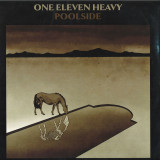
One Eleven Heavy - Poolside LP

One Eleven Heavy

Poolside LP

12inchLPKITH004
KITH & KIN
12.06.2023

Formed in 2016 by transatlantic buds Nick Mitchell Maiato and James
Toth, One Eleven Heavy is a band designed as a Venn diagram of the
pair's shared musical loves Crazy Horse, Grateful Dead, and Dylan come to the fore when listening to their joyful third album, Poolside, but the influences go much deeper.

Toth says, We were lucky to have our touring drummer, Jake Morris (Stephen Malkmus & The Jicks) at the ready to play drums. Nick's pal, the fantastic Guy Fowler, plays bass on the record.

Guided by mysterious producer Colin Sick, One Eleven Heavy spent
a year writing and recording the tracks that form Poolside, an album that feels like a gothic western romp through cartoon dreams of escaped criminal ciphers ( Tyrant King ), rebound coke binge recollections ( Rizzo In The Wig ), and tales of sasquatches crossing state lines ( Bama Yeti ).

В наличии на складе

Есть у нас в наличии и готов к отправке

MDCIII - DRAWN IN DUSK LP

Mdciii

DRAWN IN DUSK LP

12inchWERF206LP
DE W.E.R.F.
19.05.2023

Since Interstellar Space, John Coltrane's posthumously released duo album with Rashied Ali, the combination of sax and drums has received an aura of sublime spiritual ambition. It is where tireless truth seekers come together to aim for something transcendental. Something too big for words. Of course, a lot has happened in the meantime.

The available options - philosophically, stylistically, temperamentally - are endless. Musicians are aware of those historical turning points, yet they also try to add their own twists and interpretations. Some of them succeed. One of reed player Mattias De Craene's many projects - MDC III - is a project involving drums and saxophone. A striking difference: De Craene invited two drummers (Simon Segers, Lennert Jacobs), that have been active in the worlds of jazz, pop, free improvisation and experimental music. They are the ideal foil for De Craene's vision, which seems to exclude no opposites. While the use of a recorder, electronics and percussion steers the music beyond the classic acoustic limitations, the result becomes strikingly rich with contrasts. What is abstract and introspective the first moment can switch - gradually or abruptly - to moments of fierce ecstasy the next.

The music feels free (free from limitations, free to choose its own logic), but also invites. Shifting moods and textures are combined with intricate rhythmical patterns, as the drummers lock together in dense, complex and/or ritualistic grooves. A minimal pulse, accompanied by murmuring hisses of brushes and a serenading sax is contrasted with moments of exuberance. The result is many things at once, but despite these wildly varying colors, sounds, textures, rhythms and moods, they are all linked, part of a generous, iridescent whole.

The trance-inducing trio MDCIII is back. And that equals yet another delicious load of modular drums, wildly processed saxophone sounds, improvisation & pulsating grooves.

After their first EP, MDCIII ft. Sylvie Kreusch, and their subsequent first (internationally) acclaimed album 'Dreamhatcher', the 'double drums' saxophone trio with Mattias De Craene, Simon Segers & Lennert Jacobs is all set to show what angle rock 'n roll can really come from. On their new album 'Drawn In Dusk' (release: end of September via W.E.R.F records) the trio delivers a whole new palette of sounds that are just as mystical, energetic and wild as 'Dreamhatcher'.

В наличии на складе

Есть у нас в наличии и готов к отправке

TECHNOLOGY & TEAMWORK - WE USED TO BE FRIENDS LP

*MILKY CLEAR VINYL - 300 COPIES ONLY FOR WORLD!!* Technology + Teamwork’s fizzling synths, interweaving textures and punchy rhythms are beguiling on their long-awaited debut album We Used To Be Friends. However, at the heart of it all it’s the connection between the group’s two members, Anthony Silvester and Sarah Jones, the friendship the much-travelled duo have managed to maintain for nearly 15 years and a showcase of the slow-burning construction of the electronic world that they’ve surrounded themselves with. We Used To Be Friends is ultimately the tale of two storied artists in their own right, holding onto each other through personal and career twists and turns, relocations and broader movements through respective phases of their lives. Silvester and Jones first met and then collaborated as part of biting post-punk five-piece XX Teens in 2008, eventually breaking off to forge their own path together even as the latter’s demand as a drummer grew. Performing with everyone from Hot Chip, Harry Styles and Bloc Party among many others, Jones has been a constant percussive presence across the sphere of alternative UK pop music – she’s also found time for her own solo project Pillow Person and played on records by the likes of Puscifer and Kurt Vile. Silvester meanwhile has performed in art galleries across Europe including: Fridericianum in Kassel, Kölnischer Kunstverein in Cologne, and Vleeshal in Middelburg, as well as providing sound design and composing work for several art films. Technology + Teamwork is the constant throughout all of that though. “Technology + Teamwork's name perfectly describes how we work” Silvester explains. “Sometimes the teamwork is between each other and sometimes it’s between us and the technology.” Although going by the name Technology + Teamwork as far back as 2014, two events conspired that pulled the project into focus for the pair of them: firstly, Silvester spent a year constructing a soundproof studio shed on the border of London and Essex where he lives. Secondly, inevitably, the pandemic brought the globe-trotting Jones back home to just seven miles away from her long-time collaborator and friend. “We probably hung out more than we had for a few years” says Silvester. “Also, after all her Pillow Person releases Sarah had gotten really good with recording vocals and knowing what did and didn’t work and had a really good home studio set up. We still worked separately though, exchanging ideas via email and WhatsApp.” As with many artists through 2020 and early 2021, working separately was a new necessity that they were forced to adapt to. However, it became clear that there were creative benefits to it. “It really changed our sound and our sounds became a lot more focused as a result” Jones says. “I wanted to use the same ideas of improvisation that I might use while playing the drums for myself and apply that to melodies and lyrics.” The album bristles with hyperpop modernity. You can hear it in the manipulated vocals most prominently on Big Blue’s disco strut and on Moving Too’s heady mix of pitched up voice and burrowing sub bass. However, the pair also looked to San Francisco and the West Coast synthesis movement of the 60s, Silvester inspired by the likes of Suzanne Ciani and Don Buchla. The plaintive lo-fi and melancholy of Amsterdam incorporates Mutable Instrument’s Marbles by Émilie Gillet which – inspired by Buchla’s own synthesis work – outputs random voltages to give the track an air of unpredictability. It’s something that occurs throughout the album, the duo revelling in the happy accidents that disrupt the flow of their hook-laden pop. “The ‘Buchlian’ ideas of music having randomness and uncertainty, completely freed us up” Silvester explains. “It felt a bit like having more members in the band, machines that didn't do what you expected or intended.” Perhaps more subtly, is the influence of 17th and 18th century Baroque music, with Silvester drawing a line between it and the 90’s R’n’B he and Jones both love – exemplified perhaps best on K+B’s percussive claps and sultry grooves. The portentous juddering synthpop of the title track, meanwhile, alludes specifically to Handel’s Sarabande. It’s typical of an album that only needs a scratch of its seemingly glossy surface to unearth a myriad of contorted touchstones and reference points that’ve fermented beneath it. Thematically there’s an anxious sense to the record, with tracks often balancing above a quiet sense of unerring tension even at their most bombastic. Moving Too is the result of an existential doubt that hit Silvester while out cycling, with the outro refrain "it's not enough to die you also have to be forgotten" a take on something Samuel Beckett once said. These worries are echoed on the album’s closing track What A Year, which borrows a lot of lines from the late drag performer and fashion designer Dorian Corey including the grimly defiant "you're gonna leave your mark somewhere in this world just by getting through it”. Those clouds offer a counter point to We Used To Be Friends, but then isn’t that what great pop albums do? Technology + Teamwork undoubtedly love the craft of the hook and the song, but they always position themselves left of centre, prepared to scuff things up, pull something out of shape or manipulate something to leave it sounding warped. Much like their friendship, nothing here is particularly linear – and it’s all the better for it. Bio: Anthony Silvester & Sarah Jones first collaborated as part of biting post-punk five piece XX Teens in 2008, eventually breaking off to forge their own path together even as the latter's demand as a drummer grew. Performing with everyone from Hot Chip, Bat for Lashes, Harry Styles and Bloc Party (among many others), Jones has been a constant percussive presence across the sphere of alternative UK pop music - she's also found time for her own solo project Pillow Person and played on records by the likes of Puscifer and Kurt Vile. Silvester meanwhile has performed in art galleries across Europe including Fridericianum in Kassel, Kölnischer Kunstverein in Cologne, and Wleeshal in Middelburg, as well as providing sound design and composing work for several art films. Technology & Teamwork is the constant throughout all of that though. "We Used To Be Friends" proves that Technology & Teamwork undoubtedly love the craft of the hook and the song, but they always position themselves left of centre, prepared to scuff things up, pull something out of shape or manipulate something to leave it sounding warped. Much like their friendship, nothing hear is particularly linear - and it's all the better for it.

В наличии на складе

Есть у нас в наличии и готов к отправке

Caixa Cubo - Agôra LP

Global pointing Brazilian jazz trio releases their new album Agôra, that sparkles with electric funk and Herbie-esque eclecticism. It features a myriad of guest vocalists and musicians including Brazilians Xênia França and Zé Leônidas, Jembaa Groove's Ghanaian singer Eric Owusu and South African artists Bongani Givethanks & Mpho Nkuzo

Re-wiring the concept of 'fusion' for 2023, Agôra is Brazilian trio Caixa Cubo's resurgent new record with the title referring to 'now', based upon the intuitive and fluid nature of the trio's method, and this inspired recording. With shoots to black music culture, from Brazil to Brooklyn, Ghana and South Africa, Agôra is the group's ninth album yet is their first where they've invited guests, mainly singers, onto each track and follows their last, Angela from 2020, released on Heavenly Records, which won a BBC 6 Music Album of the Year (Huey Morgan's selection) granting them much deserved international recognition.

The core musical elements of Caixa Cubo are Henrique Gomide (keys), João Fideles (drums) and Noa Stroeter (bass), all from São Paulo, Brazil and where they met as teenagers and would continue their friendship and musical bond at the Royal Conservatory in The Hague, Netherlands. Now all in their mid thirties, João and Noa live back in the city where it all started but Henrique has settled in Cologne, Germany where the recording of Agôra took place, over the course of 3 days, at the home cum studio of Chris 'Dusty' Doepke, their friend and owner of the label they signed to, Jazz & Milk.

In line with all their creations where flow and energy provide the magic, allowing what the moment provides, the album shines not only for its virtuosity but for its minimalism, the depth of space, and for the first time, the ability to figure in and outside of the jazz fold, as the trio decided, for the first time, to bring in singers and add a new aesthetic to their sound.

"Agôra is a wake-up call to reality, a reminder that the infinite possibilities of technological progress should not disconnect us from the earth, from eye-to-eye relationships, and from moments lived in person" the band are keen to point out. "And that we must not be consumed by greed, for all we truly possess.... is the NOW."

Turning hope and metaphor into music, the debut single Sábado, an electrified future- jazz-fizz reflects perfectly the spontaneity that permeated the entire recording of the album. "When we got to the studio, we had no idea what we were going to record. We started playing a groove, kind of inspired by Gilberto Gil's 80s albums, and our drummer João started singing this funny song 'Sábado Barrigudão' (Big Belly Saturday) alongside the bass groove and that was that". Inspired by their city of birth, São Paulo, it features long time collaborator and vocalist Zé Leônidas, with cuicas, tamborim, agogo and shakers providing the most obvious Brazilian affect from the album.

Dreams is the band's first foray into R'n'B melding the group's simple and sporadic instrumentation of drums, keys and bass into a Jill Scott inspired song that could have been born in Brooklyn yet sung by Brazilian singer and Grammy nominated Xênia França and Zé Leônidas in both English and Portuguese. Xênia recently performed online for hip-to-it website Colors and it's her latest collaboration with Caixa Cubo, having first met in 2009 for a series of live performances.

South African artists Bongani Givethanks & Mpho Nkuzo come to the record with a wholly different approach on Ndiyakhangela, providing spoken word and vocal refrains on top of an Afro-Brazilian percussion jam with a delivery and verse in Xhosa, Zula and Ndebele. Asase is the album opener and features vocals of Eric Owusu who is part of highlife pioneer Pat Thomas's live band and most recently, co-leader of Jembaa Groove, an Afro-soul band from Berlin. It's a synth wig out with djembe grooves and offers a brand new take on Afro-soul-jazz.

Other contributions come from Cologne based jazz singer Rebekka Ziegler (Oblique Sunshine), São Paulo based guitarist Eduardo Camargo (Caio & Eric) and trumpet player Matthias Schriefl on Kismeti, a gorgeous and rolling number that ebbs and flows, exemplifying the group's effortless ability to craft a sound energised by a belief in one-self and the idea of having faith without the need to look at each other for verification.

As drummer and percussionist João Fideles perfectly surmised upon arriving for the recording session, "What drums do you have? Whatever you have, I'll use it". Agôra is testament to nearly 20 years of camaraderie, friendship and most importantly, trust.

В наличии на складе

Есть у нас в наличии и готов к отправке

Paleman - Exalted

Paleman

Exalted

12inch30DEYES-004
30deyes
30.03.2023

Very few electronic music artists can boast of spanning a wide musical spectrum as the UK producer Calum Lee aka Paleman / Fresnel Lens.Always emphasizing the percussive side (advantage of being a jazz drummer), and always with an innovative spirit, the releases of this authenticsound designer oscillate between the most abstract / experimental electronica and minimalist club focused techno, from atmospheric andintrospective works to the sickest dubstep / bass music.

As at 30D we declare ourselves absolute fans of Calum's music, we had a clear obligation to ask him to join our catalogue, specifically for the EyesHave It sub-label (we had especial interest in his interpretation of broken, dark and industrial techno). His answer was direct and unmistakable:"I've sent you a lot of pieces that fit with your label vision and the imagery that we love.. I've been studying existentialism a lot recently, so thesetunes are a reflection of my headspace at the moment!".

A true declaration of intent!And here it is, five perfect examples of obsessive tribal madness, overexciting synthetic broken beats and a lot of rawness. A pure musical gem.

В наличии на складе

Есть у нас в наличии и готов к отправке

Antonio Neves - A Pegada Agora É Essa (The Sway Now)

repressed !

From samba and bossa nova through to baile funk, with carioca expressions of jazz, rock and hip hop in between, the sound of Rio de Janeiro, while continually evolving, has always held an unnameable quality which reflects the magic and mystique of the city itself. Multi-instrumentalist and arranger Antonio Neves is the city’s newest trailblazer: the enfant-terrible of Rio’s music scene, leading a vital and diverse constellation of both emerging and well-known artists advancing the city’s musical legacy.

“It all started one sleepless night, after watching a Quincy Jones documentary”. Inspired by the legendary music magnate, Neves began writing a list of artists residing in Rio de Janeiro “people that I admire, that I consider geniuses of their instruments, who share with me affinities, anxieties and projects.” The list included some of Brazil’s most revered living musicians who Neves has worked with in recent years: Hamilton de Holanda, Leo Gandelman and Dorival Caymmi. Neves also called on some of Brazil's most exciting emerging talents including Alice Cayymii and Ana Frango Eletrico.

A Pegada Agora É Essa (The Sway Now) is Neves’ second album: a vibrant portrait of the current Brazilian music scene. From the regional to universal, popular to erudite, samba to rap, Latin rhythms to jazz, MPB and pop to good old rock'n'roll, Neves walks with fluency and mastery amongst all the musical genres that Brazil has to offer.

“My offer to the musicians was complete freedom to express themselves through the songs I proposed – classics like “Summertime”, “Luz Negra” and “Noite de Temporal”, and compositions of my own – creating a space of authorship for the band and the guests. A space for inventions, purges, delusions, laughter. The idea was to bring the freedom of jazz crossed by Brazilian rhythms, such as the traditionals Partido Alto (A Pegada Agora É Essa) and Jongo (Jongo no Feudo and Luz Negra); rhythms of African-Brazilian religions like Candomblé (Noite de Temporal) and Umbanda (Forte Apache); and a tribute to newest Rio de Janeiro’s contribution to Brazilian music, the Funk Carioca (Simba)”.

Coming from a musical family, Antonio’s father, Eduardo Neves, was a renowned conductor and a professor at Juilliard School of Music and the California Jazz Conservatory. In the bohemian neighbourhood of Lapa, aged 14, Antonio began his career as a drummer, before experimenting with brass. He would soon become a skilled trombonist and arranger achieving the recognition of his teachers and peers. It wasn’t long before he would be playing with some of the biggest names in Brazilian music, such as Hamilton de Holanda, Leo Gandelman, Moreno Veloso, Kassin and Elza Soares.

His debut album as a trombonist was PA7 (2017, Rock It), released at the same time he was travelling the world playing with artists like Moreno Veloso, Kassin and Leo Gandelman, and recording the albums Jobim, Orquestra e Convidados (2017, Biscoito Fino), with Mário Adnet and Paulo Jobim; and Elza Soares Canta e Chora Lupi (2017, Coqueiro Verde Records). More recently, Neves was the arranger for the acclaimed Little Electric Chicken Heart album, by Ana Frango Elétrico, which has been nominated for a Latin Grammy and voted 2019’s ‘Brazilian Music Revelation’ by The Art Critics Association of São Paulo.

В наличии на складе

Есть у нас в наличии и готов к отправке

Forest - Forest LP 2x12"

Forest

Forest LP 2x12"

2x12inchBBE724ALP
BBE Music
06.02.2023

Long lost and much sought after Private Press from Western Massachusetts band Forest. A distinctive Acid-Jazz / crossover AOR / Soul sound, think Mother Earth jamming with Tim Buckley. This re-issue comes with 6 previously unreleased tracks. Forest was a rarity at the time in a band that consisted of two drummers, Gary Stevens and Bob "Rox" Girouard . The band was a well seasoned touring band who shared the bill with the likes of The Fabulous Rhinestones, The James Montgomery Band, Zonkaraz to name a few. The album covered various styles from blues to acid-jazz with the aim of securing a major record deal. Many of Forest’s alumni have gone on to highly successful careers in music: Jim Kimball relocated to Nashville to work alongside Faith Hill and Reba McIntyre, Bill Holloman with Danny Gatton, The Gatlin Brothers, Nile Rodgers and Chic, The Fab Faux and Bruce Springsteen, and Wes Talbot founded a music production library called The FRESH Music Library.

В наличии на складе

Есть у нас в наличии и готов к отправке

Philippe Maté & Jef Gilson - Workshop

In October 1974, the first number of “L'Indépendant du Jazz”, a small self-produced magazine DIY -before punk supposedly invented the concept- was launched by Jef Gilson, Gérard Terronès, Jean-Jacques Pussiau and a few other specialists of a different kind of jazz in France, it looked at the already long career of Jef Gilson and in detail at the album with saxophonist Philippe Maté:
“The ‘Workshop’ is, with Philippe Maté (alto-sax), an undeniable success. Maté is genuinely ‘the’ most inventive French saxophonist since Michel Portal burst onto the jazz scene (who has also worked with Jef Gilson on both “Enfin” and “Gaveau”).”

Even though the author of the article is a mysterious I.H. Dubiniou, and it is difficult to know if it is a real person or a pseudonym used by one of the merry bunch, it is also tempting to hear it as what Jef Gilson really thought about his new discovery. Even more so as the two men would work together over a long period, as Maté became one of the key figures of Gilson’s Europamerica orchestra up until the 1980s.

Philippe Maté had started to make a name for himself with the Acting Trio when they released an album on the BYG label in 1969, and he was also one of the regular sidemen for the Saravah studios (he can notably be heard on albums by Higelin, Fontaine or his cult duo album with Daniel Vallancien).

The album was recorded on 4 February 1972, at the Foyer de Montorgueuil, where Gilson had set up his studio, with more or less the same team found on “La Marche Dans Le Désert” by Sahib Shihab + Gilson Unit (recorded ten days later). This was drummer Jean-Claude Pourtier and pianist Pierre Moret (regular Gilson accomplices since “Le Massacre Du Printemps”), alongside Maurice Bouhana and Bruno Di Gioa on various percussions and/or wind instruments. On bass is Didier Levallet, of the now mythical Perception, (Jean-François Catoire would replace him with Shihab) and Philippe Maté who took top billing, rather than the American saxophonist afterwards. The two albums are however quite different. This “Workshop” is more abrasive, more free. Made up of two long improvisations each of over 22mn, “L'Œil” on side A and “Vision” on side B (Gilson specialists would recognise the nod to one of his albums from the 60s), the album plunges you into the depths, attempting to drown you in electronic waves, dragging you back to the surface by the collar, giving you a good shakedown, before showing you the light, leaving you breathless on the shore after 46mn of the most intense music French has to offer. “An undeniable success”, they said. (by Jérôme "Kalcha" Simonneau)

В наличии на складе

Есть у нас в наличии и готов к отправке

Joyce with Mauricio Maestro - Natureza LP

(Produced, Arranged and Conducted by Claus Ogerman)

Not long after the dawn of her career, as a teenager in Rio de Janeiro, Joyce was declared “one of the greatest singers” by Antonio Carlos Jobim. Yet despite reputable accolades and the fact that she has since recorded over thirty acclaimed albums, Joyce never quite achieved the international recognition of the likes of Jobim, João Gilberto and Sergio Mendes, all of whom became global stars after releasing with major labels in the US.

There was a moment when it seemed she might be on the cusp of an international breakthrough. While living in New York, Joyce was approached by the great German producer Claus Ogerman. Ogerman had already played a pivotal role in the development and popularisation of Brazilian music in the 1960s, recording with some of the all-time greats like Jobim and João Gilberto, as well as North American idols like Frank Sinatra, Billie Holiday and Bill Evans.

"I met him in New York City, in 1977”, recalls Joyce. “I was living and playing there, and João Palma, Brazilian drummer who used to play with Jobim, introduced me to Claus. We had an audition, he liked what we were doing and decided to produce an album with us.”

Featuring fellow Brazilian musicians Mauricio Maestro (who wrote/co-wrote four of the songs), Nana Vasconcelos and Tutty Moreno, and some of the most in-demand stateside players including Michael Brecker, Joe Farrell and Buster Williams, the recordings for Natureza took place at Columbia Studios and Ogerman produced the album, provided the arrangements and conducted the orchestra.

But mysteriously, Natureza was never released, and what should have been Joyce’s big moment never happened. As Joyce remembers, “I returned home, but Claus and I remained in contact, by letters and phone calls. He was very enthusiastic about the album and tried to hook me up with Michael Franks. He wanted me to go back to NYC in order to re-record the vocals in English with new lyrics, which I actually wasn’t too happy about. But then I got pregnant with my third child and could not leave Brazil. And little by little our contact became rare, until I lost track of him completely. And that was it. I never heard from him again."

While Claus was known to be something of an elusive character, the album’s disappearance might also have been a result of timing. The Brazilian craze was coming to an end, making way for disco and new wave at the end of the seventies, and Ogerman struggled to find a major label interested in a new Brazilian sensation. Additionally, as Joyce mentions, it wasn’t quite finished. Ogerman wanted to add finishing touches to the mix and to record alternative English lyrics for the US and international markets - a critical artistic difference between Joyce and Ogerman.

As the military dictatorship’s grip on Brazil began to subside in the 1980s, Joyce had a handful of hits in her home county, including a tribute to her daughters ‘Clareana’, and the iconic ‘Feminina’ - an intergenerational conversation between mother and daughter about what it means to be a woman. But already a feminist pioneer, these successes were hard fought. Joyce had caused controversy as a nineteen-year-old when she became the first in Brazil to sing from the first-person feminine perspective, and the institutional sexism she faced was worsened by the dictatorship who would often censor her music. Even once the Junta was out of the way, Joyce found herself up against the male-dominated major record companies in Brazil, who sought to dictate her career and sexualise her image, before dropping her for refusing to play along.

A few years after the success of her albums Feminina and Agua E Luz in Brazil, Joyce’s music began to find its way to the UK, Europe and Japan, and “Feminina” and “Aldeia de Ogum” became classics on the underground jazz-dance scenes of the mid to late-eighties and early-nineties.

The full-length version of “Feminina” from the Natureza sessions was first heard on a Brazilian Jazz compilation in 1999 and “Descompassadamente” was licensed for a CD compiling the work of Claus Ogerman in 2002. Following these, word began to get out about an unreleased Joyce album with Claus Ogerman and the legend of Natureza grew.

Forty-five years since it was recorded, Natureza finally sees the light of day, as Joyce intended: with her own Portuguese lyrics and vocals. Featuring the fabled 11-minute version of ‘Feminina’, as well as the never before heard ‘Coração Sonhador’ composed and performed by Mauricio Maestro, Natureza’s release is a landmark in Brazilian music history and represents a triumphant, if overdue victory for Joyce as an outspoken female artist who has consistently refused to bow to patriarchal pressure.

***Disclaimer! While “Feminina” and “Descompassadamente'' were mixed by legendary engineer Al Schmitt and mastered from the original master tapes, the remaining five tracks are unmixed. Due to significant deterioration of the master-tapes, the best audio source for these tracks was an unmixed tape copy Joyce had kept of the recordings. The best care has been taken in the restoration and mastering of this release, but the sound quality may differ from other releases on Far Out Recordings. We advise listening to sound clips before buying where possible.

В наличии на складе

Есть у нас в наличии и готов к отправке

The Doudou Ndiaye Rose Family - Twenty-One Sabar Rhythms LP 2x12"

Magnificent Wolof drum music, performed by an extended griot family over seven consecutive days, in the mystical setting of Lac Rose, outside Dakar.

Doudou Ndiaye Rose — who died in 2015 — is a key drummer in the musical history of the world. He developed a system of five hundred original drumming patterns, ancient and new. Amongst the modern rhythms here is Bench Mi — ‘under the Baobab tree,’ a spot where problems get solved. Also Hibar Yi — ‘passing on information’ — the theme-tune of Senegalese TV national news for decades — and Les Rosettes, the signature rhythm of Senegal’s first ever all-female percussion group, convened by Doudou, and named after his grandmother.

These original compositions sit alongside important traditional rhythms, familiar to every Sabar player, such as Farwu Jar (a courtship game sometimes resulting in a wedding), Ceebu Jin (also the name of the national dish of fish and rice), and Gumbé, often played after a successful harvest.

Recorded in joyful single takes, with no overdubs, mastered by Rashad Becker, the music is deep and thrilling, polyrhythmic to the bone, with a complex, pointillistic intensity at times evoking Jeff Mills in full flight.

В наличии на складе

Есть у нас в наличии и готов к отправке

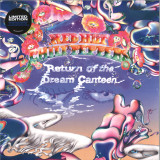
Red Hot Chili Peppers - RETURN OF THE DREAM CANTEEN LP 2x12" - Deluxe Edition

Red Hot Chili Peppers announce their brand new studio album, Return of the Dream Canteen which will be released October 14th on Warner Records. The surprise announcement was dropped at Denver’s Empower Field to rapturous response as the North American leg of their critically and commercially acclaimed global stadium tour kicked off.

The news of Return of the Dream Canteen's imminent release marks the band’s second album of 2022, hot on the heels of the platinum-selling chart topper Unlimited Love which was released in April debuting at #1 in the UK. It will also be the band's second Rick Rubin produced album of 2022, and reinforces their reputation as a band at their absolute peak, riding the crest of an undeniable creative wave.

Continuing to win over audiences across the generations, the band performed a run of sold-out UK/EU dates earlier this year, including two nights at London Stadium. "A scorching European touch-down from the California legends" – CLASH

We went in search of ourselves as the band that we have somehow always been. Just for the fun of it we jammed and learned some old songs. Before long we started the mysterious process of building new songs. A beautiful bit of chemistry meddling that had befriended us hundreds of times along the way. Once we found that slip stream of sound and vision, we just kept mining. With time turned into an elastic waist band of oversized underwear, we had no reason to stop writing and rocking. It felt like a dream. When all was said and done, our moody love for each other and the magic of music had gifted us with more songs than we knew what to do with. Well we figured it out. 2 double albums released back to back. The second of which is easily as meaningful as the first or should that be reversed. 'Return of the Dream Canteen' is everything we are and ever dreamed of being. It’s packed. Made with the blood of our hearts, yours truly, the Red Hot Chili Peppers.

В наличии на складе

Есть у нас в наличии и готов к отправке

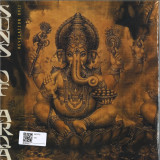
Revelation XVII - Suns Of Arqa EP

Suns of Arqa is a sonic mission created by luminary Michael Wadada, who began in 1979 after receiving higher guidance in Jamaica while working with roots reggae chanter Prince Far-I. It is a prolific traveling music collective that has seen over 200 collaborators, meant to connect people from all cultures and walks of life through a “deeply spiritual vibration that merges cultures, faiths and musical genres”. Wadada combines ancient Hindustani raga systems with Piobaireachd and Nyabinghi roots drumming, creating ritualistic world music infused with dub and reggae.

The lyrics combine both mystical and sensory elements, often including prayer and referencing a higher power but finding root in experiences common to all people- memory, sight, and physical sensation.

Their first album, Revenge of the Mozabites, was a collaboration between Wadada and On-U Sound creator Adrian Sherwood. Following its 1980 release,Peter Gabriel invited them to perform at the first WOMAD festival. Today, the record is regarded by some as a cult classic. Over the years they have played at many major music festivals including Glastonbury, Big Chill, Telerama Dub Festival, and Transmusicales, and released over 40 albums on Virgin, EMI, Interchill Records, Antler Subway, Red Rhino, and their own label, Arka Sound.

Suns of Arqa has had a seminal influence on the World Beat sound, and continued to make appearances at seasonal festivals and sacred ritual spaces all over the world until 2021. Michael Wadada passed away in the midst of planning their U.S. tour for this release. The record is a compilation of some of Wadada’s and Sleepers Record’s favorite old Sun of Arqa tracks, mixed by Youth and Adrian Sherwood, and mastered by Eroc (drummer of Grobshnitt).

Notable collaborating artists include: Guy Called Gerald, UK producers Youth and John Leckie, Greg Hunter, 808 State's Graham Massey, Finley Quaye, Sounds From the Ground, Bryn Jones aka MuslimGauze, Adrian Sherwood, John Cooper-Clarke, The late great Professor Stanley Unwin, Eric Random, New age guru Tim Wheater, Astralasia, Prince Far-I, The Orb's Alex Patterson, Zion Train, and Gaudi.

"And although the Great Spiritual being Michael Wadada has returned to source and his body to earth at our time, his music is alive and will continue to be a great force for higher spiritual realms and raising vibration through occult frequencies...Suns of Arqa will continue to raise the vibration of the hearts and minds of humanity" – Angela aka Angel-Eye (Wadada's wife and bandmate)

В наличии на складе

Есть у нас в наличии и готов к отправке

BABY BUDDHA - MUSIC FOR TEENAGE SECTS LP

Baby Buddha is David Javelosa and musical partner Charles Hornaday playing instruments and providing their own whacked-out vocals. Baby Buddha really was less of a band than a project; a side project in fact, for some members of another group, Los Microwaves. Baby Buddha would eventually record and release an album, 1981's provocatively-titled Music for Teenage Sex on Robbie Fields' L.A.-based Posh Boy label.

Happily, the project's guiding creative light, David Javelosa has recently seen to a vinyl reissue of the now-40-year-old record, mystifyingly retitled Music for Teenage Sects. Definitely among the stranger releases of the new wave era, Music for Teenage Sex/Sects could perhaps only have been created when and where it was made. But on the occasion of its 40th anniversary, the music sounds as weirdly wonderful as ever. "We Are Not" sounds like Human League stuck in a car with The Residents. And their cover of "All Shook Up" sounds like a musical kin to those inscrutable eyeball guys too; it wouldn't be out of place on Meet the Residents. "Little Things" is a house-of-mirrors, scary track, with spoken-word vocals by Los Microwaves' Meg Brazill and label head Fields.

The album cover is slightly different as well: it displays a bedroom scene like the original LP, but with the young female model absent. The new release (on Javelosa's own Hyperspace Communications label) is pressed on beautiful translucent blue vinyl and comes in a gatefold sleeve with a lively collage of photos, buttons, gig posters. Limited to 500 copies.This playfully titled release features David Javelosa (on synth and vocals) along with Meg Brazill (on bass and vocals) plus drummer Todd "Rosa" Rosencrans. Side One features five studio tracks, none of which were included on the band's 1981 Posh Boy LP, Life After Breakfast. Three of these tracks were recorded in '82; there's no information regarding the provenance of the other two songs. The records' second side collects five live recordings, capturing Los Microwaves onstage in New York City (The Peppermint Lounge) and Boston as well as at San Francisco's own I-Beam, a venue that often played host to the band. Those tracks date form roughly the same ear, 1980-83. Sonically the songs variously recall Blondie, Flying Lizards, Gang of Four and a far less dour Human League. Importantly, the band rocks, even when it's employing a spare drum kit, solid but elemental bass, and monophonic analog synthesizers. The stripped down aesthetics of the group – necessitated by its minimalist instrumental approach – are nonetheless thrilling. Even if you weren't there in 1980, this'll take you back.

В наличии на складе

Есть у нас в наличии и готов к отправке

Mr. K - Edits by Mr. K 7"

2023 Repress

This latest limited 7" from Mr. K features two incomparable baroque soul masterworks, one from a Chicago-based band that defied categorization and the other a deep cut from a living legend songwriter and performer.

The psychedelic soul of Rotary Connection’s “I Am the Black Gold of the Sun” still sounds revolutionary and unlike anything else, a full fifty years after it was originally released in 1971. Swathed in ethereal ripples of strings (courtesy the Chicago Symphony Orchestra) innovatively arranged by unsung genius Charles Stepney, and rooted in a rock solid foundation provided by the cream of Chicago’s cutting edge session musicians (among them guitarist Phil Upchurch and drummer Morris Jennings, veterans of countless soul jazz cuts), “Black Gold” sits in uncharted territory somewhere between soul, rock, jazz and classical chamber music. It’s a gorgeous territory, a fantasy land where Minnie Riperton and Sidney Barnes’s vocals transmit mystical, uplifting vibes, the entire affair anchored throughout by an addictive piano riff—a mixture that proved irresistible to Masters at Work, who covered it for their Nuyorican Soul project in 1997. Mr. K’s edit doesn’t try to force anything fancy on this masterpiece, simply tightening it up and taking advantage of the lush remastering to present this progressive classic on 45 for the first time.

In keeping with the orchestral soul mood, Mr. K turns to Stevie Wonder’s “Pastime Paradise” for the flip. Whereas “Black Gold” paints a portrait of a magical land, Stevie’s lyrics on “Pastime Paradise,” originally issued in 1976, are a penetrating look at the very earthbound concerns of modern society and its follies, an urgent message to look ahead rather than languish in dreams of the past. The sensitive string accompaniment provides just the right amount of gravitas and emphasis to Stevie’s voice without overwhelming it, while the hare krishna-inspired tambourine keeps the rhythm effectively. Mr. K’s edit again keeps things true to the original, simply providing a subtle intro that uses the tambourine rhythm to lead into the body of the song.

В наличии на складе

Есть у нас в наличии и готов к отправке

KOOL KEITH + SCORN + SUBMERGED - DISTORTION

KOOL KEITH is the most legendary trailblazer of hip hop music. With characters spanning from Dr. Octagon to Tashan Dorsett to Black Elvis to Dr. Dooom, Keith is always delivering realness, spectacles in word and sound, and creating new worlds with his many auras. SCORN is the electronic beat project of acclaimed exNapalm Death drummer Mick Harris, the Dark Lord of ambient dub. Mick Harris' prolific ventures across numerous projects include Painkiller (with John Zorn and Bill Laswell), Quoit, Lull, Monrella, and many more. SUBMERGED is the King of Underground Drum n Bass DJs, having pioneered the scene for the hard sound from Astana to Sao Paulo to Kiev to Brooklyn. He is the founder of Galactic Enterprise that is Ohm Resistance. DISTORTION is a collaborative single with some of the 100% certified dopest Kool Keith verses. He is tuned into his co-authors, dropping lines about "Power sources, Mediterranean bosses", going "52 states, European, Worldwide", discussing "more power to explore", and knowing how to "stick my hand out the speaker and reach y'all". A massive energy liftoff occurs as Keith joins his multiverse with that of the Ohm Resistance artists. Mick Harris' instantly recognizable bludgeoning beat carries the weight, as he trades off bass blast duties with the organic overdriven bassline of Submerged. A warning shot fired in advance of Scorn's album, "The Only Place", this single adds the missing element to Scorn that brings out the richness and flavor of Mick Harris behind the mixing desk. "I'm so happy to be working with a great voice - I could do more of, it adds another dynamic to Scorn." says Harris. Submerged explains his usual streak of unusual luck - "I had a bassline I had written and wanted to send to Mick Harris for Scorn. When the opportunity came to work with Kool Keith, Mick made his beat, and my riff fit exactly - so we coordinated the forces to put this record together". With Kool Keith being one of the most-named influences by many of the Ohm Resistance artists, his arrival to the label couldn't have come at a better time - a integrated circuit across 4 dimensions, connecting 3 legendary musicians around the globe. Mixed by MJ Harris in the Lad's Old Room B14; Vocals by Kool Keith Recorded at Studio G Brooklyn; Engineered by Tony Maimone, Assisted by Ross Colombo; Bass Guitar by Submerged at Blue Site I, Saaremaa; Mastered by Daniele Antezza for Dadub Mastering Studio; Artwork by Sagana Squale, Layout by MachineÖ

В наличии на складе

Есть у нас в наличии и готов к отправке

Klute - Whatever It Takes LP

Klute

Whatever It Takes LP

12inchSUICIDELP020
Commercial Suicide
25.10.2019

green vinyl / full colour sleeve / incl dl. code

Klute, a.k.a. Tom Withers is no stranger to the LP format, Whatever It Takes is his 9th solo album. It was recorded over a period of 18 months in his own PBJ Studio, located in Suffolk.

Whatever It Takes contains Klute's signature blend of Drum & Bass, Hardcore, Jungle, House, Techno, Electro & Ambient stitched together with Klute' typical disregard for the rules of each genre.

Split into two halves, the album begins in high gear with 8 tracks of Drum & Bass. A rich pallet of D&B styles delicately layered with hidden depths and melancholic harmony. The album then shifts into Klute's own brand of House Techno & Electro, fully revealing his vivid tapestry of musical influences. The end result is highly original, individual and unique. Nobody sounds like Klute.

Klute on the album: "...with so much going on in the world and all the noise created by a growing instant culture I felt compelled to retreat into my own imagination and write individual chapters in melody and rhythm as a form of distraction and personal remedy. Early on in the process I made a conscious decision to make a wholly solo and instrumental record - the first time since my debut album CASUAL BODIES in 1998".
"There's something powerful in the mystique and imagination of music, closing your eyes and letting your mind and body loose to create its own visions. I feel that there is a lot of "surface" music around at the moment that physically dictates what you are supposed to feel. The music I love the most, the music that stays with me the longest is always the stuff that enters my subconscious state."

"Whatever It Takes" is an album for the long haul, to stand the test of time. Take your time, switch off your phone and listen and keep coming back for more.

Facts on Klute: Over the past 25 years Klute has established himself as a leader not just in the world of Drum & Bass but the entire Electronic music spectrum, counting a diverse range of luminaries amongst his fans, including the likes of Goldie, Laurent Garnier, Sasha, Mary Ann Hobbs, Doc Scott, Lee Burridge, Zane Lowe, Nastia, Andrew Weatherall, BT, and the sadly passed Marcus Intalex, David Bowie and late great John Peel.

Klute continues to tour the world as both an in demand DJ and drummer and singer in his hardcore band The Stupids.

В наличии на складе

Есть у нас в наличии и готов к отправке

Kiasmos - Kiasmos LP 2x12"

Kiasmos

Kiasmos LP 2x12"

2x12inchERATP062LP
Erased Tapes
30.10.2017

After dropping several tracks and performing at select festivals throughout the years, Ólafur Arnalds and Janus Rasmussen dedicated the year 2014 to explore the area in-between Ólafur's more acoustic, piano-based solo work and Janus's synth-heavy electro pop, with their collaborative electronic project Kiasmos.

By focusing solely on their self-titled debut album, Ólafur and Janus have been able to combine and further develop their unique sound aesthetics to complete an album driven by their mutual love for electronic music. Made in Ólafur's newly build studio in Reykjavík, Iceland, a majority of the album was recorded using acoustic instruments next to a variety of synthesisers, drum machines and tape delays. It features a live drummer, string quartet and Ólafur performing on the grand piano, producing an ambient, textured sound, which makes it a perfect home listen and equally danceable record. If you listen closely, you can spot them record the thumb piano, finger snapping and even the sound of the metal grinder of a lighter slowly to replace the usual electronic hi-hat sounds, giving the album a far more intimate and unique atmosphere.

We decided to start almost completely over with this record, so most of the material is written this year with the idea of making a record that can stand as one piece rather than a collection of songs. I am very excited to get a proper record out exploring a different territory than I am used to. I touch a lot on electronic genres in my own music but never have the opportunity to go full out electronic like we do here.' - Ólafur Arnalds

The Kiasmos project has been around since 2007, but because of all our other projects we never really got the time to sit down and write all the tracks we always wanted to. So when we early this year finally found the time to sit down and make a full length album there was so much we wanted to try out. The result surprised us a bit, it's deeper and more emotional than we imagined it to be, but that's the beauty of being able to make an album.' - Janus Rasmussen

Long-term Erased Tapes graphics collaborator Torsten Posselt at Feld Studios in Berlin created the cover artwork. Feld Studios was a natural choice for Kiasmos, seeing he also designed the cover for their Thrown EP, released previously.

Kiasmos is made up of Icelandic BAFTA-winning composer Ólafur Arnalds, known for his unique blend of minimal piano and string compositions with electronic sounds, and Janus Rasmussen from the Faroe Islands, known as the mastermind of the electro-pop outfit Bloodgroup. Based in Reykjavík, Arnalds used to work as a sound engineer, often for Rasmussen's other projects, where the two musicians discovered their common love for minimal, experimental music. They eventually became best friends, often hanging out in their studio, exploring electronic sounds.

В наличии на складе

Есть у нас в наличии и готов к отправке

Elekfantz - Dark Tales & Love Songs

Elekfantz

Dark Tales & Love Songs

3x12inchD.O.C.003LP
D.O.C.
02.06.2014

After their stunning 2012 debut single "Wish" (FM X / Wish 001) and last year's "Diggin' On You" (D.O.C. 001), the incredibly gifted ELEKFANTZ return to the fore with what can only called a brilliant full-length premiere. The duo of Daniel and Leo first met 20 years ago, when they played together in a blues band. Leo continued his carreer as a professional musician while Daniel started to discover a new musical path.

The latter was born and bred at the electronic music temple in South America, later becoming a resident DJ and local hero, known as the right guy to prepare the dance floor and set up the right mood. He's one of the finest DJs of the Brazilian new wave of electronic aficionados. Leo is a professional drummer, singer and composer since the age of 15. He played and recorded with some of the greatest artists in Brazil.

Their debut album DARK TALES AND LOVE SONGS sports all the intimate melodies, lush harmonies and organic undertones that the duo has become know for and then some: from pop-infused songwriter house to highly emotive prime time anthems, you'll find lots to love about this expertly crafted collection of melodic gems. Engineered to perfection by label head GUI BORATTO, it's an exciting step for the imprint and the project alike - we can't wait hearing where they'll go next.

В наличии на складе

Есть у нас в наличии и готов к отправке

Stephan Eicher - Spielt Noise Boys

2025 Reissue.


Münchenbuchsee, a suburb of Bern, Switzerland. Stephan Eicher is the youngest of three children. His father, a radio and TV repairman, is also a jazz violinist and a sound tinkerer in his spare time. In the family home's converted fallout shelter turned studio, Mr. Eicher experiments with homemade sequencers, tortures handcrafted drum machines, and abuses reel-to-reel tape recorders—all under the fascinated gaze of young Stephan.

The boy quickly develops a musical curiosity, exploring sound through various experiments and wanderings. Alongside his younger brother Martin, Stephan crafts audio plays on a homemade multi-track recorder (essentially several cassette decks hooked together!), which they write, record, add sound effects to, and perform for family and friends. Just a couple of nice kids, really...

Then comes 1972, and Lou Reed's Transformer album changes everything for the Eicher kids. For 13-year-old Stephan, it's a revelation—especially "Vicious", the opening track, which he plays on repeat for months. He convinces his father to buy him an electric guitar. Not stopping there, his father also builds him a tube amp using an old radio.

Then comes adolescence. A rough one. Stephan leaves home at 16 and moves to Zurich. With obvious artistic talent, he persuades his art teacher to help him get into F+F, a radical, alternative art school—despite his young age. Accepted, he starts learning video techniques, determined to become a filmmaker.

At F+F, Stephan organizes Dada-style happenings and concerts with a group of friends known as the Noise Boys. Among them: one of his teachers on bass, Veit Stauffer on drums (who would later found ReR/Recommended Records), his girlfriend Sacha on vocals, and Stephan on guitar. In one of their early performances, they release a remote-controlled mouse covered in dull razor blades into the audience to create panic and chaos. Keeping with this aggressive, confrontational spirit, they once played a concert while wearing headphones blasting Tristan and Isolde, trying to perform their own songs simultaneously—to maximize the cacophony. The goal was always the same: clear the room.

Their “songs,” if you can call them that, followed suit. Take "Hungeriges Afrika", for instance—performed entirely with power drills and some drum feedback.

To make ends meet, Stephan returns to Bern on weekends to work as a waiter at the Spex Club, the city’s main punk venue. On September 16, 1980, during a show by proto-electro group Starter, the police raid the club and arrest everyone. Stephan, who manages to avoid arrest, seizes the opportunity to “borrow” Starter’s gear left behind. He suddenly finds himself in possession of a Roland Promars synth, a Korg MS20, and a gorgeous CR78 drum machine, which he runs through a Big Muff distortion pedal to get that perfect gritty sound.

He then sets out to reinterpret some Noise Boys tracks, reworking them during impromptu sessions recorded on a dictaphone (yes, a dictaphone—now the lo-fi sound makes more sense, doesn’t it?). He ironically titles the resulting cassette "Stephan Eicher spielt Noise Boys" ("Stephan Eicher plays Noise Boys"). This gem features seven tracks, which are the ones reissued here.

Back in Zurich, he visits his friends Andrew Moore and Robert Vogel, who have a DIY cassette duplication setup. They make 25 copies of Stephan Eicher spielt Noise Boys for Stephan and his friends. Robert encourages him to visit Urs Steiger of Off Course Records and play him the tape.

Without much hope, Stephan shows up at Urs’s office. But Urs is instantly hooked and suggests releasing a 7” single. Due to space constraints, they reluctantly drop two of the seven tracks ("Hungeriges Afrika" and "One Second"). As for the musical score featured on the cover—it was randomly chosen and remains a mystery to this day. Calling all music theory nerds!

The 7-inch is pressed in 750 copies and released in the first week of December 1980—a date Stephan remembers well, as it’s the same week John Lennon was killed. Smartly, Urs sends a promo copy to François Murner, Switzerland’s answer to John Peel, who hosts a show on alternative station Sounds. Murner falls in love with the record and starts giving it airtime. To Stephan’s surprise, sales follow—and people actually seem interested in his music.

Even this modest underground success scares Stephan a bit. He stops making music for a year and moves to Bologna, where he works as a programmer at Radio Città, a feminist radio station.

Meanwhile, Stephan’s younger brother Martin, who’s also involved in the punk scene, joins the band Glueams as a singer and guitarist. Glueams, named after the fanzine run by two of its members (drummer Marco Repetto and bassist GT), eventually rebrands as Grauzone. Stephan is invited to their shows to project hacked Super 8 visuals live on stage.

Urs Steiger, now working on a compilation titled Swiss Wave – The Album, asks Grauzone to contribute alongside bands like Liliput, Jack and the Rippers, The Sick, and Ladyshave (Fall 1980).

For the album, Martin tasks Stephan with producing their recording sessions. Under Stephan's artistic direction, two tracks emerge: "Raum" and "Eisbär". During "Eisbär", Martin plays a minimalist bass line borrowed from post-punk band The Feelies (just an open string). Drummer Marco Repetto struggles to keep time. Later that evening, unhappy with the takes, Stephan builds a four-bar drum loop from a ¼-inch tape and uses it instead of the flawed original. He then adds bleepy synths and wind sounds to complete the track’s icy vibe before handing it over to Urs.

The Swiss Wave – The Album compilation is released quietly at first, but things snowball thanks to "Eisbär", which eventually becomes a smash hit—selling over 600,000 singles.

Meanwhile, Stephan plays in a rockabilly band called SMUV (named after Switzerland’s social security agency) and begins producing artists, including the debut album of Starter (1981), which includes a more pop-oriented version of "Minijupe".

By early 1982, Stephan starts spending time with the post-punk girl band Liliput (formerly Kleenex). They’re older than him, and he happily drives them around in his Renault Major, acting as their roadie.

By 1983, Grauzone—signed to the major label EMI, which turned out to be a misstep—is falling apart. Stephan begins to pivot toward a more mainstream pop sound with his debut solo album Les Chansons Bleues.

But that... is already another story.

нет на складе

Закажите сейчас, и мы закажем товар для вас у нашего поставщика.


Последний логин: 6 дн. назад
WILD NOTHING - LIFE OF PAUSE (LENTICULAR SLEEVE) [SIGNED PRINT ED]
  • 1: Reichpop
  • 2: Lady Blue
  • 3: A Woman's Wisdom
  • 4: Japanese Alice
  • 5: Life Of Pause
  • 6: Alien
  • 7: To Know You
  • 8: Adore
  • 9: Tv Queen
  • 10: Whenever I
  • 11: Love Underneath My Thumb

White vinyl. Signed Print Edition. When Jack Tatum began work on Life of Pause, his third full-length to date, he had lofty ambitions: Don't just write another album; create another world. One with enough detail and texture and dimension that a listener could step inside, explore, and inhabit it as they see fit. "I desperately wanted for this to be the kind of record that would displace me," he says. "I'm terrified by the idea of being any one thing, or being of any one genre. And whether or not I accomplish that, I know that my only hope of getting there is to constantly reinvent. That reinvention doesn't need to be drastic, but every new record has to have its own identity, and it has to have a separate set of goals from what came before." What came before: a rightfully acclaimed, much beloved display of singular pop craftsmanship. Tatum's dreamy, unexpected 2010 debut, Gemini, was written while he was still a student at Virginia Tech University. Its equally disarming follow-up, 2012's Nocturne, marked the first time he'd been able to bring his bedroom recordings into a studio, to be performed and fully realized with the help of other musicians. There has been a set of wonderfully expansive EPs in between_each hinting at new directions and punctuating previous ideas_but with Life of Pause, Tatum delivers what he describes as his most "honest" and "mature" work yet, an exquisitely arranged and beautifully recorded collection of songs that marry the immediate with the indefinable. "I allowed myself to go down every route I could imagine even if it ended up not working for me," he says. "I owe it to myself to take as many risks as possible. Songs are songs and you have to allow yourself to be open to everything." After a prolonged period of writing and experimentation, recording took place over several weeks in both Los Angeles and Stockholm, with producer Thom Monahan (Devendra Banhart, Beachwood Sparks) helping Tatum in his search for a more natural and organically textured sound. In Sweden, in a studio once owned by ABBA, they enlisted Peter, Bjorn and John drummer John Ericsson and fellow Swedish Radio Symphony Orchestra veteran Pelle Jacobsson, to contribute drums and marimba. In California, at Monahan's home, Tatum collaborated with Medicine guitarist Brad Laner and a crew of saxophonists. From the hypnotic polyrhythms of "Reichpop" to the sugary howl of "Japanese Alice" to the hallucinogenic R&B of "A Woman's Wisdom," the result is a complete, fully immersive listening environment. "I just kept things really simple, writing as ideas came to me," he says. "There's definitely a different kind of `self' in the picture this time around. There's no real love lost, it's much more a record of coming to terms and defining what it is that you have_your place, your relationships. I view every record as an opportunity to write better songs. At the end of the day it still sounds like me, just new."

Сделать предзаказ10.04.2026

он должен быть опубликован на 10.04.2026

Guilty Razors - Complete Recordings 1977 - 1978

UILTY RAZORS, BONA FIDE PUNKS.


Writings on the topic that go off in all directions, mind-numbing lectures given by academics, and testimonies, most of them heavily doctored, from those who “lived through that era”: so many people today fantasize about the early days of punk in our country… This blessed moment when no one had yet thought of flaunting a ridiculous green mohawk, taking Sid Vicious as a hero, or – even worse – making the so-called alternative scene both festive and boorish. There was no such thing in 1976 or 1977, when it wasn’t easy to get hold of the first 45s by the Pistols or the Clash. Few people were aware of what was happening on the fringes of the fringes at the time. Malcolm McLaren was virtually unknown, and having short hair made you seem strange. Who knew then that rock music, which had taken a very bad turn since the early 1970s, would once again become an essential element of liberation? That, thanks to short and fast songs, it would once again rediscover that primitive, social side that was so hated by older generations? Who knew that, besides a few loners who read the music press (it was even better if they read it in English) and frequented the right record stores? Many of these formed bands, because it was impossible to do otherwise. We quickly went from listening to the Velvet Underground to trying to play the Stooges’ intros. It’s a somewhat collective story, even though there weren’t many people to start it.
The Guilty Razors were among those who took part in this initial upheaval in Paris. They were far from being the worst. They had something special and even released a single that was well above the national average. They also had enough songs to fill an album, the one you’re holding. In everyone’s opinion, they were definitely not among the punk impostors that followed in their wake. They were, at least, genuine and credible.

Guilty Razors, Parisian punk band (1975-1978). To understand something about their somewhat linear but very energetic sound, we might need to talk about the context in which it was born and, more broadly, recall the boredom (a theme that would become capital in punk songs) coupled with the desire to blow everything off, which were the basis for the formation of bands playing a rejuvenated rock music ; about the passion for a few records by the Kinks or the early Who, by the Stooges, by the Velvet mostly, which set you apart from the crowd.
And of course, we should remember this new wave, which was promoted by a few articles in the specialized press and some cutting-edge record stores, coming from New York or London, whose small but powerful influence could be felt in Paris and in a handful of isolated places in the provinces, lulled to sleep by so many appalling things, from Tangerine Dream to President Giscard d’Estaing...
In 1975-76, French music was, as almost always, in a sorry state ; it was still dominated by Johnny Hallyday and Sylvie Vartan. Local rock music was also rather bleak, apart from Bijou and Little Bob who tried to revive this small scene with poorly sound-engineered gigs played to almost no one.
In the working class suburbs at the time, it was mainly hard rock music played to 11 that helped people forget about their gruelling shifts at the factory. Here and there, on the outskirts of major cities, you still could find a few rockers with sideburns wearing black armbands since the death of Gene Vincent, but it wasn’t a proper mass movement, just a source of real danger to anyone they came across who wasn't like them. In August 1976, a festival unlike any other took place in Mont-de-Marsan – the First European Punk Festival as the poster said – with almost as many people on stage as in the audience. Yet, on that day, a quasi historical event happened, when, under the blazing afternoon sun, a band of unknowns called The Damned made an unprecedented noise in the arena, reminiscent of the chaotic Stooges in their early adolescence. They were the first genuine punk band to perform in our country: from then on, anything was possible, almost anything seemed permissible.

It makes sense that the four+1 members of Guilty Razors, who initially amplified acoustic guitars with crappy tape recorder microphones, would adopt punk music (pronounced paink in French) naturally and instinctively, since it combines liberating noise with speed of execution and – crucially – a very healthy sense of rebellion (the protesters of May 1968 proclaimed, and it was even a slogan, that they weren’t against old people, but against what had made them grow old. In the mid-1970s, it seemed normal and obvious that old people should now ALSO be targeted!!!).
At the time, the desire to fight back, and break down authority and apathy, was either red or black, often taking the form of leafleting, tumultuous general assemblies in the schoolyard, and massive or shabby demonstrations, most of the time overflowing with an exciting vitality that sometimes turned into fights with the riot police. Indeed, soon after the end of the Vietnam War and following Pinochet’s coup in Chile, all over France, Trotskyist and anarcho-libertarian fervour was firmly entrenched among parts of the educated youth population, who were equally rebellious and troublemakers whenever they had the chance. It should also be noted that when the single "Anarchy in the UK" was first heard, even though not many of us had access to it, both the title and its explosive sound immediately resonated with some of those troublemakers crying out for ANARCHY!!! Meanwhile, the left-wing majority still equated punks with reckless young neo-Nazis. Of course, the widely circulated photos in the mainstream press of Siouxsie Sioux with her swastikas didn’t necessarily help to win over the theorists of the Great Revolution. It took Joe Strummer to introduce The Clash as an anti-racist, anti-fascist and anti-ignorance band for the rejection of old-school revolutionaries to fade a little.

The Lycée Jean-Baptiste Say at Porte d’Auteuil, despite being located in the very posh and very exclusive 16th arrondissement of Paris, didn’t escape these "committed" upheavals, which doubled as the perfect outlet for the less timid members of this generation.
“Back then, politics were fun,” says Tristam Nada, who studied there and went on to become Guilty Razors’ frontman. “Jean-Baptiste was the leftist high-school in the neighbourhood. When the far right guys from the GUD came down there, the Communist League guys from elsewhere helped us fight them off.”
Anything that could challenge authority was fair game and of course, strikes for just about any reason would lead to increasingly frequent truancy (with a definitive farewell to education that would soon follow). Tristam Nada spent his 10th and 11th unfinished grades with José Perez, who had come from Spain, where his father, a janitor, had been sentenced to death by Franco. “José steered my tastes towards solid acts such as The Who. Like most teenagers, I had previously absorbed just about everything that came my way, from Yes to Led Zeppelin to Genesis. I was exploring… And then one day, he told me that he and his brother Carlos wanted to start a rock band.” The Perez brothers already played guitar. “Of course, they were Spanish!”, jokes their singer. “Then, somewhat reluctantly, José took up the bass and we were soon joined by Jano – who called himself Jano Homicid – who took up the rhythm guitar.” Several drummers would later join this core of not easily intimidated young guys who didn’t let adversity get the better of them.

The first rehearsals of the newly named Guilty Razors took place in the bedroom of a Perez aunt. There, the three rookies tried to cover a few standards, songs that often were an integral part of their lives. During a first, short gig, in front of a bewildered audience of tough old-school rockers, they launched into a clunky version of the Velvet Underground's “Heroin”. Challenge or recklessness? A bit of both, probably… And then, step by step, their limited repertoire expanded as they decided to write their own songs, sung in a not always very accurate or academic English, but who cared about proper grammar or the right vocabulary, since what truly mattered was to make the words sound as good as possible while playing very, very fast music? And spitting out those words in a language that left no doubt as to what it conveyed mattered as well.
Trying their hand a the kind of rock music disliked by most of the neighbourhood, making noise, being fiercely provocative: they still belonged to a tiny clique who, at this very moment, had chosen to impose this difference. And there were very few places in France or elsewhere, where one could witness the first stirrings of something that wasn’t a trend yet, let alone a movement.

In the provinces, in late 1976 or early 1977, there couldn’t be more than thirty record stores that were a bit more discerning than average, where you could hear this new kind of short-haired rock music called “punk”. The old clientele, who previously had no problem coming in to buy the latest McCartney or Aerosmith LP, now felt a little less comfortable there…
In Paris, these enlightened places were quite rare and often located nex to what would become the Forum des Halles, a big shopping mall. Between three aging sex workers, a couple of second-hand clothes shops, sellers of hippie paraphernalia and small fashion designers, the good word was loudly spread in two pioneering places – propagators of what was still only a new underground movement. Historically, the first one was the Open Market, a kind of poorly, but tastefully stocked cave. Speakers blasted out the sound of sixties garage bands from the Nuggets compilation (a crucial reference for José Perez) or the badly dressed English kids of Eddie and the Hot Rods. This black-painted den was opened a few years earlier by Marc Zermati, a character who wasn’t always in a sunny disposition, but always quite radical in his (good) choices and his opinions. He founded the independent label Skydog and was one of the promoters of the Mont-de-Marsan punk festivals. Not far from there was Harry Cover, another store more in tune with the new New York scene, which was amply covered in the house fanzine, Rock News (even though it was in it that the photos of the Sex Pistols were first published in France).
It was a favorite hang-out of the Perez brothers and Tristam Nada, as the latter explained. “It’s at Harry Cover’s that we first heard the Pistols and Clash’s 45s, and after that, we decided to start writing our first songs. If they could do it, so could we!”
The sonic shocks that were “Anarchy in the UK”, “White Riot” or the Buzzcocks’s EP, “Spiral Scratch” – which Guilty Razors' sound is reminiscent of – were soon to be amplified by an unparalleled visual shock. In April 1977, right after the release of their first LP, The Clash performed at the Palais des Glaces in Paris, during a punk night organised by Marc Zermati. For many who were there, it was the gig of a lifetime…
Of course, Guilty Razors and Tristam were in the audience: “That concert was fabulous… We Parisian punks were almost all dressed in black and white, with white shirts, skinny leather ties, bikers jackets or light jackets, etc. The Clash, on the other hand, wore colourful clothes. Well, the next day, at the Gibus, you’d spot everyone who had been at this concert, but they weren’t wearing anything black, they were all wearing colours.”

It makes sense to mention the Gibus club, as Guilty Razors often played there (sometimes in front of a hostile audience). It was also the only place in Paris that regularly scheduled new Parisian or Anglo-Saxon acts, such as Generation X, Siouxsie and the Banshees, the Slits, and Johnny Thunders who would become a kind of messed-up mascot for the venue. A little later, in 1978, the Rose Bonbon – formerly the Nashville – also attracted nightly owls in search of electric thrills… In 1977, the iconic but not necessarily excellent Asphalt Jungle often played at the Gibus, sometimes sharing the bill with Metal Urbain, the only band whose aura would later transcend the French borders (“I saw them as the French Sex Pistols,” said Geoff Travis, head of their British label Rough Trade). Already established in this small scene, Metal Urbain helped the young and restless Guilty Razors who had just arrived. Guitarist for Metal Urbain Hermann Schwartz remembers it: “They were younger than us, we were a bit like their mentors even if it’s too strong a word… At least they were credible. We thought they were good, and they had good songs which reminded of the Buzzcocks that I liked a lot. But at some point, they started hanging out with the Hells Angels. That’s when we stopped following them.”

The break-up was mutual, since, Guilty Razors, for their part, were shocked when they saw a fringe element of the audience at Metal Urbain concerts who repeatedly shouted “Sieg Heil” and gave Nazi salutes. These provocations, even still minor (the bulk of the skinhead crowd would later make their presence felt during concerts), weren’t really to the liking of the Perez brothers, whose anti-fascist convictions were firmly rooted. Some things are non-negotiable.
A few months earlier (in July 1978), Guilty Razors had nevertheless opened very successfully for Metal Urbain at the Bus Palladium, a more traditonally old-school rock night-club. But, as was sometimes the case back then, the night turned into a mass brawl when suburban rockers came to “beat up punks”.

Back then, Parisian nights weren’t always sweet and serene.

So, after opening as best as they could for The Jam (their sound having been ruined by the PA system), our local heroes were – once again – met outside by a horde of greasers out to get them. “Thankfully,” says Tristam, “we were with our roadies, motorless bikers who acted as a protective barrier. We were chased in the neighbouring streets and the whole thing ended in front of a bar, with the owner coming out with a rifle…”
Although Tristam and the Perez brothers narrowly escaped various, potentially bloody, incidents, they weren’t completely innocent of wrongdoing either. They still find amusing their mugging of two strangers in the street for example (“We were broke and we simply wanted to buy tickets for the Heartbreakers concert that night,” says Tristam). It so happened that their victims were two key figures in the rock business at the time: radio presenter Alain Manneval and music publisher Philippe Constantin. They filed a complaint and sought monetary compensation, but somehow the band’s manager, the skilful but very controversial Alexis, managed to get the complaint withdrawn and Guilty Razors ended up signing with Constantin with a substantial advance.

They also signed with Polydor and the label released in 1978 their only three-track 45, featuring “I Don't Wanna be A Rich”, “Hurts and Noises” and “Provocate” (songs that exuded perpetual rebellion and an unquenchable desire for “class” confrontation). It was a very good record, but due to a lack of promotion (radio stations didn’t play French artists singing in English), it didn’t sell very well. Only 800 copies were allegedly sold and the rest of the stock was pulped… Initially, the three tracks were to be included on a LP that never came to be, since they were dropped by Polydor (“Let’s say we sometimes caused a ruckus in their offices!” laughs Tristam.) In order to perfect the long-awaited LP, the band recorded demos of other tracks. There was a cover of Pink Floyd's “Lucifer Sam” from the Syd Barrett era – proof of an enduring love for the sixties’ greats –, “Wake Up” a hangover tale and “Bad Heart” about the Baader-Meinhof gang, whose actions had a profound impact on the era and on a generation seeking extreme dissent... On the album you’re now discovering, you can also hear five previously unreleased tracks recorded a bit later during an extended and freezing stay in Madrid, in a makeshift studio with the invaluable help of a drummer also acting as sound engineer. He was both an enthusiastic old hippie and a proper whizz at sound engineering. Here too, certain influences from the fifties and sixties (Link Wray, the Troggs) are more than obvious in the band’s music.

Shortly after a final stormy and rather barbaric (on the audience’s side) “Punk night” at the Olympia in June 1978, Tristam left the band ; his bandmates continued without him for a short while.

But like most pioneering punk bands of the era, Guilty Razors eventually split up for good after three years (besides once in Spain, they’d only played in Paris). The reason for ceasing business activities were more or less the same for everyone: there were no venues outside one’s small circuit to play this kind of rock music, which was still frightening, unknown, or of little interest to most people. The chances of recording an LP were virtually null, since major labels were only signing unoriginal but reassuring sub-Téléphone clones, and the smaller ones were only interested in progressive rock or French chanson for youth clubs. And what about self-production? No one in our small safety-pinned world had thought about it yet. There wasn’t enough money to embark on that sort of venture anyway.

So yes, the early days of punk in France were truly No Future!

нет на складе

Закажите сейчас, и мы закажем товар для вас у нашего поставщика.


Последний логин: 6 дн. назад
Yoshio Ikeda Quintet - Sketch Of My Life LP

the first-ever reissue on studio mule of the debut album by japanese jazz legend and bassist yoshio ikeda.

having performed with such illustrious figures as sadao watanabe, masabumi kikuchi, and terumasa hino, ikeda’s first album as a leader features pianist and vocalist ichiko hashimoto—also known for her involvement with yellow magic orchestra—berlin-based jazz pianist aki takase, and leading japanese drummer motohiko hino.

avant-garde yet imbued with a distinctly japanese sense of melancholy, this is a work that resonates profoundly with the present moment.

the gem “whispering weeds,” highlighted by thrilling piano and hashimoto’s evocative scat vocals, was also included on a compilation by bbe.

remastered from the original master tapes by kuniyuki, the album has been revived with a richer, more lustrous sound in this definitive reissue.

Сделать предзаказ10.04.2026

он должен быть опубликован на 10.04.2026

SLUTET - Jihad LP

SLUTET

Jihad LP

12inchCRYPTMETAL039
Crypt Of The Wizard
10.04.2026
  • 1: Match Questions - Gasoline Truth
  • 2: Goddess Of Paradox (Tiamat Yawns Awake)

Crypt of the Wizard is proud to make available two legendary underground albums by Slutet on vinyl and digital formats.
Slutet originated in Uppsala well over a decade ago, first emerging as a loose idea around 2010. The original cluster of strangely like minded individuals - Dingir, Ryttersson, J.P., Sviatopolk, were equally set on starting a cult as they were a band, the former emerging as a loose collective known as The End Commune, while the latter eventually began rehearsing together as Slutet on September 1, 2013.
From this constellation three notorious demo tapes sprung which were self-released in very limited numbers, and only available by trading bodily fluids, blood, and/or hair for the cassettes. “A very loose guess but we made probably around 20-30 hand-drawn/custom demo tapes of the first three releases. We got blood and hair from many places, actually the very first offering was from INDONESIA. Slovakia, Germany, USA, Argentina, Norway, Canada, Finland followed.... if my memory serves..... hazy years indeed”
J.P. left early 2015. Later that year, after trying the band as a bass-drum-vocals outfit for a while, Fjalar joined on guitar. This is the classic constellation. Dingir, Ryttersson, Fjalar, Sviatopolk. The same troupe playing to this very day.
Following on from the compilation Slutet began work on their next offering entitled Jihad. While the departure of J.P. left them temporarily without a guitarist, a chance meeting with Fjalar at a rave ushered in a new era for the band. “I met the drummer and the bass player at a psytrance rave in the forest. I didn’t have any band and I wanted to play music and I saw this fucking weirdo with long dreads and a Hellhammer shirt and I just went up to talk to him”.
After Fjalar joined the rather chaotic fray, songwriting duties were spread out more broadly and Jihad was rehearsed and recorded in a haze. First released as a cassette by Manifest Of Hate Creations, and later on vinyl in an edition of 100 by Goatowarex the release quickly sold out and became as legendary, and as incredibly difficult to obtain as the previous releases. “It has got some psychedelic improvs, some very unorthodox and quite genius vocal work, some electronic undertones, some noisy ambience, a message of existentialism; all this wrapped up in some sloppy but very authentic and intense black metal-ish music.”
“After the vinyl compilation was out (early 2015) we felt probably a bit directionless, and, having parted ways with a befriended and talented guitar player, we felt maybe a bit morally weakened to continue. First, for a year almost, we toiled on without the 6-strings and rehearsed quite lengthy material for a proposed upcoming LP. However, that material never surfaced. Then we got a new guitar player (Fjalar) and created and recorded this mess”.
It is with great pride that we make these albums available to a general audience and in a wider pressing without need for bloodshed.

Сделать предзаказ10.04.2026

он должен быть опубликован на 10.04.2026

Johannes Klingebiel - Dolce

Berlin Based DJ & Producer Johannes Klingebiel returns to Claptrap with “Dolce” a four-track EP served sweet, rich, and ready for peak-time indulgence.

Three original cuts and a heavyweight remix combine for a release that’s equal parts playful and potent. Consider this your sugar rush warning.

The title track, “Dolce,” is a warm and irresistible disco-house groover. Creamy acoustic drums lay the foundation while spicy xylophones and syrupy flute lines weave through the mix, striking a perfect balance between sophistication and pure dancefloor pleasure. It’s smooth, infectious, and built to move bodies.

Next up, “Follow The Line” blends shuffled house rhythms with 303 basslines and grainy vocal stabs. On paper, it’s an unlikely combination, on the floor, it locks tight. The result is hypnotic, driving, and effortlessly smooth.

On the flip, “Pink Forest” ventures into more mysterious territory. Built around an elusive, shifting time signature (one that even jazz-trained drummer Johannes struggles to explain), the track somehow feels both unpredictable and deeply groovy. It bends perception without losing momentum, a heady but danceable excursion into the unknown.

Closing the EP, Sun Damage delivers a remix of “Follow The Line” that both sharpens and distorts the original’s trajectory. Chunkier, weightier, and slightly off-kilter, this rework injects a tougher edge while maintaining the track’s hypnotic core, primed for late-night floors and heavy systems.

“Dolce” is indulgent yet refined, a release that balances musicality with movement, sweetness with punch.
Consume responsibly.

нет на складе

Закажите сейчас, и мы закажем товар для вас у нашего поставщика.


Последний логин: 3 дн. назад
Iterum Nata - Heartwood LP

Iterum Nata

Heartwood LP

12inchLPNVP229C
NORDVIS
03.04.2026

From the quiet desolation of earlier Iterum Nata now rises something heavier – more aggressive and defiant. With “Heartwood”, Finnish multi-instrumentalist Jesse Heikkinen (The Abbey, Henget, ex-Hexvessel) reshapes his progressive rock and neo-folk foundations through the crucible of metal, layering doom-laden riffs and blackened textures upon the project’s introspective core.

To give this vision its pulse, Heikkinen enlisted Ukrainian drummer Yurii Ciel (Stoned Jesus, Cailleach Calling, ex-White Ward), whose expressive performance transforms “Heartwood” into the most visceral Iterum Nata release to date. Together they carve a sound both expansive and immediate: progressive journeys steeped in folk atmosphere, driven by the weight and force of metal.

The record also features rare guest appearances: King Dude lends his commanding voice to “Forgiveness Undone”, Alexander Kuoppala (ex-Children of Bodom) unleashes a searing solo in “I Have Been Sacrificed”, and Sami Hynninen (Reverend Bizarre) delivers an unearthly vocal in “Only Ash and Bones Remain”.

“Heartwood” is an album hewn from fury yet tempered by revelation. Where past Iterum Nata releases drew from solitude and sorrow, here the wellspring is anger – but anger that points beyond itself, toward beauty, hope, and transcendence. It is a meditation on the spiritual war within the collective unconscious, channelled through music that flows between Anathema and My Dying Bride, Opeth and In the Woods…, Pink Floyd and Green Carnation.

Сделать предзаказ03.04.2026

он должен быть опубликован на 03.04.2026

JOHN ANDREWS & THE YAWNS - Streetsweeper LP

John Andrews has spent the past few years tucked away in Red Hook, Brooklyn - a neighborhood that sits just beyond the natural drift of the city. Once shaped by maritime industry and later a haven for artists in search of vast warehouse space, its history and isolation give it a quiet magnetism. Streetsweeper, the fifth album by John Andrews & The Yawns, reflects that vantage point-tranquil, self-contained, and curious about the movements most people overlook.
Just a few cobblestone blocks from the freight-ship-lined harbor, Andrews wrote dozens of new songs at his electric piano. Nine of them found their way to Los Angeles to be recorded with Luke Temple, who played guitar and some bass. Drummer Noah Bond and bassist Kevin Louis Lareau, both longtime members of The Yawns and Cut Worms, form the rhythm section. Will Henriksen of Florry played fiddle on “Something To Be Said,” while Emily Moales of Star Moles sang harmonies recorded remotely by Kevin Basko at Historic New Jersey.
Red Hook may not be the easiest neighborhood to reach, but that distance gives it a singular glow-one Andrews sneaks into every note of Streetsweeper. The Super 8 video for “Something To Be Said,” shot by Hilla Eden, wanders through its streets like a hazy love letter. The album offers a similar invitation: step off the main road, linger a little, and notice the small, overlooked moments that make a place-and a life-rich. Andrews has swept those margins with care, leaving songs that listen, observe, and stay with you.

Сделать предзаказ03.04.2026

он должен быть опубликован на 03.04.2026

Продуктов на странице:
N/ABPM
Vinyl