
out of Stock
Order now and we will order the item for you at our supplier.
Last In: 2 years ago
Order now and we will order the item for you at our supplier.
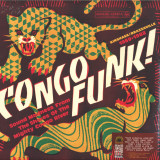
The making of Congo Funk!, our long-awaited journey to the musical heart of the African continent, took the Analog Africa Team on two journeys to Kinshasa and one to Brazzaville. Selected meticulously from around 2000 songs and boiled down to 14, this compilation aims to showcase the many facets of the funky, hypnotic and schizophrenic tunes emanating from the two Congolese capitals nestled on the banks of the Congo River.
On its south shore, the city of Kinshasa – capital of Democratic Republic of the Congo, the country formerly known as Zaïre – is often seen as Africa’s musical Mecca, the city that spawned such immortal bands as African Jazz, O.K. Jazz and African Fiesta, and the place to which aspiring musicians from throughout the continent would go to make a name for themselves.
But the city of Brazzaville on the north shore of the river – capital of the Congo Republic – played an equally important role in spreading Congolese sounds continentally. In addition to producing legendary bands such as Les Bantous de la Capital, it was the powerful transmitters of Radio Brazzaville that allowed the unmistakable groove of Congolese Rumba to be heard as far away as Nairobi, Yaoundé, Luanda and Lusaka thus turning the electric guitar into the continent’s most important instrument!
Although the musical landscape of these cities had been defined by a core group of bands in the late 1950s, the modernisation of Congolese music has been steadily evolving until the events surrounding the Muhammad Ali vs George Foreman boxing match marked a turning point. The promoter of that event known as “Rumble In The Jungle” was none other than the notorious Don King who needed 10 millions dollars to get Ali and Foreman into a boxing ring. The only candidate willing to put this kind of cash on the table was Mobutu Sese Seko, President of the Democratic Republic of the Congo.
Mobutu - the megalomaniac dictator who got to power with the support of the United States and Belgium in exchange for unlimited and affordable access to the riches of the country - had a soft spot for music and it doesn’t come as a surprise that he agreed to a three-day live music festival being organised prior to the “Rumble”. Zaïre 74 - as the festival was dubbed - was meant to hype the boxing match and many stars were invited.
Although a myriads of artists flocked in for the occasion, it was the performance of James Brown on Zairian soil that caused havoc among the younger generation, inspiring hundreds of would-be musicians to take up their electric guitars and reverbs cranked to the max in search of a new sound in which hyperactive Rumba was blended with elements of psych and funk. While the results were very different from the popular music of the three Musketeers - as Tabu Ley, Franco and Verckys were known - they weren’t a complete break with tradition.
These new sounds emerged at a time when the Congolese record industry – previously dominated by European major labels – was experiencing a period of decline due to rising production costs and needed a radical change. The void was filled by dozens of entrepreneurs willing to take chances on smaller scale releases. It was the beginning of a golden age for Congolese independent record labels, and the best of them – Cover N°1, Mondenge, Editions Moninga, Super Contact – preserved the work of some of the region’s finest artists, while launching a generation of younger musicians into the spotlight.
The movement was greatly helped by legendary radio shows but it was the dynamic productions of Télé-Zaïre that set the dynamite on fire. Legend has it that TV shows were so huge that president Mobutu himself ordered RTV du Zaïre to put on daily concerts since it halted criminal activities for the duration of the evening.
Congo Funk! is the story of these sounds and labels, but most of all it is the story of two cities, separated by water but united by an indestructible groove. The fourteen songs on this double LP showcase the many facets of the Congolese capitals, and highlight the bands and artists, famous and obscure, who pushed Rumba to new heights and ultimately influenced the musical landscape of the entire continent and beyond.
Order now and we will order the item for you at our supplier.

Just when you thought you had Kasper Bjørke figured out he comes back with another great musical surprise. His new album Puzzles, which will be released April 5th on hfn music, follows two recent collaborative EPs on Live at Robert Johnson and Mule Musiq as well as his second Kasper Bjørke Quartet neoclassical/ambient album Mother on Kompakt.
Puzzles is Kasper’s love letter to the sound of early 2000s New York - merged with his Scandinavian sense of producing songs that goes beyond conventional club music; combining disco tinged instrumentations mixed with elements of 80s funk, jazz and contemporary pop songwriting, creating something familiar yet, something very fresh and innovative at the same time.
The album includes collaborations with a wide range of musicians and vocalists. From California based indie-disco troubadour Woolfy (DFA, Rong, Permanent Vacation etc.) to the Icelandic dream-folk trio Systur aka Sísý Ey (who also featured on Kasper’s 2014 single Apart, where the Michael Mayer remix became a timeless club anthem), as well as other longtime collaborators and artist friends: Toby Ernest, Jacob Bellens, WhoMadeWho’s Tomas Høffding on bass, Posh Isolation affiliate Frederik Valentin on guitar and the young, rising jazz star Oilly Wallace on saxophone and flute. Essentially, the majority of Puzzles is played and recorded live, including the drums by Rasmus Littauer (School of X, MØ). Many of the songs emerged from chord progressions written during studio sessions between Kasper and Toby - which Kasper then produced into a colourful and effective album, rooted in an expressive live feeling far from programmed patterns.
Puzzles is a new step for Kasper as a producer and artist, showcasing his ability to move and flow freely between genres and expressions, however still deeply rooted in his love and affection for the classic disco groove - which is only natural after more than two decades as an active DJ.
Another piece has been added to the musical puzzle of Kasper Bjørke
Order now and we will order the item for you at our supplier.

Miles Davis' boundlessly influential On the Corner was so far ahead of its time upon release in 1972, the jazz cognoscenti rejected its groundbreaking concoction as middling in nature. Yet time has a way of righting wrongs and shifting views by adding needed context and perspective to visionary ideas, music, and approaches — the likes of which fill Davis' boldest and most controversial — undertaking. Designed to bring the focus back on the groove and bottom-end frequencies, the funk-loaded On the Corner revolutionized jazz. It also set new standards for record production, presaging remixing and electronica by more than a decade. And the work has never sounded more thrilling thanks to this very special pressing.
Sourced from the original master tapes and pressed on MoFi SuperVinyl, Mobile Fidelity's numbered-edition 180g 33RPM SuperVinyl LP of On the Corner exposes the internal mechanisms, free-associated playing, and then-unmatched studio techniques in vivid fashion. The low end, crucial to every composition here, is both heard and felt, with locked-in bass lines and low-range percussion conveyed as taut, solid, and visceral passages. You can discern the multiple layers of rhythm Davis employed on complex tracks such as "Black Satin," as On the Corner stands as his first effort to use overdubbing and multiple tape machines. As a pioneer, Davis likely would’ve loved MoFi’s groundbreaking SuperVinyl profile that features the lowest-possible analogue noise floor as well as pristine transparency, dead-quiet surfaces, and superb groove definition.
New degrees of spaciousness and airiness — equally important to the musique concrete arrangements — give the impression Davis and Co.'s creations float in space. Instruments are portrayed in three-dimensional manners, rhythmic loops retain tonal purity, and horn solos skitter across an extra-wide soundstage that takes listeners into Columbia's Studio E. Mobile Fidelity's SuperVinyl LP captures Teo Macero's innovative production — and the trumpeter's cutting-edge aural collages — in definitive fashion.
Heavily inspired by Sly and the Family Stone, On the Corner portrays street vibes and remains Davis' Blackest-sounding record. The conscious attempt to connect with youthful audiences tapped into rock and funk is evident not only on the colorful cartoon cover art depicting hot-pants and zoot-suit revelers, but in the music's emphasis of recurring drum and bass grooves. Distinct from Davis' earlier fusion experiments, the record's long-misunderstood set dials back improvisation in favor of beats, loops, and atmospherics that generate trance-like effects. While Davis utilizes his band for core duties — Chick Corea and Herbie Hancock prominently figure — he also relies on an all-star cast of side-men for concentrated soloing and additional support.
With rhythm providing the basic foundation, other notes fall into place, with their positioning steered by Macero and Davis' editing-room techniques. Looking to the manipulation-based work of Karlheinze Stockhausen and teaming with Stockhausen disciple Paul Buckmaster, Davis re-imagines what grooves constituted and could accomplish throughout On the Corner. The shapes of the songs become completely transformed as they progress. Faint melodies, spacey chords, chunky riffs, wah-wah fills, and repeated motifs bounce in and out of a sonic funhouse that wouldn't be out of place at a Harlem block party.
Exotic, intrepid, and filled with Davis' "jungle sound," On the Corner remains daringly hip more than four decades later.
expected to be published on 31.03.2024

Tom Saltas (Deathloop, PUBG, Halo) zutiefst beunruhigender Soundtrack zum Horror-Survival-Spiel 'The Outlast Trials' (Red Barrels Games, 2023) wurde komplett (35 Tracks) für 180g Heavyweight-Doppelvinyl gemastert und erscheint samt Linernotes-Einlage. 'The Outlast Trials' bietet einen abwechslungsreichen Horror-OST mit gruseliger Audioproduktion und ungewöhnlichen Orchester- und Musique-Concrète-Techniken, ergänzt durch einen nervtötenden falschen Mid-Century-Jingle, jazzige Fahrstuhlmusik und Honky-Tonk-Klavier. Salta nutzt geschickt die Sprache der Musik, um die Menschen in eine alptraumhafte emotionale Dimension eintauchen zu lassen und die grausamen Erlebnisse zu unterstützen, denen die Spieler begegnen werden.
expected to be published on 29.03.2024

Anna Gréta goes gentle...into her second album on ACT, “Star of Spring”. The Reykjavik-born pianist, singer and a songwriter, who has lived in Stockholm since 2014, has her own way of approaching the art of quiet, artful, deeply personal songs, often drawing inspiration from the beauty and power of Iceland’s natural landscape. Her 2021 ACT debut "Nightjar in the Northern Sky" was named after a bird, and this follow-up album lands gracefully on a flower, the “glory of the snow”, also known as the "star of spring", which symbolises the ending of winter and the arrival of spring.
But look closer, and there are always other levels of meaning. Her "Nightjar”, the rare bird she once saw in front of the northern sky, was a metaphor for the search for the things which are special and essential. In fact, almost all of Anna Gréta's lyrics have more than one significance, and her storytelling has now taken a leap forward on "Star of Spring". She says of the little flower on the title track: "I wasn't just inspired by the way it takes over the meadows in spring and turns them from green to blue, but also by the fact that it blooms because it is compelled to do so. It cannot do anything else."
Anna Gréta's starting point to creating music was and is the piano. She first studied classical music, then switched to jazz. She only started singing later, when she was writing the songs for Nightjar and wanted to express herself in words. Anna Gréta's debut as a singer, pianist and songwriter earned her international acclaim: Downbeat Magazine called it „an album with the metamophoric diversity of a year’s seasons and a voice like the everchanging colours of the Northern lights“, France Musique “a remarkably immersive experience” and Jazzwise “starkly beautiful”.
On "Star Of Spring" Anna Gréta has further developed her individual style. Her vocal lines can resemble piano motifs, often doubling them and resonating with an impressively quiet vibrato, sometimes quirkily reminiscent of Björk, at other times with the brooding ease of Norah Jones. The album also bears a very distinctive production style. For each of the songs, Anna Gréta has created her own little world of choirs, rhythmic textures and various smartly used keyboard instruments. The album ranges from the hymnal and elegiac - in "She Moves" or in the title track - to the playful and cheerful "Space Time" or the extremely pared-down melancholic ballad "Denouement". And even if the general mood of the music exudes above all warmth and comfort, Anna Gréta also deals with serious topics, such as the forced birth control of women in Greenland during the 60s and 70s in the song "The Body Remembers".
There is a directness of expression and emotionality, even sensuousness about the new album, and that is not least because Anna Gréta’s band has developed and become a properly played-in unit with the experience to take this album’s more complex arrangements in its stride. The sheen and brightness of her piano playing is contrasted with a deeper voice, that of her father Sigurður Flosason's bass clarinet, on three tracks. "This album is more playful and experimental," she says. "A lot of things were easier for me than on the first album. And while I was still completely focussed on my own world then, now I was even more conscious and aware of what was going on around me."
The result is music that is rooted in jazz, but at the same time goes far beyond it in a very subtle and deeply touching way.
expected to be published on 29.03.2024

2024 repress!
The dynamic NZ brother duo known from Mule Musiq, Rhythm Section and their own In Dust We Trust impresses with a superb collaborative EP of highly emotional music!
‘Emotional Intelligence’ fills the A-side seeing them team up saxophonist and fellow kiwi jazz legend Nathan Haines and South London’s own Dave Koor aka. Modified Man.
On the flip-side they join forces with Chicago’s Lee Pearson Jnr (he's known for his writing for Larry Heard), K. LaDawn on vocals and rising star Joe Armon-Jones on keys.
A blissful experience throughout and another demonstration of "Chaos In The CBD’s" with maturing, amazing production skills!
Hope, you enjoy.

Since more than 40 years, Anne Gillis has discreetly unfolded her proper singular universe without any compromise. She playfully moves with determined restrictions, excavating contrasting forces; sensual and visceral, mechanical and organical, black and white, … She extends this personal expression in her visuals using self-portrait photos, handwritten text and her theatrical performances are equally aligned. Her music can be considered as musique concrète using the tape machine as compositional tool, manipulating her recorded sources, mainly consisting of extended voice and different (instrumental) sounds with addition of electronics and treatments. In both her photography and her music, Anne Gillis works fully analog.
expected to be published on 22.03.2024

Several years of mutual appreciation and encounters on- and off-stage have been the root of this chance meeting, resulting in an unplanned mysterious collaboration album where the aura of each individual is augmented by the magic osmosis of united forces. The 12- tracks display a collage of dreamy musique concrète with desolate instrumental and vocal interventions, masterfully balanced out by Vincent Epplay.
expected to be published on 22.03.2024

Le jazz homme is the 2nd album of Black To Comm related entity Mouchoir Ètanche. This time heavily influenced by French Jazz (?) as well as the usual suspects: Nurse With Wound, Luc Ferrari, JG Ballard, Surrealism. The human entity has finally been replaced.
"Program music, instrumental music that carries some extramusical meaning, some “program” of literary idea, legend, scenic description, or personal drama. It is contrasted with so-called absolute, or abstract, music, in which artistic interest is supposedly confined to abstract constructions in sound. It has been stated that the concept of program music does not represent a genre in itself but rather is present in varying degrees in different works of music." (Encyclopædia Britannica)
Prompt 1: Pascal Comelade's toy piano falling down the stairs , Hector Zazou pushing from behind, laughing
Prompt 2: Cool jazz played on antique mellotron, low in fidelity, and sad, Glenn Miller‘s grandma crying silently
Prompt 3: A hippie commune version of jazz as played by a cheap computer fed by Chat GPT with medieval buisine fanfare information and samples, trained on the entire Amon Düül II history, heavily looped yet unsynchronized
Prompt: 4: Same, but flutes and synths and trance and chants
Prompt 5: French female artist philosophizes about Shirley Temple, mysterious atmosphere, insensitive homme laughing nervously, heavily looped, hynotic 18th century orgue de salon underneath
Prompt 6: Cool jazz, Echoplex, strange rhythm, Blue Note daydreaming
Prompt 7: Hammond jazz with fake Cyro Baptista loop, Madagascar indri indri lemurs chanting fake sax solos in Malagasy language, electronic bells
Prompt 8: German jazz and artificial prayers, and Shirley Temple returning, with defect Publison recorded at GRM, destroying the voice recording
Prompt 9: Andrei Tarkovsky's moustache meets Johann Sebastian Bach's wig, a well gently lapping in the background, fifths, car crashing into a poor violent onsen geisha
Marc Richter records as Black To Comm for Thrill Jockey and under the Mouchoir Ètanche and Jemh Circs monikers (and solo) for his own Cellule 75 imprint. He collaborated with visual artists such as Ho Tzu Nyen, Jan van Hasselt and Mike Kelley. He also produces soundtracks and acousmatic multichannel installations for institutions such as INA GRM Paris, ZKM Karlsruhe and Kunstverein Hamburg.
expected to be published on 15.03.2024

Redrum Recordz and Fremdtunes present:
Maj Rachel - 'My Shadow Was a Nun'
With her debut "My Shadow Was a Nun", Maj Rachel creates anamalgam of soul, musique concrete, sound design experimentsand classical. She employs objects as percussion, fieldrecordings, piano, guitar, synths, violin and effects incompositions that are rich in color and contrast. Her music isabstract, paradoxical, full of emotion. At times, her voicesubmerges into a tumultuous sea of reverb and distortion, onlyto emerge in soft, bittersweet melodies. She sounds dark andeerie. She sounds romantic and whimsical. In short, it's apowerful debut album that engages the mind, heart, and gut.
This is what Maj herself says about "My Shadow Was a Nun":
"So sensitive yet so immune. Light beams shine through millionsof holes. The sun makes the black thick wall seem light grey.The light pulls apart to colors. Love feels painful yet beautiful.You are around even though you're not. A brain doesn't like tothink it's alone. Arranged sound into personal stories, all self-recorded. Because sound creates deep emotion."
Order now and we will order the item for you at our supplier.

To celebrate its 10th anniversary, Roche Musique is unveiling its 3rd compilation "HOUSE OF GROOVE". 9 tracks featuring the label's long-standing artists FKJ, Darius, Kartell, Zimmer... and international guests from the emerging scene Enchantée Julia, Lossapardo, Flaurese, Barney Bones...
These new tracks, characteristic of Roche's groove, bring a richer electronic musical colour with diverse influences.
Order now and we will order the item for you at our supplier.

"L'idée nous est venu lors d'une conversation un peu arrosée dans un pub du sud de Londres avec Philippe du label Tapeworm" dixit François Kirmann Gamaury alias Franz Kirmann alias Dj Salinger – producteur français établi à Londres depuis plus d'une vingtaine d'années.
"Voyage voyage voyage" est une mixtape. Mais pas dans le sens traditionnelle du terme. Kirmann l'appelle une mixtape subjective, où les morceaux ne sont pas joués tels quels mais présentés tels qu'ils sont ressentis par l'artiste.
Un peu comme le DJ Vladimir Ivkovic qui ralentit certain morceaux sur ses platines pour en révéler un autre aspect, Kirmann zoom dans l'étoffe même des enregistrements, étire les notes et les sons à l'infini, pour en mettre à jour un sens caché, altérer notre perception de ces chansons qui peuvent parfois sembler un peu désuètes. Ici elles sont transformées en nappes fantomatiques et envoutantes qui évoquent un souvenir d'une période de sa vie, une trace sonore d'une époque un peu naive, qui revient aujourd'hui sous forme d'echo, une musique nostalgique trempée dans la reverb et la distortion.
Kirmann a grandit au Sénégal pendant les années 80 et il se souvient des étés de son enfance passé chez ses grand parents, les chansons à la radio, dans le bus du centre aéré, dans un Prisunic en Dordogne, où une fête de camping en Alsace: Catherine Lara, Elsa, Veronique Jeannot et bien sûr Desireless et son fameux tube "Voyage voyage".
Les chansons sélectionnées pour la cassette ont toutes en commun une incitation au départ, une recherche de l'ailleurs, un amour perdu, un souvenir, les thèmes de predilection d'une certaine pop française que l'on nommait variété.
Ces idées d'évasion sont accentuées ici par le traitement sonore qui leur est appliqué. Les chansons sont paralysés dans le temps, figées dans le son, comme si l'on avait souligné certain passages dans un roman pour les détacher du texte intégral.
Distortion, écho, réverbération et autres effets sont appliqués et donnent à la musique et au son une qualité rêveuse et distante. Certains passages reconnaissables se dévoilent et sortent de la brume sonore, ils se révèlent plus net, d'autres sont noyés dans un brouillard imprécis, une musique proche de l'ambient qui enveloppe l'auditeur.
Kirmann: "Chaque track est basé sur une chanson de variété française des années 80, je voulais re-créer une impression de distance, quelque chose de lointain. Les morceaux deviennent des sortes de tapisseries sonores mais dont l'essence de la chanson originelle est toujours présente. Il y'a un roman de Patrick Modiano où les personnages lancent des avis de recherche pour la France à partir d'une station de radio d'un pays lointain. Le son est brouillé, les voix étouffées. J'avais un peu cette idée en tête de faire quelque chose de similaire, comme si les chansons étaient entendus sur un vieux poste de radio mais émises d'une station lointaine et d'un autre temps."
Le résultat est un voyage nostalgique, une musique ambient et nébuleuse façonnée à partir de tubes synthétiques 80's. Imaginez Fennesz ou My Bloody Valentine jouant des reprises de Laurent Voulzy et vous y êtes presque…
Loveless non, Desireless oui!
DJ Salinger. Voyage Voyage Voyage – Disponible en cassette uniquement. 100 exemplaires sur le label Tapeworm.
—
Franz Kirmann is a French music producer living in London. He has made albums for various labels including Denovali, Bytes, Mercury KX. He also writes music for film and TV and is a lecturer in music production at Point Blank Music school.
expected to be published on 08.03.2024

Order now and we will order the item for you at our supplier.

Susana Baron Supervielle was born in Buenos Aires in 1910, but she lived in Brazil most of her life. Creation with electroacoustic means represented one more step in her search for renewal and a new articulation of her triple cultural horizon articulated between São Paulo, Buenos Aires and Paris. The results open a new dimension in the interstices of the sound montage. Susana had been a follower of Pierre Schaffer and his peers in the Groupe de Recherche de Musique Concrète from Paris since they began in the early 1950s.
Baron Superveille’s catalogue of works, as selected by the artist herself, shows nine compositions for magnetic tape. With one exception (1977’s Continuo variante), the pieces are in the personal archives of the composer filed in the Archivo del Instituto Nacional de Musicología “Carlos Vega”, in Buenos Aires, which depends on the Ministry of Culture of the Republic of Argentina. This edition on Wah Wah Records is a coproduction with the Instituto Nacional de Musicología “Carlos Vega” and recovers all the available electroacoustic works composed between 1974 and 1980. While most of the collected works premiered in both Buenos Aires and São Paulo on dates close to those of their composition, there are not any previous known releases of these recordings, so this LP is not only an exception, but also a novelty.
Order now and we will order the item for you at our supplier.

The Trip is the first solo album by N'Zeng, better known as Sébastien Blanchon. It has to be said that he hid behind his (hollow) nose to sniff out the right projects (ex Le Peuple de l'Herbe, member of Entourloop). His nose is hollow, but not for the trumpet, and yet it's with this instrument that he started out. And he reinvents it, giving it a subtle place on this musical road trip we call The Trip.
A journey open to all, with no tolls and no filters, apart from the cinematic filter of this lover of original soundtracks and trip hop. Beautiful images flash before our eyes, and in our ears, the smooth voice of Charlotte Savary (Wax Tailor). An album, a very good trip for lovers of Portishead, Gorillaz, and well-felt scratches in the form of controlled skids.
He's making a name for himself as N'Zeng, with his smooth arrangements.
N'Zeng's father played trumpet with his grandfather in the Feurs brass band in the Loire department. When he arrived in Saint Etienne, young Sébastien started out with a cornet à pistons at the Conservatoire. His teacher at the time, Marcel Heyte, had won a prize in Paris at the same time as a certain Maurice André.
His father took lessons in orchestral conducting, accompanying the offspring's budding musical career, which included a course at the Festival de Cuivre in Monastier-sur-Gazeille, where he met the soloists of the Radio France orchestra. A new awareness, a new confidence: off to Lyon, not for a soccer derby, but to "beef up his game". In 1997, he was awarded a gold medal for trumpet by a unanimous jury at the Conservatoire National de Lyon.
Lyon, capital of the Gauls, was the starting point for N'Zeng, who went on to become a member of the group Le Peuple de l'Herbe. 15 years later, with several successful records to his credit, a concert in 2003 at the Transmusicales with Beth Gibbons (Portishead), and a Victoire de la Musique award, it was time for N'Zeng to move on to other things.
Arrival in the City of Light, the place where dreams come true. Nzeng's dreams are not only sonic, but also visual, for Sébastien is not only a friendly presence and a talented musician, but also a cinephile. His knowledge of music theory, acquired during his years at the conservatory, enables him to tackle music for pictures.
He created a soundtrack for the cult film Alien - The 8th Passenger, and worked with musician Rone (collaborating with Baxter Dury) and his bandmates from Le Peuple de l'Herbe, composing 2 tracks for the soundtrack of Virginie Despentes's hard-hitting film "Baise-moi". On the album "Hollywood Hustlers", with the group "Mustang Force", he pays tribute to the soundtracks of Lalo Shiffrin, Ennio Morricone... The album is also well received by the critics. He conducts the arrangements and orchestrations for the Degiheuga Orchestra, and composes the original music for the Hôtel Bellevue dance show, another success!
2019 sees the birth of "The Trip" project. On this record, no masks, but a female voice, that of Charlotte Savary (Wax Taylor), laid on a carpet of strings. With this musical voyage, trip hop takes pride of place, with a balance between the body of the instruments and the mechanics of beatmaking.
There's no getting off track on this well-balanced record, with its silky orchestrations. N'Zeng accompanies us elegantly, with his trusty trumpet as GPS, here used subtly. The album cover is a photograph taken by Sébastien Blanchon's mother, in 1973, a year when Saint Etienne was about to become French champion for the 7th time.
expected to be published on 08.03.2024

It all started with a crashed computer and it certainly didn’t end there. »Cinnte le Dia« is the third collaborative album by Hanno Leichtmann and Valerio Tricoli, their first entry into Ni Vu Ni Connu’s duo series that focuses on Berlin’s Echtzeitmusik scene and beyond. Having already released two joint records on the now-defunct Entr'acte label, the two musicians wanted to document a 2018 concert in Berlin, but technology failed them. Undeterred, the sound artist and percussionist and the electroacoustic composer went to the former’s Static Music Studio to record six of the eight tracks on this record straight to tape, with two additional ones being recorded during a performance at Eupen’s Meakusma festival in 2019.
After 2016’s »The Future of Discipline« saw the duo enter the studio for a one-take session with added synth-bass overdubs and 2018’s »La Casa delle Chimere« documented a live gig in Kyiv, »Cinnte le Dia« presents a synthesis of the two approaches. Mixing the album together and adding overdubs—Leichtmann with his synth-bass again, Tricoli with his trusted Revox B77—the duo combined the special energy of their performance in front of a live audience with the intimate atmosphere of a studio session between two exceptional improvisers and composers. The pieces are accordingly marked by their sonic density, but also a rhythmic intricacy that makes the album as a whole negotiate its place in music history between bass-heavy, dubbed-out club music and electroacoustic as well as musique concrète techniques.
Leichtmann worked with a mix of acoustic percussion routed through a modified looper and a granular live sampler as well as electronic drums consisting of three modular sampleplayers, a Syncussion drum synth and a bass drum module. Depending on the current set-up, the two fed this input through Tricoli’s B77 either individually or collectively to further manipulate single elements or the entire sound. What might look complicated on a tech rider sounds intuitive on record: these are two versatile musicians engaging in a play of difference and repetition, acting and reacting to each other in real-time, but also creating additional layers by inserting new elements after the fact. In a very literal way, »Cinnte le Dia« is the duo’s most refined album, yet at the same time a testament to the uncanny energy they unleash during their improvisations. It’s solemn and moody, spontaneous and driving at once. Of course a computer couldn’t handle that.
expected to be published on 08.03.2024

expected to be published on 21.02.2024

Musique Infinie is the collaborative project of Manuel Oberholzer a.k.a. Feldermelder and Noémi Büchi.Their album »Earth«, released through the Hallow Ground label, is based on a spontaneously composed live score for Alexander Dovzhenko’s groundbreaking 1930 silent movie »Zemlya« (»Earth«) created for the 24th edition of the VIDEOEX festival for experimental film.
Frequently cited as a masterpiece of early 20th century filmmaking, the movie deals with the collectivisation of Ukraine’s agriculture. The Swiss duo complemented it with atmospherically rich electronic soundscapes that are both deeply immersive and highly evocative. As a stand-alone music release, the two-piece »Earth« album captures the essence of Büchi and Oberholzer’s collaboration that is marked by mutual trust and musical versatility that puts them in a state of »togetherness trance,« as they call it.
Oberholzer has been highly productive as a composer, musician, sound designer, and installation artist in recent years, releasing a slew of solo albums as well as a variety of collaboration records with artists such as Sara Oswald and Julian Sartorius. Büchi has recently debuted as a solo composer and sound artist working with electroacoustic techniques to create a »symphonic maximalism for the end of the world,« as she dubs it.
Both are prolific and versatile artists with a penchant for working conceptually, however their collaboration as Musique Infinie is an improvisational and thus by design an intuitive one.
Their sessions start with an exchange on emotions and thoughts rather than theoretical questions or aesthetic debates. When they get to work—often for several hours—they rarely talk.
They approached »Earth« the same way, improvising freely together and using only a few select samples from the film’s original score in the process. Their open-ended approach is marked by an aesthetic ambivalence that perfectly corresponds with the movie’s own inherent contradictions.
Dovzhenko approached his socio-political subject with poetic imagery and philosophical rigour, juxtaposing notions of traditionality with the depiction of modernity.
Büchi and Oberholzer accordingly work with motives that at o ce seem anthemic and elegiac, working with sounds and musical motives that evoke a sense of familiarity in one moment before transforming into something futuristic and uncanny in the next. Their score for »Zemlya« is not to be understood as a mere interpretation of the movie, but rather a re-narration or even re-negotiation of its aesthetic and emotional qualities under their very own terms. »Earth« is an album that concisely depicts what is at the core of the duo’s musical partnership
expected to be published on 19.02.2024

Danielle Boutet’s P »Pièces« is a mysterious artifact of Quebecois marginalia, self-released in 1985. Moving from languid ennui to high drama, »Pièces« is a dreamy gestalt, an album that borders Chanson, spoken-word, jazz noir, and minimalism, conjured from the chasm between acoustic and electronic realms. »Pièces« allows us a window into the highly intimate songcraft and compositional skill of an artist who longed to linger not in the public eye, but in relation with others and the world around her.
Born in Quebec City, Boutet studied music at the University of Montreal, where she focused on composition and percussion, before becoming involved in Montreal’s feminist and lesbian art scene. Primarily written, performed, and recorded by Boutet, with voice, guitar work, and technical assistance by Sylvie Gagnon, Pièces was created during a paradigm shift in home recording. Originally composed for the piano, Boutet and Gagnon utilized a consumer-friendly Tascam 4-track Portastudio and versatile Yamaha DX-7, alongside guitar, bass, marimba, and the human voice, to expand and contemporize the original composition’s scope.
Inspired by prog rock and British poet and musician Anne Clark, »Pièces« translates Boutet’s influence by moving between sunny, wistful fairytale and dark, wintry dirge. Filled with longing marimba, vertiginous, startling synth pads, and folk guitar, each track on Pièces offers a wholly unique proposition. Some are modal and rife with the ethereal psychological tension of a sci-fi soundtrack, while others are more like entering a smoke-laced lounge, the entertainer embodying seduction.
With the sprechgesang of artists like Serge Gainsbourg, there is an intense intimacy to Boutet’s delivery, sometimes as if she is performing for an audience of one. As one lyric goes, translated to English from French: “Like holograms/ Images from a world/ That inhales souls/ And exudes drama.” Another song contains an excerpt from The Tao of Physics: “The eastern sages specify clearly that they do not identify an ordinary void, but rather, a void having an infinite creative potential.”
To English-language audiences, the album’s title, »Pièces«, might seem to simply refer to the eleven different pieces. The title can also, of course, refer to parts of a larger whole, but Boutet is keen to point out that there is also another meaning: In French, a pièce is a room. On the cover of the original cassette, Boutet is seen sitting on a chair, alone in an empty apartment, a cable snaking at her feet. Listening to »Pièces« is like entering eleven different rooms: whether a study encased in shadow, a greenhouse left to wither in an eternal frost, or a divine nave.
Boutet sold a few dozen copies around Montreal, a scene mostly occupied by the new wave explosion de rigueur, but the inclusion of Pièces in the 1987 issue of Ladyslipper—the North Carolina-based mail order catalog that championed women musicians of all calibers and careers—led to more exposure throughout North America. “In the catalog,” Boutet says, “they included it in the New Age section, but I was, and still am, aware that this album is relatively unclassifiable.”
Boutet would release one more album, titled Musiques Urbaines, before getting pulled in the direction of interdisciplinary art and theory. “Although I never stopped making music, I lost all interest in public diffusion or performance,” Boutet says. Despite her departure from performance and publicly releasing music, she left behind a strange and enthralling document of Montreal’s 1980s feminist fringe, an aural document of the historic moment when self-recorded music and its practical potential became a prismatic reality.
Danielle Boutet’s Pièces arrives February 16, 2024 as part of uncommon¢ (“uncommon sense”), an open-ended, serialized endeavor from Freedom to Spend that provides new meaning for rarefied recordings from music’s outermost fringe.
expected to be published on 16.02.2024

We Release JAZZ is so happy to announce the fourth Bruno Spoerri release in the WRWTFWW discography, this time focusing on the Swiss legend’s unheard jazz catalogue. The pristine 6-track album Musiques Légères (1976-1982) is available as a limited edition half speed mastered biovinyl LP housed in a heavy 350gsm sleeve with superb design by Nicolas Eigenheer and the classic WRJ obi.
Swiss jazz and electronic music pioneer Bruno Spoerri unveils a treasure trove of never-before-released songs in this rare archival collection recorded between 1976 and 1982 that includes collaborations with the fabled Radio Suisse Romande-backed music ensemble GIR (Groupe Instrumental Romand) which featured the crème de la crème of Helvetic forward thinking musicians with an international reputation. The super team of instrumentalists / composers represented Swiss national radio in endeavors that spanned a vast array of music genres such a jazz, pop, experimental music, or what they referred to as “musiques légères” (light music), their very own brand of jazz and funk infused easy listening. One notable member of GIR was drummer extraordinaire Stuff Combe that We Release JAZZ collectors will know from his Stuff Combe 5 + Percussion LP.
Musique Légères (1976-1982) offers a marvelous blend of easy listening jazz, joyful synth improvisations, and soulful funk ballads, a testament to Bruno Spoerri’s multifaceted talents and ability to approach various genres while keeping his very personal and very magical touch. Among the hidden gems on the carefully curated collection is the immensely catchy "Prince Karl", an undeniable hit that truly deserves to be heard.
This is the fourth Bruno Spoerri release from WRWTFWW, following the synth heavy and galactic Voice of Taurus and The Sound of the UFOs, and the compilation of unreleased experimental tracks Rare & Unreleased 1971-1998.
Musiques Légères (1976-1982) is pressed on biovinyl, a sustainable alternative to traditional vinyl. Biovinyl replaces petroleum in S-PVC by recycling used cooking oil or industrial waste gases, resulting in 100% CO2 savings in bio-based S-PVC production. Furthermore, it is 100% recyclable and reusable, embracing the circular economy ideology.
expected to be published on 12.02.2024

Tony Boninsegna: Notes From The Underground 1986-1994 (Volumes 1 and 2) Cold Blow / Musique Pour La Danse
The story of dance music is littered with hidden heroes and underground activists whose immense contributions have been overlooked, ignored and under-documented. Tony Boninsegna, a producer who made and released countless classic cuts and forgotten gems during the acid house and rave era, is one such example.
Melding elements of all that was popular in underground clubs at the time to create his own dancefloor-friendly sound worlds, Boninsegna amassed a huge catalogue between 1986 and '94, while hiding his involvement via an array of oddball aliases and opaque pseudonyms. Boninsegna's story first came to light four years ago when he appeared in Join The Future: Bleep Techno and the Birth of British Bass Music, Matt Anniss's critically acclaimed alternative history of UK dance music in the rave era. Now Cold Blow has joined forces with Musique Pour La Danse to deliver a much-needed anthology of his greatest productions and
co-productions - many rare or hard-to-find - for the first time.
Featuring 24 restored and remastered tracks stretched across two volumes on vinyl and digital, including a handful of previously unreleased tracks and mixes, and accompanied by detailed sleeve notes by Anniss, Notes From The Underground 1986-1994 is a joyful celebration of one of British dance music's most under-appreciated artists. The full breadth and depth of Boninsegna's rave-ready catalogue, as well as an indication of
the sheer volume of aliases he utilised during the period, is explored in detail across the two-part compilation.
Fittingly, volume one features two previously unreleased recordings that mark his earliest explorations of the emerging house sound (both as The Rhythm Squad, with Richard Compton), alongside touchstone releases such as Zeco's 'The Witch Trials' (a 1989 production that marked his first outing on vinyl), celebrated workouts recorded with regular collaborator Mykey Tee (Lab Technicians' bleep-inspired 'We Gave U Life', Big Showdown's epic 'They're Here' and AEK's mind-mangling, bleep & breaks number 'Lick It'), and genuinely overlooked gems (the proto-tribal house of Pierrepoint's acid-smothered 'Tonnerre' and saucer-eyed rush of Estudiantes' 'Let The Music Into Your Mind').
It all adds up to the definitive musical retrospective of a genuine underground, rave-era hero whose time in the spotlight may finally have arrived.
Order now and we will order the item for you at our supplier.

COTONETE is back!
After releasing numerous and now collectable standalone singles, plus some now famous collaborations with Dimitri from Paris, 2019 saw Parisian based 8 piece, Cotonete release their first long player in 15 years! Under the guidance of Melik Bencheikh from Paris’ rare record emporium, Heart Beat Vinyl. The dark moody mover "Super-Vilains" came out to great success on Heavenly Sweetness.
After playing some packed live shows around France and the UK, including the acclaimed Sunday at Dingwalls in Camden, hosted by Gilles Peterson and Patrick Forge. Somewhere along this part of the journey, they came across the Brazilian music legend and vocal powerhouse, Di Melo. He softened their souls, and from this love affair came the album "Atemporal". Released on Favourite Recordings, this 8 track album would end up being sampled by Canadian superstar Drake, for his 2023 album ‘For All the Dogs Scary Hours
Edition’.
So now into 2024, and we have Cotonete full length number two. They’ve enlisted the producer Guts to guide them towards sunshine, groove, warmth and all the colours in his rainbow. With their tongues firmly in their cheeks, the album is titled ‘Victoire de la Musique’ - a dig at the annual French music award ceremony. Taking the band deep, producer Guts showed them new and exciting rhythms from all corners of the world. The record’s first example of this is ‘Venezuela’, a track directly inspired by the jazz funk from the great Caribbean nation.
Other key musical exploration on the record can be attributed to the late composer Francis Lai. On ‘Cinq Pour L'aventure’ - an almost 15 minute epic monster showcasing the band’s love for 70's French movies soundtracks. “L’aventure c’est l’aventure”, was a movie by one of the most famous French directors Claude Lelouch The single from the soundtrack was sung by French music superstar Johnny Halliday.
Guests are scattered very tastefully across the album, on the only cover version of the record, the Brazilian master Jorge Ben’s ‘Bebete Vãobora’, Sabrina Malheiros was invited to lend her lungs. The daughter of Azymuth’s Alex Malheiros helps join perfectly the dots from a band that are without a doubt Cotonete’s biggest influence. Brazilian jazz funk, now with an added French touch.
On ‘Day in Day Out’ a powerful performance is given from Leron Thomas on vocals and trumpet. Perhaps also known for his role as the musical director for Iggy Pop and touring member of his band. This track is an already tried and tested dance floor filler, emphasizing just how tight the band really can play - the track even found its way into BBC Music’s Craig Charles’ ‘Track Of The Year’ selection.
No record so soulful would be complete without a trip to the UK. Omar, London’s Godfather of New Soul pops in. Having recorded with artists like; Courtney Pine, Level 42 & Erykah Badu, in his distinctive smooth style, he blesses the track ‘What Did Run You For?’ The final vocal visitor is Gystere Peskine, a Parisian based musical hero, who shows off his retro future funk feels on ‘O Ceu es Preto’ - which literally translates as ‘the sky is black’ - although given the hugely uplifting and almost Gospel Soul of this Russian/Brazilian singer, he
has us seeing things far brighter.
Cotonete have endeavored to build a worldwide rainbow warrior team of merry boys and girls. Fighting the brave fight to shine light towards the fact that music will always win…. "Victoire de la Musique" - a symphony of spring, songs of the new world, a "Victory Of Music”
Order now and we will order the item for you at our supplier.

Order now and we will order the item for you at our supplier.

Sylvain Chauveau's debut album "Le livre noir du capitalisme" is a melancholic milestone – and a precursor of what later would become the Modern Classical genre. With his release in 2000, Chauveau created a landmark of contemporary electronic music, parallel to the first releases of Jóhann Jóhannsson and Max Richter.
Inspired by John Cage's reflections on silence and Mark Hollis' solo album of the same name, on "Le livre noir du capitalisme" Chauveau assembles contemplative, repetitive piano and string arrangements with electronic sound layers and discreet field recordings to create an other-worldly but seductive Musique Noir. Midway between ambient, jazz and post-rock, Chauveau lays out a new paradigm of electro-acoustic music that functions as much atmospherically as compositionally, and whose parameters keep the boundaries between academic and non-academic music dissolved to this day.
Originally released on the small French experimental label Noise Museum in 2000, the album got reissued by Type Records in 2008 with the English title “The Black Book of Capitalism”. Being out of print for a while, Sonic Pieces now rereleases the classic with its original French title, plus new remastering by Loop-O and in an ultra-limited, handmade edition with black bookcloth cover on both CD and vinyl.
expected to be published on 02.02.2024

1976 hatte Michael Hoenig eine kurze Zusammenarbeit mit Manuel Göttsching von Ash Ra Tempel in Berlin; eine 48-minütige Aufnahme einer der Sessions, die 1995 unter dem Titel "Early Water" auf Bernd Kistenmachers Label Musique Intemporelle veröffentlicht wurde. Das Album wurde gestrichen und war lange Zeit nicht erhältlich. Nun wird es endlich eine Wiederveröffentlichung von "Early Water" geben. Michael Hoenig erinnert sich noch: "Während ich an dem Album "Departure From The Northern Wasteland" arbeitete, hatte mich Manuel Göttsching gefragt, ob ich mit ihm für einige Konzerte in Frankreich zusammenarbeiten würde, da seine Gruppe gerade eine Winterpause eingelegt hatte. Wir probten drei oder vier Wochen bei mir zu Hause. Eines Abends bekamen wir einen Anruf wegen einer fehlenden Garantie, woraufhin wir beschlossen, die Tournee abzusagen. Nur zum Spaß spielten wir ein letztes Mal eines der geplanten Sets. Obwohl ich mich nicht daran erinnern kann, eine Aufnahmetaste gedrückt zu haben, hat jemand kürzlich ein Revox-Band mit eben diesem Set ausgegraben. Nach einer digitalen Klangarchäologie wurde es soeben unter dem sehr passenden Titel "Early Water" veröffentlicht." Und Manuel Göttsching fügt hinzu: "Leider wurden einige Konzerttermine nicht rechtzeitig bestätigt und wir mussten die komplette Tournee erst am Tag vor der Abreise nach Frankreich absagen. Dennoch haben wir an diesem Abend unsere letzte Probe "für alle Fälle" aufgenommen. Es ist ein fließendes, harmonisches Stück geworden, das viel von der optimistischen Stimmung des Jahres 1976 widerspiegelt. In den frühen 1980er Jahren zog Michael nach Los Angeles. Als wir uns im November 1994 wiedertrafen, schlug ich vor, dieses alte Stück von uns zu veröffentlichen. Michael nahm das Originalband mit nach Los Angeles, restaurierte es liebevoll und nun, hier ist es wieder!"
Order now and we will order the item for you at our supplier.

tapetopia 008 Der Expander des Fortschritts was founded in 1986. The “risk group” described itself as “pop musique concrète” or “abstract pop”. Der Expander des Fortschritts relied on disharmony and ruptures, which resulted in radio plays in a song format; the GDR as a realsocialist satire provided its material. Even the band’s name was a cultural appropriation of the superstructure by the substructure: “progress” was a fetishized word in the GDR, factory sports clubs would add it to their name, solidarity concerts would use it as a motto. The title “Urknall · Horde · Mensch” resulted from an Expander-typical translation of “Weltall, Erde, Mensch”, a compendium ceremoniously presented to each initiator on the occasion of their socialist youth initiation. In 1988, the band released the tape album on their own label Irrmenschkassette, a big bang in a tiny edition. The tapetopia series, using the original layouts and track lists, publishes cassette editions from the GDR underground of the 1980s, especially from the “walledin” scene in East Berlin. More than three decades after their initial “release”, most of these tapes have yet to be heard on either vinyl or CD, even though they made an audible mark in the canon of GDR subculture. Despite the tiny original editions of the time, many of the bands were considered cult in countercultural circles, which made them highly suspect in informed circles.
expected to be published on 26.01.2024

Taiko artist Kioto Aoki teams with Chicago techno producer Takashi Shallow for Paper, not plastic Dubs. Using three tracks from Aoki's 2023 FPE Records release, Paper, not plastic, Shallow explores process
and medium, treating the sounds to analog production techniques in an operation analogous to Aoki's
process-based work in film, as well as Alvin Lucier's early flirtations with musique concrète.
expected to be published on 26.01.2024

With her cinematic debut in 1952, Brigitte Bardot's musical career would begin a decade later after signing to the Phillips Record Label in 1962. Bardot released her debut album the following year and featured four singles: 'Les Amis De La Musique', 'El Cuchipe', the critically acclaimed 'La Madrague' and 'L'Appareil À Sous', penned by Serge Gainsbourg, its style was suited to the 'Twist' dance craze gaining popularity amongst her teen audience. Gainsbourg would feature regularly throughout her artistic career. Impressively, Bardot sings on the album in three languages: French, Spanish ('El Cuchipe'), and English ('Everybody Loves My Baby'). Her musical ventures were playful, fun and uniquely B.B.
expected to be published on 19.01.2024

The heavyweight trio of Keiji Haino, Jim O’Rourke and Oren Ambarchi return with their 12th and most epic release to date, the triple LP With pats on the head, just one too few is evil one too many is good that's all it is. Documenting the entirety of their final performance at the dearly departed Roppongi home of Tokyo underground institution SuperDeluxe in November 2018, the music spread across these six sides splits the difference between the guitar-bass-drums power trio moves and experiments with novel instrumentation that have defined the trio’s decade of working together. Containing some of the most delicate music the three have committed to wax since the gorgeous 12-string acoustic guitar and dulcimer tones of Only wanting to melt beautifully away is it a lack of contentment that stirs affection for those things said to be as of yet unseen (BT011), this wide-ranging release also offers up some of their most blistering free rock performances yet.
The side-long opening piece finds Haino on a single snare drum in duet with O’Rourke on unamplified electric guitar, playing in the lovely post-Bailey vein heard on his classic 90s recordings with Henry Kaiser and Mats Gustafsson. Spiky dissonance and ringing harmonics interweave with flowing melodic fragments as Haino single-mindedly explores the resonance of the snare like an untutored Han Bennink. On ‘Right brain, left brain; right, left; right wing, left wing. Just how many combinations can be made from these?’, O’Rourke moves to synth and electronics, joined by Ambarchi on drums, who at first focuses on sizzle cymbals before hypnotic cycles of gentle tom rhythms combine with electronic burbles and flutters to suggest a dream collaboration between Masahiko Togashi and Jean Schwarz. Ambarchi’s percussion is then joined by Haino on wandering, overblown flute, before the man in black switches back to the snare for a bizarre, stuttering drum duet.
For the first trio performance, Haino makes another new addition to his seemingly infinite catalogue of instruments, this time a homemade contraption he refers to as ‘Strings of Dubious Reputation’. Joined by O’Rourke on increasingly spaced-out electric guitar and Ambarchi on skittering percussion, Haino’s wonky, slack strings adds a definite ‘musique brut’ edge to this side-long performance, certainly one of the most enchantingly odd in the trio’s discography. When the group reconvene for the second set, spread out across the final three sides, they seem ready to breathe fire from the first instant. O’Rourke slashes distorted chords on the six-string bass, Ambarchi breaks into his signature irregular caveman thump, and Haino squeals and squawks on heavily delayed oboe before unleashing an overpowering electrical storm when he first picks up the guitar. For over half an hour, the trio pound out one of their most relentless performances, a constantly rearranging kaleidoscope of tortured fuzz guitar, insanely busy bass riffing and propulsive, tumbling drums. A hushed atmosphere initially reigns on the final long piece, given the mournful title ‘There are always things I wish to say but I can only convey them in this language August 6 August 9’. Haino’s clean guitar strumming calls up the shimmering tones of his PSF classic Affection, gradually building to a surging wall of sound, bass and drums lumbering through a roar of jet-engine guitar. Arriving in a deluxe trifold package with photos by Lasse Marhaug alongside inner sleeves with extensive live images, this epic release is perhaps the most remarkable document yet of this unique trio’s stamina and continuing inventiveness.
expected to be published on 19.01.2024

Es ist eine futuristische Musik, die auf dem Debut-Album von THE DRAW zu hören ist - mit einem elektroakustischen Set-Up aus modularen Synthesizern und akustischem Schlagzeug. Ursprünglich hatten die beiden Musiker Uwe Haas und Eric Schaefer, die sich für dieses Projekt zusammengefunden haben, zwei Alben geplant. Deshalb besteht das Doppel-Vinyl MAIKRO eigentlich aus zwei Teilen, die thematisch und musikalisch klar voneinander abgegrenzt sind - und doch in einem Spannungsverhältnis zueinander stehen. So sind auf dem ersten Longplayer mit dem Titel MAKRO Spielformen des Dub, Industrial und Noise zu hören. Mit ihrer Kraft und Vitalität von verzerrten Drums und pumpenden Bässe erinnert diese Musik an den akustischen Raum repetitiver Clubmusik. Im Gegensatz dazu ist MIKRO von der Anmutung und dem Detailreichtum der Musique concréte und des Ambient geprägt. Nahe mikrophonierte Perkussion, Field-Recordings und Oszillatoren führen in eine Welt, in der feine, kaum hörbare Klänge, wie unter ein Mikroskop gelegt, vergrößert werden. Die beiden Musiker lassen ihre Improvisationen auf MAIKRO organisch wuchern, lassen Klanglandschaften entstehen, aufregend, ungehört und unberechenbar - und halten ihre Kompositionen doch stets in der Schwebe zwischen Spontaneität und struktureller Klarheit.
expected to be published on 19.01.2024

Aroop Roy’s star is deservedly in the ascendancy! As one of London’s most exciting selectors, he’s managed to position himself in the sweet spot of being the DJ’s DJ and causing wild scenes wherever he plays, with headline grabbing sets at Defected Croatia, We Out Here, Gilles Peterson’s Worldwide and many more.
As a producer, musician and label owner, he continues to excel, armed with a vast knowledge of outernational sounds, from rare African disco, jazz, funk, to house, UKG and seemingly everything in-between. His open-minded approach has led to brilliant releases and remixes for labels as diverse as Soundway, Heavenly Sweetness, Permanent Vacation, Club Bad, Delusions of Grandeur, Atjazz Recordings and his own Vive La Musique imprint.
Having played a few gigs together, it was only a matter of time before Jimpster convinced Aroop to get an EP together for Freerange and the resulting Re Bulele EP couldn’t be any more satisfying!
Leading the charge, 'Mama Mwana' captivates with entrancing thumb piano loops and a traditional African vocal all propped up by a subtle yet chunky house beat to lock the dancers in.
'Re Bulele' features the hypnotic vocals of Botswana native Fox Meropa. Aroop masterfully combines a deep, techy Afro House groove with glassy synth pads to form a stripped back instrumental with the vocals front and centre. Seemingly disparate elements shine on this wonderful alternative to the deluge of maximal Afro House tracks being released these days.
Moroccan producer FNX Omar delivers the goods with a sublime remix of Re Bulele. Creating tension with layers of looping vocals along with a rolling, percussive groove. Like the original, this remix transcends genres and will create special moments on the dancefloor, whether it be in a dark, sweaty basement or daytime festival in the sunshine.
Order now and we will order the item for you at our supplier.

In the 1970s, Robert Cahen turned to the burgeoning field of video art, where he became a pioneering artist. He was originally trained in musique concrète, his creative background, and joined the Groupe de Recherches Musicales in 1972. The pieces on this record were composed in the GRM studios between 1971 and 1974. They testify to a lively inspiration and imagination combined with a precocious formal mastery that already carries the seeds of later developments, which the artist cleverly and inventively deployed in the field of visual arts. (François Bonnet, Paris, 2022)
--
«La nef des fous» (1974), 12’00
There are pieces of music whose title is obviously a mere label given afterwards to a finished product. And others, on the contrary, which develop in spiral around a bundle of images and impressions condensed into a few words. This is the case indeed with La nef des fous. However, this work by Robert Cahen oddly wraps itself around its title, with bends, breaks, and an impetus driven further every time to close a new circle, for such is the very essence of the spiral. This, at least, is the way I perceive the form of the work, with its theme-chorus which, in part one, both ponctuates and disrupts the emerging musical curve in various ways and at irregular intervals, as well as its broader and more open second part, which closes with a recollection of the beginning of the work. The challenge of a musical form justified by the topic it illustrates, right down to its gaps, its wanderings and its twists, and which would confer upon it the necessity of a profound logic, that of insanity, is the challenge attempted by Robert Cahen. In such a genre as tape music, so careful with respect to form, one can appreciate its audacity. La nef des fous, or Unity through heterogeneity, or Each to their own madness, but all in the same boat. This means that if we can listen to each of these sound characters, “broken chants”, which create the work for themselves, through the singularity of their delirium, we can also, from one to the other, trace the continuous chanting of a music that is inherently and spontaneously poetic, a music that carries “the unconscious under its skin” (Christiane Sacco). (Michel Chion, January 1976)
«Masques 2» (1973), 08’34
Concert version (for tape only) of an audiovisual work entitled Masques, in which the faces of old dolls and «masks», filmed during the Basel Carnival, were projected in 16mm. Masques 2 is a metaphorical version of Masques in which music is featured in its arcane musicality.
Through its concrete and suggestive music Masques 2 aims to bring to light hidden memories, buried within us, thus enabling an awakening, the resurgence of events from our own history. (R. C.)
«Plurielles» (1971), 08’35
Premiered at the Paris Biennale, 24 September 1971. Suite based on the score of a TV film directed by Sophie Talmon.
«Persona» (1971), 08’34
Premiered at the Paris Biennale, 24 September 1971.
«Passé composé» (1971), 05’29
expected to be published on 12.01.2024

After an international tour, the multi-instrumentalist FKJ presents his new 6-tracker jazz EP : Ylang Ylang
Produced in an intimate context, the project, both bright and melancholic, is a real journey within the artist's time capsule.
Its numerous instruments - often accompanied by warm choruses - between apotheosis and rhythmic lull, tell the different parts of his life. Story of musical and familial love, loneliness and passing time, this project spotlights his name, coming from a soothing local flower.
Full of influences, there is Bas - the first rapper signed on Dreamville, label created by J.Cole - on the single "Risk", which deals with similar themes. French Kiwi Juice introduces us to a sweet orchestral ballad. Finally, between gratitude and lightness, he states "I am still the same".
Order now and we will order the item for you at our supplier.

This item has not yet been released. You can pre-order the product now.

NOW Music is proud to announce NOW Presents…Disco, a stunning 5LP boxset featuring 80 of the greatest Disco classics ever!
Kicking off with the genre defining #1 from Donna Summer ‘I Feel Love’ followed by Earth, Wind & Fire with The Emotions and their timeless hit ‘Boogie Wonderland’, this boxset features the most enduring tracks from dance-floor legends, including Chic, Sister Sledge, Gloria Gaynor, Village People, and Grace Jones - together with Saturday Night Fever gems - ‘Disco Inferno’, ‘More Than A Woman’, and ‘If I Can't Have You’.
LP 2 opens with Amii Stewart’s stunning version of ‘Knock On Wood’, followed by Candi Staton’s ‘Young Hearts Run Free’ and Chaka Khan’s hugely successful debut solo single ‘I'm Every Woman’. Other massive debuts include ‘Boogie Oogie Oogie’ from A Taste Of Honey, Alicia Bridges’ ‘I Love The Nightlife (Disco 'Round)’, and Cheryl Lynn’s ‘Got To Be Real’. Up next is the often-covered ‘Lady Marmalade’ together with Diana Ross’ ‘Love Hangover’ which lead into #1s from Frankie Valli & The Four Seasons, (‘December, 1963 (Oh, What A Night)’), Tina Charles (‘I Love To Love’), Odyssey (‘Use It Up And Wear It Out’) and Irene Cara (‘Fame’).
LP 3 Side A is packed with groovy and romantic chart-toppers from Elton John (‘Are You Ready For Love’), George McCrae (‘Rock Your Baby’), Barry White (‘You're The First, The Last, My Everything’), and The Spinners with their ‘Working My Way Back To You / Forgive Me, Girl’ medley. Flipping over to the other side, we have the timeless smash from Baccara ‘Yes Sir, I Can Boogie’, Boney M. with ‘Daddy Cool’, and Village People’s ‘In The Navy’. Viola Wills’ Hi-NRG cover of ‘Gonna Get Along Without You Now’ and Gloria Gaynor’s ‘Never Can Say Goodbye’ bring LP 3 to a close.
Lipps Inc., Kool & The Gang, Frantique, and KC & The Sunshine Band keep the dance-floor energy levels high on LP 4 with ‘Funkytown’, ‘Ladies Night’, ‘Strut Your Funky Stuff’, and ‘That's The Way (I Like It)’. The disco-mania of the late-70s also saluted the late-70s craze for Space themed movies & tv with early Electro-pop-dance, and included here from Space and Dee D. Jackson, before Sarah Brightman’s debut with Hot Gossip, ‘I Lost My Heart To A Starship Trooper’, and Meco’s remake of the ‘Star Wars Theme / Cantina Band’ as a dance-floor classic… Giorgio Moroder productions for Sparks with ‘Beat The Clock’ and The Three Degrees with ‘Givin’ Up Givin’ In’ lead the side to a close with ‘Souvenirs’ from Voyage.
LP 5 is filled with truly monster sized dancefloor-fillers, beginning with a run of Nile Rodgers & Bernard Edwards productions: ‘Le Freak’, ‘We Are Family’, ‘Spacer’ and ‘Upside Down’ from Diana Ross. It wouldn’t be a Disco album without Earth, Wind & Fire’s ‘September’, the Bee Gees-written ‘Nights On Broadway’ covered by Candi Staton, and the Grammy award-winning ‘Best Of My Love’ from The Emotions, before another hit cover from Amii Stewart, ‘Light My Fire’. Side B features some fabulous European Disco, including Belle Epoque and Amanda Lear, and signature hits from Patsy Gallant and Vicki Sue Robinson before drawing to a close with Rose Royce’s celebrated ‘Car Wash’, and Cher’s biggest disco hit ‘Take Me Home’ – and the last dance is left to Thelma Houston with her defining anthem ‘Don’t Leave Me This Way’.
NOW Presents…Disco – the perfect collection and collector’s item for every 70s Disco lover.
Order now and we will order the item for you at our supplier.

This music unites our common love for the essence of music, which contains harmonic structures and emotionality without borders." — Musique Infinie
Musique Infinie, the new duo consisting of Noémi Büchi and Feldermelder, is rooted in a shared desire to intertwine two composing veins, and to merge them into a new, massive core. While Büchi combined her background in classical and electro-acoustic music with a bold approach to composition on her highly acclaimed debut album 'Matter' (-OUS, 2022), multi-disciplinary musician and artist Feldermelder has been expanding his artistic practice into unexplored realms for over 20 years. Mutually, they've challenged themselves to fully engage on an artistic exploration aimed at making use of the elementary forces that unfold between them.
Their debut album, simply titled 'I', is a musical hybridization. The compositions make use of simple motives that are radically transformed by expanding them into intricate structures and fantastic layerings. The overcoming of genres with eclectic elements from classical music, jazz, film music and traditional music, combined with the vocabulary of experimental electronic music, complete the vertical plunge into this thickness. The emerging pieces lead into a paradoxical world, both disturbing and euphoric. Pieces that don't give in to calculations and expectations, but progress through ruptures and repetitions. The richness of the compositions and their analog, acoustic and orchestral character reflect the density of the world with its violence, its decadence, its fragility, but also its power, its ingenuity and its beauty.
Composer and sound artist Noémi Büchi creates electronic, symphonic maximalism. Her music is defined by a delicate synthesis of textural rhythms and electroacoustic-orchestral abstraction. She explores the potential of consonance and dissonance, contrasts rhythmic physicality with disruption and playfully emphasizes irregularities, creating an expansive listening experience marked by detail and elevation.
Feldermelder is a polymathic creative whose artistry spans composition, sound design, installation and code. He is co-founder of -OUS Records and an active member of Encor.studio, a collective specialising in creating immersive audio-visual installations. Through his work, he explores the idea of secrecy and its impact on our lives, using music and sound to create a thought-provoking and immersive experience for his audience.
Order now and we will order the item for you at our supplier.

Fixed Abode labelhead Rainy Miller met Space Afrika through regular nights he runs at Salford’s The White Hotel, a hub for leftfield electronic music. What started out as an idea for a collaborative EP between Rainy and Space Afrika turned into a longer form project, with features from Mica Levi, Coby Sey, Richie Culver, Voice Actor and Iceboy Violet, amongst others. ‘A Grisaille Wedding’ is an immersive experience that fills the space these artists have come to dwell in during their creative journeys. It not only pushes the boundaries of music but also bridges regional dialects within the conversation of contemporary electronic music. Rainy Miller: “‘A Grisaille Wedding’ is a project based in the personification of the semi-fictitious world that Space Afrika have come to build over the years. Using musique concrete and British soundscapes, I wanted to fuse the sonic with both noise and the contemporary.” Space Afrika: “The record’s title figuratively describes the marriage of two similarly motivated perspectives, each affected by a common backdrop and familiar ground tread amongst the scrimmage of urban sprawl, sombre, a boisterous landscape and clouds of uncertainty.” Rainy Miller’s 2022 solo album was included in 6 Music’s Albums Of The Year and Crack Magazine’s Best Albums Of 2022. Following the LP release, Rainy Miller and Space Afrika will be announcing joint UK and EU live shows taking place at the start of 2024. For fans of Actress, Dean Blunt, Lee Gamble, Loraine James
expected to be published on 03.12.2023

Founded in 2016, Belleville Boogie is a DJ collective inspired by the vibrant energy of Belleville's nightlife. The collective’s soul feeds on bringing people to bounce on an eclectic curation of vinyl. Belleville Boogie’s debut release is the brainchild of Lemon McWright and Jan Decent.
Born from the depths of lockdown, "Le Pacifique" is a balearic slow burner that captures the longing for the dance floor, while "Grateful" takes us on a jazz-infused journey featuring the talents of FredMelosax, Charif Megarbane, and Rafael Powell. For those who remember the early days of the French House scene, "J'aime Danser" is a playful nod to the scene that shaped us, while "Bella Belleville" lures you into a hypnotic, downtempo trance that's perfect for intimate gatherings or solo listening.
Crafted with the same heartiness as our parties, we're excited to spread the Belleville Boogie spirit with this vinyl. Be sure to check out our upcoming events to see when we'll be bringing the dance floor to your city. Let's keep the good times rolling!
Order now and we will order the item for you at our supplier.

‘A Concrete Pasture’ by Coen Oscar Polack is the follow-up to ‘Haarlemmerhout’ (2020), an album named after a park close to his home in Haarlem in the Netherlands. ‘A Concrete Pasture’ brings Polack’s interest in exploring the larger world around him back into his music. Polack is a magician in combining field recordings from all over the world, be it a temple in Bangkok, the Dutch Wadden Islands or a the percussive Gamelan instruments, and electronic processing of these recordings. With all these ingredients he creates a vivid, nostalgic, futuristic but familiar world of sounds and emotions.
At first, the colors of the recordings seem scattered, the sounds unrelated, but there is a deeper train of thought running through the music. It is the persistent impression of a travelogue; of places, family and friends, helping Polack in co-creating his music. In ‘Cuore Nero’, nostalgic powerchords are composed into tapestries of ambient-noise, ‘Unseen Shores’ uses a recomposed recording of Polack’s children on the Dutch island of Schiermonnikoog and develops into visceral, almost spiritual music, and a field recording of Wat Po in Bangkok in ‘Phra Buddhasaiyas’ becomes a luminous homage that the incorporated guitar sound burns into your skull.
While listening, it becomes evident that Polack is being reflective in auditive images and memory, giving a meaning to a music that is liberated of its formalities and charged with a poignant imagery by transformation, one that is bright and lucid and respects the process from recording until ornamentation.
The longest piece of the album ‘Kraaiennest’, starts with the recording of a Hong Kong traffic light, later to be cut up and transformed into a technoid Musique Concrète piece, with a slow progression into a warm crescendo-decrescendo themed electroacoustic piece, which takes on a life on its own. The finale is Polack on this tenor saxophone putting a stamp on the completion of his work, a performance reminiscing of the raw expressiveness of Albert Ayler.
‘A Concrete Pasture’ points to a landscape, or to a person’s current situation in life. Coen Oscar Polack did himself justice by writing an elegant, vibrant album, a tribute to his reflection of reality, his aesthetics, and with raw authenticity and skill, leaving a great space for the audience’s imagination.
expected to be published on 20.11.2023
