
4
nicht am Lager
Bestelle jetzt und wir bestellen den Artikel für dich beim Lieferanten.
Last In: vor 4 Jahren
Bestelle jetzt und wir bestellen den Artikel für dich beim Lieferanten.

NOW That’s What I Call 70s Soul brings together 50 era-defining tracks from one of the most powerful decades in soul music, featuring classics from Motown legends, Philly Soul pioneers, smooth balladeers and funk innovators – all pressed across 3LPs on beautiful blue vinyl… Out April 24th!
LP1 opens with one of the decade’s most recognisable love songs: Al Green’s ‘Let’s Stay Together’, a US #1 and UK Top 10 hit that became his signature recording. It’s followed by Marvin Gaye’s ‘What’s Going On’, the socially conscious masterpiece and title track from his landmark 1971 album, and Diana Ross’ Ain’t No Mountain High Enough’, which topped the US chart and became her first solo #1. Stevie Wonder’s ‘Signed, Sealed, Delivered (I’m Yours)’ remains one of Motown’s most joyful recordings and comes before Commodores’ ‘Easy’ introducing Lionel Richie’s smooth ballad vocals. The side also includes Bill Withers’ timeless ‘Ain’t No Sunshine’, a Grammy-winning classic, and The Stylistics’ lush ballad ‘You Make Me Feel Brand New’, a UK Top 3 smash, before closing with Rose Royce’s beautiful ‘Wishing On A Star’, one of the most loved soul ballads of the era.
Flip the LP over and The Jackson 5’s ‘I Want You Back’ – the group’s explosive debut single opens the side. Smokey Robinson & The Miracles’ ‘The Tears Of A Clown’ became a UK #1 and is followed by The Supremes’ Nathan Jones’ showcasing the group’s evolving psychedelic-soul sound. Northern Soul classics from Frankie Valli & The Four Seasons with ‘The Night’, Chairmen Of The Board’s Top 3 smash ‘Give Me Just A Little More Time’ and The Trammps’ ‘Hold Back The Night’. The O’Jays’ joyous ‘Love Train’ leads to The Blackbyrds’ Walking In Rhythm’, before the side closes with the romantic classic ‘Always And Forever’ from Heatwave.
LP2 opens with The Temptations’ epic ‘Papa Was A Rollin’ Stone’, a Grammy-winning US #1 remains one of the most stunning recordings from the Motown catalogue, is followed by Isaac Hayes’ ‘Theme From “Shaft”’, an Academy Award-winner and a US #1 smash. More funk follows from Ike & Tina Turner, James Brown with one of his key tracks ‘Get Up (I Feel Like Being A) Sex Machine’, Edwin Starr’s powerful anti-Vietnam protest song ‘War’, and Sly & The Family Stone’s hugely influential ‘Family Affair’. The Delfonics’ sublime ‘Didn’t I (Blow Your Mind This Time)’ comes ahead of Billy Paul’s timeless ‘Me And Mrs. Jones’ which closes the side…the other side begins with the 1977 #1 from The Floaters with ‘Float On’, before the breathtaking vocals of Minnie Riperton on ‘Lovin’ You’. The Isley Brothers’ Summer Breeze’ and William DeVaughn’s ‘Be Thankful For What You Got’ have become enduring classics and are followed by a run of ‘80s pop-chart crossover hits completing LP2 from Detroit Emeralds, The Moments Raydio and The Tymes’ #1 ‘Ms. Grace’.
LP3 opens with the unmistakable voice of Barry White and his US #1 hit ‘Can’t Get Enough Of Your Love, Babe’, before Aretha Franklin’s ‘Until You Come Back To Me (That’s What I’m Gonna Do)’, delivers one of her smoothest performances. Al Green’s ‘Tired Of Being Alone’ and Gladys Knight & The Pips’ ‘Midnight Train To Georgia’ are followed by minimalist soul classic ‘Why Can’t We Live Together’ from Timmy Thomas, and the side closes with a trio of defining ballads:- George Benson’s ‘The Greatest Love Of All’ Diana Ross’ ‘Theme From Mahogany (Do You Know Where You’re Going To)’ and The Jackson 5’s ‘I’ll Be There’, their biggest hit…while over on the final side…Freda Payne’s #1 ‘Band Of Gold’, opens alongside Ann Peebles’ influential and much covered ‘I Can’t Stand The Rain’.Marvin Gaye’s sensual ‘Let’s Get It On’ became another US #1, while Harold Melvin & The Blue Notes featuring Teddy Pendergrass deliver the contemporary standard ‘If You Don’t Know Me By Now’. Three massive UK #1s are next…The Stylistics with ‘Can’t Give You Anything (But My Love)’, The Three Degrees’ peerless ‘When Will I See You Again’ and Deniece Williams’ ‘Free’. This amazing collection closes with two timeless ballads: Earth, Wind & Fire’s ‘After The Love Has Gone’, a Grammy-winning classic, along with ‘Three Times A Lady’, a huge worldwide #1 for the Commodores.
NOW That’s What I Call 70s Soul, 50 defining tracks from one of music’s greatest decades. Out April 24th.
erscheint voraussichtlich am 24.04.2026
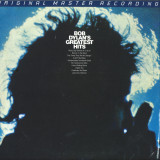
Ten songs that ultimately changed the world. Ten songs pulled from precedent-establishing albums recorded between 1963 and 1966. More than five-million copies sold. In every way, Bob Dylan's Greatest Hits is a fundamental collection for every music lover, and the perfect choice for those seeking an introduction into the legend's vast career. For this is a collection so prized, even the cover photo won a Grammy.
Greatest-hits volumes are often hit-and-miss propositions not because of what they contain, but because of what's missing. Filtering the top selections from the six formative, life-altering albums Dylan made between 1963 and 1966 is an arbitrary process but one performed impeccably on this set. Home to his biggest chart successes as well as his most influential songs, Bob Dylan's Greatest Hits is a veritable template for any aspiring singer-songwriter, an American history lesson, and a seminal release for anyone new to his work – as well as for audiences that find some of his deeper cuts an acquired taste. Every signature facet of Dylan is represented, and done so authoritatively. Serious, protest folk anthems ("Blowin' in the Wind," "The Times Are A-Changin'") sit alongside defiant rock statements ("Positively Fourth Street"), landscape-changing epics ("Like a Rolling Stone"), beautiful blues-inspired odes ("I Want You"), and surrealist dreamscapes ("Subterranean Homesick Blues"). Infused with literary poetry, impassioned emotion, and career-making performances, this material doubles as a definitive account of American culture and society, and functions as a soundtrack to the era's social movements.
Gathered in one place, it's no wonder the songs here gave Dylan what remains the biggest-selling album of his career.
Bei uns am Lager und sofort versandfertig

Rick James Blends Brazen Attitude, Fearless Sexuality, and Shrewd Charisma on Street Songs:
Punk-Funk Album Aims for the Hips and Head, Includes the Timeless Hit “Super Freak”
Sourced from the Original Master Tapes and Strictly Limited to 4,000 Numbered Copies:
Mobile Fidelity’s 180g 45RPM 2LP Set Presents 1981 Smash in Audiophile Sound for the First Time
1/4” / 30 IPS analogue master to DSD 256 to analogue console to lathe
“Punk funk” was a relatively unknown concept before 1981. But once Street Songs took the charts by storm that year, the world soon knew about what became Rick James’ signature style. And how. True to its name, Street Songs blends outspoken sexuality, brazen attitude, and edgy commentary amid contagious R&B-fueled arrangements that simultaneously aim for the hips, head, and various nether regions. And it’s never sounded better.
Sourced from the original master tapes, strictly limited to 4,000 numbered copies, pressed at Fidelity Record Pressing, and housed in a Stoughton gatefold jacket, Mobile Fidelity’s 180g 45RPM 2LP set presents James’ platinum-certified effort in audiophile quality for the first time. Playing with crisp dynamics, lively textures, airy headroom, and revealing clarity, this collectible edition of the record that stayed at the No. 1 spot on the R&B Album Charts for 20 weeks invites you to get closer to music that beckons you to turn your space into a private dance floor.
Then again, you’ll likely be so taken by how the taut bass lines, snappy rhythms, and four-on-the-floor beats — all rendered in stunning detail and with full-bodied architecture — come across with such accuracy and presence, you might stay pinned to your seat. On this pressing, the soundstaging, imaging, and lit-fuse energy of Street Songs reach new heights. Everything from the rubbery feel of the guitar lines to the depth of James’ temperature-raising vocals to the scale of the horn charts emerges as if James and his ace session crew set up in your room.
The Buffalo native and his ensemble waste no time getting their message across. On the album-opening “Give It to Me Baby,” James and company lay down a mix of sleek funk and pulsing disco that practically activates the bright lights of a discotheque and stimulates the libido of anyone within earshot. Having reached No. 1 on the Billboard Hot Soul charts, the song is pure sex — and just one of the carnal delights on a record that embraces the subject as fearlessly as James does his identity.
Of course, the most famous of James’ erotic excursions — the timeless “Super Freak” — hit No. 1 on Hot Dance Club Play charts, No. 16 on the Hot 100, and, later, No. 153 on Rolling Stone’s list of the Top 500 Songs of All Time. Bolstered by a quavering keyboard theme and electro riffs, the much-sampled track worms itself inside your muscles with smile-inducing subject matter, gliding vocals, nimble movements, a hot tenor-saxophone solo, and backing vocals by the Temptations.
The iconic Motown group isn’t the only celebrated guest artist on the Grammy-nominated Street Songs. James’ then-labelmate, Stevie Wonder, lends harmonica to the frank sociopolitical narrative on “Mr. Policeman,” a protest tune that also manages to stroll ’n’ strut via simmering organ, staggering brass accents, and James’ gritty vocal performance. In addition to contributing backing vocals on several cuts, Teena Marie turns in one of the album’s signature moments on “Fire and Desire,” a romantic old-school duet with James that impresses with smoothness, sensitivity, and smokiness.
High-profile colleagues aside, James remains the undisputed star, a figure whose leather-and-latex attire, braided hair, and natural swagger made him misunderstood by some in the mainstream and embraced by everyone in the know as a true original. As a testament to his magnetism and skills, his charisma and rawness seemingly seep through every note, whether on the balladic sweep of the risqué “Make Love to Me” or strident, poke-and-prod persuasion of the moonwalking “Call Me Up.”
On the closing “Below the Funk (Pass the J),” an uptempo autobiographical tale that addresses the visionary musician’s second-favorite love, the singer acknowledges his upbringing and inseparable connection with his roots — an homage to where he began and a toast to where he’s gone.
Rick James, keepin’ it real on Street Songs, still as real as it gets.
Bestelle jetzt und wir bestellen den Artikel für dich beim Lieferanten.
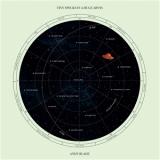
Punk pioneer/Eater main-man, Andy Blade's 7th solo album and follow up to 2024's critically acclaimed & heavily rotated, Sparks bros endorsed "Being Alive Is Fun". It is imbued with the usual left-of-centre Blade-ism's & themes: star maps, UFO's & a slightly twisted nod to tragic 70's heroine Karen Carpenter. You get what you deserve with Blade, and with Tiny Specks you are rewarded with a rich code to decipher at your leisure. Most of all, however, it is all about the quality of his songwriting. Opening track 'Karen Is The Drummer' (featuring Blade's regular singing collaborator - PseudoPomp's Katerina Sharkova) seems unsettlingly self-explanatory, but all does not seem well in the Carpenter M.O.R world - 'It's just her & her brother & her folks indifference to that girl'. Occasional Dinosaur Jr vocalist Tiffany Anders gives 'I'm Not Myself' a poppy but eerie nuance. PollyPikPocketz's Myura Amara pops up on the short but very sweet 'About That'. Matilda Scotland, Quick Romance's uber-cool punky-chanteuse - adds her Gen Z aura to the summery 'I Like It When You're Happy'. Former Generation X guitarist Bob 'Derwood' Andrews, with whom Blade has worked with consistently of late, once again features heavily on 'Tiny Specks'_ Like with Katerina Sharkova's voice, Derwood guitar lines interweave with Blade's honeyed vocal as though they made for each other. 'This Place' is another key track, capturing the claustrophobic-genocidal mood of what has been taking place in Gaza/Palestine for over two years now, and counting. 'This is not so much a protest song as it is the noise in my head'. If John Lydon is the Widow Twanky of Punk, and Billy Idol, its Elvis, then Andy Blade must surely be the Sinatra of Punk.
erscheint voraussichtlich am 24.10.2025

"Man in Black may be the 38th album by country singer Johnny Cash, but it is definitely one of the most memorable albums in his discography. Man in Black is perhaps one of Cash's most political albums. The title refers to Cash's tendency to wear only black during his live shows. This was to reflect the turbulent times during the Vietnam War. This message is also reflected in the album's lyrics. The singles “Man in Black” and “Singin' in Viet Nam Talkin' Blues” can be seen as his most important protest songs. Both singles were successful on the Billboard Country charts. All this makes the album a unique milestone in his career and still a must for all Johnny Cash fans. Man in Black is available as a limited edition of 2500 individually numbered copies on crystal clear vinyl."
erscheint voraussichtlich am 02.02.2024

Amazing garage punk cult band featured on the "Brazilian Nuggets" Vol 1 and Vol 2 compilations. Recorded in 1968, this EP is almost impossible to find and has never been sold on Discogs. It comes with a 12-page booklet with liner notes, photos and memorabilia. This release is a collaboration between Discos Nada, Fatiado and Munster Records. The Beggers were formed in the industrial ABC Paulista region, the birthplace of the Brazilian punk rock scene. But many years before that, The Beggers were already a kind of proto-punk act, as can be heard on the first track of this 7" record, 'Estes Homens Farrapos', a rather unusual social commentary song in those flower power days. Considered a protest song, it ended up being censored. However, the most psychedelic and experimental track is 'We're Going, to Aid You', a song about a fictional alien invasion. The creepy effects created by the group in the studio can be compared to those by the greatest international bands of the time. The Beggers only had three original compositions and a fourth one was missing to complete the EP. This was how 'We're Going, to Aid You' was eventually created as an experiment in the studio, just to complete the record. With "Metamorfose" banned from the shops, the members of The Beggers were running out of money, and without any gigs they had no other choice but to break up the band shortly after the release of their mighty EP. Bento Araujo (author of the book series Lindo Sonho Delirante) An amazing example of genuine teenage garage rock from 60s Brazil reissued for the first time, as result of a collaboration between Discos Nada, Fatiado and Munster Records.
erscheint voraussichtlich am 01.01.2024

Sara Dobbs and Jenny Shore used to work summer stock theater in St. Louis, Missouri. They'd do the hand jive with TV stars past and future; they'd get coldly corrected by the ancient, legendary choreographer Gemze de Lappe. Sara went on to Broadway, including a run as Anybodys in West Side Story. Jenny went on to choreograph in the independent dance scene of early 2000s Chicago. Julie Shore is Jenny's sister. She's always made music_playing Chopin, writing songs, making bands with her friends. She's had the archetypal Millennial journey of entering adulthood in the '08 financial crisis and figuring out what stupid series of jobs you have to take to pay rent while keeping an artistic life alive. Miles Francis grew up in New York City with Backstreet Boys posters covering their walls. An extraordinary drummer since youth, Miles thrives in collaboration_ whether producing artists in their West Village studio, performing with artists like Angelique Kidjo, or powering protests with a big marching drum. These four_Miles, Julie, Jenny, and Sara_are Sister Squares. What made them a musical unit was working with Grammy winner and Oscar nominee Will Butler. They've all just finished a new record together: Will Butler + Sister Squares. "After Generations, I considered making a weird solo record. Me alone in the basement, etc., etc. Mostly I realized that what I wanted was the opposite," says Will. He increasingly turned to the band for feedback on lyrics and song structures. He asked Miles if they'd produce the record. The band played a run of shows in August 2022, airing out studio ideas in live rooms. After coming home, the band regrouped at Figure 8 Studios in Brooklyn. "I had quit my band Arcade Fire very recently, after 20 years_maybe the most complex decision of my life. I had spent the preceding two years at home with my three children. I was 39 years old. I was waking up every morning and reading Emily Dickinson, until I had read every Emily Dickinson poem. I was listening to Morrissey, to Shostakovich, to the Spotify top 50. I had unformed questions with inchoate answers," says Will. "But, honestly, I was feeling great about the record." The album projects widescreen emotional landscapes. Lead-off single "Long Grass" is like a Harry Styles song with 20 more years of life behind it. Standout track "Saturday Night" has a beat, according to Miles, "with that robot-alien-dancing-at-a-haunted- dive-bar feeling that we were going for." The back half of the album is a danceable, weird choral record with harmonies both beautiful and dissonant. Closing song "The Window" is the comedown after the party_Julie playing a Chopin Nocturne on a three-years-out-of-tune piano, slowed to half-speed on tape with Will singing over it in a voice exactly as tired as he was. It's a record with a warm, humane soul.
erscheint voraussichtlich am 22.09.2023

Sara Dobbs and Jenny Shore used to work summer stock theater in St. Louis, Missouri. They'd do the hand jive with TV stars past and future; they'd get coldly corrected by the ancient, legendary choreographer Gemze de Lappe. Sara went on to Broadway, including a run as Anybodys in West Side Story. Jenny went on to choreograph in the independent dance scene of early 2000s Chicago. Julie Shore is Jenny's sister. She's always made music_playing Chopin, writing songs, making bands with her friends. She's had the archetypal Millennial journey of entering adulthood in the '08 financial crisis and figuring out what stupid series of jobs you have to take to pay rent while keeping an artistic life alive. Miles Francis grew up in New York City with Backstreet Boys posters covering their walls. An extraordinary drummer since youth, Miles thrives in collaboration_ whether producing artists in their West Village studio, performing with artists like Angelique Kidjo, or powering protests with a big marching drum. These four_Miles, Julie, Jenny, and Sara_are Sister Squares. What made them a musical unit was working with Grammy winner and Oscar nominee Will Butler. They've all just finished a new record together: Will Butler + Sister Squares. "After Generations, I considered making a weird solo record. Me alone in the basement, etc., etc. Mostly I realized that what I wanted was the opposite," says Will. He increasingly turned to the band for feedback on lyrics and song structures. He asked Miles if they'd produce the record. The band played a run of shows in August 2022, airing out studio ideas in live rooms. After coming home, the band regrouped at Figure 8 Studios in Brooklyn. "I had quit my band Arcade Fire very recently, after 20 years_maybe the most complex decision of my life. I had spent the preceding two years at home with my three children. I was 39 years old. I was waking up every morning and reading Emily Dickinson, until I had read every Emily Dickinson poem. I was listening to Morrissey, to Shostakovich, to the Spotify top 50. I had unformed questions with inchoate answers," says Will. "But, honestly, I was feeling great about the record." The album projects widescreen emotional landscapes. Lead-off single "Long Grass" is like a Harry Styles song with 20 more years of life behind it. Standout track "Saturday Night" has a beat, according to Miles, "with that robot-alien-dancing-at-a-haunted- dive-bar feeling that we were going for." The back half of the album is a danceable, weird choral record with harmonies both beautiful and dissonant. Closing song "The Window" is the comedown after the party_Julie playing a Chopin Nocturne on a three-years-out-of-tune piano, slowed to half-speed on tape with Will singing over it in a voice exactly as tired as he was. It's a record with a warm, humane soul.
erscheint voraussichtlich am 22.09.2023

Exotica, ye-yé cumbia, guaracha infused twist, rock’n roll mambo, Spanish rumba, boogaloo beat, tropical garage and other unexpected bastard genres are featured in this festive compilation of bizarre hits taken from the glorious catalog of records released during the 60s and 70s on the Peruvian label Discos MAG. Some clearly unite genres, others are projects with creative names, but all are bold musical initiatives that got and will always get people onto the dance floor. “Sabroso Go Go” brings together fourteen musical mixes created in the recording studios of Manuel Antonio Guerrero (MAG), in which music directors combine rhythm with alchemy in a quest to find the philosopher's stone of the dance. Exotica, ye-yé cumbia, guaracha infused twist, rock’n roll mambo, Spanish rumba, boogaloo beat, tropical garage and other unexpected bastard genres are featured in this festive compilation. Although this compilation begins in 1957, experiments like this (some more memorable than others) were not new in Peru. The songs on this album were however much more successful hybrids. Some clearly unite genres, others are projects with creative names, but all are bold musical initiatives that got and will always get people onto the dance floor. At the end of the fifties, rock music shook the foundations of Peru, and orchestras rushed to cover hit songs and explore the possibilities of mixing them with tropical music. Lucho Macedo's orchestra took up the mantle and reinterpreted a well-known guaracha by Celia Cruz ('Rock and Roll') in mambo style, renaming it 'Rock and roll Mambo'. 'Maestro de Rock and Roll', a hit by the Cuban Conjunto Casino, received similar treatment. Another mix in this vein is the rock tune 'El Rock de los Chinos' by the Mexican Manolo Muñoz (author of 'Speedy González') recorded by the Chilean Choche Mérida for MAG in 1961. The following year, Chubby Checker’s 'The Twist' hit the scene and was immediately fused with guaracha by maestro Nelson Ferreyra. A legendary MAG musician, Carlos Pickling, composed 'La Charanga del Espacio' in 1963. The space sounds are produced by Pickling and his inseparable Hammond. He himself is the one who leads the orchestra that accompanies Benny Del Solar, Lita Branda and Pablo "Melcochita" Villanueva in the tropicalized version of Spanish Rumba, when the beats of the Iberian rumba were still exotic in South America. Around that time, the Chilean Willy Marambio was already living in Lima. In the track included on this album, the go-go style showcases his virtuosity on the trumpet. Another outstanding trumpet player, Roberto "Tito" Chicoma from Chiclayo, played as a session musician with MAG from 1959. A few years later, he became one of the most popular Colombian cumbia players, a talent he demonstrates in the song on this compilation, which blends the fun of go-go with yé-yé beats. 'Batijugando' was a hit from Mexico and was played in all the rhythms played across the Hispanic world since 1967. Inspired by the "Batman" series, it was performed at MAG by the Betico Salas orchestra, with vocals by the Panamanian lady crooner Nallye Fernández. 'Computador Electrónico' is another surprise on this album, performed by Panamanian vocalist Patty Pastel, it is the only known version in Spanish of 'Der Computer Nr. 3', originally sung in German by France Gall. Two other songs feature Edgar Zamudio. The versatility of Zamudio y Los Vikingos (originally a Chilean group) is demonstrated in the guitar-heavy song composed specifically for the late sixties skate fashion ('Go Go en Patines') and in his idiosyncratic protest song ('Día de Pago') performed in beat style. In the mid-seventies, Los Kintos, led by guitarist Francisco Acosta, developed different harmonic ideas in an instrumental track that veers from boogaloo to salsa, the fashionable rhythm of the day. Finally, in 1976, when the bumping hips dance craze swept the continent, Manuel Guerrero was quick to jump onto the bandwagon, composing a Bump song, together with his son Carlos. The Italian musician based in Lima, Luciano Luciani performed the song 'A Bailar Bump' backed by his band of local musicians Los Mulatos.
Bestelle jetzt und wir bestellen den Artikel für dich beim Lieferanten.

First time reissue of mega rare 1972 psych-folk album from Venezuela.
180g LP.
One of the most obscure records ever released in Venezuela that was originally distributed in tiny quantities as a promo-only album.
A magic blend of protest songwriting, with a strong environmentalist statement, and folky pop with psych ingredients —such as the use of sitar sounds— recorded by the collective of artists “Una Luz”, and “El Zigui” who was once described as the local Bob Dylan.
The late ‘60s was a short period of time, long enough to turn the world upside down.
Music, paying attention to the ancient Greeks who said that changes in society are also reflected in it, also undergoes violent transformations in its structure. The turbulent joy of rock and roll and twist gives way to the meditative sounds of the waves of the sea contained in surf to finally welcome music of soft and delicate harmonies with songs full of references in their lyrics to the state of society and their relationships with the environment.
On the other hand, in Venezuela, although the expansive wave of May 68 had not reached it, a certain degree of dissatisfaction began to be perceived, especially through the music of a singer-songwriter from the countryside of Venezuela known as Ali Primera, El Cantor del Pueblo. Thanks to a scholarship from the German government, he studied for a few years in that country, and it was there that he recorded his first album, with songs whose lyrics reflect the essence of authors such as Bob Dylan and Atahualpa Yupanqui. And Ali Primera becomes one of the greatest influences of our artist: El Zigui.
Guillermo Sánchez Corao —known as El Zigui for some strange reason— was born in the Venezuelan city of Maracay, capital of the State of Aragua, on January 13, 1948. From a very young age he began to study guitar playing and, already in his teens, we can find him as part of the duo El Zigui & Franklin together with Franklin Laudelino Mejías, another young man with a great musical pedigree.
It is during his bohemian phase as a troubadour, in the surroundings of the Ateneo de Caracas, when his music caught the attention of producer Mario Tepedino, the most important youth music producer at the time. Mario takes him to his TV show “2001 Juvenil”. With the incorporation of other musicians such as Rubén "Micho" Correa —who would later become a great arranger and record producer— he created the group El Zigui y Una Luz, which would later be joined by musicians such as Carlos "Nene" Quintero and Alfredo Padilla, members of the amazing Grupo Pan. Later on, another outstanding singer would also join Una Luz: Guillermo Carrasco.
With this formation they made it into a recording studio in 1972 where they managed to record, in just 30 hours, a long-playing album of which only 60 copies were pressed and has therefore gained cult status among collectors. As expected, the strong content of the lyrics was not supported by the media, making the promotion of the album impossible to accomplish. However, it was with the help of Mario Tepedino that they made it to television, with appearances on “2001 Juvenil” and “Antesala Lunar”, a show that was especially produced for the broadcast of the arrival of man on the Moon.
That was probably one of the main reasons for El Zigui to move to Canada and then France until 1978 when he returns to Venezuela. He would then join bands like Xabañón, Fogón and De Vuelta al Futuro, a 12-member super group. The former members of Una Luz had become well known musicians in the country, especially Guillermo Carrasco who was one of the greatest ballad artists in the ‘80s and targeted by the biggest record companies at the time. El Zigui died in a traffic accident on June 22, 1999. If he had lived through these crazy times... where would he have gone?
erscheint voraussichtlich am 31.05.2023

Last album recorded by Colombian rock pioneers Los Speakers in 1968 after leaving behind its affinity with yéyé and go-go music. One of the most brilliantly whacked-out psych LPs to emerge from South America. Originally self-released on their own Producciones Kris label, this is an almost impossible to find cult record. Officially reissued for the first time. By 1968, Colombian rock had left behind its affinity with yéyé and go-go music. In Medellín, Discos Fuentes had terminated its contract with Los Yetis, whose farewell record "Olvídate" set a strong anti-establishment tone. While the fire of protest that had spread rapidly among students in Paris was dying out, young people in Bogotá voiced their discontent. Aware of the effervescent political climate across the world, Los Speakers wrote their last record between June and September of the convulsive year of 1968. In order to give shape to these new songs they needed a space where they could experiment freely with sound. The music historian and critic and sound engineer, Manuel Drezner, made a providential appearance and offered the innovative Ingeson studios to the trio under one condition: that his company's name was included in the title of the record. For four months, Rodrigo, Manuel and Roberto created a record that was completely different to anything on the Colombian rock scene at that time. Los Speakers used cutting-edge equipment to record and mix "El maravilloso mundo de Ingeson", It was the first time local musicians had access to a multichannel mixing desk where they could experiment with all kinds of bold sound effects. The silences between songs were replaced with brief intervals of sound including the noise of a train running over a passer-by, a bomb exploding_ Although it's often labelled a conceptual record, the four compositions that each of the band members contribute reveal different aesthetic personalities. From the strong influence of Renaissance and Baroque poetry and music to the virulent social critique and pacifist statements, suffused with religiosity and mysticism. Armed with the demo tape, Los Speakers presented the project to CBS, Philips, Sonolux and Bambuco. The labels' verdict was unanimous: not very commercial and very costly. The group reacted to this negative response by pooling their personal savings, inventing a fictious record label called Kris and released the record just as they had imagined it. This led to the creation of a graphic concept unheard of in Colombia: the record included a booklet containing photos, texts and illustrations. Although there was a big media roll out, which included TV appearances and features in newspapers and magazines, as predicted the album was a commercial failure_ "El maravilloso mundo de Ingesón" is one of the most brilliantly whacked-out psych LPs to emerge from South America.
erscheint voraussichtlich am 30.09.2022

"Diré a mi gente" is a 1969 Colombian pop classic with one foot in protest song and the other in acid rock, harsh sounding but also current and sincere. The rawness of the lyrics, the simple and dynamic electrified instrumentation and the contrast with the sweetness and innocence of the adolescent vocals make it reminiscent of Nadaism via Pablus Gallinazo, the bittersweet tenderness of Elia y Elizabeth and the post Los Yetis duet of Norman y Darío. First time vinyl reissue. Liner notes by Mexican DJ and collector Carlos Icaza aka Tropicaza (Dublab / Worldwide FM). "Diré a mi gente" is an essential Colombian album that connects the new generations that grew up after the fall of the socialist block. It's a classic with one foot in protest song and the other in acid rock, harsh sounding but also current, raw and sincere. It's reminiscent of Nadaism via Pablus Gallinazo, the bittersweet tenderness of Elia y Elizabeth and the post Yetis duet of Norman y Darío. It was recorded by the brothers Ana y Jaime Valencia and originally released in 1969 on the local label Discos 15. The messages it conveys are still fresh and the blend of superb songs, arrangements and the candor of the duo's performance proves the relevance and importance of re-listening to this album in an increasingly nihilistic and depoliticized world. The teenage voices enhance the truthfulness and power of conviction of the classic songs of Alí Primera and Daniel Viglietti. The endearing song 'Cuántos momentos', originally recorded by Iván Darío López from Los Yetis-Norman y Darío, stands out on the album. 'Es largo el camino', with more stark lyrics by Nelson Osorio backed by Astudillo's screeching guitar, sends shivers down your spine. "Diré a mi gente" reaffirms that the transformative power of music is still there, latent, waiting to be unleashed. Even though the road traveled to get there is sometimes long.
erscheint voraussichtlich am 26.08.2022

The Mankunku Quartet's 1968 album 'Yakhal' Inkomo’ clocks in at just over 30 minutes of jazz perfection. This compact, and to-the-point, album would sit comfortably in amongst some of the best works in the catalogues of any of the quintessential jazz labels such as Blue Note, Prestige and Impulse. 'Yakhal' Inkomo’, however, was originally released on the South African record label World Record Co., which resulted in it becoming an elusive and sought-after piece for jazz collectors. First press copies sometimes fetch as much as £1,000 on the collectors' market. It has been long regarded as one of the finest South African jazz albums and DJ / broadcaster Gilles Peterson cemented this when he included it in his "best of genre" focussed radio show, 'The 20 - South African Jazz'.
Tenor saxophonist Winston "Mankunku" Ngozi recorded the session on 23rd July 1968 at the Manley van Niekerk Studios, in Johannesburg. It was recorded by Dave Challen and produced by Ray Nkwe. The session is built up of two original works by Mankunku on the A-side, 'Yakhal' Inkomo' & 'Dedication (To Daddy Trane and Brother Shorter)', and on the B-side, the Horace Silver composition 'Doodlin', and a John Coltrane number 'Bessie's Blues'. What is striking is how the Mankunku-penned compositions not only hold their own next to Silver and Coltrane but they are, arguably, the better tracks on the record - a testament to the beautiful writing and playing of Mankunku.
'Yakhal' Inkomo' features the great musicians; Agrippa Magwaza on bass, drummer Early Mabuza, and pianist Lionel Pillay. Pillay was of Indian descent, making this a mixed-race group, thus the very recording of the album was an act of resistance as it broke the apartheid restrictions of the time. The title of 'Yakhal’ Inkomo' means “the bellow of the bull”, the Black audience would have understood this as coded community symbolism and an act of protest but it escaped the attention of the white government.
For this edition, we have enlisted the services of Abbey Road Studios mastering, and lacquer-cutting engineer Miles Showell to cut a special half-speed master from the audio taken off the original master tapes. Miles has previously worked on our Arthur Verocai, Marcos Valle and Ian Carr re-issues, and once again we are blown away by the richness and clarity of Miles' work. We have also presented it as a replica copy using the cover artwork and labels from the primary World Record Co. original version.
On the sleeve notes, Ray Nkwe the producer and the President of the Jazz Appreciation Society of South Africa writes "This is the LP that every jazz fan has been waiting for" and Ray was not wrong, it's a stone-cold timeless jazz classic.
• Half-speed mastering at Abbey Road Studios
• Repressed with an OBI strip as well as a deluxe tip-on sleeve
• One of the finest South African jazz albums
• "This is the LP that every jazz fan has been waiting for" Ray Nkwe
erscheint voraussichtlich am 03.06.2022

Omowale is the powerful new album from Wildchild, one third of the legendary Lootpack crew and a formidable solo artist who released many projects on the iconic Stones Throw Records. Across the 15 tracks, the Cali rapper deftly explores what it means to be a Black man in the U.S. today with timely, poignant lyrics. It’s a hard-hitting look at this country and its decades of wrongdoing, all with an air of optimism for the future. This album is Wildchild’s first solo release since 2016’s T.G.I.F., though he’s clearly kept busy in the interim by working on Omowale and making a number of standout guest appearances. Many of his past collaborators are returning the favor, as we’re treated to dope features from Posdnuos (of De La Soul), Big Daddy Kane, Guilty Simpson, Ras Kass, Murs, and more. Plus, there’s head-nodding production from Madlib, Nottz, Georgia Anne Muldrow, and Mr. Brady, among others. They’re all bringing their A-game on Omowale, an impeccably produced album beyond its instrumentation and rhymes. Wildchild builds on the project’s narrative by incorporating audio from newscasts, protests, and other live events. He also brings that real-world feel to his lyrics, from joyful raps with his son (Black-ish actor/emcee Miles Brown) on the funky “G.O.A.T.” to raw rhymes about police brutality on “Breathe.”
When the album culminates with “Say Their Name”—a moving tribute to the rap legends we’ve lost over the years—Wildchild proves on Omowale that you can balance hope with the harsh, unjust realities of the world.
erscheint voraussichtlich am 28.02.2022

Compilation of all the recordings by this legendary punk band prior to their LPs: the sessions for their single 'Mucha Policía', taken for the first time in 27 years from the original tapes, which has unearthed two studio recordings unissued until now; plus rehearsals, demos and live recordings. Completely remastered. A furious, noholds-barred sonic account of a period of immense changes for Spain and the Basque Country. The origins of the most important Spanish punk group, regarded as one of the essential bands of the genre all over the Spanish speaking world.It was a time when the walls were teeming with socio-political proclamations, where the hammer and sickle - alongside the illegal Ikurriña (the flag of the Basque Country) - were the most widely used symbols. A time of general strikes and protests on the streets that often ended in an ugly manner. A time also of smoky joints, where huge speakers played loud rock and there were dreams of strawberry fields. In Santurtzi, on the left bank of the Nervión estuary, a unique band was born: ESKORBUTO. Iosu Expósito and Jualma Suarez lived in working class neighbourhoods that had grown fast. Both Kabiezes and Mamariga were, in the 50s, mainly rural areas of Santurtzi. In the 60s, industrialization and rampant development transformed them into urban areas without any investment in urbanism. Some elements for the alchemy led to the explosion: intelligent young guys who were nevertheless incapable of adhering to school discipline, a country in full swing towards freedom after 40 years of dictatorship. It was a context very familiar with the turbulence of the "Basque conflict", with neighbours seduced by the "armed fight" and the "liberation of Euskal Herria", with the question of "identity" constantly present, traumatic episodes of killings, tortures and imprisonments .One day at the end of the 70s they decided to start a band. The first period of Eskorbuto's life, before the damage done by the needle became noticeable, was incredibly fruitful. They soon found a rehearsal space, thanks to their first drummer ("Gu"), and there the first songs were born: 'Enterrado vivo', 'Busco en la basura', 'Éste es el porvenir', 'Mucha policía, poca diversión'. It was a period of line-up changes. Iñaki Laiseka played bass for them, and that role was also taken by "Seni" and "Garlopa", two precursors of "left bank" punk. Later on they found Paco Galán, who also came from a similar neighbourhood to theirs (Repélega, in Portugalete). Paco always was the necessary engine, the piece around which the rest revolved, which guaranteed continuity. His drumming also added an apparently chaotic element to the already unbridled guitar melodies and visionary texts, halfway between dirty realism and Edgar Allan Poe's nightmares. These recordings are taken from those early times of excitement and vertigo, of journeys to Madrid under a train's seat and endless trips up and down the left bank looking for "someone that I've heard is selling an amp". Now the Reina Sofía Museum exhibits their "Impuesto Revolucionario" LP and there's no Spanish speaking country without legions of fans.
erscheint voraussichtlich am 09.04.2021
