Following the success of his project DFRA Experience Jazz Band – Jazz In, Argentinian deep house maestro DFRA returns to Groovin Recordings for his highly anticipated second 12" vinyl release, "All About You EP".
While his first Groovin record heavily merged live modal jazz and bebop structures with electronic music, All About You sees DFRA shifting focus directly back to the late-night dancefloor. Dropping just in time for the July summer heat, this four-track EP delivers a masterclass in clean, sophisticated deep house.
Across both sides, the Buenos Aires producer effortlessly pairs crisp percussion with warm, hypnotic basslines and soulful chord progressions. From the smooth, vocal-tinted groove of the title track to the late-night atmosphere of the B-side cuts, this record perfectly balances a timeless, classic edge with modern production weight.
Cerca:modal
- 1: Merveille
- 2: Nuna
- 3: The Stroll
- 4: Shangri La
- 5: Obelisk
- 6: Amber
- 7: Stekol
- 8: Tuntel
- 9: Slider
- 10: Lost Soul
- 11: Soul Found
Reverie is the first full-length collaboration between Ori Kaplan and Lihu Melamed - a cinematic, soul-soaked LP that drifts between modal jazz, cinematic scores and psychedelic rock, released on Batov Records.
Saxophonist and producer Ori Kaplan is best known as a founding member of Balkan Beat Box, for his work with Gogol Bordello and more recently, Shotnez, while Melamed brings a deep studio craft honed over years as an engineer, producer and multi-instrumentalist. Together, they create a record that feels both ancient and immediate: music that evokes old biblical films, sun-bleached Western soundtracks and 70s jazz explorations, while remaining playful, spontaneous and deeply human.
There’s a strong cinematic undercurrent throughout Reverie. Think Charles Heston wandering through an Old Testament epic; Ennio Morricone soundtracking a desert horizon; Nino Rota scoring Fellini’s Rome; or Pasolini filming in Ethiopia. Minor-key strings, modal structures and unhurried grooves sit alongside echoes of Mingus and Yusef Lateef, with Ori’s baritone sax and flutes guiding the listener through shifting scenes and moods.
dovrebbe essere pubblicato su 26.06.2026
- A1: Pharoah Sanders - Moon Child
- A2: George Adams - City Of Peace
- A3: Ronnie Mathews Trio - Selena's Dance
- B1: Rodney Jones - Articulations
- B2: Art Blakey & The Jazz Messengers - Oh By The Way
- B3: John Lee & Gerry Brown feat. Gary Bartz - Rise On
- C1: Joe Gilman feat. Joe Henderson - Non Compos Mentis
- C2: Joanne Brackeen - Haiti B
- C3: Woody Shaw & Tone Jansa Quartet - Boland
- D1: Carter Jefferson - Why
- D2: Pharoah Sanders - You've Got To Have Freedom
Antal, founder of the Amsterdam-based Rush Hour Records & Store and renowned for his global DJ touring and eclectic sets spanning house, techno, rare funk, soul, and jazz, curates a personal selection from the historic label Timeless Records.
For Timeless Presents From The Archives, he handpicked highlights from 1974–1994 by jazz luminaries such as Art Blakey and the Jazz Messengers, Pharoah Sanders, Carter Jefferson, Gary Bartz, Woody Shaw, and more. “I want to thank the Wigt family for allowing me to dig deeper into their catalog to compile a selection of personal jazz favorites. Their passion for jazz and independent labels has inspired me as a DJ and record store owner. A great song is a great song, no matter when or where it was made,” Antal reflects. For this double album, Antal shares his love for modal and spiritual jazz, celebrating a pivotal era in jazz and creating a must-have for collectors, selectors, and new explorers.
Timeless Presents From The Archives 1974-1994 is packed in a gatefold sleeve, featuring notes by Antal and artwork by Dirk-Jan Deckwitz. Affixed on the protective sleeve is the 50th Anniversary Timeless Jazz sticker.
dovrebbe essere pubblicato su 26.06.2026
METLASR is an album for microtonal idiophones and modular synthesizer by composer/producer Tyler Friedman for Radicant_Editions.
Drawing on the legacies of downtown minimalism, METLASR connects avant-garde composition, aspects of global traditional musics and advanced synthesizer technique into an ambitious and singular hybrid. Animated by generative modular sequencing and grounded by undulating bass, the album focuses on an endless cascade of pirouetting geometric melodics, which are spread across a spectrally fused ensemble of crystalline FM and sampled pitched percussion – specifically gamelan orchestra, marimba, mbira, vibraphone and tingklik. The assemblage of voices interlace in fractal mirrors, aggregating into pointillist harmonizations heightened by multiple layers of dub processing. The use of alternative tunings — primarily 24-note per octave just intonation — infuses the poly-modal progressions with lush radiance, staging tension between the strange and the beautiful through neon inflections of subtle dissonance.
Entirely improvised, a fact belied by the contrapuntal complexity of it all, METLASR’s seven tracks were each recorded in a single pass and subject to minimal edits. Although the sound palette and...
dovrebbe essere pubblicato su 26.06.2026
Die Aufnahmen für das 1963 bei Impulse! Records erschienene Album “Impressions” entstanden im
Zeitraum zwischen 1961 und 1963 bei einem Auftritt im Village Vanguard sowie bei zwei unterschiedlichen
Sessions im Studio von Rudy Van Gelder. Sie zeigen das klassische John Coltrane Quartet, teils verstärkt
durch Gäste, auf dem Höhepunkt seiner Schaffenskraft und dokumentieren die sich rasch entwickelnde
modale Sprache des Ensembles. Obwohl sich das Jazzmagazin DownBeat Coltranes Experimenten damals
nicht immer aufgeschlossen zeigte, erhielt das Album 1963 die Höchstwertung von fünf Sternen. In seiner
Rezension schrieb der Kritiker Harvey Pekar: “Nicht alle Stücke auf diesem Album sind hervorragend (was
eine Fünf-Sterne-Bewertung ja eigentlich bedeutet), aber einige sind mehr als hervorragend.”
dovrebbe essere pubblicato su 26.06.2026
- 1: Prelude
- 2: Legend
- 3: Alla
- 4: Meditation I - Oleg Gotskosik Quintet
- 5: Dervish Dance
- 6: Lapar
- 7: Meditation II
- 8: Marcia
In 1979, the Soviet label Melodiya released a record that immediately stood apart from most Soviet jazz of its time and perhaps for that very reason never became widely known. Oriental Suite by Oleg Gotskosik Quintet is a rare example of jazz, Eastern musical tradition, and compositional thinking coming together not as an exotic stylization but as a fully formed artistic statement.
This is not “Oriental colour” used as decoration, nor folklore treated as an ornament. Oriental Suite grows from within another musical tradition, with its monody, modal logic, slow unfolding of form, and focus on inner states rather than outward effect. The music is calm and concentrated. It does not try to impress, but gradually draws the listener into its own space.
Oleg Gotskozik was born in Tashkent in 1951, a city where Eastern music was part of everyday life rather than something distant or exotic. That may explain why his engagement with traditional material sounds so natural. He does not quote or stylize; he thinks in the same musical categories. By temperament, he was closer to a composer than to a jazz musician in the conventional sense. For him, jazz was not a style but a way of working with form and improvisation.There is no standard “theme and solos” logic in Oriental Suite. Improvisation is woven into the fabric of the music itself and unfolds in the same way as in oral traditions, gradually, with rising tension and a clear sense of arrival. Individual sections refer to traditional Uzbek genres such as lullabies, lyrical songs, and funeral laments, but these are not genre sketches. They are states of being. The music unfolds slowly, avoiding familiar harmonic drama and relying instead on modal scales and subtle internal movement.
A special role is played by trumpeter Yuri Parfyonov. His approach, with delayed vibrato, micro-glissandi, and melismatic phrasing, sounded unexpected at the end of the 1970s and still feels remarkably fresh today. This is not expressive jazz virtuosity but a focused, almost meditative voice, where improvisation becomes a form of inner speech.
It is also important to note that the original recording was not without technical flaws. Like many Soviet jazz releases of the time, Oriental Suite was captured under far from ideal conditions, and the master contained audible imperfections that were never part of the music itself. For this edition, the restoration was approached with great care and respect, working through the recording moment by moment to remove unwanted artifacts while preserving the character and atmosphere of the original. The aim was simple: to make sure nothing stands in the way of fully experiencing the music.
In the early 1980s, Oleg Gotskozik left the Soviet Union, and after that his name virtually disappeared from Soviet music journalism and literature. There were no official bans or public statements. He was simply no longer mentioned. Oriental Suite continued to exist on its own, without an author and without context. The record never entered the canon, received no continuation, and was never officially reissued. It seemed to fall out of time.
The original vinyl pressing was released in a run of around 32,000 copies, but most of them remained within the republic and never reached wide circulation. Today, original copies are hard to find and have long become objects of interest for collectors. There have been no official reissues, only attempts that never went beyond test pressings.
Today, Oriental Suite sounds surprisingly contemporary. It is music that can be described as deep ethno-jazz and even, in a certain sense, spiritual jazz. There is no exoticism here, no decorative borrowing, only a complete immersion in another musical way of thinking. It does not require explanations and does not need to be justified by its time.
This is not a forgotten curiosity revived for collectors’ sake. It is music that simply waited for the moment when it could be heard without ideological filters or genre expectations. Now it is returning quietly, without noise or hype, but with the clear sense that this is not an artifact of an era, but a living and genuinely rare artistic statement.
dovrebbe essere pubblicato su 05.06.2026
- A1: On Green Dolphin Street
- A2: Fran-Dance
- B1: Stella By Starlight
- B2: Love For Sale
Miles Davis's Kind of Blue was the number-one jazz album in history. It totaled five songs. There are four more songs from that same historic group, recorded in the same time period and at the same studio. And here they are. These songs deserve to stand on their own with artwork to highlight the quality of the music and that matches the time period of the recording. This is a rare opportunity to have a smash follow-up to what many consider the greatest jazz record ever!
Through the years, these four remarkable performances — all from a single recording session in 1958 and all exemplary of the sound of Miles Davis' legend-loaded sextet of that year — have not been served well. They have been largely treated as add-ons for other compilations. Now, for the first time, Analogue Productions, the audiophile in-house reissue label of Acoustic Sounds, Inc., together with Quality Record Prssings, has deservedly given these tracks a stellar stand-alone release for jazz fans to savor!
The once-in-a-generation lineup that recorded these tunes is the very same that would be immortalized for the enduring classic they would record almost a year later, Kind of Blue. Davis played trumpet sublime with his ensemble sextet featuring pianist Bill Evans, drummer Jimmy Cobb, bassist Paul Chambers, and saxophonists John Coltrane and Julian "Cannonball" Adderley.
Undervalued since their recording, the tunes on this album reflect historial and musical significance. They offer early glimpses into the modal jazz that Kind of Blue would bring to the forefront. Using modes common in modern classical music, rather than the chords of popular songs, Miles had begun to experiment with the new approach on the Milestones recording sessions previously.
Analogue Productions is proud to present Birth of the Blue in an exclusive first-of-its-kind stand-alone release that reflects our reputation for meticulous production, capturing authentic sound with clarity, depth and fidelity that exceeds the audiophile standard. 180-gram 45 RPM double LP pressed at Quality Record Pressings.
Features:
• Pioneering Ensemble: Captured the same rare and short-lived alignment of jazz legends including Miles Davis, John Coltrane, Cannonball Adderley, Bill Evans, Paul Chambers, and Jimmy Cobb, as heard on the historic Kind of Blue.
• Innovative Sound: The session represented a crucial transition in jazz, blending elements of hard bop with early modal jazz influences, showcasing the ensemble's experimentation and forward-thinking approach.
• Undervalued Legacy: Despite its historical and musical significance, the session's recordings have been historically overlooked, often relegated to being add-ons in compilations rather than recognized as standalone masterpieces.
• Modal Jazz Precursor: Offered early glimpses into the modal jazz that would later be fully realized in Davis's groundbreaking album "Kind of Blue," laying the groundwork for future jazz innovation.
• Impact on Artists: Served as a critical point of development and confidence for the musicians involved, particularly Bill Evans, who noted the significant impact of this experience on his own identity and style.
• Historical Context: Occurred at a peak moment in Miles Davis's career, following his signing with Columbia Records and his critical and commercial successes with albums such as ‘Round About Midnight and Miles Ahead.
dovrebbe essere pubblicato su 29.05.2026
VERVE ACOUSTIC SOUNDS SERIE: komplett analog von Ryan K. Smith bei Sterling Sound von den
Originalbändern gemastert, QPR-Pressung (180 g), stabiles Tip-On-Gatefold (Stoughton Printing), wattierte Innenhülle.
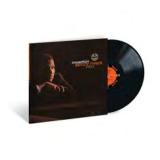
McCoy Tyner - Inception
Als Pianist McCoy Tyner im November 1962 sein Debütalbum für Impulse! Records aufnahm, wollte er ein
eigenes musikalisches Statement setzen und sich damit von der modalen Musik abgrenzen, die er damals
mit John Coltrane spielte. Bei den Aufnahmesessions mit Bassist Art Davis und Schlagzeuger Elvin Jones
- beide Kollegen aus dem Coltrane-Ensemble - setzte er deshalb vor allem auf eigene Kompositionen, in
denen er seine unverwechselbaren Voicings und seinen rhythmischen Drive in den Vordergrund stellte. In
der AllMusic-Rezension von Alexander Gelfand heißt es: “Dieses Album gibt Hörern die Möglichkeit zu erfahren, wie ein sehr junger Tyner außerhalb der Grenzen des klassischen John Coltrane Quartet der frühen
60er Jahre klang; es offenbart einen lyrischen Ansatz für das Jazzpiano, der weit entfernt von Tyners reifem
Stil zu sein scheint.”
dovrebbe essere pubblicato su 22.05.2026
- A1: YEDE ABA
- A2: MENE MENUA MIENU
- A3: SABARIMA
- A4: EBIA NIE
- A5: AMINTIMINIM
- A6: SIAKWAA
- A7: NANA AGYEI
- B1: EFIE NE FIE
- B2: NYANKONTON NKO NYAA
- B3: KWANKWAASEM NTI
- B4: EGYA ANANSE YI WONAN BAAKO
- B5: KWAADEDE MEYARE MEREWU
- B6: EDA A MEWU
Strut proudly presents the first-ever reissue of a landmark 1974 Ghanaian highlife classic Sikyi Highlife by Dr K. Gyasi & His Noble Kings, originally released on Essiebons.
A defining recording of the era, Sikyi Highlife bridges tradition and innovation at a pivotal moment in Ghanaian music. Deeply rooted in the classic 1950s–’60s highlife sound, K. Gyasi drew inspiration from the ancient sikyi drum-dance of the Akan people of southern Ghana, shaping the album’s rhythms around its distinctive pulse.
The vocal arrangements echo the traditional Akan modal style, grounding the music firmly in Ghana’s cultural heritage. Yet Sikyi Highlife is equally forward-thinking. As electric guitars became standard in highlife during the 1960s, the 1970s ushered in further experimentation. The Noble Kings broke new ground as the first highlife guitar band to incorporate keyboards and a full horn section into their sound, expanding the genre’s sonic possibilities while retaining its rootsy spirit.
Gyasi’s approach was part of a broader indigenisation movement among Ghana’s electric highlife bands in the post-independence era. Inspired by the nation’s ‘African Personality’ ethos and reinforced by Afrocentric messages arriving from American soul and funk, artists began reclaiming traditional forms within modern arrangements. Contemporaries included Koo Nimo, who revived the older palmwine style, and drummer Nii Ashitey, whose Wulomei band pioneered a folklorised Ga highlife sound from 1973.
Like many musicians of his generation, Gyasi was a passionate supporter of Ghana’s independence movement. In 1963, he travelled as a musical ambassador alongside Ghana’s first president, Kwame Nkrumah, performing across North Africa and the USSR and carrying Ghanaian culture onto the world stage.
The Noble Kings’ mid-’70s line-up featured some of the country’s finest musicians, including guitarist Eric Agyeman (who led the band at the time), Thomas Frimpong on drums and vocals, Ernest Honny on organ, and bassist Ralph Karikari - who was renowned for his innovative technique of translating the rhythms and tonal language of the traditional talking drum onto electric bass.
Upon its original release, Sikyi Highlife became one of the biggest-selling albums of the 1970s for Essiebons, earning Gyasi the affectionate honorary title of “Dr” from his devoted fans. Today, the album remains an evergreen classic, still cherished across Ghana and beyond.
dovrebbe essere pubblicato su 15.05.2026
Renowned Italian jazz master Nicola Conte presents an incandescent limited edition 7" single for Record Store Day 2026. "Terra Em Transe" and "Naquela Base" are brand new tracks from sessions for Conte's forthcoming Far Out Recordings album, drawing deep from early 70s Brazilian jazz and modal hard bossa while underlining the vital role of the arts in social and political struggle.
In Nicola's own words: "Terra Em Transe' is a dedication to visionary director Glauber Rocha and to all free thinkers willing to portray the conflicts, contradictions and lies of those in power around the world." The original composition takes inspiration from Milton Nascimento's vocal harmonies and Tamba 4's sophisticated samba-jazz.
'Naquela Base' is a stunning reinvention of João Donato's classic: pure modal hard bossa recorded entirely live in the studio. Inspired by samba-jazz classics like Tenório Jr.'s "Embalo" and Paulo Moura's "Fibra", the track is carried beautifully by Teppo Mäkynen's masterful drumming, with solos from Gaetano Partipilo on alto saxophone and Pietro Lussu on piano, supported by Ameen Saleem on double bass and Abdissa Assefa on percussion.
Having released music with Blue Note, Impulse! and Schema records, Nicola Conte's relationship with Far Out Recordings has produced his acclaimed Umoja project, his five-part Viagem compilation series, and most recently Viaggio, a compilation exploring Italy's library music renaissance from 1970-79.
'Terra Em Transe / Naquela Base' will be released as a limited edition 7" single for Record Store Day 2026 via Far Out Recordings.
Ordina ora e ordineremo l'articolo per te presso il nostro fornitore.
Primordial Mind forms the mysteries and intensity of inner life into eight mandalic instrumentals where Mas Aya and Khôra, artists who share 15 years of music making, orchestrate an inspired, prismatic palette of percussive and melodic sources. Each composition presented stages a vigorous meshwork of colours and textures, contrasting riveting polyrhythms with towering arrangements for flutes, synths, and processed acoustic instruments. Tendencies which the artists trace in their solo practices are amplified, blended, and refracted sublimely in unison, serving as energetic portals to the collective awareness.
Combining trans-ethnic scaling alongside a heady brew of rhythmic influences and advanced electronic processing, the recordings on this album operate with a tactility that vaults between free jazz, dub, raga, ambient, and ritual music. Assimilated powers of primal drum patterning and psychoactive, ceremonial melodies, invoke fourth world adjacencies with the work of Don Cherry, Jon Hassell, Popol Vuh et al. There is an alchemical, Buddhist/Taoist/Hindu inflection that guides the record’s narrative, formed through dialogue between the artists over lifelong shared interest in spiritual modalities generally and the tantric approaches of the global east in particular. The album title is derived from an unexcelled esoteric work known as the Kalachakra (Wheel of Time)Tantra and its associated commentary the Ornament of Stainless Light which detail forms of inner and outer transubstantiation within its complex cosmology and metaphysiology.
Mas Aya is the moniker of Brandon Miguel Valdivia, acclaimed Nicaraguan-Canadian composer, producer, and musician whose electronic and jazz inspired works creatively interlace Colombian, Cuban, and a wide array of traditional music. Khôra is the name of the occult entity that uses multi-instrumentalist, producer, and writer Matthew Ramolo to pronounce itself. Returning to Marionette following 2024's monumental Gestures of Perception, Primordial Mind reinforces the rigorous and magical approach to creation which defines Khôra’s two decades of sonic output. Brandon and Matthew met back in 2011 and the pair toured around eastern Europe with Toronto band Picastro in 2013, also performing as a duo with Brandon contributing drums to Khôra's opening sets. After a short spate composing and playing in the ensemble Bespoken together, they continued to discover shared inspiration in psych/art rock, jazz, experimental and electronic music, providing a fertile soil for friendship and collaboration resulting in their collaged, lo-fi album Tangled Roots in 2017. Mythic and talismanic, the duo's Marionette debut weaves a luminous tapestry of organic pulses, offering itself as a support for resonant meditation and a motor for lucid action and intuition.
Brandon Miguel Valdivia: Percussion, Flutes, Log Drum, Korg Lambda, Angklung, Tambor Alegre, Udu
Matthew Ramolo: Modular Synth, Archival Samples, Angklung, Guitar, Duduk, Bass, Percussion, Arrangements and Mix
dovrebbe essere pubblicato su 08.05.2026
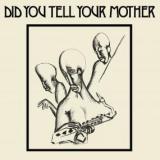
Released in 1979, Tete Mbambisa's Did You Tell Your Mother delivers the ultimate blend of African groove with American modal grace, making it one of the all-time classic albums of South African jazz. With Mbambisa presenting original compositions at the piano alongside Basil "Mannenberg" Coetzee on tenor sax and flute, the acoustic quartet featured here is rounded out by Zulu Bidi from the band Batsumi on bass locking in with Dollar Brand drummer Monty Weber. This 2026 reissue presents a flat transfer of the master tapes with album artwork restored using illustrator Hargreaves Ntukwana's original ink drawing.
A self-taught musician, it was as leader of the vocal group The Four Yanks in the early 1960s that Tete Mbambisa’s music career took off. With encouragement from Abdullah Ibrahim, he dedicated himself to the piano and went on to record with The Soul Jazzmen in 1969. Mbambisa's solo recordings from the 1970s, produced by Rashid Vally for the independent As-Shams/The Sun record label, document his creative peak as a recording artist and have contributed to earning him an honorary doctorate and a place among the figureheads of South African jazz history.
dovrebbe essere pubblicato su 30.04.2026
- 1: Dzamin
- 2: Lalai baraye Madjnun va Perendenga
- 3: Sant Antoni de Khorasan
- 4: Harame del
- 1: As Gissoom ta Formentera
- Figues de Tadjikistan
- 3: Motreba Narmak Bessan
- 4: Fandango Bandari
Dancing Waters is a musical fusion where the Mediterranean soul meets the deep-rooted mysticism of Cental Asia. Inspired by the surprising resonance between the work melodies of Balearic Islands and Pitiüses Islands and the haunting beauty of Persian and Byzantine melodies. QANAT weaves together the rich traditions of the Mediterranean, Mesopotamia, and Persia. The project blends old Balearic work songs with the modal textures of Middle Eastern and Central Asian music -including influences from Iran, Turkey, Tajikistan, and the ancient region of Khorasan. At the heart of the project is the remarkable melodic kinship between Balearic field songs-once sung during rural labor-and the ancient echoes of Byzantine chant. QANAT bridges these traditions, crafting new musical landscapes through original compositions, instrumental dialogues, and vocal ornamentations that celebrate the shared soul of these distant-yet-connected cultures.
dovrebbe essere pubblicato su 24.04.2026
Heavyweight psychedelic improvisers EarthBall are back with their third and most monstrous record to date: ‘Outside Over There’, released on Upset The Rhythm (Nov 7th). Born from the haunted basements of Nanaimo, Canada, the quintet thrives on spontaneity, shaping improvisation into jagged hallucinations and ecstatic eruptions.
Recorded live-off-the-floor in 2024 in Jeremy, Izzy, and Kellen’s basement, and mixed by drummer John Brennan, ‘Outside Over There’ is an album that feels both summoned and inevitable. Each track lands with uncanny purpose, as if uncovered rather than written.
The opener, 100%, features a cameo from comedian and English icon Stewart Lee, who lent his blessing for the band to use a fragment of his stand-up. The album was mastered by John Dieterich (Deerhoof), with liner text contributed by longtime comrade John Olson (Wolf Eyes). Olson describes the album in his unmistakable style:
“This eight-track odyssey unfolds like a dreamscape, where whispered incantations brush against the shadowy fringes of the cosmos, and wild, Cézanne-inspired rock anthems erupt like geysers of color in the midst of a western warm and wet rain storm… culminating in the sprawling eleven minute masterpiece, ‘And The Music Shall Untune The Sky,’ aptly dubbed the Earth Crusher. A creation so utterly deconstructed and intertwined with the pulse of nature itself that if AI was called upon to conceive ‘Outside Over There’ anew, it would just spit back, “F.U. in Tree Font”. An enchanting invitation for even the flat-earthers to join the circle, if only just a little.”
EarthBall’s trajectory has been relentless. Their 2024 album ‘It’s Yours’ was praised by The Quietus as “fully aggressive and fully life-affirming,” and by The Wire as "a boisterous mind-melting album”. The band’s live double set LP ‘Actual Earth Music Vol. 1 & 2’ (2025) captured blistering performances: a performance opening for Wolf Eyes at the Fox Cabaret, and a Café OTO improvised throw-down featuring Chris Corsano and Steve Beresford. These releases on their own confirm them as one of Canada’s most vital experimental exports, not to mention the impressive self-released discography on their Bandcamp. The band’s reach has stretched far beyond their west coast roots with a UK tour May 2024, plus this past June, EarthBall closed Montreal’s Suoni Per Il Popolo Festival alongside Pulitzer Prize-winning composer Raven Chacon. This November they will perform at Le Guess Who? Festival in Utrecht, with a European tour to follow (tour dates below). Outside of EarthBall, each member carries their own torch. Jeremy Van Wyck, founding member of the legendary Shearing Pinx, has toured extensively, released over 100 records, and has been a vital force in the Vancouver and West Coast underground for the past 25 years. He and Isabel Ford (Izzy) play together not only in EarthBall, but also in Psychedelic Dirt, Shearing Pinx, Behaviours, and Crotch.
John Brennan collaborates widely, including recently with Endlings (Raven Chacon and John Dieterich), Evichen (Victoria Shen), Francesco Fonassi, Plan Your Future (with Greg Saunier of Deerhoof), Brennan/Corsano duo and Physics with John Dieterich. Kellen Maclaughlin performs with KVMP and Ora Corgan, while saxophonist Liam Murphy is a west coast staple, playing with the best across Vancouver Island and the mainland. On three of the tracks of ‘Outside Over There’, the band is joined by their comrade Justin Patterson, who also plays with Brennan in the duo Modale. This cross-pollination fuels EarthBall’s sound - a collective improvisation, psychically overdriven, and grinding into bloom.
Outside Over There’ is more than an album though, it is a ritual, a gathering of sound at the forest’s edge; where feedback, saxophone screams, and ecstatic vocals dissolve the boundary between chaos and clarity. EarthBall invite you into their circle, to share in the joyful terror of spontaneous creation. ‘Outside Over There’ will be released on November 7th through Upset The Rhythm digitally and as a limited blue-in-black vinyl LP.
dovrebbe essere pubblicato su 03.04.2026
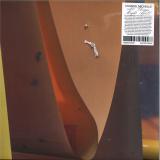
Für Chantal Michelle ist das Komponieren von Musik wie eine Art Choreografie. In surrealen Klangwelten verbinden sich verschiedene Töne miteinander - sie bewegen sich zusammen und entfernen sich dann wieder voneinander - in einem Prozess, der sich ständig im Hörfeld wiederholt. Diese sich ständig verändernde Konstellation zeigt, wie zerbrechlich und veränderlich Wahrnehmung sein kann, ein Thema, das in Michelles Arbeit immer wieder auftaucht. Michelle, die schon früh eine Tanzausbildung absolvierte, bringt eine ausgeprägte räumliche Sensibilität in ihre Arbeit ein: ein intuitives Verständnis dafür, wie Formen koexistieren und sich durch drei Dimensionen bewegen, sowie eine Wertschätzung für die Schönheit, die sich in ungewöhnlichen Gegenüberstellungen von Materialien und Ideen findet. Seit sie 2021 ihre Solokarriere gestartet hat, hat sie internationale Anerkennung für ihre geduldigen, akribischen Aufnahmen bekommen, die oft zusammen mit Installationen, Mehrkanalkompositionen und Klangskulpturen entstehen. Innerhalb dieser subtil verwirrenden Klangarchitekturen können neue Beziehungen entstehen, neue Grenzen gezogen werden, und die Zuhörer werden zu einer Erfahrung von Zeit eingeladen, die sich der Linearität widersetzt. All Things Might Spill, Michelles erstes Album für Shelter Press, ist eine Auseinandersetzung mit anhaltender Spannung und der mysteriösen Erfahrung der Zeitdehnung in den Momenten kurz vor einem Bruch oder Zusammenbruch. Die Musik bewegt sich in einem Raum der Instabilität, und obwohl sie durchgehende Töne und definierte melodische Phrasen verwendet, herrscht eine Atmosphäre der Unentschlossenheit - wie ein Moment der Unruhe, der auf unbestimmte Zeit in der Schwebe bleibt. Ein Großteil des Albums wurde in den Wintermonaten 2024 in Berlin aufgenommen, wobei viele frühe Morgenstunden in einem Raum subtiler Unruhe verbracht wurden. Man sagt, dass Licht in die Dunkelheit eindringt, und diese Übergangszeit, die von Erwartungen geprägt ist, ist in der Musik zu hören. In ,Presence of Border" winden und verflechten sich nebulöse Stimmen, während sie über mehrdeutigen Harmonien schweben, die sich in unendliche Ferne zu erstrecken scheinen. Die beiden kurzen Stücke ,Magnetic Field I" und ,Magnetic Field II" enthalten bearbeitete Aufnahmen einer Tromba Marina, gespielt von der argentinischen Klangkünstlerin Alma Laprida. Die Gegenüberstellung von kratzigen Tönen und hauchzarten Obertönen erzeugt tamburaähnliche Drones, die den Zuhörer in einen schwer fassbaren Mittelpunkt ziehen. Später auf dem Album gibt es in ,Drying of Frozen Soils" modale Klarinettenlinien von Severin Black, die anfangs in dem nebligen, synthetischen Hintergrund fast nicht zu hören sind, bevor sie sich zu einem gespenstischen Kontrapunkt entwickeln. Eine ähnliche Struktur aus Unklarheit und Klarheit prägt den Titeltrack, in dem wortlose Gesänge eine laute Feldaufnahme durchdringen, die auf einer Fähre aufgenommen wurde, die den East River von Brooklyn nach Manhattan überquert. Das ist Musik mit einem weitläufigen Terrain und einer dichten Atmosphäre. Veränderungen sind langsam, aber dramatisch, jede Verschiebung ist sorgfältig geplant, um Gefühle des Staunens und der Vorfreude zu wecken und gleichzeitig eine erhabene Sensibilität dafür zu bewahren, wie einzelne Klänge mit der Bewegung ihrer Umgebung in Beziehung stehen. Michelle verzichtet meisterhaft auf Narrative und komponiert in drei Dimensionen. Wir bleiben mit der Mehrdeutigkeit des Wortes ,might" zurück - der anhaltenden Möglichkeit des energetischen Ansturms des Bruchs, des Ausbrechens, mal am Horizont, mal unmittelbar bevorstehend, irgendwie beides gleichzeitig.
Ordina ora e ordineremo l'articolo per te presso il nostro fornitore.
Durch das 1966 auf Impulse! Records veröffentlichte Album “Spellbinder” wurde der ungarische Jazzgitarrist Gábor Szabó einem breiteren amerikanischen Publikum bekannt. Auf dem Album bot er eine originelle
Mischung aus modalem Jazz, osteuropäischen Folkeinflüssen und Popklängen, die er selbst als “Pop-Jazz”
bezeichnete.
Ordina ora e ordineremo l'articolo per te presso il nostro fornitore.
Das zweite Album des Palace-Records-Gründers Andrei Nikolsky ist stark von Soundtrack- und Library-Musik der Vergangenheit beeinflusst, darunter auch von einem seiner Helden, John Cameron (Kes, KPM, Bruton), der auf dem Album mit dem Song "Swing Time" zu hören ist. Die Platte bietet eine Mischung aus ungewöhnlicher Elektronik, modalem Jazz und experimentellem Disco. Weitere Mitwirkende sind Mitglieder seiner Band The Kanpai Quartet (Charlie Searle, Euan McGinty, Dan Kabakov) sowie die Schlagzeuger Filippo Galli, Mike Bandoni (aka Funkshone) und Felix Weldon (Johnny Dankworth, Ian Shaw, Jean Toussaint, The La's).
- "Verdammt nochmal, Mann, was für ein Jazz!" - Sarah Evans (BBC6-Produzentin)
- "Ein wunderschönes Album! Perfekt für meine One Jazz-Show." - Dom Servini (Wah Wah 45s)
- "Schöne Soundsammlung." - Rory More (Les Hommes)
- "Die neuen Tracks klingen super! Ich mag die Anspielungen auf Disco und die verschiedenen musikalischen Richtungen." - Paul Osborne (Project Gemini)
Ordina ora e ordineremo l'articolo per te presso il nostro fornitore.
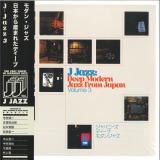
- A1: Song Of Island
- A2: Morning Tide
- A3: Kemo Sabe
- A4: Groovy Samba
- A5: Song for Hope
- A6: Cumorah
- A7: Phoebus
- A8: ¼ Samba II
- B1: Cumulonimbus
- B2: Burning Cloud
- B3: Planets
- B4: Wolf’s Theme
- B5: Honey Sanba
- B6: Kirisame
- B7: Black Nile
- B8: Acoustic Chicken
BBE Music presents J Jazz volume 3, the latest in its definitive compilation series exploring the finest modern jazz from Japan. Since the first volume in February 2018, the J Jazz compilation series has showcased some of the most creative, inspired and sought-after jazz recorded in Japan during a golden period spanning the 1960s to the 1980s. Illustrating the richness and versatility of the composers and musicians on this collection, the music spans a wide yet coherent range of styles: samba, funk fusion, modal, spiritual, post-bop and bossa all combine to present an aural portrait of a jazz scene that was constantly moving and shifting its multiple musical centres of gravity. Mastered at the Grammy-nominated Carvery studio in London, many of the tracks featured are reissued for the first time, including mega-rare private press cuts from the Yasuhiro Kohno Trio, Masaru Imada Trio, and Hideyasu Terakawa Quartet. There’s heavy post modal bop by J Jazz legends Kohsuke Mine and Koichi Matsukaze; samba heat from Tatsuya Nakamura, Hideo Shiraki and Seiichi Nakamura; and funky dance floor energy by Hiroshi Murakami, Ryojiro Furusawa Quartet and Shigeharu Mukai. Selected albums from which the tracks are drawn will be reissued in full as part of the acclaimed BBE Music J Jazz Masterclass Series. Released as a deluxe, heavyweight x3 vinyl set in a gatefold sleeve with obi strip and insert, the collection comes with extensive artist biographies and track information. J Jazz volume 3 is also available in a x2 CD set with three bonus tracks, and selected tracks are available across digital platforms for download and streaming. J Jazz is conceived, compiled and annotated by Tony Higgins and Mike Peden for BBE Music.
Ordina ora e ordineremo l'articolo per te presso il nostro fornitore.
- Elegia
- Voce In Xy
- Canti Delle Sfere
- Frammenti Di Sonno
- Movimenti E Silenzi Per Spazi Bianchi
- Antico Adagio
- Ondulazione Melodica
- Motus
- Frammenti Di Suono
- Vocis
- e Echi Armonici Part 1
- f Echi Armonici Part 2
For the first time, all the 1978 recording sessions of Lino Capra Vaccina's legendary Antico Adagio - including Frammenti da Antico Adagio and Echi Armonici da Antico Adagio - collected in one definitive deluxe edition. Minimalism, and so much more. Sheets of resonance, stunning harmonic interplay, intricate rhythms rising as one. Sidelong works of pulsing, hypnotic, ritualistic drone built from vibraphones, marimbas, gongs, bells, and cymbals, threaded by the sustained vocal tones of Juri Camisasca and Dana Matus. A trance-inducing, meditative, cosmic world of sonic interplay - the world beyond, joined with that which lays within.
Before an aberrant idea of progress ludicrously sped up our daily lives, even in hectic Milan it was possible to "play slowly" - with no pressure, simply following the path your art was showing you. This music moves between modal fascinations, ritual evocations, and states of hypnotic trance, evoking the acoustic environment of Tibetan and Zen Buddhist ceremonies and the temporal structures of Noh theatre, from which Vaccina took the name of his original label, Nō. Now, fittingly, this complete collection appears on Ubi Kū, the label of the Italian Buddhist Union.
Lino Vaccina (1953) first gained note as a member of Aktuala, creating a hybrid of rock, avant-garde, and ancient musics while incorporating sonic traditions from across the globe. After leaving in 1974, he studied at Milano's Civica Scuola di Musica, collaborating with Franco Battiato and Juri Camisasca, and forming Telaio Magnetico in 1975. In 1978 he self-released Antico Adagio in a tiny edition and wouldn't be heard from again until 1992. From 1979 to 1985 he was percussionist with the Orchestra of Teatro alla Scala under maestros such as Abbado and Ozawa. His career has been marked by an incredibly high bar of quality and a tragically slim recorded output - a rigorous and sensual language fusing Oriental, Mediterranean, and African influences with ritual elements and a cosmic sense of time.
As Massimo Torrigiani writes: "Lino Vaccina's music captivates through its internal coherence and its ability to generate states of suspension and deep listening - through undulations, small melodic fragments, dialogues between acoustic instruments and resonances that seem to evoke a phantom orchestra. An example of personal exploration, discipline and openness that speaks across time to anyone willing to be drawn into its sound."
Frammenti da Antico Adagio and Echi Armonici da Antico Adagio contain material from the original sessions, restored and issued by Die Schachtel in 2014 and 2017. The new masters, prepared by Giuseppe Ielasi, are based on those restorations and the original material. The package includes previously unpublished photographs from the May 1978 sessions and liner notes by Mauro Radice in Italian, English, and French. Cover art by Dana Matus. Printed by Legno, Milano & Mother Tongue, Verona.
Personnel: Lino Capra Vaccina (vibraphone, marimba, tablas, wooden drums, darbuka, cymbals, gong, metal sheets, bells, bass drum, tom, snare drum, piano, voice), Dana Matus (voice, percussion, cetra), Juri Camisasca (voice), Mario Garuti (violin), Roberto Mazza (oboe). Original production by Massimo Villa & Lino Vaccina with Piero Cannizzaro. Recorded May 1978 at Circle Studios, Milano.
The heights of the Italian avant-garde, at their very best.
dovrebbe essere pubblicato su 13.02.2026
Announcing Perseverance Flow, the latest album from acclaimed Chicago-based ensemble Natural Information Society (NIS), release date 2024-10-24. After a trilogy of double LPs by expanded manifestations of the band that began in 2018 with Mandatory Reality & continued through Since Time Is Gravity (a Pitchfork Best Jazz & Experimental Album of the Year selection & Mojo’s #1 Underground Album of 2023), NIS returns to its core formation of Lisa Alvarado on harmonium, Mikel Patrick Avery on drums, Jason Stein on bass clarinet, & composer/multi-instrumentalist Joshua Abrams on guimbri for one continuous 37 minute composition across a single LP. As the rocket boosters on spaceship earth sputter closer to burnout, lower your stylus into a soundfield that grows stronger the deeper you travel into it; a dose of the medicine many of us look to music to deliver awaits you inside.
One of the deep contemplations of this natural information (thanks Bill Callahan) is the wide range of source materials Abrams draws from over the band’s more than 15 year history: Ideas from minimalism, modal jazz & traditional musics are regularly reimagined in these compositions. The 2021 double LP descension (Out of Our Constrictions), with guest soloist Evan Parker, reflected aspects of Abrams’ love of party music, Chicago house, & John Coltrane. *But even veteran travelers with the NIS best brace themselves for the Perseverance Flow.
Speaking to the history & the inspirations behind the album, Abrams offers: “We played the piece for a year in concert before the recording. At Electrical (Audio Studios, Chicago) we went in at 11 & were done in time to pick our kids up from school.” Abrams continues: "In a reference world, I imagine Perseverance Flow like a live extended realization of a Jaylib lost instrumental as remixed by Kevin Shields. Or vice versa. I also think it has sympathies to some of the more rhythmically intricate dance musics out of Chicago & Lisbon.”
The core NIS ensemble heard on Perseverance Flow always address Abrams’ writing with the discipline of orchestra musicians & the creativity of improvisers. But this time around, instead of inviting living legend status musicians Evan or William Parker or Ari Brown as honored guests to solo freely over the composed materials, Abrams’ invited guest collaborator was the medium of the recording studio itself. Situated at the board with engineer Greg Norman, Abrams pushed post production techniques found only sporadically on earlier NIS records deep into the heart of the music, distorting & reshaping instruments to subtly &, at times, aggressively mutate timbre & texture, color & time.
Refracting the band’s signature mesmerizing chains of overlapping rhythmic patterns through the sonic funhouse of dub makes Perseverance Flow the most formally experimental NIS album to date. Now a soundworld fully unique to itself is listening to itself, consoling & humoring itself, & consoling & humoring you. A destruction myth & a creation myth of a soundworld together at once —”energetically nutritious” (October 2025 Issue 500 The Wire) supernatural information society.
“Perseverance Flow is skipping rope in slo-mo. A dance of co-operation to rally guts & humors & keep marching through pouring tears” (Abrams).
Ordina ora e ordineremo l'articolo per te presso il nostro fornitore.
- A1: Amedeo Tommasi - Brasilia (The Sound)
- A2: Max Rocci & His Friends - Colorombo (Il Mondo Dei Giovani, Vol 4)
- A3: Max Rocci & His Friends - Niagara Falls (Il Mondo Dei Giovani, Vol 4)
- A4: Alessandroni E Il Suo Complesso - Via Mare (L'Ora Del Cocktail)
- A5: Joël Vandroogenbroeck - Electronic Jungle (Images Of Flute In Nature)
- A6: Kema - Pescatori (Canto Femminile) (La Natura E L'Uomo)
- B1: Desert - Leaving (Desert)
- B2: The Swingers - Depressione (Jazz Video)
- B3: Latrudi - Feeling (Teleobiettivo)
- B4: Narassa, Amedeo Tommasi Trio - Lalo (Made In The USA)
- B5: The Swingers feat Marco Di Marco - Meditazione (Il Mondo Dei Giovani, Vol. 1)
- B6: The Swingers - Nostalgia (Il Mondo Dei Giovani, Vol 3)
Blue note / Schema / Far Out recordings artist shares a new compilation of golden age italian library music.
Following his acclaimed five-part Viagem compilation series celebrating Brazil's forgotten bossa nova and samba jazz, Far Out, Blue Note and Schema recording artist and international DJ Nicola Conte turns his curatorial attention homeward with Viaggio, an extraordinary exploration of Italy's library music renaissance 1970-79.
The 12-track compilation spotlights the remarkable creative explosion that occurred during the seventies: when some of the greatest yet most historically overlooked composers, including Amedeo Tommasi, Alessandro Alessandroni and Max Rocci, were composing and recording huge amounts of original music for film and television libraries.
Unlike commercial releases designed for mass consumption, library music was created specifically to accompany images on screen. This meant creative freedom for composers who imagined scenarios, feelings and worlds to soundtrack. Pressed in limited quantities, these recordings were distributed only to internal circles of music supervisors, journalists, and television professionals – making them virtually invisible to the general public for decades.
"This is a journey through a largely forgotten world," explains Conte. "While major jazz recording opportunities were scarce, an incredible network of small labels owned by publishing companies – often created by the composers themselves – began to flourish. This created an open space where musicians could express more experimental and free thinking sounds."
At the heart of Viaggio stands Amedeo Tommasi, the sophisticated jazz pianist who emerged in 1960 backing international stars like Chet Baker, Bobby Jaspar, and Jacques Pelzer. Tommasi was among Italy's earliest artists to introduce Black US modal jazz influences, and when traditional recording opportunities dwindled, he pivoted to soundtrack and library music, helping define a distinctly Italian sound that bridged experimental jazz with the emerging possibilities afforded by developments in synthesizer and recording technologies.
The compilation features rare gems from small label outputs, namely the Cenacolo and Rotary label catalogs. Tommasi's contemporaries include the great Alessandro Alessandroni and his vocalist wife Giulia De Mutiis (Kema), Stefano Torrosi (under the alias Farlocco - meaning fake/phony), and Belgian composer Joël Vandroogenbroeck. The recordings capture the technological evolution of the era as beguiling synthesis often combines with global influences spanning Brazilian rhythms, jazz-funk explorations, and Middle Eastern scales.
"You can hear both the haunting melodies and sun-kissed atmospheres so typical of Italian culture from that era," Conte observes. "Some of these albums could have been proper artist releases, while others were specifically designed for accompanying images on screen, yet all were crafted with exploratory creativity that still resonates powerfully today."
Ordina ora e ordineremo l'articolo per te presso il nostro fornitore.
At the beginning of the 1960s, at the Berklee College of Music, Byard Lancaster met some feisty friends: Sonny Sharrock, Dave Burrell and Ted Daniel. It is easy to see why he rapidly became involved in free jazz. Once he was settled in New York, he appeared on Sunny Murray Quintet, recorded under the leadership of the drum crazy colleague of Albert Ayler.
In 1968, the saxophonist and flutist recorded his first album under his own name: It’s Not Up To Us. The following year he came to Paris in the wake of… Sunny Murray. He would come back to France in 1971 (again with Murray) and in 1973 (without Murray for a change). This is when he met Jef Gilson, the pianist and producer who encouraged him to record under his own name again.
On Palm Records (Gilson’s label), he would release four albums: Us, Mother Africa, Exactement and Funny Funky Rib Crib.
A few months after recording “Us”, Lancaster recorded “Mother Africa” along with Clint Jackson III, a trumpeter, partner of Khan Jamal or Noah Howard on other recordings.
On march 8th, 1974, Lancaster and Jackson headed up a group composed of Jean-François Catoire (electric and double bass), Keno Speller (percussion) and Jonathan Dickinson (drums).
Together, they create an immediate impression. From the first seconds of “We The Blessed”, they develop a free jazz which rapidly abandons any virulence under the effect of blues and soul based interventions.
When Gilson’s composition “Mother Africa” begins, listeners are transported into the studio, listening to the musicians setting up: chatting and joking… Then comes the melody: a dozen or so notes of a repeated theme which is accelerated and deformed according to their whims… The jazz played by the association Byard Lancaster / Clint Jackson III is rare: creative AND recreational. “We the blessed”, is apt listening to this again today!
This CD edition contains a bonus track, the magnificent “Love Always” that was originally released on the fourth (and last) volume of the Jef Gilson Anthology series released in 1975.
Recorded on 8th March 1974, it is a beautiful 15-minute-long modal jazz piece. Four notes from the bass (the relentless Jean-François Catoire, who makes up the rhythm section alongside drummer Jonathan Dickinson and percussionist Keno Speller), and the group is up and running!
On piano, Gilson shows the subtle tact of a sideman, leaving the lions’ share of the place to the horns. This allows us to hear the trumpet of Clint Jackson III and the alto (which sometimes sounds almost flute-like) of Byard Lancaster each staking their claim in a long hallucinatory march which moves from moments of direct exaltation to profoundly sensitive collective playing.
dovrebbe essere pubblicato su 05.12.2025
GATEFOLD DOUBLE VINYL WITH SPOT UV FRONT COVER
Following the skewed-unself-help-brilliance of ‘Sus Dog’ (which marked his first full foray into songs, abetted by Thom Yorke), and its companion piece ‘Cave Dog’, Chris Clark returns to the dancefloor’s simple, but no less affecting pleasures, with ‘Steep Stims’.
“I found it hard to pull away from listening to this record, hard to stop making it, I had to remove myself from the Stims and stop enjoying it at some point. The album feels like nature to me. I love it when electronic music feels more naturalistic than acoustic music, more potent, that’s the devil’s trick, the promise of electronic music.” comments Chris.
“I used an old synth - the Virus on all of the tracks. I used it at Mess in Melbourne - run by my friend Robin Fox - I loved it so much I had to buy one when I got back to the UK, it took a while to find. They’re a bit clunky to program but make some of my most favourite sounds.”
‘Steep Stims’ marks a back-to-basics approach, invoking the early years of gung-ho creativity enforced by limitations in technology at the time. “Most of the tracks on this album capture the spirit of making music on old samplers, which don’t have much memory time”, explains Clark. “It reminds me of making ‘Clarence Park’, my first album, where I would have to finish tunes in the session, as they would be saved on floppy disks and I couldn’t easily go between tracks. This new record is just a few synths and a few choice sounds; the writing is the important thing.”
Made quickly, ‘Steep Stims’ reflects the immediate rave energy of his live show, but that’s not to say it’s basic floor fodder, as it’s rife with personality, synth magic, and knack for melody. Although swift and impressionistically captured rather than laboured over, it’s still formidably deft, with plenty of oddball weirdness lurking beneath the dancefloor.
Soft, orange, scorched, brutal, the opening track ‘Gift and Wound’ captures the classic dance music dread / awe / euphoria combo perfectly, before ‘Infinite Roller’ merges sparkly-minimalism with snarling bass and soft sines, which turn more dense and metallic as it progresses.
The melancholic smoke belch of ‘No Pills U’ gives strong classic vibrations, which is belied by its creation, made in just 20 minutes. “I love working quickly sometimes”, comments Clark. “Inspiration hits, rough and ready. It’s off the cuff but also screams ‘don’t gild the lily with nonsense, keep it simple keep it clean’”. Segueing into its elder brother, the piece becomes bigger and beatier on ‘Janus Modal’, where it permutates for over 7 minutes of fluttering, beatific club majesty.
At ‘18EDO Bailiff’ you inexplicably find yourself at a clearing, things have suddenly got much quieter. You enter a decrepit and eerie old house, and as you move through its unsettling interior, you arrive at ‘Globecore Flats’. A real piano tuned to 18 notes per octave gives the pair of tracks a haunted, olde worlde feel, which promptly gets eaten by a huge tech step tearout monster, birthing a strange but exotic beast.
The white hot ‘Blowtorch Thimble’ is all hooktasm-rave-hyper-amen-energy, whilst acidic flute leaps around like Ian Anderson on pingers throughout the catchily simple jump-up lurch of ‘Civilians’.
“‘In Patient’s Day Out’ is like some sort of Morricone-does-kraut-rock-with-drum-machines, but that’s probably just in my head” says Clark. “I made several versions of this then went with the early mix but cranked through some choice outboard because it just had something.”
Drumless, yet still full of exhilarating-big-trance-drama, ‘Who Booed The Goose’ flashes by in stroboscopic fast forward, then ‘5 Millionth Cave Painting’ gives a palate cleanser, letting “the virus with its delicious broken, luxurious reverb have a moment”, before ‘Negation Loop’ swoops down in all its glory, with Clark’s tweaked vocals leading deconstructed trance breakdowns, tape edits and brutal noisebursts.
An antidote to the bombast of its predecessor is ‘Micro Lyf’, which closes the set on a poignant note, of sorts. Muted staccato gives way to field recordings “that gradually put it in this outside space; alien in a meadow somewhere nameless. It feels like a sinkhole. The record kinda swallows itself up and then is gone”, ends Chris.
Ordina ora e ordineremo l'articolo per te presso il nostro fornitore.
On a "Balearic-Jazz trip", the phenomenally hyped Thought Leadership returns with another X ideas: the deck this time chooses the Ace of Swords. In the acclaim garnered by III of Pentacles, there were many whispers of “Balearic” from those in the know. As soon as you drop the needle on XI you will be basking in turbo Balearica.
Originally out on cassette only, we present the first ever vinyl issue. It's a hideously limited pressing of 300 for the world, so don't sleep on this.
The sonic palate has been augmented by the addition of synth and bass; there are more guitar layers, more pedals and more organic drums this time – a much fuller production. Still DIY, and still recorded straight to multitrack, just ever so slightly grander in scale; think a rough-hewn, long-lost Claremont 56 cut and you’ll have some idea of how XI opens this future classic LP.
The touchstones so key to the vision of Pentacles (Cocteau Twins, Dif Juz, Durutti Column) are all still present and correct; XII could be a piece from Extractions, XIII is pure Garlands-era Guthrie and, now with the shuffling jazz drums, XV makes TL even more LC – but more disparate influences are found this time out too. ECM guitar legends John Abercrombie and Pat Metheny in the more considered melodic phrasing and harmonic structure of the ideas and a nod to the cosmic Balearic spirit in the overall vibe, means more is offered to the listener across Swords.
XVI and XVII are the biggest indicators to Thought Leaderships’ new found love of The Real Book and their grasp of jazz chords. The former sounds like if Mike Hedges had produced on a heavily sedated ECM date in the early 80s, whilst the latter is Bright Size Life condensed into a most post-punk shard of Strat conversation. The syrupy Phase 90 on the lead parts lends much weight to the guitar melodies, a beautiful tonal counterpoint to the Vox-ish chimes of the plangent chords we’ve all come to love.
The flip again treats us to three extended, improvised jams. XVIII owes as much to Canterbury as it does to Krautrock, another modal voyage through the stars. Light the incense and drift away, guided by delayed cymbals and weaving ribbons of guitar. XIX has almost a New-Wave/Sophisti-Pop energy to it in tone, if not in structure and execution. Something almost Tears for Fears-esque in the chiming chorus guitars. An interesting outlier that has already received a lot of love from those that have heard it. XX is the starkest idea, and the only piece this time with no drums. What we do get, however, is a free exploration over a two chord-vamp. It’s Harvest Time meets Planet Caravan and a fitting end to this Balearic jazz trip.
Be With is honoured to present the first ever vinyl release of Ace Of Swords, carefully remastered by Be With's engineer Simon Francis to ensure it sounds better than ever after its initial tape release. Cicely Balston's expert skills have made sure nothing is lost in the cut at Abbey Road Studios whilst the records have been pressed to the highest possible standard at Record Industry, in Holland. The original tape cover artwork, so crucial to Thought Leadership's striking visual aesthetic, has been rejigged for vinyl issue here at Be With.
The last one flew. You have been warned.
Ordina ora e ordineremo l'articolo per te presso il nostro fornitore.
- A1: OFF STAGE—MED DARK FADE OUT (EXIT) (STARTS EDIT)
- A2: ON STAGE—STRIKE (FALLS) (A) (VINYL EDIT)
- A3: OFF STAGE—WALK (A) (VINYL EDIT)
- A4: ON STAGE—CRYSTAL
- B1: OFF STAGE—PILE & SURFACES (B)
- B2: OFF STAGE—LEAF K2
- B3: OFF STAGE—K2 LINE (VINYL EDIT)
- B4: STRIKE FTX (B) (VINYL EDIT)
- C1: ON STAGE—STRIKE FTX (C)
- C2: OFF STAGE—STICK & CLAP (D1)
- C3: OFF STAGE—TREE TRANSITION (A)
- C4: OFF STAGE—STICK WALK (CRYSTAL APPROACH)
- C5: ON STAGE—CRYSTAL (RUSH)
- D1: REIY C & SWING MIC (B) (VINYL EDIT)
- D2: OFF STAGE—SURFACES (ALL) (VINYL EDIT)
- D3: OFF STAGE—LEAF K2X
- D4: ALT STAGE—DROM (A) (BILLY FULCRUM)
- D5: ON STAGE—EVERYBODY CYCLES (VINYL EDIT)
- D6: ON STAGE—STRIKE SNX (VINYL EDIT)
- D7: MED DARK FADE OUT (VINYL EDIT)
Slip is Paul Abbott’s response to his 3 day residency at OTO in 2023. It’s a continued exploration of the acoustic-digital hybrid drum setup Abbott has been developing for some time, which involves drum kit and synthetic sounds combined closely—through an entanglement of limbs and cables—in an intimate but strange relationship with each other.
Paul Abbott hasn’t had any formal musical training, but has a long history of making music, having collaborated for years with Seymour Wright, Pat Thomas, Michael Speers, Cara Tolmie, Anne Gillis and many others. Eventually, led by a profound suspicion of what is fixed or limited, Abbott began finding other ways to organise sound - or what he calls ‘material’:
“I wanted a way to 'persuade' or guide the possibility of something happening - my activity or the events of an algorithmic composition - for example, but without certainty or formalism. It felt to me, during playing, that certain ideas had a particular sort of shape, but more than the form of a line. I began to write alongside (before/after) playing the drums, and ‘characters’ began to enter the scene as a more wobbly, and therefore appropriate option to notation. Working with these characters allowed me to simultaneously approach body, imagination, language and music: without dividing things up or separating these aspects from each other. It allowed me to leave things messy and entangled, whilst trying to deal with form and specificity: wanting to have some things feel or respond differently to other things at other times.”
In approaching his residency, Abbott developed a fixed cast of characters - crystal, lleaf, reiy.F, reiy.C, strike, nee, qosel, sphu and aahn. They each communicate using different kinds of movement and drum kit/s, and Abbott choreographed them as ‘dances’ based on different feelings, or outlines of behaviours suggestive of ways of moving (body, drums, sounds). He then arranged these characters into ‘compositions’: one for each performance day, with each composition featuring multi-layered activity - options for behaviours, ways to move around the rooms, play drums, develop synthetic sounds, change the lights or re-distribute the sound in the space.
After the performances, Abbott took home 9 hours of recordings split into up to 28 multitrack channels for each day, and re-organised his cast once more into a performance for 2LP, CD and digital. It’s an enormous amount of work - but Abbott is activated by the process. For him, the pleasure of unstable edges, possibilities, slippages, is the vital attraction. Like all living organisms, Abbott’s characters have malleability and responsivity. They stimulate a bundle of possible behaviours, a tendency to act a certain way, a temperament, a boundary of respective limits or affordances.
It’s an affective way of working, inclusive of Roscoe Mitchell, Sun Ra, Nathaniel Mackey and Milford Graves. In ‘Pulseology’(2022), Milford Graves reminds us, ‘Breath varies, so cardiac rhythm never has that (metronomic) tempo. It’s always changing. All the alignments of the heart are determined based on the needs of the cells, specifically tissues and organs. The heart knows if it needs to speed up.’ In Slip, to slip, in a heartbeat, is to descend not into the grid of the even metre accorded to the heartbeat, but into a play of mutability and modality. To change is the condition of the heart.
dovrebbe essere pubblicato su 21.11.2025
- Roadmap
- Icebreaker
- Again
- New York Attitude
- Underground
- The Lemur
- Tilværelse
- What Get's You
The project is co-led by Copenhagen-born saxophonist Andreas Toftemark, a European Jazz Master and recipient of the Bent Jædig Prize, whose career has taken him from the Conservatorium van Amsterdam to The New School in New York. He is joined by Benny Benack III, the multi-award winning Emmy-nominated trumpeter and vocalist lauded for his charismatic performances with the likes of Christian McBride, Chad Lefkovitz-Brown, Peter Bernstein and more. Rasmus Sorensen adds a vital piano voice, fresh from winning a Danish Music Award in 2024 and releasing Balancing Act (2024) featuring modern drum icon Kendrick Scott. On bass, Finnish talent Kaisa Mäensivu - leader of her own project Kaisa"s Machine - brings international credentials shaped at the Sibelius Academy, Manhattan School of Music, and festivals including Pori Jazz. Completing the lineup is New York drummer Joe Peri, a Grammy-winning artist featured on Tony Bennett & Lady Gaga"s Love for Sale and a familiar face at Birdland, Mezzrow, and other NYC institutions. Together, they craft Roadmap - a set of originals born from tours around the Copenhagen Jazz Festival and honed on the road. Each member contributes compositions: from Toftemark"s modal-driven title track and brisk swinger What Gets You to Peri"s hard-hitting opener Icebreaker, Mäensivu"s funk-tinged The Lemur, and Sorensen"s harmonically dense New York Attitude. The quintet also delivers moments of intimacy, with Again - a co-write between Toftemark and Benack - adding lyrics penned on tour and sung with understated warmth. As Benack reflects: "When I play with Andreas, I"m thinking of Joe Henderson and Kenny Dorham, of Clifford Brown and Harold Land. But this isn"t just a revival of a classic hard bop record-the heart and soul of it is the Copenhagen-New York connection."
dovrebbe essere pubblicato su 21.11.2025
Volpe is the finely tuned trio led by Ghent-based pianist Heleen Andriessen. Drummer Stijn Demuynck and bassist Kobe Boon support Andriessen's lyrical melodies with an infectious groove. The carefully crafted compositions alternate between energetic and melancholic, allowing the listener to feel immersed in a warm bath while transporting them to an uncanny world.
'elders' (Dutch for "elsewhere"), doesn't refer to a physical place but to a refuge in Heleen's mind-a sanctuary where she searches for beauty on gray, rainy November days. A simple detail taken from everyday life can serve as a gateway to this hopeful, imaginative world. Musically, this translates to repetitive patterns that gradually evolve or suddenly burst open. Subtle dissonance is welcome here, with the band lovingly embracing the slight disruption it offers. Heleen's playful runs and Stijn Demuynck's grooves balance the melancholic undertones. Seemingly simple melodies tell stories and offer familiarity to listening ears.
keywords: piano trio, contemporary jazz, keith jarrett, modal jazz, minimalist
dovrebbe essere pubblicato su 07.11.2025
- A1: 100%
- A2: Helsinki
- A3: Outside Over There
- A4: Seeing Docks Unlock
- A5: Hellfire Relations
- B1: Where I Come From
- B2: Behind The Mall
- B3: And Music Shall Untune The Sky
Heavyweight psychedelic improvisers EarthBall are back with their third and most monstrous record to date: ‘Outside Over There’, released on Upset The Rhythm (Nov 7th). Born from the haunted basements of Nanaimo, Canada, the quintet thrives on spontaneity, shaping improvisation into jagged hallucinations and ecstatic eruptions.
Recorded live-off-the-floor in 2024 in Jeremy, Izzy, and Kellen’s basement, and mixed by drummer John Brennan, ‘Outside Over There’ is an album that feels both summoned and inevitable. Each track lands with uncanny purpose, as if uncovered rather than written.
The opener, 100%, features a cameo from comedian and English icon Stewart Lee, who lent his blessing for the band to use a fragment of his stand-up. The album was mastered by John Dieterich (Deerhoof), with liner text contributed by longtime comrade John Olson (Wolf Eyes). Olson describes the album in his unmistakable style:
“This eight-track odyssey unfolds like a dreamscape, where whispered incantations brush against the shadowy fringes of the cosmos, and wild, Cézanne-inspired rock anthems erupt like geysers of color in the midst of a western warm and wet rain storm… culminating in the sprawling eleven minute masterpiece, ‘And The Music Shall Untune The Sky,’ aptly dubbed the Earth Crusher. A creation so utterly deconstructed and intertwined with the pulse of nature itself that if AI was called upon to conceive ‘Outside Over There’ anew, it would just spit back, “F.U. in Tree Font”. An enchanting invitation for even the flat-earthers to join the circle, if only just a little.”
EarthBall’s trajectory has been relentless. Their 2024 album ‘It’s Yours’ was praised by The Quietus as “fully aggressive and fully life-affirming,” and by The Wire as "a boisterous mind-melting album”. The band’s live double set LP ‘Actual Earth Music Vol. 1 & 2’ (2025) captured blistering performances: a performance opening for Wolf Eyes at the Fox Cabaret, and a Café OTO improvised throw-down featuring Chris Corsano and Steve Beresford. These releases on their own confirm them as one of Canada’s most vital experimental exports, not to mention the impressive self-released discography on their Bandcamp. The band’s reach has stretched far beyond their west coast roots with a UK tour May 2024, plus this past June, EarthBall closed Montreal’s Suoni Per Il Popolo Festival alongside Pulitzer Prize-winning composer Raven Chacon. This November they will perform at Le Guess Who? Festival in Utrecht, with a European tour to follow (tour dates below). Outside of EarthBall, each member carries their own torch. Jeremy Van Wyck, founding member of the legendary Shearing Pinx, has toured extensively, released over 100 records, and has been a vital force in the Vancouver and West Coast underground for the past 25 years. He and Isabel Ford (Izzy) play together not only in EarthBall, but also in Psychedelic Dirt, Shearing Pinx, Behaviours, and Crotch.
John Brennan collaborates widely, including recently with Endlings (Raven Chacon and John Dieterich), Evichen (Victoria Shen), Francesco Fonassi, Plan Your Future (with Greg Saunier of Deerhoof), Brennan/Corsano duo and Physics with John Dieterich. Kellen Maclaughlin performs with KVMP and Ora Corgan, while saxophonist Liam Murphy is a west coast staple, playing with the best across Vancouver Island and the mainland. On three of the tracks of ‘Outside Over There’, the band is joined by their comrade Justin Patterson, who also plays with Brennan in the duo Modale. This cross-pollination fuels EarthBall’s sound - a collective improvisation, psychically overdriven, and grinding into bloom.
Outside Over There’ is more than an album though, it is a ritual, a gathering of sound at the forest’s edge; where feedback, saxophone screams, and ecstatic vocals dissolve the boundary between chaos and clarity. EarthBall invite you into their circle, to share in the joyful terror of spontaneous creation. ‘Outside Over There’ will be released on November 7th through Upset The Rhythm digitally and as a limited blue-in-black vinyl LP.
dovrebbe essere pubblicato su 07.11.2025
An electrified meeting of minds, Candy Girl is a lost 1975 session by jazz pianist Mal Waldron, recorded in Paris with core members of the mighty Lafayette Afro Rock Band, the American funk unit who had made France their home and whose deep grooves would later be mined by generations of hip-hop producers.
By 1975, Waldron was a decade into his self-imposed exile from the United States—a transformed musician who had reassembled his sound in Europe and Japan after a devastating breakdown in the early '60s. His post-1969 output had stripped jazz down to its core elements: modal intensity, locked grooves, and hypnotic repetition. Candy Girl doesn’t interrupt this trajectory—it extends it, wrapping Waldron’s minimalist mantras around the funked-up chassis of the Lafayette rhythm section.
Originally released in microscopic quantities on the Calumet label and long shrouded in obscurity, Candy Girl was recorded spontaneously in the studio of French producer Pierre Jaubert, whose Paris HQ had become the workshop for both avant-garde jazz (Archie Shepp, Art Ensemble of Chicago, Steve Lacy) and psychedelic funk (Lafayette Afro Rock Band AKA Ice). This session finds Waldron jamming freely with bassist Lafayette Hudson, drummer Donny Donable, and keyboardist Frank Abel on clavinet, Moog and more—laying down raw, unfiltered instrumental funk with an experimental edge.
Highlights include the low-slung vamp of “Home Again”, the crisp, break-laden groove of “Red Match Box”, and the mesmeric swirl of the title track “Candy Girl” —a minor-key electric piano waltz with hints of cosmic soul. There's even a deep cut for the crate diggers: the somber yet meditative “Dedication to Brahms”, where Waldron deconstructs the Romantic composer’s third symphony into a sparse jazz reverie.
Unlike his polished sessions for Japanese labels or the avant-garde swing of his earlier Prestige work, Candy Girl feels more spontaneous, even accidental — and that’s part of its power. It’s a document of Waldron as bandleader, collaborator, and explorer, captured in the midst of a vibrant, cross-cultural scene in mid-70s Paris. Never officially issued with a cover and barely released at all, Candy Girl is a rare convergence of two underground traditions: Waldron’s Euro-exile electric jazz and the raw, sampled-future funk of the Lafayette Afro Rock Band. Now finally resurfaced, it deserves its rightful place in both stories.
Ordina ora e ordineremo l'articolo per te presso il nostro fornitore.
- RIPARIAN A
- RIPARIAN B
Eyvind Kang ist Komponist und Bratschist, dessen Werk experimentelle, klassische und traditionelle Musikformen umfasst. Zu seinen Kollaborationen zählen unter anderem Jessika Kenney, Bill Frisell, Laurie Anderson, Bennie Maupin, Stuart Dempster, Sun City Girls und SUNN O))). Kang ist bekannt für seine Erkundungen der Mikrotonalität, der modalen Improvisation und des Klangrituals. Seine Werke wurden weltweit auf führenden Festivals und Veranstaltungsorten präsentiert. Kang ist derzeit Fakultätsmitglied am CalArts und unterrichtet Komposition und experimentelle Klangpraktiken. Seit über dreißig Jahren erforscht Eyvind Kang die verschwommenen Grenzen zwischen Komponist, Interpret und Zuhörer. Auf Riparian präsentiert er eines seiner bisher intimsten und fokussiertesten Werke: zwei Langformstücke für Viola d'amore, improvisiert innerhalb mikrotonaler Systeme, die er während der Pandemie entwickelt hat. Kang bezeichnet diese Improvisationsmethode als ,Riparian" und beschwört damit das Bild eines Flusses herauf, der in verschiedene Richtungen überquert wird - fließend, nichtlinear und lebendig mit subtilen Variationen. ,Ich stellte mir Pizzicato und Arco wie das Springen von Stein zu Stein in einem Bach vor", sagt er. ,Es gibt eine geerdete Zufälligkeit, wie bei einem Frosch oder einer Schildkröte, die sich zwischen Land und Wasser bewegt." Jedes Stück auf Riparian ist eine erste Aufnahme, die im Studio als Teil dessen aufgenommen wurde, was Kang als ,eine Art Geschichtenerzählen unter gleichgesinnten Freunden" bezeichnet. Das Ergebnis ist Musik, die mit stiller Intensität und emotionaler Klarheit fließt und Melodien entfaltet, die sich sowohl uralt als auch lebendig präsent anfühlen. Produziert und aufgenommen von Randall Dunn (SU NN O))), Omar S ouleyman, Kali Malone) produziert und aufgenommen, fängt Riparian die volle Resonanz der Viola d'amore in einem reichen, dimensionalen Klang ein. Dunns Handschrift verleiht Kangs lyrischer Phrasierung Wärme und Transparenz und offenbart subtile Klangtexturen, die ein tiefes Hören belohnen. Meditativ und ausdrucksstark zugleich lädt Riparian den Hörer in einen Raum ein, in dem die Zeit weicher wird und Klang zu einer Form der Einstimmung wird .
dovrebbe essere pubblicato su 31.10.2025
Devianza, leading artist and owner of the label, returns to production by launching a new series of single-sided vinyl releases, each featuring only two tracks. The first instalment is a sonic catharsis rising from the very depths of a generous land, abundant with new seeds ready to sprout.
‘Le Piante di Elena’ is a dreamlike homage to a primordial world — untouched, pure, and still fertile. A tribute to a newborn bearer of the most radical values of a necessary humanism: a call to return to nature in its most spiritual and purest form. Devianza appears to be evolving into a higher, more spiritual dimension, where spirituality itself becomes the guiding force behind his musical production.
The single side opens with ‘Betullae’, a hypnotic ride between deep and leftfield, characteristic of Devianza’s sound, but this time enriched with an Indian tonal and modal flavour. Forest landscapes are traced by piano motifs that evoke interstellar journeys among endless birch trees.
‘Sunflower Sunset’ continues the hypnotic drift with a melodic crescendo that conjures the image of a sunflower field bathed in the warm glow of a summer sunset without wind. Here, where everything stands still yet everything is, this eight-minute piece becomes proof of the rarefaction of time — an instant that, though fleeting, feels infinite.
For fans of: Donato Dozzy, Voices From The Lake, Luigi Tozzi, Claudio PRC.
Related labels: Spazio Disponibile, Hypnus, Semantica, Silent Season.
Ordina ora e ordineremo l'articolo per te presso il nostro fornitore.
The Pitch is a quartet made up of Boris Baltschun, Koen Nutters, Michael Thieke and Morten Joh. Founded in Berlin in 2009, they play a hypnotic form of structured improvisation full of acoustic exploration and electronic intervention. On Neutral Star, The Pitch are joined by Australian guitarist/composer extraordinaire Julia Reidy for a record of star gazing electro-acoustic jazz.
Reidy's playing and compositional technique between Takoma-style fingerpicking and Glenn Branca'esque microtonality, perfectly complements the loose improvisational framework The Pitch is providing. Endless ≠ Limitless, a recent piece by Reidy and Joh, is transformed from a washed-out/obscured tape delay composition into a colorful, meandering ensemble piece with a swarming character - blooming with intrigue for the patient ear. The B-side strikes a more gentle tone: the 24-minute Neutral Star begins with a siren-like overtone whose drone-like flowing slowly morphs into a deterritorial modality with jazzy undertone. Accompanied by constant eruptions of vibraphone, clarinet, electronics and double bass punctuation – while permanently questioned by Reidy's drippingly pearly steel guitar work. Slowly evolving into new territories through the expansive instrumentation and keen listening between the players.
The fact that Neutral Star was recorded in one take (by Rabih Beaini in his Morphine Raum studio/venue) in front of a live audience and without overdubs is hard to believe, even for the trained ear. The recording appears to be too multilayered for a single snapshot, with its compositional structures constantly shifting and moving against themselves, counterintuitively and anti-cyclically. Reidy´s playing has been described as "unstable harmonic territory, and the collaboration with The Pitch interprets this concept brilliantly - adding further non-places to the territory. And the listener, however, is never left alone in the process of tectonic shifts - at least as long as their listening is attentive and contemplative at once.
Ordina ora e ordineremo l'articolo per te presso il nostro fornitore.
- A1: MALAVOI - Te Traigo Guajira
- A2: LOS CARAIBES - Donde
- A3: TROPICANA - Amor en Chachacha
- A4: RYCO JAZZ - Wachi Wara
- A5: EUGENE BALTHAZAR - Dap Pignan
- A6: ROGER JAFFORT - Oye Mi consejo
- A7: LES KINGS - Oriza
- B1: LES SUPERS JAGUARS - Tatalibaba
- B2: SUPER COMBO DE POINTE A PITRE - Serrana
- B3: L'ENSEMBLE ABRICOT - Se Quedo Boogaloo
- B4: HENRI GUEDON - Bilonga
- B5: LES AIGLONS - Pensando en Ti
- B6: LOS MARTINIQUENOS - Caterate
In Guadeloupe, many people think that jazz and ka music are like a ring and a finger. To some extent, the same could be said about so called Latin music and the music played in the French West Indies.
Both aesthetics were born in the Caribbean and bear so many connections that they can easily be considered cousins. In constant dialogue, there are lots of examples of their fruitful alliance and have been for a while. The English country dance that used to be practiced in European lounges came to be called kadrille in Martinique and contradanza in Cuba. They both featured additional percussion instruments inherited from the transatlantic deportation. Drawing from shared feelings about the same traumatized identity – later to be creolized – it would be hard not to assume that they were meant to inspire each other. The golden age of the orchestras that graced the Pigalle nights during the interwar period further proves the point. As soon as the 1930s, Havana-born Don Barreto naturally mixed danzón and biguine music in a combo based at Melody's Bar. In the following decade, Félix Valvert, a conductor who was born and raised in Basse-Terre in Guadelupe, also worked wonders in Montparnasse with La Coupole, which was an orchestra made up of eclectic musicians. Afro- Caribbean performers of various origins were often hired on rhythm and brass sections in jazz bands, which used to enliven the typical French balls of the capital. In the 1930s and onwards, Rico’s Creole Band was one of them.
Martinican violinist-clarinettist Ernest Léardée, who would become the king of biguine music as well as the main figure of French Uncle Ben's TV commercials (a dark stigma of post-colonial stereotypes), had musicians from the whole Caribbean sphere play at his Bal Blomet – and they all enchanted "ces Zazous-là" (according the words of Léardée's biguine-calypso piece). In les Antilles (French for French West Indies), music history started to speed up in the 1950s, when trade expanded and radio stations grew bigger. The Guadelupean and Martiniquais youth tuned in their old galena radio sets to South American and Caribbean music. As for the women traders, les pacotilleuses, they bought and sold goods across different islands (the "passing of items through various hands" was thought to be most pleasurable) and brought back countless sounds in their luggage. Such was the case of Madame Balthazar, who once returned from Puerto Rico with the first 45rpm and 33rpm to ever enter Martinique.
Out of this adventure was created the famous Martinican label La Maison des Merengues, a music business she opened and undertook with her husband and which proved to be a major landmark. At the end of the 1950s, in Puerto Rico, Marius Cultier competed in the Piano International Contest playing a version of Monk's Round 'Midnight. He won the first prize and this distinction foreshadowed everything that was to come. Cultier, the heretic Monk of jazz, was quickly praised for writing superb melodies, always tinged with a twist that conferred a unique sound to his music. It didn't take long for the gifted self-taught musician to get to play with Los Cubanos, making a name for himself thanks to his impressive maestria on merengues.
The rest is history. Besides, in the late 1950s, Frantz Charles-Denis, born into the upper middle class in Saint-Pierre and better known by his first name Francisco, went back home after working at La Cabane Cubaine – a club located rue Fontaine where he had caught the Latin fever. Francisco's music was therefore heavily marked by his Cuban cousins' influence, which gave the combos he led a specific style and also led to renewal. Things were swinging hard in La Savane, located in the main square in Fort-de-France. He set up the Shango club close by and tested out the biguine lélé there, a new music formula spiced up with Latin rhythms. Soon afterwards, fate had him fly to Puerto Rico and Venezuela.
As for percussionist Henri Guédon (percussions were only a part of his many talents), he was born in Fort-de-France in May 22nd 1944, the day marking the celebration of the abolition of slavery. As an old man, he could remember that in " his father's Teppaz, a lot of hectic 6/8 music was constantly playing...". In the opening lines of his Lettre à Dizzy, a small illustrated collection of writings published by Del Arco, he highlighted the huge impact that cubop had on him as a teenage boy, around 1960. He eventually turned out to be the lider maximo in La Contesta, a big band steeped in Latin jazz. He was also the one who originated the word zouk to describe music which brought the sound of the New York barrio to Paris. It was the culmination of a journey that started in Sainte-Marie: "a mythical place for bélé, the equivalent of Cuban guaguancó". In the early 1960s, the tertiary economy developed to the detriment of agriculture. Yet rural life was where roots music emerged in Martinique and in Guadeloupe.
Record companies played a major part in the process of Latin versions sweeping across the islands – before reaching everywhere else. Producer Célini, boss of the great Aux Ondes label, and Marcel Mavounzy, both the head of Émeraude records - a firm which was founded in 1953 - as well as the brother of famous saxophonist Robert Mavounzy, were big names to bear in mind. Although there were many of them - all of whom are featured on this record - Henri Debs was definitely the major figure in the recording adventure. He proved to be so influential that he even got compared to Berry Gordy. In the mid 1950s, when he acquired his first Teppaz, he worked on his first compositions: a bolero and a chachacha. Then, he became the one man who made people discover Caribbean music, from calypso to merengue. He was among the first ones to rush out to San Juan, Puerto Rico, to buy records and distribute them through a store run by one of his brothers in Fort-de-France. He had members of the Fania All Star come and perform there, which he was madly proud about. He was also the first one to pay attention to Haitian music, such as compas direct and various other rhythms which would soon flood the market. As a result, many of the combos hitting his legendary studio would end up boosted by widespread "Afro-Latin" rhythms. However, he never denied his identity: gwo ka drums were given a major role, although they were instruments which had long been banned from the "official" music spheres. The present selection bears witness to such a creative swarming. Here are fourteen tracks of untimely yet unprecedented cross-fertilization: all types of music rooted in the Creole archipelago have found their way, whatsoever, to the tracklisting. Whether originating from the city or being more rural, they all go back to what Edouard Glissant, in an interview about the place of West Indian music in the Afro-American scope, called "the trace of singing, the one which got erased by slavery." "It is so in jazz, but also in reggae, calypso, biguine, salsa... This trace also manifests through the drums, whether Guadelupean, Dominican, Jamaican or Cuban... None of them being quite the same. They all point to the idea of a trace, seeking it out and connecting to each other through it. This is the hallmark of the African diaspora: its ability to create something new, in relation to itself, out of a trace. It may be the memory of a rhythm, the crafting of a drum, a means of expression which doesn't resort to an old language but to the modalities of it." The opening track features one of the emblematic orchestras of this aesthetic identity, criscrossing many music types from the archipelago. The 1974 Ray Barretto guajira – Ray Barretto was a major New York drummer influenced by Charlie Parker and Chano Pozzo – is magnificently performed by Malavoi, a legendary Fayolais group (i.e from Fort-de-France). Additionally, the compilation ends on a piece by Los Martiniqueños de Francisco. It symbolically closes the circle as it is a genuine potomitan of Martinique culture which also functions as a tireless campaigner for Afro-Caribbean music. Practicing the danmyé rounds (a kind of capoeiria) to the rhythm of the bèlè drum, it delivers a terrific Caterete, a kind of champeta of Afro- Colombian obedience which was originally composed by Colombian Fabián Ramón Veloz Fernández for the group Wgenda Kenya. The icing on the cake is Brazilian Marku Ribas, who found refuge in Martinique in the early 1970s, bringing his singing to the last trance-inducing track. These two "versions" convey the whole tone of a selection composed of rarities and classics of the tropicalized genre, swarming with tonic accents and convoluted rhythms. It is the sort of cocktail that the West Indians never failed to spice up with their own ingredients. For instance, the Los Caraïbes cover of Dónde, a famous Cuban theme composed by producer Ernesto Duarte Brito, has a typical violin and features renowned Martinique singer Joby Valente and his piquant voice.
The track used to be – or so we think – their only existing 45rpm. The meaningful Amor en chachachá by L'Ensemble Tropicana, a band which included Haitian musicians among whom was composer and leader Michel Desgrotte, also recalls how Latin music was pervasive in the tropics in the mid-1960s. They were the ones keeping people dancing at Le Cocoteraie in Guadelupe and La Bananeraie in Martinique. Around the same time, another "foreign" band, Congolese Freddy Mars N'Kounkou's Ryco Jazz, achieved some success on both islands by covering Latin jazz classics – such as their adaptation of Wachi Wara, a "soul sauce" by Dizzy Gillespie and Chano Pozo whose interweaving of strings and percussions can have anyone hit the dancefloor. How can you resist Dap Pinian indeed, a powerful guaguancó by Eugene Balthazar, performed by the Tropicana Orchestra and published by the Martinique-founded La Maison des Merengues? It also acts as a symbol of the maelstrom at work. Going by the name Paco et L'orchestre Cachunga, Roger Jaffory used to play guaguancó too: his Fania-inspired Oye mi consejo is one example of his style. Baila!!!!! Dancing was also one of the Kings' focus points. Oriza is a Puerto Rican bomba and a "classic" originally composed by Nuevayorquino trumpeter Ernie Agosto, which reserves major space for brasses, giving it a special sheen.
Emerging from the New York barrios crucible was also La Perfecta, a Martinique group originating from Trinidad, whose name directly references the totemic Eddie Palmieri figure as well as his own band, also called La Perfecta. Here they borrow Toumbadora from Colombian producer and composer Efraín Lancheros and interpret it by emphasizing percussions, which set fire to the track even more than the wind instruments. The same goes for Martinique's Super Jaguars, who use Tatalibaba – a composition by Cuban guitarist Florencio "Picolo" Santana which was made famous by Celia Cruz & La Sonora Matencera – as a pretext for sending their cadences into a frenzy. In a more typically salsa vein, the Super Combo, a famous Guadelupean orchestra from Pointe-Noire that was formed around the Desplan family and had Roger Plonquitte and Elie Bianay on board, adapt Serana, a theme by Roberto Angleró Pepín, a Puerto Rican composer, singer and musician also known for his song Soy Boricua. Here again, their vision comes close to surpassing the original. In the 1970s, L'Ensemble Abricot provided a handful of tracks of different syles, hence reaching the pinnacle of the art of achieving variety and giving pleasure. They played boleros, biguines, compas direct, guaguancó and even a good old boogaloo - the type they wanted to keep close to their hearts for ever, "pour toujours", as they sang along together in one of their songs. Léon Bertide's Martinican ensemble excelled at the boogaloo which had been composed by Puerto Rican saxophonist Hector Santos for the legendary El Gran Combo.
Three years later, in 1972, Henri Guédon, with the help of Paul Rosine on the vibraphone, tackled the Bilongo made famous by Eddie Palmieri. Such a classic!!!!! And so were the Aiglons, the band from Guadelupe: choosing to execute Pensando en tí, a composition by Dominican Aniceto Batista, on a cooler tempo than the original, they noticeably used a wonderfully (un)tuned keyboard in place of the accordion. On the high-value collectible single – the first one released by Les Aiglons under the Duli Disc label – there is a sticker classifying the track under the generic name "Afro". Now that is what we call a symbol. Jacques Denis
Ordina ora e ordineremo l'articolo per te presso il nostro fornitore.
When they performed a handful of concerts as a duo in the summer of 1998, Kristen Noguès and John Surman had already worked a lot on the interweaving of genres: Noguès had confronted traditional Breton music with contemporary music and Surman had changed his jazz into atmospheric numbers that would be amongst the finest recording on the ECM label. As a duo, the harpist and the saxophonist would go on to invent something different: free folk, traditional ambient, modal ‘fest- noz’ … it is difficult to label, because the duo Noguès / Surman is one of a kind.
Diriaou, means “Thursday” in Breton. It is also the title of the first piece that Kristen Noguès and John Surman played together in 1991. Noguès learned the Breton language as a child, at the same time as the Celtic harp, – taking lessons with Denise Mégevand, who would go on to teach others, notably Alan Stivell. At the beginning of the 1970s, Noguès discovered Breton singing (soniou and gwerziou) At the beginning of the 1970s, she discovered the Breton song tradition (soniou and gwerziou) and became involved in Névénoé, a cooperative of traditional expression founded by Gérard Delahaye and Patrick Ewen. She recorded a single with the two musicians in 1974, then her first album, two years later.
Everyone who has listened to Kristen Noguès debut Marc’h Gouez, is now aware of her mysterious plucked strings. Her art, leaving Brittany, would go on to take in all landscapes and folklores, in the same as that of John Surman, conceived a little further north including vernacular jazz, international fusion with Chris McGregor or Miroslav Vitouš, and exploring more personal territory. Remember the Cornish landscapes in one of the best albums on the ECM label : Road To Saint Ives.
Kristen Noguès and John Surman thus shared an ‘extra-Celtic’ inspiration infused with free improvisation. On this recording, made in 1998 by Tanguy Le Doré at the Dre Ar Wenojenn festival, the duo uses original compositions which refer back to traditional songs (Maro Pontkalek, Le Scorff). The musicians then create fantastic impressions: Baz Valan, on which Noguès and Surman have a heavenly exchange; Kernow, on which the shared theme slowing disappears into the mist; Maro Pontkalek and Diriaou which move from the storm to the calm. Elsewhere, there is singing, first with Surman (Kleier) and then moving on to Noguès (Kerzhadenn and her signature song Berceuse). On a canvas of traditional music, the two musicians weave countless memorable landscapes.
Ordina ora e ordineremo l'articolo per te presso il nostro fornitore.
- A2: Vento Dall'oriente
- A3: Mura Di Bisanzio
- A4: Il Ponte Dell'Asia
- A5: Mito Asiatico
- A6: Fortezza Medioevale
- A7: Vestigia Elleniche
- B1: Ballata Turca
- B2: La Valle Di Corem
- B3: Pastorale Armana
- B4: Festa Al Villaggio
- B5: Ballo Popolare
- B6: Dolce Anatolia
- B7: Vita Nei Campi
- B8: Vita Cittadina
- B9: Giovani Di Ankara
A captivating deep cut from the golden age of Italian library music, Il Ponte Dell’Asia stands as one of Piero Umiliani’s most evocative and exotic soundscapes. Originally released in 1967 as a private pressing for Italian the TV documentary by Corrado Sofia, this elusive gem blends Far Eastern motifs with the elegance of mid-century European jazz and the textured experimentation that defines Umiliani’s best work.
On Il Ponte Dell’Asia, Umiliani constructs a cinematic bridge between continents, layering modal melodies, sinuous flutes, shimmering vibraphones, and richly orchestrated strings over hypnotic rhythms and subtly psychedelic touches. The result is a masterful fusion of East-meets-West that channels both travelogue fantasy and avant-garde sophistication — a rare synthesis of traditional instrumentation and modernist sensibility.
Exported from the original tapes, pressed on high-quality vinyl and with faithfully restored artwork, this reissue offers a long-overdue return to one of Umiliani’s most immersive sonic journeys, an essential for fans of Italian library music, film scores, and genre-defying jazz.
Rediscover a lost jewel from the vault of one of Italy’s most visionary composers — where bamboo forests, smoky clubs, and dreamlike landscapes converge in sound.
©℗ 1967, Liuto Edizioni Musicali / Licensed to Holy Basil Records by Liuto Edizioni Musica
dovrebbe essere pubblicato su 08.08.2025
BLKG 7 is an essential triple-threat for collectors who go deep into that jazz-funk-psych crate.
Side A features Joe Pass’ haunting “A Time For Us,” lifted from his slept-on Guitar Interludes LP (1970, World Pacific). Heavy w/ cinematic strings, sparse drums & spacious guitar—perfect for blends, loops, or just zoned-out listening. J Dilla thought the same on “Chopped Thoughts”, & for Slum Village’s “Too Much”, but the original stands alone as pure mood.
Side B is a masterclass in moody grooves: “Enchanted Lady” (Milt Jackson & Ray Brown, Much In Common, 1964) is an underrated modal slow-burner w/ a hypnotic swing. Pete Rock & CL Smooth double dipped in “Caramel City” & Escape”, but others were also inspired: Large Professor “Ijuswannachill”, De La Soul“Dinninit”, Rob Swift“Natural Hight”, Knxwledge “3Koins”, among others.
Then comes “Cross Country” by Archie Whitewater—famously Kanye chopped it for Common’s “Drivin’ Me Wild”, but the OG is all groove: head-nod drums, brass stabs & electric piano that goes there.
Ordina ora e ordineremo l'articolo per te presso il nostro fornitore.
- 1: The 29/8 Steps
- 2: Moodswing
- 3: The Plan
- 4: To Forgive But Not Forget (Lim’Chol V’Lo Lishkoach)
- 5: The Lower We Fly
- 6: Journeyman Part 1
- 7: The Big ‘F’ Reunion
- 8: Flowers Aren't IV Picking
- 9: Journeyman Part 2
- 10: Minty (Dedicated to Minty)
- 11: Remembrance
“The Rough And The Smooth” was the highly anticipated 2nd album from Outside. Written, produced, mixed and engineered by a 22 year old Matt Cooper, who journeyed through dub, jungle, hip hop and latin rhythms and vibrant, modal jazz. Playing much of the instrumentation including keys and drums, Matt was joined by some of the scene’s finest players from Jhelisa, Imaani, Greg Osby, Cleveland Watkiss, Byron Wallen, Tony Remy and Gary Crosby.
Upon release, ‘The Rough And The Smooth‘ received huge acclaim and was hailed as a masterpiece by the music press from GQ, MOJO, The Face and Mixmag and fans alike, taking Outside to another level.
From the complex funk of ‘Journeyman‘ parts 1 and 2, to the Nu Yorican hit of ‘The 29/8 Steps‘, to the powerfully emotive violin led jungle of ‘To Forgive But Not Forget‘ and the epic jazz and beats fusion that is ‘Moodswing‘, the album was impossible to pigeonhole and influenced a generation of music heads and artists.
dovrebbe essere pubblicato su 27.06.2025
Swiss saxophonist Gilles Torrent, perhaps known from our recent Spiritual Jazz collection 'A Tribute to 'Trane', leads the way with his new album 'Buleria'; a mesmerizing set of modal jazz pieces that will speak directly to any listener who has felt the other-worldly depths of John Coltrane. The album comprises of Torrent originals and explorations of Coltrane standards. It reaches for something beyond the mundane, and blends complex harmonic structures with raw, improvisational energy.
The Torrent original, 'Danse Tropical', opens the set with a contemplative tone. Led by a sax that pulls the listener through a maze of scales and modes, the rhythm section remains steady, creating a grounding space for exploration.
'Quannassa' drives the energy forward, and the band moves seamlessly through shifting tensions as Torrent's saxophone searches for answers within a pantheon of harmonic structures.
The standout track, "Buleria" is a daring 8-minute piece, with an evolving, meditative flamenco piece that showcases the saxophonist's raw improvisational skill, a spiritual journey that takes us to the windswept plains of Iberia.
The quartet is a faithful tribute to classic modal jazz, with the interplay between piano, bass, and drums feeling natural and organic. They provide a harmonic foundation that encourages the saxophone to glide and soar, pushing into new emotional territory, going from tender and melodic to fiery and free. This interplay gives the album its distinctive feel - while drawing from Coltrane's influence, it's clear the musicians are searching for something new, something personal.
Ordina ora e ordineremo l'articolo per te presso il nostro fornitore.
- A1: Leningrad Jazz Ensemble - Aria
- A2: Sh Jazz Quintet - Delilah
- A3: Josef Blaha Trio - Inter Mezzo Forte
- A4: Csaba Deseo Ensemble - Beyond The Csitári Mountains
- A5: Manfred Ludwig-Sextett - Skandinavia
- B1: Anatoly Vapirov - Mystery
- B2: Zbigniew Namyslowski - Piatawka
- B3: Andrzej Trzaskowski Quintet - Synopsis (Expression I)
- C1: Tomsits Quartet - Dhrupad
- C2: Nicolai Gromin Quartet - Corrida
- C3: Valery Kolesnikov, Vyacheslav Novikov, Vladimir Molotkov & Alexander Christidis - Rainbow
- D1: Tone Jansa - Goa
- D2: S+HQ - My Girl (And Other Things)
- D3: Pege Jazz Workshop - Hungarian Folk Song
One of the most politically charged terms of the 20th century, the Iron Curtain was a metaphor for political and cultural division. In a post-war telegram Winston Churchill referred to the fault line that ran through Europe between East and West as "an Iron Curtain is drawn down upon their front. We do not know what is going on behind".
In this two-part album, as far as jazz is concerned, we will showcase, describe and celebrate exactly what was 'going on behind'. We see that music is the power supreme, with the ability to transcend all barriers, be they physical, political or metaphorical.
Our liner notes illustrate the complex and contradictory history of Soviet jazz, and the tracks we've chosen cover the key period of the early 1960s to the 1980s. It was during these dark years of the Cold War that the Soviet Union and its satellite states produced a number of outstanding artists playing in a variety of styles. The impact of modernism, from hard bop and Latin to modal and cool jazz, had found its way through cracks in the curtain. The deeply-felt ancestral strains of traditional European folk music were combined with the exciting new and progressive sounds of the West, and a radical, intoxicating brew was created that no amount of guns, tanks or polonium tea could overcome.
We chronicle the triumph of jazz at a time of extreme geopolitical conflict. What went on behind the Iron Curtain in these countries was once mysterious and unknown to the West, but the perseverance of their artists provided sound and light amid the secretive, dark days of the communist-capitalist standoff. There was no end of life-affirming spiritual jazz behind the Iron Curtain.
"Whether it's by improvisation in the African-American jazz tradition, or by a village kobza player standing on top of a damn hill - he feels connected to the stars."
Ordina ora e ordineremo l'articolo per te presso il nostro fornitore.
- A1: Patina Shift
- A2: Blistex
- A3: Rust Halo
- A4-: Lesio
- B1: Sightjacker ft. VISIO
- B2: Here Used to be a Star
- B3: Spume (Formerly an Icefield)
- B4: Hypnoxia
- C1: Astral Trepidation ft Jiyoung Wi
- C2: Spotshadowsphere
- C3: Cable Eater
- C4: Velvet Myst ft. Heith
- D1: Nerveghost
- D2: Relaxus
- D3: L’ inaperçu nous traverse ft. Bernardino Femminielli and Habib Bardi
Corrosiv, the sophomore album from Orchestroll, reveals the duo at their most mature and vulnerable. Originally conceived as a reflection on hybridity and bastardization, the album deploys New Age and ambient compositional tropes as a launchpad, exposing their trite sanctity to the realities of corrosion. Having come of age in the 1970s and 1980s, the New Age movement perdures today as a domain of contradictions; its promise of transcendence riddled with the very commercialized dogma from which its adherents claim to flee. Healing modalities such as reiki, crystal therapy, and sound baths are simultaneously pathways to solace and sites of exploitation; their sonic counterparts—ethereal synth pads, shimmering textures, celestial drones—claim to facilitate meditation and enlightenment while devolving into empty signifiers of vitality. With Corrosiv, Orchestroll displays neither reverence nor disdain toward New Age: they exhume it instead, revealing the saccharine effervescence and commodified murk undergirding its aesthetics. The result is intoxicating—disquieting.
Born from a two-week residency at EMS Studios and expanded through a performance at MUTEK Montreal’s 25th anniversary, Corrosiv has since outgrown its original conceptual nucleus, taking on a broader scope. Its inquiry into New Age ideology’s voided rhetoric and aesthetic mysticism now informs a broader interrogation of cultural mediocrity, anti-authoritarianism, gatekeeping, music industry toxicity, and the crumbling edifice of late capitalism and techno-feudalism—all the mechanisms by which meaning is stripped from ceremony, and once-potent forms of knowledge are subsumed into the machinery of economic extraction, severed from their original essence, and transformed into hollow simulacra. Corrosiv distills these themes through a loose narrative: a soul, fixated on wellness as dictated by cosmetic economism, becomes ensnared in an endless afterlife, unable to transcend and shed its dilapidated consciousness.
Framed as an act of audio dissolution, the album thus engages in an alchemical process, whereby complex waveshaping, morphing synthesis, and distortion enact a ritual of fragmentation. There is also friction: between the rigid, mechanical imposition of systematized order and the untamed, chaotic force of organic metamorphosis. Here corrosion and confinement are not solely conceptual motifs; they are enacted in real time, sculpting the album’s terrain. Scraping, tarnishing, degradation—the languid wear of form and substance—become instruments in their own right: buffing as abrasion, entrapment as transformation, corrosion as a means of reconfiguration. The ‘protagonist,’ if there must be one, is the listener, caught within the throes of structural determinism and the potential for emancipation, unable to pass into something greater as the specters of collapsed futures accumulate in the margins.
Corrosiv extends its reach through collaborations with familiar voices: Heith (PAN), VISIO (Haunter), Femminielli (Drowned by Locals), Habib Bardi (Interzone), and Jiyoung Wi (Enmossed, Psychic Liberation, Doyenne) each leave their imprint on its sprawling landscape. At 1h16m, it is a procession, dense with earworms that burrow into the listener’s unconscious.
Misshapen, broken-down metals leach copper into blood, acid reflux burning through the core. Psyche disaggregates into cosmic turmoil, drifting between planes—tongue on rustline, gullet laced with solvent hymns, molars unlatching, bitcrushed to marrowspill. A spasm of brine, ferrous scripture, venomtext blooming in leaden rivulets, cartilage smoldering in phosphor decomposition, synapses drowning in a quicksilver choir. Crest of bile, churning ore, breath clotting into arsenic mist, vein-thread cinched, a corrosive gospel, limb by limb, oxidized to silence.
Ultimately, as the music exhales its final breath, its residue refuses to dissipate—and stillness alone remains. There are no conclusions here—no resolution, no collapse—only the slow drift outward of a vessel unmoored, lost in the sea of symbolic souring. Corrosiv sings the song of a world barren of prophecy, littered with aesthetic detritus. Whether this magic has been transfigured or simply worn away is unclear: the last breath dissipates, but the oxidation does not stop. The silence, too, will decay.
Conceptualized, composed, performed, recorded, mixed, engineered and produced by Jesse Osborne-Lanthier, and Asaël Richard-Robitaille in 2023 and 2024 at Elektron Musik Studion (EMS) - Stockholm, Sweden and Landsc8pe Studio - Montréal, QC, Canada.
Artwork by Jesse Osborne-Lanthier.
Mastered by Stephan Mathieu @ Schwebung Mastering.
dovrebbe essere pubblicato su 02.06.2025