Search:modal

Styles
All
EYVIND KANG - RIPARIAN

Eyvind Kang

RIPARIAN

12inchKOULP1
KOU RECORDS
31.10.2025
  • Riparian A
  • Riparian B

Eyvind Kang ist Komponist und Bratschist, dessen Werk experimentelle, klassische und traditionelle Musikformen umfasst. Zu seinen Kollaborationen zählen unter anderem Jessika Kenney, Bill Frisell, Laurie Anderson, Bennie Maupin, Stuart Dempster, Sun City Girls und SUNN O))). Kang ist bekannt für seine Erkundungen der Mikrotonalität, der modalen Improvisation und des Klangrituals. Seine Werke wurden weltweit auf führenden Festivals und Veranstaltungsorten präsentiert. Kang ist derzeit Fakultätsmitglied am CalArts und unterrichtet Komposition und experimentelle Klangpraktiken. Seit über dreißig Jahren erforscht Eyvind Kang die verschwommenen Grenzen zwischen Komponist, Interpret und Zuhörer. Auf Riparian präsentiert er eines seiner bisher intimsten und fokussiertesten Werke: zwei Langformstücke für Viola d'amore, improvisiert innerhalb mikrotonaler Systeme, die er während der Pandemie entwickelt hat. Kang bezeichnet diese Improvisationsmethode als ,Riparian" und beschwört damit das Bild eines Flusses herauf, der in verschiedene Richtungen überquert wird - fließend, nichtlinear und lebendig mit subtilen Variationen. ,Ich stellte mir Pizzicato und Arco wie das Springen von Stein zu Stein in einem Bach vor", sagt er. ,Es gibt eine geerdete Zufälligkeit, wie bei einem Frosch oder einer Schildkröte, die sich zwischen Land und Wasser bewegt." Jedes Stück auf Riparian ist eine erste Aufnahme, die im Studio als Teil dessen aufgenommen wurde, was Kang als ,eine Art Geschichtenerzählen unter gleichgesinnten Freunden" bezeichnet. Das Ergebnis ist Musik, die mit stiller Intensität und emotionaler Klarheit fließt und Melodien entfaltet, die sich sowohl uralt als auch lebendig präsent anfühlen. Produziert und aufgenommen von Randall Dunn (SU NN O))), Omar S ouleyman, Kali Malone) produziert und aufgenommen, fängt Riparian die volle Resonanz der Viola d'amore in einem reichen, dimensionalen Klang ein. Dunns Handschrift verleiht Kangs lyrischer Phrasierung Wärme und Transparenz und offenbart subtile Klangtexturen, die ein tiefes Hören belohnen. Meditativ und ausdrucksstark zugleich lädt Riparian den Hörer in einen Raum ein, in dem die Zeit weicher wird und Klang zu einer Form der Einstimmung wird .

pre-order now31.10.2025

expected to be published on 31.10.2025

O.N.E. - WELL ACTUALLY...

O.n.e.

WELL ACTUALLY...

12inchAPRLP153
APRIL RECORDS
17.10.2025
  • Robespierre?
  • Berio
  • Kaldur Vindur
  • Cipher
  • Well, Actually
  • Oslo
  • Fount
  • Ry
  • Sneaking Around

Leading Danish contemporary jazz label April Records is proud to present Well, actually..., the third album from Polish acoustic jazz quartet O.N.E. Grounded in the spirit of democracy andcollective improvisation, the album offers a tightly woven set of original compositions that blur the lines between modal jazz lyricism and the raw energy of free improvisation.The band name O.N.E. is a clever double entendre: in Polish, "one" (pronounced oh-neh) means "they" in the feminine plural - an apt nod to the all-female lineup. In English, of course, it signifies unity. Both meanings reflect the band"s egalitarian, leaderless approach and cohesive group sound.Almost three years after the recording of their previous release Entoloma(Audio Cave), the group reunited in December 2024 at Studio S4 in Warsaw to record a fresh set of ten compositions. Spread over two sides, the album captures the continued evolution of a band that thrives on interaction, trust, and shared purpose - even in a society fractured by post-pandemic socio-economic uncertainty and political ambiguity. Featuring contributions from all four members - pianist Kateryna Ziabliuk, saxophonist Monia Muc, bassist Kamila Drabek, and drummer Patrycja Wybranczyk - the recordreflects their commitment to artistic democracy. Each voice is given space, yet the music always feels greater than the sum of its parts. Even on the miniature solo track solo form, the other three players remain present, supportive, and responsive. From Ziabliuk"s percussive piano textures and dreamlike voicings on tracks like Osloand Berio, to Muc"s expressive, woody tone on alto and baritone sax, each piece explores dynamic interplay and shifting emotional landscapes. Drabek"s resonant, grounded bass - by turns lyrical and propulsive - provides a central thread, while Wybranczyk"s drumming fizzes with precision and imagination, as heard on Cipherand the angular closer Sneaking Around.Together, these four distinctive creative forces have developed a shared language built on mutual respect, long-term collaboration, and deep listening. Their concerts across Europe (including Jazzahead, B-Jazz, Umea, and the Edinburgh Jazz & Blues Festival) haveaffirmed their standing as a boundary-pushing group with something new to say.


[f] [SOLO FORM]

pre-order now17.10.2025

expected to be published on 17.10.2025

The Pitch & Julia Reidy - Neutral Star

The Pitch is a quartet made up of Boris Baltschun, Koen Nutters, Michael Thieke and Morten Joh. Founded in Berlin in 2009, they play a hypnotic form of structured improvisation full of acoustic exploration and electronic intervention. On Neutral Star, The Pitch are joined by Australian guitarist/composer extraordinaire Julia Reidy for a record of star gazing electro-acoustic jazz.

Reidy's playing and compositional technique between Takoma-style fingerpicking and Glenn Branca'esque microtonality, perfectly complements the loose improvisational framework The Pitch is providing. Endless ≠ Limitless, a recent piece by Reidy and Joh, is transformed from a washed-out/obscured tape delay composition into a colorful, meandering ensemble piece with a swarming character - blooming with intrigue for the patient ear. The B-side strikes a more gentle tone: the 24-minute Neutral Star begins with a siren-like overtone whose drone-like flowing slowly morphs into a deterritorial modality with jazzy undertone. Accompanied by constant eruptions of vibraphone, clarinet, electronics and double bass punctuation – while permanently questioned by Reidy's drippingly pearly steel guitar work. Slowly evolving into new territories through the expansive instrumentation and keen listening between the players.

The fact that Neutral Star was recorded in one take (by Rabih Beaini in his Morphine Raum studio/venue) in front of a live audience and without overdubs is hard to believe, even for the trained ear. The recording appears to be too multilayered for a single snapshot, with its compositional structures constantly shifting and moving against themselves, counterintuitively and anti-cyclically. Reidy´s playing has been described as "unstable harmonic territory, and the collaboration with The Pitch interprets this concept brilliantly - adding further non-places to the territory. And the listener, however, is never left alone in the process of tectonic shifts - at least as long as their listening is attentive and contemplative at once.

out of Stock

Order now and we will order the item for you at our supplier.


Last In: 7 months ago
Various - Dolores: Salsa & Guaracha From 70's French West Indies

In Guadeloupe, many people think that jazz and ka music are like a ring and a finger. To some extent, the same could be said about so called Latin music and the music played in the French West Indies.

Both aesthetics were born in the Caribbean and bear so many connections that they can easily be considered cousins. In constant dialogue, there are lots of examples of their fruitful alliance and have been for a while. The English country dance that used to be practiced in European lounges came to be called kadrille in Martinique and contradanza in Cuba. They both featured additional percussion instruments inherited from the transatlantic deportation. Drawing from shared feelings about the same traumatized identity – later to be creolized – it would be hard not to assume that they were meant to inspire each other. The golden age of the orchestras that graced the Pigalle nights during the interwar period further proves the point. As soon as the 1930s, Havana-born Don Barreto naturally mixed danzón and biguine music in a combo based at Melody's Bar. In the following decade, Félix Valvert, a conductor who was born and raised in Basse-Terre in Guadelupe, also worked wonders in Montparnasse with La Coupole, which was an orchestra made up of eclectic musicians. Afro- Caribbean performers of various origins were often hired on rhythm and brass sections in jazz bands, which used to enliven the typical French balls of the capital. In the 1930s and onwards, Rico’s Creole Band was one of them.


Martinican violinist-clarinettist Ernest Léardée, who would become the king of biguine music as well as the main figure of French Uncle Ben's TV commercials (a dark stigma of post-colonial stereotypes), had musicians from the whole Caribbean sphere play at his Bal Blomet – and they all enchanted "ces Zazous-là" (according the words of Léardée's biguine-calypso piece). In les Antilles (French for French West Indies), music history started to speed up in the 1950s, when trade expanded and radio stations grew bigger. The Guadelupean and Martiniquais youth tuned in their old galena radio sets to South American and Caribbean music. As for the women traders, les pacotilleuses, they bought and sold goods across different islands (the "passing of items through various hands" was thought to be most pleasurable) and brought back countless sounds in their luggage. Such was the case of Madame Balthazar, who once returned from Puerto Rico with the first 45rpm and 33rpm to ever enter Martinique.

Out of this adventure was created the famous Martinican label La Maison des Merengues, a music business she opened and undertook with her husband and which proved to be a major landmark. At the end of the 1950s, in Puerto Rico, Marius Cultier competed in the Piano International Contest playing a version of Monk's Round 'Midnight. He won the first prize and this distinction foreshadowed everything that was to come. Cultier, the heretic Monk of jazz, was quickly praised for writing superb melodies, always tinged with a twist that conferred a unique sound to his music. It didn't take long for the gifted self-taught musician to get to play with Los Cubanos, making a name for himself thanks to his impressive maestria on merengues.

The rest is history. Besides, in the late 1950s, Frantz Charles-Denis, born into the upper middle class in Saint-Pierre and better known by his first name Francisco, went back home after working at La Cabane Cubaine – a club located rue Fontaine where he had caught the Latin fever. Francisco's music was therefore heavily marked by his Cuban cousins' influence, which gave the combos he led a specific style and also led to renewal. Things were swinging hard in La Savane, located in the main square in Fort-de-France. He set up the Shango club close by and tested out the biguine lélé there, a new music formula spiced up with Latin rhythms. Soon afterwards, fate had him fly to Puerto Rico and Venezuela.

As for percussionist Henri Guédon (percussions were only a part of his many talents), he was born in Fort-de-France in May 22nd 1944, the day marking the celebration of the abolition of slavery. As an old man, he could remember that in " his father's Teppaz, a lot of hectic 6/8 music was constantly playing...". In the opening lines of his Lettre à Dizzy, a small illustrated collection of writings published by Del Arco, he highlighted the huge impact that cubop had on him as a teenage boy, around 1960. He eventually turned out to be the lider maximo in La Contesta, a big band steeped in Latin jazz. He was also the one who originated the word zouk to describe music which brought the sound of the New York barrio to Paris. It was the culmination of a journey that started in Sainte-Marie: "a mythical place for bélé, the equivalent of Cuban guaguancó". In the early 1960s, the tertiary economy developed to the detriment of agriculture. Yet rural life was where roots music emerged in Martinique and in Guadeloupe.

Record companies played a major part in the process of Latin versions sweeping across the islands – before reaching everywhere else. Producer Célini, boss of the great Aux Ondes label, and Marcel Mavounzy, both the head of Émeraude records - a firm which was founded in 1953 - as well as the brother of famous saxophonist Robert Mavounzy, were big names to bear in mind. Although there were many of them - all of whom are featured on this record - Henri Debs was definitely the major figure in the recording adventure. He proved to be so influential that he even got compared to Berry Gordy. In the mid 1950s, when he acquired his first Teppaz, he worked on his first compositions: a bolero and a chachacha. Then, he became the one man who made people discover Caribbean music, from calypso to merengue. He was among the first ones to rush out to San Juan, Puerto Rico, to buy records and distribute them through a store run by one of his brothers in Fort-de-France. He had members of the Fania All Star come and perform there, which he was madly proud about. He was also the first one to pay attention to Haitian music, such as compas direct and various other rhythms which would soon flood the market. As a result, many of the combos hitting his legendary studio would end up boosted by widespread "Afro-Latin" rhythms. However, he never denied his identity: gwo ka drums were given a major role, although they were instruments which had long been banned from the "official" music spheres. The present selection bears witness to such a creative swarming. Here are fourteen tracks of untimely yet unprecedented cross-fertilization: all types of music rooted in the Creole archipelago have found their way, whatsoever, to the tracklisting. Whether originating from the city or being more rural, they all go back to what Edouard Glissant, in an interview about the place of West Indian music in the Afro-American scope, called "the trace of singing, the one which got erased by slavery." "It is so in jazz, but also in reggae, calypso, biguine, salsa... This trace also manifests through the drums, whether Guadelupean, Dominican, Jamaican or Cuban... None of them being quite the same. They all point to the idea of a trace, seeking it out and connecting to each other through it. This is the hallmark of the African diaspora: its ability to create something new, in relation to itself, out of a trace. It may be the memory of a rhythm, the crafting of a drum, a means of expression which doesn't resort to an old language but to the modalities of it." The opening track features one of the emblematic orchestras of this aesthetic identity, criscrossing many music types from the archipelago. The 1974 Ray Barretto guajira – Ray Barretto was a major New York drummer influenced by Charlie Parker and Chano Pozzo – is magnificently performed by Malavoi, a legendary Fayolais group (i.e from Fort-de-France). Additionally, the compilation ends on a piece by Los Martiniqueños de Francisco. It symbolically closes the circle as it is a genuine potomitan of Martinique culture which also functions as a tireless campaigner for Afro-Caribbean music. Practicing the danmyé rounds (a kind of capoeiria) to the rhythm of the bèlè drum, it delivers a terrific Caterete, a kind of champeta of Afro- Colombian obedience which was originally composed by Colombian Fabián Ramón Veloz Fernández for the group Wgenda Kenya. The icing on the cake is Brazilian Marku Ribas, who found refuge in Martinique in the early 1970s, bringing his singing to the last trance-inducing track. These two "versions" convey the whole tone of a selection composed of rarities and classics of the tropicalized genre, swarming with tonic accents and convoluted rhythms. It is the sort of cocktail that the West Indians never failed to spice up with their own ingredients. For instance, the Los Caraïbes cover of Dónde, a famous Cuban theme composed by producer Ernesto Duarte Brito, has a typical violin and features renowned Martinique singer Joby Valente and his piquant voice.


The track used to be – or so we think – their only existing 45rpm. The meaningful Amor en chachachá by L'Ensemble Tropicana, a band which included Haitian musicians among whom was composer and leader Michel Desgrotte, also recalls how Latin music was pervasive in the tropics in the mid-1960s. They were the ones keeping people dancing at Le Cocoteraie in Guadelupe and La Bananeraie in Martinique. Around the same time, another "foreign" band, Congolese Freddy Mars N'Kounkou's Ryco Jazz, achieved some success on both islands by covering Latin jazz classics – such as their adaptation of Wachi Wara, a "soul sauce" by Dizzy Gillespie and Chano Pozo whose interweaving of strings and percussions can have anyone hit the dancefloor. How can you resist Dap Pinian indeed, a powerful guaguancó by Eugene Balthazar, performed by the Tropicana Orchestra and published by the Martinique-founded La Maison des Merengues? It also acts as a symbol of the maelstrom at work. Going by the name Paco et L'orchestre Cachunga, Roger Jaffory used to play guaguancó too: his Fania-inspired Oye mi consejo is one example of his style. Baila!!!!! Dancing was also one of the Kings' focus points. Oriza is a Puerto Rican bomba and a "classic" originally composed by Nuevayorquino trumpeter Ernie Agosto, which reserves major space for brasses, giving it a special sheen.

Emerging from the New York barrios crucible was also La Perfecta, a Martinique group originating from Trinidad, whose name directly references the totemic Eddie Palmieri figure as well as his own band, also called La Perfecta. Here they borrow Toumbadora from Colombian producer and composer Efraín Lancheros and interpret it by emphasizing percussions, which set fire to the track even more than the wind instruments. The same goes for Martinique's Super Jaguars, who use Tatalibaba – a composition by Cuban guitarist Florencio "Picolo" Santana which was made famous by Celia Cruz & La Sonora Matencera – as a pretext for sending their cadences into a frenzy. In a more typically salsa vein, the Super Combo, a famous Guadelupean orchestra from Pointe-Noire that was formed around the Desplan family and had Roger Plonquitte and Elie Bianay on board, adapt Serana, a theme by Roberto Angleró Pepín, a Puerto Rican composer, singer and musician also known for his song Soy Boricua. Here again, their vision comes close to surpassing the original. In the 1970s, L'Ensemble Abricot provided a handful of tracks of different syles, hence reaching the pinnacle of the art of achieving variety and giving pleasure. They played boleros, biguines, compas direct, guaguancó and even a good old boogaloo - the type they wanted to keep close to their hearts for ever, "pour toujours", as they sang along together in one of their songs. Léon Bertide's Martinican ensemble excelled at the boogaloo which had been composed by Puerto Rican saxophonist Hector Santos for the legendary El Gran Combo.


Three years later, in 1972, Henri Guédon, with the help of Paul Rosine on the vibraphone, tackled the Bilongo made famous by Eddie Palmieri. Such a classic!!!!! And so were the Aiglons, the band from Guadelupe: choosing to execute Pensando en tí, a composition by Dominican Aniceto Batista, on a cooler tempo than the original, they noticeably used a wonderfully (un)tuned keyboard in place of the accordion. On the high-value collectible single – the first one released by Les Aiglons under the Duli Disc label – there is a sticker classifying the track under the generic name "Afro". Now that is what we call a symbol. Jacques Denis

out of Stock

Order now and we will order the item for you at our supplier.


Last In: 52 days ago
Chip Wickham - The Eternal Now LP

Saxophonist, flautist and producer Chip Wickham casts a formidable shadow across the worldwide jazz landscape. Originally from Brighton, but now dividing his time between the UK, Spain and the Middle-East, he has made a name for himself with a series of beautifully crafted solo albums that draw equally on the hard swinging spiritual jazz of Roland Kirk, Yusef Lateef and Sahih Shihab, alongside the music of British jazz legends such as Tubby Hayes and Harold McNair and the more contemporary sounds of Jazzanova, Kyoto Jazz Massive and Robert Glasper. His close working relationship with Matthew Halsall’s Gondwana Records has spanned close to two decades (since he played on Halsall’s 2008 debut ‘Sending My Love’) and has since released three standout releases on the label (the ‘Cloud 10’ LP, and the ‘Astral Travelling’ and ‘Love & Life’ EP’s). Once again returning to the heralded label, he now prepares to release his elegant fifth studio album ‘The Eternal Now’. Further exploring his penchant for hard-hitting soulful, spiritual jazz and modal hard-bop, it denotes an exciting new chapter in his much- revered discography, once which sees his unbridled artist flourish into new and fruitful pastures.
A beautifully crafted record, ‘The Eternal Now’ is a heartfelt ode to submitting oneself to the practice of creating art, and the freedom that’s derived from letting go. Speaking on his journey to bringing it into the world, Chip explains “The Eternal Now is a creative place where time has no purpose. A place where the past and the future don’t exist. A place where an artist can create something that is timeless and relevant. Writing this album has been a deliberate journey of exploration and drive into the furthest reaches of creativity. An attempt to push myself artistically into new spaces using new colours and new energy”. On how he approached this record in comparison to his previous offerings, he divulges ‘I had to be playful and take risks. It has taken longer than any other album to make and it has been so worth it. I have been drifting and taking the road less travelled as well as not looking back. I’ve enjoyed being on the outside and the freedom it has brought me to create something new and fresh and relevant and timeless.’

out of Stock

Order now and we will order the item for you at our supplier.


Last In: 8 months ago
Kristen Noguès & John Surman - Diriaou

When they performed a handful of concerts as a duo in the summer of 1998, Kristen Noguès and John Surman had already worked a lot on the interweaving of genres: Noguès had confronted traditional Breton music with contemporary music and Surman had changed his jazz into atmospheric numbers that would be amongst the finest recording on the ECM label. As a duo, the harpist and the saxophonist would go on to invent something different: free folk, traditional ambient, modal ‘fest- noz’ … it is difficult to label, because the duo Noguès / Surman is one of a kind.

Diriaou, means “Thursday” in Breton. It is also the title of the first piece that Kristen Noguès and John Surman played together in 1991. Noguès learned the Breton language as a child, at the same time as the Celtic harp, – taking lessons with Denise Mégevand, who would go on to teach others, notably Alan Stivell. At the beginning of the 1970s, Noguès discovered Breton singing (soniou and gwerziou) At the beginning of the 1970s, she discovered the Breton song tradition (soniou and gwerziou) and became involved in Névénoé, a cooperative of traditional expression founded by Gérard Delahaye and Patrick Ewen. She recorded a single with the two musicians in 1974, then her first album, two years later.

Everyone who has listened to Kristen Noguès debut Marc’h Gouez, is now aware of her mysterious plucked strings. Her art, leaving Brittany, would go on to take in all landscapes and folklores, in the same as that of John Surman, conceived a little further north including vernacular jazz, international fusion with Chris McGregor or Miroslav Vitouš, and exploring more personal territory. Remember the Cornish landscapes in one of the best albums on the ECM label : Road To Saint Ives.

Kristen Noguès and John Surman thus shared an ‘extra-Celtic’ inspiration infused with free improvisation. On this recording, made in 1998 by Tanguy Le Doré at the Dre Ar Wenojenn festival, the duo uses original compositions which refer back to traditional songs (Maro Pontkalek, Le Scorff). The musicians then create fantastic impressions: Baz Valan, on which Noguès and Surman have a heavenly exchange; Kernow, on which the shared theme slowing disappears into the mist; Maro Pontkalek and Diriaou which move from the storm to the calm. Elsewhere, there is singing, first with Surman (Kleier) and then moving on to Noguès (Kerzhadenn and her signature song Berceuse). On a canvas of traditional music, the two musicians weave countless memorable landscapes.

out of Stock

Order now and we will order the item for you at our supplier.


Last In: 8 months ago
Piero Umiliani - Il Ponta Dell’Asia LP
  • A2: Vento Dall'oriente
  • A3: Mura Di Bisanzio
  • A4: Il Ponte Dell'asia
  • A5: Mito Asiatico
  • A6: Fortezza Medioevale
  • A7: Vestigia Elleniche
  • B1: Ballata Turca
  • B2: La Valle Di Corem
  • B3: Pastorale Armana
  • B4: Festa Al Villaggio
  • B5: Ballo Popolare
  • B6: Dolce Anatolia
  • B7: Vita Nei Campi
  • B8: Vita Cittadina
  • B9: Giovani Di Ankara

A captivating deep cut from the golden age of Italian library music, Il Ponte Dell’Asia stands as one of Piero Umiliani’s most evocative and exotic soundscapes. Originally released in 1967 as a private pressing for Italian the TV documentary by Corrado Sofia, this elusive gem blends Far Eastern motifs with the elegance of mid-century European jazz and the textured experimentation that defines Umiliani’s best work.

On Il Ponte Dell’Asia, Umiliani constructs a cinematic bridge between continents, layering modal melodies, sinuous flutes, shimmering vibraphones, and richly orchestrated strings over hypnotic rhythms and subtly psychedelic touches. The result is a masterful fusion of East-meets-West that channels both travelogue fantasy and avant-garde sophistication — a rare synthesis of traditional instrumentation and modernist sensibility.

Exported from the original tapes, pressed on high-quality vinyl and with faithfully restored artwork, this reissue offers a long-overdue return to one of Umiliani’s most immersive sonic journeys, an essential for fans of Italian library music, film scores, and genre-defying jazz.

Rediscover a lost jewel from the vault of one of Italy’s most visionary composers — where bamboo forests, smoky clubs, and dreamlike landscapes converge in sound.

©℗ 1967, Liuto Edizioni Musicali / Licensed to Holy Basil Records by Liuto Edizioni Musica

pre-order now08.08.2025

expected to be published on 08.08.2025

Black Hole - A Time For Us (7")

BLKG 7 is an essential triple-threat for collectors who go deep into that jazz-funk-psych crate.

Side A features Joe Pass’ haunting “A Time For Us,” lifted from his slept-on Guitar Interludes LP (1970, World Pacific). Heavy w/ cinematic strings, sparse drums & spacious guitar—perfect for blends, loops, or just zoned-out listening. J Dilla thought the same on “Chopped Thoughts”, & for Slum Village’s “Too Much”, but the original stands alone as pure mood.

Side B is a masterclass in moody grooves: “Enchanted Lady” (Milt Jackson & Ray Brown, Much In Common, 1964) is an underrated modal slow-burner w/ a hypnotic swing. Pete Rock & CL Smooth double dipped in “Caramel City” & Escape”, but others were also inspired: Large Professor “Ijuswannachill”, De La Soul“Dinninit”, Rob Swift“Natural Hight”, Knxwledge “3Koins”, among others.

Then comes “Cross Country” by Archie Whitewater—famously Kanye chopped it for Common’s “Drivin’ Me Wild”, but the OG is all groove: head-nod drums, brass stabs & electric piano that goes there.

out of Stock

Order now and we will order the item for you at our supplier.


Last In: 6 months ago
Outside - The Rough And The Smooth LP 2x12"
  • 1: The 29/8 Steps
  • 2: Moodswing
  • 3: The Plan
  • 4: To Forgive But Not Forget (Lim’chol V’lo Lishkoach)
  • 5: The Lower We Fly
  • 6: Journeyman Part 1
  • 7: The Big ‘F’ Reunion
  • 8: Flowers Aren't Iv Picking
  • 9: Journeyman Part 2
  • 10: Minty (Dedicated To Minty)
  • 11: Remembrance

“The Rough And The Smooth” was the highly anticipated 2nd album from Outside. Written, produced, mixed and engineered by a 22 year old Matt Cooper, who journeyed through dub, jungle, hip hop and latin rhythms and vibrant, modal jazz. Playing much of the instrumentation including keys and drums, Matt was joined by some of the scene’s finest players from Jhelisa, Imaani, Greg Osby, Cleveland Watkiss, Byron Wallen, Tony Remy and Gary Crosby.

Upon release, ‘The Rough And The Smooth‘ received huge acclaim and was hailed as a masterpiece by the music press from GQ, MOJO, The Face and Mixmag and fans alike, taking Outside to another level.

From the complex funk of ‘Journeyman‘ parts 1 and 2, to the Nu Yorican hit of ‘The 29/8 Steps‘, to the powerfully emotive violin led jungle of ‘To Forgive But Not Forget‘ and the epic jazz and beats fusion that is ‘Moodswing‘, the album was impossible to pigeonhole and influenced a generation of music heads and artists.

pre-order now27.06.2025

expected to be published on 27.06.2025

Gilles Torrent - Buleria LP

Gilles Torrent

Buleria LP

12inchJMANLP147
Jazzman
06.06.2025

Swiss saxophonist Gilles Torrent, perhaps known from our recent Spiritual Jazz collection 'A Tribute to 'Trane', leads the way with his new album 'Buleria'; a mesmerizing set of modal jazz pieces that will speak directly to any listener who has felt the other-worldly depths of John Coltrane. The album comprises of Torrent originals and explorations of Coltrane standards. It reaches for something beyond the mundane, and blends complex harmonic structures with raw, improvisational energy.

The Torrent original, 'Danse Tropical', opens the set with a contemplative tone. Led by a sax that pulls the listener through a maze of scales and modes, the rhythm section remains steady, creating a grounding space for exploration.

'Quannassa' drives the energy forward, and the band moves seamlessly through shifting tensions as Torrent's saxophone searches for answers within a pantheon of harmonic structures.

The standout track, "Buleria" is a daring 8-minute piece, with an evolving, meditative flamenco piece that showcases the saxophonist's raw improvisational skill, a spiritual journey that takes us to the windswept plains of Iberia.

The quartet is a faithful tribute to classic modal jazz, with the interplay between piano, bass, and drums feeling natural and organic. They provide a harmonic foundation that encourages the saxophone to glide and soar, pushing into new emotional territory, going from tender and melodic to fiery and free. This interplay gives the album its distinctive feel - while drawing from Coltrane's influence, it's clear the musicians are searching for something new, something personal.

out of Stock

Order now and we will order the item for you at our supplier.


Last In: 8 months ago
Orchestroll - Corrosiv LP 2x12"

Corrosiv, the sophomore album from Orchestroll, reveals the duo at their most mature and vulnerable. Originally conceived as a reflection on hybridity and bastardization, the album deploys New Age and ambient compositional tropes as a launchpad, exposing their trite sanctity to the realities of corrosion. Having come of age in the 1970s and 1980s, the New Age movement perdures today as a domain of contradictions; its promise of transcendence riddled with the very commercialized dogma from which its adherents claim to flee. Healing modalities such as reiki, crystal therapy, and sound baths are simultaneously pathways to solace and sites of exploitation; their sonic counterparts—ethereal synth pads, shimmering textures, celestial drones—claim to facilitate meditation and enlightenment while devolving into empty signifiers of vitality. With Corrosiv, Orchestroll displays neither reverence nor disdain toward New Age: they exhume it instead, revealing the saccharine effervescence and commodified murk undergirding its aesthetics. The result is intoxicating—disquieting.

Born from a two-week residency at EMS Studios and expanded through a performance at MUTEK Montreal’s 25th anniversary, Corrosiv has since outgrown its original conceptual nucleus, taking on a broader scope. Its inquiry into New Age ideology’s voided rhetoric and aesthetic mysticism now informs a broader interrogation of cultural mediocrity, anti-authoritarianism, gatekeeping, music industry toxicity, and the crumbling edifice of late capitalism and techno-feudalism—all the mechanisms by which meaning is stripped from ceremony, and once-potent forms of knowledge are subsumed into the machinery of economic extraction, severed from their original essence, and transformed into hollow simulacra. Corrosiv distills these themes through a loose narrative: a soul, fixated on wellness as dictated by cosmetic economism, becomes ensnared in an endless afterlife, unable to transcend and shed its dilapidated consciousness.

Framed as an act of audio dissolution, the album thus engages in an alchemical process, whereby complex waveshaping, morphing synthesis, and distortion enact a ritual of fragmentation. There is also friction: between the rigid, mechanical imposition of systematized order and the untamed, chaotic force of organic metamorphosis. Here corrosion and confinement are not solely conceptual motifs; they are enacted in real time, sculpting the album’s terrain. Scraping, tarnishing, degradation—the languid wear of form and substance—become instruments in their own right: buffing as abrasion, entrapment as transformation, corrosion as a means of reconfiguration. The ‘protagonist,’ if there must be one, is the listener, caught within the throes of structural determinism and the potential for emancipation, unable to pass into something greater as the specters of collapsed futures accumulate in the margins.

Corrosiv extends its reach through collaborations with familiar voices: Heith (PAN), VISIO (Haunter), Femminielli (Drowned by Locals), Habib Bardi (Interzone), and Jiyoung Wi (Enmossed, Psychic Liberation, Doyenne) each leave their imprint on its sprawling landscape. At 1h16m, it is a procession, dense with earworms that burrow into the listener’s unconscious.

Misshapen, broken-down metals leach copper into blood, acid reflux burning through the core. Psyche disaggregates into cosmic turmoil, drifting between planes—tongue on rustline, gullet laced with solvent hymns, molars unlatching, bitcrushed to marrowspill. A spasm of brine, ferrous scripture, venomtext blooming in leaden rivulets, cartilage smoldering in phosphor decomposition, synapses drowning in a quicksilver choir. Crest of bile, churning ore, breath clotting into arsenic mist, vein-thread cinched, a corrosive gospel, limb by limb, oxidized to silence.

Ultimately, as the music exhales its final breath, its residue refuses to dissipate—and stillness alone remains. There are no conclusions here—no resolution, no collapse—only the slow drift outward of a vessel unmoored, lost in the sea of symbolic souring. Corrosiv sings the song of a world barren of prophecy, littered with aesthetic detritus. Whether this magic has been transfigured or simply worn away is unclear: the last breath dissipates, but the oxidation does not stop. The silence, too, will decay.

Conceptualized, composed, performed, recorded, mixed, engineered and produced by Jesse Osborne-Lanthier, and Asaël Richard-Robitaille in 2023 and 2024 at Elektron Musik Studion (EMS) - Stockholm, Sweden and Landsc8pe Studio - Montréal, QC, Canada.
Artwork by Jesse Osborne-Lanthier.
Mastered by Stephan Mathieu @ Schwebung Mastering.

pre-order now02.06.2025

expected to be published on 02.06.2025

EARTH - WEM DOMINATOR (Live in London NW1, 2016)
  • Bees Made Honey In The Lion's Skull (Live In London Nw1, 2016)
  • There Is A Serpent Coming (Live In London Nw1, 2016)
  • Descending Belladonna (Live In London Nw1, 2016)
  • Even Hell Has Its Heroes (Live In London Nw1, 2016)
  • High Command (Live In London Nw1, 2016)

Drone legends Earth, the Seattle group led by Dylan Carlson, ready their first release on Fire Records. Deluxe Ltd edition 'Dark Star' effect vinyl with matte and spot UV sleeve, DL card. Unreleased live recording taken from their show at London's KOKO in 2016. Includes live renditions of fan favourites 'The Bees Made Honey In The Lion's Skull' and 'High Command'. For fans of: Sunn O))), Sleep, Boris, OM, Spacemen 3, Witch, Hawkwind, Boris, Melvins. Seattle drone-rock titans Earth release their latest live document, WEM Dominator (Live in London NW1, 2016), an unrelenting display of the band's seismic force, recorded during their performance at London's KOKO in 2016. Sharing the bill with legendary heavyweights Neurosis, Earth delivered a set of hypnotic intensity, crushing volume, and towering, glacial beauty. For over three decades, Dylan Carlson and his ever-evolving ensemble have been crafting tectonic soundscapes that defy convention, forging a path between meditative drone and colossal doom-laden riffs. WEM Dominator is an album of mesmeric modal patterns, it's a recording that captures the trio's intricate, slowly evolving euphoria in a period when their experimentation swerved through endless possibilities. From the creeping grandeur of "The Bees Made Honey In The Lion's Skull" to the ominous crawl of "Even Hell Has Its Heroes," the album presents Earth at their most immersive and powerful. This record reasserts Earth's mastery of atmosphere and weight, where every note feels tectonic, and silence itself becomes an instrument of crushing tension. It is a hypnotic, stripped down sonic symphony embracing influences as wide ranging as the Velvet Underground, Terry Riley and La Monte Young, a visceral slow-motion reading of the original sound that inspired Sun O))) and the generation that followed. The lineup of this performance was Dylan Carson (guitar), Jodie Cox (baritone guitar) and Adrienne Davis (drums), it was recorded live at KOKO, London on November 7th 2016 and is mixed and mastered by Mell Dettmer at Studio Soli in Seattle.

pre-order now23.05.2025

expected to be published on 23.05.2025

Nadav Schneerson - Sheva LP

Drummer and Composer Nadav Schneerson, based in London has been making moves in the UK Jazz scene having already played with the likes of Charlie Stacey (Yussef Dayes), Steamdown, Dargz, Finn Rees (Allysha Joy), Don Glori and many more across the UK scene and beyond. Highly in demand as a drummer, he's been bubbling as a bandleader with his full 7 piece ensemble gracing many stages in and around London. Having met many of his musical collaborators through Tomorrows Warriors such as Sultan Stevenson, his ensemble line ups feature musicians who have played with many great artists such as Ebi Soda, Levitation Orchestra, Hak Baker, Moses Boyd and much more. Nadav's music is a unique blend of contemporary jazz with various influences from around the Middle East and all being informed by the bustling UK Jazz styles which surround him.

Nadav Schneerson's debut album, Sheva was recorded over two days at the Fish Factory Studio in London. All tracked live, the impressive 7 piece outfit shines through the dynamic range of tracks on the album. Featuring Drums, Double Bass, Grand Piano & Fender Rhodes, Trumpet & Flugelhorn, Tenor Sax, Trombone & Live FX and Oud, there are tracks that are more modal and freeform, allowing the soloists to really let loose. Whereas there are compoisitons more thoroughly arranged, with intricate parts intearweaving through each voice.

out of Stock

Order now and we will order the item for you at our supplier.


Last In: 11 months ago
AZMARI - IN OCULIS

Azmari

IN OCULIS

12inchSDBANU1209
SDBAN ULTRA
07.05.2025

12" EP. Azmari is thrilled to announce the release of their fourth opus, 5-track EP 'In Oculis'. The EP is a reflection of the band's collective desire to reinvent themselves. With a more minimalistic approach, the four musicians have created an eclectic, intense, and vibrant body of work, recorded during various residencies in Belgium and abroad. The result is a fusion of genres that range from powerful grooves to cinematic jazz, from floating melodies to entrancing soundscapes.

For this new project, Azmari teamed up with a long-time collaborator, Guillaume Souffrice (alias Mosso Mosso), who had already been Azmari's guitarist in the band's early days. Souffrice's expertise as a music therapist and multi-instrumentalist, combined with his passion for cross-cultural rhythms and melodies, adds a new depth and dimension to the band's sound.

Souffrice's extensive travels have taken him from Iranian Kurdistan, where he studied the daf (a large frame drum used in Sufi ceremonies), to northern India, where he immersed himself in the modal subtleties of the shehnai (Indian oboe). His love for psychedelic guitar tones and the classic wha-wha pedal remains at the heart of his musical approach, creating a fusion of tradition and experimentation.

The EP opens with 'Night Plants Can Run,' a track that starts with a rhythmic loop on the Berimbau, a Brazilian percussion instrument traditionally used in Capoeira. The song offers a steady, groovy journey between Rio de Janeiro and Sarajevo, with a guitar theme doubled by the saxophone, all underpinned by a deep 4/4 groove. The middle part of the track introduces a lot of percussion (an Azmari signature move) that gives a sense of urgency and chase, inspired by the band's experience playing the track in the studio, imagining a pursuit through the depths of the Amazon.

Next, 'Disassembling the Matrix' takes listeners on a 9/4 march that feels both elusive and powerful. Born from a jam session where an arpeggiator loop wouldn't stop, the band decided to continue with it, highlighting the beauty of a spontaneous creation once again. 'Lizzard's Dream' is a guitar-driven trip that gradually intensifies in energy. The song surprises with a sudden groovy break - a moment that was initially the core of the track - before returning to its soft and introspective theme, closing out the A-side of the vinyl.

The fourth track, 'Eyelights,' was born from the shores of Vevey Lake in Switzerland. It reflects the result of a long period of mental observation and rhythmic exploration. Three different time signatures were used to create the song's intro, which comes together as they go along. The melody loops with a peaceful and nostalgic vibe, creating a dreamlike atmosphere. Under the direction of Frederik Segers, who produced the EP, 'Eyelights' takes on a cinematic feel, with classical upright piano sounds that are a first for Azmari.

The EP closes with "17th Tiger Print," which takes us to the banks of the Ganges. Souffrice's shehnai leads the track into a hypnotic, hallucinatory dimension, where the interplay between his instrument and the baritone saxophone creates a textured, mystical atmosphere. This track encapsulates the essence of Azmari, a sound that bridges cultures and emotions in a minimalist yet highly effective way.

'In Oculis' marks another milestone in Azmari's musical evolution, blending the band's signature style with new influences and experimentation. Whether you're a longtime fan or new to their sound, this EP promisesto take you on another ride around the world.

out of Stock

Order now and we will order the item for you at our supplier.


Last In: 10 months ago
DAVID JANEWAY - ENTRY POINT LP
  • Entry Point (9:10)
  • Remembrance (6:35)
  • Only So Far (8:47)
  • A Blues (4:40)
  • Mt’s Mood (7:11)
  • After Listening (4:47)
  • Jasi (5:31)

David Janeway’s 1986 independent release Entry Point is a gathered and stylish offering of fusion jazz, flitting between Latin, modal and spiritual themes. Featuring desirable cameos from the likes of Bob Berg, Steve Berrios and Marcus Belgrave, the album comprises seven tracks, six of which are original Janeway compositions.

Self-released in 1986, Entry Point didn’t initially make a splash and fell into relative obscurity, only to be discovered by rare jazz collectors and dealers many years later. Upon contacting David with a view to potentially reissue Entry Point, he revealed that he had original sealed copies of the release in his possession – a record which has commanded high prices in jazz dealer circles. We have exclusively imported the last of the original stock: what you’ll get here are original, sealed copies from 1986, pressed up on David’s New Direction label. They are all in mint condition, sealed in their original shrink wrapping, and extremely limited in quantity, with only forty copies in stock.

Entry Point is a beautiful album full of outstanding musicianship, dedication, craft and audible passion, informed by the many diverse musical stylings of its time and gathered by the overarching sonic maturity and discipline of jazz. A true classic of its ilk, and a one-of-a-kind album that is an absolute must for any discerning jazz collector, a newly discovered gem that is long overdue recognition for the outstanding piece of work that it truly is.

David Janeway is an extraordinary pianist with a great facility and wealth of ideas. He exhibits maturity and depth in his playing. He has most definitely “ARRIVED”. ~ Eddie Henderson

pre-order now30.04.2025

expected to be published on 30.04.2025

Nick Shoulders & the Lostines - Heart of Night

“Heart of Night,” a split EP co-released by Gar Hole Records (Fayetteville, AR) and Mashed Potato Records, offers two prime examples of modern alternative Americana music’s exciting trajectory: the Ozark-induced warbles and clever country stylings of Nick Shoulders, and the swampy pop songs and dreamy harmonies of The Lostines. This collaboration is an homage to the places and people we call home. It’s the ideal accompaniment to steamy slow dancing deep in a pitch black, heavy and humid Arkansas night, or for swinging someone around in a vibrant, neon lit New Orleans dive. It’s also the soundtrack for ruminating on the heart’s capacity for simultaneous strength and fragility, the connections between different modalities, homes, and loves.

For Heart of Night’s cover, intricate, hand-drawn artwork and lettering from tastemaker illustrator Taylor W. Rushing mirrors the duality of the flora and fauna of two terrains — the cypress swamps and the Ozark Mountains — from which this four-song collection springs.

pre-order now25.04.2025

expected to be published on 25.04.2025

Various - ELEMENTA OBSCURA VOL. 1 EP

Ediciones Espectro Oculto has the pleasure to announce their first vinyl edition ‘Elementa Obscura Vol. 01’, a wave-infused compilation which moves through the dim & dazzling realms of electronic music.

The vinyl kicks off with a new-beat-esque track by Trenton Chase known for his EP released on Interstellar Funk defunct label ‘Artificial Dance’ and his collaborations with June (Mania Sans Delire) and Traxx (Internal/External) with a 12” released on Kode sublabel of the infamous Nation Records. Synth wizard and legend Martial Canterel delivers a masterful track that embodies his signature wave sound—driven by sophisticated analog sequences, atmospheric textures, and a vivid story telling with ‘Folly’. Closing the A side we have Gravitational Waves boss DJ Nephil, who’s bringing his raw & analog trademark which will annihilate all dance-floors.

On the flip side we have cult czech producer & DJ: Exhausted Modern known for his notable work managing the extinct ‘Endless Illusion’ label, he provides a de-constructed electro track with an exceptional sound design, so glad to have one of the key cultural figures on the czech electronic music underground scene. Having collaborated with labels like Pi Electronics, Phormix & Modal Analysis just to name a few, Fragedis blends elements that seamlessly propels dancefloors into motion. Finally, Argentinian duo Happy707 present a low-bpm track which hypnotizes you with a detailed synth bassline and gritty vocals that draw you in, creating a hypnotic listening experience.

6 cuts that give you the 1st glimpse of what ‘Ediciones Expectro Oculto’ is about.

out of Stock

Order now and we will order the item for you at our supplier.


Last In: 12 months ago
THE	SURE FIRE SOUL ENSEMBLE - GEMINI
  • A1: Makin' Moves
  • A2: Las Olas
  • A3: The Grifter
  • A4: Mother Earth
  • A5: Freddie
  • B1: Don't Trip
  • B2: The Alliance
  • B3: The Lemon Groove
  • B4: Gemini
  • B5: Contemplation
  • B6: Corporatocracy
 
3
also available

MAROON VINYL


Im Lateinischen bedeutet das Wort Gemini "zwei zusammen" oder "Zwillinge". Astrologisch gesehen sind Zwillinge unter anderem dafür bekannt, dass sie neugierig und vielseitig sind. Für die 9-köpfige (meist) instrumentale Combo The Sure Fire Soul Ensemble aus San Diego waren Jazz und Funk schon immer die beiden Genres, die sie konsequent und effektiv miteinander verschmolzen haben und die das Fundament ihres Sounds bilden. Mit ihrer stilistischen Neugier und Vielseitigkeit haben sie dieses Fundament auf ihrem neuen 11-Song-Longplayer für Colemine Records weiter ausgebaut. Aufgenommen zwischen Ende 2021 und Anfang 2024 im The Kitchen II in ihrer Heimat Lemon Grove, Kalifornien, lenken SFSE ihre ,introspektive Partymusik" in neue klangliche Gefilde. Während ihr Breakbeat-lastiger Funk-Soul-Jazz immer noch der Eckpfeiler ihres Sounds ist, wie er in Stücken wie ,Makin' Moves", ,TheGrifter" und ,Don't Trip" zum Ausdruck kommt, haben sie begonnen, mehr und mehr Einflüsse von Library-Musik-Labels wie KPM Music, spirituell orientierten Jazz-Labels wie Tribe & Black Jazz Records und exotisch angehauchten Jazz-Künstlern wie Cal Tjader und Dorothy Ashby aufzunehmen. Jetzt lehnen sie sich mehr an den ,introspektiven" Teil ihres Sounds an, insbesondere bei ,Mother Earth", ,Freddie" und dem Titeltrack, und beschwören die Geister von Freddie Hubbard, Phil Ranelin, Wendell Harrison, Bubbha Thomas, Chester Thompson und sogar Cannonball Adderley in seiner kopflastigsten und kosmischsten Zeit herauf (hören Sie sich Adderleys Alben ,Soul Zodiac" und ,Soul of The Bible" als Referenz an). ,Corporatocracy" geht noch einen Schritt weiter mit einem ausgedehnten Tabla-Solo, das auf der perkussiven Welle reitet, bevor es in seinen funkgetriebenen, modalen Vibe übergeht. In der aktuellen Besetzung mit Tim Felten an den Tasten, Jake Najor am Schlagzeug, Omar Lopez am Bass, Kiko Cornejo Jr. an Conga/Percussion, Aquiles ,Lito" Magana an der Gitarre, Wili Fleming an der Posaune, Sheryll Felten an der Percussion, und Jesse Audelo und Travis Klein am Saxophon und an der Flöte. SFSE bleibt dem Funk treu, traut sich aber auch, neue Wege zu gehen, die sie bisher noch nicht beschritten haben, und betritt damit faszinierendes Neuland in ihrem Gesamtsound.

out of Stock

Order now and we will order the item for you at our supplier.


Last In: 13 months ago
THE	SURE FIRE SOUL ENSEMBLE - GEMINI

Im Lateinischen bedeutet das Wort Gemini "zwei zusammen" oder "Zwillinge". Astrologisch gesehen sind Zwillinge unter anderem dafür bekannt, dass sie neugierig und vielseitig sind. Für die 9-köpfige (meist) instrumentale Combo The Sure Fire Soul Ensemble aus San Diego waren Jazz und Funk schon immer die beiden Genres, die sie konsequent und effektiv miteinander verschmolzen haben und die das Fundament ihres Sounds bilden. Mit ihrer stilistischen Neugier und Vielseitigkeit haben sie dieses Fundament auf ihrem neuen 11-Song-Longplayer für Colemine Records weiter ausgebaut. Aufgenommen zwischen Ende 2021 und Anfang 2024 im The Kitchen II in ihrer Heimat Lemon Grove, Kalifornien, lenken SFSE ihre ,introspektive Partymusik" in neue klangliche Gefilde. Während ihr Breakbeat-lastiger Funk-Soul-Jazz immer noch der Eckpfeiler ihres Sounds ist, wie er in Stücken wie ,Makin' Moves", ,TheGrifter" und ,Don't Trip" zum Ausdruck kommt, haben sie begonnen, mehr und mehr Einflüsse von Library-Musik-Labels wie KPM Music, spirituell orientierten Jazz-Labels wie Tribe & Black Jazz Records und exotisch angehauchten Jazz-Künstlern wie Cal Tjader und Dorothy Ashby aufzunehmen. Jetzt lehnen sie sich mehr an den ,introspektiven" Teil ihres Sounds an, insbesondere bei ,Mother Earth", ,Freddie" und dem Titeltrack, und beschwören die Geister von Freddie Hubbard, Phil Ranelin, Wendell Harrison, Bubbha Thomas, Chester Thompson und sogar Cannonball Adderley in seiner kopflastigsten und kosmischsten Zeit herauf (hören Sie sich Adderleys Alben ,Soul Zodiac" und ,Soul of The Bible" als Referenz an). ,Corporatocracy" geht noch einen Schritt weiter mit einem ausgedehnten Tabla-Solo, das auf der perkussiven Welle reitet, bevor es in seinen funkgetriebenen, modalen Vibe übergeht. In der aktuellen Besetzung mit Tim Felten an den Tasten, Jake Najor am Schlagzeug, Omar Lopez am Bass, Kiko Cornejo Jr. an Conga/Percussion, Aquiles ,Lito" Magana an der Gitarre, Wili Fleming an der Posaune, Sheryll Felten an der Percussion, und Jesse Audelo und Travis Klein am Saxophon und an der Flöte. SFSE bleibt dem Funk treu, traut sich aber auch, neue Wege zu gehen, die sie bisher noch nicht beschritten haben, und betritt damit faszinierendes Neuland in ihrem Gesamtsound.

pre-order now28.03.2025

expected to be published on 28.03.2025

Sultan Stevenson - El Roi

Sultan Stevenson

El Roi

12inchEDNLP1255
Edition Records
28.03.2025
  • Unspeakable Happiness
  • A Region In My Mind
  • Arise
  • My Unbelief
  • Purpose
  • Wisdom
  • I Believe
  • El Roi

Roi is the new album from Sultan Stevenson, one of the most compelling voices emerging on the UK and European jazz scenes.Known for his ability to seamlessly merge narrative and accessibility, Stevenson’s music captures listeners both within and outsidethe jazz community. Drawing deep inspiration from legends like McCoy Tyner, Herbie Hancock, Kenny Kirkland, and Geri Allen,Stevenson’s compositions are an exploration of faith, identity, and the complexities of the human experience. His signature style,rooted in quartal harmony, vamps, pedal points, and modality, is elevated by his natural storytelling ability.Stevenson’s sound is unmistakably inclusive, with a humble approach that prioritises dramatic interplay within his trio over overlycomplex musical ideas. His music is captivating and approachable, reflecting his relationship with the Lord and his culturalheritage. Stevenson’s method of creating compositions, often starting with a central motif and building around contrasting melodicideas, highlights his deep understanding of contrast and narrative in music, resulting in compositions that resonate with a widerange of listeners.As a performer, Stevenson is quickly becoming a thrilling force in jazz, translating heritage and spirituality into an evolving andrelevant sound. With El Roi, he continues the journey he began with his debut album Faithful One, which saw each track serve aunique purpose within a larger conceptual narrative. Stevenson’s keen attention to musician selection, including his regularbandmates Jacob Gryn and Joel Waters, alongside collaborations with figures like Denys Baptiste, speaks to his commitment toboth personal and professional growth. His music is not only a reflection of his influences but also of his vision for what modernjazz can communicate to the world today.

pre-order now28.03.2025

expected to be published on 28.03.2025

FRANCESCO SOTGIU - Passing 2x12"

Francesco Sotgiu

Passing 2x12"

2x12inchMJC129005LP
Mono Jazz
21.03.2025
  • A1: Caravan (Tizol, Ellington) 5:50
  • A2: Wishes (F. Sotgiu) 3:05
  • A3: Ballad For Aisha (Tyner) 5:11
  • A4: Stranatole (F. Sotgiu) 2:50
  • B1: Black Bats And Poles (Walrath) 4:14
  • B2: 7Th Street (F. Sotgiu) 4:48
  • B3: Wise One (Coltrane) 3:24
  • A1: Afro Blue (Santamaria) 3:37
  • A2: Duke Ellington’s Sound Of Love (Miingus) 4:48
  • A3: Take Five (Desmond) 5:00
  • A4: Lotus Blossom (Strayhorn) 1:06
  • B1: Passing (F. Sotgiu, L. Bonafede) 7:09
  • B2: Calm (F. Sotgiu) 4:35
  • B3: My Foolish Heart (Washington, Young) 6:37

Francesco Sotgiu has forged a unique and very swinging project of songs. With a quintet consisting of Luigi Bonafede on piano, Emanuele Cisi and Riccardo Luppi on woodwinds, Salvatore Maiore on bass, Francesco on drums, and with special guest Paolo Fresu on trumpet to cap off this heartfelt collection. There is also a nice diversity of groups within this larger collection. A nice trio piece called “Calm” featuring Paolo Birro sitting in with Marco Micheli and Francesco. And one called “Lotus Blossom” where Francesco shows his considerable skills and soul on violin. But the bulk of the material is straight-ahead jazz and is totally swinging and soulful, proving that jazz has no borders and is a worldwide language to which Francesco has added to that tradition with this project and all the great voices he has included here. Bravo maestro.

This is the comment of Gil Goldstein, American accordion player who won 5 Grammys and collaborated with giants such as Gil Evans, Wayne Shorter, and Michel Petrucciani.

This record was recorded in the middle of the pandemic times, and most of the work for preparing this record took place via the telephone: the selection of the songs on paper, the exchange of ideas on arrangements, staff and instruments, a sort of “phone rehearsal” of the structure of the songs, with the choice of a solo; everything else, everything that will happen in the recording sessions, is the result of a controlled improvisation, a jam session masterfully captured in the studio through the use of well-positioned ribbon microphones.

This is why “Passing,” literally “passing” or “crossing”: because the musicians have gone through listening to these songs as teenagers, and find themselves today, as a mature meeting of old friends who create an informal game made of nostalgic fun, great personality, confrontation, and deep spirituality. In the classic “Caravan” by Ellington and Tizol or “Afro Blue” by Mongo Santamaria, Coltrane toning, the Latin accent of the rhythm section supports the interpretation of the theme and the interplay in the solos between the soprano and tenor saxophones by Cisi & Luppi, and the piano by Bonafede.

A certain elegance in the execution distinguishes pieces such as Duke Ellington’s “Sound of Love,” yet another tribute by Mingus to the Duke, with a calibrated solo on the double bass of Maiore and the flute by Luppi, the immortal “Take Five” by Paul Desmond, with the highlighted soprano by Cisi, “Wishes,” “7th Street,” and the eponymous “Passing,” all pieces composed by Sotgiu, characterized by the precise medium/fast drive of the drums and a certain “cinematic” taste of the main themes.

In songs such as “Black Bats and Poles,” composed by trumpeter Jack Walrath for the Mingus Orchestra, and in “Stranatole,” an original piece in which Sotgiu writes a theme of Monk’s influence and enjoys overturning the traditional “Anatole Jazz” structure, the quintet opts for an effective hard bop language, with exciting moments of dazzling virtuosity in Bonafede’s solo. While in Coltrane’s “Wise One” and McCoy Tyner’s “Ballad for Aisha,” we enter a modal, mystical, and ceremonial jazz, of a cosmic depth, which seems to hover in the sweet volume of the great hall of the recording studio. These are truly magnificent interpretations.

A special separate mention for two classics such as “My Foolish Heart” by Victor Young, performed in trio by Sotgiu, Maiore, and the unmistakable trumpet by Paolo Fresu, and the (unfortunately very short) “Lotus Blossom” by Billy Strayhorn and Duke Ellington, which in the piano-violin duo of Birro and Sotgiu, in a minute gives a suspended momentary magic, sums up the roots of African-American jazz music, and also referencing an old-fashioned Italian musical sensitivity, typical of Nino Rota’s music for Federico Fellini’s films.

pre-order now21.03.2025

expected to be published on 21.03.2025

GOWDY, T. - TRILL SCAN

Gowdy,T.

TRILL SCAN

12inchCSTLP181
CONSTELLATION
14.03.2025
  • Anonymous Iv
  • Blest Age!
  • Richmond Rd
  • Courante
  • Anonymous V
  • Materiadiscipuli
  • Novus Lumen
  • Pentaarc
  • Flit
  • Arislei Bone
  • Strewn

T. Gowdy returns with a major statement and luminous stylistic expansion on his third album for Constellation. Trill Scan is an exquisite suite of songs literally and figuratively about alchemy, where Gowdy melds his background in choral and medieval music with his trademark analogue electronics. Following the acclaimed Miracles (Bleep Album of the Week / Albums of the Year 2022), Gowdy's bar-raising new LP centers human voice for the first time. Choral set-pieces and solo lead vocals, along with his own lute playing, are novel elements in Gowdy's work, and draw on strains of Middle Ages polyphony and the Baroque "broken style" to further distinguish Trill Scan from anything in his discography to date. Gowdy sees "the modal language of medieval Europe as a less distant cousin to indigenous traditional music practice" compared to a Classical-colonial "patriarchal order of tonality that honours a system of domination." The 12th century Notre Dame School of choral music and 17th century style brisé each carry tonal materiality, heterodox technique, and cultural-historical symbolism central to Trill Scan's conceptual and compositional alchemy. Gowdy coheres these beautifully into his palette of serpentine slowburn electronics, a minimal analogue-driven techno shaped by aleatory strategies and tinged with post-punk grit. Gowdy's sound has been aptly described as "gently transportative, flickering like a busted halogen lamp" and his overriding pursuit of psychoacoustic immanence likened to "getting your brain massaged" and praised as "blissful work that bristles with effervescent energy, like brain waves coming in and out of focus." Trill Scan expands this sonic sensibility with more conspicuous harmonic complexity, stylistic variety, and humanistic narrative arc. Alternately sacramental and intimately personal vocals, sometimes wordless and sometimes lyrical, are worked into superlative instrumental tracks, yielding a warmly immersive concept album that's equally Gowdy's most musical. Gowdy sings explicitly of alchemy on the hypnotic album centerpiece "Novus Lumen" with lyrics that gesture at these medieval processes of material investigation. The tension between the scientific and esoteric is crucial; the separation and synthesis of physical substances in medieval alchemy maps onto his fixation with the interplay between the materiality of sound and psychoacoustics. Gowdy follows the Jungian interpretation of classic alchemical texts as an historical bridge to theories of the psyche, where consciousness itself is treated as materiality and similarly subjected to methodical analysis and experimentation, to deconstruction, dissolution, transformation, reintegration, metamorphosis. Song titles like "Arislei Bone" and "Materiadiscipuli" further reference these mythopoetic throughlines from medieval alchemy to modern psychology. Gowdy chooses disruptive forms from the history of Western music that symbolize and prefigure the modern psychological subject and its struggle for/against order, even as they also evoke liturgy and the Renaissance court. The sacramental adds a potent dimension to his pursuit of psychoacoustic activation, meditation, and transcendence, as choral passages intersperse with electronic drone and pointillism throughout the album. His gorgeous Fennesz-meets-lute rendition of the Baroque composition "Courante" by François Dufault offers idiomatic salon-secular counterpoint. Album closer "Strewn" is bookended by a final recurrence of choral invocation, with pulsing earworm motorik techno in between, over which Gowdy whisper-sings a dreamlike vision quest of mythic-alchemical imagery: "as I washed my eyes they turned to metal / and the memories melted to the metal / the metal of my heart." A mesmerizing final song that explicitly invokes Gowdy's search for materialized abstraction and substantive musical immanence wrought from his own psycho-therapeutic subjectivity, and encapsulates the album's turn towards more harmonic, historicized, and humanistic elements. Trill Scan commingles empyrean and earthly electronic songcraft to genuinely original and absorbing effect. Thanks for listening. RIYL: Coil, Nicolás Jaar, Alessandro Cortini, Pantha Du Prince, Fennesz, Visible Cloaks, Actress,

pre-order now14.03.2025

expected to be published on 14.03.2025

Clarence Peters - The Magnetic Atmospher

Black vinyl / 505mcn paper / Insert with extensive liner notes by Tony Higgins printed on 200 gram "Shiro Eco"paper and a special Manifesto with exclusive pictures printed on 90 gram Favini recycled paper.

Personnel:
Clarence Peter - Drum
Patrick Gauthier - Piano
Jean-Jacques Avenel - Bass
Steve Potts - Sax

Notes:
We're delighted to announce the reissue one the most sought-after European private press spiritual jazz albums: The Magnetic Atmospher by Clarence Peters Quartet. Never reissued in its entirety before, The Magnetic Atmosphere is a solid album of deep, post modal spiritual jazz that will appeal to fans of the Strata East, Tribe, and Black Jazz labels.
Resident in France since the 1970s, drummer Peter recorded the album with a French rhythm section: Patrick Gauthier on piano, and Jean-Jacques Avenel on bass. On sax is American-born Steve Potts, resident in France since 1970 and, like bassist Jean-Jacques Avenel, alumni of Steve Lacy.
The Magnetic Atmospher features four killer tracks, all composed by Peter. This is an opportunity to hear a truly remarkable record and sells for hundreds of dollars on the collector circuit. Long thought to be missing in action, we tracked Clarence Peter down and secured the license, direct from the man himself. (Tony Higgins)

pre-order now14.02.2025

expected to be published on 14.02.2025

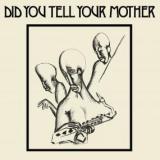
Tete Mbambisa - Did You Tell Your Mother

Vinyl Only / Sleeve manufactured with 400 mcn Fedrigoni "Shiro Eco" paper / Original unreleased poster with alternative artwork insert with notes by Tony Higgins printed on schedography peach past color paper / PVC outers / original artwork /

Personnel:
Tete Mbambisa - Piano
Basil Coetzee - Tenor Sax and Flute
Zulu Bidi - Bass
Monty Weber - Drums

Notes:
Mbambisa first gained prominence as a pianist in 1961 as a member of the Jazz Giants, this time with Pukwana as saxophonist, bassist Martin Mgijima and drummer Makaya Mtoshoko, setting the sound and shape of a scene that became known as Cape Jazz. Following an introduction from Chris McGregor, Mbambisa formed a band, The Swinging City Six, with saxophonist Ronnie Beer before going on to play at the end of the 1960s in the groups The Soul Jazzmen and Spirits Rejoice with Duku Makasi. As a member of The Soul Jazzmen, Mbambisa recorded the breakthrough album 'Inhlupenko Distress' in 1969 for the City Special label. After a recording hiatus, Mbambisa returned in 1974 with an octet album, 'Tete's Big Sound' released on a newly formed label, As Shams or The Sun, established by South African record store owner and independent producer Rashid Vally. 'Tet's Big Sound' included tracks like 'Unity' and the 'Black Heroes Lamentation', now considered a classic in the South African jazz underground.

The sound that Mbambisa carved in this period was wholly acoustic, and is a style that now is often loosely labelled spiritual jazz, a sound that alludes to deep African textures and rhythms balanced with clear nods to American hard bop and modal jazz, sometimes edging toward free improvisation in echoes of John Coltrane and Pharaoh Sanders. The music is often centred around a fulcrum of trance like vamps with repeated motifs that allow for extended pieces that create a hypnotic effect. This clearly exemplified on Mbambisa's next album, 'Did You Tell Your Mother', released in 1979, once more for The Sun label. (Tony Higgins)

pre-order now14.02.2025

expected to be published on 14.02.2025

Miles Davis - Birth Of The Blue LP
  • A1: On Green Dolphin Street
  • A2: Fran-Dance
  • B1: Stella By Starlight
  • B2: Love For Sale

Mastered by Matthew Lutthans at The Mastering Lab from a new 30 ips quarter-inch stereo master tape transferred from the original 3-track session tapes. Plated and pressed at Quality Record Pressings for flawless production and superior fidelity! Stoughton Printing Old Style tip-on gatefold heavyweight jacket with scuff-resistant matte finish.

Miles Davis's Kind of Blue was the number-one jazz album in history. It totaled five songs. There are four more songs from that same historic group, recorded in the same time period and at the same studio. And here they are. These songs deserve to stand on their own with artwork to highlight the quality of the music and that matches the time period of the recording. This is a rare opportunity to have a smash follow-up to what many consider the greatest jazz record ever!

Through the years, these four remarkable performances — all from a single recording session in 1958 and all exemplary of the sound of Miles Davis' legend-loaded sextet of that year — have not been served well. They have been largely treated as add-ons for other compilations. Now, for the first time, Analogue Productions, the audiophile in-house reissue label of Acoustic Sounds, Inc., together with Quality Record Prssings, has deservedly given these tracks a stellar stand-alone release for jazz fans to savor!

The once-in-a-generation lineup that recorded these tunes is the very same that would be immortalized for the enduring classic they would record almost a year later, Kind of Blue. Davis played trumpet sublime with his ensemble sextet featuring pianist Bill Evans, drummer Jimmy Cobb, bassist Paul Chambers, and saxophonists John Coltrane and Julian "Cannonball" Adderley.

Undervalued since their recording, the tunes on this album reflect historial and musical significance. They offer early glimpses into the modal jazz that Kind of Blue would bring to the forefront. Using modes common in modern classical music, rather than the chords of popular songs, Miles had begun to experiment with the new approach on the Milestones recording sessions previously.

Analogue Productions is proud to present Birth of the Blue in an exclusive first-of-its-kind stand-alone release that reflects our reputation for meticulous production, capturing authentic sound with clarity, depth and fidelity that exceeds the audiophile standard.

For this release, we started with the original 3-track recording session tapes that were mixed down to a brand-new 30 ips quarter-inch stereo master tape by senior mastering engineer Vic Anesini at Battery Studios. From that stereo master tape, Matthew Lutthans at The Mastering Lab cut the lacquers at 33 1/3 RPM utilizing the legendary Doug Sax's custom all-tube system and cutting lathe. The lacquers were plated and pressed on 180-gram vinyl at Quality Record Pressings. Lastly, the Stoughton Printing tip-on gatefold jacket with a deluxe scuff-resistant matte finish is the highest quality available. The artwork has an incredible spot-on look to a 1959 Columbia records release!

Features:


• Pioneering Ensemble: Captured the same rare and short-lived alignment of jazz legends including Miles Davis, John Coltrane, Cannonball Adderley, Bill Evans, Paul Chambers, and Jimmy Cobb, as heard on the historic Kind of Blue.


• Innovative Sound: The session represented a crucial transition in jazz, blending elements of hard bop with early modal jazz influences, showcasing the ensemble's experimentation and forward-thinking approach.


• Undervalued Legacy: Despite its historical and musical significance, the session's recordings have been historically overlooked, often relegated to being add-ons in compilations rather than recognized as standalone masterpieces.


• Modal Jazz Precursor: Offered early glimpses into the modal jazz that would later be fully realized in Davis's groundbreaking album "Kind of Blue," laying the groundwork for future jazz innovation.


• Impact on Artists: Served as a critical point of development and confidence for the musicians involved, particularly Bill Evans, who noted the significant impact of this experience on his own identity and style.


• Historical Context: Occurred at a peak moment in Miles Davis's career, following his signing with Columbia Records and his critical and commercial successes with albums such as ‘Round About Midnight and Miles Ahead.


• Revealed backstory: Extensive liner notes by the Grammy Award-winning author Ashley Kahn, who also penned the estential book, Kind Of Blue — The Making Of The Miles Davis Masterpiece

pre-order now31.01.2025

expected to be published on 31.01.2025

SOOLMAAN - KASHGUL LP 2x12"

Soolmaan

KASHGUL LP 2x12"

2x12inchZEPLP071
ZEPHYRUS RECORDS
24.01.2025

Soolmaan is a sextet led by Belgian oud player and composer Tristan Driessens, accompanied by Nathan Daems, Christos Barbas, Annemie Osborne, Andrea Piccioni, and Levent Yildirim. Together, they create sound tableaus that float freely between the Bosphorus and India, with flute, sax, ney, cello, piano and tamburello igniting an imaginary folklore infected by jazz. Releasing their second album ‘Kashgul’ on the 24th of January with Zephyrus Records. (Vinyl / CD)

Driessens began his career immersed in the classical music of the Ottoman court, founding the Lâmekân Ensemble in 2011. After training under oud virtuoso Necati Çelik in Istanbul, he returned to Belgium in 2016 to form Soolmaan, an ensemble that reflects his multi-faceted identity. Rooted in Eastern modal traditions, Soolmaan’s music bridges jazz, folk, and classical influences, creating a unique and contemporary sound.

Their 2017 debut album, ‘Letters to Handenberg’, was described as "oriental chamber jazz," with Istanbul serving as a common thread. With Kashgul, their latest release, Soolmaan explores Ottoman makam, Indian raga and Anatolian halk muzigi, blending these traditions with a contemporary modal language. Created during Driessens' artist residency at the Concertgebouw of Bruges, the album features original compositions alongside reimagined works by Ravi Shankar, Amjad Ali Khan, and Art Pepper.
With improvisation as a connecting factor, Soolmaan’s music invites listeners into rich, boundary-crossing soundscapes where tradition and innovation meet. Kashgul exemplifies the ensemble’s ability to craft an immersive musical experience that resonates deeply with diverse audiences.

Upcoming concerts

December 8, 2024
Begijnhofkerk, Sint Truiden, BE

December 12, 2024
De Bijloke, Ghent, BE

December 14, 2024
De Bijloke, Ghent, BE

pre-order now24.01.2025

expected to be published on 24.01.2025

Belmondo Quintet - Brotherhood

Belmondo Quintet

Brotherhood

12inchJP21BF001LP
jazz&people
21.01.2025

The long-awaited new album by the Belmondo
Brothers, their first in a decade.
Renowned internationally for their collaborations
with such luminaries as Milton Nascimento and
Yusef Lateef, trumpeter Stéphane Belmondo and
his brother saxophonist Lionel - the most famous
jazz siblings in France - celebrate their artistic
reunion.
The brothers salute their masters and synthesize a
quarter of century of musical adventures via a
series of new original compositions.
Featuring songs inspired and dedicated to Wayne
Shorter, Bill Evans, Yusef Lateef, Woody Shaw
and their late father Yvan.
Featuring the great Belgian Eric Legnini on piano
and a tight and full-bodied jazz quintet.
An original mix of modal and spiritual jazz with
hints of classical liturgical influences and ethnic
vibes.
For fans of John Coltrane, the Blue Note albums of
Wayne Shorter, Bill Evans, Freddie Hubbard,
Yusef Lateef, Herbie Hancock, Jacky Terrasson,
Lili Boulanger.

out of Stock

Order now and we will order the item for you at our supplier.


Last In: 15 months ago
Pluhm - Distanze e Solitudini

Pluhm

Distanze e Solitudini

CassetteONEINST018CS
One Instrument
20.01.2025

Pluhm is the main project of Lucio Leonardi, Sicilian musician based in the north of Italy. This time with “Distanze e Solitudini”, amidst emotional ambient drone distortions, he narrates about the distances existing among human beings. Distances that make us lonely, even when we are apparently close to one another, the psychological distance can be so abysmal that we feel abandoned.

out of Stock

Order now and we will order the item for you at our supplier.


Last In: 15 months ago
Cannonball Adderley Quintet - Cannonball Adderley Quintet in Chicago LP
  • Limehouse Blues
  • Stars Fell On Alabama
  • Wabash
  • Grand Central
  • You're A Weaver Of Dreams
  • The Sleeper

Cannonball Adderley Quintet in Chicago is revered among jazz aficionados as an essential document of late 1950s hard bop

It captures two of the greatest saxophonists in jazz, Adderley and Coltrane, at a time when they were both at a creative peak. The album is a vital recording from a golden era in jazz, featuring a rare and electric partnership between two saxophone giants. Its hard bop foundation, infused with hints of modal jazz, places it among the most important recordings of its time. The album was recorded the February 3, 1959 during a time when Adderley was playing as part of Miles Davis' group, and it captures the quintet during a pivotal moment in jazz history. On Cannonball Adderley Quintet in Chicago, you can hear Coltrane at a transitional stage, balancing between his earlier bebop style and the modal, more avant-garde approaches he would later pursue. His interaction with Adderley is fascinating because it blends his dense harmonic language with Adderley's more traditional, bluesy approach.Cannonball Adderley had been recruited by Miles Davis in 1957, joining what would become one of the most influential jazz groups of all time. Adderley's style was deeply rooted in the blues, and he brought a strong sense of soulfulness and swing to the Davis group. While Davis' style was often cool and restrained, Adderley's alto saxophone was the opposite: robust, fiery, and emotional. Adderley's command of the instrument was remarkable, and his ability to balance technical prowess with a highly accessible, bluesy feel is on full display throughout Cannonball Adderley Quintet in Chicago . His solos are expressive and lyrical, often imbued with a sense of joy and exuberance. This makes for a perfect contrast to Coltrane's playing, which at this point was becoming more dense and harmonically complex

pre-order now17.01.2025

expected to be published on 17.01.2025

MATS ERLANDSSON & YAIR ELAZAR GLOTMAN - GLORY FADES
  • At Ends
  • Copper Entries
  • All Canals Dry
  • On The Folding Of Leaves
  • Servitude
  • The Grinding Wheel
  • Pale Stars
  • Glory Fades
 
2

Glory Fades is a song book written using a common collaborative musical language developed by Yair Elazar Glotman and Mats Erlandsson, building intimate musical spaces, primarily focused on acoustic instrumentation with electronic counterparts contributing light and shade. Throughout the eight songs on the record, each piece unfolds according to its own logic while simultaneously reflecting the overarching tonality of the song book as a whole. The music focuses on the topography outlined by a melodic and harmonic modal framework and the exploration of the negative space found in the decay and in between the notes. There is a tension in this music caused by a reduced and stark emotional expression on the surface and the complex structures hidden underneath, where the harmonic material shimmers and shifts, and tempo and time signature modulates imperceptibly. The instrumentation forms a non-traditional chamber ensemble consisting of plucked and bowed acoustic guitars, zithers, bells, double bass, violin and percussion with additional treatments through manipulated tape and reamplification techniques. Mats Erlandsson is part of the vibrantly re-emerging field of drone music in Stockholm, Sweden, and is associated with practices characterized by the extensive use of sustained sound. Utilizing synthesized and recorded analog and digital sound, contaminated field-recordings and extensive tape processing his music slowly unfolds sets of precisely tuned harmonic material while textural properties of the imaginary rooms where the music takes form shifts, shimmers and moves from sparse and open to dense and claustrophobic. In addition to his own artistic practice, Erlandsson holds a position as studio technician at the world-renowned Elektronmusikstudion (EMS) in Stockholm and has frequently presented electroacoustic music and new music from Sweden in concert. Yair Elazar Glotman is a composer and a musician based in Berlin. Glotman trained in classical music as an orchestral contrabass player and in electroacoustic composition. His work for film as well as his independent musical releases are informed by both classical and electroacoustic traditions, and employs a range of improvisation, extended contrabass techniques, and a special interest in textural and spatial compositions and in combining analog and digital processing. His compositions for film began through his close work with the influential, late composer Jóhann Jóhannsson, writing additional music for Mandy (2018) and co-composing Last and First Men (2020). He also collaborated on two oscar-winning soundtracks (Joker and All Quiet on the Western Front). Glotman also regularly releases and performs his own music, which has been released on notable labels including Deutsche Grammophon, Bedroom Community and Subtext Recordings. As a duo Glotman and Erlandsson have been collaborating since 2015 and have previously released music on the labels Miasmah Recordings and 130701. This record is the third installment in a series of collaborative records and live presentations by Yair Elazar Glotman and Mats Erlandsson and will be their first published by XKatedral.

pre-order now

This item has not yet been released. You can pre-order the product now.

Secret Boyfriend - Listener's Guide LP

Secret Boyfriend

Listener's Guide LP

12inchENMB-16
enmossed
Release unknown

“My introduction to “noise” came from a record shop in Lake Worth, Florida ran by a musician named Kenny 5. Kenny had left Detroit sometime in the mid nineties and had begun selling used records and CD’s from the downtown strip of this tiny southern Florida city in a humble shop sandwiched between a deli and a dog grooming business. Kenny previously was on labels like Amphetamine Reptile and timeSTEREO, and the records and videotapes that would be on repeat at his shop were a vast sonic expanse that spoke to the eclecticism of his experience as a touring musician participating and adjacent to American noise culture through the early to late 90’s. In 1998, I was eleven years old and I would order a pizza with him and watch VHS tapes of Japanese noise and deathmatch bootlegs, as well as any other sonic and subcultural rarities that far outstripped my age to comprehend (notably the RRR “Journey Into Pain” compilation and various Vanilla Tapes videos). This widecast net of information formed an introduction to a reality that did not fall deaf on me, but it took many years later for me to reorient the specific freedoms of what this dense and cathartic sound culture had imparted on my life and would continue onward to.

What does this have to do with this selection of choice recordings from the Secret Boyfriend catalog for the enmossed label? For the uninitiated, Secret Boyfriend is the long running moniker of Ryan Martin, North Carolina musician and label proprietor of the Hot Releases imprint. For over a decade from this writing I have watched Secret Boyfriend, and Hot Releases by extension as a curatorial and archival effort, embodying the multiplanal capacity that noise loosely functions from as an umbrella ideology and formalist avenue for sound creation. For anecdotal purposes, from (before) 2006 until roughly 2023 the East Coast of the United States showcased a vibrant network of eclectic regional festivals that saw wide swaths of artists addressing and negotiating the notion of what qualified “noise” from a conceptual and ideological perspective. Some festivals honed in on particularities in aesthetics and tropes, and others had a kind of “catch-all” implementation that allowed for a salvation of the sort of alienated and singular artistry that was amassing throughout these territories. While clear guidelines had been set from regional predecessors as to how noise with a capital “N” should maneuver, Secret Boyfriend is emblematic in the spirit of fluidity that was either implicitly coupled to the notion of the genre, or grew to evolve towards or devolve from.

Within Secret Boyfriend performances, I have seen and admired a mirroring from a ravenous appreciator of this culture at large back towards itself. Typical of a Secret Boyfriend set is an interchangeable narrative arc wherein blistering feedback laden scrap metal improvisations are forayed into naive ambient or “pop” songs, or skipping CDs, or mixer feedback play, or delayed Roland 707 drum workouts all at once and in a unique hegemony. Secret Boyfriend's stylistic mastery of each endeavor is at once an homage to a history of loving listening and enacting, while a brave step into the realm of actualizing the unique fluidity of his own practice. In performance and the action of network engagement, Secret Boyfriend operates a survey of that which he sought to hear and that which he cultivates around his work. His operations are mirrors, and the project (alongside his other peers) is a reflection on the ethos of his time.

Conversely his recording practice narrows in on these moments and allows for a different kind of intimacy or alienation for the non live listener. This record of selected “pop songs” (let's call them that) is particularly poignant at a time when the culture Martin mirrors is at a strange crossroads with itself. The aforementioned festival networks necessarily change and shift. The onlookers become the artists, the artists find new horizons, and the spaces for these cycles fade into locales of a distant memory. It seems, from my perspective, that audiences currently yearn for a more bottlenecked experience, searching for some ontologically vetted manifestation of an idea, of a sound and less for an experience that functions in opposition to our collective banalities. This makes sense in the face of general global catastrophism that plagues us. We need certainty of what something is somewhere, don’t we? Noise as an idea has expanded and contracted to so many iterations of itself it is hard to tell what it even is, and it is particularly difficult to identify in the absence of solid network activations a moment to reflect on its own complexities and nuances. In the face of so much change, I argue that the language of noise culture at large has on one hand become increasingly didactic and predictable, and laughably inclusive and non linear on the other. Probably has always been this way, but now we are in the midst of a moment of extreme access and indexicality, which somehow cauterizes expansion and naivety and chance.

This record highlights the Secret Boyfriend that obscures didacticism by highlighting output that opens up for more challenging catharsis and emotive signal processing. It provides an entry to the materialism of a cultural field full of ecstatic complexity and beautiful inconsistency. In these muted moments Secret Boyfriend has given us over his career we have an argument for evolving languages that further challenge our notions of what is supposed to happen and how it is supposed to be presented. In his more song oriented expansiveness, we can punctuate the ability to think in new modalities. Listening to these recordings reminds me of the polarity of sitting in the record store as a kid and understanding that His Name Is Alive is on 4AD and (gasp!) timeSTEREO. This trite early impression that nothing is really as different as our imaginations might want them to be, and that we can do whatever we want mostly within the creative realms we work through is an important filter to look through Secret Boyfriend as a project and a vessel. If we can achieve abandon and vulnerability through our artistic endeavors, then we have a sound model for, maybe, new potentialities. If that’s too much projection, or just complete liberal bullshit, I am fine with that. Secret Boyfriend's oeuvre at best offers us moments of reprieve to ponder these complexities, or at least a moment to zone out on a drive through North Carolina Highway 54.

You have one pocket of life that you must do whatever you want to inside of. Secret Boyfriend does it affectionately, in a variety of forms, and always with deep sentimentality. These recordings are a wonderful set of songs to begin further investigation from. Thank you Ryan for allowing as many avenues as possible to continue a broad cultural exchange and conversation that intersect and refract while being the kind of artist that is brave enough to not phone in the effort.”

- Nick Klein , May 2024

pre-order now

This item has not yet been released. You can pre-order the product now.

ANDREA BURELLI - SONIC MYSTICS FOR POEMS (OF LIFE AND DEATH OF A PHOENIX)
  • Chant
  • Fiori Strappati
  • Petto Rotto
  • Benu
  • Cielo Azul
  • Nido
  • Cielo Fermo
  • Alba
  • Luna D’autunno
  • Come Fan Le Stelle
  • Ali Di Cotone
  • Ali Di Fuoco
  • L’ultimo Giorno
  • Sogno Diurno
  • Ocre

Limited edition pressing - 50 copies come with one page insert. Download code included.

The album Sonic Mystics for Poems (of Life and Death of a Phoenix) by Andrea Burelli is a work that masterfully blends traditional musical languages with the formal and conceptual sensibilities of contemporary music. It offers a profound reflection on the life-death-life cycle, centered on poetic texts that oscillate between human-sensitive experience and the mythical journey of a phoenix, a metaphor of this circular and infinite reality.

The work, which includes a collaboration with musicians from the renowned Solistenensemble Kaleidoskop, stands out for its clear influence from classical Western music and modal traditions, as well as experimental electronics. Composed for voices, strings, synthesizers, and drum machines, this music features a minimalist tapestry of polyphonies, enhanced by sophisticated electronic elements and a diverse array of rhythmic articulations.

Field Notes describes Andrea Burelli as a versatile artist capable of embodying a multitude of roles, from poet to composer, musician, and singer, emphasizing how her work reflects this versatility by ¨combining elements of art song, contemporary music, pop, and electronic sounds.¨ According to Groove Magazine, this LP evokes neoclassical chamber music and an imagined Italian folklore, aligning with contemporary explorations of modern vocal abstractions, similar to the work of artists like Marina Herlop, stating that: “This is how the new and the good emerge.”

Furthermore, the music has received positive feedback from internationally acclaimed artists such as Rashad Becker, who, in addition to being the mastering engineer of the project, describes it as "pure and honest"; James Young of Darkstar calls it "bold and innovative"; while Eartheater (PAN), Rabih Beaini, and Gigi Masin have praised it as "beautiful."

pre-order now13.12.2024

expected to be published on 13.12.2024

Earth - Primitive And Deadly

Earth

Primitive And Deadly

2x12inchLORD193LP
Southern Lord
03.12.2024

For the first time in their diverse second act, they allow themselves to be a rock band, freed of adornment and embellishment. As much as Carlson’s guitar has always been the focal point of EARTH’s music, it’s been surrounded by consistently diverse instrumentation. Here the dialog between Carlson and Davies drumming remains pivotal, underpinned by the sympathetic bass of Bill Herzog (Sunn O))), Joel RL Phelps, Jesse Sykes and the Sweet Hereafter) and thickened by additional layers of guitar from Brett Netson (Built To Spill, Caustic Resin) and Jodie Cox (Narrows). Perhaps the largest left turn on Primitive And Deadly, though, is the prominence of guest vocalists Mark Lanegan and Rabia Shaheen Qazi (Rose Windows) who transform the traditionally free ranging meditations of EARTH into something approaching traditional pop structures.
On “Rooks Across the Gates,” a song stylistically the closest to the folk inspired modality of Angels Of Darkness, Carlson stretches out into some of his most lyrical playing to date, creating an almost symbiotic relationship between his performance and the vocals of old friend Mark Lanegan. “From the Zodiacal Light,” meanwhile, takes the late 60s San Franciscan/freaked-out jazz-rock transcendence of The Bees Made Honey In The Lion’s Skull and quickly re-appropriates that sound into a musky torch song for the witching hour.
This contradictive tension between a band pushing itself ever-forward whilst surveying their history is reflected in the albums twin recording locales. The foundation of the record was laid in the mystic desert highlands of Joshua Tree, California where EARTH recorded hour after hour of meditations on each track's central theme at Rancho de la Luna. Upon returning to Seattle these were edited, arranged and expanded upon at Avast with the help of long-term collaborator Randall Dunn (who was previously at the helm for the Hex, The Bees Made Honey In The Lion's Skull and Hibernaculum sessions).

out of Stock

Order now and we will order the item for you at our supplier.


Last In: 17 months ago
Oliver Nelson - The Blues And The Abstract Truth
  • Stolen Moments
  • Hoe Down
  • Cascades
  • Yearnin
  • Butch And Butch
  • Teenie's Blues

The Blues and the Abstract Truth is not just a landmark album in Oliver Nelson's career but in the history of jazz itself

The album features an incredible ensemble of top-tier jazz musicians, often referred to as a "supergroup": Oliver Nelson (alto saxophone, tenor saxophone), Freddie Hubbard (trumpet), Eric Dolphy (alto saxophone, flute), George Barrow (baritone saxophone), Bill Evans (piano), Paul Chambers (bass), Roy Haynes (drums). The early 1960s were marked by a shift from the hard bop of the 1950s to more experimental forms, including modal jazz, free jazz, and the incorporation of avant-garde elements. Musicians like John Coltrane, Ornette Coleman, and Charles Mingus were all pushing the boundaries of jazz, and Oliver Nelson's work fits within this broader movement: in this album there's a perfect combination of modern compositional techniques, virtuosic performances, and emotional depth make it an essential listening experience for any jazz fan. It captures the moment when jazz was evolving into new, exciting directions while staying connected to its roots in the blues. The Blues and the Abstract Truth is considered one of the essential albums in modern jazz where Oliver Nelson's compositional style blends hard bop, modal jazz, and blues influences with sophisticated harmonic structures and striking arrangements. The album is noted for ts rich orchestration despite having a relatively small ensemble with use of textures and colours, particularly in tracks like "Stolen Moments," created a new standard in azz arranging.

pre-order now29.11.2024

expected to be published on 29.11.2024

Noel Kelehan Quartet - Ozone LP

"Long sought-after by those in know, this essential Irish jazz album finally gets a vinyl reissue on Outernational Sounds! Fully licensed from producer John D’Ardis, remastered at Abbey Road from the original tapes, and with lacquers cut at Dubplates and Mastering, the Noel Kelehan Quintet’s stunning 1979 Ozone is presented with unseen photographs of the band and commentary from original band members.

Featuring moody, modal jazz of the first order, subtle and original composing and world- class playing, Ozone was the creation of Ireland’s most respected jazz composer and musician, pianist Noel Kelehan (1935-2012). The only small-group album under his name, and arguably the first ever Irish jazz LP, Ozone was a landmark recording, but it was far from Kelehan’s only achievement. Born in Dublin, Kelehan had studied music from an early age. From the mid-1950s he worked at state-broadcaster Radio Éireann (RÉ, later RTÉ – Radio Telefis Éireann), and from the early 1960s he fronted Dublin’s first be-bop unit, the Jazz Heralds. A busy professional career saw him compose for numerous Irish pop stars, arrange and conduct many of Ireland’s Eurovision entries, and even contribute string arrangements to U2’s Unforgettable Fire LP.

But jazz was Kelehan’s first passion, and he never stopped playing in both small modernist units and composing for his own big band. The late 1970s saw him fronting the Noel Kelehan Quintet, alongside drummer John Wadham, saxophonist Keith Donald, bassist Frank Hess and trumpeter Mick Nolan. Playing weekly in Dublin for several years, they opened for visiting stars including Dollar Brand and the Ronnie Scott Orchestra, and eventually played a two-week residency at Ronnie Scotts in London. Though Kelehan had recorded a big-band LP of traditional Irish songs arranged as easy jazz in 1970, Ozone was his first album of modern jazz. Released on John D’Ardis’s independent Cargo imprint and press on blue vinyl, it featured original compositions such as the deep collectors cut ‘Spon Song’, subtle Latin flavours on ‘Spacer’s Delight’ and a beautiful modal arrangement of the traditional Irish air ‘Castle of Dromore’. A legendary recording in Ireland, Ozone reflected Kelehan’s keen appreciation of classic quintet-era Miles, with touches of the cerebral fusion of Ian Carr and the arranging genius of Neil Ardley. Not just a landmark Irish jazz set, Ozone is a lost classic of European jazz more widely."

out of Stock

Order now and we will order the item for you at our supplier.


Last In: 17 months ago
Mustapha Skandrani - Ishtikhabars And Improvisations

Mustapha Skandrani, a luminary of Algerian music, possessed a unique musical sense, able to transcend the borders of musical cultures to create a distinctive fusion of Arabic-Andalusian and European styles.

"Istikhbars and Improvisations", recorded in 1965 in Paris, is a solo piano album presenting a trans-Mediterranean crossover based on traditional Algerian vocal pieces known as istikhbars. Playing these istikhbars (which have roots in the Islamic Arab-Andalusian culture which flourished in Spain) on the piano - that quintessentially European instrument - Skandrani was greeted with derision by some purists. His powerful musical vision, however, perceives the European element involved in Arabic-Andalusian musical culture, a world of exchange and co-existence.

Skandrani's modus operandi on this release is to present each istikhbar, modal in nature, then to play an improvisation based on it, and its attendant mode. This A/B alternation continues throughout. The pellucid clarity of Skandrani's playing on this album may remind the listener of a modal Goldberg Variations, Bach and Glenn Gould transplanted to Andalucia. Other ears will hear the Arabic/Maghreb elements more strongly. Skandrani's precise touch and clear, symmetrical rhythmic sense links both worlds, assuring us that the Mediterranean is not a barrier, but a unifier, and that the differences between the cultures are not so vast. This is an admirable achievement, resulting in beautiful music of a rare charm.

Mustapha Skandrani was born in Algiers in 1920, and died there in 2005. He mastered a number of instruments at an early age, and his musical prowess led him to work with the great singers and ensembles of his day, in live performances, recordings, and radio broadcasts. Later in his life, he devoted much energy to education.

Originally reissued by Em Records as a limited edition of 200 in 2012, now available once again, in offset printed sleeve, with insert of Japanese and English sleeve-notes and rare photosMustapha Skandrani, a luminary of Algerian music, possessed a unique musical sense, able to transcend the borders of musical cultures to create a distinctive fusion of Arabic-Andalusian and European styles.

"Istikhbars and Improvisations", recorded in 1965 in Paris, is a solo piano album presenting a trans-Mediterranean crossover based on traditional Algerian vocal pieces known as istikhbars. Playing these istikhbars (which have roots in the Islamic Arab-Andalusian culture which flourished in Spain) on the piano - that quintessentially European instrument - Skandrani was greeted with derision by some purists. His powerful musical vision, however, perceives the European element involved in Arabic-Andalusian musical culture, a world of exchange and co-existence.

Skandrani's modus operandi on this release is to present each istikhbar, modal in nature, then to play an improvisation based on it, and its attendant mode. This A/B alternation continues throughout. The pellucid clarity of Skandrani's playing on this album may remind the listener of a modal Goldberg Variations, Bach and Glenn Gould transplanted to Andalucia. Other ears will hear the Arabic/Maghreb elements more strongly. Skandrani's precise touch and clear, symmetrical rhythmic sense links both worlds, assuring us that the Mediterranean is not a barrier, but a unifier, and that the differences between the cultures are not so vast. This is an admirable achievement, resulting in beautiful music of a rare charm.

Mustapha Skandrani was born in Algiers in 1920, and died there in 2005. He mastered a number of instruments at an early age, and his musical prowess led him to work with the great singers and ensembles of his day, in live performances, recordings, and radio broadcasts. Later in his life, he devoted much energy to education.

Originally reissued by Em Records as a limited edition of 200 in 2012, now available once again, in offset printed sleeve, with insert of Japanese and English sleeve-notes and rare photos

pre-order now22.11.2024

expected to be published on 22.11.2024

Sarine - Asas Terrenas

Sarine

Asas Terrenas

12inchRESLP034
Futura Resistenza
21.11.2024

Mariano Melo, also known as Marian Sarine, is a Brazilian multi-instrumentalist based in Sao Paulo, specialising in percussion and drums. His latest album, Asas Terenas, is his first under this name and started with organ recordings made with Felipe Pato in late 2019 and was completed with additional instruments added in the years that followed. Asas Terenas features a mix of rhythmic improvisations built on modal scales, combining dynamic interplay between notes and percussion. Drawing inspiration from artists like Charanjit Singh, who merged traditional North-Indian ragas with electronic music, and African organists like Hailu Mergia, it combines old and new sounds, merging spiritual elements with energetic rhythms. As Sarine himself says, Asas Terenas is a sonic mixture that moves the feet and lifts the soul, creating an experience that is both pristine in sound and transcendental on the dancefloor.

out of Stock

Order now and we will order the item for you at our supplier.


Last In: 3 months ago
Various - Peace Chant Vol.5

Various

Peace Chant Vol.5

12inchTRLP91101
Tramp Records
20.11.2024

The Peace Chant compilation series is a Temple, a reliquary of sacred harmonious statements made by enlightened artists throughout time. With Tramp Records' latest offerings, "Peace Chant, Raw Deep and Spiritual Jazz volumes 5 & 6, deeper, darker, and even more remote chambers of this already exalted temple are brought to light. The team at Tramp, with their torch of love and with reverence for those builders who came before, have returned from their quest with musical treasures unfathomable. Indeed, some of these tracks sound as if they may have literally been plucked from the ancient hands of some towering golden idol. But this quest was no looting effort, no. The Gods, as well as the artists and their families were fairly compensated through Tramp Records' rigorous and historically conscious licensing efforts.

Some of the treasures herein include, from Volume 5, a German gospel/modal jazz hybrid replete with flutes and vibes (and even a surprise gospel choir) reminding us not to 'speak when we should be silent' called "Ich Rede Wenn Ich Schweigen Sollte"; Indian jazz/rock fusion outfit Jazz Yatra Sextette's literal peace chant, "Shanti" led by Louis Banks (real name Dambar Bahadur Budaprithi), who worked with Embryo and John Maclaughlin; and Ron Wilson Trio's walking meditation and study on the beauty and rhythm of "Zimbabwe" in 3/4.

out of Stock

Order now and we will order the item for you at our supplier.


Last In: 2 years ago
MATTIAS DE CRAENE - A HOUSE WHERE I DREAM LP

Belgian saxophonist, composer, and producer Mattias De Craene (Nordmann, MDCIII) announces a new solo album, ‘A House Where I Dream,’ on VIERNULVIER Records. On his second album, he delivers a highly personal and healing journey, presented as an alternative soundtrack to the 1973 cult film ‘The Holy Mountain.’

The record will be released on October 11 on vinyl LP and through all digital platforms.

"The Holy Mountain" is a surreal Mexican film from 1973 directed, written, and produced by Alejandro Jodorowsky, who also stars in the film. The film holds a prominent place in avant-garde cinema and explores themes such as spirituality, mysticism, and the quest for enlightenment. It is in this vein that ‘A House Where I Dream’ is crafted.

“My mind and soul - and thus my music - come home to this motion picture” - Mattias De Craene

The album will be presented live with the film on October 16 at Videodroom during Film Fest Gent.

ABOUT THE ALBUM
With hypnotic tape loops, grainy textures, and mesmerizing saxophone, Mattias De Craene creates possible worlds that herald a spiritual transformation. From the Scottish Highlands and desolate mountains to the deepest recesses of the soul, this music has the power to create cinematic landscapes that transcend time and space. The sound of these 8 tracks is closely related to the minimalist compositions of Terry Riley, but the work of contemporary artists like KMRU or William Basinski is also drawn from the same material.

Above all, this album is a deeply personal journey and unintentionally serves as a metaphor for De Craene's ascent of his own mountain. For the Videodroom festival by Arts Center VIERNULVIER, the saxophonist began working on a new soundtrack for the film ‘The Holy Mountain’ in 2023, but his body and mind abruptly called him to a halt, forcing him to take a professional break. However, this project never left him, leading to an honest and raw quest to find himself as both a person and an artist, with Jodorowsky as a companion de route and music as an anchor. It initiated a long process of dismantling, searching, healing and back again. The album not only provides a sanctuary for dreaming to all who listen, but for its creator it also serves as both an outcry of despair and a source of comfort during challenging times.

All the tracks on 'A House Where I Dream' share an unfiltered grain of life, as one can almost feel the damp breath of the saxophone blowing.

The album opens with the three-part strong 'Transcention,' where the hypnotic interplay between soprano sax and lo-fi tape loops leads to higher realms of the mind and soul.
Alternating between deep frequencies and farout folk modalities, this mantra-like triptych acquires an alchemical character and ultimately transcends time and space.

In the ethereal 'Away,' one can peer into an abyss of resonance while a saturated tenor sax lends guidance in the spirit of Terry Riley's productions. 'You and Me' also bathes in a similar atmosphere, albeit in the vein of healing 90s ambient as granular sax tones converge with celestial chants. 'Gazing Upwards Towards The Sky,' offers different shades of blue as a slumbering tenor sax is juxtaposed to swift sax patterns. On 'A Stranger That Moved Me,' beauty lands in a soft and subtle manner, while the closing track 'Shepherd's Glow' drifts like a mountain wind flaring up at the darkest hour of the night.

The artwork is created by Gent-based artist Sam Timmerman, who portrays the world of 'A House Where I Dream' with playful repetition and mystique.

pre-order now25.10.2024

expected to be published on 25.10.2024

Items per Page:
N/ABPM
Vinyl