
4
No en stock
Haga su pedido ahora y le encargaremos el artículo en nuestro proveedor.
Ültimo hace: 2 Años
Haga su pedido ahora y le encargaremos el artículo en nuestro proveedor.

Haga su pedido ahora y le encargaremos el artículo en nuestro proveedor.

Return to Sky is the follow-up to the band's classic Euporie Tide, which consolidated the band as a crucial underground force in the European psych scene and spread their unique brand of warm-toned stoner rock to a wider audience. The album is a condensed piece of acutely experimental, yet immensely engaging, instrumental rock. Each of the album’s five epics unfolds as a microcosm of the band’s genre-transcending psychedelia at large, yet adds something different to the whole.
The tracks on Return To Sky travel far and wide: heavy, detuned riffs are transformed into wide, pastoral soundscapes, and fluid minimalism warped into swirling crescendos and back again. Occasionally the band even manages to sound turbulent, fuzzed-out yet strangely peaceful at the very same time. Whereas so much of today’s psychedelic scene comes off as merely a tribute to a certain period of the past, Causa Sui has always been on a different mission. More than any other record in their catalog Return To Sky declares their roots in the avant rock of the late 1990s - where different eras and genres merged into something that resonated as much with the present as it celebrated the past. It also reveals the fact that members of the band has had their hands in many different projects since the band’s debut album in 2005: solo excursions into synthesizer music, collaborations with members of Sunburned Hand Of The Man and Tortoise as well as film soundtracks and improv sessions with krautrock legends Faust and Damo Suzuki. It has all worked a subtle influence on the kind of band they have become. On Return To Sky their sound is more earthy and heavy than other Causa Sui record, but it’s also a record that has absorbed everything from shoegaze and vintage Italian film music to spiritual jazz and afrobeat into its fabric. Causa Sui has never sounded deeper or more mesmerizing than on this set.
En el almacen y preparando para el envío

Dutch electronic maverick Spekki Webu stretches out on an expansive album for new label Outer Orbit Records, exploring his deep and wide-ranging influences across a captivating narrative of tripped-out beatdowns and evocative dreamscapes. Spekki Webu is someone who was naturally drawn into the magnetic pull of Outer Orbit after playing for their sister party Mizz Softee. As the time-travelling album title suggests, it's a meditation on formative sounds that propelled him on to myriad adventures across the many microcosms of electronic music. That means indulging in slower tempos and crooked grooves, with the influence of trip hop and illbient looming large in the boom bap drums that punctuate many of the album's passages. There is also space for immersive techno that operates as a lighter reflection of the sound he is best known for, as well as hints of buoyant house music, rolling breakbeat, dislocated ambient and intricate electronica. Cari Lekebusch, a key influence, contributes a rolling, heavy-grooving remix that closes out the record.
En el almacen y preparando para el envío

DISPLACES represents Fabris' most personal musical journey to date, inspired by the concept of hyperobjects and cartographic practices. The album sculpts a high-dimensional phased time-space composed of concrete materials and digital archetypes in a state of constant displacement. It delves into the symbolic and philosophical realms of mapping as one of the greatest sense-making mechanisms for life, in dialogue with object-oriented environments, superimposition and non-locality applied to cosmic, temporal, and emotional memory.
The sonic ecosystem expands on the image of navigating a path through a set of places, from the microcosm of quanta to the macro force of dark matter, from underwater depths to overland terrains, encapsulating the cyclical flow between birth and death, both in ecological and anthropological sense. The intersection of these shifting states is explored through the extensive processing of the langspil, Iceland's only traditional instrument, intertwined with manipulated field recordings of biophonies and geophonies captured across Icelandic and Venetian territories. These recordings form the backdrop for a meditative process that relocate familiar objects into unfamiliar realms, reflecting on the transformative power of self-reflection while encapsulating the fragmentation and entanglement found in nature and the human state. The record plunges the listener into a disconcerting and physical soundscape, as a “ghostly spectrality that comes in and out of phase with normalized human spacetime,” evoking sensations of suffocation and release as each layer continuously unfolds the palimpsest of the enclosed labyrinth.
“Extraction of the I” embodies a subatomic reaction—erupting as a molecular force that rises, only to re-submerge with a solitary exhale underwater. In this mutated dark space, beluga whales breathe into "Xanadu Phasing," creating a pulsating tension that releases only to unveil a frozen landscape.
In “Barricading the Ice Sheets” the glacial material morphs into a liquid tunnel of digital artifacts, building a wall of noise that shatters into scattered fragments of ice, resembling bird calls from another world.
A moment of stasis is offered with the appearance of an asymmetrical loop in Monolith I, evoking a primitive rite before an unknown force emerges.
The physical intensity of subsonic material in "A Quake in Being" interrupts the hieratic tone, detuning into polluted sonic matter sourced from relics of the First World War in the Venetian Prealps. The geography of this place reconciles with the original homeland in "The Map is the Territory," blending negative space with anthropogenic elements and exploited sounds of the langspil.
The burning density of "Wolf-Rayet" projects into the void, echoing the residual sounds of a local church as relics of fossilized religions. Wolf tones are the remains in Monolith II, introducing the final track, "Topography of Extinction," where evolving psilocin textures invite the listener to uncover deeper layers of meaning and dislocation.
En el almacen y preparando para el envío
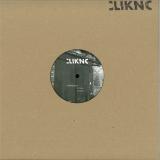
With Cliknopium I, Dr.Nojoke opens a new 12-inch series marking 20 years of CLIKNO — the artistic concept built entirely on field recordings and found sounds. Since its foundation in 2005, CLIKNO has focused on transforming everyday sonic fragments into electronic microcosms, guided by a strict manifesto: no presets, no templates, no classic machines, and every sound crafted from scratch. This approach has shaped Dr. Nojoke’s unmistakable aesthetic — detailed, tactile, and rhythmically unconventional.
Influenced early on by the click-and-glitch lineage of Villalobos, Jan Jelinek, Akufen, and Alva Noto, Dr. Nojoke has long expanded his palette to include dub-infused basslines, delicate percussions, and hypnotic textures. The result is a body of work he describes as “CLIKNO,” where organic sounds meet electronic precision.
Treguja opens the record with a playful, slightly wonky funk, evoking the atmosphere of a clandestine backyard rave. Gragada shifts into deeper territories, its bird calls and floating chords unfolding like a memory of a vanished paradise. On the B-side, Wesikwa propels the listener into a dreamlike, ritualistic groove, carried by Jew’s harps, murmured voices, and a steady, immersive pulse.
Twenty years after the concept began, CLIKNO remains as vital and imaginative as ever. Cliknopium I is both a celebration of this legacy and the beginning of a new exploratory chapter — an invitation to flip the record and let the trip continue.
En el almacen y preparando para el envío

Berlin-based musician and media artist Michael Vorfeld celebrates the 20th anniversary of his unique sonic explorations with a new volume of his Glühlampenmusic (Light Bulb Music). Mastered by Rashad Becker.
Michael Vorfeld is a musician and media artist, plays percussion and self-designed string instruments, and realizes electroacoustic sound pieces. He works in the field of experimental, improvised music and sound art, realizing installations and performances with light and sound, and working with photography and film. In addition to his solo activities, he is a member of various ensembles and collaborates with artists who work in many different art forms, e.g. Burkhard Beins, Mazen Kerbaj, Ute Wassermann, Reinhold Friedl, to name a few. Based in Berlin, his list of activities includes numerous concerts, performances and exhibitions in Europe, America, Asia and Australia. Michael Vorfeld participated in the documenta 8, Kassel with the sound performance group "Heinrich Mucken".
Since the mid-1980s, Vorfeld has been realizing a multiplicity of partly site-specific light works (most of which also included sound) and where the incandescent lamp played an essential role. He conducted many tests to research the interplay of light and sound, experimented with all kinds of incandescent lamps in relation to various light-controlling devices and used many different types of microphones and pickups to "eavesdrop" into the acoustic potential of the various light events. The result of this research is Glühlampenmusik (Light Bulb Music), an electro-acoustic and audio-visual performance where sounds are generated through the use of different light bulbs and actuating electric devices. The incorporation of different analog light controllers such as switches, dimmers, relays, flashers and various others leads to diverse variations within the light event, made audible with the help of various microphones and pickups. The changes in the light intensity, the incandescence of the filaments and the rhythmic variety of the flickering and pulsing lights is directly transformed into a comprehensive and microcosmic electro-acoustic world of sound. First performed publicly under the titleGlühlampenmusikin the Labor Sonor series at Kule, Berlin in January 2005, and released in 2010, this new volume of Glühlampenmusik celebrates its 20th of these sonic adventures that can range from sparse abstractionism to almost "clubby" pulsations.
En el almacen y preparando para el envío

Back in 1999, nestled in a cramped box room in his parents’ house in Cambridge, George Aretakis, one half of the newly-formed “I Like It” label (ili records) was on a sonic mission. Fresh from releasing their debut 12" All Alone by Hal, he dove headfirst into the world of self-engineering — no acoustic treatment, a sketchy Yamaha sound card, and a PC with a mind of its own.
What came out of that chaos is a collection of raw, imaginative tracks that blend hardware glitches with human quirks. Computer Rage was born from a technical meltdown — literal computer voices, warped vocals, coughing, and all. Its sibling, the Silicon Circus Mix, takes that same glitchy DNA and pushes it even further into bizarro territory.
Then there's Space You Know — a groovy slow-burner driven by a sticky bassline and the haunting vocal of Katie Jeans (courtesy of friends at Tummy Touch), chopped and recontextualized into something beautifully strange.
Rounding it out is Environ Mental, a moment of playful spontaneity made in a single night. Early morning birdsong, passing cars, and absurd vocalizations collide in a whimsical microcosm of lo-fi joy.
This release is a love letter to the unfiltered creativity of early bedroom production — messy, noisy, and bursting with heart. A must-have artifact for fans of DIY electronica and late '90s experimental house.
En el almacen y preparando para el envío

Black Music has always been the main source of inspiration for contemporary music and for the IRMA records label, which turns 37
this year, it is a fundamental part of its musical vision.
In the 80s with the birth of the term Acid Jazz this international scene began to emerge that fished out the Soul Jazz Funk sounds of the
70s and which to this day is a scene alive and well that continuously generates new artists. IRMA records is recognized as one of the
labels that has published several of these artists since the 90s starting with Jestofunk, Bossa Nostra, Gazzara, Man Sueto and many
others.
With this compilation entitled ‘Mondo Groove’ it wanted to highlight the very varied Italian scene today that inevitably undergoes the influences of Dancefloor but also those of Afrobeat, Fusion and World Music.
On the cover one of the artists included in the selection: Alixia Mistral.
En el almacen y preparando para el envío

Nearly two decades after it was first released, Norken’s sleek cult classic album ‘Our Memories Of Winter’ is being reissued on vinyl via Hydrogen Dukebox on 6th December 2024.
With its unique sonic blueprint of early 2000s electronica, ‘Our Memories Of Winter’ is a record that is at once both deeply reminiscent of a particular era and place, yet remains a timeless invocation of Norken’s idiosyncratic palette of minimal, techno, house and British IDM.
This vinyl reissue presents all 12 tracks from the original release, with the inclusion of 'Df23' and 'Flirt' making this the first time that ‘Our Memories Of Winter’ is available on vinyl with the complete album tracklisting.
Norken is one of the many pseudonyms of Lee Norris, a producer who is considered by those in the know as one of the unsung heroes of UK electronica. With a slew of releases throughout the years as Man-Q-Neon, Nacht Plank, Norken, Tone Language and Metamatics, this reissue shines a light on his soulful, immersive output under the Norken name.
As Norris explains, “The release of ‘Our Memories Of Winter’ has a nostalgic, warm feeling for me. I made his album in a garden shed with a wood burner, an Atari computer and a few synths in the depths of an English winter. I still had the thought process of making emotional style techno that would warm any soul on a cold day.”
First released in 2005, ‘Our Memories Of Winter’ carries the echoes of electronic luminaries such as the Detroit ambient techno of John Beltran, through to the immersive atmospherics of Biosphere and the innovative IDM of fellow British outfits Autechre and The Black Dog. Yet as Norken, Norris retains a distinctive musical voice that has continued to deepen in stature over the years since the album’s initial release.
Opening with the brief intro cut ‘Fern 2’, the album slides into the dreamlike groove of ‘Memories’, where rich, resonant chords wrap around cool, galactic-sounding synths and a compelling bass undertow.
On ‘It Might Have Been Rain’, that signature bass texture again propels a luxuriant mid-tempo rhythm, while Norken layers in hypnotic washes of string-like synths, gentle electronic pulses and the brief murmur of a vocal, across seven-plus immersive minutes.
Vocal textures, often subtly looped and distorted, also add a distinctive depth and personality to tracks like ‘Eastern Soul’ and ‘Here’. Throughout the album, there’s a feeling of intricate microcosms unfurling, as Norken coaxes a myriad of contemplative moods and emotions from his machines.
Whether shaping the smooth, lulling ambient gauze of ‘Ty Canol’, or letting the kaleidoscopic, dancefloor-leaning drive of ‘Audic Strable’ loose like a coiled spring, ‘Our Memories Of Winter’ presents the singular voice of an artist whose innovative contribution to UK electronic music has only become heightened with the passing of time.
En el almacen y preparando para el envío

BSS is more than ever crystallising the distinctive palette that forms the microcosm of its sound, with an increasingly refined sound design.
‘Tofani’ holds many elements of his signature sound, creating a hypnotic realm with cosmic overtones. A refined electro fused with dreamy, melodic hints. A journey through cinematic adventures and experimental outbursts.
En el almacen y preparando para el envío

Electroacoustic duo JESSE and their extended collective is making a comeback of some sorts. Having been integral part of Finnish electronic music community for 15 years now, they are releasing a new album called Descend. Produced by the band together with Berliner DJ Sotofett, the record is a voyage to the depths of microcosmos of our minds. Warm and fuzzy grooves bending into a mindmelting buzz of swampy ambient. JESSE has always been a group that is musically on a constant search and mutation, Descend is a record that once more defines their edge and can be seen as a follow up to their 2017 record Twotinos (released on Keys Of Life).
En el almacen y preparando para el envío
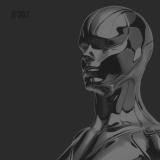
Oráculo Records has always had a special interest in pushing electronic music towards unexplored territories, and it is precisely within this microcosm that IP307 emerges. Blending the most dub- infused and mechanical forms of electro with industrial, EBM and even post-punk, the project delivers a hypnotic, forceful and deeply cathartic sound.
Behind IP307 is Israel Padilla, founder of Banshees Records and one of the leading figures of the industrial scene in the Iberian Peninsula. With “IP307.1”, he presents six interconnected compositions, each with its own distinct identity while contributing to a coherent vision of seemingly opposing styles, reimagined into a singular language.
The result is neither a nostalgic exercise nor a stylistic collage. Instead, it reflects the experience, technical mastery and artistic vision of someone fully capable of expanding the path opened by pioneers such as Clock DVA in their later works, or Atom™, both through his solo output and as part of ASA alongside Esplendor Geométrico.
New sonic artillery for the most forward-thinking listeners already embracing this emerging strand of dark electro through our recent releases such as Occulimus by Mystic Letter K or the work of Maman Küsters, “IP307.1” offers another essential chapter in the evolution of this new form of sound. Welcome to the future. Welcome to IP307.
debe ser publicado en 28.09.2026

There’s an alternate reality where everyone makes a living wage and the cleanest buses you’ve ever seen arrive every other minute. Where the most intense songs are about confessing your love to a crush at the apple orchard, and where gentle feelings and chaotic energy are inseparable best friends. This is the timeline where Cootie Catcher is right at home. This Toronto based four-piece exudes both vulnerability and unbridled excitement, creating a sound that hypercharges the open-hearted tenderness of twee pop with spiraling synths and giddy electronics. New album Something We All Got is the clearest and most vibrant reading of Cootie Catcher’s vision yet, with songs of sweetness, nervousness, and expectancy that beam out unguarded.
After releasing music made primarily in basement recording environments, Something We All Got is the band’s first flirtation with studio recording. The edges are still sharp, however, with some parts assembled from time-honored lo-fi methods and fun, personally-sourced samples seeping into the production. The sound is explosive and upbeat, with euphoric guitars, bubbly synth lines, speedy drums both played and programmed, and all other manner of sound constantly colliding. Cootie Catcher has three songwriters, Sophia Chavez, Anita Fowl, and Nolan Jakupovski, all of whom have distinctive voices but still manage to overlap in their writing on shared concerns like navigating the lines of romantic and platonic relationships, their city’s social scenes, and struggles in both the microcosmic experience of playing in a band and the zoomed-out challenges of living through late-stage capitalism.
Joy still touches every surface of Something We All Got. “Quarter Note Rock” bounces around the room in a fit of jangling guitar chords, scratched samples, and interplay between breakbeat loops and somersaulting live drums. It’s a blast of positivity even with lyrics about how disappointing it can be to meet your heroes. A smiling electro pop instrumental supports lyrics about having to step painfully away from an almost realized love on “Gingham Dress,” a song that subverts themes of domesticity as a backdrop for the dashed wilt of hopeless devotion.
Cootie Catcher rolls down hills and jumps through flaming hoops throughout Something We All Got without ever dumbing down the visceral emotions that drive these songs. There’s a palpable tension between the band’s exhilarating sonics and the raw, often uneasy sentiments expressed, but it’s an integral part of what makes them unique. Rather than hide behind the kind of calculated vagueness that plagues so much of the indie rock landscape in the time of cursed algorithms, Cootie Catcher runs full-speed toward every confusion and excitement, fearlessly direct and embracing the reality they’re in.
debe ser publicado en 03.04.2026

Baptized with a name derived from astrophysical theories about dark matter and black holes, THE HOLEUM was formed in 2014 in Alicante, Spain. Founded by former members of NahemaH, Demised, quantumXperience, Hela, Neptunian Sun, and Priest of Dawn, the quintet set out to push the boundaries of heavy music and to intensify the emotional impact of darkness in sound. Their concept is both cosmic and sonic: “THE HOLEUM is related to the dark matter that forms the black holes in the universe. THE HOLEUM is not a black hole, but black holes are formed by The Holeum. That is the idea from which we extract our concept – we are a sonic and cosmic vision of the sublime.” With their third album “Ensis” (2025), the band continues its journey through experimental metal, death doom, melodic metal, and post-metal. This work is more than a continuation – it is a condensation and expansion of their previous soundscape. “Ensis” reveals itself as finely nuanced, challenging, yet at the same time profoundly sensitive and multifaceted. The songs unfold like cosmic landscapes where heaviness and melancholy meet subtle emotionality. The intensity remains palpable, but it is complemented by a deeper sensitivity that draws the listener into a fragile balance between harshness and delicacy. “Ensis” is an album that demands and touches at once – a work that makes the complexity of human existence audible in the mirror of the universe.
debe ser publicado en 20.03.2026

For more than three decades, Converge have delivered musical and emotional catharsis, putting purpose before perception and intent before interpretation. Whether it’s their 2001 landmark recording Jane Doe or their 2021 Bloodmoon: I collaboration with Chelsea Wolfe, they have created some of the most compelling music, lyrics, and visual art of the 21st century. During that time, fewer bands have had a greater impact on the underground imagination. It seems unlikely that anyone who has been making music for this long would create one of their best works for their eleventh album, in their 35th year as a band. And yet: Love is Not Enough might be the apotheosis of Converge’s decades-long journey through the punk, hardcore and metal microcosm. What vocalist/lyricist Jacob Bannon, guitarist/producer Kurt Ballou, bassist/vocalist Nate Newton and drummer Ben Koller have created is a strident artistic statement on the turmoil of living that hones their collective strengths to a razor’s edge. There isn’t an ounce of fat. Every song moves with a power and purpose that eclipses their human origins, that speaks to the anger, pain, and frustration of the modern age.
debe ser publicado en 13.03.2026

There’s an alternate reality where everyone makes a living wage and the cleanest buses you’ve ever seen arrive every other minute. Where the most intense songs are about confessing your love to a crush at the apple orchard, and where gentle feelings and chaotic energy are inseparable best friends. This is the timeline where Cootie Catcher is right at home. This Toronto based four-piece exudes both vulnerability and unbridled excitement, creating a sound that hypercharges the open-hearted tenderness of twee pop with spiraling synths and giddy electronics. New album Something We All Got is the clearest and most vibrant reading of Cootie Catcher’s vision yet, with songs of sweetness, nervousness, and expectancy that beam out unguarded.
After releasing music made primarily in basement recording environments, Something We All Got is the band’s first flirtation with studio recording. The edges are still sharp, however, with some parts assembled from time-honored lo-fi methods and fun, personally-sourced samples seeping into the production. The sound is explosive and upbeat, with euphoric guitars, bubbly synth lines, speedy drums both played and programmed, and all other manner of sound constantly colliding. Cootie Catcher has three songwriters, Sophia Chavez, Anita Fowl, and Nolan Jakupovski, all of whom have distinctive voices but still manage to overlap in their writing on shared concerns like navigating the lines of romantic and platonic relationships, their city’s social scenes, and struggles in both the microcosmic experience of playing in a band and the zoomed-out challenges of living through late-stage capitalism.
Joy still touches every surface of Something We All Got. “Quarter Note Rock” bounces around the room in a fit of jangling guitar chords, scratched samples, and interplay between breakbeat loops and somersaulting live drums. It’s a blast of positivity even with lyrics about how disappointing it can be to meet your heroes. A smiling electro pop instrumental supports lyrics about having to step painfully away from an almost realized love on “Gingham Dress,” a song that subverts themes of domesticity as a backdrop for the dashed wilt of hopeless devotion.
Cootie Catcher rolls down hills and jumps through flaming hoops throughout Something We All Got without ever dumbing down the visceral emotions that drive these songs. There’s a palpable tension between the band’s exhilarating sonics and the raw, often uneasy sentiments expressed, but it’s an integral part of what makes them unique. Rather than hide behind the kind of calculated vagueness that plagues so much of the indie rock landscape in the time of cursed algorithms, Cootie Catcher runs full-speed toward every confusion and excitement, fearlessly direct and embracing the reality they’re in.
debe ser publicado en 27.02.2026

At the start of this summer, following a three-year hiatus for Daphni (punctuated only by his first ever collaborative Daphni track ‘Unidos’ alongside Sofia Kourtesis), he dropped ‘Sad Piano House’. The track represented something of a continuation in the Daphni catalogue, its roots growing from Cherry’s ‘Cloudy’ and its subsequent Kelbin remix, something in that song’s makeup having a profound effect when played on dancefloors by Snaith and countless others. ‘Sad Piano House’ deployed more intangibly irresistible bendy piano to equally satisfying effect and continues to achieve similarly rhapsodic dancefloor saturation.
Though a sizeable gap for Daphni releases, between Cherry and Butterfly however of course sits Honey, the latest Caribou album and one that saw the more instantaneous and dancefloor leaning traits of Daphni peaking through the cracks more than ever before. This blurring of the lines leads to an intriguing collaboration in Butterfly’s lead single ‘Waiting So Long (feat. Caribou)’. An unlikely duo - in that both artists are the same man, Dan Snaith - ‘Waiting So Long’ is not so much an identity crisis, ego trip, or the result of a chemical spill in the Snaith laboratory. It’s simply a track that Snaith felt for the first time belongs to both aliases, and might appeal to fans of both. He has never sung on a Daphni track before, and did not set out with the intention to do so this time, and yet this strange billing was born.
Daphni music has always been Snaith’s way of hitting directly to the core of the dancefloors he spends so much of his time playing to, and those dancefloors have been steadily expanding as his name grows, with the music following suit. This album however also draws from further back with a definite kinship to the very first Daphni album, the invigorating bag of ideas that was Jiaolong.
Butterfly is a showcase of the wonderful variety and surprising twists and turns that made that album such an exciting new prospect and that still to this day make Snaith such an intriguing DJ. There are more heavy hitters here, tracks that fill those dancefloors better than anyone, like ‘Clap Your Hands’ which picks up the energy of ‘Sad Piano House’ and flips it, exposing the gritty and intoxicating underbelly of Snaith’s hitmaking side, while retaining the playful urgency that runs through all of his work of late. Meanwhile ‘Hang’’s comic-strip horns are unpinned by gleeful force, unrelenting and thrillingly unshakeable. Elsewhere though comes a clutch of other tunes that might creep out somewhere more off the beaten path, a path Snaith has never stopped seeking in amongst his larger billings. ‘Lucky’ is squirmy and elusively intoxicating, ‘Invention’ skitters down meandering, inviting corridors, ‘Talk To Me’ grumbles and broods in the murk, and ‘Miles Smiles’ could roll on endlessly, so confident in its groove. There are no obvious peaks in these tracks or unifying moments, in fact many of them really have no business being on the dancefloor at all, and yet in the right setting, they could be the most fun to be had all night.
One such club is a good microcosm for the ethos of Butterfly as a whole. “Around the time I was finishing up this album I played a long set in a club called Open Ground in Wuppertal, Germany.” Snaith recalls, “It’s kind of, in one sense, the platonic ideal of the kind of club I’d want to play in. Every single decision has been taken, at great expense, with the aim of making the perfect sounding medium sized club room. But on top of it being the perfect acoustic environment it also is run by an amazing collection of people in a way that gives it a sense of community that dance music at its best provides. It is an absolute pleasure to play in that room to a crowd of people who come from all over. Playing in there you feel like you can play anything, and I played works in progress of pretty much every track on this album in my set there. Don’t get me wrong, I love playing a short set at a festival or in a more raw warehouse kind of club where you bang it out and only really functional music works but on record I guess the point of these Daphni records is to keep in mind a more expansive idea of dance music where the parameters are broad and the church is broad. I think that actually, putting really functional stuff next to weirder tracks (both on an album and in a dj set) might be the thing that’s still most interesting to me.”
This is the feeling that’s most palpable on Butterfly, and in every single time you see Snaith DJ. Right from the inception of the Daphni alias - and even before that – the thrill of trying stuff out, pushing at the boundaries has always been there and on Butterfly is present in all its twists and turns. It leaps all over the place and yet it hangs together, never feeling like a grab bag of dancefloor utilities but rather a distillation of all the strings to Snaith’s bow, exhilaratingly human and unified by one singular concept – simple and joyful exploration.
Haga su pedido ahora y le encargaremos el artículo en nuestro proveedor.

The follow-up to 2024’s "Perpetual Eden" sees Bloody Head stretch out and capture the cosmic sprawl of their live gigs on record. Available on limited-edition LP with spot-varnished sleeve.
After finding their Perpetual Eden and then seeing it violently retrograde, Bloody Head return with a new transmission devoted to the pendulum’s swing and the big wheel’s turn.
The big wheel turns and the seasons turn and we turn and it all just keeps on spinning away… elliptic, off kilter, centres not holding, the whole merry-go-round whirling and dissolving and coagulating, perpetually.
The CHILDREN OF THE DUSK and the sundry weirdoes and creeps depicted on the cover painting, channelled by Danny Roberts 777, all spinning and singing and sinning as they rattle along… in some sort of strange, discordant VIBRATORY AFFINITY with themselves/each other/it all.
Stay a while and take the time to BEND DOWN AND KISS THE GROUND/smell the roses/find your Eden, in and amongst the nooks and cracks and crannies and in the thin, strange places.
TIME AS VEILED ETERNITY is a microcosm of the whole merry Shambala, pushing and pulling and coming together and falling apar
Recorded, mixed and mastered by James Atkinson at the Stationhouse, Leeds. The session almost kiboshed by Storm Éowyn. A sprawling mass/mess which oozes and lurches from bloody minded heaviness to meditative reflection to unsettling delirium and back again, ending in total sonic breakdown. More focused and restrained, more reckless and chaotic. There is No time, to every season some sort of purpose.
debe ser publicado en 23.01.2026

TIMEPOINT is the studio album distilled from Stéphane Bissières’ eponymous audiovisual performance, where modular synthesis meets generative real-time visuals. In the live show, sound and image are intertwined: each musical gesture informs a visual response, creating a dynamic, evolving environment where music and visuals interact organically.
Paris-based composer and new media artist Stéphane Bissières works at the intersection of electronic music, generative art, and cybernetics. He develops algorithmic systems that explore timbre, structure, and the interplay of energies, translating data into immersive sensory experiences.
For TIMEPOINT, Bissières transforms the live, algorithmic energy into a self-contained sonic journey. Using modular synthesis and generative composition, he builds intricate, evolving textures that balance chaos and structure — a sonic ecosystem reflecting movement, pattern, and organic order.
The music explores timbre as a central element, sculpting sounds that resonate with the visual patterns of the performance. Each track functions as a microcosm of the show: algorithmically generated sequences, cybernetic textures, and evolving layers converge to form a lush, immersive soundscape.
TIMEPOINT invites listeners to explore a world where technology, imagination, and organic structure coexist. It’s an intimate translation of a live audiovisual universe, now accessible as a focused listening experience.
debe ser publicado en 12.12.2025

Le Motel and Bruce Wijn met at school, during a school art trip to Munich. They went separate ways for a long time.
Hailing from Brussels, Le Motel's world is a vortex of sight and sound that takes in the many and varied corners of the planet. As a music producer and film composer his versatility has taken him to festivals and clubs in every direction as naturally as he has ventured out to the less accessible areas of the globe as a field recordist. It's somewhere in between these spaces that Le Motel operates, gathering unique experiences and sounds to channel through his studio.
Bruce Wijn is a Brussels-based guitarist who played in several postrock kind projects such as Sound Film, 52 Commercial Road, or more shoegaze Lazy Sin. These collaborations gave him the opportunity to perform in various locations in Belgium, France, England, and the USA. As a musician, his focus has always been attracted by progressively built rhythmic melodies, which would eventually turn into long reverberated or distorted swells, or the otherway round.
All these experiences brought them both to the idea of scoring movies with different yet similar approaches.
That's how their first collaboration happened as Le Motel was working on the soundtrack of the movie Binti, and invited Bruce Wijn for the track Exode, in 2018. Since then, they've been working on other scoring projects, such as the feature film 'Aller Retour' more recently.
Alongside the movie scoring activities another audiovisual live project was born, in collaboration with Antoine de Schuyter and his mesmerizing images.
This one is more focusing on tape textures, field recordings and glitchy effects in order to build atmospheric tracks that they decided to bring together in a first E.P. 'MAAR'.
'MAAR' is elaborated as a soundtrack for an imaginary journey between cold seas and volcanoes explorations.
From the first echoing sounds of playing kids on the shoreside in the opening track 'La Perche' Le Motel & Bruce Wijn let you slide in a technicolor dreamworld, reverbing slowly innocent childhood memories into a chilled, out of range, future.
'MAAR' dives deep into a kaleidoscopic microcosmos watching Nautilus playing hide and seek with 'Captain Ahab' floating on sonic breaking waves, while seagulls gently spread their wings flying through the breezy and misty clouds of Blankenberge.
Lava vulcanica slowly melts in the sad euphorica of the cold North Sea, crystallizing sounds only Le Motel and Bruce Wijn can deliver.
Haga su pedido ahora y le encargaremos el artículo en nuestro proveedor.

“Only Skies Stay Eternal” is a full length album from Fille – the final chapter in a sonic trilogy that began earlier with two captivating singles. A restless explorer in the oversaturated wilderness of digital soundscapes, Fille brings her vision to a powerful conclusion.
This album dives into profound and final questions: the meaning of human existence, the nature of dreams and reality, the evolutionary mission of our species, and the fragile, intricate microcosm of the self. Fille embraces the contrasts of our new era – the tension and harmony between technology and nature, the digital and the analog. Her sound is a refreshing fusion of IDM, breakbeat, and dreamy textures, layered with extraterrestrial vocals that feel both ancient and futuristic.
Haga su pedido ahora y le encargaremos el artículo en nuestro proveedor.

Teddy Abrams, the Grammy Award winning conductor, composer, and multi-instrumentalist deemed by the New York Times as a “Maestro of the People,” and named Musical America’s 2022 Conductor of the Year, announces Preludes, an album of solo piano works composed and performed by Abrams and produced by Gabriel Kahane and Casey Foubert, via New Amsterdam Records.
Preludes is a contemplative, personal, and playful set of simple solo piano pieces whose recorded sonic identities were developed in collaboration with Gabriel Kahane and Casey Foubert. Kahane and Foubert “identified the personality of each Prelude and found a sound world for every track to match the intrinsic characteristics of the individual works.” The 16 pieces that make up Preludes take inspiration from the canon of classical piano works such as Bach’s Inventions and Bartok’s Mikrokosmos, yet they are imbued with Abrams’ immaculate compositional language and a depth in production uncommon to “classical” works.
Coming on the tail end of Abram’s Grammy Award Winning Piano Concerto (2023), Abrams explains: “After the crazy, frenetic, joyful energy of my Piano Concerto, I wanted to create a piano work that explored a completely different energy and soundscape. While the Piano Concerto is overtly populist, referencing American genres like jazz, funk, and Gospel music, the Preludes are meant to be introspective, intimate, and simple enough for pianists of many skill levels to play in both performance and home settings.
debe ser publicado en 25.07.2025

Nothing is lost on Cash Langdon. It’s something you can hear in the observational lyrics of his last record, 2022’s Sinister Feeling; but on its follow-up, Dogs, you can also hear it in the camaraderie he cultivates playing live with his band Meadow Dust, a sonic energy that gives off the heat of his native Birmingham. The trio’s fuzzy take on heavy country rock has a worn-in no-fussiness that recalls Neil Young & Crazy
Horse – nothing overthought, nothing understated. And like Young, Langdon’s voice is simultaneously earnest and world-weary – but there’s a sense of humor, too, and a resignation to keeping on (“Dogs,” “Magic Again”). Recorded at Portside Studios (the former location of the legendary Muscle Shoals Sound) in just two days, engineer Brad Timko (Dan Sartain, St. Paul and The Broken Bones) captured Langdon and Meadow Dust at their fiercest yet. The title track “Dogs” and side B heater “Dead Dogs” both take inspiration from the wild dogs Langdon encountered in his neighborhood at the time of writing the record, where he wondered about the sick twist of fate that renders one dog a pet and another a threat. Across songs, he examines how oppressive cycles overlap, intersecting the personal and the societal at all times. The heavy yet melodic “Lilac Whiskey Noise” is the heartbeat of the record, written following an active shooter event that Langdon witnessed at work in 2016. It’s an indictment – not of the perpetrator – but of the systems of power that enable such an act. It’s a microcosm for all of the themes on the album, too: the ongoing violence of simply being awake to the world around you, and the resolve to stay awake anyway.
On the crunchy album-closer “Nothing’s Good Anymore,” Langdon sings about overhearing someone say just that – and you can tell he’s tempted to agree. He’s going to find what kernel of beauty he can. Dogs is a sonic map for finding that beauty in just about anything.
debe ser publicado en 02.05.2025

"Atria" is an exceptionally deep, easy-to-play-on-repeat work from Denver-based FOANS, a continuity of heartbreaking melodic interludes and nostalgic, otherworldly softness. Originally self-released in 2014, "Atria", comprised of 9 tracks simply titled "Diorama", is a plunge into dubby textures, meditative rhythmic cadence, lamenting chords, and shimmering neon pads. While growing to become a household name, especially for fans of 100% SILK and the now sadly defunct Danish label Speaker Footage, FOANS has offered numerous beloved releases over the last decade, showing listeners who stumble across his artistic microcosm that he has his own trademark sound, one that is often very recognizable even in a crowded space; a remnant from his early years as a bedroom producer, Atria shows us that FOANS’ sound has always shimmered, has always moved through heavy emotions and uneasy silliness. It will likely continue to do so for years to come.
Perfect Location Records is honored to commit this stunning work to vinyl for the first time, with a digital remaster for digital collectors as well. The record will be packaged in a black die-cut jacket and include a download code along with a small matte print of the acrylic-on-canvas cover art by painter Andrea Willems.
Limited run of 200 physical copies.
El artículo no se ha publicado. Tú puedes reservar ahora el artículo y después de ser pagado se te será enviado.

Kumio Kurachi is a Japanese singer-songwriter who has been active since the 1980's.
This is his 11th solo album and only the second to be released outside of Japan following ‘Sound of Turning Earth’ (2018) on bison. Though his songs are written and performed primarily on guitar, “Open Today” is a return to Kurachi’s full, multi-instrumental recording style - featuring drums, bass, strings, keys and Kurachi’s rich, distinctive vocals in multiple voicings. Incredibly, all instrumental performances and arrangements were performed and recorded by Kurachi himself - marking a brilliant return to the fully fleshed out visionary world we fell in love with on Supermarket Chitose (Enban, 2006). The super fine detail and dense landscapes of ‘Open Today’ should come as no surprise really - Kurachi is an illustrator by trade and it bleeds right through to his music. Even to the non-native speaker Kurachi’s vocals hold centre stage - at times enormous and thundering over urgent guitar and toms, then switching to softly spoken words amongst keys. Frequently Kurachi multiplies, whether multitracking himself or summoning voices for the characters he writes from sightings on train platforms or supermarkets. His lyrics - translated to English for both formats - are more like poetry, and though written about the mundane they quickly become surreal, bringing the quality of dreams into the everyday. The hours spent on buses, trains or walking home towards a cheap flat - familiar to us all - are catalysts for microcosms of detail.
Again, we shouldn’t be surprised - Kurachi is well known in Japan for winning the national championship of NHK's "Poetry Boxing" in 2002, which also might explain his amazing Discogs photo. Poet, illustrator, multi-instrumentalist - Kurachi is thought of by many as a genius. He’s worked with Jim O’Rourke, Tori Kudo, Eiko Ishibashi and Taku Unami (who did the mastering on this LP). There are lines to be drawn between Kurachi and Kazuki Tomokawa or Kan Mikami, but also Francis Plagne and Fairport Convention.
Ultimately though there is nothing else like it - it’s a brand of strange songcraft that’s totally captivating.
debe ser publicado en 06.12.2024
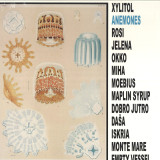
Xylitol is the alias of Catherine Backhouse, producer and DJ under the name DJ Bunnyhausen. She was a resident DJ at Kosmische, the now dormant Krautrock club and is a fan of jungle and hardcore. She currently co-hosts the radio show Slav To The Rhythm, which focuses on vintage central and eastern European pop and electronica and she's also co-writing a book on Yugoslavian pop culture. 'Anemones' is a total project from the cover to the music. Backhouse is fascinated by early botanical illustrations of anemones and other aquatic fauna, and how the act of taxonomy reveals as much about human psychology, desire and sublimation as it does about the organic specimen as a thing in itself. Each track is a microcosm of this 'other life', an allegory for the extraordinary potential latent within bodies that the dancefloor has the power to activate. Using early jungle and garage as starting points to connect dots and open up contrasts between dance music and vintage electronics, Backhouse finds a sweet spot which, in her words "feels like something that's simultaneously still and ancient yet propulsive and ecstatic." Not afraid of letting the the hiss and flutter of the music show, 'Anemones' holds attention with ancient bubbling synths and gracefully drifting arpeggiations, occasionally brought to heel by charming melodies, all accompanied by breakbeats that explode like fireworks. 'Anemones' has a lively and unpolished aesthetic that's a kindred spirit to Nondi_'s 2023 album of smeary, water-damaged footwork, 'Flood City Trax'. 'Moebius' pits the spaced out neon chords of the track's namesake against absolutely tearing breaks, allowing time for this almost overwhelming combination to become near enough transcendental, while the bleeping melody and sad slavic chorus motif in 'Okko' feels like an artifact from an alternative future. The Drexciya meets 2-step garage of 'Dobro Jutro' creates a welcome respite at the album's midpoint before the flow builds up again to 'Daša' with its glassy sounds from a lost radiophonic workshop miniature meeting bruising kicks and snares. Meanwhile 'Iskria' has purring synth chords and 8-bit melodies evoking the cosmonaut age. The subliminal influence of the Yugo era is felt in DIY synthesis and Mitteleuropean melody and seen in song titles such as 'Jelena', 'Miha', 'Daša' (named after novelist Daša Drndič) and 'Iskria' (taken from the fictitious Balkan region in Ottessa Moshfegh's bleak fable 'Lapvona'). 'Anemones' very effectively folds experimental genres from different times and places into a very enjoyable new sound.
Haga su pedido ahora y le encargaremos el artículo en nuestro proveedor.

" The myths of our Western tradition have often captivated me, whether they be Greek, Roman, or Judeo-Christian. Myths are a transcendent collective narrative; a buried memory, not intellectual but spiritual, alive to all the senses of another world. These stories often describe forbidding passages guarded by terrifying monster-like creatures, which, if conquered, give access to other planes. 'Door 1 - Door 2' are two of these planes, opening to prophecy and kingship." (Christopher Chaplin)
Following the release of his powerful and dark album trilogy "Je suis le Ténébreux", "Paradise Lost" and "M", British avant-garde composer Christopher James Chaplin has unveiled his latest project in 2021: "Patriarchs", released to critical acclaim. This project is a musical exploration of the Antediluvian patriarchs, from Adam to Noah, and is another captivating and daring work of art that straddles experimental electronic music and the avant-garde. Chaplin has also been wowing audiences with his live performances, releasing the concert album "Patriarchs Live" to shorten the wait for his new studio album "Door 1 Door 2", which will be released on September 20, 2024.
It is another powerful work of art, located between electronic music and avant-garde. Once again, Christopher Chaplin breaks genre boundaries and manages to condense experimental and colorful electronics in chamber music in a unique way, transporting the listener into mental and spatiotemporal intermediate states. A completely unique musical microcosm that can also be experienced in his impressive solo live performances.
debe ser publicado en 20.09.2024

ERIN Collective is an ensemble of musicians from the Bologna scene born in March 2022 from an idea/project by Gionata Lazzari
shared over time by Valentino Pirino, Filippo Cassani, Andrea Lazzari, Marcello Pala, Federico Magazzeni, Giuseppe Sardina and
Francesco Antico. Their repertoire, inspired by the Afrobeat of the 70s, is composed of original songs written by Pirino/Lazzari and
arranged together with the other members of the group. The style looks to Afrobeat and some of its artists such as Fela Kuti, and
Ebo Taylor, but also focuses on contemporaneity and other artists such as Antibalas, Budos Band, Tony Allen and other sounds from
other areas of Africa. “Alternative Positive”, anticipated by the singles “Kalam Layl” and “Alafia” is their first LP, which follows the
release of the Ep “Same Blood” in 2023 and which marks the meeting between the band and the label Irma Records. The album,
strongly influenced by Afrobeat sounds with funk nuances, contains 8 original songs written by Pirino / Lazzari and arranged together with the other members of the group, three of which are instrumental, 4 sung by the Nigerian artist Devon Miles and one by the
Moroccan artist Reda Zine. The songs on “Alternative Positive” all have a social value: for ERIN Collective, music takes a stand
against inequalities and tries to break down borders and barriers, calling on everyone to commit themselves to rights for peace for
resistance to racism and inequalities of all kinds. All this requires commitment and a choice. Music makes you dance, makes you
smile, raises your spirits, creates bonds. ÈRÍN means smile, laughter in Yoruba language and it is through this attitude that one can
meet the other and that one can defeat fears, borders, cultural differences, hatred and wars. The titles and the meaning of the lyrics
of this debut album recall this horizon.
Haga su pedido ahora y le encargaremos el artículo en nuestro proveedor.

Place: - Air Texture’s regional nonprofit series focused on local environmental causes, features Tunisia for its next in the series curated by Azu Tiwaline and Shinigami San.
As old veterans of electronic deep explorations they are driven by the aim to provide a general view and an état des lieux of the electronic microcosm of this scene supporting its different directions and creative aspects. This compilation is an invitation to have a deep dig into electronic Tunisia.
The artists curated to participate represent different backgrounds and musical perspectives. From score composers to established producers, crossing the path of more experimental ones the curators offer a large view of the ensemble of the different electronic approaches in Tunisia. Different generations are also meeting through this compilation, regrouping almost four decades of producers and sonic creators.
Haga su pedido ahora y le encargaremos el artículo en nuestro proveedor.

The second LP by Tokyo ambient conceptualists UNKNOWN ME began as a commission for historic Japanese cosmetic conglomerate Shiseido, conjuring audio approximations of seasons and scents, but soon flowered into its own refracted and rarefied environment: Bitokagaku. Translated as “beauty and science,” the album is the foursome’s first composed solely with software, reflecting the collection’s utopian, laboratorial muse.
From levitational electronica (“A Rainbow in Meditative Air”) and vaporous downtempo (“Dancing Leaves”) to planetarium reverie (“Kitsune No Yomeiri”) and AI IDM (“Retreat Beats”), the music moves like weather patterns in a bio-dome: dazzling, microcosmic, and delicately calibrated. Percolating synths crossfade with field recordings from Shiseido’s research division; the sound of streams and distant birds blur into a processed haze; clinical voices read lists of precious stones. It’s a vision of new age as soft robotics, of serenity streamlined by sentient systems.
UM’s team of engineers (Yakenohara, P-RUFF, H. Takahashi, and Osawa Yudai) cite an eclectic swath of inspirations behind Bitokagaku – molecules, stars, Kenji Miyazawa, Akira Kurosawa, even “the sparkle of rainbows” – but their guiding artistic principle is as ancient as it is eternal: “beauty.”
Haga su pedido ahora y le encargaremos el artículo en nuestro proveedor.

idal Perspectives is an album by Giovanni Di Domenico, Pak Yan Lau, and John Also Bennett. Recorded across a single afternoon in Brussels, Belgium, the album’s four parts are a rippling alchemy of processed Rhodes piano, sizzling ceramics, and liquified bass flute, a rare meeting of three unique voices from the contemporary music landscape that manages to flow with the effortless inevitability of the oceanic tides.
Giovanni Di Domenico, an accomplished composer and prolific collaborator who has released albums with Jim O’Rourke, Eiko Ishibashi and Akira Sakata, among many others, initiated the collaboration with Bennett after the two met at a record fair in Saint-Gilles, Belgium and bonded over a shared inquisitiveness for unconventional sonic combinations. Along with Pak Yan Lau, a Belgian-born sound artist and improviser who has developed her own rich and unique sonic footprint, the trio entered the studio with little, if any, discussion beforehand, jumping right into playing without preconceived structures. The resulting recordings had a depth of sound and emotional resonance surprising even them, with finished pieces emerging from single live takes and minor edits.
Bennett, known for his solo work as well as his collaborations with Christina Vantzou as CV & JAB, gives us here a taste of his bass flute in free flowing form. Unconstricted by concept, joyfully and lazily bouncing off the melodic shimmers of Di Domenico’s Rhodes, Bennett uses his flute’s pitch information to trigger long tones that emerge like rays of light piercing through low hanging clouds - moments of clarity among a clicking world of sonic stimuli. Meanwhile, Lau’s crackling and sometimes dissonant contributions on prepared piano, live hydrophone, and custom ceramic sound objects balance out the triangle, adding a sense of microcosmic intrigue that allows the music to seamlessly ebb and flow between moments of comfort and foggy uncertainty.
The album’s title track and climax, the eighteen minute “Tidal Perspectives”, drifts in with some kind of clarity, Lau’s glinting tonal waves edging in just beyond the horizon lines drawn by Di Domenico’s Rhodes and Bennett’s bass flute. But like the tidal flows of the Atlantic that inspired its title, just as you begin to perceive what’s happening, the currents have already taken you out to sea. Tidal Perspectives will be released on June 14th, 2024, in a limited edition of 300 LPs by Editions Basilic.
debe ser publicado en 14.06.2024

Ring Ring Ring! The dawn of a fresh day brings a new release near. Squid Recordings inks its way into existence with a heavy foot on rave Americana.
With releases on Rush Hour, Velocity and his own Nylon Recordings, James ‘Nylon’ Thomas sees his Nylosphere project reborn, remastered and retouched (over two decades later) for the modern world.
The two widely varying title tracks, backed with equally contrasting mixes, are a microcosm of what late 90s, American-made dance music embodied. That is, a web of genre hopping maximalism, analog driven punchiness and a beautiful uncertainty to a post millennia world.
Haga su pedido ahora y le encargaremos el artículo en nuestro proveedor.

Born in 1977, in Malang, East Java, Wukir Suryadi began playing music for theatre at the age of 12 with the Idiot The-ater Studio, and later with the Rendra Theater Workshop. In his solo work, and as a member of Senyawa, Error Scream, Bendera Hitam Setengah, Potro Joyo and other groups, Wukir breaks the boundaries of traditional music, death metal and avant-garde performance. On this new release, “Cycle and Prayer,” recorded in 2023, he expands the edges of his unique artistic world further, by digging in to meditative improvisation, art, and community building in his home workshop in the mountains of central Java. These recordings vibrate inwards, toward the microcosmic ecologies of forests and rivers; they distort outwards, resonating with global waves of apocalyptic change that are forcing all living beings to the edges of existence on earth. The result is a meditative poem that moves, as its titles an-nounce, from phenomena to phenomena, praying that humans find a way out from the depths of the depths to the light that illuminates the soul.
An essential mode of creative work for Wukir is the creation of unique instruments, using these sound sources as “bullets of expression.” In addition to the spear-like tube zither Bambu Wukir, he has created the Solet, Enthong, Garu, Luku, Arrows, and Industrial Mutant instruments, which in addition to being used in live performance, have been exhibited in the Instrument Builders Project and the 2017 Jakarta Biennale. In the past few years, Wukir has begun to collaborate with local guitar makers, carpenters, and suppliers of native endemic wood in the mountain region of Salatiga. Using earthen bricks along with local woods (suren, coconut, mindi, and waru lengis) as building materials, he constructed a new studio and workshop space in Tingkir, where this album was made. The trees, water and air of the local environment have exerted a powerful influence in Wukir’s documentations of instrumental sound. On this recording, he uses the simple Cetta guitar, an instrument designed in Bali and made for Indonesian children and local communities of folk and popular musicians, in order to explore the different sonic characteristics of a more “normal” instrument built from local wood.
The themes of the album -- cycle and prayer -- arise from a foreboding series of meta-events that shook Indonesia and the world over the past years, following one after the other: the COVID-19 pandemic, the Ukrainian-Russian war, the Kanjuruhan Stadium tragedy in which football supporters were gassed and killed by police, revelations of govern-ment failures and corruption, the rise of personal vehicles, the increasing disturbance of natural patterns of the rainy season and other ecological cycles. “In these waves of technology and narratives of truth made for certain interests, playing a sound at a certain frequency and repeating can try to bring images and feelings to a certain point of con-sciousness,” Wukir told me. “Sound is a prayer that creates a change, whether gradual or rapid, in the behaviour of living things, to face the demands of the time, as humans struggle to live according to what they believe.” The draw-ings and sketches used for the cover spontaneously emerged alongside the recordings, as an instinctive depiction of “time and sound, nature that is outside of oneself, and nature that is within.”
Haga su pedido ahora y le encargaremos el artículo en nuestro proveedor.

In many ways, the music of Writhing Squares could have only originated in Philadelphia; the city itself a microcosm of creatives, go-getters, freaks & weirdos that have coalesced into a supportive & boundary-pushing crew. Former Purling Hiss bassist Daniel Provenzano & Ecstatic Vision sax-player & vocalist Kevin Nickles' first musical missive was shot forth in 2013 (the self-released CDR "Live In Space") & various singles, split releases, albums (and a double-album) later we arrive at the duo's fourth full-length "Mythology", their third for Chicago-based Trouble In Mind Records. "Mythology" picks up the pieces left shattered by their previous double-album "Chart For The Solution" and reconnects the broken shards together like Kintsugi, the ancient Japanese technique for mending broken ceramics, infusing the breaks with powdered gold. The Squares themselves are like mad-scientists, taking the ruined detritus populating junk shops & surplus outlets & constructing their own sonic laboratories in their New Jersey basements to record, mix & tweak "Mythology"s eight tracks. Their new location allowed the band to regroup, reassess & reconstruct their sound from the ground up, shearing away the cosmic excess of 2021's "Chart For The Solution" to a sharper point. Tracks like `Barbarians' & `LEM' are classic Squares; brutal, aggressive, unwavering assault of Motorhead/Stooges-inflected sci-fi punk scree, while others like `Chromatophage's mutant funk & `Cerberus's techno-slink owe a serious debt to electric-era Miles Davis or Herbie Hancock & show that the group has more to offer than bludgeoning you with sonic force. Provenzano's bass & electronics are like a tank rolling across the terrain - a gnarly construct of Hawkwind-ian headiness & `Vincebus Eruptum's snarl - uncaring of what gets in the way. Nickles' brass vacillates between Stooges-influenced sleaze, jazzy no-wave stabs, & cacophonous sonic storms, strafing the listener into oblivion. The duo are joined on "Mythology" by drummer John Schoemaker - who contributed drums to "Chart For The Solution"s epic closing track `Epilogue' - whose percussive pulse adds an organic swing to The Square's sonics, particularly on album closer "The Damned Thing"s cosmic strut. "Mythology" tackles a multitude of themes, from fantastical tales of hellhound `Cerberus' or the comic-inspired "Eternity " to `Chromatophage's colorful/evil yarn about animals that eat colors (or a Magic: The Gathering card) to the true-life influenced `Acid Rain' that deals with the uncertainty of consuming drinking water after a chemical spill in the Delaware River. Elsewhere, `Ferrell' is an homage to the late, great Ferrell "Pharaoh" Sanders & `The Damned Thing' by a short horror story penned by Ambrose Bierce about an animal whose coloring is invisible to the naked eye. Writhing Squares are in a transitional phase, mapping out a new sonic mythology for themselves after crossing the event horizon into unknown space. "Mythology" is streaming on most DSPs & released on black vinyl & limited fluorescent green vinyl (while supplies last) on April 26th, 2024.
debe ser publicado en 26.04.2024

In many ways, the music of Writhing Squares could have only originated in Philadelphia; the city itself a microcosm of creatives, go-getters, freaks & weirdos that have coalesced into a supportive & boundary-pushing crew. Former Purling Hiss bassist Daniel Provenzano & Ecstatic Vision sax-player & vocalist Kevin Nickles' first musical missive was shot forth in 2013 (the self-released CDR "Live In Space") & various singles, split releases, albums (and a double-album) later we arrive at the duo's fourth full-length "Mythology", their third for Chicago-based Trouble In Mind Records. "Mythology" picks up the pieces left shattered by their previous double-album "Chart For The Solution" and reconnects the broken shards together like Kintsugi, the ancient Japanese technique for mending broken ceramics, infusing the breaks with powdered gold. The Squares themselves are like mad-scientists, taking the ruined detritus populating junk shops & surplus outlets & constructing their own sonic laboratories in their New Jersey basements to record, mix & tweak "Mythology"s eight tracks. Their new location allowed the band to regroup, reassess & reconstruct their sound from the ground up, shearing away the cosmic excess of 2021's "Chart For The Solution" to a sharper point. Tracks like `Barbarians' & `LEM' are classic Squares; brutal, aggressive, unwavering assault of Motorhead/Stooges-inflected sci-fi punk scree, while others like `Chromatophage's mutant funk & `Cerberus's techno-slink owe a serious debt to electric-era Miles Davis or Herbie Hancock & show that the group has more to offer than bludgeoning you with sonic force. Provenzano's bass & electronics are like a tank rolling across the terrain - a gnarly construct of Hawkwind-ian headiness & `Vincebus Eruptum's snarl - uncaring of what gets in the way. Nickles' brass vacillates between Stooges-influenced sleaze, jazzy no-wave stabs, & cacophonous sonic storms, strafing the listener into oblivion. The duo are joined on "Mythology" by drummer John Schoemaker - who contributed drums to "Chart For The Solution"s epic closing track `Epilogue' - whose percussive pulse adds an organic swing to The Square's sonics, particularly on album closer "The Damned Thing"s cosmic strut. "Mythology" tackles a multitude of themes, from fantastical tales of hellhound `Cerberus' or the comic-inspired "Eternity " to `Chromatophage's colorful/evil yarn about animals that eat colors (or a Magic: The Gathering card) to the true-life influenced `Acid Rain' that deals with the uncertainty of consuming drinking water after a chemical spill in the Delaware River. Elsewhere, `Ferrell' is an homage to the late, great Ferrell "Pharaoh" Sanders & `The Damned Thing' by a short horror story penned by Ambrose Bierce about an animal whose coloring is invisible to the naked eye. Writhing Squares are in a transitional phase, mapping out a new sonic mythology for themselves after crossing the event horizon into unknown space. "Mythology" is streaming on most DSPs & released on black vinyl & limited fluorescent green vinyl (while supplies last) on April 26th, 2024.
debe ser publicado en 26.04.2024

Tritt mit Tamás Kátais visionärem Projekt in das Reich des Avantgarde-Metal ein: Thy Catafalque. Seit mehr als zwei Jahrzehnten leistet Thy Catafalque meisterhaft Pionierarbeit im Bereich der extremen Metal-Musik.
Die Reise geht weiter mit Thy Catafalques zweitem Meisterwerk Microcosmos, einer Offenbarung, die die Dichotomie zwischen Black Metal und Avantgarde-Kunst fein ausbalanciert. Das ursprünglich 2001 erschienene Album erforscht strukturierte thematische Elemente, die vom Weltraum und dem weiten Kosmos inspiriert sind. Eine klangliche Entdeckungsreise, die die rastlose Abnutzung von Tremolo-gezupften Zweiklängen und subtil eingemischten Blastbeats beibehält, während die psychedelisch klingenden Gesänge, die den charakteristischen Sound von Thy Catafalque ausmachen, beibehalten werden.
Jetzt präsentiert Season of Mist stolz die offizielle Wiederveröffentlichung von Microcosmos und stellt damit sicher, dass dieses bahnbrechende Werk für die Nachwelt erhalten bleibt. Fans, sowohl erfahrene als auch neue, können in die Feinheiten von Kátais visionären Kompositionen eintauchen und die Verschmelzung von Aggression und Kunstfertigkeit erleben, die Thy Catafalque ausmacht.
debe ser publicado en 01.03.2024

Back in stock!
NULLPTR never fails. Since emerging in 2016 with the Optical LP, Eddie Symons' project has become a byword for top-draw contemporary electro productions. After triumphantly returning to Sheffield's Central Processing Unit with 2020's Future World full-length, NULLPTR follows that album up with a new quartet of machine-funk slammers. Striking a balance between highwire, twitchy rhythm programming and some deft textural work, the Terminus EP demonstrates exactly why the NULLPTR name is so respected in the world of electro.
The first half here almost showcases the two sides of the NULLPTR sound in microcosm. Opening track 'Connected' zips along like one of the racers from a Wip3out game. The 808s are all booming breakbeats and hissing-piston hats, with a jittery synth bassline nipping in and out of the spaces left vacant by the drums. Atop these swirl eerie keyboard pads, the reverb from them draping across the rest of the instruments like fog above a city. By contrast, following cut 'Mesospheric Cruise' is the yin to 'Connected's yang. Where its predecessor was tense and coiled, this lilting number is expansive and open like a primetime Virginia joint - though the point where the wistful house pads strip back to foreground the twinkle-toed electro beat still has a pleasing crunch to it.
The B-side of Terminus serves dystopian snap from the off. Genre masters Drexciya are invoked by 'Syndicate'. The needle-gun bassline here turns itself inside-out across these five minutes, and all the while the tune is laced with some evocative shadow-realm synth pads. A similar energy courses through the EP's closing title-track, a cut which also brings into play a booming four-to-the-flour that gives it an unstoppable sense of forward-motion. Like 'Connected' and 'Mesospheric Cruise' - indeed, like all of the NULLPTR material that Central Processing Unit has brought us down the years - these jams will sound positively devilish when deployed in a dark basement.
The Terminus EP sees electro don NULLPTR (Eddie Symons) deliver four slices of unadulterated machine-funk heat.
RIYL: Virginia, Cardopusher, Drexciya, Silicon Scally
Haga su pedido ahora y le encargaremos el artículo en nuestro proveedor.

There is a parallel, submerged dimension in which musicians meet when they improvise. Sound microcosms emerge in those moments, and this is precisely the magic that BOTTAZZ! wanted to photograph in their first album: BOTTAZZ! VOL.1.
A "live" album, capable of transmitting spontaneity, sonic truths, empathy, feelings; ingredients that are difficult to transmit by recording the instruments individually or with other techniques.
Recorded in the historic "Auditorium 900" studios, a true time achine, as well as an institution for music in Naples.
Auditorium 900 took up the challenge in the figure of sound engineer Fabrizio Piccolo and from here the sound of BOTTAZZ was born!
A sound made up of lysergic Funk trips, 70's influences in all possible nuances: from progressive funk to Santana's Hispanic rock, up to touching its darkest and most hidden latitudes; audio waves
nfluenced by the soundtracks of the cinematography linked to those times, organs, synths, percussion and wah wah guitars, which generate a melting pot in which nothing is taken for granted.
BOTTAZZ! VOL.1 is a ship's diary, a journey into which each sailor has inserted its own emotions accumulated over the years, thus giving us a sincere and genuine record. Happy navigation.
Haga su pedido ahora y le encargaremos el artículo en nuestro proveedor.
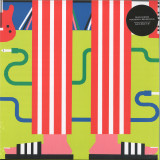
Felipe Gordon is a Colombian producer based in Bogota. He’s one of the most famous faces of latin american underground house music. He built a track record of pure house productions from the mid-2010s up until now, being Laurent Garnier-supported and releasing records with the most notorious house labels around the globe (Royal Oak, Razor-N-Tape, Toy Tonics, Local Talk, Shall Not Fade, etc.) His unique sonic touch, intertwining elements of raw analogue sounds from his synth collection and a strong hip-hop sampling background are allowing him to explore and revisit his influences to craft a solid musical signature.
Haga su pedido ahora y le encargaremos el artículo en nuestro proveedor.
