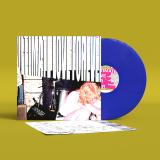
quête:men at work

Genres
Tout
Men At Work - Cargo

Men at Work already had an album in the Top Ten when the Australian ensemble released Cargo, which continued the momentum gained by its record-setting debut. As ambitious and even more diversified than its initial salvo, the 1983 effort firmly established the band as new-wave pioneers – a group whose goofy playfulness, sharp hooks, brass accents, and memorable choruses helped define the decade's landscape. Any doubts about Men at Work's quirky sensibility were promptly answered by the iconic cover art gracing this multi-platinum set.

Mastered on our world-renowned mastering system and pressed at RTI, this LP not only brings the artwork back into full-scale glory but also takes the enjoyably melodic pop-rock to new sonic heights courtesy of improved imaging, separation, and balance. Previously obscured details jump to the surface, and leader Colin Hay's unique voice takes on life-like dimensions that hover between the speakers.

While remaining true to the approach that garnered them a Grammy Award for Best New Artist, Men at Work expands the creative palette on Cargo by giving guitars a more prominent role and increasing the rhythmic textures. With the sweeping ballad "Overkill" and politically savvy cynicism of "It's a Mistake," the band furthered their radio domination and extended their run of Top 10 singles. A third hit, "Dr. Heckyll and Mr. Jive," cracked the Top 30. Well-tailored melodies and whimsical imagination definitely had a place in the public's consciousness, and no group understood this more.


As the final album captured by the original lineup, Cargo remains an indelible piece of the 1980s audio terrain and a reminder of the era's endless fun. Bolstered by lively saxophone solos, self-effacing humor, and instantly catchy refrains, the album is as good as excuse as any to turn on the stereo, sit down, forget your worries, and dance to leisurely pursuits so perfectly captured by this beloved group.

pré-commande14.08.2023

il devrait être publié sur 14.08.2023


Last In: 2026 years ago
Men At Work - Business As Usual

Business as Usual is the debut album of Australian new wave band Men at Work, which was originally released in 1981 and became one of the most successful albums internationally by an Australian group. It spent an unprecedented 15 weeks at No. 1 on the US Billboard 200 from late 1982 to early 1983, and five weeks at No. 1 in the United Kingdom Albums Chart in early 1983.

Business as Usual was also one of the highest selling Australian albums in the early 80s, with 6 million copies sold in the US and 15 million sold worldwide.

The first single Who Can It Be Now' was a strong top
3 hit single, but the second single Down Under' became a monster hit and reached the number 1 spot in several charts around the globe.

The high quality re-issue by Music On Vinyl has the original black and white (Australian) jacket artwork.

pas en stock

Commandez maintenant et nous commanderons l'article pour vous chez notre fournisseur.


Last In: 4 years ago
Muslimgauze - Mullah Said (2x12")

Muslimgauze

Mullah Said (2x12")

2x12inchMGARCHIVEVOL048
Staalplaat
26.03.2026

Those not familiar with Jones' style will listen slack-jawed at the sheer anticipatory nature of his sound collage. The five extended tracks are based on hypnotic and somewhat menacing grooves: a repetitive dub bass beat, waves of Middle Eastern strings and voices, layers of building hand percussion. The washes of sound and percussion come and go, often creating a sense of motion and change. All of the tracks are similar and even share elements. Mid-East tension is so accurately captured through the use of the region's instrumentation (especially percussion), sinister electronics, samples of men chanting, women crying, sounds culled from the horrors of war, and occasional angry distortion that the listener will be transported to the belly of the beast.

»Mullah Said« displays two aspects of the work of Muslimgauze. Firstly, musically, it is in the delightful drifting ambient vein. The percussion is mainly acoustic hand drums - providing a rhythm of aural features - the trademark shimmering string sound heard on a number of releases is much in evidence, rhythms are generally slower, there are lots of samples of people speaking in conversation, markets wherever. 'Mullah said' opens the disc with the lovely mix of these sounds. »Every Grain of Palestine Sand« continues the mood, with a slightly faster tempo, and more emphasis on the beat. But it soon locks into a mesmeric lassitude as various effects echo or smear the sounds, drums come in for short moments, different string sounds enjoin the play. »Muslims Die India« follows the mood though the voices seem darker, sadder, and then comes »Every Grain of Palestinian Sand« followed by »Muslims Die India«. Yes - not a typo, these tracks are repeated. Muslimgauze trend – to remix himself. Prime Muslimgauze middle eastern ambience - if you like that side you will love this album. The final track is short and different, a crackling ground over which a singer chants a song interrupted by machine-gun percussive bursts - »An End«.

pré-commande26.03.2026

il devrait être publié sur 26.03.2026


Last In: 2026 years ago
Henry Greenleaf - Brawn EP

Henry Greenleaf

Brawn EP

12inchBBB026
BBBBBB
24.03.2026

A label long synonymous with raw, off-centre electronics and uncompromising club tools, Bjarki’s bbbbbb recors welcomes a producer whose approach feels cut from the same cloth, London’s Henry Greenleaf. In an era where functionality often outweighs feeling, ‘Brawn’ is a record that doesn’t court approval; it insists on impact. Built for high-pressure systems and low ceilings, it channels force not as spectacle, but as design.

Greenleaf’s catalogue to date, spanning labels such as Par Avion, YUKU, and ARTS, sketches a restless trajectory between precision and collapse. His productions operate where rhythm becomes architecture: kicks land like poured concrete, subs buckle and flex beneath shifting percussive grids, and textures are stretched until they fray at the edges. Sound is treated as a physical material, layered and stress-tested, reshaped until the familiar mutates into something tactile and strange.

Across the EP, that philosophy takes full form. A1 ‘Brawn’ sets the tone with dense, piston-like drums and tightly coiled low-end pressure, balancing brute force with meticulous spatial control. ‘Jump Up To Be’ follows with a more fractured swing, percussive shards ricocheting across a framework that feels perpetually on the verge of rupture. On the flip, ‘Gawk’ strips things back to skeletal components, carving negative space between distorted pulses and menacing, warped rhythmic figures, before ‘UNTUNTUNT’ closes the record in driving fashion, delivering a raw, functional workout that reduces the groove to its bluntest, most hypnotic form.

True to the label’s ethos, ‘Brawn’ doesn’t chase trends or smooth its edges. It folds air and pressure into motion, pares club music down to its working parts, and leaves room for spontaneous chaos to erupt within the grid; moments where structure splinters, energy misbehaves, and control gives way just enough to keep things volatile. Engineered yet unpredictable, utilitarian yet unruly, the EP embodies the tension, unpredictability, and uniqueness that have long defined bbbbbb recors.

En stock

Disponible en stock et prêt pour l'expédition

Gigi - Illuminated Audio (2x12")

180g Heavy double vinyl LP with liner notes by Tyran Grillo. Limited Japanese Obi for the first pressing. Original artwork by Russell Mills and photography by Jean-Baptiste Mondino.

The third Time Capsule is a body of dub reinterpretations by celebrated producer Bill Laswell of Ethiopian singer Gigi. Curated by Tokyo record collector, music researcher and seasoned reissue supervisor Ken Hidaka, it is the first time Illuminated Audio is pressed to vinyl after its CD release in 2003.

Ejigayehu Shibabaw was born in 1974 in Chagni, northwestern Ethiopia and by pursuing a career as a singer, went against her father’s strict, traditional gender roles. As Gigi, she embraced the same musical freedom she had strived for in her personal life, incorporating the Ethiopian church, funk, hip-hop, West and South African music into her work. She first settled in Nairobi, then Addis Ababa, where she quickly established herself as one of the city’s leading singers. A move to San Francisco in 1998 led to a long and fruitful creative partnership with bassist and producer Bill Laswell.

Around the same time, Chris Blackwell had stepped away from Island Records to start the art house film company and label Palm Pictures. He took an interest in Gigi and together with Laswell, pulled together an all-star cast of musicians for her self-titled US debut album, including Herbie Hancock, Pharoah Sanders and Wayne Shorter. It won international critical acclaim, not just for its musicianship but for making Gigi a “defining voice for the Ethiopian expatriate community”, as journalist Tyran Grillo praises in his Time Capsule liner notes. From the nation-defining 1896 victory over Italian invaders to the quiet revolutionaries who wear simple shemma garments, Grillo believes the themes in Gigi make it “a shower of sunlight on her homeland for those ignorant of its struggles.”

After its success, Blackwell encouraged them to go back into the studio to rethink the album and Illuminated Audio was born. “Anyone can make a voice sound worldly”, Grillo remarks, “but rare are those who can make one sound inner-worldly.” Gigi was clear with Laswell to give her vocals a minor role “because it’s already been done.” Instead her Amharic verse is fleeting, exhaling through the textures like ghostly fragments; soaring yet muted. Yet the album is still titled under her name, an assertion by Laswell of her central role in the album’s creation. Not only was it a fully endorsed project by Gigi, but she would be present throughout its development, giving feedback on half-finished ideas as Laswell played them back in the studio. “It works perfectly”, she reflected after the album’s release. “We wanted to capture the whole spirit of each track, and Bill’s remixes create a different music language that really puts you in a pleasant place”.

This new vocabulary takes its lead from a technical approach that Laswell had been perfecting during a furtive creative period at the turn of the millennium. Much like his ambient interpretations of Miles Davis (Panthalassa, 1998), Bob Marley (Dreams of Freedom, 1997), and Carlos Santana (Divine Light, 2001), Laswell approached Illuminated Audio by returning to the original multitrack masters. Gigi wasn’t just reworked, but recomposed into an expansive lattice of instruments, submerged in a watery ambience of dub and trance undercurrents.

Sonically, this new language that Gigi refers to, is manifested by the original album’s more understated parts being pushed to the fore. Explaining his contrasting methods, Laswell saw Gigi as being “put together in a way that fits”. Contrastingly, in Illuminated Audio, “a lot of things that I featured in the remix weren’t as audible in the original.” Instrumentation laying near-dormant, deep in the mix, are brought to the fore: the acid rock guitar and Wayne Shorter’s saxophone on ‘Tew Ante Sew’, Graham Haynes’ flugelhorn on ‘Nafekeñ’, Laswell’s bass on ‘Kahn’, the melodica in Mengedegna or the floating synths and talking drums in ‘Gud Fella’.

Brought to his attention by mentor DJ Nori, Hidaka describes Illuminated Audio as a “masterful sonic exploration into ethereal ambience and dub” and made sure this reissue also contained a full remaster to give its “deep musicality” much better dynamics and density in the overall sound. Hidaka admits that Laswell's music “is sometimes so out-there, it is often misunderstood” and, indeed, to dub album non-believers this might seem like a prolific producer imposing himself on another artist’s work; eternally developing rearrangements that never quite get to its destination. But that’s missing its true power and triumph. This is more than the reissue of a remix, but “a wholly unique musical entity”, as Hidaka describes. Illuminated Audio refers to the illuminated manuscripts that comprise the major part of Ethiopian art and its new compositions stand in proud solitude as a rare body of reworks that both informs and enhances their originals.

pré-commande27.03.2026

il devrait être publié sur 27.03.2026


Last In: 2026 years ago
Art Programming - Art Programming LP

We are excited to continue our work with Art P / Art Programming by finally offering the first full-length work from this Bremen-based electronic group. Originally released only on cassette in 1983, the self-titled album has now been fully restored and remastered, complete with bonus tracks and unreleased mixes unearthed from a rare demo.

The LP opens with "Wesen vom anderen Stern" ("Beings from Another Planet"), a downtempo, 808-driven electro synth wave track with German lyrics telling a story of aliens capturing earth, becoming the new "Herren" (lords), while humans are reduced to mere "objects." Art Programming founding member Jens-Markus Wegener notes that this track has always been a favorite during live performances, and it's easy to imagine how the futuristic sounds would have blown people away at the time.
Next is the electro/proto-techno title track "Art Programming," which we previously issued on a limited 12" in its full-length form. With its straightforward Roland 808 rhythms, catchy synth lines, and vocoder vocals, it's a classic example of German electro, and one of the earliest proto-techno tracks - long before Cybotron claimed the techno mantle. Its extensive break and electronic twist make it an early precursor to the genre. Wegener recalls that this track was created exclusively by him and Grotelüschen, with Grotelüschen contributing most of the melodic elements, while Wegener focused on drum machine programming and vocoder vocals.
On "That's Me," the album welcomes back singer Claudia Roebke. Although it's an electronic composition, Roebke adds a rock-infused, almost psychedelic vibe to the song. The lyrics, written by Wegener, depict a person obsessed with their appearance, using irony to critique societal beauty norms, questioning the obsession with perfection and attraction.

The album continues with a series of uptempo electro tracks: "Videoscreen," "La Gare," and "Genscher Pull 'N' Push." The first two feature slightly different mixes from an earlier demo that we personally prefered over the versions that were available on the final cassette release. "Videoscreen" expands on the theme of social isolation, with lyrics reflecting on a world obsessed with watching video all day - a topic that resonates strongly with today's culture of doom scrolling and social media addiction.

Next up, "Genscher Pull 'N' Push" is an incredible electro/wave/proto-techno track recorded in October 1982 with a political edge. Originally omitted from the album, it was only available on the demo cassette we mentioned earlier. The song takes aim at German politics, with lyrics that shout "bitte geh nach links / bitte geh nach rechts" ("please go to the left" and "please go to the right"), referencing the shifting political allegiances during the 1982 coalition change, when Genscher's party, the FDP, left the Helmut Schmidt cabinet to join the CDU/CSU opposition. The track was never released as the political topic had become outdated just a few months later.

The album closes with "Light and Fire," which originally served as the album's opening track. Its quirky, upbeat vibe now makes for a fitting outro.

The gear used on this album reads like a dream list for early 80s electronic music production: Roland Jupiter 4, TR 808, TB 303, System 100, SVC 350, Korg Mono/Poly, Moog Prodigy, FRICKE-Sequenzer, Roland CSQ-100 Sequenzer, Coron DS-8, MM 12/2, Sony TC 399, TEAC-244 Portastudio, Ibanez DM 1000, EH-Electric Mistress, EV-Micro. This unique lineup of equipment sets the album apart from NDW releases of the era, lending it a distinct sound with heavy proto-techno leanings and that straightforward electro vibe we all love.

The album is being released as a very limited edition of 300 copies on transparent red vinyl, complete with a full picture sleeve and lyrics inlay. This is yet another rediscovered and restored 80s gem on our label that you definitely don't want to miss!

pré-commande27.03.2026

il devrait être publié sur 27.03.2026


Last In: 2026 years ago
Alex Freiheit & Aleksandra Słyż - GHSTING LP
  • 303: Eyelashes Out {16’52’’}
  • Her Panties {11’31’’}
  • Unwashed (105 Oven) {05’28’’}
  • Another Stain {04’32’’}

'Tense from the first note and decisively uncompromising ‘GHSTING’ is the debut collaboration by Polish artists Alex Freiheit and Aleksandra Słyż, an incredibly unique piece of work that mixes fiction, spoken word poetry, theatrical antics, dense synthesis, acoustic ensemble and dark landscapes all set within the backdrop of a sinister Eastern Europe hotel. The resulting sound is menacing, humorous, harmonious, tumultuous, and at times quietly erotic.

Alex Freiheit, a poet and vocalist, is widely recognized for her captivating work with the SIKSA duo. Over the past decade, she has delved into the realms of personal feminist storytelling, postmodern fairy tales, and queer legends, crafting unique and thought-provoking narratives. In this groundbreaking collaboration with talented composer Aleksandra Słyż, they are now delving into the herstory of lies and exaggerations, extracting the raw essence of these tales filled with stench, stains, secretions, and torn organs. Eyeless Freiheit haunts the hotel guests while dressed in a binder and holding a bottle filled with a corrosive substance. She shares compelling stories about the hidden activities and other secrets that unfold within the walls of hotels when no one is watching. Her gripping narrative is complemented by equally haunting and eerie music. Słyż divides the text into four chapters, skillfully intertwining synthetic and acoustic elements. She combines the sounds of synthesizers, woodwind and percussive instruments with vocals, creating a tense, dynamic soundscape. Freiheit’s voice possesses an earnest quality, where a frightening cadence suspiciously flips into a meditative cycle.

Together, Freiheit and Słyż have crafted a bold and suggestive story that feels like the mesmerizing soundtrack to a contemporary Eastern European horror film, captivating an essence that is hard to pinpoint but instantly recognizable. This is abstractly powerful music that pushes listeners into a kaleidoscopic spiral that channels ecstatic over loss.

pré-commande27.03.2026

il devrait être publié sur 27.03.2026


Last In: 2026 years ago
Chris Liebing - Evolver LP 2x12"

Chris Liebing's first full solo techno LP, 'Evolver' is released on 27th March 2026, via his own CLR imprint. The German techno don's LP features a host of collaborators across music, images, and artwork. Luke Slater, Charlotte De Witte, Speedy J, The Advent, Terence Fixmer, Pascal Gabriel, Daniel Miller contribute to the music, while long-time collaborators Studio Bergfors deliver design, and legendary photographer Anton Corbijn shot Liebing for the project.

The Evolver LP is the sum total of Chris Liebing's three decades at the beating heart of techno. It's the record only someone whose first break as a techno DJ was playing five hours at Sven Väth's infamous Omen in Frankfurt - and who has ridden out every twist and turn of life and subcultures since, while remaining rooted in the true school, dark, sweaty techno sweat pits of the world - could have made. It's the result of deep introspection, but it's about utter immediacy. It's the sound of someone previously driven along by compulsion and happenstance at last finding the confidence to be utterly intentional about their practice, allowing them to take the most classic, familiar, proven elements from the past and render them completely new.

Evolver is also Liebing's first completely solo album. There are collaborations, yes: with old friends from the OG techno generation, Luke Slater, Speedy J, and The Advent, all on uncompromising form, and with new generation figurehead Charlotte De Witte, who provides a thrilling narration of total surrender to the moment on acid clarion call "Symphonie des Seins". But unlike all Liebing's albums to date, there's no co-pilot. Every structure, every mixdown, every choice serves his singular vision of how his untold immersion in the surging currents of the world's greatest clubs should sound. The elements are all those forged in the white heat of Omen and Tresor in the mid 90s - brutal repetition, titanium kick drums, industrial atmospherics, but also dark rave euphoria, ever present surging acid lines just on the cusp of trance, and just enough human voices to remind you of bodies on the dance floor - but rendered with all the extraordinary accumulated skill and technological developments since then.

It's Chris's vision entirely, his musings on sound, technology, and life birthing tracks like "Roy Batty." Inspired by thoughts of AI becoming sentient and hungering for more life like Rutger Hauer's titular Blade Runner character, it was one of the first tracks to emerge and a foundation stone for the album. And in pursuit of that vision, it's built like a "proper album". The anticipation and menace of intro "Unfold" tip over into the glowing hot high drama psychedelia of "Symphonie…" then the breathless headlong rush of The Advent collab and on through an unfolding narrative that goes deep, goes dark, opens out into grand vistas, takes strange turns before finally landing on the alien landscape of… well… "Endtrack".

Not everything is pummelling on Evolver - the dazzling title track feels like you've been welcomed into the courtly dance of a higher dimension civilisation, and the audacious Speedy J collab "Shaping Frequencies" is a beatless flow that tests the boundaries between signal and noise. But for all its complexity, conceptualism, and stylistic branching out, every last part unmistakably powered by that dark techno-cavern energy above all else. All of it positively radiates the qualities of Liebing's greatest work and sets to date - but somehow even more so than before. Whether you're listening for aesthetic inspiration, cerebral stimulation or just that raw physical power, this album will sweep you up into its momentum and won't let go of you until it's done.

pré-commande27.03.2026

il devrait être publié sur 27.03.2026


Last In: 2026 years ago
The Nu' Rons - You Came Thru / Hurry Up Tomorrow
 
1

The Nu’rons were a family group consisting of two sets of brothers and cousins, the four young men in question being brothers Daryl Howard and Raymond Gibson (Daryl’s mother registered him under his father’s surname of Howard and Raymond under her maiden name of Gibson) together with Otho Bateman and Charles Bateman. They were all born and raised in Salem, New Jersey and from the age of ten and eleven began singing with a fifth member and Gibson brother Rudolph as a group called The Gospel 5. They eventually decided to crossover to secular music and as a group known for their energetic dance routines they came up with the new performing name of ‘The Nu’rons’ (taken from the word ‘Neuron’ which is a cell that transmits nerve impulses). However Rudolph was soon to leave the group due to physical illness. Also Daryl Howard and Charles Bateman had also been part of a working group known as The Devotions prior to becoming The Nu-Ron’s.Following hours of practice The Nu’rons eventually felt confident enough to put their own shows together and began to perform at local dances and parties around New Jersey and Philadelphia, often being used as a non-paid warm up act for bigger named artists. They moved between several different managers including Jimmy Bishop (Duo Dynamic Productions) until they came under the tutelage of WDAS radio DJ Georgie Woods (his wife Gilda, being the owner of the Philadelphia Gil, Dion and Top & Bottom record Labels). It was Georgie who introduced them to Manny Campbell who in turn invited them to an audition at his and partner Charles Bowen’s Emandolynn Music studio in Chester P.A. The song The Nu’rons chose to audition with was the self penned “I’m A Loner”, the audition went well, as during late January/early February of 1970 Manny and Charles took The Nu’rons into the Sigma Sound Studio’s with Tom Bell and the TSOP musicians to record “I’m A Loner” and “All My Life” which was released on the Nu-Ron label in April of the same year. The two studio takes presente don this release came short after the band moved on from the collaboration with producer Emanuel Campbell to take music matters in their own hands. Beside recording "Disco Hustle" to be part of the disco boom in Philly of the times, they recorded also “You Came Thru”, a rough yet beautiful heavy bassline driven soul funk recording, and the just amazing “Hurry Up Tomorrow”, here presented in one of the original Studio takes.

pré-commande27.03.2026

il devrait être publié sur 27.03.2026


Last In: 2026 years ago
Zé Ibarra - Afim

Zé Ibarra

Afim

12inchMRBLP324
Mr Bongo
27.03.2026
  • 1: Infinito Em Nós
  • 2: Segredo
  • 3: Transe
  • 4: Retrato De Maria Lúcia
  • 5: Da Menor Importância
  • 6: Morena
  • 7: Essa Confusão
  • 8: Hexagrama 2

Mr Bongo proudly presents, ‘AFIM’, the second solo album by one of Brazil’s most exciting new talents, Zé Ibarra. You may be familiar with the hypnotic, entrancing tones of Ibarra’s vocals through his work with the Latin Grammy award-winning, four-piece, Bala Desejo and the band Dônica. He has also toured with the musical titan, Milton Nascimento, performing guitar and vocals, which is quite the honour and a testament to Ibarra's craft. As a solo artist, he has performed headline solo shows in Japan, Portugal and the US, as well as recently completing a support tour with the great, Seu Jorge.

‘AFIM’ is comprised of eight tracks, featuring Zé’s own compositions as well as cover versions of tracks by contemporaries and friends, Sophia Chablau, Tom Veloso, and Dora Morelenbaum. It combines elements of MPB, jazz, pop and progressive rock in a bold, authoritative style. The album represents the intersection between different facets of the artist, from the stripped-down, intimate, guitar singer-songwriter, to dense arrangements with sweeping strings sections. Writing this album allowed Ibarra "to explore sides of myself that had not yet been organized in an album: a certain darkness, a more cinematic musicality, a desire for new soundscapes.

The album features the single, 'Transe', a song with an instantly comforting tone reminiscent of classic Brazilian songs of the past (think Caetano Veloso). It is built on a rhythmic guitar that supports dynamic sound layers, opening space for Ibarra's intense interpretation. Cinematic atmospheres that lend an air of mystery come courtesy of string arrangements by Jaques Morelenbaum.

His unique cover version of Sophia Chablau's 'Segredo' is equally compelling, taking Sophia's punky-indie original in a different direction and making it feel like his own. 'Essa Confusão', a song celebrating the intensity of love and co-written by Dora Morelenbaum, is steered into epic, 70's AOR, singer-songwriter territory with wind arrangements by Ibarra, Jorge Continentino and strings by Jaques Morelenbaum.

The album is the result of the collaboration of experienced musicians and long-time partners of Ibarra. Fellow Bala Desejo and Dônica member Lucas Nunes co-produced the album. The core band featured on the record consists of Lucas Nunes on organs, Alberto Continentino on bass, Daniel Conceição and Thomas Harres on drums and percussion, Rodrigo Pacato on additional percussion, Chico Lira on Fender Rhodes and Guilherme Lírio on guitar.

The overall feel of the record is archetypically quintessential without slipping into retro mode. It is a stunning album from one of the finest musicians of his generation. A true star of Brazil’s blooming contemporary scene.

pré-commande27.03.2026

il devrait être publié sur 27.03.2026


Last In: 2026 years ago
Yonder Mountain String Band - Good As True
  • 1: Brand New Heartache
  • 2: Long Ride
  • 3: The Lie
  • 4: Barroom Feather (Radio Edit)
  • 5: Blind
  • 6: Nothing New
  • 7: One To One Another
  • 8: Always Almost
  • 9: Barroom Feather

Good As True (2026), the 12th studio album from Yonder Mountain String Band, leans into a warm, expressive sound — bluegrass shaped with an indie edge, rock undertones, and a hint of country. Recorded live in the studio, its eight original tracks trace romantic, personal, and societal relationships and the work it takes to stay connected. The lead single “Brand New Heartache” pairs rock-driven verses with a bluegrass-lifted chorus as it follows the fallout of a breakup and the uneasy hope of starting again, while “Blind” opens with a striking instrumental riff that lingers long after the song ends, while its lyrics confront regret, mental health struggles, and the pull to become something better. “Long Ride” delivers a sharp, sarcastic look at life in a touring band; “Nothing New” and “The Lie” confront political rigidity and division; “One to One Another” and “Always Almost” pull toward quieter emotional corners; and “Barroom Feather” drifts into indie-folk terrain with one of the album’s most atmospheric jams. Across Good As True, Yonder moves between high-tempo runs, layered harmonies, and moments that breathe — a reminder that nearly three decades in, they’re still charting new ground.

pré-commande27.03.2026

il devrait être publié sur 27.03.2026


Last In: 2026 years ago
JAMES BERNARD - The Curse Of Frankenstein (2x7")
  • A1: Suite 1
  • B1: Suite 2
  • C1: Suite 3
  • D1: Suite 4

Step inside the shadow-drenched world of The Curse of Frankenstein with this definitive soundtrack release from Hammer Films, celebrating the film that launched Hammer Horror and changed cinema forever.

In early 1957, composer James Bernard wrote, orchestrated and recorded sixteen powerful cues for The Curse of Frankenstein. Created in a remarkably short production window, Bernard’s score became the sonic blueprint for Hammer’s bold new gothic identity.

Although all sixteen tracks were used in the finished film, the original session recordings are now lost. During Hammer’s painstaking 2025 4K feature restoration, approximately 13 minutes of clean music were newly extracted from the film’s original mixed music-and-effects track — a rare archival recovery that brings Bernard’s work back from the grave.

For the first time anywhere in the world, this historic music is released on vinyl, presented as four atmospheric suites across two 45rpm 7" EPs. Carefully curated to preserve the dramatic flow of the score, this release allows listeners to experience the chilling intensity, gothic menace and emotional weight that defined Hammer’s Frankenstein.

Pressed on green vinyl and produced exclusively as a Limited Collector’s Edition, this set is essential for Hammer fans, classic horror collectors and film-music connoisseurs.

This Limited Collector’s Edition includes:

• Four suites of music from the original The Curse of Frankenstein soundtrack
• Two 45rpm 7" EPs pressed on green vinyl
• Liner notes by David Huckvale, biographer of James Bernard
• Liner notes by Hammer music expert John Mansell

Own a landmark piece of horror film history and experience the sound that resurrected Frankenstein. This exclusive vinyl release is available only from Hammer Films — once it’s gone, it’s gone forever.

pré-commande27.03.2026

il devrait être publié sur 27.03.2026


Last In: 2026 years ago
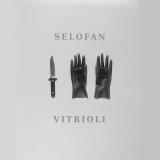
Selofan - Vitroli LP

Selofan

Vitroli LP

12inchFP025-D
Fabrika Records
27.03.2026
  • 1: Give Me A Reason
  • 2: Billie Was A Vampire
  • 3: Black Box
  • 4: I'm Addicted
  • 5: Ist Die Liebe Tot?
  • 6: Un Amor Eterno
  • 7: The Language Of Love
  • 8: Living Scandal
  • 9: Βιτριόλι - Vitrioli
  • 10: Φούξια Χαμαιλέων - Fuchsia Chameleon
  • 11: Η Μοναξιά Είναι Της Μόδας - Loneliness Is In Fashion
  • 12: Υστερία - Hysteria
également disponible

Black / White Splatter Vinyl


As Selofan's fifth studio album, Vitrioli, from 2018, is a testament to the tragedy of life. The Greek duo, Joanna Pavlidou and Dimitris Pavlidis, who recorded the album in the Fabrika Records home studio, continue on in their poetic, but heartbreaking, music set to a dance beat. Between languages (Greek, English, German, and Spanish), Selofan feels on the brink of mania with Vitroli. However, the madness is controlled, the songs are restrained hysterics that culminate into the alchemic perfection of the band's specific moody sound.
From synthpop to synthpunk elements, the twelve-track LP leads listeners through dark corridors and into haunted, empty beds. There is a resignation to a doomed destiny with Vitroli—a trait that connects all Selofan releases—as a bitter pain and loneliness that cannot, or will not, subside.

The album begins with "Give Me a Reason" whose lyrics feel universal in this day and age: Give me a reason, to get out of bed / I could just watch the ceiling instead. Its heartbreak is profound as bells and voice pads echo under Joanna's voice. The adjacent music video for the song was directed by Dimitris Chaz Lee, and the band describes the video as "depicting the fragile nature, conflicts, emotional demands, and vulnerability of each person in a relationship."
"Billie Was a Vampire" is a story about an undead creature who works at a nightclub followed by the urgency of "Black Box." Brass sounds moan against the fast beat and suggest a frenzied need to escape.

"I'm Addicted" became the second single for the LP. I am addicted, you are mine, Joanna demands of the lover. The music video, also directed by Dimitris Chaz Lee, depicts a clean, white photoshoot primed for the most beautiful creatures of the Athenian wave scene. Alex Macharias, from the legendary Greek band In Trance 95, acts as the photographer for the session, as the models pose and flail under the bright bulbs. The director states: "Addiction is a mental state, something inside all of us. It altered our perception and created a parallel world of avant-garde beings and flashy lights making us part of this everlasting bond."

pré-commande27.03.2026

il devrait être publié sur 27.03.2026


Last In: 2026 years ago
Selofan - Vitroli LP

Selofan

Vitroli LP

12inchFP025-E
Fabrika Records
27.03.2026

As Selofan's fifth studio album, Vitrioli, from 2018, is a testament to the tragedy of life. The Greek duo, Joanna Pavlidou and Dimitris Pavlidis, who recorded the album in the Fabrika Records home studio, continue on in their poetic, but heartbreaking, music set to a dance beat. Between languages (Greek, English, German, and Spanish), Selofan feels on the brink of mania with Vitroli. However, the madness is controlled, the songs are restrained hysterics that culminate into the alchemic perfection of the band's specific moody sound.
From synthpop to synthpunk elements, the twelve-track LP leads listeners through dark corridors and into haunted, empty beds. There is a resignation to a doomed destiny with Vitroli—a trait that connects all Selofan releases—as a bitter pain and loneliness that cannot, or will not, subside.

The album begins with "Give Me a Reason" whose lyrics feel universal in this day and age: Give me a reason, to get out of bed / I could just watch the ceiling instead. Its heartbreak is profound as bells and voice pads echo under Joanna's voice. The adjacent music video for the song was directed by Dimitris Chaz Lee, and the band describes the video as "depicting the fragile nature, conflicts, emotional demands, and vulnerability of each person in a relationship."
"Billie Was a Vampire" is a story about an undead creature who works at a nightclub followed by the urgency of "Black Box." Brass sounds moan against the fast beat and suggest a frenzied need to escape.

"I'm Addicted" became the second single for the LP. I am addicted, you are mine, Joanna demands of the lover. The music video, also directed by Dimitris Chaz Lee, depicts a clean, white photoshoot primed for the most beautiful creatures of the Athenian wave scene. Alex Macharias, from the legendary Greek band In Trance 95, acts as the photographer for the session, as the models pose and flail under the bright bulbs. The director states: "Addiction is a mental state, something inside all of us. It altered our perception and created a parallel world of avant-garde beings and flashy lights making us part of this everlasting bond."

pré-commande27.03.2026

il devrait être publié sur 27.03.2026


Last In: 2026 years ago
Arlo Parks - Ambiguous Desire LP

Twice Grammy-nominated, Mercury Prize and BRIT Award-winning artist Arlo Parks announces her new album, Ambiguous Desire, due April 3rd via Transgressive Records.


Ambiguous Desire is Parks at her most confident and experimental, supplanting live band sessions for modular synths, ableton plugins and samplers that channel the frenetic, vibrant spaces she was immersed in, all while spotlighting the acclaimed poetry and lyricism she’s beloved for.


Reflecting on the making of the record, Parks shares, "I danced more than ever as I made this record, I made more friends than ever too, found myself in the weird underbelly of New York juke nights, unleashed, laughed and laughed and laughed. This record has desire at its centre. Desire is a life force, it’s a wanting, a yearning, a momentum - we are all alive because there is something or someone we want - desire is an engine. But it is also mysterious, tangled, random, enlightening and HUMAN."


Parks crafted the album with producer Baird (Brockhampton, Kevin Abstract). Their process unfolded between NYC’s vibrant, community-rooted nightlife and long, introspective days spent in Baird’s downtown loft. The result is Parks’ most vulnerable, self-affirming, and euphoric work to date.

Die zweifach Grammy-nominierte, mit dem Mercury Prize und BRIT Award ausgezeichnete Künstlerin Arlo Parks kündigt ihr neues Album „Ambiguous Desire“ an, das am 3. April über Transgressive Records erscheinen wird.


„Ambiguous Desire“ zeigt Parks von ihrer selbstbewusstesten und experimentellsten Seite. Live-Band-Sessions wurden durch modulare Synthesizer, Ableton-Plugins und Sampler ersetzt, die die frenetischen, pulsierenden Räume widerspiegeln, in denen sie sich bewegte, während gleichzeitig ihre gefeierte Poesie und Lyrik, für die sie so geliebt wird, im Vordergrund stehen.


Über die Entstehung des Albums sagt Parks: „Ich habe während der Arbeit an diesem Album mehr getanzt als je zuvor, ich habe mehr Freunde gefunden als je zuvor, ich habe mich in den seltsamen Untergrund der New Yorker Juke-Nächte begeben, mich gehen lassen, gelacht und gelacht und gelacht. Dieses Album dreht sich um das Thema Begehren. Sehnsucht ist eine Lebenskraft, sie ist ein Verlangen, eine Dynamik – wir alle leben, weil es etwas oder jemanden gibt, den wir wollen – Sehnsucht ist ein Motor. Aber sie ist auch geheimnisvoll, verworren, zufällig, erleuchtend und MENSCHLICH.“


Parks hat das Album zusammen mit dem Produzenten Baird (Brockhampton, Kevin Abstract) produziert. Der Entstehungsprozess fand zwischen dem pulsierenden, gemeinschaftsorientierten Nachtleben von NYC und langen, introspektiven Tagen in Bairds Loft in der Innenstadt statt. Das Ergebnis ist Parks' bisher verletzlichstes, selbstbewusstestes und euphorischstes Werk.

pré-commande03.04.2026

il devrait être publié sur 03.04.2026


Last In: 2026 years ago
Arlo Parks - Ambiguous Desire LP
  • A1: Blue Disco
  • A2: Jetta
  • A3: Get Go
  • A4: Senses Ft. Sampha
  • A5: Heaven
  • A6: Beams
  • B1: South Seconds
  • B2: Nightswimming
  • B3: 2Sided
  • B4: Luck Of Life
  • B5: What If I Say It?
  • B6: Floette
également disponible

Blue Vinyl


Twice Grammy-nominated, Mercury Prize and BRIT Award-winning artist Arlo Parks announces her new album, Ambiguous Desire, due April 3rd via Transgressive Records.


Ambiguous Desire is Parks at her most confident and experimental, supplanting live band sessions for modular synths, ableton plugins and samplers that channel the frenetic, vibrant spaces she was immersed in, all while spotlighting the acclaimed poetry and lyricism she’s beloved for.


Reflecting on the making of the record, Parks shares, "I danced more than ever as I made this record, I made more friends than ever too, found myself in the weird underbelly of New York juke nights, unleashed, laughed and laughed and laughed. This record has desire at its centre. Desire is a life force, it’s a wanting, a yearning, a momentum - we are all alive because there is something or someone we want - desire is an engine. But it is also mysterious, tangled, random, enlightening and HUMAN."


Parks crafted the album with producer Baird (Brockhampton, Kevin Abstract). Their process unfolded between NYC’s vibrant, community-rooted nightlife and long, introspective days spent in Baird’s downtown loft. The result is Parks’ most vulnerable, self-affirming, and euphoric work to date.

Die zweifach Grammy-nominierte, mit dem Mercury Prize und BRIT Award ausgezeichnete Künstlerin Arlo Parks kündigt ihr neues Album „Ambiguous Desire“ an, das am 3. April über Transgressive Records erscheinen wird.


„Ambiguous Desire“ zeigt Parks von ihrer selbstbewusstesten und experimentellsten Seite. Live-Band-Sessions wurden durch modulare Synthesizer, Ableton-Plugins und Sampler ersetzt, die die frenetischen, pulsierenden Räume widerspiegeln, in denen sie sich bewegte, während gleichzeitig ihre gefeierte Poesie und Lyrik, für die sie so geliebt wird, im Vordergrund stehen.


Über die Entstehung des Albums sagt Parks: „Ich habe während der Arbeit an diesem Album mehr getanzt als je zuvor, ich habe mehr Freunde gefunden als je zuvor, ich habe mich in den seltsamen Untergrund der New Yorker Juke-Nächte begeben, mich gehen lassen, gelacht und gelacht und gelacht. Dieses Album dreht sich um das Thema Begehren. Sehnsucht ist eine Lebenskraft, sie ist ein Verlangen, eine Dynamik – wir alle leben, weil es etwas oder jemanden gibt, den wir wollen – Sehnsucht ist ein Motor. Aber sie ist auch geheimnisvoll, verworren, zufällig, erleuchtend und MENSCHLICH.“


Parks hat das Album zusammen mit dem Produzenten Baird (Brockhampton, Kevin Abstract) produziert. Der Entstehungsprozess fand zwischen dem pulsierenden, gemeinschaftsorientierten Nachtleben von NYC und langen, introspektiven Tagen in Bairds Loft in der Innenstadt statt. Das Ergebnis ist Parks' bisher verletzlichstes, selbstbewusstestes und euphorischstes Werk.

pré-commande03.04.2026

il devrait être publié sur 03.04.2026


Last In: 2026 years ago
Stacey Kent - A Time For love LP
  • 1: Lucky To Be Me (Leonard Bernstein)
  • 2: God Only Knows (Brian Wilson)
  • 3: The Shadow Of Your Smile (Johnny Mandel)
  • 4: La Javanaise (Serge Gainsbourg)
  • 5: As (Stevie Wonder)
  • 6: A Time For Love (Johnny Mandel)
  • 7: Trains And Boats And Planes (Burt Bacharach)
  • 8: What Goodbye Is For (Jim Tomlinson)
  • 9: Carinhoso (Alfredo Da Rocha Vianna Filho /Pixinguinha)
  • 10: E La Chiamono Estate (Bruno Martino)

Stacey Kent is an American jazz singer in the mould of the greats, with a legion of fans, a host of honors and awards including a Grammy nomination, album sales in excess of 2 million and more than one billion streams, and Platinum, Double-Gold and Gold-selling albums that have reached a series of chart-topping positions.

Stacey, a comparative literature graduate with a passion for music, travelled to Europe to further her studies after receiving her degree from Sarah Lawrence College in NY. Through a series of twists of fate, she found herself in London where she enrolled in a graduate music program at the Guildhall School of Music and Drama, where she met her future husband and musical partner, Jim Tomlinson.

Kent's musical journey began with childhood piano lessons. A keen ear and true voice lead her to search out opportunities to express her love of music. However, nothing suggested the shift from the academic path to the one that propelled her to international recognition as one of the foremost jazz singers of her generation. With a catalogue of 13 studio albums, including the Platinum selling, Grammy-nominated Breakfast On The Morning Tram (Blue Note/EMI 2007) and an impressive list of collaborations, Stacey has graced the stages of nearly 60 countries over the course of her career.

Her worldwide fan base is testimony to her ability to express the emotional heart of her songs with delicately nuanced interpretations that transcend borders and defy categorization. Her unique multi-lingual repertoire includes standards, chanson, Bossa Nova, and originals written by Jim Tomlinson, her saxophonist/producer/composer/arranger husband in collaboration with the Nobel Prize-winning author, Kazuo Ishiguro with whom they have worked since 2006. She has also recorded with Brazilian legends, Marcos Valle, Roberto Menescal and Danilo Caymmi, and the celebrated French string quartet, the Quatuor Ébène.

Stacey's last studio album, Summer Me, Winter Me, was released in November 2023 on Naïve Records. A collection of fans' requests from her as yet unrecorded concert repertoire, Summer Me, Winter Me entered the French jazz charts at number 1 and has quickly established itself as a new highlight in her discography. She now returns with A Time For Love.

pré-commande03.04.2026

il devrait être publié sur 03.04.2026


Last In: 2026 years ago
Hans Reichel - Dalbergia retusa LP 2x12" + DL

Black Truffle is thrilled to announce Dalbergia Retusa, an extensive double LP selection of the solo guitar music of Hans Reichel, compiled by Oren Ambarchi. Last heard on Black Truffle as one quarter of the joyously anarchic Bergisch-Brandenburgisches Quartett, Hans Reichel (1949-2011) is one of the great figures of experimental guitar music. Though perhaps lesser known than peers like Derek Bailey, Fred Frith and Keith Rowe, Reichel’s rethinking of the instrument was in some ways the most radical of all. Early on, he dispensed with existing guitars to build a series of his own that explored the use of additional strings and fretboards, moveable pickups, extra bridges, special capos, and other innovations documented in the extensive booklet accompanying this release.

Reichel was a long-term resident of Wuppertal, the small Western Germany city that became an unlikely centre of European free jazz in the late 1960s, also home to Peter Brötzmann and Peter Kowald. His solo debut Wichlinghauser Blues was an early entry into the FMP discography and began a relationship with the label that stretched into the 1990s; all the solo performances heard here were first released on FMP. As Reichel says in the charming archival interview with Markus Müller included here, he was ‘always a cuckoo’s egg at FMP’, a label that began as an outlet for roaring European free jazz. What strikes the listener right from the opening selection on Dalbergia Retusa—‘Return of the Knödler show’, from 1987’s The Dawn of Dachsman—is the extraordinary beauty of Reichel’s music, at once alien in the shimmering sonorities and unconventional pitch relationships made possible by his invented instruments, and deeply lyrical, even romantic in its harmonic content. Growing up in West Germany in the 1960s, Reichel’s formative influences were mainly British and American rock bands, a background that shines through in many of the pieces included here: ‘An old friend passes by’ is haunted by the ghost of Hendrix’s rhythm guitar, and the wild closer ‘Heimkehr der Holzböcke’, taken from a rare 1975 7” and the only piece to use overdubbing, layers errant hammer-on and slide tones over a Canned Heat boogie chug.

Reichel was an important source for the development of Oren Ambarchi’s own extended approach to the electric guitar. Appropriately enough, his selection opens with the very first piece by Reichel he ever heard, on a flexidisc included with a 1989 issue of Guitar Player magazine. Though Reichel collaborated with others extensively in many settings and also performed on violin and his other major contribution to instrument invention, the daxophone, his music for solo guitar remains at the core of his oeuvre. Focusing exclusively on solo pieces recorded between 1973 and 1988, the 23 pieces on Dalbergia Retusa showcase the range and consistency of Reichel’s work, allowing the listener to see how his performances developed hand-in-hand with his instrumental inventions. On a piece from his very first LP, played on an 11-string instrument (partly strung with piano strings and using a schnapps glass a slide), we hear his intensive exploration of fret-hammering to create zither-like, chiming tone, which Reichel would hone further in later years with a double fretboard guitar specifically designed to be hammered rather than fretted and picked. On a piece from 1979’s Death of the Rare Bird Ymir, Reichel uses two steel-string acoustic guitars at once, with beautiful results: ‘some even say too beautiful’, he jokes in the interview included here. Many of the pieces from the 1980s make use of varieties of the ‘pick behind the bridge guitar’, instruments of uncanny harmonic richness primarily designed to be played on the ‘wrong’ side of the bridge. At times the unexpected behaviour of attacks, resonance, and decay can almost seem electronic, conjuring up the technology-assisted work of Henry Kaiser or even Fennesz, but realised solely through Reichel’s unorthodox techniques on his invented instruments. Extensively illustrated with photos and Reichel’s own plans and drawings of his instruments, Dalbergia Retusa is an essential introduction to the unique world of Hans Reichel. Rarely has music been at once so strange and so beautiful.

En stock

Disponible en stock et prêt pour l'expédition

MIGUEL HERRNANDEZ - NEON CYBERWAVE EP

Bosconi Records proudly introduces Neon Cyberwave, the first solo EP on the label by Italian electronic visionary Miguel Herrnandez, marking a milestone in the evolution of an artist who has consistently bridged Detroit-rooted aesthetics with the experimental pulse of the European underground.

Based in the Val d’Elsa region between Florence and Siena, Miguel has forged a unique sonic identity shaped by his devotion to vinyl, his deep connection to the techno capital the “Motor City”, and his passion for deeply rooted yet still futuristic electronic culture.

His productions and DJ sets—built on a seamless fusion of raw electro, deep house attitudes, new beat flavors, and timeless grooves—have appeared on respected labels such as Bosconi, Rawax, and Norm Talley’s Upstairs Asylum. With Neon Cyberwave, he now delivers his most complete and personal statement to date.

The EP opens with “Neon Cyberwave”, a powerful acid-driven stomper built around a rolling 303 bassline, warm melodies, and an emotional breakout moment that captures both the effectiveness and the sensitivity of Miguel’s approach. It flows naturally into “Italo FM”, a track infused with Italo disco spirit—choir-like harmonies, a punchy bassline, and a groovy, ecstatic progression that turns into a genuine dancefloor trigger.

The journey deepens on the flip, where “VHS Direct Drive” introduces a dystopian atmosphere characterized by constantly shifting, unusually toned bass movements—unpredictable yet catchy, fresh yet rooted in classic electro DNA. This is followed by “Electric Soul Stranger”, where Miguel navigates Drexciyan undercurrents and subtle Gigolo-era references, balancing between straight rhythmic propulsion and broken-beat twists to create a cold, mental, transportive electro experience.

The record closes with the epic “Punky Shift”, a dramatic and powerful finale echoing the spirit of artists like The Hacker. Dramatic strings, an intense acid bassline, and a massive groove come together to shape a timeless closing track—one designed for peak emotional moments, sunrise sets, and long-lasting memories.

With Neon Cyberwave, Miguel Herrnandez has crafted a work that feels fresh yet nostalgic, classic yet forward-facing, and deeply personal. It stands as a versatile DJ weapon, a tribute to electro’s past and future, and a defining chapter in the artistic evolution of one of Tuscany’s most intriguing electronic voices.

pré-commande07.04.2026

il devrait être publié sur 07.04.2026


Last In: 2026 years ago
PEACHES - No Lube So Rude LP

A brash, unapologetic blend of electronic, dance, punk, industrial, and pop music, No Lube So Rude exists at the intersection of the personal and the political, where the body serves not only as a sexual and spiritual vessel, but also as the front line in a battle for basic human rights. Peaches’ lyrics are bawdy and explicit here, laced with biting sarcasm and clever wordplay, but they’re also surprisingly vulnerable, offering up a candid look in the mirror from a post-menopausal queer icon reckoning with a society that’s come to expect silence, if not outright erasure. The result is a deliberately provocative exploration of identity, sexuality, and bodily autonomy from a trailblazer, a singular work of emotional and sonic alchemy that balances the poetic and the profane in equal measure as it transforms all the friction and frustration of modern life into joy and transcendence.

En stock

Disponible en stock et prêt pour l'expédition

Various - Tchic Tchic: French Bossa Nova 1963-1974  Colored Edition LP 2x12"
  • A1: Les Masques - Il Faut Tenir (1969)
  • A2: Isabelle Aubret - Casa Forte (1971)
  • A3: Christianne Legrand - Hlm Et Ciné Roman (1972)
  • A4: Jean Constantin - Pas Tant D'chichi Ponpon (1972)
  • A5: Billy Nencioli & Baden Powell - Si Rien Ne Va (1969)
  • B1-: Marpessa Dawn - Le Petit Cuica (1963)
  • B2: Jean-Pierre Sabar - Vai Vai (1974)
  • B3: Sophia Loren - De Jour En Jour (1963)
  • B4: Isabelle - Jusqu’à La Tombée Du Jour (1969)
  • B5: Sylvia Fels - Corto Maltesse (1974)
  • C1: Frank Gérard - Comme Une Samba (1972)
  • C2: Ann Sorel - La Poupée Des Favellas (1971)
  • C3: Charles Level - Un Enfant Café Au Lait (1971)
  • C4: Andrea Parisy - Les Mains Qui Font Du Bien (1970)
  • C5: Audrey Arno - Quand Jean-Paul Rentrera (1969)
  • C6: Aldo Frank - T’as Vu Ce Printemps (1970)
  • D1: Christianne Legrand - Cent Mille Poissons Dans Ton Filet (1972)
  • D2: Clarinha - Lemenja (1970)
  • D3: Hit Parade Des Enfants - Aquarela (1976)
  • D4: Jean-Pierre Lang - Tendresse (1965)
  • D5: Magalie Noël - Une Énorme Samba (1970)
  • D6: Françoise Legrand - La Lune

Ever since the late 1950s bossa-nova revolution, Brazil’s influence on French music has been undeniable. Pierre Barouh, Georges Moustaki and a vast array of lesser known artists, all made the Musica Popular Brasileira (MPB) an axis of promotion at the service of a cool and metaphysical, modern and mixed Brazilian lifestyle. Some were seduced by the poetic languors of the bossa, some were looking for fun, and others just loved the American hybridization of jazz-bossa, jazz-samba.


What is bossa nova? One of its creators, Joao Gilberto said: "Its style, cadence, everything is samba. At the very start, we didn't call it bossa nova, we sang a little samba made up of a single note - Samba de uma nota so .... The discussion around the origins of bossa nova is therefore useless”. It is nevertheless useful to remember that these magnificent Brazilian songs, which the guitarist describes as samba, were shifted and balanced around improbable chords. "I like things that lean, the in-betweens that limp with grace," said Pierre Barrouh, quoting Jean Cocteau.


With emotion, arrangements for violin and supple guitar licks, bossa nova rapidly changed. A transformation that can be heard in the Tchic, tchic, French Bossa Nova 1963-1974 compilation, the result of a cultural reappropriation, which traveled through the United States and supplemented itself in France.

A musical revolution that has remained significant, bossa nova was born in Rio. From 1956 to 1961, Brazil lived through its golden years. In five years, the country had invented its modernist style. Elected president in 1956, Juscelino Kubitschek de Oliveira, an elegant man with a broad forehead, brandished a promising slogan: "Fifty years of progress in five years". He quickly got to work. Not worried about increasing debt, he launched the project for a new federal capital, Brasilia, designed by the communist architect Oscar Niemeyer. Volkswagen opened state-of-the-art factories and created the “fusquinha”, the Beetle. In Rio, the Vespa made its first appearance. The Arpoador Surf Club crew run into the “girl” from Ipanema, Helô Pinheiro - the tanned garota ("chick"), between a flower and mermaid, who at 17 walked by the Veloso bar, where the fiery author and composer, Tom Jobim and Vinicius de Moraes, were getting drunk on whiskey. From then on, bossa symbolized cool.

In 1958, Joao Gilberto recorded Chega de Saudade, which the directors of Philips denied, calling it "music for fagots". The marketing director, who believed in it, secretly pressed 3000 78-inch vinyls and distributed them at schools around Rio, creating a tidal wave.

American jazzmen then took over. In particular, trumpeter Dizzy Gillespie and guitarist Charlie Byrd. In November 1962, the Brazilian Ministry of Foreign Affairs funded a "Bossa-Nova" concert at Carnegie Hall in New York, inviting the genre’s pioneers. Unprepared, the show soon turned to disaster. But the troupe was invited to the White House by Jackie Kennedy. The first lady loved "the new beat" and in particular Maria Ninguem, a song by Carlos Lyra, later covered by Brigitte Bardot.

In Brazil, the 1964 military coup quickly ended this euphoria. The destructive atmosphere that ensued pushed many Brazilian musicians to leave, if not to exile. Thus, Tom Jobim, Sergio Mendes and Joao Gilberto arrived to the United States. In New York, Joao Gilberto met saxophonist Stan Getz. At the time, he was married to the Bahianese Astrud Weinert Gilberto, who had a German father. She had never sung before, but she knew how to speak English. Getz therefore asked her to replace her husband on The Girl From Ipanema. The Getz/Gilberto record with Tom Jobim on piano, was released in March 1964. Phil Ramone, the "pope of pop" was in charge of sound.

Bossa nova arrived in Paris through the classic “guitar-voice” channel (Pierre Barouh, Baden Powell, Moustaki…) But France loved jazz and Paris had already welcomed its American contributors. All these good people were to pass through Saint-Germain-des-Prés. The cabaret l'Escale became the Mecca of Latin American sound where one could find Pierre Barrouh and his friends, such as the Camara Trio, samba-jazz aces, whose only record was published by the Saravah label. With a band strangely called Les Masques (a band that included Nicole Croisille and Pierre Vassiliu, among others), the Camara Trio recorded an interesting Brazilian Sound, including the track Il faut tenir which is present on this tasty compilation of rarities.

Other enlightened musicians can also be found on the compilation, such as Jean-Pierre Sabar (songwriter for Hardy, Auffray, Leforestier ...) and the French pop rock organist Balthazar. In 1975, Sabar recorded Aurinkoinen Musiikkimatka on a Finnish label, which featured the crazy Vai, Vai, included on this record. We are now following the footsteps of Brazilian electronic musicians such as Sergio Mendes, Eumir Deodato or Marcos Valle who created funk and disco sounds on their keyboards and synthesizers. A style that influenced Véronique Sanson when she wrote Jusqu’à la Tombée de la nuit in 1969 for Isabelle de Funès, the niece of Louis and a great friend of Michel Berger - Sanson did end up singing this track on her 1992 Sans Regret record.


The pinnacle of exoticism and travel, Sylvia Fels’ Corto Maltese includes bongos, sea mist and ocean sounds. The title was taken from Jacky Chalard’s concept album written in 1974, Je suis vivant, mais j’ai peur (I am alive, but I am scared), based on Gilbert Deflez’s science fiction novel.


However, bossa nova extended the scope of popularity. "In the 1970s, I was a fan of Sergio Mendes, Getz / Gilberto. I fell in love with this music that I knew because I had been an orchestral singer, " explained Isabelle Aubret, who in 1971 delivered a composite record of covers by the very funky Jorge Ben, Orfeu Negro, Tom Jobim, Vinicius de Morais and Jean Ferrat. "I recorded this album for Meys Records in Paris, far from Brazil, with wonderful musicians, François Raubert, Roland Vincent, Alain Goraguer...". The latter wrote the arrangements for Casa Forte, a very percussive title borrowed from Edu Lobo, one of the initiators of the bossa who spent time in California. "Jazz and bossa came together and produced very rhythmic music. I love singing, it allows me to dream, to have fun, to feel a high on stage, and these songs brought me joy, made me swing, my singing felt like a dance.”


The world tours of French singers and their desire for the tropics, often brought them to Rio with its hills, forests, caipirinhas and tanned bodies. There are surprises though, like this Iemenja (Iemenja is the goddess of the sea in the Afro-Brazilian candomblé religion). Not unlike the composer and musician Jean-Pierre Lang, based in Sao Paulo, Claire Chevalier taught Brazil to Brazil. In 1970, the singer and painter published a 45-inch vinyl, Mon mari et mes amants (My husband and my lovers), under the improbable pseudonym of Clarinha (little Claire). She was then living in Rio, with her husband, Joël Leibovitz, who founded a band called Azimuth, and who owned a record label specialized in "sambas enredos" songs for samba school parades.


For its B side, she asked Pierre Perret to come up with lyrics for a song composed by Carlos Imperial: "Oh goddess of the sea, o goddess Iemenja, I bring a white rose to adorn your long hair ..." . "Perret came to see us, and we had fun, remembers Joël Leibovitz. We wrote Lemenja for fun, we recorded it at the Havaí studio, behind the Central do Brasil the central station. Erlon Chaves, the arranger who worked with Elis Regina, joined us" adding his share of Afro-Brazilian percussions and funky brass to the mix.

There is a common misunderstanding in Franco-Brazilian history: that bossa, admittedly hedonistic, is perceived as funny, even though the poets who wrote the texts are often philosophizing on the human condition. Its French interpreters pull it towards a carnival inspired universe, far removed from its fundamental essence. Thus, Jean Constantin covered the famous Samba da minha terra, an ode to the art of samba written by the classic Bahian composer Dorival Caymmi, renaming it with the enticing title of Pas tant de tchi tchi pompon: "On your pier there is no tchi tchi / when you arch your back, you know everything is alright ”(lyrics by Gérard Calvi). This expedited bossa aims for the absurd, but retains a certain elegance.

Indeed, Jean Constantin was not an idiot, the rather large man had a huge mustache and liked fantasy, (Les pantoufles à papa, Le pacha, inspired by cha-cha-cha-cha, salsa and jazz) but he was also the lyricist of Mon manège à moi interpreted by Edith Piaf, the composer of Mon Truc en plume by Zizi Jeanmaire and the soundtrack of François Truffaut’s 400 Blows. Le Poulpe, published in 1970, from which this bossa is extract, was arranged by Jean-Claude Vannier, an accomplice of Serge Gainsbourg’s Melody Nelson. In short: "There is enough of samba / By looking at the parasol / Because my poor cabeza / Is going to die in the sun".

Even the American actress Marpessa Down, who was at the heart of the bossa nova revolution with her role as Euridyce in Marcel Camus’ film Orfeu Negro, winner of the 1959 Cannes Palme d'or, fed the clichée with Je voudrais parler au petit cuica - "Tell me how you manage to always make people want to dance / It's true, I must admit that I cannot resist your magic" - in consequence, once can hear the cuica, a little drum inherited from the Bantu.


But bossa nova had many angles. Societal, of course, pushing actresses who were symbols of women's liberation like Brigitte Bardot, Jeanne Moreau, or Sophia Loren to engage in the exercise of accelerated bossa. In February of 1963, Sophia Loren made a record in French in Rome, Je ne t'aime plus, featuring the song De jour en jour, a bossa written by two Italians, Armando Trovajoli and Tino Fornai, which was released a little later by Barclay. Bossa accompanied the 1960s, a decade of moral liberation. Ann Sorel, who interpreted La Poupée des favellas, caused a sensation with L’amour à plusieurs, a provocative song written by Frédéric Bottom and Jean-Claude Vannier. As for the actress Andrea Parisy, she displayed her bourgeois cheekiness in Marcel Carné's Les Tricheurs before interpreting Les mains qui font du bien. And Magalie Noël, the friend of Boris Vian, who sung Johnny fais-moi mal, was hired to sing Une énorme Samba, composed by Alain Goraguer (arranger to Gainsbourg, Bobby Lapointe and Jean Ferrat) with lyrics by Frédéric Botton.

But in the end, of what wood is bossa nova made of? The answer is given by Christianne Legrand, daughter of Raymond the conductor, and sister to Michel the composer: "With me, with jà" - jà means "immediately" in Portuguese. In 1972, the singer, an expert in vocal jazz and a member of the Double Six, published Le Brésil de Christianne Legrand. Two songs included on the Tchic Tchic compilation that demonstrate how bossa, jazz, funk, rock, etc. work like a swiss army knife: the music is used to denounce broken systems, or miracles, HLM et ciné roman, Cent mille poissons dans ton filet, two songs from the O Cafona soundtrack, a successful telenovela broadcast, at the time in black and white, on TV Globo. The first was adapted in French by the fighter and friend of the Legrand tribe, Agnès Varda. The second is content with a play on words, jostling them into a summer fun.


Véronique Mortaigne

pré-commande17.04.2026

il devrait être publié sur 17.04.2026


Last In: 2026 years ago
Elijah Minnelli - Clams As A Main Meal

Even in these most turbulent of times, dub musician and fatigued onlooker Elijah Minnelli remains an inexplicable stalwart on the lower rungs of the Breadminster County Council.

His latest record ‘Clams As A Main Meal’ continues his astute siphoning of council funds, this time with help from the Breadminster Board of Abstinence. As a further mark of respect, the original head of the Board, Dr. K'houldoux, graces the cover art in his infamous ‘Looming Moon of Desire’ guise.*

As fine a backdrop as any for Minneli’s off-brand dub experiments, and ‘Clams...’ is the truest representation of his varied wheelhouse yet...

We find vocal appearances from dub goliath Dennis Bovell and Welsh-language singer Carwyn Ellis. A pair of tracks which build on 2024’s acclaimed ‘Perpetual Musket’, a collection of folk songs reworked alongside reggae vocalists, released by FatCat Records. It garnered glowing reviews, with nods from The Guardian and The Quietus concluding with prominent appearances on their respective yearly round-up lists.

Elsewhere, the album finds Minnelli in a more experimental mode, all wheezing contraptions and cockeyed bass, creaking with the weight of creation, a satisfying tactility laid seam-side up.

As well as ‘Perpetual Musket’, the new album follows years of sold out 7" singles, handmade and self-released. Online, the tracks have amassed global streams numbering in the millions. His tracks have found play across an eclectic range of radio mixes and dance floors, most notably the likes of Andrew Weatherall, Batu, Optimo and Zakia Sewell (BBC6Music).

It is perhaps worth mentioning that this everbuilding interest in his work is at great odds with the growing suspicions amongst his fellow townsfolk, who see his Breadminster County Council Music Initiative as nothing more than an empty cash-grab.

Further Reading on the Breadminster Board of Abstinence

In the late 70s, Breadminster was awash with the last vestiges of the hippy era. Though the flared silhouette of the lower leg remained, the utopian ideals that had once flowed merrily around the youth's shaded ankles had begun to wane. LSD and free love had led to a sharp spike in population and a generation of children raised by air-headed psychonauts unprepared for the bleary-eyed strictures of parenthood.

Aware of the crisis, the County Council entrusted Dr. Paulinque K'houldoux to spearhead a pushback, and it was his pro-abstinence movement - a mixture of education initiatives and radical renutrition campaigns - that came to impact Breadminster's census deep into the new millennium.

Being a pseudo-archipelago Breadminster has fundamentally limited resources, however deep-seated ties to distant coastal villages meant that oysters were a regular part of the local diet. K'houldoux pinpointed this as a factor in the town's overpopulation, and believed that simply replacing these with clams (a “lesser mollusk”) would help lower the erotic urges of the people. It was his “anti-aphrodesia” movement that first championed the idea of “Clams As A Main Meal,” and the slogan “Consider Abstinence” carried the message yet further.

The Breadminster Board of Abstinence soon became involved in all cultural happenings in the area, with K'houldoux MCing at prominent festivals and performances, sometimes dressed as the “Looming Moon of Desire” - an idea of his relating to the tide, seafood, menstrual cycles, and his privately held celestial predilections.

It was in 1981 that it was revealed Dr. K'houldoux had never fully qualified as a doctor and was seeking exile in Breadminster due to a series of botched bracelet heists in which he had previously been involved. K'houldoux was subsequently extradited to Basingstoke, where he served 3 of a 12-year sentence, owing to the lunar-oriented prisoner health campaigns he helped implement.

It has been a strange twist of bureaucratic fate that the Breadminster Board of Abstinence has never stopped receiving public funding, despite its lack of clear utility. And while its roots are tied to a rose-tinted past, the Board continues to sponsor cultural events and projects to this day.

An extract from: Eugeniq Schooner's article in Sydney Parishioner: “Clams, Breadminster and Countercultural Abstinence Trends” (2008)

pré-commande17.04.2026

il devrait être publié sur 17.04.2026


Last In: 3 months ago
Cousin Feo & Dre Mendoza - Provoleta - 5th Anniversary’ LP

BLUE & WHITE COLOUR IN COLOUR VINYL

In the culinary arts, it’s easy to overcomplicate the final product. Theme, presentation, texture…they’re important but should work to complement the raison d'etre of any food. At the end of cooking a dish, it should taste good and feed people. Some dishes, like barbeque or provoleta, resist the tendency towards hollow showmanship. One of their expressions can be more or less aesthetic, but the first purpose is to be simple and tasteful. Argentinian provoleta goes so far as to blur the line between ingredient and dish. It relies on the inherent flavor of provolone being heated at the right speed for the perfect amount of time. You can add garlic or chives or red pepper to the slice, but ultimately they serve to bring out an essence that’s already there.

Los Angeles’ Cousin Feo has developed his rapping acumen in the five years since releasing Provoleta, but returning to the project today shows that he always had the penmanship, grit and delivery that christens an emcee worthy of remembrance. Like the bubbles rising up in the appetizer that is the album’s namesake, Feo showed that true profundity is found in the simple gestures.

Since dropping the project in 2019, Cousin Feo has expanded his vision of a world where hip-hop and football, two proletarian art forms, mingle in creative and compelling ways. He has collaborated across multiple continents, chronicled football histories, aided in canonizing legends, kept the flames high in age-old rivalries and constantly forced his audience to search for the last time they heard bars this hard. In anyone else’s hands it would be too great a task.

The maturity he showed on Provoleta wasn’t nascent, it was an inherent quality forcing itself to the surface. The songs refract his experience as a working class Angeleno through the archetypes of Argentinian football legends. The kernel that unites the two worlds is hustle. When Feo was coming up, missteps had greater consequences than crashing out in the group stage and street deals had the weight of a Boca-River Plate match.

Each track uses slightly different ingredients to let Feo’s underlying talent shine. “Maradona” feels salvific, fitting for a football legend canonized from the Andes to the Alps and a Los Angeles rapper looking to inspire similar hope in the neighborhoods that raised him. On “Di Stefano” Feo massages the instrumental with the same composure of the late forward, until he pierces through the headphones like one of Di Stefano’s arrows. It’s also refreshing to hear a song celebrating Messi before his meme-ification, focusing on the universal truths contained in his footballing talent instead of using number 10 as a stand-in to make a point in a fruitless argument. And he still finds space to show deference to Batistuta, Kempes and other members of the Argentinian pantheon who’ve been erased from the popular imagination by the national team's contemporary success.

Real ones know that true players, true rappers, and true artists will always stand the attacks of time and consensus. In Provoleta’s first verse, Cousin Feo says he moves with the hand of God. Maybe one day he’ll tell the whole truth and let us know how he was able to wrestle the pen away too. Limited edition of 300 hand-numbered copies.

pré-commande17.04.2026

il devrait être publié sur 17.04.2026


Last In: 2026 years ago
Men With - Secrets Sand Clock

Men With

Secrets Sand Clock

12inchCITI034
CITITRAX
24.04.2026

Cititrax release Sand Clock, the new full-length album by Men With Secrets, the Italian trio of Donato Dozzy, Lino Monaco, and Nicola Buono (Retina.it). Originally emerging from a shared background in experimental techno under the name Le Officine Di Efesto, the three musicians turned toward classic post-punk, minimal wave, and synth-driven pop with the formation of Men With Secrets. Their debut album Psycho Romance (2020), released on Bunker Records, introduced a meticulously produced body of work that felt like a rediscovered European darkwave recording from the early 1980s—yet was entirely contemporary in its construction.

With Sand Clock, the trio deepen this language. The album leans more directly into the melodic clarity and romantic tension of late-80s and early-90s darkwave and synthpop while maintaining the stark restraint that defines the project. Icy synthesizers, shuddering basslines, and precise drum machine programming frame baritone vocals that are intimate, emotionally exposed, and quietly apocalyptic.

Balancing pop structure with gothic atmosphere, Sand Clock moves between shadowed dance floor momentum and solitary headphone introspection. It is not an exercise in revivalism, but a continuation—an acknowledgment that the emotional architecture of that era remains unresolved and still relevant. Written and produced by Donato Dozzy, Lino Monaco, and Nicola Buono and recorded in Rome and Pompeii.

The vinyl edition is pressed on clear 160-gram vinyl, limited to 500 copies worldwide. Each record is housed in a heavy printed jacket with a printed inner sleeve.

pré-commande24.04.2026

il devrait être publié sur 24.04.2026


Last In: 2026 years ago
Dorian Pimpernel - Flowers Too
  • 1: Chlorine Fumes
  • 2: Twisted Charm Honey
  • 3: Caravelle
  • 4: Flor En La Sombra
  • 5: Marching Clocks
  • 6: Circular Rites
  • 7: Oruga Encantada
  • 8: Sur La Lune
  • 9: Brücke
  • 10: Photochromic Gaze
  • 11: A Rising Year

For if their first album ALLOMBON could be seen as the opening of a secret passage, this second record, FLOWERS TOO, is something else entirely: no longer the discovery of a world, but its methodical exploration, its feverish mapping, its deepening down to the underground layers. At a time when contemporary psychedelia seems at a standstill, when ecstasy has lost its effect, when the vast territories of the imagination have been parceled out, signposted, monetized they keep digging. And deeper still. Esoteric pop the noblest, the most dangerous kind is no longer practiced on the surface. It has abandoned the grand avenues to retreat into hidden laboratories, mental back rooms, basements more deeply buried than those of garage, punk, or black metal. It is there that the secret society Dorian Pimpernel has been working for years, with a stubbornness that feels less like a career than a calling.

pré-commande24.04.2026

il devrait être publié sur 24.04.2026


Last In: 2026 years ago
Yeong Die - Uncapturable

Yeong Die

Uncapturable

12inchESP129
ESP INSTITUTE
19.02.2026

Yeong Die would typically be described as DJ, musician, or “experimental” composer, but in reality she is a sculptor. Between the rapidly disintegrating boundaries of composition and sound design, her work employs a hunting and gathering of intangible material—bursts of memory, fragments of liminal space, interstitial banalities—materializing as boundless expressions that evade genre constructs. As an integral presence among Seoul’s most forward thinking sound artists, Yeong is in a constant uphill battle rejecting the reverence that so quickly creeps in and infects contemporary craft, that relegates even the most audacious attempts of her peers to pigeon-hole pastiche. Given this style-agnostic starting line, her ESP Institute debut 'Uncapturable' exudes non-urgency, an unfettered pace that allows breathing room, affording the listener freedom to mentally isolate and explore elements without fear of missing a “bigger picture.” There is a warm and welcoming feeling that invites repetitive, even studied listening. While half the work is somewhat singular in presentation—'1km', 'Like Your Flaw', or 'Burnt'—there are moments of meticulous complexity—'Morning Rum Punch' (featuring vocals by Cifika) and 'Did' (featuring a smattering of spoken words by icecream drum), both underground Korean peer artists. These moments feel more of like an acute focus on execution that compliments the overall shape of the album, rather than a dynamic contrast. Cifika’s vocals, in particular, command the listener’s periphery in a playful and refreshing way, exaggerating negative space and in-between moments that not only the paint an arresting stereo field but a remarkable sense of depth, not easily achieved without production sorcery. It is, without a doubt, these beautiful fleeting moments that we describe as 'Uncapturable'.

En stock

Disponible en stock et prêt pour l'expédition

Francois K - FK EP

Francois K

FK EP

12inch50004-1
WAVE MUSIC
18.02.2026

repressed !

Francois Kevorkian is a name that should need no introduction. With over 40 years in the game FK has occupied numerous roles in his long and storied career - drummer, DJ, A&R man, remixer and producer - his skills know no boundaries. Having DJ-ed during the nascent days of club culture in NYC alongside Walter Gibbons, Larry Levan and more, Kevorkian has been there from day one. Years spent in the seminal clubs of the day sharpened his ears and his prowess behind the mixing desk saw him become the A&R man at the legendary Prelude records in the early 80's, this in turn led to him working with everyone from The Eurythmics, Depeche Mode, Erasure, D-Train, Yazoo, The Smiths, Kraftwerk and many many more. A true NYC original and legend, Kevorkian is still active today and the respect he commands amongst his peers has never waned, his adventurous extended DJ sets, seminal mixes and remixes and his open ears and open mind have ensured that he will go down in history as a musical pioneer.

Rewind to 1995. Kevorkian's 'Wave Music' imprint has come into existence with a handful of releases. No-one could imagine that his self-produced 'FK EP' - the next release on the label - would be a stone cold classic. Easily one of the most consistent, exciting and solid EP's to come out of NYC during this golden era of dance music. Across 4 tracks we are taken on a sound journey through a world that is undoubtedly informed by FK's time as an engineer, DJ and most importantly, a music lover.

EP opener 'Hypnodelic' brings us into this world, a deep, driving cut that fuses the dubbed out vocals of Freddie Turner against FK's keyboards and immaculate drum programming, oozing cosmic electronic soul, this track was destined to be a future classic. 'Mindspeak' also boasts some tough drums and with a respectful nod to Chicago is an incredibly mixed and arranged peak-time cut that will drive your dancefloor into deep space again and again. 'Edge Of Time' welcomes us to the flipside of the EP, wild Latin percussions, tablas and old school horn stabs drive this monstrous cut, not to mention cavernous dub FX and that huge bassline that just doesn't let up. Essential. 'Moov' rounds things out on a more subdued, stripped back vibe. Reversed percussions and spaced-out synth chords lace this beautifully understated and warm track, one that builds into a crescendo of melodies and hypnotic rhythms and the perfect way to close what has been a truly special musical journey.

This essential reissue of the 'FK EP' has been fully licensed, sanctioned and remastered in conjunction with FK from the original master sources by Optimum Mastering, Bristol UK, repressed onto high quality vinyl and packaged as the 1995 release was. A truly classic record indeed, available again for 2018. Welcome back Wave Music!

En stock

Disponible en stock et prêt pour l'expédition

Eat Your Mind, L'Enfant d'la Plèbe, Neurotribe, Pneumatix - Up Into The Ether

This new Mysteries drop is pure Mental Neo Hard Trance! Bringing you 4 producers that at the moment are pushing their own style thereby referencing oldschool HardTrance and PsyTrance - in a good way minus the cringy cheese. Gateway tunnel vision stuff, mental in the true sense.
A: Eat Your Mind & L'Enfant D'La Plèbe – Up Into The Ether, 33 rpm; Pulse 160
A 15 Minute epic journey into the upper spheres of the ether with a superb break and a completely new track beginning, screams of ecstasy guaranteed. Sublime!
B1: Neurotribe – Thetra 6:41 Pulse 165
A driver to push the crowd forward, pure dancefloor energy! Stripped down for efficiency the track is building the tension and ascending the stairway to full Noom. Commander Tom would approve.
B2: Pneumatix – The Return Of Mich 7:05 Pulse 170
A driving minimal workout, heavily tinted with Psytrance swirls. Focusing on a few outstanding sound sculptures, bringing them to the front, holographic and vivid. A finely calibrated system will drive the audience crazy. Be careful with the minds of other people, license required.
12“ Vinyl release is limited to 300 copies, includes digi-codes and comes in a unique full cover artwork with 2 sided inlay /poster and sticker by Darkam and TDSiGNZ,
Mastering Stefan ZMK. Transparent blue vinyl.
Mastering: Stefan ZMK
Artwork: Darkam

pré-commande30.04.2026

il devrait être publié sur 30.04.2026


Last In: 2026 years ago
RADIO HITO - L’USO E GLI ATTRIBUTI DEL CUORE

Certain paths necessitate and call for one singular long sequence in order to arrive at a fully formed conversation or reasoning. Nothing seems to broadcast it more clearly than the trajectory Brussels based Italo-Vietnamese artist Nguyễn Zen Mỹ embarked on during the last decade as Radio Hito.

After a string of highly cherished and sought out tape releases, Radio Hito’s new album ‘L’uso e gli attributi del cuore’, co-released by Maple Death & Meakusma, unfolds with devastating
clarity, a profound balance of depth, minimalism and emotional grounding. A ten-sequence song cycle for voice and MIDI soundfonts adapted from the 2021 book by French poet Claude
Royet-Journoud.

Written and recorded between January 2023 and August 2025, the cycle evolved through nearly 80 live performances from Galicia to Kazakhstan before arriving at its recorded form. Set to an Italian libretto adapted from Royet-Journoud’s text ‘L'usage et les attributs du cœur’ (POL, 2021), the work revisits the tradition of the 19th-century Lied — art song built on existing poetry— transposed into a radically economical contemporary setting: voice and Casio CTK workstations.

"I was interested by this incompleteness CRJ mentions - by the ‘suspension’ of meaning questioning readability and intelligibility. I ‘resisted’ to CRJ’s texts since I met him and got to know his work. … It seems to me that when playing the songs, I submit an object to be completed by the audience."

Radio Hito’s distinctive approach to setting poetry to music — spare arrangements, strophic repetition, and a voice suspended between recital, fm transmission and canzone — creates a language of its own, reaching new heights on ‘L’uso e gli attributi del cuore’, songs that are formally rigorous, emotionally restrained, and shaped by the discipline of sustained live performance, interlocking into a coherent cycle.

Rather than illustrating the poem, Radio Hito approaches it as a space of suspension. Royet-Journoud described poetry as a “profession of ignorance” where meaning remains incomplete; these songs extend that trembling state, allowing repetition, digital timbre, and restraint to hold the text open.

Often misread as minimal synth or romantic chanson, Radio Hito’s practice is rooted instead in the lineage of the art song and song cycle: open structures, close attention to language, and a live performance economy that pushes the voice at the heart of the stage. The choice of accessible keyboard workstations — light, portable, and embedded in contemporary popular culture — replaces the historical piano.

Radio Hito creates fantastical, mirage-like songs, intimate yet elusive. Her music is forlorn chanson for the digital age; bringing her haunting and beautiful vocalisations into conversation with MIDI soundfonts and humble-yet-deep casio compositions. Music that strides for simplicity, yet lands miraculously within an entire new universe, a uniqueness achieved from like-minded spirits such as Ghedalia Tazartès, Savina Yannatou & Lena Platonos, Dorothy Carter, cycles that trickle down into estuaries.

“Radio Hito's set is superb. Sitting on the altar steps with a synth, her fabulously expressive vocals colour sparse, pensive compositions.” The Wire

pré-commande30.04.2026

il devrait être publié sur 30.04.2026


Last In: 2026 years ago
Brendon Moeller - Shadow Language 2x12"

Prolific beat pharmacist par excellence Brendon Moeller continues his hot streak with a return to Samurai to serve up the exquisite craftsmanship of Shadow Language. Across 15 fresh productions the seasoned house and techno producer demonstrates yet more variations on his rejuvenated sound since pivoting towards 160 tempo zones. Heavyweight dub techno pulses collide with D&B pressure and dubstep snarl, delivered with devastating restraint and mediative warmth.

Moeller's dub-informed, high-grade production hit a hot streak as he started to experiment with faster tempos and more broken rhythms, reaching into thrilling new sound fields where fast-slow rhythmic intrigue meets with spatial subtlety and constantly evolving synth voices. The past year has seen him release a swathe of albums, from Further on Samurai to outings on Constellation Tatsu, ESP Institute and Quiet Details that all burst with inspiration, each distinct from the last and offering an original perspective on this rich seam of crossover electronics.

Shadow Language shows Moeller burrowing even deeper into this new era of his work, continuing the hypnotic approach set out on Further while edging more forthright ingredients into the mix. From the outset 'Division By Zero' hits with immediacy even as it dips into a dubwise breakdown, with snatches of vocal and even the iconic loom bird making the slightest of appearances. 'Feral Hymn' finds a curious kind of uplift in the synth chord that twists in and out of the mental techno murmurations of the rhythm section. 'Impermanence' has some snarling bass that belongs in the gnarliest tech-step, while the nagging hats ticking through 'Junkyard Syntax' hint at a shockout without resorting to brute force. The majestic dub techno chords of 'Driftform' create a through-line across Moeller's extensive catalogue, but here they dominate the mix above a spongy bed of sub bass throb and framed by the tiniest slithers of percussion.

Throughout the album, it's the implications Moeller suggests with the tools at his disposal that create a powerful energy. Restraint governs the delivery, guiding the listener in deeper until they find a maximal experience from each elegantly understated roller. The weight and presence is abundant across every track, fuelled by the invigorating power of each tone and frequency while avoiding the clutter of overloaded arrangements.

Finding the notes in between and half-hidden rhythms, Moeller himself perfectly summed up his latest opus as he continues to develop his own compelling Shadow Language.

En stock

Disponible en stock et prêt pour l'expédition

FATHER JOHN MISTY - PURE COMEDY LP 2x12"

Schwarzes Vinyl! Doppel-LP im Klappcover. Ursprünglich 2017 rausgebracht und jetzt zum ersten Mal in Europa über Sub Pop erhältlich! Pure Comedy, das dritte Album von Father John Misty, ist eine komplexe, oft sarkastische und ebenso oft berührende Reflexion über die verwirrende Torheit der modernen Menschheit. Father John Misty ist das Projekt von Singer-Songwriter Josh Tillman. Wir könnten viel über Pure Comedy sagen, zum Beispiel, dass es ein mutiges, wichtiges Album in der Tradition amerikanischer Songwriting-Größen wie Harry Nilsson, Randy Newman und Leonard Cohen ist, aber wir denken, es ist am besten, wenn sein Schöpfer es selbst beschreibt. Los geht's, Mr. Tillman: Pure Comedy ist die Geschichte einer Spezies, die mit einem unvollständig entwickelten Gehirn geboren wurde. Die einzige Überlebenschance dieser Spezies, die sich auf einem grausamen, unberechenbaren Felsen wiederfindet, umgeben von anderen Spezies, die in dieser ganzen Sache viel geschickter zu sein scheinen (und für die sie eine Delikatesse sind), besteht darin, sich auf andere, etwas ältere, halb ausgebildete Gehirne zu verlassen. Diese Abhängigkeit bekommt im Laufe der Geschichte verschiedene Namen, wie ,Liebe", ,Kultur", ,Familie" usw. Mit der Zeit und da sich ihre Gehirne als bemerkenswert gut darin erweisen, Bedeutung zu erfinden, wo keine ist, wird die Spezies zum Lieferanten immer bizarrerer und raffinierterer Ironien. Diese Ironien sollen helfen, mit der abscheulichen Verletzlichkeit der Spezies fertig zu werden und zu versuchen, ihre Fantasie mit der Monotonie ihrer Existenz in Einklang zu bringen. So in etwa. Pure Comedy wurde 2016 in den legendären United Studios (Frank Sinatra, Ray Charles, Beck) in Hollywood, Kalifornien, aufgenommen. Produziert wurde es von Father John Misty und Jonathan Wilson, die Tonarbeit übernahm Mistys langjähriger Tontechniker Trevor Spencer und die Orchesterarrangements stammen vom bekannten Komponisten und Kontrabassisten Gavin Bryars (bekannt für seine umfangreichen Soloarbeiten und seine Zusammenarbeit mit Brian Eno, Tom Waits und Derek Bailey). Black Vinyl. Originally released in 2017 & now available for the first time in Europe via Sub Pop! Pure Comedy, Father John Misty's third album, is a complex, often-sardonic, and, equally often, touching meditation on the confounding folly of modern humanity. Father John Misty is the brainchild of singer-songwriter Josh Tillman. While we could say a lot about Pure Comedy including that it is a bold, important album in the tradition of American songwriting greats like Harry Nilsson, Randy Newman, and Leonard Cohen we think it's best to let its creator describe it himself. Take it away, Mr. Tillman: Pure Comedy is the story of a species born with a half-formed brain. The species' only hope for survival, nding itself on a cruel, unpredictable rock surrounded by other species who seem far more adept at this whole thing (and to whom they are delicious), is the reliance on other, slightly older, half-formed brains. This reliance takes on a few different names as their story unfolds, like "love," "culture," "family," etc. Over time, and as their brains prove to be remarkably good at inventing meaning where there is none, the species becomes the purveyor of increasingly bizarre and sophisticated ironies. These ironies are designed to help cope with the species' loathsome vulnerability and to try and reconcile how disproportionate their imagination is to the monotony of their existence. Something like that. Pure Comedy was recorded in 2016 at the legendary United Studios (Frank Sinatra, Ray Charles, Beck) in Hollywood, CA. It was produced by Father John Misty and Jonathan Wilson, with engineering by Misty's longtime sound-person Trevor Spencer and orchestral arrangements by renowned composer/double-bassist Gavin Bryars (known for extensive solo work, and work with Brian Eno, Tom Waits, Derek Bailey).

pré-commande15.05.2026

il devrait être publié sur 15.05.2026


Last In: 2026 years ago
Robert Hood - Nothing Stops Detroit

Robert Hood

Nothing Stops Detroit

12inchREKIDS165
Rekids
02.02.2026

Techno pioneer Robert Hood debuts on Rekids with a blistering release entitled ‘Nothing Stops Detroit’ ahead of an album this winter.

Over the last three decades the Underground Resistance alum has continually been at the forefront of the techno genre whilst releasing on many of electronic music’s finest labels to boot. In recent years his solo outings have appeared on a select few labels such as Dekmantel, Music Man Records, not to mention his very own M-Plant. Having made appearances on Rekids in the past remixing label boss Radio Slave - both as Robert Hood (‘Don’t Stop No Sleep’) and Floorplan (‘Feel The Same’) - the Detroit originator now drops a four track release in his official debut on the label.

With its machine aesthetic, ‘Nothing Stops Detroit’ is unmistakably Hood from start to finish. Precision kick drums propel the title track forward as stuttering effects and deep stabs work alongside a march band rhythm. ‘7 Mile Dog’ is next with its grainy synths and scintillating pads, making way for the meandering bassline, rattling atmospherics and trippy, oscillating top line of ‘Ignite A War’. Finally, ‘The Cure’ is a cacophony of twisted percussion and rumbling low-end that energetically concludes matters.

En stock

Disponible en stock et prêt pour l'expédition

Guilty Razors - Complete Recordings 1977 - 1978
  • A1: Hurts And Noises
  • A2: Wake Up
  • A3: I Don't Wanna Be A Rich
  • A4: Terrorist Bad Heart
  • A5: Provocate
  • A6: Lucifer Sam (Pink Floyd)
  • B1: Happy!?
  • B2: So Lazy
  • B3: I Feel Down
  • B4: Stupido
  • B5: Guilty
  • B6: Caroline Says (Loo Reed)

UILTY RAZORS, BONA FIDE PUNKS.


Writings on the topic that go off in all directions, mind-numbing lectures given by academics, and testimonies, most of them heavily doctored, from those who “lived through that era”: so many people today fantasize about the early days of punk in our country… This blessed moment when no one had yet thought of flaunting a ridiculous green mohawk, taking Sid Vicious as a hero, or – even worse – making the so-called alternative scene both festive and boorish. There was no such thing in 1976 or 1977, when it wasn’t easy to get hold of the first 45s by the Pistols or the Clash. Few people were aware of what was happening on the fringes of the fringes at the time. Malcolm McLaren was virtually unknown, and having short hair made you seem strange. Who knew then that rock music, which had taken a very bad turn since the early 1970s, would once again become an essential element of liberation? That, thanks to short and fast songs, it would once again rediscover that primitive, social side that was so hated by older generations? Who knew that, besides a few loners who read the music press (it was even better if they read it in English) and frequented the right record stores? Many of these formed bands, because it was impossible to do otherwise. We quickly went from listening to the Velvet Underground to trying to play the Stooges’ intros. It’s a somewhat collective story, even though there weren’t many people to start it.
The Guilty Razors were among those who took part in this initial upheaval in Paris. They were far from being the worst. They had something special and even released a single that was well above the national average. They also had enough songs to fill an album, the one you’re holding. In everyone’s opinion, they were definitely not among the punk impostors that followed in their wake. They were, at least, genuine and credible.

Guilty Razors, Parisian punk band (1975-1978). To understand something about their somewhat linear but very energetic sound, we might need to talk about the context in which it was born and, more broadly, recall the boredom (a theme that would become capital in punk songs) coupled with the desire to blow everything off, which were the basis for the formation of bands playing a rejuvenated rock music ; about the passion for a few records by the Kinks or the early Who, by the Stooges, by the Velvet mostly, which set you apart from the crowd.
And of course, we should remember this new wave, which was promoted by a few articles in the specialized press and some cutting-edge record stores, coming from New York or London, whose small but powerful influence could be felt in Paris and in a handful of isolated places in the provinces, lulled to sleep by so many appalling things, from Tangerine Dream to President Giscard d’Estaing...
In 1975-76, French music was, as almost always, in a sorry state ; it was still dominated by Johnny Hallyday and Sylvie Vartan. Local rock music was also rather bleak, apart from Bijou and Little Bob who tried to revive this small scene with poorly sound-engineered gigs played to almost no one.
In the working class suburbs at the time, it was mainly hard rock music played to 11 that helped people forget about their gruelling shifts at the factory. Here and there, on the outskirts of major cities, you still could find a few rockers with sideburns wearing black armbands since the death of Gene Vincent, but it wasn’t a proper mass movement, just a source of real danger to anyone they came across who wasn't like them. In August 1976, a festival unlike any other took place in Mont-de-Marsan – the First European Punk Festival as the poster said – with almost as many people on stage as in the audience. Yet, on that day, a quasi historical event happened, when, under the blazing afternoon sun, a band of unknowns called The Damned made an unprecedented noise in the arena, reminiscent of the chaotic Stooges in their early adolescence. They were the first genuine punk band to perform in our country: from then on, anything was possible, almost anything seemed permissible.

It makes sense that the four+1 members of Guilty Razors, who initially amplified acoustic guitars with crappy tape recorder microphones, would adopt punk music (pronounced paink in French) naturally and instinctively, since it combines liberating noise with speed of execution and – crucially – a very healthy sense of rebellion (the protesters of May 1968 proclaimed, and it was even a slogan, that they weren’t against old people, but against what had made them grow old. In the mid-1970s, it seemed normal and obvious that old people should now ALSO be targeted!!!).
At the time, the desire to fight back, and break down authority and apathy, was either red or black, often taking the form of leafleting, tumultuous general assemblies in the schoolyard, and massive or shabby demonstrations, most of the time overflowing with an exciting vitality that sometimes turned into fights with the riot police. Indeed, soon after the end of the Vietnam War and following Pinochet’s coup in Chile, all over France, Trotskyist and anarcho-libertarian fervour was firmly entrenched among parts of the educated youth population, who were equally rebellious and troublemakers whenever they had the chance. It should also be noted that when the single "Anarchy in the UK" was first heard, even though not many of us had access to it, both the title and its explosive sound immediately resonated with some of those troublemakers crying out for ANARCHY!!! Meanwhile, the left-wing majority still equated punks with reckless young neo-Nazis. Of course, the widely circulated photos in the mainstream press of Siouxsie Sioux with her swastikas didn’t necessarily help to win over the theorists of the Great Revolution. It took Joe Strummer to introduce The Clash as an anti-racist, anti-fascist and anti-ignorance band for the rejection of old-school revolutionaries to fade a little.

The Lycée Jean-Baptiste Say at Porte d’Auteuil, despite being located in the very posh and very exclusive 16th arrondissement of Paris, didn’t escape these "committed" upheavals, which doubled as the perfect outlet for the less timid members of this generation.
“Back then, politics were fun,” says Tristam Nada, who studied there and went on to become Guilty Razors’ frontman. “Jean-Baptiste was the leftist high-school in the neighbourhood. When the far right guys from the GUD came down there, the Communist League guys from elsewhere helped us fight them off.”
Anything that could challenge authority was fair game and of course, strikes for just about any reason would lead to increasingly frequent truancy (with a definitive farewell to education that would soon follow). Tristam Nada spent his 10th and 11th unfinished grades with José Perez, who had come from Spain, where his father, a janitor, had been sentenced to death by Franco. “José steered my tastes towards solid acts such as The Who. Like most teenagers, I had previously absorbed just about everything that came my way, from Yes to Led Zeppelin to Genesis. I was exploring… And then one day, he told me that he and his brother Carlos wanted to start a rock band.” The Perez brothers already played guitar. “Of course, they were Spanish!”, jokes their singer. “Then, somewhat reluctantly, José took up the bass and we were soon joined by Jano – who called himself Jano Homicid – who took up the rhythm guitar.” Several drummers would later join this core of not easily intimidated young guys who didn’t let adversity get the better of them.

The first rehearsals of the newly named Guilty Razors took place in the bedroom of a Perez aunt. There, the three rookies tried to cover a few standards, songs that often were an integral part of their lives. During a first, short gig, in front of a bewildered audience of tough old-school rockers, they launched into a clunky version of the Velvet Underground's “Heroin”. Challenge or recklessness? A bit of both, probably… And then, step by step, their limited repertoire expanded as they decided to write their own songs, sung in a not always very accurate or academic English, but who cared about proper grammar or the right vocabulary, since what truly mattered was to make the words sound as good as possible while playing very, very fast music? And spitting out those words in a language that left no doubt as to what it conveyed mattered as well.
Trying their hand a the kind of rock music disliked by most of the neighbourhood, making noise, being fiercely provocative: they still belonged to a tiny clique who, at this very moment, had chosen to impose this difference. And there were very few places in France or elsewhere, where one could witness the first stirrings of something that wasn’t a trend yet, let alone a movement.

In the provinces, in late 1976 or early 1977, there couldn’t be more than thirty record stores that were a bit more discerning than average, where you could hear this new kind of short-haired rock music called “punk”. The old clientele, who previously had no problem coming in to buy the latest McCartney or Aerosmith LP, now felt a little less comfortable there…
In Paris, these enlightened places were quite rare and often located nex to what would become the Forum des Halles, a big shopping mall. Between three aging sex workers, a couple of second-hand clothes shops, sellers of hippie paraphernalia and small fashion designers, the good word was loudly spread in two pioneering places – propagators of what was still only a new underground movement. Historically, the first one was the Open Market, a kind of poorly, but tastefully stocked cave. Speakers blasted out the sound of sixties garage bands from the Nuggets compilation (a crucial reference for José Perez) or the badly dressed English kids of Eddie and the Hot Rods. This black-painted den was opened a few years earlier by Marc Zermati, a character who wasn’t always in a sunny disposition, but always quite radical in his (good) choices and his opinions. He founded the independent label Skydog and was one of the promoters of the Mont-de-Marsan punk festivals. Not far from there was Harry Cover, another store more in tune with the new New York scene, which was amply covered in the house fanzine, Rock News (even though it was in it that the photos of the Sex Pistols were first published in France).
It was a favorite hang-out of the Perez brothers and Tristam Nada, as the latter explained. “It’s at Harry Cover’s that we first heard the Pistols and Clash’s 45s, and after that, we decided to start writing our first songs. If they could do it, so could we!”
The sonic shocks that were “Anarchy in the UK”, “White Riot” or the Buzzcocks’s EP, “Spiral Scratch” – which Guilty Razors' sound is reminiscent of – were soon to be amplified by an unparalleled visual shock. In April 1977, right after the release of their first LP, The Clash performed at the Palais des Glaces in Paris, during a punk night organised by Marc Zermati. For many who were there, it was the gig of a lifetime…
Of course, Guilty Razors and Tristam were in the audience: “That concert was fabulous… We Parisian punks were almost all dressed in black and white, with white shirts, skinny leather ties, bikers jackets or light jackets, etc. The Clash, on the other hand, wore colourful clothes. Well, the next day, at the Gibus, you’d spot everyone who had been at this concert, but they weren’t wearing anything black, they were all wearing colours.”

It makes sense to mention the Gibus club, as Guilty Razors often played there (sometimes in front of a hostile audience). It was also the only place in Paris that regularly scheduled new Parisian or Anglo-Saxon acts, such as Generation X, Siouxsie and the Banshees, the Slits, and Johnny Thunders who would become a kind of messed-up mascot for the venue. A little later, in 1978, the Rose Bonbon – formerly the Nashville – also attracted nightly owls in search of electric thrills… In 1977, the iconic but not necessarily excellent Asphalt Jungle often played at the Gibus, sometimes sharing the bill with Metal Urbain, the only band whose aura would later transcend the French borders (“I saw them as the French Sex Pistols,” said Geoff Travis, head of their British label Rough Trade). Already established in this small scene, Metal Urbain helped the young and restless Guilty Razors who had just arrived. Guitarist for Metal Urbain Hermann Schwartz remembers it: “They were younger than us, we were a bit like their mentors even if it’s too strong a word… At least they were credible. We thought they were good, and they had good songs which reminded of the Buzzcocks that I liked a lot. But at some point, they started hanging out with the Hells Angels. That’s when we stopped following them.”

The break-up was mutual, since, Guilty Razors, for their part, were shocked when they saw a fringe element of the audience at Metal Urbain concerts who repeatedly shouted “Sieg Heil” and gave Nazi salutes. These provocations, even still minor (the bulk of the skinhead crowd would later make their presence felt during concerts), weren’t really to the liking of the Perez brothers, whose anti-fascist convictions were firmly rooted. Some things are non-negotiable.
A few months earlier (in July 1978), Guilty Razors had nevertheless opened very successfully for Metal Urbain at the Bus Palladium, a more traditonally old-school rock night-club. But, as was sometimes the case back then, the night turned into a mass brawl when suburban rockers came to “beat up punks”.

Back then, Parisian nights weren’t always sweet and serene.

So, after opening as best as they could for The Jam (their sound having been ruined by the PA system), our local heroes were – once again – met outside by a horde of greasers out to get them. “Thankfully,” says Tristam, “we were with our roadies, motorless bikers who acted as a protective barrier. We were chased in the neighbouring streets and the whole thing ended in front of a bar, with the owner coming out with a rifle…”
Although Tristam and the Perez brothers narrowly escaped various, potentially bloody, incidents, they weren’t completely innocent of wrongdoing either. They still find amusing their mugging of two strangers in the street for example (“We were broke and we simply wanted to buy tickets for the Heartbreakers concert that night,” says Tristam). It so happened that their victims were two key figures in the rock business at the time: radio presenter Alain Manneval and music publisher Philippe Constantin. They filed a complaint and sought monetary compensation, but somehow the band’s manager, the skilful but very controversial Alexis, managed to get the complaint withdrawn and Guilty Razors ended up signing with Constantin with a substantial advance.

They also signed with Polydor and the label released in 1978 their only three-track 45, featuring “I Don't Wanna be A Rich”, “Hurts and Noises” and “Provocate” (songs that exuded perpetual rebellion and an unquenchable desire for “class” confrontation). It was a very good record, but due to a lack of promotion (radio stations didn’t play French artists singing in English), it didn’t sell very well. Only 800 copies were allegedly sold and the rest of the stock was pulped… Initially, the three tracks were to be included on a LP that never came to be, since they were dropped by Polydor (“Let’s say we sometimes caused a ruckus in their offices!” laughs Tristam.) In order to perfect the long-awaited LP, the band recorded demos of other tracks. There was a cover of Pink Floyd's “Lucifer Sam” from the Syd Barrett era – proof of an enduring love for the sixties’ greats –, “Wake Up” a hangover tale and “Bad Heart” about the Baader-Meinhof gang, whose actions had a profound impact on the era and on a generation seeking extreme dissent... On the album you’re now discovering, you can also hear five previously unreleased tracks recorded a bit later during an extended and freezing stay in Madrid, in a makeshift studio with the invaluable help of a drummer also acting as sound engineer. He was both an enthusiastic old hippie and a proper whizz at sound engineering. Here too, certain influences from the fifties and sixties (Link Wray, the Troggs) are more than obvious in the band’s music.

Shortly after a final stormy and rather barbaric (on the audience’s side) “Punk night” at the Olympia in June 1978, Tristam left the band ; his bandmates continued without him for a short while.

But like most pioneering punk bands of the era, Guilty Razors eventually split up for good after three years (besides once in Spain, they’d only played in Paris). The reason for ceasing business activities were more or less the same for everyone: there were no venues outside one’s small circuit to play this kind of rock music, which was still frightening, unknown, or of little interest to most people. The chances of recording an LP were virtually null, since major labels were only signing unoriginal but reassuring sub-Téléphone clones, and the smaller ones were only interested in progressive rock or French chanson for youth clubs. And what about self-production? No one in our small safety-pinned world had thought about it yet. There wasn’t enough money to embark on that sort of venture anyway.

So yes, the early days of punk in France were truly No Future!

pré-commande22.05.2026

il devrait être publié sur 22.05.2026


Last In: 2026 years ago
Brian Jackson - Now More Than Ever (3x12")
  • A1: Poetic Sands (Interlude) - Brian Jackson Feat. Wes Felton
  • A2: It's Your World - Brian Jackson Feat. Raheem Devaughn, J. Ivy
  • A3: We Almost Lost Detroit - Brian Jackson Feat. Moodymann
  • B1: The Bottle - Brian Jackson Feat. Omar
  • B2: Peace Go With You Brother - Brian Jackson Feat. Raheem Devaughn
  • B3: Beautiful Dame - Brian Jackson Feat. Raquel Ra Brown
  • C1: Lady Day & John Coltrane - Brian Jackson Feat. Rahsaan Patterson
  • C2: The Revolution Will Not Be Televised - Brian Jackson Feat. Black Thought
  • C3: Addiction (Interlude) - Brian Jackson Feat. Raquel Ra Brown
  • D1: Home Is Where The Hatred Is - Brian Jackson Feat. Lisa Fischer
  • D2: Madison Avenue - Brian Jackson Feat. Raheem Devaughn
  • E1: Is That Jazz? - Brian Jackson Feat. Rahsaan Patterson
  • E2: More Than Ever (Interlude) - Brian Jackson Feat. Raquel Ra Brown
  • E3: Now More Than Ever
  • E4: Home Is Where The Hatred Is
  • F1: Moonshine (Live) - Brian Jackson Feat. Carl Cornwell
  • F2: Racetrack In France - Brian Jackson Feat. Josh Milan, J. Ivy, Moodymann
  • F3: Winter In America - Brian Jackson Feat. Rich Medina
  • F4: New York City

Produced by Masters At Work (Kenny Dope and Louie Vega).

'Collaboration is stimulating, it's in my blood.' Thus speaks Brian Jackson and his philosophy for making music and it's indeed collaboration that runs through this amazing album of reimagined and revisited songs from his artistic past. Featuring artists such as Black Thought, Rahsaan Patterson, Josh Milan, Moodymann, Omar, J. Ivy and others and being produced by Masters At Work, Now More Than Ever takes the enduring classic tracks that Brian made with Gil Scott-Heron and places them in the now over nineteen tracks and across a triple vinyl LP or double CD.

Songs such as Lady Day & John Coltrane, The Revolution Will Not Be Televised, Home Is Where The Hatred Is, Winter In America, The Bottle and more soundtracked a generational movement of Black Consciousness in the 70s and 80s. As Brian says, 'This album is one way to connect to what we were about in the 70s; we were about change and this is part of the lineage of resistance. These tracks mark a period of time when resistance was essential and now a younger generation has picked them up.'

'As young men in their twenties we (Brian and Gil) just wrote about what we saw and were feeling and people interpreted these songs in ways we never thought about but as Sly stone said the song comes from me but it's for you.' This statement from Brian perfectly sums up the collaborative nature of Now More Than Ever and the relevance of these songs in a contemporary perspective can be perfectly summed up by the songs themselves. The formidable stable of artists contributing to each track and the excellent production from Louie Vega and Kenny 'Dope' Gonzalez make this album an event in itself. However, these songs are there to be enjoyed as a canon or as individual masterpieces, whether on the dancefloor or on a home system. ‘Now More Than Ever’ just has to be in everybody’s music collection.

pré-commande29.05.2026

il devrait être publié sur 29.05.2026


Last In: 2026 years ago
Dellarge - INRI (INDUSTRIA NACIONAL DEL RUIDO INFINITO)

lim. 150 blue transparent 180 Gr LP + 7" + Poster / incl. Silent Servant Remix

A cross-cutting label exploring the boundaries between different disciplines based on deep listening and music research, Modern Obscure Music is set to release 'INRI' (INDUSTRIA NACIONAL DEL RUIDO INFINITO) on the 1st December, the new album from Dellarge.

Inspired by the scenic beauty of his studio's surroundings at Lake Pátzcuaro in Michoacan, Mexico, Alejandro Barba, aka Dellarge, delves deep into the depths of his artistic consciousness to craft a spiritual album that encapsulates the essence of the place. 'INRI' stands for Industria Nacional del Ruido Infinito (National Industry of Infinite Noise) and serves as a vessel for Dellarge's innermost self-expression and reflections on the potential of humanity.

A multifaceted artist and veteran of the music industry for over two decades, his latest musical creation is an intimate and personal album and a departure from previous Techno/EBM-orientated Dellarge releases. 'INRI' (INDUSTRIA NACIONAL DEL RUIDO INFINITO) offers a mesmerizing blend of ambient, futuristic, and industrial sounds that transport listeners into a realm of mysticism, futurism, and duality and stands as a testament to Dellarge's artistic growth and his ability to transcend boundaries, offering listeners an immersive experience that connects them to his world.

Drawing inspiration from numerous sources, Dellarge found creative fuel in books such as 'El Arte de los Ruidos' by Luigi Russolo, 'Manifiestos y Textos Futuristas' by F.T. Marinetti, and science fiction classics including 'Congreso de Futurología' by Stanislaw Lem, 'Neuromancer' by William Gibson, and 'Dune' by Frank Herbert. Musically, he delved into the works of Coil, Michael Bundt, The Threshold Houseboys Choir, krautrock legends CAN and Popol Vuh, early Kraftwerk, Arthur Brown, Yello, Esquivel, The Residents, and Hector Lavoe for inspiration.

When asked about the creative process behind the album, Dellarge revealed a disciplined routine that involved immersing himself in the sounds, focusing on minute details that connected with the vivid world he envisioned. Ethereal tracks such as 'Viento Androide' and 'Viaje al Sol' offer a glimpse of a hopeful future, while darker compositions such as 'Corpus de Sangre' and 'Toro de Falaris', explore the wickedness and compassion within humanity. Each piece in the album represents a unique sonic journey.

'Viaje al Sol', the first single to be taken from the album, is set for release on the 27th October, and is also available as an EP which includes a remix from Juan Mendez aka Silent Servant. The remix is also included on the digital version of the album and available on 7" vinyl alongside an exclusive reworking of 'Cascabel' by the founder of Modern Obscure Music, Pedro Vian.

En stock

Disponible en stock et prêt pour l'expédition

ASC - Vanishing Point LP 2x12"

ASC

Vanishing Point LP 2x12"

2x12inchSPTLP007
Spatial
19.12.2025

SPTLP007 - ASC - Vanishing Point LP

Evolving further with each release, ASC delivers his latest monumental album on Spatial, a varied and memorable journey through stunningly realised fusion of modern and classic atmospheric breakbeats.

A1 - Mystic Street

Setting a murky tone with light cymbals and synthwork flecking the intro, Mystic Street calmly purrs and growls towards a drop of analogue kicks and a sparse, menacing drum pattern to kick off this incredible album. Enveloped by a dense cloud of darkly atmospherics, the track coils with tension, each element rippling through the mix like distant memories as the suitably enigmatic bassline rumbles beneath.

A2 - Convergence

Straight into the beats with a DJ-friendly two step intro, ASC utilises sparse, sci-fi hits and persistent danceable breakbeats with a melodic bassline. As the atmosphere builds, percussive tones punctuate the swirling pads, creating a luscious sense of forward motion with echoing samples and effects combining in the mix to create a dreamlike soundscape perfect for the dancefloor and headphones alike.

B1 - Invisible Borders

No ASC album would be complete without an amen workout, and we certainly have that here as Invisible Borders rushes into view with simmering intent, melodic samples tore from battlegrounds of yesteryear providing a truly epic atmosphere, rippling breakbeat trickery teasing the listener before crushing full contact amens arrive with panache and veracity - twisted across yearning bass with an unflinching fighting spirit.

B2 - Celestial Bodies

Up next a moment of calm as we soak up the charms of the dreamlike Celestial Bodies, a soothing journey of beats, breaks and atmosphere from Spatial's label head. Melodic notes ripple across the mix with old school breaks filtering to and fro, conjuring images of a cosmic journey unfolding, where old school breakbeat rhythms pulse like distant constellations, echoes shimmering in the vast expanse of ASC's versatility.

C1 - Losing Track Of Time

Into an absolute stunner next as ASC unleashes a modern classic which has a wonderfully instant familiarity to it - like it was lifted directly from the golden era of atmospheric drum & bass. The old school breaks have a distinctive feel while a variety of pads teaming with life swirl around above. A myriad of spirited melodies develop and maintain your attention with classic 808 basslines to complete this remarkable composition.

C2 - Slipstream

Switching up the vibe in style, ASC delivers an intense, cosmic intro to Slipstream which builds gradually with whooshing effects and long female vocals before a crisp, crunchy slice of Hot Pants breakbeat heaven tears through the mix, chock-full of excitable edits portrayed in a brilliant clarity. Warm sub bass punctuates the track while a reverberating earworm melody slowly etches itself into your mind.

D1 - Paradigm Shift

A good old fashioned roller up next as Paradigm Shift sees ASC blend a superb 2-step rhythm with a sumptuous smooth bassline - guaranteed to move the dancefloor. Atmospherics take no back seat either as elegant synthwork swirls and washes across the soundscape with subtly used vocal samples adding texture and warmth to an impressively layered mix that maintains its pace right through to an echoing conclusion.

D2 - Transmitter

Sending us back to interstellar space for an inspired mission through vast unexplored star systems, Transmitter sees ASC create a stunningly evocative, ethereal collage of atmospherics with sonar-like beeps punctuating and persisting throughout. Driving the track along are the superbly programmed drums, filtered and layered with twisted, distorted vocal samples to complete this exhilarating album in pure Spatial style.

En stock

Disponible en stock et prêt pour l'expédition

PiP & Ambroos De Schepper - Sans Loup

PiP & Ambroos De Schepper

Sans Loup

12inchZIT002
ZitStill
16.12.2025

Ambroos De Schepper and Pepijn Gyssels became roommates when PiP moved to Brussels in 2021. Both paid close attention to each other’s musical approach and interests. One year later, Ambroos moved out. When he swung by to pick up some boxes, they decided to record something for the fun of it. Between May '23 and November '24 they continued experimenting with textures and improvisations. This collaboration has become the deepening of a friendship and a way to maintain it at the same time.

PiP: “We would have coffee or the occasional beer and everything we recorded came very organically. Ambroos would just bring his saxophone, a clarinet, some FX pedals or a weird flute. Whatever he felt like on that particular day. A few hours later he would usually be on his way again, leaving me with the recordings. I could treat them as I pleased.”

Ambroos: “I liked the idea of working with someone focussing on the physical side of music. Not so much on chords and tonality, but on texture and atmosphere. This gave me a framework with less concrete references, using words like “dark” or “busy”. I could improvise freely and we would try and catch a particular moment."

“l’Esprit de l’Escalier” is meant to be a musical meditation, opening up a continuous and detailed sound palette, aimed for the right mental state to listen with. Ambroos came up with the melody in COVID times and later in PiP’s studio, they recorded it on clarinet.
“Sans Loup” is the first jam the duo did together, after Ambroos and Lou moved out of the apartment they shared. Lou Wéry eventually found her way back to the album, as she can be heard playing the wing piano in this track.

PiP: “We recorded in the apartment we used to rent together. Since the title track and the entire album are named after Lou being absent in this dynamic, it seemed only natural to invite her in a later stage.”

“Spring Whistle” was an attempt to embed Ambroos’ musicality in dreamy textures and “Bring Back Bones” was built around an endlessly evolving krakeb recording that PiP took home from on a trip to Morocco. Both tracks are not aimed to end or evolve drastically, they just make the clock tick slower.

To conclude this release, “Velours de Tendre” is built out of a deconstructed groove and a field recording of the “Ronde van Vlaanderen”, a small reference to the countryside where PiP grew up. The reverberating chords you hear are the echoes Tijn Driessen squeezed out of an old harmonium, in a staircase of De Grote Post in Ostend.

PiP: “During a residency in De Grote Post we recorded in a staircase with a spaced pair of omni microphones. And you can take ‘spaced’ quite serious; one was positioned 5 stories higher and the other 3 stories lower.”

Sans Loup is the first vinyl to release on PiP’s label. They look alike, but none will be identical. The cover is screen printed in various combinations + a risograph insert. A highly personalized object.


credits

Released on Zitstill Records
Recorded in Brussels, Horebeke, Morocco and elsewhere, between September 2021 - November 2024

Music, mixing and production by Pepijn Gyssels
Saxophone, flute and clarinet by Ambroos De Schepper
Grand piano on “Sans Loup” by Lou Wéry
Harmonium on “Velours de Tendre” by Tijn Driessen
Mastering and lacquer cut by Anne Taegert at Dubplates & Mastering
Pressing by Objects Manufacturing
Layout and graphic design by Liselotte Van Daele & Otis Verhoeve
Photography by Willem Mevis

Special thanks to: Stijn Cools, Victor De Greef, De Grote Post

En stock

Disponible en stock et prêt pour l'expédition

Material Things / Pike - Rain & Cymbals

Material Things / Pike

Rain & Cymbals

12inchISLE-020
12th Isle
03.12.2025

12th Isle founding member Stewart Brown and London-based percussionist Pike present six tracks born out of preparations for live shows at Cafe Oto and The Three Wheel Drive festival, the culmination of collaborating on ‘No Direction’ from the first Material Things album (with DJ support from Donato Dozzy, Orpheu The Wizard, Not Waving, I-Sha, Donna Leake, Optimo and Huntley & Palmers).

Inspired by various traditions of experimentalism, the pair touch upon reference points such as Eliane Radigue and Nurse With Wound’s “Soliloquy for Lilith” (on “Coastal Town”), as well as the wider canon of motorik, dub and drone practitioners over the past 60 years. Concerned with the interplay between early exports of free jazz and more modern electronics, Rain & Cymbals builds on the project's first outing with a more refined approach to production and a clearer modus operandi, combining ambient pads with additional synth work by Dan Macintyre, multifaceted percussion work and heads-down, emotive minimalism.

En stock

Disponible en stock et prêt pour l'expédition

Sniper Mode - Riot Gear (LP 2x12")

Turbo Recordings is proud to present the revival of German techno giant Gregor Tresher’s Sniper Mode alias with the Riot Gear LP. We have been promised that this release will usher in a Golden Age of Electro in which we will serve at the right hand of the Lord for a starting annual salary of €43,000. Not bad.

Riot Gear showcases Tresher’s established production genius over 11 cuts of S-tier electro marked by menace, depth, and sharp melodic hooks. Lead single “Blinded by the Dark” is a collaboration with Dave Clarke, the most respected man in electro and perhaps just in general, and features the most punishing drop in recent memory. The album also includes standout vocal contributions from Detroit techno pioneer Jay Denham (“Sanctuary of Vices”), Miami Bass kingpin Exzakt (“Echoes From a Wasted Land”), dance-world enigma Kira (“Phantom Pain”), and Turbo favorite Perel (“Modesty Is a Virtue”). We would argue that this album represents a landmark achievement in the genre, which you have to admit would reflect pretty well on us as a label.

It is not every day that Turbo Recordings embraces the responsibility of husbanding a full-album release, and you should know that it comes as a cost. The additional listening time, track title typing, and intensive download/upload workload have pushed our dedicated staff of 90 to its breaking point. We have a lot going on over here.

En stock

Disponible en stock et prêt pour l'expédition

pdqb - 8 1/2 Bit Replays (LP)

The neon "pdqb Arcade" sign in Port Astra flickered with the same chaotic energy it had decades ago. Six men, now with more gray hair and worries than they once had, stood at the entrance. They were the "Lucky Six," reunited after years of scattered lives and separate paths.

"I can't believe this place is still here" said Noise, who had flown in from Tokyo. "It hasn't changed 8 bits, haha". CEM, now a father of 3340 synthesizers from Bari, replied with a grin. "We have. Look at Galaxian, he's unrecognizable!"

Each of them held a single, precious coin. Their plan, born of a wave of nostalgia and the understanding that they couldn't stay forever, was simple: one coin, one game, one last chance to be a legend. Each man would choose the game that meant the most to him and play the round of his life…

At the end, pdqb, the arcade owner, came up to the guys. "Don't be sad", he said. "Even if it was your last credit, there's always one more somewhere in some game". He then walked through the arcade and played four different machines that just happened to have an extra credit on them. "See?", he said.

Synaptic Cliffs proudly presents pdqb together with six black belt gamers (PRZ, Noise&Noise, Galaxian, CEM3340, Dark Vektor, Mesak), each a legend in their own right. They don't just replay pdqb's 8 1/2 Bit album; they become it. Together, they embark on a journey through legendary worlds, creating a place filled with soundscapes and challenges that blur the line between music and game. They move with the rhythm of the music and face the challenges within, weaving their own stories into the fabric of the iconic work.

En stock

Disponible en stock et prêt pour l'expédition

Articles par page:
N/ABPM
Vinyl