quête:memory play

Genres
Tout
Sergio Armaroli & David Toop - Decay Music n.10: And I Entered Into Sleep

Returning with its final instalments, Die Schachtel's Decay Music series extends its explorations of inspired contemporary experimental efforts of the ambient, ethereal, and emotively abstract with Luigi Turra and Elio Martusciello’s “Liminale” and Sergio Armaroli and David Toop’s “And I Entered Into Sleep”, two astounding electroacoustic gestures of blurred space and time, plumbing complexity of meaning bound to sonority. Creatively groundbreaking and inspired, radically rethinking the terms of what ambient music can be perceived to be, they stand among the most striking efforts to appear within the series to date.

Reconfiguring the notion of bridge building on a multitude of terms, it feels fitting that the tenth and final installment of Die Schachtel’s Decay Music series, Sergio Armaroli and David Toop’s “And I Entered Into Sleep”, was co-created by an artist whose work featured in the first suite of LPs issued by Brian Eno’s Obscure Records in 1975, the groundwork toward which Decay Music’s own efforts nod. Since that auspicious debut, “New and Rediscovered Musical Instruments” — his split with Max Eastley — David Toop has been regarded as a pioneer in British experimental and improvised music: a sonic voyager who has continuously challenged the sources and materiality of sound through rigorously thoughtful performances, a vast catalog of recordings, and a steady flow of highly influential texts. Be it as a member of Alterations, his group breaking group with Peter Cusack, Terry Day, and Steve Beresford that ran between 1977 to 1986, or through is noteworthy work with artists like Rie Nakajima, Thurston Moore, Paul Burwell, Rhodri Davies, Lee Patterson, Ryuichi Sakamoto, Akio Suzuki, Elaine Mitchener, and numerous others, collaboration has always played a central role within Toop’s singular practice, but few can claim the sprawling sense of beauty and intimacy that’s achieved by “And I Entered Into Sleep”, his first recorded outing with Sergio Armaroli.

A composer, percussionist, vibraphonist, and multidisciplinary artist, Armaroli has been issuing radical and forward-thinking musical gestures for decades, working as one of Italy’s most noteworthy interpreters of composer’s like Giacinto Scelsi, John Cage, Franco Evangelisti, Giancarlo Schiaffini, and Walter Branchi, as both a solo performer and member of the highly regarded Rib Trio, as well as forging a singular practice as a composer, intertwining his efforts as a painter, concrete percussionist, fragmentary poet and sound artist, within a total art, rooted “within the language of jazz and improvisation” as an “extension of the concept of art”. Like Toop, Armaroli’s career has been populated by many collaborators, notably with Riccardo Sinigaglia, Alvin Curran, and Walter Prati, among others, setting the stage for a remarkable meeting between the pair.

Featuring Armaroli on vibraphone and prepared vibraphone and Toop on electronics, “And I Entered Into Sleep” is “a sonic journey, a Proustian suggestion à la Recherche, into the unconscious between electronic and acoustic sounds”. Using a bell that sounds at the beginning of Proust’s “À la Recherché du Temps Perdu”, which reappears more than 3,000 pages later — signaling a transition of phases, as well an auditory trigger of memory — as a departure point, as an association to the percussive vibraphone pulses that thread the album’s two sides, the pair weave a striking interior world of immersive psychological depth. Feeling almost subaquatic at times, like captured glimpses of rumbling, shadowy ecosystems lost within murky ambiences, before washing ashore in a series of pointillistic, highly detailed alien landscapes of the mind, each artist’s markedly different sound-sources, and treatment of the subsequent material elements, dance in abstract grace, incorporating subtle nods to minimalism, free jazz, and musique concrète within its seamless total form of sparse texture and tone.

Easily one of the most striking and memorable releases by either artist to appear in recent years, Sergio Armaroli and David Toop’s “And I Entered Into Sleep” traverses uncharted realms at the borders of literary reference, sound art, ambience and abstraction through delicately musical sounds, revealing new depths at every turn. Issued as the tenth and final album in Die Schachtel’s Decay Music series, highlighting inspired contemporary experimental efforts of the ambient, ethereal, and emotively abstract.

pas en stock

Commandez maintenant et nous commanderons l'article pour vous chez notre fournisseur.


Last In: 7 months ago
Lack of Afro - Love Dealer LP

Here to dazzle you by the power of the disco ball, Lack of Afro is your friendly neighbourhood ‘Love Dealer’. Two years on from the funk & soul rebirth of ‘Square One’, powered by the ubiquitous ‘Loving Arms’ featuring Greg Blackman, Lack of Afro aka Adam Gibbons is now close to two decades deep in the game with soundtrack credits galore and online streams doing calculator-busting numbers. With extensive touring taking ‘Love Dealer’ up and down the country this Autumn, Gibbons’ ninth studio album is all for "the thrill of seeing people on a dancefloor, all collectively locked into a track that you've produced - there’s nothing like it!”.


‘Love Dealer’ is the authentic modern disco experience, packing a stacked sole’s worth of club beats full of stardusted sing-alongs, style-outs and French touch-style cool. Despite being “written during one of the longest winters in living memory”, ‘Love Dealer’, featuring some co-production from fellow South Coast dancefloor scholar Flevans (and influenced by producer du jour Barry Can’t Swim), exudes warmth and will make you sweat when its highs take effect.


Entering the scene with the radiance of ‘Make It Shine’ featuring Greg Blackman, washing over the airwaves of BBC 6 Music and Radio 2 and taking up a 10-week residency on the Jazz FM playlist, Gibbons and his crack line-up of discotheque players are your go-to team when you can’t wait for the weekend to begin, as subtle as they are straight down to business. ‘Love Dealer’ offers you nothing but the best in sparkling string symphonies, the hippest guitar licks, samples of those invited beyond the velvet rope and struts soaked in night fever.


Double A-side ‘Walls Start Rockin’ and ‘Heart & Soul’ guide the album’s glamour-and-groove, while ‘Love Saves The Day’ and ‘Plain to See’ dramatically take to the podium in a shimmer of pure peak 70s theatre. ‘Keeping Me Strong’ is the synergy of disco chic and the sound of a global advertising tie-in with Dyson, ahead of Gibbons taking a slightly Moroder/Cerrone-ish detour on ‘Idolising People Like Madlib’. “'Love Dealer' is aimed unequivocally at the dancefloor" says Adam. "As an artist, I wanted to push myself in a slightly new direction - more into the land of disco and a four to the floor sound. 'Love Dealer' is quintessentially an upbeat record, full of joy, optimism and hope for the future”. Seek your inner ‘Love Dealer’, kink your ‘fro and let your funk flag fly.


n B7. 14 Your Love (feat. Jonah Hitchens) BONUS TRACK


n B7. 14 Your Love (feat. Jonah Hitchens) BONUS TRACK


n B7. 14 Your Love (feat. Jonah Hitchens) [BONUS TRACK]


[n] B7. 14 Your Love (feat. Jonah Hitchens) [BONUS TRACK]


[n] B7. 14 Your Love (feat. Jonah Hitchens) [BONUS TRACK]


[n] B7. 14 Your Love (feat. Jonah Hitchens) [BONUS TRACK]

pré-commande10.10.2025

il devrait être publié sur 10.10.2025

EMILY A. SPRAGUE - CLOUD TIME
  • Tokyo 1
  • Osaka
  • Nagoya
  • Matsumoto (Beginning)
  • Matsumoto (Ending)
  • Hokkaido
  • Tokyo 2
  • Each Story
également disponible

Cloudy White Vinyl


Emily A. Sprague's Cloud Time traces an audio-spiritual journey through time and place, recorded across a long-awaited debut tour of Japan in the fall of 2024. Compiled from environmental improvisations captured in and for the moment, material at once welcoming, responsive, and inimitable, the album distills a voyage guided by psychic wayfaring, unbound presence, and activating performance for a reciprocal exchange with space, listener, and each fully engaged instant. The Japanese tour documented on Cloud Time held an almost mythic significance for Sprague, taking on properties of her own sonic white whale. After many near-departures and dropped plans to play in the country, "the empty spaces of cancelled trips and forgotten music turned into strange little misty spirits that I felt followed by," she says. "When I began preparing for the tour, I couldn't shake a sense that the invitation to Japan was more about opening myself up to this new place instead of bringing something into it tightly under my control. Improvisation has always been such a pillar in my music practice, and I really wanted to meet the country, spaces and people through that process." To amplify these intuitive whispers on-stage, Sprague reimagined her time-tested live rig, designed to be as free from error as possible, as a looser, more flexible set up that would allow her to interface with what was essentially a blank sonic canvas every night. Each performance became a collaboration between environment and instinct, Sprague processing the events, energies, and emotions informing the evening through her new sound ecosystem, and projecting an entirely present and unique version of herself to each open-eared and hearted crowd. "It was very much more than just an act of playing for me, but a total experience of time and place," she says. The seven long-form pieces that plot the course of Cloud Time, excerpted from over eight hours of recordings archived on the artist's on-stage recorder and generously shared on the album with no additional mixing and only minimal editing, invite listeners to become still in these deep-rooted moments of presence as the album moves from city to city, venue to venue. Cloud Time chronicles material recorded at each tour stop, Sprague selecting and sequencing the album around mood-based storytelling more so than linear chronology. "I tried to make the whole album flow in the way that any one of the complete live performances did," she explains, "while also keeping the spirit of the whole thing as a journey." The result is equal parts travelog, love letter, and impressionistic collage channeled from the potent ferment of a now encased in the glowing amber of memory. Intrinsically inspired by kankyo ongaku, an environmental music philosophy, known both in and widely outside of Japan that tunes into the similarly expansive ethos as Pauline Oliveros' deep listening practice and posits the listener as composer, Cloud Time is ambient music that seems to be listening right back, grounded in heartfelt synthesized frequencies that abundantly hold and heal. Pieces like "Nagoya," "Tokyo 1," and the ten minute "Matsumoto" in particular hum with the atomic resonance of gently tended landscapes, offering space for tuning way in and dropping far out from perspectives that stifle and bind. Cloud Time is an invitation to embrace each moment as both fleeting and eternal, floating by with nothing to grasp onto and absolutely everything to gain. The exercise in acceptance and letting go that Sprague practiced throughout the tour deeply impacted her understanding of self as both a guest and venerable performer. "The process of loving wherever I am, being present and focusing on a clear channel of communication for mind and emotion, rooted so deeply in respect for the space, those within it, and myself, ended up being profoundly healing," she says. "My vision and hope is that this album can be released as a gift back to anyone who either was or wasn't there. A cloud time of life passing by." Emily A. Sprague's Cloud Time will be released Friday, October 10th in vinyl, Japanese import CD (via Plancha), and digital editions.

pré-commande10.10.2025

il devrait être publié sur 10.10.2025

Robert Piotrowicz - Wrong Filament

Wrong Filament embodies Robert Piotrowicz's creation of fictional traditional music - not studied but invented, a utopian and oniric construct that becomes tangible in sound. These imagined traditions act as communal forces of music-making, resisting dominant structures of power.

The album unfolds in six dense compositions built on rhythm, repetition and minimal melodic gestures that draw on archetypal patterns of Eastern European traditions. Entirely synthetic yet strikingly instrumental in character, they develop as autonomous sound events, expanding into multi-part forms that evoke the physicality of ensemble performance - as if played by an imagined community of musicians.

Rather than reconstruction, Piotrowicz invents forged dances - a pre-techno of sorts, where complex meters and dense textures point to a parallel history of collective sound beyond industrial uniformity. They imagine a utopian and fictional genealogy of collective sound: one where industrial modernity yields to more unstable, communal energies.

This is celebratory music with invocatory charge: calls to dance, echoes of ceremony, microtonal melodies shaped by emotional weight, and traces of Eastern ornamentation stretched through synthetic means. Wrong Filament sacralises performance through sound alone, spinning a world where spectres of collective experience vibrate against the limits of rupture and resistance.

These pieces confront the traces of violence inscribed in body and memory, yet also affirm freedom, emancipation and integration. They manifest celebration, identity and resistance while opening a path toward liberation and shared needs that exceed social, private and intimate categories.

pas en stock

Commandez maintenant et nous commanderons l'article pour vous chez notre fournisseur.


Last In: 6 months ago
WEDNESDAY - RAT SAW GOD

Wednesday

RAT SAW GOD

12inchDOCLPC2328
Dead Oceans
03.10.2025
  • Hot Rotten Grass Smell
  • Bull Believer
  • Got Shocked
  • Formula One
  • Chosen To Deserve
  • Bath County
  • Quarry
  • Turkey Vultures
  • What's So Funny
  • Tv In The Gas Pump

END[GER] Die Band Wednesday aus Asheville, North Carolina errichtet im Laufe der zehn Songs von "Rat Saw God" einen Schrein voller aufregender Details: Halb lustige, halb tragische Botschaften aus den Südstaaten, die sich klanglich irgendwo zwischen dem wimmernden Skuzz von Neunzigerjahre-Shoegaze und klassischem Country-Twang entfalten - mit verzerrter Pedal Steel und Frontfrau Karly Hartzman, die mit ihrer Stimme, den Lärm durchschneidet. Ein Song von Wednesday ist wie ein Quilt. Eine Kurzgeschichtensammlung, eine verschwommene Erinnerung, ein Flickenteppich aus Porträts des amerikanischen Südens, der disparate Momente einfängt und als Ganzes doch irgendwie einen Sinn ergibt. Karly Hartzman, die Songschreiberin, Sängerin, Gitarristin und Leiterin der Band, ist eine Geschichtensammlerin als auch eine Geschichtenerzählerin: Eine aufmerksame Beobachterin von Menschen und witzigen Bemerkungen. "Rat Saw God", das neue und beste Album des Quintetts aus Asheville, ist ekphrastisch, aber ebenso autobiografisch und vor allem sehr einfühlsam. Es wurde in den Monaten unmittelbar nach der Fertigstellung von dem zweiten Album der Band, "Twin Plagues", geschrieben und innerhalb einer Woche im Drop Of Sun Studio in Asheville aufgenommen. Die Songs auf "Rat Saw God" erzählen keine Epen, sondern das Alltägliche. Sie sind lebensnah, erzählen vom wahren Leben, sie sind verschwommen und chaotisch und seltsam zugleich - was Hartzmans eigenem Ethos entspricht: "Everyone's story is worthy. Literally every life story is worth writing down, because people are so fascinating." A Wednesday song is a quilt. A short story collection, a half-memory, a patchwork of portraits of the American south, disparate moments that somehow make sense as a whole. Karly Hartzman, the songwriter/ vocalist/guitarist at the helm of the project, is a story collector as much as she is a storyteller: a scholar of people and one-liners. Rat Saw God, the Asheville quintet's new and best record, is ekphrastic but autobiographical and above all, deeply empathetic. Across the album's ten tracks Hartzman, guitarist MJ Lenderman, bassist Margo Shultz, drummer Alan Miller, and lap/pedal steel player Xandy Chelmis build a shrine to minutiae. Half-funny, half-tragic dispatches from North Carolina unfurling somewhere between the wailing skuzz of Nineties shoegaze and classic country twang, that distorted lap steel and Hartzman's voice slicing through the din. Rat Saw God is an album about riding a bike down a suburban stretch in Greensboro while listening to My Bloody Valentine for the first time on an iPod Nano, past a creek that runs through the neighborhood riddled with broken glass bottles and condoms, a front yard filled with broken and rusted car parts, a lonely and dilapidated house reclaimed by kudzu. Four Lokos and rodeo clowns and a kid who burns down a corn field. Roadside monuments, church marquees, poppers and vodka in a plastic water bottle, the shit you get away with at Jewish summer camp, strange sentimental family heirlooms at the thrift stores. The way the South hums alive all night in the summers and into fall, the sound of high school football games, the halo effect from the lights polluting the darkness. It's not really bright enough to see in front of you, but in that stretch of inky void - somehow - you see everything. The songs on Rat Saw God don't recount epics, just the everyday. They're true, they're real life, blurry and chaotic and strange - which is in-line with Hartzman's own ethos: "Everyone's story is worthy," she says, plainly. "Literally every life story is worth writing down, because people are so fascinating." But the thing about Rat Saw God - and about any Wednesday song, really - is you don't necessarily even need all the references to get it, the weirdly specific elation of a song that really hits. Yeah, it's all in the details - how fucked up you got or get, how you break a heart, how you fall in love, how you make yourself and others feel seen - but it's mostly the way those tiny moments add up into a song or album or a person.

pré-commande03.10.2025

il devrait être publié sur 03.10.2025

Rafael Anton Irisarri - A Fragile Geography

Rafael Anton Irisarri

A Fragile Geography

12inchBKE021-LP-YE
Black Knoll Editions
02.10.2025

Ostinato as resistance: Rafael Anton Irisarri’s landmark work reimagined. Marking the tenth anniversary of the American composer’s critically acclaimed album 'A Fragile Geography', this new edition arrives renewed, both sonically and visually.

First released in 2015 (Room40) during a period of personal upheaval and creative reinvention, it endures as a testament to resilience, transformation, and the connection we hold with the places that shape us.

Written in the aftermath of a devastating theft, A Fragile Geography was born out of loss. Just days before a cross-country move to New York, Irisarri’s entire Seattle-based studio was wiped out. Instruments. Recordings. Archives. Gone without a trace. He arrived on the East Coast to an empty room and the daunting task of starting over.

“This album wasn’t just a record; it was a lifeline,” Irisarri reflects. “It became a way to process the emotional chaos that followed: uprooting, instability, and ultimately, the slow, intuitive rebuilding of a life.”

Composed and recorded in the rural woods of the Hudson Valley, the album took shape in seclusion, surrounded by nature, and through a process guided by improvisation. Embracing limitations, Irisarri wove textural layers of field recordings with half-remembered melodies from his Seattle years, piecing them together like fragments of memory. Tracks like “Displacement,” “Hiatus,” and “Persistence” juxtaposed haunting stillness with restless momentum, mapping an inner terrain of grief, catharsis, and rebirth.

Among its defining sounds is “Empire Systems,” a monumental centerpiece built around a simple four-chord progression, organ textures, and guitar drones. Gradually, the track expands into layers of immersive loops and thick, enveloping distortion that wash over the listener like a rolling wave. Often cited as the album’s most majestic passage, it captures Irisarri at his most sonically ambitious. With a harmonically saturated structure crafted from restraint and repetition, it remains one of his most recognizable compositions: an exercise in the art of maximal minimalism.

From the outset, “Reprisal” received praise from BBC’s Mary Anne Hobbs, who championed the track on her radio show. Her support played a key role in introducing Irisarri’s work to wider audiences and solidifying his place within the lineage of electronic, drone, and experimental sound artists. A slow-burning elegy, the piece emerges from a haze of distortion and sub-bass, with dense, unrelenting drones carrying a sense of mounting tension. Just as it seems to collapse under its own weight, flickers of guitar emerge like distant light through fog. It’s a meditation on dissonance, resolve, and the elusive possibility of release.

The closing track, “Secretly Wishing for Rain,” is steeped in saudade: a longing for Seattle’s dour grey skies, lush green landscapes, and desaturated sunsets. Through it, Irisarri mourns a vanished chapter of life bound to the city, a time documented in scattered mementos and cherished collections, now permanently gone. A reflection on what could never be recovered: an era lost to time. Julia Kent’s looped cello motifs added a melancholic warmth to the track, marking the first collaboration between the two artists and sparking a musical dialogue that would keep growing in the years that followed.

More than a career highlight, A Fragile Geography has laid the foundation for Black Knoll studio, which Irisarri rebuilt from the ground up. The studio has since grown into a creative hub for countless projects, with Irisarri engineering records for iconic music figures like Terry Riley, Ryuichi Sakamoto, William Basinski, MONO, Devendra Banhart, Grouper, Emeralds, Steve Hauschildt, Julianna Barwick, and many others. Carried by its lasting influence, the album has quietly captured the ear of a younger generation, its sound and emotional arc finding new listeners in unexpected corners.

The album’s new visual language was reimagined in collaboration with Mexico City–based designer Daniel Castrejón. Irisarri captured ghostly images at Gaztelugatxeko Doniene, a historic coastal site in Bermeo, Euskal Herria. Castrejón then treated the photographs with distressed textures and spectral overlays. The final artwork channels the rugged, elemental forces that shaped both the music and Irisarri’s aesthetic, renewing his ties to ancestral ground inspired by the Basque homeland of his bloodline.

Mastered by Stephan Mathieu with exceptional attention to detail, this anniversary edition uncovers every nuance in the sound design, enhancing clarity and presence. With each listen, new elements emerge, inviting discovery and reconnection.

“I don’t experience this album as a document of grief anymore,” says Irisarri. “I hear adaptation and I'm reminded that when everything falls apart, something meaningful, maybe even beautiful, can emerge.”

pas en stock

Commandez maintenant et nous commanderons l'article pour vous chez notre fournisseur.


Last In: 3 months ago
Rafael Anton Irisarri - A Fragile Geography

Ostinato as resistance: Rafael Anton Irisarri’s landmark work reimagined. Marking the tenth anniversary of the American composer’s critically acclaimed album 'A Fragile Geography', this new edition arrives renewed, both sonically and visually.

First released in 2015 (Room40) during a period of personal upheaval and creative reinvention, it endures as a testament to resilience, transformation, and the connection we hold with the places that shape us.

Written in the aftermath of a devastating theft, A Fragile Geography was born out of loss. Just days before a cross-country move to New York, Irisarri’s entire Seattle-based studio was wiped out. Instruments. Recordings. Archives. Gone without a trace. He arrived on the East Coast to an empty room and the daunting task of starting over.

“This album wasn’t just a record; it was a lifeline,” Irisarri reflects. “It became a way to process the emotional chaos that followed: uprooting, instability, and ultimately, the slow, intuitive rebuilding of a life.”

Composed and recorded in the rural woods of the Hudson Valley, the album took shape in seclusion, surrounded by nature, and through a process guided by improvisation. Embracing limitations, Irisarri wove textural layers of field recordings with half-remembered melodies from his Seattle years, piecing them together like fragments of memory. Tracks like “Displacement,” “Hiatus,” and “Persistence” juxtaposed haunting stillness with restless momentum, mapping an inner terrain of grief, catharsis, and rebirth.

Among its defining sounds is “Empire Systems,” a monumental centerpiece built around a simple four-chord progression, organ textures, and guitar drones. Gradually, the track expands into layers of immersive loops and thick, enveloping distortion that wash over the listener like a rolling wave. Often cited as the album’s most majestic passage, it captures Irisarri at his most sonically ambitious. With a harmonically saturated structure crafted from restraint and repetition, it remains one of his most recognizable compositions: an exercise in the art of maximal minimalism.

From the outset, “Reprisal” received praise from BBC’s Mary Anne Hobbs, who championed the track on her radio show. Her support played a key role in introducing Irisarri’s work to wider audiences and solidifying his place within the lineage of electronic, drone, and experimental sound artists. A slow-burning elegy, the piece emerges from a haze of distortion and sub-bass, with dense, unrelenting drones carrying a sense of mounting tension. Just as it seems to collapse under its own weight, flickers of guitar emerge like distant light through fog. It’s a meditation on dissonance, resolve, and the elusive possibility of release.

The closing track, “Secretly Wishing for Rain,” is steeped in saudade: a longing for Seattle’s dour grey skies, lush green landscapes, and desaturated sunsets. Through it, Irisarri mourns a vanished chapter of life bound to the city, a time documented in scattered mementos and cherished collections, now permanently gone. A reflection on what could never be recovered: an era lost to time. Julia Kent’s looped cello motifs added a melancholic warmth to the track, marking the first collaboration between the two artists and sparking a musical dialogue that would keep growing in the years that followed.

More than a career highlight, A Fragile Geography has laid the foundation for Black Knoll studio, which Irisarri rebuilt from the ground up. The studio has since grown into a creative hub for countless projects, with Irisarri engineering records for iconic music figures like Terry Riley, Ryuichi Sakamoto, William Basinski, MONO, Devendra Banhart, Grouper, Emeralds, Steve Hauschildt, Julianna Barwick, and many others. Carried by its lasting influence, the album has quietly captured the ear of a younger generation, its sound and emotional arc finding new listeners in unexpected corners.

The album’s new visual language was reimagined in collaboration with Mexico City–based designer Daniel Castrejón. Irisarri captured ghostly images at Gaztelugatxeko Doniene, a historic coastal site in Bermeo, Euskal Herria. Castrejón then treated the photographs with distressed textures and spectral overlays. The final artwork channels the rugged, elemental forces that shaped both the music and Irisarri’s aesthetic, renewing his ties to ancestral ground inspired by the Basque homeland of his bloodline.

Mastered by Stephan Mathieu with exceptional attention to detail, this anniversary edition uncovers every nuance in the sound design, enhancing clarity and presence. With each listen, new elements emerge, inviting discovery and reconnection.

“I don’t experience this album as a document of grief anymore,” says Irisarri. “I hear adaptation and I'm reminded that when everything falls apart, something meaningful, maybe even beautiful, can emerge.”

pas en stock

Commandez maintenant et nous commanderons l'article pour vous chez notre fournisseur.


Last In: 7 months ago
JOHN CALVIN ABNEY - TRANSPARENT TOWNS
  • Last Chance
  • Wait For Us To Be Home
  • Prayers And Pollen
  • Transparent Towns
  • Who You Thought I Was
  • Jump The Gun
  • Regret Without Reason
  • Door Of No Return
  • Sierra Dawn
  • Cardinal Direction

John Calvin Abney rises again from the Oklahoman prairies with his latest album Transparent Towns. The ten songs focus on how we remember, and ultimately accept, though he is not always certain the memories we carry adequately mark the moments that make us. "This record is wrapped around the passage of time, whether or not we can trust the memories that we swear on, how we forgive ourselves and others as seasons turn, and how we define what is important as we roll the boulder back up the hill," Abney says of Transparent Towns. "We build these routines and live our stories, we rely on our histories and our memories - spoken and recorded. Now, we're relying on copies of copies, memories of memories, all packed like sardines into our phones, and we're losing the ability to tell our own stories. I have to constantly remind myself, as well as redefine what matters at the end of a day." Transparent Towns is the seventh studio album for Abney, and his first since 2022's Tourist, which he crafted after spending the pandemic as an itinerant writer. In contrast Abney penned most of the album's 10 tracks during a period of introspection and convalescence while recovering from vocal cord surgery in 2023. The time to himself - "I didn't sing for nearly a year, and after surgery, I couldn't talk for a month, and couldn't sing for over three months," he says, left him contemplating how to trace his experiences in the silence. The album's title track is Abney's take on the inaccessible past, witnessing loss and grief through the years, damning the "days we let go left unsaid", and accepting the uncontrollable circumstances we are sometimes placed in. "The troubles and the joys exist vibrantly in your memory, but you're wondering if you remember correctly," Abney remarks. "I've sometimes had this sort of confusion between memory and dreams - you crafted this ideal in your head of how things were or might be, in order to soften the blow of a harsher reality." The places we inhabit dictate how our memories form, and for Abney, there is one place to which he is constantly drawn: Oklahoma. Although he was born in the biggest little city in America, Reno, Nevada, he grew up learning guitar and piano in Tulsa, playing bars and DIY spaces from Norman to Stillwater. His affinity for the land that raised him is evident in the production of Transparent Towns. Abney self-produced the record, tracking most of it at Cardinal Song outside of Oklahoma City, with Michael Trepagnier handling mixing and engineering. The band was comprised mostly of Sooner State musicians too, along with Lydia Loveless and John Moreland contributing harmony vocals. His signature vulnerable voice and lyrical handiwork comes through in each of the songs, along with his penchant for alternative pop melodies set against colorful chords and subtle soundscapes. Having toured for years backing up artists like Moreland, Wild Child, Ben Kweller, and S.G. Goodman, Abney embraces a lead role again, as he presses forward with the loving lament and defiant joy throughout Transparent Towns, calling us to leave behind the pressures we place on our ourselves and recognize that just because there is an ending, it doesn't mean it's the end.

pré-commande19.09.2025

il devrait être publié sur 19.09.2025

Rafael Anton Irisarri - A Fragile Geography

Ostinato as resistance: Rafael Anton Irisarri’s landmark work reimagined. Marking the tenth anniversary of the American composer’s critically acclaimed album 'A Fragile Geography', this new edition arrives renewed, both sonically and visually.

First released in 2015 (Room40) during a period of personal upheaval and creative reinvention, it endures as a testament to resilience, transformation, and the connection we hold with the places that shape us.

Written in the aftermath of a devastating theft, A Fragile Geography was born out of loss. Just days before a cross-country move to New York, Irisarri’s entire Seattle-based studio was wiped out. Instruments. Recordings. Archives. Gone without a trace. He arrived on the East Coast to an empty room and the daunting task of starting over.

“This album wasn’t just a record; it was a lifeline,” Irisarri reflects. “It became a way to process the emotional chaos that followed: uprooting, instability, and ultimately, the slow, intuitive rebuilding of a life.”

Composed and recorded in the rural woods of the Hudson Valley, the album took shape in seclusion, surrounded by nature, and through a process guided by improvisation. Embracing limitations, Irisarri wove textural layers of field recordings with half-remembered melodies from his Seattle years, piecing them together like fragments of memory. Tracks like “Displacement,” “Hiatus,” and “Persistence” juxtaposed haunting stillness with restless momentum, mapping an inner terrain of grief, catharsis, and rebirth.

Among its defining sounds is “Empire Systems,” a monumental centerpiece built around a simple four-chord progression, organ textures, and guitar drones. Gradually, the track expands into layers of immersive loops and thick, enveloping distortion that wash over the listener like a rolling wave. Often cited as the album’s most majestic passage, it captures Irisarri at his most sonically ambitious. With a harmonically saturated structure crafted from restraint and repetition, it remains one of his most recognizable compositions: an exercise in the art of maximal minimalism.

From the outset, “Reprisal” received praise from BBC’s Mary Anne Hobbs, who championed the track on her radio show. Her support played a key role in introducing Irisarri’s work to wider audiences and solidifying his place within the lineage of electronic, drone, and experimental sound artists. A slow-burning elegy, the piece emerges from a haze of distortion and sub-bass, with dense, unrelenting drones carrying a sense of mounting tension. Just as it seems to collapse under its own weight, flickers of guitar emerge like distant light through fog. It’s a meditation on dissonance, resolve, and the elusive possibility of release.

The closing track, “Secretly Wishing for Rain,” is steeped in saudade: a longing for Seattle’s dour grey skies, lush green landscapes, and desaturated sunsets. Through it, Irisarri mourns a vanished chapter of life bound to the city, a time documented in scattered mementos and cherished collections, now permanently gone. A reflection on what could never be recovered: an era lost to time. Julia Kent’s looped cello motifs added a melancholic warmth to the track, marking the first collaboration between the two artists and sparking a musical dialogue that would keep growing in the years that followed.

More than a career highlight, A Fragile Geography has laid the foundation for Black Knoll studio, which Irisarri rebuilt from the ground up. The studio has since grown into a creative hub for countless projects, with Irisarri engineering records for iconic music figures like Terry Riley, Ryuichi Sakamoto, William Basinski, MONO, Devendra Banhart, Grouper, Emeralds, Steve Hauschildt, Julianna Barwick, and many others. Carried by its lasting influence, the album has quietly captured the ear of a younger generation, its sound and emotional arc finding new listeners in unexpected corners.

The album’s new visual language was reimagined in collaboration with Mexico City–based designer Daniel Castrejón. Irisarri captured ghostly images at Gaztelugatxeko Doniene, a historic coastal site in Bermeo, Euskal Herria. Castrejón then treated the photographs with distressed textures and spectral overlays. The final artwork channels the rugged, elemental forces that shaped both the music and Irisarri’s aesthetic, renewing his ties to ancestral ground inspired by the Basque homeland of his bloodline.

Mastered by Stephan Mathieu with exceptional attention to detail, this anniversary edition uncovers every nuance in the sound design, enhancing clarity and presence. With each listen, new elements emerge, inviting discovery and reconnection.

“I don’t experience this album as a document of grief anymore,” says Irisarri. “I hear adaptation and I'm reminded that when everything falls apart, something meaningful, maybe even beautiful, can emerge.”

pré-commande

Cet article n'a pas encore été publié. Vous pouvez pré-commander le produit maintenant.

Pizza Hotline - Polygon Island (2x12")

WRWTFWW Records is boiling with excitement: Pizza Hotline is back! The UK producer and DJ is following up the already classic Level Select with another liquid drum & bass with a video game music twist beauty: the Polygon Island album, available in a limited edition double LP with a majestic 45rpm cut (for louder, bigger, bolder, deeper earth-shaking bass), packaged in a heavyweight 350gsm gatefold sleeve.

Home of eight all new slices of delicious atmospheric drum & bass, Polygon Island is the perfect artificial paradise beach for Pizza Hotline to deepen his exploration of modern jungle music liquified through the lens of 90s /Y2K video game motifs and seasoned with the soundtrack essence of PS1, PS2, N64, Sega Saturn & Dreamcast adventures.

Bewitching and larger than life, Pizza Hotline’s perfect follow-up to Level Select takes listeners (players?) on an endless summer escapade filled with immaculate vibes, crispy beats, and refashioned homages to, once again, LTJ Bukem, Peshay, the Wipeout OST, and Soichi Terada's Ape Escape. It’s bouncy, it flows, it’s dreamy – something to dance to, something to reminisce to, something to chill to. Pizza Hotline is back and it feels so good.

Press start. Again.


Points of interests

For fans of liquid DNB, video games, ambient, late night vibes, computers and clubs, Soichi Terada's Ape Escape, LTJ Bukem, Peshay, Wipeout OST, Pizza Hotline’s Level Select, good music, good music on video games, playing video games all night and possibly all week. Do that again and again and again.

Super limited edition vinyl of Pizza Hotline’s Polygon Island album redefining liquid drum & bass with a Y2K video game twist again and again and again.

pas en stock

Commandez maintenant et nous commanderons l'article pour vous chez notre fournisseur.


Last In: 4 months ago
Various - Between States

Various

Between States

12inchMUNE001
Müne
17.09.2025

Müne isn’t just a label—it’s a sonic language carved somewhere between the imagined and the real. Born from the fusion of the Japanese words 夢 (yume, “dream”) and 音 (oto, “sound”), Müne exists as a liminal space where emotion, memory, and sound design blur into something that feels. Less about genre, more about atmosphere. Less formula, more intuition.

The debut release capture that vision into four tracks shaped by hardware grit, dusty grooves, and moods that shift between tension and warmth.

A-side
Jose Daguerre sets the tone with Barbaria, a hypnotic loop-based workout with gritty low-end, dry drums, and a subtly evolving structure. It’s meditative, but with weight. Electro Reunión leans into stripped-down electro mechanics—tight sequencing, foggy FX, and a lingering sense of space. With Patricio Felip collab on the keyboard, both tracks feel tactile, intentional, and refreshingly unpolished.

B-side
Dani Labb brings Resfr0m, a broken-beat track that feels like it’s breathing—loose and raw, wrapped in textures that drift between dreamy and distorted. Finally, Veloz y Raptor by Juan Proeliis & Cohema closes this first release with a bouncy, dark cut full of kinetic energy, tape color, and playful detail.

MÜNE 001 is a declaration of intent: warm, human, and left-of-center. Built for deep listening and late-night systems.

pas en stock

Commandez maintenant et nous commanderons l'article pour vous chez notre fournisseur.


Derniere entrée: 32 jours
BASSOLINO - POPOLI DEL MARE

Bassolino

POPOLI DEL MARE

7"-VinylJAKARTA195
JAKARTA
16.09.2025

Dario Bassolino is pianist, producer and composer born in Naples, where he currently resides. With an eclectic taste and an genre-defying musical ability, he has produced for and played alongside alt-R&B vocalist LNDFK, jazz-funk legend Nicola Conte, Early Sounds boss Pellegrino and has collaborated with Nu Genea, Kurtis Rosenwinkel and rapper Pink Siifu to name a few. Inspired by the Brazilian funk greats Hermeto Pascoal and Airto Moreira and their Italian counterparts such as Franco Califano, Lucio Battisti, Panella, Enzo di Domenico and Gennaro D'Auria. Bassolino’s live show has a very organic form and is inspired by jazz, funk and disco improvisation, having extensive experience playing to enthusiastic international audiences as a session musician at prestigious festivals Primavera Sound, Montreux Jazz festival, Dour Festival and We Out Here.

Bassolino's new release is located where the sea begins and the sky ends. Two tracks that carry the horizon drawing a straight line between Naples, Tunisi and Beirut. A thin but tangible line that unites the Mediterranean poles. Hence the concept of "Popoli del Mare", the multiform sound waves intertwine a composition with an incessant rhythm: the Afro contamination of Charif Megarbane finds a fit with the Italian and dreamy harmonies of Bassolino. Baid Alik is a song of love and hope. The sound, purely inspired by the research of Habibi Funk, evokes the memory of an ancestral past shared by Bassolino with the Tunisian singer Marzouk Mejri.
His voice, halfway between proto- rap and melodic, mix perfectly to the disco-cinematic instrumental.

pas en stock

Commandez maintenant et nous commanderons l'article pour vous chez notre fournisseur.


Last In: 6 months ago
Various - Dolores: Salsa & Guaracha From 70's French West Indies

In Guadeloupe, many people think that jazz and ka music are like a ring and a finger. To some extent, the same could be said about so called Latin music and the music played in the French West Indies.

Both aesthetics were born in the Caribbean and bear so many connections that they can easily be considered cousins. In constant dialogue, there are lots of examples of their fruitful alliance and have been for a while. The English country dance that used to be practiced in European lounges came to be called kadrille in Martinique and contradanza in Cuba. They both featured additional percussion instruments inherited from the transatlantic deportation. Drawing from shared feelings about the same traumatized identity – later to be creolized – it would be hard not to assume that they were meant to inspire each other. The golden age of the orchestras that graced the Pigalle nights during the interwar period further proves the point. As soon as the 1930s, Havana-born Don Barreto naturally mixed danzón and biguine music in a combo based at Melody's Bar. In the following decade, Félix Valvert, a conductor who was born and raised in Basse-Terre in Guadelupe, also worked wonders in Montparnasse with La Coupole, which was an orchestra made up of eclectic musicians. Afro- Caribbean performers of various origins were often hired on rhythm and brass sections in jazz bands, which used to enliven the typical French balls of the capital. In the 1930s and onwards, Rico’s Creole Band was one of them.


Martinican violinist-clarinettist Ernest Léardée, who would become the king of biguine music as well as the main figure of French Uncle Ben's TV commercials (a dark stigma of post-colonial stereotypes), had musicians from the whole Caribbean sphere play at his Bal Blomet – and they all enchanted "ces Zazous-là" (according the words of Léardée's biguine-calypso piece). In les Antilles (French for French West Indies), music history started to speed up in the 1950s, when trade expanded and radio stations grew bigger. The Guadelupean and Martiniquais youth tuned in their old galena radio sets to South American and Caribbean music. As for the women traders, les pacotilleuses, they bought and sold goods across different islands (the "passing of items through various hands" was thought to be most pleasurable) and brought back countless sounds in their luggage. Such was the case of Madame Balthazar, who once returned from Puerto Rico with the first 45rpm and 33rpm to ever enter Martinique.

Out of this adventure was created the famous Martinican label La Maison des Merengues, a music business she opened and undertook with her husband and which proved to be a major landmark. At the end of the 1950s, in Puerto Rico, Marius Cultier competed in the Piano International Contest playing a version of Monk's Round 'Midnight. He won the first prize and this distinction foreshadowed everything that was to come. Cultier, the heretic Monk of jazz, was quickly praised for writing superb melodies, always tinged with a twist that conferred a unique sound to his music. It didn't take long for the gifted self-taught musician to get to play with Los Cubanos, making a name for himself thanks to his impressive maestria on merengues.

The rest is history. Besides, in the late 1950s, Frantz Charles-Denis, born into the upper middle class in Saint-Pierre and better known by his first name Francisco, went back home after working at La Cabane Cubaine – a club located rue Fontaine where he had caught the Latin fever. Francisco's music was therefore heavily marked by his Cuban cousins' influence, which gave the combos he led a specific style and also led to renewal. Things were swinging hard in La Savane, located in the main square in Fort-de-France. He set up the Shango club close by and tested out the biguine lélé there, a new music formula spiced up with Latin rhythms. Soon afterwards, fate had him fly to Puerto Rico and Venezuela.

As for percussionist Henri Guédon (percussions were only a part of his many talents), he was born in Fort-de-France in May 22nd 1944, the day marking the celebration of the abolition of slavery. As an old man, he could remember that in " his father's Teppaz, a lot of hectic 6/8 music was constantly playing...". In the opening lines of his Lettre à Dizzy, a small illustrated collection of writings published by Del Arco, he highlighted the huge impact that cubop had on him as a teenage boy, around 1960. He eventually turned out to be the lider maximo in La Contesta, a big band steeped in Latin jazz. He was also the one who originated the word zouk to describe music which brought the sound of the New York barrio to Paris. It was the culmination of a journey that started in Sainte-Marie: "a mythical place for bélé, the equivalent of Cuban guaguancó". In the early 1960s, the tertiary economy developed to the detriment of agriculture. Yet rural life was where roots music emerged in Martinique and in Guadeloupe.

Record companies played a major part in the process of Latin versions sweeping across the islands – before reaching everywhere else. Producer Célini, boss of the great Aux Ondes label, and Marcel Mavounzy, both the head of Émeraude records - a firm which was founded in 1953 - as well as the brother of famous saxophonist Robert Mavounzy, were big names to bear in mind. Although there were many of them - all of whom are featured on this record - Henri Debs was definitely the major figure in the recording adventure. He proved to be so influential that he even got compared to Berry Gordy. In the mid 1950s, when he acquired his first Teppaz, he worked on his first compositions: a bolero and a chachacha. Then, he became the one man who made people discover Caribbean music, from calypso to merengue. He was among the first ones to rush out to San Juan, Puerto Rico, to buy records and distribute them through a store run by one of his brothers in Fort-de-France. He had members of the Fania All Star come and perform there, which he was madly proud about. He was also the first one to pay attention to Haitian music, such as compas direct and various other rhythms which would soon flood the market. As a result, many of the combos hitting his legendary studio would end up boosted by widespread "Afro-Latin" rhythms. However, he never denied his identity: gwo ka drums were given a major role, although they were instruments which had long been banned from the "official" music spheres. The present selection bears witness to such a creative swarming. Here are fourteen tracks of untimely yet unprecedented cross-fertilization: all types of music rooted in the Creole archipelago have found their way, whatsoever, to the tracklisting. Whether originating from the city or being more rural, they all go back to what Edouard Glissant, in an interview about the place of West Indian music in the Afro-American scope, called "the trace of singing, the one which got erased by slavery." "It is so in jazz, but also in reggae, calypso, biguine, salsa... This trace also manifests through the drums, whether Guadelupean, Dominican, Jamaican or Cuban... None of them being quite the same. They all point to the idea of a trace, seeking it out and connecting to each other through it. This is the hallmark of the African diaspora: its ability to create something new, in relation to itself, out of a trace. It may be the memory of a rhythm, the crafting of a drum, a means of expression which doesn't resort to an old language but to the modalities of it." The opening track features one of the emblematic orchestras of this aesthetic identity, criscrossing many music types from the archipelago. The 1974 Ray Barretto guajira – Ray Barretto was a major New York drummer influenced by Charlie Parker and Chano Pozzo – is magnificently performed by Malavoi, a legendary Fayolais group (i.e from Fort-de-France). Additionally, the compilation ends on a piece by Los Martiniqueños de Francisco. It symbolically closes the circle as it is a genuine potomitan of Martinique culture which also functions as a tireless campaigner for Afro-Caribbean music. Practicing the danmyé rounds (a kind of capoeiria) to the rhythm of the bèlè drum, it delivers a terrific Caterete, a kind of champeta of Afro- Colombian obedience which was originally composed by Colombian Fabián Ramón Veloz Fernández for the group Wgenda Kenya. The icing on the cake is Brazilian Marku Ribas, who found refuge in Martinique in the early 1970s, bringing his singing to the last trance-inducing track. These two "versions" convey the whole tone of a selection composed of rarities and classics of the tropicalized genre, swarming with tonic accents and convoluted rhythms. It is the sort of cocktail that the West Indians never failed to spice up with their own ingredients. For instance, the Los Caraïbes cover of Dónde, a famous Cuban theme composed by producer Ernesto Duarte Brito, has a typical violin and features renowned Martinique singer Joby Valente and his piquant voice.


The track used to be – or so we think – their only existing 45rpm. The meaningful Amor en chachachá by L'Ensemble Tropicana, a band which included Haitian musicians among whom was composer and leader Michel Desgrotte, also recalls how Latin music was pervasive in the tropics in the mid-1960s. They were the ones keeping people dancing at Le Cocoteraie in Guadelupe and La Bananeraie in Martinique. Around the same time, another "foreign" band, Congolese Freddy Mars N'Kounkou's Ryco Jazz, achieved some success on both islands by covering Latin jazz classics – such as their adaptation of Wachi Wara, a "soul sauce" by Dizzy Gillespie and Chano Pozo whose interweaving of strings and percussions can have anyone hit the dancefloor. How can you resist Dap Pinian indeed, a powerful guaguancó by Eugene Balthazar, performed by the Tropicana Orchestra and published by the Martinique-founded La Maison des Merengues? It also acts as a symbol of the maelstrom at work. Going by the name Paco et L'orchestre Cachunga, Roger Jaffory used to play guaguancó too: his Fania-inspired Oye mi consejo is one example of his style. Baila!!!!! Dancing was also one of the Kings' focus points. Oriza is a Puerto Rican bomba and a "classic" originally composed by Nuevayorquino trumpeter Ernie Agosto, which reserves major space for brasses, giving it a special sheen.

Emerging from the New York barrios crucible was also La Perfecta, a Martinique group originating from Trinidad, whose name directly references the totemic Eddie Palmieri figure as well as his own band, also called La Perfecta. Here they borrow Toumbadora from Colombian producer and composer Efraín Lancheros and interpret it by emphasizing percussions, which set fire to the track even more than the wind instruments. The same goes for Martinique's Super Jaguars, who use Tatalibaba – a composition by Cuban guitarist Florencio "Picolo" Santana which was made famous by Celia Cruz & La Sonora Matencera – as a pretext for sending their cadences into a frenzy. In a more typically salsa vein, the Super Combo, a famous Guadelupean orchestra from Pointe-Noire that was formed around the Desplan family and had Roger Plonquitte and Elie Bianay on board, adapt Serana, a theme by Roberto Angleró Pepín, a Puerto Rican composer, singer and musician also known for his song Soy Boricua. Here again, their vision comes close to surpassing the original. In the 1970s, L'Ensemble Abricot provided a handful of tracks of different syles, hence reaching the pinnacle of the art of achieving variety and giving pleasure. They played boleros, biguines, compas direct, guaguancó and even a good old boogaloo - the type they wanted to keep close to their hearts for ever, "pour toujours", as they sang along together in one of their songs. Léon Bertide's Martinican ensemble excelled at the boogaloo which had been composed by Puerto Rican saxophonist Hector Santos for the legendary El Gran Combo.


Three years later, in 1972, Henri Guédon, with the help of Paul Rosine on the vibraphone, tackled the Bilongo made famous by Eddie Palmieri. Such a classic!!!!! And so were the Aiglons, the band from Guadelupe: choosing to execute Pensando en tí, a composition by Dominican Aniceto Batista, on a cooler tempo than the original, they noticeably used a wonderfully (un)tuned keyboard in place of the accordion. On the high-value collectible single – the first one released by Les Aiglons under the Duli Disc label – there is a sticker classifying the track under the generic name "Afro". Now that is what we call a symbol. Jacques Denis

pas en stock

Commandez maintenant et nous commanderons l'article pour vous chez notre fournisseur.


Derniere entrée: 53 jours
SOUL MEDIA - MEMORY LANE LP

Soul Media, led by Jiro Inagaki, played a part in the development of jazz rock in Japan. This work, "Memory Lane" recorded in 1980, was the final work under the same name. Inagaki said about this work, "We tried to create this work while predicting the fate of fusion music" and it is true that the sound is completely different from ordinary fusion. The mellow and emotional "Memory Lane" the stormy and refreshing "I Will Give You Samba" and the groovy and edgy "Take My Hand". The sound that was created with his ally Norio Maeda, which looks , is of an extraordinary level of perfection in the songs, arrangements, and performances. It is a masterpiece that is still vivid and fresh when listened to today.

text by Yusuke Ogawa (UNIVERSOUNDS/DEEP JAZZ REALITY)

pré-commande29.08.2025

il devrait être publié sur 29.08.2025

Thomas Ankersmit - The Dip
 
2

Students of Decay presents The Dip, a new full-length recording by Berlin-based artist and composer Thomas Ankersmit, marking his debut with the label and sixth album to date. Comprised of two expansive, sidelong pieces composed entirely on the Serge Modular synthesizer, it signals a subtle yet significant shift in Ankersmit’s trajectory, imbuing the hyper-physical, psychoacoustic intensities of his live performances with introspective, atmospheric, and even melodic elements.

Primarily known for a site-responsive approach to sound, often realized in the moment of performance, Ankersmit’s turn toward the studio in the last few years has opened up a new dimension within his practice. It is in this quiet rupture that The Dip emerged, a study in internality and suspended states, rich with cinematic undercurrents and ghostly spatial suggestion. Here, electricity itself feels transfigured – becoming supple, even organic – within an environment shaped entirely by analog signals.

Over the past two decades, Ankersmit has established himself as one of the foremost practitioners of the Serge, the notoriously idiosyncratic and expressive instrument that has remained central to his work. On The Dip, he harnesses its potential not for brute force or disorientation, but for spaciousness, resonance, and lyrical abstraction. Without resorting to additional processing or effects, he draws out tones that feel simultaneously raw and refined, articulated and blurred – intricate structures that seem to breathe and evolve of their own volition.

The result is a kind of auditory hallucination, a “cinema for the ears,” wherein impressions, emotional arcs, and imagined topographies unfold. Each side of The Dip plays like a single gesture unfolding in time – a spatial narrative constructed through vibration, density, and the movement of air.

The Dip follows acclaimed works on PAN, Touch, and Shelter Press, and reaffirms Thomas Ankersmit’s position as one of the most focused and probing voices in contemporary experimental music. Quietly radical and meticulously constructed, it is less a departure than a deepening – a descent into a more private sonic world, where the boundaries between perception, memory, and pure signal dissolve.

pré-commande29.08.2025

il devrait être publié sur 29.08.2025

MOSES BROWN - STONE OVER STONE
  • In The Beginning
  • Demolition
  • Reality Of Living In A Construction Site
  • Water Song
  • Steel I-Beams
  • Taking Out The Trash
  • The First Dinner
  • The New Neighbors
  • House For Sale
  • And Now The Memory

LP comes with 24 page 8.5x11 full color booklet. In the blurred and memorial hallways of bygone time, to remember is to wander between the rooms of our own experiences, to appear and disappear, like a play of overlapping shadows. In music set drifting through the architecture of his own memories, Moses Brown weaves a story that oscillates between the past and the present, like a mason turning over stones to reconstruct his childhood home in this beautiful and disquieting soundtrack to growing up. On Stone Upon Stone, Moses' first solo LP attributed to his given name after several releases under the brilliant and despondent "Peace de Resistance" moniker, he moves sidelong into the realm of soundtracks with this score to the construction of his childhood home in a story spanning 1993-2023. Laid out in lush and provocative minimalist instrumentals, the album unfolds a story about the planning, partial construction, and dissolution of a home in constant state of becoming through the lens of its only child, coming of age under flux. Influenced by the approach of friends and collaborators Straw Man Army's OST to Charles Darwin's Voyage of the Beagle, Stone Upon Stone was originally intended as a soundtrack to a novel of the same name by Wieslaw Mysliwski, an epic set in Poland about a family's construction of a mausoleum. Struck by the story's parallels with his own family's project, he got the idea to complete the work as a personal narrative. Created from layers of different mellotron voices then separated, re-amplified, and recorded as if they were a sitting chamber orchestra, the music eerily blurs the line between human and synthetic, giving way to something akin to a memory with it's blurriness of fact and fiction. In the same spirit of association, this record is certainly influenced by other minimalists working within the confines of "soundtrack", like Philip Glass' North Star and the film work of Michael Nyman. But Brown's soundtrack works within its own peculiar depth of field, living in the listener's imagination, thriving in its own sense of loneliness, aspiration, and confusion that only childhood can evoke. Listeners will feel the entropy of aging in Stone Upon Stone, like a memoir in cascading tones, that sets it apart from so much else in DIY music, and rewards with repeated listens. For Fans of Philip Glass, Kali Malone, Julius Eastman, Mica Levi, Roedelius.

pré-commande22.08.2025

il devrait être publié sur 22.08.2025

APOLLO JUNCTION - What In The World LP
  • A1: Got A Memory
  • A2: Entangled
  • A3: Every Journey From Here
  • A4: Satellites
  • A5: The Sky’s On Fire
  • B1: We Don’t Dream Their Dreams
  • B2: Settle Down
  • B3: Falling
  • B4: First Time Caller
  • B5: Daylight
  • B6: Going To The Moon

Get ready for a musical journey like no other as Apollo Junction, the dynamic and innovative indie rock sensation, prepares to launch their eagerly awaited new album, ’What In The World’ on August 22nd. The members of Apollo Junction hail from Leeds, UK. Known for their electrifying live performances and genre-blurring sound, the band has captured the hearts of music enthusiasts worldwide.

With a strong and dedicated fan base, Apollo Junction continues to push the boundaries of their craft, creating music that resonates on a profound level. Apollo Junction’s new album ‘What in the World’ has been years in the making - born from highs, lows, countless gigs, and all the chaos in between. It’s the most honest version of the band yet, a record shaped by every late-night argument, every breakthrough, every crazy story they have ever told each other.

Recorded at Chairworks Studio with David Watts (The Reytons, OMD, Paul Heaton, and Kaiser Chiefs) the album also features tracks co-written with Eliot Kennedy (known for his work with Bryan Adams and the Spice Girls) and includes a track with a powerful guest vocal from Brianna Corrigan of The Beautiful South. Lead singer Jamie Williamson explains the importance of the album: “This album feels exactly right for where we are now. Every track is a snapshot—of getting lost, finding our way back, and remembering why we started. It’s about making something that feels like home. We went looking for meaning and realised it was right in front of us: the band, the songs, this record. ‘What in the World’ isn’t just a title—it’s the answer we’ve been chasing all along.” Leeds-based quintet Apollo Junction is made up of Jamie Williamson (singer) Matthew Wilson (guitarist), Ben Hope (bassist), Jonny Thornton (drummer) and Sam Potter (keyboards). Their shared love of live music and dedication to performing, coupled with an incredible hard-work ethic has taken them on this magical journey which has included support slots for Shed Seven, Kaiser Chiefs, Richard Ashcroft and performing at festivals including the prestigious Isle of Wight Festival. Coming up this summer, the lads will be playing with Blossoms, Manic Street Preachers and Doves

pré-commande22.08.2025

il devrait être publié sur 22.08.2025

Kim Hiorthøy - Ghost Note LP

Kim Hiorthøy

Ghost Note LP

12inchBLICKWINKEL15LP
blickwinkel
20.08.2025

More than a decade after his last full album, Kim Hiorthøy returns with Ghost Note, released by the Belgian label Blickwinkel. Though his music has quietly existed in the background—shaping contemporary dance, film, and theatre—this album brings it into focus once more. Ghost Note is an exploration of sound on the edge of presence and absence, a fictional world that is both constructed and organic.

Using mostly digital technology, Hiorthøy created a set of instruments that are real—you can hear them, they have tone, timbre, and resonance—but also not. The percussion, for instance, sounds like cheap scrap metal drums. But are they real? Do they exist? Hiorthøy plays with perception, challenging what feels real and what feels like a memory. In doing so, Ghost Note becomes an invitation to embrace uncertainty and indefinability.

“It's a kind of foggy area between theatre and daily life. Ghost notes. I wanted to try to make music that existed in this in-between space. Electronic music that is acoustic, a kind of emotional music that also hides in abstraction (or the other way around), and to try to make tracks that were sort of falling apart as I was making them.” ­- Kim Hiorthøy

pas en stock

Commandez maintenant et nous commanderons l'article pour vous chez notre fournisseur.


Last In: 8 months ago
Delazar - Monkey Slayer

Delazar

Monkey Slayer

12inchAKSH001
Akasha Records
19.08.2025

Welcome to a whole new stage from Akasha Records, introducing the label into the analog world.

To begin with, Delazar brings us three delightful dancefloor dishes together with an ambient mix from the timeless gem "Memory Access", released in the first Akasha's digital appearance.

Monkey Slayer, this new EP, brings us so much flavour with acid touch, funny percussive bounces and synth sounds. A1 brings the perfect mood. It's remix version from master Deep Mariano takes us to an intense and happy trip, so that alter on, "Reincarnation" makes us close the stadium. "After" well... You already know when to play this one. And to come back to Earth at some point, as dessert, you can delight with an ambient masterpiece.

pas en stock

Commandez maintenant et nous commanderons l'article pour vous chez notre fournisseur.


Last In: 7 months ago
Tekamolo - Best tunes for your answering machine
  • Oh No
  • Fail
  • World
  • Never
  • Flag
  • Please
  • Nothing
  • Break
  • Home

‘Best tunes for your answering machine’ is the debut album of oblique, introspective electronic music by the mysterious solo artist Tekamolo.

Fusing melancholic synth pop and absurdist trip hop, ‘best tunes for your answering machine’ is a special assemblage of pitch-modified vocals, retrofuturist samples and freeform electronics that coalesces into music both outlandish and bittersweet, playful and profound.

Produced by a renowned artist, opting to conceal their identity under the guise of a new pseudonym, Tekamolo presents a series of curious, incognito confessionals with ‘best tunes for your answering machine’. An album led by a voice like a sentient, heavy-hearted android, the nine tracks collected here contend with themes of inertia, solitude and longing, revealing an inspired, affecting stream of messages from an unknown caller.

Without preconceptions tied to provenance, this is music liberated from the burdens of biographical detail. Music that eschews ego and the cult of the self. An album that can be heard purely for the strange, poignant sounds unfurled throughout.

For Tekamolo, the album signifies an attempt to navigate aesthetic reductionism, as well as an absolute sense of seclusion:

“An audio diary of a lonely soul. Broken, wounded mantra-songs. Memories of things that never happened. Dreams that never had the chance to be dreamed. Disassembled songs. As if testing the limits of emptiness — how much void can a song endure while still remaining a song? How much can be stripped away, how bare can it be, and still, the groove lingers, the melody pierces the memory, sinking into the listener's mind.

These are the skeletons of songs, an attempt to assemble music from the bare minimum — words, sounds, fragments of memory.

The songs are filled with desperate calm. They are not sung to the world, nor to anyone tangible, but solely to oneself and to the unseen. In a way, they could be considered songs of the end of the world: you wake up, and there is not a single person left in the world. At least, no one you can see. You wander through empty streets and deserted shopping malls, humming softly to yourself, hoping that someone — anyone — might hear you.”

‘best tunes for your answering machine’ is a sui generis conception of warped 21st century blues from an enigmatic figure, a work filled with surreal, indelible songs of modern isolation. Lost contemporary hymns, now recovered. Voicemails worth hearing.

pré-commande08.08.2025

il devrait être publié sur 08.08.2025

TEDDY ABRAMS - PRELUDES LP

TEDDY ABRAMS

PRELUDES LP

12inchNWAMLP193
NEW AMSTERDAM
25.07.2025
  • Microcosm
  • Echo Charlie Hotel Oscar
  • Nearby Parallel Universes
  • The Scream
  • Legendarium
  • Tact
  • Combined Species
  • Mahler's Pedal
  • Found Material
  • Toccata
  • Ballad For Yourself
  • Gigue
  • Pyotr
  • The Persistence Of Pitch Memory
  • Spake Schumann
  • Macrocos

Teddy Abrams, the Grammy Award winning conductor, composer, and multi-instrumentalist deemed by the New York Times as a “Maestro of the People,” and named Musical America’s 2022 Conductor of the Year, announces Preludes, an album of solo piano works composed and performed by Abrams and produced by Gabriel Kahane and Casey Foubert, via New Amsterdam Records.

Preludes is a contemplative, personal, and playful set of simple solo piano pieces whose recorded sonic identities were developed in collaboration with Gabriel Kahane and Casey Foubert. Kahane and Foubert “identified the personality of each Prelude and found a sound world for every track to match the intrinsic characteristics of the individual works.” The 16 pieces that make up Preludes take inspiration from the canon of classical piano works such as Bach’s Inventions and Bartok’s Mikrokosmos, yet they are imbued with Abrams’ immaculate compositional language and a depth in production uncommon to “classical” works.

Coming on the tail end of Abram’s Grammy Award Winning Piano Concerto (2023), Abrams explains: “After the crazy, frenetic, joyful energy of my Piano Concerto, I wanted to create a piano work that explored a completely different energy and soundscape. While the Piano Concerto is overtly populist, referencing American genres like jazz, funk, and Gospel music, the Preludes are meant to be introspective, intimate, and simple enough for pianists of many skill levels to play in both performance and home settings.

pré-commande25.07.2025

il devrait être publié sur 25.07.2025

ishome - carpet watcher 2x12"

ishome

carpet watcher 2x12"

2x12inchGXD006
GALAXIID
18.07.2025

for the next release on galaxiid, we present "carpet watcher", the long-awaited second album from ishome, the project of russian producer and visual artist mirabella karyanova.

emerging from the far eastern port city of nakhodka, ishome's music has always carried a sense of distance and introspection. her debut album confession (2013) became a cult classic, a fragile, cinematic blend of ambient textures, submerged rhythms and quiet emotion.

carpet watcher was completed in 2018 but remained unreleased until now. like much of ishome's work, it was created with no urgency to be heard, a self-contained world suspended in time. drifting between viscous beats and spectral melodies, the album feels like a memory slowly coming into focus.

from her earliest recordings, mirabella has resisted genre classification. her sound draws from minimal techno, ambient, leftfield pop, outsider art, and the surrealism of soviet-era animation. in her hands, these influences dissolve into something deeply personal, a language of mood and movement rather than style.

beyond the studio, ishome has performed live across europe and russia, including sets at berghain and signal festival, as well as appearances on boiler room and nts. she also creates under the mischievous alias shadowax, where playful chaos replaces introspection. her audiovisual performances, combining original music, iphone-shot footage, digital collage and hand-drawn animation, reveal the full breadth of her artistic vision. dreamlike, humorous and emotionally direct.

ishome rarely releases her music, and when she does, it feels less like a project and more like a postcard from a world she's still wandering through. carpet watcher is the first glimpse into that world in over ten years.

pas en stock

Commandez maintenant et nous commanderons l'article pour vous chez notre fournisseur.


Derniere entrée: 18 jours
Huerta - Junipero

Huerta

Junipero

12inchVYG13
VOYAGE
18.07.2025

Repress alert! For the first time since its initial release in 2019, Voyage proudly present a repress of Huerta’s debut album Junipero. With copies changing hands on the second-hand market for £90, here’s a chance to own this cult classic!

Huerta’s debut album for Voyage is a righteous journey along the coast of California; a psychosomatic blend of melodic rhythm, natural sounds and ambient textures.

Recorded throughout 2019, Huerta combines a blissful wash of west coast inspired ambient with the more affable, rhythmic house cuts he has been previously known for. Drawing on the surrounding landscapes of his upbringing, Huerta’s ode to the Juniper tree is an immersive and introspective experience; a long player capable of taking you to an elevated state of mind.

Composed, arranged and recorded by Steve Huerta at Diesel Studios Berlin, 2019

Sleeve Design: Sam Donaldson

En stock du12.05.2026


Derniere entrée: 20 jours
World Of Pooh - Tight And Loose
  • A1: I’m On The Wrong Side
  • A2: Step In Time
  • A3: Drucilla Penny
  • A4: Strip Club
  • A5: Dominance And Submission
  • A. G.h.m
  • A7: Someone Wants You Dead
  • B1: Lock Yr. Room
  • B2: Me And What Army
  • B3: Straw Man
  • B4: Acupuncture
  • B5: Squirm Test
  • B6: Stones Of Judgement
  • B7: Owl Business
  • B8: Blow The Smoke Away

"World of Pooh immensely brightened the dark corners of San Francisco, California during the years 1983-1990, with their most recognized guise being the MMF trio that existed & thrived during the years 1986-1990. This is the lineup you’ll hear documented on this exceptional collection of 45s, compilation tracks and assorted ephemera. The band has ranged from being a footnote for some (“is that the band Barbara Manning was once in?”) to a fondly-regarded memory for others (“the Land of Thirst album is a forgotten classic”) to a turnstile, door-opening band for still others — like me. They arrived in my life as they were slowly exiting theirs, and I eagerly attended a half-dozen shows of theirs circa 1989-90 around San Francisco moments after I moved there. They were instantly my favorite local band, one I was instantly duty-bound to see whenever & wherever they played. Their jagged and discombobulated take on underground pop music was exceptionally fertile, feral and fetching, and it served as a personal gateway drug that flowered my own appreciation for many different kinds of subtle musical tension.
I also spent at least five glorious years watching Jay Paget, who drummed for World of Pooh and later the Thinking Fellers Union Local 282, ply his rhythmic trade with much aplomb. He was always a steady hand behind the musical wheel of innovative bands who often threatened to careen off course. And I’ll admit to an untoward admiration of (and fascination with) World of Pooh founder, guitarist and singer Brandan Kearney from the moment I met the guy. Not only was he exceptionally friendly and welcoming to a carpetbagging interloper quickly trying to horn in on his scene (me), he was at once one of the most quick-witted, self-deprecating, highly intelligent & musically conversant people I’d ever met. Everything he and his band were doing, along with the mind-boggling DIY gunk he was pushing through his record label, Nuf Sed, and via his multiple other bands (among them: Caroliner & Archipelago Brewing Company, with several more to follow), made me extremely curious and not a tiny bit jealous about these wiser, weirder and musically more daring freaks who were making art, love & war in the relatively grittier & non-gentrified San Francisco of the day.
What I’ve learned in the 35 years since the band broke up is just how highly regarded they were (and remain) by not only those who saw them, but by a now-considerably larger group of humans who’ve subsequently heard & loved their records. I know that their place in the late 1980s was a small but special one, and I’ve seen plenty of online clamoring for more, more, more about this ephemeral and poorly-documented band. And rightly, here it is, lovingly assembled: their two hard-to-come-by 45s, a handful of comp tracks, and a quartet of phenomenal songs just coming to light for the first time, including that Half Japanese cover that dimly existed in my memory as a live song they naturally pulled off with sangfroid, from a time and space when we were all a little younger. - Jay Hinman"

pré-commande10.07.2025

il devrait être publié sur 10.07.2025

GASTR DEL SOL - UPGRADE & AFTERLIFE LP 2x12"

Way back when, Upgrade & Afterlife was the umpteenth release from the individual and collective forces of David Grubbs (known then for Bastro, The Red Krayola, Codeine, Squirrel Bait) and Jim O"Rourke (known for O"Rourke), whose further history has since numbered at least another umpteen or so essential listens. What is it though, wrapped up in delectable sonic amber here, that defines this Upgrade? To be sure, we hear these young men dashing through the joys of youth-their actual young youth-as well as a version captured in memory and relived with a performative touch. Time remembered as tones, with gravity gained via perceptions. The stuff of memory and sentiment as selective and potentially deceptive in their nature. Who needed "em? As part of its time-traveling function, Upgrade & Afterlife is a return to roots, but not always necessarily Gastr"s. They were more than happy to stand on branches up above other folks in order to see any next thing worth leaping for. In addition to the elder-statesman Conrad, Gastr del Sol drew upon a memorable spectrum of players for the sounds of Upgrade & Afterlife, including Anthony Burr, Steve Braack, Gene Coleman, Mats Gustafsson, Terri Kapsalis, John McEntire, Günter Müller, Jerry Ruthrauff, Ralf Wehowsky and Sue Wolf. When issued, this combination of players, parts and play - packaged in an impressively broad tip-on Stoughton gatefold sleeve emblazoned with Roman Signer"s instantly iconic "Wasserstiefel" image - became the fastest-moving Gastr del Sol record to date. A delightful result, to our way of thinking, of the band"s ability to push at the far boundaries of their music while consolidating upon pleasure points within sounds and songs. Gastr used these polarities to compulsively draw the listener intimately close with sudden injections of g-force and an uncanny interpolation of space.

pas en stock

Commandez maintenant et nous commanderons l'article pour vous chez notre fournisseur.


Last In: 10 months ago
Peter Cat Recording Co. - Bismillah LP 2x12"

REPRESS

New Delhi-based Peter Cat Recording Co. will release their debut album, ‘Bismillah’ on June 14, 2019 via French independent label Panache Records. Debut UK live shows are soon also to be announced by the band.


Peter Cat Recording Co. could almost have a question mark on the end of its name. Not least as founder & frontman Suryakant Sawhney refuses to explain where that name really comes from or what it means (perhaps a reference to the Tokyo jazz club owned by Haruki Murakami), but also since the very existence of the band itself raises a raft of questions. When was the last time we fell for an indie rock band for the right reasons? Not because the band in question nostalgically imitate a perceived ‘golden age’ but because they innately embody the fundamentals of such music: fantasy, sincerity and the freedom to make music without rules or career aspi- rations. And when was the last time this kind of band sounded like Sinatra, Barry White, the sweetest doo-wop, humid fanfares and a psychedelic wedding band, all at once? And all of this coming from India?
In truth, the story of Peter Cat Recording Co. was written within the triangle of San Francisco, Delhi and Paris.
In the first of these cities, Sawhney (a native of Delhi) pitched up to study film-making. More distracted by the city’s peaking live scene of the early noughties, this is where he started to make music and to sketch out an idea for the band.“
The people I lived with supported my idea of writing music, they introduced me to great mu-
sic. There used to be a great garage scene in San Francisco, like The Oh Sees also Ty Seagall, Mikal Conin, all those bands. This is a world I had never seen in my entire life. A big inspiration from San Francisco was that you could record yourself. You don’t need to be in a studio and spend a lot of money to make an album. You can do it”.


At the end of the 2000s, Suryakant returned home to New Delhi, and started his band for real, more or less the same band that plays today. “I wasn’t so concerned about will we be performing, will we be the greatest band, will we be trendy. I just wanted to make something that was consequential and important for us, I think. Something which would last, something people could listen to and be like « this is life changing ». It was for the sake of beauty”.


For the first few years and in India alone, this is exactly what Peter Cat Recording Co. did, in total indifference to the rest of the world. This was until young Parisian label Panache stumbled across the band online via Vice’s THUMP subsidiary, stupefied by the band’s cosmic video for seven-minutes-and-counting track, ‘Love De- mons’. And so in spring of 2018, ‘Portrait Of A Time: 2010-2016’ was released on Panache - making the first international release from Peter Cat Recording Co., bizarrely enough, an anthology of re-mastered, hidden gems from the band’s ramshackle back catalogue, previously recorded in Suryakant’s own living room. With Peter Cat’s off-kilter charm hitherto unheard of beyond the fringes of India, the release provided a gateway op-
Whilst the title track found its way onto Tracks Of The Year lists at the Guardian & NME, it was tricky for new PCRC enthusiasts to get a firm grip on the startling push/pull between the immediate, uncanny music this release gathered, and the cultural backdrop of New Delhi at which it was so startlingly at odds.


Opportunity for a wider fanbase to fall in love with their cloud-like, drunken songs for the first time.
If discovering your favourite new band via a ‘Best Of’ feels a curious premise, then ‘Bismillah’ does more than hint towards the promise of Peter Cat Recording Co’s future. Blending gypsy jazz, psychedelic cabaret, space disco, bossa supernova, Bollywood and uneasy listening with kaleidoscopic ease, in many senses, the band’s knack hasn’t altered. Always different, paradoxical, unpredictable yet somehow familiar. The new album opens to the strains of bird chatter, the whisper of a city’s soundscape and the first few notes from an instrument which seem to be calling us to the departure lounge, a fore-shadow of the flight ‘Bismillah’ launches its listener
on. Suryakant sings with the detached, rueful elegance of Sinatra marooned on a desert island, whilst his band create small space-time capsules which navigate their way through genres and eras – including the future – and between nostalgia and eccentricity.


Peter Cat recently trailed ‘Bismillah’ with the release of ‘Floated By’, an appositely titled musing on failure & missed opportunities, punctuated by the fulsome brass section which weaves through so much of the album.


The languid, blue quality to the track is offset by the attendant music video, created with footage shot, implau- sibly enough, at Suryakant’s own marriage ceremony (needless to say, the wedding band hired for the day was of course, Peter Cat Recording Co.) Sawhney dryly notes; “Hopefully it’s not a many-a-times-in-a-lifetime event. You can’t fake that set, those people actually having a good time, being really emotional and intense.” ‘Bismillah’’s colour-drenched album cover also captures Suryakant’s father-in-law making his wedding toast on that same day - a nod back towards the cover of ‘Portrait Of A Time’, itself a black & white image taken at the wedding ceremony of Suryakant’s own father.


A stumbling but gracious collection of songs rooted in a kind of drunken soul music, the melancholy nature of some of the songs on ‘Bismillah’ renders them almost liquid, before they develop into more dance-like shapes. Suryakant’s rangy voice swoops from the falsetto glide of ‘I’m This’ to the beat-up baritone blown along by the warm breeze of ‘Soulless Friends’. The elliptical structure of album opener ‘Where The Money Flows’ also al-
lows for the use of brief bursts of autotune effect on his vocal without feeling incongruous, whilst the desultory lyrics of ‘Heera’ (a Hindi word for diamond) - sharing something with the Morricone school of grand storytelling - have an emotional weight that would impress even coming from a native English speaker. Perhaps the most gleefully unpredictable moment on ‘Bismillah’ comes with the illusory, vocal loops on the intro to ‘Memory Box’, errupting into 8 exhilarating minutes worth of unbridled, string-backed disco joy. A cat might have nine lives, but on ‘Bismillah’ and beyond, Peter Cat Recording Co. are hinting towards an un- knowable multitude of dimensions. Throw them all together, and it equates less to a listening experience and more to an out-of-body experience.


Peter Cat Recording Co. are: Suryakant Sawhney (vocals/guitar/organ), Dhruv Bhola (bass), Kartik S Pillai (organ/guitar/electronics), Rohit Gupta (horns), Karan Singh (drums)

pas en stock

Commandez maintenant et nous commanderons l'article pour vous chez notre fournisseur.


Derniere entrée: 48 jours
Solid Gold Playaz - The Black Gold EP

The Solid Gold Playaz (and global house music scene) experienced an immeasurable loss in 2021 with the sudden passing of Kenny Gino. Known for pushing the boundaries of deep house and house with funk, Solid Gold Playaz carved a legacy on dance floors worldwide, bringing infectious grooves and undeniable energy to the community.

Years following this heartbreaking loss, the surviving member remains committed to honoring Kenny’s memory and the groups musical efforts. “This music was our heartbeat, and that heartbeat will never stop,” says Mike Theus. “We started this journey together, and I will continue to celebrate the sound we built, ensuring Kenny's spirit lives on in every track, every set, and every dance floor. ” Fans can expect future releases of new and unreleased material on Moods & Grooves as Solid Gold Playaz keeps the music alive.

The Black Gold EP blends the hypnotic depth of deep house, the infectious bounce of house with funk, and the driving energy of tech-house; this EP is a sonic experience designed for dance floors and late-night sessions alike. Let the beats move you. Let the grooves consume you. The Black Gold EP is coming. Are you ready to dance?

pas en stock

Commandez maintenant et nous commanderons l'article pour vous chez notre fournisseur.


Last In: 5 months ago
Sary Moussa - Wind, Again (LP)

"Wind, Again" is Sary Moussa’s fourth studio album and second album on Other People. Based between France and Lebanon, Moussa returns with a riveting electro-acoustic album informed by his ever-changing relationships to space, listening, and resonance as well as his growing interest in the study of harmonics in electronic and electro-acoustic music.

Years in the making, “Wind, Again” approaches distinct musical worlds and languages by bringing together improvisations by musicians performing on Western and West Asian instruments such as the Hammond organ, clarinet, saz, and buzuk with electronic arrangements and textures. Rather than force a rapprochement of these musical worlds through the instruments, and keenly aware of the weighty sonic histories they carry, Moussa proposes another way through which they can exist together in contemporary electronic composition.

Composed of six tracks, each of which demonstrate an array of recording and processing techniques, the album generates moments of tension produced by the synthesis of textural, tonal, and harmonic encounters that Moussa calls “shadows”, which outline an impressionistic musical language, existing at the edge of familiarity. Such moments permeate tracks like “Everywhere at once” and “Violence” that open with the Hammond organ and the saz respectively and slowly reveal an expansive field of sounds that showcases each of the musicians’ characteristic performances and Moussa’s densely layered textures. It is a latent yet unrelenting tension through which the composer invokes rather than represents a collective experiential state, especially familiar to those who know his environment. In “Wind, Again” these shadows are articulations of sounds steeped in traditions they are never quite tethered to. Such articulations are implied and alluded to, they play within a musical reference without the latter explicitly existing in the recording, always teetering, never completely here nor there.
Sonically and musically, the album is fueled by the cultural, social, and personal realities that Moussa was brought up and lives in.

Both personal and musical ties with the musicians who feature on the album is central to Moussa’s practice. In the title track “I will never write a song about you”, musician Julia Sabra opens with rolled piano chords, followed by Paed Conca on clarinet and Abed Kobeissy on buzuk, before Moussa’s electronic processing pieces together, lifts, and sustains the melodic direction of the track that emerged from the musicians’ separate improvisations. For Moussa: “The initial connection between the three performances was made on a track that no longer existed, the original recording was both an obstacle and necessary step for the track we hear on the record. It’s as if we were all telling different stories and I pulled on the thread that held them together”. The track, and more generally the record, is tinged with a melancholy of things lost, though it never fully succumbs to it.
“Everything inside a circle”, Moussa’s most personal track and for which he provides the only vocals on the record, harkens back to a childhood memory of listening to music with his mother in a car: “There was a sound I was looking for — a memory of a sound and how I first heard it. This track is a hybrid of that memory and what I wanted to make of it”. The track relies heavily on generativesystems and perhaps embodies most the ambiguous quality of the record’s music in its refusal to be pinned down by one musical tradition or another.
“Wind, Again” is both familiar and alien, cold and warm; it pays homage to the mechanics, materials, and tactility of the instruments and converges acoustic and synthetic spaces. What anchors the sound of the album are the elements of a whole that cannot find its own idiosyncrasy and that is precisely why Moussa’s album is a tour de force.

pas en stock

Commandez maintenant et nous commanderons l'article pour vous chez notre fournisseur.


Last In: 10 months ago
Stimulator Jones - Cool Green Trees (1999-2005) (LP)

"Chasing the funky symphonies that filled my head and my dreams..."

December 25th, 2023 - an Instagram post. Stimulator Jones shared half a dozen FIRE tracks from his beat tape archive. We were immediately drawn to the rough hewn boom bap.

"I'd release that", Rob commented.

Hours of material was shared and the result is this: Cool Green Trees (1999-2005). A collection of beats and loops Stimulator Jones created between the ages of 14-20 at home in his basement, bedroom and computer room in Roanoke, Virginia.

You will not believe the profound soulful genius contained within these naive schoolboy melodies.

December 25th, 1998 - 25 years ago to the day and his much-coveted Yamaha SU10 sampler was finally bestowed upon young Stimmy AKA Sam Lunsford: "I immediately hooked up a CD Walkman to the input jack and looped the beginning two bars of Grover Washington Jr.'s "Mercy Mercy Me". I don't know what exactly was so thrilling about hearing two measures of music repeating over and over but it was so infectious and hypnotizing and enthralling to me. I'll never forget that ecstatic rush of making my first loop - an uncontrollable, gleeful smile plastered all over my face." When you hear the pocket breakbeat symphonies featured here on Cool Green Trees, you'll feel the same sense of frisson.

In the wake of his Stones Throw breakthrough - Exotic Worlds & Master Treasures - Stimulator Jones was pegged by many as a 90s throwback artist. However, he literally IS a 90s artist. He's been recording music most of his life and he's now 40. He created the bulk of Cool Green Trees as a teenager. Everything before 2004 was recorded when Sam was still in school. He was in 8th grade when he made the 1999 tracks - he didn't even have his learner's permit. This album is a snapshot of a young man in a simpler time. Things were still mysterious back then and he was flying blind, relying on his ears and having to figure things out for himself: "I had no road map for becoming a beatmaker. I have been collecting music since I was a kid, I am a lifelong digger and seeker of cool and interesting sounds. I was there in the golden age of Hip Hop, and while I may have been a suburban white kid in Roanoke, Virginia, I was tuned in and I bought so many classic albums when they came out. I was attracted to Hip Hop because of the musical and poetic quality. I was hypnotized by the rhythms, partially because I was a drummer. I didn't brag about collecting my breakbeat records or making beats - it was something I did in isolation. It wasn't something I generally wanted to bring attention to and it didn't really score me any cool points. I certainly wasn't flexing on social media about it."

Hell, he can do that now!

Opener "Pharoah Jones" was inspired by Yesterday's New Quintet and Madlib's ability to capture that classic 70s sound whilst playing all the instruments. Sam created this one stoned afternoon by laying down a 2 bar loop and a shaker loop on his Yamaha SU700 sampler. He hung a microphone from the ceiling and played his Yamaha Stage Custom drum kit over the top before adding ender Rhodes and playing his dad's Selmer tenor sax through an Electro Harmonix Memory Man echo pedal. Yes! Up next, "Ghost Gospel" utilises a dope loop from a gospel record and adds some soul-funk drums overtop, whilst working that filter knob. Says Sam: "The loop reminded me of something Ghostface would rap over. The sample was in 3/4 waltz time but I flipped it for a 4/4 groove, a technique I picked up from RZA. "Ill Feeling" uses sped-up pieces from a dusty old funk record and putting them over a classic NOLA drum loop; gain chopping up a slow, bluesy 3/4 time signature and bending it to a 4/4 groove. Classy shit. "Capital Punishment" features drums tapped in live, inspired by MF Doom's Special Herbs series. "Do Not Adjust" consists loops found on a compilation of 70s French music at Happy's Flea Market, a classic Roanoke digging spot.

The sublime, evocative title track, "Cool Green Trees" was created when Sam was still living at home. He dumped samples off his SU10 into the family desktop and arranged them in a demo version of Pro Tools: "This track was sort of my ode to the DJ Shadow style of sample based production. Super spacey, slow, and moody. The heavily filtered drums were inspired by Alec Empire's 'Low on Ice' album. I later added some scratches and sounds from a Spider Man storybook record." "Chill Scratch" snags the final bit of a bossanova record and pairs it with a drum loop before adding experimental scratching run through an Electro Harmonix Memory Man echo pedal. "Poisonous Fumes" was made using a sampler, mixer and a turntable; a kind of mixtape beat collage with added scratches and sounds from various records. Using dialogue from superhero records was a nod to Madlib. "Welcome Aboard The Starship" is dark, downtempo trip-hop with a spooky bent. Sam paired a slow, hard drum loop with a guitar sample grabbed off a psychedelic rock record. To finish, he added various backwards sounds and weird atmospheric effects and a little scratching. Swoon.

Side B opens with "Keep On Runnin", made on a borrowed Roland SP202 sampler. Having always loved the sound of the Lo-Fi filter on those machines, reminiscent of the Emu SP1200, Sam always imagined Del or another of the Hieroglyphics crew rapping over this beat. You can certainly hear why. "Sounds Impossible" sees Sam experimenting with layering multiple kick samples at different volumes to create patterns similar to those heard by Showbiz and Lord Finesse during their God-level 1995 period. "Painted Faces" was made by chopping up a REDACTED record which he had gotten from Happy's Flea Market and paired it with a REDACTED drum loop. By the time Sam recorded "The Knew Style", he had acquired a shitty old 1960s portable turntable off eBay. It didn't function properly when he bought it but his brother opened it up, cleaned it out and got it working: "I remember he told me that there was a bunch of sand inside of it when he opened it up, as if its previous owner had taken it to the beach. I would take that turntable on my Happy's Flea Market digs so I could preview records...that's how I found this loop."

"Chicken Wing Blues Sauce" loops up a classic blues joint and pairs it with some REDACTED drums. A bit of filtering and arranging et voilà! "Kool Breeze", from 1999, is one of Sam's oldest surviving beats, as is "Sexx Bullets". The Roots sampled the same record, leaving Sam frustrated yet vindicated. "Soul Child" was an early SU10 creation, looping a dusty old Soul Children 45 and pairing it with 70s rock drum loops to great effect. "Take Off Runnin" was another loop found digging with a portable turntable. Paired with some boom bap drums it makes for a hypnotic head-nod groove. "Centurian" was intended to be a little beat interlude a la Pete Rock. The sample is from a sun-dappled soft-psych record and it's paired with a Robin Trower drum loop that just happens to fit perfectly. Sometimes you slap things together kind of haphazardly and magic happens. "Bozack" was the first beat Sam made using Pro Tools, his first foray into using chopped sounds instead of loops, an exciting new world. "Church" is beat interlude using a Phil Upchurch loop with the "Long Red" drums - a favourite break of Dilla et al. Sam was really on a tear in late 2004, probably because he was unemployed and phoneless and able to just make beats all day. He made "Splash One" on a borrowed Yamaha SU700 and again was experimenting with tapping the drums in live with his fingers, instead of using a loop or sequenced pattern. Channeling 9th Wonder, Sam used a water splash sound effect from a Batman record as a percussive element, hence the title (also a 13th Floor Elevators reference). The main loop is a backwards portion of one of his favourite Roy Ayers songs.

"Hank" is another fun little beat interlude thing, created on a borrowed Roland SP202 sampler with the fantastic Lo-Fi effect that resembled the Emu SP1200 at a fraction of the price. "73 goatee", from 99, is another of his oldest surviving beats, created in his bedroom with his Yamaha SU10 and his brother's Vestax MR-300 4-track recorder: "This one will always feel special. I can remember having a feeling all the way back then on the night that I created it that this was a solid beat with a catchy loop. There was something in the Fender Rhodes melody that resonated with me emotionally, and I had never heard a producer sample that portion before. I felt like I had found my own unique sound, my own unique loop. It came from an Ahmad Jamal '73. I actually even recorded myself rapping and scratching over this beat way back then, I still have that version in all its imperfect sloppy glory."

Sam explains just how much these tracks mean to him: "They all have immense historical and sentimental value and I'm proud of them. These beats come from an innocent, simple time when I was just figuring out how to craft these sounds. They're something very personal to me. They are the initial part of a journey that I really was taking *alone*. There was no YouTube. I couldn't Google shit. I didn't even know any other beatmakers, producers or DJs in my town that could teach me anything. It was always just me, alone, in a room with some equipment - chasing the funky symphonies that filled my head and my dreams. What I was doing wasn't cool. Most of my peers thought I was a weirdo and couldn't care less. Creating these sounds was an anti-social endeavour. In a sense, I felt like it was me against the world, and all I had to instruct and assist me were the recordings produced by my heroes - RZA, DJ Premier, Erick Sermon, Beatminerz, Showbiz, Diamond D, Beatnuts, Prince Paul, The Bomb Squad, Pete Rock, Q-Tip, E-Swift, Mista Lawnge, DJ Shadow, Cut Chemist, Peanut Butter Wolf, El-P and so many more...I dedicate this collection to them, and to my older brother Joe who has always been a musical and technical guiding light for me.

This was a time before every kid was a self-described producer and beatmaker, before everyone had a DAW, before Kanye and "chipmunk soul", before Red Bull beat battles, before there was any social media beyond chat rooms and AOL Instant Messenger, before Soundcloud, before SP-404 mania, before lo-fi beats to study to, before Splice, before targeted ads for MIDI chord packs, etc. In 99 when I told people that I had a sampler and made beats I was mostly met with bewildered confusion and indifference. Kids and adults alike would wonder why I got this weird machine for Christmas instead of something worthwhile like a Playstation or a mountain bike or even a guitar for that matter because at least that could be used to make "real music". Back then, sampling was still not widely respected as an art form - it was seen as lazy, talentless and unoriginal at best and outright criminal theft at worst. I had gotten respect for playing drums and guitar and things of that nature but this was a step in the wrong direction in the eyes of many."

The cover photo is a picture of Sam standing on his back porch in the latter part of 1998, just before he got his first sampler. He was 13 years old, in 8th grade. His dad took the picture with his 35mm film camera: "I actually wanted to be pointing my dad's .22 pistol at the camera lens but he wouldn't let me. He gave me an old walking cane to use instead. The Tommy Hilfiger puffer jacket came from the lost and found at William Fleming High School where my mom worked as a secretary. I was thrilled when she brought it home because we never spent money on expensive name brand clothing like that - we were for the most part strictly a sale rack, bargain bin, thrift store, yard sale, flea market kind of family when it came to clothes. My watch is some cheap off-brand fake gold department store watch." Mastering for this vinyl edition was overseen by Be With regular Simon Francis and it was cut by the esteemed Cicely Balston at Abbey Road Studios to be pressed in the Netherlands by Record Industry.

pas en stock

Commandez maintenant et nous commanderons l'article pour vous chez notre fournisseur.


Last In: 10 months ago
SURMAN + KROG - ELECTRIC ELEMENT LP

SURMAN + KROG

ELECTRIC ELEMENT LP

12inchJBH110LP
Trunk
27.06.2025

Unreleased electronic / jazz / madness from two titans of jazz and experimentation: JOHN SURMAN and KARIN KROG.

I could now write a load of blown up puffery about how amazing this is, but everyone does that, and a lot of the time it’s all a load of bollocks. But basically this was sent to me by Karin / John when I asked if they had anything hanging about that had not been released. This came through and blew my tiny mind. Like something from prime Annette Peacock “Pony” period. Here is what John Surman said…
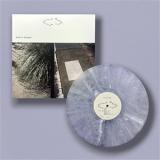
John Surman writes:

Back in 2012/13 there had been some talk about a big futuristic open air urban dance/theatre production for about 80/100 actors/dancers with lasers and all kinds of lighting effects on different stages. I was invited to get involved and, together with Ben and Karin, we eventually decided to get to work on some ideas. I think that the original plan was that in performance there would be a mixture of live music and electronica.

Not altogether surprisingly, bearing in mind the complexity of the project, it never moved forward and developed into anything more than an interesting idea. It was probably over ambitious & I guess the funding never came through.

The only information I that I can find relating to the production refers to two silent movies made in 1927/1928 by the filmmaker Eugene Deslaw, entitled `La Marche Des Machines´ and `Les Nuits Électriques.These were clearly intended to act as inspiration for the project.

After months turned into years it became obvious that the project was going nowhere, and so the recorded music laid around gathering dust until Johnny Trunk asked Karin if she had any interesting music that he might be interested in releasing. One thing led to another and so, finally, Electric Element found a home!

For anyone interested in the equipment used this will have to be an approximation since the memory might be playing tricks. Karin was probably using a Yamaha Rex50 f/x unit, a Roland VT-3 Voice Transformer and an Oberheim Ring Modulator. I was playing Bass Clarinet and Contrabass Clarinet through various f/x units together with a Yamaha WX5 wind synth. All the instruments and voice were also processed through Ben´s equipment. After writing this I asked Ben for his recollections and he came up with the following:

John, Karin and I created this music in 2 or 3 days in the winter of 2013 at their studio in Oslo, Norway. I followed up with another 2 or 3 days of mixing, editing and post-processing . We kept a collaborative, improvisational and free-form approach to the sessions. I grew up immersed in music such as Cloudline Blue, the 1979 duo album of Krog/Surman, and this felt like a similar approach. I have mixed sound for many of their live duo concerts and I would use effects and electronics as an

accompaniment and counterpoint to the performed music. The relation of organic and artificial sound sources in music has always fascinated. In this case, I used some contemporary digital signal processing to introduce my own aesthetic into the conversation, in particular using granular synthesis to recombine small 'clouds' of sound into alternate forms. Some of the software tools I used included Ableton Live, Max/MSP and Reaktor.
pas en stock

Commandez maintenant et nous commanderons l'article pour vous chez notre fournisseur.


Last In: 9 months ago
The Black Watch - For All The World' LP 2x12"
  • A1: Mal De Mer
  • A2: Surely You Rally
  • A3: Not For Us
  • A4: In The Dark
  • 5: The Hook Stuck
  • B1: Lord Marchpane
  • B2: Effective Forthwith
  • B3: Achilles Past
  • B4: Fainting
  • B5: There's A Place
  • C1: Much More
  • C2: Maybe Tomorrow Then
  • C3: Madcap Girl
  • C4: The Knife Cliche
  • C5: Hope Davis' Face
  • D1: Listen You Wait
  • D2: Bright Blue Sun, Gold Sky
  • D3: The Tents Around The Lake
  • D4: Spanish Vamp
  • D5: If Only 6. Early Departure

For All The World, the black watch's twenty-fifth (and first double) album is a darkly poppy, brightly moody, many-splendored take on a number of the great themes: Death and Sex, Memory and Lament and Hope and Love. And it is, arguably, this heralded Los Angeles band's most sonically ambitious and moving record yet, since front man/novelist/ex-English professor John Andrew Fredrick formed the group in 1988 in Santa Barbara after he'd seen a London-by-way-of-Canada band called The Lucy Show play to twelve-or-so people in his hometown.

Having recorded 2024's Weird Rooms with producer Misha Bullock and Fredrick's son Chandler at Bullock's studio in Austin, TX, the TBW founder was keen to repeat the experience with, he says, more straightforward, classic psych/jangle/shoegaze songs. The result, though artistically satisfying, spurred a yen in John to write more songs as a sort of reaction against the batch he'd carried with him from LA to Texas. "We had such a productive time recording ‘Weird Rooms’ that I wanted to repeat the experience... without repeating the experience. And once it was over and I left Misha to do what he pleased with respect to mixing and overdubbing, all I could think was 'I need to write another album now.'" So Fredrick brought longstanding producer/engineer and TBW-associate Scott Campbell (Stevie Nicks, Acetone) along this time to help out with engineering and good cheer.

Fredrick, who has been "accused" of being "astonishingly prolific," learned that bandmate Andy Creighton had recently become unemployed, seized the opportunity to have yet another multi-instrumentalist flesh out the new songs he quickly wrote after he came back from Austin. “Achilles Past,” the first single, is in fact a song that John wrote when the production team thought the album was done—and the front man avers that it’s often the case that a very strong song comes to him, as it were, in the eleventh hour. The same could be said for “Listen You Wait”—another number that came late to the Austin sessions.

Nevertheless, the recording of the first half of For All The World has Creighton's signature indelibly stamped on it - especially on such tracks as “Fainting” and “Surely You Rally”- just as the latter half highlights Bullock's formidable talents. "They're both not just brilliant musicians and they understand my aesthetic and bring their own sensibilities to bear on my stuff. Our respective tastes meet in, you guessed it, The Beatles' realm - the great shadow that hangs over all I do, at least."

"There's A Place," the final song on side two, serves in fact as a distinct homage that's been a long time coming for a band that included a cover of "It's All Too Much" as a bonus track and that release a quite punkish, uptempo version of "Eleanor Rigby" on a 7".

pré-commande20.06.2025

il devrait être publié sur 20.06.2025

Sontag Shogun x Lau Nau - Päiväkahvit LP

When the trio of Sontag Shogun gathered at Laura Naukkarinen's home on the Finnish island of Kimitoön in the summer of 2019, they had not the slightest inkling that the world was about to change irretrievably with the onset of a long-predicted pandemic the following year. By the time their collaborative album, Valo Siroutuu ("The Light Scatters"), was released nearly two years later, the intimate and reflective nature of the work they had created together had taken on new meaning, resonating powerfully (and quietly) with a world in which the proverbial cracks in the wall only seem to be widening. 


Päiväkahvit completes the story that began with Valo Siroutuu, featuring 9 songs from the original sessions as well as 4 interpretive reworks courtesy of Amulets, Fadi Tabbal, Post-Dukes, and Jeremy Young. Available digitally and in a one-time vinyl pressing of 300 copies, the album flows seamlessly from beginning to end, incorporating field recordings, tape, sublime vocal melodies, and a host of acoustic and electronic instruments. Richly textured and immersive, Päiväkahvit positively crackles with warmth and a sense of creative embrace.


"We invite the listener into the sauna, out to the garden and onto the trampoline, to sit by the water’s edge and to take a coffee in the waning afternoon light, and to stay as long as they like." – Jesse Perlstein

Lau Nau, aka Laura Naukkarinen, is a Finnish composer whose music is imbued with an idiosyncratic, finely honed sound world. Her palette consists of acoustic instruments, singing voice, modular synthesisers, reel-to-reel tape recorders and field recordings. To date Lau Nau has released ten albums on record labels in Europe, the USA and Japan and a large number of collaborative releases. Lau Nau is known for her music to films and multi channel sound installations. She was awarded the Finnish State Prize for the Performing Arts 2021 as a sound designer. She has toured abroad for over 20 years, playing in venues such as Super Deluxe in Tokyo, the Lab & Castro Theatre in San Francisco and Blank Forms & Issue Project Room in New York.

Sontag Shogun is a collaborative trio that makes use of analog sound treatments and nostalgic solo piano compositions in harmony to depict abstract places in our memory. Textures built from organic materials such as sand, slate, boiling water, brush and dried leaves, both produced live in performance and recorded to weathered 1/4" tape warm up the space between lush piano themes. All of which is abstracted coolly in the reflective digital space of treated vocals and a live-processed feed from the piano. Bringing us back, like a faded passing scent or any natural emotive trigger, but to where? The wordless journey there will inevitably be more revealing than the destination itself.


pré-commande20.06.2025

il devrait être publié sur 20.06.2025

ELIZABETH PARKER - FUTURE PERFECT

Elizabeth Parker

FUTURE PERFECT

12inchJBH103LP
Trunk
16.06.2025

First ever release of pioneering radiophonic / experimental / electronic / soundtrack composer you may never have heard of but really should have by now. 26 tracks in all.
As we began the mammoth task of whittling down material for this album Elizabeth recalled the time she met Delia Derbyshire. It was during a party for existing and former Radiophonic Workshop composers at BBC Maida Vale in the early 1980s. Delia introduced herself with typical energy and exuberance proclaiming "It's up to you now - I'm passing the baton. Show these men how we get things done". That must have been quite an honour and responsibility for a young, female composer establishing herself within the male-dominated environs at Delaware Road.
Looking back over a musical career spanning almost five decades, it's clear Elizabeth rose to the challenge and made her mark. She was consistently in demand with television and radio producers, composing for an array of ground-breaking, critically acclaimed and popular BBC projects. Whilst Delia's legacy has achieved mythical status with her position as an innovator and feminist icon secured, the majority of Elizabeth's recorded work remains unavailable so her contribution to the output of the Workshop and evolution of British electronic music is somewhat under-appreciated.
Perhaps this record will help start to remedy the situation. Included are early tape experiments, home demos and non-BBC commissions from the early 1970's to the late 2000s. Having listened to 260+ digital audio tapes from Elizabeth's personal archive we have barely scratched the surface but hope to provide an indication of the breadth of her compositional and sound design skills.
Classically trained in cello and piano, Elizabeth graduated from the University of East Anglia with a degree in Music in 1973. She was mentored by Tristram Cary who helped her to become UEA's first recipient of a Masters in Electronic Music and later awarded an Honorary Doctorate by Staffordshire University. Joining the BBC as a studio manager in 1975, Elizabeth transferred to the Radiophonic Workshop in 1978. One of her first tasks was to create special sound effects for Blake's 7 using tape loops, the EMS 100 and trusted VCS3.
Her celebrated score for The Living Planet in 1982 featured early use of the PPG synthesizer and earned an Emmy nomination. Over the following years studio technology evolved rapidly, but Elizabeth transitioned from analogue recording techniques to newer digital platforms with relative ease, using samplers, midi sequencing and computer controlled workstations.
With an incredible 1,400 commissions to her name, she created special sound for The Day Of The Triffids, Lord Of The Rings, countless radio dramas including Iris Murdoch's The Sea, The Sea, Harold Pinter's Moonlight, all of Howard Barker's plays, productions of King Lear, Wordsworth's Prelude and The Pallisers. The success of The Living Planet led to further work for the BBC Natural History Unit followed by numerous commissions for The Natural World. At one point in the late 1980's at least five of her signature tunes were being broadcast every week including Points Of View, Horizon, Doctors To Be and Everyman.
After the closure of the Workshop in 1996 Elizabeth became freelance, arranging Faure's Pavane for the BBC World Cup '98 coverage (reaching no. 9 in the UK singles chart). She wrote additional music for Monty Python's Holy Grail DVD, scored Michael Palin's Full Circle and Sahara TV series, The Lost Gardens Of Heligan and The Human Body with Robert Winston.
Retiring from the music industry in the late 2000's, Elizabeth recently returned to her East Anglian roots and now lives near the coast. She walks daily, listening to all kinds of music, new and old, on her beloved air-pods.

pas en stock

Commandez maintenant et nous commanderons l'article pour vous chez notre fournisseur.


Last In: 10 months ago
DF Tram - Bittersweet Afternoon LP
  • 1: Ana Turn The Lights On
  • 2: Flashbulb Memory (Ft Violeta Vicci)
  • 3: He'll Become A Buddha
  • 4: Separate Ways
  • 5: In Absentia
  • 6: The 4Th Eye
  • 7: The Librarian
  • 8: The Shiver (Ft. Alex Paterson)
  • 9: Fourteen Pilgrims Over The Sava
  • 10: Twin Towers (Ft. Violeta Vicci)
  • 11: Sally Satellite (Ft. Alex Paterson)
  • 12: The Turning Dime

"Los Angeles-born music producer, artist, and DJ DF Tram is thrilled to announce the release of his highly anticipated new album, Bittersweet Afternoon on Orbscure Records. Orbscure Records, founded by Alex Paterson of the legendary electronic act The Orb, continues its tradition of championing innovative and boundary-pushing artists with this remarkable release. About DF Tram DF Tram is a leading figure in the global downtempo electronic scene, celebrated for his meticulously crafted audio-visual performances and immersive storytelling through sound. His work seamlessly blends ambient, sampling, spoken word, vocals, and psychedelia into genre-defying sonic journeys, offering listeners a unique and transformative experience. Bittersweet Afternoon Written and recorded between DF Tram’s Zagreb and Vienna studios during the pandemic and finished last year. Bittersweet Afternoon represents the next chapter in his storied career. The album surprises listeners with his vocals, bittersweet lullabies, and signature collage and spoken word style. Featuring atmospheric soundscapes and cinematic influences, the project reflects the spirit and playfulness of Alex Paterson and Orbscure’s commitment to fostering experimental, forward-thinking music. Adding to the album’s rich tapestry are collaborations with Alex Paterson himself on two tracks, as well as contributions from multi-talented contemporary classical violinist Violeta Vicci on another pair of songs. The first single and video, "The Librarian," offers an immersive glimpse into the world of DF Tram and “Bittersweet Afternoon”. Available on a limited edition transparent blue vinyl, card gatefold CD.

pré-commande13.06.2025

il devrait être publié sur 13.06.2025

Lenxi - Did you get the dream I sent you?

Nous'klaer Audio proudly presents Lenxi and her debut album: 'Did you get the dream I sent you?' A personal 10-track long player balancing IDM, indie pop and techno, which was written in and about a period of life where heartbreak and threats reinforced each other, creating an inescapable loop of isolation. Attempting to regain confidence and hope, a process of dreaming up a fictive emotional escape emerged. Paintings, sketches, voice notes, and a first few synth-lines took shape--laying the groundwork for this very album. In the tail of the storm, the London-born, Amsterdam-based producer and DJ refined her ideas further in places that carried hopeful memories. Places that felt familiar. Revisiting studios in beloved locations from the past --in London and Paris-- and seeking for the new --in studios and the Westcoast waters of L.A.-- all helped to shape those purest ideas into full songs forming a story that demanded closure. Lenxi's debut album is a stunning sequence of dreams hinting at hope combined with nostalgia--built on a strong force battling the vulnerability of being alone--and ultimately finding a way out and onto the dance-floor. The album is pressed on 180g vinyl and comes with a download-card.

pas en stock

Commandez maintenant et nous commanderons l'article pour vous chez notre fournisseur.


Last In: 10 months ago
ACTIVITY - A THOUSAND YEARS IN ANOTHER WAY
  • In Another Way
  • A Piece Of Mirror
  • We Go Where We're Not Wanted
  • Your Dream
  • Good Memory
  • Scissors
  • Heavy Breathing
  • Her Alphabet
  • I Came Here To Harm You
  • A Beast

"Evil is very real and having its way, and love is also real and hasn't lost yet." That's how Activity's Travis Johnson described their third album, A Thousand Years In Another Way. A friend had asked why these songs seemed to capture the strange, heavy feeling of being alive right now better than anything else_and that was his answer. The album doesn't try to explain this time we're living in; it simply feels like it. It's a mix of violence, alienation, and tenderness_reflecting the surreal, dreamlike (or nightmarish) rhythm of daily life. Across ten songs, Activity blends experimental rock, electronics, and found sounds with a sense of paranoia, flickers of hope, and a warped reality. Working with producer Jeff Berner (of Psychic TV), the band manipulated sounds and played with room acoustics to create a feeling that's disorienting_like the air is thick and the walls are listening. Coming out of a period of uncertainty, the Brooklyn-based quartet_Travis Johnson, Jess Rees, Bri DiGioia, and Steven Levine_pieced the album together from fragments: clipped samples, looping guitar lines, ghostly melodies. Rees, DiGioia, and Johnson share vocal and writing duties, shaping a record that feels both deeply personal and strangely alien. There's a constant sense that things could shift or fall apart at any second_nothing stays one thing for long. A Thousand Years In Another Way might not offer answers, but it captures the feeling of right now better than most. And maybe, it sounds a bit like your world too.

pré-commande06.06.2025

il devrait être publié sur 06.06.2025

Activity - A Thousand Years In Another Way LP
  • 1: In Another Way
  • 2: A Piece Of Mirror
  • 3: We Go Where We're Not Wanted
  • 4: Your Dream
  • 5: Good Memory
  • 6: Scissors
  • 7: Heavy Breathing
  • 8: Her Alphabet
  • 9: I Came Here To Harm You
  • 10: A Beast

“Evil is very real and having its way, and love is also real and hasn’t lost yet.”
That’s how Activity’s Travis Johnson described their third album, A Thousand Years In Another Way. A friend had asked why these songs seemed to capture the strange, heavy feeling of being alive right now better than anything else—and that was his answer. The album doesn’t try to explain this time we’re living in; it simply feels like it. It’s a mix of violence, alienation, and tenderness—reflecting the surreal, dreamlike (or nightmarish) rhythm of daily life.
Across ten songs, Activity blends experimental rock, electronics, and found sounds with a sense of paranoia, flickers of hope, and a warped reality. Working with producer Jeff Berner (of Psychic TV), the band manipulated sounds and played with room acoustics to create a feeling that’s disorienting—like the air is thick and the walls are listening.
Coming out of a period of uncertainty, the Brooklyn-based quartet—Travis Johnson, Jess Rees, Bri DiGioia, and Steven Levine—pieced the album together from fragments: clipped samples, looping guitar lines, ghostly melodies. Rees, DiGioia, and Johnson share vocal and writing duties, shaping a record that feels both deeply personal and strangely alien. There’s a constant sense that things could shift or fall apart at any second—nothing stays one thing for long.
A Thousand Years In Another Way might not offer answers, but it captures the feeling of right now better than most. And maybe, it sounds a bit like your world too.

pré-commande06.06.2025

il devrait être publié sur 06.06.2025

COMPUMA - HORIZONS

Compuma

HORIZONS

12inchSA008LP
SOMETHING ABOUT
30.05.2025

COMPUMA's new new album “horizons”now available on vinyl via his own label Something About!

The album “horizons” is a further development of COMPUMA's “horizons EP”, which was released in July 2023 as a digital-only EP on his Bandcamp. The songs are inspired by the scenery and environment of Lake Ezu, Kumamoto, where the artist's roots lie, and by his walks in various places around Japan.

Horizons 1”, in which the undulations of electronic sounds seem to represent a leisurely walk across a clear expanse of sky and lake scenery, and the vocoder voice somewhat reminds us of people's activities, and the piece changes to a more minimalistic play of rhythms and electronic sounds, as if focusing on introspection in the midst of walking. The album also includes “horizons 2,” which changes with exquisite salinity, “horizons 3,” which pays homage to early electronic music, and “horizons 4,” a more stoic minimal electro-dubwise piece that seems to be immersed in the act of walking, The last track on the album, “horizons 5,” is a non-beat ambient track with a hint of the waterfront, as if the artist is gazing at the vast sky, as if the steps of the first half of the album are expanding into a faint memory, and is accompanied by a field recording. The album includes “horizons 5”, a non-beating ambient taste that is covered by field recordings and depicts the atmosphere of a wandering waterfront, and five versions of “horizons” that remind us of the days of “walking”, sometimes immersed in the scenery and walking, sometimes lost in thought, with “horizons interlude” in between, which reminds us of the surface of a bobbing lake, and is a self-titled version of “View 2” from the previous album, “A View”. The album contains seven songs in total, including a self-remix of “View 2” and an electro version of “view 2 electro”, reminiscent of the shimmering surface of a lake.

Personally speaking, this work reminds me somewhat of Kraftwerk's “Autobahn,” which depicted the countryside of West Germany with minimal electronic sounds, and this work also seems to depict a scene of a “walk” with electronic sounds. However, what is different from “Autobahn” is that there is an element in the middle part of the album that seems to go into introspection in the midst of walking, and it is a work that shows various views (including feelings) throughout the album. From a macro perspective, this album is a new response to the recent environmental music revival and generalization of ambient music, which he has introduced as a DJ and record buyer for a long time.
The album was co-produced by hacchi, who also works with Deavid Soul, Urban Volcano Sound, and as a recording/mastering engineer, and mastered by Nakamura Soichiro of Peace Music, a studio that has produced many masterpieces, including Shintaro Sakamoto's solo work. The package artwork is by designer Seiichiro Suzuki. The package artwork is by designer Sei Suzuki. (The package artwork was designed by designer Sei Suzuki.)

******

Compuma is a Tokyo-based log-serving DJ whose extensive knowledge of obscure and left-field music across so many genres and different regions of the world established himself as one of the most respected record buyers in Japan,
a country well known as record collectors’ paradise. While he built his career in record business over decades, he has also been sharing his expertise in music as a DJ just as long. Not only the breath and the depth of where his selection derives are hard to compete, the way he blends them all together is also a state of art. Often intricately layered and collaged, Compuma is capable of sculpting something entirely new with bits and pieces of existing tracks in various forms such as ambient soundscapes to dubbed out club sets. In 2017, his unique ability caught the attention of Berlin Atonal directors and he was invited to play at the festival in Berlin.

He extends his skills into remixing which can be heard on the released from EM Records - “Compuma meets Haku” (2015) and “Bangkok Nights” (2017.) In June 2022, he released his first solo album, A View.
He is also an active member of a DJ trio called Akuma No Numa (which translates to “devil’s swamp”) in which he explores darker and more psychedelic periphery of dance music.

pré-commande30.05.2025

il devrait être publié sur 30.05.2025

Léa Sen - LEVELS

Léa Sen

LEVELS

12inchPTSN3057-3
Partisan Records
30.05.2025

French singer, songwriter and producer Léa Sen’s debut album Levels, is a deeply immersive journey through memory, self-discovery, and emotional growth—imagined as a surreal, liminal hotel where each room holds a different chapter of her life.

Created in collaboration with her brother, Florian Fourlin, and inspired by Léa's own coming-of-age, Levels blends experimental pop with slinky R&B, woozy trip-hop, and warm, smudged guitars. The album plays with the tension between reality and dreamlike abstraction, examining the mysterious ups and downs of existence.

pré-commande30.05.2025

il devrait être publié sur 30.05.2025

Jean - C'est Quand Même Bizarre

Jean

C'est Quand Même Bizarre

12inchJNBS001LP
bSHARP
23.05.2025
  • A1: Décidément
  • A2: Arrête De Faire Comme Si
  • A3: Les Voisins Du Dessous
  • A4: ?
  • A5: Céline
  • A6: Mouillé
  • A7: Jour De Fête
  • B1: Articule!
  • B2: À Quelques Grammes Près
  • B3: Décrocher
  • B4: Monique
  • B5: Cordialement
  • B6: C'est Quand Même Bizarre

After his critically acclaimed EP LOOP (national press coverage, playlist support, a sold-out tour with Odezenne, opening for Zaho de Sagazan and Pomme, winner of the 2024 iNOUïS of Printemps de Bourges), Jean unveils an ambitious and cohesive debut album, conceived as a complete work of art. Created without guest features or compromise, this 12-track record delves deep into introspective songwriting, raw yet poetic, at the crossroads of rap, melancholic pop, and modern French chanson. Jean isn’t trying to please, he exposes himself with no filter.


The album stands out for its strong narrative and visual identity, where each track plays like a film sequence, a resurfacing memory. It explores universal themes: love, solitude, escape, addiction, aging, through a deeply personal and always lucid lens. The imagery reflects this universe: the album cover, shot in a movie theater, introduces an ambiguous character, somewhere between absurdity and allegory, perhaps a manifestation of the artist’s inner demon. A disturbing yet familiar presence, intentionally open to interpretation, like a key without a lock.


Musically, the album spans multiple aesthetics without losing its coherence: each track asserts a distinct tone and balance. Jean positions himself within a new, demanding francophone scene, free from cynicism or affectation. He delivers a unique, sincere project, both accessible and profound, that invites listeners to experience it in one sitting, from start to finish.

pré-commande23.05.2025

il devrait être publié sur 23.05.2025

Articles par page:
N/ABPM
Vinyl