On Stock and ready to ship
Search:mcl
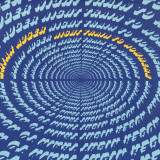
ED/MCL (pronounced Ed Michael) and IDN (Ibisazi Designers Nyabyo) have collaborated to create MOSH - both the title of the EP and its proposed genre. Mosh is music to mosh to, like dance is music to dance to. Jungle breaks are slowed down to the tempo of a metalcore breakdown. Super low 808s rumble below the beat. Sampled and recorded sounds are textured to evoke heavy metal guitars. And there are rhythmic shouted phrases, for shared chanting. This EP is being released on Interference Pattern because Tyler Pope saw ED/MCL playing on the street in Williamsburg.
IDN (Ibisazi Designers Nyabyo) is an artist collective based in Rwanda. Their vocals are shouted in a language of their own invention, yet they have crafted catchy vocal hooks designed for call and response. The vocals heard on MOSH were recorded with ED/MCL while they were visiting them in Kigali. The final track is a 10 minute long performance by IDN, from which ED/MCL remixed the preceding five mosh songs.
Order now and we will order the item for you at our supplier.
Last In: 13 months ago
- A1: Evangelina - Hoyt Axton
- A2: Lady Love - Lou Rawls
- A3: Castles In The Air - Don Mclean
- A4: Why Have You Left The One You Left Me For - Crystal Gayle
- A5: Lost In Love - Air Supply
- A6: Danny's Song - Anne Murray
- B1: Train In The Distance - Paul Simon
- B2: The Bargain Store - Dolly Parton
- B3: We're Gonna Change The World - Matt Monro
- B4: Run Like The Wind - Barbara Dickson
- B5: Stumblin' In - Suzi Quatro & Chris Norman
- B6: Matrimony - Gilbert O'sullivan
- C1: You Belong To Me - Carly Simon
- C2: The Best Is Yet To Come - Clifford T Ward
- C3: Daylight Katy - Gordon Lightfoot
- C4: Deeper Than The Night - Olivia Newton-John
- C5: Warm Feeling - Lindisfarne
- C6: The Danger Of A Stranger - Stella Parton
- D1: Who What When Where Why - Dionne Warwick
- D2: 99 Miles From La - Art Garfunkel
- D3: Calypso - John Denver
- D4: Old And Wise - The Alan Parsons Project
- D5: Theme From 'Taxi' (Angela) - Bob James
Bob Stanley’s latest compilation “Wednesday Morning 6AM” literally turns back the clocks.
In the late 70s and early 80s, there was a parallel world of hits that people only heard when their clock radio went off. BBC Radio 2 had little time for the Top 40 music played by Radio 1 and beamed into living rooms by Top Of The Pops. Radio 2 effectively created a chart of its own playing singles or album tracks that their DJs enjoyed and wanted to share with their listeners. These tracks were given multiple plays on rotation and became earworms for millions of listeners.
“Wednesday Morning 6AM” is the warming soundtrack of eating breakfast or driving to school or to work in the cold and dark early hours to the sound of Art Garfunkel’s ‘99 Miles From LA’, Dolly Parton’s ‘The Bargain Store’, Hoyt Axton’s ‘Evangelina’, Paul Simon’s ‘Train In The Distance’ and Air Supply’s ‘Lost In Love’.
Other featured artists include Gilbert O’Sullivan, Crystal Gayle, Carly Simon, John Denver, Lou Rawls, Lindisfarne, Bob James, Stella Parton and Dionne Warwick.
The 2-LP version includes the bonus track ‘Danny’s Song’ by Anne Murray.
expected to be published on 27.03.2026
Last In: 2026 years ago
- 1: Miami
- 2: United By Hatred
- 3: Violence Condoned
- 4: Electric Torture
- 5: Meaning Of Pain
- 6: Stabbed In The Back
- 7: Shotgun Justice
- 8: Parricide
- 9: American Luck
- 10: Brass Knuckles
- 11: Burning The Bridges
- 12: Concussion
- 13: Cranial Stomp
- 14: The Pugilis
Razor, a thrash metal legend! The most valuable Canadian export since the Toronto Maple Leafs. When Dave Carlo and his band took to the stage at the legendary Headbangers Open Air Festival a few years ago, the crowds went completely wild. This enthusiastic reaction suggests that Razor may have more fans today than they did in their heyday in the mid-1980s. So the re-release of “Shotgun Justice” on vinyl comes just at the right time. The album comprises 14 tracks and features immortal classics such as “United by Hatred,” “Stabbed in the Back,” and “Brass Knuckles.” Shotgun Justice was originally released in 1990 on CD only on Dave Carlos' own label, Fist Fight Records (distributed in North America by Fringe Records). It was the first Razor album with Bob Reid on vocals (who had replaced Stace McLaren, aka Sheepdog).
expected to be published on 27.03.2026
Last In: 2026 years ago
expected to be published on 30.03.2026
Last In: 2026 years ago
Soul singer supreme, Jalen Ngonda and producer/veteran keyboardist, Victor
Axelrod join forces to deliver the collaboration we all needed- the impossibly soulful, reggae banger “All About Me”.
Having worked together on the sessions for Come Around and Love Me, Axelrod recalls being inspired by the similarities between Jalen’s voice and a young Bitty Mclean. He had the beds to a track already recorded, but needed the right singer. With Jalen on board, the two wrote the lyrics and recorded the vocals in one night.
Written from the perspective of an arrogant lover, the track’s party-forward swing and stellar vocal performance make for a pop-forward gem poised to be massive on both the soul and reggae scenes.
On Stock and ready to ship
expected to be published on 10.04.2026
Last In: 2026 years ago
- 1: Through Darkened Glass
- 2: Very Heavy Greening
- 3: Wet Skull
- 4: The Magus
- 5: Exodus
- 6: Music For Mandrax
- 7: Return To Earth
- 8: The Middle Way
A magus is a wizard…a sorcerer. Magus, the band, is certainly interested in such things (who isn’t), but the name is especially apt due to the band’s approach to alchemy, the blending of rock, gothic, proto metal, and psychedelic styles to create a sound that is, ultimately, unique. Part of that uniqueness comes from the instrumentation. While guitar is often a dominant instrument of the rock oeuvre, the Fender Rhodes generally plays a supportive role. Not so here, where Jessica Weeks’ deft use of the keyboard dovetails with Greg Weeks’ more standard six-string approach. Not standard is the band’s sound. Doomy yet inspirational, dour yet vibrant, the duo’s tunes map sinister realms whose subjects span metaphysical creatures to enigmatic portals. You know, the typical stuff that rubs elbows with a magus.
Formed in late 2024, Magus sprung from a desire by both artists to experiment with darker, heavier sounds. Long enamored of artists like Flower Travelling Band,, Black Sabbath, and Deep Purple, the duo delved deeply into trance like riffs and euphoric solos to create the backbone of what has become their debut album, Music for Mandrax. This thirteenth Language of Stone offering features grounded, metronomic grooves, organic, lugubrious synth lines, and tandem vocals (supplied by both Weekses) that, in total, weave a heavy, trancelike spell sure to entice fans of bands as disparate as Sabbath is to Pink Floyd. Recorded at Weeks’ Hexham Head studio (to analog tape, of course), the band enlisted long-time counterparts Jesse Sparhawk (bass) and Ben McConnell (drums) to round out their sound and lock down the grooves that propel the album.
Mixed by Brian McTear and Amy Morrisey at Miner Street in Philadelphia, the band’s fully realized vision came to fruition, which left only the album art to contemplate. The band, wishing to further the gothic aesthetic of their sound, enlisted fashion designer and artist extraordinaire Hogan McLaughlin (Game of Thrones) to create the starkly beautiful line drawings of the front and back covers. The duo travelled to Salem, MA to complete the package with Courtney Brooke Hall, who shot the moody and evocative photographs that grace the gatefold release’s inner panels.
expected to be published on 17.04.2026
Last In: 2026 years ago
- 1: The Dead Ones
- 2: Make It To Heaven
- 3: Rat Trap
- 4: Freak Reflection
- 5: 1-800-Do You Want To Die?
- 6: Stiletto
- 7: Stereo
- 8: Dollar To A Dime
- 9: Corruption Concerto
- 10: Xxxxxxxxxx
Intense and intensely personal, The Dead Ones marks The Last Ten Seconds of Life’s Metal Blade label debut. 10 original tracks of pulverizing deathcore produced by Carson Slovak and Grant McFarland of Pennsylvania’s Atrium Audio. In creating The Dead Ones, “everyone took what we learned from the past two releases and assembled what we thought would bring out the best of us from song structure, tonality of instruments, the mix/master, and the lyrical themes,” furthers McLaughlin.
The end result reflects a more personal and human experience rather than the philosophical and fictional approach used on earlier releases. The Dead Ones follows 2024’s acclaimed No Name Graves in the theme of death and rebirth, but in contrast, is directly focused on the human experience and the band members’ own struggles.
expected to be published on 17.04.2026
Last In: 2026 years ago
Reissued for the first time ever, here’s the remastered debut album of jamaican singer/producer Enos McLeod, originally released in 1983 on Soul Beat record. An ultra rare affair recorded at Joe Gibb's studio with a great backing band featuring Sly & Robbie, Earl Chinna Smith, Winston Wright and more…
expected to be published on 18.04.2026
Last In: 2026 years ago
Season 2 formed in late 2024, bringing together seasoned Melbourne musicians with previous and current projects including Parsnip, The Stroppies and Phil and the Tiles. The five piece, comprising Carolyn Hawkins, Claudia Serfaty, Charlotte Zarb, Freya McLeod and Matt Powell, quickly set to work writing winsome, DIY, shimmer-pop hits that careen through your mind in a gratifying dizzy rush.
With a clear collective vision and little time to waste, Season 2 spent 2025 writing and recording, appearing live only a handful of times. Finally, this April, the band are primed for their debut release, a full-length album entitled 'Power of Now'. ‘Power of Now ‘is a cerebral explosion of melody, hooks, drones and rhythm. In the vein of The Feelies, The Vaselines and The Clean, Season 2 have whipped up a sonic whirlwind. It's a giddy thrill of snappy slap, catchy gang vocals and crystalline guitar refrains.
'Abundance of Power' is a bittersweet bop of ponderous bass, crisp chord flashes and grounded vocals that dwell on slighted futures and bored realities. 'Becomes a Dream' is a delirious race of scrappy strumming and flying phrases that unsettle as much as they pinball endorphins - "pour the ink into the sand, watch the dog it bites the hand". "Tell me something, elbows on the table, I'll tell you nothing, leave you tugging at the cable" they sing on the peppy future single 'Tugging at the Cable', capturing a certain innocent, wide-eyed expressiveness. Season 2 do sparky well, their songs are instant rewards, tunnelling into your subconscious and testing the dance floor. They keep everything moving, the beat and the conversation. Season 2 sound barely controlled and all the better for it, you have no choice but to be swept up.
'Power of Now' was recorded by Alex Macfarlane (The Green Child, Chateau) and mastered by Mikey Young. It will be released digitally and on LP (black vinyl) on April 24th, internationally via Upset The Rhythm and locally in Australia by Spoilsport Records.
expected to be published on 24.04.2026
Last In: 2026 years ago
expected to be published on 24.04.2026
Last In: 2026 years ago
expected to be published on 24.04.2026
Last In: 2026 years ago
long content, you may need to expand row to see all... • Warren Zevon’s final concert, recorded August 9, 2002 at the Edmonton Folk Music Festival, available for the first time
• Features “Werewolves Of London,” “Poor Poor Pitiful Me,” “Lawyers, Guns & Money,” “Play It All Night Long,” and more
• Double LP with etched 4th side and liner notes fromlongtime Zevon band member and friend Matt Cartsonis, who accompanied Warren during this performance
• Available for on opaque metallic silver vinyl
One of my favorite repeatable moments in our sets was looking over when he was singing that line from “Don’t Let Us Get Sick”: “I’m lucky to be here with someone I like . . .” to find him looking at me. That’s some pure and precious stuff, and I’m immensely grateful for the memory.
—Matt Cartsonis from his liner notes
Luckily, 2025 Rock & Roll Hall of Fame inductee, Warren Zevon left us with a treasure trove of nearly four decades of incredible songs and performances. Neither Warren, nor his long-time band member, accompanist, and friend Matt Cartsonis, nor the 14,000 people in attendance at the Edmonton Folk Music Festival knew this would be Warren’s final concert—it was just another great performance from an exceptional songwriter and artist. Epilogue: Live At The Edmonton Folk Music Festival offers you the chance to experience it for the first time, or relive it if you were there.
Featuring Warren on guitar, harmonica, and piano, with Cartsonis adding guitar, dulcimer, fiddle, harmonies and more, the pair run through classics like “Werewolves Of London,” “Poor Poor Pitiful Me,” Lawyers, Guns And Money,” and “Play It All Night Long.” The set also features a performance of the song “Dirty Life And Times,” only ever played twice! The pair found room in the set to pay tribute to Canada with a cover of Joni Mitchell’s “A Case Of You” and the traditional, “Canadee-i-o.”
Available on double metallic silver Vinyl (with etched fourth side), Epilogue: Live At The Edmonton Folk Music Festival has been mastered and restored by multiple Grammy-winning engineer Michael Graves and Jordan McLeod of Osiris Studio with Matt Cartsonis. Cartsonis also adds poignant liner notes about the performance, and insight into his musical relationship and friendship with Zevon.
Epilogue: Live At The Edmonton Folk Music Festival is a gift from a truly legendary singer and songwriter. Play it all night long, indeed.
expected to be published on 24.04.2026
Last In: 2026 years ago
After a series of successful outings alongside sidekicks Ofofo and Zongamin, studio wizard MYTRON turns in his debut solo full-length for Multi Culti World Records. With contributions on Invisible Inc, Calypso, Bongo Joe, Kalahari Oyster Cult, LYO, Codek Records and Earthly Measures, Mytron has carved out a name for himself in a carefully-curated left-field quadrant of the indie-dance galaxy. Tuning his oscillators to myriad sounds — from dub and disco to krautrock — the London-based producer perhaps most notably channels the pristine compositional style of Kraftwerk. While most apparent in the use of vocoder, there’s a consistent efficiency of arrangement that recalls the man-machine in effervescent, idealistic fashion. Mytron manages to keep it simple, funky and musical — whimsical tunes that bop along with analog grit, wilderness, and wonk. There’s a warmth and wit that shine through every synth line, an understated confidence that speaks of years spent tangled in wires and waveforms, with an inclusive sonic eclecticism that flattens hierarchies between genres, geographies, and generations. Each influence is invited to the table, treated not as pastiche but invited to dine and dance in a space where kosmische dub disco and Afro rhythms can coexist without borders. The sleeve design echoes this philosophy: video-feedback patterns hinting at our modern screens, both portals and filters — coloured, distorted intermediaries through which we perceive the world. In the trippiest sense, the record is both reflection and refraction — a sonic mirror held up to an interconnected, glitchy reality. Tailored equally for DJ use and home-listening head trip, the album is meticulous, mischievous and merry.
BanBanTonTon review:
On Mytron’s debut long-player for Multi Culti groovy 21st Century leftfield house gear collides with Daniele Baldelli and Beppe Loda’s hugely influential `80s afro / cosmic. The 9 tracks are chunky, chugging and full of funky, funny noises. Old school B-lines mixing with eccentric electronics. Spinning, spiralling sounds.
Sugar is an electro-pop, vocoder confection, cut from the same sonic cloth as cult classics like Codek’s Tam Tam. Created from tough trap drums, splashing effects and a mutant Giorgio Moroder bass arpeggio. The title track, Propellor, pits Kraftwerk-esque hardware harmonised vocals against a bongo loop and a whistling hook. Playground has simian shrieks surround tumbling tom-toms. Highway Maintenance adds kosmische synths to a dance of woodblocks and buzzing bottom end. Keep On Dubbing is an organ-led, clip clopping percussive canter.
Tracks such as Speaker Can Talk, shot through with disco lasers blasts and recalling Curt Cress’ Dschung Tek, also lift the tempo up, but the bulk of the music here is a mid-tempo, techno drum circle. Squelchy sequences gurgling in and out of programmed percussion. On Quasar, spiky acid edges in and slowly takes over.
Key references that come to mind are Baldelli’s own turn-of-the-2000s Cosmic Sound Project productions, and Wolf Müller’s scene shaking sides on Themes For Great Cites, from around a decade later.
On Stock and ready to ship
- I Know Computer
- As A Dad
- Spock Culture
- Hi! We're On Strike
- Fan Learning Difficulties
- That Was My Brain On Elves
mclusky sind eine Band, die eine Band war, keine Band war und nun wieder eine Band ist. Sie wurde Ende der 90er Jahre gegründet und löste sich 2005 nach drei Alben zum ersten Mal auf. Meinungen zu diesen Alben finden sich im Internet. Der Weg zurück zur Band begann 2014, als die Band sporadische Konzerte spielte, um Geld für einen lokalen Veranstaltungsort zu sammeln, der von der Schließung bedroht war. Nach einigen Rückschlägen, die man als die schönsten Seiten des Lebens bezeichnen kann, veröffentlichten sie 2025 ihr erstes Album seit zwanzig Jahren. sporadische Konzerte gab, um Geld für einen lokalen Veranstaltungsort zu sammeln, der von der Schließung bedroht war. Nach einigen Missgeschicken, die man als Teil des Lebens in seiner schönsten Form bezeichnen kann, veröffentlichte die Band 2025 ihr erstes Album seit zwanzig Jahren. Nun, im Jahr 2026, setzt sie ihre musikalische Reise mit weiterer neuer Musik in Form dieses 6-Song-Mini-Albums fort. Der Zeitpunkt dieser Veröffentlichung fällt mit einer US-Tournee im Frühjahr 2026 zusammen, die nach ihrer Australien-Tournee im Januar und einer Reihe weiterer Tourneen aus dem vergangenen Jahr rund um den Globus stattfindet. Die Rückkehr der Band wurde mit Begeisterung aufgenommen, insbesondere von der Presse, wo Medien wie NPR schwärmten: ,Progressiver, ungewöhnlicher, frecher Post-Punk mit echtem Sinn für Humor und Grandiosität. Diese Musik ist einfach voller Kreativität", und Pitchfork sagte: ,Mclusky, bekannt für ihre explosiven Live-Auftritte, klingen auf ihrem Comeback-Album genauso laut... Viel Spaß dabei." Das Album enthält vier neue Songs, die im Herbst 2025 aufgenommen wurden, sowie einige Songs aus ihrer nur digital erhältlichen Comeback-EP aus dem Jahr 2023.
expected to be published on 01.05.2026
Last In: 2026 years ago
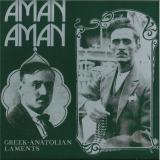
Ausdrucksstarke Gesänge in freien Versen, begleitet von gleitenden Violinen, gehämmertem Santouri, Gitarre und Oud - die hybriden Klänge des Mittelmeerraums zu Beginn des 20. Jahrhunderts. ,Aman Aman" rufen die Sänger auf diesen Aufnahmen, deren Stimmen auf 78-U/min-Schallplatten aus den Jahren 1911 bis 1935 verewigt sind. Der Ausdruck bedeutet in etwa ,Gnade" und ist ein Ausdruck der Verzweiflung, aber auch der Freude und Bewunderung. Auf vielen dieser Platten wird die ganze Bandbreite dieser Emotionen auf einmal vermittelt. Einige dieser Künstler sind Legenden, andere sind in Vergessenheit geraten. Fast die Hälfte sind Sängerinnen, die einen großen Teil der Tradition des Cafe Aman ausmachen, aber in zeitgenössischen Veröffentlichungen nicht so stark vertreten sind. Alle waren von den Konflikten betroffen, die zur Kleinasiatischen Katastrophe von 1923 führten, sowie von den Zwangsmigrationen zwischen Griechenland und der Türkei davor und danach. Ihre Werke spiegeln diese Reisen wider - erschütternde Gedichte über den Verlust der Liebe und der Heimat, begleitet von einigen der besten Musiker der damaligen Zeit. Nach jahrelanger intensiver Recherche hören wir die präzisen, einfühlsamen und überwältigend kraftvollen Stimmen von Künstlern wie Antonis ,Dalgas" Diamantidis, Sofrouniou und Stellakis Perpiniadis, zusammen mit aufschlussreichen Aufnahmen von weitgehend unbekannten Musikern, deren Werke hier zum ersten Mal veröffentlicht werden. Die LP wurde von Jordan McLeod im Osiris Studio sorgfältig remastered und restauriert und enthält detaillierte historische und diskografische Anmerkungen von Stavros Kourousis sowie poetische Übersetzungen der Texte von Tony Klein. Gepresst auf hochwertigem Vinyl bei Smashed Plastic in Chicago und gemeinsam mit dem großartigen Label Olvido Records veröffentlicht.
On Stock and ready to ship
Woody Herman Shaw war ein US-amerikanischer Jazztrompeter, Flügelhornist, Kornettist, Komponist, Arrangeur, Bandleader und Pädagoge. Shaw gilt weithin als einer der bedeutendsten und einflussreichsten Jazztrompeter und Komponisten des 20. Jahrhunderts. Das ursprünglich 1976 bei Muse Records erschienene Album „Love Dance“ gilt als eine der spirituellsten und zukunftsweisendsten Aufnahmen von Woody Shaw. Diese audiophile Neuauflage stellt den vollen Klangreichtum des Albums wieder her und fängt Shaws schwebende Trompetenlinien und das dynamische Zusammenspiel des Ensembles mit beispielloser Klarheit ein. Shaw leitet eine hochkarätige Besetzung – darunter Billy Harper, Steve Turre, René McLean, Cecil McBee und Joe Bonner – durch fünf ausladende Titel, die Modal Jazz, spirituelle Themen und Post-Bop-Intensität miteinander verbinden. „Love Dance“ ist ein Meilenstein in Shaws Diskografie und ein Muss für jeden Musikliebhaber – jetzt präsentiert mit der Tiefe und Detailtreue, die es schon immer verdient hat.
On Stock and ready to ship
- A1: Hurts And Noises
- A2: Wake Up
- A3: I Don't Wanna Be A Rich
- A4: Terrorist Bad Heart
- A5: Provocate
- A6: Lucifer Sam (Pink Floyd)
- B1: Happy!?
- B2: So Lazy
- B3: I Feel Down
- B4: Stupido
- B5: Guilty
- B6: Caroline Says (Loo Reed)
UILTY RAZORS, BONA FIDE PUNKS.
Writings on the topic that go off in all directions, mind-numbing lectures given by academics, and testimonies, most of them heavily doctored, from those who “lived through that era”: so many people today fantasize about the early days of punk in our country… This blessed moment when no one had yet thought of flaunting a ridiculous green mohawk, taking Sid Vicious as a hero, or – even worse – making the so-called alternative scene both festive and boorish. There was no such thing in 1976 or 1977, when it wasn’t easy to get hold of the first 45s by the Pistols or the Clash. Few people were aware of what was happening on the fringes of the fringes at the time. Malcolm McLaren was virtually unknown, and having short hair made you seem strange. Who knew then that rock music, which had taken a very bad turn since the early 1970s, would once again become an essential element of liberation? That, thanks to short and fast songs, it would once again rediscover that primitive, social side that was so hated by older generations? Who knew that, besides a few loners who read the music press (it was even better if they read it in English) and frequented the right record stores? Many of these formed bands, because it was impossible to do otherwise. We quickly went from listening to the Velvet Underground to trying to play the Stooges’ intros. It’s a somewhat collective story, even though there weren’t many people to start it.
The Guilty Razors were among those who took part in this initial upheaval in Paris. They were far from being the worst. They had something special and even released a single that was well above the national average. They also had enough songs to fill an album, the one you’re holding. In everyone’s opinion, they were definitely not among the punk impostors that followed in their wake. They were, at least, genuine and credible.
Guilty Razors, Parisian punk band (1975-1978). To understand something about their somewhat linear but very energetic sound, we might need to talk about the context in which it was born and, more broadly, recall the boredom (a theme that would become capital in punk songs) coupled with the desire to blow everything off, which were the basis for the formation of bands playing a rejuvenated rock music ; about the passion for a few records by the Kinks or the early Who, by the Stooges, by the Velvet mostly, which set you apart from the crowd.
And of course, we should remember this new wave, which was promoted by a few articles in the specialized press and some cutting-edge record stores, coming from New York or London, whose small but powerful influence could be felt in Paris and in a handful of isolated places in the provinces, lulled to sleep by so many appalling things, from Tangerine Dream to President Giscard d’Estaing...
In 1975-76, French music was, as almost always, in a sorry state ; it was still dominated by Johnny Hallyday and Sylvie Vartan. Local rock music was also rather bleak, apart from Bijou and Little Bob who tried to revive this small scene with poorly sound-engineered gigs played to almost no one.
In the working class suburbs at the time, it was mainly hard rock music played to 11 that helped people forget about their gruelling shifts at the factory. Here and there, on the outskirts of major cities, you still could find a few rockers with sideburns wearing black armbands since the death of Gene Vincent, but it wasn’t a proper mass movement, just a source of real danger to anyone they came across who wasn't like them. In August 1976, a festival unlike any other took place in Mont-de-Marsan – the First European Punk Festival as the poster said – with almost as many people on stage as in the audience. Yet, on that day, a quasi historical event happened, when, under the blazing afternoon sun, a band of unknowns called The Damned made an unprecedented noise in the arena, reminiscent of the chaotic Stooges in their early adolescence. They were the first genuine punk band to perform in our country: from then on, anything was possible, almost anything seemed permissible.
It makes sense that the four+1 members of Guilty Razors, who initially amplified acoustic guitars with crappy tape recorder microphones, would adopt punk music (pronounced paink in French) naturally and instinctively, since it combines liberating noise with speed of execution and – crucially – a very healthy sense of rebellion (the protesters of May 1968 proclaimed, and it was even a slogan, that they weren’t against old people, but against what had made them grow old. In the mid-1970s, it seemed normal and obvious that old people should now ALSO be targeted!!!).
At the time, the desire to fight back, and break down authority and apathy, was either red or black, often taking the form of leafleting, tumultuous general assemblies in the schoolyard, and massive or shabby demonstrations, most of the time overflowing with an exciting vitality that sometimes turned into fights with the riot police. Indeed, soon after the end of the Vietnam War and following Pinochet’s coup in Chile, all over France, Trotskyist and anarcho-libertarian fervour was firmly entrenched among parts of the educated youth population, who were equally rebellious and troublemakers whenever they had the chance. It should also be noted that when the single "Anarchy in the UK" was first heard, even though not many of us had access to it, both the title and its explosive sound immediately resonated with some of those troublemakers crying out for ANARCHY!!! Meanwhile, the left-wing majority still equated punks with reckless young neo-Nazis. Of course, the widely circulated photos in the mainstream press of Siouxsie Sioux with her swastikas didn’t necessarily help to win over the theorists of the Great Revolution. It took Joe Strummer to introduce The Clash as an anti-racist, anti-fascist and anti-ignorance band for the rejection of old-school revolutionaries to fade a little.
The Lycée Jean-Baptiste Say at Porte d’Auteuil, despite being located in the very posh and very exclusive 16th arrondissement of Paris, didn’t escape these "committed" upheavals, which doubled as the perfect outlet for the less timid members of this generation.
“Back then, politics were fun,” says Tristam Nada, who studied there and went on to become Guilty Razors’ frontman. “Jean-Baptiste was the leftist high-school in the neighbourhood. When the far right guys from the GUD came down there, the Communist League guys from elsewhere helped us fight them off.”
Anything that could challenge authority was fair game and of course, strikes for just about any reason would lead to increasingly frequent truancy (with a definitive farewell to education that would soon follow). Tristam Nada spent his 10th and 11th unfinished grades with José Perez, who had come from Spain, where his father, a janitor, had been sentenced to death by Franco. “José steered my tastes towards solid acts such as The Who. Like most teenagers, I had previously absorbed just about everything that came my way, from Yes to Led Zeppelin to Genesis. I was exploring… And then one day, he told me that he and his brother Carlos wanted to start a rock band.” The Perez brothers already played guitar. “Of course, they were Spanish!”, jokes their singer. “Then, somewhat reluctantly, José took up the bass and we were soon joined by Jano – who called himself Jano Homicid – who took up the rhythm guitar.” Several drummers would later join this core of not easily intimidated young guys who didn’t let adversity get the better of them.
The first rehearsals of the newly named Guilty Razors took place in the bedroom of a Perez aunt. There, the three rookies tried to cover a few standards, songs that often were an integral part of their lives. During a first, short gig, in front of a bewildered audience of tough old-school rockers, they launched into a clunky version of the Velvet Underground's “Heroin”. Challenge or recklessness? A bit of both, probably… And then, step by step, their limited repertoire expanded as they decided to write their own songs, sung in a not always very accurate or academic English, but who cared about proper grammar or the right vocabulary, since what truly mattered was to make the words sound as good as possible while playing very, very fast music? And spitting out those words in a language that left no doubt as to what it conveyed mattered as well.
Trying their hand a the kind of rock music disliked by most of the neighbourhood, making noise, being fiercely provocative: they still belonged to a tiny clique who, at this very moment, had chosen to impose this difference. And there were very few places in France or elsewhere, where one could witness the first stirrings of something that wasn’t a trend yet, let alone a movement.
In the provinces, in late 1976 or early 1977, there couldn’t be more than thirty record stores that were a bit more discerning than average, where you could hear this new kind of short-haired rock music called “punk”. The old clientele, who previously had no problem coming in to buy the latest McCartney or Aerosmith LP, now felt a little less comfortable there…
In Paris, these enlightened places were quite rare and often located nex to what would become the Forum des Halles, a big shopping mall. Between three aging sex workers, a couple of second-hand clothes shops, sellers of hippie paraphernalia and small fashion designers, the good word was loudly spread in two pioneering places – propagators of what was still only a new underground movement. Historically, the first one was the Open Market, a kind of poorly, but tastefully stocked cave. Speakers blasted out the sound of sixties garage bands from the Nuggets compilation (a crucial reference for José Perez) or the badly dressed English kids of Eddie and the Hot Rods. This black-painted den was opened a few years earlier by Marc Zermati, a character who wasn’t always in a sunny disposition, but always quite radical in his (good) choices and his opinions. He founded the independent label Skydog and was one of the promoters of the Mont-de-Marsan punk festivals. Not far from there was Harry Cover, another store more in tune with the new New York scene, which was amply covered in the house fanzine, Rock News (even though it was in it that the photos of the Sex Pistols were first published in France).
It was a favorite hang-out of the Perez brothers and Tristam Nada, as the latter explained. “It’s at Harry Cover’s that we first heard the Pistols and Clash’s 45s, and after that, we decided to start writing our first songs. If they could do it, so could we!”
The sonic shocks that were “Anarchy in the UK”, “White Riot” or the Buzzcocks’s EP, “Spiral Scratch” – which Guilty Razors' sound is reminiscent of – were soon to be amplified by an unparalleled visual shock. In April 1977, right after the release of their first LP, The Clash performed at the Palais des Glaces in Paris, during a punk night organised by Marc Zermati. For many who were there, it was the gig of a lifetime…
Of course, Guilty Razors and Tristam were in the audience: “That concert was fabulous… We Parisian punks were almost all dressed in black and white, with white shirts, skinny leather ties, bikers jackets or light jackets, etc. The Clash, on the other hand, wore colourful clothes. Well, the next day, at the Gibus, you’d spot everyone who had been at this concert, but they weren’t wearing anything black, they were all wearing colours.”
It makes sense to mention the Gibus club, as Guilty Razors often played there (sometimes in front of a hostile audience). It was also the only place in Paris that regularly scheduled new Parisian or Anglo-Saxon acts, such as Generation X, Siouxsie and the Banshees, the Slits, and Johnny Thunders who would become a kind of messed-up mascot for the venue. A little later, in 1978, the Rose Bonbon – formerly the Nashville – also attracted nightly owls in search of electric thrills… In 1977, the iconic but not necessarily excellent Asphalt Jungle often played at the Gibus, sometimes sharing the bill with Metal Urbain, the only band whose aura would later transcend the French borders (“I saw them as the French Sex Pistols,” said Geoff Travis, head of their British label Rough Trade). Already established in this small scene, Metal Urbain helped the young and restless Guilty Razors who had just arrived. Guitarist for Metal Urbain Hermann Schwartz remembers it: “They were younger than us, we were a bit like their mentors even if it’s too strong a word… At least they were credible. We thought they were good, and they had good songs which reminded of the Buzzcocks that I liked a lot. But at some point, they started hanging out with the Hells Angels. That’s when we stopped following them.”
The break-up was mutual, since, Guilty Razors, for their part, were shocked when they saw a fringe element of the audience at Metal Urbain concerts who repeatedly shouted “Sieg Heil” and gave Nazi salutes. These provocations, even still minor (the bulk of the skinhead crowd would later make their presence felt during concerts), weren’t really to the liking of the Perez brothers, whose anti-fascist convictions were firmly rooted. Some things are non-negotiable.
A few months earlier (in July 1978), Guilty Razors had nevertheless opened very successfully for Metal Urbain at the Bus Palladium, a more traditonally old-school rock night-club. But, as was sometimes the case back then, the night turned into a mass brawl when suburban rockers came to “beat up punks”.
Back then, Parisian nights weren’t always sweet and serene.
So, after opening as best as they could for The Jam (their sound having been ruined by the PA system), our local heroes were – once again – met outside by a horde of greasers out to get them. “Thankfully,” says Tristam, “we were with our roadies, motorless bikers who acted as a protective barrier. We were chased in the neighbouring streets and the whole thing ended in front of a bar, with the owner coming out with a rifle…”
Although Tristam and the Perez brothers narrowly escaped various, potentially bloody, incidents, they weren’t completely innocent of wrongdoing either. They still find amusing their mugging of two strangers in the street for example (“We were broke and we simply wanted to buy tickets for the Heartbreakers concert that night,” says Tristam). It so happened that their victims were two key figures in the rock business at the time: radio presenter Alain Manneval and music publisher Philippe Constantin. They filed a complaint and sought monetary compensation, but somehow the band’s manager, the skilful but very controversial Alexis, managed to get the complaint withdrawn and Guilty Razors ended up signing with Constantin with a substantial advance.
They also signed with Polydor and the label released in 1978 their only three-track 45, featuring “I Don't Wanna be A Rich”, “Hurts and Noises” and “Provocate” (songs that exuded perpetual rebellion and an unquenchable desire for “class” confrontation). It was a very good record, but due to a lack of promotion (radio stations didn’t play French artists singing in English), it didn’t sell very well. Only 800 copies were allegedly sold and the rest of the stock was pulped… Initially, the three tracks were to be included on a LP that never came to be, since they were dropped by Polydor (“Let’s say we sometimes caused a ruckus in their offices!” laughs Tristam.) In order to perfect the long-awaited LP, the band recorded demos of other tracks. There was a cover of Pink Floyd's “Lucifer Sam” from the Syd Barrett era – proof of an enduring love for the sixties’ greats –, “Wake Up” a hangover tale and “Bad Heart” about the Baader-Meinhof gang, whose actions had a profound impact on the era and on a generation seeking extreme dissent... On the album you’re now discovering, you can also hear five previously unreleased tracks recorded a bit later during an extended and freezing stay in Madrid, in a makeshift studio with the invaluable help of a drummer also acting as sound engineer. He was both an enthusiastic old hippie and a proper whizz at sound engineering. Here too, certain influences from the fifties and sixties (Link Wray, the Troggs) are more than obvious in the band’s music.
Shortly after a final stormy and rather barbaric (on the audience’s side) “Punk night” at the Olympia in June 1978, Tristam left the band ; his bandmates continued without him for a short while.
But like most pioneering punk bands of the era, Guilty Razors eventually split up for good after three years (besides once in Spain, they’d only played in Paris). The reason for ceasing business activities were more or less the same for everyone: there were no venues outside one’s small circuit to play this kind of rock music, which was still frightening, unknown, or of little interest to most people. The chances of recording an LP were virtually null, since major labels were only signing unoriginal but reassuring sub-Téléphone clones, and the smaller ones were only interested in progressive rock or French chanson for youth clubs. And what about self-production? No one in our small safety-pinned world had thought about it yet. There wasn’t enough money to embark on that sort of venture anyway.
So yes, the early days of punk in France were truly No Future!
expected to be published on 22.05.2026
Last In: 2026 years ago
- A1: O Mi Sol Li Lon (Angie March) (Side A)
- A2: Arabesque No 1 & 2 (Sally Heath)
- A3: Midtown (Tom Waits)
- A4: On Le Joue Pour Nous (Mistinguett)
- A5: Menlimontant (Charles Trenet)
- A6: Cockroach & Barflies (The Tiger Lillies)
- A7: Soutine's Cow (The Tiger Lillies)
- A8: Bridge (The Tiger Lillies)
- A9: Goodbye (Sacha Puttnam & Steve Mclaughlin
- B1: Modi's Place (Caroline Dale) (Side B)
- B2: Cinzia (Oskar Shuster)
- B3: Disfruto (Carla Morrison)
- B4: Doves (Sacha Puttnam, Steve Mclaughlin & Tim Wheeler)
- B5: Beef Painting (Sacha Puttnam, Steve Mclaughlin & Yasmin Ogilvie)
- B6: Cathedrals (Instrumental) (Robert Stevenson & Caroline Dale)
- B7: Sunday In The Park (Sacha Puttnam, Steve Mclaughlin & Caroline Dale)
- B8: Sculpture Drums (Sacha Puttnam, Steve Mclaughlin & Tim Wheeler)
- B9: Stairway Romance (Sacha Puttnam, Steve Mclaughlin & Tim Wheeler)
- B10: The Stars (Sacha Puttnam, Steve Mclaughlin & Tim Wheeler)
- C1: Cemetery (The Tiger Lillies) (Side C)
- C2: Cemetery Nightmare (The Tiger Lillies)
- C3: Blown Up Cafe (Sacha Pullman, Steve Mclaughlin & Llan Eshkeri)
- C4: The Black Angel's Death Song (The Velvet Underground & Niko)
- C5: Tom Traubert's Blues (Tom Waits)
- D1: Gangnat Dinner (Sacha Puttnam, Steve Mclaughlin, Robert Stevenson & Sally Heath)
- D2: Modi Speech (Sacha Pullman, Steve Mclaughlin & Llan Eshkeri)
- D3: How Did It Go (Sacha Pullman, Steve Mclaughlin, Tim Wheeler & Llan Eshkeri)
- D4: Argument Pt2 (Sacha Pullman, Steve Mclaughlin & Llan Eshkeri)
- D5: Bea Returns Sculpture (Sacha Puttnam, Steve Mclaughlin & Tim Wheeler)
- D6: Cathedrals (Jump, Little Children)
- D7: Doves Ending (Sacha Puttnam, Steve Mclaughlin & Tim Wheeler)
- C6: Pour Lui (Lucienne Delyle)
- C7: Stairs (The Tiger Lillies)
Modi: Three Days on the Wing of Madness is a 2024 biographical drama based on the life of renowned Italian artist Amedeo Modigliani.
Directed by Johnny Depp, the film stars Riccardo Scamarcio in the title role, with supporting performances by Stephen Graham,
Al Pacino, and Antonia Desplat. The film’s original soundtrack plays a pivotal role, blending evocative original compositions by The Tiger Lillies
with classic tracks from artists such as Charles Trenet, Augie March, Tom Waits, and The Velvet Underground & Nico.
The soundtrack is available as a deluxe 2LP vinyl set in a gatefold sleeve with imagery from the film
And as a 2CD Box Set with lift-off lid, featuring a 24-page booklet including exclusive notes from Johnny Depp and behind-the-scenes images
On Stock and ready to ship
Shhh. The command to be quiet is not just part of the title of one of the two sprawling compositions on this pioneering album. It's also an apt metaphor for the relaxed hypnotism and spaced-out atmosphere that define In a Silent Way, a record that pushes the boundaries of studio possibilities, artist-producer relationships, and rock-jazz chasms. Recognized as Miles Davis' first full-on fusion effort and part of his "electric" era, the 1969 landmark claims a Who's Who line-up that sends the music into an ethereal stratosphere.
Mastered from the original master tapes and pressed at RTI, this unsurpassed 180g LP edition lifts the veil on the cutting-edge assembly process that created the pair of lengthy suites. Helmed by three electric instruments, the bevelled compositions melt away all preconceived notions of "jazz," ˜rock," and "ambience," following a loose theory Davis dubbed "New Directions."
Few albums are so delicately textured. And on Mobile Fidelity's meticulous reissue, such sulcate elements pour over ink-black backgrounds on a canyon-wide soundstage. In particular, Tony Williams' inventive percussive touch – he causes the cymbals to shimmer as a pieces of silver tend to do when exposed to sunlight – is broadcast with lifelike three-dimensional qualities, the panoramic view extending to Davis' nocturnal trumpet, Wayne Shorter's ribbon-unfurling saxophone, Dave Holland's extrapolative bass, and the mosaic of keys.
If the record's only accomplishment is its introduction of guitarist John McLaughlin to the world, it alone would be enough. Yet In a Silent Way continues to bedazzle, puzzle, and inspire for myriad reasons – not the least of which is the seemingly telepathic communicative methods employed by the group's members. The line-up is great on paper, but, if it's even possible, the octet sounds even better in practice, with the instruments and tonalities conjoining in avant-garde communion like hyper-sensitive tentacles exploring the stippled landscapes of an undiscovered planet.
Diverting from expectation, tubular grooves twist, turn, and spin, sometimes piling atop of each other, always shying away from structure and melody. Ellipsoidal solos provide hesitant guidance, ranging from Chick Corea's Fender Rhodes phrases to Davis' decorative spirals. And as colour is the primary unit of currency on Davis' Sketches of Spain, laid-back episodes, geometric spaces, and quiet sensuality reign here, with the set's maverick reputation attained via musings on solitude rather than explosions of noise.
Controversial for the period, the heavily edited production of In a Silent Way blew open the once-locked doors on what producer's could attempt – and how artists could assist them. Knitted together as one would construct a cross-hatched quilt, songs contain grafts of repeat passages that provide unifying structure and experimental continuity. What a statement.
On Stock and ready to ship
"Written in 1992 and with only 1000 copies pressed, this track developed into a much sought-after UK Soul track amongst soul enthusiasts preferring the UK Street Soul sound, drawing influences from our Caribbean heritage, genres and lifestyles."
In-demand UK street soul 'Midnight Love' by early 90s Birmingham-based duo Stirling McLean, comprised of vocalist Rosemarie Smith and musician Andrew McLean. Originally released in 1993 on UK-based indy-label Contribution Records amongst a roster of artists from the West Midlands, Manchester and Scotland, 'Midnight Love' has remained the label's stand-out cut for street soul heads. Produced by Frank O'Donnell, this 45 single comes with the previously unreleased instrumental version sourced from the master tapes.
On Stock and ready to ship
- A1: Animotion - Obsession (12“ Remix Version)
- A2: Visage - The Damned Don‘t Cry (Dance Mix)
- A3: Moskwa Tv - Moskwa Electronic (12“ Version)
- A4: Fokewulf 190 - Body Heat (Vocal)
- B1: J W.b. - Never Again (Again And Again Mix)
- B2: Mcl - Satellite (Original Mix)
- B3: Fake - Donna Rouge (Remix)
- B4: Roy - Shooting Star (12“ Version)
Die Erfolgsreihe geht weiter! Mit 80s Electro Tracks – Vinyl Edition 5 präsentieren wir die neueste Fortsetzung unserer beliebten Vinyl-Serie – randvoll mit elektrisierenden Club-Hits aus den 1980er Jahren. Diese exklusive LP richtet sich an Fans des klassischen Electro Sounds und Liebhaber kultiger
Synth-Pop-Klänge.
Mit dabei sind wieder namhafte Künstler der Szene:
Animotion, Visage, Moskwa TV und MCL liefern einige ihrer ikonischsten Tracks – sorgfältig ausgewählt und in extra langen Versionen, wie sie damals in den Clubs liefen.
Ein Muss für Sammler, DJs und alle, die den Sound der 80er neu entdecken oder wieder aufleben lassen wollen – stilecht auf hochwertigem Vinyl.
On Stock and ready to ship
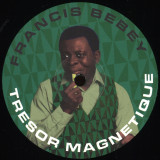
Francis Bebey was a visionary who explored the intersection of African traditions and global music long before it became a global trend. Born in Cameroon, Bebey's sound was an eclectic blend of his rich cultural heritage and his deep exploration of modern music, spanning genres from traditional folk and jazz to funk and electronic experimentation. As an artist, Bebey was ahead of his time, using his unique voice and instruments to forge new paths for African music to be heard worldwide. His legacy is not just in the music he created but in the way he opened doors for the global recognition of African artists, influencing generations of musicians, producers, and fans alike.
This release marks an exciting moment, as we introduce remixes of bebeys iconic productions by contemporary electronic producers, giving new life through creative re imaginings.
Tracks:
Le Grand Soleil De Dieu (Psychemagik Remix): The UK-based musical duo are known for their eclectic blend of electronic music, psychedelic rock and mystical global sounds. Formed by Danny McLewin and Tommy McLewin, the duo has carved out a unique niche within the global music scene though their intricate arrangements. Their Remixes and Collaborations have been with artists like Fleetwood Mac, Tame Impala, and Hercules & Love Affair. Their psychedelic dub remix has otherworldly qualities, with dreamy atmospheres and bouncing baselines throughout this brilliant opening track.
Guinee (Turbotito Edit): The Berlin-based DJ and producer known for his infectious blend of house, disco, and funk. With a knack for smooth, groovy beats and a deep love for melody, Turbotito's music brings a fresh, energetic vibe to the dance floor. On this track, he effortlessly re-imagines and elevates the world of Guinee to match his signature sound. A combination of a great pulsing base line, ethereal vocals and bird sound effects incorporated into the percussion makes this track an absolute stand out.
Agatha (Voilaaa Remix): Bruno "Patchworks" Hovart from Lyon is the brains behind the Voilaaa project. Fusing soulful grooves, funk, and disco with an unmistakable French touch, Voilaaa creates infectious, feel-good rhythms that blend classic and contemporary influences. In this track we find the first big hook of the album vocally, coupled with Bebey's lively humour in spoken French on top of joyous instrumentation. The smooth vocals, catchy melodies, and vibrant arrangements, bring a fresh energy to the original hit track - a brilliant homage.
Forest Nativity (Red Axes Edit): Red Axes are a dynamic electronic music duo from Tel Aviv, blending disco, house, and psychedelic influences into infectious, genre-defying tracks. Known for their unique sound, warm analog textures, and hypnotic rhythms, Niv Arzi and Dori Simao craft music that moves both the body and the mind. Forest Nativity arrives as a full circle closer, incorporating some of the most authentic African instruments such as a Balafon, an instrument similar to a xylophone and a Djembe, a hand drum central to many West African traditions. The 7 minute track is guaranteed to take you on a fascinating journey through Bebey's culture and livelihood.
On Stock and ready to ship
- A1: Montego Bay - Everything (Paradise Mix) 04 59
- A2: Atelier - Got To Live Together (Club Mix) 06 06
- A3: Golem - Music Sensations 04 56
- B1: The True Underground Sound Of Rome Feat. Stefano Di Carlo - Gladiators 05 26
- B2: Eagle Parade - I Believe 04 26
- C1: Dj Le Roi - Bocachica (Detroit Version) 05 28
- C2: Green Baize - Synthetic Rhythm 01 41
- C3: M.c.j. Feat. Sima - Sexitivity (Deep Mix) 05 30
- D1: Kwanzaa Posse Feat. Funk Master Sweat - Wicked Funk (Afro Ambient Mix) 06 31
- D2: Progetto Tribale - The Bird Of Paradise 06 29
- D3: Mbg - The Quite 06 59
Googling “paradise house”, the first results to pop up are an endless list of European b&b’s with whitewashed lime façades, all of them promising “…an unmatched travel experience a few steps from the sea”. Next, a little further down, are the institutional websites of a few select semi-luxury retirement homes (no photos shown, but lots of stock images of smiling nurses with reassuring looks). To find the “paradise house” we’re after, we have to scroll even further down. Much further down.
It feels like yesterday, and at the same time it seems like a million years ago. The Eighties had just ended, and it was still unclear what to expect from the Nineties. Mobile phones that were not the size of a briefcase and did not cost as much as a car? A frightening economic crisis? The guitar-rock revival?! Certainly, the best place to observe that moment of transition was the dancefloor. Truly epochal transformations were happening there. From America, within a short distance one from the other, two revolutionary new musical styles had arrived: the first one sounded a bit like an “on a budget” version of the best Seventies disco-music – Philly sound made with a set of piano-bar keyboards! – the other was even more sparse, futuristic and extraterrestrial. It was a music with a quite distinct “physical” component, which at the same time, to be fully grasped, seemed to call for the knotty theories of certain French post-modern philosophers: Gilles Deleuze, Félix Guattari, Paul Virilio... Both those genres – we would learn shortly after – were born in the black communities of Chicago and Detroit, although listening to those vinyl 12” (often wrapped in generic white covers, and with little indication in the label) you could not easily guess whether behind them there was a black boy from somewhere in the Usa, or a girl from Berlin, or a pale kid from a Cornish coastal town.
Quickly, similar sounds began to show up from all corners of Europe. A thousand variations of the same intuition: leaner, less lean, happier, slightly less intoxicated, more broken, slower, faster, much faster... Boom! From the dancefloors – the London ones at least, whose chronicles we eagerly read every month in the pages of The Face and i-D – came tales of a new generation of clubbers who had completely stopped “dressing up” to go dancing; of hot tempered hooligans bursting into tears and hugging everyone under the strobe lights as the notes of Strings of Life rose up through the fumes of dry ice (certain “smiling” pills were also involved, sure). At this point, however, we must move on to Switzerland.
In Switzerland, in the quiet and diligent town of Lugano, between the 1980s and 1990s there was a club called “Morandi”. Its hot night was on Wednesdays, when the audience also came from Milan, Como, Varese and Zurich. Legend goes that, one night, none less than Prince and Sheila E were spotted hiding among the sofas, on a day-off of the Italian dates of the Nude Tour… The Wednesday resident and superstar was an Italian dj with an exotic name: Don Carlos. The soundtrack he devised was a mixture of Chicago, Detroit, the most progressive R&B and certain forgotten classics of old disco music: practically, what the Paradise Garage in New York might have sounded like had it not closed in 1987. In between, Don Carlos also managed to squeeze in some tracks he had worked on in his studio on Lago Maggiore. One in particular: a track that was rather slow compared to the BPM in fashion at the time, but which was a perfect bridge between house and R&B. The title was Alone: Don Carlos would explain years later that it had to be intended both in the English meaning of “by itself” and like the Italian word meaning “halo”. That wasn’t the only double entendre about the song, anyway. Its own very deep nature was, indeed, double. On the one hand, Alone was built around an angelic keyboard pattern and a romantic piano riff that took you straight to heaven; on the other, it showcased enough electronic squelches (plus a sax part that sounded like it had been dissolved by acid rain) to pigeonhole the tune into the “junk modernity” section, aka the hallmark of all the most innovative sounds of the time: music that sounded like it was hand-crafted from the scraps of glittering overground pop.
No one knows who was the first to call it “paradise house”, nor when it happened. Alternative definitions on the same topic one happened to hear included “ambient house”, “dream house”, “Mediterranean progressive”… but of course none were as good (and alluring) as “paradise house”. What is certain is that such inclination for sounds that were in equal measure angelic and neurotic, romantic and unaffective, quickly became the trademark of the second generation of Italian house. Music that seemed shyly equidistant from all the rhythmic and electronic revolutions that had happened up to that moment (“Music perfectly adept at going nowhere slowly” as noted by English journalist Craig McLean in a legendary field report for Blah Blah Blah magazine). Music that to a inattentive ear might have sounded as anonymous as a snapshot of a random group of passers-by at 10AM in the centre of any major city, but perfectly described the (slow) awakening in the real world after the universal love binge of the so-called Second Summer of Love.
For a brief but unforgettable season, in Italy “paradise house” was the official soundtrack of interminable weekends spent inside the car, darting from one club to another, cutting the peninsula from North to centre, from East to West coast in pursuit of the latest after-hours disco, trading kilometres per hour with beats per minute: practically, a new New Year’s Eve every Friday and Saturday night. This too was no small transformation, as well as a shock for an adult Italy that was encountering for the first time – thanks to its sons and daughters – the wild side of industrial modernity. The clubbers of the so-called “fuoriorario” scene were the balls gone mad in the pinball machine most feared by newspapers, magazines and TV pundits. What they did each and every weekend, apart from going crazy to the sound of the current white labels, was linking distant geographical points and non-places (thank you Marc Augé!) – old dance halls, farmhouses and business centres – transformed for one night into house music heaven. As Marco D’Eramo wrote in his 1995 essay on Chicago, Il maiale e il grattacielo: “Four-wheeled capitalism distorts our age-old image of the city, it allows the suburbs to be connected to each other, whereas before they were connected only by the centre (…) It makes possible a metropolitan area without a metropolis, without a city centre, without downtown. The periphery is no longer a periphery of any centre, but is self-centred”.
“Paradise house” perfectly understood all of this and turned it into a sort of cyber-blues that didn’t even need words, and unexpectedly brought back a drop of melancholic (post?)-humanity within a world that by then – as we would wholly realise in the decades to come – was fully inhuman and heartless. A world where we were all alone, and surrounded by a sinister yellowish halo, like a neon at the end of its life cycle. But, for one night at least, happy."
On Stock and ready to ship
Marbles is the legendary 1970 proto punk / dance classic from John McLaughlin’s US debut album 'De?otion', recorded at the time in which he played on Miles Davis' Bitches Brew and taped the Record Plant session with Jimi Hendrix.
Marbles didn't just deliver jazz rock's most danceable 4/4 beat, played by Band of Gypsies / Electric Flag drummer Buddy Miles. It is also centered with a once-in-ageneration bass line performed by Billy Rich. Larry Young's otherworldly Hammond textures predate a lot of what synthesizers were about to do much later, and the blowtorch energy emanating from John McLaughlin's cranked amp went beyond what most would had dared during the defining era of heavy rock guitar. An apex achievement at the intersection of jazz rock, guitar rock and dance music without parallel, before or since.
Background: John McLaughlin arrived in New York in 1969 to join Tony Williams' new group Lifetime which also featured Larry Young and eventually Jack Bruce (of Cream). On the second day in town he found himself in the studio with Miles Davis, recording 'In a Silent Way.' His playing would also take center stage in Bitches Brew, Jack Johnson, On The Corner and several other Davis key works of his much beloved first electric era. In between a busy schedule with Lifetime and Davis, McLaughlin also recorded two solo albums in 1970, 'De?otion' with an all-electric group and ‚'My Goa|’s B?y?nd' as its acoustic counterpart. By the time he formed his group Mahavishnu Orchestra in 1972, John McLaughlin was firmly established as the most important practitioner of his instrument of his generation within and well beyond the emerging jazz rock / fusion genre, and he has continued to evolve and surprise until today.
Here, a thorough remaster is supplemented by a new and throbbing techno version by Stefan Goldmann.
On Stock and ready to ship
Zongamin and Mytron reunite on Multi Culti with an album of collaborations. Exploring the depths of leftfield outer nationalism these two mainstays of our global family serve up a colorful array of mind-altering disco and interdimensional dub. Tribal motifs merge with field recordings while synthesized animals call out over exotic hand percussion. Jams on vintage synths meet 8-bit sampling bounced onto spring reverbs and digital delays from the 80s. Started mid-pandemic, this collaboration ignored the surrounding havoc and social distancing, instead focusing on Good Vibes TM and positivity with a genre-defying approach belying trans-continental origins. The result is a playful symbiosis that is Phatter than the sum of its elements. Mytron is Jacek Janiszewski, a pan-European multi-instrumentalist, producer and DJ, born in Poland, raised in Holland and Germany, and now living in London for the best part of a decade, his releases, for labels including XXX, Codek, Bordello A Parigi, Multi Culti, Nein and Les Yeux Orange, herald a similar nomadic spirit. Zongamin, Susumu Mukai is a composer, producer, and illustrator based in London. He has released records on Multi Culti, Flesh Records, XL recordings, Ed Banger, ESP Institute, and AD93, and has remixed for Air, John Cale, Trevor Jackson, Sandro Perri, and others. He is a member of groups Vanishing Twin, V/Z, Holy Tongue, and Stalactite.
On Stock and ready to ship
Marshall McLuhan said:
"Knowledge gets in the way. It is only the very ignorant person who can get past that problem because he is not fogged over by knowledge. When you're looking for new answers to new questions, it is knowledge itself that blocks progress. It is knowledge that creates rear currents just as wealth creates poverty. Knowledge creates ignorance."
We are very happy to announce the second instalment in our collaboration with SMEM. Dorian Concept spent 10 days at the Swiss Museum for Electronic Music Instruments to record Music From A Room Full of Synths. Even though he doesn't consider himself a "gear-guy," his unique approach led to a record defined by its playful curiosity and free-form arrangements. The entire album was recorded live, with no sequencing or programming involved. Thus, capturing the rawness of the moment, while celebrating the quirks and imperfections of older electronic-music gear, became the core of this project.
Dorian Concept is a highly respected electronic musician who has been releasing music for close to two decades. As a cross-genre "synthesizer virtuoso," he mixes experimental electronic sounds with jazz, ambient, and club music. Due to his unmistakable sound and singular live show, he has become a sought-after performer. Over the course of his career, he has collaborated with musicians and producers such as Flying Lotus, Thundercat, and Kenny Beats.
On Stock and ready to ship
Two musical giants, guitarist Lionel Loueke and bassist Dave Holland, unite their individual talents into one harmonious recording,igniting creativity, honouring cultural roots, and showcasing music's powerful role in fostering unity amidst societal division.
United is an inspiring testament to the power of collaboration, blending Loueke's masterful guitar work with Holland's deep,resonant bass. Both musicians have profoundly impacted the global jazz scene—Loueke, known for his innovative fusion of WestAfrican traditions with modern jazz, has played with a who’s who of virtuosic and celebrated artists, most notably serving asHerbie Hancock’s guitarist for over 15 years, and collaborating with legends like Wayne Shorter, Sting, Terence Blanchard, MarcusMiller, and Esperanza Spalding. Holland, one of the most influential bassists and composers in jazz, has shaped contemporaryjazz since the late 1960s, performing with icons like Miles Davis, Chick Corea, John McLaughlin, Pat Metheny, Sam Rivers, andJack DeJohnette. Though Loueke and Holland have worked together many times in various groups, this album marks their firstcollaboration as a duo. The result is nothing short of extraordinary.
On Stock and ready to ship
- A1: Michel Cleis Feat. Totó La Momposina - La Mezcla (Paul Kalkbrenner Remix)
- A2: Freaks - Where Were You When The Lights Went Out (Extended 12" Version)
- B1: Undercatt - Britannia
- B2: Juliet - Avalon (F*** Me I'm Famous Remix By David Guetta & Joachim Garraud)
- C1: Lustral - Everytime (Nalin & Kane Mix)
- C2: Walter One - Startrack
- D1: Markus Schulz Presents Elevation - Clear Blue
- D2: Sander Kleinenberg - Sacred
- E1: Whirlpool Productions - From Disco To Disco (Extended Disco Mix)
- F1: Smoke City - Mr. Gorgeous (And Miss Curvaceous) (Mood Ii Swing Vocal Mix)
- F2: Tony Di Bart - The Real Thing (Original 12" Dance Mix)
- G1: Binary Finary - 1998 (Paul Van Dyk Remix)
- G2: Delegate - Want You To Stay (Remix)
- H1: Cevin Fisher - Loving You (When It Comes To) (Cevin Fisher's 2001 Summer Mix)
- H2: Dj On - Super Sexy Girl (Deeper Discomix)
- I1: Michael Forzza & Dimitriandreas - Kahana
- I2: Fanny Cadeo - I Want Your Love (Mr. Marvin Mix)
- J1: Jason Downs Feat. Milk - Cherokee (John Creamer & Stephane K Remix)
- J2: Wishmountain - Radio
- K1: Soma - Soma Romanz
- K2: Didier Sinclair - Lovely Flight
- L1: Kosmas Epsilon - Innocent Thoughts
- M1: Maria Nayler - Angry Skies (Terrestrial Vox Mix)
- M2: Nikolai - Ready To Flow
- O1: Tomcraft - Prosac
- O2: Paragliders - Oasis
- P1: Josh One - Contemplation (King Britt Funke Remix)
- P2: Sarah Mclachlan - Fallen (Gabriel & Dresden Anti-Gravity Mix)
- Q1: Perry O'neil - Wave Force
- R1: Corvin Dalek - Pornoground (Mr Sam's Acid Pornstar Remix)
- S1: Travel - Pray To Jerusalem (Incisions Remix)
- T1: Jamnesia - My Memory Is Back
- T2: Reckless - Still In The Groove (Def Offenders Remix)
- N1: Dj Buzz - Situations
- N2: Aerosoul - Celebrating Life In Independance
Limited Edition! The "LaBush - Temple of House" Volume 2 Vinyl Box Set for the 30th Anniversary of the Legendary Club!
Barely six months after the phenomenal success of the first box set, La Bush - Temple of House makes history once again, celebrating its 30th anniversary with the release of Volume 2 in a limited edition 10x12" vinyl box set. A true must-have for collectors and electronic music enthusiasts!
This exclusive box set features no less than 35 tracks, an incredible number for a vinyl collection, offering unparalleled pressing quality that guarantees an exceptional listening experience, perfectly suited for any turntable. Each track has been meticulously remastered, preserving the essence of the original versions while enhancing every sonic detail.
The deluxe packaging of this box set is a work of art in itself, designed to captivate the most discerning vinyl lovers. Moreover, with tracksfrom legendary artists like Paul Kalkbrenner, Paul van Dyk, David Guetta, Tomcraft, Oliver Lieb, Matthew Herbert, and La Bush resident Mr. Sam, this box set is an essential treasure.
For those who already own the first box set, this new volume is the perfect opportunity to complete your collection in the best possible way, adding a new centerpiece to your La Bush ensemble.
Don't miss this unique opportunity to add a masterpiece to your vinyl collection. Order now before it's too late!
On Stock and ready to ship
In July 2019, eleven years after Jay-Z became the first hip-hop artist to headline Glastonbury, Stormzy became the first English rapper to follow suit. Wearing a customised stab-proof vest designed by Banksy, the South London rapper delivered an explosive performance and finished by thanking the “legends for paving the way,” name-checking Wiley, Dizzee Rascal, and Giggs. Despite how unlikely it seemed for decades, UK rap was now firmly a part of pop music and the greater hip-hop canon.
Rich, nuanced, and often misunderstood, the history of UK rap is a story of music that refused to stand still. Factoring in socioeconomics, gender, identity, music industry disruption, and innovation, What Do You Call It? charts the artform’s first four decades, beginning when rap landed on our island in the early 1980s. Shaped by sound system culture, inspired by punk, and accelerated by rave, it has evolved from Britcore, UK hip-hop, and trip-hop of the late twentieth century to garage, grime, and drill.
Through cultural theory, historical research, and original interviews with key figures and collaborators in the UK rap scene, from pioneers like Malcolm McLaren, Soul II Soul, Tricky, Roots Manuva, and Roll Deep to modern artists like Dave, CASISDEAD, Little Simz, Loyle Carner, and Skengdo x AM, adds a rich human dimension to the UK rap story — one that helped change British music and culture forever.
“A long overdue exploration of rap music in the UK and its longstanding – albeit overlooked – legacy and influence. In an era when UK rappers dominate the charts, star in major movies and TV shows and front huge advertising campaigns for multi-national corporations, Kane traces back the arduous journey from maligned sub-culture to celebrated mascot of neoliberal capitalism.” Jehst
“David Kane writes with a deft touch and possesses a disarming and deeply insightful interview style. Sparking life, humour, and sorrow across every page of more than three decades of UK rap history.” Charlie Dark MBE
“Kane builds bridges in a rich musical universe full of heroes and villains—and plot twists. With an inimitable style, he merges culture high and low to bring new meaning to the music. What Do You Call It? is a landmark tome for UK rap music.” Brian DiGenti, Wax Poetics
“A mind rich in ideas” Stanley Ledbetter, The New Yorker
On Stock and ready to ship
The Viceroys were a Jamaican reggae vocal group formed in the late 1960s. Their lineup consisted of Wesley Tinglin, Neville Ingram, and Daniel Bernard plus Musicians: Bass: Robert 'Robbie' Shakespeare, Drums: Carlton 'Carlie' Barrett & Noel Donlan, Keyboards: Ansel 'Pinkie' Collins, Lead Guitar: Radcliffe 'Dougie' Bryan & Bertram "Ranchie" McLean' Rhythm Guitar: Radcliffe "Dougie" Bryan & Eric 'Bingy Bunny' Lamont, Percussion: Noel 'Zoot'/ 'Scully' Simms, Recorded at: Channel One. Produced by: Phil Pratt.
They gained popularity with their harmonious vocal style and catchy melodies. One of their most famous songs is "Heart Made of Stone," which became a hit in Jamaica and internationally. They recorded songs that reflected the social and political issues of the time. Their music continues to be celebrated among reggae enthusiasts for its soulful harmonies and uplifting messages.
On Stock and ready to ship
Die lang erwartete Fortsetzung der beliebten Serie ist endlich
da: „80s Techno Tracks Vinyl Edition 3“. Diese Compilation
ist ein absolutes Muss für alle Vinyl-Liebhaber und Fans
klassischer Techno-Tracks aus den 1980er Jahren.
Mit großer Sorgfalt und Leidenschaft zusammengestellt, bringt
diese Edition die Essenz der 80er Techno-Szene direkt zu
Ihnen nach Hause. Jeder Track wurde sorgfältig ausgewählt,
um die Vielfalt und den Pioniergeist dieser einflussreichen
Musikära widerzuspiegeln. Von pulsierenden Basslinien bis
hin zu hypnotischen Synthesizer-Melodien – diese Sammlung
bietet eine beeindruckende Palette an Klängen, die die
damalige Clubszene revolutioniert haben.
On Stock and ready to ship
Introducing ‘The Springtones’, a brand new Australian soul-reggae outfit who have a love for old records and dubby reverberations. Their first vinyl release is a reggae and dub version of Milwaukee soul band Kings Go Forth's cult hit ‘High on Your Love’. Featuring Mr Maph on vocals, this tune has been inspired by soul-reggae greats like Bitty McLean and the dub antics from Trojan Records. The original 'High on Your Love' tune was released in 2009 on 7 inch vinyl through Mr C's Records (MRC - 1002). This tune and the Kings Go Forth album 'The Outsiders are Back' have been favourites of The Springtones crew for many years and 'High On Your Love' was 'crying out' for a reggae/dub version! Out as a 7 inch 45rpm record, each one is made from 100% recycled vinyl, meaning this release comes in multiple colours and each record is unique.
On Stock and ready to ship
Having released several solo projects, numerous collaborations and a series of LP's, EP's and singles with his band Ruby Rushton that centred on original compositions, he wanted to take a moment to focus his energy on exploring the classic jazz material that has inspired him over the years.
Players like Jackie McLean, Duke Pearson, Clifford Jordan and Wayne Shorter have all played significant roles in Tenderlonious' life and provide a constant source of inspiration for his development as a musician and composer. 'You Know I Care' is a tribute to those musicians and for this reason a landmark album - his first recording that purely delves into the American jazz songbook. Plus it's a way of encouraging a new generation of jazz listeners to explore some of the most significant contributors, and in some cases unsung heroes, to this everevolving genre.
This long player clearly follows in the footsteps of Tenderlonious' spiritual jazz hero's, paying particular attention to the original performers of these six masterpieces - Jackie McClean, Clifford Jordan, Wayne Shorter and Duke Pearson. This is also the first time that Tenderlonious has recorded on alto saxophone, a more recent love affair for this talented multi-instrumentalist, and hopefully the first of many.
There is something for everyone on this album, from brooding ballads to fullsteam ahead modal delights - and an opportunity to enjoy a fresh take on these timeless compositions.
Tenderlonious: alto saxophone, flutes
Hamish Balfour: piano
Pete Martin: bass
Tim Carnegie: drums
On Stock and ready to ship
- A1: Moskwa Tv - Generator 7/8 (Kalinan-Mix)
- A2: Mcl - New York (Razormaid Mix)
- A3: Bigod 20 - Body To Body (An Afternoon Of Aggression)
- A4: Two Of China - Telk Mee (Wild Version)
- B1: Hypnopedia - Hypnopedia (The Hypnotic Mix)
- B2: Westbam - Cold Stomper
- B3: Aircrash Bureau - Machine
- B4: Pluuto - Isn‘t It Crazy (Agsnoek Mix)
Wir setzen unsere Compilation-Serie “80s Techno Tracks” für alle Schallplattenliebhaber als Vinylausgabe fort.
Der Technosound der 1980er Jahre hat weiterhin viele Fans, die sich hier auf weitere Kultsongs aus den damals angesagten Clubs freuen dürfen.
Auf dieser Vinyl gibt es 8 handverlesene Techno-Klassiker in extra langen Versionen. MCL, Hypnopedia , Aircrash Bureau dürfen auf dieser Zusammenstellung nicht fehlen.
For all record lovers, we continue our compilation series „80s Techno Tracks“ in form of a vinyl edition.
1980s techno sound has more fans than ever, and they can look forward to a variety of cult tracks straight out of the hottest clubs of the glittering decade.
This vinyl features 8 expertly handpicked techno classics in
extra-long versions.
Get down to tracks by MCL, Hypnopedia , Aircrash Bureau and more!
On Stock and ready to ship
Mal-One was always fascinated by the story of the legendary Gibson Les Paul Custom guitar, that Steve Jones, the guitarist of the Sex Pistols came to use. It was like a talisman object that got handed down from Sylvain Sylvain, the guitarist of the New York Dolls to Mr Jones. The story goes that Malcolm McLaren, during his brief stint working with the New York Dolls, acquired the guitar and carried it back to England. For monies owned to him for his work and on a promise that Sylvain Sylvain, was to come over to England to work with his new prodigies, the Sex Pistols. The guitar would be waiting for him.
Well history tells us that Sylvain Sylvain, did not make that trip and Steve Jones’s temporary use, became permanent. The guitar looked great with it’s two girly stickers ( decals ) and became a signature look for Steve Jones. Adding to this the story that Steve Jones stole Mal-One’s bike when he was seven years old. That story had to be told. Punk Art Poetry, that turned into a song. Hope you enjoy the indulgence.
Great rhythms matched with magic from King Tubby’s studio at the hands of Prince Jammy.
On Stock and ready to ship