quête:mark mendes

Genres
Tout
  • 1
Various - Tchic Tchic: French Bossa Nova 1963-1974  Colored Edition LP 2x12"
  • A1: Les Masques - Il Faut Tenir (1969)
  • A2: Isabelle Aubret - Casa Forte (1971)
  • A3: Christianne Legrand - Hlm Et Ciné Roman (1972)
  • A4: Jean Constantin - Pas Tant D'chichi Ponpon (1972)
  • A5: Billy Nencioli & Baden Powell - Si Rien Ne Va (1969)
  • B1-: Marpessa Dawn - Le Petit Cuica (1963)
  • B2: Jean-Pierre Sabar - Vai Vai (1974)
  • B3: Sophia Loren - De Jour En Jour (1963)
  • B4: Isabelle - Jusqu’à La Tombée Du Jour (1969)
  • B5: Sylvia Fels - Corto Maltesse (1974)
  • C1: Frank Gérard - Comme Une Samba (1972)
  • C2: Ann Sorel - La Poupée Des Favellas (1971)
  • C3: Charles Level - Un Enfant Café Au Lait (1971)
  • C4: Andrea Parisy - Les Mains Qui Font Du Bien (1970)
  • C5: Audrey Arno - Quand Jean-Paul Rentrera (1969)
  • C6: Aldo Frank - T’as Vu Ce Printemps (1970)
  • D1: Christianne Legrand - Cent Mille Poissons Dans Ton Filet (1972)
  • D2: Clarinha - Lemenja (1970)
  • D3: Hit Parade Des Enfants - Aquarela (1976)
  • D4: Jean-Pierre Lang - Tendresse (1965)
  • D5: Magalie Noël - Une Énorme Samba (1970)
  • D6: Françoise Legrand - La Lune

Ever since the late 1950s bossa-nova revolution, Brazil’s influence on French music has been undeniable. Pierre Barouh, Georges Moustaki and a vast array of lesser known artists, all made the Musica Popular Brasileira (MPB) an axis of promotion at the service of a cool and metaphysical, modern and mixed Brazilian lifestyle. Some were seduced by the poetic languors of the bossa, some were looking for fun, and others just loved the American hybridization of jazz-bossa, jazz-samba.


What is bossa nova? One of its creators, Joao Gilberto said: "Its style, cadence, everything is samba. At the very start, we didn't call it bossa nova, we sang a little samba made up of a single note - Samba de uma nota so .... The discussion around the origins of bossa nova is therefore useless”. It is nevertheless useful to remember that these magnificent Brazilian songs, which the guitarist describes as samba, were shifted and balanced around improbable chords. "I like things that lean, the in-betweens that limp with grace," said Pierre Barrouh, quoting Jean Cocteau.


With emotion, arrangements for violin and supple guitar licks, bossa nova rapidly changed. A transformation that can be heard in the Tchic, tchic, French Bossa Nova 1963-1974 compilation, the result of a cultural reappropriation, which traveled through the United States and supplemented itself in France.

A musical revolution that has remained significant, bossa nova was born in Rio. From 1956 to 1961, Brazil lived through its golden years. In five years, the country had invented its modernist style. Elected president in 1956, Juscelino Kubitschek de Oliveira, an elegant man with a broad forehead, brandished a promising slogan: "Fifty years of progress in five years". He quickly got to work. Not worried about increasing debt, he launched the project for a new federal capital, Brasilia, designed by the communist architect Oscar Niemeyer. Volkswagen opened state-of-the-art factories and created the “fusquinha”, the Beetle. In Rio, the Vespa made its first appearance. The Arpoador Surf Club crew run into the “girl” from Ipanema, Helô Pinheiro - the tanned garota ("chick"), between a flower and mermaid, who at 17 walked by the Veloso bar, where the fiery author and composer, Tom Jobim and Vinicius de Moraes, were getting drunk on whiskey. From then on, bossa symbolized cool.

In 1958, Joao Gilberto recorded Chega de Saudade, which the directors of Philips denied, calling it "music for fagots". The marketing director, who believed in it, secretly pressed 3000 78-inch vinyls and distributed them at schools around Rio, creating a tidal wave.

American jazzmen then took over. In particular, trumpeter Dizzy Gillespie and guitarist Charlie Byrd. In November 1962, the Brazilian Ministry of Foreign Affairs funded a "Bossa-Nova" concert at Carnegie Hall in New York, inviting the genre’s pioneers. Unprepared, the show soon turned to disaster. But the troupe was invited to the White House by Jackie Kennedy. The first lady loved "the new beat" and in particular Maria Ninguem, a song by Carlos Lyra, later covered by Brigitte Bardot.

In Brazil, the 1964 military coup quickly ended this euphoria. The destructive atmosphere that ensued pushed many Brazilian musicians to leave, if not to exile. Thus, Tom Jobim, Sergio Mendes and Joao Gilberto arrived to the United States. In New York, Joao Gilberto met saxophonist Stan Getz. At the time, he was married to the Bahianese Astrud Weinert Gilberto, who had a German father. She had never sung before, but she knew how to speak English. Getz therefore asked her to replace her husband on The Girl From Ipanema. The Getz/Gilberto record with Tom Jobim on piano, was released in March 1964. Phil Ramone, the "pope of pop" was in charge of sound.

Bossa nova arrived in Paris through the classic “guitar-voice” channel (Pierre Barouh, Baden Powell, Moustaki…) But France loved jazz and Paris had already welcomed its American contributors. All these good people were to pass through Saint-Germain-des-Prés. The cabaret l'Escale became the Mecca of Latin American sound where one could find Pierre Barrouh and his friends, such as the Camara Trio, samba-jazz aces, whose only record was published by the Saravah label. With a band strangely called Les Masques (a band that included Nicole Croisille and Pierre Vassiliu, among others), the Camara Trio recorded an interesting Brazilian Sound, including the track Il faut tenir which is present on this tasty compilation of rarities.

Other enlightened musicians can also be found on the compilation, such as Jean-Pierre Sabar (songwriter for Hardy, Auffray, Leforestier ...) and the French pop rock organist Balthazar. In 1975, Sabar recorded Aurinkoinen Musiikkimatka on a Finnish label, which featured the crazy Vai, Vai, included on this record. We are now following the footsteps of Brazilian electronic musicians such as Sergio Mendes, Eumir Deodato or Marcos Valle who created funk and disco sounds on their keyboards and synthesizers. A style that influenced Véronique Sanson when she wrote Jusqu’à la Tombée de la nuit in 1969 for Isabelle de Funès, the niece of Louis and a great friend of Michel Berger - Sanson did end up singing this track on her 1992 Sans Regret record.


The pinnacle of exoticism and travel, Sylvia Fels’ Corto Maltese includes bongos, sea mist and ocean sounds. The title was taken from Jacky Chalard’s concept album written in 1974, Je suis vivant, mais j’ai peur (I am alive, but I am scared), based on Gilbert Deflez’s science fiction novel.


However, bossa nova extended the scope of popularity. "In the 1970s, I was a fan of Sergio Mendes, Getz / Gilberto. I fell in love with this music that I knew because I had been an orchestral singer, " explained Isabelle Aubret, who in 1971 delivered a composite record of covers by the very funky Jorge Ben, Orfeu Negro, Tom Jobim, Vinicius de Morais and Jean Ferrat. "I recorded this album for Meys Records in Paris, far from Brazil, with wonderful musicians, François Raubert, Roland Vincent, Alain Goraguer...". The latter wrote the arrangements for Casa Forte, a very percussive title borrowed from Edu Lobo, one of the initiators of the bossa who spent time in California. "Jazz and bossa came together and produced very rhythmic music. I love singing, it allows me to dream, to have fun, to feel a high on stage, and these songs brought me joy, made me swing, my singing felt like a dance.”


The world tours of French singers and their desire for the tropics, often brought them to Rio with its hills, forests, caipirinhas and tanned bodies. There are surprises though, like this Iemenja (Iemenja is the goddess of the sea in the Afro-Brazilian candomblé religion). Not unlike the composer and musician Jean-Pierre Lang, based in Sao Paulo, Claire Chevalier taught Brazil to Brazil. In 1970, the singer and painter published a 45-inch vinyl, Mon mari et mes amants (My husband and my lovers), under the improbable pseudonym of Clarinha (little Claire). She was then living in Rio, with her husband, Joël Leibovitz, who founded a band called Azimuth, and who owned a record label specialized in "sambas enredos" songs for samba school parades.


For its B side, she asked Pierre Perret to come up with lyrics for a song composed by Carlos Imperial: "Oh goddess of the sea, o goddess Iemenja, I bring a white rose to adorn your long hair ..." . "Perret came to see us, and we had fun, remembers Joël Leibovitz. We wrote Lemenja for fun, we recorded it at the Havaí studio, behind the Central do Brasil the central station. Erlon Chaves, the arranger who worked with Elis Regina, joined us" adding his share of Afro-Brazilian percussions and funky brass to the mix.

There is a common misunderstanding in Franco-Brazilian history: that bossa, admittedly hedonistic, is perceived as funny, even though the poets who wrote the texts are often philosophizing on the human condition. Its French interpreters pull it towards a carnival inspired universe, far removed from its fundamental essence. Thus, Jean Constantin covered the famous Samba da minha terra, an ode to the art of samba written by the classic Bahian composer Dorival Caymmi, renaming it with the enticing title of Pas tant de tchi tchi pompon: "On your pier there is no tchi tchi / when you arch your back, you know everything is alright ”(lyrics by Gérard Calvi). This expedited bossa aims for the absurd, but retains a certain elegance.

Indeed, Jean Constantin was not an idiot, the rather large man had a huge mustache and liked fantasy, (Les pantoufles à papa, Le pacha, inspired by cha-cha-cha-cha, salsa and jazz) but he was also the lyricist of Mon manège à moi interpreted by Edith Piaf, the composer of Mon Truc en plume by Zizi Jeanmaire and the soundtrack of François Truffaut’s 400 Blows. Le Poulpe, published in 1970, from which this bossa is extract, was arranged by Jean-Claude Vannier, an accomplice of Serge Gainsbourg’s Melody Nelson. In short: "There is enough of samba / By looking at the parasol / Because my poor cabeza / Is going to die in the sun".

Even the American actress Marpessa Down, who was at the heart of the bossa nova revolution with her role as Euridyce in Marcel Camus’ film Orfeu Negro, winner of the 1959 Cannes Palme d'or, fed the clichée with Je voudrais parler au petit cuica - "Tell me how you manage to always make people want to dance / It's true, I must admit that I cannot resist your magic" - in consequence, once can hear the cuica, a little drum inherited from the Bantu.


But bossa nova had many angles. Societal, of course, pushing actresses who were symbols of women's liberation like Brigitte Bardot, Jeanne Moreau, or Sophia Loren to engage in the exercise of accelerated bossa. In February of 1963, Sophia Loren made a record in French in Rome, Je ne t'aime plus, featuring the song De jour en jour, a bossa written by two Italians, Armando Trovajoli and Tino Fornai, which was released a little later by Barclay. Bossa accompanied the 1960s, a decade of moral liberation. Ann Sorel, who interpreted La Poupée des favellas, caused a sensation with L’amour à plusieurs, a provocative song written by Frédéric Bottom and Jean-Claude Vannier. As for the actress Andrea Parisy, she displayed her bourgeois cheekiness in Marcel Carné's Les Tricheurs before interpreting Les mains qui font du bien. And Magalie Noël, the friend of Boris Vian, who sung Johnny fais-moi mal, was hired to sing Une énorme Samba, composed by Alain Goraguer (arranger to Gainsbourg, Bobby Lapointe and Jean Ferrat) with lyrics by Frédéric Botton.

But in the end, of what wood is bossa nova made of? The answer is given by Christianne Legrand, daughter of Raymond the conductor, and sister to Michel the composer: "With me, with jà" - jà means "immediately" in Portuguese. In 1972, the singer, an expert in vocal jazz and a member of the Double Six, published Le Brésil de Christianne Legrand. Two songs included on the Tchic Tchic compilation that demonstrate how bossa, jazz, funk, rock, etc. work like a swiss army knife: the music is used to denounce broken systems, or miracles, HLM et ciné roman, Cent mille poissons dans ton filet, two songs from the O Cafona soundtrack, a successful telenovela broadcast, at the time in black and white, on TV Globo. The first was adapted in French by the fighter and friend of the Legrand tribe, Agnès Varda. The second is content with a play on words, jostling them into a summer fun.


Véronique Mortaigne

pré-commande17.04.2026

il devrait être publié sur 17.04.2026


Last In: 2026 years ago
Various - The World Of Monnom Black III (3x12")

The World of Monnom Black makes it triumphant return, unveiling the highly anticipated third iteration of its iconic release and ushering in a wealth of new artistic voices into its ever-expanding universe. Celebrated for curating the finest handpicked music, the series remains a beacon for championing the true essence of techno. Presented on triple vinyl and graced by 19 esteemed artists, marking this as the label's most innovative and important release to date. Welcome to The World Of Monnom Black 3!

En stock

Disponible en stock et prêt pour l'expédition

Joyce with Mauricio Maestro - Natureza LP

(Produced, Arranged and Conducted by Claus Ogerman)

Not long after the dawn of her career, as a teenager in Rio de Janeiro, Joyce was declared “one of the greatest singers” by Antonio Carlos Jobim. Yet despite reputable accolades and the fact that she has since recorded over thirty acclaimed albums, Joyce never quite achieved the international recognition of the likes of Jobim, João Gilberto and Sergio Mendes, all of whom became global stars after releasing with major labels in the US.

There was a moment when it seemed she might be on the cusp of an international breakthrough. While living in New York, Joyce was approached by the great German producer Claus Ogerman. Ogerman had already played a pivotal role in the development and popularisation of Brazilian music in the 1960s, recording with some of the all-time greats like Jobim and João Gilberto, as well as North American idols like Frank Sinatra, Billie Holiday and Bill Evans.

"I met him in New York City, in 1977”, recalls Joyce. “I was living and playing there, and João Palma, Brazilian drummer who used to play with Jobim, introduced me to Claus. We had an audition, he liked what we were doing and decided to produce an album with us.”

Featuring fellow Brazilian musicians Mauricio Maestro (who wrote/co-wrote four of the songs), Nana Vasconcelos and Tutty Moreno, and some of the most in-demand stateside players including Michael Brecker, Joe Farrell and Buster Williams, the recordings for Natureza took place at Columbia Studios and Ogerman produced the album, provided the arrangements and conducted the orchestra.

But mysteriously, Natureza was never released, and what should have been Joyce’s big moment never happened. As Joyce remembers, “I returned home, but Claus and I remained in contact, by letters and phone calls. He was very enthusiastic about the album and tried to hook me up with Michael Franks. He wanted me to go back to NYC in order to re-record the vocals in English with new lyrics, which I actually wasn’t too happy about. But then I got pregnant with my third child and could not leave Brazil. And little by little our contact became rare, until I lost track of him completely. And that was it. I never heard from him again."

While Claus was known to be something of an elusive character, the album’s disappearance might also have been a result of timing. The Brazilian craze was coming to an end, making way for disco and new wave at the end of the seventies, and Ogerman struggled to find a major label interested in a new Brazilian sensation. Additionally, as Joyce mentions, it wasn’t quite finished. Ogerman wanted to add finishing touches to the mix and to record alternative English lyrics for the US and international markets - a critical artistic difference between Joyce and Ogerman.

As the military dictatorship’s grip on Brazil began to subside in the 1980s, Joyce had a handful of hits in her home county, including a tribute to her daughters ‘Clareana’, and the iconic ‘Feminina’ - an intergenerational conversation between mother and daughter about what it means to be a woman. But already a feminist pioneer, these successes were hard fought. Joyce had caused controversy as a nineteen-year-old when she became the first in Brazil to sing from the first-person feminine perspective, and the institutional sexism she faced was worsened by the dictatorship who would often censor her music. Even once the Junta was out of the way, Joyce found herself up against the male-dominated major record companies in Brazil, who sought to dictate her career and sexualise her image, before dropping her for refusing to play along.

A few years after the success of her albums Feminina and Agua E Luz in Brazil, Joyce’s music began to find its way to the UK, Europe and Japan, and “Feminina” and “Aldeia de Ogum” became classics on the underground jazz-dance scenes of the mid to late-eighties and early-nineties.

The full-length version of “Feminina” from the Natureza sessions was first heard on a Brazilian Jazz compilation in 1999 and “Descompassadamente” was licensed for a CD compiling the work of Claus Ogerman in 2002. Following these, word began to get out about an unreleased Joyce album with Claus Ogerman and the legend of Natureza grew.

Forty-five years since it was recorded, Natureza finally sees the light of day, as Joyce intended: with her own Portuguese lyrics and vocals. Featuring the fabled 11-minute version of ‘Feminina’, as well as the never before heard ‘Coração Sonhador’ composed and performed by Mauricio Maestro, Natureza’s release is a landmark in Brazilian music history and represents a triumphant, if overdue victory for Joyce as an outspoken female artist who has consistently refused to bow to patriarchal pressure.

***Disclaimer! While “Feminina” and “Descompassadamente'' were mixed by legendary engineer Al Schmitt and mastered from the original master tapes, the remaining five tracks are unmixed. Due to significant deterioration of the master-tapes, the best audio source for these tracks was an unmixed tape copy Joyce had kept of the recordings. The best care has been taken in the restoration and mastering of this release, but the sound quality may differ from other releases on Far Out Recordings. We advise listening to sound clips before buying where possible.

En stock

Disponible en stock et prêt pour l'expédition

Various - BRAVO - The Hits 2024

Various

BRAVO - The Hits 2024

12inch8851322
Polystar
06.06.2025

C1 | Meduza, Onerepublic, Leony – Fire (Official Uefa Euro 2024 Song)
C2 | Ofenbach Feat Norma Jean Martine – Overdrive
C3 | Kygo, Ava Max – Whatever
C4 | Felix Jaehn & Leony – Waking Up
C5 | Jaxomy X Agatino Romero X Raffaella Carrà – Pedro
C6 | Artemas – I Like The Way You Kissed Me
D1 | Michael Marcagi – Scared To Start
D2 | Cyril – Stumblin' In
D3 | Ariana Grande – Yes, And?
D4 | Jack Harlow – Lovin On Me
D5 | Tate Mcrae – Greedy
D6 | Natasha Bedingfield – Unwritten
E3 | Benson Boone – Beautiful Things
E4 | Teddy Swims – Lose Control
E5 | Sabrina Carpenter – Taste
E6 | Noah Kahan – Stick Season
F1 | Justin Timberlake – Selfish
F2 | Shawn Mendes – Why Why Why
F3 | Ariana Grande – We Can't Be Friends (Wait For Your Love)
F4 | Purple Disco Machine & Benjamin Ingrosso Feat Nile Rodgers & Shenseea) – Honey Boy
F5 | Lost Frequencies, Tom Odell – Black Friday (Pretty Like The Sun)
F6 | Hugel, Topic, Arash Feat Daecolm – I Adore You
G1 | David Guetta & Onerepublic – I Don't Wanna Wait
G2 | Karol G – Si Antes Te Hubiera Conocido
G3 | Fourty & Bausa – Vempa (Frx202445570)
G4 | Sampagne, Badchieff, Cro – Tempo
G5 | Billie Eilish – Lunch
G6 | Kendrick Lamar – Not Like Us
H1 | Zartmann, Ski Aggu, Dauer – Wie Du Manchmal Fehlst
H2 | Soffie – Für Immer Frühling
H3 | Sdp, Sido, Esther Graf – Mama Hat Gesagt
H4 | Nina Chuba – Nina
H5 | Luciano X Jazeek – Starboy
H6 | Shirin David – Bauch Beine Po
E1 | Lady Gaga & Bruno Mars – Die With A Smile
E2 | Gracie Abrams – I Love You, I'm Sorry


Bevor sich das Jahr 2024 dem Ende neigt, erscheint mit der „BRAVO – The Hits 2024“ der alljährlich
beliebte Jahresrückblick voller Hits und Chartstürmer. Ganz nach dem Motto „End Of Beginning“ vereint das Album von Anfang bis Ende die erfolgreichsten Songs und musikalischen Highlights des Jahres 2024.
Wenn Chappell Roan „Good Luck, Babe!” wünscht, Sabrina Carpenter „Espresso“ trinkt, The Weeknd in
den Flammen tanzt und MEDUZA, OneRepublic und Leony on „Fire” sind, kann das nur eines bedeuten:
Die „BRAVO - The Hits 2024“ steht in den Startlöchern und versorgt uns mit den größten Hits und beliebtesten Singles. Mit dabei sind internationale Bands und Künstler*innen wie Billie Eilish, Linkin Park,
Hozier, Coldplay, Justin Timberlake, Ariana Grande sowie deutsche Newcomer und Stars wie Shirin David,
Zartmann oder Nina Chuba.
Das Besondere dieses Jahr: Die beliebte Hit-Compilation erscheint erstmals auch limitiert als 4LP. „BRAVO
– The Hits 2024“ ab 08.11. als 2CD & Download und pünktlich zum Nikolaus als 4LP erhältlich!

pas en stock

Commandez maintenant et nous commanderons l'article pour vous chez notre fournisseur.


Derniere entrée: 55 jours
MARCOS VALLE - Samba '68

The only album released on the Verve Label by prolific Brazilan singer Marcos Valle, Samba '68 has him recording his Brazilian hits in English in order to capitalize on the then-huge Getz-Gilberto-Jobim-Mendes-Astrud market.

Marcos' rapid and stunning artistic growth is apparent on this Bossa Nova classic. Fans of Sérgio Mendes and Astrud Gilberto (both of whom recorded tons of Valle's tunes) will enjoy it immensely, for Samba '68, with brilliant arrangements by Eumir Deodato, is definitely one of the ultimate "loungy" records. The albumreceived a 4 1/2 star rating on AllMusic,with reviewer John Bush stating that "Samba '68 is a vibrant set of Brazilian pop, indebted to bossa nova and samba but undeniably Americanized for a domestic audience. The result is a joyous album throughout. One of the best Brazilian crossovers of the 1960s."

pré-commande31.01.2025

il devrait être publié sur 31.01.2025


Last In: 2026 years ago
GUTS - STRAIGHT FROM THE DECKS VOL. 4

"Because it's the passion for music that drives the person behind the decks, a dj's debut is bound to exude authenticity. It's often themselves they're recounting in music, posing on the slip mats their DNA and what makes them who they are.

When you're just starting out, you're faced with a multitude of routes to take and styles to play. When you know just how devastating it can be to step out of line and empty the dance floor even faster than it filled up, it often takes a lot of audacity to break the unity of a funk evening with a punk track.

Over time, to evolve is to find oneself facing only two roads.

On the first one, to satisfy the greatest number of people and not lose the credit for his fees, the dj adapts to the trend. Whether he likes what he's playing or not, the road has become a freeway and, indeed, a very comfortable one. The audience already knows everything there is to hear and doesn't come to hear anything else. Thirty seconds, or even a minute of each track, is more than enough. Everything has to flow quickly. Everything is marked out and secured. Those who respect the regulations will (normally) make the journey without accident. Several times a week, several times a month, several times a year. Curiosity disappears altogether.

And then there's the other road. Where nothing is expected nor sometimes even ever heard. The road of an unquenchable passion for diggin' and the desire to always know more and more. A passion billed at the price of hours of research-finding spent in the discomfort and possible disappointment of never coming across anything exciting, as well as nights exploring platforms and multiplying clicks resulting in a good old headache. Until that moment of grace happens when, after thousands of fruitless shakes, the nugget stands alone in the sieve, without the slightest doubt as to its quality.

Coming from places never mentioned for their music, sometimes classics of their genre, they are also rarities miraculously saved from total disappearance, as much as current marvels, but threatened to never leave the immensity of the web. Even if the possibility of a text with substance is never excluded, they can tell long stories or be destined solely to make you dance till you're dehydrated. Scintillating with spirituality, some can also vaporize energy and replace it with a pure emotion capable of touching hearts in the bareness of simple percussions.

This road is marked by sincerity, singularity and surprises, but always in a communion between the dj and the audience, who embark on it together, with mutual confidence in the promise of hours of sharing and discovering. "

pas en stock

Commandez maintenant et nous commanderons l'article pour vous chez notre fournisseur.


Last In: 10 months ago
Various - Murk At Dawn

Various

Murk At Dawn

12inchRPT001
Rapture
21.05.2024

Inspired by the winter sunrises in the city of Porto, MURK AT DAWN VA marks the beginning of a new chapter in the electronic music scene, embracing the passion for the obscure and its intrinsic beauty. The first release by the newly established Rapture label consists of a spatial composition from Maria Callapez that inherits the melancholy from those foggy mornings, followed by the intensity and vigor from two renowned Georgian artists, Hecate Legacy and Downwell. To fulfill the work from the previous producers, Alessandro Adriani presents us some of his dark hypnotic finest art, preceded by the industrial and vibrant pace of the Portuguese Dust Devices, a sonority already considered his trademark. Artwork crafted by Serafim Mendes. Tracks written and produced by Aleassandro Adriani, Downwell, Dust Devices, Hecate Legacy and Maria Callapez Mastering by João Rodrigues @ Tema Mastering Artwork by Serafim Mendes

pas en stock

Commandez maintenant et nous commanderons l'article pour vous chez notre fournisseur.


Last In: 18 months ago
Akercocke - Decades Of Devil Worship LP

Decades Of Devil Worship
HIGHLIGHTING OVER 25 YEARS SINCE THE BIRTH OF THE UK EXTREME METAL GREATS, WITH A STORMING LIVE SATANIC ASSAULT OF CLASSICS FROM AKERCOCKE'S EARLY REPERTOIRE

Throughout the years, Akercocke has become known for its savage & prodigious
live work. And now, with a stunningly produced & meticulously delivered torrent of
high-octane blackened death metal captured live in at the Underworld in London
in 2007, Akercocke blast through a collection of tracks lifted from the classic
debut, 'Rape Of The Bastard Nazarene' & follow-up album 'The Goat Of Mendes'
for a night of pure satanic magic with 'Decades Of Devil Worship', a hellish &
eclectic journey through the ritualistic & the profane.
Towering above most nefarious contemporary noisemakers, London's Akercocke
erupted across the consciousness of the UK metal scene in the late '90's,
wielding a fiendishly inventive blend of death, black & progressive metal. Their
distinctive, smartly-dressed demeanour & eloquent preoccupation with all things
dark & Satanic marked them out both as ferociously individual artists &
enlightened students of the pitch-black sonic code. Immediately embraced by the
British faithful upon the release of debut album 'Rape Of The Bastard Nazarene',
Akercocke spent the following decade leading the creative charge for their entire
native scene.
Akercocke received widespread acclaim for follow- up album 'The Goat Of
Mendes' (Peaceville, 2001) & despite enjoying furious momentum over the
following years, the release of fifth album 'Antichrist' in 2007 signalled the end of
the first chapter of the Akercocke story, when the band retreated into the
shadows & remained dormant for the best part of a decade until a triumphant
return was marked with the stellar Peaceville return, 'Renaissance In Extremis',
released in 2017.

pré-commande04.08.2023

il devrait être publié sur 04.08.2023


Last In: 2026 years ago
Various - Onda De Amor: Synthesized Brazilian Hits That Never Were (1984-94)

Some Crate-digging Compilations Are Often The Result Of Someone Hand-picking Their Choice Favourites From Another Country's Musical History, Perhaps Unaware Or Uninvolved With Its Cultural Lineage In The Process. On Soundway's Latest Release - A Treasure Trove Of Synth Jams, Pop, Samba Boogie, Balearic And Electro From 1980 & '90s Brazil - The Tracks Are Picked By Millos Kaiser, One Half Of The Brazilian Duo Selvagem, Who Are At The Helm Of Throwing Some Of The Country's Best Dance Parties. It's A Rare Compilation That Offers Brazilian Music Actually Picked By A Brazilian.
Whilst Names Such As Ricardo Bomba, Villa Box, Fogo Baiano, Electric Boogies And Batista Junior May Not Be Household Names, They Tell An Untold, Yet Rich And Important Part Of Musical History In Brazil. The Release Also Covers A Decade That Has Been Intentionally Forgotten And Brushed Aside By Many In The Country.
Onda De Amor Is A Release That Is Loaded With Smooth Grooves, Bubbling Bass, Glistening Synthesisers, Funk Strutting Guitar Lines And Sheen Of Production That Undeniably Marks It Of Its Time. For Kaiser This Compilation Is About Reintroducing Music During A Period Of Reappraisal, Catching A New Wave And Hoping Contemporary Listeners Will Ride It With Him. the Idea Is To Do Justice To These Songs. Songs That Combine All The Right Ingredients That Should Have Put Them On
Radio Playlists When I Was Growing Up Or At Least In The Cases Of More Adventurous Djs'.
Millos Kaiser Is A Dj, Digger, Vinyl Junkie/dealer Born In Rio De
Janeiro And Living In São Paulo For The Past 8 Years. He Launched The Dance Party/club Night Selvagem With Partner Trepanado In 2010, Bringing Thousands Of Dancers One Sunday A Month To A Public Square In The Heart Of São Paulo.

pas en stock

Commandez maintenant et nous commanderons l'article pour vous chez notre fournisseur.


Last In: 2 years ago
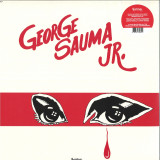
GEORGE SAUMA JR. - GEORGE SAUMA JR.

Favorite Recordings proudly presents an exclusive eponymous LP by Brazilian singer and composer George Sauma Jr., originally produced in 1985. Imagine a never-marketed release on which you’d hear not only the beautiful and genuine George’s songs but also the work from two figures of the Brazilian Music Golden Age: Arthur Verocai and Junior Mendes! A much-needed album for all Brazilian connoisseurs.

Back in the days, George Sauma Jr. was a young artist from Rio de Janeiro, learning on his side how to play chords and compose songs since he was 10. Still at the university, he’s influenced by Brazilian artists like Cassiano or Tim Maia, deeply fascinated by the arrangements and the “levada” (the groove) of all these new Brazilian songs. Simple and romantic music that resonated to his soul and creativity.

Around 1985, the story took an unexpected turn. George tells: “Dna Deyse Lucidy, the mother of Junior Mendes was a candidate for deputy and went to my father’s company to advertise. When I saw her, I shouted, “I’m a big fan of your son!” ” Of course, she could not praise more the work of her son. On her advises, George went to his studio on Rua Siqueria Campos at Copacabana. Junior loved the project and sent him to Arthur Verocai to improve the arrangements. Without money, the decision was taken to record everything at Junior Mendes’ studio on an 8-channel mixer. It was a small set-up but the emotions were there! George surely had other plans for some of his songs but without the budget, they ended up doing everything the best they could. And they did very fine with a top-notch team of musicians: Paulo Black on Drums, Arthur Verocai on Guitar, Ricardo Do Canto on Bass and Helvius Vilela on Keyboards.

Leaving the studio with the tapes, George tried to knock doors of international labels, but none did even dare to give him an answer. With less than 1000 copies pressed back in the days and without any distributor or label behind him, he went with proud to record stores, but received nothing than a strong reality check regarding the difficulties for a young Brazilian artist to achieve something on the saturated market of the 80s. Even for free, record stores didn’t want it. In the end, he ended up giving copies to friends and families, knowing deep inside that the songs were good! George tells: “I decided to leave, calm and conscious. I’ve still made three more albums, however on tapes, as it was more affordable. This time, just for my pleasure…”.

Thirty-five years after, it’s with great emotion that this first album by George Sauma Jr. is now made available as Vinyl LP with its original offset printed innersleeve & CD

pas en stock

Commandez maintenant et nous commanderons l'article pour vous chez notre fournisseur.


Last In: 16 months ago
OSMAR MILITO - ...E DEIXA O RELOGIO ANDAR!

The outstanding 1971 debut by piano player and arranger Osmar Milito features his amazing cover of Herbie Hancock's Cantaloupe Island plus several classic Brazilian songs by Marcos Valle, Jorge Ben and Ivan Lins among others. Fierce samba jazz and bossa all the way through! The line-up of performing artists could hardly be more impressive: Quarteto Forma on vocals, Luis Ea, Marcos Valle, Pascoal Meirelles. This brilliant album is up there with the best work of Arthur Verocai and Marcos Valle. Presented in facsimile artwork and pressed on 180g vinyl

During the 90s, a walk around London’s Camden Market inevitably meant listening to the music with groove that the most popular DJs had made fashionable at the time: soul jazz instrumentals and Brazilian music targeting the club dancefloors. Among all those songs that ended up becoming classics of the scene was the amazing cover version of Herbie Hancock’s ‘Cantaloupe Island’ that Osmar Milito had recorded in 1971. This song was probably the main reason that made his LP for Som Livre one of the most sought after Brazilian records by collectors from all over the world. Now we finally have a new opportunity to enjoy this album, reissued on vinyl for the first time.

Along with the aforementioned version of Herbie Hancock’s song, this first album by piano player and arranger Osmar Milito is full of versions of Brazilian classics, from Marcos Valle to Jorge Ben or Ivan Lins. Fierce samba jazz and bossa all the way through! Note that Milito spent the first years of his career as a member of the backing band of big artists such as Elis Regina, Jorge Ben, Nara Leão... and after two years working with Sergio Mendes in the United States, he returned to Brazil and recorded his first LP.

The line-up of performing artists on this album could hardly be more impressive: Quarteto Forma on the vocals, Luis Eça, Marcos Valle, Pascoal Meirelles (what an amazing drummer he is!)... and both sides of the record hide a seamless sequence of solid tune after solid tune with similar doses of instrumental and vocal tracks. Just listen to the magnificent ‘Garra’, ‘Que bandeira’ or ‘Rita Jeep’, or the sweet samba that gives its name to the record, and you will see why this LP should be up there, next to the best works of Arthur Verocai and Marcos Valle.

pas en stock

Commandez maintenant et nous commanderons l'article pour vous chez notre fournisseur.


Last In: 5 years ago
  • 1
Articles par page:
N/ABPM
Vinyl