Suche:marc line

Styles
Alle
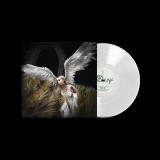
Manon Meurt - Unravel
  • 1: Timeless
  • 2: Peony Garden
  • 3: Marrow
  • 4: Moonflower
  • 5: Linen
  • 6: Boy Beneath
  • 7: Mirrors

Intricate structures with an intertwining of spontaneity and randomness, meeting the diverse genre influences of the band members from mediaeval music to shoegaze to noise. That is Unravel, the new album, and first in six years, from Czech band Manon Meurt.
"Unravel reflects the different stages of dissociation, a person's thoughts, observations - whether of the environment or of oneself - and admiration for the beauty and cruelty that nature mirrors," multi-instrumentalist and lyricist Kateřina Elznicová says of the album.
Produced by Eddie Stevens (Freakpower, Zero 7, Moloko, Roisin Murphy) the album was pieced together from recorded fragments, meticulously pieced together. The title Unravel refers to the development of the band, unravelling what they are to find the full potential of their music as well as uncovering the layered nature of the songs and emotions.
"Eddie Stevens’ approach to recording was a big surprise. We understood that there was no one right version of the songs. Each of our themes carries a certain energy that can manifest and blossom in many ways. Compared to previous records, the vision of each member was much more evident, while we learned not to cling to our individual ideas of a signifying break or a nu-metal bounce at the end of an ambient song. The main thing was a common concept," adds keyboardist David Tichý on creating the seven songs on the record.
Abum producer Eddie Stevens describes the collaboration, “Each album is an adventure. You do some preparation, check the route over and over, prepare for any eventuality that your packing space and imagination will allow, plan some places to stop and rest en route, places to eat, sleep, then consider the challenges - the ice wall, the summit, even just finding your way in foreign land. But despite all that planning, you can never really say for sure what’s going to happen, what unexpected path you might take, what strangers might invite you in for a cup of tea and to what ends. So it was making Unravel with Manon Meurt and engineer and studio owner Lukas Martinek at Svárov studios and of course back home in the relative safety of my studio. Musicians who quickly became friends showed me more than I showed them, people with ideas, with creativity seeping from their pores. Music making the right way: no blinkers, no walls, no preconceptions, no barriers, no rules. What a pleasure, and what a magical, technicoloured,
kaleidoscopic album we’ve made together, “
The combination of industrial material with plant motifs in the work Untitled_1 by Ukrainian artist Liza Libenko, which adorns the cover of Unravel, strongly attracted the band. After all, floral motifs have always been close to Manon Meurt's music. Libenko, a student of the Academy of Fine Arts and a finalist of the prestigious Austrian Strabag Artaward International Prize, has recently been working on overcoming the narrative boundaries of the canvas, the paintings "attack"the viewer. Sunflowers are a powerful symbol of life and the sun; in Libenko's paintings they are black and burnt, serving as an allegory for contemporary conditions. The work was photographed by photographer and artist Marcel Rozhoň, and the final processing of the Unravel album was done by graphic artist Zuzana Malá.

vorbestellen19.02.2026

erscheint voraussichtlich am 19.02.2026


Last In: vor 2026 Jahren
Various - This Is DJ’s Choice - Vol. 5 - Henry Storch LP
  • A1: Ann Sexton – You’ve Been Gone Too Long
  • A2: Psychodelic Frankie – Putting You Out Of My Life
  • A3: The Sweet Vandals - Papa’s Got A Brand New Bag
  • A4: The Tom – Emmanuel And Ron Experience – When You Lose Your Groove
  • A5: Sharon Jones & The Dap-Kings - What Have You Done For Me Lately (Part 1)
  • A6: Tony & Tandy – Two Can Make It Together
  • B1: The T.s.u. Toronadoes – What Good Am I?
  • B2: Coke Escovedo – I Wouldn't Change A Thing
  • B3: Maxine – A Love I Believe In
  • B4: Carl Carlton – I Can Feel It
  • B5: Al Supersonic & The Teenagers – Paint Yourself In The Corner
  • B6: Esther Phillips – Just Say Goodbye
  • B7: Joe Valentine – I Lost The Only Love I Had

LP with printed Innersleeve with Linernotes by Eddie Piller (Acid Jazz) The compilation series “DJ's Choice” was launched in 2008 and has already enjoyed the participation of several high-profile curators, such as Keb Darge, Marc Hype, and DJ Suspect. A few years before the death of Unique Label founder Henry Storch in 2018, a DJ's Choice edition was created with his long-time friend and fellow DJ Eddie Piller. Unfortunately, it never came to fruition—as is so often the case, life had other plans, and sadly not all of them were pleasant. However, the idea was never completely forgotten, and with the help of Eddie and Henry's DJ partner in crime Sandra (Frollein Taube), a list of tracks that were on Henry's quick-select list for his sets was finally compiled.

vorbestellen13.02.2026

erscheint voraussichtlich am 13.02.2026


Last In: vor 2026 Jahren
Akae Beka - Vijan

Akae Beka

Vijan

12inchIGBZRLP009
Before Zero Records
13.02.2026

Vijan, originally released in 2003 by I Grade Records, is a seminal release from the “golden era” of St. Croix roots reggae, now available for the first time on 12” vinyl courtesy of Before Zero Records.

Produced by the legendary combination of Vaughn Benjamin and Laurent “Tippy I” Alfred, Vijan balances the raw, spiritual intensity of Vaughn’s songwriting with the sophisticated, melodic arrangements that became the hallmark of the I Grade sound.

This album features an incredible lineup of musicians who helped shape the sound of Virgin Islands reggae. The production credits boast the textured guitar layers of Tuff Lion , the deep, driving bass of Kenyatta Itola , and the rhythmic precision of Dion “Bosie” Hopkins. Uniquely, this album also showcases Vaughn Benjamin’s versatility as a multi-instrumentalist, contributing drums, bass, and keys on standout tracks like “All Ye Naashan” and “Thanks for Life”.

Akae Beka’s inimitable style of rich, deep, multi-layered songwriting and uncompromising devotion to RasTafari is on full display here. At the point of his untimely passing in 2019, Vaughn Benjamin had released over 70 albums, solidifying his place as one of the most prolific reggae artists ever known. Vijan remains
a glowing highlight in this expansive catalogue, capturing a specific moment of creative brilliance in the early 2000s.

The vinyl reissue allows listeners to engage with the album’s analogue richness and features the striking original artwork by Marcus Wilson, presented here as a 12” square masterpiece.

vorbestellen13.02.2026

erscheint voraussichtlich am 13.02.2026


Last In: vor 2026 Jahren
ATABASCA - Cacopoulos / Kundela Mawedi 7"

Killer Groove Records proudly presents the debut 45 by Italian cinematic funk trio Atabasca. A syncopated journey where funk, psychedelia, and cinematic groove merge into a timeless narrative suspended between rhythm and vision.


"Cacopoulos" and "Kundela Mawedi" mark the birth of Atabasca's sonic universe: the first two singles from the upcoming self-titled debut album,which will be released on March 27 in limited-edition LP, CD digipack, and digital formats.

On the A-side, "Cacopoulos" is an impetuous, visionary ride that fuses the power of instrumental groove with the evocative imagery of library music and Italian golden-age soundtracks. From the first beat, listeners are drawn into a dry, dusty landscape driven by a primal drum groove and the acid twang of a guitar that evokes the spirit of classic Westerns. Indeed, "Cacopoulos" pays homage to I Quattro dell'Ave Maria (Ace High) and to the legendary Eli Wallach, the sly outlaw who turns deception into revenge, a subtle yet powerful nod that ties the trio's sound to imagery steeped in dust, dreams, and redemption.


On the flip side, the sound of an old lap steel guitar evokes the gentle waves of the sea, opening the doors to "Kundela Mawedi", a dreamy track with exotic tones and heavenly atmospheres. The sonic journey unfolds through hypnotic rhythms and echoes of ancient cultures, where ethereal voices and warm, entrancing bass lines intertwine with psychedelic riffs and evocative guitar melodies, merging into a soundscape rich in warmth and mystery. The chorus, with its unexpected choral chant, adds a spark of magic. An elegant twist that gently stirs the dreamlike mood and transports the listener into a new sonic dimension, steeped in mysticism and tribal vibrations. "Kundela Mawedi" is more than just a song: it's a sensory experience, a musical ritual where tradition meets psychedelia, sand meets sea, and the soul dances upon the waves of time.


Recorded in a single take, the session captures the raw energy and natural atmosphere of the performance. Artistic production was handled by the trio alongside Andrea Fabrizii (digger, musician, producer, and catalogue curator for CAM Sugar), while Riccardo Ricci mastered the tracks at Velvet Room Mastering Studio in Brighton.


A killer double-sider, blending psychedelic and funk moods with percussive, jazzy textures. A must-have gem for every groove-loving DJ.


Like a desert blooming within the evergreen forests of the planet's far north, a unique, alien, disruptive environment: this is the vision behind Atabasca, the project of Luca Mongia (guitars, lap steel, keyboards, vocals), Paolo Mazziotti (bass, keyboards, vocals), and Valerio Pompei (drums, percussion, vocals). Individually active for over twenty years on both national and international scenes, the three musicians came together in 2023 to create a project that merges experience, experimentation, and creative freedom. Their music is imaginative and at times dreamlike, blending the classic concept of the instrumental trio with the worlds of film scoring and sound design.


Atabasca's sound moves through jazz-funk, world, and cinematic territories, weaving together afrobeat, desert, and psychedelic influences into a personal and timeless language. Each piece is a scene; each sound, a fragment of a world, a journey between reality and imagination where groove, texture, and organic timbre merge into a singular sonic ecosystem: a perpetually shifting balance that generates new inner landscapes.


Fans of Khruangbin, Surprise Chef, and instrumental psych-funk, take note!

nicht am Lager

Bestelle jetzt und wir bestellen den Artikel für dich beim Lieferanten.


Last In: vor 44 Tagen
GRUPO UM - NINETEEN SEVENTY SEVEN

Grupo um celebrate 50 years with release of lost dictatorship-era album nineteen seventy seven!

First time release - vinyl comes with printed innersleeves

Brazilian avant-jazz vanguardists Grupo Um celebrate their 50th anniversary, sharing a second previously lost 1970s album from the vaults. Nineteen Seventy Seven (titled after the year it was recorded) is another rip-roaring instrumental fusion treasure from the band which spawned from within Hermeto Pascoal’s famed mid-1970s São Paulo collective.

Like their debut album Starting Point, Grupo Um’s Nineteen Seventy Seven was recorded when Brazil's military dictatorship was at its most repressive. “There were no open doors to those who dreamt to be protagonists in creative instrumental music”, remembers drummer Zé Eduardo Nazario, “even popular composers and singers had to submit their songs to censors and many records were banned and confiscated from the stores.”

Just like Hermeto Pascoal's Viajando Com O Som (1977) and Grupo Um's previous album Starting Point (1975), both of which remained unreleased until the 21st century, Zé Eduardo asserts that the 1977 album was flatly 'without any chance to be released at that time."

Recorded at Rogério Duprat’s Vice-Versa Studios in São Paulo, the group were under both time and space restraints, “we chose the small Studio B,” Lelo Nazario recalls, “which had a Tascam (TE AC) 12x8 console and a 4-channel AMPEX AG 440 machine. Therefore, we had to record without overdubs, everything straight to tape.”

Expanding from a trio to a quintet, original Grupo Um members Lelo Nazario (keys), Zé Eduardo Nazario (drums), and Zeca Assumpção (bass) were joined by saxophonist Roberto Sion and percussionist Carlinhos Gonçalves. Carlinhos, Zé and Zeca had already played together in the group Mandala, while brothers Lelo and Zé had just finished a stint backing Hermeto Pascoal during his years in São Paulo.

Lelo was deeply immersed in modular synthesizer experimentation during this period, working extensively with the ARP2600 and EMS Synthi AKS. These electroacoustic explorations formed the sonic foundation for "Mobile/Stabile," one of his first compositions to merge modular synthesis with Brazilian music, a fusion that would ripple throughout the Brazilian jazz scene. The piece premiered at the first São Paulo International Jazz Festival in 1978, performed by Grupo Um with guest trumpeter Márcio Montarroyos. In a shocking moment, festival organizers interrupted the show mid-performance, sparking fierce backlash from both audience members and journalists who denounced the incident as artistic censorship during Brazil's era of political and cultural repression. The version on Nineteen Seventy Seven is the first recording of the composition.

Nineteen Seventy Seven combines Afro-Brazilian rhythm, modular synthesis and a plethora of whistles, percussion and effects pedals. Album opener “Absurdo Mudo” - so titled for the absurd difficulty it poses to the musicians performing it - starts out in a cloud of mysterious dissonance, before the haze breaks for a glorious keyboard and saxophone interplay atop an uptempo samba groove. “Cortejo dos Reis Negros (Version 2)” (Procession of the Black Kings), based on the maracatu rhythm, inverts the traditional jazz song structure by beginning with improvisations, which are followed by the theme and a final coda. “The studio also had two Parasound electronic reverb units,” Lelo notes, “and the timbre is very audible on the soprano sax and percussion.”

Grupo Um’s daring music represents a manifesto of resistance during the dictatorship years, but it’s one which remains just as relevant today. As Lelo puts it: “For me, the aesthetic issue has always been about combining contemporary avant-garde languages with Brazilian music, independent of categories and commercial interests. The result of this fusion takes music to a new level.”

Recording credits (1977)
Recorded at Vice-Versa B Studio, São Paulo, November 9, 1977
Produced by Lelo Nazario and Zé Eduardo Nazario
Engineered by Ricardo “Franja” Carvalheira


Lelo Nazario – Wurlitzer electric piano, acoustic piano, signal generator, percussion

Zé Eduardo Nazario – drums, percussion

Zeca Assumpção – electric bass

Carlinhos Gonçalves – percussion

Roberto Sion – soprano sax, clarinet

Release credits (2025)
Produced by UTOPIA Studio, São Paulo
Project Coordination in Brazil by Irati Antonio (Utopia Studio)
Tape Restoration and Digital Mastering by Lelo Nazario at Utopia Studio, July 2025
Liner Notes by Lelo Nazario and Zé Eduardo Nazario
Photography by Jorge Las Heras, Lelo Nazario, and artists' personal archives
Photo Restoration by Lelo Nazario
Artwork and Design by Alessandro Renaldin

vorbestellen30.01.2026

erscheint voraussichtlich am 30.01.2026


Last In: vor 2026 Jahren
JAMES MATTHEW SEVEN FT. FABIO SANTANNA - JAMES MATTHEW SEVEN
 
2

Beijinho do Brasil announce their second release with the highly anticipated follow-up from LA-based producer and multi-instrumentalist James Matthew Seven, featuring guest vocals on the A-side by Rio de Janeiro's Fabio Santanna.

Recorded in a small studio on the beach in Oaxaca, Mexico, "Feels Good, Do It" brings to mind a lost recording from Marcos Valle's time with Leon Ware. Funky and soulful with warm Fender Rhodes and a horn section reminiscent of Banda Black Rio, the tune is a breezy, mid-tempo ode to embracing life's pleasures. Originally with vocals in English, the track was translated and re-recorded in Rio de Janeiro by Fabio Santanna. Fabio has a long-established reputation in Brazil as a torchbearer of modern funk and boogie, continuing in the lineage of artists like Robson Jorge and Lincoln Olivetti. But with his releases on labels like Onda Boa and Dippin' Records (which sold out nearly instantly), his international reputation is steadily growing. He has a new 7" due out on Dippin' Records on October 10th, pushing his name to the forefront once again, right on time to generate more buzz for our next 45!

About the flip side, "Ilha Racional" (a nod to Tim Maia's Racional era):
I had this dream where I was in a dive bar discotheque somewhere in the Caribbean. A thick cloud of smoke hung in the air as the selector dropped this bass-heavy bop that had the whole crowd vibing. Then, out of nowhere, in walked Tim Maia with a bag of mushrooms. He proceeded to grab the mic and preach about this alien world of rational energy. Shit was bugged out. When I woke up, James Matthew Seven had sent me this track to check out.

nicht am Lager

Bestelle jetzt und wir bestellen den Artikel für dich beim Lieferanten.


Last In: vor 56 Tagen
MULUKEN MELLESSE - MULUKEN MELLESSE WITH THE DAHLAK BAND (ETHIOPIQUES)

Swan Song

The vinyl LP at the heart of this éthiopiques 31 tracks 2 to 11 was one of the very last vinyl records ever released in Ethiopia. But above all it represents, we felt, the absolute masterpiece of the Ethiopian Groove – the Swan Song of Swinging Addis. The album leaves a clear idea for posterity of the level of sophistication and mastery that modern Ethiopian music had achieved, before being crushed under the Stalino-military heel of the Derg – as the bloody revolution that was unfolding came to be called.

Ethiopia1976.

The Revolution that broke out in February 1974 rolled on in a ruthless march. The whole of Ethiopian society was utterly stunned. The bouquets of flowers handed joyfully to the first tanks of the coup d'état were to wilt very rapidly. From September 1976 to February 1978, 18 months of Red Terror (the name given by the junta itself) spilled blood throughout the country. This fratricidal conflict took its heaviest toll among students and youth. The shift from feudalism to a cruel and primitive Stalinism left the country's citizens deeply traumatised, and snuffed out any pretence of activism, whatever the sector of society. This ice age was to last for seventeen long years.

ሙሉቀን፡መለሰ Mulukèn Mellèssè Muluqän Mälläsä

It was three tracks by Muluken that served as the opener for éthiopiques-1 more than 25 years ago. Seven more tracks appeared on éthiopiques-3 and 13, all accompanied by The Equators, which was soon to become the Dahlak Band.

The first track, Hédètch alu, also the very first piece that Muluken ever recorded, left audiences both unsettled and amazed. Reflecting the singer's extremely young age (he was just 17 at the time), this angelic voice mystified many, who thought they were in fact listening to a feminine voice. He was not yet 22 when he released his last vinyl record in 1976 with Kaifa Records (KF 39LP), one of the very last to be issued in Ethiopia, before the cassette tape became the dominant medium for music distribution – and before the new revolutionary regime put a stop to all independent musical life, via an unspeakable barrage of prohibitions and other persecutions.

Mulu qèn, literally, “A well filled day”. This tender maternal intention wasn't enough to ward off the cruelty of fate. His mother's premature death drove Muluken to leave his native Godjam, in northeast Ethiopia, to live with an uncle in Addis Ababa. Born Muluken Tamer, he took his uncle's last name – Mèllèssè.

The spelling Muluken appeared in his administrative records. Transcription of Amharic to the Latin alphabet, both in Ethiopia and for scholars, gives rise to controversies and quibbles that can never be neatly settled. French allows for a closer approximation of the original pronunciation, thanks to its battery of accent marks, confusing as they may be to anglophones.

Between rather accommodating administrative record-keepers and the various versions that pop up in interviews given by the artist, Muluken's year of birth oscillates between 1953 and 1955…

1954? One thing is certain: the artist's talent made itself known very early indeed, because he got his start in 1966-67, at the age of 13 or 14. Photos from the period attest to his extreme youth. It's a strange sort of initiation for a very young teenager to become a sensation in the heart of Addis's nightlife at the time, Woubé Bèrèha – the Wilds of Woubé. And what's more, in the club of the Queen of the Night, the Godjamé Assègèdètch Alamrèw herself, the very same that was portrayed by Sebhat Guèbrè-Egziabhér in his novel-memoir Les Nuits d’Addis Abeba2… The legendary female club owner who is remembered to this day by the capital's ageing boomers.

Muluken first tried his hand at the drums, before he grabbed the microphone. He emigrated briefly to the Zula Club, across the street from the old Addis Post Office, one of the ground-breaking bars of the burgeoning musical scene, before joining the Second Police Band in 1968, for around three years. He spent a few months with the short-lived Blue Nile Band founded by saxophonist Besrat Tammènè. As the musical scene grew increasingly successful, and pulled slowly but decisively away from its institutional ties, Muluken released his first 45rpm single in February 1972 (Amha Records AE 440). It was included in two LP Ethiopian Hit Parade compilation albums in September of the same year. All in all, Muluken released eight two-track 45s and the same number of original cassette tapes between February 1972 and 1984, the year that he departed for permanent exile in the USA. After converting to Pentecostalism in 1980, Muluken gradually abandoned all secular musical activity. In 1985, at the end of a concert in Philadelphia, he decided to quit concerts and recording for good. Mèlakè Gèbré, the historic bass player from the Walias band who was playing with him that night, recalls that everything appeared so irredeemably diabolical in Muluken's eyes, that it was to be the end of his contribution to Ethiopian Groove.

The end of the story, the beginning of a legend.

Dahlak Band, forgotten by History

Aside from his personal history and vocal talents, it must be remembered that Muluken Mèllèssè was one of the biggest names in the musical innovations that marked the end of the imperial period. These éthiopiques aim to convince those who are just discovering this hidden gem... As for Ethiopians themselves, they are to this day captivated by this singular and atypical figure in the Abyssinian pop landscape – even though he withdrew from public life some 40 years ago. Incorrigible devotees of poetic twists, of more or less hidden meanings, Ethiopians appreciate above all the care Muluken took in choosing his lyrics and the writers who penned them, such as Feqerte Haylou, Alemtsehay Wodajo and, here, Shewalul Mengistu (1944-1977). Love songs, written by women, a far cry from the conventional drivel that pleases sappy sentimentalists.

Muluken is equally acclaimed for his perfectionism when it came to music, the opposite of the overly casual approach that is all too common. He remained a faithful partner of musicians who came from a lineage that borrowed from several inventive and pioneering bands (Venus, Equators, Dahlak). Amongst them were certain artists who began their musical lives with Nersès Nalbandian at the Haile Sellassie Theatre and who come of age in around 1973 – at just the wrong time, you might say. Among them were the pillars Shimèlis Bèyènè (trumpet), Dawit Yifru (keyboards) and Tilayé Gèbrè (sax & flute). Most notably Tilayé Gèbrè, certainly one of the most important musicians, composers and arrangers of his generation, of the end of the imperial era, and of the early years of the Derg.

It was only in 1981 that a miraculous opportunity arose for Tilayé to escape the Stalinist paradise of the dictator Menguistou Haylè-Maryam. Once again it was Amha Eshèté (1946-2021) who provided a solution. The spirited and courageous producer, who had been in exile in Washington since 1975, succeeded, thanks to his incredible perseverence, in bringing the Walias Band to the USA. It was, in fact an extended Walias Band comprising ten musicians3, six of whom chose to slip away after a few concerts and the recording of an LP (The Best of Walias, WRS 100). Tilayé Gèbrè was one of these. He has been living in the USA ever since. There he joined the then-nascent Ethiopian diaspora, which lived largely unto itself, and was making only very modest headway in the American musical market. It seems unfair that Tilayé Gèbrè and the Dahlak Band were not able to benefit earlier from the public recognition that they do deserve.

A similar draining away of the top-rate talents would lead to the reorganization of the major groups of the “Derg Time”. The remaining artists spread themselves around between Ibex Band (renamed Roha Band), Ethio Star Band and a remodeled Walias Band. That spelled the end of the Dahlak Band.

With this record, produced by the essential Ali Abdella Kaifa a.k.a. Ali Tango, we can appreciate everything that the Derg not only destroyed, but also prevented from flourishing. This gem of Ethiopian-style afrobeat came out in 1976 (and, by way of a parenthesis, before the FESTAC 1977 in Lagos, which was attended by an impressive delegation of Ethiopian musicians — although Fela was already personna non grata in his own country). Despite everything that might distinguish this ethio-groove from Fela’s music – no colonial axe to grind, no question of political confrontation with the authorities, no claims to negritude or Africanism for the Ethiopian musicians, and less extrovertion! –, this LP fits beautifully into the saga of intense and electrified soul of the new “African” groove that Fela and Manu Dibango embodied so well from that point onwards.

In restoring this record to its place in the afrobeat epic, it can be seen that, if nothing else, the timeline bestows a legitimate pedigree and a historical primacy to works that had no international impact when they were originally released.

Warning! Masterpiece!

nicht am Lager

Bestelle jetzt und wir bestellen den Artikel für dich beim Lieferanten.


Last In: vor 70 Tagen
LES RALLIZES DENUDES - '77 LIVE LP 3x12"

Beautifully remastered and presented 3LP set of exceptional Kanzai psych. Truly classic and very essential business. This stuff melts your heart, brain and face simultaneously..

Temporal Drift presents the first-ever officially sanctioned reissue of celebrated Japanese cult band Les Rallizes Dénudés’ three albums, originally compiled and released in limited quantities on CD in 1991. Led by the enigmatic Takashi Mizutani, Les Rallizes Dénudés has gained an almost mythical status the world over with their delicate balancing act between transcendent psychedelia and pure sonic assault, maintaining its status as an underground phenomenon throughout their three decade existence and beyond.

‘67-’69 STUDIO et LIVE, MIZUTANI / Les Rallizes Dénudés, and ‘77 LIVE are the only albums released during Les Rallizes Dénudés’ lifetime, between its formation in 1967 at Doshisha University in Kyoto to its last-ever show in 1996 at Club Citta in Kawasaki. Produced by Mizutani, the three discs collectively provide a window into the (in)famously impenetrable band’s first decade of existence.

‘77 LIVE is an explosive live set from Tokyo that captures the glorious noise of the Rallizes at their full potential. Recorded on March 12, 1977 at Tachikawa Social Education Hall in Tachikawa, Tokyo, ‘77 LIVE showcases Mizutani’s unmistakable, overdriven, feedback-drenched guitar, played on a newly purchased Gibson SG, soon to become his signature ax. Includes wholly transformed versions of “Memory is Far Away” and “The Last One” reaching the kind of highs that no unsuspecting listener could have imagined coming from Mizutani or the Rallizes just a few years prior, as heard on ‘67-’69 STUDIO et LIVE and MIZUTANI / Les Rallizes Dénudés.

Produced in collaboration with The Last One Musique, the new label set up by former members and associates of Les Rallizes Dénudés, ‘77 LIVE features newly remastered audio by former Rallizes member Makoto Kubota and new liner notes by Yuasa Manabu.

nicht am Lager

Bestelle jetzt und wir bestellen den Artikel für dich beim Lieferanten.


Last In: vor 70 Tagen
Stephan Eicher - Spielt Noise Boys
  • A1: Disco Mania
  • A2: Miniminiminiminijupe
  • A3: Noise Boys
  • A4: Hungriges Afrika
  • B1: One Second Too Late
  • B2: Sweet Jane
  • B3: Ping Pong Lied

2025 Reissue.


Münchenbuchsee, a suburb of Bern, Switzerland. Stephan Eicher is the youngest of three children. His father, a radio and TV repairman, is also a jazz violinist and a sound tinkerer in his spare time. In the family home's converted fallout shelter turned studio, Mr. Eicher experiments with homemade sequencers, tortures handcrafted drum machines, and abuses reel-to-reel tape recorders—all under the fascinated gaze of young Stephan.

The boy quickly develops a musical curiosity, exploring sound through various experiments and wanderings. Alongside his younger brother Martin, Stephan crafts audio plays on a homemade multi-track recorder (essentially several cassette decks hooked together!), which they write, record, add sound effects to, and perform for family and friends. Just a couple of nice kids, really...

Then comes 1972, and Lou Reed's Transformer album changes everything for the Eicher kids. For 13-year-old Stephan, it's a revelation—especially "Vicious", the opening track, which he plays on repeat for months. He convinces his father to buy him an electric guitar. Not stopping there, his father also builds him a tube amp using an old radio.

Then comes adolescence. A rough one. Stephan leaves home at 16 and moves to Zurich. With obvious artistic talent, he persuades his art teacher to help him get into F+F, a radical, alternative art school—despite his young age. Accepted, he starts learning video techniques, determined to become a filmmaker.

At F+F, Stephan organizes Dada-style happenings and concerts with a group of friends known as the Noise Boys. Among them: one of his teachers on bass, Veit Stauffer on drums (who would later found ReR/Recommended Records), his girlfriend Sacha on vocals, and Stephan on guitar. In one of their early performances, they release a remote-controlled mouse covered in dull razor blades into the audience to create panic and chaos. Keeping with this aggressive, confrontational spirit, they once played a concert while wearing headphones blasting Tristan and Isolde, trying to perform their own songs simultaneously—to maximize the cacophony. The goal was always the same: clear the room.

Their “songs,” if you can call them that, followed suit. Take "Hungeriges Afrika", for instance—performed entirely with power drills and some drum feedback.

To make ends meet, Stephan returns to Bern on weekends to work as a waiter at the Spex Club, the city’s main punk venue. On September 16, 1980, during a show by proto-electro group Starter, the police raid the club and arrest everyone. Stephan, who manages to avoid arrest, seizes the opportunity to “borrow” Starter’s gear left behind. He suddenly finds himself in possession of a Roland Promars synth, a Korg MS20, and a gorgeous CR78 drum machine, which he runs through a Big Muff distortion pedal to get that perfect gritty sound.

He then sets out to reinterpret some Noise Boys tracks, reworking them during impromptu sessions recorded on a dictaphone (yes, a dictaphone—now the lo-fi sound makes more sense, doesn’t it?). He ironically titles the resulting cassette "Stephan Eicher spielt Noise Boys" ("Stephan Eicher plays Noise Boys"). This gem features seven tracks, which are the ones reissued here.

Back in Zurich, he visits his friends Andrew Moore and Robert Vogel, who have a DIY cassette duplication setup. They make 25 copies of Stephan Eicher spielt Noise Boys for Stephan and his friends. Robert encourages him to visit Urs Steiger of Off Course Records and play him the tape.

Without much hope, Stephan shows up at Urs’s office. But Urs is instantly hooked and suggests releasing a 7” single. Due to space constraints, they reluctantly drop two of the seven tracks ("Hungeriges Afrika" and "One Second"). As for the musical score featured on the cover—it was randomly chosen and remains a mystery to this day. Calling all music theory nerds!

The 7-inch is pressed in 750 copies and released in the first week of December 1980—a date Stephan remembers well, as it’s the same week John Lennon was killed. Smartly, Urs sends a promo copy to François Murner, Switzerland’s answer to John Peel, who hosts a show on alternative station Sounds. Murner falls in love with the record and starts giving it airtime. To Stephan’s surprise, sales follow—and people actually seem interested in his music.

Even this modest underground success scares Stephan a bit. He stops making music for a year and moves to Bologna, where he works as a programmer at Radio Città, a feminist radio station.

Meanwhile, Stephan’s younger brother Martin, who’s also involved in the punk scene, joins the band Glueams as a singer and guitarist. Glueams, named after the fanzine run by two of its members (drummer Marco Repetto and bassist GT), eventually rebrands as Grauzone. Stephan is invited to their shows to project hacked Super 8 visuals live on stage.

Urs Steiger, now working on a compilation titled Swiss Wave – The Album, asks Grauzone to contribute alongside bands like Liliput, Jack and the Rippers, The Sick, and Ladyshave (Fall 1980).

For the album, Martin tasks Stephan with producing their recording sessions. Under Stephan's artistic direction, two tracks emerge: "Raum" and "Eisbär". During "Eisbär", Martin plays a minimalist bass line borrowed from post-punk band The Feelies (just an open string). Drummer Marco Repetto struggles to keep time. Later that evening, unhappy with the takes, Stephan builds a four-bar drum loop from a ¼-inch tape and uses it instead of the flawed original. He then adds bleepy synths and wind sounds to complete the track’s icy vibe before handing it over to Urs.

The Swiss Wave – The Album compilation is released quietly at first, but things snowball thanks to "Eisbär", which eventually becomes a smash hit—selling over 600,000 singles.

Meanwhile, Stephan plays in a rockabilly band called SMUV (named after Switzerland’s social security agency) and begins producing artists, including the debut album of Starter (1981), which includes a more pop-oriented version of "Minijupe".

By early 1982, Stephan starts spending time with the post-punk girl band Liliput (formerly Kleenex). They’re older than him, and he happily drives them around in his Renault Major, acting as their roadie.

By 1983, Grauzone—signed to the major label EMI, which turned out to be a misstep—is falling apart. Stephan begins to pivot toward a more mainstream pop sound with his debut solo album Les Chansons Bleues.

But that... is already another story.

vorbestellen09.01.2026

erscheint voraussichtlich am 09.01.2026


Last In: vor 2026 Jahren
Fehlfarben - ”33 Tage in Ketten” LP 2x12"

Das zweite Werk eines Künstlers hat in der öffentlichen Kritik meist einen besonders schweren Stand. Die
Vorschusslorbeeren, die beim Debüt noch großzügig verteilt werden, sind schnell aufgebraucht. So erging
es auch der zweiten Fehlfarben-LP bei ihrer Veröffentlichung im Herbst 1981. Zu sehr wurde „33 Tage in
Ketten“ an dem Überalbum „Monarchie und Alltag“ gemessen.
Bei „33 Tage in Ketten“ war der charismatische Shouter Peter Hein nicht mehr dabei. Kurz vor einer
geplanten Deutschlandtour im Frühjahr 1981 hatte er der Band den Rücken gekehrt, weil er mit dem Erfolgsdruck nicht fertig wurde. Gitarrist Thomas Schwebel, der bei „Monarchie und Alltag“ noch die Texte mit
Peter Hein zusammen schrieb, übernahm schließlich das schwere Amt des Frontmanns. Das im Sommer
1981 in den Kölner EMI-Studios eingespielte Album ist wesentlich härter und aufwühlender als „Monarchie
und Alltag“. Beim wuchtigen Opener „Tanz mit dem Herzen“ trommelt der 2023 verstorbene Uwe Bauer,
der ohnehin nie ein Freund leiser Töne war, wie ein junger Gott, während Bass (Michael Kemner) und
Gitarre (Uwe Jahnke) marschieren.
Für die strikt limitierte 2LP-Reissue in braunem Vinyl konnte neben raren B-Seiten auch das komplett
unveröffentlichte Stück „Warten auf“ sowie bislang ebenfalls noch nie gehörte Live-Aufnahmen von einem
81er-Gig bei Radio Bremen gesichert werden. Feuilleton-Autor Marc Hairapetian steuert zudem aktualisierte und exklusive Linernotes bei.
Ein absolutes Must-Have!

vorbestellen12.12.2025

erscheint voraussichtlich am 12.12.2025


Last In: vor 2026 Jahren
POLYPORES - HUNGRY VORTEX LP

Final LP of a productive year for Feral Child is an absolute cracker. The latest of a long line of superb full lengths from Stephen James Buckley's incendiary Polypores project. This one is arguably his most adventurous outing to date, the undeniably psychedelic “Hungry Vortex”. Four extended pieces exploring polyrhythmic fixations and cosmic jazz-prog freak-outs. Percussion-heavy opener ‘The Body Is The Spaceship’ is a fine example of the sort of seamless organic growth we tend to see in Polypores’ music, with slewed synth blips and rolling polyrhythms gradually twisting into unrecognisable strands of melody and unconventional groove before your very ears.

The prog-heavy ‘Wizards!’ sees Buckley’s trademarked playful use of time-signature changes, providing such a wealth of emotional and stylistic variance and immeasurable enjoyment without changing key once (honestly, who needs keys). It’s brilliantly evocative too and could indeed perfectly soundtrack a mushroom-trip wizard march. As we flip the record over, the flutey flourishes and minimalist clicks of the title track draw the listener into a trancelike state, repeated movements spiralling like myriad creatures crawling over a candy-coloured horizon, echoing forth into an inviting sonic oblivion. It’s ostensibly electronic, yet somehow more natural organism than machine, with little concern for the grid, or indeed, the rules. Finally, we end on something a little more subdued - the reassuring classicism of the beautiful ‘Void High’, with washes of warm noise and wobbly delay lines whirring and twinkling away, closing the record with an experience that is undeniably emotional, spiritual and as always, uniquely Polypores. This is a wonderful record with which to close the year out, it comes in a magnificent, spot varnished Jake Blanchard sleeve. A superb record released as a one time only vinyl pressing.

vorbestellen12.12.2025

erscheint voraussichtlich am 12.12.2025


Last In: vor 2026 Jahren
STORNOWAY - Bonxie (10th Anniversary Edition) (Deluxe Edition) LP

“Stornoway’s best work yet: big music, which deserves the largest stage.”★★★★★ – The Guardian


Lauded on release as Stornoway’s most expansive and confident work, Bonxie remains a hymn to connection, ecology, and the beauty of life. This expanded edition includes previously unreleased B-side tracks from the original recording sessions, new liner notes from each member of the band, and some of their well-known unplucked versions of tracks on the album.


Bonxie is Stornoway’s boldest and most outward-looking record, an album infused with a sense of wonder for the natural world and humanity’s place within it. Produced by Gil Norton (Pixies, Foo Fighters, Twin Atlantic), and a contribution from Craig Potter (Elbow), the songs carry field recordings of birds (20 species appear across the album), weaving them into melodies that soar like the great skua (or “bonxie”) that gives the record its name.


Stornoway will be playing a very special show at the Royal Albert Hall on 30th March 2026.

vorbestellen12.12.2025

erscheint voraussichtlich am 12.12.2025


Last In: vor 2026 Jahren
Dave & Maurissa - London / Detroit LP 2x12"

Dave & Maurissa

London / Detroit LP 2x12"

2x12inchZEDDLP062
Z Records
08.12.2025

During the 35 years of making music, Dave Lee has constantly been searching for new singers and writers to work with. A search that’s ended up with many fantastic collaborations and releases with the likes of Thelma Houston, Taka Boom, Dianne Charlemagne and Seal. More recently this quest led him to Maurissa Rose and the creation of their album ‘London / Detroit’. After hearing Maurissa's voice on a Theo Parrish record Dave reached out to her and after a few long phone conversations and mp3 swaps they both agreed a visit to London would be much more fun than trying to work together remotely. Maurissa made the journey from her home in Detroit to write and record an album with Dave at his studio in March 2022 - as they both feel that creating music together in the same room is always better. The fruits of their labour yielded 11 brand new songs (and 1 cover) tapping into their collective love of Soul, Disco and R&B, with a sprinkle of Soulful House. This album is a special one for Dave Lee as it’s the first time in his career he’s recorded an entire album with same singer on every track.

In the album’s liner notes Dave talks of how Maurissa is a naturally creative person, full of ideas, warm & unpretentious which is reflected in her vocal performances throughout ‘London / Detroit’. Dave’s expertly crafted music is backed up with a deeply passionate yet effortless delivery from the Detroiter, a marker of someone who has honed and perfected their art. When it comes to the music side of this LP, Dave Lee is once again proving he’s still at the top of his game and shows no sign of relenting. Drawing from his encyclopaedic knowledge of all things Soul/Funk/Disco, we are treated to a range of styles, BPMs and influences from 95bpm street soul to more uptempo disco and boogie flavours. Be it the rippling synth voyage opener of ‘You Decide’, taking the Johnnie Taylor classic ‘What About My Love’ into a modern Boogie realm, upping the tempo on the soulful houser ‘I Feel the Sun” or bringing the tempo back down to the bassy acidic chug of ‘You’re Giving Me Life’. Mr Lee is truly adept at creating a modern disco soul sound without the usage of samples.

London and Detroit might be two very different cities on opposite sides of the Atlantic but this album is proof that creative synergy knows no distance.

Out everywhere on Feb 28th on Gatefold Vinyl, CD and Digital/Streaming.

nicht am Lager

Bestelle jetzt und wir bestellen den Artikel für dich beim Lieferanten.


Last In: vor 44 Tagen
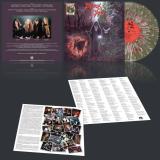
Incantation - Onward To Golgotha Live LP 2x12"
  • 1: Entrantment Of Evil (Cell Block Show)
  • 2: Deliverance Of Horrific Prophecies (Cell Block Show)
  • 3: Unholy Massacre (Cell Block Show)
  • 4: Devoured Death (Cell Block Show)
  • 5: Blasphemous Cremation (Cell Block Show)
  • 6: Profanation (Cell Block Show)
  • 7: Golgotha (Cell Block Show)
  • 8: Devoured Death (Studio 1 Show)
  • 9: Entrantment Of Evil (Studio 1 Show)
  • 10: Bleeding Torment (Necrophagia) (Studio 1 Show)
  • 11: Deliverance Of Horrific Prophecies (Studio 1 Show)
  • 12: Deliverance Of Horrific Prophecies (Flashes Show)
  • 13: Devoured Death (Flashes Show)
  • 14: Rotting Spiritual Embodiment (Flashes Show)
  • 15: Unholy Massacre (Flashes Show)
  • 16: Blasphemous Cremation (Flashes Show)
  • 17: Chistening The Afterbirth (Flashes Show)
  • 18: Profanation (Flashes Show)

INCANTATION presents the Onward to Golgotha deluxe box set, celebrating over 30 years of the band's legendary debut full-length & Death Metal supremacy! The Onward to Golgotha box set features all new expanded liner notes, a live 2LP featuring 3 legendary sets remastered by Dan Swano, and the Deliverance of Horrific Prophecies and Entrantment of Evil EPs! Onward to Golgotha - Live, now newly remastered & available for the first time on physical and streaming formats, is taken from the Onward to Golgotha DVD, originally released in 2006. The live audio features sets from the Onward to Golgotha 1992 Tour at Cell Block in Bensalem, PA on March 29, 1992; from Studio 1 Show in Newark, NJ in 1992 & Flashes Show, recorded in Cleveland, OH on March 28, 1992. Entrantment Of Evil and Deliverance Of Horrific Prophecies 7"s are exclusive to the deluxe Onward to Golgotha box set. All pressed on tri color merge with splatter vinyl and come housed together in a clamshell style hard box featuring silver lamination.

vorbestellen05.12.2025

erscheint voraussichtlich am 05.12.2025


Last In: vor 2026 Jahren
DINOSAUR JR. - FARM LP 2x12"

DINOSAUR JR.

FARM LP 2x12"

2x12inchJAGLP151
JAGJAGUWAR
05.12.2025

15th Anniversary Edition. Black Vinyl. When Dinosaur Jr. reunited, more than 20 years after their formation and legendary dissolution, the worry was that these guys were just flogging the back catalog, taking the old show on the road as a marketing gimmick. But the 2007 release of Beyond gave a hearty Marshall-driven "F**K YOU!" answer to those inquiring ears. Restoring the sound established by the unassailable hat-trick gambit of their first three albums -- Dinosaur, You're Living All Over Me, and Bug -- Beyond continued the band's march into rock greatness by making old ears smile and new ears bleed afresh. And then came Farm, the 9th full length record by the original line-up: J Mascis, Lou Barlow, and Murph. If Beyond was Dinosaur Jr.'s return to form, Farm is proof that Dinosaur Jr. could (and still do, to this day!) deliver timeless, exhilarating rock music. Farm encompasses Dinosaur Jr.'s signature palette: soaring and distorted guitar, unshakable hooks, honey-rich melodies. At times wholly 70's guitar-epic, at times perfect for sitting by a babbling brook with Joni and Neil, these songs get into your head and stay there, bouncing happily around. The ear-catching "Plans" is nearly seven minutes of classic whipped-topping rock dessert, while "I Don't Wanna Go There" is a meat-and-potatoes main dish, mixing unapologetic lead guitar with straight-ahead delivery a la James Gang or Humble Pie. This expanded deluxe edition of Farm features four songs never pressed to vinyl and never given worldwide release:"Houses", "Whenever You're Ready" (The Zombies Cover), "Creepies" (Instrumental), and "Show". "Whenever You're Ready", a cover of classic pop-rockers The Zombies, is impossibly good for a hidden gem; Murph stomps in with a sledgehammer to the kit, J and Lou layer low-end and fuzz like two halves of one brain, and right when things feel biggest, airy and colossal, there's J with a lightning bolt of a guitar solo. Pure electricity and melody like only he can make. Recorded in J Mascis' Bisquiteen studio in Amherst, Massachusetts, Farm was produced by Mascis himself, and delivers the singular, unique energy of one of America's greatest living rock bands.

vorbestellen05.12.2025

erscheint voraussichtlich am 05.12.2025


Last In: vor 2026 Jahren
THE SAINTS - LONG MARCH THROUGH THE JAZZ AGE
  • Empires (Sometimes We Fall)
  • Break Away
  • Judas
  • Vikings
  • Bruises
  • Gasoline
  • The Key
  • Resurrection Day
  • Carnivore (Long March Through The Jazz Age)
  • Will You Still Be There

Das letzte von Chris Bailey mit The Saints eingespielte Material! "Long March Through the Jazz Age" ist das letzte Album von Chris Bailey und The Saints. Es ist ein bewegender Abschied - ein Zeugnis eines rastlosen, kompromisslosen Künstlers, der immer vorwärts ging, einer der großen Texter und doch unglücklicher Musiker. Aufgenommen Ende 2018 in den Church Street Studios in Sydney, flogen Bailey und der langjährige Saints-Schlagzeuger Pete Wilkinson aus Europa ein, um sich mit Gitarrist/Toningenieur Sean Carey, der zuvor mit der Band getourt und aufgenommen hatte, gemeinsam an dieses letzte Kapitel von Bailey's Saints zu begegeben . Zu ihnen gesellten sich Davey Lane (You Am I) an der Gitarre sowie ein handverlesenes Ensemble junger Musiker*innen Sydneys. Aus Baileys groben Demos entwickelte sich "Long March Through the Jazz Age" zu einer zutiefst menschlichen Momentaufnahme mit Strahlkraft."Empires (Sometimes We Fall)" ist der hymnische Opener des Albums, getragen von Gitarren und untermalt von Baileys schmerzhaften Texten: ,Sometimes we rise, sometimes we fall". Es ist der perfekte Auftakt für ein Album, das Baileys angeborenen Punk-Spirit versprüht und gleichzeitig frei in einer großzügigen Produktion fließt. Eine 12-saitige Gitarre verleiht dem streicherlastigen "Judas" Harmonie und Wärme, es ist ein herrlich melancholisches Stück, "Gasoline" erinnert an den Country-Sound der Stones auf Exile On Main Street, während "Bruises" eine ehrliche Erinnerung daran ist, wie dieser gefeierte Troubadour dorthin gekommen ist, wo er heute steht. Es gibt Momente von Dylan-artiger Erhabenheit, wenn klangvolle Gitarren und Streicher das Panorama erweitern, während der Titelsong eine eindringliche, poetische Intensität vermittelt, dessen trauriger Trompetenbreak so erschauern lässt wie kaum etwas anderes. Long March Through the Jazz Age markiert das Ende der bemerkenswerten Reise von Chris Bailey und The Saints - die üblichen Wege ignorierend, über vier Jahrzehnte Musik gelebt. Limitiertes blaues Vinyl mit Glanzlack-Cover, Linernotes & DLC oder Digisleeve CD. "One of the most sporadically brilliant, frustratingly uneven and most undeniably important bands Australia has ever produced" - The Guardian

vorbestellen28.11.2025

erscheint voraussichtlich am 28.11.2025


Last In: vor 2026 Jahren
Bloodbound - Field Of Swords

Bloodbound

Field Of Swords

12inch810185191031
Napalm Records
21.11.2025
  • 1: Field Of Swords
  • 2: As Empires Fall
  • 3: Defenders Of Jerusalem
  • 4: The Code Of Warriors
  • 5: Land Of The Brave
  • 6: Light The Sky
  • 7: Teutonic Knights
  • 8: Forged In Iron
  • 9: Pain And Glory
  • 10: Born To Be King
  • 11: The Nine Crusades

"Raise your swords up high: BLOODBOUND march into a powerful future with Field Of Swords, out November 21st via Napalm Records. Twenty years after the release of their debut album, the Swedish warriors stand taller than ever on the front line of epic power metal, delivering their most modern work yet. Most recently drawn to the Viking era, the latest concept album Field Of Swords turns the page to another chapter in history, moving past the year 1066 and into the Middle Ages. As warfare evolves and the significance of forging iron with carbon leads to superior swordsmen, the bloodstained battlefields show new, grim faces, leaving room for more of BLOODBOUND’s vivid storytelling that continues to thrill audiences at countless live shows around the globe. BLOODBOUND’s first release with Napalm Records adds another 11 captivating battle hymns to their repertoire. A diverse record with aggressive songs and epic tracks alike, their eleventh album also contains some of the band’s fastest material ever written. The opening title track, “Field Of Swords”, immediately storms into BLOODBOUND’s signature sound, braiding stories of glory with a sweeping blend of melodic and heavy power metal. The dominant “As Empires Fall” follows the crusaders east and powerfully depicts said glory in epic battle in contrast with sacrifices made on the way. “Defenders Of Jerusalem” cleverly expands on the topic of loss, leaving listeners to wonder which side is holding their heads up high in the face of imminent defeat. Catchy flutes have the heroes take heart in “The Code Of Warriors” to guide them into the “Land Of The Brave” and Field Of Swords to new heights at the same time. “Light In The Sky” further illustrates BLOODBOUND’s battle scars turned electrifying sound, while the mature “Teutonic Knights” opens up the bleak reality of the tragedy that undoubtedly accompanies this battle-torn era of history. Yet, “Forged In Iron”, “Pain and Glory”, and “Born to be King” hold their ground as equally unforgettable tunes, all leading up to the brilliant finale: Brittney Slayes of powerhouse Canadian band UNLEASH THE ARCHERS joins “The Nine Crusades” as another valuable fighter to lead Field Of Swords to greatness. BLOODBOUND’s latest triumphant march impressively illustrates the importance of purpose and perseverance with heroic tales in shining heavy metal armor.

vorbestellen21.11.2025

erscheint voraussichtlich am 21.11.2025


Last In: vor 2026 Jahren
Mark Fell & Pat Thomas - Reality Is Not A Theory LP

Recorded in concert at the University of Sheffield in March 2025, Reality Is Not A Theory is the first collaboration between Mark Fell and Pat Thomas. Major figures in British experimental music since the 1990s, Fell and Thomas have developed their rigorous practices from radically different backgrounds and perspectives: where Fell’s singular take on synthetic abstraction emerged from Sheffield’s electronic underground, Thomas is a virtuoso improvising pianist steeped in jazz and modernist art music who has simultaneously worked with sampler-based electronics for decades. As the record’s wonderfully academic subtitle explains, we are presented here with two sides of ‘algorithmic and improvised music for computer and piano’, exemplifying both players’ insatiable search for new (and sometimes uncomfortable) playing situations.

The performance begins with Fell’s electronics close to the timbres of acoustic percussion, attacks that suggest wood, metal or glass threaded along a rapid pulse while Thomas focuses on the lowest registers of the piano, deadening the strings. As Fell’s electronics start to ring out and occupy more harmonic space, Thomas turns to wide, repeated clusters, which slowly expand into patterns of chords. Like in his recent solo recordings and his trio work with Joel Grip and Anton Gerbal, Thomas’ playing combines extreme dissonance with a deep lyrical sense. Fell’s work gradually shifts its focus toward drum sounds, drawing on the microtemporal processes that have characterized his practice in recent decades. Heard together with Thomas’ probing piano, the computer sounds call up unexpected associations with the klangfarben antics of improv drummers like Paul Lovens or Tony Oxley. Throughout its second half, the music grows increasingly frenetic, as Thomas sounds out rapid, irregularly repeated figures and beautifully sour chords in the upper register, while Fell’s percussion develops into angular pan-pipe-like feedback and waves of glissandi.

With great confidence and patience, Fell and Thomas often let their individual contributions remain rhythmically distinct and unsynchronised, allowing unexpected correspondence and coincidence to guide the music’s development. Recorded in a hall named after Sheffield steel manufacturer and Master Cutler Mark Firth, the location might suggest a model for understanding how Fell and Thomas interact here: two workers in the same workshop, each immersed in their own part of the production process. Arriving in a striking sleeve designed by Mark Fell, with liner notes by Francis Plagne, Reality Is Not A Theory is an invigorating document of the meeting of two mavericks of contemporary music.

vorbestellen21.11.2025

erscheint voraussichtlich am 21.11.2025


Last In: vor 2026 Jahren
Pat Thomas - Hikmah

Pat Thomas

Hikmah

12inchTAO19LP
TAO FORMS
07.11.2025

Hikmah is an astonishing solo piano work from virtuosic and far-ranging
sound scientist; deep and compassionate thinker and musical treasure: Pat
Thomas
Pat Thomas was Born in Oxford, UK to Antiguan parents on July 27, 1960.
Interestingly, just over 4 months separate his birth to that of fellow modern piano
master Matthew Shipp (Dec 7, 1960) - whose The Piano Equation was TAO Forms
inaugural release. Thomas is most certainly among the Black Mystery School Pianists
of which Shipp elucidates in the title essay of his recently published first book.
Eight thoroughly focused improvised and otherwise compositions recorded at Fish
Factory studio in London. The album's title, Hikmah, means "wisdom" in Arabic. The
title is also presented in two different forms of Arabic calligraphic script on the cover
artwork. This album brings the information. The vibrantly living jazz tradition and new
modes of expression in abundance are brought forth from a lifetime of work and a
decades long devotion to Sufism, understanding that the practice and performance of
this music is an elemental form of spiritual practice. As William Parker writes in the
liner notes, "the music becomes the prophet and the prayer all in one gesture." And,
"If you haven't yet heard the music of Pat Thomas, get hip to it quickly."
Attuned American audiences are most likely to have become familiar with Pat
Thomas through his work with the quartet [Ahmed] , whom over recent years have
amazed with their mesmeric, long-form explorations on the compositions of Ahmed
Abdul-Malik, and more recently, Thelonious Monk. Their debut US performance took
place in March 2025, and TAO Forms were lucky members of the rapt audience at
Roulette in Brooklyn that night; the group flew to Knoxville the next day to perform to
an equally rapt audience at Big Ears.
Available on 6- panel digipak CD printed on heavyweight board, with liner notes by
William Parker and LP with insert featuring liner notes by William Parker & Pat
Thomas Discography + download card. Ltd edition of 500.

vorbestellen07.11.2025

erscheint voraussichtlich am 07.11.2025


Last In: vor 2026 Jahren
Kai Winding - Duo Bones

Kai Winding

Duo Bones

12inchRR1231431
Red Records
07.11.2025

Kai Winding (1922 -1983) was a Danish-born American trombonist and jazz
composer, particularly remembered for his collaborations and solo
exchanges with fellow trombonist JJ Johnson
Fans of their classic album 'The Great Kai & JJ' (Impulse!) will welcome 'Duo Bones'
with Kai trading solos with renowned Italian valve trombonist Dino Piana (1930 -
2023). The programme includes three original compositions by Kai, 'Duo Bones', 'Lady
H', and 'Stop Following Me', and one by Piana aptly titled, Kai & Dino. The rest of the
programme includes Cole Porter's 'Get Out Of Town', Bronislawl Kaper's 'On Green
Dolphin Street', Gorden Jenkin's 'This Is All I Ask', and an original composition by
producer Enrico Pieranunzi titled 'Soul Dance'.
"A series of pieces played very well, characterised by a marked swing and with solos
that transmit to the ear the joy felt by the musicians in performing them. An album of
pure fun, impeccable in execution, full of dizzying and spectacular phrasing,
impressive in the speed with which Winding and Piana intertwine their sounds in
elaborate counterpoints." - Marco Giorgi, from the liner notes
Kai Winding: trombone
Dino Piana: valve trombone
Enrico Pieranunzi: piano
Giovanni Tommaso: bass
Tullio De Piscopo: drums
Recorded by Francesco Melloni, Giovanni Fornari, Emmequattro Studio, Rome, Nov. 17
& 18, 1979.

vorbestellen07.11.2025

erscheint voraussichtlich am 07.11.2025


Last In: vor 2026 Jahren
NILS FRAHM - DAY

NILS FRAHM

DAY

12inchLTR36
Leiter
05.11.2025

Repress!

200 COPIES ONLY

Nils Frahm has unexpectedly confirmed details of a new collection of solo piano music, his first album since 2022’s three-hour Music For Animals. Day will be released by LEITER on March 1st, 2024, and it will be available on limited edition vinyl as well as via all digital platforms. Recorded in the summer of 2022 in complete solitude and away from his studio at Berlin’s famed Funkhaus complex, it is preceded by a single, ‘Butter Notes’, out on January 19. Day may come as a surprise to those who, over the last decade, have watched Frahm shift slowly away from the piano compositions with which he first made his name in favour of a nonetheless still-distinctive approach that’s considerably more instrumentally complex and intricately arranged. In addition, in 2021, having spent the early part of the pandemic arranging his archives, he released the 80 minute, 23-track Old Friends New Friends, a compilation of previously unreleased piano music intended to enable him to ”start over” with a clean slate. Judging from the extended, ambient nature of Music For Animals, it proved a successful gambit, but Frahm has never been able to resist returning to his first love, and those who enjoyed earlier acclaimed albums like The Bells, Felt and Screws will once again revel in Day’s familiar, personal style. Day, which contains six tracks, three over the six-minute mark, is the first in a pair of albums Frahm has lined up for 2024. In keeping with their nature, however, he won’t be making a song and dance about the release. Instead, he’ll resume his ongoing world tour, which has already included fifteen sold-out dates at Berlin’s Funkhaus as well as a show at Athen’s Acropolis. It will continue with shows all over the world, among them several sold-out dates at London’s Barbican in July 2024, where he previously curated a weekend of music, film and art, Possibly Colliding, in 2016. The album is best enjoyed in the manner in which it was recorded, in the intimacy of a peaceful, cosy room. There are muffled pedal creaks on the cyclical, quietly jazzy ‘You Name It’ and, during the palliative ripples of ‘Butter Notes’’ arpeggios, the sound of dogs barking in the streets outside. The compassionate, hesitant ‘Tuesdays’ and emotionally ambiguous ‘Towards Zero’ linger with the poignant persistence of Harold Budd’s earliest work, while ‘Hands On’ is a sometimes brighter, airier tune that sets its own, deliberate pace, and, as he has on occasions before, ‘Changes’ sees Frahm employing elements of his instrument’s construction in a ‘prepared piano’ fashion. Characterised by its confidential mood, Day confirms that, while Frahm is arguably now best known for elaborate, celebratory concerts calling upon an arsenal of pianos, organs, keyboards, synths, even a glass harmonica, he’s still a prolific master of affecting simplicity, tenderness and romance.

nicht am Lager

Bestelle jetzt und wir bestellen den Artikel für dich beim Lieferanten.


Last In: vor 4 Monaten
Soft Cell - First Hand Experience in Second Hand Love
  • A1: First Hand Experience Insecond Hand Love (Extended 12” Mix)
  • A2: First Hand Experience In Second Hand Love (Extended 12” Dub)
  • B1: First Hand Experience In Second Hand Love (Mark Moore S-Express & Dan Donovan Remix)
  • B2: First Hand Experience In Second Hand Love (Mark Moore S-Express & Dan Donovan Dub)

When Soft Cell played a spectacular, sold-out show before 20,000 fans at The O2 in September 2018, the London concert was seen by all and sundry as a grand finale. It had been billed as One Night: One Final Time, leaving devotees in no doubt that a duo who had done so much to define the sound of British electronic pop in the 1980s were saying hello to wave one last, emotional goodbye. At least that had been the idea. Singer Marc Almond and instrumentalist Dave Ball had originally gone their separate ways in 1984 before reuniting for two years in the early 2000s to make a new album, Cruelty Without Beauty. The intention at The O2 had been to draw a line under a rollercoaster ride that had seen Soft Cell secure three Top Ten albums and six Top Ten singles, including 1981’s all-conquering Tainted Love, while setting a template for synth acts from the Pet Shop Boys to Years & Years.


But such was the reaction – and the sense of purpose the pair rediscovered onstage – that the big adieu ultimately turned out to be a brilliant new dawn. The reality is that Marc and Dave bring the best out of one another as performers, both onstage and in the studio, and the sense that there was still plenty of mileage left in their partnership was inescapable. The latest fruits of a bond that was first forged in the art department of Leeds Polytechnic in 1977 were in the shape of a new studio album, *Happiness Not Included, and a series of live dates in the UK and the US that saw the band treat fans to a mixture of new material, classic hits and their 1981 debut album Non-Stop Erotic Cabaret, which was played in its entirety for the first time to mark its 40th anniversary.

nicht am Lager

Bestelle jetzt und wir bestellen den Artikel für dich beim Lieferanten.


Last In: vor 4 Monaten
Tensal - Behind Consciousness

Tensal is the solo project of Héctor Sandoval, also known as half of Exium and Komatssu. Since its creation in 2014,
Tensal has become the channel for his most personal vision of Techno, blending diverse rhythms and textures with a
powerful and distinctive identity. Alongside his own imprint Tensal Ltd, he has released on some of the scene’s most influential labels, including Mord, Modularz, Perc Trax, Blueprint, Arcing Seas, PoleGroup, Float, Kynant, KR3, A.R.T.S,
Warm Up and Soma, where he delivered his first LP in 2018.

He has remixed artists such as Slam, Electric Indigo, Anthony Linell, Mike Parker, Shed, Pangaea and Shifted, while his
tracks are championed by leading DJs like Jeff Mills, Richie Hawtin, Marcel Dettmann, Ben Klock, Ellen Allien, Laurent Garnier and DVS1. His DJ sets, built largely from his own productions, have taken him to more than 60 countries
worldwide, with performances at iconic clubs and festivals including Berghain, Tresor, Awakenings and Fabrik.

Beyond Tensal, Sandoval explores different frontiers of electronic music: with Juan Rico (Reeko) he formed Komando Terrorismo Sonico (K.T.S.), releasing the album Insurrección in 2021; in 2022 he launched Syndromania on Oaks
Records, a vinyl-only project fusing Techno with Trance, EBM, Electro and Acid. In 2023 he joined BPitch Control,
releasing several EPs and performing at the label’s We Are Not Alone events, while in late 2024 he debuted on Blueprint
Records with Highland Landscapes, a collaboration with Vince Watson (Amorphic), followed by a joint EP on Mord in
2025.

nicht am Lager

Bestelle jetzt und wir bestellen den Artikel für dich beim Lieferanten.


Last In: vor 3 Monaten
NURSE WITH WOUND - 3 LESBIAN SARDINES
  • Weimar Drill Head
  • 3: Lesbian Sardines
  • Transference (Did Marcel Steal Elsa's Urinal)
  • Doing What We Are Told Makes Us Free
  • Broken America

Three lesbian sardines! Shouted by a heckler at a performance by the Dadaist Hugo Ball on stage at the Cabaret Voltaire. Is a perfect title for Nurse With Wound's final appearance at the `Great Monster Dada Show' at the legendary Henie Onstad Kunstsenter in Oslo, 2019. The largest exhibit of dada art and artefacts this century, over 250 artworks by 43 artists including Kurt Schwitters, Jean and Sophie Teuber Arp, Hannah Hoch, John Heartfelt, Tristan Tzara, Max Ernst, Francis Picabia, Raoul Hausmann, Marcel Duchamp, Man Ray. This electric performance captures the band at their most eclectic and playful. Here six tracks feature the classic line up of Steven Stapleton, Andrew Liles and Colin Potter including the toe tapping crowd pleaser `Flea Circus' - a mutant hybrid of Kraftwerk and Aphex Twin and is amongst the best the band have ever recorded. `Broken America' is timely reminder of the dire situation we are all facing with the arrival of Trump's America. The cover features stunning new artwork by acclaimed artist Babs Santini. 500 copies only in NEON GREEN VINYL.

vorbestellen24.10.2025

erscheint voraussichtlich am 24.10.2025


Last In: vor 2026 Jahren
Alex Lukashevsky - OOOOH!

Alex Lukashevsky

OOOOH!

12inchTAR121
Tin Angel
24.10.2025
  • A1: That Musician Thats Dead
  • A2: Preference Is A Good Friend, Mind
  • A3: No One Can Sing That Well
  • B1: Last Herald
  • B2: Mo**Real
  • B3: Things Keep Happening

OOOOH! by Alex Bad Baby Lukashevsky with Cocoa Corner (2025)

Celebrated veteran of Toronto’s music scene, known for his boundary-pushing approach to folk and avant-garde music, twists rock music into strange and brilliant new shapes with the help of young jazz players, U.S. Girls, and his own immensely talented son.


OOOOH! is hard on the outside and soft on the inside. Made in the spirit of unity,
humanity, and poetry — disobediently renouncing the glory of personal triumph for the
generosity of an honest experiment. On the last track of the album you’ll hear “Or do you only ever never want to make a single enemy? / That’s not freedom or humility / It’s nothing, honestly.” Oooh, that's a bad baby!

A celebrated Toronto songwriter and performer, Alex Lukashevsky has always been disobedient. Which simply means, nothing is off the table when he’s looking for his
poetic voice; when trying to find the realest I of the teller. As he sings on the lead track “that musician that’s dead” The musician is radical/ it’s the world that’s demented/ listening with their eyes, the music looks dented/ they’re over-represented.
OOOOH! was recorded in January 2024 at Sound Department in Toronto, engineered by Patrick Lefler (ROY), mixed by Grammy-nominated producer Matt Smith. All the songs were tracked live off the floor in two days, with one extra day for recording vocals, to keep the recording fully alive and breathing. As leader of Deep Dark United, as a solo performer, and a sideman in Brodie Wests’ Eucalyptus and Luka Kuplowsky’s Ryokan Band, Alex has been an outsized influence on the Toronto music scene that spawned acts like Broken Social Scene and Owen Pallett. (Pallett, who has toured with Lukashevsky, went so far as to record an entire album’s worth of Alex’s songs, backed
by a full orchestra.)

Lukashevsky has approached each of his albums and projects as something completely new, using only the musical boundaries he creates with each song. Even when he
has recorded songs with nothing but his voice and his own acoustic guitar accompaniment, the results are never “stripped down” or “back to basics,”
Gong! How do you get to heaven / have fun! have fun!
It’s cool to approach music as a game of “spot the influence”; Burt Bacharach-meets-Black Flag; Lana Del Rey-meets-LCD Soundsystem etc. Glorified mash-ups are promising because of their conversational nature. But they can turn us into hyperboreans; blowing cold air beyond ourselves while doing what we can to remain warm. To devise a game or a narrative is to have a winner and a loser, but we all know that just as you win/ so you lose. And does anything really change? Alex Lukashevsky and Cocoa Corner are more at ease drawing blind contours or playing an old game like consequences. They let things add up without knowing particularly how. Cognition is recognition.

Lukashevsky, in addition to writing all the songs, plays guitar and sings on OOOOH!, doing both in ways that are soulful and spikey at the same time. Joining him on guitar and vocals is his oldest child, Charlie Lukashevsky, who, at 23, is already a talented performer and songwriter in his own right. Cocoa Corner also includes Aidan McConnell, an in-demand drummer and composer, Jack Johnston, a jazz bassist and Barry Harris acolyte, and percussionist Evan Cartwright (The Weather Station, U.S. Girls, Cola, Tasseomancy), who plays steel pan and marching drum.

Working with his son and with other younger musicians is central to the album’s
unpredictable aesthetic. It reinvigorated the sound in unexpected ways. Lukashevsky says, “I had to reconsider my own instincts. I had to deal with being 99 years old.”
In addition to these performers, the album includes a tasty contribution from Meg
Remy, the visionary musician and producer who is the leader of the critically acclaimed
project U.S. Girls. Remy duets with Lukashevsky on the imagistic and sprawling album
closer “things keep happening.”
About that album title: OOOOH! is taken straight from “that musician that’s dead” an
arch and unhinged comment on the exertion required to navigate a lifetime of music making.
Lukashevsky’s delivery of that one emotive word is a kind of cultural posture, but also a
hundred percent primitive expression. The impact is never less than visceral. His vocal
delivery ranges through rich baritone blues to keening falsettos to a kind of sprechstimme that periodically steps out from the music to grab the listener’s shirt. He
doesn’t sound too nice, but he is sincere. When life gives you lemons lament.
For OOOOH! his first official full-length album since 2012’s Too Late Blues, (a collection of knotty-yet-effervescent tunes built upon the enchantingly serpentine harmonies of Lukashevsky and his vocal collaborators, Felicity Williams (Bahamas, Bernice) and Daniela Gesundheit (Snowblink, HYDRA)), Alex has once again broken apart and rebuilt his own approach to music. Or rather (because that sounds too over-determined), he
has allowed his music to build itself into strange new shapes that only fleetingly and
coincidentally, but happily, resemble anything that might be called rock and roll. There is some editorializing within the song’s lyrics— Lukashevsky even cheekily contributes to the “spot the influence” game with the line “Muddy Waters, Rite of Spring!” a funny preemptive strike against anyone already reaching for some variation of avant-blues to describe what the song is up to here. In fact there are many names checked on this record (literally and in spirit); they are the lily pads that trace the path of this expression! Palestrina, Peter Pears and Benjamin Brittain, Andrés Segovia, Stravinsky, Lotte Lenya, Alice Coltrane, Skip James, Chuck Berry, D’Gary, Betty Carter, Mukhtiyar Ali, Chuck D, Yoko Ono, Hailu Mergia, David Bowie, Jane Siberry. rhythm is a skeleton mansion / haunted by melody / feckless prodigy / the world is under a spell / cast by some demon angel / Practice day and night / Try as hard as hell / no one can sing that well Musicians are often worried by the way in which they are prepared to fail rather
than how they would like to succeed; it’s such a deep concern that it tempers their creativity and shackles their process. Current cultural proclivities, tend to comfort a certain kind of artistic failure and abnegate another kind. How many testimonials, full of heartfelt care and investment, have you heard for Taylor Swift, and yet a craftsman like Chris Weisman is often dismissed easily as though he’s doing something anti-social. what’s throwing itself in my ears and my eyes / arrogant devil ad hominem christ.
The music you will hear on this recording veers off in multiple directions at once,
and features a rock and roll spirit with a divergent heart. This is no sclerotic clomp of the Average Rock Song, but in fact a flood of humanity in all its darkness and moodiness and unpredictability. If most performers make songs that are like sports cars or pickup trucks to drive around, Lukashevsky has built something more akin to a rowboat in a tree: it’s weird and beautiful.

vorbestellen24.10.2025

erscheint voraussichtlich am 24.10.2025


Last In: vor 2026 Jahren
The Beths - Auckland, New Zealand, 2020 LP 2x12"

The Beths

Auckland, New Zealand, 2020 LP 2x12"

2x12inchCAK177LPC
Carpark Records
24.10.2025

The anticipation is there in Elizabeth Stokes’ solo guitar riff under the opening lines of “I’m Not Getting Excited”: a frenetic, driving force daring a packed Auckland Town Hall to do exactly the opposite of what the track title suggests.

As the opener of The Beths’ Auckland, New Zealand, 2020 expands to include the full band, the crowd screeches and bellows. It’s a collective exhalation, in one of the few countries where live music is still possible.

The album title, and film of the same name, deliberately include the date and location, lead guitarist Jonathan Pearce says. “That’s the sensational part of what we actually did.” In a mid-pandemic world, playing to a heaving, enraptured home crowd feels miraculous.

In March 2020, everything seemed on track for another huge year for The Beths. Home after an 18-month northern hemisphere tour, they had just finished recording sophomore album Jump Rope Gazers and were primed for more extensive touring. But within days, New Zealand’s lockdown split the band between three separate houses. All touring was cancelled.

“It was existentially bad,” Stokes says. As well as worrying about economic survival, they lost something crucial to the band’s identity: live performance. “It's a huge part of how we see ourselves... What does it mean, if we can't play live?”

The band found an outlet through live-streaming, returning to the do-it-yourself mentality of their early days to connect with a global audience. The album and film have their genesis in that urge to share the now-rare experience of a live show, as widely as possible.

The fuzzy-round-the-edges live-streams pointed the way aesthetically. Native birds, wonkily crafted by the band from tissue paper and wire, festoon the venue’s cavernous ceiling while house plants soften and disguise the imposing pipes of an organ. The presence of the film crew isn’t disguised: much of the camerawork is handheld; full of fast zooms and pans.

With much of the material still fresh, the band was less focused on re-invention than playing “a good, fast rock show”, Pearce says. The tempo is up on crowd favourites “Whatever” and “Future Me Hates Me” (released as a live single on its third anniversary) as both band and audience feed off the mutual energy in the room.

Certain songs have taken on special resonance post-Covid. Pearce has found “Out Of Sight”, a tender rumination on long-distance relationships, hits particularly hard with live audiences.

Album closer “River Run” visibly brings Stokes to tears as a mix of achievement and relief kicks in. “You can finally relax at that point … You play the last note, breathe out a sigh and look up - and you’re in a giant room full of people happy and smiling.”

vorbestellen24.10.2025

erscheint voraussichtlich am 24.10.2025


Last In: vor 2026 Jahren
LUCKYANDLOVE - Humaura LP

LUCKYANDLOVE

Humaura LP

12inchLNL003
LUCKYANDLOVE
24.10.2025

Los Angeles-based duo LUCKYANDLOVE are back with their third album, evoking a new sense of art school originality, following their critically acclaimed “Transitions” album. The duo defines 'Humaura' as the atmosphere that emanates from the feelings of the human spirit void of technological control.

Blending raw analog synth sounds with driving punctuated percussion and punchy analogue bass, LUCKYANDLOVE’s music is shaped by the embers of Siouxsie and The Banshees and Bauhaus, resonant spectres carry over from synth-laden galaxies, where the needle hits the vinyl groove and Doc Martens marched to basement dance floors.

LUCKYANDLOVE is the raw sonic experiment of Loren Luck and April Love, whose music transcends genres. Their live analogue synth beats, Moog instrumentation and beautiful, harmonic vocals trigger an immediate download of fuzzy sunset synthgaze, blue-black neon darkwave, and tigerprint electro punk.

“‘Humaura’ is an action-packed, cinematic, entertaining and soulful electro-dance record full of fresh air and wide-open roads where there is more freedom to party, to be in nature, and to be our wild selves,” says April Love.

Fusing together pulsating molten kicks, abrasive fuzz-laden analog synths and sensual vocals, the anti-tech angst anthem ‘I Am Human’ is a call to take back our lives, underlining the need to reconnect with being Human before it’s too late. ‘Lonely at Night’ is a "last call" bar track about the desperate, frantic desire for human connection, building from a haunting sense of isolation to a fast-paced, climactic reunion with a crush. Elsewhere, this album features enchanting lyrics rooted in emotions from melancholy and sorrowful glom to a state of blissful trance.

This album was recorded, mixed and mastered for digital release by Grammy award-winning engineer Be Hussey (Modern English, Twin Tribes, Boy Harsher) at Balboa Studio and Catwater for the digital music, and mastered for vinyl and lathe-cut by Grammy-nominated engineer Nicholas Townsend (Weezer, Grimes) at Townsend Mastering.

Their 'Lucky + Love' and 'Transitions' albums having earning them a global fan following, US and UK tours, multiple tracks featured in the indie hit film 'Tiger Within' (Ed Asner's final performance), and wide acclaim, noting their “soulful, synthesized sound" (LA Weekly), “spectral synths and dazed-dreamy feeling” (Big Takeover Magazine), not to mention their "uncompromising and inventive sonic experiment” (The Spill Magazine) and sound that “oscillates between the asphalt synth streets & interstellar outer realms” (Impose Magazine).

LUCKYANDLOVE’s visceral, dark electro-pop appeal continues to stretch through time and space. Praise for the album’s lead track ‘I am Human’ have poured in from over a dozen countries. ‘Humaura’ promises to cement the duo’s reputation as one of America’s most vivacious electronic / synthwave acts, positioning them firmly within the lineage of artists like Phantogram, Ladytron, The Soft Moon, Twin Tribes and ACTORS.


‘Humaura’ Press:

“...In contrast to its synth-laden darkwave and electropunk sound, the song presents lyrical themes of championing the human spirit and emotions over the technological void" ~ Regen Magazine

“Moog textures and distorted synth tones weaving together like electric currents. An industrial edge that carries a dreamy undercurrent, nodding to darkwave, punk rock and post-punk influences without sounding dated" ~ Myth of Rock

"Every second and note is a meld of lava-esque incitement and beguiling melodic fixation and a breath to unpredictability and stirring fuzz hued uniqueness… a thrilling encounter" ~ The Ringmaster Review

"Layers fall into place and give rise to soaring vocals. The beautiful timbre of her voice sits over the landscapes of sound and reveal poignant lines that hit home." ~ Sound Read Six

vorbestellen24.10.2025

erscheint voraussichtlich am 24.10.2025


Last In: vor 2026 Jahren
Various - Arcane League of Legends: Season 2 (Lp 2x12")
  • A1: Heavy Is The Crown - Original Score - Mike Shinoda, Emily Armstrong
  • A2: I Can't Hear It Now - Freya Ridings
  • A3: Sucker - Marcus King
  • A4: Renegade (We Never Run) - Raja Kumari, Stefflon Don, Jarina De Marco
  • A5: Hellfire - Fever 333
  • A6: To Ashes And Blood - Woodkid
  • B1: Paint The Town Blue - Ashnikko
  • B2: Remember Me - Intro - D4Vd
  • B3: Remember Me - D4Vd
  • B4: Track 10
  • B5: Cocktail Molotov - Zand
  • C1: What Have They Done To Us - Mako, Grey
  • C2: Rebel Heart - Djerv
  • C3: The Beast - Misha Mansoor
  • C4: Spin The Wheel
  • C5: Ma Meilleure Ennemie - Stromae, Pomme
  • C6: Fantastic - King Princess
  • D1: The Line - Twenty One Pilots
  • D2: Blood Sweat & Tears - Sheryl Lee Ralph
  • D3: Come Play - Stray Kids, Young Miko, Tom Morello
  • D4: Wasteland - Royal & The Serpent
  • D5: Enemy - Opening Title Version - Imagine Dragons, Jid

Der offizielle Soundtrack zur zweiten Staffel der Sensations-Animationsserie Arcane.
Standard schwarze LP mit dem Megahit „Ma Meilleure Ennemie“ und allen Lieblingssongs aus dem rekordverdächtigen Soundtrack der zweiten Staffel.

2x 180g Vinyl in Widespine Jacket, mit bedruckten Innenhüllen, Einlage und neuem Cover

vorbestellen17.10.2025

erscheint voraussichtlich am 17.10.2025


Last In: vor 2026 Jahren
The Fall - Hex Enduction Hour LP 2x12"

The Fall

Hex Enduction Hour LP 2x12"

2x12inchBRED2LP780X
CHERRY RED
24.09.2025

1982 was a decisive year for The Fall. Their critically acclaimed album ‘Hex Enduction Hour’ was released in March on Kamera Records, closely followed by ‘Room To Live’ in September of that year. ‘Hex Enduction Hour’ was the fourth studio album by The Fall, building on their lo-fi production and featuring a two-drummer line-up. The album was recorded in Reykjavik, Iceland and Hitchin, Hertfordshire. Featuring the classic line-up of Mark E. Smith alongside Steve Hanley (bass), Craig Scanlon (guitar), Karl Burns (drums), Paul Hanley (drums) and Marc Riley (guitar). This is another fine addition to Cherry Red’s series of deluxe Fall re-issues – “Fall Sound Archive”. ‘Hex Enduction Hour’ and ‘Room to Live’ are also available on a 7-CD boxset – “1982” Founded by its only constant member, Mark E. Smith, The Fall formed in Manchester in 1976 and were one of the most prominent post-punk groups in the world. Musically, there may have been several stylistic changes over the years, but it was often characterised by an abrasive guitar-driven sound and frequent use of repetition, always underpinned by Smith's distinctive vocals and often cryptic lyrics. “They are always different; they are always the same.” John Pee

nicht am Lager

Bestelle jetzt und wir bestellen den Artikel für dich beim Lieferanten.


Last In: vor 6 Monaten
Martha Pinel - Real Rio EP

Martha Pinel

Real Rio EP

12inchTOYT188
TOY TONICS
19.09.2025

A new Toy Tonics artist! Brazilian DJ, vinyl collector, party promoter, and style aficionado Martha Pinel has joined the Toy Tonics family.

Originally from Rio de Janeiro, where she is a well-established DJ and a prominent figure in the lifestyle scene, Martha also resides in Berlin, where she became friends with the Toy Tonics crew.

She is the creator of Assembleia, a celebrated party in Rio de Janeiro known for its laid-back and unpretentious atmosphere. Assembleia has also become a Carnival sensation, hosting unforgettable annual editions that are now a highlight of the season. In Brazil, she is also known as the co-founder of the Croma project, where fashion and music merged to revolutionize Rio de Janeiro's alternative scene. She has been featured on the cover of GQ Brazil, which named her one of the "13 artists giving voice to the generation that is changing the world."

Martha has been DJing worldwide at festivals such as KALA Festival, Paris Fashion Week, DGTL, and Boiler Room. She has made a name for herself in the diggers scene, sharing the stage with DJs such as Hunee, Antal, Yusu, Sam Ruffillo, Prins Thomas, and many others.

Martha is passionate about discovering music daily and crafts dynamic, non-linear sets that play with the audience's emotions. Known for her bold approach, her sets are always powerful and brimming with personality. They seamlessly blend ethnic musical influences with cutting-edge productions from Brazil and beyond, incorporating African and Middle Eastern sounds, space disco, Italo disco, Balearic beats, house, and its subgenres.

Martha Pinel's debut EP, Real Rio, was born during a moment of rediscovery in her hometown, Rio de Janeiro, after spending a long time abroad. This project is a celebration of that reconnection, capturing the city's most authentic and visceral aspects-a place where beauty and chaos coexist, with dramatic highs and lows.

In the track "Uber Moto," Martha reflects on the urban phenomenon of app-based motorcycles, which have become a symbol of the city.

"Espírito de Estado," on the other hand, is a track that embodies the spirit of the Carioca Carnival, the greatest party in the world.

Finally, "Assim" offers a personal reinterpretation of Marcos Valle's classic Estrelar. In this track, Martha and Gabto leave their mark on this Brazilian music icon, reflecting on the concept of Body Culture-it's often said that it's impossible to walk along Ipanema Beach without noticing the Carioca cult of the body.

nicht am Lager

Bestelle jetzt und wir bestellen den Artikel für dich beim Lieferanten.


Last In: vor 5 Monaten
HUMAN LEATHER - HERE COMES THE MIND, THERE GOES THE BODY
  • Intro
  • Dark Depths And Surface Tension
  • Existence Is Not A Solo Sport
  • It's A Shit Business, Glad I'm Out Of It
  • Ain't No Such Thing As Civilised, It's Man So In Love With Greed
  • Lore Of The Land
  • Qvc Hands
  • Momentary Masters Of A Fraction Of A Dot
  • The Enclosed The Common Land And Built A Fucking Lawn
  • A Birthright Sham, A Downright Shame
  • Spare Me The Pleasant Trees
  • Outro

Human Leather have always been a ferocious live act, unbelievably loud for a 2 piece. Their gigs are often an overwhelming wall of sludge, howls and amphetamine-addled drums, with spectators flying joyously around the pit. Previous recordings did full justice to the impact of the live show; however, the second helping is something else. On Here Comes the Mind, There Goes the Body the sludge is still present, rising, and lapping at your ankles, but there's a new clarity showing off exactly how f*cking good those riffs are. There are ear worm riffs for days, shout along vocals that roar, shriek and reform into a Greek chorus, drums that thump you repeatedly in the chest and then the whole thing vanishes in just under 30 minutes, leaving you bruised, deafened and with Some Questions about your life. Squint your ears a bit and you'll hear the influences of bands like Karp, Torche and Big Business but they're thrown into a much crustier stew. The lyrics span a variety of political issues, not limited to the landed gentry, global warming and consumerist harbingers of doom. Importantly the songs are also not afraid to discuss class issues (unlike many political bands who you suspect have a much sturdier security net). While this could easily feel preachy, every line is delivered with the knowing wink of the underdog and good humour (I am going to smile every time I think of "clod damn" or "QVC Hands" staring up at me from the lyric sheet), and the vibes are as they've always been in difficult times - "we know we're fucked, tonight we mosh, tomorrow we march". And what is the point of a revolution you can't dance to? Speaking of dancing, the final track features an honest-to-god dance beat, acid squelches and disembodied vocal samples, pointing to an alternative universe in which Human Leather are a heavy electroclash band. Here comes the record of the year, bring what is left of your eardrums. You didn't need that body anyway

vorbestellen19.09.2025

erscheint voraussichtlich am 19.09.2025


Last In: vor 2026 Jahren
Spike Jones - Spike Jones In Stereo:A Spooktacular In Screming LP

BUY! HERE’S WHY! • The revolutionary 1959 stereo extravaganza returns on slime-green Vinyl and CD. • Features vocals by Paul Frees (Boris Badenov, The Haunted Mansion’s unseen Ghost Host), Thurl Ravenscroft (Tony The Tiger, “You’re A Mean One, Mr. Grinch”), George Rock (“All I Want For Christmas Is My Two Front Teeth”), and Loulie Jean Norman (singer on the theme from Star Trek). • Detailed liner notes from Joe Marchese (theseconddisc) feature new interviews with Spike’s children: multiple Grammy-winning engineer Leslie Ann Jones, Emmy-winning producer-director Spike Jones Jr., Linda Lee Jones, and Gina Jones.

vorbestellen19.09.2025

erscheint voraussichtlich am 19.09.2025


Last In: vor 2026 Jahren
Conna Haraway - Shifted

Conna Haraway

Shifted

12inchSHORT3
Short Span
18.09.2025

Three sanguine slices of dub techno from Glasgow-based wunder Conna Haraway. And featuring XENIA REAPER providing vibes and synths on the lush long elevation "Redirect" that sits on the record’s A side.

Shifted follows on from Spatial Fix; Conna’s first solo 12” in March ’25 that released on Theory Therapy. Where that EP was a dense and rich web of texture and atmosphere across the two long sides, this one focuses in on forms of propulsion and a patient, silvery endlessness.

A side track "Redirect" was cut from a longer Sunday night session with XENIA REAPER. Two laptops Ableton linked, chilling in the flat in Glasgow. The amazing synth line is all XENIA, everything else is Conna; looping the synth & bass for about an hour and bringing other elements in and out. The final tune is gorgeous, floating in the blissful ether before the sub and pulse kicks through. Eleven and a half minutes of enveloping pressure, refreshment and delight.

"Detach" and "Duration" both turn to a rediscovered love for 4x4 techno and an experiment in a more classic and subtle sound from the perspective of a producer who might be expected to take bigger emotive and experimental swings that follow the patterns of contemporary ambient and bass. The result is beautiful and delicate vectors of music, satisfyingly easy to slide into a set. Swung techno filled with detail and poise. Tunes that can scale and transform and sit in a sort of home listening club track zone. After hours nrg.

nicht am Lager

Bestelle jetzt und wir bestellen den Artikel für dich beim Lieferanten.


Last In: vor 5 Monaten
Horse Vision - Another Life LP

Horse Vision – Another Life
Limited Edition Clear Vinyl – via Scenic Route Records

For the first time, Horse Vision’s Another Life—the Swedish duo's critically acclaimed 13-track debut—is pressed to vinyl. The limited edition clear vinyl comes housed in a sleeve designed by the band themselves, complete with an inlay featuring extensive liner notes that offer a rare glimpse into the album’s creation plus an exclusive vinyl-only acoustic rendition of “Partly Get By.”

Released in March this year, Another Life set out “to depict the world of music, rather than the world itself.” The result was met with critical acclaim from the likes of The Guardian and Pitchfork, who hailed it as “a well-studied, lovingly referential album—feels like a gift—a way to strengthen the bond between past and future.”

The reissue arrives fresh off the band’s standout performances at Way Out West, by:Larm, and Les Nuits Botanique, and ahead of their debut UK tour with Danish duo Snuggle.

Another Life on vinyl is a chance to hold one of 2025’s most celebrated debuts in physical form.

nicht am Lager

Bestelle jetzt und wir bestellen den Artikel für dich beim Lieferanten.


Last In: vor 6 Monaten
Various - Dolores: Salsa & Guaracha From 70's French West Indies

In Guadeloupe, many people think that jazz and ka music are like a ring and a finger. To some extent, the same could be said about so called Latin music and the music played in the French West Indies.

Both aesthetics were born in the Caribbean and bear so many connections that they can easily be considered cousins. In constant dialogue, there are lots of examples of their fruitful alliance and have been for a while. The English country dance that used to be practiced in European lounges came to be called kadrille in Martinique and contradanza in Cuba. They both featured additional percussion instruments inherited from the transatlantic deportation. Drawing from shared feelings about the same traumatized identity – later to be creolized – it would be hard not to assume that they were meant to inspire each other. The golden age of the orchestras that graced the Pigalle nights during the interwar period further proves the point. As soon as the 1930s, Havana-born Don Barreto naturally mixed danzón and biguine music in a combo based at Melody's Bar. In the following decade, Félix Valvert, a conductor who was born and raised in Basse-Terre in Guadelupe, also worked wonders in Montparnasse with La Coupole, which was an orchestra made up of eclectic musicians. Afro- Caribbean performers of various origins were often hired on rhythm and brass sections in jazz bands, which used to enliven the typical French balls of the capital. In the 1930s and onwards, Rico’s Creole Band was one of them.


Martinican violinist-clarinettist Ernest Léardée, who would become the king of biguine music as well as the main figure of French Uncle Ben's TV commercials (a dark stigma of post-colonial stereotypes), had musicians from the whole Caribbean sphere play at his Bal Blomet – and they all enchanted "ces Zazous-là" (according the words of Léardée's biguine-calypso piece). In les Antilles (French for French West Indies), music history started to speed up in the 1950s, when trade expanded and radio stations grew bigger. The Guadelupean and Martiniquais youth tuned in their old galena radio sets to South American and Caribbean music. As for the women traders, les pacotilleuses, they bought and sold goods across different islands (the "passing of items through various hands" was thought to be most pleasurable) and brought back countless sounds in their luggage. Such was the case of Madame Balthazar, who once returned from Puerto Rico with the first 45rpm and 33rpm to ever enter Martinique.

Out of this adventure was created the famous Martinican label La Maison des Merengues, a music business she opened and undertook with her husband and which proved to be a major landmark. At the end of the 1950s, in Puerto Rico, Marius Cultier competed in the Piano International Contest playing a version of Monk's Round 'Midnight. He won the first prize and this distinction foreshadowed everything that was to come. Cultier, the heretic Monk of jazz, was quickly praised for writing superb melodies, always tinged with a twist that conferred a unique sound to his music. It didn't take long for the gifted self-taught musician to get to play with Los Cubanos, making a name for himself thanks to his impressive maestria on merengues.

The rest is history. Besides, in the late 1950s, Frantz Charles-Denis, born into the upper middle class in Saint-Pierre and better known by his first name Francisco, went back home after working at La Cabane Cubaine – a club located rue Fontaine where he had caught the Latin fever. Francisco's music was therefore heavily marked by his Cuban cousins' influence, which gave the combos he led a specific style and also led to renewal. Things were swinging hard in La Savane, located in the main square in Fort-de-France. He set up the Shango club close by and tested out the biguine lélé there, a new music formula spiced up with Latin rhythms. Soon afterwards, fate had him fly to Puerto Rico and Venezuela.

As for percussionist Henri Guédon (percussions were only a part of his many talents), he was born in Fort-de-France in May 22nd 1944, the day marking the celebration of the abolition of slavery. As an old man, he could remember that in " his father's Teppaz, a lot of hectic 6/8 music was constantly playing...". In the opening lines of his Lettre à Dizzy, a small illustrated collection of writings published by Del Arco, he highlighted the huge impact that cubop had on him as a teenage boy, around 1960. He eventually turned out to be the lider maximo in La Contesta, a big band steeped in Latin jazz. He was also the one who originated the word zouk to describe music which brought the sound of the New York barrio to Paris. It was the culmination of a journey that started in Sainte-Marie: "a mythical place for bélé, the equivalent of Cuban guaguancó". In the early 1960s, the tertiary economy developed to the detriment of agriculture. Yet rural life was where roots music emerged in Martinique and in Guadeloupe.

Record companies played a major part in the process of Latin versions sweeping across the islands – before reaching everywhere else. Producer Célini, boss of the great Aux Ondes label, and Marcel Mavounzy, both the head of Émeraude records - a firm which was founded in 1953 - as well as the brother of famous saxophonist Robert Mavounzy, were big names to bear in mind. Although there were many of them - all of whom are featured on this record - Henri Debs was definitely the major figure in the recording adventure. He proved to be so influential that he even got compared to Berry Gordy. In the mid 1950s, when he acquired his first Teppaz, he worked on his first compositions: a bolero and a chachacha. Then, he became the one man who made people discover Caribbean music, from calypso to merengue. He was among the first ones to rush out to San Juan, Puerto Rico, to buy records and distribute them through a store run by one of his brothers in Fort-de-France. He had members of the Fania All Star come and perform there, which he was madly proud about. He was also the first one to pay attention to Haitian music, such as compas direct and various other rhythms which would soon flood the market. As a result, many of the combos hitting his legendary studio would end up boosted by widespread "Afro-Latin" rhythms. However, he never denied his identity: gwo ka drums were given a major role, although they were instruments which had long been banned from the "official" music spheres. The present selection bears witness to such a creative swarming. Here are fourteen tracks of untimely yet unprecedented cross-fertilization: all types of music rooted in the Creole archipelago have found their way, whatsoever, to the tracklisting. Whether originating from the city or being more rural, they all go back to what Edouard Glissant, in an interview about the place of West Indian music in the Afro-American scope, called "the trace of singing, the one which got erased by slavery." "It is so in jazz, but also in reggae, calypso, biguine, salsa... This trace also manifests through the drums, whether Guadelupean, Dominican, Jamaican or Cuban... None of them being quite the same. They all point to the idea of a trace, seeking it out and connecting to each other through it. This is the hallmark of the African diaspora: its ability to create something new, in relation to itself, out of a trace. It may be the memory of a rhythm, the crafting of a drum, a means of expression which doesn't resort to an old language but to the modalities of it." The opening track features one of the emblematic orchestras of this aesthetic identity, criscrossing many music types from the archipelago. The 1974 Ray Barretto guajira – Ray Barretto was a major New York drummer influenced by Charlie Parker and Chano Pozzo – is magnificently performed by Malavoi, a legendary Fayolais group (i.e from Fort-de-France). Additionally, the compilation ends on a piece by Los Martiniqueños de Francisco. It symbolically closes the circle as it is a genuine potomitan of Martinique culture which also functions as a tireless campaigner for Afro-Caribbean music. Practicing the danmyé rounds (a kind of capoeiria) to the rhythm of the bèlè drum, it delivers a terrific Caterete, a kind of champeta of Afro- Colombian obedience which was originally composed by Colombian Fabián Ramón Veloz Fernández for the group Wgenda Kenya. The icing on the cake is Brazilian Marku Ribas, who found refuge in Martinique in the early 1970s, bringing his singing to the last trance-inducing track. These two "versions" convey the whole tone of a selection composed of rarities and classics of the tropicalized genre, swarming with tonic accents and convoluted rhythms. It is the sort of cocktail that the West Indians never failed to spice up with their own ingredients. For instance, the Los Caraïbes cover of Dónde, a famous Cuban theme composed by producer Ernesto Duarte Brito, has a typical violin and features renowned Martinique singer Joby Valente and his piquant voice.


The track used to be – or so we think – their only existing 45rpm. The meaningful Amor en chachachá by L'Ensemble Tropicana, a band which included Haitian musicians among whom was composer and leader Michel Desgrotte, also recalls how Latin music was pervasive in the tropics in the mid-1960s. They were the ones keeping people dancing at Le Cocoteraie in Guadelupe and La Bananeraie in Martinique. Around the same time, another "foreign" band, Congolese Freddy Mars N'Kounkou's Ryco Jazz, achieved some success on both islands by covering Latin jazz classics – such as their adaptation of Wachi Wara, a "soul sauce" by Dizzy Gillespie and Chano Pozo whose interweaving of strings and percussions can have anyone hit the dancefloor. How can you resist Dap Pinian indeed, a powerful guaguancó by Eugene Balthazar, performed by the Tropicana Orchestra and published by the Martinique-founded La Maison des Merengues? It also acts as a symbol of the maelstrom at work. Going by the name Paco et L'orchestre Cachunga, Roger Jaffory used to play guaguancó too: his Fania-inspired Oye mi consejo is one example of his style. Baila!!!!! Dancing was also one of the Kings' focus points. Oriza is a Puerto Rican bomba and a "classic" originally composed by Nuevayorquino trumpeter Ernie Agosto, which reserves major space for brasses, giving it a special sheen.

Emerging from the New York barrios crucible was also La Perfecta, a Martinique group originating from Trinidad, whose name directly references the totemic Eddie Palmieri figure as well as his own band, also called La Perfecta. Here they borrow Toumbadora from Colombian producer and composer Efraín Lancheros and interpret it by emphasizing percussions, which set fire to the track even more than the wind instruments. The same goes for Martinique's Super Jaguars, who use Tatalibaba – a composition by Cuban guitarist Florencio "Picolo" Santana which was made famous by Celia Cruz & La Sonora Matencera – as a pretext for sending their cadences into a frenzy. In a more typically salsa vein, the Super Combo, a famous Guadelupean orchestra from Pointe-Noire that was formed around the Desplan family and had Roger Plonquitte and Elie Bianay on board, adapt Serana, a theme by Roberto Angleró Pepín, a Puerto Rican composer, singer and musician also known for his song Soy Boricua. Here again, their vision comes close to surpassing the original. In the 1970s, L'Ensemble Abricot provided a handful of tracks of different syles, hence reaching the pinnacle of the art of achieving variety and giving pleasure. They played boleros, biguines, compas direct, guaguancó and even a good old boogaloo - the type they wanted to keep close to their hearts for ever, "pour toujours", as they sang along together in one of their songs. Léon Bertide's Martinican ensemble excelled at the boogaloo which had been composed by Puerto Rican saxophonist Hector Santos for the legendary El Gran Combo.


Three years later, in 1972, Henri Guédon, with the help of Paul Rosine on the vibraphone, tackled the Bilongo made famous by Eddie Palmieri. Such a classic!!!!! And so were the Aiglons, the band from Guadelupe: choosing to execute Pensando en tí, a composition by Dominican Aniceto Batista, on a cooler tempo than the original, they noticeably used a wonderfully (un)tuned keyboard in place of the accordion. On the high-value collectible single – the first one released by Les Aiglons under the Duli Disc label – there is a sticker classifying the track under the generic name "Afro". Now that is what we call a symbol. Jacques Denis

nicht am Lager

Bestelle jetzt und wir bestellen den Artikel für dich beim Lieferanten.


Last In: vor 8 Tagen
BASEMENT - I WISH I COULD STAY HERE
  • Fading
  • Plan To Be Surprised
  • Canada Square
  • Crickets Throw Their Voice
  • Earl Grey
  • Ellipses
  • Every Single Word
  • Yoke
  • Grayscale
  • March

Nestled away in the UKs quiet, picturesque east coast town of Ipswich, the lads in Basement are conflicted between the comfort of the beautiful familiar and the allure of escape. This duality pervades the band's existence. As frontman Andrew Fisher's gravelly yowl skips and stretches over driving rhythms and poignant guitar melodies, its clear Basement expertly walk the line between the contrasts of heartrending pop and gruff post-hardcore. When working through a slow-burning mid-tempo or pounding out driving punk, Basement has a quiet layer of jagged desperation weaving songs together under the smooth melodic surface. Much like a coming of age, the songs are toiling, torn and bursting at the seams.

vorbestellen05.09.2025

erscheint voraussichtlich am 05.09.2025


Last In: vor 2026 Jahren
Errol Brown & The Revolutionaries - Dub Expression

Recorded and mixed at Duke Reid's storied Treasure Isle studio by Duke's nephew, young engineer Errol Brown, Dub Expression collects dubbed up treatments of seminal rockers rhythms crafted for Marcia Griffiths, John Holt, Dennis Brown and more.

Propelled by the drums of Lowell "Sly" Dunbar, the appropriately named Revolutionaries (with their tough and radical sound) were the ideal group to reflect a turbulent period in Jamaican politics. While the band's personnel remained fluid – depending on which players were available and frequently overlapping with other seminal sessions bands such as Joe Gibbs' The Professionals and Bunny "Striker" Lee's The Aggrovators – The Revolutionaries were most known as Channel One's house band in the mid to late '70s.

The decision to top-bill The Revolutionaries, rather than feature an individual artist as was customary at the time, was made by Kingston's most celebrated female producer, Sonia Pottinger who shrewdly determined that The Revolutionaries' name alone would be a can't miss selling point. One only needs to spend a minute with Dub Expression to hear why.

Originally released in 1978 on Pottinger's High Note label, Dub Expression represents the essence of dub in its purest form. An absolute classic. Liner notes by JR Gonne.

vorbestellen22.08.2025

erscheint voraussichtlich am 22.08.2025


Last In: vor 2026 Jahren
GIMP FIST - MARCHING ON AND ON

GIMP FIST

MARCHING ON AND ON

12inchSBLPA264
Sunny Bastards
01.08.2025

GIMP FIST feiern ihr 20jähriges Bestehen und hier ist ihr Geburtstagsgeschenk: seit über 10 Jahren ausverkauft, sind jetzt die Alben #2, #3, und #4 als spezielle Sammler-Editionen wieder erhältlich: "Your Time Has Come", "The Place Where I Belong" & "Marching On And On" enthalten jetzt jeweils einen zusätzlichen, seltenen Bonustrack und kommen als 180gr farbiges Splatter-Vinyl! Jede farbige Ausgabe ist auf nur 233 Exemplare limitiert! Spätestens mit Album Nummer 4 (Marching on and on, 2013), einem weiteren absoluten Hit mit Songs wie ,First in Line" und ,Battered & Bruised", war klar: Gimp Fist sind eine Ausnahmeband und haben das gewisse Etwas, das sich die Band aus Norwich bis heute erhalten hat. Ein dreifaches Prost auf Jonny, Mike & Chris!

vorbestellen01.08.2025

erscheint voraussichtlich am 01.08.2025


Last In: vor 2026 Jahren
Doris Dennison - Earth Interval

The discovery of Doris Dennison's score represents a genuine musicological breakthrough—what once would have been "a tree falling in the woods" thirty years ago now holds the potential to render "a thunderous clap in our minds." While researching Anna Halprin's lesser-known collaborators, scholar Tom Welsh uncovered the archives of AA Leath, one of Halprin's principal dancers. Buried within these materials was Dennison's handwritten score for Earth Interval, dated May 1956. Born in Saskatchewan, Canada, in 1908, and raised near Seattle, Dennison (1908-2009) encountered John Cage while teaching Dalcroze eurythmics at the Cornish College of the Arts. She joined Cage's earliest percussion quartet—alongside Margaret Jansen, the composer and his wife Xenia—in the group widely regarded as having performed the first complete concert of percussion music in the United States. This historic December 1938 concert was followed by tours and the landmark May 1941 performance at the California Club, comprising Cage and Lou Harrison's Double Music, the premiere of Cage's Third Construction, and Harrison's 13th Simfony.

As Bradford Bailey observes in his extensive liner notes, Earth Interval demonstrates "an extraordinary balance of elements that imbues the piece with a sense of clarity, directness, and constraint that is both distinct and ahead of its time." The work's most remarkable innovation lies in its approach to extended techniques, particularly Dennison's notation for the central movement: "In 2nd movement, 1st player lowers + raises a gong into a tub of water while beating." This technique, absorbed from Cage's experimental vocabulary, generates what Bailey describes as "fields of acoustic abstraction that bend and warp time through sustained resonances, beat, and space." The temporal sophistication of these manipulations anticipated Karlheinz Stockhausen's Mikrophonie I (1964) and Annea Lockwood's water-based sound investigations by over a decade. After joining Mills College as dance accompanist, Dennison maintained crucial connections to the Bay Area's experimental scene, collaborating with figures like Merce Cunningham and programming Cage's music throughout the 1950s.

Comprising three movements—Land Form, Air Tide, and Earth Play—Earth Interval is scored for recorder, drums, gongs, maracas, muted gongs, and bowl gongs. In total, the piece is just under eight minutes: "a fleeting glimmer of moment in time, a life spent at the cutting edge, and a singular creative vision that packs a powerful punch." When viewed in historical context, placed in contrast to roughly contemporaneous avant-garde percussion works by Cage, Harrison, Louis Thomas Hardin (Moondog), and Harry Partch, or important precursors like Edgard Varèse's Ionisation (1931) and Henry Cowell's Ostinato Pianissimo (1934), it's clear that Dennison was following her own path. Earth Interval is not derivative. It is a precursor to what was yet to come, alluding to developments of avant-garde and experimental music that wouldn't begin to appear on the cultural landscape until the 1970s and '80s, with the emergence of Post-Minimalism and more idiosyncratic artists and ensembles like Midori Takada, Ros Bandt, Peter Giger, Frank Perry, Christopher Tree, Michael Ranta, Gamelan Son of Lion, and Niagara.

This recording by Chicago's Third Coast Percussion, captured in March 2022, represents the first complete documentation of this pioneering work. The ensemble's interpretation reveals the piece's remarkable contemporaneity while maintaining its historical specificity. Where Cage, Harrison, and Partch employed "self-consciously off-kilter polyrhythms," Dennison's rhythmic sensibility anticipates minimalist developments by nearly a decade, yet integrates "forceful rests, as well as sharp shifts in sonic character, tempo, and meter, that break the momentum and breathe a sense of life into the piece's structure." This positions her work closer to Post-Minimalism decades before its emergence. The architectural approach demonstrates Dennison's understanding that "the composer almost entirely disappears" in favor of phenomenological listening experience, creating what might be called an egoless music that places its realities and meaning entirely in the ear of the beholder. The present recording, realized by Chicago's distinguished Third Coast Percussion ensemble, represents a significant achievement in experimental music scholarship and performance practice. As specialists in the Cage tradition and contemporary percussion repertoire, Third Coast Percussion approached Earth Interval with the historical sensitivity and technical precision required to illuminate Dennison's subtle compositional innovations. The March 2022 recording sessions, engineered by Colin Campbell, capture both the work's intimate chamber music qualities and its bold exploration of extended techniques. The ensemble's interpretation reveals the piece's remarkable contemporaneity—its ability to speak directly to current musical concerns while maintaining its historical specificity.

This recording serves multiple scholarly functions: it provides the first complete documentation of Dennison's compositional voice, offers insight into the broader network of experimental music practitioners surrounding Cage and Harrison, and demonstrates the sophisticated level of compositional thinking that was occurring within the Bay Area's dance-music collaborations of the 1950s. The work's emphasis on phenomenological listening—what might be called an "egoless" approach to musical experience—places it within a lineage of American experimental music that prioritizes perceptual process over compositional personality. The work's original obscurity—limited to AA Leath's performances at venues like the 1957 Pacific Coast Arts Festival at Reed College—paradoxically allowed it to remain "entirely on its own terms," free from the constraints of historical categorization. Drawing on Jacques Derrida's Archive Fever, the argument emerges that "the archive can acknowledge, celebrate, and resurrect" overlooked voices, transforming our understanding of experimental music history. The present Blume edition, featuring Third Coast Percussion's authoritative interpretation, includes a lavishly illustrated 16-page booklet designed by Bruno Stucchi / dinamomilano, containing complete scholarly apparatus, historical photographs, and detailed production notes. This recording enables "cross-temporal intersectionality," allowing Dennison to "belong to a newly formed and more dynamic understanding of the present and past," demonstrating how forgotten voices can reshape entire historical narratives when given proper scholarly attention and performance advocacy.

vorbestellen01.08.2025

erscheint voraussichtlich am 01.08.2025


Last In: vor 2026 Jahren
DJ Narciso - Capítulo Experimental

This new "Experimental Chapter" by DJ Narciso comes as no surprise, really. Autonomous in the motorization of his music, pushing for progress within the framework of an undeniable (inescapable?) heritage. Twisting and bending sound every step of the way, Narciso definitely keeps in touch with the dancefloor, offering the always much needed transcendence through distinctive, non-linear melodies and patterns. The artist pursues a direct link with bodies in motion but seldom in the expected, institutionalized way club culture is being largely promoted.

This is challenging dance music, proud statements of difference. Narciso's previous record was named "Diferenciado". Now we get "Dificuldades", a track that simultaneously carries the weight of being somewhat odd and the difficulties of life. Check how the piano is venting, freestyle, communicating a feeling, and then lets itself get stuck in a loop, but that's exactly when the groove really starts flowing. And then another layer. It's like direct speech.

A common assertion of pride is found in the origin of the artists. The ghetto as a place where any transformation projects more power precisely because of... inherent difficulties. As others (including himself) did in more or less obvious ways, Narciso clearly states "I come from the ghetto" ( "Não Sabes" ). Twice the value. At least. Almost every segment of music in this album ends up sounding heavily emotional, reaffirming what may be - perversely - a well-known characteristic of Portuguese music: melancholy.

"Não Quero" begins side B as a march maybe more significant than a thousand words, such is the ominous tone of its texture. Next track is another lunar tarraxo, pulling down the shades. Then, "Dor de Barriga" lets things loose again, steering clearly off road, shouting this way and that until a peaceful resolution comes. In "Livra-me Desta", vocal snippets blend into synth snippets, disembodied voices abandon all traces of humanity and finally mutate into different entities that, towards the end, again sound vaguely human but now we find ourselves doubting. Closer "Bob" is a rather classic percussion track with plenty of echo, reverb and an unconscious nod to dodecaphonic music. Unlikely? No, the structural ADN of this music is made up of elements western and eastern, southern and northern. To say all-over-the-place is usually not flattering but in this case the expression translates as wonder, surprise, The Unexpected, and reveals Narciso perfectly at ease inside the nucleus of creation.

vorbestellen01.08.2025

erscheint voraussichtlich am 01.08.2025


Last In: vor 2026 Jahren
Artikel pro Seite:
N/ABPM
Vinyl