Cerca:manu dia

Generi
Tutto
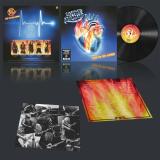
Manu Dia - Often Inside LP

Manu Dia

Often Inside LP

12inchYAR33LP
Young Art
15.07.2022

Neue Mini-LP des in Brüssel lebenden, spanischen Produzenten Manu Dia, der Daft Punk, Brian Eno, Bon Iver und Burial als Einflüsse nennt und bereits mit Tokimonsta, Petit Biscuit, San Holo und Panama zusammengearbeitet hat. Das Ergebnis ständiger Experimente und einer schlichten, kreativen Herangehensweise ist die Kombination aus atmosphärischen Klanglandschaften und einer ausgeprägten Pop-Sensibilität, die Dancefloor-inspirierte Euphoria und flüchtige, vom Leben inspirierte Emotionen vermengt.

pre-ordina ora15.07.2022

dovrebbe essere pubblicato su 15.07.2022


Last In: 2026 years ago
Romperayo - Palonegro y Colorado / Ecos Sicodélicos (7")

New single by Romperayo on 7-inch vinyl spinning at 45 rpm, released by the Austrian label discos
elgozo.
This record is a tribute to the sound of Cumbia Sabanera de Acordeón from Colombia, in dialogue with
Mexico’s Cumbia Sonidera. It also pays homage to the melodic line of the first generation of
Colombian accordion masters of Cumbia Sabanera such as Joaquín Betín, Emiro Caicedo, and
Policarpo Calle.

The two tracks are built on a solid rhythmic foundation of bass and percussion, accompanying a
melodic interplay between accordion and analog synthesizer.Mixed and produced by Pedro Ojeda Acosta at Romperayo Studios, both songs were recorded live, in
quartet format, at Mambo Negro Studios in Bogotá, Colombia, by Daniel Michel, featuring Iván
Medellín on accordion, Nicolás Eckardt on electric bass, Juan Manuel Toro on analog synth, and Pedro
Ojeda on percussion.
This single offers a first taste of Romperayo’s upcoming LP, set for release in early 2026 — once again
on discos elgozo.

pre-ordina ora27.03.2026

dovrebbe essere pubblicato su 27.03.2026


Last In: 2026 years ago
Various - I-ROBOTS PRESENTS: TURIN DANCEFLOOR EXPRESS, THE AGE OF VOOM VOOM MUSIC LP 2x12"

Daniele Baldelli
"A pleasant surprise to find in this release various atmospheres and sounds that have always been part of my DJing. It even made me rediscover M’Bamina, whom I used to play back in 1974 at the Tabù Club in Cattolica.
There are afro vibes as well, with Black Line – Myele, which is featured on one of my Cosmic tapes, and Nowhere by the Stratosferic Band recalls a track I used to play at the Baia degli Angeli…
Excellent work!"

Voom Voom Music was an independent Italian record label based in Turin, founded and managed by record producer Ivo Lunardi (Turin, December 6, 1940 – December 9, 2010). A pivotal figure in the Piedmont music scene, Lunardi was active both as a DJ and as the owner of several disco clubs.

The label operated for several years in the latter half of the 1970s, releasing mainly productions connected to the Italian dance and pop scene.
Since 2016, the original master tapes from the Voom Voom Music catalog have been owned by Gianluca Pandullo (I-Robots), a close friend of Ivo and Luca Lunardi. Through his labels Opilec Music and Turin Dancefloor Express, Pandullo oversees their preservation and historical enhancement.

The artistic direction of Voom Voom Music was marked by a distinct sonic identity — eclectic yet visionary. The Turin-based label founded by Ivo Lunardi embraced a sound that blended disco, pop, and rock influences, interwoven with African American grooves in a pioneering, international perspective.

Voom Voom Music was among the first Italian labels to introduce this kind of musical language in the country. A prime example is the Italian edition of the debut album by B.T. Express, Do It ('Til You're Satisfied), released in LP, 8-Track Cartridge, cassette, and 7" single formats.
The label’s productions clearly reflected the influence of black and funk music, as evidenced by the references and inspirations running through its catalogue. The track “Lady Pick-Up”, for instance, includes direct nods to “Do It Good” by KC & The Sunshine Band and Manu Dibango’s iconic “Soul Makossa”, revealing a musically refined and contemporary sensibility.

Among the label’s most representative works is Splash (1977) by the Stratosferic Band, a project conceived by Luigi Venegoni — producer, songwriter, and guitarist of Arti e Mestieri. Venegoni’s artistic journey spanned from progressive rock to space and Italo disco. The album artwork was designed by Piero D’Amore (1944 - 2022), a charismatic and multifaceted figure of Turin’s art scene (one of his works was even acquired by the MoMA in New York).
The record includes a disco reinterpretation of Van Morrison’s classic “Gloria”, and “Splashdown”, a track fusing the disco-rock energy of Rockets and Space. In contrast, “Nowhere” revisits the 1975 single by Hokis Pokis, a soul/disco band from Nassau County (New York), transforming it into a vibrant disco-funk number.

Another significant expression of the label’s catalogue is the afro-rock sound of M’Bamina, an Italo-Congolese group whose rhythmic energy and dialogue between African percussion and Western funk evoke the style of international formations such as Osibisa — themselves linked to a rich artistic history in Italy.

In Stock

Disponibile in Stock e pronto per la spedizione

Rickey Kelly - My Kind Of Music LP + Mp3
  • 01: The Ark
  • 02: The Masai
  • 03: Dream Dance
  • 04: Belize
  • 05: As You Are
  • 06: Danakil Warrior

Our latest Holy Grail reissue is this private press spiritual jazz gem out of California from Rickey Kelly and his vibes & marimba. Features Diane Reeves (vocals) & Adele Sebastian (flute)!

Heavyweight 180g LP with tip-on sleeve, individually numbered 1-1000, card enclosed for liner notes & audio download

"Rickey, I know these are your friends, the guys you went to school with, but if you wanna record an album, you record with musicians who have been playing their whole life; whatever you write, they'll put their whole life into it. You play with your friends; they may not even play in tune."

These are the words of Slave guitarist Kevin Johnson, and they were to change the course of young Rickey Kelly's life.

It was 1978, and music student Kelly had approached Johnson with a tape of rough demos of some songs he'd written. A San Francisco native, Kelly had recently moved the short distance south to study music at LA City College in East Hollywood. He was a member of E.W. Wainwright Jr.'s African Roots of Jazz, and was spending up to 10 hours a day in practice on both vibes and marimba. He also played with Horace Tapscott, and had his own band made up of fellow students, but it was his ambition to make an album that led to the conversation with Johnson. It was a turning point in his education, and a decision was looming.

The next thing Johnson said was "You call the best jazz musicians. How'd you like to play with Billy Higgins?", a line that would seal it for anyone; for a youngster like Rickey just starting out in the business, you just don't turn down the opportunity to play with the likes of highly accomplished musicians, especially those of the calibre of legendary jazz drummer Billy Higgins.

Some calls were made and the date was set to record at Studio Masters on Beverly Blvd, a studio set up just a few years previous in 1973, owned and operated by Dot Records founder Randy Wood with his son John. Some of the other music professionals set to record with Kelley that day were flautist Adele Sebastian, bass player Tony Dumas, saxophonist Charles Owens and vocalist Diane Reeves, none of whom had previously played with Kelly before.

Kelly was impressed with the studio, with the gold records displayed on the walls and the famous musicians hanging out. 'It took a lot of humility for me to record with them, I mean I was nobody, nothing, and for not a lot of money either' remembers Rickey in a later interview with Calvin Lincoln, 'It taught me a lot, to practice hard, and study for the rest of your life, to give your all, and there's a lot of all to give'.

As the recording session took place, John Wood was listening in. He was impressed. Kelly didn't have the funds to manufacture and release the album himself, so Wood suggested it was pressed up on his in-house studio label, Los Angeles Phonograph Records, and thus the LP 'My Kind of Music' was released early in 1979. The album also saw a subsequent pressing soon afterwards on Dennis Sullivan's New Note label.

Kelly remains humble and proud of his debut album to this day. 'I was still a beginner' he says, 'These masters walked in, smiling, and gave me something worth gold'.

pre-ordina ora10.04.2026

dovrebbe essere pubblicato su 10.04.2026


Last In: 2026 years ago
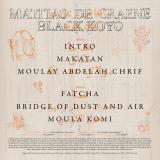
MATTIAS DE CRAENE & BLACK KOYO - MATTIAS DE CRAENE & BLACK KOYO LP

With Black Koyo, Mattias De Craene enters a sound world at once intimate and vast. Born from journeys in Morocco and Brussels, the project traces the rhythms, chants, and spirits of the Gnawa tradition, revealing a quiet resonance that echoes De Craene's own search for depth and presence. Guibri, qraqueb, call-and-response chants, saxophone, loops, and electronics come together in a trance-induced dialogue - ritualistic, elemental, and dreamlike - creating a space where listening becomes immersion, tradition meets imagination, and music unfolds as a shared act of reflection and wonder.

About Mattias De Craene
Mattias De Craene's artistic path is marked by rare coherence. As a central voice in Nordmann and MDC III, he developed a physical, rock-inflected jazz language driven by propulsion, volume, and trance-like collective energy. Over time, a period of personal rupture - burnout, tinnitus, depression - shifted his focus inward. The saxophone became a breathing, textural presence, and in his solo work, he weaves saxophone, electronics, loops, and minimal forms into a cinematic, hushed world where repetition, resonance, and silence slow perception. Rooted in ambient and introspection, his music prizes attention over impact, precision over excess - a quiet intensity recognized with a nomination as Musician for the Music Industry Awards (MIA's).

About Black Koyo
Black Koyo is a Brussels-based ensemble and one of the most compelling voices of the Gnawa tradition outside Morocco. Led by maalem Hicham Bilali, the group brings guibri, qrraqueb, and call-and-response chants to life with trance-like intensity and ritual precision. Their music is both rooted and contemporary, weaving earthbound rhythms and vocal invocations into ecstatic, immersive soundscapes, creating a space where ancestral resonance meets present-day imagination.

About Jan Bang
Jan Bang is a pioneering Norwegian producer and musician, celebrated for his mastery of live sampling and his ability to merge electronics with improvisation, rhythm, and texture in real time. He mixed the album and occasionally joins live performances, bringing his signature approach to sound as co-founder of the influential Punkt Festivaland collaborator with artists such as Jon Hassell, David Sylvian, Arve Henriksen, and ECM Records' roster. As a performer and sound architect, Bang creates immersive, trance-like sonic textures where silence and sound carry equal weight. Within Mattias De Craene ftBlack Koyo, his live sampling becomes an organic instrument, weaving saxophone, electronics, and Gnawa rhythms into hypnotic, physically charged soundscapes.

Line-up & credits
Mattias De Craene - sax, electronics | Hicham Bilali - guibri, vocals, qraqueb |Ismael Akhraz - vocals, qraqueb | Marwan Abantor - vocals, qraqueb
All tracks are original gnawa traditionals played by Black Koyo and arranged by Mattias De Craene.
Album produced & recorded by Mattias De Craene in Essaouira, Morocco and hometown Ghent, Belgium 2025.
Text by Hicham Bilali.
Mixed by Jan Bang at Punkt Studio
Mastered by Lieven Van Pee
Artwork by Marina Sviridova
Design by Benoit Van Geel
Manufactured and distributed by N.E.W.S.
Executive production by W.E.R.F. records
Supported by Flemish Government, Jazzlab, nona, HA Concerts, Aubergine artist Management,
KAAP, La Bestia (Wout Van Putten) & mdcmu.sic vzw.
2026 (c) W.E.R.F. records

pre-ordina ora08.05.2026

dovrebbe essere pubblicato su 08.05.2026


Last In: 2026 years ago
DANIEL MONACO FEAT. MANUEL RODRIGUEZ ON GUITAR - FLAMENCA EP

The sunshine of Andalucía has come to the Bordello. The musical magpie that is Daniel Monaco arrives with just a hint of a Spanish accent and a daring record under his arm. Known for finding the intersections of boogie, disco, italo and house, Monaco is going that bit further with Manuel Rodriguez for the Flamenca EP. Melting the percussive drive of his machines with the spirit of Southern Spain, the four tracks on offer are a journey into a sound and style that is inspiringly original. Ruffled hi-hats and smooth basslines are the foundation for the title piece. The soul of the Sierra Nevada and the warmth of Granada pour forth through Rodriguez’s unparalleled performance. The claps of Chicago are reimagined as an interplay of melody and rhythm awakens; the traditions of Flamenco married with a modern groove. Talent and technique are coupled with pure passion in the intense instrumentation of “Fantasia” before the flip shifts with “Sìnteme.” The culture of Italy and Spain combine, taut string plucks peppered in handclaps before the Only Bee’s vocals descend. Ardent, the lyrics tell of our shared humanity through the dialect of Ischitella from the southern tip of Italy. The homes of our musicians are the inspiration for the finale. Blending the decadent splendour of Napoli with the old-world romance of Granada, Rodriguez’s guitar is the focus of “Granapoli.” Bitter-sweet, blissful and sorrowful, a lone beat wandering through the winding melody that twins these great cities. From Italy and Andalucía to Amsterdam, a 12” like few others.

In Stock

Disponibile in Stock e pronto per la spedizione

Scott Gordon - Metals

Scott Gordon

Metals

12inchDIAG068
DIAGONAL
23.01.2026

Diagonal welcomes Scott Gordon to the fold. Scott has previously released on Editions Mego as one half of Oto Hiax, a collaborative project with Mark Clifford of Seefeel (Warp Records). He's also released a series of EPs and one album under his Loops Haunt alias via the Black Acre imprint. For his Diagonal debut, Scott offers up "Metals", a double EP of sorts: two sides of wax with two separate titles, "And Away" on side one backed with "Tilts" on side two. Each set is a study in using mechanical means to seek tone, rhythm and texture via unexpected objects and instruments. Both sides feature Scott's custom made Spinning Plate Instrument SPI. The SPI is a large, motorised vertical frame that spins a series of metal plates. These can be struck via midi - mechanical 'beaters'. These recordings also feature Scott playing the SPI manually. The results are both gripping and provocative. Mastered by Russell Haswell. Direct Metal Mastering (DMM) to vinyl.

In Stock

Disponibile in Stock e pronto per la spedizione

REDNILO - REDNILO

Rednilo

REDNILO

12inchIRM2534
Irma Records
17.09.2025

RedNilo is an Italian-Moroccan duo composed of Reda Zine and Danilo Mineo, two musicians based in Bologna linked by a deep passion
for world music, particularly African music. Their ongoing and tireless musical exploration has led them to collaborate for over a decade
on numerous artistic and recording projects. Their new album, eponymously titled RedNilo, features six tracks characterized by a sound
reminiscent of Gnawa, Hassani, Tuareg, and experimental rock. The psychedelic, raspy riffs of the electric guitar, the repetitive rhythms
of the percussion, and the rhythmic-melodic lines of the guembri represent and evoke their journey. The resulting sound material is the
culmination of their journey and their encounters with masters, artists, griots, artisans, and instrument makers in the Draa Valley in
southeastern Morocco, bringing together the two musicians' urban and experimental backgrounds and souls. The album's artwork was
designed by Moroccan artist Aali Wica, initiator and mentor of their spiritual and artistic journey to the southern African continent,
across the long black snake.
Réda Zine, a musician and documentary filmmaker born in 1977 in Casablanca, launched his musical career in the 1990s, contributing
to L'Boulevard, Africa's largest independent festival. Raised in the Casablanca medina, he was introduced to Gnawa music by various
Maallems. After studying at the Paris 3 Sorbonne University, he founded Café Mira, a project that has performed at several international
events.
From 2011 to 2014, Zine was artistic director for Creative Commons (Middle East and North Africa), where he won the #CC10 Korea
award in 2012 with the project "It will be Wonderful," which brought together musicians from over 12 countries. He has also been
involved in exhibitions on music and censorship, participating in events in major cities such as Paris, Buenos Aires, and Seoul. In Italy,
he continued his musical research with the Hardonik project and was part of the Afrobeat group Voodoo Sound Club, recording the
album Mamy Wata. Zine collaborates with artists such as Seun Kuti and has initiated educational activities related to Gnawa music,
contributing to initiatives such as the African Symphony Laboratory for improvisers. He is the co-founder of Fawda, a Gnawa-based
project, and is part of the Gnawa Rumi collective, which explores the music of the Moroccan diaspora in Italy. He directed the documentary "The Long Road to the Hall of Fame" about Public Enemy, which won an award at the Pan African Film Festival in 2015.
Danilo Mineo graduated as a national educator from the AMMnationalscholl music academy in Milan, with a thesis entitled "Afro-Cuban
Music and the Rhythm Section." Over the years, he has attended workshops and masterclasses with international artists and masters
of percussion and drums, including Horacio El Negro Hernandez, Airto Moreira, Trilok Gurtu, Luis Agudo, Arto Tuncboyaciyan, Dudu
Tucci, Dom Famularo, Karl Potter, Rodney Barreto, and Eno Zangoun, exploring the rhythmic language of various musical genres and
styles.
In addition to publishing several educational manuals for percussionists, music critics consider him a versatile percussionist, active in
various musical productions and recordings: Mop Mop, Fawda, Guglielmo Pagnozzi "Voodoo Sound Club," Fabrizio Puglisi "Guantanamo," Panaemiliana, The Mixtapers, and many others, with whom he has performed at numerous national and international music festivals (in Europe and Africa). As a percussionist and side man he has recorded numerous albums and collaborated with Italian and
international artists including: Giancarlo Schiaffini, Gianluca Petrella, Roy Paci, Roberto Freak Antoni, Famoudou Konate, Melaku Belay, Baba Sissoko, Kalifa Kone, Jamal Ouassini, Deda, Dj Lugi, Bioshi.

In Stock

Disponibile in Stock e pronto per la spedizione

Alex Puddu - Professione Reporter LP

It was less than a year ago that Italy-born but Denmark-based musical artist Alex Puddu released his latest album Deliria, an enticing blend of erotic disco, soulful grooves and electronica inspired by Italian pop music of the late 70s / early 80s, which went on to enjoy extended radio play across the globe including on BBC 6, NTS, KCRW, and national Spanish station Radio 3, to name a few.

But it wasn’t long thereafter that indefatigable groove purveyor Puddu travelled back to Rome for a new musical adventure, heading straight to The Sound Work Shop, the recording studio of legendary Italian composer Piero Umiliani, where he recorded the 10 new tracks that are included in his latest musical opus, Professione Reporter, another funky and soulful adult-oriented disco-pop album entirely sung by himself in Italian.

Professione Reporter tells the story of a photo reporter who travels the world following and stalking rich recently-widowed women whose husbands died in mysterious circumstances. Attracted by their charm and wealth, our protagonist transforms himself into a gigolo, becoming a dedicated lover-boy to these rich sugar mamas and a slave to the sweet life, going so far as to become an accomplice in their criminal plans to ensure the inheritance of their dead husbands.

Once again Alex Puddu has hit the mark with a collection of polished and ear-friendly grooves that tell the alluring story of a private eye embroiled in a web of love affairs, wealth and deceit, evoking images of satin sheets, champagne and dim lights set against the backdrop of one of the most hedonistic decades so far.

In Stock

Disponibile in Stock e pronto per la spedizione

Turntable / Plattenspieler - Technics SL-1200MK7

Turntable section

Type
Direct Drive Manual Turntable
Turntable Speeds
33-1/3, 45 rpm (with switch 78 rpm)
Starting Torque
0.18 N・m / 1.8 kg・cm
Build-up Characteristics
0.7 s. from standstill to 33 1/3 rpm
Wow And Flutter
0.025 % W.R.M.S.
Turntable Platter
Aluminium diecast
Diameter : 332 mm
Weight : Approx. 1.8 kg (Including slipmat and slipsheet)

Tonearm Section

Type
Universal Static Balance
Effective Length
230 mm
Overhang
15 mm
Tracking Error Angle
Within 2° 32' (at the outer groove of 30 cm record)
Within 0° 32' (at the inner groove of 30 cm record)
Offset Angle
22°
Arm-height Adjustment Range
0 - 6 mm
Stylus Pressure Adjustment Range
0 - 4 g (Direct Reading)
Head Shell Weight
Approx. 7.6 g
Applicable Cartridge Weight Range
(without auxiliary weight)
5.6 - 12.0 g
14.3 - 20.7 g (including head shell)
Head Shell Terminal Lug
1.2 mmφ 4-pin terminal lug

Terminals

Audio Output
PHONO (Pin Jack) x 1, EARTH TERMINAL x 1

General

Power Supply
AC 110 - 240 V, 50 / 60 Hz
Power Consumption
8 W
Approx. 0.2 W (Standby)
Dimensions (W x H x D)
453 x 169 x 353 mm
Weight
Approx. 9.6 kg
Accessories
Turntable, Slipmat, Slipsheet, Dust cover, EP record adaptor, Balance weight, Head shell, Screw set for cartridge, PHONO cable, PHONO earth lead, AC power supply cord, Owner's Manual

Mit dem SL-1200MK7 erweitert Technics sein erfolgreiches Sortiment an DJ-Plattenspielern nun um ein Modell in Silber. Der neue SL-1200MK7 verfügt über die gleichen technischen Merkmale und den gleichen Bedienkomfort wie der SL-1210MK7, der sich seit Verkaufsstart im Januar 2019 zum Liebling der Vinyl-DJ-Community weltweit entwickelt hat.

„In den letzten Jahren wurde von DJs, internationalen Musikveranstaltern und unseren Vertriebspartnern vermehrt der Wunsch an uns herangetragen, das Technics Plattenspieler-Line-up zu erweitern und weiterzuentwickeln. Auch eine Silberversion des DJ-Plattenspielers, der für so viele Anwender auf der ganzen Welt die erste Wahl ist, stand auf der Wunschliste ganz oben“, sagt Frank Balzuweit, Produkt-Manager von Technics Europa. „Diesem Wunsch sind wir gerne nachgekommen und bieten mit dem SL-1200MK7 jetzt allen Interessenten ihr geliebtes Arbeitsgerät in der Optik ihrer Wahl an“, so Balzuweit.

Der SL-1200MK7 in Silber verfügt über dieselben technologischen und funktionalen Merkmale wie der SL-1210MK7 in Schwarz:

- Eisenkernloser Direktantriebsmotor mit leistungsstarkem Drehmoment und einer stabilen Rotation
- Präziser und robuster Tonarm, der die Musikinformationen der Schallplatte präzise wiedergibt
- Zweilagiges Chassis mit verbesserter Schwingungsdämpfung
- Stabiles Gehäuse und schalldämpfende Isolationsfüße zur Eliminierung von Vibrationen, auch unter erschwerten Bedingungen
- Anlaufdrehmoment / Bremsgeschwindigkeit-Einstellfunktion
- Pitch-Regler-Funktion für genaue und stabile Pitch-Anpassung
- Reverse-Play-Funktion erweitert die Flexibilität von DJ-Stilen
- Stylus Illuminator mit hoher Helligkeit und langlebigen LED-Leuchten

In Stock

Disponibile in Stock e pronto per la spedizione

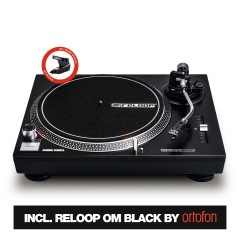
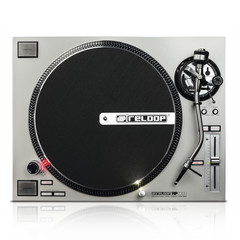
Turntable / Plattenspieler - Reloop RP-2000 USB MK2

Features

NEW in the MK2 version:
Newly developed top panel and reinforced housing construction
Reworked metallic buttons with improved feel & tactile response
Precision Pitch with selectable ranges of +/-8 %
Superior finish in deep black metallic
Quartz-driven DJ turntable with direct drive
Perfect for beginners
USB audio output for digitizing your records easily
Precise motor control with 2 speeds selectable (33 1/3 & 45 rpm)
Precision-engineered, die-cast aluminium platter with stable rotation
Statically balanced s-shaped tone arm with hydraulic lift and anti-skating - mechanism
Universal connection for pick-up systems (SME)
Extendible needle illumination
Built-in phono pre-amplifier (no grounding necessary)
Switchable phono and line level output
Shock-absorbing feet for vibration isolation
Sturdy, heavy construction with optimized damping features
Prepared for dust cover (available as optional accessory)
Incl. platter, OM Black pick-up system (by Ortofon), headshell, slipmat, counterweight, power cord, operating instruction manual

Technical Data
Turntable:

Type: direct drive turntable
Drive: quartz-driven direct drive
Motor: 8-pol., 2-phase, brushless DC motor
Turntable speeds: 2 speeds, manual (33 1/3, 45 RPM)
Starting torque: > 1kg/cm
Brake time: 50 dB (DIN-B)
Brake system: electronic brake

Platter:

Material: aluminium die-cast
Diameter: 332 mm

Tone arm:

Type: universal, statically balanced, s-shaped
Effective length: 230.5 mm
Overhang: 16 mm
Tracking angle error: < 3°
Applicable pick-up weight: 3.5 – 8.5 g (incl. headshell 13 – 18 g)
Anti-skating range: 0 - 7 g

Connections:

1x PHONO/LINE out (gold-plated)

General:

Power supply: AC 115/230 V, 60/50 Hz (US/EU)
Power consumption: 13 W
Dimensions: 450 (w) x 352 (d) x 144 (h) mm
Weight: appr. 6.76 kg

In Stock

Disponibile in Stock e pronto per la spedizione

BRIGHT MAGUS - JUNGLE CORNER

Bright Magus is an instrumental quintet born under the influence of Miles Davis' metaphysical electric period, a visceral and magical passion always shared by Giovanni Calella and Leziero Rescigno. Davis' most eclectic and psychedelic period, that of recordings for Columbia from 1969 throughout the 70s. Albums like “In a Silent Way”, “Bitches Brew”, “A tribute to Jack Johnson”, “On The Corner”, “Big Fun” made them immerse themselves in one of the most fascinating experiments that Miles has generated in his long and prolific career. We are talking about music that is difficult to fit into one genre, in these masterpieces you can feel the contemporaneity of that historical period. Electric Jazz, Funk, Psychedelia, Rock, Afrobeat, Ambient, drag you into something absolutely new, mysterious and sometimes furious. Just a year ago Giovanni and Leziero took courage and started recruiting musicians who had to have the right attitude and knowledge. Guitarist Alberto Turra was the first to be interested in the project, then came Mauro Tre, pianist and keyboard player and Gianni Sansone on trumpet. All seduced by Miles and in love with that magical period.

Before making the first album "Jungle Corner", the band did some live shows to amalgamate all the ideas that came out during the improvs recorded by Tullio Treffiletti in the trumpeter's home studio (later baptized Selim Studio). At the Isola Studio in Manuel Agnelli's space and with the help of the very talented Guido Andreani, Bright Magus then recorded in three days live all the material which in the meantime had been enriched with more structured melodic themes and less casual drafts . Mauro's contribution was very important in this. The finalization of the album was then managed by them in the small "Diabolicus Studio" taking care of editing, post production and mixing.

Guest on the album in two songs, Enrico Gabrielle of Calibro 35 on flute and clarinet.

The cover design is a work by Barba Ughi alias BAX.

In Stock

Disponibile in Stock e pronto per la spedizione

Various - Future Bubblers 7.0 Compilation

Brownswood Recordings releases the 7th edition of their Future Bubblers Compilation. An expansion of Gilles Peterson's network supported by Arts Council England, the ongoing talent discovery and artist development scheme focuses on developing unsigned talent and building audiences for new left-field music. With support from PRS Foundation as Talent Development Partners, the professional recording, manufacturing and physical release of Future Bubblers 7.0 is made possible. Unlike any other initiatives within music, the compilation acts as a springboard for the musician's careers, with the cooperative model providing direct revenue to the artists by a share of the profits, resulting in a sustainable income to work from. Previous Future Bubblers include artists such as Yazmin Lacey, KinKai, MC Snowy, Forest Law, Victoria Jane, NeOne The Wonderer and Kayla Painter, to name a few.

The 8-track compilation is a musically diverse collection of tracks, fusing genres across Alt-R&B, Dance, Electronic, Jazz, Rap and Trip-Hop. Opening the project, ROMY NOVA flaunts her hypnotic harmonies on a tender offering, 'The Way', whilst Sheffield-born Jackie Moonbather delivers a Funk performance on 'Separate Ways'. Up next, Ney Liqa's 'Blomster' captures a blend of Trip-Hop and Swedish-Pop, fusing her earliest musical influences before Birmingham's very own Landel's cloud-Rap excellence on '2 Many'. Maintaining the ethereal sonic, Petrelli Purple's 'Brisk' is reflective of his ability to curate a "miscellaneous north" sound, followed by MARYSIA OSU's 'Stryder' that highlights her self-coined "harps, beats, and dreams" ethos. Michael Diamond showcases his ability to float between jazz and electronic landscapes on 'Aether' before COEX rounds off the project nicely with 'Reflections'.

In Stock

Disponibile in Stock e pronto per la spedizione

David Nesselhauf - A Guide To Afrokraut III LP

"Drums from heaven, keys from Mars, a bass made from mother earth's soil and guitars from a guy who's time-traveling from German Kraut in the last 60ies into the next 60ies and who happens to gift us today with this funky, dirty, pulsating, delicious music that's everything which music is supposed to be: ALIVE! (Note to self: Always keep a copy of this record in your suitcase!)." (Malakoff Kowalski)

"Afrokraut" is a stylistic expression of Krautrock, primarily associated with Can, and their creative use of time and space in music. "A Guide To Afrokraut III" is David Nesselhauf´s third and last contribution to the dusty shrine of this long forgotten style.

Next to "Afrokraut" (2016) and "Afrokraut II: The Lowbrow Manifesto" (2018), this album completes a humble sonic Trypticon in honour of David Nesselhauf's musical heroes. Experimentation was key in the immersive process of producing this album, which encompasses elements of Funk, Afrobeat and Krautrock as well as otherworldly Drones, early Elektronische Musik and even field recordings.

Inspired by the unfinished manuscript 'History Deletes Itself' by the late science fiction author Joseph Sabiers, Nesselhauf decided to produce a b-movie soundtrack to the original plot, ignoring the fact that there will likely never be a movie to this music.

In the original script, a virus has infected history, the resulting changes of historical facts leading to an unpredictable present and future for mankind. Every attempt to solve the problem – including time travelling – only worsens the situation. But three planets at the end of the known universe seem to be unaffected by the phenomenon, they become a sanctuary known as 'Afrokraut III'. Three brothers arrive there to start new lives. They are introduced to The Guide, their mysterious advisor...

The striking parallels to today's uncertainties, a strong feeling of hope and the idea to never stop exploring (come what may) certainly have encouraged the making of this album, which sees a belated release due to the obstacles everyone faces right now.

David Nesselhauf lives in Hamburg/Germany and appears as a bass player/songwriter in bands like Hamburg Spinners, The Drawbars, Diazpora, and Angels Of Libra.

In Stock

Disponibile in Stock e pronto per la spedizione

Kölsch - Now Here No Where LP 2x12"

2025 Repress

On his fourth album proper, Now Here No Where, Danish producer Kölsch (aka Rune Reilly Kölsch) is charting new terrain. Fans of his ‘years trilogy’ – 1977, 1983 and 1989, released on Kompakt over the past decade – were privy to a kind of sonic diary, an autobiography, tracking the artist’s early years through three albums of superior, meticulously rendered techno. Calling in collaborators where needed – most notably, the strings of Gregor Schwellenbach – there was still something deeply personal going down, not quite hermetic, but internally focused; the albums proved not only Kölsch’s mastery of his chosen form, but also his capacity to make techno personal, individual, and to trace histories of the self through music. But on Now Here No Where, Kölsch finds his feet firmly planted in the present. Reflecting on his new album, he notes, “It is fascinating to write about memories and feelings that have had years to manifest and develop, but how would I approach current emotions?” It’s a good question: our past coheres through the narratives we build around memories, but the moment we’re in, the newness of the now-ness, is harder to navigate; this story is as yet untold. For Kölsch, this makes Nowhere Now Here “an album about life in the year 2020. A time defined by confusion, misinformation and environmental challenges. It is an emotional interpretation of personal and mental challenges, observations and personal growth.” Kölsch does this with music that effortlessly balances emotional heft with the dancefloor’s brimming desires. It’s a space that Kölsch has navigated for a while now – one of techno’s breakthrough acts, an in-demand DJ across the globe and a prolific and restlessly creative producer, he’s also Kompakt’s biggest-selling act – but Now Here No Where ratchets up the lushness, making for a delirious drift across twelve tracks that are at once perfectly poised and deeply trippy. “Great Escape” is an elegant swoon, an opener that pivots on a sigh and a prayer; then “Shoulder Of Giants” bustles into view, subliminal clatter and an aching violin line giving way to a riff that glows with fluorescence and iridescence. “Remind You” combines an odd ECM jazziness with notes from a twenty-first century torch song; “Sleeper Must Awaken” mines huge buzzing synths and lets them float, in and out of sync, with reduced, ticking beats; “Traumfabrik” (dream factory – there’s a giveaway) is oddly lush, the tones malleable and plastic, morphing across a glitching undertow. There are sad, emotional washes of strings throughout the penultimate “While Waiting For Something To Care About”, while “Romtech User Manual”’s patterns twist and shape in the light. Throughout, Kölsch never keeps his eye off the dancefloor, and you can tell this is his still his home. “The amount of energy and joy I experience every time I perform, has a profound effect on me. It has inspired me so much of late and has become an integral part of my musicality.” “The way we join in expressing our hope for the future every weekend has given me so much,” Kölsch concludes. The club as a temporary autonomous zone, as a space both of freedom and of politics; somehow, that’s all here, Now Here No Where. “Most of all, it is an album about hope.”

Auf seinem vierten Album “Now Here No Where” betritt der dänische Produzent Kölsch (alias Rune Reilly Kölsch) neues Terrain. Seine Trilogie mit den Jahreszahlen 1977, 1983 und 1989, die in den letzten zehn Jahren bei Kompakt erschienen war, hatte seine Fans durch eine Art akustisches Tagebuch, eine Autobiografie geführt, die die frühen Jahre des Künstlers über die Länge von drei großartig produzierten Techno-Alben nachgezeichnet hatte. Wo es nötig war, wurden Kollaborateure hinzugezogen - allen voran für die Streicher, arrangiert von Gregor Schwellenbach -, dennoch zeichnete die Musik immer auch etwas zutiefst Persönliches aus, etwas nicht Hermetisches, auf eine bestimmte Art immer auch nach Innen fokussiert. Die Alben bewiesen nicht nur, wie sehr Kölsch die von ihm gewählte äußere Form beherrscht, sondern auch seine Fähigkeit, Techno zu etwas Persönlichem und Individuellem zu machen und der eigene Geschichte durch Musik näher zu kommen.

Auf “Now Here No Where” steht Kölsch nun mit beiden Beinen fest auf dem Boden der Gegenwart. Mit Blick auf sein neues Album stellt er fest: "Es ist faszinierend, über Erinnerungen und Gefühle zu schreiben, die Zeit hatten, sich zu manifestieren und zu entwickeln, aber wie nähere ich mich meinen aktuellen Emotionen?”. Eine gute Frage: Unsere Vergangenheit wird im Innersten zusammengehalten durch Geschichten, die aus Erinnerungen entstehen, aber der Moment, in dem wir uns befinden, die Neuheit des Neuen, ist schwieriger zu beschreiben; die Geschichte ist noch nicht erzählt. Für Kölsch ist “No Here Now Where” daher "ein Album über das Leben im Jahr 2020. Eine Zeit, die von Verwirrung, Desinformation und ökologischen Herausforderungen geprägt ist. Es geht dabei um die emotionale Interpretation von persönlichen und mentalen Herausforderungen, von Beobachtungen und der eigenen, individuellen Weiterentwicklung".

Kölsch tut dies mit Musik, die mühelos kleine Gefühlsausbrüche mit den großen Sehnsüchten der Tanzfläche in Einklang bringt. Es ist dieser Zwischenraum, in dem sich Kölsch schon seit einiger Zeit bewegt, als weltweit gefragter und gefeierter Live Act, DJ und so unermüdlicher wie kreativer Produzent (nicht umsonst ist Kölsch der “biggest-selling-artist” bei Kompakt), doch “Now Here No Where” treibt all das noch weiter auf die Spitze: ein enormer Sog entsteht, der uns über zwölf Tracks hinweg gefangen hält wie ein perfekt ausbalancierter Trip. Der Opener "Great Escape" ist pure Eleganz, ein Track, der irgendwo zwischen Seufzer und Gebet hin und her schwankt; dann drängt "Shoulder Of Giants" ins Blickfeld, ein unterschwelliges Geklapper, eine wehende Geige, schließlich ein schillernder Riff, der in der Dunkelheit zu leuchten und zu glühen scheint.

"Remind You" kombiniert seltsamen ECM-Jazz mit einem sentimentalen Liebeslied des 21. Jahrhunderts; "Sleeper Must Awaken" schürft im Bergwerk riesiger Synthesizer, mal im Takt, mal aus dem Takt ticken die minimalen Beats; "Traumfabrik" ist ungewöhnlich “lush”, die einzelnen Töne, geschmeidig und modelliert, zerfließen in einem glitzernden Abgrund. Das vorletzte Stück "While Waiting For Something To Care About" wird von traurigen, emotionalen Strings untermalt, während sich die Strukturen von "Romtech User Manual" im Licht drehen und immer wieder neu formieren. Die ganze Zeit über behält Kölsch die Tanzfläche im Auge, und man merkt ihm an, dass sie immer noch sein Zuhause ist: "Die Menge an Energie und Freude, die ich bei jedem Auftritt erlebe, hat eine tiefe Wirkung auf mich. Sie hat mich gerade in letzter Zeit stark inspiriert und ist zu einem integralen Bestandteil meiner Musik geworden.”

"Die Art und Weise, wie wir an jedem Wochenende gemeinsam unsere Hoffnung auf eine bessere Zukunft zum Ausdruck bringen, hat mir viel gegeben", so Kölsch abschließend. Die Vision des Clubs als eine temporäre autonome Zone, als ein Raum von großer Freiheit aber auch von politischen Ideen, das ist irgendwie alles hier drin, Now Here No Where. "Es ist vor allem ein Album über Hoffnung."

In Stock

Disponibile in Stock e pronto per la spedizione

Mark Vernon - Sounds of the Modern Hospital LP
 
33
disponibile anche

Tape


Death Is Not The End reissue Mark Vernon's sought-after 2013 collection Sounds of a Modern Hospital on vinyl & cassette formats.

Whilst every effort has been made to record the subject in as great a degree of isolation as possible, the sound recordings you will hear on this record were made in a real working hospital and not under controlled conditions. Therefore, on occasion, you may hear some unavoidable background noise, conversations and other extraneous sounds.

All recordings were made by Mark Vernon at Forth Valley Royal Hospital, Larbert, Stirling Community Hospital and Falkirk Community Hospital between 2011 and 2013.

non in magazzino

Ordina ora e ordineremo l'articolo per te presso il nostro fornitore.


Last In: 7 days ago
Mark Vernon - Sounds of the Modern Hospital (Tape)
  • 01: Full Blood Count Analyzer
  • 02: Automated Instrument Rinse System
  • 03: Mri Scanner
  • 04: Anaesthetic Machine
  • 05: Meti Human Patient Simulator - Mannequin Breathing
  • 06: Simman Essential Mannequin
  • 07: Cardiac Monitor
  • 08: Lee Silverman Voice Treatment
  • 09: Haemoglobin A1C Analyzer
  • 10: Anaesthetic Machine 2
  • 11: Infusion Pump (Alaris Plus)
  • 12: Heater Fan
  • 13: Phacoemulsifier – Suction And Ultrasound During Cataract Surgery (Two Perspectives)
  • 14: Robotic Pharmacy - Manually Restocking Supplies
  • 15: Ct Scanner
  • 16: Pharmacy Label Printer
  • 17: Dialysis Machine
  • 18: Draeger Oxylog 3000 Plus
  • 19: Meti Human Patient Simulator – Powering Up Of Bellows That Control Mannequin&Apos;S Artificial Lungs
  • 20: Orthopantomograph Op 00
  • 21: Helium Cooler For Mri Scanner
  • 22: Coagulation Analyzer
  • 23: Meti Hps Mannequin
  • 24: Ophthalmology
  • 27: Ultrasound Scanner
  • 28: Operating Theatre
  • 29: Beckman Coulter Access 2 Analyzer
  • 30: Geiger Counter (Berthold Lb124)
  • 31: Automated Mailroom (Opex Mail Matrix)
  • 32: Wall Mounted Suction Unit
  • 33: Dialysis Machine 2
  • 25: Sysmex Sp1000I Automated Slide-Maker
  • 26: Agv (Automatic Guided Vehicle)
disponibile anche

Vinyl


Death Is Not The End reissue Mark Vernon's sought-after 2013 collection Sounds of a Modern Hospital on vinyl & cassette formats.

Whilst every effort has been made to record the subject in as great a degree of isolation as possible, the sound recordings you will hear on this record were made in a real working hospital and not under controlled conditions. Therefore, on occasion, you may hear some unavoidable background noise, conversations and other extraneous sounds.

All recordings were made by Mark Vernon at Forth Valley Royal Hospital, Larbert, Stirling Community Hospital and Falkirk Community Hospital between 2011 and 2013.

pre-ordina ora27.02.2026

dovrebbe essere pubblicato su 27.02.2026


Last In: 2026 years ago
Various - Wizzz! French Psychorama Volume 5 (67-75)

The journey through French-speaking pop archives continues with this fifth volume, packed with fuzz, gimmicks, and dissent. Far from the charts, the selected tracks display a great creative freedom, often backed by corrosive humor. Welcome to the surprising, kaleidoscopic, and colorful world of the late sixties and early seventies, Wizzz!
Born in Montauban, Robert Pico stumbled into music by chance when he met René Vaneste, then artistic director at Pathé-Marconi. René brought him to Paris to record his first 45 RPM EP in 1964. A year later, Pierre Perret introduced him to Vogue, where he recorded his second album with Claude Nougaro’s orchestra. Sylvie Vartan then introduced him to RCA, where he recorded four singles, including the astonishing "Chien Fidèle," a track backed by a hair-rising fuzz guitar. Alongside his solo career, he also composed for other artists like Alain Delon (the song was recorded but remains unreleased), Magali Noël, Bourvil, and Georges Guétary. In the Paris of the sixties, he mingled with Mireille Darc, Elsa Martinelli, Marie Laforêt, France Gall, Françoise Hardy, Petula Clark, Régine, Dani, Serge Gainsbourg, Joe Dassin, Franck Fernandel, Charles Level, and Roland Vincent. Despite his efforts and winning a Grand Prix Sacem for his final record, Robert Pico didn’t achieve the expected success in show business and decided to leave Paris and return to the Southwest, where he devoted himself to writing. He is the author of 23 books (including Delon et Compagnie, Jean-Marc Savary Editions 2025, a memoir about his youth and his many encounters). Today, he is relieved to never have become a celebrity and devotes himself to his work with passion.
In 1969, the Franco-Italian movie Erotissimo was released, directed by Gérard Pirès (who later directed Taxi in 1998, written and produced by Luc Besson). This pop comedy features Annie Girardot, Jean Yanne, Francis Blanche, Serge Gainsbourg, Nicole Croisille, Jacques Martin, and Patrick Topaloff. The soundtrack was written by Michel Polnareff and William Sheller, with lyrics by Jean-Lou Dabadie. "La Femme Faux-cils," performed by Annie Girardot. It recounts the feelings of a rich CEO's wife who seeks to develop her sex appeal under the influence of advertisement and magazines. Groovy, sparkling and light, this track, with ITS lush arrangements humorously critiques consumer society and feminine beauty standards.
“Je suis l’Etat” (1967) is the flagship track of the first EP by singer-songwriter Spauv Georges, aka Georges Larriaga, better known as Jim Larriaga (1941-2022). Born into a family of bakers, the young man was initially planning to become a hairdresser when he discovered English-speaking music through Elvis Presley and the Beatles. After this revelation, he decided he would become a songwriter and gave himself five years to succeed. He recorded his first two EP’s independently for RCA under the pseudonym Spauv Georges; meaning “that poor George”, a nickname given to him by the mother of her friend Jean-Pierre Prévotat (future drummer of the Players, Triangle, or Johnny Hallyday). Portraying a depressed and eccentric young man, Spauv Georges created corrosive and amusing songs that didn’t reach a wide audience, despite a TV appearance with Jean-Christophe Averty.
Supported by his loyal friend and fellow songwriter Jean-Max Rivière, Georges Larriaga met the future singer Carlos in the early '70s, then Sylvie Vartan’s assistant. He wrote songs for Carlos, including the popular "La vie est belle," "Y’a des indiens partout," and "La cantine", which went onto become a huge hit in 1972. He also composed for Claude François (“Anne-Marie”, 1971), Charlotte Julian (“Fleur de province”, 1972), helped launch child singer Roméo (who sold 4 million records), and later wrote the hit "Pas besoin d’éducation sexuelle" (1975) for the young Julie Bataille. In 1971, Jim recorded an album for Disc'Az: “L’univers étrange et fou de Jim Larriaga”, which featured pop gems like “La maison de mon père”.
The story of the song "Zoé" began when Pierre Dorsay, artistic director at Vogue Records, asked Swiss singer and musician Pierre Alain to write a song for a new female singer. The inspiration came when he realized that Zoé (the artist's name) was also the name of France's first atomic battery, created in 1948, which consisted of uranium oxide immersed in heavy water! The lyrics reflect a bubbling energy that must be handled with caution, while the instrumentation echoes this atomic theme, notably with the use of a theremin.
Zoé’s career lasted only as long as a single 45 RPM, but it seems Christine Fontane was the vocalist behind this pseudonym, who is known for several EPs, a good "popcorn" album in 1964, and a handful of children’s singles in the '70s. Regardless, the photograph on the cover is of a different girl entirely.
Later, Pierre Alain continued his career, writing songs for himself, Marie Laforêt, Danièle Licari, Alice Dona, Arlette Zola (3rd place in Eurovision 1982), and achieving multiple gold and platinum records in Canada. Also an inventor with several patents, president of the Romande Academy, and head of the French Alliance in Geneva, he now composes atonal music, books, and poetry. Moreover, he is also the host of "Les Mardis de Pierre Alain" at "Le P'tit Music'Hohl" in Geneva.
Filled with oriental choruses and fuzz guitar, "Fou" is from Jacques Da Sylva's only EP released by Vogue in 1967. Despite the quality of this recording, all traces of this singer disappear after this first effort.
Valentin is a baroque pop singer born in Belgium. He is the songwriter and composer of most of the tracks on his three singles released in the late 60s in Canada. A legend says that he reincarnated himself as Jacky Valentin during the 1970s for a rock'n'roll revival career in Belgium, but his older brother sadly debunked this story. Valentin's first two singles were arranged by Claude Rogen, a Parisian session pianist who had come to Canada to promote the song “Mister A Gogo”, a cover of David Bowie’s “Laughing Gnome”, adapted by singer Delphine, his wife at the time. Far from his usual network, Claude Rogen arranged music for Polydor, including the arrangements for “Je suis un vagabond” in 1969, a jerk tune with string arrangements and a furious optimism.
Jacques Malia wrote, composed, and recorded his only 45 EP for Festival in 1966. “Histoire de gitan” is an incredible beat track with bohemian scat that tells the story of a gypsy musician who came to Paris to make it in the Music-Hall, to no avail. The hero of the song and its author probably shared a similar fate, as Jacques Malia faded into anonymity after this remarkable attempt.
Bernard Jamet recorded two EPs for Barclay in the late sixties and co-wrote several songs with Christine Pilzer, Pascal Danel, and prolific songwriters Michel Delancray and Mya Simile. The track “Raison Légale” (1968), his masterpiece, immerses the listener in a courtroom right when a murderer is being judged, with jerk rhythm and free arrangements. A unique, paranoid, judicial, and psychedelic oddity.
Jean-Pierre Lebrot-Millers started his career in show business in 1967 as a singer and songwriter for the Philips label. After three singles, he wrote several songs of a new kind with his friend Pierre Halioche, in the midst of the sexual liberation movement and the democratization of drugs. With provocative lyrics, “Les filles du hasard” and “Barbara au Chapeau Rose” were released on a Philips singles in 1968. The character of Barbara was inspired by a queen of Parisian nightlife during the psychedelic years: model Charlotte Martin, who dated Eric Clapton from 1965 to 1968, then Jimmy Page from 1970 to 1983. Jean-Claude Petit’s arrangements, with a table-filled intro, soul brass, and Hendrixian guitar, emphasize the flamboyance of a hedonistic and sexy character, whose dog is named Junkie because “Junkie est un nom exquis”! The track was recorded live in three takes with a full orchestra.
Upon its release, the record was censored by Europe 1 and RTL due to its references to drug use. Jean-Pierre Lebrot was then banned from the airwaves and later dismissed by his record label. He changed his artist name to Jean-Pierre Millers, while his companion Pierre Halioche became D. Dolby for a new dreamy composition, “Chilla”, which Jean-Pierre produced himself with arrangements by Jean Musy. Once again, the song was immediately censored everywhere. After this setback, he decided to stop singing and started taking on odd jobs to support his Swedish wife and their son until the day he met Jean-Pierre Martin, then production manager at Decca, who had worked with Manu Dibango. Martin offered Jean-Pierre Lebrot-Millers, then employed at Rank Xerox, the position of artistic director at Decca. He accepted and became, a year later, promotion director (radio, press, TV). He worked on Julio Iglesias’s first album for Decca, which became a massive hit and allowed him to meet Claude Carrère. The latter asked him to write new songs and find their performers, much like a “talent scout.” It’s through him that Jean-Pierre discovered Julie Pietri and Corinne Hermès. He composed “Ma Pompadour” for Ringo, Sheila’s husband, and took the microphone again for the syncope hit “Rendez-Vous” in 1982.
That same year, Jean-Pierre Lebrot-Millers tried to release a track for which he had heavily gone into debt: “Si la vie est un cadeau”. Having recorded it in London, he presented it to numerous professionals, all of whom refused to get involved. The same thing happened with Antenne 2 and the Sacem when he proposed the song as France’s entry for Eurovision. He then met Haïm Saban, who was producing cartoon soundtracks and had just launched the Goldorak theme song. Saban, having listened to the song, declared it had the potential to become a hit. He sent Jean-Pierre and Corinne Hermès to meet the CEO of the Luxembourg radio and television network. The latter received them, asked to hear a verse and chorus a cappella in his office, and immediately hired them to represent Luxembourg at Eurovision 1983. They reworked the arrangements and recorded a new version with Haïm Saban as co-producer. The song ended up winning Eurovision 1983, a great comeback for our hero. He continued producing and hung out with the band Nacash in Belgium when a couple came to introduce their daughter for an impromptu audition in a hotel room. The girl sang “Les démons de minuit” while dancing to a radio cassette. Impressed, he had her take singing lessons for a year and composed a song for her (for which he had the melody and title, but no lyrics). This required him to go on the hunt for a lyricist, who ended up being Guy Carlier. They recorded the song, which was initially a ballad, at Bernard Estardy’s CBE studio, and gave the singer a new name: Melody. They showed the song around their industry network without success. Later, Estardy called Jean-Pierre to suggest changing the rhythm and making it pop-rock. Orlando, Dalida’s brother, liked the result and decided to co-produce the track. “Y’a pas que les grands qui rêvent » became a classic hit. The song has since been covered by Juliette Armanet (as a ballad, like the original) and Valentina.

Born into an aristocratic Breton family, Hervé Mettais-Cartier worked as a DJ at Queen Kiss, a nightclub in Poitiers, where he formed the band Les Concentrés with Michel (an actor) and Christian (a radio technician). Together, they created a repertoire of whimsical songs (“Ma bique est morte”, “J’suis un salaud”, “Fils de dégénéré”...) that they performed on stage dressed in white (in homage to “concentrated milk”). They performed at Bliboquet and Olympia in 1968 for the 10th edition of the “Relais de la chanson Française” organized by L’Humanité-Dimanche and Nous les Garçons et les Filles, sponsored by Pepsi Cola. Winners in the author-composer category, alongside Danish singer Dorte, their visibility allowed them to record a 45, and appear on television in Jean-Christophe Averty’s show. The A-side of the disc features Bruno le ravageur, a casatchok dedicated to Bruno Caquatrix, the director of Olympia, nicknamed in the song “Coq Atroce” or “croque-actrices”. The B-side is dedicated to “Fils de dégénéré”, a quirky tribute to Hervé's aristocratic roots, mixing absurdity with sophisticated vocal harmonies.
After Les Concentrés, Hervé Mettais-Cartier formed the duo La Paire et sa Bêtise with his friend Olivier Robert. They performed in Parisian cabarets and toured with Pierre Vassiliu. In the late 1970s, Hervé began a solo career. He recorded two albums for the Motors label in 1978 and 1979, which did not achieve their anticipated success due to lack of promotion. In 1980, he met Bernadette, with whom he started a family and created a “Chansons à voir” (songs to see) show that he performed until his death at the end of 2024.

Publicité comes from the final EP by the Missiles (Ducretet Thomson, 1966), a disc that also includes “La (nouvelle) guerre de cent ans”, featured on Volume 4 of our Wizzz! series. Please refer to the booklet for the story of the band.

“He’s 1.82 meters tall, 28 years old, weighs 135 kg, is black and Belgian”: this is the description of singer Hegesippe on the back of his sole single (Decca, 1967). He appears on the album cover wearing a Greek toga, like a hippie gag – we are at the end of the year 1967. In “Le crédo d’Hegesippe”, this former bodyguard of Antoine and the Charlots plays the delightful card of the thick brute converted to Flower-Power and non-violence, with arrangements by Jean-Daniel Mercier, aka Paul Mille.
“Ethéro-disco” was released on a promotional record for clients of the Maréchal company (Liège, Belgium) for the New Year 1979. Over a funky rhythm, celebrity impersonations (Brigitte Bardot, Jacques Dutronc, Fernandel…) deliver an enigmatic text about pharmaceutical products like ether, bismuth, and aspartate. The track was composed by Dan Sarravah (responsible for Joanna's “Hold-up inusité” featured on Wizzz! Volume 3) and Tony Talado, who was also a singer (one 45 in 1967), songwriter (with over a dozen credits between 1964 and 1985 in various styles from surf music to disco), author (Devenez Végétarien, Dricot Editions, 1985), ad designer, and psychologist.

Décollez-les is on the A-side of Mamlouk's only single, a pseudonym for Marsel Hurten, who is known for his work on several EPs in the late sixties, as well as composing music for Hervé Vilard’s “Capri, c’est fini”, Claude Channes' “La Haine”, Annie Philippe’s “On m’a toujours dit”, and Nancy Holloway’s “Panne de Cœur”.
This strange song, with Afrobeat horns and absurd dialogues between a chef and his kitchen staff, is the result of a collaboration between Marsel Hurten and one of his neighbors, a photographer from Pavillon-sous-Bois (93), where the musician settled after returning from the Algerian War. A music video was shot to promote the record.
Marsel Hurten was born in Tourcoing (59) into a musical family. At a young age, he joined the brass band founded by his grandfather, playing the piston before studying trumpet at the conservatory, as well as teaching himself how to play the guitar. As an orchestra musician, he toured in France, Belgium, Germany, and England. He released a series of solo 45’s between 1965 and 1968 for the DMF and Az labels before stopping recording to focus on working for other artists (Gilles Olivier, Noëlle Cordier…).
“L’amour nu” (Vogue, 1971) is the work of the short-lived Belgian band Mozaïque. The track, written by singer Jacques Albin, closely resembles another of his compositions, “Carré Blanc”, which he recorded in 1969 for Disc’AZ.
Represented by the Lumi Son micro-label based in Marignane (Côte d'Azur), Jean-Marc Garrigues released two 45 RPMs in the late sixties, defending the French jerk sound. The song “Je dis Non” is a short, joyful ode to youth, pop music, and rebellion.
Songwriter and performer Jacques Penuel released three singles. The first one, “Astronef 328” (Fontana, 1969), features a dizzying series of chords punctuated by sound effects, a sci-fi story, and arrangements by Jean-Claude Vannier.

We would like to sincerely thank Pierre Alain, Moon Blaha, Marsel Hurten, Bastien Larriaga, Jean-Pierre Lebrot-Millers, Bernadette Mettais-Cartier, Robert Pico, Olivier Robert, Claude Rogen, Micky Segura.


non in magazzino

Ordina ora e ordineremo l'articolo per te presso il nostro fornitore.


Last In: 54 days ago
MULUKEN MELLESSE - MULUKEN MELLESSE WITH THE DAHLAK BAND (ETHIOPIQUES)

Swan Song

The vinyl LP at the heart of this éthiopiques 31 tracks 2 to 11 was one of the very last vinyl records ever released in Ethiopia. But above all it represents, we felt, the absolute masterpiece of the Ethiopian Groove – the Swan Song of Swinging Addis. The album leaves a clear idea for posterity of the level of sophistication and mastery that modern Ethiopian music had achieved, before being crushed under the Stalino-military heel of the Derg – as the bloody revolution that was unfolding came to be called.

Ethiopia1976.

The Revolution that broke out in February 1974 rolled on in a ruthless march. The whole of Ethiopian society was utterly stunned. The bouquets of flowers handed joyfully to the first tanks of the coup d'état were to wilt very rapidly. From September 1976 to February 1978, 18 months of Red Terror (the name given by the junta itself) spilled blood throughout the country. This fratricidal conflict took its heaviest toll among students and youth. The shift from feudalism to a cruel and primitive Stalinism left the country's citizens deeply traumatised, and snuffed out any pretence of activism, whatever the sector of society. This ice age was to last for seventeen long years.

ሙሉቀን፡መለሰ Mulukèn Mellèssè Muluqän Mälläsä

It was three tracks by Muluken that served as the opener for éthiopiques-1 more than 25 years ago. Seven more tracks appeared on éthiopiques-3 and 13, all accompanied by The Equators, which was soon to become the Dahlak Band.

The first track, Hédètch alu, also the very first piece that Muluken ever recorded, left audiences both unsettled and amazed. Reflecting the singer's extremely young age (he was just 17 at the time), this angelic voice mystified many, who thought they were in fact listening to a feminine voice. He was not yet 22 when he released his last vinyl record in 1976 with Kaifa Records (KF 39LP), one of the very last to be issued in Ethiopia, before the cassette tape became the dominant medium for music distribution – and before the new revolutionary regime put a stop to all independent musical life, via an unspeakable barrage of prohibitions and other persecutions.

Mulu qèn, literally, “A well filled day”. This tender maternal intention wasn't enough to ward off the cruelty of fate. His mother's premature death drove Muluken to leave his native Godjam, in northeast Ethiopia, to live with an uncle in Addis Ababa. Born Muluken Tamer, he took his uncle's last name – Mèllèssè.

The spelling Muluken appeared in his administrative records. Transcription of Amharic to the Latin alphabet, both in Ethiopia and for scholars, gives rise to controversies and quibbles that can never be neatly settled. French allows for a closer approximation of the original pronunciation, thanks to its battery of accent marks, confusing as they may be to anglophones.

Between rather accommodating administrative record-keepers and the various versions that pop up in interviews given by the artist, Muluken's year of birth oscillates between 1953 and 1955…

1954? One thing is certain: the artist's talent made itself known very early indeed, because he got his start in 1966-67, at the age of 13 or 14. Photos from the period attest to his extreme youth. It's a strange sort of initiation for a very young teenager to become a sensation in the heart of Addis's nightlife at the time, Woubé Bèrèha – the Wilds of Woubé. And what's more, in the club of the Queen of the Night, the Godjamé Assègèdètch Alamrèw herself, the very same that was portrayed by Sebhat Guèbrè-Egziabhér in his novel-memoir Les Nuits d’Addis Abeba2… The legendary female club owner who is remembered to this day by the capital's ageing boomers.

Muluken first tried his hand at the drums, before he grabbed the microphone. He emigrated briefly to the Zula Club, across the street from the old Addis Post Office, one of the ground-breaking bars of the burgeoning musical scene, before joining the Second Police Band in 1968, for around three years. He spent a few months with the short-lived Blue Nile Band founded by saxophonist Besrat Tammènè. As the musical scene grew increasingly successful, and pulled slowly but decisively away from its institutional ties, Muluken released his first 45rpm single in February 1972 (Amha Records AE 440). It was included in two LP Ethiopian Hit Parade compilation albums in September of the same year. All in all, Muluken released eight two-track 45s and the same number of original cassette tapes between February 1972 and 1984, the year that he departed for permanent exile in the USA. After converting to Pentecostalism in 1980, Muluken gradually abandoned all secular musical activity. In 1985, at the end of a concert in Philadelphia, he decided to quit concerts and recording for good. Mèlakè Gèbré, the historic bass player from the Walias band who was playing with him that night, recalls that everything appeared so irredeemably diabolical in Muluken's eyes, that it was to be the end of his contribution to Ethiopian Groove.

The end of the story, the beginning of a legend.

Dahlak Band, forgotten by History

Aside from his personal history and vocal talents, it must be remembered that Muluken Mèllèssè was one of the biggest names in the musical innovations that marked the end of the imperial period. These éthiopiques aim to convince those who are just discovering this hidden gem... As for Ethiopians themselves, they are to this day captivated by this singular and atypical figure in the Abyssinian pop landscape – even though he withdrew from public life some 40 years ago. Incorrigible devotees of poetic twists, of more or less hidden meanings, Ethiopians appreciate above all the care Muluken took in choosing his lyrics and the writers who penned them, such as Feqerte Haylou, Alemtsehay Wodajo and, here, Shewalul Mengistu (1944-1977). Love songs, written by women, a far cry from the conventional drivel that pleases sappy sentimentalists.

Muluken is equally acclaimed for his perfectionism when it came to music, the opposite of the overly casual approach that is all too common. He remained a faithful partner of musicians who came from a lineage that borrowed from several inventive and pioneering bands (Venus, Equators, Dahlak). Amongst them were certain artists who began their musical lives with Nersès Nalbandian at the Haile Sellassie Theatre and who come of age in around 1973 – at just the wrong time, you might say. Among them were the pillars Shimèlis Bèyènè (trumpet), Dawit Yifru (keyboards) and Tilayé Gèbrè (sax & flute). Most notably Tilayé Gèbrè, certainly one of the most important musicians, composers and arrangers of his generation, of the end of the imperial era, and of the early years of the Derg.

It was only in 1981 that a miraculous opportunity arose for Tilayé to escape the Stalinist paradise of the dictator Menguistou Haylè-Maryam. Once again it was Amha Eshèté (1946-2021) who provided a solution. The spirited and courageous producer, who had been in exile in Washington since 1975, succeeded, thanks to his incredible perseverence, in bringing the Walias Band to the USA. It was, in fact an extended Walias Band comprising ten musicians3, six of whom chose to slip away after a few concerts and the recording of an LP (The Best of Walias, WRS 100). Tilayé Gèbrè was one of these. He has been living in the USA ever since. There he joined the then-nascent Ethiopian diaspora, which lived largely unto itself, and was making only very modest headway in the American musical market. It seems unfair that Tilayé Gèbrè and the Dahlak Band were not able to benefit earlier from the public recognition that they do deserve.

A similar draining away of the top-rate talents would lead to the reorganization of the major groups of the “Derg Time”. The remaining artists spread themselves around between Ibex Band (renamed Roha Band), Ethio Star Band and a remodeled Walias Band. That spelled the end of the Dahlak Band.

With this record, produced by the essential Ali Abdella Kaifa a.k.a. Ali Tango, we can appreciate everything that the Derg not only destroyed, but also prevented from flourishing. This gem of Ethiopian-style afrobeat came out in 1976 (and, by way of a parenthesis, before the FESTAC 1977 in Lagos, which was attended by an impressive delegation of Ethiopian musicians — although Fela was already personna non grata in his own country). Despite everything that might distinguish this ethio-groove from Fela’s music – no colonial axe to grind, no question of political confrontation with the authorities, no claims to negritude or Africanism for the Ethiopian musicians, and less extrovertion! –, this LP fits beautifully into the saga of intense and electrified soul of the new “African” groove that Fela and Manu Dibango embodied so well from that point onwards.

In restoring this record to its place in the afrobeat epic, it can be seen that, if nothing else, the timeline bestows a legitimate pedigree and a historical primacy to works that had no international impact when they were originally released.

Warning! Masterpiece!

non in magazzino

Ordina ora e ordineremo l'articolo per te presso il nostro fornitore.


Last In: 69 days ago
Romperayo - Palonegro y Colorado / Ecos Sicodélicos (7")

New single by Romperayo on 7-inch vinyl spinning at 45 rpm, released by the Austrian label discos
elgozo.
This record is a tribute to the sound of Cumbia Sabanera de Acordeón from Colombia, in dialogue with
Mexico’s Cumbia Sonidera. It also pays homage to the melodic line of the first generation of
Colombian accordion masters of Cumbia Sabanera such as Joaquín Betín, Emiro Caicedo, and
Policarpo Calle.

The two tracks are built on a solid rhythmic foundation of bass and percussion, accompanying a
melodic interplay between accordion and analog synthesizer.Mixed and produced by Pedro Ojeda Acosta at Romperayo Studios, both songs were recorded live, in
quartet format, at Mambo Negro Studios in Bogotá, Colombia, by Daniel Michel, featuring Iván
Medellín on accordion, Nicolás Eckardt on electric bass, Juan Manuel Toro on analog synth, and Pedro
Ojeda on percussion.
This single offers a first taste of Romperayo’s upcoming LP, set for release in early 2026 — once again
on discos elgozo.

pre-ordina ora30.10.2025

dovrebbe essere pubblicato su 30.10.2025


Last In: 2026 years ago
Fabio Nobile - Sankofa Soul

Fabio Nobile is a drummer and multi-instrumentalist who has been active on the music scene for over 25 years. Today, his musical
exploration draws from the deep roots of Afro traditions and the expressive freedom of jazz—two musical cultures that are an integral
part of his identity.
Sankofa Soul is a musical project born from the encounter between jazz, African traditions, and the search for a profound connection
between past and present. The term “Sankofa” comes from the Akan language (spoken in Ghana) and means “to go back and fetch what
is good” —an invitation to look to the past to better understand the future.
In an era where music is evolving at a rapid pace, Sankofa Soul looks to a rich and multifaceted cultural heritage, while also embracing a
modern voice—a universal call to reconnect with our European origins through the lens of African legacy.
Each track on Sankofa Soul reflects Fabio Nobile’s experiences, studies, and roots, forming a dialogue between past and present, the
sacred and the profane, individuality and community.
Sankofa Soul is a heartfelt tribute to West Africa, with a special focus on Nigeria.
Zuma Rock leads us into the rich and ever-changing soundscape of West Africa—a space where tradition meets innovation, and rhythm
tells stories older than words. Here, the legacy of Fela Kuti’s Afrobeat pulses through every beat, anchoring the music in political fire and
deep ancestral roots. At the same time, the unmistakable horn section weaves a vibrant fusion of Afro-Funk and Jazz. In Zuma Rock, we
enter a dialogue between past and present—a musical return to the source.
And then appears Kalakuta Republic, a heartfelt homage to the self-declared commune that was home to the legendary Fela Kuti—a
reminder not to forget the rebellious spirit of the Kalakuta Republic. This track gives voice to the very essence of Afro-jazz, wrapped in a
hypnotic 12/8 rhythm that echoes ancient African traditions. Its immersive pulse blends seamlessly with jazz’s boundless expressive
freedom, creating a vibrant, compelling dialogue suspended between ancestral roots and modernity.
Landed in Lagos and I Read the Stars naturally embrace the distinctive sound of Manu Dibango, while Say Your Prayer Now reminds us
how the evolution of Jamaican reggae—and its cultural and musical foundations—remains deeply linked to Mother Africa.
This is Sankofa: the soul’s journey back to the past to move forward.

non in magazzino

Ordina ora e ordineremo l'articolo per te presso il nostro fornitore.


Last In: 5 months ago
PEOPLE OF CACTUS - TRAKY 2025 REMIXES

Formerly managed by DJ Ghost — a key figure of the hard trance scene and one half of the legendary Cherry Moon Traxx duo alongside Youri Parker — Ghoststyle has now joined the Diki Records family. The label remains a true reflection of the raw energy and hard-hitting sounds that define Ghost’s dynamic DJ sets.

With Traky 2025 Remixes, Ghoststyle brings new life to a cult classic: Traky, originally produced by the group People of Cactus, reimagined here in a series of explosive remixes made for the most demanding dancefloors. This release gathers a powerhouse lineup of Belgian artists: DJ Ghost & Danny Corten, DJ Furax & Sandy Warez, Lethal MG, Binum, Greg S, and the timeless 1998 version by DJ HS.

Each remix breathes fresh energy into this iconic track, blending rave power, acid lines, and intense build-ups. A selection that perfectly fuses raw drive, retro vibes, and modern edge — a must-have to ignite any set.

Français

Anciennement géré par DJ Ghost — figure emblématique de la scène hard trance et moitié du duo légendaire Cherry Moon Traxx avec Youri Parker — Ghoststyle rejoint désormais l'équipe de Diki Records, fidèle reflet de l'énergie brute et des sonorités percutantes qui résonnent dans les sets de son fondateur.

Avec Traky 2025 Remixes, Ghoststyle ressuscite un classique culte : Traky, signé par le groupe People of Cactus, dans une série de relectures explosives taillées pour les dancefloors les plus exigeants. Ce package réunit une sélection d’artistes phares de la scène belge : DJ Ghost en tandem avec Danny Corten, DJ Furax & Sandy Warez, Lethal MG, Binum, Greg S, et la version intemporelle de 1998 par DJ HS.

Chaque remix insuffle une nouvelle vie à ce titre mythique, oscillant entre puissance rave, lignes acid, et montées frénétiques. Une sélection qui mêle parfaitement énergie brute, ambiance rétro et modernité — un incontournable pour faire vibrer les platines.

Early support from Mark With A K, Anonymize, Manu Kenton, Franky Kloeck, Jan Vervloet, DJ Wout, Bestien, DJ Dinamyk, Don Diablo, Tom Leclercq, DJ Liberty, N.O.B.A, etc…

non in magazzino

Ordina ora e ordineremo l'articolo per te presso il nostro fornitore.


Last In: 3 months ago
Jürg Frey - Extended Circular Music

Jürg Frey

Extended Circular Music

12inchBLUME026
Blume Editions
01.08.2025

Since its founding back in 2014, Blume has carved a unique place in cultural landscape, issuing free-standing works, spanning the historical and contemporary, that represent singular gestures of creativity within the field of experimental sound. Joining their broad efforts in building networks of context and understanding that already includes the works by Werner Durand, Sarah Hennies, Bruce Nauman, John Butcher, Jocy de Oliveira, Mary Jane Leach, Valentina Magaletti, Alvin Curran, Julius Eastman, Alvin Lucier, and following the first ever vinyl release to attend to James Tenney's legendary Postal Pieces, the label now presents the first LP published by the visionary Swiss composer Jürg Frey. Drawing from the transformative power of breath and resonance, this release represents one of the most profound explorations of musical metamorphosis to emerge from the contemporary experimental landscape.

The completed work represents a "conjunction of these two artists" that has "activated a transformative form of experimentalism." These renderings "dance with an airy lightness, humour, and play, imbuing them with a beauty and emotiveness that can be rare within experimental music." They exist as "breaths, carrying the curiosities of life, belonging to no time and all time, to no one and everyone: a human music to be inhaled and pondered, for which the outcome remains unknown." In this liminal space between composition and interpretation, between breath and resonance, Zurria and Frey have created something that transcends the boundaries of experimental music itself, offering what might be called a metaphysical cartography of sound in its most essential form. As Bradford Bailey observes in his penetrating liner notes, "music is rarely a fixed entity," existing instead in a state of perpetual flux, "taking on the influences of its interpreters and performers." This fundamental truth finds its most eloquent expression in the transformative collaboration between Italian flutist Manuel Zurria and Frey, longtime member of the Wandelweiser Group. Where conventional recordings might preserve a definitive version, this release activates what Bailey calls "states of unknowing and continued experimentation," allowing Frey's compositions to evolve into entirely new dimensional territories. The original string quartet and piano works dissolve into breath-carried architectures of sound, where "the original remains in a constant dialogue with its transformation." This is not mere arrangement but ontological metamorphosis - an alchemical process through which crystalline harmonies are reborn as atmospheric phenomena.

The metaphysical dimensions of this transformation become clear through detailed analysis of the musical result. Where Frey's original compositions operate through what he calls "basic confidence in the clear and restricted material," Zurria's interpretation activates entirely new perceptual territories. Space holds almost atomic sense of weight against the airy punctuations of timbres, textures, and tones, creating "suspensions of time within which questions and identities posed by instrumentation fade." The Extended Circular Music pieces - each comprising "a small number of bars to be repeated an undetermined number of times" - become organizations of sound that defy being definitive or fixed. Originally scored for different combinations of violin, viola, cello, and piano, these works now exist as pure phenomena of breath and resonance, where "hanging, breath-length utterances dance and intertwine amongst complex harmonic clusters and conjunctions."

The philosophical implications of this transformation illuminate a lineage of composers who have moved "away from abstraction and responding to the need to create" something beyond mere technique. Drawing parallels to Morton Feldman's understanding of non-functional harmony, Zurria's approach represents "a transformative form of experimentalism" that activates what Frey calls the "thaumaturgic power" of music - its capacity to heal and transform consciousness itself. The result is "a radical reimagining of ambience: sprawling sonorities and resonances adrift in space, carrying the liberated traces of the work's former incarnations and their truths." In Zurria's interpretation, Frey's String Quartet n.3 becomes something approaching "an organ played in slow motion, its seals leaking," while the Extended Circular Music pieces transform into "glacial chords from a diverse palette of voicings, harmonies, timbres, and tones."

Performed by Manuel Zurria. Recorded and mixed by Zurria at BigCardo, Catania between 2022-2024, with mastering by Bruno Germano at Vacuumstudio, Bologna, this Blume release represents a profound exploration of musical transformation.

pre-ordina ora01.08.2025

dovrebbe essere pubblicato su 01.08.2025


Last In: 2026 years ago
KWANZA POSSE - MALI CHANT

KWANZA POSSE

MALI CHANT

12inchUND060
Undiscovered
10.07.2025

Support from: Dino Lenny, Sabo, 1979, Alex Neri, Cioz, Just Her, Lonya, Hyenah, Nhar, Don Diablo, Luke Garcia, Underspreche, Francesco Chiocci, Adriatique

Undiscovered Recordings is a London- and Naples-based independent record label founded in 1994. Showcasing new and exciting production talent, Undiscovered was founded by a crack team of music industry experts, the two Angelos, Doug and Mario, in the midst of the dance music movement of the 1990s.

The Angelos met while working at UMM and Flying Records. Founding Undiscovered allowed them to move
away from the traditional dance music of the time and to highlight lesser-known artists and styles. Angelo
Tardio, in-house A&R, capitalised on his trail-blazing career as a DJ, as the founder of iconic label U.M.M., and his production career as Kwanzaa Posse, where he collaborated with huge talents such as Mano Negra, Manu Chao, King Chango, MC Solaar and Les Negresses Vertes, to name just a few. Doug Osborne, British DJ & Producer and co-founder. Angelo Bernardo brought his years of experience in the music industry to take over the business side of the company, and Mario Nicoletti came on board as a true living musical encyclopaedia and expert. Alberto Faggiana joined in 1998 to contribute his industry know-how to curate the legal and administrative aspects. And so the Undiscovered team was complete.

Undiscovered has since moved with the times, from classic dance genres into Balearic chill-out, all the while
maintaining its goals to showcase emerging producers and artists. After a long hiatus, and following a number of forced changes in the company, Undiscovered are back in full force. Kwanzaa Posse achieved success back in the 90's with such hits as "Wicked Funk", "African Vibrations" and "Musika!", all of which attracted collaborations with remixes by Massive Attack, Jam & Spoon, and Ralph Falcon & Oscar Gaetan - aka Murk Boys. Now the production unit responsible for such seminal tracks is back with a magical new track called 'Mali Chant'.

non in magazzino

Ordina ora e ordineremo l'articolo per te presso il nostro fornitore.


Last In: 43 days ago
Mark de Clive-Lowe - Six Degrees (LP 2x12")

YES! Originally released in 2000, Mark de Clive-Lowe's Six Degrees captures the early essence of what would later be known as broken beat, club-jazz and future soul; bridging the sounds of 70s jazz-fusion, jungle, hip-hop, house and Afro-Cuban rhythms. With fender rhodes, synths and an MPC2000 at the core of his production, de Clive-Lowe blended live musicianship with beat-driven sensibilities in a way that was ahead of its time.

Originally released in New Zealand via Kog Transmissions, the album found its way onto the global stage when Universal Jazz UK picked it up. Now, 25 years later, Be With is proud to present a special anniversary vinyl reissue, celebrating a landmark album that laid the foundation for an international career spanning continents, collaborations, and countless musical evolutions. Limited to just 400 copies for the world, these are gonna fly.

In 1998, a 23-year-old Mark de Clive-Lowe set off on a year-long journey that would shape his career and musical identity. Fuelled by an insatiable curiosity and a grant from New Zealand supporting emerging artists, he traveled across the globe — digging through record stores in San Francisco, immersing himself in the rhythms of Havana, collaborating in London’s underground studios and experiencing the jazz legacy of New York. Along the way, he crossed paths with pioneers, mentors and kindred spirits who would deeply influence his sound.

Six Degrees is the sonic diary of that transformative year — a musical world tour distilled into one groundbreaking album. It's both a snapshot of a pivotal moment in de Clive-Lowe’s life and a timeless statement of creative exploration.

The jazzy jungle vibes of "Roundtrip" opens proceedings, inspired by de Clive-Lowe's deep love of drum & bass. It kicks off with a rhythm pattern picked up in Havana, combined with Lonnie Liston Smith-style Rhodes textures and a rolling jungle breakbeat. Sublime. Up next, "La Zorra" is a moving tribute to the folkloric 6/8 rhythms he was surrounded by in Cuba. Afro-Cuban music had a huge impact on his sound and this track reflects those deep grooves brilliantly. Hip-hop has also been a major influence since de Clive-Lowe's teenage years and Manuel Bundy’s scratches bring an essential turntable element to "Melodious Funk", giving it that raw boom-bap edge.

Underground favourite "El Día Perfecto" came about by de Clive-Lowe wanting to write something as catchy as Incognito’s "Colibri", combined with his deep love for Lonnie Liston Smith. Effortless as it sounds, it pretty much wrote itself, seemingly. "Cosmic Echoes" is a nod to house music, but on the chiller side. Named after Lonnie Liston Smith’s band, with bouncy bass, a steady 4/4 groove and chopped tabla percussion, the mood this track conjures up is special. The deeply soulful "Day By Day" became the biggest track from the album, partly thanks to DJ Spinna’s remix and Café del Mar featuring it on their compilation. Cherie Mathieson’s vocals shine here. The lyric came to de Clive-Lowe while hanging out at Cause Célèbre in Auckland: “Day by day, side by side, hand in hand, no turning back.”

"Restless" is a jazz-funk jam built on a classic drum break, heavily influenced by Roy Ayers and the Mizell Brothers. Named in homage to Phil Asher’s Restless Soul moniker, his impact on de Clive-Lowe's journey can’t be overstated. Following on, "Mindscape" is a darker, rawer drum & bass track. The chopped-up drum break and moody synths channel everything he loved about the deeper, more atmospheric side of the genre. "Control" continues the jungle influence — this one’s all about the heavy grooves and deep bass, inspired by nights out listening to Jumping Jack Frost and Grooverider in packed basement clubs.

"Por La Mañana" is a musical snapshot of walking the Malecón in Havana in the morning sun. The city had such a profound impact on de Clive-Lowe and this track captures some of that energy and movement. Penultimate gem "Motherland" is a nod to his Japanese heritage. The melody draws from Japanese scales, shifting between moody introspection and uplifting harmony. Built on a chopped live drum break he recorded in Tokyo years earlier. We end with "El Día Perfecto (Reprise)", a stripped-down reprise featuring percussion, vocoder, Rhodes and synths — leaving the listener with a warm, uplifting final moment.

Speaking to Be With, de Clive Lowe explained just how much celebrating the 25-year anniversary of this album means to him: "Since then, I’ve released so much more music, but Six Degrees still resonates — it captures a really special moment in my life. A turning point, a fork in the road that ultimately changed everything. It’s amazing to reflect on where this journey has taken me, and I’m incredibly grateful for it. I still remember the night I finished "El Día Perfecto". I took a minidisc of it to my friend Cian’s DJ set at Galatos in Auckland. He plugged it in, and I watched the dancefloor move to something I’d just created hours earlier — it was a magical moment.

When Six Degrees was first released, the internet was still in its early days. There was no YouTube, no streaming, no instant global access to new sounds. The album was my way of bringing together all the music and places I had experienced over that year, blending them into something uniquely mine. It introduced me to listeners around the world and opened the doors to a career that would take me to more countries, collaborations and experiences than I ever imagined.

25 years later, I’m so grateful for everything this record set in motion. It’s a document of a moment in time, but it still feels alive — and I’m thrilled to share it again in this special anniversary edition."

Mastering for this 25 year vinyl edition was overseen by Be With regular Simon Francis and it was cut by the esteemed Cicely Balston at Abbey Road Studios to be pressed in the Netherlands by Record Industry. The original artwork has been lovingly brought back to life by de Clive-Lowe himself, with updated liner notes written specially for this landmark reissue.

non in magazzino

Ordina ora e ordineremo l'articolo per te presso il nostro fornitore.


Last In: 9 months ago
Alune Wade - New African Orleans LP

In his sixth and latest album “New African Orleans”, released by ENJA and Yellow Bird, bass guitarist and composer Alune Wade explores the multiple junctions between his native West African rhythms, the Afrobeat and juju rhythms from Lagos and the brass band repertoire immortalized in New Orleans. “I’m exploring a world that goes from my roots to the lost branches on the other side of the Atlantic,” explains the musician from Senegal. He has whittled down around 50 compositions – both original and standards - to a dozen which Alune recorded in Paris, Dakar, Lagos and New Orleans. “The idea first came to me during the Jazz à Gorée festival I organized back in 2014,” he explains. “It had me reflect on the notion of reversing the musical trip most people take from the United States to the African continent. I wanted to set out westward and begin a musical conversation with the best artists, both in Nigeria and the US.”
To achieve this, Wade has invited top artists from both sides of the Atlantic, including the Nigerian talking drummer Olaore Muyiwa Ayandeji, the percussionist Weedie Braimah and the jazz drummer Herlin Riley from New Orleans. The musical inspirations are equally transatlantic, ranging from Dr. John to Manu Dibango and Charlie Parker. But the 45-year-old also pays homage to his father who was a brass band star in his native Senegal back in the Sixties.
BACKGROUND

We only have a partial idea of the birth and remarkable development of the music born of the transatlantic slave trade. From Malinke ballads to Cuban son, from call-and-response patterns to field hollers and hip-hop, Yoruba rhythms to Argentinian tango, from Angolan percussions to the New Orleans brass band sounds… all have roots in Africa and a shackled migration that lasted four centuries. No more so than Congo Square in the Louisiana capital. In 2024, we mark the 300th anniversary of the implementation of the Code Noir which “gave enslaved Africans Sundays off to dance”. A drop in the ocean, but one which shows the importance of culture as a lifebuoy against this barbaric trade. As the Guadeloupian writer Daniel Maximin once claimed: “Our music guided us from the scream to the song, from dragging our chains to dancing.”

pre-ordina ora30.05.2025

dovrebbe essere pubblicato su 30.05.2025


Last In: 2026 years ago
Manu Dibango - Sax & Spiritual Lamastabastani LP
  • A1: Di Ma Dangwa
  • A2: Di Ma Sesa
  • A3: Elie
  • A4: Moussina
  • A5: Nsi Sim Nti
  • B1: Elongi
  • B2: Mouna Maria
  • B3: Edubé Na Loba
  • B4: L’hymne À L’amour
  • B5: Nobody Knows

This project by Manu Dibango, the legendary saxophonist and pioneer of Afro-fusion jazz, delves into a musical universe where the saxophone becomes the voice of a spiritual and introspective quest. Sax & Spirituals Lamastabastani merges jazz, gospel, and African influences to weave a dialogue between sacred traditions and modern expressions.

With this work, Dibango pays tribute to the spiritual roots of music while reaffirming his commitment to sonic innovation. The project's minimalist and meditative approach speaks to both the soul and the senses, offering a musical experience imbued with depth and humanity.

pre-ordina ora25.04.2025

dovrebbe essere pubblicato su 25.04.2025


Last In: 2026 years ago
Santiago Cordoba & The Bauls of Bengal - Doroja LP

Earthly Measures are very excited to bring to you 'Doroja', an album by Santiago Córdoba & The Bauls of Bengal. Different to past releases, EM explores another part of the world, introducing you to the traditional sounds of Bengal & its talented musicians.

Doroja, is the third album by Argentinian musician Santiago Córdoba, this time in collaboration with The Bauls of Bengal. Recorded at the Hansadhwani Studio in Calcutta, India, where Santiago arrived with only a synthesiser, some effects, and a Legüero Bass Drum (an Argentine percussive instrument used mostly in local folklore) - this album was first conceived in December 2017 during a residency in this mythical city, together with The Bauls of Bengal.

The Bauls believe the body and mind are the sources of all truths and that the expression of freedom cannot be restrained by the labelling of genres or religions, something which is evidently expressed in their music. This provides the perfect foundations for this album to develop without limitations and too effortlessly flow to whichever realms both Santiago and the Bauls of Bengal wish to take us too.

The album combines traditional songs of the Bauls, rhythmic Jhumar instrumental improvisations with the Argentinian legüero bass drum, and other compositions created together in the studio. The result is a melodic mixture/dialogue of cultures, folklore and ancestral sounds with modern influences that help create an experimental and addictive sound full of electronic textures.

Participating in these first recordings: Arpita Chakraborty (vocals), Chandan Ray (dotara), Pijush Baul (Vocals, Dubki) and Tanmoy Pan (percussion), who later, are joined by other artists from different latitudes to achieve a captivating fusion: Matías Romero on strings (Formosa, Argentina), Guilherme Peluci from Mineiro on winds and Daniel Guedes on percussion (Belo Horizonte, Brazil), Porteños Walter Broide on tabla and Cobra Rod on bass (both members of Poseidotica), and the Spanish Ángel Calvo on trumpet.

The album was mixed by Rodrigo Cursach at Delta Uno Estudio, mastered by Daniel Ovie, and the fascinating cover art is by Alejandro Sordi. It will be released on vinyl by the UK based label Earthly Measures, in addition to being available on all digital platforms.

‘Doroja’ means portal, and this album is indeed a magical portal to music, song and dance. Santiago's only means of communication with Bengali colleagues functioned as an astral portal to build the sounds of this journey through strange and unfathomable landscapes that captivate and surprise by building bridges between different cultures of our planet.

Santiago Córdoba is a multi-instrumentalist musician born in the city of Buenos Aires who has been developing his unique sound both with his solo project and with prominent bands from the Argentinian independent music scene. He has been developing his solo career through deep musical and spiritual searching, with the infinite journey as a primary objective.

In recent years, he has lived in places such as Madrid, Beirut and Berlin and has released two albums: ‘Corso’ (2015) and ‘En Other Places’ (2019).

non in magazzino

Ordina ora e ordineremo l'articolo per te presso il nostro fornitore.


Last In: 4 years ago
Various - The Original Sound Of Mali

Mr Bongo is proud to present 'The Original Sound of Mali', compiled by Vik Sohonie & David Buttle.
Malian music is arguably deeper, more sophisticated and lyrical than any other form of African music. Those of us deeply entranced by Malian culture, and, in particular, the immense hypnotic beauty of Malian music, have put together a
selection of songs from across the country.
Compiled by Vik Sohonie & Dave 'Mr Bongo' Buttle, the story of this release began in 2015 when Dave happened upon the Soul Bonanza blog. A treasure chest of rare finds from around the world! One mix in particular stood out and totally enthralled Dave - le monde à change: a tribute to mali 1970 - 1991. He
already knew of Malian legends such as the Rail Band, Salif Keita, & Les Ambassadeurs du Motel de Bamako, but this mix was something else! Deep & culled from the collections of some of the heaviest African music collectors in the world, legends like Vik Sohonie, Hidehito Morimoto, Philippe Noel, Gregoire
Villanova, and Rickard Masip. Dave immediately contacted Vik and a journey of discovery tracking down the rights-holders began. He also turned to the font of Malian music knowledge, Florent Mazzoleni. Florent has written the definitive book about Malian music - 'Musiques modernes et traditionnelles du Mali'. He
proposed some incredible tracks to include and provided the back bone of the sleeve notes and photos that are used in the album. No Malian album would be complete without a striking front cover photo, and ours is sourced from the late great Malian photographer Malick Sidibé.
On this album you will find well-known artists sitting next to rarer
discoveries. The Rail Band, who are one of the best known of all the big bands in Mali, gave us the stars Mory Kanté and Salif Keita. Les Amabassedeurs du Motel de Bamako were another big act that had Idrissa Soumaoro, Kanté Manfila, and for a while Salif Keita in their ranks. Sometimes Salif would play in both bands in one night, quite a feat considering the bands were fierce rivals. As an albino Salif has had to face considerable prejudice from society, focussing on his musical career to help overcome this.

A major discovery on the album has been Idrissa Soumaoro et L'Eclipse de L'Ija. L'Eclipse de l'Institut des Jeunes Aveugles was a Blind teenagers institute and their record was produced by the German association that took care of blind Malian teenagers in Bamako. It was never properly released commercially and was the first recordings by the legends of Malian music Idrissa Soumaoro, Amadou Bagayoko and Mariam Doumbia. Amadou & Mariam later got married and became household stars, including making an album with Manu Chao.
This album is a concerted global effort to showcase the most vital cornerstone of Malian culture in an attempt to preserve its reputation in the face of its current, grim reality. We hope our highlights of Mali's rich history of musical innovation will serve as a starting point for reclaiming an image tainted by unnecessary conflict. May peace and music return to Mali soon.
Dedicated to Malick Sidibé.

non in magazzino

Ordina ora e ordineremo l'articolo per te presso il nostro fornitore.


Last In: 12 months ago
ACID MOTHERS TEMPLE & THE MELTING PARAISO U.F.O. - Mantra Of Love LP

Continuing our quest to get all of the classic early AMT albums released on vinyl, we turn to 2004’s 'Mantra Of Love’, and with the help of Makoto Kawabata’s studio wizardry, we’ve made it possible.

This latest instalment in the ‘Acid Mothers Temple Vinyl Archives - First Time On Vinyl’ series (as with the three previous SOLD OUT releases in the series) have all been meticulously put together with the help of Makoto Kawabata with the original CD artwork recreated for these vinyl editions from archive photos stored in the vaults at the Acid Mothers Temple in Osaka, Japan and the original audio remastered by James Plotkin.

Here’s what others had to say upon it’s original CD only release back in 2004 …

“Acid Mothers are strong folk. You'd think they'd tire quickly, all tucked away on their island, strewn about on tree roots while baking their lungs and throats to a knotty green tinge. But instead of waltzing through life like hippies, they manage to not only tour and put out records every year, but also to fill those albums with 30-minute jams and assorted freakouts. And while evil jam bands would fill that space with guitar work taken from the Classic Rock Manual of Clichés, Makoto Kawabata and company assault listeners with frighteningly dense walls of white noise, psychedelic swirl effects and, yes, even guitar solos-- albeit ones that are more Merzbow or Keiji Haino than Gary Rossington. Truly, AMT's endurance and threshold for cosmic lashings are both worthy of admiration.

But how much AMT can you take in one sitting? If there's anything this band has taught us-- via records such as 2002's Electric Heavyland and the ferocious Acid Mothers Temple & the Melting Paraiso U.F.O-- it's that they're not afraid to reach for the upper regions of consciousness. On Mantra of Love, they offer two titles over the course of one hour, never faltering along the way, and it's as if we listeners are just brief visitors passing through a never-ending, spontaneous group trip. For all I know, Kawabata has hundreds of hours of this stuff on his hard drive-- at any single moment, this record's sheer volume of sound is a clamor to behold. However, if you aren't dialed into that the particular space AMT inhabits (for me, it's the mystical fire-baptism standby), you might not hear their glorious noise for all the, well, glorious noise.

"La Le Lo" begins as a lengthy psychedelic ballad sung by Cotton Casino (who doubles on "beer & cigarettes"), who is accompanied by her own ghostly backing vocals. The band is playing a mantra as Casino waxes earth-mother stylings to the moon. The serenity is broken by a patented AMT rave led by Kawabata's electric sitar (!) solo. Ace rhythm section Tsuyama Atsushi ("monster bass") and Koizumi Hajime hold things together, as does the generally decent recording quality (not a given for these guys), but the real money is in effects-- lots and lots effects. Much like France's Richard Pinhas or AMT's countrymen in Les Rallizes Denudes and High Rise, the band understands the collaborative power of solo + overdriven Moog sirens and screams. And, also like those artists, Acid Mothers can go on all night if need be. About 25 minutes into this piece, any hell that hadn't already broken loose gets its due, and the band speeds to a fiery climax before winding down into glimmering astro-ambience.

The second track, "L'Ambition dans le Miroir", also begins as a minor ballad featuring Casino's haunting solo vocal. The Mothers set her up with a faux-blues drag and a thick buffer of synth-rays; when Casino actually enters, she fights for airtime with an array of falling stars and cosmic dust. However, this time there is no overwhelming solo to power the comedown. Casino intermittently coos in the background while droning horns keep the auxiliary pixie haze from evaporating. As they showed on In C and La Novia, AMT are more than adept at creating calmer storms-- listeners just have to catch them in the right light. Mantra of Love doesn't necessarily capture the most inspired moments in their canon but as usual with this band's records, it's rarely at a loss for moments of horror or grandeur.”

Acid Mothers Temple & The Melting Paraiso U.F.O. : Cotton Casino - Vocal, Beer & Cigarettes - Tsuyama Atsushi - Monster Bass, Vocal, Cosmic Joker - Higashi Hiroshi - Synthesizer, Dancin' King - Koizumi Hajime - Drums, Percussion, Sleeping Monk - Kawabata Makoto - Guitar, Bouzouki, Electric Sitar, Violin, Hammond Organ, Speed Guru

non in magazzino

Ordina ora e ordineremo l'articolo per te presso il nostro fornitore.


Last In: 15 months ago
Taylor Hollingsworth - YAHOLA

Taylor Hollingsworth, the fingerpicking songwriter hailing from the vibrant city of Birmingham, AL, is back with an electrifying, foot stomper of an album titled "Yahola." With his unique blend of folk, rock, and blues, Taylor has carved out a distinct musical niche that he calls "folk n' roll" or electric folk. In a world full of manufactured pop sensations and cookie-cutter artists, Taylor Hollingsworth stands apart as a true maverick of original music.Taylor's dedication to his craft has earned him accolades and recognition both within and outside the local music scene. His immense talent on the guitar, coupled with his remarkable songwriting abilities, has earned him a rightful place among music connoisseurs. Notable achievements in Taylor's musical journey include having his works featured in popular TV shows, podcasts, and movies, showcasing his ability to strike an emotional chord with listeners. Esteemed artists such as Conor Oberst and Phoebe Bridgers have recognized Taylor's songwriting prowess by covering one of his songs.

pre-ordina ora04.10.2024

dovrebbe essere pubblicato su 04.10.2024


Last In: 2026 years ago
Turntable / Plattenspieler - Reloop Rp-7000 Mk2 Silver

Features

NEW features of the MK2 version
Built for the club: Rigid chassis construction with an even heavier design with additional reinforcements made of metal, rubber and molding compound for high vibration damping and isolation
More powerful starting torque (adjustable from 2.8 - 4.5 kg/cm)
Fine-tuned motor control for further optimization of wow and flutter and rotation
Newly developed, height-adjustable tone arm base (VTA) and Anti-Skating control
Particularly light weight and rigid, satin aluminium material used for tone arm pipe
Pitch scale for precise adjustments
Optional ground terminal offers additional protection in complex club & studio environments
Easily replaceable, freely rotatable LED needle light in new aluminium design
High-quality and hard-wearing silver metallic finish
Quartz driven DJ turntable with upper-torque direct drive
Adjustable stop speed (0.2 - 6 sec.)
Precise control of motor with 3 speeds (33 1/3, 45 & 78 RPM)
Precision manufactured, die cast aluminium turntable
Rubber inlays for reduction of vibrations and background noise
Statically-balanced universal S-shaped tonearm with hydraulic lift and anti-skating mechanism
Universal connection for pickup systems (SME)
Pitch range +/-8 %, +/-16 %, +/-50 % (Ultra Pitch)
Quartz lock
Additional start/stop button for vertical positioning
Reverse function: switch for forwards and reverse operation
Recessed connection cavity for easy installation in cases & seamless adjustment
Phono and line out (no grounding required)
Removable mains and RCA cable
Safety mains switch
Shock-absorbing feet against vibrations


Technical Data
Turntable:

Type: direct-drive turntable
Drive: quartz driven upper-torque direct drive
Motor: 16-pole, 3-phase, brushless motor
Turntable speeds: 3 speeds, manual (33 1/3, 45, 78 RPM)
Starting torque: 2.8 - 4.5 kg/cm (adjustable)
Adjustable stop time (0.2 - 6 sec.)
Start-up time / change to RPM: 55dB (DIN-B)
Brake system: electronic brake

Platter:

Material: die cast aluminium
Diameter: 332 mm
Weight: approx. 1.5 kg

Tone arm:

Type: universal, statically balanced, S-shaped
Effective length: 230 mm
Overhang: 15 mm
Tracking error range: < 3°
VTA setting range: 0-6 mm
Useable weight of pickups: 3.5~8.5 g (incl. headshell 13~18 g)
Anti-skating range: 0 - 3 g
Effective tone arm mass: 30 g
Connections: 1x Phono/Line Out (gold-plated), 1x GND earth connection

General:

Power supply: AC 115/230 V, 60/50 Hz (EU/US), AC 100 V, 50/60 Hz (JP)
Power consumption: 13 W
Dimensions: 458 x 354 x 144,6 mm
Weight: approx. 11.7 kg
Accessories included: turntable, slipmat, LED needle light, counterweight, PHONO Cinch cable with earth, AC mains adapter, operating instructions

non in magazzino

Ordina ora e ordineremo l'articolo per te presso il nostro fornitore.


Last In: 3 years ago
Turntable / Plattenspieler - Reloop RP-4000 MK2

The RP-4000 MK2 is a solid DJ turntable for advanced users. The new MK2 version comes with several improvements, including a newly developed top panel and reworked metallic buttons with enhanced feel as well as a variety of functions. Precise motor control with 3 speeds: The precision-engineered die-cast platter is accelerated by a powerful motor with a high-torque direct drive of more than 1.8 kg/cm. The precise motor control with 3 speeds (33 1/3, 45 & 78 rpm) allows for the RP-4000 MK2 to play back any record. The pitch section with a selectable range of +/-8% and +/-16%, respectively, is suitable for the finest pitch adjustments. Statically balanced s-shaped tone arm: The RP-4000 MK2 features a statically balanced s-shaped tone arm with hydraulic lift and anti-skating mechanism. Via the universal connection for pick-up systems (SME) a large number of pick-up systems can be connected. Reverse function, pitch reset and extendible needle illumination: Additional features, such as reverse play and pitch reset, offer all DJs direct control of their turntable. With the push of a button the aluminium target light can be extended, so that the needle position can be seen in dark surroundings. Newly developed top panel and sturdy housing design: The new deep black metallic top panel construction is equipped with metallic buttons for start/stop, platter speed, pitch control, reverse function and tempo reset. The improved touch upon hit offers a clear haptic feedback. The sturdy construction with optimized damping features and shock-absorbing feet improve isolation from unwanted vibrations. With pick-up and headshell (made by Ortofon in Denmark): The RP-4000 MK2 comes with the high-quality OM Black pick-up, handmade by Ortofon in Denmark, pre-fitted to a headshell ready for immediate playback.


Technical data Turntable:
Type: direct drive turntable
Drive: quartz-driven high-torque direct drive
Motor: 8-pol., 3-phase, brushless DC motor
Turntable speeds: 3 speeds, manual (33 1/3, 45, 78 rpm)
Starting torque: > 1.8 kg/cm
Brake time: 50 dB (DIN-B)
Brake system: electronic brake
Platter:
Material: aluminium die-cast
Diameter: 332 mm
Tone arm:
Type: universal, statically balanced, s-shaped
Effective length: 230.5 mm
Overhang: 16 mm
Tracking angle error: < 3°
Applicable pick-up weight: 3.5 - 8.5 g (incl. headshell 13 - 18 g)
Anti-skating range: 0 - 7 g
Connections:
1x PHONO out (gold-plated), 1x GND
General:
Power supply: AC 115/230 V, 60/50 Hz (EU/US), AC 100 V, 50/60 Hz (JP)
Power consumption: 12 W
Dimensions: 450 (w) x 352 (d) x 144 (h) mm
Weight: appr. 9.8 kg
Included accessories:
Platter, OM Black pick-up system (by Ortofon), headshell, slipmat, counterweight, AC psu, instruction manual
Features
NEW in the MK2 version:
Newly developed top panel and reinforced housing construction
Reworked metallic buttons with improved feel & tactile response
Precision Pitch with selectable ranges of +/-8 % & +/-16 %
Tempo reset (Quartz Lock) feature
Superior finish in deep black metallic
Quartz-driven DJ turntable with high-torque direct drive
Designed for professional use
Powerful brushless DC motor with more than 1.8 kg/cm torque
Precise motor control with 3 speeds selectable (33 1/3, 45 & 78 rpm)
Reverse function: switch for forward/reverse playback
Precision-engineered die-cast aluminium platter with stable rotation
Statically balanced s-shaped tone arm with hydraulic lift and anti-skating mechanism
Universal connection for pick-up systems (SME)
Extendible needle illumination
Shock-absorbing feet for vibration isolation
Sturdy, heavy construction with optimized damping features
Prepared for dust cover (available as optional accessory)
Incl. slipmat, removable headshell and ready-mounted OM Black pick-up made by Ortofon

non in magazzino

Ordina ora e ordineremo l'articolo per te presso il nostro fornitore.


Last In: 10 months ago
Turntable / Plattenspieler - Reloop RP-1000 MK2

FEATURES
NEW in the MK2 version:
Metal top panel and reinforced housing construction
Reworked metallic buttons with improved feel & tactile response
Precision pitch with range of +/-10 %
Superior finish in deep black metallic
Turntable with belt-drive for DJ and hifi use
Perfect for aspiring DJs and hifi enthusiasts
Powerful belt-drive motor system absorbs unwanted vibration and noise
Precise motor control with 2 selectable speeds (33 1/3 & 45 rpm)
Precision-engineered, die-cast aluminium platter with stable rotation
Statically balanced S-shaped tone arm with hydraulic lift and anti-skating mechanism
Universal connection for pick-up systems (SME)
Extendible needle illumination
Shock-absorbing feet for vibration isolation
Sturdy, heavy construction with optimized damping features
Dust cover available as optional accessory
Incl. platter, Reloop OM Black cartridge (by Ortofon), headshell, slipmat, counterweight, power cord, instruction manual
TECHNICAL DATA
Turntable:
Type: belt drive turntable
Drive: belt drive
Motor: DC motor
Turntable speeds: 2 speeds, manual (33 1/3, 45 RPM)
Brake time: 50 dB (DIN-B)
Brake system: electronic brake
Platter:
Material: aluminium die-cast
Diameter: 332 mm
Tone arm:
Type: universal, statically balanced, s-shaped
Effective length: 230.5 mm
Overhang: 16 mm
Tracking angle error: < 3°
Applicable pick-up weight: 3.5 – 8.5 g (incl. headshell 13 – 18 g)
Anti-skating range: 0 - 7 g
Connections:
1x PHONO out (gold-plated)
General:
Power supply: AC 115/230 V, 60/50 Hz (US/EU)
Power consumption: 10 W
Dimensions: 450 (w) x 352 (d) x 144 (h) mm
Weight: appr. 5.7 kg

non in magazzino

Ordina ora e ordineremo l'articolo per te presso il nostro fornitore.


Last In: 3 years ago
Turntable / Plattenspieler - Pioneer Plx 1000

Turntable / Plattenspieler

Pioneer Plx 1000

TurntablesPIONEER-PLX-1000
Pioneer
10.04.2024

User-friendly control layout

Building on expertise accumulated over many years as the top international manufacturer of DJ equipment, Pioneer has carried out an in-depth investigation into turntable users' needs in order to produce a user-friendly control layout. This makes it possible to enjoy intuitive DJ play without ever losing your way.

High-torque*1 direct drive system*2

Thanks to its high-torque direct drive system, the 'PLX-1000' provides stable rotation that can withstand use in venues such as clubs, achieving starting torque of at least 4.5kg·cm and reaching the fixed rotation speed within just 0.3 seconds (at 33 1/3 rpm).

*1 Torque: The strength of rotational force acting around a fixed axis of revolution.
*2 A system that directly connects the motor and turntable. Directly conveying the motor's rotational force to the driver ensures that loss is minimized and enables highly efficient energy transfer.

Tempo control with variable width selectable from three levels

The variable width of tempo can be selected from ±8%, ±16% and ±50%, and these wide-ranging tempo controls expand the possibilities of DJ play. Also, simply pressing the 'RESET' button instantly reverts to the fixed rotation speed at ±0%.


MAIN SPECIFICATIONS

Turntable

Drive method Quartz lock servo type direct drive
Motor 3-phase brushless DC motor
Braking system Electronic brake
Rotation speed 33 rpm, 45 rpm
Rotation speed adjustment range ±8%, ±16%, ±50%
Wow and flutter 0.1% or less WRMS (JIS WTD)
S/N ratio 70 dB (DIN-B)
Turntable Aluminium die-casting diameter: 332 mm
Starting torque 4.5kg·cm or more
Start time 0.3 seconds (at 33 rpm)
Tone arm

Arm type Universal type S-shape tone arm,
gimbal-supported type bearing structure, static balance type
Effective length 230 mm
Overhang 15 mm
Tracking error Within 3 degrees
Arm height adjustment range. 6 mm
Stylus pressure variable range 0 g to 4.0 g (1 scale 0.1 g)
Proper cartridge weight 3.5 g to 13 g (single cartridge)
- When shell weight is used: 3.5 g to 6.5 g
- When only balance weight is used: 6.0 g to 10 g
- When sub weight is used: 9.5 g to 13 g
Main unit

Main unit weight 13.1 kg
Maximum dimensions
(W x D x H) 453 x 353 x 159 mm
Output RCA × 1
Included accessories Turntable, turntable sheet, slip mat, slip sheet, dust cover, balance weight, head shell, sub weight, head shell, shell weight, adapter for EP record, power cord, Audio cable, ground wire, operating instructions


Haupteigenschaften
Was ist in der Packung?


PLX-1000
Netzkabel
Audiokabel
Erdungsleitung
EP/Single-Puck-Adapter
Turntable-Sheet
Slip-Mat und Sheet
Staub-Cover
Headshell
Balance-, Sub- und Kopfgewichte
Bedienungsanleitung

Technische Daten
Breite
453 mm
Höhe
159 mm
Tiefe
353 mm
Gewicht
14,6 kg
Turntables
Antriebsart
Direktantrieb mit Quartz-Lock und Servo
Platte
Aluminiumguss: 332 mm Durchmesser
Motor
Bürstenloser Dreiphasen-Gleichstrommotor
Bremssystem
Elektronische Bremse
Drehgeschwindigkeit
33⅓-45 rpm
Dreh-Einstellungsbereich
±8, ±16, ±50 %
Gleichlaufschwankungen
4,5 kgf・cm
Anlaufzeit
Innerhalb 0,3 s (bei 33⅓ Upm)
Tone Arm
Tonarm


Universeller S-Tonarm
Kardanisch aufgehängte Lagerung
Statisch balanciert

Overhang
15 mm
Effective Length
230 mm
Trackingfehler
Innerhalb von 3°
Height Adjustment Range
6 mm
Variables Auflagegewicht
0-4 g (1 Teilstrich = 0,1 g)
Cartridgegewicht einzeln
2,5-12 g (montagematerial im Lieferumfang)
Anschlüsse
Ausgänge
1 ANALOG (Cinch)

non in magazzino

Ordina ora e ordineremo l'articolo per te presso il nostro fornitore.


Last In: 3 years ago
Shakira - Las Mujeres Ya No Lloran 2x12"
  • A1: Shakira & Cardi B - Puntería 3:10
  • A2: Shakira & Bizarrap - La Fuerte 2:47
  • A3: Shakira - Tiempo Sin Verte 3:15
  • A4: Shakira & Rauw Alejandro - Cohete 2:52
  • B1: Shakira & Grupo Frontera - (Entre Paréntesis) 2:48
  • B2: Shakira - Cómo Dónde Y Cuándo 2:58
  • B3: Shakira - Nassau 2:36
  • B4: Shakira - Última 3:00
  • C1: Shakira & Rauw Alejandro - Te Felicito 2:52
  • C2: Shakira & Ozuna - Monotonía 2:41
  • C3: Bizarrap & Shakira - Shakira: Bzrp Music Sessions, Vol. 53 3:38
  • C4: Karol G & Shakira - Tqg 3:19
  • D1: Shakira - Acróstico 2:50
  • D2: Shakira & Manuel Turizo - Copa Vacía 2:49
  • D3: Shakira & Fuerza Regida - El Jefe 2:49
  • D4: Bizarrap & Shakira - Bzrp Music Sessions, Vol. 53 3:39
disponibile anche

Ruby Red Vinyl


Shakiras 12. Studioalbum "Las Mujeres Ya No Lloran" wird am 22. März veröffentlicht! "Las Mujeres Ya No Lloran" ist ihr erstes Album seit sieben Jahren und zeugt von der Macht der Musik, die es Shakira ermöglicht hat, ihre schwierigsten Erfahrungen in kostbare Momente zu verwandeln. "Dieses Album zu machen, war ein alchemistischer Prozess. Während ich jeden Song schrieb, baute ich mich selbst wieder auf. Als ich sie sang, verwandelten sich meine Tränen in Diamanten und meine Verletzlichkeit in Stärke". Das neue Album wird 16 Songs enthalten, darunter 8 bisher unveröffentlichte Titel, einen Remix und 7 Hits, darunter "Music Sessions Vol. 53" mit Bizarrap, "TQG" mit Karol G, "Te Felicito" mit Rauw Alejandro, "Copa Vacía" mit Manuel Turizo und viele andere. Die sieben bereits veröffentlichten Songs vereinen insgesamt beeindruckende 3,7 Milliarden Streams auf sich

pre-ordina ora22.03.2024

dovrebbe essere pubblicato su 22.03.2024


Last In: 2026 years ago
Shakira - Las Mujeres Ya No Lloran 2x12" (Indie-Store-Vinyl Version)

Shakiras 12. Studioalbum "Las Mujeres Ya No Lloran" wird am 22. März veröffentlicht! "Las Mujeres Ya No Lloran" ist ihr erstes Album seit sieben Jahren und zeugt von der Macht der Musik, die es Shakira ermöglicht hat, ihre schwierigsten Erfahrungen in kostbare Momente zu verwandeln. "Dieses Album zu machen, war ein alchemistischer Prozess. Während ich jeden Song schrieb, baute ich mich selbst wieder auf. Als ich sie sang, verwandelten sich meine Tränen in Diamanten und meine Verletzlichkeit in Stärke". Das neue Album wird 16 Songs enthalten, darunter 8 bisher unveröffentlichte Titel, einen Remix und 7 Hits, darunter "Music Sessions Vol. 53" mit Bizarrap, "TQG" mit Karol G, "Te Felicito" mit Rauw Alejandro, "Copa Vacía" mit Manuel Turizo und viele andere. Die sieben bereits veröffentlichten Songs vereinen insgesamt beeindruckende 3,7 Milliarden Streams auf sich

pre-ordina ora22.03.2024

dovrebbe essere pubblicato su 22.03.2024


Last In: 2026 years ago
Rig Thrall - Lost Dialogs

Rig Thrall

Lost Dialogs

12inchLARAMA004
La Rama Records
17.01.2024

La Rama is back on wax with two original compositions from local producer/DJ Rig Thrall. We first linked up with the Rakya crew member at the shop and soon after released his music on a limited run 10” named ‘Exit 19’ via our La Rama Dubs sub label. We kept in touch, and when an assortment of unreleased material caught our ears, we quickly jumped on the opportunity to get working on this 4th record on our label.

‘Broken Guru’ drones and grooves you through the cavernous depths, out in to the open, where the clouds part and a voice reaffirms that you are on the right path. From here we dive back into the depths, with the full confidence that this is the right path.

Thanks to two Roman legends, we have variations on the theme of ‘Broken Guru’. Marco Passarani delivers the masterful hyper dance floor club dub with his many years of experience clearly on display… play it out and you will see that this is some kind of sorcery. In speaking of magic, we are honoured to have the one and only Lory D serve us up a bass heavy re-interpretation, recorded in one pass through his live rig and edited to perfection.

‘Acidly Dose’ is the second original from Rig Thrall, an acid infused beat of the highest order with all the necessary elements to give the room a communal high.

Out on the 6th of January 2024, mastered by Nik Kozub, manufactured and distributed by La Rama Records. Much love to all the distros, shops, DJs, radio players, jam organizers, rave goers… may these tunes add to the life of your party :-)

non in magazzino

Ordina ora e ordineremo l'articolo per te presso il nostro fornitore.


Last In: 11 months ago
NEIL TODD - From Out Of My Music Box LP

With the exception of Waltz for Matilda, the pieces which make up this album were all composed during the 1980s and early 1990s. However, although some were performed occasionally during this period, they remained unpublished as manuscript notes and were largely forgotten about for some 20 years until Neil rediscovered them in the autumn of 2014, while idly sorting through a box of old manuscripts and musical notes. Their discovery came as a pleasant surprise, and the idea for the album, along with the title, quickly followed.

pre-ordina ora17.11.2023

dovrebbe essere pubblicato su 17.11.2023


Last In: 2026 years ago
Articoli per pagina:
N/ABPM
Vinyl