Search:man with guitar

Styles
All
Geoglyph - Hidden Frequencies

Geoglyph is the new duo project by Alohn and Khey Mysterio, a convergence of two deeply singular practices into a single subterranean signal. Their debut album arrives as the eighth reference on Organic Signs, not as a collection of tracks but as a carved artifact: six inscriptions pressed into vinyl, mapping a sonic territory where time, rhythm and texture are no longer linear, but layered like geological memory.

Through Geoglyph, Alohn and Khey Mysterio convey a message from below, or beyond. A pulse engraved from forgotten times in the basement of reality, reactivated by abyssal basses, vibrating layers and fractured textures. Exhumed from the subterranean strata where psychedelic dub, mineral techno and fractal dubstep fuse into raw energy, their music becomes a point of contact: every beat, every silence, every oscillation acting as a coordinate toward another perception. What unfolds is not simply sound design, but an invocation, rhythms as sigils, timbre as gnosis, signals that seem to arrive already charged with intention.

Across the album, Alohn’s guitar notes fall like cascades through the mix, dissolving at times into controlled feedback and crystallizing into melodic fragments that hover between tension and release. These organic gestures are interwoven with Khey Mysterio’s dense low-end architectures and rhythmic frameworks, creating a constantly shifting terrain: from weightless transmissions and ritualistic voices to moments of overwhelming propulsion where the music suddenly breaks open with tectonic force. The record moves fluidly between meditative suspension and explosive motion, never settling into a single state for long.

A strong undercurrent of what has come to be known as “druidstep” runs through the album, a term coined within the 95 Open Tabs universe to describe a form of dubstep untethered from genre convention, rooted instead in bass as ritual, in groove as invocation. Here it meets dub-techno pulse, psychedelic echoes and high-velocity 4×4 pressure, drawing subtle influence from underground bass cultures without ever becoming referential. The result is a body of work that feels both ancient and forward-leaning, cyclical rather than linear: a living geoglyph that reveals different meanings depending on how (and where) it is read.

As the final movement accelerates into its closing phase, the album releases its energy outward, with frequencies stretched toward their limits, leaving behind the trace of a completed ceremony. In this sense, Geoglyph’s debut stands as a defining moment within the Organic Signs continuum: a record that unfolds rather than explains, offering an experience to be entered, absorbed, and carried. With this release, the label continues to explore new sonic spaces, evolving and expanding while giving deeper meaning to its own essence. A message from beneath the surface, waiting for those willing to tune in.

Más de este género

In Stock

On Stock and ready to ship

KEVAN ADRIAN - GIVE IT UP

KEVAN ADRIAN

GIVE IT UP

12inchRHRSS39
Rush Hour
30.03.2026

Reissue of a lost hit by the British composer Kevan Frost, now championed and given a brand-new Dub Mix by Mark Grusane. Up for pre-order now and due late-March on our RSS series!

Kevan Frost grew up in Jos, Nigeria where he became a self-taught musician and developed a deep understanding of rhythm and melody. In the 90's, Frost was a session musician for many studios in London, one of these was unable to pay him so they gave him a few free days in the studio and the result was "Give It Up" as he explains:

"I went in and recorded all the music in a day, and the vocals and mix on day two. This was the days of only having 24 tracks available on tape so I programmed the drums, bass and keyboard parts on C-Lab which was only available on the Atari computer and the samples I made on my Akai S-1000 sampler. Full of floppy disks I went in early on day one and printed all of this on tape. I then recorded the guitar parts. Day two was me layering the lead vocals and Backing vocal parts as quick as I could before starting to mix."

However, the track fell into obscurity with no major label backing or marketing budget. A friend of Mark Grusane’s came across it in Brooklyn at the African Record Centre and it eventually ended up in Mark's hands and from there he edited the original track to a more stripped-back dub mix and began playing it out to great effect on dancefloors.

After a bit of digging, we tracked down Kevan and a fully licensed reissue is due on Rush Hour in late March 2026, including a brand new ‘Dub Mix’ from Mark Grusane.

In Stock

On Stock and ready to ship

Cold Bold & Together - Go for It / Unity (7")
  • A1: Go For It
  • B1: Unity

Cold, Bold & Together (CBT) CBT was founded in Bellingham, Washington in 1971 by percussionist Tony Gable and musicians Solomon Harris, Keith Hooks and twin brothers TC & Jamar Jenkins. It soon became evident that Bellingham was not a particularly welcoming environment for R&B music, so they moved to Seattle to try their luck and plumb the rich supply of venues, which they successfully did until disbanding in 1978. They spent their early Seattle years playing a combination of covers and originals in clubs, later becoming the "go to" opening act for various nationally known artists, such as Ohio Players, Kool and the Gang and Earth, Wind & Fire. While they were paying their club circuit and opening act dues, they squeezed in recording sessions whenever they could and released their own material, which was well-received and got strong regional airplay. However, because of the feudal nature of the music business at the time, they just couldn't break out, and like a lot of Northwest bands with great potential, they inevitably broke up and went their separate ways. Upon disbanding, they left behind a collection of original recordings at Seattle's legendary Kaye-Smith studios.

Unfortunately for CBT, the studio passed through several owners and at some unknown point in time, one of them did the unforgivable and destroyed the storied studio inventory of two-inch tapes and quarter-inch masters. Unknown to the band, a copy of their masters was smuggled out by their producer who added them to his legacy collection of cloned quarter-inch masters. After several years and many moves, he became concerned about the tendency for magnetic tape to deteriorate over time.

He sent the tapes to a Seattle lab to be restored and digitized, with the hope that perhaps, some day, they might be made available for the listening pleasure of R&B fans. The hoped-for day has finally arrived. Russell Paine and Super Disco Edits has pressed two of the Kaye-Smith CBT tracks: "Go For It", a jazz-influenced instrumental, featuring Kenny G, and "Unity", sung by the group en masse with Tony Gable singing lead. The musicians on these tracks are: Tony Gable, leader, vocals and percussion Harry Alexander, drums Kenny Gorelick (now world-renowned "Kenny G"), sax, flute and horn arrangements Chris Ishi, trumpet Michael Young, Trombone Jamar Jenkins guitar, vocals TC Jenkins bass, vocals 1 Philip Woo, keyboards Footnotes: CBT gave legendary saxophonist Kenny G his start in the music business. Kenny was still in high school when he was recruited to play sax and write horn arrangements. Kenny co-wrote, arranged and played sax and flute on the instrumental "Go For It." He rips a smoking tenor sax solo in the middle, which showcases his already masterful technique and solidifies his R&B bona fides. He went on to have a spectacular career recording for Clive Davis and Arista Records. Before his untimely passing in 2016, Tony Gable went on to found contemporary Jazz group, "Tony Gable and 206" (206 being Seattle's then only area code). With songwriting, performance and production help from Kenny G.

pre-order now14.08.2026

expected to be published on 14.08.2026

El Calefón - Salir Del Agujero LP
  • A1: La Mosca
  • A2: Desfile Na Praia
  • A3: Funk Sin Cuenta
  • A4: Al Son
  • B1: Salir Del Agujero
  • B2: Los Bsoaso De Paris
  • B3: Quando Lembro
  • B4: 6X8 En La Mañana
  • B5: San Bon

ElCalefón

Salir Del Agujero

El Calefón's 1985 LP Salir Del Agujero is a rare bird.

Self-produced and privately released in Zurich, the albumdocuments one of the very few South American groups that were resident in Europe at the time, and certainly the only such band working in Switzerland. Co-founded by two Argentinians in Europe – the multi-instrumentalist, vocalist and composer Coqui Recaand the guitarist Pablo Miguez–the group consisted of Argentinian and Brazilian musicians, most of whom were present initially Europe as tourists, but had stayed on, without official sanction, as immigrants.Their music gathered its primary influences from the varied sounds of their home countries, fusing these elements drawn from the manifold indigenous styles of Argentina and Brazil with the international sounds of rock,jazz, pop and pan-Latin music.

Honed and polished by the steady gigging through which the group earned their living in Zurich, the music that appeared onSalir Del Agujero was sophisticated, original and filled with light. Resonating with a freshness undiminished in forty years, the album brims with possibility and hums with tropical warmth, bearing testament to the open-hearted musical freedoms of a mercurial musical era.

In Stock

On Stock and ready to ship

Lee Ranaldo - In Virus Times

Lee Ranaldo

In Virus Times

12inchSTUMM471
Mute
24.03.2026

‘In Virus Times’ is an acoustic instrumental piece by Lee Ranaldo.
Composed during the pandemic, ‘In Virus Times’ is released as a onesided LP with an etching on Side B. The cover is a beautiful photo by
Lee’s friend, the great Brazilian photographer Anna Paula Bogaciovas.
 Originally released as one track as part of a collaboration with Lucien
Jean for Le Presses du Reel, the music was featured on a mini CD that
accompanied a book that featured two short stories.
 ‘In Virus Times’, released by Mute, sees the track transformed into 4
pieces and is available on transparent turquoise vinyl with digital
download and an exclusive poster, designed, signed and individually
numbered by Lee Ranaldo. The poster design is based on an electron
microscope photo of the COVID-19 molecule.
 Lee has written some of his own ‘loner notes’ for the release:
 “This recording began on an evening in September 2020, stuck at home
in lower Manhattan during the dark days of the Covid-19 pandemic as
we came out of a deadly summer. A heightened sense of anxiety
stemming from the then-upcoming US Presidential elections as well as
the virus seemed to pervade all aspects of life, for myself and everyone I
knew. Its minimal quality reflects the sense of ‘motionless time’ that
many of us felt. I set up some microphones in our darkened living room
(studios being closed due to Covid restrictions), coaxing out one simple,
repetitive phrase, and then another, sounding them out into the air. The
casual home ambience - a siren or truck rumbling down the street out
the window; someone talking around the table in another part of the loft;
water running - intrudes at points. I worked to develop a few simple
thematic elements, but mostly I wanted to hear the notes and chords
ringing out, hanging in the air for a long time on that evening when the
world seemed close to stopped on its axis.
 “I’d been listening closely to Morton Feldman’s catalog throughout the
pandemic. His sparse, long-duration music could often be heard playing
on repeat as we spent endless days locked inside. His willingness to do
very little, with very simple elements, and to such profound effect, has
been inspirational. I found the vast open spaces in his works thrilling,
miraculous, and comforting in those empty times. Additionally, the Drop
D guitar tuning used here has prompted my own variations on Bach’s
works for solo cello, open strings droning against melodic lines, so
simple and perfect…” - Lee Ranaldo, New York City, August 2021

In Stock

On Stock and ready to ship

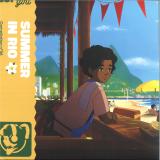
Various - Summer in Rio - Limited LP 2x12"
 
28

Feel the sun, samba, and soul that define summer in Rio.


Summer in Rio blends smooth bossa grooves with mellow lofi beats, capturing the laid-back energy of Brazil’s most iconic city. Born on Rio’s beaches in the late 1950s, bossa nova fused samba rhythms with jazz harmony and soft vocals, a sound both timeless and deeply expressive. This 28-track compilation brings that spirit to life: the first 14 tracks dive into bossa lofi with guitars and syncopated rhythms, while the last 14 ease into warm, expansive summer lofi.


From beachside mornings to golden hour evenings, this is summer on loop.

In Stock

On Stock and ready to ship

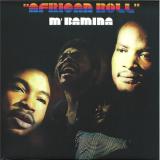
M’BAMINA - AFRICAN ROLL

Gatefold Sleeve

M’Bamina – African Roll (1975)
The story of an album born between Africa, Italy, and the nightclub culture of the 1970s
In the heart of 1970s Italy — a country undergoing profound social change and a music scene just beginning to open itself to distant sounds and cultures — an extraordinary, almost improbable story took shape. It is the story of a group of young African musicians who found their way to Europe, of a Turin nightclub that became a crossroads for communities and experimenters, and of an album which, released in small numbers and largely unnoticed at the time, is now considered a rare jewel of Afro-fusion.
The band called themselves M’Bamina — an ensemble of musicians from Congo, Cameroon, and Benin, who arrived in Italy in the early Seventies. Settling between northern Italy and the Pavia area, they began performing in small clubs and community events, bringing with them a vibrant rhythmic heritage: African polyrhythms, call-and-response vocals, funk-infused bass lines, and Caribbean or Afro-Latin colours absorbed along their musical journeys. Their raw, contagious energy on stage quickly drew attention.
Meanwhile, in Turin, another story was unfolding. There was a venue becoming almost legendary: Voom Voom, one of the city’s liveliest nightclubs, run by Ivo Lunardi. The club attracted an eclectic crowd — students, artists, foreigners, night owls — and Lunardi quickly understood that the dancefloor wasn’t just a place for music, but a melting pot for a new kind of cultural energy. Out of this vibrant atmosphere came his idea: to turn the club’s name into a small independent record label, Voom Voom Music, capable of capturing the spirit of those years and giving voice to unconventional projects.

When Lunardi heard M’Bamina, he immediately sensed that this was the sound he had been searching for: fresh, different from anything circulating in Italy at the time, and capable of blending African tradition with funk and European sensibility. He brought them into the studio.
Production was handled by Lunardi along with Christian Carbaza Michel, while the engineering was entrusted to Danilo Pennone, a young sound technician with a sharp, intuitive ear.
The recording sessions — held in Turin in 1975 — produced a remarkably warm and direct sound. The music feels almost live: grooves rooted in African tradition, but open to funk-rock structures and modern arrangements. It is a natural fusion, never forced. Tracks move between tribal rhythms, funk basslines, light electric guitars, congas and Afro-Latin percussion, with call-and-response vocals and melodies that echo both Congolese tradition and the lineage of Latin jazz. Not by chance, one of the album’s most striking tracks, Watchiwara, reinterprets a Latin standard through M’Bamina’s own rhythmic language.

The album was titled African Roll — a name that was already a statement of intention. It is African music that “rolls,” that moves, adapts, transforms within a new geographic and cultural setting. It is not strictly Afrobeat, nor Congolese rumba, nor Western funk: it is a spontaneous, hybrid blend, shaped more by lived experience than by any calculated aesthetic program.
When African Roll was released, the world around it barely noticed. Distribution was limited, and 1970s Italy had yet to develop a cultural framework for receiving such music. The national music press rarely paid attention to African or “world” productions. The album slipped into silence — though the band’s own story did not.

M’Bamina continued performing across Europe and Africa, even sharing a stage in Cameroon with none other than Manu Dibango. By the late Seventies, they moved to Paris, signed with Fiesta/Decca, and recorded a second LP, Experimental (1978). Meanwhile, the peculiar record they had made in Turin began to resurface quietly among vinyl collectors, Afro-funk enthusiasts, and DJs hunting for forgotten grooves.
That is when the album’s fate began to shift.

Over the decades, African Roll emerged as an almost unique document: a snapshot of an intercultural Italy before the word “intercultural” even existed, a fragment of migrant history, a spontaneous experiment in musical fusion born far from major industry circuits but rich in authenticity. Original copies began commanding high prices on the collector’s market, and the album became recognized as one of the hidden classics of European Afro-fusion from the 1970s.
Today, more than fifty years later, this reissue finally restores visibility and dignity to a project that deserves to be heard, studied, and celebrated. It is not simply an album: it is the testimony of a rare cultural encounter, born in an Italy unaware of how fertile such exchanges would one day become.

It is the story of a visionary producer, an extraordinary band, and a fleeting moment in which music, migration, and nightlife came together to create something genuinely new.
African Roll is — now more than ever — the sound of a bridge: between continents, between eras, between cultures. A record that, after rolling far and wide, has finally come home.

In Stock

On Stock and ready to ship

Hans Reichel - Dalbergia retusa LP 2x12" + DL

Black Truffle is thrilled to announce Dalbergia Retusa, an extensive double LP selection of the solo guitar music of Hans Reichel, compiled by Oren Ambarchi. Last heard on Black Truffle as one quarter of the joyously anarchic Bergisch-Brandenburgisches Quartett, Hans Reichel (1949-2011) is one of the great figures of experimental guitar music. Though perhaps lesser known than peers like Derek Bailey, Fred Frith and Keith Rowe, Reichel’s rethinking of the instrument was in some ways the most radical of all. Early on, he dispensed with existing guitars to build a series of his own that explored the use of additional strings and fretboards, moveable pickups, extra bridges, special capos, and other innovations documented in the extensive booklet accompanying this release.

Reichel was a long-term resident of Wuppertal, the small Western Germany city that became an unlikely centre of European free jazz in the late 1960s, also home to Peter Brötzmann and Peter Kowald. His solo debut Wichlinghauser Blues was an early entry into the FMP discography and began a relationship with the label that stretched into the 1990s; all the solo performances heard here were first released on FMP. As Reichel says in the charming archival interview with Markus Müller included here, he was ‘always a cuckoo’s egg at FMP’, a label that began as an outlet for roaring European free jazz. What strikes the listener right from the opening selection on Dalbergia Retusa—‘Return of the Knödler show’, from 1987’s The Dawn of Dachsman—is the extraordinary beauty of Reichel’s music, at once alien in the shimmering sonorities and unconventional pitch relationships made possible by his invented instruments, and deeply lyrical, even romantic in its harmonic content. Growing up in West Germany in the 1960s, Reichel’s formative influences were mainly British and American rock bands, a background that shines through in many of the pieces included here: ‘An old friend passes by’ is haunted by the ghost of Hendrix’s rhythm guitar, and the wild closer ‘Heimkehr der Holzböcke’, taken from a rare 1975 7” and the only piece to use overdubbing, layers errant hammer-on and slide tones over a Canned Heat boogie chug.

Reichel was an important source for the development of Oren Ambarchi’s own extended approach to the electric guitar. Appropriately enough, his selection opens with the very first piece by Reichel he ever heard, on a flexidisc included with a 1989 issue of Guitar Player magazine. Though Reichel collaborated with others extensively in many settings and also performed on violin and his other major contribution to instrument invention, the daxophone, his music for solo guitar remains at the core of his oeuvre. Focusing exclusively on solo pieces recorded between 1973 and 1988, the 23 pieces on Dalbergia Retusa showcase the range and consistency of Reichel’s work, allowing the listener to see how his performances developed hand-in-hand with his instrumental inventions. On a piece from his very first LP, played on an 11-string instrument (partly strung with piano strings and using a schnapps glass a slide), we hear his intensive exploration of fret-hammering to create zither-like, chiming tone, which Reichel would hone further in later years with a double fretboard guitar specifically designed to be hammered rather than fretted and picked. On a piece from 1979’s Death of the Rare Bird Ymir, Reichel uses two steel-string acoustic guitars at once, with beautiful results: ‘some even say too beautiful’, he jokes in the interview included here. Many of the pieces from the 1980s make use of varieties of the ‘pick behind the bridge guitar’, instruments of uncanny harmonic richness primarily designed to be played on the ‘wrong’ side of the bridge. At times the unexpected behaviour of attacks, resonance, and decay can almost seem electronic, conjuring up the technology-assisted work of Henry Kaiser or even Fennesz, but realised solely through Reichel’s unorthodox techniques on his invented instruments. Extensively illustrated with photos and Reichel’s own plans and drawings of his instruments, Dalbergia Retusa is an essential introduction to the unique world of Hans Reichel. Rarely has music been at once so strange and so beautiful.

In Stock

On Stock and ready to ship

Various - I-ROBOTS PRESENTS: TURIN DANCEFLOOR EXPRESS, THE AGE OF VOOM VOOM MUSIC LP 2x12"

Daniele Baldelli
"A pleasant surprise to find in this release various atmospheres and sounds that have always been part of my DJing. It even made me rediscover M’Bamina, whom I used to play back in 1974 at the Tabù Club in Cattolica.
There are afro vibes as well, with Black Line – Myele, which is featured on one of my Cosmic tapes, and Nowhere by the Stratosferic Band recalls a track I used to play at the Baia degli Angeli…
Excellent work!"

Voom Voom Music was an independent Italian record label based in Turin, founded and managed by record producer Ivo Lunardi (Turin, December 6, 1940 – December 9, 2010). A pivotal figure in the Piedmont music scene, Lunardi was active both as a DJ and as the owner of several disco clubs.

The label operated for several years in the latter half of the 1970s, releasing mainly productions connected to the Italian dance and pop scene.
Since 2016, the original master tapes from the Voom Voom Music catalog have been owned by Gianluca Pandullo (I-Robots), a close friend of Ivo and Luca Lunardi. Through his labels Opilec Music and Turin Dancefloor Express, Pandullo oversees their preservation and historical enhancement.

The artistic direction of Voom Voom Music was marked by a distinct sonic identity — eclectic yet visionary. The Turin-based label founded by Ivo Lunardi embraced a sound that blended disco, pop, and rock influences, interwoven with African American grooves in a pioneering, international perspective.

Voom Voom Music was among the first Italian labels to introduce this kind of musical language in the country. A prime example is the Italian edition of the debut album by B.T. Express, Do It ('Til You're Satisfied), released in LP, 8-Track Cartridge, cassette, and 7" single formats.
The label’s productions clearly reflected the influence of black and funk music, as evidenced by the references and inspirations running through its catalogue. The track “Lady Pick-Up”, for instance, includes direct nods to “Do It Good” by KC & The Sunshine Band and Manu Dibango’s iconic “Soul Makossa”, revealing a musically refined and contemporary sensibility.

Among the label’s most representative works is Splash (1977) by the Stratosferic Band, a project conceived by Luigi Venegoni — producer, songwriter, and guitarist of Arti e Mestieri. Venegoni’s artistic journey spanned from progressive rock to space and Italo disco. The album artwork was designed by Piero D’Amore (1944 - 2022), a charismatic and multifaceted figure of Turin’s art scene (one of his works was even acquired by the MoMA in New York).
The record includes a disco reinterpretation of Van Morrison’s classic “Gloria”, and “Splashdown”, a track fusing the disco-rock energy of Rockets and Space. In contrast, “Nowhere” revisits the 1975 single by Hokis Pokis, a soul/disco band from Nassau County (New York), transforming it into a vibrant disco-funk number.

Another significant expression of the label’s catalogue is the afro-rock sound of M’Bamina, an Italo-Congolese group whose rhythmic energy and dialogue between African percussion and Western funk evoke the style of international formations such as Osibisa — themselves linked to a rich artistic history in Italy.

In Stock

On Stock and ready to ship

Calm - The Art of Remix - Mellow Mellow Acid LP 2x12"

To honour the enduring appeal of a great musical rework, Hell Yeah is launching The Art of Remix. This essential new series collects the best remixes from a range of label favourites. First up is Japanese downtempo master Calm with exclusive, never-before-on-vinyl versions of originals by Cantoma, Aura Safari, DJ Sofa’s Dream Baby Dream, Seahawks, Gallo, Yuichiro Kato and more. The release comes with rich liner notes by the authoritative Dr Rob from Ban Ban Ton Ton, and a second volume from Is It Balearic's Coyote will follow soon.

Remixes have always been at the heart of Hell Yeah's output as a way of reworking classic sounds into different contexts, allowing artists to explore outside their usual remit and also to introduce new talents. Clam has long perfected the art with his famously laidback takes on all sorts of Balearic, house, dub and acid under the Mellow Mellow Acid subtitle. He's remixed many a Japanese legend but also a wealth of artists from across the world, and eight of those reimagined gems balance euphoria with solitude on this first volume.

First, his take on Cantoma's 'Way To The Sun' infuses drones and chimes with bubbly acid. 'Sur Mon Balconett' shimmers with Spanish guitar and sultry sax, ghosts of yesterday still shuffling. 'Banana Trance' jolts with breakbeats while taking a Balearic leap into hedonism. Mininn’s 'Vertigo' drifts dubwise, from monastic chants to operatic bursts. Maho’s 'Bakuhatsu' growls dark and sleazy as acid and riffs collide, 'Abysso' floats with strings and sirens in symphony, 'Blue Surround' lulls before exploding with jazz fire and Kato’s 'Kiss of Life' closes with a cosmic, romantic serenade. Calm's The Art of Remix sets a high standard for a series which will soon turn to Coyote and Scandi-house great Bjorn Torske.

In Stock

On Stock and ready to ship

Patricia Wolf - See-Through LP

Patricia Wolf

See-Through LP

12inchBALMAT03B
Balmat
05.03.2026

Following her debut album, I’ll Look for You in Others (Past Inside the Present), earlier this year, Patricia Wolf joins Spain’s Balmat label with See-Through, her second album. See Through finds the Portland, Oregon musician and field recordist continuing to develop her signature style of ambient, balancing radiant soundscaping with a carefully expressive sensibility. But the new album is also marked by an important difference. Where I’ll Look for You in Others was largely written in response to the death of a loved one, See-Through represents a kind of rebirth.

“After a long period of grief, I had been hoping to find my way to a place of lightness, peace, playfulness, curiosity, and sensuality again,” Wolf says. “What I was surprised and pleased to find is that for the most part, I had.”

She wrote and recorded many of the album’s songs quickly, in preparation for an August 2021 broadcast on the online radio platform 9128 Live. Excited for the opportunity to play live after more than a year of the pandemic, Wolf decided to write all new material for the event, working with a lean setup of Octatrack, Roland Synth Plus 10, Make Noise 0-Coast, and Novation Summit. (In fact, Wolf was the first sound designer invited to create patches for the Summit.) She also picked up an acoustic guitar that her brother had loaned her. “I decided to take the surrealist approach of ‘pure psychic automatism’ to see what poured out of me,” she recalls. “Woodland Encounter,” “Under a Glass Bell,” “The Grotto,” “The Mechanical Age,” “The Flaneur,” and “Psychic Sweeping” are all products of those sessions; the through line holding them together is their exploratory spirit and clarity
of vision.

Other songs, like “A Conversation With My Innocence,” “Recalibration,” and “Psychic Sweeping,” wrestle with the traumas of the preceding year. Though they may linger on the heaviness of loss, Wolf says, “What I discovered is that a stronger archetype had grown inside me to steer my emotions and thoughts to a better place.” Likewise, “Wistfulness” and “Upward Swimming Fish”—her first experiments with VST synthesizers—balance the bittersweet embrace of melancholy with the freedom to choose happiness.

“Pacific Coast Highway,” the album’s lone song with drums, might at first seem like an outlier. But it also signals Wolf’s interest in finding a fusion between the introspection of ambient and the togetherness of beat-oriented music. “Experiencing loss and isolation is what drove me into gentler territories of sound,” she says, “but I want to start making more beat-oriented music. After an extended period of loss and isolation, I’m ready to experience more joyous and social things.”

Listeners with keen ears might recognize the album’s closing song, “Springtime in Croatia”: A different mix of the song originally appeared on the 2021 digital compilation secondnature & friends Vol. II, from the Seattle label secondnature. This marks its first appearance on vinyl, however, and its spiritual home is undoubtedly here, at the close of See-Through. As the bookending answer to the opening “Woodland Encounter”—another song in which field recordings play a crucial role—it closes the circle of an album that is itself keyed to the steadily turning cycles of life.

In Stock

On Stock and ready to ship

Health & Safety - Health & Safety

Health & Safety

Health & Safety

12inchLEFT001
LEFT
04.03.2026

FELT enter 2026 with a newly established sub label for reissues, retrospectives and oddball adjacent non-FELT material under the anagram catch-all LEFT. First on the agenda is a vinyl issue of a modern classical tape by Danish post-hardcore/late 2000s rock guitarist Johan Surrballe Wieth, founding member of the band Iceage (Escho/Dais/Mexican Summer/Matador).

Initially released on a limited cassette edition and plucked from the vast catalogue of the Copenhagen label Posh Isolation, the solo project Health & Safety can be read as composers meditation on anxiety, depression, insomnia and all the damned things they entangle. Wieth moves across the spectrum with dour, deliberate keys, mangled drone fx, barely-there violin scrapes, erratic chimes and whistles and with a knowing pace that feels akin to a guiding hand. We’re unsure if the form of each piece is meant to directly correlate to the drug so referenced but the quiet fever dream atmosphere of the 25 minutes also blurs each piece into a whole.

This quote from Wieth certainly rings true for the highly introspective nature of Health & Safety - “You should be very careful listening to too much music when you're writing an album. It has a tendency to become a little too explicit”

In Stock

On Stock and ready to ship

The Alan Parsons Project / Joe Claussell - The Voice / I Wouldn’t Want To Be Like You (Joe Claussell Mixes)

Leave it to Joe Claussell to tap into our current collective artificial intelligence anxiety and render the racket divine. Alan Parson’s 1977 I Robot—the LP from which these two new edits were culled—was a harbinger for all the technological sheen and humanistic distress that was to come. Drawing from heady science fiction and even headier musicality and studio sophistication, ’The Voice’ evoked Jeremy Bentham-like omniscient surveillance, while the original ‘I Wouldn’t Want To Be Like You’ explores the ambivalent rift in perspective between the two poles of flesh and metal. For Claussell, the dichotomy leaves more unanswered questions and artistic possibilities, for the truth is always tangled and ripe for potential. Our bodies are propelled by the same electrons which accumulate in capacitors; our hearts, as Milford Graves was so enthralled, likewise transmit the same electric impulses which not only sustain our bodies but soundtrack our eternal, internal rhythm. These edits, with their strings, synthesizers and distortion-ravaged guitars, are protracted to dynamic sublimity, and seem aware of this seemingly opposing dynamic. Claussell, himself a lifelong proponent and interrogator of man’s relationship with mechanized rhythm and sound, leaves our earthly toil and unease behind for something greater, something yet unnamed, shared between us all at our finest. It's almost a feeling you can touch in the air…

In Stock

On Stock and ready to ship

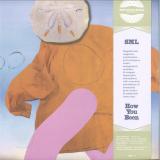
SML - HOW YOU BEEN

SML is the quintet of bassist Anna Butterss, synthesist Jeremiah Chiu, saxophonist Josh Johnson, percussionist Booker Stardrum, and guitarist Gregory Uhlmann. Their second album, How You Been, finds the supergroup of prolific composer/producers pushing ever further into the hyperrealist, collectivist approach to music creation nascently explored on their debut Small Medium Large, which was lauded as "awe-inspiring" by Glide, "exuberant" by the Los Angeles Times, and "an exciting milestone" by Pitchfork. As SML has evolved and spread out in space-time, their fluencies, both as an improvising unit in performance and as a production team in the studio, have sharpened. At inception the band inspired disparate but distinctive artist comparisons like Essential Logic, Oval, Herbie Hancock"s Sextant, and electric Miles Davis, as well as assorted genre touchpoints like Afrobeat, kosmiche, proto-techno and new-jazz. With How You Been their work manages to both collapse and explode such derivatives, displaying a new, high resolution version of SML, fully-flowered into a new strain of sound, bound to incite its own copycats in due time.

In Stock

On Stock and ready to ship

VALIQUE & NAWARI - DANCE ON

VALIQUE & NAWARI

DANCE ON

12inchCNPY017
CANOPY
11.09.2026

"Dance On", the latest single from Canopy continues the label's enthusiasm for re-issuing vintage Afro-tropical funk, reggae & disco, paired with modern remixes and remakes.

Two long out of print and previously un-reissued musical gems from Malian musician Nawari, get an overdue second life. Those gems being the eponymous "Dance On", an upbeat Afro-reggae-disco dancer originally self-released in 1987, and "Fanta Cini", originally released in 1989, which takes a deeper, tougher "proto-Afro-electro-funk" direction.

Sharing creative duties is Russian producer Valique, aka "V" from the best-selling "V's edits series, appearing on Canopy for the first time with a strong contribution to the label. Taking the title tune he reimagined & recreated it, building from Nawari's vocals and recording live horns, skanking guitars and percussion, blended with his signature classy production: crisp, warm, groovy & punchy.

Valique turns in 3 different mixes of Dance On, ranging from reggae disco, to cosmic Afro beat, timbale percussion workouts and beyond.

The release spans a range of moods, segueing between the past & present, organic and electronic, proving itself to be well suited for many environments, from the kitchen party to the bars, clubs & festivals of the world.

pre-order now11.09.2026

expected to be published on 11.09.2026

Barbara Moore - Bright And Shining (LP)

Finally, finally, FINALLY! After many years of fruitless praying, a true collector grail can finally grace every turntable the world over. Bright And Shining is a miraculous leftfield library classic from the genius mind of Barbara Moore. It's Highly Addictive Happiness Music TM and one of the coolest records to come out of anywhere...ever! With originals almost impossible to find - and, when they do, going for over £300 - you already know how crucial this beautiful reissue is.

Recorded in 1981 for Sylvester Music Company, Bright And Shining is breezy, dreamy and funky in a perfectly smooth jazzy-soul-groove fashion, with Moore's patented celestial male-female vocal harmonies this time benefitting from the addition of Fender Rhodes and pumping bass lines.

As one particularly enthusiastic Discogs user put it: "If Eno is responsible for Music for Airports, Moore is responsible for Music for Holidays." Indeed, this is brilliantly unique, "maximum happiness music". If you miss the sun-dappled soft-psych soul of Koushik, the heavenly vocal arrangements of the great Library Music doyenne Barbara Moore - her depth, richness, sophistication and warmth - will see you just right.

The gigantic title track, "Bright And Shining", gallops out the gate, all sophisticated, jazzy leisure-soul with sax and guitars backing Moore's effortless vocal swag in this relaxed, mid-tempo head-nod strut. Worth the price of admission alone. Up next, the sunny, vibey "Fly Me High" features strolling, "unworded" vocals (aside from the refrain of the title) alongside breezy alto sax and electric guitar. Pastoral and perfect. The slow'n'sultry "Affluence" presents a moody elegance, a classical "downlifting" gem. Another crucial highlight is the breezy "Going On Holiday". It's happy. It's sunny. It's lively. It's cool and happy. Did we say happy? A mid-tempo, romantic sax workout, "Alto Sex"presents smooth jazzy funk before the first side closes out with the soaring, jazzy "Stay With Me". Seriously uplifting.

Side B opens with "Feel Fine", an excellent uptempo and bright jazz groove. Up next, "Canon" is wracked with refinement, a peaceful, smooth vocal harmony over repeating bass making for an elegant, late-night classic. It's followed by the laconic "Smooth And Soft", a laidback, casual sophisticated soul and easy-feeling jazz gem. The jazzy "Real Thing" is another exercise in strolling sophistication, complete with wordless vocal harmonies. The fairly self-explanatory "Voice Over Sax" sounds precisely how you would expect; a relaxed sax number with heavenly vocal support! To close, the carefree "Feeling Free" is a pleasant, light and breezy mid-tempo groove.

The audio for Bright And Shining has been meticulously remastered by Be With regular Simon Francis, ensuring this release sounds better than ever. Cicely Balston's expert skills have made sure nothing is lost in the cut whilst the records have been pressed to the highest possible standard at Record Industry in Holland. The original, iconic sleeve has been restored here at Be With HQ as the finishing touch to this long overdue re-issue. We'll grant the final word to MillionDollars. on discogs from about 10 years ago: "If you listen to the record on a sunny day you feel like going out surfing in a white linen suit with a blunt on your lips, catching a cool breeze."

In Stock

On Stock and ready to ship

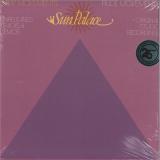
Sun Palace - Raw Movements / Rude Movements LP (2x12")
  • A1: Raw Movements 5 52
  • A2: Love Train Ii 4 47
  • A3: Palace Strut 4 10
  • B1: Coral Reef 4 52
  • B2: Street Beat 4 41
  • B3: What's The Time 5 53
  • Rude | Movements
  • C1: Rude Movements 7 49
  • C2: Movement I 6 10
  • D1: Movement Ii 7 40
  • D2: Movement Iii 7 59

Repress !

Way back in 1981, two musicians got together to make a record. Mike Collins played guitar and had just bought a Roland CR78 - the first programmable drum machine. Keith O'Connell played Fender Rhodes piano and Prophet 5 synthesizer. Excited about the quirky and unusual instrumental track they'd composed, when the duo entered London's Utopia Studios to finish off their creation, neither could have predicted what was to follow... Now viewed by many as one of the most influential early electronic dance records, 'Rude Movements' was swiftly picked up on by David Mancuso, who used it to devastating effect at his infamous 'Loft Parties', in turn introducing it to Larry Levan, Frankie Knuckles, David Morales and Kenny Dope, a group of young DJs who would go on to write the blueprint for dance music as we know it.

In the more than 35 years since its release, 'Rude Movements' has continued to inspire and excite, sampled by The Bucketheads' classic House track 'Whew!' (featured on recent BBE compilation '20 years of Henry Street Records') and listed by a veritable 'who's who' of dance music's elite as an all-time favourite. Rare and much sought-after on vinyl, BBE are happy to announce the release of a fully remastered version of 'Rude Movements' presented alongside the original demo version 'Raw Movements', plus three other versions of the iconic track. Also included on the vinyl package are the Afrika Bambaata inspired 'Street Beat' and 808/MiniMoog workout 'Palace Strut', as well as three other 80s SunPalace compositions. CD and digital versions expand the catalogue still further, with more experimental SunPalace magic. Timeless original, quirky and unique, these recordings are set to inspire yet another generation of DJs,
producers and music fans.

In Stock

On Stock and ready to ship

Matole - Fight the Algorithm LP

Matole

Fight the Algorithm LP

12inchXRD037
Exarde
24.02.2026

It is time for the guitar riffs and the basslines deeper than the Mariana Trench and therefore who can do it better than the Uruguayan born & raised mastermind that stands behind this next next edition - Matole. Hearing the music from this man leaves a great positive feel wanting to dance, live and love life. By perfecting his sound over the years, as soon as it touches the ear canals you can tell that it’s him and can only be him behind the wheel.

By his young age with utmost will to create, the man is leaving disc artefacts all over the globe working with different labels and promo teams. Now the time has come to synergize with XRD and the feeling is absolutely blissful. As the wise people say the algorithm is not going to fight itself, very important to get into battle stance and show these ones and zeros who is the boss around here.

In Stock

On Stock and ready to ship

Various - Vega Records 5 Pack Unreleased VI (5x12")

Vega Records is proud to present the Vega Records 5 Pack Unreleased VI, the sixth edition of a 5 piece vinyl filled with tracks that haven’t been released or have upcoming releases in the next few months.

The 5 pack Unreleased VI introduces 4 new songs from the upcoming 2026 Elements Of Life Album with a brilliant song entitled “Soar” by Lisa Fischer, written and produced by Two Soul Fusion Josh Milan & Louie Vega as well on vinyl the garage disco smash “Bad For Me” originally sung by jazz legend Dee Dee Bridgewater back in the 70’s with lead vocals by Dawn Tallman and music performed by the Elements Of Life band. A tribute to the talented Gary Bartz with a cover of John Coltrane’s genius “Giant Steps” bringing the jazz gem to the dance floors. And lastly from Elements Of Life, their rendition of the Deodato Loft classic “Whistle Bump” featuring legendary David Bowie guitarist Carlos Alomar!

Josh Milan, creator of the group Honeysweet introduces three tracks from his forthcoming Honeysweet III on Vega Records. We foresee a favorite with “What Kind Of Man” bringing a Brazilian jazz feel which was made for the dancers. The remaining two Honeysweet tracks “New Life” and “Because Of You” are truly emotional pieces of music that hit your core.

New projects and aliases on the horizon with Funky Cadets featuring Brooklyn’s own Willy Soul on spoken word duties, it’s deep house at its best and the NY iconic artist Keith Thompson who sang on the Vaughn Mason classic “Break For Love” who delivers a powerful message on the well written lyrics of “Take It”.

Lastly, never released on vinyl the gospel club smash “Father In Heaven (Right Now)” by multi Grammy winner and gospel royalty Bebe Winans with a Two Soul Fusion produced Synth solo / Vocal Dub.

It’s a blazing wall of sound on the 5 pack unreleased with artists and musicians Lisa Fischer, Josh Milan, Keith Thompson, Honeysweet, Dawn Tallman, Elements Of Life, Willy Soul, Carlos Alomar, Ivan Renta, Luisito Quintero, Axel Tosca, Sherrod Barnes, Lea Lorien, Ramona Dunlap, Louie Vega and Bebe Winans!!!

Get your vinyl soon, it’s limited edition!

In Stock

On Stock and ready to ship

Rob Winstone - sifting through heaven

Accepting the darkness can be a liberating experience. Realising, and struggling with just who we are and what world we live in requires it. By further complicating the fractured sense of beauty found on his droning 2022 release, ‘I dreamt we found a way’, Bristol-based composer, Rob Winstone creates a language that encapsulates the lifelong reach for our own personal heavens, along with the darkness and fear on which those foundations are built.

Winstone’s instrumental palette continues to reach out far from behind his keyboards, however the sound of ‘sifting through heaven’ is stripped back and pared down, putting melody front and centre. 'postcards and loose tea', a love song written for Winstone’s partner during a period coming to terms with health difficulties had previously self-released with heavy spectral and granular manipulation from the artist. Here Winstone re-presents the original: “the stripped back recording I made in my old damp and cold studio that was in a building that has since been demolished”. It reflects the composer’s own journey, doing away with veils and histrionics, and embracing emotional bliss wherever it can be found, warts and all. Even the rumbling dark ambience of ’hospital corridor’ - where distant chimings, groans, and droplets synthesized from field recordings made nervously in a hospital waiting for test results coalesce - harbours a sacred-seeming beauty and aseptic warmth within its very bleak sense of dread.

There’s no better way to describe Winstone’s method than ‘sifting through heaven’. The hymnal organ chords, sketched out acoustic guitar phrases, scattering drum thuds, and meditative field recordings may flit between tenebrous to incandescent, but his focus is always on the embrace of love; “a view of life that embraces positive growth, yet doesn't deny immense suffering,” as he puts it. The album is bookended by two of Winstone’s most outright peaceful moments, summarising his core message: 'in spite of it all...' '...love finds a way'.

In Stock

On Stock and ready to ship

PLANET FUNK - BLOOOM

PLANET FUNK

BLOOOM

12inchWISEMAMA001LP
WISEMAMA
12.02.2026

The new album by the collective that for
over 25 years has been among the most
representative names of the Italian dance
and electronic scene worldwide.
“BLOOOM”, this is the title of the new release,
will be available in all traditional stores and
on digital platforms starting January 16.
Set against the soundscapes that have become
the Planet Funk trademark, the lyrics by Dan
Black attempt to give voice to a fragile and
contradictory condition of our time: an
intensified sensitivity that, instead of
turning into openness and connection, often
becomes emotional overload. A generation
constantly overwhelmed by excessive stimuli,
relentless information, anxieties, and fears,
called upon to find its way in a world thaoffers neither pauses nor silence. In this paradox, sensitivity is no longer just a natural gift, but
a daily effort: staying open and receptive without being overwhelmed, trying to preserve a human and
vulnerable gaze in order, despite everything, to fully appreciate life and the present moment.
The single’s artwork—like that of the album—curated by Nationhood, visually conveys this tension: the
distant sirens of a city that amplifies feelings of disorientation and loneliness even when we are
surrounded by thousands of people.
“BLOOOM”, preceded by the single “FEEL EVERYTHING”, arrives at the end of an intense, creative year
full of music, which saw Alex Neri (DJ, keyboards, synthesizers), Marco Baroni (keyboards, piano,
programming), Dan Black (vocals and guitar), and Alex Uhlmann (vocals and guitar) engaged between
studio work, collaborations, and live performances in Italy and abroad. A journey that today
transforms into new energy, into an even more open vision oriented toward the future.
Exactly one year ago, PLANET FUNK released “Nights in White Satin”, a single that reached the top
positions of the radio charts and launched a season rich in concerts and DJ sets in Italy and around
the world. The subsequent “I Get a Rush”, the collaboration with Alfa and Manu Chao on the remix of
their hit “A me mi piace”, and the track “È Naturale” together with Francesca Michielin, confirmed
Planet Funk’s ability to renew themselves and engage with different musical worlds while always
remaining true to their own identity.
Throughout this journey, music has inevitably intertwined with life. The memory of Sergio Della Monica
and Domenico “Gigi” Canu, pillars and founding souls of the PLANET FUNK project, is a living part of
this new chapter. Their vision, creative spirit, and way of understanding music continue to be a
constant guide, a deep root from which new ideas and new directions can grow.
“BLOOOM” is also this: a personal and artistic blossoming that, starting from the legacy left by
Sergio and Gigi, transforms into a living process of growth, metamorphosis, and discovery. An album
that does not look back with nostalgia, but forward with awareness, momentum, and a desire for
renewal.
Founded in 1999, for over 25 years PLANET FUNK have represented one of the most important, solid, and
influential realities in the international electronic music scene. Born from the meeting of Souled
Out! (Domenico “GG” Canu and Sergio Della Monica) and Kamasutra (Marco Baroni and Alex Neri), and
following their debut with “Non Zero Sumness” in 2002 (a gold record and a turning point for the
band), PLANET FUNK have managed to reinvent themselves over time while maintaining a unique sonic
identity. This has led them to collaborate with internationally renowned artists, deliver iconic
performances around the world, create soundtracks and international advertising campaigns, and
continue to demonstrate constant creative vitality

In Stock

On Stock and ready to ship

DANIEL MONACO FEAT. MANUEL RODRIGUEZ ON GUITAR - FLAMENCA EP

The sunshine of Andalucía has come to the Bordello. The musical magpie that is Daniel Monaco arrives with just a hint of a Spanish accent and a daring record under his arm. Known for finding the intersections of boogie, disco, italo and house, Monaco is going that bit further with Manuel Rodriguez for the Flamenca EP. Melting the percussive drive of his machines with the spirit of Southern Spain, the four tracks on offer are a journey into a sound and style that is inspiringly original. Ruffled hi-hats and smooth basslines are the foundation for the title piece. The soul of the Sierra Nevada and the warmth of Granada pour forth through Rodriguez’s unparalleled performance. The claps of Chicago are reimagined as an interplay of melody and rhythm awakens; the traditions of Flamenco married with a modern groove. Talent and technique are coupled with pure passion in the intense instrumentation of “Fantasia” before the flip shifts with “Sìnteme.” The culture of Italy and Spain combine, taut string plucks peppered in handclaps before the Only Bee’s vocals descend. Ardent, the lyrics tell of our shared humanity through the dialect of Ischitella from the southern tip of Italy. The homes of our musicians are the inspiration for the finale. Blending the decadent splendour of Napoli with the old-world romance of Granada, Rodriguez’s guitar is the focus of “Granapoli.” Bitter-sweet, blissful and sorrowful, a lone beat wandering through the winding melody that twins these great cities. From Italy and Andalucía to Amsterdam, a 12” like few others.

In Stock

On Stock and ready to ship

IBRAHIM MAALOUF - 40 MELODIES
  • A1: Beirut
  • A2: Free Spirit Feat Jon Batiste
  • A3: Red & Black Light
  • A4: All I Can't Say Feat Sting
  • A5: Kalthoum (Movement I)
  • B1: Harlem Feat Marcus Miller
  • B2: True Sorry
  • B3: Les Quais Feat Kronos Quartet
  • B4: Happy Face
  • B5: Shadows Feat M
  • B6: All Around The Wall

This autumn, on the occasion of his fortieth birthday, Ibrahim Maalouf will release his 12th studio album named "40 Melodies". Maalouf has teamed up with his longtime friend and collaborator Belgian guitarist François Delporte for an intimist duet album. The duet revisits Ibrahim's most memorable melodies, through his albums, to the soundtracks, including a few exclusive new tracks.

This album includes many renowned surprise guests (Sting, Matthieu Chedid, Alfredo Rodriguez, Richard Bona, Trilok Gurtu, Hüsnü Senlendrici, Jon Batiste, Arturo Sandoval, and others). Ibrahim gets back to his roots, and to the basics: a trumpet, a guitar, and 40 melodies to celebrate his fortieth anniversary.

In Stock

On Stock and ready to ship

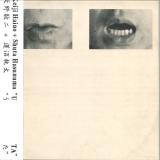
KEIJI HAINO + SHUTA HASUNUMA - U       TA

Haino sings. Hasunuma plays. It’s a minimal framework, but what emerges is a boundary-blurring sonic exploration. Across the album, Haino’s voice threads through Hasunuma’s layered soundscapes built from analog synths, electric guitar, piano, field recordings, and more. Haino entered the studio with only lyrics in hand, improvising melodies in response to Hasunuma’s evolving arrangements. The result is a work of deep trust, intuition, and sonic tension.

Keiji Haino and Shuta Hasunuma’’s creative connection began in 2017 with an impromptu performance in Shibuya—Hasunuma on a Buchla modular synthesizer, Haino responding with the Japanese national anthem, “Kimigayo.” That moment sparked their unlikely collaboration.

In 2018 Haino appeared at the Hasunuma-organized event “MUSIC TODAY IN KYOTO” at Rohm Theater, alongside Nobukazu Takemura, Manami Kakudo, Elena Tutatchikova, Kukangendai among others. In September 2021 during the pandemic, the two performed "U       TA" for the first time at in Shibuya. They began planning the album soon afterwards.

For the recording of U       TA, Haino entered the studio with only the lyrics in hand, with no knowledge of what sounds Hasunuma would produce. Responding to Hasunuma’s music in real time, Haino composed the melodies and layered in his voice on the spot. With additional sessions at Hasunuma’s private studio and Haino’s preferred studio, the album was completed.

All melody and vocals by Keiji Haino
All instrument, written, played, arranged, mixed and produced by Shuta Hasunuma
Recorded by zak at st-robo studio, Shuta Hasunuma at Studio i.M.O and windandwindows
Mastered by Rashad Becker at clunk
Production Management: Eishin Yoshida, Kento Ono (windandwindows)
For Temporal Drift: Yosuke Kitazawa, Patrick McCarthy
Art Direction: Aiko Koike
Special Thanks to Toshihiko Kasai, Ryoichi Kiyomiya, zAk, Yumiko Ohno
license

In Stock

On Stock and ready to ship

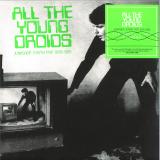
VARIOUS - ALL THE YOUNG DROIDS: JUNKSHOP SYNTH POP 1978-1985 (LP 2x12")
 
24

2025 REPRESS ON TRANSPARENT GREEN VINYL


Compiled by Philip King “And then came the rise of synth pop : blokes with dodgy haircuts hunched over keyboard-operated machines stuffed with wires and do-it-yourself tone oscillators making sounds like a brood of geese passing gas in a wind tunnel. Whoopee! This is the way the ‘70s ended : not with a blood-curdling bang bang but with a cheap, synthesized, emasculating whimper.” NICK KENT, NME. All The Young Droids: Junkshop Synth Pop 1978-1985 is a new compilation that charts the underbelly of the epoch-defining sound of the synthesiser in 80s popular music. Compiled by Philip King (previously seen compiling All The Young Droogs, Glitterbest and Boobs - The Junkshop Glam Discotheque), the music here connects the dots between DIY synth enthusiasts grappling with new, cheap synthesisers at the tail-end of punk and wannabe, jobbing songwriters enthral to the new music pioneered by Gary Numan, Depeche Mode and Daniel Miller’s Mute Records. Featuring rare tracks of auto-didactic progressive pop music, proto-techno punk, shoot-for-the-stars-land-in-the-gutter chart flops and heralded, underground synth classics, School Daze paints a picture of beautiful failure. Complete with extensive sleeve notes written by King and never before seen imagery, all 24 tracks were remastered by RPM in-house engineer Simon Murphy, many from vinyl copies due to lost master tapes. The story told on All The Young Droids is one of the dawning opportunity presented by both the emergence to the market of cheaper analog synthesisers and the distribution networks plus indie labels that exploded with the advent of punk music in 1976. While the music that sprouted out all over the globe in the wake of these factors was decried as fake, plastic, a refutation of punk’s guitar-led revolution, it’s telling that much of the music on All The Young Droids.. was created in bedrooms, ramshackle studios and home-made set ups with often borrowed equipment. In the era of record labels jumping to capitalise on the success of The Sex Pistols, The Clash (both on major labels, of course) these artists struggled to stand out from a new gold-rush with next to no budget or PR team. With radio and labels desperate for the new Yazoo, what resulted was a testament to necessity being the mother of invention. At the time, the synthesiser was the music of the future, a shiny new machine that could paint like an orchestra with a single finger and a 4-track. In the hands of Manchester avant-pranksters Gerry & The Holograms it’s a pulsing, sardonic weapon.. the only instrument on the Messthetics classic lampooning of New Wave fashion. In Hamburg, a 16 year old Andreas Dorau used it to write and record (with his female classmates on vocals) a global smash in Fred Vom Jupiter (later licensed to Mute Records). The hard-to-find English version (Fred From Jupiter, natch) is included here. Many artists with alreadystoried careers caught the bug and recorded synthesiser-fuelled peons to space, computers, the future and, of course, love-interests. Harry Kakoulli, late of Squeeze, recorded a solo album in 1979 that included the incredible power-synth-pop smash-that-never-smashed I’m On A Rocket. Similarly, Ian North of Neo and American Power Pop stalwarts Milk ’n’ Cookies bought a Korg MS20 and used a tape machine to record We’re Not Lonely, an absolute lost-classic of minimal synth pop. We’re Not Lonely also features on the Junkshop Synth Pop sampler 7” twinned with John Howard unreleased track You Will See, released April 12th 2025. There are plenty of compilation debuts in evidence. Sole Sister were a mysterious trio who were featured on the Scaling Triangles compilation of female-fronted, queer-adjacent post-punk / underground music that also featured The Petticoats. Selwin Image were from San Francisco and featured members of the recently defunct power pop/punk group The Pushups. Their stupidly catchy The Unknown fizzes with New Wave energy - think XTC to Sparks but remains unreleased until now. Dream Unit’s A Drop In The Ocean is an early synth wave cut, positively teaming with Joy Division instrumentation, previously only released on a long-forgotten and super rare, self-released EP. Incandescent Luminaire’s Famous Names belies an archetypal struggle of a small-town trying to make it in a cruel industry but is a thrilling New Romantic-Synth Wave cross over with a OMD gloominess that’s a joy to hear. Feminist Minimal Wave track I Am A Time Bomb by performance artist Peta Lilly and Michael Chance is a revelation destined for new found cult status. It was released on 7” and lost until now. The flipside to the subterranean, never-made-it synth pop mentioned above are the ambitious, even fruity attempts at success that have a perennial elegance to their confidence. New Jersey-ite Billy London (real name Ed Barth) tried to cash in on the synth boom with Woman, released by a major label, a lurching new wave track built on the Louie Louie rhythm and a wonderfully camp Lou Reedstyle sleazy vocal before exploding in the synthesised chorus. The song bombed but with a chorus like this, you have to wonder why? Ex-Glitter Band member John Springate’s My Life is truly epic, with doomed chord progressions and massive sounding drums turning into at least 3 different songs in the course of the track. Before you wonder what’s going on the song resolves with a glorious return to the main refrain. The dry-ice-dressed dance floor is well catered for too. Design’s Premonition and Vision’s Lucifer’s Friend are stone-cold minimal synth bangers, well loved but given a new lease of life here. The Warlord’s The Ultimate Warlord was released in 1978, a homespun proto Hi NRG banger that was later re-recorded by The Immortals in Canada who had a club hit with it. One-man- band Disco Volante’s No Motion was re-issued by Synth wave label Medical in 2012 but makes its first vinyl compilation appearance here. Close your eyes and you can imagine what Lawrence of Felt would have sounded like with some cheap Korgs a little earlier in his career. Gibraltar-based trio The Microbes imagined a computer programming people to dance - how prescient - and ended up with a propulsive, robo-funk track with splendid rubbery bass playing over a tectonic drum machine. Previously picked up by Belgian label Stroom TV, Dee Jay Bert & Eagle’s heavily Euro-accented I Am Your Master demands the listener to “come to paradise!” In a frankly terrifying manner. All The Young Droids is the first compilation to peel away from the narrative that dour, Minimal Synth and Cold Wave were the only musical children of the first rush of synth pop. Philip King and School Daze Records describe a much more complicated world: along with the austere, Brutalist children of Daniel Miller (who produced Alan Burnham’s Bowie-Low-influenced Science Fiction here) was a plethora of desperate cash-ins, accidental mainstream hits, ambitious pop dramas and major label punts that went nowhere. Crucially, the compilation blurs the line between junk and treasure. What if the two things are interchangeable. What if it’s all science fiction?

In Stock

On Stock and ready to ship

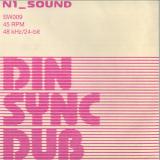
N1_SOUND - DIN SYNC DUB

N1_SOUND

DIN SYNC DUB

12inchRE-SW009
Spiritual World
23.01.2026

DIN SYNC DUB is an exploration of communication through sound. Six tightly packed experimental dub tracks use bass-heavy vibrations to rattle both body and mind, pushing the limits of self-expression in the hope of fostering deeper human connection.

The drive for more efficient and precise communication tools—whether between man and machine or machine and machine—has been a foundational force in the evolution of technology. This duality, the way we interface with computers and the way we speak to one another, is at the heart of DIN SYNC DUB. For this album, N1_SOUND looks back to 1980, drawing inspiration from Roland’s Din Sync—a 40-year-old synchronization technology once used to link musical machines in perfect harmony. While connecting machines to produce precisely sequenced music is nothing new, it’s the tension between perfection and imperfection—the mistakes of both man and machine—that gives DIN SYNC DUB its voice, its emotional rawness.

The journey begins with “Horizontal Hang”, which crashes through the door with a relentless bassline and crystalline synths. “Such Love” introduces a throbbing, guitar-driven groove, while “Intuition Dub” channels the spirit of Jah Shaka, offering a rhythmic pulse that echoes dub’s deep roots. “Us All” provides a moment of introspection with its sparse, three-dimensional melodies, before “Joy” reintroduces chaos, creating a post-dubstep soundscape that dismantles everything in its path. The album closes with “Mauzy” , a hopeful yet fragmented conclusion, reflecting the ever-evolving nature of technology and connection.

By the mid-to-late 1980s, Din Sync was superseded by the more widely adopted MIDI, yet obsolescence is built into the nature of all technology. Just as our relationship with machines shifts and fades, so too does our understanding of how those changes shape us. Before we can grasp the impact, the world has already moved on.

DIN SYNC DUB, the first full-length LP from Spiritual World, pulses with energy, on the edge of malfunction—a manifestation of the tension between the digital and the organic, the past and the present.

In Stock

On Stock and ready to ship

Imarhan - Essam LP

Imarhan

Essam LP

12inchSLANG50606LP
CITY SLANG
16.01.2026

From the heart of Tamanrasset in South Algeria, Imarhan transcend Tuareg tradition, weaving hypnotic synths into desert blues. The result is a timeless work—deeply respectful of their roots, yet alive with a stirring sense of modernity.

ESSAM is the band’s fourth album, recorded with the same core lineup, but marks a significant shift in their sound and approach. Musically, it marks a departure from the rocky, bluesy, psychedelic Tuareg guitar-driven sound influenced by Tinariwen’s heritage — moving toward something more open, modern, and exploratory.
For the first time, their long-time sound engineer Maxime Kosinetz stepped in as producer. He travelled to Tamanrasset with Emile Papandreou (of the French duo UTO), a multi-instrumentalist who introduced electronic elements by sampling live instruments and reprocessing them in real time with a modular synthesizer — subtly reshaping the band's sonic identity.
The album was recorded mostly live, in one big room at Aboogi Studio — the band’s own rehearsal and recording space in Tamanrasset. The studio, a converted concert hall, has become a kind of cultural hub for the local youth. Friends dropped by during the sessions to contribute handclaps, vocals, and just be part of the energy. It’s a space where people gather, hang out, play dominoes, smoke chicha — a rare communal spot in a city that doesn’t offer many for young people, somewhat like a youth and community center.
This context — the creative shift, the live recording process, the atmosphere around Aboogi — might be interesting threads to explore in the conversation.

In Stock

On Stock and ready to ship

NALBANDIAN THE ETHIOPIAN & EITHER/ORCHESTRA - NALBANDIAN THE ETHIOPIAN (ETHIOPIQUES)

The Éthiopiques series returns! Essential archive recordings from an extremely fruitful period in Ethiopian music.

Before “Swinging Addis” took over the world, there was Moussié Nerses Nalbandian — the Armenian-born composer who shaped modern Ethiopian music. Mentor, arranger, and pioneer, he laid the foundations of Ethio-jazz.

This Éthiopiques volume revives his forgotten legacy, recorded live by Either/ Orchestra First issue ever with new exclusive photos and in depth liner 8-page insert.

“Ethiopian jazzmen are the best musicians that we have seen so far in Africa.
They really are promising handlers of jazz instruments.”

Wilbur De Paris
(1959, after a concert in Addis Ababa)

አዲስ፡ዘመን። *Addis zèmèn* **A new era.**
The time is the mid-1950s and early 1960s, just before "Swinging Addis" bloomed – or rather boomed – onto the scene. Brass instruments are still dominant, but the advent of the electric guitar, and the very first electronic organs, are just around the corner. Rock’n'Roll, R’n’B, Soul and the Twist have not yet barged their way in. Addis Ababa is steeped in the big band atmosphere of the post-war era, with Glenn Miller's *In the* *Mood* as its world-wide theme song, neck and neck with the Latin craze that was in vogue at the same period. Life has become enjoyable once again, with the return of peace after the terrible Italian Fascist invasion of Ethiopia (1935-1941). The redeployment of modern music is part and parcel of the postwar reconstruction. *Addis zèmèn* – a new era – is the watchword of the postwar period, just as it was all across war-torn Europe.
The generation who were the young parents of baby boomers** were the first to enjoy this musical renaissance, before the baby boomers themselves took over and forever super-charged the soundtrack of the final days of imperial reign. Music is Ethiopia's most popular art form, and very often serves as the best barometer for the upsurge of energy that is critical for reconstruction. Whether it be jazz in Saint-Germain-des-Prés or the *zazous* who revolutionised both jazz and French *chanson* after the *Libération*, be it Madrid's post-Franco Movida, or Dada, the Surrealists and *les années folles* that followed World War I, the periods just after mourning and hardship always give rise to brighter and more tuneful tomorrows. Addis Ababa, as the country's capital, and the epicentre of change, was no exception to this vital rule.

**Two generations of Nalbandian musicians**
Nersès Nalbandian belonged to a family of Armenian exiles, who had moved to Ethiopia in the mid-1920s. The uncle Kevork arrived along with the fabled "*Arba Lidjotch*", the** "*40 Kids*", young Armenian orphans and musicians that the Ras Tafari had recruited when he visited Jerusalem in 1924, intending to turn their brass band into the official imperial band. If Kevork Nalbandian was the one who first opened the way of modernism, pushing innovation so far as to invent musical theatre, it was his nephew Nersès who would go on to become, from the 1940s and until his death in 1977, a pivotal figure of modern Ethiopian music and of the heights it. Going all the way back to the 1950s. Nothing less. And it is Nersès who is largely to thank for the brassy colours that so greatly contributed to the international renown of Ethiopian groove. While the younger generations today venture timidly into the genealogy of their country's modern music, often losing their way amidst a distinctly xenophobic historiographical complacency, many survivors of the imperial period are still around to bear witness and pay tribute to the essential role that "Moussié Nersès" played in the rise of Abyssinia's musical modernity.
Given the year of his birth (15 March 1915), no one knows for sure if Nersès Nalbandian was born in Aintab, today Gaziantep (Turkiye/former Ottoman Empire) or on the other side of the border in Alep, Syria... What is certain is that his family, like the entire Armenian community, was amongst the victims of the genocide perpetrated by the Turks. Alep, the place of safety – today in ruins.
Before Nersès then, there was uncle Kevork (1887-1963). For a quarter of a century, he was a whirlwind of activity in music teaching and theatrical innovation. *Guèbrè Mariam le Gondaré* (የጎንደሬ ገብረ ማርያም አጥቶ ማግኘት, 1926 EC=1934) is his most famous creation. This play included "ten Ethiopian songs" — a totally innovative approach. According to his autobiographical notes, preserved by the Nalbandian family, Kevork indicates that he composed some 50 such pieces over the course of his career. This shows just how much he understood, very early on, the critical importance of song as Ethiopia's crowning artistic form. Indeed, for Ethiopian listeners, the most important thing is the lyrics, with all their multifarious mischief, far more than a strong melody, sophisticated arrangements or even an exceptional voice. (This is also why Ethiopians by and large, and beginning with the artists and producers themselves, believed for a long time — and wrongly — that their music could not possibly be exported, and could never win over audiences abroad, who did not speak the country's languages).

Last but not least, one of Kevork's major contributions remains composing Ethiopia's first national anthem – with lyrics by Yoftahé Negussié.
Nersès Nalbandian moved to Ethiopia at the end of the 1930s, at the behest of his ground-breaking uncle. Proficient in many instruments (pretty much everything but the drums), conductor, choir director, composer, arranger, adapter, creator, piano tuner, purveyor of rented pianos,... he was above all an energetic and influential teacher. From 1946 onwards, thanks to Kevork's connexion, Nersès was appointed musical director of the Addis Ababa Municipality Band. In just a few years, Nersès transformed it into the first truly modern ensemble, thanks to the quality of his teaching, his choice of repertoire, and the sophistication of his arrangements. It was this group that would go on to become the orchestra of the Haile Selassie Theatre shortly after its inauguration in 1955, which was a major celebration of the Emperor's jubilee, marking the 25th anniversary of his on-again-off-again reign.

At some point or other in his long career, Nersès Nalbandian had a hand in the creation of just about every institutional band (Municipality Band, Police Orchestra, Imperial Bodyguard Band, Army Band, Yared Music School…), but it was with the Haile Selassie Theatre – today the National Theatre – that his abilities were most on display, up until his death in 1977. To this must be added the development of choral singing in Ethiopia, hitherto unknown, and a sort of secret garden dedicated to the memory of Armenian sacred music, and brought together in two thick, unpublished volumes. Shortly before his death (November 13, 1977), he was appointed to lead the impressive Ethiopian delegation at Festac in Lagos, Nigeria (January-February 1977).

His status as a stateless foreigner regularly excluded him from the most senior positions, in spite of the respect he commanded (and commands to this day) from the musicians of his era. Naturally gifted and largely self-taught, Nerses was tirelessly curious about new musical developments, drawing inspiration from the very first imported records, and especially from listening intensely to the musical programmes broadcast over short-wave radio – BBC *First*. A prolific composer and arranger, he was constantly mindful of formalising and integrating Ethiopian parameters (specific “musical modes”, pentatonic scale, and the dominance of ternary rhythms) into his “modernisation” of the musical culture, rather than trying to over-westernise it. It even seems very probable that *Moussié* Nerses made a decisive contribution to the development of tighter music-teaching methods, in order to revitalise musical education during this period of prodigious cultural ferment. Flying in the face of all the historiographical and musicological evidence, it is taken as sacrosanct dogma that the four musical modes or chords officially recognised today, the *qǝñǝt* or *qiñit* (ቅኝት), are every bit as millennial as Ethiopia itself. It would appear however that some streamlining of these chords actually took place in around 1960. It was only from this time onward that music teaching was structured around these four fundamental musical modes and chords: *Ambassel*, *Bati*, *Tezeta* and *Antchi Hoyé*. A historical and musical “details” that is, apparently, difficult to swallow, especially if that should honour a *foreigner*. Modern Ethiopian music has Nersès to thank for many of its standards and, to this day, it is not unusual for the National Radio to broadcast thunderous oldies that bear unmistakable traces of his outrageously groovy touch.
In Stock

On Stock and ready to ship

FRA LIPPO LIPPI - GOLDEN SLUMBERS: THE VERY BEST OF VOL. 1

Fra Lippo Lippi released six studio albums between 1981 and 1992, two of them on Virgin Records, namely "Songs" in 1986 and "Light And Shade" in 1987. All the original releases were deleted many years ago. There are two previous The Best Of Fra Lippo Lippi releases on CD (1995 and 2003), but this is the first on vinyl. With the limited playing time of vinyl, we had to make some tough decisions, but in the end the song selection very much gave itself. The dark horse here is "Stitches and Burns", an overlooked gem from the final studio album "Dreams" (1992) that didn't make the previous 15 track collection, but in mysterious ways gained new life through organic streaming, with over 70 million streams on Spotify at the time of writing. Included is also the international hit "Shouldn't Have To Be Like That" and "Angel", featuring the late, great Walter Becker on guitar and production duties. The duo is still very popular in various parts of the world and now has 1,2 mill monthly listeners on Spotify. This 2025 reissue is pressed on clear vinyl (500 ww copies).

In Stock

On Stock and ready to ship

Various - Groove Culture Jams Vol.5

DJ Support: Danny Krivit, Michael Gray, Dr Packer, The Shapeshifters, Tedd Patterson, Seamus Haji, Terry Hunter, Brian Tappert, Hector Romero, Danny Rampling and many others

Groove Culture's ongoing 'Jams' series continues to deliver disco-house excellence with its fifth edition. This high-quality compilation features standout tracks from Micky More & Andy Tee, Reverendos Of Soul, Soulista and Serge Funk.

Highlights include: Reverendos Of Soul Feat Sheree Hicks - ‘Wasted Time'(Micky More & Andy Tee mix): An all-night disco spirit track verging on Hi-NRG style, bringing big energy and a lively atmosphere to any dance floor. Another great one is Soulista, Micky More & Andy Tee ‘Like I want You" (feat.Anduze): A perfect blend of disco and house, featuring a heavy beat and great guitar sounds that create an infectious groove. Closing things out on a classic leeven is Serge Funk's heater ‘Just Disco’ and Micky More & Andy Tee’s “Soul Education”. These fantastic edits of the classic disco tracks are a filtered gems that is sure to knock the roof off the discotech. Groove Culture once again proves its reliability as a source of top- tier disco-house with this stellar collection.

In Stock

On Stock and ready to ship

THE JONNY HALIFAX INVOCATION - AÇID BLÜÜS RÄÄGS : VOL 2 LP

‘Açid Blüüs Räägs Vol.2’ is the latest evolution of the sound of last year’s Volume 1. The debut album was described by Joe Banks for Shindig! Magazine as; “Shivering slabs of drone blues transcendentalism…a burning junkyard of sheet metal blues… Hot stuff.” Volume 2 builds on the skronk blues guitar, sax and electronic drones of it’s predecessor, to explore cosmic free jazz, concrete exotica and dub, channelling influences of Moondog, Terry Riley, 75 Dollar Bill and Wolf Eyes. Playing like the imagined film soundtracks to a dystopian, re-wilded, post eco crash world in the style of Tarkovsky's ‘Stalker’ and ’Solaris’, Jodorowsky's surreal desert western ‘El Topo’, or the early novels of JG Ballard. This new collection sees the addition of minimal analogue drum machine loops as well as live instrumental contributions from the new players of the ever evolving Invocation band, plus some superstar guest contributors.
Featuring five brand new tracks, including the forthcoming single; ‘Cosmic Fanfare’, has already picked up BBC 6 Music support from Gideon Coe. The new album was mixed by Alex McGowan (aka Captain Future) of Space Eko Studios and features Invocation band regulars Rick Jensen of Apocalypse Jazz Unit, Skronk and Oneirologist on sax and bass clarinet, Will Emms aka Tiki Eerie on melodica, horns and claviola, plus special guest appearances from Duke Garwood on clarinet and Mikey 'Moondog' Chestnut of Snapped Ankles on bass synth. “….Acid fried kosmiche blues meets drone raag transcendentalism”. Jonny Halifax is a primitivist free blues outsider, sonic shaman of the acid fuzzed lap steel guitar, demented blower of the howling harmonica of doom. His new band project now combines avant swamp blues heaviosity with kosmic free jazz experimentalism in a fluid collective of godless raag brut improvisations - sonic visions of an hallucinatory apocalyptic near future. Inspired by Henry Flynt’s avant bluegrass experiments fusing country blues with eastern acoustic musical stylings, Spacemen 3’s contemporary sitar music, and the monolithic drone doom immersion of Sunn 0))), THE JONNY HALIFAX INVOCATION build hypnotic instrumental soundscapes using lap steel and homemade slide guitars, harmonica and alto sax. Underpinned by layers of acoustic and electronic drone instruments and fed through an arsenal of pedalboard electronics that would make Kevin Shields weep, the blues are transmogrified, unhinged, reduced and re-imagined as intoxicating, trance-inducing, feedback-drenched noise paintings. THE JONNY HALIFAX INVOCATION follows Jonny’s junkshop skronk blues one man band Honkeyfinger, and the Julian Cope endorsed gospel fuzz psychedelia of Jonny Halifax & The Howling Truth, whilst not forgetting his ambient drone metal side project; Deathenteredinerror. His musical CV also includes studio contributions to tracks by Andrew Weatherall’s Two Lone Swordsmen, UK metal behemoths Orange Goblin, Heck and Melting Hand.

In Stock

On Stock and ready to ship

Giannis Gogos - Light Within

Giannis Gogos

Light Within

12inchSAOSLP02
SAOS Records
22.12.2025

After over a decade away from making music, Greek-born musician and composer Giannis Gogos is back. It was the turmoil of the pandemic that allowed him to reconnect with making music after years working in photography and now he's combining analogue and digital sound with intricate melodies and plenty of keyboards, glockenspiel, kalimba and guitars. This latest album is enhanced by oodles of delay and reverb effects and makes for an ethereal journey inspired by Henry Corbin's Man of Light in Iranian Sufism. It explores light as a symbol of divine presence through serene, introspective soundscapes.

In Stock

On Stock and ready to ship

The Human Aerial - Antenna LP

The Human Aerial

Antenna LP

12inchRUSS004
Russ
16.12.2025

Our journeys into uncharted lands of the Reducerverse continue.

Essential must-buy shit for all disciples of: The Rootsman x Muslimgauze, Love's Secret Domain era Coil, Chris & Cosey, Meat Beat Manifesto, early Reinforced Recs, Shut Up & Dance, He Dark Age, Zombies Under Stress, SPK.

If you've just joined us: Reducer ARE the greatest lost dub punks. Rumoured to have almost signed to On-U Sound but told Sherwood to stuff it when he wanted his hands on the desk. Fame never found them, cos they didn't want it anyway. Living in the obscure memories of the select squatters and weirdos lucky enough to have had their minds blown, their first recordings were scraped off the linings of the cosmic dustbin recently through a series of self-released 12"s, cassettes, USBs and strangest of all a 3D performance screened at the Cube (in association with pals Bokeh Versions).

In short: Reducer's the most thrilling fairytale resurrection these pages have been privy to, joining 23 Skidoo, Killing Joke, PiL, Slits, Terminal Cheescake etc on the Mount Olympus of the Punky Reggae Party.

This latest slice of karmic justice comes from The Human Aerial aka Reducer's guitarist and prime mover Hooly. And ohhhh what a justice it is. Drawing on 40 years of private solo recordings across 7 tracks from Abu Ama style dabke jaguar steppas punishment to thumping bass-led electro, peak Depth Charge dubby big beat to careening breakbeat hardcore, trashcan gamelan spirituals and Jamie Vex'd style maximalist beats blissouts,

Tying together this jaw-dropping range of styles and fashions is a relentless sampladelic bombardment. The Human Aerial's habitual pilfering of TV and radio for into lovingly spliced tape loops and samples showcases humanity at its best and absolute worst. Tele-evangelists rub shoulders with long dead chieftans: "there is no death, only change of worlds" "We're MAD AS HELL AND WERE NOT GONNA TAKE IT ANYMORE" "THe land is sacred, a cathedral of the spirit". These wisdoms and grave sins slip into us subliminal through the dance, the needle drops like a waking dream.

While the Reducer archives may be running low, we assure you the Human Aerial coffers are full. And long may our minds be blown by this ongoing renaissance.

In Stock

On Stock and ready to ship

Ultrafog - A Replica Screams

Ultrafog

A Replica Screams

12inchUFO-02
Ufonic
16.12.2025

Welcoming elusive Japanese guitarist, Kouhei Fukuzumi, for his 3rd solo full-length as Ultrafog. ‘A Replica Screams’ emerges as a collection of drifting memories, a chain reaction of unique combinations of elements already present in the World. It embraces the idea that existence itself is positively shaped by serendipity and meaningful coincidences, and that we are all falling together, in time, and on time.

The vinyl edition contains an original artwork poster presenting João Bragança Gil’s ‘The Origin’ (On & On), an installation on synchronicity and fossils, which materialized in conjunction with Ultrafog’s live show at Ufonic (Lisbon, September 2024).

Mastering by Giuseppe Tillieci in Rome
Design by Eunseo Kim in Seoul
Manufacturing by AFG in Rome

In Stock

On Stock and ready to ship

Renee - Reaching For The Sky LP

Renée was born out of The Hague-based rock ‘n roll band René And His Alligators, founded by René Nodelijk in 1959. Throughout the 60s they were moderately successful both on stage and in the studio and served as an inspiration for many bands associated with the burgeoning beat scene in the coastal city. From 1967 onwards they performed under a few different names before going on a hiatus. In 1977 he made a comeback, this time joined by his wife Anja Nodelijk, née Exterkate. To reflect this fresh feminine impulse the band name was changed to simply Renée and recorded four full-length albums and a host of singles before disbanding in 1982 to make way for Anja’s solo career.

Reaching For The Sky from 1980 is their second and has been likened to many different things: Fleetwood Mac, Dire Straits, or even a fantasy collaboration between Pat Benatar’s guitarist, Heart’s Ann Wilson, and Steely Dan. Sprinkle some reggae and funk in the mix and it is no surprise that some of the tunes on this album ended up in niche YouTube algorithms, a Japanese book about obscure records, and in DJ sets by big names like Prins Thomas, who even released an extended edit of “Change Your Style” on a 12” single. This is obscure sophisti-pop at its best. Reaching For The Sky is available as a 45th anniversary edition on translucent magenta coloured vinyl.

In Stock

On Stock and ready to ship

Chaz Jankel - Rhumba Jam

Chaz Jankel

Rhumba Jam

12inchC56082R
Claremont 56
05.12.2025

Paul Murphy’s Claremont 56 label welcomes a genuine legend of UK music to its roster – Chaz Jankel, the man whose dizzying musicality and love of soul, funk and disco did much to shape the sound of Ian Dury’s Blockheads band in the late 1970s and early ‘80s.

A virtuoso keyboardist with a deep love of Black American music, Jankel’s arrangements and compositional skills were key to the success of their records, the funkiest of which not only became crossover pop hits – see ‘Hit Me With Your Rhythm Stick’ and ‘Reasons To be Cheerful, Part 3’ in particular – but also saw heavy rotation in now iconic New York clubs including the Paradise Garage and Studio 54.

This continued during the formative years of his solo career, with ‘My Occupation’, ‘Questionnaire’ and ‘Glad To Know You’ (later famously re-edited and dubbed out for nu-disco dancefloors by Todd Terje) all becoming club hits. The great Quincy Jones also covered Jankel’s infectious single ‘Ai No Carrida’, while experimental, club-ready synth-jam ‘3,000,000 Synths’ was also influential during the early years of the electro movement.

For his Claremont 56 bow, Jankel has delivered an all-new workout recorded earlier this year, the simply titled ‘Rhumba Jam’. A typically warm, groovy and rolling affair, it features Jankel delivering infectious, stretched-out Rhodes electric piano solos over toasty bass, clipped guitar licks, warm bass, accordion-style synth motifs and a densely layered Rhumba rhythm. While relaxed and sun-soaked, it also has bags of Balearic dancefloor potential.

Murphy remixes under his now familiar Mudd alias, leaning into the track’s languid Balearic vibe while keeping a firm focus on the dancefloor. Beginning with an enticing mix of metronomic drums and jangly acoustic guitars, Murphy slowly layers up key elements of Jankel’s original – think rubbery bass, rhythmic handclaps, mazy synth sounds and those wonderful, stretched-out solos. It’s a version that pays due reverence to the quality of Jankel’s musicianship, production and arrangement while subtly extending it and reframing it for 21st century Balearic dancefloors.

In Stock

On Stock and ready to ship

William Djoko - Dirty Talk

A song about Colostomy - from the opening bars you might think so. but it gets worse. 'X rated' stuff.
the label say 'Djoko is no stranger to Voyage Direct. Having first appeared on the label way back in 2012, he's returned numerous times since, becoming an integral member of the imprint's growing family of artists. Elsewhere, he's delivered material on Tuskegee, Mobilee and Leftroom, amongst others, developing an approach that takes inspiration from numerous styles of house and techno. However, little he's previously released can match the raw, eyebrow-raising lust and sexually charged funk of Dirty Talk'.

Driven forward by Djoko's sleazy, whispered spoken word vocal, the original version combines the rubbery, bass-heavy rhythms of classic, Dance Mania-style ghetto house, the delay-laden guitar flashes of vintage NYC proto-house, and the kind of darting, funk-fuelled keys - provided by fellow Dutch producer Kid Sublime - that recall the glory days of '80s electrofunk. Djoko provides an alternate version in the shape of the thrusting, stripped-back Club Dub', with his breathy Accapella' rounding off the A-side.

On the flip, two Voyage Direct stalwarts take it in turns to rework the track. First up is label boss Tom Trago, who builds on Djoko's elastic percussion with some dense new drum hits of his own. These are combined with spacey synths and sharp string stabs, giving Dirty Talk' a more classic techno/house fusion flavour. In contrast, Werner uses the opportunity to turn in a triple-X-rated interpretation full of bounding, Chicago-influenced beats, intergalactic pads, sleazy acid lines, and sweaty, surging drum fills. It's a fittingly breathless remix.'

In Stock

On Stock and ready to ship

Aroma Von Troisdorf - Blaumilch LP

R.i.O. welcomes a new member. Straight in full length. An album created by Dorsten,North-Rhine-Westfalia based producer Aroma Von Troisdorf - a man who refuses to be putin a box. Unlike others, who politely stay in one lane, he is a tuneful shape shifter. Alreadyhis 2021 debut on the Cologne based label Papercup Records smashed Krautrock, Synthpop,Electro, Ambient, and dub together. His 2023 and 2024 Papercup Ep's "Buttergolem"and "Rodeln am Rhein" added Italo-Disco, Synth-pop and a drop of experimental Electroto his versatility. Now eight new creations, brilliantly composed, yet - even in odd flashes -effortlessly catchy. They bring once more a stylistic melting pot, now enlarged with TheCure-ish dreamscapes, stretching over guitar riffs and bass grooves, like in the closingambient-folk star "Zeiten" or the dreamy opening track "Fog Frog Green". There is themotorik krautrock pulse of "Osmopower", that boogies heavy in drum machine hypnosisunder Aroma's entrancing new-wave vocals. Tunes like "Dreams Unfold" or "AmplifyShrooms" are likewise propulsive, each one psyching in its very own rhythmic sector. Morevoices are present too. In the two-minute manic preacher "Colas", were Togolese rapperand political activist Yao Bobby chants edgy. Or in "Closer", where singer Aprico sendsspoken-word trances echoing through the cosmic jacking. And there is "Lovers Lake", ahypnotic drift of witchy vocals, bluesy chords, and endless synthscapes, that makes youswim on your feed. Shift the shapes, "Blaumilch" opens the gates.

In Stock

On Stock and ready to ship

Greg Paulus - Close To Home LP

Greg Paulus

Close To Home LP

12inchSLACKER014
Slacker 85
27.11.2025

A DJ, producer and prolific collaborator, Greg Paulus’s musical career has led to a truly enviable discography. Born in Minnesota and now an essential part of New York’s sprawling musical landscape, Paulus has taken the foundations of an organic childhood education by his father, the composer Stephen Paulus, and seen it blossom into an unpredictable musical journey encompassing house, soul, jazz and hip-hop.

While touring as a trumpet player with indie band Beirut, as well as in Matthew Dear’s live ensemble, back home he was helping to redefine New York’s underground dance scene as one half of No Regular Play. Alongside childhood friend Nick DeBruyn, the pair brought their deeply musical sound to no less than fifty countries across the world. A decade on, and Paulus arrives on Seth Troxler’s Slacker 85 imprint for his long-awaited debut solo LP, ‘Close To Home’, a deeply felt long-play celebration of his personal cornerstones; family, trust and hope.

From the opening, organic swell of ‘Perot’, arranged with Seth Troxler himself alongside John Camp, ‘Close To Home’ introduces itself as a focused, conscious trip, it’s languid trumpet spilling over into the reflective ‘World Keeps Changing’, which introduces Paulus’s philosophy of music as a constant. ‘Midtown Mirage’ meanwhile leans into the idea of the city itself as a collaborator, resisting pressure and finding its own restful groove. Back over the river, ‘Bond’ roots itself in Brooklyn with a contribution from resident Dillon Cooper, flipping rap standards amid psychedelic flourishes.

Paulus nods toward his dancefloor form on ‘NRG’, a slinky, lo-slung club groove that seamlessly evolves to meld the artist’s nocturnal and studio instincts. In contrast, ‘Real Job’ switches the tempo on Paulus’s MPC to embody an old-school, beatdown flavour, subtly teased out alongside composer and sound designer, Taylor Bense. Doubling down on this languorous groove, ‘Hat Down’ introduces a full-scale No Regular Play reunion, the first of two collaborative tracks that recall the duo’s imperial phase of confidently minimal productions, while evolving their craft.

Following a few missed calls made with love taken from Paulus’s answering machine on ‘$1000’ the minimal, reflective arrangement of ‘Hold Dear’ finds the artist stripping back his layered sound for a skittering, vulnerable exploration of intimacy and life’s devotions.

For a memorable finale, Paulus recruits jazz prodigy Michael Feinberg to deliver upright funk on the deliciously rich ‘Sometimes It’s About Us’. A purely celebratory collage of bopping rhythms and vocals, sharply plucked guitars and archive samples, ‘Close To Home’ concludes with Paulus leading his friends, ensemble and many influences in rare harmony.

In Stock

On Stock and ready to ship

Ralph Weeks - Let Me Do My Thing (7")

Esteemed soul man of Panama Mr. Ralph Weeks has in recent years been enjoying a much overdue retrospective of his remarkable six decades-long musical journey with the help of Names You Can Trust. Now onto their fifth record release together since 2019, the label has covered both Weeks' original holy grail material as well as re-cuts and reimagining of some of his rarefied and unreleased songs.

One of Mr. Weeks' two iconic 45 releases on Panamanian label Sally Ruth was a funky soul side called "Let Me Do My Thing," originally recorded in 1971 as Weeks' answer to Charles Wright's big tune "Express Yourself," which had just hit the airwaves in 1970. Weeks' musical response would help define his legacy. He was gonna express himself, he was gonna Do His Thing. This golden age ultimatum recorded with the Dynamic Exciters of Panama as the backing band was a simple, straight ahead number with a defining message that would be carried on throughout Weeks' independent career. The funkified air and creative freedom of the original tune is a prime example of the crossover Combos Nationales sound that flourished in the prolific Panama recording industry of the era, and in the ensuing decades Weeks' tune would live on as a cherished rare groove for souleros, funk fans, and bootleggers alike.

Fast forward to 2023, when Ralph Weeks and Names You Can Trust prepared for a Bay Area appearance at the wonderful Latinos Con Soul weekender put on by San Francisco's Discodelic record shop, the groundwork was laid in the studio for a revival, a reawakening of Weeks' funky fan favorite. A spectacular ensemble of NYCT's All-Star artists and alumni was convened in the studio, including Caito Sánchez on drums, Victor Axelrod (Daptone Records) on clavinet and Sam Day Harmet (La Banda Chuska) on guitar. Anant Pradhan (The Skatalites), Eric Biondo (The Budos Band) and Alex Asher (Los Cumpleaños) occupied the brass section, and Ralph Weeks even lent his still formidable chops on electric bass and keyboards, a little OG flare to back up his silky voice with a deft musical touch. What came out of the sessions was a chance for NYCT to pay homage to Weeks' iconic original, without replacing it, and build a brand new version from the ground up with the maestro and composer himself!

In Stock

On Stock and ready to ship

Items per Page:
N/ABPM
Vinyl