Cerca:major organ

Generi
Tutto
Sankt Otten - Tote Winkel

In spring 2022, Sankt Otten released their album “Symmetrie und Wahnsinn”, and now the next record is ready to enlighten our maltreated minds. “Tote Winkel” (Blind spots) is once again part of an album series with a geometric context, both creatively and musically.

Stephan Otten and Oliver Klemm made productive use of 2021, which has been decelerated to the maximum by Corona. For the first time, an external studio was booked (Mühle der Freundschaft, Bad Iburg) and the pool of analog synthesizers and other sound generators there was dusted off. Sankt Otten came up with the master plan to first free the spirit of 50 years of German electronic music trapped in the antiquated keyboards and oscillator housings, then to dismantle it, turn it inside out and reinterpret it. Echoes of music from Düssel- dorf are joined by sounds familiar from the Weserbergland, or mystical, sublime arcs of sound and, of course, the sequences typical of the Berlin School - whether side by side or interwoven. In a departure from the usual way of working, the majority of the tracks were created in the studio and in part from improvisations, which makes “Tote Winkel “ the most organic material we have heard from Sankt Otten to date.

New York-based Rafael Anton Irisarri mastered “Tote Winkel”, as he has done on productions by Biosphere, Ryuichi Sakamoto, Tycho, Terry Riley, Fennesz and many more. As part of the series of graphic covers, this extraordinary die-cut artwork was also designed by Daniel Castrejon. The vinyl version comes in a die-cut cover and colored vinyl, the CD in an elegant cardboard slipcase.

The Osnabrück duo Sankt Otten, founded in 1999, have been releasing on DENOVALI since 2009. “Tote Winkel” is their 14th album of timeless (instrumental) music. The band has dedicated itself to the holy trinity of Krautrock, Ambient and contemporary Elecronics.

non in magazzino

Ordina ora e ordineremo l'articolo per te presso il nostro fornitore.


Last In: 3 months ago
Niko Moon - American Palm (Deluxe) LP
  • A1: 1. I Love This Beach
  • A2: 2. Boat Song
  • A3: 3. Sandbar (Feat. David J)
  • A4: 4. King Of The Island
  • A5: 5. Sea Forever
  • A6: 6. Sandastles
  • B1: 7. You, Me &Amp; A Beach
  • B2: 8. Good Ones
  • B3: 9. Something In The Water
  • B4: 10. Margaritaville
  • B5: 11. Breathe
  • B6: 12. Bare Feet In The Sand

When Niko Moon broke out with his triple-platinum hit “GOOD TIME,” the Texas-born, Georgia-raised singer/songwriter lit up the country scene with his larger-than-life energy and message of radical positivity. Since then, he’s earned a passionate following, major TV performances, and praise from outlets like Holler and American Songwriter. With AMERICAN PALM Deluxe, arriving right before his headline AMERICAN PALM Tour, Niko expands his latest LP with
two new tracks, “BREATHE” and “BARE FEET IN THE SAND,” furthering his mission of creating music that feels like a“mental vacation” filled with sun-soaked serenity and coastal escape.

“Breathe is all about finding that place where you can take a deep breath and let your worries drift away,” says Niko. “I find peace by the water, and I wanted the song to be a mantra of positive self talk and a celebration of the coast.”

Niko partly grew up in Georgia, spending summers on Florida beaches, an influence that shapes the concept-driven AMERICAN PALM. Written during his THESE ARE THE NIGHTS tour with producer Danny Majic and songwriter David J, the record blends coastal sounds—ukuleles, nylon-string guitars, ocean waves—with organic beats and a touch of ‘90s hip-hop, nodding to his Atlanta roots. The result is a seaside getaway in album form, equal parts carefree, romantic,and life-affirming.

Tracks like “I LOVE THIS BEACH” and “YOU, ME & A BEACH” capture that spirit. The latter, a love song linking his wife and the beach as his grounding forces, helped cement the record as his first concept album. “SANDBAR” delivers a euphoric summer vibe, while “SANDCASTLES” reflects on life’s impermanence. “KING OF THE ISLAND” is a family
milestone—co-written and sung with his father, Cris Cowan.

Niko’s journey began early, inspired by his dad, a truck driver and drummer who introduced him to John Prine and Emmylou Harris. Niko picked up drums at eight, guitar at fifteen, and started playing in bars while working construction. A chance encounter with Zac Brown led to songwriting cuts like “Homegrown,” before Niko launched his solo career with “GOOD TIME,” a No. 1 hit on both Billboard Country Airplay and Hot Country Songs charts. From the start, he committed to making only positive music: “In a way a song is like a mantra, and I want mine to carry optimism and encouragement.”

Since his debut, Niko has sold out the Ryman, played major festivals like Stagecoach, and performed on The Tonight Show Starring Jimmy Fallon and Jimmy Kimmel Live!. Beyond music, he and his wife Anna founded the Happy Cowboy Foundation to support mental health and addiction recovery, and launched Happy Himalayan water and the American Palm clothing line, both of which benefit the foundation.

pre-ordina ora05.12.2025

dovrebbe essere pubblicato su 05.12.2025

Anushka Chkheidze + Robert Lippok - Uncontrollable Thoughts

Anushka Chkheidze + Robert Lippok’s »Uncontrollable Thoughts« on Morr Music is the duo’s debut joint release. The Netherlands-based Georgian composer and the German sound artist from Berlin first met in 2019 in the context of a workshop programme that took place in Tbilisi, and later worked with Eto Gelashvili, Hayk Karoyi, and Lillevan on the massive »Glacier Music II« music and book project, released in 2021. This led them to engage in a less conceptually driven form of musicking and real-time composition that corresponds with their respective environments. They draw on traditions such as minimal music or late 1990s and early 2000s electronica to integrate subtle beats with elegiac organ drones, playful melodies with lush textures. The first document of an ever-shifting intergenerational dialogue, »Uncontrollable Thoughts« is a product of mutual listening outside time.

Though Chkheidze and Lippok had access to professional studios, they chose to rent a simple rehearsal space, equipped with only the bare essentials—bass and guitar amps as well as a small PA—to maintain immediacy in their working process. The music they made together corresponded to and drew on the respective possibilities and shortcomings of this studio, much like their collaboration in general is characterised by the care with which they approach each other's talents and ideas. While both had loosely defined roles—Chkheidze was responsible for the free-flowing beat programming and the evocative distortion came courtesy of Lippok, for example—they individually contributed in different ways to their joint process, which is as free of hierarchies as it is limitless. Hence, the duo’s focus on spontaneity and out-of-the-moment emergence makes them organically move beyond tried and tested conventions, resulting in music that seems to suspend time altogether.

When the first chimes on »Bird Song« announce a piece that sets rattling kickdrums against a backdrop of layered drones and rhizomatically entangled melodic elements, it becomes clear why »Uncontrollable Thoughts« carries this title: The album follows the constant detours of the subconscious of its makers, letting them explore moments of ecstasy such as on »Rainbow,« melancholy with »Field,« and the interplay of suspense and release through the ten-minute-long title track. But the different pieces also tie into one aother in various ways. The dirge-like organ drones on which »Rainbow Road« ends reappear in the beginning of »Uncontrollable Thoughts,« much like Chkheidze’s gentle yet emphatic piano chords on »Field« seem to provide the starting point from which the artist develops the striking motifs of the final piece »Opening«, whose title itself suggests that the record as a whole can and should be enjoyed as a loop. All this creates a unique, idiosyncratic temporal logic.

While there is much that sets Chkheidze and Lippok apart as solo artists, the major shared leitmotif in their respective bodies of work is the sonic engagement with space. »Uncontrollable Thoughts« is hence best understood as an extension of this practice; as an album that maps the geographies of their minds in motion, tracing musical movements as they melt into each other.

non in magazzino

Ordina ora e ordineremo l'articolo per te presso il nostro fornitore.


Last In: 3 days ago
DEMIAN - S/T LP

DEMIAN

S/T LP

12inchEZRDR210LP
Riding Easy
31.10.2025

"The Bad Seeds and Zakary Thaks were mid ‘60s Texas garage rock bands formed in the wake of the British Invasion, influenced by The Rolling Stones, Kinks, Yardbirds and others, becoming top local live attractions at a time when the 13th Floor Elevators and Moving Sidewalks were leading the way into psychedelia. In late 1966 Rod Prince on guitar and Roy Cox on bass from Bad Seeds joined up with David Fore from Zakary Thaks on drums to create a new band out of San Antonio featuring two lead guitarists. Todd Potter filled out the quartet on second guitar and they chose the name Bubble Puppy, taken from Aldous Huxley’s 1932 dystopian novel Brave New World. Huxley was an early advocate of LSD, appropriately. In 1969 Bubble Puppy scored a top 20 hit single with “Hot Smoke & Sasafrass” which led to their LP “A Gathering Of Promises”. International Artists, the legendary Texas label that previously had unleashed mind expanding classics by the Elevators, Red Crayola, Golden Dawn and others was a perfect fit. After the LP and additional 45s didn’t repeat the success of “Hot Smoke & Sasafrass” the band hooked up with Nick St. Nicholas of Steppenwolf as their new manager and moved to Los Angeles. A new band name was in order, Nick St. Nicholas chose Demian, title of the 1919 novel by Herman Hesse. His books were popular with the counterculture at the time and had provided Steppenwolf with their new name after they changed it from the Sparrow and hit it big. Demian recorded the LP live in the studio at the Record Plant in one midnight to six session. They had their arrangements fully realized, allowing them to combine live show energy and economy with to-the-point delivery suitable for repeated listening. No doubt they were aiming for pop hit success, using proto hard rock skills in a radio friendly way without compromising the heavy guitar moves. The vocals have echoes of the earlier Bubble Puppy style in spots but are more melodic with vibrant harmonies reminiscent of Moby Grape, Buffalo Springfield, James Gang… at times flashing on Steve Stills/Richie Furay westcoast without being too sweet about it. It works terrifically when the radio friendly voices top off killer hard guitar ensemble action. Early hard rock that is too bluesy flashy can get tiresome with repeat listening, especially if overdosing on guitar solos with the band relegated to the background… Demian keep it interesting with inventive song structures allowing all four players to integrate constantly into an ever changing but focused whole. This LP is a grower, despite the basic two guitars, bass and drums lineup and no frills production you reach a lot of different places during the ride. Demian is deadly hard rock, a perfectly organized vibe straddling live energy and crafted itinerary, amongst the first obscure major label killers that commanded premium $$ with collectors even way back in the late ‘70s. It gets you there every time, even half a century later!"

pre-ordina ora31.10.2025

dovrebbe essere pubblicato su 31.10.2025

Ruth - Polaroïd Roman Photo (40th Anniversary Edition) + 7"

INTEMPORARY AND INDETRONABLE FRENCH COLD WAVE CLASSIC in a SPECIAL EDITION to celebrate the 40th anniversary of this mythical album.


This edition includes a 45T with 2 previously unreleased tracks, available nowhere else.


Thierry Müller, who initiated the RUTH project, is not at his first try when the album POLAROÏD/ROMAN/PHOTO including the eponymous track is released in 1985. His older brother Patrick along with one of their cousins make his musical education and he quickly becomes familiar with contemporary and experimental music. He starts quite early to tinker sounds on old tape recorders by himself but it is in 1977 that Thierry launches with some friends his first group, ARCANE, while studying at the School of Applied Arts. Their sound is weird, a mixture of saturated scratches and feedback tapes: there is no discographic or scenic testimony of this experience.


Alongside ARCANE, Thierry is already working solo on his ILITCH project / concept, an experimental and innovative work, whose first album Periodmindtrouble is released in 1978 on the Oxigène label. Despite insubstantial sales, this album brings Thierry recognition and success in the very elitist circles of experimental and underground music.


ILITCH’s musical bias was too narrow for Thierry’s ceaseless experimental curiosity, parallel to these activities, he therefore develops a Punk project called RUTH ELLYERI with the author, actress and photographer Murielle Huster. The title is an anagram of Thierry Müller (the complete name is Ruth M. Ellyeri). The character is meant to impersonate one of his schizophrenic facets and allows him to extend his field of expressions to musical styles differing from those in ILITCH.

From this work, the very cult punk piece Mescalito emerges, song that can be found on the mythical but unfortunately very rare compilation 125g de 33 1/3 tours (1979) of the Oxigène label (first “french punk” sampler). At the end of 1978, he meets Philippe Doray at the Oxigene office. Doray is another big name of French experimental music. Thierry moves to his home near Rouen, a remote farmhouse with a music studio made of odds and ends.


They work on their respective creations but meet from time to time on experimentations in common, including CRASH (a tribute to JG Ballard) As early as 1982, a first version of the track Polaroïd/Roman/Photo is out under the name of the project RUTH. “I wanted to write a piece to make the girls dance and make fun of the boys. I plugged a small handmade clock on my Farfisa organ as a sequencer. I had a small Roland synth-guitar, I put the organ in it and that’s how it started.” Philippe is quite amused by the idea of working on a more Pop project and offers to write the text. Thierry works on other tracks for the future LP and asks some friends to write other texts : Edouard Nono, visual artist, writes the lyrics of Mots, Frédérique Lapierre those of Misty Mouse and Tu m’ennuies . It is her voice you hear on these 2 tracks and on the first version of Polaroïd/Roman/Photo. Later, Thierry settles down in the Anagramme recording studio to carry out acoustic sound recordings. But when the sessions are over, the 2 musicians are not too happy with the results of Polaroïd/Roman/Photo: according to them, they lack “flamboyance”. They decide then to record a new female voice with a professional singer and the sound engeneer Patrick Chevalot offers to mix the track in the Synthesis studio “so that it blows out”.


With his tape ready and the help of Jacques Pasquier (S.C.O.P.A. / Invisible records where Ilitch’s second album, 10 Suicides, is released) he starts to contact record companies. “I visited almost all the major record companies and was thrown out every time. Only at RCA’s I found someone interested in my music. It was Francis Fottorino who had signed Kas Product but when it reached the the big boss, no way! Philippe Constantin from Virgin records raised some hope but in vain.


The album was finally released in 1985 with Paris Album, a small independant label.” The album barely sells 50 copies in 1985, despite the eponymous title as a potential success. « In 2004, 2 DJs Marc Colin and Ivan Smagghe discover the track Polaroïd/Roman/Photo and decide to exhume it from oblvion. They release it on a compilation called So Young but so cold (Tigersushi) and then with Born Bad records on the BIPPP compilation in 2008. Thanks to them, the track and the album start a new life.


Alongside his activity as graphic designer, Thierry Müller carries on producing music under his name, those of ILITCH and RUTH for his own creations and various collaborations.

non in magazzino

Ordina ora e ordineremo l'articolo per te presso il nostro fornitore.


Last In: 79 days ago
GASTR DEL SOL - CROOKT, CRACKT, OR FLY
  • Wedding In The Park
  • Work From Smoke
  • Parenthetically
  • Every Five Miles
  • Thos. Dudly Ah! Old Must Dye
  • Is That A Rifle When It Rains?
  • The C In Cake
  • The Wrong Soundings

Gastr del Sol"s second album returns at last to the vinyl format - its first physical manifestation in well over a decade. Once again, a drop of the needle may ignite any number of queries, summed simply in one: What IS this music? Such is the potent energy of Crookt, Crackt, or Fly, retaining its otherworldly qualities some 32 years and countless musical movements since. Crookt, Crackt, or Fly expands upon The Serpentine Similar"s minimalist stance in unexpected ways, imposing further austerity in the soundscape but for an unpredictable expansive quantity periodically overflowing, waves of blood sluicing through the elevator doors. This is partially due to a change within the group dynamic: the departure of bassist Ken "Bundy" Brown and the arrival of a new partner for guitarist and singer David Grubbs - guitarist and sound fuckerer Jim O"Rourke. O"Rourke"s initial work with Gastr involved editing and recomposing recordings of the Grubbs-Brown-&-sometimes-John-McEntire lineup, producing an utterly outré collage of cut-ups and other types of tape processing. This became the "20 Songs Less" single, after which he was invited to play with the group. It was a time of flux; Brown recalls playing a Gastr show at the Metro around this time featuring himself, John McEntire, Grubbs and O"Rourke - and one of the pieces played was a Tortoise song! Throughout these shifts, Gastr del Sol"s music was never less than fully considered and composed, even in moments redolent with the suggestion of the random and the non-sequitur. Grubbs and O"Rourke made no attempt to replicate Serpentine"s arrangement of thick, scaly drones and hypnotic song-visions in their own partnership, finding Crookt, Crackt,"s sound instead in spiny, gamelan-like interactions between their (mostly acoustic) guitars, played precisely in and out of formation with bright, fleet-fingered abandon. O"Rourke"s fondness for field recordings and his capacity for tape manipulation intersected with Grubbs" sensibilities, edifying his evolving song style: written with increased sharpness and sly surreal humor, sung closer to silence. Halfway into "Work from Smoke", the sudden collapse of the sound-walls around us signals Crookt, Crackt"s major departure. From the thicket of guitars, a swell of drones and free-jazz squeals, made up of bass clarinet, vibraphone and organ, pulls the listener into an entirely other acoustic space. "Every Five Miles" derails in similarly tactile fashion: a guitar duet boils up thunderously, then fragments and spirals apart. As a free electric guitar part crops up, improbably holding the center, the acoustic space around it continues to disintegrate in ambient stereo. A wedding of folk music idioms to classical, improvised and modern compositional modes (including Gastr"s own formative post-punk mode), Crookt, Crackt, or Fly is a song-based reality steadily giving way to its alternative alchemies playing out within.

pre-ordina ora05.09.2025

dovrebbe essere pubblicato su 05.09.2025

World Brain - Open Source

Lucas Chantre, aka WORLD BRAIN, last graced us with a solo release half a decade ago, with 2019’s Peer 2 Peer. As its name suggests, that album explored the promise and perils of universal connectivity via quirked-up songwriting and instrumental psychedelia. His new release, Open Source, deepens this internal and external journey. Bursting beyond the four walls of ‘bedroom pop’ and reflecting a move from Berlin to Paris—where much of the album was recorded—and on to Brussels, the album has a jazzy, cinematic scope (as on the Brubeck-inspired march “Fromage collatéral,”) enveloping the listener in a cosmic-pastoral audiosphere.

There are still many tones that evoke the software sounds of decades past (the exemplar here is “cAPTCHA,” whose virtual marimba and vocalese suggest a breathless, Exotica-inspired introduction .mov for the information superhighway) but the palette has become richer and more organic, lead by the woodwinds which play a major role throughout, with flute provided by labelmate Martha Rose. (On the aforementioned “cAPTCHA” one also hears the world-class whistling talents of the incomparable Molly Lewis.)

Yet the single most noticeable new element may be the use of Chantre’s native French, sung by his sister on “Ville fleurie” and the gorgeous, fluttering “Minute papillion” (the title an idiomatic injunction to slow down!) Chantre initially wrote these lyrics in English, but felt something wasn’t quite right, only realizing what was off when he heard them sung in another language. That spirit of discovery – of finding a new spark in returning home – suffuses Open Source. It invites us to play, beckons us to relax, reminds us to find serenity amidst the churn of the present: minute papillon, dans le tourbillon.

non in magazzino

Ordina ora e ordineremo l'articolo per te presso il nostro fornitore.


Last In: 7 months ago
Devine Defilement - Ruthless LP
  • 1: Human Sewer
  • 2: Abusement Park
  • 3: Terror Tales
  • 4: Excreted Entity
  • 5: Internal Delusions Of The Torn Mind
  • 6: Pulverised Secretions
  • 7: Anthropophagic Apocalypse Pt.1 Collapse
  • 8: Anthropophagic Apocalypse Pt.2 Lord Of Flesh
  • 9: Curbstomp The Predator
  • 10: Draco Dominus
  • 11: Bio-Organic Liquid-Slam
  • 12: Beyond The Veil Of Death

When you think of Scandinavia, Slamming/brutality isn't the first thing to come to mind. That's until the slam crew of DEVINE DEFILEMENT spewed onto the Icelandic scene in late 2016.

Devine Defilement draw inspiration from a variety of death metal sub-genres they have concocted a brutal cocktail of groove, slams, blasts and ferocity that has made them a force to be reckoned with!

With several releases under their belt Devine Defilement has kept busy playing shows in their home country of Iceland, as well as heading on numerous European tours.

The band has played all the major metal festivals of Iceland like Eistnaflug, Satan, Reykjavik Deathfest & Noroanpaunk to name a few, and has also appeared on notable European death metal fests such as Deathfeast Open Air & Nice to Eat You and already have a more festival appearances lined up for 2025.

Devine Defilement's live show is highly energetic, heavy and brutal as hell and it's on stage that these maniacs are in their true element!

In 2025 the band is set to release their new full-length album "Ruthless" through Time To Kill Records, and it is their most savage offering yet!

pre-ordina ora10.07.2025

dovrebbe essere pubblicato su 10.07.2025

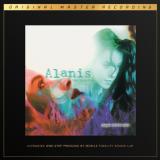
ALANIS MORISSETTE - Jagged Little Pill 2x12"
  • All I Really Want
  • You Oughta Know
  • Perfect
  • Hand In My Pocket
  • Right Through You
  • Forgiven
  • You Learn
  • Head Over Feet
  • Mary Jane
  • Ironic
  • Not The Doctor
  • Wake Up

When Alanis Morissette took direct aim at an ex who wronged her on the eviscerating “You Oughta Know” in 1995, everything about the Top 10 song communicated it wasn’t the usual narrative about love gone south. Or the typical wounded singer wallowing in self pity. Morissette, and both the lead single from and her entire American major-label debut — the profoundly personal Jagged Little Pill — represented a sea change. They kickstarted a movement, one whose impact continues to echo throughout the mainstream nearly three decades later.

Ranked the 69th Greatest Album of All Time by Rolling Stone, included on the Rock and Roll Hall of Fame’s list of 200 Definitive Albums, and featured in several books about essential albums, Jagged Little Pill remains more than a blockbuster that has sold more than 17 million copies in the U.S. and 33 million units worldwide. It’s a statement, an attitude, a soundtrack for anyone seeking inspiration, an outlet, or permission to be themselves.

Sourced from the original master tapes, pressed at Fidelity Record Pressing on MoFi SuperVinyl, and strictly limited to 4,000 numbered copies, Mobile Fidelity’s UltraDisc One-Step 180g 45RPM 2LP box set of Jagged Little Pill presents the landmark effort in audiophile-grade sound for the first time. A key part of the record’s appeal and accessibility — Glen Ballard’s smooth production, touches that help Morissette’s exposed-nerve fare seem more accessible and melodic — comes through on this special 30th anniversary edition with an openness, presence, and dynamic explosiveness that make the vocalist’s songs that much more real and visceral.

The singer’s distinctive mezzo-soprano deliveries — the octave-rippling highs, dark-hued lows, dramatic crescendos, belted choruses, wispy reflections, occasional yodels — resonate with full-range ardor and depth. As crucial as anything on the record, Morissette’s confessional words take center stage like never before. Ditto the instrumentation and atmospherics that form the magnetic backgrounds of the songs. Key in on the contributions from Red Hot Chili Peppers Dave Navarro and Flea on “You Oughta Know” to Tom Petty & the Heartbreakers' co-founder Benmont Tench’s organ playing on six tracks.

The deluxe packaging of Mobile Fidelity’s Jagged Little Pill UD1S set underscores the work’s distinguished status. Housed in a slipcase, the LPs come in special foil-stamped jackets with faithful-to-the-original graphics that illuminate the splendor of the recording. Benefitting from an ultra-low noise floor, superior groove definition, and dead-quiet surfaces, this UD1S reissue is for listeners who prize sound quality and desire to engage themselves in everything involved with the album, including the now-iconic cover art that juxtaposes two portraits of the then-21-year-old singer-songwriter and features typewriter font.

That script — which suggests a raw, blood-on-the-floor document created without modern aids like spell check or language correction — hints at the heightened level of unvarnished intimacy, honesty, and catharsis Morissette offers throughout Jagged Little Pill. Named after a phrase uttered on the astute “You Learn,” the album explores the frank emotions, inherent contradictions, and wishful desires people feel everyday but are often too afraid to express. Morissette displays no such fear or shyness.

Akin to a woman reading from a diary, Morissette leaves nothing to the imagination as she skewers hypocrisy during the poignant “Forgiven,” seeks recompense on the vengeful “You Oughta Know,” and spills her guts on the soul-purging “All I Really Want.” For all the anger and bile ascribed to the singer and record, Jagged Little Pill is incredibly healthy and upbeat. Morissette uses the catchy pop-rock frameworks and moody ambience to suss out situations, to learn, to give hope. There’s the clever yearning of “Hand in My Pocket”; wry contrarianism of “Ironic”; kind-heartedness of “Hand over Feet”; the live-and-let-live spirit of “You Learn” – all positive and amiable.

Throughout Jagged Little Pill, the ever-approachable Morissette connects with listeners who recognize themselves in her — and has an intelligent conversation with anyone who wants to participate. It seemed almost everyone did. In addition to the mammoth sales that make the effort the 17th-best-selling album in American history, Jagged Little Pill collected four Grammy Awards, two American Music Awards, three Billboard Music Awards, and eight Juno Awards. In 2018, the record became the basis for a musical that netted 15 Tony nominations on Broadway.

Ironic? Anything but. Jagged Little Pill transcends generations, gender, and trends. As Morissette sings on the opening “All I Really Want,”, the album represents “deliverance” — “a place to find common ground.”

pre-ordina ora03.07.2025

dovrebbe essere pubblicato su 03.07.2025

Santana - Moonflower LP 2x12"
  • A1: Dawn/Go Within
  • A2: Carnaval
  • A3: Let The Children Play
  • A4: Jugando
  • A5: I’ll Be Waiting
  • A6: Zulu
  • B1: Bahia
  • B2: Black Magic Woman/Gypsy Queen
  • B3: Dance Sister Dance (Baila Mi Hermana)
  • B4: Europa (Earth’s Cry Heaven’s Smile)
  • C1: She’s Not There
  • C2: Flor D’luna (Moonflower)
  • C3: Soul Sacrifice/Head, Hands & Feet
  • D1: El Morocco
  • D2: Transcendence
  • D3: Savor/Toussaint L’overture

Santana Bridges the Divide Between Live and Studio Material on Moonflower: 1977 Double Album Features Extraordinary Performances, Soulful Vibes, and Dynamic Mix of Latin, Rock, Funk, and Blues
Sourced from the Original Master Tapes and Strictly Limited to 3,000 Numbered Copies: Mobile Fidelity’s 180g 33RPM 2LP Set Plays with Audiophile-Quality Detail, Balance, and Imaging
1/4” / 15 IPS original analogue non-Dolby master to DSD 256 to analogue console to lathe


Though it may seem strange now, Moonflower stood for nearly 15 years as Santana’s first and only live record released in the United States. This despite the fact that roughly half of the double album consists of new studio songs, including a zesty cover of the Zombies classic “She’s Not There” that reached the Top 30 of the singles charts.

However unconventional, the “split” strategy went over like gangbusters. Moonflower reached the Top 10 of the Billboard Top 200 and achieved double-platinum status — feats the group would not again replicate for 22 years. These, and the beautiful quality of the program itself, are among the reasons why the 1977 effort remains viewed by critics and fans alike as must-have Santana.

Sourced from the original master tapes, pressed at Fidelity Record Pressing in California, housed in a Stoughton jacket, and strictly limited to 3,000 numbered copies, Mobile Fidelity’s 180g 33RPM 2LP set of Moonflower presents the record in audiophile sound for the first time on a domestic reissue. Part of the MoFi’s Santana catalog restoration series, this collectible version features quiet surfaces and black backgrounds that expose the critical details, liquid tones, and dynamic interplay central to Santana’s music.

The enhanced sonics extend not only to Carlos Santana’s six-string wizardry, but to the rhythmic, melodic, and vocal elements that course throughout both the studio and live cuts on Moonflower. The grip and depth of the bass lines; the wash of the organ; the scope and carry of the vocals; the extension and weight of the low-end frequencies; the rich textures of the guitars, percussive devices, and keyboards: all appear amid wide, balanced soundstages and image with right-sized dimensionality.

Significantly rooted in the styles and approaches that inform the group’s first three records, Moonflower captures the final appearances of iconic percussionist Jose “Chepito” Areas and go-to keyboardist Tom Coster on a Santana album. As he did during the preceding five-year stretch, Coster inhabits a large role here, sharing songwriting credits on a majority of the new cuts and helping steer the arrangements toward spiritually minded albeit concise directions that encompass vibrant Latin, rock, and blues themes that began to escape the ensemble shortly after his departure.

Close your eyes and feel the warmth of the sun on the R&B-kissed “I’ll Be Waiting,” anchored by Carlos Santana’s gliding fretwork and Greg Walker’s creamy vocals. Enter the cosmic universe of “Zulu,” on which Coster’s nimble phrasing opens the gate to polyrhythmic beats, knotty grooves, and interlocking funk. Grab the album cover and drift off to paradise amid the equally evocative “Flor d’Luna (Moonflower),” a romantic slow dance that Carlos Santana ensures tiptoes en route to its blissful destination. Channeling a different spirit animal, the guitarist later lets loose on the hard-hitting “El Morocco,” on which he seemingly engages in a shootout with himself and wades into the rippling psychedelia that elevated the band’s early material.

Speaking of the past, Moonflower triumphs on that level as well. In more ways than one, the live selections — and the caliber of the performances — chosen for inclusion represent an abbreviated greatest-hits survey of the band up to that point. And, at the very least, a convincing argument about why Santana had progressed into one of the most formidable bands you could hope to see on a stage in the mid ‘70s.

Simultaneously representative and illustrative of the group’s breadth, tracks stem from the collective’s eponymous debut, Abraxas, and Santana III as well as the then-more recent Amigos and Festival. Whether you fall for the sidewinding spell of a spicy rendition of “Black Magic Woman/Gypsy Queen,” lose your head to the positively epic momentum of “Soul Sacrifice/Head, Hands & Feet,” or keep dropping the needle on the savory grace of the brilliant reading of “Europa (Earth’s Cry Heaven’s Smile),” this pressing of Moonflower puts you — and Santana’s first-chapter legacy — in good hands.

pre-ordina ora30.06.2025

dovrebbe essere pubblicato su 30.06.2025

Eliot Lipp - Kona/Silver Bass

Brooklyn-based musician and producer Eliot Lipp has spent the last two decades crafting a signature sound that fuses hip-hop, synthwave, glitch, and electro. His breakthrough came in 2004 when Prefuse 73 released his debut album on Eastern Developments, a then-subsidiary of Warp Records. Since then, he has built an extensive discography across influential independent labels like Hefty Records, Mush Records, Pretty Lights Music, Young Heavy Souls, and his own Old Tacoma Records. Lipp's music, described by Billboard as "funky and experimental, crunchy and distorted, romantic, thoughtful, and all around playful," blends vintage and modern influences, with Kaltblut Magazine noting his inspiration from "sci-fi soundtracks and '70s and BDs funk" to create "weird, high-definition, melodic beats." His work has been featured by Bandcamp, Magnetic, XLR8R, and major radio stations like BBC Radio 6, KEXP, and KCRW. A seasoned performer, Lipp has toured extensively for over 15 years, playing in cities like New York, Los Angeles, Seattle, and Denver, as well as major festivals such as Electric Forest, Forecastle, and SXSW. With a career rooted in both classic beat-making and forward-thinking electronic production, Eliot Lipp remains a vital force in the independent music scene.

On his first release with Bastard Jazz, veteran Brooklyn producer Eliot Lipp delivers Kona, a bright blend of guitar samples, breakbeats, and his signature Korg MS-20 synth lines, evoking the feeling of kicking back on a beach at sunset. The beat hits hard from the start, but as the track unfolds, it eases into a more laid-back, summery vibe. Lipp's signature fusion of retro synth textures and crisp modern rhythms shines through, capturing an effortless, sun-soaked energy perfect for a night drive or a rooftop party. The B-side, Silver Bass, takes a different approach—starting with live drums, electric bass, and a groovy guitar and piano arrangement before morphing into a futuristic, digitally sequenced version of itself. With dueling saxophone and Moog melodies weaving between organic and electronic elements, the track transforms into a breezy electro jam that feels both nostalgic and forward-thinking, solidifying Lipp's ability to craft timeless, genre-blending sounds.

pre-ordina ora23.05.2025

dovrebbe essere pubblicato su 23.05.2025

DUBMONES - DUBMONES

Dubmones

DUBMONES

12inchEB207LP
Echo Beach
23.05.2025

The Ramones were punks before punk rock was even invented. With their catchy, sing-along tunes, iconic hair styles and outfits, Joey, Dee Dee, Johnny and Tommy rewrote rock history and are now, as part of the first wave of US punk, firmly considered part of the subcultural world heritage. In the DUB-cultural world, on the other hand, their footprint has been pretty slim, particularly if one considers their stomping, three-chord songs, instantly recognizable chants (“Gabba gabba hey!”) and laconic humour. There are a few reggae and Latin versions of their songs online, but never before have the Ramones been honoured with an entire album in early reggae style…until now, bang on time for the band's 50th anniversary in 2024. The label Echo Beach, a bit of a specialist for missions such as these with a string of releases including “Bad Brains in Dub”, “Dubby Stardust”, got together with André Meyer (production, bass) and Manougazou (production, guitar). Both were part of the 2008 Echo Beach New Wave/Dub project DubXanne and were involved in the production and subsequent live shows. Also back in the team is keyboarder and DubXanne mastermind Guido Craveiro, who plays Hammond organ and piano on half of the tracks. The other two additions to the core team are singer and all-round instrumentalist Sebastian Sturm and drummer Raul Pfeffer. Together they homed in on the 11 most iconic Ramones three-minute-singalongs, including "Blitzkrieg Bop", "I Wanna Be Sedated", "Pet Sematary" and "Rock'n'Roll Highschool", and treated them to a reggae make-over. The whole process was kicked off by a slightly off-beat question (reggae music does that to you): What if Joey, Johnny, Tommy and Dee Dee had gotten together not in NYC, but in Kingston? And then stepped up to the mic alongside local singing and deejay greats? In musical terms the answer is surprisingly plausible and the line-up is sensational, even for a label like Echo Beach with its unrivalled connections. From up-and-coming youngsters to living legends, everyone is included, albeit with a focus on the elder statemen and stateswomen: the vast majority of the guests are over 60 and look back on deeply impressive careers! The artists come from Jamaica, the USA, the UK and Germany. All contributed one or two songs, and all of them tackle the songs in pairs with infectiously good humour, transforming legendary punk rock bangers into unpredictable dub tracks. Ramones’ classics such as "Blitzkrieg Bop" with its trademark battle cry "Hey! Ho! Let's Go!", "Sheena Is A Punkrocker" and "The KKK Took My Baby Away" are slowed down and underpinned with roots and rocksteady riddims. It almost goes without saying that the lyrics have been adapted to everyday Jamaican life with a great deal of fun and creativity. And amidst all the icons of early reggae, the Ramones also make an appearance: in the opening track "Pinhead", for example, we learn that the Ramones did actually listen to reggae and had even been planning a reggae album. Features guest vocals from Susan Cadogan, Ranking Joe, Ranking Ann, Prince Alla, Welton Irie, U Brown, Earl Sixteen, Dennis Alcapone and more

pre-ordina ora23.05.2025

dovrebbe essere pubblicato su 23.05.2025

Friendship - Caveman Wakes Up
  • 1: Salvage Title
  • 2: Tree Of Heaven
  • 3: Betty Ford
  • 4: Free Association
  • 5: Hollow Skulls
  • 6: Artex
  • 7: Love Vape
  • 8: Wildwood In January
  • 9: Resident Evil
  • 10: All Over The World
  • 11: Fantasia

An album for sleeping and waking, walking and driving, hunting and fishing, for loitering outside a roadhouse on the haunted tundra. Okay in elevators, not great for dinner. On Caveman Wakes Up, Friendship’s new album and second for Merge Records, the band’s historically capacious definition of country music grows wider still. Shambolic guitars are offset by flute pads, bleary poetry is set against a Motown rhythm section, a song about Jerry Garcia and First Lady Betty Ford fades out with a drum solo, like if Talk Talk came from a dingy Philadelphia basement and was fronted by James Tate. Songwriter Dan Wriggins’ ragged baritone cuts through eleven murky, swirling country-rock songs with profound lyrical substance and sincerity. Like an alarm clock incorporated into the edge of a dream, Caveman Wakes Up belongs equally to the conscious and subconscious mind, fraught with background, steeped in reference and experimentation, delivered casually and as a dire warning, dedicated, above all, to music’s creative soul. Over the years, dedication has paid off. Friendship has become a kind of reverse supergroup,
wherein the band itself and each individual member are located centrally in an increasingly prominent scene of young folk and country musicians and songwriters. Drummer Michael Cormier O’Leary leads the instrumental collective Hour and, along with bassist Jon Samuels, runs Dear Life Records, home to friends and peers who count Friendship as a major influence including MJ Lenderman, Florry, and Fust. (Samuels also plays lead guitar in MJ Lenderman and the Wind). Guitarist Peter Gill’s band 2nd Grade records prolifically. Wriggins began writing the songs of Caveman Wakes Up on a downtuned classical guitar of Lenderman’s and finished on a barely tuned piano in an apartment he shared with Sadurn’s G DeGroot.
In the summer of 2023, Wriggins had just left the Iowa Writers’ Workshop, where his love for poetry and mistrust for the academic poetry world grew in tandem. A relationship fell apart, and Wriggins crashed for several weeks at Lenderman and Wednesday’s Karly Hartzman’s home in North Carolina, where he recorded the first demos of “Resident Evil,” “All Over the World,” and “Love Vape.” Wriggins returned to Philadelphia, and the band got to work on new ideas, finally tracking the album in five days with engineer Jeff Ziegler (Mary Lattimore, War on Drugs). Wriggins recorded vocals with Love the Stranger engineer Bradford Kreiger, and organ, violin (Jason Calhoun), and flute (Adelyn Strei) were recorded by Lucas Knapp in a West Philadelphia church.

pre-ordina ora16.05.2025

dovrebbe essere pubblicato su 16.05.2025

ORPHIA - BEAU DISCOURS
  • Beau Discours
  • Secrets
  • Beyond Control
  • Vengeance
  • Whisper
  • Idol

With "Beau Discours", Orphia dives deeper into the shadows, crafting a sound where cold wave and electronic music collide in a saturated whirlwind. Darker, more organic, this six-track EP marks a major shift in her approach, designed as much for introspection as for the club.

pre-ordina ora25.04.2025

dovrebbe essere pubblicato su 25.04.2025

Merzbow - Collection 001-010 (LP 10x1" Box + Book)
  • Collection 001 - 001 A 23:46
  • Collection 001 - 001 B 23:48
  • Collection 002 - 002 A 18:12
  • Collection 002 - 002 B 20:54
  • Collection 003 - 003 A 22:14
  • Collection 003 - 003 B1 09:33
  • Collection 003 - 003 B2 05:25
  • Collection 004 - 004 A 16:11
  • Collection 004 - 004 B1 07:08
  • Collection 004 - 004 B2 09:52
  • Collection 005 - 005 A1 08:38
  • Collection 005 - 005 A2 08:54
  • Collection 005 - 005 B1 07:14
  • Collection 005 - 005 B2 03:53
  • Collection 005 - 005 B3 03:57
  • Collection 005 - 005 B4 04:03
  • Collection 006 - 006 A1 17:35
  • Collection 006 - 006 A2 05:12
  • Collection 006 - 006 B 23:12
  • Collection 007 - Merzrock B1 + Dubbing 5 11:21
  • Collection 007 - Merzrock A1 + Anemic Pop 1 02:00
  • Collection 007 - Merzrock A1 + Anemic Pop 2 08:32
  • Collection 007 - E-Study #3-1 + Merzsolo 1 15:49
  • Collection 007 - E-Study #3-1 + Merzsolo 2 05:58
  • Collection 008 - Concrete Tape Ph#1~ 05:19
  • Collection 008 - E8 A1 + 006 A1 06:03
  • Collection 008 - Merzsolo 10/6.81 A1 10:36
  • Collection 008 - E8 B2/Concrete Tape Ph#1~ 06:28
  • Collection 008 - Sans Titre Merz 1 + Tape Loops 04:54
  • Collection 008 E6 A3 + Concrete Tape Ph#1~ 06:46
  • Collection 008 - Merzsolo 10/6.81 A5 + Violin 03:21
  • Collection 009 - N.a.m.4 + E-8 06:11
  • Collection 009 - Telecom 1/3 + N.a.m.5 17:32
  • Collection 009 - E-3-1-1 11:24
  • Collection 009 - E-3-1-2 01:50
  • Collection 009 - Tape Loop + Noise 1 (Concrete Tapes) 02:39
  • Collection 009 - Tape Loop + Noise 2 (Concrete Tapes) 04:25
  • Collection 010 - 007 B1 + Ah Corps 11:47
  • Collection 010 - E3 B2 + Ah Corps 11:28
  • Collection 010 - N.a.m.6 With Radio & Tapes 22:47

Carrying on their longstanding dedication to the seminal output of Merzbow, Urashima returns with what is unquestionably their most ambitious release to date: “Collection 001-010”, a deluxe, 10 LP vinyl box set limited to 299 copies, gathering together the entirety of the project’s first ten releases, originally released in 1981. Encountering the band in its early incarnation of the duo of Masami Akita and Kiyoshi Mizutani, raw, exposed and bristling with energy, foreshadowing numerous trajectories they would follow over the coming years, these astounding full lengths - the majority of which have never been released on vinyl - come housed in a beautifully produced, deluxe wooden box, with each LP in its own individual sleeve reproducing the original artwork, and a LP-sized 32-page book containing reproductions of artworls and collages by Masami Akita, an interview conducted by Jim O'Rourke, and liner notes penned by Lasse Marhaug, Thurston Moore, and Akita himself, amounting to what is unquestionably one of the most historically significant releases we’re likely to encounter in 2025.

Deluxe Edition of 299 copies, remastered from the original analog tapes by Masami Akita, each LP comes in its individual sleeve reproducing the original artwork, also includes a LP-sized 32-page book. ** Since its founding during the late 2000s, the Italian imprint, Urashima, has become a definitive voice in the landscape of noise. Bringing forth beautiful limited edition releases, they’ve sculpted a singular vision of one of the most vibrant and revolutionary bodies of experimental sound to have graced the globe. Among the many projects that they have supported over the decades, there has been an undeniable dedication to the output of the seminal Japanese noise outfit, Merzbow, making a significant amount of the project’s out of print back catalog available across a range of formats. Now they return with what is arguably their most stunning and ambitious release dedicated to the project to date: “Collection 001-010”, gathering the entirety of Merzbow’s first ten releases, largely privately released by the band on cassette across 1981, in a deluxe, 10 LP vinyl box set. Representing what is effectively ground zero in Japanese noise and collectively amounting to some of the most sought after releases ever produced within that movement, Urashima’s truly beautiful collection comes fully remastered by Masami Akita himself from the original tapes, presenting all but a small number in their first ever vinyl pressings, with each LP housed in its own individual sleeve reproducing the original artwork, alongside a LP-sized 32-page book containing reproductions of artworks and collages by Masami Akita, an interview conducted by Jim O'Rourke, and liner notes penned by Lasse Marhaug, Thurston Moore and Akita himself. Towering with energy and groundbreaking creative vision, within the realms of noise and experimental music, releases don’t get more monumental or historically important than this!

Merzbow came roaring onto the Tokyo scene in 1979, and remains, to this day, one of the most prolific and aggressively forward-thinking projects in experimental music. Eventually becoming the solo vehicle for the efforts of Masami Akita, in its earliest incarnation the project was the duo of Akita and Kiyoshi Mizutani, taking their name from German artist Kurt Schwitters' pre-war architectural assemblage, The Cathedral of Erotic Misery or Merzbau, and quickly set out to challenge entrenched notions of what music could be. Embracing technology and the machine, even in its earliest iterations, Merzbow pushed toward new territories of the extreme, arriving at a space of pure, unadulterated sonic onslaught that has continued, for over 40 years, to set the pace for the entire genre of noise, and has remained one of the movement’s most important, definitive voices, continuously laying the groundwork for countless artists who have followed in its wake.

When dealing with historical gestures, there’s an invertible aura surrounding original line-ups and early statements, and rightfully so. It is often within a band’s debut that we catch the purest glimpse of the raw energy and creative ferment that made them what they are. This is certainly the case when regarding the coveted early releases of Merzbow, capturing the emergence of the project in its form as the duo of Masami Akita and Kiyoshi Mizutani as they helped set the blue print from the then emerging movement of Japanese noise. Over the course of its nearly five decades of activity, Merzbow has always been noted for how prolific and ambitious the project is. This was no less the case in the very beginning. While they were active for roughly two years prior, in 1981 alone they issued ten self-released cassettes numerically titled “Collection 001-010”, albums which have both individually and collectively become holy grails in the realms of noise, with only two - “Collection 007” and “Collection 009” - ever receiving vinyl reissues prior to now.

As Lasse Marhaug deftly articulates in the newly commissioned liner notes for “Collection 001-010”, despite having been recorded in different location across a span of time, the sum total of Merzbow’s first ten releases might be best regarded as a single release to be listened to in the same, durational sitting, with the material standing well apart from what most came to expect from Merzbow, while foreshadowing numerous trajectories the project would take over the coming years. Not only do these recordings feature a vast array of instrumentation - tapes, acoustic and electric guitar, violin, drums, voice, recorder, organ, found sounds, clarinet, homemade and prepared instruments, a vast arsenal of effects and electronics, and piano, to only begin to scratch the surface - the majority of which would disappear from the project’s active sources of sound generation over the subsequent years, but there is a slow pacing and raw sense of openness and exposure that reveals strong connections to the avant-garde improvisations of groups like AMM, Musica Elettronica Viva, and Gruppo di Improvvisazione Nuova Consonanza, the psychedelia of groups like Taj Mahal Travellers and Flower Traveling band (both of whom Akita mentions having seen in youth within his interview with Jim O’Rourke), and rock in general - albeit in fully abstracted forms - unspooling as brittle, pointillistic, textural, raw and abrasive forms, that occasionally flirts with unexpected tonal sensibilities. As Marhaug describes it in his excellent liner notes: «Sonically, “Collection” sounds more sparse and stripped. It’s dry sounding, up-front, no reverb, and there’s less heavy low-end grime and thin on the signature frequency sweeps. Viewed in a 1981 context, musically, it’s more akin to what the LAFMS (Los Angeles Free Music Society) pool of artists were doing at that time than what was happening in industrial music... There’s a strong playfulness throughout, like the sound objects are being explored for the first time, without neither restraint nor hurry. Events are allowed to be fully examined before the music moves on, or simply cuts off. To a large degree, the music on “Collection” feels acoustic in nature, although a Electro-Harmonix ring-modulator features prominently throughout.»

Easily described as a rarely encountered revelation into the original and earlier documented studio sound of Merzbow, “Collection 001-010” collectively amounts to an engrossing sonic journey in its own right, while also allowing for important, often overlooked connections drawn from numerous other creative wellsprings, notably free jazz, underground rock, the output of European and Japanese avant-garde music, as well as Dada, Fluxus, and Mail Art, much of which, beyond the illumination made possible by the sounds, Jim O’Rourke’s fantastic interview with Akita, published in the booklet, further explores, offering great insights into the origins of Merzbow and the thinking behind the project, as well as aspects of the earliest days of Japanese noise.
pre-ordina ora18.04.2025

dovrebbe essere pubblicato su 18.04.2025

Fred Van Zegveld - Dynamite

Fred Van Zegveld

Dynamite

12inchMOVLP3767
Music On Vinyl
04.04.2025
  • Family Blues
  • Here, There And Everywhere
  • Daffodil
  • Blue Organ
  • Dynamite
  • Misty
  • Whiskey
  • Round About 12
  • I Wanna Be Your Man

"Fred van Zegveld's album ""Dynamite,"" released in 1969, is a remarkable showcase of his prowess on the Hammond organ. The album features a blend of original compositions and covers, all highlighting Van Zegveld's soulful and jazzy style. The album comprises nine instrumental tracks, with the majority being Van Zegveld's original works. Notable originals include ""Family Blues,"" ""Blue Organ,"" and the title track ""Dynamite,"" which are celebrated for their dynamic Hammond organ performances. The album also features covers such as ""Here, There and Everywhere"" and ""I Wanna Be Your Man"" by Lennon-McCartney, as well as ""Misty"" by Erroll Garner. The supporting musicians on the album include Ruud Jacobs on bass, Louis de Bey on drums, and Rick Beekman on guitar, all contributing to the album's rich and engaging sound. Finally available again on vinyl in a limited edition of 500 copies on translucent red coloured vinyl."

pre-ordina ora04.04.2025

dovrebbe essere pubblicato su 04.04.2025

Saracen - Vox In Excelso LP 2x12"
  • Lament
  • Meet At Midnight
  • Excile
  • The Order
  • Militum Christ
  • Mary
  • Vive Dieu .. Saint Amour
  • The Power And The Glory
  • Chain Reaction
  • Vox In Excelso
  • Where Was Their God
  • Priory Of Zion

Saracen's initial reign was in the late 70s and early 80s, which saw the release of their now legendary debut album “Heroes, Saints & Fools”. Some twenty years later, in 2003, they surprised & delighted fans with the release of Red Sky. Both albums, plus bonus tracks, featured in a special boxed set, with new artwork and mastering, released in January 2006 on the Escape Music label. The main focus of the signing, however, was Saracen's eagerly awaited release of their 2006 album – “Vox In Excelso”. “Vox In Excelso” is a concept album, based on the mysterious and controversial history of the Knights Templar – a medieval body of warrior monks, who grew to become one of the most powerful military & financial organizations in Europe. Their story goes far beyond battlefield exploits – the Knights Templar were guardians of Ancient Knowledge; secrets that had major implications for the nations and religions of the western world... secrets that are still cherished and protected even to this day. “Vox In Excelso” (pronounced Ex-chel-so) is laced with poignant narration, linking the tracks, and thereby helping the listener to navigate this turbulent yet touching epic story. The combination of original members, vocalist Steve Bettney and guitarist Rob Bendelow, new blood, former HELLOWEEN drummer Mark Cross amongst others, proved to be an exciting combination on this now classic album.

pre-ordina ora28.03.2025

dovrebbe essere pubblicato su 28.03.2025

CROSS RECORD - CRUSH ME

Cross Record

CRUSH ME

12inchBING211
Ba Da Bing
21.03.2025
  • 1: I Can Lie
  • 2: Rolling Backwards
  • 3: Charred Grass
  • 4: Right Thing By Me
  • 5: God Fax
  • 6: Cutting A Cake
  • 7: Led Through Life
  • 8: Dorset Area Of Natural Beauty
  • 9: Pearl Through A Funnel
  • 10: Designed In Hell
  • 11: Crush Me
  • 12: Twisted Up Fence

Cross Record's new album, Crush Me, is steeped in the pressures and wonders of existence—a profound statement, especially coming from artist and death doula Emily Cross. A two-and-a-half-year gestation period offered challenges, disappointments, and joys reflected in the cramped space of the album, which explores how we handle the weights we carry. Emily Cross had held hundreds of Living Funerals and was as many episodes deep into her podcast, What I’m Looking At. She was five years into serving clients as a death doula and fresh off a tour with Loma, her band with Jonathan Meiburg (Shearwater) and Dan Duszynski, when she began work on her fourth album. After moving from Austin, TX to Dorset, UK, she established the Steady Waves Center for Contemplation (named after a track from her second record, Wabi-Sabi ), where she hosted Living Funerals, met clients, scheduled mindful tea sessions, and showcased experimental music nights. All the while, she was scribbling down song ideas. Cross’s Tascam four-track demos finally reached readiness, and she sent them to an interested major independent label. She was encouraged to push her imagination to the limits of what a record could be. So, unlike her usual process of recording as inexpensively as possible, she prepared a two-week recording session in Germany with a group of skilled musicians from around the world. True to her previous work, Cross left plenty of room in her demos for experimentation, collaboration, chance, improvisation, and complete obliteration, then resurrection when necessary. Comfort and traditional structure were eschewed in favor of unaccountable magic, prayers whispered into The Void. Cross is comfortable with the chaotic and unpredictable, a perspective demanded by her work and writing style. The Berlin Airbnb was packed with people, instruments and luggage. During a ride down in a tiny elevator to the studio, Cross realized how central the sense of being crushed was to the album. “I thought of it later and it dawned on me that ‘Crush Me’ perfectly embodied the record,” says Cross. Yes, the weight of a body laying limply atop yours, or the tight squeeze of a hug, can be pleasant. Go too far, and you’re in the hands of a cruel, adolescent god. Upon leaving Germany, the record was unfinished, and without a roadmap. As passages were recorded as isolated parts, Cross and musician Marcin Sulewski collaborated, facing a haphazard brick pile, waiting to be assembled. Work dipped in and out of view like a buoy bobbing in a violent sea over many months. During that time, the aforementioned interested label went radio silent, suddenly not seeming so sure of a thing. Collaborators disappeared, continuing the themes of abandonment, surrender, and disarray that followed the project. Cross physically felt her entire body go numb: In a twist of fate, the record was rescued by long-time friend and supporter Ben Goldberg at Ba Da Bing Records who was eager to help realize the project. Cross worked for months on the album, all the while nursing a pregnancy and continuing her full-time funeral work. The last minute participation of Seth Manchester of Machines with Magnets, who mixed and mastered, was an essential liferaft. He gave true final form to the abstracted songs. Crush Me has the effect of a spell being cast, with songs balancing heaviness and levity. Vocals, guitars, and keyboards float above, as drums and upright bass (often bowed) lurch beneath. On “Rolling Backwards” percussion wanders about while feedback squeals and persists in the distance. “Dorset Area Of Natural Beauty” starts with a thick, unhinged church organ progression punctuated by the disquieting sounds of laughter reaching the point of hysteria. “God Fax” is a slow-moving panic attack, with shallow breaths in and out framing a guttural cacophony like a wooden freighter encountering increasingly turbulent waters and vocals struck emotionless by autotune. The album ends with “Twisted Up Fence,” a reflection on life from outside the wall--wistful, warm, and comforting. Cross, likely with a smile on her face, sings: “You say it’s an endless abyss” “And I say the abyss is the best”

pre-ordina ora21.03.2025

dovrebbe essere pubblicato su 21.03.2025

Various - World Is Waiting For Us Vol.3

Band leader, songwriter, arranger and producer of the now disbanded Pizzicato Five (1985-2001). Although having 2 successful world tours and 5 international albums under his belt, with fans ranging from London’s Karminsky Experience to Karl Lagerfeld, many of his fans know him as a DJ, spinning in Tokyo’s hotspots such as Shibuya’s ‘Organ Bar’. He tours regularly throughout Japan and abroad. In the Jackson 5 Remix Album, his remix ‘I want you back (readymade 524 mix)’ received an extraordinary amount of national radio play.
The remix album itself has scored healthy rankings in major record stores. In 1998, his own project ‘Punch the Monkey!’ (in which he remixes the theme tune of a popular Japanese cartoon series ‘Lupin the Third’) sold over 700,000 records, and this, some say, began Japan’s remix rush. His achievements truly invaded the mainstream when in 2000, he produced the No.1 single ‘Oha-Rock’ which became a social phenomenon in itself. Most
recently, he set up his own record label, ‘readymade international inc.’ from he which he plans to release new exciting solo works.
His talents also embrace film and photography and he is well known as a director in promotional videos, shows and advertisements. T-shirts and original goods which Konishi personally designed are sold in select shops such as BEAMS of Shibuya.
He is also a writer having regular columns in various magazines, and has also written several books. A collection of his essays have been published under the title ‘Kore wa koi de wa nai’ (’This is not love’)

SUNAGA tatsuo (sunaga t'experience)
DJ and Music Producer. Basing his activities around his own club ‘Shibuya Organ Bar’, holds regular club nights throughout Japan. Apart from his own mix CDs such as the ‘Organ b. SUITE’ which many say is in a class of its own, has produced remixes for the ‘Soul Source 2: Jackson 5 Remix’ and Yasuharu Konishi’s ‘Punch the Monkey’. He began his own label ‘AFTERS OR’ in 1998,acting both as artist and producer. Releasing records under the alias of ‘Sunaga t experience’ on avex/cutting edge records, the ‘It’s you’ 12 inch made record sales of 7,000 records, an incredibly large number in the vinyl market. His name is known in Europe through such labels as IRMA and SCHEMA records, and has remained in the forefront of the industry since the beginning of the Tokyo club scene.

non in magazzino

Ordina ora e ordineremo l'articolo per te presso il nostro fornitore.


Last In: 13 months ago
Various - World Is Waiting For Us Vol.1

Profile 1
KONISHI yasuharu
Band leader, songwriter, arranger and producer of the now disbanded Pizzicato Five (1985- 2001). Although having 2 successful world tours and 5 international albums under his belt, with fans ranging from London’s Karminsky Experience to Karl Lagerfeld, many of his fans know him as a DJ, spinning in Tokyo’s hotspots such as Shibuya’s ‘Organ Bar’. He tours regularly throughout Japan and abroad. In the Jackson 5 Remix Album, his remix ‘I want you back (readymade 524 mix)’ received an extraordinary amount of national radio play.
The remix album itself has scored healthy rankings in major record stores. In 1998, his own project ‘Punch the Monkey!’ (in which he remixes the theme tune of a popular Japanese cartoon series ‘Lupin the Third’) sold over 700,000 records, and this, some say, began Japan’s remix rush. His achievements truly invaded the mainstream when in 2000, he produced the No.1 single ‘Oha-Rock’ which became a social phenomenon in itself. Most
recently, he set up his own record label, ‘readymade international inc.’ from he which he plans to release new exciting solo works.
His talents also embrace film and photography and he is well known as a director in promotional videos, shows and advertisements. T-shirts and original goods which Konishi personally designed are sold in select shops such as BEAMS of Shibuya.
He is also a writer having regular columns in various magazines, and has also written several books. A collection of his essays have been published under the title ‘Kore wa koi de wa nai’ (’This is not love’
)
Profile 2
IKEDA masanori (Mansfield)
Began his DJ career in London, 1991, while working in Soho’s Soul Jazz Records. After becoming resident DJ at ‘Blow-Up’ in London’s Wag Club, he has toured the country and the rest of Europe. With his friends Karminsky Experience and Gentle People, he has also organised numerous club events, compiled CDs and produced radio programs. Returning to Japan in 1997, as the DJ with the rarest records in the East, he immediately made his name Djing at many popular events up and down the country. He is recognised for rocking dancefloors on a global scale having completed a very well-received European tour in 2000.
Apart from his DJ work, he has contributed remixes for Konishi Yasuharu’s ‘Punch the Monkey!’. His solo releases include his mix CD series ‘Spin Out’ , ‘Spin Out 2’ (V2 Records Japan). His albums ‘6 Complexions of Mansfield’ and ‘It’s a mans’s man’s field’ (readymade records) released under his alias Mansfield have established his name as a sound creator. He is expecting to release a new album from readymade international early 2002. This
is the DJ/composer that everyone’s talking about.

non in magazzino

Ordina ora e ordineremo l'articolo per te presso il nostro fornitore.


Last In: 11 months ago
Los Dexter's De Uchiza - Fiesta en La Jungla
  • A1: Fiesta En La Jungla
  • A2: Fuga En La Selva
  • A3: Tu Partida
  • A4: Agua De Cachilde
  • A5: La Chicharra
  • A6: Dolor Y Pena
  • B1: Izango
  • B2: El Shiringuero
  • B3: A Jenny
  • B4: Linda Tocachina
  • B5: Para Mi Gente
  • B6: Tragedia En Uchiza

Carrying the torch of psychedelic cumbia, with a healthy dose
of surf guitar and Amazonian dancefloor flourishes from Peru
and Brazil alike, Fiesta en la Jungla by Los Dexter’s de Uchiza
is the first release from the newly formed London-label Ritmo
del Barrio. Originally released in 1982, it captures the finest
cumbia being made in Peru at the time, decked out with
frenetic surf-rock guitar riffs, rhythms floating on crisp
cumbia percussion and occasionally punctuated by carimbó
breakdowns native to the Pará region of north-eastern Brazil.
The album is filled with energy, a gem that was always
intended to animate any dancefloor. Peruvian cumbia came to national attention in the late 60s
through the recordings of Juaneco y su Combo, Los Destellos
and Los Wembler’s de Iquitos, but it’s had many revivals, and
Fiesta en la Jungla arrived when the style was going through a
major transition. In 1977, a passenger plane carrying most of
the members of Juaneco y su Combo crashed, killing everyone
on board. In 1980, Los Destellos retired, and Los Wembler’s
released their tenth and final record, they were ready for a
break. This left a big void in Peruvian music. Wasting no time,
Los Dexter’s Emerson Ruiz Mosquera took the opportunity and
gave his band new life, filling the band’s ranks with young and
energetic musicians who were hungry for success. He built the
new band around a solid base of dexterous guitars, a dynamite
rhythm section, and added oodles of percussion and an electric
organ, giving them a powerful psychedelic sound that called
back to the sounds of the original chichamasters, but added a
new sheen. Along with bands like Los Shapis and Los Walkers
de Huánuco, Peruvian cumbia was reborn as chicha in the
1980s, and was now the sound of Peru’s barrios up and down
the country.
Based in the city of Uchiza, on the edges of the Amazon basin,
Los Dexter’s were uniquely located in central Peru, closer to the
largest urban centres of the country than Amazonian outposts
like Pucallpa or Iquitos, and therefore better positioned to
travel to the furthest reaches of the country with ease. In a
sense, Los Dexter’s were a bridge between the Amazon and the
rest of Peru, a bridge over which the sounds of Amazonian
cumbia could travel to the rest of the country on their way to
becoming one of the most ubiquitous elements of Peru’s musical
identity. Fiesta en la Jungla represents Los Dexter’s in their third
iteration. Led by Emerson Ruiz Mosquera, who was just a
young boy in 1970 when his older brother founded the group
with four of his friends, the ensemble by the time of Fiesta en la
Jungla included Orlando Abad on the timbales and lead vocals,
Lucho Bendezú on lead guitar, Javier Quiroz as second
guitarist, Alejandro Almeira on bass, Rufino Bustamante on
keyboard, Ramon Siu on bongos and bells, Ivan Rios on conga,
and Emerson as musical director and composer. Remarkably,
most of the group’s members helped to write at least one
track, Los Dexter’s were a collective endeavour.
Reissued on vinyl for the first time by Ritmo del Barrio, this
record is essential for any collector of Peruvian cumbia.
Showcasing the unique sound of Los Dexter’s, it carries hits
like “Fuga en la Selva” and “El Shiringuero”, which are sure to
set any dancefloor on fire, combined with slower, carimbó-
infused cumbias like “Fiesta en la Jungla,”and “Agua de
Cachilde.” Its closing track, “Tragedia en Uchiza'', is a key
piece of local history and tells of the flooding of the
Chontayacu River in 1982, a mortal tragedy that affected
thousands of people. Despite the subject matter, the album
maintains a joyful vibe throughout, with high energy riffs and
irresistible rhythms, contrasted with terse love ballads, like “A
Jhenny.” It is both a piece of musical history, and a sure-fire
tool for the dance floor.

Los Dexter’s became a fixture of festivals and celebrations in
the provinces of San Martin and Huánuco, and from expanded
across the country, taking Amazonian cumbia from the
Peruvian Amazon, to the heights of the Peruvian sierra, the
coastal plains, and the capital city of Lima.

pre-ordina ora28.02.2025

dovrebbe essere pubblicato su 28.02.2025

Pumuky - No Sueltes el Efímero LP
 
2

Behind Pumuky are brothers Jaír and Noé Ramírez, originally from Icod de los Vinos, a small town in northern Tenerife, in the Canary Islands.

For two decades, despite a tumultuous journey with multiple lineup changes and the challenges of island life, they have managed to build an extensive and highly personal discography with labels such as Jabalina, WeAreWolves, as well as Keroxen. In 2025, they release a new chapter in their story: their 5th album titled No sueltes lo Efímero (Don't Let Go of the Ephemeral).

It has been 10 years since they released a full-length album, though they were never idle during this time. In this interim, they released an EP titled Castillo Interior (Keroxen 2020), which Bandcamp described as "In intricately sculpted songs that are utterly hypnotising, the Ramírez brothers explore the border of dreams & reality" Bandcamp / New & Notable Oct 19, 2020. The EP was later remixed by artists like Xiu Xiu and Dntel (Jimmy Tamborello of The Postal Service). During this period, they also collaborated with Elinor Almenara of VVV Trippin'you on the single Metahackeo (Keroxen 2022), part of the new wave of dark music that emerged after the pandemic years.

Pumuky also have an extensive live history, having played in Europe and Latin America, with appearances at major festivals such as Primavera Sound, WOMAD, and the Mexican NRMAL.

No sueltes lo efímero will be released on February 28 through Keroxen, a collective that, in addition to being a platform and label for the best of the Canary Islands' underground scene, organises a small, unique music festival inside a giant abandoned kerosene tank in Santa Cruz de Tenerife—an event that has already garnered praise worldwide.

The album was recorded at La Mina Studios (Granada, Spain) with Raúl Pérez, one of the most respected producers in the Spanish music scene, and then mastered by Rafal Anton Irisarri, a key figure in the ambient world who also appreciates the power of guitars.

In No sueltes lo efímero, Pumuky return to their signature sound, although they have never completely abandoned it: an abrasive slowcore with controlled crescendos and raw, unfiltered lyrics, sometimes bordering on the intensity of dirty shoegaze, at other times leaning into dream-pop passages, but always with the unique stamp that has characterised them from the start.

A rare breed, difficult to categorise, Pumuky write songs as if performing escape tricks.

pre-ordina ora28.02.2025

dovrebbe essere pubblicato su 28.02.2025

BRIAN  AUGER / OBLIVION EXPRESS - CLOSER TO IT (REMASTERED)
  • Whenever You're Ready
  • Happiness Is Just Round The Bend
  • Light On The Path
  • Compared To What
  • Inner City Blues
  • Voices Of Other Times

Regarded as his masterpiece, Closer ToIt features some of Augers" most inventive and beautiful Hammond Organ and Fender Rhodes playing, on tunes that become the defining tracks of his career, especially the anthemic opener Whenever You"e Ready, co-written with bass player Barry Dean. Happiness Is Just Around The Bend was later covered by Cuba Gooding Snrs" band The Main Ingredient who had a major hit with their version. Auger also saluted his soul and jazz hero" with his versions of Marvin Gays Inner City Blues and Eddie Harris, Les McCann" classic Compared To What. With an iconic cover featuring the Oblivion Express train logo designed by Auger" wife Ella. Closer ToIt remains a high pointin Auger" recording career.

pre-ordina ora24.01.2025

dovrebbe essere pubblicato su 24.01.2025

Question - Reflections of the Void LP

Having thrived throughout the underground realms for the last ten years, Question built a respectable body of work displaying a sound meeting constant progression, a vision sharpened and perfected with each output. Six years following the debut full-length recording, the Mexican quintet unleashes “Reflections of the Void”, a grand tome of sheer Death Metal might in eight tracks that take Question’s sonic traits and overall concept to a whole new level of magnitude. In perfect unison with the majestic Shoggoth Kinetics artwork that adorns the album’s cover, “Reflections of the Void” stands apart and invites the listener to a pathway beyond the horizon, a detailed journey on life and death and yonder. Such carefully threaded concept meets its aural accomplice as Question carries a cloud of impending doom, a dense and arrestive atmosphere on brilliantly crafted songs that drink from the fountain of the past yet blistering in its very own with a striking sense of dynamics which assuredly puts the group in the major leagues of Death Metal mastery. Obscure, threatening riffs blaze through the first moments of the record, trading somber licks and faster belligerent attacks, yet never failing to enter a redundant path, for a tempo change or a dissonant endeavor spells unexpectedly and takes the listener on an intense rollercoaster. Fiercely crafted, the pulsing bass impulses and organic drumming patterns exhale as the pounding heart of “Reflections of the Void”. Technical, precise, enter a scorching performance in taste and dexterity, never sounding dull or plastic but shining for its soulful presence, side by side with the dazzling production, utterly potent and vibrant, taking the defying arrangements to greater extents. In and above this sonic frenzy, a vociferated voice grunts the illusions of our existence with a resonating dark tone spawned directly from the imposing void. As this opus resumes into the boundless vacuum, we are left with a sense of distress and awe. Question crafted a work for the ages, one which with every listening reveals a further dimension, a hidden mystery, just like the classics in the unholy pantheon to which this opus will surely belong someday.

“Reflections of the Void” is released under the banner of Chaos Records.

pre-ordina ora13.12.2024

dovrebbe essere pubblicato su 13.12.2024

BEN LUKAS BOYSEN - Alta Ripa

Ben Lukas Boysen

Alta Ripa

12inchERATPLP169
Erased Tapes
11.12.2024

Ben Lukas Boysen’s new album, Alta Ripa, signifies a seismic shift in his artistic journey. It revisits the foundational impulses of his youth, shaped amidst the serene beauty of rural Germany—a bucolic backdrop where his creative palette flourished. However, it was his move to Berlin in the early 2000s that electrified his sound, infusing it with the city’s pulsating energy and diverse cultural influences. Alta Ripa captures this transformative experience, blending the introspective melodies of his rural beginnings with the bold, experimental tones born from Berlin’s vibrant electronic music scene. This album is a testament to Boysen’s evolution, showcasing how geographical shifts can profoundly shape artistic expression.

Boysen’s fourth studio album under his own name, Alta Ripa is a nod to his beginnings as much as a hint to his future, and as a work, it’s almost contradictory in its boldness and humility. He invites the listener on a journey of self-discovery; both for himself and for them, describing the music as “something the 15-year-old in me would have liked to hear but only the grown-up version of myself can write.”

His last two albums involved working closely with other musicians, including cellist Anne Müller, flugelhorn player Steffen Zimmer, and drummer Achim Färber. However, inspired in part by a recent return to live performance, Alta Ripa sees Boysen circling back to his passion for pure computer music.

For Boysen, the return to his youthful musical language marks a major turning point in his career. It represents a departure from his roots in classical music – his mother was an opera singer and his father an actor with an appreciation for Wagner, Arvo Pärt, Keith Jarrett, and Stockhausen. Although these are still important influences, Alta Ripa encapsulates a new, exploratory interplay between Boysen’s careful craft and his ability to let go of some of the process.

The album’s title comes from the original Roman name of the town that Boysen grew up in, Altrip, where he lived until his early twenties. This formative period is central to the ideas behind this album, from Boysen’s parental ‘schooling’ in classical music through to his sonic journeys through drum and bass, Aphex Twin, and Autechre — all of which changed his idea of what music could be. The extreme energy of tracks like ‘Acperience 1’ by Hardfloor, ‘Tracks & Fragment’ by Cari Lekebusch, ‘Focus2 Implan’ by Jiri.Ceiver, and ‘Low On Ice’ by Alec Empire are also pivotal influences.

For Boysen, this time of his musical development also involved knocking down the pillars that he previously thought had carried his world. A key moment for Boysen was being given a precious (pre-internet) club cassette at school that featured artists like Source Direct, Photek and Goldie. Excited by this new discovery, he introduced his father to the song ‘Dred Bass’ by Dead Dred. After the song finished, Boysen Sr. turned off the tape and proclaimed it was “the end of all music”. This heated exchange sparked a new, and more mature dialogue between the two that involved them sharing and discussing music on a regular basis.

Boysen’s classical and jazz music upbringing might not be easily noticeable from the electronic palette that he uses. But it can be found in its bones; the structure of the tracks and their dynamic shifts. On Alta Ripa, he intentionally embraces a spirit of controlled chaos, churning out sonic ideas to see what sticks.

One of Brian Eno’s Oblique Strategy cards contains the phrase “gardening, not architecture”, and the trajectory of Boysen’s creative path reflects this metaphor. In much of his previous work he followed a sort of Brutalist architect’s approach; here, he was fully responsible for the tracks’ austere structures and planned them with deliberate care. But by sacrificing some of that control on Alta Ripa, he sets the right conditions for a dark and unpredictable, organic growth. It’s a push forward into a new world.

non in magazzino

Ordina ora e ordineremo l'articolo per te presso il nostro fornitore.


Last In: 16 months ago
BEN LUKAS BOYSEN - Alta Ripa

Ben Lukas Boysen

Alta Ripa

12inchERATPLE169
Erased Tapes
04.12.2024

Ben Lukas Boysen’s new album, Alta Ripa, signifies a seismic shift in his artistic journey. It revisits the foundational impulses of his youth, shaped amidst the serene beauty of rural Germany—a bucolic backdrop where his creative palette flourished. However, it was his move to Berlin in the early 2000s that electrified his sound, infusing it with the city’s pulsating energy and diverse cultural influences. Alta Ripa captures this transformative experience, blending the introspective melodies of his rural beginnings with the bold, experimental tones born from Berlin’s vibrant electronic music scene. This album is a testament to Boysen’s evolution, showcasing how geographical shifts can profoundly shape artistic expression.

Boysen’s fourth studio album under his own name, Alta Ripa is a nod to his beginnings as much as a hint to his future, and as a work, it’s almost contradictory in its boldness and humility. He invites the listener on a journey of self-discovery; both for himself and for them, describing the music as “something the 15-year-old in me would have liked to hear but only the grown-up version of myself can write.”

His last two albums involved working closely with other musicians, including cellist Anne Müller, flugelhorn player Steffen Zimmer, and drummer Achim Färber. However, inspired in part by a recent return to live performance, Alta Ripa sees Boysen circling back to his passion for pure computer music.

For Boysen, the return to his youthful musical language marks a major turning point in his career. It represents a departure from his roots in classical music – his mother was an opera singer and his father an actor with an appreciation for Wagner, Arvo Pärt, Keith Jarrett, and Stockhausen. Although these are still important influences, Alta Ripa encapsulates a new, exploratory interplay between Boysen’s careful craft and his ability to let go of some of the process.

The album’s title comes from the original Roman name of the town that Boysen grew up in, Altrip, where he lived until his early twenties. This formative period is central to the ideas behind this album, from Boysen’s parental ‘schooling’ in classical music through to his sonic journeys through drum and bass, Aphex Twin, and Autechre — all of which changed his idea of what music could be. The extreme energy of tracks like ‘Acperience 1’ by Hardfloor, ‘Tracks & Fragment’ by Cari Lekebusch, ‘Focus2 Implan’ by Jiri.Ceiver, and ‘Low On Ice’ by Alec Empire are also pivotal influences.

For Boysen, this time of his musical development also involved knocking down the pillars that he previously thought had carried his world. A key moment for Boysen was being given a precious (pre-internet) club cassette at school that featured artists like Source Direct, Photek and Goldie. Excited by this new discovery, he introduced his father to the song ‘Dred Bass’ by Dead Dred. After the song finished, Boysen Sr. turned off the tape and proclaimed it was “the end of all music”. This heated exchange sparked a new, and more mature dialogue between the two that involved them sharing and discussing music on a regular basis.

Boysen’s classical and jazz music upbringing might not be easily noticeable from the electronic palette that he uses. But it can be found in its bones; the structure of the tracks and their dynamic shifts. On Alta Ripa, he intentionally embraces a spirit of controlled chaos, churning out sonic ideas to see what sticks.

One of Brian Eno’s Oblique Strategy cards contains the phrase “gardening, not architecture”, and the trajectory of Boysen’s creative path reflects this metaphor. In much of his previous work he followed a sort of Brutalist architect’s approach; here, he was fully responsible for the tracks’ austere structures and planned them with deliberate care. But by sacrificing some of that control on Alta Ripa, he sets the right conditions for a dark and unpredictable, organic growth. It’s a push forward into a new world.

non in magazzino

Ordina ora e ordineremo l'articolo per te presso il nostro fornitore.


Last In: 16 months ago
Shuko - Jazzterfield 3

Shuko

Jazzterfield 3

12inchFTLOI148LP
FOR THE LOVE OF IT
29.11.2024

Celebrated producer Shuko returns with his latest album, Jazzterfield 3, a captivating fusion of hip-hop, soul, and jazz that continues to showcase his signature sound. The third installment in his critically acclaimed Jazzterfield series, this album is a sonic journey that bridges classic jazz influences with modern beats and soulful rhythms. Known for his collaborations with major artists and his standout solo work like Anderson Paak, Kanye West or Chance The Rapper, Shuko’s latest release delivers tracks that feel at home in both intimate listening sessions and vibrant playlists. Whether you’re a fan of golden-era hip-hop, rich jazz textures, or soul-soaked beats, Jazzterfield 3 brings these worlds together in a cohesive, organic sound.

non in magazzino

Ordina ora e ordineremo l'articolo per te presso il nostro fornitore.


Last In: 14 months ago
Defset - Ok, Accept, Continue LP

Defset

Ok, Accept, Continue LP

12inchEMKLP024
EMK
15.11.2024

Emerging from the UK’s vibrant electronic music scene of the early 1990’s, DEFSET has gained recognition for his unique ability to merge elements of dub, ambient, techno, and experimental music, whilst drawing on the acid house, hardcore and jungle of his early career, crafting immersive soundscapes that resonate with listeners on both an emotional and intellectual level.
Following on from his debut album in 2021, DEFSET has spent time developing his sound and on sophomore album ‘Ok, Accept, Continue’ there is more of an organic tone. Blending trip-hop, Gambian kora music and sound system culture through collaborations from MC Spyda and Jally Kebba Susso, DEFSET adds a layer of humanity to the album and attempts to embody the human experience of loss and recovery and it’s accompanying feelings of sadness, anger, and self-medication, as a form of creative expression from grief’s intensity.
DEFSET is the musical moniker of Leo Neelands, a multi-talented artist known for his work in both electronic music and the visual effects industry. With a background in creating stunning visual effects for major Blockbuster films, Neelands brings a cinematic flair to his music, crafting immersive soundscapes that blend atmospheric electronic and techno influences. In addition to his work in music, DEFSET’S background as a VFX Supervisor has allowed him to infuse his music with a distinctive, visual storytelling quality, making him a compelling force in the electronic music landscape.

pre-ordina ora15.11.2024

dovrebbe essere pubblicato su 15.11.2024

Wilson Picket - Hey Jude LP

Wilson Picket

Hey Jude LP

12inchVMP1259LP
VMP
11.10.2024

Let’s start with the scream. We tend to define our singers by how “great” their voice is, how deftly they can ascend and descend major and minor scales, and how they can turn up and turn down the emotion inherent in their voices. But when considering Wilson Pickett, it begins and ends with his scream. He could take you on a journey, he could butter you up, he could make you feel things in your vital organs, but you don’t get a nickname like “Wicked Pickett” because you’re a crooner.

Pickett’s “Hey Jude” forms the spiritual centerpiece and title track of hisfinal trip up to the mountain-top, his last true masterpiece LP. He’d take forays to Philadelphia for the new sound of soul, and even go vaguely disco in the late ’70s. But for his final album of the ’60s, a decade where he dominated the soul charts, he’d unwittingly help start southern rock, and scream his way across one of the most recognizable tunes in the history of song. Not bad for 31 minutes and eight seconds worth of music.

pre-ordina ora11.10.2024

dovrebbe essere pubblicato su 11.10.2024

Sahib Shihab - Summer Dawn

It is summer dawn . . . and you are alone. Here is music for your strange mood. The piano starts the first track, slow tempo beat, a strict beat, a swinging beat. Lillemor—here minor harmonies give the tune a rural, romantic feeling of some place in Spain or France. The tempo changes to medium fast—the flute solos. Light phrasing contrasts beautifully to the earthy, swinging beat of the rhythm section and the repeating piano figures. The trombone adds a new color, a counterpoint of sound and phrasing, backed by the pulsating beat of this wonderful rhythm and the driving piano. Summer dawn . . . This music has more to offer, because it shows the personality of Sahib Shihab at its best. Sahib is a universal musician who reflects musical experiences in jazz since the end of the thirties. He lived through the important periods of modern jazz with his heart and mind wide open toward everything that was good music, regardless of being termed "Mainstream", "Bop", "Cool", "Westcoast", "Eastcoast", "Hard Bop'', et cetera. When you listen closely to his music, you will find traces of all these, but they are immersed in his deep musicianship and his true jazz personality. Sahib Shihab's background reads like the record of a master of advanced studies. Furthermore he played and collaborated with the coolest jazz musician of that period. Above all let's name Budd Johnson, Theolonius Monk, Tadd Dameron, Milt Jackson, Dizzy Gillespie, Illinois Jaquet, Elmer Snowden, Luther Henderson, Larry Noble, Fletcher Henderson, Roy Eldridge. In his early professional years, Sahib was heard mostly on alto sax; later, more often on baritone sax and flute. Today, his name is inseparably connected with these two instruments. The unity of his jazz performances is not alone bound up with the com¬positions and the arrangements of Sahib Shihab, though in their understated simplicity they have a melodic beauty that is seldom found in jazz of today. The rhythmical subtleties add to the overall qualities of being relaxed vehicles for free-blowing, but there is an immediacy that you hear and feel every moment when listening which defies analysis. The playing of the rhythm section helps greatly to promote the sense of flux and contrasting constant renewal that makes listening to this record so invigorating an experience. Well, this is no surprise, with Kenny Clarke as the nucleus of the rhythm group. Kenny 'Klook' Clarke is a major figure and contributor in jazz, one of the founders of modern jazz, and is ranked as one of the all-time great drummers. He influenced a whole generation of musicians with his playing, though living in Paris since the middle of the fifties somewhat dimmed his name to the general American public. Nevertheless, his name alone will assure a connoisseur to expect top class musical experiences. Talking of the rhythm section we have to name Jimmy Woode's bass, which together with Kenny's drumming, is the driving force for the group and the reliable harmonic anchor for the improvisors. By the way, Jimmy has been with the Duke quite a while, and this alone is an award for extraordinary craftsmanship and artistry. The good sounding rhythm with its full-bodied color is also a result of the added bongos of Joe Harris, who manages to stay out of the way of the players—a quality not often found with drummers—but his playing is felt through the set. There are two members of the group not yet mentioned. Two Europeans, pianist-composer-arranger Francy Boland from Belgium, and trombonist Ake Persson from Sweden. Francy Boland this time is a sideman, though normally he is a leader of recording sessions, both as composer-arranger and as musical director of the band. In the fifties he was in the States writing arrangements for different name-bands, such as Basie and Goodman. In Europe, he is famous for his swinging modern big band arrangements; and his inventiveness as a writer is reflected in his piano playing. He has the talent of using the right dynamic approach every moment, thus making his playing helpful to soloists and interesting for listeners as well. Ake Persson has been Scandinavia's out-standing trombone player for about ten years. There are only a few trombonists in Europe who might match his talents at times, but they lack the consistency of his playing. He is impressive, whether playing in a big band, or whether main soloist in his own small groups. American musicians love the sound of his slide trombone and his easily flowing romantic improvisations, so he often joins American name-bands as they travel in Europe. The music speaks alone . . . , we said it before. You have your soul to feel the beauty, to follow lines and structure, and to enjoy the spiritual excitement. Whether you enjoy the flowing, easy sounding theme of "Please Don't Leave Me", or the climaxing piano solo in the same piece—the bass solo in "Waltz For Seth" or the swinging baritone sax—listen to the first bars of this solo and pay attention to Kenny. Whether you listen to "Campi's Idea", (named after Gigi Campi, the well known Cologne jazz enthusiast who organized this recording) with the romantic flute solo of Sahib, the interesting tempo changes, the piano comping, the moving trombone solo; or to the up-tempo "Herr Fixit", with the cooking Kenny and humorous, driving flute solo, you know that these six musicians where in the right mood, in the right stimulating surroundings to feel what we all feel when it's: SUMMER DAWN.

pre-ordina ora04.10.2024

dovrebbe essere pubblicato su 04.10.2024

Tucker Zimmerman - I Wonder If I’ll Ever Come True LP

Zimmerman conjures up a kind of Arcadian folk surrealism that is utterly his own.” MOJO "Startling collection of intimate, home-recorded songs from the cult singer-songwriter adored by David Bowie and Big Thief alike. I eulogised the “Arcadian folk surrealism” of his 1974 ‘Over Here In Europe’ but, if anything, this informal collection of intimate home-studiorecordings is even better. Recorded between 1973 and76 whilst living in Belgium this is the kind of assured, organic freewheeling folk music that has the mellow, introspective rough-edged feel of some lost private-press LP, the kind rightly revered by Endless Boogie’s Paul Majors as “real people” music. A true find.” Andrew Male MOJO magazine Never released before collection featuring Ian A Anderson & Maggie Holland recorded 73-77 is among Tucker’s finest - Free-ranging, Playful, Intimate - his Songpoet imagination unbound and in full bloom. Recorded between 1973-76 this is the first ever release for ‘I Wonder If I’ll Ever Come True’ a stunningly beautiful, homegrown collection by Songpoet Tucker Zimmerman and friends. The range and depth is astonishing. From the heady surreal journey of ‘It All Depends’ Upon the Pleasure Man’, to the uplifting Gene Clark-esque 'So It Goes’, to some of his most beautiful & touching love songs in ‘Let’s Start Over Again’ & ‘Song’. Only one song has seen the the light of day before now - ‘Taoist Tale’ from his 1984 album ‘Word Games’. This recording from a decade earlier loses no power in its folkier stripped down style driven by Tucker’s strong narrative.
While living in bucolic seclusion in Belgium with Marie-Claire, Tucker invited visiting musicians (Derroll Adams, Wizz Jones, Maggie Holland, Dave Evans, Ian Anderson) into his home studio to play and live tape whatever songs he had at hand. Maggie Holland and Ian A Anderson feature, while Tucker found a freeing simplicity in just guitar, ’70s organ, bass and piano. We are so grateful to Ian A Anderson, who carefully kept and curated these recordings from 50 years ago. “Every time I would leave, Tucker would hand me another tape full of songs”. Ian worked with Tucker and ourselves to present this wonderful album. The collection is among Tucker’s finest - free-ranging, playful, intimate - his Songpoet imagination unbound and in full bloom. The ethos, the playing, the freedom, feels like Ronnie Lane’s time in the Welsh Borders. Unhurried, liberated, down-home and cosmic. Extraordinary music made among friends.

pre-ordina ora04.10.2024

dovrebbe essere pubblicato su 04.10.2024

TIMOTHY ARCHAMBAULT - ONIMIKIG LP

Onimikìg Algonquin: (n. an.)- thunder Timothy Archambault's unaccompanied flute pieces for this album have been inspired by Indigenous brontomancy (divination by thunder). Each piece highlights a different extended flute technique metaphorically related to types of thunder sounds: claps, peals, rolls, rumbles, inversions, and CG (cloud-to-ground). An important document of new music meets contemporary musicological research via Stephen O'Malley of SUNN O)))'s Ideologic Organ. The Indigenous flute used in this recording is made of cedar respective to the traditional woods used by the Kichesipirini and other tribes who live along the Ottawa & Saint Lawrence Rivers. To the Algonquin the flute (Pibigwan) is the wind maker or essence of the wind. Unlike other tribal nations whom the majority used the flute as a courting instrument, the Algonquin generally utilized the flute for more contemplative singular usage to mimic the sounds of nature or as a signaling device during times of conflict. When love songs were required, they were usually more plaintive in character expressing sadness, loneliness, or concerning the departure of a lover. The album intro begins with the shaking of a necklace of otter penis bone, fish spine, bear claw, elk teeth and deer hide, gifted from Algonquin Elder Ajawajawesi. It is meant to focus the listener's attention before the flute pieces begin. The warble or multi-phonic oscillation prevalent in all the pieces traditionally represented the "throat rattling" vocalization of the tonic note, sometimes known as the horizon of which the melody floats from. Due to the repetition of multi-phonic oscillation the performer will breathe erratically creating an altered state correlating with similar traditional ceremonial practices.

pre-ordina ora06.09.2024

dovrebbe essere pubblicato su 06.09.2024

Holger Czukay - Claremont 56 Versions LP 2x12"

The magic and majesty of Holger Czukay’s late career works for Claremont 56 is being celebrated on a new compilation. The former Can bassist – a musical maverick renowned for his freewheeling approach to composition, recording and promotion – released a string of inspired tracks on Paul Murphy’s label between 2009 and 2012, typically delivering hard-to-pigeonhole workouts, bona-fide epics and radical reinventions of some of his most beloved tracks.

The collection has been a labour of love – fitting given the sonic details and inventive musicality that marked out the late artist’s solo career – for Claremont 56 founder Paul Murphy AKA Mudd, who first reached out to Czukay after witnessing his now legendary live performance at the Roundhouse in 2009. As Murphy details in his introductory liner notes, it led to a productive working relationship between the pair that included collaborative recording sessions with Ben Smith in Czukay’s legendary Innerspace Studio – a former cinema in Cologne in which much of Can’s music was recorded.The impact of that Roundhouse gig on Murphy is reflected in the fact that two of the tracks on the collection are based on that celebrated performance. There’s ‘Ode To Perfume’, a languid and solo-laden version of one of Czukay’s most celebrated solo records that ratchets up the original’s inherent dreaminess, and a jaunty take on quirky kraut-pop number ‘Photosong’ featuring a spoken introduction recorded at the concert in question.

Murphy’s ability to coax Czukay into delving into his archives is evident across the compilation. Opener ‘A Perfect World (Remix)’ is an eccentric, ever-building masterpiece originally recorded in 1984 – but later re-imagined for Claremont 56 – featuring vocalist Sheldon Ancel and former Can band-mates Jaki Leibezeit and Michael Karoli, while ‘Fragrance’ is a subtly re-wired slab of picturesque Balearic kraut-dub which was initially recorded as a coda for ‘Ode To Perfume’ but lay unreleased for decades.

Then there’s ‘Let’s Get Cool’, a bright and breezy, French horn-sporting 2009 take on 1979 avant-disco classic ‘Cool In The Pool’; ‘My Persian Love (Remix)’, a 2010 re-take of one of his earliest solos recordings; and the near 18-minute brilliance of ‘Music Is A Miracle’. Originally recorded for his fans in the 1980s – but only released three decades later – this widescreen epic not only features drums by Jaki Leibezeit and a fine spoken word vocal by Czukay, but also numerous nods to some of his most revered tracks.

It's fitting, too, that two of the most potent cuts feature Czukay’s much-missed wife and musical muse Ursa Major: the dense, trippy and fittingly out-there ambient soundscape ‘In Space’, and the mesmerising ‘Music To be Murdered By’. Partially inspired by hearing painfully out of tune violin practice through his studio windows, the track was originally recorded for an unreleased album but finally found a home on Claremont 56’s 10th anniversary box set ion 2017. A genuinely spaced-out and mind-mangling slab of organic dub in Czukay’s distinctive style, it delivers a fine curtain call to the iconic artist’s endlessly inventive career.

non in magazzino

Ordina ora e ordineremo l'articolo per te presso il nostro fornitore.


Last In: 5 months ago
The John Betsch Society - Earth Blossom

2024 Repress

180 Gram, Tip On Sleeve RSD version of this classic. One of the rarer records of the mythical Strata East albums is finally reissued for the first time on Heavenly Sweetness!
The recording of Earth Blossom, the John Betsch Societys one and only album, seems something of an enigma nowadays. For even though Nashville is clearly one of the towns in the US with the highest number of recording studios, who would have thought that the capital of country music would give birth to one of the forgotten masterpieces of 1970s spiritual jazz. The path leading to the album starts in 1963 when John Betsch, originally from Jacksonville in Florida, arrives in Nashville to study at Frisk University. He is a young drummer and joins Bob Holmes trio. Holmes is one of the towns major jazz organists and pianists; he becomes Betschs mentor and, over the space of two years, John will play alternately with him and with the trumpeter Louis Smiths group. However, in 1965, John leaves town to go to the prestigious Berkeley University in Boston and do a two-year course along with his fellow debutants with names like John Abercrombie, Ernie Watts and Alan Broadbent. Two years later, he is invited by a pianist friend, Billy Chilf, to join the legendary singer/songwriter Tim Hardins group. Just after Woodstock, John Betsch and Tim record a psychedelic album Columbia will never release together with the members of the future group Oregon: Colin Walcott, Glen Moore, Paul McCandles and his friend Billy Chilf. But he soon leaves this group to return to Nashville where he hooks up again with his friend Bob Holmes. Two years later, he is accepted on Archie Shepp and Max Roachs famous course at the University of Massachusetts Amherst (UMASS) and for the next four years he participates in this collective of intellectuals and musicians under the aegis of the two masters.
During this period he returns to Nashville to form his Society whose music is obviously influenced by the Afrocentric ideas of the UMASS student and political movement. However, the album, recorded in one day and in one take, also bears the hallmark of their generations psychedelic experiences, and in the themes and playing of the musicians we can hear a less violent form of music than the radical free jazz of New York or Chicago. Nature and environmental themes are the inspiration behind tracks touched by the spirit of Coltrane but also of Flower Power.

After Amherst, John Betsch joins Marion Browns group in 1976, leaves Tennessee for good and makes his home in New York over the next ten years or so. He plays and records with Dollar Brand, Kalaparusha Maurice McIntyre and many others, before heading off to France. He has lived in Paris for the last twenty years and played in Steve Lacy, Mal Waldron and Archie Shepp bands, as well as forming groups of his own. He now lives in Paris and plays with many musicians/bands.

non in magazzino

Ordina ora e ordineremo l'articolo per te presso il nostro fornitore.


Last In: 10 years ago
GLASS PRISM - Poe Through The Glass Prism

Originally released in 1969, “Poe Through The Glass Prism” was one of the first ever concept-based rock albums. This Scranton, PA band (the first rock group from the Northeast to perform on national television shows and obtain a major record label deal) adapted Edgar Allan Poe poems to psychedelic rock with stunning results: swirling organ, fuzz bursts, passionate vocals… the sound quality was exceptional as the album was engineered and produced by Les Paul (the legendary inventor of the electric guitar and many studio recording devices) at his recording studio in New York. The album and its single “The Raven” hit the Billboard, Cashbox and Record World charts in 1969 and remained on for several weeks.

We’re proud to offer the first ever band sanctioned LP reissue of this cult psychedelic classic.

*Sourced from the original master tapes
*Insert with liner notes by Plastic Crimewave and rare photos

“The Glass Prism were forerunners of the Goth movement. “The Raven” was the first true expression of Goth Rock.

pre-ordina ora19.07.2024

dovrebbe essere pubblicato su 19.07.2024

Various - HEISEI NO OTO - JAPANESE LEFT-FIELD POP FROM THE CD AGE (1989-1996) LP 2x12"

2024 repress

Music From Memory is excited to announce a special compilation that they’ve been working on for some time now; MFM053 – VA – Heisei No Oto – Japanese Left-field Pop From The CD Age (1989-1996). Compiled by long-time friends of the label, Eiji Taniguchi and Norio Sato, Heisei No Oto delves into a world of music released almost exclusively on CD and brings together a fascinating selection of discoveries from a little known and overlooked part of Japan’s musical history.

The last ten or so years have seen a global wave of interest in Japanese music encompassing ambient, jazz, new wave and pop records from the 1980s, some of which is increasingly considered the most innovative and visionary music of that time. Although some music from this period, in the form of ‘City Pop’ or ‘rare groove’ records, had been coveted by collectors and DJs for a number of years, most Japanese music from the time was little known outside and often even within Japan.

Sometime around the mid 2000s, two Osaka record store owners, Eiji Taniguchi of Revelation Time and Norio Sato of Rare Groove, along with a handful of deep Japanese diggers such as Chee Shimizu of Organic Music records in Tokyo, began to explore beyond the typical ‘grooves’ or ‘breaks’. Much like their counterparts in Europe and the US, they began delving into home-grown ambient, jazz, new wave and pop records, discovering visionary music, often driven by synthesizers or drum computers, that broke beyond the typical confines of their genres.

Spending tireless hours in local record stores and embarking on digging trips across the country, Eiji Taniguchi and Norio Sato, much like Chee Shimizu, have been at the forefront of unearthing and introducing many of the very Japanese records now loved and sought after around the world. Yet as YouTube algorithms and vinyl reissues would transport such music into the global consciousness and demand and therefore scarcity intensified for such records, so Eiji and Norio have recently begun to turn their attention to CDs.

The title of the compilation Heisei No Oto refers to the sound of the Heisei era, which began in 1989 and corresponds to the reign of Emperor Akihito until his abdication in 2019. Marking the culmination of one of the most rapid economic growths in Japanese history, 1989 also coincided with the music industry’s final shift away from vinyl in favour of CDs. And, although compact discs were first introduced seven years earlier it wasn’t until late into the ‘80s that, beyond dance music labels, CDs became the exclusive format for major and independent labels in Japan and throughout the world.

This however didn’t signal the end of the innovation in Japan. Many of those same musicians who have become known for their work in the ‘80s would continue to produce outstanding music well into the mid ‘90s, as greater innovation and advances in musical equipment allowed Japanese musicians and producers to refine and explore new sounds. While musicians such as the seminal Haruomi Hosono, whose productions feature on a number of tracks, would continue to push the boundaries of these new technologies, these technological advances also meant less established musicians were able to make use of increasingly affordable but state-of-the-art equipment.

Including music by Haruomi Hosono as well as Yasuaki Shimizu, Toshifumi Hinata and Ichiko Hashimoto who have become known and loved around the world in recent years, Hesei No Oto also features Japanese pop star Yosui Inoue, producers Jun Sato and Keisuke Kikuchi in aaddition to less established artists from the contemporary, jazz, new wave, pop and dance music scenes. Bringing together a selection of tracks that seem to define these specific genres and in fact move fluidly between a number of them, the music on the compilation is again underscored by experimentations with synthesizers and drum computers though with something of a gentle Pop sensibility. Reimagined here then under the encompassing term ‘Left-field Pop’, this is an exciting chapter in Japanese musical history that has only just begun to be fully explored.

VA - Heisei No Oto - Japanese Left-field Pop From The CD Age (1989-1996) is a 2xLP/2xCD that includes liner notes by Chee Shimizu and artwork by Hagihara Takuya and is released on February 28th.

non in magazzino

Ordina ora e ordineremo l'articolo per te presso il nostro fornitore.


Last In: 11 months ago
Anthony Manning - Islets in Pink Polypropylene LP

LP, 2024 Repress - half speed mastering
"The 50 best IDM albums of all time"
Pitchfork

"A liquidy headbox of aural shapes, whose forms hardly change yet seem to encompass infinite viscosity within them, like rainbow pools of oil on water"
Wire

"Before IDM became a nation of Aphex and Autechre cosplayers, the genre was less defined by aesthetics than by a shared ideology. Here was a loosely connected axis of post-rave kids, united by little more than a shared willingness to subvert the tools of their techno idols and create sounds that hadn't previously been imagined. No record of the era better embodies this find-a-machine-and-freak-it ethos than Islets in Pink Polypropylene, the otherworldly debut by British producer Anthony Manning."
Pitchfork

"It’s refreshing to hear an all-electronic album that sounds so organic yet so totally alien."
Fact

"One of the UK’s first post-rave ambient records proper; sharing much more in common with Autechre’s Amber or AFX’s Selected Ambient Works Vol. II - which were both released in that same year - than anything else before or around it."
Boomkat

For fans of avant everything innovative and experimental music.


About The Album>>>>

The whole album was composed and realized on the Roland R8 drum machine. It followed the same process as the Elastic Variations pieces, with the major addition of many, many hours of editing.

Each piece was composed as a series of patterns, of varying lengths ( 5,6,7 bars long ). The stock R8 sounds were embellished with one of several ROM sound library cards ( mostly the Dance card, number 10 ).

These patterns were created by tapping out a rhythm, then, in real time, using the Pitch slider as the pattern looped, to create improvised melodies for each of the pattern's voices.

The rough version of each piece was built by stitching the patterns together as a song, listening to each addition over and over, to make sure the melodies flowed into each other in a vaguely coherent manner.

Once this initial rough structure was in place I set about fine tuning every single note.

The R8 doesn't allow you to assign a pitch to a note in the conventional sense. It's not possible to assign a pitch of Middle C to the first note of the first bar. Instead, it assigns a numerical value to a note's pitch, between -4800 and +4800 ( I think those numbers are correct - that little screen is seared into my memory ).

If you restrict all notes within a piece to a multiple of, say, 400, you therefore create the possibility of a sort of scale. For multiples of 400, you have a total number of 24 permissable notes. However, most of the percussive sounds, when pitch shifted, only sounded 'good' over a reduced range.

The first editing step was to go through the entire piece, and change every note's pitch to its nearest multiple of 400.

The second step was to draw out the entire piece on graph paper, the Y axis being pitch, X being time. This drawing gave me a visual sense of a melody's flow. It was easy to see too many notes clustering around too tight a pitch range for instance, or a single note straying way down into the lower register while all others at that point in the melody were in the upper.

Once these first 'clearing-up' edits were complete I could set about re-writing elements that didn't sound right melodically. Often this meant stripping out whole chunks of superfluous notes, to reveal a cleaner melody line, then shifting its shape slightly. If the flow of the line of dots on the graph 'looked' balanced and sweetly sinuous, then often it sounded so.

This entire process took many weeks per piece. Weeks of doing almost nothing else. Listening. Re-drawing. Re-writing. Listening. Round and round and round. When I could hear the whole thing in my head, from beginning to end, and nothing seemed to jar ( too excessively ), I knew it was done, time to move on.

I imagine it's very similar to the process of stop animation. Your days are filled with painfully tiny incremental changes that seem to be getting nowhere. Then, slowly, a shape, narrative, starts to appear. Then, all of a sudden, somehow, it's done.

When all the pieces were complete the R8 was taken into Irdial's studio where some simple effects were added, each voice recorded individually for clarity onto 8-track tape and mastered onto an ex-BBC half-inch tape deck.

Then I slept. And vowed never to do it again.

*****

And the title ?

Soon after finishing the pieces I happened to read a magazine article about Christo's "Surrounded Islands" installation with the music playing in the background.

There was something about a particular cluster of words within a random sentence that seemed pleasing and somehow appropriate.

"Islets in Pink Polypropylene" seemed to make as much sense as anything else.

non in magazzino

Ordina ora e ordineremo l'articolo per te presso il nostro fornitore.


Last In: 4 years ago
Blood - Loving You Backwards LP
disponibile anche

Black Vinyl


"Loving You Backwards, the debut album from Blood, flourishes in the subtle, the ambiguous, the shades of gray. In winter of 2021, longtime Austin residents Blood made a fresh start, using a move into a house together in Philadelphia as a chance to reorient and spend time writing music around the clock. As they wrote, the sound of the band began to shift. Blood, in the past, made huge, angry, grandiose, operatic songs. Loving You Backwards, was not that. Instead, this debut record is quieter, less reactive, but no less powerful.

As an organism, Blood circa Loving You Backwards, was a six piece. Tim O'Brien is the lyric writer, but the song writing and arrangement is a painstakingly collaborative process in which the band aims for democracy over swiftness. The record also features the band’s first major work with the producer Daniel Enrique Howard, whom the band recorded with at his studio in Brooklyn. Howard helped guide Blood into this new sonic territory. It is not a bedroom project, but instead fully realized, somehow sounding both intimate like Liz Harris’ Grouper feels intimate and totally vast in the way that a Talk Talk record feels vast. It’s in the same universe as Ought in its earlier iterations.

The songs on Loving You Backwards exist in the realm of ballads, heart-wrenching and weird pop with a post rock sensibility. It explores, as the title implies, approaching a relationship in the reverse, dealing with your past while you try to stay in the present. Loving You Backwards is a record of ideas and big honesty, but it’s also a record of genuinely pristine pop. A definitive statement from a band that is more than on the rise as truly excellent songwriters and performers."

pre-ordina ora14.06.2024

dovrebbe essere pubblicato su 14.06.2024

Christer Bothén Featuring Bolon Bata - Trancedance

Black Truffle is pleased to announce the first vinyl reissue of Trancedance, a wild slice of Swedish Afro-fusion from Christer Bothén, originally released in 1984. A major figure in Swedish jazz and improvised music since the 1970s, often heard on bass clarinet and tenor sax, Bothen studied doso n’koni (the large six-stringed ‘hunter’s harp’ of the Wasulu) in Mali in 1971-2 before turning to the guinbri (the three-stringed lute of the Gnawa/Gnauoua) in Marakesh later in the decade. In between, he performed extensively with Don Cherry during his Organic Music Society period and taught Cherry the doso n’koni. In the later 70s and 80s he worked with the most important figures in the distinctive Swedish jazz-rock-world fusion scene, joining Archimedes Badkar for their African-influenced Tre and participating in Bengt Berger’s legendary Bitter Funeral Beer Band. Many of the musicians who played on the Bitter Funeral Beer Band’s ECM LP (including Berger on drums, Anita Livstrand on voice and percussion and Tord Bengstsson on piano, violin and guitar) joined Bothén for one of the sessions that produced Trancedance, the first release under his own name, dedicated to his compositions. The other session introduced his seven-piece group Bolon Bata, heard on the second track of each side. The title track opens the album with the rubbery buzzing strings of the doso n’goni playing a hypnotic ten beat pattern, soon joined by bass and piano before the entire nine-piece group kicks in with a rollicking Afro-jazz workout, Berger’s drums driving an intricate, winding melodic line played by the horns with Mattias Helden’s cello throwing in pizzicato slides and smears. Bothén then takes centre stage on tenor sax, soloing with a wide, vibrating tone and moving seamlessly from soaring melodies to guttural stutters. After a return to the composed horn lines and a solo from Elsie Petrén on alto sax, the piece builds to an ecstatic conclusion of yelping voices and handclaps, gradually simmering down to return to the solo doso n’koni where it began.

The hypnotic sounds of the hunter’s harp carries over to ‘Mimouna’, where it is joined by Bothen’s overdubbed guinbri. The piece develops into a haunting whispered and sung invocation, gradually building momentum until the organic textures of strings, voices, and hand percussion are ruptured by Lennart Söderlund’s distorted guitar, which brings an unmistakable touch of 1984 to the otherwise timeless sound. Joined by chicken scratch guitar and increasingly dominated by the insistent clang of three of Bolon Bata’s members on karqab (a kind of cast-iron castanet), the grove develops frenetically.

The B side opens with the multi-part epic ‘9+10 Moving Pictures for the Ear’, at over 16 minutes the record’s longest piece. Though Bothen is heard only on horns on this piece, the hypnotic repeating bass line carries on the first side’s link to African musical traditions. Using an expanded 16-piece ensemble, the music balances untethered improvisation with carefully arranged passages of knotty ensemble playing that at points suggest Mingus, Moacir Santos or some of the ambitious post-free work being done in the same years by figures like David Murray or Henry Threadgill. The piece ends with a triumphant passage of looping unison melody reminiscent of the Scandinavian folk explorations of Arbete och Fritid (whose Kjell Westling is heard on bass clarinet and soprano sax here). The sound of Bjorn Lundqvist’s fretless bass introduces the odd left turn made by the record’s final track, a spaced-out expedition into bluesy horn lines and distant guitar atmospherics set to a semi-reggae beat, perfumed by the core Bolon Bata group and bearing the appropriate title of ‘The Horizon Stroller’. A must for fans of the Swedish scene around groups like Arbete och Fritid and Archimedes Badkar, as well as any listener who has been seduced by Louis Moholo’s Spirits Rejoice!, The Brotherhood of Breath, or, more recently, the guinbri grooves of Natural Information Society, Trancedance is a lost classic ripe for rediscovery.

non in magazzino

Ordina ora e ordineremo l'articolo per te presso il nostro fornitore.


Last In: 22 months ago
TIMMY THOMAS - WHY CAN'T WE LIVE TOGETHER

“Why Can’t We Live Together” is a song written and recorded by Timmy Thomas in 1972. A chart hit in the following year, it was included on the album Why Can’t We Live Together. It was one of the first major hits to feature the use of a rhythm machine! From his organ! Very apt for our times, this song simply gives a heartfelt antiwar message. The track has been re-recorded by the likes of Sade, MC Hammer, Santana and Steve Winwood over the years but it’s the original that has the magic of it’s creator!

Ben Liebrand ups the bpm’s for his mix. He creates a percussive jam that pumps with pure emotion. Absolute club class.

Included on this release is Ben’s (now admittedly taking ownership after 43 years) 1981 Bootleg which chugs with soul and funk goodness.

non in magazzino

Ordina ora e ordineremo l'articolo per te presso il nostro fornitore.


Last In: 18 months ago
Articoli per pagina:
N/ABPM
Vinyl