Buscar:main course

Estilos
Todo
Collignon - Bicicleta LP

Collignon

Bicicleta LP

12inchGGR33-003
Gris Gris Records
08.05.2026

After a savage summer of performing over 35 festival shows, COLLIGNON continue their journey with the release of Bicicleta.

Bicicleta was written and recorded right in the midst of the band's summer tour. Gino, Yves and Jori seized the moment, the album captures exactly where they currently stand as a band: thriving on the energy of their live performances, with the desire to dive deeper into their music.

The result is Bicicleta—a diverse and authentic album that stays true to COLLIGNON’s distinctive blend of wildly grooving beats, psychedelic guitars, and sharp keyboard riffs. The music transports listeners across many borders, all while maintaining their signature COLLIGNON sound.

This album was made with vinyl in mind, designed to be experienced as a complete journey. From the first Maloya rhythms of "Fonkér la Mér" (Kreol for 'fond du cœur de la mer', meaning ‘from the bottom of the heart of the sea’) to the Brazilian groove and cosmic crescendo of "Vai Vai Vai (Into the Stars)", Bicicleta is a trip that flows from track to track.

The album, recorded while Jori left his Portuguese studio for a year-long stay in the Netherlands, pays homage to what -without engine, exhaust or pollution- might be considered the finest emblem of Dutch culture: the bicycle.

The words of adventurer Nellie Bly, written in 1896, still ring true today: ‘In a frenetic era of expanding possibilities, cycling offers a journey into a landscape of dreams. The bicycle has always signified independence and freedom in steering one’s daily course and the byways of its occasional adventures.’

To truly experience this album, nothing compares to holding the vinyl sleeve in your hands and spinning the record on your turntable.

Reservar08.05.2026

debe ser publicado en 08.05.2026

KREIDLER - SCHEMES

KREIDLER

SCHEMES

12inchBBLE5041
Bureau B
15.05.2026

Mit Schemes präsentieren Kreidler ihr neuntes Album auf Bureau B - und öffnen dabei ein neues Kapitel ihres markanten elektronischen Kosmos. Die international renommierte Band aus Berlin/Düsseldorf setzt stärker auf atmosphärische Klangräume, bleibt jedoch ihrem charakteristischen, leichtfüßigen Groove treu. Feldaufnahmen und Outdoor-Sounds spielen eine größere Rolle als je zuvor; besonders eindrucksvoll ist der Gastbeitrag von Leo Garcia, der seine Vocals spontan über urbane Field Recordings improvisierte. Das Trio - Thomas Klein, Alexander Paulick und Andreas Reihse - nutzt auf Schemes den kreativen Zufall als Motor. Leicht skizzierte Strukturen, schwebende Texturen und subtil pulsierende Sequenzen formen ein Ambient-nahes Album, das dennoch ständig in Bewegung bleibt. Jede Komposition entfaltet ihre eigene kleine Welt, zwischen spielerischem Experiment, warmer Räumlichkeit und eleganter Präzision. On their ninth album for Bureau B, the internationally renowned Berlin/Düsseldorf-based outfit Kreidler focus on atmospheric soundscapes - of course maintaining their signature rhythmic groove, which on "Schemes" is simply more buoyant and less insistent. "Schemes" is also characterised by the more pronounced use of nature/outdoor recordings. The track featuring Leo Garcia as a guest vocalist is based on just such a field recording. With "Schemes", Kreidler step into a more ambient space of possibilities, crafting an album that feels both carefully considered and delightfully unguarded. Selling Points


i 1.9Fenix [with Leo Garcia]


[i] 9Fenix [with Leo Garcia]

Reservar15.05.2026

debe ser publicado en 15.05.2026

KREIDLER - SCHEMES

KREIDLER

SCHEMES

12inchBB5041
Bureau B
15.05.2026
  • 1: Beads
  • 2: Klove Twin
  • 3: Snowflakes
  • 4: Bellboy
  • 5: The Distance Between You
  • 6: Looming Large
  • 7: Marble Upset
  • 8: Via Da Me
  • 9: Fenix
  • 10: Tar
También disponible

CLEAR VINYL


GER Mit Schemes präsentieren Kreidler ihr neuntes Album auf Bureau B - und öffnen dabei ein neues Kapitel ihres markanten elektronischen Kosmos. Die international renommierte Band aus Berlin/Düsseldorf setzt stärker auf atmosphärische Klangräume, bleibt jedoch ihrem charakteristischen, leichtfüßigen Groove treu. Feldaufnahmen und Outdoor-Sounds spielen eine größere Rolle als je zuvor; besonders eindrucksvoll ist der Gastbeitrag von Leo Garcia, der seine Vocals spontan über urbane Field Recordings improvisierte. Das Trio - Thomas Klein, Alexander Paulick und Andreas Reihse - nutzt auf Schemes den kreativen Zufall als Motor. Leicht skizzierte Strukturen, schwebende Texturen und subtil pulsierende Sequenzen formen ein Ambient-nahes Album, das dennoch ständig in Bewegung bleibt. Jede Komposition entfaltet ihre eigene kleine Welt, zwischen spielerischem Experiment, warmer Räumlichkeit und eleganter Präzision. On their ninth album for Bureau B, the internationally renowned Berlin/Düsseldorf-based outfit Kreidler focus on atmospheric soundscapes - of course maintaining their signature rhythmic groove, which on "Schemes" is simply more buoyant and less insistent. "Schemes" is also characterised by the more pronounced use of nature/outdoor recordings. The track featuring Leo Garcia as a guest vocalist is based on just such a field recording. With "Schemes", Kreidler step into a more ambient space of possibilities, crafting an album that feels both carefully considered and delightfully unguarded. Selling Points


i 1.9Fenix [with Leo Garcia]


[i] 9Fenix [with Leo Garcia]

Reservar15.05.2026

debe ser publicado en 15.05.2026

Various - FUGA VII LP 2x12"

Various

FUGA VII LP 2x12"

12inchTOKEN139
Token Records
15.04.2026

The Fuga compilation returns to Token with its seventh installment by a fresh batch of artists emphasizing the cryptic sound of the Belgian record label. The V/A displays urgency as its focal point, expanding and contracting its acoustic space throughout to channel instability. With eight contributions, Fuga VII sifts through nail biting arpeggios, frenzied percussion, and obscure ambiance to recalibrate techno's current soundscape.

Opening the compilation is contemporary techno mainstay Rene Wise with his debut contribution to the record label 'Rough Rider'. In this A1, Wise plays to his strengths by blending deep techno influences with hyper-focused rhythmic work. With a hint of tribalism, he conjures up synthwork from far off to whip motion into heavy drum patterns. Following this first track, STIPP and Sandrien take control in presenting 'Corrie', a sequence-forward groover that slides through drum programing to streamline rhythm. A shrill pad comes in at the halfway mark, completely lifting the energy of 'Corrie' to strain the track's obscurity with an ethereal counterweight. The brief passage of these kinds of elements provides a lot of dynamic to what would otherwise be a powerfully straightforward piece. Diving deeper, Red Rooms unveils 'Limited Sensory' as the next chapter of the compilation. Always swift and exact, the German artist continues to push into the ultra immersive with a web of elements that whiz by for a peaktime lock in. Cold in attitude, Red Rooms tunnels through 'Limited Sensory' with quick drumsand far-off percussive hits that rumble through the track. Stepping up afterwards is Lindsey Herbert with 'Oscillations in Space' - an appropriately named recording that experiments with mania as a tool for the dancefloor. Fast and spiraling, Herbert keeps her hands on the arpeggio's filter to contain tension through thunderous reverb transitions, balancing panic with pace. AgainstMe then stretches out the followup with the commanding 'Phase Shift' to double down on weight. Textural intimidation and stomping percussion is given the space it needs to perform on heavy weight sound systems, making it an austere middle point for Fuga. MAL HOMBRE then guides the listener to more elastic sound design in 'Critical Velocity', in a most appropriate Token fashion. Snowballing in intensity halfway through, MAL HOMBRE pushes the cutoff of his melody and programs snare rolls for vintage craze through the second section. Bells clash with ringing hats to fly the track along its course without looking back or letting go. Conor Wall takes control with 'The Strategy' that focuses on pace rather than melody, weaponizing metallic texture for a deep dancefloor experience. The ambiance does a lot of story telling here, marking breaks and riding through drops to provide grit to an already substantial record. This leads us to the final contribution in Fuga VII - 'Ad Libitum'. Here, Porteix emphasizes the conclusion of the compilation with mystery. The synths slither around pulsating rhythm, creating uninterrupted motion throughout the track's entirety. Porteix draws the curtains on an inquisitive note, keeping the suspense high until the next Fuga compilation comes around.

Disponible

En el almacen y preparando para el envío

Alter Echo & E3 - No Peace EP

Alter Echo & E3

No Peace EP

12inchAEE301
AEE3
26.03.2026

After a long hiatus broken by their inclusion in Om Unit's final epic Acid Dub Versions set, Alter Echo & E3 step out once more with the four-track “No Peace EP.”

With past releases on storied labels including ZamZam Sounds, Moonshine, Scrub A Dub, Lion Charge, LavaLava, and Khaliphonic, the duo opted to forego labels for this one, instead dropping the first release on their own AEE3 imprint.

The main mix of the title tune is a pounding dystopian slow-stepper collab with old friend & sparring partner Ishan Sound, dusted off and rebuilt after years on dubplate. Shot-through with stinging percussion, swirling with leaden atmospherics and dread truths, this one’s an absolutely uncompromising piece of supremely heavy steppers.

RSD’s remix opts for crystal clarity, extra layers of percussion, an emotional mid-range melody, and of course the huge bassweight Rob Smith is known & loved the world over for.

Om Unit’s “Kaliuyga Verse” recenters the tune on deeply spiritual indigenous wisdom spoken by Floyd “Red Crow” Westerman. This long-form rework fleshes out the instrumentation with classic UK dub percussion and FX, plus flute and much more, transmuting the original’s darkness into something magisterial and hopeful while maintaining absolute heaviness.

AEE3’s "Southeast Rock" closes the EP with a slower tempo meditation powered by a melodic bassline, chopped drums, dub tech stabs and righteous horns, an introspective ganja tune that will stay with you long after the runout groove.

Disponible

En el almacen y preparando para el envío

LWS - ALL OF THE CHAOS EP

LWS returns to Parris and Call Super’s can you feel the sun imprint with All Of The Chaos. 4 mutant rollers in his
now-singular style, sharp constructions meticulously designed with club drama and devious rave energy.
A year on from Palloon, and Edinburgh’s LWS has certainly left his mark. His inner metronome ticks differently, ornate
club constructions snarling with hypnotic fervour. His music has been ubiquitous across clubs and festivals over the
past twelve months as a result, and on his second EP for can you feel the sun he proves there’s still plenty left in the
tank.

Opener Many Requests goes galactic, a wide-eyed entanglement of melody and rhythm that gallops tough yet supple
through an ever-shifting landscape; an inevitable deconstruction ensues, before the salivating return sets us back on
course. Gooly shifts darker, a looping roller with sultry swagger that deviously maintains its shuffling delirium with
uncanny nous. Sharkbait on the flip cultivates a jaw-gnawing tension, vibrantly edging towards that ecstatic release
with unrelenting ease. Closer All Of The Chaos goes weirdest, a chromatic safari swivelling on its mechanised 2 step
through a carousel of unhinged sound design to its conclusion; signing off on yet another collection of future-shock
missives from LWS.

Early DJ support from Call Super, Objekt, Pariah, Surusinghe, Ploy, OK WIlliams and Pangaea.

Disponible

En el almacen y preparando para el envío

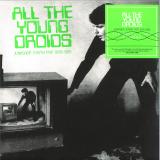
VARIOUS - ALL THE YOUNG DROIDS: JUNKSHOP SYNTH POP 1978-1985 (LP 2x12")
 
24

2025 REPRESS ON TRANSPARENT GREEN VINYL


Compiled by Philip King “And then came the rise of synth pop : blokes with dodgy haircuts hunched over keyboard-operated machines stuffed with wires and do-it-yourself tone oscillators making sounds like a brood of geese passing gas in a wind tunnel. Whoopee! This is the way the ‘70s ended : not with a blood-curdling bang bang but with a cheap, synthesized, emasculating whimper.” NICK KENT, NME. All The Young Droids: Junkshop Synth Pop 1978-1985 is a new compilation that charts the underbelly of the epoch-defining sound of the synthesiser in 80s popular music. Compiled by Philip King (previously seen compiling All The Young Droogs, Glitterbest and Boobs - The Junkshop Glam Discotheque), the music here connects the dots between DIY synth enthusiasts grappling with new, cheap synthesisers at the tail-end of punk and wannabe, jobbing songwriters enthral to the new music pioneered by Gary Numan, Depeche Mode and Daniel Miller’s Mute Records. Featuring rare tracks of auto-didactic progressive pop music, proto-techno punk, shoot-for-the-stars-land-in-the-gutter chart flops and heralded, underground synth classics, School Daze paints a picture of beautiful failure. Complete with extensive sleeve notes written by King and never before seen imagery, all 24 tracks were remastered by RPM in-house engineer Simon Murphy, many from vinyl copies due to lost master tapes. The story told on All The Young Droids is one of the dawning opportunity presented by both the emergence to the market of cheaper analog synthesisers and the distribution networks plus indie labels that exploded with the advent of punk music in 1976. While the music that sprouted out all over the globe in the wake of these factors was decried as fake, plastic, a refutation of punk’s guitar-led revolution, it’s telling that much of the music on All The Young Droids.. was created in bedrooms, ramshackle studios and home-made set ups with often borrowed equipment. In the era of record labels jumping to capitalise on the success of The Sex Pistols, The Clash (both on major labels, of course) these artists struggled to stand out from a new gold-rush with next to no budget or PR team. With radio and labels desperate for the new Yazoo, what resulted was a testament to necessity being the mother of invention. At the time, the synthesiser was the music of the future, a shiny new machine that could paint like an orchestra with a single finger and a 4-track. In the hands of Manchester avant-pranksters Gerry & The Holograms it’s a pulsing, sardonic weapon.. the only instrument on the Messthetics classic lampooning of New Wave fashion. In Hamburg, a 16 year old Andreas Dorau used it to write and record (with his female classmates on vocals) a global smash in Fred Vom Jupiter (later licensed to Mute Records). The hard-to-find English version (Fred From Jupiter, natch) is included here. Many artists with alreadystoried careers caught the bug and recorded synthesiser-fuelled peons to space, computers, the future and, of course, love-interests. Harry Kakoulli, late of Squeeze, recorded a solo album in 1979 that included the incredible power-synth-pop smash-that-never-smashed I’m On A Rocket. Similarly, Ian North of Neo and American Power Pop stalwarts Milk ’n’ Cookies bought a Korg MS20 and used a tape machine to record We’re Not Lonely, an absolute lost-classic of minimal synth pop. We’re Not Lonely also features on the Junkshop Synth Pop sampler 7” twinned with John Howard unreleased track You Will See, released April 12th 2025. There are plenty of compilation debuts in evidence. Sole Sister were a mysterious trio who were featured on the Scaling Triangles compilation of female-fronted, queer-adjacent post-punk / underground music that also featured The Petticoats. Selwin Image were from San Francisco and featured members of the recently defunct power pop/punk group The Pushups. Their stupidly catchy The Unknown fizzes with New Wave energy - think XTC to Sparks but remains unreleased until now. Dream Unit’s A Drop In The Ocean is an early synth wave cut, positively teaming with Joy Division instrumentation, previously only released on a long-forgotten and super rare, self-released EP. Incandescent Luminaire’s Famous Names belies an archetypal struggle of a small-town trying to make it in a cruel industry but is a thrilling New Romantic-Synth Wave cross over with a OMD gloominess that’s a joy to hear. Feminist Minimal Wave track I Am A Time Bomb by performance artist Peta Lilly and Michael Chance is a revelation destined for new found cult status. It was released on 7” and lost until now. The flipside to the subterranean, never-made-it synth pop mentioned above are the ambitious, even fruity attempts at success that have a perennial elegance to their confidence. New Jersey-ite Billy London (real name Ed Barth) tried to cash in on the synth boom with Woman, released by a major label, a lurching new wave track built on the Louie Louie rhythm and a wonderfully camp Lou Reedstyle sleazy vocal before exploding in the synthesised chorus. The song bombed but with a chorus like this, you have to wonder why? Ex-Glitter Band member John Springate’s My Life is truly epic, with doomed chord progressions and massive sounding drums turning into at least 3 different songs in the course of the track. Before you wonder what’s going on the song resolves with a glorious return to the main refrain. The dry-ice-dressed dance floor is well catered for too. Design’s Premonition and Vision’s Lucifer’s Friend are stone-cold minimal synth bangers, well loved but given a new lease of life here. The Warlord’s The Ultimate Warlord was released in 1978, a homespun proto Hi NRG banger that was later re-recorded by The Immortals in Canada who had a club hit with it. One-man- band Disco Volante’s No Motion was re-issued by Synth wave label Medical in 2012 but makes its first vinyl compilation appearance here. Close your eyes and you can imagine what Lawrence of Felt would have sounded like with some cheap Korgs a little earlier in his career. Gibraltar-based trio The Microbes imagined a computer programming people to dance - how prescient - and ended up with a propulsive, robo-funk track with splendid rubbery bass playing over a tectonic drum machine. Previously picked up by Belgian label Stroom TV, Dee Jay Bert & Eagle’s heavily Euro-accented I Am Your Master demands the listener to “come to paradise!” In a frankly terrifying manner. All The Young Droids is the first compilation to peel away from the narrative that dour, Minimal Synth and Cold Wave were the only musical children of the first rush of synth pop. Philip King and School Daze Records describe a much more complicated world: along with the austere, Brutalist children of Daniel Miller (who produced Alan Burnham’s Bowie-Low-influenced Science Fiction here) was a plethora of desperate cash-ins, accidental mainstream hits, ambitious pop dramas and major label punts that went nowhere. Crucially, the compilation blurs the line between junk and treasure. What if the two things are interchangeable. What if it’s all science fiction?

Disponible

En el almacen y preparando para el envío

Dana Ruh - This Journey So Far - Part 2

Dana Ruh offers up part 2 of her ‘This Journey So Far’ project via Yecad here.

As a long standing and widely respected figure in the world of underground house and techno through her releases on the likes of Slices Of Life, Ostgut Ton, Cocoon, Cave and of course her own Brouqade, Dana Ruh’s reputation stands tall as one of the finest purveyors of this sound. Amongst her releases, Dana maintains a heavy tour schedule taking her across the globe each year to many hotspots in key cities, here she marks another milestone in her career with a double 12’’ release, entitled ‘This Journey So Far’, as a musical reflection on all that’s led to this point.

Following the success of Part one, the second instalment now follows - kicking off the release is ‘MF Now’, stripping things back to a shuffled, bumpy rhythm section, resonant synth chimes and billowing textures. ‘Grey With Some Light’ then leans into a more experimental glitch realm via twitchy oscillating percussion, unfurling atmospherics and drifting keys. ‘The Look’ leans back into House territory with raw stabs, sax lines, metallic chimes and vacillating low-end tones before ‘Song For The Lonely’ concludes the project, encapsulating the essence of deep house with ethereal pad swells, circling stab sequences, low-slung drums and cossetting subs.

Disponible

En el almacen y preparando para el envío

Guy Gerber - Every Time We Say Goodbye

Underground mainstay and long-time melodic and progressive champion Guy Gerber is back on his own Rumors label with Every Time We Say Goodbye, a new EP that shows he continues to evolve his style without forgetting his signature.

Gerber has been a core part of the underground for years, heading the world's most revered clubs and festivals, bringing all new party concepts to Ibiza and serving up serene and synth heavy soundscape that move people physically and emotionally on labels like Cocoon, Italians Do It Better and of course Rumors.

Every Time We Say Goodbye (feat. Blanca) is light and melodic with shimmering pads and ethereal textures. Blanca’s treated vocals float effortlessly above rolling percussion and delicate synth melodies, delivering a warm, emotional energy that feels both modern and timeless.
The 18th Floor is a hypnotic journey built on dubby low-end grooves and fluid, meandering leads. Angelic, reverb-soaked vocal fragments drift through the mix, giving the track a dreamlike atmosphere that’s equally suited for peak-time or deeper, introspective moments.

On the flip is Under the same Moon, an introspective journey through deep emotion and atmospheric house. Under the same Moon is a sonic meditation, melancholic yet hopeful, with textures that evoke twilight memories and introspective dancefloor, lastly The Bigger Person takes a more laid-back approach, driven by warm guitar lines that showcase Guy’s instrumental finesse.

Disponible

En el almacen y preparando para el envío

quadratschulz - Edo

quadratschulz

Edo

12inchDUB-Y
Dub Recordings
21.11.2025

Quadratschulz returns to Clone / Dub Recordings with a sonic ode to Tokyo - ??six beautifully crafted tracks inspired by the neon-lit nights and electric pulse of the city. Drawing from the spirit of Japanese electronics, arcade culture, and city pop nostalgia, he blends crisp rhythms with emotive melodies and playful synth work. It'??s a journey through dreamy downtowns and rain-soaked alleyways, full of warmth, precision, and imagination. Of course, Japanese electronics play a key role - ??led by the unmistakable playful sound of the Roland TB-303 weaving through the tracks like a main character. Braindance for the dancefloor - ??Quadratschulz in top form. First limited press on opaque red vinyl.


b 02 The Garden of Evermod Shoseien Version

Disponible

En el almacen y preparando para el envío

CALAGAD 13 & EC13 - ALKALINE TRAXXX EP

Alkaline is sound forged in FM — metallic surfaces, syncopated pulses, and cinematic structures. An alternative path that doesn’t reject acid, but moves into a realm less warm, more mineral, more futuristic.

With CT012, Cosmic Tribe takes the Alkaline Sound into the uncharted: music as a tool for deep-space and hidden-dimension exploration. Each track is a fragment of an expedition beyond known frontiers — charting invisible territories, intercepting signals from other worlds, and navigating encounters that alter the course of the mission.

From EC13 and Calagad 13 comes a radical, visionary approach: not just tracks to hear, but cinematic sonic devices designed to remodel the listener’s inner architecture, ignite their imagination, and expand the very map of perception.

A work of meticulous sound and mastering, paired with exceptional artwork, presented in a strictly limited edition of 150 copies on crystal-clear transparent vinyl.

Disponible

En el almacen y preparando para el envío

Harry Chapin - Verities & Balderdash LP
  • 1: Cat’s In The Cradle
  • 2: I Wanna Learn A Love Song
  • 3: Shooting Star
  • 4: 30,000 Pounds Of Bananas
  • 5: She Sings Songs Without Words
  • 6: What Made America Famous?
  • 7: Vacancy
  • 8: Halfway To Heaven
  • 9: Six String Orchestra

How enduring is the signature song from Harry Chapin’s Verities & Balderdash? So timeless that it became the subject of a 2025 documentary in which artists from multiple generations weigh in on its impact on their lives and craft. “Cat’s in the Cradle” doubtlessly remains the main event on the singer-songwriter’s 1974 album. The legendary opening track also serves as a guidepost for the bold personal and social material that follows — as well as the gorgeous folk-rock arrangements that underpin the New York native’s most commercially successful work.

Sourced from the original master tapes, pressed at Fidelity Record Pressing, housed in a Stoughton jacket complete with a four-page insert, and strictly limited to 3,000 numbered copies, Mobile Fidelity’s 180g 33RPM LP of Verities & Balderdash presents Chapin’s fourth full-length in audiophile quality for the first time on vinyl. Captured during a golden era for sonics and production, the Top 5 effort features remarkable tonal balance, instrumental separation, and organic naturalism. Those valued aspects come into supreme focus on this reissue, which plays with dead-quiet surfaces and a low noise floor.

The newfound clarity, openness, and imaging underscore the lasting appeal of Chapin’s tender deliveries, soulful timbre, and careful phrasing. Every word comes across with incredible realism, while his underrated guitar playing occupies its own distinctive space. Also notable: The extension of the tasteful string accents; airiness of the backing vocals; depth and shape of the spare bass lines; and width and depth of the soundstaging. When on “Six String Orchestra” Chapin calls out names of instruments, they appear like magic, the band performing feet from you. Chapin has never sounded so lifelike on record.

Certified double platinum, Verities & Balderdash resonated with the times and public. “Cat’s in the Cradle” reached No. 1 on the chart on its way to being inducted into the Grammy Hall of Fame. The romantic ballad “I Wanna Learn a Love Song” flirted with the Top 40 and wrapped listeners in the equivalent of a cozy blanket. The record’s other single, the mini-epic “What Made America Famous?,” helped establish Chapin as one of the country’s most incisive and insightful commentators.

Verities & Balderdash teems with situational devices and topical matters. Chapin observes everything from the polarization of the nation to changes in moral standards and cultural priorities. He investigates pressing themes without ever turning preachy or elevating himself above the matters at hand. On “Halfway to Heaven,” whose coda races to the finish and ranks as the most urgent moment on the record, Chapin inhabits the mind of his frustrated protagonist akin to an eagle-eyed novelist.

Conveying emotions that range from melancholic to carefree, Chapin is as much of a singer as a storyteller. He assumes the voice of multiple characters within a single narrative. During the quirky “30,000 Pounds of Bananas,” a tale based on a delivery-truck accident in 1965, Chapin alters his delivery, pronunciation, and diction to become an old man reflecting on the mishap and mess. The tempo, too, adjusts to match the speed of the vehicle Chapin describes.

Adorned with timely laugh tracks to reinforce the bittersweet humor, the stripped-down “Six String Orchestra” takes everything up another notch, with Chapin intentionally missing guitar notes or playing a broken passage to illustrate the failures of the hopeful protagonist who doesn’t have what’s required to make it as an artist.

Chapin, of course, did not have any such problem. The lynchpin of a career cut short by a tragic traffic incident, Verities & Balderdash is Exhibit A of the savvy craft, feeling, and perspective he lent to American music.

Reservar

El artículo no se ha publicado. Tú puedes reservar ahora el artículo y después de ser pagado se te será enviado.

Border One - Inner Radiance

Border One

Inner Radiance

12inchFUSE12
Fuse Imprint
Release unknown

A central figure in Belgian techno, Border One's work has also been an international reference for consistency and direction since his early releases. An artist for artists with true commitment to his sound, Steven Petit's impact in the studio and behind the decks is admired by anyone who has done their homework. His music describes tight pressure under curious, modular-like sequences that stretch through the timeline of each track. The scale of minimalism remains key here, and the Belgian wastes no time when tunneling through his erratic tracks. Jazz-like dissonance drives his tension and although each element is carefully measured, the records truly command dancefloors. 'Inner Radiance' is no different. The Fuse resident takes his game one step further, pushing harmony to hysteria at every turn.

The EP skips foreplay and dives straight into the extremities of Border One's sound. In 'Reducing Valve', sustain is the key ingredient to this chaos. Slowly ripping the synth sequence into chords, Border one maintains a firm hold on the track's tension while remaining playful with the main theme. 'Sensory Reset' is more of a lurker with its shifting pad that spreads across the stereo image. This track is characterized by a grim urgency as opposed to its predecessor's progressive spiral. Keeping things low to the groove, the A2 swings about satisfyingly while Border One tinkers at his 909 constructions. Continuing his work on resonance, 'Transfigured' balances obscurity and surrealism. With a sequencer on the loose and a drum machine to emphasize it, the Fuse resident guides his audience into twists and turns at a constant pace. Here, we explore the dichotomy between the warmth and cold of a modular sound in techno, something frequently done but rarely mastered. Border One puts his years of experience to work to provide a combination of flair and balance to his tracks, something that is clearly translated in this EP. Of course, the final track - the title track - 'Inner Radiance' brings something very special to the table. The power of simplicity can never be underestimated and Petit knows just how to use it. With a strong core to an already sturdy track, the conclusion is spectacular. Emphasizing the electrifying nature of the record, Border One adds vintage chord stabs that fit right in with the sharp lead to create a powerful and memorable dancefloor experience. Not as much of a wind-down more than it is a gripping cliff hanger for his future releases, Border One provides once more an EP that underlines the true ethos of techno music.

Reservar

Various - The Sunset Manifesto Volume 2 2x12"

lim. 2xLP colored yellow and oxblood vinyl with Poster, Sticker & Mp3 Download!

We are back with another chapter in our ongoing series of unearthing smooth vibes from all over the world, this time we go back to the FUTURE for you with: THE SUNSET MANIFESTO Volume 2. After a five year break mainly concentrating on the late 70s/early 80s Westcoast Soul/Yacht/AOR sound, we finally dive deep into the modern world of our beloved sister-label Too Slow To Disco NEO (for the third time after 2018s TSTD NEO - En France and 2020s The Sunset Manifesto excursions). But of course it wasn't a real 5 year break since the first Sunset Manifesto compilation, as in the meantime we also released a few digital TSTD Neo singles, and - more importantly - our "Too Slow To Disco NEO - FM" playlist on spotify (handcurated by Dj Supermarkt every week and now hosting more than 1500 tracks of mellow, modern sunshine vibes) was growing steadily and becoming a new, important fixpoint in the TSTD musical universe. TSTD NEO is the outlet Dj Supermarkt is using to unearth modern laidback, smooth, sunny slow disco vibes with a soulful Westcoast/Balearic touch. For him TSTD always has been about a laidback vibe/feeling, not a certain time period in musical history. And that sunny Westcoast vibe we dug out on those traditional TSTD compilations has become a huge influence to so many modern artists. So it makes sense that we present the cream of new slo/mo NuDisco/Sunset Disco/Daytime Disco acts in the TSTD format, a luxurious compilation, with artists from all across the globe: Not only from the two homelands of that modern slow disco sound, Los Angeles/California and France, but also from Beijing, Montreal, Mexico, London, New York, Stockholm, Rotterdam… the moon, you name it! This music is more a state of mind, a feeling, then a geographical thing. We are happy and really excited to annouce the following passengers are on board with exclusive tracks: Poolside, Woolfy, Prep & Eddie Chacon, Turbotito, Young Gun Silver Fox, Lovetempo, Kimchii, Goodvibes Sound a.m.m.

Disponible

En el almacen y preparando para el envío

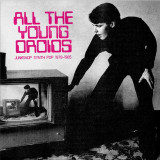
VARIOUS - ALL THE YOUNG DROIDS: JUNKSHOP SYNTH POP 1978-1985 (LP 2x12")
 
24

Compiled by Philip King
“And then came the rise of synth pop : blokes with dodgy haircuts hunched over keyboard-operated
machines stuffed with wires and do-it-yourself tone oscillators making sounds like a brood of geese
passing gas in a wind tunnel. Whoopee! This is the way the ‘70s ended : not with a blood-curdling bang
bang but with a cheap, synthesized, emasculating whimper.”
NICK KENT, NME.

All The Young Droids: Junkshop Synth Pop 1978-1985 is a new compilation that charts the
underbelly of the epoch-defining sound of the synthesiser in 80s popular music. Compiled by Philip
King (previously seen compiling All The Young Droogs, Glitterbest and Boobs - The Junkshop
Glam Discotheque), the music here connects the dots between DIY synth enthusiasts grappling with
new, cheap synthesisers at the tail-end of punk and wannabe, jobbing songwriters enthral to the new
music pioneered by Gary Numan, Depeche Mode and Daniel Miller’s Mute Records. Featuring rare
tracks of auto-didactic progressive pop music, proto-techno punk, shoot-for-the-stars-land-in-the-gutter
chart flops and heralded, underground synth classics, School Daze paints a picture of beautiful failure.
Complete with extensive sleeve notes written by King and never before seen imagery, all 24 tracks
were remastered by RPM in-house engineer Simon Murphy, many from vinyl copies due to lost master
tapes. The story told on All The Young Droids is one of the dawning opportunity presented by both the
emergence to the market of cheaper analog synthesisers and the distribution networks plus indie labels
that exploded with the advent of punk music in 1976. While the music that sprouted out all over the
globe in the wake of these factors was decried as fake, plastic, a refutation of punk’s guitar-led
revolution, it’s telling that much of the music on All The Young Droids.. was created in bedrooms,
ramshackle studios and home-made set ups with often borrowed equipment. In the era of record labels
jumping to capitalise on the success of The Sex Pistols, The Clash (both on major labels, of course)
these artists struggled to stand out from a new gold-rush with next to no budget or PR team. With radio
and labels desperate for the new Yazoo, what resulted was a testament to necessity being the mother
of invention.

At the time, the synthesiser was the music of the future, a shiny new machine that could paint like an
orchestra with a single finger and a 4-track. In the hands of Manchester avant-pranksters Gerry & The
Holograms it’s a pulsing, sardonic weapon.. the only instrument on the Messthetics classic lampooning
of New Wave fashion. In Hamburg, a 16 year old Andreas Dorau used it to write and record (with his
female classmates on vocals) a global smash in Fred Vom Jupiter (later licensed to Mute Records).
The hard-to-find English version (Fred From Jupiter, natch) is included here. Many artists with alreadystoried careers caught the bug and recorded synthesiser-fuelled peons to space, computers, the future
and, of course, love-interests. Harry Kakoulli, late of Squeeze, recorded a solo album in 1979 that
included the incredible power-synth-pop smash-that-never-smashed I’m On A Rocket. Similarly, Ian
North of Neo and American Power Pop stalwarts Milk ’n’ Cookies bought a Korg MS20 and used a
tape machine to record We’re Not Lonely, an absolute lost-classic of minimal synth pop. We’re Not
Lonely also features on the Junkshop Synth Pop sampler 7” twinned with John Howard unreleased
track You Will See, released April 12th 2025.

There are plenty of compilation debuts in evidence. Sole Sister were a mysterious trio who were
featured on the Scaling Triangles compilation of female-fronted, queer-adjacent post-punk /
underground music that also featured The Petticoats. Selwin Image were from San Francisco and
featured members of the recently defunct power pop/punk group The Pushups. Their stupidly catchy
The Unknown fizzes with New Wave energy - think XTC to Sparks but remains unreleased until now.
Dream Unit’s A Drop In The Ocean is an early synth wave cut, positively teaming with Joy Division
instrumentation, previously only released on a long-forgotten and super rare, self-released EP.
Incandescent Luminaire’s Famous Names belies an archetypal struggle of a small-town trying to
make it in a cruel industry but is a thrilling New Romantic-Synth Wave cross over with a OMD
gloominess that’s a joy to hear. Feminist Minimal Wave track I Am A Time Bomb by performance artist
Peta Lilly and Michael Chance is a revelation destined for new found cult status. It was released on 7”
and lost until now.

The flipside to the subterranean, never-made-it synth pop mentioned above are the ambitious, even
fruity attempts at success that have a perennial elegance to their confidence. New Jersey-ite Billy
London (real name Ed Barth) tried to cash in on the synth boom with Woman, released by a major
label, a lurching new wave track built on the Louie Louie rhythm and a wonderfully camp Lou Reedstyle sleazy vocal before exploding in the synthesised chorus. The song bombed but with a chorus like
this, you have to wonder why? Ex-Glitter Band member John Springate’s My Life is truly epic, with
doomed chord progressions and massive sounding drums turning into at least 3 different songs in the
course of the track. Before you wonder what’s going on the song resolves with a glorious return to the
main refrain.

The dry-ice-dressed dance floor is well catered for too. Design’s Premonition and Vision’s Lucifer’s
Friend are stone-cold minimal synth bangers, well loved but given a new lease of life here. The
Warlord’s The Ultimate Warlord was released in 1978, a homespun proto Hi NRG banger that was
later re-recorded by The Immortals in Canada who had a club hit with it. One-man- band Disco
Volante’s No Motion was re-issued by Synth wave label Medical in 2012 but makes its first vinyl
compilation appearance here. Close your eyes and you can imagine what Lawrence of Felt would have
sounded like with some cheap Korgs a little earlier in his career. Gibraltar-based trio The Microbes
imagined a computer programming people to dance - how prescient - and ended up with a propulsive,
robo-funk track with splendid rubbery bass playing over a tectonic drum machine. Previously picked up
by Belgian label Stroom TV, Dee Jay Bert & Eagle’s heavily Euro-accented I Am Your Master
demands the listener to “come to paradise!” In a frankly terrifying manner.
All The Young Droids is the first compilation to peel away from the narrative that dour, Minimal Synth
and Cold Wave were the only musical children of the first rush of synth pop. Philip King and School
Daze Records describe a much more complicated world: along with the austere, Brutalist children of
Daniel Miller (who produced Alan Burnham’s Bowie-Low-influenced Science Fiction here) was a
plethora of desperate cash-ins, accidental mainstream hits, ambitious pop dramas and major label
punts that went nowhere. Crucially, the compilation blurs the line between junk and treasure. What if the
two things are interchangeable. What if it’s all science fiction?

Disponible

En el almacen y preparando para el envío

Wilson Tanner - Legends (LP)

Wilson Tanner return to dry land with Legends, a wine-soaked agricultural fantasy, made among the grapevines at Manon Farm in South Australia. Where their earlier works settled into the sun-struck torpor of a suburban Perth backyard (69) or drifted off-course on a riverboat on Port Phillip Bay (ii), Legends trades salt air for vineyard sweat, the scrape of boots on dry earth and workers’ radios humming with the summer test cricket season.

Through this agricultural haze an image of a working vineyard emerges - ducks, dogs and plovers intrude; tractors and quads fly-by; stainless steel gleams at the edges. Recorded without mains power, the Manon demos overflow with farmyard ingenuity. Wind, brass, balalaika, balloon, pipe and synth are trained onto the staff with wire, tape and string.

A caricature of Australian viticulture, Legends is packed to the horns with the mythology and manure of natural wine. Swigging and belching in camaraderie, Wilson Tanner press their surroundings into something raw and unfiltered, letting bum notes, leftovers and sediment linger in the bottle. A cornucopia of biodynamic sounds.

Disponible

En el almacen y preparando para el envío

LUC-HUBERT SEJOR - MIZIK FILAMONIK: SPIRITUAL SOUND

180 G. BLACK VINYL WITH LINER NOTES IN CREOLE, FRENCH, ENGLISH

Originally released in 1979, "Spiritual Sound" lives up to its name, a soaring, triumphant album, six tracks of spirit magic from Guadeloupe.

Telluric, intense, terribly alive, the gwoka drums of Guadeloupe carry the identity of a painful and fervent island. Marked forever by the crime of slavery, Guadeloupe's créolité cherishes the ka drums and their natural environment: the low-pitched boula drum with male goatskin, the high-pitched soloist makè drum with female goatskin, the chacha, ti bwa, triangle, calabash and other percussion instruments that surround them, and the voices - the fiery, proud, timbred, urgent voices of the gwoka.


This album is also a legend for its voices: in his then dazzling youth, singer Lukuber Séjor was one of the first gwoka artists to largely feminize the chorus of répondè, who converse with his text delivered in a straight and powerful voice.

And everything here sets new standards. In 1979, Mizik Filamonik - Spiritual Sound proclaimed a spiritual patriotism of ferocious intensity. The album by Lukuber Séjor - whose spelling alone is a battle - sets out to give Guadeloupe the intangible weapons of self-respect and self-knowledge, through a singular practice of traditional music.

The genesis of gwoka music is less straightforward than one might imagine... The drums performed the servile task of accompanying the work of slaves in the fields and during the “corvées” imposed by the administration, before being freely practiced by the common people after the abolition of 1848. At the heart of the conviviality of the Guadeloupeans furthest from the cities - geographically and socially - the gwoka drums come out for carnival, funeral wakes and neighborhood celebrations, but also during strikes, fits of anger and armed vigils of the riots and revolts that have punctuated the island's history. For generations, governors of the colony and then the prefects of the overseas department of Guadeloupe have been viewing the gwoka as a potential for turbulence and a threat to public order.

But as the Beatlesmania, “chanson engagée” and rock revolutions unfolded in Europe, young people turned to the drums of mizik a vié nèg (“bad negro music”, in Creole), which Guadeloupeans had learned to despise by following the “assimilation” process advocated by the school system and most of the political class. At the end of the sixties, in a Guadeloupe mourning the deadly repression of the May 1967 social movement, they played traditional music, refusing to wrap it up in tourist prettiness and madras folk costumes. Instinctively, they played a rough and contemporary gwoka, led by the incendiary Guy Konkèt. This was the era of decisive 45 rpm records such as Robert Loyson's Kann a la richès, which brought to light the fieriest words of union rallies.

At his home in Sainte-Anne, Lukuber Séjor played with flautist Olivier Vamur and his brother Claude Vamur, who cobbled together a drum kit from tin crockery and became, a few years later, the most influential drummer in Kassav'.

These were the years of the Bumidom program, when young Guadeloupeans were encouraged to emigrate to mainland France. At the age of twenty, Lukuber Séjor embarked on the liner Irpinia, disembarking at Le Havre and taking the train to the Gare Saint-Lazare - the route taken by thousands of young West Indians who went on to study or looked for work, all the while trying to maintain a link with their homeland. In this case, it's at the Antony university residence, where Lukuber played the drum and participated in a thousand gwoka updates and aggiornamentos, while exile reinforced the need for a spiritual link with the native land.

In 1978, Guy Konkèt played at the Salle Wagram, a historic event for West Indian music. After serving as répondè - i.e. backing vocalist - on one of his home-recorded albums, Lukuber joined his live band. Little by little, he became one of the key artists on a circuit parallel to French show business. At a student party in Caen, he met a young woman from Martinique who, at the time, was more motivated by her ambitions as a visual artist than by her vocation as a musician. Her name was Jocelyne Béroard and, a few years before she plunged into the Kassav' adventure and became the greatest West Indian singer of her generation, she designed the cover of Lukuber Séjor's LP.

This ambition was obvious and imposed its will. A more or less regular band was formed, with Roger Raspail, Rudy Mompière and Éric Danquin on ka drums, Claude Vamur on ti bwa, Olivier Vamur and Françoise Lancréot on flutes and Annick Noël on keyboards. Lukuber Séjor is set on wanting to extend the gwoka palette to other instruments, as the jazz-rock revolution opens a thousand new doors. Annick Noël will play a wide range of timbres and textures on electric piano and synthesizer. Another novelty: the répondè are two men and two women, Roger Raspail, Olivier Vamur, Françoise Lancréot and Maryann Mathéus ...

Mizik Filamonik - Spiritual Sound is a self-production in which the singer and leader sank all his savings, allowing him no more than a single day in the studio. The first side is more of a musical manifesto, with the first two tracks, Éritage and Penn é plézi, being instrumentals. The third, Son, forcefully celebrates the need for Guadeloupeans to connect with the gwoka. In fact, Jocelyne Béroard's cover shows a tambouyé in the shadow of a cloudy sky, against which a radiant sun is rising and whose light will soon flood the entire landscape. The silhouette and face of this man strongly evoke the immense Vélo, master of the ka, rejected at the time on the fringes of society.

The second side of the LP is surprising. Formally, three tracks are explicitly linked like the three parts of a triptych. Primyé voyaj evokes the appalling tribulation of Africans deported as slaves to Guadeloupe; dézyèm voyaj speaks of the Bumidom program and the economic, political and social forces driving young Guadeloupeans towards the mirage of prosperity in France; twazyèm voyaj closes the cycle with the emigrants' return from Europe after years away from their island...

This gwoka, obsessed with the need to save Guadeloupe spiritually, appeals far beyond the politicized audience. Mizik Filamonik - Spiritual Sound instantly became a classic, although Lukuber Séjor never really made a career for himself as a musician.

After all, the album was released in 1980, with no promotional resources in France or Guadeloupe - and therefore no concerts. The thirty-two-year-old author, composer and performer made his own third trip back to Guadeloupe. He set up a small woodworking business, which he lost in Hurricane Hugo in 1989. His other activity, teaching in a medical-educational institute, became the core of his professional life. He continued to be an active campaigner - a campaigner for the Creole language, a campaigner for the reawakening of identity, a campaigner for special education, a campaigner for a thousand causes that he ignited with his generous and perceptive enthusiasm, such as the defense of breadfruit fries...

The echoes of his 1979 album have not died down. Of course, the use of Penn é plézi as the theme tune for Radio Guadeloupe's funeral notices from 1980 to 1992 kept him in the collective memory, but he continues to sing and compose sporadically, as with his all-female

vocal group Vwapoulouéka... Still convinced that music is a means of liberating the spirit, he continues the journey of a young man eager to deploy the power of Creole music and language.

Bertrand Dicale

Disponible

En el almacen y preparando para el envío

Dana Ruh - This Journey So Far - Part 1

Dana Ruh offers up the aptly titled ‘This Journey So Far’ 2x12’’ project via Yecad here, comprised of eight original cuts.

As a long standing and widely respected figure in the world of underground house and techno through her releases on the likes of Slices Of Life, Ostgut Ton, Cocoon, Cave and of course her own Brouqade, Dana Ruh’s reputation stands tall as one of the finest purveyors of this sound. Amongst her releases, Dana maintains a heavy tour schedule taking her across the globe each year to many hotspots in key cities, here she marks another milestone in her career with a 2x12’’ release, entitled ‘This Journey So Far’, as a musical reflection on all that’s led to this point.

Across eight tracks Dana presents her distinctive style which often straddles the lines between house and techno, opening with the airy, swinging dub aesthetic of ‘Case Of V’, while diving into deeper, murkier realms on ‘Bruv’. The B1 ‘KMA54’ then shifts focus towards choppy breaks, textural tension and hypnotic voices before B2 ‘Babel’ lays down a true dub techno feel across ten minutes of crisp drums, spiralling echoes and expansive reverberations.

Kicking off the C-Side is ‘MF Now’, stripping things back to a shuffled, bumpy rhythm section, resonant synth chimes and billowing textures. ‘Grey With Some Light’ then leans into a more experimental glitch realm via twitchy oscillating percussion, unfurling atmospherics and drifting keys. ‘The Look’ leans back into House territory with raw stabs, sax lines, metallic chimes and vacillating low-end tones before ‘Song For The Lonely’ concludes the project, encapsulating the essence of deep house with ethereal pad swells, circling stab sequences, low-slung drums and cossetting subs.

Recogiendo

Ordena ahora - una vez que hayan recibido suficientes pedidos, el artículo se reimprimirá.


Ültimo hace: 14 Meses
HARUOMI HOSONO - COCHIN MOON - OPAQUE YELLOW WAX

NEW LP PRESSING on Opaque Yellow Wax

Released in September 1978, a mere two months before YMO’s debut, Cochin Moon is a clear precursor to the groundbreaking synth and sequencer-dominated sounds that would come to define the iconic trio. Huge tip!

Credited to Hosono and Pop Art legend Tadanori Yokoo (who created the cover art), Cochin Moon is a fictional soundtrack to a journey into unknown worlds, inspired by Hosono and Yokoo’s trip to India.

The unbelievably prolific Haruomi Hosono is one of the major architects of modern Japanese pop music. With his encyclopedic knowledge of music and boundless curiosity for new sounds, Hosono is the auteur of his own idiosyncratic musical world, putting his unmistakable stamp on hundreds of recordings as an artist, session player, songwriter and producer. Born and raised in central Tokyo, his adolescent obsession with American pop culture informed his early forays into country music, which he would revisit later in his career. Hosono made his professional debut in 1969 as a member of Apryl Fool, whose heavy psychedelia was somewhat at odds with his influences, which leaned towards the rootsy sounds of Moby Grape and Buffalo Springfield. The latter was one of the main inspirations for his next group, Happy End, whose unique blend of West Coast sounds with Japanese lyrics proved to be highly influential over the course of three albums. After the band’s amicable break up in 1973, Hosono began his solo career with Hosono House, an intimate slice of Japanese Americana recorded inside a rented house with recording gear squeezed into its tiny bedroom. Hosono’s solo career would take many twists and turns from this point forward, with forays into exotica, electronic, ambient, and techno, culminating in the massive success of techno pop group Yellow Magic Orchestra (YMO).

Released in September 1978, a mere two months before YMO’s debut, Cochin Moon is a clear precursor to the groundbreaking synth and sequencer-dominated sounds that would come to define the iconic trio. Credited to Hosono and Pop Art legend Tadanori Yokoo (who created the cover art), Cochin Moon is a fictional soundtrack to a journey into unknown worlds, inspired by Hosono and Yokoo’s trip to India. Initially the album was to be a kind of ethnographic musical document, using found sounds and field recordings made by Hosono himself. Instead, after Yokoo introduced Hosono to the sounds of Kraftwerk and krautrock during the trip, Cochin Moon became something much stranger. Created almost entirely on synthesizers and sequencers with the help of future YMO collaborators Ryuichi Sakamoto and Hideki Matsutake, the music on the album is the perfect encapsulation of Hosono’s concept of “sightseeing music,” transporting the listener to an exotic place that may or may not exist. This highly sought-after album sees its first-ever official release outside of Japan.

Disponible

En el almacen y preparando para el envío

USEIN BEKIROV - SATO LP 2x12"

Usein Bekirov

SATO LP 2x12"

2x12inchUPC197189749667
Tlsg Digital
25.02.2025

The album SATO was made by the Ukrainian Crimean Tatar pianist and composer Usein Bekirov.
SATO was created during the difficult wartime for Usein’s motherland Ukraine and for the author himself.
Despite circumstances, the compositions of SATO express the ideas of the beauty and revival of Ukrainian music, a part of which is Crimean Tatar folklore.
The uniqueness of the release is caused both by the concept of the album and by the performers' star crew.

The jazz sound of the compositions of SATO is directed to the stylistic course of ethno-jazz and world music.
Rhythms and melodies of colorful Crimean Tatar folk music became the main source of inspiration in the creation of the album.
We can find both Usein's original author's themes, skillfully stylized to the oriental sound,
and referenced to the classic jazz vocabulary in its juicy riffs and grooves with features of fusion and funk music.

The name of the album reflected the inheritance of generations through music.
Sato is not only a folk instrument but also the name of the first Crimean Tatar jazz band, which made the first jazz arrangements of Crimean Tatar songs.
The music of this band became the basic musical experience of Usein Bekirov, because one of the members of the group was his father Riza Bekirov, to whom the album is dedicated.

The author and producer of the album is Usein Bekirov - Ukrainian pianist, composer, arranger, sound producer, and author of music for a number of films and theater performances.
Usein Bekirov cooperates with both foreign and Ukrainian musicians of the highest rank.
This is evidenced by the participants of the album Sato: Dennis Chambers, Randy Brecker, James Genus, Mike Stern, Ada Rovatti (USA), Hadrien Feraud (France), and Cenk Erdogan (Turkey).
Each performer reinterprets the author's material of Usein Bekirov through the prism of his own experience, character, and manner of performance, which was expressed in the daring stylistic combinations within a jazz style.

A special role in the creation of the album was taken by the participants of the recordings, especially, legendary jazzmen Dennis Chambers, Randy Brecker, James Genus, Mike Stern.
Their ideological and creative support became an important part of the creativity process.
Musicians expressed their impressions in small addresses for the audience.
One of the reviews of the musicians:
"The process of recording compositions was really exciting! This music reflects Usein's national origin and sense of his native culture.
It is full of real emotions. Actually, this music is quite difficult, but it is very well written and produced!
I sincerely hope you will notice this album, which also took part in Dennis Chambers, James Genus, Mike Stern, Ada Rovatti, and others.
I think it's going to be a really special album, can't wait to hear the final version.
When you hear about the premiere, I highly recommend listening to this new album created by Usein Bekirov.
It will be great!" Randy Brecker

Disponible

En el almacen y preparando para el envío

Mustafa - Polygamy

Heavyweight Black Vinyl / Original glued prints on Thick Cardboard 700 gram / 2 Separated parts hand-glued / Glossy lamination / PVC outer sleeve / Insert with 10 pages Booklet 30 x 30 cm printed on Gmund Colro Felt Red Purplea d 90 Gram Favini papers with detailed interview between Tony Higgins and Mustafa's family (his sisters and children are all musicians), as well as an insight into the recording of the album with Gregory Bufford, the drummer for the session, lyrics and exclusive pictures.


Colored Vinyl Details:
Heavyweight "A side - B side solid purple + transparent blue" vinyl / Original glued prints on Thick Cardboard 700 gram / 2 Separated parts hand-glued / Glossy lamination / PVC outer sleeve / Insert with 10 pages Booklet 30 x 30 cm printed on Gmund Colro Felt Red Purplea d 90 Gram Favini papers with detailed interview between Tony Higgins and Mustafa's family (his sisters and children are all musicians), as well as an insight into the recording of the album with Gregory Bufford, the drummer for the session, lyrics and exclusive pictures.

Peronnel:
Mustafa Abdul Rahman - Tenor Saxophone, Percussion, Producer
Ahmed Abdullah - Trumpet
Malachi Thompson - Drums
Gregory Bufford - Bass
Richard Radu Williams - Piano
Rafik Abdur Rahim
Tony Smith - Guitar
Larry Banks - Synthesizer
Khalil Abdullah - Congas
Babafumi Akunyon - Percussions
Odell Grier Backing Vocals – Fred Harley, Hilda "Asia" Richbow , Linda Hall

Notes:
In the course of our deep research, we sometimes discover a hidden thread that unites musicians, songwriters, artists, and poets linked by music. Mustafa's 'Polygamy' is no exception. Apart from the music - the main reason we decided to work on this first ever re-press, a jewel at the crossroads between jazz funk, spiritual jazz and proto rap - are the many other things that make Mustafa an intriguing and fascinating character. For starters, he was a childhood friend of the Ayler brothers with whom he played in different formations. He also played with other beloved figures such as Noah Howard and Charles Tyler, on a still unreleased album recorded for Amiri Baraka's Jihad label, and worked with The Legendary Master Brotherhood and Steve Reid. This and much more will be revealed in a detailed interview between Tony Higgins and Mustafa's family (his sisters and children are all musicians), as well as an insight into the recording of the album with Gregory Bufford, the drummer for the session.

Disponible

En el almacen y preparando para el envío

HIBUSHIBIRE - Magical Metamorphosis Third Eye

Limited 2024 Black Vinyl Repress

Osaka based psych-rock three piece Hibushibire return after a long break, with a new line up and a stunning third album. Produced by Acid Mothers Temple/Mainliner guru Makoto Kawabata who also guests on the album.

Following the successes of their debut album 'Freak Out Orgasm!' (2017), the follow up ‘Turn On, Tune In, Freak Out’ (2019) and two very well received UK tours. The band headed home to Osaka, Japan and then, the pandemic hit.

During this downtime, guitarist/vocalist Changchang decided to create a new power trio. Enter Tetsuji Toyoda (Bass/Vocals) & Aoi Hama (Drums/Vocals). The new trio have spent the last three years writing new music, playing live and honing their sound in Japan, and a short well received tour of Taiwan with Riot Season labelmates Dope Purple. And now finally, Hibushibire mark 2 is born properly.

“Hibushibire has returned after a change of members. A psychedelic, progressive work, suitable for a new beginning"

Entering the studio with Acid Mothers Temple/Mainliner guru Makoto Kawabata in the producer chair (and also as a guest musician) once again, the band recorded album number three, 'Magical Metamorphosis Third Eye’. Makoto also adds some of his own trademark guitar howls throughout the album, perfectly complimenting Changchang’s own growing prowess.

Here the band have taken their trademark psych-rock blasts and blended them perfectly with some more trippy, dare I say sweet progressive psychedelic sounds.

“The idea of this album is based on the theme of "occultism and mysticism". But it's not a serious thing, it's about the things we like (UFOs, pyramids, psychic phenomena, shamanism etc) and we all had fun while making it. In terms of what makes it different from the previous Hibushibire albums, it’s where AOI HAMA's vocals are present. I had wanted to use a female vocalist for a long time, so it was a good feeling!”

Like the band's first two albums, 'Magical Metamorphosis Third Eye’ is very much an album of two halves. Side one again is full of killer shorter tracks, while side two is reserved for a blinding majestic 20 minute epic ‘Ayahuasca Witch Abduction’. Perhaps the biggest musical surprise here though is probably track two, the beautifully mellow tripped out ‘We Won't Go Back To The Past’, which sounds like it’s been beamed straight out of the late 60s/early 70s.

The band also tip a nod to the Beatles psychedelic classic ‘Tomorrow Never Ever Knows’, but with their own twist of course.

It’s clear with the line up changes, Changchang has decided to expand the band's musical pathway, and he’s achieved stunning results.

The band plan to return to the UK and Europe in 2024 to see friends old and new.

Disponible

En el almacen y preparando para el envío

Charli xcx - Brat and it’s the same but there’s three more songs so it’s not LP 2x12"

'Brat and it’s the same but there’s three more songs so it’s not' is the deluxe album of Charli xcx groundbreaking album 'BRAT' The CD & Vinyl will be out 11th October and available for pre-order from 9th August with the full tracklist available.

‘BRAT’ is shortlisted for the Mercury Prize 2024 and has already reached Gold certified status in the UK with over 100k sales since June 7th. Charli has just landed her first lead #1 single in the UK with ‘Guess’, which features on the deluxe album.

Avant-pop and electronic superstar Charli xcx has become an iconic figure in the arts, having

helped expand the landscape of popular music over the last decade by seamlessly traversing the underground and mainstream with her artistic output. Over the course of a trailblazing career, the multi-hyphenate creative has earned critical acclaim for her innovative style and

entrepreneurial spirit and seen her forward-thinking approach reshape pop culture in the process.

Her lasting impact was cemented last year when Charli was honoured with the Visionary Award at the annual Ivor Novellos in London, while she also received the Powerhouse Award at Billboard’s Women In Music ceremony in Los Angeles in March.

Disponible

En el almacen y preparando para el envío

Purple Disco Machine - Paradise LP 2x12"

Purple Disco Machine's third studio album "Paradise" will be released on September 20th. On the album, Purple Disco Machine has collaborated with artists such as Metronomy, Jake Shears, Duke Dumont, Sophie and the Giants, Nothing But Thieves and many more.

With over 1.8 billion streams worldwide, a Grammy win for Best Remix for Lizzo's "About Damn Time" in 2023 and being named Beatport's #2 artist of all time, Purple Disco Machine continues to dominate the global dance music scene with each new release. His recent successes include collaborations with international superstars Nile Rodgers, Benjamin Ingrosso and Shenseea on 'Honey Boy'.

Purple Disco Machine grew up in Dresden and developed his passion for disco and house music, which has seen him become a worldwide radio and streaming sensation with hits such as "Hypnotized", "Fireworks", "Dopamine", "In The Dark" and "Substitution". Beyond radio, Purple Disco Machine is a respected force among DJs worldwide, while the tracks 'Body Funk', 'Dished (Male Stripper)', 'Playbox' and 'Devil In Me feat. Duane Harden & Joe Killington' continue to dominate dance floors. Purple Disco Machine has remixed tracks for Dua Lipa, Mark Ronson, Calvin Harris, Sir Elton John & Britney Spears, Fatboy Slim, the Rolling Stones, Ryan Gosling's "I'm Just Ken" and many more

The maestro of nu disco is also a dedicated performer. His energizing festival appearances include Coachella, Tomorrowland, Lollapalooza, Ibiza and many more. Purple Disco Machine will embark on his own sold-out PARADISE tour of mainland Europe in the fall.

Purple Disco Machine's influence on the global dance scene is undeniable. His tireless commitment to inclusion and diversity in music ensures that his legacy will endure for generations to come.

The album PARADISE is another homage to the new age of disco and surprises with numerous top-class dance features, as well as of course the big hits of recent months.

Disponible

En el almacen y preparando para el envío

Eat Them - All LP

Eat Them

All LP

12inchFUNLP044
Fun In The Church
22.07.2024

Operating under the moniker Eat Them, Johannes Hofmann ravenously ingests and rearranges pretty much everything of interest that electric guitar music has produced over the last 50 years. King Crimson, Dinosaur Jr, Talking Heads or Germany's Tocotronic all resonate in Hofmann's expansive oeuvre. Having begun to record music as a 13-year-old for the main purpose of burning compilation CDs of his work for his grandma, the Eat Them catalogue now spans around 20 Bandcamp albums.

Chosen from these, a selection of 12 tracks will be released via Fun In The Church on March 1st. Entitled "All" in keeping with the holistic aspect of the project - and, of course, complementing the band's name - the album covers everything from Sonic-Youth-with-drum-machine-style mashups to nervous post-funk and anthemic lo-fi indie rock, recorded and sung entirely by Hofmann himself.

The first single, out today, is "Do You Love Me When I'm Dead?", a DIY pop diamond whose sonics are lovingly and firmly rooted in a garage-cum-teenage practice space. The track reflects the project's live line-up, which has been expanded to include bass and drums. However, Hofmann transcends the suburbs with urgent echoing vocals expressing an emotional need to stay on the move, to resist being pinned down.

This is framed by guitar arpeggios that actually point in a more introspective direction. This penchant for contrast and movement can be found in many Eat Them pieces - they are snapshots of an ongoing development, a work that you listen to as it grows and lives. To rephrase the question posed in this single's title: Would we love it if it was already dead?

There may already be 20 albums on Bandcamp - and that CD at Grandma's - but the journey has only just begun. Bon appétit!

Disponible

En el almacen y preparando para el envío

Israel Toledo - Stimulanz Counterattack

STIMULANZ001 is the first 12" vinyl from the, until now, purely digital label STIMULANZ. With Israel Toledo's "Counterattack" we ring in the new year 2024. Hardly anyone can escape the pulsating energy of Toledo's driving beats and that is, of course, the main task of our label.
Only 150 copies in transparent-orange-black-marbled 140gr vinyl will be offered. Each one is unique, of course, thanks to the individual addition of black vinyl particles by hand. Softly marbled records are more durable and have a better sound than splatter vinyls, because quality, value and timelessness are our goals.

Disponible

En el almacen y preparando para el envío

Blue Hour - Dimensions

Blue Hour

Dimensions

12inchBLUEHOUR024
BLUE HOUR
24.11.2023

Label head Blue Hour steps up for the next release with an impressive two tracker, offering a new exploration of sound from the Berlin based producer. First up on the A side ‘Dimensions’ reveals a dramatic and eery driving Techno track with an atmosphere akin to early British IDM releases but with a more dancefloor-focused approach. ‘Dimensions’ is punctuated by warped mechanical percussive fx, pummeling drums and relentless groove highlighted by a simple yet effective melodic line which boldly opens things up and cuts through the complex layering of sound as the track evolves. On the B side ‘Sun Dogz’ adopts a similar soundscape, however picks up the tempo with a more Trance orientated production inspired by darker Goa/Psy styles and modern Fast-Trance productions. Hypnotic acidic lines, spatial fx and tribal percussion guide the listener to the main event. A heavily reverbed metallic hook and unique piece of sound design which takes multiple twists and turns along the course of the track. The EP wraps up a year of multiple successful releases from the label, with next year marking 10 years since the labels inception - keep an eye on things to come.

Disponible

En el almacen y preparando para el envío

FRUKO Y SUS TESOS - EL VIOLENTO LP

The 1973 album “El Violento” was the fifth full-length salsa LP led by Julio Ernesto Estrada Rincón, aka Fruko, and the second credited to Fruko Y Sus Tesos. Though it did not contain hits like ‘A la memoria del muerto’ or ‘El Preso’, it’s a collector’s item today in places like the US, Europe and Japan, perhaps precisely because it is obscure yet full to the brim with unrelentingly hard and heavy salsa bangers that never let up from start to finish (hence the title, which translates as “The Violent One”). A mix of originals and interesting covers, the LP is “all killer and no filler”, purposely designed to set the dance floor ablaze. It features Fruko’s two main vocalists that took over from the first pair of Humberto “Huango” Muriel and “Píper Pimienta” Díaz, namely the beloved duo of Álvaro “Joe” Arroyo and Wilson “Saoko” Manyoma. Los Tesos were a talented “wild bunch” who listened to their fearless leader, with Fruko holding down the bottom end on electric bass, Hernán Gutiérrez in the piano chair, the Villegas brothers on hand percussion (Jesús tickling the bongos and Fernando slapping the congas), augmented by Rafael Benítez on timbales and an ace horn section of Freddy Ferrer and Gonzálo Gómez (trombones) and Jorge Gaviria and Salvador Pasos (trumpets). The super aggressive sound comes directly from the South Bronx playbook of Willie Colón. The snarling trombones and soaring trumpet are somewhat sweetened by a nice little Puerto Rican cuatro guitar solo. Sonically lightening the mood somewhat, ‘Nadando’ (‘Swimming’) is a bouncy tune in the ‘Mercy’ genre (basically a hybrid of pop, funky soul, cumbia and salsa, in the style of Nelson y Sus Estrellas), gleefully sung by Joe Arroyo. The beats are complex and ever changing, with a little bit of mozambique, conga, bomba, jala jala and of course salsa thrown in for good measure. The side closes out with a brilliant, uptempo salsa reworking of the venerable ranchera chestnut, ‘Tú, sólo tú’. Side two explodes with the frenetic descarga jam session ‘Salsa na’ ma’—which is exactly that: nothing more than the hottest “sauce” to make the dancers go crazy. Fruko’s tune is dedicated to the Latin community in New York that listens to salsa from everywhere and dances to it so fervently on the weekend. The relentless percussion propels the listener along at breakneck speed as if hurtling down the Bronx Expressway, demonstrating that Fruko y Sus Tesos have mastered the ‘violent’ form of urban salsa that was having its transnational moment in the early 1970s. While “El Violento” may not be as well known as some Fruko records, it certainly deserves a new look and should be assessed on its own merits as a very powerful, confident entry in the historical evolution of Colombian salsa dura.Sleeve

Disponible

En el almacen y preparando para el envío

Packed Rich - Warp Fields LP

Packed Rich's Warp Fields LP depicts the journey of an individual traveling through a field of energy that connects different locations in space. Through the course of this journey the individual experiences a metamorphosis through different stages of physical existence and spiritual consciousness in order to overcome the borders of space and time.

The question remains if the individual will still maintain the same sense of consciousness and distinction of self that originally made up its personality.

Disponible

En el almacen y preparando para el envío

Caixa Cubo - Agôra LP

Global pointing Brazilian jazz trio releases their new album Agôra, that sparkles with electric funk and Herbie-esque eclecticism. It features a myriad of guest vocalists and musicians including Brazilians Xênia França and Zé Leônidas, Jembaa Groove's Ghanaian singer Eric Owusu and South African artists Bongani Givethanks & Mpho Nkuzo

Re-wiring the concept of 'fusion' for 2023, Agôra is Brazilian trio Caixa Cubo's resurgent new record with the title referring to 'now', based upon the intuitive and fluid nature of the trio's method, and this inspired recording. With shoots to black music culture, from Brazil to Brooklyn, Ghana and South Africa, Agôra is the group's ninth album yet is their first where they've invited guests, mainly singers, onto each track and follows their last, Angela from 2020, released on Heavenly Records, which won a BBC 6 Music Album of the Year (Huey Morgan's selection) granting them much deserved international recognition.

The core musical elements of Caixa Cubo are Henrique Gomide (keys), João Fideles (drums) and Noa Stroeter (bass), all from São Paulo, Brazil and where they met as teenagers and would continue their friendship and musical bond at the Royal Conservatory in The Hague, Netherlands. Now all in their mid thirties, João and Noa live back in the city where it all started but Henrique has settled in Cologne, Germany where the recording of Agôra took place, over the course of 3 days, at the home cum studio of Chris 'Dusty' Doepke, their friend and owner of the label they signed to, Jazz & Milk.

In line with all their creations where flow and energy provide the magic, allowing what the moment provides, the album shines not only for its virtuosity but for its minimalism, the depth of space, and for the first time, the ability to figure in and outside of the jazz fold, as the trio decided, for the first time, to bring in singers and add a new aesthetic to their sound.

"Agôra is a wake-up call to reality, a reminder that the infinite possibilities of technological progress should not disconnect us from the earth, from eye-to-eye relationships, and from moments lived in person" the band are keen to point out. "And that we must not be consumed by greed, for all we truly possess.... is the NOW."

Turning hope and metaphor into music, the debut single Sábado, an electrified future- jazz-fizz reflects perfectly the spontaneity that permeated the entire recording of the album. "When we got to the studio, we had no idea what we were going to record. We started playing a groove, kind of inspired by Gilberto Gil's 80s albums, and our drummer João started singing this funny song 'Sábado Barrigudão' (Big Belly Saturday) alongside the bass groove and that was that". Inspired by their city of birth, São Paulo, it features long time collaborator and vocalist Zé Leônidas, with cuicas, tamborim, agogo and shakers providing the most obvious Brazilian affect from the album.

Dreams is the band's first foray into R'n'B melding the group's simple and sporadic instrumentation of drums, keys and bass into a Jill Scott inspired song that could have been born in Brooklyn yet sung by Brazilian singer and Grammy nominated Xênia França and Zé Leônidas in both English and Portuguese. Xênia recently performed online for hip-to-it website Colors and it's her latest collaboration with Caixa Cubo, having first met in 2009 for a series of live performances.

South African artists Bongani Givethanks & Mpho Nkuzo come to the record with a wholly different approach on Ndiyakhangela, providing spoken word and vocal refrains on top of an Afro-Brazilian percussion jam with a delivery and verse in Xhosa, Zula and Ndebele. Asase is the album opener and features vocals of Eric Owusu who is part of highlife pioneer Pat Thomas's live band and most recently, co-leader of Jembaa Groove, an Afro-soul band from Berlin. It's a synth wig out with djembe grooves and offers a brand new take on Afro-soul-jazz.

Other contributions come from Cologne based jazz singer Rebekka Ziegler (Oblique Sunshine), São Paulo based guitarist Eduardo Camargo (Caio & Eric) and trumpet player Matthias Schriefl on Kismeti, a gorgeous and rolling number that ebbs and flows, exemplifying the group's effortless ability to craft a sound energised by a belief in one-self and the idea of having faith without the need to look at each other for verification.

As drummer and percussionist João Fideles perfectly surmised upon arriving for the recording session, "What drums do you have? Whatever you have, I'll use it". Agôra is testament to nearly 20 years of camaraderie, friendship and most importantly, trust.

Disponible

En el almacen y preparando para el envío

Robert Tylutki - Darkest Hour Before Dawn

As the artwork on the EP depicts, "Darkest hour before dawn" is a dusky scenario representing the Dutch environment known as "the polder" in the lower lands. It questions all kinds of actions taken or not taken to protect, restore, conserve, innovate, or modestly leave the landscape to its own more murky outcome. The darkest hour, full of gloom, will be available around the spring equinox?

Portrait of tracks separately:


"Darkest Hour before dawn"

Is this piece supposed to be an ode to the ancient Dutch hardcore movement, that once and probably only then would be experienced to such intensity or is this still maybe just a little near reminder of it? Anyway starts this unlit track slowly and remains that way but maintains a fat-pumping pulse, possibly reminding of a soldier walking a death march. Settling up those launch pads further down the piece, near the bridge for shooting off some drum-fire 909 snares as if it rocketed. Then, suddenly, the extended delay of that snare turns into a psychedelic drone beside, attending to, or paranoidly chasing comrades soul in his journey throughout and above like a trustful partner?

Arp's LFO that is out of sync with the beat and is being outpaced by it seems to slow everything down even more; meantime creating a pulling, buggy-like effect to the due of all this.

The ascending and descending ghost-pad drawing into the grid of the (tone) key, thereafter parking in them for a while and cycling out again, creating a spatial flow of disturbance and anxiety.

Finishes it with a mountain-big reverberation of organized destruction and chaos. What at first sight seems like simply an innocent route appears to actually be a bit more complex one.


"Lovely memories"

The quite monotonous structure of Lovely memories catchy and groovy song is scanning through your brain files; revisiting, memorizing, and purposely lacking these few "dots above the I" that in some cases you'd gladly be feeling like to square fit it in yourself, of course, when necessary. Connecting the puzzling, dazzling flashbacks together to finally wrap up and perpetuate the pictured events for good, leaving traces of melancholy, loveliness, and perhaps even faith to it.


"24 hours"

Dinginess of 24 hours supposes to be felt in the guts.
The beat, steady with that snare on the 4 & 12, might not be one of the greatest inventions. However, the TR-08's drum line here lays a solid and fertile foundation for a reasonable house track.

Slightly detuned synths weave a scarf pattern around your upper body, and the lower layers carry a warm blanket for the underbelly, providing you with that cozy sense of consolation. Acidy pokes wring itself sneaky and penetrable around, slicing through the song's already solid flesh. Therefore, balancing its bitter sweetness throughout with these soft-hard saw-tooth drops of sourness.

"24 hours" conveys a dispatch or intercommunication that there is little time left to take actions/charge to fix and restore. Something big is about to come if it hasn't arrived already...


"At night"

This remarkable story is a bit out of ordinary.
At night appeared in the artist's dream just the night before his sick father was raised from death in the hospital and got just another year to live before actually passing away completely and anyway. ; ))
And thus also dedicated to the man.

Disponible

En el almacen y preparando para el envío

Various - Virtual Dreams (Ambient Explorations In The House & Techno Age, 1993-1997)

Music From Memory is delighted to be turning 50 with a special release: MFM050 - V/A - Virtual Dreams: Ambient Explorations In The House & Techno Age, 1993-1997 (3xLP/2xCD). The first in a series of compilations, alongside more in depth artist-focused releases, Virtual Dreams will delve into music produced during the 1990’s that redefined the boundaries of ‘Ambient’. This was music that explored the possibilities of Ambient music within a new setting, created often by House & Techno music producers for a world beyond dance floors but made very much with the pre and post-clubbing listener in mind.

When House and Techno exploded out of America in the mid 1980s a whole generation was redefined not only musically but also culturally and chemically speaking. Peaking, quite literally, with a second ‘Summer of Love’ in 1988, millions of young people across the world would experience the life-changing ups of a brave new world but with it of course came the downs; enter the concept of a ‘Chill-out’ room. Whilst early Chill-out rooms lacked a specific sound and were often soundtracked by music such as reggae and soul, slowly young Techno and House producers themselves would become increasingly interested in developing a futuristic ‘Ambient’ soundtrack to a world beyond the thud of the main room.

‘Ambient’ in this new age now though had sharper teeth than in Brian Eno's key text for ‘Music for Airports’, instead here the sounds were the mode of transport rather than the backdrop. While the melodies were pretty, the soundscape steered away from the pastoral, dreaming of outer-space and technology as opening up exciting new dimensions. Much like in the first Summer Of Love; the musicians were again exploring psychedelic, mind-altering and transcendental possibilities of music. And also much as in the first Summer Of Love, a psychedelic visual language would accompany the music. Though now the tracks could be accompanied by music videos, utilising early CGI techniques, they would look almost entirely to the future: envisioning technology, nature and humanity intertwined in a new Utopian future. Virtual Dreams of a better world.

From Ambient and early Chill-out classics, to lesser known one-off projects, as well as Ambient deviations by some of House and Techno’s leading producers, Volume One of Virtual Dreams features tracks by Bedouin Ascent, LA Synthesis, LFO, Marc Hollander, Mark Pritchard & Kirsty Hawkshaw, Richard H. Kirk and more.

To celebrate our 50th release the first 1000 copies include a holographic 'Virtual Dreams' sticker plus a special insert poster with artwork by Victoria Pacheco and design by Steele Bonus.

Disponible

En el almacen y preparando para el envío

Mr. Id / Youssef Grirane Featuring Rita Mdn - Language Of Jazz EP

Kerri Chandler’s Kaoz Theory kicks off 2022 with Mr. ID’s Language Of Jazz EP, featuring two remixes from the label boss himself alongside two original cuts.

2021 saw Kerri Chandler’s Kaoz Theory continue to move from strength to strength, unveiling material from the likes of Dutch rising star Chris Stussy and of course Kerri himself, here we see the imprint wrap things up with a new addition to the roster, Casablanca, Morocco-based artist Mr. ID.

Up first on the release is ‘Track ID1’, a collaboration between Mr. ID and Youssef Grirane featuring Rita Mdn. It’s a unique six-minute journey through jazzy pianos and organ licks, intricate organic percussion and mesmeric, textural atmospheres. Kerri gives it the remix treatment in style extracting all of the jazziness of the original and retwisting things with the classic Chandler authentic house feel. Next, Chandler employs his revered 623 alias for the ‘623 Again Mix’ version which strips things back to low-slung drums, bumpy stabs and emotive piano lines.

The flip side houses ‘Track ID1’ in all its original glory before ‘Track ID2’ closes out proceedings seeing Mr. ID join forces with Younes Akhraz, rhythmically shifting to a jazzy 4/4 drum groove while wandering keys and warm subs fuel the mystical vibe.

DJ Feedback:

Sasha – Tasty

Laurent Garnier – Love the whole EP

Jimpster – Jazzed up piano house heaven! Love It!

Lea Lisa – Lovely remix by Kerri

Mr. V – Kerri delivers the goods once again!!!

Anja Schneider – Great. Love It.

Archie Hamilton – Nice

Andrew Treagust - Man that's some crazy production – really like it!

Mike W - absolutely classic release. how on earth could you go wrong? the world needs more piano!

Fish Go Deep - All tracks sounding great here. ID1 is a lovely warm groove and Kerri's remixes inject a little dancefloor bump to proceedings.

Daniel Troberg – incredible music

Kiki Navarro – excellent single, loving all the mixes special ID1 and the Kerri Chandler Main Remix

Ben Lovett – Remix mastery from Chandler – wonderful meeting of piano and drum – fire.

Sergio – Excellent example of classic house with personality

Hector Samper – Amazing EP!!!

Disponible

En el almacen y preparando para el envío

Mark Reeve - Breathe LP 2x12"

Mark Reeve

Breathe LP 2x12"

2x12inchDC248
Drumcode
17.11.2021

Breathe – the stunning eight-track mini album from long-standing British techno artist Mark Reeve out via Adam Beyer's iconic Drumcode Records.

Following a slew of critically acclaimed single and EP releases on Drumcode over the course of his esteemed decade-long career – the last of which came in the form of his mammoth Distance EP back in February 2020 – Breathe marks Mark Reeve's most extensive musical opus on the legendary imprint, and goes a long way in showcasing the inexhaustible creativity of one of the most prolific and original artists in techno today.

A career-defining moment for Reeve, Breathe has extraordinary allure and maintains the impressive quality of engaging the listener from the very start. A rich and complex body of work, the stunning eight-tracker goes far beyond Mark's trademark transcendental crowd pleasers, encompassing lilting moments of euphoric ambience alongside a sundry offering of full-throttle warehouse juggernauts and ravey breakbeat cuts.

Disponible

En el almacen y preparando para el envío

Alex Ketzer - OTC LP

Alex Ketzer

OTC LP

12inchNOORDENTWELVESIX
Noorden
27.03.2019

Four years on since the landing of his immersive debut full-length "Marianne Brandt", Noorden main operator Alex Ketzer returns with his second studio album, "OTC"!
Perpetuating the non-linear narrative arc initiated by its forerunner, all the while establishing further club-functional bridges over the course of its eleven tracks, "OTC" weaves a fine tissue of lushly textured electronica, downtempo elegies and spacious tech-mospheres and old-school rave motifs through intricate combinations of sorts, marrying the entrancing primal power of the beat with a pastel-coloured palette of Rephlex-nostalgic electronics.
True to his genre-busting, non-formulaic standards of composition, Ketzer once again opted for the fragmentary rather than the straightforward, putting on a collection of variedly contemplative, dark, energetic and motion-inducing cuts in exploded-view.

Disponible

En el almacen y preparando para el envío

Adam Beyer - Teach Me (Amelie Lens Remixes)

Techno's most influential label hits 200 releases with two powerful Amelie Lens interpretations of an Adam Beyer classic.

Over the course of its lifespan, Drumcode's vision has remained resolute, crafting techno that's both functional and forward-thinking. It's a philosophy that extends to the stable of artists who release on the label and play its showcases, with Adam Beyer's eyes and ears always focused on the future.

One artist in his viewpoint in recent years is Amelie Lens. Supporting her early productions on Lyase and Second State, a kinship naturally developed between the two artists, with Beyer asking her to contribute to 2017's A-Sides Vol.6 compilation.

Her blistering acid cut 'In Silence' blew the collective techno world out of the water.

Eighteen months on and now a regular on Drumcode showcase line-ups, Beyer has sought the Lenske Records boss to apply her energetic take on techno and remix 'Teach Me', his deep, Detroit-influenced cut from 2014.

The Main Mix highlighted the Swede's Drumcode Halloween set in London and is an exhilarating peak-team weapon driven by a grinding bassline that undulates with intensity, while Lens has made smart work of the vocal, teasing out the sample to harmonic perfection.

The Acid Mix sees the Belgian deliver a stripped back 303-led affair, utilising the looped vocal to build energy in the first half of the track, before rapid-fire percussion and squelchy stabs take control and push the atmosphere into darker and more ominous realms

Disponible

En el almacen y preparando para el envío

Marcel Dettmann - Running Back Mastermix: Marcel Dettmann - Edits & Cuts (Cassette)
 
18
También disponible

LP 3x12"


A DJ, producer and significant figure in contemporary electronic music, Marcel Dettmann steps forward to contribute to Running Back’s ongoing Mastermix series. Whereas previous editions of Mastermix have taken an ear to the sound of lapsed, legendary clubs such as Wild Pitch and Front, Dettmann’s curation deftly captures the man himself in ongoing perpetual motion, raiding the vault for his own precision-tooled edits, long-employed on dancefloors to devastating effect. Alongside a continuous mix, this release arrives as a 3LP gatefold, and as a limited edition cassette.

Closely associated with Berlin’s techno landscape, Dettmann was born and raised in the former GDR, then later immersed in the bleary-eyed counter cultural landscape of post-unification Berlin. Initially oriented by post-punk, industrial and new-wave music, Dettmann has been DJing since 1993, always expanding and perfecting his repertoire. He later began working behind the counter at the city’s tastemaking rave boutique Hard Wax, and a decade after he first dropped a needle, became (and remains) resident at notable local nightspot Berghain/Panorama Bar, where his instincts have helped sculpt the signature sound of both main dancefloors.

Of course, you’re probably not asking, “Who is Marcel Dettmann?” More importantly, you might want to know; just what treats has he gifted us here? The trip begins with a simple pitch-shift skywards, transforming Identified Patient’s creeping ‘The Female Medical College of Pennsylvania’ into a peak-time freakout, before an alternate take on Toctronic’s ‘Bis uns das Licht vertreibt’ emerges from the vaults for the first time. Dating from 1995, and one of Dettmann’s all-time favourites, Cristian Vogel’s ‘Untitled’ clambers back into the box with respectable cuts, while John Bender’s ‘Victims of A Victimless Crime’ kicks off the flip sporting a new arrangement, transporting us back to the foundations of a confident, stripped-back sound.

A few subtle edits to Clark’s perilously funky ‘Dirty Pixie’ takes us to Dettmann’s remix of Junior Boys. Produced in 2010, it transposes the Canadian duo’s sophisticated pop with our curator in his minimal prime, and has since become an irresistible prize for high-minded diggers. The same can be said for Experimental Products’ explosive proto-electro anthem ‘Who Is Kip Jones?’, empowered from pricey Discogs purgatory with just the slightest of tweaks. It’s deservedly sandwiched between the guiding influences of Chicago and Detroit in the form of Mutant Beat Dance’s raw ‘The Human Factor’ and a shimmering new version of previous solo production ‘Water’, featuring close friend and Ostgut Ton ally, Ryan Elliot.

The second half of the Mastermix seamlessly connects the mechanical past and digital present of EBM and industrial in the dance, with Dettmann’s instincts as a guiding hand. Severed Heads’ iconic ‘We Have Come To Bless This House’ emerges with mere nips and tucks, while Nitzer Ebb’s ‘Shame’ is significantly reimagined as a highwire act of rhythm and tension, setting up a sensual second take on a 2017 remix of ‘Limbo’ from Swiss synth heroes, Yello.

Core musical memories are shaken and stirred with a context-shifting take on Frank Duval’s emotional classic ‘Ogon’, while Ian North’s ‘Sex Lust You’ and Ford Proco’s notable Coil collaboration ‘Expansion Naranja’ effectively throb with only minor adjustments, respectfully imagined as “shadow versions”. Meanwhile, a simple breakbeat lifts Albert Kuningas’s ‘Astraalprojektio’ in the direction of wide-eyed dancefloors, while a fresh take on K-Alexi Shelby’s ‘Season of The Real’ inexplicably emerges somehow even funkier than before.

The conclusion of the compilation leads back to Das Tier from the prolific experimentalist Conrad Schnitzler, whose swirling synths and hypnotic vocals are duly tightened by Dettmann, but only as he puts it, “in conversation with the original.” Concluding three discs and thirty years of commitment to the dancefloor, this Mastermix not only offers us the opportunity to eavesdrop on this endless exchange, but to gain some sought-after material for our own record collections.

Reservar

El artículo no se ha publicado. Tú puedes reservar ahora el artículo y después de ser pagado se te será enviado.

Various - Tchic Tchic: French Bossa Nova 1963-1974  Colored Edition LP 2x12"
  • A1: Les Masques - Il Faut Tenir (1969)
  • A2: Isabelle Aubret - Casa Forte (1971)
  • A3: Christianne Legrand - Hlm Et Ciné Roman (1972)
  • A4: Jean Constantin - Pas Tant D'chichi Ponpon (1972)
  • A5: Billy Nencioli & Baden Powell - Si Rien Ne Va (1969)
  • B1-: Marpessa Dawn - Le Petit Cuica (1963)
  • B2: Jean-Pierre Sabar - Vai Vai (1974)
  • B3: Sophia Loren - De Jour En Jour (1963)
  • B4: Isabelle - Jusqu’à La Tombée Du Jour (1969)
  • B5: Sylvia Fels - Corto Maltesse (1974)
  • C1: Frank Gérard - Comme Une Samba (1972)
  • C2: Ann Sorel - La Poupée Des Favellas (1971)
  • C3: Charles Level - Un Enfant Café Au Lait (1971)
  • C4: Andrea Parisy - Les Mains Qui Font Du Bien (1970)
  • C5: Audrey Arno - Quand Jean-Paul Rentrera (1969)
  • C6: Aldo Frank - T’as Vu Ce Printemps (1970)
  • D1: Christianne Legrand - Cent Mille Poissons Dans Ton Filet (1972)
  • D2: Clarinha - Lemenja (1970)
  • D3: Hit Parade Des Enfants - Aquarela (1976)
  • D4: Jean-Pierre Lang - Tendresse (1965)
  • D5: Magalie Noël - Une Énorme Samba (1970)
  • D6: Françoise Legrand - La Lune

Ever since the late 1950s bossa-nova revolution, Brazil’s influence on French music has been undeniable. Pierre Barouh, Georges Moustaki and a vast array of lesser known artists, all made the Musica Popular Brasileira (MPB) an axis of promotion at the service of a cool and metaphysical, modern and mixed Brazilian lifestyle. Some were seduced by the poetic languors of the bossa, some were looking for fun, and others just loved the American hybridization of jazz-bossa, jazz-samba.


What is bossa nova? One of its creators, Joao Gilberto said: "Its style, cadence, everything is samba. At the very start, we didn't call it bossa nova, we sang a little samba made up of a single note - Samba de uma nota so .... The discussion around the origins of bossa nova is therefore useless”. It is nevertheless useful to remember that these magnificent Brazilian songs, which the guitarist describes as samba, were shifted and balanced around improbable chords. "I like things that lean, the in-betweens that limp with grace," said Pierre Barrouh, quoting Jean Cocteau.


With emotion, arrangements for violin and supple guitar licks, bossa nova rapidly changed. A transformation that can be heard in the Tchic, tchic, French Bossa Nova 1963-1974 compilation, the result of a cultural reappropriation, which traveled through the United States and supplemented itself in France.

A musical revolution that has remained significant, bossa nova was born in Rio. From 1956 to 1961, Brazil lived through its golden years. In five years, the country had invented its modernist style. Elected president in 1956, Juscelino Kubitschek de Oliveira, an elegant man with a broad forehead, brandished a promising slogan: "Fifty years of progress in five years". He quickly got to work. Not worried about increasing debt, he launched the project for a new federal capital, Brasilia, designed by the communist architect Oscar Niemeyer. Volkswagen opened state-of-the-art factories and created the “fusquinha”, the Beetle. In Rio, the Vespa made its first appearance. The Arpoador Surf Club crew run into the “girl” from Ipanema, Helô Pinheiro - the tanned garota ("chick"), between a flower and mermaid, who at 17 walked by the Veloso bar, where the fiery author and composer, Tom Jobim and Vinicius de Moraes, were getting drunk on whiskey. From then on, bossa symbolized cool.

In 1958, Joao Gilberto recorded Chega de Saudade, which the directors of Philips denied, calling it "music for fagots". The marketing director, who believed in it, secretly pressed 3000 78-inch vinyls and distributed them at schools around Rio, creating a tidal wave.

American jazzmen then took over. In particular, trumpeter Dizzy Gillespie and guitarist Charlie Byrd. In November 1962, the Brazilian Ministry of Foreign Affairs funded a "Bossa-Nova" concert at Carnegie Hall in New York, inviting the genre’s pioneers. Unprepared, the show soon turned to disaster. But the troupe was invited to the White House by Jackie Kennedy. The first lady loved "the new beat" and in particular Maria Ninguem, a song by Carlos Lyra, later covered by Brigitte Bardot.

In Brazil, the 1964 military coup quickly ended this euphoria. The destructive atmosphere that ensued pushed many Brazilian musicians to leave, if not to exile. Thus, Tom Jobim, Sergio Mendes and Joao Gilberto arrived to the United States. In New York, Joao Gilberto met saxophonist Stan Getz. At the time, he was married to the Bahianese Astrud Weinert Gilberto, who had a German father. She had never sung before, but she knew how to speak English. Getz therefore asked her to replace her husband on The Girl From Ipanema. The Getz/Gilberto record with Tom Jobim on piano, was released in March 1964. Phil Ramone, the "pope of pop" was in charge of sound.

Bossa nova arrived in Paris through the classic “guitar-voice” channel (Pierre Barouh, Baden Powell, Moustaki…) But France loved jazz and Paris had already welcomed its American contributors. All these good people were to pass through Saint-Germain-des-Prés. The cabaret l'Escale became the Mecca of Latin American sound where one could find Pierre Barrouh and his friends, such as the Camara Trio, samba-jazz aces, whose only record was published by the Saravah label. With a band strangely called Les Masques (a band that included Nicole Croisille and Pierre Vassiliu, among others), the Camara Trio recorded an interesting Brazilian Sound, including the track Il faut tenir which is present on this tasty compilation of rarities.

Other enlightened musicians can also be found on the compilation, such as Jean-Pierre Sabar (songwriter for Hardy, Auffray, Leforestier ...) and the French pop rock organist Balthazar. In 1975, Sabar recorded Aurinkoinen Musiikkimatka on a Finnish label, which featured the crazy Vai, Vai, included on this record. We are now following the footsteps of Brazilian electronic musicians such as Sergio Mendes, Eumir Deodato or Marcos Valle who created funk and disco sounds on their keyboards and synthesizers. A style that influenced Véronique Sanson when she wrote Jusqu’à la Tombée de la nuit in 1969 for Isabelle de Funès, the niece of Louis and a great friend of Michel Berger - Sanson did end up singing this track on her 1992 Sans Regret record.


The pinnacle of exoticism and travel, Sylvia Fels’ Corto Maltese includes bongos, sea mist and ocean sounds. The title was taken from Jacky Chalard’s concept album written in 1974, Je suis vivant, mais j’ai peur (I am alive, but I am scared), based on Gilbert Deflez’s science fiction novel.


However, bossa nova extended the scope of popularity. "In the 1970s, I was a fan of Sergio Mendes, Getz / Gilberto. I fell in love with this music that I knew because I had been an orchestral singer, " explained Isabelle Aubret, who in 1971 delivered a composite record of covers by the very funky Jorge Ben, Orfeu Negro, Tom Jobim, Vinicius de Morais and Jean Ferrat. "I recorded this album for Meys Records in Paris, far from Brazil, with wonderful musicians, François Raubert, Roland Vincent, Alain Goraguer...". The latter wrote the arrangements for Casa Forte, a very percussive title borrowed from Edu Lobo, one of the initiators of the bossa who spent time in California. "Jazz and bossa came together and produced very rhythmic music. I love singing, it allows me to dream, to have fun, to feel a high on stage, and these songs brought me joy, made me swing, my singing felt like a dance.”


The world tours of French singers and their desire for the tropics, often brought them to Rio with its hills, forests, caipirinhas and tanned bodies. There are surprises though, like this Iemenja (Iemenja is the goddess of the sea in the Afro-Brazilian candomblé religion). Not unlike the composer and musician Jean-Pierre Lang, based in Sao Paulo, Claire Chevalier taught Brazil to Brazil. In 1970, the singer and painter published a 45-inch vinyl, Mon mari et mes amants (My husband and my lovers), under the improbable pseudonym of Clarinha (little Claire). She was then living in Rio, with her husband, Joël Leibovitz, who founded a band called Azimuth, and who owned a record label specialized in "sambas enredos" songs for samba school parades.


For its B side, she asked Pierre Perret to come up with lyrics for a song composed by Carlos Imperial: "Oh goddess of the sea, o goddess Iemenja, I bring a white rose to adorn your long hair ..." . "Perret came to see us, and we had fun, remembers Joël Leibovitz. We wrote Lemenja for fun, we recorded it at the Havaí studio, behind the Central do Brasil the central station. Erlon Chaves, the arranger who worked with Elis Regina, joined us" adding his share of Afro-Brazilian percussions and funky brass to the mix.

There is a common misunderstanding in Franco-Brazilian history: that bossa, admittedly hedonistic, is perceived as funny, even though the poets who wrote the texts are often philosophizing on the human condition. Its French interpreters pull it towards a carnival inspired universe, far removed from its fundamental essence. Thus, Jean Constantin covered the famous Samba da minha terra, an ode to the art of samba written by the classic Bahian composer Dorival Caymmi, renaming it with the enticing title of Pas tant de tchi tchi pompon: "On your pier there is no tchi tchi / when you arch your back, you know everything is alright ”(lyrics by Gérard Calvi). This expedited bossa aims for the absurd, but retains a certain elegance.

Indeed, Jean Constantin was not an idiot, the rather large man had a huge mustache and liked fantasy, (Les pantoufles à papa, Le pacha, inspired by cha-cha-cha-cha, salsa and jazz) but he was also the lyricist of Mon manège à moi interpreted by Edith Piaf, the composer of Mon Truc en plume by Zizi Jeanmaire and the soundtrack of François Truffaut’s 400 Blows. Le Poulpe, published in 1970, from which this bossa is extract, was arranged by Jean-Claude Vannier, an accomplice of Serge Gainsbourg’s Melody Nelson. In short: "There is enough of samba / By looking at the parasol / Because my poor cabeza / Is going to die in the sun".

Even the American actress Marpessa Down, who was at the heart of the bossa nova revolution with her role as Euridyce in Marcel Camus’ film Orfeu Negro, winner of the 1959 Cannes Palme d'or, fed the clichée with Je voudrais parler au petit cuica - "Tell me how you manage to always make people want to dance / It's true, I must admit that I cannot resist your magic" - in consequence, once can hear the cuica, a little drum inherited from the Bantu.


But bossa nova had many angles. Societal, of course, pushing actresses who were symbols of women's liberation like Brigitte Bardot, Jeanne Moreau, or Sophia Loren to engage in the exercise of accelerated bossa. In February of 1963, Sophia Loren made a record in French in Rome, Je ne t'aime plus, featuring the song De jour en jour, a bossa written by two Italians, Armando Trovajoli and Tino Fornai, which was released a little later by Barclay. Bossa accompanied the 1960s, a decade of moral liberation. Ann Sorel, who interpreted La Poupée des favellas, caused a sensation with L’amour à plusieurs, a provocative song written by Frédéric Bottom and Jean-Claude Vannier. As for the actress Andrea Parisy, she displayed her bourgeois cheekiness in Marcel Carné's Les Tricheurs before interpreting Les mains qui font du bien. And Magalie Noël, the friend of Boris Vian, who sung Johnny fais-moi mal, was hired to sing Une énorme Samba, composed by Alain Goraguer (arranger to Gainsbourg, Bobby Lapointe and Jean Ferrat) with lyrics by Frédéric Botton.

But in the end, of what wood is bossa nova made of? The answer is given by Christianne Legrand, daughter of Raymond the conductor, and sister to Michel the composer: "With me, with jà" - jà means "immediately" in Portuguese. In 1972, the singer, an expert in vocal jazz and a member of the Double Six, published Le Brésil de Christianne Legrand. Two songs included on the Tchic Tchic compilation that demonstrate how bossa, jazz, funk, rock, etc. work like a swiss army knife: the music is used to denounce broken systems, or miracles, HLM et ciné roman, Cent mille poissons dans ton filet, two songs from the O Cafona soundtrack, a successful telenovela broadcast, at the time in black and white, on TV Globo. The first was adapted in French by the fighter and friend of the Legrand tribe, Agnès Varda. The second is content with a play on words, jostling them into a summer fun.


Véronique Mortaigne

Reservar17.04.2026

debe ser publicado en 17.04.2026

Guilty Razors - Complete Recordings 1977 - 1978

UILTY RAZORS, BONA FIDE PUNKS.


Writings on the topic that go off in all directions, mind-numbing lectures given by academics, and testimonies, most of them heavily doctored, from those who “lived through that era”: so many people today fantasize about the early days of punk in our country… This blessed moment when no one had yet thought of flaunting a ridiculous green mohawk, taking Sid Vicious as a hero, or – even worse – making the so-called alternative scene both festive and boorish. There was no such thing in 1976 or 1977, when it wasn’t easy to get hold of the first 45s by the Pistols or the Clash. Few people were aware of what was happening on the fringes of the fringes at the time. Malcolm McLaren was virtually unknown, and having short hair made you seem strange. Who knew then that rock music, which had taken a very bad turn since the early 1970s, would once again become an essential element of liberation? That, thanks to short and fast songs, it would once again rediscover that primitive, social side that was so hated by older generations? Who knew that, besides a few loners who read the music press (it was even better if they read it in English) and frequented the right record stores? Many of these formed bands, because it was impossible to do otherwise. We quickly went from listening to the Velvet Underground to trying to play the Stooges’ intros. It’s a somewhat collective story, even though there weren’t many people to start it.
The Guilty Razors were among those who took part in this initial upheaval in Paris. They were far from being the worst. They had something special and even released a single that was well above the national average. They also had enough songs to fill an album, the one you’re holding. In everyone’s opinion, they were definitely not among the punk impostors that followed in their wake. They were, at least, genuine and credible.

Guilty Razors, Parisian punk band (1975-1978). To understand something about their somewhat linear but very energetic sound, we might need to talk about the context in which it was born and, more broadly, recall the boredom (a theme that would become capital in punk songs) coupled with the desire to blow everything off, which were the basis for the formation of bands playing a rejuvenated rock music ; about the passion for a few records by the Kinks or the early Who, by the Stooges, by the Velvet mostly, which set you apart from the crowd.
And of course, we should remember this new wave, which was promoted by a few articles in the specialized press and some cutting-edge record stores, coming from New York or London, whose small but powerful influence could be felt in Paris and in a handful of isolated places in the provinces, lulled to sleep by so many appalling things, from Tangerine Dream to President Giscard d’Estaing...
In 1975-76, French music was, as almost always, in a sorry state ; it was still dominated by Johnny Hallyday and Sylvie Vartan. Local rock music was also rather bleak, apart from Bijou and Little Bob who tried to revive this small scene with poorly sound-engineered gigs played to almost no one.
In the working class suburbs at the time, it was mainly hard rock music played to 11 that helped people forget about their gruelling shifts at the factory. Here and there, on the outskirts of major cities, you still could find a few rockers with sideburns wearing black armbands since the death of Gene Vincent, but it wasn’t a proper mass movement, just a source of real danger to anyone they came across who wasn't like them. In August 1976, a festival unlike any other took place in Mont-de-Marsan – the First European Punk Festival as the poster said – with almost as many people on stage as in the audience. Yet, on that day, a quasi historical event happened, when, under the blazing afternoon sun, a band of unknowns called The Damned made an unprecedented noise in the arena, reminiscent of the chaotic Stooges in their early adolescence. They were the first genuine punk band to perform in our country: from then on, anything was possible, almost anything seemed permissible.

It makes sense that the four+1 members of Guilty Razors, who initially amplified acoustic guitars with crappy tape recorder microphones, would adopt punk music (pronounced paink in French) naturally and instinctively, since it combines liberating noise with speed of execution and – crucially – a very healthy sense of rebellion (the protesters of May 1968 proclaimed, and it was even a slogan, that they weren’t against old people, but against what had made them grow old. In the mid-1970s, it seemed normal and obvious that old people should now ALSO be targeted!!!).
At the time, the desire to fight back, and break down authority and apathy, was either red or black, often taking the form of leafleting, tumultuous general assemblies in the schoolyard, and massive or shabby demonstrations, most of the time overflowing with an exciting vitality that sometimes turned into fights with the riot police. Indeed, soon after the end of the Vietnam War and following Pinochet’s coup in Chile, all over France, Trotskyist and anarcho-libertarian fervour was firmly entrenched among parts of the educated youth population, who were equally rebellious and troublemakers whenever they had the chance. It should also be noted that when the single "Anarchy in the UK" was first heard, even though not many of us had access to it, both the title and its explosive sound immediately resonated with some of those troublemakers crying out for ANARCHY!!! Meanwhile, the left-wing majority still equated punks with reckless young neo-Nazis. Of course, the widely circulated photos in the mainstream press of Siouxsie Sioux with her swastikas didn’t necessarily help to win over the theorists of the Great Revolution. It took Joe Strummer to introduce The Clash as an anti-racist, anti-fascist and anti-ignorance band for the rejection of old-school revolutionaries to fade a little.

The Lycée Jean-Baptiste Say at Porte d’Auteuil, despite being located in the very posh and very exclusive 16th arrondissement of Paris, didn’t escape these "committed" upheavals, which doubled as the perfect outlet for the less timid members of this generation.
“Back then, politics were fun,” says Tristam Nada, who studied there and went on to become Guilty Razors’ frontman. “Jean-Baptiste was the leftist high-school in the neighbourhood. When the far right guys from the GUD came down there, the Communist League guys from elsewhere helped us fight them off.”
Anything that could challenge authority was fair game and of course, strikes for just about any reason would lead to increasingly frequent truancy (with a definitive farewell to education that would soon follow). Tristam Nada spent his 10th and 11th unfinished grades with José Perez, who had come from Spain, where his father, a janitor, had been sentenced to death by Franco. “José steered my tastes towards solid acts such as The Who. Like most teenagers, I had previously absorbed just about everything that came my way, from Yes to Led Zeppelin to Genesis. I was exploring… And then one day, he told me that he and his brother Carlos wanted to start a rock band.” The Perez brothers already played guitar. “Of course, they were Spanish!”, jokes their singer. “Then, somewhat reluctantly, José took up the bass and we were soon joined by Jano – who called himself Jano Homicid – who took up the rhythm guitar.” Several drummers would later join this core of not easily intimidated young guys who didn’t let adversity get the better of them.

The first rehearsals of the newly named Guilty Razors took place in the bedroom of a Perez aunt. There, the three rookies tried to cover a few standards, songs that often were an integral part of their lives. During a first, short gig, in front of a bewildered audience of tough old-school rockers, they launched into a clunky version of the Velvet Underground's “Heroin”. Challenge or recklessness? A bit of both, probably… And then, step by step, their limited repertoire expanded as they decided to write their own songs, sung in a not always very accurate or academic English, but who cared about proper grammar or the right vocabulary, since what truly mattered was to make the words sound as good as possible while playing very, very fast music? And spitting out those words in a language that left no doubt as to what it conveyed mattered as well.
Trying their hand a the kind of rock music disliked by most of the neighbourhood, making noise, being fiercely provocative: they still belonged to a tiny clique who, at this very moment, had chosen to impose this difference. And there were very few places in France or elsewhere, where one could witness the first stirrings of something that wasn’t a trend yet, let alone a movement.

In the provinces, in late 1976 or early 1977, there couldn’t be more than thirty record stores that were a bit more discerning than average, where you could hear this new kind of short-haired rock music called “punk”. The old clientele, who previously had no problem coming in to buy the latest McCartney or Aerosmith LP, now felt a little less comfortable there…
In Paris, these enlightened places were quite rare and often located nex to what would become the Forum des Halles, a big shopping mall. Between three aging sex workers, a couple of second-hand clothes shops, sellers of hippie paraphernalia and small fashion designers, the good word was loudly spread in two pioneering places – propagators of what was still only a new underground movement. Historically, the first one was the Open Market, a kind of poorly, but tastefully stocked cave. Speakers blasted out the sound of sixties garage bands from the Nuggets compilation (a crucial reference for José Perez) or the badly dressed English kids of Eddie and the Hot Rods. This black-painted den was opened a few years earlier by Marc Zermati, a character who wasn’t always in a sunny disposition, but always quite radical in his (good) choices and his opinions. He founded the independent label Skydog and was one of the promoters of the Mont-de-Marsan punk festivals. Not far from there was Harry Cover, another store more in tune with the new New York scene, which was amply covered in the house fanzine, Rock News (even though it was in it that the photos of the Sex Pistols were first published in France).
It was a favorite hang-out of the Perez brothers and Tristam Nada, as the latter explained. “It’s at Harry Cover’s that we first heard the Pistols and Clash’s 45s, and after that, we decided to start writing our first songs. If they could do it, so could we!”
The sonic shocks that were “Anarchy in the UK”, “White Riot” or the Buzzcocks’s EP, “Spiral Scratch” – which Guilty Razors' sound is reminiscent of – were soon to be amplified by an unparalleled visual shock. In April 1977, right after the release of their first LP, The Clash performed at the Palais des Glaces in Paris, during a punk night organised by Marc Zermati. For many who were there, it was the gig of a lifetime…
Of course, Guilty Razors and Tristam were in the audience: “That concert was fabulous… We Parisian punks were almost all dressed in black and white, with white shirts, skinny leather ties, bikers jackets or light jackets, etc. The Clash, on the other hand, wore colourful clothes. Well, the next day, at the Gibus, you’d spot everyone who had been at this concert, but they weren’t wearing anything black, they were all wearing colours.”

It makes sense to mention the Gibus club, as Guilty Razors often played there (sometimes in front of a hostile audience). It was also the only place in Paris that regularly scheduled new Parisian or Anglo-Saxon acts, such as Generation X, Siouxsie and the Banshees, the Slits, and Johnny Thunders who would become a kind of messed-up mascot for the venue. A little later, in 1978, the Rose Bonbon – formerly the Nashville – also attracted nightly owls in search of electric thrills… In 1977, the iconic but not necessarily excellent Asphalt Jungle often played at the Gibus, sometimes sharing the bill with Metal Urbain, the only band whose aura would later transcend the French borders (“I saw them as the French Sex Pistols,” said Geoff Travis, head of their British label Rough Trade). Already established in this small scene, Metal Urbain helped the young and restless Guilty Razors who had just arrived. Guitarist for Metal Urbain Hermann Schwartz remembers it: “They were younger than us, we were a bit like their mentors even if it’s too strong a word… At least they were credible. We thought they were good, and they had good songs which reminded of the Buzzcocks that I liked a lot. But at some point, they started hanging out with the Hells Angels. That’s when we stopped following them.”

The break-up was mutual, since, Guilty Razors, for their part, were shocked when they saw a fringe element of the audience at Metal Urbain concerts who repeatedly shouted “Sieg Heil” and gave Nazi salutes. These provocations, even still minor (the bulk of the skinhead crowd would later make their presence felt during concerts), weren’t really to the liking of the Perez brothers, whose anti-fascist convictions were firmly rooted. Some things are non-negotiable.
A few months earlier (in July 1978), Guilty Razors had nevertheless opened very successfully for Metal Urbain at the Bus Palladium, a more traditonally old-school rock night-club. But, as was sometimes the case back then, the night turned into a mass brawl when suburban rockers came to “beat up punks”.

Back then, Parisian nights weren’t always sweet and serene.

So, after opening as best as they could for The Jam (their sound having been ruined by the PA system), our local heroes were – once again – met outside by a horde of greasers out to get them. “Thankfully,” says Tristam, “we were with our roadies, motorless bikers who acted as a protective barrier. We were chased in the neighbouring streets and the whole thing ended in front of a bar, with the owner coming out with a rifle…”
Although Tristam and the Perez brothers narrowly escaped various, potentially bloody, incidents, they weren’t completely innocent of wrongdoing either. They still find amusing their mugging of two strangers in the street for example (“We were broke and we simply wanted to buy tickets for the Heartbreakers concert that night,” says Tristam). It so happened that their victims were two key figures in the rock business at the time: radio presenter Alain Manneval and music publisher Philippe Constantin. They filed a complaint and sought monetary compensation, but somehow the band’s manager, the skilful but very controversial Alexis, managed to get the complaint withdrawn and Guilty Razors ended up signing with Constantin with a substantial advance.

They also signed with Polydor and the label released in 1978 their only three-track 45, featuring “I Don't Wanna be A Rich”, “Hurts and Noises” and “Provocate” (songs that exuded perpetual rebellion and an unquenchable desire for “class” confrontation). It was a very good record, but due to a lack of promotion (radio stations didn’t play French artists singing in English), it didn’t sell very well. Only 800 copies were allegedly sold and the rest of the stock was pulped… Initially, the three tracks were to be included on a LP that never came to be, since they were dropped by Polydor (“Let’s say we sometimes caused a ruckus in their offices!” laughs Tristam.) In order to perfect the long-awaited LP, the band recorded demos of other tracks. There was a cover of Pink Floyd's “Lucifer Sam” from the Syd Barrett era – proof of an enduring love for the sixties’ greats –, “Wake Up” a hangover tale and “Bad Heart” about the Baader-Meinhof gang, whose actions had a profound impact on the era and on a generation seeking extreme dissent... On the album you’re now discovering, you can also hear five previously unreleased tracks recorded a bit later during an extended and freezing stay in Madrid, in a makeshift studio with the invaluable help of a drummer also acting as sound engineer. He was both an enthusiastic old hippie and a proper whizz at sound engineering. Here too, certain influences from the fifties and sixties (Link Wray, the Troggs) are more than obvious in the band’s music.

Shortly after a final stormy and rather barbaric (on the audience’s side) “Punk night” at the Olympia in June 1978, Tristam left the band ; his bandmates continued without him for a short while.

But like most pioneering punk bands of the era, Guilty Razors eventually split up for good after three years (besides once in Spain, they’d only played in Paris). The reason for ceasing business activities were more or less the same for everyone: there were no venues outside one’s small circuit to play this kind of rock music, which was still frightening, unknown, or of little interest to most people. The chances of recording an LP were virtually null, since major labels were only signing unoriginal but reassuring sub-Téléphone clones, and the smaller ones were only interested in progressive rock or French chanson for youth clubs. And what about self-production? No one in our small safety-pinned world had thought about it yet. There wasn’t enough money to embark on that sort of venture anyway.

So yes, the early days of punk in France were truly No Future!

No en stock

Haga su pedido ahora y le encargaremos el artículo en nuestro proveedor.


Ültimo hace: 22 Días
Nick Schofield - Blue Hour LP

Nick Schofield

Blue Hour LP

12inchLPBKWRD040
Backward Music
10.04.2026
También disponible

Clear Vinyl


Blue Hour is Nick Schofield’s first foray into ambient jazz music. The album is an ambient ode to Miles Davis’ In A Silent Way, and opens up Schofield’s sonic palette to introduce his childhood instrument, drums, with his contemporary ambient-electronic practice. Blue Hour features the intuitive, and totally improvised, trumpet playing of Scott Bevins (No Cosmos, Busty and the Bass).

Schofield grew up playing drums, but turned to creating experimental-electronic music when studying Electroacoustics at Concordia University. Well-known for his signature ambient aesthetic, Schofield has been called a “dazzling electronic artist” by Aquarium Drunkard and a “synth maven” by Constellation Records. Blue Hour marks the first time that he has merged his percussion practice with his ambient electronic explorations, and it is all in the service of reinterpreting Miles Davis’ 1969 watershed recording In a Silent Way.

Schofield improvised all of the drumming and main synthesizer parts over the course of a single day, recording in a church in Ottawa. These foundational layers comprise tender Moog pulses and Roland Juno-6 pads, some of which would not be out of place on the back half of Another Green World or Music Has the Right to Children.

If this was to be a reflection of In a Silent Way, of course there would need to be trumpet. Schofield invited Bevins to record the missing piece of the album during a one day recording session, where Bevins improvised all his trumpet parts having never heard the songs before. Scott Bevins’ contribution gives the music a leading instrumental voice, and his intuitive approach shows a perfect understanding of how to both integrate and elevate the compositions.

Blue Hour is itself a profound reference, an ambient adaptation, a dream realized and an uncanny synthesis of sounds, styles, and personal history.

Reservar10.04.2026

debe ser publicado en 10.04.2026

Artículos por página
N/ABPM
Vinyl