Cerca:mad styles

Generi
Tutto
Messer & Toto Belmont - No Future Dubs

There’s something new under the sun. If you look at it closely,
something new is only (and always) created at crossroads –
when different and signi¦cant traditions are connected and
combined. On their own, these traditions have often existed
for a while. However, in this new form they have never
appeared together. The latest manifestation of something
new can now be found on the album “No Future Dubs”, the
interpretations of “No Future Days” – the most recent album
by German band Messer – by Finnish producer and old
friend of the group Kimmo Saastamoinen aka Toto Belmont.
The intentional traditions that merge on this grand and
digni¦ed album are post-punk, dub and techno. A new
chapter in the culturally constant narrative of dub is written
here. Through their past and parallel activities in hardcore
and post-punk bands, Messer drummer Philipp Wulf met and
befriended Kimmo, originally a drummer too. In their
continuous dialogue discussing their musical journey, Philipp
and Kimmo over the years more and more immersed
themselves in the aesthetic possibilities of dub and reggae.
Indeed, lots of musicians do not listen to the type of music at
home that they write and play in their respective projects
(Take me as an example: House is the music that I produce
and put on as a DJ. On my own, I listen to various stuff,
music by Monk and Messer for example). The same applies
to the protagonists involved here. By discussing dub und
through Toto Belmont’s steadily increasing producingexpertise, the idea of creating dub versions of selected
Messer tracks was born. The Messer album “No Future
Days”, released in 2020, proved to contain the perfect raw
material as the songs on this album are already produced in
a much more transparent way than on previous LPs – and
are hence more suitable for dub. Still, it’s a giant leap from
the originals to the dubs. These add a third dimension to the
described character of the post-punk/dub amalgam: techno.
The result is a sound that hasn’t existed before, especially
not with German lyrics (which scarcely, however, carry
meaning or messages here. Hendrik Otremba’s voice is used
more like an instrument, as if he was the ghostly ¦gure which
he often sings about and which now §oats and screams
through the sound space). The history of mutual contact and
in§uence of (post-)punk and dub (reggae), which Messer
have kept on writing, is glorious and reaches back far in
musical history. Still, it has always been a rather marginal
chapter not only in punk but also in dub history. But already
in the beginnings of punk (the British version, less the
American one), the presence and in§uence of reggae was
obvious in many places as both are united in their resolute
attitude as rebel music. This is how the two genres
recognized each other – especially the punks regarded
reggae as rebellious. As is known, already Johnny Rotten
mainly listened to dub in private. By using the name John
Lydon, he then – together with bass player Jah Wobble –
established the group PiL as one of the most exemplary
bands at the crossroads of dub and punk. The Slits, Pop
Group, Killing Joke, The Ruts and last but not least The Clash
along with the Mick Jones offshoot Big Audio Dynamite –
the thriving British music scene in the early 80s was full of
dub-in§uenced acts. The echoes meandered everywhere. In
the USA, it took longer until the in§uence of dub became
noticeable and it has never been as distinctive as in the UK.
The history of US hardcore, however, cannot be told without
bands like Bad Brains from Washington D.C. who on their
albums occasionally inserted conscious reggae and dub
tracks between breakneck hardcore tracks. Another
important group is Blind Idiot God who similarly included
dub tracks on their LPs – the contrast between densely
droning rock tunes and widely breathing dub versions can be
experienced very vividly here. In the 90s, dub’s in§uence on
post-punk decreased while turning up even more distinctively
somewhere else: Techno was in many respects susceptible
to dub, to say nothing of the music from the so-called British
hardcore continuum (jungle, drum & bass etc.), which directlydeveloped from dub and reggae. But also “pure” techno –
meaning techno without breakbeats – discovered its a¨nity
for the possibilities of dub at an early stage, in England for
instance in projects like Left¦eld or The Orb. In addition, the
project Rhythm & Sound was established in Berlin with close
ties to the Hardwax record store. With regard to this project,
you can’t really say where dub ends and where techno begins
(or vice versa) because of the interconnection of the two
genres here – everything is based on the steppers pulse
which links the two styles like a common DNA. With dub
techno a new genre was created. Until the present day, there
are producers who don’t produce anything else and DJs who
don’t put on any other music. The Messer dubs are
characterized by a grand majestic manner and force that
presumably someone like Mad Professor is able to produce
and that is also inherent in many Scandinavian productions
of the last 15 years; a crystal-clear aesthetic which locates
itself far away from Kingston or Brixton, but features a pulse
referring clearly to Berlin and Helsinki. The songs appear in a
completely new and deconstructed form, the instruments are
exclusively used as particles and raw material, not as riffs;
merely glaring guitar textures ¦ll the wide dub space. There
are many new elements that were added by Toto Belmont,
especially synthesizer sounds and drums. The ¦nal result
creates an enormous aesthetic power and dignity, and an
atmosphere you don’t want to leave anymore. “No Future” is
a well-chosen title as a reference to the protagonists’ punk
association; as a main thrust of the album, however, a
comma between these two words is imaginable as well.

non in magazzino

Ordina ora e ordineremo l'articolo per te presso il nostro fornitore.


Last In: 4 years ago
ZWERM - GREAT EXPECTATIONS

Zwerm

GREAT EXPECTATIONS

12inchTGB02LP
Time Goes By
02.04.2021

Zwerm is a Belgian-Dutch electric guitar quartet (with a backyard rehearsal shed located in Antwerp) that operates along the borders between styles and traverses traditions that are typically not convergent. Zwerm rhymes Larry Polansky with Nadah El Shazly and are galvanized by the likes of guitars pioneers like The Velvet Underground and Sonic Youth, the microtonal DYI-er Harry Partch, Middle Eastern sonorities and the prog-madness of Kind Gizzard & the Lizard Wizard. ‘Musical adventure’ is not just a hollow cliché for this quartet, but a genuine commitment. Zwerm calls itself a ‘guitar quartet’, but that can be interpreted broadly as well as with a pinch of salt: “If we want to do something on instruments we don’t really master, we’ll just figure out a way to make it work.”
Toon Callier, Johannes Westendorp, Kobe van Cauwenberghe and Bruno Nelissen all met in 2007 while working on a project with Glenn Branca. A new guitar quartet was born and it became clear rather quickly that staying in the strictly contemporary compositions lane was not for this quartet-with-five-to-six-members (an organizational chart is available upon request).
An appetite for new and lasting collaborations has been a constant theme throughout their artistic parcours. The group has shared stages with theatrical producers like Walpurgis and Post uit Hessdalen, dancers such as Ecce and with the musicians Fred Frith, Stephen O’Malley, Shiva Feshareki, Rudy Trouvé, Mauro Pawlowski, Larry Polansky, Eric Thielemans, Yannis Kyriakides, François Sarhan, Serge Verstockt and Stefan Prins. These projects have not always translated into records, but they have been decisive in creating a unique musical approach. In 2015, when Zwerm was asked by De Handelsbeurs to collaborate with Fred Frith, they proceeded to pen a few new musical sketches over which Firth sublimely improvised. In 2018 ‘Badminton in Tehran’ was released, their first record that was made up completely of only the group’s compositions.
“a basket full of buttons here
and if you push the wrong one: fear
and if you push the right one: love
or maybe none of the above”
The route that Zwerm has taken is often defined by the question “What if... ?” - like a dart thrown at a musical map, not quite blindly, but naive enough to lead to unexpected endings.
“What if we play Renaissance pieces written by John Dowland, but instead of playing lutes we play these tunes with a Telecaster – and then jam it through effect pedals and an amplifier?”
“What if we connect one hundred guitar pedals and just leave our guitars at home?”
“What if we record a record with ten different one-page-pieces that we found on the Internet?”
In 2020 our metaphorical dart landed on “What if we tried microtonality?”.
‘Microtonality’ sounds a bit creepy, but actually there is nothing to be afraid of: there are no out-of- tune notes, just alternate notes. On the continents where Western musical theory is less stringently applied, microtonality is the rule, and has become the subject of many deep and thoughtfully written theories. However for Zwerm, this phenomenon occurs in many, often surprisingly lighthearted forms. A dilapidated piano that has settled into a beautiful microtonal tuning of its own accord, enthusiastic choral singing, a guitar whose three strings are tuned a quarter-tone higher, a saz (Turkishquarter-tone lute), a maddening guitar pedal, ...
"the dreams they were convicted for telling only lies reality came after for claiming to be wise what you don’t see is what you get just never light a spark I’m a crow in the dark”
“And… what if we work with a drummer?” Enter Karen Willems - dummer, extraordinaire, and ardent player in groups, projects and collaborations galore. One chance meeting and the deal was done. It was obvious before the start that Willems was the versatile and creative percussionist-in-a-toy-store necessary for this project. And in the studio, to our delight, she demonstrated an easy dexterity when switching quickly from one idea to the next.
At the reins behind the scenes was producer Rudy Trouvé, who – during previous sessions for ‘Badminton in Terhran’, when the classically trained guitarists went completely off the rails, staring deeply and forlornly into their scores, looking for answers – was able to pinpoint the problem and get the wagons rolling in the right direction again. Completing the team were Mark Dedecker (recording)and Joris Calluwaerts (mixing).
The results are in and it’s called ‘ Great Expectations’ – a title that, in several ways, fits perfectly with these strange times.‘Great Expectations’ goes wide! Zwerm is at its best when it can run along the borders between style and across traditions that otherwise would not necessarily intersect. The most straightforward rockers have a proggy tinge while the dreamy psychedelic songs lean more toward Richard Youngs. And if a nice melody dared come to close to becoming a ‘Kit-Katjingle’, then barbs-a-la-Pere-Ubu were trailed, tracked, found and promptly embedded. ‘Heavy Machinery’ sits neatly somewhere between Captain Beefheart and Richard Wagner, and ‘On My Way To Aguno’, set to an Iranian folk song chord progression, grew into a hyper-personal lullaby. Zwerm used the saz (Turkish lute) and the sinter (Moroccan gnawa bass instrument) without falling into pastiche psychedelia, but you can still sense the orient.

pre-ordina ora02.04.2021

dovrebbe essere pubblicato su 02.04.2021

Sivuca - Sivuca

Sivuca

Sivuca

12inchRLGM11791PMI
REAL GONE MUSIC
18.03.2021

Two of our favorite records that we here at Real Gone Music have reissued in the last few years were the debut pair of records (both originally released in the early ‘70s) by legendary Brazilian percussionist Airto; each album serves up a savory, bubbling stew of Brazilian folk, fusion jazz and bossa nova spiced with a hint of tropicalia. While Airto’s contributions on each record were, of course, front and center, there was another player on those records that almost stole the show: one Severino Dias de Oliveira a.k.a. Sivuca, a small, wizened man (often somewhat uncharitably described as “gnomish”) whose dazzling virtuosity on accordion, guitar, and keyboards—coupled with a powerful singing voice that belied his small stature—made one instantly sit up and take notice. Further investigation revealed that stealing the show was nothing new to Sivuca; championed by Oscar Brown, Jr., he was the instant star of tours by both Harry Belafonte and Miriam Makeba among others. Sivuca started making records back in the mid ‘50s, and recorded for a number of labels in the States, including Reprise and RCA, but it is this record, made in 1973 for the Vanguard label, that is the one that collectors worldwide have zeroed in upon. And with good reason; it offers the same beautiful blend of styles found on those Airto records, but with an emotional shading all its own, a joyfulness paradoxically infused with melancholy, best expressed on Sivuca’s mesmerizing take on Bill Withers’ oft-covered “Ain’t No Sunshine,” which is likely to become your favorite version.

non in magazzino

Ordina ora e ordineremo l'articolo per te presso il nostro fornitore.


Last In: 5 years ago
Various - Cumbia Cumbia 1&2

Various

Cumbia Cumbia 1&2

2x12inch4050538632644
World Circuit
24.02.2021
 
26

Cumbia, the music and the dance synonymous with Colombia, has been around almost since the 17th century. Today, it’s a badge of identity for Colombians everywhere, but is now also enjoying a global renaissance; filling dance floors and captivating a new generation of music fans.

Originally released by World Circuit as two separate albums – ‘Cumbia Cumbia’ in 1989 and ‘Cumbia Cumbia 2’ in 1993 - this collection brings together some of the greatest recordings made by Colombia’s legendary record label, Discos Fuentes, between 1954 and 1988.

Discos Fuentes was founded in Cartagena in 1934 by the visionary musician, arranger and producer, Antonio Lopez Fuentes. It was the first important record label in the country and grew into a company of immense significance for Colombian music, responsible for thousands of hits and scores of legendary singers and musicians over six decades. Fuentes hand-picked his musicians and singers then meticulously arranged, produced and recorded their music in-house.

This collection presents thirty of these three-minute-masterpieces, showcasing the gamut of styles that make up the distinctive and irresistible cumbia sound; a sound typified by a loping 2/4 gait and a pulsing rocksteady bassline, overlaid with heavy rural percussion, brass, accordion, clarinet, electric guitar and vocals. Disc 1 features a broad range of cumbia styles with recordings from 1960 through to 1988, whilst disc 2 digs further into the classics of the past focusing almost exclusively on the 1950s and 1960s.

Featuring cumbia’s biggest hits from Rudolfo y su Tipica, Gabriel Romero, Sonoro Dinamita and Armando Hernandez, ‘Cumbia Cumbia 1 & 2’ is a flawless collection from the Golden Age of Cumbia.

non in magazzino

Ordina ora e ordineremo l'articolo per te presso il nostro fornitore.


Last In: 5 years ago
The Romance of Baba Loco - Cling Clang For Funk Monkeys'

Ethno-alternative lo-fi absurdism from the mind of London based multi-instrumentalist & Primordial Soup member, Samuel Huxley. Expect everything from Hindu ceremonial music to dark lounge, post-punk & avant-garde, to Kabuki theatre score & world electronica, any number of which can be found within a single track.

The Romance of Baba Loco is the union of wisdom & madness, eastern mysticism & western folly, absurdism to catch you with yer pantaloons down… Bang bang smash to perennial illumination. Cling clang for funk monkeys. The bejewelled vistas beyond, nihilism be gone… The donkey was not ill-tempered after many blows, on the ass, from the stick. He smiled like a gentleman, and kept on clip cloppin’ towards the promised land…

The Romance of Baba Loco is the latest iteration of a recording project by Samuel Huxley that originally made ambient soundscapes for psychotropics (Paradise Dose). In 2017 Samuel was curating infamous venue and scene of a multitude of glories & horrors, The Five Bells in New Cross, SE London. One of his first acts to play was Primordial Soup, at that time a 3 piece absurdist art rock band. They quickly became friends & began performing semi-improv shows as a 5 piece, and later went on to form Primordial Soup Collective who’s main focus was esoteric experimental theatre & film, and rare multidisciplinary exhibitions.

This changing focus of Soup away from sound provoked Samuel to channel his musical compulsions in to his solo project which had by then ventured far away from ambient soundscapes to shrieking Indian and Moroccan oboes over African & Indian tribal rhythms, with the desire to create the raw lo-fi atmospheres of street music. Gradually guitar styles of South East Asia & Latin America were introduced, leading to backing track solo performances & outrageous live improv freakouts with Craig Deporto (ex-Flamingods) & Luke Bell (Ex-Wild Birds of Britain).

Finally two days before the glorious pandemic lock down, Samuel signed to Faith & Industry, which birthed new moniker “The Romance of Baba Loco” and 3 months worth of ceaseless creation. From the Hindu Ceremonial music of the Shehnai & Nadaswaram to post-punk, absurdism & experimental art, The Romance of Baba Loco finally united two seemingly dissonant sides of his personality in a manner he had not previously achieved. The old material was cast off, and these peculiar fruits of imprisonment, can be found on his first release, “Cling Clang For Funk Monkeys”.

pre-ordina ora12.02.2021

dovrebbe essere pubblicato su 12.02.2021

Infinity Knives - Dear, Sudan

African-born, Baltimore-based experimental hip-hop producer Infinity Knives joins PhantomLimb for the release of his unique debut album Dear, Sudan, a vibrant and polymathic labyrinth of moods and colours.

Infinity Knives - aka producer and musician Tariq Ravelomanana - moved from Tanzania (via Kenya, South Africa and Madagascar) to Baltimore with his family as a teenager, soaking up the raw,vociferous hip hop culture around him, devouring Western classical music, and embedding himself with the city’s verdant music scene. This unique combination of life experiences and contrasting strands of musical education empowered and enabled him to create his Infinity Knives guise, allowing us a window into his singular energy with Dear, Sudan.

​Tariq writes “Music has always been my medium. Since I was a child living in Tanzania, music has been my babysitter. The one central idea I kept dwelling on was that all humans experience sorrow, but despite the fact that it's universal, we still experience it as if we were alone.”

Appropriately, Infinity Knives casts a wide and thrilling net. Dear, Sudan runs like a masterful showreel of deftly balanced disparate elements, a late night channel-hopping between multiple, vital, powerful musics. Tariq himself offers “experimental, drone, hip hop, leftfield minimalism, neo-classical and Baltimore” as his key styles. “I wanted Dear, Sudan to be a record of the things that I enjoy, the things that keep me coming back to this life and I wanted it to be in the language I understand the most. I hope that this album can be a companion to those in need.”

pre-ordina ora12.02.2021

dovrebbe essere pubblicato su 12.02.2021

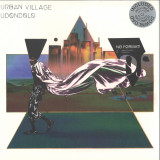
URBAN VILLAGE - UDONDOLO

Urban Village

UDONDOLO

12inchNOF49LP
NO FORMAT
05.02.2021

Signed to Parisian label N F rmat! (home to Oumou Sangar , Blick Bassy & M lissa Laveaux), Soweto-based 4 piece band Urban Village present their debut album, ‘Udondolo’.
Marrying the day-to-day experiences of black South Africans with ebullient elements from traditional Zulu music, Urban Village is the alias of four experimental musicians all born & raised in the township of Soweto at the tail end of apartheid.
Urban Village release music under a name which specifically references the blend of cultures, music & rites which were assimilated into the now 1 million strong population of Soweto, when black South Africans from multiple provinces were brought to the area during the establishment of apartheid, under strict segregation from Johannesburg’s white suburbs.
Born for the most part in the last years of apartheid, whilst growing up the band plunged happily into house and dance music that turned the page of a heavy past. Guitarist Lerato came across older Zulu musicians and their style of maskandi playing. Lerato has since mixed styles from homelands and rural areas, sharpened in club jam sessions (where he went on to meet Tubatsi and form Urban Village) during which spoken word, hip-hop and jazz rub shoulders freely.
‘Udondolo’ - partially recorded at legendary Downtown Studios in the heart of Johannesburg and at Figure of 8 studios in the leafy suburbs of Randburg, - is a journey through all the colours of Soweto. This is where it draws its consistency, strength & identity. That of Soweto itself - a dormitory town designed to
monitor those who were sent there, it has become a laboratory of music where the hopes of an entire people resonate, even today.

non in magazzino

Ordina ora e ordineremo l'articolo per te presso il nostro fornitore.


Last In: 5 years ago
URBAN VILLAGE - UDONDOLO

Urban Village

UDONDOLO

12inchIN205221
NO FORMAT
22.01.2021

The latest signing to Parisian label No Format! (home to Oumou Sangaré, Blick Bassy and Mélissa Laveaux), Soweto-based 4 piece band Urban Village will release their debut album "Udondolo". Marrying the day-to-day experiences of black South Africans with ebullient elements from traditional Zulu music, Urban Village is the alias of four experimental musicians all born & raised in the township of Soweto at the tail end of apartheid; Urban Village release music under a name which specifically references the blend of cultures, music & rites which were assimilated into the now 1 million strong population of Soweto, when black South Africans from multiple provinces were brought to the area during the establishment of apartheid, under strict segregation from Johannesburg's white suburbs. Born for the most part in the last years of apartheid, whilst growing up the band plunged happily into house and dance music that turned the page of a heavy past. Guitarist Lerato came across older Zulu musicians and their style of maskandi playing. Lerato has since mixed styles from homelands and rural areas, sharpened in club jam sessions (where he went on to meet Tubatsi and form Urban Village) during which spoken word, hip-hop and jazz rub shoulders freely. "Udondolo" - partially recorded at legendary Downtown Studios in the heart of Johannesburg and at Figure of 8 studios in the leafy suburbs of Randburg - is a journey through all the colours of Soweto. This is where it draws its consistency, strength & identity. That of Soweto itself - a dormitory town designed to monitor those who were sent there, it has become a laboratory of music where the hopes of an entire people resonate, even today.

pre-ordina ora22.01.2021

dovrebbe essere pubblicato su 22.01.2021

Derek Russo - Primordial Stance EP

The first release for Broad Channel is from label head Derek Russo, whose early immersion in house music and long-held love for techno come through in this four-track EP. Primordial Stance, as it’s named, offers techno with a twist; these tracks are leftfield in their approach and yet firmly rooted in a soulful, classic sound. The EP is both cohesive and fully dynamic, presenting a range of styles from rugged, acidic techno to entrancing ambient.

With this EP it’s difficult to pick a standout; each track is distinctive and able to hold its own, offering multitudes to the release as a whole. A through-line is felt in Russo’s original production style, marked by twists and departures that feel original, creating perpetual elements of surprise. Whether introducing new rhythmic structures mid-groove, incorporating raw percussion, or peppering a track with an organic element (i.e. bird sounds) as in the house-infused gem “Ocean Hill Groove”, Russo knows how to keep listeners engaged. “Primordial Stance”, the title track, is a prime example of this interesting layering: metallic percussion and a submerged bassline give way to claps and a hypnotic vocal sample, before ushering in a Recondite-style acid line. “Mosquito Paranoia” is a gritty dance floor requiem, in which crazed synth arpeggiation induces the kind of madness one expects from only the best warehouse parties. A similar kind of synth work is adopted for the send off track, “Long Afternoon of Earth” — a beatless arrangement that rounds out the release and encourages deep listening. These tracks expand and unfurl as they progress, until both ear and body are utterly hooked. Absolutely one for the collection.

non in magazzino

Ordina ora e ordineremo l'articolo per te presso il nostro fornitore.


Last In: 3 years ago
The Architect - Une Plage sur la Lune

""Dad! Look, we can see the moon through the window."

Record made on Earth. All children, young and old, you will hear my heart here without a stethoscope. This record is "home-made with a window open to the world". Inspired by my family and friends, these music tracks are dedicated to them!" The Architect

The Architect takes us on a trip through the world and styles: Hip Hop, Jazz, Electro, Soul, Funk... A true vinyl lover and real digger, turntables have always been his favorite playground. Hyperactive beatmaker, he is also engaged with different side projects such as L’Entourloop and Bloc.

The success of his first EP "Foundations" released in 2013, including several hits such as "Les Pensées" (8M views) or "Dreader Than Dread (ft. Skarra Mucci & L'Entourloop)" (15M views), led him to do more 200 shows around the world and accumulate more than 35M of streams on the platforms.

Seven years later, The Architect finally returns with a new single "Darling", the first single from his long-awaited new album entitled “Une plage sur la lune” to be released on June 12th, 2020. A "home-made album with a window open to the world" as he describes it himself.

non in magazzino

Ordina ora e ordineremo l'articolo per te presso il nostro fornitore.


Last In: 5 years ago
DJ JAMAICA - Inna Fine Dub Style

One of the two great chapters in reggaes history was the DJ phenomenon that conquered the Sound Systems in and around Kingston town in those heady 1970's, the other was the dub plates specials that allowed the DJ's to explore a tune in the first place. Giving some fine question and answers to its original vocal, emphasising its meaning or taking it into another subject matter altogether. When you have these two styles and add to it that original vocal, dubbed in at various points you get a fantastic melting pot that lifts a tune and can take it almost anywhere it likes.

Although DJ's were operating in Jamaica in the 1950's and 1960's with the likes of Count Matchuki and Sir Lord Comic, their role was that of mainly selector with a few vocal embellishments to instrumental tracks to gee up the crowd. 1969 saw the art form broaden with the likes of DJ King Stitt (Winston Spark) who scored a couple of hits for producer Clancy Eccles with 'Fire Corner' and 'Herbsman Shuffle'. But it was Clancy Eccles next releases with a certain U Roy (Ewart Beckfort) in the same year that saw the style explode. When hearing the DJ holding the crowd’s attention on King Tubby's Home Town Hi - Fi Sound System, the producer rushed the DJ into the studio and cut 'Wake the Town' and 'Rule The Nation'. Which would top the Jamaican charts in the soon to follow 1970.

In true Jamaican musical style when a new sound hits on the radio waves, many would soon follow. With an abundance of already tried and tested hits, producers would get the new
toasters of which there were many and revamp and breathe new life into their back catalogues.

But what makes this set of cuts, chosen for this release that little bit more interesting, are the working of the dub plates and effects alongside these vocal talents. Adding another layer to this musical cake.

A fine selection of tunes worked over by the cream of the 1970's DJ circuit.U Roy, I Roy. Jah Stitch, U Brown, Dillinger, Prince Jazzbo, Dennis Alcapone and the vastly underrated Shorty the President alongside some classic King Tubby dubs surely a match made in heaven...

Hope you enjoy ride…….

pre-ordina ora11.12.2020

dovrebbe essere pubblicato su 11.12.2020

Noel Williams - Street Talk

"This second series of Konduko reissues continues with the rare and in demand Street Talk. Noel Williams (aka King Sporty) again shows the breadth of his talent, recording reggae, funk, soul and disco in the space of a few years with groundbreaking results.

Back recording at Miami's legendary Quadradial Studios, alongside master engineer Paul Speck, Williams created a synth-assisted, beat-programmed bomb, adding Jeanette Williams and Betty Wright's vocals and Bert Bailey's (The Ex-tras) blazing guitar, Street Talk heralds the dawn of the computer funk called electro boogie.

The inclusion of Benji "The Mad Bomber" for some South Beach rapping showed Williams' encompassing new music styles that led to his music being heavily sampled and revered at the birth of Miami Bass.

This all comes together and out the other side in the panoramic Discomix by Rune Lindbaek. A legend of the Norwegian sound that has conquered far and wide, Rune is one of the elder statesmen, from setting up his own long standing Drum Island label, to releasing with Noid, Repap and recent edit excursions on Norsk Tripping. His psychedelic dub wonderland is an all-together outer-body experience where vocal and rap soundclash deep, deep in the echo chamber.

non in magazzino

Ordina ora e ordineremo l'articolo per te presso il nostro fornitore.


Last In: 4 years ago
JAMES STEWART FEAT. AYUUNE SULE - ATLANTIC RIVER DRIVE

After his acclaimed debut EP « Cotonou » on Alma Negra’s record label, James Stewart comes back with his new EP Atlantic River Drive for Mawimbi Records, featuring two collaborations with Ghanaian kologo musician Ayuune Sule as well as two remixes from Simbad aka SMBD.

James Stewart met Ghanaian kologo musician Ayuune Sule, after booking several shows of kologo music star King Ayisoba in Lyon. Stewart was quick to witness the bluesy tone of Ayuune’s voice and his kindness as a musician, despite his impressive stature. Quite logically, Stewart invited Sule to record vocals on two of his ongoing demos at Bruno Patchworks’ recording studio (Voilaaa, Mr. President, Da Break), with the idea of making a rather unheard crossover between traditional kologo music and contemporary styles that would both appeal to Ghanaian crowds and a Western audience. Stewart then had a number of his arrangement ideas re-recorded by a talented cast of musicians, resulting in a brilliant mix of acoustic and electronic textures, sounding both vintage and modern.

Nodding to Eddie Palmieri’s landmark record “Harlem River Drive”, “Atlantic River Drive” is a stomping dancefloor track, drawing from the 6/8 feel of kologo music and the energy of contemporary club music. The track can be read as a tribute to the musical cross-pollinations between the African continent and its many diasporas, which Stewart has dedicated a long part of his life to, but also as a more intimate story about his life and family. All words were written by Stewart and then translated by Sule in his native Fra fra language from Northern Ghana.

“Where Are We Going?” is a two-part journey that reminds us that we should care about each other, about our communities while we don’t know what the future is made of. An important and much welcome message to navigate through these troubled, uncertain times. Referencing congolese N’dombolo tracks, the track has two parts and rich arrangements, with its first part going deep with syncopated clarinet hooks and playful percussion parts, and its second part moving to a four-on-the-floor pattern and an entrancing baritone saxophone solo.

The EP also features Worldwide FM and Brownswood maestro Simbad, who delivers two dancefloor-ready reworks of the track “Where Are We Going?” under his SMBD moniker, turning it into a spiritual, dubby journey, as well as an emotional house music track.

non in magazzino

Ordina ora e ordineremo l'articolo per te presso il nostro fornitore.


Last In: 5 years ago
Various - SOS MUSIC VOL. 1

Various

SOS MUSIC VOL. 1

12inchSOS001
SOS Music
26.10.2020

Birthed from a radio show and event series with iconic Los Angeles radio station DUBLAB, SOS MUSIC’s goal is to provide a platform for diverse and forward-thinking electronic music, with a keen emphasis on womxn talent from around the world. In conjunction with Berlin-based !K7, the label’s debut release, SOS MUSIC Vol. 1 is a 14-track eclectic compilation showcasing dance music from some of the best producers working at the moment including rRoxymore, Violet, Nightwave, Umfang, LCY & Minimal Violence - lovingly curated to uplift and celebrate the global electronic community in a time of deep uncertainty in the music industry. SOS MUSIC Vol. 1 is international to its core, drawing on in?uences from the artists’ respective backgrounds including the UK, US, Serbia, Spain, Japan, Slovenia, Portugal, Germany & Canada.

SOS MUSIC was founded in Los Angeles by Maddy Maia (UK) and Tottie (Spain via the UK). Maddy has a long history in independent music, and is currently VP A&R in the US for famed British indie label Ninja Tune. Tottie is director of events and special projects at DUBLAB, and curates music, art and cultural programming that re?ects the diverse landscape of the city and beyond.

A shared love of underground music and culture, Maia and Tottie’s bond started strong via throwing events and later with hosting a monthly radio show; The SOS Music imprint is a natural next step in the pair’s progression as curators and its goal will continue early principles the duo stuck to- to seek out diverse underground talent and amplify their voice or community, whilst championing diversity on all sides of the industry. Maddy and Tottie’s music in?uences and styles span wide across the spectrum of experimental dance music, ranging from left?eld house, orchestral ambient sounds, not forgetting a nod to their youth growing up in the UK rave scene.

non in magazzino

Ordina ora e ordineremo l'articolo per te presso il nostro fornitore.


Last In: 2 years ago
FRAGILE X - LIFETIME EP

Fragile X is an exciting new collaboration between vocalist Inga Schunn and producer Dylan Chase.

The group began in 2019 when Schunn posted an iPhone voice recording on Facebook in which she sang an acapella in her native German. Her friend Chase, who was recording and releasing at that time as Caffeine Worldwide, heard the 30-second clip and immediately asked Schunn, at that time only an acquaintance, if she might like to record something. Neither of them realised at the time that the first sessions would lead to a debut 4-track EP that capably references as many styles as most full-length albums from established artists, while also setting a blueprint for a project that could go anywhere from here.

The opening track alone, 'Lifetime', opens with a woozy blend of UKG rhythms and Royksopp synths, before giving way to Schunn's sedate rendition of Daniel Johnston's 'Some Things Last A Long Time'...basically the years 1990-2002 distilled into 5 furious minutes of 5am energy.

Across the whole release, Chase's productions show the same cinematic flair that made his previous releases on French Press Lounge, Third Try and Human Concrete Block must-haves for your late-night record bag.
A2 'Prix' with the kind of R&S attitude that would make forebears like LFO or Lone proud, could be the soundtrack for an illegal outback rave or a sunset drive over a Big Sur overpass.
The album closer, 'Fragile X Theme,” sounds something like if late 90's Bjork was commissioned to soundtrack the movie Hackers with Akai samplers on loan from the Hartnoll brothers.

The whole release may be overshadowed by the B1, 'Karaoke Girl', a track Schunn and Chase wrote in Mexico City in 2019 after a rough night at a Zona Rosa karaoke bar.
Opening with dripping synths as soft and inviting as the last drink before sunrise, Schunn tells a story of a woman who overstays her invite at an intimate birthday party between friends, taking the mic from the birthday girl and singing "Seal, Rush and Kate Bush" with a "death grip on the mic."
It's a bizarre, vivid song for such new artists to have come up with, and the lyrics are underpinned by Chase's equally adventurous combination of Nordic disco elements with heavily treated bursts of Japanese koto.
The Lifetime EP's title is a reference to the laborious process that it took to make the record, with multiple recording sessions across two countries followed by endless edits and a Covid 19 related vinyl slowdown bringing its release to a crawl.
The record itself is a fast-paced, dopamine rush debut that we are proud to share with you as both the culmination of a long process, and the beginning of a strange new story.

non in magazzino

Ordina ora e ordineremo l'articolo per te presso il nostro fornitore.


Last In: 5 years ago
Cloud One - Atmosphere Strut

More glorious heat from the vaults of NYC's Disco powerhouse - P&P Records!

One of many labels operating under the equally legendary tutelage of Patrick Adams and Peter Brown, two truly colossal figures in NYC's music scene, the P&P records catalogue is still fascinating underground dance music lovers to this day. Covering a wide range of styles including Gospel, early Rap and Disco the label's output continually finds its way into the playlists of respected DJ's and selectors across the globe. This latest repress from the vaults is a real biggie - a true NYC underground disco CLASSIC!

Cloud One was one of Adams' numerous studio outfits, featuring a ridiculously healthy dose of the man's virtuoso keyboard and synth playing. This was a progressive Disco sound, the pairing of extremely danceable funk and R&B with some spaced out over-dubbed analogue synthesizers and keys made for a heady concoction indeed, especially in 1976 when this cut was released. This was one of many Cloud One trademarks and one of the things that make these records still sound so way out today! 'Atmosphere Strut' could not be a better title for this immense slice of true NYC space Disco - it's got it all - the driving rhythms of the Cloud One band, the killer vibes, celestial vocals and Adams' totally wigged out synthesizer workouts. On top of all this goodness, the main man Kon, Boston's editor supreme and self confessed DIsco fiend and digger, has dropped a stellar and respectful edit of Atmosphere Strut' for all your disc jockeys out there, featured here across the length of the B-side thus making this an essential repress of this legendary 12". If you don't know this jam, and you're a Disco head - you're in for a treat! You're gonna fly......!

This is a 100% legit reissue, made in conjunction with Above Board distribution and the Phase One Music group, lovingly remastered with love by Optimum Mastering, Bristol UK.

non in magazzino

Ordina ora e ordineremo l'articolo per te presso il nostro fornitore.


Last In: 3 years ago
Ron Geesin - Pot-Boilers – Ron Geesin Soundtracks To Stephen Dwoskin Films, 1966 - 1970

Sublime, unique, sexy and peculiar unreleased scores by electronic and jazz pioneer Ron Geesin, made for the sublime, unique, sexy and peculiar films by maverick director Stephen Dwoskin. There. we’ve said it. And if you have not heard of one or either of these two dudes it doesn’t really matter. Geesin made great music and worked with Pink Floyd. Dwoskin made odd films, most of them are in the BFI permanent collection. They are great and a bit strange.
These superb unreleased soundtracks come from a fascinating, progressive and important period in British film history. They represent an intriguing collaboration between the lively Ron Geesin from Scotland and the American Stephen Dwoskin, who both met in London.
Musically they are minimal, charismatic and quite groundbreaking. Here is the story…
HISTORY:
Steve Dwoskin arrived in London in 1964, aged 25, with several 16mm films in his trunk, shot in the cold-water flats of Greenwich Village. He had been on the fringe of the Factory scene, and some of his films starred Beverly Grant, ‘the queen of the underground’. But they had scarcely been seen, and they didn’t have soundtracks. For almost a year they stayed in the trunk, and stayed silent. Then he met Ron Geesin, somewhere around Portobello Road.
‘Slept last night, completely dressed after working over 12 hours on sound tracks at Ron’s,’ wrote Dwoskin in his diary for 29 July 1965. ‘My films are not anywhere near being anything. I need more energy, more concise and positive ideas and less inhibition. And of course space, money and people.’ Dwoskin, who taught and practised graphic design by day, had recently decided to stay in London beyond the term of the Fulbright scholarship that had brought him there.
Ron, living with Frankie in a basement flat in Elgin Crescent – they would marry the next year, with Dwoskin as best man – was about to leave the Original Downtown Syncopators, the trad jazz band he had joined aged seventeen-and-a-half, and was trying to go solo. On stage he would make vigorous use of piano and banjo; at home Frankie had bought him a new kind of instrument – a tape recorder. ‘Soon I had one tape recorder, two tape recorders, three tape recorders.’

Ron, wrote Dwoskin in his unpublished autobiography, ‘loved to record, and to cut and splice the quarter-inch recording tape to make new sounds. This triggered in me the idea of getting back to my films and finishing them’. Soon he was living in a dank basement in Denbigh Road, a few minutes’ walk from Elgin Crescent. Ron’s soundtracks for Dwoskin’ films, recorded in the Geesins’ flat, encompassed Ron’s very eclectic range of styles – madcap piano and fretted banjo as well as tape manipulation.
Aside from Ron’s soundtracks, some of which belong to films that no longer exist (including Pot Boiler), Frankie would act in one of the films that Dwoskin either lost or never finished during these years. He was disabled, having contracted polio as a child, and Ron and Frankie were both carers and collaborators; Ron had met him when he was struggling into his car.
There was no London equivalent to the underground film scene that Dwoskin had known in New York, and his films remained unseen until such a scene began to come into being, in the autumn of 1966. Some of them made their debut at the Mercury Theatre, near Notting Hill Gate, that September. Dwoskin wrote that Alone, starring Zelda Nelson (from Ron Rice’s Chumlum), and Chinese Checkers, with Beverly Grant and Dwoskin’s friend Joan Adler, went over best.
Soon both Dwoskin and Geesin became involved in the nascent London Film-Makers’ Co-op, which put on screenings in Better Books on Charing Cross Road – ‘if you can call them screenings,’ Ron recalls; ‘I’d call it fifteen blokes in various stages of disarray, peering through the smoke’. One or more of the films had been ‘striped’ with magnetic audiotape; with others ‘we had no means of direct syncing to the picture, so he started the film and I started the tape recorder’.
In the same autumn, Dwoskin moved into a flat almost opposite the Geesins on Elgin Crescent. More collaborations followed, including Naissant, on which Gavin Bryars, whom Geesin had met during a stint on the northern club circuit with novelty act Dr Crock and His Crackpots, played double bass.
Around the end of 1967 Geesin released his first solo LP, A Raise of Eyebrows, and Dwoskin won recognition the Fourth Experimental Film Competition, aka EXPRMNTL 4, an occasional film festival staged at Knokke-le-Zoute in Belgium. By now the films had optical soundtracks.
It was only after this that Dwoskin completed his first ‘British’ films, including Me Myself and I, with Barbara Gladstone, an American dancer who had appeared in Barbara Rubin’s Christmas on Earth, and with whom Dwoskin and Geesin had at one point devised a stage show, never produced. For Moment, a single-shot film, Geesin provided his most experimental score yet. At the time of its debut in 1970, Dwoskin and the Geesins were sharing a house in Ladbroke Grove.
By then, Ron was working with Pink Floyd, and soon afterwards he and Frankie moved out to the country, to be replaced by Bryars both in the house and as Dwoskin’s principal collaborator.
Until now these scores have remained part of the Geesin Archive and have never been issued.

non in magazzino

Ordina ora e ordineremo l'articolo per te presso il nostro fornitore.


Last In: 5 years ago
BLUNDETTO - GOOD GOOD THINGS

New album from the Parisian producer.

Label say:
Because, at La Creme Garcia Club, a private circle of discerning smokers in Barcelona, Blundetto was in heavy rotation in the playlists. So heavy that these people of good taste for legal activity on this side of the Pyrenees yet prohibited from profits, had the idea of becoming the privileged partners of a new album. Without scrutiny, without intervention in the artistic, but with a single watchword: let Blundetto return to his first love of world sound.

The result is a stereo trip illustrated by Mossy Giant's artwork. A trip around the world without leaving your couch.
An offer that cannot be refused.

Ten years had passed since Bad Bad Things; it was the occasion to celebrate this decade by reviving its state of mind. The one who mixes collaborations, atmospheres, and styles. Exiled to the green, in musical autarky from several albums, Blundetto has therefore returned to the rhythm of city life and studios. He has changed his way of operating, opened his repertoire, and invited friends to new titles that he had written for them.

The circle of intimates already present on Bad Bad Things (Hindi Zahra, General Electric, Chico Mann) has widened to include regular accomplices (Biga Ranx) and to extend to artists with whom Blundetto felt an obvious connection (Crime Apple, Leonardo Marques). Guided by this roadmap written by Blundetto, all succeeded in painting with their colors and spreading their musical soul in the project, either taking the rhythmic direction of Brazil, Africa, or Latin America, getting dizzy in Jamaican fumes or chopping at the salient angles of hip hop.

Dive into the new openings of Clément Petit’s arrangements, now more sophisticated than those on which Blundetto evolved, and now capable of bringing an orchestral dimension made of strings and brass, creating a direct opening on the emotions, an automatic generator of images to accompany the soundtrack by the producer Blackjoy.

Whatever the orientation, each guest becomes a unique and essential part while Blundetto remains the common thread, the cement and the final varnish of a musical mosaic called Good Good Things.

non in magazzino

Ordina ora e ordineremo l'articolo per te presso il nostro fornitore.


Last In: 5 years ago
BAS GROSSFELDT - LOST IN SENSATION

2020 reboot for Detroit's legendary Metroplex.

The Label Say "Cologne based producer Bas Grossfeldt has crafted an outstanding release perfectly aligned with Juan Atkin’s brilliant Metroplex aesthetic. As a relatively new name in the scene, Bas Grossfeldt’s music sounds as if it were the results of decades of focused experience in the studio.

With a background in installation, choreography and performance art, Bas Grossfeldt is the artists alias to focus on the musical side of things. His deeply rooted interest in the relation of space and body is also translated into his music. The fusion of spaced-out textures, rhythmical distortions, cold waves of synthesis, and enough modern production prowess ensures a release saturated with innovation and abundant imagination. A rare release for the seminal Detroit label, which also represents Juan Atkins’ interest in the arts world and new, different approaches.

The exchange between the label head and the artist, initially came to life because internationally renown conceptual artist Mischa Kuball, knowing Juan from a joint project, sent him the demo of Bas Grossfeldt. Especially intrigued by the track „Lost In Translation“, Juan and Bas started exchanging, approaching the record as an „art project“ and a classical EP at the same time, for example leading into the cover being made by Bas Grossfeldt/Søren Siebel himself and including numerous hidden references to the sound.

Each track embraces an incredible array of sounds and styles, from soundscapes to mind-bending Techno – all equally as effective for the brain as the dancefloor.

“Lost In Translation” opens the release with a cinematic piece of electronica permeating with frozen emotion and melancholic soul. The beautiful track captures a foggy morning’s haze, the first chill of winter with only a gentle kick-drum keeping the cold from completely taking over. It is also accompanied with a hypnotizing abstract video by film-artist Svenja Voß.

Continuing in a dubby, winter haze is “Lost In Sensation” which floats alongside a sharp, metallic rhythmic arrangement and a gentle, ever-present kick drum. Deep, heavily saturated atmospheric textures sleep underneath the sounds while lucid melodies float in and out.

“Your Orbit” rounds out the release with the most club-ready production. Disorienting melodies and gritty synths capture a dreamlike perception while a tough kick drum and clattering percussion drives the music deeper into undiscovered dancing territories just left of center. "

non in magazzino

Ordina ora e ordineremo l'articolo per te presso il nostro fornitore.


Last In: 4 years ago
Various - Cold Waves Of Color Volume 6

Here is the highly anticipated sixth volume of the well received electronic compilation series from the relaunched 1980's color tapes label. As with the other volumes you can find great examples of cold wave, minimal wave and synth electronics and pro to EDM made by obscure British bands in the 1980's such as: Berserk In A Hayfield, Lives of Angels, Silicon Valley, Modern Art, Disintegrators, Echophase, The Lord and Mystery Plane

"Up there with V-O-D selections, the Color Tapes series so far has provided invaluable insight to hidden or much lesser-known currents of the ‘80s cassette subculture which gave birth to myriad artists, styles and industry conventions whose influence can still be felt over 30 years later. " - Boomkat

“Electronic work that’s way different from mainstream pop of the period - often forgedout of the same instrumentation as the hits - but in a stripped down way - with lots of dark and moody corners!” Dusty Groove

“Evil Synths and evil beats” - Norman Records

“Gary Ramon’s re-born Color Tapes imprint is every bit as essential as it’s Minimal Wave and electro-focused predecessors” - Juno

Limited edition of 500 copies comes with poster insert

non in magazzino

Ordina ora e ordineremo l'articolo per te presso il nostro fornitore.


Last In: 5 years ago
BERZERKER LEGION - Obliterate the Weak

BERZERKER LEGION was founded in 2016 by guitarists Tomas Elofsson (Hypocrisy) and Alwin Zuur (Asphyx) with a vision to create death metal of the most belligerent quality, they recruited a line-up of solid well-known musicians consisting of James Stewart (Vader) on drums, Jonny Pettersson (Wombbath) on vocals and Fredrik Isaksson (Dark Funeral) on bass to complete the Legion. Alwin Zuur (guitars/songwriter) comments: « During the recent years Tomas and I met each other at shows and festivals regularly. Much of our conversations were about music and styles. During these meetings we found out that we really had a lot of common musical interests . Music wise ‘Obliterate the Weak’ displays the perfect balance between brutality, melody and harmony. Being a fan of the early 90’s Swedish Gothenburg style, with bands like At The Gates, Eucharist, a Canorous Quintet, as well as being a die-hard fan of brutal old school death metal style with bands like Bolt Thrower, Obituary, I have always wanted to write songs showing a mix of such different death metal genres. The great musical cooperation between Tomas and me has made ‘Obliterate The Weak’ a variously solid diverse album where you can expect 11 songs of violent pounding riffing in a massive wall of sound mixed with immense melodies and thrilling harmonies.» Vocalist Jonny Pettersson explains the lyrical theme of ‘Obliterate the Weak’: « The lyrical concept is based around how religion is poisoning the world, and even after so many years of evolution, development , we still have huge parts of the world that believes in a fairytale, people who believe that this fairytale is worth going to war over, worth killing for and uses as an excuse for truly malevolent acts. These are weak minded sheep that will do anything in the name of whatever god they believe in. 'Obliterate the Weak' draws from the will to eradicate all forms of religion and tells a story of atrocities made in the name of a fiction. » Saying the album songs transpire massively produced invigorating heavy death metal is an understatement. BERZERKER LEGION knock out with warlike triumphant, powerfully addictive harmonies that will turn them into an unstoppable beast in a live situation and on record.

non in magazzino

Ordina ora e ordineremo l'articolo per te presso il nostro fornitore.


Last In: 6 years ago
Orkesta Mendoza - Vamos A Guarachar!

Something is stirring in downtown Tucson. That's no great surprise perhaps: Calexico have been sending out missives from the desert for 20 years now, Giant Sand for even longer than that, and the Green on Red revival is surely overdue. Let us remind ourselves that this isn't a big city in the American sense, but that its hinterland is indeed as big as it gets. For an hour south, Mexico starts. And this is where things get interesting.

Born in Nogales, Arizona, raised in Nogales, Sonora, multi-instrumentalist and band-leader Sergio Mendoza grew up listening to the Mexican regional styles jostling for headspace in a young, music-mad mind - cumbia mainly, but mambo, rancheras and mariachi too. The border is always a fierce arena of exchange, both commercial and cultural, and so there was American music too. At one point 'rock and roll, the classics', as Mendoza himself deadpans, seemed to win out and he stopped playing those 'Latin styles' for a good decade and a half.

The return to those sounds was a strong one in 2012's Mambo Mexicano, co-produced by Mendoza and Joey Burns of Calexico - a band for which Mendoza has become an increasingly integral touring and recording member. While that record had a studied air, tentative in parts (as befits the renewal of an old love affair), ¡Vamos A Guarachar! is another beast entirely: by turns raucous ('Cumbia Volcadora', featuring Mexican electronic pioneer Camilo Lara), tender ('Misterio', surely Salvador Duran's finest moment with the band so far) and plain serious fun, as in 'Contra La Marea' and 'Mapache', it also bears a robust electronic edge, a keen pop sensibility and all the hallmarks of Mendoza's love of 60s rock, with the closing track, 'Shadows of the Mind', sure to be included if anyone decides to update the Nuggets collection for the 21st century. This is roundabout way of saying that it appears to have everything, but never too much of anything. Focused, fierce and beautifully executed by a superbly drilled set of musicians, it is a record that fully matches the band's explosive live performances.

You could, of course, take the trip to Tucson yourself, to the home of this essential set of field recordings. The scene hangs out together, so ... if the stars align and their frantic tour schedules permit, you might see any number of folks from Calexico, Giant Sand or up-and-coming cumbia rockers Xixa deep in conversation somewhere in town with a quiet young man in black. That's Sergio. Right now, in this endless game of Tucson tag, Orkesta Mendoza are IT.

non in magazzino

Ordina ora e ordineremo l'articolo per te presso il nostro fornitore.


Last In: 6 years ago
Victor Cavini - Japan

Victor Cavini

Japan

12inchBEWITH076LP
Be With Records
02.03.2020

The first Be With foray into the archives of revered German library institution Selected Sound is one of our favourites on the label - the super in-demand Japan from Victor Cavini, originally released in 1983.

Rare and sought-after for many years now, this is one of those cult library LPs that never turn up. With Daibutsu the giant Buddha of Kamakura’s presence gracing the hefty front cover, this is a record bursting with dope samples for adventurous producers: it’s koto-funk madness!

Victor Cavini was the library music pseudonym of prolific German composer and musician Gerhard Trede. He was known for exploring instruments and styles from around the world (he played over 50 different instruments himself) and Japan is
his collection of 14 musical sketches painted with traditional Japanese wind and string instruments. These are the sounds of traditional Japanese folk music re-interpreted through Western ears, with the occassional contemporary twist. Contemporary for 1983, of course.

These “Pictures of Japan” are hypnotic, sometimes frantic, but always beautiful. The first twelve tracks offer airy explorations of koto and flute, with other strings and percussion being added and then given their own space. Indeed “Pictures of Japan XII” is just drums.

And then “Pictures of Japan XIII” seems to come out of nowhere. But the subtle sleaze of its full band sound still doesn’t quite prepare you for the towering climax of “Pictures of Japan XIV”.

This is Japan’s undoubted standout piece, completely and wonderfully at odds with the rest of the album. It’s the reason this has become such a must-have record. It keeps the traditional Japanese instruments but combines them with shuffling funk breaks, electric bass high in the mix and a Godzilla-sized psychedelic fuzz guitar sound that might actually be a traditional reed flute pushed to its limits. Whatever it is, it sounds awesome.

Recalling both Rino de Filippi’s Oriente Oggi and Giancarlo Barigozzi’s Oriente, the track’s a real head-nod groove for b-boys and b-girls alike that sounds straight out of a late 70s Yakuza film. Indeed, if you were told The RZA or Onra had cooked this up in the lab this century, you’d be convinced. It’s crazy that this dates from 1983.

The audio for Japan has been sensitively remastered for vinyl by Be With regular Simon Francis to keep all the character of the original recordings. Richard Robinson has handled the careful restoration of the original Selected Sound sleeve. Essential.

non in magazzino

Ordina ora e ordineremo l'articolo per te presso il nostro fornitore.


Last In: 6 years ago
Omar Soleyman - Shlon

Omar Soleyman

Shlon

12inchBEC5650664
Caroline International
24.02.2020

Syrian wedding singer turned global dance icon Omar Souleyman releases his 4th studio album Shlon via Mad Decent / Because Music.
On Shlon (Arabic for “how,” or literally “which color”), Omar Souleyman presents 6 new techno-meets-dabke songs of romance and love — singing poetry of a woman’s lips as sweet as Hillah’s dates on “Layle”; an intriguing woman he watches from afar whose kiss would be worth 10 million other kisses on “Shlon”; a lover ready to offer his beloved anything she wishes under the sun on “Shi Tridin” (“What Do You Wish For?”); a man in admiration of a woman with green eyes and blonde hair on “Abou Zlilif” (“Her Face is Like The Moon”); a song about love that will last forever on “Mawwal”, a traditional — all superimposed on complex techno arrangements by Hasan Alo, and based on the hi-speed Kurdish and Arabic dabke and baladi styles with the exception of “Mawwal” being presented in its traditionally slower pace. Shlon features double keyboard work from Hasan Alo, a fellow native of the Hasaka region in Northeastern Syria who has recently been active in the vibrant nightlife scene of Dubai. Azad Salih, a young Syrian man currently living in Mardin, Turkey, accompanies on saz, with the lyrics and love poetry written on the spot during the album’s recording session by longtime Omar collaborator Moussa Al Mardood - also currently based in Turkey.
Omar Souleyman, who has collaborated with Björk and Four Tet, began his career as a prolific wedding singer, releasing nearly 500 live albums before civil war broke out in his native Syria in 2011. He then moved to Turkey and in 2013 released his Four Tet-produced debut studio album Wenu Wenu via Ribbon/Domino, which NPR called, "...a jam so visceral, thrilling and intense as to make the mysterious matter of earthly borders seem hardly worth the time to contemplate." His 2015 sophomore album Bahdeni Nami (various producers including Four Tet, Gilles Peterson and Modeselektor) garnered widespread critical praise including The Guardian, who proclaimed "It's so fast that the only appropriate way to engage with it is to wriggle your limbs. Melodies are both abrasive and ebullient, chattering endlessly like raucous birdsong," and 2017’s To Syria, With Love via Mad Decent placing Omar firmly in the canon of global electronic music.
Souleyman has bolstered his growing status as a world and electronic music icon establishing an extensive international following after touring widely and performing at major festivals including Glastonbury, Bonnaroo, Pitchfork Paris and Roskilde. Since its founding in 2013, Souleyman has been an advocate for the charity "Our Heart Aches for Syria," which operates in collaboration with Doctors Without Borders. In that same year, he performed at the Nobel Peace Prize Concert in Norway.

non in magazzino

Ordina ora e ordineremo l'articolo per te presso il nostro fornitore.


Last In: 14 months ago
TOMMY McCOOK & FRIENDS - Horns Man Dub'
  • Track 1 Murderous Horn Dub – Rocking Jamboree Rhythms
  • Track 2 Wreaking Horns Dub – Wreak Up My Life Rhythm
  • Track 3 Natty Congo Dub – Roots Natty Congo Rhythm
  • Track 4 Tribulation Horn Dub - Tribulation Rhythm
  • Track 5 Everybody Needs Dub – Everybody Needs Love Rhythm
  • Track 6 Ambitious Dub – Breaking Up Rhythm
  • Track 7 Finding Dub – You’ll Never Find Another Love Like Mine Rhythm
  • Track 8 Catching Horns Dub – You Have Caught Me Baby Rhythm
  • Track 9 Springtime In Dub – In The Springtime Rhythm

Tommy McCook was not only a founding member of the legendary Jamaican Ska group The Skatalites, but also a brilliant musical arranger. His informed understanding of Jazz, R&B and in fact most music styles would always add another layer to any song put his way. This made him the go to guy for most of the Jamaican producers, who would use his arrangement skills to pepper up their latest tunes.

Tommy McCook, (b1927, Havana, Cuba) came to Jamaica with his mother from Cuba aged 11 and entered renowned Alpha Boys School for underprivileged children, a school that placed great emphasis on musical tuition. At the tender of 14, such was his talent he has left to join Eric Deans Orchestra and took on stints with other bands led by Don Hinchman and Roy Coburn. All the bands played in the Swing and Jazz style of the times. He relocated to the Bahamas in 1954 where he further developed his Jazz technique and upon his return to Jamaica in 1962 began working Coxsone Dodd’s Studio One and became involved in the development of Ska. His knowledge of Jazz, R& B and Jamaican musical forms helped set the tone for the group of musicians he was working with and would name the Skatalites. The group, consisting of Don Drummond (Trombone), Roland Alphonso (Tenor Saxophone), Jackie Mitoo (Piano), Lloyd Brevett (Bass), Lloyd Knibbs (Drums), alongside Tommy himself on Tenor Saxophone. The group would back all the major Ska vocalists pf the day and would also go on to cut a catalogue of instrumental music. The Skatalites split up in 1965 and Tommy McCook moved over to work with Duke Reid’s Treasure Isle Studios where he formed The Supersonics. A set of musicians under his guidance that consisted of Lynn Tait and Ernest Ranglin (Guitar), Neville Hinds and Winston Wright (Organ), Gladstone “Gladdy” Anderson (Piano), Hugh Malcolm and Arkland “Drumbago” Parks (Drums), Clifton “Jackie” Jackson (Bass), and Tommy and Hernon Marquis (Saxophone). The more laid back sounds from 1966-1968 would be given the name Rocksteady of which again McCook was at the forefront. The top producers like Bunny Lee would use the musicianship of Tommy McCook and his arrangement skills to enhance this new sound.

We have compiled a great selection of rhythms that featured McCook blowing over tracks stripped of their vocals and replaced with some fantastic lead lines played by Tommy and some of his fellow horns men.
We hope you agree like we do that they do this in fine style.

pre-ordina ora21.02.2020

dovrebbe essere pubblicato su 21.02.2020

ALPER MARAL & MERT TOPEL - CONTROL VOLTAGE PROJECT LP

'Control Voltage Project' is a long running project of Alper Maral & Mert Topel; Alper Maral is one of the most significant sound discoverers around Turkey through auditory and academical researches he has made about experimental electronic music.

Mert Topel is a versatile musician, one of the most important keyboardist for many artists in popular music in Turkey. He has released his first solo album “Serendipity” in 2017.

Control Voltage Project is named after the electric signals which are used for the interactions between various physical sound layers. Recordings of CVP -first album from the duo- was finished in 2005, and released in 2015 on “Müzik Hayvanı” as free download on web.

The album is making its roots through an endless sound pool that created by synthesizers, vocoders and tape recorders such as KORG MS 20, YAMAHA Motif 8, PROPHET 5 and TASCAM MS 16 which have characterized by different styles and times.

The duo’s 12 track album is a complete adventure from abstract
and fragile moments to groovy but spooky sounds.
Control Voltage Project is finally released on vinyl via Müstesna Records.

non in magazzino

Ordina ora e ordineremo l'articolo per te presso il nostro fornitore.


Last In: 6 years ago
Soul Jazz Records Presents - APALA: Apala Groups in Nigeria 1967-70
 
18

Soul Jazz Records new ‘Apala: Apala Groups in Nigeria 1964-69’ is the first ever collection of Apala music ever to be released outside of Nigeria. The album focusses on a wide selection of recordings made in Nigeria in the 1960's, a time when Apala music was at the height of its popularity. Apala is a deeply rhythmical, hypnotic and powerful
musical style that combines the striking nasal-style vocals and traditions of Islamic music, the Agidigbo (thumb piano), and the equally powerful drumming and percussion rhythms and
techniques of the Yoruba of Nigeria.

The most significant figure in Apala music is undoubtedly Haruna Ishola who features throughout this album. Ishola holds an almost mythological status in his role as populariser of Apala music in
Nigeria. Ishola’s singing was believed to be so powerful that, without proper restraint, it could kill the recipient of his music.

Apala is a popular music that also functioned as a form of cultural resistance – Apala music involved no western instrumentation and is sung in the Yoruba language, its aesthetic an implicit cultural
rejection of the British Empire’s colonial rule over Nigeria which lasted from 1901 until independence in 1960. Apala music was popular and widely accepted in Nigeria due to its philosophical and profound
lyrical content alongside the complex rhythmic patterns of this heavily percussive style, which highlighted many of the percussion instruments of south-west Nigeria.

He's one of a number of popular urban styles of music that came out of Nigeria in the 20th century and sits alongside the more well-known (in the West) styles of Fuji, Highlife, Juju and Afrobeat. Of these modern forms Apala remains perhaps the most ‘roots’ style (sometimes described as ‘neo-traditional’) due to the authenticity of its sound. It has similar Islamic roots to other neo-traditional styles of Nigeria – including Waka and Sakara – examples of which are also
included on this collection contextualising the music of Apala.

These recordings were originally made and released locally by Decca and EMI Records as well as a variety of independent labels in Nigeria and have never been released outside of the country before. Soul Jazz Records are releasing this album as a deluxe double gatefold vinyl (download code), CD, slipcase and booklet, both containing full text and photography.

non in magazzino

Ordina ora e ordineremo l'articolo per te presso il nostro fornitore.


Last In: 5 years ago
TRADISYON KA - Gwo Ka: Music Of Guadeloupe West Indies

Soul Jazz Records continues its journey into the world of Afro-Caribbean roots music with this album of newly recorded music of Gwo Ka music recorded and produced by Soul Jazz Records on the island of Guadeloupe, French West Indies.

Gwo Ka music is a fantastic fusion of African-­derived musical form ( call and response), with vocal styles that draw upon the equally powerful French chanson singers to create a truly unique combination.

Tradition Ka, made up of some of the island’s finest singers and master drummers, is part of a powerful network of politicised Gwo Ka groups on the island – upholding the traditions and cultural importance of Gwo Ka as part of a larger process of defining the identity of Guadeloupe and its culture.

This album is newly studio recorded in Pointe-­A-­Pitre, Guadeloupe by Soul Jazz Records. Like the cult music of Haiti’s Vodou and Cuba’s Santeria or the roots music of Belize’s Garifuna (all of which Soul Jazz have also released), Gwo Ka is the musical and cultural product of the region’s African ancestry, forcibly brought to the Caribbean through slavery.

Gwo Ka exists only in Guadeloupe, a very different island from much of the Caribbean, in that it remains a ‘department’ of its original colonial master, France. Here, the currency is the Euro and the baker sells croissant and café au lait.

This constant ‘European-­ising’ of the island means that Gwo Ka plays a fundamental and important role in the defining of Guadeloupean identity. As an African-­derived music, its position as a counter-­balance to French influence means that the definition of how and what Gwo Ka represents is also in a constant state of flux.

These new recordings show how Gwo Ka is both a modern Caribbean music form and one firmly rooted in ancestral history.

Over the last 20 years Soul Jazz Records have been documenting and presenting the often hidden histories and deep musical worlds of Cuba, Haiti, Jamaica, Belize, Trinidad, the Bahamas and more. This documentation encompasses reissuing lost recordings, such as the mighty Studio One catalogue of reggae, producing films/dvds (such as the 3-­hour documentary Mirror To The Soul in conjunction with British Pathé, and Dub Echoes), books (check the forthcoming photography book on the Caribbean 90 Degrees of Shade, with text by Paul Gilroy, and Kanaval) as well as travelling to the region to produce new recordings.

pre-ordina ora04.02.2020

dovrebbe essere pubblicato su 04.02.2020

The Geek x VRV - Time Machine

For The Geek and VRV, everything is a matter of time. Since they first met six years ago, the two beatmakers have been broadcasting their music to the four corners of the world, and their collaboration is as strong as ever after the years. Vanguards of the French instrumental hip-hop scene, they’re coming out today with their first album, Time Machine, a synthesis of the sounds and the ideas they’ve been working on from the very beginning of their careers. A trip back through time, as its name suggests, demonstrating the range of sound possibilities that they created in previous projects and on their international tours.

The release of their hit “It’s Because” in 2013 launched them on the scene as French producers who managed to break into the United States, with sampling as their musical base. Closer to home, the Coachella, Osheaga, and Solidays music festivals were won over by the pair’s complementarity, which made the success of their BTOS beat tapes and their EPs, Electric City and Origami.

But since everything is a matter of time, it was sometimes necessary to just let things go, take a break and think things over before coming back even stronger. A year and a half ago, The Geek and VRV started to slow things down, in order to take a step back and concentrate on this new album. With one overriding idea: to explore different eras and time periods, and transpose them into our modernity. Each track is associated with a pivotal year in music. With “Paris Jazz Club 1920”, the first single on the album, we're plunged into the cozy atmosphere of the cabarets, featuring the virtuoso Montreal pianist Anomalie. A meeting made possible thanks to the famous beatmaker Gramatik, who was a fundamental inspiration for their music, and who is also present on the album, as well as the flagship producers Fakear and Møme.

On Time Machine, The Geek and VRV have turned on their time machine to bring us to the year of James Brown’s birth, and find the unstoppable groove of “Get Funky 1933”. Always with hip hop in sight. The explosion of disco inspired them to record “Roller Disco Party 1980”, and the film Back to the Future was behind “Time Machine 1985”. The mixing of different time periods means that the styles, genres and atmospheres are channeled to perfection. The Geek and VRV have been preparing for this trip for five years now. With Time Machine, the time has come for them to begin their exploration, and to take us along for the ride.

non in magazzino

Ordina ora e ordineremo l'articolo per te presso il nostro fornitore.


Last In: 5 years ago
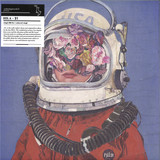
Hila (Artyom Manukian & Dawatile) - 21

"21" is the well-crafted, sharp and original first album by the duo HILA, composed by American cellist Artyom Manukyan (who already worked with Kamasi Washington, Daedalus, Flying Lotus, Run DMC, Gretchen Parlato, Raphael Saadiq, Clive Lowe Mark...) and french producer Dawatile.

The combination of jazz, Los Angeles beat-scene and the vibrations of 80s and 90s Soviet Armenia make it a striking and unprecedented fusion. These kind of nostalgic and unconventional references forcefully shake the codes of mainstream culture to create a sincere, raw and intimate expression.

"HILA" was born from a spontaneous and intense creative impulse between Artyom Manukyan, a Los Angeles-based Armenian celloist and his partner in crime, David Kiledjian aka Dawatile, a French multi-instrumentist of Armenian descent. This project is proving to be a true master stroke given that it only took 21 days for the duo to make it a reality.

"HILA" was made in less a moon cycle but captivates and electrifies audiences upon its first outings. "H.I.L.A" colors the warmth of the Californian "High" with Armenian vibes. The artists chose this name for their creation since both have a close and valuable connection to these locales. This journey began in 2007, on the day Dawatile went to Yerevan, the capital of this small country in the Caucasus mountain to realize a first fusion project centered around local folkloric music genres.

There he was introduced to local musicians including the Armenian Navy Band, one of the country's foremost groups in which Artyom played the bass and cello. In this context, he also met many musicians such as Tigran Hamasyan and Norayr Kartashyan. This will be the beginning of connections between Lyon, Yerevan and Los Angeles. The following year, the two artists will be be seen performing next to Taylor Mc Ferrin at the Jazz à Vienne festival. More recently, they partnered up again when the cellist, who had freshly relocated in California, invited Dawatile to produce his album. As soon as the studio’s threshold was crossed, they decided to postpone this record and create a joint project: Hay (as the Armenians call themselves) / High In Los Angeles. HILA was born at the end of these 21 days of intense creation. The association of Artyom Manukyan and Dawatile is the combination of two visions, two versions of Armenia, two personalities, the reunion of the Eastern and Western blocs.

One grew up nurtured by the sounds of hip-hop and jazz in Europe and the other by art music and Russian-influenced 1980s Armenian folkloric music before moving to L. A., Ca. The cornerstone of it all, the glue that unites everything : Armenia and music. They generate a new identity synthesizing two perceptions, their complicity transcending these cultural discrepencies. To achieve this, they will scour through images of Artyom’s childhood, within the popular culture of Soviet Armenia. Together, they revisit this decidedly retro vibe, based on the work of Caucasian groups inspired by African American music. This background is rehashed and fused with ancestral Armenian sounds. The DNA of the album "21" is molded by these dear influences.

We can also hear the ancestral sounds of Armenia, a country at the edges of both Europe and Asia. The presence on two tracks of Armenian music Master Norayr Kartashyan, infuses the languor of past melodies and traditions. These purposeful anachronistic sounds offer a fantastic depth to this powerful opus. Listening to the album, one can appreciate the successful fusion of styles and influences. Those combinations, however, manage to preserve individual identities only to enhance the art through an adamant musical dialogue.

Being driven by the urge to transpose Armenian musical traditions into a unique universe, the daring artists, offer an innovative combination by blending, for the first time, these ancestral sounds with the world of Los Angeles beat-scene and jazz. An invention largely fueled by the magic strings of Artyom and maestro Miguel Atwood-Ferguson, a pillar of the genre in Los Angeles combined. These associations resonate with a triumphant equilibrium. HILA is musical uncharted territory in which Artyom's cello strings intertwine to ignite the harmonies of keyboards, the machines, the vocals and electronic layers Dawatile pieced together. HILA plays the soundtrack of an adventure set between Armenia around the end of the Soviet era and a mysterious near future.

Artyom Manukyan grew up in Armenia in the 90s. At the time, he studied Russian classical music while learning jazz with assistance by his father, a music journalist. Being an unconditional music lover, he went on to sharpen his skills at the prestigious Berkelee College of Music. Subsequently, he’s been lucky enough to travel the world touring with numerous acts and mainly with the Armenian Navy Band. The group has fostered alacritous success honored by a BBC Award as a crowning achievement. He moved on 10 years ago and made his way to L.A. with his cello on his back. In the City of Angels, he quickly became a popular figure of the jazz and hip-hop scenes thanks to his first album "Citizen". He’s accompanied prestigious musicians such as Kamasi Washington, Melody Gardot, Daedalus, Flying Lotus, Run DMC, Gretchen Parlato, Raphael Saadiq, Clive Lowe Mark, or Vulfpeck. He released his solo album on the cello, "Alone" in October 2019.

Dawatile is a bold producer and multi-instrumentist as well as a passionate and resolute musician molded by jazz. As a versatile artist, he handles and juggles the saxophone, the keys, the bass and composition. Simultaneously, Dawatile produces cross-over projects and soundtracks for the movie industry. He, as well, has had the opportunity to be a part of many tours, including with his electro hip-hop band, Fowatile and more recently with the "Future Kreyol" trio, Dowdelin. Being the ever workaholic, he has under his belt a string of prestigious collaborations with the likes of Talib Kweli, Foreign Beggars, Roy Ayers, Tigran Hamasyan, Mathieu Boogaerts, Voodoo Game and Piers Faccini. His taste for developing new musical recipes and his know-how in production make him a much sought-after album producer. In concert, the HILA duo offers a sober, precise and rhythmic performance. "21" is an aerial and lively album taking the audience on an at times joyous and sometimes melancholic dreamlike journey. The magic of "HILA" operates at the speed of light and positions it already as an avoidable group.

non in magazzino

Ordina ora e ordineremo l'articolo per te presso il nostro fornitore.


Last In: 6 years ago
Mad Zach - No Past Lives EP

Announcing Mad Zach's debut release on MethLab Recordings with his No Past Lives EP, which is available on 12" vinyl and digital formats. The four tracks within unfurl an exquisite and alluring journey into the recesses of the human spirit, circling between nostalgic yearning and a steadfast, driven intensity. No Past Lives will be available on Tuesday, October 1.

An intoxicating myriad of complex soundscapes, Mad Zach stuns yet again with impeccable sound design through four thoughtful tracks. A compelling story through the inner workings of the mind, Mad Zach does not hold back in his enigmatic MethLab debut. Featuring production techniques signature of the prolific producer, Mad Zach’s many influences shine through in No Past Lives; a mix of dub, hip-hop, techno, jungle, and various other styles, No Past Lives is the amalgamation of artistic passion and drive.

non in magazzino

Ordina ora e ordineremo l'articolo per te presso il nostro fornitore.


Last In: 6 years ago
Service Animal (Vereker) / Crime Unit - RAVE026

RAVE026 is a double hammer of blitzkrieg gabber and seething acid trance/schranz from Service
Animal (Vereker) and Crime Unit, featuring material previously issued on impossible-to-find
tapes by the cult, DIY label; Live Adult Entertainment
The punkish reputation of Live Adult Entertainment precedes them as one of the underground’s
keenest yet elusive operations to emerge in recent years. Based in Thessaloniki, a port city in
northern Greece, they’ve released some 28 tapes, CDR’s and lathe cut vinyl of musick ranging from
psy-trance to industrial noise and concrète since 2017, and always in editions ranging from zero
to 20 tops, leading to feverish and frustrated reactions from those listeners who’ve chanced upon
their YouTube videos before they get taken down. Finally, this 12” features the first readily available
and properly mastered LAE material on a physical format.
On the A-side, Endangered Species label boss Oliver Vereker adopts his gabber alias Service
Animal for his first outing proper since appearing as Renoir on his label’s 2017 CD, ‘Death Always
Follows’. Revolving material originally available on tape in edition of 20 copies, it boots off with
the 12-hp hoof and dive-bombing drones of ‘Core Of Reality’ next to the evil Arcardipane styles of
‘F.T.W’, which are both produced with the same, powerful conviction in charred black metal, noise
and hardcore techno that made his 2015 releases as Restraint and Grace so vital, only with added
acceleration and syncopation.
The B-side follows with a pair of seething workouts from the ‘Cyber Afterbirth Vol.1’ mix by
LAE co-owner, Crime Unit. Hearkening back to a sound that was ubiquitous between Hackney
Warehouses and small-town UK/European techno clubs in the late ’90s/early ‘00s, they are
ravenous examples of the LAE aesthetic, applying scuzzy DIY principles to gnashing German
schranz and adrenalising acid trance with ruthlessly direct results that pack one of the meanest
breakdowns you’ll hear this year. Trust they will mercilessly sort the dancers from the posers.

non in magazzino

Ordina ora e ordineremo l'articolo per te presso il nostro fornitore.


Last In: 6 years ago
Fehler Kuti - Schland Is The Place For Me

I remember the first time I read W.E.B. DuBois eclectic masterpiece The Souls of Black Folk. The way in which this Weberian scholar flowed from personal account to prose to sociological analysis to music and even political intervention has had a lasting impact on my own work as a cultural anthropologist. It made me understand that as scholars we must use different means in order to give expression to the totality of the lived experience: There is only so much in an academic text.

The experience of alienation has always been at the heart of my scholarly and artistic practice. I have used academic writing, lecturing, theatre performance and electronic improvisation to understand and represent it as a theoretical concept, postcolonial condition and lived experience. I believe, some issues need to be told like a story, some analyzed in most abstract terms and others need to be sung like a gospel. The medium changes the message.

In this sense, I guess, I’m a singing cultural anthropologist.

For some time now I have been engaged in the use of dystopian themes and sounds to paint a sonic picture of structural racism and whiteness of our present. But recently I have grown weary of this Ballardian idea of Future Now and the resulting phantasmagorian aesthetics myself and others have been invested in. The widespread availability of Digital Audio Workstations, sequencers, loopers and delay pedals has lead us into a futuristic cul de sac best described by Mark Fisher as the very absence of future.

Likewise, I am most skeptical of the “naturalist” countermovement, the return of folk. Especially in Germany, I am convinced there is no such thing as an innocent or progressive folk musical expression as it is always connected to the idea of the homeland (“Heimat”) which in turn produces the colony. It seems to me, the current zeitgeist is stuck between a “museum of a dystopian future” and a “museum of an idealized past”, but I wanted to sing about the present.

So, I involuntarily returned to pop music in its two-folded meaning of something popular and addressing not an essentialist notion of “Volk” or its woke cousin “communities”, but society as a whole.

I entered the studio just with a few lo-fi sounding melodies and rhythms from my circuit bent CASIO synthesizer. I had no clue what the finished product would sound like. But as soon as Markus started drumming, in a way strangely reminding me of CAN’s Ethnographic Forgery Series, my uptight sounds were suddenly embedded within a warmer global sound spectrum. The alien at home and abroad and the strange overlapped: We were seeing one and the same sound differently but were gently held together by Tobias’ producing.

Making music is about building coalitions. It’s about suggesting an articulation of styles, sounds and people, that hasn’t materialized, yet, but may help us in the current crisis: I wanted Amon Düül II to send their drug induced archangel thunderbird to rescue the refugees, that had tried to escape the police by climbing up a tree in Munich in 2016. I wanted Sun Ra to taunt far-right protesters in Chemnitz in 2018. And I wanted to mourn the loss of a former kebab shop cum discotheque that served as proof that there is such a thing as a minoritarian universalism.

SCHLAND IS THE PLACE FOR ME is a pop album featuring songs of alienation, not only as a tragic experience, but as a pop-cultural promise. Maybe Bill Callahan sung it best, “I am Star Wars today, I am no longer English grey”. I want those who suffer from alienation to stand in alliance with those who seek alienation, and vice-versa. A coalition, that tolerates the possibility that we are moved by the same groove for contrary reasons.

Fehler Kuti
Munich, Autumn 2019

Music by Julian Warner, Markus Acher & Tobias Siegert
Saxophone on RINDERMARKT by Franz Brunner
Trombone on RINDERMARKT and IL by Matthias Götz
Recorded and mixed by Tobias Siegert in Munich.
SONTAGSFAVORIT mixed by Dario Albiez in Dusseldorf.
Mastered by Duphonic in Augsburg.
Artwork by Atelier Grande, Munich.

non in magazzino

Ordina ora e ordineremo l'articolo per te presso il nostro fornitore.


Last In: 4 years ago
SKYF CONNECTION - TEN TO TEN

Skyf Connection (pronounced skAyf) was a short lived project by long time friends Anthony Mthembu and Enoch Nondala. At the time they were working for Annic Music, an independent label run by married couple Anne and Nic Blignaut. Although the label was known mostly for Zulu, Sotho, Tsonga and other traditional styles, they had a few Disco releases on the label including groups like Keith Hutchinson’s Focus and Enoch’s discovery Lena, who went on to have huge success under the name Ebony a few years later.

In 1984, when an artist didn’t show up for a booked session they decided to make use of the studio time and began working on a demo. At the time Anthony and Enoch had been playing for a year at a new club called Gamsho, located on a farm on the outskirts of Kliptown Soweto. Along with Blackie Sibisi, Sepate Mokoena and Elijah “chippa” Khumalo they made up the resident house band. Due to cultural boycotts and American artists refusing to perform in the country, locals took it upon themselves to fill the market with the American sound the crowds demanded. The demo they recorded at Blue Tree Studios was going to be their product they could use to promote their brand of the American sound. They then took the demo to Universal Studios where their friend and trusted engineer Jan “fast fingers” Smit was working. It would be here that they would polish their demo into something they could take to their bosses and have pressed. Equipped with a DX 7, Linn Drum and some Juno synthesizers they were on their way. Jan lived up to his name and programmed the drums, it is rumoured he could program in almost real time, a skill that translated to the local arcade where he held high scores on many machines. Enoch would be singing and playing guitar while Anthony would do all the Bass and Keyboards. The result was 4 funky party anthems with synth work like no other recording at the time. Their take on what they believed the crowd would want to hear at the beloved club they called home.

From start to finish the 4 tracks portray what would have been a standard night at the Gamshu. Although the club would open earlier and the standard hours of most clubs was 6 to 6 , the band would start playing at 10pm. With their standard set time and Anthony and Enoch unique view on what a Disco should be, they chose the motto Ten to Ten as the album title because those were the hours when they were the stars and Disco ruled the dance floor. To get to the club was a bit difficult, you needed to drive along an empty road where thieves waited for any patrons trying their luck walking after dark. Since there was no transport during the night, the safest way to get home was to wait till the next morning to walk home. Even though in the summer months of Johannesburg light begins to peek in just after 4am, crowds refused to leave and stayed enjoying good music and company until 10am. The lead off track “Let’s Freak Together” has powerful lyrics encouraging people to let go of their worries, put aside any differences and let the music bring everyone to freak and dance together. The whole album is about the joy we can all feel when we share the same moments and how music can bring people together in a unique way, a philosophy shared with the original nightclubs of 70s New York. This approach to music is where the name Skyf Connection comes from, translating from slang to mean the connection we create through sharing, in this case Music and good times.

Skyf Connection would go on to play at Gamsho till the club’s closure in 1986. In those years their popularity lead to being booked for private events like weddings and birthday parties, as well as gigs in some other venues like Mofolo Hall. They would share the stage with many artists through the years learning artist’s songs and providing support as a backing band. After the club closed Anthony would go on to join the house band at The Pelican, another famous club located in Orlando East, as well as dabbling with songwriting for artists like Phumi Maduna and helping Enoch on many projects through the years. Enoch would ditch live music altogether and immerse himself in studio work, starting full time as a house producer and A&R for the recently formed Ream Music. He would go on to produce hit albums for pop artists like Percy Kay and Makwerhu but made his mark discovering countless artists that would become stars in the traditional market. They would remain friends until Anthony’s passing in 2016 and although Anthony is no longer with us his spirit lives in the grooves he left on this one of a kind record. His wife Vinolia will be accepting his portion of the profits on his behalf.

non in magazzino

Ordina ora e ordineremo l'articolo per te presso il nostro fornitore.


Last In: 5 years ago
Gyedu-Blay Ambolley - 11th Street, Sekoni

Gyedu-Blay Ambolley was born on the 11th Street in Sekondi, Ghana 72 years ago. On the cover photo you can see on the right side the house of his birth which was also his parental home. The Ghanian legend’s latest release shows off a pride of heritage, and his honed talent for mixing highlife with other genres like rap, Afro-funk and Disco Ghanaian highlife. Gyedu-Blay Ambolley returns with 11th Street, Sekondi, his 31st album since his debut in 1973. The charismatic stage personality, no stranger to mixing humour into his music and who has performed alongside Afrobeat legend Fela Kuti and highlife bandleader Ebo Taylor, has been a record collector’s staple since his appearance on the seminal Ghana Soundz compilation on Soundway in 2002, which re-introduced the world to his trademark ‘Simigwa’ style. Highlife, which started in Sierra Leone and Liberia, took hold in Ghana in the 1940s as a coming together of the musicians fed up with the foxtrot and quickstep parties originally hosted by English colonists. It began with big band horns and happy lyrics, popularised by artists such as E.T Mensah, before opening up in the ‘50s and ‘60s with a wave of guitardriven, socially conscious and more danceable Afro-funk hits -- a product of the easy movement of people between Nigeria and Ghana. It was then that Ambolley’s trademark baritone vocals burst onto the scene, under the tutelage of close personal friend Ebo Taylor.

Ambolley’s latest album, 11th Street, Sekondi, named after the area of West Ghana in which he grew up, is a look back at the area and musical styles that shaped the musician’s life. Black Woman is a funky number that opens the album with Ambolley on a tenor sax solo, while tracks like Little Small Girl showcase his renowned James Brown-influenced vocal flourishes. Soul, jazz, blues and comedy are present -- in keeping with his fervent belief that music must always be entertaining for the listener. The album is the second of his to be released on German label Agogo records, after acclaimed 2017 hit, Ketan. It also stays true to highlife's social ambitions, with reflections on the misguided pursuit of European ideals ahead of African values. Ambolley's career has been filled with accolades, including a Lifetime Achievement Award from the Charles R Drew University in Los Angeles, and formal recognition from the Ghana Embassy in Washington DC for producing the first ever commercially recorded rap album.

non in magazzino

Ordina ora e ordineremo l'articolo per te presso il nostro fornitore.


Last In: 6 years ago
NonZero! - Matrix Equation

Planning the imminent arrival of the 50th release on Touchin’ Bass, label boss Andrea Parker was digging through the warehouse during a stock take and it became apparent that there was something missing. There was a gap in the catalogue numbers. Where was TB036? Searching the archives it transpired that, for one reason or another (not least Parker’s inability to count), there actually wasn’t one.

So what better way to backfill this now documented gap than to welcome the multitalented guitarist and drummer, mathematician and multidisciplinary improviser Maria Gamboa Perez into the Touchin’ Bass fold with an updated focus for 2019.

Perez combines elements of rage, chaos, tension and anguish to form a visceral style. Her musical terrain and talent is shaped by dissonance and NO art. Under the moniker NonZero!, Perez brings Matrix Equation to the fore; a heavy 8 track EP with electro aesthetics from none other than Carl Finlow Scarletron/Silicon Scally/Voice Stealer.

Beginning her artistic career as a teenager playing as a bassist and guitarist in groups with influences from Noise, Avant Garde and the No-Wave, Perez was introduced into several areas of electronic music during the club culture years in Madrid and opted for styles such as Electro or Industrial, at which point she began to be interested in the introduction of rhythm boxes together with traditional drums.

Her passion for sound synthesis and musical exploration led Perez to introduce electronics into a solo project under the pseudonym NonZero!. Under this name she aims to make electronic music her field of sound research and for years has been continuously searching for existing relationships between sound and mathematics, focusing on the perceptual limit between music and noise.

Matrix Equation indulges in an evidential brooding angst, shifting between abstraction and the kind of elevated introspection carefully harvested over the years. With dramatic frontage in parts, blasts of boisterous energy and machine mayhem, its deployment of surprise, shifting focus and spontaneity operate in an assured statement.

Splintered beats and a foreboding sense of tension give way to a more DJ friendly logic of instinctive introductions and codas of gradual builds and breakdowns as Finlow further reworks the results to great effect.

non in magazzino

Ordina ora e ordineremo l'articolo per te presso il nostro fornitore.


Last In: 6 years ago
KiNK - Home

Kink

Home

12inchSOF001
Sofia
11.11.2019

KiNK presents Home! This aptly titled EP is the debut release on the newborn label Sofia. Founded by Strahil Velchev and Konstantin Petrov, Sofia is not only the physical location where this music was made, the city where they met and developed as artists, but also a paradox that is reflected in the art and music that comes from the place. Beautiful and ugly at the same time, clean and dirty, brutal as well as romantic, it’s a place where aesthetically seemingly incompatible styles come together in a twisted, yet unifying form. The photographs for the sleeves are made by influential local selector DJ Valentine, effortlessly capturing the local reality.

Those pieces of a paradox also are reflected in the music. The typical fine-grit of KiNK’s production skills meets his love for the elements of surprise and the classic building blocks and plaster of house and techno to create something that is very much his own, while breathing the spirit of early days and pioneering times. Hinged just before and after peak time, the tracks on this EP are cohesive, made to last and rounded off by the contemplativeness of yet another collaboration with Rachel Row called „The Beauty“. The first of many to come. And as always: Remember the future!

non in magazzino

Ordina ora e ordineremo l'articolo per te presso il nostro fornitore.


Last In: 4 years ago
Cabasa / Scaarlet - Spill The Tea EP

After 10 vinyl releases exploring the leftfield side of electronic music, No Suit Records enters a new era with a new serie of Split EPs. Two artists per EP, offering a wider color palette, stretching styles and genres.

Cabasa is back on No Suit Records after the launch of a successful live act and many appearances in festivals and high profile clubs around Europe. On this release Cabasa navigates between luscious atmosphere, broken beats and polyrythmic patterns.
Crystal Clear is made of soft melodies and tickling bass —it is a reminiscence of the 00’s downtempo apogee and an invitation to accept your inner melancholy. More Than a Second is a slow awakening, a groggy musical move, a muffled request for a brighter future. Catching Fire Slowly is a contemplating ode, a call to take a deep breath and prepare yourself for the upcoming run.

Lost souls or flowers of hope, lurking into light and darkness, no one knows who Scaarlet are. The only certitude is that they always play with boundaries and enact performances between syncopated melodies, cut up sounds, wavy basslines and deep atmospheric sounds. They are back on No Suit Records and continue to develop their own intricate style, merging Drum’n’Bass and Techno influences into a politically and socially engaged music.
My Man translates the raw energy of riots and rebellion, powering a fusion of Drum’n’Bass and Techno. The River resumes some of the Yakusa women tattoos symbolism into a romantic pulsating 170ish bpm vibe. Advertising is an open critic of the fast fashion world and the supremacy of commercial communication, mixing polyrythm with a straight DnB kickdrum.

All tracks mastered by Pole at Scape Mastering in Berlin.

non in magazzino

Ordina ora e ordineremo l'articolo per te presso il nostro fornitore.


Last In: 6 years ago
Various - Bavarian Stallion Series

A1: Madness blasts through the front door, armed with obscure effects and a gnarly acidic bassline. Severe Chicago percussion massacre in the middle, followed by a soothing synth finale. Cum on, you know that’s how Dj RFR does!

A2: Munich mesmerizers Rhode & Brown at their best sonic behaviour. May we call this acid trance wave?
Sure, ‘cos Boys Do Cry.

B1: Born in Romania, raised in London, now Munich’s her home. Oana Leca delivers a fusion of two of her most beloved styles- Minimal House vibes in a blue shimmering Detroit coat.

B2: No-holds-barred for Nik Wookward. The long time Munich affiliated producer drops a sneaky brain intruder. Minimal Deep House with a psychedelic twist, just what we like. So please don’t latch the club gate before…forever.

non in magazzino

Ordina ora e ordineremo l'articolo per te presso il nostro fornitore.


Last In: 6 years ago
CHIEF UDOH ESSIET - Afrobeat Highlife Crossing LP

Chief Udoh Essiet believes in rhythm. He serves it Hot-and-Spicy on his new album Afrobeat Highlife Crossing, from the depths of his soul to the beat that emanates from his hand-made
antelope-skin congas and talking drums from his native Nigeria.
Chief Udoh is a veteran artist, singer, songwriter and virtuoso percussionist. His musical journey took him from the traditional rhythms of his village to Swinging Lagos in the 70s, where
Udoh apprenticed with Dr. Victor Olaiya’s Highlife Band while still too young to reach the tops of the congas onstage. (They stood him on a Coca Cola crate!) He has personally worked
alongside the biggest artists from Nigeria in the 70s and 80s, including the legendary Fela Anikulapo Kuti, creator of Afrobeat, at the height of his fame. Afrobeat Highlife Crossing has all the elements of these Old School styles, effortlessly blending the essence of Afrobeat and Highlife grooves, resulting in a sound that’s purely original. The percussion is out of this world, the bass is melodic, the horn arrangements are next level, the BVs are perfect and the ‘Pidgin’ language Chief Udoh sings tops it off with some Nigerian seasoning, like a dash of Hot Pepper on Stew!
His lyrics speak the cold-blooded truth, telling us to look inside ourselves and fight against corrupt governments that keep getting us into corporate-sponsored wars, leaving innocent civilians to live with the consequences. His label Uwem Music’s motto is “Right now is the best time to play the record” and we agree!

non in magazzino

Ordina ora e ordineremo l'articolo per te presso il nostro fornitore.


Last In: 2 years ago
Articoli per pagina:
N/ABPM
Vinyl