
En stock
Disponible en stock et prêt pour l'expédition
Disponible en stock et prêt pour l'expédition

We are very happy to announce a new release on Mr. Bongo scheduled to be released on the 9th of June 2023. This is a repress of Rio de Janeiro's very own Bala Desejo's debut album "Sim Sim Sim". The album was previously only available on very limited runs in Japan and Brazil and it is now presented and available for worldwide distribution for the very first time.
Bala Desejo could be described as a supergroup, uniting some of the most talented musicians taking part in the current renaissance of the Rio de Janeiro sound. As solo musicians they have worked and collaborated with legends such as Gal Costa or Milton Nascimento. Together they decided to explore new routes and ways, channeling influences from the best of MPB into a fresh and innovative recipe.
Sim Sim Sim went on to win a Latin Grammy in 2022 for the Best Contemporary Pop album in Portuguese language and is the first testimony from one of the most fascinating outlets to come out of Brazil in recent years.
Commandez maintenant et nous commanderons l'article pour vous chez notre fournisseur.
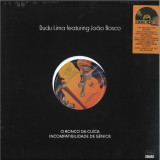
Originally written by João Bosco and Aldir Blanc and released on Bosco's 1976 album Galos De Briga, "O Ronco da Cuica" is a samba/MPB masterpiece. In the song, the cuíca roars: roars in anger, roars from hunger and is told to stop, but it cannot - "it's a man thing" explains Bosco in the lyrics. Personifying the instrument in this way, "O Ronco da Cuica" points to something quite profound about the nature of human suffering and our primitive need for expression. On this brilliant reimagining, renowned bassist Dudu Lima teamed up with Joao Bosco himself, as well as Azymuth drummer Ivan 'Mamão' Conti, pianist Dudu Viana and percussionist Marcos Suzano. Ironically, this version contains no cuíca, instead it takes a more stripped back instrumentation, exploring the deep jazz potential of this roaring samba classic, to stunning effect. On the B-side is a beautiful duet between Dudu Lima and João Bosco: acoustic guitar and vocals, and fretless bass - together they take on "Imcompatibilidade De Gênios", also from Bosco's 1976 Galos De Briga album.
Le produit est en rupture de stock. Nous vous enverrons un e-mail dès que Ce EST nouveau disponible si vous cliquez sur "in Stock Mail"

discos elgozo is proud to present our second single with two songs by Las Raras Del Folclor, a queer feminist musical project from the Colombian Caribbean, which harnesses the decolonising power of cumbia and drums to heal the community and transgress patriarchal orders. This musical project is part of the LBT Raras no tan Raras Corporation, which was born in 2019 in preparation for LGBT Pride Day in Barranquilla, Colombia.
Las Raras Del Folclor are feminist, maricas, drummers and caribbean. Their musical proposal is a disruptive political bet, where the lyrics carry a message of respect for the lives and re-existences of sexual and gender diversities, while the drumming and collective chants unite us in the joy of the movement of our diverse bodies. If in the first track, La Denuncia, we find the strength of our ancestral women to confront patriarchal violence, in the second track, La Pajarera, we find the community that welcomes and cares for us.
Credits:
Mayré Rivero: Voz principal (B), maracas, coros, palmas y animaciones.
Madeleyne Camargo: Voz principal (A), coros, animaciones y palmas.
Dani Brache: Llamador, coros y animaciones.
Maria Camila Navarro: Tambora, coros y animaciones.
Alejandra Peñaloza: Tambor alegre, coros, palmas y animaciones (B).
Naikel Villarruel: Tambor alegre, coros y animaciones.
Grace Lascano (Orito Cantora): Coros, palmas y producción musical.
Jenn del Tambo: Tambores, jamblock, platillos, palmas y producción
musical.
Composición y Autoría: Mayré Rivero, Madeleyne Camargo, María Camila
Navarro, Alejandra Peñaloza, Isabela Luján, Alana Delgado, Dani
Brache, Naikel Villarruel, Eliana Villa, María Serje y Grace Lascano
(Orito Cantora).
Disponible en stock et prêt pour l'expédition

First time reissue from this essential latin jazz album from 1971 !
Often affectionately referred to as the "Godfather of British Latin music" Robin Jones was truly one of the great performers on the international Latin scene.
Denga, his first recording from 1971 is a scintillating fusion of Afro-Cuban and Afro-Brazillian rhythms laden with heavy Fender Rhodes sounds and no less than three Afro-Latin Percussionists. The hard-to-find album has now been reissued by legendary London jazz DJ Paul Murphy's Jazz Room Records imprint. It should be an essential purchase for anyone who loves Latin jazz.
Feature's Robin's personal favorites including "Goodbye Batucada" which rightfully lays claim to be the first Brazilian Jazz Samba tune recorded in the UK and the Worldwide Sound standard setters "Denga" and "Africa Revisited".
Commandez maintenant et nous commanderons l'article pour vous chez notre fournisseur.

A selection of 28 Colombian cumbia bangers for the dance floor from the deep vaults of Codiscos and associated labels Costeño, Zeida and Famoso, all of them originally released between 1962 and 1983.
“Cumbia Cumbia Cumbia!!!” combines well-known classics and rarities that are difficult to find in their original formats. An invitation to enjoy and be amazed, above and beyond ethnographic and academic concerns.
The historical origins of cumbia in Colombia are nebulous and imprecise. The mythology surrounding it suggests an ancient past when Amerindian, African and European musical sounds were mixed together.
The main record companies in Colombia such as Discos Fuentes, Discos Tropical, Sonolux, Zeida-Codiscos, Silver, Ondina, Discos Atlantic, Vergara and Curro were created between Barranquilla, Medellín, Cartagena and Bogotá from 1936 to 1954. All of them, without exception, recorded Colombian tropical music that over the years was given different names such as porro, gaita, fandango, paseaito, merecumbé, mapalé, bullerengue or, of course, cumbia.
After digging deep into the overwhelming archive of Discos Fuentes in our previous volume, this second instalment in the series “Cumbia Cumbia Cumbia!!!” comprises 28 Colombian cumbia bangers for the dance floor from the deep vaults of Codiscos and associated labels Costeño, Zeida and Famoso, all of them originally released between 1962 and 1983. Legally established on July 1, 1950, Zeida (later Codiscos) was one of the companies that consolidated Medellín as the epicenter of the Colombian recording industry in the central decade of the last century.
“Cumbia Cumbia Cumbia!!!” combines well-known classics and rarities that are difficult to find in their original formats. An invitation to enjoy and be amazed, above and beyond ethnographic and academic concerns.
Commandez maintenant et nous commanderons l'article pour vous chez notre fournisseur.
Repress!
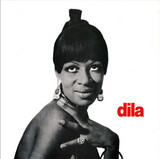
Far Out Recordings proudly presents the first and only album from the mysterious Brazilian vocal sensation Dila (pronounced “Jee-la”). Having reportedly died in a car crash shortly after the album’s release in 1971, there is very little known about the woman behind the voice. But the joyous music Dila left behind, gives us a picture as good as any, of a powerful feminine soul at the top of her game.
The liner notes on the elusive original LP, written by composer Arnoldo Medeiros attest: “Friend, look out! Because when this girl starts to sing, you’re in trouble. Hold the railing so you don’t fall down the stairs, because she’s coming this way and shaking up everything.”
Arranged and produced by Durval Ferreira, alongside his studio band affectionately known as “Os Grillos” (The Crickets), Dila (1971) is a rare glimpse into the authentic soulful Samba sound of Rio’s favelas in the late sixties and early seventies.
A blast of funky, percussive Brazilian breaks, scorching hot brass and swing-laden piano, the music is as iconic as the album’s stark cover, as is clear on opener ‘Inez’, composed by The Crickets’ bassist Romildo. There’s a fantastic interpretation of the Ivan Lins classic ‘Madalena’ (made famous by Elis Regina), a moving version of the Tom Jobim and Vinicius De Moraes classic ‘O Morro Não Tem Vez’, and a number of sunny original compositions by Arnold Madeiros, who’s other writing credits include music for Marcos Valle, Wanderlea, Evinha and Dom Salvador.
With original LPs extremely hard to come by, this rare treasure of Brazilian soul, which fans of Gal Costa, Celia, Evinha and Elis Regina will love, gets a much-deserved official reissue: remastered and pressed to 180g vinyl.
Commandez maintenant et nous commanderons l'article pour vous chez notre fournisseur.

Two massive cumbias recorded in 1983 by Afrosound, the studio band fronted by Fruko and put together by Discos Fuentes in order to emulate the guitar-heavy tropical sounds emanating from Perú and Ecuador at the time. Heavy on space sounds and unexpected sonic tricks, these two songs were released as a tribute to E.T. aiming to take advantage of the pull of the film that year. First time reissue. - Afrosound was born from the desire of Discos Fuentes vice-president José María Fuentes to come up with a domestic version of the emerging African and Latin rock sounds coming from outside the country, inspired by groups like Osibisa and Santana. The mission was to emulate the guitar-heavy tropical sounds emanating from Perú and Ecuador at the time. According to various sources, the 1972 tune 'La danza de los mirlos' (by Peru's Los Mirlos) emerged as a great success in Colombia and with it a new way of interpreting the country's most famous musical export, namely cumbia, through a Peruvian perspective. Fuentes executives convened an expert crew of musicians led by Julio E. Estrada aka Fruko the following year to create this type of music for the domestic market because they sensed a potential for similar success. Once again Fruko is at the helm in the studio for this recording, simultaneously holding it down and allowing the musicians to explore their most spaced-out fantasies. This time Jose A. Villerias is in control at the mixing console, pulling all sorts of tricks with space sounds, reverb and echo, and everyone sounds as if they are having a lot of fun. Both songs had been previously recorded and included on Afrosound's 1974 album "Carruseles" -recently reissued on Vampisoul- but these new versions from 1983 feature an updated sound with an extensive use of space effects and unexpected sonic tricks. Taking advantage of the pull the film was having at the time, the result was carefully packaged with an E.T. themed artwork, aiming commercial success.
Le produit est en rupture de stock. Nous vous enverrons un e-mail dès que Ce EST nouveau disponible si vous cliquez sur "in Stock Mail"

Candonble rhythms meets Jazz
Alabê Ketujazz was founded in 2012 by french percussioinist/composer Antoine Olivier and brazilian saxophonist/composter Glaucus Linx.
Together, Glaucus and Antoine creatd orignal musica and textures inspired from the rhythms and the rituals, where the saxofone assumes the part of the Orixás telling their story through musical movements.
This artistic approach oponed many esthetic possibilities, transforming the raw material of the rituals in a new music format, essentially brazilian, where the spontaneous creativity of Jazz meets the traditional rhythms of the Ketu Nation: Alabê Ketujazz
Commandez maintenant et nous commanderons l'article pour vous chez notre fournisseur.

This single comprises two stand out tracks from “Power-Fuerza” (1972), one of the best Latin funk albums ever recorded, with all the right ingredients to shake dance floors worldwide. Produced by boogaloo-don Bobby Marin, these tracks are a vibrant tapestry, weaving together the raw energy of the South Bronx streets and the soulful melodies born from the band's Puerto Rican heritage. The Bronx in the 1970s, marked by the presence of notorious gangs, presented a complex and challenging urban landscape reflected in abandoned buildings and neglected public spaces. The prevalence of street gangs, such as the Ghetto Brothers, contributed to an atmosphere of heightened tension and occasional violence. The Ghetto Brothers, originating from the Melendez family who moved from Puerto Rico to the South Bronx in the 1950s, faced challenges involving violence and crime. Despite this, Benjy Melendez, a key figure, directed the group towards community improvement. The Ghetto Brothers embraced music, crafting a potent, NYC-flavored musical fusion that caught the attention of record mogul Ismael Maisonave (Salsa Records). Their collaboration resulted in the recording of eight tracks in a single electrifying day at Manhattan's Fine Tone Studios, skillfully produced by Latin studio maestro Bobby Marin (Harvey Averne, La Lupe, Brooklyn Sounds…) This musical odyssey showcases the band's ability to seamlessly blend genres, creating a NYC-flavored stew that captivates listeners with its authenticity.
Commandez maintenant et nous commanderons l'article pour vous chez notre fournisseur.

On their latest album, Sonido Cosmico, Hermanos Gutiérrez embark on a sonic exploration that defies the conventional boundaries of instrumental music. The collection is a richly textured tapestry, interwoven with the intricate threads of Latin rhythms and ephemeral atmospherics: each track a vignette, a carefully crafted narrative without words, where the brothers' transcendent guitars speak in a language all their own.
There is a subtle sophistication in the way Hermanos Gutiérrez fuses the elemental with the experimental. The album resonates with the echoes of their Latin musical heritage, yet it is undeniably contemporary in its execution, both nuanced and expansive.
Sonido Cosmico stands as a reflective mirror to the band's evolving artistry, united by music across age and geographical divides: a sound mosaic as celestial as its title, an expression of a band that has found its voice in the vast universe of modern instrumental music.
Commandez maintenant et nous commanderons l'article pour vous chez notre fournisseur.

On-Ly is the solo and collaborative moniker of pianist and producer Joshua Smeltink. On-Ly has been playing local traps since 2017, varying across numerous bands, recently settling into the second line-up for his own On-Ly band: Carl Lindeberg, bass (Surprise Chef), Henry Hicks, guitar (Horatio Luna) and Bryce Zelno, drums (Astral Flex).
Disponible en stock et prêt pour l'expédition

Brazilian music at it's finest! 2x7" set with four beautiful songs from Piry Reis.
Disc one is a reissue of his 1975 "Heroi Moderno" and includes the sought after 7inch version of "Cisplatina". The second holds the rare cuts "Reza Brava" & "Céu De Manágua". The project came together with the blessing of Piry Reis himself and is released on the sub-label of Rush Hour recordings, New Dawn - set up for less electronic but equally adventurous releases by artists we love.
Artwork by Amsterdam's Sekan with a touch by Megin Hayden.
Disponible en stock et prêt pour l'expédition

"Applying elements of minimalism or electronic music to their compositions, Carcascara's second studio album is deeply rooted in folk, blues or jazz. Borrowing from American primitivism, this acoustic guitar trio based half way between London and Zumaia, stretch the boundaries of tradition with a fluid and developed command of the string instrument.
Coming out 14 years after their self-titled debut, highly recommended for fans of Robbie Basho, Steve Reich or John Fahey."
Commandez maintenant et nous commanderons l'article pour vous chez notre fournisseur.

Taking inspiration from afrobeat father Fela Kuti as well as artists including Ebo Taylor, Parliament, Funkadelic and Havana d’Primera, London Afrobeat Collective’s music has won them admirers across the UK Europe and beyond. This eight-strong multi-cultural collective from England, Italy, France, Congo, Argentina, and New Zealand, combine traditional afrobeat and hi life with funk, jazz & Latin, to deliver party music born of their truly global DNA. A regular on the touring circuit and celebrated for their raucous energy, heavy dance grooves and conscious lyrics.
On the 14th February, they are set to release their fourth album ‘Esengo’ via Canopy Records.
‘Esengo’, produced by Sonny Johns (Tony Allen and Hugh Masekela, Ali Farka Toure), showcases London Afrobeat Collective’s love and respect for the traditions of afrobeat. With acclaimed Congolese singer Juanita Euka on vocals once more, ‘Esengo’ channels the spirit of Fela Kuti but with a willingness to create original music that crosses genres.
Lead single and album opener ‘Topesa Esengo Na Motema’, finds the band in a lighter yet spirited mood, celebrating the joy of living, reconnecting, and getting back on the road once more, while the groove-heavy ‘My Way’ is a refreshing blast of tight percussion and powerhouse vocals from Euka. Elsewhere, ‘Freedom’ perfectly captures the raw, soulful energy of their raucous live performances, while the blaring horns of ‘El Ritmo De Londres’ and easy, loose rhythms of ‘De Kinshasa À Sona Bata’ showcase London Afrobeat Collective at their rousing finest.
Le produit est en rupture de stock. Nous vous enverrons un e-mail dès que Ce EST nouveau disponible si vous cliquez sur "in Stock Mail"

Awarded an honorary doctorate from the University of Cape Town in 2023, pianist Tete Mbambisa (84) is a legendary figure in South African jazz. Supported by the cream of the local scene, his albums from the 1970s are among the most cherished vinyl documents from this golden era. A monumental archival undertaking, African Day compiles unreleased recordings from 1976 to resurrect a "lost" Tete Mbambisa double album that falls between his seminal works Tete's Big Sound (1975) and Did You Tell Your Mother (1979).
Born in 1942 and raised in South Africa's Eastern Cape province, Tete Mbambisa’s childhood home served as an informal tavern where social gatherings orbited around the family's carefully curated music collection with live performances by a local pianist. Growing up in this environment, his musical roots are embedded in marabi, the syncopated piano sound that blended cues from American jazz, blues and ragtime with the cultural sensibilities that shape modern South African jazz.
A self-taught musician, it was as leader of the vocal group The Four Yanks in the early 1960s that Tete Mbambisa’s music career began in earnest. With encouragement from Abdullah Ibrahim, he dedicated himself to the piano and went on to record with The Soul Jazzmen in 1969. Mbambisa's two solo recordings from the 1970s were produced by Rashid Vally for the independent As-Shams/The Sun record label. With an abundance of strong material but limited resources, some of the label's prospective releases were not issued at the time of recording. Featuring the intended artwork commissioned for the project in 1976, African Day marks the first major unveiling of unreleased gems from the As-Shams master tape archive.
Le produit est en rupture de stock. Nous vous enverrons un e-mail dès que Ce EST nouveau disponible si vous cliquez sur "in Stock Mail"

Repress.
The first in a series of compilations by Jura Soundsystem is a blend of Dub, Ambient, Downtempo, Boogie and Proto House with a focus on music never before released on Vinyl, sought after out of print titles and some special versions edited specifically for the album.
.
The intention with this project was to delve deeper into the reissue pond and unearth some lesser known tracks and artists. Highlights include Smackos (AKA Legowelt) Ambient epic 'We Can Watch Alf In The Hotel Room', never before released on Vinyl, the Dub / Psych hybrid of Minus Group's 'Black Shadow', Kash's sought after 'Percussion Sundance' and special edits of Ken Dang and Tabou Combo.
The end of the album includes some soothing Ambient tools.
Commandez maintenant et nous commanderons l'article pour vous chez notre fournisseur.

Commandez maintenant et nous commanderons l'article pour vous chez notre fournisseur.

Bruno Berle, the young songwriter and poet originally hailing from Maceió, the capital of Brazil’s Alagoas state, crafts songs that are simple, direct, and full of tender nuance. With his first album No Reino Dos Afetos (which translates to "In the Realm of Affections” and was released in 2022), Berle firmly established himself as a unique and important voice in the burgeoning scene of new Brazilian artists making a global impact, including peers like Ana Frango Elétrico, Tim Bernardes, Bala Desejo, Sessa and more. Now back with his second album, No Reino Dos Afetos 2, he stretches that further.
Bruno Berle’s music lives between two worlds – a traditional Brazilian folk talent steeped in history, and a contemporary, dreamy electronic pop; the result is songwriting that’s genre-bending, intentional, iconoclastic and consuming, spacious and sinewy and singular, a striking reflection of its composer while leaving space for the listener to settle in. The album follows Bruno’s relocation to São Paulo, and the songs are a reflection of his past and present. A rebuke of former categorizations of his work in Brazilian music scenes, and an idea of where his music can move, unfettered.
Berle’s music is purposeful in being a true portrait of himself, and a reflection of the music, art, and fashion scenes he personally moves through. Berle aims to provide an entrypoint for Black queer joy in his music, in his storytelling, in his presence and vision as a creative. For him, it feels subversive to be playing MPB laced with dubstep and lo-fi, a sort of intentional sacrilege, capturing a dialogue of modernity in traditional music.
Berle wrote most of the arrangements and co-produced his new album, Reino Dos Afetos 2 with longtime friend and musical partner Batata Boy, who is also from Maceió; the album was recorded in Rio de Janeiro, Maceió, and São Paulo, his new home, and picks up the conversation begun in 2022 on Berle’s debut album No Reino dos Afetos. Both records are the result of a nonlinear but coherent seven-year music creation process culminating in these albums, holding hands across space and time.
“Tirolirole,” the first single from the record, was released at the end of 2023; sun-soaked rhythms and soft voice coat the song, the lilting refrain of “Tirolirole” throughout – hushed, gentle, but somehow almost tactile, a golden-hour moment unlocked in the mind. “Tirolirole” is a triumphant future classic about the temporality of a blossoming love, with Bruno’s stunning vocal soaring over melodies which ebb and flow like the waters on the Atlantic shore. Of the track, Berle explains: “Despite ‘Tirolirole’ being an expression that evokes my childhood, just like the light words about nature, the harmony, and the poetry are epic, carrying a great hope for love.”
In fact, the guiding theme of No Reino dos Afetos 2 is a relationship, unfolding in the arc of a weekend. It traverses the innocence of an early young love, how that can be formative, can stretch on to take new shapes, or shape you. The album happens at the genesis of meeting someone and falling for them, before the relationship is thrown into overdrive – set in a big city, against a backdrop of major life changes, rising energy, the sound of São Paulo.
Something transcendental emerges in “Dizer Adeus,” with an arrangement that echoes a gospel atmosphere (evangelical and Catholic environments were pivotal to Berle’s upbringing). On “É Só Você Chegar,” piano and flute gracefully intertwine, a dance, while “Quando Penso” skews sparser, the voice-and-guitar minimalism somehow cultivating an entirely different shape – somehow both cozy and melancholy, with the background sound of a rainy day. Coupled with the lo-fi aspects that shape much of the album’s personality in the vocals and the production, No Reino Dos Afetos 2 is meticulously elaborated by Berle’s sonic alchemy, like on the mid-album instrumental “Sonho,” which feels like floating. “It’s the apex. It’s when lovers are sleeping together,” Berle explains of the feeling he wanted to encapsulate in the song.
On “Love Comes Back” Berle interprets Arthur Russell, the late Iowa musician who only reached greater visibility after he died in 1992. “His way of making music is similar to mine,” Berle explains. “He sings in a more fragile way, has more of an experimental way of recording, letting ‘chance’ appear in the final work.”
Even so, Berle doesn’t want his music to be buried in sentimentality – and the purposefulness of his craft serves as a sort of north star. The production, the arrangements, his restraint and intentionality in crafting his songs feel just as vital as their emotional cores. His songwriting is amorphous, fluid, an encompassing genre-bending movement in-and-of-itself, quietly daring. The songs are often in conversation with other works – drinking in fountains as diverse as the filmmaking of Ingmar Bergman, the poetry of Walt Whitman, the rhythm of Djavan, and the painting of Maxwell Alexandre. Musically he weaves together a rich tapestry of Brazilian folk, UK 2-step garage/dub, trip hop and sun soaked west coast songwriters; something akin to the worlds of Milton Nascimento, Arthur Russell, James Blake, Feist, and Sade colliding into one. But even then No Reino Dos Afetos 2 floats separately, a romanticism driven by a simplicity and intimacy, an open-ended possibility, Berle’s singularity as an artist at the helm of the ship.
Commandez maintenant et nous commanderons l'article pour vous chez notre fournisseur.

Crazy stuff! This is the record with the famous cover of a marble balanced on an asshole (!) – and it further refines Tom Ze's distinctive approach to songwriting with an over the top approach that moves far beyond the experimentation of Tropicalia! The record is incredible, with a mix of amazing songs that piece together hard percussion, spare production, quirky guitar, and some of the strangest vocals ever recorded in Brazil. Includes the tracks "Complexo De Epico", "A Noite Do Meu Bem", "Dodo E Zeze", "Brigitte Bardot", and "O Riso E A Faca".
Commandez maintenant et nous commanderons l'article pour vous chez notre fournisseur.

Tomin is a self-taught multi-instrumentalist, bioinformatician, and poet from Brooklyn, New York. His primary instruments are the flute, trumpet and alto clarinet, and he participates in the creative music scene as a performer, improvisor, composer and fan. Outside of music, he works in computational genetics, with a focus on oncology. Flores para Caramina y Verene compiles recordings that he self-released across 2020 and 2021.
il devrait être publié sur 02.08.2024

Tomin is a self-taught multi-instrumentalist, bioinformatician, and poet from Brooklyn, New York. His primary instruments are the flute, trumpet and alto clarinet, and he participates in the creative music scene as a performer, improvisor, composer and fan. Outside of music, he works in computational genetics, with a focus on oncology. Flores para Caramina y Verene compiles recordings that he self-released across 2020 and 2021.
il devrait être publié sur 02.08.2024

Analog Africa delves deep into the scene of the Mexican's sonideros (sound-system operators) to present the "Rebajada" movement they've created using locally made pitch controls, speakers and sound effects.
"In 2010, I had asked Eamon Ore-Giron - aka DJ Lengua - if he would be interested in compiling a Latin project for Analog Africa, and if so, if he had a theme in mind. He replied, “Have you ever heard of rebajada?“ The question mark above my head, together with the wall of China, must have been the only other object visible from out of space because Eamon, probably noticing I got paralysed, continued, “Rebajada in Spanish means “to reduce, to lower”. It’s basically Mexican sonideros (soundsystem operators) slowing down the beat of a Cumbia to create a much more tangible music to dance to. I’ll send you a mix I made last year and let me know what you think.“ And so he did.
That mix was called Rebajada Mota Mix and I began listening to it on a loop. Although I was not immediately hooked it was intriguing from the get-go, and so I kept listening until magic began unfolding. Slowed down music allows you enough time to hear right through it, revealing itself in ways I had rarely experienced before. Everything became more transparent and I was noticing sounds normally only perceptible by bats. A near psychedelic experience. That mysterious mix included a few Ecuadorian songs by Junior y su Equipo - aka Polibio Mayorga (a cult figure in the sonidero scene), a couple of Mexican tunes, one Colombian, and various Peruvian songs, undoubtedly the driving force behind this project.
The sonidero who brought Peruvian and Ecuadorian music to Mexico was the legendary Pablo Perea from Sonido Arco-Iris, and although his fingerprints are all over the compilation Saturno 2000, this selection of songs in rebajada is exclusive to DJ Lengua. With the exception of a few classics from Polibio Mayorga and La Sampuesana – the queen of all rebajadas – most of these songs were probably never performed as such before, let alone released.
So how did rebajada come to be? In a nutshell; Rebajada started with two families of brothers – the Pereas and the Ortegas – who travelled all over Latin America and returned to Mexico with heavy loads of records which they would sell to the various sonideros always on the lookout for new tunes. Colombian beats especially seemed to fit almost perfectly with the Mexican dance steps – but they were just a bit too fast. As a result some sonideros began experimenting with equipment, and Marco Antonio Cedillo of Sonido Imperial created a revolutionary pitching system that could slow records down to an extent other players could only dream about. And so rebajada was born . . . or so we thought.
At the same time in north of the country, in Monterrey, sonidero Gabriel Dueñez almost got electrocuted by a short circuit that nearly set his record player on fire. As a result the platter started spinning in slow motion for the rest of the party, turning Cumbia into a different affair altogether. The youngsters went crazy for it and started harassing the sonidero with requests to record cassettes for them. Reluctant at first, Dueñez finally began recording a series of pirated cassettes called “Rebajada” which included mainly Colombian cumbia and porro in slow-mo exclusively. Those tapes took the city by storm and turned rebajada into a celebrated and defiant movement of the youth.
Of course it would not be a Mexican urban legend if it didn’t include dramaturgical elements, and so for nearly 30 years, until this day and probably for ever, both cities have been arguing and claiming ownership the creation of rebajada for themselves. But sonidera Joyce Musicolor, who never has time for such trivial arguments, got straight to the point: “Rebajada, and the equipment to perform it, is from here Mexico City but it was Monterrey that popularised it.“
Commandez maintenant et nous commanderons l'article pour vous chez notre fournisseur.

2024 Restock
BaianaSystem are from Bahia, the state with the strongest African cultural heritage in the country and a motherlode for Brazilian music. BaianaSystem manifest and champion the sound of the Black Atlantic, deep and future connections between Africa, Brazil and the Caribbean, from the roots of samba to global bass culture.
il devrait être publié sur 19.07.2024
2024 Restock
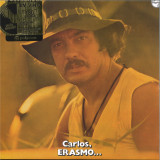
Erasmo Carlos sounds even cooler here than usual - still working with tunes penned with his brother Roberto - but also taking on music by Caetano Veloso, Jorge Ben, and Marcos Valle too! There's a heady undercurrent to the record that's maybe a filtering-through of an earlier Tropicalia vibe - a mode that Erasmo never embraced, but which leaves its impression in some of the more striking arrangements here - especially in the way things trip out at all the best times! Fuzzy guitar and offbeat production really add a lot to the set - and titles include "Maria Joana", "Agora Ninguem Chora Mais", "26 Anos De Vida Normal", "Cica Cecilia", "Mundo Deserto", "Sodoma E Gomorra", "Masculino Feminio", and "De Noite Na Cama".
Le produit est en rupture de stock. Nous vous enverrons un e-mail dès que Ce EST nouveau disponible si vous cliquez sur "in Stock Mail"

2024 Restock
(180gr) Reissue of this CLASSIC, highly sought after 1973 album from the great, Joao Donato!
Commandez maintenant et nous commanderons l'article pour vous chez notre fournisseur.

Commandez maintenant et nous commanderons l'article pour vous chez notre fournisseur.

il devrait être publié sur 31.01.2025

One year after being introduced to Brazil with his “Samba Esquema Novo,” Jorge Ben released his second album, “Sacundin Ben Samba.” Continuing the style of its predecessor and also produced by Armando Pittigliani, this album returns to shelves as part of the “Classics on Vinyl” collection from Polysom.
Composed of 12 tracks, “Sacundin Ben Samba” features arrangements by saxophonist J.T. Meirelles. All the songs are written by Jorge Ben, except for “Carnaval Triste” (Paulo Bruce / Sérgio Carvalho) and “Espero por Você” (João Mello), and they address themes characteristic of the singer and songwriter, such as innocent love and chronicles of daily life. The album includes tracks like “Anjo Azul,” “Nena Nanã,” “A Princesa e o Plebeu,” “Pula Baú,” and “Jeitão de Preto Velho,” among others.
Commandez maintenant et nous commanderons l'article pour vous chez notre fournisseur.

Disponible en stock et prêt pour l'expédition

The compilation ‘Les Belgicains – Na Tango Ya Covadia 1964-1970’ (‘Les Belgicains’ during the time of Covadia 1964-1970) tells the remarkable story of the first Congolese student orchestras in Belgium. During that time Congolese referred to countrymen living in Belgium as ‘Les Belgicains’. The Congolese Rumba presented on this compilation blew a new, fresh wind through the musical landscape of Congolese popular music under the supervision of the legendary editor and producer Nikiforos Cavvadias (Ngoma label).
All tracks are remastered from the original tapes. This album is available in a deluxe vinyl edition with gatefold sleeve (1LP) + insert.
Disponible en stock et prêt pour l'expédition

Wonderwheel is happy to present the very first pressing of Nickodemus' longtime classic "Sun People", pressed on translucent yellow vinyl. Originally released in 2009 by Thievery Corporation's Eighteenth Street Lounge label, "Sun People" was built with songs made for people who love the sun, sunshine and brighter days to come. Appropriate, of course, as Nickodemus has made his mark soundtracking NYC summers with his massively popular Turntables On The Hudson live events as well as with 20 consecutive years touring the World. The songs were inspired by various people Nickodemus met and places he's been, along with his collective feelings of optimism. It's these positive sonic vibes from all over the globe that Nickodemus matches with collaborators hailing from destinations including Guinea, Colombia, Puerto Rico, Brazil, Romania, India, Turkey, United Kingdom and New York City. These are the Sun People.As songs like "N'dini" "Sun Children" & "The Love Feeling" continue to kept parties dancing until today, "Calle Sol" & "Gira Do Sol" are being discovered by new fans & playlists today. As Jason Bentley, former Music Director at KCRW once said, "Sun People reflects a rich musicality, while infectious rhythms keep the party live. Nickodemus truly knows
no borders on this global dancefloor."Wonderwheel recordings is happy to keep the fire burning with this special limited color vinyl reissue out on June 21st, 2024.
a 01: Sun People (Intro) feat. Ismael Kouyaté
b 02: Sun Children (Original Mix) [feat. The Real Live Show]
Commandez maintenant et nous commanderons l'article pour vous chez notre fournisseur.

Japanese DJ / turntablist maestro DJ KOCO aka SHIMOKITA has been mesmerising the world with his DJing finesse and turntable wizardry. An undeniable level of skill, supreme taste and genuine humility, has seen DJ KOCO rise to the top of the game, as a DJ’s DJ and collector’s selector.
It was whilst being captivated by DJ KOCO’s seamless juggling clips on Instagram, that we saw him cutting up some choice Brazilian 45s. After reaching out to send him a selection from our own Brazil 45’s catalogue, we discovered his deep love of Brazilian music, and the concept of a DJ KOCO curated Brazil 45 boxset was born. As ever, the brief was simple, compile a selection of your favourite Brazilian cuts from the country’s rich musical makeup for the series.
So here it is, ten of DJ KOCO’s most beloved Brazilian jams. The boxset kicks off with the boogie brilliance of Famks ‘Labirinto’ and that is paired with one of three classic Waltel Branco tracks selected by DJ KOCO. Elsewhere, Lee Jackson's blissful cover of The Doors 'Light My Fire' and the energetic MPB joy of ‘Vê Se Pisa No Braseiro’ by Paulo Diniz take pride of place. The dons, Arthur Verocai and Ed Lincoln are also present, further confirmation of the fine ear the DJ has for Brazil’s bountiful musical offerings.
Going above and beyond the brief, DJ KOCO went one step further, producing two exclusive edits especially for the boxset. First up, a restructured interpretation of The Boogaloo Combo ‘Boogaloo Combo’ extending the funked-out break to masterful effect. Secondly, taking on Zito Righi’s 1969 Bossa Nova, rap dancer 'Poema Ritmico Do Malandro' with an exuberant re-edit.
A personal and endearing selection of sought-after tracks, that gives both an insight into DJ KOCO’s broad tastes and digs ever deeper into the breadth of music Brazil has to offer. We can’t wait to see the man himself cutting these 45’s up on his hallowed turntables.
Le produit est en rupture de stock. Nous vous enverrons un e-mail dès que Ce EST nouveau disponible si vous cliquez sur "in Stock Mail"

Comes with insert and download coupon.
Imagine a Latin remake of Back to the Future. The mad scientist is Arsenio Rodriguez (the godfather of salsa) and the young student who travels through time with him is Eblis Alvarez (Meridian Brothers). This album can only be described as the perfect soundtrack for that movie that never was.
After the massive buzz generated by his first solo album, Mentallogenic, Alex Figueira got back in the studio to work in a more collective fashion this time, carefully assembling the second album of his largest project to date, Conjunto Papa Upa; a team of 6 musicians, spanning 3 generations of some of the best talent in the Latin and avant-garde scenes.
In an era where tropical music is dominated by purely electronic and rhythmically uniform sounds, the ten songs encompassed in “Fruta Madura” (“Ripe Fruit”) wander through the most diverse tempos, rhythms, and motifs effortlessly. A real breath of fresh air that gracefully incorporates soul, funk, jazz, psychedelia, and electronics into a solid tropical, irresistibly polyrhythmic foundation, without ever succumbing to the many genre clichés.
The distinctive production and catchy songwriting of Figueira shine in a very distinctive light on this second full-length. Living up to his reputation (Miles Cleret, founder of Soundway Records, called him “one of the scene's truly authentic and eccentric producers”), he takes the opportunity to show he’s not afraid to keep walking his own path.
Taking the band for a wild ride through the traditions of Africa, America, and the Caribbean; contrasting them with a ridiculously wide plethora of vintage, contemporary, and futuristic sounds, and pivoting on the exuberant musicality displayed by his musicians; the result leaves no doubt: this album is destined to be considered a future classic of the exciting tropical psychedelic music of the 21st century.
Addressing the most diverse themes in this new collection of songs, things take on a much more mature tone, as the title clearly suggests.
The opening track “El segundo es más sabroso” (“The second one is tastier”) sets the tone in the most assertive way imaginable, with the band boldly declaring, through multiple metaphorical references (laid upon a crazy mix of Dominican merengue, Detroit techno, classic and free jazz, dub, and electro), that the bar will be set higher with this second album.
The remaining compositions touch upon the most diverse subjects, with a fair dose of humor, sarcasm, and postmodern “magic realism”. “El Algoritmo” (The Algorithm) is a parranda-cumbia hybrid (for lack of a specific term) about the omnipresence of technology in our lives. The sophisticated Latin soul of the titling track “Fruta Madura” makes a case for the beauty of the maturity process. Some key philosophical teachings of Marcus Aurelius (the role of causality, the impositions of “the logos” and the importance of self-control) get a twisted cumbia treatment on “Reos del Deseo” (Prisoners of Desire). “No le pongas Coca-Cola” (“Don’t put Coca Cola in it”) shows us the most satirical side of the band, accusing those who mix Coca Cola with Rum of committing "sacrilege", on a powerful base of Dem Bow (the grandfather of Reggaeton), intertwined with touches of soul, salsa, and Cuban comparsa.
"Háblame Claro" (“Talk to me clearly”) is a story of heartbreak that evokes in its first part the spirit of the erotic salsa of the 80s (a subgenre deeply despised by purists), and after an unexpected samba interlude, leads to the hardest salsa of the 70s (a subgenre adored by purists), to end up in the surprising form of pure Afro-Cuban ceremonial music.
“Tu mamá tenía razón” ("Your Mom Was Right") is an attempt to exalt the spirit of the Latin American soap opera in the key of “acid bachata”, to recount a real-life case, witnessed by the band on countless occasions: the partying woman who arrives at the show accompanied by her bitter husband, who obviously does not like to dance. A very cheeky song to talk about the very serious and pertinent topic of female empowerment.
“La misma vaina” (“The same thing”) with its indescribable blend of bantú, candomblé, and Mozambique rhythms with abstract synthesizers, is an ode to adventure in favor of the aversion to taking risks and seeking predictability.
“Amigas picadas” (“Salty friends”) is another humorous song recounting another real-life case witnessed by the band on countless occasions: a love encounter sabotaged by the girlfriend's friends, who all happen to fancy the same guy. A jazzy take on the ancient Dominican rhythm of pambiche (grandfather of merengue), with generous psychedelic touches, resembling the classy late 60s releases of Guadeloupe's legendary producer / label owner Henri Debs.
“Vinimos a hablar” (“We came to talk”) takes sarcasm to the highest level, to ridicule the absurdity (also experienced by the band firsthand) seen in live music venues where people pay a ticket to go and have conversations that could be carried out much better on any bar, where no band is playing. The music alternates between a delicate melody with loose, sparse percussion and a full-on, pumping Angolan semba, with a techno kick drum included; bringing things to an apotheotic grooving finale, where the peculiar swing of Venezuelan calypso from the Callao region is thrown on top of all the precedent elements; closing the album in the most uplifting, “end of the carnival parade” feel.
The artwork is a delicate and impactful oil painting by Colombian artist Kevin Simón Mancera, who has collaborated many times with the label before (“Maracas, tambourines and other hellish things” tape and the Lola’s Dice LP).
What the experts are saying:
“Alex (Figueira) dove into this work with a brutal cohesion between lyrics and synths. Timbre poetry, sound poetry (you name it). And that, superimposed on his always impeccable percussive base, confirms the title of “avant-garde visionary of our beautiful Latin music”".
EBLIS ALVAREZ (MERIDIAN BROTHERS)
“Papa Upa's infectious quirkiness is a balm against boredom. A mature album, but without an expiration date”.
GLADYS PALMERA
“Here there is a lot of strength, drum, cadence and psychedelia, lost dance rhythms, united in an intercontinental Latin/African/and Caribbean journey, a unique winning combination that we could consider the new “Ritmo Figueira”.
DISCODELIC
Conjunto Papa Upa are:
Alex Figueira - Timbales, percussion, vocals.
Gerardo Rosales - Congas, percussion, vocals.
Ramón Mendeville - Bongos, percussion, vocals.
Randy Winterdal - Bass.
Andrew Moreno - Guitar.
Nico Chientarolli - Organ, piano, synths.
All songs written by Alex Figueira.
Arranged and performed by Conjunto Papa Upa.
Recorded, produced, mixed and mastered by Alex Figueira at Heat Too Hot, Amsterdam.
il devrait être publié sur 01.08.2024

Commandez maintenant et nous commanderons l'article pour vous chez notre fournisseur.

Explore the fusion of world music with soul, funk and disco through the Rare Groove Collection. With this new volume 100% italian, discover rare gems from soundtracks of erotic and detective movies as well as more confidential music libraries. With Ennio Morricone, Goblin, Piero Piccioni, Guido e Maurizio De Angelis, Armando Trovajoli, Alessandro Alessandri, Toto Cutugno...
Commandez maintenant et nous commanderons l'article pour vous chez notre fournisseur.

With two critically acclaimed albums and a swathe of award-winning production turns under their belt, Ana Frango Elétrico present their most confident and accomplished work to date: Me Chama De Gato Que Eu Sou Sua / Call Me They That I’m Yours. Gesturing to a tradition of Brazilian boogie music, but bouncing with modern pop ebullience, the album sees the Rio artist evolve from a captivating upstart into a surefooted scene leader in full stride.
At just 25, the prolific artist and producer has already garnered worldwide admirers. Ana’s sophomore Little Electric Chicken Heart was nominated at the 2020 Latin Grammys. Since then, standalone singles have received the WME ‘Best Music Producer’ Award, recognising Ana’s deep passion for music production – a passion which has led to collaborations with nascent Brazilian stars Dora Morelenbaum, Illy and Sophia Chablau. Most recently, Ana was hailed for their co-production of Bala Desejo’s 2022 Latin Grammy-winning album Sim Sim Sim.
The new album finds Ana at their most assured and full voiced. Album opener “Electric Fish”, with funky bass and shimmering backing vocals, sets a buoyant tone. “Boy of Stranger Things” is its bombastic counterpart. It’s the grooviest Ana has ever sounded. And the most brazen. Lyrically, where Ana was once oblique on personal matters, they are now forthright – lucidly exploring their gender identity, citing accessible cultural references, and often singing in English.
“I started this album in 2021 with the intention of showing, in means of sound, understandings and feelings about queer love, subjectively exposing myself,” the non-binary artist states – before qualifying that though “feeling was its driving force, the album is really about musical production.”
“There’s so many references to different decades,” Ana explains. “Seventies drums with eighties processing … Going back, getting beyond … Testing the limits of organic sounds”. Characteristically playful, on Me Chama, Ana takes vivid and rewarding detours through funk-inflected R&B (“Dela”) and art pop (“Dr. Sabe Tudo”). “Nuvem Vermelha” is a cinematic chanson with lush strings that recalls Arthur Verocai. Then, “Coisa Maluca” loafs with the indie insouciance of Canadian slacker Mac Demarco. Later, “Let's Go Before Again”, is a full-on drum machine workout evocative of Stereolab.
Commandez maintenant et nous commanderons l'article pour vous chez notre fournisseur.

" Brand new vinyl reissue to celebrate the 40the anniversary of zouk pioneers Kassav’ .
Who hasn’t retained at least one memory of the group Kassav’ from their youth? For whether in concert, or onthe radio or TV, the image of Kassav’ remains vivid inthe minds of listeners and spectators.
The group,founded in 1979 by Jacob Desvarieux, Georges andPierre-Edouard Décimus, has become legendary, putting Guadeloupe and Martinique on the musicalmap of the world. Touring the world with zouk, amusical movement introduced and popularized by Kassav’, their albums have repeatedly been rewarded with both gold and platinum discs .A victim of Covid in 2021, the loss of Jacob Desvarieux leaves a huge void. The mix of Jacob Des varieux and George Decimus with Jocelyne Béroard, Jean-Philippe Marthély, Patrick Saint-Éloi and Jean-Claude Naimro has played soldout concerts in 82 countries. With texts recounting reallife in the Caribbean world their lively music draws on the rhythms of Guadeloupe’s gwo-ka and Martinique’sti-bwa. Transcending the well-defined codes of Caribbean music, they have turned the 1980s and all the succeeding decades into a fabulous ballroom.
They have been welcomed in Japan and the USSR, where they became the first group of black musicians to tour. Forty years after the group’s creation, their timeless hits continue to resonate. "
Commandez maintenant et nous commanderons l'article pour vous chez notre fournisseur.

A limited edition 7' release by Francisco Aguabella, both tracks taken from the rare Hard Hitting album released 1970 on EPSILON records. These two have never been on 7' before, includes wonderful re-production cover of the original sleeve
Track A1 - 'Desire' - Amazing vocal club classic which has stood the test of time always in demand. Never before pressed and released as 45. A massive dancer and a must have release.
Track B2 - 'Casa fuerte' - if you like Latin jazz dancers this is for you - top class banger.
Commandez maintenant et nous commanderons l'article pour vous chez notre fournisseur.

Tom Zé and Faust collide in Domenico Lancellotti's "machine samba"
Domenico Lancellotti's SRAMBA reaches back to the roots of samba whilst completely revamping its blueprint, indoctrinating guitar and percussion-led rhythms with analogue synthesisers, courtesy of album producer Ricardo Dias Gomes.
The majority of SRAMBA was recorded over two months in The Cave - Domenico's home studio in Lisbon, the city both Brazilian ex-pats reside in, where the arrival of a couple of Russian-designed synths purchased by Ricardo influenced the direction of their initial experimentation: "Ricardo had these instruments, modular machines" remembers Domenico, "and I had my guitar, some percussion instruments. On the first day we started making sounds and recording them, and songs started to appear, sambas started to appear."
The son of a renowned samba songwriter, at home Domenico would watch his father play and compose. At parties, the adults would hand his father a tamborim (a small tambourine) and ask him to play along. "I grew up inside samba, it's my roots", he says. "For me, everything is samba, I bring it into whatever style of music I am making".
Domenico and Ricardo instantly saw how the synthesisers were not at odds with the sambas they were playing, instead they had a similar sound to its typical percussion instruments (ganza, repinique, surdo, tarol). What's more, they saw a connection with roots samba, the samba that existed before bossa nova and samba jazz came along. This was rhythmic samba, with grooves that could go on ad infinitum. "It's samba de clave, geometrically structured" says Domenico. "It's ostinato samba", adds Ricardo.
"Diga" is a great example of what their proposal is capable of, as what begins as a glitchy machine whirring into action soon turns into a glorious samba in which the gurgles and scratchy beats coming from the analogue equipment only add to the arrangement. Likewise, on "Tá Brabo" it's an aching melody from one of the synths that gives the guitar rhythm its needed counterpoint, and shows how the duo's greatest accomplishment is not in invention alone, but in creating a great samba album. It's an album that can go from the opening track "Ere" with its reverberant bass thud, mantra-like vocals and staccato rhythms to the string-accompanied "Nada Sera de Outra Maneira", a swooning samba that pays tribute to the Brazilian ensemble Tamba Trio, who along with Tom Zé's Estudando O Samba, Domenico names as the biggest influence on their treatment of samba.
Other important reference points are made clear on "Um Abraço No Faust". One of three instrumentals on the album its title riffs off a JoãoGilberto song, "Um Abraço no Bonfá", but whereas JoãoGilberto was giving a hug (um abraço) to bossa nova guitarist Luiz Bonfá, Domenico and Ricardo are giving theirs to the German avant-gardists Faust. "Quem Samba", with its horn section and dramatic melody give a whiff of Domenico's Italian ancestry, while "Descomunal" is devoid of rhythm whatsoever, guest vocalist Tori singing over a bed of electronic drums, cello and swirling synths, that highlights the duo's unwillingness to stick to a particular formula.
Both Domenico Lancellotti and Ricardo Dias Gomes are revered names within Brazilian music over the past 20 years. As a member of the +2's, with Moreno Veloso and Kassin, Domenico released a trio of albums on Luaka Bop in the early 00s that pioneered a new Rio samba sound with elements of funk and psychedelia. With Veloso and Kassin he would later form Orquestra Imperial, a big band intent on reviving ballroom (gafieira) samba, and that has worked with guest vocalists such as Seu Jorge, Elza Soares and Ed Motta. SRAMBA is his fourth solo album. Multi-instrumentalist Ricardo Dias Gomes first came to notice as a member of Caetano Veloso's band Cê which helped reinvigorate Caetano's career with a sound influenced by British new wave. As well as collaborations with Lucas Santtana, Negro Leo and Thiago Nassif, and work with his own group Do Amor, he has released a series of acclaimed solo albums that reveal a restless music-maker.
SRAMBA is a glorious showcase of the duo's style, uniting Domenico's playful lyrics and rhythmic, samba-rooted songs with with Ricardo's assured accompaniment of unorthodox textures and instrumentations. It may be a new language for samba, machine samba (samba de máquina), but as Domenico says, "samba da máquina is samba".
Commandez maintenant et nous commanderons l'article pour vous chez notre fournisseur.
