Hip-Hop News

Styles
[afrobeat] 
Ngozi Family - 45,000 Volts LP

Ngozi Family

45,000 Volts LP

12inchNA5201LP
NOW AGAIN
14.02.2025
  • A1: Nizakupanga Ngozi
  • A2: Everything Is Over
  • A3: I'll Be With U
  • A4: Atate
  • A5: U Don't Love Me
  • B1: House Of Fear
  • B2: Timwenge
  • B3: Hold On
  • B4: Tichenjele

Repressed! Hold on! Ngozi Family! We are a Zambian band, with a heavy sound! Archival reissue of Paul Ngozi’s hard-edged, proto-punk, mid-1970s Zamrock masterwork. Featuring Chrissy Zebby Tembo. First official reissue.

deleted

The Item is out of Stock. We will send You an Email as soon as it´s available again if you click on "in Stock Mail"

NGWAKA SON SYSTEME - IBOTO NGENGE LP

Ngwaka Son Systéme’s debut album Iboto Ngenge means “power struggle” or “seizing the opportunity” but while words can only be roughly translated, the music reaches listeners unambiguously: A potent mixture of techno, rumba, soukous, zagué and dancehall with the unique “Kinoise” brand fresh out of Kinshasa, the Congolese megacity that never stops innovating in the music landscape worldwide. Ngwaka Son Systéme is led by musicians Love Lokombe and Bom’s Bomolo, having previously founded the band KOKOKO!. This new project continues the contemporary Congolese tradition of reinventing electronic music by shaping and crafting music instruments made of household objects. As a means to continue strengthening the links between Africa and Latin America, Eck Echo has tasked Colombian dub engineer Diego Gomez with the analog mixing of the stems, originally recorded by Levy David at Timbela Ba Studio in Kinshasa. With the aim to bring the lexicon of shared Colombian and Congolese music into the next chapter, we proudly present to the world the magnificent music of Ngwaka Son Systéme. The inadvertently techno-oriented Lakala, a trance-inducing experience where listeners can quickly relish to the lyrics even without speaking Lingala, for the shapes of the words are already inviting listeners to dance, sing and smile, all the while virtuoso percussionist Steroy operates the DIY-drum kit at high-tempo. The call-and-response effect, where each musician lends their voice to the choir, is particularly felt in Bo Lobi Pe, where the vocals guide us ever so playfully to the tune of an acoustic guitar that invites us to take off our shoes, kick back and relax. Zanga Mbongo (translated as “there is no money”) is lyrically a proud anthem to celebrating life in spite of economic scarcity, and musically it is a triumphant renewal to the legendary soukous genre of the 1970s, championed by worldwide renowned stars such as Pepe Kallé and Sam Mangwana.

pre-order now10.05.2024

expected to be published on 10.05.2024

OGÚN AFROBEAT - “Unite”

Ogún Afrobeat

“Unite”

12inchGTF009LP
GUTIFUNK
16.12.2022

Unite is Ogun Afrobeat’s new album, where the band keeps on expanding its musical horizons without losing touch with the roots of Afrobeat and Nigerian music. In this album Ogun’s music goes East, with Ethiopian and Middle Eastern influences, and West, to America, focusing on the African diaspora in the Caribbean. You can also feel the presence of Afro-American music: jazz, funk, R&B.

The result of blending these ingredients is a party where you can't stop dancing. Unite features some very special guests, from Nigerian Afrobeat legend Dele Sosimi to the renowned Spanish woodwind player Javier Paxariño, from Ethiopian singer Sara Habasha and Iranian multi-instrumentalist Kaveh Sarvarian to Cuban singers Alejandro Gutierrez and Carla Vicens.

deleted

The Item is out of Stock. We will send You an Email as soon as it´s available again if you click on "in Stock Mail"

Ondigui And Bota Tabansi International - Ewondo Rythm

Since the 60s, Congolese guitar combos and orchestras have always been popular across West and Central Africa. But the ‘natural fit’ element between East Nigerian Igbo highlife and Congolese rumba and soukous made for a unique beat: highlife-soukous. Although eclipsed internationally by Lagos, Yoruba, FelaKuti and Afrobeat, it was highlife-soukous that you’d hear at parties all over southern Nigeria in the late 70s and early 80s. Outside Africa, the sound proved a special favourite with Colombia’s Carnival Champeta and Pico Sound system DJs – where, even today, you can hear super-rare Bota International original vinyls booming out over 20-foot-high speaker stacks along Colombia’s Caribbean coast, the records being ‘covered up’ in the style of British Northern Soul 45s, or reggae sound system dubplates, so that competitors can’t discover the name of the tune or band. Welcome to the mysterious world of highlife-soukous – and BotaTabansi International.

The first ever reissue of an ultra-rare Highlife-Soukous album from Nigeria's Tabansi label. Bota International records have become big news more recently, embraced by 'Champeta' and 'Pico' soundsytems up and down Colombia's Caribbean coast. Full global press and radio campaign.

deleted

The Item is out of Stock. We will send You an Email as soon as it´s available again if you click on "in Stock Mail"

ORCHESTRA GOLD - AFRICAN PSYCHEDELIC ROCK

Fantastic Oakland, California-based ensemble ORCHESTRA GOLD offers up a kaleidoscope of sound deeply rooted in the Malian tradition while introducing a genre-bending nod to the future through their rare and artful fusion of African Psychedelic Rock. Spearheaded by the dynamic MARIAM DIAKITE, whose raw and hypnotic vocal stylings deliver heartfelt and thought-provoking lyrics in the highly symbolic Bambara language. While paying homage to Malian musical traditions, this fierce new sound is supported by heavy swinging rhythms, a funky fresh brass section and cosmic guitar licks.

pre-order now07.10.2022

expected to be published on 07.10.2022

ORCHESTRE POLY-RYTHMO DE COTONOU DAHOMEY - SAMETITLED

Reissue of ultra rare 70’s Nigerian collection of some of their best 45’s, full of funky psych killers, check ‘Wodeka Roe’ or the hit ‘Gbeti Madjro’ (though every single track is dynamite!).
As usual, beautiful quality repress with paste on covers made in Japan, Obi and 180grs vinyl, limited to 1000 copies only!

deleted

The Item is out of Stock. We will send You an Email as soon as it´s available again if you click on "in Stock Mail"

Ousmane Kouyaté - Ousmane Kouyaté (LP)
  • A1: Kefi Mba 07:08
  • B1: N‘ny 04:50

Als Erbe der Tradition der Griots - Geschichtenerzähler, Dichter und Musiker, die jahrhundertelang als Hüter des westafrikanischen Kulturerbes fungierten - war Ousmane ein Wegbereiter des modernen elektrischen Mandingue-Sounds. An der Seite von Mory Kanté & Kanté Manfi la bei Les Ambassadeurs du Motel de Bamako und später bei der in Abidjan ansässigen Band Les Ambassadeurs Internationaux schmiedete Ousmane seine Karriere, bevor er dem malischen Sänger Salif Keita mehr als drei Jahrzehnte lang als dessen Gitarrist diente. Unzählige Jahre des Tourens brachten Ousmane dazu, sich auf seine eigenen Kompositionen zu konzentrieren. „Kefi mba“, benannt nach dem schwarzen Stier aus seiner Kindheit, mit dem er sein Maniok-Essen geteilt hatte, und „N'Ny“ wurden im renommierten JBZ Recording Studio in Abidjan aufgenommen. Sie wurden zunächst auf Kassette veröffentlicht und kamen 1982 und 1983 auf Vinyl heraus. Nur wenige Monate nach der Leon Keita-Veröffentlichung präsentiert Analog Africa nun Ousmane Kouyatés zwei funkgetränkte Mandingue-Perlen aus den frühen 1980er Jahren, sorgfältig restauriert, gepresst auf pink gefärbtem 180g-Vinyl und in einer wunderschönen Siebdruckhülle.

Diese EP ist weltweit auf 2000 Exemplare limitiert und verspricht, die Tanzflächen mit ihren ansteckenden Rhythmen ordentlich zu rocken!

pre-order now04.07.2025

expected to be published on 04.07.2025

Owelu Dreamhouse - Owelu Dreamhouse LP
  • 1: Kellen
  • 2: Owerri Disco
  • 3: Tourist
  • 4: Okra Bilalli (Feat. Bilalli)
  • 5: Oluwasam
  • 6: Stutter
  • 7: Daughters Always Listening I
  • 8: Niger River
  • 9: Daughter's Always Listening Ii
  • 10: Struggle For Kasawa
  • 11: Realised
  • 12: Yellow Trumpet

A fiery blend of cinematic soul, psychedelia, and Afrobeat exploring the in-betweens of identity, music, and culture in the 21st century—Owelu Dreamhouse’s debut LP is a deeply orchestrated journey through memory and imagination, led by ex-Saskwatch bandmates Nkechi Anele and Nic Ryan-Glenie, and produced by Henry Jenkins (Surprise Chef).
The band's namesake is a play on Nkechi’s grandmother's village—Owaelu—in Nigeria. Growing up as a woman of color in a predominantly white Australia, Nkechi had fear and hesitation around expressing her Africanness and Nigerianess, and this album is about her journey. Both archival and contemporary, the album’s DNA is laced with musical and historic references as well as a cohesive vision of the present.

pre-order now15.06.2026

expected to be published on 15.06.2026

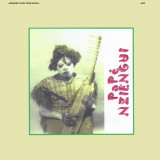
Papé Nziengui et son Groupe - Kadi Yombo LP 2x12"

Kadi Yombo, published in 1989, is the most successful album in the quest for a fusion between tradition and modernity in Bwiti harp music of the Tsogho people of Gabon. Combining beating rattles with a layer of synthesizers, Papé Nziengui blends in a contrapuntal dialogue characteristic of harp playing: male song in appeal and female choir in response, male voice of the musical arc and rhythms of female worship. But above all it’s Tsogho ritual music and modern studio orchestration. The result is an initiatory itinerary of 10 musical pieces which are all milestones likely to be simultaneously listened to, danced, meditated on, and soon acclaimed. In the years since, Nziengui has traveled he world from Lagos to Paris, from Tokyo to Cordoba, from Brussels to Mexico City to become a true icon, the emblem of Gabonese music.

Like Bob Dylan, "electrifying" folk and Bob Marley mixing rock with reggae, some purists have criticized Nziengui for having distorted the music of harp by imposing a cross with modern instruments. They even went so far as to claim that Nziengui was just an average harpist covering his shortcomings with stunts that were only good for impressing neophytes; like playing a harp placed upside down behind his back or playing two or three harps simultaneously. Sincere convictions or venomous defamations, in any case, Nziengui never gave in to such attacks, imposing himself on the contrary to pay homage to the elders (Yves Mouenga, Jean Honoré Miabé, Vickoss Ekondo) while instructing the maximum of young people. He is thus the promoter of many young talents, the most prominent of which is certainly his nephew Jean Pierre Mingongué. In a conservative society where the sacred is confused with secrecy, exposing the mysteries of Bwiti in broad daylight can be punished by exclusion or even execution.

Papé Nziengui has always claimed that he faces such risks because he never felt enslaved to a community that governs his life, that regulates his conduct, that has a right of censorship over his activities. Like Ravi Shankar, the famous sitarist, Papé Nziengui is a man of rupture but also of openness, a transmitter of culture. As proof, he has established himself in Libreville, Gabo’s capital, as the main harpist for sessions and concerts, accompanying the greatest national artists (Akendengué, Rompavè, Annie-Flore Batchiellilys, Les Champs sur la Lowé, etc.) as well as foreign artists (Papa Wemba, Manu Dibango, Kassav', Toups Bebey, etc.). In 1988, he was the first harpist to release an album in the form of a cassette produced by the French Cultural Center (Papé Nziengui, Chants et Musiques Tsogho). At the same time, he created his own group (Bovenga), combining traditional music instruments (musical bow, drums, various percussion instruments, etc.) in the framework of a true national orchestra, which gave the first concert and the first tours of a traditional music that was both modern and dynamic, thus "democratizing" the harp, to the dismay of certain purists.

On the other hand, in modern music, dominated by the logic of profit or even commercialism, artistic creation must often be adjusted for a specific audience based on reason rather than heart. But instead of allowing himself to be distorted, Papé Nziengui has always tried to produce music that is not a caricature, worthy in its expression as in its content, of the sacredness and transcendence of the music of the Origins. This is what makes Nziengui not only the musician, but the man someone whose age hasn’t altered any of his freshness or authenticity

pre-order now08.04.2022

expected to be published on 08.04.2022

Paul Ngozi - The Ghetto LP

Paul Ngozi

The Ghetto LP

12inchNA5258LP
NOW AGAIN
12.07.2024

Celebrated Zambian guitarist and bandleader Paul Ngozi’s concept album about the stuggles of those living in Africa’s 1970s townships Includes Oversized 8 Page Booklet That Details Paul Ngozi and The Ngozi Family’s Arc, Including Rare Photographs, Discography And Annotation. The third entry in an era-defining reissue series on Now-Again centered around this Zamrock legend and his band - previous entries include Day Of Judgement and 45,000 Volts

"Zambia’s Zamrock movement that exploded in the 1970s...provided young musicians access to European and American music, and created a unique sound. At its root, Zamrock melded fuzz-toned psychedelia, chugging garage rock and roiling funk with a broad mix of African cadences and beats...enlivening a scene that included bands like Musi-O-Tunya, Amanaz and the Ngozi Family” (New York Times)

Zamrock was a bona-fide rock scene: on the African continent, only Nigeria can claim one so comprehensive, and Nigeria’s was largely catalyzed and funded by subsidiaries of the European major labels. Zamrock was as independent as the newly-named country, formerly known as Northern Rhodesia. Zamrock is starting in its completeness, especially for a scene that emerged, unfurled and disappeared so quickly. From Musi-O-Tunyaís fusion of Fela’s Afro-beat, Hendrix’s rock, South African jazz and traditional Zambian melodies and rhythms to Salty Dog’s acid folk/rock, Zambia’s rock scene contained all of rock’s subgenres. Zamrock was much more than an imitation of American and European rock music: it quickly became a uniquely Zambian movement, befitting of its name. WITCH, Paul Ngozi and Amanaz sound nothing like other rock music from the African continent - or elsewhere.

pre-order now12.07.2024

expected to be published on 12.07.2024

PENNY PENNY - YOGO YOGO

Penny Penny's second record—hard to find anywhere for years— available again!

It's powerful music with a message that came following the success of his debut Shaka Bundu (1994). That album introduced a style of Shangaan disco sonically coined by Penny and his brilliant producer Joe Shirimani, blending traditional Tsonga folk music sensibilities and good old bangin' African-American House music.

deleted

The Item is out of Stock. We will send You an Email as soon as it´s available again if you click on "in Stock Mail"

Psyché - Hurriya (We Must Resist) (7")
  • A1: Original
  • B1: Extended Version

Psyché is an eclectic project rooted in the Neapolitan music scene. Conceived in 2018, the project includes Marcello Giannini (Nu Genea Live Band, Guru, Bassolino, La Famiglia), Andrea De Fazio (Nu Genea Live Band, Parbleu, The Funkin Machine), and Paolo Petrella (Nu Genea Live Band, Fratelli Malibu). They were recently joined by Roberto Porzio (Parbleu, Fitness Forever, 24 Grana, The Funkin Machine).

"Hurriya (We Must Resist)" is a sonic bridge crossing the Mare Nostrum, connecting the shores of Naples and Tunisia.

At the heart of this fusion is the voice and soul of Tunisian musician Ziad Trabelsi, whose Arab roots intertwine with the psychedelic, Mediterranean sound of Psyché.

In this track, Afrobeat and Arabic sonorities meet to create a hypnotic journey, one where Ziad's oud weaves an evocative groove that gallops like horses in the desert.

The song carries the echo of the ancient dominations and cultural exchanges that have shaped Naples—a millennia-old crossroads of civilization—where traces of Arab and North African influences continue to resonate in its streets and, most notably, in its music.

"Hurriya"—the Arabic word for freedom—is an anthem of resistance and resilience, a dialogue between East and West that dissolves the rigid boundaries of geography and politics. It is a collective song for the freedom of all peoples, against oppression, abuse, and injustice everywhere in the world. As Psyché emphasize: "Even if life tests us severely, and we often feel like giving up in the face of injustice, we must resist. We must refuse to disappear."

The single is available digitally and physically, on January 23rd, as a 7" vinyl. The B-side of the physical release includes an exclusive, extended version of "Hurriya (We Must Resist)", available only in this format.

pre-order now30.01.2026

expected to be published on 30.01.2026

Question Mark - Be Nice To The People
  • A1: Have You?
  • A2: Be Nice To People
  • A3: Hey Hey Girl
  • A4: Love
  • B1: Oh My Girl
  • B2: Freaking Out
  • B3: Scram Out
  • B4: Mary Anne

The last great rock LP from Nigeria's post civil war underground. Be Nice to the People was recorded in 1977 by Fela producer Odion Iruoje as he chased the runaway success of high school band Ofege. The Western world was in the throes of peace, love and flower power as Nigeria descended into civil war in 1967. The rock scene that developed during the following three years of bloodshed and destruction would come to heal the country, propagate the world-wide ideal of the modern Nigerian, and propel Fela to stardom after the conflict ended in 1970. The members of Question Mark were children when the Nigerian civil war ended and by the time they recorded their only album in 1977 they were college students, chasing rock n' roll dreams as Afro-beat turned to Afro-disco. Theirs is a fiery reminder of a once vibrant scene.

pre-order now13.12.2024

expected to be published on 13.12.2024

Rail Band - Rail Band LP

One of the greatest, heaviest, and most sought-after guitar records from 1970s West Africa, available on vinyl for the first time in over a decade!!!

Bamako, Mali, 1973: Rail Band, the official orchestra of the Malian state railway, drops their self-titled LP. It’s a relentlessly soulful and hypnotic blend of American funk, jazz horns, and Afro-Cuban music, reflected through centuries-old Mandé tradition and blasted at top volume by some of the continent’s greatest artists.

Led by legendary trumpet and saxman Tidiani Koné and held aloft by the intricate web of Djelimady Tounkara’s rumbling, reverb-soaked guitar, Rail Band’s sprawling compositions embody West African storytelling traditions while exulting in the technology and modernity of a newly independent Mali. Vocalists Salif Keita and Mory Kanté, two heroes of African music who would achieve global fame as soloists, are endlessly emotive, oscillating between silky ballads and funk screams. The band’s sound is filled out by layers of percussion, rolling guitars, and melodic horns filtered through the Caribbean.

Starting in 1970, Rail Band played five nights a week, from 2 pm til the early hours, at the Buffet Hotel de la Gare. Their audience was an international array of businessmen, young partiers, and people of the Bamako night. The band was incredibly versatile, switching genres, rhythms, and styles to meet their crowd. It was a volatile mix, one that would fall apart soon after these recordings were made, with Salif Keita’s departure to start the rival Les Ambassadeurs. Though Rail Band continued in many distinguished forms, the eight songs on this album reveal one of the greatest bands to ever exist, at the height of their creative powers.

On “Duga”, a composition dating back to the 13th century and passed on through oral tradition by the jelis (griots), the Rail Band replace balafon with the interplay of Cheick Tidiane’s speaker-rattling bass and Alfred Coulibaly’s tasteful organ. “Marabayasa,” with its iconic sax intro and Mory Kanté channeling James Brown, is a deep-cut favorite of DJs around the world. Part of a long and regal lineage of Malian guitar orchestras initially tasked with translating the region’s traditional music to modern instrumentation, Rail Band morphed and reenvisioned those traditions with a style and energy that has never been matched.

pre-order now05.04.2024

expected to be published on 05.04.2024

Remi Kabaka - Roots Funkadelia LP

Remi Kabaka

Roots Funkadelia LP

12inchBBE768ALP
BBE Music
02.07.2025

Following the great success of BBE’s 2023 reissue of Remi Kabaka’s 1976 lost masterpiece 'Son of Africa' comes yet another neglected and hitherto-hidden slice of pure Kabaka goodness: 1980’s 'Roots Funkadelia'. While the 1976 album was recorded at Island Studios London, roots was recorded and mixed in L.A. in the midst of a golden period for the Motown studios, and the sheer quality of the mix shows in spades. An unexpected but welcome bonus is the appearance throughout of the ‘mean machine’- Motown artists the commodores’ brass section alter-ego. Released in 1980 on Polygram Nigeria with no international distribution deal, and lurking almost unnoticed in a handful of dedicated afro vinyl collections, this is the first-ever reissue outside Africa of an album that regularly fetches £500 plus on the ‘those who know’ market’.

pre-order now02.07.2025

expected to be published on 02.07.2025

RICARDO EDDY MARTINEZ - expreso ritmico LP
  • 01: Expreso Ritmico
  • 02: Mi Conga Es La Que Es
  • 03: Tambo Iya
  • 04: Yeya Son
  • 05: De Mis Razones
  • 01: La 132
  • 02: Este Tumbao
  • 03: Mas No Me Falta Fe
  • 04: Que La Tristeza Se Fue
  • 05: Te Quedas

Next up in our Cuban Classics series, one of the jewels of record label Areito’s extensive and sought-after catalogue. Ricardo Eddy Martinez’s Expreso Ritmico from 1978 is a prized album fusing funk, disco, and orchestrated influences with Afro-Cuban percussion, Latin breaks, and lush vocal harmonies.

Whilst maintaining its distinctive Cuban identity, Expreso Ritmico is one of the more American / Western-influenced Cuban titles of the time drawing inspiration from jazz funk, disco, and library music. The album was directed, written, and orchestrated by keyboardist and drummer Ricardo Eddy Martinez, who was also the mastermind behind the orchestration of the Los Reyes 73 album (that was recently reissued by Mr Bongo). Martinez would later go on to work with international musicians and singers such as Gloria Estefan, José Feliciano, Chick Corea, and many more, whilst also working as a sound engineer in the US.

Produced by Adolfo Pichardo, who worked on much of Areito’s output, Expreso Ritmico is packed with gold. The opening title track carries a loose, breezy Latin-disco-funk vibe that breaks into a brilliant Afro-Cuban workout. ‘Que La Tristeza Se Fue’ was expertly sampled and looped by Jazzanova on their 2008 song ‘Look What You Are Doing To Me, featuring Phonte from the hip hop group Little Brother. Elsewhere, ‘Tambo Iya’ has an Afro-funk, Soul Makossa-esque groove, while tracks such as ‘Te Quedas’, ‘Mi Conga Es La Que Es’ and ‘La 132’ run with a heavy pulsating Latin-funk sound. Head to the sultry psych funk of ‘Este Tumbao’ for a spacey journey that blends and morphs through genres.

pre-order now

This item has not yet been released. You can pre-order the product now.

Roger Bekono - Roger Bekono LP

Long out-of-print release available digitally for the first time. Extensive notes by a local writer in English and French. Previously unpublished family photos. Urbanized traditional music at a dance-floor-friendly tempo. The very definition of an "Awesome Tape From Africa". Roger Bekono made a deep mark in the contemporary history of Cameroonian music through the four-on-the-floor, ribald intensity of bikutsi. The Ewondo-language dance-pop style that forms an undulating tapestry of interlocking triplet rhythmic interplay came to international prominence in the European "world music" scene as the 90s began. But the relentless sound of bikutsi developed in Yaoundé at the hands of Bekono and many others, as it developed from a village-based singing style performed mostly by women into a cosmopolitan music force that rivaled the popularity of established musics like Congolese rhumba, merengue and makossa. With his unique—some say suave—voice, Bekono contributed much over a period of more than 10 years as part of the evolution of this traditional rhythm-turned-urban dance movement. Bekono worked with legendary producer Mystic Jim, who had built a prolific home studio along with a crack team of musicians. They joined as part of the production of his self-titled album, which became known locally as "Jolie Poupée," the name of the album's lead single and most popular song. For "Jolie Poupée" Mystic Jim programmed the kick or bass drum, adding effects to have a heavier bass. Overall the album represented a new level of finesse and professionalism for his second release. In the middle of 1989, Jolie Poupée was released by the label Inter Diffusion System and aggressively hit the radio, discos and national television. The music video for the title track was on loop on TV. It felt like everyone was talking about it, even artists in adjacent music scenes like makossa. The album came out on vinyl and cassette and remains Bekono's best-selling recording to this day. With Jolie Poupée Bekono finally made an impact outside Cameroon as the record captured listeners in some Central African countries like Equatorial Guinea, Gabon, Republic of Congo and Sao Tome & Principe. In these countries, we find the Fang or Mfan people (also known as Ekang), Bantu-speaking ethnic groups that are also found in Cameroon. This umbrella language group includes the language in which bikutsi is mainly sung. Most of Bekono's songs are in French, Ewondo (of which Beti is a dialect) and Pidgin. The four songs on Jolie Poupée are all considered bikutsi classics. On September 15, 2016, Bekono died of a long illness at the age of 62. In the wake of his passing the media published a wave of tributes, thanking him for what he did for Cameroonian music. He was an admired musician, songwriter and guitarist, and some of his old colleagues and some of the new generation of performers showered Bekono with vibrant tributes via social media, many of which noting something to the effect of: "The artist dies but his works remain."

pre-order now16.06.2023

expected to be published on 16.06.2023

SAG, Arif - Electric Anatolia

Sag,Arif

Electric Anatolia

12inchNORA211
MEGA PLAK
28.01.2022

Superb collection of the best tracks by Turkish electro-saz legend Arif Sag, some tracks with arrangements by Zafer Dilek. Killer Turkish psych-folk-funk grooves from the golden era of Anatolian Rock, all housed in such a beautiful cover design!!!

pre-order now28.01.2022

expected to be published on 28.01.2022

Segun Bucknor's Revolution - Son Of January 15

Segun Bucknor was one of the most important figures in the Nigerian music scene of the 70s, despite having only a brief career with his afrobeat unit which in 1972 released this superb album of which originals usually not turn up at any price. A reissue like this on JET RECORDS therefore is long overdue to enable every woman and man with a fondness for African popular music of the 70s to take a closer listen to this gem and fall in love immediately. What do we get to listen here? Well, the album consists of four lengthy tracks with long instrumental sections that generate a swallowing atmosphere of sheer simmering heat and awakes the primal desire to dance within each and every listener.

* For fans of Fela Kuti, Ofege, Assagai, Soft Machine, Miles Davis
* Reissue of one of the politically and musically most explosive albums from the afro beat genre
* A massive collection of neverending grooves and haunting melodies

deleted

The Item is out of Stock. We will send You an Email as soon as it´s available again if you click on "in Stock Mail"

Seun Kuti & Egypt 80 - Night Dreamer Direct To Disc Sessions

“The system says we’re different but the struggle makes us one”...utters Nigerian political activist, singer and saxophonist Seun Kuti, at the beginning of the session for the track entitled ‘Struggle Sounds’, which like all the tracks on his session, are Night Dreamer D2D versions of those recorded on his last LP, Black Times.

Seun and Egypt 80 took a day to acclimatise to the recording process, to sound check levels, and perform a few test cuts, with Seun a central figure throughout, orchestrating the band with the assurance of his father, Fela Kuti. Playing without the safety of multiple takes, Seun and Egypt 80 cut all four tracks (two per side) in a single take without rehearsal on the second day and starting the recordings just minutes after Seun walked into the studio yet with all the focus and relaxation of a band in the middle of a world tour.

The recordings were cut to the studio’s Neumann VMS70 lathe, capturing not just the urgency of the performance but the atmosphere of the session itself, with all its imperfections. The final result is a snapshot of a legendary outfit at the top of their game.

deleted

The Item is out of Stock. We will send You an Email as soon as it´s available again if you click on "in Stock Mail"

SEUN KUTI & EGYPT 80 - HEAVIER YET (Lays The Crownless Head)

Der Afrobeat-Virtuose Seun Kuti bereitet sich darauf vor, sein neuestes musikalisches Meisterwerk, das von Lenny Kravitz produziert wurde und auf dem Damian Marley und Sampa The Great zu hören sind, auf die Welt loszulassen. Sein Album “Heavier Yet (Lays The Crownless Head)“ erscheint sechs Jahre nach dem Grammy-nominierten Album "Black Times" und einen entscheidenden Moment in Seun Kutis glanzvoller Karriere und zeigt seine Entwicklung als Künstler und Aktivist. Produziert von dem legendären Musiker Lenny Kravitz und Fela Kutis ursprünglichem Tontechniker Sodi Marciszewer (künstlerischer Produzent), verspricht „Heavier Yet (Lays The Crownless Head)“ ein Klangerlebnis wie kein anderes. Mit der Expertise von Kravitz und Sodi und dem unvergleichlichen Talent von Seun Kuti bleibt das Album den Wurzeln des Afrobeat treu und definiert gleichzeitig die Grenzen der zeitgenössischen Musik neu. Die sechs elektrisierenden Songs auf „Heavier Yet (Lays The Crownless Head)“ verkörpern den Geist des Widerstands, der Resilienz und der Revolution. Jeder Song handelt davon, sich Herausforderungen zu stellen und für Veränderungen zu kämpfen. So wie die Einzelsingles „Dey“ feat. Reggae-Ikone Damian Marley, beschrieben als "ein Song über das Umarmen und Verfechten dessen, was wir sind, ungeachtet dessen" und „Emi Aluta“ "ein Song über den Kampf (Aluta bedeutet Kampf), der eine Hommage an alle großen Revolutionäre ist", mit dem sambischen Sänger, Rapper und Songwriter Sampa The Great, einem der besten und innovativsten Lyriker unserer Zeit. Der Song „T.O.P.“ handelt davon, "wie die Gesellschaft Geld und Erfolg mehr schätzt als Menschen". Seun Kuti möchte dies ändern, indem er Empathie fördert und die Verbindung zur Natur wiederherstellt. In einem anderen Song, „Love & Revolution'“, drückt er seine Liebe zu seiner Frau aus und glaubt, dass wahre Liebe die Menschen dazu inspirieren kann, die Welt zu einem besseren Ort zu machen. "Dieses Projekt war für mich etwas ganz Besonderes, von dem Moment an, als ich es konzipierte und mit Lenny Kravitz sprach, der mir so viel brüderliche Liebe und Respekt entgegenbrachte", sagt Seun. "Er hat mich in sein Haus eingeladen. Ich habe seine Tochter Zoe kennengelernt und er hat uns mit Feuereifer geführt. Seit wir vor drei Jahren über das Album gesprochen haben, war er als ausführender Produzent dieses Projekts immer an unserer Seite und hat uns sehr unterstützt". "Ich möchte mich bei Craig Ross und Sodi, dem Produzenten dieses Projekts, bedanken. Wir hatten eine großartige Zeit. Es war das erste Mal für mich, dass ich mit Sodi im Studio war und ich war wirklich beeindruckt von seiner Arbeit und seinen väterlichen Ratschlägen und seiner Hingabe". Jeder Song auf dem Album ist ein Beweis für Seun Kutis unerschütterliches Engagement, Musik als Werkzeug für sozialen Wandel und Empowerment einzusetzen. Mit seinen kraftvollen Texten und ansteckenden Grooves führt er das Erbe seines Vaters, des legendären Fela Kuti, fort und bahnt sich gleichzeitig seinen eigenen Weg in der Welt der Musik.


Seun Kuti ist ein nigerianischer Musiker, Sänger und Songwriter, der für seine fesselnden Auftritte und seine gesellschaftskritische Musik bekannt ist. Er ist der jüngste Sohn des Afro-Beat-Pioniers Fela Kuti. Seun hat die meiste Zeit seines Lebens damit verbracht, das politische und musikalische Erbe seines Vaters zu bewahren und zu erweitern, und zwar als Leiter der ehemaligen Band seines Vaters, Egypt 80. Als aufstrebender Saxophonist und Schlagzeuger trat er in die formellen Reihen der Band ein, bevor er 12 Jahre alt war. Als Fela 1997 starb, übernahm Seun Kuti auf Wunsch seines Vaters die Leitung von Egypt 80, die er seither innehat. Im Laufe seiner Karriere hat Seun Kuti 4 Alben mit Egypt 80 veröffentlicht: `Many Things' (2008), `From Africa with Fury: Rise for Knitting Factory Records" (2011), koproduziert von Brian Eno und John Reynolds, "A Long Way Beginning" (2014) und das für einen Grammy nominierte "Black Times" (2018), das ein Feature von Carlos Santana enthält. Außerdem haben sie zahlreiche EPs veröffentlicht. Seun hat vor einem begeisterten Publikum auf der ganzen Welt gespielt und mit vielen großen Künstlern zusammengearbeitet. Im Jahr 2022 schloss er sich für die EP "African Dreams" mit dem Roots-Frontmann und MC-Extraordinarius Black Thought zusammen. Im Jahr 2023 arbeitete Seun an Janelle Monaes "The Age of Pleasure" (Grammy-Nominierung für das Album des Jahres) mit den beiden Singles "Float" und "Knows Better" mit, tat sich mit Talib Kweli und MadLib für deren Album "Liberation 2" bei dem Song "Nat Turner" mit Cassper Nyovest zusammen und veröffentlichte eine neue Version der Single "Bad Man Lighter" mit Black Thought und Vic Mensa.

pre-order now04.10.2024

expected to be published on 04.10.2024

Sinkane - Dépaysé

Sinkane

Dépaysé

12inchSLANG50212LP
CITY SLANG
31.05.2019

Sinkane is an artist with a real stake in our current cultural and political climate. Born in London to Sudanese parents, raised in Ohio, and now calling New York City home, Ahmed Gallab refines his sound and message to peak form on his new studio album, ‘Dépaysé’, set for release on May 31st, 2019 via City Slang.

deleted

The Item is out of Stock. We will send You an Email as soon as it´s available again if you click on "in Stock Mail"

Sinkane - Dépaysé

Sinkane

Dépaysé

12inchSLANG50212LT
CITY SLANG
31.05.2019

Sinkane is an artist with a real stake in our current cultural and political climate. Born in London to Sudanese parents, raised in Ohio, and now calling New York City home, Ahmed Gallab refines his sound and message to peak form on his new studio album, ‘Dépaysé’, set for release on May 31st, 2019 via City Slang.

deleted

The Item is out of Stock. We will send You an Email as soon as it´s available again if you click on "in Stock Mail"

Stimela - Fire, Passion, Ecstasy

Stimela were a popular and successful South African Afro-fusion outfit led by guitarist, vocalist, songwriter, producer and arranger Ray Phiri. The band was formed under the name ‘The Cannibals’ during the 1970s when Phiri got together with drummer Isaac Mtshali, keyboard player Thabo Lloyd Lelosa and bass player Jabu Sibumbe. They initially started out as instrumentalists, but later evolved to Afro-fusion when they joined forces with vocalist Jacob “Mparanyana” Radebe in 1975. The story of ‘The Cannibals’ ends when Radebe died in 1978 but the ‘Stimela’ story was only just beginning.

In 1979, after a life-changing experience in Mozambique (where they were stranded for three months) the band members had to sell all their belongings to take a train home. This trip was a watershed moment as it was here where they conceived the new name for the band: The Zulu word for “locomotive-train” STIMELA.


Stimela would soon become little short of an institution in their home country of South Africa. With soulful tunes and gripping lyrics, the band has recorded platinum-winning albums such as Fire, Passion and Ecstasy, Shadows, Fear and Pain & Look Listen and Decide. In addition to recording their own material, the group supplied instrumental accompaniment on albums by a lengthy list of legendary artists. Stimela would go on to gain global fame after being featured on Paul Simon’s iconic 1986 ‘Graceland’ album and the mega tour that followed.


Ray Phiri would enter into many successful collaborations with major acts and artists such as Harari, Joan Baez, Willie Nelson and Manu Dibango. In 2017 he was diagnosed with lung cancer and died at the age of 70. Phiri has received many awards in recognition for his contribution in the music industry, one of these is the Order of Ikhamanga awarded to him by the South African president. This was to honor his sterling contribution to the South African music industry and the successful use of arts as an instrument of social transformation.


Stimela is the tale of a South African band who have battled their way through dark days to take their rightful place in the forefront of the South African apartheid-era music invasion. One of their most memorable tracks “Whispers in the Deep” was even restricted from being broadcasted by the old South African Broadcasting Corporation.


On the album we are presenting you today (Fire, Passion and Ecstasy from 1984) the unique sounds of Ray Phiri’s Stimela are fully showcased. Expect infectious hypnotic build-up grooves, cinematic lowdown jazz-funk, Afro-soul, delightful reggae, gospel influences and funky synth-boogie sounds…all with a touch of early eighties new wave and hints of Island disco mixed with sensual bubblegum pop. It comes as no surprise that the album has now become a sought-after item due to its addictive and original-sounding nature, a must-have for any self-respecting record digger!


These recordings completely encapsulate Stimela’s fusion style. They managed to craft a modern South African sound that continues to influence SA musicians to this day. Never in a rush, yet always with a sense of purpose and direction – like the steam train after which they took their name.

Tidal Waves Music now proudly presents the first reissue of this fantastic Afro-fusion classic since 1990 (originally released in 1984 on Gallo Records) & this is also the first time the album is getting a release outside of the African continent. This rare record (original copies tend to go for large amounts on the secondary market) is now finally back available as a limited 180g vinyl edition (limited to 500 copies) complete with the original artwork. Also included is a double-sided insert containing rare pictures of the band.

pre-order now13.06.2023

expected to be published on 13.06.2023

Super Yamba Band - Last Leap LP

Super Yamba Band

Last Leap LP

12inchURLP420
UBIQUITY
12.12.2023

With an adventurous and daring take on instrumental afrobeat, Super Yamba Band’s Last Leap EP takes listeners back to 2014, the band’s formative year. “We had just moved to Brooklyn—Walter, Sean, Evan, and I,” said Daniel Yount, the band’s founder and drummer, “and our only plan for ‘making it’ was to just play as much music together as possible.”

Finally released from the Yamba archives, the Last Leap EP is a sonic timestamp of the band’s creative energy during those very special first days in New York City. “We were excited, inspired—and probably a little overwhelmed. We wanted to record a few of our tunes so that we could have something for the clubs to listen to as we were trying to book gigs,” Yount explained. “From there, we immediately fell into playing shows at Harlem’s African music clubs—places like Silvana and Shrine—as well as DIY dance parties in Brooklyn.” The result of all of this, Yount said, was “a sound that we intentionally designed to keep people dancing for as long as possible.”

From the early days of the Last Leap sessions, Super Yamba Band never relented. Today the group has gained notoriety in the global afrobeat and afrofunk scenes largely through its extensive touring and Ubiquity Records releases with singer, composer, and guitarist, Leon Ligan-Majek, aka Kaleta, a veteran of the genre. “Our project with Kaleta gained traction so fast, we basically put these masters on the shelves and forgot about them,” Yount explained. “Years later we went back to listen—with fresh ears—and it was reinvigorating. We’re going to keep exploring these sounds and pushing the limits of what an instrumental, afrobeat-centric band can be, even as we continue to double-down on our work with Kaleta.”

deleted

The Item is out of Stock. We will send You an Email as soon as it´s available again if you click on "in Stock Mail"

The Hurricanes - Sea Waves EP

The Hurricanes

Sea Waves EP

12inchREWARM4
Re:Warm
08.12.2020

For RE:WARM 004 we head to South Africa to welcome the amazing band, The Hurricanes to the label.

The Hurricanes comprised of Donald Mbowane, Albinus Sobekwa, Elias Sekete and Philip Marokoane. However over the years there were a number of variations in the band. They released a number of singles and EP’s throughout the 1970’s on RPM and Buffalo but they finally released their greatest hits in 1978 on Buffalo.

deleted

The Item is out of Stock. We will send You an Email as soon as it´s available again if you click on "in Stock Mail"

The Seven Ups - The Old World

The fourth studio album from Melbourne’s 7-piece heavy groove combo is an abstruse journey into the darker fringes of instrumental music, drifting from funk to spiritual jazz and through to psychedelic fuzz rock.

Inspired by the catastrophic year that was 2020, the bands recording sessions were rescheduled three times due to extended Melbourne lock downs, before finally being recorded in November 2020. The album’s title, The Old World, refers to life before the onset of the pandemic which shattered 21stcentury humanity’s sense of stability and invincibility. Arcing back to the simplicities and blissful ignorance that existed before the grim onset of empty supermarket shelves, deserted streets and a world locked down.

The album begins with psychedelic-soul lament, Death of the Old Gods, before rolling into apocalyptic-dancefloor-fillers Hold Fast to the Void and Abode of the Clouds, then momentarily mellowing out on laid-back number, Never Again. Side 2 opens with Harry Cooper pt II (a tribute to the bands sax player and a follow up to part I from their 2017 album Drinking Water) before launching into brutal and fiery, The Beast, then finally closing with the epic 12 minute spiritual-jazz title-track, The Old World. The astute listener may also hear sprinkled across the album hints of Afrobeat, Free-Jazz and Stoner-Doom (yep, Stoner-Doom), along with plenty of the bands new favourite instrument, the goat bell.

Released on local Melbourne label, Northside Records, the album will be available on limited edition night-sky marbled vinyl and features cover artwork by Australian artist, Daniel Hend.

pre-order now02.07.2021

expected to be published on 02.07.2021

The Sure Fire Soul Ensemble - Step Down

Step Down is the definitive noir soundtrack for the end of the age of disinformation. What better way to usher it out than with this heavily blaxploitation influenced funk anthem. Let huge horns, fuzz guitar, harpsichord, and funky flute be your guide. The B-side, La Fachada, pays homage to a San Diego late night favorite with a beautifully dreamy mandolin driven tune. That floaty feeling you get with a belly full of tacos, Tecate, and their staple slow roasted pinto beans. Maybe a few hits of your favorite California grown recreational cannabis too. Wait... what were we talking about...

pre-order now14.01.2022

expected to be published on 14.01.2022

Thee Sinseers - It Was Only A Dream

For Fans Of… Durand Jones, Lee Fields, Sunny & The Sunliners. Straight from East L.A., Thee Sinseers embody the lowrider sweet soul vibe. Love songs, washed with reverb, slow tempos for rolling, and a vibe for days. This type of doo-wop soul has been embraced by the Chicano culture and with a growing scene, Thee Sinseers look to make their own mark. The A-side, a very doo-wop leaning tune is contrasted with the James Brown cover on the B, "I Don't Mind". Both sides just crush.

deleted

The Item is out of Stock. We will send You an Email as soon as it´s available again if you click on "in Stock Mail"

Various - Alefa Madagascar - Salegy, Soukous & Soul 1974 - 1984

Strut continues its essential compilation series of Indian Ocean sounds with ‘Alefa Madagascar’, the first compilation to document the unique culture of salegy, soukous and soul on the island during the ‘70s and ‘80s. Originating as far back as the 15th Century through folkloric ceremonial music and an a cappella chanting style called antsa, salegy emerged as a fast-tempoed local dance style based on 6/8 and 12/8 rhythms. By the ‘60s, radio was bringing in new sounds from the Congo, Mozambique, South Africa and Kenya and Jean Francois de Comarmond’s Discomad label championed a new generation of artists breaking the mould with their own new fusions of styles as electric instruments replaced the traditional. The strong call-and-response dialogues, rich vocal choruses and rolling triplet feel in the rhythm sections all boasted a unique Malagasy sensibility and singles started selling tens of thousands of copies, rivalling any foreign music at the time. Local pop was sometimes referred to as tapany maintso (half-green) a reference to the stickers on singles from the other key label in Madagascar, Kaïamba, many of them produced by Charles Maurin Poty whose work was crucial in shaping the emerging genre.

‘Alefa Madagascar’ showcases the rich variety of sounds during this heyday of Malagasy music: Roger Georges’ ‘Mama’ and Jean Kely et Basth’s ‘Andosy Mora’ bring the raw energy of salegy, influential band Los Matadores drop military drums and Hammond soul in the classic ‘Andeha Hanarato’; Mahaleo’s ‘Izahay Mpamita’ showcases the band’s powerful folk sound, a crucial voice emerging from the Rotaka farmer and student protests of 1972, while Terak’Anosy Group work around a stomping Congolese guitar groove. The era paved the way for many of the household names of Malagasy music today including Jaojoby, D’Gary and Lego. Mastered by The Carvery and featuring cover artwork by top illustrator Lewis Heriz, ‘Alefa Madagascar’ is released on 16th August 2019 and is compiled by Réunionese DJs La Basse Tropicale and Percy Yip Tong (Mauritius). Physical formats feature sleeve notes by influential producer Charles Maurin Poty and Banning Eyre of Afropop Worldwide.First ever compilation documenting the heyday of Malagasy music during the 1970s and 1980s.
All tracks officially licensed in conjunction with the Discomad and Kaïamba labels.
Includes sleeve notes by legendary producer Charles Maurin Poty and writer Banning Eyre.
Latest instalment in Strut’s ongoing series documenting some of the best original music from the Indian Ocean region.

deleted

The Item is out of Stock. We will send You an Email as soon as it´s available again if you click on "in Stock Mail"

Various - Jamiila  Songs from a Somali City LP

As you'd expect from its position and history, the eastern African nation of Somalia is rich in cultural influences. Wrapped part way around Ethiopia, it forms the sea coast of the Horn of Africa. Kenya borders it to the south, and its north coast faces the southern shore of the Arabian peninsula, only a couple of hundred miles away.

Unsurprisingly, given this last fact, Somalia was one of the first African countries converted to Islam, in the 8th and 9th centuries. During the 18th and 19th century, the Somali ports were controlled by Arabs and by the Ottoman Empire. During the European colonial period, the north was a British, and the south an Italian, colony. Independent Somalia still shows varying effects of these influences (Arabic, English and Italian are all used for teaching). Musically speaking, Somalia forms part of an eastern African Islamic continuum that includes the coast of Kenya and Tanzania as well as Sudan, and is more loosely linked with North and Muslim West Africa. (Kismayu, in the south of Somalia, is in fact the most northerly frontier of the Swahili music called 'taarab' or 'tarabu'). But like all the other idioms in this general Afro-Islamic nexus, Somalia's music retains a quite individual flavor.

The main traditional instrument of Somalia is the 'ud', imported from Egypt or Lebanon and known locally as the 'kaban'. Another common instrument is the 'taruumbo', or flute. The one heard on several of these tracks was a homemade, end-blown version cut from a piece of plastic tubing.

As is true for the whole of Africa, the standard six-string acoustic guitar has been taken over by Somali musicians and played in a wide range of styles. Small keyboard instruments have also long been a feature of East African coastal music. In the old days, portable harmoniums were popular. These were presumably imported from India, where they are very popular. In Somalia, the market has been captured by Japanese-made organs with built-in rhythm, like the one heard on four tracks here.

The music on this album was all recorded in one town, Baraawe (usually called Brava on the maps). Baraawe, which is on the Somali coast about 120 miles south of the capital, Mogadishu, has a population of around 10,000. Like all African towns of any size it is something of a melting pot. The original inhabitants, like the Swahili to their south, are of mixed Arab and Bantu African heritage, and speak a Bantu language called Chimina. Somalis from various other areas, speaking standard Somali and several dialects of it, also live in Baraawe.

The musicians heard here play regularly together in various combinations. Like almost all African musicians, they are part-timers. Some are shoemakers. Two are soldiers (Africa has long had an amazing number of fine dance bands made up of police or army personnel). All the pieces they perform on this recording are love songs.

deleted

The Item is out of Stock. We will send You an Email as soon as it´s available again if you click on "in Stock Mail"

Various - Wanted – Afrobeat – From Diggers To Music Lovers

A Collection with An Exceptional Sound and Visual Aesthetic, In Collaboration With The British Photographer Chris Steel-Perkins, The Counter-Cultures Photograph. Wanted Afrobeat features 9 cuts from Pat Thomas, Ebo Taylor, Mulatu Astatke, Peter king etc.

pre-order now14.05.2021

expected to be published on 14.05.2021

Various - Buganda Royal Music Revival
 
17

From its founding in the late 14th century, the kingdom of Buganda has been celebrated through sound and nurtured a rich musical tradition in its royal court. Coming from across the kingdom, musicians would take turns in the palace to sound drums, xylophones, flutes, lyres, and more to praise and honour the existence of the kingship. In recent years however, the tradition has been more difficult to maintain, especially since 1966 where there was a violent attack on the palace that abruptly abolished the kingdom and during which royal musicians fled or were killed. And while the kingdom was re-established in 1993 as a cultural institution, many of the remaining musicians had since chosen to sideline their skills to deal with the issues of their day to day lives, the practice of the royal tradition waning in popularity, especially with younger listeners and players. But all is not lost. Scattered across the kingdom, a motivated team of older veterans and attentive young players are still keeping the tradition alive. Offering a transversal glimpse into the past and the present, "Buganda Royal Music Revival" collects recordings made in between the late 1940s and 1966 illustrating the older generation's skills, and presents them alongside recent recordings featuring old and young musicians who still carry on this musical tradition, some even performing for the current king, Muwenda Mutebi II. The later were made during the shooting of the 2019 documentary "Buganda Royal Music Revival" that presents through a film what this album conveys through sounds: a packed dive into a century-old tradition. The music displayed here is diverse and vibrant, presenting a variety of styles and highlighting instruments that illustrate the depth and sophistication that stemmed from the royal court experience of Buganda. As a starter, the album opens with 'Mujaguzo'. Often translated as 'The Drums of the Kingship', the mujaguzo is a crucial ensemble for the cultural tradition, made from drums collected by the kingdom throughout its long history and numbering around 100 drums (historical records suggest there were at some point over 300). They are the vitality of the kingship packaged into sound. From here, we're introduced deeper to an array of instruments and textures, like the buzzing Bugandan lyre (endongo) by contemporary royal player Albert Bisaso Ssempeke, the resonant akadinda xylophone with its 21 large wooden keys, Temutewo Mukasa's restless praise sung with his harp (ennanga), the hand-made gourd trumpet (amakondere), the entenga "drum-chime" and its core set of 12 drums tuned like the amadinda xylophone, or the tightly intertwined melodies of the flutes ensemble (abalere). With the music, the hissing and swishing sounds of old tapes reminds at times the listener of the long process, from the original recording to its archival digitization, that allows the talent of past musicians to still vibrate nowadays. This rousing selection of music and moods is a unique and all too rare exploration of sounds that celebrates the common history of generations of musicians, and the question remains open as to how this rich cultural tradition will shape and be shaped by the upcoming Bugandan future, and what engagement it will trigger among audiences within, but also beyond, the kingdom of Buganda.

pre-order now26.11.2021

expected to be published on 26.11.2021

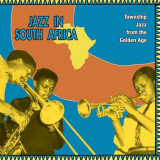
Various - Jazz In South Africa - Township Jazz  From The Golden Age

South Africa is in fact the only country in the whole African continent that has developed a strong Jazz tradition. Initially influenced by the great American stylists, (Ellington, Gillespie...) South Africa gradually developed its own soulful style based on a distinctive taste for melody and a deep sense of groove. Masterfully selected from the so-called Golden Age of the genre, (late Fifties / early Sixties), this compilation represents the best introduction to the work of a large and varied body of musicians and composers who inevitably developed their music as part of the historical Anti-Apartheid struggle, and as means of self expression in the dark times of exile. Kippie Moeketsi, Hugh Masekela, Dollar Brand, Chris McGregor, Dudu Pukwana, Mongesi Feza, Barney Rabachan, Nick Moyake and of course the queen Miriam Makeba are just some of the main voices represented here. A bunch of true warriors. in one word: A must!

pre-order now28.01.2022

expected to be published on 28.01.2022

Items per Page:
N/ABPM
Vinyl