deleted
The Item is out of Stock. We will send You an Email as soon as it´s available again if you click on "in Stock Mail"
The Item is out of Stock. We will send You an Email as soon as it´s available again if you click on "in Stock Mail"

Legendary DeepChord/Yagya collaboration finally gets a vinyl pressing! 8 tracks of Ambient/dub techno of the highest quality. Limited pressing of 350 copies and no repress!
The Item is out of Stock. We will send You an Email as soon as it´s available again if you click on "in Stock Mail"

Black Truffle is pleased to announce its first release from celebrated London-based Canadian composer Cassandra Miller. Though her body of mature work stretches back almost twenty years, many listeners were introduced to Miller through the success of her astonishing 2015 Duet for Cello and Orchestra, which sets an imperturbable two-note cello part against a series of increasingly dense orchestrations of an Italian folk melody; in 2019, it was selected by The Guardian as one of the ‘best classical music works of the 21st century’. Traveller Song / Thanksong, the first release of her music on vinyl, presents a pair of compositions for voice and ensemble that exemplify Miller’s gently absurd, strikingly beautiful, and utterly unique work.
Like many of Miller’s compositions, these pieces originate in existing music. Traveller Song (2016/2018) begins from a 1950s song of an anonymous Sicilian cart driver recorded by Alan Lomax and Diego Carpitella, which Miller recorded herself singing along to, going on to then record herself singing to her own layered voices. Miller’s untutored voice is an unsteady, wavering wail that has, in her words, ‘more in common with a quasi-shamanistic keening than anything Sicilian’. Heard sometimes alone, sometimes layered, her pre-recorded voice is accompanied by a chamber sextet drawn from London’s Plus-Minus Ensemble. In the first section, Miller’s exposed warble is set to a spare piano accompaniment, somehow both faintly preposterous and magisterial. Following the voice note for note, the piano part often makes use of almost mechanical sequences of parallel chords, reminiscent both of Satie’s Rosicrucian period and the abrupt harmonic movements of a chord organ. The orchestration then opens up to guitar, clarinet, and sliding strings, a delicate environment for Miller’s voice, which, especially when it begins to be layered, generates a powerful sense of intimacy. In its concluding minutes, the folk roots of the original melody return in the form of a glorious full ensemble setting dominated by accordion, clarinet, and strummed guitar. Thanksong begins from recordings of Miller singing along to the third movement of Beethoven’s late quartet in A minor (Op. 132), the ‘holy song of thanks’ the composer wrote to express his gratitude for (temporarily) recovering from illness. Recording herself singing along repeatedly to each of the individual parts of the quartet, Miller created an aural score where each member of the string quartet listens to their own part on headphones, playing by ear. Performed on this recording by Montreal's Quatuor Bozzini, with whom Miller has a decades-long relationship, they are joined by the British soprano Juliet Fraser, who sings material from the Beethoven quartet ‘as slowly and quietly as possible’. The atmosphere of the opening of Beethoven’s Dankgesang, of hushed reawakening and thoughtful reflection, is sustained throughout the fourteen minutes of Miller’s piece, building at points almost to sentimentality before the five individual parts again fall back into a gentle burble of unsynchronised melodic gestures. Like Traveller Song, here the use of the voice is a long way from the mannered performance of much contemporary music, reaching for a human and bodily presence more connected to the reality of the everyday, albeit suffused with wonder. Presented in a stylish sleeve adorned with photography by Lasse Marhaug and liner notes by Cassandra Miller, this is a key release from a major contemporary composer whose work challenges and dazzles in equal measure. .
Order now and we will order the item for you at our supplier.

Der aus Seattle stammende Produzent Jeff McIlwain, alias Lusine, kehrt mit seinem 9. Album Long Light zurück und feiert damit sein zwanzigjähriges Bestehen bei Ghostly International. Lusine, der als Einfluss für unzählige elektronische Künstler wie die Londoner Loraine James und andere gilt, ist bekannt für viszerale, kinetisch neugierige Musik, die Techno, Pop und experimentelle Kompositionen miteinander verbindet. In den letzten Jahren hat McIlwain sein Handwerk mit mehr kollaborativer, songorientierter Arbeit in die Höhe getrieben. Long Light" zeigt die durchgehende Linie; seine charakteristischen Looping-Muster und Texturen sind dynamisch und dennoch minimalistisch wie immer. Strukturell geradlinig, straff und hell, strahlt das Material als das direkteste in seinem Katalog, mit Gesangsbeiträgen von Asy Saavedra, Sarah Jaffe und den Sensorimotor-Kollegen Vilja Larjosto und Benoît Pioulard. Lusine hat seinen Sound schon früh gefunden, aber er hat nie aufgehört, an seinem Potenzial zu feilen, geduldig die Ablenkungen zu dekonstruieren und die Rätsel zu lösen. Mit Long Light erreicht ein prozessgeleiteter Künstler ein außergewöhnlich erfreuliches Niveau an Klarheit und Unmittelbarkeit. McIlwain sieht den Titel, der der lyrischen Phrase "long light signaling the fall again" entnommen ist, die Benoît Pioulard für das spätere Titelstück geschrieben hat, als einen Leitfaden, der mehrere Bedeutungen widerspiegelt. "Es gibt diese Art von Paranoia, bei der man nicht weiß, was real ist, es ist ein Zeitalter der großen Angst und es gibt all diese Ablenkungen", erklärt McIlwain. "Es ist wie ein Spiegelkabinett." Dem langen Licht zu folgen ist der einzig wahre Weg, und diese Metapher wendet er auf die Aufnahmen des Albums an, die ebenfalls einen zyklischen Charakter haben, ähnlich wie die Jahreszeiten. Wie der Beginn des Herbstes schließt das Album eine Periode der Kultivierung ab; "Musikmachen ist ein Kampf und man muss eine Menge Geduld haben." Long Light ist der Beweis dafür, dass das, was jenseits des Lärms, am Ende des figurativen Tunnels liegt, all die Arbeit wert ist, die man auf dem Weg dorthin geleistet hat. In der gesamten Sammlung identifiziert McIlwain das zentrale Klangelement, einen Gesangsausschnitt oder eine einfache Beatsequenz, auf dem alles andere aufbaut. Auf dem Opener Come And Go" vervielfältigt er eine Gesangseinlage seiner langjährigen Mitarbeiterin Vilja Larjosto zu einem himmlischen Chor, der an den Sensorimotor-Hit Just A Cloud" erinnert. Es ist die Bass-Hook auf der Single "Zero to Sixty", die sich um die Stimme von Sarah Jaffe windet, deren geschmeidiger Tonumfang und coole Darbietung die Quelle für Lusines unverwechselbares Mapping ist.
Order now and we will order the item for you at our supplier.

Lunatic Rec. delivers a diverse album by Electro veteran Manasyt.
On this record the artist shows his own dystopic view on the random game of life. Black or white? Women or men? Sexuality? IQ? State? Religion? Destiny or American Dream? The darkness of this record’s sound doesn’t really leave a choice to answer. Between fast edged drums and offkey harmonics you get thrown into the ups and downs of a likewise horrible as appealing fever dream in seven sequences. The vinyl comes in a handmade screenprinted fullcover, limited to 300 copies. Download code included.
Order now and we will order the item for you at our supplier.

Trumpeter, bandleader and composer Matthew Halsall announces landmark new album An Ever Changing View, an expansive, immaculately conceived project which presents Halsall’s signature blend of jazz, electronica, global and spiritual jazz influences.
An Ever Changing View will be released on September 8th on Gondwana Records (the label Halsall founded 15 years ago) ahead of a landmark show at The Royal Albert Hall in London on September 21st and UK and EU tour dates.
Halsall who has been hailed as one of the leading figures of the UK jazz renaissance has never seen himself as part of any one sound or scene: he builds his own sonic universe instead. An Ever Changing View finds him at his most experimental yet, once again expanding his sound and production techniques to create his unique brand of deeply meditative music.
During the album's creation, he was staying in both a beautiful architect’s house with breath-taking sea views and a striking modernist house, where he composed what he saw “like a landscape painting”. In these new environments, Halsall wanted to capture “the feeling of openness and escapism” and to approach making music again from scratch. “I hit the reset button and wanted to have complete musical freedom,” he says. “It was a real exploration of sound.”
It was hearing jazz on the dancefloor as a teenager that first opened up new possibilities in Halsall’s mind and his music has long drawn on his love for the spiritual jazz of Alice Coltrane and Pharoah Sanders and contemporary electronica from the likes of Warp Records and Ninja Tune. An Ever Changing View melds those forms in a way that feels heady and, at times, even otherworldly. One of the album’s starting points was Halsall’s ever-expanding box of percussion, from congas and kalimba to various clusters of seeds, bells and chimes, which he sampled and looped to use as a foundation for the songs – a first for him and his band. Elevating, charming, totally modern jazz tracks jostle with deft warm magic realism; and laid back grooves with hand percussion, deep bass and the gorgeous glisten of the Fender Rhodes meet hip-hop beats. Halsall himself sparkles, illuminating his beautiful tapestries of sound with lithe, glistening elegiac trumpet.
Order now and we will order the item for you at our supplier.

Trumpeter, bandleader and composer Matthew Halsall announces landmark new album An Ever Changing View, an expansive, immaculately conceived project which presents Halsall’s signature blend of jazz, electronica, global and spiritual jazz influences.
An Ever Changing View will be released on September 8th on Gondwana Records (the label Halsall founded 15 years ago) ahead of a landmark show at The Royal Albert Hall in London on September 21st and UK and EU tour dates.
Halsall who has been hailed as one of the leading figures of the UK jazz renaissance has never seen himself as part of any one sound or scene: he builds his own sonic universe instead. An Ever Changing View finds him at his most experimental yet, once again expanding his sound and production techniques to create his unique brand of deeply meditative music.
During the album's creation, he was staying in both a beautiful architect’s house with breath-taking sea views and a striking modernist house, where he composed what he saw “like a landscape painting”. In these new environments, Halsall wanted to capture “the feeling of openness and escapism” and to approach making music again from scratch. “I hit the reset button and wanted to have complete musical freedom,” he says. “It was a real exploration of sound.”
It was hearing jazz on the dancefloor as a teenager that first opened up new possibilities in Halsall’s mind and his music has long drawn on his love for the spiritual jazz of Alice Coltrane and Pharoah Sanders and contemporary electronica from the likes of Warp Records and Ninja Tune. An Ever Changing View melds those forms in a way that feels heady and, at times, even otherworldly. One of the album’s starting points was Halsall’s ever-expanding box of percussion, from congas and kalimba to various clusters of seeds, bells and chimes, which he sampled and looped to use as a foundation for the songs – a first for him and his band. Elevating, charming, totally modern jazz tracks jostle with deft warm magic realism; and laid back grooves with hand percussion, deep bass and the gorgeous glisten of the Fender Rhodes meet hip-hop beats. Halsall himself sparkles, illuminating his beautiful tapestries of sound with lithe, glistening elegiac trumpet.
Order now and we will order the item for you at our supplier.

Every once in a while, a library record's absurd level of perfection will be enough to throw up your hands and pack it all in. "How will I ever find this record in the wild?!", you may despair. And, yes, up until now, Michel Gonet's Phasing News Volume 2 was such a work of this ridiculous standard. Not just hyper-rare, but hyper-brilliant. Its high points transcend the "library" genre. This is a record that has always been so so hot on secondary markets. And it's easy to hear why! It's a big big French library classic with mad crazy demand.
Opening with "Mondial Scoop (Number III)", it continues on from where the dramatic tracks of Phasing News Volume 1 left off. The group of "Phasing Percussions" get under your skin, sample material for days here. "Phasing Leitmotive A" and "Phasing Leitmotive B" hypnotise with their analogue synth loops. Yet it's "Phasing March", closing out the side, that is absolutely sensational. Timpani drums merge with open breaks making for an irresistible neck-snapping tour de force.
Side B starts with "Devil Dance A", an unbelievably infectious bass instrumental whilst "Devil Dance B" adds more percussion and bass flourishes and is all the more funky for it.
And now for the main event. "Flower Dance A". What can we even say? An instantly captivating, sparkling keys loop and glittering percussion neatly arranged atop a very strong bassline and drums, all lean and potent. The melody was lifted wholesale by The Soulsavers for "Rumblefish" back in 2002 and you can't really blame them. "Flower Dance B" removes the bassline for a lighter feel but that loop still burrows inside your brain. It's perfect.
"Happy Smith (Number II)" was used by Madlib for Erykah's "My People" (!!!) whilst the set closes out with a group of tense, phased workouts.
The audio for Phasing News Volume 2 has been remastered by Be With regular Simon Francis, ensuring this release sounds better than ever. Cicely Balston's expert skills have made sure nothing is lost in the cut whilst the original, iconic Tele Music house sleeve has been restored here at Be With HQ as the finishing touch to this long overdue re-issue.
Order now and we will order the item for you at our supplier.

"Paul, Rick and River" is a programmatic title for the new album from Munich-based Paul Brändle Trio, a Modern Jazz group led by the eponymous 31-year old guitar player and band leader. Playing together for years and across continents, this recording manifests the trio's current state of matter, focusing on a no-gimmicks approach and a classic, melodic style of musical world-building.
Order now and we will order the item for you at our supplier.

Order now and we will order the item for you at our supplier.

Portland-based Kevin Palmer returns to blundar with his Best Available Technology for another release (having previously been featured on cassette). This time it’s on vinyl but still messing about with the same business of constructing and deconstructing head-nodding beats into a foggy bowl of ambience that has become the trademark sound of BAT.
Initially inspired and influenced by the sound-worlds created by Hank Shocklee, BDP and KDAY, Palmer spent his formative years combing pawn shops for samplers. This kicked off his self-described obsessive compulsive work crunching out impossibly naive and obviously unschooled jams in what might have been and continues to be an attempt to capture and document something he felt when listening to the bombastic sonic collages of early hip hop.
Going backwards in order to go forward could be an apt mantra to describe the philosophy behind BAT. Often attached with labels like nostalgia and melancholy, Palmer surely deals with the longing for that perfect time capsule of N.Y. hip hop in the 90s - but where others zoning in on that era simply imitate it, Palmer goes way further into a world of his own making.
Far removed in both time and place to the outskirts of Portland, the sonics of Palmer filters through an outsider’s perspective, sometimes offering a personal journal of the here and now via field recordings from skateparks and surfing trips.
As if one would imagine looking slightly to the left of what was supposedly going on, these tracks continuously shift one's focus. That funky feel good beat is there, but almost always just out of grasp. Palmer gives us the sound of a memory slipping away.
Yet this reads not as the end of something, but rather a stepping stone into a world of possibilities. Operating at the outskirts of genre, you could imagine anything from dub, hip hop, ambient or techno to emerge and crystalize from the haze, yet it never does. This is all those things and nothing. Or maybe it’s just some “sad fucked up funk” as Palmer puts it.
expected to be published on 22.09.2023

300 (hand-stamped, hand-numbered) The fourth episode of the Test Pressing series compilations includes tracks from such artists as Memotone, Giuseppe Ielasi, Andrew Pekler, Rome o Poirier, Nikolaienko, Felix Kubin, Jake Muir, Felicity Mangan, Star Searchers, and Tarotplane.
Order now and we will order the item for you at our supplier.

Nuclear decay occurs when the nucleus of an atom is unstable and spontaneously emits energy in the form of radiation. The result is that the nucleus changes into the nucleus of one or more other elements. These daughter nuclei have a lower mass and are more stable (lower in energy) than the parent nucleus.
“Ábris Gryllus is a cross-disciplinary media artist and musician based in Budapest. He is well-known for several projects, collaborations and performative works with choreographers, sculptors, dancers and other musicians. As a tireless artist always open to new possibilities, Gryllus has worked on dance pieces, educational workshops and installations; he is one-half of the beat-oriented group FOR., and not least of all, he produces immersive electronic music under his own name. His solo materials include the frantic vocal-based ‘Canon’ (The Death of Rave) and two releases on Farbwechsel (‘Post_’, ‘A.D.’) that feature a rather focused, slowly forming approach to composition.
On Stock and ready to ship

Tribal electronics, dubby downbeat, sedated house and disoriented breaks coming from Molto Brutto's Andreas Kunzmann. Following on from his essential reissue of II aka Molto Brutto's feverish and freaky second LP, Basso fires up the Growing Bin lathe for a further foray into AK's eccentric catalogue. Recorded between 1998-2005 and unreleased until now, these genre-fluid tracks retain the unorthodox charm central to the Austrian's art. Sometimes dancing is just falling to music, and Andreas lives the life unbalanced.
Order now and we will order the item for you at our supplier.

Order now and we will order the item for you at our supplier.

Now in its eleventh year and following hype for recent releases from Osaka's Kiji Suedo (Hosek EP & Riot album) and Edinburgh's George T (Roll On, King's Cross single), Edinburgh's Hobbes Music label burrows deeper into experimental ambient terrain with brand new signing Galun. With a discography over 15 years deep, Galun brings no shortage of his own props.
Galun is the solo project of Moscow musician, artist, and producer Sergei Galunenko (currently based in Tallinn), who has performed at numerous prestigious Russian events and collaborated on projects internationally in a career spanning more than 15 years, with a discography to match, turning his attention to myriad styles: IDM, funk, techno, juke, post rock, beatboxing, free improvisation, drone.
“In my project, Galun, I do not use musical instruments,” he explains. “All the sounds are produced with only the use of my voice through beatbox and special vocal skills. Some effects are used to produce electronic sounds.”
Hot on the heels of the new Golos album (out now via Berlin's One Instrument) plus a remix for US collaborator Alek Finn via Nevada's Mystery Circles label, Galunenko’s eighth studio album, Glagol (or Glagolь / Глаголь in Russian) is an ambient collection, recorded between 2013 and 2022. The title is an old Russian word which translates as ‘Speak’.
"This album consists of tracks written in different periods, so it turned out to be diverse," he says. "There are classic ambient tracks, as well as experimental ones in search of new possibilities for voice processing."
Why "glagol"? “Since the music on this album is 90 percent processed voice, it's a form of conversation for me," he reveals, “where I talk about my thoughts and mood, so speak music, while using my voice, is an amazing way of expressing.”
Five singles will be released on streaming platforms only, at intervals, over summer, with the full album released on digital 25.8.23 and a limited edition cassette plus lathe cuts out from 8.9.23.
"How gorgeous is that?! I have heard the rest of the LP and it is all equally gorgeous" DEB GRANT played ‘Mirror’ (New Music Fix show, BBC 6 Music, 17.8.23)
"'Glagol' translates as 'speak', an apt title when you consider 90 percent of the noises contained on it originated as recordings of his own voice, and that lends the ambient experiments here a very human, tactile feel. Closing tune 'Mirror' is a serene masterpiece, '1981' is an evocative phase-fest, the stuttery 'Stone' is endearing and enrapturing and Galunenko generally displays a knack for communicating clear emotions through abstract sounds. Recommended." ELECTRONIC SOUND
‘Really beautiful’ AVALON EMERSON (US)
‘Really loving the Galun tracks!’ INTERGALACTIC GARY (NL)
‘Super!’ JD TWITCH (Optimo, UK)
'Wow, this sounds amazing. Loving the atmosphere here, ambient with some groove somehow, really feeling this one.' DAN CURTIN (US/DE)
"Sounds great. Looking forward to getting into this properly" LORD OF THE ISLES
‘Wicked. It’s great stuff’ DRIBBLER (Pikes, Ibiza // Paradise Lost, Red Light Radio, Pure; SP)
‘Very nice, will play on Cashmere Radio here in Berlin. Keep up the good musical works x ALEX VOICES (DE)
‘Sounds really nice. The sort of thing I’d absolutely listen to on streaming etc’ AUSTIN ATO (UK)
‘Excellent stuff as always’ PAT BENSBERG (The Eccentric Selection, Phonic FM, UK)
‘Digging this one! Right up my street and just the ticket for my Radio Buena Vida show’ TOM CHURCHILL (UK)
expected to be published on 22.09.2023

Der aus Seattle stammende Produzent Jeff McIlwain, alias Lusine, kehrt mit seinem 9. Album Long Light zurück und feiert damit sein zwanzigjähriges Bestehen bei Ghostly International. Lusine, der als Einfluss für unzählige elektronische Künstler wie die Londoner Loraine James und andere gilt, ist bekannt für viszerale, kinetisch neugierige Musik, die Techno, Pop und experimentelle Kompositionen miteinander verbindet. In den letzten Jahren hat McIlwain sein Handwerk mit mehr kollaborativer, songorientierter Arbeit in die Höhe getrieben. Long Light" zeigt die durchgehende Linie; seine charakteristischen Looping-Muster und Texturen sind dynamisch und dennoch minimalistisch wie immer. Strukturell geradlinig, straff und hell, strahlt das Material als das direkteste in seinem Katalog, mit Gesangsbeiträgen von Asy Saavedra, Sarah Jaffe und den Sensorimotor-Kollegen Vilja Larjosto und Benoît Pioulard. Lusine hat seinen Sound schon früh gefunden, aber er hat nie aufgehört, an seinem Potenzial zu feilen, geduldig die Ablenkungen zu dekonstruieren und die Rätsel zu lösen. Mit Long Light erreicht ein prozessgeleiteter Künstler ein außergewöhnlich erfreuliches Niveau an Klarheit und Unmittelbarkeit. McIlwain sieht den Titel, der der lyrischen Phrase "long light signaling the fall again" entnommen ist, die Benoît Pioulard für das spätere Titelstück geschrieben hat, als einen Leitfaden, der mehrere Bedeutungen widerspiegelt. "Es gibt diese Art von Paranoia, bei der man nicht weiß, was real ist, es ist ein Zeitalter der großen Angst und es gibt all diese Ablenkungen", erklärt McIlwain. "Es ist wie ein Spiegelkabinett." Dem langen Licht zu folgen ist der einzig wahre Weg, und diese Metapher wendet er auf die Aufnahmen des Albums an, die ebenfalls einen zyklischen Charakter haben, ähnlich wie die Jahreszeiten. Wie der Beginn des Herbstes schließt das Album eine Periode der Kultivierung ab; "Musikmachen ist ein Kampf und man muss eine Menge Geduld haben." Long Light ist der Beweis dafür, dass das, was jenseits des Lärms, am Ende des figurativen Tunnels liegt, all die Arbeit wert ist, die man auf dem Weg dorthin geleistet hat. In der gesamten Sammlung identifiziert McIlwain das zentrale Klangelement, einen Gesangsausschnitt oder eine einfache Beatsequenz, auf dem alles andere aufbaut. Auf dem Opener Come And Go" vervielfältigt er eine Gesangseinlage seiner langjährigen Mitarbeiterin Vilja Larjosto zu einem himmlischen Chor, der an den Sensorimotor-Hit Just A Cloud" erinnert. Es ist die Bass-Hook auf der Single "Zero to Sixty", die sich um die Stimme von Sarah Jaffe windet, deren geschmeidiger Tonumfang und coole Darbietung die Quelle für Lusines unverwechselbares Mapping ist.
Order now and we will order the item for you at our supplier.

C-50 Cassette Tape. 100 Copies only.
dispari introduces you to Hanoi-based Vietnamese artist Trần Uy Đức. Carried by large curiosity, urgency and delight, their sonic expression can be grasped as a self-exploration which is touchingly intimate, fragile, rebellious and cociliating. In their own words:
„It's my desire to escape into this person I don't know.
Die, orphaned kite flutes.
Watch me escape the orphaned kite flutes.
If you beat it up many times.
Don’t, don't, he predict thunder.
Who asked me tonight to explain one, two, two miracles.
Same problem.
C-c-c-fuck
I'm singing for my body.“
Trần Uy Đức
expected to be published on 22.09.2023

“Praying to god whether or not I believe there is one” - PH
Petra Hermanova and Unguarded announce In Death’s Eyes (UGD-009), the debut solo LP under the artist’s own name. This LP features nine tracks utilizing folk and sacred musical technique and instrumentation which drift between song and heavy distorted drones. In a disciplined display of beauty, pain, and astute musicianship, Hermanova brings forth a notable accomplishment of an album. In Death’s Eyes confronts death from start to finish with a rare fervor that leaves one feeling it was utterly necessary for Hermanova to produce - to survive. The transcendent impulse, or the influence of religious music, bears heavily on Hermanova’s compositions in her choir arrangements, but is most apparent in her use of pipe organ, opening the record on Black Glass. Having written organ parts for a significant portion of the record, she sought out the renowned organist Denny Wilke to record with her in the Merseburg Cathedral. Captivated by Wilke's profound skill as a player and knowledge of the Ladegast organ, Hermanova invited him to collaborate on Two Deaths where he delivers an impressive improvisation. While religious music offers spiritual solace from grief, folk speaks to the human and earthly as told by the individual, be they songs of suffering or joy, sin or salvation. To Hermanova, the clean promise of liturgical music is not enough to alleviate the blunt pain of grief. Contrasting the spiritual is the voice of the individual sufferer - the folk musician. For Hermanova, the autoharp embodies this contrast. The autoharp, a familiar sound in Appalachian folk music since its mass production in the late 1800’s, is an affordable instrument designed for the unskilled player. It is the antithesis of the organ which is costly, gargantuan, reserved for skilled players, and quite literally a part of the church. Through In Death’s Eyes the sounds of transcendence blend with the worldly, the tension between them poignantly expressing Hermanova’s struggle for spiritual resolution against the reality of death and loss. Like Hermanova’s lyrics, the artwork, conceptualized by Enes Güç and Evelyn Bencicova, is riddled with symbolism and allusion. We find Hermanova on the cover, digitally rendered. Reclining like an anatomical Venus, her vital organs are exposed, suggesting she is denied a transcendent death and is instead immaculately human. Bearing a sickle, her legs are metallic like armor, both symbols of protection. We see here in this image, as we hear in the nine tracks of IDE, the metaphoric state of someone ravaged by loss, choosing to tear herself open in an attempt to heal. - Reece Cox Petra Hermanova is a musician and visual artist based in Berlin. In 2018, Hermanova began working with the autoharp, which has since become the central pillar of her musical practice. Drawing inspiration from folk, medieval drone, and contemporary textural expressions, as well as Appalachian autoharp music, she creates emotionally driven arrangements accompanied by vocals. In her lyrics, she speaks to the fragility and tenderness of the human condition, religious conceptions of death, and introspective landscapes through narrative and symbolism. Hermanova debuted live at the Berliner Festspiele event The Sun Machine is Coming Down, performed at Trauma Bar und Kino accompanied with her choir, and recently took part in Sorour Darabi’s durational performance From the Throat to the Dawn. Her debut solo album, In Death’s Eyes, is set for release in 2023 on the art platform and label Unguarded. The album, where she wrote for the autoharp, pipe organ, solo voice and choir, features the acclaimed organist Denny Wilke playing the 19th century Ladegast organ of the Merseburg Cathedral. She has toured internationally with previous projects, including extensive sound and visual collaborations with Jon Eirik Boska (Hydropsyche) as well as with her award-winning band Fiordmoss. She was recently announced as a SHAPE+ platform artist.
Order now and we will order the item for you at our supplier.
Ahead of a double LP release scheduled for 2024, Samuel Reinhard shares two new chamber pieces, written for piano and strings and recorded in a former church in Copenhagen. The two works unfold slowly, the possibility of stillness lapping at the edges of each gently rendered note. “Moments of silence are okay,” the score reassures its performers. “They are welcome.”
Reinhard’s experiments of late have brought to the fore the environmental and digital textures that arise when various instruments are recorded and collaged. The unmanipulated recordings that make up Two Pianos and String Trio offer a variation on that perspective from within a continuous, even narrative performance. Aching and affecting as the melodic progressions that make up Two Pianos and a String Trio can be, Reinhard’s generosity as a composer lies most of all in his treatment of instrumental silences as openings for environmental presence.
The church in which these works were recorded is porous to the outside world, and this music is too. As a sustained piano note fades, it makes space for sonic interjections beyond Reinhard’s jurisdiction. Is that the wind, some birds, a plane overhead? These presences tend to mingle with the listener’s own environs, such that each listening acquires its own textures, its own specificity, cobbling together the immediate and distant into a layered world of small aural possibilities.
The Item is out of Stock. We will send You an Email as soon as it´s available again if you click on "in Stock Mail"

James Ruskin & Mark Broom are back as The Fear Ratio with their third album ‘They Can’t Be Saved’.
180G 2x12"
The duo, who are long-term collaborators have created their own signature style with abstract synths, heavy basslines and experimental soundscapes that fit somewhere in between IDM, electronica and ambient.
Their acclaimed debut album ‘Lightbox’ was initially released in 2011 on Ruskin’s Blueprint Records, featuring remixes from Warp aficionados Plaid and Deadhand. Soon after they formed a long-lasting relationship with cult Manchester based label Skam, with the follow-up album in 2015 ‘Refuge of a Twisted Soul’.
2018 saw a four track ‘Live EP’ release made up of exclusive versions of their Autechre supporting slot at the Great Northern Warehouse in Manchester, Several years and various solo productions later, The Fear Ratio return with an album that solidifies their reputation as experimental producers.
From the ethereal opening bars of ‘Sender’ slowly twisting into a brooding dub breakbeat, to the staccato, bugged out atmospherics of ‘Grey Code’, ghostly electronics of ‘Small World’, tripped out, schizophrenic hip hop haunting bass of ‘Game Plan’ and sun-dappled keys of ‘The Final Vision’ Broom & Ruskin flex their techno muscles ever further beyond the floor.
Order now and we will order the item for you at our supplier.
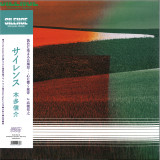
Originally released in 1983 through Apollon Music industrial corp’s alty sublabel, Mule Musiq sub-label Studio Mule presents the first official digital reissue of Shinsuke Honda 本多信介’s rare silence = サイレンス (夕映え) album. recorded as part of alty’s resort mind music series, Honda-san’s contemplative guitar instrumentals tint the air with nostalgia, longing and a gentle sadness at the impermanence of all things, transporting the listener to an eternal sunset of the mind.
A masterful guitarist and composer with a well-listened ear, Honda-San grew up in Hiroshima during the middle years of the 20th century, eventually making his way to Tokyo in the early 1970s, where he spent several years as a member of the pioneering japanese language folk-rock group Hachimitsu Pie. after they disbanded, Honda-San spent some time in Japan’s jazz and experimental rock scenes before turning his hand to film and television soundtrack work in 1978.
Five years later, as new age and kankyō ongaku (environmental music) became commercial record label concerns, alty offered him a record deal. over silence = サイレンス (夕映え)’s eight songs, Honda-San collapsed time and space, effortlessly integrating his sepia-toned memories of the rock instrumentals of his childhood with his adult love of jazz, minimalism, electric blues and soundtrack composition.
Although Honda-San went on to have an accomplished career in soundtrack work, along the way scoring the japanese films Target of Lust (1979), Koichiro Uno's shell competition (1980) and Moonlight Whispers (1999), and working on the theme music for the Fuji tv travel program Kazemakase Shin Shokoku Manyuuki, his early work spent decades languishing in obscurity, until it was rediscovered in recent years by record diggers like Tsunaki Kadowaki (sad disco) and Diego Olivas (fond/sound).
Forty years on, Mule Musiq and Studio Mule are very pleased to be able to contribute to the critical re-evaluation of Shinsuke Honda 本多信介’s silence = サイレンス (夕映え) album as an essential desert island disc for lovers of ecm contemporary jazz, steel-string blues and balearic guitar bliss.
The Item is out of Stock. We will send You an Email as soon as it´s available again if you click on "in Stock Mail"

Order now and we will order the item for you at our supplier.

Order now and we will order the item for you at our supplier.

Be With present the first ever reissue of the ultra rare double pack DJ promo of Malcolm McLaren & Bootzilla Orchestra's "Call A Wave". Originally slipping out in 1989 to a select few, there were rumoured to be only ever 300 copies pressed. Indeed, the entire package never got a proper release and now goes for a small fortune.
Say what? Bootsy Collins, Jeff Beck and Malcolm McLaren, all in one band, composing over a Barry White sample? And that's just the original. But you can forget about that for now. Here we have the incredibly sought-after "DFC Dance Mix", mixed by Massimino Lippoli of Morenas / Sueño Latino fame for the legendary DFC Italy. It's a throbbing, vital, dramatic slice of dreamy ambient house. A deep, entrancing track that's both blissful and dancefloor dynamite. It features the iconic, disaffected female vocal chopped up over elegant piano snatches, Beck's ace guitar stylings over rolling, heavy drums and a killer, hypnotic bassline with sparkling harp coming and going. It's exotic, otherworldly and brimming with that very special late 80s/early 90s Mediterranean vibe. Yes, it's Balearic, it's House. Above all else, it's a pure uncut slice of halcyon summer days, pressed on wax.
But on side B we also have the mesmeric "Breakdown Mix", again mixed by DFC Italy. For some, *this* is the mix to have - and who are we to argue? This time, the vocals are treated so they're uttered backwards, contributing to the wonderfully disorienting magic of this particular mix.
And how could we forget the equally iconic "Orbital Mix"? Not by the actual group Orbital, but courtesy of S'Express's Mark Moore & William Orbit, no less. A brilliant, beautiful remix that's perhaps more musical. They make more obvious use of the sample from the original Barry White track ("I'm Gonna Love You Just a Little More Baby") that Malcolm was inspired by. Flip over to Side D to find the duo's uber-horizontal "Return To The Deep Ambient Mix", a floaty, beatless gem that'll leave you swooning.
To round out this quite astonishing package, the "New Age Mix", again coming from the DFC Italy camp, elegantly sends us off into the cosmos with minimal percussion and maximum vibes.
Every mix on this DJ double pack is truly killer. Simon Francis remastered the original audio for this release and Cicely Balston's precise cut for Alchemy at AIR Studios ensures this 2x12" well and truly pumps. The immaculate Record Industry pressing will ensure this incredibly sought-after masterpiece finds a home in many more DJ boxes this and every summer. For the artwork, we've recreated the original DJ promo, a plain white gatefold sleeve complete with the iconic burnt orange hype sticker. Hold tight. Roof down, tops off.
Order now and we will order the item for you at our supplier.

For her second release on Northern Electronics, Vallmo (appellation of Melina ?kerman Kvie) strengthens her proficiency towards an electronic elevation with each and every track being a crevice offering kaleidoscopic gleams into a poetic narrative extracted from the slightly autotuned yet softly metallic voice.
What Virgil is to Dante, the piano is to the listener: a fragmented leitmotif and a guiding cicerone into the nimbus that is "Othem". Dual in nature, the album comprises seamless transitions between divergent idioms, figuratively as well as literally.
A false dichotomy conveying the opposing pairs tender and bold, distinct but evading and with a direction every so often forward as inward. "Othem" is an opus in equal parts melancholy, magic and mimesis.
Order now and we will order the item for you at our supplier.
English and Toop first met 20 years ago and the two have long maintained similar ideas about the potential physicality of music. ‘The Shell that Speaks the Sea’ is a realisation of that years-long conversation, with results that articulate Toop’s long held sound vision (here executed with his own voice, electric and lapsteel guitars, whistling, percussion, flutes and electronics) around English’s stunning recordings of various insects, birds and exotic animals, such as the Tawny Frogmouth, an elusive creature whose voice is like a modulating low frequency oscillator.
The duo clearly revel in the uncanny, combining those field recordings with unusual textural diversions and shortwave interference, like a more ambiguous parallel to Jon Hassell’s fourth world modelling. Windy field recordings draw us into ‘Abyssal Tracker’, accompanied by synths and wavering percussion. Somewhere in the distance, Toop’s quietly deranged whispers offer a sort of ASMR gore component, far too possessed to sooth the brain. The process is evolved on ‘Mouth Cave’, with moonlit cricket chirps underpinning ghost flute and bass drum rolls; widescreen and lavishly engineered, the track builds a soundworld that’s so physical you can almost see it render before your eyes.
Their more direct tracks play decisively with gothic horror: ‘Whistling in the Dark’ is a luxuriously experimental chiller that matches Toop’s nonchalant whistles with gong hits and eerie, high pitched synth strings; and ‘The Chair’s Story’ is as faded and grim as Thomas Köner’s early work, with Toop sounding like a possessed Graham Lambkin or Holger Czukay, whose cult Les Vampyrettes echoes through the album like a distant omen. As proceedings draw to a close, the two refine and elevate, ‘Huanghu’ is a stunning piece of multi-dimensional Gamelan, like some 4D rendition of Autrechre’s Confield played out in your dreams, and ‘The Tattooed Back’ sets flute vapours against vibrant, hyperreal rainforest detritus.
The Item is out of Stock. We will send You an Email as soon as it´s available again if you click on "in Stock Mail"

Sounds While Waiting documents the latest organ works by composer and musician Ellen Arkbro – following her phenomenal debut, 2017's For Organ And Brass, and the more recent CHORDS. Recorded at a centuries-old church in Unnaryd, Sweden in June 2020, these pieces reveal the enchanting qualities of sustained harmonic sound, how patterns of listening dissolve and emerge as textured space. On opening track "Changes," long radiant tones ebb and flow like divine breaths, while "Leaving Dreaming" builds with dynamic tension to unlock a subtle, otherworldly ambience.
As the composer states in the sleeve notes, "These recordings are traces of something I have come to love to do in large resonant spaces, which is to set up sustained chords on multiple organs and then move slowly through the sound. The instruments are usually far apart, which makes for the emergence of large fields of continuous change, spaces of harmonicity that can be passed through layer by layer and which contain within them points of both clarity and overwhelming complexity. The organ pipes are tuned and retuned, though sometimes I leave them just as they are. What I'm searching for is the moment when a particular kind of sounding texturality is revealed – it is rough, focused and yet strangely transparent."
Arkbro composes for acoustic instruments, for synthetic sound and for combinations of both, including music for orchestra and smaller chamber ensembles and large scale installation works. She currently performs in Catherine Christer Hennix's Kamigaku ensemble, and she previously studied with La Monte Young and Marian Zazeela. Recommended for fans of Sarah Davachi, Eliane Radigue and Charlemagne Palestine.
Order now and we will order the item for you at our supplier.

Since his early days with Henry Cow, Fred Frith has been regarded as a brilliant instrumentalist and improviser, but what has been overlooked is that he is also a first-rate composer. This recording offers both aspects. His most complex orchestral composition and two selected improvisations with the Ensemble Musiques Nouvelles. Fred Frith, as an infusion of energy and inspiration.
''Something about this Landscape was commissioned by Ars Musica in 2018. I composed the piece during a residency at Lou Harrison's straw-bale house in the desert at Joshua Tree, California. It's an inspiring place for a number of reasons - the silence, the light, the life, the history. The extraordinary diversity of birds during the migration season. Both other pieces are improvisations. The first one is the one we did during the concert (in public), the other one, very different, is the one we did during the dress rehearsal (on the day of the concert).'' - Fred Frith
Musiques Nouvelles is one of the two most successful and diversified contemporary music ensemble in this country with Ictus. With, under the influence of Jean-Paul Dessy, a deeply spiritual and mutual listening aspect. This meeting with the legendary Fred Frith will remain as an important step.
expected to be published on 29.09.2023

Eight years after its original release in 2015, and sold out upon release, Umor Rex finally presents a vinyl repress of Sirens, by Kara-Lis Coverdale and LXV. This new edition is limited to 500 copies and comes with revised artwork.
Inspired by the link between seduction and violence, Sirens comprises a series of timbrally vast anamorphic pieces that poise the voice as a newly imagined tool of multiplicity. Processes of sample manipulation, signal processing, routing, and source design inform instrumental writing and performance in feedback until intertwined, flickering between states of conflict and consonance. Apparitions of the schizophrenic voice are at one moment fractured and cold and at the next full of warmth and vivaciousness, embodying velvet rituals of romanticism in the digital age.
Ultimately, Sirens is music for ambitious dreamers: surreal sound portraits sound like the warmth of the world laid over an ice cold virtual altar. LXV’s vocal truncations and fleshy sound palettes depict the archivation of the breath and aural fantasies of the flesh which Coverdale sets amongst a vast and unconfined landscape of deeper and unknown force. Harmonically active and dynamic orchestrations underpin post-sacred tonalities while brooding pipe organs, sphinx flutes, and hailstorms of metallic percussion characterize uniquely disjointed discussions between disparate compositional ontologies. At times violent and at others serenely peaceful and seductive, these pieces, at their most powerful moments illuminate a felt space between cybernetic energy and the body.
Composed and recorded by Kara-Lis Coverdale and David Sutton. Mastered by John Tejada. Cover photograph by Cody Cobb. Layout by Daniel Castrejón.
Order now and we will order the item for you at our supplier.
In November 2020, KMRU self-released »Drawing Water«. The release contained 3 supple works of porous resonance and intimate motion, giving way to a very heartfelt body of work that peers directly into the fabric of the everyday; gestures, movement, conversation, rendered graciously into waveform.
Now, Vaagner is proud to present a special edition vinyl and cassette reissue of »Drawing Water« via its A Sunken Mall imprint, with the original material spanning the first side of the record in remastered from.
For the second half of the record, the label has taped none other than Abul Mogard, who prepared a new piece by reworking various layers from KMRU’s original compositions.
This new 17 minute long piece, tilted »Drawing Water On Matching Teal Surfaces’« is defined by a continuously cascading and deeply resounding solemnness, which, towards the work’s concluding moments, gradually disperses through a subtle downpour of warm pads, delicately rippling through the fabric of the work, before gently dissolving into thin air.
The Item is out of Stock. We will send You an Email as soon as it´s available again if you click on "in Stock Mail"

For BiD006 we're very pleased to announce that renowned Artist Matt Sewell has agreed to release his fledgling audio project, Sewell & The Gong on the label.
4 guitar led mystical meanderings and deep meditations of cosmic transcendental psychedelic folk.
Matt's acoustic guitar has been a fixture of his studio for many years, although nobody would ever of known as he kept it pretty much to himself.
Over the years he developed a self taught, repetitive, finger picked style in hushed tones to not bother anybody. Just a quiet little part of his studio practise, calming looping melodies.
Like his art, his music is very much inspired by nature, earth magic and cosmic wanderings. His 'A Crushing Glow' compilations are pretty much a defining list of inspirations.
Never heard by anybody outside of the family home that all changed after Matt started working with Newcastle based multi-instrumentalist, fellow pathfinder and astral traveler Chris Tate.
Combining forces Chris helped build a beautiful world for Matt's melodies to wander in, deep and lush and always, always positive.
Order now and we will order the item for you at our supplier.

Following nearly 20 years of working together as a trio, and numerous cross-collaborations in different configuration between them, Ideologic Organ presents Placelessness, the debut full-length by Chris Abrahams, Oren Ambarchi, and Robbie Avenaim, comprising two long-form works at juncture of ambient music, minimalism, rigorous experimentalism and improvisation, and machine music. Having carved distinct pathways across a diverse number of musical idioms for decades, Chris Abrahams, Oren Ambarchi, and Robbie Avenaim are each, respectively, among the most noteworthy and groundbreaking figures to have emerged from Australia's thriving experimental music scene. Ambarchi and Avenaim first encountered Abrahams when seeing the Necks - the project that has served as the primary vehicle for his singular approach to the piano since its founding in 1987 - together during the late 1980s, not long after having met in Sydney's underground music community. The pair's collaborations date back more than 35 years, criss-crossing Ambarchi's pioneering solo and ensemble work for guitar and Avenaim's visionary efforts for SARPS (Semi Automated Robotic Percussion System), robotic and kinetic extensions to his drum kit. In 2004, fate brought the three together in a trio performance at the What Is Music? Festival, the annual touring showcase of experimental music founded and run by Ambarchi and Avenaim between 1994-2012. For the nearly two decades since, Abrahams, Ambarchi, and Avenaim have intermittently reformed in exclusively live contexts, in Australia and abroad, cultivating and refining the fertile ground first tilled in that early meeting. Placelessness is the first album to present this remarkable trio's efforts in recorded form. Placelessness is the joining of three highly individualised streams, working in perfect harmony; the point at which friendship, mutual respect, and decades of creative exploration produce a singular spectrum of sound. Featuring Abrahams on piano, Ambarchi on guitar, and Avenaim on drums, the album's two sides draw on each artist's enduring dedication to long-form composition. Its two pieces, Placelessness I and Placelessness II, initially began as a single, 40 minute work, before being divided and reworked into distinct, complimentary gestures for the corresponding sides of the LP. Beginning with restrained clusters of reverberant piano tones, Placelessness I progresses at an almost glacial pace, with Abrahams' interventions increasing met by sparse responses, darting within vast ambiences, on guitar and percussion by Ambarchi and Avenaim. Remarkably conversational within its convergences of tonal, rhythmic, and textural abstraction, over the work's duration a progressive sense of tension unfurls and contracts, refusing release, as each of the ensemble's members contribute to an increasingly tangled sense of density at its resolve. While an entirely autonomous work, Placelessness II rapidly realises a distillation of the energy hinted at across the length of its predecessor. Following a luring passage of harmonious calm, Abrahams' launches into shimmering lines of repeating arpeggios, complimented at each escalation of tempo by Avenaim's machine gun fire percussion work and Ambarchi's masterful delivery of tonality and texture, as the trio collectively generate dense sheets of pointillistic ambience within which individual identity is almost lost, before slowly unspooling into unexpected abstractions and dissonances that deftly intervene with the work's inner logic and calm. What could easily be termed a maximalist take on Minimalism, Placelessness is a masterstroke of contemporary, real time composition, that blurs the boundaries between ambient music, experimentalism, free improvisation, and machine music. Drawing on Chris Abrahams, Oren Ambarchi, and Robbie Avenaim's decades of respective solo and collaborative practice, and the culmination of nearly twenty years of working together as a trio, it's two durational pieces - Placelessness I and Placelessness II - take form with a startling sense of effortlessness and grace, neither shying away from explicit beauty or rigorously tension within their forms.
Order now and we will order the item for you at our supplier.

I feel a deep sense of loss listening to this music, but at the same time the possibility of going beyond it through sound. It doesn't want to illustrate anything, but I would like it to be transformative, even of a feeling that sounds like death. It is an elegy." — Furtherset
The Infinite Hour is a shattered elegy synthesized in electronics. Furtherset's music does not explain, settle or justify, it rather simply manifests the grip of anguish. As a whole, the album's six compositions resemble the labored breathing of one who mourns a disappearance and fears oblivion. A feeling like having one's chest weighed down by a stone, while still being attentive to one's breath, and aware of what remains. From this dimension The Infinite Hour arises and transfigures loss into a space that is always extending: the hour is infinite, the melody is circular, and even stasis has its own measure that is exceeded into eternity.
The album was created between 2020 and 2022, in a slow process of writing and continuous refinement parallel to the previous EP, Auras. The compositions found their final form during the mixing process carried out together with composer & sound artist Bienoise (Mille Plateaux). They were later named based on references to authors who influenced and are dear to Furtherset: Amelia Rosselli, Vladimir Chlebnikov, Hubert Damisch, Dante Alighieri. Each track, composed with its live rendition in mind, manifests itself to the listener as a possible variant of a path that is never definitive. Their live performance, an increasingly distinctive moment within Furtherset's work, is a gesture of concentration and extension, where every composition is developed through meticulous variations of each singularity.
The Infinite Hour is one possible manifestation of an ever-changing musical landscape, a universe with unmistakable sounds but always on the verge of disintegrating, collapsing, and opening up spaces, times, infinities.
Furtherset is the musical project of artist and musician Tommaso Pandolfi (1995). His compositions' distinctive traits are stratifications and recursive shifting modulations, synthetic clusters and sampling, alongside rhythmic and embracing harmonies. The project is envisaged as formal research that follows a path towards saturation and layering, but is always capable of generating voids in which the listener can take their place and fill them according to their own focus.
expected to be published on 13.10.2023
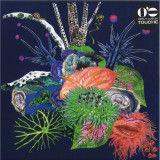
O’o share many of the musical characteristics of their ornithological namesake. The Kaua’i O’O produced the most exquisite birdsong before its extinction in Hawaii in the late 1980s. The beauty and character of its voice was delicate and mysterious, tuneful and surprising. You can experience it with just a cursory websearch, a haunting cri de coeur from the last century. If the poor O’O is consigned to history, then life is just beginning for this French duo, based in Spain, who’ve won plaudits and awards already in their short musical lifespan.
O’o are about to release their sublime debut album Touche. This is not an endling, it’s just the beginning: “I found the name on a website of weird English language words, and I loved the way the letters were arranged like a pair of glasses,” says O’o singer Victoria Suter. “Afterwards, I went onto YouTube and started listening to the last bird of its species, calling for a mate that would never come. I thought: ‘Oh my God, that’s so sad’. Then we talked about the name and we thought it could be a nice thing to honour it and keep it alive in some way.”
Suter met her musical partner Mathieu Daubigné at college in Agen, South West France, when the pair were studying music theory in their teens. Victoria moved to Barcelona in 2010; Mathieu followed six years later. Their debut EP, Spells, appeared in 2018 a beautifully crafted patchwork of vocals and samples that is redolent of the uncanny vocalese of Laurie Anderson. The bird makes an appearance at the beginning of the EP: “Sweet tooth beak. Soft melody peak / Oh O’o, go round and round in circles / Looking for a honeydrop, til you vanish, til you drop”.
That sense of profound longing for something lost is carried over to Touche, as well as the same heightened sensory awareness of the world around them. What has developed in spades is the creative process. O’o have blossomed organically, augmenting their pop sensibilities. Avant-garde techniques have been brought to heel as the pair create off-kilter pop music that warms the heart and nourishes the brain. The catalyst that enabled this bold pop transformation came with the song ‘Touche’ itself, a saucy chanson at the heart of the album. Suter’s wry narrative about a botanical femme fatale is inserted into a lithe and skittish song with reggaeton beats and an inviting, balmy atmosphere.
“The song is about a flower which attracts male insects, producing the very same smell as the female of the species,” explains Victoria. “The poor male is fooled by the sex-appeal of this botanical trap, and gets so excited that he exhausts himself and wastes all his other chances of ulterior mating and having any offspring. The flower entices the insect in in mermaid-like fashion, to come nearer and touch her. It’s the hot track!”
‘Touche’ reaches into hitherto unexplored areas of pop, while the rest of the album is accessible in the way that James Blake, Radiohead or Kate Bush are accessible, and it always challenges, in a way that pop isn’t supposed to. Suter writes playful, poignant, observational songs that tell stories as well as tell us something about ourselves. Songs like ‘Dorica Castra’ are built upon the voice as an instrument, centrifugal and layered from its core.
Complimentary to this method is Daubigné, who brings startling innovation with found sounds, samples and clever vocal manipulations—creating unique, otherworldly sonic flourishes. A guitar whirs like a musical spinning top on ‘Spin’, created in Ableton; an Ondes Martenot appears to make a guest appearance on the title track, though it’s the ingenuity of the Prophet 8 synthesiser. “I’ll often say to Mathieu, ‘what’s that?’” says Suter, He’ll reply, ‘that’s your voice’.”
O’o found their own voice when they won a competition held by the legendary festival organisers Primavera Sound. Victoria entered the band into a competition she saw on Instagram, sending off rough demos on the final day of entry, thinking little more about it other than the fact Mathieu might be annoyed. Soon they would have to build a live set from scratch and figure out how to present their music for the first time. At stake was seventy hours of recording time at Aclam studios, used by Rosalía and Kendrick Lamar, and for the winner a coveted spot at the festival. A pool of 350 acts were whittled down, and then O’o triumphed at a Battle of the Band style face off.
The O’O might be extinct, but O’o the band have learned how to fly. Just watch them go.
Order now and we will order the item for you at our supplier.

A pure journey inward into the headspace of an artist, that reveals his gaze at the earth-ly zones he walks in: “Song for Joni”, the new album by Japanese musician Shunji Mori, brings pure natural music full of artificial nuances who create in conversation with ana-logue tones a new kind of musical nature, loaded with vibrant seasons, unknown to us, the unwise humans. moreover, the album is a fine continuation of Japan’s rich ambient leaning music traditions, carrying them into Lorren Connor’s like pending guitar galaxies.
In the 1990s Tokyo based Mori was part of the trip hop, nu-jazz, deep house, and down-tempo duo natural calamity, releasing a string of albums and EP’s on labels like legend-ary London based imprint Nuphonic, Japanese Idyllic Records or Down 2 Earth Record-ings.
In 2003 he launched the instrumental guitar duo Gabby & Lopez with his buddy Masayuki Ishii. Together they created three albums and performed live. Additionally, Mori plays improvisational concerts with Japanese musician, multi-instrumentalist, and stage direc-tor Daiho Soga and finds time to invent his very own, charismatic guitar music.
His solo work now finally gets introduced with a full-length album for Studio Mule, con-sisting of recent and a decade ago compositions, all merely recorded with the electric guitar, pedals, and field recordings.
In the center of “Song for Joni” is the guitar, spreading longing, drifting melodies. Free floating, yet deeply felt compositions, performed in an accurate journey music style. around the string notes, ambient landscapes soar and vanish.
In some moments, the guitar works like a slow-mo yacht rock lead, flying speed less over and under imaginative sonic clouds. Then, Mori’s music distributes psychedelic ef-fects in the tradition of krautrock legends like Günter Schickert, just without the echo fuzz.
Additionally, in warm vibrating seconds, his creations remind on the calm flashes in the musical work of English photographer, musician, and artist designer Steve Hiett, while Mori’s ambient spheres come close to the magic vibe of records like “Pier & Loft” by his fellow countryman Hiroshi Yoshimura.
A mixture, that transports considerate listeners into the meditative world of Shunji Mori, a calm island of bliss, made for all those that follow the heedful path of life.
Order now and we will order the item for you at our supplier.
Time bends for Imaginary Softwoods, the solo guise of producer, songwriter, and synthesist John Elliott. Though he’s working on new recordings daily, Elliott’s process for the construction of his albums moves at a much different interval, stretching out over months of considerate listening, revision, and waiting patiently for the right combinations and clashes of elemental forces to materialise on their own. The Notional Pastures of Imaginary Softwoods continues Elliott’s practice of zeroing in on what he wants to say with an album over the course of countless sessions that span multiple years, this time paying even more attention to locating the emotional through-line that connects the various pieces.The eleven-piece album vibrates at a low, unbroken cycle through all of its articulations. The bubbling neon dots of “North of Roswell,” double vision stumble of “Mr. Big Volume,” underwater music box trickle of “Portable Void,” and clear headed Arctic daybreak drones of “Diagram of the Universe” are all linked by a gentle, fluid hum. The brief moments of anxiety and long stretches of calm both feed back into the same center of gravity, becoming conjoined reflections of one another as they cycle through. After bending to find this specific universal frequency, time evaporates altogether, and longer zones like the glimmering “Almond Branch” become indistinguishable from Elliott’s signature miniatures, some of which stick around for less than a minute. The Notional Pastures of Imaginary Softwoods is a document of the universe as we comprehend it, designed to vanish as soon as it is felt.
The Item is out of Stock. We will send You an Email as soon as it´s available again if you click on "in Stock Mail"

Laila’s side was recorded live at A Colourful Storm and Jolly Discs presents Thomas Bush, Princess Diana of Wales and Enchante at Cafe Oto, London on 10th July 2022.
Thomas’s side was recorded live at FELT presents Laila Sakini and Thomas Bush at Ideal Bar, Copenhagen on 2nd March 2023.
Order now and we will order the item for you at our supplier.

Raw Energy by JD Twitch showing Petersen's Trance (Not Trance) the way to the dancefloor.
Synths and sitars for eternal bliss on the flipside. Another pin glowing!
Back in 2017, Basso delved into his micro-press cassette collection to treat us to the first retrospective of kosmische wizard Trance. Spanning both the bucolic and galactic, ‚Tapes' (GBR010) suspended time and space, enveloping us in the nebulous beauty of Jürgen Petersen's misty ambience.
Among the appreciative audience for this mind expanding release was one JD Twitch aka Keith McIvor, one half of the mighty Optimo. Keith's vision of remixing Jurgen's ‚Purification' for the club was embraced by both the artist and the label guy with glowing eyes. Charting a course through progressive house, ambient techno and the weirder bits of the solar system, McIvor combines the celestial synthesis of the original with some tough and tracky drum programming, turning the intensity up to 11 in pursuit of early morning ascension. A sensitive arrangement allows space for Peterson's waveforms to work their magic, while laser fire and additional fx abuse unlock evolutionary abilities buried deep in your unconscious mind.
The previously unreleased, largely unheard ‚Contemplation' was originally intended to feature on the ‚Tapes' compilation, but fell off the edge of that flat Earth thanks to its maximal runtime. Too good to remain a secret, this crepuscular creation enjoys the entirety of the B-side, drifting through the eons via meditative electronics, delicate sitar and a touch of tapey flutter.
Embrace the almost 40 year old tape's flaws and imperfections that could not be restorated and dive into the immersive and unparalleled.
This is music for higher beings.
Order now and we will order the item for you at our supplier.

Grand huit - Is packed with a room of distinct players. One can almost hear that rare and supreme moment of collaboration unfurling. Ark & Pit lay out the perfect bump for Nicholas Baby's bass to hold this thing together with vice grips, while Shaman's guitar floats on this lake like a skipping rock…
Our man, and legend, Kool Keith spills his out otherworldly poetry in abundance, joining Keith in the chorus is the delightful Juan Rozoff who helps turn the burner on the stove to 10. Xanax (Xavier Vindard) rolls out the crescendo in top form with his sly rhymes and robust delivery making this cut almost too good to be delivered so quickly in the game. The release includes 2 amazing remixes by Dave Aju and The Mole.
Order now and we will order the item for you at our supplier.
