quête:m fix

Genres
Tout
Terra Form - Entering The Void

Terra Form

Entering The Void

12inchCYBERDOME006
CYBERDOME
11.11.2022

DJ Different dons his Terraform alias as he begins his journey in ‘Entering The Void’ on CYBERDOME; exploring phat electro bass-lines and party-starting ghettotech energy with its crosshairs fixated firmly on the club environment.

Born and raised in the culturally rich city of Malmo, the Swedish producer has previously released on London based label Deeply Cultured, Distant Hawaii, Mood Of Era, 1Ø PILLS MATE and Traxx Underground, spanning atmospheric techno, ethereal breakbeat and chunky electro.

‘Ultrasonic’ is an ear-wriggling cut of stripped-back psychedelia. As David Holmes would say, all the best electronic music tracks are made up of only a few components. Here, typical electro synth stabs, robotic vocal sampling and sparse precision allows the track room to breathe, whilst maintaining a deep and funk-driven groove.

‘Ghettotech’ sounds how you would expect it to; pounding kicks, frantic atmospherics and lairy screw-face hype combine on a certified fire-starter, before ‘Exiting The Void’ introduces itself on a footwork vibe that evolves into a sequence of interstellar-dungeon dub-electro.

‘The Rise of the Slavs’ takes its inspiration from the diverse group of tribes who lived in Central and Eastern Europe in the 6th to 10th centuries, establishing the foundations for the Slavic nations; it’s marching rhythm beaming historical context into 21st Century dance music.

pas en stock

Commandez maintenant et nous commanderons l'article pour vous chez notre fournisseur.


Last In: 2 years ago
A Rocket In Dub - Ltd 2X12"

For some, melancholy is the joy of being sad. But for A Rocket In Dub, the reawakened project of Düsseldorf producer Stefan Schwander, also known under pseudonyms like Antonelli Electr. or Harmonious Thelonious, Viktor Hugo's famous saying always applies. Two years ago, the Düsseldorf producer and musician released a 4x 7" box set on Krachladen Dub, his first release after a break of 17 years at the time. Now, two years later, 9 new tracks follow as a longplayer on double vinyl and music cassette. Even more experimental, more playful, more hypnotic and with a trombone! Monotony is nice! The rocket is back in the club, teaching genres like house and minimal Jamaican dub deepness again.

pas en stock

Commandez maintenant et nous commanderons l'article pour vous chez notre fournisseur.


Last In: 2 years ago
AESOP ROCK - SPIRIT WORLD FIELD GUIDE (INSTRUMENTALS) LP (2x12")

Following the success of Aesop Rock's most recent solo album, Spirit World Field Guide, he returns to deliver the instrumental version of those interdimensional adventures. Aesop has long been celebrated for his talents as a lyricist, but he has continually grown and evolved as a producer as well. While the original Spirit World Field Guide was packed with insightful chapters of firsthand know-how into the terrain, wildlife, and social customs of our parallel universe, the Spirit World Field Guide Instrumentals not only set the tone but also provide the roadmap for you to take your own journey. Welcome to the Spirit World. Explore with intention. "He's never before been such a commanding presence behind the boards. The beats here are the best of his career, full of torque and life." - Pitchfork "The strongest collection of beats he's ever produced." - Passion of the Weiss Official instrumentals from Aesop Rock's critically acclaimed album, Spirit World Field Guide, available for the first time. Album produced entirely by Aesop Rock, except for "Sleeper Car" produced by Hanni El Khatib. Additional album instrumentation provided by Grimace Federation and Hanni El Khatib Vinyl packaging includes 12" matte gatefold jacket, printed record sleeves, and one each of transparent cloudy effect green/blue double-vinyl, plus free digital download card. Album artwork illustrated by renowned artist Justin "Coro" Kaufman

pré-commande11.11.2022

il devrait être publié sur 11.11.2022

Sam Link - The Breath EP

Sam Link

The Breath EP

12inchLOWBATTERY005
LOW BATTERY
11.11.2022

Madison, Wisconsin producer Sam Link exploded onto the breaks circuit with his debut EP on Prague-based record label YUKU - exploring classic underground jungle and juke templates and stretching them into new and distinct formats - and now the emerging artist readies four varied cuts of stylish, club-ready breakbeats and bass on Low Battery.

With one gun-finger fixated on the past and the other firmly pointing to the future, Sam implements a unique form of production within his work. Holding down a full-time job as an artist is never easy, so Sam now works in 20-30 minute bursts, capturing the creative spurts and happy accidents, and allowing space between creation to allow ideas to breathe.

Ragga-tipped jungle at break-neck pace kicks things off on 'The Breath'; a cut of vortex-breakbeats that strikes a fine balance between meditative and energetic, like all great ragga-inspired cuts should. 'Uproar' lowers the tempo slightly in favour of stretching basslines, underwater-wubs and murky atmospherics on a growling cut of breaks that transatlantically shatters over the UK-sound.

'Chance' puts the emphasis on 'less is more'. Stripped-back percussion, nature-atmospherics and hefty low-end bass vibrations combine on a minimal jungle cut designed to vibe in the rave, before Teklife and Cosmic Bridge affiliate A.Fruit rounds out the release with a stuttering breakbeat-footwork remix of its predecessor.

pas en stock

Commandez maintenant et nous commanderons l'article pour vous chez notre fournisseur.


Last In: 14 months ago
Charbel Haber - A Common Misunderstanding of the Speed of Light

Charbel Haber is Lebanese musician, performer, visual artist and composer from Beirut. His work has seen him collaborate with artists from a wide range of disciplines - film, video art, visual art, theatre, dance - both in Lebanon and abroad.

As a solo artist and as a member of post-punk band Scrambled Eggs, he has composed music for directors Khalil Joreige and Joana Hadjithomas, Ghassan Salhab, Mohamad Malas, video artists Lamia Joreige and Akram Zaatari, Maqamat dance company and playwrights Rabih Mroueh and Lina Saneh, to name but a few. His prolific and collaborative career includes free improv group Johnny Kafta Anti-Vegetarian Orchestra, psychedelic Arabic music ensembles Malayeen and Orchestra Omar, cold wave band The Bunny Tylers and minimal ambient duo Good Luck In Death. He is the founder of Those Kids Must Choke and co-founder of Johnny Kafta's Kids Menu - two experimental record labels - and he has recorded and collaborated with notable artists from the fields of free rock and improv such as Oiseaux-Tempête, Radwan Moumneh, Tarek Atoui, Jean Francois Pauvros, The Ex, Michael Zerang, Mats Gustafson, Eddie Prevost, Xavier Charles and Tony Buck.

And once again, here I am telling you to go look for the truth and its beauty in the words of dead poets, in the little tales of ravaged cities, in aborted dreams, in the melancholy of the ruins of tomorrow, in meaningless plastic totems, in the enigmatic end of restless fools.

I'll be here long after you all disappear.

These are the first and last sentences from Charbel Haber's latest offering, A Common Misunderstanding of the Speed of Light: a multi-media musing on the chronic and the chronological, the subversive nature of time. This combination of a record and book observes the slow passing of life and the illusion of retrogradation in his every day. Simply by documenting - via image, text and tune - Haber assigns value to everything that is cast in amber by this project. There's an acceptance and appreciation of the destitution he witnesses, it is an homage given in overlapping forms.

ACMOTSOL has two parts. The book, hardcover in an embossed orange, features photographs and texts taken from Haber's personal digital diary spanning from 2020 to the start of 2022. Broken into six chapters - named for the six tracks on the record - the entries are an artist's log of sorts during a peculiar period of global hyper stagnation and navigating the aftermath of the Beirut explosions. The 96 pages highlight Haber's interest in decay, negative space and the temporality of the human condition. Instead of presenting the images and texts as they were originally paired online, they're reordered and recontextualized in the book. New connections are formed, as tenuous and fleeting as the content they surround. The images interrupt the texts in many instances, forcing pauses and inviting distraction.

At the center of the book is a sudden burst of orange pages, with stylized pluckings of the text framing a QR-code that grants access to the record. With the brilliant orange covers and matching innards, pregnant with the music at the core, it's almost as if these central pages act as a way to turn the book inside out. There, the book's purpose is altered, fixated on a mirror image of itself. It forms a self-completing arc for the project, a loop.

ACMOTSO's second half is that mirrored album. Six tracks totalling just under 52 minutes. The music could be a continuation of his solo albums Of Palm Trees and Decompositions (2016) and It Ended Up Being a Good Day Mr. Allende (2012), an exploration into the expansiveness of seemingly simple loops of a lilting guitar. Careful electronic effects add dimensions or reground the listener. There's a swelling of sound, the illusion of the push of space before it retracts back into itself or fades into the distance. Much like the images and texts the music complements, the songs challenge the purity of cycles. Endings are beginnings, beginnings are endings or is everything just the middle? Haber is quietly and elegantly grappling with the troublesome act of place-making. In music, in words and in visual storytelling.

ACMOTSOL is a work that can be calming or disorienting, depending on what is requested of it. Similar to the way loops and cycles can signify both meditation and mania. The tendrils of Haber's past - his home of Beirut, fictional and real characters encountered, authors read, films watched, composers listened, walks taken - knit themselves together for a presentation of our immediate present. An evidence of a happening. A considered project of time.

All photographs, texts and music by Charbel Haber. Album mixed by Radwan Ghazi Moumneh. Design by Maziyar Pahlevan. Printed by Albe De Coker in Belgium.

This dual-part project will be released on XX XXX 2022 on 'Other People.'

Description by Nereya Otieno.

pré-commande11.11.2022

il devrait être publié sur 11.11.2022

Ociya (Tin Man + Patricia) - Celestial Body Music Part 1

Johannes Auvinen (Tin Man) and Max Ravitz (Patricia), two devotees in the cult of the TB-303, return to Acid Test with the Celestial Body Music series, a follow up to their 2020 LP Powers Of Ten.

Recorded in Ravitz’s studio in Asheville, NC, Celestial Body Music once again showcases the pair’s penchant for raw yet emotive dance music. With Auvinen’s signature TB-303 programming and Ravitz’s typical melancholic flair, the duo’s styles merge seamlessly over the course of 8 tracks that harken back to the heyday of American techno and house. Following on from Powers of Ten, the pair continue to fix their eyes firmly on the stars, as Celestial Body Music’s song titles conjure visions of listening to Dance Mania 12”s on the ISS. With a tonal palette that features the well-trodden sounds of classic analog hardware like the TR-808, TR-909, TB-303, and SH-101, Ociya demonstrate their ability to breathe new life into these old instruments through thoughtful programming, arrangement, and mixing. This is made all the more significant when considering every song was recorded live to 2-track with no editing over the course of a few days. Sweet and savory both, the new material strikes a perfect balance between emotive sensibility and dance floor appeal.

pas en stock

Commandez maintenant et nous commanderons l'article pour vous chez notre fournisseur.


Last In: 19 months ago
Ociya (Tin Man + Patricia) - Celestial Body Music Part 2

Johannes Auvinen (Tin Man) and Max Ravitz (Patricia), two devotees in the cult of the TB-303, return to Acid Test with the Celestial Body Music series, a follow up to their 2020 LP Powers Of Ten.

Recorded in Ravitz’s studio in Asheville, NC, Celestial Body Music once again showcases the pair’s penchant for raw yet emotive dance music. With Auvinen’s signature TB-303 programming and Ravitz’s typical melancholic flair, the duo’s styles merge seamlessly over the course of 8 tracks that harken back to the heyday of American techno and house. Following on from Powers of Ten, the pair continue to fix their eyes firmly on the stars, as Celestial Body Music’s song titles conjure visions of listening to Dance Mania 12”s on the ISS. With a tonal palette that features the well-trodden sounds of classic analog hardware like the TR-808, TR-909, TB-303, and SH-101, Ociya demonstrate their ability to breathe new life into these old instruments through thoughtful programming, arrangement, and mixing. This is made all the more significant when considering every song was recorded live to 2-track with no editing over the course of a few days. Sweet and savory both, the new material strikes a perfect balance between emotive sensibility and dance floor appeal.

pas en stock

Commandez maintenant et nous commanderons l'article pour vous chez notre fournisseur.


Last In: 21 months ago
Amos Childs & Sam Barrett - Young Echo Sound: Heavyweight Champion

Mechanical Reproductions stay true to their original mission statement of being 'an outlet for editions of vinyl and print' and, for their third release, serve up a 48 page archive of some of the posters created by Young Echo's Amos Childs & Sam Barrett for the long running nights the collective have been running since 2010.

'Heavyweight Champion is the result of six years' collaborative collage works for Bristol's Young Echo collective.

The collective's 12 members have been running club nights, radio shows and releasing music since 2010. Two of them, Amos Childs & Sam Barrett (who also make music together as O$VMV$M), have been responsible for creating the posters to promote the club nights since the start.

These posters are a regular fixture in the visual landscape of the city, on walls, bins, bus stops and pretty much any other available surface in the lead up to each event. Their informal visual language immediately sets them apart from the other flyers vying for attention. They're intriguing: through not having the artist names featured as prominently as possible they encourage the viewer to take a deeper look. There's dense layers of images and cut-and-pasted phrases to be deciphered - ultimately a far more engaging experience than being shouted at by a generic and large-fonted neon specimen.

Thanks to the local council (and keen fans who would rather see them on their walls at home), more often than not these works are gone soon after they're tacked up, meaning the only archive of them is as low resolution images on various social media channels. 'Heavyweight Champion', then, aims to provide a lasting document of this unique and vital part of Bristol's musical culture...'

pré-commande11.11.2022

il devrait être publié sur 11.11.2022

Jasper Høiby - What It Means to Be Human

What It Means To be Human is the second in a series of four albums from Jasper Høiby’s Planet B, featuring saxophonist Josh Arcoleo and drummer Marc Michel, that focus on global topics of vital importance - Humanity, Climate Change, Artificial intelligence and Monetary Reform. This album seeks connection. A connection between humanity and the planet, between the problems we all face and about an opportunistic optimism to fix them. The mastermind is Jasper Høiby, the esteemed and revered Danish bassist and the deeply reflective, expressive and visionary artist. Whilst there are many moments that display the virtuosity and hard-hitting grooves of Phronesis, the long-standing band that shot Jasper to the limelight, Planet B offers additional rewards of subtle expression. The music is captivating and highly absorbing, enhanced by soundscapes of electronics and interspersed with powerful, emotive speech by some unique and forward-thinking female minds including Grace Lee Boggs, Ruby Sales and Jane Goddall. They all share a profound understanding of the world, only achievable through practical wisdom, each offering their individual take on where we are as a species and what we can do to improve. At the heart of the album is the trio. A group of like-minded and creative souls where the focus is all about the collective sound. As a whole, the music is a powerful, mesmerising and poignant display of musicianship, integrity and storytelling. What it Means To Be Human is an album at the forefront of the creative European scene.

pré-commande11.11.2022

il devrait être publié sur 11.11.2022

Sincere Engineer - Rhombithian

Repress in soon, note new price. For Fans Of:The Lawrence Arms, Into It. Over It, The Menzingers, RVIVR, Modern Baseball, Sundowner, Topshelf Records. Deanna Belos has been a fixture in the Chicago punk scene since she was in Junior High, attending shows, singing along, and raising hell in general. But she was more than just a face in the crowd, Deanna was a radiant friend to all, and at some point she picked up a guitar and made a different contribution the Chicago underground scene: her own music under the name Sincere Engineer. Over the last couple years we've encouraged her to keep writing songs and she surprised us all by assembling a great band and recording an impressive album. Her debut, "Rhombithian", was Produced by Matt Jordan (You Blew It!, Dowsing, etc.) and pairs the sounds of Chicago punk and the youthful Midwest "emo revival" movement. No one is more excited about music than Sincere Engineer, and Deanna plans to play a lot of shows and bring her infectious energy to the rest of the planet in support of "Rhombithian".

pré-commande11.11.2022

il devrait être publié sur 11.11.2022

The Rebel - A Cretian Build-Up

We, the label, asked Ben Wallers (ex-Country Teasers) to write a press release for his new album. "Press Release And Give Me The Disc as Peter said to Murphy said to Daniel said to Ash said to J said to the drummer subs please check name was it Martyn Atkins? No... scratch that please Roger, there's nothing funny about not knowing all the members of Bauhaus. Announcing the new album by The Rebel, yay! Wow! Fucking hell, great! How long is it this time? Oh it's getting on for the optimal 45 mins. Fit on side of a D90 but go bit wobbly near end of SA90. I am listening to my copy on vinyl record, it's much better than tape. That's the intro. Once upon a time there was a man/boy a sort of immature Peter's Pan type pan-pipe type who COULDNT WOULDNT grow up a bit like Keith Richards and who er where was i? The Vagina Museum is very near Maureen Paley's art gallery where if you hurry you can see some INCREDIBLY GOOD paintings/art. Anyway once upon a time it was february 2021 if that's last year or 2020 if it was the one before that, i've lost count, honestly this Covid thing is SO confusing isn't it? Anyway. Ducking fomestic crisis as usual reached boiling point again and i fucked off didn't i, did a runner, off to Turkey wiv a lih-ooh bih-uh ragarahn me ed, first of all 2 weeks on George's spare mattress, then 2 weeks in Merlin's magical tower, then a week in a fucking EasyJet Hotel with no windows, then at last my new exile retreat, Congreve Ho. Meanwhile Dad got me a new recording device the size of a VHS tape, the Tascam D-POO 8 S-E-X multitrack. Quality, oscar mike golf!! Urine for a surprise Listener/s! Ural b sayin "Y could ont he ov get 1 of these B4?" Well! Paid off the fuckin mortgage, didden Eye listenerz. Paid the fucking mortgage of. Dad said "Lets get you a reward Son! Anything name it!" Well i said ... can you fix it for me to touch Britney's hat? The one she wore for the Milkshake video. Great album. Recorded it in exile, from where i write this press release and give me the tape Kevin Haskins." And he did. Tracklist: 1. Nemo To Self 2. I’m Wok Inner Gdn.C 3. A Cretian Build-Up 4. Lays A Seamless Transition 5. A Bottle Of Timotei Hair-Shampoo 6. Long Way Off 7. Teulleodd Hapys (Dave 1) 8. I Aint Gonna Lie To Ya 1 9. Bisgeden Am Swper Eto (Dave 4) 10. Put Your Fucking Glasses On So You Can Fucking See 11. Happy Families (Dave 3) 12. Pyfgosycfs 2/Aquafauna 13. Dave Two Ukraine Nil 14. Nemo Self 2

pré-commande11.11.2022

il devrait être publié sur 11.11.2022

DJ Plead - Quick E.P.

Two years since his Going For It EP, Livity Sound is pleased to welcome back Sydney’s DJ Plead for a second round of versatile, psychedelic club variations. Since debuting around 2018 Plead has forged a distinctive sound which focuses on inventive use of percussion and elegant melodic hooks that draw lines between global dance music cultures without adhering to any fixed formula.

From the carnival futurism of lead track ‘Come Quick’ to the infectious reggaeton lilt and understated trance synths of ‘El Es’, Plead presents a sound as playful as it is serious, predominantly exploring the 100 bpm tempo range. Shaped out by acutely angled rhythms, shifting time signatures and bold licks, Quick EP further establishes him as a vital, individual talent with the kind of flexible club tracks that bend between scenes and inject vibrant energy into the dance.

Livity Sound is a label set up by Peverelist in 2011 as a vehicle for a raw and exploratory strain of UK techno, rooted in the heritage of UK dance music and sound system culture. It has since become one of the UK's foremost protagonists for cutting edge underground electronic music.

pas en stock

Commandez maintenant et nous commanderons l'article pour vous chez notre fournisseur.


Last In: 22 months ago
Billy Steiger - Loud Object

Billy Steiger

Loud Object

12inchROKU030
OTOroku
31.10.2022

experiment in markmarking and sound, as a kind of writing by ear - metallic, brushed, wooden - lines imprinted and pressed circular. The record takes its name from the discarded title of the several-hundred-page draft of Clarice Lispector’s eventual 96-page novel Água Viva. Devoid of characters or plot, Água Viva appears always in suspension between the interior and exterior and impression and expression. Weird and formless (like the jellyfish ‘agua viva’ translates to in Portuguese) Lispector’s text deals less in the cerebral or the knowable realms of words and more in the unknowable moment of experience. Its joy is found in its looseness, its meaning found in its lack of definition. Loud Object began as six sides of violin improvisations, four of them abandoned and the last of them added to or processed using samplers in moments Steiger calls ‘wells’ - gaps or dips in the recording which could be filled or poured into. The process of filling up and taking away, of repeating and multiplying, of building tension between the finite and the lost - all wrestle with actualisation. Which line will be drawn? In the liner notes for the LP, Evie Scarlett Ward writes, “The record holds loss.” Though the lines are fixed, its contents are fluid - forty minutes filled in and manipulated, before time moves on. Steiger’s relentless rearranging of convention means no two of his live shows are the same, and his decade-plus involvement in London’s free improvisation scene constantly surprises. Loud Object is no exception. Recorded on the 12th, 13th and 14th February 2021 by Daniel Blumberg. Produced by Billy Steiger. Mixed by Billy Steiger and Shaun Crook. Mastered by Giuseppe Ielasi. Artwork by Billy Steiger. Layout by Oli Barrett. Liner notes by Evie Scarlett Ward.

pré-commande31.10.2022

il devrait être publié sur 31.10.2022

Rose For Bohdan - Then Everybody Hugged, "Racism is God."

Rose For Bohdan return with their 5th full length album in full rock mode (w/ David Gorilla and Kerri Kerang on drums). Beyond high energy anthems filled with blistering electronics, thunderous bass/drum combo, and instantly catchy boy/girl vocal hooks. Inspired by living in Los Angeles, from the ADHD pace to the still unresolved undertones of racial tension to the youth that lights this town up with hope. No Rose For Bohdan album has ever been released on vinyl, so we're here to fix that problem, beginning with the high water mark for the band. Noise poppunk that takes wild twists and turns, bathed in ridiculous energy. This is fun insanity. TRACKLIST: 1. Friends Forever 2. Peter and the Rabbit and the Wolf 3. Thunderstorm Summerschool 4. The Fashion Show 5. I'm 6. The Amazing Bird the Shit in a Bag 7. The Fear 8. Covered In Monkeys

pré-commande30.10.2022

il devrait être publié sur 30.10.2022

Lady Blackbird - Black Acid Soul LP (Deluxe Edition) 2x12"

Set for release on 28th October, the deluxe edition of Lady Blackbird’s debut album ‘Black Acid Soul’ comes with a staggering 11 additional songs, encompassing brand new material such as stunning single ‘Feel It Comin’ and remixes commissioned by the likes of electronic, jazz, funk luminaries Emma-Jean Thackray, Colleen 'Cosmo' Murphy and Greg Foat.

Originally released in 2021, ‘Black Acid Soul’ received enormous critical acclaim; The Sunday Times named her their Breaking Act, stating that she “brings a singing voice of extraordinary nuance and immaculate phrasing to a selection of covers/reworkings and pindrop originals” in a 4* review. The Guardian awarded the album a 5* review, remarking that Blackbird “finds her calling with an extraordinary collection of songs and performances that burn deep into you”.

pas en stock

Commandez maintenant et nous commanderons l'article pour vous chez notre fournisseur.


Last In: 3 years ago
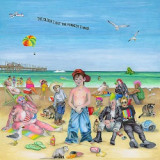
WHITMER THOMAS - THE OLDER I GET, THE FUNNIER I WAS

The Older I Get, the Funnier I Was, which follows Thomas’ brilliant 2020 HBO special The Golden One and his Can't Believe You're Happy Here EP released earlier this year, surveys a range of emotion and offers a broad sonic palette, moving between pop punk, electro, and the obvious influence of the singer-songwriters he grew up listening to in early childhood. It conjures the ennui of Bright Eyes alongside the barefaced storytelling of John Prine, the overstuffed lists of Fred Thomas with the lackadaisical humor of Colleen Green, among many others.

Thomas attributes the dexterity of the record to Duterte, who recorded and engineered most of it in addition to serving up plenty of encouragement when Thomas got down on the process. “As a comic, I used to test out new songs during sets to see if the funny bits were hitting, but since I wrote this in isolation I ended up writing lyrics and worrying less about making jokes,” Thomas says. That said, the album’s plenty funny. Stand-out and lead single “Rigamarole” opens with a Thomas-voiced infomercial that recalls his oft-cited lookalike Jim Carrey as the Grinch, before launching into a buoyant pop song about being depressed.

Whitmer Thomas will admit that when he traveled home to small town Gulf Shores, Alabama to record his HBO stand-up special, The Golden One, he expected to be greeted as a returning hero, a conquering king, or at minimum, a guy with a moderately successful career as an entertainer in Los Angeles. “I expected a big welcome home, open arms, but when I went back I realized: nobody fucking knows me. Nobody remembers me,” Thomas says. “In the years I’d been performing that show, I’d been romanticizing my childhood in this mythologized place, but the visit made me see that I’m not really from there anymore.”

The sense of alienation compounded when Thomas recognized how few people in town remembered his mom, to whom The Golden One is dedicated and largely about. Thomas grew up watching her perform with her twin sister at the legendary Flora-Bama Lounge, where he set the special, and still counts her as one of his musical influences. His new album, The Older I Get, the Funnier I Was, isn’t overtly about his mom, her presence is deeply felt throughout. While in Gulf Shores, Thomas discovered dozens of her old recordings, all of which had been wrecked by Katrina, but upon returning to LA, Thomas paid “a fancy place in Hollywood” to fix the tapes and hired Melina Duterte (Jay Som, Bachelor, Routine) to mix them. The two struck up a collaborative friendship, and Thomas had the sound of his mom’s voice back. “I was listening to songs she recorded when she was about my age, just these heartfelt, sweet Americana songs,” he says. “I decided then that I wanted to lose the Ian Curtis voice I always sing with; I wanted to do what came naturally, because my mom always sounded like herself, even when she was singing some cheesy reggae song about, like, Jamaica.”

Thus he went into The Older I Get, the Funnier I Was knowing it was time to retire his darkwave persona, and leaning into his natural, chirpier voice, which he says sounds “like a 12-year-old’s.” It makes sense: much of the album chronicles what Thomas calls “being a kid and feeling like you have no control and overcompensating by being annoying.” “So much of the album is about witnessing drug and alcohol addiction as a kid and seeing what it does to people, but also realizing that there's nothing you can do about it,” Thomas says. It’s familiar territory (see: “Partied to Death”) but the methodology is different this time around; true to its title, The Older I Get, the Funnier I Was isn’t always looking for laughs. Thomas might’ve left his hometown behind, but his kid self is still tagging along, a Peter Pan shadow he can’t untether himself from. The first line he sings on The Older I Get, the Funnier I Was is: “There should be a room at every party where you can just sit and watch a movie.” Find a 12-year-old who wouldn’t say the same.

pré-commande21.10.2022

il devrait être publié sur 21.10.2022

Ameel Brecht - The Locked Room

Ameel Brecht

The Locked Room

12inchBLICKWINKEL5LP
blickwinkel
21.10.2022out soon

The Locked Room imagines a protagonist who experiences the outside world as an endless escape room, a place where, in the early hours, every passing tail-light, train in the distance, hunched bike rider or crying bird might be a possible riddle, leading to a passage or the discovery of a key.

Once opened, however, a room locked from the other side could just be the same room as the one you're in - only slightly different. And maybe the person wanting to break free is not you at all, but the sum or remnant of all of your online actions and conversations, a locked-in avatar whose consciousness wants to experience the real world, and real emotion with it.

"This album is about a struggle with the experience of reality, and about the places and zones where you cross over into a different territory. I tried to address these fixations on steel mandolin and gut-string violone."

Clues and conclusions, finding your way like a kid in the dark, virtual illusions and contemporary gaming culture all have their place on The Locked Room, an album of minimal, kosmische mandolin and violone music that documents the elegant collapse of our 21st-Century grip on reality.

All music written and performed by Ameel Brecht on steel mandolin, violone and electric piano.

pré-commande

Cet article n'a pas encore été publié. Vous pouvez pré-commander le produit maintenant.

Lee Tracy & Isaac Manning - Is it What You Want

As the sun sets on a quaint East Nashville house, a young man bares a piece of his soul. Facing the camera, sporting a silky suit jacket/shirt/slacks/fingerless gloves ensemble that announces "singer" before he's even opened his mouth, Lee Tracy Johnson settles onto his stage, the front yard. He sways to the dirge-like drum machine pulse of a synth-soaked slow jam, extends his arms as if gaining his balance, and croons in affecting, fragile earnest, "I need your love… oh baby…"

Dogs in the yard next door begin barking. A mysterious cardboard robot figure, beamed in from galaxies unknown and affixed to a tree, is less vocal. Lee doesn't acknowledge either's presence. He's busy feeling it, arms and hands gesticulating. His voice rises in falsetto over the now-quiet dogs, over the ambient noise from the street that seeps into the handheld camcorder's microphone, over the recording of his own voice played back from a boombox off-camera. After six minutes the single, continuous shot ends. In this intimate creative universe there are no re-takes. There are many more music videos to shoot, and as Lee later puts it, "The first time you do it is actually the best. Because you can never get that again. You expressing yourself from within."

"I Need Your Love" dates from a lost heyday. From some time in the '80s or early '90s, when Lee Tracy (as he was known in performance) and his music partner/producer/manager Isaac Manning committed hours upon hours of their sonic and visual ideas to tape. Embracing drum machines and synthesizers – electronics that made their personal futurism palpable – they recorded exclusively at home, live in a room into a simple cassette deck. Soul, funk, electro and new wave informed their songs, yet Lee and Isaac eschewed the confinement of conventional categories and genres, preferring to let experimentation guide them.

"Anytime somebody put out a new record they had the same instruments or the same sound," explains Isaac. "So I basically wanted to find something that's really gonna stand out away from all of the rest of 'em." Their ethos meant that every idea they came up with was at least worth trying: echoed out half-rapped exhortations over frantic techno-style beats, gospel synth soul, modal electro-funk, oddball pop reinterpretations, emo AOR balladry, nods to Prince and the Fat Boys, or arrangements that might collapse mid-song into a mess of arcade game-ish blips before rallying to reach the finish line. All of it conjoined by consistent tape hiss, and most vitally, Lee's chameleonic voice, which managed to wildly shape shift and still evoke something sincere – whether toggling between falsetto and tenor exalting Jesus's return, or punctuating a melismatic romantic adlib with a succinct, "We all know how it feels to be alone."

"People think we went to a studio," says Isaac derisively. "We never went to no studio. We didn't have the money to go to no studio! We did this stuff at home. I shot videos in my front yard with whatever we could to get things together." Sometimes Isaac would just put on an instrumental record, be it "Planet Rock" or "Don't Cry For Me Argentina" (from Evita), press "record," and let Lee improvise over it, yielding peculiar love songs, would-be patriotic anthems, or Elvis Presley or Marilyn Monroe tributes. Technical limitations and a lack of professional polish never dissuaded them. They believed they were onto something.

"That struggle," Isaac says, "made that sound sound good to me."

In the parlance of modern music criticism Lee and Isaac's dizzying DIY efforts would inevitably be described as "outsider." But "outsider" carries the burden of untold additional layers of meaning if you're Black and from the South, creating on a budget, and trying to get someone, anyone within the country music capital of the world to take your vision seriously. "What category should we put it in?" Isaac asks rhetorically. "I don't know. All I know is feeling. I ain't gonna name it nothing. It's music. If it grabs your soul and touch your heart that's what it basically is supposed to do."

=

Born in 1963, the baby boy of nine siblings, Lee Tracy spent his earliest years living amidst the shotgun houses on Nashville's south side. "We was poor, man!" he says, recalling the outhouse his family used for a bathroom and the blocks of ice they kept in the kitchen to chill perishables. "But I actually don't think I really realized I was in poverty until I got grown and started thinking about it." Lee's mom worked at the Holiday Inn; his dad did whatever he had to do, from selling fruit from a horse drawn cart to bootlegging. "We didn't have much," Lee continues, "but my mother and my father got us the things we needed, the clothes on our back." By the end of the decade with the city's urban renewal programs razing entire neighborhoods to accommodate construction of the Interstate, the family moved to Edgehill Projects. Lee remembers music and art as a constant source of inspiration for he and his brothers and sisters – especially after seeing the Jackson 5 perform on Ed Sullivan. "As a small child I just knew that was what I wanted to do."

His older brother Don began musically mentoring him, introducing Lee to a variety of instruments and sounds. "He would never play one particular type of music, like R&B," says Lee. "I was surrounded by jazz, hard rock and roll, easy listening, gospel, reggae, country music; I mean I was a sponge absorbing all of that." Lee taught himself to play drums by beating on cardboard boxes, gaining a rep around the way for his timekeeping, and his singing voice. Emulating his favorites, Earth Wind & Fire and Cameo, he formed groups with other kids with era-evocative band names like Concept and TNT Connection, and emerged as the leader of disciplined rehearsals. "I made them practice," says Lee. "We practiced and practiced and practiced. Because I wanted that perfection." By high school the most accomplished of these bands would take top prize in a prominent local talent show. It was a big moment for Lee, and he felt ready to take things to the next level. But his band-mates had other ideas.

"I don't know what happened," he says, still miffed at the memory. "It must have blew they mind after we won and people started showing notice, because it's like everybody quit! I was like, where the hell did everybody go?" Lee had always made a point of interrogating prospective musicians about their intentions before joining his groups: were they really serious or just looking for a way to pick up girls? Now he understood even more the importance of finding a collaborator just as committed to the music as he was.

=

Isaac Manning had spent much of his life immersed in music and the arts – singing in the church choir with his family on Nashville's north side, writing, painting, dancing, and working various gigs within the entertainment industry. After serving in the armed forces, in the early '70s he ran The Teenage Place, a music and performance venue that catered to the local youth. But he was forced out of town when word of one of his recreational routines created a stir beyond the safe haven of his bohemian circles.

"I was growing marijuana," Isaac explains. "It wasn't no business, I was smoking it myself… I would put marijuana in scrambled eggs, cornbread and stuff." His weed use originated as a form of self-medication to combat severe tooth pain. But when he began sharing it with some of the other young people he hung out with, some of who just so happened to be the kids of Nashville politicians, the cops came calling. "When I got busted," he remembers, "they were talking about how they were gonna get rid of me because they didn't want me saying nothing about they children because of the politics and stuff. So I got my family, took two raggedy cars, and left Nashville and went to Vegas."

Out in the desert, Isaac happened to meet Chubby Checker of "The Twist" fame while the singer was gigging at The Flamingo. Impressed by Isaac's zeal, Checker invited him to go on the road with him as his tour manager/roadie/valet. The experience gave Isaac a window into a part of the entertainment world he'd never encountered – a glimpse of what a true pop act's audience looked like. "Chubby Checker, none of his shows were played for Black folks," he remembers. "All his gigs were done at high-class white people areas." Returning home after a few years with Chubby, Isaac was properly motivated to make it in Music City. He began writing songs and scouting around Nashville for local talent anywhere he could find it with an expressed goal: "Find someone who can deliver your songs the way you want 'em delivered and make people feel what you want them to feel."

One day while walking through Edgehill Projects Isaac heard someone playing the drums in a way that made him stop and take notice. "The music was so tight, just the drums made me feel like, oh I'm-a find this person," he recalls. "So I circled through the projects until I found who it was.

"That's how I met him – Lee Tracy. When I found him and he started singing and stuff, I said, ohhh, this is somebody different."

=

Theirs was a true complementary partnership: young Lee possessed the raw talent, the older Isaac the belief. "He's really the only one besides my brother and my family that really seen the potential in me," says Lee. "He made me see that I could do it."

Isaac long being a night owl, his house also made for a fertile collaborative environment – a space where there always seemed to be a new piece of his visual art on display: paintings, illustrations, and dolls and figures (including an enigmatic cardboard robot). Lee and Issac would hang out together and talk, listen to music, conjure ideas, and smoke the herb Isaac had resumed growing in his yard. "It got to where I could trust him, he could trust me," Isaac says of their bond. They also worked together for hours on drawings, spreading larges rolls of paper on the walls and sketching faces with abstract patterns and imagery: alien-like beings, tri-horned horse heads, inverted Janus-like characters where one visage blurred into the other.

Soon it became apparent that they didn't need other collaborators; self-sufficiency was the natural way forward. At Isaac's behest Lee, already fed up with dealing with band musicians, began playing around with a poly-sonic Yamaha keyboard at the local music store. "It had everything on it – trumpet, bass, drums, organ," remembers Lee. "And that's when I started recording my own stuff."

The technology afforded Lee the flexibility and independence he craved, setting him on a path other bedroom musicians and producers around the world were simultaneously following through the '80s into the early '90s. Saving up money from day jobs, he eventually supplemented the Yamaha Isaac had gotten him with Roland and Casio drum machines and a Moog. Lee was living in an apartment in Hillside at that point caring for his dad, who'd been partially paralyzed since early in life. In the evenings up in his second floor room, the music put him in a zone where he could tune out everything and lose himself in his ideas.

"Oh I loved it," he recalls. "I would really experiment with the instruments and use a lot of different sound effects. I was looking for something nobody else had. I wanted something totally different. And once I found the sound I was looking for, I would just smoke me a good joint and just let it go, hit the record button." More potent a creative stimulant than even Isaac's weed was the holistic flow and spontaneity of recording. Between sessions at Isaac's place and Lee's apartment, their volume of output quickly ballooned.

"We was always recording," says Lee. "That's why we have so much music. Even when I went to Isaac's and we start creating, I get home, my mind is racing, I gotta start creating, creating, creating. I remember there were times when I took a 90-minute tape from front to back and just filled it up."

"We never practiced," says Isaac. "See, that was just so odd about the whole thing. I could relate to him, and tell him about the songs I had ideas for and everything and stuff. And then he would bring it back or whatever, and we'd get together and put it down." Once the taskmaster hell bent on rehearsing, Lee had flipped a full 180. Perfection was no longer an aspiration, but the enemy of inspiration.

"I seen where practicing and practicing got me," says Lee. "A lot of musicians you get to playing and they gotta stop, they have to analyze the music. But while you analyzing you losing a lot of the greatness of what you creating. Stop analyzing what you play, just play! And it'll all take shape."

=

"I hope you understood the beginning of the record because this was invented from a dream I had today… (You tell me, I'll tell you, we'll figure it out together)" – Lee Tracy and Isaac Manning, "Hope You Understand"

Lee lets loose a maniacal cackle when he acknowledges that the material that he and Isaac recorded was by anyone's estimation pretty out there. It's the same laugh that commences "Hope You Understand" – a chaotic transmission that encapsulates the duality at the heart of their music: a stated desire to reach people and a compulsion to go as leftfield as they saw fit.

"We just did it," says Lee. "We cut the music on and cut loose. I don't sit around and write. I do it by listening, get a feeling, play the music, and the lyrics and stuff just come out of me."

The approach proved adaptable to interpreting other artists' material. While recording a cover of Whitney Houston's pop ballad "Saving All My Love For You," Lee played Whitney's version in his headphones as he laid down his own vocals – partially following the lyrics, partially using them as a departure point. The end result is barely recognizable compared with the original, Lee and Isaac having switched up the time signature and reinvented the melody along the way towards morphing a slick mainstream radio standard into something that sounds solely their own.

"I really used that song to get me started," says Lee. "Then I said, well I need something else, something is missing. Something just came over me. That's when I came up with 'Is It What You Want.'"

The song would become the centerpiece of Lee and Isaac's repertoire. Pushed along by a percolating metronomic Rhythm King style beat somewhere between a military march and a samba, "Is It What You Want" finds Lee pleading the sincerity of his commitment to a potential love interest embellished by vocal tics and hiccups subtlely reminiscent of his childhood hero MJ. Absent chord changes, only synth riffs gliding in and out like apparitions, the song achieves a lingering lo-fi power that leaves you feeling like it's still playing, somewhere, even after the fade out.

"I don't know, it's like a real spiritual song," Lee reflects. "But it's not just spiritual. To me the more I listen to it it's like about everything that you do in your everyday life, period. Is it what you want? Do you want a car or you don't want a car? Do you want Jesus or do you want the Devil? It's basically asking you the question. Can't nobody answer the question but you yourself."

In 1989 Lee won a lawsuit stemming from injuries sustained from a fight he'd gotten into. He took part of the settlement money and with Isaac pressed up "Saving All My Love For You" b/w "Is It What You Want" as a 45 single. Isaac christened the label One Chance Records. "Because that's all we wanted," he says with a laugh, "one chance."

Isaac sent the record out to radio stations and major labels, hoping for it to make enough noise to get picked up nationally. But the response he and Lee were hoping for never materialized. According to Isaac the closest the single got to getting played on the radio is when a disk jock from a local station made a highly unusual announcement on air: "The dude said on the radio, 107.5 – 'We are not gonna play 'Is It What You Want.' We cracked up! Wow, that's deep.

"It was a whole racist thing that was going on," he reflects. "So we just looked over and kept on going. That was it. That was about the way it goes… If you were Black and you were living in Nashville and stuff, that's the way you got treated." Isaac already knew as much from all the times he'd brought he and Lee's tapes (even their cache of country music tunes) over to Music Row to try to drum up interest to no avail.

"Isaac, he really worked his ass off," says Lee. "He probably been to every record place down on Music Row." Nashville's famed recording and music business corridor wasn't but a few blocks from where Lee grew up. Close enough, he remembers, for him to ride his bike along its back alleys and stumble upon the occasional random treasure, like a discarded box of harmonicas. Getting in through the front door, however, still felt a world away.

"I just don't think at the time our music fell into a category for them," he concedes. "It was before its time."

=

Lee stopped making music some time in the latter part of the '90s, around the time his mom passed away and life became increasingly tough to manage. "When my mother died I had a nervous breakdown," he says, "So I shut down for a long time. I was in such a sadness frame of mind. That's why nobody seen me. I had just disappeared off the map." He fell out of touch with Isaac, and in an indication of just how bad things had gotten for him, lost track of all the recordings they'd made together. Music became a distant memory.

Fortunately, Isaac kept the faith. In a self-published collection of his poetry – paeans to some of his favorite entertainment and public figures entitled Friends and Dick Clark – he'd written that he believed "music has a life of its own." But his prescience and presence of mind were truly manifested in the fact that he kept an archive of he and Lee's work. As perfectly imperfect as "Is It What You Want" now sounds in a post-Personal Space world, Lee and Isaac's lone official release was in fact just a taste. The bulk of the Is It What You Want album is culled from the pair's essentially unheard home recordings – complete songs, half-realized experiments, Isaac's blue monologues and pronouncements et al – compiled, mixed and programmed in the loose and impulsive creative spirit of their regular get-togethers from decades ago. The rest of us, it seems, may have finally caught up to them.

On the prospect of at long last reaching a wider audience, Isaac says simply, "I been trying for a long time, it feels good." Ever the survivor, he adds, "The only way I know how to make it to the top is to keep climbing. If one leg break on the ladder, hey, you gotta fix it and keep on going… That's where I be at. I'll kill death to make it out there."

For Lee it all feels akin to a personal resurrection: "It's like I was in a tomb and the tomb was opened and I'm back… Man, it feels so great. I feel like I'm gonna jump out of my skin." Success at this stage of his life, he realizes, probably means something different than what it did back when he was singing and dancing in Isaac's front yard. "What I really mean by 'making it,'" he explains isn't just the music being heard but, "the story being told."

Occasionally Lee will pull up "Is It What You Want" on YouTube on his phone, put on his headphones, and listen. He remembers the first time he heard his recorded voice. How surreal it was, how he thought to himself, "Is that really me?" What would he say to that younger version of himself now?

"I would probably tell myself, hang in there, don't give up. Keep striving for the goal. And everything will work out."

Despite what's printed on the record label, sometimes you do get more than one chance.

pas en stock

Commandez maintenant et nous commanderons l'article pour vous chez notre fournisseur.


Last In: 3 years ago
The Fixx - Every Five Seconds LP 2x12"

The FIXX has been heralded as one of the most innovative bands to come out of the “MTV” era. For four decades, the style and substance of the band has always created a special connection with its audience. The FIXX’s themes are often complex, introspective and thought-provoking, but not without widespread mass appeal. The band has garnered three #1 hits, five more in the Top 5 and a dozen which reached the Top 10. With millions of albums sold worldwide, songs such as “One Thing Leads To Another,” “Red Skies” and “Saved By Zero” remain everyday staples on the playlists of the Rock, AAA and Alternative radio stations that continue to break new acts inspired by the era that The FIXX helped to define. The FIXX’s classic lineup remains intact, Cy Curnin (vocals), Jamie West-Oram (guitar), Rupert Greenall (keyboards), Dan K. Brown (bass guitar) and Adam Woods (drums). The alt rock pioneers return with their new studio album EVERY FIVE SECONDS,their first in nearly a decade, on June 3, 2022!

pré-commande14.10.2022

il devrait être publié sur 14.10.2022

Beatconductor - GATT003 7"

Beatconductor

GATT003 7"

7"-VinylGATT003
GATT
10.10.2022

MARIAH CAREY's diva vocal gets a proper retro revamp over a synth heavy classic on "HUMAN EMOTIONS." It'll be hard not to smirk when this comes on. A totally recontextualized Fab 4 deep cut gets reworked on the B-Side. McCARTNEY vs. a very spaced out HALL & OATES classic.1

pas en stock

Commandez maintenant et nous commanderons l'article pour vous chez notre fournisseur.


Last In: 11 months ago
Goatwhore - Angels Hung from the Arches of Heaven

Rampaging into their 25th year as purveyors of the most ruthless extreme metal, Goatwhore return with perhaps the strongest album of their storied career. Angels Hung From The Arches Of Heaven is 47 minutes of their trademark blend of death, black, thrash and sludge metal delivered with breathless intensity and an unrepentant bloodlust, making for one of the most thrilling records to come out of 2022. Featuring beasts such as the savage “Born Of Satan’s Flesh” that thrashes along relentlessly and drips with evil, the old school crossover flavored “Death From Above” with its guttural chorus, and the epic, chilling title track that is as haunting as it is heavy they cover a lot of sonic territory, everything having that signature Goatwhore feel while constantly doing something a little different. The title of the record - like all Goatwhore releases - is both deep and direct - “It is a basis of human despondency, the arc of life and its relationship with the personal abyss of overwhelming emotion and thought. A mixture of esoteric ideas and biblical scripts and the journey to the places some people care not to venture on mental paths. The rise and fall of the self and how the abyss can be a turning point for some and a passageway to oblivion for others. It is blunt and to the point, just like countless aspects of life.”

pré-commande07.10.2022

il devrait être publié sur 07.10.2022

Hans Zimmer, Christian Lundberg - Around the World in 80 Days (OST)

Der Soundtrack zur erfolgreichen BBC-Fernsehserie ‚Around The World In 80 Days‘, komponiert vom legendären Filmkomponisten Hans Zimmer, dem Komponisten von ‚Bleeding Fingers‘, Christian Lundberg, und dem Produzenten Russell Emanuel. David Tennant spielt den unwahrscheinlichen Weltenbummler Phileas Fogg, der sich auf den Weg macht, in 80 Tagen um die Welt und wieder zurück zu reisen. Zusammen mit seinen Begleitern Abigail Fix (gespielt von Leonie Benesch) und Passepartout (gespielt von Ibrahim
Koma) versuchen sie das fast unmögliche Unterfangen, den Globus in 80 Tagen zu umrunden.

pré-commande07.10.2022

il devrait être publié sur 07.10.2022

Farsight - Triangulation EP

San Francisco based DJ and bass extraordinaire Farsight knows how to make an entrance, first bursting onto the scene with his adventurous and daring EP 'Wisdom' back in 2016. At the time Farsight's music sounded like it had been beamed from another planet and has played an important role in the crosspollination of genres we've seen in recent years. Farsight has gone on to release on Scuffed Recordings, Maloca and Noire State, remaining firmly fixed on the future of club music. Now his blend of trap, jersey club, reggaeton and dancehall makes its way across the Atlantic with six mind-sizzling cuts for Brakes 'N' Pieces vol. 23.

Opening track 'Triangulation' combines rolling drums with party-starting vocal samples and steady whistles, letting listeners know we're really off! 'Mr Right' then enters the fray with throbbing subs, ravey stabs and a vocal that sits halfway between fun and outright menacing. The A side comes to a close with 'Leaving Las Vegas' a dubstep infused cut of choppy breaks and wide-eyed melodies. A masterclass in raising tension, this track will shut down any club, please use wisely.

'Lesser Light' shows Farsight's love for bass exploration; it's looming shadow pressing amongst some of the darkest corners of electronic. A unique brand of grime infused techno. 'Water Margin' delves even further, adopting a more measured pace for those heads down moments. The record comes to a close with 'Fulminous Edge' and is a reflection of the artist's darkest material. The drums still have a familiar spring in their step but the track's melodic bassline is mesmerizing; resulting in a melancholy trance that deserves a second play.

pas en stock

Commandez maintenant et nous commanderons l'article pour vous chez notre fournisseur.


Last In: 3 years ago
Double Cheese - Thee Black Album

Please note early release date! Vinyl colour is green with black splatter. Hailing from La Rochelle (France), the band kicks out fun, raw garage punk with a slightly off-kilter-charm that seems to define the current sound coming out of France. Their sound is an absolute burner that features grimy guitar solos and conjures up the smell of sweat and spilled beer. In other words, it’s fuckin’ rock’n’roll. The band is brainchild of songwriter and guitarist Ugo Martinez (Charles Howl / Jerry Tropicano / Skeptics) created in 2014 in La Rochelle. In 2016 came the first 7” from the band release on Frantic City Records - FR, Followed by the band’s first LP SUMMERIZZ released 2017 on Adrenalin Fix Music - Beast Records - Stryckhnine Recordz, the band hit the road on multiple occasions with great returns from the audiences, most notably at the Binic Festival 2017. With two full years of touring the band went back to their favourite studio Swampland - FR and under the supervision of Lo Spider recorded their sophomore album BRAIN DAMAGE released 2019 on US label Dead Beat Records. In 2020 the band now composed of bassist Willy Barre (Ivresse Publique / Boulevard Boys), drummer Hugo Suquet (Thee Maximators), and guitarist / Vocalist Ugo Martinez, recorded their third LP THEE BLACK ALBUM to be released in 2022 on Dirty Water Records (London) and long-time partner and friend Adrenalin Fix Music. For fans of: Thee Oh Sees, Black Sabbath, Jay Reatard, fuzz, and farfisa.

Track list: 1. Mean As Fuck / Intro 2. Bite It 3. Sound Of The Underground 4. Pills And Wine 5. Jail Time 6. Talk, Drink, Bleach 7. The Ants 8. Mash Potatoes 9. Lightnin’ Never Strike Twice 10. HIYW

pré-commande30.09.2022

il devrait être publié sur 30.09.2022

Plastic Mermaids - It's Not Comfortable To Grow LP

The Independent - 5 star Glastonbury set review “Making their Glastonbury review, IOW collective Plastic Mermaids are a joy to behold at the Croissant-Neuf stage.” New single 'Girl Boy Girl' Girl Boy Girl is an uncomfortable place, an unspoken awkwardness and tension. Always convoluting, never resolving. Just like this perpetual frustration when a relationship isn’t right but none has the language or understanding to fix it. And then thinking that adding a 3rd party to the mix is going to solve the problems…oh dear. We took some inspiration from the song ‘Night Call’ on the Drive soundtrack and also some of the slower Daft Punk tunes. Kinda wanted it to feel like something you’d stick on cruising in your car after dark in the 80’s. It has been two years since Plastic Mermaids released their critically acclaimed debut ‘Suddenly Everyone Explodes’, and now they return to spread some eagerly awaited blissed out joy with new single Disco Wings & b side Environmental with their second album due next year. The band have been working hard in the studio teaming up with producer Ant Whiting, who has worked with the likes of MIA, John Newman and Lana De Ray, in what proved to be an exciting mix of creative ideas.

pré-commande30.09.2022

il devrait être publié sur 30.09.2022

LEE BAGGETT - ANYWAY

Lee Baggett

ANYWAY

12inchPD031
PERPETUAL DOOM
30.09.2022

Lee Baggett began a new chapter of his eclectic and varied songwriting career with the 2021 release of Just A Minute, and he’s continuing his experimental streak with his latest full length, Anyway. The seasoned musician is changing his stripes again with this 10-song collection by leaning into a more rollicking sound at times, as evidenced by the brisker feeling “Fruit Dog,” the album’s lead single, and the bustling and twangy penultimate track, “Highway Roll.” By embracing more country-tinged sonic elements like banjo, organ-sounding keys, and harmonica, Baggett is able to weave through winding narratives that poignantly parse through the challenging nature of change and evolution. On “Highway Roll,” he confronts how landscapes and settings he once knew are now unrecognizable, and takes that motif a step further on “Earlier Than The World” by achingly and vividly describing “concrete and rubble” amongst a sea of delicate, yet biting guitar riffs. Escape seems to be a viable option for Baggett with “Sink In My Dreams” and “Dust In The Wind” serving as the album’s soothing remedies, inviting the listener to sit back and get lost in Baggett’s mesmerizing guitar playing. His nimble guitar work is a prominent fixture on Anyway, acting as a crux at several key points. It resonates forcefully and feels emotionally charged. Just take the meandering bridge on “Earlier Than The World” as a prime example of how Baggett can aptly convey feeling through riffs.


Delving deeper into Anyway finds some familiar sounds, with songs like “Oh Well” and “Anyway” evoking the seaside melancholy of Baggett’s prior works. But there’s decidedly more intimacy hidden in the crevices of his words and hooks. Throughout, Baggett uses his refined storytelling skills to share his relatable fears and coping mechanisms, his river-like path to unexpectedly finding love, and his musings on an ever-changing world, amongst other experiences. His conversational disposition, folk-styled lyricism, and emotive sonic backdrops make for an immersive listening experience. - Tom Gallo

pré-commande30.09.2022

il devrait être publié sur 30.09.2022

The Submissives - Wanna Be Your Thing

New one by Montreal singer-songwriter Deb Edison, working once again as The Submissives and willfully unchanged from 2016's Do You Really Love Me? cassette (Fixture). Six years into the most tumultuous period in global history since WWII – a pandemic, right-wing infiltration, attempts at government overthrow, climate catastrophe looming, a near-complete loss of the moral compass, conspiracies lording over facts natural resources running out – and Deb's still here, staring a hole through the floor/your head. "No one ever changes," she coos on "In a Pinch," and these songs are a textbook example of that sentiment, and her artistic embodiment of psychosexual desire, ready to shatter some lives and walk away looking for the next one. "I'm waiting for your signal/I'm several years older," she drones on "Sick Kinda Love," further reinforcing a long-held stance that the obsession, internalization of feelings, and the human power dynamic of The Submissives are on the menu once again. You'll find whatever it is you want to find in here, just dig in. Deb might even be talking about you, though there's a good chance she's not, and if you don't have the goods you can be sure she's gonna be doing all she can to passively drive you away. "Chirp Like a Bird" reads as Deb's bottom-looking-up retort to Whitehouse's "Wriggle Like a Fucking Eel," and might even be more severe, because she doesn't need microphonic feedback and screaming to intimidate. If you're in for surface thrills, scrape up the Shaggs-esque rock stumble, swooping viola, and behind-the-beat bash tapping out each of these eleven tracks. This is how it is; you get what you get, and you might be upset, but that's all on you. You'll never get to the bottom of this sketch. TRACKLIST: A1 Wanna be your thing A2 When it was all new A3 In a pinch A4 Sick kinda love A5 Chirp like a bird A6 I'm a mirror B1 Goodbye Betty B2 Four five B3 Isn't you B4 Think of me B5 Sweetly

pré-commande30.09.2022

il devrait être publié sur 30.09.2022

Lee Tracy & Isaac Manning - Is it What You Want LP

As the sun sets on a quaint East Nashville house, a young man bares a piece of his soul. Facing the camera, sporting a silky suit jacket/shirt/slacks/fingerless gloves ensemble that announces "singer" before he's even opened his mouth, Lee Tracy Johnson settles onto his stage, the front yard. He sways to the dirge-like drum machine pulse of a synth-soaked slow jam, extends his arms as if gaining his balance, and croons in affecting, fragile earnest, "I need your love… oh baby…"

Dogs in the yard next door begin barking. A mysterious cardboard robot figure, beamed in from galaxies unknown and affixed to a tree, is less vocal. Lee doesn't acknowledge either's presence. He's busy feeling it, arms and hands gesticulating. His voice rises in falsetto over the now-quiet dogs, over the ambient noise from the street that seeps into the handheld camcorder's microphone, over the recording of his own voice played back from a boombox off-camera. After six minutes the single, continuous shot ends. In this intimate creative universe there are no re-takes. There are many more music videos to shoot, and as Lee later puts it, "The first time you do it is actually the best. Because you can never get that again. You expressing yourself from within."

"I Need Your Love" dates from a lost heyday. From some time in the '80s or early '90s, when Lee Tracy (as he was known in performance) and his music partner/producer/manager Isaac Manning committed hours upon hours of their sonic and visual ideas to tape. Embracing drum machines and synthesizers – electronics that made their personal futurism palpable – they recorded exclusively at home, live in a room into a simple cassette deck. Soul, funk, electro and new wave informed their songs, yet Lee and Isaac eschewed the confinement of conventional categories and genres, preferring to let experimentation guide them.

"Anytime somebody put out a new record they had the same instruments or the same sound," explains Isaac. "So I basically wanted to find something that's really gonna stand out away from all of the rest of 'em." Their ethos meant that every idea they came up with was at least worth trying: echoed out half-rapped exhortations over frantic techno-style beats, gospel synth soul, modal electro-funk, oddball pop reinterpretations, emo AOR balladry, nods to Prince and the Fat Boys, or arrangements that might collapse mid-song into a mess of arcade game-ish blips before rallying to reach the finish line. All of it conjoined by consistent tape hiss, and most vitally, Lee's chameleonic voice, which managed to wildly shape shift and still evoke something sincere – whether toggling between falsetto and tenor exalting Jesus's return, or punctuating a melismatic romantic adlib with a succinct, "We all know how it feels to be alone."

"People think we went to a studio," says Isaac derisively. "We never went to no studio. We didn't have the money to go to no studio! We did this stuff at home. I shot videos in my front yard with whatever we could to get things together." Sometimes Isaac would just put on an instrumental record, be it "Planet Rock" or "Don't Cry For Me Argentina" (from Evita), press "record," and let Lee improvise over it, yielding peculiar love songs, would-be patriotic anthems, or Elvis Presley or Marilyn Monroe tributes. Technical limitations and a lack of professional polish never dissuaded them. They believed they were onto something.

"That struggle," Isaac says, "made that sound sound good to me."

In the parlance of modern music criticism Lee and Isaac's dizzying DIY efforts would inevitably be described as "outsider." But "outsider" carries the burden of untold additional layers of meaning if you're Black and from the South, creating on a budget, and trying to get someone, anyone within the country music capital of the world to take your vision seriously. "What category should we put it in?" Isaac asks rhetorically. "I don't know. All I know is feeling. I ain't gonna name it nothing. It's music. If it grabs your soul and touch your heart that's what it basically is supposed to do."

=

Born in 1963, the baby boy of nine siblings, Lee Tracy spent his earliest years living amidst the shotgun houses on Nashville's south side. "We was poor, man!" he says, recalling the outhouse his family used for a bathroom and the blocks of ice they kept in the kitchen to chill perishables. "But I actually don't think I really realized I was in poverty until I got grown and started thinking about it." Lee's mom worked at the Holiday Inn; his dad did whatever he had to do, from selling fruit from a horse drawn cart to bootlegging. "We didn't have much," Lee continues, "but my mother and my father got us the things we needed, the clothes on our back." By the end of the decade with the city's urban renewal programs razing entire neighborhoods to accommodate construction of the Interstate, the family moved to Edgehill Projects. Lee remembers music and art as a constant source of inspiration for he and his brothers and sisters – especially after seeing the Jackson 5 perform on Ed Sullivan. "As a small child I just knew that was what I wanted to do."

His older brother Don began musically mentoring him, introducing Lee to a variety of instruments and sounds. "He would never play one particular type of music, like R&B," says Lee. "I was surrounded by jazz, hard rock and roll, easy listening, gospel, reggae, country music; I mean I was a sponge absorbing all of that." Lee taught himself to play drums by beating on cardboard boxes, gaining a rep around the way for his timekeeping, and his singing voice. Emulating his favorites, Earth Wind & Fire and Cameo, he formed groups with other kids with era-evocative band names like Concept and TNT Connection, and emerged as the leader of disciplined rehearsals. "I made them practice," says Lee. "We practiced and practiced and practiced. Because I wanted that perfection." By high school the most accomplished of these bands would take top prize in a prominent local talent show. It was a big moment for Lee, and he felt ready to take things to the next level. But his band-mates had other ideas.

"I don't know what happened," he says, still miffed at the memory. "It must have blew they mind after we won and people started showing notice, because it's like everybody quit! I was like, where the hell did everybody go?" Lee had always made a point of interrogating prospective musicians about their intentions before joining his groups: were they really serious or just looking for a way to pick up girls? Now he understood even more the importance of finding a collaborator just as committed to the music as he was.

=

Isaac Manning had spent much of his life immersed in music and the arts – singing in the church choir with his family on Nashville's north side, writing, painting, dancing, and working various gigs within the entertainment industry. After serving in the armed forces, in the early '70s he ran The Teenage Place, a music and performance venue that catered to the local youth. But he was forced out of town when word of one of his recreational routines created a stir beyond the safe haven of his bohemian circles.

"I was growing marijuana," Isaac explains. "It wasn't no business, I was smoking it myself… I would put marijuana in scrambled eggs, cornbread and stuff." His weed use originated as a form of self-medication to combat severe tooth pain. But when he began sharing it with some of the other young people he hung out with, some of who just so happened to be the kids of Nashville politicians, the cops came calling. "When I got busted," he remembers, "they were talking about how they were gonna get rid of me because they didn't want me saying nothing about they children because of the politics and stuff. So I got my family, took two raggedy cars, and left Nashville and went to Vegas."

Out in the desert, Isaac happened to meet Chubby Checker of "The Twist" fame while the singer was gigging at The Flamingo. Impressed by Isaac's zeal, Checker invited him to go on the road with him as his tour manager/roadie/valet. The experience gave Isaac a window into a part of the entertainment world he'd never encountered – a glimpse of what a true pop act's audience looked like. "Chubby Checker, none of his shows were played for Black folks," he remembers. "All his gigs were done at high-class white people areas." Returning home after a few years with Chubby, Isaac was properly motivated to make it in Music City. He began writing songs and scouting around Nashville for local talent anywhere he could find it with an expressed goal: "Find someone who can deliver your songs the way you want 'em delivered and make people feel what you want them to feel."

One day while walking through Edgehill Projects Isaac heard someone playing the drums in a way that made him stop and take notice. "The music was so tight, just the drums made me feel like, oh I'm-a find this person," he recalls. "So I circled through the projects until I found who it was.

"That's how I met him – Lee Tracy. When I found him and he started singing and stuff, I said, ohhh, this is somebody different."

=

Theirs was a true complementary partnership: young Lee possessed the raw talent, the older Isaac the belief. "He's really the only one besides my brother and my family that really seen the potential in me," says Lee. "He made me see that I could do it."

Isaac long being a night owl, his house also made for a fertile collaborative environment – a space where there always seemed to be a new piece of his visual art on display: paintings, illustrations, and dolls and figures (including an enigmatic cardboard robot). Lee and Issac would hang out together and talk, listen to music, conjure ideas, and smoke the herb Isaac had resumed growing in his yard. "It got to where I could trust him, he could trust me," Isaac says of their bond. They also worked together for hours on drawings, spreading larges rolls of paper on the walls and sketching faces with abstract patterns and imagery: alien-like beings, tri-horned horse heads, inverted Janus-like characters where one visage blurred into the other.

Soon it became apparent that they didn't need other collaborators; self-sufficiency was the natural way forward. At Isaac's behest Lee, already fed up with dealing with band musicians, began playing around with a poly-sonic Yamaha keyboard at the local music store. "It had everything on it – trumpet, bass, drums, organ," remembers Lee. "And that's when I started recording my own stuff."

The technology afforded Lee the flexibility and independence he craved, setting him on a path other bedroom musicians and producers around the world were simultaneously following through the '80s into the early '90s. Saving up money from day jobs, he eventually supplemented the Yamaha Isaac had gotten him with Roland and Casio drum machines and a Moog. Lee was living in an apartment in Hillside at that point caring for his dad, who'd been partially paralyzed since early in life. In the evenings up in his second floor room, the music put him in a zone where he could tune out everything and lose himself in his ideas.

"Oh I loved it," he recalls. "I would really experiment with the instruments and use a lot of different sound effects. I was looking for something nobody else had. I wanted something totally different. And once I found the sound I was looking for, I would just smoke me a good joint and just let it go, hit the record button." More potent a creative stimulant than even Isaac's weed was the holistic flow and spontaneity of recording. Between sessions at Isaac's place and Lee's apartment, their volume of output quickly ballooned.

"We was always recording," says Lee. "That's why we have so much music. Even when I went to Isaac's and we start creating, I get home, my mind is racing, I gotta start creating, creating, creating. I remember there were times when I took a 90-minute tape from front to back and just filled it up."

"We never practiced," says Isaac. "See, that was just so odd about the whole thing. I could relate to him, and tell him about the songs I had ideas for and everything and stuff. And then he would bring it back or whatever, and we'd get together and put it down." Once the taskmaster hell bent on rehearsing, Lee had flipped a full 180. Perfection was no longer an aspiration, but the enemy of inspiration.

"I seen where practicing and practicing got me," says Lee. "A lot of musicians you get to playing and they gotta stop, they have to analyze the music. But while you analyzing you losing a lot of the greatness of what you creating. Stop analyzing what you play, just play! And it'll all take shape."

=

"I hope you understood the beginning of the record because this was invented from a dream I had today… (You tell me, I'll tell you, we'll figure it out together)" – Lee Tracy and Isaac Manning, "Hope You Understand"

Lee lets loose a maniacal cackle when he acknowledges that the material that he and Isaac recorded was by anyone's estimation pretty out there. It's the same laugh that commences "Hope You Understand" – a chaotic transmission that encapsulates the duality at the heart of their music: a stated desire to reach people and a compulsion to go as leftfield as they saw fit.

"We just did it," says Lee. "We cut the music on and cut loose. I don't sit around and write. I do it by listening, get a feeling, play the music, and the lyrics and stuff just come out of me."

The approach proved adaptable to interpreting other artists' material. While recording a cover of Whitney Houston's pop ballad "Saving All My Love For You," Lee played Whitney's version in his headphones as he laid down his own vocals – partially following the lyrics, partially using them as a departure point. The end result is barely recognizable compared with the original, Lee and Isaac having switched up the time signature and reinvented the melody along the way towards morphing a slick mainstream radio standard into something that sounds solely their own.

"I really used that song to get me started," says Lee. "Then I said, well I need something else, something is missing. Something just came over me. That's when I came up with 'Is It What You Want.'"

The song would become the centerpiece of Lee and Isaac's repertoire. Pushed along by a percolating metronomic Rhythm King style beat somewhere between a military march and a samba, "Is It What You Want" finds Lee pleading the sincerity of his commitment to a potential love interest embellished by vocal tics and hiccups subtlely reminiscent of his childhood hero MJ. Absent chord changes, only synth riffs gliding in and out like apparitions, the song achieves a lingering lo-fi power that leaves you feeling like it's still playing, somewhere, even after the fade out.

"I don't know, it's like a real spiritual song," Lee reflects. "But it's not just spiritual. To me the more I listen to it it's like about everything that you do in your everyday life, period. Is it what you want? Do you want a car or you don't want a car? Do you want Jesus or do you want the Devil? It's basically asking you the question. Can't nobody answer the question but you yourself."

In 1989 Lee won a lawsuit stemming from injuries sustained from a fight he'd gotten into. He took part of the settlement money and with Isaac pressed up "Saving All My Love For You" b/w "Is It What You Want" as a 45 single. Isaac christened the label One Chance Records. "Because that's all we wanted," he says with a laugh, "one chance."

Isaac sent the record out to radio stations and major labels, hoping for it to make enough noise to get picked up nationally. But the response he and Lee were hoping for never materialized. According to Isaac the closest the single got to getting played on the radio is when a disk jock from a local station made a highly unusual announcement on air: "The dude said on the radio, 107.5 – 'We are not gonna play 'Is It What You Want.' We cracked up! Wow, that's deep.

"It was a whole racist thing that was going on," he reflects. "So we just looked over and kept on going. That was it. That was about the way it goes… If you were Black and you were living in Nashville and stuff, that's the way you got treated." Isaac already knew as much from all the times he'd brought he and Lee's tapes (even their cache of country music tunes) over to Music Row to try to drum up interest to no avail.

"Isaac, he really worked his ass off," says Lee. "He probably been to every record place down on Music Row." Nashville's famed recording and music business corridor wasn't but a few blocks from where Lee grew up. Close enough, he remembers, for him to ride his bike along its back alleys and stumble upon the occasional random treasure, like a discarded box of harmonicas. Getting in through the front door, however, still felt a world away.

"I just don't think at the time our music fell into a category for them," he concedes. "It was before its time."

=

Lee stopped making music some time in the latter part of the '90s, around the time his mom passed away and life became increasingly tough to manage. "When my mother died I had a nervous breakdown," he says, "So I shut down for a long time. I was in such a sadness frame of mind. That's why nobody seen me. I had just disappeared off the map." He fell out of touch with Isaac, and in an indication of just how bad things had gotten for him, lost track of all the recordings they'd made together. Music became a distant memory.

Fortunately, Isaac kept the faith. In a self-published collection of his poetry – paeans to some of his favorite entertainment and public figures entitled Friends and Dick Clark – he'd written that he believed "music has a life of its own." But his prescience and presence of mind were truly manifested in the fact that he kept an archive of he and Lee's work. As perfectly imperfect as "Is It What You Want" now sounds in a post-Personal Space world, Lee and Isaac's lone official release was in fact just a taste. The bulk of the Is It What You Want album is culled from the pair's essentially unheard home recordings – complete songs, half-realized experiments, Isaac's blue monologues and pronouncements et al – compiled, mixed and programmed in the loose and impulsive creative spirit of their regular get-togethers from decades ago. The rest of us, it seems, may have finally caught up to them.

On the prospect of at long last reaching a wider audience, Isaac says simply, "I been trying for a long time, it feels good." Ever the survivor, he adds, "The only way I know how to make it to the top is to keep climbing. If one leg break on the ladder, hey, you gotta fix it and keep on going… That's where I be at. I'll kill death to make it out there."

For Lee it all feels akin to a personal resurrection: "It's like I was in a tomb and the tomb was opened and I'm back… Man, it feels so great. I feel like I'm gonna jump out of my skin." Success at this stage of his life, he realizes, probably means something different than what it did back when he was singing and dancing in Isaac's front yard. "What I really mean by 'making it,'" he explains isn't just the music being heard but, "the story being told."

Occasionally Lee will pull up "Is It What You Want" on YouTube on his phone, put on his headphones, and listen. He remembers the first time he heard his recorded voice. How surreal it was, how he thought to himself, "Is that really me?" What would he say to that younger version of himself now?

"I would probably tell myself, hang in there, don't give up. Keep striving for the goal. And everything will work out."

Despite what's printed on the record label, sometimes you do get more than one chance.

pas en stock

Commandez maintenant et nous commanderons l'article pour vous chez notre fournisseur.


Last In: 3 years ago
STEVE BATES - ALL THE THINGS THAT HAPPEN LP

Musician and sound/video installation artist Steve Batespresents a solo ambient/noise album ofmelodic smear, radiostatic blur, panoramic noise clouds and dissolving tones. Made primarilyunder the self-imposed 'limitation' of a Casio SK-1, this is his first entirely solo full-length albumin almost a decade. All The Things That Happen showcases the more deliberate, intensive, noise-clustered side of Bates' wide-ranging sonic sensibilities and practices. An isolation record (like so many), itcombines an ineffable melancholy with claustrophobictension and simmering political rage.Powerfully composed from layers of glistening distortion-drenched melody, pulsing and droningoscillation, bursts of blown-out chords, sweeps of static and sheets of crackling hiss, Bates hasmade an impressively dynamic, ardent and iridescent noise album of real depth and underlyingdevastation."This was supposed to be an ambient record; quiet, minimal and sad. These tracks all startedoff that way but I kept reaching for more texture and noise. Somehow the noisier the record got,the less sad it was also. I was listening to, and loving, a lot of music by Andrew Chalk and I hadfinished a year-long run of listening to Eno's 1 and 4. I preferOn LandtoMusic for Airportsalthough I love both.On Landjust has a darkness and uncertainty that appeals to me. Addingmore noise also got me excited about ways this material could be played live even though italso felt like that could never happen again.In 2022, I opened for Godspeed You! BlackEmperor in Saskatoon to give it a try and waspleasantly pleased to hear it all live and loud."A fixture of Winnipeg's burgeoning punk and social justice community in the 80s-90s, Batesplayed in hardcore and indie rock bands (Pull My Daisy, Bulletproof Nothing) prior to foundingthe Send + Receivefestival in 1998. A crucial development in putting Winnipeg on the map foravant music and sound art, Bates helmed Send + Receive for seven years, then moved toTiohti:áke/Montréal, became Sound Coordinator at Hexagram (Concordia University), releasedsolowork on Oral and two albums with his Black Seas Ensemble on Dim Coast, and pursuedmyriad other ongoing audio research, installation and collaborative projects. Relocating toTreaty 6/Saskatoon the year before pandemic,All The Things That Happenis Bates' mostrecent purposive and purely 'recorded' work.Thanks for listening.

pré-commande23.09.2022

il devrait être publié sur 23.09.2022

COLD GAWD - GOD GET ME THE FUCK OUT OF HERE LP

COLD GAWD ist der Name, unter dem der in Kalifornien lebende Multiinstrumentalist Matt Wainwright stürmische, verletzliche Shoegaze-Musik mit offenen Stimmungen und R&B-Melodien kreiert. Inspiriert von diesen Klängen, präsentieren COLD GAWD eine verfeinerte, modernisierte Version des Genres. Das insgesamt zweite Album der Band, "God Get Me The Fuck Out Of Here", nahm im Winter 2020 Gestalt an, während Wainwright lange Solo-Schichten in einem Coffee Shop in Chicago arbeitete. Angetrieben von dem Traum, in seine Heimatstadt Rancho Cucamonga zurückzukehren und alte Freunde aus früheren Hardcore-Bands wiederzutreffen, verkroch sich Wainwright mit seiner begehrten rosa Jazzmaster, einer Reihe von Effektpedalen und einem Laptop und schrieb das gesamte Album in einem Monat. Im März 2021 zog er zurück in den Westen ins Inland Empire, wo er bei Gabe Largaespada im Open Ocean Sessions zum Aufnehmen und Abmischen buchte. Obwohl er jedes Instrument selbst einspielte, haben die Ergebnisse das lebendige Gefühl einer geübten Live-Band (was COLD GAWD jetzt sind, da sie zu einer sechsköpfigen Band angewachsen sind). Kaskadenartige Gitarrenwände wirbeln, wallen und plätschern, umrahmt von versunkenen Rhythmen und Wainwrights entfernter, geschlagener Stimme, die in violetten Dunst gehüllt ist. Wainwright nennt die thematischen Gemeinsamkeiten zwischen Shoegaze und R&B als zentrale Muse, die beide obsessiv auf Liebe, Lust und Sehnsucht fixiert sind, in abwechselnd grandiosen und molligen Formen. Textlich schwankt das Album zwischen schräg und verzweifelt, sehnsüchtig und resigniert - mit Ausnahme von "Comfort Thug", einem grüblerischen, größtenteils improvisierten Spoken-Word-Stück, das durch den bemerkenswerten Mangel an schwarzen Musikern im Shoegaze inspiriert wurde. COLD GAWD ist hier, um das zu ändern. "God Get Me The Fuck Out Of Here" kanalisiert Unwohlsein und Melancholie in hauchdünne, energiegeladene Hymnen über Flucht, Veränderung und Introspektion. Das erdrückende Schlussstück "Passing Through The Opposite Of What It Approaches" wabert und schwebt wie drohende Gewitterwolken, unter denen Wainright singt (und sein Bandkollege Arturo Ramirez schreit), was einem Mission Statement so nahe kommt, wie es das Album bietet: "leave what you know / and get grown / everyday / remember / why you left".

pré-commande23.09.2022

il devrait être publié sur 23.09.2022

COLD GAWD - GOD GET ME THE FUCK OUT OF HERE LP

COLD GAWD ist der Name, unter dem der in Kalifornien lebende Multiinstrumentalist Matt Wainwright stürmische, verletzliche Shoegaze-Musik mit offenen Stimmungen und R&B-Melodien kreiert. Inspiriert von diesen Klängen, präsentieren COLD GAWD eine verfeinerte, modernisierte Version des Genres. Das insgesamt zweite Album der Band, "God Get Me The Fuck Out Of Here", nahm im Winter 2020 Gestalt an, während Wainwright lange Solo-Schichten in einem Coffee Shop in Chicago arbeitete. Angetrieben von dem Traum, in seine Heimatstadt Rancho Cucamonga zurückzukehren und alte Freunde aus früheren Hardcore-Bands wiederzutreffen, verkroch sich Wainwright mit seiner begehrten rosa Jazzmaster, einer Reihe von Effektpedalen und einem Laptop und schrieb das gesamte Album in einem Monat. Im März 2021 zog er zurück in den Westen ins Inland Empire, wo er bei Gabe Largaespada im Open Ocean Sessions zum Aufnehmen und Abmischen buchte. Obwohl er jedes Instrument selbst einspielte, haben die Ergebnisse das lebendige Gefühl einer geübten Live-Band (was COLD GAWD jetzt sind, da sie zu einer sechsköpfigen Band angewachsen sind). Kaskadenartige Gitarrenwände wirbeln, wallen und plätschern, umrahmt von versunkenen Rhythmen und Wainwrights entfernter, geschlagener Stimme, die in violetten Dunst gehüllt ist. Wainwright nennt die thematischen Gemeinsamkeiten zwischen Shoegaze und R&B als zentrale Muse, die beide obsessiv auf Liebe, Lust und Sehnsucht fixiert sind, in abwechselnd grandiosen und molligen Formen. Textlich schwankt das Album zwischen schräg und verzweifelt, sehnsüchtig und resigniert - mit Ausnahme von "Comfort Thug", einem grüblerischen, größtenteils improvisierten Spoken-Word-Stück, das durch den bemerkenswerten Mangel an schwarzen Musikern im Shoegaze inspiriert wurde. COLD GAWD ist hier, um das zu ändern. "God Get Me The Fuck Out Of Here" kanalisiert Unwohlsein und Melancholie in hauchdünne, energiegeladene Hymnen über Flucht, Veränderung und Introspektion. Das erdrückende Schlussstück "Passing Through The Opposite Of What It Approaches" wabert und schwebt wie drohende Gewitterwolken, unter denen Wainright singt (und sein Bandkollege Arturo Ramirez schreit), was einem Mission Statement so nahe kommt, wie es das Album bietet: "leave what you know / and get grown / everyday / remember / why you left".

pré-commande23.09.2022

il devrait être publié sur 23.09.2022

Dionysos Now! - Adriano 3

Dionysos Now!

Adriano 3

12inchEPRC0047
EPR-CLASSIC
23.09.2022

A rediscovered untitled Mass by Adriaen Willaert "Missa Ippolito", a
hidden ode to the Cardinal of Ferrara, Willaert's patron.Adriaen Willaert
must have already been a prolific composer before he assumed the
position of kapellmeister at the Basilica of San Marco in Venice
After all, a second Mass of his was included in a large, illuminated choral
manuscript that was produced for the Illustrious Brotherhood of Our Blessed
Lady in 's- Hertogenbosch, the Netherlands (the first Mass in this manuscript,
Missa sex vocum super "Benedicta," can be found on the LP Adriano 2). The title
page of the Mass does not mention the name of the composition, only that of the
composer, Adrianus Willart. It was catalogued as a Missa sine nomine, a Mass
without a name. It is assumed that the work was composed between 1522 and
1527, at a time when Willaert was a member of the music chapel of Cardinal
Ippolito d'Este in Ferrara, Italy. At first glance, what's striking about this
composition is that one of the tenor voices sings a cantus firmus (a "given, fixed,
foundational voice" that provides the basis for each movement of the Mass, to
which the other voices are added) that always consists of the same 13 notes: mi
ut mi sol mi ut fa mi fa mi re mi.
In an article about the Mass, the musicologist Joshua Rifkin claims to have
discovered a sogetto cavato delle parole in this sequence of notes. This is a
compositional technique common for the time in which the notes of a melody, in
this case the cantus firmus, are derived from the vowels of certain words. The
notes used for the tone poetry are those of the Guidonian hexachord, a series of
the 6 notes ut-re-mi-fa-sol-la.
For example, the word Maria (Ma-ri-a) can be "translated" into the notes la mi la.
The cantus firmus of the Mass, according to Rifkin, fits the words "Primus
Ippolitus Cardinalis Estensis" (Ippolito I, Cardinal d'Este) perfectly. The Mass is
thus almost certainly (via a hidden message in the music) an ode to the Cardinal
of Ferrara who was Willaert's patron. This rediscovered untitled Mass by Adriaen
Willaert, which we have now sung as a world premiere, can therefore rightly bear
the name Missa Ippolito.

pré-commande23.09.2022

il devrait être publié sur 23.09.2022

CRAVEN FAULTS - LIVE WORKS LP (2x12")

Craven Faults

LIVE WORKS LP (2x12")

2x12inchPARCEL198
Leaf
21.09.2022

(LTD NUMBERED 2LP EDITION)

Pressed to vinyl by public demand, this double 12" collects three previously released live and extended versions of Craven Faults studio tracks, and one brand new unreleased track entitled "Ravelands Brow". Recorded and filmed during lockdown in the old textile mill Craven Faults calls home, this acts as proof of concept. Proof that these shadowy analogue journeys can translate live. Proof that a fixed start point, and set of rough coordinates, is all that"s required. The destination is never the same. Limited edition numbered double vinyl 12" + DL

pas en stock

Commandez maintenant et nous commanderons l'article pour vous chez notre fournisseur.


Last In: 3 years ago
ML - Life Always Breaks Your Heart

AM006 is by Berlin's ML, titled 'Life always breaks your heart'. Two 30-minute pieces were written, constructed, collaged and fixed together by himself. It's an important story, so there's a copy from ML below and also ours was written by Bokeh Version Industrial to do it justice.

Hallucinated Brazilian poetry read by text to voice engines, supernatural thrillers ripped from Youtube, the clang of cutlery and distant canteen conversation, that noise wire fencing makes when you rake it with a stick, crickets chirping over odd dance emotions, a sample you think your recognise but can’t name…..

The trivial is cosmically important, the cosmically important is trivial. ‘It’s about the product’ - all of life’s a sample. You contain universes.

Alice in Wonderland, late night sessions with kosmische guitar legends, ethnographic chants from an unknown land, “There’s no monopoly of knowledge / there’s no monopoly of power”: forecasts from global political trends, China will be important they say, someone’s whistling a tune that doesn’t exist, I’m thinking of times long before I was born . . .

Growing naturally like a beautiful montage from his field recordings (a rich library of personal psychoacoustic details) and his 150 Session on NTS, ML's Life Always Breaks Your Heart is mixtape-concrète:

Gamelan of the soul, Bio-Curry-Wurst in Kreuzberg, zither overlays the booms of the squatter’s homegrade grenades…

Mark Leckey vs. Alvin Curran, Gustav Flaubert vs Cabaret Voltaire, free association flashbacks with the timestamps mixed up, with added bass guitar, OP-1, Ableton, distinguishing the ‘real’ instruments becomes unimportant….they’re absorbed by memory foam….

No country, no flag – outernational without a cause!

There is no purpose, there is only reverie.

ML -

"A useless ruin, things are falling apart, even in our deepest, we long for harmony. A hypothetical path, for obscure reasons, fades into transparency. The mediocrity of Western culture, sicken by P.R., life offers a chance, a place for enthusiasm. The texture of the world, them can read it in your eyes. In the heart of schizo-culture, distance, suddenly shortened, forms characters as symbols. Deafen by mass media, embittered by unsettled chemistry, the willing body, forever in transition. The pre-invented existence, owned by language, creates a passage towards chaos. Paragraphs of currents, amplify the feelings, while silence leaks into the new luxury of time. Gentrification of sentiments, beneath our palms, all these memoirs. A modern consciousness, stretching over years in narcissistic differentiation. In touch with another human spirit, blowing backwards, beneath dark waters. We put our hands on your body, onto a new landscape, employed by metaphysical mutations. At the edge of the cosmos, prairies and mountains hide the truth in tactical silence. Apparently so, a number of months ago, above our head, a landscape of journals. Mystical content, statistically insignificant. A new patio, them crawled through the walls."

pas en stock

Commandez maintenant et nous commanderons l'article pour vous chez notre fournisseur.


Last In: 3 years ago
Saib - Unwind LP

Saib

Unwind LP

12inchJAKARTA173LP
JAKARTA
16.09.2022

Saib is the prolific producer and guitarist whose insatiable desire to create comes from his childhood: passionate about Bossa Nova, Japanese Anime Soundtracks, Jazz as well as old school Hip-Hop, he draws his inspiration from composers and musicians such as Yoko Kanno, Joe Pass and Nujabes. Bathing in the cosmopolitan culture of Casablanca, a melting pot at the crossroads of the two African and European continents. This diversity is a constant in his music, where groove and melody are skillfully mixed in a style inspired by the classic hip-hop productions of the 90s. Hip Hop beats form the backbone of Saib’s musical palette, as his style skips from Jazz flavors to lounge experiments and to upbeat four on the floor grooves ... and sometimes within a single track.

Saib’s hyper-productivity has allowed him to release, over the last five years, seven albums and more than a dozen EPs and singles, including releases on labels such as Chillhop Music, Cold Busted, Majestic Casual and Blue Note Records. Saib’s tracks are a regular fixture on Editorial Playlists including Spotify’s “Jazz Vibes” (2 million Likes) and “lofi beats” and have accumulated more than 500 million plays on streaming platforms.

Saib’s new LP, “Unwind” maintains the stupendous head-nodding grooviness that listeners have come to love from the young producer with a healthy added dose of Tropical and Lounge/Bossa-jazz influence. Album and single artwork done by star-Moroccan photographer Ismail Zaidy (IG: @l4artiste) who has seen his work featured in GQ Middle East, Art Basel, BASE Milano, Vogue Arabia, and has done partnerships with The Sims and Adobe. LP design work done by Jakarta label mainstay, Robert Winter. “Unwind” also includes features by Rotterdam’s ØDYSSEE and legendary Hip-Hop MC Masta Ace. Jakarta is ecstatic to share such a career-defining work, arriving digitally and physically September 16th, 2022.

The albums 1st single, “Mushroom Samba” arrives Wednesday, June 29th along with the vinyl pre-order announcement. The track is deliciously groovy, and is a perfect example of the kind of sunny, jubilant grooves to be encountered on the LP. Saib takes the lofi-expertise he’s become known for since his 2015 debut and brings a freshness to the beat-genre. The song is perfect for the onset of summer and will have you humming along to the brass refrain by the songs end.

2nd single, “Pennywise,” will be released July 13 and features legendary Hip-Hop MC Masta Ace on the album’s only vocal track. The track is a surefire splash of hip-hop that’s both nostalgic and forward-moving. Ace sounds as fresh as ever, flowing over a head-bobbing beat with lush, tropical guitar inflections. While the beat brings to mind sandy shores and sun rays, Ace’s two verses invoke skyscrapers and boomboxes, making “Pennywise” a perfect track for your summer hip-hop fix.

Saib’s 3rd single is the stunning, swirling, and utterly smooth “Cosmic Dust” with Rotterdam producer ØDYSSEE arriving August 10. Keeping with the tropical essence, the track comes and goes like waves on a beach. Soft sounds flow like water before the drums and bass wash in, building to a saxophone and piano heavy crescendo. Like the tide, the beat recedes and the track ends as gently as it began, leaving you wanting to hear it all again.

Single 4, the moody “Suave” arrives August 24 and is bossa nova at its core. What starts off with a familiar Brazilian groove quickly takes a hip-hop turn, with a smooth bass drop and crisp drums layered over bossa nova keystrokes. Warm / timeless saxophone punctuate the track, providing a mellow break between basslines and closing out the end. “Suave” is a sunny and soul-soothing fusion of bossa nova, jazz, and hip-hop, perfect for closing out the summer with.

“Unwind” is a project steeped in the beats that keep you moving and grooving but with a sonic and visual aesthetic palette that goes deeper and groovier than the surface level lo-fi artists that have proliferated in the last 5 years. Ranging from FloFilz and eevee imbued vibrations to Jonwayne-styled beats, Saib brings forth a sonic spa session that invokes a state of calm that leaves you an uplifting and energetic plateau. Dig it.

pas en stock

Commandez maintenant et nous commanderons l'article pour vous chez notre fournisseur.


Last In: 3 years ago
Ben Auld - Lemongrass

Ben Auld

Lemongrass

12inchLPEL216
EARTH LIBRARIES
16.09.2022

Ben Auld writes songs whose heartbreak and wonder reveal themselves
moments after the warmth of their beauty sinks in, like slipping into the
ocean on a bronzy morning
Whether he's singing about bookstores and porches or ghosts and space
stations, the Bristol, UK-based singer-songwriter imbues his straight-to-tape gems
with a radiant AM pop warmth. And on Lemongrass, due ia Earth Libraries, that
comfy songwriting crackles and pops somewhere between Roger McGuinn and
Gram Parsons. Auld's debut record brims with homespun charm, dazzling
melodies, and lyrics that burrow deep into the heart.
Throughout the album, the immaculately arranged compositions provide the
perfect frame for smooth and rosiny vocals. Utilizing a series of reel-to-reel tape
machines, Auld chose to meticulously stack his instrumentation rather than
simplify; some songs have dozens of instrumental tracks, all assembled on tape.
"I'd record three tracks, bounce that over, and then record another three. I did it
alone and it took a long time to figure out what was possible," he says. "I went
through two four- track recorders, an 8- track 1/2" reel- to- reel, and finished the
album on a TASCAM 388. One of the biggest challenges of the album was fixing
all the broken old gear."
With each new listen, Lemongrass becomes a fonder friend, Auld's heart-on-hissleeve lyricism and intimate songwriting building a deeper nest. "The time is
ours/ Our time is now," he insists on the psychedelic wonder of "Our Time Is
Now", more certain and wide-eyed than urgent. Through first love and heartbreak,
dawns and apocalypses, Lemongrass keeps turning, collecting flickers of astral
bliss with each rotation, Auld's thumping heartbeat at the core.

pré-commande16.09.2022

il devrait être publié sur 16.09.2022

Coil - The New Backwards LP 3x12"

"“The New Backwards” was conceived by Peter “Sleazy” Christopherson in 2007, revisiting stray tracks which hadn’t seemed to gel with the material he had chosen for the more somber “Ape of Naples” from 2005, COIL’s initial posthumous release, a sort of requiem and a kiss-goodbye to his then recently deceased partner John Balance.

Significantly different to its sister release, this album collects the brilliantly chaotic and outrageously rhythmic material from the original sessions for the album that was begun as early as 1993 and had originally been conceptualised as the follow-up to “Love’s Secret Domain”. These songs are as diverse and wild as the places they originated from, partly infamously spawned in Sharon Tate’s former home in the Hollywood Hills, the Nine Inch Nails home base in New Orleans and London’s Swanyard, remixed and restructured with the help of long-term friend Danny Hyde in Thailand, this collection has its own unique flow and an atmosphere not found on any other COIL release.

Both “AYOR” and “Backwards” had by the time the album was first released already become favourites in COIL’s manic live performances. Some of the other tracks had only leaked in demo versions and are here presented updated and polished as Christopherson and Hyde intended them to be heard. It is interesting to consider Balance’s vocal contributions, too. Whilst on the albums COIL did release at the time this material was first put aside (“Black Light District” and “ElpH”) his voice is all but absent, his vocal performances and his lyric writing here are arguably more closely indebted to the previous “Love’s Secret Domain” era, especially the epic “Copacaballa” is noteworthy in that respect.
The New Backwards” effectively became the final official COIL studio release of all new material whilst Peter was still alive and is here presented for the first time fully supervised by Danny Hyde, its co-creator.
The stunning cover uses a detail from artist Ian Johnstone’s “Cubic Raven” painting, licensed from the estate of IJ..

It is high time to rediscover this timeless album with the Infinite Fog release boasting eight further tracks of previously unheard material from the same sessions, rough working stages and surprising remixes which will surely delight the dedicated COIL archaeologists, as they shine yet another light on the creative process and on what could have been.

Recorded at Swanyard, London and at Nothing Studios, New Orleans, 1996.
Thanks to everyone there, especially Trent Reznor who made it all possible.
Written & Produced by Coil & Danny Hyde.
Remixed by Peter Christopherson & Danny Hyde, Bangkok 2007.
For that session Coil were: Peter Christopherson, Jhonn Balance & Drew McDowall.
Mastered by Jessica Thompson.
Front artwork by Ian Johnstone.
Artwork licensed from The Estate of Ian Johnstone.
Layout Cold Graves and Oleg Galay."

pas en stock

Commandez maintenant et nous commanderons l'article pour vous chez notre fournisseur.


Last In: 3 years ago
Ihor Tsymbrovsky - Come, Angel LP 2x12"

"Kontakt Audio and Infinite Fog Productions proudly present the 25-th anniversary reissue of the one of most unique albums on avantgarde/neoclassic music – Ihor Tsymbrovsky – Come, Angel.

Recorded in 1995 in Ukraine and released in 1996 just as a small run on cassette on Polish label Koka Records, the album without any promotion little by little became legendary and madly wanted by many fans all around the world. And from the first seconds, you can hear why it is so. Pretty hard to explain what songs play Ihor, moreover that would be senseless. “Come, Angel” is one of those albums which are so unique that takes you in a vacuum of verbal forms in an attempt to describe the record. In a few words, this is definitely very intimate and deeply emotional music with an absolutely incredible voice. The first associations could forward you to Antony Hegarty from Antony And The Johnsons, Marc Almond, Arthur Russell, Baby Dee, Bjork. Experienced listener familiar with these great artist knows that all of them are inimitable and Ihor Tsymbrovsky is totally inimitable as well.

In 2016 well-known German label Offen Music published 3 tracks from the album “Come, Angel” which brought a lot of attention to Ihor’s music. This time we’re excited to announce the first full album reissue on CD, Double vinyl, and tapes. Beside the full version of the album, you’ll find an exclusive bonus song from the cult compilation “Music The World Does Not See” – Nefryt Records 2000.

~

“For me, music is a certain way of cultural survival. Here I do not set myself theoretical problems or experiments.
The connotations of life are important: rhythms, melodies, their connection with language, poetry, real life, virtual or imaginary space. It is very important to me how the recitation of work sounds, how consonant and vowel sounds dissolve in singing, how they combine musically. I understand sound space as a field of my interpretations, preferences, priorities, and I do not use direct imitation. If I hear a melody or a musical phrase, and it is fixed in my memory, later I extract it in my own interpretation, as already formed by this field. In art, the goal is in the work itself, not outside it. For me, the expression “To be is to create a new reality” is another winged reality.” – Ihor Tsymbrovsky

~~

“Tsymbrovsky – an architect, musician, a poet, an artist; one of the most underestimated musicians in Ukraine’s artistic world. Many critics pulled their hair out trying to get to the bottom of Tsymbrovsky’s music. It has been inspired by jazz, minimal, modern, ethnic, and meditation music. Tsymbrovsky is not a virtuoso, however, he creates whole worlds with his astonishing falsetto. Although Cymbrovsky’s music is simple it is made of many elements. Filled with magic and unusual sensitivity and warmth it can be therapeutic for the listener. This is that kind of music, which can be listened to many times – in a different way each time.” – Koka Records.

~~~

“Igor Tsymbrovsky’s only album “Come Angel” (1995) still remains perhaps the most bizarre phenomenon in Ukrainian music since independence. The story of its author is a vivid example of cultural amnesia. In the pre-Internet era, Tsymbrovsky was a prominent figure in the Ukrainian underground, performed on the “Red Route”, went on tour in Germany. However, he left a minimum of evidence of his activity and became a silent legend for a few. We talked to Igor to find out where he came from and where he was going.

The album “Come Angel” is eight compositions performed with a falsetto to the accompaniment of a piano. (Tsymbrovsky’s falsetto is a legacy of the Lviv Dudaryk choir, where he sang as a child.) It would seem that it could be easier. But, despite such ascetic tools, Tsymbrovsky managed to create a phenomenon unique to Ukrainian culture. Some people compare him to Benjamin Clementine and Anthony Hegarty, but no comparison will be exhaustive. The lyrics of the songs attract special attention: two of them were written by Tsymbrovsky himself, the others demonstrate his remarkable literary knowledge. Here and Guillaume Apollinaire, and Mikhaijl Semenko, and even less obvious poets, such as Mykola Vorobyov or Jozsef Attila.

The young performer’s first performance took place in 1987 in the club of the Forestry Institute. It is quite symbolic that this room used to be a Jesuit church because such a chamber environment suits his songs about angels much better than the noise of big festivals. However, there were also many festivals in Tsymbrovsky’s career: in 1989, Chorna Rada and Chervona Ruta, in 1991, Kharkiv’s Nova Scena and Ukrainian Nights in Gdansk, Alternativa in Lviv. Ihor calls his first performances musical performances and notes that they sounded completely different. Unfortunately, we will never know exactly how.” – Amnesia

~~~~

“The magicians at Dusseldorf’s Offen Music pluck a madly beguiling pearl of late-night songcraft by Ukraine’s Ihor Tsymbrovsky to follow their vital releases by Toresch and Rex Ilusivii. Come Angel was first recorded in Lviv, Ukraine, in 1995, and issued on cassette by Poland’s Koka Records in 1996. There appears to be no prior mention of the release or artist on the internet and quite how it came into of Offen Music possession is not disclosed, and that only ratchets the record’s enigma to astonishing degrees once you’ve heard the music. In a quivering, high register, androgynous trill, Ihor Tsymbrovsky beckons heavenly beings in the remarkable A-side Come, Angel against a swirling backdrop of phasing, subtly delayed organ. It was recorded in one take (this is the 2nd version), and, if we’re not mistaken, you can hear the keys being pressed rhythmically in the background, which seems to be the song’s only tangible connection to this mortal world as Ihor vaults octaves high and close-in-the-mix with the sort of alien, dreamlike vocal that requires pinching oneself to make sure you’re awake. Spellbinding is definitely the word. On the other side he (we’re assured it is a ‘he’ in the promo text) sets two poems by Mykola Vorobyov and Mykhal Semenko, respectively, to emphatic piano keys, this time more shy of FX save for some delay, placing that willowing, avian vocal at a dreamy arms reach in Roses for the Poet, and with a sort of liturgical dark jazz feel, sorta like Lewis repenting his sins as a castrato monk, in the spare atmosphere in By the Sea. This is gold-seal business, we tell ya. Clock the clips and clear some swooning room.” – Boomkat

credits:
Music By – Ihor Tsymbrovsky
Lyrics By: Ihor Tsymbrovsky (tracks: C2, D1)
Atilla Joszef (tracks: B1)
Mychajl Semenko (tracks: B2, C1,C3, D2)
Mykoła Worobjow (tracks: A1,A2)
Engineer – Edward Hryhorjew
Remastering – Ihor Tsymbrovsky"

pas en stock

Commandez maintenant et nous commanderons l'article pour vous chez notre fournisseur.


Last In: 3 years ago
Articles par page:
N/ABPM
Vinyl