Поиск:m festa

Стили
Все
Marcio Lott / Silvio Cesar - Tema De Baby / A Festa

Back in stock due to popular demand, the 33rd release in our signature Brazil 45’s series. A spellbinding pairing of Marcio Lott’s rarer than hen’s teeth, sun-soaked groover ‘Tema de Baby’ and the samba-rock fusion flavours of Silvio Cesar ‘A Festa’.

Marcio Lott’s ‘Tema de Baby’ is a REALLY rare one. We spent a long time trying to license this and were delighted to be able to release it as part of this series. Laid back sunshine samba-rock/funk/MPB, laced with Ramsey Lewis-esque piano and wah-wah guitars and lovely vocals top it off. Originally released on 7” by Tapecar in 1974.

Silvio Cesar’s ‘A Festa’ was brought to our attention - like many others in this series - by the almighty duo Brazilian Beats Brooklyn. A firm favourite here with everyone at Mr Bongo it’s a certified stormer from the opening beat. Jazzy, samba-rock fusion that touches on disco when the hi-hats open up. Floating synth lines, tough drums and crowd noise throughout add to the scintillating vibe. Taken from his LP ‘Som E Palavras’ released in 1977, as also featured on our Brazilian Beats Brooklyn compilation.

В наличии на складе

Есть у нас в наличии и готов к отправке

Felinto - Festa Punk (7")

Felinto

Festa Punk (7")

7"-VinylBKV057
Bokeh Versions
08.12.2025

Fresh from annihilating EU/UK audiences with his steppas tropicalia on the Bokeh Dekalog tour, Felinto presents a crazed vision of Sao Paulo party punk - industrial scuzz, dub squelch, grinding guitars and riot-ready vocals.

Festa Punk is a call to rage, to ritual, to celebration — as forms of resistance against the grim, creeping global fascism. It’s a shout to bend time, to create moments that shake off erased identities and flip the script on a world that treats violence like gospel.

It's also a homage to Brazilian hxc heroes, Os Replicantes, whose classic 'Fest Punk' appeared on the '87 LP Histórias De Sexo E Violência.

Сделать предзаказ08.12.2025

он должен быть опубликован на 08.12.2025

VARIOUS - È FESTA, È RYTHMĒ EP

Proud to announce the first vinyl-only release of Rythmē, the Turin queer party made with the effort of all of his lovers and dancers. The A-side opens with “Tomorrowasteland”, an open question about the dancefloor of tomorrow – a dystopic stomper with ready-made and punk attitude. Hard Ton served a luscious waterfall of synths on their original take of Fabrizio Modonese Palumbo’s song while Matteo Coffetti “Kelakitun’s Pipe” explore an exotic imaginary with an Indian touch. Last but not least, an original track of Barabbah closes this heavyweight vinyl with a sunny and techy stomper. And yes, inside the sleeve there’s also a download code for a Rythmē exclusive and digital only edit…

нет на складе

Закажите сейчас, и мы закажем товар для вас у нашего поставщика.


Последний логин: 4 г. назад
GRUPO CONTROLE DIGITAL - A FESTA É NOSSA

Soundway Records delivers a beautifully remastered reissue
of Brazilian duo Grupo Controle Digital's only album, 'A Festa
É Nossa'. First released in 1988, the album is now housed in a
tip-on heavyweight sleeve and restored artwork.
With the title track 'A Festa É Nossa' having circulated the
last few years in the DJ sets of influential tastemakers, the
album has become highly sought after by electronic fans
and collectors alike. Lo-f synths and cruising bass lines
permeate the record, influenced by the group's Brazilian
contemporaries at the time such as Tim Maia, Cláudio Zoli,
Secos E Molhados, and rock outft Made In Brazil.
Band members Billy Jaguar and Gel Valiery regularly
performed in various groups in São Paulo throughout the
80s and 90s, but after Gel passed away, Grupo Controle
Digital was no more - the band and the album faded into
obscurity and Billy became a priest, working with gospel
music. It remained that way until Brazilian DJ Millos Kaiser
(from label Selva Discos, and one half of Brazilian street party
organisers Selvagem) tracked down the remaining member
of the group to be able to include one of their tracks on the
highly anticipated Soundway compilation 'Onda De Amor:
Synthesized Brazilian Hits That Never Were (1984-94)',
released in July 2018.
Audio restored by Neal Birnie and re-mastered by Frank
Merritt at The Carvery, London. Artwork restored by Lewis
Heriz.
FOR FANS OF:
Soundway 'Onda De Amor' compilation, Music From Memory
'Outro Tempo' Brazil compilation, Spacetalk compilations,
Sabor Do Brasil

нет на складе

Закажите сейчас, и мы закажем товар для вас у нашего поставщика.


Последний логин: 7 г. назад
Tim Maia - Tim Maia 1971 LP

One of the funkiest records ever from Brazilian soul legend Tim Maia - and a set that also has him singing a bit of English language lyrics too! The groove here is that classic Maia blend of Brazilian roots with American funk and soul - echoes of forro or samba in some of the rhythms, mixed with psychedelic touches, and some harder-hitting funky lines too - all in a mindblowing blend that's perfectly topped with Maia's vocals - which are every bit as large and powerful as the man on the cover himself! Tim shifts effortlessly between Portuguese lyrics and American English - the latter of which really showcases his love of American soul on the titles"I Don't Know What To Do With Myself", "Broken Heart", and "I Don't Care". The album also features a version of Marcos Valle's "Preciso Aprender A Ser So", plus the cuts "Meu Pais", "A Festa Do Santo Reis", "Nao Vou Ficar", and "Salve Nossa Senhora" - all wonderful, all the way through!

нет на складе

Закажите сейчас, и мы закажем товар для вас у нашего поставщика.


Последний логин: 9 г. назад
Alessandro Cortini - Forse 1

Alessandro Cortini

Forse 1

2x12inchIMPREC373LP
Important Records
14.04.2023

REPRESS

Alessandro Cortini (Nine Inch Nails/How To Destroy Angels) composed the Forse series using a Buchla Music Easel. Forse, meaning "maybe" In Italian, is a series of 3 double LP releases Cortini recorded for Imprec to release in 2013.

"All pieces were written and performed live on a Buchla Music Easel, in the span of one month. I found that the limited array of modules that the instrument offers sparked my creativity. Most pieces consist of a repeating chord progression, where the real change happens at a spectral/dynamic level, as opposed to the harmonic/chordal one. I believe that the former are just as effective as the latter, in the sense that the sonic presentation (distortion , filtering, wave shaping, etc) are just as expressive as a chord change or chord type, and often reinforce said chord progressions.

Of all the years with Nine Inch Nails the period spent writing and recording the instrumental record Ghosts I-IV is probably the one which changed my approach to music making the most. After that record I started getting more into instrumental composition, although I tried to approach it in a different way. While we had a vast array of tools and instruments at our disposal then, I decided to approach my pieces limiting myself to one instrument only, as I found myself being more decisive when faced with a limited creative environment."

нет на складе

Закажите сейчас, и мы закажем товар для вас у нашего поставщика.


Последний логин: 10 мес. назад
Various - Onda De Amor: Synthesized Brazilian Hits That Never Were (1984-94)

Some Crate-digging Compilations Are Often The Result Of Someone Hand-picking Their Choice Favourites From Another Country's Musical History, Perhaps Unaware Or Uninvolved With Its Cultural Lineage In The Process. On Soundway's Latest Release - A Treasure Trove Of Synth Jams, Pop, Samba Boogie, Balearic And Electro From 1980 & '90s Brazil - The Tracks Are Picked By Millos Kaiser, One Half Of The Brazilian Duo Selvagem, Who Are At The Helm Of Throwing Some Of The Country's Best Dance Parties. It's A Rare Compilation That Offers Brazilian Music Actually Picked By A Brazilian.
Whilst Names Such As Ricardo Bomba, Villa Box, Fogo Baiano, Electric Boogies And Batista Junior May Not Be Household Names, They Tell An Untold, Yet Rich And Important Part Of Musical History In Brazil. The Release Also Covers A Decade That Has Been Intentionally Forgotten And Brushed Aside By Many In The Country.
Onda De Amor Is A Release That Is Loaded With Smooth Grooves, Bubbling Bass, Glistening Synthesisers, Funk Strutting Guitar Lines And Sheen Of Production That Undeniably Marks It Of Its Time. For Kaiser This Compilation Is About Reintroducing Music During A Period Of Reappraisal, Catching A New Wave And Hoping Contemporary Listeners Will Ride It With Him. the Idea Is To Do Justice To These Songs. Songs That Combine All The Right Ingredients That Should Have Put Them On
Radio Playlists When I Was Growing Up Or At Least In The Cases Of More Adventurous Djs'.
Millos Kaiser Is A Dj, Digger, Vinyl Junkie/dealer Born In Rio De
Janeiro And Living In São Paulo For The Past 8 Years. He Launched The Dance Party/club Night Selvagem With Partner Trepanado In 2010, Bringing Thousands Of Dancers One Sunday A Month To A Public Square In The Heart Of São Paulo.

нет на складе

Закажите сейчас, и мы закажем товар для вас у нашего поставщика.


Последний логин: 2 г. назад
Camarao - The Imaginary Soundtrack To A Brazilian Western Movie 1964- 1974

Camarão - The Imaginary Soundtrack to a Brazilian Western Movie 1964 - 1974
In 1960 we received an invitation to play in Recife, a wonderful, exciting and dangerous place, often described as a social jungle'.

The Forró party took place at Caxangá´s neighbourhood theatre, on the first floor, with its high ceilings, wooden floors and balconies, the place was perfect for these kinds of events. When all the windows were wide open, there would be a wonderful breeze during the hot tropical evenings.

Since everyone was looking for amusement, the place was packed on weekends. People from all corners of society would arrive nicely dressed, animated and chatting loudly over the sound of clinking glasses.

Pernambuco´s Cachaça, considered by many, especially by the locals, to be the best in the country, had started flowing generously and the popular sugar cane based alcohol lives up to its reputation.

We always had a few shots to warm up before performing and by the time the place was packed we were already in a very good mood.

Our local cachaça had loosened the bodies and minds of everyone in the room, people started to pair off and twirl around to the sound of forró music, smiling and sliding their feet off the floor - a reflex picked up from dancing in rural villages to avoid kicking up the dust'.

нет на складе

Закажите сейчас, и мы закажем товар для вас у нашего поставщика.


Последний логин: 8 г. назад
Various - Candomblé: Sacred Rhythms in Brazil LP 2x12"
  • A1: Dj Anderson Do Paraiso - Festa Iansã
  • A2: Dj Sandrinho - Aluja De Iansã (Remix)
  • A3: Jonas Albrecht - All My Love
  • A4: Xexa - Pluralidades
  • B1: Felinto - Yerossum
  • B2: Gabi Guedes & Sávio De Queiroz - Deitado Na Barra
  • B3: Vincent Taeger - O Santo Da O Nome (Revisited)
  • B4: Kimia - Bolingo
  • C1: Ilê Axé Opô Aganjú - Ogum (Festa De Xango)
  • C2: Ilê Axé Opô Aganjú - Ossaim (Festa De Xangô )
  • C3: Ilê Axé Opô Aganjú - Alujá Para Xangô (Festa De Xangô )
  • C4: Ilê Axé Opô Aganjú - Entrada Dos Orixás (Festa Das Iabás)
  • C5: Ilê Axé Opô Aganjú - Xangô (O Santo Dá O Nome )
  • D1: Ilê Axé Opô Aganjú - Iansã Part 1 (O Santo Dá O Nome )
  • D2: Ilê Axé Opô Aganjú - Iansã Part 2 (O Santo Dá O Nome )
  • D3: Ilê Axé Opô Aganjú - Oxaguiã (O Santo Dá O Nome)
  • D4: Ilê Axé Opô Aganjú - Omolu (O Santo Dá O Nome)
  • D5: Ilê Axé Opô Aganjú - Xangô (Festa Das Iabás
также имеющийся в продаже

Bundle 2LP+ Hardcover Book


Featuring DJ Anderson do Paraiso, DJ Sandrinho, Jonas Albrecht, Xexa, Felinto, Gabi Guedes & Sávio de Queiroz, Vincent Taeger, Kimia.


Upon their arrival in Brazil after the traumatic Atlantic crossing, enslaved populations from West Africa sought to reconstruct their sacred cultural and spiritual systems within a profoundly hostile environment. Five centuries later, the vitality of terreiros (ritual grounds) across the country bears witness to a living and adaptive religion that continues to evolve while remaining deeply rooted in ancestral traditions. Today, Candomblé is celebrated throughout Brazil and increasingly recognised internationally, far beyond Afro-descendant communities.


The project “Candomblé: Sacred Rhythms in Brazil”, articulated around the publication of a book and a double LP combining original sound archives with newly commissioned compositions, seeks to honour this tradition by documenting its historical foundations while offering a critical and artistic reflection on its contemporary transformations and future trajectories.

Сделать предзаказ12.06.2026

он должен быть опубликован на 12.06.2026

Various - Candomblé: Sacred Rhythms in Brazil LP 2x12"

Various

Candomblé: Sacred Rhythms in Brazil LP 2x12"

2x12inchFLEE008B
FLEE
12.06.2026
 
18
также имеющийся в продаже

Black Vinyl


Available as 2LP & as a Bundle 2LP+Book (English, Portuguese & French).

Featuring DJ Anderson do Paraiso, DJ Sandrinho, Jonas Albrecht, Xexa, Felinto, Gabi Guedes & Sávio de Queiroz, Vincent Taeger, Kimia.


Upon their arrival in Brazil after the traumatic Atlantic crossing, enslaved populations from West Africa sought to reconstruct their sacred cultural and spiritual systems within a profoundly hostile environment. Five centuries later, the vitality of terreiros (ritual grounds) across the country bears witness to a living and adaptive religion that continues to evolve while remaining deeply rooted in ancestral traditions. Today, Candomblé is celebrated throughout Brazil and increasingly recognised internationally, far beyond Afro-descendant communities.


The project “Candomblé: Sacred Rhythms in Brazil”, articulated around the publication of a book and a double LP combining original sound archives with newly commissioned compositions, seeks to honour this tradition by documenting its historical foundations while offering a critical and artistic reflection on its contemporary transformations and future trajectories.

Сделать предзаказ12.06.2026

он должен быть опубликован на 12.06.2026

ANTONIO MAROTTA - Ritual LP

RITUAL is a poetic and political gesture by Antonio Marotta: a sonor resurrection where archaic meets electronics. Drawing on Campanian roots and European club culture, the album blends the trance of Ritual with the ecstasy of the dancefloor.
Seven beats and seven loops inspired by the Seven Madonnas of Campania, where the drum remains the visceral beat that connects the earthly to the divine.
An act of resistance that delivers new life to tradition.
The limited edition Vinyl LP contains a special insert with the visionary graphics conceived by Andrea Maddaloni, the lyrics of the 8 songs and Marotta's personal manifesto.
Grab your copy before it's too late.

Written & Created by: Antonio Marotta
Tammorra, Chitarra Battente, Chitarra Elettrica, Voci, Scetavajasse, Castagnette, Tromba degli Zingari & Live Looping by: Antonio Marotta
Lyrics Transcription & Dialect Revision by: Alessandra Ruggiero
Mixed & Mastered by: Antonio Marotta and Peter De Girolamo
Mask Artwork by: Atelier Antise
Photography: Let's Pic Studio
Art Direction & Design by: Andrea Maddaloni
Club Consulting by: Alfredo Maddaloni
Produced by: Antonio Marotta and Maledetta Discoteca
Executive Production by: Maledetta Discoteca

Сделать предзаказ15.06.2026

он должен быть опубликован на 15.06.2026

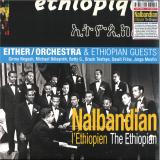
NALBANDIAN THE ETHIOPIAN & EITHER/ORCHESTRA - NALBANDIAN THE ETHIOPIAN (ETHIOPIQUES)

The Éthiopiques series returns! Essential archive recordings from an extremely fruitful period in Ethiopian music.

Before “Swinging Addis” took over the world, there was Moussié Nerses Nalbandian — the Armenian-born composer who shaped modern Ethiopian music. Mentor, arranger, and pioneer, he laid the foundations of Ethio-jazz.

This Éthiopiques volume revives his forgotten legacy, recorded live by Either/ Orchestra First issue ever with new exclusive photos and in depth liner 8-page insert.

“Ethiopian jazzmen are the best musicians that we have seen so far in Africa.
They really are promising handlers of jazz instruments.”

Wilbur De Paris
(1959, after a concert in Addis Ababa)

አዲስ፡ዘመን። *Addis zèmèn* **A new era.**
The time is the mid-1950s and early 1960s, just before "Swinging Addis" bloomed – or rather boomed – onto the scene. Brass instruments are still dominant, but the advent of the electric guitar, and the very first electronic organs, are just around the corner. Rock’n'Roll, R’n’B, Soul and the Twist have not yet barged their way in. Addis Ababa is steeped in the big band atmosphere of the post-war era, with Glenn Miller's *In the* *Mood* as its world-wide theme song, neck and neck with the Latin craze that was in vogue at the same period. Life has become enjoyable once again, with the return of peace after the terrible Italian Fascist invasion of Ethiopia (1935-1941). The redeployment of modern music is part and parcel of the postwar reconstruction. *Addis zèmèn* – a new era – is the watchword of the postwar period, just as it was all across war-torn Europe.
The generation who were the young parents of baby boomers** were the first to enjoy this musical renaissance, before the baby boomers themselves took over and forever super-charged the soundtrack of the final days of imperial reign. Music is Ethiopia's most popular art form, and very often serves as the best barometer for the upsurge of energy that is critical for reconstruction. Whether it be jazz in Saint-Germain-des-Prés or the *zazous* who revolutionised both jazz and French *chanson* after the *Libération*, be it Madrid's post-Franco Movida, or Dada, the Surrealists and *les années folles* that followed World War I, the periods just after mourning and hardship always give rise to brighter and more tuneful tomorrows. Addis Ababa, as the country's capital, and the epicentre of change, was no exception to this vital rule.

**Two generations of Nalbandian musicians**
Nersès Nalbandian belonged to a family of Armenian exiles, who had moved to Ethiopia in the mid-1920s. The uncle Kevork arrived along with the fabled "*Arba Lidjotch*", the** "*40 Kids*", young Armenian orphans and musicians that the Ras Tafari had recruited when he visited Jerusalem in 1924, intending to turn their brass band into the official imperial band. If Kevork Nalbandian was the one who first opened the way of modernism, pushing innovation so far as to invent musical theatre, it was his nephew Nersès who would go on to become, from the 1940s and until his death in 1977, a pivotal figure of modern Ethiopian music and of the heights it. Going all the way back to the 1950s. Nothing less. And it is Nersès who is largely to thank for the brassy colours that so greatly contributed to the international renown of Ethiopian groove. While the younger generations today venture timidly into the genealogy of their country's modern music, often losing their way amidst a distinctly xenophobic historiographical complacency, many survivors of the imperial period are still around to bear witness and pay tribute to the essential role that "Moussié Nersès" played in the rise of Abyssinia's musical modernity.
Given the year of his birth (15 March 1915), no one knows for sure if Nersès Nalbandian was born in Aintab, today Gaziantep (Turkiye/former Ottoman Empire) or on the other side of the border in Alep, Syria... What is certain is that his family, like the entire Armenian community, was amongst the victims of the genocide perpetrated by the Turks. Alep, the place of safety – today in ruins.
Before Nersès then, there was uncle Kevork (1887-1963). For a quarter of a century, he was a whirlwind of activity in music teaching and theatrical innovation. *Guèbrè Mariam le Gondaré* (የጎንደሬ ገብረ ማርያም አጥቶ ማግኘት, 1926 EC=1934) is his most famous creation. This play included "ten Ethiopian songs" — a totally innovative approach. According to his autobiographical notes, preserved by the Nalbandian family, Kevork indicates that he composed some 50 such pieces over the course of his career. This shows just how much he understood, very early on, the critical importance of song as Ethiopia's crowning artistic form. Indeed, for Ethiopian listeners, the most important thing is the lyrics, with all their multifarious mischief, far more than a strong melody, sophisticated arrangements or even an exceptional voice. (This is also why Ethiopians by and large, and beginning with the artists and producers themselves, believed for a long time — and wrongly — that their music could not possibly be exported, and could never win over audiences abroad, who did not speak the country's languages).

Last but not least, one of Kevork's major contributions remains composing Ethiopia's first national anthem – with lyrics by Yoftahé Negussié.
Nersès Nalbandian moved to Ethiopia at the end of the 1930s, at the behest of his ground-breaking uncle. Proficient in many instruments (pretty much everything but the drums), conductor, choir director, composer, arranger, adapter, creator, piano tuner, purveyor of rented pianos,... he was above all an energetic and influential teacher. From 1946 onwards, thanks to Kevork's connexion, Nersès was appointed musical director of the Addis Ababa Municipality Band. In just a few years, Nersès transformed it into the first truly modern ensemble, thanks to the quality of his teaching, his choice of repertoire, and the sophistication of his arrangements. It was this group that would go on to become the orchestra of the Haile Selassie Theatre shortly after its inauguration in 1955, which was a major celebration of the Emperor's jubilee, marking the 25th anniversary of his on-again-off-again reign.

At some point or other in his long career, Nersès Nalbandian had a hand in the creation of just about every institutional band (Municipality Band, Police Orchestra, Imperial Bodyguard Band, Army Band, Yared Music School…), but it was with the Haile Selassie Theatre – today the National Theatre – that his abilities were most on display, up until his death in 1977. To this must be added the development of choral singing in Ethiopia, hitherto unknown, and a sort of secret garden dedicated to the memory of Armenian sacred music, and brought together in two thick, unpublished volumes. Shortly before his death (November 13, 1977), he was appointed to lead the impressive Ethiopian delegation at Festac in Lagos, Nigeria (January-February 1977).

His status as a stateless foreigner regularly excluded him from the most senior positions, in spite of the respect he commanded (and commands to this day) from the musicians of his era. Naturally gifted and largely self-taught, Nerses was tirelessly curious about new musical developments, drawing inspiration from the very first imported records, and especially from listening intensely to the musical programmes broadcast over short-wave radio – BBC *First*. A prolific composer and arranger, he was constantly mindful of formalising and integrating Ethiopian parameters (specific “musical modes”, pentatonic scale, and the dominance of ternary rhythms) into his “modernisation” of the musical culture, rather than trying to over-westernise it. It even seems very probable that *Moussié* Nerses made a decisive contribution to the development of tighter music-teaching methods, in order to revitalise musical education during this period of prodigious cultural ferment. Flying in the face of all the historiographical and musicological evidence, it is taken as sacrosanct dogma that the four musical modes or chords officially recognised today, the *qǝñǝt* or *qiñit* (ቅኝት), are every bit as millennial as Ethiopia itself. It would appear however that some streamlining of these chords actually took place in around 1960. It was only from this time onward that music teaching was structured around these four fundamental musical modes and chords: *Ambassel*, *Bati*, *Tezeta* and *Antchi Hoyé*. A historical and musical “details” that is, apparently, difficult to swallow, especially if that should honour a *foreigner*. Modern Ethiopian music has Nersès to thank for many of its standards and, to this day, it is not unusual for the National Radio to broadcast thunderous oldies that bear unmistakable traces of his outrageously groovy touch.

В наличии на складе

Есть у нас в наличии и готов к отправке

AROOP ROY - HUSTLE DO BRASIL

AROOP ROY

HUSTLE DO BRASIL

7"-VinylKMPN007
KAMPANA
Release unknown

2026 Repress

After a 3 year hiatus, Kampana brings back Aroop Roy to the label for his debut 7".

On the A-side, he takes a lo-fi funky blues sample and beefs it up with piano stabs, bass and a killer disco groove.

On the B, he reworks a Brazilian jazz-funk classic with a bumping house twist. Timeless sounds!

Сделать предзаказ

Этот продукт еще не вышел. Ты можешь сделать предзаказ, как только он появится на складе, продукт будет подготовлен к пересылке.


Последний логин: 5 г. назад
Various - Disco Tape 3
Сделать предзаказ

Этот продукт еще не вышел. Ты можешь сделать предзаказ, как только он появится на складе, продукт будет подготовлен к пересылке.


Последний логин: 18 мес. назад
Hanna / Almir Ricardi - Deixa Rodar / To Parado Na Tua

'Deixa Rodar' is an essential midtempo disco/boogie jam taken from Hanna's 'Deixa Rodar' LP from 1979. A tip off from our good friend Mark 'GV' Taylor, played at the first of our 'Braziloid' sessions on Brighton sea front.

'To Parado Na Tua' is another killer midtempo disco/boogie cut, produced by the legendary Lincoln Olivetti and Robson Jorge, released in 1984. Taken from the sought after and now fairly pricey 'Festa Funk' LP on RGE.

В наличии на складе

Есть у нас в наличии и готов к отправке

Alex Fernet - Lucidanotte LP

The debut LP from Italy's own Alex Fernet, just another taste of the italo renaissance.

Music and lyrics by Alex Fernet. All vocals, bass lines, synths and guitar parts performed by Alex Fernet

Recorded and mixed by Edoado "Dodi" Pellizzari at Overdrive Recording Studio, Castello di Godego

Drums and percussions by Diego Dal Bon

© 2023 Costello's (Milan) & People's Potential Unlimited (Washington DC)

В наличии на складе

Есть у нас в наличии и готов к отправке

Tim Maia - Second Album LP
  • A1: A Festa Do Santo Reis 02 41
  • A2: Não Quero Dinheiro (Só Quero Amar) 02 31
  • A3: Salve Nossa Senhora 01 56
  • A4: Um Dia Eu Chego Lá 02 06
  • A5: Não Vou Ficar 02 57
  • A6: Broken Heart 01 16
  • B1: Você 04 05
  • B2: Preciso Aprender A Ser Só 02 46
  • B3: I Don’t Know What To Dowith Myself 03 42
  • B4: É Por Você Que Vivo 02 33
  • B5: Meu País 01 35
  • B6: I Don’t Care 02 38

Tim Maia’s second album, published in 19671, deepened and refined the Brazilian artist’s groundbreaking fusion of soul, funk, R&B, and MPB, firmly establishing him as a unique voice in Brazilian music. Compared to his 1970 debut album (HE70014), this second album features more sophisticated arrangements, tighter grooves, and a stronger command of American soul influences, reinterpreted through a distinctly Brazilian sensibility. The alcum features Tim Maia’s most widely recognized hit “Não Quero Dinheiro (Só Quero Amar)”. This vinyl edition is the first after 10 years and the first European one.

нет на складе

Закажите сейчас, и мы закажем товар для вас у нашего поставщика.


Последний логин: 74 дн. назад
TURMA DA BÊNÇÃO - CONJUNTO ANGOLA 70 E PAULO FLORES

Turma da Bênção – A Semba Gathering Across Generations

Conjunto Angola 70 & Paulo Flores

The Turma da Bênção project brings together Conjunto Angola 70, a collective dedicated to recreating and preserving the golden-era sound of Angolan music from the 1970s, and Paulo Flores, one of the most important ambassadors of semba worldwide and one of the creators of kizomba. Throughout his career, Flores has built bridges between tradition and modernity, helping shape the global understanding of contemporary Angolan music.

Recorded in Lisbon in 2018 in an intimate “roda de semba” setting, informal jam sessions rooted in collective rhythm and storytelling, Turma da Bênção gathers legendary musicians such as Botto Trindade (guitar), Joãozinho Morgado (congas) and Teddy N’Singui (guitar); mid-generation artists including Galiano Neto (percussion), Paulo Flores (vocals and artistic direction) and Pirika Duia (viola); and younger creators such as Mayo Bass (bass), Jéssica Pina (trumpet) and Armando Gobliss (keys).

The result is a powerful dialogue between eras. Classic Angolan repertoire meets new compositions, all deeply rooted in semba — the rhythmic and poetic foundation from which kizomba later emerged.

The album revisits emblematic songs such as Runfo da Liberdade, Memórias de Gui and Lamento de Duia, while introducing new works including Morgadinho, Catuta 45, Boas Festas Conterrâ and Réveillon, the latter awarded Semba of the Year at the Angola Music Awards in 2020.

Before this LP, Keep On Pushin Records released the singles Turma da Bênção presents: Joãozinho Morgado and Turma da Bênção presents: Botto Trindade, building anticipation for what now becomes the label’s first full-length vinyl release.

Issued on vinyl in the year Angola celebrates 50 years of Independence, Turma da Bênção stands as a symbolic statement, honoring the elders, empowering the present generation, and ensuring that the pulse of semba continues to resonate across borders.

Turma da Bênção is more than an album. It is a rare intergenerational encounter and a living celebration of Angola’s musical heritage.

нет на складе

Закажите сейчас, и мы закажем товар для вас у нашего поставщика.


Последний логин: 85 дн. назад
Sraunus - Out Of The City  2x12

Sraunus

Out Of The City 2x12

2x12inchGREYARCHIVE003
GREYSCALE
10.03.2026

Fifteen years after it first surfaced on the short-lived Lithuanian netlabel Dumblys, Sraunus – Out Of The City returns remastered, recontextualized, and ready for a new wave of deep listeners. What once felt like a hidden gem now reads as a quiet cornerstone, a record whose significance only grew clearer with time.
Behind Sraunus is Paulius Markutis, one of Lithuanias earliest deep-dub explorers. His moniker translates to “flowing” or “fluid,” and that spirit runs through the entire album: the music breathes, circulates, and drifts with calm inevitability, revealing fresh details on every pass. Rooted in the classic Berlin-born dub tradition yet unmistakably shaped by Markutis own sense of space, mood, and narrative, the result feels beautifully suspended in time, warm in its chords, patient in its arrangements, and guided by a subtle emotional current. This is dub techno at its most enduring: fluid, deep, and endlessly replayable.
The reissue, part of Greyscales Archive Series, arrives on superbly pressed double vinyl, with artwork chosen with intent: Marija Marcelionytė-Paliukės “High Tide and Low Tide,” an image of perpetual motion that perfectly mirrors the albums flowing spirit.

нет на складе

Закажите сейчас, и мы закажем товар для вас у нашего поставщика.


Последний логин: 40 дн. назад
Sraunus - Out Of The City  2x12

Sraunus

Out Of The City 2x12

2x12inchGREYARCHIVE003SPLATTER
GREYSCALE
03.03.2026

Fifteen years after it first surfaced on the short-lived Lithuanian netlabel Dumblys, Sraunus – Out Of The City returns remastered, recontextualized, and ready for a new wave of deep listeners. What once felt like a hidden gem now reads as a quiet cornerstone, a record whose significance only grew clearer with time.
Behind Sraunus is Paulius Markutis, one of Lithuanias earliest deep-dub explorers. His moniker translates to “flowing” or “fluid,” and that spirit runs through the entire album: the music breathes, circulates, and drifts with calm inevitability, revealing fresh details on every pass. Rooted in the classic Berlin-born dub tradition yet unmistakably shaped by Markutis own sense of space, mood, and narrative, the result feels beautifully suspended in time, warm in its chords, patient in its arrangements, and guided by a subtle emotional current. This is dub techno at its most enduring: fluid, deep, and endlessly replayable.
The reissue, part of Greyscales Archive Series, arrives on superbly pressed double vinyl, with artwork chosen with intent: Marija Marcelionytė-Paliukės “High Tide and Low Tide,” an image of perpetual motion that perfectly mirrors the albums flowing spirit.

нет на складе

Закажите сейчас, и мы закажем товар для вас у нашего поставщика.


Последний логин: 47 дн. назад
Remigio Ducros - TEMPO DI NAJA LP
  • 01: Discoteca
  • 02: Scherzi Pesanti
  • 03: Libera Uscita
  • 04: Alianti
  • 05: Allegro Plotone
  • 06: I Miei Vent&Apos;Anni
  • 07: Sgambata
  • 08: Senza Pensieri
  • 09: Marcia Longa
  • 10: Montagna
  • 11: Pedalata
  • 12: Fanfara In Festa
  • 13: Salita
  • 14: Femmine

It was in about 2003 that Jazzman Gerald came on The OST Show and played this album. He played the track "Scherzi Pesanti" (translates roughly as Heavy Jokes) and I had no idea what was going on. This was jazz but taken to a non-jazz place, and it was a place I really really wanted to go to.

I realised the only way of getting there was to try and find a copy of the LP. It took about 12 months and one came up on eBay. And I bought it for about 20€. But this was back in 2004. This kind of thing doesn't happen any more. Copies of "Tempo Di Naja" do not appear for sale. And if they do, few can afford them. Maybe only a handful of originals actually exist, such was the nature of tiny Italian library companies back in the 1960s and 1970s.

Thankfully now you can visit that strange jazz place dreamed up and brilliantly composed by Remigio Ducros. You might like it there, especially if you like heavy jokes.

Jonny Trunk

Сделать предзаказ20.02.2026

он должен быть опубликован на 20.02.2026

GRUPO UM - NINETEEN SEVENTY SEVEN

Grupo um celebrate 50 years with release of lost dictatorship-era album nineteen seventy seven!

First time release - vinyl comes with printed innersleeves

Brazilian avant-jazz vanguardists Grupo Um celebrate their 50th anniversary, sharing a second previously lost 1970s album from the vaults. Nineteen Seventy Seven (titled after the year it was recorded) is another rip-roaring instrumental fusion treasure from the band which spawned from within Hermeto Pascoal’s famed mid-1970s São Paulo collective.

Like their debut album Starting Point, Grupo Um’s Nineteen Seventy Seven was recorded when Brazil's military dictatorship was at its most repressive. “There were no open doors to those who dreamt to be protagonists in creative instrumental music”, remembers drummer Zé Eduardo Nazario, “even popular composers and singers had to submit their songs to censors and many records were banned and confiscated from the stores.”

Just like Hermeto Pascoal's Viajando Com O Som (1977) and Grupo Um's previous album Starting Point (1975), both of which remained unreleased until the 21st century, Zé Eduardo asserts that the 1977 album was flatly 'without any chance to be released at that time."

Recorded at Rogério Duprat’s Vice-Versa Studios in São Paulo, the group were under both time and space restraints, “we chose the small Studio B,” Lelo Nazario recalls, “which had a Tascam (TE AC) 12x8 console and a 4-channel AMPEX AG 440 machine. Therefore, we had to record without overdubs, everything straight to tape.”

Expanding from a trio to a quintet, original Grupo Um members Lelo Nazario (keys), Zé Eduardo Nazario (drums), and Zeca Assumpção (bass) were joined by saxophonist Roberto Sion and percussionist Carlinhos Gonçalves. Carlinhos, Zé and Zeca had already played together in the group Mandala, while brothers Lelo and Zé had just finished a stint backing Hermeto Pascoal during his years in São Paulo.

Lelo was deeply immersed in modular synthesizer experimentation during this period, working extensively with the ARP2600 and EMS Synthi AKS. These electroacoustic explorations formed the sonic foundation for "Mobile/Stabile," one of his first compositions to merge modular synthesis with Brazilian music, a fusion that would ripple throughout the Brazilian jazz scene. The piece premiered at the first São Paulo International Jazz Festival in 1978, performed by Grupo Um with guest trumpeter Márcio Montarroyos. In a shocking moment, festival organizers interrupted the show mid-performance, sparking fierce backlash from both audience members and journalists who denounced the incident as artistic censorship during Brazil's era of political and cultural repression. The version on Nineteen Seventy Seven is the first recording of the composition.

Nineteen Seventy Seven combines Afro-Brazilian rhythm, modular synthesis and a plethora of whistles, percussion and effects pedals. Album opener “Absurdo Mudo” - so titled for the absurd difficulty it poses to the musicians performing it - starts out in a cloud of mysterious dissonance, before the haze breaks for a glorious keyboard and saxophone interplay atop an uptempo samba groove. “Cortejo dos Reis Negros (Version 2)” (Procession of the Black Kings), based on the maracatu rhythm, inverts the traditional jazz song structure by beginning with improvisations, which are followed by the theme and a final coda. “The studio also had two Parasound electronic reverb units,” Lelo notes, “and the timbre is very audible on the soprano sax and percussion.”

Grupo Um’s daring music represents a manifesto of resistance during the dictatorship years, but it’s one which remains just as relevant today. As Lelo puts it: “For me, the aesthetic issue has always been about combining contemporary avant-garde languages with Brazilian music, independent of categories and commercial interests. The result of this fusion takes music to a new level.”

Recording credits (1977)
Recorded at Vice-Versa B Studio, São Paulo, November 9, 1977
Produced by Lelo Nazario and Zé Eduardo Nazario
Engineered by Ricardo “Franja” Carvalheira


Lelo Nazario – Wurlitzer electric piano, acoustic piano, signal generator, percussion

Zé Eduardo Nazario – drums, percussion

Zeca Assumpção – electric bass

Carlinhos Gonçalves – percussion

Roberto Sion – soprano sax, clarinet

Release credits (2025)
Produced by UTOPIA Studio, São Paulo
Project Coordination in Brazil by Irati Antonio (Utopia Studio)
Tape Restoration and Digital Mastering by Lelo Nazario at Utopia Studio, July 2025
Liner Notes by Lelo Nazario and Zé Eduardo Nazario
Photography by Jorge Las Heras, Lelo Nazario, and artists' personal archives
Photo Restoration by Lelo Nazario
Artwork and Design by Alessandro Renaldin

Сделать предзаказ30.01.2026

он должен быть опубликован на 30.01.2026

Parajekt - Parajekt LP

The music of the duo Parajekt is created on electronic instruments. Drum machines, samplers, modular synths, and effects devices all culminate in a tape recorder, whose limitations invite them to work with great musical and sonic precision.
The resulting pieces serve as the first layer and as a sound score, which is then overwritten, mixed, and refined with dub techniques in a subsequent step.
Elements inspired by electronic beat music, musique concrete, and noise merge in a musical performance that brings the studio action onto the stage and places it front and center.

Сделать предзаказ23.01.2026

он должен быть опубликован на 23.01.2026

MULUKEN MELLESSE - MULUKEN MELLESSE WITH THE DAHLAK BAND (ETHIOPIQUES)

Swan Song

The vinyl LP at the heart of this éthiopiques 31 tracks 2 to 11 was one of the very last vinyl records ever released in Ethiopia. But above all it represents, we felt, the absolute masterpiece of the Ethiopian Groove – the Swan Song of Swinging Addis. The album leaves a clear idea for posterity of the level of sophistication and mastery that modern Ethiopian music had achieved, before being crushed under the Stalino-military heel of the Derg – as the bloody revolution that was unfolding came to be called.

Ethiopia1976.

The Revolution that broke out in February 1974 rolled on in a ruthless march. The whole of Ethiopian society was utterly stunned. The bouquets of flowers handed joyfully to the first tanks of the coup d'état were to wilt very rapidly. From September 1976 to February 1978, 18 months of Red Terror (the name given by the junta itself) spilled blood throughout the country. This fratricidal conflict took its heaviest toll among students and youth. The shift from feudalism to a cruel and primitive Stalinism left the country's citizens deeply traumatised, and snuffed out any pretence of activism, whatever the sector of society. This ice age was to last for seventeen long years.

ሙሉቀን፡መለሰ Mulukèn Mellèssè Muluqän Mälläsä

It was three tracks by Muluken that served as the opener for éthiopiques-1 more than 25 years ago. Seven more tracks appeared on éthiopiques-3 and 13, all accompanied by The Equators, which was soon to become the Dahlak Band.

The first track, Hédètch alu, also the very first piece that Muluken ever recorded, left audiences both unsettled and amazed. Reflecting the singer's extremely young age (he was just 17 at the time), this angelic voice mystified many, who thought they were in fact listening to a feminine voice. He was not yet 22 when he released his last vinyl record in 1976 with Kaifa Records (KF 39LP), one of the very last to be issued in Ethiopia, before the cassette tape became the dominant medium for music distribution – and before the new revolutionary regime put a stop to all independent musical life, via an unspeakable barrage of prohibitions and other persecutions.

Mulu qèn, literally, “A well filled day”. This tender maternal intention wasn't enough to ward off the cruelty of fate. His mother's premature death drove Muluken to leave his native Godjam, in northeast Ethiopia, to live with an uncle in Addis Ababa. Born Muluken Tamer, he took his uncle's last name – Mèllèssè.

The spelling Muluken appeared in his administrative records. Transcription of Amharic to the Latin alphabet, both in Ethiopia and for scholars, gives rise to controversies and quibbles that can never be neatly settled. French allows for a closer approximation of the original pronunciation, thanks to its battery of accent marks, confusing as they may be to anglophones.

Between rather accommodating administrative record-keepers and the various versions that pop up in interviews given by the artist, Muluken's year of birth oscillates between 1953 and 1955…

1954? One thing is certain: the artist's talent made itself known very early indeed, because he got his start in 1966-67, at the age of 13 or 14. Photos from the period attest to his extreme youth. It's a strange sort of initiation for a very young teenager to become a sensation in the heart of Addis's nightlife at the time, Woubé Bèrèha – the Wilds of Woubé. And what's more, in the club of the Queen of the Night, the Godjamé Assègèdètch Alamrèw herself, the very same that was portrayed by Sebhat Guèbrè-Egziabhér in his novel-memoir Les Nuits d’Addis Abeba2… The legendary female club owner who is remembered to this day by the capital's ageing boomers.

Muluken first tried his hand at the drums, before he grabbed the microphone. He emigrated briefly to the Zula Club, across the street from the old Addis Post Office, one of the ground-breaking bars of the burgeoning musical scene, before joining the Second Police Band in 1968, for around three years. He spent a few months with the short-lived Blue Nile Band founded by saxophonist Besrat Tammènè. As the musical scene grew increasingly successful, and pulled slowly but decisively away from its institutional ties, Muluken released his first 45rpm single in February 1972 (Amha Records AE 440). It was included in two LP Ethiopian Hit Parade compilation albums in September of the same year. All in all, Muluken released eight two-track 45s and the same number of original cassette tapes between February 1972 and 1984, the year that he departed for permanent exile in the USA. After converting to Pentecostalism in 1980, Muluken gradually abandoned all secular musical activity. In 1985, at the end of a concert in Philadelphia, he decided to quit concerts and recording for good. Mèlakè Gèbré, the historic bass player from the Walias band who was playing with him that night, recalls that everything appeared so irredeemably diabolical in Muluken's eyes, that it was to be the end of his contribution to Ethiopian Groove.

The end of the story, the beginning of a legend.

Dahlak Band, forgotten by History

Aside from his personal history and vocal talents, it must be remembered that Muluken Mèllèssè was one of the biggest names in the musical innovations that marked the end of the imperial period. These éthiopiques aim to convince those who are just discovering this hidden gem... As for Ethiopians themselves, they are to this day captivated by this singular and atypical figure in the Abyssinian pop landscape – even though he withdrew from public life some 40 years ago. Incorrigible devotees of poetic twists, of more or less hidden meanings, Ethiopians appreciate above all the care Muluken took in choosing his lyrics and the writers who penned them, such as Feqerte Haylou, Alemtsehay Wodajo and, here, Shewalul Mengistu (1944-1977). Love songs, written by women, a far cry from the conventional drivel that pleases sappy sentimentalists.

Muluken is equally acclaimed for his perfectionism when it came to music, the opposite of the overly casual approach that is all too common. He remained a faithful partner of musicians who came from a lineage that borrowed from several inventive and pioneering bands (Venus, Equators, Dahlak). Amongst them were certain artists who began their musical lives with Nersès Nalbandian at the Haile Sellassie Theatre and who come of age in around 1973 – at just the wrong time, you might say. Among them were the pillars Shimèlis Bèyènè (trumpet), Dawit Yifru (keyboards) and Tilayé Gèbrè (sax & flute). Most notably Tilayé Gèbrè, certainly one of the most important musicians, composers and arrangers of his generation, of the end of the imperial era, and of the early years of the Derg.

It was only in 1981 that a miraculous opportunity arose for Tilayé to escape the Stalinist paradise of the dictator Menguistou Haylè-Maryam. Once again it was Amha Eshèté (1946-2021) who provided a solution. The spirited and courageous producer, who had been in exile in Washington since 1975, succeeded, thanks to his incredible perseverence, in bringing the Walias Band to the USA. It was, in fact an extended Walias Band comprising ten musicians3, six of whom chose to slip away after a few concerts and the recording of an LP (The Best of Walias, WRS 100). Tilayé Gèbrè was one of these. He has been living in the USA ever since. There he joined the then-nascent Ethiopian diaspora, which lived largely unto itself, and was making only very modest headway in the American musical market. It seems unfair that Tilayé Gèbrè and the Dahlak Band were not able to benefit earlier from the public recognition that they do deserve.

A similar draining away of the top-rate talents would lead to the reorganization of the major groups of the “Derg Time”. The remaining artists spread themselves around between Ibex Band (renamed Roha Band), Ethio Star Band and a remodeled Walias Band. That spelled the end of the Dahlak Band.

With this record, produced by the essential Ali Abdella Kaifa a.k.a. Ali Tango, we can appreciate everything that the Derg not only destroyed, but also prevented from flourishing. This gem of Ethiopian-style afrobeat came out in 1976 (and, by way of a parenthesis, before the FESTAC 1977 in Lagos, which was attended by an impressive delegation of Ethiopian musicians — although Fela was already personna non grata in his own country). Despite everything that might distinguish this ethio-groove from Fela’s music – no colonial axe to grind, no question of political confrontation with the authorities, no claims to negritude or Africanism for the Ethiopian musicians, and less extrovertion! –, this LP fits beautifully into the saga of intense and electrified soul of the new “African” groove that Fela and Manu Dibango embodied so well from that point onwards.

In restoring this record to its place in the afrobeat epic, it can be seen that, if nothing else, the timeline bestows a legitimate pedigree and a historical primacy to works that had no international impact when they were originally released.

Warning! Masterpiece!

нет на складе

Закажите сейчас, и мы закажем товар для вас у нашего поставщика.


Последний логин: 4 мес. назад
CRIM - FUTUR MEDIEVAL

Crim

FUTUR MEDIEVAL

12inchHFMNLP48
HFMN CREW
28.11.2025
  • Ésser De Llum
  • L'aula Dels Dofins
  • Futur Medieval
  • Combats D'autoesgrima
  • Res De Nou
  • Festa D'una Persona
  • Carnets De Punk
  • Depressió Sota El Capó
  • Nihilisme Pop
  • Si Jo No Fos Tan Idiota
  • Sota De Tot
  • De Guix I De Ciment
  • Presó Mental (Kitsch Cover)
также имеющийся в продаже

ROYAL BLUE & HOT PINK VINYL


Manche sagen, es sei Albert Einstein gewesen, der das gesagt hat, aber ich bin mir ziemlich sicher, dass es Hristo Stoichkov war: ,Glück gibt es nicht." Manche Bands leben ihre gesamte Karriere von einem einzigen Song, was Experten als One-Hit-Wonder bezeichnen. Hier würden wir es wahrscheinlich einfach als Strohfeuer bezeichnen, etwas, das uns etwas vertrauter ist. Andere Bands schaffen es, ein oder zwei großartige Alben herauszubringen, vielleicht sogar drei. Darüber hinaus wird es schwieriger, Bands mit mehr als vier soliden Alben zu finden. Diese Bands haben etwas Besonderes, eine Art Magie. Jeder, der sie kennt, hat eine klare Referenz, eine Grundlage, ein Konzept, eine Art, Dinge zu tun, die einen fesseln und in ihren Bann ziehen, genau wie in diesem Fall. CRIMs fünftes Album "Futur Medieval" hält die Flamme ihrer vorherigen vier Alben am Leben. Es ist ein Killer-Album, voller Energie und Leidenschaft. Wie immer gibt es Hymnen, Refrains zum Mitsingen, den charakteristischen synchronen Punch in jedem Song und diese elektrisierenden Gitarren, die von der ersten Note an ihre Trümpfe ausspielen. Wie es in einem ihrer Songs heißt: ,"Nichts Neues?" Na und? Erwachsenes Vergnügen ist genau das, - Jordi "Unclu" Sabatés Ametller CRIM wurde 2011 gegründet und sind wohl die größte Punkband Kataloniens/Spanien. Diese äußerst leidenschaftlichen Musiker haben sich lokal einen Namen gemacht, spielen mittlerweile immer wieder vor Tausenden von Leuten und haben starke Songs, die in vielerlei Hinsicht eine sehr florierende Szene in Nordspanien vorantreiben. Die Popularität von Crim außerhalb Kataloniens wächst rasant, da sich ihre Authentizität in ihrem Sound widerspiegelt und ihr kompromissloser Ansatz in vielerlei Hinsicht universell ist und für Fans leicht erkennbar und einladend, unabhängig davon, welche Sprache sie sprechen. Jeder, der diese Band live gesehen oder ihre Alben gehört hat, kann die Kraft und Energie bezeugen, die sie besitzt. FFO Cock Sparrer, Leatherface, Social Distortion CD, klassisch schwarzes oder mehrfarbiges Vinyl!

Сделать предзаказ28.11.2025

он должен быть опубликован на 28.11.2025

CRIM - FUTUR MEDIEVAL

CRIM

FUTUR MEDIEVAL

12inchHFMNLPC48
HFMN CREW
19.11.2025

Manche sagen, es sei Albert Einstein gewesen, der das gesagt hat, aber ich bin mir ziemlich sicher, dass es Hristo Stoichkov war: ,Glück gibt es nicht." Manche Bands leben ihre gesamte Karriere von einem einzigen Song, was Experten als One-Hit-Wonder bezeichnen. Hier würden wir es wahrscheinlich einfach als Strohfeuer bezeichnen, etwas, das uns etwas vertrauter ist. Andere Bands schaffen es, ein oder zwei großartige Alben herauszubringen, vielleicht sogar drei. Darüber hinaus wird es schwieriger, Bands mit mehr als vier soliden Alben zu finden. Diese Bands haben etwas Besonderes, eine Art Magie. Jeder, der sie kennt, hat eine klare Referenz, eine Grundlage, ein Konzept, eine Art, Dinge zu tun, die einen fesseln und in ihren Bann ziehen, genau wie in diesem Fall. CRIMs fünftes Album "Futur Medieval" hält die Flamme ihrer vorherigen vier Alben am Leben. Es ist ein Killer-Album, voller Energie und Leidenschaft. Wie immer gibt es Hymnen, Refrains zum Mitsingen, den charakteristischen synchronen Punch in jedem Song und diese elektrisierenden Gitarren, die von der ersten Note an ihre Trümpfe ausspielen. Wie es in einem ihrer Songs heißt: ,"Nichts Neues?" Na und? Erwachsenes Vergnügen ist genau das, - Jordi "Unclu" Sabatés Ametller CRIM wurde 2011 gegründet und sind wohl die größte Punkband Kataloniens/Spanien. Diese äußerst leidenschaftlichen Musiker haben sich lokal einen Namen gemacht, spielen mittlerweile immer wieder vor Tausenden von Leuten und haben starke Songs, die in vielerlei Hinsicht eine sehr florierende Szene in Nordspanien vorantreiben. Die Popularität von Crim außerhalb Kataloniens wächst rasant, da sich ihre Authentizität in ihrem Sound widerspiegelt und ihr kompromissloser Ansatz in vielerlei Hinsicht universell ist und für Fans leicht erkennbar und einladend, unabhängig davon, welche Sprache sie sprechen. Jeder, der diese Band live gesehen oder ihre Alben gehört hat, kann die Kraft und Energie bezeugen, die sie besitzt. FFO Cock Sparrer, Leatherface, Social Distortion CD, klassisch schwarzes oder mehrfarbiges Vinyl!

нет на складе

Закажите сейчас, и мы закажем товар для вас у нашего поставщика.


Последний логин: 6 мес. назад
ANNA FUNK DAMAGE - TARANTOLA LP

Anna Funk Damage

TARANTOLA LP

12inchRWCLTR029
Raw Culture
03.11.2025
  • 1: Vivere Distaccati
  • 2: Trasmissione
  • 3: Decadente
  • 4: Tarantola
  • 5: Non Passerò A Trovarti
  • 6: Ho Paura
  • 7: Chiang Mai
  • 8: Nelle Vene
  • 9: Lavoro Troppo
  • 10: Festa Di Compleanno

Hailing from Raw Culture, Anna Funk Damage returns with his third release on the Roman label, delivering a record as fierce as it is intimate. Tarantola was born out of a winter suspended between contrasting emotions – melancholy, anger, love, confusion – distilled into a sound that transforms personal fragility into collective energy. There’s no pursuit of perfection here, but rather an urgency running through the veins, taking shape across supersonic punk, wave, ambient and industrial.

Each track is an emotional fragment, a bite that leaves its mark: from the electric tension of Vivere Distaccati to the feverish rush of Trasmissione, from the rawness of Decadente to the hypnotic title track Tarantola, which embodies the beating heart of the album. Side B unfolds into more nocturnal and intimate landscapes, from Chiang Mai to the disenchanted sincerity of Lavoro Troppo, closing with a party that carries the bittersweet taste of reality.

Tarantola is a journey into the chaos of human emotions, an album that doesn’t just narrate but pulls you deep into its sonic labyrinth, giving noise back its vulnerable yet powerful soul.

Сделать предзаказ03.11.2025

он должен быть опубликован на 03.11.2025

Amália Rodrigues - Essential (Limited Edition)
  • 1: Uma Casa Portuguesa
  • 2: Nem Ás Paredes Confesso
  • 3: Cansaço
  • 4: Solidao (Cançao Do Mar)
  • 5: Povo Que Lavas No Rio
  • 6: Há Festa Na Mouraria
  • 7: Lisboa Nao Sejas Francesa
  • 8: Ai Mouraria
  • 9: Estranha Forma De Vida
  • 10: Foi Deus
  • 11: Maria Lisboa
  • 12: Tudo Isto É Fado
  • 13: Primavera
  • 14: Barco Negro
  • 15: Fado Hilário
  • 16: Coimbra (April In Portugal)
Сделать предзаказ17.10.2025

он должен быть опубликован на 17.10.2025

Silvestre - Fantasma [Casette Tape]

Superstar Silvestre strikes strong on Studio Barnhus, bringing moronic dance music and stupendously haunting
ambient ditties to the forefront once again, following his highly reputable It's 2024!! EP, released in 2024.
On his most expansive and accomplished work yet, tensions between Silvestre’s many expressions – bass-faced rave maker,
hazy lo-fi crooner, absurdist beat poet, etc. – reach catastrophic levels, resulting in an album that shimmers and convulses
with both inviting warmth and that rare, essential hint of danger at the core of club music's spirit.
There's just never a dull moment with this Silvestre guy, whether he's out blessing club crowds with electroid techno sets or
effortlessly delivering instant classic albums like this one. Delivered via 16 digital tracks and/or cassette tape designed by
Stefan Fält, Silvestre’s Fantasma arrives on Studio Barnhus on Sept 26

Сделать предзаказ26.09.2025

он должен быть опубликован на 26.09.2025

Piero Umiliani - Il Ponta Dell’Asia LP
  • A2: Vento Dall'oriente
  • A3: Mura Di Bisanzio
  • A4: Il Ponte Dell'asia
  • A5: Mito Asiatico
  • A6: Fortezza Medioevale
  • A7: Vestigia Elleniche
  • B1: Ballata Turca
  • B2: La Valle Di Corem
  • B3: Pastorale Armana
  • B4: Festa Al Villaggio
  • B5: Ballo Popolare
  • B6: Dolce Anatolia
  • B7: Vita Nei Campi
  • B8: Vita Cittadina
  • B9: Giovani Di Ankara

A captivating deep cut from the golden age of Italian library music, Il Ponte Dell’Asia stands as one of Piero Umiliani’s most evocative and exotic soundscapes. Originally released in 1967 as a private pressing for Italian the TV documentary by Corrado Sofia, this elusive gem blends Far Eastern motifs with the elegance of mid-century European jazz and the textured experimentation that defines Umiliani’s best work.

On Il Ponte Dell’Asia, Umiliani constructs a cinematic bridge between continents, layering modal melodies, sinuous flutes, shimmering vibraphones, and richly orchestrated strings over hypnotic rhythms and subtly psychedelic touches. The result is a masterful fusion of East-meets-West that channels both travelogue fantasy and avant-garde sophistication — a rare synthesis of traditional instrumentation and modernist sensibility.

Exported from the original tapes, pressed on high-quality vinyl and with faithfully restored artwork, this reissue offers a long-overdue return to one of Umiliani’s most immersive sonic journeys, an essential for fans of Italian library music, film scores, and genre-defying jazz.

Rediscover a lost jewel from the vault of one of Italy’s most visionary composers — where bamboo forests, smoky clubs, and dreamlike landscapes converge in sound.

©℗ 1967, Liuto Edizioni Musicali / Licensed to Holy Basil Records by Liuto Edizioni Musica

Сделать предзаказ08.08.2025

он должен быть опубликован на 08.08.2025

MARCO FRATTY MARCO FLASH ALEX TIME - EP VOLUME 3

Here for the year 2025 the new EP Voume 3 by producers Marco Fratty, Marco Flash, Alex Time.
Following the footprints of the previous volumes 1 and 2, this album also retraces Afro - Funk - Electronic Music sounds.
the production was taken care of in the sound by Marco Fratty (FPI Project).

нет на складе

Закажите сейчас, и мы закажем товар для вас у нашего поставщика.


Последний логин: 38 дн. назад
Willy Nfor - Boogie Down In Africa LP 2x12"

This compilation is more than a selection of songs from Willy Nfor’s solo career in Nigeria—it’s the story of a man’s determination to live his dreams. Known as Willy Ngeh Nfor, he was a founding member of the Mighty Flames. One morning, Willy and his bandmates packed their instruments, grabbed a few clothes, and headed from Cameroon to Nigeria. Crossing the border on foot, they made their way to Onitsha.

“We left Cameroon with no contacts in Nigeria—it was an adventure. We’d heard about the FESTAC Arts Festival and felt we had to be part of it. Our first band in Nigeria was Pentagon Funk Band, sponsored by the 5th Brigade in Port Harcourt. Later, we moved to Onitsha and signed with Right Time Stores, recording Sweet Love (RTLPS 011) as The Mighty Flames. The sessions were at Decca Studios in Lagos, with a 16-track analog system. It was intense—no room for mistakes. We rehearsed endlessly before recording each take.” (Vincent Ekedi, Drummer, Mighty Flames)

Willy’s journey was shaped by his resilience and talent. Losing his mother early and facing family struggles, music became his escape. Inspired by funk and jazz-rock greats like Bootsy Collins, Jaco Pastorius, and Stanley Clarke, he honed his skills on bass and composition, playing with local bands alongside musicians like Vincent Ekedi. Together, they refined their grooves, dreaming of brighter futures.

After his time in Nigeria, Willy moved to Paris, becoming a session bassist for legends such as Manu Dibango, Mory Kanté, Tony Allen, Akendengue, Ray Lema, Jean-Luc Ponty, and Kanté Manfila. Touring extensively, he lived the “Star Life” (Star Life, Cornerstone Records, Feel So Fine, 1981), playing funk grooves with giants in grand venues, fulfilling his dream of the spotlight.

нет на складе

Закажите сейчас, и мы закажем товар для вас у нашего поставщика.


Последний логин: 14 мес. назад
Felinto - Utopia Milhão (Cassette)

Felinto

Utopia Milhão (Cassette)

CassetteGLOSSYBOKEH01
Glossy Mistakes
06.12.2024

Mischievous festa punk meets astral steppas, kalaedoscopic free ambient meets harsh noise, scattered amen breaks with IDM and free jazz trumpets meets the earthly plod of digidub. It can only be Felinto from Sao Paulo.
UTOPIA MILHÃO honors the life forces that allow us to transform the darkness where dreams reside. The album brings a new moment of intimacy for Felinto's musical expression flowing through dirty, raw, dense and brilliant dub fractals, ready to transform unexpectedly into a new shape then another, and another, and another... featuring collaborations with magical people: Sarine (Deafkids), Douglas Leal (Deafkids), Guizado (Afrobombas), Sandra X, Paula Rebellato (Rakta), Lorena Hollander, Yao Bobby, Kiko Dinucci, Paulo Papaleo, Cint Murphy, Rodrigo Lima.
Felinto is a political agitator and musician at the heart of the São Paulo underground - a movement that confronts the various effects of the capitalist system of racial, sexual, ,,,,, and 22222 lawand material oppression.

His provocations range from yoga for children and parenting studies (SACYOGA), theatre (PROJETO CRIOULOS and PROJETO JAMES BALDWIN), web series highlighting the black presence in electronic music in São Paulo (MODULAÇÃO PRETA), reflective groups on gender violence and masculinities, occupation of public spaces for political art q(Coletivo Sistema Negro), artistic curatorship (Residência SOMSOCOSMOS) and studies with sound as a tool in conflict mediation practices. Felinto composes for film, theatre and immersive installations such as MEGACITIES presented at the National Gallery of Victoria, Canada in 2023.

He is currently researching - as part of a masters project in clinical psychology - the collectivised dream realities of black people. A field of action that contemporary anthropology, psychoanalysis and psychology call ONIROPOLITICA.

His interest in affinity groups, autonomous networks of micro-political articulation and penal abolitionism led him to the questions: what do black people dream about within the permanent context of civil war and state violence (like the one in Brazil)? How does this experience create dreams and how does the dream affect the construction of identities beyond the boundaries established by the capitalist unconscious?

Сделать предзаказ06.12.2024

он должен быть опубликован на 06.12.2024

Various - Hardcore Classics Volume 15

Here we go with another exclusive release of Passionate Music Label
Part 15 in the Hardcore Classics series

нет на складе

Закажите сейчас, и мы закажем товар для вас у нашего поставщика.


Последний логин: 19 мес. назад
Lee Selmoco - Mosaico: Le Tastiere di Lee Selmoco LP

Francesco Anselmo, also known as Lee Selmoco, Dorsey Dodd, Alex Brown, Arsenio Bracco or Tommy Ruff, is an Italian keyboardist that covered the role of of artistic director for Vedette Records, historical Italian imprint founded by director and violinist Armando Sciascia, and also recorded for its notorious Phase 6 Super Stereo, its sub-label focused on instrumental records and production music.

"Mosaico (Le Tastiere Di Lee Selmoco)" is an incredible display of his creative and composing skills, featuring 14 tracks of what could be classified as "happy music", with killer electric organ and rhythms alternating with fuzzy guitars and spacey / psychedelic hints thrown in for good measures, written alongside Guido Baggiani, alias Ruscigan. We are very happy to start a series of reissues from the Vedette Records catalog with the first ever reissue of this title after 50 years from its original release, and since the original pressing did not feature the correct track listing, it is reissued here for the first time in its correct version!

Сделать предзаказ15.08.2024

он должен быть опубликован на 15.08.2024

DILA - DILA

Dila

DILA

12inchFORDIS05
FAR OUT RECORDINGS
31.07.2024

Repress!

Far Out Recordings proudly presents the first and only album from the mysterious Brazilian vocal sensation Dila (pronounced “Jee-la”). Having reportedly died in a car crash shortly after the album’s release in 1971, there is very little known about the woman behind the voice. But the joyous music Dila left behind, gives us a picture as good as any, of a powerful feminine soul at the top of her game.

The liner notes on the elusive original LP, written by composer Arnoldo Medeiros attest: “Friend, look out! Because when this girl starts to sing, you’re in trouble. Hold the railing so you don’t fall down the stairs, because she’s coming this way and shaking up everything.”

Arranged and produced by Durval Ferreira, alongside his studio band affectionately known as “Os Grillos” (The Crickets), Dila (1971) is a rare glimpse into the authentic soulful Samba sound of Rio’s favelas in the late sixties and early seventies.

A blast of funky, percussive Brazilian breaks, scorching hot brass and swing-laden piano, the music is as iconic as the album’s stark cover, as is clear on opener ‘Inez’, composed by The Crickets’ bassist Romildo. There’s a fantastic interpretation of the Ivan Lins classic ‘Madalena’ (made famous by Elis Regina), a moving version of the Tom Jobim and Vinicius De Moraes classic ‘O Morro Não Tem Vez’, and a number of sunny original compositions by Arnold Madeiros, who’s other writing credits include music for Marcos Valle, Wanderlea, Evinha and Dom Salvador.

With original LPs extremely hard to come by, this rare treasure of Brazilian soul, which fans of Gal Costa, Celia, Evinha and Elis Regina will love, gets a much-deserved official reissue: remastered and pressed to 180g vinyl.

нет на складе

Закажите сейчас, и мы закажем товар для вас у нашего поставщика.


Последний логин: 6 г. назад
Various - ROCK RENDEZ VOUS: MÚSICA MODERNA PORTUGUESA 1985-1986

The seductive sounds of Portugal swing to Dark Entries on Rock Rendez Vous: Música Moderna Portuguesa 1985-1986, a compilation of vintage Iberian synth, wave, and postpunk gems.

The legendary club Rock Rendez Vous (RRV) opened its doors in Lisbon in 1980, heralding a new era in the Portuguese underground. Although touring acts like Killing Joke, Danse Society, or Echo & the Bunnymen graced its stage, RRV more vitally served as ground zero for a new generation of Portuguese bands, one simultaneously in touch with broader international musical movements while being invested in establishing a national sonic identity. Rock Rendez Vous culls 9 tracks of prime Portuguese indie tunes from the Música Moderna Portuguesa compilations released in 1985 and 1986, documenting the heyday of this movement. Jangly and brooding postpunk gems like “Levante” from Jovem Guarda, Projecto Azul’s “New Sides,” and Essa Entente’s “Festa Final” are well-represented here. Meanwhile, quirky Balearic-laced synthpop gems like D. W. Art’s “Mate” or Zona Proibida’s “Musak” add a subtly regional flare. Rock Rendez Vous: Música Moderna Portuguesa comes housed in a sleeve designed by Eloise Leigh featuring a photo of the club RRV, and also includes a double-sided insert with lyrics, photos, and liner notes.

нет на складе

Закажите сейчас, и мы закажем товар для вас у нашего поставщика.


Последний логин: 15 мес. назад
Продуктов на странице:
N/ABPM
Vinyl